An’An at CES 2026: Biomimetic Wool Panda That Responds to Your Hugs

Loneliness quietly settles into homes where older adults live alone, where families are spread across cities, and where evenings can stretch out with no one to talk to. Technology has tried to fill that gap with video calls and smart speakers, but those tools are still built around tasks and commands, around asking for something rather than simply being there when someone needs company or a gentle reminder that they are not forgotten.

An’An is a robot less interested in showing off and more interested in listening, remembering, and responding gently over months and years. It is a panda-shaped companion designed from the fur inward to offer long-term, stigma-free emotional support for people who might never ask for help directly, treating emotional care as something that can happen quietly through touch, voice, and the kind of daily rituals that build trust without demanding much in return.

Designer: Mind With Heart Robotics

A Panda Built for Feelings, Not Tricks

An’An is a biomimetic panda cub companion built around the simple idea that people relax more easily around animals than around machines. Its body is handcrafted from Australian wool and sheepskin for natural tactile comfort, inviting stroking, hugging, and lap-holding in a way that cold plastic or silicone never could. The form factor is intentionally soft and low-key, closer to a plush toy than a science fiction robot.

An’An is not designed to juggle, dance, or navigate obstacle courses. Its job is to be present, to respond to touch with gentle, lifelike behavior, and to make it feel safe to express emotion without judgment. The panda shape, the weight, and the way it settles into a lap are all tuned to trigger nurturing instincts, especially for older adults who may miss the feeling of holding a pet or a grandchild who has moved to another state.

This focus on emotional comfort extends to how An’An fits into a home. It can rest on a sofa, bed, or desk without looking like medical equipment, which matters when someone is already sensitive about needing support. The goal is to make companionship feel natural and dignified, not clinical, so people will actually reach for the robot when they feel low rather than hiding it in a drawer or treating it like another gadget they were supposed to use but never really warmed to.

Emotional Intelligence Under the Fur

Under the fur, An’An is a dense network of sensors and affective AI. A full-body tactile sensing system with more than 10 sensor suites recognizes how and where it is being touched, distinguishing between a gentle stroke, a firm squeeze, or being picked up. That information feeds into an emotional AI engine that also listens to voice patterns and tracks interaction habits over time, building a model of who you are and how you prefer to communicate.

An’An’s long-term memory allows it to personalize responses as it learns. Over weeks and months, it can adapt to a user’s routines, noticing when someone tends to be quiet, when they like to talk, and what kinds of interactions seem to lift their mood. The hybrid offline-online architecture, with four to five hours of continuous battery life and USB-C charging, keeps core functions running even when connectivity is limited or when someone prefers not to share everything with the cloud.

This combination of multimodal sensing and memory means An’An can move beyond scripted novelty. Instead of repeating the same phrases, it can vary its behavior, initiate interaction during long periods of inactivity, and gradually build a relationship that feels more like a familiar presence than a toy. Preliminary studies suggest that this sustained, personalized engagement can measurably improve mood, which is the metric that matters most when the goal is helping someone feel less alone.

From Living Rooms to Care Facilities

In a private home, An’An can simply be a companion that is always available. It can offer gentle conversation, respond to touch, and provide a sense of being seen and heard without the stigma some people feel around therapy or medication. For older adults who may not want to bother their families with every worry, having something that listens without judgment can make a surprising difference to how a day feels, especially during the long stretches between calls or visits.

In eldercare settings, An’An takes on an additional role. A clinical version can capture objective interaction data, such as touch patterns, conversation cues, and changes in engagement, and surface those trends to authorized clinicians through secure dashboards. That gives caregivers another lens on cognitive and emotional status, helping them notice when someone is withdrawing, agitated, or unusually quiet without relying solely on brief check-ins or self-reported surveys that people might downplay.

Because An’An delivers clinical-grade capabilities at roughly one-fifth the cost of traditional therapeutic robots, it becomes more realistic for care homes and institutions to deploy multiple units rather than a single shared device. The unified affective AI platform, backed by more than 30 patent filings and 18 granted patents, is designed to scale across different environments while keeping the core promise the same: emotionally meaningful companionship over time.

A Different Kind of Robot

When it appears at CES 2026 as an Innovation Awards Honoree in the Artificial Intelligence category, An’An represents a quiet shift in what people expect from robots. Instead of another on-stage demonstration of agility or speed, it offers a case study in emotionally intelligent, human-centered design, showing how biomimetic form, tactile materials, and affective AI can come together to support people who need comfort more than spectacle, and companionship more than commands, at a scale and cost that makes it a viable part of everyday care rather than a research curiosity.

The post An’An at CES 2026: Biomimetic Wool Panda That Responds to Your Hugs first appeared on Yanko Design.
LEGO’s New Smart Bricks Launched at CES 2026 Bring Star Wars Builds to Life

If you thought LEGO couldn’t possibly get any cooler, think again. At CES 2026, the iconic toy company just dropped what they’re calling their biggest innovation since the Minifigure debuted back in 1978. That’s nearly 50 years of building history, so yeah, this is kind of a big deal.

Meet the LEGO Smart Brick: a standard 2×4 brick that looks totally normal on the outside but is secretly packed with more tech than you’d think possible. We’re talking motion sensors, LED lights, a tiny speaker, and a custom-made computer chip that’s literally smaller than a single LEGO stud. The result? Your builds can now react to how you play with them, complete with authentic sounds and lighting effects. And the best part? No app or screen required.

Designer: LEGO

LEGO is launching this new Smart Play system with three Star Wars sets hitting stores on March 1, and honestly, they picked the perfect franchise to showcase this technology. Because if there’s any universe that deserves the full immersive treatment, it’s Star Wars. And if there’s any fandom that would gobble these builds up, it’s those that love the galaxy from far, far away to bits.

The Smart Play system works through three components working together. There’s the Smart Brick itself, which is the brain of the operation. Then you’ve got Smart Tags, which are special tiles that trigger specific responses when the brick detects them. Finally, there are Smart Minifigures that activate character-specific sounds and interactions. The bricks communicate with each other using something LEGO calls BrickNet, a proprietary wireless system that creates what they describe as a “decentralized network” of interactivity.

In practice, this means when you place a Smart Brick into Luke’s X-wing and fire it up, you hear authentic engine sounds. Move it around, and the accelerometer responds with appropriate whooshes and laser blasts. Park it at the command center, and you’ll hear refueling sounds. Put Emperor Palpatine on his throne, and the Imperial March starts playing. It’s the kind of detail that makes Star Wars fans absolutely giddy.

The three launch sets cover different price points and iconic moments from the original trilogy. The most affordable is Darth Vader’s TIE Fighter at $69.99 with 473 pieces. It includes a Smart Darth Vader minifigure who breathes menacingly and delivers his famous lines. The mid-range option is Luke’s Red Five X-wing at $99.99 with 584 pieces, featuring Smart versions of Luke and Princess Leia, plus good old R2-D2. The premium set is the Throne Room Duel and A-wing at $159.99 with 962 pieces, which recreates that unforgettable final confrontation from Return of the Jedi. This one comes with two Smart Bricks and three Smart Minifigures, including Luke, Vader, and Palpatine.

What makes this feel different from LEGO’s previous tech experiments is how seamlessly integrated everything is. There’s no coding required like with Mindstorms, no video game component like Dimensions, and no augmented reality app like Hidden Side. The Smart Play system enhances the physical building and storytelling experience without pulling you into a digital world. For parents worried about screen time, that’s actually a pretty compelling selling point.

Of course, some play experts have raised concerns about whether adding technology might diminish the imaginative play that makes LEGO special in the first place. But LEGO’s approach here seems thoughtful. The tech is designed to respond to creativity rather than dictate it. Kids still build whatever they want, but now their creations can talk back.

Pre-orders open January 9, and LEGO has already teased that more Smart Play sets are coming later in 2026, including a Millennium Falcon, Mos Eisley Cantina, and a Landspeeder. They’re clearly betting big on this platform.

For collectors, these inaugural Smart Play sets represent something special: the ground floor of what LEGO is positioning as their most significant evolution in decades. Whether that claim holds up remains to be seen, but one thing’s certain. The Force is definitely strong with this one, and your childhood dreams of building Star Wars worlds that actually come alive just got a whole lot closer to reality.

The post LEGO’s New Smart Bricks Launched at CES 2026 Bring Star Wars Builds to Life first appeared on Yanko Design.
This Adorable Robot Fan At CES 2026 Keeps Kids Cool and Safe

Yukai Engineering has taken an unexpected turn with its latest robotics innovation. The Tokyo-based startup unveiled Baby FuFu at CES 2026, a portable fan robot designed specifically for babies and toddlers. This isn’t just another tech gadget—it’s a thoughtful response to parent feedback and a clever evolution of the company’s existing product line.

Baby FuFu is essentially a supersized version of Yukai’s popular Nékojita FuFu, the drink-cooling robot that captured attention at previous tech shows. While the original FuFu helped people cool their coffee and soup, this new iteration doubles the size to create a child-friendly cooling companion. The robot is expected to launch in mid-2026 with a price tag between $50 and $60. Safety sits at the heart of Baby FuFu’s design. The robot features a specialized “slit plate” inside its mouth that keeps fan blades completely enclosed, protecting curious little fingers from any contact. The internal fan draws air from the bottom and pushes it out through the robot’s mouth, creating a gentle breeze without exposed moving parts.

Designer: Yukai Engineering

The design proves remarkably practical for parents on the go. Baby FuFu’s hands and feet are specially shaped to grip stroller handles securely, offering hands-free cooling during walks or errands. Parents can adjust the robot’s angle to direct airflow exactly where it’s needed, whether that’s a child’s face during a hot afternoon or creating a gentle breeze during naptime. Three airflow strength modes provide flexibility for different situations and temperatures.

According to Shunsuke Aoki, CEO of Yukai Engineering, the product emerged organically from customer experiences. Parents reported that their children loved playing with the original Nékojita FuFu, pretending to fan their faces and blow-dry their hair. Many customers explicitly requested a fan version, leading the team to develop a robot that makes personal cooling fun while addressing the serious concern of heat stroke in young children.

This launch represents Yukai Engineering’s continued commitment to creating robots that blend functionality with joy. The company has earned recognition across the industry, including a spot in TIME magazine’s Best Innovations of 2025 for the original Nékojita FuFu and CES 2023 Innovation Awards for other products in its lineup.

Baby FuFu exemplifies a growing trend in consumer robotics where practical solutions meet playful design. Rather than creating intimidating technology, Yukai Engineering crafts approachable devices that integrate seamlessly into daily life. The robot transforms a mundane necessity—keeping children cool—into an engaging experience that parents and kids can enjoy together.

The post This Adorable Robot Fan At CES 2026 Keeps Kids Cool and Safe first appeared on Yanko Design.
LEGO’s New $130 Soccer Ball Opens to Reveal a Secret Stadium Inside

One of the things that sports fans will be looking forward to this 2026 is that it’s a World Cup year. Still the most-watched sports event in the world, this year’s edition will be jointly hosted by the U.S, Canada, and Mexico this June-July. We’ve already seen several merchandise announced in 2025 and we can expect more to be released in the months leading up to the quadrennial soccer, excuse me, football, tournament.

LEGO is one of the brands that is banking on this World Cup fever. They’ve previously announced the FIFA World Cup Official Trophy LEGO replica as well as several player diorama sets (Messi, Ronaldo, Mbappé, Vinicius Jr). Now both football lovers and LEGO enthusiasts will have another thing to look forward to with the LEGO Editions 43019 Soccer Ball, slated to be available in a couple of months.

Designer: LEGO

This 1,498-piece round LEGO build is 2.8 inches in height, 15″ long, and 10.3″ wide once you’ve fully assembled it. While it’s obviously shaped like a ball, it isn’t something you can actually kick around on the pitch or in your backyard. It’s more of a toy for building alone or together and then displaying on your mantle. Another reason why you shouldn’t be kicking this ball around is that there’s a surprise within. It opens up to reveal a complete miniature stadium, complete with stands, a pitch, and other match details cleverly tucked inside. There are even tiny little fans cheering on the tiny little players running around on the pitch. Well, they’re not really running or cheering since this is a static toy, but you can let your imagination run wild.

You can display this LEGO set as a soccer ball replica (although it’s not an exact replica of the official 2026 match ball) or show it opened up to show the intricate stadium inside. That’s two completely different display options in just one set, perfect for showing off on your shelves, desks, or if you’re a super LEGO fan, in your dedicated LEGO display area. What really elevates the LEGO Editions 43019 Soccer Ball beyond just another sports-themed set is its innovative dual-purpose design. The engineering required to create both a recognizable soccer ball exterior AND a fully detailed stadium interior is genuinely impressive. This isn’t just a hollow ball with some loose pieces inside; it’s a thoughtfully designed piece that showcases LEGO’s commitment to surprising and delighting builders at every turn.

Parents and family builders will appreciate that the 10+ age rating makes this accessible for building together. With nearly 1,500 pieces, it offers enough complexity to be engaging without becoming frustrating. It’s the kind of project that can turn a rainy weekend into quality bonding time, all while building excitement for the upcoming tournament. At $129.99 (or €119.99-€129.99 depending on your region), the pricing sits comfortably in the mid-range category. It’s not an impulse buy like the smaller $29.99 player dioramas, but it’s also significantly more accessible than the premium $199.99 FIFA World Cup Official Trophy with its 2,842 pieces.

The LEGO Editions 43019 Soccer Ball is scheduled to launch in March 2026, giving you just enough time to build and display it before the World Cup kicks off in June. This timing is perfect; you can have your completed set proudly displayed during viewing parties, creating the perfect atmosphere for match days. Whether you’re displaying it closed as an elegant soccer ball or opened to showcase the intricate stadium scene, this set offers flexibility that few LEGO builds can match. It’s a celebration of the beautiful game, a testament to clever design, and a functional piece of art all rolled into one.

For anyone who’s ever dreamed of bringing the excitement of stadium atmosphere into their home, or who simply appreciates when toys transcend their basic purpose to become something truly special, the LEGO Editions 43019 Soccer Ball deserves a spot on your must-have list. Just remember: no matter how tempted you might be, resist the urge to actually kick it around.

The post LEGO’s New $130 Soccer Ball Opens to Reveal a Secret Stadium Inside first appeared on Yanko Design.
LEGO Just Released a 3-in-1 Space Telescope That Also Turns Into a Microscope and a UFO

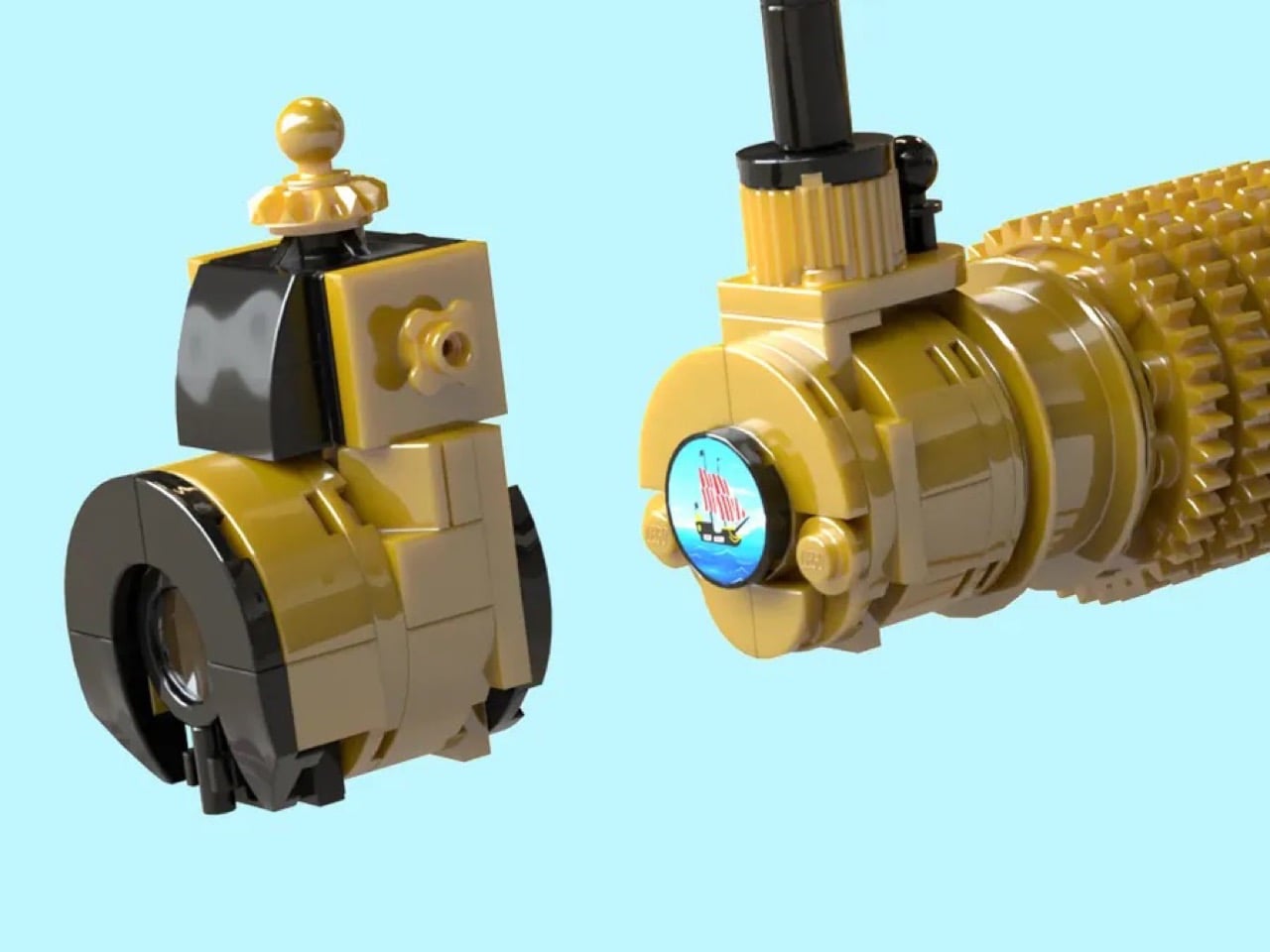
LEGO’s newest Creator release proves that big ideas come in compact packages. The Space Exploration Telescope (set 31378) landed on shelves January 1, 2026, with 278 pieces that transform into three completely different models: a fully adjustable telescope with spinning planets, a working microscope, or a posable UFO. At $34.99, this set sits comfortably in impulse-buy territory while delivering the kind of replay value that keeps kids engaged long after the initial build.

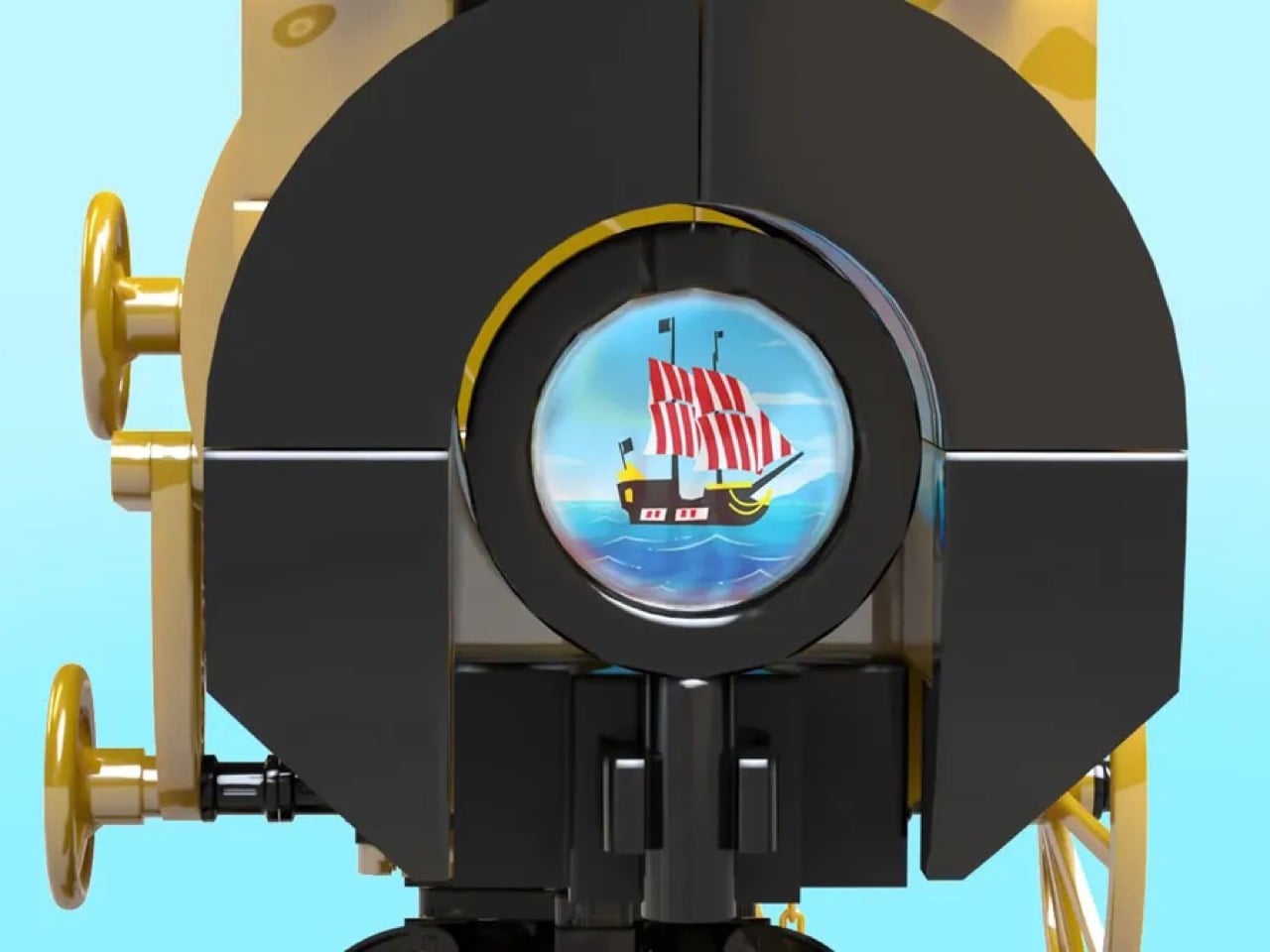
What makes this set particularly clever is how it uses a single light brick across all three models. The telescope projects celestial images onto walls, the microscope illuminates specimens, and the UFO beams light from its underside. Three decorated lenses featuring a planet, star, and Moon add educational depth that goes beyond typical building sets. For parents seeking STEM toys that actually encourage experimentation rather than collecting dust on a shelf, this Creator set deserves serious consideration.

Designer: LEGO

That primary telescope build is surprisingly robust for being one of three options. Standing over 10.5 inches (27 cm) tall, it has a decent presence, and the tripod design is stable enough for actual play. The accompanying solar system, with its seven spinning planets, is a fantastic kinetic detail that adds life to the model. The projection feature is the real engineering win here. It takes what would be a static display piece and gives it an interactive purpose that cleverly mimics what a real telescope does: show you images of space. It’s a smart, elegant solution for a toy.

When you get tired of stargazing, the rebuild into a microscope shows the true genius of the part selection. The core housing for the light brick and lens assembly gets flipped vertically, and what was once a projection system becomes an illumination source. The same decorated lenses that projected planets now serve as makeshift slides, which is a brilliant way to teach kids about functional design and repurposing components. It’s a solid B-model that feels complete and intentional, demonstrating how form follows function with just a few clever reconfigurations of the same 278 bricks.

The final build, a UFO, is the set’s playful wild card. It shifts the entire theme from educational STEM hardware to pure science fiction. The designers did a great job creating a classic saucer shape with posable antennae and legs that flip out for landing. Here, the light brick serves as a simple beam underneath the craft, perfect for imaginative scenarios. This C-model provides an essential creative outlet, proving the set’s versatility extends beyond scientific instruments. It’s the build that lets kids take the parts and just have fun, which is arguably the most important function of any LEGO set.

The set is available now through LEGO’s official website, Target, and authorized LEGO retailers for $34.99. Batteries for the light brick come included, which saves you a trip to the store or the inevitable disappointment of discovering you need them mid-build. The recommended age is 8 and up, though younger kids with building experience could handle it with minimal supervision. Digital instructions are accessible through the free LEGO Builder app, which lets you zoom, rotate, and track build progress on your phone or tablet. LEGO’s website currently shows a 60-day shipping window, so if you’re ordering online, factor that into your timeline.

The post LEGO Just Released a 3-in-1 Space Telescope That Also Turns Into a Microscope and a UFO first appeared on Yanko Design.
This LEGO Claw Machine Uses Just One Motor (And Lots of Genius)

You know that feeling when you’re at an arcade, pumping quarters into a claw machine, convinced that this time you’ll finally snag that plush toy? Well, someone decided to recreate that delightful torture in LEGO form, and if I could, I would probably line up to buy this one.

Brick Builds, a YouTuber with a knack for mechanical marvels, recently shared their fully functional LEGO claw machine, and it’s the kind of project that makes you want to dump out your entire brick collection and start building immediately. Sure, plenty of LEGO enthusiasts have tackled claw machines before, but what sets this one apart is its elegant simplicity paired with surprisingly complex engineering.

Designer: Brick Builds

Here’s the kicker: the entire machine runs on just a single motor. No fancy Mindstorms robotics kits, no Power Functions overload, just one motor and an absolutely ingenious system of gearboxes doing all the heavy lifting. If you’ve ever tried building anything motorized with LEGO, you know how easy it is to throw motors at a problem until it works. But Brick Builds went the opposite direction, creating something that’s mechanically efficient and genuinely impressive to watch in action.

The magic happens through a series of clever gearboxes that control the claw’s movement in multiple directions. You’ve got your horizontal travel, your vertical drop, and of course, the all-important grip function. Getting one motor to orchestrate all of that? That’s the kind of problem-solving that separates casual builders from true LEGO engineers. The scissor mechanism used for the claw itself is particularly neat, giving it that satisfying open-and-close action we all recognize from the arcade versions that constantly disappoint us.

What I love about projects like this is how they blur the line between toy and genuine engineering exercise. LEGO has always been about more than just following instructions and building whatever’s on the box. It’s a creative medium that rewards experimentation and mechanical thinking. When you watch this claw machine in operation, you’re not just seeing plastic bricks move around. You’re witnessing someone who really understands concepts like gear ratios, mechanical advantage, and sequential motion control.

The build also serves as a reminder of why LEGO remains relevant in an age of sophisticated robotics kits and 3D printing. There’s something deeply satisfying about working within constraints. By limiting the design to a single motor and standard LEGO components, Brick Builds essentially gave themselves a puzzle to solve. How do you create complex motion from simple inputs? How do you translate rotational force into the precise movements needed for a claw machine? These aren’t trivial questions, and the answers are all visible in the finished product.

If you’re curious about the nitty-gritty details, Brick Builds included captions in their build video that break down the mechanical systems at play. It’s worth watching even if you’re not planning to build one yourself, because there’s genuine educational value in seeing how all those gears and axles work together. Plus, let’s be real, watching a LEGO claw machine successfully grab and transport a small object is oddly mesmerizing.

This kind of creation also speaks to the vibrant community of adult LEGO fans who’ve elevated brick building into legitimate artistic and engineering territory. MOCs, or “My Own Creations,” have become increasingly sophisticated over the years, with builders sharing techniques, competing in design challenges, and pushing the boundaries of what’s possible with those iconic interlocking bricks.

Whether you’re a longtime LEGO enthusiast, a design nerd who appreciates elegant mechanical solutions, or just someone who enjoys watching cool stuff work, this claw machine deserves your attention. It’s a perfect example of how creativity and technical skill can transform a childhood toy into something genuinely impressive. And unlike the arcade version, this one probably won’t eat your quarters and leave you empty-handed.

The post This LEGO Claw Machine Uses Just One Motor (And Lots of Genius) first appeared on Yanko Design.
This LEGO Portal 2 Set Lets You Design/Build Your Own Test Chambers With 1,280 Pieces

The Portal franchise has earned its place in gaming history through ingenious puzzle design, dark humor, and an aesthetic so iconic that a simple orange and blue color scheme instantly evokes the Aperture Science testing facility. Now, LEGO builder KaijuBuilds has translated that sterile-yet-sinister world into brick form with the Portal 2: Test Chamber Creator, a project currently seeking support on LEGO Ideas.

The set features a sophisticated modular tile system with 18 unique configurations across 29 total modules, allowing builders to reconstruct famous test chambers or design entirely new challenges. With around 1,280 pieces, the build includes Chell, Wheatley, Atlas, P-body, turrets, portals, a Companion Cube, and even that infamous cake. The attention to detail extends to overgrown tiles that reference Portal 2’s decayed facility sections, complete with a white rat as a nod to the mysterious Rattman. The modular approach mirrors the in-game test chamber editor, which means you can actually play with spatial configurations rather than building a single frozen scene.

Designer: KaijuBuilds

The Aperture Science facility aesthetic translates surprisingly well to LEGO’s design language because both share a love of modular systems and clean geometric forms. Portal works on minimalist white panels, colored power conduits, and spatial reasoning. This build captures that by making reconfigurability the core feature. Tiles come in different sizes (8×8, 4×4, 4×8) and snap onto an orange base with visible connection points. Some tiles show pristine testing surfaces while others feature vegetation breaking through panels, directly referencing Portal 2’s narrative about a facility decaying over decades. The observation windows sit where GLaDOS would watch test subjects fail, and those structural details do heavy lifting in establishing atmosphere.

The character roster features all the iconic beings and bots and whatnots. Chell appears in her orange jumpsuit with the Aperture Science tank top. Wheatley exists as a buildable personality core with his blue eye. Atlas and P-body (the co-op robots from Portal 2) demonstrate awareness that the franchise extends beyond Chell’s story. The turrets manage to look simultaneously adorable and threatening with their white chassis, red sensors, and antenna stems. Two portal pieces come in translucent orange and blue, likely using curved or printed elements to create those characteristic oval shapes. The portal gun sits in Chell’s hands, completing the loadout any fan would expect.

Those 18 unique tile types across 29 modules provide enough variety to build compact chambers or combine everything into larger, more complex puzzles. Some tiles feature orange and blue power line conduits that connect mechanisms in the actual game. Dark grey tiles break up monotonous white surfaces. Button tiles, overgrown sections, observation windows, and the Heavy Duty Super-Colliding Super Button all serve gameplay purposes Portal fans recognize immediately. The structure uses long and short connectors with technic pins and 2L axles to hold everything together, which should make reconfiguration reasonably straightforward without constant collapse during redesign sessions. The orange base with its studded connection points does the critical work of making the whole modular system functional rather than theoretical.

The functional elements push this past display territory into actual play value. The Companion Cube dropper holds and releases cubes, mimicking those ceiling-mounted dispensers from the game. The aerial faith plate triggers manually to launch minifigures upward. A tilting elevated platform angles in different directions for variable chamber layouts. The door swings open for chamber entrances and exits. These mechanisms aren’t revolutionary in LEGO terms, but they’re deployed strategically to recreate specific Portal gameplay moments. The laser grid uses red transparent pieces across a 3×6 area. It won’t vaporize minifigs, but it provides the visual language of hazards you’d design chambers around. The deadly goo gets two 8×8 tiles in translucent orange, which is the correct color unlike some fan builds that use green acid from generic video game conventions.

There’s even a cake hidden somewhere because at this point it’s mandatory for Portal merchandise. The cultural penetration of “the cake is a lie” has been both blessing and curse for the franchise, but you can’t release Portal LEGO without acknowledging it. The white rat perched on structural pillars references Doug Rattmann, the Aperture scientist who left cryptic murals throughout the facility. That’s a deeper cut than casual fans would catch. The test chamber sign displays “25” along with hazard pictograms, grounding the build in Aperture Science’s obsessive signage culture. The facility loved warning test subjects about dangers they couldn’t avoid. Small crows appear on the pillars too, adding those environmental details that make the difference between a good build and one that captures a world.

Portal maintains relevance fifteen years after its 2007 release through memorable writing, innovative mechanics, and an aesthetic that spawned endless memes. GLaDOS remains one of gaming’s most iconic antagonists. “Still Alive” transcended the game to become a cultural touchstone. The orange and blue portal color scheme is instantly recognizable across demographics. Portal 2 expanded the universe in 2011 with co-op gameplay, more complex puzzles, and deeper lore about Aperture Science’s history. The games influenced puzzle design across the industry and demonstrated that shorter, tightly designed experiences could compete with sprawling open-world titles. That legacy makes Portal a strong candidate for LEGO treatment, especially given LEGO’s existing relationship with video game properties and Valve’s general receptiveness to licensed products.

LEGO Ideas operates as a platform where fans submit designs for potential official sets. Projects reaching 10,000 supporters enter review, where LEGO evaluates production feasibility, licensing complexity, and market viability. The Portal 2: Test Chamber Creator sits at roughly 1,700 supporters with 543 days remaining. Voting requires a free LEGO Ideas account and takes about thirty seconds (you can cast your vote here). Reaching 10,000 votes doesn’t guarantee production since LEGO considers factors beyond popularity (licensing negotiations with Valve, manufacturing costs, retail strategy), but fan support gets projects in front of decision-makers. LEGO has produced gaming sets before, from Minecraft to various Nintendo properties. Portal’s enduring cultural presence and Valve’s track record with merchandise partnerships suggest this build has legitimate production potential if it clears the voting threshold.

The post This LEGO Portal 2 Set Lets You Design/Build Your Own Test Chambers With 1,280 Pieces first appeared on Yanko Design.
This LEGO Campbell’s Soup Can Opens to Reveal Andy Warhol’s Entire Factory Studio

In 1962, Andy Warhol turned a humble soup can into an art world phenomenon. Now, a LEGO Ideas submission is turning that same can into something equally revolutionary: a buildable gateway to understanding the artist himself. This isn’t just about stacking bricks into a cylindrical shape, though the technical achievement of creating such smooth curves at 24 studs diameter deserves recognition. This project represents months of research into Warhol’s working methods, his relationship with popular culture, and the visual language of The Factory that became synonymous with 1960s avant-garde creativity.

Open the can and the transformation is immediate. The metallic interior contrasts sharply with the familiar red and white exterior, creating an Alice-in-Wonderland moment where everyday packaging becomes an art studio. Printed artworks cover the walls and floor, reflecting Warhol’s habit of painting directly on the ground surrounded by his creations. The Andy Warhol minifigure with signature silver wig presides over a space filled with props from his actual studio: the disco ball, the motorcycle, the couch where celebrities and artists mingled. It’s both a display piece for design enthusiasts and an educational tool that makes pop art accessible, proving LEGO sets can be as culturally significant as they are fun to build.

Designer: HonorableImmenseWorriz

The build sits at 1,117 pieces and stretches to 32.6 centimeters tall, which sounds manageable until you realize the entire cylinder uses curved slope elements to achieve those smooth walls. Most builders avoid large-scale curves because getting a 24-stud diameter to look this polished requires serious geometric planning. The three-section hinge system adds another challenge since you need structural integrity while maintaining mechanical function. What separates this from typical pop culture tributes is the commitment to printed elements over stickers, with Campbell’s branding, artwork tiles, and even the gold medal seal all printed directly onto bricks. The Marilyn Monroe quad portrait, Flowers series, purple Cow prints, they’re all there on the metallic silver walls that reference The Factory’s legendary aluminum foil aesthetic.

HonorableImmenseWorriz , the builder, positions it as “a LEGO set for the kitchen,” which completes the conceptual loop Warhol started by elevating everyday consumer goods to fine art status. You build this, place it near your actual soup cans, and your kitchen becomes gallery space. The 32 stickers showing different Campbell’s soup flavors let you customize and swap variations, mirroring Warhol’s seriality philosophy from his original 1962 series that featured 32 different canvases. The father-son collaboration behind it shows in the prop selection too, each item chosen for historical accuracy rather than visual filler. That red couch, the orange motorcycle, the camera on tripod, they’re narrative anchors to The Factory’s actual chaos, not random accessories.

The project’s currently a fan submission on the LEGO Ideas website – an online forum where enthusiasts share their own creations and vote for favorites. MOCs (My Own Creations) that hit the 10,000 vote mark then get sent to LEGO’s team for approval before being turned into a retail box set that anyone can buy. If you fancy yourself a LEGO ode to Warhol (and Campbell), head down to the LEGO Ideas forum and cast your vote for this build! It’s free!

The post This LEGO Campbell’s Soup Can Opens to Reveal Andy Warhol’s Entire Factory Studio first appeared on Yanko Design.
Remember the Saleen S7? This 1,200‑Piece LEGO Build Brings Back America’s Wildest Supercar

LEGO’s Speed Champions line has given us countless Ferraris, Porsches, and McLarens. Meanwhile, one of America’s most ambitious supercar projects sits conspicuously absent from the brick-built garage. The Saleen S7 deserves better than obscurity, and builder Nytedance has created a 1,200-piece proposal that makes the case beautifully. This isn’t a quick parts-bin creation but a thoughtfully detailed tribute to a car that once proved American manufacturers could play in the supercar sandbox.

The build captures everything that made the S7 special: those dramatic scissor doors, the trio of diagonal side vents that channeled air to the mid-mounted engine, and the low-slung stance that telegraphed serious performance intentions. Nytedance included opening hood and engine bay access alongside a detailed interior, giving the model the same display-worthy presence the real S7 commanded on showroom floors. At a time when automotive design often feels derivative, this MOC celebrates a machine that carved its own identity through pure American audacity and engineering ambition.

Designer: Nytedance

Here’s the thing about the S7 that most people forget: it was legitimately fast. Like, 2000-era supercar fast when that still meant something. The naturally aspirated version put out 550 horsepower from a 7.0-liter V8, which sounds almost quaint now until you remember the whole car weighed 2,865 pounds. Then in 2005 they strapped turbos to it because why not. Steve Saleen had spent years building hot rod Mustangs, so when he decided to build a proper supercar, he didn’t half-ass it. Carbon fiber monocoque, mid-engine layout, the whole European playbook executed by a company in Irvine, California. And somehow this car gets forgotten while we endlessly rehash which Ferrari from that era was best.

Those proportions are tricky because the car sits so low and wide, but the MOC nails that aggressive wedge shape without looking like a doorstop. The side intakes are the hero detail here, three diagonal slashes that became the car’s signature move. They’re rendered in white against black internals, creating the contrast you need for them to read properly at this scale. The scissor doors actually function, which feels mandatory given that half the reason anyone remembers the S7 involves those doors opening at car shows. Look at the rear haunches and how they flare out over the wheels. That’s not easy to pull off with LEGO’s predominantly rectangular vocabulary, but it works. The builder used curved slopes intelligently instead of trying to force angles that would look chunky.

The white color is clean enough to let you study the form without distraction, plus it matches one of the more common S7 liveries. Those red taillights pop against the white body, four circles arranged in a quad pattern that anyone who spent time with Need for Speed games will recognize instantly. The wheels use those multi-spoke pieces that suggest performance without going full boy racer. At 1,200 pieces, this sits in an interesting spot between impulse purchase and serious investment. You’re committed enough to display it properly but you’re not dropping Technic Bugatti money.

LEGO Ideas is basically democracy for brick nerds. You submit a design, people vote, and if you hit 10,000 supporters, LEGO actually reviews it for potential production. Get approved and your MOC becomes a real set with your name on the box and royalties in your pocket. Nytedance’s Saleen S7 is live on the platform now, so if you think American supercar history deserves shelf space next to all those Prancing Horse sets, go vote for it. The S7 spent too long in obscurity already.

The post Remember the Saleen S7? This 1,200‑Piece LEGO Build Brings Back America’s Wildest Supercar first appeared on Yanko Design.

Best LEGO Designs of 2025: 10 Sets That Redefined Building Blocks

LEGO transformed from a childhood toy to a design phenomenon this year, releasing sets that blur the line between construction kit and sculptural art. The Danish company pushed beyond simple nostalgia, creating builds that demand interaction, celebrate cultural touchstones, and challenge what plastic bricks can become. From mechanized aquariums to Broadway stages, these releases prove LEGO understands what adult collectors actually want.

The 2025 lineup reads like a designer’s fever dream come to life. These aren’t sets you build once and forget. They’re conversation pieces that reward closer inspection, mechanical marvels that turn cranks into storytelling devices, and cultural time capsules that capture moments before they fade completely. Each represents a different approach to what LEGO can accomplish when designers stop thinking about toys and start thinking about experiences worth displaying.

1. LEGO Ministry of Silly Walks

Monty Python’s most absurd sketch has finally received the brick-built treatment it deserves. John Cleese’s Mr. Teabag materializes in LEGO form, complete with exaggerated proportions that capture every ridiculous knee-flinging motion from the original performance. The Technic joints aren’t just decorative additions. They allow for an impressive range of articulation, letting you recreate those impossibly precise movements that made the sketch legendary. The build manages something difficult: translating physical comedy into a static medium while maintaining every ounce of visual humor.

The facial expression deserves special mention. Sculptors working on this captured Mr. Teabag’s deadpan seriousness with the kind of attention usually reserved for museum-quality reproductions. The silhouette reads instantly from across a room, making it perfect for display alongside more traditional LEGO architecture. The bowler hat and umbrella complete the bureaucratic aesthetic, turning this into a celebration of British absurdist comedy that works whether you’re a Python fanatic or appreciate builds with genuine personality and wit.

2. LEGO Blockbuster Video Store

Nostalgia crashes into modular building design with this recreation of America’s defunct rental empire. The blue-and-yellow storefront transports you straight back to Friday nights spent racing through aisles of VHS tapes, desperately searching for anything decent before someone else grabbed it. The modular structure integrates seamlessly into existing LEGO cityscapes, though it commands attention standing alone. Tiny VHS cases line the shelves with impressive detail, while that ticket-shaped sign captures the exact aesthetic that defined a pre-streaming era when entertainment required physical effort and late fees.

The exterior nails every architectural element that made Blockbuster immediately identifiable. Flat roof, oversized glass windows, and that unmistakable color palette all receive faithful treatment. The parking lot addition shows a real understanding of the complete Blockbuster experience. Saturday nights meant circling for spots while your friend waited inside, holding the last copy of whatever blockbuster justified the trip. The set becomes a time machine built from ABS plastic, preserving a retail experience that vanished almost overnight when Netflix rewrote entertainment distribution and made movie night something you do from your couch.

3. LEGO Hudson Class Steam Locomotive

ALCo’s 1937 J-3a Hudson-class locomotive roars back to life in 1,350 meticulously placed pieces. The New York Central 5405 once hauled luxury passengers between New York and Chicago at speeds exceeding 90 mph, making it one of the fastest steam locomotives of its era. That legacy translates beautifully into LEGO form, capturing the streamlined aesthetic that defined American railway design. The 4-6-4 wheel arrangement receives accurate treatment, with those massive driving wheels creating an impressive profile whether displayed static on a shelf or rolling along classic LEGO train tracks.
Full motorization separates this from static display models. Watching this steam locomotive glide under its own power delivers something magical that photography can’t quite capture. The design nails the sleek Hudson-class look, from the smooth boiler and sloped smokebox to the intricately detailed side rods that mimic genuine locomotive motion. The tender faithfully recreates the coal and water carrier that made long-distance runs possible. The real 5405 was scrapped in 1956, but this gorgeous amalgamation of plastic bricks ensures the legend continues rolling for future generations of railway enthusiasts.

4. LEGO Bob’s Burgers Restaurant

The Belcher family’s combined home and restaurant arrives in an ambitious 2,991-piece set that recreates both floors with remarkable precision. The ground floor captures the setting of countless episodes where Bob frets over his latest burger creation. The chalkboard “Burger of the Day” sits lovingly recreated in brick form. The dining area maintains that no-frills charm fans recognize immediately, sitting alongside the cramped bathroom and bustling kitchen where the show’s humor and heart collide. These spaces transcend simple scenery, becoming environments that feel genuinely lived-in and authentic to the animated source material.

The upstairs apartments shine even brighter through personality-driven details. Tina’s corner includes her “Friend Fiction” notebook for capturing awkward brilliance. Gene’s keyboard and megaphone stand ready for his next musical misadventure, while Louise’s trusty Kuchi Kopi nightlight guards her space with its eerie green glow. These thoughtful inclusions make each room feel alive, as though the characters themselves consulted on the design. The build proves that animated sitcoms translate remarkably well into LEGO form when designers understand that props and environments carry as much narrative weight as the characters themselves.

5. LEGO Hamilton Musical Stage

Lin-Manuel Miranda’s revolutionary musical gets the brick treatment it deserves with this meticulously detailed recreation of the Richard Rodgers Theatre stage. The submission captures everything that made Hamilton culturally transformative, from the dual staircases flanking the performance space to that iconic rotating floor that actually turns in the model. The designer nailed the spatial dynamics that director Thomas Kail used to bring America’s founding to life through hip-hop and R&B. Every architectural element serves both form and function, making this a display piece that tells stories through choreography frozen in plastic bricks.

The upper mezzanine receives equal attention, complete with golden rope rings used throughout the show’s elaborate choreography. This 2,000-piece concept doesn’t skip on historical or theatrical accuracy. The attention to staging details reveals someone who truly understands how theater design creates narrative flow. From cabinet rap battles to dramatic duels, this build captures the essence of a show that redefined Broadway for a new generation. The rotating stage mechanism alone justifies the complexity, turning this from a static diorama into something that hints at the kinetic energy that made the original production so revolutionary and culturally significant.

6. LEGO Subaru Impreza WRC

TOMOELL’s fan design resurrects Colin McRae’s championship-winning rally car in stunning detail. The deep blue body adorned with “555” livery-inspired graphics immediately transports enthusiasts back to the 1990s golden age of rally racing. Gold rally wheels, aggressive hood scoop, race-bred front bumper, and that unmistakable rear wing all channel the spirit of Prodrive’s engineering masterpiece. The builder spent countless hours perfecting contours and angles, ensuring the brick model faithfully represents the high-octane machine that dominated rally stages and defined a generation of motorsport gaming memories.

The real Impreza WRC represented a triumph of engineering philosophy. Prodrive made the car 160mm shorter than its predecessor, with a 60mm shorter wheelbase for improved agility on tight rally stages. Colin McRae’s 1995 World Rally Championship win made him the youngest champion in WRC history at that time, cementing both driver and car as legends. The combination of turbocharged power, symmetrical all-wheel drive, and relentless durability made it unstoppable on gravel, snow, and tarmac. This LEGO recreation preserves not just a car but an entire era when rally racing captured imaginations worldwide.

7. LEGO The Truman Show Diorama

This detailed tribute to the 1998 film centers on the massive amphitheater-like arc that encased Truman’s manufactured life. The curved exterior suggests the illusion of endless sky, but inside reveals a stark reality. Seven of the movie’s most memorable scenes are tucked within its walls, turning the structure into both a stage and a prison. The climactic moment sits at the heart of everything: that door to the real world camouflaged against painted clouds, waiting for Truman to step through. The visual encapsulates the film’s core message about control, freedom, and pursuing truth despite comfortable lies.

The movie feels unnervingly prophetic now. What seemed like strange dystopian fiction in 1998 reads as a documentary in 2025, with devices constantly surveilling our lives for content and data. Builder Trojada understood that the sets themselves told the story as powerfully as the script. The diorama format works perfectly for a film about manufactured reality and hidden cameras. Each carefully placed scene reminds us that privacy disappeared while we were distracted by convenience. The build succeeds because it captures not just iconic moments but the claustrophobic architecture of surveillance that Truman spent his entire life trying to escape.

8. LEGO Tropical Aquarium

LEGO entered kinetic sculpture territory with the Icons Tropical Aquarium, a 4,154-piece meditation on movement and marine life. This isn’t another static display gathering dust. Four hand-cranked mechanisms transform passive viewing into active participation, creating an interactive experience that rewards repeated engagement. Dials control a seahorse emerging from coral, a hermit crab scuttling across the sand, a hidden octopus revealing itself, and a turtle gliding through kelp forests. The design language speaks to Victorian-era mechanical theaters and curiosity cabinets, where engagement meant touching, turning, and discovering secrets through tactile exploration.

Each crank turns deliberately. Each rotation creates observable change through visible mechanics that teach basic physics through clever engineering. Turn this gear and watch that element respond with cause and effect made tangible. The mechanics aren’t hidden inside mysterious black boxes. They’re legible, educational, and satisfying in ways that battery-powered gimmicks never achieve. At $479.99, it’s positioned as a premium home sculpture rather than a traditional LEGO set. The November 13 launch signals LEGO’s confidence that adult collectors want mechanical interaction and living design rather than one-time assembly satisfaction followed by permanent shelf placement.

9. LEGO Louis Vuitton Train Case

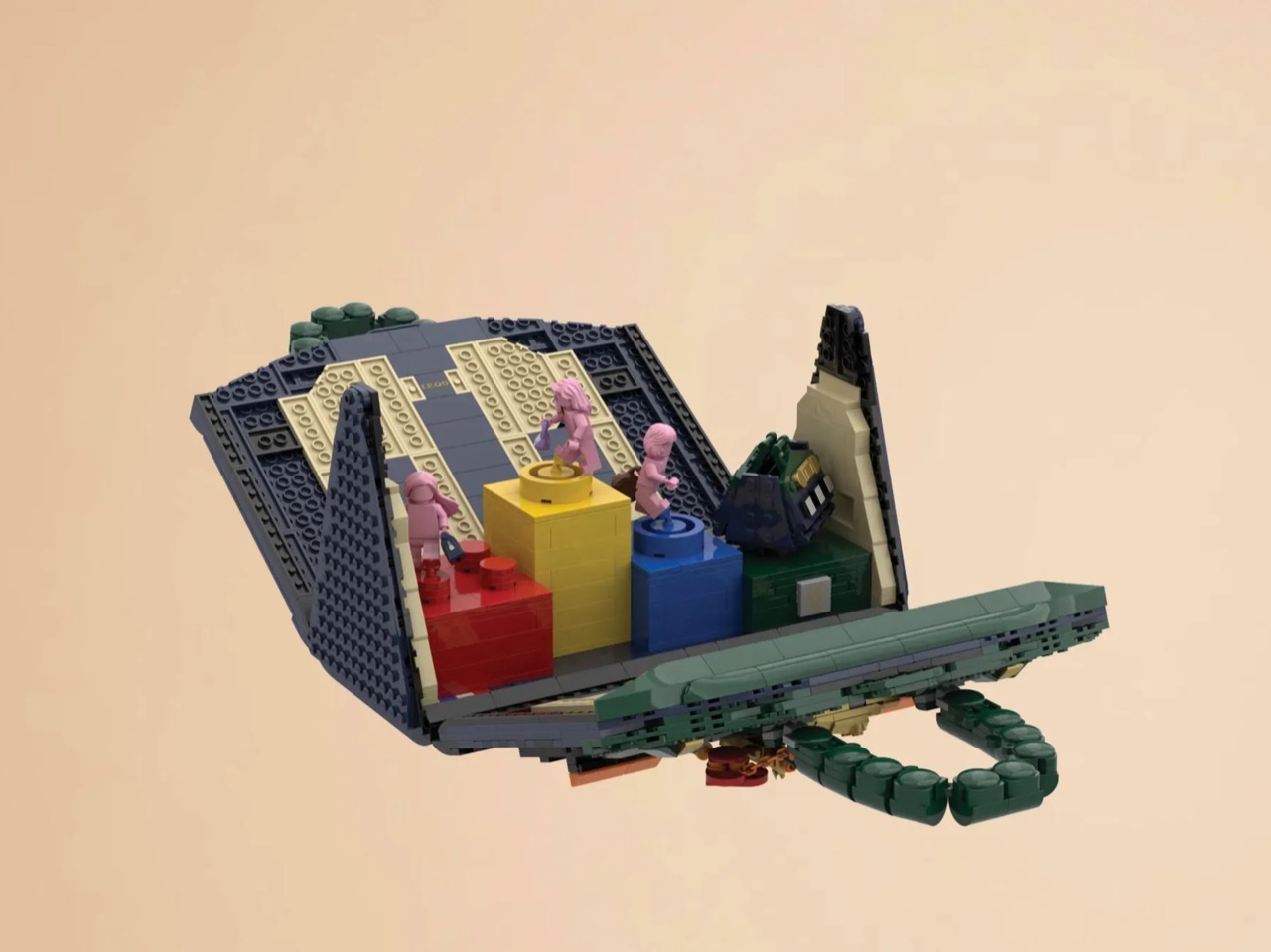
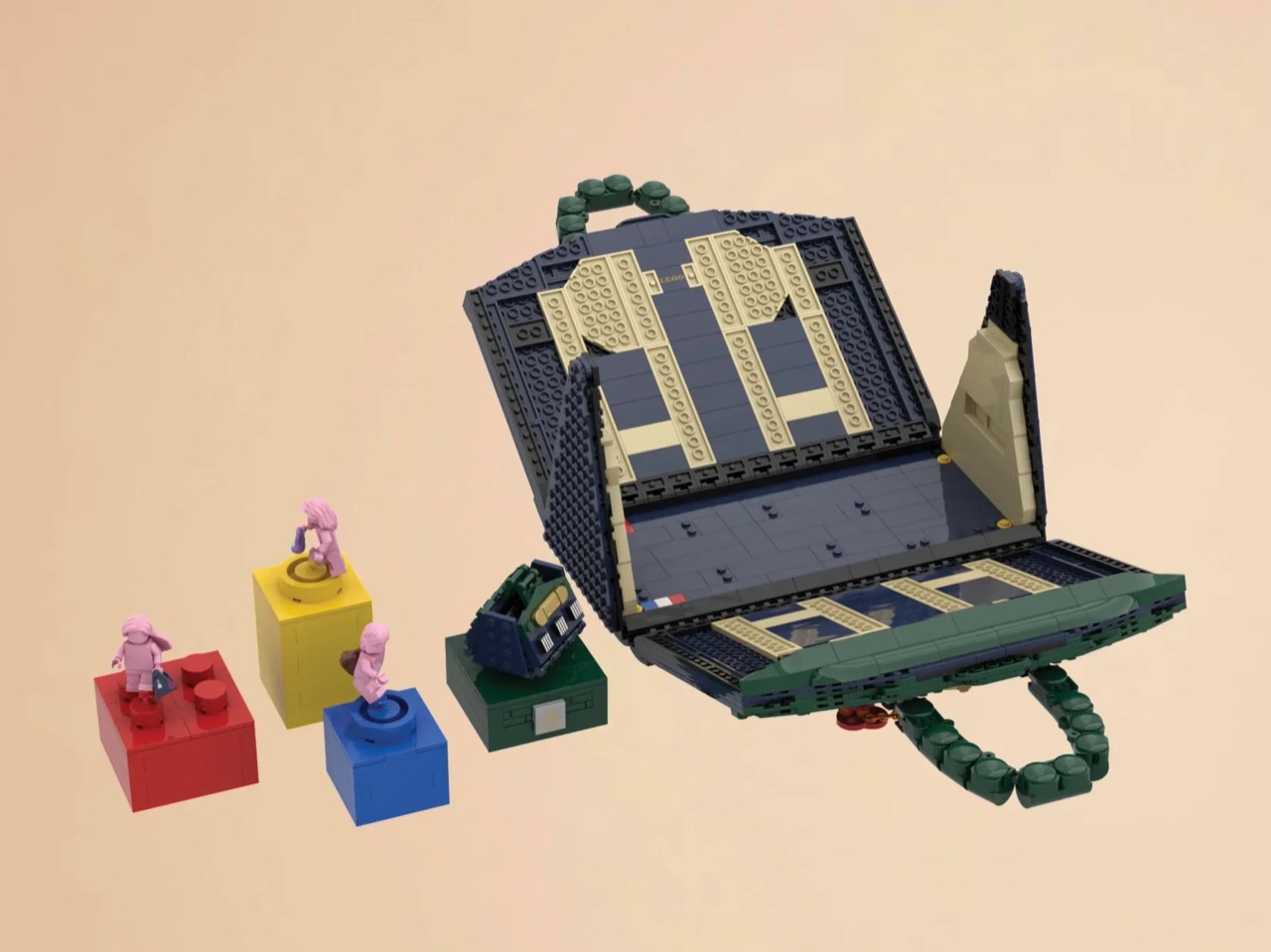
Louis Vuitton pioneered rectangular travel cases in an era when dome-topped designs dominated. Born in 1821, Vuitton chased efficiency while adding fashionable distinction. Dome tops shed water like umbrellas but made stacking impossible on trains, steamboats, and carriages. His reinforced corners and air-tight rectangular designs became so famous that the Empress herself chose them exclusively, beginning a legacy that would define luxury travel for generations. Terauma’s LEGO Train Case reimagines the company’s iconic design, manufactured since 1980, preserving heritage even though nobody buying authentic LV gear travels by train anymore.

The builder managed remarkable detail within LEGO’s limitations. Reinforced corners, handle, stackable inner compartments, and that famous monogram all receive faithful treatment. This remains pure concept work since Louis Vuitton’s legal team would likely intervene before any official production. If LEGO made this fan design a reality, extensive brand partnerships and prerequisite permissions would be necessary. The build succeeds as an exercise in translating luxury goods into brick form, proving that fashion and travel heritage translate surprisingly well when designers respect both the source material and the medium’s capabilities and constraints.

10. LEGO Willy Wonka Chocolate Factory

Pure imagination meets engineering excellence in this official 2,025-piece LEGO Ideas masterpiece, bringing Roald Dahl’s magical world to life. Activate that dial and watch chocolate cascade down the waterfall in genuine flowing motion. This transcends building and displaying, becoming an experience that captures what made the original story so captivating. The Wonkatania boat sits ready for adventure while candy-themed flora creates an environment that feels genuinely enchanted throughout every detail. Gene Wilder’s iconic performance gets honored through a newly created ochre hair piece that perfectly captures his unforgettable look.

At 20.5 inches wide and 7.5 inches tall, this build commands serious shelf real estate, but every inch justifies itself through incredible detail work. Nine minifigures bring the story to life, from Wonka himself to the questionable parents and doomed children who learned valuable lessons through confectionery chaos. The $219.99 price point positions it as an investment for serious collectors who understand that watching chocolate flow while surrounded by candy gardens delivers value beyond simple brick count. The set proves LEGO Ideas continues producing culturally significant builds that honor source material while pushing mechanical innovation forward.

The Future of LEGO Design

These ten sets represent something larger than individual releases. LEGO recognized that adult collectors crave cultural authenticity, mechanical interaction, and architectural ambition beyond childhood nostalgia. The 2025 lineup spans comedy sketches, defunct retail, theatrical productions, automotive legends, film sets, luxury fashion, and kinetic sculpture. That diversity signals confidence in serving varied collector interests rather than chasing mass appeal through safe choices.

The emphasis on movement and mechanism marks a philosophical shift. Static display no longer satisfies when hand-cranked gears and motorized elements create ongoing engagement. These builds reward returning to them repeatedly, discovering new details, and experiencing different interactions. LEGO redefined what building blocks become when designers prioritize sculpture, theater, and experiential design over simple construction toys. The future looks exceptionally creative for anyone willing to invest in plastic bricks that transcend their humble origins.

The post Best LEGO Designs of 2025: 10 Sets That Redefined Building Blocks first appeared on Yanko Design.