These Solar Gazebos Have 4 Wind Turbines and Let You Charge Below

University campuses function like small cities. Students move between buildings, find outdoor spots to read or work, and constantly need power for phones and laptops. Sustainability tends to get communicated through plaques, rooftop panels, and annual reports, things you don’t interact with. There’s a gap between “this campus is reducing its carbon footprint” and “here’s a place where you can sit, charge your phone, and actually experience that in some tangible way.”

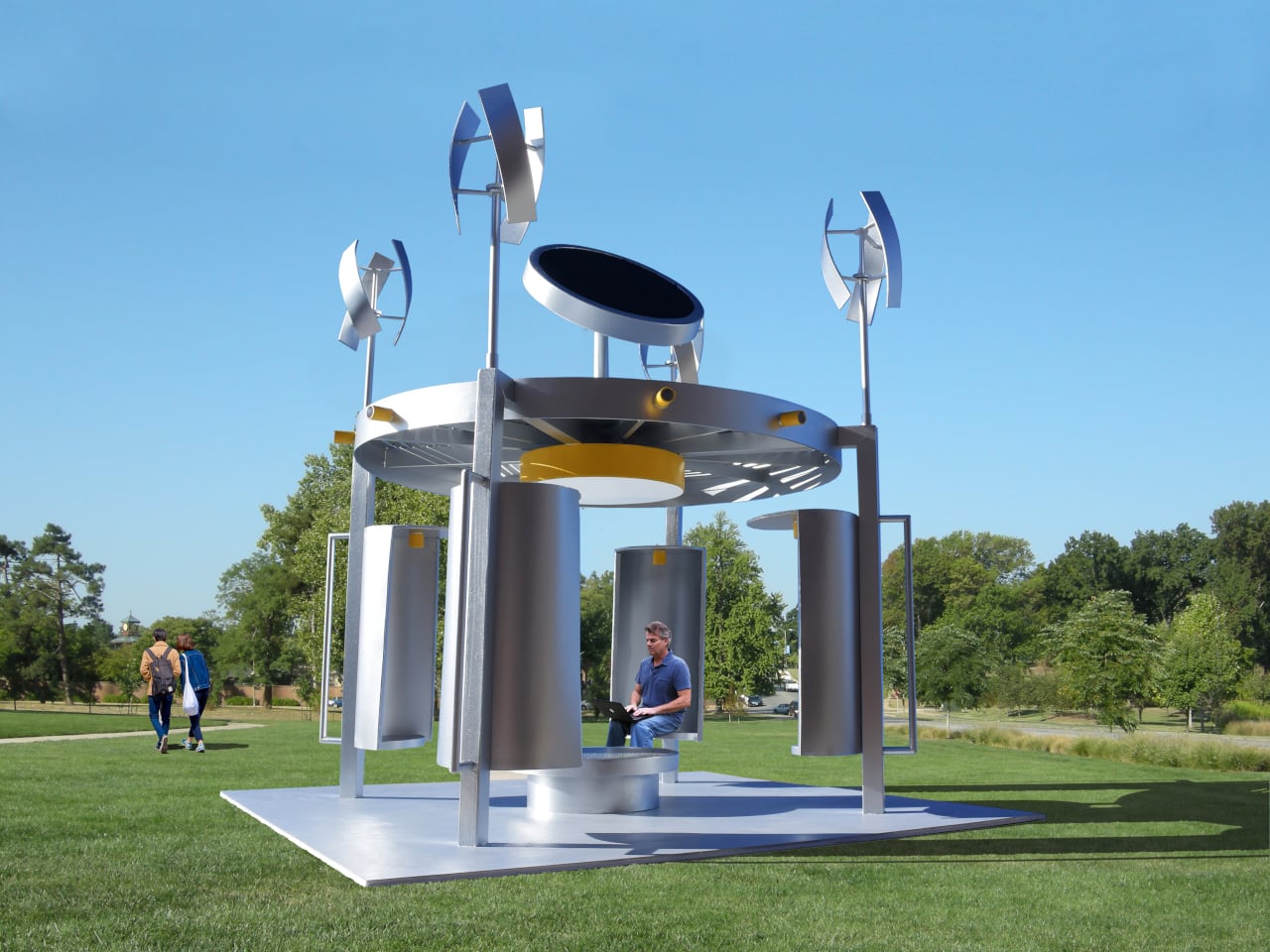
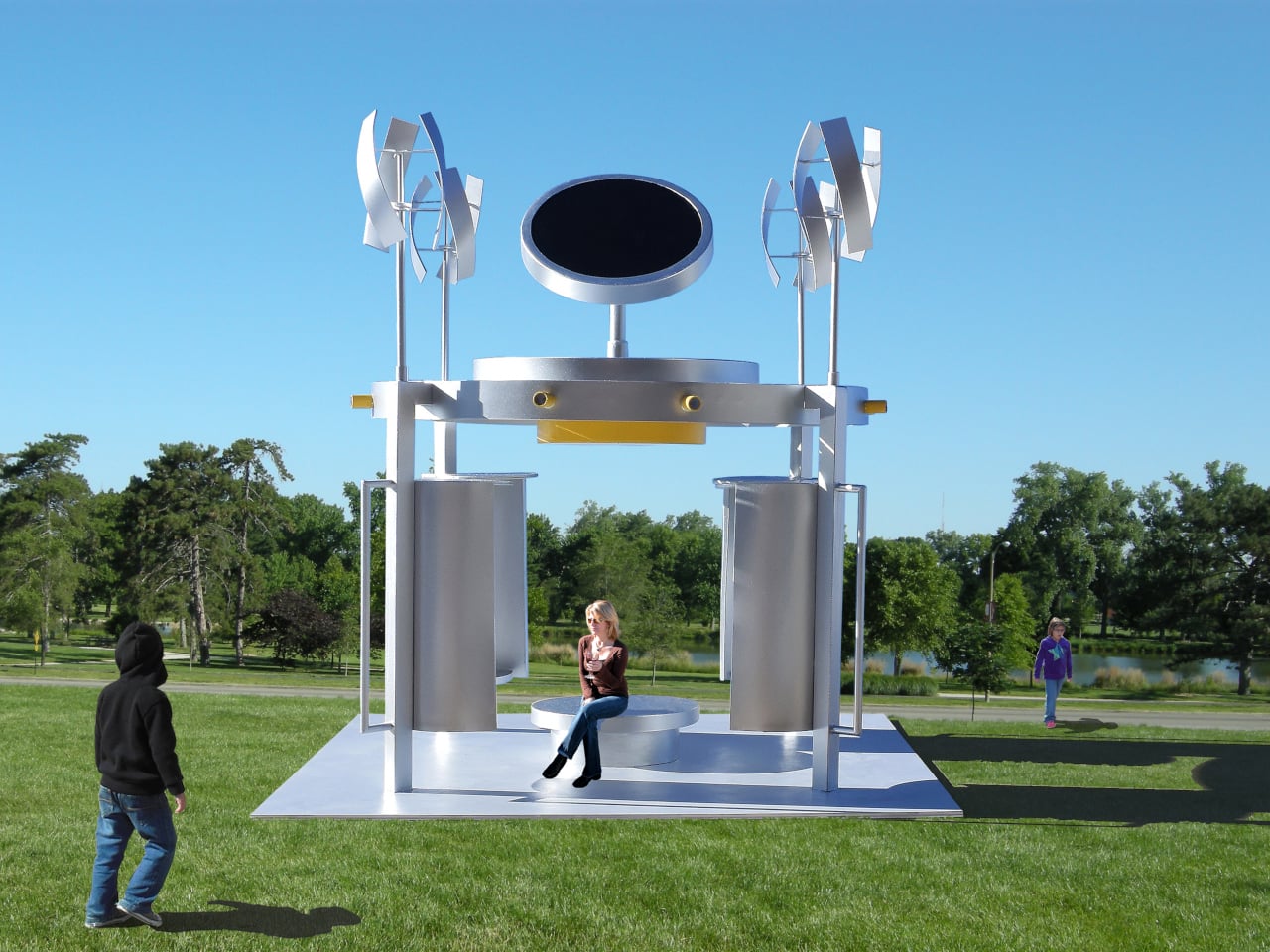
Michael Jantzen’s Solar Wind Gazebos are public pavilions designed to close that gap. Intended for university campuses, they function as gathering spaces while generating electricity from sun and wind, with the power feeding into the university’s grid. The proposal treats renewable infrastructure as a place to inhabit rather than a system to install, and it makes that infrastructure legible to anyone who walks up to one.

Designer: Michael Jantzen
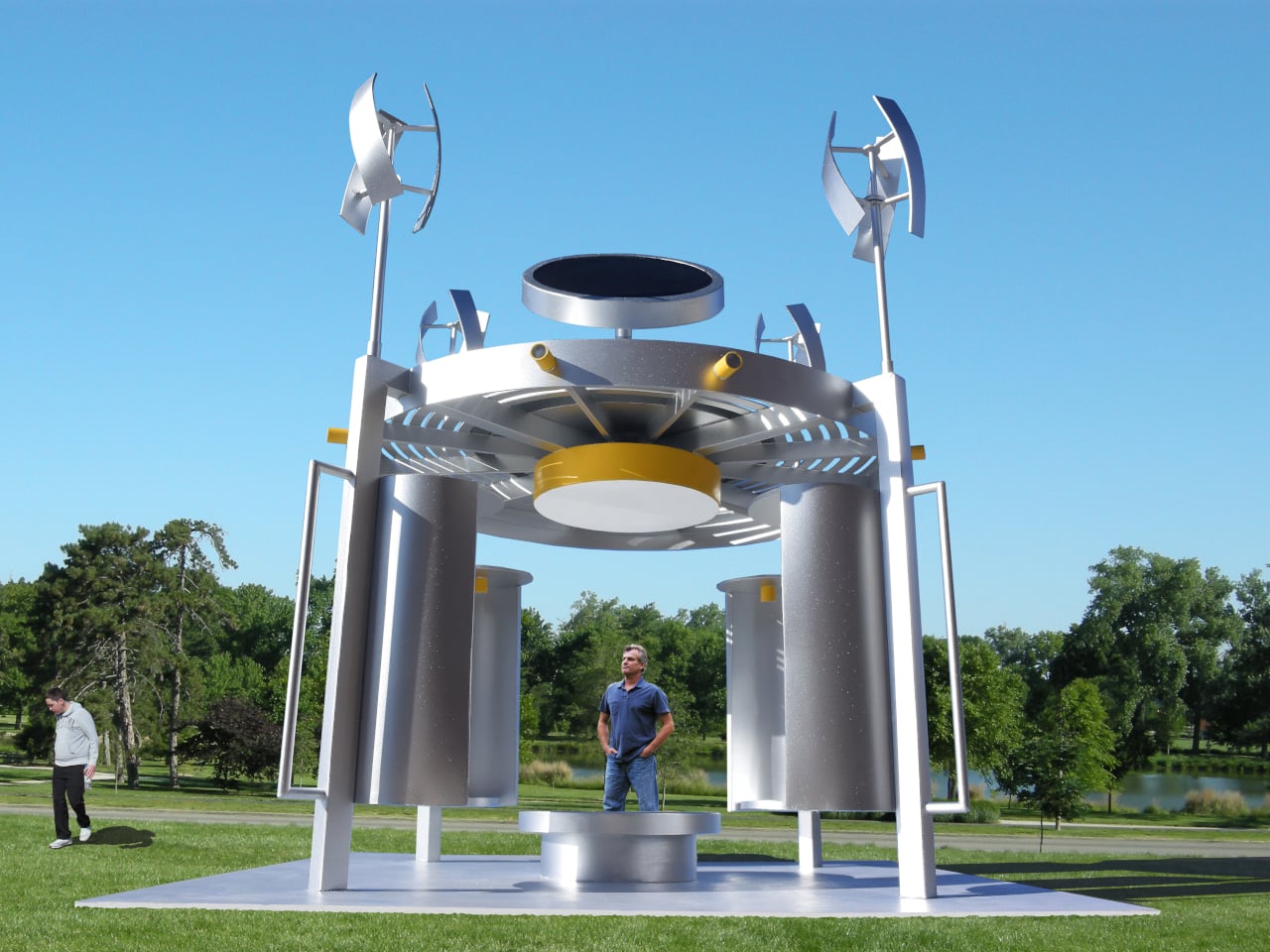
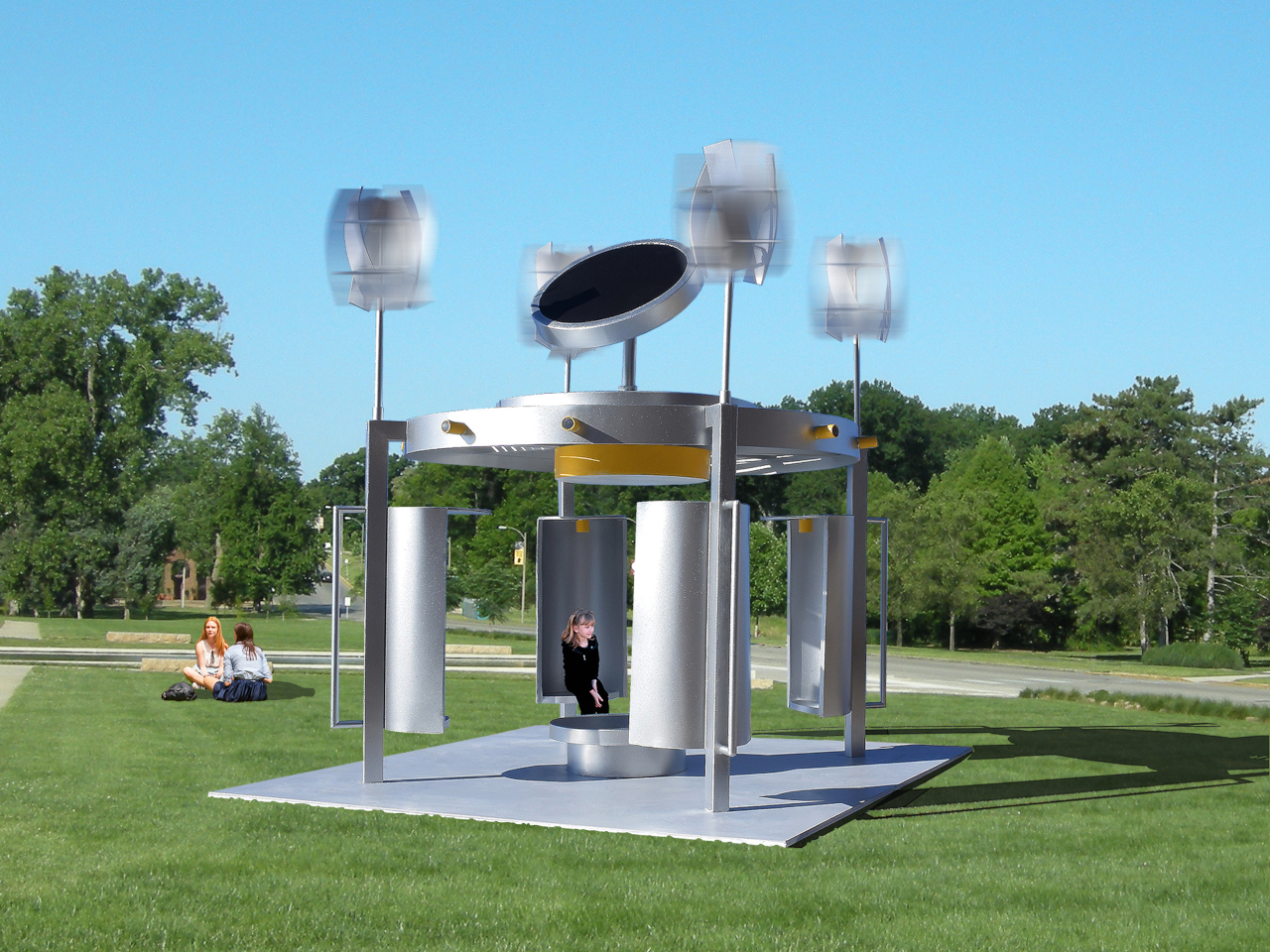
The roof does most of the communicating. Four commercially available vertical-axis wind turbines sit at the corners, while a large circular solar panel occupies the center. That layout is easy to read at a glance: wind at the perimeter, sun at the core. You don’t need a label to understand what’s happening because the structure’s own geometry explains its energy logic, which is something most utility infrastructure completely fails to do.
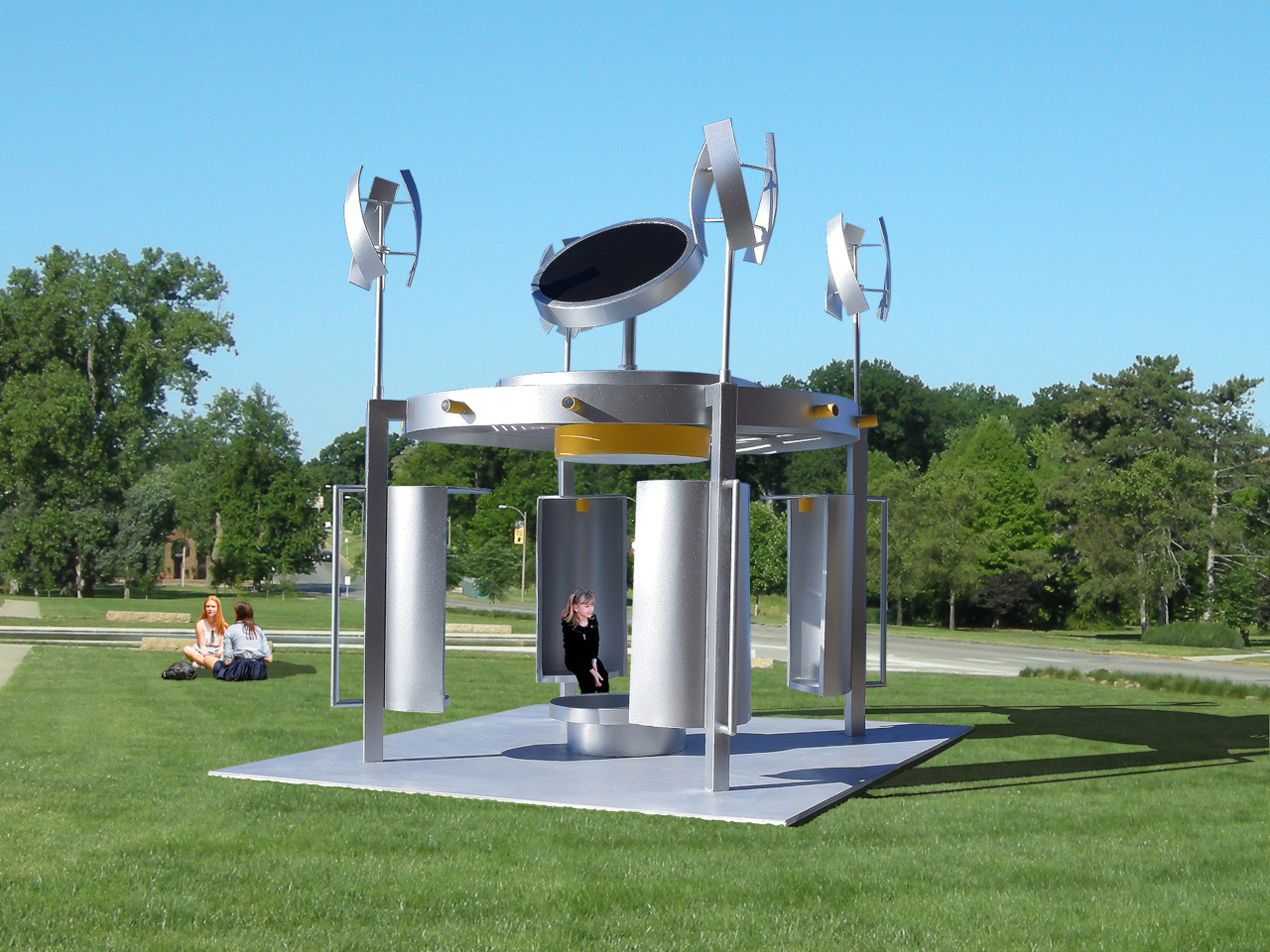
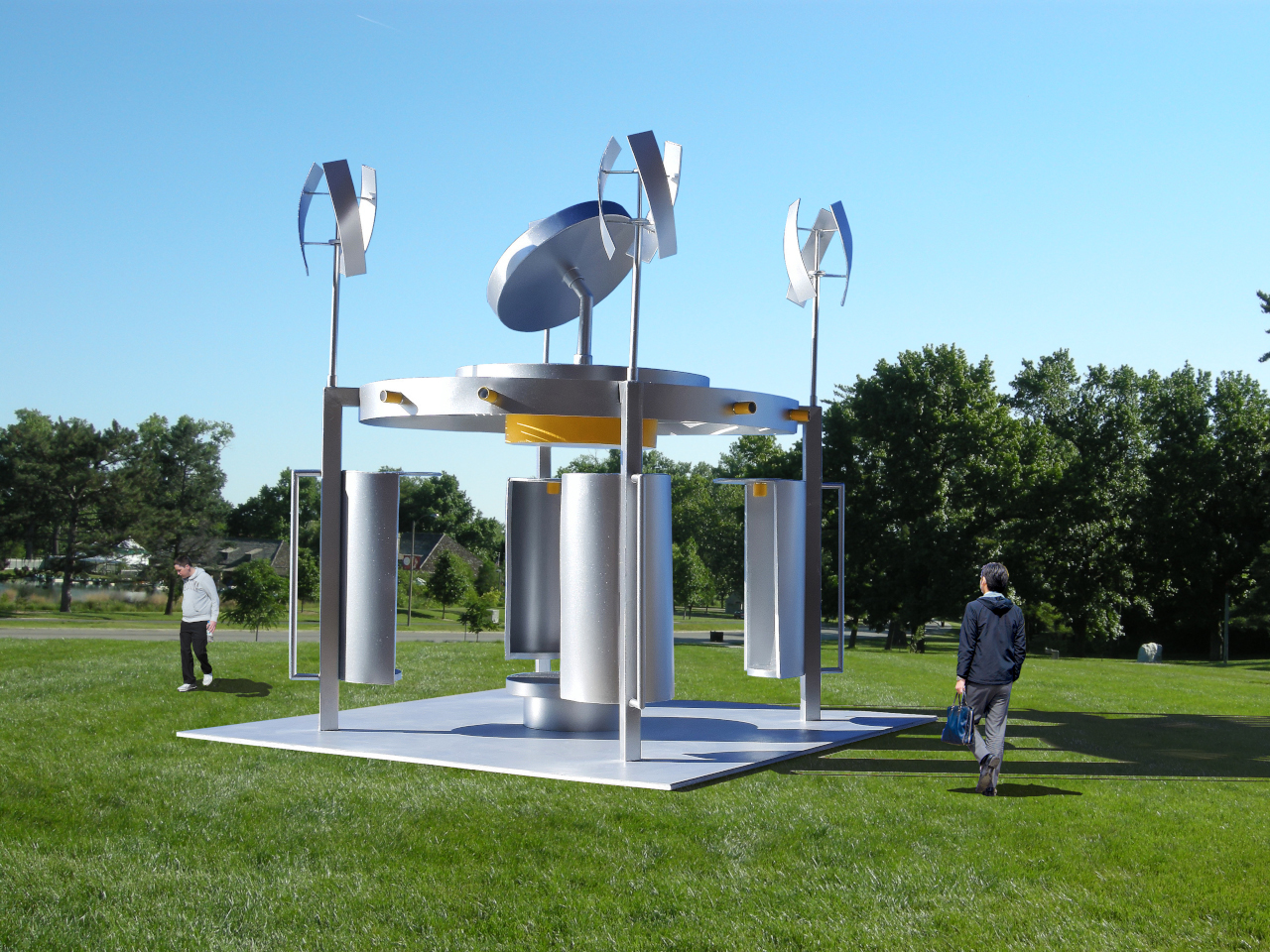
The frame is predominantly stainless steel on concrete bases, which is a deliberate choice for outdoor public installations. Campuses need structures that handle weather, seasonal temperature swings, and constant use without requiring frequent maintenance windows. Stainless steel and concrete aren’t glamorous materials, but they’re honest ones for a building type that needs to outlast a decade of students without becoming an eyesore or a liability.

Inside, four cylindrical seating spaces are attached to the support columns, each with a receptacle at the top for plugging in devices. That detail is quiet but important, turning charging into a normal part of sitting down outdoors rather than a task that sends students hunting for an outlet inside a building. A large round central platform offers a shared surface for sitting or lying down, creating a mix of semi-private individual zones and an open communal gathering area.
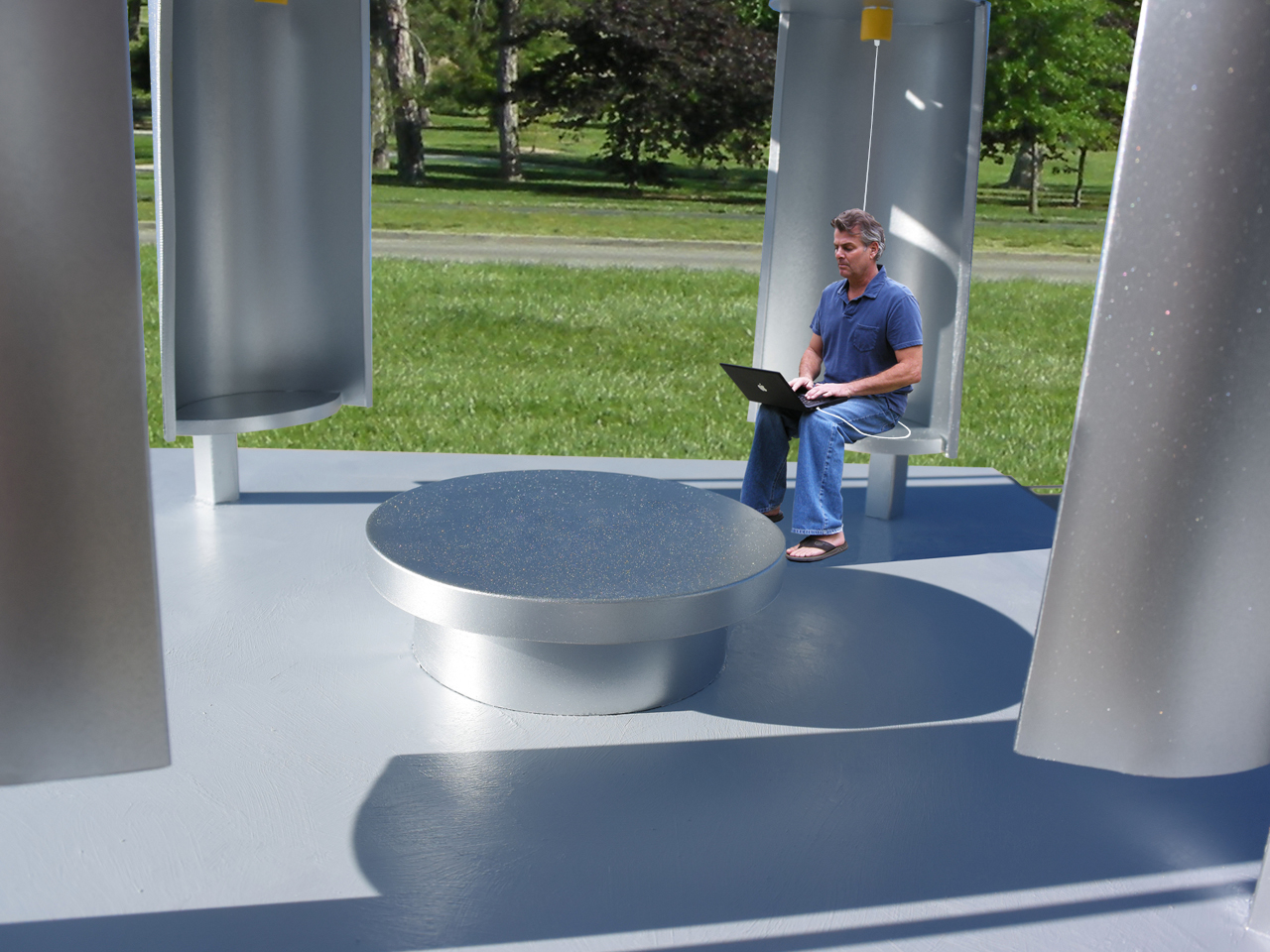

A circular electric light mounted above the central platform runs off the same solar and wind generation, extending the pavilion’s usefulness into evening hours. The structure essentially powers its own ambience, which gives the whole thing a satisfying sense of completion, generation, use, and light running off the same rooftop.

The gazebos are designed to be reproduced as prefabricated structures in various sizes and installed across different landscapes. The same concept fits public parks, corporate campuses, and any open space where people gather and need shade, seating, and somewhere to plug in. The broader implication is that renewable energy infrastructure doesn’t always have to hide behind fences or sit on rooftops. Sometimes it can be the very thing you sit inside of on a Tuesday afternoon between classes.
The post These Solar Gazebos Have 4 Wind Turbines and Let You Charge Below first appeared on Yanko Design.
A new Evangelion series is coming from Studio Khara and Yoko Taro, creator of NieR

Anime fans rejoice, as there's a new Neon Genesis Evangelion series on the horizon. This was announced during a 30th anniversary event held in Japan. The bad news? Franchise creator Hideaki Anno won't be writing the scripts.

However, his replacement will be Yoko Taro, the guy who created the video game NieR. He also wears a giant and rather unsettling moon mask for some reason. The NieR franchise is known for rich and complex lore, with a story spanning thousands of years that occasionally dips into a parallel universe.

It's him in a moon mask.
Wikimedia Commons

Evangelion veteran Kazuya Tsurumaki will be on hand to direct episodes, which is nice for long-time fans. He directed the Rebuild of Evangelion films and the recent Mobile Suit Gundam GQuuuuuuX anime. Composer Keiichi Okabe, from the NieR franchise, is scoring the new show. The new series will be produced by Studio Khara and Cloverworks.

While we know a fair bit about who's behind the scenes of the upcoming show, we don't know anything about the plot. We don't know if it's yet another remake of the original story, a sequel or some kind of spin-off like the chibi-inspired Petit Eva: Evangelion@School. There's a trailer, but it's light on details.

With Taro on board, it could really go in any direction. It's worth remembering, after all, that NieR is actually a spin-off of a PS2 game called Drakengard. In one of the multiple endings of that game, a final boss is transported from a fantasy realm to modern-day Tokyo. Slaying this beast releases a virus that plagues humankind, which is what eventually leads to the post-apocalyptic setting of NieR. This is sort of like if the events of a Dragon Quest game somehow led to the world of Resident Evil.

If there's anyone who can breathe fresh life into the Evangelion franchise, it's Taro. Did I mention he wears a gigantic moon mask? Also, this isn't his first time penning TV scripts. He co-wrote the NieR: Automata anime spinoff.

This article originally appeared on Engadget at https://www.engadget.com/entertainment/tv-movies/a-new-evangelion-series-is-coming-from-studio-khara-and-yoko-taro-creator-of-nier-170916543.html?src=rss

Two Artists Wrapped a Farm Greenhouse in a Giant Quilt

Every winter, Minneapolis does something the rest of the country quietly envies. Instead of hibernating indoors until spring shows up, the city drags its creativity out onto the frozen surface of Lake Harriet and builds a village. Not a regular village, though. An art village, made up of artist-built structures, performances, and interactive installations that take over the ice for four consecutive weekends. That’s the spirit behind Art Shanty Projects, now celebrating its 20th anniversary season, and it gets better with every passing year.

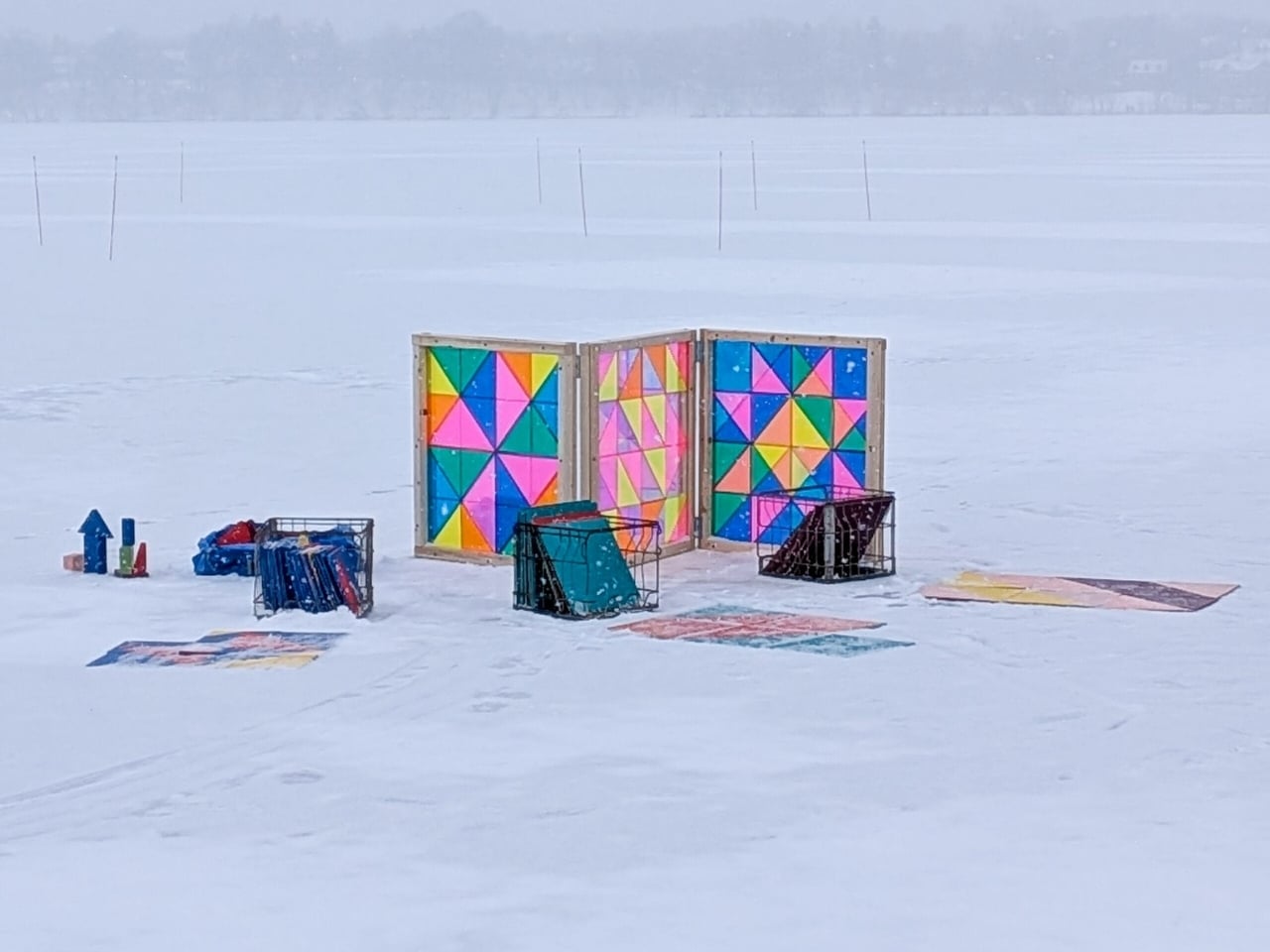
For 2026, one installation has been making the rounds online for all the right reasons. Artists Emily Quandahl and Madeline Cochran were commissioned to create a structure of their own, and what they came up with is genuinely one of the most charming things you’ll see all year. They called it the Quilt Shanty, and the name does exactly what it says.

Designers: Emily Quandahl and Madeline Cochran

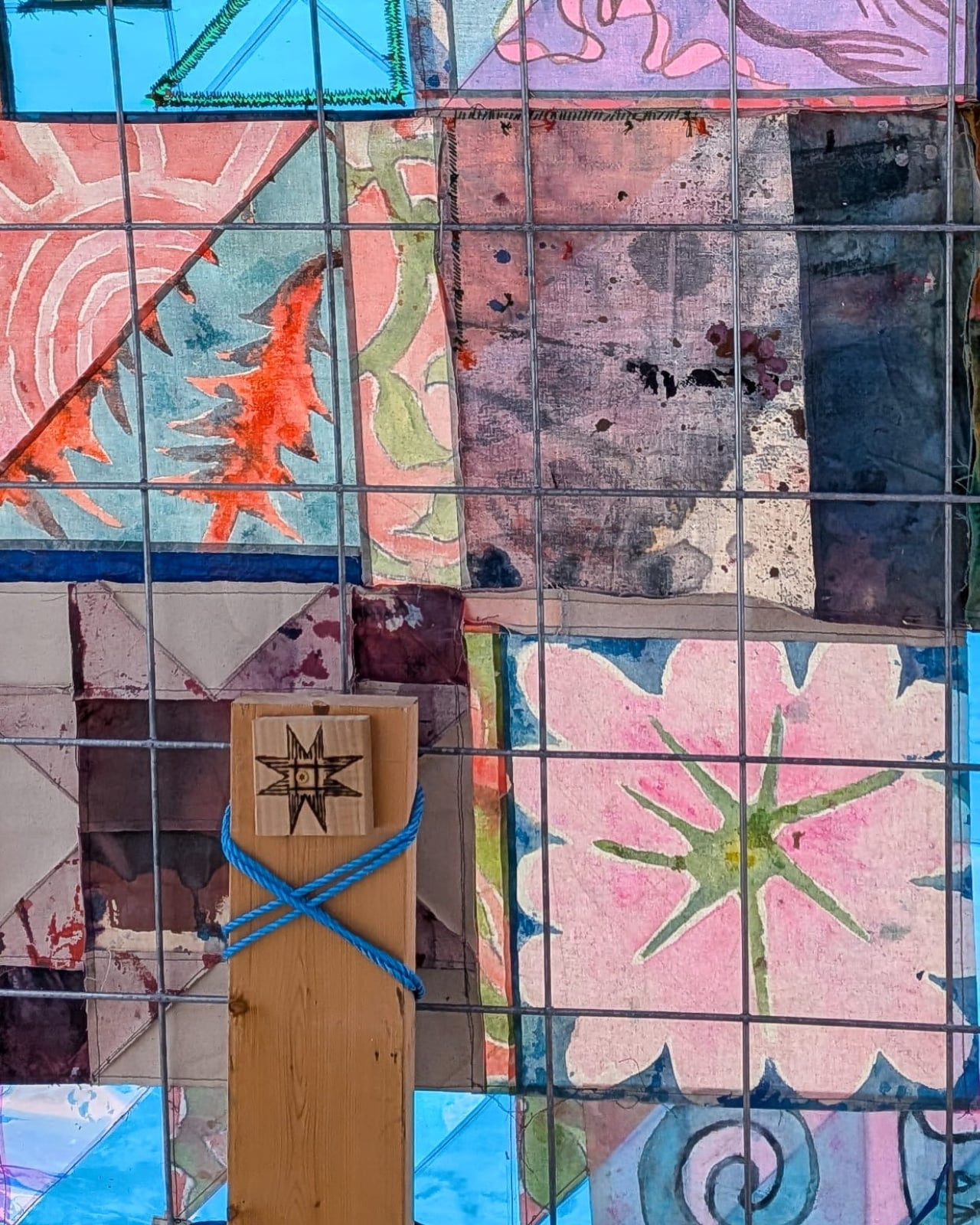
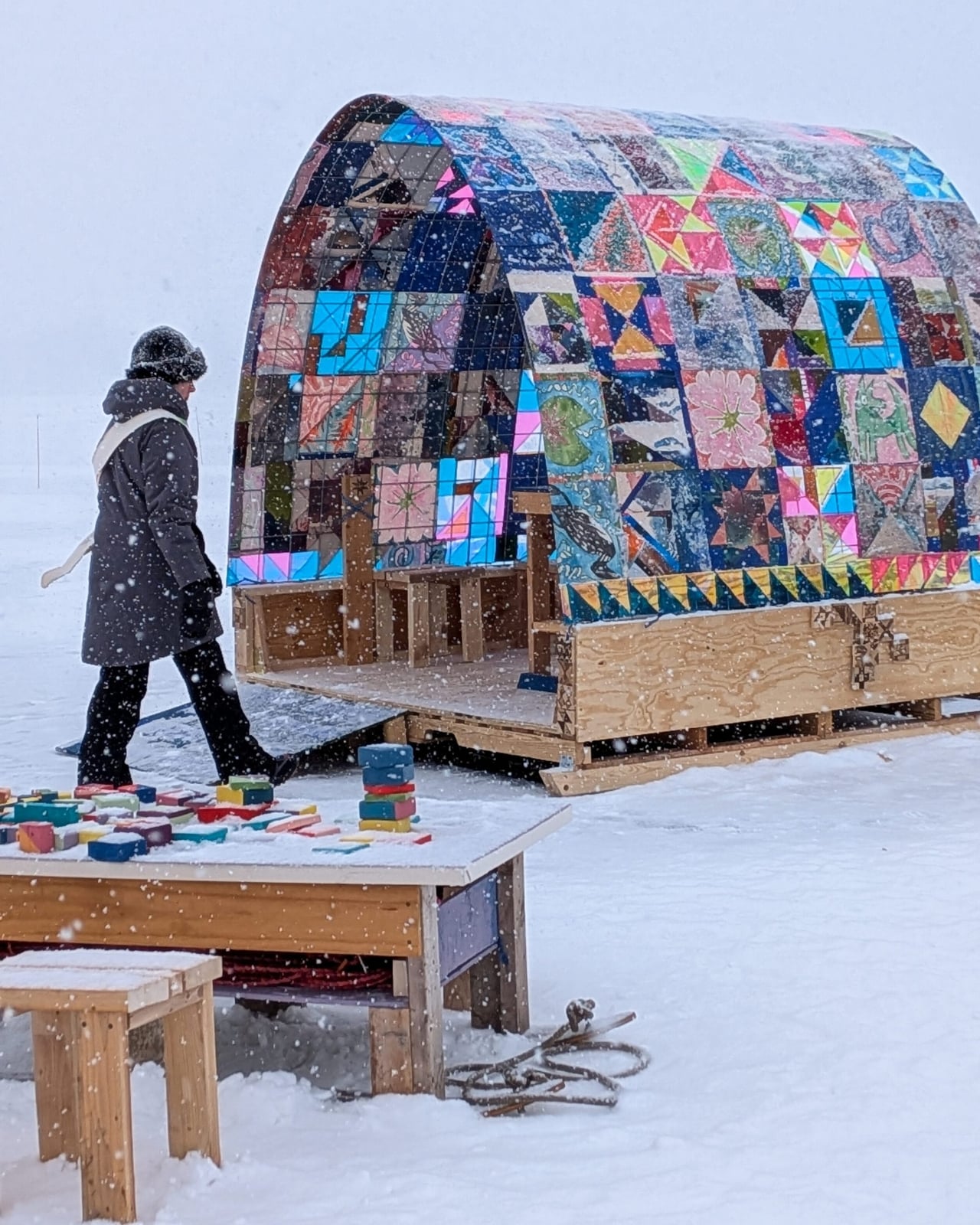
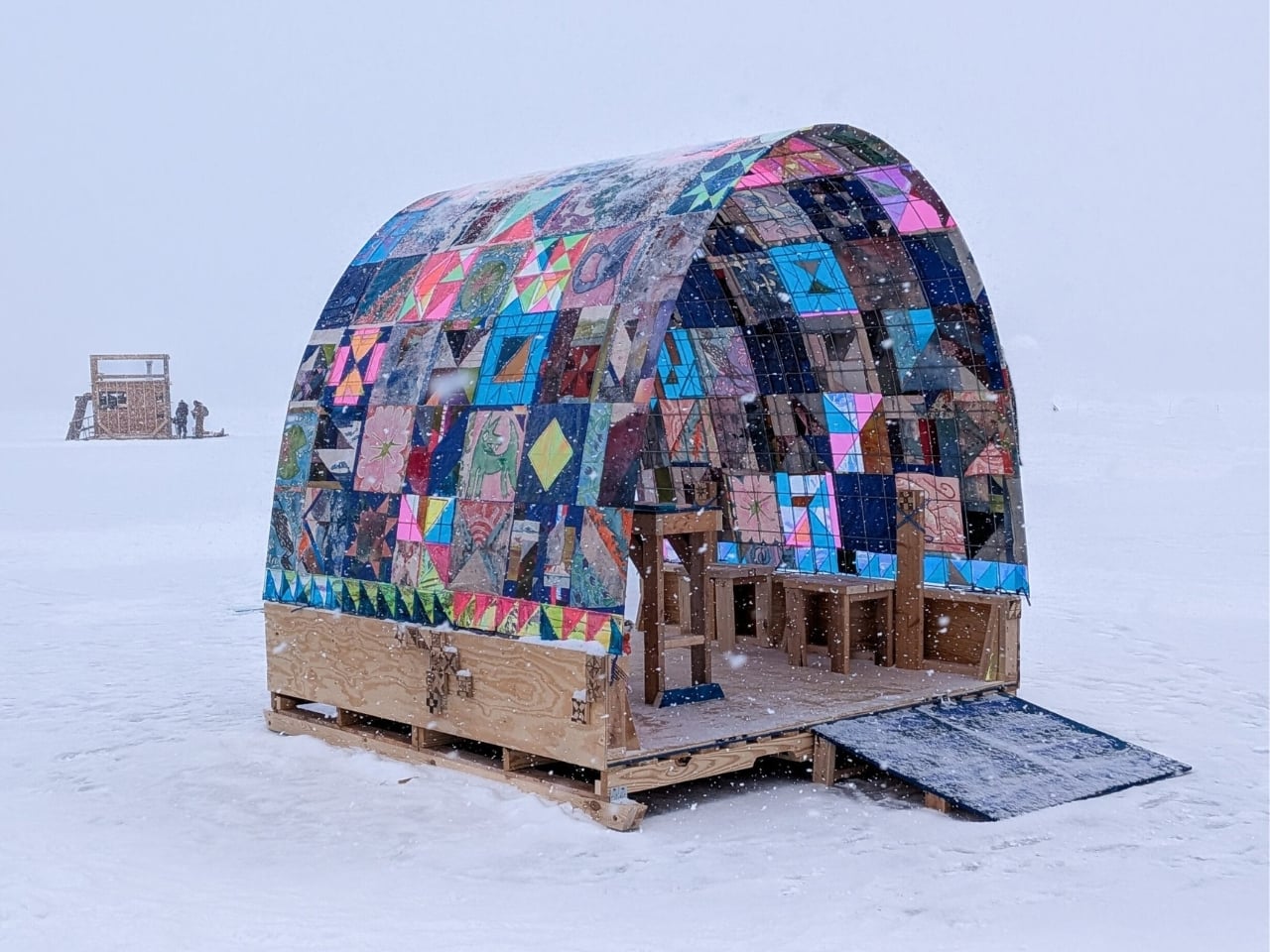
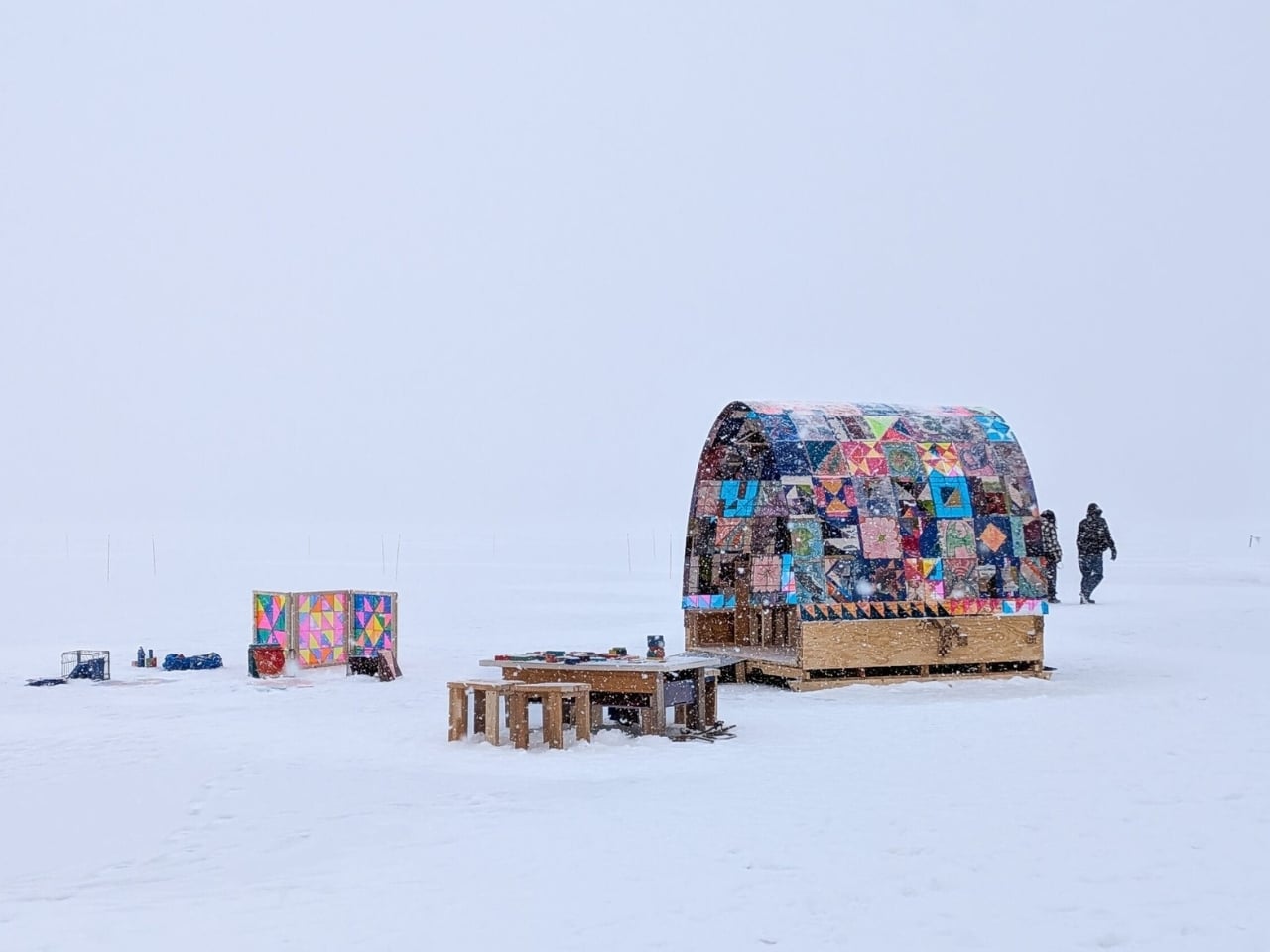
The structure is a hoop house, the kind you’d typically find on a farm protecting crops from the cold, wrapped entirely in a patchwork quilt. Big, bold, colorful squares stretch across the curved surface of the frame, sitting right there on the frozen lake like someone dragged their grandmother’s most treasured blanket outside and built a room around it.

The concept is rooted in the tradition of barn quilts, those large painted quilt-pattern squares that farmers in rural America hang on the sides of their barns. Quandahl and Cochran took that idea and made it three-dimensional and tactile. The quilt itself measures 9 feet by 16 feet and is made from quilt squares that Quandahl designed and constructed by hand, pulling materials from her own studio: leftover painting scraps, drop cloth, and colored vinyl. Cochran contributed illustrated muslin pieces featuring folk-style drawings, as well as wood-burned quilt tiles that add another layer of texture and craft to the whole thing.

What makes it stand out beyond its visuals is the way it pulls people in. The installation is interactive. Visitors can sit inside, pick up quilt-square puzzle pieces, and assemble their own designs. Cochran designed the wood-burned puzzle pieces, and Quandahl created a colored vinyl trifold key to help guide the activity. It’s the kind of participatory experience that makes you slow down and actually engage, rather than just snap a photo and move on, though you will absolutely want to snap a photo.

The two artists bring complementary practices to the table. Quandahl works primarily in painting, while Cochran takes a multimedia approach that frequently incorporates textiles and weaving. Their collaboration feels natural because of that balance, one thinking in structure and surface, the other in fiber and folk tradition. Together, they’ve created something that doesn’t feel like a design project as much as it feels like an invitation.

There’s also something quietly meaningful in the choice of a hoop house as the base form. Hoop houses are agricultural structures, tied to growing seasons and the cycle of land. By covering one in a quilt and placing it on a frozen lake in the middle of winter, Quandahl and Cochran are drawing a line between rest and care, between the quiet dormancy of cold months and the warmth of human hands making things. The installation celebrates rural craft traditions like quilting, embroidery, woodcarving, and wood burning, while highlighting the seasonal cycles of rest and care when the land is quiet. These are old skills finding renewed appreciation in contemporary art and design circles, and seeing them applied to a public installation on a frozen lake feels exactly right.

This is exactly the kind of project that reminds you why public art matters. It doesn’t ask anything complicated of you. It just shows up on a frozen lake, colorful and open, and invites you to come inside. That accessibility, that warmth in the middle of all that ice, is no accident. It’s the whole point. If you haven’t heard of Art Shanty Projects before now, consider this your introduction. And if you’re anywhere near Minneapolis this winter, there’s a patchwork hoop house on Lake Harriet waiting for you.

The post Two Artists Wrapped a Farm Greenhouse in a Giant Quilt first appeared on Yanko Design.
The creators of Dark Sky have a new weather app

The team behind the beloved Dark Sky weather app has announced a new iPhone app called Acme Weather. The release comes after Apple's 2020 acquisition of Dark Sky, which it ultimately shut down in 2022 after integrating much of its tech into the native iOS Weather app.

Acme Weather is primarily designed to address the uncertainty inherent in most forecasts, as different models yield disparate results and no two weather apps seem to report the same thing. Acme’s answer to this issue is “Alternate Predictions,” which shows users a range of possible outcomes alongside the app's core forecast line throughout the day. If the lines are arranged together tightly, it means the app has high confidence in the forecast at that time. When those lines start to diverge, the app is signaling lower confidence while showing users alternate predictions for that time of day.

The app also supports community reporting, seeking to do for weather what Waymo did for traffic. Users can share real-time conditions in their area using icons or emojis, helping increase accuracy when conditions are changing quickly. Like most weather apps, there is also a map component with layers for radar, lightning, rain and snow totals, wind and more.

Acme leverages notifications to help make sure you don't miss important changes to the forecast or weather alerts. Grossman says they are comprehensive and should help you avoid getting caught in the rain unawares. Notifications also include community reports, government weather alerts and even experimental tools from "Acme Labs" like rainbow and beautiful sunset alerts.

Acme offers a two-week free trial, then costs $25 a year. The iOS version is available now and an Android is forthcoming.

This article originally appeared on Engadget at https://www.engadget.com/apps/the-creators-of-dark-sky-have-a-new-weather-app-155426063.html?src=rss

Samsung Galaxy S26 Ultra: The COMPLETE Guide (Everything You Need to Know)

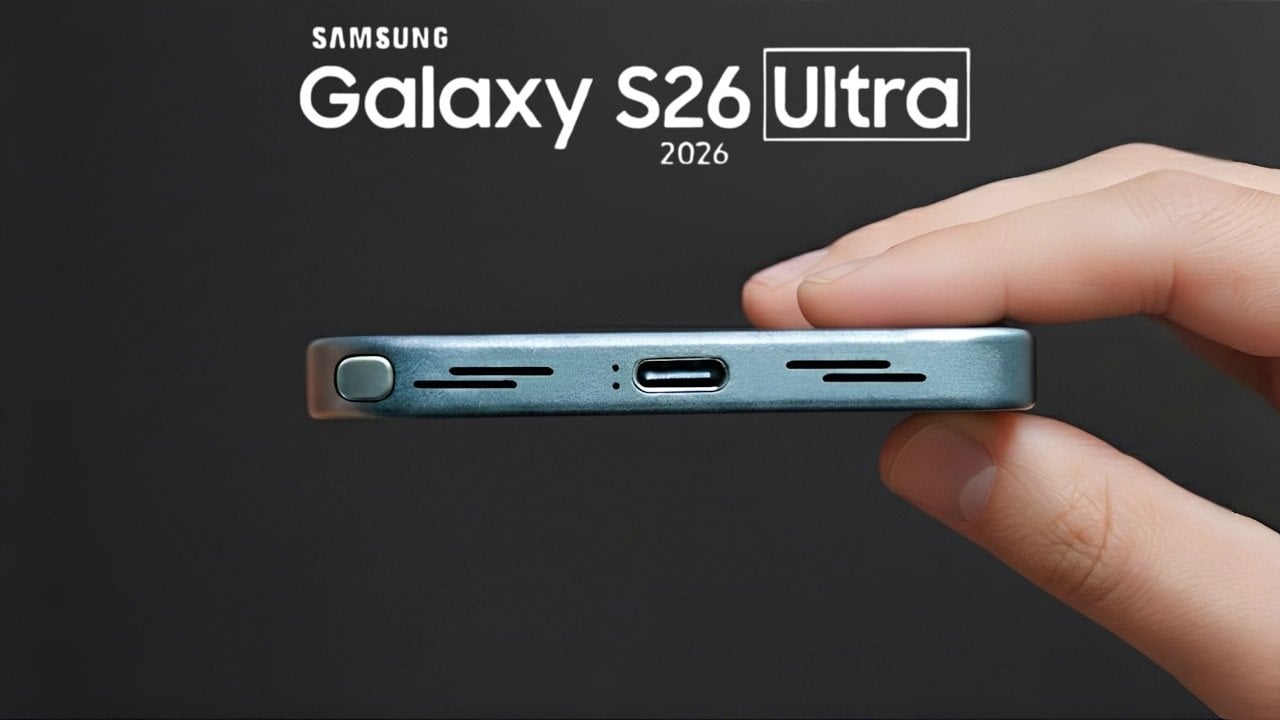
Samsung Galaxy S26 Ultra: The COMPLETE Guide (Everything You Need to Know) Samsung Galaxy S26 Ultra showcasing its sleek design and durable aluminum frame

The Samsung Galaxy S26 Ultra is poised to redefine the premium smartphone landscape with its blend of innovative technology, refined aesthetics, and user-focused innovations. As the flagship model of the Galaxy S26 series, it introduces significant advancements in display technology, processing power, and camera performance. These enhancements position the Galaxy S26 Ultra as a formidable […]

The post Samsung Galaxy S26 Ultra: The COMPLETE Guide (Everything You Need to Know) appeared first on Geeky Gadgets.

Posted in Uncategorized

Credit-card sized NanoPhone Pro is a lightweight device for minimalists

Let’s be honest, smartphones have grown quite big in size from their very early designs. A 6.5-inch brick is considered standard these days, as flagships can even outgrow that size to give users maximum display real estate with an impressive screen-to-body ratio. Challenging the conventions to bring back minimalistic dimensions for a pocket-friendly approach to your BFF pocket gadget, the NanoPhone turned heads when it was introduced in late 2024.

The telltale vibe of the device’s iPhone Mini resemblance was hard to ignore, given it had all the check boxes ticking for the right reasons. Barring its thick bezels and a few little kinks, the shrunken gadget had everything going in the right direction. Now, the phone is back in a Pro version with the bezels shrunk down for a more modern appeal, with all the other perks intact to make it a highly pocketable phone for every kind of user.

Designer: NanoPhone

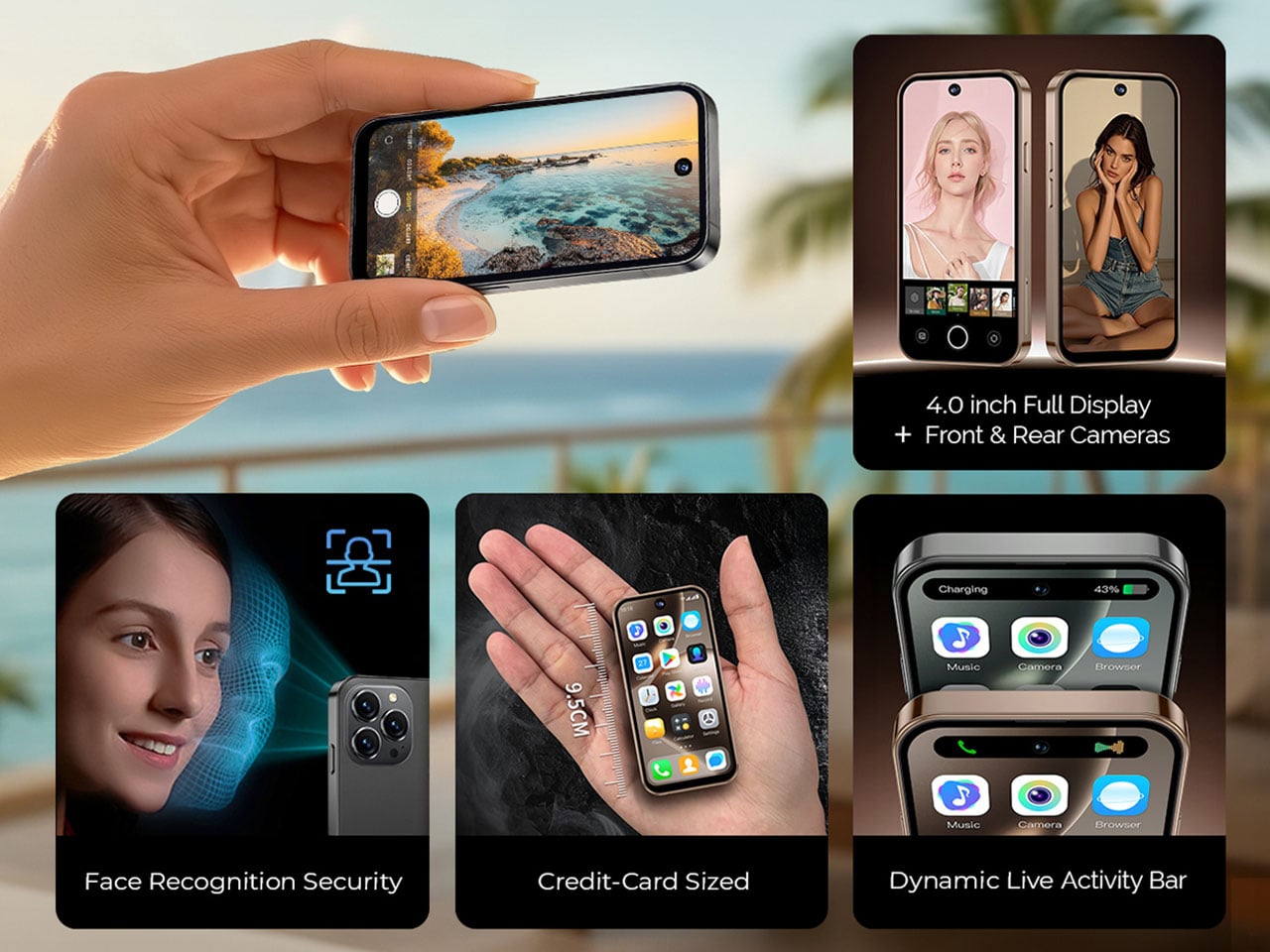
Although it looks like a shrunk-down iPhone, the credit card-sized 4G device is powered by Android 12 and certified for Google Play apps. The NanoPhone Pro does everything a normal phone can – browse the internet, make calls, listen to music, real-time navigation, and more – all while taking up minimal space in your pocket. This makes the mini phone ideal for people who prefer minimalism and are not intrigued by the entertainment aspect of current-day versatile smartphones that are more than ideal for gaming or binge-watching favourite shows.

The device has a modest 5MP camera on the rear and a 2MP front shooter for taking quick photos or engaging in video chats. This makes it fit to be used as a secondary phone, especially when you are trying hard to reduce your screen time. The device is also fit for kids and the elderly who want a major chunk of the functionality without any complications or bulk.

Since size is the USP, the device optimizes the 2000mAh battery performance well on the 4-inch edge-to-edge IPS touchscreen for a complete day of use. The 4G support, dual-SIM slot, and wireless connectivity promise quite a lot in this pocket rocket device. Weighing just 79 grams, the phone can be tethered to a lanyard on your backpack or running belt.  Priced at $100, the NanoPhone Pro hits the sweet spot for users who always wanted such a device. The makers are generous enough to include a protective case and a screen protector in the packaging, making it an even sweeter deal at a modest price.

The post Credit-card sized NanoPhone Pro is a lightweight device for minimalists first appeared on Yanko Design.

Samsung Galaxy S26 Ultra vs. S25 Ultra: Every Major Difference Explained

Samsung Galaxy S26 Ultra vs. S25 Ultra: Every Major Difference Explained Samsung Galaxy S26 Ultra vs S25 Ultra side-by-side comparison

The Samsung Galaxy S26 Ultra builds upon the solid foundation of its predecessor, the S25 Ultra, by introducing a series of thoughtful refinements in design, display technology, performance, and AI integration. While the S25 Ultra remains a highly capable flagship device, the S26 Ultra focuses on enhancing the overall user experience rather than introducing new […]

The post Samsung Galaxy S26 Ultra vs. S25 Ultra: Every Major Difference Explained appeared first on Geeky Gadgets.

Posted in Uncategorized

This Wireless Mouse Clips to Your Laptop Edge So You Never Lose It

Working on the move means accepting a certain amount of small friction. You can have a great laptop and still spend the first five minutes of a café session digging through a bag for a mouse, or realizing you left it on your desk at home. Accessories are the first things to get lost because they don’t have a natural home when you’re packing up in a hurry, and no amount of good habits fully solves that.

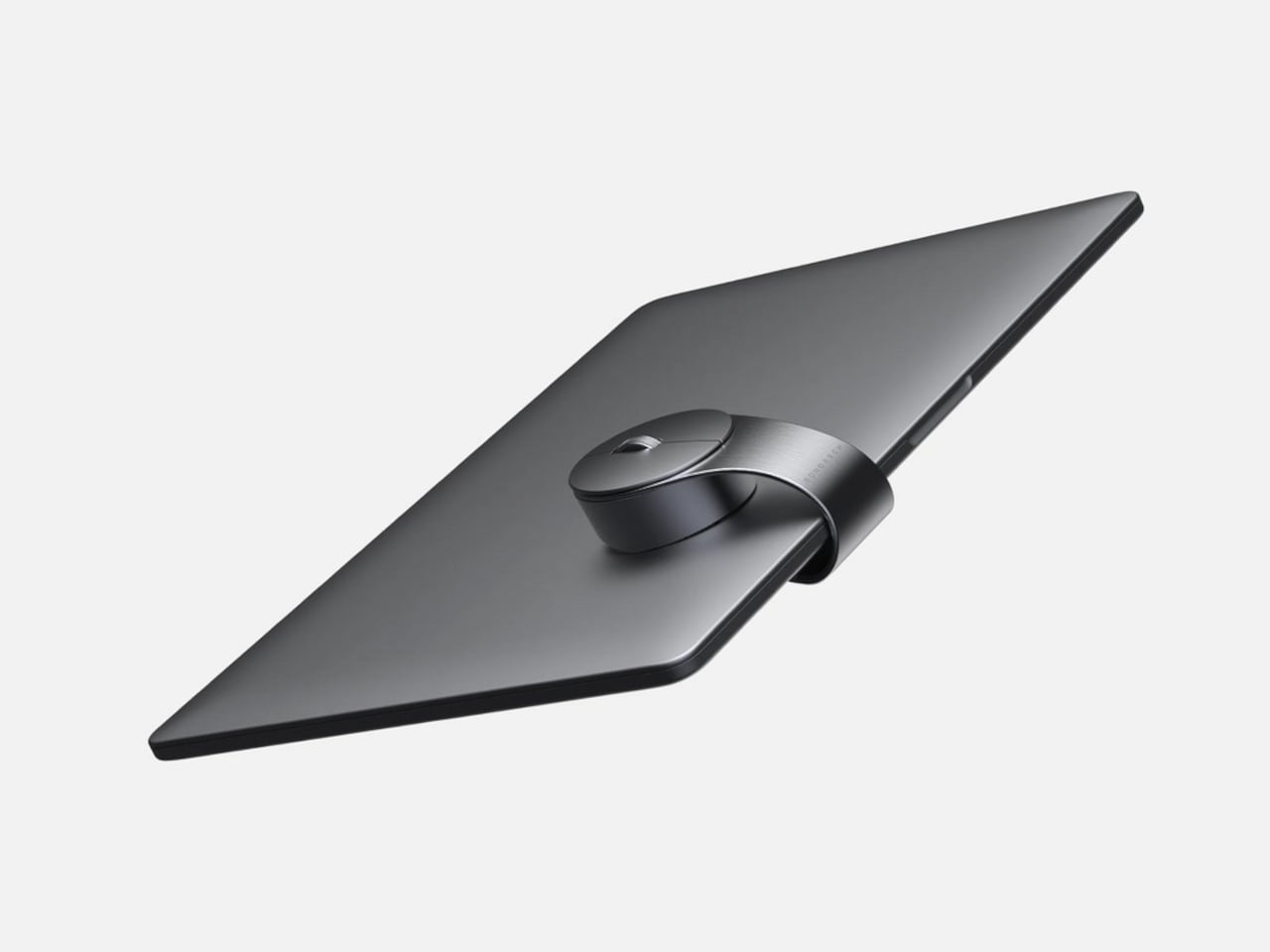
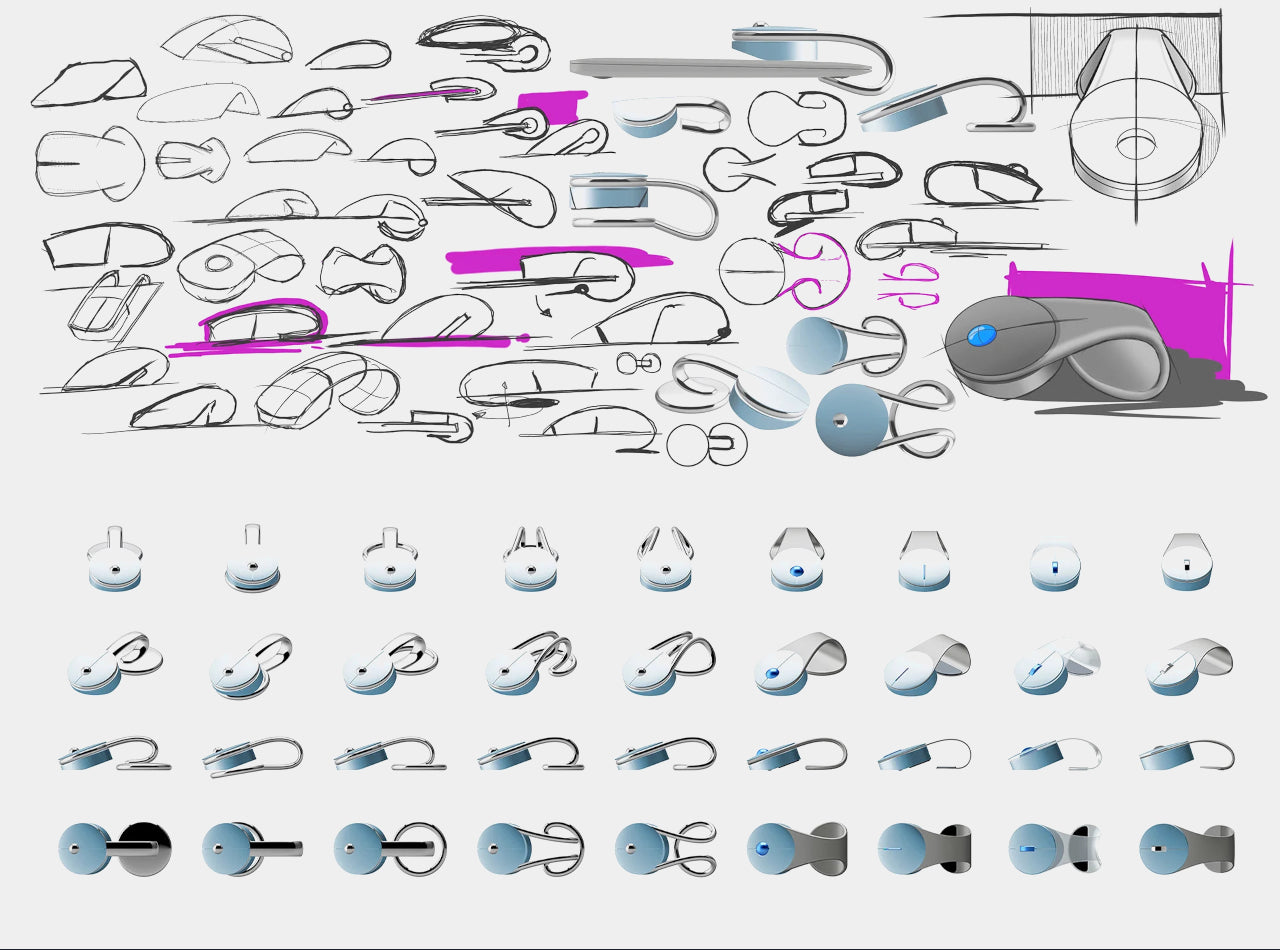
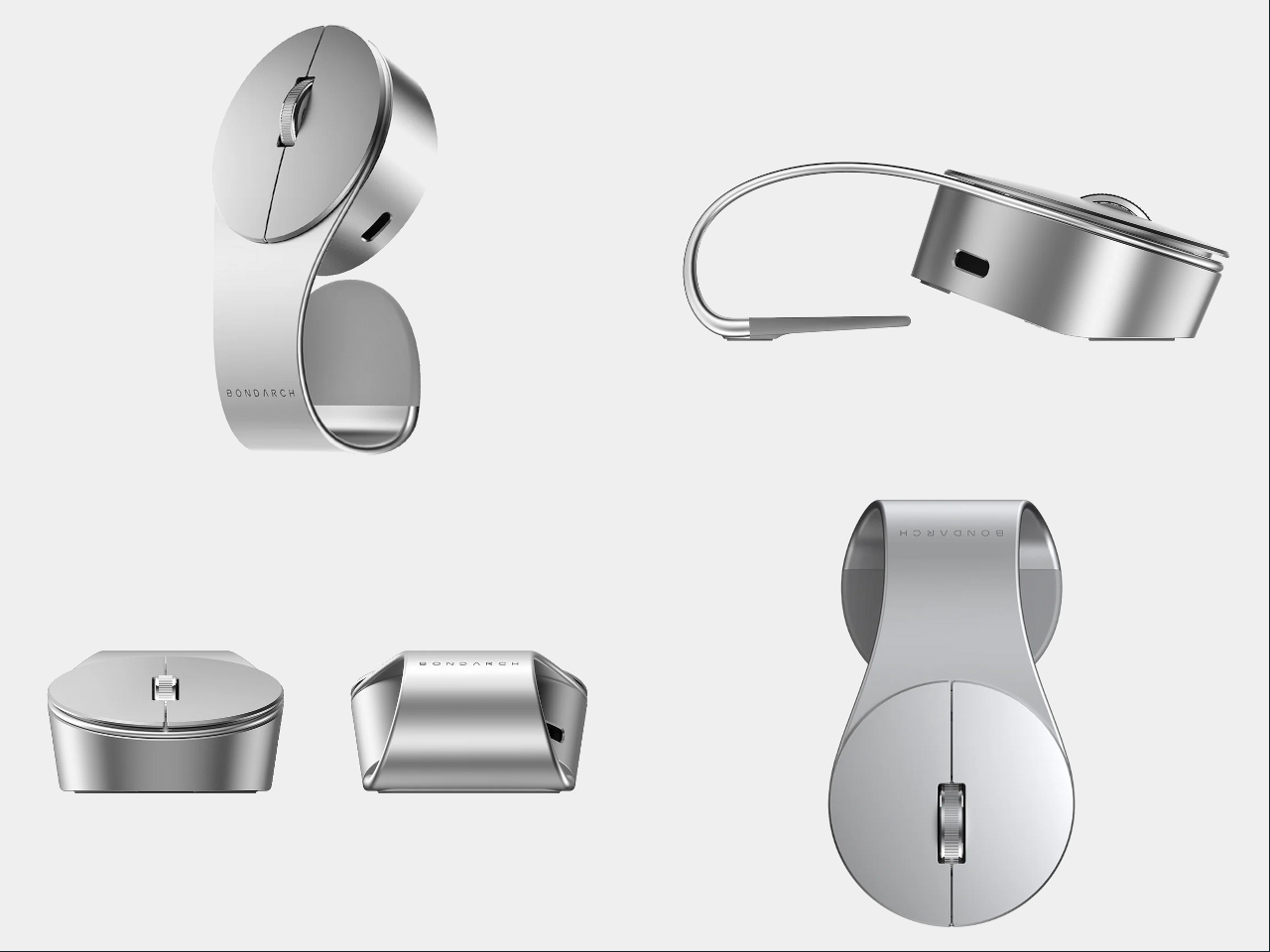
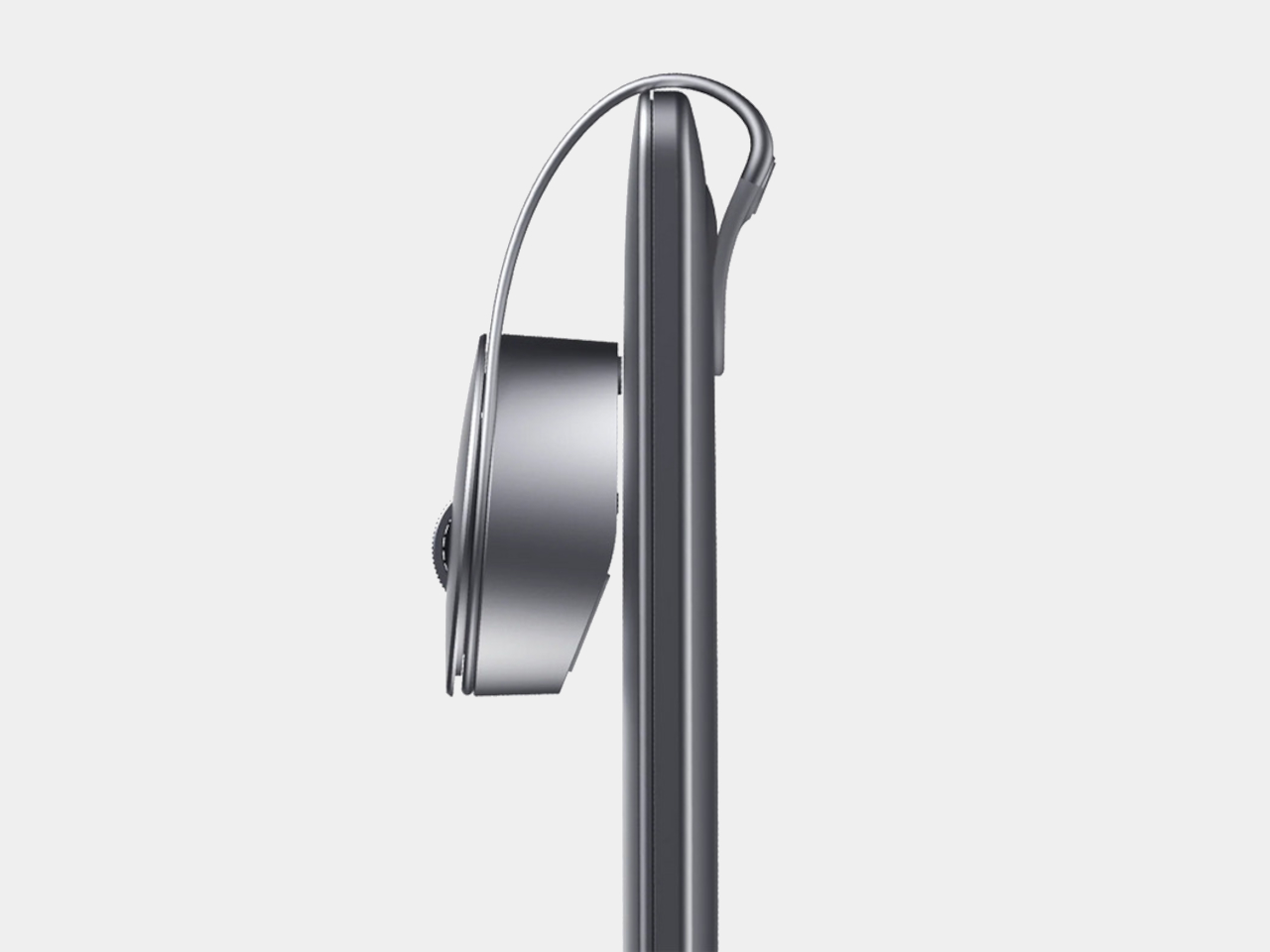
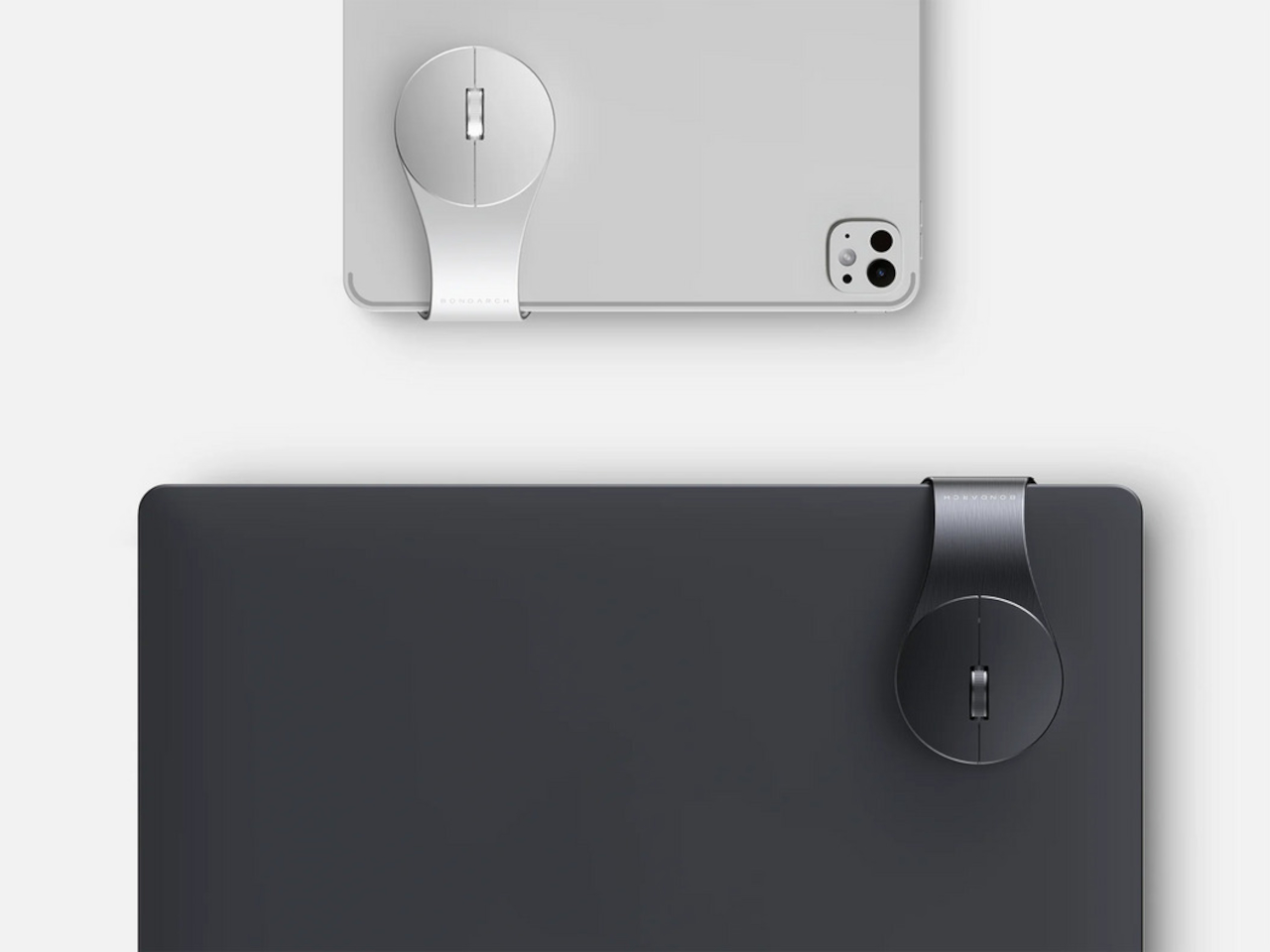
BondClip by BondArch is a wireless mouse engineered to clip onto the edge of a laptop or tablet, so it travels with the device instead of floating loose. The G-shaped architecture is the whole idea, a flowing aluminum loop that forms a natural clip and keeps the mouse attached to the device like a tool rather than stored like a separate accessory you have to keep track of.

Designers: Sangmin Yu and Rinchar Ren (HNDESIGN) for BondArch

The clip itself relies on geometry and friction rather than a clamp or spring mechanism. A silicone pad on the underside of the loop increases contact friction, helping BondClip grip the laptop’s edge firmly during travel without digging into the surface or requiring the kind of force that would mark a premium finish. The silicone also absorbs minor vibrations, so it doesn’t rattle around in a bag with the laptop.

The weight comes in at 72g and dimensions at 110.6mm x 60mm x 36.2 mm, which puts it in compact travel mouse territory. The more meaningful shift is behavioral. When you open the laptop, the mouse is already there, clipped to the edge and ready to go. That changes the rhythm of setting up in a meeting room or café, removing one physical search from the start of every work session.

Connectivity covers 2.4GHz wireless and Bluetooth 5.4, switchable via a mode button on the underside, so you can pair it to a laptop and tablet independently and switch between them without re-pairing. Adjustable DPI runs from 600 to 3600, covering slow, precise cursor work and faster general browsing without needing software to set it up.

The 25 mAh rechargeable battery is rated for 130 hours of use on a single charge, with USB-C for recharging. At that battery life, it’s the kind of peripheral you plug in occasionally rather than manage carefully, which matters when you’re already keeping an eye on a laptop, phone, and earbuds.

The body is precision-bent aluminum alloy, with polycarbonate and silicone components, in Silver and Midnight finishes. BondArch calls it “office luxury,” which isn’t an empty claim when the sandblasted matte finish is clearly aimed at the same visual register as a modern MacBook. It’s a mouse that gives itself a place to live on the device it works with, which turns out to be a more useful idea than another wireless range number.

The post This Wireless Mouse Clips to Your Laptop Edge So You Never Lose It first appeared on Yanko Design.

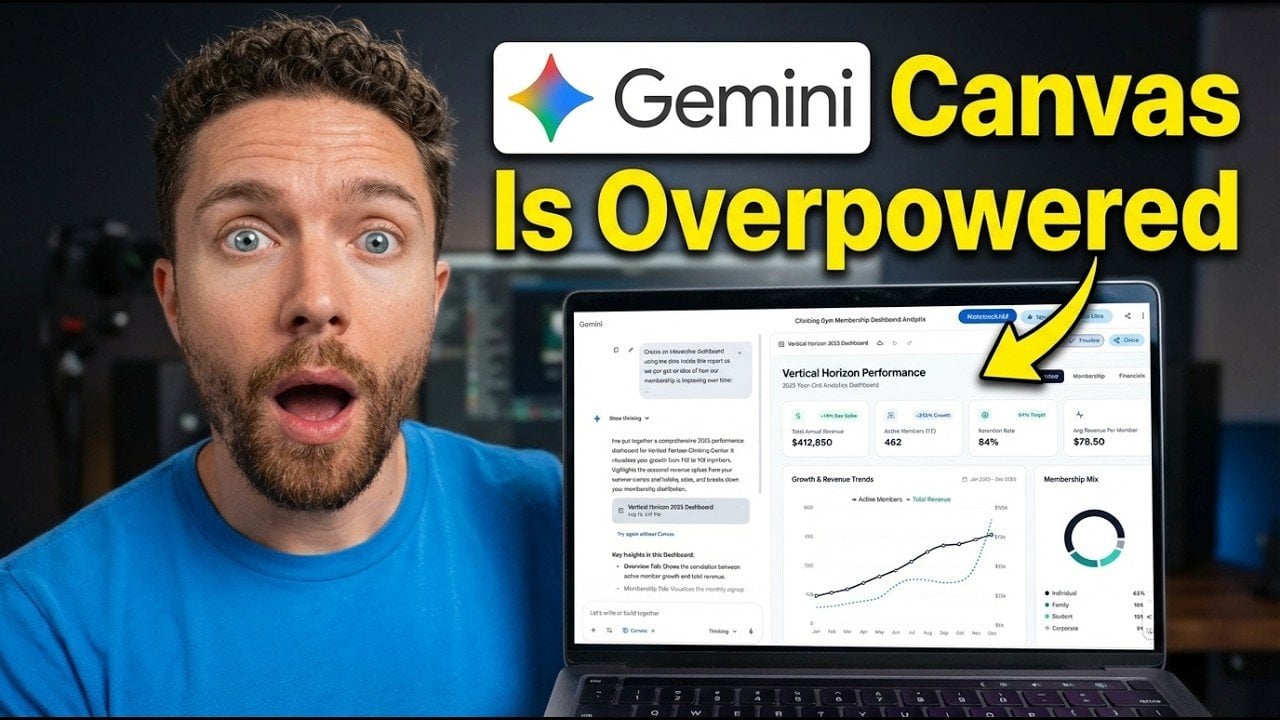
7 Gemini Canvas Use Cases : Integrates with Google Drive & NotebookLM

7 Gemini Canvas Use Cases : Integrates with Google Drive & NotebookLM A Gemini Canvas project view showing an editable workspace with a draft app layout and side-by-side changes.

Gemini Canvas offers a dynamic, editable workspace designed to support a wide range of creative and practical applications. As overviewed by Paul Lipsky, this platform goes beyond traditional AI chat systems by allowing users to directly create, refine, and interact with projects like apps, dashboards, and educational materials. One standout feature is its interactive workspace, […]

The post 7 Gemini Canvas Use Cases : Integrates with Google Drive & NotebookLM appeared first on Geeky Gadgets.

Posted in Uncategorized

Mac Studio 2026 Leaks: Thunderbolt 5, 128GB RAM & M5 Ultra Details

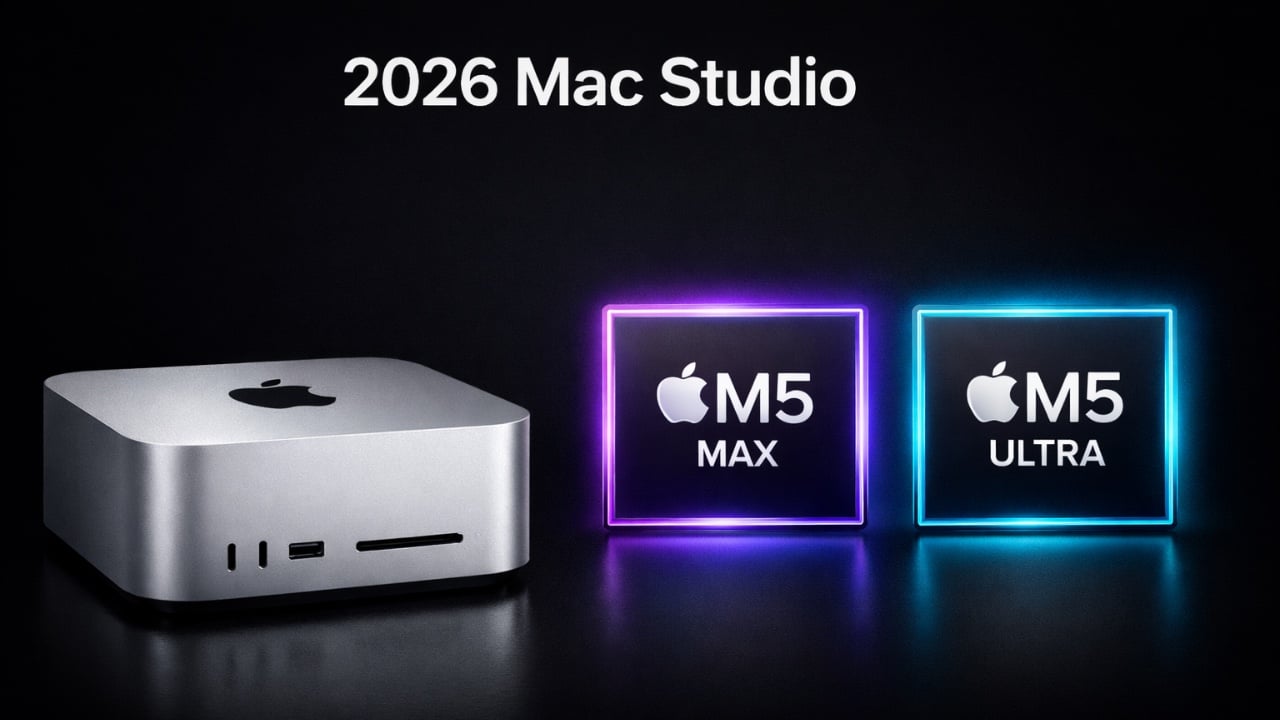
Mac Studio 2026 Leaks: Thunderbolt 5, 128GB RAM & M5 Ultra Details Mac Studio 2026

  The 2026 Mac Studio establishes itself as a cornerstone of professional desktop computing, blending exceptional performance with a compact and efficient design. Equipped with Apple’s latest M5 Max and M5 Ultra chips, it delivers the speed and efficiency required for demanding tasks such as video editing, 3D rendering, and machine learning. Enhanced storage and […]

The post Mac Studio 2026 Leaks: Thunderbolt 5, 128GB RAM & M5 Ultra Details appeared first on Geeky Gadgets.

Posted in Uncategorized