The tiny home movement has been threatening to plateau for a few years now, and it keeps refusing to. September’s best builds make a compelling argument for why – not because they are novelties or lifestyle statements, but because they are genuinely well-designed homes that happen to be small. From a $33,700 single-floor build in the US to an award-winning off-grid retreat in the Australian bush, this month’s lineup is worth your full attention.
What separates these seven homes from the ones that cycle endlessly through social media is the discipline in their planning. Each one has resolved a real problem, whether that’s sleeping five people on a trailer, fitting a bathtub into 423 square feet, or running entirely off-grid without sacrificing a single luxury. That kind of specificity is harder to achieve than it looks, and it is increasingly what separates interesting tiny home design from forgettable compact architecture.
1. Fairfax 20
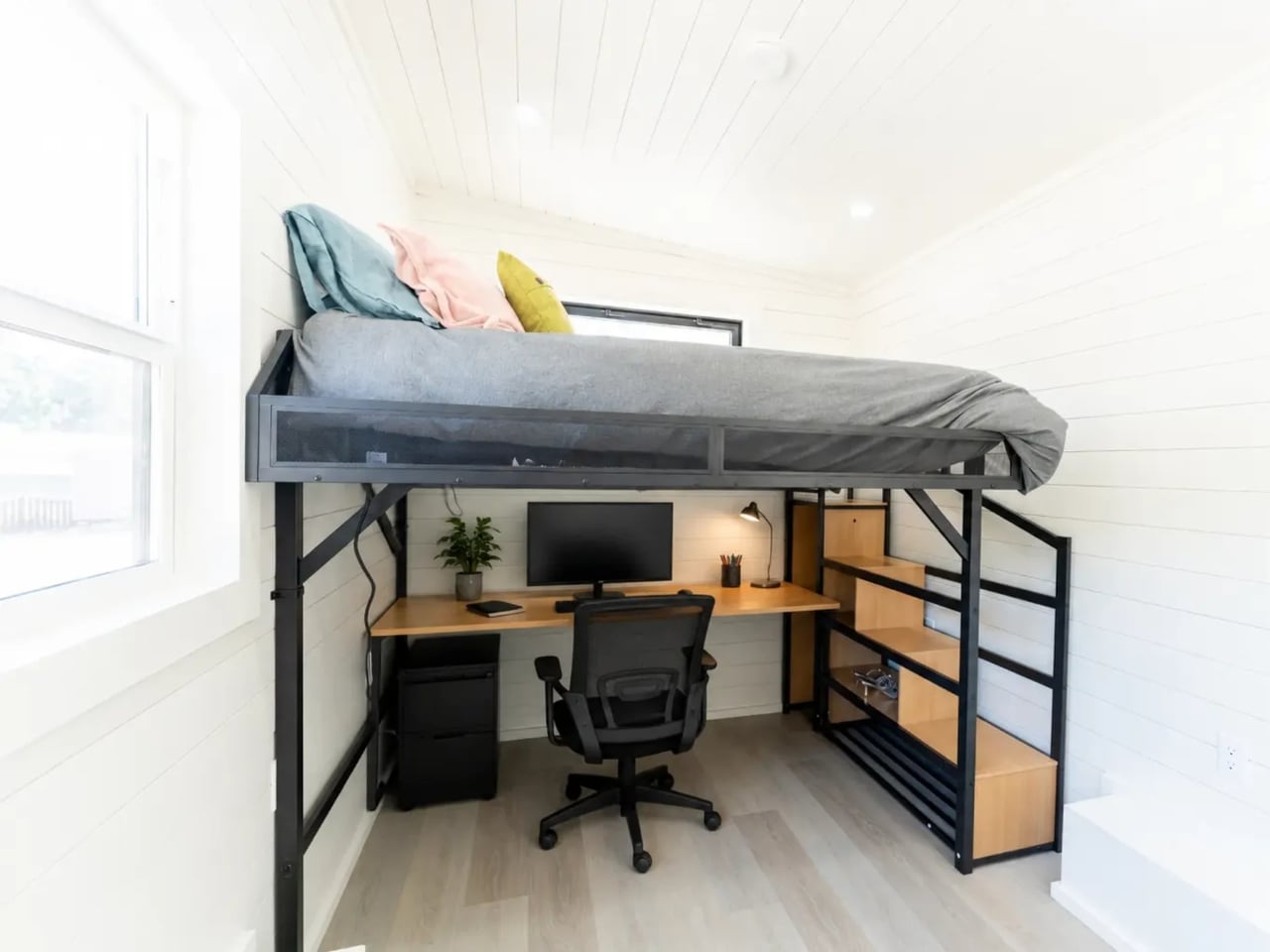
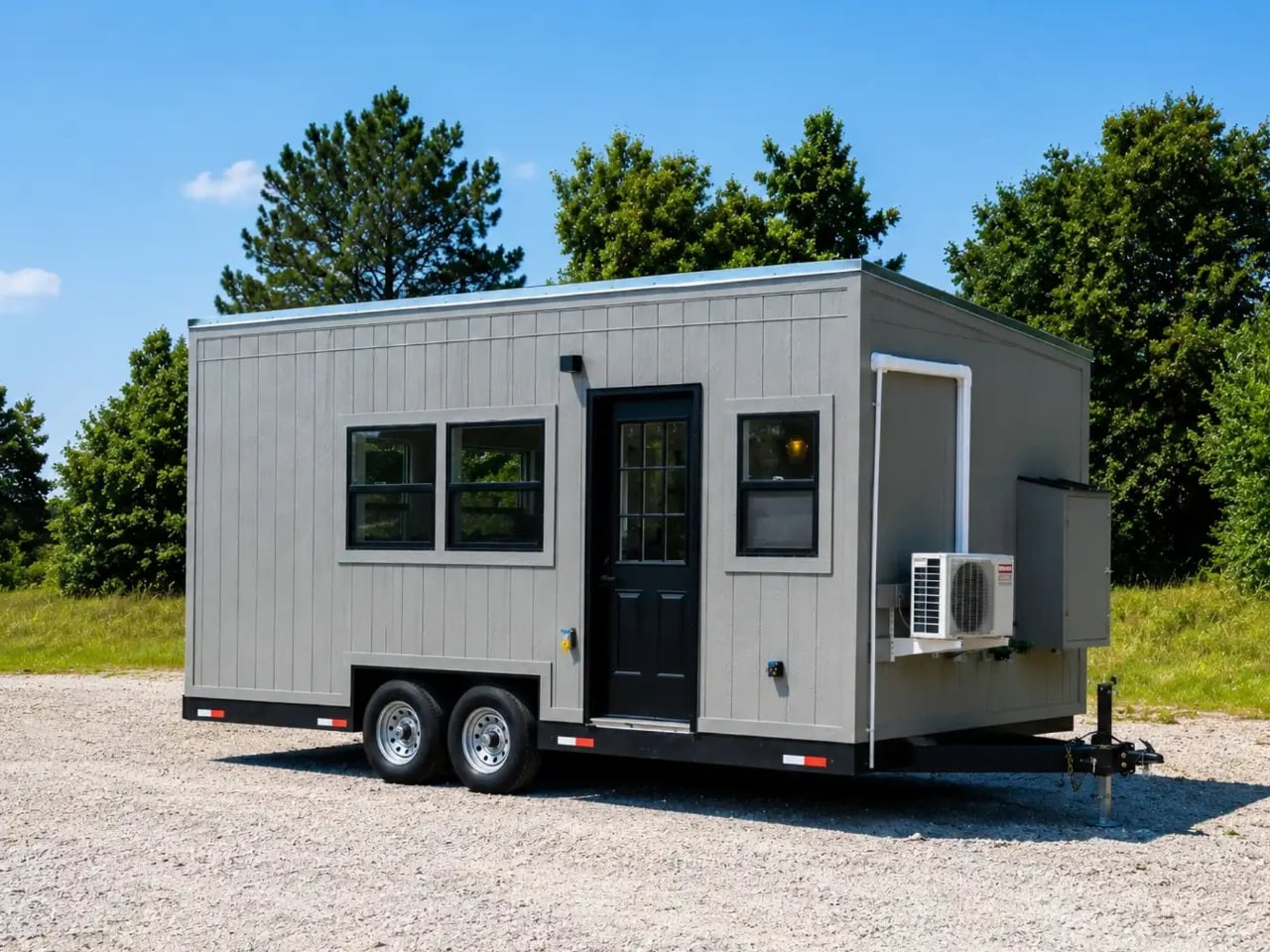
The Fairfax 20 is a 170-square-foot, single-floor tiny home from Dragon Tiny Homes that costs $33,700, a number that reframes the conversation entirely. Most compact builds in this category creep toward six figures before a single upgrade has been added. The Fairfax 20 lands at a price point closer to a mid-range car, and it makes the case for tiny living as an economic decision as much as an aesthetic one. The gray siding and metal roof give it a clean, photogenic exterior that reads as understated rather than budget.
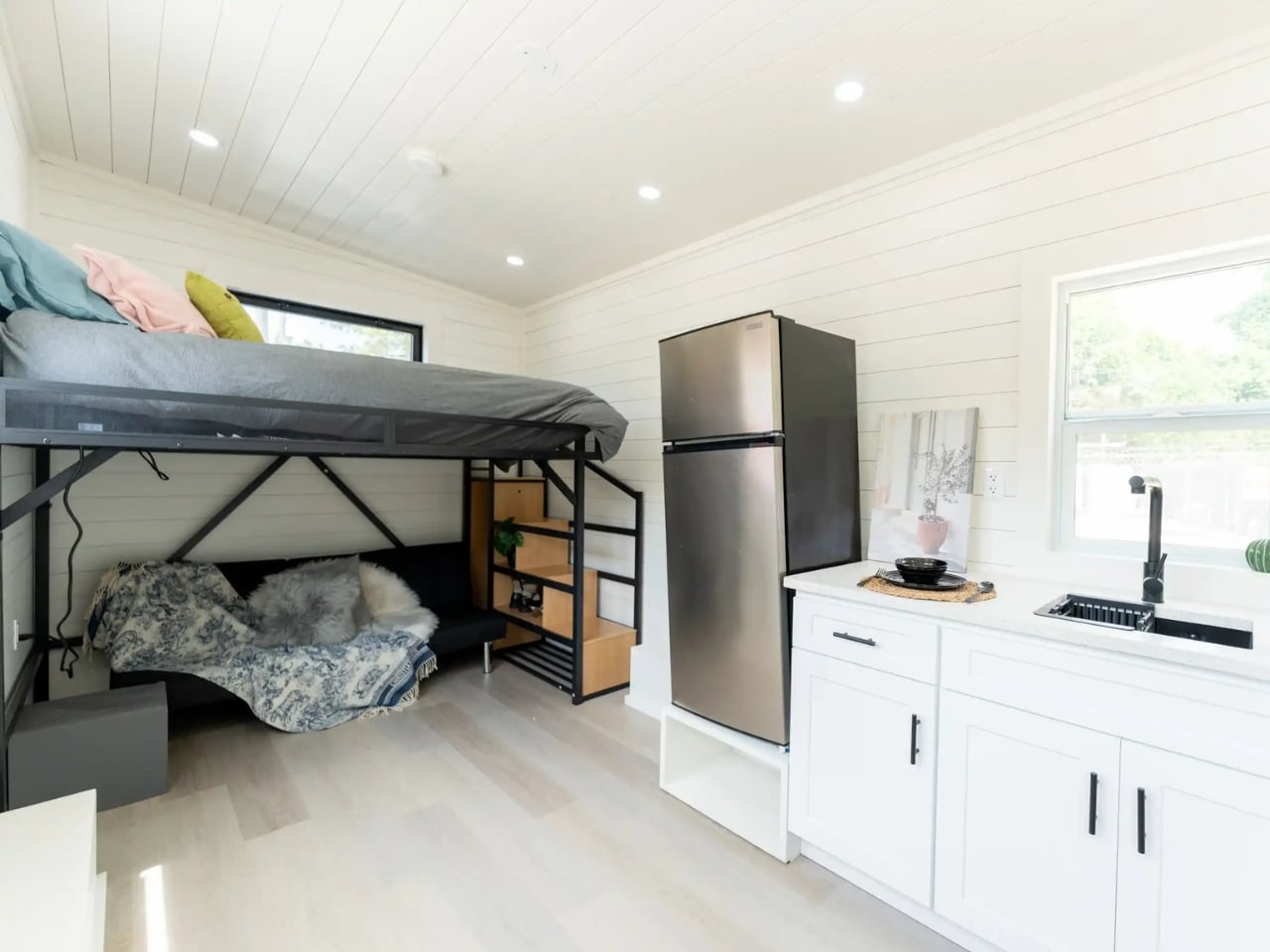
Inside, the Fairfax 20 commits fully to simplicity. There is a lofted sleeping area, but the layout resists the urge to pack vertical inches with added function. It breathes instead, and feels more livable for it. The kitchen is properly fitted: an induction cooktop, a 7.1-cubic-foot refrigerator and freezer, and a washer and dryer unit. Six picture windows and two opening windows run throughout, and the bathroom is a full bathroom rather than a wet room compromise. That last detail matters considerably when you are evaluating whether a space can work long-term.
What we like:
- The $33,700 price point puts genuine tiny home living within reach without sacrificing full-size appliances
- A single-floor plan that prioritizes breathing room over cramming in features
What we dislike:
- At 170 square feet, the footprint is tight for anything beyond solo or couple living
- No mention of off-grid compatibility, which limits placement flexibility
2. Coolangatta 8.4
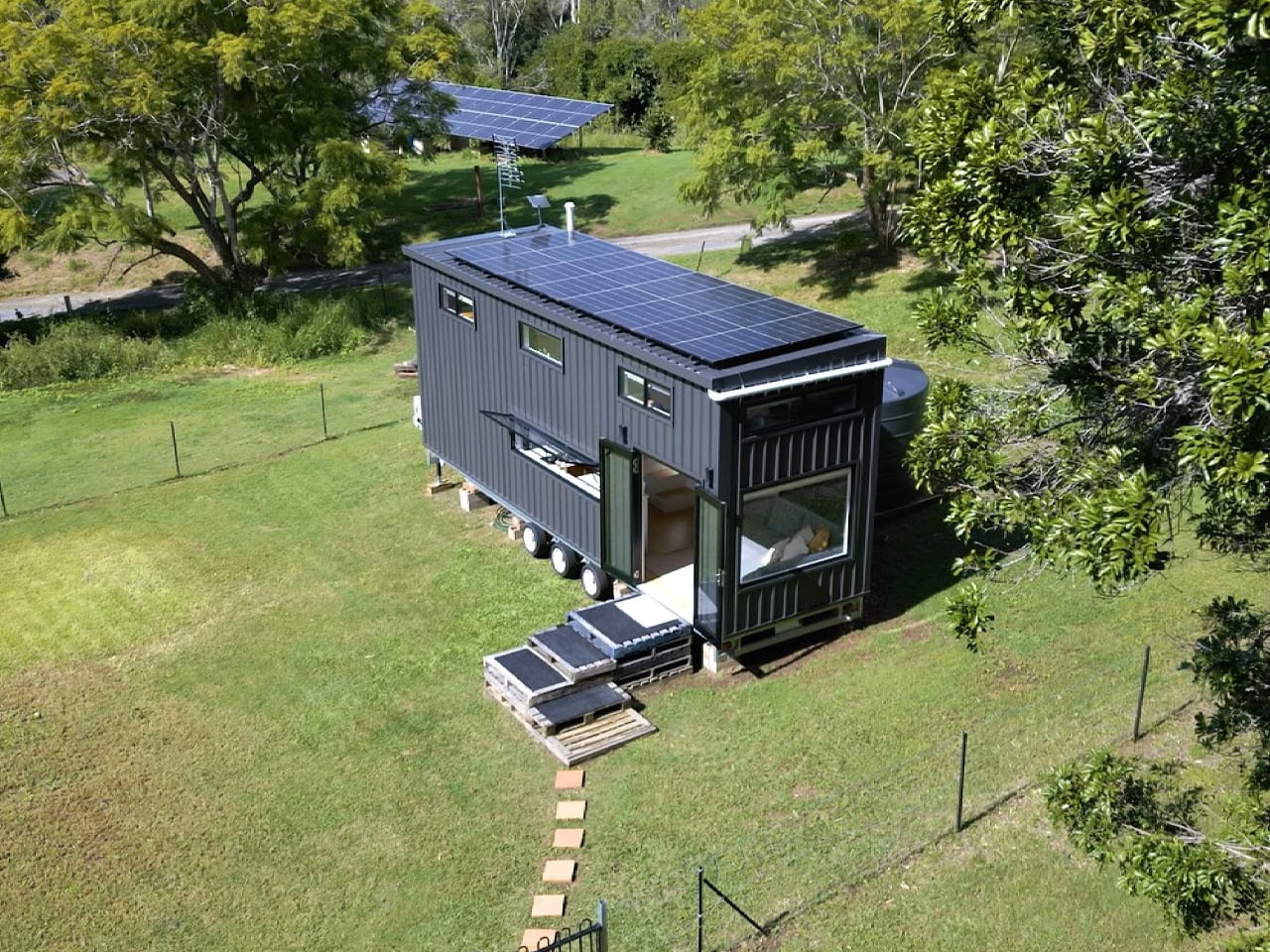
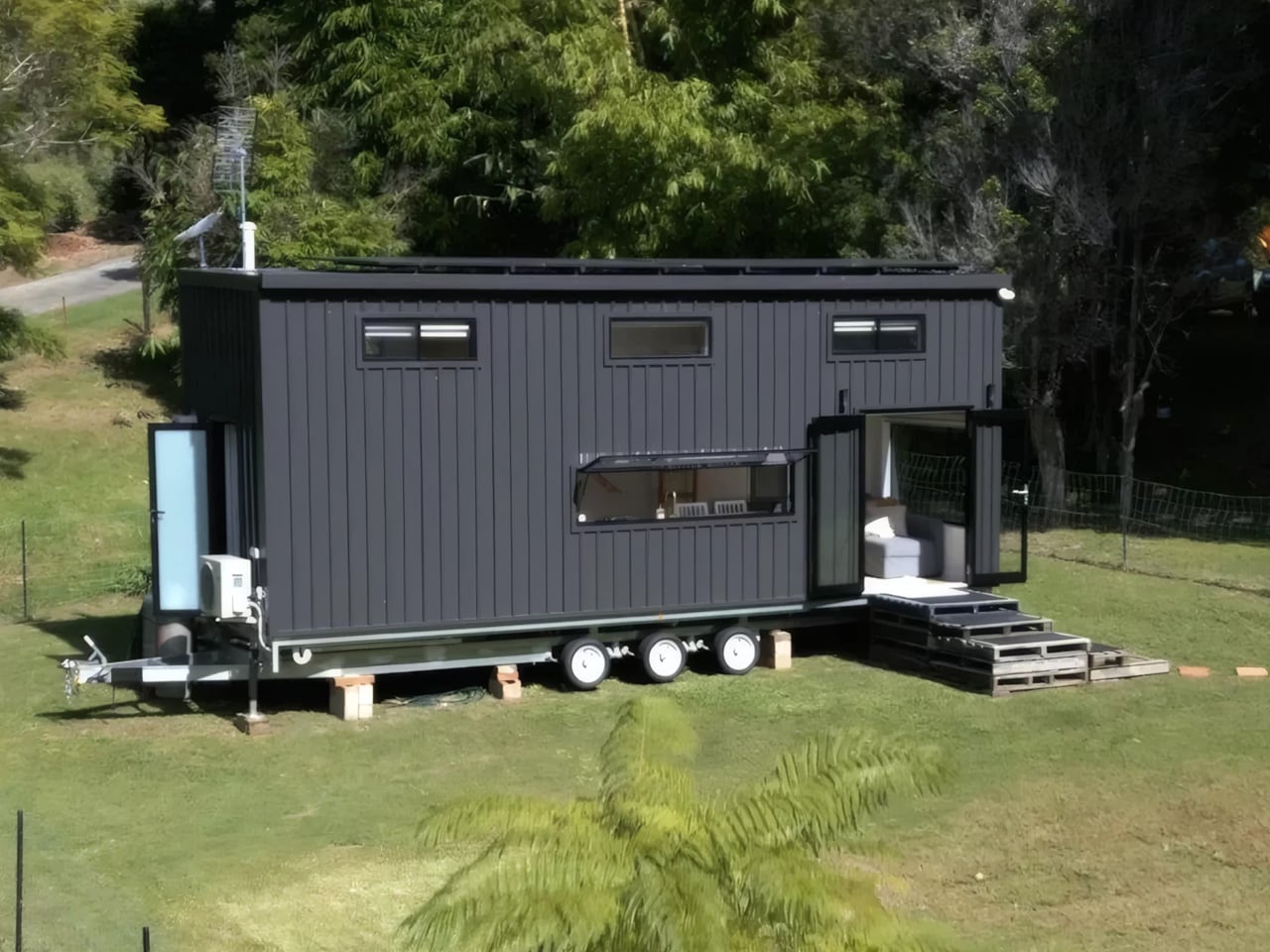
The Coolangatta 8.4 from Australian builder Removed Tiny Homes gets its name from its dimensions: 8.4 meters, or roughly 27.5 feet, sitting on a triple-axle trailer. The exterior wraps in Monument Colorbond steel cladding softened with natural textures, a combination that reads coastal and contemporary at once. It has presence in the late afternoon light without demanding attention. From the outside, the clean rooflines and tight material palette signal that what’s inside has been thought through rather than assembled.
What separates the Coolangatta 8.4 from comparable builds is the second loft. Floating above the main living space, it functions as a workspace, guest loft, or second bedroom depending on what the day needs. That programmatic flexibility is rare at this size and speaks to client-led design thinking rather than catalogue selection. The kitchen anchors the main living zone with a breakfast bar seating two, storage is woven into the architecture rather than bolted on as an afterthought, and generous glazing keeps the interior feeling open throughout.
What we like:
- The second loft adds genuine spatial flexibility that multiplies how the home can be used day to day
- Client-led customization means the layout reflects how you actually live rather than a prebuilt assumption
What we dislike:
- Based in Gold Coast, Australia, which limits delivery options for buyers outside the region
- Pricing is not publicly listed, requiring direct inquiry before budgeting
3. The Laurel
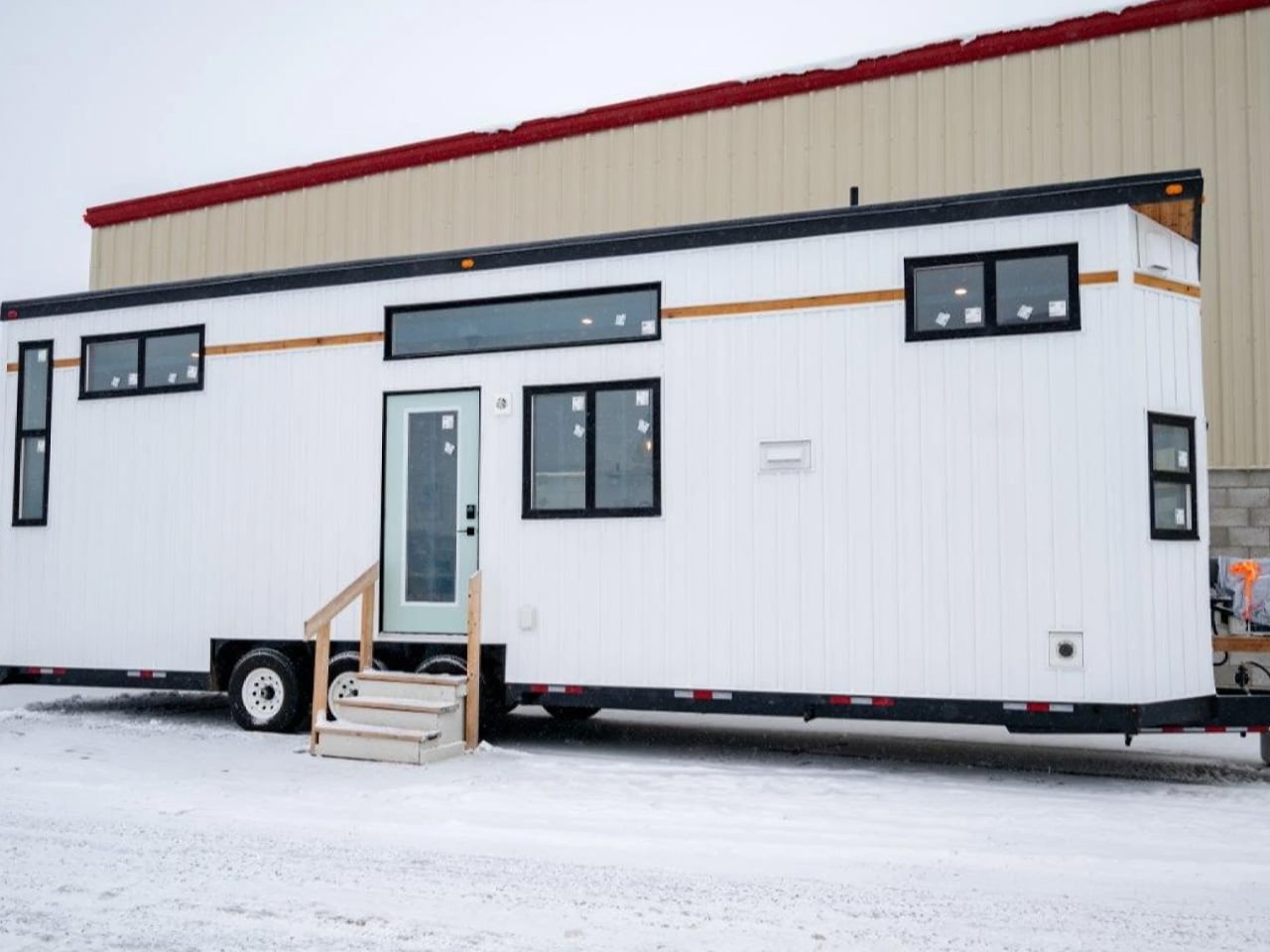
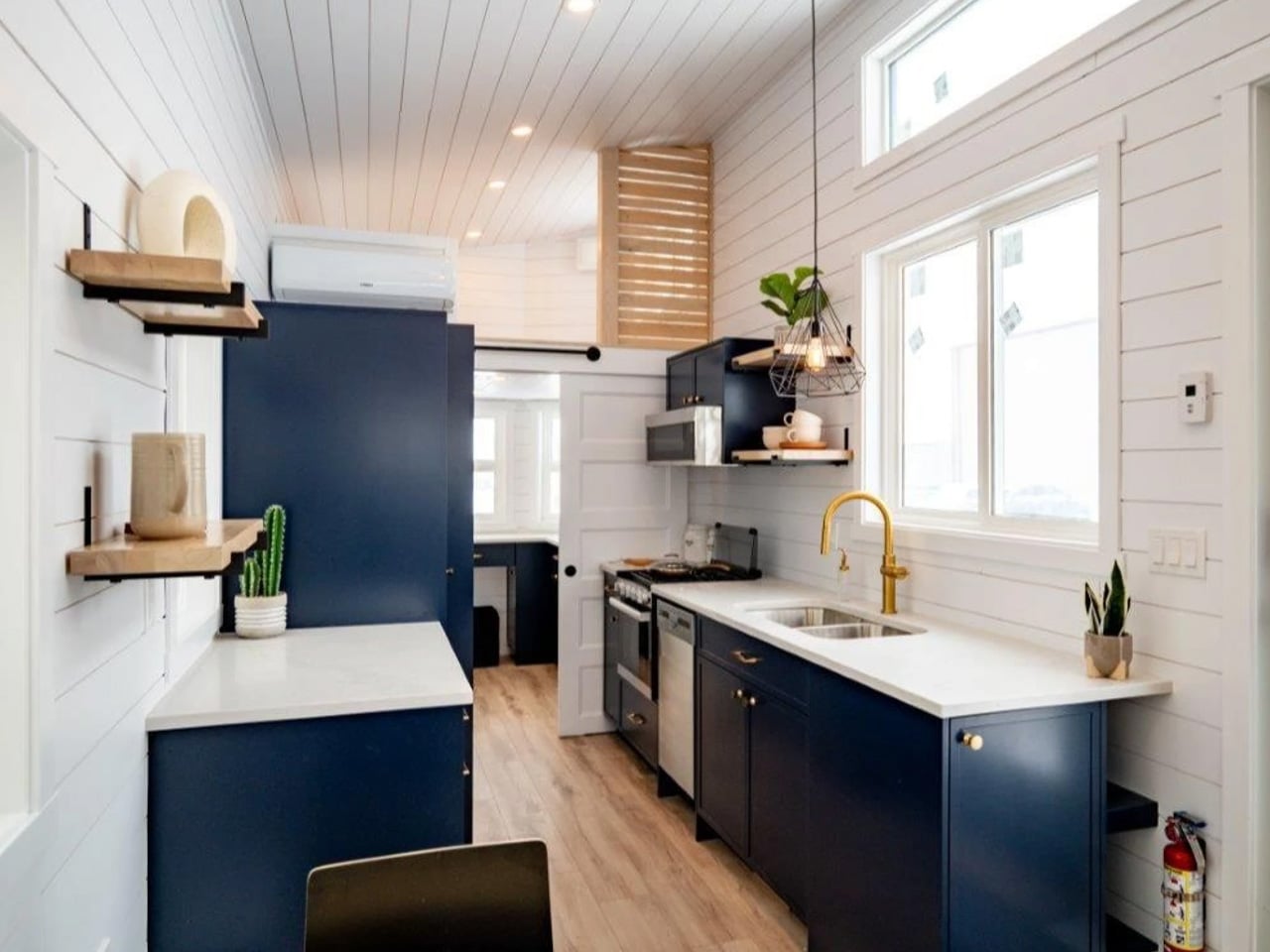
The Laurel is Teacup Tiny Homes’ take on fitting a real home into 423 square feet on a 34-foot triple-axle trailer. White vertical siding and a black metal roof give it a clean exterior that reads modern without announcing itself. Inside, white tongue-and-groove paneling lines the walls, dark blue cabinetry anchors the kitchen, and propane-powered underfloor heating keeps the lower level comfortable year-round. The living room holds a full sofa and electric fireplace with actual breathing room around both, which sounds unremarkable until you spend time in a compact build that got this wrong.
The Laurel earns its place on this list through two details that rarely coexist in a road-legal build: a dishwasher in the galley kitchen and a bathtub in the bathroom. The kitchen is four-burner capable with an oven, fridge, and freezer, and a microwave alongside it. A sliding barn door opens into a bathroom with an L-shaped vanity, flushing toilet, and a combined bathtub and shower. Two loft bedrooms handle sleeping for four, and the home starts at roughly US$121,000.
What we like:
- A bathtub and dishwasher coexisting in a road-legal 34-foot home is genuinely uncommon
- Sleeping four comfortably without the layout feeling like a dormitory is a real spatial achievement
What we dislike:
- The second loft is accessed by a removable ladder, which is less practical for nightly use
- At a US$121,000 base price, pricing sits at the premium end of the towable tiny home market
4. White Pine
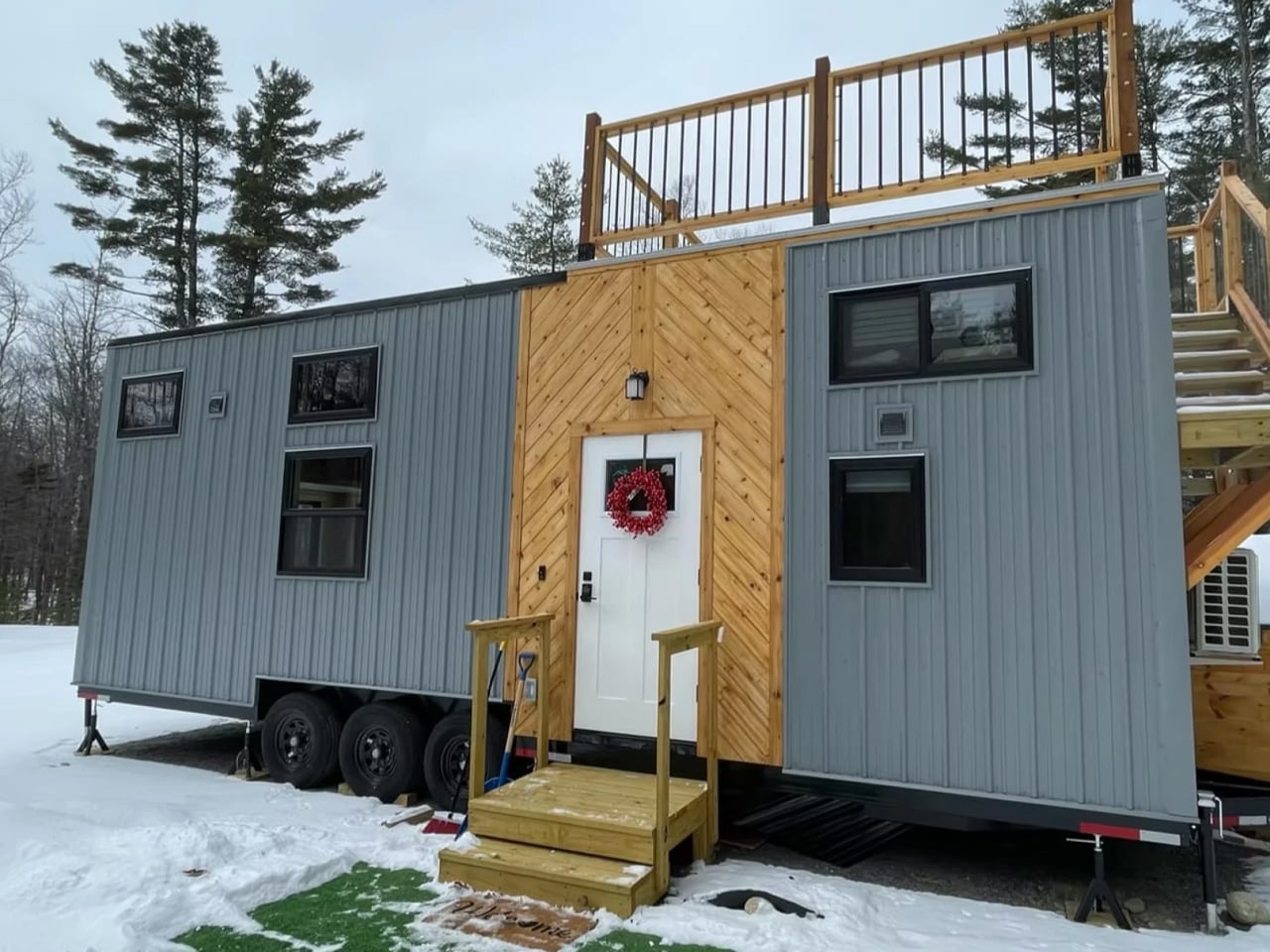
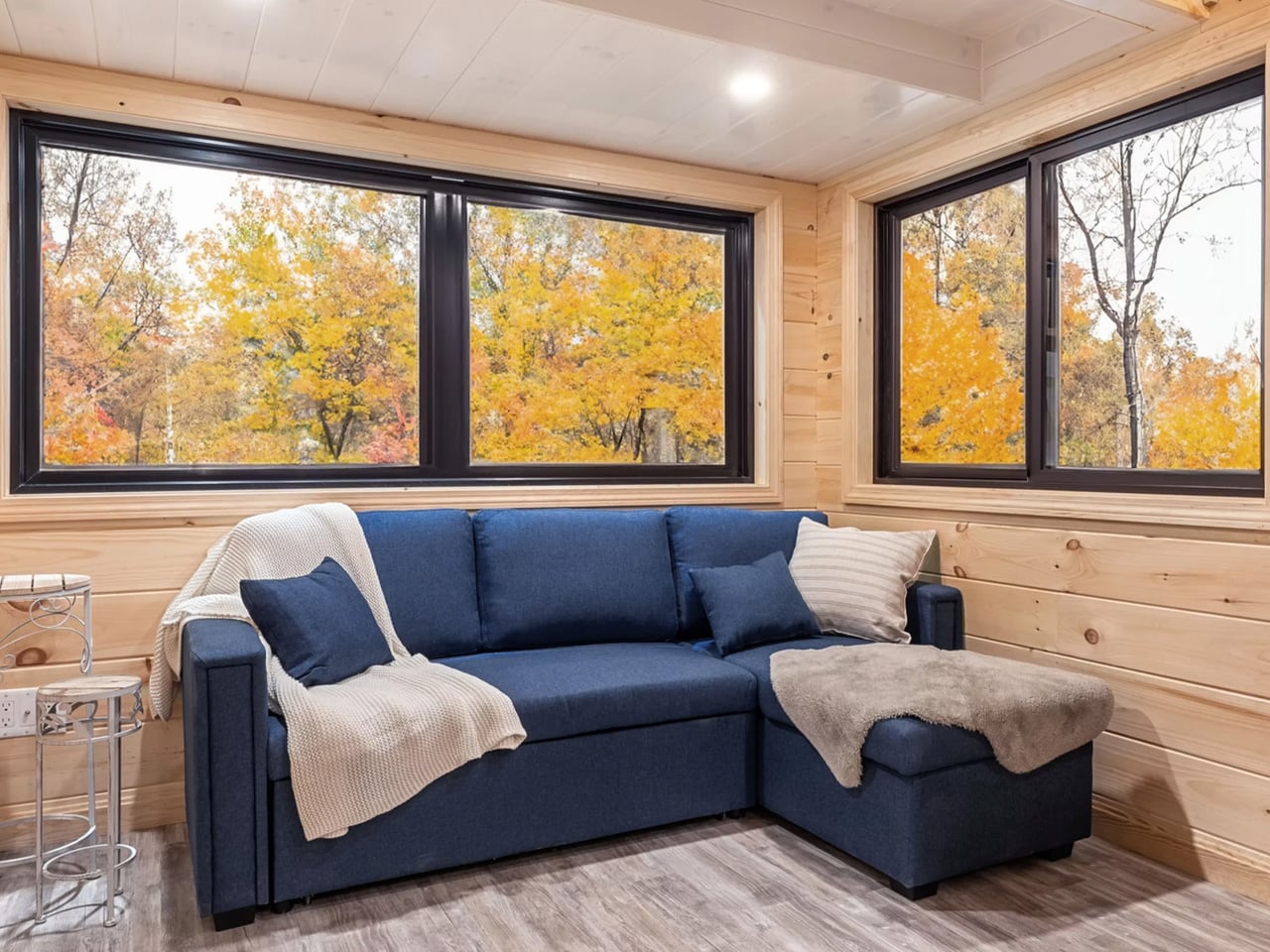
The White Pine from Backcountry Tiny Homes runs 30 feet long and 10 feet wide, and that extra foot of width over a standard tiny house changes the interior feel considerably. It sits on a triple-axle trailer and pairs cedar tongue-and-groove cladding with metal paneling on the exterior, a combination that reads as considered rather than rustic. The interior continues in pine with whitewashed ceilings and vinyl flooring throughout, warm without being precious, the kind of finish that ages gracefully without demanding constant maintenance.
The rooftop terrace, reached via detachable stairs from outside, converts dead roof space into a genuine outdoor living area. In a home of this size, an additional hangout space above the treeline is a meaningful expansion of livable square footage rather than a novelty. The master bedroom sits on a lowered platform with full standing height, a detail that sounds minor until you have crouched in a tiny home loft at 7 a.m. A second loft and sofa bed bring the sleeping total to five people. The White Pine starts at $74,280 for a shell, with the fully furnished version at $140,010.
What we like:
- The rooftop terrace meaningfully expands usable square footage without touching the trailer footprint
- Full standing height in the master bedroom loft is a rare and genuinely practical detail
What we dislike:
- The 10-foot width requires a transport permit, adding logistical complexity to any relocation
- The two-burner kitchen stove is modest for a home that sleeps five people
5. The Amelia
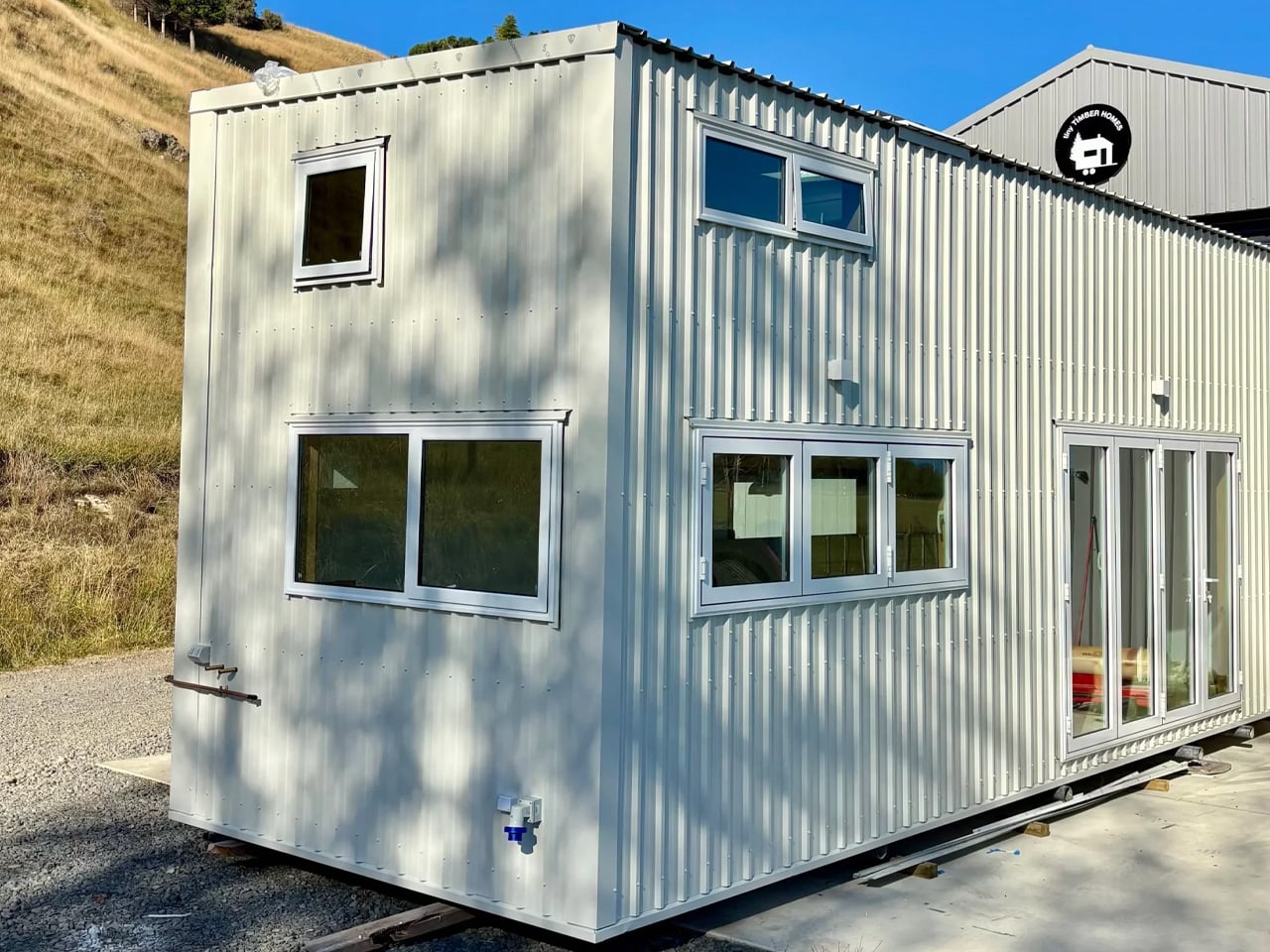
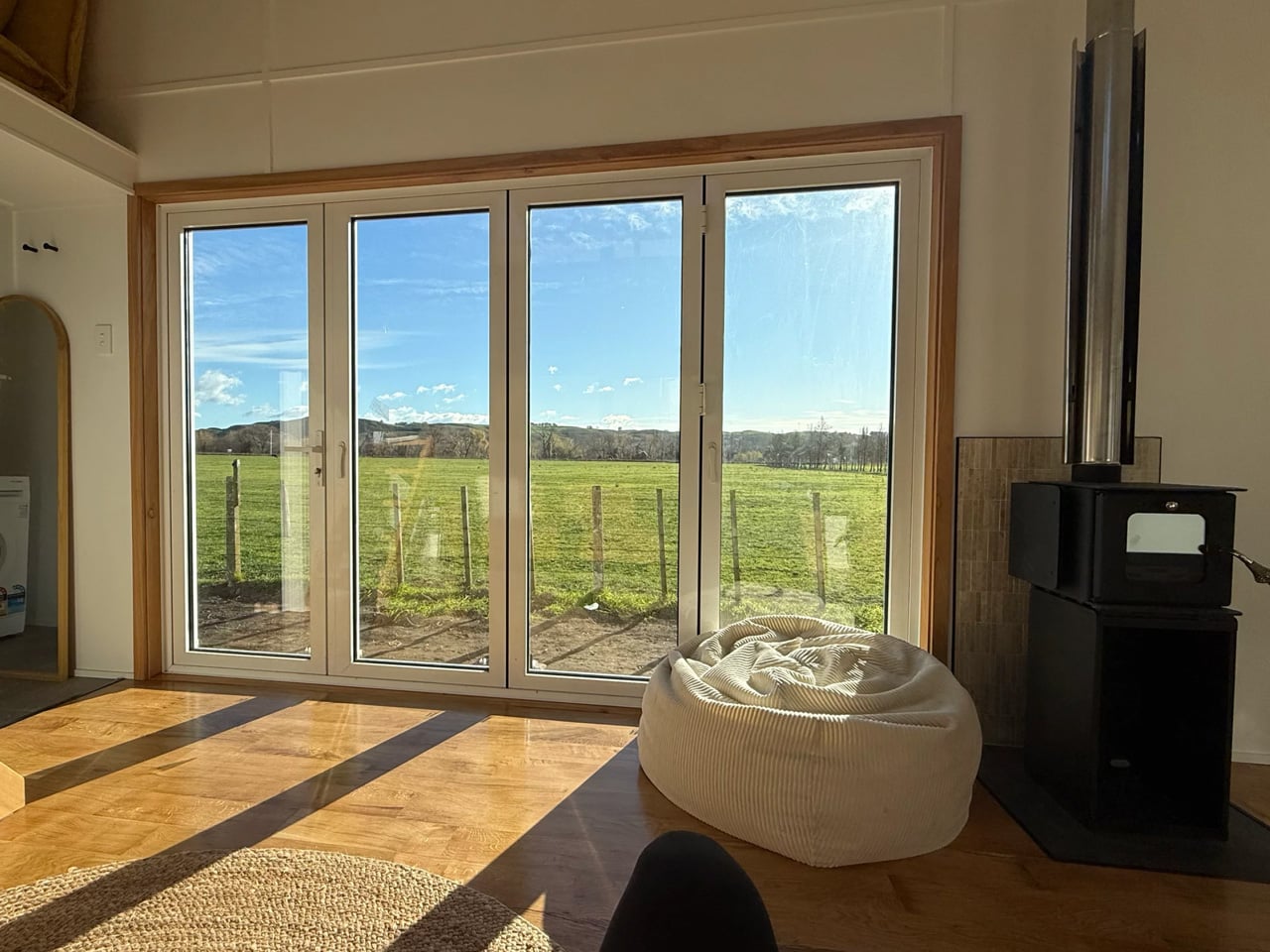
The Amelia is 26 feet long and 8.5 feet wide, sitting on a double-axle trailer with 341 square feet of interior space. White board-and-batten siding, a maintenance-free steel base, and a snap-lock metal roof give it a clean and deliberate exterior. Inside, dual-pane low-E windows fill the living area with natural brightness, and a propane-powered underfloor heating system, mini-split air conditioning unit, and Lunos heat recovery ventilator point to a home engineered for year-round, full-time living rather than the occasional weekend use that many compact builds are quietly optimized for.
The kitchen is where the Amelia builds its case. A white apron-front farmhouse sink, a four-burner Furrion propane range, fridge and freezer, microwave, and a large pull-out pantry anchor the space. Waterfall-edge marble-like countertops run the perimeter, with an eating bar that doubles as a workstation. A sliding door connects to the bathroom, which holds a 30-by-30 stand-up shower, custom vanity, and an oversized round medicine cabinet. Two loft bedrooms sit above, one sized for a king and one for a queen, and the build starts at roughly US$102,000.
What we like:
- The Lunos heat recovery ventilator and full HVAC suite signals serious engineering for full-time living in any climate
- The eating bar doubling as a workstation is a genuinely useful dual-function detail for remote workers
What we dislike:
- At 26 feet on a double-axle trailer, the Amelia is on the shorter end for a two-loft build
- The 30-by-30 shower is functional but narrow for long-term daily use
6. The Florence
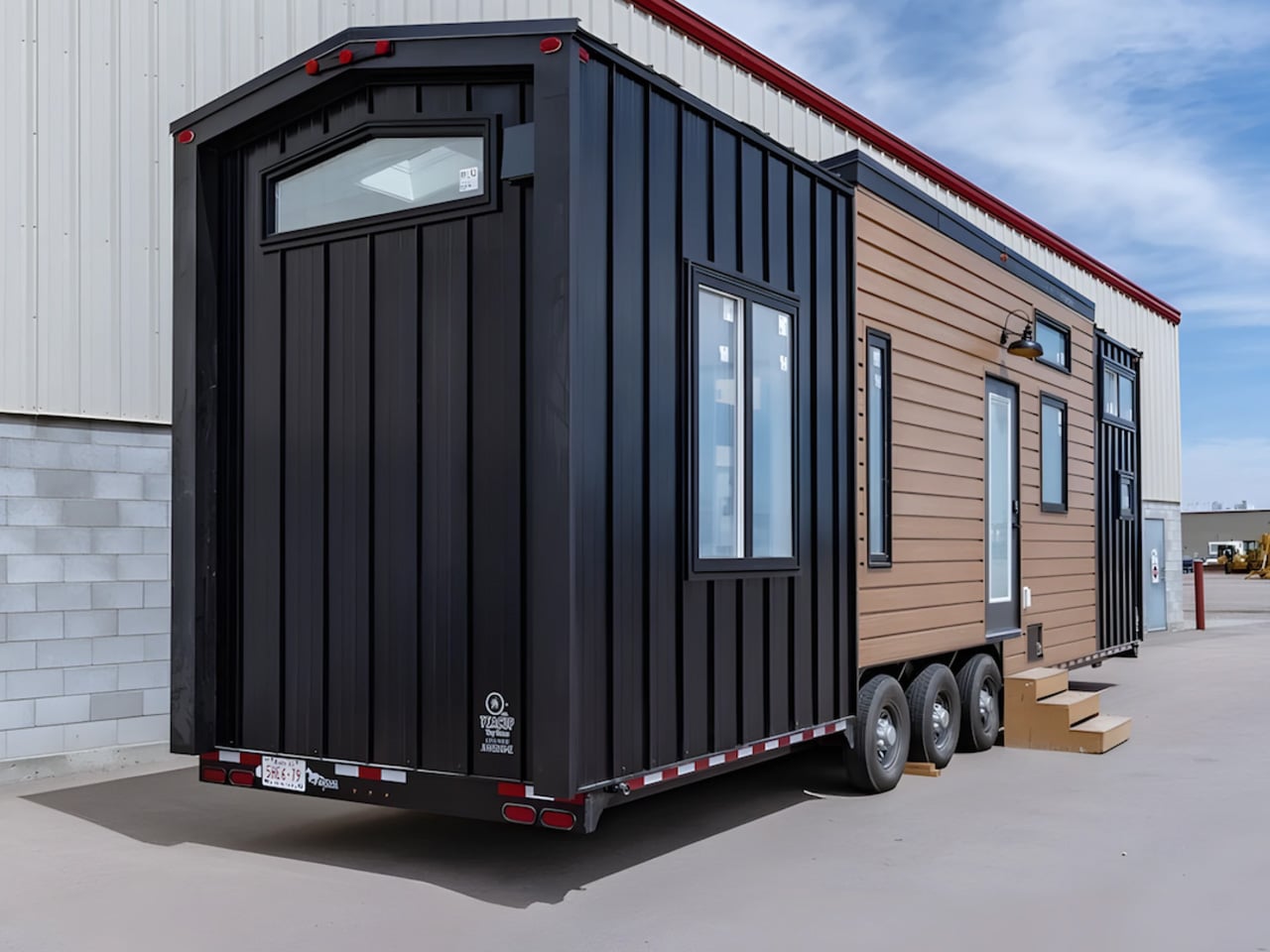
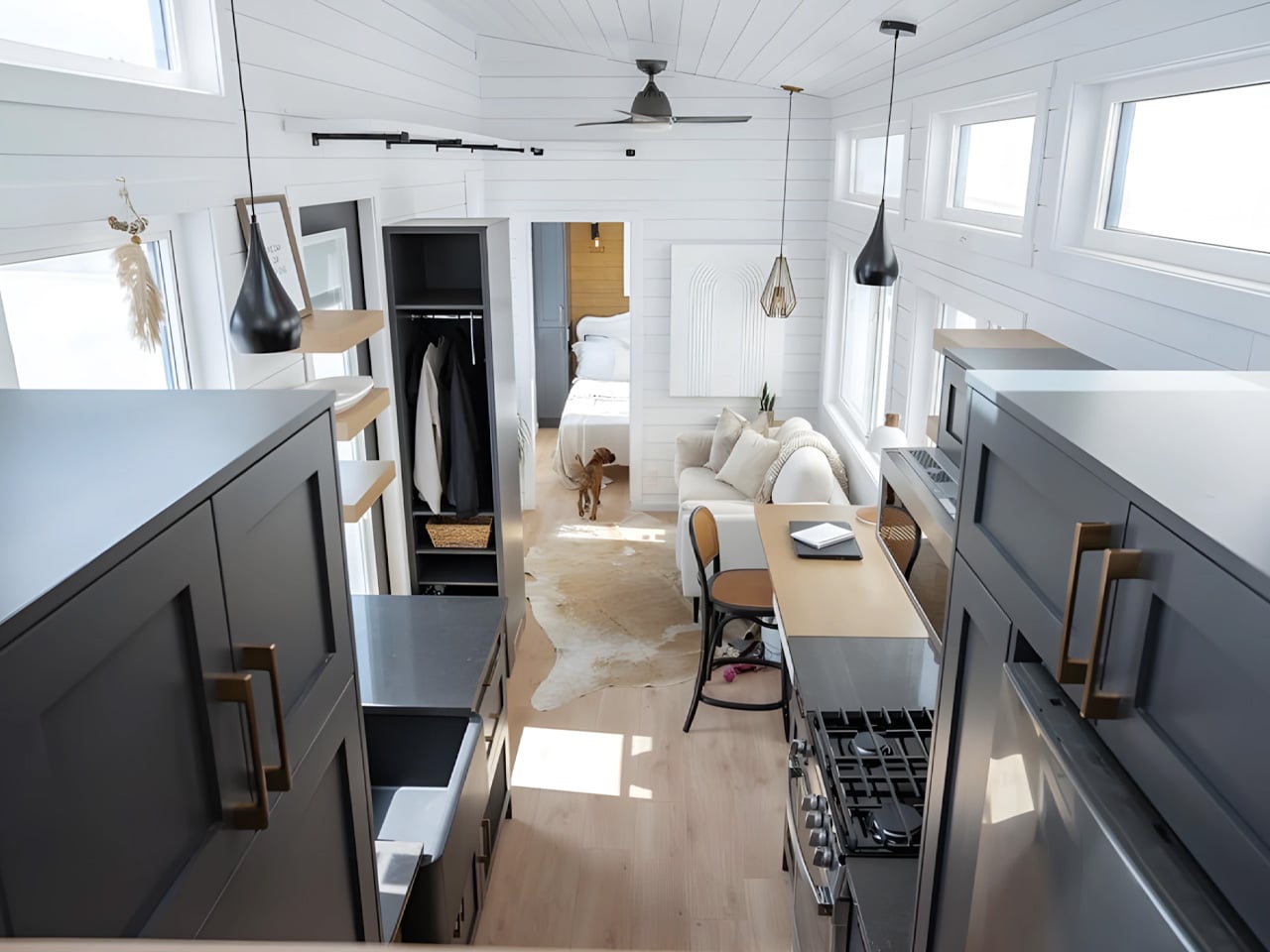
The Florence runs 36 feet on a triple-axle trailer, making it Teacup Tiny Homes’ most spacious build in this lineup at 355 square feet. White tongue-and-groove paneling, 11-foot vaulted ceilings, and generous windows push the interior further than its square footage suggests. A sofa and electric fireplace anchor the living area, with a large built-in storage unit near the entrance. It reads less like a compact home doing its best and more like a considered residence that happens to be moveable, which is the specific feeling this category spends most of its time chasing.
The Florence’s most useful detail is a dining nook that converts into a home office with an extending desk and integrated storage, a dual-function zone that remote workers will appreciate more than any feature wall. The master bedroom sits on the main floor with walking clearance on both sides and built-in storage that feels like a real room. A secondary sleeping loft above the kitchen adds a second bed. Customization options include a soaking tub in place of the glass-enclosed shower, and pricing starts at roughly US$122,000 with delivery across the US and Canada.
What we like:
- The 11-foot vaulted ceilings and main-floor master bedroom make this feel closer to a cottage than a tiny home
- The home office dining nook is one of the more thoughtfully resolved dual-function spaces in this category
What we dislike:
- At US$122,000, it is the priciest entry from Teacup Tiny Homes in this roundup
- The secondary loft is accessed by a removable ladder, better suited to occasional guests than daily use
7. SHAK
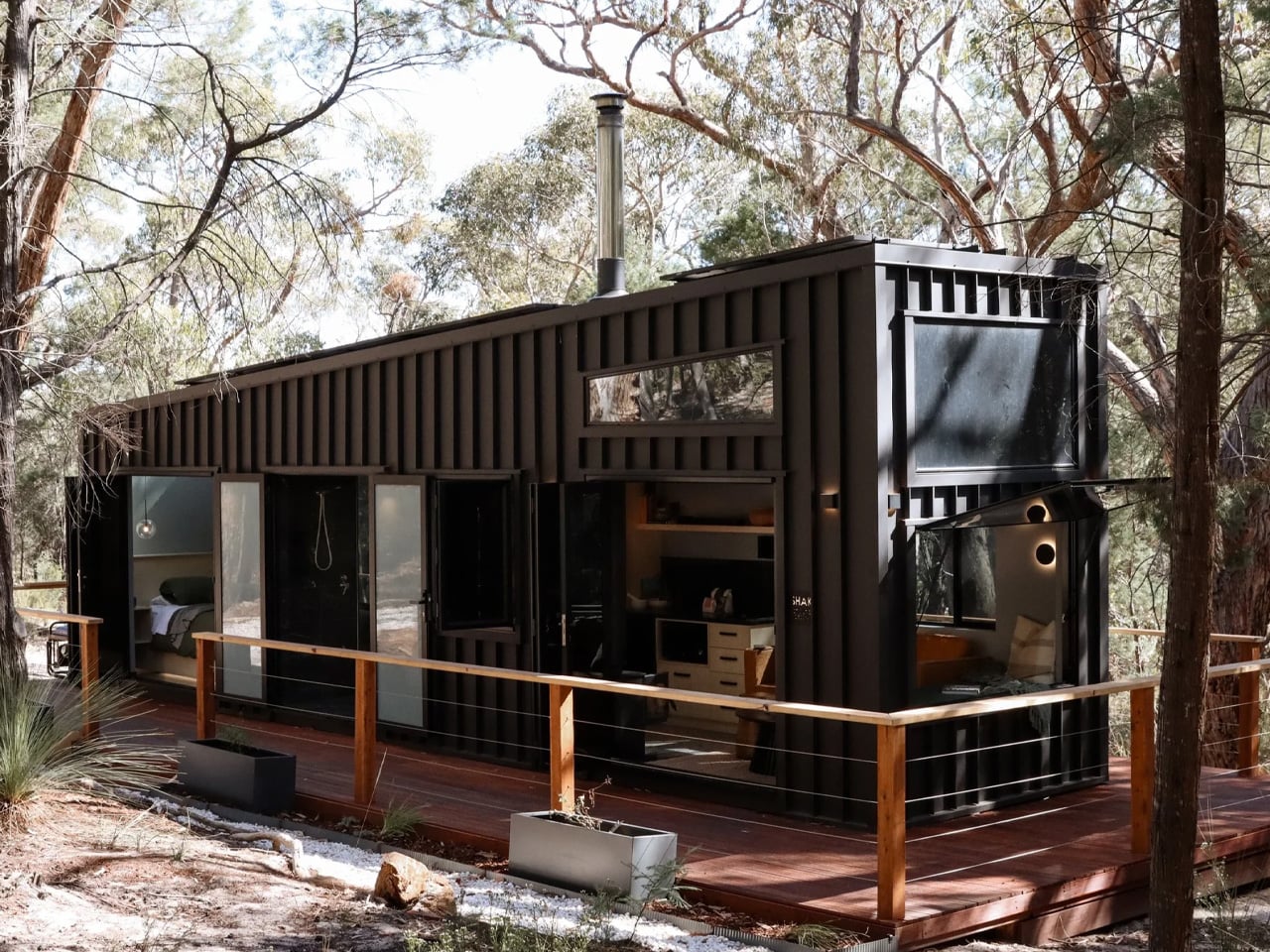
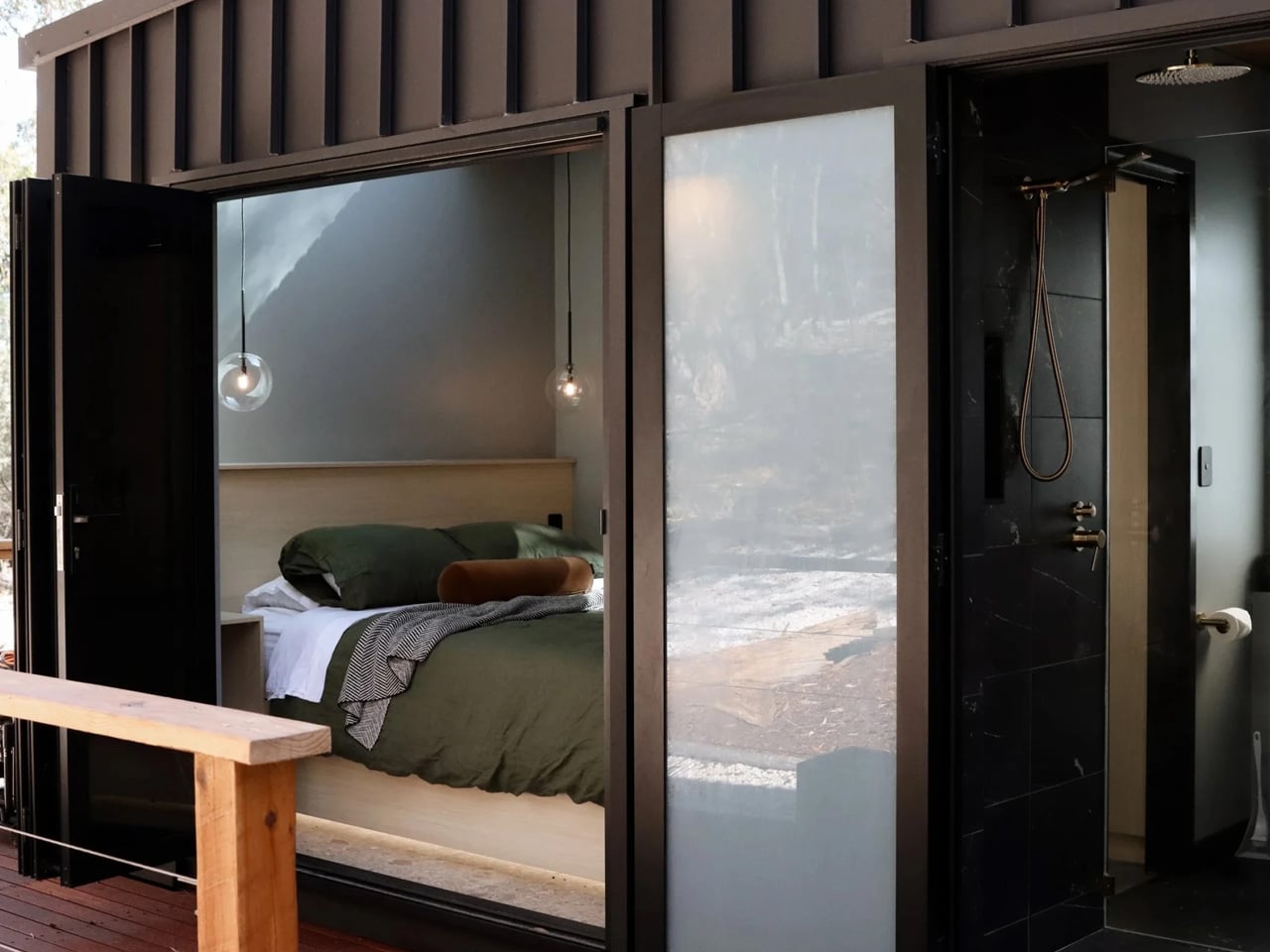
The SHAK won Best Weekender at the 2025 Tiny House Industry Awards, and once you see it, the reason is obvious. Built by Removed Tiny Homes as a bespoke commission for a site in the Grampians of Victoria, Australia, it runs entirely off-grid with no power line in sight. Dark vertical cladding, an angular stepped roofline, and a wraparound timber deck give it a sculptural exterior presence that most permanent homes never manage. It reads less like a transportable dwelling than a piece of architecture that grew from the landscape itself.
Inside, dark stone benchtops, timber cabinetry, a black herringbone-tile splashback, and wine plumbed directly to the bench set the register for the kitchen. A black wood-burning fireplace anchors the living space. The bathroom earns its own category: two brass rainfall heads over a dark marble-tiled double shower, with a full-height glass door that opens directly onto the bush for an open-air morning ritual. A queen bed sits beneath a timber-slat ceiling and a large skylight that pours daylight across the room throughout the day. It does not feel like a compromise. It feels like a deliberate choice.
What we like:
- Wine on tap and a wood-burning fireplace in a fully off-grid build reframes what the word “tiny” can mean
- The glass shower door opening directly onto the Australian bush is a genuinely extraordinary spatial experience
What we dislike:
- Built as a bespoke one-off commission, so replication depends entirely on Removed Tiny Homes’ availability and capacity
- The premium specification places it in a completely different price bracket from most builds on this list
The Takeaway
Each of these designs make a strong case for the tiny homes category. The camp is splitting in two directions, and both are producing work worth paying attention to. One lane is pure efficiency, the Fairfax 20 and the Amelia resolving what’s genuinely necessary and building it with precision. The other is experience-driven: the SHAK and the White Pine designing for feeling rather than floor area. Neither approach is wrong. Both are getting better at what they set out to do.
The thread running through all seven is resolution. Each build solved a specific problem rather than simply filling a footprint: a bathtub in a road-legal trailer, full standing height in a sleeping loft, wine on tap in an off-grid retreat. These are not incidental details. They are the decisions that separate a home from a box, and they are exactly why this category keeps producing work that is genuinely worth covering.
The post 7 Best Tiny Homes of September 2026 first appeared on Yanko Design.