Apple’s touchscreen MacBook will reportedly have a dynamic interface

Apple's plan to add touchscreens to its premium MacBook Pros is coming into focus. Bloomberg reports that when the new laptops launch this fall, they'll feature a Dynamic Island, not unlike Apple's iPhones, and an interface that changes depending on where you touch your Macbook's screen.

This "dynamic interface" is reportedly designed to make the transition between mouse input and touch input smoother on Apple's new laptops. Bloomberg says that if users touch an onscreen button, the version of macOS running on these new MacBook Pros will be able to pull up a contextual menu "that provides more relevant options for touch commands." Parts of the interface, like macOS' menu bar, will also be able to enlarge to make menu items easier to select with a finger. Those tweaks are on top of the expected features from touchscreen Apple products, like smooth scrolling and the ability to pinch and zoom into and out of images, files and web pages. The only thing missing from these increasingly iPad-like laptops, per Bloomberg, will be a touchscreen keyboard, because they'll already have a more comfortable physical keyboard attached.

To make these new laptops extra enticing, both the 14-inch and 16-inch touchscreen MacBook Pros will feature OLED screens for the first time, likely the reason Apple will be able to include a Dynamic Island-style webcam in the first place. Up until now, the company has offered OLED screens on its iPhones, Apple Watches and more recently the iPad Pro, but it hasn't brought the display technology to laptops. That could reportedly change with these new MacBook Pros.

Plenty of Windows laptops include touchscreens, and Microsoft and its partners have incorporated dynamic interface elements in the past to make these touchscreens more natural to use with Windows. Apple is late to the party in this respect, but it's also potentially set up to succeed. Much of modern macOS already looks touch-friendly, and Apple's has expended significant effort making it possible to port touch-based iPad apps to macOS and develop applications across platforms. That, paired with the right interface, could make the experience of using a touchscreen MacBook nicer out of the box, even if it doesn't get rid of the awkwardness of reaching over your keyboard to touch a screen.

This article originally appeared on Engadget at https://www.engadget.com/computing/laptops/apples-touchscreen-macbook-will-reportedly-have-a-dynamic-interface-231929456.html?src=rss

Functional LEGO Sewing Machine actually moves a needle up and down when cranked

There’s nothing from stopping this LEGO machine from actually sewing clothes, apart from the fact that attaching a real needle to it would make it an ‘illegal’ build. Illegal builds in LEGO are when you use bricks in unauthorized ways (wedging them, gluing them, using them upside down), or using non-brick parts in a LEGO build. Sadly, this rather outdated law is the only thing preventing BrickStability’s Sewing Machine from letting you stitch clothes, kerchiefs, and quilts together.

What I love about LEGO MOCs (My Own Creations) is that some people try to achieve aesthetic perfection, while others try to actually make LEGO builds functional. There’s a LEGO lawnmower that cuts grass, a LEGO Typewriter that types, and even a functional LEGO Turing Machine that ‘computes’. Add this sewing machine to that list because it isn’t just a visual masterpiece, it’s complicated, intricate, and to a great extent, functional.

Designer: BrickStability

It’s true that nobody can agree who first invented the ‘sewing machine’. Elias Howe is credited with the version we popularly use today, although Thomas Saint, Barthelemy Thimonnier, and Isaac Singer are all also attributed as key figures in helping create some version of the modern-day sewing machine. This particular version, the lockstitch sewing machine, was patented in 1846 by Elias Howe, and while the LEGO MOC isn’t exactly Howe’s patented design, it’s an antique machine that takes that lockstitch technology and packages it into a form factor a lot of us recognize even today.

There are multiple YouTube shorts and GIFs on how these machines actually ‘stitch’ clothes, but the simple explanation is that a rotating element (powered by a crank on the side or a foot-pedal at the bottom) moves a special needle up and down, while a spool feeds continuous thread directly to the needle. As you stitch, the machine creates that rhythmic noise associated with tailoring shops, while the spool gradually rotates too, feeding thread into the ever-hungry machine.

BrickStability’s version is gorgeously accurate. Not only is it functional (the crank rotates and the needle element moves up and down), it also comes with LEGO spools of colored thread, along with a tailoring scissor made from LEGO bricks too. The machine is black, just like almost every machine in that time (funnily enough I only remember the motorized ones as being white in color), and comes with some ornate gold brickwork, reminiscent of the detailing seen on vintage machines.

This MOC is different from the usual ones we feature on the website. It wasn’t created for LEGO Ideas the way we know it, but rather, was designed as a submission for a challenge hosted by LEGO on its Ideas website. Needless to say, it took home the grand prize, and one can only hope LEGO actually turns this build into a real retail box set!

The post Functional LEGO Sewing Machine actually moves a needle up and down when cranked first appeared on Yanko Design.

1Password plans are getting more expensive soon

1Password is increasing prices for its individual and family plans. The individual rate is increasing from nearly $36 a year to $48, while the family option will cost $72 instead of $60. In emails sent to users, the business announced that the new rates will take effect for users at their next subscription renewal after March 27. 

It's a sizable price hike, but 1Password hasn't been incrementally inching its fees higher every couple years like we see so often for streaming subscriptions. This is the biggest bump we've seen to its rates in several years, even though the company has been adding ever-more tools for cybersecurity, such as new phishing protections that rolled out last month. Even at the higher cost, it's still one of the best options out there for password management.

Fortunately for those on a budget, we have seen 1Password offer pretty substantial discounts on its plans at times, often cutting the rates by as much as half. The company usually participates in the big deal sprees like Black Friday, but keep an eye out for standalone sales that might pop up year-round.

This article originally appeared on Engadget at https://www.engadget.com/cybersecurity/1password-plans-are-getting-more-expensive-soon-213236400.html?src=rss

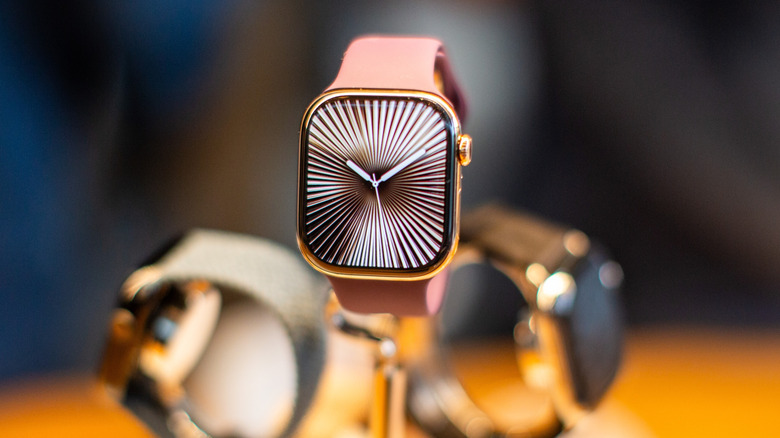
This wristwatch lets blind people tell time by touch, looks like any other timepiece

Around 285 million people worldwide live with visual impairment, according to the World Health Organization, and something as routine as checking the time can become a daily negotiation between independence and assistance. How do blind people tell time without relying on someone else? The traditional watch for the visually impaired has long answered that question through sound or exaggerated tactile cues. Yet many of these solutions, while functional, visibly signal that they are assistive devices. The lingering design question is simple: why can’t a watch for the visually impaired look like any other watch?

The current landscape offers a mix of approaches. Talking watches announce the time aloud at the press of a button, prioritizing clarity over discretion. The classic braille watch uses raised numerals beneath a hinged crystal cover that flips open, allowing users to feel the dial directly. Brands like Citizen have explored tactile adaptations within more mainstream aesthetics, but even these models often compromise on visual subtlety or require noticeable interaction. The tactile watch concept has existed for decades, yet many designs still feel engineered first for utility and second for style. For a wristwatch for blind people, that trade-off can unintentionally reinforce differences.

Designer: Jinkyo Han

A new concept christened “Wristwatch for the Blind,” rethinks the tactile watch for the visually impaired through restraint rather than amplification. Instead of adding bulky covers, voice modules, or overt braille markers, the designer retains a conventional analog form. At first glance, it resembles a standard minimalist timepiece with a clean dial and classic proportions. The innovation lies in the details: raised numerals and subtly ridged hands that can be read by touch. By tracing a fingertip along the dial, the wearer can feel the position of the hour and minute hands in a natural circular motion. The tactile elements are integrated into the geometry of the watch itself, allowing it to function as an accessible timepiece without announcing its purpose. It is an inclusive watch design that communicates through texture rather than technology.

That discretion is what makes the concept compelling. Inclusive design succeeds when it removes stigma instead of adding layers of accommodation. The most effective accessible products often become invisible in the best way, serving everyone without labeling anyone. An accessible watch design that mirrors mainstream aesthetics follows the same philosophy. It supports independence for users who are blind or visually impaired while preserving personal style and social ease. In doing so, it reframes assistive technology as simply good design.

The concept remains a proposal rather than a commercial product, but it points toward a future where adaptive wearables blend effortlessly into everyday life. As interest in tactile watch solutions continues to grow, there is clear room for designs that balance dignity with functionality.


The post This wristwatch lets blind people tell time by touch, looks like any other timepiece first appeared on Yanko Design.

Discord delays age verification to address user concerns

Earlier this month, Discord said it would be enacting an age verification policy. The platform faced some initial concerns from users about turning over their IDs and personal information, particularly given how poorly similar policies have been going elsewhere. Discord announced today it will delay and make some changes to its plans in response to the ongoing backlash.

The first change is that Discord is postponing the global rollout of its age verification plans until the second half of 2026. The company noted that it would meet its legal obligations in places where they exist, likely in those countries that have national laws requiring protections for younger users. But it will not begin the global rollout until it makes some amendments to the offerings.

Discord will offer more alternatives to how users can confirm their ages, including verification by credit card. That should allow people to access age-gated content without sharing an ID or performing a face scan. "If you're among the less than 10 percent of users who do need to verify, we'll give you options, designed to tell us only your age and never your identity," according to a blog post credited to co-founder and CTO Stanislav Vishnevskiy.

The company is also promising more transparency about its vendors for these verification services and their practices. Discord said that it will not work with any partners for face scans unless the tests are performed completely on-device. The blog post noted that Persona, one of the common vendors for facial age estimation services, does not meet that standard and Discord has opted not to work with the brand. 

Finally, Discord is also building a new spoiler channel option so that servers with select age-restricted channels won't have to require all members to verify their ages. It will also publish a technical explainer on its own automatic age determination systems.

We at Engadget have own worries about the wave of age verification laws happening both within the US and globally, but it's somewhat encouraging to see a digital platform at least trying to continue to deliver anonymity while still creating effective protections for teens.

This article originally appeared on Engadget at https://www.engadget.com/social-media/discord-delays-age-verification-to-address-user-concerns-205500482.html?src=rss

The Pentagon has reportedly given Anthropic until Friday to let it use Claude as it sees fit

Defense Secretary Pete Hegseth will reportedly give Anthropic until Friday to drop certain guardrails for military use, as reported by Axios. The outlet also reported that CEO Dario Amodei met with Hegseth yesterday as the Pentagon ratcheted up pressure on the AI company to give in to its demands.

The makers of Claude have reportedly been offered an ultimatum: Either yield to the government's demands to remove limits for certain military applications, or potentially be forced to tailor its AI model to the government's needs under the Defense Production Act.

Anthropic, for its part, has said that while it was willing to adopt certain policies for the Pentagon, it would not allow its model to be used for mass surveillance of Americans or for the development of autonomous weapons.

Claude is currently the only AI model employed in some of the government's most sensitive work. "The only reason we're still talking to these people is we need them and we need them now. The problem for these guys is they are that good," a defense official told Axios.

The Pentagon is reportedly ramping up conversations with OpenAI and Google about using their models for classified work. ChatGPT and Gemini are already approved for unclassified government use. Elon Musk's xAI also recently signed with the DoD to use Grok in classified systems.

This article originally appeared on Engadget at https://www.engadget.com/ai/the-pentagon-has-reportedly-given-anthropic-until-friday-to-let-it-use-claude-as-it-sees-fit-203549467.html?src=rss

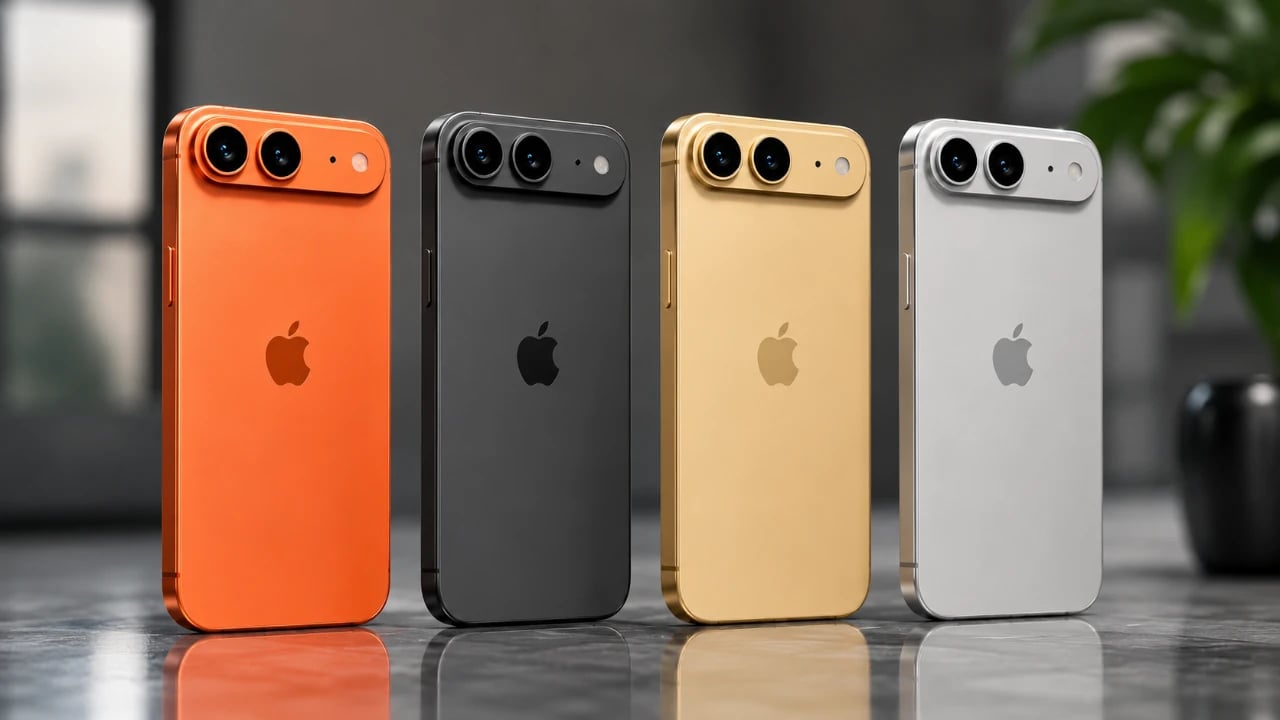
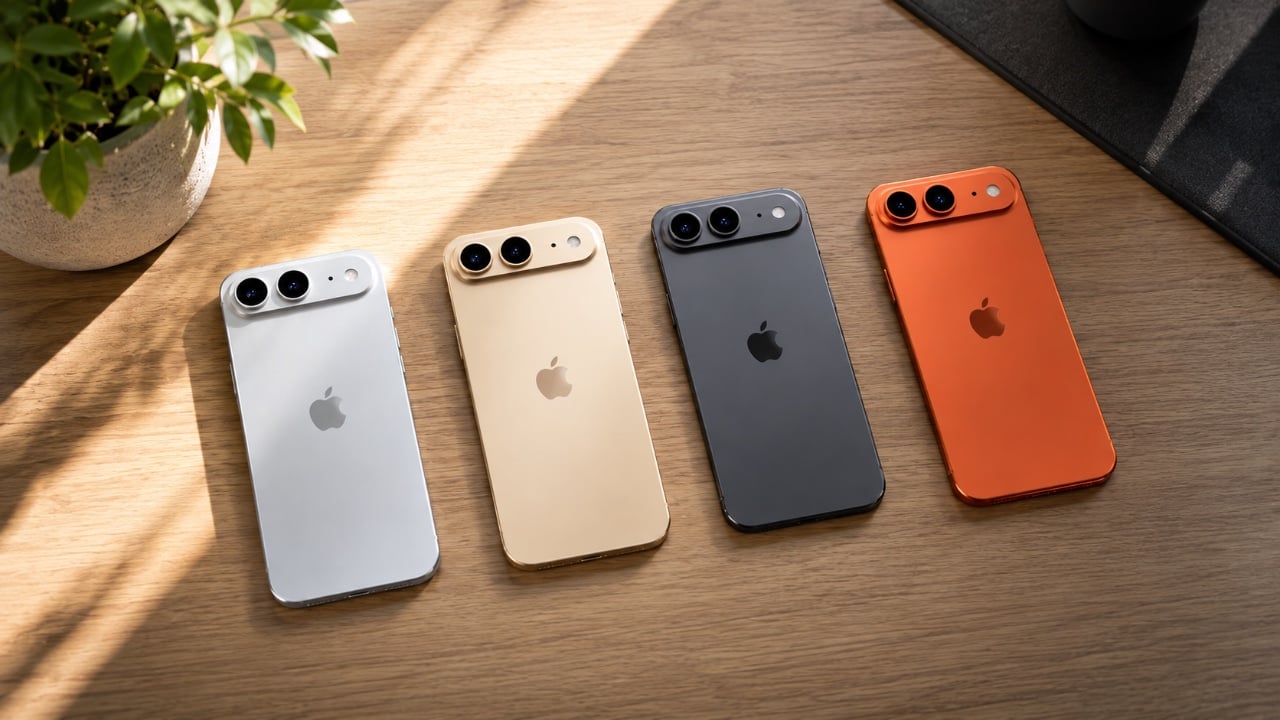
Modded Transparent iPhone Air with a Working SIM Slot Looks Like Apple and Nothing had a Dream Child

12:28 AMHuaqiangbei operates on its own physics. The sprawling electronics market in Shenzhen is the place where flagship smartphones get dismantled, reimagined, and rebuilt into things their original manufacturers never approved and probably never imagined. It runs on American time, buzzes with microscopes and milling machines, and treats the word “warranty” as a polite suggestion. If you want something done to your phone that a brand explicitly decided against, this is where you go.

Taiwanese creator Linzin Tech went there with a blue iPhone Air, the thinnest iPhone Apple has ever made and the first one sold without a physical SIM slot anywhere in the world. He left with something that looks like a cyberpunk collector’s piece: a fully transparent-backed iPhone Air with a functioning nano-SIM tray carved directly into its frame, wired into the motherboard by hand, under a microscope, late at night. A Dbrand X-Ray case could never…

Designer: Linzin Tech

YouTuber Scotty Allen built an iPhone with a headphone jack in Huaqiangbei. He also assembled a working iPhone almost entirely from parts bought off the street there. The market has this reputation for turning Apple’s deliberate omissions into solved problems, and the community around it keeps raising the difficulty level. Linzin’s challenge was particularly gnarly because he wanted two separate modifications on Apple’s most space-constrained iPhone ever, one cosmetic and one structural, and both required touching parts of the phone that Apple engineers spent years optimizing down to the millimeter.

The transparent back came first, and the process was a laser job performed on the rear glass panel. Technicians at Changlong Technology stripped the internal paint layer without touching the MagSafe charging coil sitting directly beneath it, which is about as precise as it sounds. Once the coating was gone, the phone’s internals became fully visible through the glass: the battery, logic board, shielding, internal connectors, and the flexible cable running between the upper and lower assemblies with “Changlong Technology” printed right on it. The Apple logo floats above actual hardware now. It looks like a concept render that somehow got approved.

The iPhone Air has no physical SIM slot in any market, globally, which meant Changlong’s team had to use a CNC milling machine to carve a slot opening into the phone’s ultra-thin metal frame. The original Taptic Engine had to come out entirely because there was simply no room for both it and a SIM tray in that chassis. A smaller third-party linear motor went in its place. Linzin estimates the haptic feedback at around 98% of the original, with the main perceptible difference being less granularity between light and heavy vibration patterns. Apple’s Taptic Engine is genuinely one of the finest haptic systems in consumer electronics, so even a 2% degradation is something purists will notice.

Board-level microsoldering connected the new SIM reader to the motherboard, and after a reboot the phone recognized a physical nano-SIM and connected to a carrier on 5G. Hot-swapping requires a restart to register a new card, which is a minor workflow tax. The thermal picture is less rosy. The graphite heat spreader sheets were casualties of the laser process and were not fully reinstated, which pushed operating temperatures noticeably higher under sustained load. Linzin ran 20 rounds of stress testing and confirmed the throttling. IP68 water resistance is also gone the moment the frame gets milled. And on the morning he flew back to Taiwan, the microphone ribbon cable came loose, sending the phone back to Shenzhen for repairs.

Close-up of the machined SIM tray

Here is the thing though. Linzin paid real money for a phone Apple sells for a premium, then paid again to have it modified, accepted degraded thermals, lost water resistance, voided his warranty instantly, and still calls it worth it. His reason is genuinely practical: he changes phones weekly and eSIM-only means a carrier visit every single time. The modification solves a real problem for a specific kind of power user, and it does so with enough visual drama that you would probably auction this thing for three or four times its retail price. Huaqiangbei has been poking holes in Apple’s “impossible” list for years. This one just happens to be the most beautiful hole yet.

The post Modded Transparent iPhone Air with a Working SIM Slot Looks Like Apple and Nothing had a Dream Child first appeared on Yanko Design.

Google sent an AI-generated push alert that included a racial slur

Google sent out an AI-generated news alert that included the N-word, according to reporting by Deadline. The push notification featured a link to a story by The Hollywood Reporter regarding an incident at the recent BAFTA Film Awards. The word appeared in the notification under the link.

This was first spotted by Instagram user Danny Price, who accompanied a screengrab with a caption reading "what an interesting Black History Month this has turned out to be." Google has since apologized and said that it has "removed the offensive notification" and is "working to prevent this from happening again."

This story follows the aforementioned BAFTA incident, in which an audience member with Tourette syndrome shouted the N-word when Michael B. Jordan and Delroy Lindo took to the stage to present an award. Tourette syndrome activist John Davidson, who made the comment, said he was "deeply mortified if anyone considers my involuntary tics to be intention or to carry any meaning." The incident has sparked outrage and a renewed discussion on the realities of living with vocal tics.

AI makes lots of high-profile errors and this isn't the first time it has ruined a news alert. Apple actually scrapped its own AI push notifications last year when the tool made a series of embarrassing mistakes, including wrongly telling readers that the man accused of killing UnitedHealthcare CEO Brian Thompson, Luigi Mangione, had shot himself.

This article originally appeared on Engadget at https://www.engadget.com/ai/google-sent-an-ai-generated-push-alert-that-included-a-racial-slur-195951493.html?src=rss

Here’s the first teaser for A24’s adaptation of The Backrooms

Three years after announcing plans to produce a film based on the viral YouTube short, The Backrooms (Found Footage) in 2023, A24 has released the first teaser for its adaptation. Backrooms, as the film is now called, is directed by the short's original creator, Kane Parsons, and will be released on May 29, 2026.

The teaser offers little to go on for anyone who hasn't watched the original short or the series of videos Parsons made after it, but it is replete with The Backrooms' hallmark: ominous liminal spaces. Layered over footage of stranger and stranger rooms (or perhaps one room becoming the platonic empty retail spaces popularized by short), the voice of Chiwetel Ejiofor tells the film's other star, Renate Reinsve, about a "place" he discovered that's full of rooms.

Parsons' original video is inspired by a creepypasta called "The Backrooms" that originated on the forum 4chan in 2019. The YouTube series expanded on the basic concept of a liminal space that exists outside reality with monsters and a mysterious company researching The Backrooms. It's unclear how much of that larger lore will be incorporated into the feature film adaptation, but since the teaser is missing the digital video filter that gave the YouTube short its distinct look, it seems possible Parsons could be going for something a bit different. Well that, and the fact the film stars two Oscar-nominated actors.

This article originally appeared on Engadget at https://www.engadget.com/entertainment/tv-movies/heres-the-first-teaser-for-a24s-adaptation-of-the-backrooms-194300513.html?src=rss

Waymo will start offering robotaxi rides in four more cities

Waymo had set out some big plans for expanding its autonomous vehicle taxi program across the US in 2025 and it appears to be continuing that pace into 2026. Today, the company announced that the first public riders can begin using its fully autonomous ride-hailing service in Dallas, Houston, San Antonio and Orlando. 

To start, these robotaxi rides will only be available for a small number of people with the Waymo app in those cities. "We will be inviting new riders on a rolling basis to ensure a seamless experience across our initial service areas, as we meaningfully scale our operations ahead of opening our service to everyone later this year," the company said in the blog post announcing the expansion.

Google-owned Waymo is now operating in ten commercial metro areas. It announced its plans to start testing its vehicles in these four US cities in November. The company also began a test phase in Miami at that time, and Waymo's robotaxi service began accepting riders in that locale in January.

This article originally appeared on Engadget at https://www.engadget.com/transportation/waymo-will-start-offering-robotaxi-rides-in-four-more-cities-192841871.html?src=rss