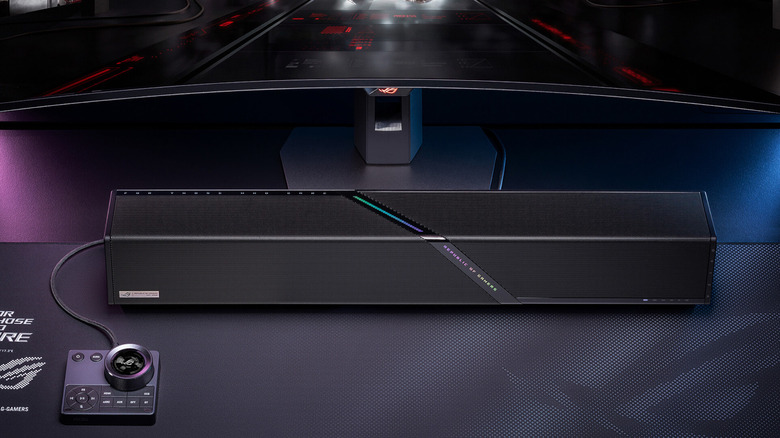
ASUS’ first gaming soundbar is now available in the US for $600
The ASUS ROG Gjallar is now available in the US.
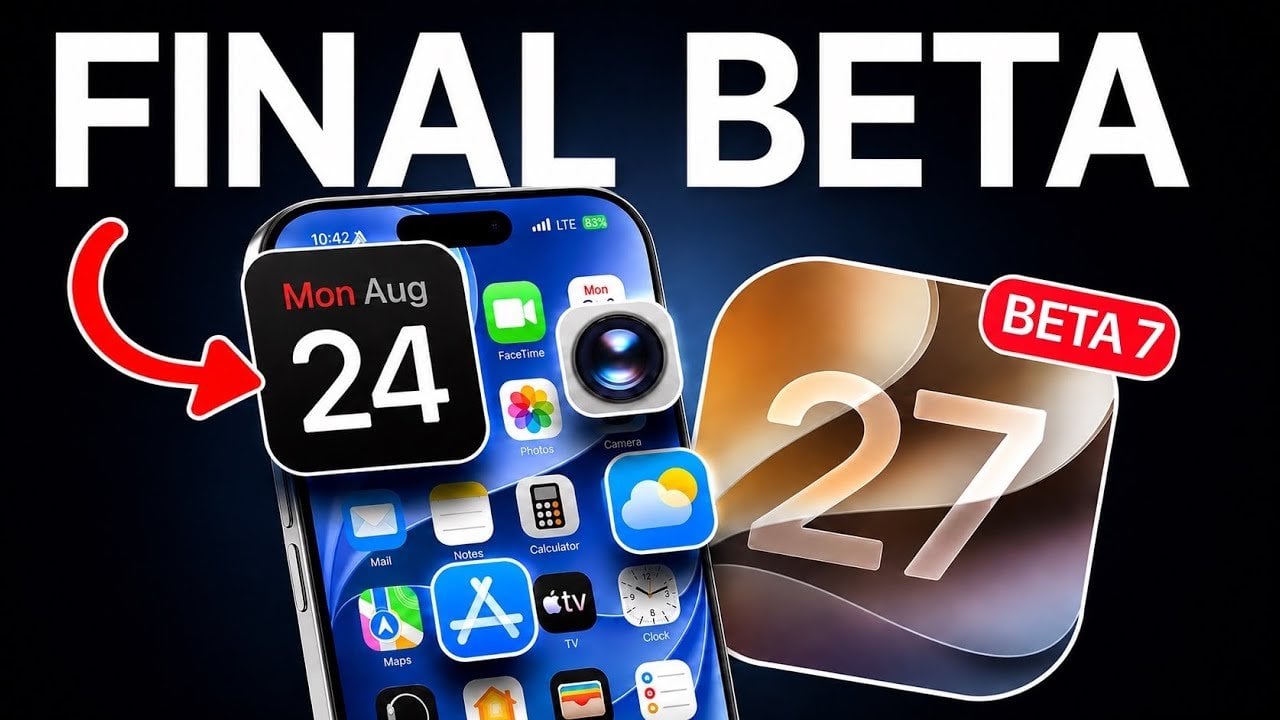
Apple has officially released iOS 27 Developer Beta 7, signaling the final stage of testing before the highly anticipated public launch in mid-September. This update is part of a broader rollout that includes updates for iPadOS, watchOS, macOS, visionOS, tvOS, and HomePod. While it doesn’t introduce major new features, the focus is on performance enhancements […]
The post iOS 27 Beta 7 Arrives Today for the Final Pre-Launch Test appeared first on Geeky Gadgets.

True full-color 3D printing has always lived in industrial settings, with price tags starting at $50,000 and machinery too large for any studio shelf. Most desktop alternatives can’t close that gap on their own. The HeyGears G1 Series changes that, combining full-color 3D printing, 3D texture printing, 2D UV printing, and True DTF (Direct-to-Film) & DTG (Direct-to-Garment) fabric printing into one compact desktop machine anyone can actually set up at home or in a studio.
Beyond bringing full-color 3D printing to the desktop, the HeyGears G1X also delivers outstanding UV printing performance, offering up to 12× faster printing speeds with the Epson I3200-U1HD printhead, a 10× wider color gamut, more accurate color reproduction backed by G7 Colorspace’s highest-level color certification, and lower ink costs. What’s genuinely useful here is how fluidly the G1 Series moves between modes. A small gift shop, for instance, can run custom UV prints on mugs in the morning, emboss a leather journal cover in 3D texture mode in the afternoon, and print a full-color figurine in the evening, all from the same machine.
Designer: HeyGears
Click Here to Buy Now: HeyGears is currently offering G1X backers $500+ in additional promotional savings. Hurry, only a few left! Raised over $14.4 million.
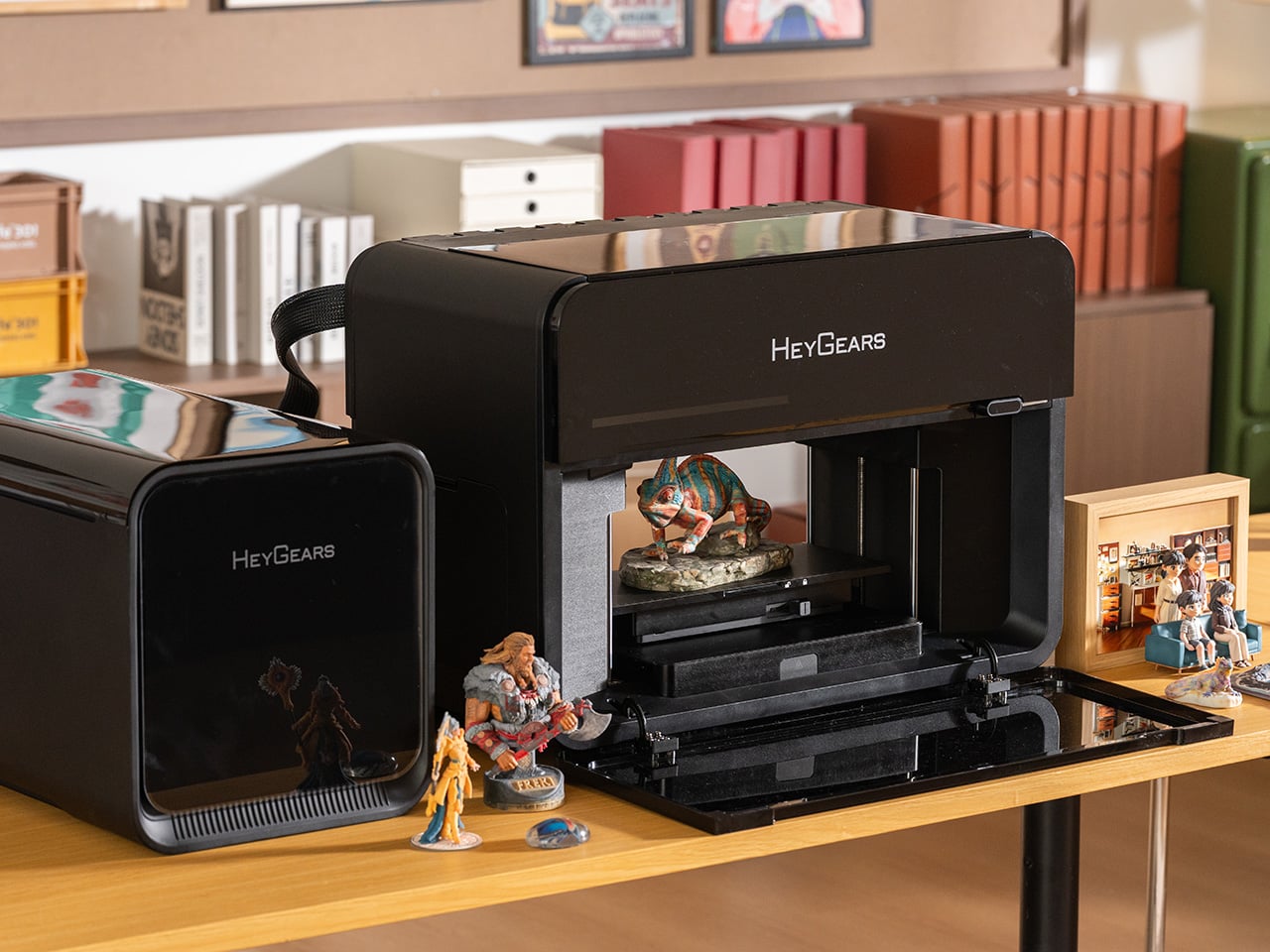
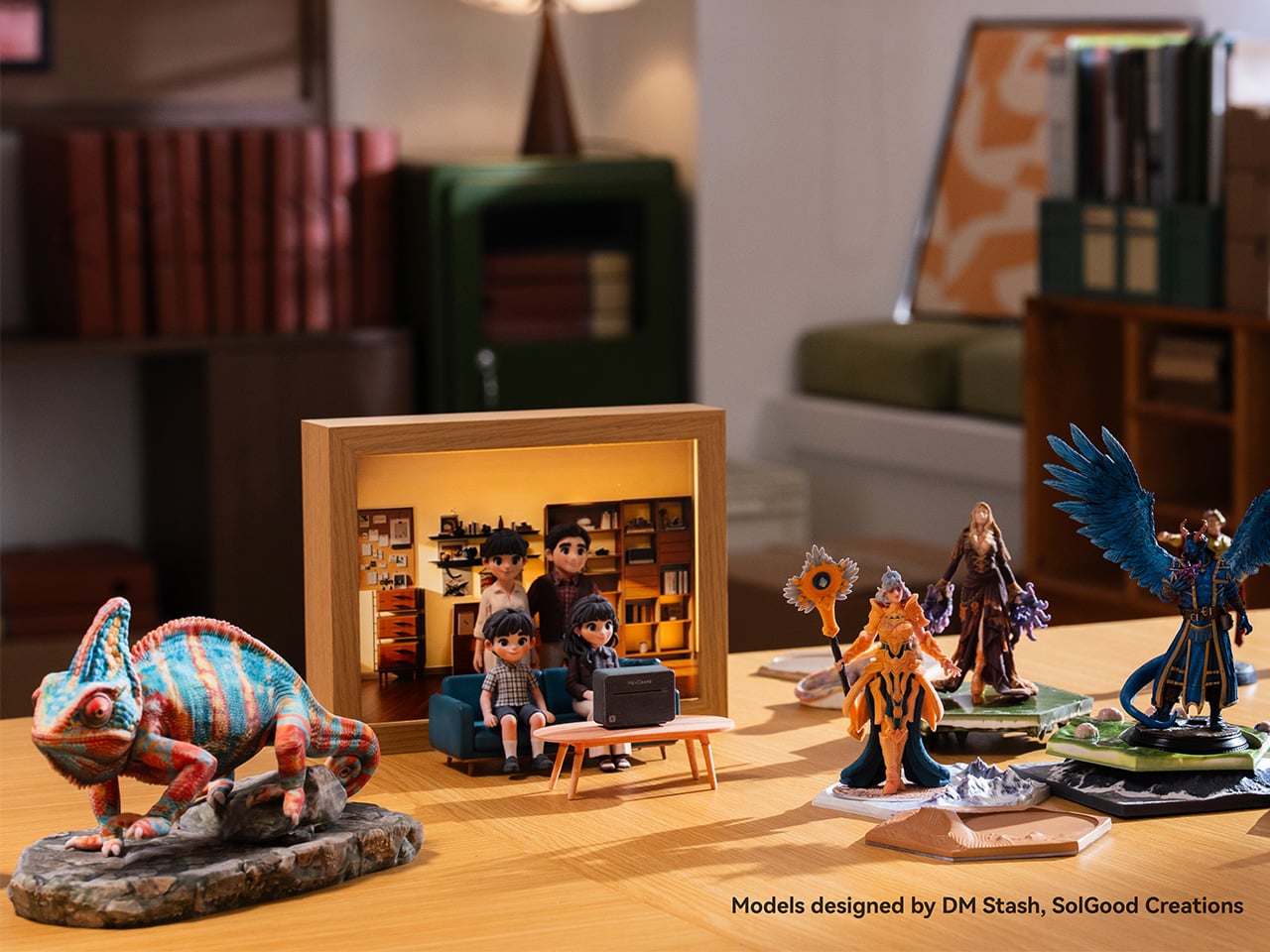
The standout of the three is the full-color 3D printing. Using Precision Piezo Inkjet technology with instant UV curing, the G1X builds vibrant, paint-free models layer by layer at just 10 to 20 μm thick, roughly half the diameter of a human hair. Transparent and colored sections print in one continuous build, and there’s no post-print assembly to deal with since water-soluble supports simply dissolve in water.

A lot of that output quality comes down to the printhead. The G1X runs on an Epson i3200-U1HD, an industrial-grade unit with 3,200 high-density nozzles across eight ink channels, a maximum resolution of 1,440 x 2,400 DPI in UV printing, and over 10 million colors in its palette. The extra channels include light cyan and light magenta, which keep gradients and skin tones from going muddy.
The G1X also offers three UV printing modes to match different production priorities, whether you want maximum printing speed or a wider color gamut. Ultra-High-Speed Mode uses 4 white-ink channels to achieve up to 12× faster printing, while High-Speed Mode uses 2 white-ink + 2 varnish channels, reaching at least 6× faster printing. Finally, Wide-Gamut Mode utilizes Wide-Gamut inks, including Light Cyan (Lc) and Light Magenta (Lm) inks, for enhanced color reproduction, with printing speeds of at least 3× faster. Whether you prioritize speed or color performance, the G1X lets you choose the configuration that best fits your workflow.

For UV work, the machine isn’t limited to any single surface type. It works on wood, leather, glass, metal, acrylic, and ceramic, among over 400 compatible substrates in total. A rotary module handles cylindrical objects up to 245 mm tall, covering everything from mugs to tumblers, and an integrated line-scan camera auto-calibrates placement so curved surfaces print accurately without manual setup.

The 3D texture mode goes a step beyond standard UV printing, producing raised embossed effects, oil-painting-style relief, and wood-carved surfaces with a recommended height of 5mm (up to 150 mm). For apparel, the G1 Series supports True DTF and DTG printing with a water-based ink set built for wash durability, and that’s what makes it one of the few desktop platforms covering both hard-surface and fabric printing in a single unit.

HeyGears paired the hardware with a full software ecosystem that goes well beyond basic print management. Blueprint Studio handles everything from model preparation to batch layout, while HeyVerse adds AI tools for text-to-3D and image-to-3D generation. There’s also a LiDAR sensor in the print carriage that monitors layer thickness to within ±0.01mm in real time, helping maintain consistent output across longer production runs.
Printhead maintenance is often where UV systems let their owners down, and HeyGears hasn’t ignored that. A quad-layer anti-clogging system combines printhead heating, white-ink agitation, standby cleaning cycles, and a sealed moisturizing state during extended downtime. Three cleaning modes handle everything from a quick nozzle check to a thorough channel flush, and built-in air filtration captures ink mist and VOCs for cleaner indoor operation.
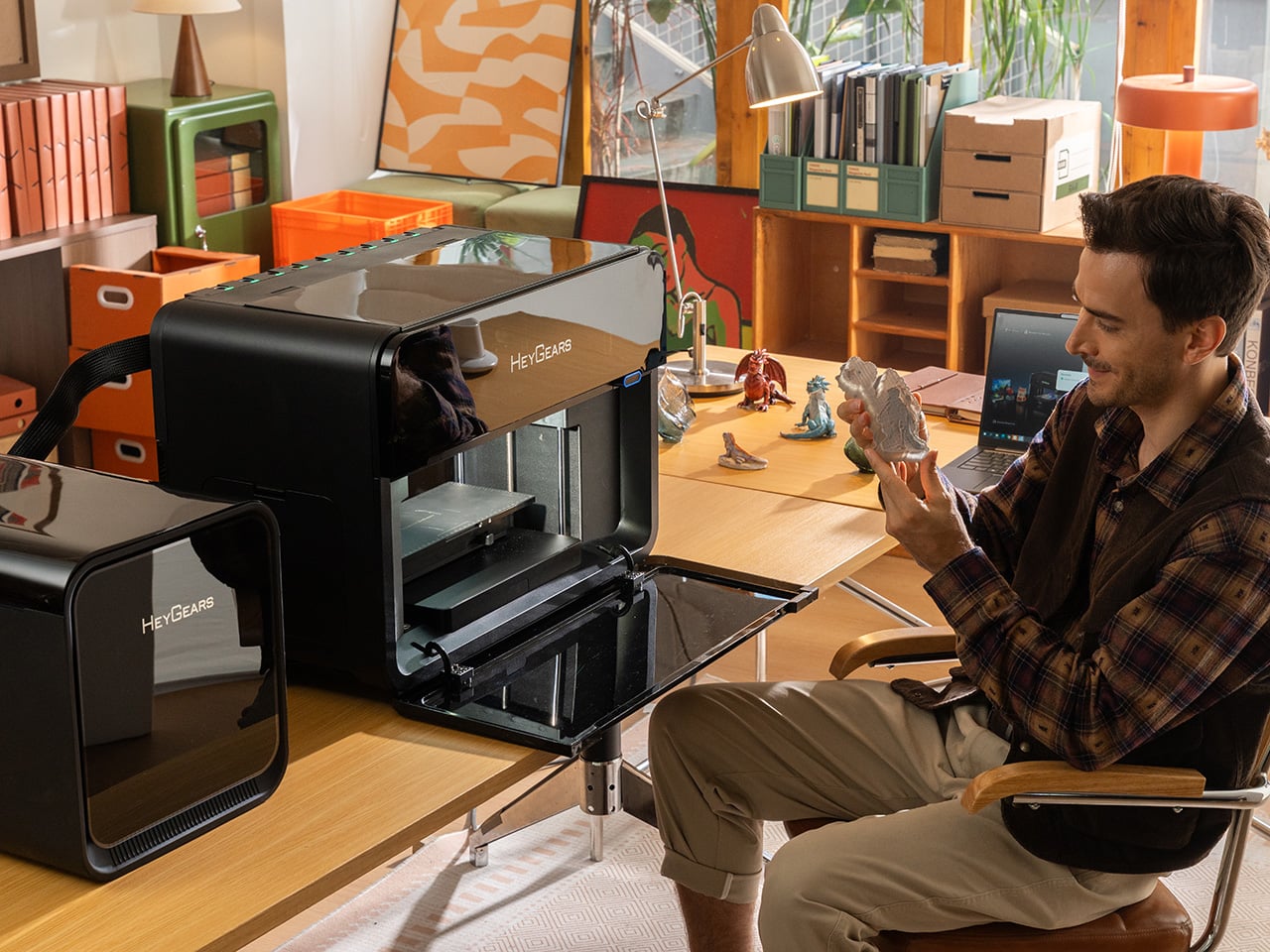
For someone running a small studio or a product-based creative business, the appeal goes beyond having one versatile machine. It means skipping three separate consumable budgets, three learning curves, and three maintenance routines. The i3200-equipped models carry a rated printhead lifespan of 12 to 24 months, while the open ink system offers material flexibility, and HeyGears’ lower-priced inks help keep material costs well below those of comparable industrial platforms. Turns out industrial-grade color doesn’t need an industrial-sized space after all. And with a limited-time $500+ cashback offer now available to G1X backers, you wouldn’t want to miss out on this opportunity to bring your designs to life, and in full color to boot!
Click Here to Buy Now: HeyGears is currently offering G1X backers $500+ in additional promotional savings. Hurry, only a few left! Raised over $14.4 million.
The post Full-Color 3D Printing Once Cost $50,000+, HeyGears Brings It to 10% of the Cost first appeared on Yanko Design.
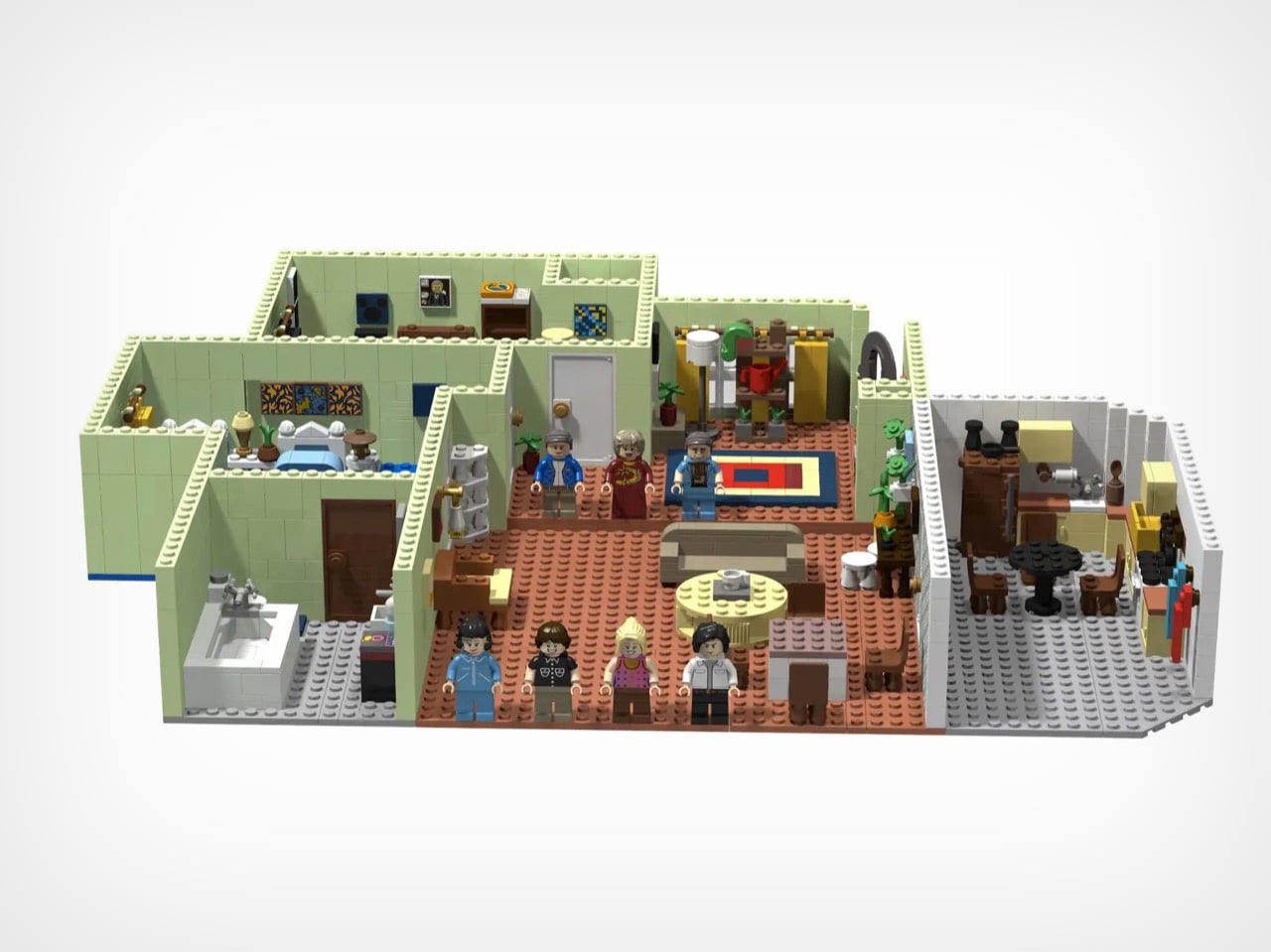
Sitcom apartments are basically stage sets pretending to be homes, and nobody understood that better than “Three’s Company.” The entire show ran on doors slamming at the wrong moment, eavesdropping from the kitchen, and someone hiding in a closet two seconds before the wrong person walked in. It only worked because the apartment was designed like a farce machine, with sightlines built for maximum chaos. Take away the laugh track and what you’re left with is genuinely clever spatial choreography, the kind an industrial designer can appreciate even if the plot involved Jack faking a limp again.
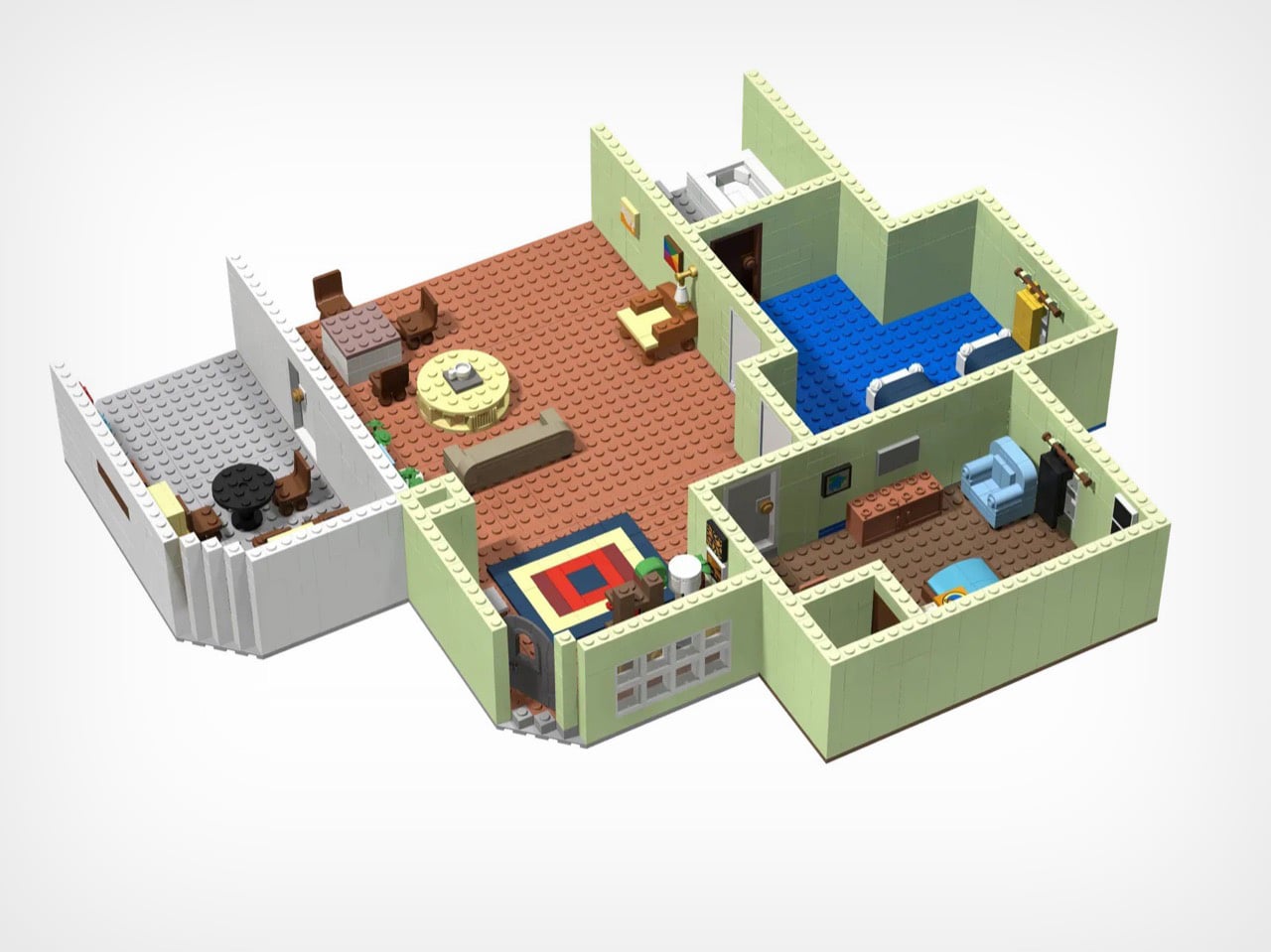
That’s exactly what makes this LEGO Ideas build so satisfying to look at. Builder AssociateFranticMinibeard has laid the whole apartment open like a dollhouse, hallway, bathroom, kitchen, living room, all visible at once in 1,293 bricks. It is basically the show’s floor plan finally getting the cutaway camera angle it always deserved, and it turns out sand green walls and a round dining table can carry an enormous amount of 1977 nostalgia.
Designer: AssociateFranticMinibeard
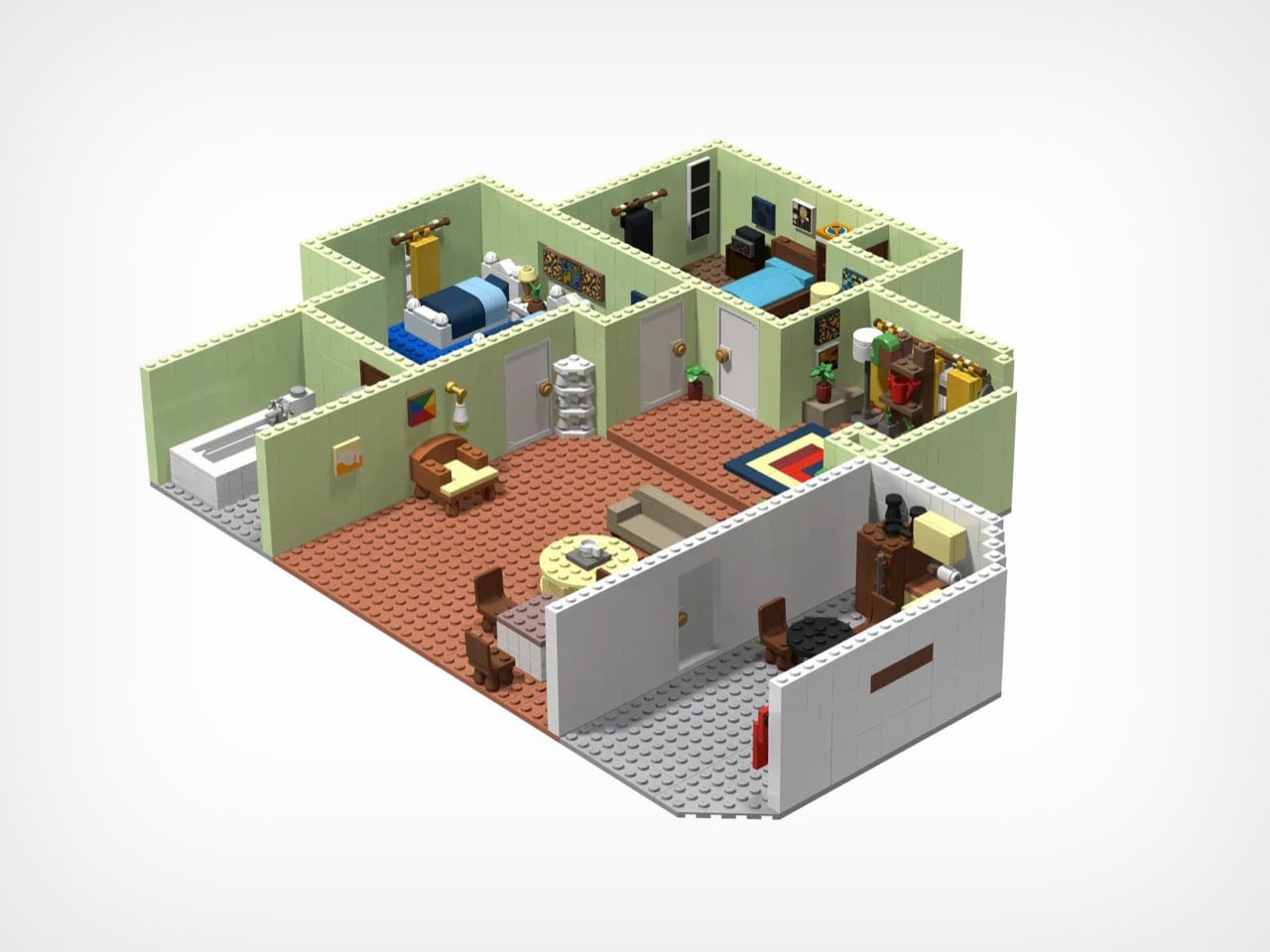
You get the full Santa Monica apartment split into legible zones, a bedroom with framed wall art, a bathroom complete with an honest-to-goodness bathtub, a kitchen stacked with yellow cabinetry and appliances, and a living room anchored by that round table and sofa where half the misunderstandings presumably happened. Off to one side sits a darker, moodier space with bar stools and small round tables that reads unmistakably like a certain downstairs hangout regulars would recognize. The reddish brown flooring against those sand green walls nails a very specific late 70s SoCal palette that most LEGO sitcom sets, being stuck in the 90s, never even attempt.
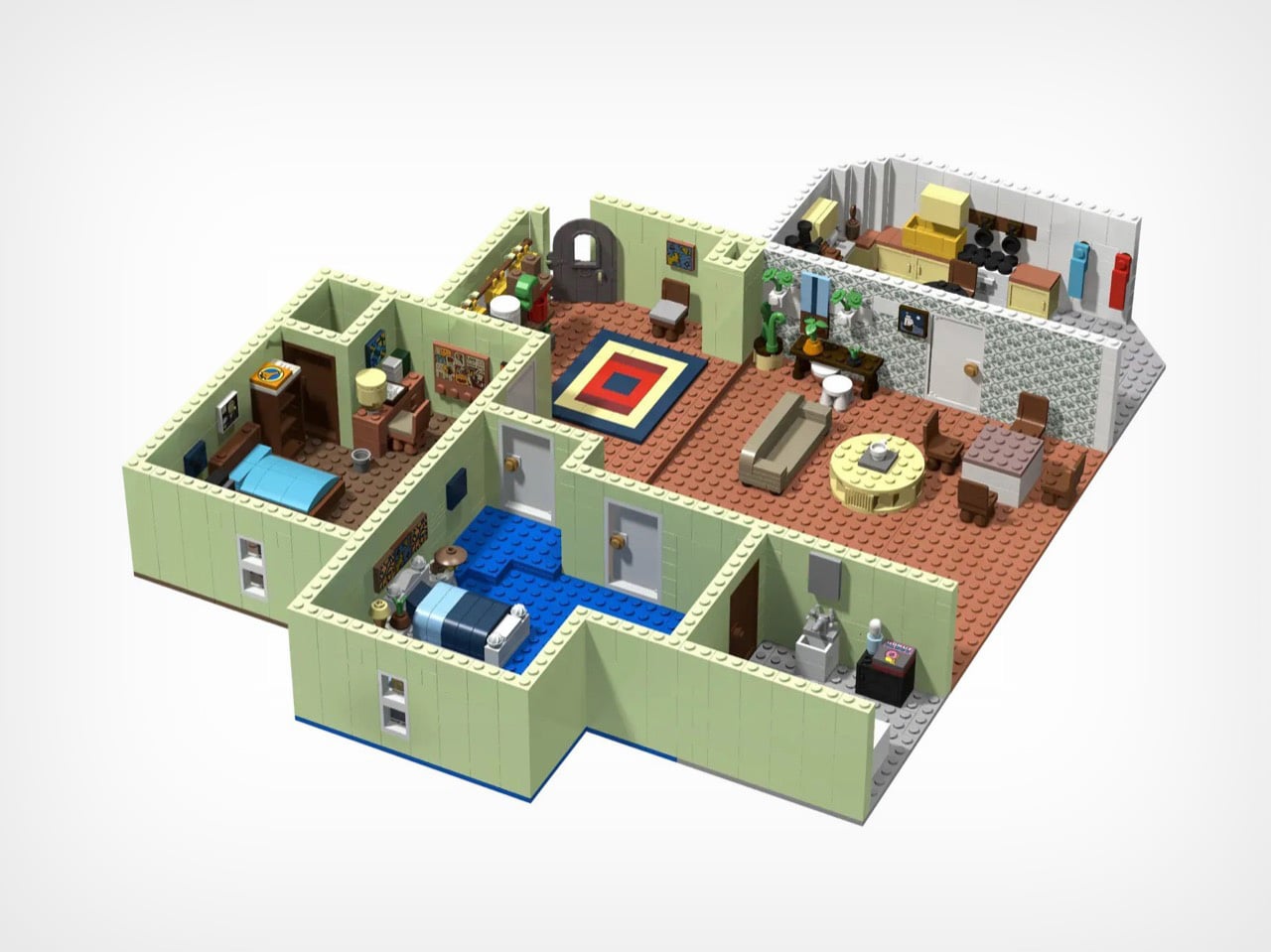
My favorite detail, though, is that bathtub. It sounds like a throwaway prop until you remember the entire premise of the show hinges on it. Jack Tripper does not apply for the open room like a normal person, he crashes a going away party, passes out, and gets found the next morning asleep in that tub, which is apparently enough to convince Janet and Chrissy he is roommate material. Including it here is a small choice that says the builder actually understood what makes this show tick, rather than just slapping seventies wallpaper on a generic apartment shell.
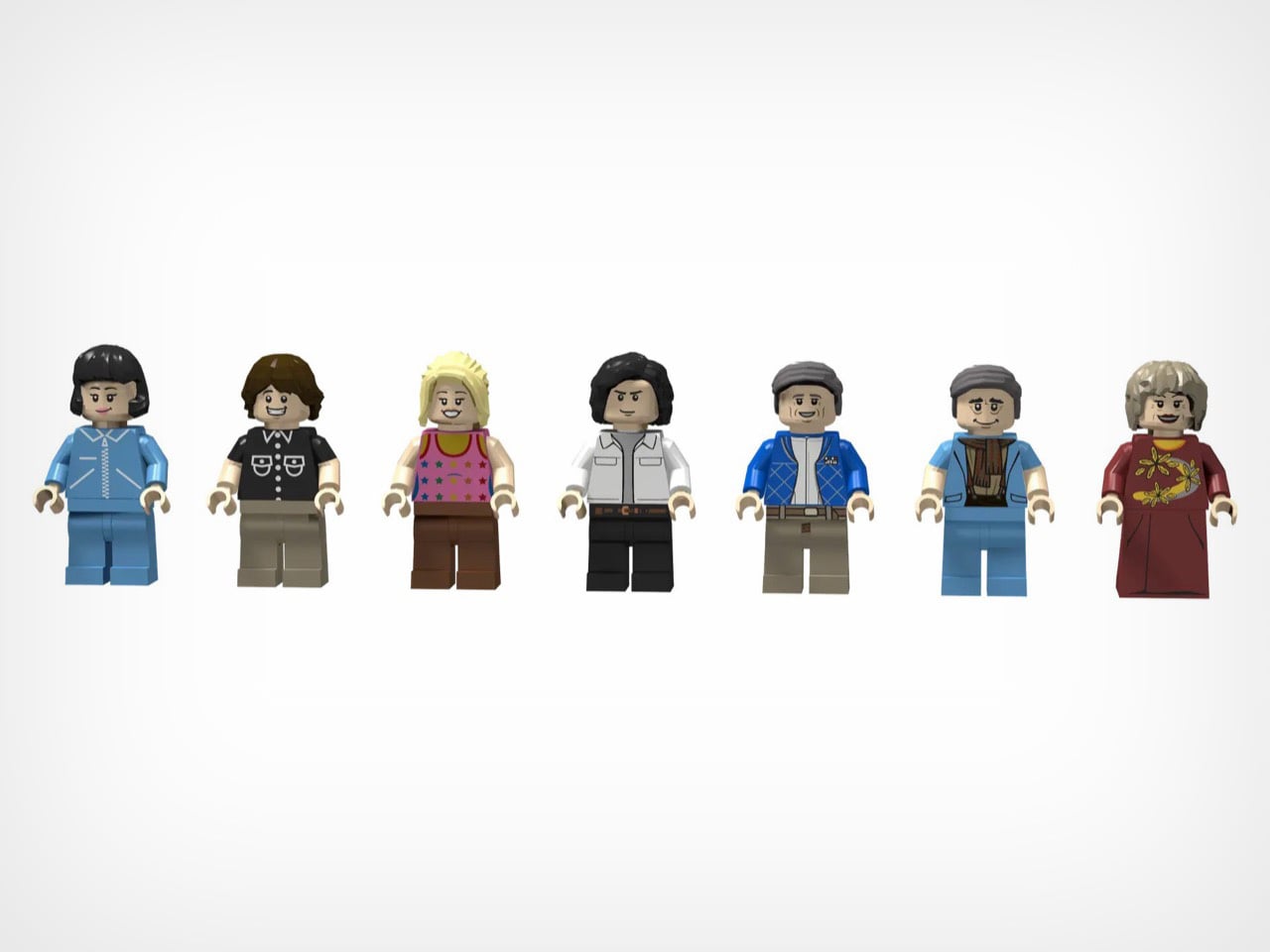
The minifigure lineup backs that up too. All seven key characters made the cut, Jack, Janet, and Chrissy front and center, plus Stanley and Helen Roper alongside their eventual successor Ralph Furley, with neighbor Larry Dallas rounding things out. Technically the Ropers and Furley never overlapped on the show, but as a greatest hits roster spanning all eight seasons, it works.
Right now this build is sitting at a modest 20 supporters with 60 days left just to crack the first LEGO Ideas milestone of 100, so it needs momentum fast before the clock runs out. Given that LEGO already has a growing shelf of sitcom sets, from Central Perk to the Golden Girls, and none of them dip back into the 1970s, there is a real gap here worth filling. If you grew up watching Jack talk his way out of trouble on a weekly basis, head over to LEGO Ideas and give this one your vote before the countdown hits zero.
The post Someone Finally Built the Three’s Company Apartment in LEGO, Celebrating the 70s Sitcom first appeared on Yanko Design.
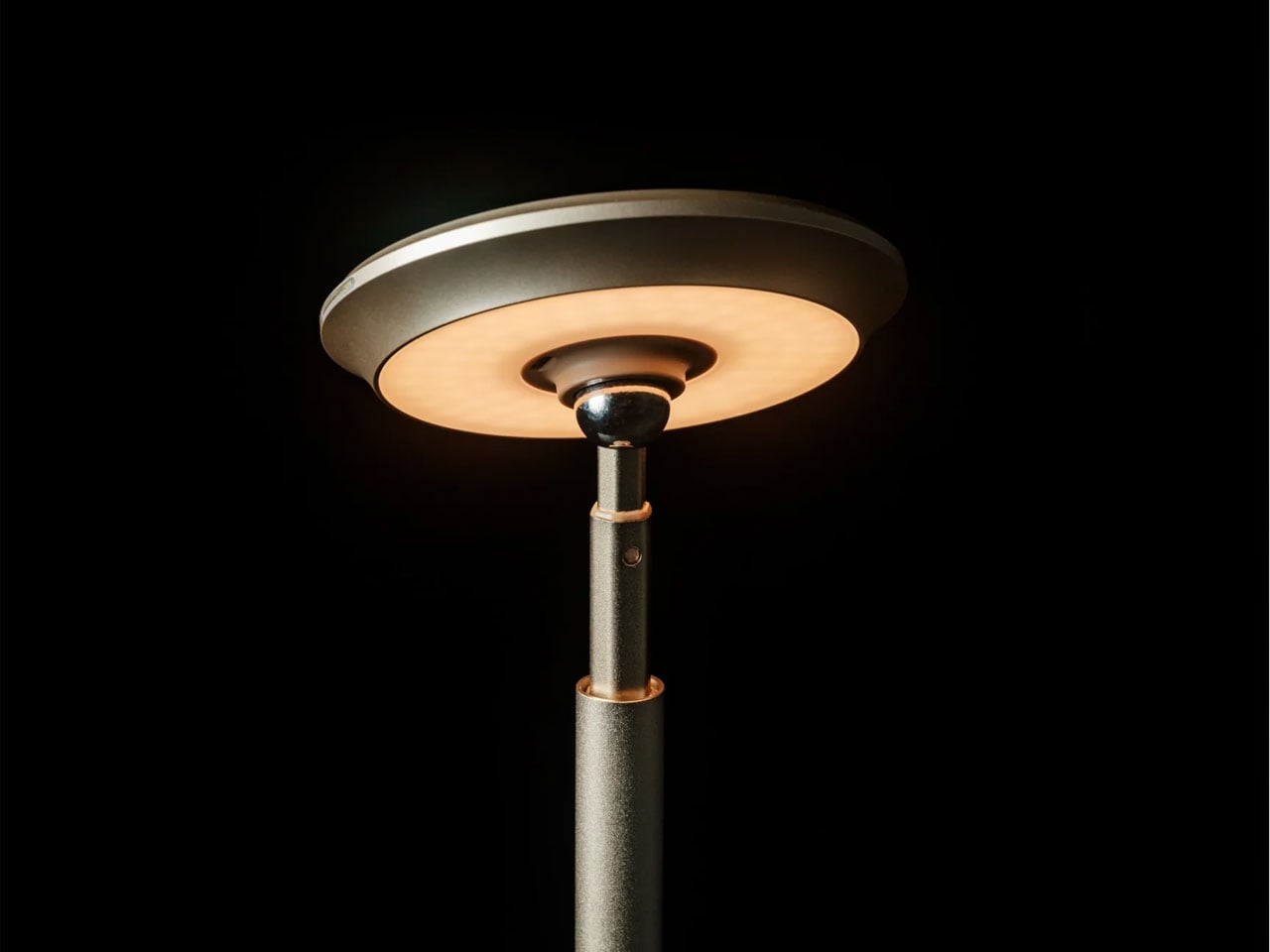
Oftentimes, the way light falls in a room dictates how productive you are or how well you can finish your study, work, or task. Sometimes, it also affects your rest and relaxation time. Not everyone has the privilege of having natural light, so they have to rely on different lighting fixtures to help them out. Having a lamp that you can adjust to suit what you need at any given moment is conducive to living a more relaxed and efficient life. The Infinite Solas Lamp is the one tool you need, adjustable by height, direction, brightness, and warmth, to make sure you always have the right kind of light for whatever lies ahead.
The minimalist lamp may be simple in design, but it brings a four-way adaptability that is much needed by those who rely on lighting tools when working from home or wherever they are. The wireless capability also adds to the convenience of placing it on your desk, bedside table, shelf, dining table, and even outdoors, with no outlet hunting, no cord to manage, and no limitations on where good light can follow you.
Click Here to Buy Now: $325.00
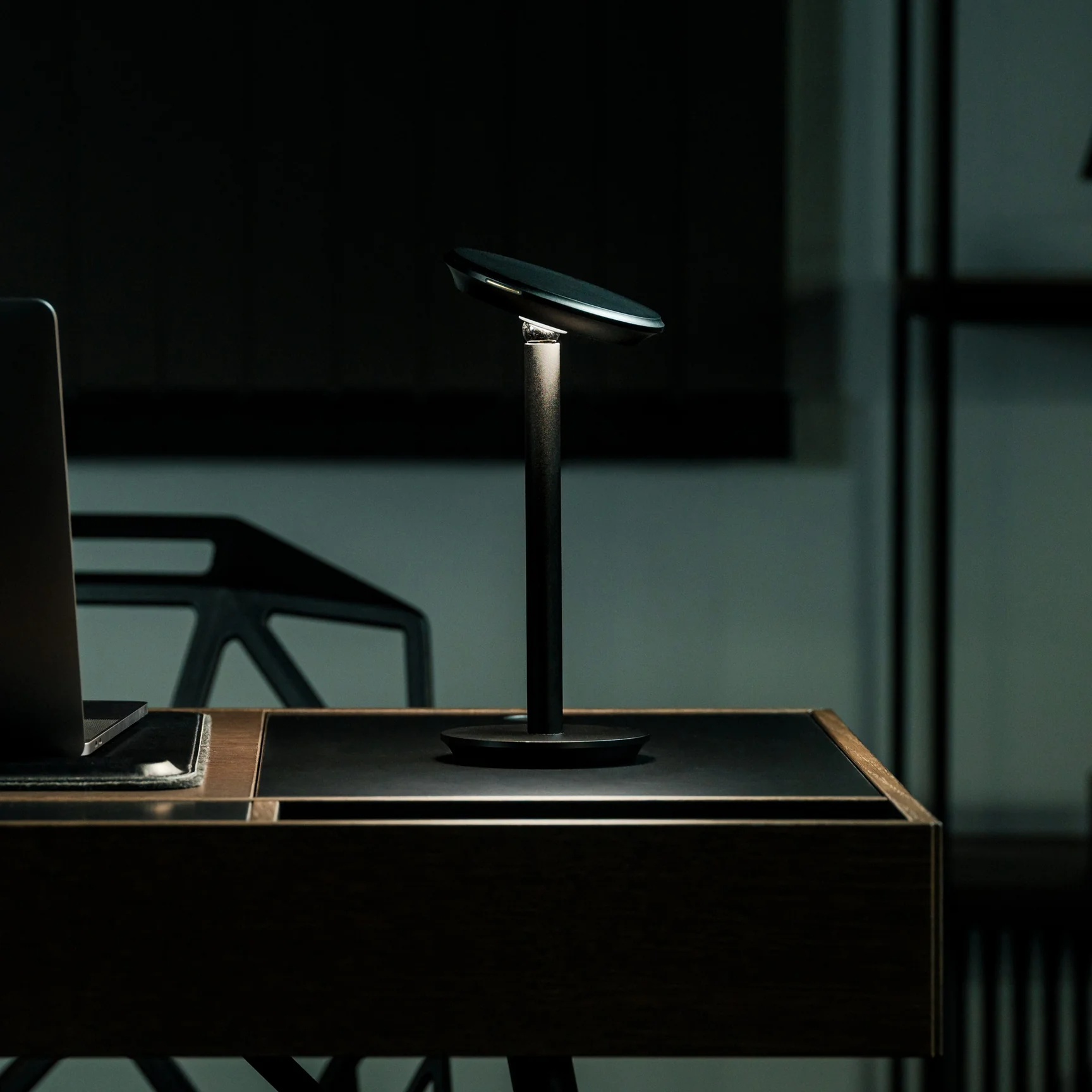
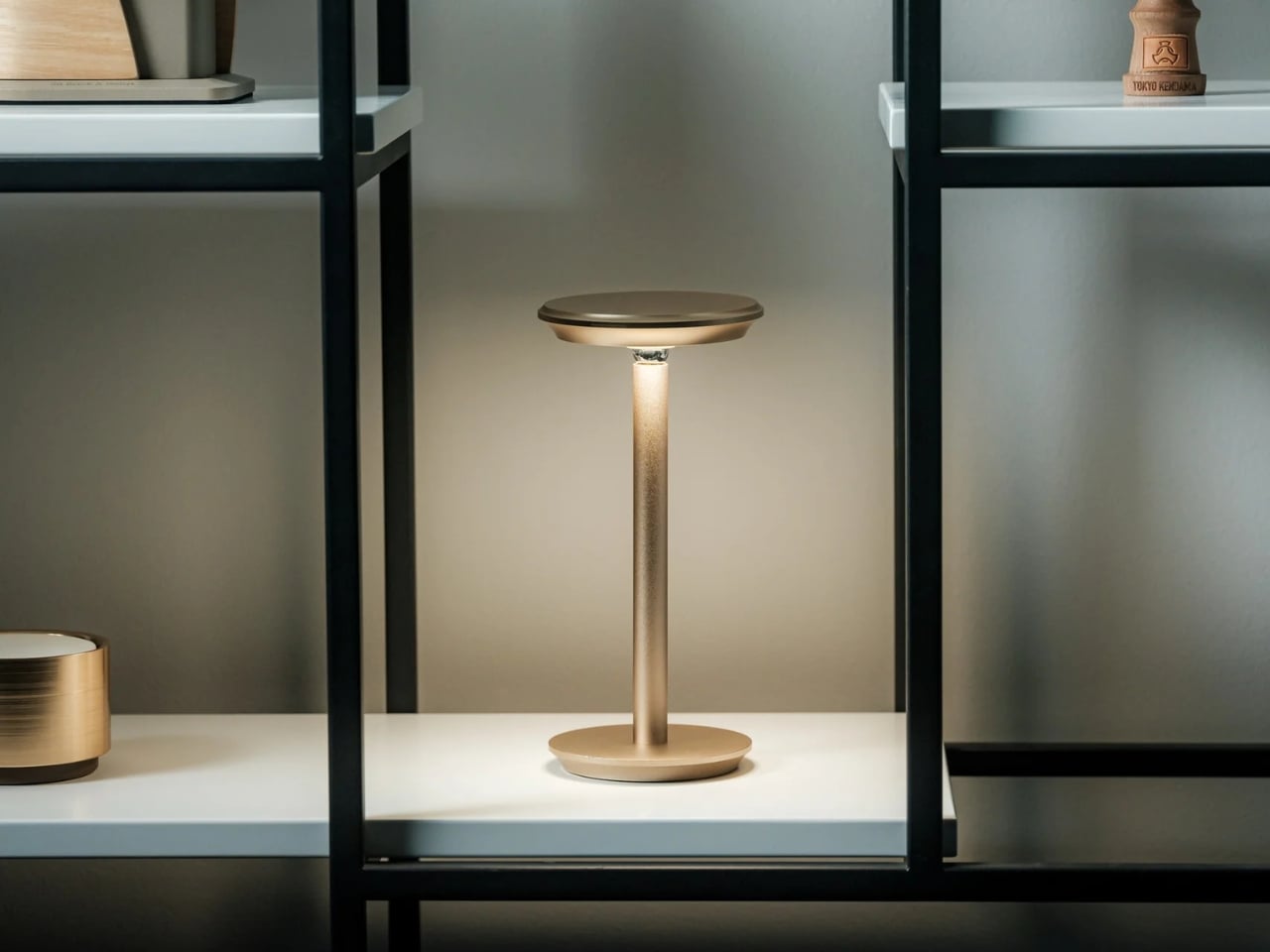
The magnetic ball-joint head is the standout feature of the Infinite Solas Lamp, allowing you to adjust the angle without having to move the actual lamp. If you need a concentrated light source, you can angle it down toward whatever you’re working on. If you need to spread light throughout the room, you can simply turn it outward. You can also adjust the height of the lamp anywhere between 8.9 to 19.7 inches without any fixed stops or notches, so just lower it when you need it closer to the surface or extend it when you need it higher.
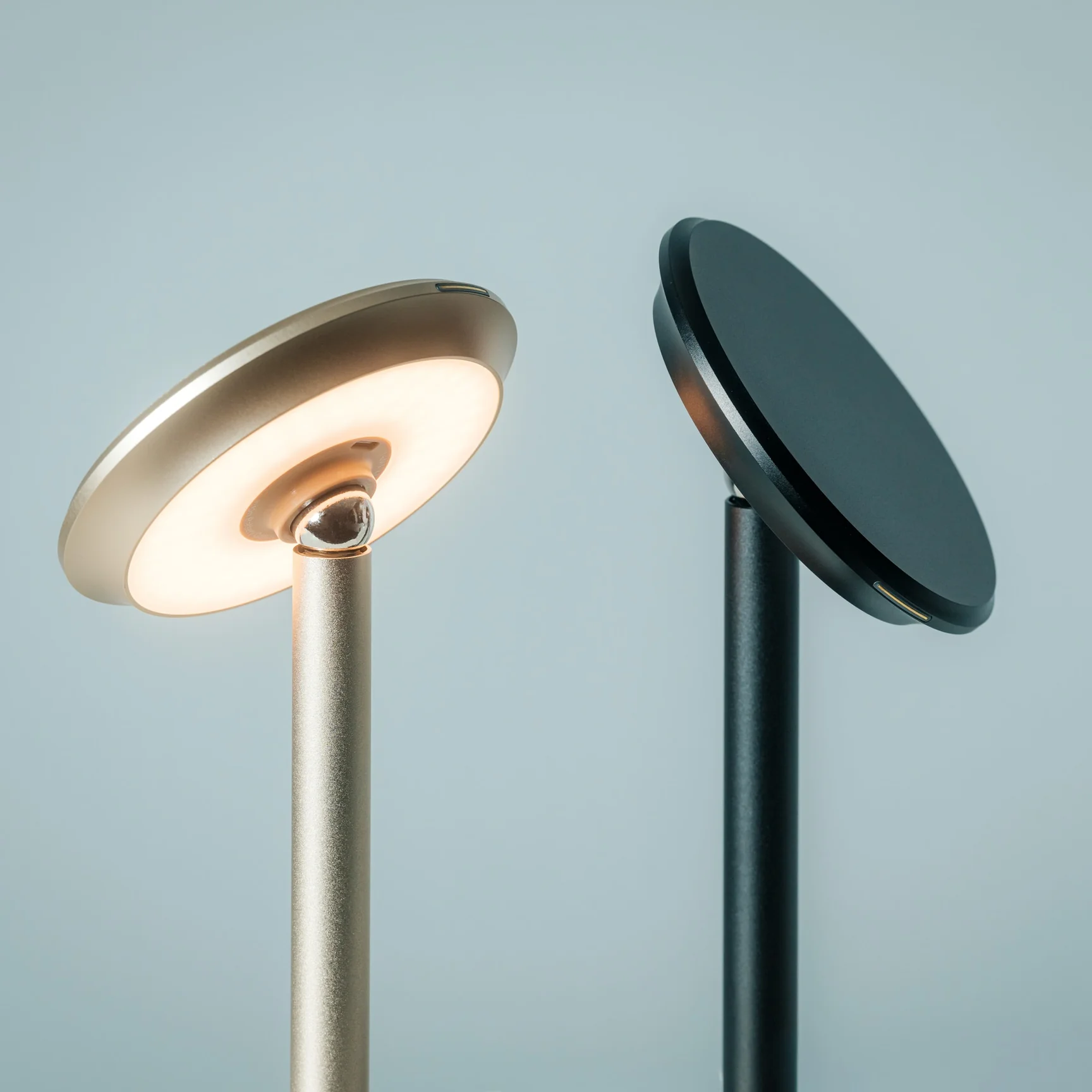
On top of that, you can dim the brightness as needed and fine-tune the color temperature from a warm, cozy 2,500K all the way up to a crisp and cool 4,000K. That range makes it easy to shift seamlessly from a focused, productive work session in the morning to a calming, atmospheric wind-down in the evening, all without switching lamps or compromising on comfort.
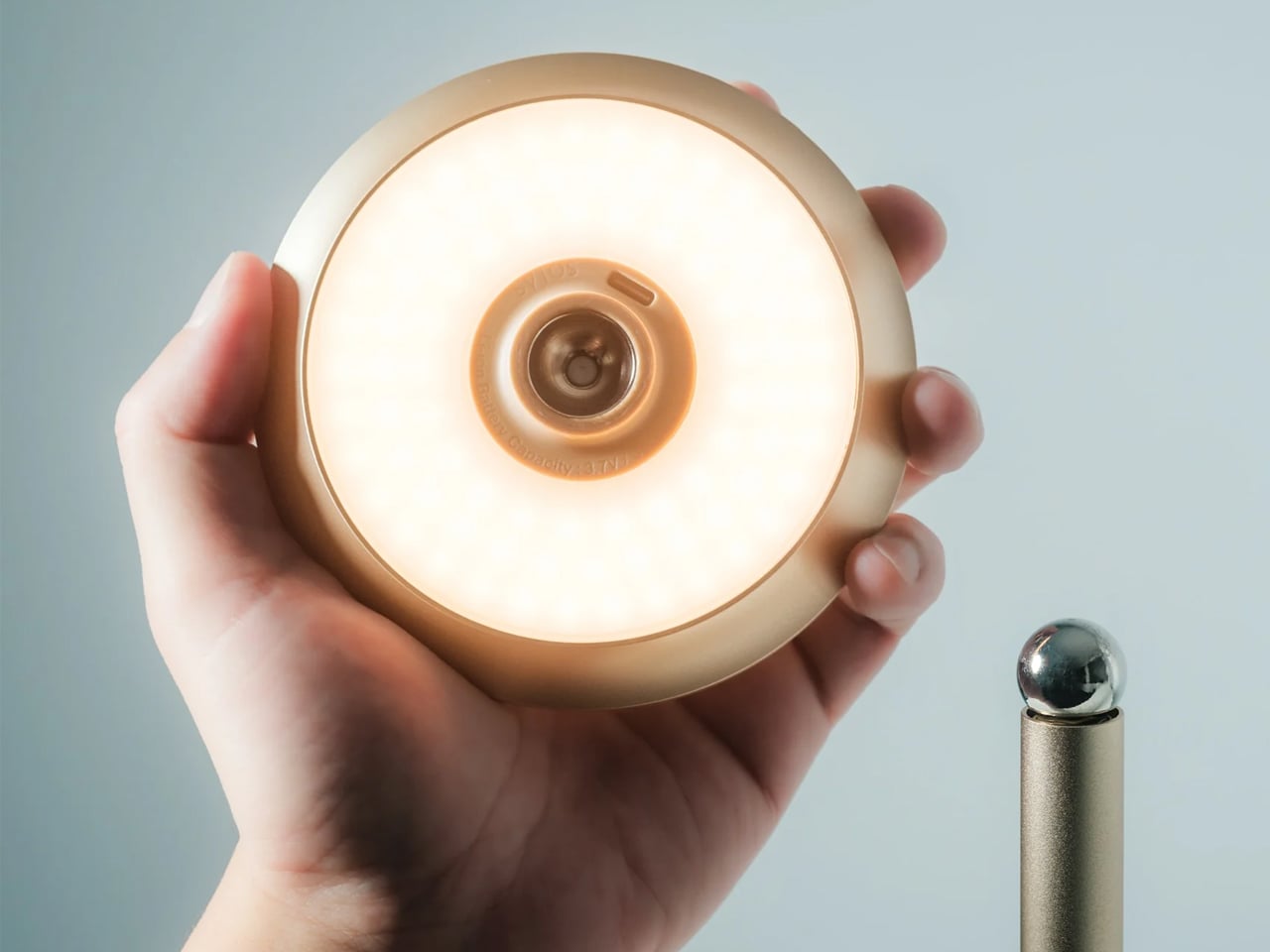
The wireless feature is also one of the best things about the Infinite Solas Lamp, especially since it can last up to 3 days when used in low brightness mode and between 6 to 7 hours at full brightness. When the battery runs out, you only need 4 hours to fully recharge it via USB-C.
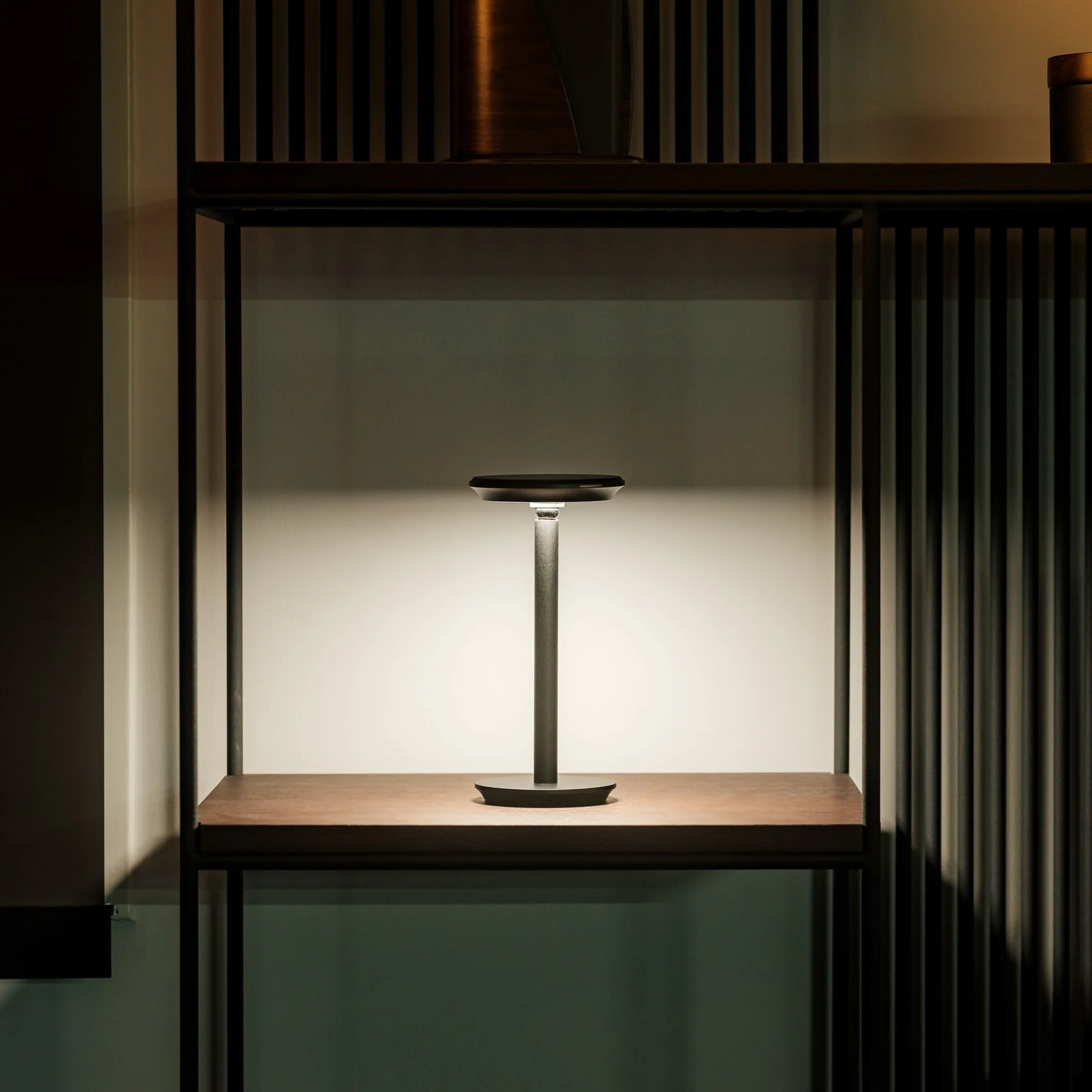
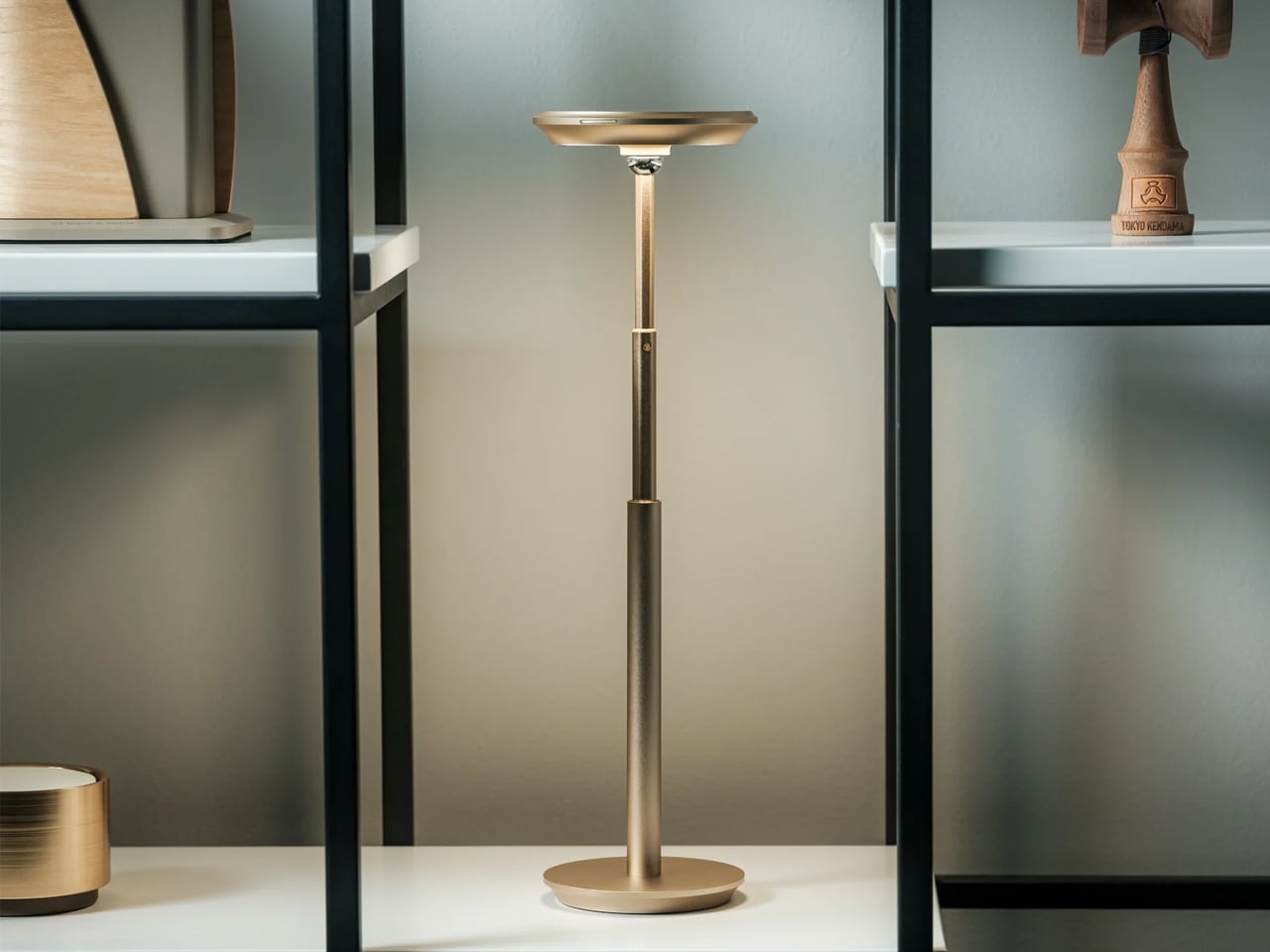
In terms of materials, the Infinite Solas Lamp is made from machined aluminum with an anodized finish, giving it a minimalist but premium look that invites you to put it on display rather than tuck it away. It is available in two colorways: black, for a bold and contemporary statement, and warm champagne, for something softer and more organic, both finished to a standard that feels far more considered than most lamps in its price range.
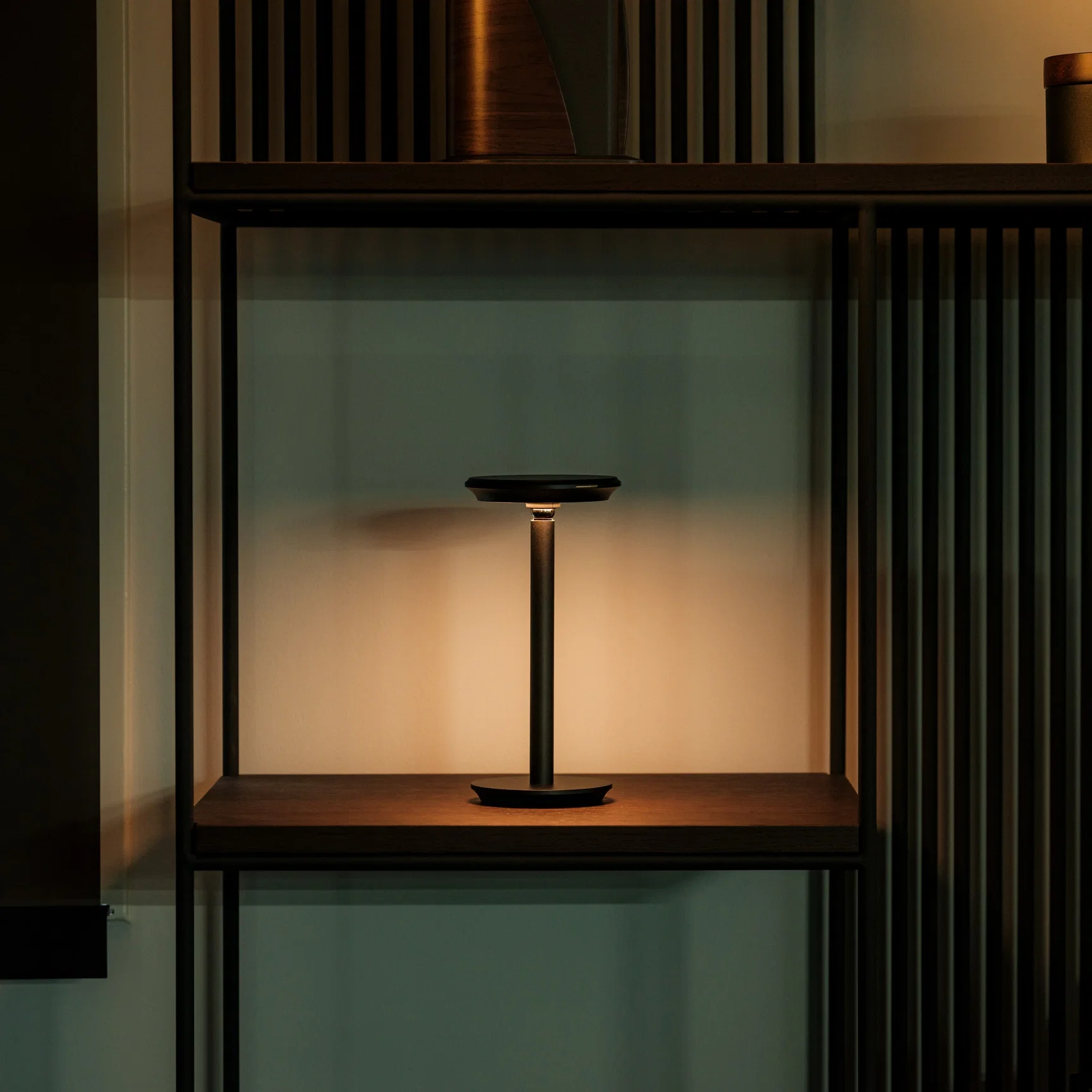
What makes the Infinite Solas Lamp truly stand out in a crowded market of designer lighting is that it was built with genuine intention. Designed by Koki Sato, it doesn’t just sit on your table and look good, though at $325, it certainly earns that right. It becomes a quiet but reliable companion that shifts with you throughout your day: bright and cool when you need to concentrate, and soft and warm when you’re finally ready to unwind.
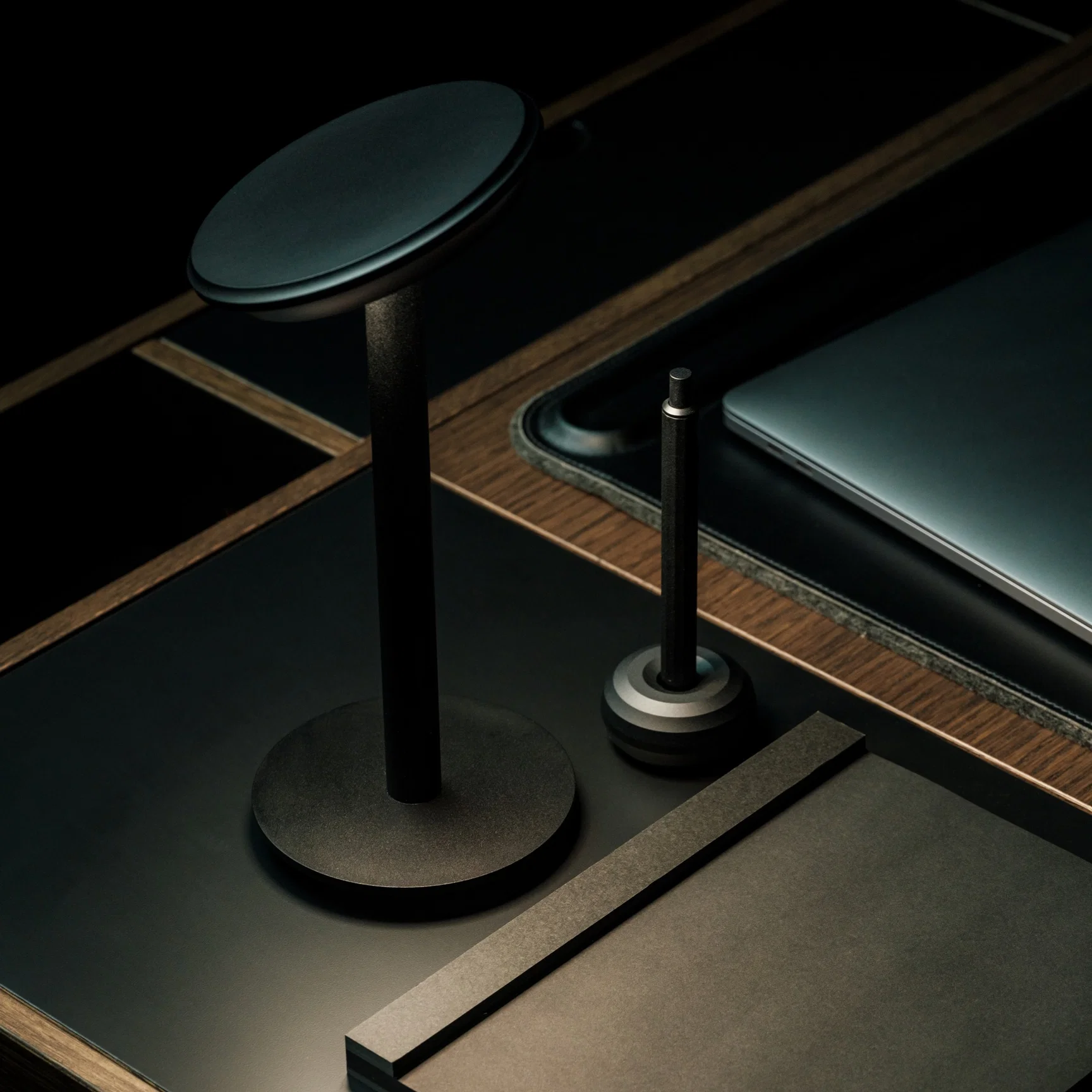
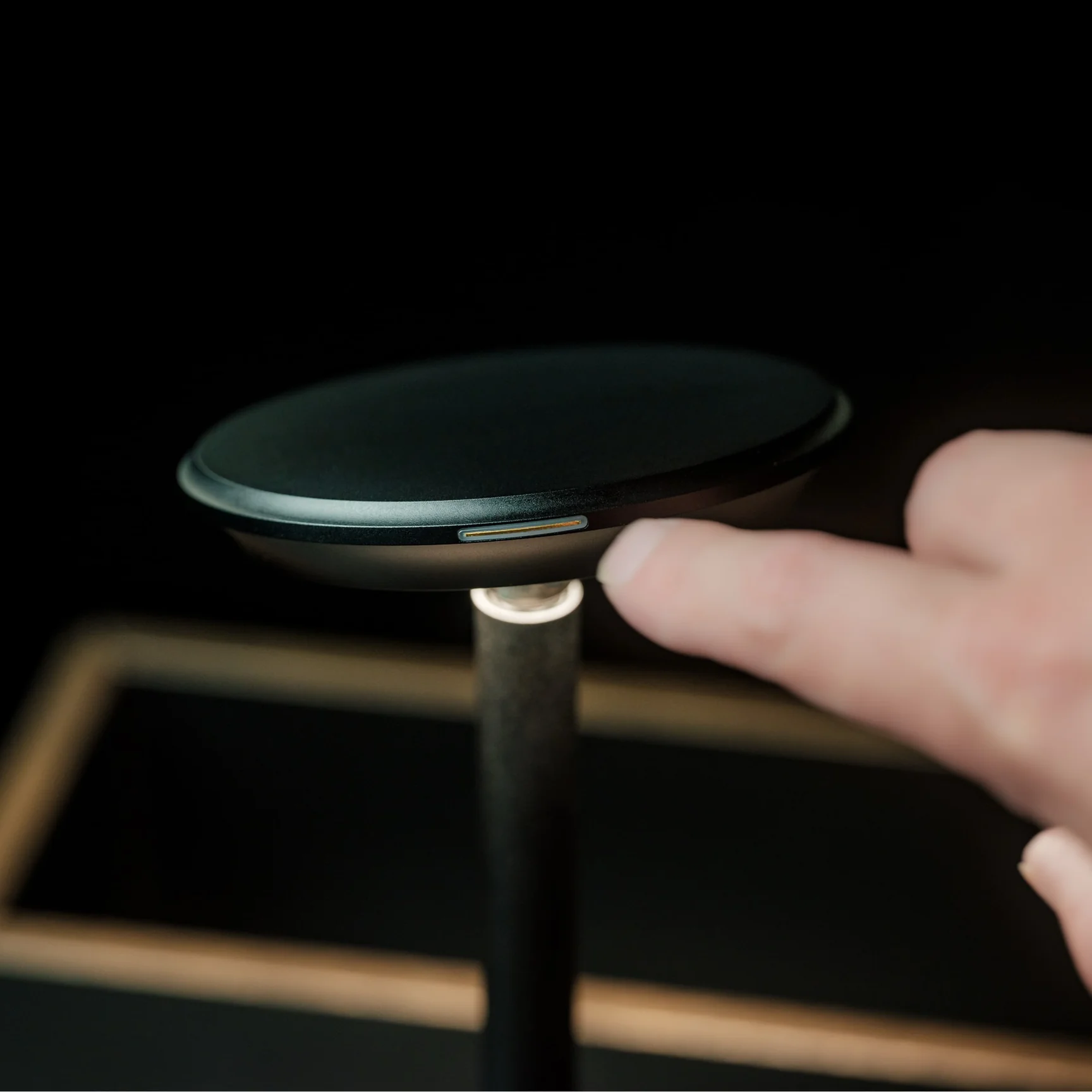
Whether you’re a collector of thoughtfully designed everyday objects or simply someone who believes the details of your space make a real difference, the Infinite Solas Lamp makes a compelling case for itself. It’s the kind of piece that earns its place not just because it’s beautiful, but because it remains genuinely useful in different ways depending on what the day calls for, and that’s precisely what makes it worth every penny. With only a handful of units currently available, this is one of those rare, well-considered finds you’ll regret not picking up when you had the chance.
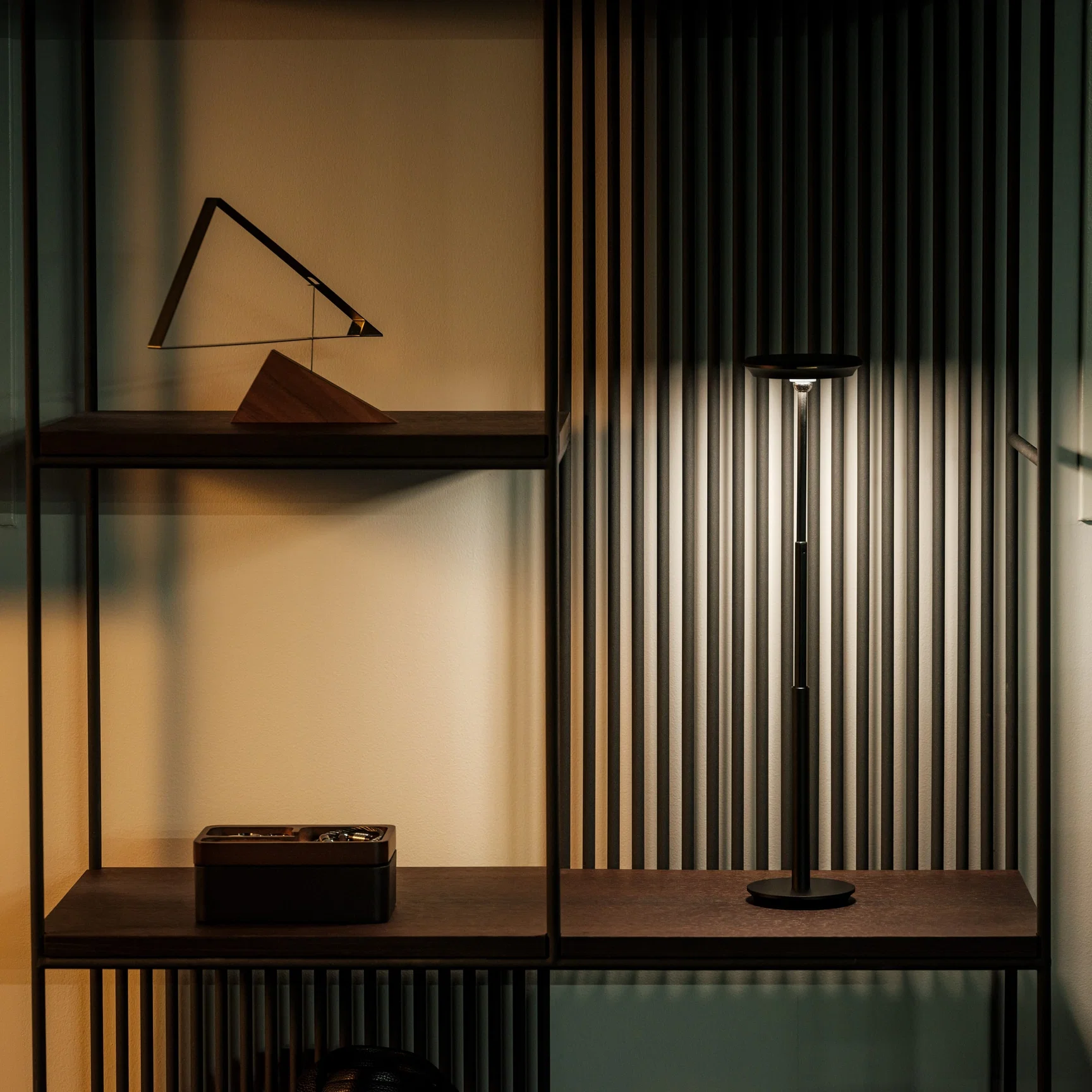
The post This Desk Lamp Finally Solved the Cord Problem Every Remote Worker Just Accepts first appeared on Yanko Design.
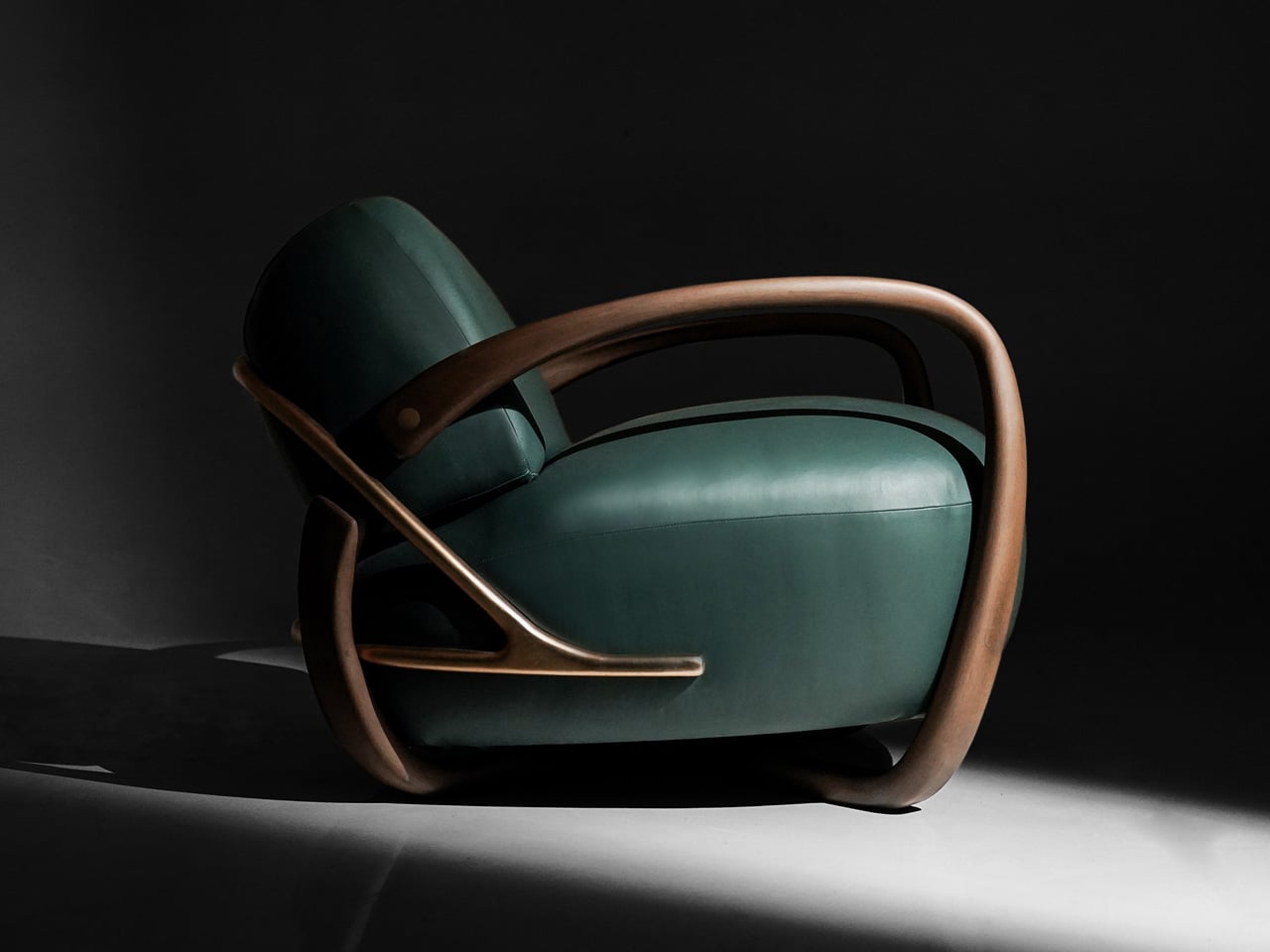
Pepê Lima’s Jacob armchair doesn’t ease itself into a room — it arrives. Designed for Indonesian furniture brand Blackwood, the chair took home three accolades at the 2025 European Product Design Award, including Top Design Winner in Home Furniture and the title of Best Furniture Design of 2025, and one look at the chair tells you why.
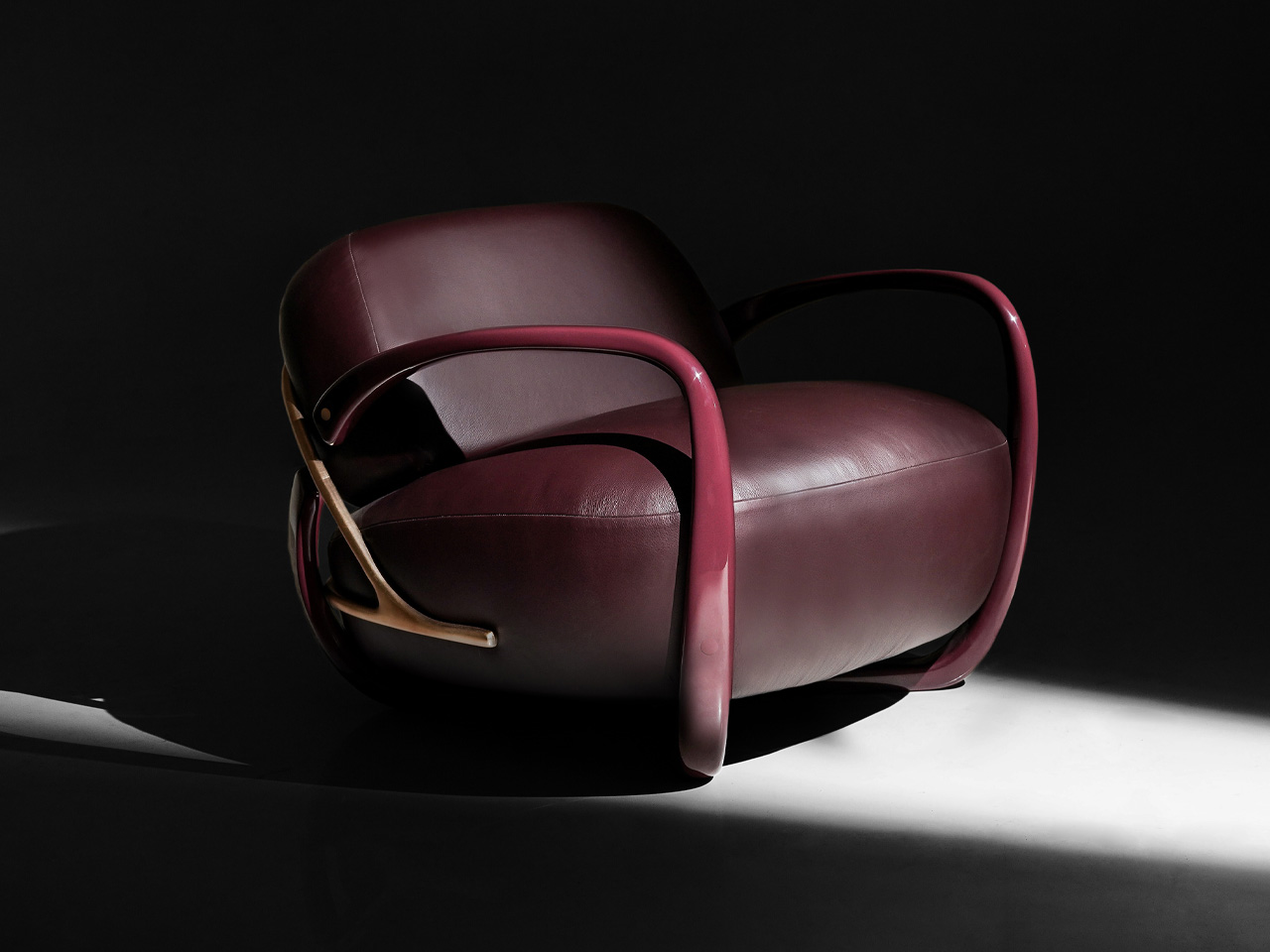
Jacob is built on a fundamental tension between softness and structure. The upholstery is rounded and generous, the kind of seat that pulls you in before you’ve even made up your mind to sit. Beneath it, a solid wood frame has been precisely machined into sweeping, embracing curves that mirror the body’s own geometry. There’s nothing arbitrary about the silhouette. Every radius feels considered, every transition from material to material deliberate.
Designer: Pepê Lima
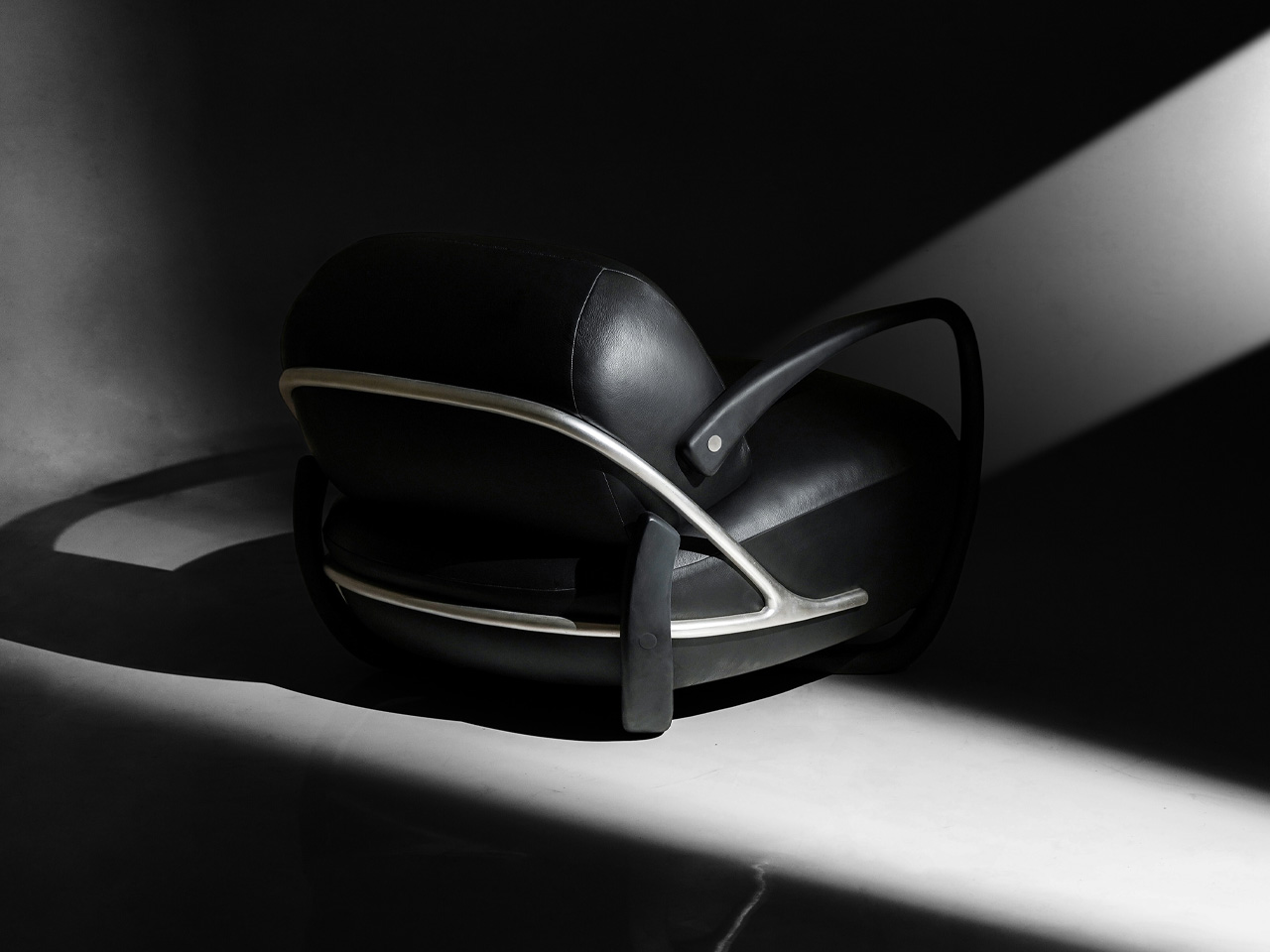
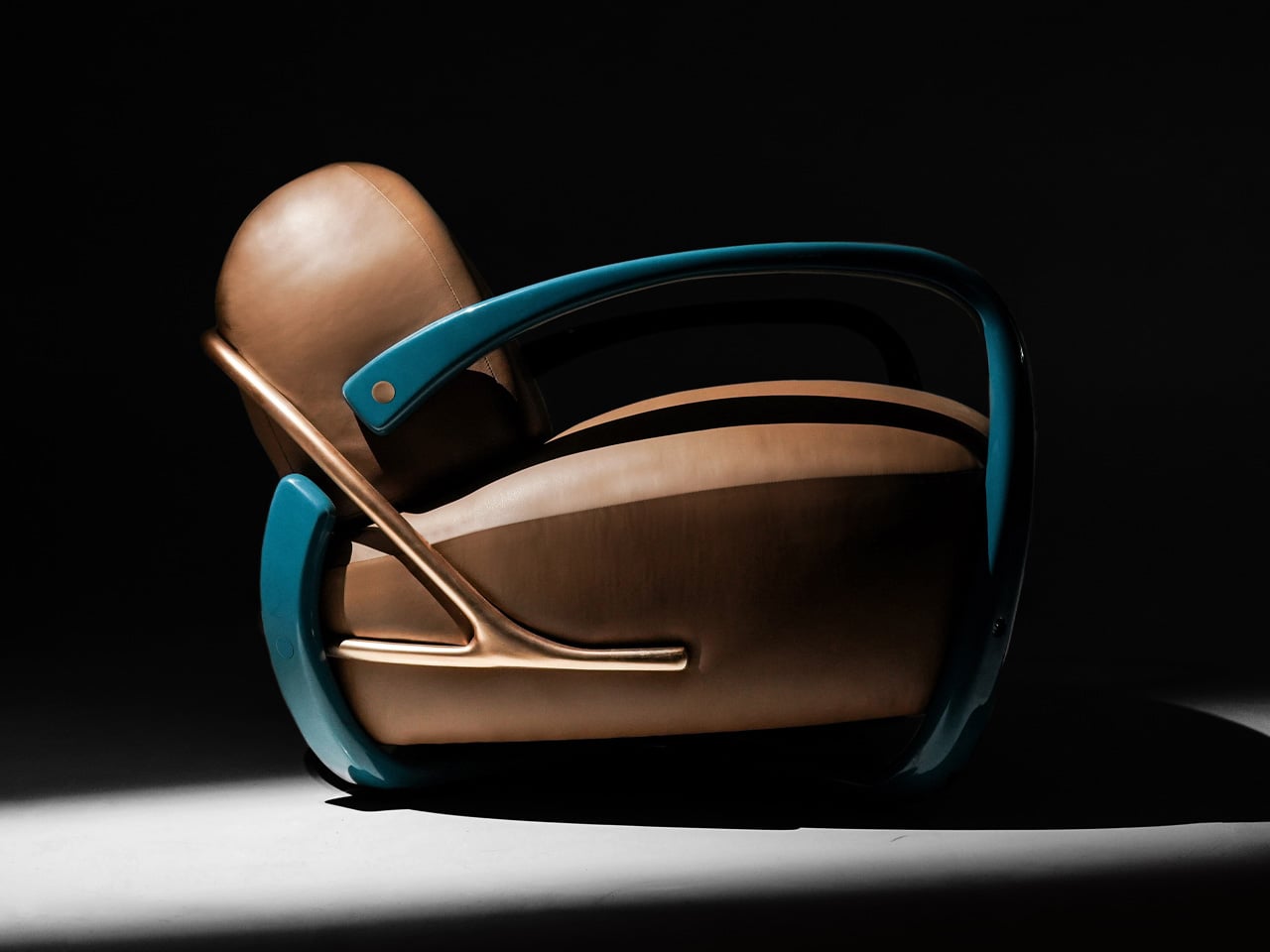
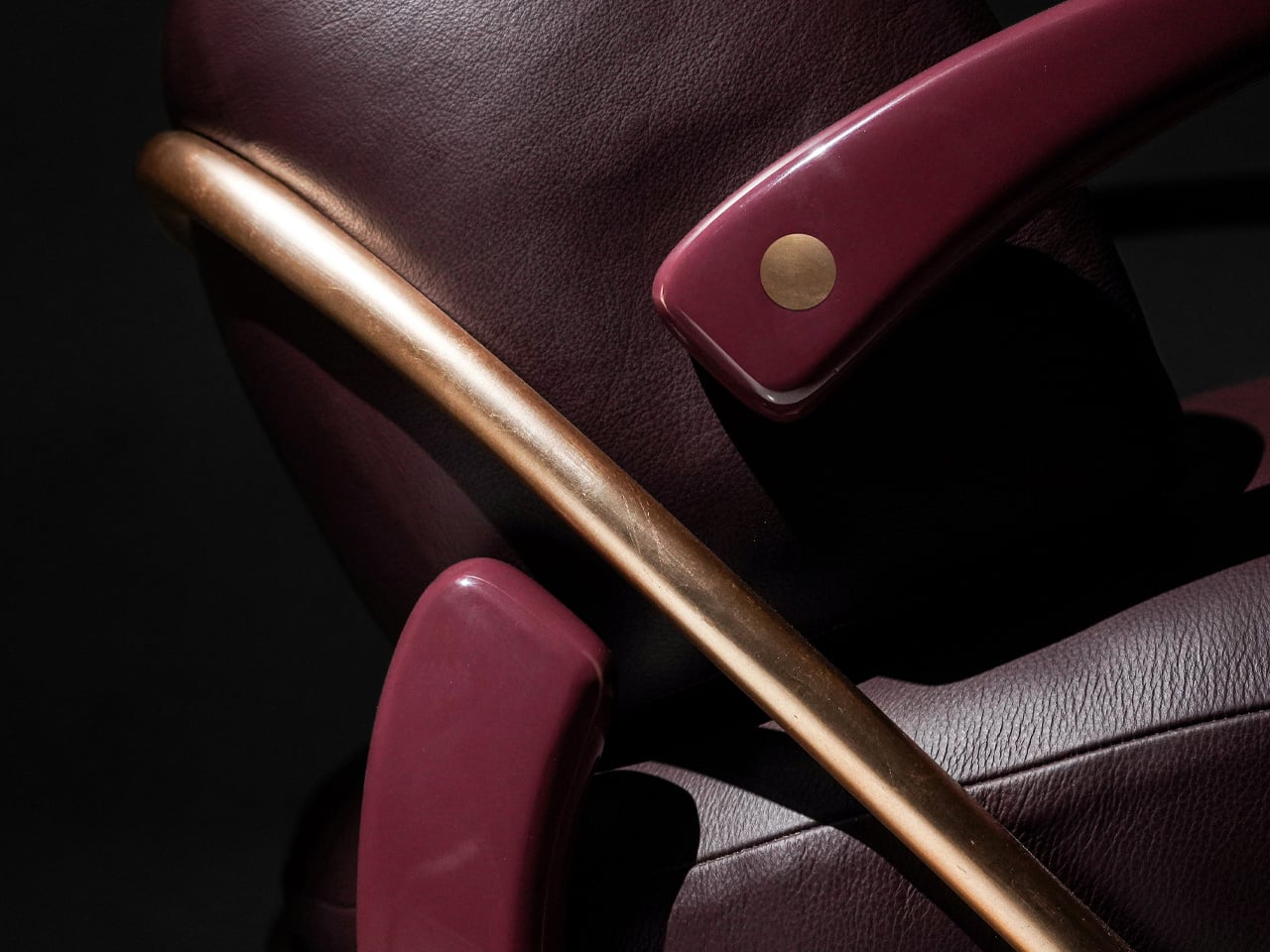
The defining move, though, lives at the back. A cast-metal detail cuts across the wooden structure in a way that could have felt aggressive, but lands as something closer to punctuation. It draws your eye without demanding it. It gives the chair its identity, a flash of industrial honesty inside what would otherwise be a purely warm, organic object. It’s the kind of detail that rewards a second look, the mark of a designer who understands that restraint and boldness are not opposites.
Lima is no stranger to that balance. A graduate of Centro Universitário Belas Artes in São Paulo with more than fifteen years in the furniture trade, he sharpened his craft further at the Politecnico di Milano, where he worked with Studio Incontri on projects for Alessi and Samsung. That combination of Brazilian warmth and European precision shows up clearly in Jacob. The chair speaks both languages fluently.
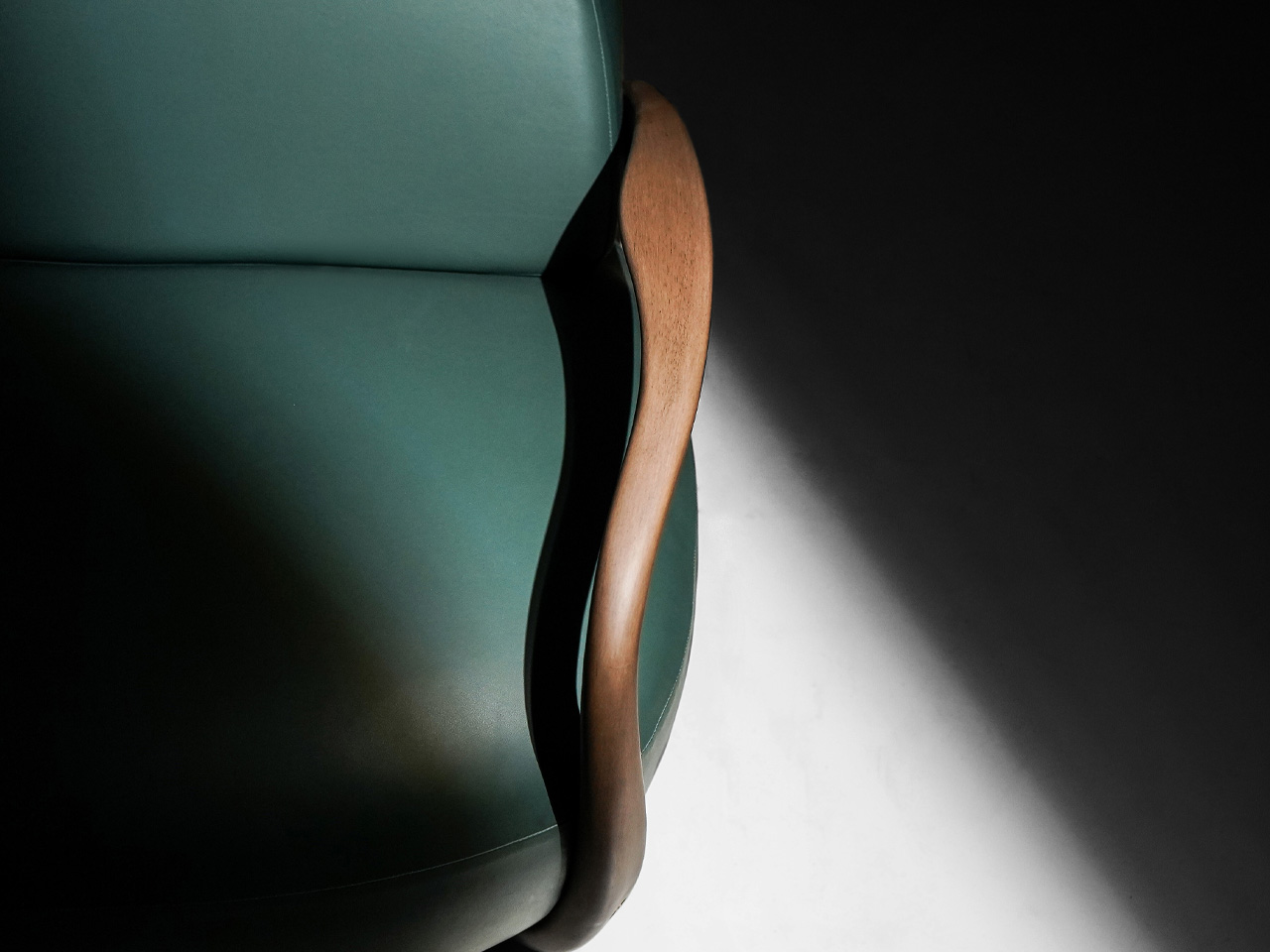
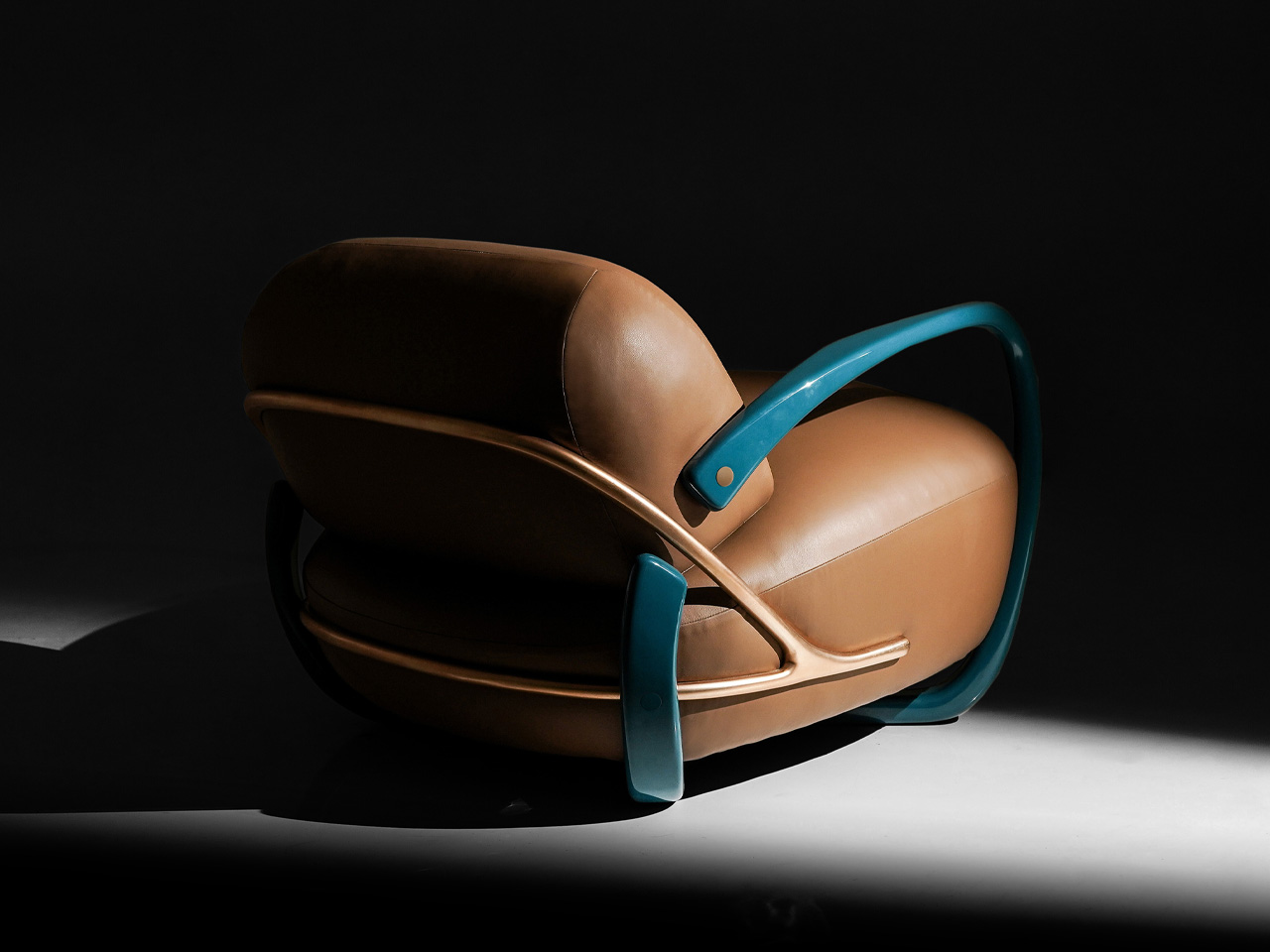
Customization is central to how Jacob lives in the world. Leather or fabric upholstery, a range of wood tones, and various metal finishes mean the chair can read as a classic club seat or a sharp contemporary accent depending on the room it enters. It doesn’t compromise to fit in. It adapts without losing its character, which is a much harder thing to design.
What Jacob ultimately achieves is something the furniture world rarely pulls off cleanly: a sculptural piece without being unwelcoming, refined without being cold, and bold without being loud. It sits in a room the way a well-dressed person sits in a conversation, present and unhurried, with something worth saying.
The post This Award-Winning Armchair Proves One Bold Detail Changes Everything first appeared on Yanko Design.
Pepê Lima’s Jacob armchair doesn’t ease itself into a room — it arrives. Designed for Indonesian furniture brand Blackwood, the chair took home three accolades at the 2025 European Product Design Award, including Top Design Winner in Home Furniture and the title of Best Furniture Design of 2025, and one look at the chair tells you why.
Jacob is built on a fundamental tension between softness and structure. The upholstery is rounded and generous, the kind of seat that pulls you in before you’ve even made up your mind to sit. Beneath it, a solid wood frame has been precisely machined into sweeping, embracing curves that mirror the body’s own geometry. There’s nothing arbitrary about the silhouette. Every radius feels considered, every transition from material to material deliberate.
Designer: Pepê Lima
The defining move, though, lives at the back. A cast-metal detail cuts across the wooden structure in a way that could have felt aggressive, but lands as something closer to punctuation. It draws your eye without demanding it. It gives the chair its identity, a flash of industrial honesty inside what would otherwise be a purely warm, organic object. It’s the kind of detail that rewards a second look, the mark of a designer who understands that restraint and boldness are not opposites.
Lima is no stranger to that balance. A graduate of Centro Universitário Belas Artes in São Paulo with more than fifteen years in the furniture trade, he sharpened his craft further at the Politecnico di Milano, where he worked with Studio Incontri on projects for Alessi and Samsung. That combination of Brazilian warmth and European precision shows up clearly in Jacob. The chair speaks both languages fluently.
Customization is central to how Jacob lives in the world. Leather or fabric upholstery, a range of wood tones, and various metal finishes mean the chair can read as a classic club seat or a sharp contemporary accent depending on the room it enters. It doesn’t compromise to fit in. It adapts without losing its character, which is a much harder thing to design.
What Jacob ultimately achieves is something the furniture world rarely pulls off cleanly: a sculptural piece without being unwelcoming, refined without being cold, and bold without being loud. It sits in a room the way a well-dressed person sits in a conversation, present and unhurried, with something worth saying.
The post This Award-Winning Armchair Proves One Bold Detail Changes Everything first appeared on Yanko Design.
Fingerprint readers are on phones, laptops, door locks, and gym lockers. They are on tablets, car dashboards, hotel room entrances, and even some credit cards. The one place you still cannot use one in Apple’s ecosystem is the watch on your wrist, and the Apple Watch Ultra 4 is reportedly the device that might finally change that. Leaks suggest Touch ID could be integrated into the Action button or side button, bringing biometric authentication to the Apple Watch for the first time in the lineup’s eleven-year history. Apple is expected to announce the Ultra 4 at a fall event in September 2026, and the fingerprint sensor question is the detail that has dominated the pre-announcement conversation.
Bloomberg’s Mark Gurman expects no major design changes to the Ultra 4 this cycle, which would likely include a new biometric button, making the Touch ID rumor more aspirational than confirmed. MacRumors has flagged it as increasingly unlikely as a result. Gurman does foresee a chip upgrade, health and fitness improvements, and efficiency-driven battery gains from the same-sized cell. Other leaks sketch out a thinner titanium case, a redesigned rear sensor array with up to eight sensors, and watchOS 27 with a smarter Siri and new women’s health tracking. Touch ID may or may not make the cut, but the Ultra 4 is shaping up to be a meaningful update either way.
Designer: Apple
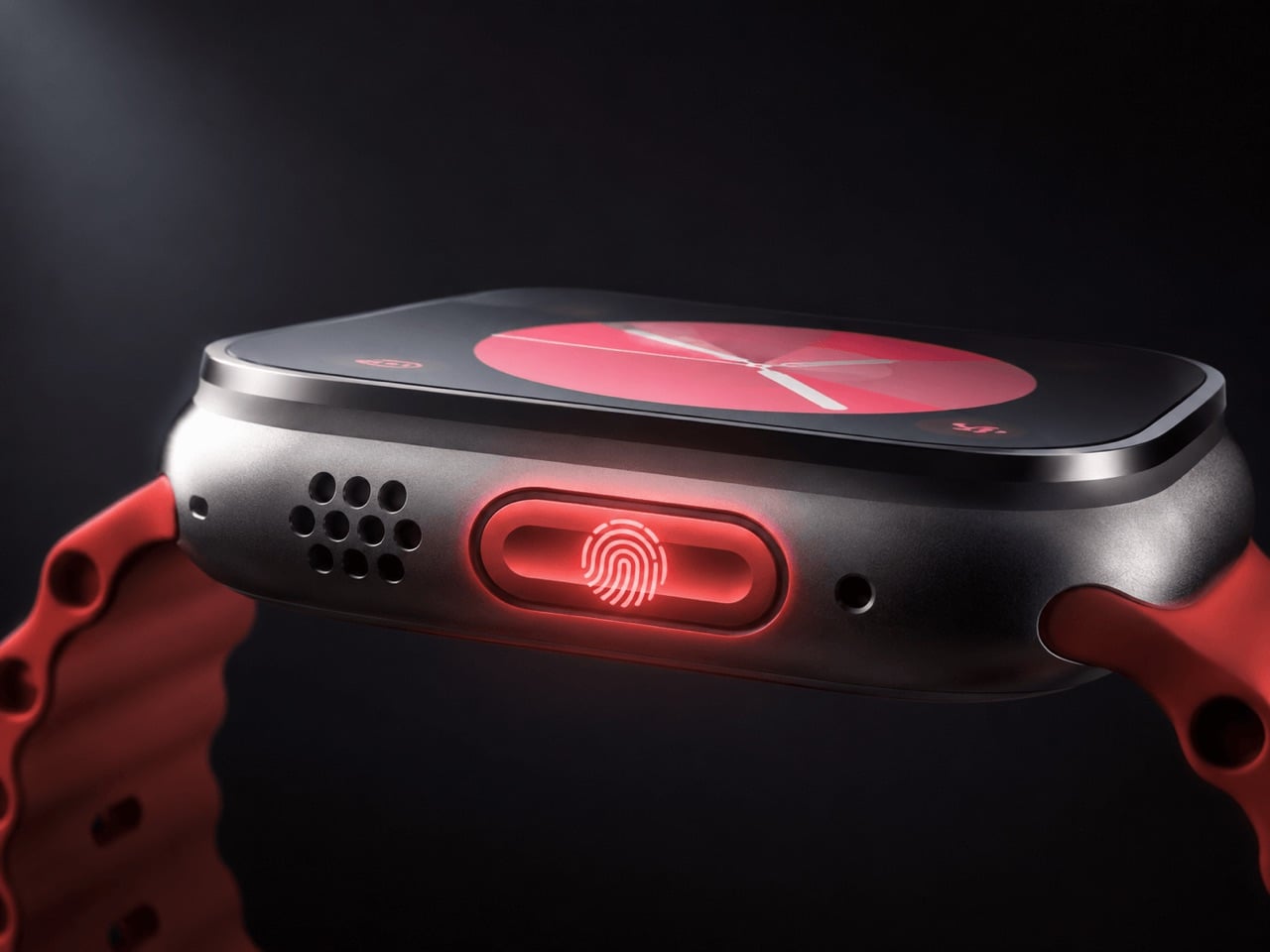
Apple Pay authentication on the Ultra currently requires a double-press of the side button, which is fine at a checkout counter and genuinely irritating mid-trail with trekking poles in both hands. A Touch ID sensor in the Action button would solve that in the most direct way possible. The Action button already handles flashlight toggling, workout starts, and dive computer modes depending on configuration, so adding biometric capability would make it the most densely functional physical control on any Apple device. Building a reliable fingerprint reader into a button that regularly encounters water, mud, and cold is the engineering challenge that may keep bumping this feature to a future generation. That tension between the obvious use case and the real manufacturing difficulty is likely why this rumor has had such a short lifespan in reliable reporting.
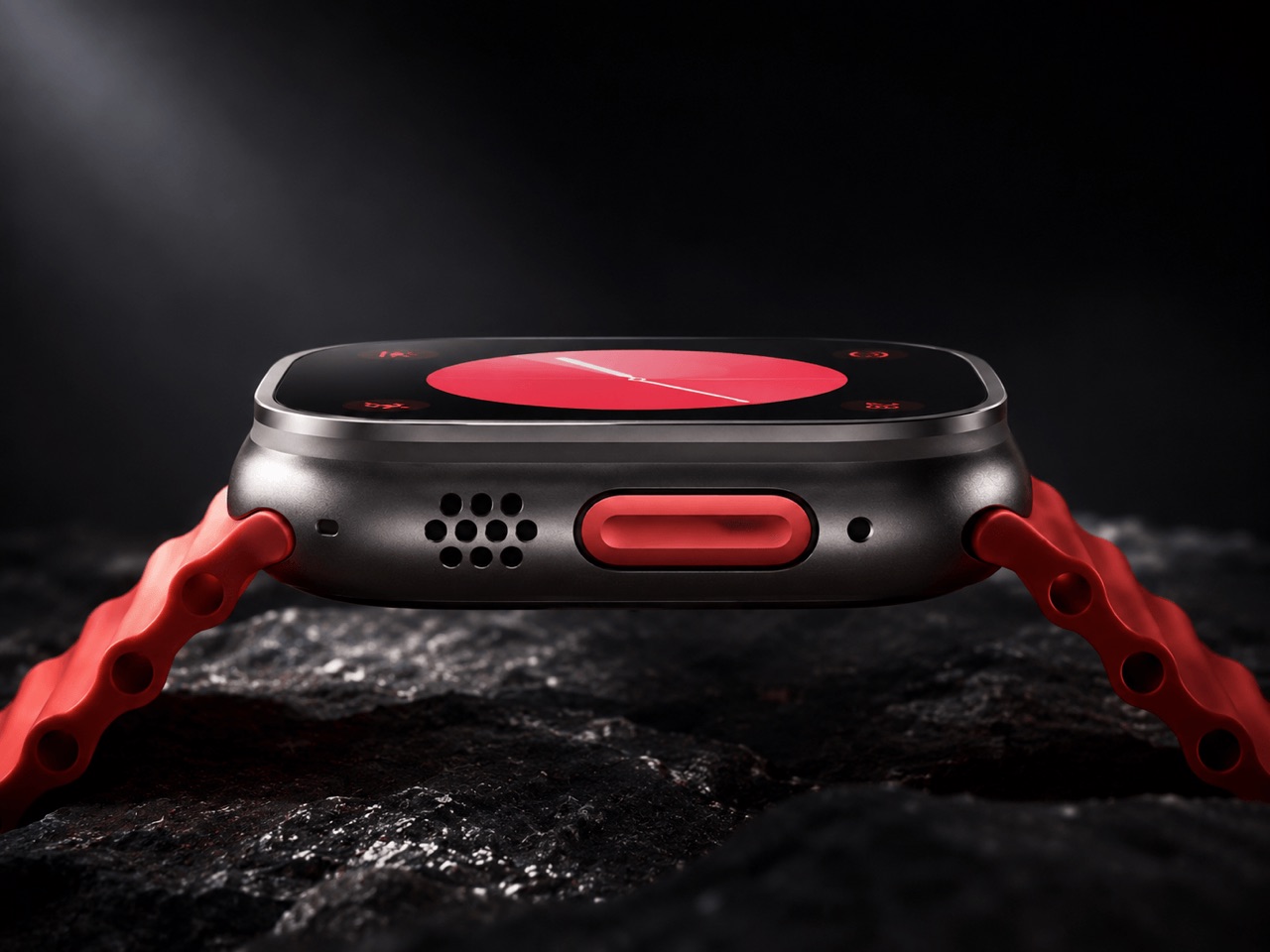
Current leaks point to as many as eight sensors on the back of the Ultra 4, compared to the existing array that handles heart rate, SpO2, wrist temperature, and ECG. The shift Apple appears to be making is away from software-compensated estimations toward hardware-grounded measurements, which matters most for use cases like altitude training and longitudinal hypertension monitoring. The chassis is also expected to get thinner, and that matters more than it sounds: the Ultra 3’s profile is comfortable during workouts and just present enough during overnight wear that some owners skip sleep tracking altogether. A slimmer build addresses that without touching the rugged character of the product. Together, the sensor overhaul and the thinner case are the two changes most likely to make existing Ultra owners seriously consider upgrading.
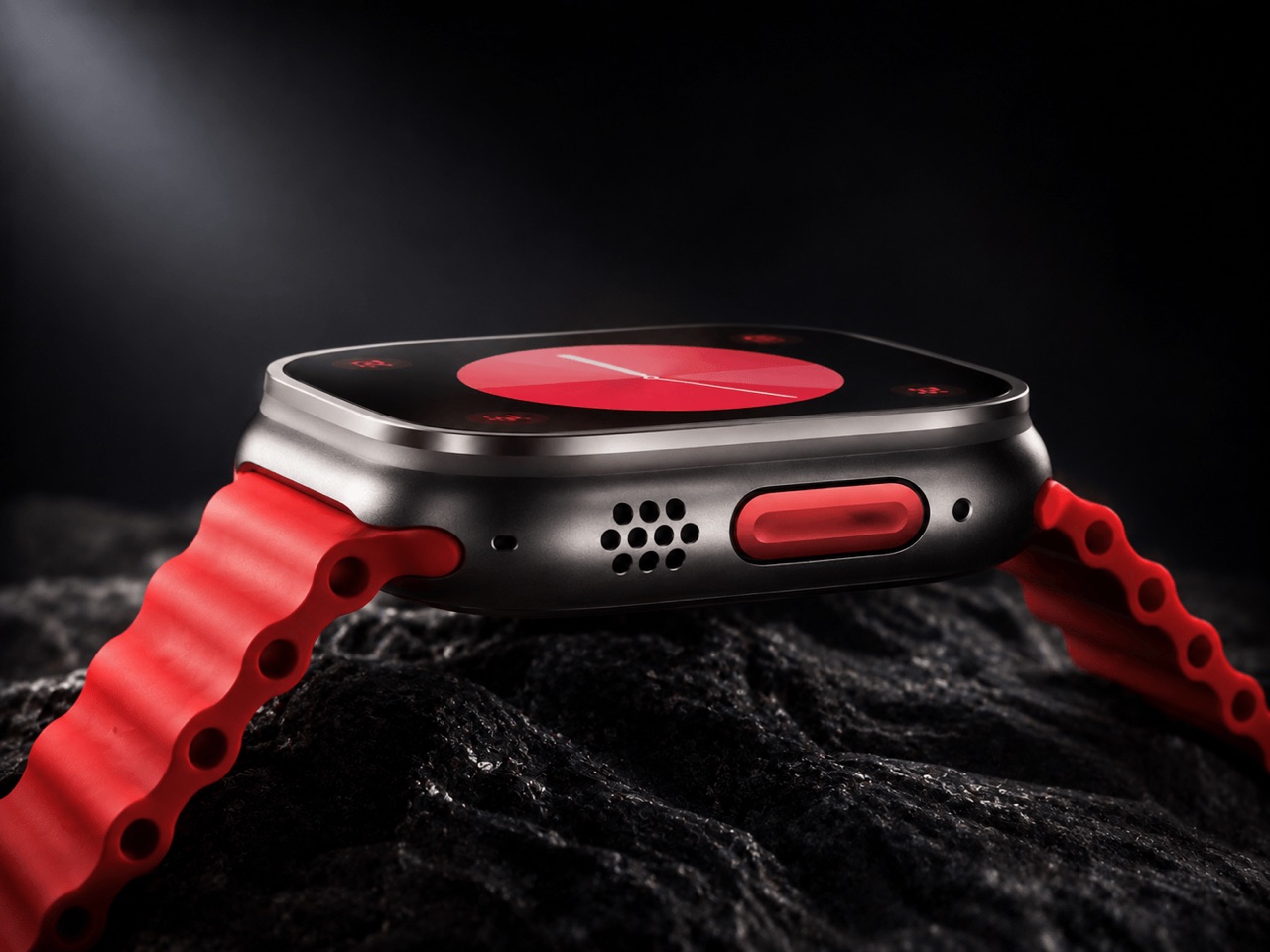
Battery life is expected to hold steady or extend slightly through chip efficiency gains rather than a larger cell, with the Ultra 3’s 42-hour standard and 72-hour Low Power Mode serving as the baseline to beat. watchOS 27 brings a more context-aware Siri with a dedicated watch app, Apple Intelligence across first-party apps, and new perimenopause and menopause tracking in Health. Apple is separately developing a more significant Watch redesign for a later generation, with reports pointing to a round case and a screenless fitness tracker. The Ultra 4 arrives before any of that. Touch ID would have made this generation an easy, quotable pitch; without it, the sensor upgrade, the thinner body, and the software stack carry the argument instead.
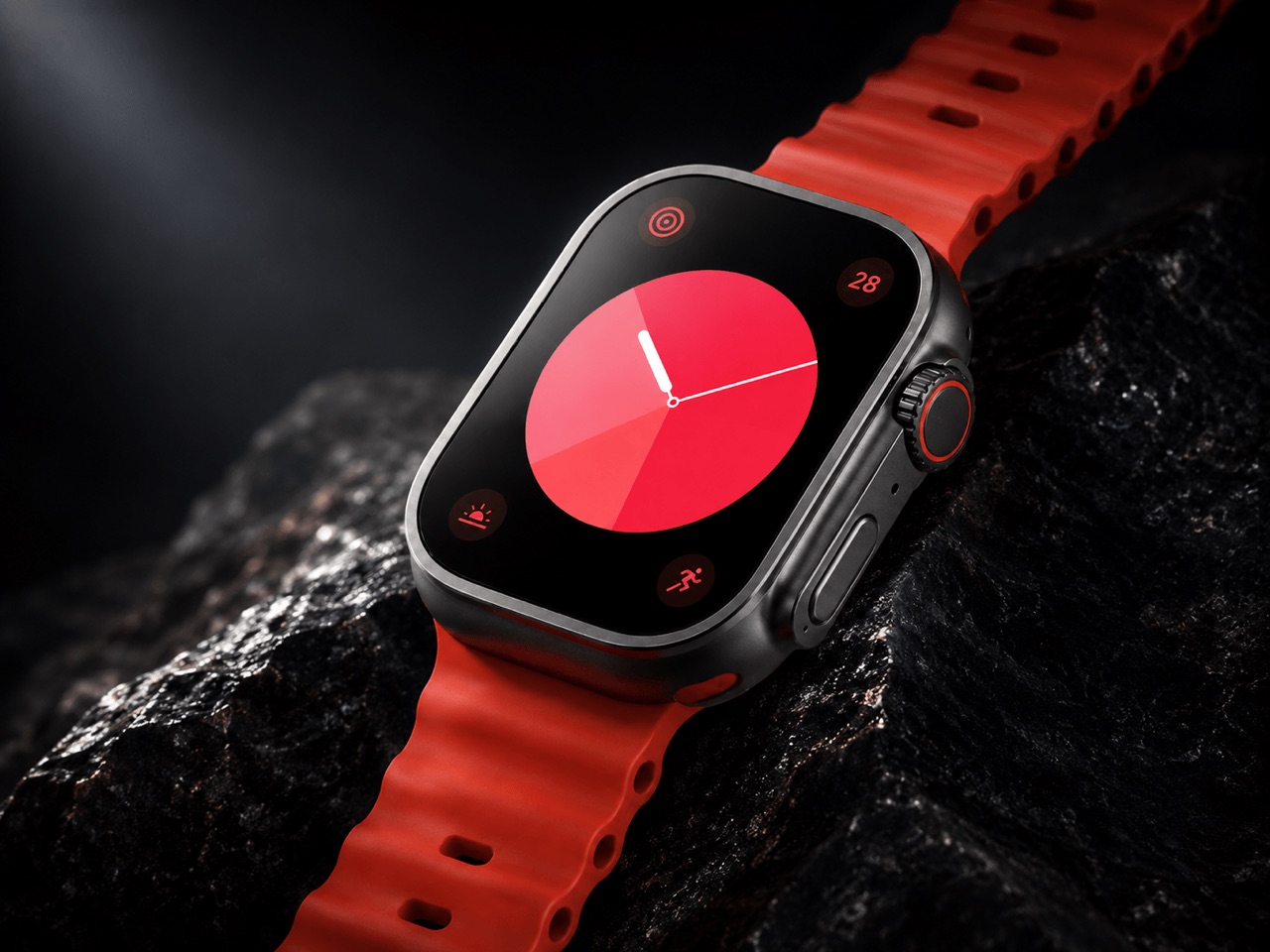
The post Apple Watch Ultra 4 May Finally Add Touch ID This September, Along With A Thinner Case first appeared on Yanko Design.
Fingerprint readers are on phones, laptops, door locks, and gym lockers. They are on tablets, car dashboards, hotel room entrances, and even some credit cards. The one place you still cannot use one in Apple’s ecosystem is the watch on your wrist, and the Apple Watch Ultra 4 is reportedly the device that might finally change that. Leaks suggest Touch ID could be integrated into the Action button or side button, bringing biometric authentication to the Apple Watch for the first time in the lineup’s eleven-year history. Apple is expected to announce the Ultra 4 at a fall event in September 2026, and the fingerprint sensor question is the detail that has dominated the pre-announcement conversation.
Bloomberg’s Mark Gurman expects no major design changes to the Ultra 4 this cycle, which would likely include a new biometric button, making the Touch ID rumor more aspirational than confirmed. MacRumors has flagged it as increasingly unlikely as a result. Gurman does foresee a chip upgrade, health and fitness improvements, and efficiency-driven battery gains from the same-sized cell. Other leaks sketch out a thinner titanium case, a redesigned rear sensor array with up to eight sensors, and watchOS 27 with a smarter Siri and new women’s health tracking. Touch ID may or may not make the cut, but the Ultra 4 is shaping up to be a meaningful update either way.
Designer: Apple
Apple Pay authentication on the Ultra currently requires a double-press of the side button, which is fine at a checkout counter and genuinely irritating mid-trail with trekking poles in both hands. A Touch ID sensor in the Action button would solve that in the most direct way possible. The Action button already handles flashlight toggling, workout starts, and dive computer modes depending on configuration, so adding biometric capability would make it the most densely functional physical control on any Apple device. Building a reliable fingerprint reader into a button that regularly encounters water, mud, and cold is the engineering challenge that may keep bumping this feature to a future generation. That tension between the obvious use case and the real manufacturing difficulty is likely why this rumor has had such a short lifespan in reliable reporting.
Current leaks point to as many as eight sensors on the back of the Ultra 4, compared to the existing array that handles heart rate, SpO2, wrist temperature, and ECG. The shift Apple appears to be making is away from software-compensated estimations toward hardware-grounded measurements, which matters most for use cases like altitude training and longitudinal hypertension monitoring. The chassis is also expected to get thinner, and that matters more than it sounds: the Ultra 3’s profile is comfortable during workouts and just present enough during overnight wear that some owners skip sleep tracking altogether. A slimmer build addresses that without touching the rugged character of the product. Together, the sensor overhaul and the thinner case are the two changes most likely to make existing Ultra owners seriously consider upgrading.
Battery life is expected to hold steady or extend slightly through chip efficiency gains rather than a larger cell, with the Ultra 3’s 42-hour standard and 72-hour Low Power Mode serving as the baseline to beat. watchOS 27 brings a more context-aware Siri with a dedicated watch app, Apple Intelligence across first-party apps, and new perimenopause and menopause tracking in Health. Apple is separately developing a more significant Watch redesign for a later generation, with reports pointing to a round case and a screenless fitness tracker. The Ultra 4 arrives before any of that. Touch ID would have made this generation an easy, quotable pitch; without it, the sensor upgrade, the thinner body, and the software stack carry the argument instead.
The post Apple Watch Ultra 4 May Finally Add Touch ID This September, Along With A Thinner Case first appeared on Yanko Design.