Just last week, Microsoft announced a limited-edition Deadpool-themed Xbox controller with a bright red design and a less-than-conventional ergonomic design, if you know what I mean. Let’s just say that biblically accurate controller had curves in all the right places, and was exactly as hilariously audacious as its inspiration, the merc with a mouth. The biggest problem was that the controller was limited to just 2 units, which would be gifted to the winner of a Twitter (or X) competition… and the second biggest was that there wasn’t a Wolverine controller to match. However, 3D artists at Do3D have solutions for both of those problems.
Meet the unofficial Wolverine Xbox Controller, complete with a yellow body and even three Adamantium claws appearing outward from behind the controller. Designed to pair perfectly with its Deadpool counterpart, this controller actually comes as a set of 3D files you can buy and 3D print on your own.
The Wolverine-themed controller augments the controller’s body in a similar way to its Deadpool counterpart. An attachment fixes to the back, providing a themed take on the handheld unit. In Deadpool’s case, it was a rather cheeky little attachment… however, Wolverine’s controller has his signature back-of-the-fist with three Adamantium claws emerging from within. The attachment is purely cosmetic, and doesn’t affect the grip or gameplay at all. The controller’s body, on the other hand, comes with a diamond plate-inspired texture, along with the wolverine whisker pattern on the front in black.
The controller isn’t available as is, but Do3D is selling detailed 3D files for those looking to print the parts. Once printed (and painted), you can simply disassemble the outer plastic housing of your existing Xbox controller and replace it with this one, provided the print is 100% accurate and without any errors or flaws. We recommend going for ABS, known for its durability… but a PLA filament should work just as well too. You may have to do some additional spray-painting work to make the controller look exactly as shown in the renders here.
The best part is that Do3D is even selling an unofficial version of Microsoft’s Deadpool controller, which you can similarly buy and 3D print. Both the Deadpool and Wolverine controllers can be used with or without their magnetic attachments, and while individual files cost $19, you can buy the combo for just $29 on Do3D’s website and print as many controllers as your heart desires.
The leap from M2 to M4 was Apple’s way of completely future-proofing the iPad against any sort of competition. The iPad Pro 2024 edition is easily the world’s most powerful tablet (and the thinnest one in its category too)… and every powerful superhero definitely needs a sidekick or companion right? We’ve put together a list of accessories that empower your iPad Pro physically, allowing you to do more with it, and be more secure with it. From productivity gizmos to protective gear, here are our 5 favorite accessories to pair with your 2024 iPad Pro.
1. Pitaka MagEZ Case 2
Pitaka’s MagEZ Case 2 coats your iPad in a protective layer like no other. The ultra-slim case comes made from aerospace-grade aramid fibers (like Kevlar) along with polyurethane, impact-proofing your iPad from all corners. The camera comes with a protective lip too, shielding the lenses from damage when you lay down your iPad Pro flat on a surface, or even if you drop your tablet. The beauty of the MagEZ Case 2 is how stunningly light it is, weighing a mere 78 grams or 2.5 ounces. The fibers on the back are put together using Pitaka’s Fusion Weaving technology, resulting in a gorgeous checkered design all along the back of your iPad Pro. Meanwhile, the exposed edge on the side lets you snap your Pencil Pro with ease… and here’s the kicker, the MagEZ Case 2 is compatible with Apple’s Magic Keyboard Folio, so you can snap the tablet onto the Magic Keyboard, case included.
Sometimes just a multiport hub isn’t enough – the HyperDrive packs buttons too. With 6 ports and 3 playback control buttons, the HyperDrive expands your iPad Pro’s capabilities in a way that most hubs couldn’t. Sure, it helps to have HDMI, USB, SD Card, and 3.5mm Aux input for your iPad Pro… but imagine being able to remotely play/pause or skip tracks/episodes through a USB-C hub. Three playback buttons on the HyperDrive unlock this possibility, allowing you to control playback without switching apps, dragging down the control center, or even touching the screen. You could be working on an important document with YouTube or Spotify playing in the background and the HyperDrive lets you play or pause music or even skip tracks while you work, without letting you skip a beat. Meanwhile, those 6 extra ports are perfect for turning your iPad Pro into a pro-grade workstation.
3. CUKTECH 10 Power Bank
Powerful enough to handle your iPad Pro’s (or even MacBook’s) charging requirements, the CUKTECH 10 is a 10,000mAh power bank that outputs a stunning 100W of power. A Xiaomi sub-brand, CUKTECH developed the CUKTECH 10 to be an all-in-one power bank small enough to fit in your laptop bag, but capable enough to juice even your tablet or laptop at fast-charging speeds. A USB-A and USB-C port let you charge up to 2 devices at the same time, while the 10,000mAh battery on the inside is enough to juice your iPad Pro to 100% at fast-charging speeds, doubling your tablet’s battery life while you’re working on a holiday, on a flight, or at a cafe. The CUKTECH 10’s sleek all-metal design stands shorter than your phone, and the entire power bank can literally fit in your pocket while traveling. Not to mention, a nifty TFT display on the power bank lets you know its battery percentage while also measuring the output of the power bank’s dual ports.
4. Pitaka MagEZ Folio 2
We’ve seen folio cases galore, but this particular one from Pitaka has a pretty clever design that allows you to prop up your iPad Pro in as many as 4 different angles. With a simple origami-inspired creased flap on the front, the MagEZ Folio 2 lets you quickly have your iPad standing at 62° in portrait mode, or 57°, 53°, or 34° in landscape mode. Like any good folio case, it protects your entire iPad Pro (screen included) from damage, while the flap on front has an auto-sleep/wake feature. Meanwhile, a separate magnetic flap on the side actually holds your Apple Pencil in place, preventing it from accidentally being knocked off the tablet. The MagEZ Folio 2 comes with a PU leather exterior, a microfiber interior (to safeguard your screen), and weighs a remarkable 240 grams or 8.4 ounces, making it lighter than 95% of folio case/stands on the market.
Designed to work with iPads and even Kindles, the HoverBar Duo is a tablet stand on steroids. It holds the iPad Pro in infinite positions, heights, and angles thanks to its two-arm adjustable design. You can lift your iPad up to face level for better viewing, or attach it to your bedside for hands-free movie-watching while you’re in bed. The HoverBar Duo gets its name from the fact that it can be desk-mounted or shelf-clamped. A weighted base lets you stand your iPad Pro on a table without the fear of having it topple over, and friction hinges on the arms let you adjust your iPad to pretty much any angle you need, giving you a display that’s exactly where you want it to be.
When you hear the words ‘stainless steel’, chances are you’re never going to think of fashion. Your mind will probably conjure up hundreds of products before it thinks of a ‘stainless steel’ blazer, but here’s where the folks at Vollebak love pushing the limits of imagination and invention. To them, cotton, linen, polyester – these materials are a little too basic for fashion. Vollebak’s created garments out of carbon fiber, kevlar, ceramics, ballistic nylon, even copper (known for its anti-bacterial properties at the height of the pandemic). So, while most of us usually think of utensils when we hear the phrase ‘stainless steel’, Vollebak’s designers are already 10 steps ahead, figuring out how to make clothes out of it. To that end, meet the world’s first (and probably only) Steel Blazer. Made from 24% stainless steel, this isn’t your grandfather’s tailored jacket; it’s a fusion of fashion and function, incorporating aerospace-grade stainless steel into a surprisingly lightweight and versatile design.

The key to the Steel Blazer’s innovation lies in its unique material composition. Unlike traditional blazers crafted from wool or cotton, this garment utilizes a blend of 76% polyamide and 24% stainless steel. This might seem counterintuitive – why would someone make a metal jacket, wouldn’t it be uncomfortable and heavy? However, Vollebak’s clever engineering ensures the opposite. The stainless steel fibers are woven into the polyamide in a way that maintains a comfortable weight and a surprisingly soft feel. The resulting fabric looks undeniably unique. It has a grunge aesthetic, caused by how the fabric creases and folds. These creases eventually end up becoming your blazer’s identity, giving the blazer an incredibly cool distressed look. “You’ll also feel a subtle grain under your fingers when you touch it – and these are the steel fibers you’ll be feeling”, say the folks at Vollebak.
However, the inclusion of stainless steel goes far beyond aesthetics. This space-faring material boasts exceptional properties that translate into real-world benefits for the wearer. Stainless steel is renowned for its remarkable strength. Early lab tests by Vollebak indicate that the Steel Blazer surpasses their previous copper-infused garments in tensile strength by a significant margin. This translates to a jacket that’s highly resistant to tears and abrasions, perfect for those who lead active lives or simply appreciate built-to-last clothing.
The benefits extend beyond strength. Stainless steel is naturally resistant to corrosion, which means the Steel Blazer is unlikely to succumb to rust, a common concern with some metal-infused clothing. Additionally, the material offers surprising weatherproofing capabilities. The outer layer of the jacket boasts a water-repellent finish, making it ideal for light rain or unexpected downpours. This versatility ensures the Steel Blazer can seamlessly transition between various weather conditions.
With steel fabric on the exterior, the blazer also features a soft and breathable inner lining that wicks away moisture and keeps the wearer comfortable throughout the day. The minimalist design prioritizes clean lines and a sleek aesthetic. The convertible collar allows for customization – wear it folded down for a relaxed look or fasten it up for a more formal presentation. Hidden metal snaps ensure a secure closure, while four strategically placed pockets provide ample storage space for everyday essentials.
The story behind the Steel Blazer’s development adds another layer of intrigue. Vollebak spent four years meticulously researching and refining the process of integrating stainless steel into wearable garments. Their inspiration came from an unlikely source – the SpaceX Starship, a behemoth of a rocket designed to propel humans towards deep space exploration. The outer shell of the Starship is constructed from stainless steel due to its ability to withstand the extreme temperatures of outer space. Vollebak recognized the potential of this material and embarked on a journey to translate its properties into a revolutionary piece of clothing.
It’s sort of reminiscent of how some homes stack washing machines and dryers one above another… but imagine that scaled down ever so slightly and dedicated to your coffee. Meet UOCO, a modular all-in-one coffee machine that does just more than brew you a stellar cup. Designed to even resemble the washing machine with its clean, boxy aesthetic, the UOCO is a stackable appliance that lets you add extra modules to your coffee maker. Sure, its central feature is the coffee machine itself, but the UOCO also features an ice-maker, and a cup-washer that attach to the coffee machine, giving you an all-in-one vertical station for making ice lattes, and then washing your glass/cup after!
Designer: Yui Jo
Designed by Yui Jo, a student at the Hongik University in Seoul, UOCO is much more than your tabletop coffee maker. In fact, it isn’t a tabletop appliance at all. Large enough to be a floor-standing gizmo, the UOCO is significantly larger than your Keurig or Nespresso maker… but it’s also thrice as efficient.
The UOCO features three distinct modules that stack one on top of the other, connecting through a central port that supplies power to all three gadgets. Right at the top is an ice-maker, which delivers perfect ice cubes to go into your iced coffee. At the center is a pod-based coffee extractor that works just like your Keurig and Nespresso machines. Place your cup inside, add a pod to the tray, and press a button to watch fresh coffee percolate and pour right into your drinking vessel… with or without ice. Once you’re done enjoying your beverage, the cup/mug goes into the third, lowermost vessel – the cup washer. Working like a scaled-down dishwasher, it rinses your cup with hot water, cleaning it inside out and drying it for your next round of caffeine.
Scaled-down design prototype
It seems odd that Yui Jo didn’t opt for more coffee-adjacent modules like a roaster or grinder… but that’s the beauty of UOCO’s open framework. You can add modules as you go, and the UOCO can easily feature a non-pod-based coffee machine option with roasting and grinding capabilities too. Ultimately, the aesthetic is really what matters here. It’s clean, industrial-looking, and adds quite a touch of modernity to your home. You can even opt for colored modules, creating a nice color-blocking totem that goes with your decor.
For centuries, telescopes have been the gateway to the cosmos, allowing us to peer into the vast expanse of space and unravel its secrets. However, traditional telescopes often come with drawbacks – their bulky size and complex setups can be intimidating for beginners and hinder portability for outdoor adventures. Moreover, aside from their complicated nature, telescopes were just downright unaffordable to the masses… but technology always endeavors to make innovation accessible to everyone. Enter the DWARF 3, a revolutionary smart telescope that bridges the gap between cutting-edge technology and user-friendly design, making astronomy and nature observation more accessible than ever before.
Designer: DwarfLab Team
Click Here to Buy Now: $469$499 ($20 off, use coupon code “YANKO” to get the additional $10 off at checkout). Hurry, deal ends in 48-hours!
The name DWARF 3 isn’t without reason, as it breaks from the norm of what we expect from a telescope. The name comes from its dwarfed design, which condenses the massive linear telescopes into something the size of a dictionary or novel – and it does so by borrowing a trick from smartphone camera designs. The DWARF 3 boasts a unique periscopic design, a leap forward from its successful predecessor, DWARF II (which raised over $870,000 on Kickstarter). Unlike traditional telescopes with a straight light path, DWARF 3 utilizes a prism to fold the light path, resulting in a remarkably compact and portable form factor. This innovative design allows the telescope to fit comfortably in a backpack, making it the perfect companion for stargazing trips, camping adventures, or even spontaneous backyard astronomy sessions. Despite its compact size, DWARF 3 packs a powerful punch when it comes to optical capabilities, quite like a smartphone’s camera does. By bending light in a different way that doesn’t need a massively long tubular structure, the DWARF 3 achieves telescope-grade zooming but in a small package.
Portable Design
DWARF 3 brings you a state of the art upgrade: in optics, sensors, and more processing power.
That isn’t all the DWARF 3 borrows from smartphones – touted as a smart telescope, it’s designed to be entirely automatic and can remotely be controlled by a user. Whether for astronomy or nature photography, DWARF 3 is ready in minutes via a smartphone app, letting you capture the world around you in a bunch of ways. The DWARF 3 features a dual-camera system, catering to both wide-field observation and detailed target magnification. The wide-angle camera lets you preview shots before the telephoto camera allows you to zoom in on subjects, but also has the unique distinction of being wide enough to capture the entire Milky Way within one frame. An Astro Mosaic mode also lets the DWARF 3 capture and stitch together incredibly detailed panoramic views of the sky so you can zoom in on stars. The EQ mode, combined with the star-tracking feature, allows the camera to automatically correct for the Earth’s rotation and follow specific cosmic objects, eliminating the need to manually reset the camera’s aim. You can even set schedules, so the DWARF 3 kicks in at the right time to begin capturing the star you’ve set your eye on.
DWARF 3 also includes a better view and even better photos!
The true star of the DWARF 3’s optical system is the telephoto lens. A 150mm lens that actually has an equivalent focal length of 737mm, this lens brings distant celestial objects into sharp focus, inviting you to explore the cosmos with unprecedented detail, from the subtle textures of nebulae to the captivating lunar phases. But DWARF 3 isn’t just for astronomy enthusiasts. Nature photographers will find this telephoto lens invaluable. With its wireless control capabilities, DWARF 3 allows you to capture stunning wildlife images from a safe distance, ensuring minimal disturbance to the animals in their natural habitat. Whether it’s a majestic hawk soaring high above or a shy deer peeking out from a thicket, DWARF 3 helps you capture those fleeting moments of nature’s beauty in exceptional detail.
DWARFLAB App leads you to stunning shots on a single click. Designed with beginners in mind, the one-click shooting feature streamlines the process, ensuring effortless photography. At the same time, for advanced users, manual adjustments are still open for your precise control over every aspect of the shot.
DWARF 3 goes beyond simply providing magnified views. To elevate the user experience, it boasts a suite of intelligent features powered by cutting-edge technology. The autofocusing functionality utilizes a built-in step motor, ensuring crisp and clear images at all magnifications. This eliminates the need for manual adjustments, allowing you to focus on enjoying the view. For deep sky objects (DSOs), DWARF 3 employs a sophisticated object tracking system that leverages the power of deep learning to automatically track your target object. Simply select your target on the intuitive DWARF App, and the telescope will keep it in focus, even as it moves across the sky. AI-powered post-processing also allows the DWARF 3 to automatically reduce or remove noise from pictures (often a problem with low-light photography) while preserving celestial details, ensuring clarity and texture even when shooting in less-than-ideal conditions.
With the built-in Sky Atlas and top pick target suggestions, you can quickly identify worthy objects for observation and effortlessly begin your night sky imaging journey without any hesitation.
The DWARFLAB App serves as the central hub for controlling your DWARF 3 telescope. This user-friendly app, compatible with both Android and iOS devices, connects seamlessly to your telescope via Wi-Fi. Through the app, you can access a range of features, from basic camera control settings, image/video settings, and even time-lapse photography options. You can browse a virtual map of the sky and tell the DWARF 3 what to point at, and just in case you’re a noob like me, the app has its own recommended tab that tells you what cosmic bodies to watch out for, from nebulae to galaxies, stars, and even the Moon or Milky Way. The intuitive interface makes DWARF 3 accessible to users of all experience levels, allowing beginners to dive headfirst into the wonders of astronomy and experienced observers to unlock new levels of exploration. The app also lets you download images from the DWARF 3 onto your device, be it a phone or a tablet. There’s support for popular formats like JPEG and PNG, but the DWARF 3 can also capture FITS and TIFF formats (essential for preserving detail in those massive panorama photos).
Milky Way
On just a hardware and software level, the DWARF 3 packs quite a lot for a $469 telescope. Although catered towards both serious stargazers and hobbyists, the DWARF 3’s specs are solid. A 150mm telephoto lens (equivalent of 737mm) and a 6.7mm wide angle lens (equivalent of 45mm) offer the DWARF 3 a massive FOV range. A Sony IMX678 STARVIS 2 sensor captures precise imagery across a variety of shooting modes including regular photo, astro, burst, and time-lapse, along with videos at 4K@30fps or 1080p@60fps. For the image processing functions, the telescope has an NPU capable of 5 TOPS of processing power (an upgrade from the 2 TOPS on the DWARF II model). A 128GB eMMC comes included with the DWARF 3 for storing photos, and a whopping 10,000mAh built-in battery lets the telescope work for long hours, capturing massive panoramas or long-duration star trails. All this fits into a device that weighs 1.3 kilograms, works automatically, and outperforms most pro-grade camera setups that are 10 times the cost.
Click Here to Buy Now: $469$499 ($20 off, use coupon code “YANKO” to get the additional $10 off at checkout). Hurry, deal ends in 48-hours!
Building it is just half the experience… Once it’s assembled, JMBricklayer’s Steampunk Marble Run works as a perpetual machine of sorts, creating a dynamic mechanical toy that’s always running on your desk. A rollercoaster for marbles, this over-5300-piece marvel offers a closed-loop design featuring interweaving paths, flamethrowers, dinosaurs, and nuclear reactors… all made from bricks of course. The entire structure measures a whopping 24.8 inches tall, and runs on two motors powered by a battery module. A perfect desktop toy for LEGO and other brick enthusiasts, puzzle geeks, pinball nerds, gamers, steampunk-lovers, and just fun YouTubers who like to have an interesting toy in the background of their vlogs, the Steampunk Marble Run’s $158 price tag makes it a no-brainer for people looking for a challenge.
This isn’t your dad’s LEGO set. It’s rated extremely difficult, with over 5,391 pieces that come together over days of painstaking work. The result, however, is beyond glorious. The entire set looks like something out of a mad scientist’s playroom. The GBC(Great Ball Contraption) features multiple paths and a randomizer that sends marbles on unique journeys. The balls roll down these dizzying routes, overshadowing any Hot Wheels track you could have ever built in your life, and make their way to the bottom of the contraption. A lift then carries them back up to the top, where the entire process repeats itself… with different results every time.
The entire Steampunk Marble Run set is the visual representation of a sensory overload. It’s so incredibly detailed you end up discovering new things every time you observe it from a different angle. The 2-foot-tall structure has industrial equipment, prehistoric monsters, chemical tanks and nuclear reactors, flamethrowers, two different kinds of lifts, and just random rails/paths connecting them all together into a symphony of sheer chaos.
The way the Great Ball Contraption is visually complicated, but theoretically simple. A battery module powers the entire set, delivering juice to the two lifts that carry the marbles up, and the stairways that also help move the marbles around. However, once the marbles hit the tracks, gravity and randomness kick in. Multiple tracks allow your marble to take a unique path of its own, and objects and obstacles on the journey help the marbles change their paths midway. For example, the T-Rex model at the center plays a role in moving marbles around. Its spine has a two-way switch that allows marbles to go either left or right, and the flamethrower emerging from its mouth also nudges balls into different routes, pushing them down a funnel that diverts them thanks to the same two-way switch.
Although JMBricklayer’s set doesn’t use official bricks from ‘that one famous plastic brick company’, it’s designed to be compatible with them… so if the 5,391-brick megastructure doesn’t feel detailed enough, you can actually add more to it and customize it in different ways. With that many pieces and an ‘extreme’ difficulty rating, the entire set should take days or weeks to put together depending on how proficient you are. There’s a detailed guide that comes with your kit, which should definitely make things easier… but don’t expect it to be as simple as putting together an IKEA sofa set.
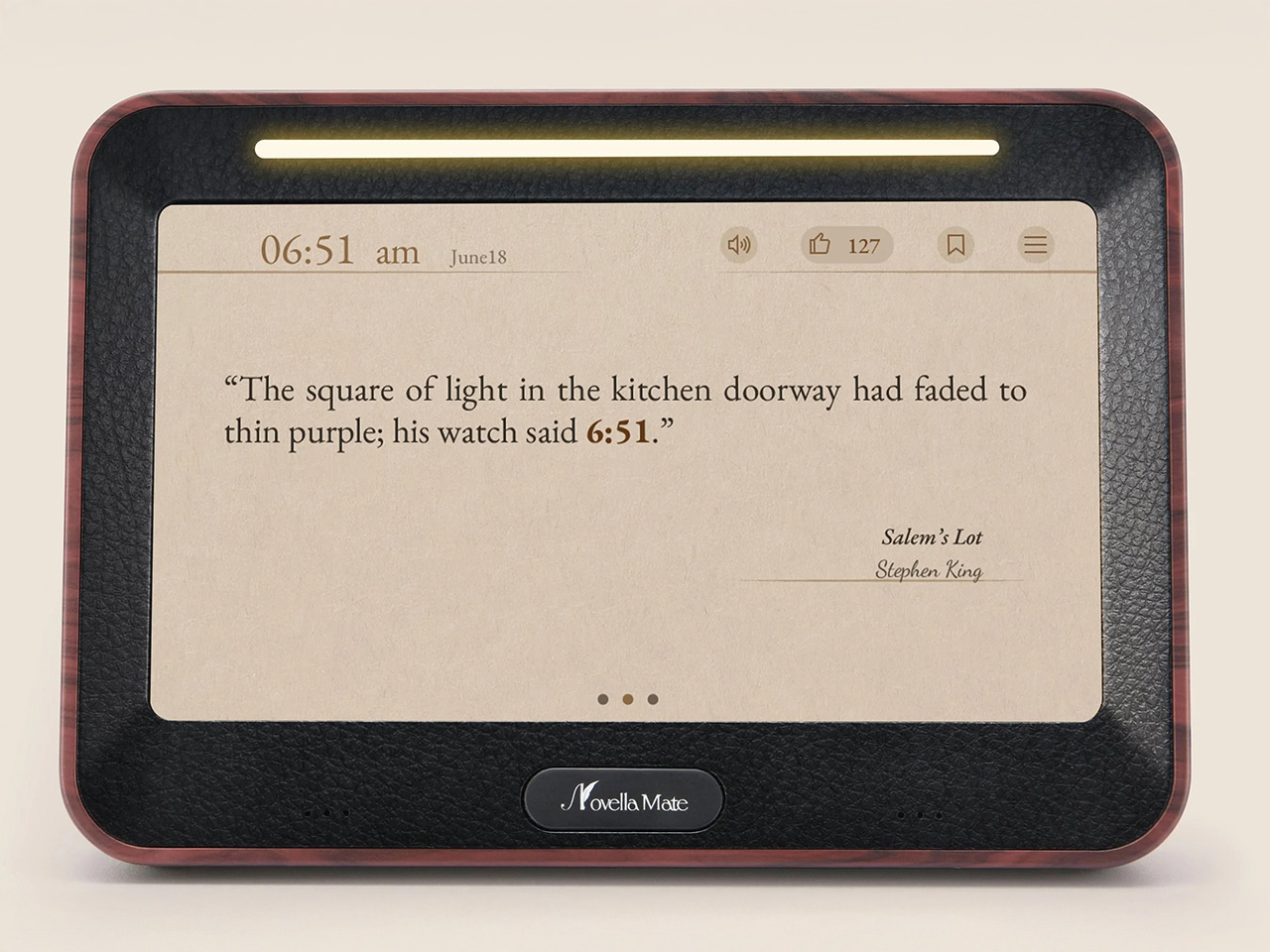
Other details add to the Steampunk Marble Run’s gloriously otherworldly design. The color palette is overwhelmingly grunge-inspired, evoking an almost Mad Max style. Meanwhile, you’ve got a combination of industrial machinery, pipes, girders, chains, flamethrowers, Gatling guns, chemical tanks, nuclear reactors, and two dinosaurs dominating the design. The kit comes with a battery pack that lets you input 6 AA batteries to run the entire experience. The battery pack powers two motors that control various aspects of the marble run, and the entire set includes 10 marbles as a part of the experience… although you can absolutely add a few more of your own.


One of the Motors
The Battery Module
The entire kit is an experience to be had. It measures 22×21 inches in length and width, with a 24.8-inch vertical that has allows the kit to look positively monstrous. The complete gizmo also weighs a staggering 15.4 lbs (or a whopping 7 kilos), so it’s best if you placed it away from overtly curious/enthusiastic pets and children. The set starts at $189.99, although JMBricklayer is offering early backers an 18% discount, bringing the full kit to $158 excluding shipping. Grab yours now and the Steampunk Marble Run ships starting August 2024.
Grab yours now$189.99 (18% off) Hurry! Only 26 hours left! Raised over $116,000.
Sure, it’s no Thor’s Stormbreaker, but the HYZER’s handy size and reliable design make it a perfect part of your outdoor or camping EDC. With a highly customizable design that lets you choose the axe head thickness, handle length, and even the color of the grip, the HYZER can be personalized to your liking, whether you need something hefty for felling short trees, or just a light, sharp, maneuverable axe to skin hunted animals and defend yourself in a skirmish.
It isn’t often you see hatchets made from titanium. The material, known for its enduring nature, is often seen in smaller EDCs that need strength in a compact form factor. Hatchets, by definition, are large instruments, and can rely on brute force to make their impact. However, the HYZER’s choice of being machined from solid 6AL-4V GR5 titanium sets it apart in a bunch of ways. For starters, the material allows the axe to be a lot lighter and thinner than its steel counterparts. The HYZER features a skeletonized handle that shifts all the weight to the blade on top, allowing you to swing with force. The head, however, comes fashioned from D2 steel, known for its reliability and edge-retention. Heavier than titanium, it shifts the weight to the top which makes the hatchet more efficient.
The HYZER comes with a few potential modifications that allow you to personalize your EDC. You’ve got a choice between short and long handle lengths, with the option of either going with the skeletonized handle, or opting for a woven handle that offers a significantly better grip. Similarly, the axe head comes in three weight classes too – a lightweight variant that weighs 6.77 ounces, a medium variant that weighs 7.44 ounces, and the heaviest variant that weighs 8.88 ounces. The heads attach to the handle using four countersunk screws to maintain the HYZER’s flush, sleek design, and can easily be replaced or customized depending on your need.
So what would you really need a titanium hatchet for? Well, the HYZER is best suited for adventure and tactical situations. Whether it’s braving the elements in the outdoors, or just old-fashioned survival, the HYZER is quite the sidekick for the job. Depending on your handle, the HYZER Measures either 8.15″ or 9.75″ long, weighing 12.3 or 13.8 ounces. Storing the HYZER is easy thanks to the option of an add-on sheath. Maker ‘Exceed Designs’ offers a classic sheath made from genuine Horween leather, or a molded sheath made from Kydex with an included adjustable belt clip (shown above).
Aside from the various spec customizations, the HYZER also has a few color variants to choose from. The handle comes with a choice between stonewashed, grey, or black PVD finish, while the axe head has four colors to choose from, ranging from stonewashed to two shades of grey, and finally the PVD black variant. If you choose to have your handle wrapped in paracord, there are 8 color options you can choose from, ranging from vibrant to covert.
The HYZER Ti Hatchet starts at $170, with different attachments/modifications being available for an add-on cost. Each hatchet is assembled in USA and comes with a lifetime warranty. The HYZER is limited to just a 500-unit run, so if you’re interested in grabbing one for yourself, head to the Exceed Designs website and snag yourself a hatchet before it’s all gone!
Calling all design visionaries and hardware enthusiasts! The “World Capital of Hardware,” Yongkang, China, is hosting the 19th International Industrial Design Competition for Hardware Products. This prestigious event, now in its 19th year, throws open its doors to a global audience, offering a unique platform to showcase your design talent and potentially revolutionize the hardware industry.
With a rich heritage in metalware and a thriving modern hardware sector, the city fosters a collaborative environment where design and industry converge. The competition itself boasts a remarkable history. Since its inception in 2006, it has served as a bridge between international design talent and China’s hardware powerhouse. Past editions have seen entries from close to 30 countries, fostering a dynamic exchange of ideas and propelling design-driven advancements in the hardware landscape.
This year’s competition is all about hardware that makes a difference. Organizers are looking beyond aesthetics, seeking entries that demonstrate not just cutting-edge design, but also significant commercial and social value. The ultimate goal? Products that can seamlessly integrate into Yongkang’s robust manufacturing infrastructure. These innovative designs have the potential to propel not just the city’s hardware industry, but the global market as well.
Open to All: The competition welcomes submissions from a wide range of participants. Whether you’re a budding design student, a seasoned design professor, a well-established design agency, a leading company, or a freelance designer with a groundbreaking idea – the 19th International Industrial Design Competition for Hardware Products wants to hear from you.
Dual Award Tracks: The competition features two main tracks, each catering to specific design goals:
The Golden Star Product Award: This prestigious award recognizes designs with exceptional commercial and social potential. Ideally, these entries should be well-suited for rapid and efficient manufacturing within Yongkang’s established ecosystem. The jury will be looking for designs that are not just innovative but also commercially viable, with the potential to disrupt the market and make a positive social impact.
The Creative Sub-Category Competitions: These delve deeper into specific hardware product areas, offering a more focused platform for designers. This year’s sub-categories include:
Quickly-Assembled Houses: Designs that prioritize functionality, sustainability, and ease of construction in prefabricated housing solutions.
Sports Leisure Vehicles: The future of bicycles, e-scooters, or other recreational vehicles could be in your hands.
Health Cups and Pots: Designs that promote healthy living through innovative features in drinkware and cookware.
Rehabilitation Care Products: This sub-category seeks designs that improve accessibility and functionality for assistive devices.
Fitness Equipment: Push the boundaries of exercise routines with creative and effective fitness equipment designs.
The Creative Sub-Category Competitions are co-organized with prominent local manufacturers in Yongkang. This unique collaboration ensures a direct line from design concept to real-world application. Your design, if chosen, could be fast-tracked for production and potentially reach a global audience.
Lucrative Prize Pool: Showcasing your talent and design vision at this global competition can be incredibly rewarding. The 19th International Industrial Design Competition for Hardware Products boasts a staggering total prize pool exceeding $498,900 USD. This makes it a significant opportunity to not only gain recognition for your work but also potentially launch a successful design career.
The deadline for submissions is October 10th, 2024. Don’t miss this chance to be part of a global design movement! Head over to the competition website to register and unleash your design vision on the world stage. Here’s also a look at the Gold and Silver winners from last year’s International Industrial Design Competition for Hardware Products.
Gold Prize – Caregiver
About the size of a travel case, the Caregiver is a foldable chair and inflatable bathtub combo that can be wheeled around. Designed for caregivers (hence the name), the chair folds open to allow senior citizens to sit comfortably in the seat, while a lower flat-pack container houses an inflatable bathtub. When the senior needs bathing, they just sit in the chair, while the bathtub inflates around them. The chair then lowers into the tub, allowing caretakers to bathe their elderly patients. When everything’s done, the chair lifts up, the patient gets out and gets dressed, and the caretaker can drain the water before folding everything back to its compact, portable size.
Silver Prize – Orthopedic Robot Surgery System
Using a combination of precision robotics, minimal incisions, and radiation, this orthopedic robot helps bring quality surgery experiences and healthcare to millions of patients. A dynamic duo of a vision robot and an execution robot, these two machines work in tandem, with the kind of accuracy and pin-point precision that even human hands can’t achieve. This enables seamless surgeries, allowing doctors to monitor the process throughout while the machine executes things perfectly.
Silver Prize – Pocket Stove
It just feels wonderful seeing some good old-fashioned clever design thinking! Meet the Pocket Stove, a foldable little number that opens out into a portable stove for camping. The entire device comes with a two-part design that splits along the middle, with one part becoming the stove itself, and the other plugging onto a gas tank. When you’re done, the stove element plugs into the bottom of the gas connector, and the three fins of the stove fold upwards, turning into a capsule that can be carried around anywhere you go.
Is it safe to say that Apple’s won the long-term smartphone war? Samsung had a decent Unpacked event last week, and so did Nothing, but none of them have even managed to match the cultural impact of Apple’s iPhone keynote that happens every September. In fact, even though the event happens on one single day, the news coverage before and after the event revolves around the iPhone too. After the phone’s announced, you’ve got first-impressions, reviews, and comparisons… but before the phone is announced, the rumor mill works hard to try and decipher what the upcoming phone will look like. We’re in July right now (two months before Apple announces its latest phone) and at this point, it does seem like we have a fair idea of what the new iPhone 16 Pro will look like. From hardware details to even internal components, the interwebz has worked tirelessly to deliver on leaks and credible speculations – so we decided to collect everything we know about the upcoming iPhone 16 Pro and 16 Pro Max in one single place. Here’s everything we’ve heard so far…
After last month’s WWDC event, it’s pretty much taken for granted that Apple Intelligence will be at the forefront of the new iPhone lineup… and to make that happen, the new iPhones will need beefed up chipsets. A new report from Jeff Pu, an analyst at Haitong International Tech Research renowned for his reliable insights into Apple’s chip development, reveals that Apple is accelerating the production of the A18 Pro chip earlier than usual. This chip is being specifically tailored for advanced AI functionalities. These upgrades indicate that the upcoming iPhone 16 Pro and Pro Max will feature a custom-designed A18 Pro chip, emphasizing on-device handling of intensive artificial intelligence (AI) capabilities. Rumors are indicating that even the regular iPhone 16 phones may get the A18 Bionic chipset to handle these AI features.
Smaller Bezels = Bigger Screens
It’s 2014 again and bezels are public enemy number 1. Apple’s new phones will reportedly have marginally larger screens thanks to an impressive 30% reduction in bezels. This new display template, dubbed BRS or Border Reduction Structure, is thanks to Apple pushing Samsung to provide tighter circuit placement that can help shave off almost half a millimeter of bezel thickness. These reports seem fairly credible, coming from THE ELEC, a Korean industry media outlet. This effectively means the new 16 Pro and Pro Max will have screens measuring 6.3 and 6.9 inches diagonally, respectively.
The iPhone 15 Pro on the left and the 16 Pro on the right demonstrate the reduced bezel sizes
A New Capture Button For Enhanced Photography
Although rumors of a Capture Button have circulated for quite a while, actual details on its capabilities have only NOW become more evident. At first, this button was touted as simply a shutter button that could click photos without you needing to touch your screen, but indications show that this button will have a touch-sensitive surface and a two-stage press. The touch-sensitive surface will allow you to slide your finger from side to side to zoom in or out, while the two-stage press lets you press lightly for focusing, and then further for clicking the picture, sort of like most DSLR cameras. The capture button sits where the millimeter-wave antenna once featured on the iPhone’s body, but it seems like the antenna will just move over to the left side instead, making way for the new hardware feature on the iPhone 16 Pro.
Same Old Sensors, New Capabilities
Since cameras are a pretty massive part of the iPhone (some might say its highlight), talking about camera capabilities is also pretty crucial. Rumor has it that the new iPhone 16 Pro will still feature the 48MP main camera sensor from its predecessor with no change. However, the tetraprism telephoto lens from last year’s iPhone 15 Pro Max that could output 5x zoom will see even more zoom capabilities. Last year’s flagship iPhone had the zoom equivalent of a 120mm telephoto lens, but rumors indicate the new iPhone will push this to a 300mm lens equivalent. Now obviously, that seems absolutely bonkers, but it also makes sense to take such a rumor with a little pinch of salt. After all, stabilization while zooming in that far would probably be near impossible.
Thinner MagSafe Array
Yet another tweak, noticed by case-makers, is a refinement of the MagSafe array. Now the new MagSafe ring on the iPhone will feature thinner magnets all around, freeing up more space inside the phone without compromising on the magnet’s strength.
(Probably) A New Rose Gold Color Variant
The final rumor is that the iPhone 16 Pro series could see another color variant added to it. Apparently the famed Rose Gold colorway (made popular with earlier iPhone models and even the MacBook Air) could make a comeback – but this time in titanium. Yes, the new Pro-series iPhones will still have a titanium frame, but Apple will probably issue new color variants to set the different iPhone Pro models apart. Last year, the 15 Pro series saw natural, blue, white, and black finishes. It’s fairly conceivable that Rose Gold sees a resurgence this year.
Rather than attaching components to your phone, the PAIR Node allows you to attach sensor modules that help your phone capture different data points around you and your life. Called ‘Nodes’, these modules assist users in forming a lifestyle and AI-driven experience that suits their needs. Rather than buying a phone for its capabilities, you build your phone around the capabilities you need, from having a great camera to being a great health-tracking gadget. As you grow older, the phone grows with you, changing with time and your needs but never being replaced. It’s a clever way to help solve the planned obsolescence problem with tech, by bringing AI-based assistance into the mix.
Designer: LFD Official
Phones are nothing but vessels for the apps they carry – but AI is a little different. Everyone uses AI differently based on exactly what the needs of their life are. That prompted PAIR Node’s creators to revisit phone modularity in the AI age. The PAIR Node is a phone you build based on your requirements, but also on the ability to build an AI-powered device that grows with you and trains as you go. The framework of how this works remains extremely similar to the PhoneBloks concept from years back (which was acquired by Google and Motorola and turned into the now-shelved Project Ara), albeit with a few different modules based on how tech has advanced in the past few years.
The logic behind the phone fundamentally remains the same too – but it’s executed differently. You start by choosing the nodes you need to make ‘your’ smartphone. You pick how advanced you need your camera to be, you choose your battery size, SSD size, speakers, a mini-display, and a few other sensors. Similarly, there’s a separate node called the ‘Remember’ node that captures personal information so that it learns your needs, preferences, and details. Another node is dedicated to just AI, determining how powerful and capable your phone’s assistant is. Together, the Remember and AI nodes work to turn your phone into an extension of yourself in a uniquely meaningful way. The Remember node is the database, and the AI node is the bot that trains on this database.
The AI node trains on other stuff too, like how you use your phone, what you enjoy about your phone (whether you prefer music or photography), etc. It locally fine-tunes its abilities based on your behaviors and patterns – something the PhoneBloks concept didn’t even factor in.
The different nodes come in a variety of configurations. Nodes follow a grid-based design, expanding or contracting in size based on capability. A smaller SSD provides less storage, a larger SSD gives you more storage. Similarly, camera modules increase in size based on capability. Battery, Speaker, Remember, and AI nodes behave the same way. At the end, you pick and choose what you need and reject what you don’t. There’s ultimately a bit of compromise because the phone only has a limited amount of real estate for modules. If music matters more than storage, you’d be better off choosing a larger speaker than a larger SSD. If battery life is a higher priority than camera, then that’s a choice you have to make. Similarly with the AI node, which one can only assume offers newer, faster, powerful hardware for on-device computation.
In the end, the PAIR Node does something rather brilliant – it revives something dead in a way that feels meaningful, very similar to how Apple revived the metaverse last year and how it revived the conversation around AI this year. The modular phone was completely dead as a tech concept (with every smartphone company pivoting rapidly to foldables), but the PAIR Node shows that the phone isn’t dead, it just needs to be made more future-proof. The way you do that isn’t by launching new, better phones every year… it’s by giving your phone a chance to grow with you, understand you, and be a better aide to your daily needs.