These Chairs Are Made From the Steel That Holds Up Buildings

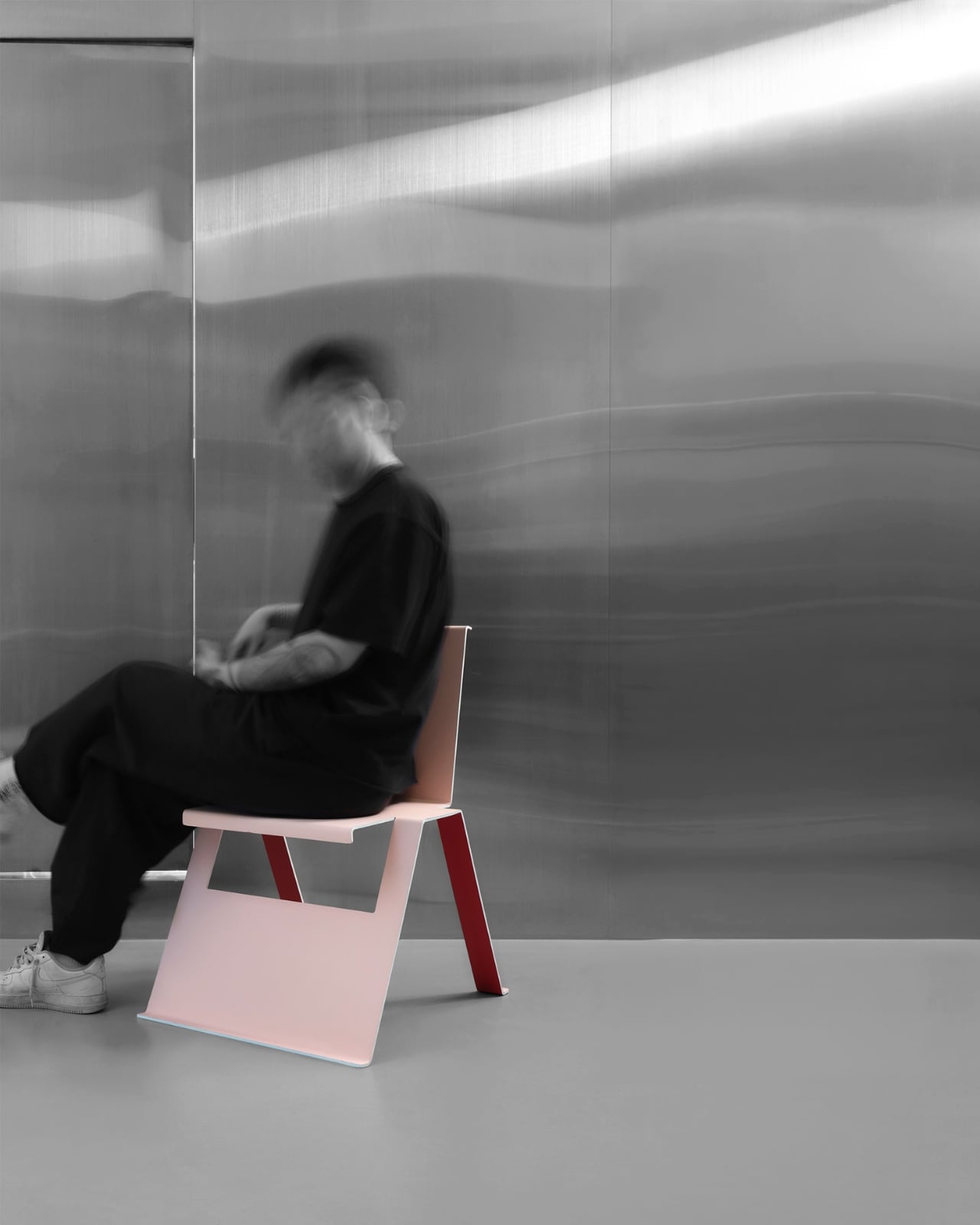
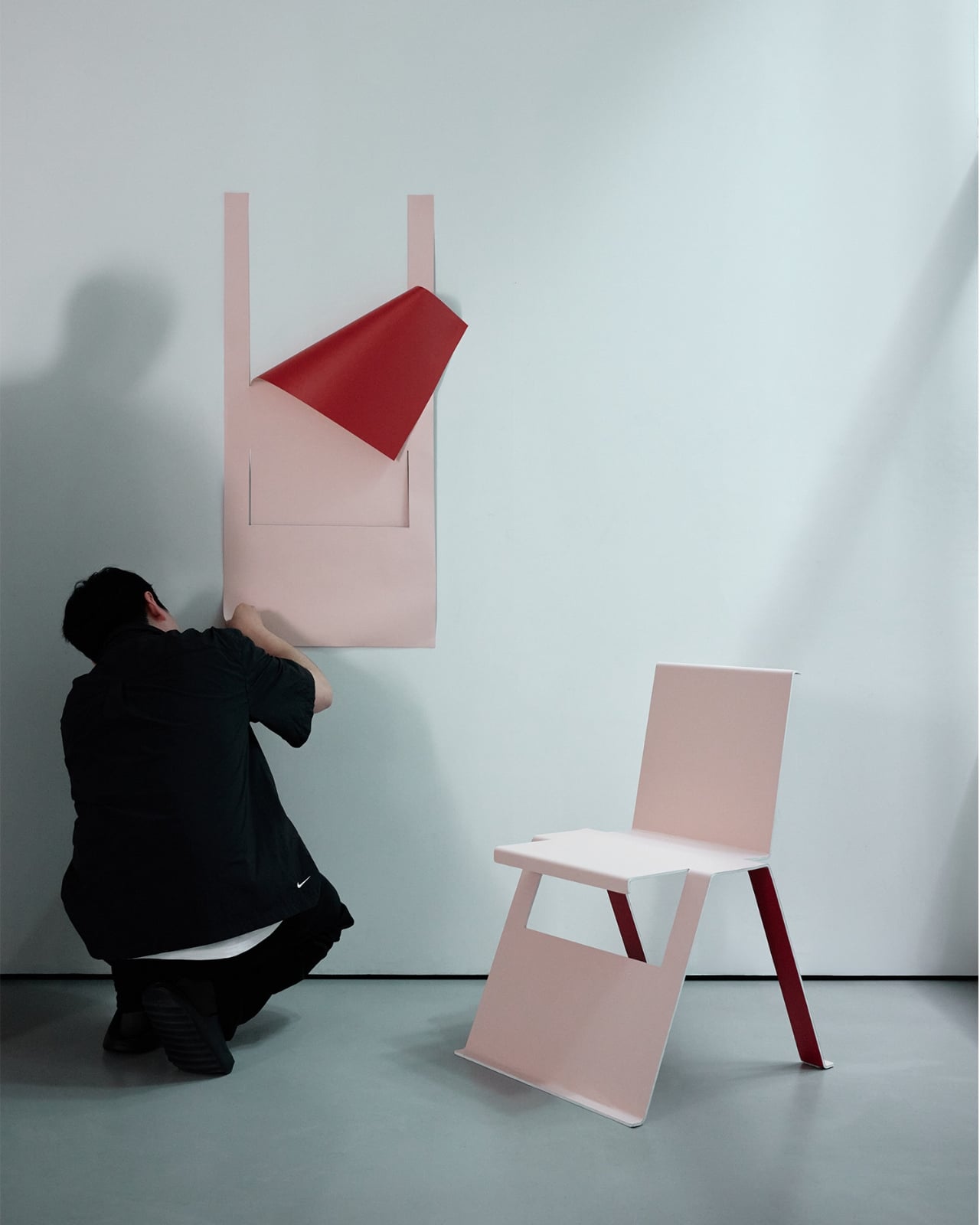
There’s something beautifully rebellious about taking the skeleton of a building and turning it into something you’d actually want in your home. That’s exactly what designer Marquel Williams has done with his Beams collection, a furniture series that proves industrial components can have serious aesthetic game.

Williams built this entire collection around one specific element: the I-beam. You know, those steel supports that hold up skyscrapers and warehouses. The same component that was patented back in 1849 by Alphonse Halbou and has been refined over nearly two centuries to become the gold standard for structural efficiency. But instead of leaving these beams to do their usual heavy lifting in the background, Williams pulled them into the spotlight and transformed them into chairs, lamps, desks, and lounge seating.

Designer: Marquel Williams

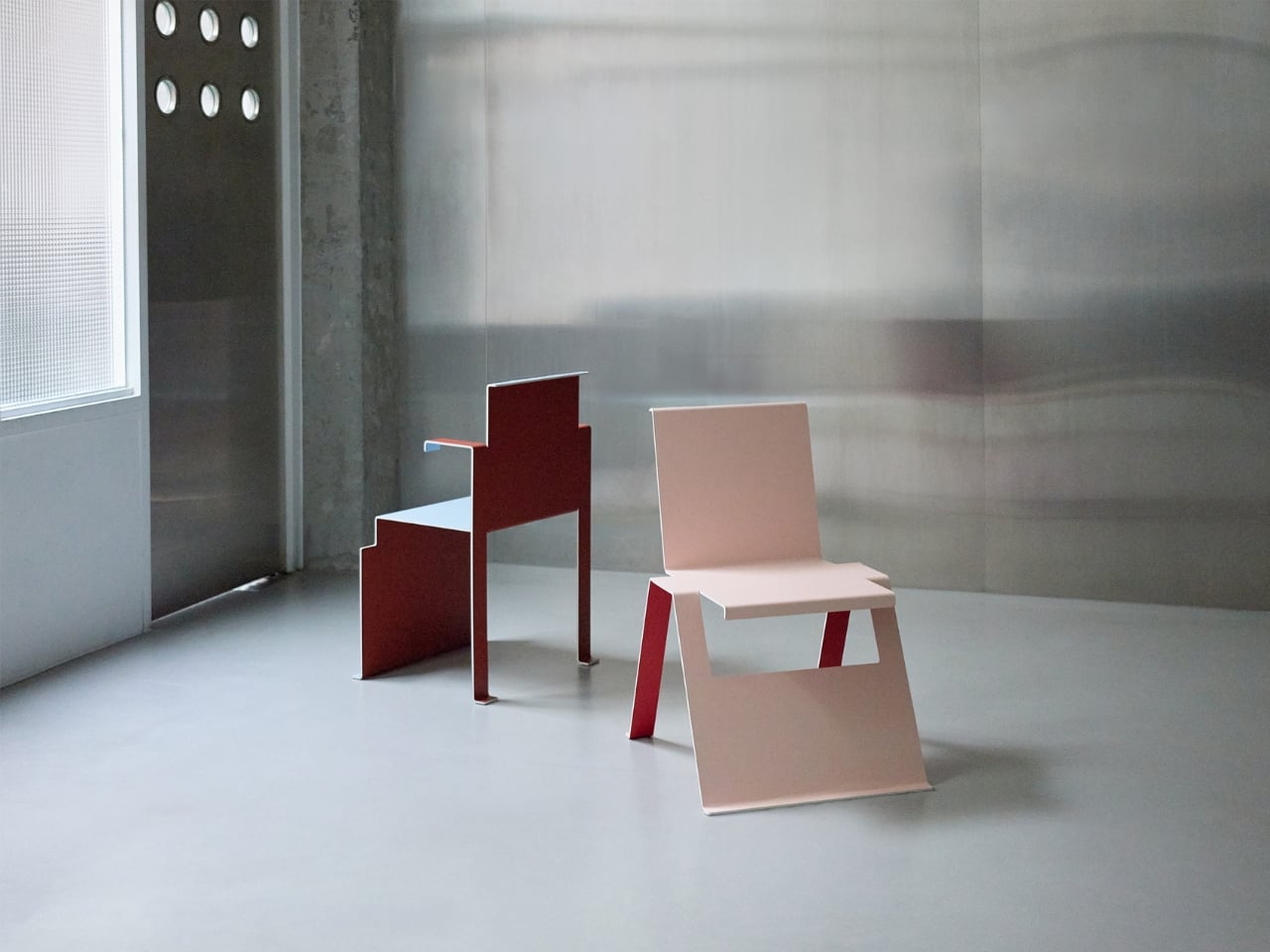
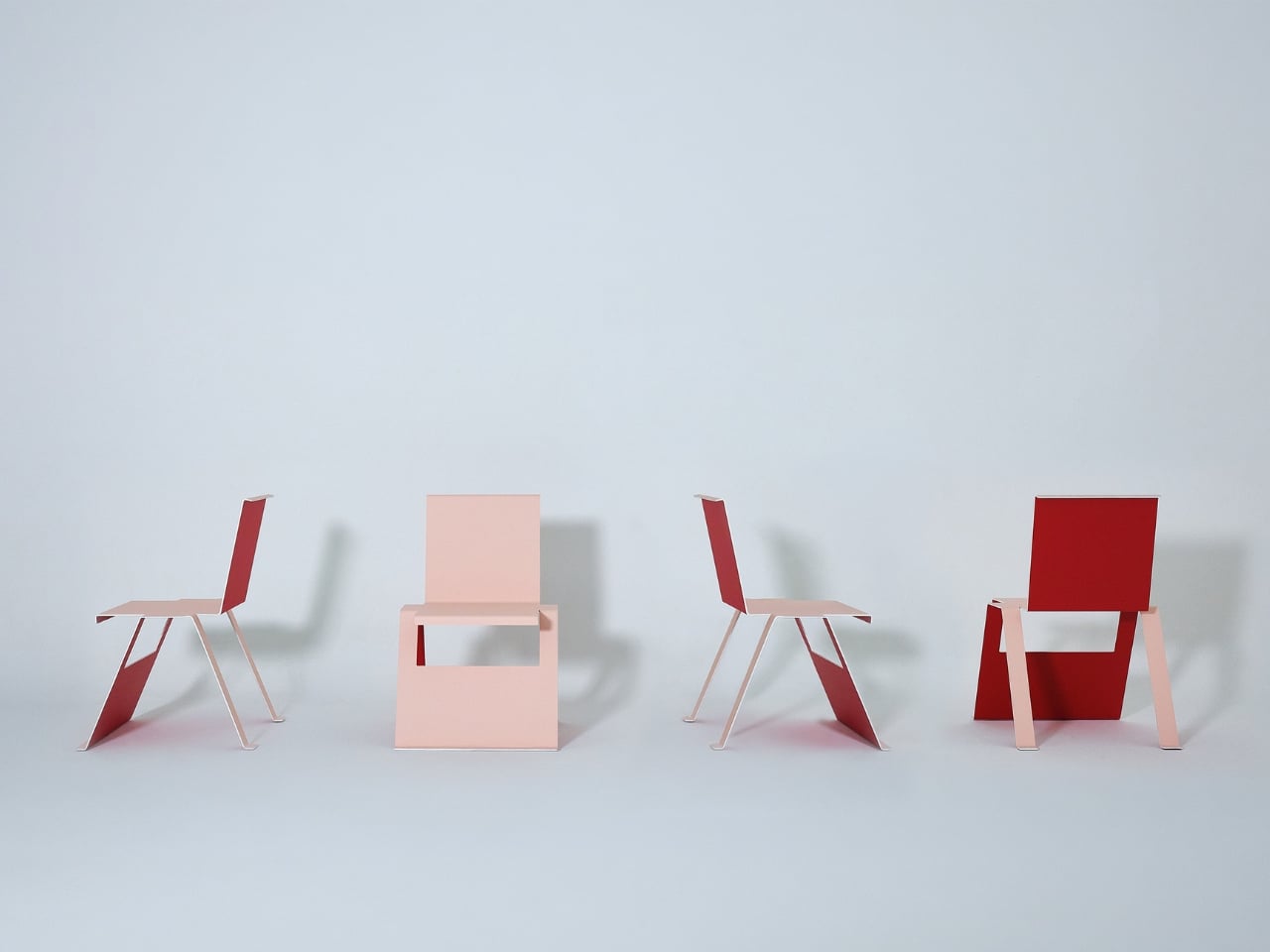
The collection includes five distinct pieces, each one using the I-beam as its structural foundation alongside metal sheets and black leather upholstery. What makes this approach so compelling is how Williams managed to create such diverse pieces from a single standardized part. Each item has its own personality despite sharing the same DNA.

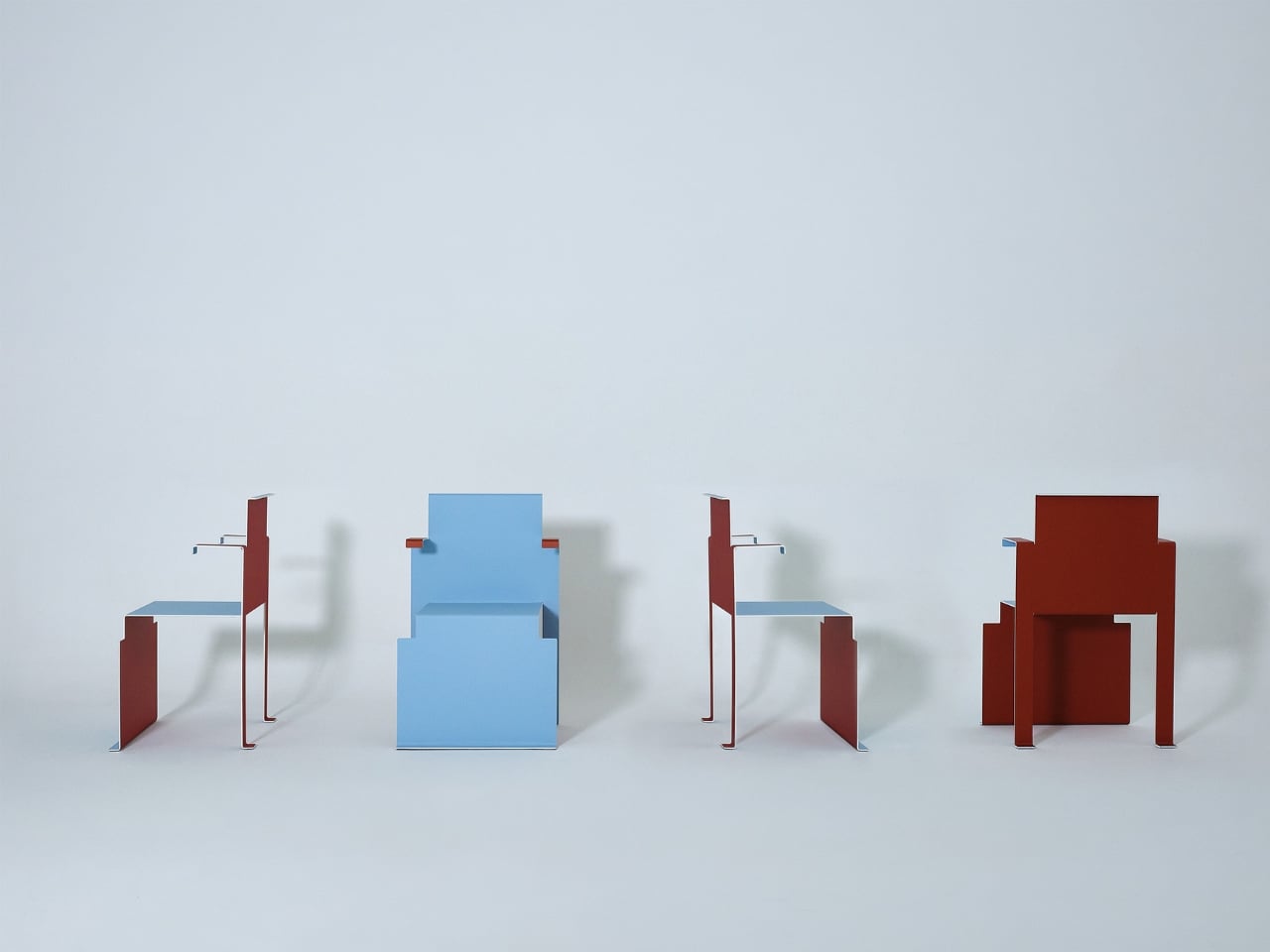
Take the Beam Chair, for instance. It’s monochromatic metal at its finest, with precisely angled I-beams and laser-cut aluminum sheets. The whole thing is treated with a waxed finish that balances rigid industrialism with actual functionality. Looking at it, you might think it would be uncomfortable with all that sharp geometry and metal, but there’s an intentional restraint in its design that makes it striking.

Then there’s the Chaise Longue, which takes an entirely different approach. While the chair feels rigid and precise, the chaise has this relaxed, almost delicate equilibrium going on. The leather upholstery softens the whole vibe, making it feel more approachable while still maintaining that industrial edge.

But the real showstopper might be the Floor Lamp. This piece gets technical in the best way possible, featuring adjustable height shades with a cantilever system. Here’s the kicker: the electrical cord isn’t hidden away like usual. Instead, it’s framed right inside the beam as a visible design detail. It’s that kind of thoughtful touch that shows Williams isn’t just using industrial materials for aesthetic novelty; he’s actually thinking about how to integrate every functional element into the design language.

Williams’s philosophy here is all about standardization and what you can do when you commit to a single industrial component as your foundation. The I-beam represents nearly 200 years of industrial production refinement, the absolute peak of standardized structural efficiency. By using it in unexpected ways, Williams subverts its typical purpose and transforms it into a vehicle for creativity and self-expression.

This approach isn’t entirely new in the design world. Italian designer Enzo Mari explored similar territory with his own I-beam experiments (called “putrella” in Italian), creating bowls and trays for dining tables by simply bending the extremities upward. Mari’s research into semi-finished products aimed to highlight the formal worth of industrial components and transform them into contemporary design icons. Williams is working in that same tradition but pushing it further by creating an entire cohesive furniture system.

The collection is handcrafted by Caliper in Spain and produced in very limited quantities, which makes sense given the level of craftsmanship required. These aren’t mass-produced pieces; each one requires careful fabrication and finishing to achieve that balance between industrial rawness and refined design.

What Williams has ultimately created is a collection that makes you rethink the materials around you. Those structural supports holding up buildings? They have untapped aesthetic potential. That standardized industrial component? It can be the basis for something truly unique. The Beams collection proves that creativity isn’t about reinventing the wheel; sometimes it’s about looking at the wheel differently and imagining what else it could become.

The post These Chairs Are Made From the Steel That Holds Up Buildings first appeared on Yanko Design.
When the Forest Sings Back: Human Perches in Quebec

Picture yourself standing on a small platform in the middle of a Quebec forest, balancing on what feels like an oversized bird perch. The moment your weight settles, something magical happens. A bird call rings out, blending seamlessly into an ethereal soundtrack that seems to rise from the forest itself. Welcome to Human Perches, the latest installation from Montreal design studio Daily tous les jours that’s making us rethink how we experience nature.

Located at Chouette à voir!, a bird of prey sanctuary in St-Jude, Quebec, this permanent installation transforms a 55-meter elevated boardwalk into an interactive musical journey through the seasons. Ten aluminum perching stations punctuate the path, each one waiting for a human visitor to activate its hidden soundscape. The design is brilliantly simple: step onto a green perch, and you become part of the forest’s symphony.

Designer: Daily tous les jours

What makes this project so captivating is how it flips our usual relationship with wildlife. We’re used to being the noisy intruders, the reason birds fall silent when we approach. Here, we become the activators of sound. When humans aren’t present, the artwork stays quiet, mirroring the behavior of the sanctuary’s winged residents. It’s a poetic reversal that makes you acutely aware of your presence in the ecosystem.

The experience unfolds like a sonic story as you move along the boardwalk. Each perch represents a different season, with soundscapes that capture winter’s vigilance, spring’s courtship, summer’s protection, and autumn’s migration. The genius lies in the layering. Juno Award-winning composer Keiko Devaux crafted an evolving dialogue between abstract base compositions and actual bird calls from local species. Sometimes the bird voices appear as themselves. Other times, they’re transformed into ethereal textures or rhythmic elements that pulse beneath the surface.

Daily tous les jours, led by co-founders Mouna Andraos and Melissa Mongiat, has spent fifteen years creating participatory urban experiences, from musical swings to interactive light installations. But Human Perches marks a shift in their practice. Instead of focusing purely on human-to-human connection, they’re exploring the delicate interfaces between species. It’s part of a broader investigation into how sound vibrations can stimulate growth and communication within ecosystems, a thread that runs through their concurrent Forest Mixer project on Hornby Island as well.

The physical design is minimal but thoughtful. The aluminum perches create a striking contrast against the organic textures of the red cedar and spruce boardwalk, highlighting the intentionality of human presence in wild spaces. Each station includes sensors that detect when someone steps up, triggering both a soft light and the corresponding bird call. The act of perching itself becomes meaningful. You’re balancing, aware of your body, suspended between the marsh below and the forest canopy above. It demands a different kind of attention than simply walking through.

There’s an educational dimension here too. The sanctuary is home to various bird species, including vulnerable ones, and the installation serves as both attraction and conservation tool. “Conservation efforts to preserve our precious wildlife also involve education and enchantment,” Andraos explains. The project received significant support from Quebec’s Ministry of Culture and Communications, reflecting recognition that these kinds of immersive cultural experiences can reach audiences in unexpected ways.

What resonates most about Human Perches is how it heightens awareness without being preachy. You’re not being lectured about biodiversity or habitat loss. Instead, you’re invited to listen differently, to tune into layers of sound you might have walked past before. After experiencing the installation, visitors report hearing the forest with new ears, imagining the hidden life thrumming all around them even after they’ve left the perches behind.

In our increasingly screen-saturated world, projects like this offer something rare: a reason to be fully present in a physical space, to engage your whole body in the act of listening. It’s technology in service of slowness, design that creates space for wonder rather than distraction. The forest has always been singing. Daily tous les jours just gave us a way to finally hear it.

The post When the Forest Sings Back: Human Perches in Quebec first appeared on Yanko Design.
A Hand-Built Stone Sphere Just Landed in Rural Portugal

There’s something profoundly strange about seeing a perfect sphere sitting in the middle of nowhere. It doesn’t belong there in the way a building or a bridge would, yet somehow it looks like it’s been there forever. That’s the magic of Ninho Globo, a monumental stone installation by Paris-based studio Atelier Yokyok that just landed in the windswept landscape of eastern Portugal.

Picture this: you’re standing on a rocky plateau in Salvaterra do Extremo, a small border town where Portugal meets Spain. The terrain is rough, dotted with old dry stone walls and scrubby vegetation. And right there, perched on what used to be a farm, sits this five-meter sphere made entirely of local black schist, a rock that splits into beautiful flat layers. Against the sky, it looks like something that either fell from space or grew from the earth itself. Maybe both.

Designer: Atelier Yokyok

Atelier Yokyok, a four-person team founded by architects Samson Lacoste and Luc Pinsard (later joined by Laure Qaremy and Pauline Lazareff), built this sphere by hand with the local community. This wasn’t a case of a design team parachuting in with prefab materials and machines. They used the schist that’s native to this region, honoring the geological identity of the place while creating something that feels both ancient and futuristic.

What really gets you is how the piece plays with your sense of scale. From far away, Ninho Globo looks planetary, like a dark moon that’s settled into the landscape. The name itself means “Global Nest” in Portuguese, and that double meaning is intentional. Is it a celestial body? A giant nest? A seed pod waiting to crack open? It refuses to be just one thing, and that ambiguity is part of its power.

Then you get closer and notice the fissure. There’s a deliberate crack called the “Canyon” that cuts through the sphere, inviting you inside. Step through, and suddenly you’re in a hollowed-out chamber where the scale flips completely. Now you’re not looking at something massive. You’re inside it, cradled by layers of stacked stone, experiencing the weight and texture of the schist up close. The space is cool and shadowy, a shelter carved from geometry. It makes you think about what it means to inhabit a space, to be protected by it.

This kind of visceral, physical experience is what Atelier Yokyok does best. The studio has spent years exploring how our bodies interact with space, often using lightweight materials like textiles in their earlier work. But with Ninho Globo, they’ve shifted toward mineral permanence, something that will weather and age with the landscape rather than disappear. It’s a move that speaks to bigger questions about what we build, why we build it, and what we leave behind.

The project was part of Landscape Together, a program co-funded by the European Union’s Creative Europe initiative that brings artists, institutions, and local communities together to breathe new life into rural areas. Ninho Globo is now part of the permanent collection at Museu Experimenta Paisagem, an open-air museum dedicated to site-specific art. The work embodies something we’re seeing more of in contemporary art and architecture right now: a turn toward low-tech, community-driven projects rooted in place. In an era obsessed with speed and novelty, building something slowly, collectively, and with local materials feels almost radical.

There’s also something to be said about the location. This is a border territory, a place that exists in the margins between two countries. It’s not a tourist destination. It’s remote, rugged, and deeply connected to the rhythms of the land. Water is scarce here, and the hollowed interior of Ninho Globo speaks to that absence, turning it into a meditative space where geological memory becomes tangible.

What Atelier Yokyok has created isn’t just a sculpture. It’s a conversation starter about habitat, shared resources, and how we relate to the places we live. It’s about time, both geological and human. And it’s a reminder that sometimes the simplest shape, a sphere, can hold the most complex meanings.

The post A Hand-Built Stone Sphere Just Landed in Rural Portugal first appeared on Yanko Design.
The Tape Dispenser That’s Too Smart to Be This Simple

You know that dusty tape dispenser sitting on your desk right now? The one with the wobbly base and serrated blade that’s dull as a butter knife? Yeah, TRUSCO looked at those sad excuses for office supplies and decided there had to be a better way.

The Japanese company’s TEX-266A tape cutter is what happens when someone actually thinks about how people use tape instead of just churning out another plastic widget. It’s one of those products that makes you wonder why nobody figured this stuff out decades ago.

Designer: TRUSCO

Let’s start with the most frustrating part of using regular tape dispensers: that moment when your tape curls back onto itself and you’re stuck there, desperately picking at the roll with your fingernails like some kind of office goblin. TRUSCO solved this with an anti-backflow stopper. It’s such a basic feature, but try finding it on your average tape dispenser. This thing prevents the tape from rewinding itself back onto the roll, which means you can actually grab the end when you need it.

The design also includes two rollers, and here’s where it gets clever. One of these rollers has a 360-degree static cling strip. This helps guide the tape smoothly and keeps it from twisting or bunching up as you pull. If you’ve ever dealt with cloth tape or craft tape that seems to have a mind of its own, you’ll appreciate this detail. The TEX-266A can handle OPP tape, cloth tape, and craft tape up to 50mm wide.

Now, about that blade. Most tape dispensers have these exposed serrated edges that are genuinely dangerous. You’re basically waving your fingers near a row of tiny teeth every time you tear off a piece of tape. TRUSCO said “absolutely not” and added a safety cover over the stainless steel blade. The blade itself is made from SUS420 stainless steel, which stays sharp enough to cut cleanly through various tape types without requiring you to saw back and forth like you’re trying to escape from prison.

There’s also a side guard on the roll cover, which is one of those features you don’t think about until you realize how annoying it is when tape rolls go sliding off their spindle. It’s these tiny frustrations that TRUSCO seems to have catalogued and systematically eliminated.

The body is made from steel, not flimsy plastic, which gives it enough heft (about 0.31 kilograms) to stay put on your desk when you’re pulling tape. That might sound heavy compared to those lightweight dispensers, but that weight is actually the point. You want something that doesn’t skitter across your workspace every time you use it. Customer reviews mention that this moderate weight makes it perfect for sealing cardboard boxes without having to hold the dispenser down with your other hand.

TRUSCO NAKAYAMA is a specialized trading company that supports Japan’s manufacturing industry, and you can tell this dispenser was designed for people who actually work with their hands. It’s built for 3-inch paper tubes, which is the standard size for most packing and shipping operations.

The whole thing measures about 10.47 x 0.63 x 2.83 inches, so it’s substantial but not bulky. Users who sell on flea market websites and other e-commerce platforms have called it a game-changer for their packing routines. Once you understand the setup (and yes, there are instructions), it becomes one of those tools you reach for automatically.

What makes the TEX-266A interesting from a design perspective is that it’s not trying to reinvent tape dispensers. It’s not flashy or overly complicated. Instead, it takes all the small annoyances that make tape dispensers frustrating to use and methodically addresses them. The anti-backflow mechanism, the safety cover, the weighted body, the dual rollers with that static cling strip. These are solutions to real problems that people actually experience.

It’s the kind of thoughtful industrial design that doesn’t always get attention because it’s not sexy or trendy. But it’s the difference between a tool that works with you and one that fights you every step of the way. And if you’ve ever been in the middle of packing twenty boxes and your tape dispenser decides to have a meltdown, you know that difference matters.

The post The Tape Dispenser That’s Too Smart to Be This Simple first appeared on Yanko Design.
This Invasive Weed Now Builds What It Once Destroyed

There’s something poetic about turning your worst problem into your best solution. That’s exactly what’s happening at Delhi’s Sunder Nursery, where a stunning new pavilion is literally made from one of India’s most hated plants.

The Aranyani Pavilion looks like a small spiral rising from the lawns, but get closer and you’ll realize its walls are woven from lantana, a plant that’s basically the uninvited guest that took over the whole house. Brought to India centuries ago as an ornamental plant, lantana camara has spread like wildfire across the country. Today, it covers over 13 million hectares and has invaded 44 percent of India’s forest cover, choking native species and creating dense, impenetrable barriers that prevent new growth. But here’s where it gets interesting. Instead of just cursing this invasive species, conservation scientist Tara Lal and Colombian-Cypriot design firm T__M.space decided to do something radical: build with it.

Designers: Aranyani and T__M.space (photos by Lokesh Dang)

The pavilion occupies a 200-square-meter footprint and features a bamboo skeleton that holds up walls crafted entirely from upcycled lantana stems. The structure spirals inward, creating a rib-like cage that guides visitors toward the center, where a nine-ton rock that was once mining waste sits in a shallow, reflective pool. Above it all, a living canopy of jasmine, neem, tulsi, and bakul plants creates a roof that breathes and grows.

What makes this project so compelling isn’t just the clever upcycling angle. It’s the entire philosophy behind it. The pavilion is inspired by India’s tradition of sacred groves, those ancient forest sanctuaries where communities protected nature as a spiritual act. By using the very plant that destroys these ecosystems and transforming it into something that honors them, the designers have created a kind of architectural karma.

Guillaume Lecacheux of The Works, who led the fabrication, captured it perfectly: “Aranyani captures the dialogue between structure and spirit, a pavilion that stands without grounding, held together by the tensile intelligence of bamboo and the quiet strength of nature.”

The project arrives during India Art Fair as part of a 10-day event curated by Lal’s ecological restoration initiative, also called Aranyani after the Hindu goddess of forests and wild animals. The timing couldn’t be better. As cities like Delhi grapple with pollution, urban sprawl, and disconnection from nature, projects like this offer a different model, one where design doesn’t just create beauty but actively participates in healing.

What’s particularly smart about this approach is that it tackles a real environmental problem while creating something culturally resonant. Lantana removal is already part of forest restoration work across India. Rather than letting those harvested stems become waste, they become building material. It’s a circular solution that makes both practical and symbolic sense. The living canopy above the structure reinforces this regeneration narrative. Those indigenous plants, tulsi, neem, jasmine, and bakul, aren’t just decorative. They’re rooted in India’s ecological and cultural memory, species that have meaning beyond aesthetics. They represent what should be growing in these landscapes, what lantana has pushed out.

This kind of project feels important right now because it pushes back against the idea that sustainability has to look rough or unfinished. The Aranyani Pavilion is gorgeous. It proves you can create something elegant and thought-provoking while still being environmentally responsible. The spiral pathway, the play of light through the woven walls, the reflection in the water, these aren’t compromises. They’re integral to the design.

There’s also something refreshing about seeing international collaboration on a project so deeply rooted in local context. T__M.space brought architectural rigor and conceptual clarity, while Lal’s conservation background ensured the ecological narrative remained authentic. This wasn’t just slapping some green elements onto a pretty structure. It was a genuine integration of environmental science and spatial design.

Maybe the most powerful thing about the Aranyani Pavilion is what it suggests about how we might approach other environmental challenges. What if we stopped seeing invasive species, mining waste, and other ecological problems as things to simply dispose of and started seeing them as materials with potential? What if design became a tool for transformation rather than just decoration The pavilion offers a literal and metaphorical space to pause and reconsider our relationship with the natural world. It’s architecture that asks questions as much as it provides answers.

The post This Invasive Weed Now Builds What It Once Destroyed first appeared on Yanko Design.
This Modular Furniture System Rolls With Your Workflow

Remember when office furniture meant heavy desks bolted to the floor and chairs that squeaked every time you moved? Those days feel like ancient history now. The way we work has transformed so dramatically that our furniture is finally catching up, and the Kylinc system by Belte Furniture is proof that flexibility isn’t just a buzzword anymore.

Unlike traditional office setups that commit you to one configuration forever, Kylinc treats your workspace like a living thing that can adapt whenever you need it to. The secret lies in its clever design: each piece rolls on large wheels, transforming your office into a sort of adult Lego set where you can rebuild your environment based on what the day demands.

Designer: Belte Furniture

The real genius shows up in the details. Those oversized wheels aren’t just for show. They make repositioning furniture feel effortless, whether you’re creating an impromptu collaboration zone or carving out a quiet corner for focused work. And in a world where every device needs charging, Kylinc integrates power management directly into the furniture itself, complete with smart cable organization that keeps cords from turning into a tangled mess.

But here’s where things get interesting. The system comes alive through its mix-and-match approach. Benches, seating pods, work surfaces, and storage units all play together in whatever combination makes sense for your space. Need to host a team brainstorm? Arrange the pieces in a circle. Pivoting to heads-down work mode? Spread everything out for individual focus zones. The furniture bends to your workflow instead of forcing you to adapt to rigid layouts.

The color palette deserves its own mention. While most office furniture sticks to safe grays and blacks, Kylinc brings vibrant hues into the mix, injecting energy into spaces that typically feel sterile. It’s a small touch that acknowledges something important: where we work affects how we feel, and how we feel influences what we create.

Of course, no design exists in a vacuum. Some observers have noted that Kylinc draws inspiration from established designs in the flexible furniture space, particularly work by firms like Pearson Lloyd. The addition of integrated power might seem like pure innovation, but it introduces a practical question: will people actually bother unplugging and managing those cables when they want to reconfigure their space? There’s a gap between theoretical flexibility and real-world behavior that even the smartest design can’t always bridge.

Still, this tension points to something larger happening in workplace design. We’re moving away from the idea that one setup serves all needs all the time. The pandemic accelerated this shift, but the underlying truth was always there: different tasks require different environments, and the same person might need a collaborative hub in the morning and a quiet retreat in the afternoon. Kylinc responds to this reality by making spatial reconfiguration actually feasible. Traditional modular furniture often requires tools, time, or multiple people to rearrange. By contrast, a system built on wheels and designed for intuitive assembly lowers the friction enough that people might actually use it the way it’s intended.

The multifunctional accessories add another layer of versatility. Surfaces can morph from laptop stands to communal tables. Storage elements double as room dividers. Each component serves multiple purposes, which matters especially in smaller offices where every square foot counts. What makes furniture like Kylinc significant isn’t just the product itself but what it represents. We’re seeing a fundamental rethinking of how physical space supports work. The old model assumed stability: you’d sit at the same desk, in the same spot, doing roughly the same thing. The new model embraces flux: your needs change throughout the day, throughout the week, throughout your projects.

Winning an iF Design Award puts Kylinc in good company among furniture innovations that are reshaping how we think about workspaces. Whether this particular system becomes ubiquitous or simply points the way forward, it’s part of a bigger conversation about creating environments that serve people instead of constraining them. And in a time when the relationship between work and space continues to evolve, that’s exactly the kind of furniture we need more of.

The post This Modular Furniture System Rolls With Your Workflow first appeared on Yanko Design.
When Shopping Feels Like Coming Home: My Front Yard in Phuket

You know that feeling when you stumble upon a neighborhood that just gets it right? Where every corner feels designed for actual humans instead of maximizing square footage? That’s exactly what Architectkidd has created with My Front Yard in Phuket, and it’s making me rethink everything I thought I knew about retail spaces.

Here’s the thing: most shopping centers feel like they were designed by people who have never actually enjoyed walking through one. You get those massive, soul-sucking boxes where the only outdoor space is the parking lot. But My Front Yard flips that script entirely. Located against a hillside in Phuket, this project ditches the big box approach for something that feels more like wandering through a well-planned village than a commercial development.

Designer Name: Architectkidd

The concept is refreshingly simple yet radical in today’s retail landscape. Instead of cramming everything under one massive roof, Architectkidd broke the space into a cluster of low-rise pavilions scattered across the site. These aren’t just random buildings, they’re connected by open-air walkways and communal spaces that actually make you want to slow down and explore. It’s retail therapy in the most literal sense.

What makes this design so clever is how it taps into the rhythms of everyday life. The outdoor pathways aren’t just pretty, they’re designed for morning walks, exercise stops, daily jogs, and yes, even bringing your pet along. The space becomes part of your routine rather than a destination you have to psychologically prepare for. It’s the kind of place where grabbing coffee or browsing shops becomes a pleasant addition to your day instead of a task to endure.

The architectural language ties everything together without feeling monotonous. Each pavilion maintains its own identity while contributing to a cohesive whole, creating what Architectkidd calls “micro-communities” within the larger development. It’s a subtle but important distinction. You’re not navigating a monolith, you’re discovering pockets of activity that each have their own character and purpose.

This approach represents a fundamental shift in how we think about commercial spaces. The goal wasn’t just to create another place to shop, it was to build a landscape where community happens organically. Success here isn’t measured in transactions per square foot but in how naturally people integrate the space into their lives. Can you pop by for a quick errand? Absolutely. But you can also spend an afternoon wandering, meeting friends, or just enjoying being outside in a thoughtfully designed environment.

The timing of this project feels particularly relevant. We’ve spent years watching retail struggle to compete with online shopping, and the answer often seemed to be making physical stores more experiential. But My Front Yard suggests a different solution: make the entire environment worth experiencing. When the journey between shops is as pleasant as what’s inside them, you’re creating value that Amazon can’t replicate.

Phuket’s climate makes this open-air concept especially practical, but the philosophy behind it could translate to countless other contexts. We’re seeing a broader movement in architecture and urban planning that prioritizes human-scale development, pedestrian-friendly design, and spaces that encourage spontaneous interaction. My Front Yard isn’t just riding that wave, it’s showing how those principles can work in a commercial setting without sacrificing functionality.

There’s also something refreshing about design that doesn’t shout for attention. The pavilions and walkways create an experience without overwhelming you. It’s confident enough to be understated, trusting that good bones and thoughtful planning will be their own draw. In an era of Instagram-bait architecture, that restraint feels almost rebellious.

Looking at projects like My Front Yard makes me hopeful about the future of retail and public space generally. We don’t have to choose between commercial viability and human-centered design. We can create places that serve both purposes, spaces that support businesses while genuinely improving daily life for the people who use them. Sometimes the most innovative thing you can do is remember what made neighborhoods work in the first place, then apply that wisdom with contemporary tools and fresh eyes.

The post When Shopping Feels Like Coming Home: My Front Yard in Phuket first appeared on Yanko Design.
When Furniture Meets High Fidelity: The Ruark R810 MiE

There’s something beautifully nostalgic about the radiogram. You know, those elegant wooden cabinets from the mid-century that housed radio, turntable, and speakers all in one piece of furniture that looked good enough to anchor your living room. Ruark Audio clearly remembers, and they’re marking their 40th anniversary by bringing that concept into 2026 with the R810 MiE (Made in England edition), a stunning collaboration with Storm Furniture that proves technology can be just as much art as function.

This isn’t just a speaker in a nice box. The R810 MiE is part of Ruark’s Made in England project, which focuses on limited production, hand-built products using traditional craftsmanship. Only 100 units will ever exist, split evenly between two exquisite finishes: Penta-Chord Walnut with ebony detailing and Leaf-Line Oak with sycamore accents. Each piece is truly unique, bearing patterns that resemble fingerprints, no two exactly alike.

Designers: Ruark Audio and Storm Furniture

What makes these so special is the centuries-old art of marquetry that decorates the cabinet tops. If you’re not familiar, marquetry involves meticulously cutting selected veneers and arranging them into intricate patterns before bonding them to the cabinet. It demands precision and patience, the kind that only artisan makers possess. Storm Furniture, based in Norfolk and a proud member of the Guild of Master Craftsmen, hand-builds each cabinet and grille component before carefully transporting them to Ruark’s headquarters in Southend, where each R810 MiE is individually assembled, tested, and signed off.

The patterns themselves are designed to reflect modern life while honoring traditional techniques. Multiple layers of lacquer are then applied to create that lustrous finish that makes you want to run your hand across the surface (though you’ll probably resist once you see the price tag). Combined with precision-formed trims and a polished chrome stand, the result radiates the kind of sophistication you’d expect from fine furniture.

But let’s talk about what this thing actually does, because looks alone don’t justify nearly $9,000. The R810 MiE packs the same technological prowess as its standard R810 sibling, which retails for around $5,000. You get a 4.1 speaker system powered by 180 watts of Class A/B amplification, with a frequency response that dips down to 30Hz. It supports hi-res music files up to 32-bit/192kHz, has built-in Spotify Connect, TIDAL Connect, and Qobuz Connect, works with Apple Music and BBC Sounds, and includes AirPlay and Google Cast.

There’s also HDMI ARC/eARC connection for your TV, plus Internet, DAB, DAB+, and FM tuners because sometimes you just want to flip through actual radio stations. It’s essentially a complete home audio hub disguised as an heirloom-quality piece of furniture. Like the iconic radiograms it takes inspiration from, the R810 is designed to be seen, to be a focal point rather than something you hide in a cabinet or tuck into a corner.

What strikes me most about this release is the timing. We’re living through an era where so much technology feels disposable, designed to be replaced in a few years when the next model drops. The R810 MiE pushes back against that entire philosophy. This is a piece you’re meant to keep, to pass down, to let age gracefully in your home. That marquetry top isn’t going out of style, and that hand-built cabinet isn’t falling apart after a couple of years.

Each unit comes with an engraved plaque as proof of authenticity, which feels appropriate for something this exclusive. At £6,495 (roughly $8,955), it’s absolutely a luxury item. But when you consider that only 50 of each finish will ever be produced, and that each one is genuinely handcrafted using techniques that have been around for centuries, that price starts to make sense for collectors and audiophiles who want something genuinely special.

The R810 MiE represents what happens when a 40-year-old British audio company decides to celebrate not by churning out another limited colorway, but by going all-in on craftsmanship and exclusivity. It’s a statement piece that happens to deliver exceptional sound, or maybe it’s an exceptional sound system that happens to be a statement piece. Either way, it’s proof that furniture really can sound this good.

The post When Furniture Meets High Fidelity: The Ruark R810 MiE first appeared on Yanko Design.
This Award-Winning Pen Floats Like a Cloud on Your Desk

Remember the last time you picked up a pen and actually stopped to look at it? Most of us don’t. We grab whatever’s lying around, scribble a note, and move on with our day. But designer Leila Ensaniat is challenging that autopilot relationship we have with one of our most familiar tools. Her creation, Pulse, recently snagged the Golden A’ Design Award for 3D Printed Forms and Products, and it’s easy to see why this isn’t your average ballpoint.

Pulse is what Ensaniat calls a “floating pen,” and that description actually makes sense once you see it. Drawing inspiration from the quiet, effortless drift of clouds, the pen feels less like a writing instrument and more like a small sculptural moment on your desk. It’s the kind of object that makes you pause, which is pretty rare when we’re talking about something as mundane as a pen.

Designer: Leila Ensaniat

What makes this design really interesting is how it blends old-school craftsmanship with cutting-edge technology. The pen features biomorphic patterns that look like they grew organically rather than being designed, and they’re created using lost wax casting in aluminum, silver, bronze, and gold. That’s a centuries-old metalworking technique typically reserved for jewelry and art pieces, not everyday writing tools. But that collision of traditional craft and contemporary design thinking is exactly what gives Pulse its unique character.

Ensaniat, who has a background as an industrial designer at Cisco specializing in consumer electronics, brings a tech-world sensibility to object design. Her approach centers on human-centered design, which basically means she’s thinking hard about how we actually interact with objects rather than just how they look on a shelf. With Pulse, that philosophy translates into something that feels natural in your hand while also making you reconsider what a pen can be.

The surface treatments are particularly thoughtful. Those nature-inspired patterns aren’t just decorative, they enhance both the visual appeal and the tactile experience of holding the pen. It’s a detail that matters more than you’d think. When an object feels good to touch, when it has texture and weight that seems intentional, it changes your relationship with it. You’re more likely to keep it on your desk, to reach for it specifically, to actually care about this tool that usually gets treated as disposable.

What’s fascinating about Pulse is how it sits at the intersection of sculpture and utility. The design explores that balance between being something you want to look at and something you actually need to use. Plenty of designer pens lean too hard into the luxury angle and end up feeling precious and impractical. Others focus purely on function and look forgettable. Pulse seems to nail that middle ground where form and function aren’t competing, they’re collaborating.

The project also gave Ensaniat deeper insight into the metal finishing and plating industry, which might sound technical but is actually important. Understanding how materials behave, how different metals can be worked and finished, how surface treatments hold up to actual use, that knowledge separates decorative design from functional design. A beautiful pen that tarnishes after a week or feels unbalanced when you write isn’t really good design, it’s just good marketing.

Created for her brand N I L A, which focuses on integrating technology seamlessly into everyday life, Pulse represents a broader design philosophy about making thoughtful, human-centered objects that solve real problems while also being distinct and meaningful. It’s an approach that feels increasingly relevant as we’re surrounded by more and more identical mass-produced stuff. Pulse won’t revolutionize how we write, and it’s not trying to. But it does suggest that even the most familiar, seemingly finished objects in our lives still have room for fresh thinking. Sometimes all it takes is a designer willing to ask why something has to be the way it’s always been, then having the skill to actually answer that question with something better.

The post This Award-Winning Pen Floats Like a Cloud on Your Desk first appeared on Yanko Design.
This New Sofa Compresses Like an Accordion (Fits in Your Cart)

Remember when buying a sofa meant measuring doorways, hoping it would fit in the elevator, and bribing friends with pizza to help you haul it up three flights of stairs? Designer Yuqi Wang just made all of that obsolete with the Accordion Modular Sofa, and the concept is as brilliant as it sounds.

The whole design centers on one genius idea: what if you only needed one type of module to create any sofa configuration you could imagine? The Accordion does exactly that with a single base unit that compresses and expands like its musical namesake. Through an internal structure made from high-resilience foam, wooden side panels, climbing ropes, and adjustable knobs, each module can change its size and curvature to fit whatever space you’re working with.

Designer: Yuqi Wang

What makes this really clever is how it solves multiple problems at once. Traditional modular sofas usually require you to buy different shaped pieces (corner units, armrests, middle sections) and hope you’ve guessed right about what you need. With the Accordion system, you’re working with identical modules that transform as needed. Want a compact loveseat for your apartment? Use two modules. Need a sprawling sectional for your living room? Add more units and configure them however you like. The possibilities aren’t just numerous, they’re practically endless.

But here’s where it gets even better. Because these modules compress, the whole thing ships flat-packed in a way that actually makes sense. We’re talking small enough to literally place in a shopping cart and carry out yourself. No more waiting weeks for delivery windows or paying outrageous shipping fees. The compression feature dramatically cuts down on packaging waste, storage costs, and the carbon footprint of transportation. It’s the kind of sustainable design choice that doesn’t require you to sacrifice anything in return.
The inspiration came from watching an accordion player perform, where Wang noticed how the instrument’s bellows compress and expand with such fluidity. That rhythmic movement translated into furniture creates something that feels almost alive, like the sofa adapts to you rather than the other way around. The technical execution involved studying compression mechanisms from various industrial applications before landing on a prototype that was both simple and effective.

For anyone who’s moved apartments multiple times or likes to rearrange furniture seasonally, this is a game changer. Your sofa can literally grow or shrink with your needs. Hosting a party? Expand it. Need more floor space for a home workout? Compress it down. The adjustable knobs make reconfiguring straightforward enough that you won’t need tools or an engineering degree.
The design world has taken notice. The Accordion Modular Sofa won the Golden A’ Design Award in Furniture Design for 2025, one of the most prestigious recognitions in the field. This isn’t just a participation trophy either. The Golden award represents first-rate, outstanding design that genuinely advances the intersection of art, science, and technology. What’s exciting is that this isn’t some far-off concept. The sofa is scheduled to hit the market in October 2025, which means you could actually have one of these in your home soon. It represents a shift in how we think about furniture ownership, moving away from bulky investments that lock you into one configuration toward adaptable pieces that evolve with your lifestyle.

The Accordion Modular Sofa proves that innovative design doesn’t have to be complicated or precious. Sometimes the best ideas are the ones that make you wonder why nobody thought of them sooner. A sofa that compresses for transport, expands for comfort, and reconfigures endlessly from a single module type? That’s the kind of practical magic that makes design truly great.

The post This New Sofa Compresses Like an Accordion (Fits in Your Cart) first appeared on Yanko Design.