3 Seoul Gadget Concepts That Transform When You Need Them Most

Here’s the thing about living in a city. You’re always caught between two opposing needs. You want to tune out the world on your commute, but also crave those spontaneous outdoor moments with friends. You need to look professional on video calls, but sometimes you just want to capture a memory for yourself. Your laptop runs hot, and honestly, so do you after a long day. It’s exhausting, this constant push and pull.

Designer Junwoo Lim has been paying attention to these contradictions. His “Our Seoul” project isn’t about creating more gadgets we don’t need. It’s about recognizing that our daily desires are complicated, and maybe our objects should be too. The series includes three products, each designed around a specific urban tension: Our Picnic, Our Flash, and Our Chilling. Together, they explore how reality and personal longing can coexist in the same space, the same device, the same moment.

Designer: Junwoo Lim

Create your own Aesthetic Render: Download KeyShot Studio Right Now!

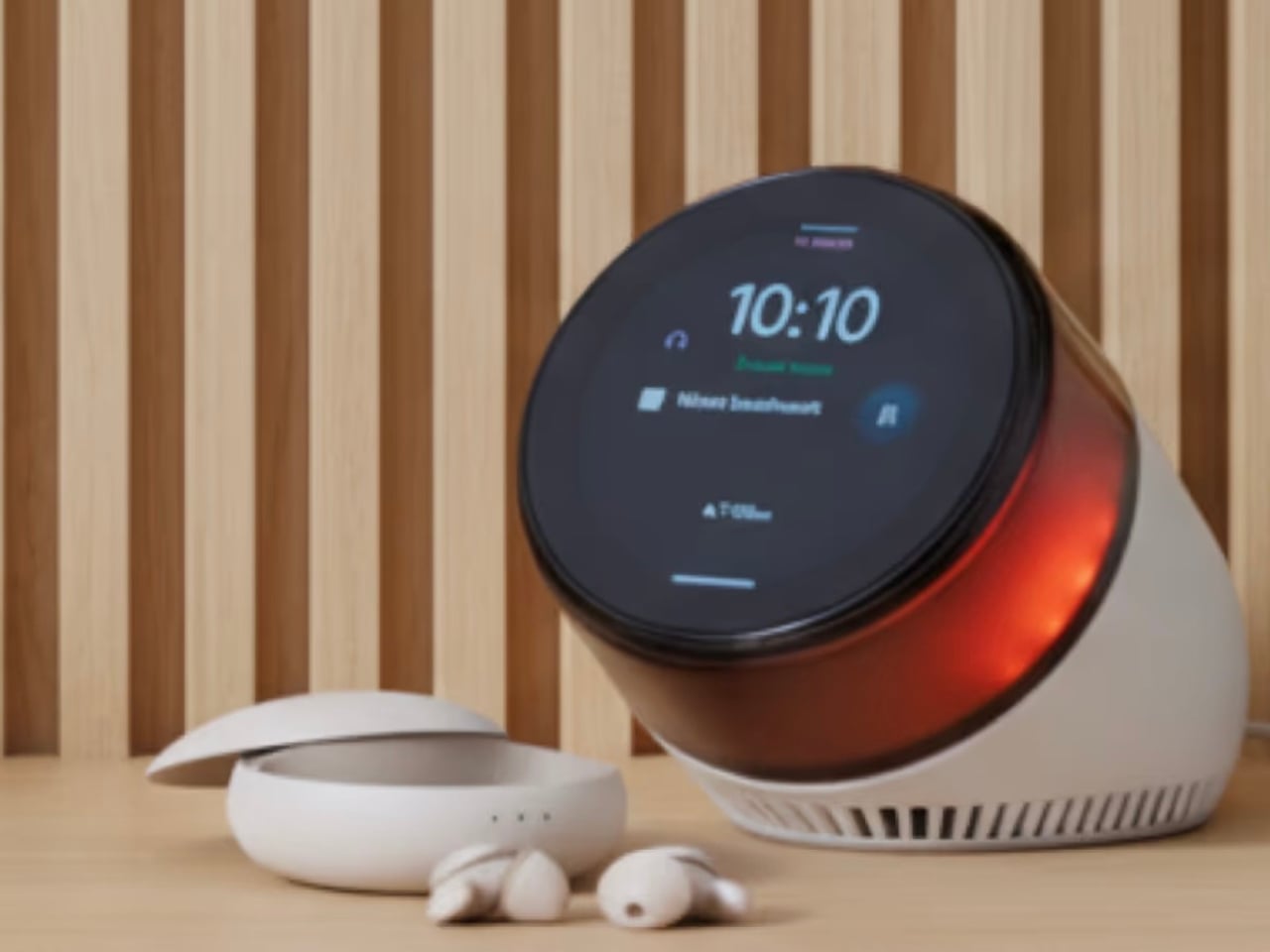
Let’s start with Our Picnic, because it perfectly captures something we all experience. Most mornings, you’re plugging in earbuds to create a bubble of privacy during your commute, shutting out surrounding sounds to protect your sanity. But then the weekend arrives, and suddenly you want the opposite. You want to be outside, sharing music, letting sound fill the space around you. Picnic bridges these two modes by transforming from earbuds into a speaker. Rotate the inner body 180 degrees, and what was personal becomes communal. When you’re outdoors, you can even rotate the back section 45 degrees to prop the device on the ground. The main body holds a 600 mAh battery while each earbud contains about 50 mAh, giving you flexibility for both modes. It’s a simple mechanical solution to an emotional need.

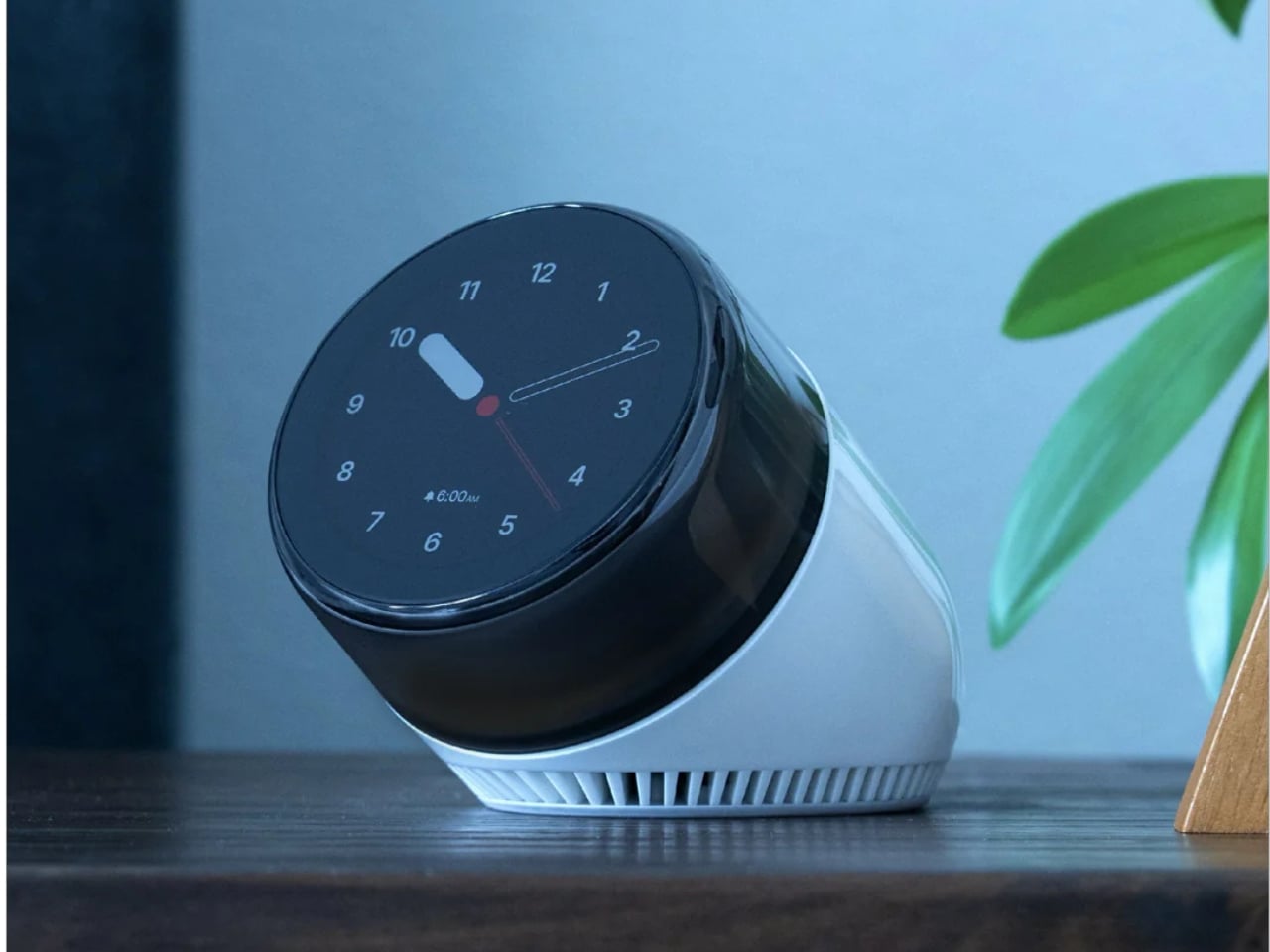
Our Flash tackles a different kind of duality, one that’s become painfully familiar in our video call era. Cameras are constant observers now. We exist within someone’s field of vision during meetings, always aware of being watched. But we’re also the ones doing the watching and recording, capturing moments we want to preserve and control. Flash merges these experiences into a hybrid camera unit that functions as both webcam and selfie camera, positioned somewhere between “the me that is seen” and “the me I want to show.” As a desk webcam, it handles your professional presence. But lift the head section, and the internal selfie camera detaches, ready for personal documentation. The clever part? That perforated central section that normally serves as a vent becomes a 360-degree rotating desk lamp when the internal light activates. It’s surveillance and self-expression and ambient lighting, all depending on what you need in that moment.

Then there’s Our Chilling, which might be the most relatable concept of all. We spend our lives surrounded by devices that need cooling. Laptops, desktops, gaming rigs. We’re constantly monitoring temperatures, adjusting fan speeds, making sure our machines don’t overheat. But who’s taking care of us? Chilling functions primarily as a laptop cooler with Bluetooth connectivity, letting you monitor CPU and GPU temperatures in real time and adjust cooling intensity through your laptop’s software. The bottom stand even adjusts the tilt angle for ergonomic positioning. But here’s the twist: flip it over, and those tower fan blades inside suddenly serve a different purpose. It becomes a desktop fan, one that can monitor room temperature just like it monitors your laptop’s heat. The same stand that adjusts your laptop angle now controls the fan’s direction. It’s a reminder that in a life where work and rest blur together, maybe we deserve the same attention we give our machines.

What makes this project compelling isn’t the technical specs or the minimalist aesthetic, though both are thoughtfully executed. It’s the underlying philosophy. Lim isn’t trying to simplify urban life or pretend we can eliminate its contradictions. Instead, he’s designing objects that acknowledge the messiness, the constant switching between modes, the way we’re always negotiating between competing needs. The “Our Seoul” series suggests that good design doesn’t resolve tension. It accommodates it.

These are concepts rather than products you can order today, but that’s exactly what makes them valuable. They capture something true about how we’re living right now, in cities that demand constant adaptation, surrounded by technology that often feels like it’s designed for a simpler, more consistent version of ourselves. We’re not that simple. Maybe our objects shouldn’t be either.

The post 3 Seoul Gadget Concepts That Transform When You Need Them Most first appeared on Yanko Design.

This Floating Plaza in the Amazon Is Climate Architecture at Work

Imagine a public square that literally rises and falls with the tide. That’s exactly what AquaPraça does, and it just made its grand debut at the UN Climate Change Conference COP30 in Belém, Brazil. This isn’t your typical architectural showpiece that exists only to look impressive at a summit. This 400-square-meter floating platform is designed to stay right where it is, becoming a permanent cultural hub in the heart of the Amazon.

Designed by CRA-Carlo Ratti Associati and Höweler + Yoon, AquaPraça represents something genuinely clever in how we think about building in a world where water levels are no longer predictable. Moored on Guajará Bay within the Amazon River system, the structure uses Archimedes’ principle (yes, that ancient Greek buoyancy thing you learned in school) to naturally adapt to an environment where tides can shift up to four meters daily. The platform simply floats along with the water, letting visitors experience the natural rhythm of the river at eye level.

Designer: CRA-Carlo Ratti Associati and Höweler + Yoon

Carlo Ratti, who’s a professor at MIT and curated the Venice Architecture Biennale 2025, explains the project’s deeper philosophy by referencing iconic architect Aldo Rossi. Where Rossi looked to the past to prove architecture could still enrich Venice’s skyline in 1980, AquaPraça looks to the future by exploring how we can build with nature instead of fighting against it. It’s a subtle but important shift in thinking.

The project’s journey is almost as interesting as the structure itself. It was first unveiled in Venice this past September during the Architecture Biennale in a simplified form, then traveled to Belém where it now serves as part of Italy’s pavilion at COP30. After the conference wraps up, Italy will donate the platform to Brazil, where it will function as a community space for ongoing conversations about climate, culture, and creative industries.

What makes AquaPraça particularly compelling is how it turns climate change from an abstract concept into something you can physically experience. The sloping surfaces and shifting levels respond to the water in real time, creating what Eric Höweler calls “a delicate equilibrium.” His collaborator J. Meejin Yoon points out that it’s both a literal and figurative platform for understanding sea level rise and its impacts on coastal communities worldwide.

The location couldn’t be more symbolic. Belém sits at the meeting point of the Amazon River system and the Atlantic Ocean, where freshwater and saltwater converge to create a powerful estuarine ecosystem. It’s the perfect setting for a structure designed to demonstrate adaptive architecture. The bay itself reveals its underwater landscape daily as tides recede, offering a constant reminder of nature’s cycles and changes.

Getting this thing built was no small feat. Italian construction company Cimolai completed the entire project in just five months, handling structural design, construction, and certification while integrating complex architectural and engineering requirements. That’s remarkably fast for a floating structure that needs to be both functional and safe in such a dynamic environment.

The project came together through an impressive international coalition, including Italy’s Ministry of Foreign Affairs, the Ministry of Environment and Energy Security, and support from organizations like Bloomberg Philanthropies, Costa Crociere, ENEL, and others. It’s the kind of collaboration that shows what’s possible when governments, private companies, and cultural institutions actually work together on climate solutions.

Italian Foreign Minister Antonio Tajani described AquaPraça as a floating Italian square that evokes Venice while standing as a symbol of friendship between Italy and Brazil. But more than diplomatic niceties, it represents something tangible: the idea that architecture can be circular, with multiple lives and purposes over time. From Venice to Belém, and now as permanent infrastructure, the platform embodies continual reuse and reinvention.

For anyone interested in how design can respond to climate challenges without sacrificing beauty or function, AquaPraça offers a compelling model. It’s not just sitting there looking pretty (though it does that too). It’s hosting symposia, cultural programs, and serious discussions about climate policy, all while literally moving with the water that surrounds it. That’s architecture that doesn’t just talk about adaptation but actually demonstrates it, day after day, tide after tide.

The post This Floating Plaza in the Amazon Is Climate Architecture at Work first appeared on Yanko Design.

The Future of Retail Fits in This 3D-Printed Suitcase

Imagine packing the future into a suitcase. Not your clothes or toiletries, but ideas about how we’ll shop, connect, and experience retail spaces in the years to come. That’s exactly what Valencia-based design studio Cul De Sac has done with their latest project, and honestly, it’s one of the coolest design concepts I’ve seen in a while.

The piece is part of Gerflor’s “Portable Architecture” initiative, a traveling exhibition that challenges three international design studios to literally pack their visions of tomorrow into custom suitcases. Think of it as a design thought experiment meets art installation, inspired by Marcel Duchamp’s famous “Box in a Valise” concept where he miniaturized his entire body of work into a portable case.

Designer: Cul De Sac

What makes Cul De Sac’s contribution so compelling is its radical optimism about retail’s future. While many of us have grown accustomed to sterile, product-focused shopping environments, architect and creative director Borja Berna offers a completely different vision. “The future of retail will be human,” he explains. “We come from a past where the product was the center, but the spaces of the future will put the person at the center. They will be places of community, connection, where things happen beyond the purchase.”

That philosophy isn’t just talk. It’s physically manifested in the suitcase’s 3D-printed design, which looks like something between a neural network and organic coral. The structure breathes with these flowing, interconnected forms that evoke energy pathways and human connections. It’s deliberately designed to feel alive, like it’s constantly evolving and adapting, much like the retail spaces Berna imagines for our future.

The choice of 3D printing feels particularly intentional here. This technology allows for organic, impossible-to-manufacture-otherwise shapes that traditional fabrication methods simply can’t achieve. The result is a sculptural piece that captures fluidity and movement in a way that feels almost biological. You can see why they chose this approach when you look at the images: those undulating surfaces and cellular patterns really do suggest something living rather than static.

But here’s where it gets really interesting. The suitcase doesn’t just contain samples of Gerflor’s flooring materials as a reference library. The container itself becomes the statement. As Berna puts it, they wanted “the design itself to summarize our vision of the future of retail.” The piece integrates materials from Gerflor’s Creation range not as mere swatches but as part of the identity itself. In a market saturated with brands competing for attention, materials become the language through which spaces communicate with people and create memorable experiences.

Berna describes the biggest challenge as “condensing usually conceptual ideas into a tangible piece.” And you can feel that tension in the final work, in the best possible way. It’s both abstract and concrete, theoretical and physical. The suitcase manages to be a manifesto, a prototype, and an art object all at once.

This project sits alongside equally intriguing contributions from Studio Banana, who tackled the future of office spaces, and Nini Andrade Silva from Madeira, who explored hotels as experiential gathering places. Together, these three suitcases form a traveling exhibition that will move through seven cities across the Iberian Peninsula, sparking conversations about how we want to inhabit tomorrow’s spaces.

There’s something wonderfully democratic about packaging big architectural ideas into portable, approachable formats. Rather than presenting a massive installation or dense white paper, these studios offer something you can literally walk around, something that invites curiosity and conversation. As Juan Segura, Marketing Manager of Gerflor Iberia, notes, “More than showing product, we want to generate dialogue.”

What I love most about this project is how it reframes retail from transactional to transformational. In an era where online shopping dominates and physical stores struggle to justify their existence, Cul De Sac suggests that the answer isn’t better product displays or flashier signage. It’s about creating spaces where human connection happens, where community forms, where something meaningful occurs beyond the exchange of goods for money.

That 3D-printed suitcase, with its neural-network-like structure, becomes a perfect metaphor: retail spaces as living organisms that facilitate connections between people, emotions, and yes, brands, but in ways that feel organic rather than forced. It’s a vision of shopping as something closer to a social experience than a chore. And really, isn’t that the kind of future we’d all want to pack our bags for?

The post The Future of Retail Fits in This 3D-Printed Suitcase first appeared on Yanko Design.
Puffin’s Insulated Drink Holders Are This Year’s Best Gift

You know that feeling when you’re at a holiday party, fully invested in a conversation about whether Die Hard counts as a Christmas movie, and you suddenly realize your drink has gone warm? Yeah, that’s the worst. But here’s the thing: there’s actually a super clever solution that’s been sitting right under our noses, and it comes from a brand that took the concept of a puffy jacket and applied it to your beverages. Meet Puffin Drinkware, the insulated can and bottle holders that are basically winter coats for your drinks.

Let me paint you a picture. It’s December, you’re hosting friends for a gift exchange or maybe you’re the guest who wants to bring something actually useful instead of another scented candle. Puffin Drinkware is that gift everyone will actually use. These aren’t your basic foam koozies from the corner store. They’re designed with the same concept that keeps you warm in your favorite winter jacket, with double-layer thermal insulation that keeps your beverage cold from first sip to last.

Designer: Puffin

The genius is in the details. Each Puffin holder features a rubberized base for stability, so you’re not dealing with that annoying wobble when you set your drink down on a table. There’s even versions with carabiners that include bottle openers and utility pouches, which is perfect for anyone who likes to keep their hands free while they’re out and about. Whether you’re tailgating in cold weather, ice fishing, or just hanging out in your backyard while the temperature drops, these little guys work incredibly well.

What makes Puffin stand out in a market flooded with drink holders is how they’ve turned something purely functional into something with personality. The designs are fun, bold, and Instagram-worthy. They’ve got everything from classic solid colors to wild patterns, and even special editions like “The Pahka,” which comes with a faux fur-lined hood that makes your drink look like it’s ready for a trip to the Arctic. It’s functional design meeting playful aesthetics, and that’s a combo that’s hard to beat.

The holiday angle here isn’t just about keeping drinks cold at winter gatherings. Think about all those outdoor holiday activities we do: tree lighting ceremonies, caroling meetups, sledding adventures, Christmas market wandering. These are situations where you want a warm beverage to stay warm or a cold one to stay cold, and you don’t want to worry about constantly checking if your drink is still at the right temperature. Puffin handles both 12 oz and 16 oz sizes, fitting standard bottles and tall cans with ease.

From a design perspective, Puffin Drinkware represents that sweet spot where form follows function but doesn’t forget to have fun along the way. The thermal insulation technology keeps condensation off your hands, which anyone who’s tried to hold a cold beer on a chilly night knows is a game changer. You’re not dealing with wet, freezing fingers or leaving water rings on every surface.

These make fantastic stocking stuffers, Secret Santa gifts, or additions to a larger present for the person in your life who has everything. They’re compact, affordable, and universally useful. Plus, they’re conversation starters. Someone’s going to ask where you got that cool drink holder, and you’ll look like the person who knows about all the clever design products before everyone else.

The beauty of Puffin is that it solves a problem we didn’t realize was solvable. We just accepted that drinks get warm or that our hands get wet and cold. But with thoughtful design and a bit of creativity borrowed from outdoor gear, Puffin created something that enhances every drinking experience, whether it’s craft beer, sparkling water, or that hard cider you save for special occasions.

This holiday season, when you’re thinking about gifts that combine practicality with personality, Puffin Drinkware deserves a spot on your list. It’s one of those products that people use constantly once they have it, making it the kind of gift that keeps on giving long after the wrapping paper is recycled.

The post Puffin’s Insulated Drink Holders Are This Year’s Best Gift first appeared on Yanko Design.

Concrete Never Looked This Good: Ronan Bouroullec’s Ancora Tables

You know that feeling when you see something that completely flips your expectations? That’s exactly what happens when you encounter Ronan Bouroullec’s Ancora tables. Here’s a material we typically associate with parking garages and brutalist architecture, yet somehow this French designer has coaxed concrete into becoming downright graceful.

The Ancora collection, now in production by Italian furniture maker Magis, includes rectangular and round dining tables along with low tables and side tables. What makes them special isn’t just that they’re made from concrete (though that’s certainly part of it) but how Bouroullec has reimagined what this humble material can actually do when treated with a little finesse.

Designer: Ronan Bouroullec x Magis

Let’s talk about that name for a second. “Ancora” means “anchor” in Italian, and once you know that, you can’t unsee it. The base of each table features this ingenious curved edge that flows into a structural rib, creating a shape that genuinely resembles an anchor. It’s one of those design moves that’s both practical and poetic, balancing the need for stability with an aesthetic that feels almost nautical in its elegance.

What really gets me about these tables is how they challenge our assumptions about concrete. We’re so used to thinking of it as heavy, cold, and industrial. And sure, concrete is heavy by nature, but Bouroullec’s design makes it appear surprisingly light and airy. The way the base tapers and curves, the proportions of the anchor-shaped support, it all works together to create visual lightness despite the material’s obvious heft.

The collection offers flexibility too. You can get the rectangular table in a generous 220 by 90 centimeter size, perfect for those dinner parties where everyone actually wants to sit together and talk. The round version clocks in at 130 centimeters in diameter, ideal for smaller spaces or creating a more intimate dining situation. And because these are designed for both indoor and outdoor use, you’re not stuck making that impossible choice between keeping your beautiful furniture pristine inside or actually enjoying your patio.

Material choices matter here. The bases are concrete (obviously), but you get options for the tops. Tempered glass in clear or smoked finishes gives you that contemporary look and lets the sculptural base really shine through. If you prefer something warmer, there’s MDF veneered in oak, which adds a organic element that plays nicely against the concrete’s industrial vibe.

There’s something almost subversive about what Bouroullec is doing with these pieces. Concrete has this long history in Italian design and architecture, particularly through masters like Pier Luigi Nervi who showed how structural elements could be beautiful. Bouroullec taps into that tradition but pushes it somewhere new, somewhere more refined and residential. He’s taken a material that shouts and taught it to whisper.

The beauty of Ancora lies in its simplicity. There are no unnecessary flourishes, no look-at-me details. The design is essentially sculptural, letting the form speak for itself. That anchor-shaped base does all the heavy lifting (literally and figuratively), creating visual interest without needing any decorative additions. It’s the kind of confident design that comes from really understanding your material and what it wants to do.

What strikes me most about these tables is how they fit into our current design moment. We’re collectively moving away from the mid-century modern pieces that have dominated for the past decade and looking for something with more substance, more presence. Concrete delivers that weight and permanence we’re craving, but Bouroullec ensures it doesn’t feel oppressive or dated. These tables feel contemporary without trying too hard to be trendy.

For anyone interested in design that pushes boundaries while staying practical, Ancora represents that sweet spot. These aren’t art pieces you need to tiptoe around. They’re built to be used, indoors or out, for everyday meals or special occasions. The fact that they happen to be absolutely gorgeous is just the bonus.

The post Concrete Never Looked This Good: Ronan Bouroullec’s Ancora Tables first appeared on Yanko Design.
This Opera House Design Has No Back and You Can Walk on the Roof

Picture an opera house that doesn’t just sit on its waterfront site but flows across it like sound waves spreading through the air. That’s exactly what Bjarke Ingels Group has cooked up for Hamburg’s new State Opera, and honestly, it’s one of those designs that makes you rethink what a cultural building can be in the 21st century.

The Danish architecture firm just won an international competition to replace Hamburg’s aging 1950s opera house with something that feels less like a fortress of high culture and more like an urban living room. Located on the Baakenhöft peninsula in HafenCity, right where the city meets the water, the new building reads as a landscape of concentric terraces that ripple outward from the central performance hall. Ingels himself describes it as terraces “emanating like soundwaves,” which is pretty poetic for a guy known for turning ideas into buildable reality.

Designer: BIG – Bjarke Ingels Group

What makes this project so interesting is how it completely ditches the traditional opera house playbook. You know the type: imposing facades, grand staircases that separate the cultured elite from everyone else, buildings that basically scream “not for you” to anyone walking by. BIG’s approach flips that script entirely. The 450,000-square-foot building is designed as what they call “a public building within a park,” where the roofscape is fully walkable and the structure has no defined back side.

Think about that for a second. An opera house with no rear elevation. Instead of creating a building that sits apart from its surroundings, the design treats the entire structure as an extension of HafenCity’s public realm. The terraced exterior becomes a landscaped garden that rises to meet the main volume, creating what amounts to a human-made topography where people can hang out, walk their dogs, or just watch the sunset over the harbor regardless of whether they have tickets to La Bohème that evening.

This democratization of space isn’t just good PR. It represents a fundamental shift in how we think about cultural institutions and their relationship to the communities they serve. Opera houses have historically been exclusive spaces, both architecturally and culturally. By making the building itself permeable and accessible, BIG is suggesting that even if you’re not an opera fan, this building still belongs to you. It’s your park, your gathering space, your piece of waterfront.

The design also responds smartly to its context. Hamburg’s existing opera house served the city well for decades, but it reflects a different era’s ideas about urban culture and public space. The new location in HafenCity, a rapidly developing waterfront district that’s become one of Europe’s largest urban regeneration projects, demanded something that could anchor a neighborhood still finding its identity. Rather than plopping down a monument, BIG created something that extends and enhances the existing urban fabric.

From a technical standpoint, the rippling terrace concept isn’t just aesthetically pleasing. It creates multiple entry points and circulation paths, distributes the building’s mass in a way that feels less imposing, and provides outdoor social spaces at various levels. The design incorporates advanced acoustic engineering to ensure world-class sound inside while maintaining that crucial connection to the outside world.

There’s also something refreshingly playful about the whole concept. Comparing the terraces to sound waves or ripples on water isn’t just architectural marketing speak. It creates a visual metaphor that helps people understand what the building is trying to do before they ever step inside. The opera makes sound, sound travels in waves, and those waves become the literal form of the building. It’s the kind of concept-driven design that Ingels has become famous for, where big ideas translate into built form in ways that feel both intellectually satisfying and just plain cool to look at.

Will this design single-handedly make opera accessible to the masses? Probably not. But it removes at least one barrier by creating a building that invites you in rather than keeping you out. And in a world where cultural institutions are constantly wrestling with questions of relevance and accessibility, that architectural gesture matters. Hamburg’s getting more than a new opera house. It’s getting a new kind of public space that just happens to have a world-class performance hall at its center.

The post This Opera House Design Has No Back and You Can Walk on the Roof first appeared on Yanko Design.
The $40 LEGO Christmas Set That’s Better Than Real Candles (And Safer)

For families or friend groups that are very much into the holiday spirit, decorating your space for Christmas is probably a time-honored tradition. There’s the Christmas tree decorating, putting up the socks by the fireplace (well if you have one), and maybe putting up decorations on the rooftop and porch. If you’re also the type that loves putting together LEGO builds, then this set will bring together the best of both worlds.

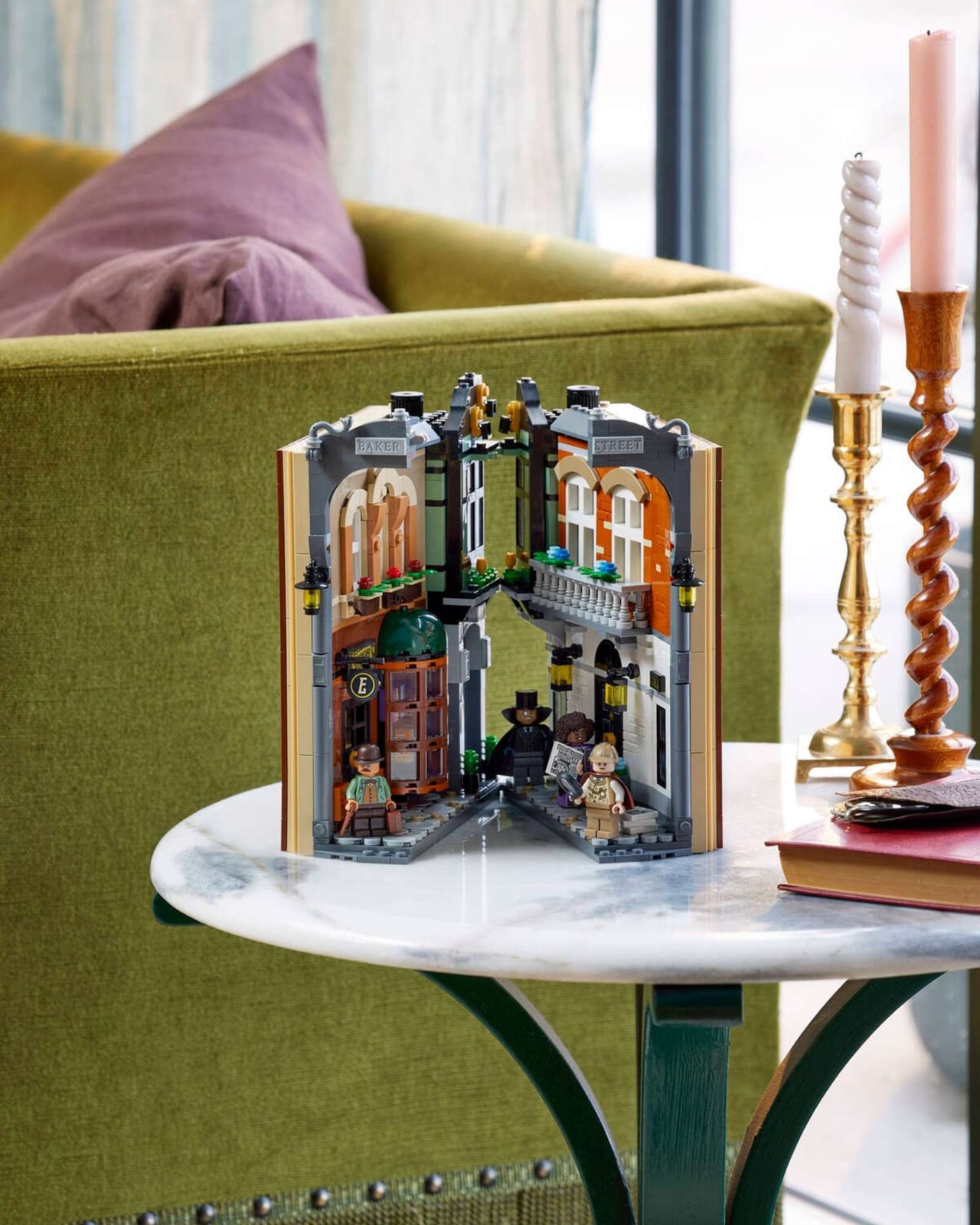
The LEGO Christmas Table Decoration is a 433-piece set that can be used as a dining table centerpiece or as part of your holiday aesthetic this coming season. While of course you can use actual Christmas decorations to spruce up your space, fans of LEGO sets will have much more fun putting this together either alone or as a family or group activity. It can also be a great holiday gift for the LEGO or Christmas lover in your life in case you still have no idea what to get them.

Designer: LEGO

The Christmas Table Decoration consists of LEGO bricks and parts that will create a red candle in the middle surrounded by red berries, golden stars, and green foliage. After you’ve finished building it, you can place it on the dining table, on a side table, on the shelves, or on your mantelpiece, signaling that Christmas celebrations are upon us. While some would prefer more “natural” decorations, this is still a fun addition to the holidays that brings a playful, nostalgic element to your seasonal decor.

What makes this set particularly appealing is its versatility. Unlike traditional candles or floral arrangements that can wilt or burn down, this LEGO decoration is a permanent addition to your holiday collection that you can bring out year after year. It’s also completely safe: no fire hazards, no water spills, and no maintenance required. Once built, it becomes a conversation starter at holiday gatherings, with guests often delighted by the creative approach to seasonal decorating.

Most LEGO sets nowadays are meant for adults because of the more complicated builds, but this one seems to be something that kids 12 and above would be able to do on their own or as a group activity. The building process itself can become part of your holiday traditions. Imagine spending a cozy December afternoon assembling this with hot cocoa and holiday music playing in the background. It’s a mindful, relaxing activity that gets everyone into the festive mood while creating something tangible to display.

The set measures over 7 in. (18 cm) high, 8 in. (21 cm) wide and 9 in. (24 cm) deep, making it a substantial centerpiece that won’t get lost among other decorations. The size is just right, not so large that it overwhelms your table, but impressive enough to make a statement. The color palette of red, green, and gold is quintessentially Christmas, coordinating beautifully with most traditional holiday color schemes.

There are also other holiday builds that you can add to it, like the Christmas Tree, Halloween Wreath, and Festive Gingerbread House. Collectors especially love building up their seasonal LEGO collection, creating entire vignettes that can be displayed throughout different holidays. This modularity means you can start with the Christmas Table Decoration and gradually expand your collection over the years, making each holiday season feel fresh and exciting.

For those shopping for gifts, this set hits a sweet spot price-wise and offers something different from the usual holiday presents. It’s perfect for the person who seemingly has everything, or for someone who’s just getting into LEGO as a hobby. The combination of functionality as a decoration and the enjoyment of the building experience makes it a gift that keeps on giving long after it’s been opened. Whether you’re treating yourself or surprising someone special, the LEGO Christmas Table Decoration brings a unique blend of creativity, tradition, and holiday cheer to any home.

The post The $40 LEGO Christmas Set That’s Better Than Real Candles (And Safer) first appeared on Yanko Design.
Bottega Veneta’s $6,900 Jenga Set Is Too Luxe to Play With

I am not much of a game night enthusiast, but whenever someone brings out a board game or any kind of group activity thing at a friend’s house, it brings out my competitive spirit. I have friends who’ve made collecting games like this their life mission, and the more worn out they look, the more parties or gatherings they’ve been brought to. There’s nothing like people fighting over various objects and scuffing the heck out of said objects as they determine who wins. But what if the game set actually costs thousands of dollars? I probably wouldn’t touch it with a ten-foot pole.

But if you’ve been dreaming of having a luxury brand board game displayed in your home, then you’d probably want to bring out the big bucks for the Bottega Veneta Jenga Game. Yes, you read that right. The Italian luxury fashion house has teamed up with Hasbro to bring us an almost $7,000 ($6,900 to be exact) Jenga set. With its price tag and the materials used to create this, you probably will not be bringing it out for your latest game night.

Designer: Bottega Veneta x Hasbro

Jenga is one of those games where you will probably drop, scratch, and scuff the blocks since the goal is to get the other players to topple their tower. So to have such an expensive version of the game seems not to be the most practical thing. But for collectors, luxury design lovers, or those who have money to spare, then this is probably a must-have even if it’s just to display it on your shelf or to bring it out to be admired, if not to be played with.

The set is made up of 54 blocks that use mixed Italian walnut wood and stabilized colored wood materials. Each piece is engraved with logos of both Bottega Veneta and Jenga. The attention to detail is remarkable—every block is perfectly weighted and finished, showcasing the kind of craftsmanship you’d expect from Italian artisans. The case is also luxurious as it is a deep red Intreccio calfskin leather case with matching leather lining. This luxury packaging ensures your investment is protected when not on display or in use, and it adds to the overall aesthetic appeal of owning such a unique piece.

In the product description on the Bottega website, it says it is “Not intended for use by children.” And obviously, with that price and the luxurious materials used, you wouldn’t want people, let alone children, constantly touching it. It is more of a statement piece or art installation that bridges together childhood nostalgia and adult luxury. This is an adult indulgence, a luxury collectible that happens to be playable rather than just a game. It’s designed for those who appreciate the finer things in life and want to elevate even their leisure time with designer touches.

For those wondering how to style such a piece, imagine it displayed on a console table in your entryway, or as a centerpiece on your coffee table during sophisticated gatherings. It’s the kind of conversation starter that tells guests you have impeccable taste and aren’t afraid to invest in unique design objects.

This collaboration represents one of the most surprising partnerships of 2025. It’s part of a growing trend where luxury fashion houses are diving into the world of games and playful objects, like Gucci’s poker set and Prada’s tic-tac-toe board. Now, if I had $7,000 to spare, would I get myself a set? I would probably just buy several board games with that kind of money. But if you’re the kind of collector that would like a shiny piece on their mantel, then go ahead and get the Jenga Game that will probably never be played with.

The post Bottega Veneta’s $6,900 Jenga Set Is Too Luxe to Play With first appeared on Yanko Design.
This Tent Just Solved Camping’s Most Annoying Problem

Remember when camping meant wrestling with tent poles at dusk while mosquitoes feasted on your ankles? Or trying to decipher those cryptic instruction diagrams that somehow never matched the pile of canvas and metal at your feet? Well, South African brand Alphago just released something that makes all that struggle feel wonderfully obsolete.

Meet The Cube, an inflatable tent that basically sets itself up while you crack open a cold drink and enjoy the view. We’re talking four minutes from bag to fully erected shelter, and the only tool you need is your finger to press a button.

Designer: Alphago

Here’s how it works: instead of traditional poles, The Cube uses an air tube frame system that inflates via a wireless electric pump. One button press, and the tent whooshes to life like some kind of architectural magic trick. No hammering stakes at odd angles, no accidentally threading poles through the wrong sleeves, no arguments with your camping buddy about which end is the front. Just push, wait, and watch your home away from home take shape.

But what really sets The Cube apart isn’t just the speed. It’s the fact that this thing is actually designed for comfort, not just survival. The stretched, oversized design puts this firmly in glamping territory rather than roughing-it camping. We’re talking about a spacious interior that doesn’t force you to hunch over or play tetris with your gear. The modular design means you can customize your setup depending on whether you’re solo adventuring or bringing the whole crew.

Weather resistance is where The Cube really flexes. The tent features an ultra-rigid airframe that stands up to wind and rain, with a WeatherTec system that includes welded floors and inverted seams to keep you dry even when the weather turns nasty. Both the front and back come with three layers: privacy screening, mosquito netting, and weather panels, so you can adjust your exposure to the elements based on conditions and mood.

The attention to practical details is impressive. Some versions come with camping tables, side tables, and even storage solutions like cupboards with plates, bowls, cups, and cutlery drawers. It’s like someone actually thought about what you need when you’re living outdoors for a few days, rather than just providing a roof over your head. Now, is this traditional camping? Absolutely not. If your idea of connecting with nature involves minimalist gear and earning your shelter through physical labor, The Cube probably isn’t for you. But if you’re someone who loves being outdoors without sacrificing comfort, or if you’ve been put off camping by the sheer hassle of setup and teardown, this is a game changer.

The design also speaks to a broader shift we’re seeing in outdoor recreation. As remote work becomes more normalized and people seek experiences beyond traditional tourism, there’s growing demand for gear that bridges the gap between adventure and comfort. The Cube fits perfectly into this zeitgeist of “soft adventure,” where the goal is experiencing beautiful places without the suffering that used to be considered mandatory. From a design perspective, there’s something satisfying about how elegantly The Cube solves a genuine problem. Traditional tent design hasn’t changed much in decades, but by borrowing from inflatable architecture and modern materials science, Alphago created something that feels genuinely innovative rather than just incrementally better.

Is it affordable? That depends on your camping commitment level, though Alphago has offered specials with significant discounts. Think of it less as a tent and more as portable architecture, an investment in stress-free outdoor experiences for years to come. The bottom line: The Cube represents where outdoor gear is heading. Smarter, faster, more comfortable, and designed for people who want nature without the nature-induced backache. Sometimes innovation isn’t about reinventing the wheel. Sometimes it’s about admitting that tent poles were kind of a pain, and maybe we can do better.

The post This Tent Just Solved Camping’s Most Annoying Problem first appeared on Yanko Design.
When a Neighborhood Reclaimed Its Lost Shore With 9,200 Face Masks

Here’s something you don’t expect to sit on: surgical masks. Nearly 10,000 of them, to be exact. But that’s exactly what Design PY created in Hong Kong’s Tai Kok Tsui neighborhood with Tidal Stories, a spiraling urban installation that quite literally traces where the ocean used to be.

The concept is brilliant in its simplicity. Tai Kok Tsui was once a coastal area, but over a century of land reclamation pushed the shoreline further and further away. Today, most people walking through this district have no idea they’re treading on what was once underwater. Design PY decided to make that invisible history visible again through a helical seating structure that maps the old coastline right onto the public space.

Designer: Design PY

What makes this project especially clever is how it tackles two challenges at once. First, there’s the environmental angle. The pandemic left us with a staggering amount of medical waste, and those 9,200 upcycled surgical masks in the installation are just a tiny fraction of what ended up in landfills and oceans. By incorporating them into public furniture, Design PY transforms waste into something functional and meaningful. Second, there’s the cultural preservation piece. Urban development often erases neighborhood memory, but Tidal Stories brings it back in a form people can literally interact with every day.

The installation isn’t just about looking pretty or making a statement (though it does both). It’s actually being used. Elderly residents rest on the benches. Nearby workers grab lunch there. People passing through stop to sit and chat. The design reactivated what was basically a forgotten corner of the neighborhood and turned it into a gathering spot.

But here’s where it gets even more interesting. The metal tabletops aren’t just tables. They’re engraved with references to Tai Kok Tsui’s industrial and coastal past, functioning as both amenities and educational tools. The whole installation doubles as an informal museum, hosting architectural tours and community events that help people understand how their neighborhood evolved from fishing village to dense urban district.

This kind of design thinking feels especially relevant right now. We’re all grappling with questions about sustainability, about how to deal with waste we’ve created, about preserving cultural identity in rapidly changing cities. Tidal Stories doesn’t just answer these questions theoretically. It shows what’s possible when you combine circular design principles with community engagement and historical awareness.

The helical form itself is striking. It curves and spirals through the space, creating natural gathering points and visual interest without overwhelming the neighborhood’s existing character. You can see the installation from different angles as you approach, and each perspective tells a slightly different story about the relationship between past and present.

What’s refreshing about this project is that it doesn’t lecture. It invites. There’s no heavy-handed messaging about environmentalism or preservation. Instead, it creates an experience that lets people discover the layers of meaning on their own terms. Maybe you just want a place to sit. Maybe you’re curious about the unusual materials. Maybe you start reading the engravings and realize your neighborhood used to look completely different. All of these are valid ways to engage with the work.
The use of surgical masks as a primary material might seem gimmicky at first, but it makes perfect sense when you think about it. The pandemic was a collective experience that generated collective waste. Using that waste to create something that serves the collective good completes a kind of circle. Plus, it’s a reminder that design solutions don’t always require pristine new materials. Sometimes the most sustainable choice is working with what we already have too much of.

Tidal Stories proves that urban furniture can be so much more than benches and tables. It can be a history lesson, an environmental statement, a community hub, and a work of art all at once. That’s the kind of multifunctional thinking we need more of as cities continue to evolve.

The post When a Neighborhood Reclaimed Its Lost Shore With 9,200 Face Masks first appeared on Yanko Design.