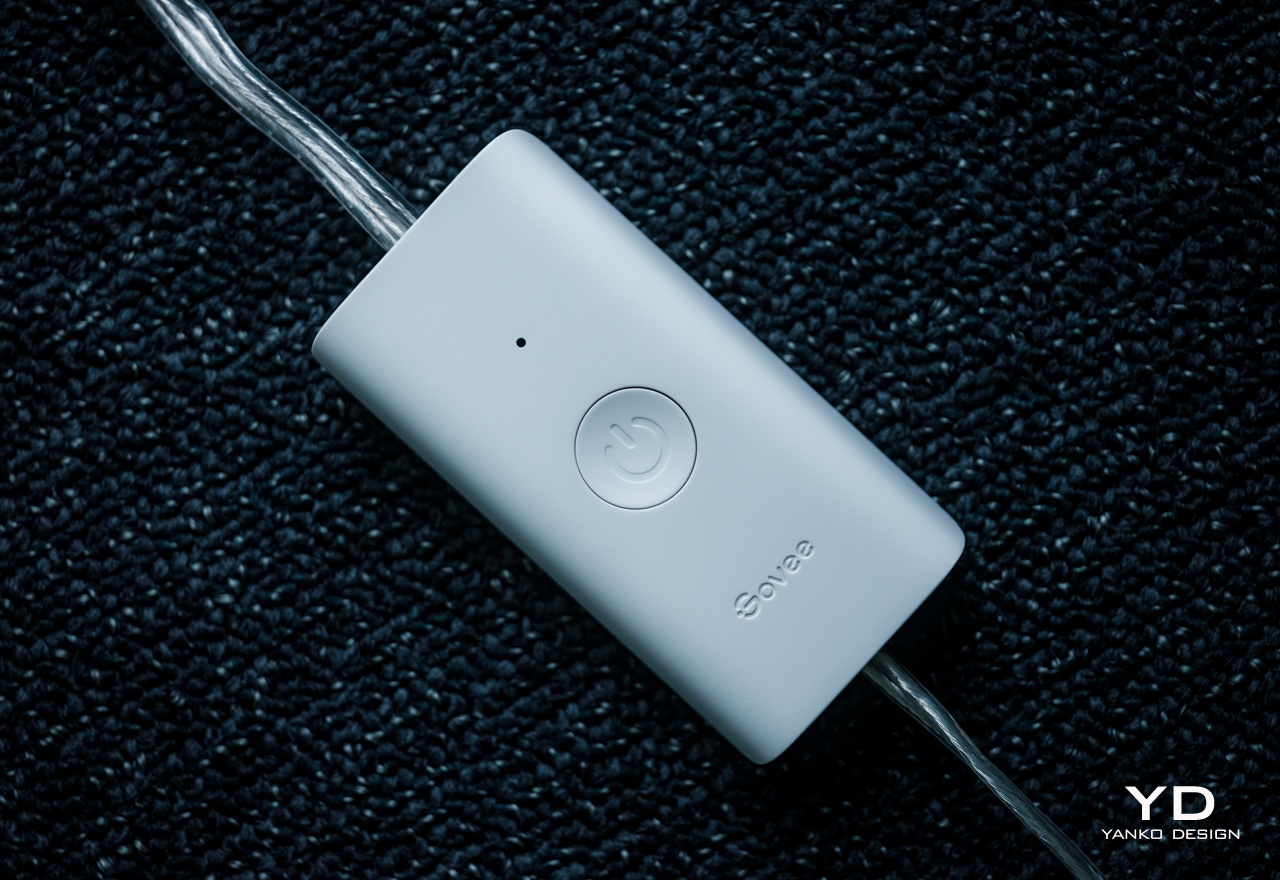
Govee Christmas String Lights Review: It’s a Holiday Everyday

PROS:


  • Tons of fun and dynamic smart features for any holiday or occasion

  • Simple discreet design is perfect for installing anywhere, whether indoors or outdoors

  • Very affordable price tag

CONS:


  • No dedicated pure white color

  • Silver cable stands out against some colors and trees

  • Adapter only has IP44 dust and water resistance

RATINGS:

AESTHETICS
ERGONOMICS
PERFORMANCE
SUSTAINABILITY / REPAIRABILITY
VALUE FOR MONEY

EDITOR'S QUOTE:

The Govee Christmas String Lights offer delightful light shows, smart features, and great value all year round.

It’s that most wonderful time of the year again, and if you haven’t already set up some lights before Halloween, you are most likely already planning how you’d decorate your homes for the holidays. There is no shortage of lighting options available, both smart and traditional, but the majority of them have one flaw in common. They lose their appeal after the holiday season has come and gone, making their setup and cleanup feel a little more work than they’re worth. The new Govee Christmas String Lights clearly have “Christmas” in their name, but their design and functions make them sound appealing no matter the season. That’s why we took these colorful lights for a spin to check if they check all the right boxes not just for a festive Christmas atmosphere but also for all-year-round smart lighting.

Designer: Govee

Click Here to Buy Now: $89.99

Aesthetics

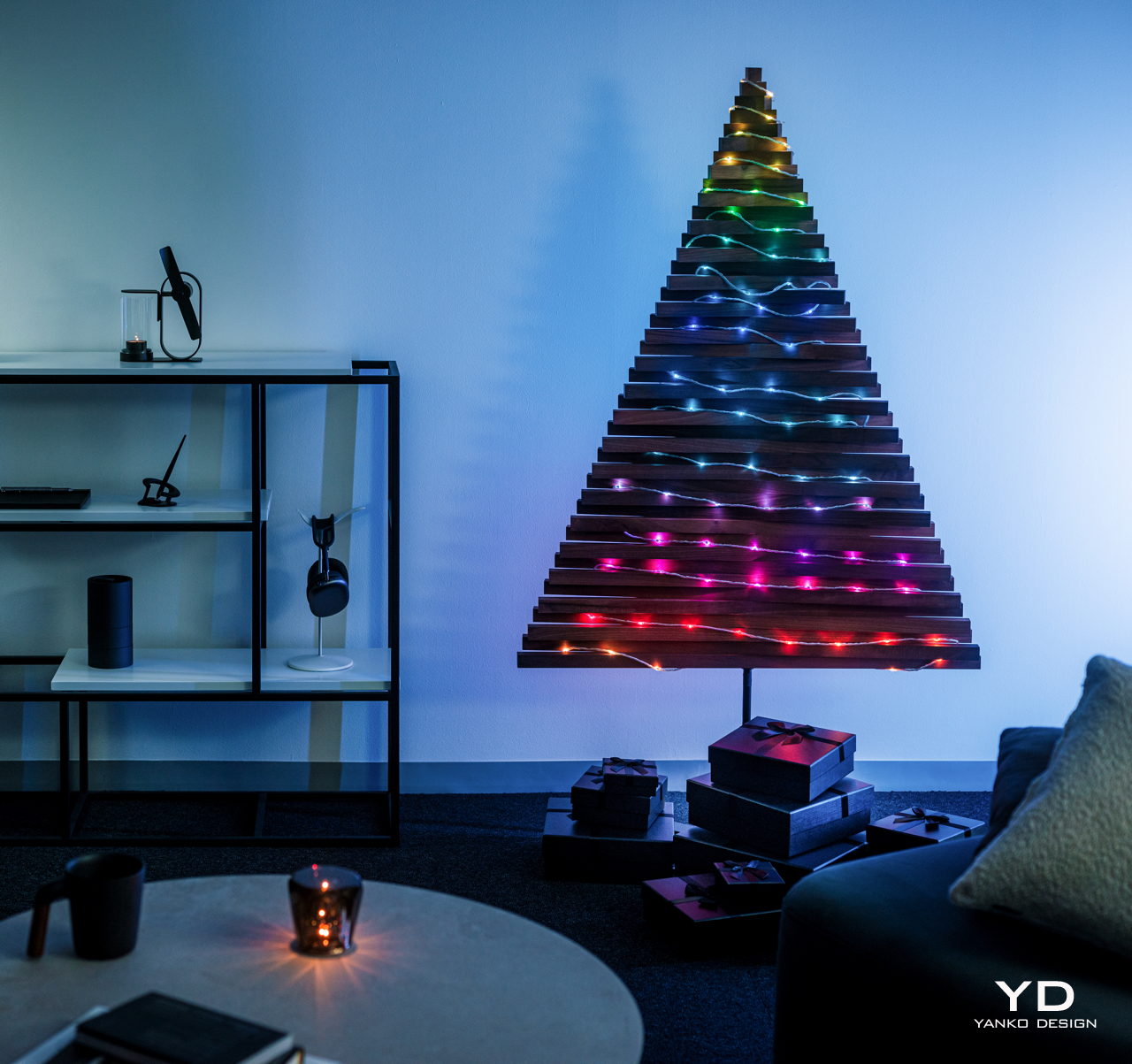
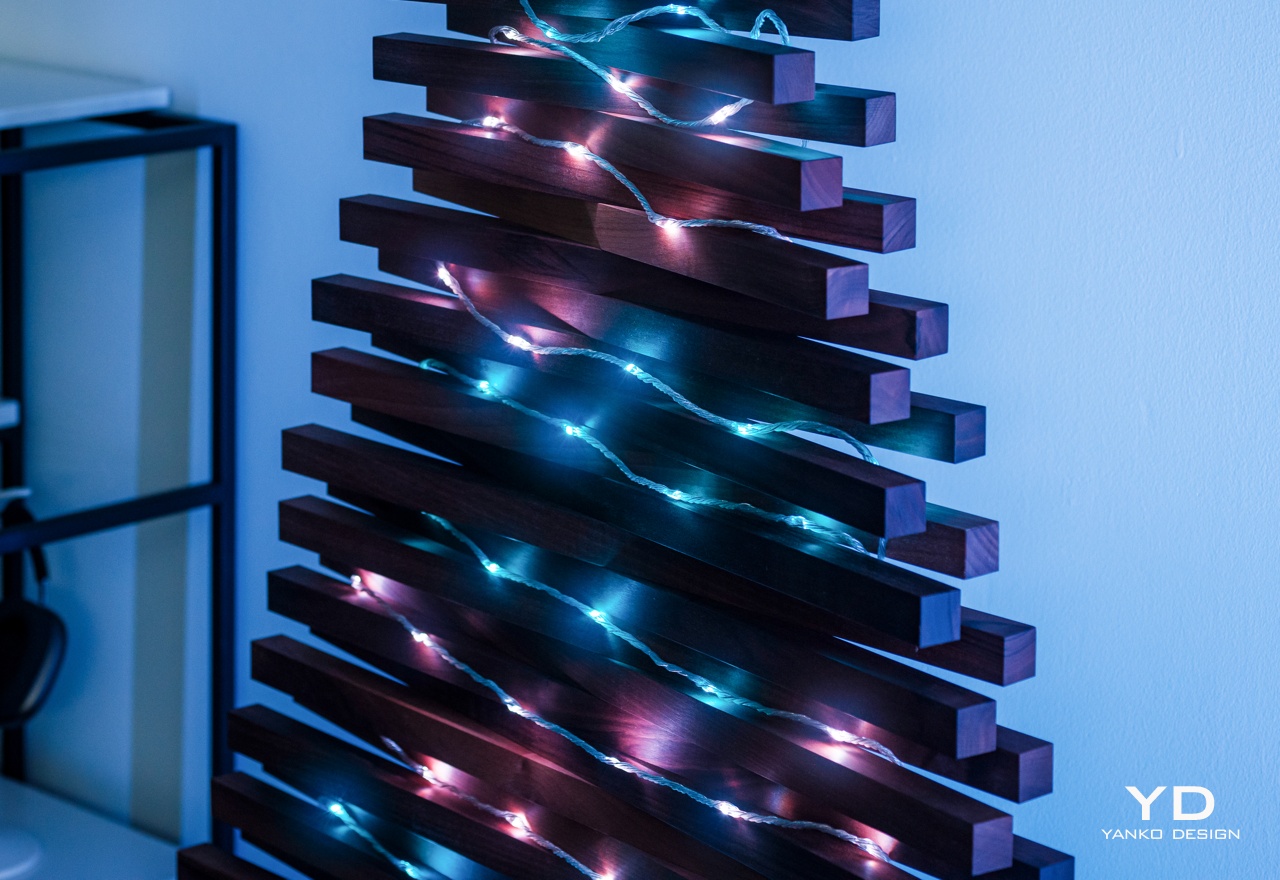
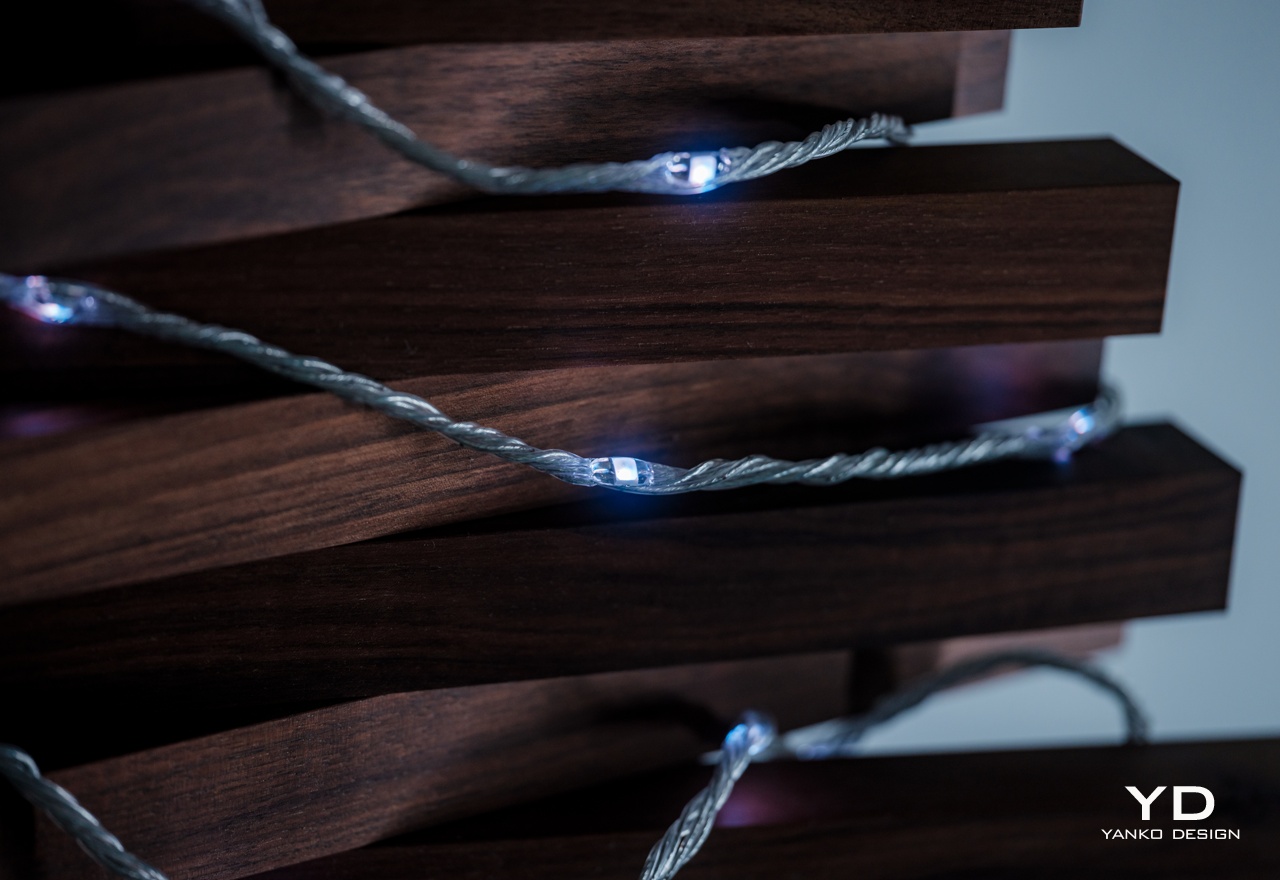
Traditional Christmas lights come in fairy or rice light designs, which are great for spinning around trees or hanging from windows and roofs, but not much else. The very visible bulbs that protrude from the main cord make them look too conspicuous and difficult to hide in plain sight. In contrast, the 100 or 200 lamp beads (depending on which length you purchase) that make up the Govee Christmas String Lights are almost integrated with the braided cable, making them almost invisible unless you take a closer look. That cable’s design is also quite discrete and plain, making it easier to install the lights almost anywhere.

That said, the Govee Christmas String Lights cable comes in only a single white or silver color. That means it will be able to match many walls or backdrops, and it looks great on a white Christmas tree. A black cable might actually be easier to hide in most contexts, but black doesn’t really come off as a festive color, which is why most Christmas lights go for either green or white.

When the lights are off, the Govee Christmas String Lights are admittedly a rather plain and boring sight, indistinguishable from others of its kind. Fortunately, that perception immediately disappears once the lights are turned on, thanks to each bead’s ability to display one of 16 million possible colors courtesy of Govee’s RGBIC and Uni-IC Control Technology. That already makes these lights give a dazzling display of colors from the get-go, but no owner is going to be satisfied with just displaying static colors. Fortunately, Govee’s true strength lies not just in the quality of the lights themselves but in the smart and fun controls they offer, as we’ll soon see.

Ergonomics

Before you’re able to enjoy the light show, however, you have to set them up first, and we’re happy to report that handling the Govee Christmas String Lights is as easy as pie. There’s almost no effort involved if you’ll just be coiling it around a Christmas tree, but you’ll have to do a bit of planning if you’ll be hanging them elsewhere. Unlike Govee’s other string or rice lights, these don’t come with hooks or mounts for walls or ceilings, so you’ll have to take care of those yourself. The control box does have a pre-installed adhesive for quickly sticking it to flat surfaces.

If there’s one important factor you’ll have to consider, it would be the fixed length of the lights, which come in 33ft or 66ft variants. There’s no way to physically connect two or more string lights into a single unit, so you’ll want to make sure before you buy what length you’ll be needing for your installation. The 66ft length, for example, is good enough to cover a Christmas tree 5-6ft in height, or 7ft at most.

Once the physical labor is done, all that’s left is connecting the lights to your home network, which is what opens the door to all of the lights’ nifty features. If you’ve had any sort of experience setting up smart lights and smart speakers, this process will be familiar and easy. The Govee Home app itself, which acts as your remote control, is easy to use and intuitive, making the use of the lights just as enjoyable as watching them.

Performance
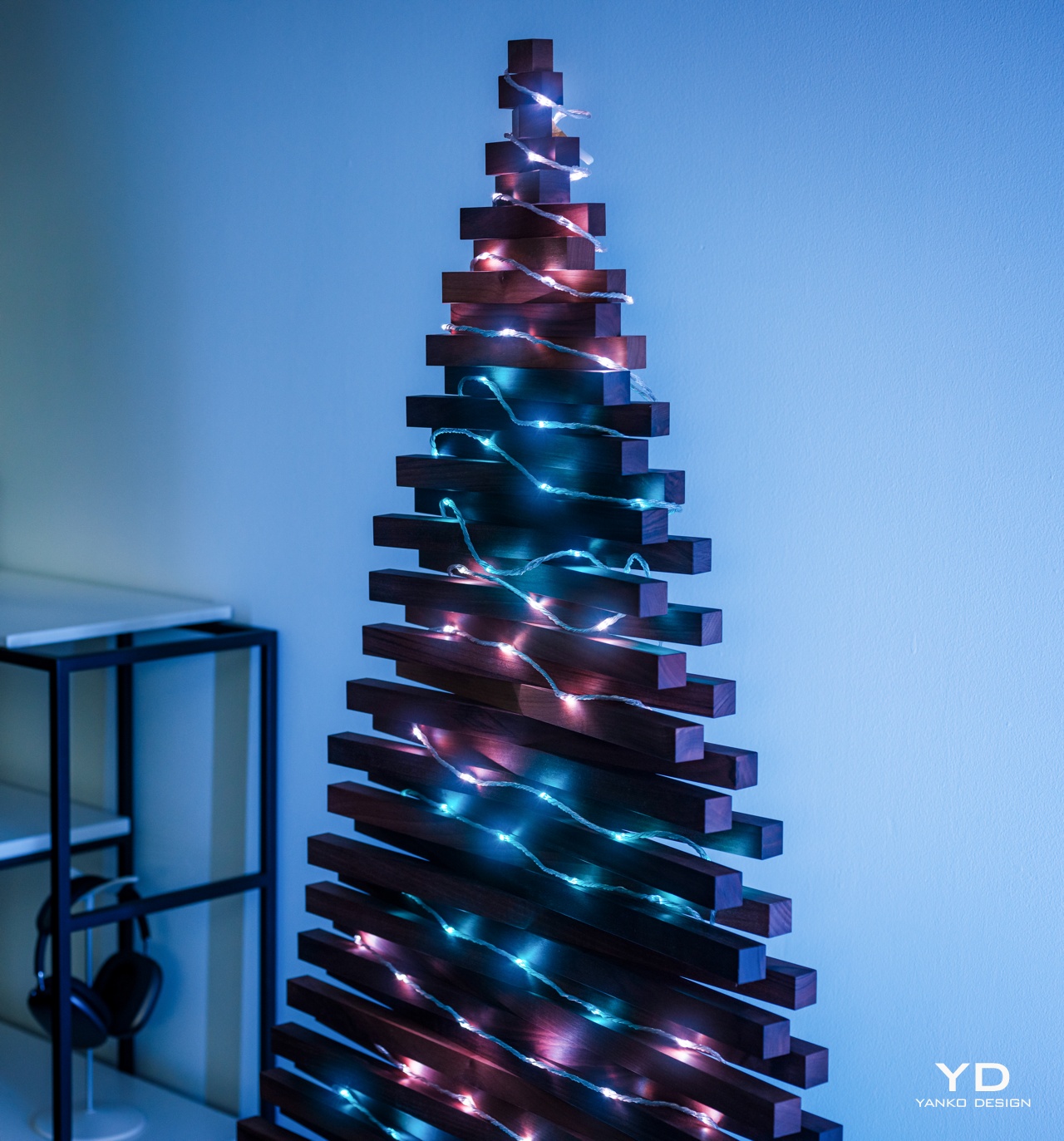
The Govee Christmas String Lights’ strengths come from two areas. The first is the bright and colorful lights that the beads give off, so bright that even the lowest intensity can still be a bit uncomfortable if you put it around your bed’s headrest. Govee’s RGBIC technology shows off millions of colors, except perhaps pure white. Without a dedicated white chip, the lights can only make do with an approximation of white mixed from RGB colors, which results in off-white or even warm white hues. It’s not exactly a deal-breaker unless you’re aiming for a pure white Christmas kind of theme.
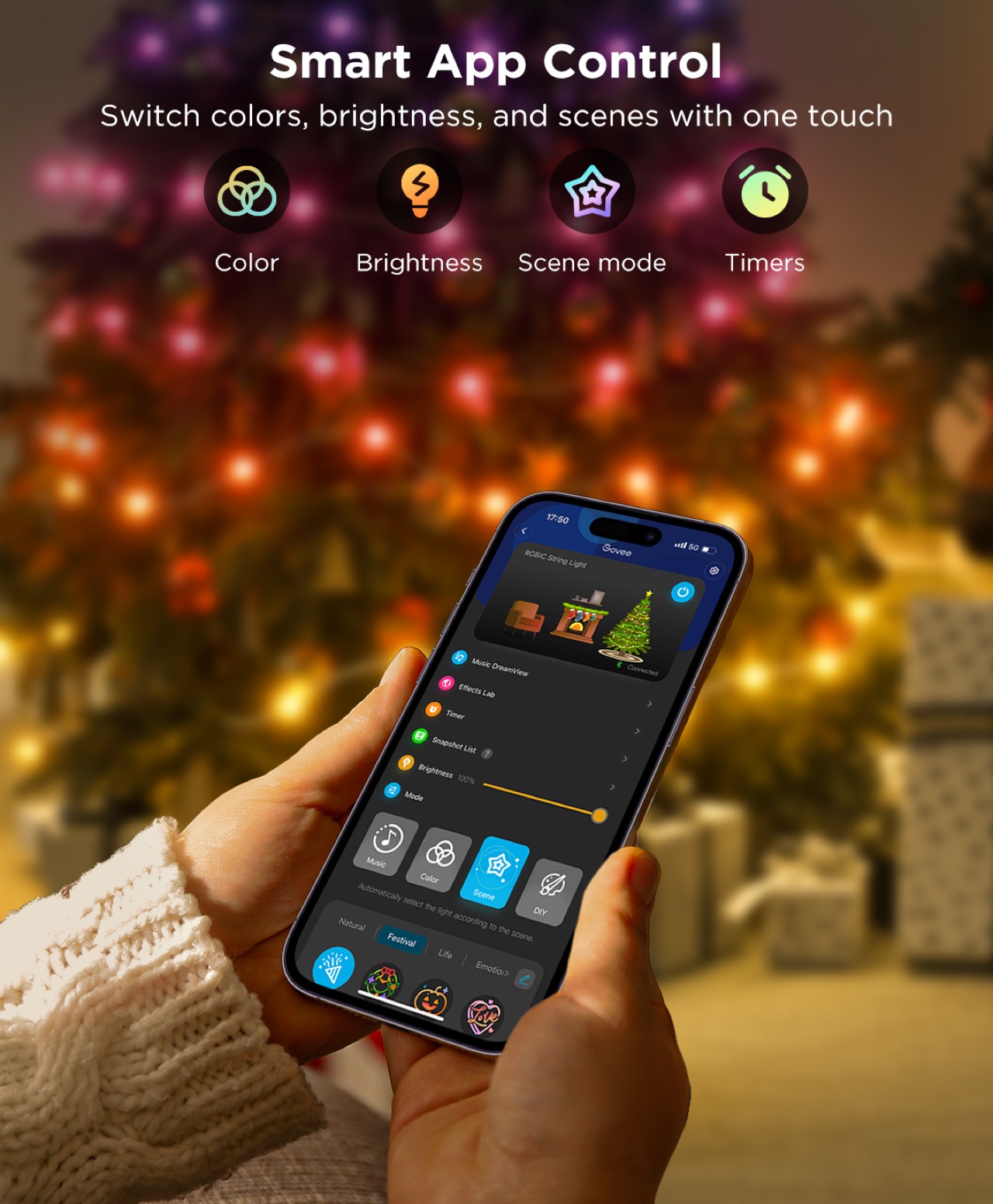
Admittedly, a lot of Christmas lights can boast those same colorful feats, but where the Govee Christmas String Lights really shine (pardon the pun) is in the smart features. You can connect it to Amazon Alexa and Google Assistant for completely hands-free voice-controlled operations, but that’s really just scratching the surface of what the lights are capable of. The Govee Home app reveals the full breadth of features available in every string of light, features that take it beyond being a seasonal decoration.
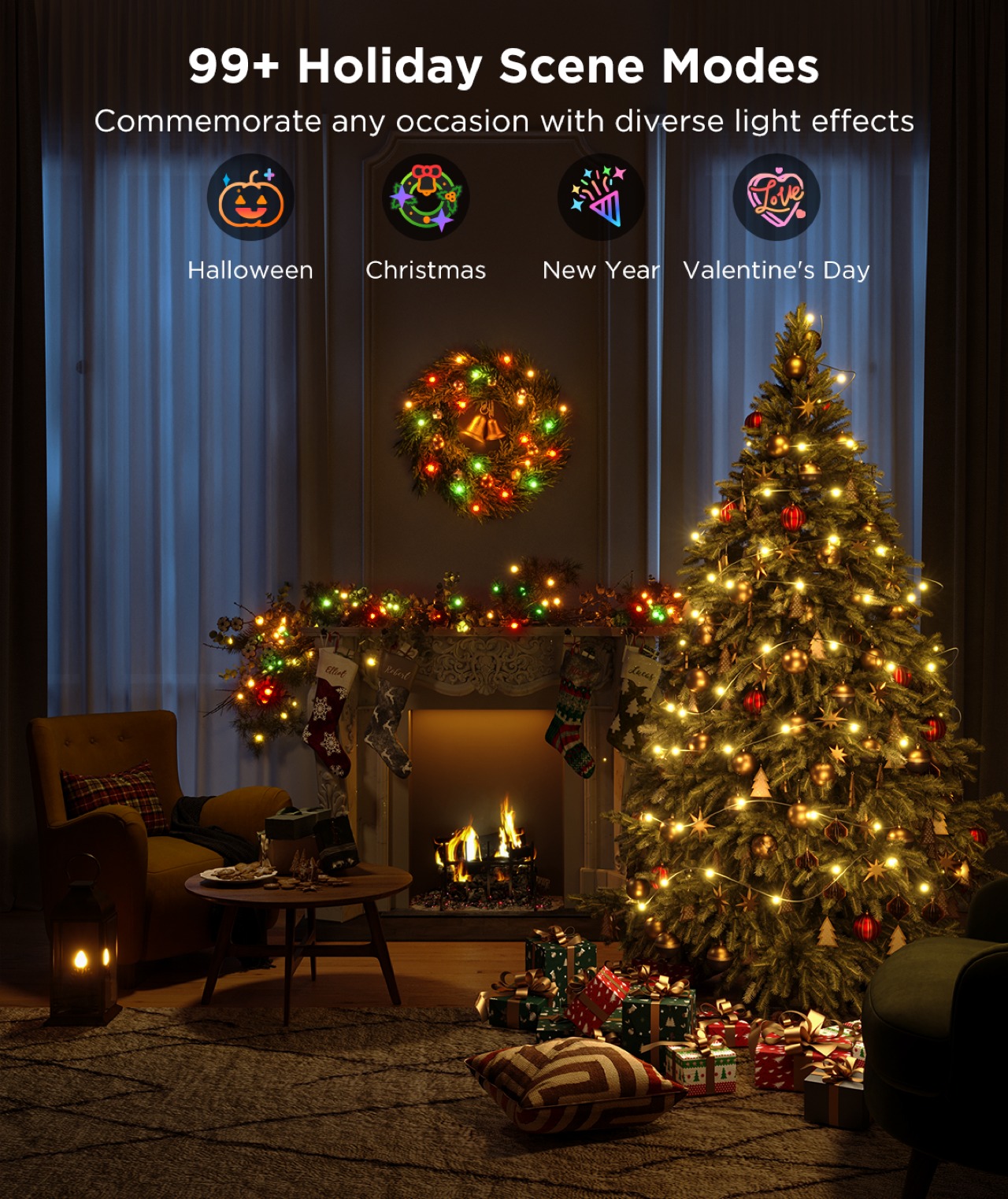
For example, there are more than 99 preset scene modes that apply dynamic effects to make sure the patterns and rhythms never go stale, whether it’s Christmas, Halloween, or even Valentine’s. The built-in mic in the control box enables Music and Game modes that make the lights sync to the beat or react to children’s clapping, turning the light show into an interactive experience. There’s even DreamView, that makes different Govee lights operate in unison without any extra accessory.

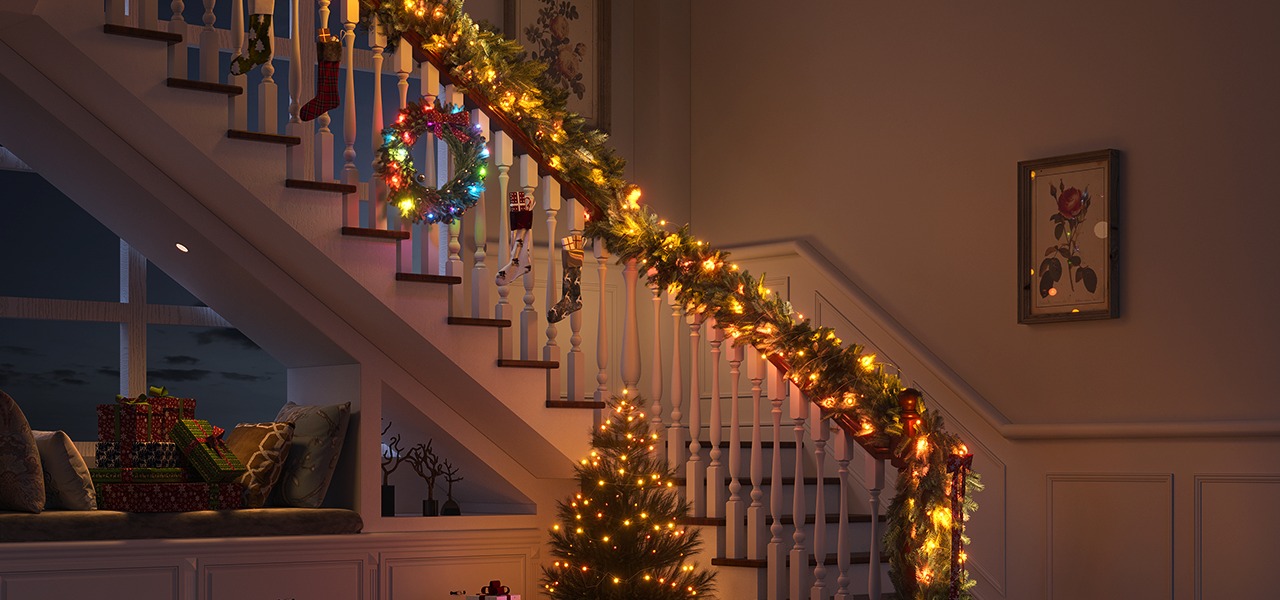
The string lights as well as the control box are also IP65 rated, which means they’re also fit for outdoor use. The adapter, however, isn’t waterproof, so you’ll have to make sure to keep it tucked away safely. With all these smart features, the Govee Christmas String Lights have something to offer any time of the year, whether it’s lighting up parties or simply jazzing up your house to make you the envy of the neighborhood.

Sustainability

The Govee Christmas String Lights are made from your typical collection of plastic and other synthetic materials, not unlike any other string lights in the market. And like any LED lamp, once busted there is no way to replace it, especially with the cable’s design. That doesn’t bode well when it comes to sustainability, but the product does have one saving grace in this regard: its longevity.

Despite its name, Govee made these string lights fit for use in all seasons and under many weather conditions. That IP65 dust and water resistance rating helps it survive downpours, and the simple design makes it easy to hide the lights underneath some cover or protection. And thanks to its versatile functions, its use extends beyond just one or two seasons, so you are really getting your money’s worth.

Value

With so many Christmas lights to choose from, it can be a daunting experience looking for that elusive perfect one. You might be tempted to just grab any box off the shelf until you remember that the last one barely lasted a year. And then there are those fascinating smart lights that promise dozens of enticing features but then slap you with a three-digit price tag.

Like many of Govee’s products, the Govee Christmas String Lights buck the trend to deliver a product that is not only talented but also accessible to everyone. The lights sell for only $59.99 and $89.99, for the 33ft and 66ft lengths, respectively, and that’s without discounts and sales that happen quite frequently. But even at full price, you’re getting a bright, colorful, and smart lighting solution that goes beyond just a single holiday, making that amount an investment that will last you for years.

Verdict
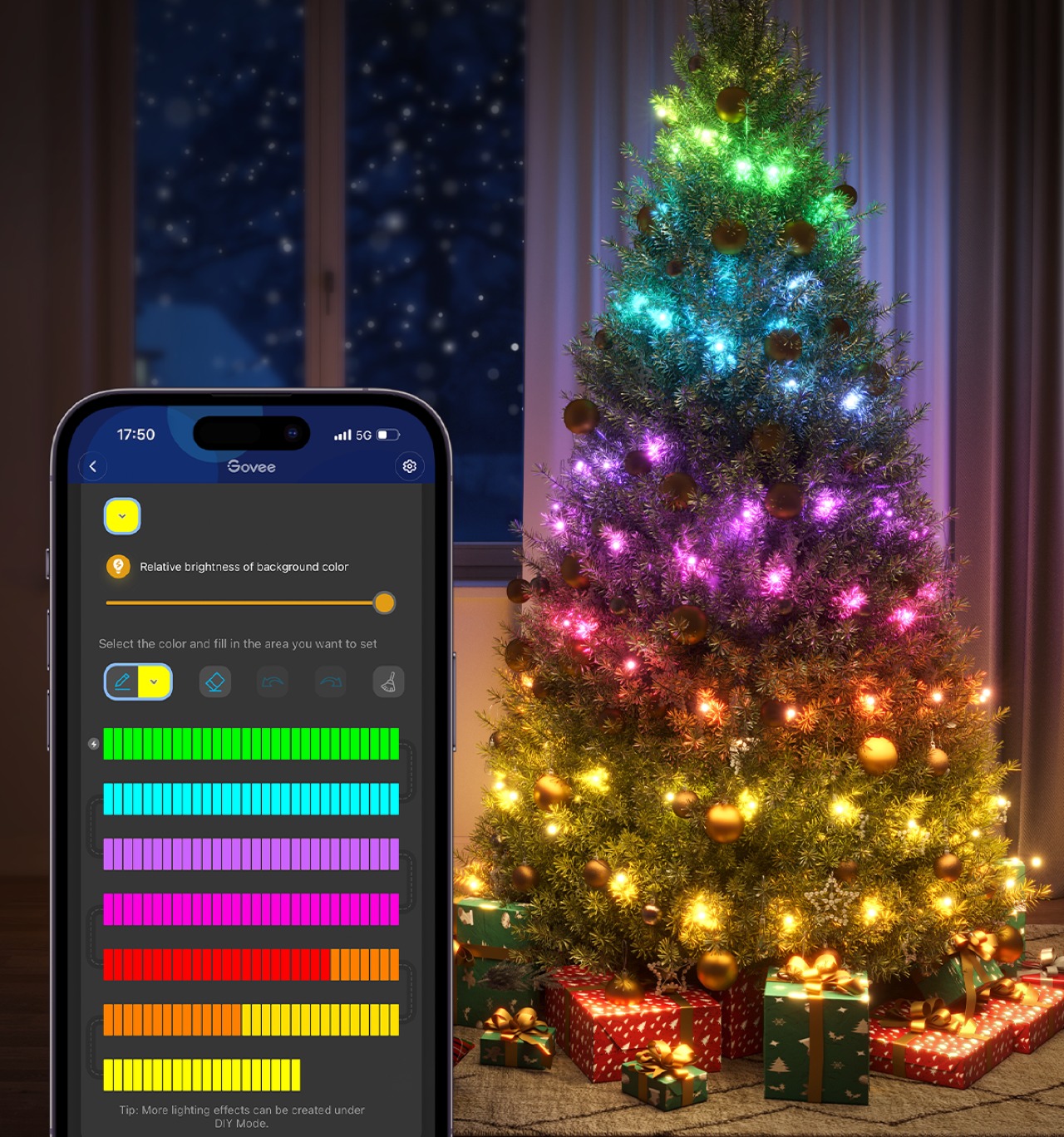
The holiday season is the best time to throw a splash of colors both outside and inside your house, but that doesn’t have to be the only time either. Sure, you only bring out the Christmas tree once a year, but your walls, windows, and room could also use a bit of lively lights any night. Most Christmas lights, unfortunately, look awkward outside of the holidays, presuming they even last that long. The Govee Christmas String Lights is clearly an outlier, and one that bears noting this time of the year and beyond.

Of course, it is designed with Christmas festivities in mind, and it definitely excels in that regard. The bright, colorful LED beads deliver an unparalleled number of colors that really paint your tree, your room, or your house with the colors of the season. Smart features not only make controlling the lights easier, but they also make them fun with the likes of Music Mode and Game Mode. What makes these lights truly noteworthy, however, is how both its design and its features can fit any occasion, holiday, or setting. Whether you’re dressing up the living room for Christmas, giving the lawn a spooky atmosphere for Halloween, or simply giving your house a colorful makeover each night, the Govee Christmas String Lights has got you covered all year round.

Click Here to Buy Now: $89.99

The post Govee Christmas String Lights Review: It’s a Holiday Everyday first appeared on Yanko Design.
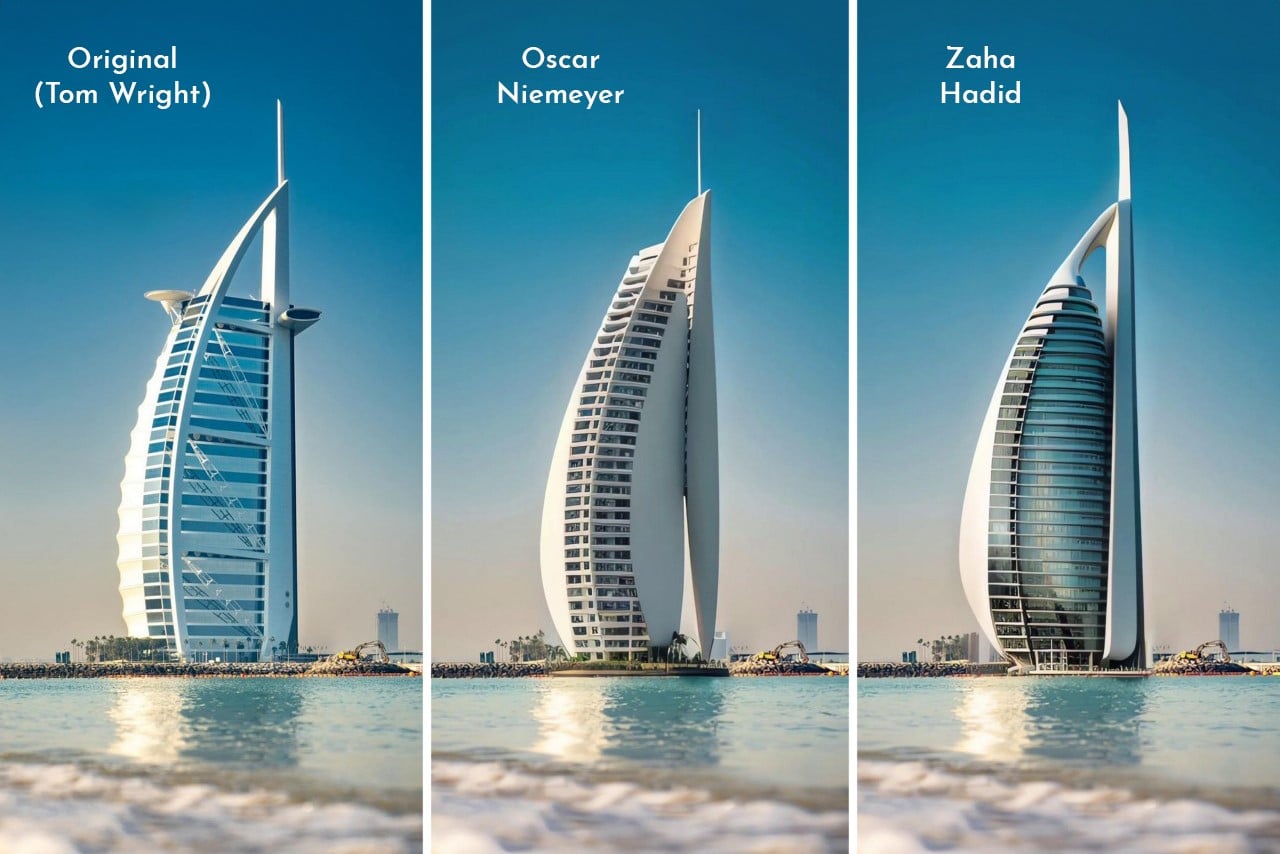
Dubai’s Burj Al Arab gets Redesigned by 10 Iconic Architects using AI

Before its younger (and taller) sibling stole its thunder, the Burj Al Arab was the jewel of Dubai’s skyline. Sitting on its own private island right beside the Palm Jumeirah, the Burj Al Arab is recognizable by its unique ship-inspired design. The design directly borrows from the sail seen on J-class yachts, standing at a staggering 321 meters tall (that’s just 60m shorter than the Empire State Building in New York). Completed in 1999, the seven-star hotel was designed by Tom Wright of WS Atkins, boasting the world’s tallest atrium which occupies more than half of the building’s height.

As iconic as the Burj Al Arab is, it’s worth wondering what it would look like if designed by other legendary architects. This collection, put together by Imagined Architecture, shows what the boat-shaped hotel would look like in the vision of 10 of the greatest architects of our time. Ranging from the unique Art Noveau styles of Gaudi to the cutting-edge aesthetic of Bjarke Ingels, this collection transforms the Burj Al Arab into a veritable catalog of global architecture movements across a span of roughly 100 years!

Image Credits: Imagined Architecture

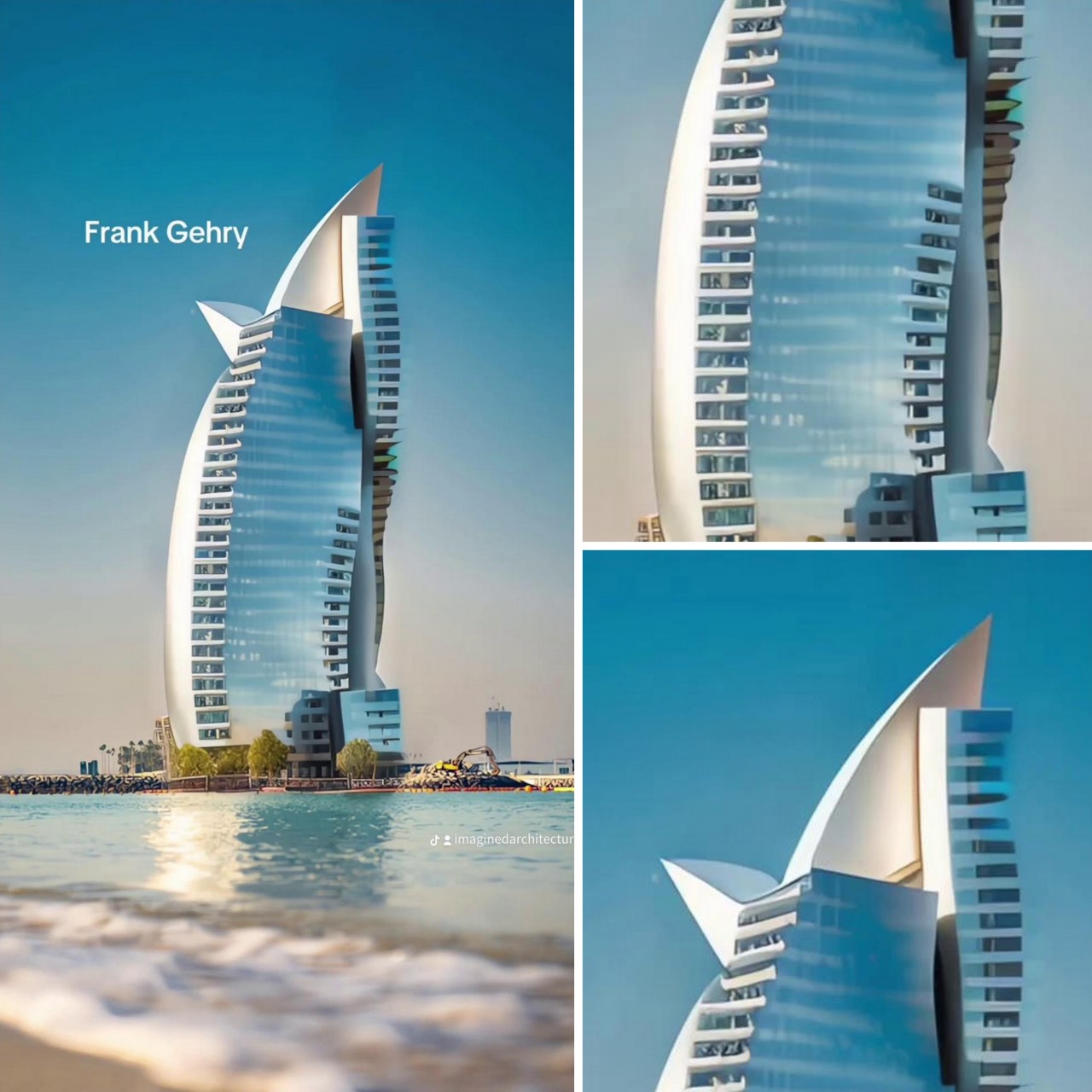
1. Frank Gehry

A titan of contemporary architecture, Frank Gehry is lauded for his avant-garde approach that challenges the very fabric of architectural norms. His work is often associated with deconstructivism, characterized by a sculptural technique that involves fragmented and dynamic forms. Gehry’s masterpieces, such as the Guggenheim Museum Bilbao, often feature undulating shapes and use unconventional materials that give his structures an almost animate presence.

In this reimagined Burj Al Arab, one can observe the echoes of Gehry’s distinctive style. The building retains its original, sail-like silhouette but is infused with Gehry’s signature element of movement. The facade seems to undulate with a life of its own, giving the impression of a fabric caught in a gentle sea breeze. The asymmetric windows and the disjointed placement of structural elements offer a sense of controlled chaos, a hallmark of Gehry’s design ethos. There’s also a playful use of form in the balconies and the building’s apex that adds to the whimsical, yet sophisticated character typical of a Gehry design.

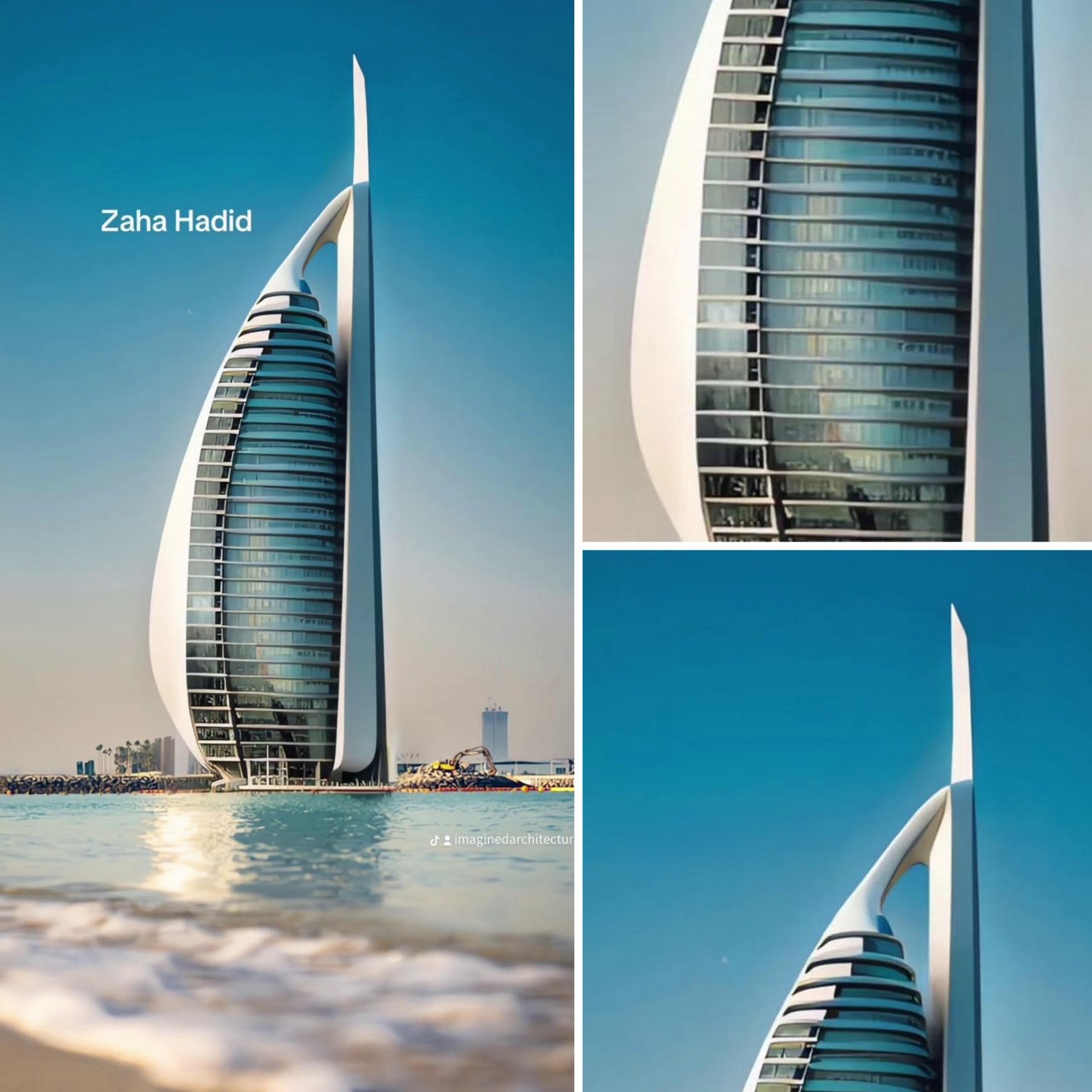
2. Zaha Hadid

The late Zaha Hadid, a visionary architect known for her radical deconstructivist designs, left an indelible mark on contemporary architecture with her dynamic and innovative approach. Her style was characterized by sweeping fluid forms, often resembling waves or wings, that defy conventional architectural norms. Hadid’s buildings are frequently described as futuristic, emphasizing movement and complexity with an eloquent yet powerful use of curvilinear geometries.

This conceptual rendition of the Burj Al Arab reimagined by Zaha Hadid captures her essence perfectly. The building’s iconic sail-like structure has been transformed into a sinuous form that seems to flow and twist upwards, looking more fluid than the original and harking to the fabric nature of a boat sail. Hadid’s signature style of fluidity is present in the smooth, uninterrupted lines that wrap around the building’s facade, giving the impression of a structure in motion. The blend of glass and white elements pays homage to her frequent use of stark contrasts and reflective surfaces, which create a dynamic interplay with the surrounding environment. This interpretation of the Burj Al Arab retains the original’s bold statement of luxury while infusing it with Hadid’s distinctive futuristic language, suggesting a seamless merge of form and function in a way only she could envision.

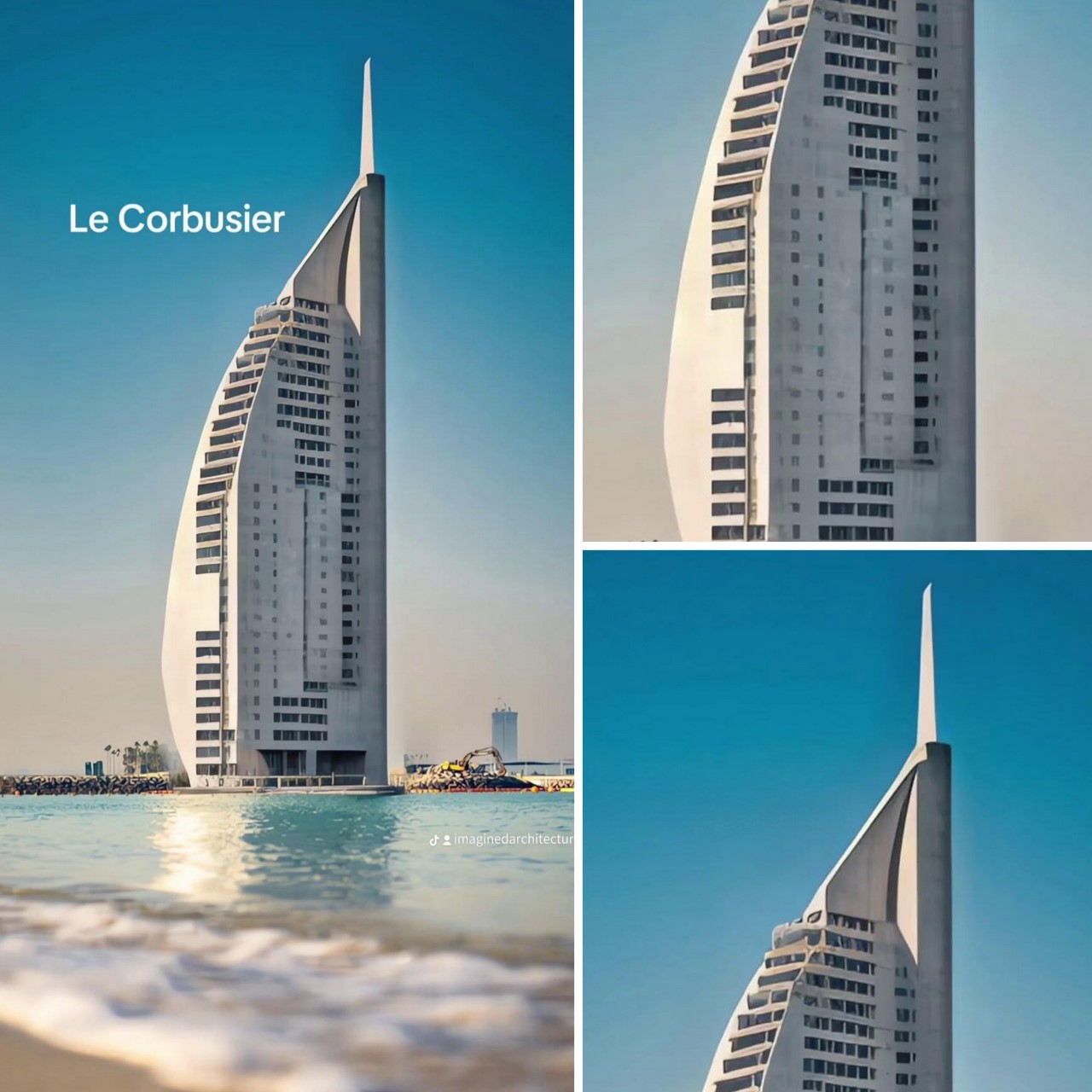
3. Le Corbusier

One of the most visionary pioneers of modern architecture, Le Corbusier (born Charles Edouard Jeanneret-Gris) was renowned for his belief in the house as a “machine for living,” favoring functionality and a stark aesthetic that emphasized plain surfaces and the use of materials such as steel and reinforced concrete. His designs often featured an open floor plan, pilotis (supportive columns), horizontal windows, and roof gardens, all elements that signified a break from traditional architectural designs and a step towards a new, modernist ethos.

The image presents a striking interpretation of the Burj Al Arab, as if reimagined through Le Corbusier’s vision. The iconic sail-like structure of the building maintains its sweeping curvature, a bold departure from Le Corbusier’s penchant for rigid geometric forms. However, the influence of Le Corbusier is discernible in the stark white facade, a hallmark of his palette, which speaks to his minimalist approach. This hybrid design could be seen as a nod to both the building’s symbolic status and Le Corbusier’s principles, blending the luxury and symbolism of the Burj Al Arab with the functionalism and simplicity characteristic of Le Corbusier’s work.

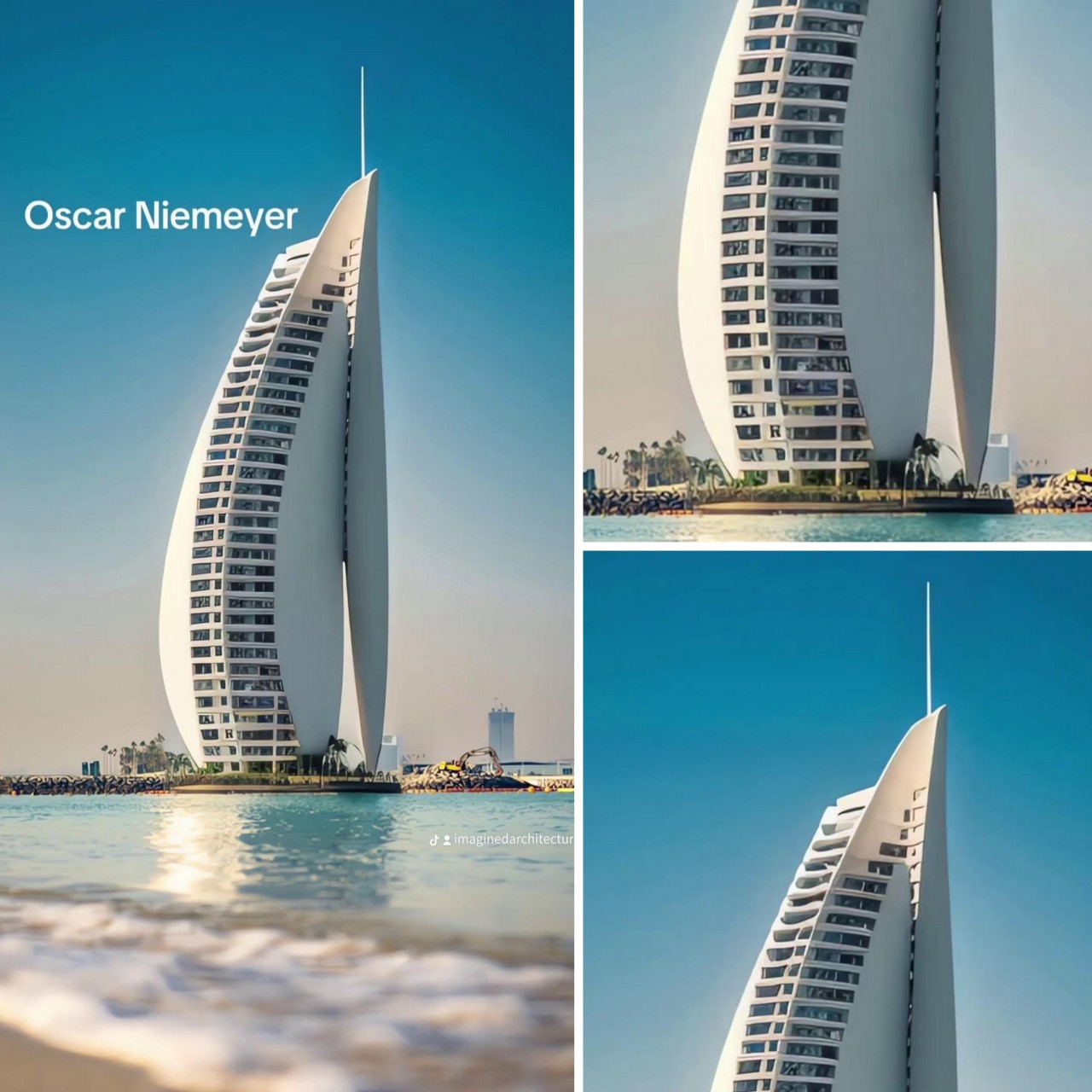
4. Oscar Niemeyer

Oscar Niemeyer was a celebrated Brazilian architect who loved to use curves in his designs, often drawing inspiration from the beauty of nature. He was famous for using concrete to create bold, fluid shapes that made his buildings look smooth and organic, much like the curves of a wave or a hill.

Looking at the Burj Al Arab imagined by Niemeyer, we see this love for curves come to life. The building sweeps up into the sky with a graceful bend, like a wave that’s reaching for the clouds. It’s painted in a crisp white, standing out against the blue sky, a favorite approach of Niemeyer to make his designs pop. The curves seem to play with the light and the building almost looks like it’s moving, capturing the essence of the ocean it overlooks. The windows and balconies interrupt the curves just enough to draw your eye without disrupting the overall flow. This version of the Burj Al Arab combines Niemeyer’s vision of blending architecture with nature, creating a structure that’s both a piece of art and a part of the landscape.

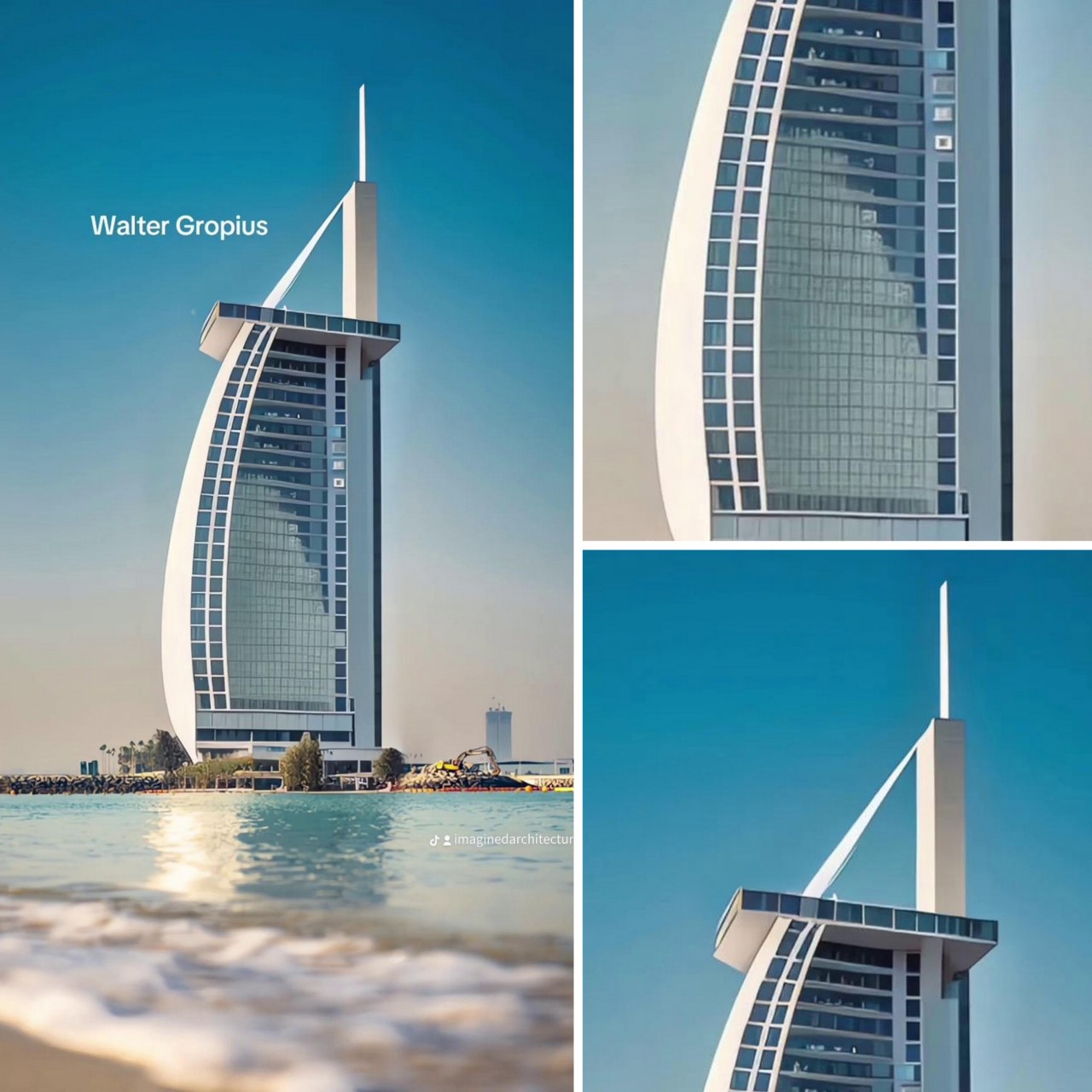
5. Walter Gropius

A trailblazer in modern architecture and one of the biggest proponents of the Bauhaus movement, Walter Gropius emphasized simplicity, rationality, and functionality in design. His architectural philosophy was rooted in the absence of ornament, the use of industrial materials, and the integration of technology and art. Gropius’s style often featured clean lines, glass facades, and an aesthetic that underscored the purpose of each building.

In this creative interpretation of the Burj Al Arab as designed by Gropius, we see the hotel’s silhouette simplified. The sail-like form is reimagined with a cleaner, more geometric shape, embodying Gropius’s less-is-more approach. The facade showcases large, unadorned glass panels that invite natural light, a nod to Gropius’s use of transparency to dissolve boundaries between interior and exterior spaces. While the original structure’s exuberance is toned down, this design retains a sense of elegance through its unembellished form and clear lines. It speaks to Gropius’s belief in the beauty of function and the potential of modern materials to redefine luxury. This conceptual Burj Al Arab marries the building’s iconic status with the Bauhaus ideals of simplicity and practical beauty, transforming it into a beacon of modernist design.

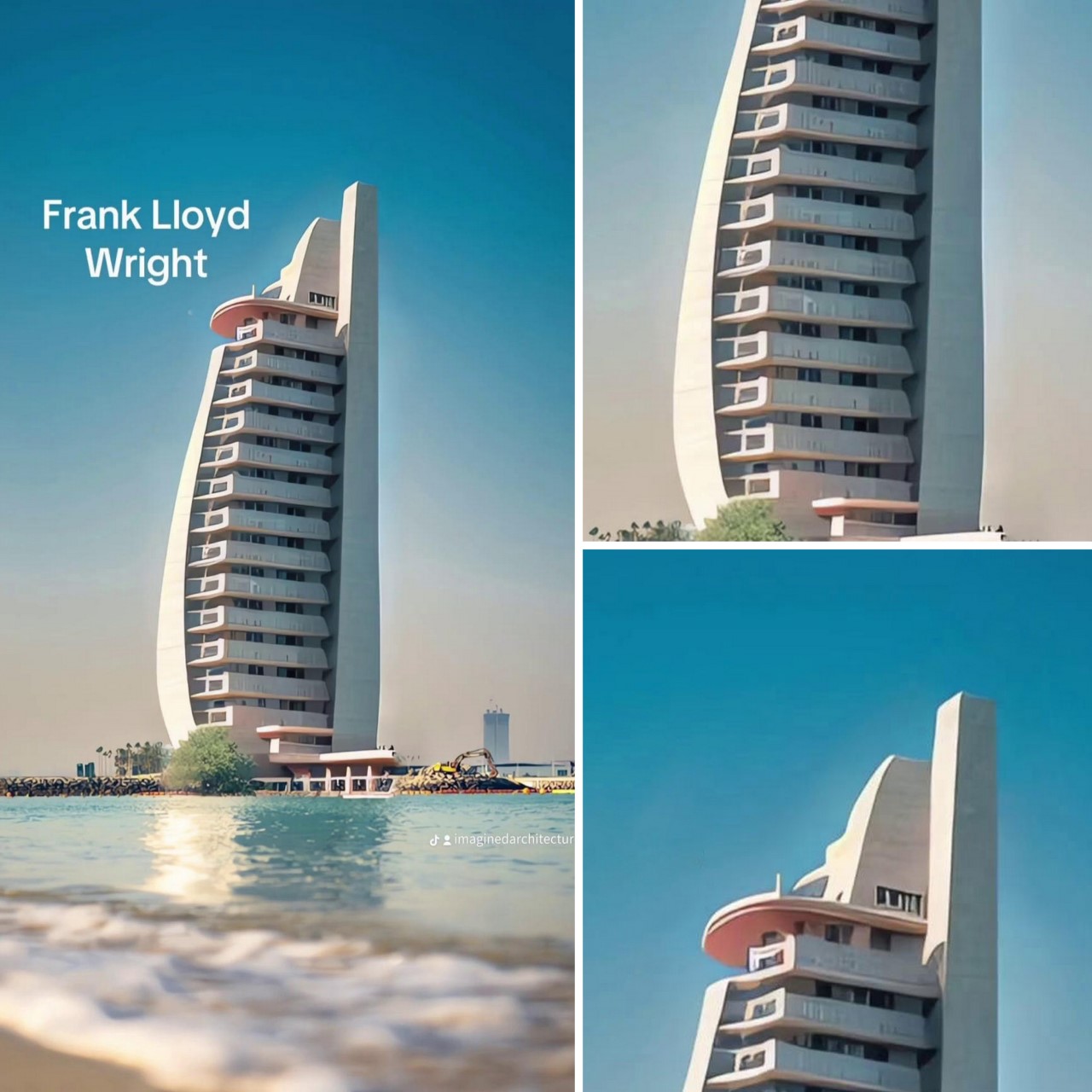
6. Frank Lloyd Wright

With over 1000 structures and a 70-year career under his belt, Frank Lloyd Wright’s legacy precedes him. Wright was an iconic American architect whose designs were groundbreaking for their integration with the natural environment and their organic architecture philosophy. He believed in designing structures that were in harmony with humanity and their surroundings. Wright’s work often featured strong horizontal lines, overhanging eaves, a central hearth, and a deep connection with the landscape, all meant to promote a sense of calm and organic simplicity.

In the image, the Burj Al Arab reenvisioned by Wright maintains its towering presence but adopts a more pronounced integration with its environment. The building’s profile, while still sleek and soaring, includes Wright’s signature horizontal lines that echo the horizon where sea meets sky. The tiers of the building resemble the stratified layers of earth, a subtle nod to Wright’s practice of drawing inspiration from the land. The terraces and balconies extend outward, reminiscent of Wright’s overhanging eaves, suggesting shelter and openness simultaneously. The organic architecture of Wright is reflected in the building’s gentle curvature, which seems to rise naturally, like a formation shaped by wind and water rather than by humans. This conceptual design marries Wright’s philosophy with modern luxury, offering a unique interpretation of the Burj Al Arab as a serene yet grandiose dwelling place in harmony with the vast seascape.

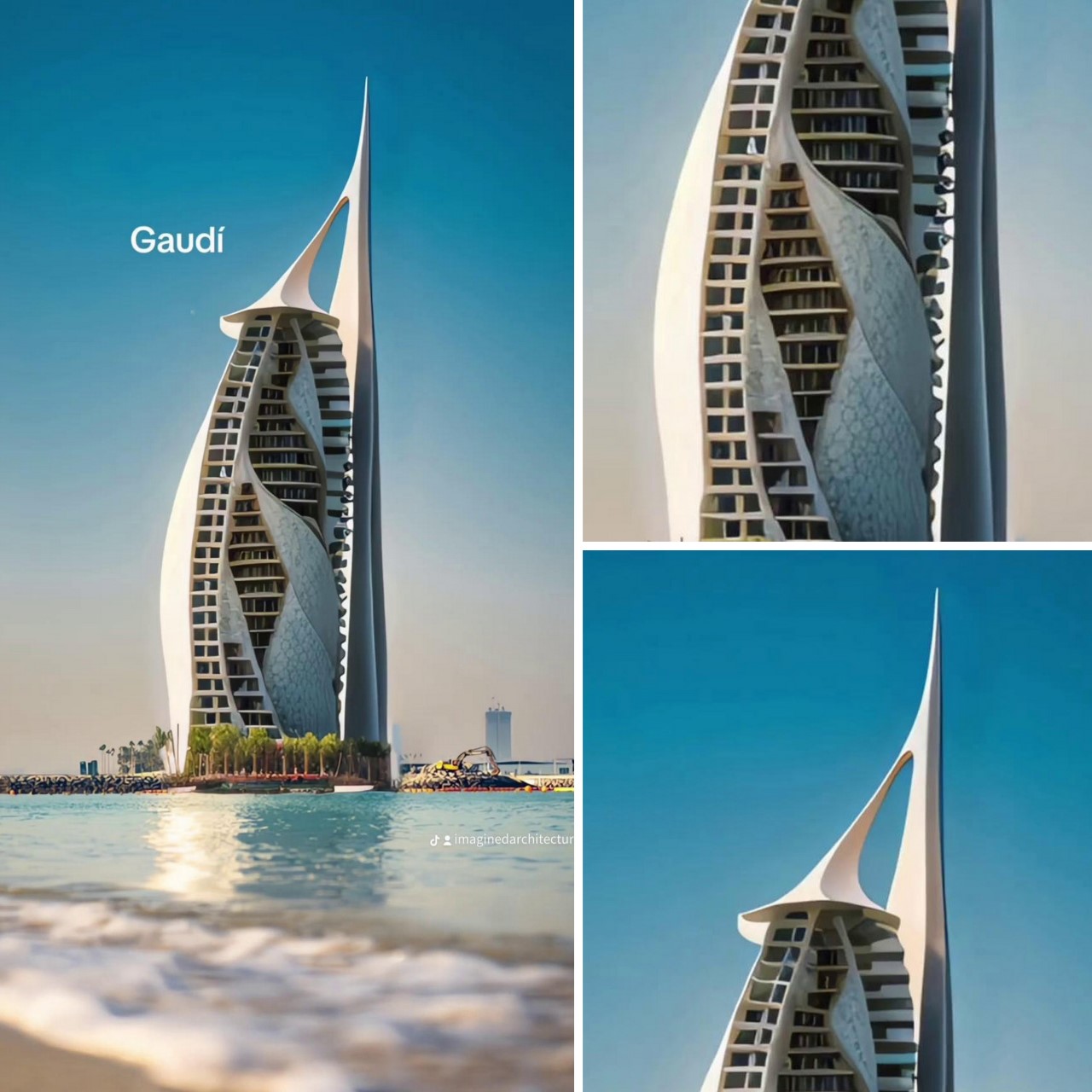
7. Antoni Gaudi

Renowned Spanish architect, Antoni Gaudi left an indelible mark on the world of architecture through his profound connection to the Catalan Modernisme movement. Gaudí’s architectural masterpieces are celebrated for their vibrant hues, rich textures, and organic designs inspired by the beauty of nature. His creations frequently feature the incorporation of mosaic tiles, intricately twisted iron sculptures, and innovative, sinuous stonework, boldly departing from conventional lines and forms.

The image of the Burj Al Arab reimagined by Gaudí shows a playful and imaginative twist on the iconic structure. The hotel’s sail-like facade is transformed with Gaudí’s distinctive style – it features the whimsical curves and organic motifs that are signature to his work. The incorporation of intricate patterns and textures adds depth and a tactile quality that invites close inspection, a stark contrast to the building’s original smooth facade. The use of white for the exterior is a modern touch that aligns with Gaudí’s love for light and reflection, which often played a significant role in his creations. This conceptual design brings together the elegance of the Burj Al Arab with the fantastical and nature-inspired elements of Gaudí’s work, resulting in a building that could be both a functional hotel and a piece of living art.

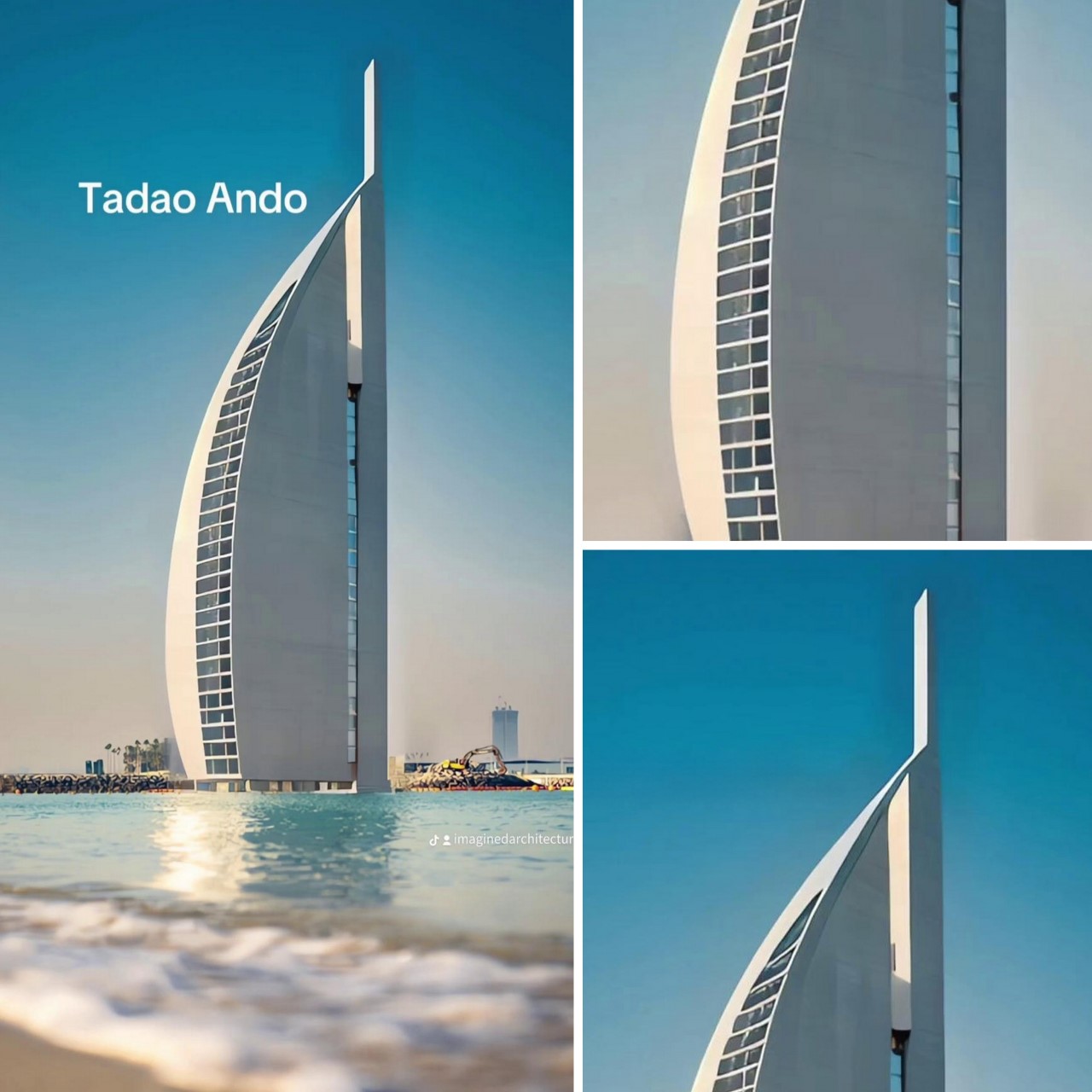
8. Tadao Ando

Tadao Ando, a self-taught Japanese architect, is celebrated for his minimalist designs that blend physical and metaphysical elements. His work is distinguished by the creative use of natural light and the incorporation of natural elements into his structures. Ando’s buildings often feature clean lines, large expanses of unadorned concrete walls, and elements of water, which harmonize the structures with their surroundings.

The image illustrates the Burj Al Arab as envisioned by Ando. It reflects his minimalist approach, stripping away the original structure’s ornateness to reveal clean, unembellished surfaces. The stark white facade, a departure from Ando’s characteristic concrete, still conveys his preference for simplicity and geometric clarity. The building’s sweeping form is accentuated by the strategic placement of windows that allow for a play of light and shadow, a tribute to Ando’s mastery of illumination. The result is a unique reinterpretation of the Burj Al Arab that mirrors Ando’s ethos of serene simplicity and thoughtful integration with the environment, culminating in an architectural statement that is both contemplative and bold.

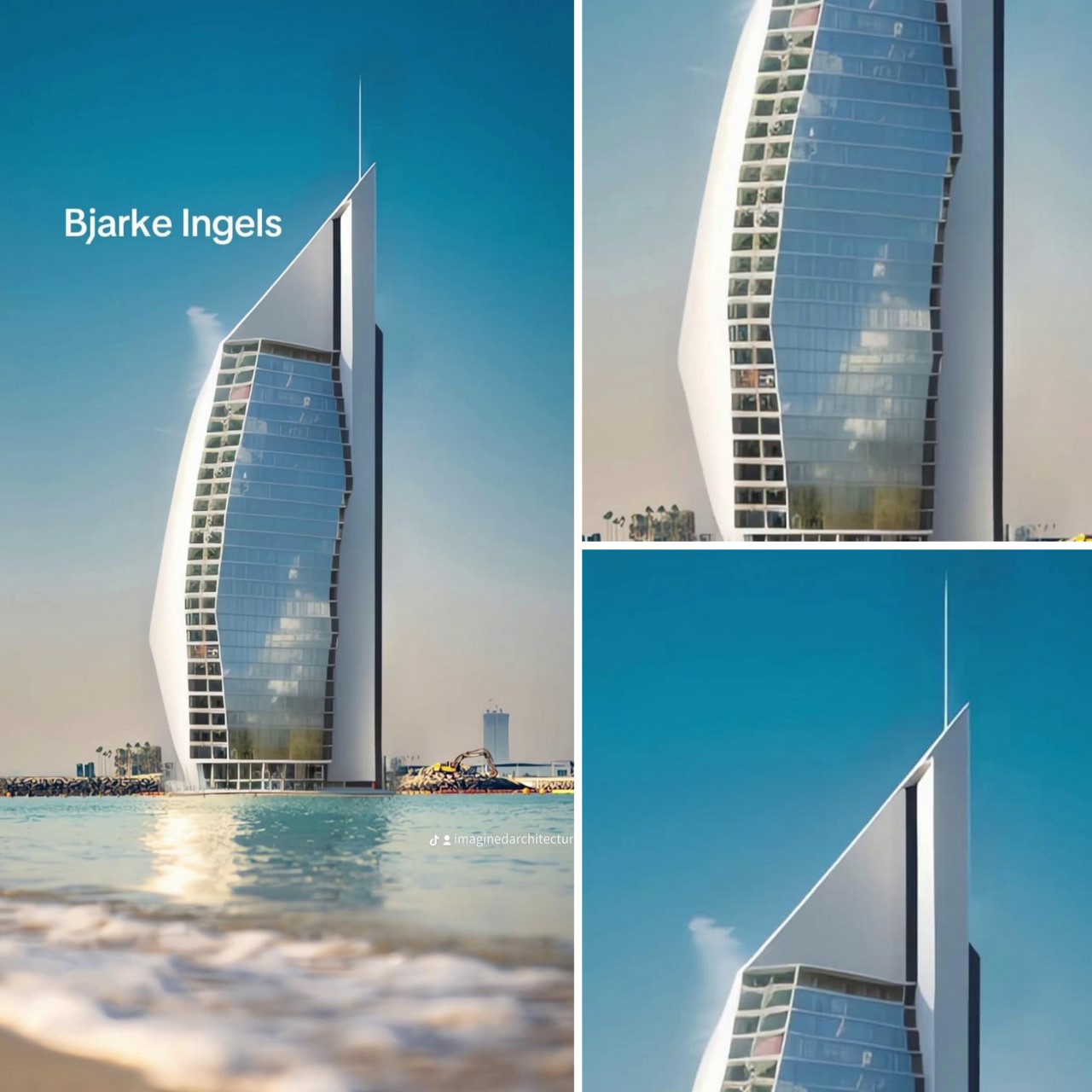
9. Bjarke Ingels

Bjarke Ingels, the founder of BIG (Bjarke Ingels Group), is acclaimed for his architecture that challenges convention with a focus on sustainability and sociability. His notable works, like the Mountain residences in Copenhagen and VIA 57 West in New York, merge functionality with a unique aesthetic that often incorporates elements of nature and futuristic design.

This AI-generated image reinvents the Burj Al Arab through Ingels’ lens, transforming the building into a structure that speaks to modernity and playfulness. The building’s form is mildly undulating, with a lean that suggests movement and a sense of whimsy. This is aligned with Ingels’ preference for architecture that surprises and delights. The façade includes large glass windows, maximizing natural light and offering expansive views, a common feature in Ingels’ designs to bring the outdoors in. The sleek white exterior and clean lines maintain the luxury feel of the original structure but with a modern twist that’s both striking and playful. The overall design captures a balance between the building’s iconic status and the innovative, people-focused approach that Ingels is celebrated for, creating an inviting and sustainable architectural landmark.

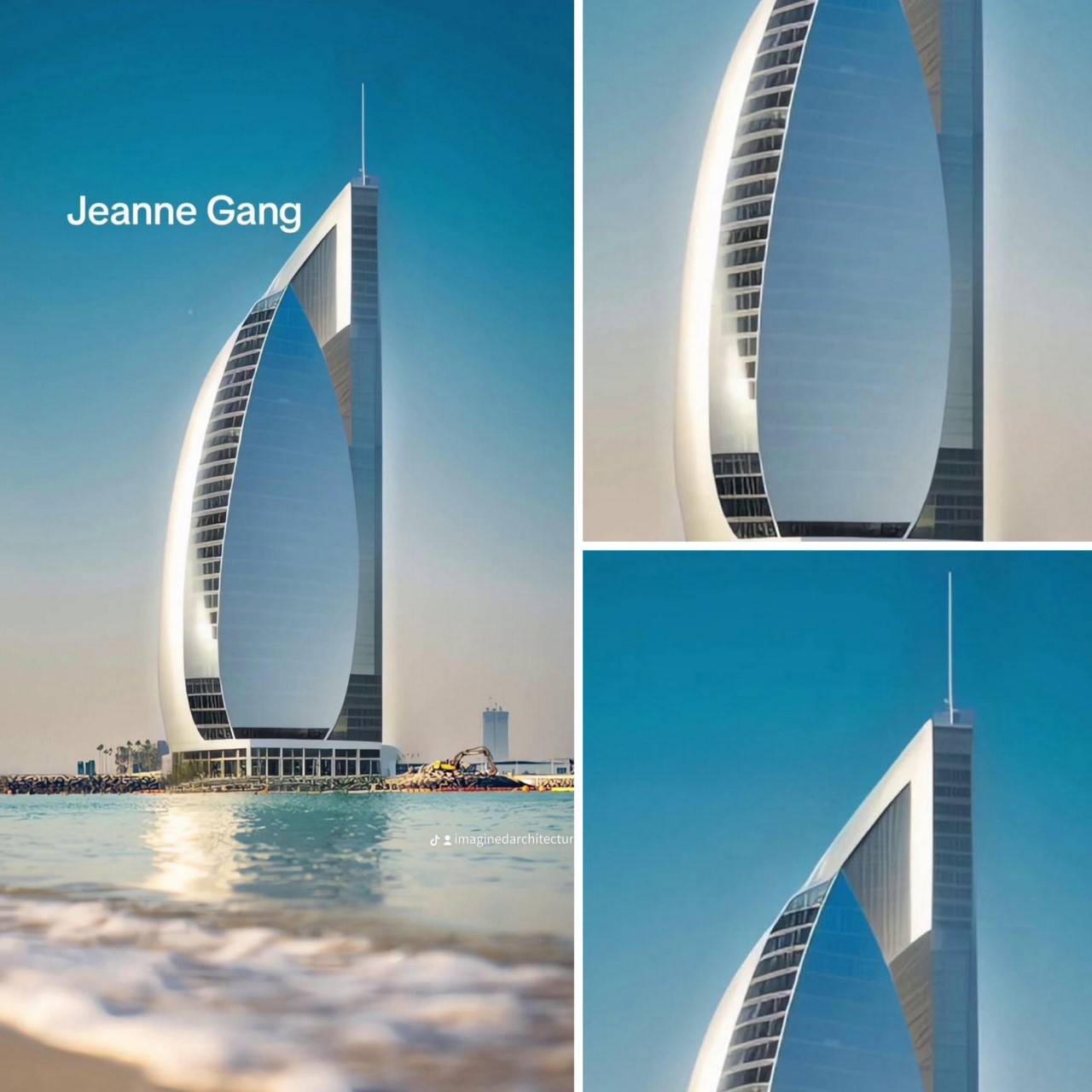
10. Jeanne Gang

Jeanne Gang, the founding principal of Studio Gang, is renowned for her innovative approach that interweaves architecture with ecological and social issues. Her work often emphasizes sustainability and community, with projects like Aqua Tower in Chicago showcasing her use of distinctive organic forms and responsive design that creates a dialogue with the environment.

The image envisions the Burj Al Arab with the architectural sensibilities of Jeanne Gang. It embodies a sleek elegance while adopting new, flowing lines that suggest a seamless connection with the surrounding seascape. The building’s form appears more integrated with its environment, reflecting Gang’s commitment to creating structures that enhance their settings. The design emphasizes transparency and light, with broad expanses of glass that echo the striated exteriors of Aqua Tower, allowing for natural light to penetrate the building while offering panoramic views. This reimagined Burj Al Arab maintains the iconic silhouette of the original but introduces a fluidity and grace that speaks to Gang’s architectural ethos of harmonizing with nature.

The post Dubai’s Burj Al Arab gets Redesigned by 10 Iconic Architects using AI first appeared on Yanko Design.
HTC’s Vive Ultimate Trackers have cameras to improve full-body tracking

HTC released the Vive Ultimate Tracker, which when paired with one of the company’s virtual reality headsets, delivers multi-point body tracking for users for everything from first-person shooter gaming to soccer skills training. The new tracker follows HTC’s Vive Tracker 3.0 line and will cost $199 per unit. HTC is also selling a three-pack that comes with the required wireless dongle and other accessories for a bundle price of $599.

You can use up to five “six degrees of freedom” (6DoF) Ultimate Trackers simultaneously and connect to a single headset to collectively support multi-point full-body tracking. Each tracker relies on two wide field-of-view cameras to precisely locate the wearer's motions in 3D spaces, which ultimately gives it those self-tracking capabilities. The Global Head of Product at HTC, Shen Ye, said the technology built into the Ultimate tracker will enhance the virtual reality experience, making sessions “a lot more realistic and immersive.” Previous models relied on a base station for its tracking capabilities.

The lightweight positional trackers, weighing in at 94 grams a unit, can be attached to a variety of accessories, like a racket sports set, which expands its usability for things like VR training and dancing in VRChat. For example, the Vive Ultimate Tracker can be used specifically for foot tracking, which can be used to gauge passing skills during drills for soccer players. “From elite athletes to casual gamers, it's extremely versatile and easy to set up anywhere,” Adam Dickinson, director of Rezzil, a tech company focused on training athletes using VR, says on using the new tracker.

The new Ultimate trackers are flat and are smaller than a smartphone, giving it an entirely different look from its three-pointed predecessor, the Vive Tracker 3.0. The Ultimate Tracker can also be paired with a standard mount and paired with HTC’s Vive XR Elite and Vive Focus 3. The trackers communicate positional and map data to the headset via 2.4 GHz band and a 5 GHz WiFi band and have a battery life of up to 7 hours.

Though the company may be getting ahead of itself, Vive says it would eventually like the Ultimate Tracker to work independently with SteamVR without being paired to an XR headset. The first step in this process should come soon, as HTC plans to release a beta for direct connection to SteamVR “in the coming weeks.” This, the company says, will expand the Ultimate Tracker’s capabilities for industrial use. HTC headsets have been vying for space in the race to deliver the best virtual reality headset and accessories, primarily against the likes of Meta and its Quest headsets. Expanding the capabilities of its trackers may help Vive narrow the competitive gap, as more innovative applications may be key to enticing the niche world of VR gamers and users moving forward.

Update, November 30 2023, 1:08 PM ET: This story has been updated to clarify how the trackers use WiFi to operate.

This article originally appeared on Engadget at https://www.engadget.com/htcs-vive-ultimate-trackers-have-cameras-to-improve-full-body-tracking-000008776.html?src=rss

This Unconventional Chess Set chooses ‘Peace’ and ‘Truce’ over War and Destruction

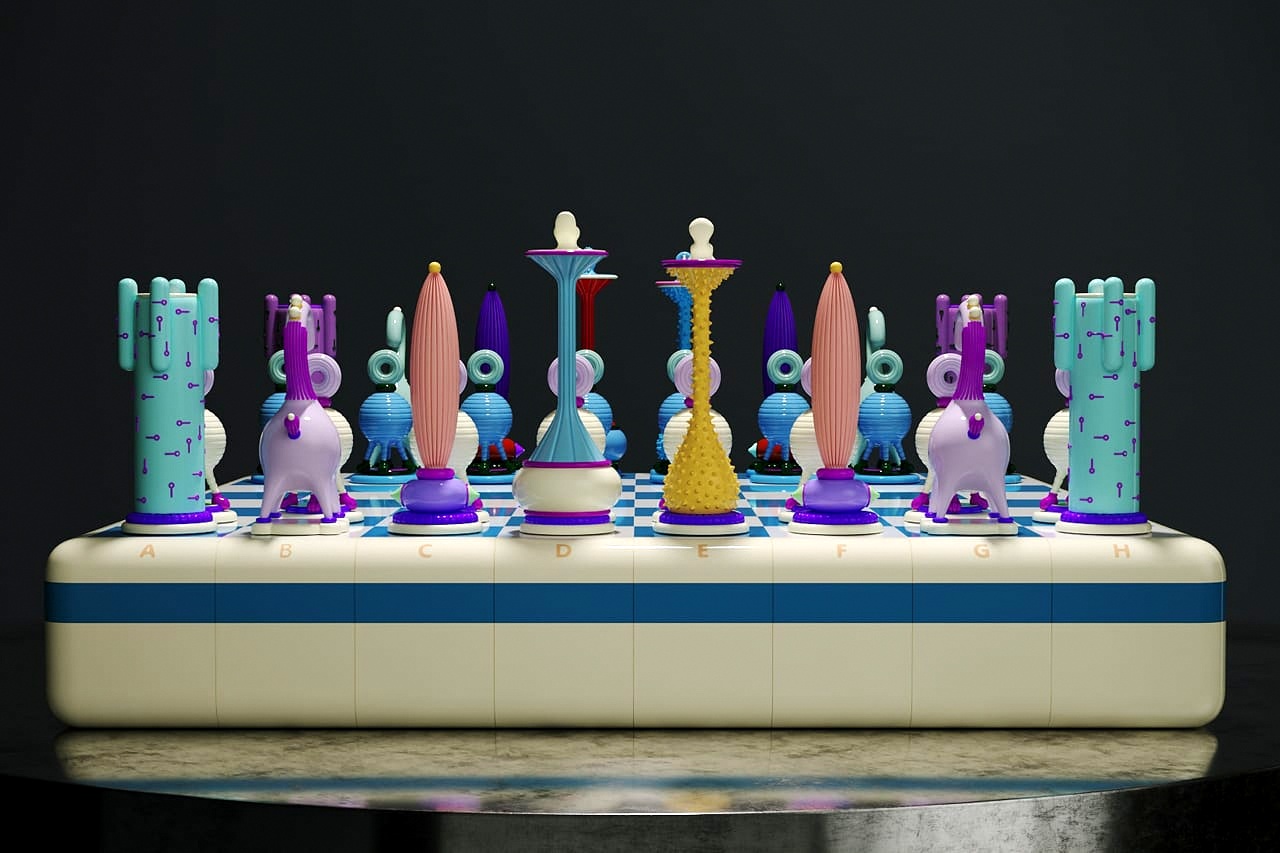
Chess, often considered as the game of intellect, has been a canvas for storytelling throughout history. It weaves narratives of wars and strategies and tales that mirror the complexities of human existence. The characters, like kings, queens, knights, and pawns, carry the weight of history and symbolism. However, in the hands of visionary artist Taras Yoom, chess transcends its traditional boundaries, stepping into a realm where two kingdoms declare a truce – a symbolic new stage in life.

Designer: Taras Yoom

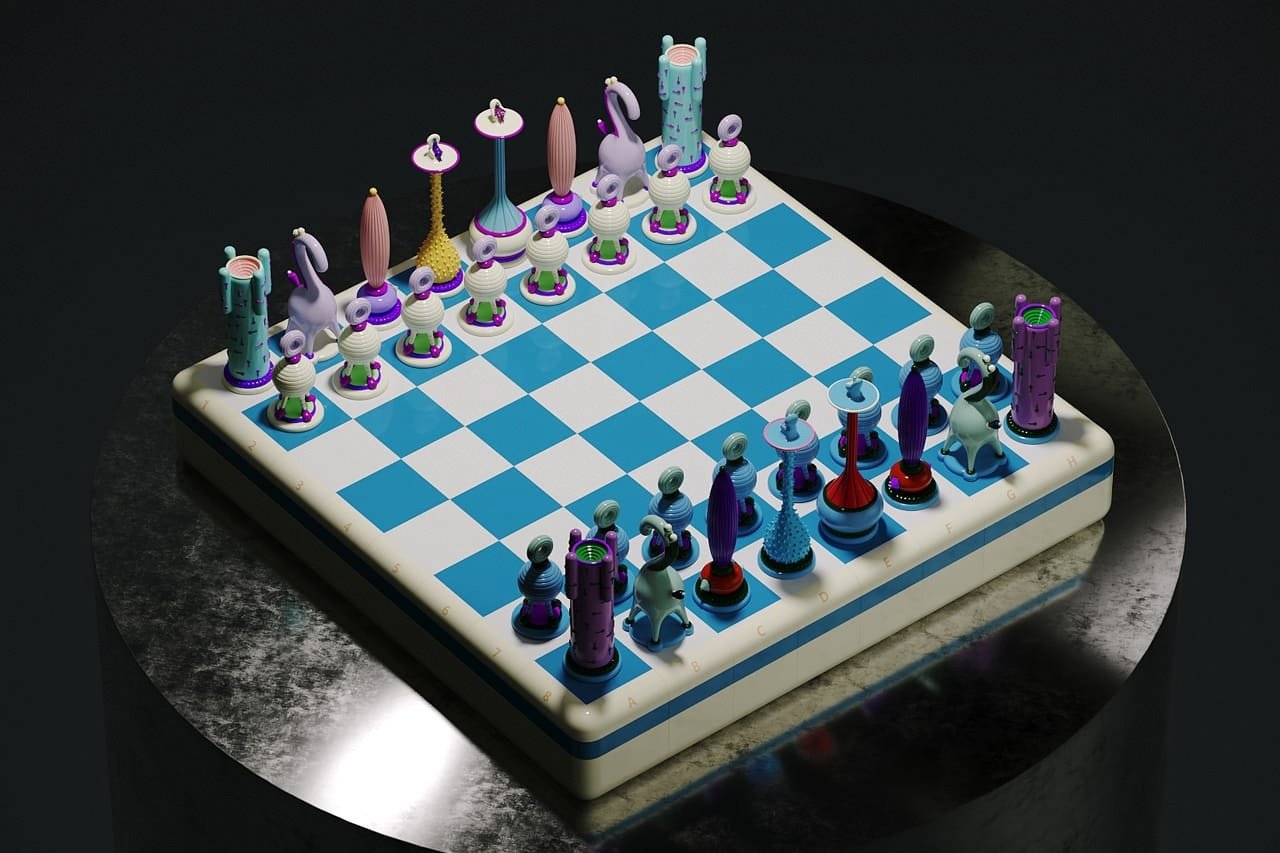
Yoom’s creation, “Another Kingdom: Light Stage,” is not your average chess set; it’s a handcrafted collectible that breathes life into the timeless game. Yoom, known for his work with Yoomoota, introduces a limited edition collection of 21 chess sets that embody a harmonious exchange between two realms. Crafted with meticulous attention to detail, each set is a masterpiece of 3D printing from photopolymer plastic, molding, sculpting, polymer casting, and acrylic paint detailing.

The color palette, dominated by light pastels and blues, mirrors the essence of the truce and the exchange of knowledge and goods between the two kingdoms. The fusion of acrylic, metal, plastic, silicone, and wood adds a tactile richness to the pieces, making them not just strategic tools but also works of art. To further elevate the chess sets, Yoom incorporates a digital secret in the form of an NFC chip. This digital certificate validates, authenticates, and records the ownership and provenance of each artwork, ensuring a unique connection to its collector.
The Another Kingdom: Light Stage chess sets serve as a tangible link to the Yoomoota universe, specifically the planet Us2BeBetter.

According to Yoom’s narrative, the inhabitants of this celestial body are on the cusp of a new story, one that avoids conflict and destruction. The chessboard becomes the stage for this narrative, a conceptual landscape where pieces rise on two mountains, guarding a coveted artifact resembling an old pocket watch. This artifact possesses the unique power to temporarily revert the past, offering players the chance to rewrite history as they engage in the age-old game.

Describing Another Kingdom: Light Stage as the dawn of a new era in the development of the Yoomoota kingdom, Taras Yoom infuses the chess set with a festive ambiance reminiscent of an endless fair. It goes beyond the physical victories dictated by classical chess rules, offering a symbolic triumph through the discovery of a hidden treasure at the board’s center. The chess set personifies not just a game but a celebration of peace and the rewriting of destinies.

As the game unfolds, players or residents are presented with a unique opportunity to reshape the narrative of their world. The alien-like creatures that inhabit this planet add an element of otherworldliness to the playful chess set, transporting it into a realm beyond our own – the vibrant and imaginative Yoomoota.

In the intricate craftsmanship of Another Kingdom: Light Stage, Taras Yoom invites chess enthusiasts and art collectors alike to partake in a journey where strategy meets symbolism, and where the truce declared on the chessboard echoes into the vast expanse of Yoomoota.

The post This Unconventional Chess Set chooses ‘Peace’ and ‘Truce’ over War and Destruction first appeared on Yanko Design.
The 2024 Hyundai Santa Fe adds edge to a comfortable family cruiser

Hyundai is on a design roll these days. Everything that's coming out of the brand's South Korean design studios looks fresh and interesting, and that's very much the case with the new Santa Fe. Dropping next year, the 2024 Santa Fe looks nothing like the current car. In fact it looks more like a Land Rover, but still has a look all its own.

It has a selection of great tech, too, like dual wireless chargers, dual 12.3-inch displays and wireless Android Auto/Apple CarPlay. Plus, with three rows of seating, the Santa Fe hauls more folks and more cargo than ever before. Two engines will be on offer: a 2.5-liter, turbocharged four-cylinder making 277 horsepower and a 1.6-liter hybrid, with 232 ponies.

But what's it like to drive? And is that third row actually usable? We headed to South Korea to find out. Watch the video below for the full story.

This article originally appeared on Engadget at https://www.engadget.com/the-2024-hyundai-santa-fe-adds-edge-to-a-comfortable-family-cruiser-230146510.html?src=rss

Amazon’s new Fallout series will reveal the origins of Vault Boy

Amazon has revealed more about its upcoming Fallout series on Prime Video. The company shared the first images from the show and gave Vanity Fair a sneak peek ahead of its April debut. Based on the game franchise, it stars Ella Purnell (Yellowjackets) as a naive newcomer to the post-apocalyptic surface world she’s spent her comfortable life hiding from underground.

The series takes place in the year 2296. That’s 219 years after nuclear war ravaged the Earth, driving deep-pocketed survivors into subterranean bunkers, leaving everyone else to fend for themselves above ground. Lucy is the daughter of “Overseer Hank” (Kyle MacLachlan, Twin Peaks), the mayor-like figure of Lucy’s Vault 33.

Vanity Fair says Vault Boy, the iconic game logo, appears as the mascot for Lucy’s underground dwelling. We’ll even hear about its origin story. “That was something that they came up with that’s just really smart,” Bethesda’s Todd Howard said, describing the series’ creative take on Vault Boy’s genesis.

Still of the character
Walton Goggins as The Ghoul
Amazon / Bethesda

The Ghoul, familiar to fans of the games, will be played by the scene-stealing Walton Goggins (Justified, The Hateful Eight) in a role that sounds tailored to the wry character actor. “Walton’s equally adept at drama and comedy, which is so difficult,” creator Jonathan Nolan told Vanity Fair. “There is a chasm in time and distance between who this guy was and who he’s become, which for me creates an enormous dramatic question: What happened to this guy? So we’ll walk backwards into that.”

Nolan says The Ghoul represents all sides of Fallout’s world. “He’s got a lot of mileage on him, but he’s still got a swagger and kind of a charm to him,” Nolan said. The series’ take on the character strikes a balance between using prosthetics and makeup to show his disfigured face while still giving Goggins room to find the half-dead, half-immortal character’s humanity. “I need to be able to see Walton and his performance, he needs to look like a Ghoul from the game, and he needs to be kind of hot,” Nolan said.

The series was created by Westworld creators Nolan and Lisa Loy. They describe the story as hitting similar notes as the games, including its retrofuturistic stylings, biting social commentary and themes of gray morality. “We had a lot of conversations over the style of humor, the level of violence, the style of violence,” Bethesda’s Howard, an executive producer on the show, said. “Look, Fallout can be very dramatic, and dark, and postapocalyptic, but you need to weave in a little bit of a wink…. I think they threaded that needle really well on the TV show.”

Fallout premieres on April 12, 2024, on Amazon Prime Video.

This article originally appeared on Engadget at https://www.engadget.com/amazons-new-fallout-series-will-reveal-the-origins-of-vault-boy-221607044.html?src=rss

This $3,990 Mixed Reality Headset is what Fortune 500 Companies Use to Access the Metaverse

You wouldn’t be the first to think this was a Quest 3, but in fact, this headset comes from Finland-based VR/XR hardware company, Varjo. Although it does share a slight visual similarity with its passthrough camera placement on the front, the XR-4 isn’t your average mixed reality headset. Varjo’s XR-4 series, which includes the base XR-4, the XR-4 Focal Edition, and the XR-4 Secure Edition, is the company’s latest offering in the PC-powered mixed reality headset space. Its highlight, Varjo mentions, is a virtual/mixed reality experience so immersive that it’s “practically indistinguishable from natural sight.” To drive that home, Varjo boasts a client base of more than a quarter of Fortune 500 companies who employ their headsets to “train astronauts and pilots, radically shorten automotive production timelines, power medical breakthroughs, and render stunning 3D visualizations for architects and designers.”

Designer: Varjo

The XR-4 series aims to create perhaps the most believable high-fidelity virtual/mixed reality experience that goes way past the uncanny valley of tech. This is achieved through advanced features like dual 4K x 4K mini-LED displays, which offer a resolution of 51 pixels per degree and a 120 x 105-degree field of view. The displays boast double the brightness at 200 nits and a wider color gamut, covering 96% of the DCI-P3 color space. Additionally, the XR-4 series incorporates dual low-latency 20-megapixel cameras for high-fidelity, real-time photorealistic video pass-through mixed reality. Enhanced with new ambient light sensors and an 8x improvement in LiDAR resolution over its predecessor, the XR-3, these headsets seamlessly blend real and virtual elements.

One of the standout features of the XR-4 Focal Edition is its gaze-directed autofocus cameras, quite similar to the foveated rendering feature demonstrated by Apple during its Vision Pro launch back in June. These cameras are specifically beneficial for training simulations requiring interaction with real-world objects, such as in cockpit-based applications. The XR-4 Secure Edition, meanwhile, caters to government and defense organizations with stringent security requirements.

The XR-4 series is powered by NVIDIA GPUs and is integrated into NVIDIA Omniverse, enabling developers and industrial users to render photorealistic scenes and unlock ray tracing in mixed reality. This potent combination far surpasses the computational power achievable with a mobile chip, making it a game-changer for developers. The headsets are compatible with over 100 third-party PC applications and 3D engines, including Unreal Engine and Unity, ensuring their integration into demanding workflows across various sectors like training and simulation, design, engineering, and healthcare.

Despite these advancements, the XR-4 headsets are bulky and weigh a little over two pounds, making them heavier than the Quest 3 as well as Apple’s own Vision Pro that was questioned for its heavy aluminum body. However, this isn’t a significant concern for Varjo’s target customers, who typically use the headsets for limited periods, such as in training scenarios. The pricing of the XR-4 series starts at $3,990 for the base model, which may seem high for consumers, but not for the specialized industries that can absolutely benefit from the XR-4’s unique offering. In fact, consumers wouldn’t even be able to get their hands on the XR-4 given that Varjo deals exclusively with enterprise and military industries for now. The XR-4 Focal Edition, on the other hand, has an eye-watering starting price of $9,990 while the XR-4 Secure Edition, designed for government-level encrypted use, doesn’t even have a price listed online.

The post This $3,990 Mixed Reality Headset is what Fortune 500 Companies Use to Access the Metaverse first appeared on Yanko Design.
The TimeSplitters revival may be in limbo as its developer faces potential closure

The Embracer Group has been on an intense cost-cutting drive as part of a major restructuring over the last six months, as it has canceled games, laid off workers and shut down studios. The company confirmed that in the three months to September 30, it reduced its headcount by around 900 people, some five percent of the workforce. The cuts didn't end there, as it emerged on Tuesday that Embracer laid off around 50 workers from Chorus developer Fishlabs.

Free Radical Design, which was reformed a couple of years ago to work on a TimeSplitters revival, is in trouble too. The studio could be shut down as soon as December 11. That's according to an internal email from Embracer CEO Lars Wingefors that VGC obtained.

“As we move through the consultation process and face the potential closure of Free Radical Design on 11 December 2023, I want to express my gratitude for your commitment and the remarkable work you’ve done and still keep doing,” Wingefors is said to have told staff. “This is a challenging time for all of us but especially for you, and our focus is to support you as much as we can during this transition.”

The studio is based in Nottingham, England. Under UK law, a consultation period of at least 30 days has to take place before Plaion (the Embracer-owned publisher that runs the studio) can lay off any Free Radical workers. During the consultation period, Plaion is required to look at ways of avoiding layoffs. As such, there's a chance that Free Radical may stay open if a new owner takes over.

According to VGC, which initially reported earlier this month that the studio was at risk of closure, many Free Radical workers have updated their LinkedIn profiles to indicate that they're looking for work. Other studios are said to have offered interviews to Free Radical employees too.

Free Radical, the original developer of the TimeSplitters series, went bankrupt in 2008. Founders Steve Ellis and David Doak revived the studio two years ago under Plaion division Deep Silver to make a new TimeSplitters game. It's unclear what will happen with the current TimeSplitters project should Free Radical shut down.

Embracer has closed other studios in recent months, including Saints Row developer Volition. Others are said to be for sale, such as Gearbox, which Embracer bought in 2021 in a deal worth up to $1.4 billion.

This article originally appeared on Engadget at https://www.engadget.com/the-timesplitters-revival-may-be-in-limbo-as-its-developer-faces-potential-closure-210033609.html?src=rss

Apple Music’s year-end Replay is here to expose your listening habits

Apple Music’s full year-end Replay experience has arrived. Although elements of the personalized recap are available year-round (including a continually updating playlist), the company spruces up its web interface this time of year for a sleeker presentation as you reflect on your 2023 listening habits. Apple Music also announced its Artist of the Year (Taylor Swift, who you may have heard of) and subscribers’ top choices in various categories.

If you listened to Apple Music this year, you can head to the service’s Replay 2023 website and log into your account to view a rundown of the music you enjoyed during the last 12 months. It lists your most-streamed artists, songs, albums, genres, playlists and stations.

It also includes a highlight video summarizing your habits, which you can share with friends and family or on social channels. If you reach any milestones, like listening to 25,000 minutes of music, it will reveal exactly when you hit them. Apple says Replay 2023 will also tell you if you rank among an artist’s top listeners.

Photo of Taylor Swift looking into the distance in front of a bluish-gray sky. The text
Apple

Taylor Swift had a busy year, and her Apple Music streams unsurprisingly reflect that. The platform’s Artist of the Year had 65 songs reach its Global Daily Top 100, more than any other artist. The pop icon was also the most streamed artist on the platform in 2023, setting a record for the most listeners in a single year. Meanwhile, Morgan Wallen’s “Last Night” took the top spot in Apple Music’s Top Songs of 2023: Global list. It was the first country song to top that chart since “Old Town Road” four years ago. “Last Night” enjoyed the most days at number one on the service’s Global Daily Top 100 chart.

World music has grown in popularity on the platform. Nigerian breakout artist Rema had the most Shazam’d song of the year with the Afrobeats tune “Calm Down.” Meanwhile, “Idol” by J-Pop duo Yoasobi was the most popular karaoke song using Apple Music’s Sing feature, and it also hit number seven on the year-end top songs chart, joined by fellow J-Pop track “Subtitle” by Official Hige Dandism. Música Mexicana also did well, with four tracks on the top 20 global songs list. These include “Ella Baila Sola” by Peso Pluma and Eslabon Armado, “un x100to” by Grupo Frontera and Bad Bunny, “PRC” by Peso Pluma and Natanael Cano and “Bebe Dame” from Fuerza Regida and Grupo Frontera.

Year-end rewinds have become a popular feature for streaming services, as people enjoy the self-expression and comedy that can come from sharing their tastes on social media. If recent years are any indication, you can expect Spotify and YouTube to reveal theirs within the coming days.

This article originally appeared on Engadget at https://www.engadget.com/apple-musics-year-end-rewind-is-here-to-expose-your-listening-habits-204548370.html?src=rss

Amazon says its next-gen chips are four times faster for AI training

Amazon Web Services (AWS) just kicked off its Las Vegas-based re:Invent conference with a stream of announcements, most of which involve the year’s most popular technology, AI. These news items, taken as a whole, give us a sneak peek at the company’s long-term goals for artificial intelligence platforms.

First of all, AWS unveiled its latest-generation of AI chips intended for model training and for running trained models. Trainium2, which is obviously for model training, has been designed to deliver up to 4x better performance and 2x energy efficiency when compared to its forebear. Amazon promises these chips will allow programmers to train models quickly and at a lower cost, due to a reduction in energy use. Anthropic, an Amazon-backed OpenAI competitor, has already announced plans to build models using Trainium2 chips.

Graviton4, on the other hand, is more for general use. These processors are based on Arm architecture, but consume less energy than Intel or AMD chips. Amazon promises an increase of 30 percent in general performance when using a trained AI model embedded within a Graviton4 processor. This should lower cloud-computing costs for organizations that regularly employ AI models and offer a slight uptick in speed for regular users just looking to make some fake photos of Harry Potter at a rave or whatever.

All told, Graviton4 should allow AWS customers to “process larger amounts of data, scale their workloads, improve time-to-results and lower their total cost of ownership.” It’s available today in preview with a wider release planned for the coming months.

Typically, when a company announces new in-house chips, that spells trouble for current third-party providers like NVIDIA. The company is a huge player in the enterprise AI space, thanks to companies using its GPUs for training and its Arm-based datacenter CPU Grace. Instead of eschewing the partnership in favor of proprietary chips, Amazon is further cementing the relationship by offering enterprise customers cloud access to NVIDIA’s latest H200 AI GPUs. It’ll also operate more than 16,000 Nvidia GH200 Grace Hopper Superchips expressly for NVIDIA’s research and development team. This is a similar approach to its chief AI rival, Microsoft, which also announced an enhanced partnership with NVIDIA at the same time it revealed its proprietary AI chip, Maia 100.

Amazon also announced a new business-focused AI chatbot called Q, a name that was likely inspired by the Star Trek demigod and not the Trump-adjacent conspiracy peddler. It’s described as a “new type of generative AI-powered personal assistant” and is specifically designed to help streamline work projects and customer service tasks. It can be tailored to suit any business and offers relevant answers to commonly-asked questions. Amazon Q can also generate content on its own and take actions based on customer requests. It’ll even customize interactions based on a user’s role within a company.

It’ll exist on communication apps like Slack and in text-editing applications commonly-used by software developers. To that end, Q can actually change source code and can connect to more than 40 enterprise systems, including Microsoft 365, Dropbox, Salesforce and Zendesk, among others. Amazon Q is currently available in preview, with a wider release coming soon. It’ll cost anywhere from $20 to $30 per user each month, depending on available features.

So what have we learned here? Amazon is betting big on AI, like everyone else. More specifically, it’s battling with old cloud rival Microsoft to be the go-to company for enterprise-based AI. It’s also using AI to continue its dominance in the cloud computing space, hoping to minimize any increase in market share for Microsoft and other players like Google and Alibaba.

This article originally appeared on Engadget at https://www.engadget.com/amazon-says-its-next-gen-chips-are-four-times-faster-for-ai-training-200028416.html?src=rss