This Travel Bottle’s Built-in Purifier Makes Any Outdoor Water Drinkable

“Water water everywhere, but not a drop to drink.” Samuel Taylor Coleridge wrote those words back in 1834, but nearly 200 years later, nothing’s really changed. Whether it’s water from a tap or an outdoor stream, you really don’t know whether it’s safe to drink. The color and smell of water will tell you only so much, but you’ll never know whether the water has chlorine, hard minerals, microorganisms, or microplastics in it… and even though it’s really impractical to carry gallons of water with you on an outdoor trek, the folks at Vitaloop have a much more innovative solution. The Vitaloop is arguably the world’s smallest and most advanced water purifier, fit into a bottle small enough to carry in your backpack or even your hand. With a one-button interface that begins the purification process, and a 5-stage filtration system that eliminates “99.9999% of all contaminants from your water” in just 45 seconds, the Vitaloop is practically a camping essential, allowing you to drink and even cook with clean water wherever you go.

Designer: Vitaloop

Click Here to Buy Now: $89 $199 (55$ off) Hurry! Only 4 Days Left!
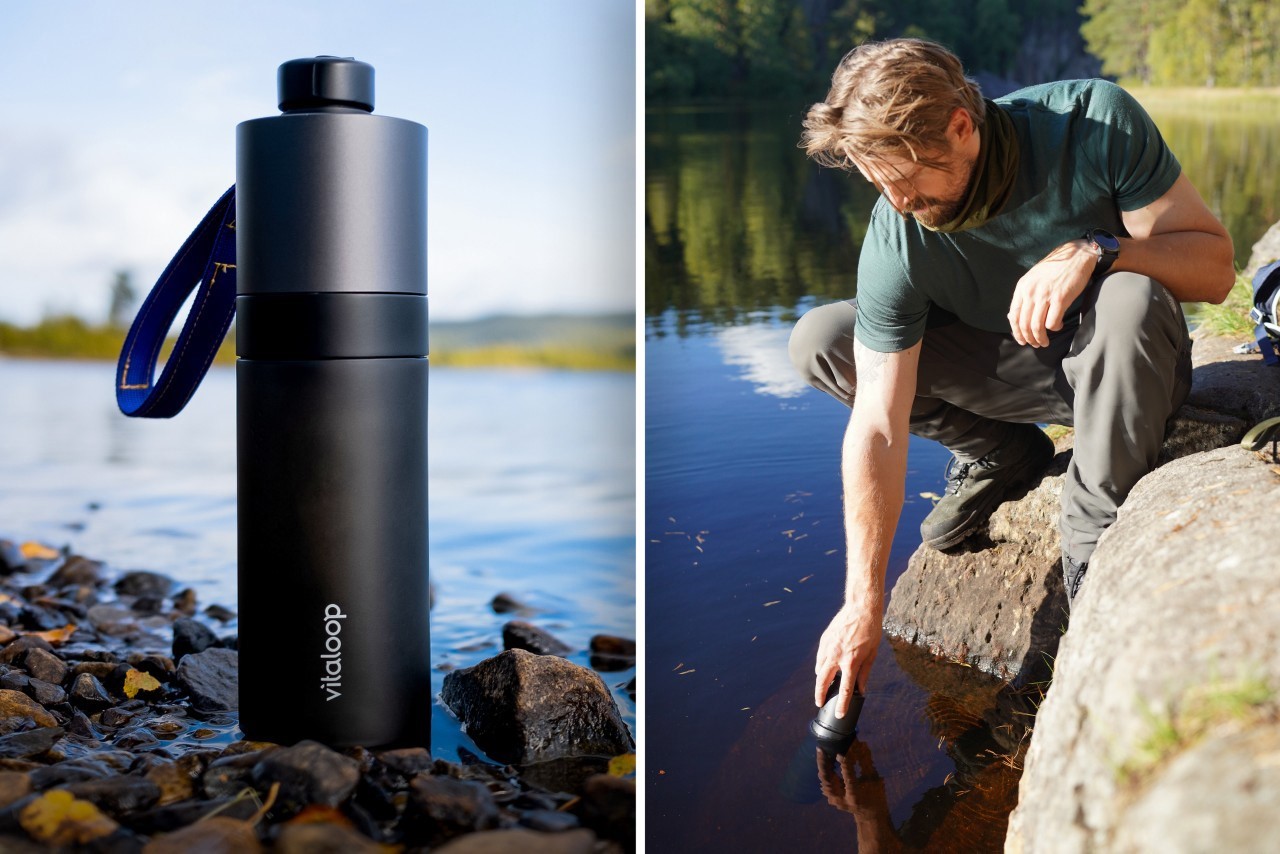
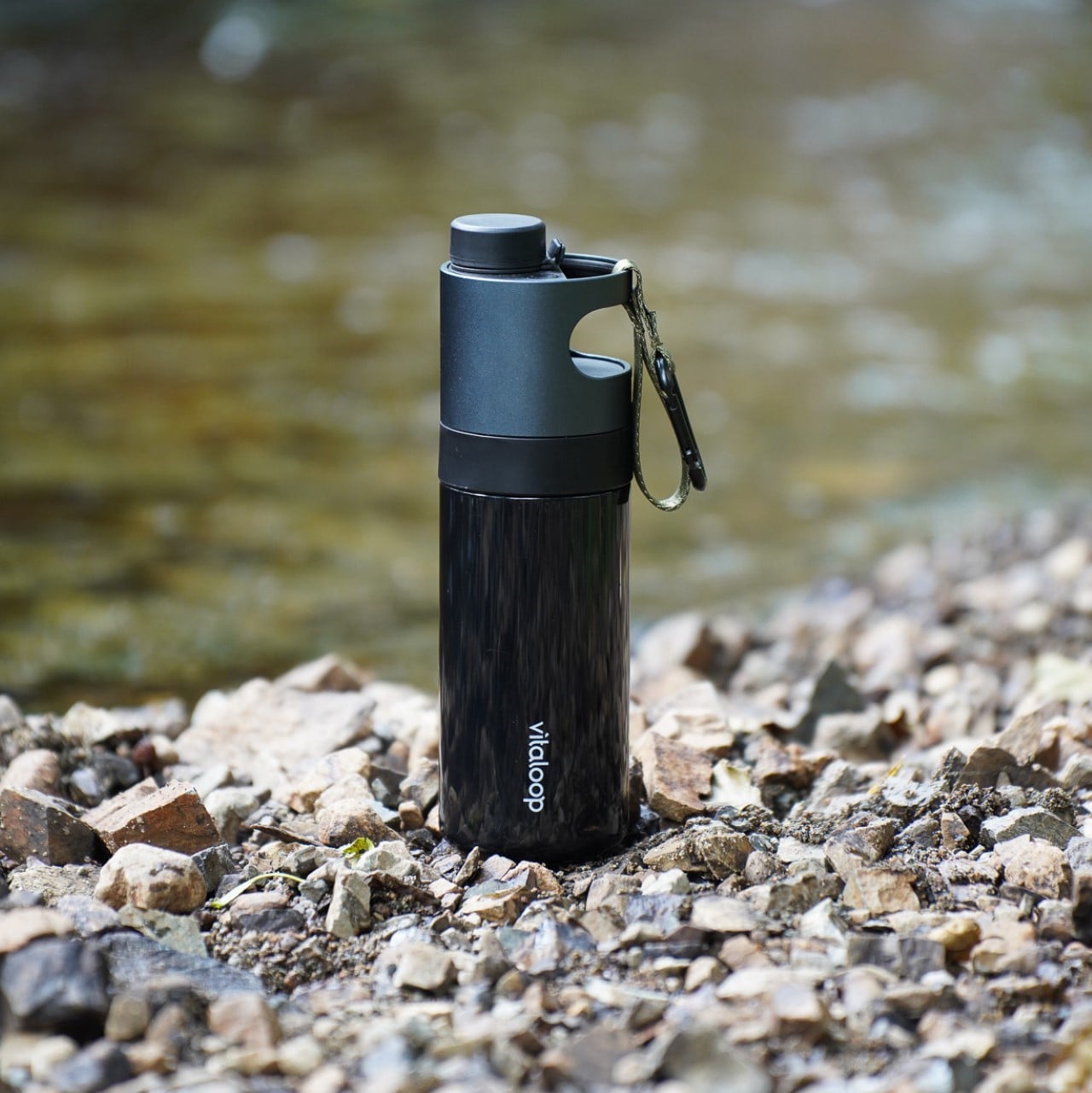
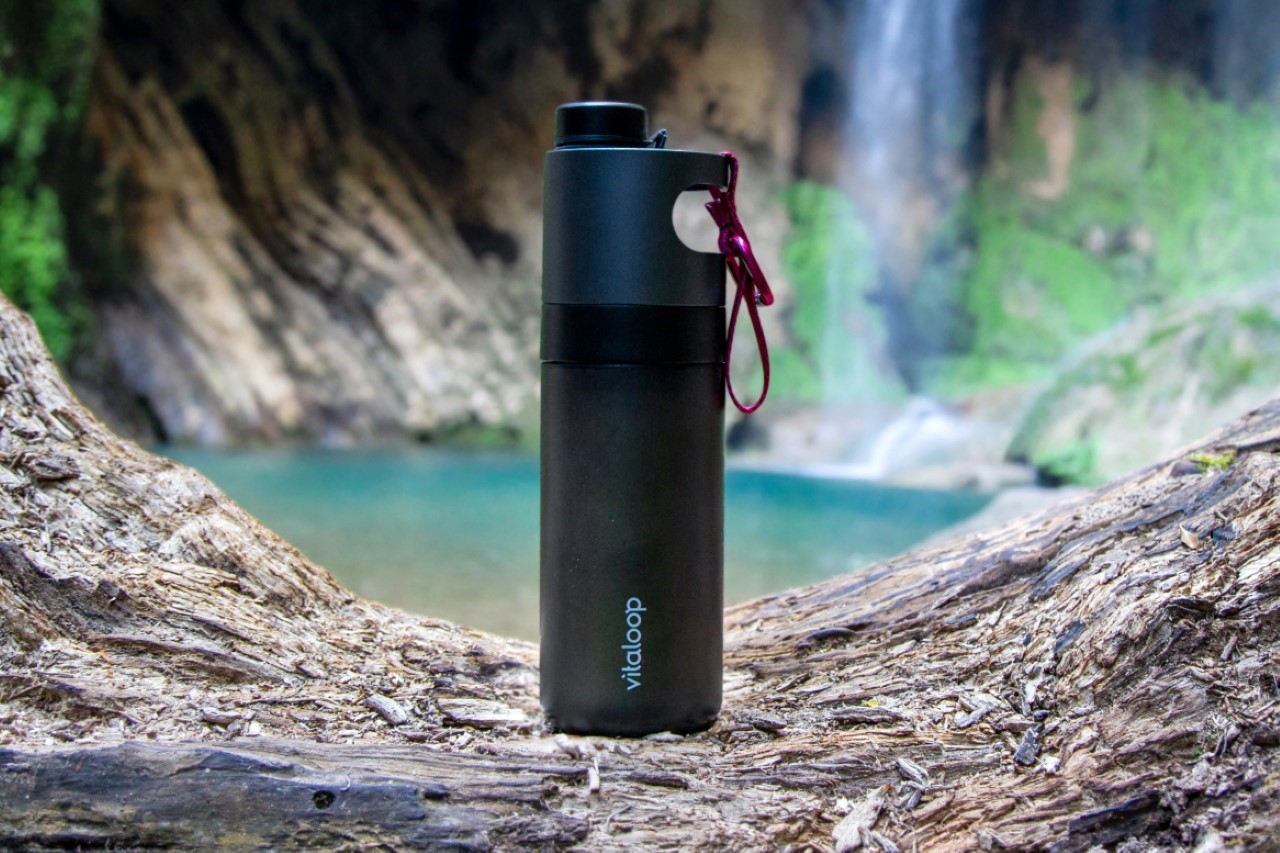
Designed as a humble outdoor bottle that can fit in your car’s cup holder or the bottle-mesh on the side of your backpack, the Vitaloop is, in fact, a motor-powered water purifier that uses a multi-stage filtration system to clean pretty much any kind of water, making it safe to drink. All you do is fill the Vitaloop up, hit the filtration button, and the bottle gets to work, filtering up to 13 gallons (50 liters) of water on a full battery charge. Its handy design and single-button interface make it perfect for carrying camping or even while traveling to unknown cities, and that 5-stage filtration system gives you water that’s pure, odorless, and even tastes good!

The way the Vitaloop works is by separating your water into two distinct chambers. When you fill your bottle up with outdoor water through its inlet, it enters the Vitaloop’s inner holding chamber, which stays entirely separated from the rest of the bottle. Hit the button on top and the bottle begins filtering the water out of its inner chamber, passing it through Vitaloop’s patented filtration system. Clean water makes its way into the outer chamber, where you can drink it through the Vitaloop’s wide mouth. The entire process takes under a minute, allowing you to repeat it as many times as necessary, whether you’re drinking water, brewing coffee, or cooking food.


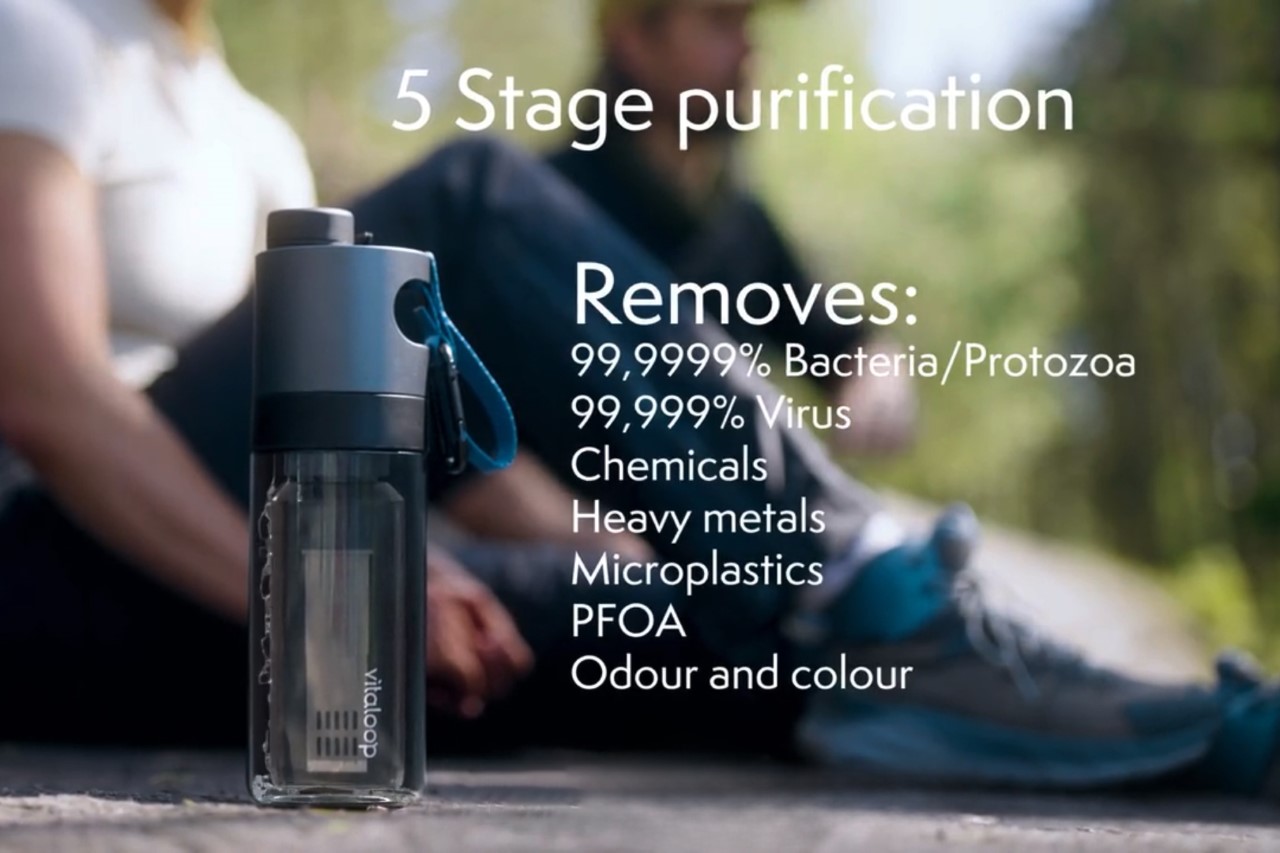
The bottle’s filter is its secret sauce, eliminating a staggering 99.9999% of contaminants to give you clean drinking water. The 5-step filtration system includes a mesh filter that first catches large debris like sand, plastic and other gunk, followed by an activated carbon filter and a graphene filter that traps sediment, neutralizes bacteria, and eliminates chemicals like chlorine, heavy metal, and pesticides. A proprietary Halopure filter neutralizes viruses by destroying their outer shell, rendering them ineffective, and finally, a precision Japanese microfilter purifies water on a microscopic level, trapping microplastics, smaller bacteria like salmonella, and any other particle down to 0.2 microns in size.

Crafted from BPA-free Polypropylene and Tritan plastic, the Vitaloop bottle boasts impressive durability and impact resistance. This unique blend of plastics not only ensures the Vitaloop’s longevity but also grants it moisture resistance, exceptional insulation, and shatterproof qualities. The tinted outer plastic allows you to see your bottle’s water level so you’re never running empty, and a nifty lanyard lets you loop your Vitaloop around your hand, onto your backpack, or around the belt loop of your pants.

Each Vitaloop comes with a replaceable filter cartridge that has a lifespan of 200 liters (52.8 gallons) before you need to switch it out for a new one. The makers offer a variety of filter types to choose from, from the standard Nanoflow Defender filter cartridge designed for camping, trekking, etc. capable of taking on even the most dubious-looking water. The Nanoflow Health+ cartridge does everything the Defender cartridge does, but also adds magnesium to your water, increasing its alkalinity and making it great for your bones, muscles, and blood. For people traveling within cities relying on tap water, the Nanoflow Flex Guard filter works best with outdoor/city water, making it great for people visiting foreign countries with little access to potable/purified tap water.

Every year, over 3 million people die because of diseases caused by drinking water that’s unsafe for consumption. Given how important water is to our sustenance, the Vitaloop could just as easily be a life-saver not just for you, but also for the planet. Aside from giving us pure drinking water, it eliminates the need to carry multiple gallons of water while camping, or carrying single-use plastic bottles that you’d then have to throw away. Each Vitaloop runs on a 2000mAh battery that charges via USB-C and filters over 13 gallons of water on a single charge. The Vitaloop starts at a super earlybird discounted price of $89, although for $109 you can get the Vitaloop along with an extra filter and a padded neoprene sleeve for your bottle. The Vitaloop ships globally starting December 2023.

Click Here to Buy Now: $89 $199 (55$ off) Hurry! Only 4 Days Left!
The post This Travel Bottle’s Built-in Purifier Makes Any Outdoor Water Drinkable first appeared on Yanko Design.
Harley Benton Introduces DIY Kits To Personalize Your Guitars

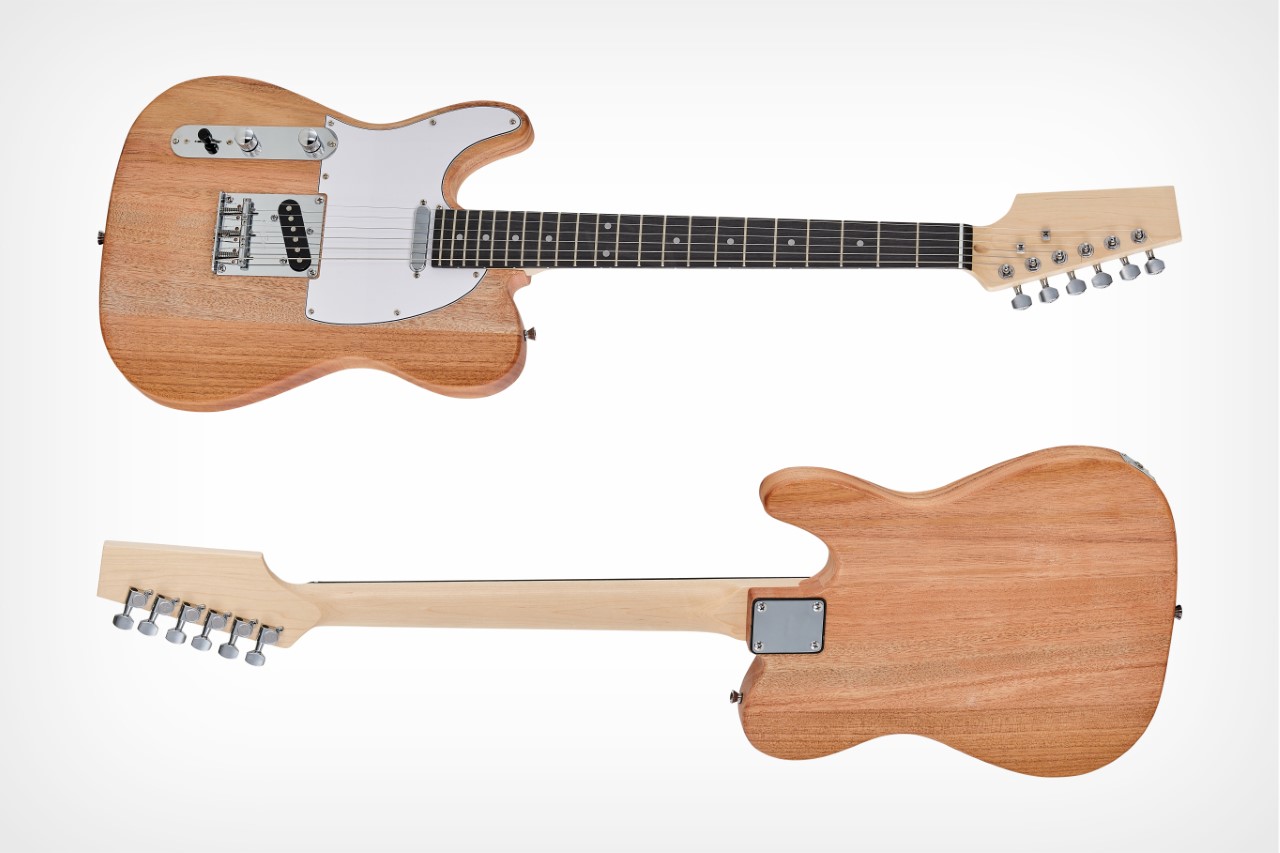
In the realm of musical craftsmanship, Harley Benton has raised the bar with its recent unveiling of a captivating range of do-it-yourself guitar kits. This innovative lineup not only offers musicians the opportunity to assemble their own instruments but also encourages a unique and personalized approach to guitar building. The collection includes four distinct models, each designed to cater to the diverse preferences and styles of guitarists. Among them, the standout is the unconventional square guitar, accompanied by a thin-line T-style model and left-handed S- and T-style models.

Designer: Harley Benton

Guitars are not just instruments; they are extensions of a musician’s identity and style. Recognizing this, Harley Benton’s DIY guitar kits acknowledge the personal connection individuals have with their instruments. These kits provide a canvas for musicians to express themselves not just through their playing but also through the process of building a guitar tailored to their preferences.

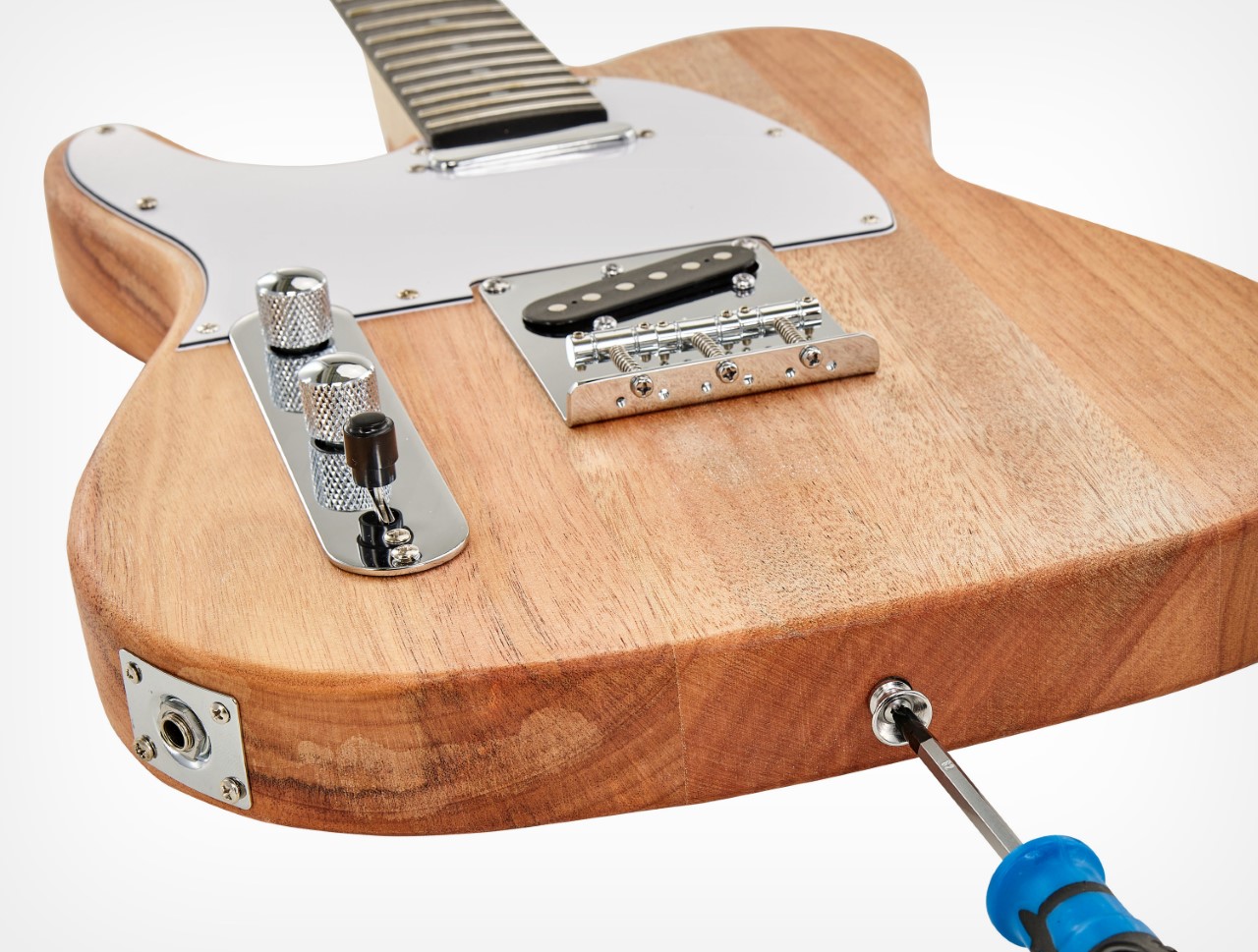
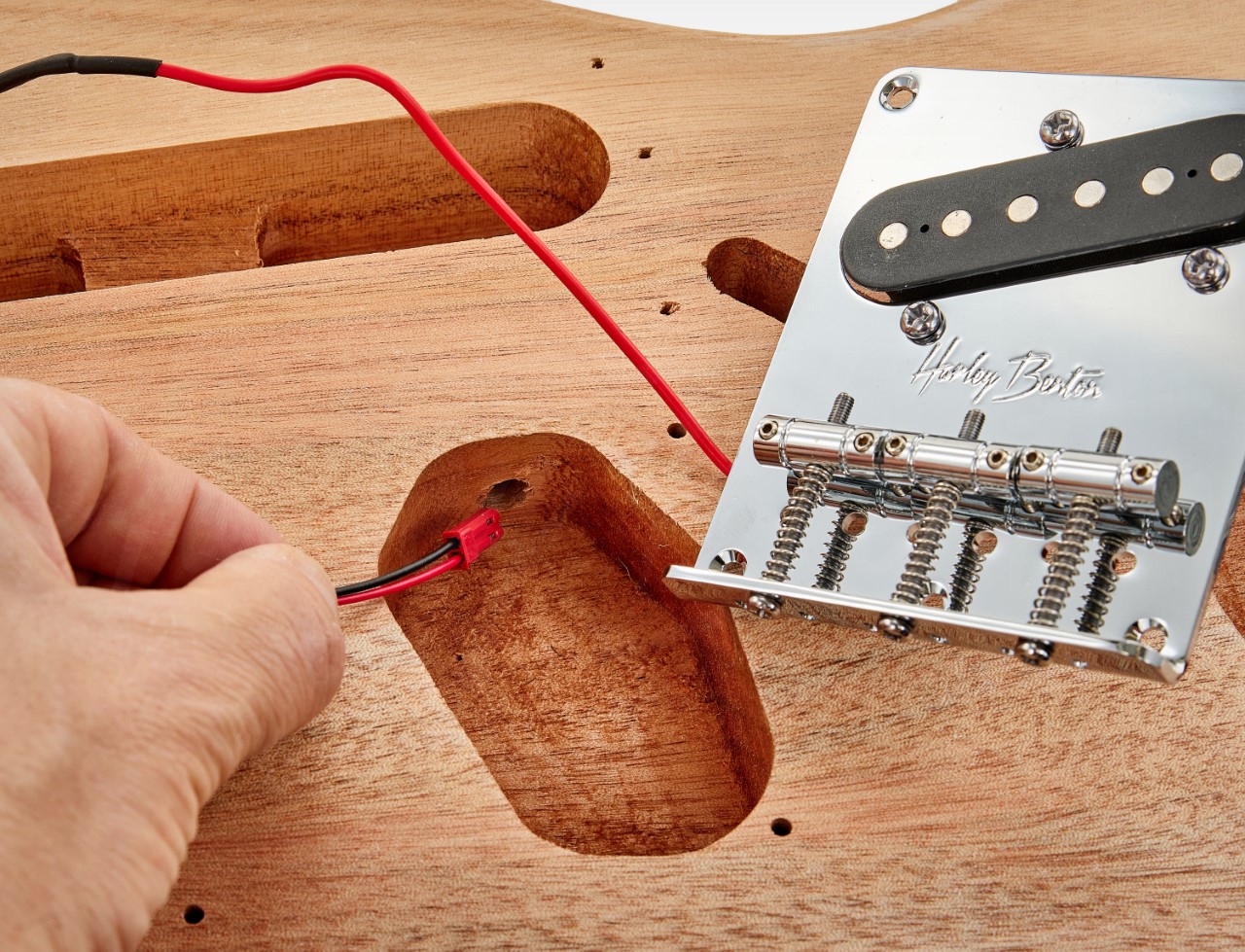
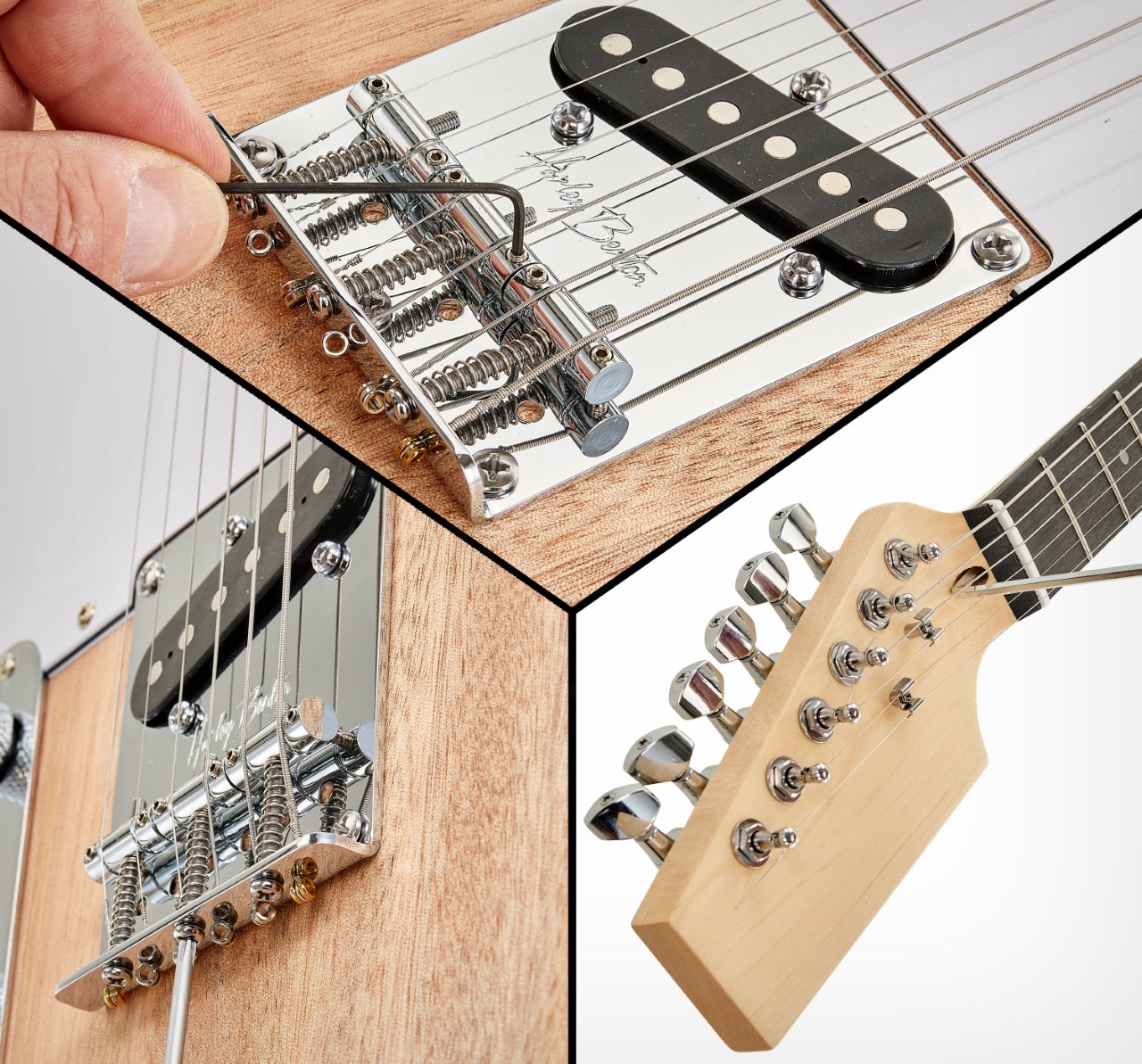
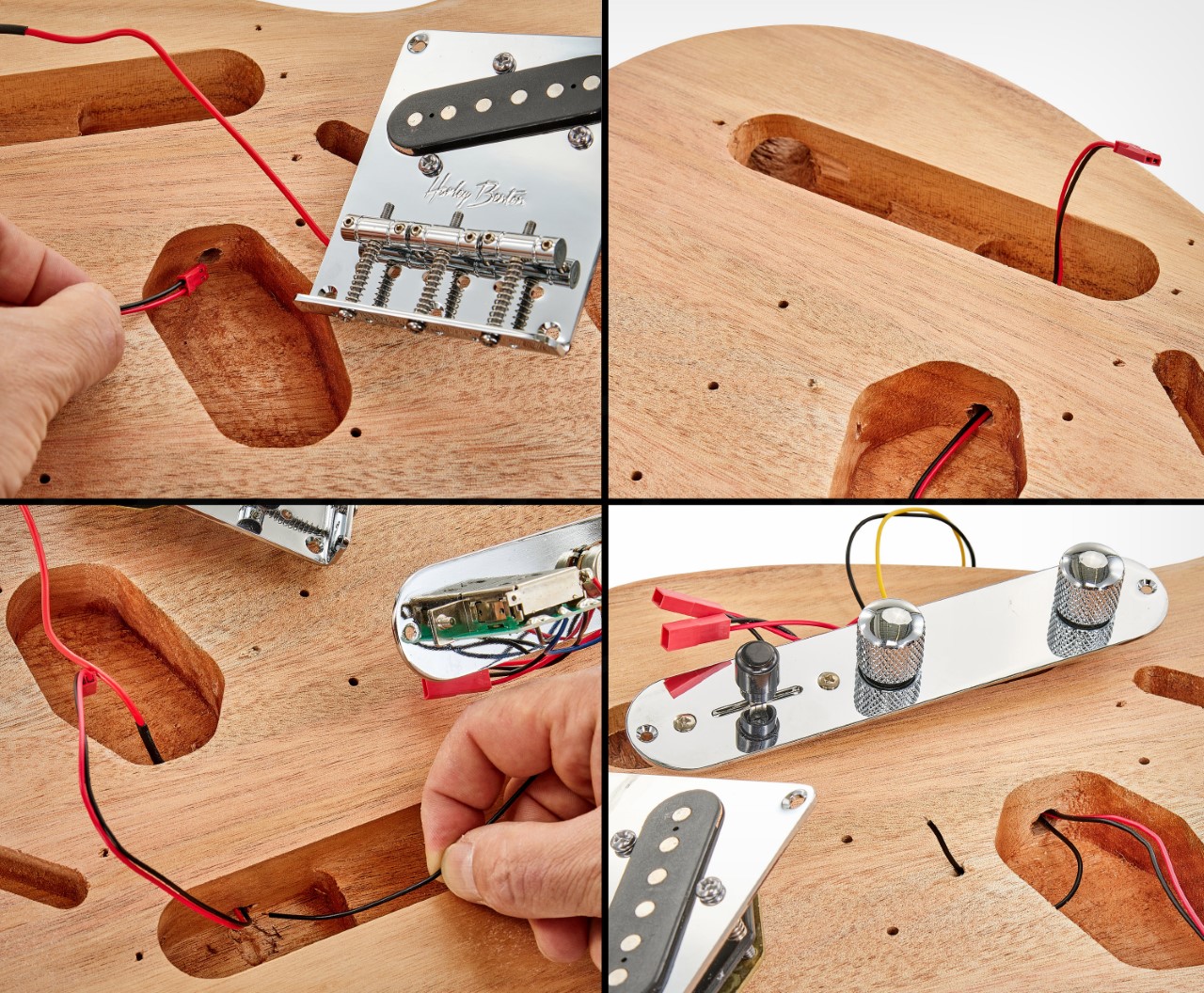
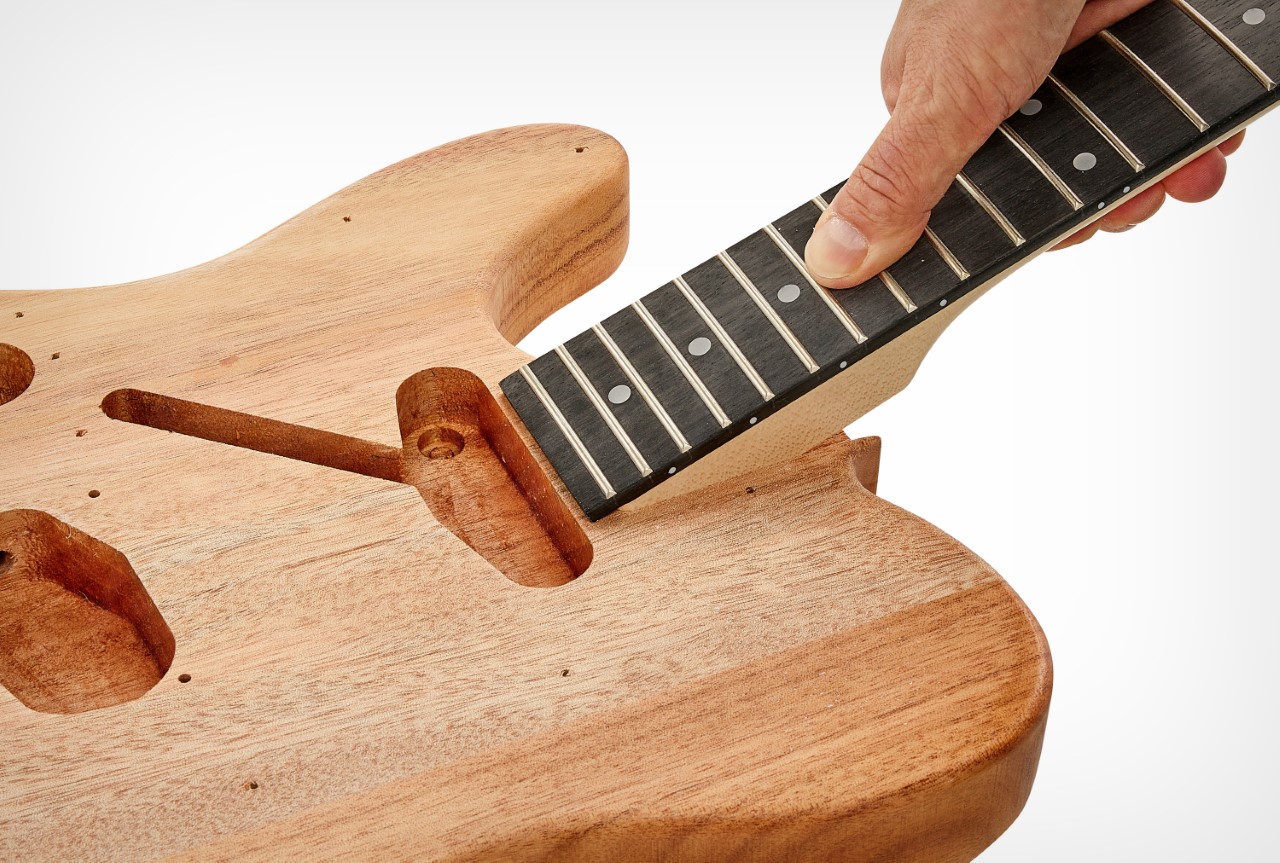
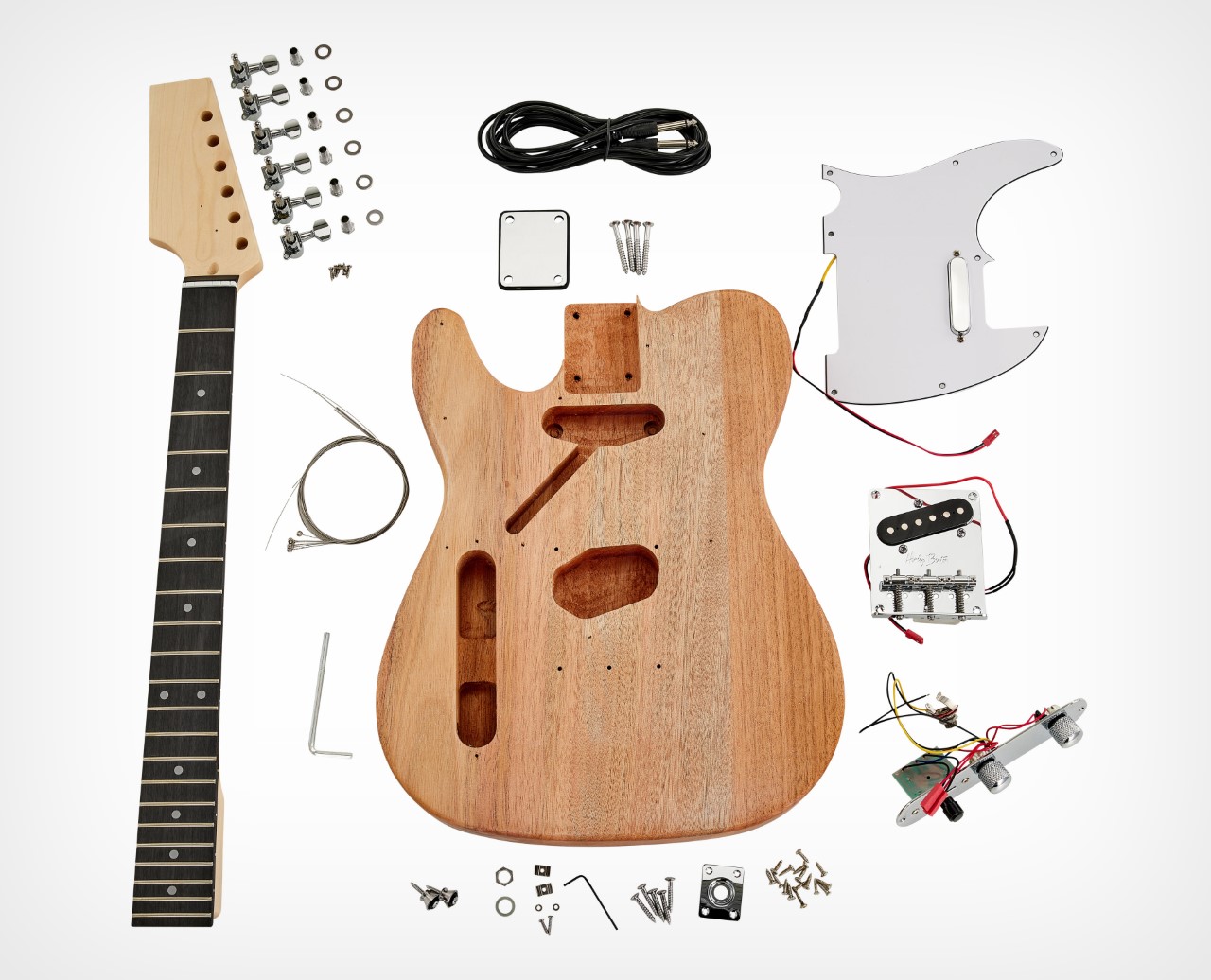
Each DIY kit is meticulously curated to include all the essential components required to build a complete instrument. From strings to pickups, body, and more, these kits are designed to offer a seamless and satisfying building experience. The standard Rengas body, with variations in wood color, is accompanied by maple necks, providing a sturdy foundation for creativity. Musicians can choose to paint the body or leave it in its natural state, with the added convenience of pre-prepared routing for pickups, tuners, bridge, and electronics.

Harley Benton recognizes that true creativity lies in customization. The kits come with bodies and necks finished with a wood sealer, facilitating easy application of lacquer for those who wish to add a personal touch to the aesthetics. The square model, for instance, comes with 22 frets, one volume and one tone control, a three-way switch, a Tune-O-Matic bridge, and two humbuckers, offering versatility and the potential for musicians to craft their unique sound.

There’s a special connection that comes with creating something with your own hands. Building a guitar from scratch provides not only a sense of accomplishment but also a deeper understanding and appreciation for the instrument. When musicians invest time and effort into crafting their guitars, they naturally develop a stronger bond with their creations. This hands-on experience allows them to see every inch of their instrument, fostering a sense of pride and ownership.

As someone who has owned a guitar since the age of 15, I understand the evolving relationship one has with their instrument. The idea of having a DIY guitar resonates deeply with me. I believe that if I had embarked on the journey of building my own guitar, I would have treasured it even more. The process of creating something from scratch adds a layer of intimacy that goes beyond the joy of playing; it becomes a testament to one’s creativity and craftsmanship. However, it may also leave room for some errors.

While the kits provide a solid foundation, it is the individual touch and craftsmanship that will make each guitar truly one-of-a-kind. Whether it’s the choice of color, the style of finish, or the selection of pickups, the creative journey of building a DIY guitar allows players to develop a deeper connection with their instrument. Each scratch, mark, and detail tells a story, making the guitar a unique reflection of the musician behind it.

Harley Benton’s DIY guitar kits are more than just a collection of components; they are a gateway to a world of musical creativity and self-expression. By providing musicians with the tools and guidance to build their own instruments, Harley Benton encourages a hands-on approach to music that goes beyond playing notes on a fretboard. These kits represent a bridge between the technical and artistic aspects of music, allowing musicians to shape not only their sound but also the physical embodiment of their musical journey.

The post Harley Benton Introduces DIY Kits To Personalize Your Guitars first appeared on Yanko Design.

Walmart says it’s no longer advertising on X

Walmart has seen enough from X. The retailer, America’s single biggest employer and largest company by revenue, told Reuters on Friday it’s no longer advertising on the platform formerly known as Twitter. The departure follows owner Elon Musk amplifying antisemitic posts and flinging expletives at fleeing advertisers. “We aren’t advertising on X as we’ve found other platforms to better reach our customers,” a Walmart spokesperson told Reuters.

Walmart’s exit adds to a growing list of companies that have pulled ads from the platform. Apple, Disney, IBM, Comcast and Warner Bros. Discovery are among the businesses no longer buying ads on X. A group of advertisers told The New York Times on Thursday their temporary pauses will likely become permanent. “There is no advertising value that would offset the reputational risk of going back on the platform,” Lou Paskalis, CEO of marketing consultancy AJL Advisory, told the paper.

X’s former advertisers had no shortage of reasons to jump ship. Musk’s latest series of self-inflicted wounds began when the billionaire appeared to endorse and amplify a post falsely claiming Jewish communities were stoking hatred against white people. Musk replied to the user who spewed the racist “Great Replacement” conspiracy theory, saying their comments reflected “the actual truth.”

NEW YORK, NEW YORK - NOVEMBER 29: C.E.O. of Tesla, Chief Engineer of SpaceX and C.T.O. of X Elon Musk takes the stage during the New York Times annual DealBook summit on November 29, 2023 in New York City. Andrew Ross Sorkin returns for the NYT summit for a day of interviews with Vice President Kamala Harris, President of Taiwan Tsai Ing-Wen, C.E.O. of Tesla, Chief Engineer of SpaceX and C.T.O. of X Elon Musk, former Speaker of the U.S. House of Representatives Rep. Kevin McCarthy (R-CA) and leaders in business, politics and culture.  (Photo by Michael M. Santiago/Getty Images)
Michael M. Santiago via Getty Images

Watchdog group Media Matters then published a report showing ads from well-known brands placed next to antisemitic content. X responded by suing the organization, accusing it of “knowingly and maliciously [manufacturing] side-by-side images depicting advertisers’ posts on X Corp.’s social media platform beside Neo-Nazi and white national fringe content.”

Musk’s attempt to smooth things over only made things worse. After apologizing for amplifying the antisemitic content at The New York Times’ DealBook event, he told advertisers backing off of the platform to “Go fuck yourself.” His company now potentially stands to lose $75 million.

Walmart employs around 1.6 million people in the US. The retailer made $611 billion in revenue in the 2023 fiscal year.

This article originally appeared on Engadget at https://www.engadget.com/walmart-says-its-no-longer-advertising-on-x-215940504.html?src=rss

This Cadillac Concept looks like a Wind Tunnel Test brought to life

The purpose of the wind tunnel test is to determine how air flows around a speeding object. It’s an indicator of overall aerodynamics, but with the test, you also get to visually plot how air bends to accommodate your moving vehicle, and how it regathers once it gets to the back. Although mainly a function-driven exercise, it’s also rather pretty to look at, and it looks like the kind of aesthetic Seongmin Kim was going for while designing the Cadillac A-RROW, a conceptual car that’s exterior is dominated by continuous lines.

Designer: Seongmin Kim

Look at the car and you instantly notice how dominant these straight continuous lines are. They stretch from the front to the back, wrapping the top and sides, but not defining their surfaces entirely. The car still has its own character in between those lines, which looks beautiful, but there’s something exhilarating about the A-RROW’s design, and that probably stems from the fact that it looks like it’s in movement even when it’s standing still, giving it a sense of speed.

“I was deeply moved by the beauty of the continuous line,” mentions Seongmin. “The lines seemed to represent the past and the future, the universe and the flow of existence. They reminded me that they contain the flow and change of time, and that they harbor infinite possibilities.”

Envisioned as a futuristic EV, the car treads into luxury territory with its gorgeous design and swooping silhouette. It sports a stunning panoramic windscreen that arches all the way from the front to the rear, covering even the sides to create a bubble-like cockpit for the driver and the lucky passenger! The metallic paint job, and LED-strip headlights and taillights enhance the automobile’s futurism, and let’s just say that I wish more car manufacturers turned their branding logos into glowing light patterns!

The post This Cadillac Concept looks like a Wind Tunnel Test brought to life first appeared on Yanko Design.
The Game Awards raises an old question: What does indie mean?

The Game Awards got it wrong this year. One of the titles nominated for Best Independent Game, Dave the Diver, was produced by Nexon, one of the largest video game studios in South Korea. No matter how hard you squint, it is not indie. Dave the Diver is an excellent pixel-art game about deep-sea fishing and restaurant management, but it was commissioned and bankrolled by Nexon subsidiary Mintrocket, with billions of dollars and decades of experience at its back.

When The Game Awards nominees were announced on November 13, fans were quick to point out the error, and the recurring debate over what “indie” means was reignited. Taehwan Kim, Nexon’s overseer of Mintrocket, weighed in on November 14, saying Dave the Diver “may look like an indie, but it's not necessarily the case.” The official tweet listing the nominees for Best Independent Game now carries a reader-generated context tag reading, “Dave the Diver is not an indie game. Mintrocket, the game's developer, is a subsidiary of Korea's biggest game company Nexon. They are not independent in any sense of the word.”

Dave the Diver
Nexon

A discussion around the definition of “indie” bubbled up throughout November, but it raised more questions than it answered. One common conclusion was that the media outlets who voted Dave the Diver into the independent category were fooled by its pixel art, a style that’s associated with indie games. During a live Q&A on Twitch on November 26, The Game Awards organizer Geoff Keighley argued that “independent” was a broad term with an unknowable definition, before essentially saying Dave the Diver’s inclusion in the indie category was the jury’s fault.

Specifically, Keighley said the following: “It’s independent in spirit and [it’s] a small game with a, I don’t know what the budget is, but it's probably a relatively small-budget game. But it is from a larger entity, whereas there are other games on that list that are from much smaller studios. Even like Dredge I think is published by Team17, so is that independent or not because you have a publisher? It’s a really complicated thing to figure out and come up with strict rules around it, so kinda we let people use their best judgment. And you can agree or disagree with the choices, but the fact that Dave the Diver was on that list meant that, out of all the independent games the jury looked at, or what they thought were independent games, that was one of the top five they looked at this year.”

The jury comprises 120 media outlets (Engadget has traditionally been one of these, but we did not participate in voting this year and look what happened), so Keighley is chalking the mistake up to mass hysteria and moving on. Meanwhile, there’s still little consensus on what constitutes an indie game, at The Game Awards or elsewhere.

Dave the Diver
Nexon

I’ve reported on video games for 13 years and indies are a central theme of my coverage. I ran The Joystiq Indie Pitch back in the day, and I’ve made a concerted effort to write about smaller games from creators working outside of the mainstream machine, because these are the experiences that speak to me personally. The indie scene is the source of the industry’s magic. This isn’t just a debate about language — “indie” is a distinction that identifies which games and teams need outside support to survive and expand on their innovations. Understanding the label can help players make decisions about where to spend their money, the lifeblood of any game-development studio.

All that to say, the debate over the definition of “indie” is not new, but it is constantly changing, and it’s something I’ve spent a lot of time contemplating. So, I’m here to offer guidance on the question of what makes an indie game or studio indie. It is a weirdly complicated topic and my approach is one of many, but the loose framework I use could help resolve some common, recurring arguments. 

Basically — it’s all about the system, man.

I’m joking, but also I’m not. Generally, when I’m trying to decide whether something is actually indie, I rotate through three questions:

  1. Is the team on the mainstream system’s payroll?

  2. Is the game or team owned by a platform holder?

  3. Do the artists have creative control?

The first question is about identifying where a studio’s money is coming from and what kind of support a game has outside of sales. If a team is wholly owned by another company of any size, it is not indie. We’re not talking about publishing deals; this opening question is about acquisitions or subsidiaries of bigger studios. Dave the Diver is a prime example here — it’s developed by Mintrocket, a subsidiary of Nexon that was created just to develop more contained, experimental games for the publisher. Dave the Diver is definitely not indie, and we’re only on question one.

The second query feeds into the first, and it’s helpful in making fine distinctions about games that exist in gray areas. What about something like Cyberpunk 2077? It’s a big-budget game built by CD Projekt RED (CDPR) — a studio that, at first glance, seems like it could be indie. However, there are two factors that take it out of the running for me. First, CD Projekt, the umbrella organization that supports CDPR’s game-making, is a publicly traded company with shareholders and a board to answer to. Second, CD Projekt is the owner of GOG, a distribution hub that allows the studio to sell its own games and DLC outside of Steam and the Epic Games Store. This ability to sell directly to players at massive scale takes CD Projekt out of the indie realm. Generally, companies with the most influence and money are console makers and platform holders like Valve, Xbox, PlayStation, Epic Games, Ubisoft, EA, and, yes, CD Projekt. They are the AAA system, and anything they own is not indie.

Dave the Diver
Nexon

Lastly, on to publishers. Sorry, Keighley, but securing a publisher has very little to do with whether a game is indie nowadays. We’re blessed in 2023 to have a thriving indie industry constantly pushing against the AAA complex with different goals, more diverse voices and a broader sense of innovation — and publishing is a big part of this system. Today, indie-focused publishers (of which there are many) tend to include clauses that protect a developer’s creative vision, preventing the larger company from interfering with artistic decisions and keeping the game indie to the core. Once upon a time, it might’ve made sense to only consider self-published games indie, but that era is long gone.

The indie scene has evolved massively since the early 2010s, when games like Braid, Super Meat Boy and Fez were carving out the market’s modern form. Back then, self-publishing was all the rage for independent developers because it was often their only option, and as a result there were more distinct lines between AAA, AA and indie games. Devolver Digital found its first breakout hit as an indie publisher with Hotline Miami in 2012, and that’s around the time the floodgates opened. In 2014, as the industry’s largest companies started funding and publishing programs for them, the number of indie games skyrocketed across platforms including Steam (remember Greenlight?), the App Store, Xbox, PlayStation and Ouya (RIP).

Today, indie games come standard on every console. There are multiple indie-focused publishers, including Devolver, Annapurna Interactive, Panic, Raw Fury, Team17 and Netflix, and most of them offer complete creative freedom as a main selling point. Meanwhile, platform holders like Sony and Xbox are hungry to sign distribution deals with developers of all sizes in an effort to score exclusives and pad their streaming libraries. It’s the most stable (and crowded) the indie scene has ever been. Having a publisher has no bearing on whether a game is indie.

Being owned by a publisher, however, changes everything (see question one). This is more of a concern than ever, as platform holders like Microsoft, Sony and Epic Games have recently been buying studios they like, no matter their size. Hell, even Devolver has dipped its toes in the acquisition pond recently — which, yeah, means those teams are no longer indie.

Dave the Diver
Nexon

The “indie” label is transitory. Certain studios can be indie but an individual game may not be, and plenty of small companies flow between states as they age and take advantage of growth opportunities. Bungie, for example, started out as an independent outfit, then it was absorbed by the AAA complex under Xbox, and then it broke free and was briefly indie again, before Sony pulled it back into the mainstream system’s cold embrace.

So, yeah, that's my way of determining if a game or studio is indie. By all means, take my triplet of questions and have fun trying to break the logic — it probably won't take long. There is no perfect structure here and there are plenty of outliers within my own framework. Alan Wake II, according to my questions, would be considered an indie game — but its developer, Remedy Entertainment, is a publicly traded company, which brings shareholders and a board of directors. This pushes the studio and the game into The System for me, but honestly, I’m still unsure about those labels as I type this. That’s OK — when all else fails, look inside your game-loving soul and ask, can this team exist without my support? (Alan Wake II, for what it’s worth, is a delicious and unique experience that’s worth playing, regardless of your feelings on Remedy's shareholders).

Does Mintrocket need my support to keep Dave the Diver and its creative team going? Probably not, and definitely not in the same way as Larian Studios, the independent developer and publisher of Baldur’s Gate 3. Baldur’s Gate 3 is an excellent, expansive 3D adventure from an indie studio and it’s up for Game of the Year at The Game Awards, but it was snubbed in the Best Independent Game category. Meanwhile, Dave the Diver, a cute title backed by billions of dollars, is up for the indie award, but not Game of the Year. It seems like The Game Awards jury made the classic mistake of seeing pixel art and immediately calling it indie. That’s an unforced error, but it reveals one point where we can all agree:

Indie is not an aesthetic.

This article originally appeared on Engadget at https://www.engadget.com/the-game-awards-raises-an-old-question-what-does-indie-mean-205211035.html?src=rss

Google’s new AI experiment composes abstract musical clips inspired by instruments

Google’s new generative AI experiment lets you create music “inspired by” over 100 instruments worldwide. Instrument Playground starts by asking for a simple prompt containing a musical instrument’s name, optionally preceded by an adjective like “upbeat,” “strange” or “gloomy.” It will then spit out a 20-second audio clip as a starting point to compose (often extremely offbeat or abstract) music that may or may not include the sound of the specific instrument you entered.

Simon Doury, an Artist in Residence at Google Arts & Culture Lab, designed the experiment. It taps into Google’s MusicLM, a text-to-AI tool it made available to the public in May.

Instrument Playground invites you to “choose one of over 100 instruments from around the world you’d like to play,” suggesting some lesser-known to Americans like the veena from India, dizi from China or mbria from Zimbabwe. Meanwhile, prefixing your instrument prompt with an adjective lets you suggest styles like “moody,” “happy” or “romantic.”

The experiment works less literally than you might expect. For example, “angry tuba” doesn’t generate the aggressive brass solo you’d expect. Instead, it sounds more like a synthesized pipe organ with tuba aspirations. Similarly, “strange didgeridoo” came out like an ominous section of a Hans Zimmer score. The results seem like abstract compositions with layers of sound that (sort of) capture the feeling — more than the specific sound — of the prompt.

It also rejects some adjectives for inexplicable reasons. When I enter “quirky” or “psychedelic,” an error pop-up tells me it doesn’t allow prompts referencing specific artists.

Once the experiment generates a clip you like for a starting point, you can choose from “Ambient,” “Beat” and “Pitch” to control different aspects of the composition, turning it into something more uniquely yours. If you want to add more instruments (or whatever sounds it makes in response to instrument-based prompts), an advanced mode opens a sequencer to layer and loop up to four tracks for your oddball musical masterpiece. Finally, you can download a .wav file of your track once you’re happy with it.

Google included the following holiday-themed example to inspire you to get started. If that looks like something you want to play with, you can visit Instrument Playground and log in with your Google account to begin composing.

This article originally appeared on Engadget at https://www.engadget.com/googles-new-ai-experiment-composes-abstract-musical-clips-inspired-by-instruments-203732054.html?src=rss

What did an iPhone camera do to this poor woman’s arms?

A woman was photographed standing in front of two mirrors with an iPhone camera, but the actual photo shows three completely different arm positions. The arms are in different locations in mirror number one, mirror number two and in actual real life. Is it Photoshop? Is it a glitch in the Matrix? Did the woman take a 25-year trip inside of Twin Peak’s black lodge? No, it’s just a computational photography error, but it still makes for one heck of an image.

It all comes down to how modern smartphone cameras deal with photography. When you click that camera button, billions of computational operations occur in an instant, resulting in a photo you can post online in hopes of getting a few thumbs up. In this case, Apple’s software didn’t realize there was a mirror in the shot, so it treated each version of the subject as three different people. She was moving at the instant the photo was taken, so the algorithm stitched the photo together from multiple images. The end result? Well, you can see it above.

Smartphone camera software always pulls from many images at once, combining at will and adjusting for contrast, saturation, detail and lack of blur. In the vast majority of cases, this doesn’t present an issue. Once in a while, however, the software gets a tad bit confused. If it was three different people, instead of one with a mirror, each subject would have been properly represented.

This is something that can actually be recreated by just about anyone with an iPhone and some mirrors. As a matter of fact, there’s a TikTok trend in which folks do just that, making all kinds of silly photos and videos by leveraging the algorithm's difficulties when separating mirror images from actual people.

This article originally appeared on Engadget at https://www.engadget.com/what-did-an-iphone-camera-do-to-this-poor-womans-arms-201507227.html?src=rss

Meta’s apps are still promoting child predation content, report finds

Meta is failing to stop vast networks of people using its platform to promote child abuse content, a new report in The Wall Street Journal says, citing numerous disturbing examples of child exploitation it uncovered on Facebook and Instagram. The report, which comes as Meta faces renewed pressure over its handling of children’s safety, has prompted fresh scrutiny from European Union regulators.

In the report, The Wall Street Journal detailed tests it conducted with the Canadian Centre for Child Protection showing how Meta’s recommendations can suggest Facebook Groups, Instagram hashtags and other accounts that are used to promote and share child exploitation material. According to their tests, Meta was slow to respond to reports about such content, and its own algorithms often made it easier for people to connect with abuse content and others interested in it.

For example, the Canadian Centre for Child Protection told the paper a “network of Instagram accounts with as many as 10 million followers each has continued to livestream videos of child sex abuse months after it was reported to the company." In another disturbing example, Meta initially declined to take action on a user report about a public-facing Facebook Group called “Incest.” The group was eventually taken down, along with other similar communities.

In a lengthy update on its website, Meta said that “predators are determined criminals who test app, website and platform defenses,” and that it had improved many of its internal systems to restrict “potentially suspicious adults.” The company said it had “expanded the existing list of child safety related terms, phrases and emojis for our systems to find” and had employed machine learning to uncover new search terms that could be potentially exploited by child predators.

The company said it’s using technology to identify “potentially suspicious adults” in order to prevent them from connecting with each other, including in Facebook Groups, and from seeing each other’s content in recommendations. Meta also told The Wall Street Journal it “has begun disabling individual accounts that score above a certain threshold of suspicious behavior.”

The social network is facing a growing backlash over its handling of child safety. The Wall Street Journal also recently reported that Instagram Reels recommendations are serving content aimed at people who “might have a prurient interest in children.” Dozens of states recently sued Meta for allegedly harming the mental health of its youngest users, and failing to keep children younger than 13 off its apps. Mark Zuckerberg will no doubt face intense questions about these allegations next month when he appears at a Senate Judiciary Committee hearing focused on child safety online. His counterparts from TikTok, Snap, X and Discord are also slated to testify.

Meanwhile, Meta is also facing new pressure from regulators abroad. European Union officials are using a new law to probe the company’s handling of child abuse material, following The Journal’s report. The company has been given a December 22 deadline to turn over data to the bloc.

This article originally appeared on Engadget at https://www.engadget.com/metas-apps-are-still-promoting-child-predation-content-report-finds-195357362.html?src=rss

A big Analogue Pocket restock is coming, but cart adapters are delayed again

The acclaimed Analogue Pocket multi-system portable handheld console is a bona fide hit. It’s so popular, in fact, that it's been sold out for weeks. Have no fear, would-be purchasers. Analogue just announced a major restock. The consoles will be available to buy on December 4 at 11AM ET. The company promises that these orders will arrive in time for the holidays.

This restock only applies to the original black and white designs, and not those nifty limited edition colors, most of which remain sold out. If you miss the window on December 4, the company is doing another restock on December 8 at 11AM ET, but those won’t ship until February.

Analogue also announced a new operating system for the console, set to arrive in the next few days. Analogue Pocket OS v.1.2 fixes a bunch of bugs, adds support for new controllers, updates the music-making app Nanoloop and allows for new openFGPA developer tools. That’s just the first update. Analogue Pocket OS v2.0 arrives before the end of the month and gives third-party developers access to the original display modes, like the iconic Game Boy aesthetic, among other features. These updates follow last year’s OS v1.1.

It’s not just the Pocket getting some love. The Analogue Duo is finally shipping on December 11, three years after the original announcement and over six months after pre-orders went live. The Duo is an all-in-one system that promises to play every TurboGrafx-16/PC Engine title, even Bonk’s Adventure, a game that gave me no end of stress in childhood for obvious name-related reasons. The Duo plays both cartridges and compact discs. It’ll even run games that originally required the Arcade RAM add-on included as part of the Japan-only SuperGrafx console. Again, Analogue promises deliveries by the holidays.

The company’s also selling a limited-edition white dock for the Pocket, which also goes on sale December 4. However, this freshly-hued dock is more expensive than the original black model, at $130 instead of $100.

It’s not all good news for fans of retro gaming. Analogue announced a delay for the Pocket Adapter Set until February. This set adds new consoles to the lineup, so the system will be able to play TurboGrafx-16 cartridges, Neo Geo Pocket Color cartridges and Atari Lynx carts.

This article originally appeared on Engadget at https://www.engadget.com/a-big-analogue-pocket-restock-is-coming-but-cart-adapters-are-delayed-again-191423716.html?src=rss

Telegram now offers all users limited transcriptions of voice messages

Telegram has released a major update for its iOS and Android apps that includes an array of new and upgraded features. Since last year, Telegram Premium users have been able to get transcriptions of voice and video messages and now the platform is opening up that feature to everyone, albeit on a more limited basis. Free users will be able to convert two messages per week into text. Just hit the →A icon on a voice message and you'll get a text version of the memo. Telegram notes that it's rolling out this feature gradually, so you may not have access to it right away.

Elsewhere, Telegram is looking to improve channel discovery. Whenever you join a channel, you'll see a selection of similar public channels. Telegram is basing these recommendations on similarities in subscriber bases. You'll be able to view these recommendations at any time by going to a channel's profile.

A circular icon shows a group of friends looking down and waving at a camera lens. The image is overlaid on top of a windy beach in a mobile app. Text reading
Telegram

You can now include a video comment or reaction with a story. You'll have the ability to resize this video message and move it around the screen. You can add a video message, a feature that takes a page out of the TikTok playbook, by holding down the camera icon in the story editor to capture a selfie clip. You can adjust the volume by holding a finger on the video track at the bottom of the screen.

Reposting someone else's story is now a cinch too. Just tap the share button on a story, then you'll have the option to repost it. Only stories that have their visibility set to public can be reposted. You can add a video comment to reposted stories too.

Elsewhere, Premium users can set up their profiles with unique color combos, everyone can apply custom wallpapers to each individual chat (Premium users can set the same wallpaper for both participants) and channel admins can customize the emoji that appear as reactions. In addition, any Telegram app can now detect a coding language in messages and highlight the syntax with proper formatting.

This article originally appeared on Engadget at https://www.engadget.com/telegram-now-offers-all-users-limited-transcriptions-of-voice-messages-185114448.html?src=rss