Next-gen MEMS ultrasonic solid-state earbud drivers will deliver the bass

While MEMS drivers may be the next big thing in true wireless earbuds, the first models with the solid-state components still require a hybrid setup. These products pair a MEMS speaker with a dynamic driver to ensure proper bass performance. The current-gen driver from xMEMS, a California-based company that develops the audio components, is called Cowell and it's already available in earbuds from the likes of Creative and Noble Audio

The next-gen MEMS driver is called Cypress, and while it won't arrive in new products until 2025, I got a chance to hear the difference been it and Cowell at CES 2024 here in Las Vegas — and it's quite striking. With Cowell, there's bass, but it's subdued and the emphasis is on the highs and the mids. It sounds great, on both complete products and reference designs, offering punchy highs, full mids and great clarity. With Cypress alone though, there's a blanket of warm, bassy low-end that really fills out the soundstage. It will be a massive improvement for what MEMS drivers are capable of doing for wireless earbuds. 

"We moved to a sound from ultrasound principle where we have ultrasonic modulation and demodulation to deliver 30 to 40 times greater low-frequency pressure for anti-noise generation for ANC earbuds, while still delivering all of the benefits of our solid state speakers," xMEMS vice president of marketing Mike Housholder explained. "Wide dynamic range, with excellent low-frequency performance for deep bass and noise cancellation."

xMEMS Cypress reference design with external electronics
Photo by Billy Steele/Engadget

Indeed, that 30 to 40 times louder bass response was clearly evident when on a Cypress reference design. The prototype was built to showcase the MEMS drivers on their own, without that secondary dynamic driver today's true wireless models require for bass. The results are the pristine clarity you'd expect in a send of high-end wireless headphones or even some audiophile-grade cans. The additional bass isn't loud and boomy, but instead it's warm and full, inviting you to stay and listen a while. And that I did: I had a hard time putting the Cypress prototype down even when I felt I'd overstayed my welcome. 

On the whole, MEMS drivers offer a host of benefits over coil speakers that should all lead to better audio quality in your earbuds. They're more efficient in terms of mechanical response, with faster speeds there contributing to increased detail and clarity — something I certainly noticed on the Noble Audio FoKus Triumph wireless earbuds. This model pairs Cowell with a 6.5mm dynamic driver, but the boost in fidelity in the mids and highs is apparent. And getting a set of earbuds with MEMS drivers doesn't mean you'll pay more. The two models Creative has already debuted are $130 and $150. The same will be true for upcoming products with the ultrasonic Cypress drivers, according to Housholder. 

"We see ourselves going to market first in flagship products," he said. "As with our current products, we really see the sweet spot for our products anywhere 150 and up, [which] is easily achievable day one. And then over time and over volume, getting down to that $100 price point."

xMEMS
Various MEMS drivers for IEMs and wireless earbuds
Photo by Billy Steele/Engadget

And that's really the big takeaway from me. For years, companies have offered true wireless earbuds with some of the features of more premium flagship models, but usually lacking the sonic performance of pricier options. With MEMS drivers, the audio quality is greatly improved in affordable models that are half the price of the top-of-the-line Sony or Sennheiser noise-canceling earbuds. And with Cypress, xMEMS can offer audio companies the ability to improve overall sound quality without having to raise prices. 

xMEMS has also developed what it calls a DynamicVent to relieve occlusion in sleep earbuds. The component can automatically open or close depending on if the buds detect ambient noise like a snoring spouse. When open, the DynamicVent offers a semi-open fit like AirPods, but when it's closed the ear will be completely sealed off. The open vent should also keep sounds of your own breathing or the earbuds rubbing against a pillow from disturbing your sleep. xMEMS is showing off the DynamicVent at CES in a set of reference sleep buds equipped with its Cowell MEMS drivers. 

We're reporting live from CES 2024 in Las Vegas from January 6-12. Keep up with all the latest news from the show here.

This article originally appeared on Engadget at https://www.engadget.com/next-gen-mems-ultrasonic-solid-state-earbud-drivers-will-deliver-the-bass-214131547.html?src=rss
I played Horizon Forbidden West inside Sony and Honda’s Afeela concept EV at CES 2024

A year since Sony Honda Mobility (SHM) announced its debut EV concept, the Afeela, the company is back at CES 2024 in Las Vegas to offer more details, more collaborations and a driving simulator.

The name of the concept vehicle hasn’t changed since last we saw it. What is new, however, is the car's ability to be driven around with a PlayStation controller. I didn’t get to do that — it was a stunt operated by one of the company's employees — but there was a DualSense controller involved in my demo.

So let’s begin where SHM left off. At last year’s CES 2023, Sony revealed the Afeela Concept EV, which packed in 45 cameras and an expansive “media bar” that spread across the vehicle's dash, showing a mix of car information, navigation, music players and more. The steering wheel was redesigned as a yoke so that the driver can better view that sumptuous dash. The company also further teased some mixed-reality tricks in collaboration with Epic Games.

The Afeela EV itself looks mostly the same as the prototype from last year, although it now has a substantial LiDAR bar above the windscreen that looks like a giant smartphone notch. The company says that the car will be available for pre-order in 2025 before going on sale in the US the following year.

At CES 2024, I got to step inside an Afeela, while an SHM representative gave me a tour of everything that’s so far been crammed into this concept vehicle.

Combining both Sony and Honda’s expertise, the Afeela will create its own noise cancellation bubble, apparently “tailoring the cabin for entertainment” using Sony’s Spatial Audio technology. According to SHM’s renders, there appear to be roughly 30 speakers, although that’s more than likely to change as the concept further evolves. A spokesperson added that over 42 sensors grace the Afeela’s initial spec sheet.

Sony Honda's Afeela EV hands-on at CES 2024
Photo by Mat Smith/Engadget

In one of the most surreal experiences I’ve had at CES, I also got to play Horizon Forbidden West on the Afeela's expansive dashboard display. No, there isn’t a PS5 baked into this concept EV — why not, though? — but a demonstration involving PlayStation’s long-running Remote Play feature. Sure, the Bluetooth connection to the controller was temperamental (CES is just hundreds of Bluetooth and Wi-Fi signals clashing), but conceptually, you get that it’s possible. The two screens for passengers sitting in the rear would also be able to display games, movies and more; however they were just dummy screens in this demo car.

SHM also announced during Sony’s CES show that it’s already teamed up with Microsoft to use its Azure OpenAI technology to create a “Mobility Personal Agent” — a conversational in-car virtual assistant for drivers and passengers alike.

It’s also working with Polyphony Digital, the company behind Gran Turismo, on a nebulous goal of developing vehicles that “fuse the virtual and the real, mainly in the area of human senses.” For now, that collaboration has resulted in an Afeela you can drive in Gran Turismo.

But it’s the new dash, combined with AR graphics overlays and that LiDAR notch, which intrigues me most. The EV will draw information and imagery from its sensors and create 3D models of the outside world. This can be used for frivolous things, like Godzilla-styled monsters on your dashcam feed and augmented reality games. Or more simply, rich, detailed overlays for navigation to nearby businesses and destinations.

While we weren’t driving the Afeela EV around Las Vegas, SHM tried to offer the next best thing: a car simulator made in collaboration with Epic Games (and what appears to be that Unreal Engine 5 Matrix demo). Steering around the virtual world, in an Aveela cockpit (in a moody black colorway, different from the light gray showroom car I sat in earlier), the digital wing mirrors also displayed the same highly realistic 3D world. The dash display then offered an AR overlay, showing vehicles, objects and pedestrians, flagging nearby hazards in red.

Sony Honda's Afeela EV hands-on at CES 2024

SHM is still putting a lot of its focus on developing its autonomous driving technology and advanced driver assistance systems, the latter are non-autonomous helper features, similar to Tesla’s Autopilot. With Qualcomm’s Snapdragon Ride SoC powering the concept vehicle’s advanced driving features, the Afeela could reach limited Level 3 autonomous driving capabilities. At that point (and we’re not there yet) a vehicle can manage most aspects of driving without any human intervention. A spokesperson added it would be capable of Level 2 Plus autonomous driving in urban settings. SHM also teased traffic monitoring through the sensors, detection for objects like traffic cones, and apparently, using what it calls a Vision Transformer that will work to detect environmental characteristics “in a broader perspective” — this could translate into predicting future traffic jams before you meet them or alternative driving routes.

The car will also utilize all those sensors more frivolously, to detect drivers' approach and open the door for them. The same sensors, including LiDAR and cameras, will guide the Afeela as it parks itself.

Many of us still wonder if SHM’s EV will ever exist as a consumer vehicle. The commitment to getting its car on roads by 2026 is still there, and while CES may be the perfect audience for the hype being served up, will car buyers think the same?

We're reporting live from CES 2024 in Las Vegas from January 6-12. Keep up with all the latest news from the show here.

This article originally appeared on Engadget at https://www.engadget.com/i-played-horizon-zero-dawn-inside-sony-and-hondas-afeela-concept-ev-at-ces-2024-205902922.html?src=rss

The $2,000 ASUS ZenScreen Fold solves the biggest issue with portable monitors

When I’m away from home and don’t have access to my big desktop displays, it feels like I’m missing a limb. Unfortunately, there’s a limit to how big a portable monitor can really be. After a certain point, it’s not going to fit in a reasonably sized bag. ASUS’s ZenScreen Fold solves that problem through the use of a bendy OLED panel. I had a chance to see it person while covering CES 2024 here in Las Vegas this week.

Measuring 17.3 inches across, the ZenScreen Fold is still a far cry from the 27-inch monitors I have at home, but it’s a huge step up from typical 14- or 15-inch portable displays. And thanks to the fact that you can bend it in half, it can collapse down to something not much larger than a hardcover book and just 0.38 inches thick. Though it is a bit heavier at two and a half pounds. It also comes with a handy travel case and, because its display is protected when closed, you should be able to toss it in a bag without worrying about damaging its soft plastic panel.

The display’s specs are more than decent too, as it boasts a QHD+ resolution (2,560 x 1,920), a gamut that covers 100 percent of DCI-P3 and VESA DisplayHDR True Black 500 compliance. That said, this shouldn’t come as a complete surprise as the ZenScreen Fold is based on the same basic panel as what ASUS used in the Zenbook 17 Fold.

The difference this time is that the panel is a slightly newer revision, so it’s a bit more durable. And, thanks to a redesigned hinge that creates a waterdrop-shaped fold, there’s even less of a crease — you have to look hard to see it. Even its kickstand is better than the one on ASUS’ bendy laptop, as it offers solid stability in either portrait or landscape. And for a portable monitor, there’s more than enough connectivity including mini HDMI, two USB-C ports and a 3.5mm audio jack.

Sadly, while ASUS may have made a big travel display that’s easy to carry around, this thing is really expensive at a cool $2,000. But if you want a portable monitor that gives you the most screen space in the smallest physical size, the ZenScreen may be it.

The ZenScreen Fold is expected to go on sale sometime in Q2. 

We're reporting live from CES 2024 in Las Vegas from January 6-12. Keep up with all the latest news from the show here.

This article originally appeared on Engadget at https://www.engadget.com/the-2000-asus-zenscreen-fold-solves-the-biggest-issue-with-portable-monitors-ces-2024-204009822.html?src=rss

25 gadgets from CES 2024 that you can buy right now

The best part about CES 2024 has been all of the cool product announcements. Many of these products are early in development, so not available for purchase. Some, however, are already on store shelves, allowing tech-crazed consumers to see what all the fuss is about. Here are some of the niftier items displayed at this year’s CES that are ready, willing and able to empty your bank account. These products range from cool smartphone accessories to gaming laptops and some items that simply defy description.

This article originally appeared on Engadget at https://www.engadget.com/25-gadgets-from-ces-2024-that-you-can-buy-right-now-202332730.html?src=rss

We checked out The World’s First “Aroma Speaker” at CES 2024

It projects audio as well as over 100 different unique scents. The creators, Aroma Join, say that developers can customize their own scents and use an SDK (scent development kit?) to create specific experiences that combine video with smell to make a much more immersive overall experience.

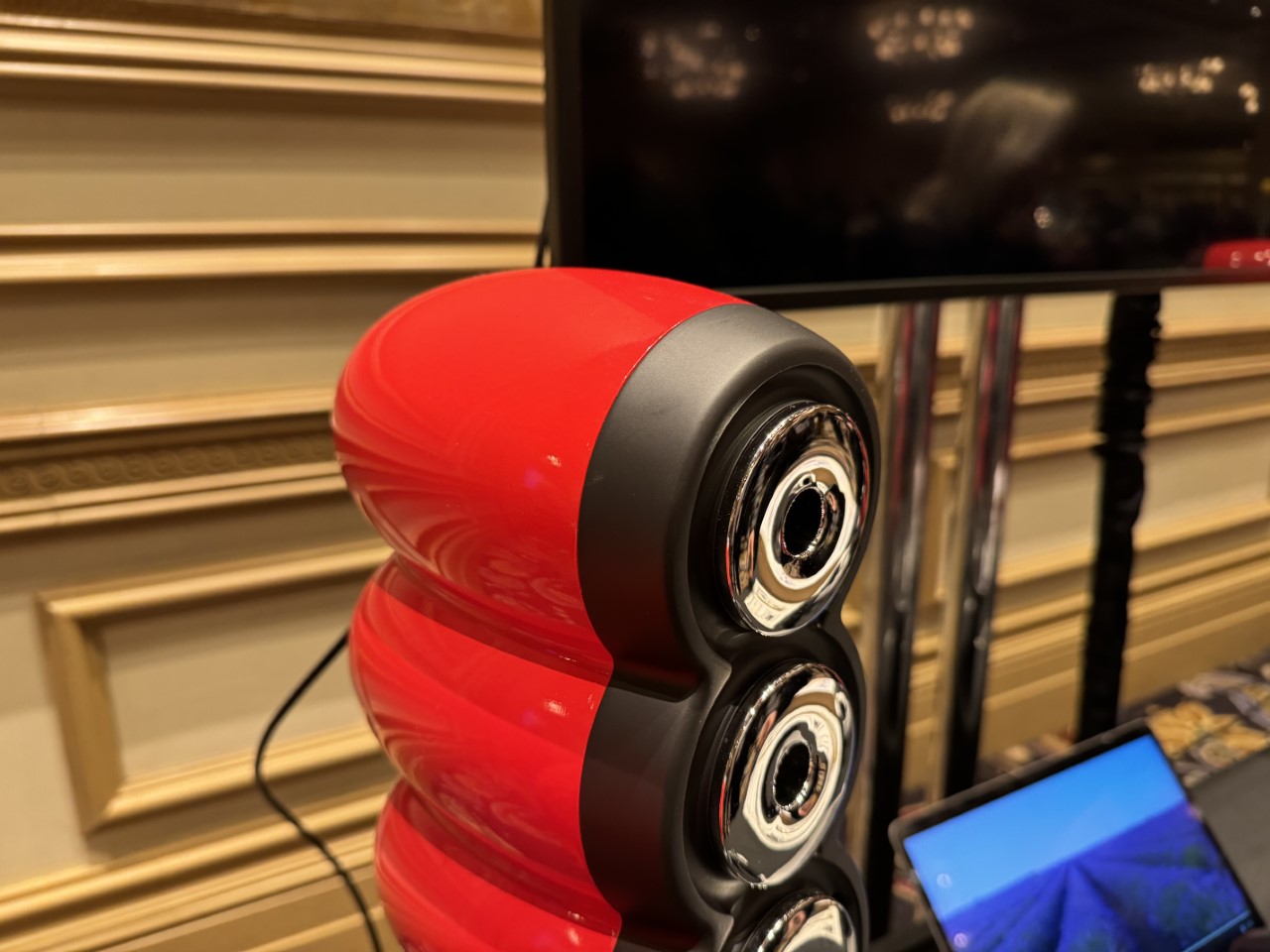
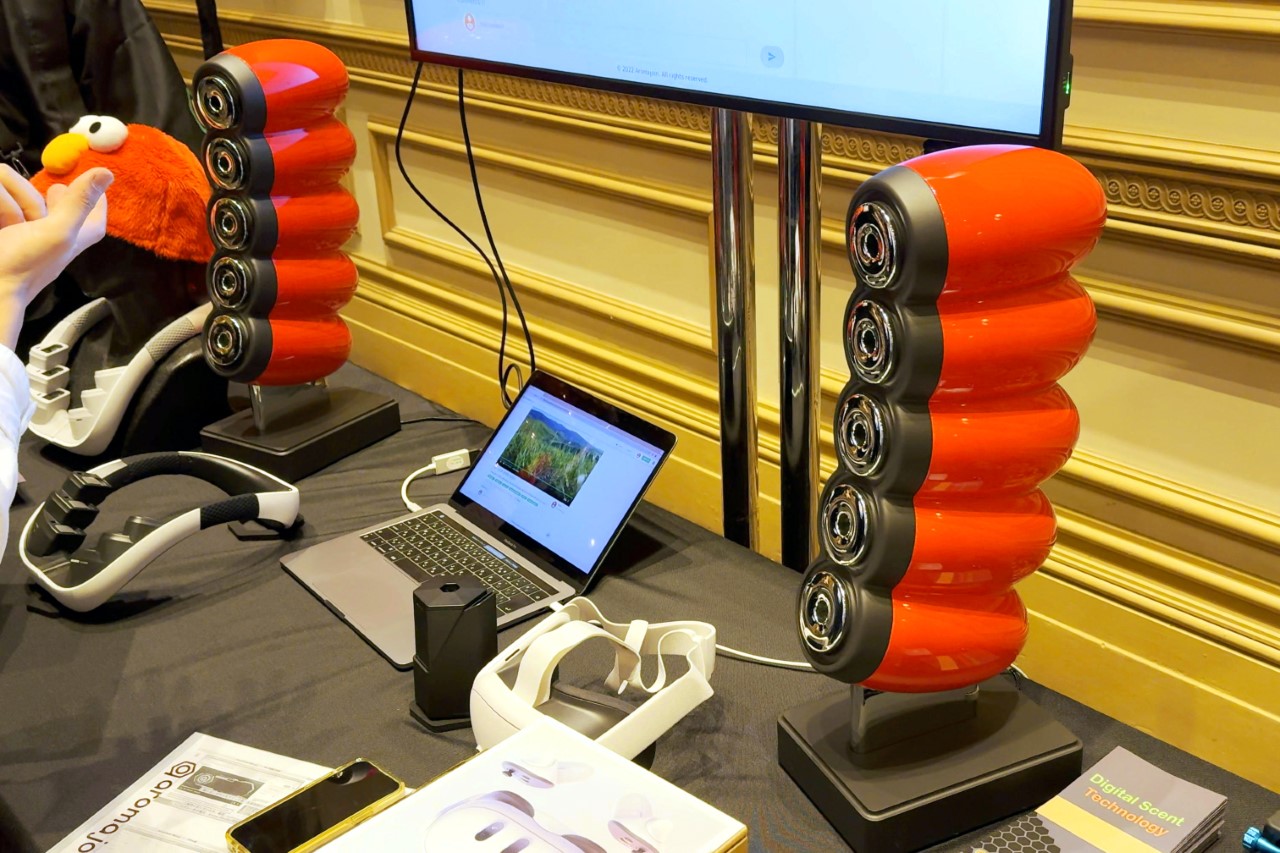
As I entered Showstoppers, I walked past the exhibitors, even past the food buffet (which didn’t have a smell, to be frank), but was stopped dead in my tracks when I smelled a distinct salted caramel scent coming from somewhere. I looked around and saw a sign that said “Digital Scent Technology” two meters away from me. At the booth sat two rather gorgeous glossy-red speakers, and a screen that displayed a looped video of different sceneries. The folks at Aroma Join were debuting their “Aroma Speaker 60” for the first time – a speaker capable of projecting both sound and scent up to distances of 6.5 feet.

Designer: AromaJoin

The metaverse, or at least its initial stages, has always focused on just three things – sight, sound, and touch. If you’re wondering why metaverse experiences (or spatial ones, for Apple lovers) aren’t highly immersive, it’s because your brain uses a combination of inputs from all your senses together. Leave out one or more, and the experience feels less believable… Designer Jinsop Lee has a very interesting TED Talk on this too. What the Aroma Speaker 60 does is plug that gap in a way. By shooting both audio as well as aromas, it subconsciously tricks your brain into believing what it sees. You’ll see a grassy field and feel more relaxed, even if you don’t know it. Or if you see food, your mind will make your tongue salivate.

Scent-firing devices have been around for a decade now, but if you listen to anyone who’s tried them, they’ll all tell you the same thing. The technology isn’t completely there yet. I stood alongside industry veteran Vincent Nguyen and his first reaction was “this isn’t like the stuff we’ve seen before”. The Aroma Speaker does a few things incredibly well. It hyper-targets an area and shoots scents really far (up to 6-7 feet). That’s enough to catch your attention even if you aren’t paying attention. The smells are distinct, powerful, and VERY dynamic… by which I mean when a scene on the TV or monitor chances, the old scent vanishes and a new scent appears almost instantly.

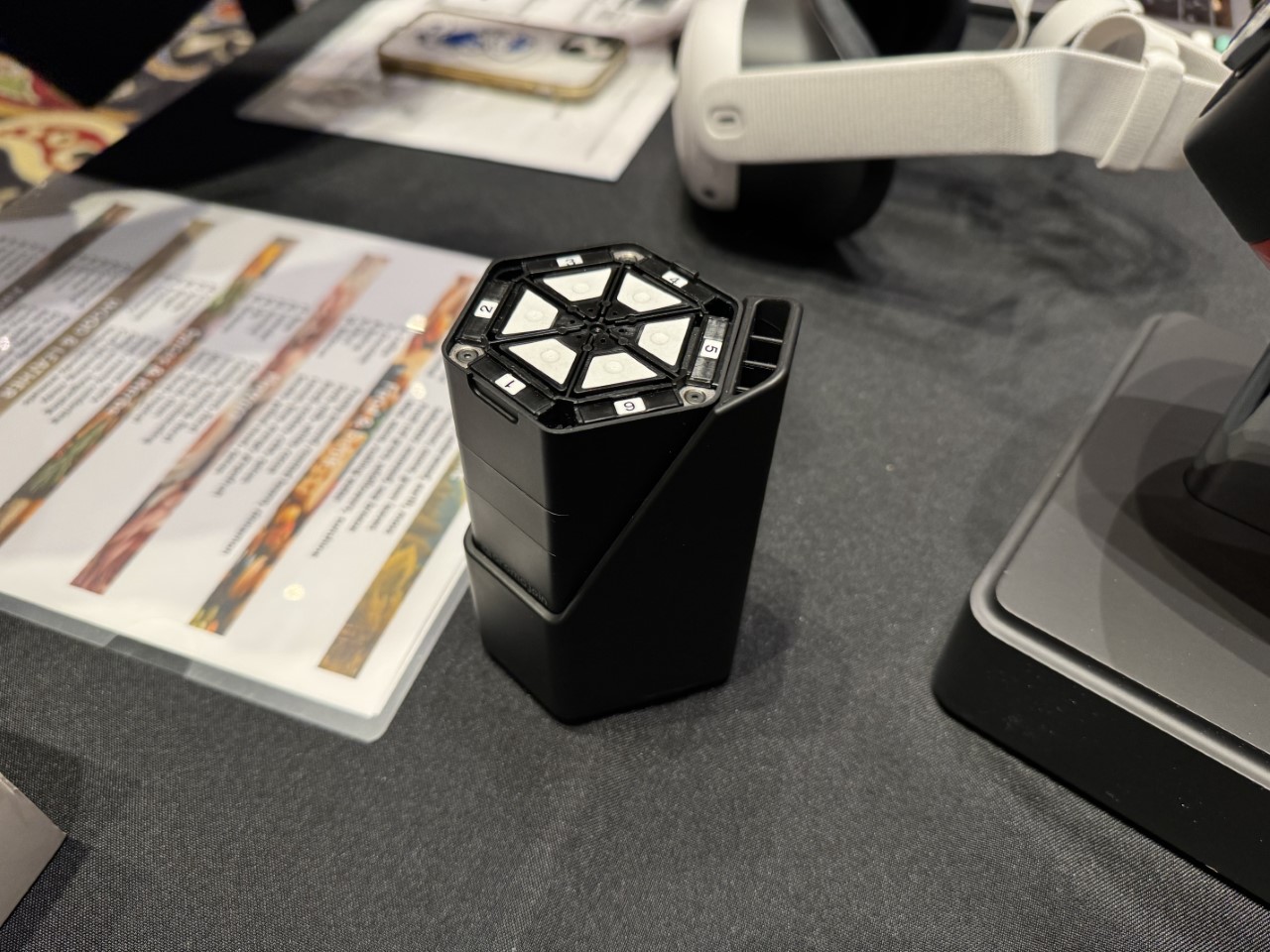
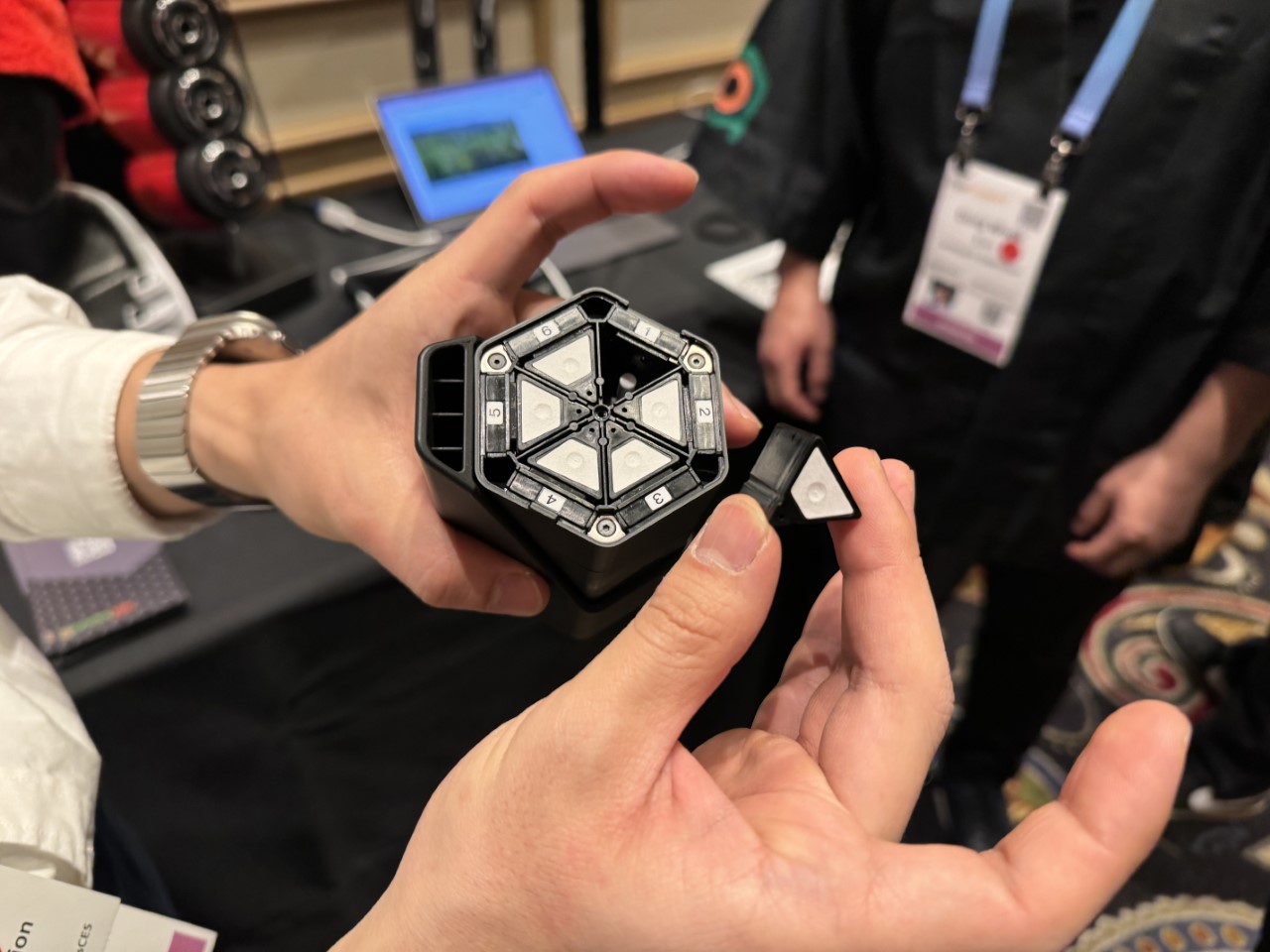
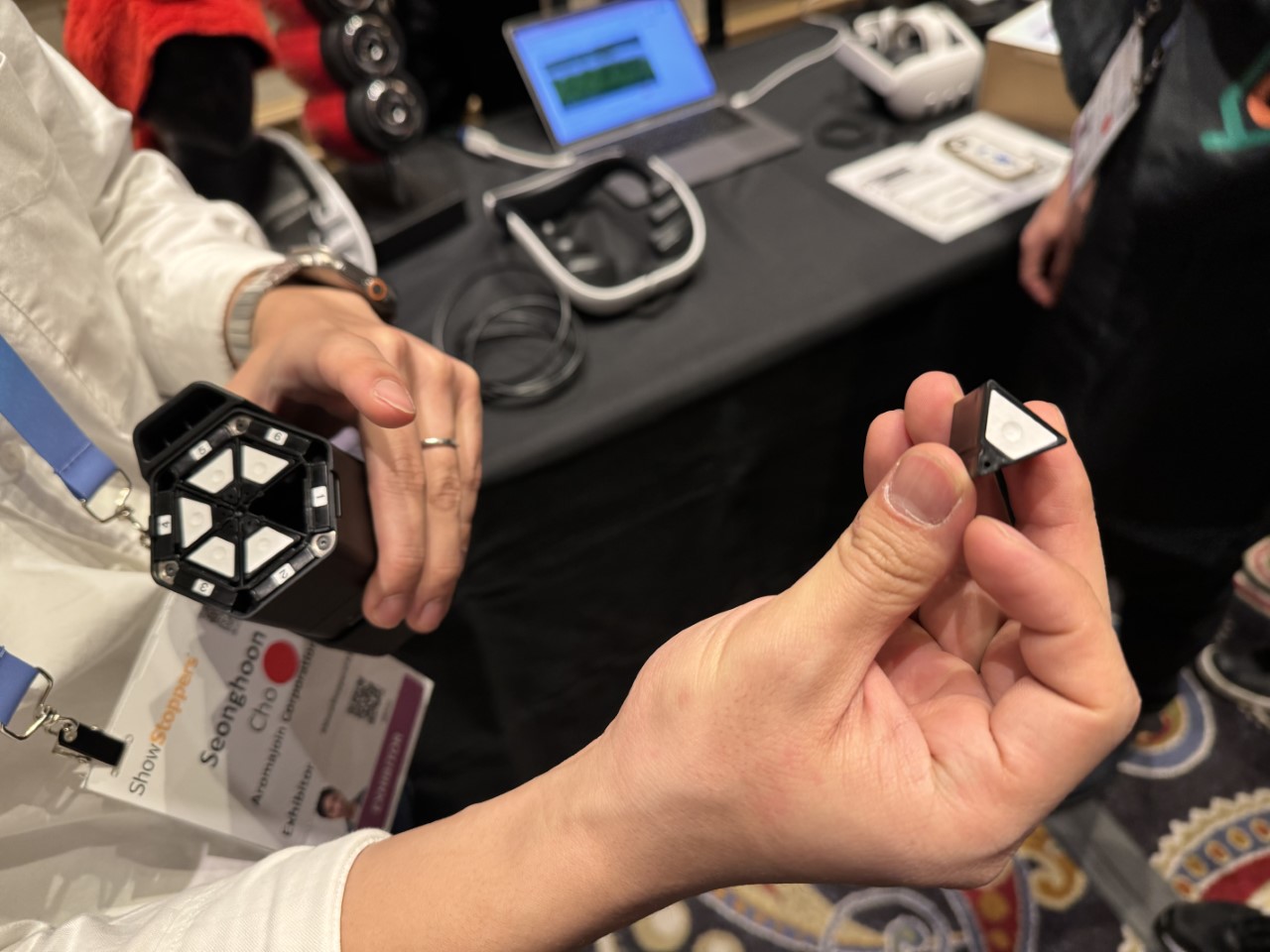
Although the technology is a bit of a black box (they won’t tell us how it works), it boils down to a set of aroma modules that sit in each individual speaker unit, totaling 10 modules in two speakers. Each module is equipped with 6 cartridges that have essential oils of some sort. The speaker (and the software on the laptop) use those 6 cartridges as the building blocks for scents, creating as many as 60 different distinct scents. Sure, the speakers fire audio too, but it’s the fragrances that really set it apart.

The folks at AromaJoin have figured out how to precisely blend these 6 base fragrances to create an entire gamut of aromas – both pleasant and unpleasant. The scented caramel aroma was almost too strong, but the floral aromas were wonderful, the speaker even generated a petrichor aroma as the laptop display showed an endless green field. The scene then switched to a polluted city and you could instantly smell the smoke. The fragrances weren’t a 100% exact (your mind can somewhat tell that they’re artificial), but they fell well within their ballpark.

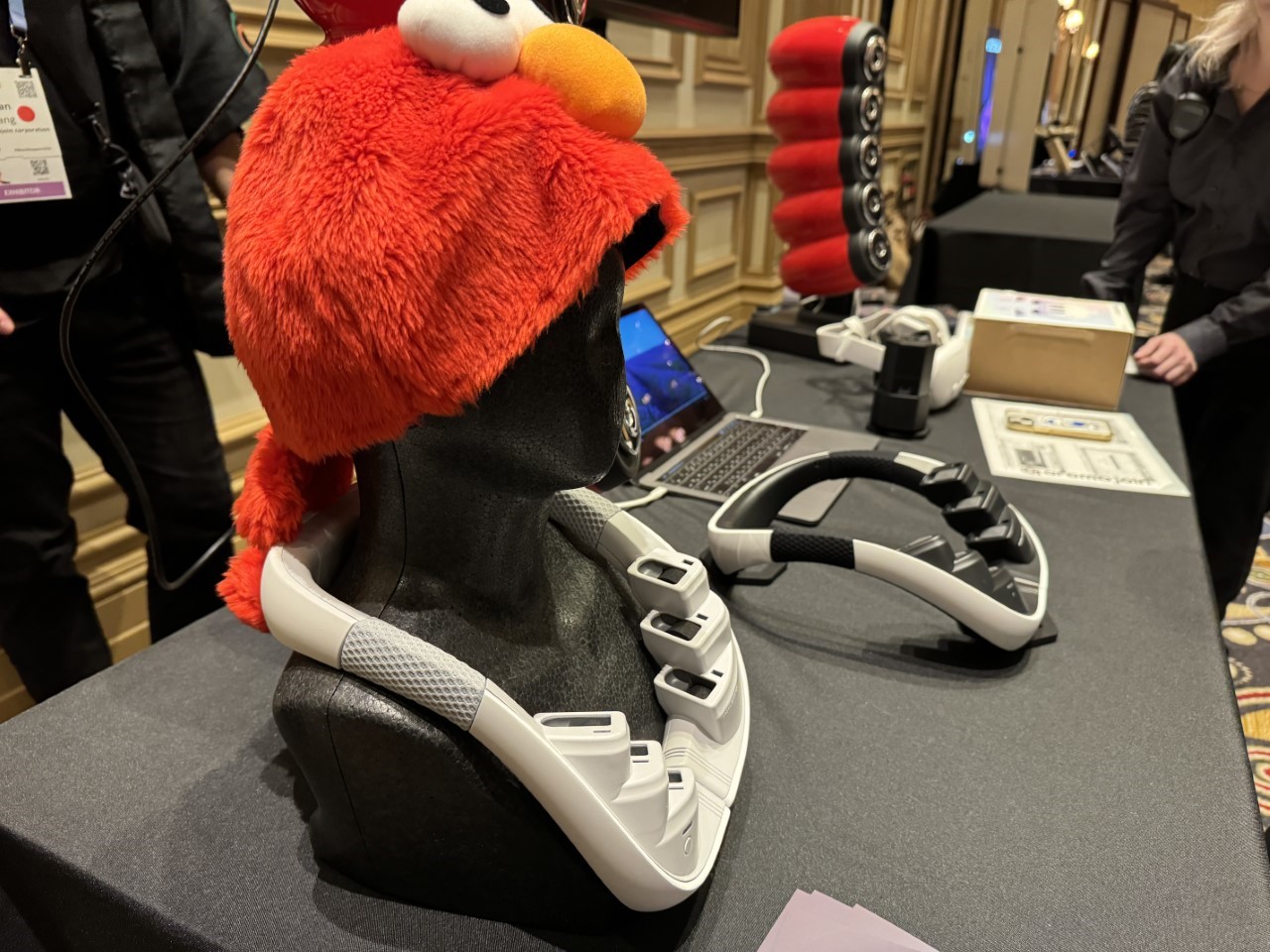
AromaJoin isn’t currently selling these speakers but is using them as a proof of concept to lure developers and marketers into building out the ecosystem. They’ve got an open-source app and SDK that allows people to build scent profiles for their video content, and with time, hopefully, AromaJoin will have an entire library that then makes the Aroma Speaker 60 a much more lucrative buy. Until that happens, the company IS selling its VR accessory, the Aroma Shooter Wearable 3, a neck-worn device that works in tandem with headsets like the Meta Quest 3 to help make the metaverse more immersive and multisensory.

The post We checked out The World’s First “Aroma Speaker” at CES 2024 first appeared on Yanko Design.

ChatGPT maker OpenAI launches GPT Store and a subscription tier for teams

OpenAI has rolled out its store for custom GPTs and a new ChatGPT subscription tier for smaller teams. The GPT Store allows developers and users to share and profit from their custom versions of the viral chatbot. Meanwhile, ChatGPT Team costs $25 to $30 monthly per user while offering data security and supporting longer queries.

GPT Store

OpenAI screenshot of the ChatGPT GPT Store. It highlights featured apps from All Trails, Consensus, Code Tutor and Books.
OpenAI

The GPT Store allows OpenAI to turn ChatGPT’s white-hot prominence in the tech world into a tollkeeper’s business model, taking a cut of revenue like in Apple’s App Store. Anyone can build and share GPTs — you don’t need coding experience — but creators must make a Builder Profile that shares their real name or points users to a verified website.

OpenAI says a revenue program for GPT creators is coming soon in Q1. “As a first step, US builders will be paid based on user engagement with their GPTs,” the company wrote, promising to provide more info as the program’s launch approaches. For now, GPT creators will have to settle for riding the hype train and hoping the terms are attractive.

ChatGPT Team

As OpenAI describes it, ChatGPT Team provides “a secure, collaborative workspace to get the most out of ChatGPT at work.” Unlike ChatGPT Enterprise, which was launched in August, the Team tier doesn’t require thousands of dollars or calls with the company’s sales team. Instead, anyone subscribed to ChatGPT Plus or Enterprise can join for $30 (when billed monthly) or $25 (annually) per month.

ChatGPT Team offers access to GPT-4 with a larger (32,000-token) context window for longer queries. In addition, subscribers get higher message caps, and (like with the Enterprise tier) OpenAI says it won’t train its models on ChatGPT Team subscribers’ data or conversations.

The Team tier also provides a “secure workspace,” including an admin console to manage seats. Team members on the plan can also create and share custom GPTs internally. Finally, OpenAI teases that ChatGPT Team subscribers will receive “early access to new features and improvements.”

This article originally appeared on Engadget at https://www.engadget.com/chatgpt-maker-openai-launches-gpt-store-and-a-subscription-tier-for-teams-195339463.html?src=rss

A Volkswagen with ChatGPT told me a story about dinosaurs at CES 2024

Earlier this week, Volkswagen announced plans to augment its in-car voice assistant IDA with ChatGPT. I'll admit that I initially didn't quite understand the point, but I got a chance here at CES 2024 in Las Vegas to hear about the vision for this integration from Cerence, the company that already powers the back-end of VW's voice assistant. As usual, it's a bit of a rough demo, because it's hard to exactly see how ChatGPT will help you out when you're on the road when you're instead sitting in a stationary car inside of a convention center. 

But conceptually, the idea behind bringing ChatGPT into a car is all about avoiding a "dead end" when you as IDA something, Cerence told us. Drivers don't need to do anything different — you just say "Hello IDA" or press the voice assistant button on the driver's wheel and start talking. And if there's something that IDA doesn't know, it'll check with ChatGPT. When the voice assistant hits ChatGPT, you'll only know because the response says "According to ChatGPT" at the beginning of it.

I wasn't able to get a great sense yet of what things ChatGPT is good for. One of the demos we saw involved asking the car to tell us a story about dinosaurs, as a theoretical way to entertain kids in the back seat. ChatGPT quickly came back and started spinning a cute yarn — a good proof of concept but probably not something you'll need to do in the car a lot. I asked the car to tell me about Sphere, the massive new concert / entertainment venue in Las Vegas, and it started responding with details about it "opening soon." That's because the version of ChatGPT in the car didn't have the absolute latest details about it. I was expecting more of a Google-like experience, where I could ask things like "who won the Celtics game last night?" but that's not really what ChatGPT is for.

Given how capable the IDA voice assistant already seems to be, I'm not yet sure how much ChatGPT will add to the equation. But, the usual caveats apply — this was just a quick demo, not on the road, and it's not fully ready for release yet. But VW is not alone in seeing benefits for adding LLMs to its cars. BMW is working with Amazon to bring AI-powered vehicle info to its cars, and Mercedes-Benz started testing a ChatGPT integration last year. I wager we'll hear more about this from other manufacturers in the year ahead.

We're reporting live from CES 2024 in Las Vegas from January 6-12. Keep up with all the latest news from the show here.

This article originally appeared on Engadget at https://www.engadget.com/a-volkswagen-with-chatgpt-told-me-a-story-about-dinosaurs-at-ces-2024-185239472.html?src=rss

Tiny Tina’s Wonderlands and RE2 headline January’s PlayStation Plus monthly games

Sony shared its upcoming PlayStation Plus free games for January on Wednesday. Headlining this month’s batch are Capcom’s 2019 Resident Evil 2 remake and the Borderlands spinoff Tiny Tina’s Wonderlands. PS Plus Extra and Premium subscribers can claim the 14 new games on January 16.

The Resident Evil 2 remake (PS5 / PS4) is far from just a fresh coat of paint. Although the revamp retains the core gameplay elements from the 1998 original, it’s visually unrecognizable, now running on Capcom’s RE Engine. “It feels like a contemporary title,” Engadget’s Jessica Conditt wrote in a 2018 preview.

Marketing still from the Resident Evil 2 remake. Claire Redfield (protagonist) holds a shotgun, as she navigates a corridor with a child behind her.
Capcom

Tiny Tina’s Wonderlands: Next-Level Edition (PS5, PS4) takes one of Borderlands’ most memorable NPCs and drops you into a genre-blending fantasy world conjured from her macabre and erratic imagination. Expanding on the ideas from the Borderlands 2 DLC Tiny Tina’s Assault on Dragon Keep, Gearbox’s spinoff (and Dungeons & Dragons parody) includes magic, guns and chaotic instant revisions to the game world. It also has star-studded voice work from Andy Samberg, Wanda Sykes and Will Arnett.

Other claimable titles this month include salvaging sci-fi physics sim Hardspace: Shipbreaker (PS5), Lego’s rare non-IP installment Lego City Undercover (PS4), 2015 action-adventure title Just Cause 3, tactical stealth game Shadow Tactics: Blades of the Shogun (PS4), narrative RPG Vampire: The Masquerade - Swansong (PS5 / PS4) and post-apocalyptic strategy title Surviving the Aftermath (PS4).

Still from the Street Fighter: 30th Anniversary Collection. Two opponents square off (with retro graphics) in the side-scrolling brawl.
Capcom

This month’s redeemable classic (retro) titles include the Street Fighter: 30th Anniversary Collection (PS4), which collects 12 classic games in the fighting series, including the original installment and the trendsetting Street Fighter II. Secret of Mana (PS4), Legend of Mana (PS4), Star Wars: Episode 1 The Phantom Menace (PS5 / PS4) and Rally Cross (PS5 / PS4) will also be available for subscribers starting on on January 16.

This article originally appeared on Engadget at https://www.engadget.com/tiny-tinas-wonderlands-and-re2-headline-januarys-playstation-plus-monthly-games-183050065.html?src=rss

Infinix E-Shift Color promises near-infinite phone design customization

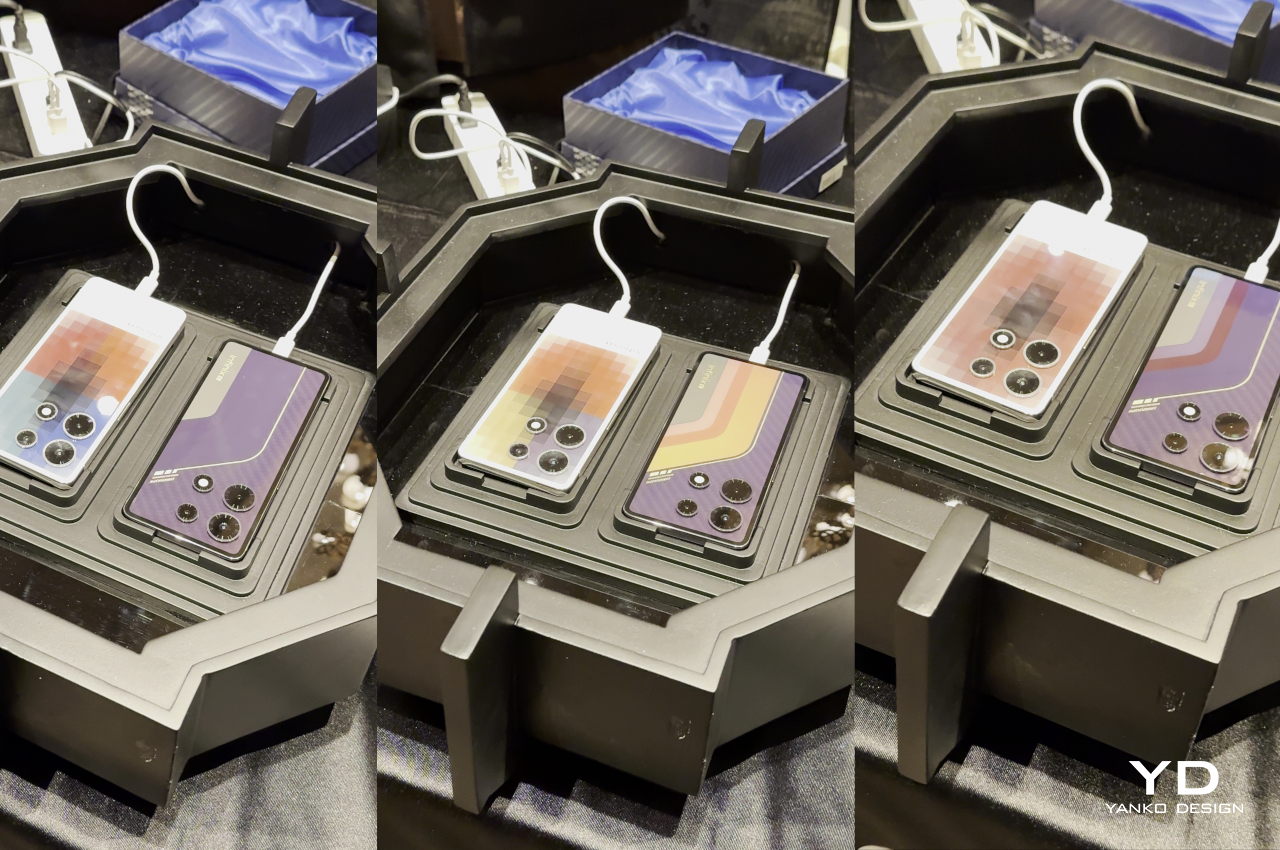
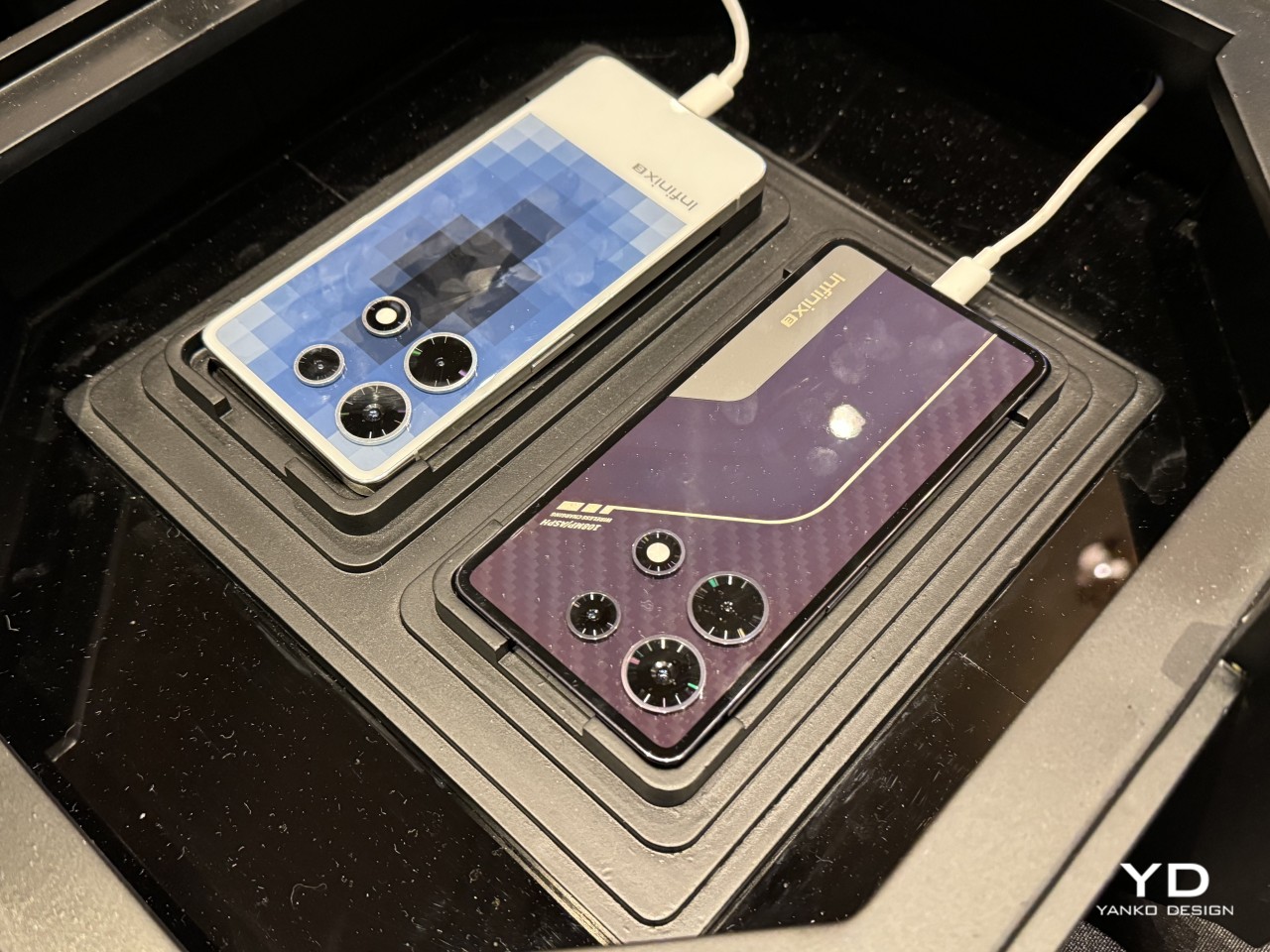
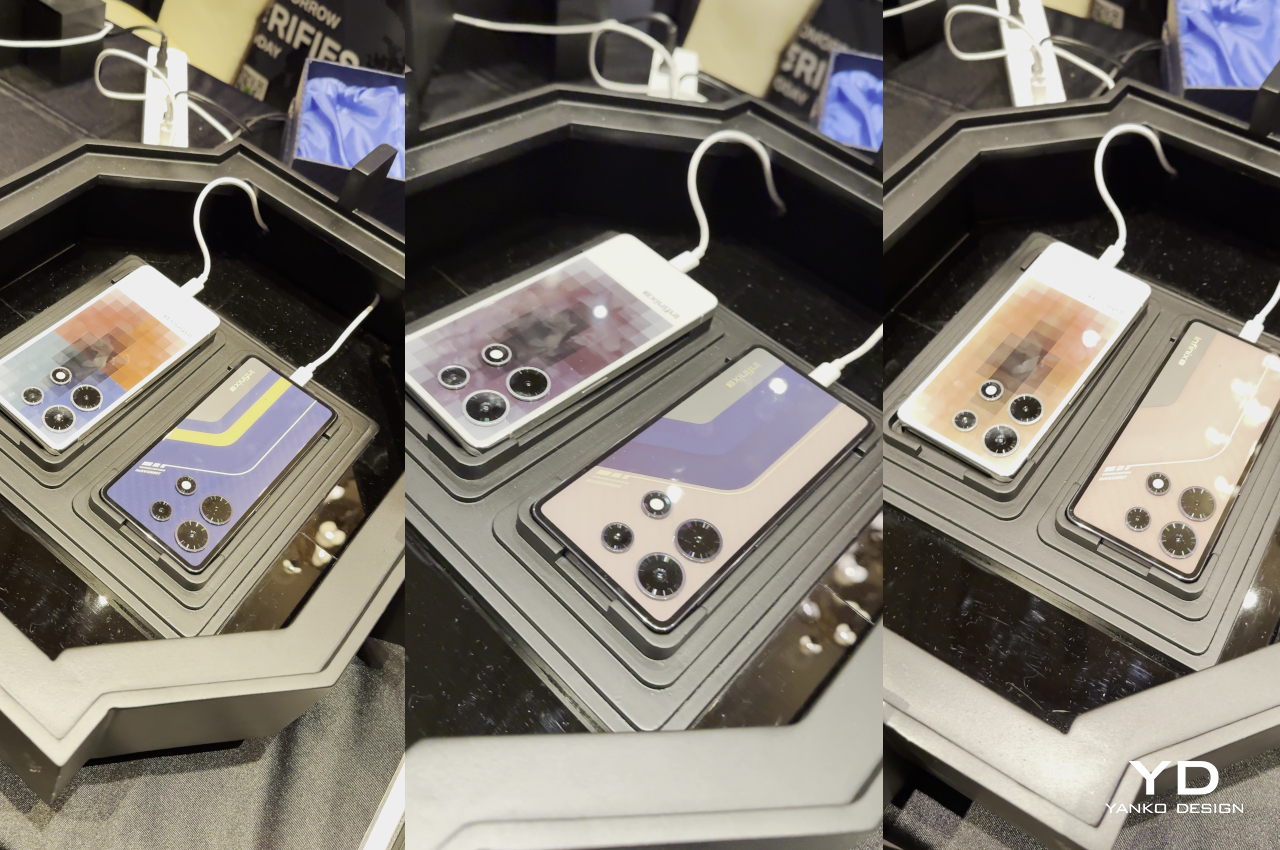
Although we look at our phone screens almost all the time, it is really the back of our phones that gives them their personality. From the colors to the textures of their back even to the camera bump or bumps, this side of the phone is what other people see the most and, therefore, provides the most motivation for personalization and customization. A phone’s design, however, is permanent once it leaves the factory, and unless you put stickers or cases on it, its appearance will never change. Infinix, however, is presenting a solution to that design problem with a piece of technology that adds an almost literal splash of color to the back of your phone and changes that into a mesmerizing display of colors as often as you want, especially while it’s charging.

Designer: Infinix

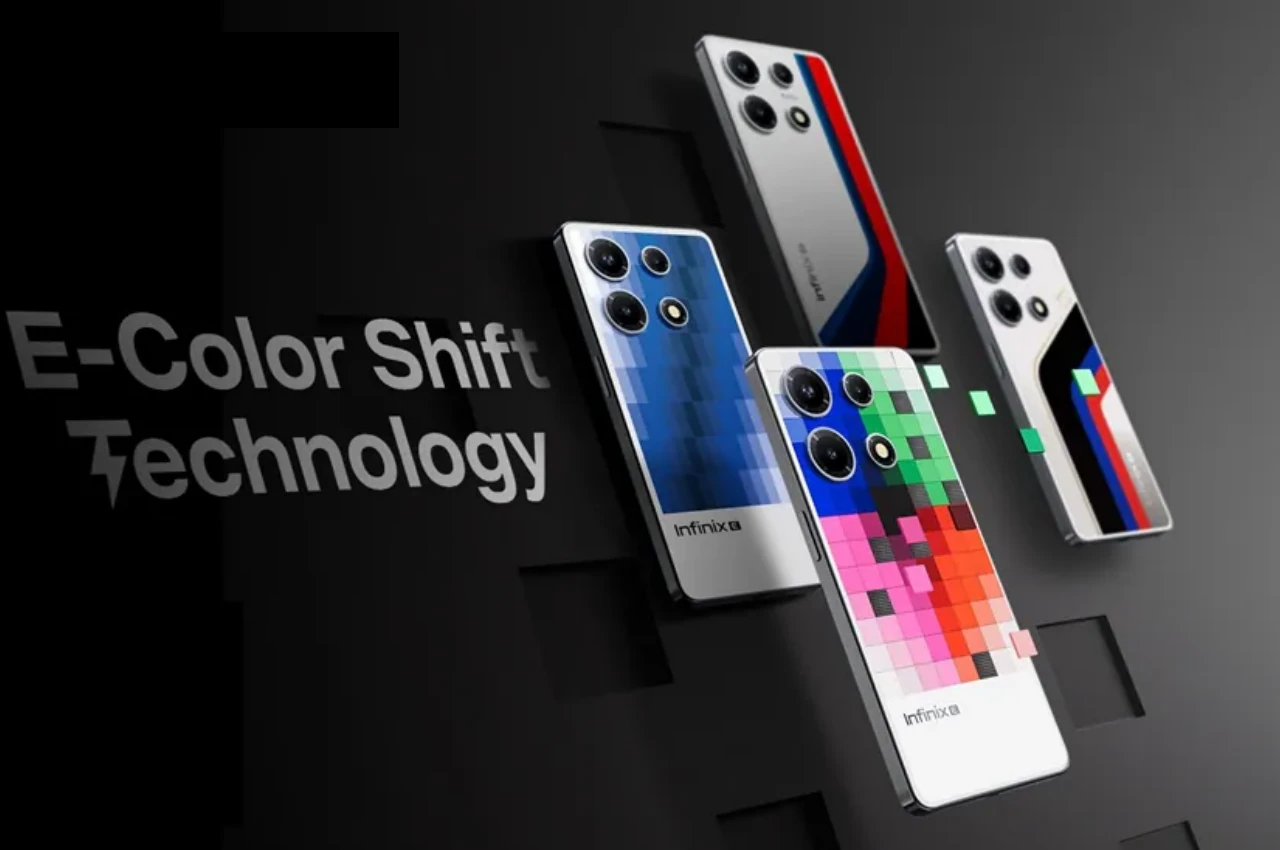
Putting stickers or whatnot on the back of your phone is a sure way to ruin its future. Cases, on the other hand, are more temporary, but they not only add bulk but also limit your design options to what’s already available. Wouldn’t it be rad if you could change the color or even the colorful patterns on the back of your phone on a whim, similar to how you’d change your wallpaper every so often? Infinix’s E-Shift Color technology first unveiled at CES 2024 does exactly that, and it’s getting a little help from the same technology that powers your favorite e-book reader.

E-Ink Prism 3 is the latest iteration from the e-paper display expert that brings color to this traditionally colorless screen. In a nutshell, it uses electric charges to cause microstructures in the panel to change their color, similar to how an E Ink screen works. And just like an E Ink screen, it only uses power when changing colors, so displaying that static colored pattern will use almost no power to maintain that appearance, unlike a typical LCD or OLED screen. In practice, this means that you can change the phone’s back to a particular color and have it stay that way for as long as you like without draining the battery.

This opens the door to dynamic designs and personalization, with users picking the colors they want and having it change when they grow tired of it. It even has the possibility of rapidly animating these color changes while charging the phone, presuming you like to put it down flat on its face. Either way, it’s a fun experiment that will definitely appeal to the more youthful audience that Infinix targets, and it’s not hard to see how brands can also take advantage of this feature for marketing.

Because of E-Ink Prism’s segmented nature, the Infinix E-Shift Color is also limited to following certain patterns only, patterns that are also set in stone during manufacturing. It’s not like having access to a digital canvas where you create arbitrary pixel art images or animations. That could probably come in future iterations of the technology, but even this first attempt could very well be a huge selling point for people who want to make their phones look as alive and expressive as they are.

The post Infinix E-Shift Color promises near-infinite phone design customization first appeared on Yanko Design.

The Morning After: LG Display’s next-gen OLEDs are 42 percent brighter than its predecessors

LG Display came to CES 2024 with something to prove. Its showroom in Las Vegas had transparent OLEDs, a 480Hz gaming monitor and the company's most advanced OLED panels yet, featuring its META technology 2.0. While it sounds like promotional fluff (and there is some of that), LG Display is trying to address arguably OLED’s biggest weakness in the face of ever-improving LEDs, MicroLEDs and the rest. Using advanced microlens arrays (now called MLA+) and new algorithms, LG Display says it’s made an OLED 42 percent brighter than the displays that came before it.

At CES 2024, I took a closer look at the prototype panels, headed to TVs later this year.

— Mat Smith

​​You can get these reports delivered daily direct to your inbox. Subscribe right here!​​

The biggest stories you might have missed

This e-bike has integrated ChatGPT

CES 2024 live: All the tech announcements so far

The EcoFlow Delta Pro Ultra is a home battery that can harvest power from 42 solar panels

Weber reveals its more affordable, more versatile Searwood smart grill at CES 2024

The best smart plugs

Amazon won’t support AirPlay or Chromecast but will adopt Matter Casting

HBO’s The Last of Us has found its Abby

Rabbit R1 is a very different AI-powered virtual assistant

It’s co-designed by Teenage Engineering.

TMA
Rabbit

A new startup called Rabbit seems to think our virtual assistants are less-than-ideal implementations of AI – and they’re not wrong. The dream of Rabbit is you leave your apps behind for conversation and, rather than a distracting device shoving icons in your face, you interact with what amounts to a walkie-talkie for an AI.

The stylish hardware (thanks, TE) is reminiscent of the Playdate handheld-with-a-crank, with an analog scroll wheel and a “360-degree rotational eye,” but the coolest feature — not that we’ve seen it working in real life yet — is its ability to use interfaces rather than APIs or apps. You can train it to use Photoshop to perform simple editing tasks and, apparently, even play Diablo for you. You can then make it repeat those tasks just whenever.

The Rabbit R1 costs $199 and is available for pre-order, with an expected ship date before the end of April.

Continue reading.

OpenAI admits it’s impossible to train generative AI without copyrighted materials

The company has also published a response to a lawsuit filed by The New York Times.

OpenAI and its biggest backer, Microsoft, are facing several lawsuits accusing them of using other people’s copyrighted works without permission to train the former’s large language models (LLMs). OpenAI wrote in its evidence to the UK’s House of Lords Communications and Digital Select Committee that it would be “impossible to train today’s leading AI models without using copyrighted materials.”

In some lawsuits, the plaintiffs accuse the companies of refusing to pay authors for their work while building a billion-dollar industry and enjoying enormous financial gain from copyrighted materials.

Continue reading.

The ASUS Zenbook Duo is a stunning dual-screen laptop with seemingly no compromises

It’s relatively affordable at $1,500.

TMA
Engadget

The ASUS Zenbook Duo features two screens and a detachable Bluetooth keyboard that can be stashed inside for traveling. This iteration stands out because the OLED panels are slightly larger than those on rival devices, at 14 inches, while also offering a 3K resolution, 120Hz refresh rate and stylus support. Plus, with a starting price of $1,500, it costs $500 less than the Yoga Book.

Continue reading.

Clicks hands-on: An iPhone keyboard for 2024

Whimsy in three colors.

TMA
Engadget

The iPhone’s touchscreen killed the physical smartphone keyboard, so why not resurrect it with a case? Clicks’ design couldn’t be simpler. It’s a silicone case with a physical keyboard bolted on the bottom, coming to the iPhone 14 Pro, the iPhone 15 Pro and the iPhone 15 Pro Max. Read on for our first impressions.

Continue reading.

This article originally appeared on Engadget at https://www.engadget.com/the-morning-after-lg-displays-next-gen-oleds-are-42-percent-brighter-than-its-predecessors-181523507.html?src=rss