Apple M3 MacBook Air vs M3 MacBook Pro (Video)

M3 MacBook Air

Yesterday we saw a video comparing the M2 MacBook Air to the M3 MacBook Air and now we get to find out how the new M3 MacBook Air compares to the M3 MacBook Pro in a new video from Max Tech. Choosing between the latest Apple MacBook models can feel like navigating a maze of […]

The post Apple M3 MacBook Air vs M3 MacBook Pro (Video) appeared first on Geeky Gadgets.

Neil Young is returning to Spotify after boycotting it over Joe Rogan’s vaccine comments

Neil Young is back on Spotify after boycotting the platform over two years ago, he said in a new blog post. The Canadian singer ditched the platform over vaccine misinformation on the Joe Rogan podcast, later saying he was fed up with Spotify’s "shitty" sound quality anyway. 

Young returned because Rogan's podcast is no longer exclusive on Spotify. "My decision comes as music services Apple and Amazon have started serving the same disinformation podcast features I had opposed at Spotify," he said, without specifically mentioning the Joe Rogan Experience.

There's no way he could also pull his catalog from Apple Music and Amazon as well, he added, "because my music would have very little streaming outlet to music lovers at all" if he did. Young also expressed hope that Spotify would improve its sound quality, while shouting out Quobuz and Tidal for presenting his songs in high-res. 

"Spotify, you can do it! Really be #1 in all ways. You have the music and listeners!!!! Start with a limited Hi res tier and build from there!" he wrote. (Spotify did announce that it would launch a HiFi tier way back in early 2021, but it has yet to actually do so.) 

Fellow Canadian Joni Mitchell joined Young in the boycott, and her music is still missing from the platform. Both had reason to be incensed about the vaccine misinformation on Rogan's show as both were victims of polio — a disease that was wiped out in North America thanks to vaccines.

It's hard to say how Young's boycott affected Spotify, but it certainly impacted his finances. Last year, Billboard estimated that pulling his songs from Spotify cost him roughly $300,000 in lost recorded music and publishing royalties.

This article originally appeared on Engadget at https://www.engadget.com/neil-young-is-returning-to-spotify-after-boycotting-it-over-joe-rogans-vaccine-comments-071217691.html?src=rss

10 Things To Consider Before Planning To Study Design Abroad

We’re finally at a point where design as an occupation holds the same mental weight as medicine, engineering, or law. The past two decades have seen a rapid rise in ‘design’ and ‘design thinking’ becoming permanent parts of the professional vocabulary, and with that, there’s a steady rise in the demand for designers. The educational setup, however, is still taking time to catch up to the industry’s need for designers, which is why even today there are still just a handful of institutions that command the design education space. A lot of them are in the global west, undoubtedly, but the global east is picking up pace too, offering young designers and aspirants the ability to travel to a whole variety of countries to study and specialize in design. If you’re reading this, chances are that you’re either thinking of studying design abroad, or you’ve already studied design abroad… or you’re just design-curious.

The allure of studying design abroad is undeniable—new experiences, exposure to international design perspectives, and the promise of personal growth. However, before your dreams take flight across borders, there are critical considerations that can make or break your educational journey. From cultural nuances and the constant evolution of design requirements to financial planning and accreditation standards, venturing into foreign territories for a design education requires meticulous preparation. My objective here is not just to guide you through practical steps but also to present you with a wealth of options when it comes to planning your career trajectory.

1. Evaluate the Worth of Studying Design Abroad

The decision to study design abroad is more than a question of education; it’s an exploration into cultural diversity and global perspectives. Exposure to different design philosophies, techniques, and cultural aesthetics can significantly enrich a designer’s creative arsenal. International programs often boast cutting-edge technology and facilities, alongside faculty who are leaders in their fields. However, this comes at a cost, both financially and emotionally, as you step away from the familiar comforts of home. It’s essential to balance these factors against your personal and professional goals. Does the international exposure align with your career aspirations? Can the unique experiences and skills acquired abroad offer you a distinctive edge in the competitive design industry? These are questions only you can answer, making this initial evaluation a cornerstone of your decision-making process.

2. Choose the Right College or Program

Choosing the right institution is a multifaceted decision encompassing several critical factors. Reputation is often the first consideration, but digging deeper into the curriculum offered, faculty expertise, and the strength of the alumni network can provide greater insight into the program’s value. The program’s location can also significantly influence your learning experience, offering unique cultural and design opportunities. Accreditation ensures that the education you receive meets global standards, essential for your future employability. Lastly, consider the program’s connections to the design industry, including internship and employment opportunities post-graduation. Each of these factors plays a crucial role in not just shaping your educational experience but also in laying a solid foundation for your future career in design.

3. Future-Proof Your Education: Choose Programs with Potential

The design industry is continually evolving, driven by advances in technology and shifts in societal needs. Future-proofing your education means choosing programs that not only provide a solid foundation in traditional design principles but also incorporate emerging fields such as UX/UI design, sustainable design, or digital media. Programs that emphasize adaptability, critical thinking, and innovation prepare students to navigate the rapidly changing landscape of the design industry. Look for curriculums that blend theoretical knowledge with practical application, offering opportunities to work on real-world projects and collaborate with industry professionals. This approach not only enhances learning but also ensures that students graduate with a portfolio that showcases their skills in addressing contemporary design challenges.
4. The Merits of Studying Design in Your Own Country

While international study offers unique advantages, considering the merits of studying in your own country is equally important. Cultural relevance in design can be a significant factor, especially if you intend to work within your local market post-graduation. Studying domestically can also be more cost-effective, reducing the need for international travel and living expenses. Moreover, local education systems are often well-aligned with the country’s specific design industry needs, providing relevant networking opportunities and internships. However, this doesn’t preclude international opportunities; many domestic programs offer exchange or study abroad options, allowing students to gain international exposure without committing to a full degree program overseas.

5. Job Opportunities: Local vs. Global Market Readiness

The design job market is incredibly diverse – design itself doesn’t have a standalone industry, it instead builds on the capabilities of other industries, whether it’s medical, consumer-goods, architecture, city planning, etc. Understanding the demand for specific design skills in your target market—whether local or international—is crucial. Programs that offer robust internship and placement services can significantly enhance your employability by providing practical experience and industry contacts. Networking, both in-person and online, can open doors to job opportunities not advertised publicly. However, international students should also consider a few things before planning on studying abroad. Aside from mere market readiness or a burgeoning need for your skill-sets, it’s important to evaluate the future from a social, economical, and even political lens. Looming sociopolitical unrest could lead to disruptions in your studies/work, low-skill work could be replaced by AI, a weak economy could easily affect job availability.

6. The Financial Aspect: Weigh Costs Against Benefits

The financial implications of studying design abroad are a major consideration. Tuition fees for international students can be substantial, and when combined with the cost of living, travel, and materials, the total expense can be daunting. Exploring scholarship opportunities, financial aid, and part-time work options can help mitigate these costs. It’s essential to conduct a cost-benefit analysis, considering the potential return on investment in terms of career opportunities and salary prospects. Ask yourself – “Will my salary grow proportionate to how much I’m investing in my career?” While the initial financial outlay may be significant, the long-term benefits of an international design education can outweigh the costs for many students.

7. Learning Vs. Earning – Upskilling Amidst Work

The debate between pursuing further studies and entering the workforce directly presents a compelling consideration: the possibility of learning while earning. This approach champions the idea of upskilling within the context of a job, where theoretical knowledge meets practical application. It’s a strategy that not only keeps the financial wheels turning but also enriches a designer’s skill set and experience in real-world settings. It allows aspiring designers to avoid the substantial financial and time investments typically associated with studying abroad, without sacrificing the advancement of their skills and careers. You build a skill set while building your savings – it’s a win-win.

8. Legal Considerations and Work Rights for International Students

Understanding the legal framework of your host country is essential for international students. This includes visa requirements, work rights during and after your studies, and potential pathways to permanent residency or employment. Regulations vary widely between countries, so it’s important to research thoroughly and plan accordingly. Many countries offer post-study work visas that allow graduates to remain in the country and gain valuable work experience, enhancing their career prospects.

9. Building a Global Network: Long-Term Career Advantages

One of the most significant benefits of studying design abroad is the opportunity to build a global network. Connections with fellow students, faculty, and industry professionals can provide invaluable support and opportunities throughout your career. These relationships can lead to collaborative projects, job offers, and partnerships. Actively engaging in your institution’s alumni network, attending industry events, and participating in design competitions can help you build and maintain these critical connections.

10. Reflection: Is Further Studies in Design Worthwhile?

Finally, reflecting on the value of further studies in design is crucial. While formal education can provide a strong foundation, the design industry also values experience, portfolio strength, and creativity. Consider whether your career goals are best served by further academic study or by gaining practical experience through internships, freelance projects, or starting your own design venture. For many, a combination of both education and practical experience offers the best path to a successful career in design.

The post 10 Things To Consider Before Planning To Study Design Abroad first appeared on Yanko Design.


These Colorful Acrylic Furniture Pieces Are Like If Willy Wonka Met IKEA

Furniture so yummy-looking you’d want to lick them…

Meet Flare, a collection of furniture by Draga & Aurel designed to explore the theme of refraction. The furniture’s relatively blockish shape comes from the fact that it’s manufactured out of multicolored blocks of lucite (a patented version of acrylic resin known for its sheer glass-like transparency) that look practically like pieces of candy fused together to form functional decor pieces. The collection includes tables and decorative totem pieces, all of which are painstakingly crafted by hand, and are completely unique in their pattern and color composition. Much like wooden furniture are distinctly unique because of their woodgrain, Flare’s tables and totems have their distinct color-grains that make each unit individualistic. Unlike wood, however, these pieces have a kind of funky pop-futurism to them that’ll grab your attention and probably even cause you to salivate. I’d probably recommend against licking them.

Designer: Draga & Aurel

Draga & Autel’s collection boasts a range of coffee tables and a unique totem-style sculpture. Each piece is meticulously handcrafted from sheets of Lucite in various colors, shapes, and thicknesses. These sheets are layered and glued together to create the furniture’s bold, geometric forms, for instance, the use of bold geometric shapes creates a sense of dynamism and stability. The chunky shapes and vibrant hues reference minimalism, space-age design, and the captivating patterns of optical art.

A defining characteristic of the Flare collection is its exploration of light refraction. The layered acrylic creates a kaleidoscope effect, with the colors shifting and transforming depending on the viewer’s position. This dynamic interplay of light adds a captivating element of intrigue to any space.

The meticulous craftsmanship is evident in each piece of the Flare collection. Lucite sheets are hand-selected and cut to precise specifications before being carefully layered and glued together. This attention to detail ensures that each piece is not only beautiful but also built to last.

The Flare collection is a perfect example of how design can bridge the gap between art and function. The pieces are not only conversation starters but also provide practical surfaces for everyday use. Their only tragedy is the fact that they probably won’t go with most conventionally decorated homes. The Flare fits well in more quirky, minimalist houses dominated by pops of color and whimsy.

The post These Colorful Acrylic Furniture Pieces Are Like If Willy Wonka Met IKEA first appeared on Yanko Design.

Touchscreen iMac like the Microsoft Surface Studio hinted by Apple patent

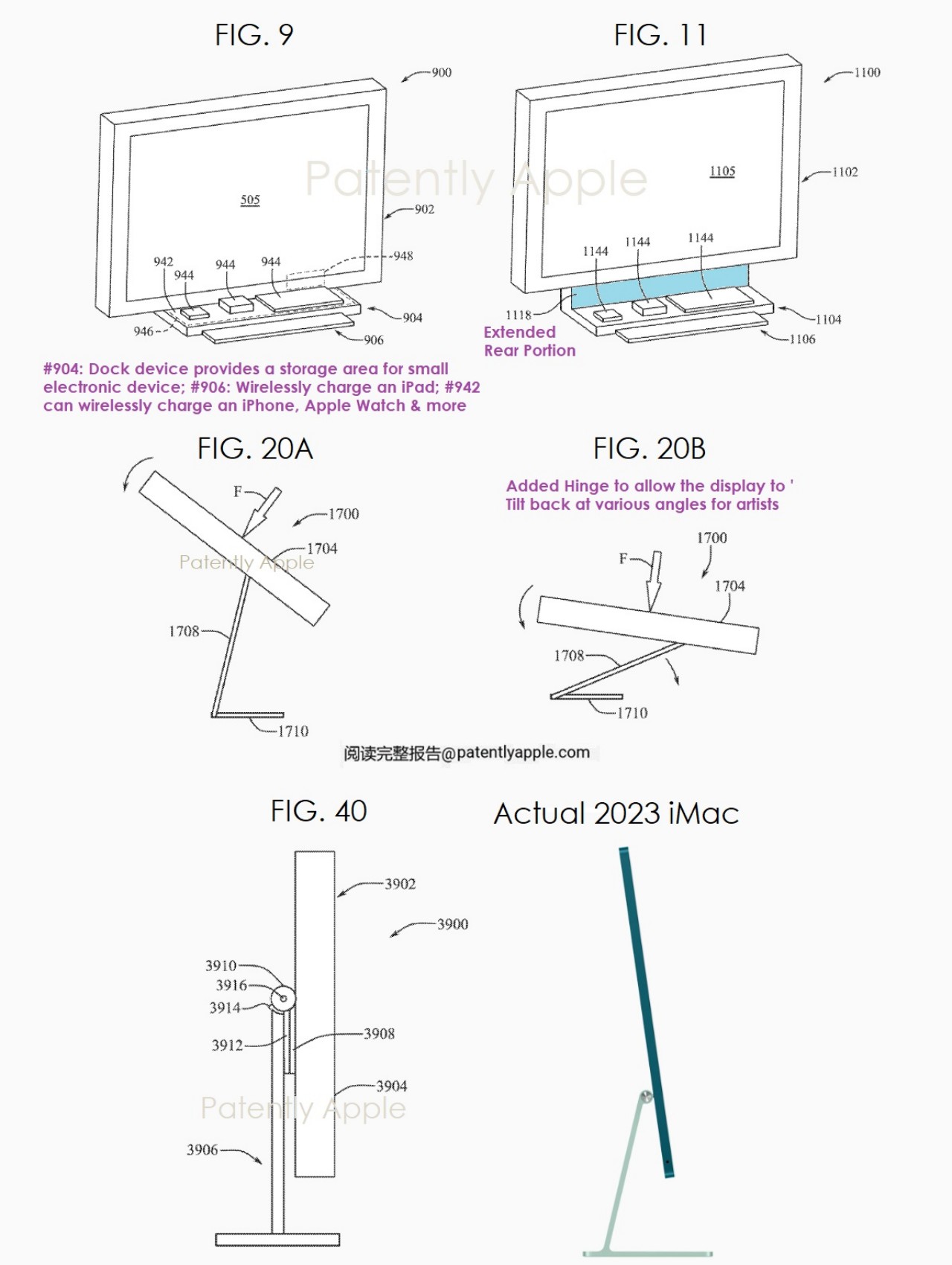
Apple products have always been hailed by designers, and its computers have long been the tool of choice for many digital content creators, especially graphic artists. None of those computers, however, have ever sported a touchscreen, even one that supports the Apple Pencil, an irony that isn’t lost on many digital artists. This means they have to settle for external drawing tools or, for some more daring users, mods that combine MacBook internal with a drawing tablet. A Mac that can instantly be used as a digital canvas is definitely going to be an artist’s dream, and based on a patent that Apple has filed, that dream could still become a reality, and it already has the perfect design for that.

Designer: Apple

Apple M3 iMac

Apple might have plenty of reasons not to put touch screens on iMacs and MacBooks, but those reasons are starting to drop one by one. It might not want to muddle the lines that separate its Macs and iPads, for example, but you can already run touch-based iOS apps on Macs for years now. And it’s not like it’s lacking the technology to make it all possible, as proven by the highly successful iPad Pro and Apple Pencil.

A patent unearthed by Patently Apple reveals that the company has indeed, been toying around with that idea, though it’s not exactly surprising given how many ideas tech companies patent all the time. Admittedly, the patent’s focus is less on the touch screen itself but more on the stand and hinge mechanism that would let you tilt and even pull the whole iMac down to the desk’s surface, making it more comfortable for artists to draw on. It’s an instant display tablet without having to buy an expensive Wacom or switch to a different technology from the one you might already be familiar with.

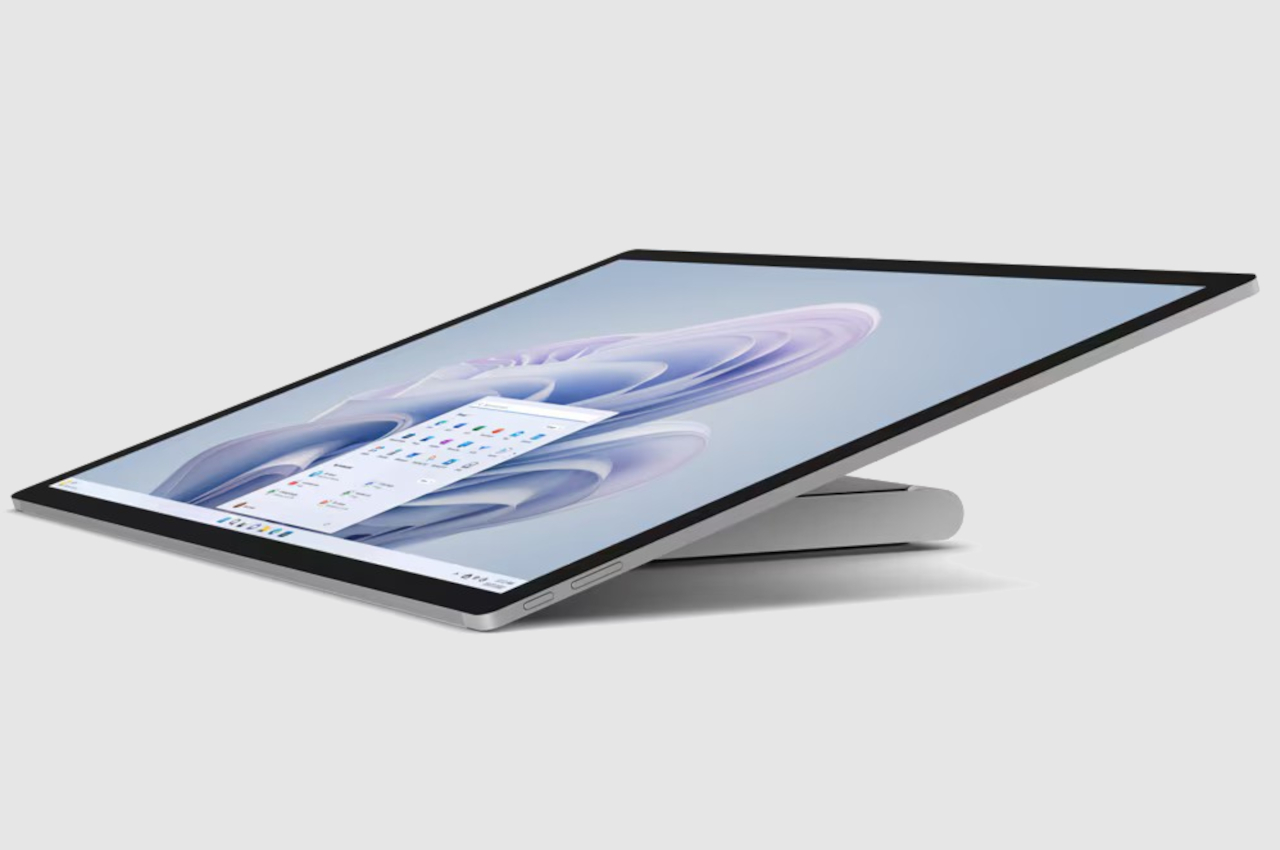
As weird as that idea might sound, it has actually already been done before and with surprising success. The Microsoft Surface Studio pictured at the top is one of the company’s unexpected hardware champions, quickly endearing itself to content creators. It is almost exactly what Apple’s patent describes, an all-in-one computer with a stand and hinge that lets you tilt and turn it whichever way you need to, and it comes with a touch screen, too!

Microsoft Surface Studio

It’s not hard to imagine how such a feature could be a game changer for artists on Macs, making their workflows more seamless. Of course, it’s far too premature to get excited over this patent, because tech companies also have a tendency not to implement even a fraction of the patents they hold. And given Microsoft already has an implementation of this design, it might still come down to a legal battle if Apple does decide to push through with a touchscreen iMac since it filed the patent years before the Surface Studio came out.

The post Touchscreen iMac like the Microsoft Surface Studio hinted by Apple patent first appeared on Yanko Design.

Bluesky will let users run their own moderation services

Bluesky, the open-source Twitter alternative, is about to start testing out one of its more ambitious ideas: allowing its users to run their own moderation services. The change will allow Bluesky users to and developers to work together to create custom labeling tools for the budding social media platform.

The new moderation tools arrive as Bluesky is seeing a surge in growth after it got rid of its waitlist and opened to all users in February. Since then, the service has added about 2 million new users, bringing its total community to just over 5 million.

The company has said its approach to moderation is based on the same philosophy that has led it to embrace custom feed algorithms. The goal, Bluesky wrote in a blog post, is to create “an ecosystem of moderation and open-source safety tools that gives communities power to create their own spaces, with their own norms and preferences.”

In practice, these moderation tools will take the form of labeling services. Just as Bluesky allows users to set their own moderation preferences — for example, you can choose whether you want the app to “show,” “warn,” or “hide” explicit content — developers will be able to create their own filtering systems others can opt into. “For example, someone could make a moderation service that blocks photos of spiders from Bluesky — let’s call it the Spider Shield,” the company explains. “If you get a jump scare from seeing spiders in your otherwise peaceful nature feed, you could install this moderation service and immediately any labeled spider pictures would disappear from your experience.”

To help make these kinds of experiences possible, Bluesky is open sourcing its collaborative labeling tool called Ozone, which will allow groups of moderators to respond to reports and add labels to content. But the company notes that developers can also create automated labeling systems using Bluesky’s API.

Bluesky CEO Jay Graber has referred to the concept as “composable” or “stackable” moderation. “We're always doing baseline moderation, meaning that we are providing you with a default moderated experience when you come in [to Bluesky],” Graber told Engadget last month. “And then on top of that, you can customize things.”

These new third-party labeling services will start to roll out later this week on the desktop version of Bluesky, with a mobile version coming “soon,” according to the company. And it’s likely users will see more options available in the coming weeks as more developers and groups get their hands on the underlying tools.

This article originally appeared on Engadget at https://www.engadget.com/bluesky-will-let-users-run-their-own-moderation-services-230017647.html?src=rss

Google’s Gemini will steer clear of election talk in India

Gemini, Google's AI chatbot, won't answer questions about India’s upcoming national elections, the company wrote in a blog post today. “Out of an abundance of caution on such an important topic, we have begun to roll out restrictions on the types of election-related queries for which Gemini will return responses,” the company wrote. The restrictions are similar to the ones Google announced in December ahead of global elections in the US and the EU.

“As we shared last December, in preparation for the many elections happening around the world in 2024 and out of an abundance of caution, we’re restricting the types of election-related queries for which Gemini will return responses,” a Google spokesperson wrote to Engadget.

The guardrails are already in place in the US. When I asked Gemini for interesting facts about the 2024 US presidential election, it replied, “I’m still learning how to answer this question. In the meantime, try Google Search.” In addition to America’s Biden-Trump rematch (and down-ballot races that will determine control of Congress), at least 64 countries, representing about 49 percent of the world’s population, will hold national elections this year.

When I prompted OpenAI’s ChatGPT with the same question, it provided a long list of factoids. These included remarks about the presidential rematch, early primaries and Super Tuesday, voting demographics and more.

OpenAI outlined its plans to fight election-related misinformation in January. Its strategy focuses more on preventing wrong information than supplying none at all. Its approach includes stricter guidelines for DALL-E 3 image generation, banning applications that discourage people from voting, and preventing people from creating chatbots that pretend to be candidates or institutions.

It’s understandable why Google would err on the side of caution with its AI bot. Gemini got the company in hot water last month when social media users posted samples where the chatbot applied diversity filters to “historical images,” including presenting Nazis and America’s Founding Fathers as people of color. After a backlash (mainly from the internet’s “anti-woke” brigade), it paused Gemini’s ability to generate people until it could iron out the kinks. Google hasn’t yet lifted that block, and it now responds to prompts about images of people, “Sorry, I wasn’t able to generate the images you requested.”

This article originally appeared on Engadget at https://www.engadget.com/googles-gemini-will-steer-clear-of-election-talk-205135492.html?src=rss

The System Shock remake finally hits consoles on May 21

The wait is almost over. Nightdive Studios just announced a May 21 release date for the console version of its System Shock remake. It’ll be available on PS4, PS5, Xbox One and Xbox Series X/S, after arriving for PCs last year.

The developer, alongside publisher Prime Matter, dropped a new trailer for the console release, showing off the stunning graphical update to the 1994 first-person shooter/RPG. Combat has also received a significant upgrade, as the mechanics of the genre weren’t quite refined when the game originally released, gulp, 30 years ago.

The PC version of the remake has been well-received, with a positive review score on Metacritic, but this isn’t a simple re-release. Console players are getting some exclusive features to sweeten the pot. It’ll boast 4K visuals with 60FPS on the PS5 and Xbox Series X. There’s also a new ending that “upgrades the final confrontation” with series antagonist Shodan. The controls have been reworked to better suit console gamepads and there’s a new female hacker protagonist.

An image showing the game in action with someone laying dead on the ground.
Prime Matter

There’s also a little bit of something here for collectors. The PS5 and Xbox Series X/S versions are getting a physical release, though it’s a digital-only affair for PS4 and Xbox One players. There’s no pricing information yet, but the game costs $40 on PC.

This remake of the iconic shooter has been a long time coming. It was first announced all the way back in 2016 as part of a successful Kickstarter campaign. Nightdive Studios is also working on an enhanced port of System Shock 2.

This article originally appeared on Engadget at https://www.engadget.com/the-system-shock-remake-finally-hits-consoles-on-may-21-190550537.html?src=rss

Children of the Sun brings FPS puzzles to Steam on April 9

Children of the Sun is a bullet-bending puzzle game set in a trippy world of cults and revenge, and it's due to hit PC via Steam on April 9. In Children of the Sun, players line up a single sniper shot and then control the bullet as it ricochets among the cultists in their sights. The goal is to take everyone out with the most speed, elegance and creativity, curving the bullet around the environment and through objects as the targets attempt to flee in slow motion. It's a repeatable, satisfying set of mechanics.

It's not all senseless violence, either. The sniper is called The Girl, and she's a former cult member who grew up as a victim of its brainwashing. She's now on a mission to dismantle the cult, member by member and bullet by bullet, before finally taking out The Leader. So yes, there is violence in the game, but it's not completely senseless.

The environments in Children of the Sun have a high-contrast, demonic glow about them, and the enemies appear as thermally lit skeletons as The Girl spies on them, lining up each shot. The visuals alone lend the game an unpredictable, adrenaline-fueled edge.

Children of the Sun comes from René Rother, a developer who's big in the world of game jams. Rother has a history of building minimalistic games with loud messages about violence and death — or, sometimes, chewing gum. Children of the Sun is published by Devolver Digital.

Children of the Sun
Devolver Digital

The demo for Children of the Sun landed on Steam in early February and offered a seven-course taste of the game's core loop. It was a breakout hit of Steam Next Fest; its demo clocked more than 60,000 players that week.

"It's been a few pretty fun weeks after the first announcement of the game and the release of the demo," Rother said on Steam. "There were lots of really nice words and great feedback coming from you. I appreciate everyone who gave the Demo a moment of their time.... So now that release date is public, I guess I finally need to actually finish the game. Ha!"

This article originally appeared on Engadget at https://www.engadget.com/children-of-the-sun-brings-fps-puzzles-to-steam-on-april-9-184030022.html?src=rss

Discord will soon offer more games and apps inside its chats

Discord has been experimenting with embedding apps and games directly in chats for a while, via the Activities feature. Now the company is set to launch a dedicated SDK for developers to join the chat-based fun. The Embedded App SDK rolls out on March 18 and allows devs to build experiences that are embedded in an iframe within Discord.

Putt Party app running on Discord.
Discord

“Plenty of Discord Developers out there have had their eyes on Activities, wondering when they could create their own,” the company wrote in a blog post. Prior to this announcement, these tools were limited to select developers. Currently, Discord users can do stuff like watch YouTube, play poker and share a whiteboard while participating in a chat. The SDK should open up the floodgates and allow for a drastic increase in the number of available shared experiences. So how long until Doom shows up?

The platform’s also bringing back app pitches. This program encourages developers to pitch app ideas and snag up to $30,000 in funding. Discord ended up funding some cool stuff last year, including a coral reef cam, a city-building sim and an art portfolio app, among others. Who knows what 2024 will bring.

Discord app tool image.
Discord

Finally, Discord announced that it’s experimenting with technology to allow users to add apps to their accounts, so these experiences will follow them across servers. A beta version of this tool will launch alongside the SDK on March 18. The company says that users will begin to see apps popping up “within DMs, group chats and small servers.”

These updates come just two months after the company announced a brutal round of layoffs that impacted 17 percent of its workforce. CEO Jason Citron said the cuts were necessary to put Discord “in the best position to continue building a strong and profitable business.” To that end, the company recently unveiled a partnership program with game developers to sell themed avatars and various profile effects.

This article originally appeared on Engadget at https://www.engadget.com/discord-will-soon-offer-more-games-and-apps-inside-its-chats-182540566.html?src=rss