Logitech’s $999 4K livestreaming camera is triple the price of its 1080p model

Logitech is expanding its Mevo lineup of live-streaming cameras for creators. The company’s new Mevo Core shoots in 4K, meaning, unlike the 1080p Mevo Start we reviewed two years ago, cropping and digital zooms won’t lead to overly grainy video. However, the tradeoff is pricing, as the new model will set you back three times as much for a three-camera setup.

The Mevo Core continues the lineup’s trajectory of wireless multicam live-streaming directly to platforms like YouTube, Twitch and Facebook. (Of course, you can also record content to upload later.) The $999 package ships as a body only, although Logitech says it will sell lens bundle kits through Amazon and B&H Photo Video. Either way, you’ll need at least one Micro Four Thirds (MFT) lens to get started, and the company says any powered or manual MFT lens will work on day one.

The camera has a large 4/3 CMOS sensor, which Logitech says diminishes noise and improves low-light performance and depth of field compared to the 1080p model. The Core shoots in 4K at 30fps for recording content to upload later; if you’re live-streaming, you can instead use 1080p at 30fps. This model supports WiFi 6E, which could help with network latency and stability if your router also supports it.

Lifestyle marketing photo of the Logitech Mevo Core livestreaming camera. View from slightly above, facing its front-left side. It’s mounted on a tripod with a dirt field (blurred) visible behind it.
Logitech

The camera’s body is noticeably bigger than that of the Mevo Start. At 3.5 x 3.5 x 3.25 inches, it has a similar depth and height but is about twice the width. With its battery installed (and no lenses mounted), it weighs 1.5 lbs.

Logitech says its audio is upgraded, too. It has a built-in three-microphone array with noise cancellation. You can also connect an external mic (or other audio source), which we found essential in the Mevo Start. We’ll have to wait and see if the Core’s built-in mics fare much better.

The Mevo Core’s battery life is estimated at six hours. If you need more time, you can plug an external power source into its USB-C port. It also includes an HDMI port, a 3.5mm one (for analog audio), and a microSD card slot. Logitech says it can double as an (incredibly expensive) wired or wireless HD webcam.

Like previous models, the Mevo Core works with Logitech’s Mevo app (where you can adjust things like focus, zoom, and aperture) and Multicam app to set up multi-viewpoint recording or streaming.

The Logitech Mevo Core is available for $999 for a single (body-only) camera starting today. It’s available from Logitech, Amazon, and B&H Photo Video.

This article originally appeared on Engadget at https://www.engadget.com/logitechs-999-4k-livestreaming-camera-is-triple-the-price-of-its-1080p-model-070146814.html?src=rss
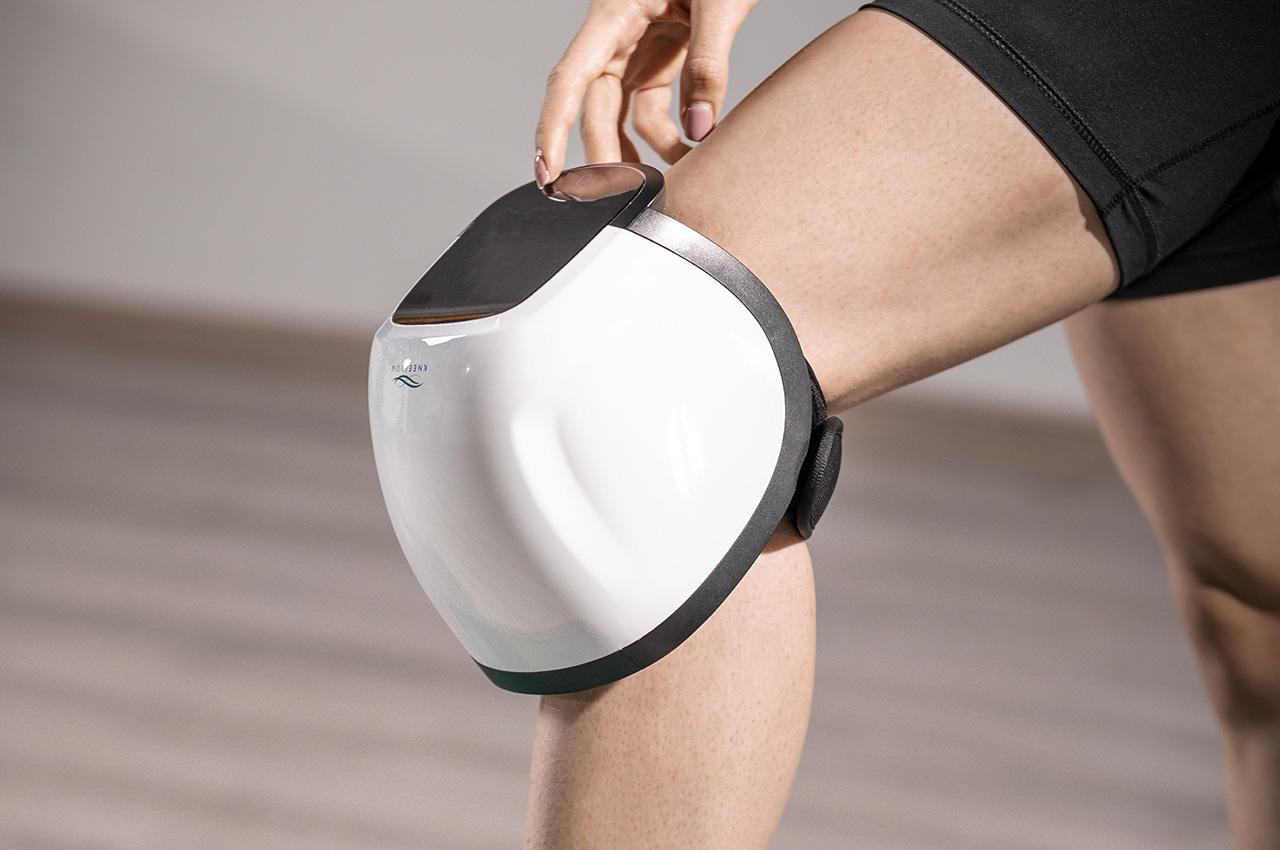


This wearable device is the most scientifically effective way to treat knee pain

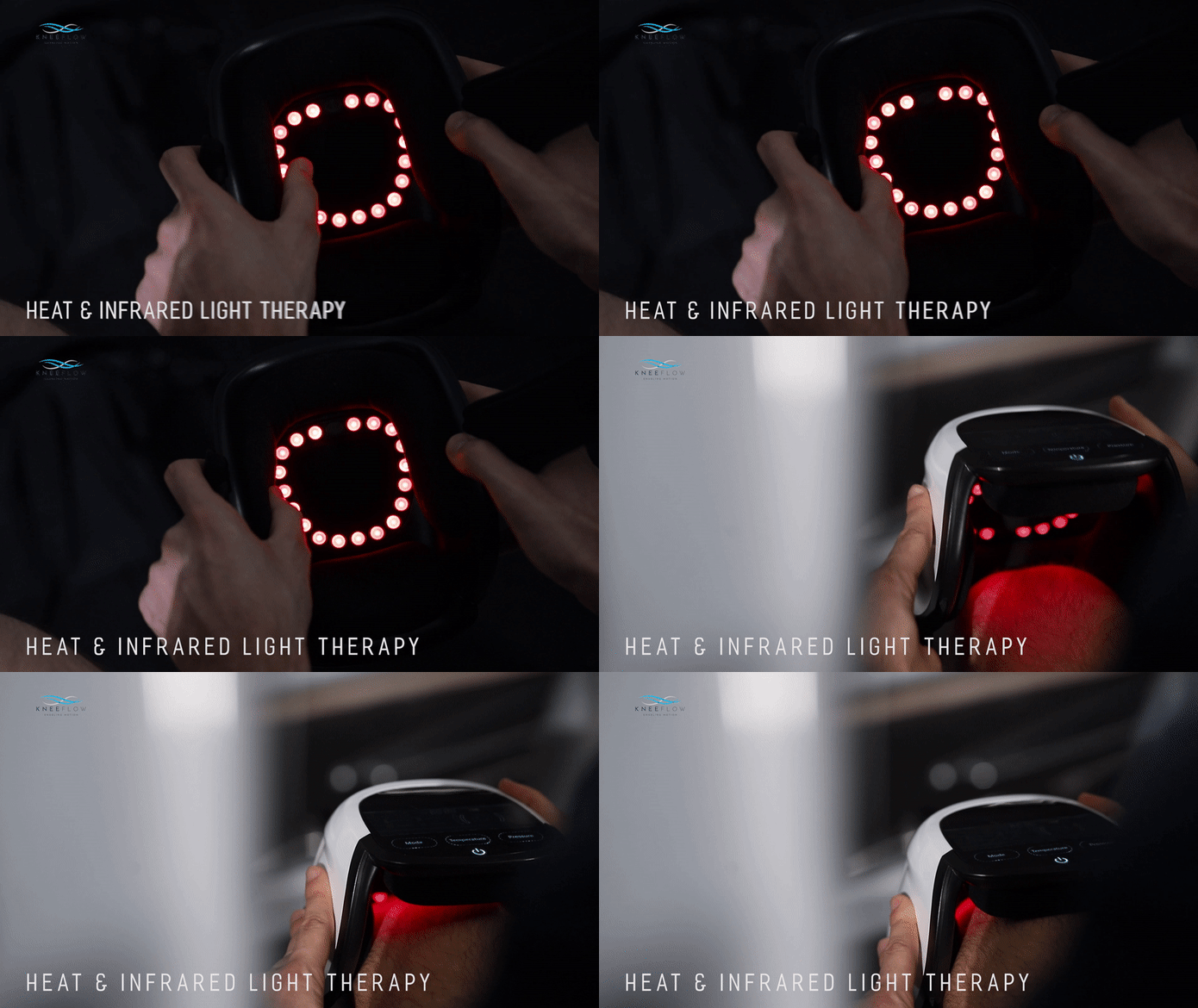
Designed to look like a tiny helmet for your kneecap, the Kneeflow uses a unique combination of heat, light, and massage to relieve knee pain. Heat helps boost blood flow, light stimulates the cells to repair themselves, and massaging helps ease pain. The Kneeflow works faster than pills, better than those burning sprays, and promotes healing without any chemicals or even so much as a doctor’s prescription.

Whether you’re hurting from a tough workout or injury, dealing with chronic joint pain caused by age, or just looking to keep your knee in peak shape and performance, the Kneeflow is designed to rejuvenate the joint and relieve pain by treating the issue on both a surface as well as a deep level. The combination of heat treatment and massaging airbags both work on the surface to increase blood flow and provide physiotherapy to your joint. Nineteen individual infrared lights, on the other hand, work on a much deeper level, targeting the root cause of the pain by helping damaged cells regenerate themselves. The Kneeflow’s control panel lets you choose between multiple modes depending on whether you’re looking to recover from stiffness or pain, repair any injuries or stress caused to the joint, or just relax your knees after a long day and keep your joints at the top of their game.

Designer: Kneeflow

Click Here to Buy Now: $144 $249 (42% off exclusively for YD readers). Hurry, only 10 left! Raised over $176,000.

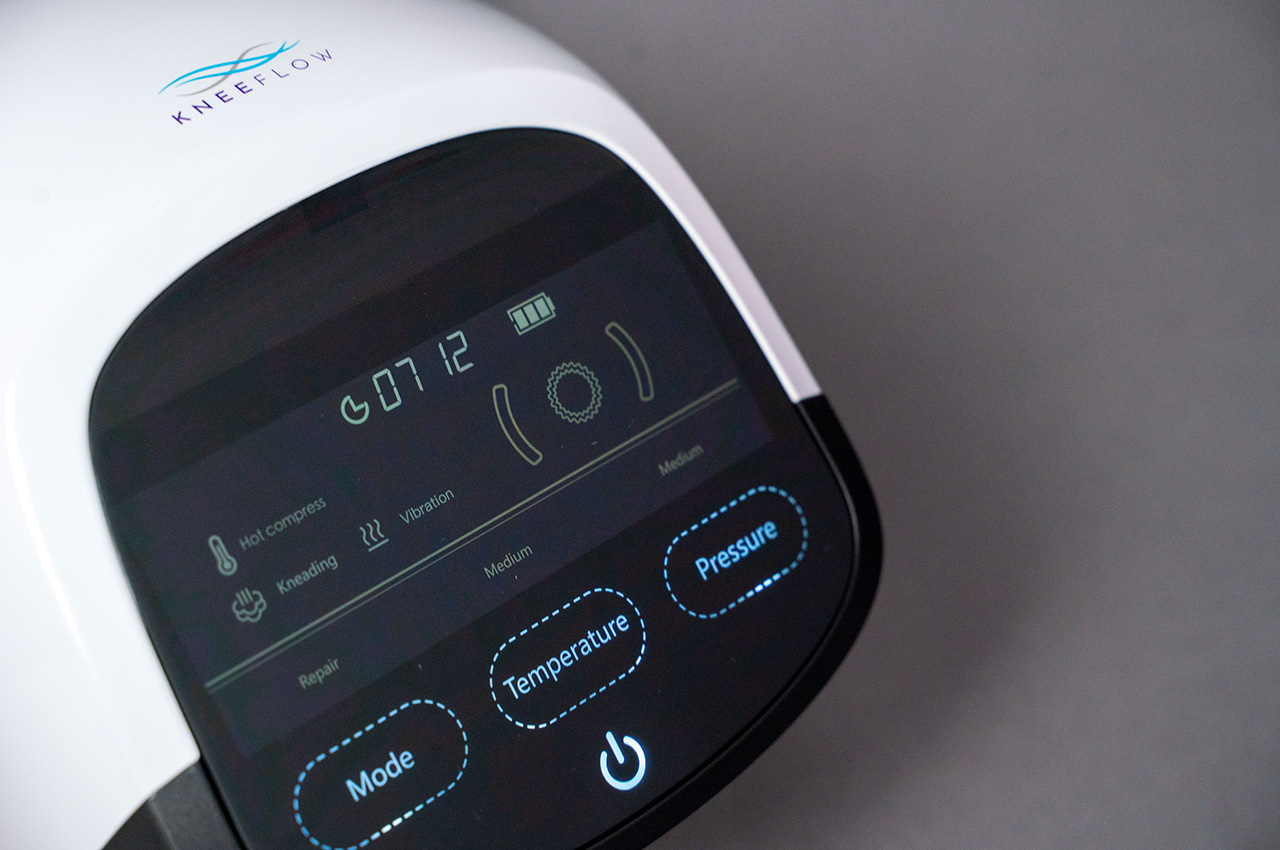
The Kneeflow’s design is highly intuitive, and all you really need to do is strap it over your knee like you would a knee guard. An LCD touchscreen lets you then calibrate the Kneeflow’s settings, choosing from modes as well as manually adjusting temperature or airbag pressure. The heat setting goes all the way from 113°F (45°C) for relieving soreness and stiffness, up to 131°F (55°C) for treating sharper stinging pain. Once you’ve selected your mode, the Kneeflow goes to work. The airbags pulsate, simulating the feeling of getting a soothing massage that relieves pain and relaxes you. Simultaneously, the Kneeflow also uses heat and light therapy over a period of a 15-minute cycle, after which the Kneeflow automatically shuts off. The Kneeflow’s 15-minute cycle is hyper-customizable, allowing you to increase or dial-down certain elements of the procedure depending on exactly what you need.

What sets the Kneeflow apart is the fact that it treats injuries and pains without really any invasive form of medication like pills, surgery, or even those topical sprays. It works effectively to address the root cause of the pain, and promote the body to heal itself, covering a variety of ailments from your regular joint inflammation/pain or tired & stiff knees to more serious issues like meniscus or ACL tears. The device was tested at last year’s Berlin Marathon, has the backing of medical experts and sports therapists who tout the benefits heat and light therapy, and even managed to get a testimonial from ex-NFL player Noah Dawkins who uses it after workouts or training for his current role in the Michigan panthers at the upcoming UFL. UFC fighter Herbert Burns also used the Kneeflow to nurse his ACL after an injury in 2022.

The Kneeflow starts at $249, although YD readers can snag it at a 42% discount for just $144. It’s designed to be wireless and portable, so you can carry it around the house or even with you to work or in your gym bag. A 15-minute cycle is recommended to provide daily relief and therapy, and you can charge your Kneeflow using a USB cable that comes bundled in the box. The Kneeflow ships globally with a 1 year replacement warranty.

Click Here to Buy Now: $144 $249 (42% off exclusively for YD readers). Hurry, only 10 left! Raised over $176,000.

The post This wearable device is the most scientifically effective way to treat knee pain first appeared on Yanko Design.

NVIDIA’s GPUs powered the AI revolution. Its new Blackwell chips are up to 30 times faster

In less than two years, NVIDIA’s H100 chips, which are used by nearly every AI company in the world to train large language models that power services like ChatGPT, made it one of the world’s most valuable companies. On Monday, NVIDIA announced a next-generation platform called Blackwell, whose chips are between seven and 30 times faster than the H100 and use 25 times less power.

“Blackwell GPUs are the engine to power this new Industrial Revolution,” said NVIDIA CEO Jensen Huang at the company’s annual GTC event in San Jose attended by thousands of developers, and which some compared to a Taylor Swift concert. “Generative AI is the defining technology of our time. Working with the most dynamic companies in the world, we will realize the promise of AI for every industry,” Huang added in a press release.

NVIDIA’s Blackwell chips are named in honor of David Harold Blackwell, a mathematician who specialized in game theory and statistics. NVIDIA claims that Blackwell is the world’s most powerful chip. It offers a significant performance upgrade to AI companies with speeds of 20 petaflops compared to just 4 petaflops that the H100 provided. Much of this speed is made possible thanks the 208 billion transistors in Blackwell chips compared to 80 billion in the H100. To achieve this, NVIDIA connected two large chip dies that can talk to each other at speeds up to 10 terabytes per second.

In a sign of just how dependent our modern AI revolution is on NVIDIA’s chips, the company’s press release includes testimonials from eight CEOs who collectively lead companies worth trillions of dollars. They include OpenAI CEO Sam Altman, Microsoft CEO Satya Nadella, Alphabet CEO Sundar Pichai, Meta CEO Mark Zuckerberg, Google DeepMind CEO Demis Hassabis, Oracle chairman Larry Ellison, Dell CEO Michael Dell, Amazon CEO Andy Jassy and Tesla CEO Elon Musk.

“There is currently nothing better than NVIDIA hardware for AI,” Musk says in the statement. "Blackwell offers massive performance leaps, and will accelerate our ability to deliver leading-edge models. We’re excited to continue working with NVIDIA to enhance AI compute,” Altman says.

NVIDIA did not disclose how much Blackwell chips would cost. Its H100 chips currently run between $25,000 and $40,000 per chip, according to CNBC, and entire systems powered by these chips can cost as much as $200,000.

Despite their costs, NVIDIA’s chips are in high demand. Last year, delivery wait times were as high as 11 months. And having access to NVIDIA’s AI chips is increasingly seen as a status symbol for tech companies looking to attract AI talent. Earlier this year, Zuckerberg touted the company’s efforts to build “a massive amount of infrastructure” to power Meta’s AI efforts. “At the end of this year,” Zuckerberg wrote, “we will have ~350k Nvidia H100s — and overall ~600k H100s H100 equivalents of compute if you include other GPUs.”

This article originally appeared on Engadget at https://www.engadget.com/nvidias-gpus-powered-the-ai-revolution-its-new-blackwell-chips-are-up-to-30-times-faster-001059577.html?src=rss

NVIDIA’s GPUs powered the AI revolution. Its new Blackwell chips are up to 30 times faster

In less than two years, NVIDIA’s H100 chips, which are used by nearly every AI company in the world to train large language models that power services like ChatGPT, made it one of the world’s most valuable companies. On Monday, NVIDIA announced a next-generation platform called Blackwell, whose chips are between seven and 30 times faster than the H100 and use 25 times less power.

“Blackwell GPUs are the engine to power this new Industrial Revolution,” said NVIDIA CEO Jensen Huang at the company’s annual GTC event in San Jose attended by thousands of developers, and which some compared to a Taylor Swift concert. “Generative AI is the defining technology of our time. Working with the most dynamic companies in the world, we will realize the promise of AI for every industry,” Huang added in a press release.

NVIDIA’s Blackwell chips are named in honor of David Harold Blackwell, a mathematician who specialized in game theory and statistics. NVIDIA claims that Blackwell is the world’s most powerful chip. It offers a significant performance upgrade to AI companies with speeds of 20 petaflops compared to just 4 petaflops that the H100 provided. Much of this speed is made possible thanks the 208 billion transistors in Blackwell chips compared to 80 billion in the H100. To achieve this, NVIDIA connected two large chip dies that can talk to each other at speeds up to 10 terabytes per second.

In a sign of just how dependent our modern AI revolution is on NVIDIA’s chips, the company’s press release includes testimonials from eight CEOs who collectively lead companies worth trillions of dollars. They include OpenAI CEO Sam Altman, Microsoft CEO Satya Nadella, Alphabet CEO Sundar Pichai, Meta CEO Mark Zuckerberg, Google DeepMind CEO Demis Hassabis, Oracle chairman Larry Ellison, Dell CEO Michael Dell, Amazon CEO Andy Jassy and Tesla CEO Elon Musk.

“There is currently nothing better than NVIDIA hardware for AI,” Musk says in the statement. "Blackwell offers massive performance leaps, and will accelerate our ability to deliver leading-edge models. We’re excited to continue working with NVIDIA to enhance AI compute,” Altman says.

NVIDIA did not disclose how much Blackwell chips would cost. Its H100 chips currently run between $25,000 and $40,000 per chip, according to CNBC, and entire systems powered by these chips can cost as much as $200,000.

Despite their costs, NVIDIA’s chips are in high demand. Last year, delivery wait times were as high as 11 months. And having access to NVIDIA’s AI chips is increasingly seen as a status symbol for tech companies looking to attract AI talent. Earlier this year, Zuckerberg touted the company’s efforts to build “a massive amount of infrastructure” to power Meta’s AI efforts. “At the end of this year,” Zuckerberg wrote, “we will have ~350k Nvidia H100s — and overall ~600k H100s H100 equivalents of compute if you include other GPUs.”

This article originally appeared on Engadget at https://www.engadget.com/nvidias-gpus-powered-the-ai-revolution-its-new-blackwell-chips-are-up-to-30-times-faster-001059577.html?src=rss

Tiny Timber Tower Was Airlifted And Tucked Into The Green New Zealand Landscape

Tucked away in the beautiful native bush of Eastbourne, Wellington, New Zealand is the Karka Tower, an architectural structure that embodies the innovation and evolution of the architecture world. The compact and distinctive structure is designed by Arête Architects and Makers Fabrication and is intended to be an intelligent solution to the difficult terrain, and the client’s brief. The client wanted an additional dwelling on a challenging and steep site, next to his main home. To meet the owner’s requirement, the studio designed a tiny tower-like structure that functions as an annex to the pre-existing home.

Designer: Arête Architects and Makers Fabrication

The studio wanted to maximize the tower’s interior space, as well as its footprint, hence they stacked various modular volumes on top of each other. The volumes are prefabricated off-site from eucalypt rainscreen timber, and then moved to the site. Since it is difficult to access the site, the tower was transported in three parts, using a helicopter. Each volume weighed up to 2425 lb, and the fact that they were airlifted helped to reduce potential environmental impacts.

The Karaka Tower is nestled on a dense forest hillside, and it effortlessly blends with its surroundings, while providing stunning views of Te Whanganui-a-Tara. The tower occupies 97 square feet, and it contains a supplementary bedroom and an art studio. The structure’s interiors remind you of a treehouse accentuated with exposed macrocarpa timber framing. The tiny tower also features a panoramic open-air rooftop terrace, which provides access to uninterrupted views across treetops.

The Karaka Tower has an impressive thermal performance that is optimized for year-round comfort and energy efficiency. It features a comprehensive waterproofing system that is developed with Viking Roofspec, which provides airtightness and thermal insulation. The various modules have a double TPO membrane and a batten system for quick weatherproofing.

The post Tiny Timber Tower Was Airlifted And Tucked Into The Green New Zealand Landscape first appeared on Yanko Design.

LEGO Kung Fu Panda comes with a posable design, a jiggling belly, and a Tai Lung to battle with!

Armed with a dragon scroll, a bowl of noodles, and the ability to perform the epic Wixu Finger Hold, this LEGO Kung Fu Panda is ready to bring the battle to Tai Lung! Based on the first movie in the franchise, this submission to the LEGO Ideas Forum brings the adorable Po to life using LEGO bricks. The LEGO brick character features an entirely positionable body with movable hands, legs, fingers, head, and even eyebrows… and if all that wasn’t enough, Po even comes with a jiggling belly that bounces if you touch it! Talk about commitment to detail, right?!

Designer: Brixter

Designed by a LEGO Builder by the name of ‘Brixter’, this MOC (My Own Creation) features Po the panda and Tai Lung the snow leopard. The first movie was based on a journey of discovery, culminating in a battle for who would be the ‘Dragon Warrior’. The movie ends with Po performing the legendary Wuxi Finger Hold on Tai Lung – a frame so iconic Brixter even recreated it using the LEGO set below!

Skadoosh!

Although it’s unclear how many pieces are required for the LEGO build, the final figure stands at just roughly 3-4 inches tall, using LEGO Art Set bricks to create the final design. This is what gives the characters their distinct almost pixelated effect. The Po figurine comes with movable body parts, letting you make him look around, change facial expressions, practice kung fu, and even chow down on noodles and soup after a grueling training session!

But more notably, Po comes with a potbelly that actually jiggles when touched. Visible in the video above, you can press the belly inwards, or move it around, simulating the feeling of a large belly that moves around under its own weight!

Tai Lung, on the other hand, comes with a more muscular design, mimicking the physique of the snow leopard from the series. He’s got red eyes, a menacing glare with adjustable eyebrows, and a slightly tilted grin that comes with the hubris and confidence that Tai Lung had, believing he was destined to be the Dragon Warrior.

Brixter’s submission to the LEGO Ideas Forum managed to grab the eyes of LEGO’s internal team, which awarded the MOC a ‘Staff Pick’ badge. With just over 500 votes, Brixter is looking to get support from the broader LEGO community to help turn this into a retail box set. You can vote for the LEGO Kung Fu Panda on the LEGO Ideas website here.

The post LEGO Kung Fu Panda comes with a posable design, a jiggling belly, and a Tai Lung to battle with! first appeared on Yanko Design.

Anker’s new Soundcore Bluetooth sleep earbuds guarantee unmatched noise blocking… Yes, Snore Please!

A good night’s sleep is the best way to wake up energized and fresh the next morning. But if barking dogs in the neighborhood or a snoring partner alongside is giving you sleepless nights; noise-blocking sleep earbuds could be the go-to option to save yourself from any more nights spent tossing and turning.

If you are aware of noise-cancelling sleep earbuds, you may have already landed on the Anker Soundcore Sleep A10. An average option against a Bose or an Apple, the Soundcore A10 is now getting a refreshing uplift with the upcoming pair of Soundcore Sleep A20 earbuds that are designed to block out as much outside noise as possible; deliver extra comfort while sleeping; and offer battery life that competitors don’t match.

Designer: Anker

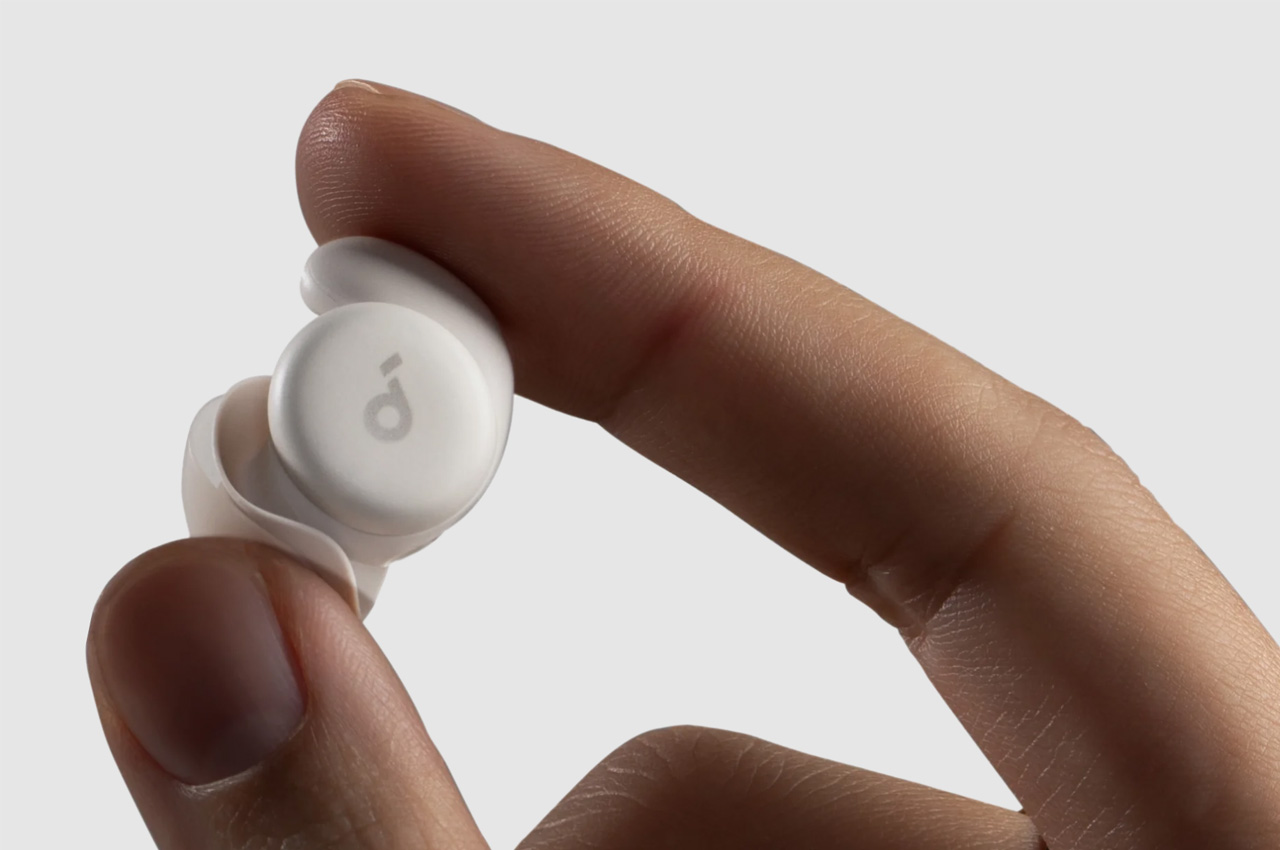
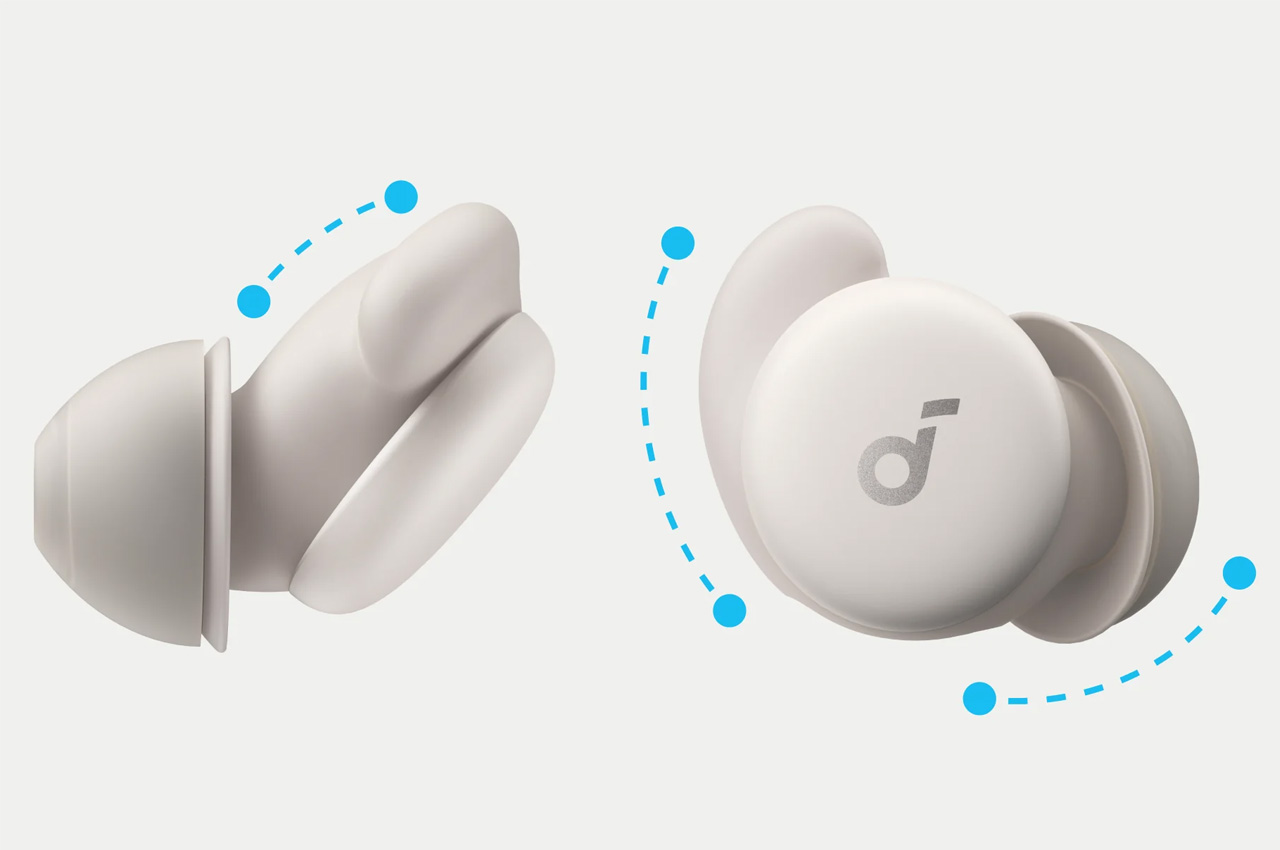
Sleeping while wearing earbuds has not been a comfortable experience for me. I’m predominantly a side sleeper and the earbuds tend to hurt the ear when pressure is exerted. Anker believes it has worked its way around this problem with the new Twin-Seal ear tips that fit snuggly within the ear canal to ensure they are comfortable to wear in bed.

Even though the Soundcore Sleep A2 wireless earbuds are meant specially to block the outside noise while sleeping, the earbuds do not support active noise cancellation feature. Instead, it features a four-point noise-masking solution to ward off common disturbances such as snoring. This is made possible by the buds’ two-layer silicon construction with ear wings that offer “three times stronger passive noise blocking“ and “blend perfectly with the shape of your ear” spreading the “pressure evenly” for night-long comfort.

The new Anker earbuds can pair with Bluetooth device to play music, though information is scanty about the specs the Soundcore A20 would support. Things will become clearer in mid-April when Anker would start a Kickstarter crowdfunding campaign for its wireless sleep earbuds. Anker informs, the device will be offered at 40 percent discount through Kickstarter, and will go on sale for $150 after the crowdfunding campaign is over.

Until then, what we know from the company’s product page is that the device will feature a library of sleep noises that you can play to cancel out any seeping ambient sounds or perhaps to sleep to a piece of soothing music playing directly into your ear. Soundcore Sleep A2 touts a whopping 80-hour backup with a charging case in support. A companion for peaceful, disturbance-free sleep, it offers 14 hours of playback in Sleep mode and 10 hours of playback with Bluetooth.


The post Anker’s new Soundcore Bluetooth sleep earbuds guarantee unmatched noise blocking… Yes, Snore Please! first appeared on Yanko Design.

Microsoft is planning some more pre-Build AI announcements

It's shaping up to be a busy spring for Microsoft, which has multiple events lined up over the next few months. Not only is there a work and Copilot-centric event this Thursday and almost certainly an Xbox showcase coming up in early June, but Build is on the horizon. The company's major developer conference is set to run from May 21 until May 23. However, three days apparently isn't long enough to cram in everything Microsoft wants to talk about.

The company sent Engadget an invite to a private event taking place on May 20, the day before Build starts. Details are scant, but Microsoft says CEO Satya Nadella will dig into its "AI vision across hardware and software." There won't be a livestream of the briefing, but reporters who attend in person will learn the news first and get hands-on demos.

Microsoft having an "AI vision" that spans across hardware and software lines up with recent reports that the company is gearing up to release its first "AI PCs." This week's event is expected to include at least the business and commercial-focused versions of the OLED Surface Pro 10 and Surface Laptop 6.

The consumer variants of the systems may not arrive until later this spring, though those are expected to have significant processor upgrades that will deliver “huge performance and efficiency gains," according to Windows Central. They're slated to have Intel Core Ultra or Snapdragon X Elite chips with next-gen neural processing units.

These chips are said to be capable of supporting more advanced AI features that Microsoft plans to bring to Windows later this year, such as on-device Copilot and a tool called AI Explorer. The latter has been described as a searchable timeline of all of your activity on a device.

This article originally appeared on Engadget at https://www.engadget.com/microsoft-is-planning-some-more-pre-build-ai-announcements-194843363.html?src=rss

Microsoft is planning some more pre-Build AI announcements

It's shaping up to be a busy spring for Microsoft, which has multiple events lined up over the next few months. Not only is there a work and Copilot-centric event this Thursday and almost certainly an Xbox showcase coming up in early June, but Build is on the horizon. The company's major developer conference is set to run from May 21 until May 23. However, three days apparently isn't long enough to cram in everything Microsoft wants to talk about.

The company sent Engadget an invite to a private event taking place on May 20, the day before Build starts. Details are scant, but Microsoft says CEO Satya Nadella will dig into its "AI vision across hardware and software." There won't be a livestream of the briefing, but reporters who attend in person will learn the news first and get hands-on demos.


Microsoft having an "AI vision" that spans across hardware and software lines up with recent reports that the company is gearing up to release its first "AI PCs." This week's event is expected to include at least the business and commercial-focused versions of the OLED Surface Pro 10 and Surface Laptop 6.

The consumer variants of the systems may not arrive until later this spring, though those are expected to have significant processor upgrades that will deliver “huge performance and efficiency gains," according to Windows Central. They're slated to have Intel Core Ultra or Snapdragon X Elite chips with next-gen neural processing units.

These chips are said to be capable of supporting more advanced AI features that Microsoft plans to bring to Windows later this year, such as on-device Copilot and a tool called AI Explorer. The latter has been described as a searchable timeline of all of your activity on a device.

This article originally appeared on Engadget at https://www.engadget.com/microsoft-is-planning-some-more-pre-build-ai-announcements-194843363.html?src=rss