Uber and Lyft plan to end operations in Minneapolis after the city council voted to increase driver pay. The council passed an ordinance on the issue last week. On Thursday, it voted to overrule a mayoral veto of the measure.
The new rules stipulate that ridesharing companies need to pay drivers at least $1.40 per mile and 51 cents per minute (or $5 a ride, whichever is higher) whenever they're ferrying a passenger. Tips are on top of the minimum pay. According to the Associated Press, the council passed the ordinance to bring driver pay closer to the local minimum wage of $15.57 an hour.
However, Uber and Lyft say they'll end services in the city before the pay rise takes effect on May 1. Lyft says the increase is "deeply flawed," citing a Minnesota study indicating that drivers could meet the minimum wage and still cover health insurance, paid leave and retirement savings at lower rates of $1.21 per mile and 49 cents per minute. “We support a minimum earning standard for drivers, but it should be done in an honest way that keeps the service affordable for riders," spokesperson CJ Macklin told The Verge.
An Uber spokesperson told the publication that the company was disappointed by the council's choice to "ignore the data and kick Uber out of the Twin Cities,” putting around 10,000 drivers out of work. They noted Uber's confidence that by working with drivers, drivers and legislators, “we can achieve comprehensive statewide legislation that guarantees drivers a fair minimum wage, protects their independence and keeps rideshare affordable.”
However, Minnesota Governor Tim Walz last year vetoed a bill to boost wages for Uber and Lyft drivers, citing concern over the state becoming one of the most expensive places in the country for ridesharing. Other jurisdictions have mandated minimum driver pay for ridesharing services, including New York City, where the rate starts at about $18 per hour.
If Uber and Lyft follow through on their threat to quit Minneapolis, that could make it harder for people (particularly folks with disabilities and those who can't afford a car of their own) to get around. The rise of ridesharing has upended the taxi industry over the last decade or so. As such, a Minneapolis official says there are now just 39 licensed cab drivers in the city, a significant drop from 1,948 licensed drivers in January 2014.
Meanwhile, some upstart ridesharing companies are looking to move in and take over from Lyft and Uber. Empower and Wridz, for instance, have shown interest in starting operations in Minneapolis. Both companies ask drivers to pay a monthly subscription fee to use their platforms and find riders. In return, drivers keep the entire fare.
This article originally appeared on Engadget at https://www.engadget.com/uber-and-lyft-are-quitting-minneapolis-over-a-driver-pay-increase-180041427.html?src=rss
In the middle of a concert where I was surrounded by Gen Z and younger millennials, I noticed that what some of the kids were using to take photos and videos were not their smartphones but digital cameras. That’s when I realized that the adage that “everything old is new again” is still very much true and that the younger generation was discovering gadgets that my generation thought was already dead. We’re seeing brands come up with different variants of digital cameras and now we’re seeing what might be the smallest yet.
Designer: Kenko Tokina
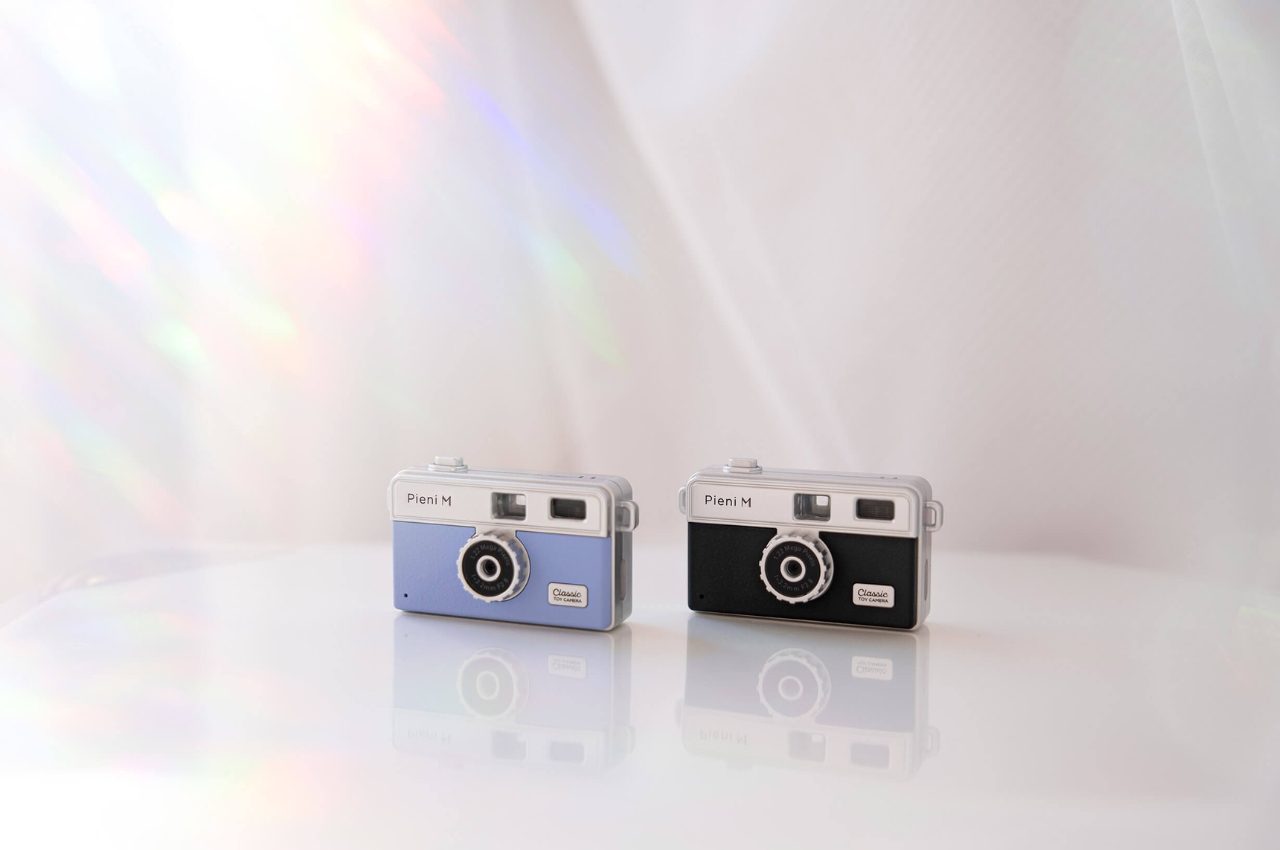
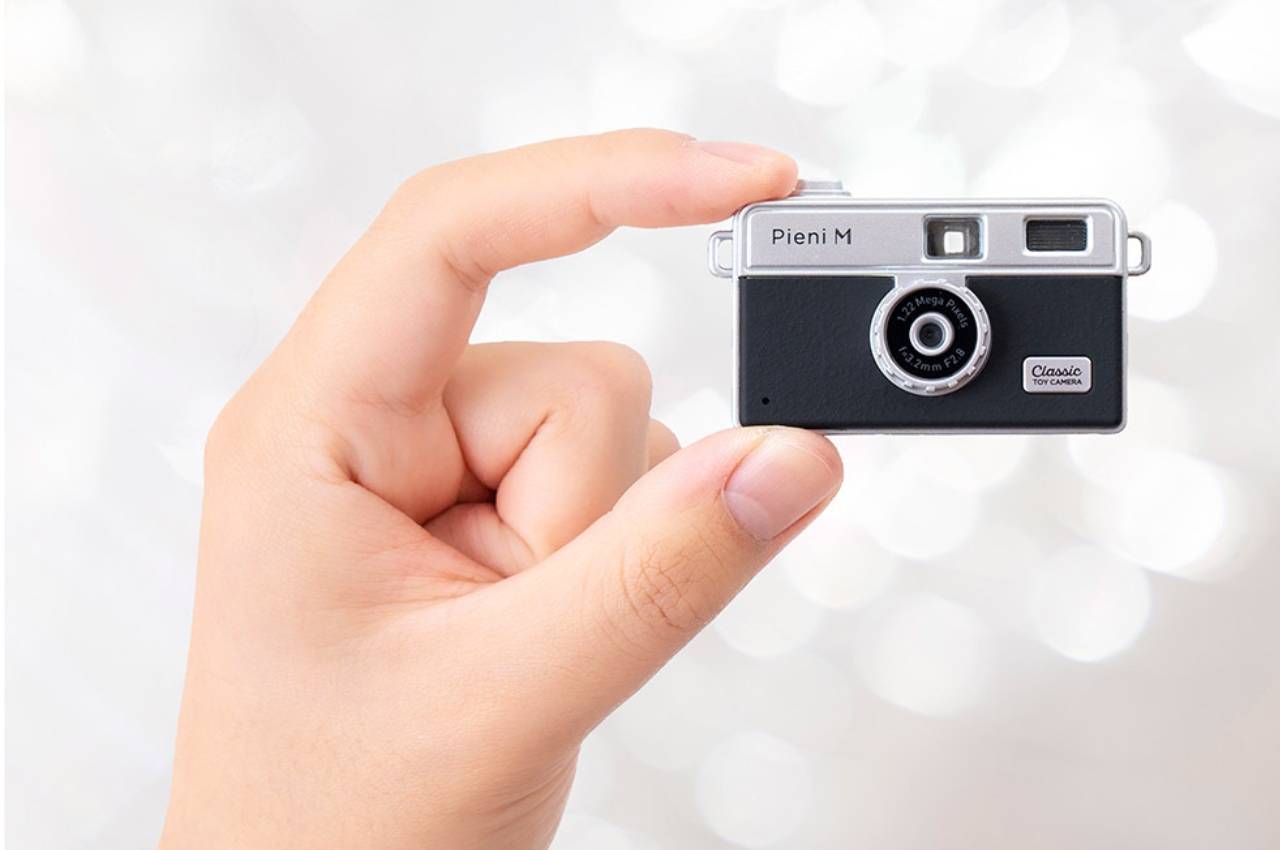
The Pieni M may seem like a toy at first given its tiny size but it’s actually a fully functional miniature digital camera. The name itself, Pieni, is actually the Finnish word for “small” even though the brand is Japanese. Lest you think that it’s just purely for aesthetic purposes, the tiny camera lets you take photos and videos and can even give you filters to make your multimedia look even more hipster than you initially intended. It looks like just any regular camera except that it’s a miniature version.
The camera even has an LCD display that can show you what it is you’re actually taking a photo or video of. Well, given its size, you may have to squint a bit to be able to fully see what’s on the screen. There is a button on the side that lets you switch between video recording and photographing. And if you’re using it for the former, you can actually record voices and ambient sounds. It also has a feature that gives your photos a watercolor-like look or you can use the other filters available including monochrome, orange, blue, or green.
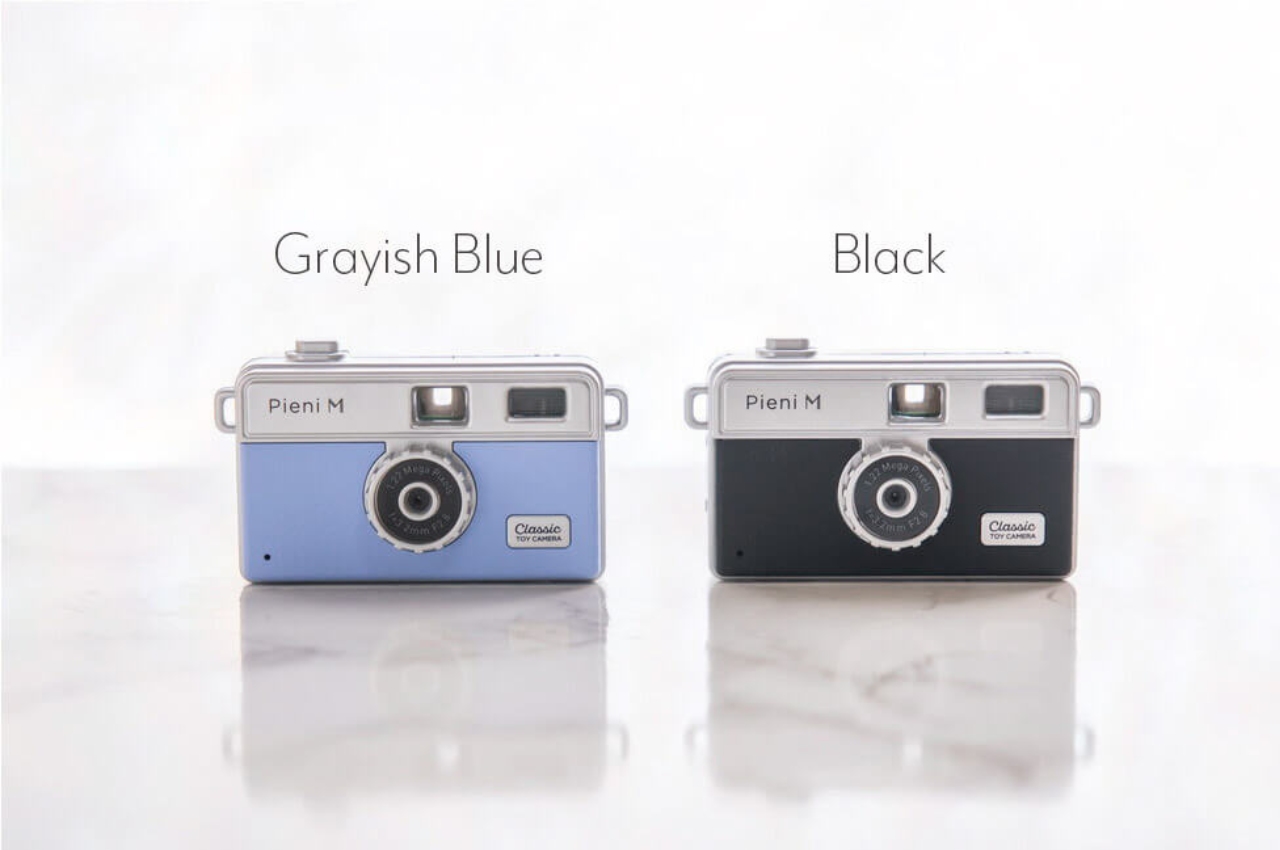
The device is small enough for regular hands to hold it between your two fingers. There’s a USB port so you can easily transfer your media to your laptop or tablet or you can save it on a microSD card for easy storage and transfer. The Pieni M is available in black or grayish blue but it would also be nice to have it in other cuter colors eventually. Personally, I’d probably still use my smartphone to take photos or videos for better quality but if I wanted something more hipster, then this would be a good device to have.
The M1 MacBook Air has dropped to its lowest price ever, thanks to a sale at Walmart. You can pick one up for just $700, which is $50 cheaper than the previous low and a whopping $300 discount from the original asking price. If you’re looking for an entry-level Apple laptop, this is a mighty fine option.
Now, the M1 Air is over three years old and a full two generations behind the newly-released M3-equipped laptops. Despite getting a bit long in the tooth, the M1 chip is still no slouch, so this MacBook Air is plenty capable. It’s a solid machine that excels with basic everyday computing tasks, like streaming content and surfing the web. It’ll even do fine with light video editing and music production. We called it “faster than most PCs” in our official review back in 2020.
That doesn’t exactly track anymore (the march of progress and all) but the M1 Air features a gorgeous Retina display and no fan noise to speak of, in addition to an excellent keyboard and trackpad. The battery life is great, going for over 16 hours before having to hit the outlet. That’s only an hour or two shorter than the new M3 MacBook Air computers.
Apple Silicon chips are pretty dang impressive, but the M1 will struggle when you go beyond everyday computing tasks and into the worlds of serious video editing and AAA gaming. Also, the M1 laptop still has that wedge-shaped design, whereas the newer models feature a uniformly flat design. Some people actually prefer the wedge, but I’m not one of them.
This is the bare-bones standard M1 Air with 8GB of RAM and 256GB of internal storage. The 720p webcam isn't going to win any visual clarity awards, but it’ll get the job done. This isn’t the most future-proof computer around, as Apple recently discontinued it, but it’s also $700. The M3 MacBook Air starts at $1,100 and the M2 starts at $1,000.
Best Buy has the M1 Air on sale for even cheaper, at $650. This is one heck of a deal but it looks to be tied to specific locations. The retailer's also offering open box models.
Netflix is the new streaming home of the Mark Twain Prize for American Humor as part of a multiyear deal. This year's prize is going to Kevin Hart, who is being honored for his "extraordinary contributions to the genre and his impressive achievements across comedy, film and television." The likes of Dave Chappelle, Jimmy Fallon, Tiffany Haddish, Regina Hall, Chelsea Handler, Nelly, Chris Rock and Jerry Seinfeld are set to pay tribute to Hart (and perhaps roast him a bit) at the ceremony. For what it's worth, Hart inked a multiyear movie deal with Netflix in 2021.
The Mark Twain Prize is in its 25th year and it's perhaps one of the most prestigious comedy awards in the US. It's awarded to those who have had "an impact on American society in ways similar to the distinguished 19th-century novelist and essayist Samuel Clemens, best known as Mark Twain," a press release notes. Previous recipients include Richard Pryor, Whoopi Goldberg, Lily Tomlin, Lorne Michaels, Steve Martin, Billy Crystal, George Carlin, Tina Fey, Will Ferrell, Carol Burnett, Eddie Murphy, Bill Murray, David Letterman, Julia Louis-Dreyfus, Jon Stewart and Adam Sandler.
The ceremony takes place on March 24 at the Kennedy Center Concert Hall in Washington DC. You'll be able to watch it when it hits Netflix on May 11. That's during the Netflix is a Joke festival, a series of stand-up shows taking place in Los Angeles that will also stream on the platform. Netflix has a rich history of comedy specials and shows at this point, so it seems like a natural fit for the Mark Twain Prize, which was previously broadcast on Comedy Central, PBS and CNN.
This article originally appeared on Engadget at https://www.engadget.com/netflix-will-stream-the-mark-twain-prize-honoring-kevin-hart-on-may-11-162300362.html?src=rss
Editor's Note 3/20/24: The Amazon Big Spring Sale is officially live now. Most of the early deals we covered previously are still available today. But if you want to see a list of the most up-to-date discounts, you can check it out here.
Amazon’s first Big Spring Sale in the US begins tomorrow, but we’re already starting to see some electronics deals trickle in. Admittedly, tech isn’t at the forefront of this event (unlike Prime Day, where we usually see a healthy number of tech discounts). Amazon stated in its announcement that the Big Spring Sale would feature deals on fashion, outdoor, cleaning and home organization products, with tech only getting a brief shout otherwise. But we at Engadget see this as an opportunity to surface all of the best tech deals you can get at Amazon nonetheless — whether they be explicitly tied to the Big Spring Sale or not. Here are the best Amazon spring deals on gadgets you can shop ahead of the main event.
Best Spring Sale deals on Apple devices
Best Spring Sale deals on headphones, earbuds and speakers
This article originally appeared on Engadget at https://www.engadget.com/amazon-big-spring-sale-20-early-deals-from-apple-sonos-and-sony-you-can-shop-today-161534774.html?src=rss
Less than four months after debuting its mid-range Accentum headphones, Sennheiser revealed another version at CES that remains more affordable than its flagship Momentum set. Dubbed the Accentum Plus, this more-expensive model swaps the physical buttons for touch controls while offering revised active noise cancellation (ANC), wear-detection and other conveniences the first version didn’t. All of the additions come at a price, though, as the Plus ($230) costs $50 more than the regular Accentum. For a set of headphones that mostly looks the same, are internal updates enough to justify a bigger investment?
Design
It’s difficult to tell the Accentum Plus and Accentum apart at first glance. That lack of physical controls on the older model is what primarily distinguishes the two. The Plus version still has one button which manages power, pairing and voice assistants, but all of the audio and call controls are touch-based and located on the outside of the right ear cup. They work well, from taps for playback to swipes for volume, but depending on your preferences, ditching the physical controls for touch may be a turn off. The other difference is that the Plus has a 3.5mm aux jack along with a USB-C connection whereas the first Accentum only has the latter.
A nearly identical design means Sennheiser didn’t address my key criticism of the first Accentum. The headphones remain almost entirely made out of plastic, which gives them a cheap look and feel. Plus, it doesn’t inspire a lot of confidence in the build quality for a set of $230 headphones. The company introduced its new design style on the Momentum 4 in 2022, which it continued with the overall look on the Accentum line. But, the latest Momentums are a bit more polished than these two more recent models.
Software and features
For the most part, the Sennheiser Smart Control App offers the same features for the Accentum Plus as it does for the Accentum. Almost everything you’d need is on the main screen, with battery percentage at the top. Below that sit connection management for multipoint Bluetooth and My Sound audio customization. There, you can adjust a five-band EQ, select a prebuilt sound preset or make your own. The company also offers Sound Personalization that calibrates the audio based on your responses to a few samples in the app.
Sennheiser’s Sound Zones are here as well, giving you the ability to configure specific audio settings based on your location. You can create up to 20 of these for places like home, work, gym and more. Of course, you have to give the app permission to track your location, which could be a nonstarter for some users.
The last item on the main interface of the app is ANC control. Here, you can disable the automatic “adaptive” adjustment to the Accentum Plus’ noise cancellation and leave “regular” noise cancellation on. There’s a slider to blend of ANC and transparency as you see fit. You can cycle between ANC and transparency mode with a double tap on the right ear cup, but that action doesn’t allow you to activate any preferred blends. Instead, it only turns on full ANC or complete transparency.
Sound quality
Photo by Billy Steele/Engadget
Sennheiser’s flagship earbuds and headphones have consistently offered the best sound quality among all of the products I’ve tested. The company has a knack for a well-tuned audio profile that's dynamic, but not overbearing, and that offers plenty of fine detail thanks to excellent clarity across the EQ. That trademark crispness returns on the Accentum Plus, but it’s at its best at around 65-75 percent volume. Knock that level down to around 50 percent and sound quality begins to suffer.
There’s a pleasant airy, atmospheric quality to tracks on Fever Ray’s Radical Romantics on the Accentum Plus, enveloping you the way the sound on more expensive headphones would. However, when you decrease the volume to about 50 percent, bass begins to overpower some of the details and the audio profile begins to muddy. The clarity that makes Sennheiser’s headphones so good is gone at this point, which is a bummer for those of us who don't always desire louder listening.
While there’s ample bass that’s offset by crisp highs throughout most genres, more chaotic styles like metal can be a mixed bag. Boomy bass is still there on Texas In July’s Without Reason and Better Lovers’ God Made Me An Animal, but finer details in guitars and drum textures start to get lost. The overall performance is a bit flat with all of the instruments coming across compressed compared to other sets. Switch over to something more mellow like Charles Wesley Godwin’s Live From Echo Mountain and it’s like you put on different headphones. It feels much more like you’re in the room where this was recorded.
ANC performance
Sennheiser says the Accentum Plus has hybrid adaptive ANC where the Accentum just has hybrid ANC. This means that the Plus model adjusts to changes in environmental noise while the regular model has just one level of blocking ability. During my tests, I struggled to tell a big difference between the two, even when switching quickly from one set to the other. The overall ANC performance is solid in most circumstances, but it’s far from what you’d get on the best that Bose, Sony and even Sennheiser have to offer. And since the Plus version is more expensive, I expected an obvious improvement.
Call quality
Photo by Billy Steele/Engadget
Like most over-ear headphones, the Accentum Plus is just fine for calls. The audio quality isn’t pristine, but it’s certainly passable for most uses. That includes work calls, although I’d suggest something with a better mic if you’re actually leading the presentation. Overall, the voice quality comes across compressed and a bit tinny. It’s not the worst, but it’s also probably not what you want when how you sound really matters. You can choose to have the headphones automatically switch to transparency mode when you take a call. However, the Accentum Plus doesn’t pipe in your voice, so the overall audio isn’t as natural as more-expensive options like the AirPods Max.
Battery life
The Plus’ battery life remains unchanged from the regular Accentum at 50 hours. That’s definitely not a bad thing. In fact, I exceeded that figure during my tests, notching 57 hours of use with ANC enabled. This included a mix of listening and calls, and during the latter I switched to transparency mode instead of noise cancellation. There were also a few days in between sessions where the headphones sat unused. When you do find yourself out of juice, you can get five hours of listening time after plugging in for only 10 minutes.
The competition
Given that the upgrades on the Plus are marginal, it’s hard to recommend them over the cheaper Accentum. Both carry Sennheiser’s crisp, clear sound that performs well most of the time. The ANC improvements aren’t enough to justify spending more and the only thing you may truly benefit from is automatic pausing that wear-detection brings. The company’s Momentum 4 would definitely be an upgrade over either Accentum, but that costs around $300. Plus, Sennheiser’s flagship headphones still have its newer, more-boring design – albeit with a few refinements.
If you’re in the market for affordable noise-canceling headphones that don’t cut too many corners, consider the Sony’s WH-CH720N. Currently available for $105, this budget option won’t win any design awards as it’s also all-plastic, but it’s more comfortable and has great audio for the price. Noise cancellation is just okay, though Adaptive Sound Control allows you to automate audio settings based on activity or location and there’s support for Sony’s 360 Reality Audio.
Wrap-up
Sennheiser’s attempt to improve on its initial mid-range Accentum offering is a mixed bag. For all of its updates, the Accentum Plus isn’t the massive improvement you’d expect with its higher price. Sure, the sound is great at times and the ANC will get the job done, but the best thing about this Plus version is the better-than-expected battery life. However, you can get that same play time on the regular Accentum for $50 less. Some small design refinements and a more-obvious step up in terms of audio quality and ANC performance would’ve made a larger impact. But, as it stands, the Accentum Plus isn't a significant upgrade over last year’s model.
This article originally appeared on Engadget at https://www.engadget.com/sennheiser-accentum-plus-review-upgrades-that-arent-worth-the-extra-cost-160035421.html?src=rss
The latest series of Doctor Who will debut on iPlayer and globally on Disney+ at midnight in the UK. The first two hour-long episodes land on May 11, which will then air on BBC One later that day in prime time. Those who know how time zones work will have already guessed that Doctor Who will now be available to view in the US on May 10 at 7pm ET and 4pm PT.
There are plenty of sucky things about living in the UK, one of which is that we’re a day behind the US TV schedule. Buzzy shows like Lost were often spoiled by the internet long before it was legally available to view here. To curb the rampant piracy, shows like Game of Thronesand Succession were broadcast at 2am or 3am.
That way, ardent viewers could DVR those airings and watch them before they got to work lest it be spoiled. Because, if you didn’t, you’d have to be extremely careful when you were treading around on the internet. There were very few shows I didn’t have spoiled for me given that I work on the internet all the damn day.
So you can imagine my dismay to learn that Doctor Who, one of the crown jewels in the British TV firmament, will now be treated the same way. It’s hard not to feel annoyed given that the bulk of the series’ funding comes from the license fee paid by the majority of TV owners in the UK. It seems mad, to me, that the global simulcast isn't tied to the UK broadcast, rather than this obvious tweak to ensure the US gets it first. Especially when the alternative is to stay up until 2am on a Saturday morning.
(Yes, I know there’s precedent for this, The Five Doctors aired on PBS two days before the UK airing, and the TV movie aired on Fox twelve days earlier. But that was in the pre-internet heyday when you didn't have every big moment from the show shared by its own official social channels mere seconds after it aired.)
This article originally appeared on Engadget at https://www.engadget.com/disney-screws-uk-doctor-who-fans-with-global-release-strategy-155040558.html?src=rss
We saw quite a few robots at MWC 2024 last month, but the two brightest stars were dog-like designs that were derived from the nightmare fuel that was Boston Dynamics’ Spot. Nowadays, the term “quadruped robot” would call images of that machine or its more refined descendants, but that’s only by convention and not by definition. This DIY robot, for example, also has four legs, at least for the technical definition of what a “leg” means, except it doesn’t take inspiration from canines or other four-legged animals. Instead, it tries to disguise itself as a fruit that suddenly splits into four and starts moving almost like a crab. A real-world Transformer, but in a small and somewhat cute package.
Designer: Ryota Kobayashi
Most of us probably aren’t unfamiliar with robots in disguise, at least those fictional machines that transform from a mundane shape to something truly more robotic. Of course, those fictional robots try to mimic vehicles or even animals since those things are already mobile by nature. But a spherical fruit that only rolls when the law of inertia takes effect? Really an odd choice for a disguise.
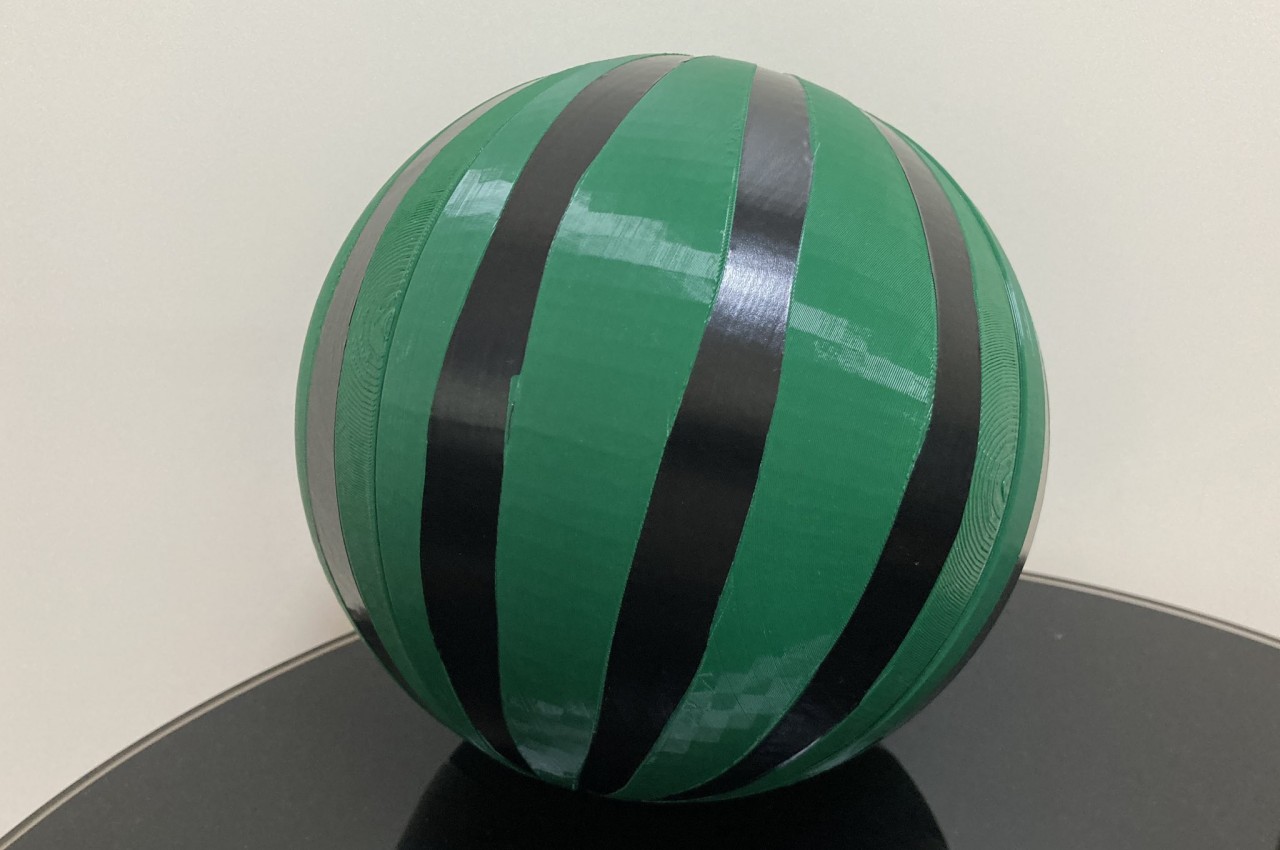
But that’s exactly what the Sherobo quadruped robot does, looking like a very fake plastic lemon in its “inactive” state. The real inspiration isn’t actually the fruit itself but what’s done with it in Japan. A game called “Suikawari” is pretty much the Japanese form of piñata, trying to split the watermelon with a stick while blindfolded. Of course, you won’t be splitting this sphere, let alone hitting it, because it splits on its own when it stretches its legs to walk around.
Sherobo is actually made from many off-the-shelf components for the robot’s mainboard and motors. The frame, body, and legs, however, are all custom 3D printed, of course, and the designs are sadly not available publicly. What’s interesting is that each of the robot’s four legs has three degrees of freedom or 3DoF, giving it a great deal of mobility and flexibility. That said, given its design of the legs located around the body, it walks more like a crab than any other quadruped.
And, of course, it doesn’t have to be a watermelon, either, and it can be any fruit or spherical object you prefer. It’s definitely an interesting experiment on robot design and one that expands the definition of a quadruped robot. It doesn’t hurt that it is perhaps more adorable those those Spot-like dog-inspired robots, that is unless you actually have a phobia of crab-like and spider-like critters.
The Bose QuietComfort Ultra earbuds are now $250 ahead of the Amazon Spring Sale. This is a discount of 17 percent, as they typically cost $300. It also happens to be a record-low price for the wireless earbuds, though they’ve only been on the market since September of last year. You can find more Bose gear on sale here too.
The earbuds boast some of the best active noise cancellation around, rivaling many over-ear headphones. That’s the primary reason why the Bose QuietComfort Ultra line made our list of the best wireless earbuds.
However, there’s plenty more to like here. We called out the spatial audio capabilities in our official review, which doesn’t require specially-made content, thanks to virtualization software that works to put the listener right in the middle of the acoustic sweet spot. The battery life is on point, the sound quality is great and the touch controls let users easily change the volume, skip songs and answer calls. These are dang good earbuds.
They aren’t, however, perfect earbuds. As mentioned, the battery life is great, getting anywhere from 16 to 24 hours before needing juice, when you factor in a few trips to the charging case. However, using the spatial audio feature drastically reduces the battery life, so be cautious when enabling different modes. There’s no wireless charging out of the box, as this feature requires a $50 silicone cover for the charging case. Still, today’s discount saves $50, if wireless charging is an absolute must.
This article originally appeared on Engadget at https://www.engadget.com/one-of-our-favorite-pairs-of-noise-cancelling-earbuds-is-down-to-a-record-low-price-151206909.html?src=rss
PNY has unveiled the RP60 portable USB-C SSD, a new addition to their portable storage solutions, designed for professionals and enthusiasts who require durable and high-speed data storage on the go. The RP60 features a robust design and advanced USB 3.2 Gen 2×2 USB-C interface, offering significant improvements in data transfer speeds and device compatibility […]