Microsoft is exploring the idea of putting ads in your Windows 11 Start menu. To be specific, it's looking to place advertisements for apps you can find in the Microsoft Store in the menu's recommended section. I could hear you sighing in defeat if you've used Windows 10 extensively before — the older OS serves ads in the Start menu, as well, and they're also for apps you can download. At the moment, Microsoft will only show ads in this version if you're in the US and a Windows Insider in the Beta Channel. You won't be seeing them if you're not a beta tester or if you're using a device managed by an organization.
Further, you can disable the advertisements altogether. To do so, just go to Personalization under Settings and then toggle off "Show recommendations for tips, app promotions, and more" in the Start section. Like any other Microsoft experiment, it may never reach wider rollout, but you may want to remember the aforementioned steps, since the company does have history of incorporating ads into its desktop platforms. Last year, Microsoft also deployed experimental promo spots for its services like OneDrive in the menu that pops up when you click on your profile photo.
Microsoft
This article originally appeared on Engadget at https://www.engadget.com/microsofts-windows-11-beta-testers-may-start-seeing-ads-in-the-start-menu-032358394.html?src=rss
Microsoft is exploring the idea of putting ads in your Windows 11 Start menu. To be specific, it's looking to place advertisements for apps you can find in the Microsoft Store in the menu's recommended section. I could hear you sighing in defeat if you've used Windows 10 extensively before — the older OS serves ads in the Start menu, as well, and they're also for apps you can download. At the moment, Microsoft will only show ads in this version if you're in the US and a Windows Insider in the Beta Channel. You won't be seeing them if you're not a beta tester or if you're using a device managed by an organization.
Further, you can disable the advertisements altogether. To do so, just go to Personalization under Settings and then toggle off "Show recommendations for tips, app promotions, and more" in the Start section. Like any other Microsoft experiment, it may never reach wider rollout, but you may want to remember the aforementioned steps, since the company does have history of incorporating ads into its desktop platforms. Last year, Microsoft also deployed experimental promo spots for its services like OneDrive in the menu that pops up when you click on your profile photo.
Microsoft
This article originally appeared on Engadget at https://www.engadget.com/microsofts-windows-11-beta-testers-may-start-seeing-ads-in-the-start-menu-032358394.html?src=rss
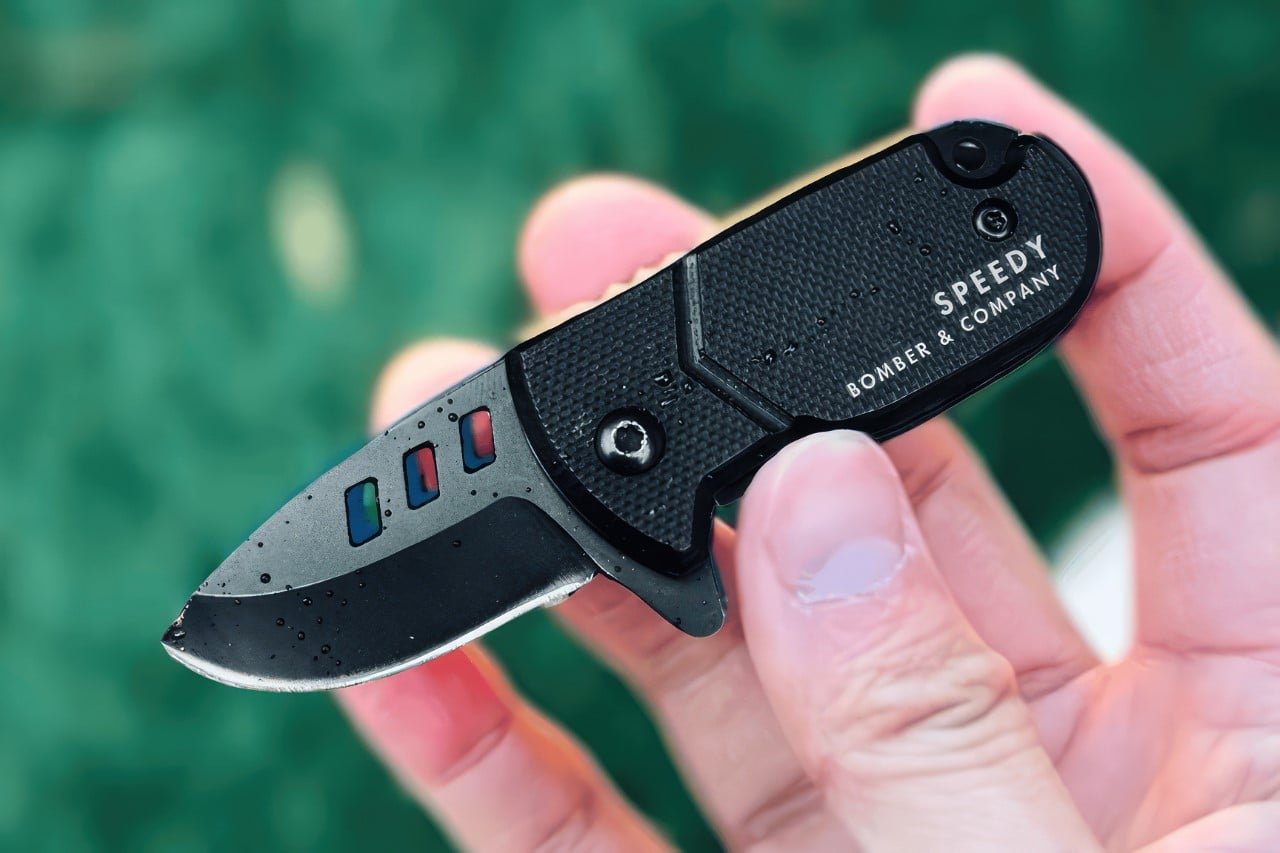
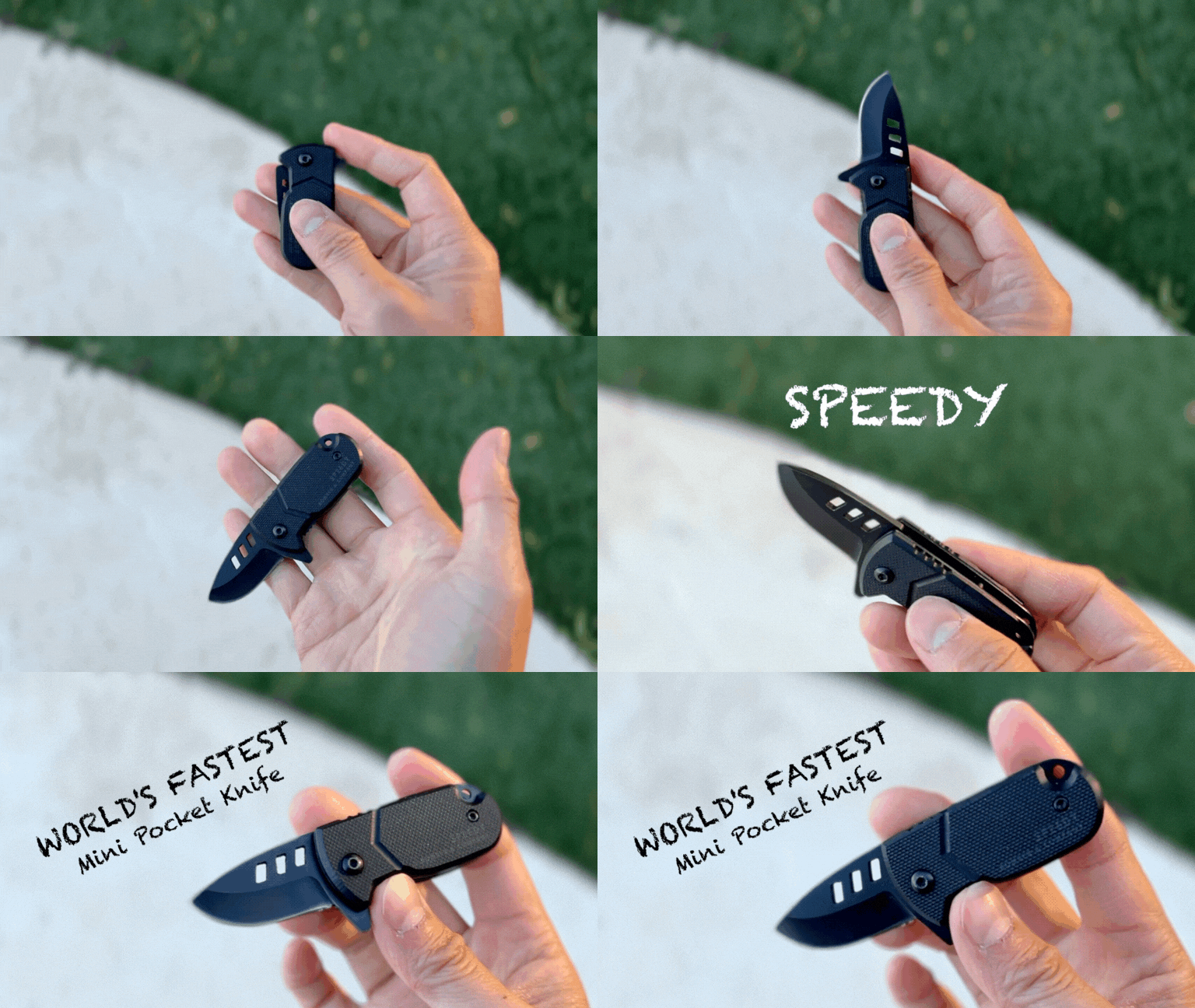
The name Speedy seems rather apt for the world’s fastest-deploying tiny pocket knife, don’t you think?
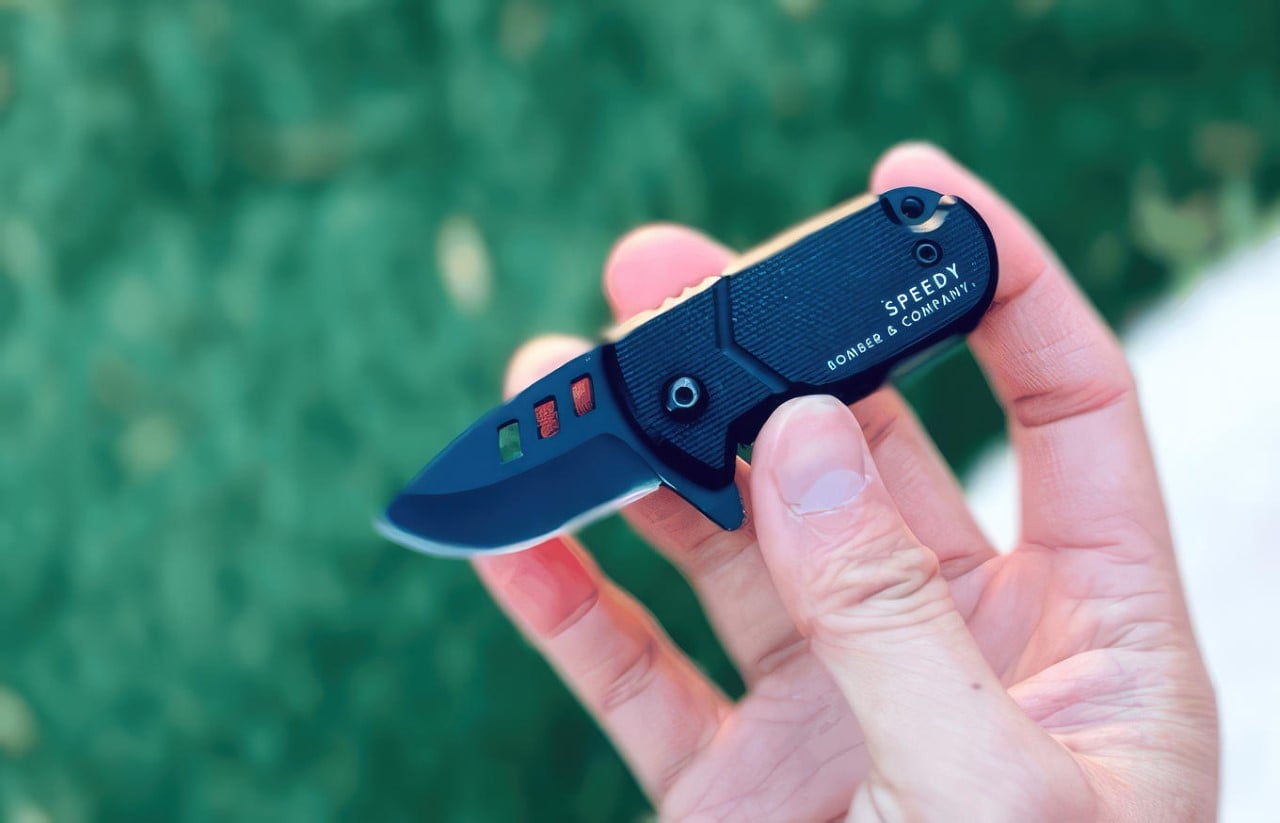
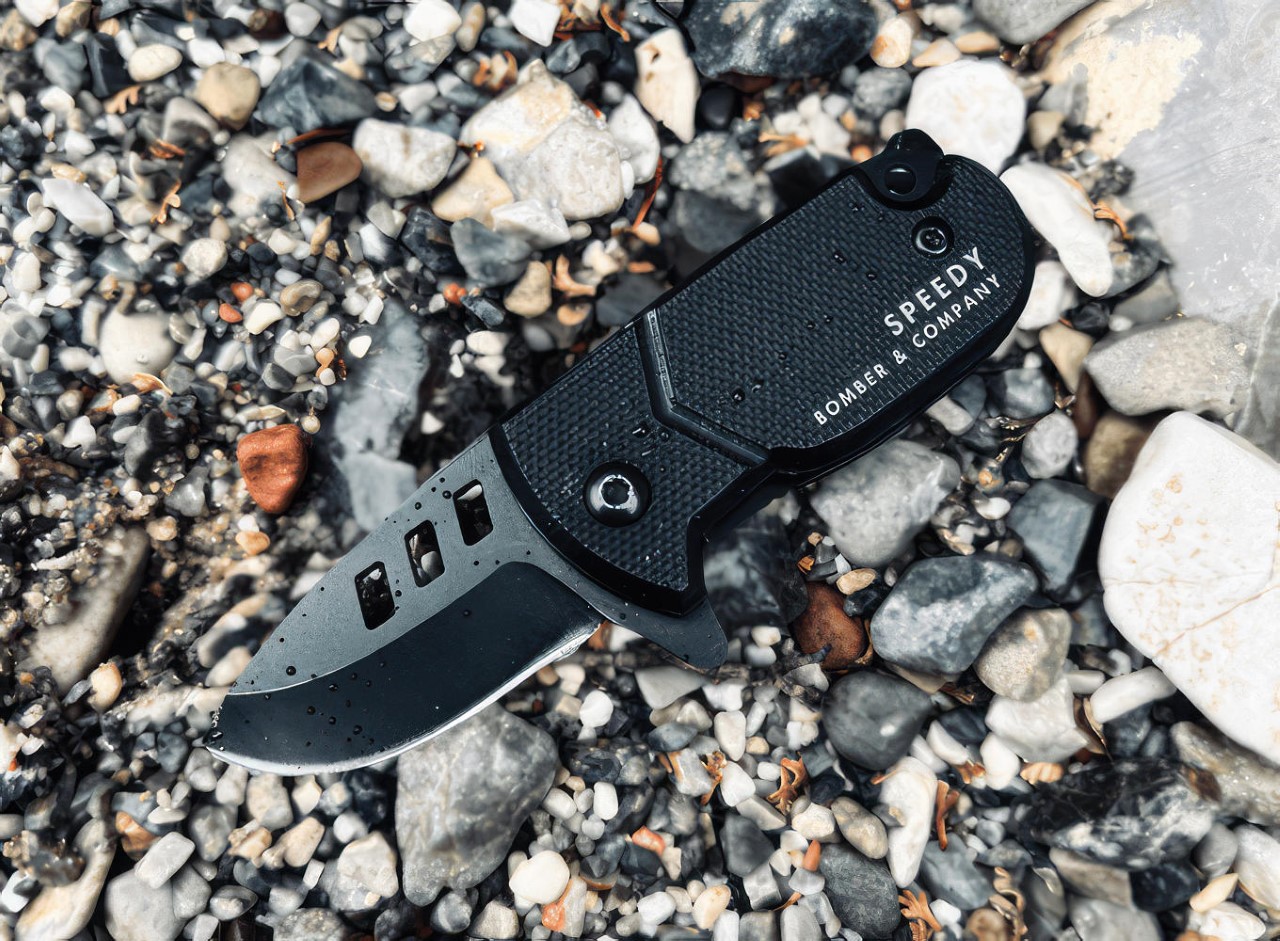
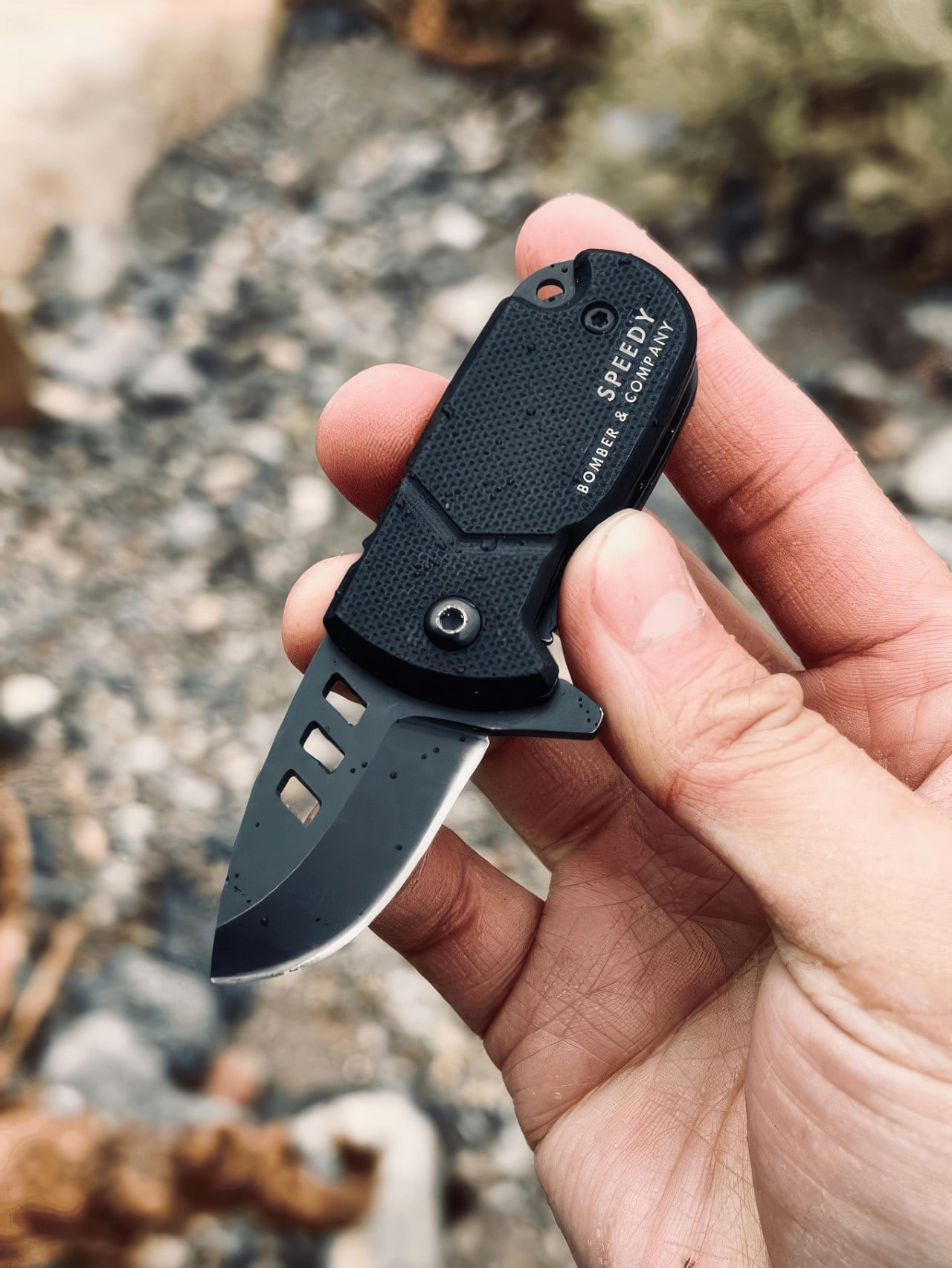
With a spring-loaded action that allows you to flip open the blade in record time, the Speedy is a tiny yet handy EDC that’s roughly the size of your car’s key fob (but slimmer). Armed with a 440 Carbon stainless steel blade encased within a G10 fiberglass handle, the entire knife weighs just 1.6 ounces, measures a minuscule 2.2 inches (58 millimeters), and has a tiny 1.45-inch (37 millimeters) blade that may seem diminutive, but is more than capable of being your tactical sidekick in an emergency.
The Speedy comes from the folks at Bomber & Company, a seasoned EDC brand that debuted on Kickstarter in 2014, quickly rising through the ranks to become one of the hottest knifemakers on the platform, having sold over 1 million pocket knives in the past decade. The company’s developed its unique aesthetic over its 7 product campaigns, and the Speedy fits well into the the Bomber & Company’s visual language with its all-black design, fiber handle, and coated blade. Where it shines, however, is in the insides, which power the blade’s deployment. A strategically placed spring helps the Speedy unsheathe its blade in practically a millisecond, allowing single-hand deployment in the blink of an eye.
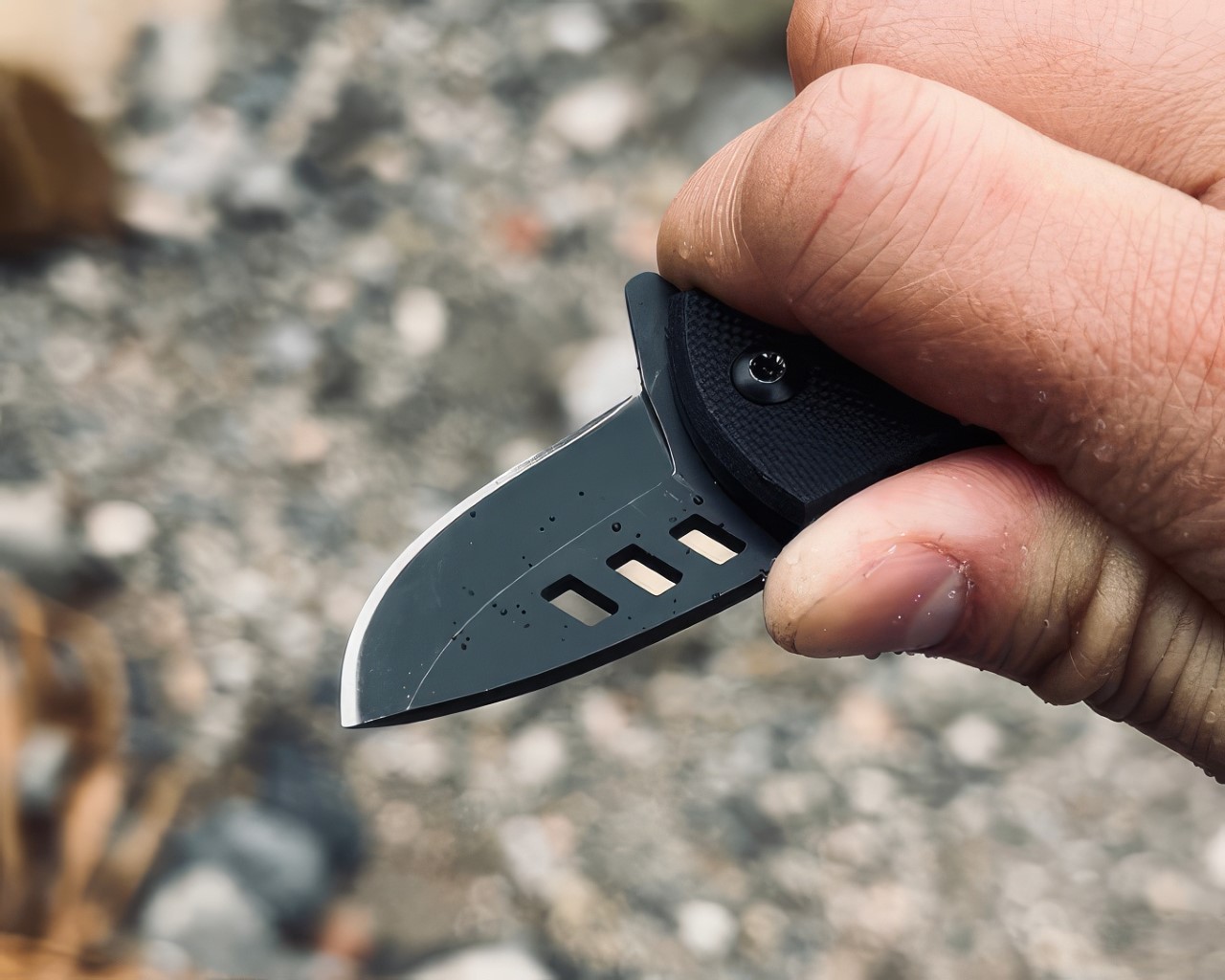
Once deployed, you’re equipped with a 1.45-inch small-size carbon steel blade with a drop-point design. The drop-point is perhaps the most classic blade style given its versatility. With a straight edge that curves at the tip, you’re left with a blade that’s great for cutting, slicing, carving, piercing, and even whittling. The carbon-steel blade cuts through materials like they’re butter, comfortably slicing through paper and cardboard, leather, and even through wood.
Cutouts in the blade’s design help reduce weight as well as decrease friction while slicing, allowing the knife to glide through materials.
Even for its ludicrously small size, the Speedy is quite grippy and easy to maneuver. The flipper acts as a nice finger guard, and that 2.2-inch handle is enough for a sturdy reliable grasp as you use the blade. A liner lock holds the blade in place while you’re cutting, allowing you to tuck it back into the handle only when you’re done using the Speedy.
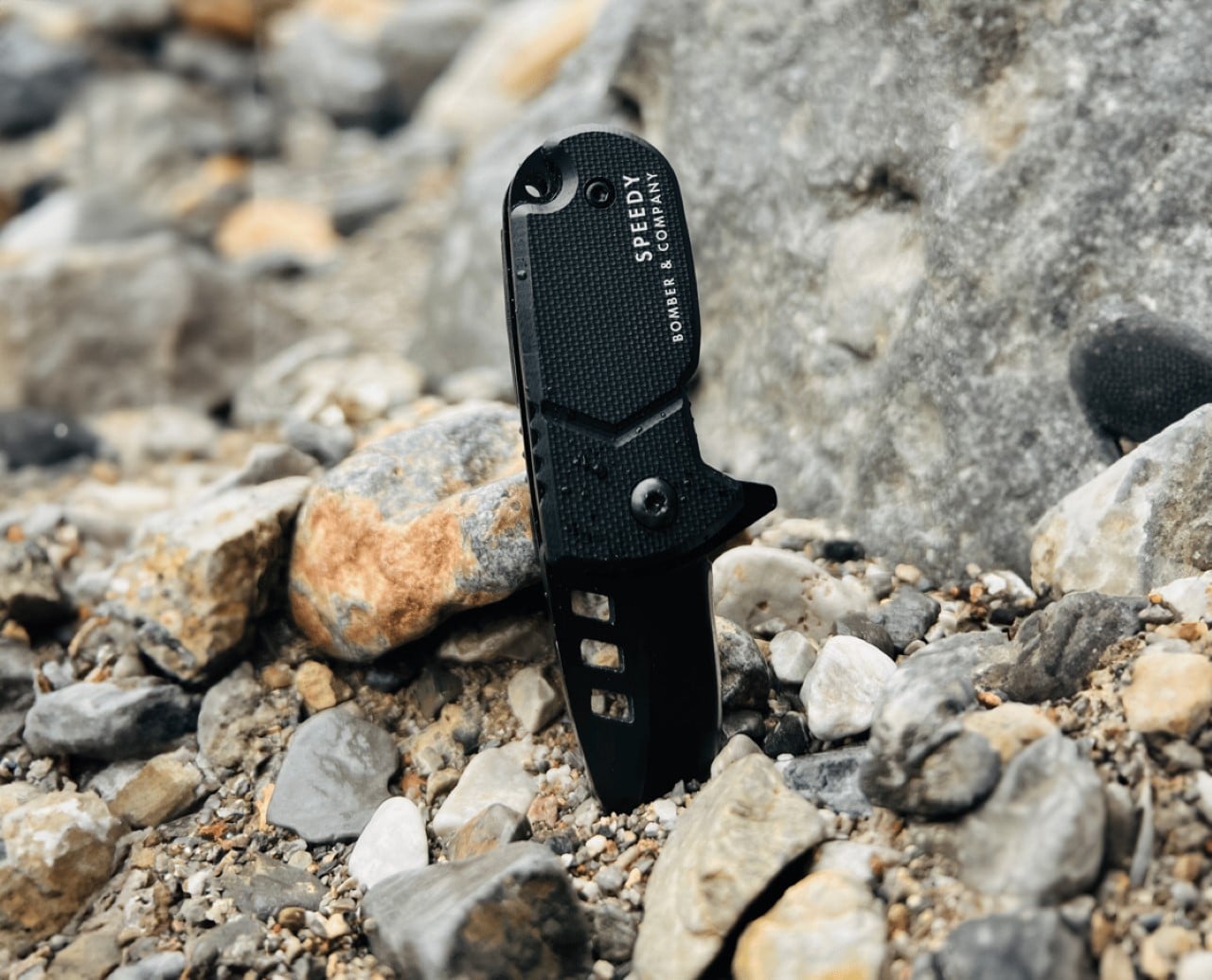
The tiny EDC knife comes with an all-black design (how very Henry Ford Model T of them), and sports a keyring hole at the end of the handle that lets you string the blade on a keychain or even attach a carabiner so you can carry your Speedy however you wish. The knife is priced at $25 with global shipping, although for $50 you can grab a 3-pack for gifting to your friends, family, and fellow EDC enthusiasts. After all, you never know when you’ll need a fast-deploying tactical blade to get yourself out of a pickle…
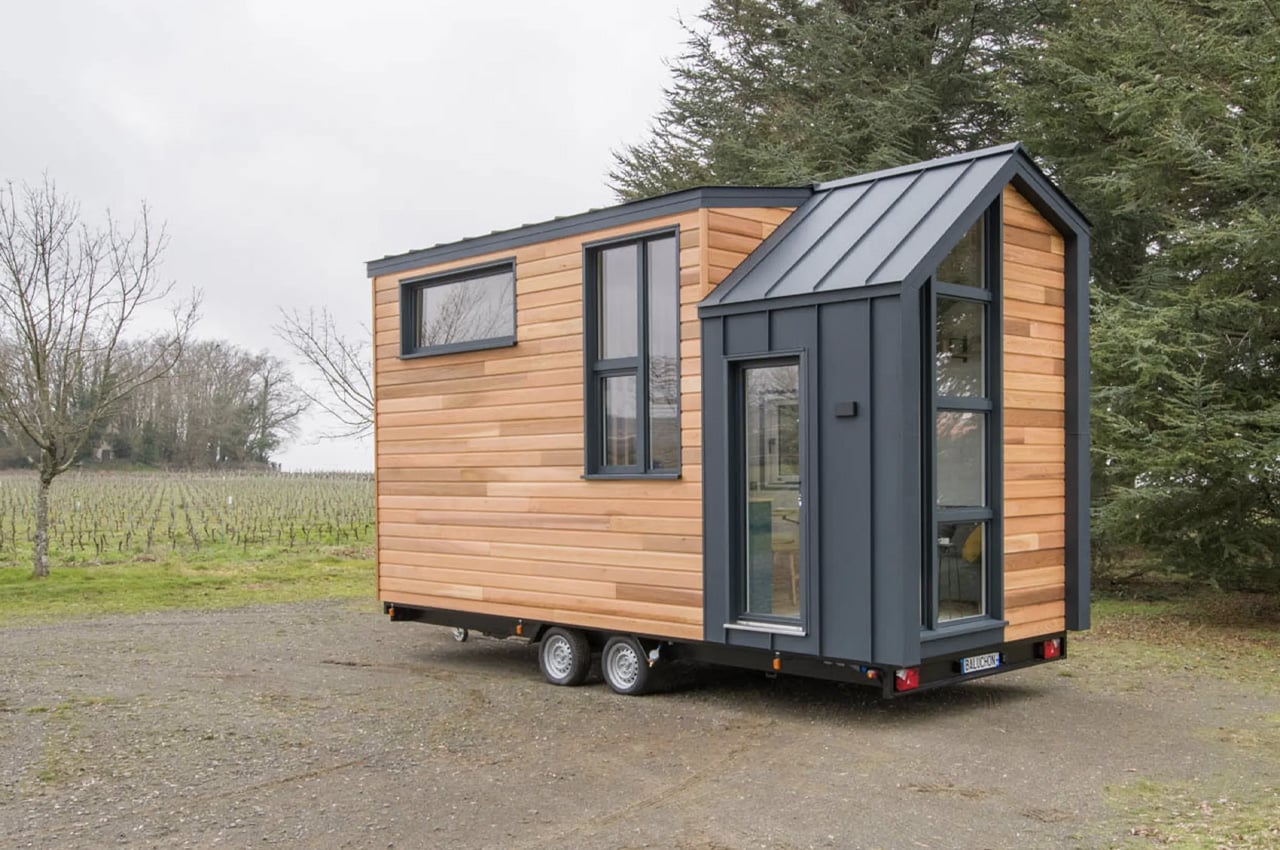
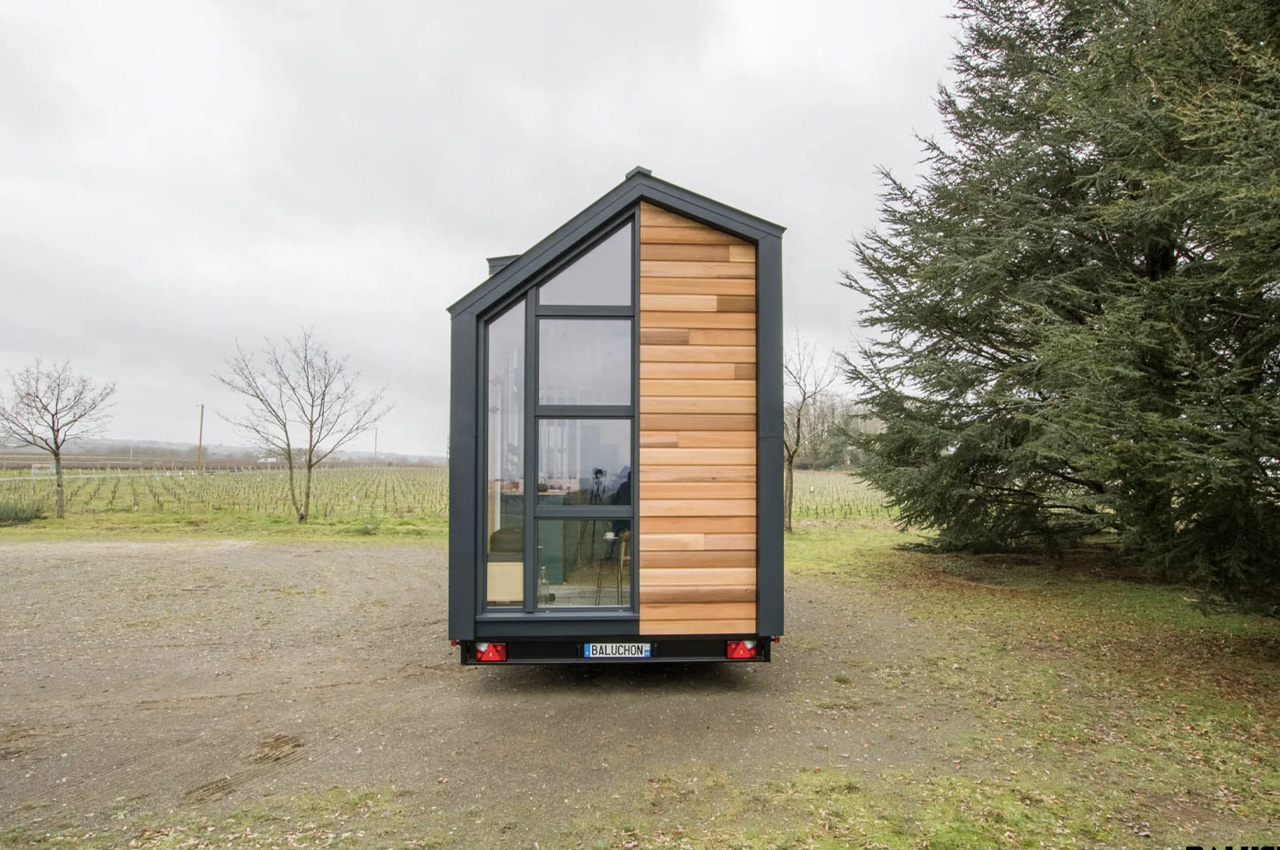
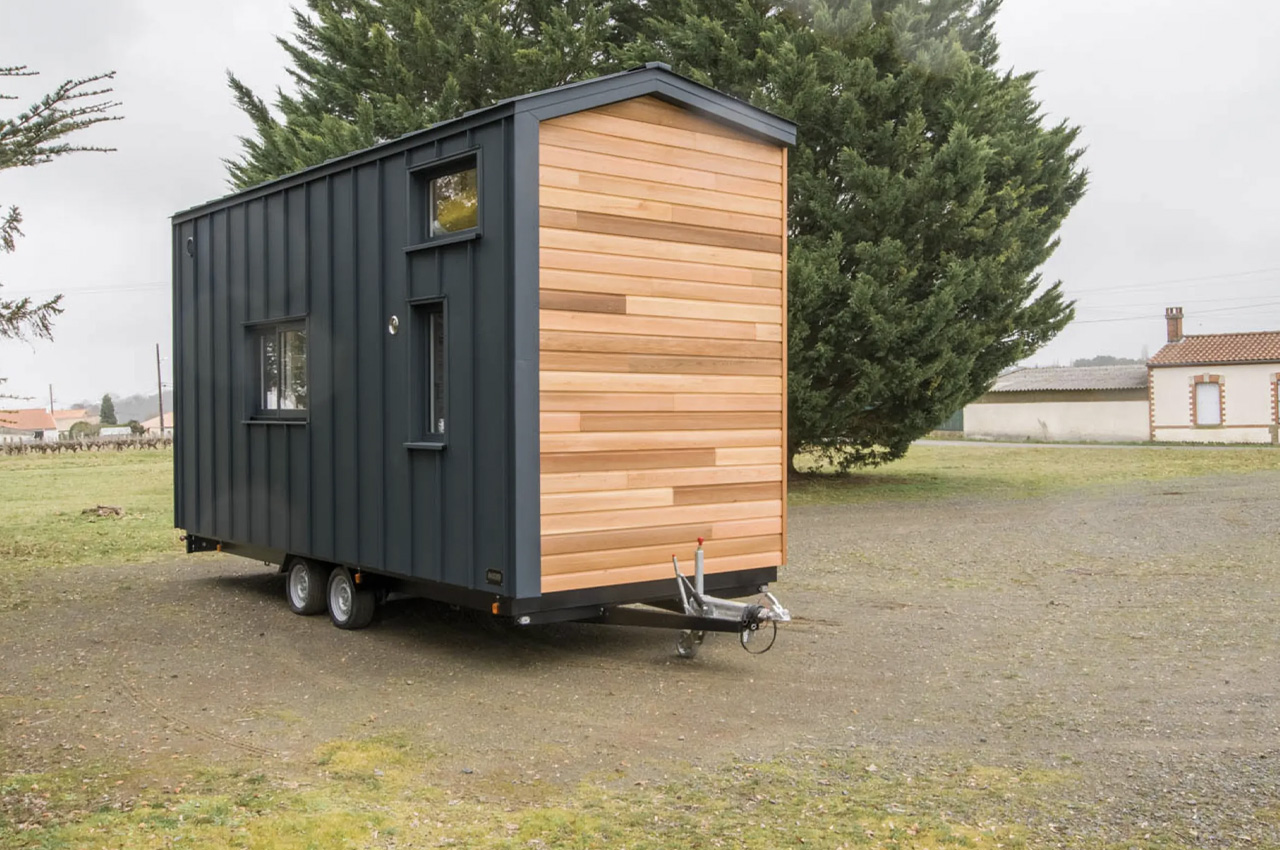
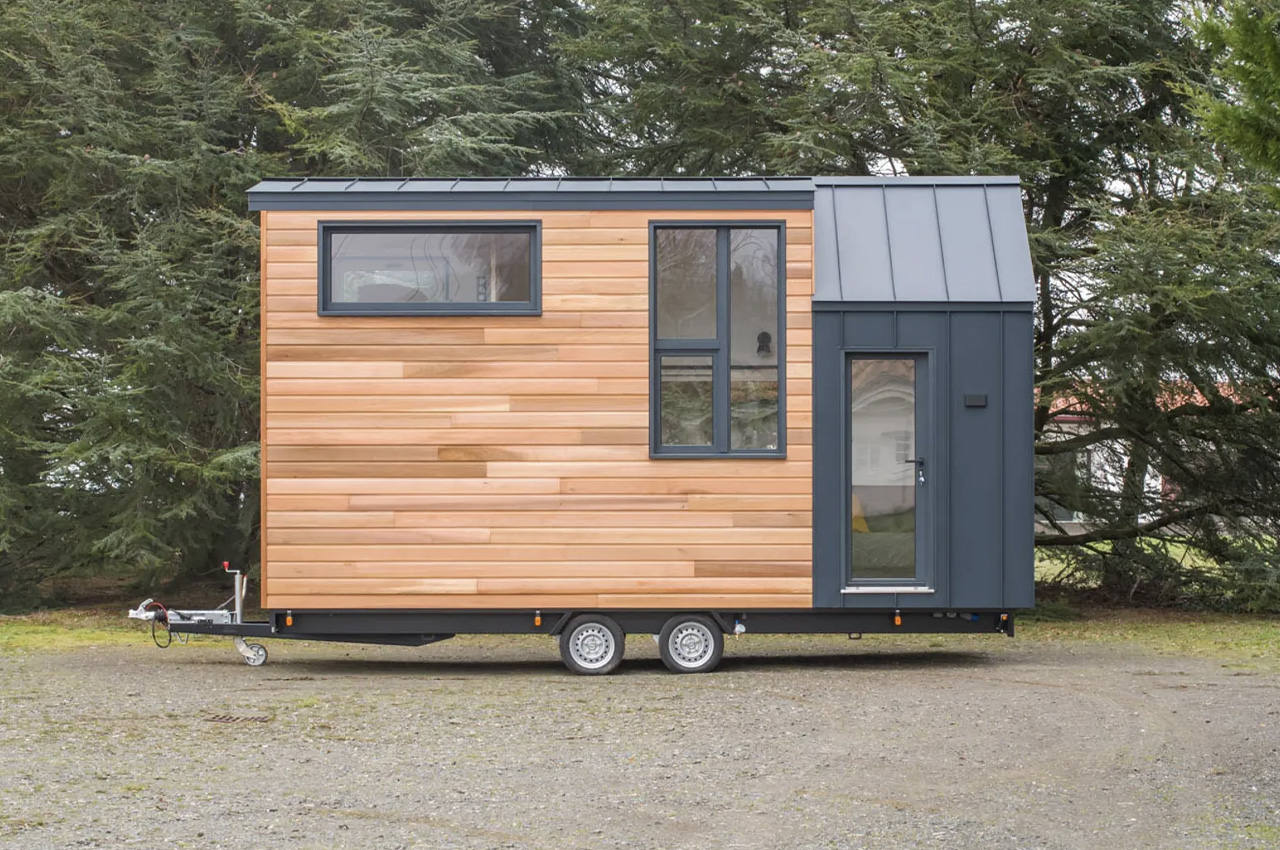
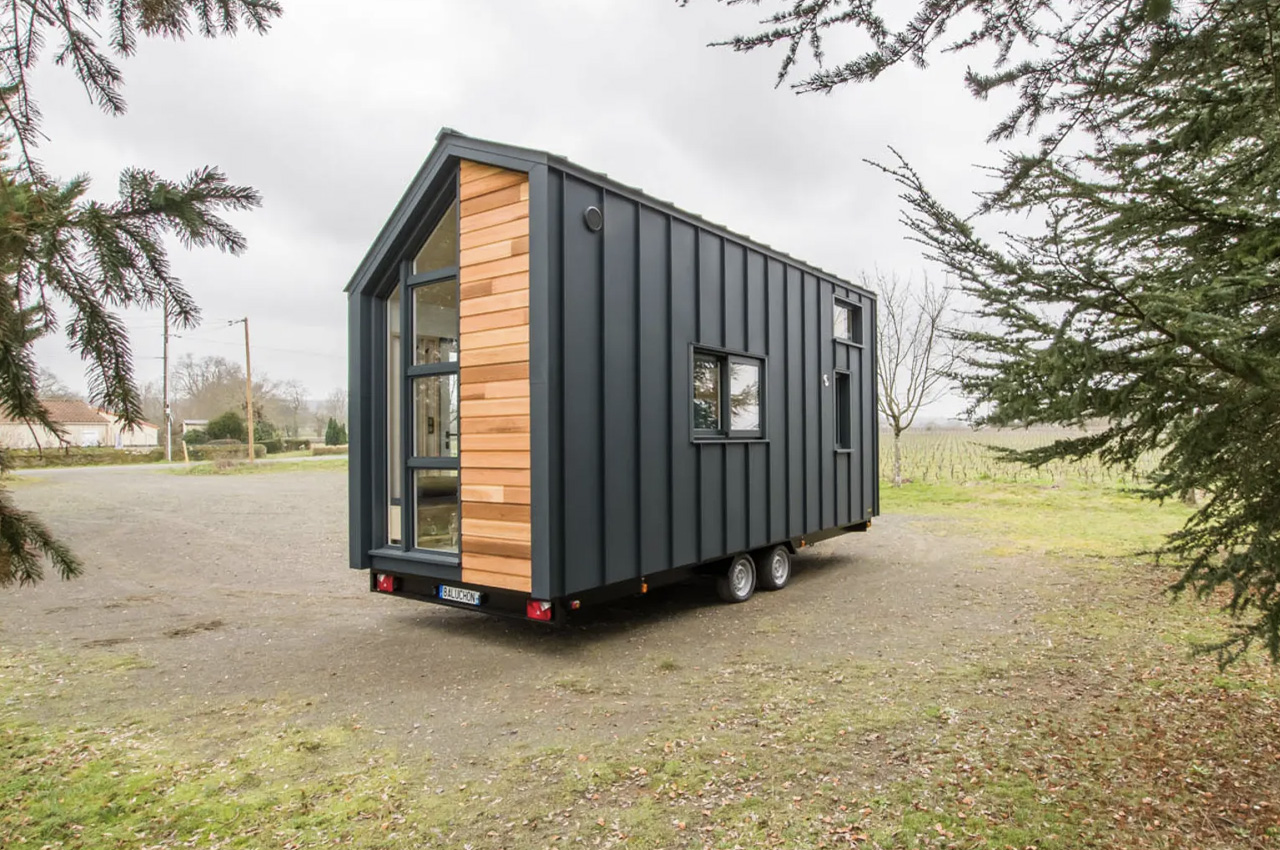
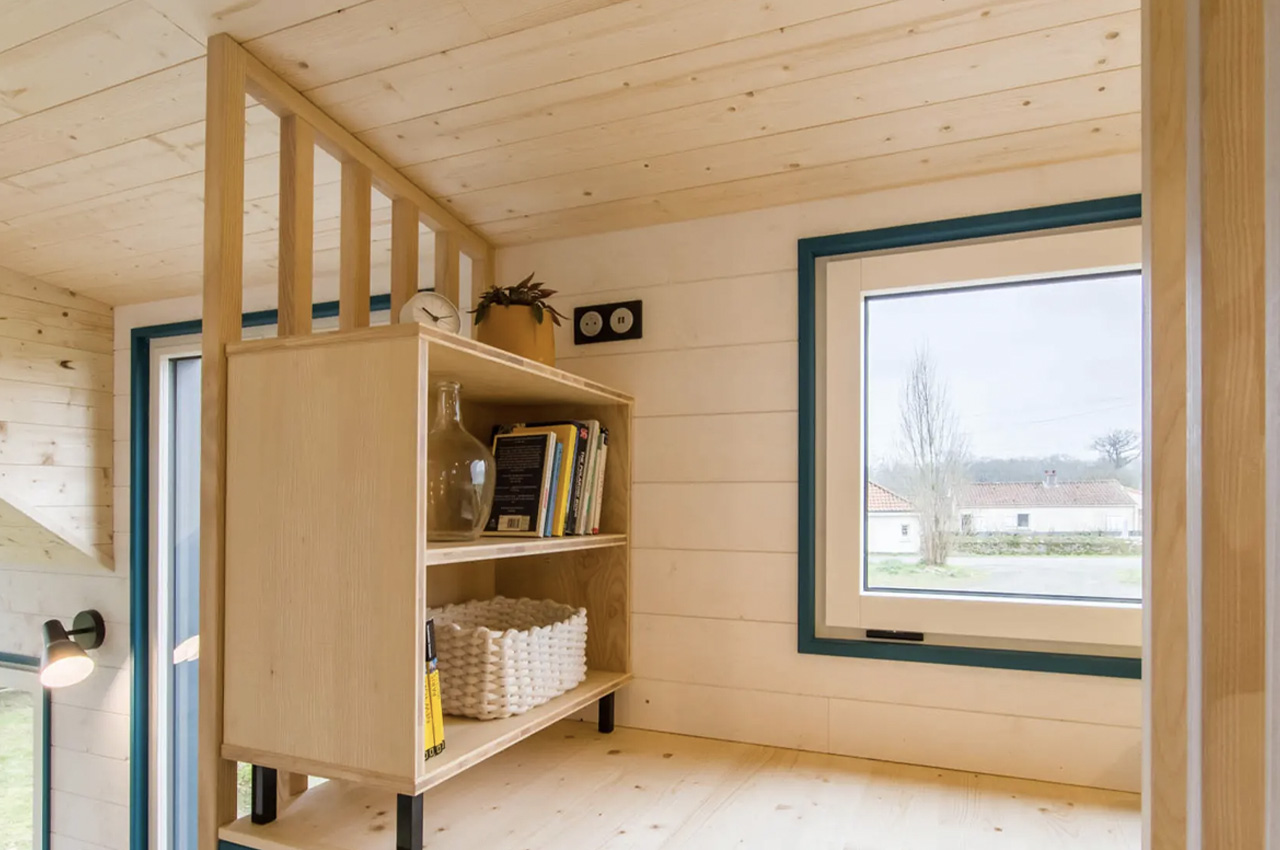
Baluchon’s beautiful Scandinavian-inspired Sauvage model from 2022, inspired a couple to purchase their own little tiny home along the same lines. The couple commissioned Baluchon to create the ‘Sherpa’ – a cozy tiny home with a modern exterior, and a clever space-saving interior layout that can accommodate two people, as well as a pair of guests. The Sherpa is founded on a double-axle trailer and features a length of 20 feet, which is a length typically seen in France.
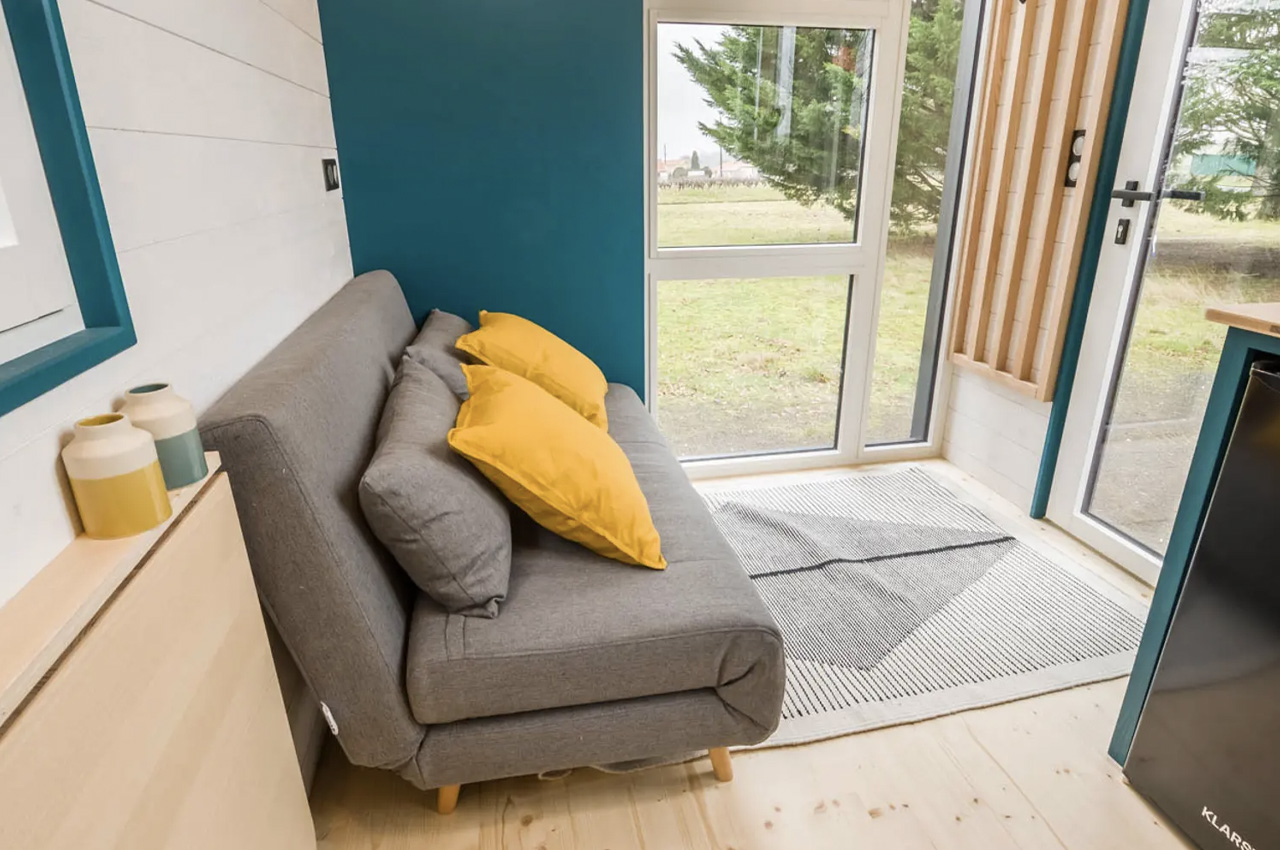
The 20-foot Sherpa is small compared to North American tiny homes which are much larger. In France, due to the strict towing laws, the homes tend to be pretty small. The exterior of the home is unique, and stands out from most cottage-style tiny homes, as it features red cedar, aluminum accenting, and some not-so-ordinary window placement. The interior of the house is accentuated by a high ceiling and generous glazing. The walls feature a spruce finish, and the entrance leads to the comfy living room which contains a sofa that can be transformed into a bed for guests, as well as some storage space.
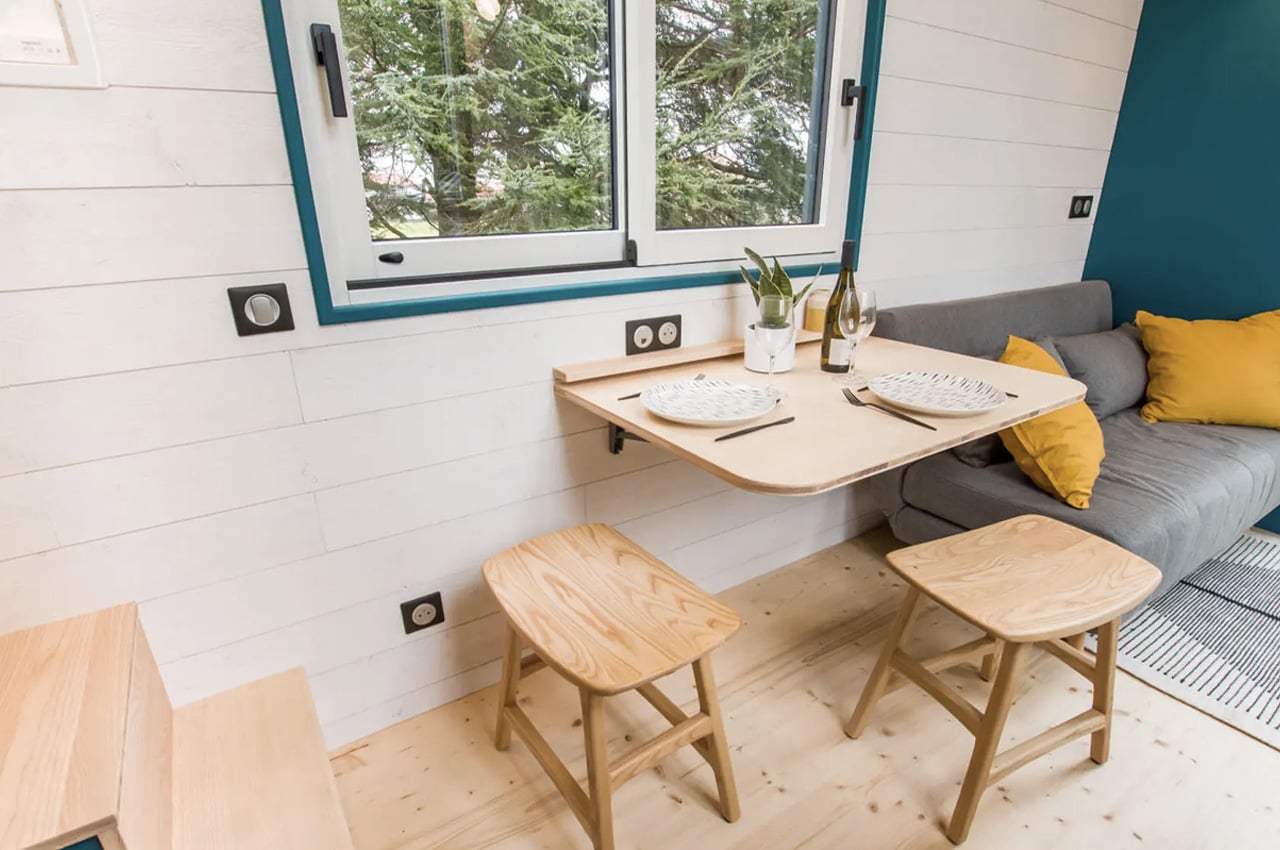
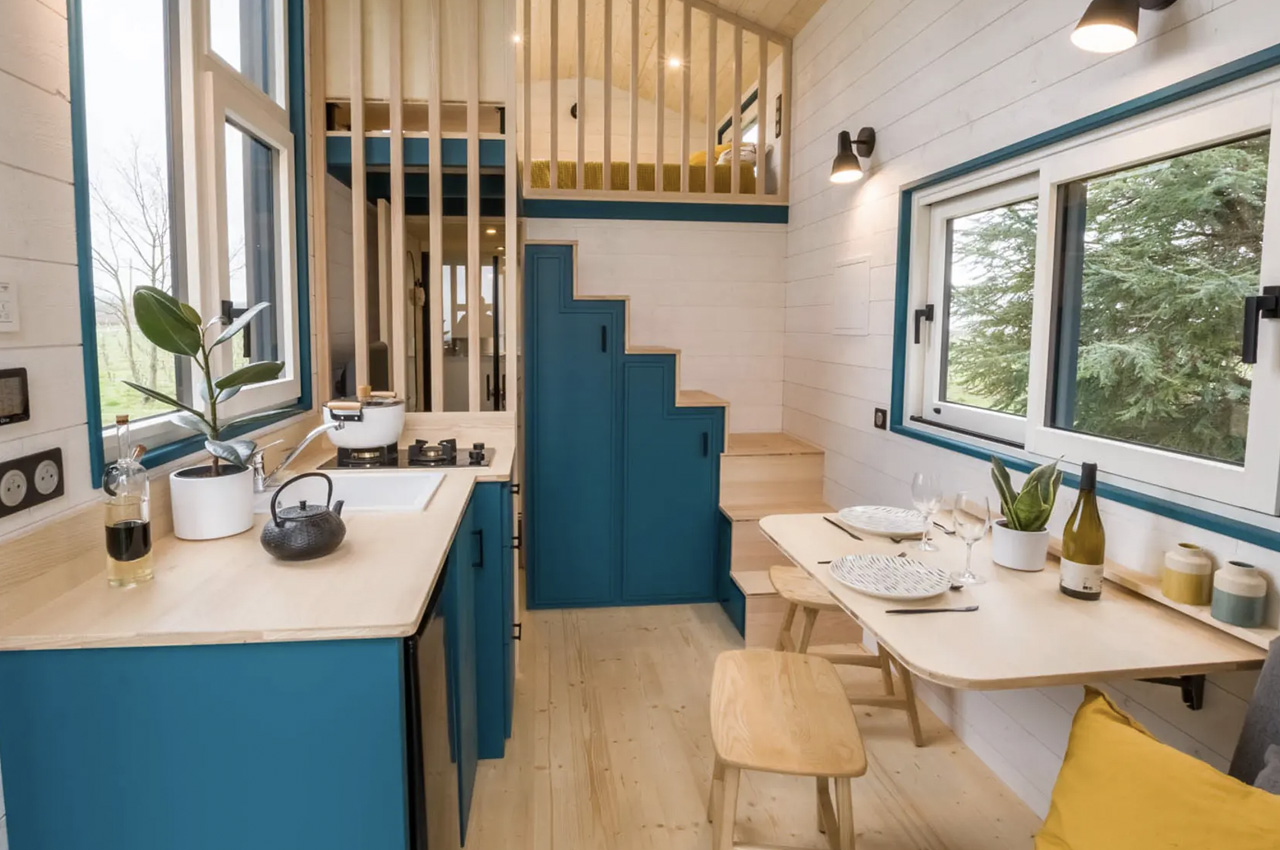
The kitchen is adjacent to the living room, and it is quite basic. It is nothing fancy and is equipped with a two-burner propane-powered stove, a sink, as well as a small fridge. These common and not-so-luxurious kitchens are quite typically found in most of Baluchon’s models. The interior of the tiny house is flattered by its generous glazing and high ceiling. The walls are finished in spruce and the entrance opens onto the living room, which includes a sofa that turns into a bed for guests, plus there’s some storage space nearby. Near the kitchen is a dining table, that can be efficiently folded away into the wall when not in use. The table seats two people.
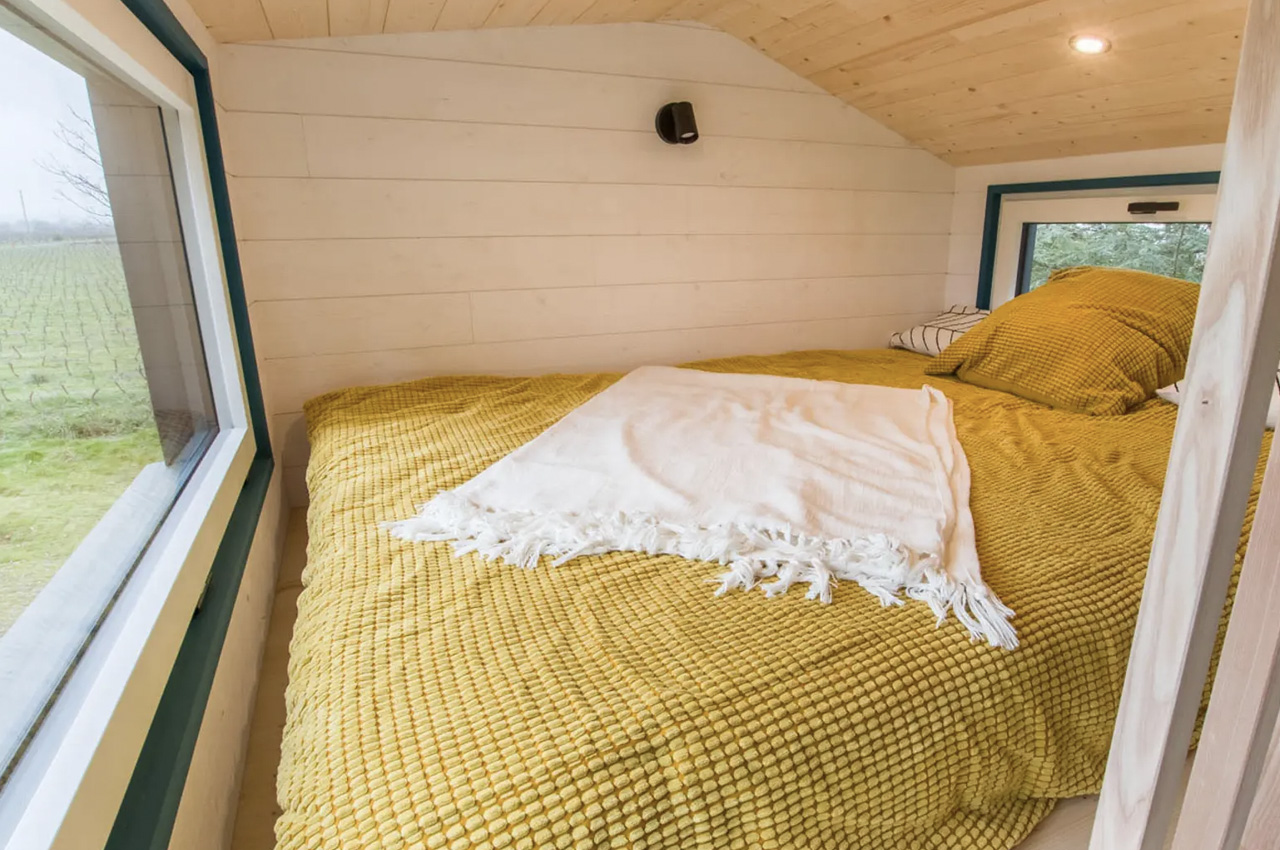
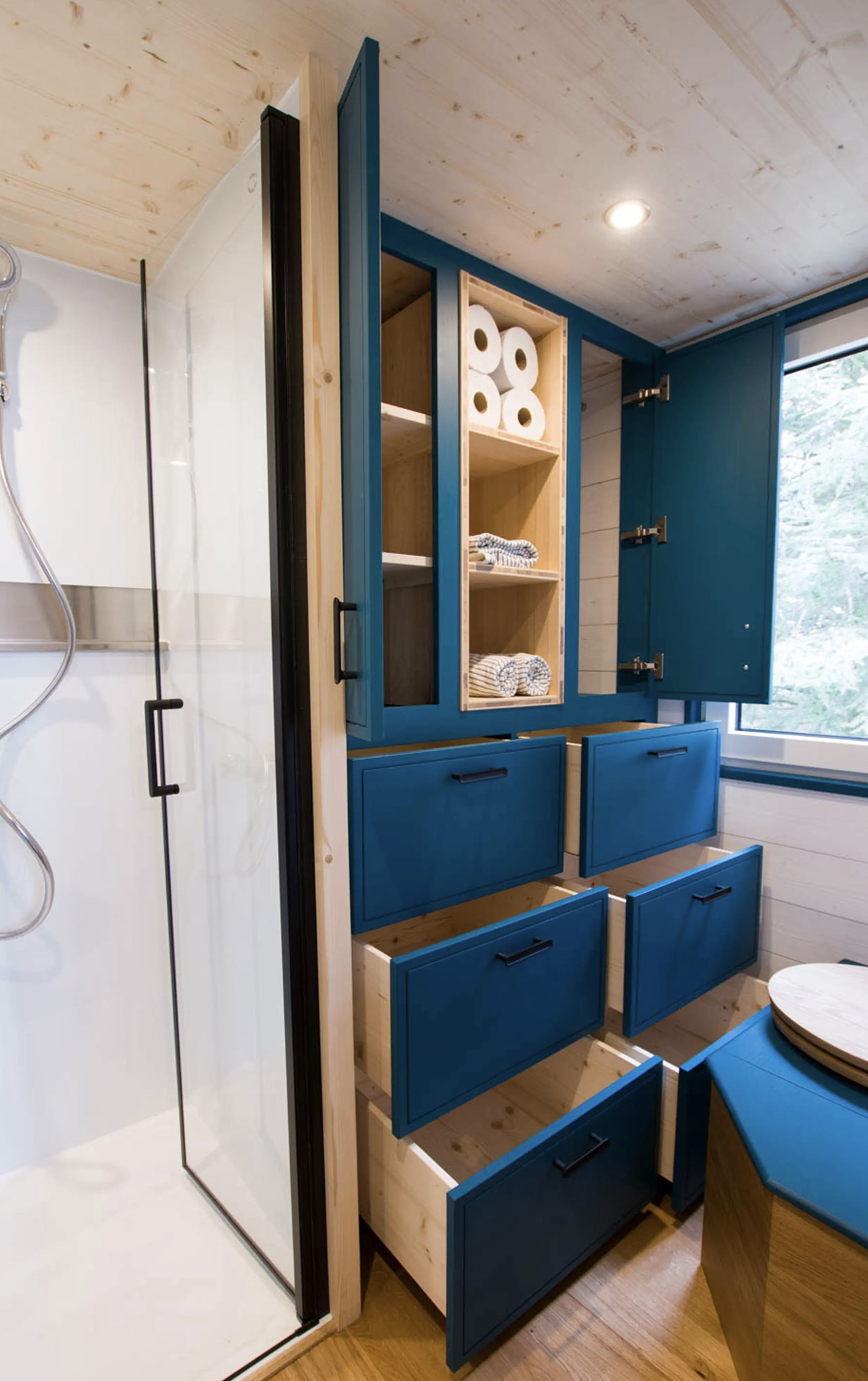
The opposite end of the house – to the living room, includes the bathroom. The bathroom is a spacious space, with a shower and toilet, however there is no sink. This implies that the residents will have to wash their hands in the kitchen sink, which isn’t a very hygienic option. The Sherpa accommodates one bedroom, which can be accessed via a storage-integrated staircase that is blessed with some wardrobe space, and under-step storage. The bedroom is a loft-style bedroom with a low ceiling – as seen in most tiny homes. It includes a double bed and some storage as well.
On Friday, people around the web noticed a new addition to their Instagram: Meta AI, the company’s general-purpose, AI-powered chatbot that can answer questions, write poetry and generate images with a simple text prompt. The move isn’t surprising. Meta revealed Meta AI in September 2023 and has spent the last few months adding the chatbot to products like Facebook Messenger and WhatsApp, so adding it to Instagram seems like a no-brainer.
“Our generative AI-powered experiences are under development in various phases, and we’re testing a range of them publicly in a limited capacity,” a Meta spokesperson told Engadget, which suggests that not everyone has the feature available yet. TechCrunch, which first noted the news, said that Meta AI was showing up in Instagram’s search bar. But for some of us at Engadget, the feature actually showed up in the search bar in Instagram’s Direct Messaging inbox.
Tapping it let me start a conversation with Meta AI just I would DM a friend on Instagram. I was able to ask the chatbot to give me definitions of words, suggest headlines for some stories I’m working on, and generate images of dogs on skateboards. I was also able to ask Meta AI to recommend Reels with cats in them, which it was able to do easily.
But when my colleague Aaron Souppouris asked Meta AI in WhatsApp to recommend Reels, it showed him some Reels in that app too — suggesting that the bot in Instagram isn’t really doing anything specific to Instagram. Instead, Meta is simply shoehorning the same chatbot into every app it owns.
If you tap a hamburger menu within the bot, Meta AI will also show you a long list of possible actions you ask the bot to take.
Aaron Souppouris
Why would you want a chatbot in Instagram to suggest tips for dealing with credit card debit, have a debate about cardio versus weights, or suggest hacks to travel with points, I do not know. But the point is that if you want to, you can.
This article originally appeared on Engadget at https://www.engadget.com/meta-is-stuffing-its-ai-chatbot-into-your-instagram-dms-231855991.html?src=rss
On Friday, people around the web noticed a new addition to their Instagram: Meta AI, the company’s general-purpose, AI-powered chatbot that can answer questions, write poetry and generate images with a simple text prompt. The move isn’t surprising. Meta revealed Meta AI in September 2023 and has spent the last few months adding the chatbot to products like Facebook Messenger and WhatsApp, so adding it to Instagram seems like a no-brainer.
“Our generative AI-powered experiences are under development in various phases, and we’re testing a range of them publicly in a limited capacity,” a Meta spokesperson told Engadget, which suggests that not everyone has the feature available yet. TechCrunch, which first noted the news, said that Meta AI was showing up in Instagram’s search bar. But for some of us at Engadget, the feature actually showed up in the search bar in Instagram’s Direct Messaging inbox.
Tapping it let me start a conversation with Meta AI just I would DM a friend on Instagram. I was able to ask the chatbot to give me definitions of words, suggest headlines for some stories I’m working on, and generate images of dogs on skateboards. I was also able to ask Meta AI to recommend Reels with cats in them, which it was able to do easily.
But when my colleague Aaron Souppouris asked Meta AI in WhatsApp to recommend Reels, it showed him some Reels in that app too — suggesting that the bot in Instagram isn’t really doing anything specific to Instagram. Instead, Meta is simply shoehorning the same chatbot into every app it owns.
If you tap a hamburger menu within the bot, Meta AI will also show you a long list of possible actions you ask the bot to take.
Aaron Souppouris
Why would you want a chatbot in Instagram to suggest tips for dealing with credit card debit, have a debate about cardio versus weights, or suggest hacks to travel with points, I do not know. But the point is that if you want to, you can.
This article originally appeared on Engadget at https://www.engadget.com/meta-is-stuffing-its-ai-chatbot-into-your-instagram-dms-231855991.html?src=rss
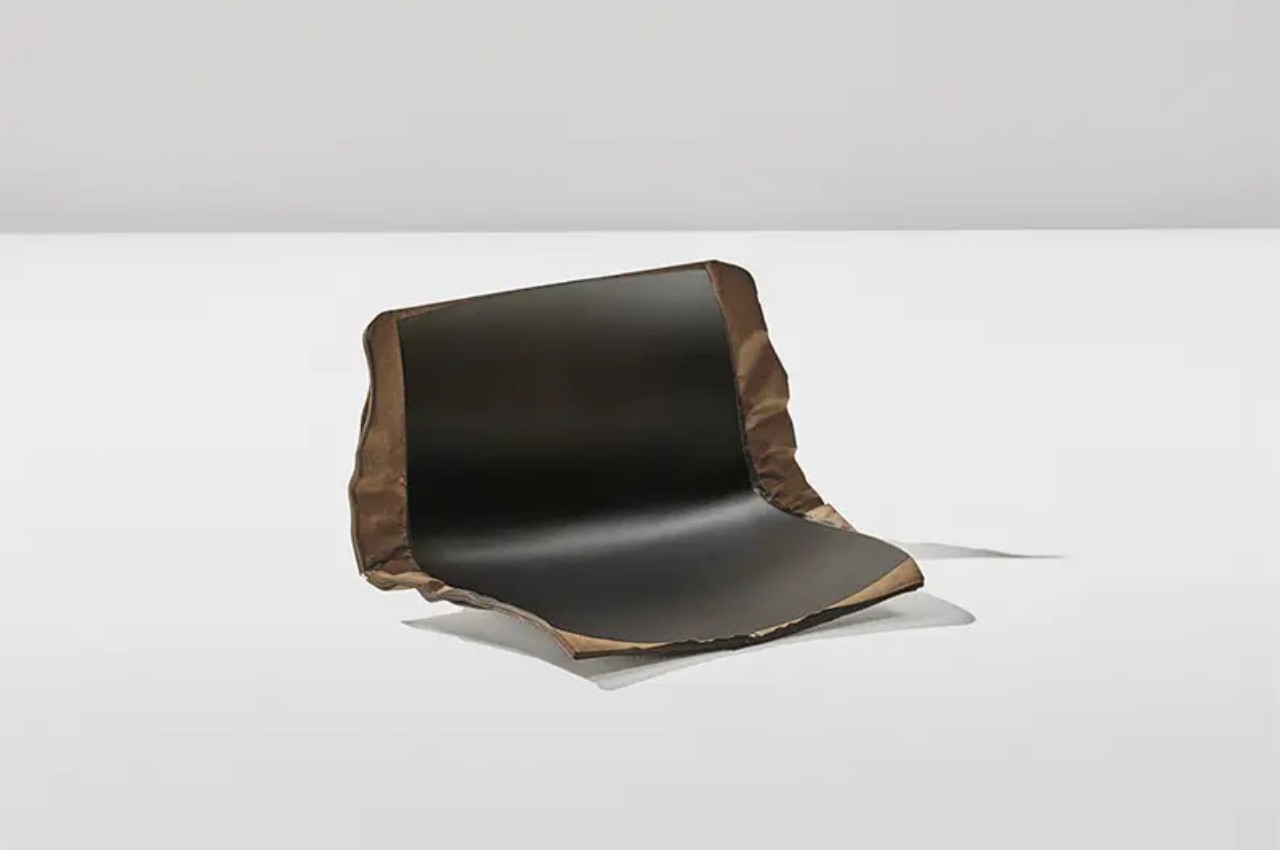
Sustainable furniture and designs are thankfully becoming more common, but the “sustainable” label can actually be applied to different things. They can be made from recycled materials like metal or PCR plastics, or they can be made from new but biodegradable materials like wood, cork, and paper. While both kinds are good, they don’t always address the accumulating material waste that comes from the production of these objects, even the bits and pieces of wood that get left on the cutting room floor and then thrown out. Giving a new purpose to these by-products is another sustainable practice, one that is being applied to a beautifully minimalist office chair that’s made from dozens of sheets of paper.
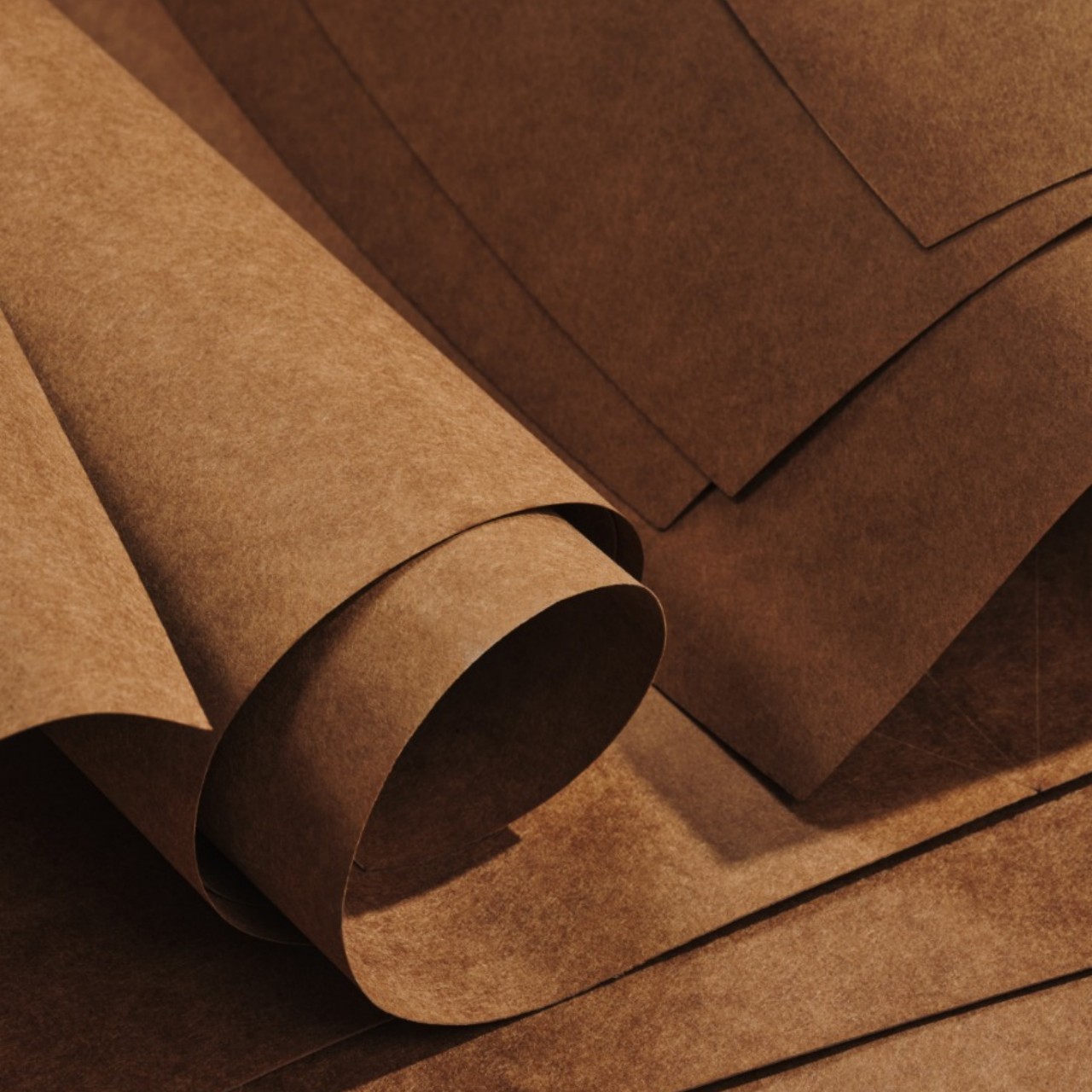
Of course, it’s not literally made from paper, which would be too soft for a chair no matter how many sheets you stack, especially for a sleek and slender seat based on Arper’s iconic Catifa 53. Instead, it uses PaperShell from a Swedish startup of the same name, a material that almost poetically transforms paper, which comes from wood, back to a wood-like material that offers rigidity, stability, and, more importantly, beauty. In a nutshell, it uses both wood by-products like sawdust and chips as well as waste wood like fallen branches in forests to create a new paper-like material that can be used in place of wood, plastic, or fiber composites.
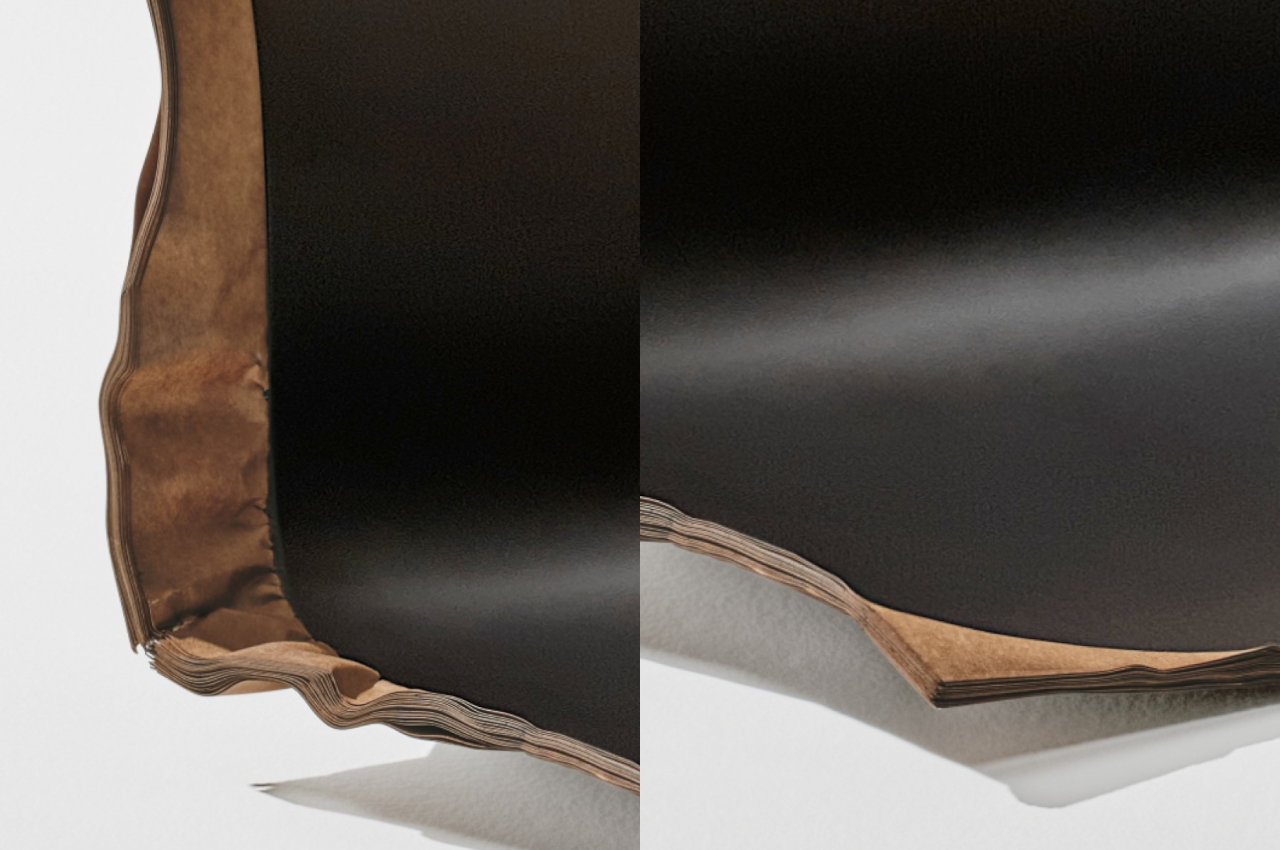
That’s the case with the Catifa Carta, which compresses dozens of these sheets into a composite that’s then bent and formed into an elegant chair with a gentle slope sitting on top of thin yet sturdy metal legs. Unlike its older sibling, this more sustainable version of the chair leaves the seat in its original, unpainted glory. That means you can see the natural imperfections of the PaperShell material, giving each chair a unique character. It’s pretty much the same as the highly prized grains in wood that give designs their natural charm.
What’s even more special about the chair is that even the end of its life has a story to tell. PaperShell can be recycled to produce new and different products, but it can also be turned into biochar to nourish the Earth. The material itself sequesters carbon dioxide which can be used to enrich soil. It’s a truly circular life cycle that starts and ends with the Earth. Appropriately, Arper has made the Catifa Carta easy to disassemble to make this process even easier.
Of course, the chair isn’t just a thing of beauty inside and out, it’s also a functional piece of furniture. Though some might have concerns about the ergonomics of using such a chair for long periods at work, it’s still a well-designed seat that makes you feel good not only about sitting on it but also about the exciting journey that this wood-like material has made since its birth from a seed.
The price of a monthly subscription to Tesla's (kind-of) self-driving software has just been cut in half. Tesla's Full Self Driving (Supervised) subscription now costs $99 per month, a reduction from the previous standard of $199.
Tesla instituted the $199 monthly upgrade fee in 2021, back when its self-driving system was still in beta. It costs $12,000 to add Full Self Driving (Supervised) — full name, every time — to a Tesla outright, so at the current rate, it'll take 10 years for the subscription to lose its value. As far as installment plans go, this one seems like a solid deal. To be fair, so was the $199 rate, which gave (self-)drivers five years before hitting $12,000 in fees.
Tesla is doing what it can to make its EVs (and its stock) more attractive following a rough financial quarter to kick off 2024. For the first time since 2020, Tesla EV shipments fell year-over-year and they dipped significantly compared with the previous quarter. In the first months of 2024, Tesla deliveries were down eight percent yearly and down 20 percent over the final quarter of 2023. Analysts expected Tesla to ship 449,080 EVs in Q1 2024, but it delivered just 386,810.
The company offered a free trial of Full Self Driving (Supervised), which does not make the vehicle autonomous, to Tesla drivers at the end of 2023, seemingly in an attempt to boost its bottom line before reporting came due. As of March 2024, Tesla salespeople in North America are required to demonstrate Full Self Driving (Supervised) to anyone buying a vehicle. The prices of all Model Y vehicles also rose by $1,000 on April 1.
Tesla hasn't shared shipment numbers for the Cybertruck, which started rolling out late last year. The company is preparing to release a "next-generation low-cost" EV in 2025. Probably.
This article originally appeared on Engadget at https://www.engadget.com/tesla-halves-the-price-of-its-full-self-driving-supervised-subscription-to-99-per-month-215321467.html?src=rss
The price of a monthly subscription to Tesla's (kind-of) self-driving software has just been cut in half. Tesla's Full Self Driving (Supervised) subscription now costs $99 per month, a reduction from the previous standard of $199.
Tesla instituted the $199 monthly upgrade fee in 2021, back when its self-driving system was still in beta. It costs $12,000 to add Full Self Driving (Supervised) — full name, every time — to a Tesla outright, so at the current rate, it'll take 10 years for the subscription to lose its value. As far as installment plans go, this one seems like a solid deal. To be fair, so was the $199 rate, which gave (self-)drivers five years before hitting $12,000 in fees.
Tesla is doing what it can to make its EVs (and its stock) more attractive following a rough financial quarter to kick off 2024. For the first time since 2020, Tesla EV shipments fell year-over-year and they dipped significantly compared with the previous quarter. In the first months of 2024, Tesla deliveries were down eight percent yearly and down 20 percent over the final quarter of 2023. Analysts expected Tesla to ship 449,080 EVs in Q1 2024, but it delivered just 386,810.
The company offered a free trial of Full Self Driving (Supervised), which does not make the vehicle autonomous, to Tesla drivers at the end of 2023, seemingly in an attempt to boost its bottom line before reporting came due. As of March 2024, Tesla salespeople in North America are required to demonstrate Full Self Driving (Supervised) to anyone buying a vehicle. The prices of all Model Y vehicles also rose by $1,000 on April 1.
Tesla hasn't shared shipment numbers for the Cybertruck, which started rolling out late last year. The company is preparing to release a "next-generation low-cost" EV in 2025. Probably.
This article originally appeared on Engadget at https://www.engadget.com/tesla-halves-the-price-of-its-full-self-driving-supervised-subscription-to-99-per-month-215321467.html?src=rss
As Threads has grown to more than 130 million users, one of the major remaining “missing” features users often complain about is the lack of direct messaging abilities. But those missing out on DMs may soon have a new option to message other Threads users.
Meta is starting to test messaging features that rely on Instagram’s inbox but allow new messages to be initiated from the Threads app. The feature has begun to appear for some Threads users, who report seeing a “message” button atop other users’ profiles where the “mention” feature used to be. A Meta spokesperson confirmed the change, saying the company was “testing the ability to send a message from Threads to Instagram.”
Of note, Threads still doesn’t have its own inbox, and it’s not clear if it ever will. Instagram head Adam Mosseri has said multiple times that he doesn’t want to create a separate inbox for Threads, but would rather “make the Instagram inbox work” in the app. A Meta spokesperson further confirmed that “this is not a test of DMs on Threads.”
But even though it’s not a full-fledged DM feature, the ability to send a message from the Threads app without having to switch to Instagram could at least make messaging from Threads a little less clunky. Actually checking or replying to those messages, though, will still require users to head to the Instagram app.
That may still seem like an entirely unnecessary step, but Mosseri has pointed out that building two versions of the same inbox could easily get complicated. “If, in the end, we can’t make the Instagram inbox work for Threads, we’ll have a hard choice to make between (1) mirroring the Instagram inbox in Threads and dealing with notification routing weirdness, and (2) building a totally separate Threads inbox and dealing with the fact that you’ll have two redundant message threads with each of your friends with the same handles in two different apps,” he wrote in a post in November. “Neither seems great.”
This article originally appeared on Engadget at https://www.engadget.com/meta-is-testing-messaging-capabilities-for-threads-but-dont-call-them-dms-213536876.html?src=rss