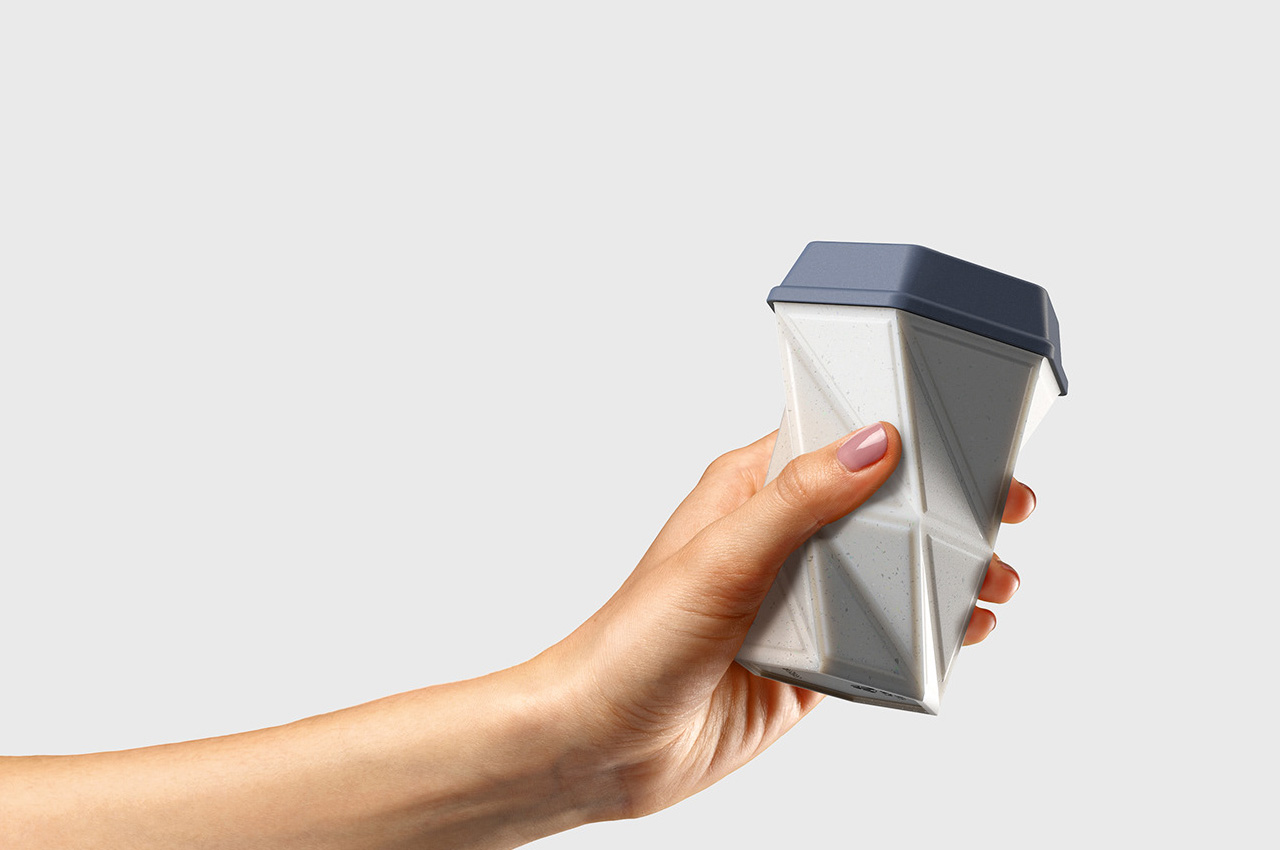
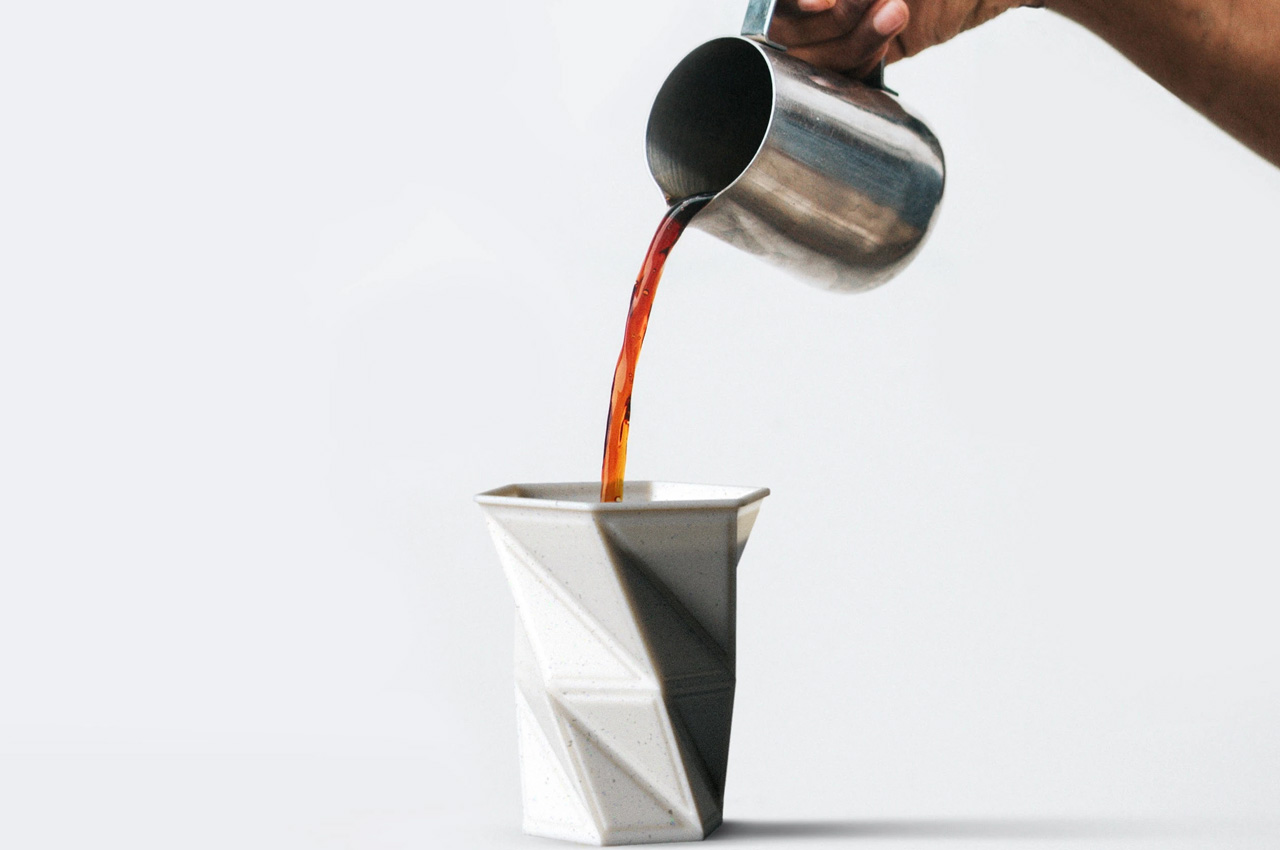
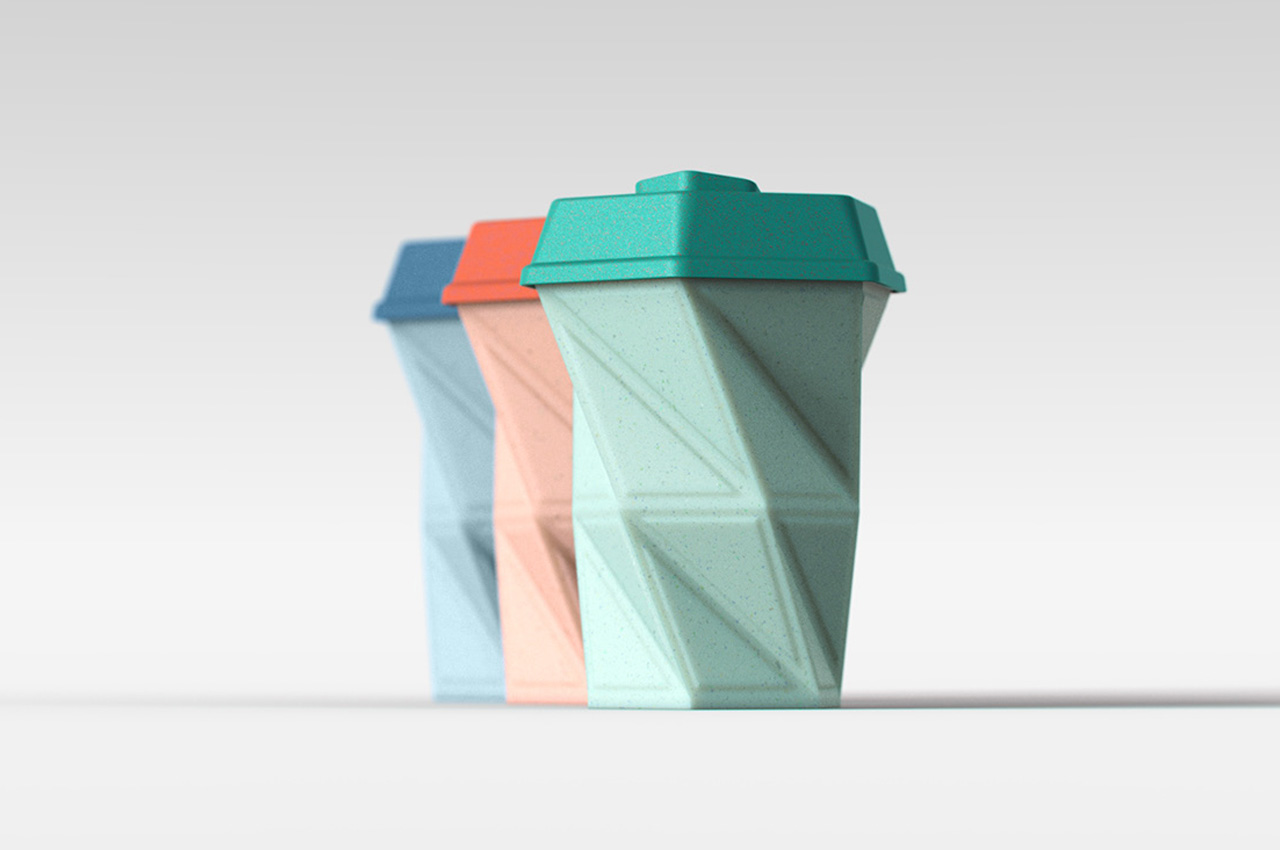
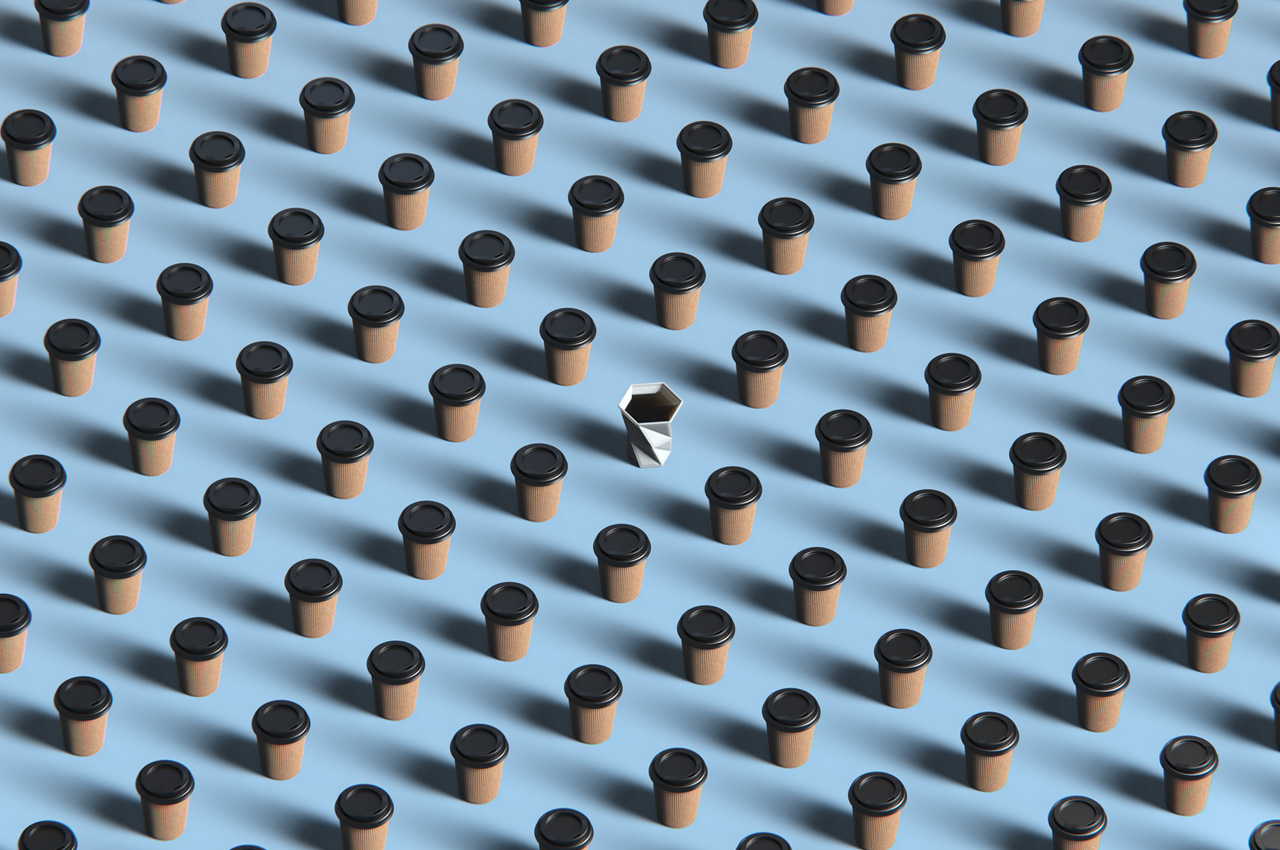
Recycle and Reuse have become the buzzwords today. Most materials – single-use plastic excluded – are being recycled, and some plastic items such as bottles are reused to restrict them from reaching the landfills. Plastic pollution is therefore a big menace globally that designers are trying to solve with potentially innovative ideas. In that league we came across the Reusable: a collapsable, reusable cup that is made from food-grade material and fits right in your pocket so you can carry it wherever your routine takes you.
Disposable paper cups have been around for a long time now. Not essentially made with the purpose of being reused, such cups have to reach the landfills after one time use. All right, some of these to-go cups are recyclable, but some paper cups contain a plastic or wax coating – to prevent leaks – rending their unrecyclable. This is where a solution like the Reusable makes a lot of sense, not essentially because it can be recycled at the end of life, but since it can be reused a multitude of times before it can be retired from the lifecycle.
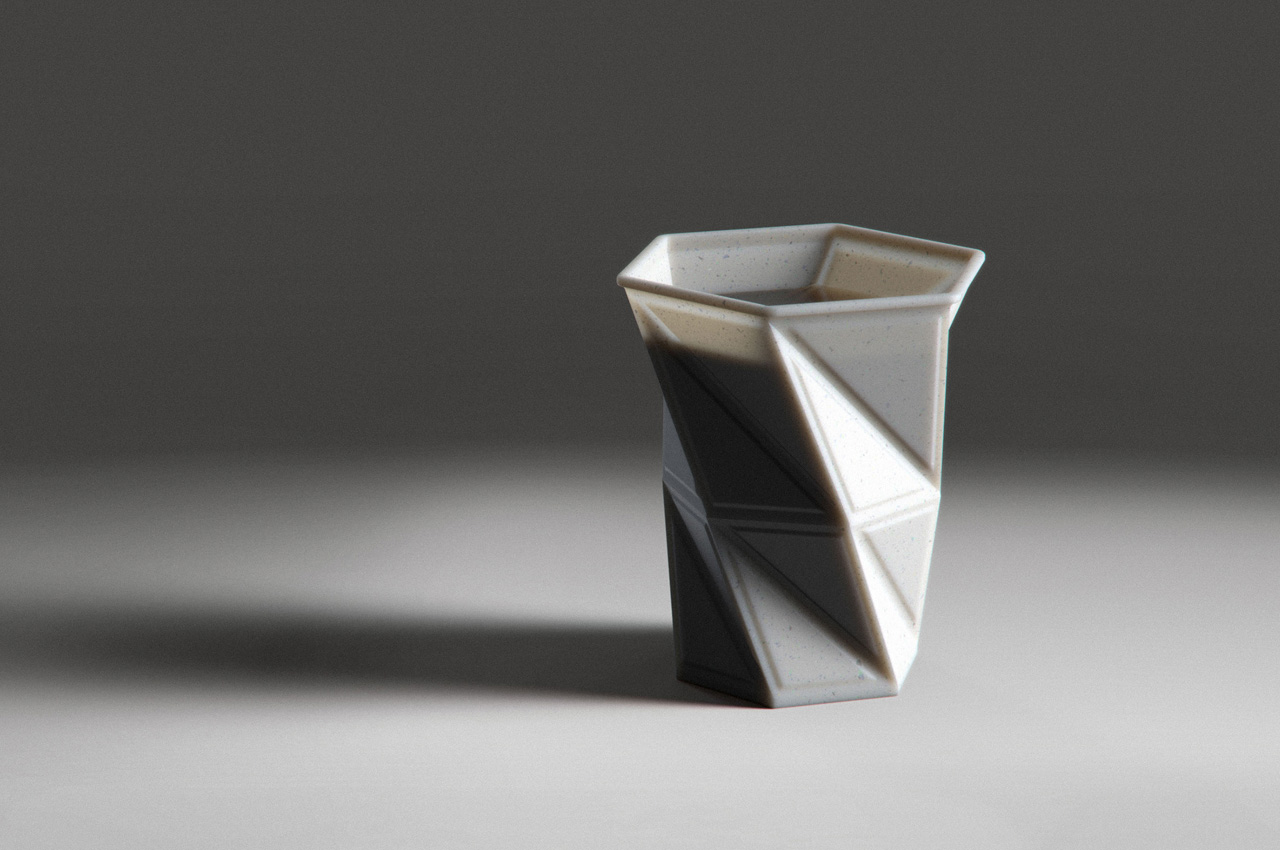
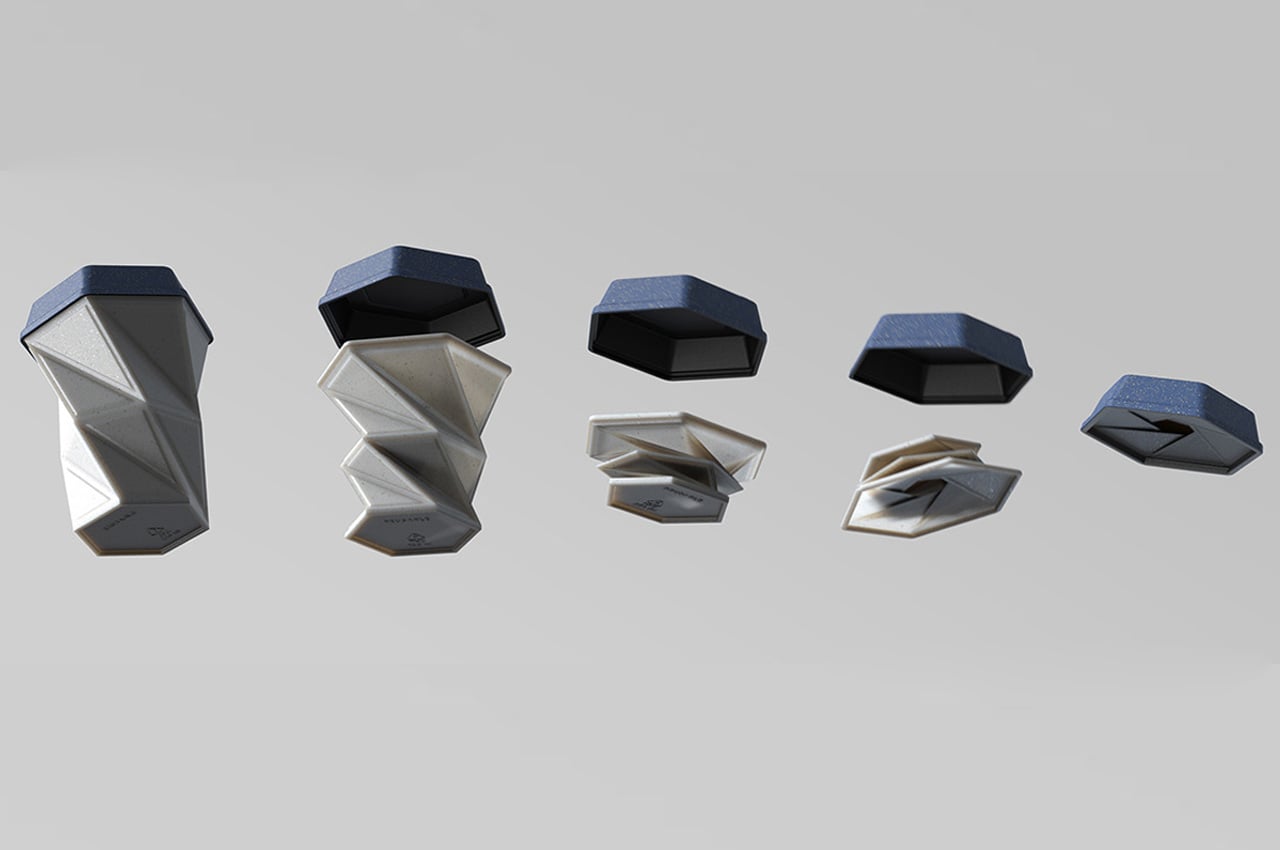
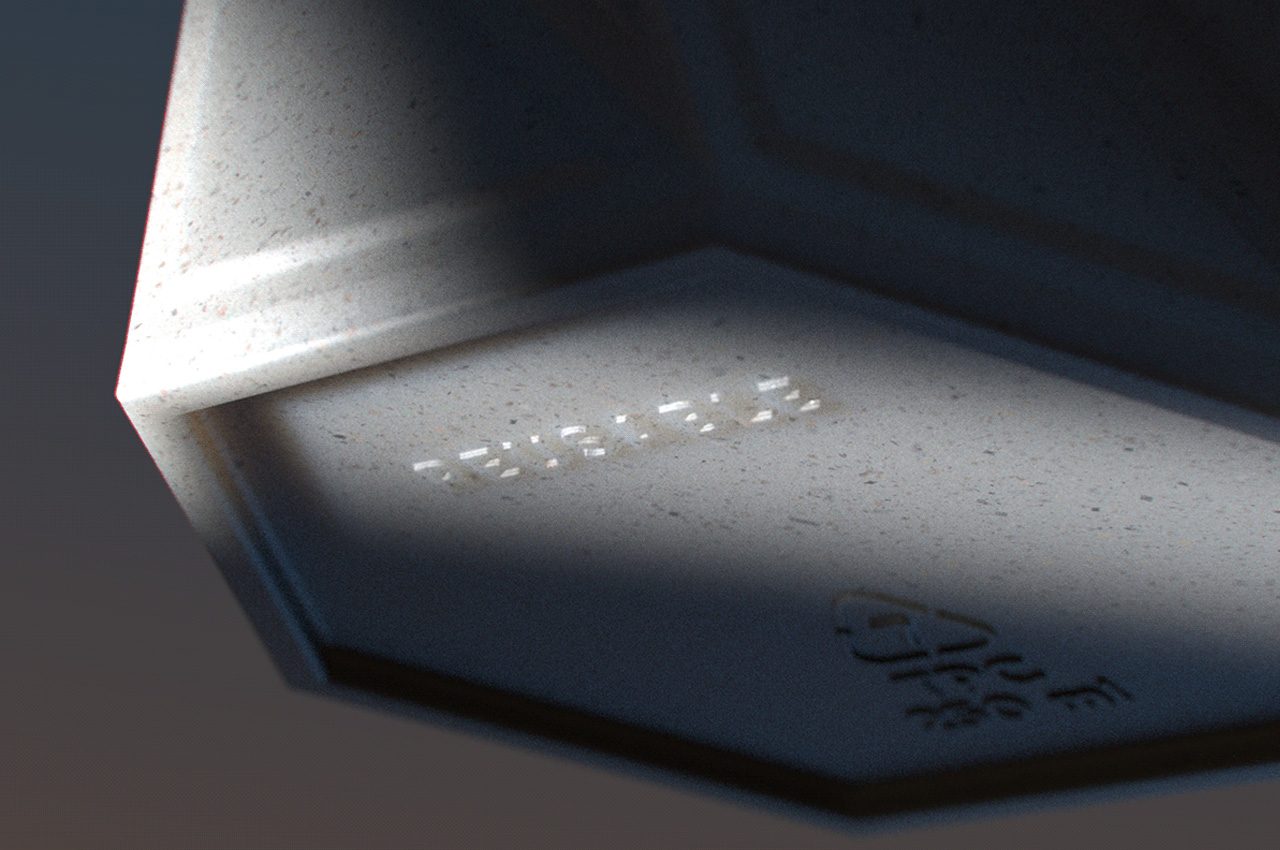
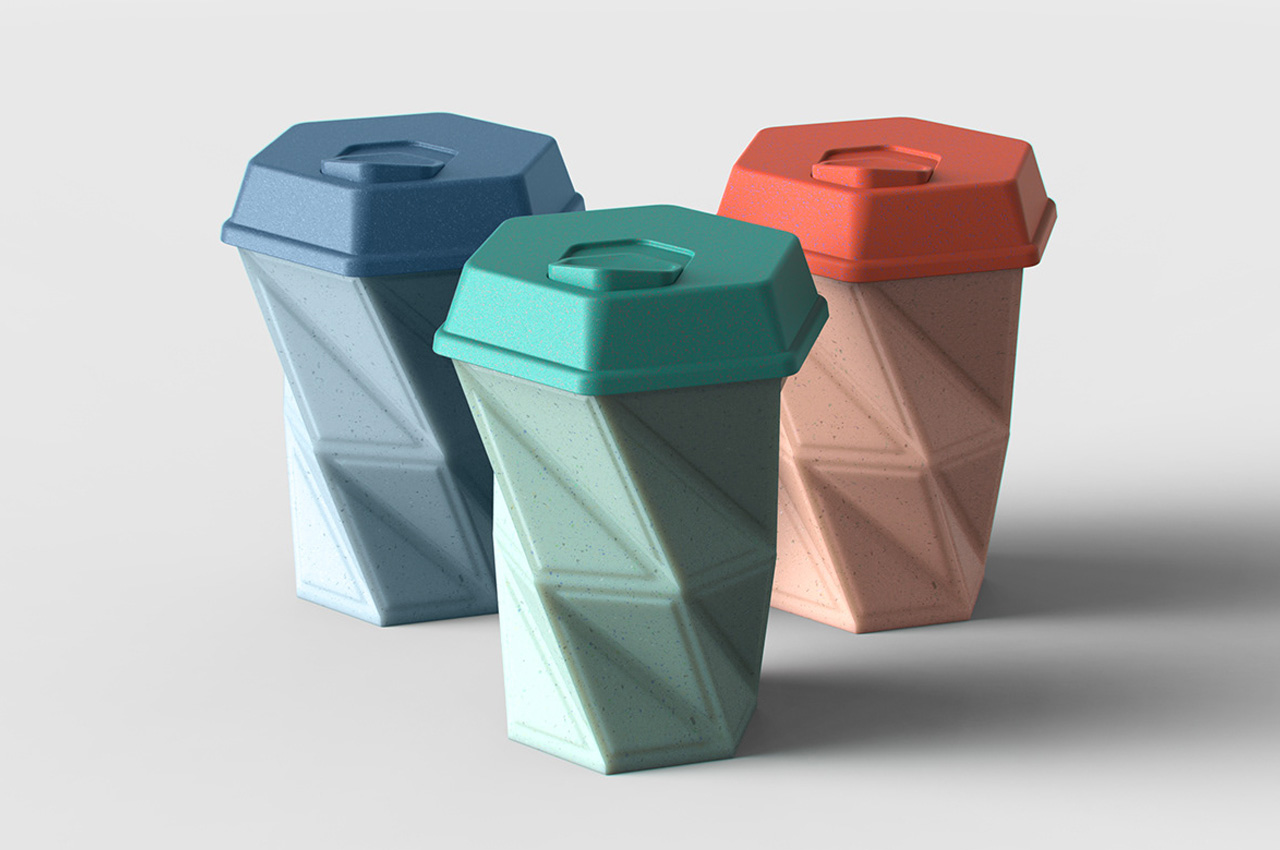
The brainchild of British-designed Kalina Gotseva, the Reusable has been 3D printed from durable, food-grade silicone. Made in a unique twisted design, after thousands of iterations on paper and other materials, the Reusable is made collapsable, transforming the cup from a full-sized option to a compact form factor that allows it to fit in the pocket.
Making a silicone cup with all the intricacies to make it reusable, the cup is a direct benefit product for millions of tea and coffee drinkers around the world, whose day wouldn’t start with the pipping hot beverage picked from the driveway in a throwaway one time use cup. This scenario could change with the benefit of Reusable which you can flip out of your pocket and have your drink served to you in it.
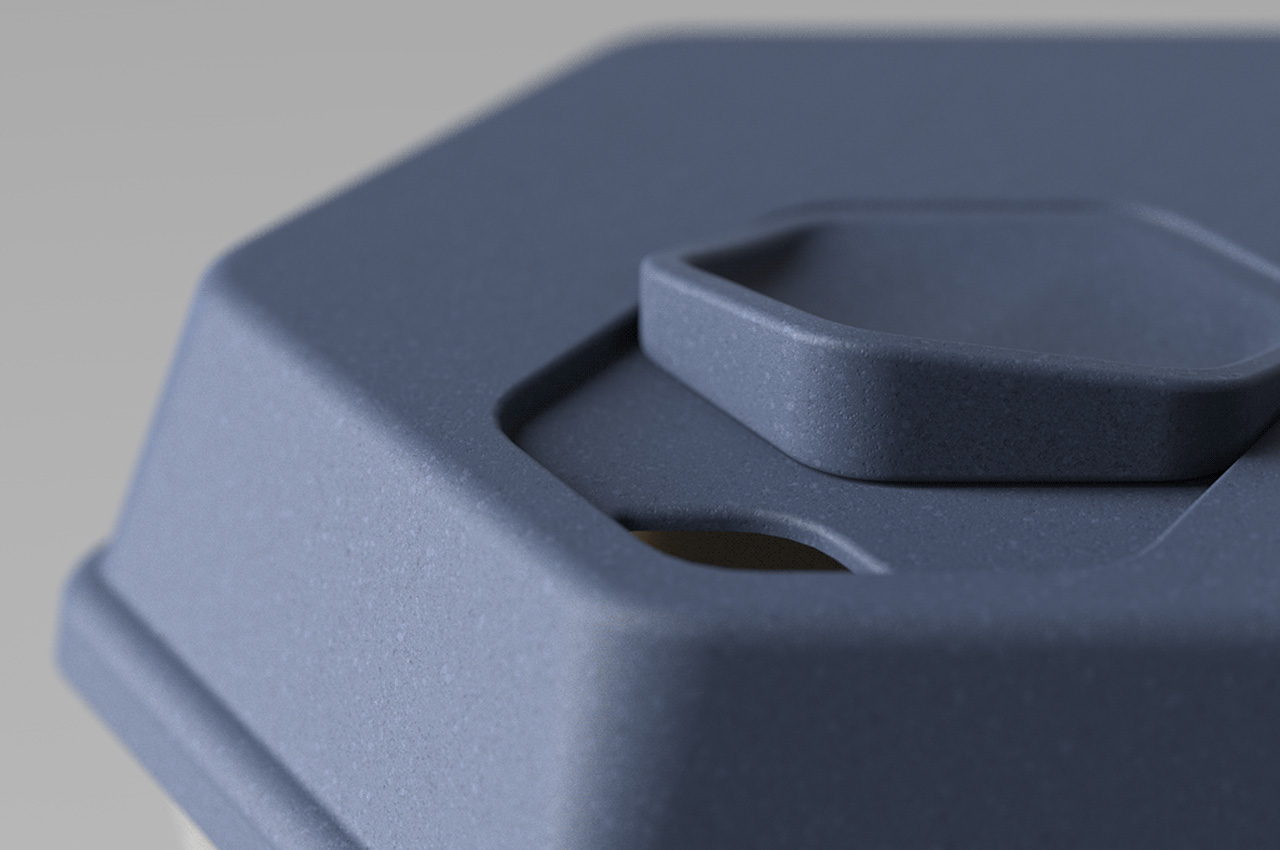
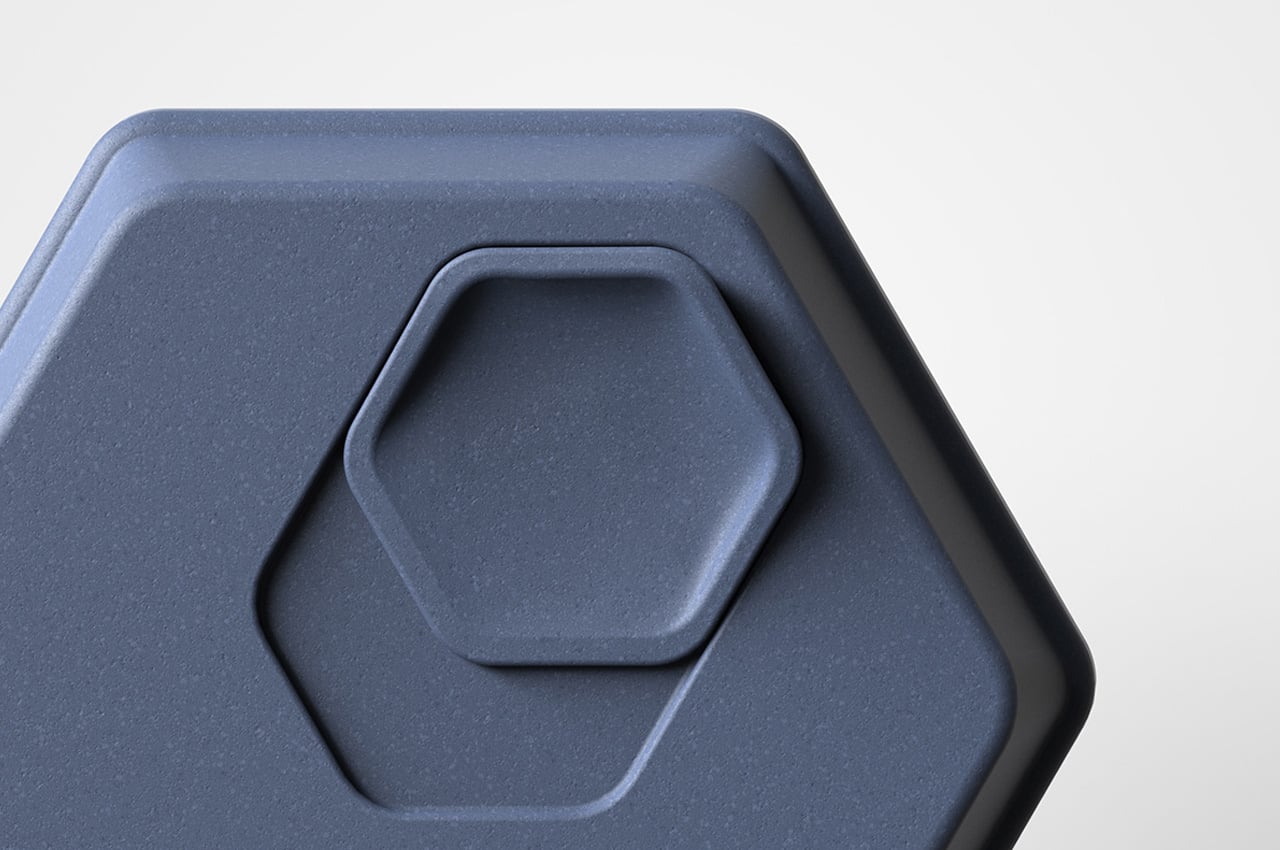
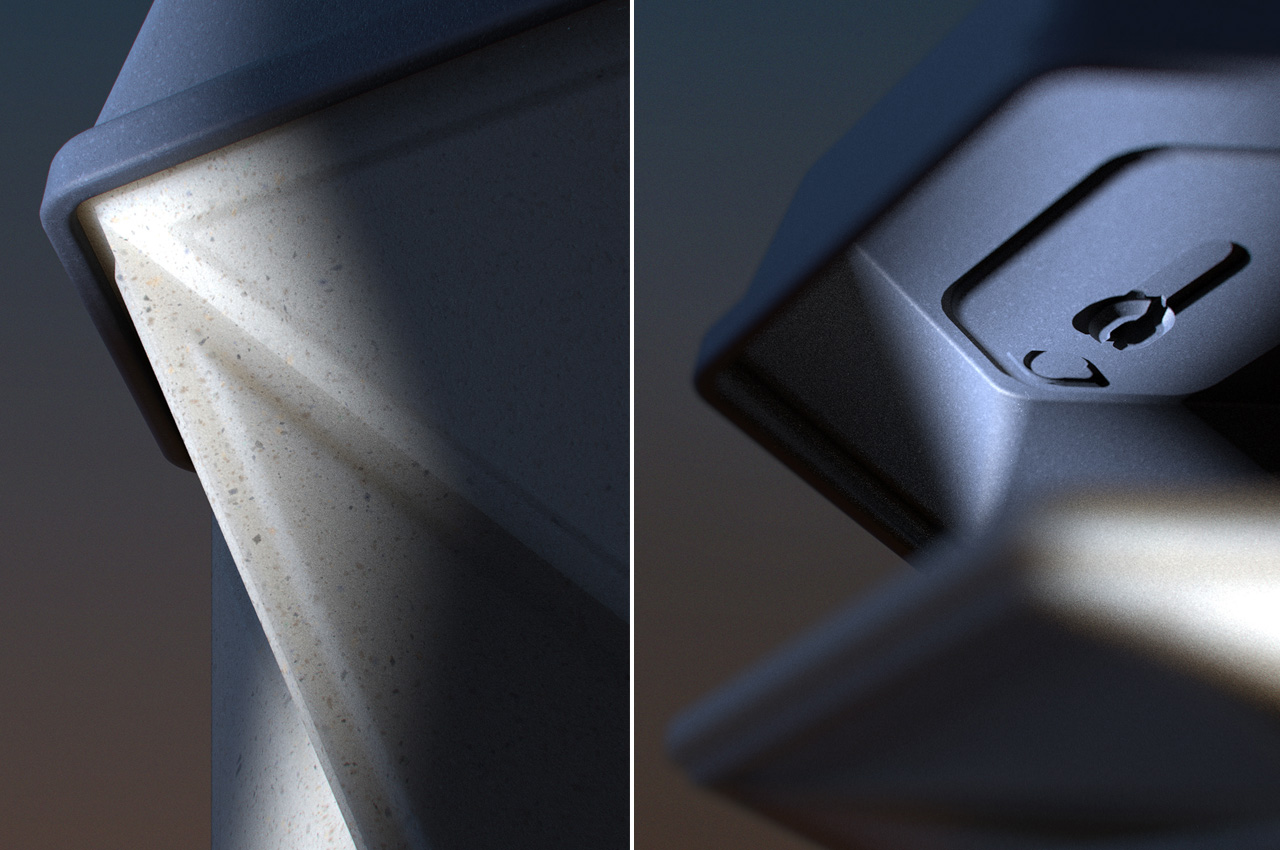
With the foldable and reusable design, the question of safety and convenience does arise in the mind. Gotseva has taken care of every detail, starting with making the entire foldable design self-contained. For that, the designer ensured that the body of the cup folds down flat and it can then fit securely in its cap to remain intact and dust-free in your pocket/bag. The protective cap is not just the Reusable’s case, in fact it has a tested push-and-pull slider on the drinking hole, which offers leak-proof convenience, so you can carry and drink your beverage safely, at your convenience.
The Reusable despite all the nifty features has sleek aesthetics paired with an ergonomic grip and three interesting color choices to pick a cup that matches your style. Created from BPA-free silicone, the cups are colored – with food-safe options – during the injection molding process. These are available in dark blue, light aquamarine, and vibrant orange colors to choose from. I don’t know about you, but I’m waiting for the Reusable to hit the market. My pick is orange, what’s yours?
JetBlue is revamping its in-flight entertainment system, complete with a new branding. It’s now called Blueprint and brings several features that should make your next flight just a teensy-bit less grueling. The biggest news here is a watch party feature that lets customers view the same TV show or film with up to five other people.
This is actually pretty cool, as watching stuff with friends and family during a long flight typically requires the finicky “push play at the exact same time and hope nobody has to go to the bathroom” method. The watch party feature includes functionality that pauses content for all viewers, should one have to take a break to deal with existential panic from being six miles above the ground. It also works no matter where the seats are.
Introducing Blueprint by JetBlue™, a personalized inflight experience, giving you new ways to use your seatback screen with watch parties, the ability to resume your content on your next flight, entertainment recommendations and real-time arrival details.💙 Available on select… pic.twitter.com/KCg5StLNNV
The watch party tool is just one aspect of the revamped in-flight entertainment experience. The system will now provide content recommendations based on previous viewing history, as it will be tied to individual accounts. This means that customers can save their favorite movies and shows for repeat viewings. It also means that people can pick up where they left off from one flight to the next. JetBlue says this can be useful for a connecting layover flight or even a trip months down the line.
JetBlue has a content partnership with Peacock, so customers have access to the streamer’s catalog during flights. Both Twisted Metal and Mrs. Davis are solid in-flight binges. The company also teased more “exclusive entertainment and offers” coming to Blueprint in the future.
As for availability, Blueprint is ready to go on JetBlue aircraft with AVANT seatback touchscreens. This includes the Airbus A321neo, Airbus A321LR (Long Range) and Airbus A220.
This article originally appeared on Engadget at https://www.engadget.com/jetblues-in-flight-entertainment-system-just-got-a-watch-party-feature-185913233.html?src=rss
Threads users may soon have a new way to clean up their timelines. The app is testing a new archive feature that can be used to manually archive individual posts or automatically hide posts after a set period of time, Adam Mosseri shared.
As on Instagram, archiving a post on Threads will hide it from public view, though the post will be available to the original author to view or undo. The Instagram head said the feature will be available to a “small number of people” to start. Though optional, Mosseri has made no secret that his preference is for all posts on the service to be somewhat ephemeral. “I think we should move to automatically archive posts on Threads after a month or so,” he wrote in a post back in February.
But, in a poll shared with that earlier post, Threads users overwhelmingly said they would “never” want their posts automatically hidden from public view. In his latest update, Mosseri noted that “the resounding feedback was not to make this the default” so the company will try out archiving “as an option” to start.
While archiving old posts is popular on Instagram, the feature could be somewhat more controversial on Threads. As the service grows and adds more features geared toward real-time information, posts that automatically archive could make it harder to go back and revisit the original source of an update. (If Mosseri, for example, were to automatically archive all his old posts, it would be much more difficult to track his evolving thoughts on Threads, which he often shares publicly on the platform.) At the same time, allowing posts to be ephemeral often encourages users to share more often, which is even more important for Threads’ continued growth.
This article originally appeared on Engadget at https://www.engadget.com/threads-is-testing-automatic-archiving-for-posts-184243484.html?src=rss
Several months after Meta brought WhatsApp passkey logins to Android, it’s doing the same on iOS. The company is rolling out the feature now, and it will be available to all users in the coming weeks.
Passkeys are seen as a more secure login method as (for one thing) it mitigates the risk of scammers convincing users to share their SMS passcode. Instead, you can log in by verifying a passkey using facial recognition, biometrics or a PIN stored on Apple’s passkey manager. Passkeys work by securely storing an authentication credential on your device that pairs with one saved by the service you want to log into.
To turn on passkeys for WhatsApp on iOS, go to the Account section of the app’s Settings, and then tap Passkeys. “Passkey verification will make logging back into WhatsApp easier and more secure. We’re excited to launch this on WhatsApp and give users an added layer of security,” Alice Newton-Rex, WhatsApp’s head of product, said in a statement.
This article originally appeared on Engadget at https://www.engadget.com/whatsapp-is-enabling-passkey-support-on-ios-182527962.html?src=rss
The Biden administration is tackling the monumental task of making America’s industrial freight system more environmentally friendly. The White House said on Wednesday that it aims to have 30 percent of industrial truck sales produce zero emissions by 2030 and 100 percent by 2040.
In addition to those non-binding targets, the White House is meeting on Wednesday with stakeholders from the commercial vehicle, shipping and infrastructure industries to help execute its agenda. The roundtable is designed to advance the Biden Administration’s goal of “supercharging the buildout of the infrastructure necessary to make a zero-emissions freight ecosystem a reality in the United States.”
Unsurprisingly, the freight industry uses a lot of energy and produces a lot of pollution to match. Bloombergnotes that the transportation sector emits about 29 percent of US greenhouse gas emissions, and freight (including shipping, trucking and trains) makes up about a third of that figure. So, you can ballpark that the American freight industry is responsible for roughly 10 percent of the country’s carbon emissions.
As part of the election-year rollout, the Biden Administration plans to ask the public to comment on charging infrastructure for heavy-duty vehicles, signaling that the specifics of the plan aren’t yet finalized. The White House wants to avoid a fragmented industrial EV charging system without a universally agreed-upon standard. The industry has seemingly settled on Tesla’s NACS as the de facto choice in the lightweight consumer sector.
Alongside the newly announced industrial goals, the Biden Administration’s Environmental Protection Agency (EPA) is opening up about $1 billion in Inflation Reduction Act (IRA) funding to replace Class 6 and 7 vehicles (school buses, garbage trucks and delivery trucks) with electric equivalents.
The IRA requires that at least $400 million of that funding goes to local communities hit the hardest by industrial pollution. The White House says 72 million Americans live near truck freight routes and bear the brunt of their short-term output. Sadly but unsurprisingly (given the nation’s history), people of color and those from low-income households are most likely to be heavily affected by high environmental toxin levels.
The White House’s goals are admirable, given the urgency of the global climate crisis and the freight industry’s role. However, one significant problem remains: These are voluntary, non-binding resolutions that could — and, given public comments, almost certainly would — be undone by a second Trump Administration, should the serial napper return to office next year. As with many other aspects of the nation’s and world’s future, US voters will decide the outcome this November.
This article originally appeared on Engadget at https://www.engadget.com/the-white-house-wants-a-zero-emission-freight-industry-by-2040-180401537.html?src=rss
Parents throughout the country just breathed a sigh of relief at the prospect of allowing more screen time for their kids that doesn’t revolve around some really loud and annoying YouTube dude. PBS just launched a new free ad-supported channel called PBS Retro, as reported by The Wrap. As the name suggests, this is a repository for all of your favorite edutainment classics from the 1980s, 1990s and beyond. The nostalgia is strong with this one.
PBS Retro is available via The Roku Channel, which is a streaming service on smart TVs and, of course, Roku devices. The 24/7 channel airs all of the shows you’re likely picturing right now, including Reading Rainbow and Mister Rogers’ Neighborhood. You’ll also be able to introduce your kids to Thomas and Friends, Zoboomafoo and Kratt's Creatures, among others. It’s a collection of old-school classics.
This isn’t the only PBS-adjacent channel available on Roku’s platform. It’s home to other ad-supported channels like PBS Antiques Roadshow, Antiques Road Trip, PBS Food, Julia Child and PBS Nature. There are also plenty of PBS-related channels available via subscription, including PBS Masterpiece, PBS Kids, PBS Living, PBS Documentaries and PBS America. Some of these are available on Hulu+ Live TV.
PBS may become an even bigger fixture in the free ad-supported streaming television (FAST) space in the future. The organization says it's in the “early days of experimentation” with a goal of making PBS content “available in new places.” It will “continue to consider additional opportunities” if these FAST channels increase revenue and brand awareness. In the meantime, Mister Rogers’ Neighborhood makes for some mighty fine ASMR.
This article originally appeared on Engadget at https://www.engadget.com/pbs-retro-is-a-new-fast-channel-playing-just-the-classics-173125500.html?src=rss
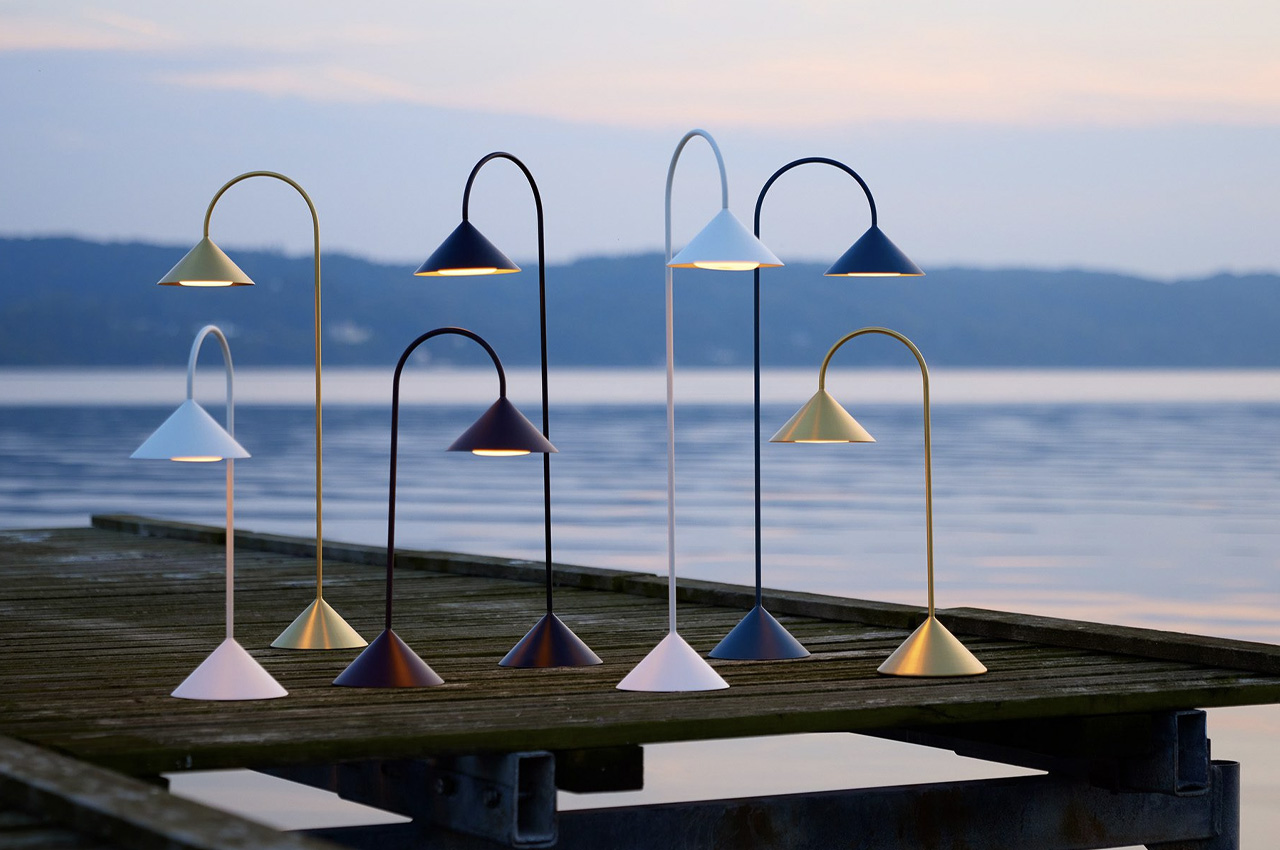
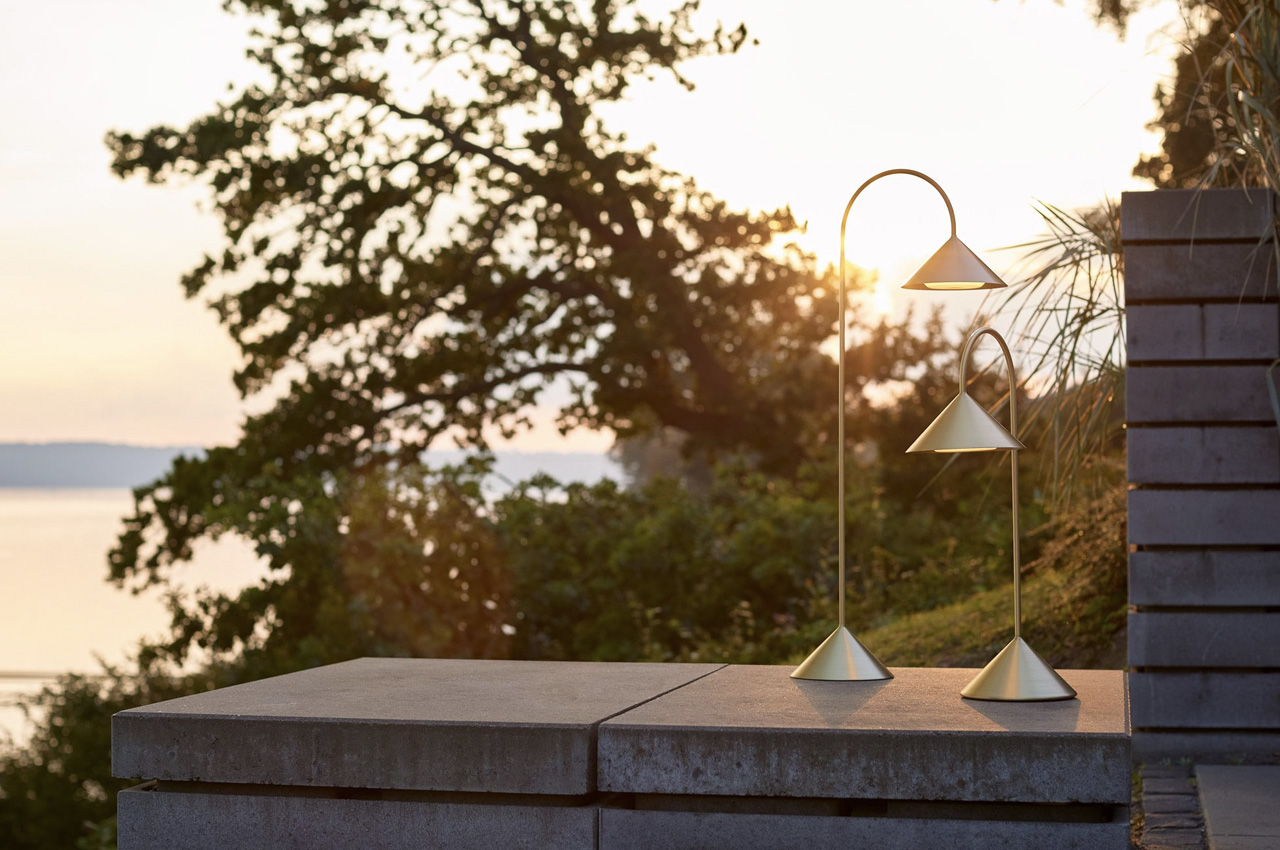
I love a well-designed and functional lighting design with some aesthetic value. But besides these three holy grails, it also helps if the light is portable, and can be carried around with you wherever you go. Besides that, a well-designed lighting fixture should not only have the ability to illuminate any living space but also add that extra oomph factor! I mean, of course, we need them to see in the dark, but as highly functional as they should be, a lighting fixture also needs to be aesthetically pleasing, adding an attractive and visually soothing element to any space it is placed in. And an excellent lighting design that we feel ticks all the checkboxes is the Grasp Portable Lamp by Thomas Albertsen for Frandsen.
Designed for the TV show Denmark’s Next Classic, the Grasp portable lamp by Danish brand Frandsen features an innovative and unique rechargeable bulb. After it debuted on the reality TV competition, where it was one of the best lighting designs, Frandsen picked up the lighting piece.
Frandsen was impressed by the ‘exceptional potential’ of the design, and hence decided to pick it up. The lamp features a refined metal form that comprises two cones – one for the base, and one for the lampshade. The two cones are connected via a thin and curving road that also makes up the body and the handle of the lamp. The portable lamp has a clean and minimalist visual appeal, while also serving as a functional and highly practical design with a water resistance rating, which makes it a great fit for both the indoors and the outdoors. It also features a base that sits well on both smooth and not-so-smooth surfaces.
“I wanted to make a portable lamp capable of illuminating a table where people gather, enveloping the surroundings in a warm, intimate ambiance, casting a magical aura in the otherwise dark spaces,” said Albertsen.
The lamp’s bulb which is called the Frandsen One functions as a source of light and power unit for the lighting design. So you don’t need to recharge the whole lamp, you can simply remove the bulb, and replace it with a fully charged spare bulb.
At CES this January, startup Rabbit unveiled its first device, just in time for the end of the year of the rabbit according to the lunar calendar. It’s a cute little orange square that was positioned as a “pocket companion that moves AI from words to action.” In other words, it’s basically a dedicated AI machine that acts kind of like a walkie talkie to a virtual assistant.
The people at Rabbit have been paying close attention to the aftermath of the Humane AI Pin launch and reviews. It was evident in founder and CEO Jesse Lyu's address at an unboxing event at the TWA hotel in New York last night, where the company showed off the Rabbit R1 and eager early adopters listened rapturously before picking up their pre-orders. Engadget's sample unit is on its way to Devindra Hardawar, who will be tackling this review. But I was in attendance last night to check out units at the event that industry peers were unboxing (thanks to Max Weinbach for the assistance!).
What is the Rabbit R1?
As a refresher, the Rabbit R1 is a bright orange square, co-engineered by Teenage Engineering and Rabbit. It has a 2.88-inch color display built in, an 8-megapixel camera that can face both ways and a scroll wheel reminiscent of the crank on the Playdate. The latter, by the way, is a compact gaming handheld that was also designed by Teenage Engineering, and the Rabbit R1 shares its adorable retro aesthetic. Again, like the Humane AI Pin, the Rabbit R1 is supposed to be your portal to an AI-powered assistant and operating system. However, there are a few key differences, which Lyu covered extensively at the launch event last night.
Rabbit R1 vs Humane AI Pin
Let's get this out of the way: The Rabbit R1 already looks a lot more appealing than the Humane AI Pin. First of all, it costs $199 — less than a third of the AI Pin's $700. Humane also requires a monthly $24 subscription fee or its device will be rendered basically useless. Rabbit, as Lyu repeatedly reiterated all night, does not require such a fee. You'll just be responsible for your own cellular service (4G LTE only, no 5G), and can bring your own SIM card or just default to good old Wi-Fi. There, you'll also find the USB-C charging port.
The R1's advantages over the Pin don't end there. By virtue of its integrated screen (instead of a wonky, albeit intriguing projector), the orange square is more versatile and a lot easier to interact with. You can use the wheel to scroll through elements and press the button on the right side to confirm a choice. You could also tap the screen or push down a button to start talking to the software.
Now, I haven’t taken a photo with the device myself, but I was pleasantly surprised by the quality of images I saw on its screen. Maybe my expectations were pretty low, but when reviewers in a media room were setting up their devices by using the onboard cameras to scan QR codes, I found the images on the screens clear and impressively vibrant. Users won’t just be capturing photos, videos and QR codes with the Rabbit R1, by the way. It also has a Vision feature like the Humane AI Pin that will analyze an image you take and tell you what’s in it. In Lyu’s demo, the R1 told him that it saw a crowd of people at “an event or concert venue.”
Cherlynn Low for Engadget
We’ll have to wait till Devindra actually takes some pictures with our R1 unit and downloads them from the web-based portal that Rabbit cleverly calls the Rabbit Hole. Its name for camera-based features is Rabbit Eye, which is just kind of delightful. In fact, another thing that distinguishes Rabbit from Humane is the former’s personality. The R1 just oozes character. From the witty feature names to the retro aesthetic to the onscreen animation and the fact that the AI will actually make (cheesy) jokes, Rabbit and Teenage Engineering have developed something that’s got a lot more flavor than Humane’s almost clinical appearance and approach.
Of all the things Lyu took shots at Humane about last night, though, talk of the R1’s thermal performance or the AI Pin’s heat issues was conspicuously absent. To be clear, the R1 is slightly bigger than the Humane device, and it uses an octa-core MediaTek MT6765 processor, compared to the AI Pin’s Snapdragon chip. There’s no indication at the moment that the Rabbit device will run as hot as Humane’s Pin, but I’ve been burned (metaphorically) before and remain cautious.
I am also slightly concerned about the R1’s glossy plastic build. It looks nice and feels lighter than expected, weighing just 115 grams or about a quarter of a pound. The scroll wheel moved smoothly when I pushed it up and down, and there were no physical grooves or notches, unlike the rotating hinge on Samsung’s Galaxy watches. The camera housing lay flush with the rest of the R1’s case, and in general the unit felt refined and finished.
Most of my other impressions of the Rabbit R1 come from Lyu’s onstage demos, where I was surprised by how quickly his device responded to his queries. He was able to type on the R1’s screen and tilted it so that the controls sat below the display instead of to its right. That way, there was enough room for an onscreen keyboard that Lyu said was the same width as the one on the original iPhone.
What’s next for the Rabbit R1?
Rabbit also drew attention for its so-called Large Action Model (LAM), which acts as an interpreter to convert popular apps like Spotify or Doordash into interfaces that work on the R1’s simple-looking operating system. Lyu also showed off some of these at the event last night, but I’d much rather wait for us to test these out for ourselves.
Lyu made many promises to the audience, seeming to acknowledge that the R1 might not be fully featured when it arrives in their hands. Even on the company’s website, there’s a list of features that are planned, in the works or being explored. For one thing, an alarm is coming this summer, along with a calendar, contacts app, GPS support, memory recall and more. Throughout his speech, Lyu repeated the phrase “we’re gonna work on” amid veiled references to Humane (for instance, emphasizing that Rabbit doesn’t require an additional subscription fee). Ultimately, Lyu said “we just keep adding value to this thing,” in reference to a roadmap of upcoming features.
Hopefully, Lyu and his team are able to deliver on the promises they’ve made. I’m already very intrigued by a “teach mode” he teased, which is basically a way to generate macros by recording an action on the R1, and letting it learn what you want to do when you tell it something. Rabbit’s approach certainly seems more tailored to tinkerers and enthusiasts, whereas Humane’s is ambitious and yet closed off. This feels like Google and Apple all over again, except whether the AI device race will ever reach the same scale remains to be seen.
Last night’s event also made it clear what Rabbit wants us to think. It was hosted at the TWA hotel, which itself used to be the head house of the TWA Flight Center. The entire place is an homage to retro vibes, and the entry to Rabbit’s event was lined with display cases containing gadgets like a Pokedex, a Sony Watchman, a Motorola pager, Game Boy Color and more. Every glass box I walked by made me squeal, bringing up a pleasant sense memory that also resurfaced when I played with the R1. It didn't feel good in that it's premium or durable; it felt good because it reminded me of my childhood.
Whether Rabbit is successful with the R1 depends on how you define success. The company has already sold more than 100,000 units this quarter and looks poised to sell at least one more (I’m already whipping out my credit card). I remain skeptical about the usefulness of AI devices, but, in large part due to its price and ability to work with third-party apps at launch, Rabbit has already succeeded in making me feel like Alice entering Wonderland.
This article originally appeared on Engadget at https://www.engadget.com/rabbit-r1-hands-on-already-more-fun-and-accessible-than-the-humane-ai-pin-163622560.html?src=rss
It’s easy to drag Google for this but it’s not entirely in the company’s hands. The tech giant is working closely with the UK’s Competition and Markets Authority (CMA) to ensure that any tools it implements to replace the cookie’s tracking and measurement capabilities aren’t anti-competitive. These tools are known collectively as the Privacy Sandbox and Google says it has to wait until the CMA has had “sufficient time to review” results from industry tests that’ll be provided by the end of June.
Google’s Privacy Sandbox has stirred up some controversy in recent years. The proposed tools have drawn complaints from adtech companies, publishers and ad agencies, on the grounds that they are difficult to operate, don’t adequately replace traditional cookies and give too much power to Google. To that end, the company said that it recognizes “ongoing challenges related to reconciling divergent feedback from the industry, regulators and developers.” This is another reason given for the delay until next year.
The CMA isn’t the only regulatory agency giving the side-eye to the current iteration of these Privacy Sandbox tools. The UK-based Information Commissioner’s Office drafted a report that indicated these tools could be used by advertisers to identify consumers, as suggested by the Wall Street Journal.
Those in the ad industry want to see cookies given the heave-ho, despite complaints about Privacy Sandbox. Drew Stein, CEO of adtech data firm Audigent, told Engadget that it’s time for Google “to deliver on the promise of a better ecosystem” by implementing its plans to eliminate third-party cookies.
The CMA, on the other hand, has indicated a willingness to keep third-party cookies in play, particularly if Google’s solution does more harm than good. Craig Jenkins, the CMA’s director of digital markets, recently said the organization would delay implementation of Privacy Sandbox tools if “we’re not satisfied we can resolve the concerns”, as reported by Adweek. We’ll see what happens in 2025.
This article originally appeared on Engadget at https://www.engadget.com/google-has-delayed-killing-third-party-cookies-from-chrome-again-155911583.html?src=rss
The bill that will force a sale or ban of TikTok in the United States is now law. President Joe Biden signed a package of foreign aid bills that included the “Protecting Americans from Foreign Adversary Controlled Applications Act,” one day after the legislation was approved by the Senate.
In a statement, TikTok said it would challenge the law in court, which could delay an eventual sale or ban. “This unconstitutional law is a TikTok ban, and we will challenge it in court,” the company said. “We believe the facts and the law are clearly on our side, and we will ultimately prevail. The fact is, we have invested billions of dollars to keep U.S. data safe and our platform free from outside influence and manipulation. This ban would devastate seven million businesses and silence 170 million Americans.”
The law gives TikTok’s parent company ByteDance, which is based in China, up to a year to sell the app to a new owner. If the company fails to divest, then TikTok will be banned from US app stores and web hosting services.
Unlike previous attempts to force a sale or ban of the app, the “Protecting Americans from Foreign Adversary Controlled Applications Act,” had overwhelming bipartisan support and was able to move through Congress with remarkable speed. The original version of the bill, which called for a six-month window to divest, passed the House in March, just days after it was introduced. An updated version, which allows up to 12 months for a divestment, passed over the weekend.
In a video shared on TikTok, CEO Shou Chew called it a “disappointing moment” for the company. “Make no mistake, this is a ban on TikTok and a ban on you and your voice,” he said. “It's actually ironic because the freedom of expression on TikTok reflects the same American values that make the United States a beacon of freedom.”
This article originally appeared on Engadget at https://www.engadget.com/joe-biden-signs-the-bill-that-could-ban-tiktok-in-the-united-states-154106950.html?src=rss