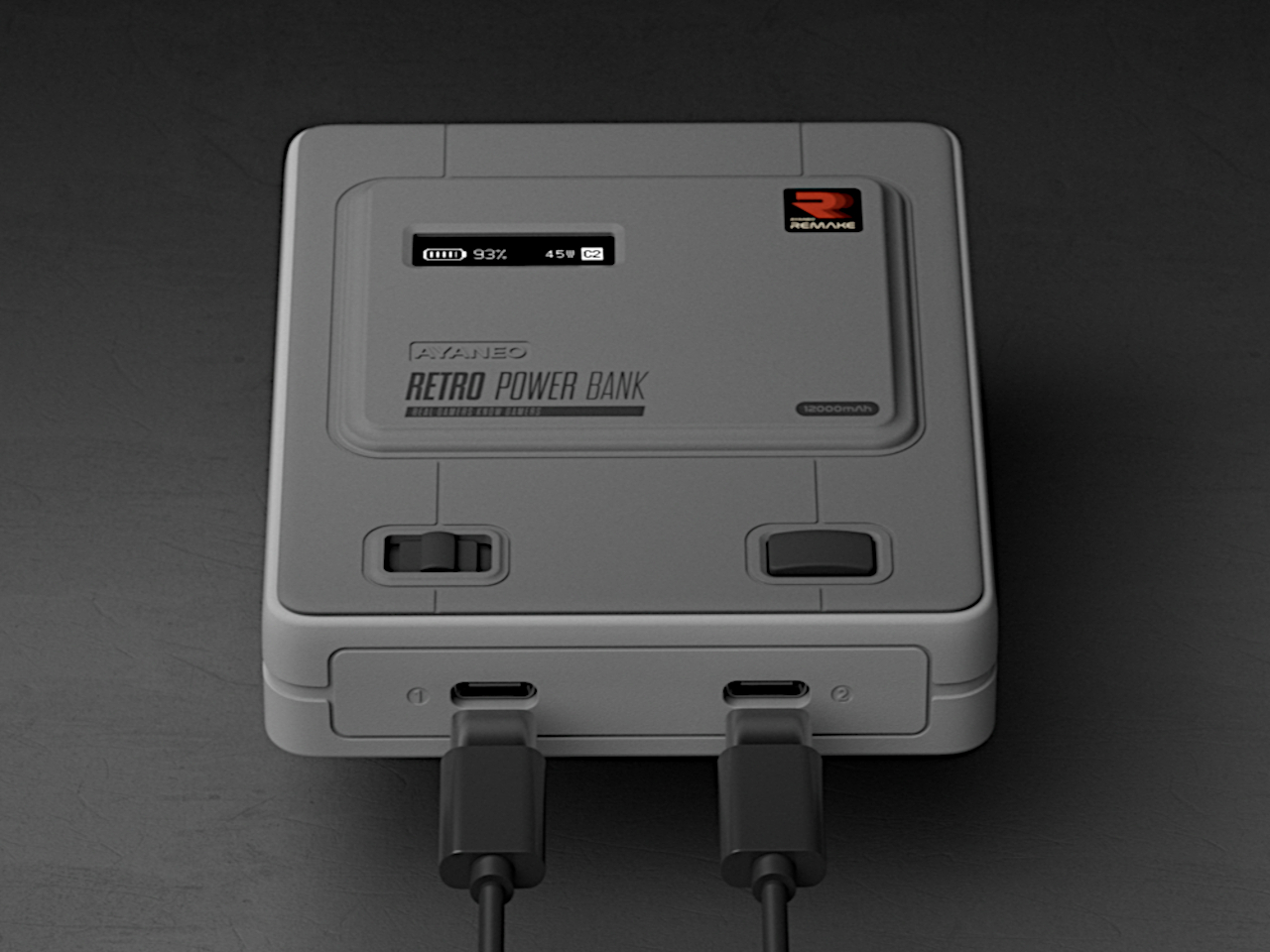
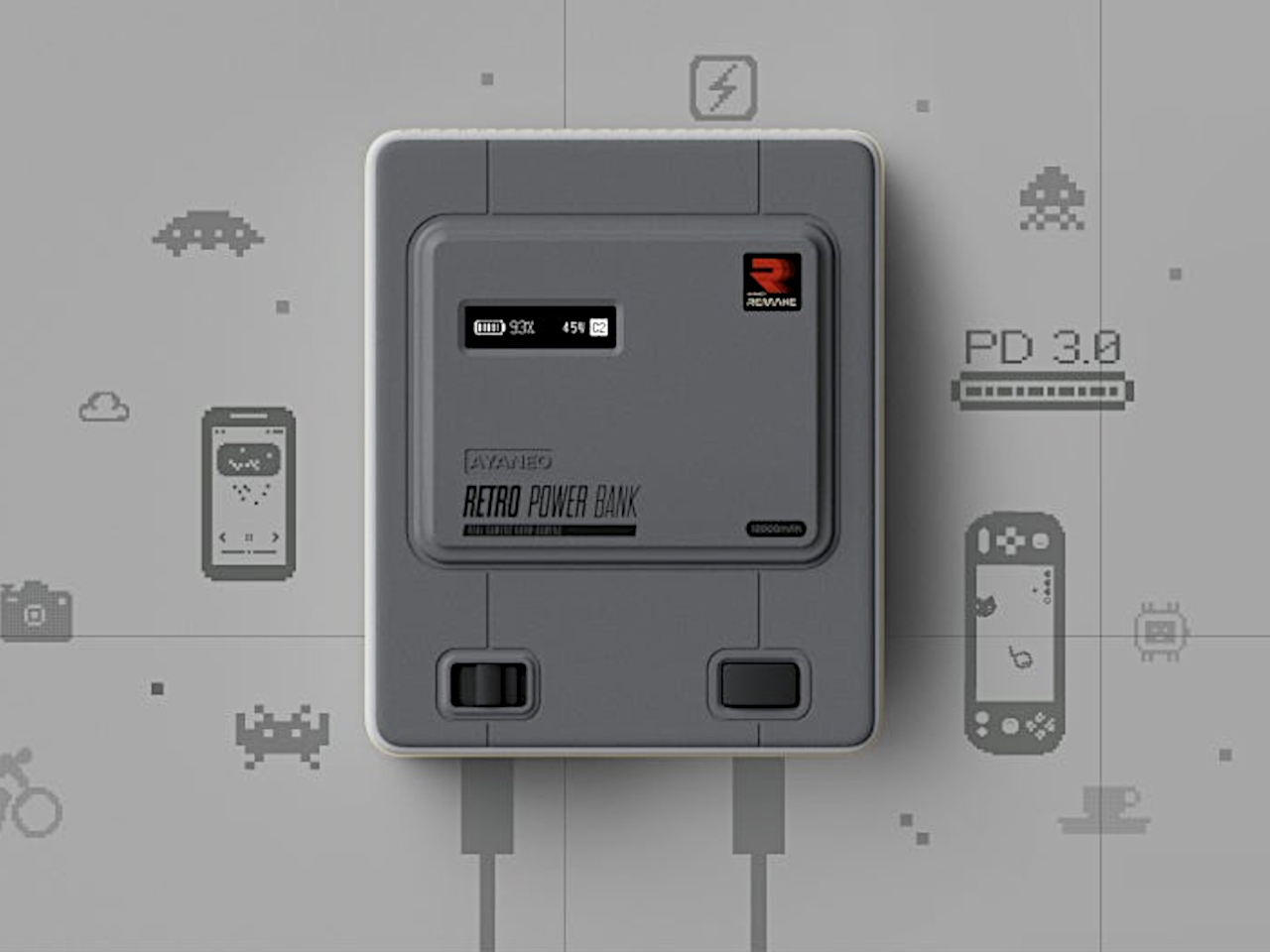
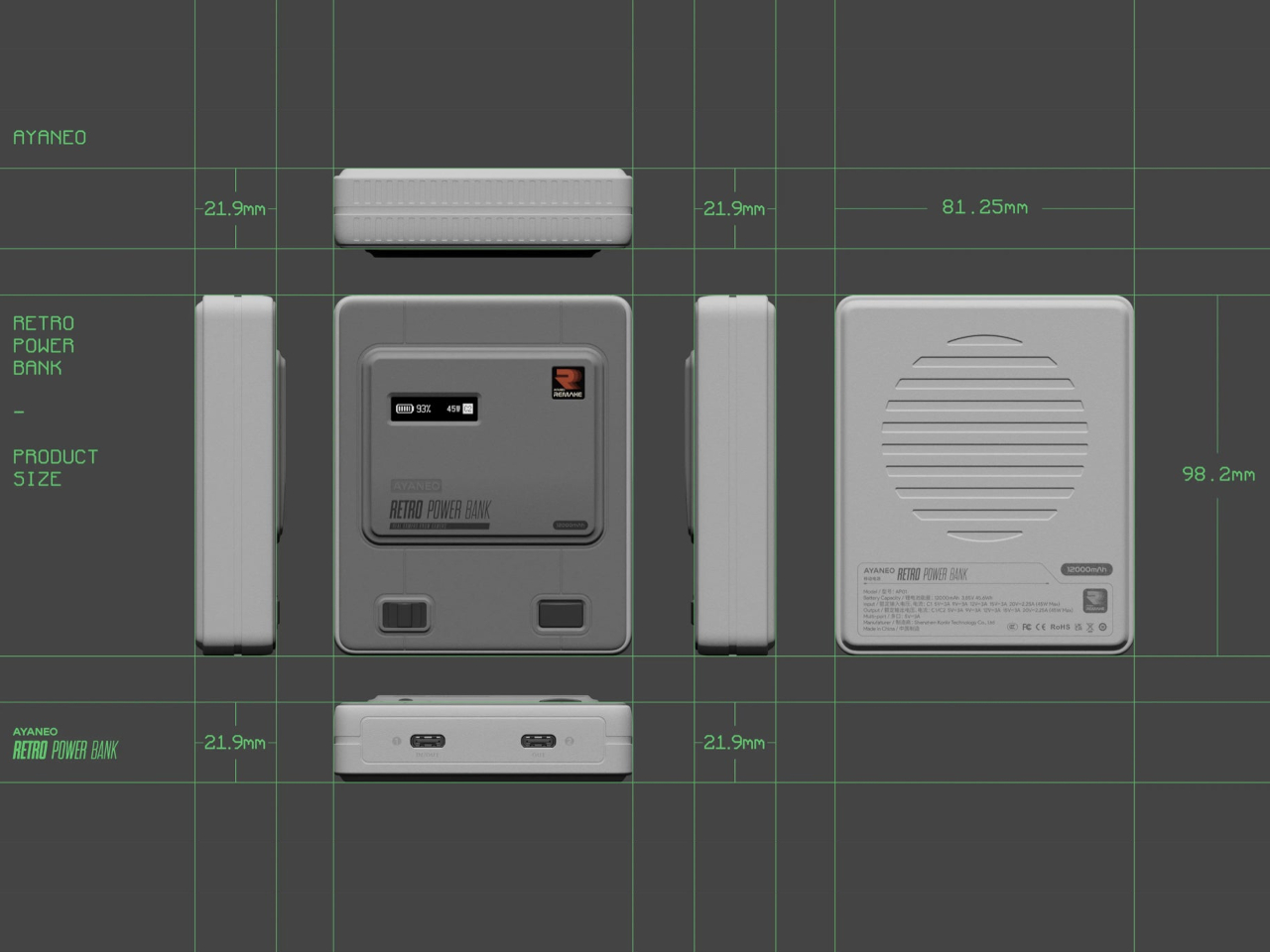
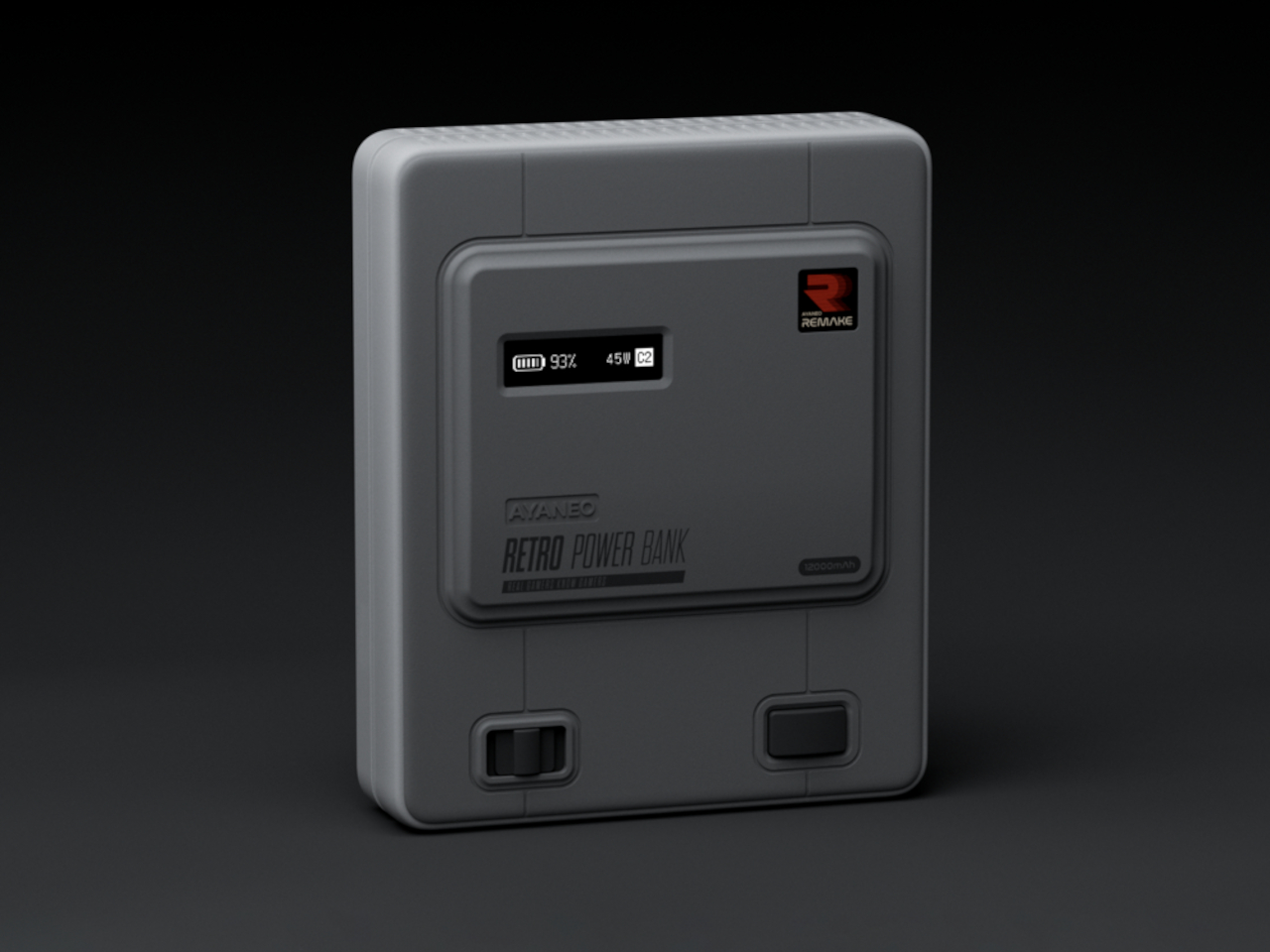
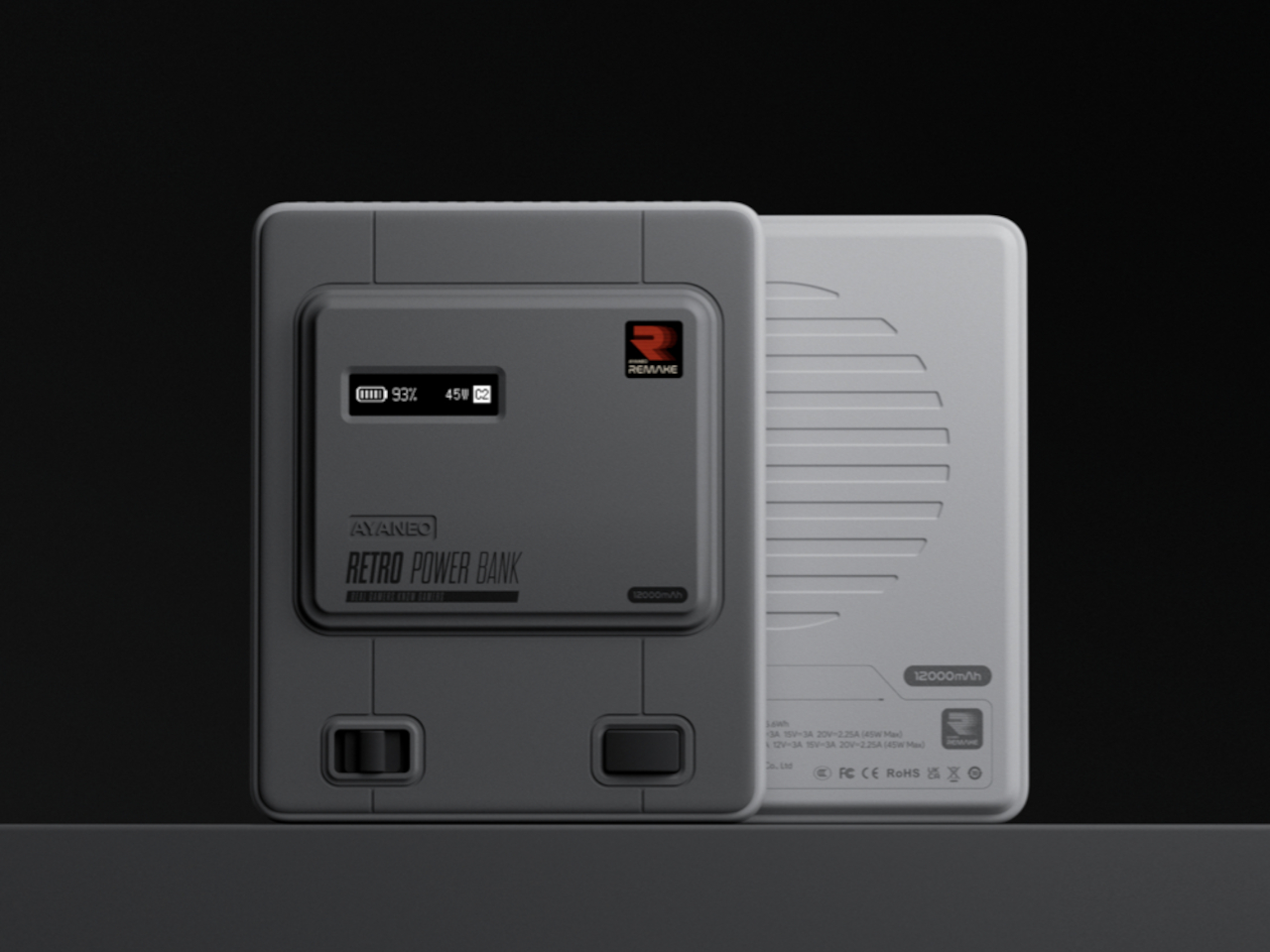
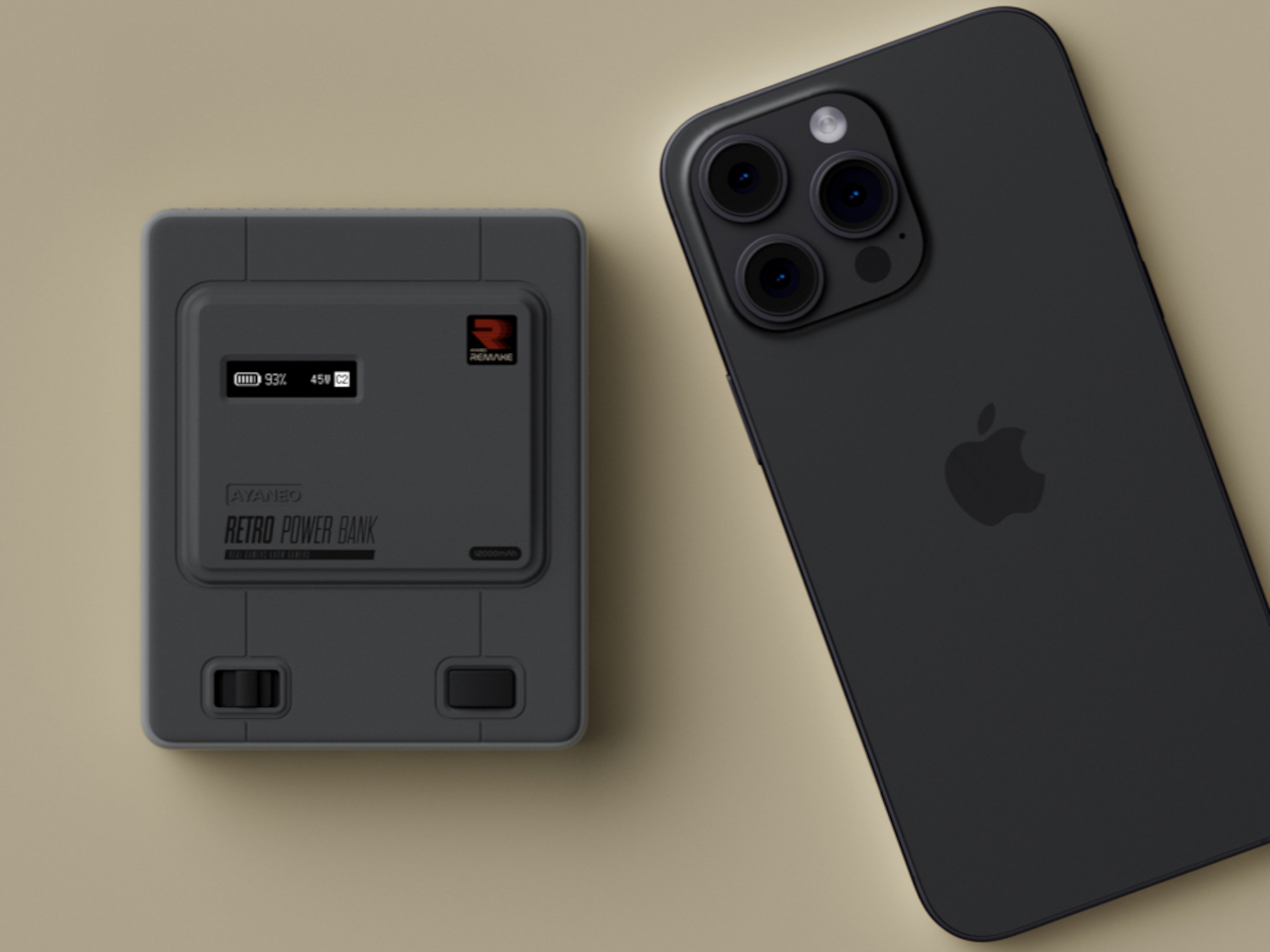
Retro gaming consoles kicked off a trend in the computing and gaming industries that saw the revival of many old-school designs. While the majority of these try to recreate decades-old experiences in a functional manner, some simply go for the aesthetics. After all, the designs can be eye-catching in their own right, regardless if they’re working like the original. Some put modern computing hardware inside shells from a time when monitors didn’t even have color, while others repurpose the design into some desktop or fidget toy only. This tiny retro console, for example, looks like a Super Famicom that’s no larger than your smartphone, but it isn’t actually a device that you can play but is simply AYANEO’s newest throwback: a 12,000mAh power bank in disguise.
The Nintendo Super Family Computer, a.k.a. “Super Famicom,” might be familiar to gamers in name, but those who live outside Japan might be more familiar with its other moniker and design. The Super NES (Nintendo Entertainment System) wasn’t as divergent as the NES from the Famicom, but there were subtle design differences, like the color scheme and placement of buttons. For whatever reason, AYANEO opted to pattern its tiny device on the Japanese Super Famicom, though that actually works in its favor in one specific detail.
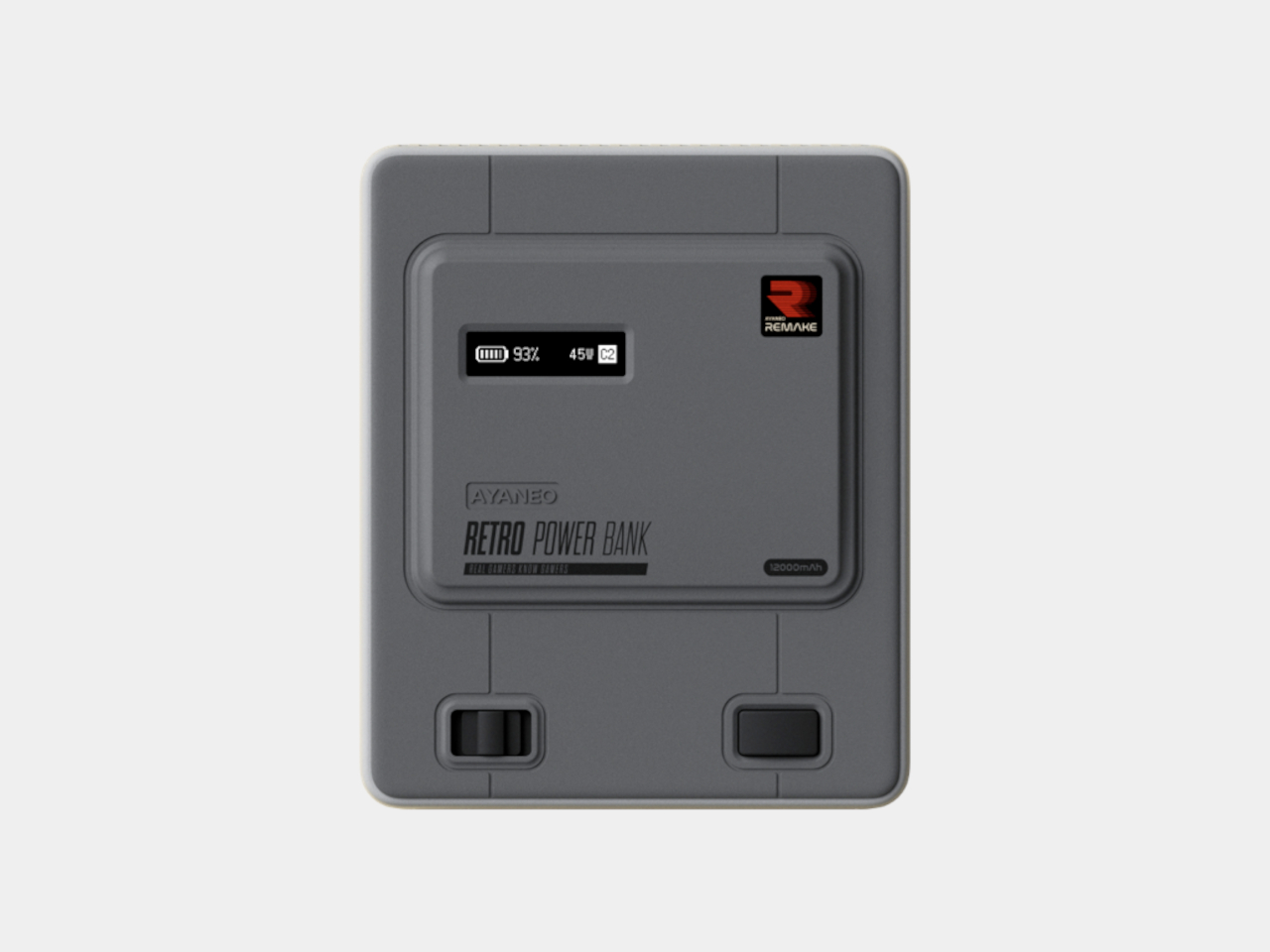
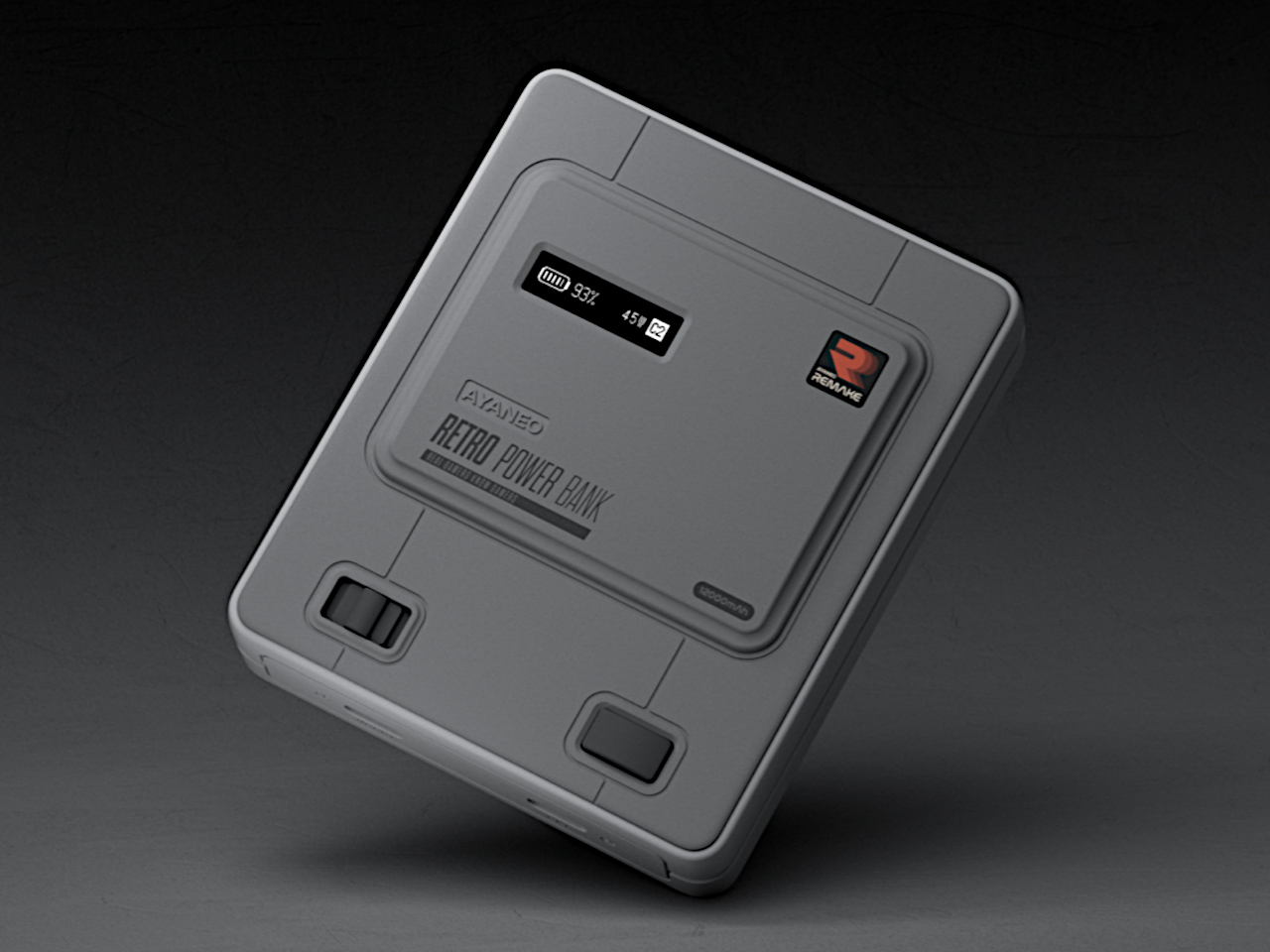
The Retro Power Bank, which avoids any legal landmine by using as generic a name as possible, adopts the dual-tone gray color scheme of the famed console as well as the raised section in the middle that delineates the main point of interest in the device. It even has the same sliding switch and button duo, but their locations have been moved around to avoid an exact copy of a copyrighted design. There’s also a small display strip that’s unsurprisingly absent from consoles of that bygone era, but is now almost a staple in high-capacity power banks.
Unlike the SNES, the Super Famicom used a sliding switch for its power button, a mechanism that the Retro Power Bank uses for navigating through menus and changing settings like units used, language, and screen off time, just to name a few. The reset button now becomes a function button that cycles through different display features. That 0.91-inch monochrome OLED screen is just small enough to show discharge and charging power, temperature, and other essential information at a glance.
Adorable as the design might be, some might be a little disappointed in its performance as an actual power bank. 12,000 mAh is admittedly plenty for most phones, but the 45W output will leave some waiting a bit to fully top up their phone. And when you use both USB-C ports at the same time, you’re down to 15W each. There’s also no wireless charging, which is probably for the best since you don’t want to cover that nice tribute to the Super Famicom, which is the entire point of the design in the first place.
These updates include an expansion of who can access Meta AI. Thanks to the addition of Argentina, Chile, Colombia, Ecuador, Mexico, Peru and Cameroon, the assistant is now available in 22 countries. It's also accessible in new languages: French, German, Hindi, Hindi-Romanized Script, Italian, Portuguese, and Spanish. However, some of the new features are location or language-specific for the time being.
Meta is rolling out a beta tool called "Imagine me" throughout the US. It allows for prompts such as "Imagine me surfing" or "Imagine me as a surrealist painting," and the AI assistant will create it using a photo of the individual. Meta is also adding new ways to tinker with an image, such as removing, changing or editing its content. This feature allows for creating an image, such as a duck, with the "Imagine me" tool and then instructing Meta AI to "Change the duck to a cat." Next month there will also be an "Edit with AI" button for further fine-tuning of images. The company is also rolling out the ability to create an image with Meta AI in a feed, comment, story or message across Facebook, Instagram, WhatsApp and Messenger. It should roll out this week, though just in English for now.
Then there's the launch of Llama 3.1 405B — Meta's new open-source AI model. You can use it on WhatsApp or meta.ai for tasks such as answering math problems and coding. Meta claims it will update its AI technology every two weeks and that new features and languages are on the way.
This article originally appeared on Engadget at https://www.engadget.com/meta-ai-is-now-available-in-spanish-portugese-french-and-more-150051715.html?src=rss
Meta on Tuesday announced the release of Llama 3.1, the latest version of its large language model that the company claims now rivals competitors from OpenAI and Anthropic. The new model comes just three months after Meta launched Llama 3 by integrating it into Meta AI, a chatbot that now lives in Facebook, Messenger, Instagram and WhatsApp and also powers the company's smart glasses. In the interim, OpenAI and Anthropic already released new versions of their own AI models, a sign that Silicon Valley’s AI arms race isn’t slowing down any time soon.
Meta said that the new model, called Llama 3.1 405B, is the first openly available model that can compete against rivals in general knowledge, math skills and translating across multiple languages. The model was trained on more than 16,000 NVIDIA H100 GPUs, currently the fastest available chips that cost roughly $25,000 each, and can beat rivals on over 150 benchmarks, Meta claimed.
The “405B” stands for 405 billion parameters, which are internal variables that an AI model uses to reason and make decisions. The higher the number of parameters an AI model has, the smarter we perceive it to be. OpenAI’s GPT-4 model, by comparison, reportedly has roughly 1.5 trillion parameters, although the company has not disclosed the number so far. In addition, Meta also released upgraded versions of existing Llama models that contain 70 billion and 8 billion parameters each, claiming that the newer versions had stronger reasoning abilities among other things.
Developers can download Llama 3.1 from its official website, while regular users can play with it through Meta AI in WhatsApp or on meta.ai, the company’s website for its chatbot. “Llama 405B’s improved reasoning capabilities make it possible for Meta AI to understand and answer your more complex questions, especially on the topics of math and coding,” Meta’s blog post states. “You can get help on your math homework with step-by-step explanations and feedback, write code faster with debugging support and optimization.” (Editor’s note: Engadget will pit Llama 3.1 against the New York Times Spelling Bee and report back to you). For now, Meta AI on Facebook, Messenger and Instagram are still restricted to the smaller version of Llama 3.1 that uses 70 billion parameters.
Unlike OpenAI, Google, Microsoft and Anthropic that keep their AI models proprietary, Meta’s AI models are open source, which means that anyone can modify and use them for free without sharing personal data with Meta. In a letter published on Tuesday, Meta CEO Mark Zuckerberg argued that an open source approach to AI development will ensure wider access to the technology’s benefits, prevent the concentration of power among a few big companies, and enable safer AI deployment across society. By open sourcing the company’s largest language model to date, Meta aims to make Llama the “industry standard” for anyone to develop AI-powered apps and services with, Zuckerberg wrote.
Open sourcing AI models and adding them to its existing products already used by billions of people could allow Meta to compete more effectively with OpenAI whose ChatGPT and DALL-E chatbots ignited an AI explosion when they launched in 2022. And it could also boost engagement — Meta announced today that users would soon be able to add AI-generated images directly into feeds, stories, comments and messages across Facebook, Messenger, WhatsApp and Instagram.
In his letter, Zuckerberg also criticized Apple and its closed ecosystem, arguing that the iPhone maker’s restrictive and arbitrary policies had constrained what Meta could build on its platforms. “[It’s] clear that Meta and many other companies would be freed up to build much better services for people if we could build the best versions of our producers and competitors were not able to constrain what we could build,” he wrote.
This article originally appeared on Engadget at https://www.engadget.com/llama-31-is-metas-latest-salvo-in-the-battle-for-ai-dominance-150042924.html?src=rss
Meta's AI-powered assistant have been accessible on the Ray-Ban smart glasses for quite some time, but the company will only start rolling it out to its Quest headsets next month. The assistant will still be in experimental mode, however, and it's availability will be limited to users in the US and Canada. Meta has revealed the update alongside its announcements for the Llama 3.1 and the new Meta AI capabilities.
Users who get access to the assistant in August will be able to put its hands-free controls to the test. The company said Meta AI is replacing the current technology used for Voice Commands on Quest, so it will be the one controlling the headset whenever people use voice for navigation and the one answering their questions if they ask for information. They can ask the assistant for restaurant recommendations for an upcoming trip, as an example, or ask it for the weather those days, as well as suggestions on how to dress for it.
They will also be able to use the "Meta AI with Vision" feature, which will let them ask the assistant for information on what they're seeing, while using Passthrough on the Quest. Passthrough lets users see their environment through a video feed while watching or doing something else on their headsets. A user can, for instance, ask the assistant to look at what's inside the fridge and suggest what they can cook, or ask for tips on what kind of top would go with a skirt they're holding up, all while watching a YouTube video.
This article originally appeared on Engadget at https://www.engadget.com/metas-ai-assistant-is-coming-to-quest-headsets-in-the-us-and-canada-150033530.html?src=rss
General Motors is putting the autonomous Cruise Origin shuttle van on ice. The company said that the embattled Cruise, of which GM is the majority owner, will now focus on making the next-gen Chevy Bolt. The automaker discontinued the previous Bolt last year due to a shift away from an older battery system but did not reveal plans for a new model at the time.
According to a letter that GM CEO Mary Barra sent to shareholders, the indefinite delay of the shuttle van "addresses the regulatory uncertainty we faced with the Origin because of its unique design." Barra added that the per-unit costs of the next-gen Bolt will be much lower, "which will help Cruise optimize its resources."
GM and Cruise were working on the Origin with Honda. The Origin — which does not have a driver's seat, steering wheel or pedals — was supposed to debut in Japan in 2026.
In October, the California Department of Motor Vehicles suspended Cruise's driverless vehicle permits over safety issues. Earlier that month, a pedestrian in San Francisco was dragged 20 feet by a Cruise vehicle and pinned under it after a hit-and-run by another car pushed her into the robotaxi's path. Cruise later paused all driverless operations before temporarily halting production in November.
According to CNBC, former Cruise CEO Kyle Vogt at one point told staff that hundreds of pre-commercial Origin vehicles had been built. The company has resumed robotaxi operations in Phoenix, Houston and Dallas with human operators on board and is carrying out tests in Dubai. However, it hasn't recommenced operations in San Francisco. It's still under investigation for the October incident there.
Shelving the Origin is not a decision that GM and Cruise would have come to lightly. In GM's second quarter earnings report, the automaker noted that it incurred around $583 million of Cruise restructuring costs. It said these resulted "from Cruise voluntarily pausing its driverless, supervised and manual [autonomous vehicle] operations in the US and the indefinite delay of the Cruise Origin."
On the plus side, resuming work on the Bolt (which will presumably use GM's Ultium battery tech the next time around) could be a boon for GM's bottom line. As of 2023, the Bolt EV and EUV accounted for most of GM's electric vehicle sales. It planned to make around 70,000 of them last year before ceasing production.
This article originally appeared on Engadget at https://www.engadget.com/gm-shelves-the-autonomous-cruise-origin-shuttle-van-144256801.html?src=rss
You can's say Fujifilm is boring. It stuck to APS-C sensors instead of going full-frame like everyone else, while releasing cool and weird models like the X100 VI. That strategy has been refreshing in a conservative industry and undeniably successful.
It also went big by introducing its first medium-format camera seven years ago, the GFX50S. After eight models, they’ve proven to be popular among pro portrait and scenic photographers, a market Fujifilm never really had before. Each has become increasingly more sophisticated, with better image quality, faster shooting speeds and improved video.
Now that the company’s flagship $7,500 100-megapixel GFX 100 II, has been out for awhile and had several firmware updates, I was keen to test the new AF speeds and more. So I went to London to try it out alongside two pro photographer friends who are thinking of buying one.
Body
The original GFX 100 is a gigantic camera, weighing over three pounds with the viewfinder. The GFX 100 II is more manageable at 2.27 pounds, the same as Panasonic’s full-frame S1. Photographers are still likely to be carrying a heavy bag, though, as medium-format GFX lenses are generally bigger and heavier than full-frame glass.
The GFX 100 II also feels more like a full-frame camera than an old-school top-down viewfinder medium format model. It has an updated, modern control layout, with a pair of control dials, a mode dial, a joystick, 14 buttons and a movie/photo switch.
The rear display tilts up, down and to the side, but doesn’t flip out — not a huge deal, as this will never be a vlogging camera. It shines where it counts, though, with a high 2.36 million dot resolution and enough brightness to use in sunlight. The viewfinder, meanwhile, is one of the best on any camera, with an extremely sharp 9.36-million dot resolution and 100 percent magnification.
It’s easy to handle, thanks to the well-placed controls and large grip. The top display, which stays on even when the camera is switched off, shows all the main settings at a glance. I’m not a huge fan of Fujifilm’s overly complicated menu system, but it’s fine once you get used to it.
As with other recent high-end cameras, you get both an SD UHS II card slot and a much faster CFexpress B option. The latter is required for fast burst shooting, as I’ll discuss soon. Battery life is solid, with up to 540 shots on a charge, or about an hour of 8K or 4K 60p recording.
Performance
Steve Dent for Engadget
The GFX 100 II is the fastest medium-format camera to date. You can fire bursts at up to 8 fps with the mechanical shutter enabled and capture about 300 lossless RAW frames before the buffer fills. That’s about 36GB of data, so it requires a fast CFexpress card.
Autofocus wasn’t a strong point on the GFX, but it’s a big step up on this model. The majority of shots in our burst testing were in focus, though it becomes less accurate when the subject is close to the camera. This isn’t a sports camera, obviously, but it still has the best AF I’ve seen on any medium format camera.
Face and eye detection have also improved, usually locking onto the eye and not, say the eyebrow as the older model did. Fujifilm also introduced AI subject detection from recent models, so it now has settings for animals, birds, automobiles, motorcycles, bikes, airplanes and trains.
Nathanael Charpentier for Engadget
The GFX 100 II has a new 5-axis stabilization system with up to eight stops of shake reduction, compared to 5.5 stops before. This is useful for portraits and scenics, letting you shoot down to a quarter second or slower and blur water or people, while keeping the background sharp.
Rolling shutter was pretty abysmal on the original model, and isn’t a lot better here. If you’re taking street photos and want to remain silent, it’s fine if the subject doesn’t move much. For anything else, use the mechanical shutter to avoid some bad skewing.
Image quality
Image quality is this camera’s forte. Naturally, photos are pin sharp thanks to the 102-megapixel sensor. And with 16 bits of color depth in RAW mode, dynamic range is outstanding, right up there with Sony and Nikon. All of that makes it ideal for portraits and landscapes, on top of tasks that benefit from high-resolution, like art preservation.
The GFX 100 II now goes down to ISO 80 instead of 100 to further boost dynamic range. All of that allows photographers to get creative with RAW photos, or tease detail out of highlights and shadows.
It’s not bad at high ISOs either, thanks to the sensor’s backside illumination and dual-gain design. There’s very little noise visible at ISO 6400, and photos are usable up to ISO 12800 if exposure is correct.
The medium format sensor offers incredibly shallow depth of field if you need that for portrait shooting. Combined with a fast lens like the 80 mm f/1.7, it allows for incredible bokeh and subject separation.
For those who prefer to use JPEGs straight out of the camera, it delivers color-accurate images with the perfect amount of in-camera sharpening. That’s ideal for previews or for folks who want to use Fujifilm’s impressive film simulation modes. For the GFX 100 II, Fujifilm introduced a new one called Reala Ace that’s based directly on one of its old negative films. With a punchy, saturated and slightly nostalgic feel, it has become one of my new favorites.
There is one quality issue — the GFX 100 II drops from 16- to effectively less than 14-bits when shooting 8fps bursts in order to reduce throughput. That in itself isn’t a huge problem, but Fujifilm has been cagey about how it markets this, which has rubbed a lot of pro photographers the wrong way.
Video
Steve Dent for Engadget
I’m starting to sound like a broken record, but the X100 II is also Fuji’s best medium format camera for video. It has a host of new modes, most notably 8K. It also offers 6K, 4K/60p and 1080p at 240fps. All those formats can be captured in 12-bit ProRes, along with 10-bit H.265 formats. You also get access to Fujifilm’s excellent F-Log2 capture that boosts dynamic range.
There are some considerable compromises, though. 8K is captured with a 1.53 times crop, reducing the effective sensor size to less than full frame — which negates one of the main medium-format advantages: shallow depth of field. Other resolutions use the full sensor width, but pixel binning reduces sharpness.
Rolling shutter is also an issue at 8K, so be sure not to move the camera much at that resolution. It’s less bothersome at 4K resolutions, likely due to the pixel binning.
All that aside, video from the GFX100 II has a different quality than I’ve seen from most mirrorless cameras. The larger sensor makes it cinematic, especially with some of Fujifilm’s prime lenses. And the 8K video is extremely sharp when downsampled to 4K in DaVinci Resolve.
Realistically though, video is more of a nice-to-have feature for occasional use, as the majority of buyers will certainly be using it for photography.
Wrap-up
Nathanael Charpentier for Engadget
The $7,500 GFX100 II is an impressive medium format camera with improvements in every area compared to the previous model. More importantly, what did my pro photographer friends think and will they buy one? “What’s most noticeable is the evolution of the autofocus compared to the GFX100,” said Nathanael Charpentier. “In our studio we usually work with Sony, and the GFX100 II autofocus is still far from Sony’s level, but it’s a big improvement.
“It’s not a sports camera, it doesn’t have super-fast burst speeds. It’s more for studio portrait work. For certain types of ‘reportage’ like candid wedding shoots, if we really need the extra dynamic range offered by a medium-format camera, I could see using it.” At this point, they’re not planning on buying one due to the high price (and the fact that they just laid down 6,000 euros for an A9 III), but it’s high on their list of future equipment purchases.
Its main competitor is the $8,200 Hasselblad X2D 100C, which has perhaps slightly better color science and image quality — while also bringing a certain prestige with the Hasselblad name. However, the GFX100 II is superior in most other ways, including speeds, autofocus and video. If you really need to nail autofocus in busy or difficult situations, though, full-frame is still best: Sony’s 45-megapixel $6,500 A1 or Nikon’s $3,800 Z8 or $5,500 Z9 (both 45MP as well) are better choices.
This article originally appeared on Engadget at https://www.engadget.com/fujifilm-gfx-100-ii-the-king-of-medium-format-mirrorless-cameras-143009929.html?src=rss
I rarely display flowers in my space for a lot of reasons. Fresh ones are a bit expensive and hard to come by, my apartment is a bit humid and already overstuffed, I’m too lazy to take care of them and prolong their life, etc. So many excuses but basically I don’t have time or space. Also I don’t have vases or vessels to place them in although it’s pretty easy to find one in the nearest mall and there is no shortage of interestingly designed ones to choose from.
Designers: Naoki Ono and Yuki Yamamoto
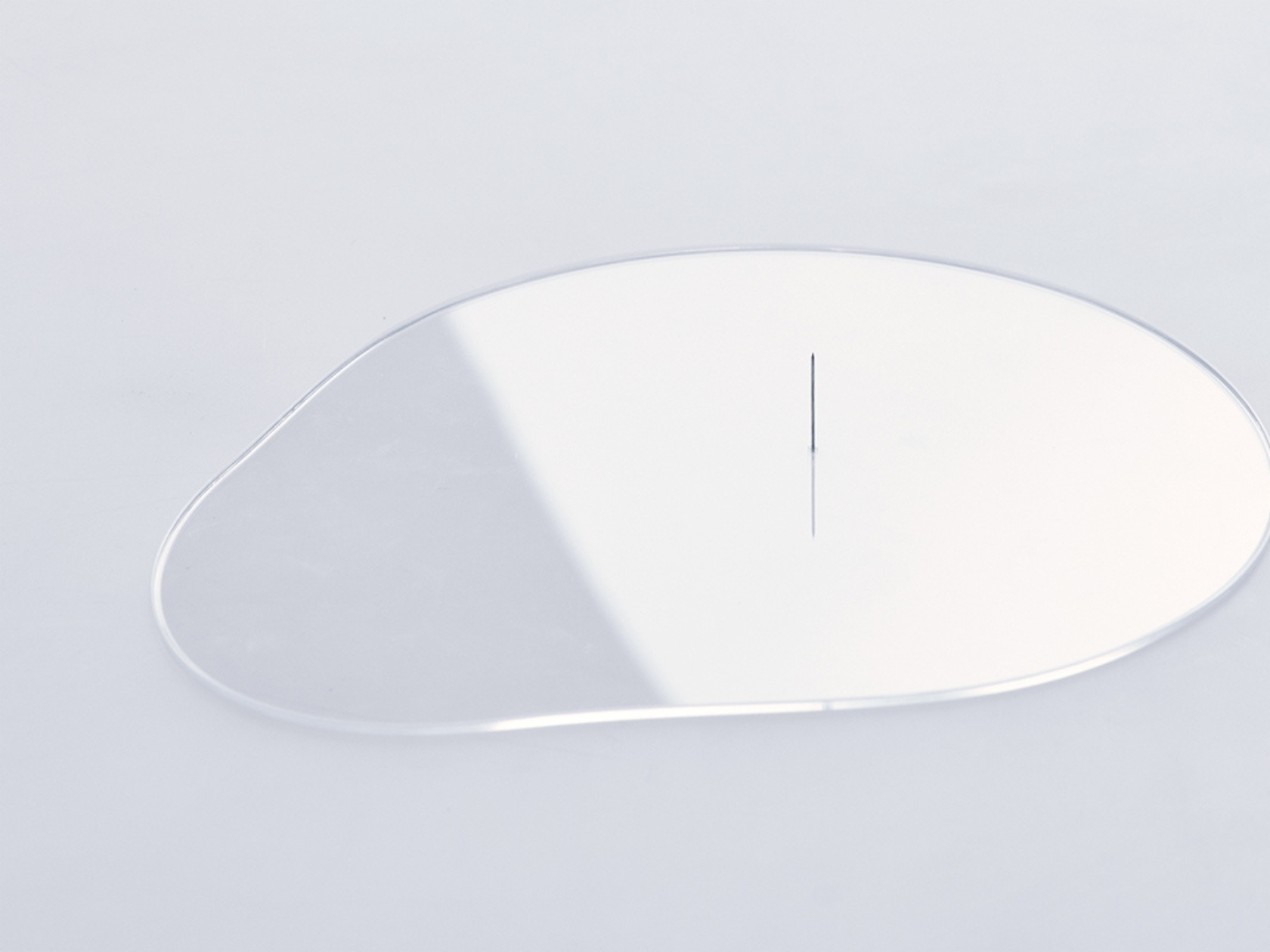
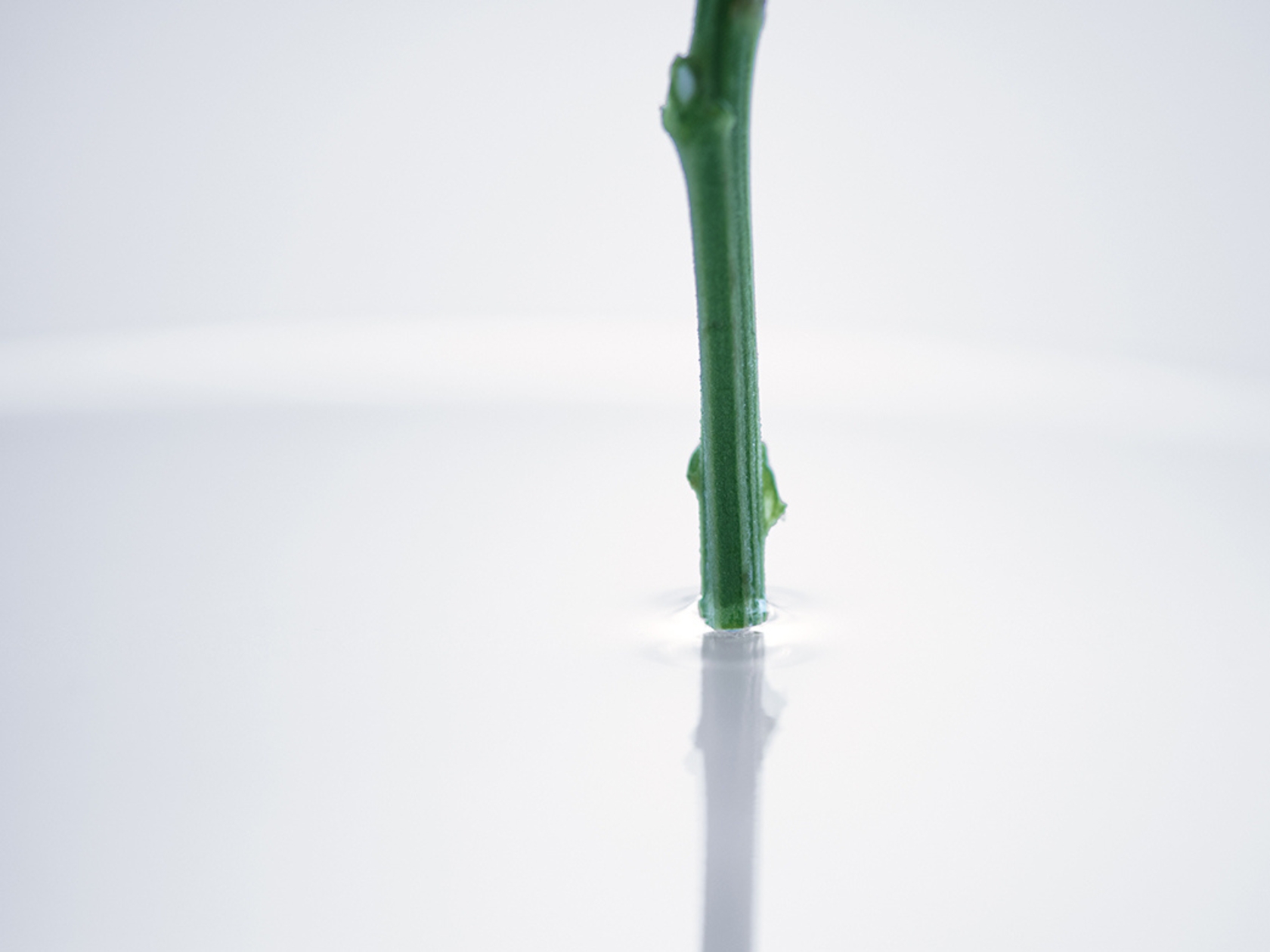
If these were produced and made available commercially, I might have actually gotten them. Puddle is a series of unique-looking flower vessels that were designed to look like what it’s name after. I really can’t call them vases since there is a limit to the amount of flowers it can hold. The body is designed to look like different water puddle patterns so the flower you place in (on?) it looks like it’s sprouting from that puddle.
The transparent body which has different organic water puddle shapes has a wall that’s just 1.55 m high, just enough to have a cup of water. There’s a tiny needle in the middle where you can insert a single plant stem. You just have to pour water over the needle to fill the vessel with it and even creating actual puddles while doing so with water spilling over into the ledge. I don’t know how long that single stem of flower can last given the way the vessel is designed.
But it’s a pretty interesting and unique kind of flower vessel to have around your space. You can maybe even fool some guests to thinking that you have spilled some water and there’s a flower that grew out of that. Well, if they don’t really look that closely. Sadly it didn’t get produced for commercial purchase, maybe due to practicality reasosns.
The new Samsung Galaxy devices drop tomorrow which means today is your last chance to take advantage of pre-order promotions. One of the best deals we've seen comes from Amazon, which is offering a $300 gift card to anyone who pre-orders the Samsung Galaxy Z Fold 6. The bundle is available for $1,900 thanks to a six percent discount on the 512GB model (originally $2,020). You can pick it up in Silver, Navy or Pink.
Samsung announced the Galaxy Z Fold 6 earlier this month, and we've had the chance to test it out. We gave it an 86 in our review due to welcome features like native stylus support and an even lighter chassis. It also uses the Snapdragon 8 Gen 3 chip and has a larger vapor chamber, so there's basically no lag, and it's less likely to overheat. The screen is brighter, with a colorful display, and the device lasted over 20 hours during our video rundown test on the main screen and 25 hours and 19 minutes on the exterior screen.
If you're in the market for something cheaper, check out the Samsung Galaxy Z Flip 6 — a smaller device with some of the same perks. The smartphone is also available for pre-order, with the 512GB model and a $200 Amazon gift card on sale for $1,100. The 512GB Samsung Galaxy Z Flip 6 starts at $1,220 on its own (though both Amazon and Samsung are running pre-order sales on just the phone). Like the Galaxy Z Fold 6, it comes out tomorrow so today is the last day to snag a pre-order deal.
This article originally appeared on Engadget at https://www.engadget.com/its-your-last-chance-for-a-300-amazon-gift-card-when-you-pre-order-the-samsung-galaxy-z-fold-6-141053944.html?src=rss
When it comes to firecrackers and fireworks displays, I’m not the biggest fan. I keep thinking of all the wasted money that goes into having just a few seconds of fun, not to mention how dangerous it can sometimes be . The closest that I would probably enjoy some version of them is holding sparklers in my hands. But again, they only last a few seconds and sometimes the wind will even make that shorter so I’d rather not just hold one in my hands.
Designer: Kenji Fujii of Taki Corporation
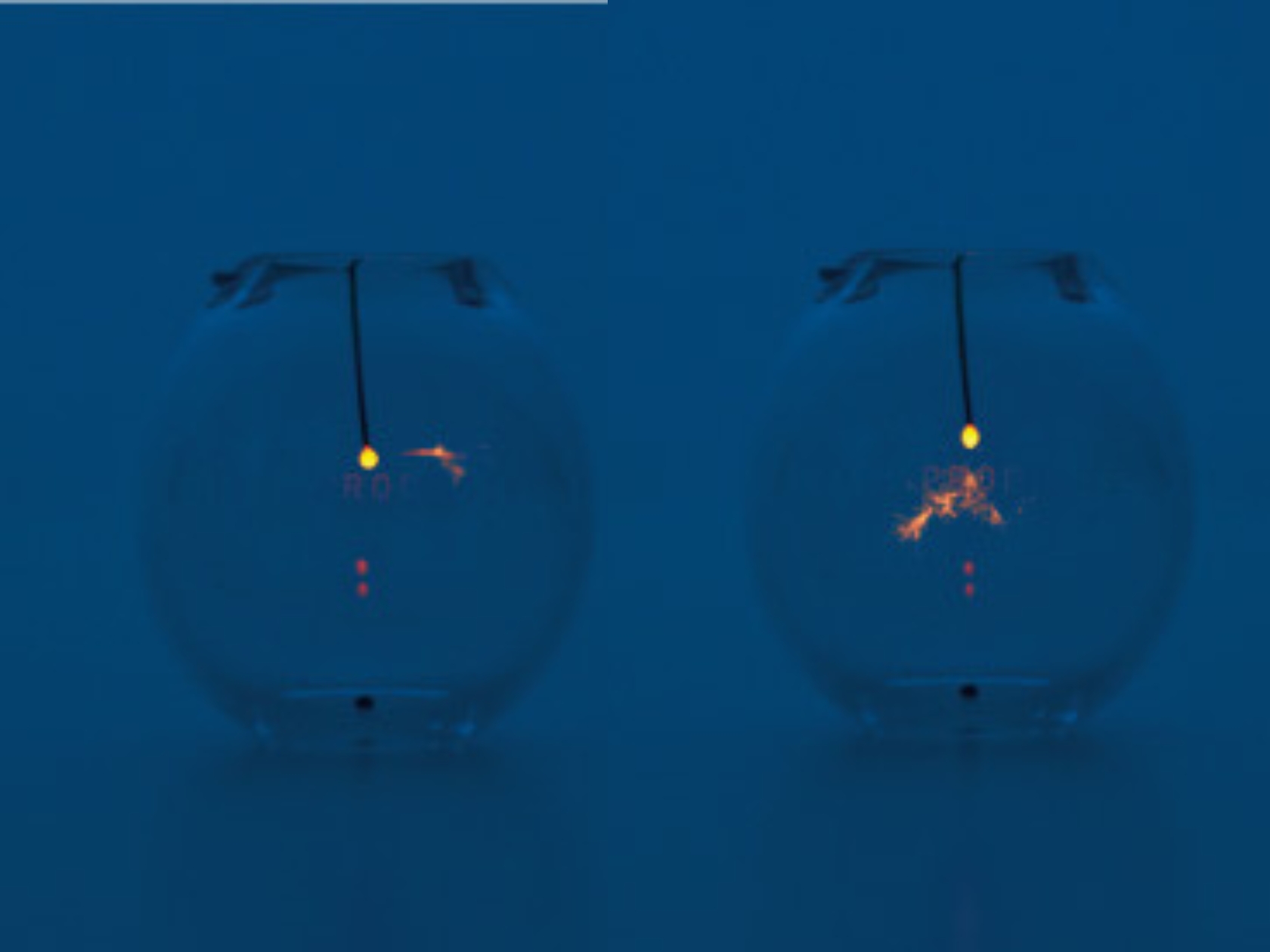
Tenohira Hanabi is a sparkler holder so you can enjoy them a little bit longer and safely in the palm of your hands. It’s a jar named “sparkler in your palm” literally and it has no other function except to keep the sparklers, specifically the senko hanabi (incense fireworks), in your hands. It’s a glass jar that has dimples on both sides so you can keep the T-shaped sparkler dangling inside the jar.
This means that once you light up these tiny sparklers, you’ll be able to look at them up close. You’re also keeping them lighted and sparkling a bit longer than when you’re holding them since the glass jar protects it from the winds. I’m not sure though if it can be used for regular sized sparklers so you will have to enjoy the incense fireworks when using the Tenohira Hanabi.
If not used as a sparkler holder, maybe it can also function as a regular jar where you can store small things like candies. Or since it looks cute enough, it can also just be a decorative object until the next time you need to light up some sparklers again.
Yoshino: Leading the Way in Portable Power Innovation When it comes to portable power, Yoshino stands out for its innovation and reliability. With a mission to provide cutting-edge technology and superior performance, Yoshino has become a leader in the portable power industry. Their high-quality products cater to a modern, connected lifestyle, helping you stay powered […]