Deadpool and Xbox launch an *ahem* Ergonomic Limited Edition Controller with a ‘Cheeky’ Design

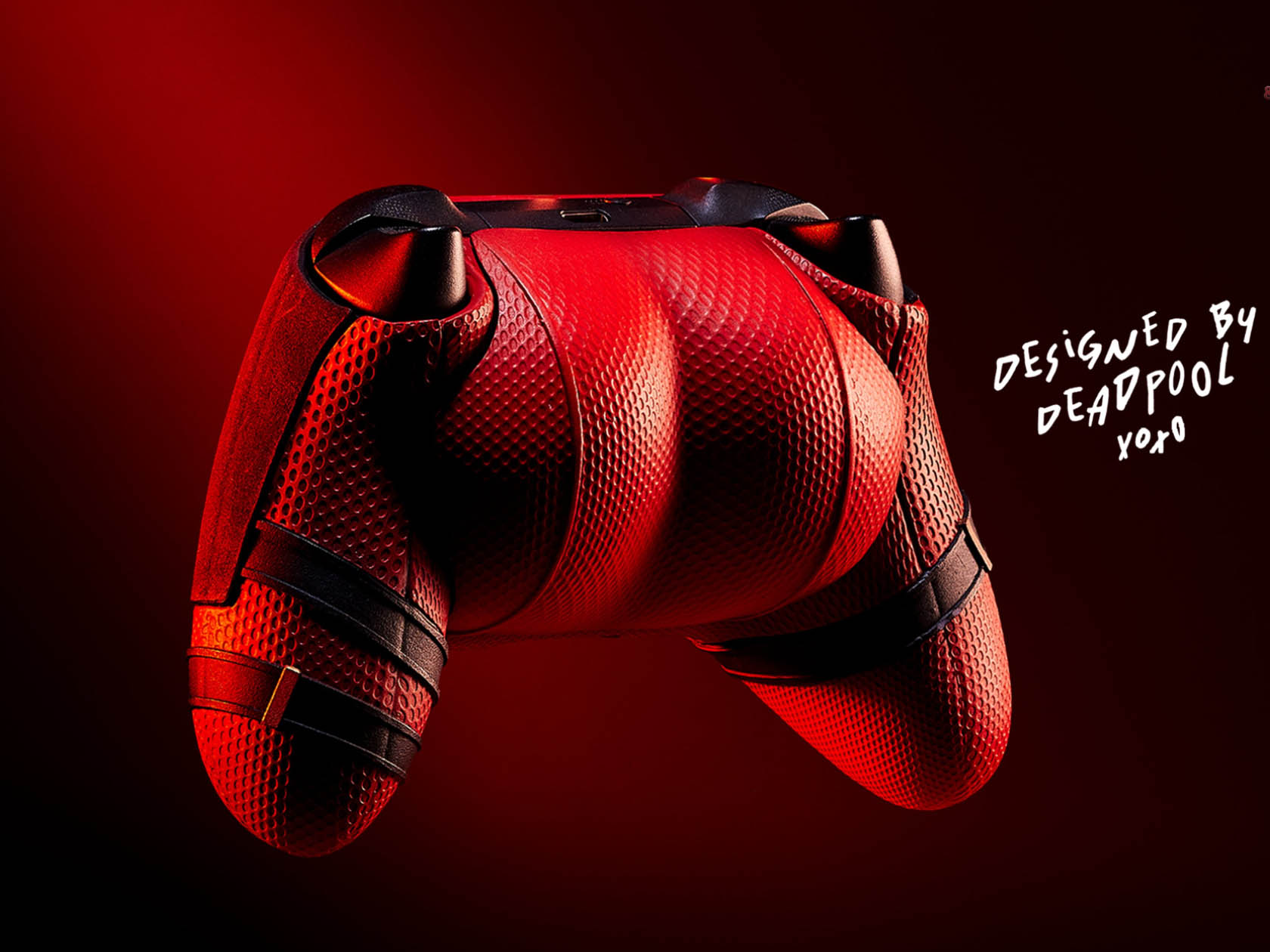
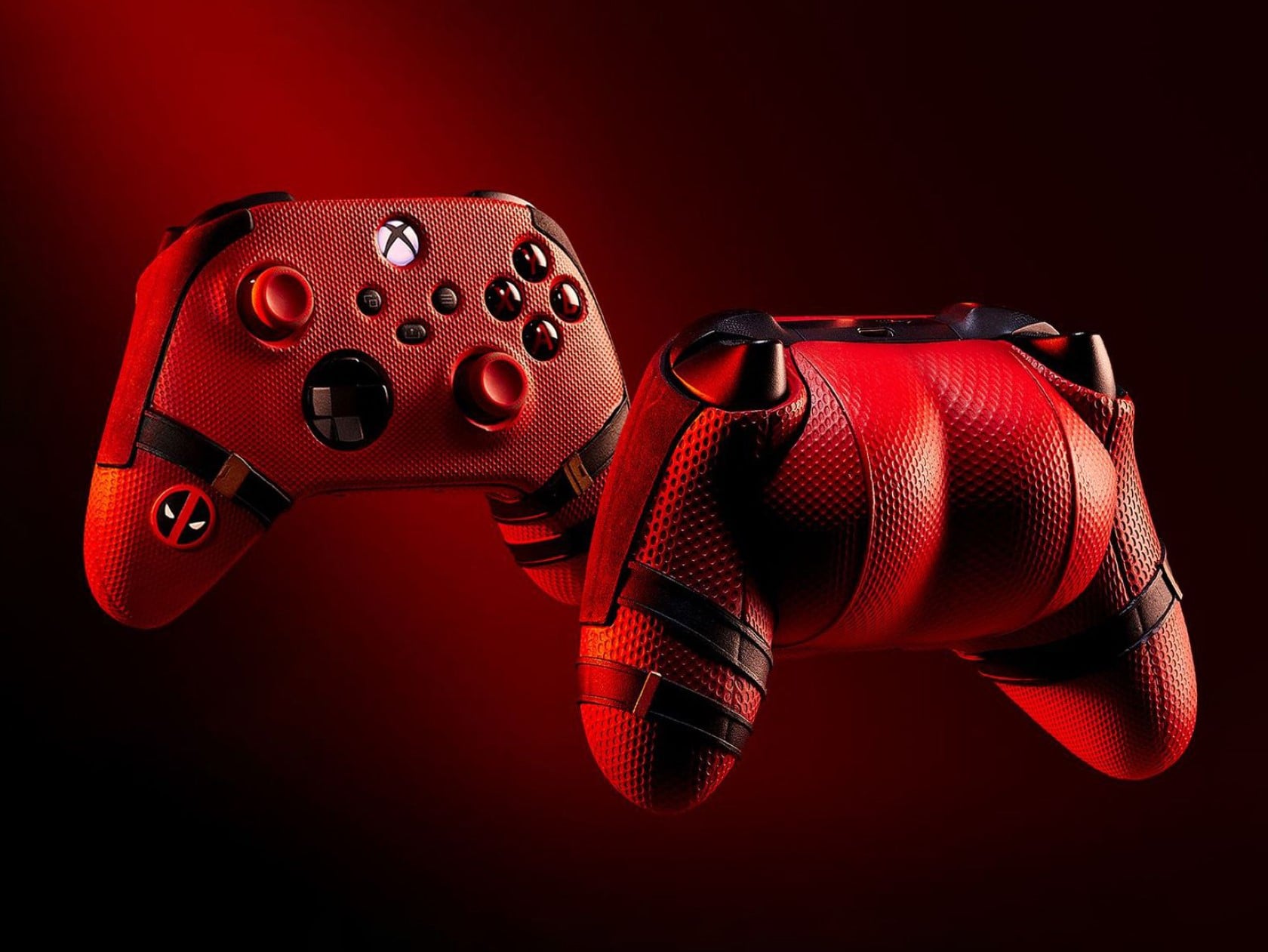
There have been some crazy iterations of Xbox in the popular Xbox Sweepstakes competition and this one doesn’t disappoint either. Themed on the cocky superhero, Deadpool, this Xbox Series X controller has got perfectly rounded butts, and we all know why. The gaming accessory joins the growing number of themed Xbox controllers including Starfield, Porsche and Nike Air Jordan inspired designs.

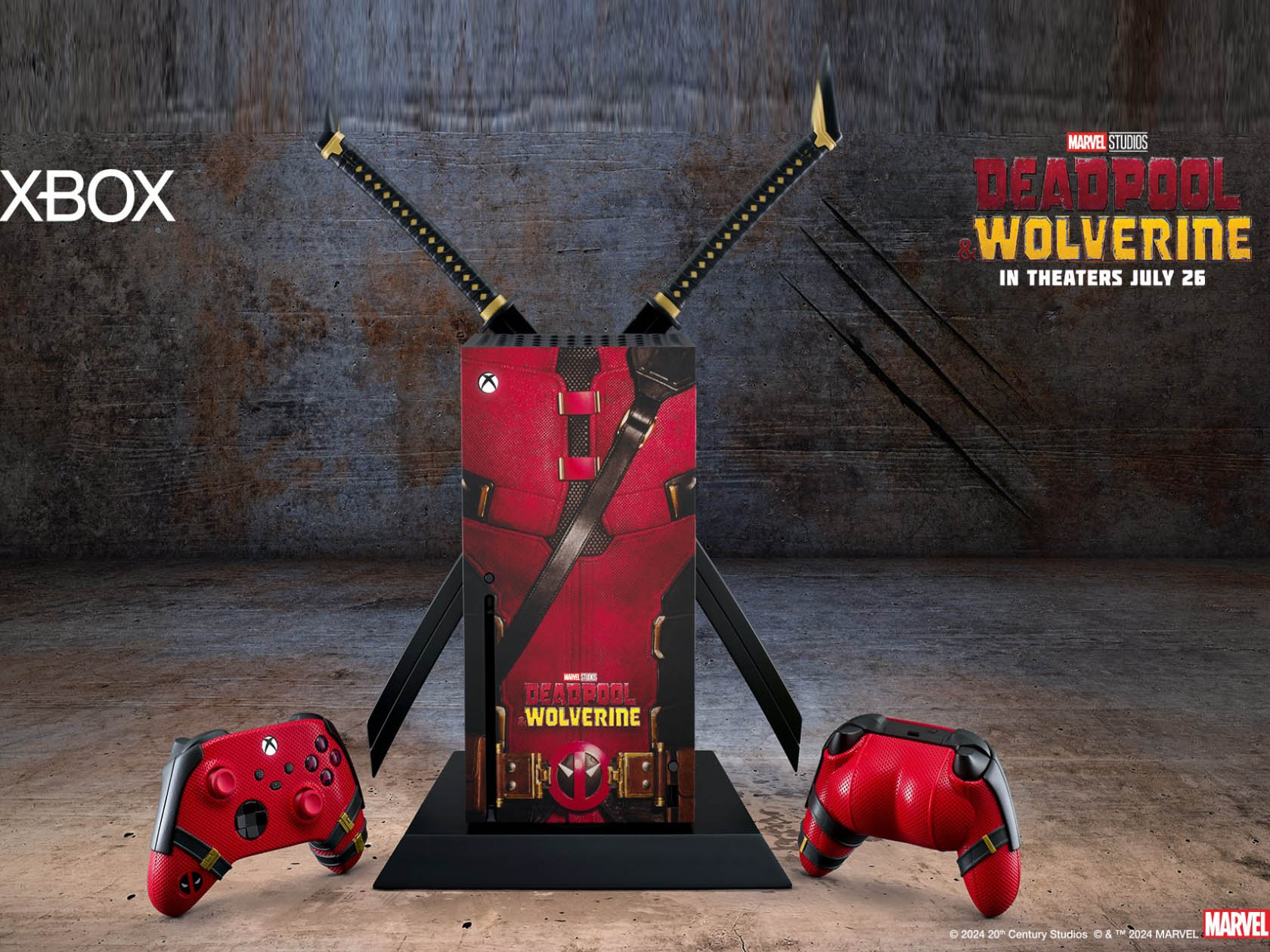
As a part of the competition, one lucky gamer will get the chance to own the custom Xbox Series X console, a themed stand with foam katanas (with Bea and Arthur), and of course, two cheeky controllers themed on Deadpool. This is for promotion of the Marvel Studios’ Deadpool and Wolverine movie hitting theatres on July 26. To be a part of the challenge, one has to be over 18 years of age, follow Xbox on X, and repost the sweepstakes post from July 17 to August 11.

Designer: Microsoft

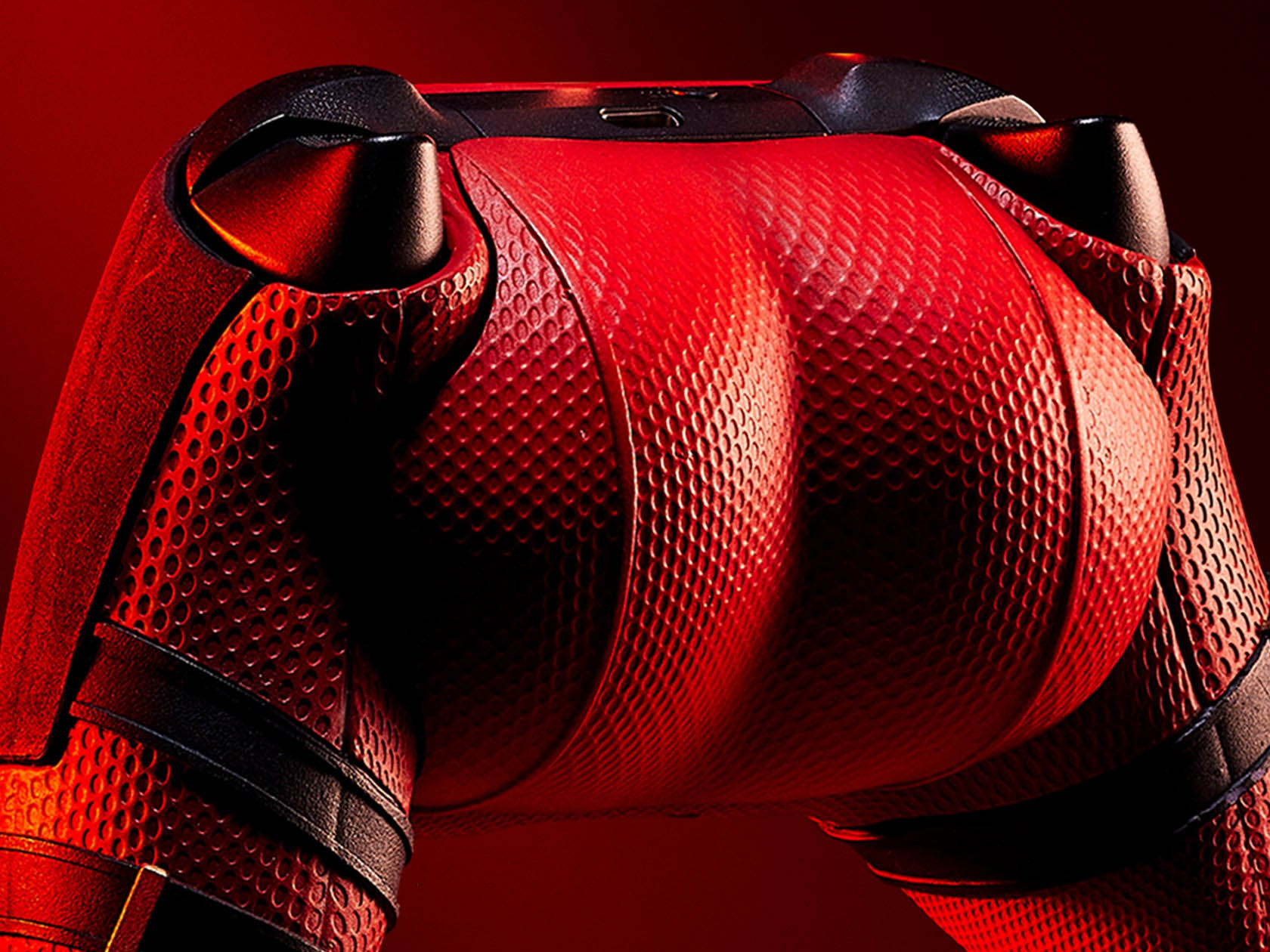
While we could talk of the Series X console with the custom skin, our attention focuses on the perfectly contoured rear of the gamepads dubbed Cheeky Controllers. The front has texture and imprint of the superhero’s thighs adorned with leg holsters and the infamous logo. The themed accessory has a leathery texture to it on both sides, representing the superhero’s costume in the latest movie.

The question though remains, will the controller’s sizeable tush covered in the red and black spandex suit hamper the gaming experience or will it comfort the tense fingers? As far as I think, it should work well for someone with large hands while someone with small hands will find it a tad difficult to grab the rear and register trigger button inputs.

While the Deadpool controller is a one-off gaming accessory that a lucky gaming fanatic will ultimately own, others will get a chance to own cool Deadpool merchandise. The first 1,000 buyers who purchase the Xbox Elite Wireless Controller Series 2 will get a Deadpool controller holder.


The post Deadpool and Xbox launch an *ahem* Ergonomic Limited Edition Controller with a ‘Cheeky’ Design first appeared on Yanko Design.

Samsung is freezing Galaxy Buds 3 Pro shipments amid quality control issues

Samsung has temporarily shut down Galaxy Buds 3 Pro shipments. With memories of its flaming hot (and not in a good way) Galaxy Note fiasco eight years ago, the company is halting the earbuds’ launch while “urgently assessing and enhancing” the product’s quality control, according to a statement shared with Engadget and Android Authority, which first published the news.

Some users who received the Galaxy Buds 3 Pro before their July 24 launch reported that their ear tips tore easily. Considering how often they may need to remove and replace tips to find their ideal fit, material prone to ripping could have led to atrocious PR and an expensive recall had the company let the launch proceed as planned.

Samsung’s website has added a new release date of August 28, although it’s unclear if that’s a soft placeholder or a new hard target. In addition, the Galaxy Buds 3 Pro Amazon listing has been pulled altogether.

Samsung Galaxy Buds 3 Pro in hand at an event.
Sam Rutherford for Engadget

“To ensure all products meet our quality standards, we have temporarily suspended deliveries of Galaxy Buds 3 Pro devices to distribution channels to conduct a full quality control evaluation before shipments to consumers take place,” Samsung’s statement reads. Samsung Korea previously issued a statement apologizing for quality control issues and promising a full inspection. However, that remark didn’t mention a delay.

The company added that customers who already received the Galaxy Buds 3 Pro and are having problems should contact Samsung or visit a Samsung Service Center. Android Authority also published an email sent to a pre-order customer confirming a delay and advising them to request a cancellation if they choose.

You can read Samsung’s full statement below:

There have been reports relating to a limited number of early production Galaxy Buds 3 Pro devices.

We are taking this matter very seriously and remain committed to meeting the highest quality standards of our products. We are urgently assessing and enhancing our quality control processes.

To ensure all products meet our quality standards, we have temporarily suspended deliveries of Galaxy Buds3 Pro devices to distribution channels to conduct a full quality control evaluation before shipments to consumers take place.

We sincerely apologize for any inconvenience this may cause.

For more on the flagship wireless earbuds, you can read Engadget’s hands-on coverage.

Update, July 19, 2024, 2:48 PM ET: This story has been updated to add Samsung’s full statement, which the company shared with Engadget.

This article originally appeared on Engadget at https://www.engadget.com/samsung-is-freezing-galaxy-buds-3-pro-shipments-amid-quality-control-issues-181407398.html?src=rss

Another ‘missing link’ black hole discovered near the center of the galaxy

A group of international researchers at the University of Cologne in Germany recently discovered one of the rarest types of black holes in the universe. The researchers were observing a cluster of stars in the vicinity of a supermassive black hole named Sagittarius A (Sgr A) at the center of the Milky Way galaxy. They then discovered signs of an intermediate-mass black hole, a type of black hole that’s sometimes referred to as the “missing link” of black holes, according to NASA.

Black holes range in size from supermassive to primordial and the intermediate sits above primordial in size. They are believed to have formed just after the Big Bang and act as “seeds” for creating supermassive black holes.

The star cluster believed to be the latest intermediate-mass black hole dubbed IRS 13 moved in an orderly pattern when they expected them to be randomly arranged. The researchers concluded that the star cluster had to be interacting with the supermassive black hole and “there must be something inside the cluster for it to be able to maintain its observed compact shape,” according to a statement from the University of Cologne. 

Plans are underway to conduct further observations on the intermediate black hole. They will use the James Webb Space Telescope and the Extremely Large Telescope in Chile that’s currently under construction (and yes, that is its real name).

Scientists discovered the first intermediate-mass black hole in 2020 using the Hubble Space Telescope when they found the waves created by its formation. Until then, intermediate-mass black holes were considered to be a “missing link” between stellar-mass and supermassive black holes and could provide more insights on the formation of black holes and the universe.

This article originally appeared on Engadget at https://www.engadget.com/another-missing-link-black-hole-discovered-near-the-center-of-the-galaxy-175859313.html?src=rss

Schim is an inventive, beautiful platformer that’s just a little too repetitive

Schim is one of the games I was most looking forward to this year, and I generally had a pleasant time with it. It’s a pretty platformer in which every object and living thing has a soul called a Schim. These frog-like critters live in the shadow of their host but can become lost when its object or creature is neglected, damaged or going through something life-changing.

You play as a Schim that gets separated from its person, who is going through a difficult spell in their life. There are no prizes for guessing that the goal is to reconnect with them. You’ll have to navigate some treacherous environments to do so, but the catch is that you can only swim through shadows and jump from one inky blob to another. If you miss a jump, you can take one extra little hop to reach it.

Developers Ewoud van der Werf and Nils Slijkerman play around with this idea in some joyful ways. You might hop between the shadows of trees and animals one minute and use a bounce house to travel some extra distance the next. None of this was incredibly difficult, though it took me a while to nail down the timing of jumps between conveyor belts in a factory level. I found some other mechanics mildly frustrating, such as getting to grips with how to launch the Schim in the correct direction from a spinning rotary clothesline.

The game is at its most creative and compelling when it plays around with inconsistent light sources and distended and disappearing shadows. There are some inventive ideas here, many of which are executed flawlessly. While there’s a fundamental joyfulness to Schim (which is styled as SCHiM), there’s a surprisingly affecting narrative that touches on mental health concerns and how regular folks struggle to get by.

Unfortunately, I felt that Schim was too repetitive overall. It doesn’t quite do enough with its core mechanic, and. tThere were too many stages set in urban environments with too similar objects to jump between. This bogged down what could have been a tighter and more rewarding experience. By the halfway point, I was more than ready for the Schim to reconnect with its human — not a great sign for a game that only takes about three hours to finish.

My main takeaway will be the impeccable aesthetics. Each stage uses a couple of main colors and various shades of black to denote the shadows, objects and characters. The music, animations and backgrounds combine in gorgeous fashion. It often felt like I was playing a piece of living art. The visuals make for true lockscreen material and speak to the beauty that can emerge from minimalist, stylized renderings.

There are a ton of great ideas in Schim, which has a touching and rewarding ending. I just wish the journey to get there was more consistently enjoyable.

Schim is out now on PC, PlayStation, Xbox and Nintendo Switch. (It runs smoothly on Steam Deck too.)

This article originally appeared on Engadget at https://www.engadget.com/schim-is-an-inventive-beautiful-platformer-thats-just-a-little-too-repetitive-170019349.html?src=rss

A nifty hack made Mario a playable character in 1994’s Donkey Kong Country

Mario and Donkey Kong have been rivals, frenemies, go-kart competitors and tennis partners. The Italian plumber once kidnapped Donkey Kong’s son. DK once, uh, took over Mario’s toy company (?) and stole a bunch of little figurines for some reason. They have history. What they haven’t done, however, is appear as playable characters in one another’s platforming adventures. Thanks to a nifty bit of hacking, that just changed.

Mario is a playable character in a hacked version of the SNES classic Donkey Kong Country, due to a ROM programmer called RainbowSprinklez. It’s appropriately named DKC X Mario and this is not a simple sprite swap. We wouldn’t waste your time with that. Mario had to be completely engineered into the game, as his moveset doesn’t exist in the original code. Donkey Kong is a lumbering beast. He doesn’t spin around, double jump and carry items. Check out the video and prepare to be impressed.

This is a Mario that has been pulled from Super Mario World, with regard to both sprites and controls. There are mushrooms to make him grow, fire flowers and, of course, everyone’s favorite dino-thingie Yoshi. Otherwise, this is Donkey Kong Country. The levels are the same. The enemies, consisting primarily of King K. Rool and his army of Kremlings, are the same. If you're really familiar with the layout of the original DKC, this could be a way to breathe some new life into the ancient platformer.

The music also looks to be altered, replacing the original tracks with songs from Mario, Zelda and Mega Man games. RainbowSprinklez wrote that the hack was "made for no other reason than I like Mario" in a document released alongside the ROM. You can download the whole thing right here to give it a go, and this should probably be done sooner than later. Nintendo isn’t shy about sicking lawyers on projects like this.

This article originally appeared on Engadget at https://www.engadget.com/a-nifty-hack-made-mario-a-playable-character-in-1994s-donkey-kong-country-164036806.html?src=rss

Lenovo Legion Pro 7i Gen 9 (2024) Laptop Review: Uncompromising Power at a Fair Price

PROS:


  • Unbeatable performance for its price tag

  • Beautiful and vibrant 16-inch 2K 240Hz screen

  • A wide variety of ports

CONS:


  • Bulky and aggressive design

  • A bit pricey without discounts

RATINGS:

AESTHETICS
ERGONOMICS
PERFORMANCE
SUSTAINABILITY / REPAIRABILITY
VALUE FOR MONEY

EDITOR'S QUOTE:

Although a heavyweight in actual weight and price, the Lenovo Legion 7i Gen 9 delivers almost everything gamers and content creators need without breaking the bank.

Microsoft has been very aggressive with its push of AI on new Windows computers, represented by its now omnipresent CoPilot key. New laptops have just been launched touting AI capabilities that revolve largely around the usual culprits like content generation or summarizing content, but they’re not the only new kids on the block either. A new breed of gaming laptops is also on the rise, advertising some AI tricks to optimize their performance. That also means a refresh of popular models that promise even smoother performance and pack more power, but those always come at some cost. Rarely will you find a design that delivers the power that gamers need at a more affordable price point, which is the proposition that the 2024 Lenovo Legion Pro 7i Gen 9 (16IRX9H) is making, so we naturally had to put it to the test to see if it holds up in practice.

Designer: Lenovo

Aesthetics

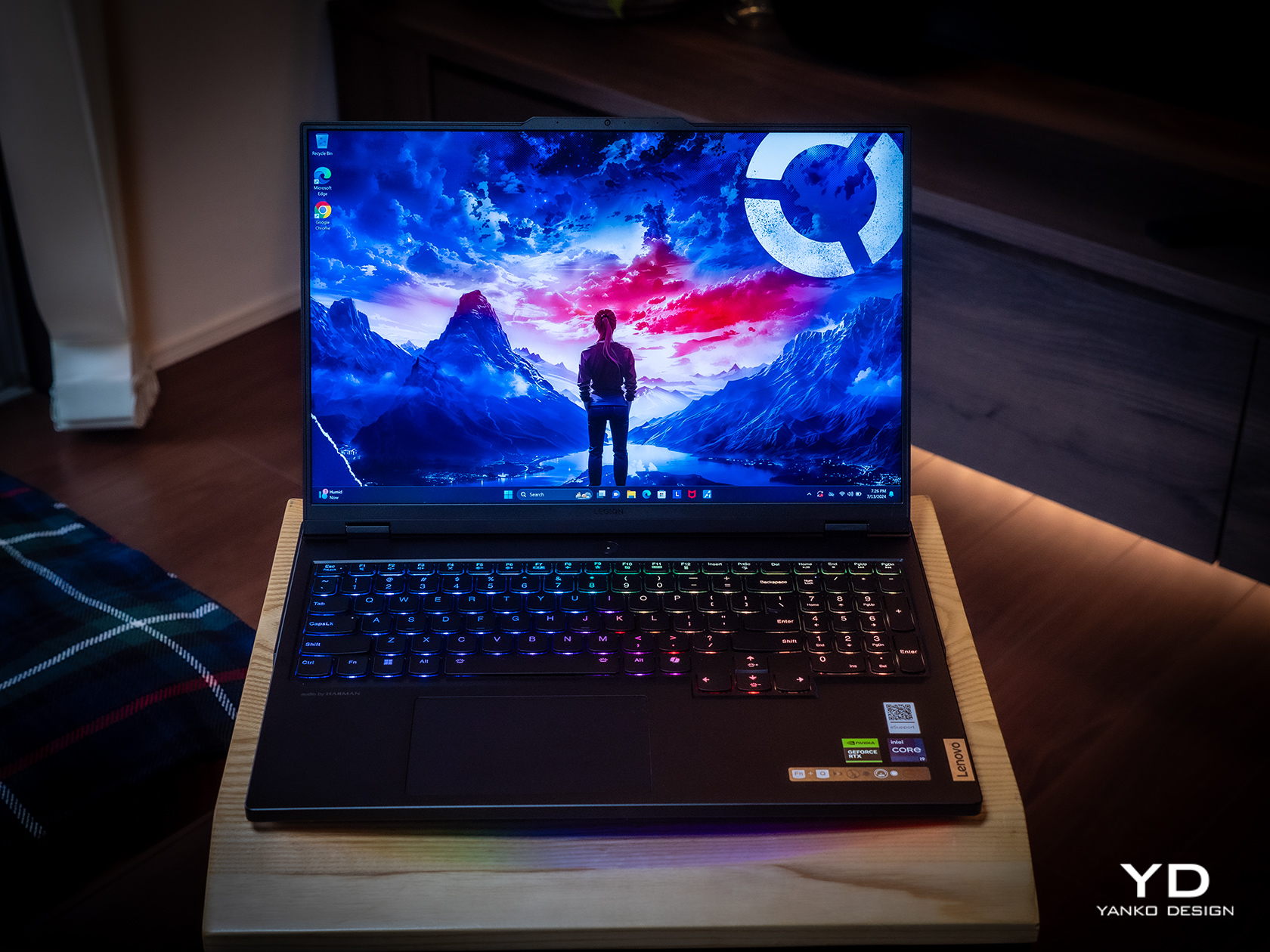
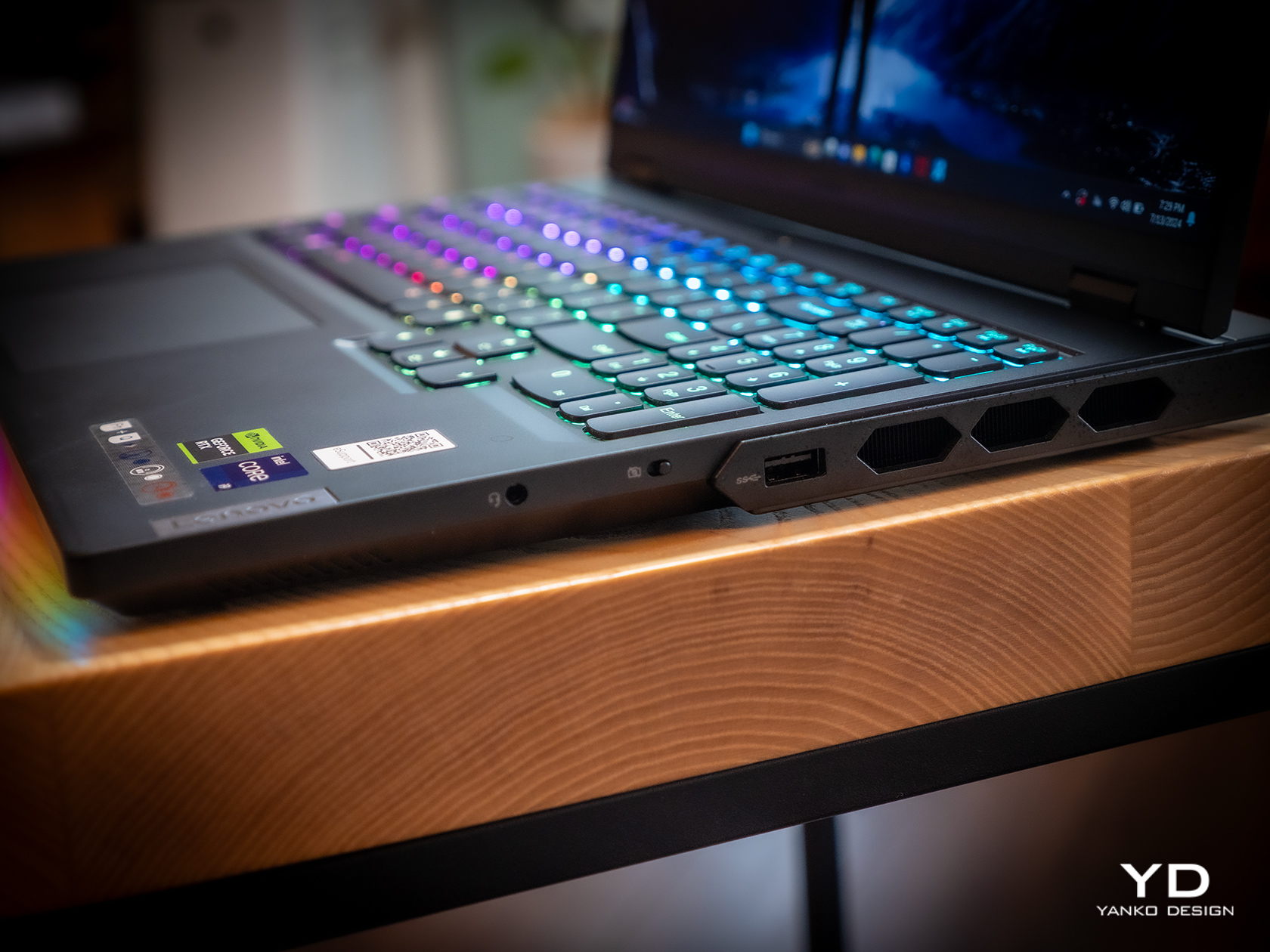
Common gaming laptops often look like tanks, and the Legion Pro 7i (2024) is sadly no different. It’s not rugged by any means, sporting a sleek and sharp appearance, but it’s thick, heavy, and sharp at the edges. It has an aggressive look to it, though coupled with some RGB lights, it does have a bit of a cyberpunk flair. While it doesn’t shout to the world that it’s a gaming laptop, it doesn’t try to deny its identity either.
It’s also not that different from its Gen 8 predecessor, so there’s practically nothing that sets it apart visually. On the one hand, it establishes a familiarity with the Legion Pro line, so buyers will know what to expect. On the other hand, however, it also feels like it’s lagging behind when it comes to aesthetics, especially when Lenovo has quite a few interesting and distinctive designs available.

Overall, the Lenovo Legion Pro 7i Gen 9 looks pretty plain on the outside. It isn’t as obnoxious as other gaming laptops that show off all their kaleidoscopic lighting, but it isn’t subtle either. You might feel a bit conscious bringing it to the workplace or meeting (unless you work at a game studio), but it will probably only get a few passing looks. Fortunately, most gamers will be willing to overlook this aspect if they’re getting the performance that they’re actually paying for.
Ergonomics

At 4.93 lbs (2.24kg) and 17.6mm (0.69in), there is no mistaking the Legion Pro 7i Gen 9 for a thin and lightweight notebook. Again, this is your expected dimensions for a gaming laptop, so many gamers won’t be so bothered by it. But if you’re a creator and a gamer who find yourself moving around a lot, you best prepare your back and shoulders for some workout.
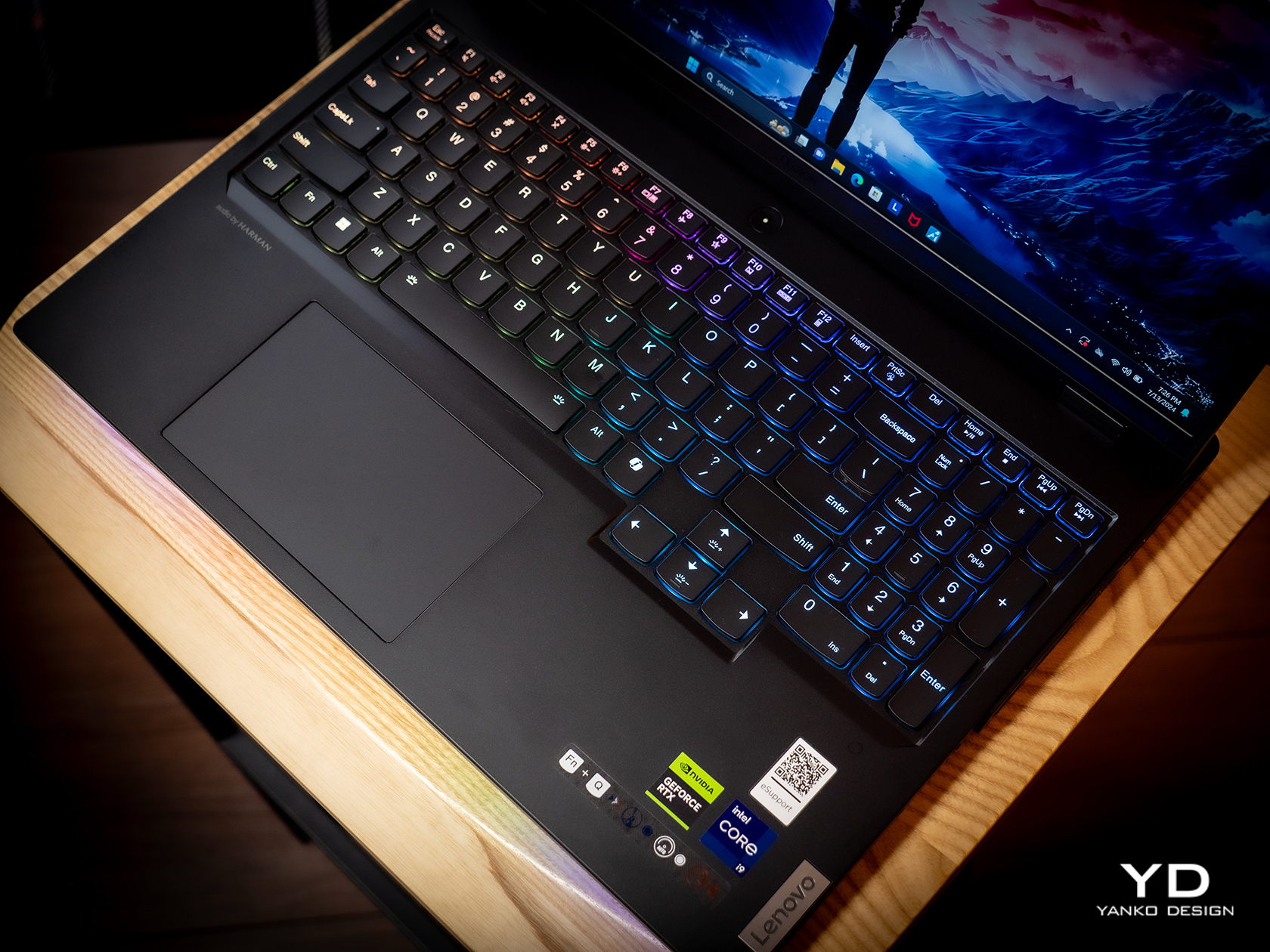
Fortunately, actually using the laptop turned out to be a more enjoyable experience, from the bright and vibrant screen to the responsive and comfortable keyboard. That keyboard is a bit notable in how it sufficiently spaces out the keys and still has room for a numeric keypad as well as a regular T-shaped cursor key arrangement. The latter actually extends a bit lower than the rest of the keys, which has the effect of pushing the touchpad to the left just a little. Definitely not enough to make the button-less surface painful to use.
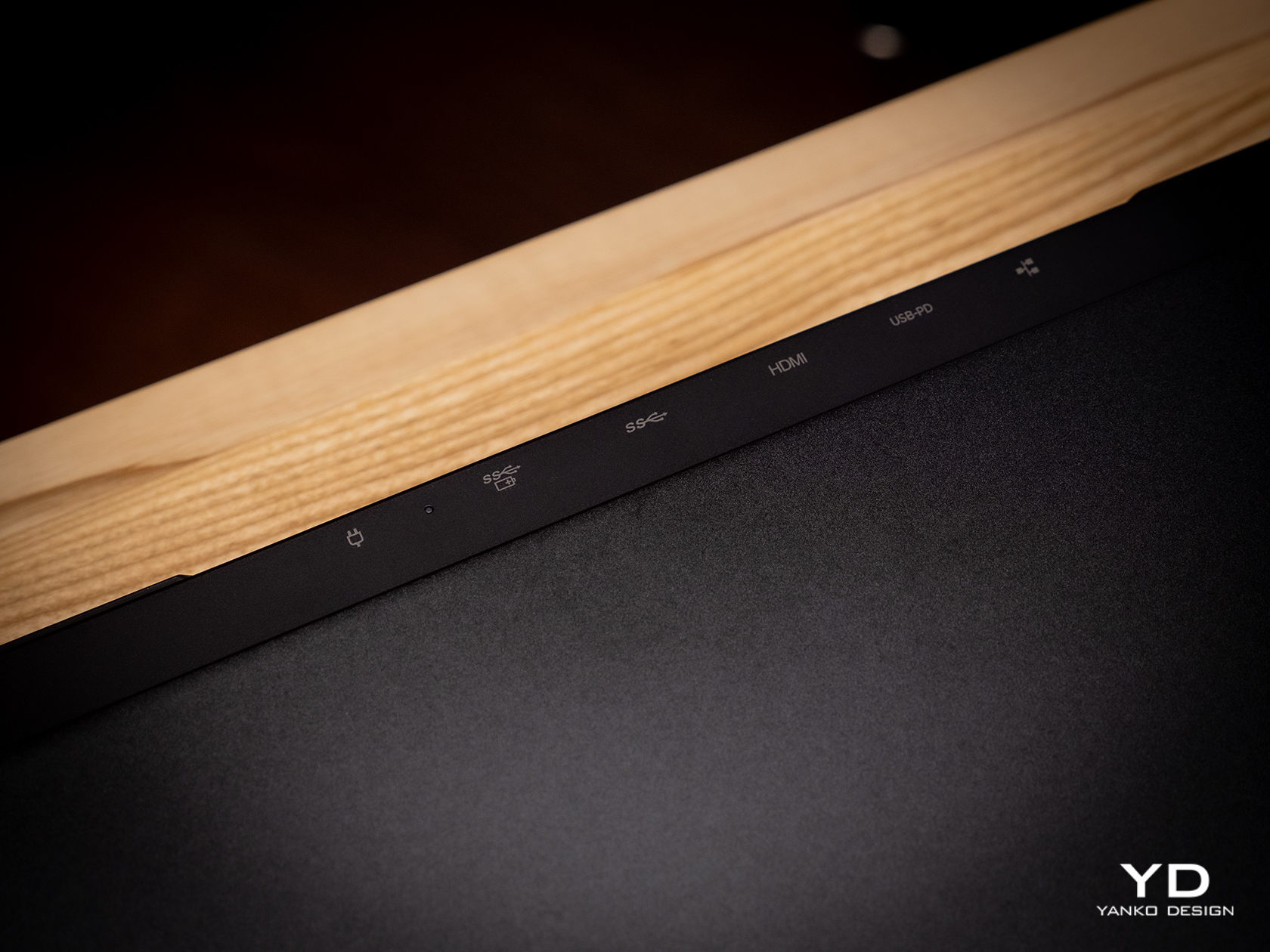
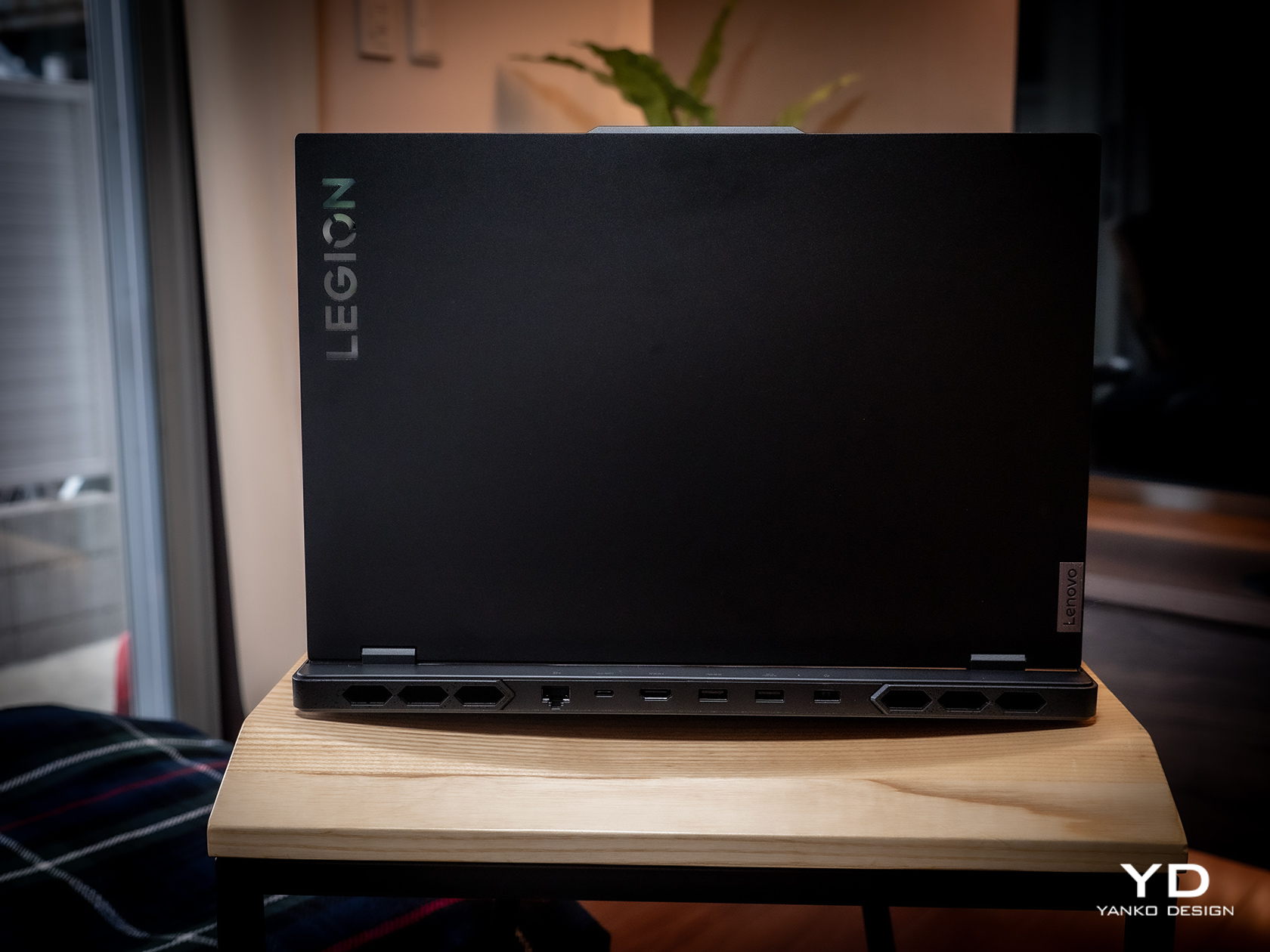
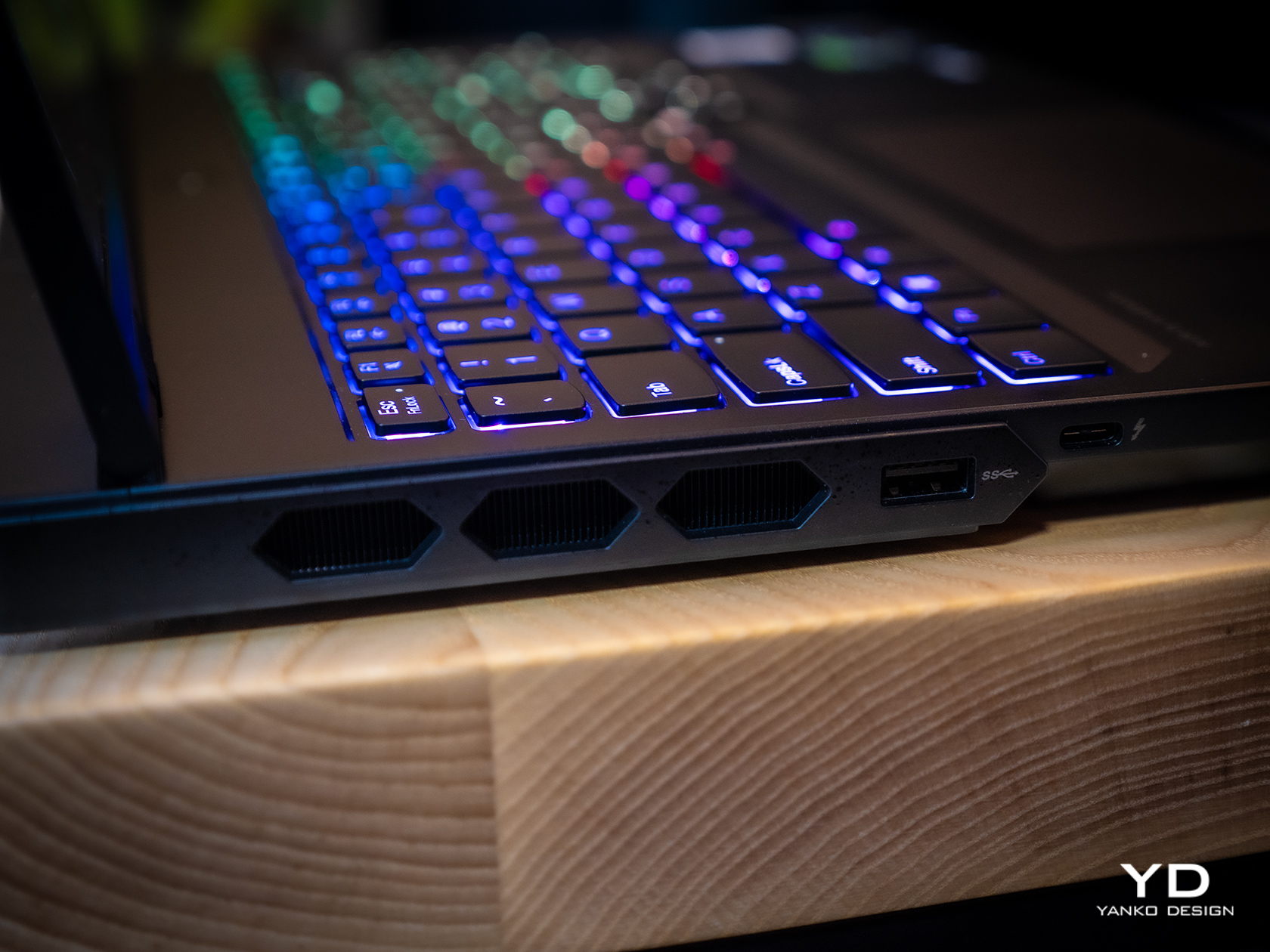
As we’ll get to later, the Legion Pro 7i has a wide selection of ports, and they’re placed in a way that really takes into account how most people use laptops these days. The left side has a USB-A and a USB-C port, while the opposite side gets a USB-A along with a 3.5mm headphone/mic jack. This gives easy access to accessories you’ll connect and disconnect often, like a gaming mouse or your phone. The back has connections like two USB-A ports, one USB-C port, HDMI, and Ethernet, practically the ones you’ll use to “dock” the laptop to more stationary peripherals, making cable management a bit easier. Whether it’s gaming on the go or maybe even working in the office, the Lenovo Legion Pro 7i Gen 9 is designed with ease of use and comfort in mind.

Performance

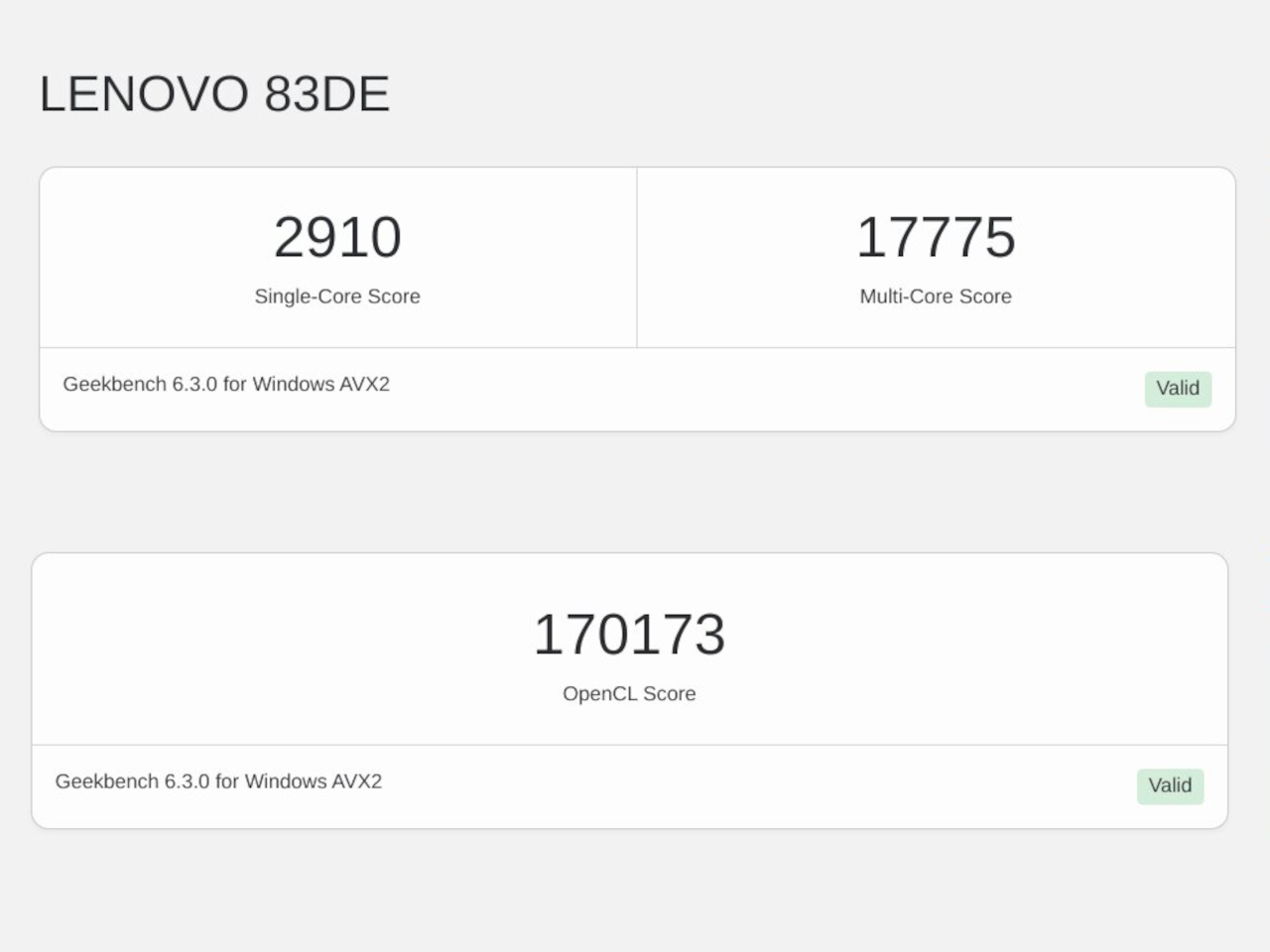
As a somewhat high-end gaming laptop, the 2024 Legion Pro 7i carries some of the best hardware in the market today. Sure, it might not have an NPU-toting processor, but the Intel Core i9-14900HX is definitely as or even more capable than an “Ultra” chip. The NVIDIA GeForce RTX 4080 is just one step lower than the top-of-the-line card, but it’s more than enough for both gaming and content creation. Our review unit came with 32GB of DDR5 RAM and 1TB of storage, which is to say it’s not wanting in any aspect. With both benchmarks and actual usage alike, the Legion Pro 7i Gen 9 performed impressively, yielding consistent high frame rates in games even high settings. It’s also a testament to the laptop’s cooling system that it’s able to squeeze out as much performance consistently, though it naturally did get warm to the touch and the fans were quite audible.
Visual quality is important for gamers, but it is an even more critical aspect for content creators who need color accuracy. This is one area where the Legion Pro 7i Gen 9 surpasses the previous generation, adding support for NTSC, Adobe RGB, and DCI-P3 color gamuts. Not only does this make colors really pop, it also means that the 16-inch 2K screen is now able to support the needs of creatives, making the gaming laptop more of an all-around high-performance tool. And with extremely thin bezels, you experience a better immersion into that colorful world, especially when the decent bottom-firing speakers complete the audiovisual experience.

This heavy laptop carries a 99.99Whr battery, the largest allowable on planes, and its uptime is as much as you’d expect. Normal use, which is a mix of multimedia and browsing, can net you around 7 hours, but heavy gaming makes that figure nosedive to just two or less. Lenovo compensates for this with a “Super Rapid Charge” technology that can fully charge the Legion Pro 7i in around 80 minutes, presuming you’re using the hefty 330W power brick with a proprietary connector. You can also charge the laptop via USB-C if you have a 140W charger, but Lenovo doesn’t ship one in the box.
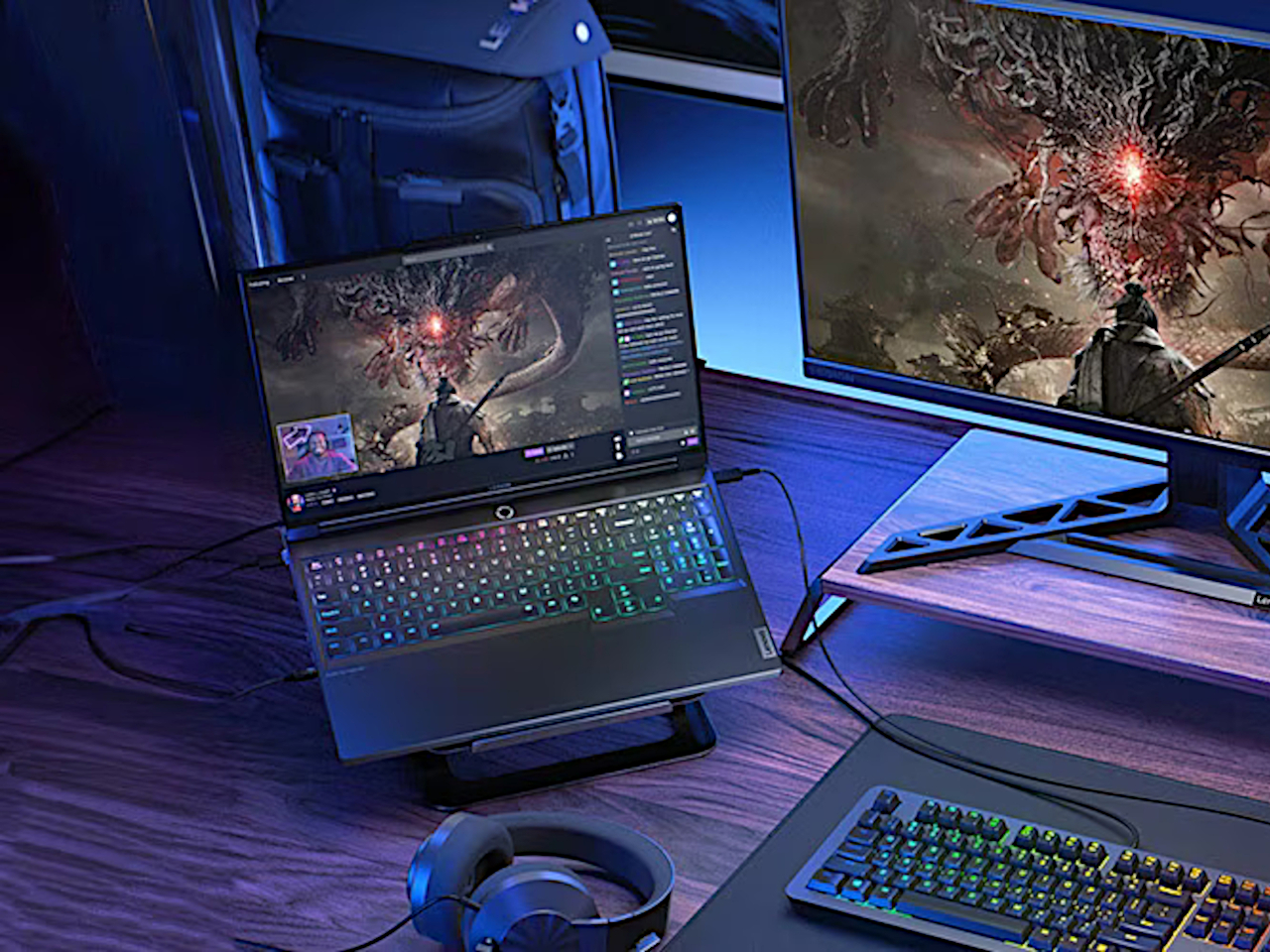
All in all, the Lenovo Legion Pro 7i Gen 9 performs so well that we have very little to complain about it. There’s very little bloatware aside from Lenovo’s own tools, as well as those from Nahimic for audio and Tobii for the webcam. Yes, it’s heavy and it burns through a battery quickly, but that’s also expected from high-end gaming laptops. It’s a rather powerful package made even more enticing by its bang-for-buck value.

Sustainability

Before we get to that, however, a word has to be said about Lenovo’s actions to leave a more positive impact on the planet. Though the Legion Pro 7i Gen 9 might look plain to the naked eye, it actually uses quite a number of sustainable materials for its body. It uses recycled aluminum as well as magnesium, giving the laptop both durability as well as a premium touch. The bottom, in particular, is made with 50% recycled aluminum, while the cover frame utilizes 30% post-consumer recycled polymers.

The laptop is also designed to be upgradable, at least as far as RAM is concerned. Repairs and other upgrades, however, require a bit more work, so it comes up short of getting a high score. Given how gaming laptops are more likely to wear out components faster than regular laptops, repairability should be the next priority for Lenovo’s designers and engineers.
Value

There’s no getting around the fact that the Lenovo Legion 7i Gen 9 is a bit pricey, starting at around $2,420 all the way to $2,850 for the highest configuration. And that’s with discounts already! On its own, that price tag might feel quite burdensome, until you consider that many laptops on this tier ask for more and deliver less.

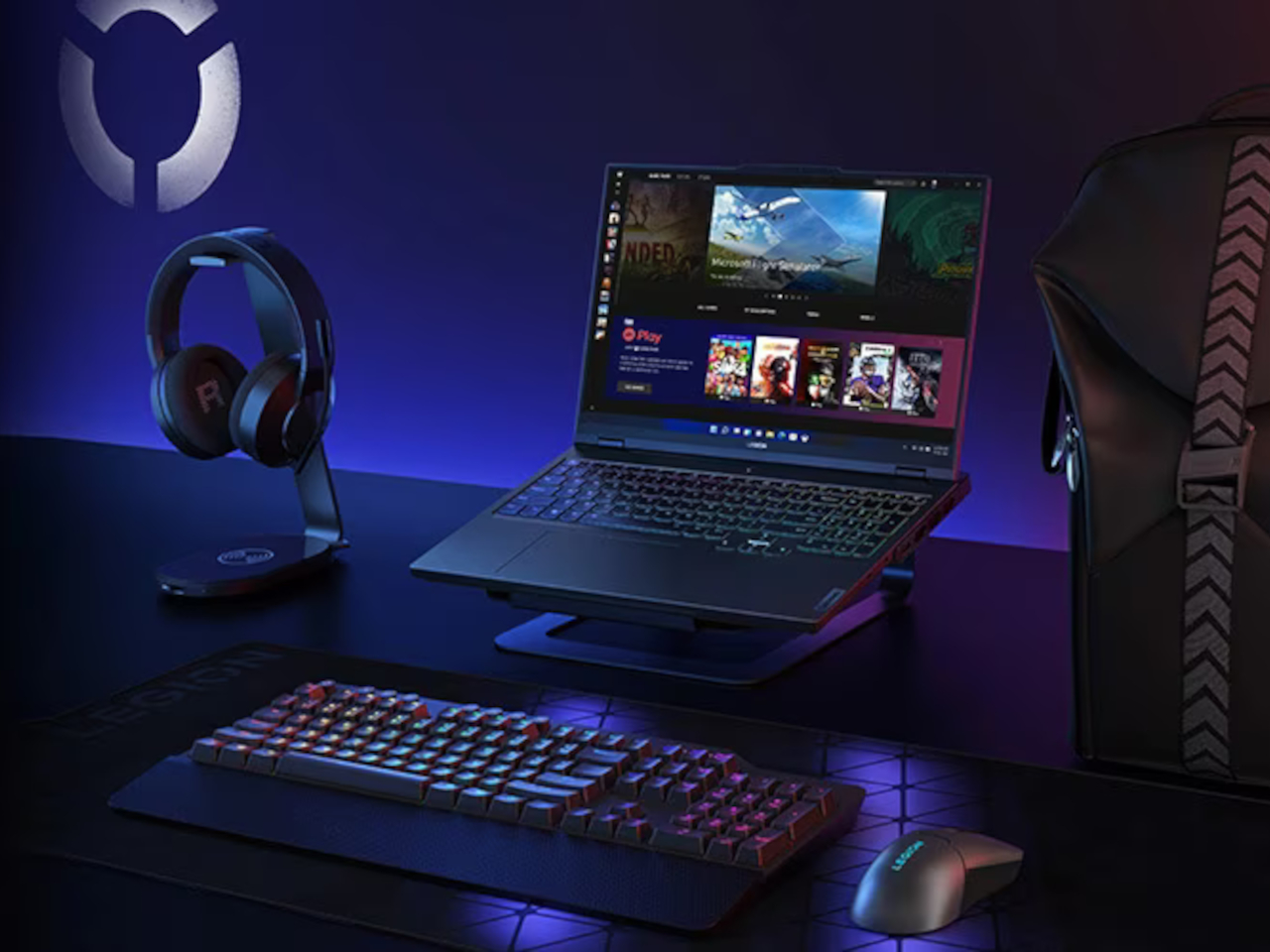
With this sub-$3000 gaming laptop, you’re getting a near-perfect configuration that is useful not just for gaming but even for content creation as well. It’s not perfect, of course, and we wished it had a longer battery life given its weight, but you’d also be hard-pressed to find a similar experience on designs that won’t require you to pay even more with not as much performance gains.
Verdict

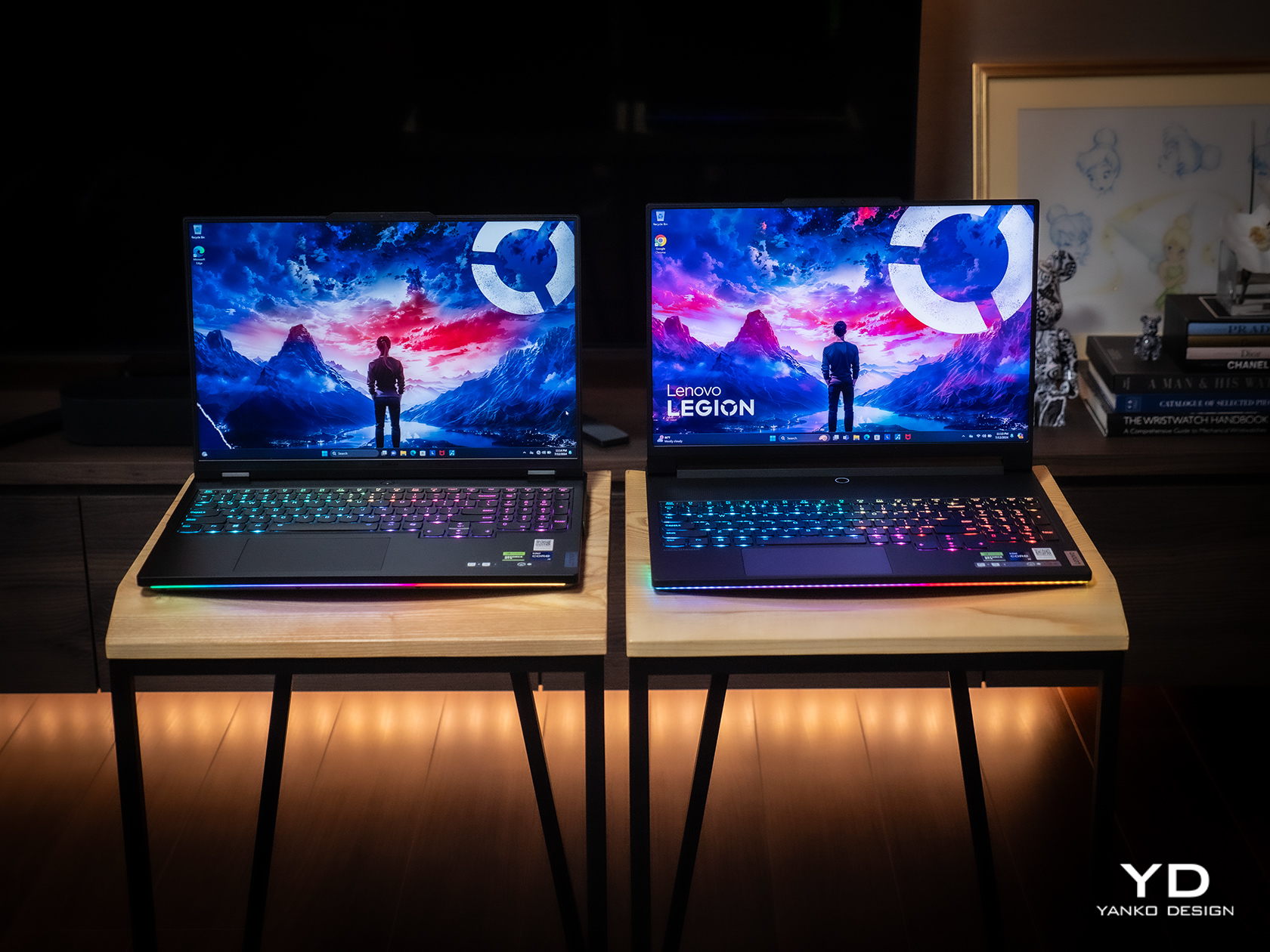
With PC gaming on the rise again, the number and variety of gaming laptops have also seen an uptick. While the need for power has never changed, gamers have become more conscientious not just about price value but design value as well. Carrying the design DNA of its predecessor, the Lenovo Legion Pro 7i Gen 9 (16″, 2024) looks sleek yet deceptively simple, belying the power it carries inside. But more than just unrelenting performance, it brings a well-rounded set of features that give gamers, creators, and any other user a powerful tool for a relatively fair price.
The post Lenovo Legion Pro 7i Gen 9 (2024) Laptop Review: Uncompromising Power at a Fair Price first appeared on Yanko Design.
Why an ‘unexciting’ galaxy could provide clues about the universe’s evolution

NASA and the European Space Agency have released an image captured by the Hubble Space Telescope of a dwarf irregular galaxy that they admit looked "unexciting" at first glance. However, there's more going on than might initially meet the eye. The agencies say that a great deal of research is going into the "complicated structure" of NGC 5238, which is 14.5 million light-years away in the Canes Venatici constellation. In fact, astronomers believe the distribution of stars in NGC 5238 may have been distorted after it swallowed up another galaxy.

They reckon that due to NGC 5238's star population (which Hubble is adept at helping to image), it had a "close encounter" with another galaxy perhaps as recently as a billion years ago. But since there isn't a galaxy close enough to have distorted the star distribution in this fashion, it's more likely that NGC 5238 merged with a smaller galaxy. Along with hosting many stars, the galaxy is home to globular clusters, which NASA describes as "glowing, bright spots both inside and around the galaxy swarmed by even more stars."

Astronomers plan to dig deep into the data to learn about NGC 5238's past. If they find groups of stars that have different properties from most of the galaxy's other stars, that's a clear indication that a merger has occurred. They'll also try to determine whether there was a "burst of star formation" that suddenly took place after the galaxies would have come together.

NASA notes that a dwarf irregular galaxy merging with a smaller satellite galaxy is just the kind of thing that could have spurred galaxy assembly in the early era of our universe. As such, the agency says that the data Hubble captured from NGC 5238 may help researchers to test fundamental ideas about the evolution of the universe.

This article originally appeared on Engadget at https://www.engadget.com/why-an-unexciting-galaxy-could-provide-clues-about-the-universes-evolution-144754342.html?src=rss

New MINI Cooper S 5-door Launched

MINI Cooper S

The MINI Cooper S 5-door has arrived, offering a perfect combination of style, performance, and practicality. This model, which is 172 mm longer than the classic three-door MINI, provides enhanced space and comfort for passengers without compromising the brand’s iconic design. The increased length allows for a more spacious interior, making it an ideal choice […]

The post New MINI Cooper S 5-door Launched appeared first on Geeky Gadgets.

Samsung Galaxy Z Fold 6 review: The king, but for how much longer?

No one has been making foldable phones longer than Samsung. And for the first few years, the sheer number of improvements we got on the Galaxy Z Fold line meant it didn’t really have any competition. But more recently, the pace of innovation has slowed while new challengers like the OnePlus Open and Pixel Fold have arrived. Now for 2024, Samsung has reinforced the Galaxy Z Fold 6 with a stronger but significantly lighter frame, a new ultra-wide-angle camera and a bunch of AI-powered tools. Unfortunately, not much else has changed, leaving us with a very iterative upgrade. So while the Galaxy Z Fold 6 remains the best all-around big foldable on the market, it feels like complacency is eroding Samsung’s lead among flagship flexible phones.

After eliminating the gap between the screen (when closed) on last year’s phone, Samsung has adjusted the Galaxy Z Fold 6’s dimensions again for 2024. But the changes are so small you have to measure them in millimeters. When closed, the phone is just over one millimeter thinner and when you open it up (in portrait), the main screen is 2.7mm wider but one millimeter shorter. It’s not a ton, but you do get a little more room for activities. And of course this also affects the exterior Cover Display, which is about 1mm wider as well — just enough to make using its on-screen keyboard more forgiving.

Elsewhere, the entire phone is sharper, from its boxier edges to the more squared-off corners on both screens. Samsung also says the Enhanced Armor Aluminium used in the Z Fold 6’s chassis is about 10 percent stronger than before, but I hope you’ll forgive me for not dropping it on purpose just to find out. Holding everything together is a new dual-rail hinge. And this time, I think Samsung has nailed the perfect balance between something that’s easy to open but also holds its position when you want it to. But the biggest design upgrade is a 14-gram weight reduction compared to the previous model. Granted, that might not sound like much, but now the Z Fold 6 only weighs around 4 grams more than its non-foldable cousin, the S24 Ultra. And on an already heavy phone, this change makes a big difference.

As for the displays, as someone who’s been using the Pixel Fold a lot recently — which has a solid screen in its own right — can I just say, Samsung’s panels are so choice. Not only has peak brightness improved to 2,600 nits for both displays just like on the standard S24 family, Samsung has subtly shrunk and flattened the bezels, so the phone looks even more like a magazine come to life. And until I see something better, this is simply the best screen on a big foldable right now.

On the Galaxy Z Fold 6, Samsung increased peak brightness for both of its displays to 2,600 nits, which is the same as on the standard Galaxy S24 line.
Photo by Sam Rutherford/Engadget

The Z Fold line has never been slow and this year we got the same upgrade to a Snapdragon 8 Gen 3 chip as we saw on the S24, while base RAM is staying pat at 12GB. And as you’d expect, the Z Fold 6’s performance is fast and responsive. There’s no lag when doing pretty much anything and thanks to the addition of a larger vapor chamber on the inside, the phone stays cooler during longer sessions, which is a nice bonus to all the gamers out there who like playing on a truly big-screen device.

When it comes to photography, I’m a bit disappointed with the Z Fold 6, not because it can’t take a decent pic, but because I know Samsung can do better. For this go around, Samsung has stuck with a trio of rear cameras, opting for a new 12-MP sensor for the ultra-wide lens — and it’s pretty good. But at the same time, the ultra-wide lens is the one I use the least in daily use, and it's not close.

The only significant change to the Z Fold 6's photography is the addition of a new 12-MP sensor for the phone's ultra-wide lens.
Photo by Sam Rutherford/Engadget

The other two cameras – the 50-MP main and 12-MP telephoto with a 3x optical zoom — are solid, but they’re the same ones Samsung used on at least the previous two generations. In a photo of some strawberries, the Z Fold 6 produced a delicious pic with deep saturated hues and great details. At the same time, though, you can also see the slightly exaggerated warm tones you often get from Samsung cameras. And at night, the Z Fold produced a beautiful pic of a flower in a very tricky backlit environment.

The issue is that after Google released the Pixel Fold, Samsung doesn’t really have an excuse for saddling the Z Fold 6 with downgraded photography when compared to the S24 Ultra. The Pixel Fold has a longer 5x optical zoom and an edge in overall photo quality. Just take a look at two zoom shots taken by the Z Fold 6 and the Pixel Fold. In a vacuum, Samsung’s photo doesn’t look bad. But then take a look at the Pixel’s image. It's noticeably sharper and more detailed.

And it's the same thing in really low-light situations, like the one I took of some Bluey figurines, where the Pixel Fold captured a less grainy, sharper and more well-exposed pic. And after being pleasantly surprised with the cameras on the S24 Ultra, it’s a shame Samsung’s most expensive phone sits in second place when it comes to photography.

As we saw back at the beginning of the year, Samsung has brought the Galaxy AI suite it launched on the S24 to the Z Fold 6. And by and large, a lot of the features are the same including things like Chat Assist which you can use to generate social posts or emails while selecting a variety of tones. There’s also support for Google’s Circle to Search along with translation and summarization tools. A couple new tweaks for the Fold is that now the phone can translate text in place instead of spitting it out into a big unformatted blob, which is nice but kind of situational. And I should mention, Google Lens already offers similar functionality. Perhaps the more important one is the ability to do dual-screen translations, so each person can see text in their language in real-time, depending on what side of the phone they’re looking at.

One of the new features in the Galaxy Z Fold 6 is Samsung's Portrait Studio tool, which uses AI to generate a new image in a range of styles based on an existing photo of a person.
Photo by Sam Rutherford/Engadget

Some new additions are the Portrait Studio tool that can create an AI-generated drawing of someone based on a photo and a range of styles like comic or watercolor. It’s fun and it’s good for a laugh or two, but I’m not sure how useful it will be on a regular basis. There’s also the Sketch to Image feature that allows you to add a simple drawing to an existing photo and then have the phone generate a more realistic rendition of it in your final image. I still think Samsung’s basic AI photo editing tools are the most useful of the bunch, as they make it easy to delete distracting objects or do simple touch ups. But once again, all of this feels more like bonus content rather than core essentials.

While Samsung didn’t increase the size of the 4,400 mAh cell in the Z Fold 6, the phone does have slightly better battery life due to improved energy efficiency from its new chip. On our video rundown test, it lasted 20 hours and seven minutes when using its large main screen and 25 hours and 19 minutes when using its exterior cover display. That first number is even better than we saw from the Pixel Fold (15:22) and OnePlus Open (19:19), so if you need a big-screen phone with ample longevity, the Z Fold 6 is the easy pick.

Sadly, the Z Fold 6's battery size and charging speeds are unchanged from the previous model.
Photo by Sam Rutherford/Engadget

Unfortunately, its charging hasn’t changed much. You still get 25-watt wired charging and 15-watt wireless charging, which are both pretty mediocre figures in 2024. And while I wasn’t expecting to see support for Qi2 magnetic charging on the Z Fold 6 after Samsung opted not to add it to the main S24 line, I’m still a bit miffed that a phone this expensive is cutting important features off the spec sheet.

It wasn’t long ago when practically every component on the Z Fold line was unmatched by its competitors. But now phones like the Pixel Fold exist, which offers better overall photography. Then there’s the OnePlus Open, which weighs the same as the Z Fold 6 even after its recent diet. And let’s not forget, both of those rivals are 2023 models. Plus there are Chinese competitors like the Honor Magic V3 and the upcoming Xiaomi Mix Fold 4, which are both thinner and lighter than Samsung’s champion.

The Galaxy Z Fold 6 is 14 grams lighter than the previous model, which makes a big difference on an already large device.
Photo by Sam Rutherford/Engadget

Don’t get me wrong, the Galaxy Z Fold 6 is still a good foldable, a great one even. It’s got excellent performance, strong battery life and handy features like native stylus support. But it feels like after all this time sitting fat and happy on its throne, Samsung has a diminished hunger for total domination. Instead of long-awaited features like a built-in S Pen or an improved under-display camera, we got a bunch of AI-powered tools and tricks, which are fun but not true highlight attractions. And at $1,900 — which is $100 more than last year — the Galaxy Z Fold 6 is the most expensive it's been since the Z Fold 3. But I guess that's the price you pay Samsung for having such a long reign on top.

This article originally appeared on Engadget at https://www.engadget.com/samsung-galaxy-z-fold-6-review-the-king-but-for-how-much-longer-140129812.html?src=rss

Micron Crucial P310 2230 Gen4 NVMe SSD

Micron Crucial P310 2230 Gen4 SSD

Micron has unveiled its latest storage solution in the form of the Crucial P310 2230 Gen 4 NVMe SSD, designed to meet the needs of handheld gamers, mini PC users, and ultrathin laptop enthusiasts. This SSD offers impressive read and write speeds of 7,100 MB/s and 6,000 MB/s, respectively, and comes in capacities up to […]

The post Micron Crucial P310 2230 Gen4 NVMe SSD appeared first on Geeky Gadgets.

Posted in Uncategorized | Tagged