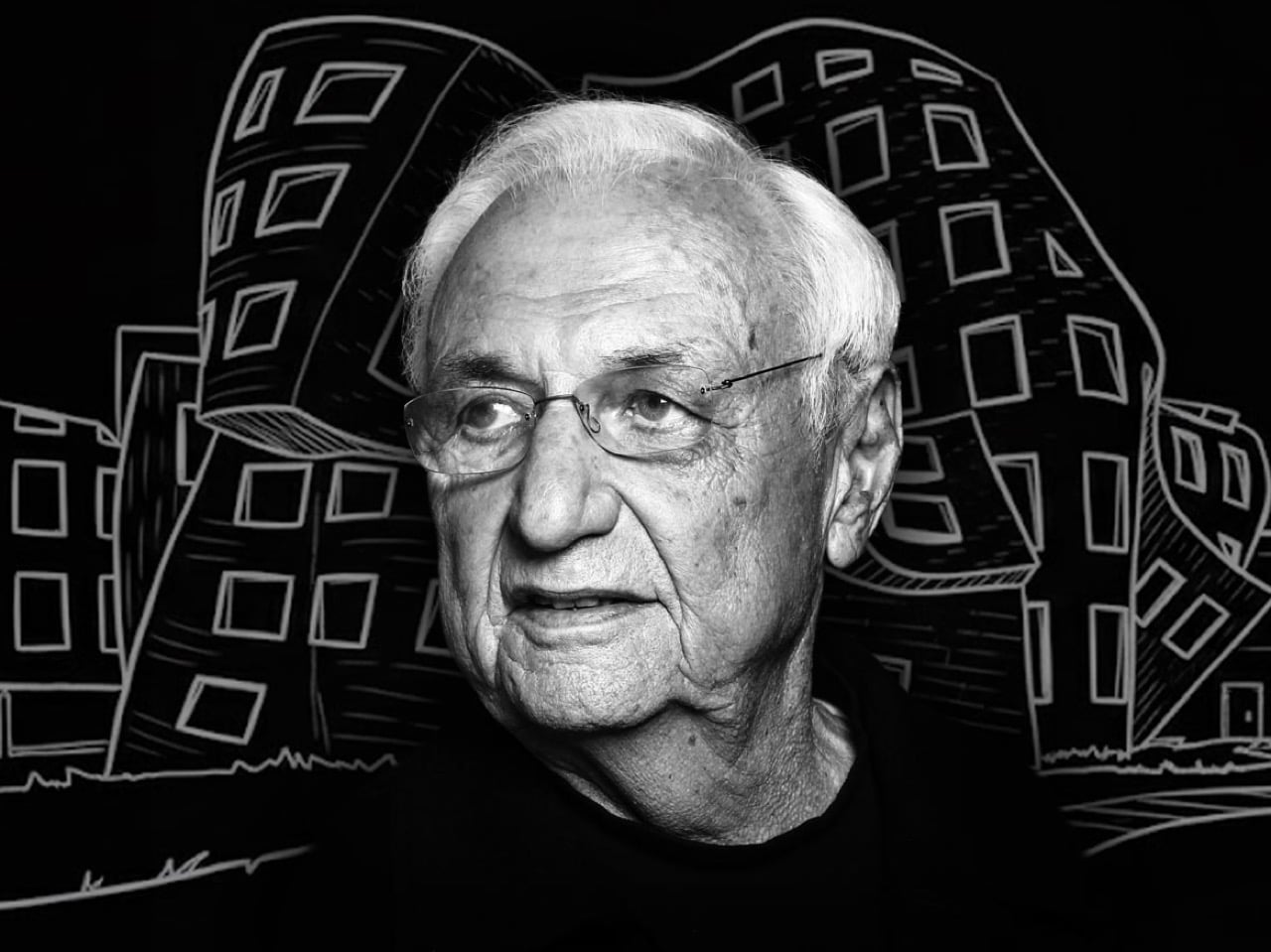
10 Iconic Frank Gehry Buildings That Celebrate The Late “Starchitect’s” Legacy

Frank Gehry’s death will feel like a seismic event, even to people who never learned his name but knew “that crazy silver building” in their city. Born in Toronto in 1929 and raised in Los Angeles, he moved through the twentieth century like a restless experiment in motion, turning cardboard models into titanium-clad landmarks and treating cities as full-scale sketchbooks. His passing closes a chapter in which architecture stopped pretending to be purely rational infrastructure and allowed itself to be emotional, unstable, and sometimes gloriously impractical.

What lingers most is not only the spectacle of his work but the shift in attitude it made possible. Gehry treated architecture as a narrative medium, not a neutral backdrop; every warped surface and improbable curve suggested a story about risk, uncertainty, and delight. He pushed software, fabrication, and engineering to their limits long before “parametric design” became a buzzword, yet he remained suspicious of fashion and theory, insisting that buildings should be humane, tactile, and a bit mischievous. The structures he leaves behind do more than house art, music, or offices; they continue to provoke arguments, civic pride, and sometimes outrage, which may be the clearest sign that they are very much alive.
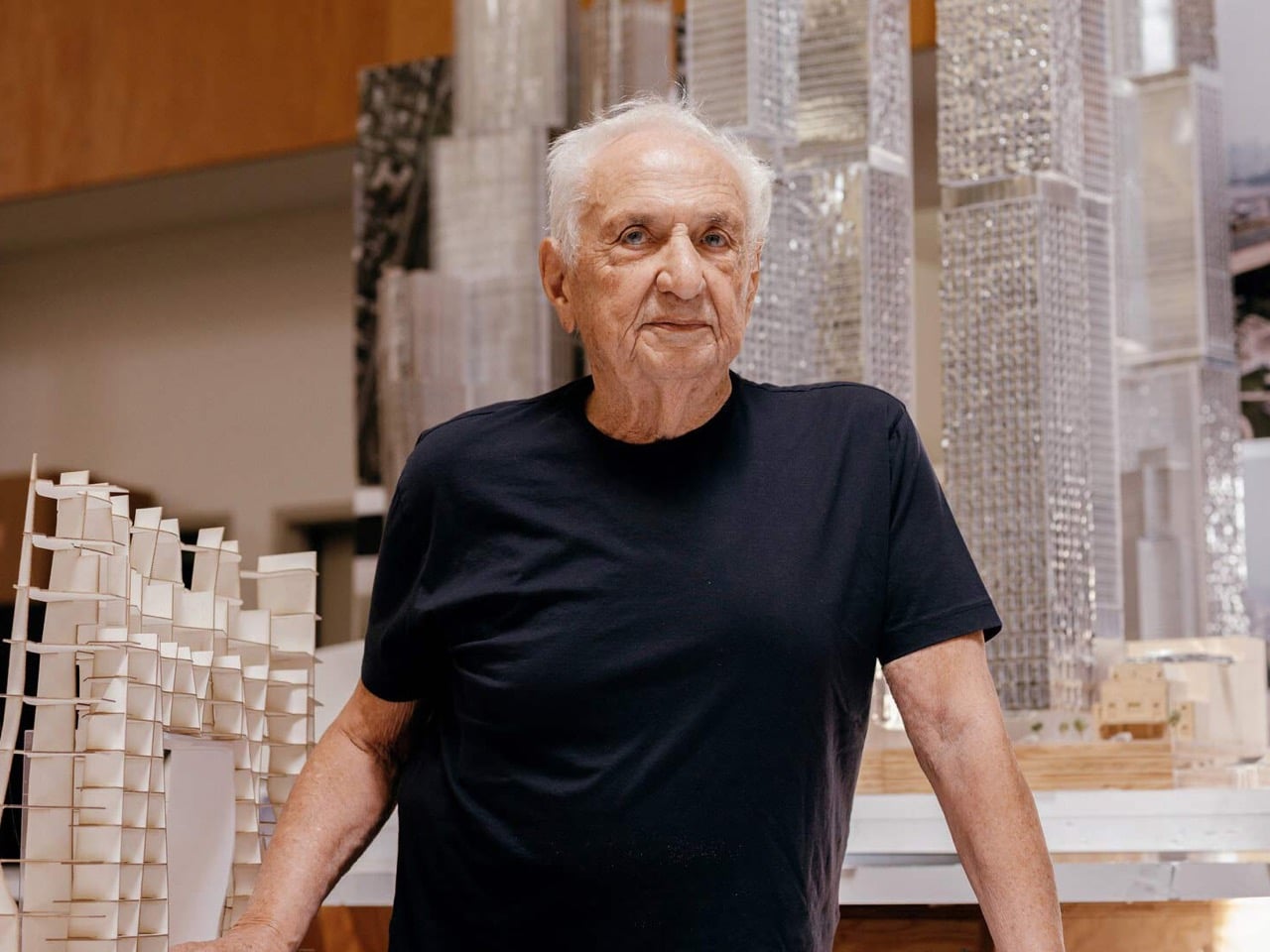
Gehry’s legacy is also institutional and generational. He helped reframe what a “starchitect” could be: not just a brand attached to luxury clients, but a public figure whose work could catalyze urban reinvention, as Bilbao discovered, or reshape how a city thinks about its cultural core, as Los Angeles learned. Dozens of younger architects cite him less for his specific forms than for his license to be disobedient, to treat the brief as a starting point rather than a boundary. In that sense, his death does not simply mark an ending; it underlines how thoroughly his once-radical sensibility has seeped into the mainstream of contemporary design.

As we return to his most iconic works, what becomes clear is how consistent his obsessions were across wildly different contexts. Light, movement, and the choreography of how a body moves through space preoccupied him as much as façades ever did. In his absence, the buildings remain as articulate as any obituary, each one a frozen fragment of his ongoing argument with gravity, convention, and taste. They stand not as monuments in the solemn sense, but as restless objects that still seem to be in the process of becoming something else.

Guggenheim Museum, Bilbao, Spain
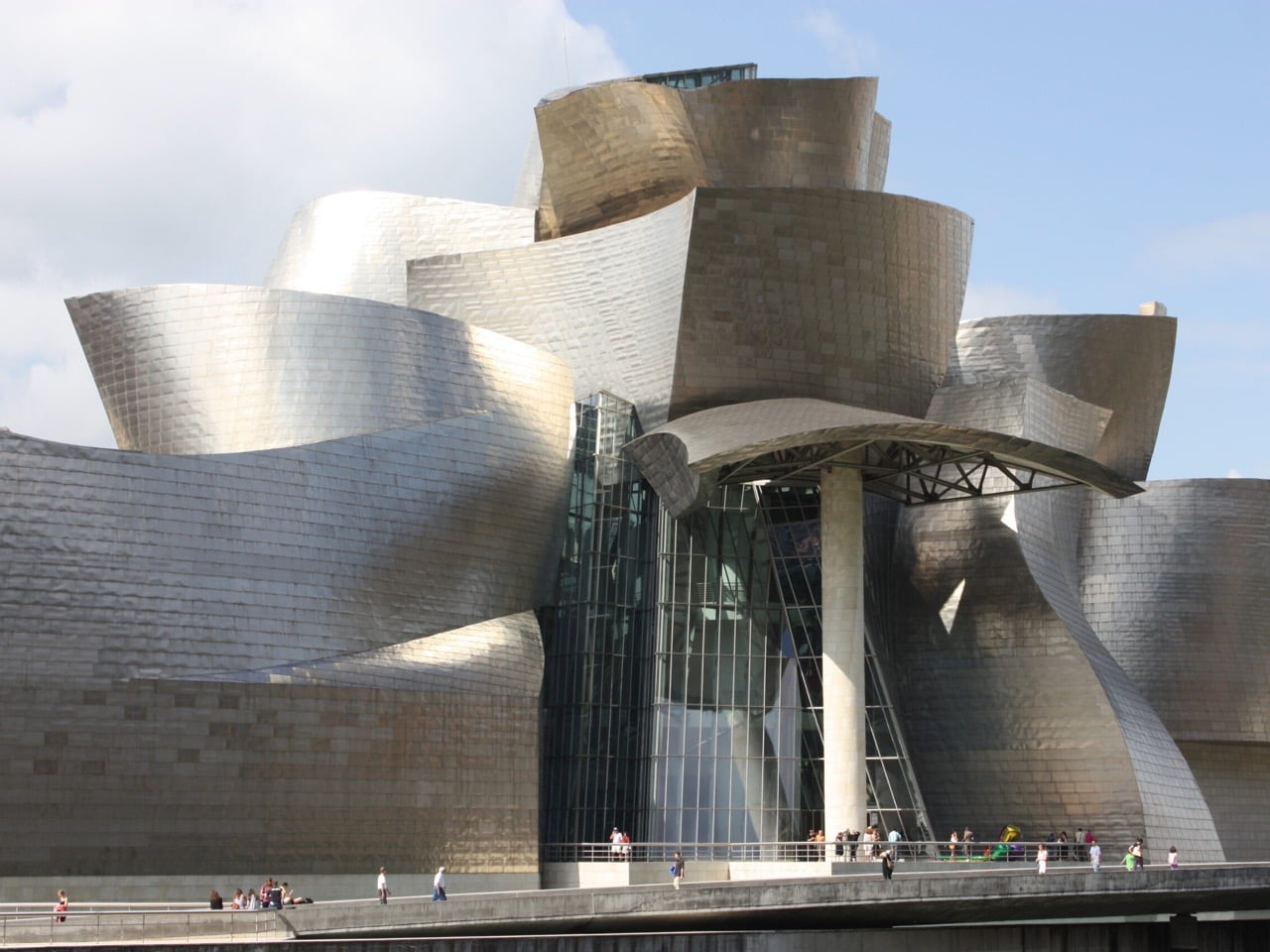
A veritable masterpiece, the Guggenheim Museum in Bilbao redefined the very essence of museum architecture. Clad in shimmering titanium, limestone, and glass, its fluid form and undulating surfaces transformed the post-industrial city of Bilbao into a global cultural hub. Beyond its exterior, the museum offers a labyrinth of interconnected spaces, providing a dynamic environment for art display and contemplation, where visitors are constantly reoriented by shifting scales, vistas, and shafts of light.

The so-called “Bilbao Effect” grew out of this building, turning a risky cultural investment into a template for urban reinvention that countless cities tried to emulate, with varying success. The Guggenheim’s success lies not just in its photogenic skin, but in the way it engages the river, the bridges, and the city’s once-neglected waterfront, stitching art into the daily life of Bilbao. Inside, Gehry’s vast gallery volumes proved unexpectedly flexible, accommodating everything from monumental sculpture to delicate installations, and showing that radical form could coexist with curatorial practicality.

Walt Disney Concert Hall, Los Angeles, USA
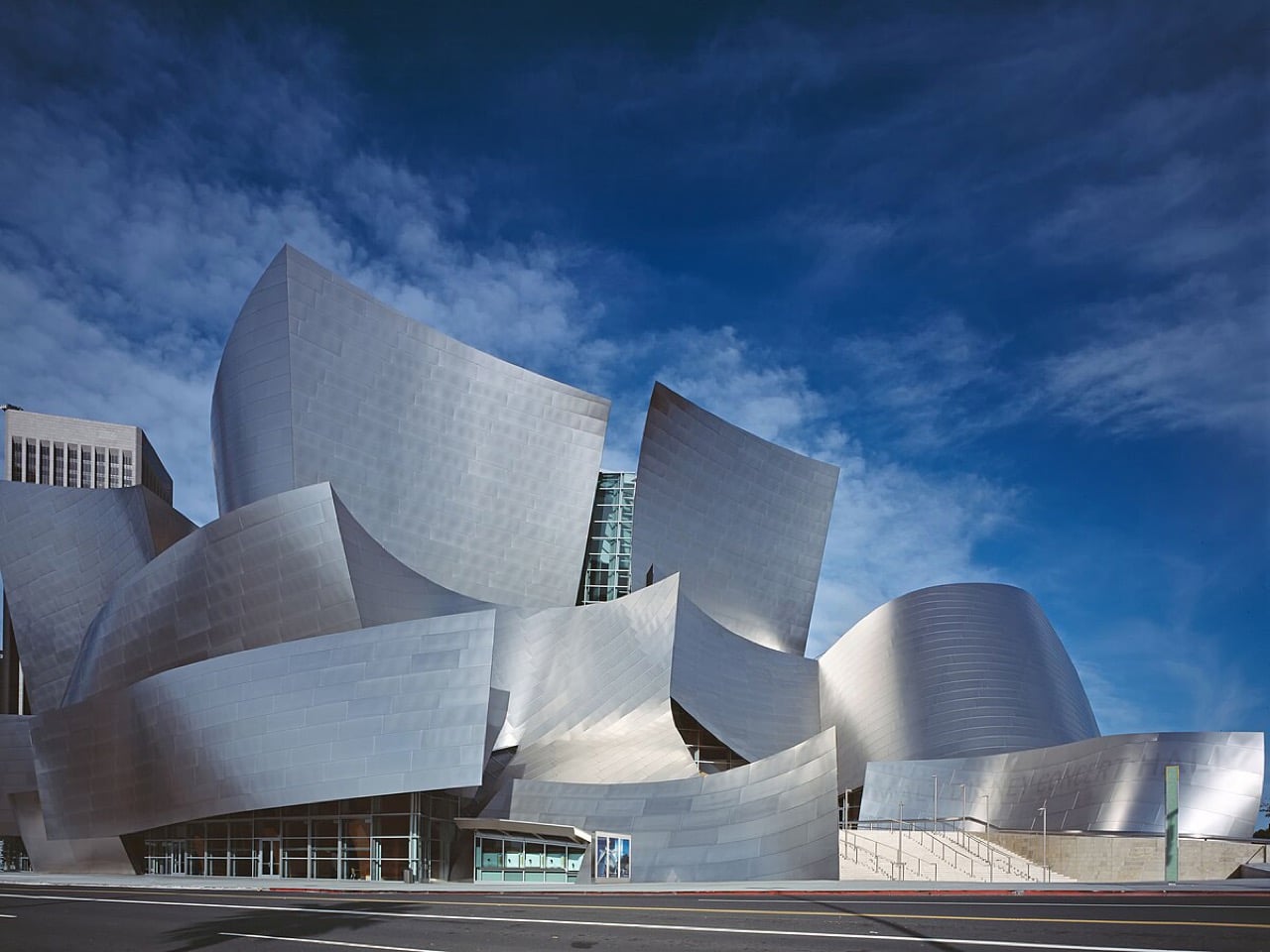
Situated in Los Angeles’ cultural corridor, the Walt Disney Concert Hall is an architectural symphony in stainless steel. Its sculptural, sail-like exterior rises from the street as if peeled up from the city grid, catching the famously sharp Southern California light and scattering it in soft, shifting reflections. The building’s complex geometry masks a remarkably clear organization, guiding audiences from the plaza and terraces into the heart of the hall through a sequence of compressed entries and soaring atriums.

Inside, the vineyard-style auditorium, wrapped in warm Douglas fir and oak, embodies Gehry’s close collaboration with acoustician Yasuhisa Toyota and the Los Angeles Philharmonic. The space is both intimate and monumental; the orchestra feels almost surrounded by the audience, and the sound is prized for its clarity and warmth. The organ, with its forest of asymmetrical wooden pipes, doubles as sculpture, echoing the exterior’s exuberance. Disney Hall did more than give Los Angeles a world-class concert venue; it anchored the city’s identity as a serious cultural capital and remains one of the rare buildings where musicians, critics, and everyday concertgoers are equally enthusiastic.

Dancing House, Prague, Czech Republic
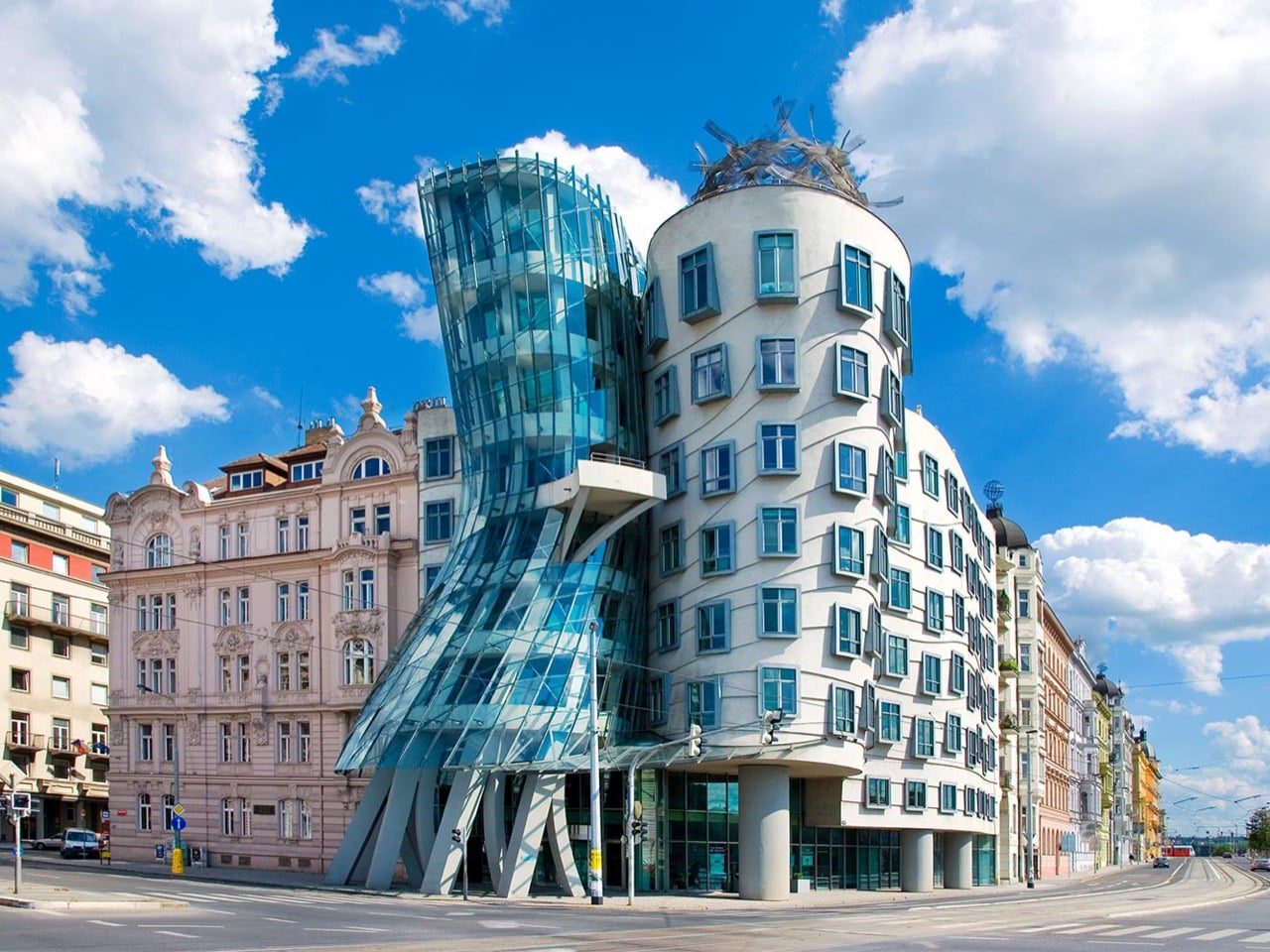
In the heart of Prague, a city steeped in historic architectural grandeur, the Dancing House emerges as a contemporary icon. Its deconstructed silhouette, often likened to a dancing couple, stands in deliberate contrast to the neighboring Baroque and Gothic facades, signaling Prague’s evolving architectural narrative. The building’s glass “Fred” leans into the stone “Ginger,” creating a sense of motion that feels almost cinematic against the calm rhythm of the riverfront.

Beyond the playful metaphor, the Dancing House operates as a careful negotiation between old and new. Gehry and co-architect Vlado Milunić threaded the building into its tight urban site, respecting existing cornice lines while fracturing the expected symmetry and order. Offices occupy much of the interior, but the rooftop restaurant and terrace open the building to the public, offering panoramic views that reframe the city’s historic skyline. In a place where modern interventions are often contentious, the Dancing House has gradually shifted from scandal to beloved oddity, proving that contemporary architecture can coexist with, and even refresh, a deeply layered urban fabric.

Fondation Louis Vuitton, Paris, France
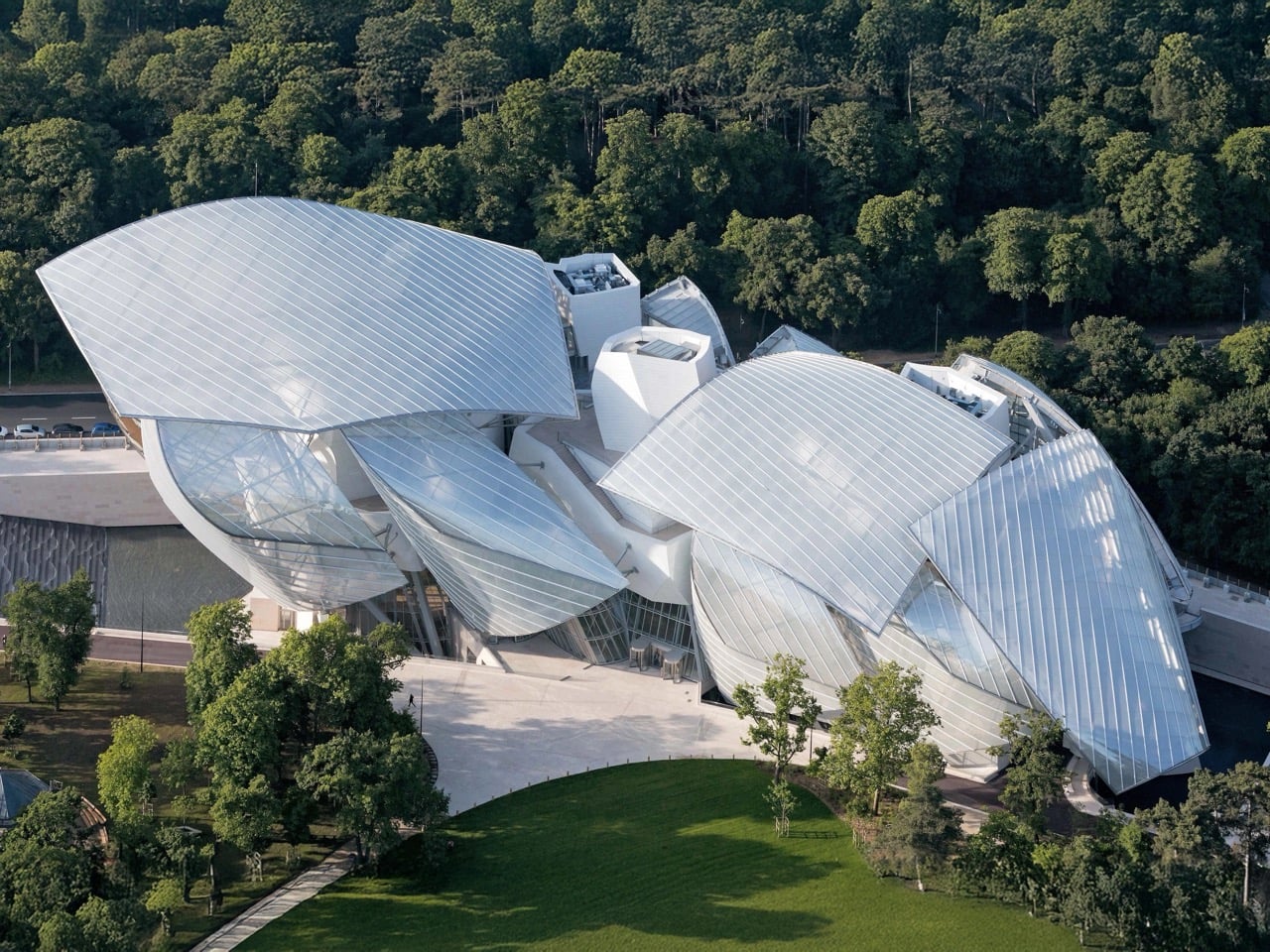
Gehry’s Fondation Louis Vuitton is a testament to the confluence of art, architecture, and landscape. Resembling a futuristic ship moored in the Bois de Boulogne, its glass “sails” seem to billow in the wind, catching reflections of trees, sky, and water. Set within the historic Jardin d’Acclimatation, the building plays a game of concealment and revelation; from some angles it appears almost transparent, from others it asserts itself as a crystalline object hovering above the park.

Inside, a series of white, box-like galleries are wrapped by the glass sails and linked through terraces, stairways, and bridges, creating a rich sequence of indoor-outdoor experiences. The museum’s program of contemporary art and performance takes advantage of these varied spaces, from intimate rooms to large, flexible volumes. At night, the Fondation becomes a lantern in the forest, a glowing presence that underscores Gehry’s fascination with light as a building material. It also represents a late-career synthesis for him: digital design and fabrication techniques are pushed to the extreme, yet the result feels surprisingly light, almost improvised, rather than technologically overdetermined.

Binoculars Building, Venice, Los Angeles, USA
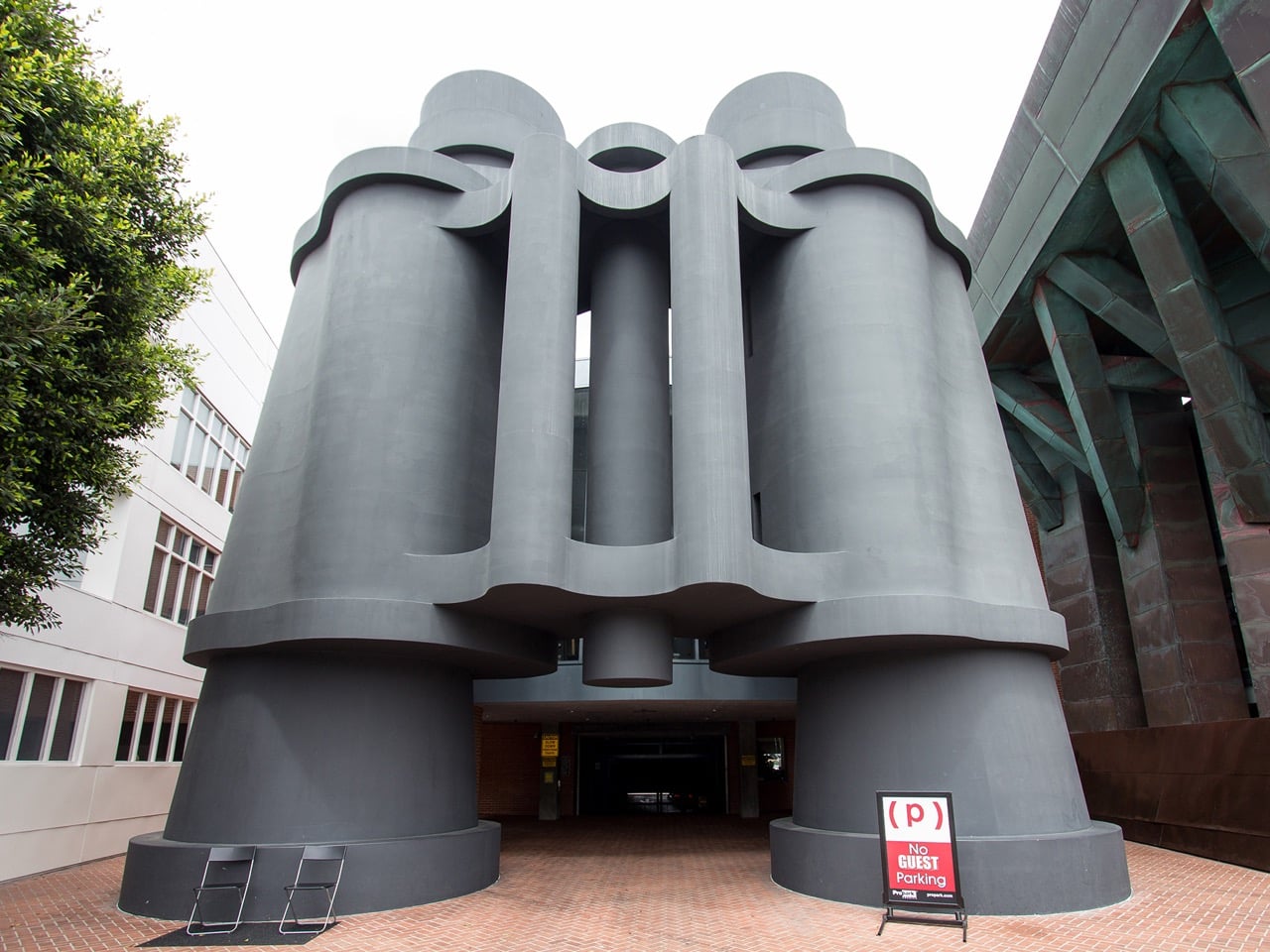
Characterized by its monumental binocular facade, this office building exemplifies Gehry’s mischievous side. The structure is a hybrid of architecture and sculpture, with the colossal binoculars, originally a work by Claes Oldenburg and Coosje van Bruggen, serving as the principal entrance. Cars and pedestrians pass through the lenses, turning a familiar object into an inhabitable threshold and gently mocking the solemnity usually associated with corporate architecture.

The rest of the building, composed of irregular volumes clad in rough stucco and brick, plays foil to the central object, creating a streetscape that feels more like an assemblage of found pieces than a single, unified block. Over the years, the building has housed creative offices, including tech tenants, and has become a kind of mascot for the neighborhood’s informal, experimental energy. It demonstrates Gehry’s comfort with pop culture and humor, and his willingness to let another artist’s work literally occupy center stage, reinforcing his belief that architecture can be a generous collaborator rather than a jealous frame.

Lou Ruvo Center for Brain Health, Las Vegas, USA
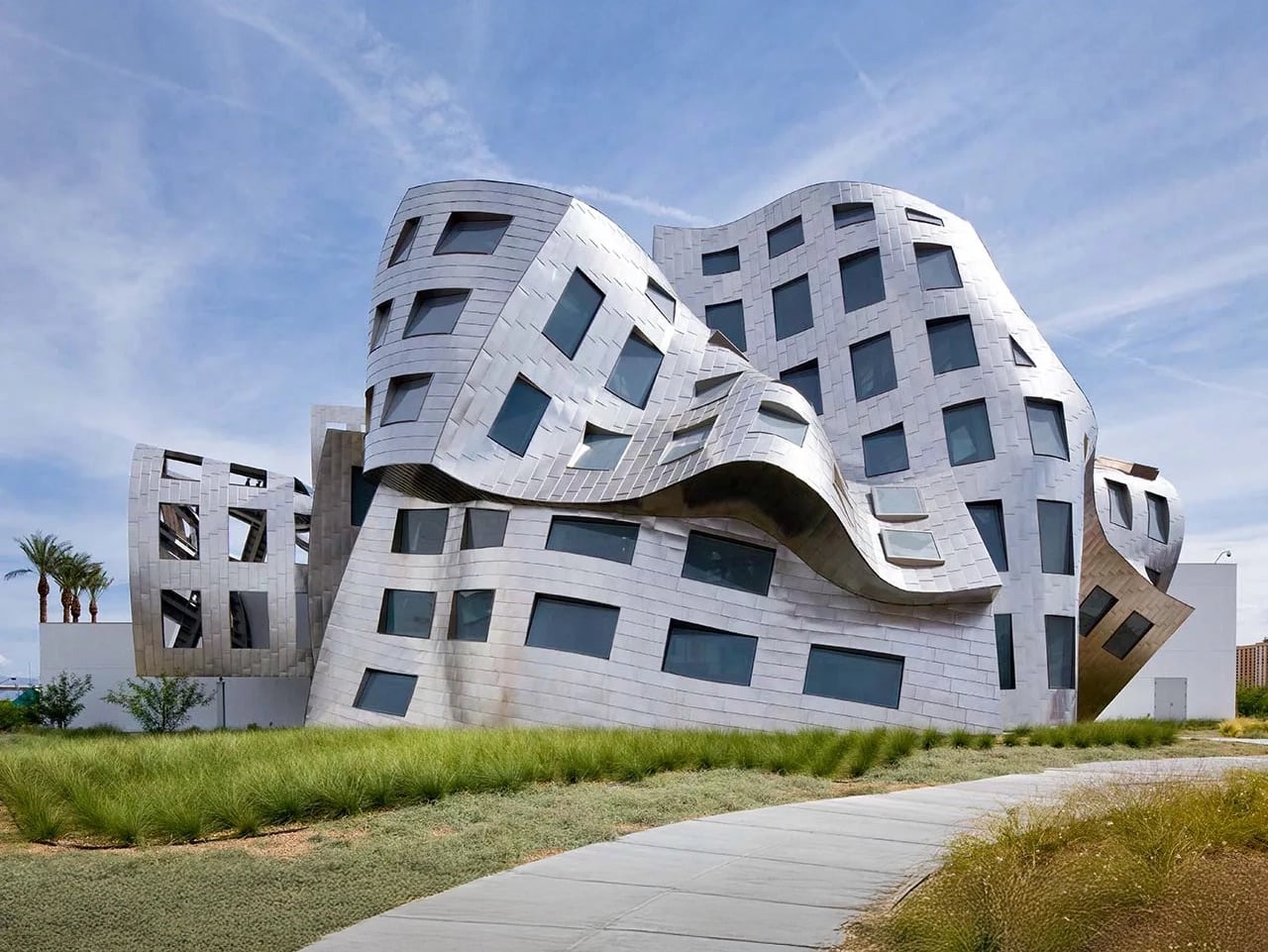
In a city known for its flamboyant spectacles, the Lou Ruvo Center for Brain Health stands out with its cascading stainless steel forms that seem to melt and twist in the desert sun. The building is split into two distinct parts: a relatively rectilinear clinical wing that houses examination and treatment rooms, and a wildly contorted event hall whose warped grid and skewed windows evoke the tangled pathways of the brain. This juxtaposition turns the complex into a physical metaphor for cognitive disorder and the search for clarity within it.

Beyond its sculptural bravado, the center represents an attempt to bring architectural attention and philanthropic energy to the often invisible struggles of neurological disease and dementia. The event space helps fund the medical and research programs, hosting gatherings that place patients’ stories at the center of civic life. For Gehry, who has spoken publicly about friends and family affected by these conditions, the project had a personal resonance, and it shows in the building’s emotional charge. It is one of the clearest examples of his belief that dramatic form can serve not just commerce or culture, but also care and advocacy.

Neuer Zollhof, Düsseldorf, Germany

Overlooking Düsseldorf’s MedienHafen, the Neuer Zollhof complex showcases Gehry’s skill at composing buildings as a kind of urban sculpture. The trio of towers, each with its own material identity in white plaster, red brick, and shimmering stainless steel, appears to lean and sway, as if the harbor winds had pushed them out of alignment. Their undulating facades break up reflections of sky and water, adding a kinetic quality to what might otherwise be a static office district.

At the ground level, the buildings carve out irregular courtyards and passages that encourage wandering rather than straight-line commuting. This porousness allows the waterfront to feel more public, less like a sealed-off corporate enclave. Over time, Neuer Zollhof has become a visual shorthand for Düsseldorf’s transformation from industrial port to media and design hub, appearing in tourism imagery and local branding. The ensemble illustrates how Gehry could work at the scale of a neighborhood, not just a single object, using repetition and variation to give a district a distinct identity without lapsing into monotony.

Weisman Art Museum, Minneapolis, USA

The Weisman Art Museum at the University of Minnesota is a compact manifesto of Gehry’s interest in reflective surfaces and fractured forms. From the campus side, the building presents a relatively calm brick facade that aligns with neighboring structures, but facing the Mississippi River it explodes into a cascade of stainless steel planes. These facets catch the Midwestern light in constantly changing patterns, so the museum’s appearance shifts dramatically between bright winter mornings and long summer evenings.

Inside, the galleries are more restrained than the exterior might suggest, with white walls and straightforward geometries that accommodate a diverse collection, including American modernism and Native American art. The contrast between the calm interior and the exuberant shell underscores Gehry’s understanding that museums must serve art first, even when they are iconic objects in their own right. For the university and the city, the Weisman has become a landmark visible from bridges and river paths, a reminder that serious academic institutions can also embrace a bit of visual risk.

Vitra Design Museum, Weil am Rhein, Germany

Situated on the Vitra Campus, the Vitra Design Museum is one of Gehry’s earliest European works and a key piece in his evolution toward the more fluid forms of later years. The small building is composed of intersecting white plastered volumes, pitched roofs, and cylindrical elements, all twisted and stacked in a way that feels both familiar and disorienting. It reads like a collage of fragments from traditional architecture, reassembled into a dynamic, almost cubist object.

The museum’s interiors are intimate and idiosyncratic, with sloping ceilings and unexpected vistas that suit exhibitions on furniture, industrial design, and everyday objects. As part of a campus that later attracted buildings by Zaha Hadid, Tadao Ando, and others, Gehry’s museum helped establish Vitra’s reputation as a patron of experimental architecture. The project also marked one of the first major uses of his now-signature white sculptural volumes in Europe, setting the stage for the more complex geometries of Bilbao and beyond while reminding us that his work has always been as much about composition and light as about metallic skins.

8 Spruce Street (Beekman Tower), New York, USA

Rising above Lower Manhattan’s skyline, 8 Spruce Street, often branded as New York by Gehry, demonstrates his ability to bring a sense of movement to the rigid logic of the skyscraper. Its rippling stainless steel facade wraps a conventional concrete frame, creating the illusion of draped fabric caught in a vertical breeze. As daylight moves across the tower, the folds deepen and flatten, giving the building a constantly shifting presence against the more static grid of neighboring high-rises.

Inside, the residential tower combines rental apartments with amenities that were, at the time of its completion, notably generous for downtown living, including schools and community facilities at the base. The project signaled a shift in Lower Manhattan from a primarily financial district to a more mixed, residential neighborhood, and it showed that expressive architecture did not have to be reserved for cultural institutions or luxury condos. By applying his vocabulary to everyday housing, Gehry suggested that the pleasures of complex form and careful detailing could, at least occasionally, reach beyond elite enclaves and into the fabric of ordinary urban life.

The post 10 Iconic Frank Gehry Buildings That Celebrate The Late “Starchitect’s” Legacy first appeared on Yanko Design.

The 1977 cut of Star Wars will return to theaters in 2027

Here's some good news for the "Han shot first" crowd. The original cut of Star Wars (1977), the film known today as A New Hope, is coming back to theaters. We first learned in August that some version of the film would be screened again in 2027 for its 50th anniversary. But we know now this will indeed be the version everyone saw before George Lucas made those questionable, CGI-heavy changes in the 1997 Special Editions. The re-release arrives in theaters on February 19, 2027.

In a short update posted Friday on the official Star Wars website, Lucasfilm all but clarified that this will be the original cut. It described it as "a newly restored version of the classic Star Wars (1977) theatrical release." Gizmodo reported that it received further clarification that this will indeed be the OG one, before those "improvements” in the Special Edition (and subsequent re-releases).

Han Solo (Harrison Ford), Princess Leia (Carrie Fisher) and Luke Skywalker (Mark Hamill) in a scene from Star Wars: A New Hope.
Disney Plus

Those mid-'90s edits included early CGI effects that essentially served as a testing ground before Lucas moved on to the Prequel Trilogy. It also added a CG Jabba the Hutt / Han Solo scene (originally shot with actor Thomas Declan Mulholland as Jabba) that was cut from the original version.

Perhaps most infamously, Lucas made Greedo shoot first at Han in the canteen scene. Hardcore fans hated the change. It smoothed some of the rough edges of Han's start. It gave him a shorter, less dramatic journey into the reluctant hero he grew into as the story progressed. It's as if Lucas was signaling, "Okay, Han may have started as kind of a jerk, but he wouldn't shoot a bounty hunter in cold blood! Think of the children watching!"

But in my view, Return of the Jedi had the worst changes in 1997 and later. Although I didn't mind the new celebration music and location montage at the end (others disagree), it also added that cringey and out-of-place musical number in Jabba's palace. But I despised the change Lucas made for the film’s 2011 Blu-ray release: Darth Vader's overly telegraphed "Nooooooo…" as he makes the climactic decision to chuck the Emperor into the Death Star's reactor shaft. C’mon, George: It’s so more powerful for the audience to project Vader’s thought process onto his silent helmet. But if Disney sticks with the 50th Anniversary scheme, we'll have to wait until 2033 to see the untainted version of that movie in theaters again.

This article originally appeared on Engadget at https://www.engadget.com/entertainment/the-1977-cut-of-star-wars-will-return-to-theaters-in-2027-221113091.html?src=rss

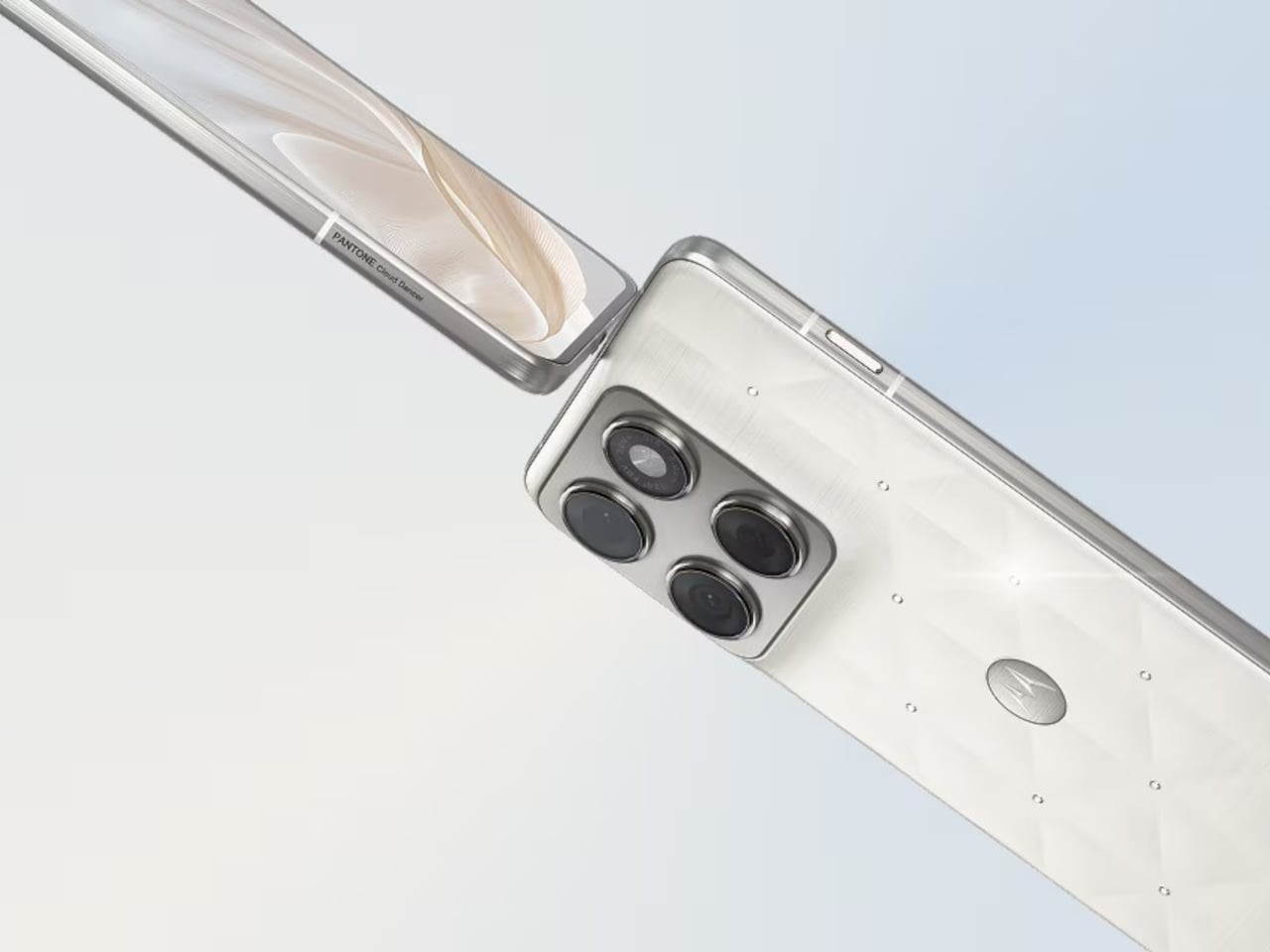
Motorola Edge 70 Accents Pantone’s 2026 Color with Swarovski Studs

Pantone’s Color of the Year 2026, Cloud Dancer, arrived with a thesis that we are all collectively tired and need visual relief from the chaos. The soft, lofty white was pitched as clarity over clutter and presence over pressure, a quiet protest against hyper saturated everything, including the phones buzzing in our pockets. It felt less like a trend forecast and more like a group therapy session disguised as a paint chip.

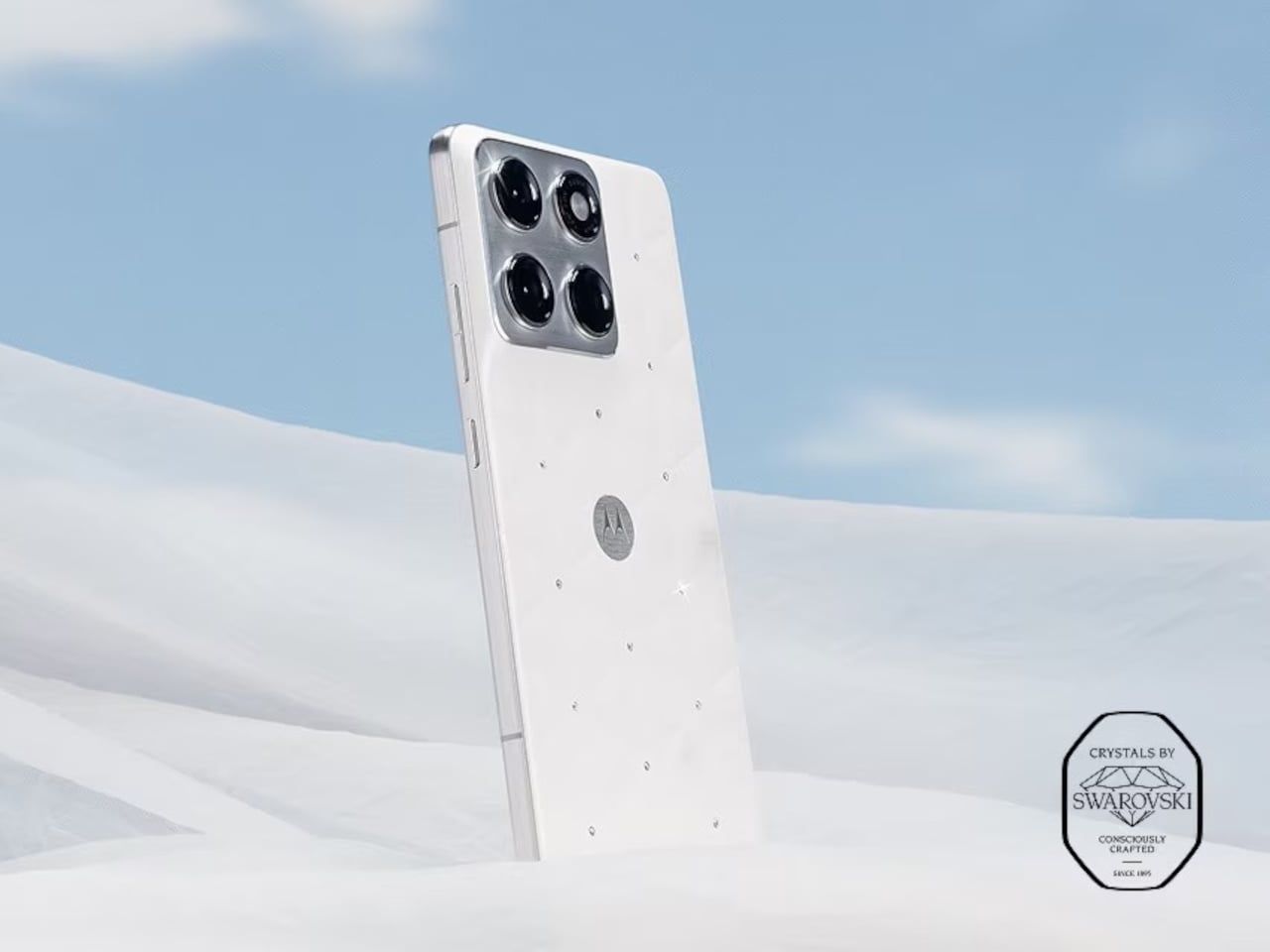
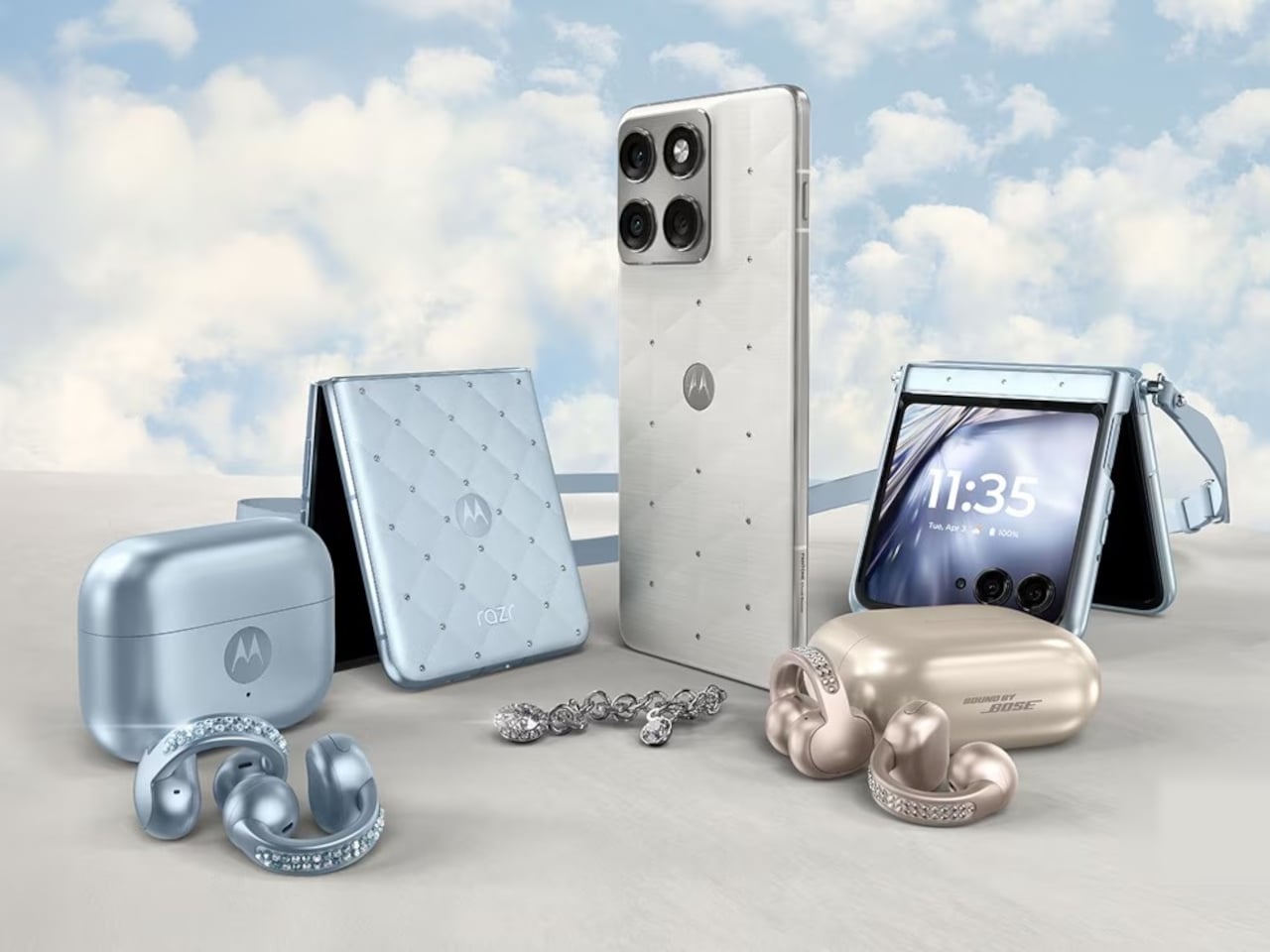
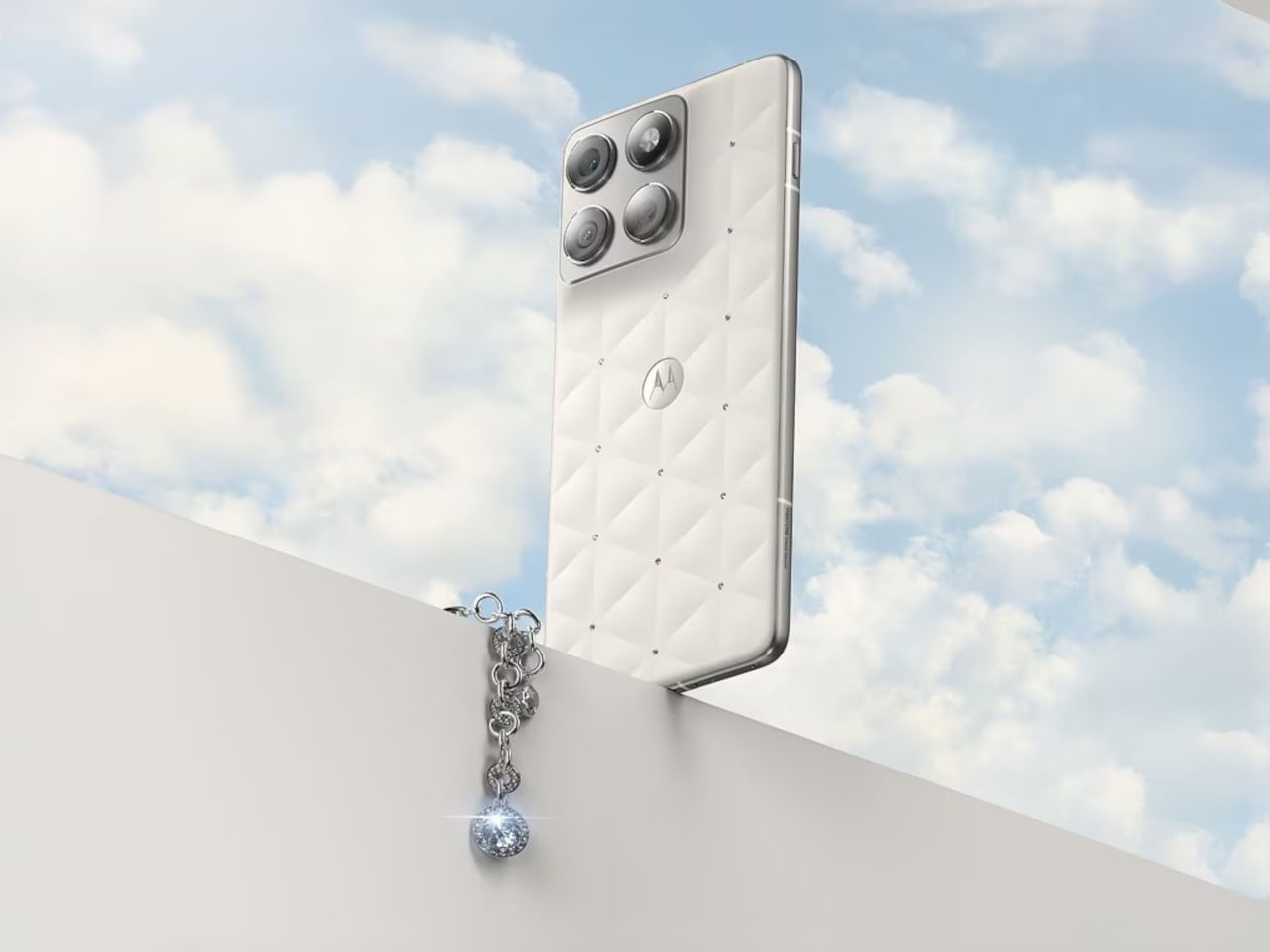
Motorola took that color story seriously. The Edge 70 special edition wraps Cloud Dancer around its thinnest chassis yet, embellished with crystals by Swarovski, continuing the design run that started with the Razr Brilliant Collection earlier this year. Where the Razr leaned extroverted and fashion forward, the Edge 70 Cloud Dancer edition feels like its quieter sibling, still sparkling but content to sit on a nightstand without demanding constant attention or Instagram documentation.

Designer: Motorola

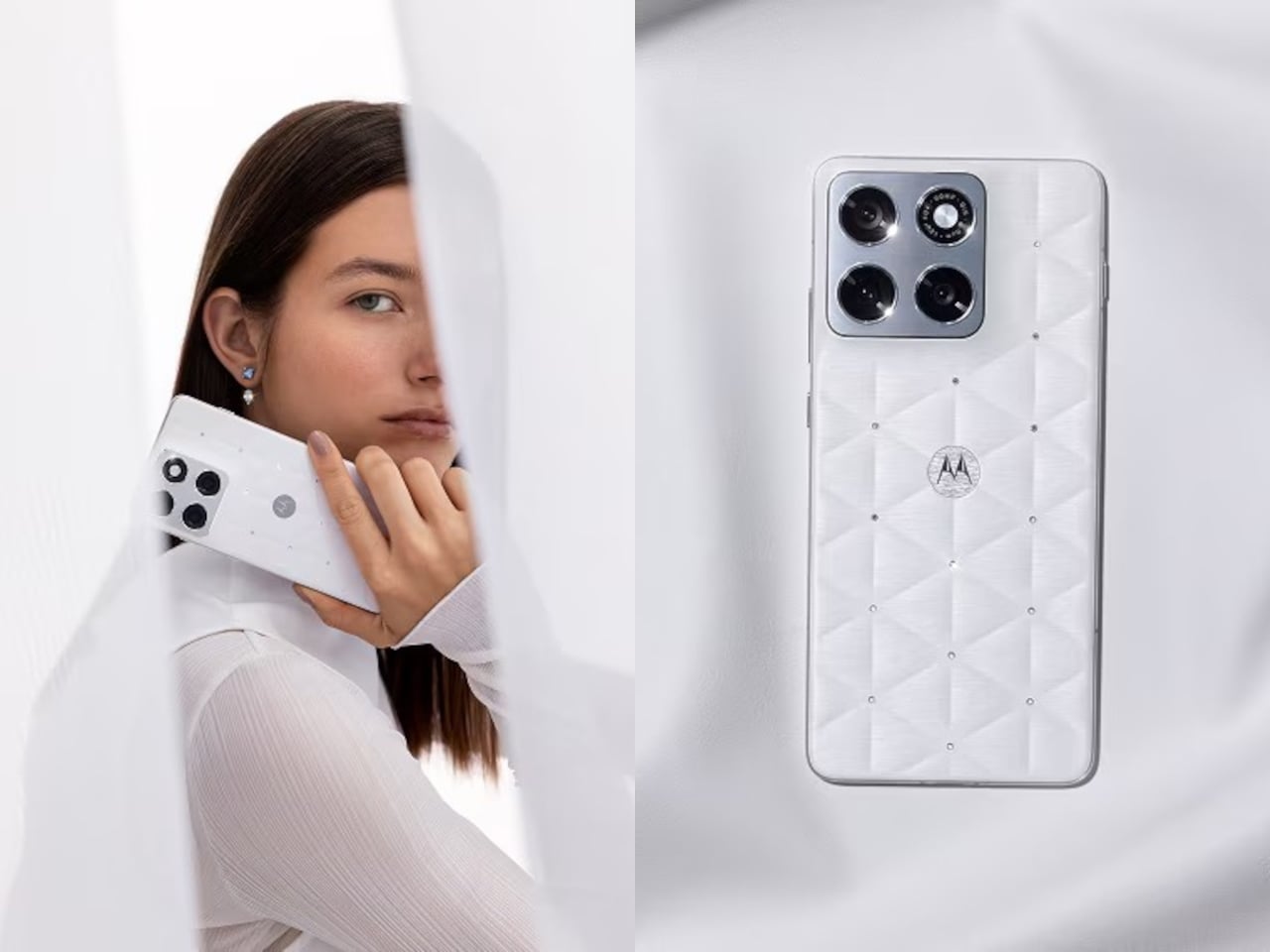
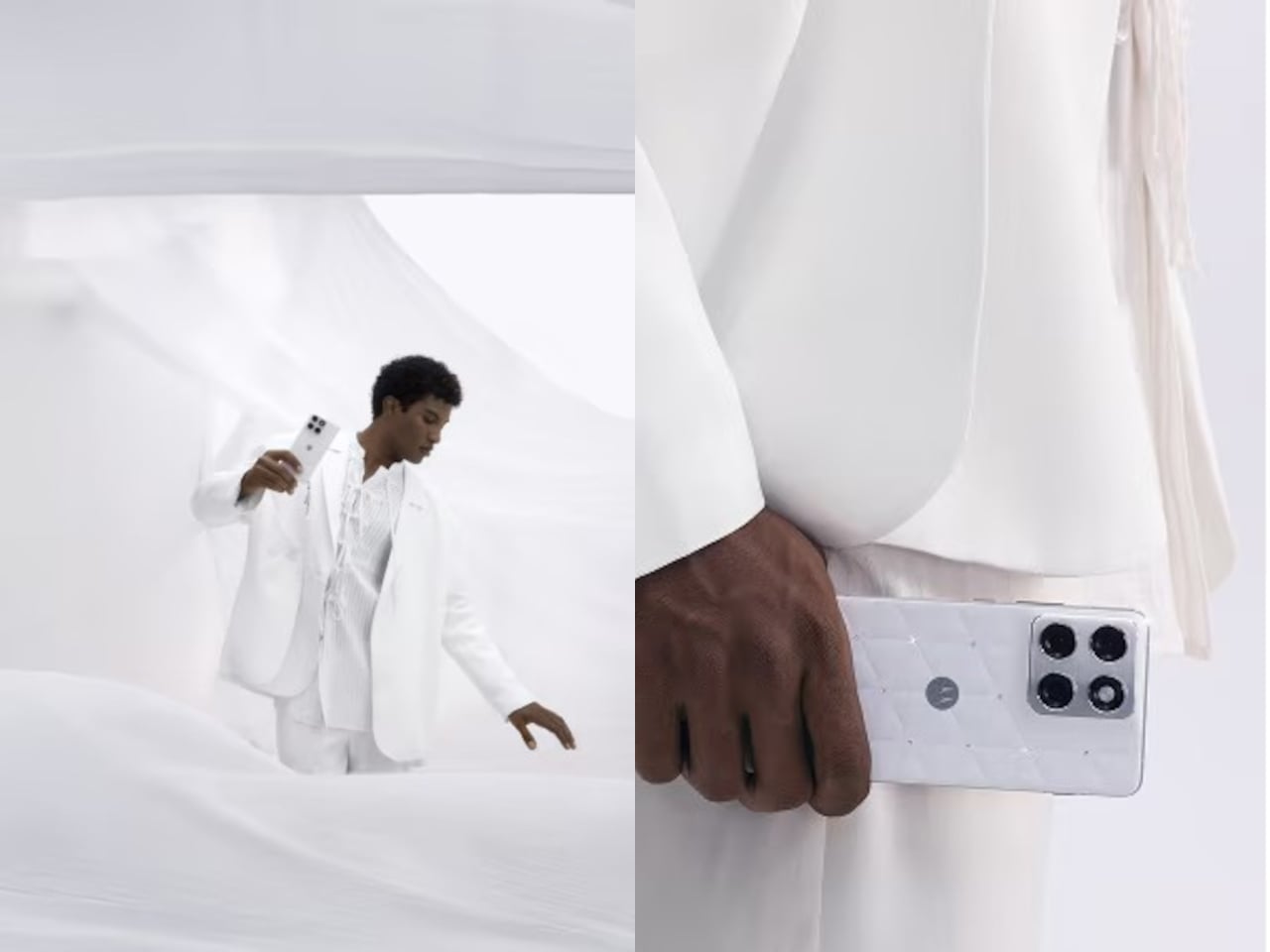
Cloud Dancer, officially Pantone 11-4201, lands on the Edge 70 as a leather inspired, quilted back that reads more like a minimal clutch than a piece of consumer electronics. The finish has a silk like sheen that shifts slightly in light, soft enough to avoid sterility but restrained enough to avoid looking like a frosted cupcake. Motorola calls it an object of clarity and quiet confidence, which fits the brief so precisely it almost sounds rehearsed.

Crystals by Swarovski are embedded into the quilted back, small enough to catch light without shouting for attention. The Brilliant Collection, which debuted with the Razr a few months ago, focuses on meticulous craftsmanship and timeless luxury, treating phones like accessories that happen to also make calls. Here, the crystals feel less like decoration and more like strategic punctuation marks on an otherwise very calm sentence, little flickers that keep the white from feeling too monastic.

Underneath sits the regular Edge 70 hardware, Snapdragon 7 Gen 4, dual 50 megapixel cameras, a bright display, and moto ai that adapts quietly. Motorola emphasizes that the device is the thinnest in its category, hedged by footnotes about regional price bands but still impressive for something packing a 4800 milliamp hour battery and full day reliability without feeling fragile in the hand.

The approach contrasts with the usual luxury phone playbook, which tends toward loud colors, heavy logos, or aggressive patterns that scream performance. Cloud Dancer is almost the opposite, a discrete white Pantone describes as conscious simplification. The quilting and crystals prevent it from becoming sterile, but the overall vibe lands somewhere between spa robe and gallery wall, an unusual place for a smartphone to occupy.

Motorola seems intent on building a design ecosystem where color forecasting and material craft matter as much as chipsets. The Razr Brilliant Collection introduced Swarovski, and now the Edge 70 ties that to Pantone’s annual ritual. We live in a world where most phones blur into identical black rectangles, so a calm white device with a quilted back and a handful of crystals starts to feel surprisingly memorable, even if memorable was never the point.

The post Motorola Edge 70 Accents Pantone’s 2026 Color with Swarovski Studs first appeared on Yanko Design.
Meta’s latest acquisition suggests hardware plans beyond glasses and headsets

Meta has acquired Limitless, the maker of an AI-powered "Pendant," to work on building consumer hardware for the company, the startup announced via a YouTube video and blog post. So far, Meta has focused on selling VR headsets and AI smart glasses. Now the company seems interested in branching out.

"Meta recently announced a new vision to bring personal superintelligence to everyone and a key part of that vision is building incredible AI-enabled wearables. We share this vision and we'll be joining Meta to help bring our shared vision to life," Limitless CEO Dan Siroker said in the post announcing the acquisition.

Limitless' first product was Rewind, desktop productivity software that recorded everything you did on your computer and turned it into a searchable database you interacted with via a chatbot. The company later expanded into hardware with Pendant, essentially a clip-on Bluetooth microphone that applies the same concept (privacy concerns be damned) to the things you say or hear throughout the day.

The company plans to support its existing Pendant customers "for at least another year," but will no longer sell the wearable going forward. Current customers will be able to access all the features of Pendant without having to pay for a subscription, though Limitless says availability will vary per region. If you have data stored with Limitless and don’t want to hold onto your Pendant, you're now also able to export or delete your data if you choose.

AI wearables focused on recording audio have emerged as a common form factor primarily because they lean on two things AI models do moderately well: transcribing audio into text and summarizing it. Meta dipping its toes into the space makes sense, if only because not everyone will want to wear glasses to receive the benefits of an AI assistant. Amazon acquired an AI wearable company called Bee in July 2025, presumably with similar intentions.

Add in Meta's recent hiring of former Apple design lead Alan Dye, and you can start to imagine where things might be headed. In the future, the Ray-Ban Meta Smart Glasses and Meta Ray-Ban Display could be two entries in a larger lineup of AI-powered wearables.

This article originally appeared on Engadget at https://www.engadget.com/ai/metas-latest-acquisition-suggests-hardware-plans-beyond-glasses-and-headsets-212930339.html?src=rss

Pixel owners: You can now use your phone as a Switch 2 webcam

The Switch 2's lack of a built-in camera means you need an external one for GameChat video calls. But now, if your phone is a Google Pixel, you don't even need one of those. Android Authority reported on Friday that the two now work nicely together (without needing third-party apps), and our tests confirm that.

Google has technically supported the use of Android devices as external webcams for two years: The company added it in a quarterly update for Android 14. (Specifically, it added the ability for devices to use USB Video Class mode, or UVC.) But that functionality didn't work with the Switch 2 before the November Pixel Drop.

How do we know it was that version? Well, before our Editor-in-Chief, Aaron Souppouris, installed November’s update on a Pixel, the Switch 2 webcam feature didn't work. After updating to that one today (but before installing the December update), it worked.

If that wasn't enough, the November firmware's release notes listed a "fix for an issue where webcam mode does not work properly with connected devices under certain conditions." That pretty much cinches it. Regardless, we reached out to Google for official confirmation, and we'll update this story if we hear back.

This article originally appeared on Engadget at https://www.engadget.com/gaming/nintendo/pixel-owners-you-can-now-use-your-phone-as-a-switch-2-webcam-203407555.html?src=rss

Marc Newson reimagines Ressence Type 3 into most intriguing $54k conversation starter ever

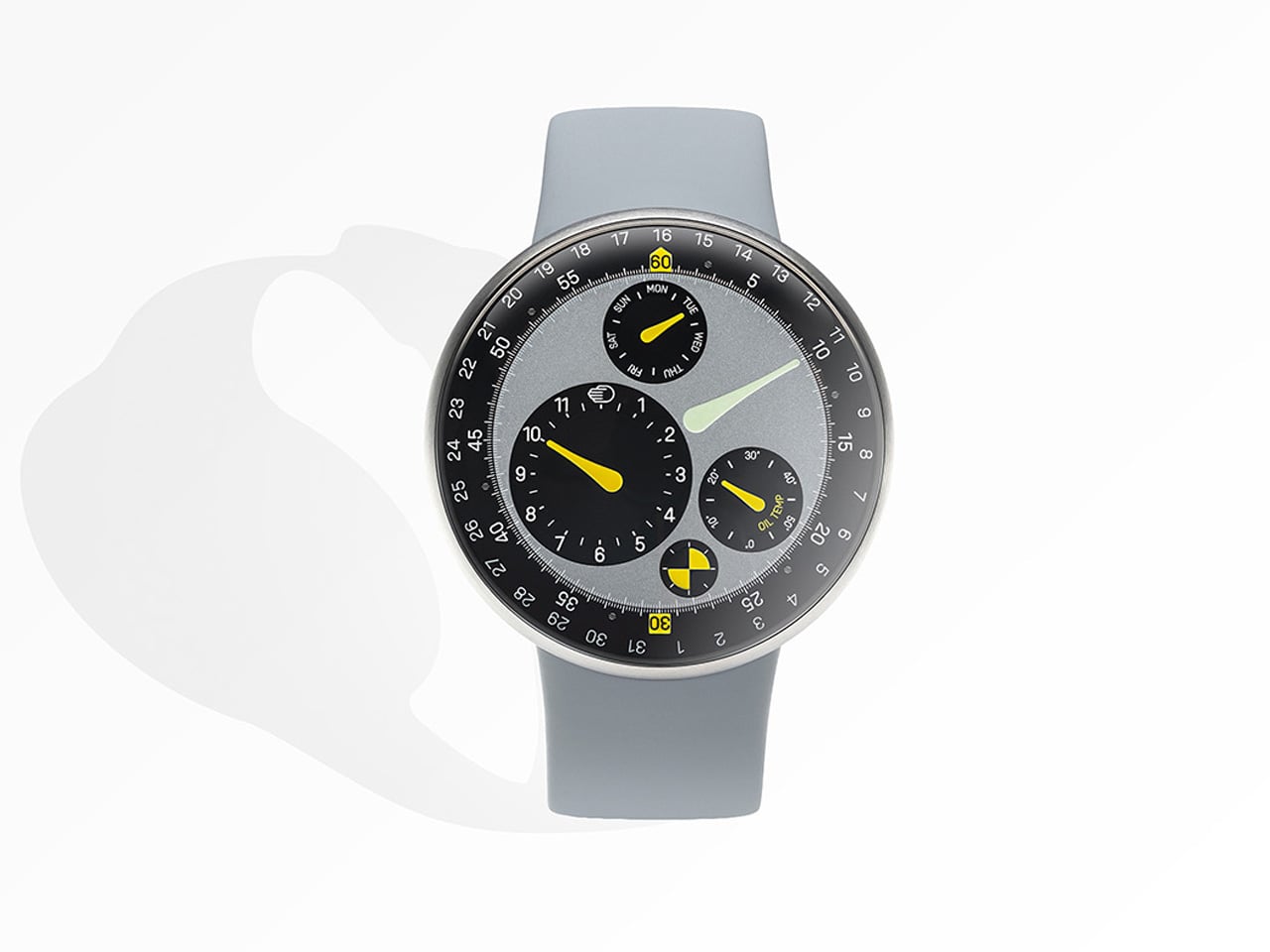
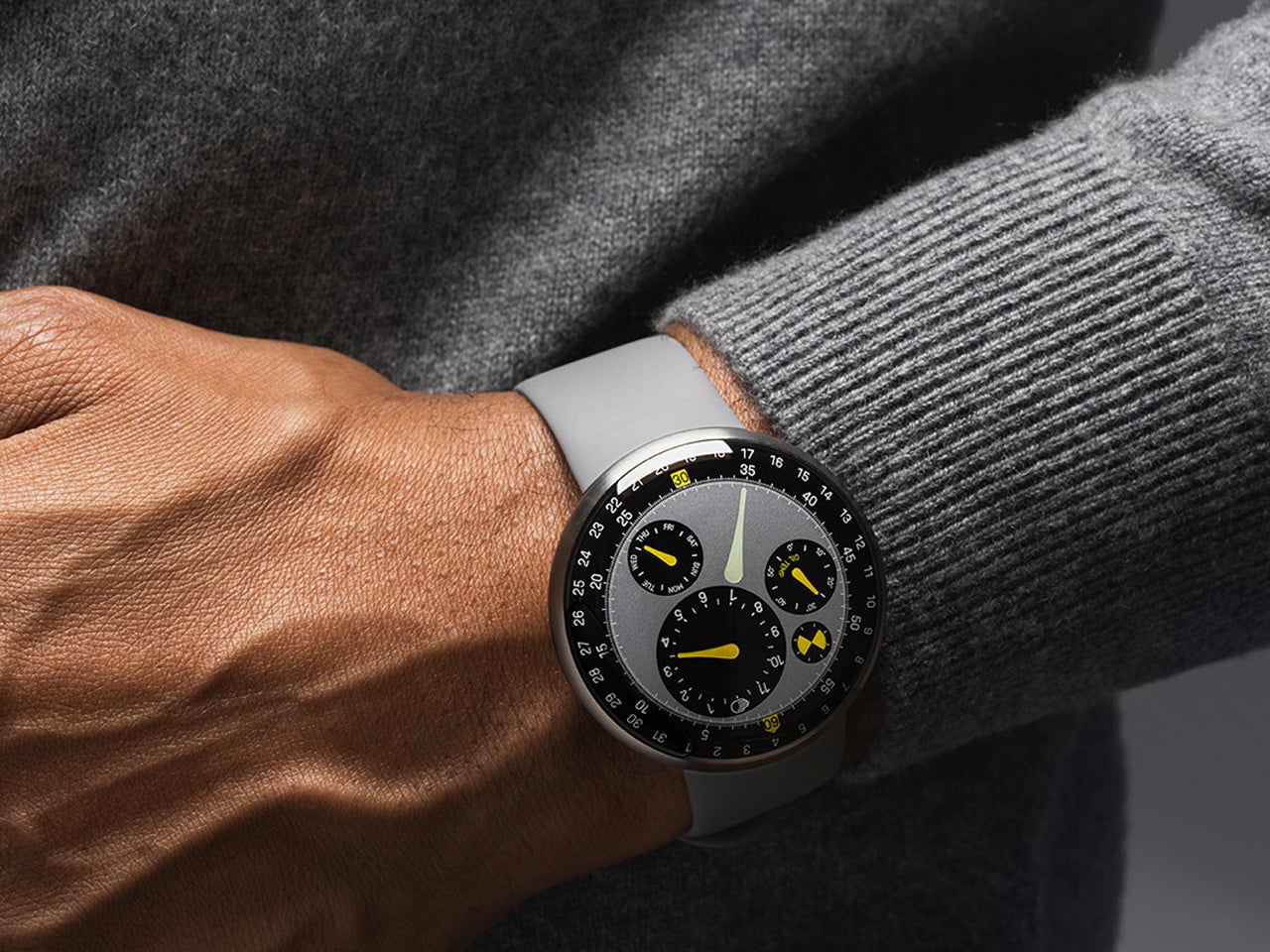
You can easily recognize Ressence, an independent watchmaker, from the crowd with its uncanny watches that make time telling unique, detailed, and exceptionally designed. For its latest iteration, the Type 3 MN, Ressence founder Benoît Mintiens has collaborated with Australian design genius, Marc Newson (a name we know from the first Apple Watch), and the result is easily the most intriguing watch in the industry.

The Type 3 MN is referenced as a result of “meeting of two design icons.” It’s a rare collective where two designers choose “to work together on one product.” Mintiens notes, “In my eyes, one plus one can become more than the sum of its parts.” And that reflects in the Type 3 Marc Newson edition, which is a true representation of the original Type 3 with nuances to behold.

Designer: Ressence

The Apple reflection

Of course, Type 3 MN is a Ressence, but unlike the Type 8 with handwoven Indigo-dyed silk dial or its sibling with geometric display and a joyful palette, it has Newson’s design approach reflected in it. Marc Newson was inducted into Apple by the good old Jony Ive. Both are known for their amazing projects at the Cupertino company, including the first Apple Watch. The duo has now co-founded a creative collective called LoveFrom.

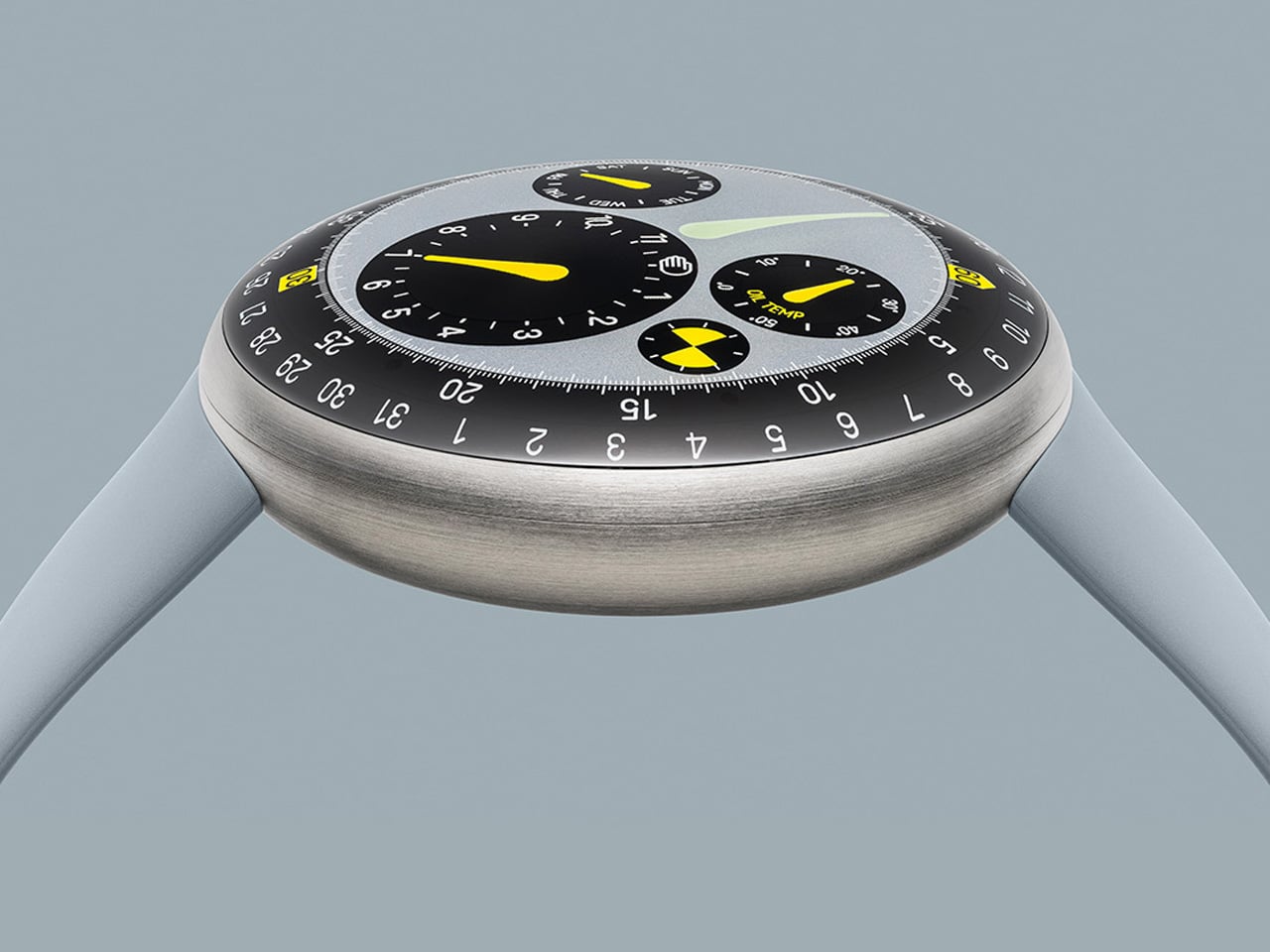
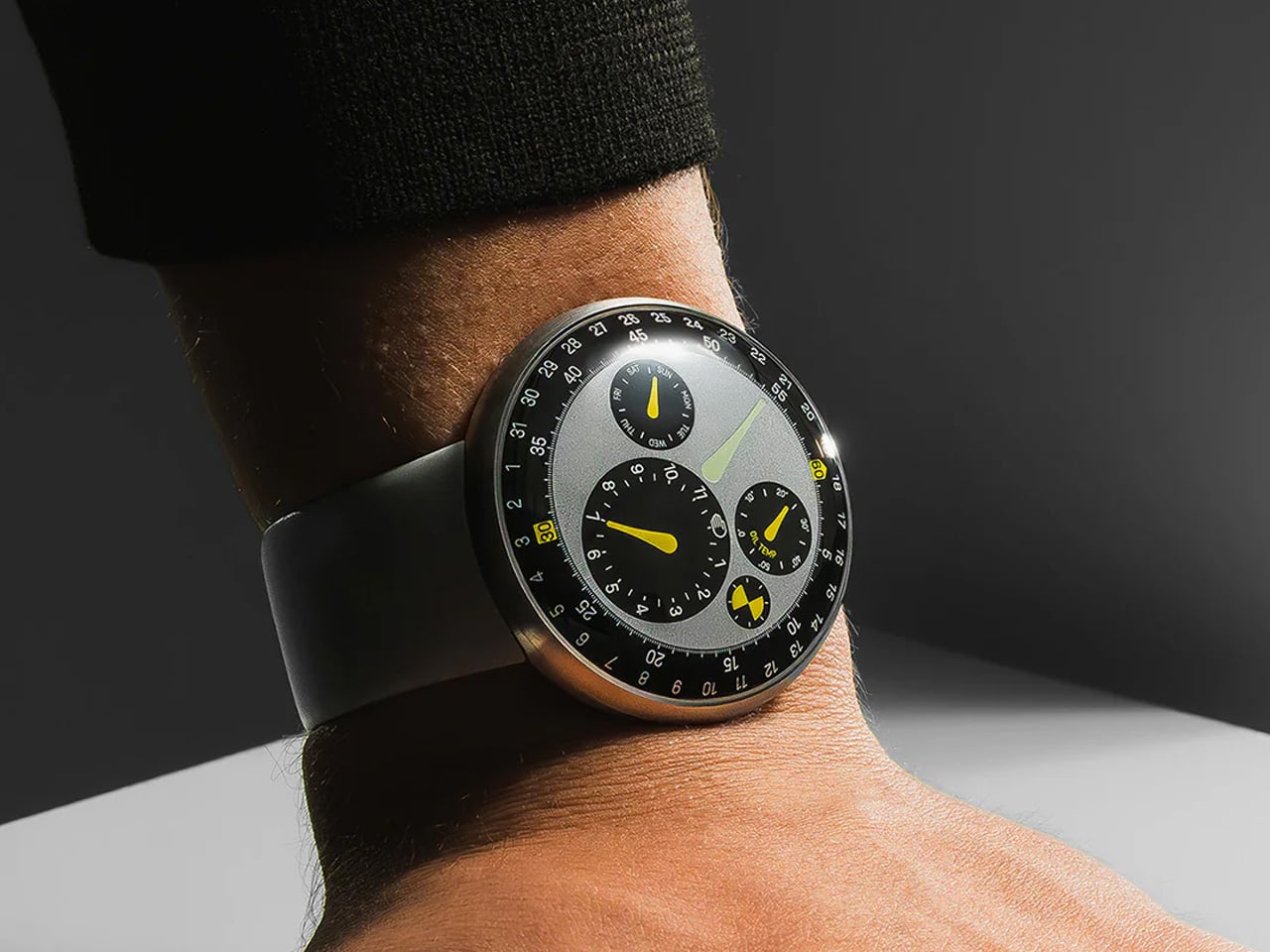
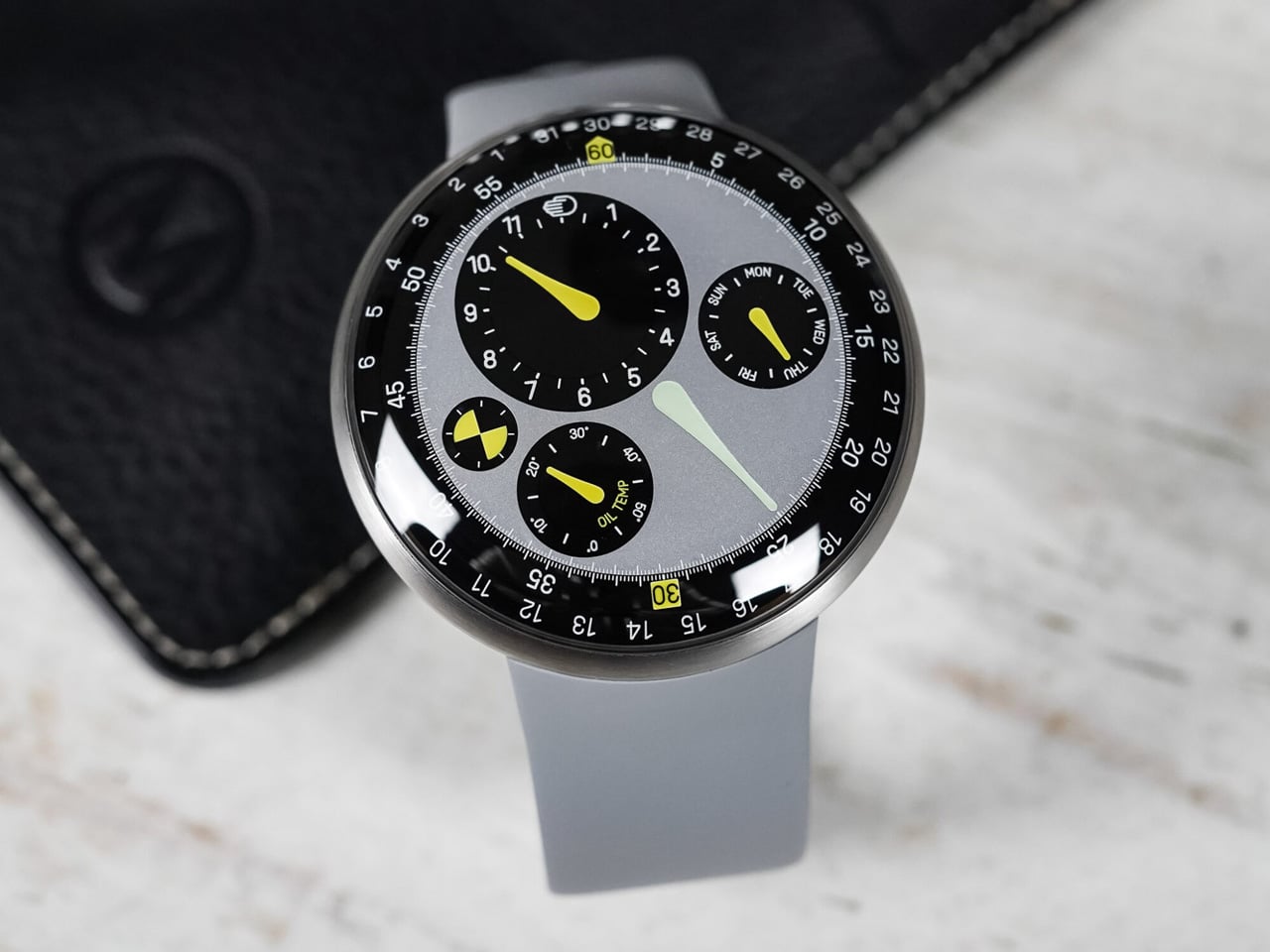
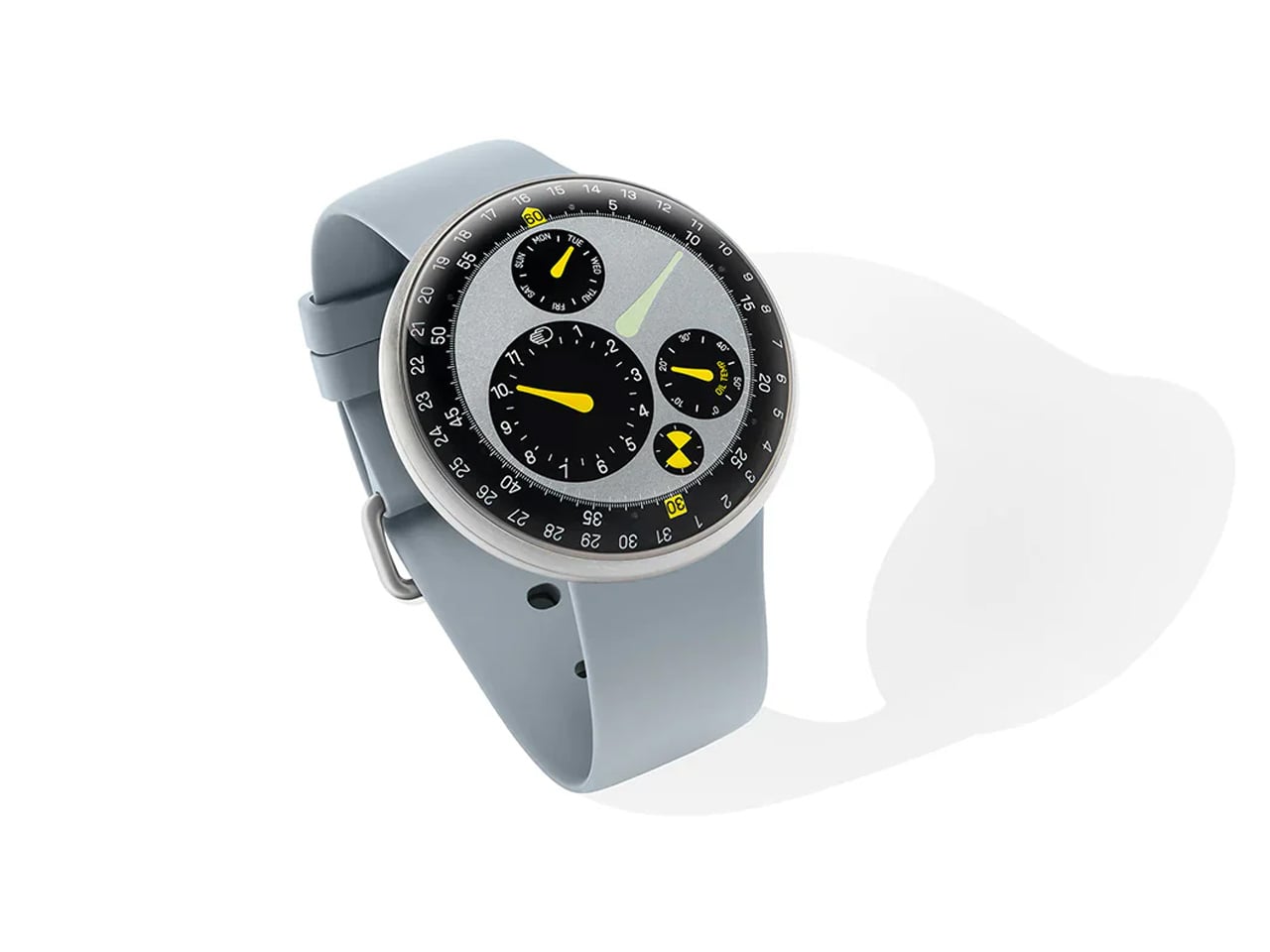
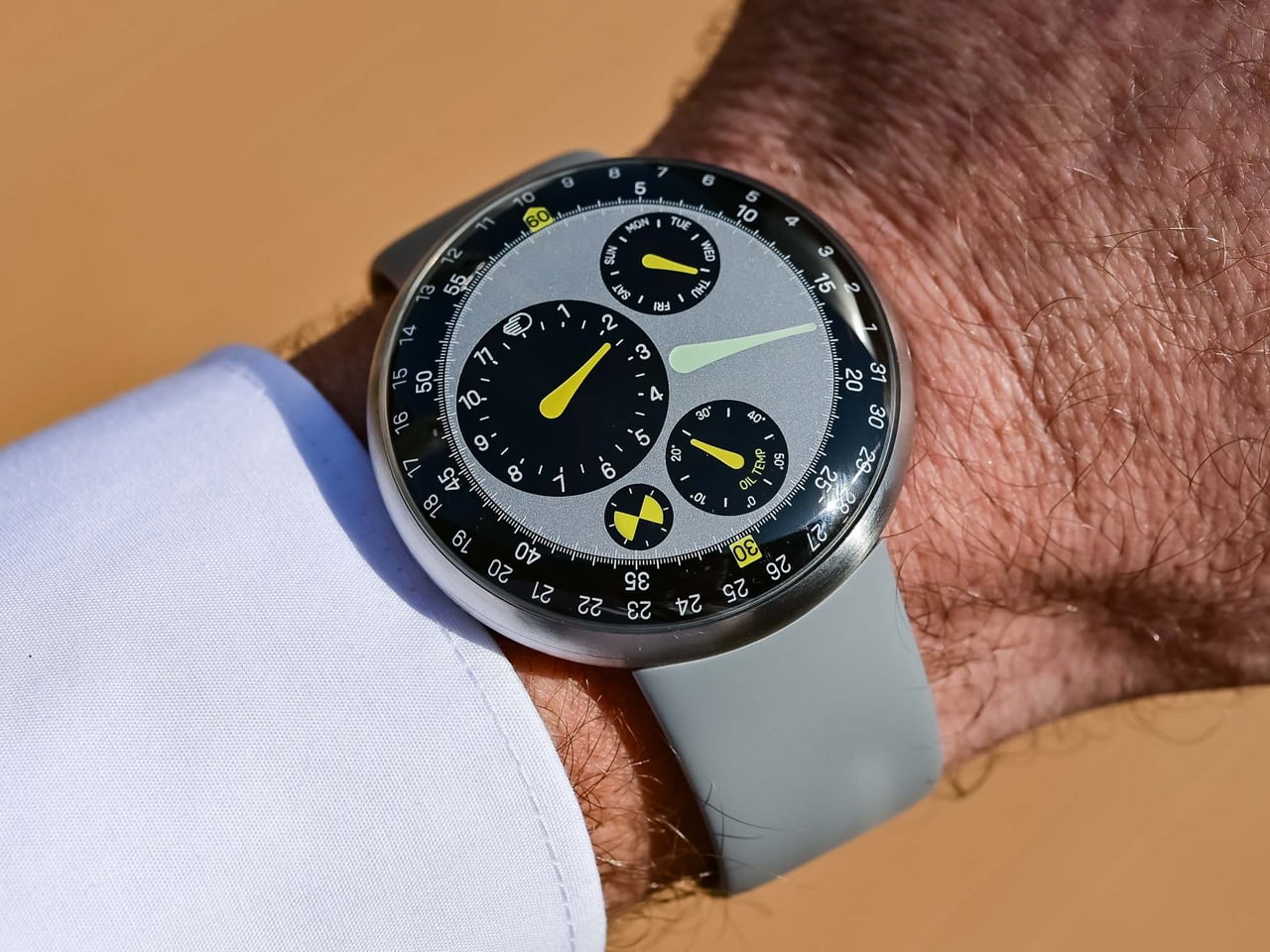
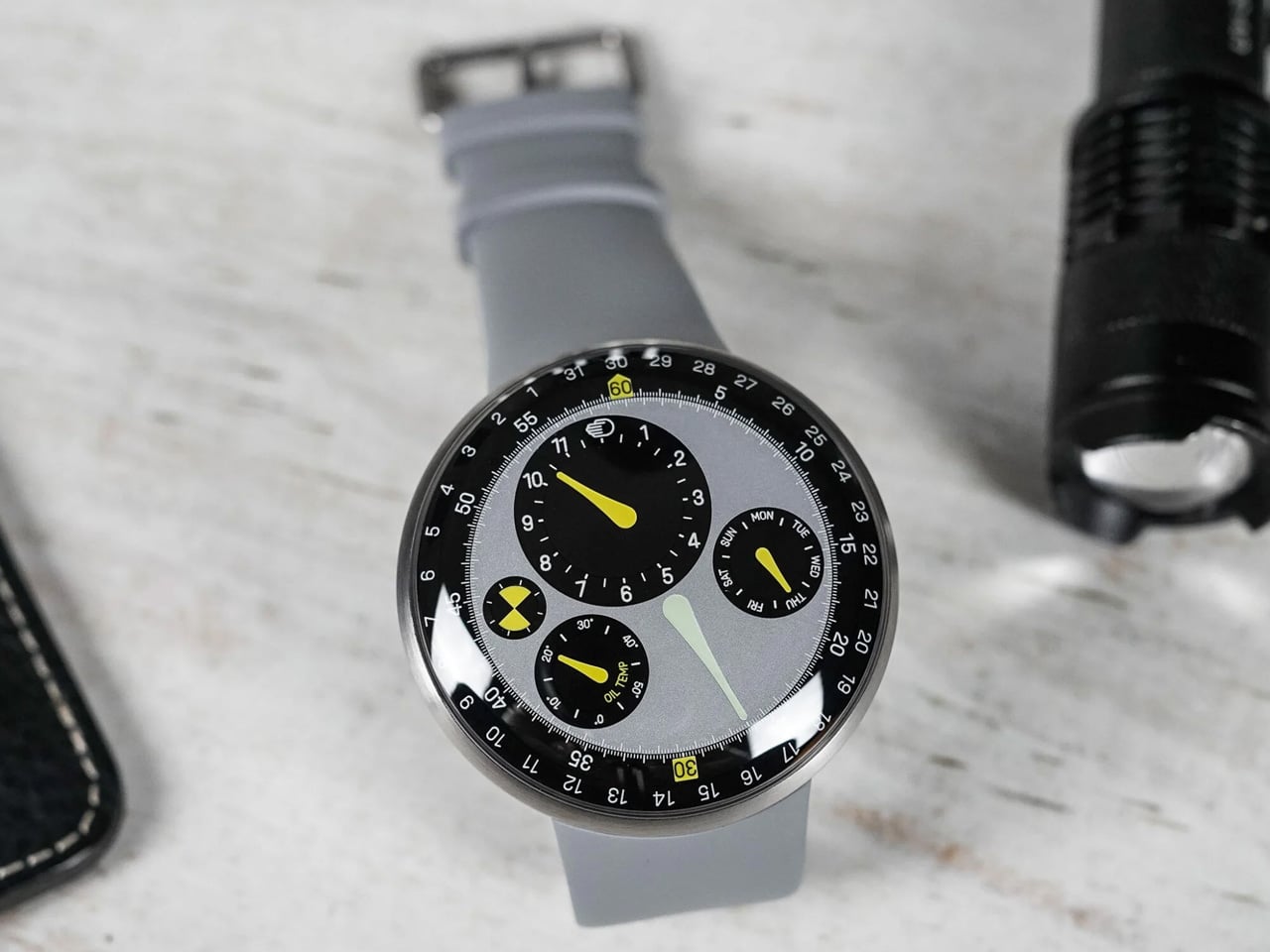
The Newson-design Type 3 has an elliptical design, a striking color palette, domed sapphire, and graphic hands all echoing Apple’s design language, which is paired with Ressence’s own oil-filled chamber dial and the ROCS-driven rotating Grade 5 titanium discs. It has a unique time-telling experience: the mechanism allows the accessory discs to revolve around the dial on multiple axis, instead of the usual hand movement.

The floating time

According to Ressence, the Type 3 MN features magnets to drive the movement of the discs. The watch separates the dial and the movement chambers, with the upper one filled with 3.57 ml of silicone oil, and the lower chamber (that holds the movement) is filled with air. Owing to oil’s capability to remove the refraction of light inside the watch, the time on the rotating disc appears closer to the domed sapphire glass, making the time appear to be floating on the dial.

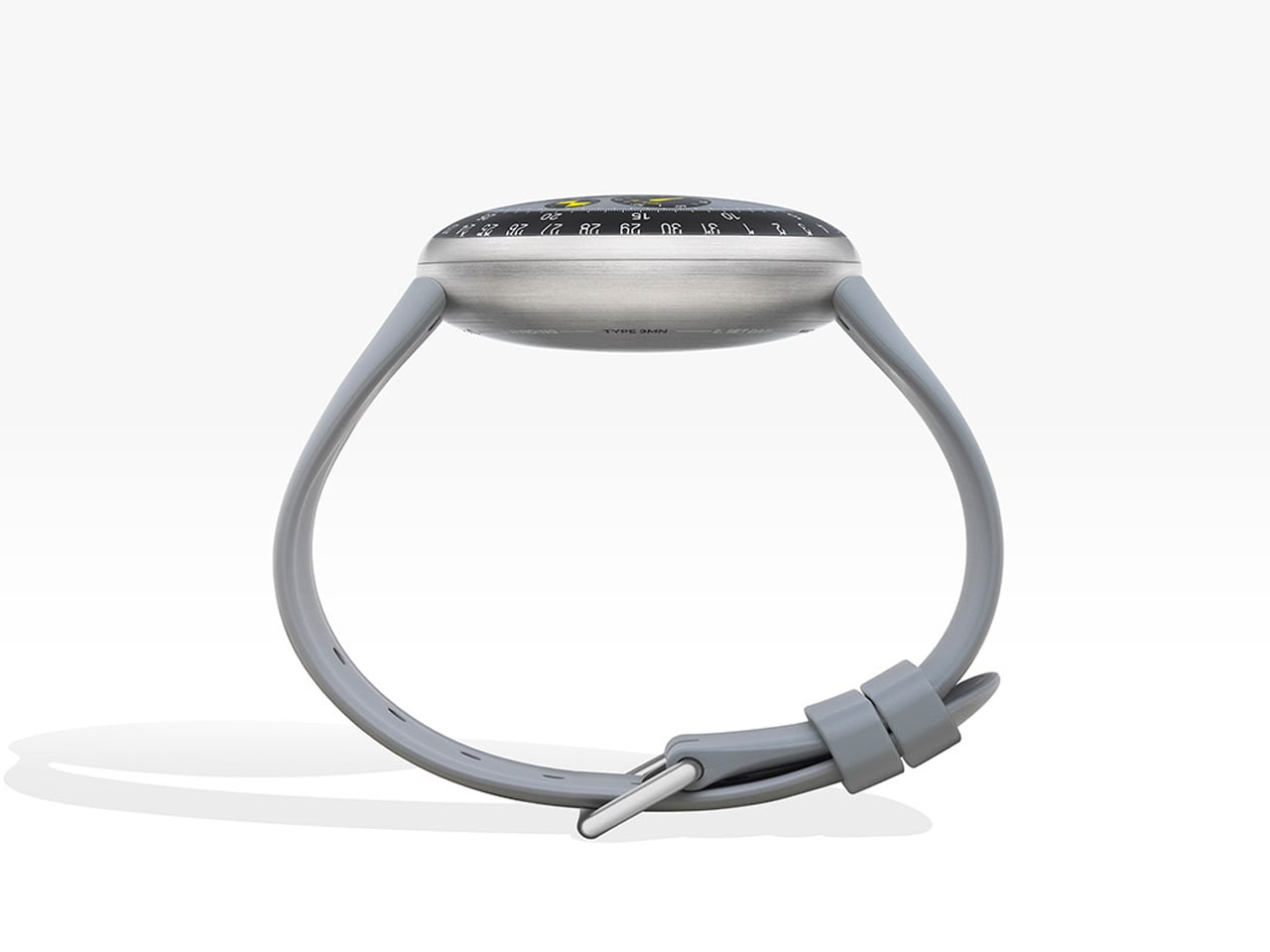
The crown-less watch, Mintiens say’s is designed to connect with “those for whom purity of form, quality of material, and complex engineering” are a priority. The watch display depicts a celadon green and vibrant yellow accents under its soft elliptical silhouette, which highlights this combination watch that’s a reflection of Newson’s industrial design approach and Ressence unique time display. The Type 3 MN comes paired to a light grey silicone strap to match its dial and is limited to strictly 80 examples, going for $54,500 each.


The post Marc Newson reimagines Ressence Type 3 into most intriguing $54k conversation starter ever first appeared on Yanko Design.
The Netflix and Warner Bros. deal might be great for shareholders, but not for anyone else

Netflix's $82.7 billion acquisition of Warner Bros. is, in many ways, the last thing a weakened Hollywood needs right now. The industry is still recovering from the COVID-19 pandemic, where theaters were forced to close and audiences became even more comfortable with streaming films at home. The WGA and SAG-AFTRA strikes in 2023, which were driven by legitimate concerns around studio interest in generative AI, delayed production and promotion of many film and TV projects. And the rise of streaming content pushed many media companies towards taking on debt and unwise mergers (see: Warner Bros. Discovery), which led to higher subscription costs, layoffs and production belt-tightening.

How can a troubled media company survive today? The answer seems to be further consolidation. Amazon's $8.45 billion MGM takeover in 2022 heralded future deals, like Skydance's $8 billion acquisition of Paramount . But Netflix's WB deal goes even further: It could fundamentally reshape the media industry as we know it, from theatrical movie-going to the existence of physical media.

What will the Netflix and Warner Bros. deal include? 

After next year's already-announced separation of Warner Bros. and Discovery, Netflix says it plans to acquire all of Warner Bros. remaining assets — including its film and TV studios, HBO Max and HBO — for $82.7 billion. According to Game Developer, representatives also say Warner Bros. Games, which includes Mortal Kombat developers NetherRealm, will also be part of the deal. 

Will the Netflix and Warner Bros. deal be approved by regulators?

Even before the deal was formally announced, it was clear that whoever bought WB would be facing government opposition from every side. Yesterday, Paramount sent WB a letter questioning the "fairness and adequacy" of the acquisition bidding process (which also included Comcast as a potential buyer). Afterwards, the New York Post reported that Paramount CEO David Ellison, son of the Trump-boosting Oracle CEO Larry Ellison, met with administration officials to make his case for buying Netflix. As of this morning, the Trump administration views the Netflix/WB deal with "heavy skepticism," an official tells CNBC.

On the other side of the aisle, Senator Elizabeth Warren (D-MA) has called the Netflix/WB deal an "anti-monopoly nightmare." She added, "A Netflix-Warner Bros. would create one massive media giant with control of close to half of the streaming market. It could force you into higher prices, fewer choices over what and how you watch, and may put American workers at risk."

At this point, it's too early to tell if the Netflix/WB deal will make it past regulators, but it's clear that both companies should prepare for a rocky approval process.

What does the Netflix and Warner Bros. deal mean for streaming video? 

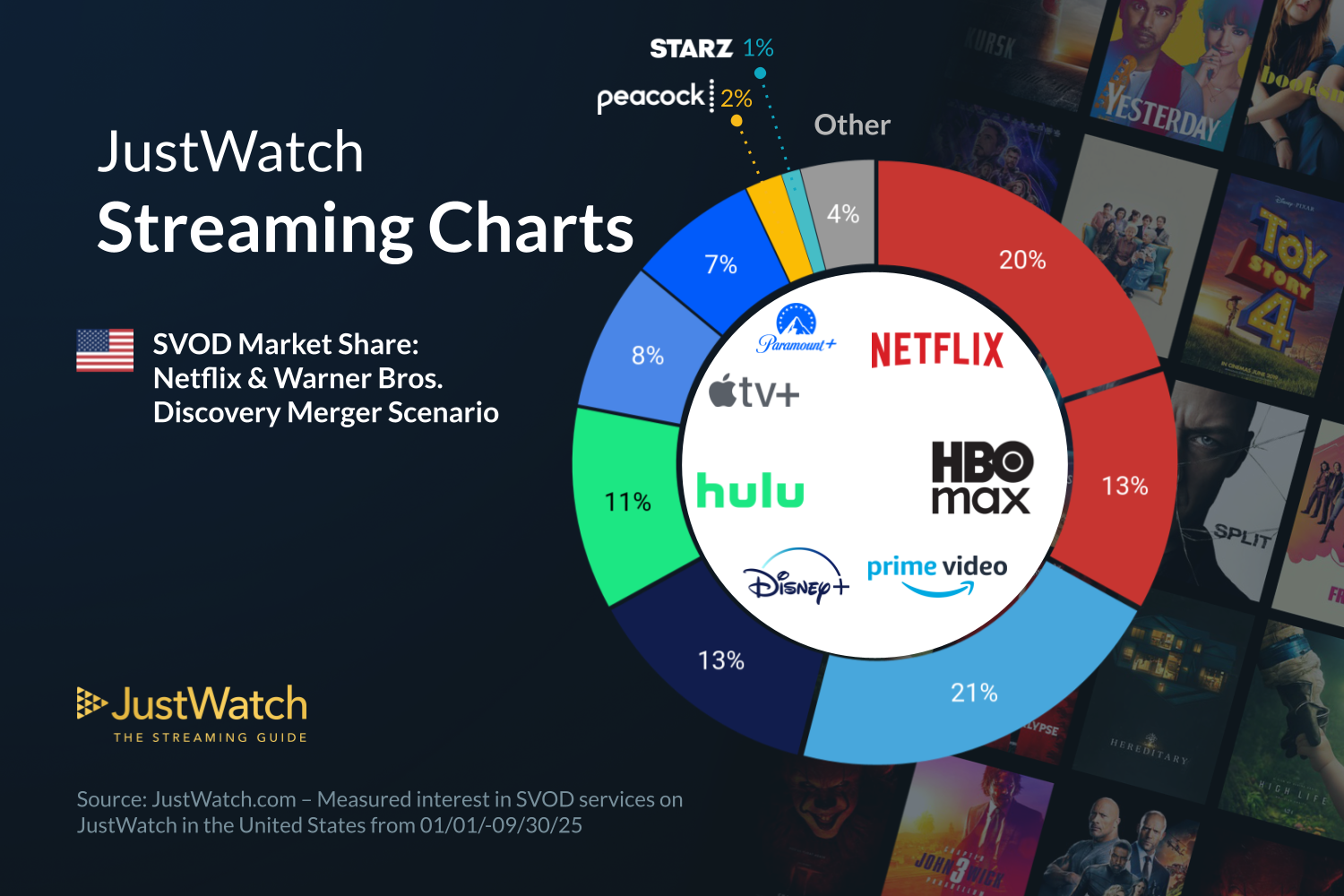
According to data from JustWatch, a combined Netflix and HBO would account for 33 percent of the US streaming video market, putting it ahead of Prime Video's 21 percent share. As for how the two media companies would co-exist, Netflix says it will "maintain Warner Bros. current businesses," which includes HBO Max and HBO, theatrical releases for films and well as movie and TV studio operations. 

JustWatch streaming video market stats.
JustWatch

"We think it’s too early to talk specifics about how we’re going to tailor this offering for consumers," Netflix co-CEO Greg Peters said in an investor call this morning, when asked if HBO would remain a separate service. "Needless to say, we think the HBO brand is very powerful, and would constitute part of our plan for consumers. That then gives us a lot of options to figure out how to package things to offer the best options for consumers."

At the very least, we can expect increased prices across the board for HBO and Netflix. There's also potential for the company to offer combination subscriptions, similar to how Disney juggles Disney+, Hulu and ESPN. 

What does the Netflix and Warner Bros. deal mean for theaters?

In short, a combined Netflix/WB wouldn't be great for theaters. Previous mergers, like Disney and Fox's union, led to fewer theatrical releases, not more. Since its transformation into a streaming-first company, Netflix has also been primarily focused on increasing subscriptions and engagement, with theatrical releases of its original content treated as an afterthought. 

"We’ve released about 30 films into theaters this year, so it’s not like we have opposition to theatrical release," Netflix Co-CEO Ted Sarandos said in the investor call (without specifying how short some of those theatrical releases were). "It’s the longer windows that aren’t consumer friendly. Life cycle that starts in the movie theater, we’ll continue that. Over time, the windows will evolve to be much more consumer friendly, to meet the audience where we are."

He added: "All things that are going to theaters through WB will continue to do so. Our primary goal is to bring first-run movies to consumers, and we intend to continue with that." In an April interview at the Time100 Summit, Sarandos also famously called the theatrical model "outdated," since most people in the US can't easily walk to a multiplex. 

Cinema United, a trade group representing over 30,000 movie theater screens in the US, is unsurprisingly against the entire deal. “The proposed acquisition of Warner Bros. by Netflix poses an unprecedented threat to the global exhibition business. The negative impact of this acquisition will impact theatres from the biggest circuits to one-screen independents in small towns in the United States and around the world,” Cinema United President and CEO Michael O’Leary said in a statement. 

“Cinema United stands ready to support industry changes that lead to increased movie production and give consumers more opportunities to enjoy a day at the local theatre,” he added. “But Netflix’s stated business model does not support theatrical exhibition. In fact, it is the opposite. Regulators must look closely at the specifics of this proposed transaction and understand the negative impact it will have on consumers, exhibition and the entertainment industry.”

What do artists think of the Netflix and WB deal?

Writers, directors and producers are already having a tough time getting projects off the ground, so having one less place to pitch isn't going to help. There are also a handful of artists, including former WB darling Christopher Nolan, who have refused to work with Netflix entirely. 

"The end goal of these consolidations is to limit choices in entertainment to a select handful of providers, so they can capture our whole attention, and thus our every available dollar," C. Robert Cargill, the screenwriter behind Doctor Strange and The Black Phone, said in a statement to Engadget. "The result will be a gutting of diversity and fresh voices in the industry, sending thousands, if not tens of thousands, of people back to their home towns to start their lives over, as there simply isn't a place for them in Hollywood any more, while homogenizing film and television into the "content" word we all grumble about hearing."

"WB has made so many daring choices this year, with executives taking big risks that made real cultural and financial impacts at the box office," he added. "And HBO, constant name changes be damned, is still making some of the best television there is, bar none. Will those creative environments survive the merger, or will many of those brilliant execs be sent packing along with the writers, directors, and crews?" 

"In short, it's a very scary and heartbreaking time to be a filmmaker. No shade on Netflix and the people that work there; it's just that less choice in entertainment always makes for fewer winners and more people on the outside looking in."

What about physical media?

Other than noting that Netflix used to be a DVD-by-mail company, there was no mention of physical media on the acquisition's press release or investor call. That’s not too surprising, as physical releases have always been an afterthought for Netflix. A few of its films, like Roma and Frances Ha, are available as discs through the Criterion Collection, and some shows like Stranger Things are also on DVD and Blu-ray. 

Netflix claims it'll continue to run WB's businesses as usual if the deal goes through, which should include physical media, but those sorts of pre-acquisition promises rarely last for long. WB's home video business isn't entirely its own, either: In 2020, it formed the joint venture Studio Distribution Services with Universal, which also handles physical media distribution for Sony Pictures, PBS and Neon.

Given the slowing demand for physical media, it’s likely one of the first things a combined Netflix/WB would eventually drop. But there’s also been a resurgence of premium physical releases from distributors like Arrow Video, so there’s a chance Netflix may want to keep it around for special releases.

Steve Dent contributed to this report.


This article originally appeared on Engadget at https://www.engadget.com/entertainment/streaming/the-netflix-and-warner-bros-deal-might-be-great-for-shareholders-but-not-for-anyone-else-183000247.html?src=rss

Get three months of Apple Music for only $1 right now

Looking to switch music streaming platforms for no real reason? Apple Music is holding one heck of a sale right now. You can get three months of use for just $1. There are some caveats, as this is only for new users on the individual plan. Students and family plans don't count for this.

Also, this has to be redeemed on iPhone, iPad or Mac. When you click the link it'll open up the Apple Music app, so click it from an Apple product to get the deal. Finally, it auto-renews after 90 days at $11 per month. Make sure to cancel ahead of time if you aren't enjoying the service.

As for Apple Music, it's one of the best music streaming platforms out there and certainly a perfect choice for those already tied to the Apple ecosystem. It lets you import your own files, which is great for anyone still hanging on to an iTunes library. Otherwise, it offers streaming access to millions upon millions songs like all the rest. It does, however, include some live radio stations staffed by actual people, which is cool.

The app works with Android devices, but it's really designed for Apple products. We also found the spatial audio to sound unnatural at times, but that's partly a limitation of the tech.

Check out our coverage of the best streaming deals for more discounts, and follow @EngadgetDeals on X for the latest tech deals and buying advice.

This article originally appeared on Engadget at https://www.engadget.com/deals/get-three-months-of-apple-music-for-only-1-right-now-180536582.html?src=rss

More Studio Ghibli 4K restorations are coming to IMAX in 2026

IMAX and animation distributor GKids are bringing more 4K Studio Ghibli restorations to the largest screens in 2026. The announcement follows the IMAX release of Princess Mononoke this year, with the ongoing restorations being directly supervised by Studio Ghibli’s Atsushi Okui, who’s been with the company since 1993.

Okui was the Director of Digital Imaging on 2023’s The Boy and the Heron, which was also the first Ghibli picture to get the IMAX treatment. The likes of My Neighbour Totoro and Spirited Away have also had theatrical re-releases in recent years. GKids heads up distribution in North America for the Japanese animation giant’s films across all platforms, and has been working with IMAX on various projects since 2021.

It sounds like the remaining Ghibli titles set for theatrical IMAX releases in the US will arrive one at a time, and GKids is not saying how many we can expect, or what it’s following Princess Mononoke with next year. I did a quick check for notable upcoming anniversaries, and 2026 does mark 40 years of Castle in the Sky, but one of the studio’s newer films might be a more obvious guess for a 4K refurb. Time will tell.

This article originally appeared on Engadget at https://www.engadget.com/entertainment/tv-movies/more-studio-ghibli-4k-restorations-are-coming-to-imax-in-2026-174508476.html?src=rss

India is reportedly considering another draconian smartphone surveillance plan

You know what they say: If at first you don't succeed at mass government surveillance, try, try again. Only two days after India backpedaled on its plan to force smartphone makers to preinstall a state-run "cybersecurity" app, Reuters reports that the country is back at it. It’s said to be considering a telecom industry proposal with another draconian requirement. This one would require smartphone makers to enable always-on satellite-based location tracking (Assisted GPS).

The measure would require location services to remain on at all times, with no option to switch them off. The telecom industry also wants phone makers to disable notifications that alert users when their carriers have accessed their location. According to Reuters, India's home ministry was set to meet with smartphone industry executives on Friday, but the meeting was postponed.

India's Prime Minister Narendra Modi appears on a screen to deliver a speech remotely as other leaders attend the 22nd ASEAN - India Summit during the 47th Association of Southeast Asian Nations (ASEAN) Summit in Kuala Lumpur on October 26, 2025. (Photo by Rafiq Maqbool / POOL / AFP) (Photo by RAFIQ MAQBOOL/POOL/AFP via Getty Images)
RAFIQ MAQBOOL via Getty Images

Predictably, proponents claim the plan is about helping law enforcement keep you safe from the bad guys. (See also: Orwell's Nineteen Eighty-Four.) The administration of Prime Minister Narendra Modi has long been concerned that law enforcement agencies can’t obtain precise enough locations during investigations. Cell tower data alone can be off by several meters. And hey, what's the privacy of 1.4 billion people next to tracking criminals with an extra 10 ft. or so of accuracy, right?

Apple, Google and Samsung are said to oppose the move and have urged the Modi government to reject it. The lobbying group India Cellular & Electronics Association (ICEA), which represents them, reportedly wrote in a confidential letter this summer that the proposal has no precedent anywhere in the world. The group's letter described the measure as a "regulatory overreach," which is probably putting it mildly. They warned that it could compromise military personnel, judges, corporate executives and journalists.

In a statement sent to Engadget, the Electronic Frontier Foundation (EFF) sounded the alarm on the proposal. "Requiring phones to have A-GPS enabled all the time would be a horrifying decision by the Indian government with significant impacts on the privacy of everyone in the country,” EFF Senior Staff Technologist Cooper Quintin said. “With this change, the phone company and law enforcement get your exact location at any time, potentially even without legal due process."

This article originally appeared on Engadget at https://www.engadget.com/cybersecurity/india-is-reportedly-considering-another-draconian-smartphone-surveillance-plan-173500327.html?src=rss