TCL’s $199 Projector Puts a 120-Inch Screen in Any Room (And Costs Less Than AirPods Pro)

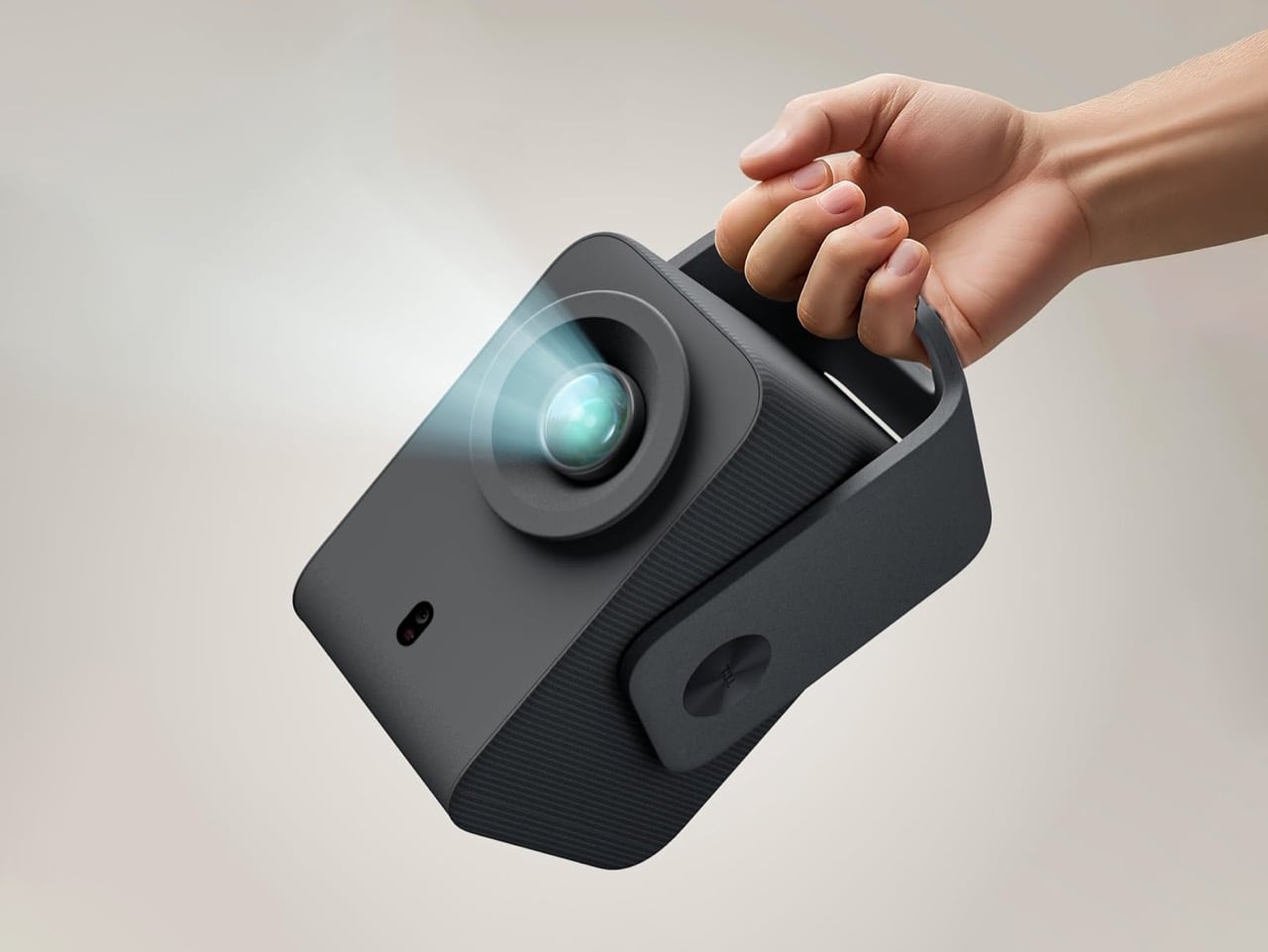
Home cinema has never been this affordable. The TCL Projector C1 brings 120-inch screen entertainment to your living room for just $199, making it cheaper than the AirPods Pro, which sounds wild considering one’s a tiny pair of earbuds and the other’s an entire cinema in your house. This isn’t a stripped-down compromise either. The projector packs Google TV, automatic focus, and a built-in battery into a portable package.

What makes this pricing remarkable is the complete feature set TCL has managed to include. Most projectors at this price point require external speakers, lack smart TV capabilities, or need constant manual adjustments. The C1 combines all these essentials in one device. You can set it up anywhere in your home, cast content from your phone, and enjoy Dolby Audio without buying additional equipment. For the cost of a mid-range streaming device, you’re getting an entire home theater system.

Designer: TCL
Click Here to Buy Now

TCL just launched their C1 projector in the UK for £249.99, though Americans get a fairly sizeable price slash of $199. I keep staring at that number trying to figure out where the catch is. You can project a 120-inch image for less than a pair of premium wireless earbuds. A full-size screen that dwarfs even the most absurdly large televisions, available for impulse-purchase money. And there isn’t some limited Black Friday offer anywhere – this is the MSRP on the box.

Obviously they cut corners somewhere. The projector outputs 230 ISO lumens, which isn’t the brightest out there by a fair mile. Yes, you can still watch movies and shows just fine, the only real caveat is that you’ll need absolute darkness – simply drawing one curtain in the afternoon won’t cut it, and watching a game with the lights on may prove to be less than satisfactory – but hey, two hundred bucks. Spend a few more on blackout curtains and you’re good. The LCD panel delivers 1080p natively with 4K support, and you need about 2.5 meters of throw distance to hit that 120-inch maximum.
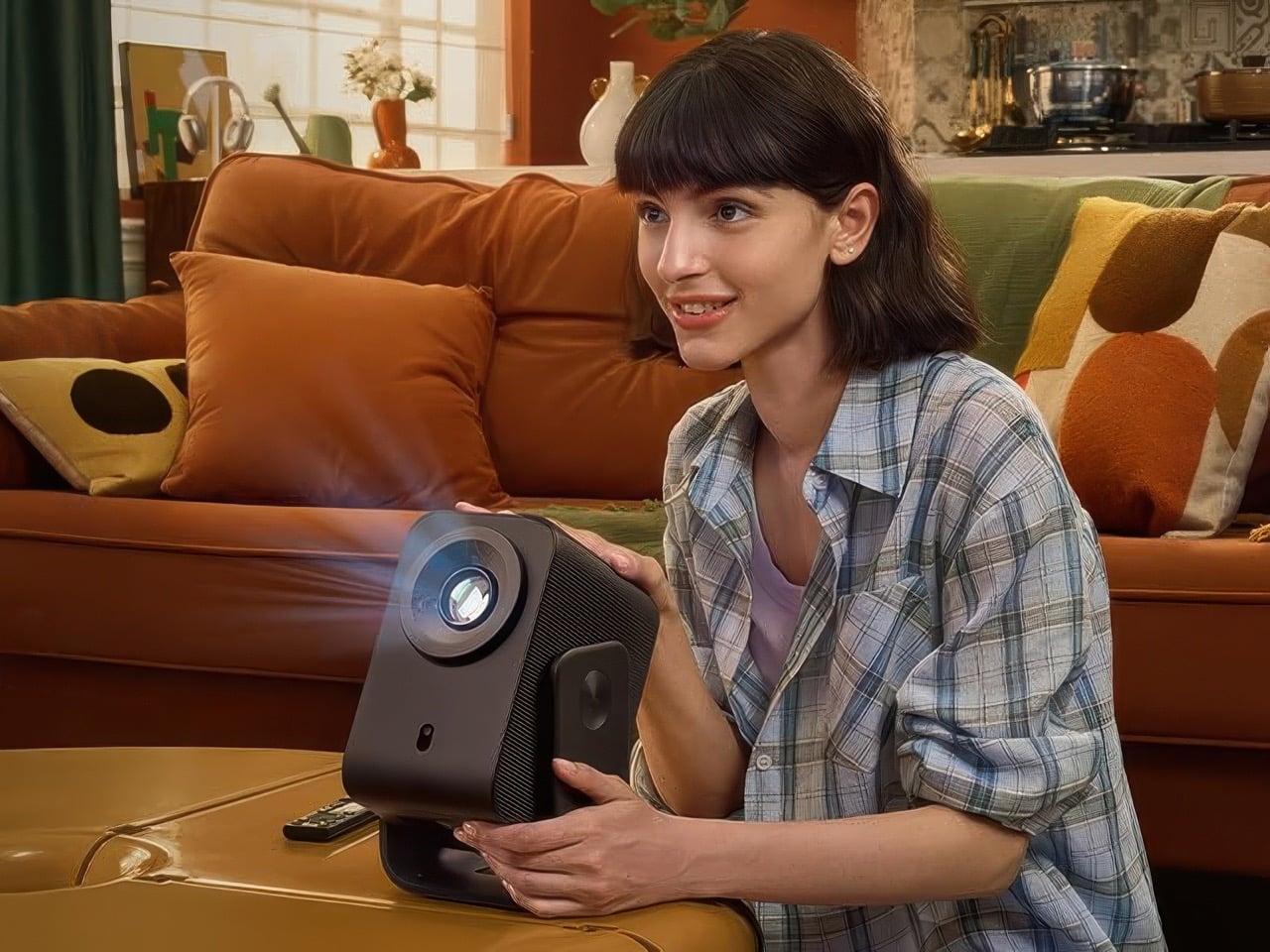
Google TV comes baked in, which matters more than it should. Most cheap projectors force you to plug in a Chromecast or Fire Stick, adding another $50 and another remote to lose between your couch cushions. Netflix certification means proper app support instead of janky workarounds or browser-based streaming that buffers at the worst possible moments. Auto-focus and keystone correction handle the setup pain points that make most people abandon projectors after one frustrating evening. I’ve spent twenty minutes adjusting focus wheels on projectors that cost ten times this much, so having it happen automatically feels like cheating.

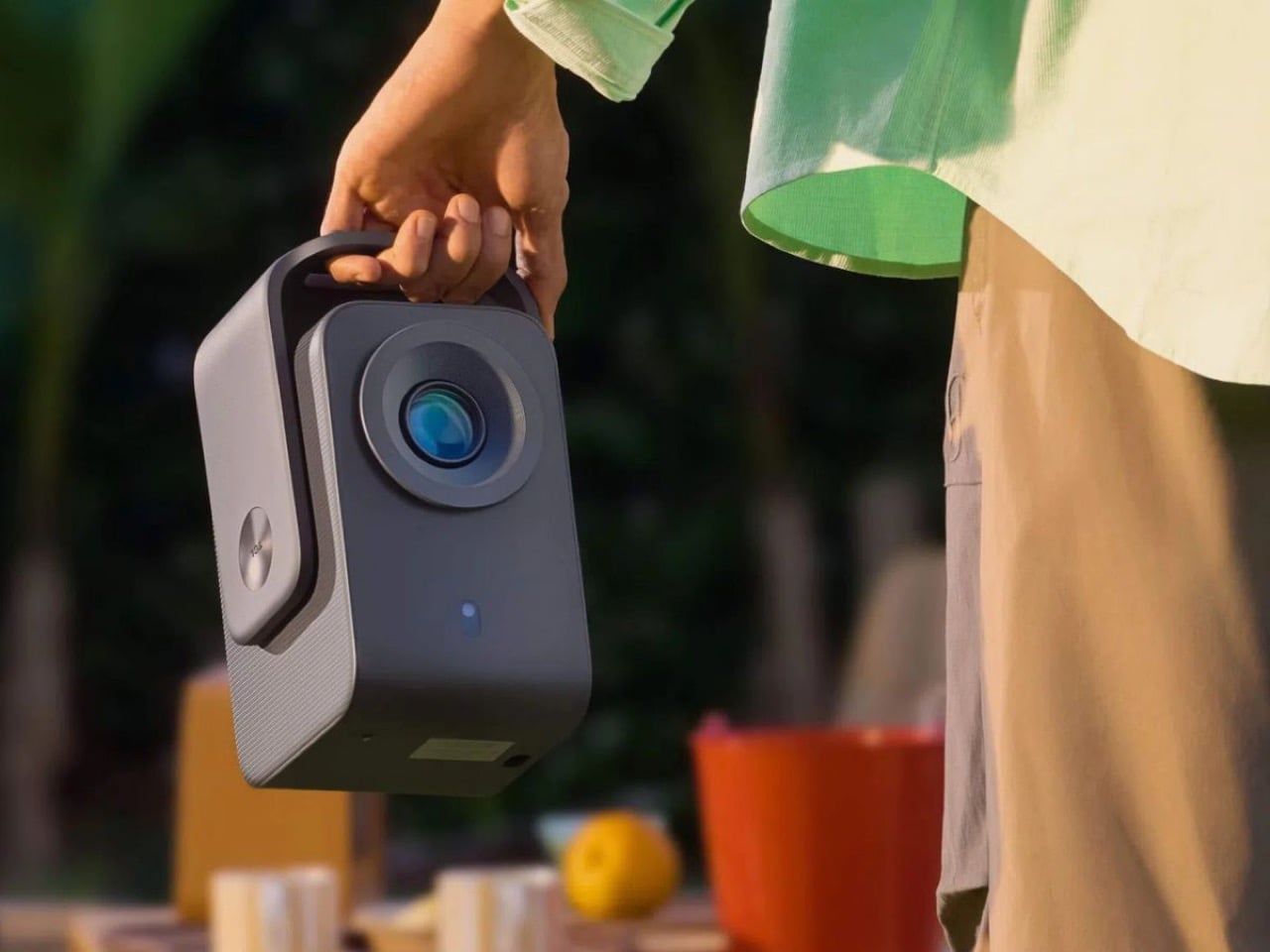
TCL included a 60 Wh battery, which gets you through a two-hour movie without trailing extension cords across your living room. Weighing 1.8 kilograms means you can actually carry this thing around from your living room to your bedroom. The integrated adjustable stand folds into the body instead of requiring a separate tripod purchase, and you can even rotate the C1 to face your ceiling for in-bed entertainment. HDMI and USB-A ports cover the basics, Wi-Fi 5 handles streaming without constant buffering, and Bluetooth 5.1 lets you pair actual speakers because that 8-watt built-in option with Dolby Audio support exists purely for emergencies. Nobody’s watching Dune on an 8-watt speaker and pretending they’re satisfied.
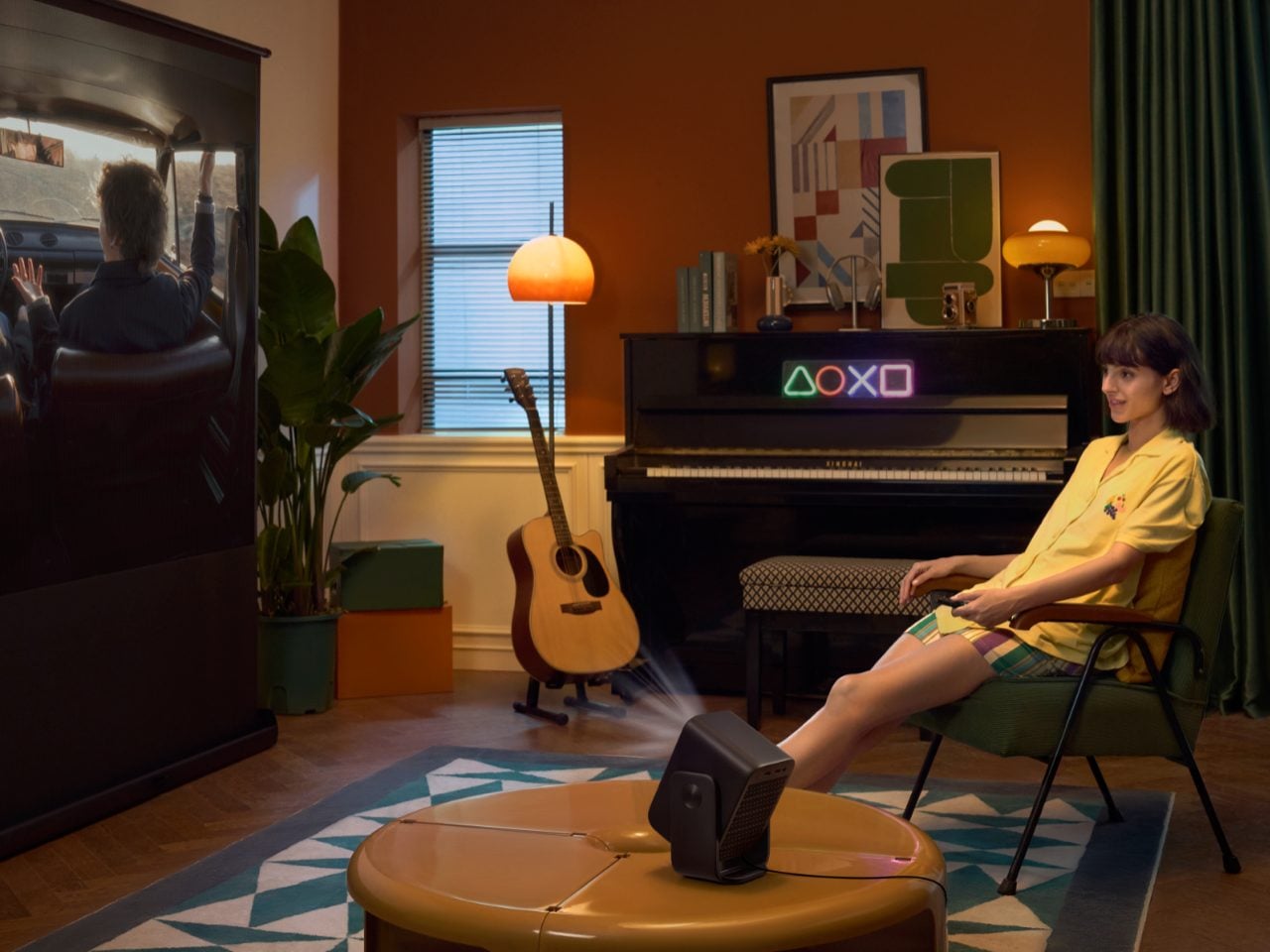
Projectors have always occupied this frustrating middle ground where cheap ones are genuinely terrible and good ones cost mortgage payment money. You either bought a $79 pico-projector that barely functioned or dropped $2,000 on something that required a dedicated room and professional calibration. TCL figured out that most people just want to watch movies on a big screen without taking out a loan or earning an engineering degree. The brightness limitations mean this won’t replace your main TV for daytime viewing, but it turns movie nights into actual events instead of just sitting on your couch scrolling through Netflix for forty minutes. Gaming on a 100-inch screen changes how you experience everything from racing games to sprawling RPGs. Your living room becomes the place where people actually want to gather instead of everyone staring at their phones in different corners.

Two hundred dollars removes most of the decision-making anxiety. You can buy this on a whim and if it doesn’t work out, you’re not crying into your pillow about wasted money. Although, considering TCL’s track record, this one might actually work out to be as good as, if not more reliable than, a 50″ smart TV that may cost 4-5x more.

Click Here to Buy Now

The post TCL’s $199 Projector Puts a 120-Inch Screen in Any Room (And Costs Less Than AirPods Pro) first appeared on Yanko Design.
Jared Isaacman is NASA’s new leader

NASA has a leader again. On Wednesday, the US Senate confirmed Jared Isaacman as the agency's administrator, with a 67-30 vote. The billionaire entrepreneur (and Elon Musk ally) will have his hands full navigating political waters while managing a severely downsized workforce.

You might recall that this wasn't Isaacman's first shot at the job. He was nominated to the post earlier this year. But days before he was scheduled for a confirmation vote, President Donald Trump withdrew his nomination.

The reversal reportedly came after the president was told that Isaacman had donated to prominent Democrats. (Trump’s description of his decision, as based on a "thorough review of prior associations," seemed to lend weight to that.) However, that was also around the time the Trump-Musk feud was about to boil over. Regardless, Isaacman was nominated again in November.

The new NASA head reportedly has broad support from the space community. (That makes him something of an aberration among Trump appointees in scientific fields.) "I am optimistic that Mr. Isaacman will bring a steady hand and clear vision to NASA," Sen. Marie Cantwell (D-WA) told The New York Times.

The new administrator has traveled to space twice on private missions. In a document published in May, Isaacman shared his three objectives for NASA. These included human missions to the Moon, Mars and deep space; helping the organization do more with a constrained budget; and cost-cutting through industry and academic partnerships.

This article originally appeared on Engadget at https://www.engadget.com/science/space/jared-isaacman-is-nasas-new-leader-220833691.html?src=rss

Billboard’s charts are increasingly weighted towards on-demand streaming, but not enough for YouTube

YouTube announced that it will no longer share data with Billboard for the creation of the Billboard Hot 100 and other charts because the video platform doesn't believe they're calculated fairly. The issue lies, per YouTube, with how Billboard weighs on-demand streams in its rankings: The publication weighs streams from paid music streaming services over ad-supported streams, and YouTube just so happens to run an ad-supported streaming service.

Much like getting a book on The New York Times Bestseller list, landing a spot on the Billboard charts doesn't carry quite the same importance that it once did. When the majority of the media people consume is digital and on-demand, sales numbers aren't a guaranteed indicator of success or popularity. That's part of the reason why Billboard started including digital streams in its calculations way back in 2007, and why it announced plans to adjust how it weighs on-demand streaming just yesterday.

On Tuesday, Billboard announced that it would add more weight to streaming to "better reflect an increase in streaming revenue and changing consumer behaviors." Billboard currently counts an "album consumption unit" as an album sale, which either breaks down to "3,750 ad-supported or 1,250 paid/subscription on-demand official audio and video streams." In the new ranking scheme that will go into effect in January 2026, "each album consumption unit will now equal 2,500 ad-supported or 1,000 paid/subscription on-demand official audio and video streams." 

"The change means that it will take 33.3 percent fewer ad-supported on-demand streams of songs from an album, and 20 percent fewer paid/subscription on-demand streams of songs from an album, to equal an album unit," Billboard says. Put another way, things are moving in YouTube’s favor, just apparently not as quickly as the company wants.

YouTube characterizes pulling its data from Billboard as fighting for fairness and equality, but it's equally connected to the platform’s demonstration of its own power. It already funnels billions of dollars to artists and labels from the money it makes on ads and subscriptions, but it clearly also wants the power to mint new chart-topping stars. “We are committed to achieving equitable representation across the charts and hopefully can work with Billboard to return to theirs,” YouTube says in its announcement. “Until then, if you're curious about what music is making waves on YouTube, you can visit our charts here.”

This article originally appeared on Engadget at https://www.engadget.com/entertainment/music/billboards-charts-are-increasingly-weighted-towards-on-demand-streaming-but-not-enough-for-youtube-220238291.html?src=rss

AI-powered headphones for private conversations even in the most crowded places

We’ve come a long way when it comes to noise isolation used in headphones and earbuds. The Active Noise Cancellation technology employed in current-generation audio accessories has reached a level that allows for adaptive ANC levels depending on the ambient noise environment. A handful of brands even go the distance to implement turning on transparency mode automatically when someone is talking to you. That’s a novelty, but still, you’ll hear the voices of other people in the vicinity if you are in a crowded environment.

That could change with an innovation that aims to eliminate any unwanted voices in the conversation. For instance, when you are talking to your pal on the street, you’ll only hear his voice, and all the other voices of people will be muted out. This innovation will not be helpful as a daily driver, but it will assist people with hearing impairments in hearing better. The initial prototype developed by the group of researchers at the University of Washington is known as the proactive hearing assistant,” and it filters the conversation partner’s voice only and looks promising.

Designer: University of Washington

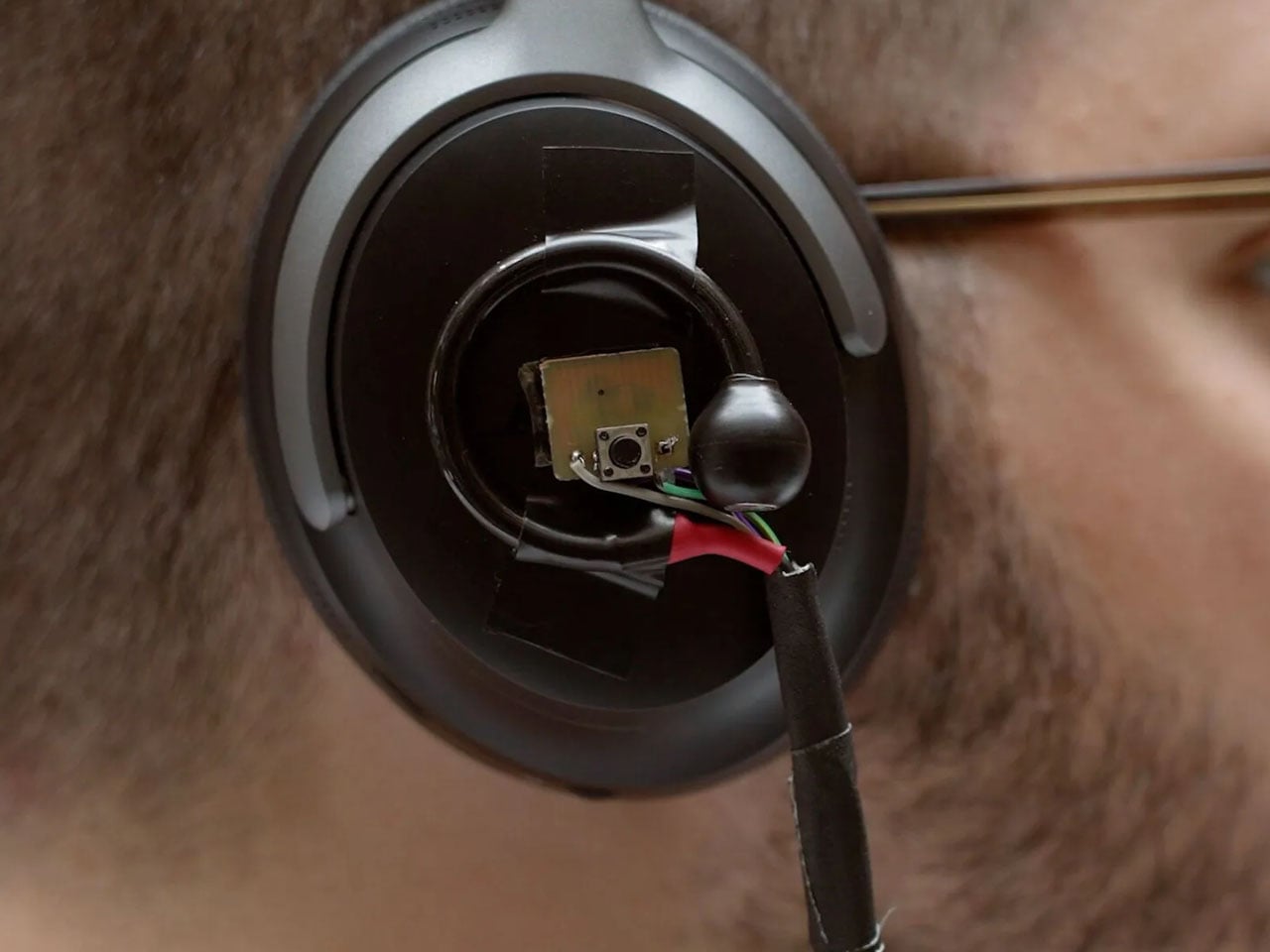
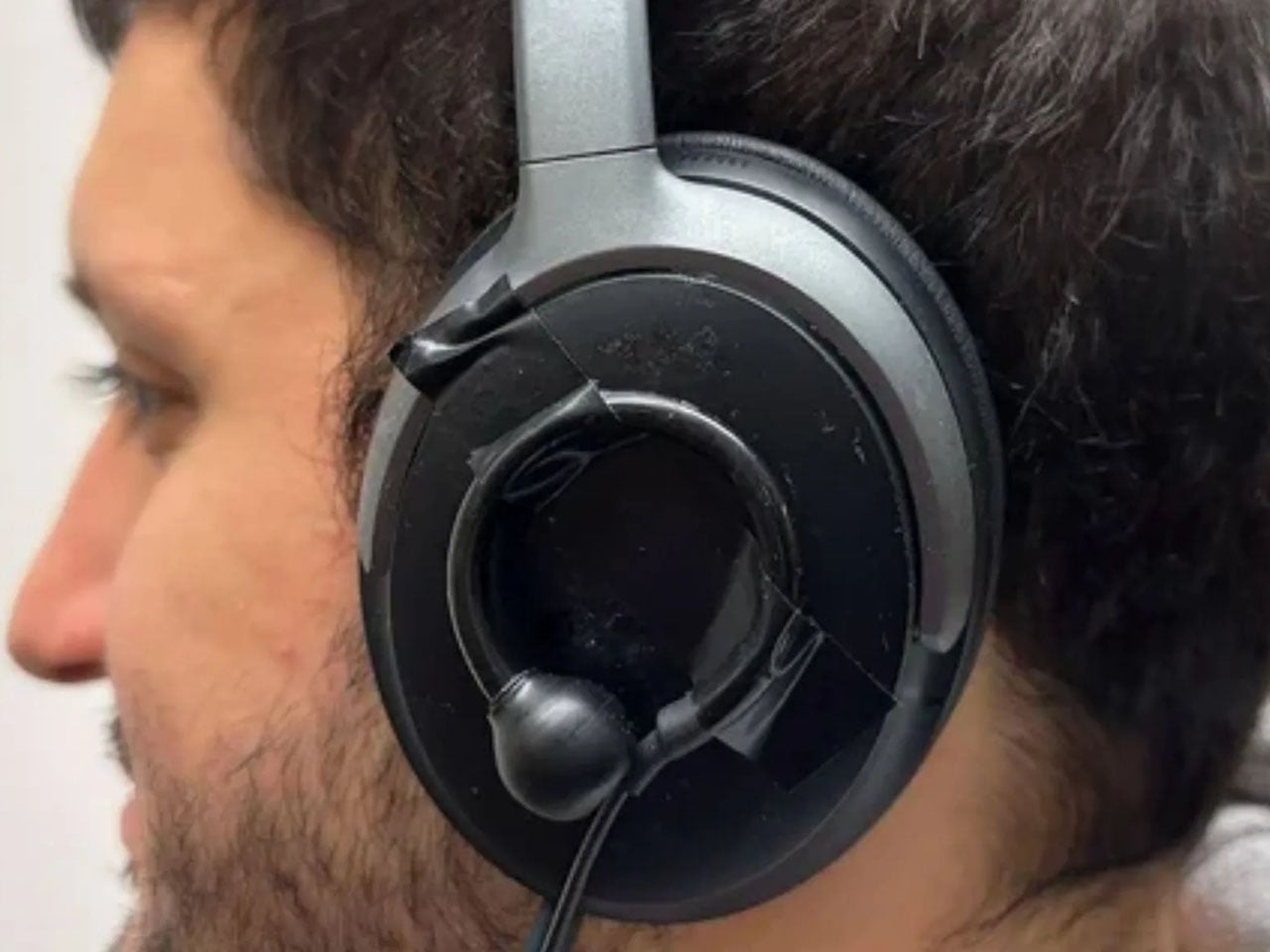
The AI-powered headphones do all the filtering automatically without any manual input which is a potent functionality current-gen headphones can hugely benefit from. The speech isolating technology suppresses the voices that don’t match the pattern of turn-taking conversation. The AI model on board keeps a tab on the timing patterns and filters out anything that doesn’t fit. Application of this exciting tech could not only be limited to audio accessories and hearing aids but also come integrated with wearable tech like smart glasses or VR headsets. The most practical implementation could come in handy at crowded places where you have to really focus on the person in conversation.

According to Senior author Shyam Gollakota, “Our insight is that when we’re conversing with a specific group of people, our speech naturally follows a turn-taking rhythm. And we can train AI to predict and track those rhythms using only audio, without the need for implanting electrodes.” The current prototype supports one wearer and up to four other people which is impressive. More so when you factor in the lag-free overall experience. Currently, the team is testing two different models of the iteration: one that runs a “who spoke when” check to look for any overlap between the speakers, identifying who’s speaking when. The second model cleans the raw signal and then feeds real-time isolated audio to the user. The latter, so far, has scored well with the 11 participants in the study.

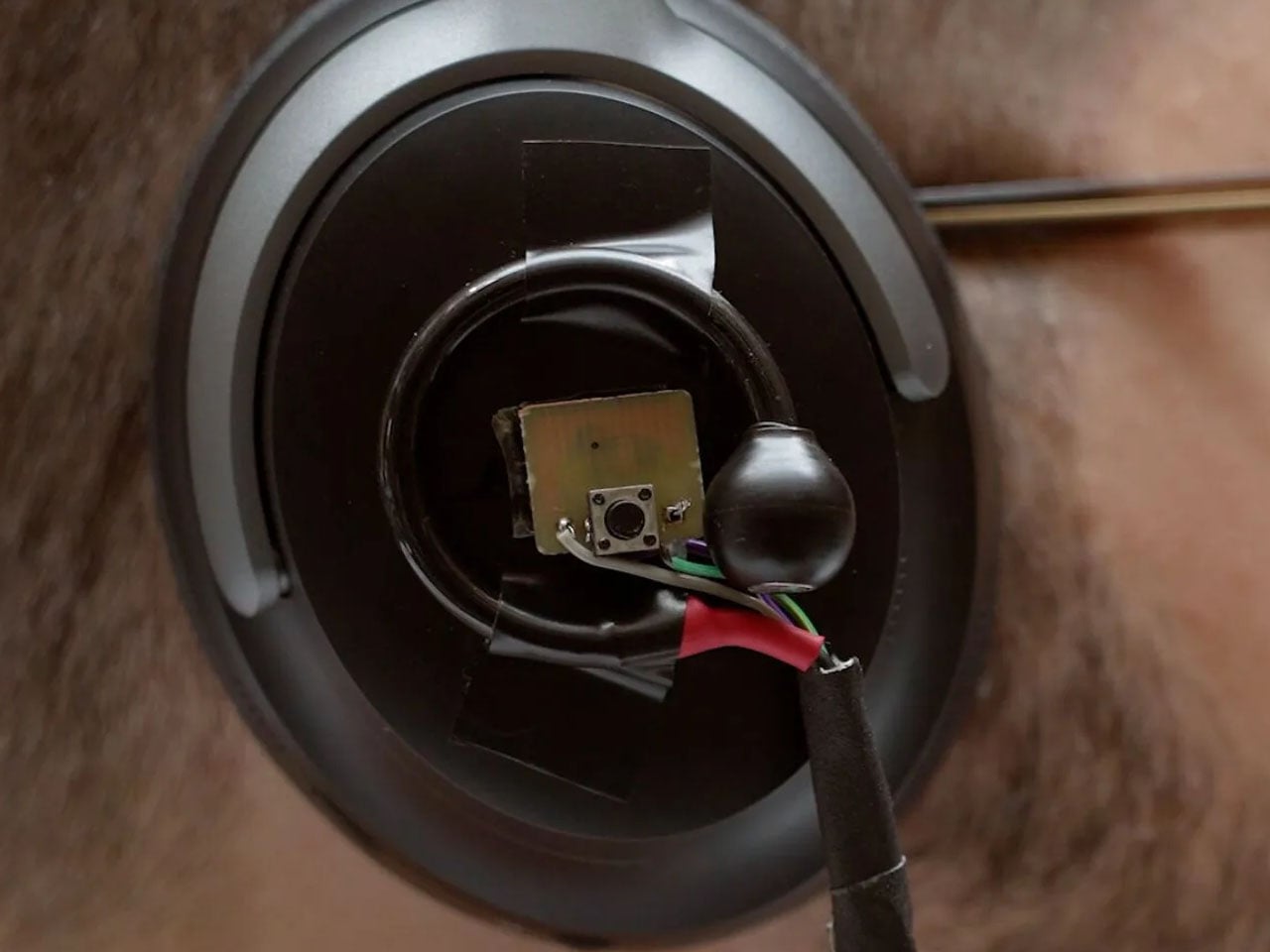
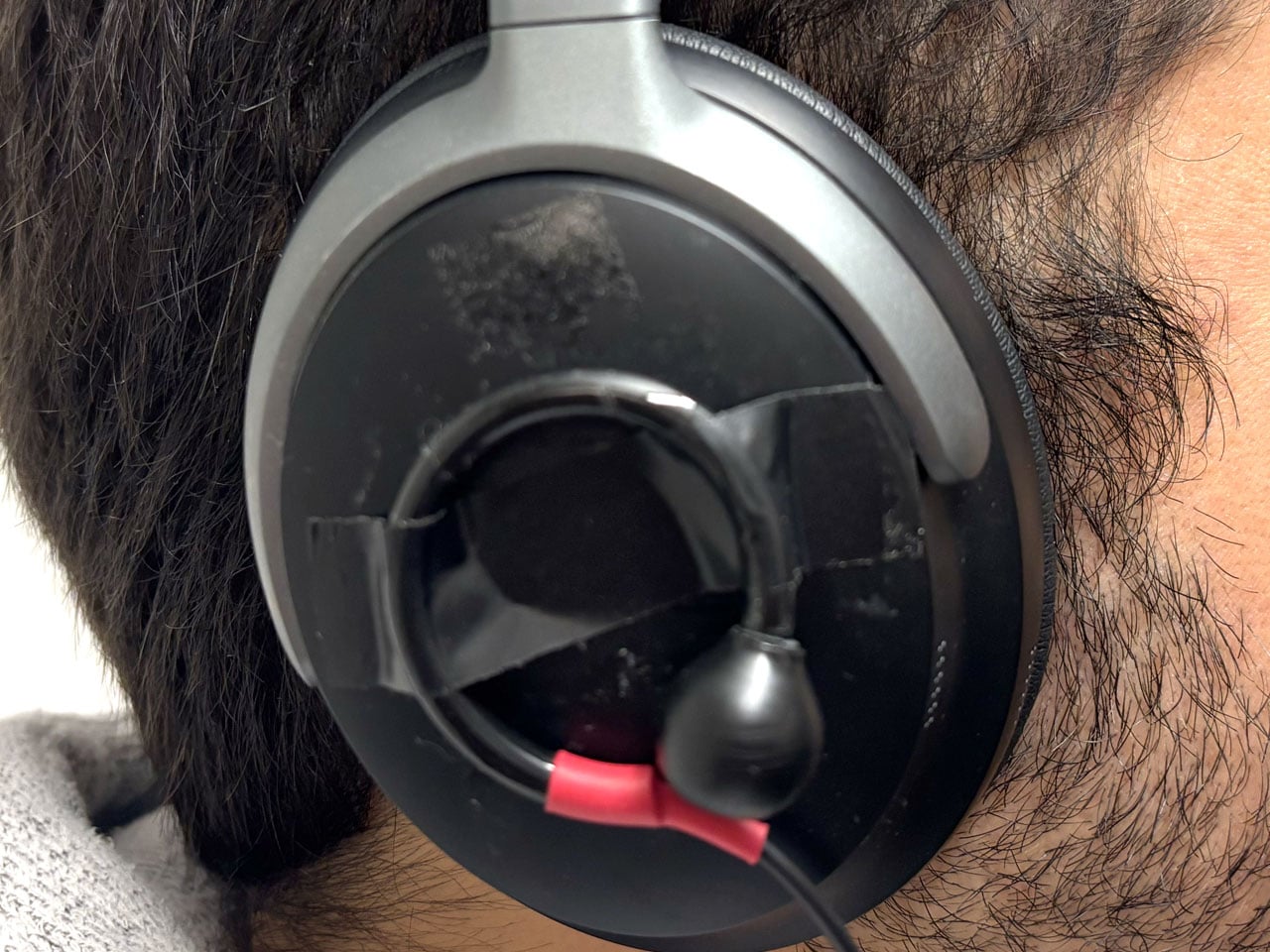
Currently, these basic over-ear headphones are loaded with extra microphones, and the team is working on slimming down the size. In conjunction with the research that is going on, small chips are being developed that run these AI models, so that they can be fitted inside hearing aids or earbuds. So, are we ready for a future where intelligent hearing is part of our daily drive?


The post AI-powered headphones for private conversations even in the most crowded places first appeared on Yanko Design.
The first post-EA FIFA soccer sim will be a Netflix Games exclusive

FIFA's first true soccer sim after the end of its EA partnership will be available exclusively on Netflix, the streaming service announced. This "reimagined FIFA football simulation game" will be developed and published by Delphi Interactive, and be available to Netflix subscribers next year, right in time for FIFA World Cup 2026.

EA and FIFA maintained a nearly 30 year partnership creating soccer games before they parted ways in 2022. EA continued its soccer series afterward as EA FC, but despite being in talks with "leading game publishers, media companies and investors" about "a major new FIFA simulation football game title for 2024," a FIFA-backed competitor has yet to materialize. Instead, FIFA has mostly supported arcade soccer games in the last few years, like FIFA Rivals from Mythical Games and FIFA Heroes from ENVER.

While the game Delphi Interactive is working on is pitched as a "simulation game," based on what little detail appears in Netflix's announcement, it doesn't sound like it's targeting hardcore soccer fans in the same way EA's games do. Instead, this new FIFA title is designed to be "a game that anyone, anywhere, can pick up and instantly feel the magic of football," according to Delphi Interactive CEO Caspar Daugaard. The game will also be designed to use a smartphone as a controller, possibly limiting how demanding or complicated gameplay can actually be.

This new FIFA game will be Delphi Interactive's second project as a studio after working on IO Interactive's 007 First Light. Backing approachable games that can be controlled with a smartphone is part of a new approach Netflix has taken with its interactive titles in 2025. The company has either cancelled or handed off its more ambitious game projects and studios, and zeroed in on party games and adaptations as its main focus.

This article originally appeared on Engadget at https://www.engadget.com/gaming/the-first-post-ea-fifa-soccer-sim-will-be-a-netflix-games-exclusive-204321196.html?src=rss

Study links Amazon’s algorithmic pricing with erratic, inflated costs for school districts

When it comes to convenience, it’s hard to beat Amazon. And that rationale isn’t limited to consumers: Many local districts shopping for supplies with public funds apply the same logic. But the Institute for Local Self-Reliance (ILSR) published a study earlier this month (via The American Prospect) that illustrates the cost of that bargain. It suggests that Amazon’s “dynamic pricing” has led many schools and other localities to overpay for supplies.

Public schools and local governments have historically bought supplies by soliciting competitive bids from local suppliers. Those vendors then respond with fixed price lists, delivery timelines and other terms. This competition — all out in the open, part of the public record — encourages low prices and transparency.

On the surface, ordering from Amazon appears to offer competition, too. After all, the platform includes third-party vendors fighting for your dollars. But turning taxpayer funds over to Amazon’s algorithms isn’t quite that simple. That’s because the platform’s “dynamic pricing” (algorithmically driven real-time changes) is inherently opaque.

According to the report, Amazon’s contracts with public entities don’t include fixed price lists. Instead, they include language built around swings. “This contract has a dynamic pricing structure in which the price for items listed on the online digital marketplace is driven by the market,” Amazon’s contract with Utah reads. “This contract will not need to be amended when prices fluctuate.”

Below are some examples of wild price discrepancies for these districts. All of ILSR’s examples are from localities buying supplies from Amazon Business with public funds in 2023.

  • A City of Boulder, CO employee ordered a 12-pack of Sharpie markers from Amazon Business for $8.99. On the same day, a Denver Public Schools worker ordered the same markers for $28.63.

  • Amazon charged Clark County, WA, $146,000 for 610 computer monitors. On another day, that same order would have cost $24,000 less.

  • Pittsburgh Schools bought two cases of Kleenex for $57.99 each. On the same day, Denver Schools paid $36.91 for a single case.

  • On a single August day, Denver Schools placed two separate orders for bulk cases of dry-erase markers. One cost $114.52. The other was $149.07.

  • In March 2023, Denver Schools paid $15.39 for a Swingline stapler (sold by Amazon). A few days later, the same school system paid $61.87 for the same product (sold by a third-party seller).

Even in that last example, ILSR says Amazon’s algorithms are the culprit. “It might be tempting to blame the seller for putting a $62 price tag on a stapler or the employee for not noticing the cost,” the nonprofit argues. “But that overlooks Amazon’s pivotal role in the transaction — and the profit it makes. Amazon’s algorithms steer shoppers’ attention, selecting featured products and organizing search results. The platform routinely prompts users to ‘buy it again,’ even when the price has jumped. For busy public school employees, it’s all too easy to simply click the buy button, under the assumption that Amazon is surfacing the best option.”

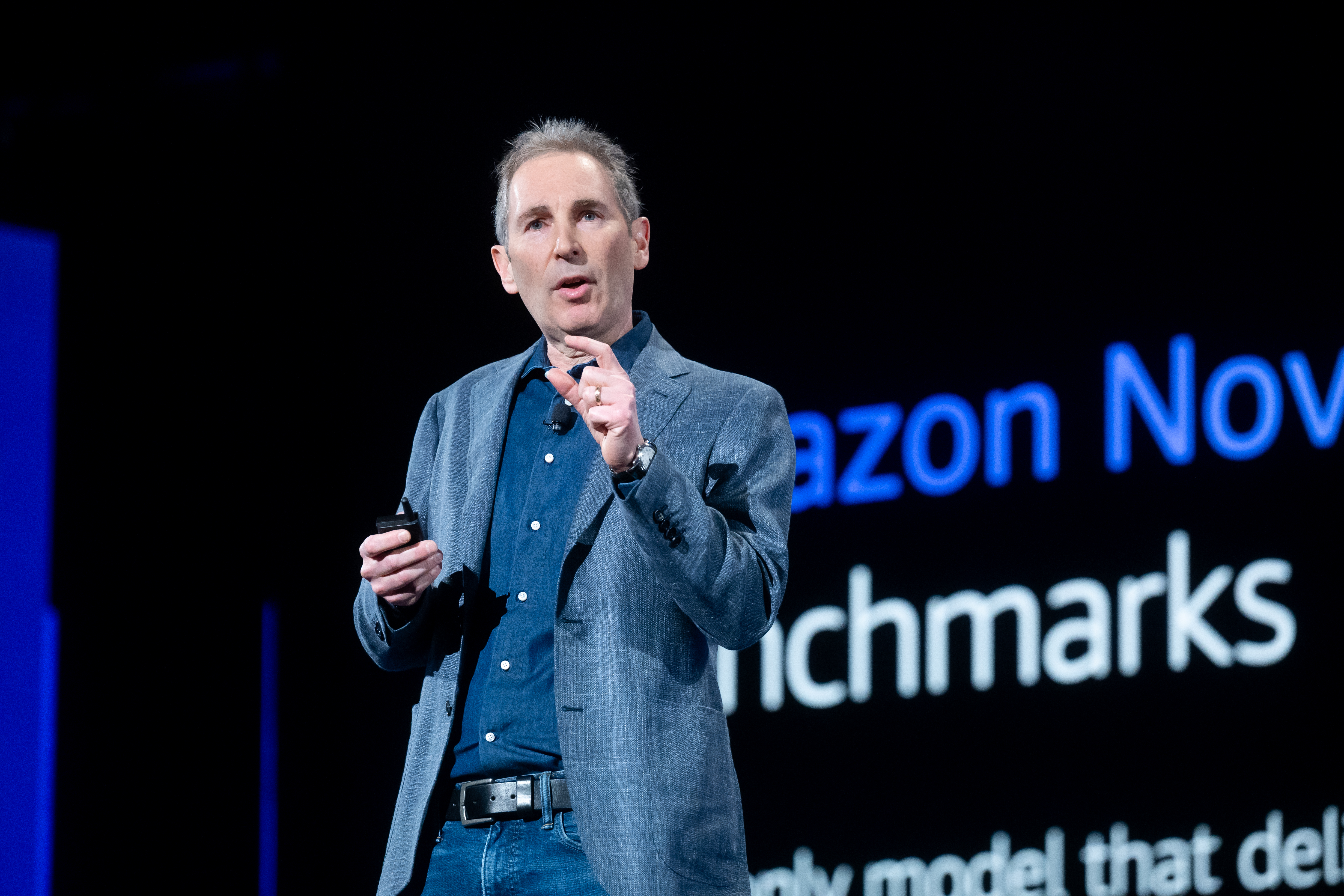
LAS VEGAS, NEVADA - DECEMBER 3: Amazon CEO Andy Jassy speaks during a keynote address at AWS re:Invent 2024, a conference hosted by Amazon Web Services, at The Venetian Las Vegas on December 3, 2024 in Las Vegas, Nevada. (Photo by Noah Berger/Getty Images for Amazon Web Services)
Amazon CEO Andy Jassy
Noah Berger via Getty Images

One portion of the study looked at repeat orders for 2,500 “high-frequency items.” (These included Amazon-brand copy paper, Elmer’s glue, BIC pens, Lysol cleaning wipes and Crayola crayons.) In total, the jurisdictions in the study spent $3 million on those items. But based on the lowest prices Amazon charged during that period, they would have paid only $2.5 million. Across those same items, one school district could have saved 17 percent (about $1 million) if it consistently received Amazon’s lowest prices.

What would fair market value have been for those items? Well, it’s hard to say because the algorithms are steering pricing silently in the background. A more thorough study that included the same items, bought exclusively through the traditional procurement method, would tell us much more. And recent history has taught us that trusting Big Tech’s algorithms to serve the public good (rather than its own bottom line) is a fool’s errand.

In at least some cases, the practice routes public funds away from local vendors and toward overseas ones — and, of course, Amazon itself. In Berkeley County, WV, the school district spent $1.3 million on Amazon Business in 2023. What portion went to sellers in the state? A measly $142.

On top of all of that, the practice has snuffed out many of the smaller vendors that traditionally competed for these contracts. “The disappearance of these small and mid-sized businesses weakens local economies and tax bases,” the report concludes. “And it leaves governments increasingly dependent on Amazon, paving the way for the kind of monopoly control that ensures higher prices, poorer service, and less innovation.”

In a statement sent to The Guardian, Amazon disputed the study’s conclusions. “Pricing research is notoriously difficult to conduct accurately and typically lacks reliable methodology, including cherry-picked product selections, mismatched product comparisons and comparing in-stock items with products out-of-stock at competitors,”

ILSR’s report drew in spending data from 128 local governments (including cities, counties and school districts) and 122 state agencies. It also gathered contract documents and interviewed public officials, procurement experts and vendors.

This article originally appeared on Engadget at https://www.engadget.com/big-tech/study-links-amazons-algorithmic-pricing-with-erratic-inflated-costs-for-school-districts-202047988.html?src=rss

Remember Apple’s AirPower Mat? Dreame Built A MagSafe Power Bank That Does The Same Thing

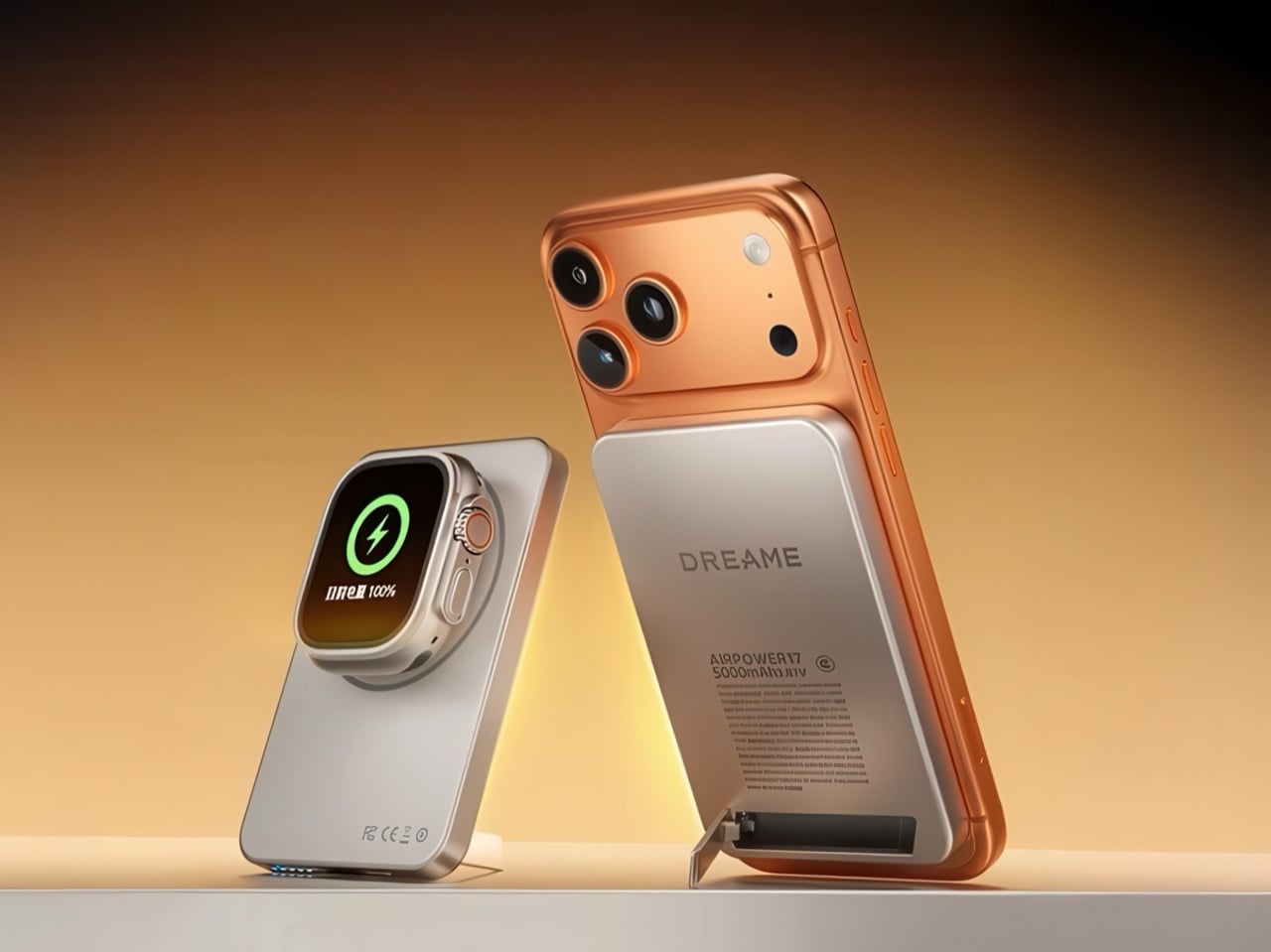
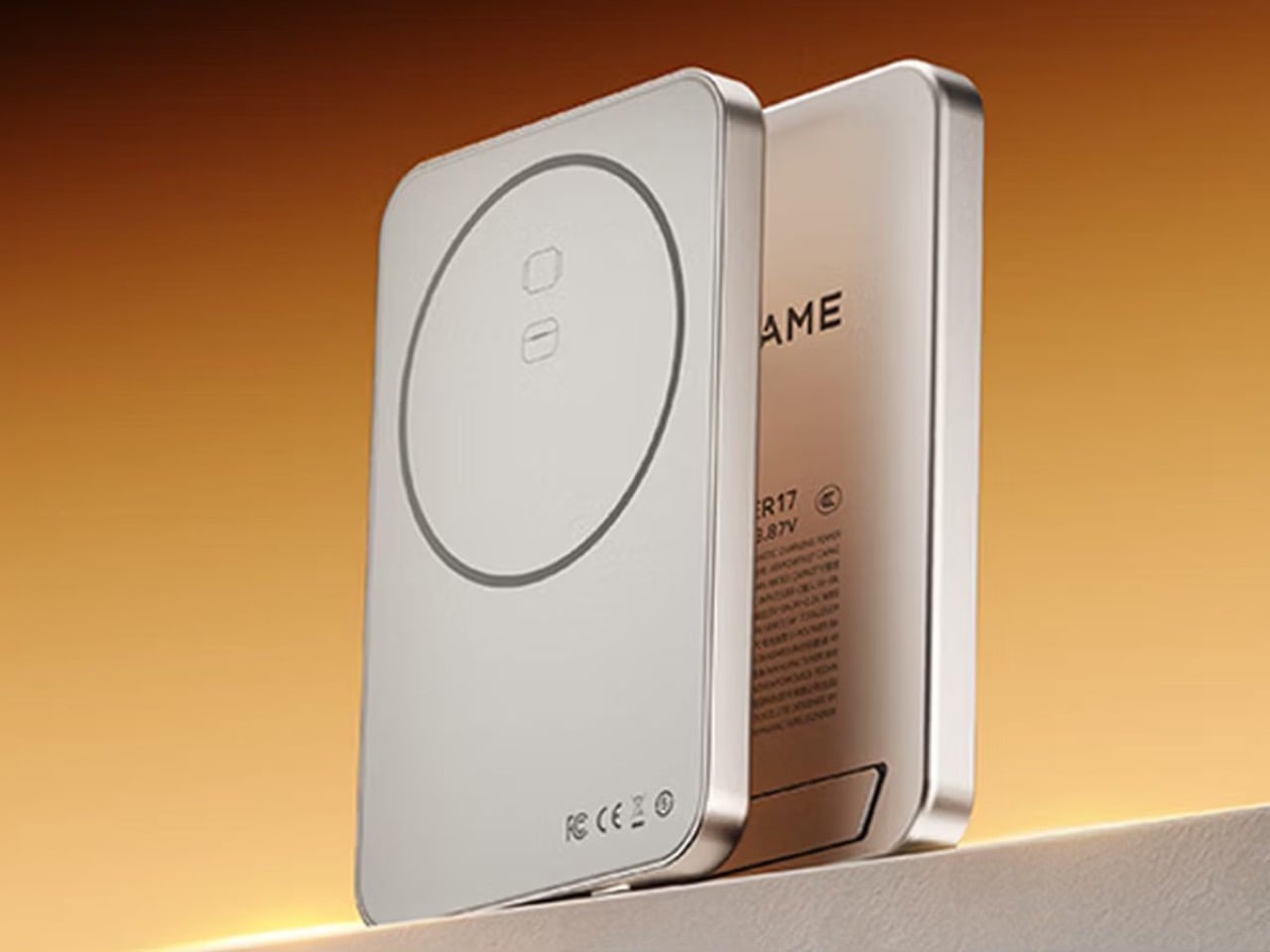
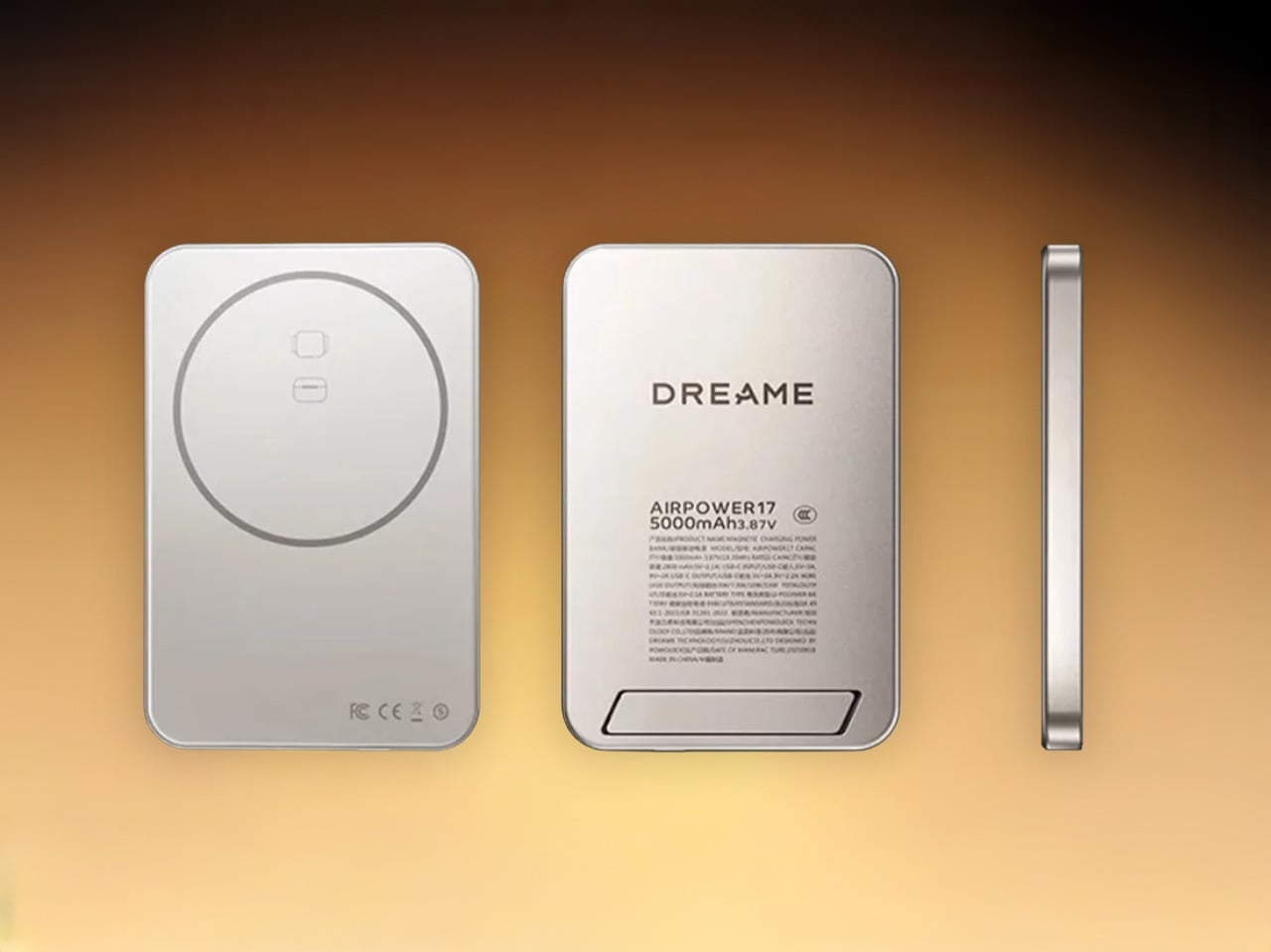
Dreame built its name on robot vacuums and smart cleaning stations, but its newest release does not clean your floors at all. Dreame’s Air Power 17 arrives as a magnetic portable power bank with a surprisingly polished feel, pairing an aluminum frame with AG glass and a footprint barely larger than a bank card. It clicks into place on an iPhone 17 or any Qi2 compatible phone, then quietly delivers up to 15 watts wirelessly or 20 watts over USB-C. But that’s not what’s so surprising about the power bank (apart from the fact that the parent company also manufactures robot vacuums)… it’s that the AirPower 17 also charges your TWS earbuds AS WELL AS your Apple Watch, right through the same wireless charging surface.

The name is a clever dig at Apple’s own AirPower disaster from 2017, when the company announced a charging mat that could handle 3 devices at once. Now, it seems like Dreame’s taken the mantle of making that happen, that too in a compact form factor that still feels decidedly premium, thanks to the slim design, the aluminum alloy frame, and AG glass back. Now, the obvious question is why a vacuum company thinks it can waltz into a market already flooded with Anker, Baseus, and a hundred Shenzhen generics. Here’s the thing: Dreame has been on an absolute tear since July, dropping or teasing products in personal care, large appliances, consumer electronics, and even automotive adjacent gear. This power bank feels like part of a coordinated land grab, and the clever multipurpose design genuinely feels like a consumer-focused product aimed at winning hearts, not just adding small numbers to a company’s profits.

Designer: Dreame

The Air Power 17’s design is fairly simple and straightforward, packing one USB C port, Qi2 wireless at 15 watts max, and that integrated kickstand. The 5,000 milliamp hour version comes in at just 8 millimeters thick and 125 grams, which is borderline remarkable when you consider it includes a stand mechanism and a full magnetic ring. The 10,000 milliamp hour Pro is predictably chunkier at 12.8 millimeters and 189 grams, but still compact enough that you could daily carry it without hating your life. Both share the exact same 103 by 58.4 millimeter footprint, so your choice really comes down to whether you value slimness or capacity more.

The winning feature, however, is the power bank’s ability to charge both smartphones as well as an Apple Watch from the same charging surface. Snap the Air Power 17 to the back of your phone, or just place it on a surface and rest your Apple Watch on the watch symbol and you’re good to go. Right below the Watch symbol is also a TWS earbud case symbol, which means you can even charge your AirPods or other earbuds on the power bank. I’ve yet to see a single power bank this slim so elegantly cover all bases. The fact that a robot vacuum company pushed this first seems odd but hey, the consumer in me is happy he doesn’t need dongles, cables, and other paraphernalia to keep his devices charged.

The built in stand is the sneaky detail that turns the power bank into a proper desk accessory, the kind of thing you slap your phone onto during a video call or while following a recipe. Most magnetic power banks treat the stand as an afterthought, a flimsy plastic hinge that wobbles under the weight of a phone. Dreame integrated it into the rear housing with their branding stamped right on it, so it doubles as brand presence and functional hardware. Wireless efficiency is rated above 60 percent, which tracks with Qi2 standards but also means you lose about 40 percent of capacity to heat and conversion losses when charging wirelessly. If you want the full 10,000 milliamp hours, you need to cable up.

The catch is availability. Right now this lives exclusively in China, sold on platforms like JD.com with zero confirmed timeline for a global rollout. Dreame already sells robot vacuums in the US and Europe, so the infrastructure exists, but consumer electronics accessories face different certification hoops than home appliances. At 219 yuan for the 5,000 milliamp hour model and 259 yuan for the 10,000 milliamp hour Pro, Dreame is pricing aggressively enough to make established brands nervous while keeping enough margin to signal this is a real product line. Here’s to hoping for a global rollout soon – maybe this is the AirPower Mat we truly deserve!

The post Remember Apple’s AirPower Mat? Dreame Built A MagSafe Power Bank That Does The Same Thing first appeared on Yanko Design.
Meta is ‘pausing’ third-party VR headsets from ASUS and Lenovo

Last year, Meta announced that it was opening up its VR operating system to other headset makers, starting with ASUS and Lenovo. Now, it seems that Meta is pumping the brakes on the effort and those third-party Horizon OS headsets might never actually launch.

The company has "paused" the program, Road to VR reported. Meta confirmed the move in a statement to Engadget, saying that it's instead focusing on "building the world-class first-party hardware and software needed to advance the VR market." ASUS and Lenovo didn't immediately respond to a request for comment. Both companies have said little about the headsets since they were first announced in 2024. ASUS' was going to be a "performance gaming" headset under its Republic of Gamers (ROG) brand, while Lenovo's was intended to be a mixed reality device focused on "productivity, learning and entertainment" experiences 

The shift isn't entirely surprising. Meta Connect was very light on virtual reality news this year as smart glasses have become a central focus for the company. Earlier this month, Bloomberg reported that Meta was planning significant cuts to the teams working on virtual reality and Horizon Worlds. The company said at the time it was "shifting some of our investment from Metaverse toward AI glasses and wearables given the momentum there."

Still, Meta is seemingly leaving the door open for third-party VR headsets in the future. "We’re committed to this for the long term and will revisit opportunities for 3rd-party device partnerships as the category evolves," the company said.


This article originally appeared on Engadget at https://www.engadget.com/ar-vr/meta-is-pausing-third-party-vr-headsets-from-asus-and-lenovo-193622900.html?src=rss

This cute little Behringer synthesizer sounds massive and costs just $49

Behringer is no stranger to remaking classic synthesizers and selling them at much cheaper price points. However, this latest release may just take the budget-friendly cake. The company just introduced the UB-1 Micro, previously called the Spirit, a portable analog synth inspired by the Oberheim Matrix line that costs just $49.

Despite the price tag, this thing still manages to sound extremely beefy. It features a pair of digitally controlled oscillators (DCOs) based on the Oberheim Matrix 6 analog chip. The monophonic/duophonic synth boasts two LFOs to control filters and tuning and an arpeggiator with three patterns and a hold function.

It also offers 32 factory presets, which is expandable via the company's SynthTribe software. The UB-1 Micro includes 16 touch-sensitive keys, six function buttons and an OLED display for editing parameters. There's a USB-C port, for connecting to smartphones and computers. To that end, it can do USB/MIDI.

This is just the latest teensy recreation by Behringer. The UB-Xa Mini is a take on another Oberheim classic and a portable version of its own full-size UB-Xa synthesizer. The JT Mini recreates an iconic Roland Jupiter synth, while the Phara-o Mini is primarily based on the Korg Volca Keys.

This article originally appeared on Engadget at https://www.engadget.com/audio/this-cute-little-behringer-synthesizer-sounds-massive-and-costs-just-49-191513007.html?src=rss

The Oscars will exclusively air on YouTube starting in 2029

The entertainment industry’s most well-known awards show is heading to streaming. The Academy of Motion Picture Arts and Sciences (AMPAS) has announced that the Academy Awards, popularly known as the Oscars, will exclusively air on YouTube starting in 2029. The new deal means the awards show is abandoning its long-time partnership with ABC (owned by frequent Oscars heavyweight, The Walt Disney Company), though the Oscars will continue to air on the network through its 100th anniversary in 2028.

The Academy Awards will be joined by other Academy events and programming on the Oscars YouTube channel, including “the Governors Awards, the Oscars Nominations Announcement, the Oscars Nominees Luncheon, the Student Academy Awards, the Scientific and Technical Awards, Academy member and filmmaker interviews, film education programs, podcasts, and more,” AMPAS says. The Google Arts & Culture initiative will also digitize artifacts in the Academy collection and help provide digital access online as part of the new partnership.

“We are thrilled to enter into a multifaceted global partnership with YouTube to be the future home of the Oscars and our year-round Academy programming,” Academy CEO Bill Kramer and Academy President Lynette Howell Taylor said in the announcement of the new YouTube deal. “The Academy is an international organization, and this partnership will allow us to expand access to the work of the Academy to the largest worldwide audience possible — which will be beneficial for our Academy members and the film community.”

Awards shows have struggled to find their footing in the streaming era, particularly because they already served a niche audience even when broadcast TV was the norm. Prior to the Oscars heading to YouTube, Netflix snagged the rights to stream the SAG Awards in 2023, an acting-focused award show that’s often seen as a precursor to the Oscars.

This article originally appeared on Engadget at https://www.engadget.com/entertainment/tv-movies/the-oscars-will-exclusively-air-on-youtube-starting-in-2029-181545531.html?src=rss