The last Xbox update of 2025 includes a handy Wireless Headset upgrade

As part of its last Xbox-focused software update of the year, Microsoft is improving the Bluetooth performance of the Xbox Wireless Headset to make it work even better with Windows 11. Microsoft released the latest Wireless Headset as an accessory for Xbox Series X/S and PC, but as of this update, Xbox Wireless Headset owners on Windows will now have a leg up on their console counterparts thanks to support for Bluetooth Low Energy (LE) Audio.

Microsoft says that supporting Bluetooth LE Audio will let the headset offer lower latency audio, better battery life, richer stereo sound and the ability to share audio across multiple compatible Bluetooth accessories at the same time. Not revolutionary updates, but still nice to have if you bought a $110 Xbox Wireless Headset back in 2024. Provided you're running the latest version of Windows 11 and your device supports Bluetooth LE, Microsoft says you can take advantage of the improvements by updating your headset in the Xbox Accessories app.

If you're a regular user of the Xbox mobile app, Microsoft is also making some changes there. After adding the ability to purchase Xbox games directly from the app in April — a feature made possible after Google and Apple were forced to change the rules of their app stores — Microsoft is now adding a dedicated Store tab to the app. You'll also be able to add games to your wishlist and search for add-ons and DLC directly in the app.

Microsoft ending the year with Windows and mobile app updates reflects the ways the company's gaming strategy has changed in 2025. After spending decades positioning itself as a console maker, Microsoft is seemingly making Xbox software its main focus going forward.

This article originally appeared on Engadget at https://www.engadget.com/gaming/xbox/the-last-xbox-update-of-2025-includes-a-handy-wireless-headset-upgrade-204500386.html?src=rss

NYT Games has a year-in-review thing now too

The New York Times is getting in on the year-end roundup bandwagon. The publication's new Year in Games wraps up stats about which of its daily puzzles and brain-teasers readers played over the course of 2025. People can get their own personalized reports, or just look over the community stats for the Wordle, Connections, Spelling Bee and Strands games. The Year in Games reviews are available on the iOS and Android apps for The New York Times, as well as on a dedicated mobile web page.

Annual analysis of all your activities has become a common feature for lots of services. Reports like Spotify Wrapped or the other many entertainment-related ones are usually a fun time, with splashy graphics and high shareability. Uber feels like an odder match.

This article originally appeared on Engadget at https://www.engadget.com/gaming/nyt-games-has-a-year-in-review-thing-now-too-203000878.html?src=rss

DIY $15 Raspberry Pi Device Blocks Every Ad on Your Phone, TV, and Laptop Automatically

Cory Doctorow coined the term “enshittification” to describe how internet platforms inevitably decay, prioritizing advertisers and shareholders over users who made them successful in the first place. What begins as a useful service gradually transforms into an advertising delivery system wrapped around minimal functionality. Websites that once loaded instantly now take seconds to render as they auction off your attention to the highest bidder. Social media feeds become algorithmic nightmares designed to maximize engagement with sponsored content rather than connections with actual people. This isn’t accidental degradation but a deliberate business model that treats users as products to be packaged and sold.

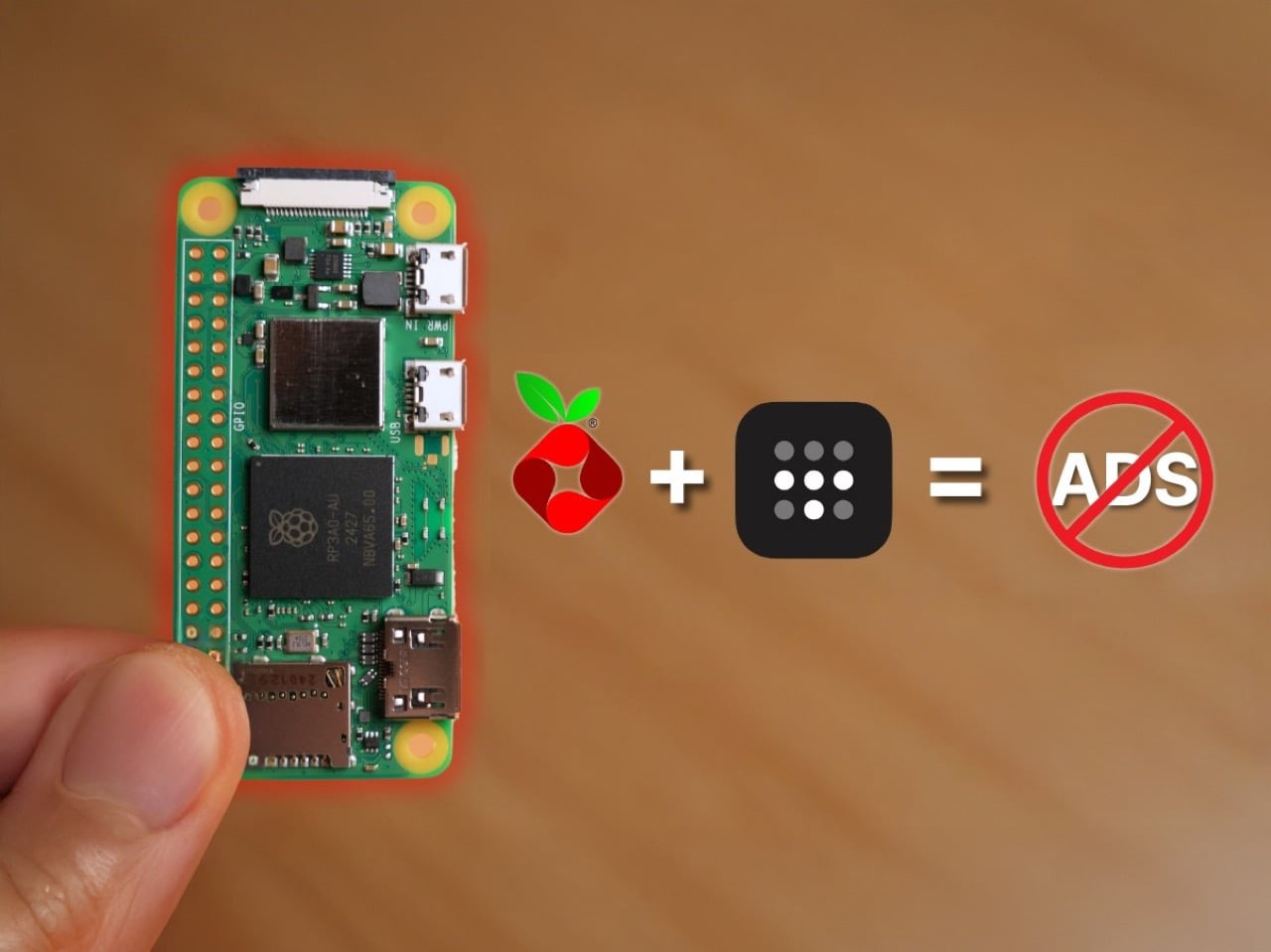
Fighting back against enshittification requires taking control of your own infrastructure rather than hoping platforms will respect your time and privacy. The Raspberry Pi Zero 2W running Pi-hole software represents a practical form of digital self-defense that costs less than $30 and works continuously in the background. This tiny computer sits on your home network and blocks advertising domains before they reach your devices, creating a cleaner internet experience across phones, tablets, computers, and smart TVs simultaneously. Adding Tailscale extends this protection beyond your home, ensuring that your browsing remains uncluttered whether you’re traveling or working remotely. The setup takes an evening and requires no programming expertise, just a willingness to reclaim your digital experience from platforms that have forgotten who they’re supposed to serve.

Designer: Enrique Neyra

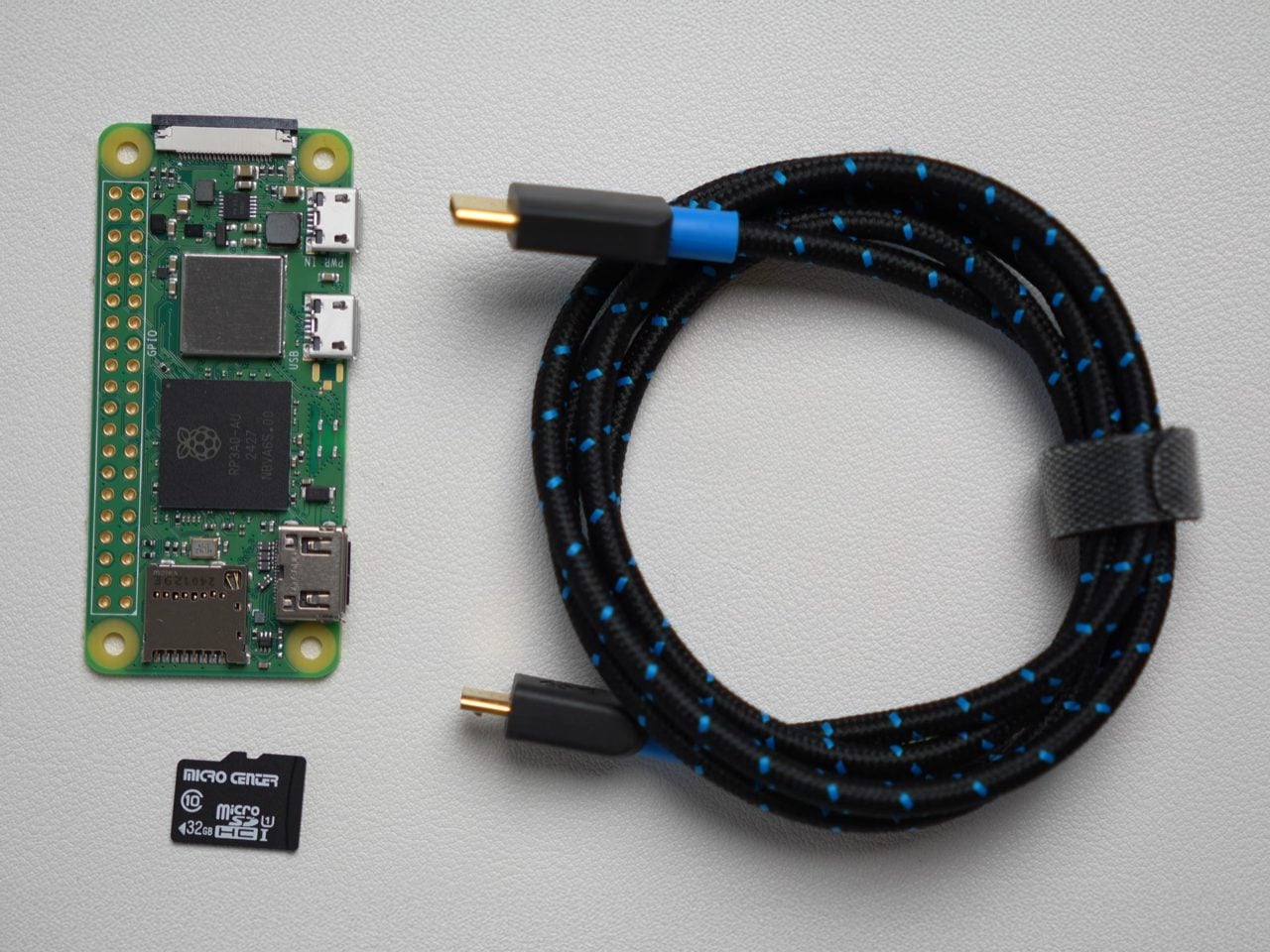
You’d expect an ad-blocker to be substantial on either the hardware or the software front, but this build proves just how small, easy, and cheap everything is. The Raspberry Pi Zero 2W running this entire thing measures 65mm by 30mm, smaller than most people’s wallets, drawing about 2 watts when it’s actually working. You could run this thing 24/7 for a year and spend less on electricity than a single trip to Starbucks. The whole shopping list is stupidly cheap too: the Pi itself runs $15, throw in an 8 dollar micro SD card and whatever USB cable you’ve got rattling around in a drawer. Thirty bucks max, and suddenly you’ve got hardware that can filter ads for every single device in your house.

The Pi runs headless, meaning no monitor, no keyboard, just sitting there quietly doing DNS work in the background. You flash Raspberry Pi OS Light onto the SD card using their imaging tool, which strips out all the desktop environment bloat since you’ll never actually see a screen. During setup you punch in your WiFi credentials, enable SSH so you can talk to it remotely, and give it a hostname. Three minutes later the OS is ready and you’re plugging the card into the Pi. Boot it up, SSH in from your laptop, and you’re looking at a command prompt on a computer the size of a pack of gum.

Pi-hole (an open-source software that blocks ads across the entire network) installs with one command. Literally paste it into the terminal and the script handles everything, walking you through prompts about which DNS provider you want upstream and whether you want query logging enabled. You absolutely want the web admin interface because that’s where you’ll watch the magic happen in real time. The trickier bit is the static IP assignment, which sounds intimidating but really just means logging into your router and clicking a button that says “reserve this IP for this device.” Most modern routers make this dead simple. ISPs like Spectrum have apps where you just scroll through connected devices, find your Pi, and hit reserve. Done.

Once the Pi has its permanent address, you point your router’s DNS settings at it instead of whatever your ISP provides by default. Every device on your network now funnels DNS requests through Pi-hole before connecting to anything. Pi-hole maintains these massive blocklists of known advertising and tracking domains, thousands of entries that get updated regularly. Your phone tries to load an ad from doubleclick.net? Blocked. Facebook wants to ping its analytics server? Blocked. The actual content you’re trying to see loads normally while all the parasitic garbage just vanishes. The Pi-hole dashboard shows you this happening in real time, queries flying in and getting either allowed or blocked based on the lists.

The really clever part is Tailscale, which turns your home setup into something you can use anywhere. Tailscale creates this encrypted mesh network between all your devices using WireGuard under the hood, and it’s shockingly easy to configure. Install it on the Pi with another single command, authenticate through their web console by clicking a link, and boom, your Pi appears in the Tailscale admin panel. Then you tell Tailscale to use your Pi’s IP as the DNS server for everything connected to your account. Now your laptop routes through your home Pi-hole whether you’re at a coffee shop in Brooklyn or an airport in Singapore. The VPN overhead adds maybe 10 milliseconds, completely imperceptible during actual browsing.

What you get is immediate and obvious. News sites that normally assault you with autoplaying video ads and popup overlays suddenly render clean. Mobile apps stop shoving interstitials between every interaction. Your smart TV’s interface becomes less cluttered with sponsored content tiles. Pi-hole typically blocks 20 to 30 percent of all DNS queries, which translates directly into faster page loads because your devices skip downloading megabytes of ad scripts and tracking pixels. Battery life improves on phones and laptops since they’re not constantly rendering and refreshing ad content in the background. The internet feels faster because it actually is faster when you’re not waiting for seventeen different ad networks to respond.

Now, the limitations. DNS blocking works great until it doesn’t, and the main place it fails is when ads come from the same domain as the content you want. YouTube is the classic example because Google serves ads from youtube.com subdomains that the platform needs for actual video playback. Block those domains and you break the whole site. Some news organizations have gotten smarter about this too, serving ads from their own CDNs to sidestep DNS filters. You’re looking at maybe 95 percent effectiveness across the broader web, which is substantial but leaves gaps. For the stubborn stuff you still need browser extensions (or use the Brave browser that even blocks YouTube ads) or just simply accept some ads will slip through. If you’ve reached this far, the latter clearly sounds like it isn’t an option.

The other consideration is dependency. If your home internet goes down and you’re traveling somewhere relying on Tailscale to route back through your Pi-hole, you lose DNS resolution entirely. You can mitigate this by configuring a secondary DNS server like Google’s 8.8.8.8 as a fallback, though that partially defeats the privacy angle. Some people solve this by running Pi-hole in the cloud on something like Google Cloud’s free tier, which gives you better uptime but requires more sophisticated networking to avoid creating an open DNS resolver that attackers can hijack for DDoS amplification. That’s a whole different level of complexity that I’m frankly not equipped to even explain.

The upside, even with this regular build, is massive. For thirty bucks and an evening of tinkering, you get network-wide ad blocking that follows you everywhere and works on every device you own without individual configuration. That’s precisely the practical digital self-defense Doctorow addresses about when he describes taking back control from platforms designed to extract value rather than provide it. The web becomes usable again, and I know that shouldn’t sound like a massive deal… but honestly, after seeing ads in Google, Gmail, Instagram, YouTube, Uber, heck, even ChatGPT, it kinda does feel game-changing.

The post DIY $15 Raspberry Pi Device Blocks Every Ad on Your Phone, TV, and Laptop Automatically first appeared on Yanko Design.

Texas sues five TV manufacturers over predatory ad-targeting spyware

Behold: Ken Paxton will now demonstrate that broken clocks are indeed right twice a day. The Texas Attorney General is notorious for, well, a very long list of reasons. But in this case, he at least appears to be doing consumers a solid: He sued five television companies for using ad-targeting spyware on their TVs.

Texas sued Sony, Samsung, LG, Hisense and TCL for allegedly recording what viewers watch without their consent. The predatory technology, Automated Content Recognition (ACR), identifies the content being played on a device by matching short content fingerprints to a database.

ACR is essentially a Shazam for video. Except in this case, its sole purpose is to target your viewing habits to help line advertisers' pockets. "This software can capture screenshots of a user's television display every 500 milliseconds, monitor viewing activity in real time and transmit that information back to the company without the user's knowledge or consent," Paxton's press release says.

An LG Ad Solutions website boasts how ACR helps advertisers "target by content viewership, including show, network, app, service or genre." Since it works with anything running on the device, it can identify purchases and subscriptions, track gamers' habits and pinpoint users by region, city or zip code.

There should be a setting on your TV to turn it off. But, as Texas' lawsuit against LG notes, TV software often "deceptively guides consumers to activate ACR and buries any explanation of what that means in dense legal jargon that few will read or understand."

Paxton's press release emphasized Hisense and TCL's home base of China. "These Chinese ties pose serious concerns about consumer data harvesting and are exacerbated by China's National Security Law, which gives its government the capability to get its hands on US consumer data," the statement reads.

This article originally appeared on Engadget at https://www.engadget.com/cybersecurity/texas-sues-five-tv-manufacturers-over-predatory-ad-targeting-spyware-201500248.html?src=rss

YouTube is letting creators make playable games with a Gemini 3 tool

Google's at it again, once more insisting that AI is something people need or want more of in their lives. The latest move comes from YouTube Gaming, which announced an open beta for a project called Playables Builder. This allows select YouTube Creators to use a "prototype web app built using Gemini 3" to make bite-sized games, no coding required. 

YouTube was testing the addition of small-scale games to its desktop and mobile platforms back in 2023, then added multiplayer capability to Playables last year. Since AI is appearing all over Google-owned services, today's news probably shouldn't be a surprise.   

The premise sounds similar to the Disco and GenTabs projects that Google Labs recently announced. They offer an AI layer to web browsing: provide a natural language input, get an interactive widget that does what you asked for. Despite my skeptical attitude toward AI, I can see those tools having some practical applications for search, where the goal is to aggregate whatever data you're looking for into a manageable, easy-to-read interface. 

But a game is not simple. A good game takes what might be a simple idea and, with finesse and iteration and skill, transforms it into a genuinely fun experience. It's a cute parlor trick that AI assistants can help people to make stuff without technical knowledge, but there's a reason professional game devs work hard to amass all their know-how. Playables Builder is a peak example of misunderstanding what artificial intelligence is best at. Just because a chatbot can make a game doesn't mean anyone will enjoy playing it.

This article originally appeared on Engadget at https://www.engadget.com/ai/youtube-is-letting-creators-make-playable-games-with-a-gemini-3-tool-195500318.html?src=rss

Save on Crunchyroll annual subscriptions this holiday season

If you're struggling to find your next binge-watch, you can't go wrong with anime. For the holidays, you can save on a Crunchyroll subscription, giving you access to its vast library of anime series to watch. Through December 29, you can sign up for an annual Fan subscription for $67, down from the usual $80, or a Mega Fan subscription for $100, down from $120.

While both the Fan and Mega Fan plans are ad-free, you do get some different benefits depending on which you decide to pay for. Fan subscribers get full access to Crunchyroll's library, new episodes "shortly after they air in Japan" and five percent off select purchases in the Crunchyroll Store. Mega Fan subscribers get all those benefits, plus the ability to stream on four devices at the same time, download HD quality episodes and movies to view offline, play games from the Crunchyroll Game Vault and receive 10 percent off select products in the Crunchyroll Store.

Notably missing from either subscription is access to Crunchyroll's new Manga service, but unless you're specifically looking for reading material, you'll get plenty of entertainment out of Crunchyroll's video library. Outside of Netflix, which produces and licenses its own growing collection of anime, Crunchyroll is the de facto place to watch Japanese animation in the US. You'll find long-running series like One Piece and newer hits like Spy X Family, alongside hundreds of more niche series.

Crunchyroll has its issues, of course. Since the streaming service was acquired by Sony, it's been particularly interested in using generative AI to subtitle shows, which has already produced poor results. It's hard to beat Crunchyroll's library, though, and for as little as $65, you'll get more than your money's worth.

Check out our coverage of the best streaming deals for more discounts, and follow @EngadgetDeals on X for the latest tech deals and buying advice.

This article originally appeared on Engadget at https://www.engadget.com/deals/save-on-crunchyroll-annual-subscriptions-this-holiday-season-194345431.html?src=rss

Netflix will soon start airing video podcasts like The Breakfast Club

Netflix has inked a deal with iHeartMedia to begin showing video podcasts, so the content will never, ever run out. The partnership covers new episodes from more than 15 popular podcasts, including The Breakfast Club, Dear Chelsea, My Favorite Murder and others. Customers will have access to video podcast episodes in early 2026. 

In addition to new footage, the partnership includes a select library of archival episodes from each show. It's worth noting that YouTube already platforms video versions of many popular podcasts, including stuff like The Breakfast Club.

This follows a similar deal from earlier this year in which Netflix announced plans to stream video podcast episodes from Spotify. That partnership covers stuff like The Bill Simmons Podcast and The Zach Lowe Show, among others.

Many people use podcasts for background noise and soon Netflix will be a major player in that market, such as it is. Disney+ also recently started prioritizing those "barely paying attention" eyeballs, as it inked its own deal to air The Rich Eisen Show on weekdays.

This article originally appeared on Engadget at https://www.engadget.com/entertainment/streaming/netflix-will-soon-start-airing-video-podcasts-like-the-breakfast-club-193112093.html?src=rss

Meta is rolling out Conversation Focus and AI-powered Spotify features to its smart glasses

Back in September during Meta Connect, the company previewed a new ability for its smart glasses lineup called Conversation Focus. The feature, which is able to amplify the voices of people around you, is now starting to roll out in the company's latest batch of software updates.

When enabled, the feature is meant to make it easier to hear the people you're speaking with in a crowded or otherwise noisy environment. "You’ll hear the amplified voice sound slightly brighter, which will help you distinguish the conversation from ambient background noise,” Meta explains. It can be enabled either via voice commands ("hey Meta, start Conversation Focus") or by adding it as a dedicated "tap-and-hold" shortcut

Meta is also adding a new multimodal AI feature for Spotify. With the update, users can ask their glasses to play music on Spotify that corresponds with what they're looking at by saying “hey Meta, play a song to match this view.” Spotify will then start a playlist "based on your unique taste, customized for that specific moment." For example, looking at holiday decor might trigger a similarly-themed playlist, though it's not clear how Meta and Spotify may translate more abstract concepts into themed playlists. 

Both updates are starting to roll out now to Meta Ray-Ban glasses (both Gen 1 and Gen 2 models), as well as the Oakley Meta HSTN frames. The update will arrive first to those enrolled in Meta's early access program, and will be available "gradually" to everyone else.

Meta's newest mode of smart glasses, the Oakley Meta Vanguard shades, are also getting some new features in the latest software update. Meta is adding the option to trigger specific commands with a single word, rather than having to say "hey Meta." For example, saying "photo" will be enough to snap a picture and saying "video" will start a new recording. The company says the optional feature is meant to help athletes "save some breath" while on a run or bike ride. 


This article originally appeared on Engadget at https://www.engadget.com/wearables/meta-is-rolling-out-conversation-focus-and-ai-powered-spotify-features-to-its-smart-glasses-192133928.html?src=rss

The GT50 Asks What Happens When Combustion Heritage Becomes a Design Argument


Audi’s electrification messaging has been relentless. Press releases foreground battery density. Concept reveals emphasize range anxiety solutions. The brand’s future, by every official metric, runs on electrons. Then the GT50 surfaces, quietly, through social channels and enthusiast blogs rather than a formal unveiling, and poses a question the corporate roadmap doesn’t answer: what cultural work can a five-cylinder engine still perform when the company building it has publicly committed to moving beyond internal combustion?

Designer: Audi

The concept car itself offers one response. Built by apprentices at Audi’s Neckarsulm training center, the GT50 wraps an unmodified RS3 powertrain in new fiberglass panels that visually lower the car (even if Audi has not detailed any suspension changes) while refusing every styling convention the parent company currently practices. The result reads less as tribute and more as provocation.

Visual Defiance: Reading the Surfaces

Start with what the photographs show that no press release describes. The C-pillar treatment carves a sharp notch where contemporary Audis would flow into a smooth shoulder line. Light catches the edge and dies. Below the rear glass, the decklid drops away at an angle that creates a shadow pocket, a visual trick borrowed from Group B rally cars, where abrupt surface breaks disrupted airflow less than they announced aggression.

The diffuser tells another story. Where modern RS models tuck their aerodynamic elements into integrated bumper designs, the GT50 exposes a finned undertray that reads like industrial equipment. No attempt to blend. No body-color covers. The functional hardware becomes ornament by being left visible.

Wheel graphics interact with the body in ways that suggest deliberate coordination. The turbofan blades repeat the horizontal slat motif from the grille, creating a visual echo across the car’s length. Whether this was intentional design language or happy accident, the effect unifies the silhouette: front face and wheel face speak the same vocabulary.

Three-box geometry defines the overall proportion. Flat hood. Upright greenhouse. Hard rear edge. Each volume asserts itself rather than dissolving into the next. This is geometry as argument, a rejection of the flowing sculpture that defines the e-tron GT and its siblings.

The Engine as Artifact

The 2.5-liter turbocharged five-cylinder produces 394 horsepower. The apprentice team changed nothing about it. No additional boost. No revised mapping. No intake modifications. This restraint is the point.

Enthusiasts know the platform. Basic modifications unlock nearly 500 horsepower. The aftermarket has mapped this engine extensively. Choosing to leave it stock reframes the powertrain as something worth preserving rather than improving: a museum piece still capable of performance, displayed in running condition rather than under glass.

The configuration itself has become rare. Volvo abandoned inline-fives years ago. Ford’s brief experiment ended. Fiat moved on. Among major manufacturers, Audi alone continues production, and only in the RS3. Fifty years after the layout debuted in the 1976 Audi 100 as a packaging compromise (five cylinders fit engine bays designed for fours while delivering displacement advantages) the configuration survives as brand signature rather than engineering necessity.

Racing Ghosts: Two Distinct Legacies

The GT50’s visual references split into separate histories that share an engine family but little else.

Rally heritage came first. The original Quattro road car and its competition derivatives established the five-cylinder as Audi’s performance identifier through the early 1980s. Gravel. Snow. Tarmac stages. The configuration proved itself in conditions that punished mechanical weakness.

North American racing followed a different path. The 90 Quattro IMSA GTO and 200 Quattro Trans-Am cars ran on circuits rather than stages, competing against purpose-built machinery from manufacturers with deeper racing budgets. The blocky bodywork, the aggressive aero addenda, the turbofan wheels: these elements came from that asphalt racing context, not from rally.

The GT50 draws primarily from the second lineage. Its proportions quote the IMSA cars directly: the way the fenders box out rather than curve, the stance created by wheels pushed to the body’s corners, the rear wing that spans the full decklid width. Rally Quattros looked different. The concept acknowledges this distinction through specific formal choices rather than generic “heritage” styling.

Apprentice Programs as Design Laboratory

Neckarsulm’s training program has produced boundary-testing work before. The RS6 GTO concept eventually influenced production decisions. That project proved the pipeline exists: ideas developed under apprentice freedom can migrate into showroom reality.
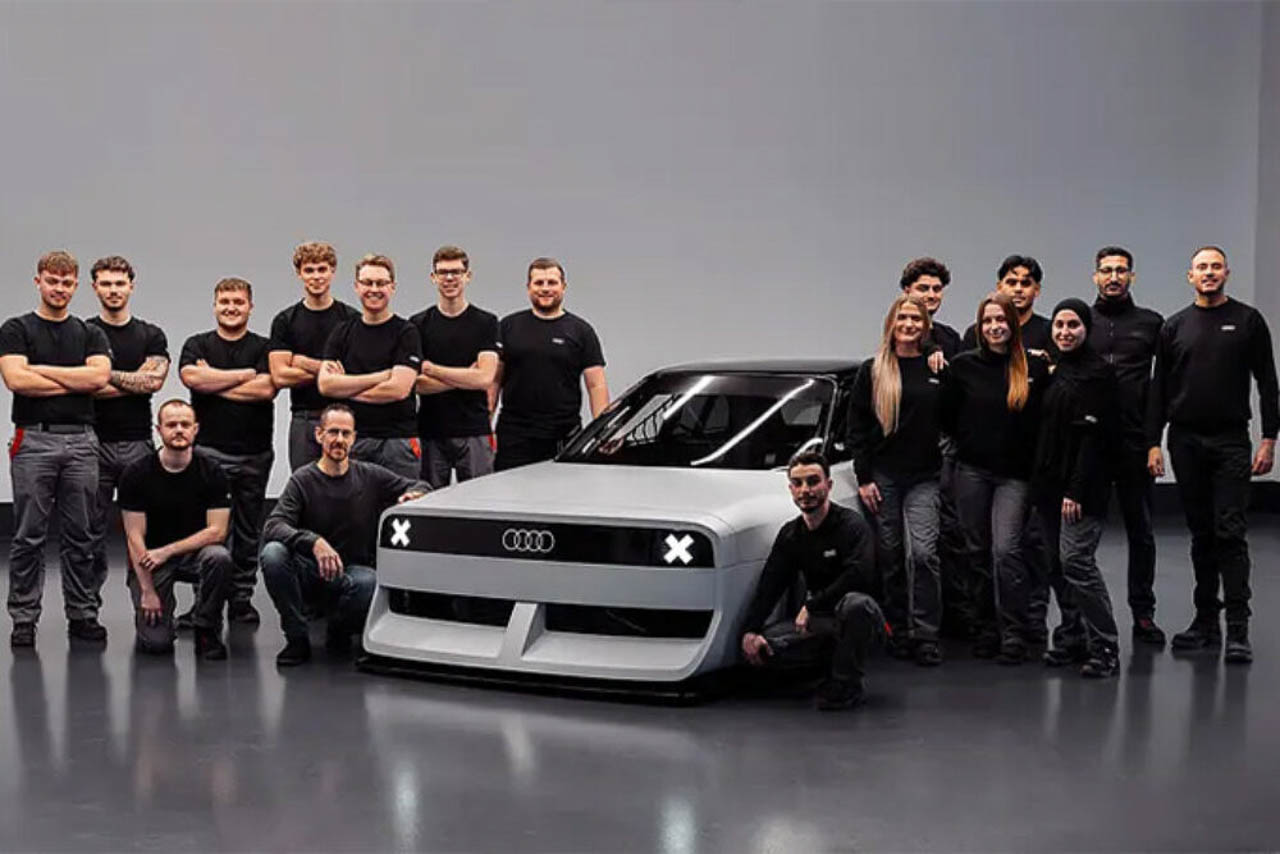
Other builds have pushed further from commercial viability. An electrified A2. A 236-horsepower NSU Prinz running modern EV hardware. These projects test technical integration as much as design direction.

The GT50 fits a different category. It uses a production powertrain unchanged. The bodywork is additive rather than structural. What the project tests is audience response, whether visual commitment to mechanical heritage generates the kind of enthusiasm that justifies development investment in combustion performance when corporate strategy points elsewhere.

Manufacturing Quality as Statement

Execution matters in this context. The released photography shows panel gaps that read as production-grade. Surface alignments hold. The fiberglass work displays none of the waviness or inconsistency that marks student-built specials at other institutions.

This finish level functions as argument. The GT50 is not a sketch in three dimensions. It is a proposal that could, with different business decisions, reach production. The apprentices built something that asks to be taken seriously as a potential product direction rather than dismissed as training exercise.

The Quiet Reveal and Its Implications

No stage. No livestream. No embargo coordination. The GT50 initially surfaced through social and niche outlets rather than the press machinery Audi deploys for products it expects to sell. This distribution choice communicates uncertainty, or perhaps strategic patience.

If reception proves enthusiastic, the soft launch becomes origin story. If response flatters less, the project remains an apprentice exercise, easily distanced from official product planning. The approach hedges corporate exposure while allowing genuine audience testing.

What the GT50 asserts, regardless of its production future, is that the five-cylinder’s cultural position within Audi’s identity has not been resolved by electrification commitments. The engine configuration still generates response. The racing heritage still communicates. Whether that cultural capital translates into business justification for extended combustion development remains the open question the concept was built to help answer.

The post The GT50 Asks What Happens When Combustion Heritage Becomes a Design Argument first appeared on Yanko Design.
This Footbridge Has 3 Paths That Rise and Fall Through Steel Waves

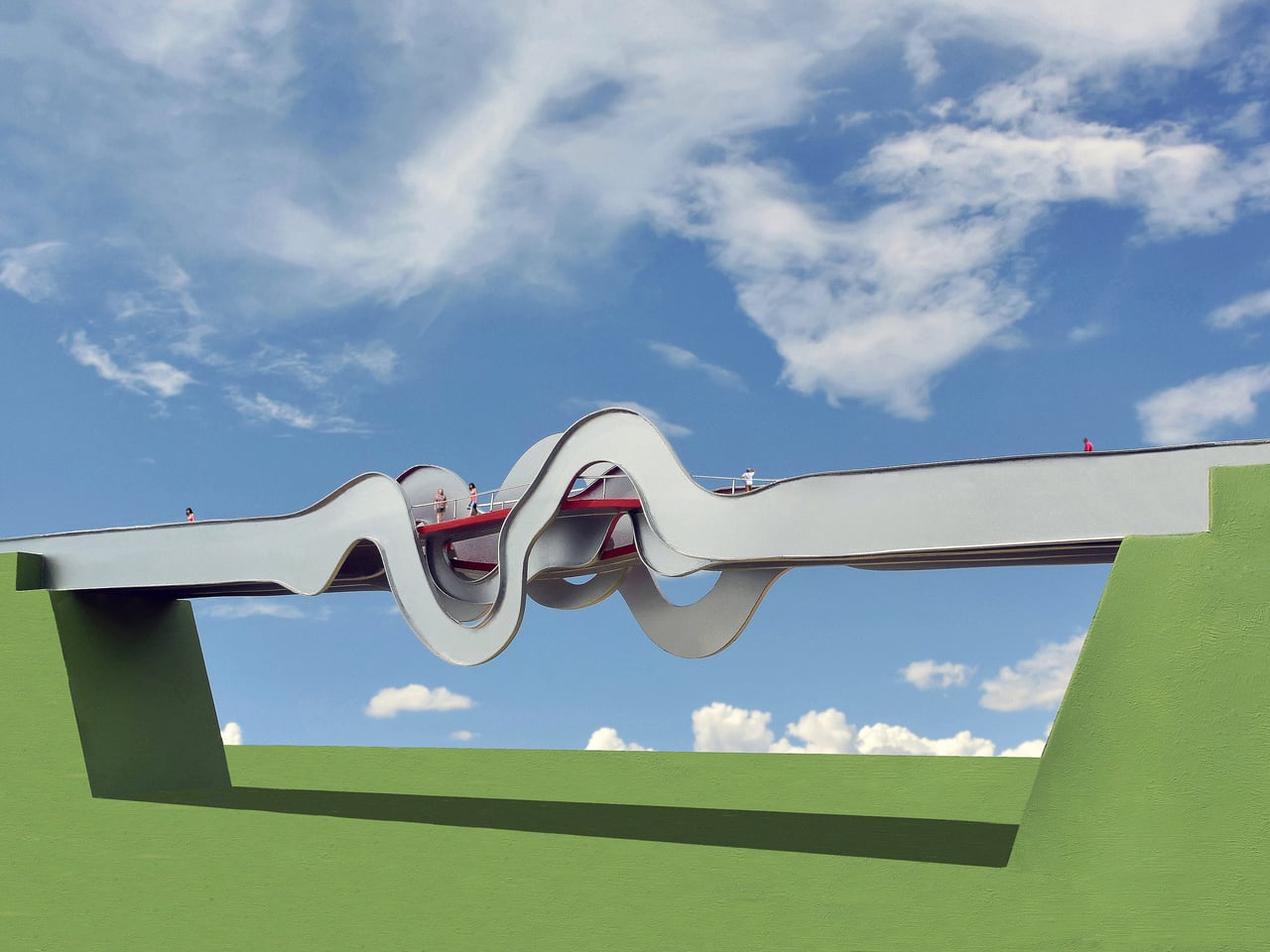
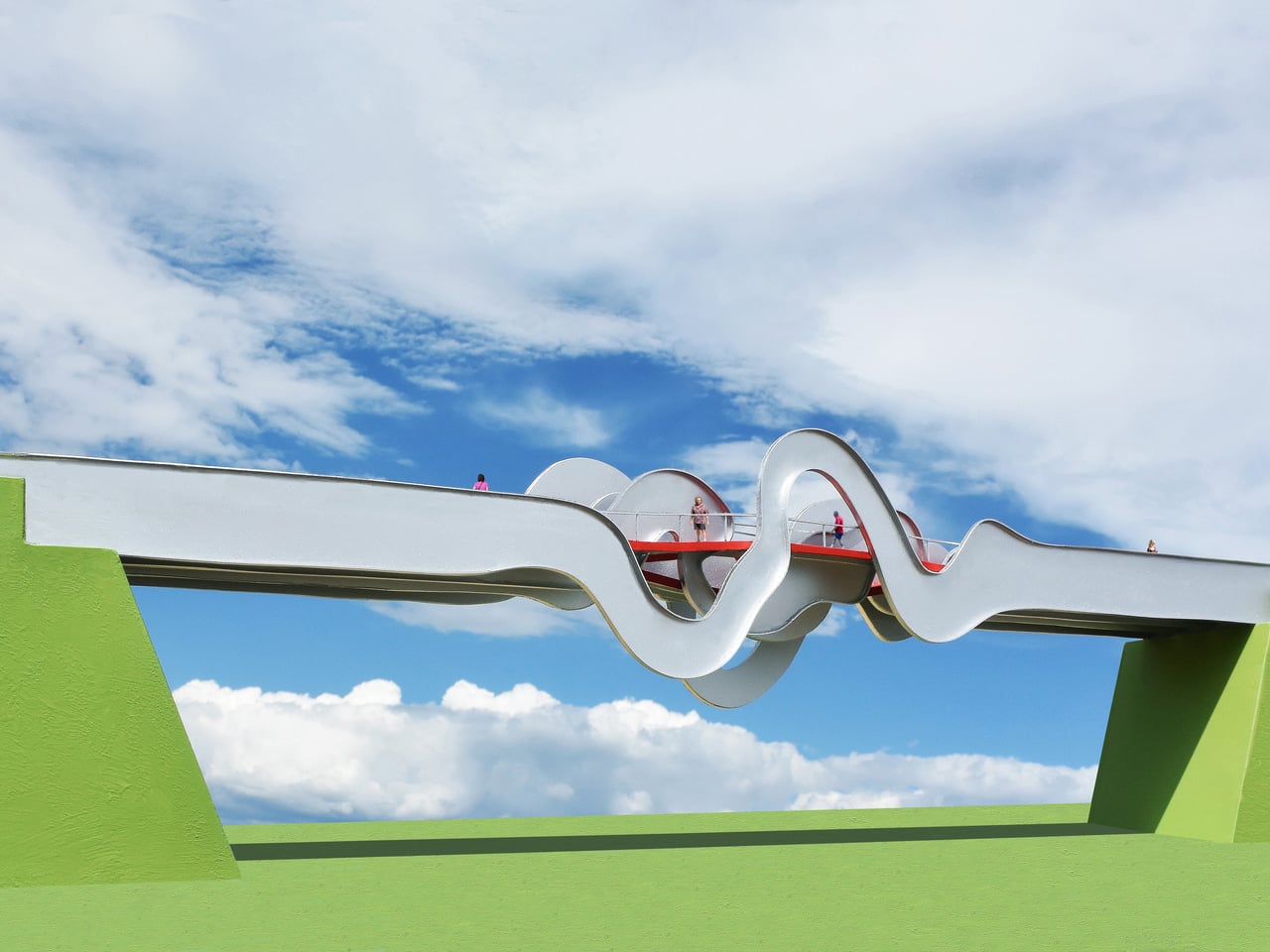
Most pedestrian bridges are neutral pieces of infrastructure, straight spans with railings that get you from one side of a road to the other. A few projects treat bridges as public art, but often as surface decoration rather than structural idea. The Wave Formed Footbridge is a proposal that starts from movement itself, imagining people as waves that literally reshape the bridge as they cross it.

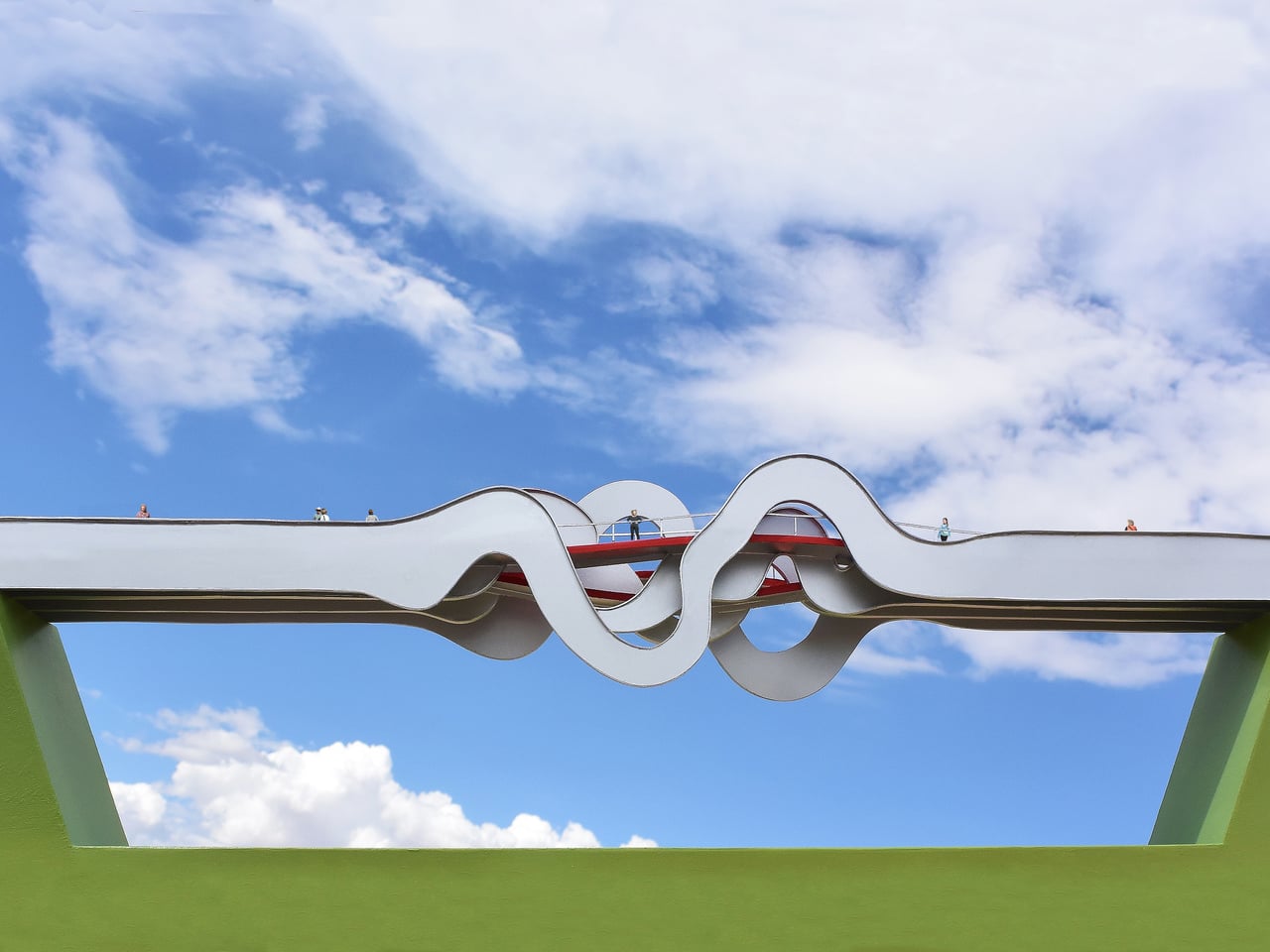
The concept visualizes people walking across the bridge and, in doing so, forming waves of energy that could conceptually deform the structure in space and time. In this case, three people walking on three different paths are imagined as three overlapping waveforms, and those waves are frozen at the center of the span to become the model for the final steel geometry. The bridge becomes a physical record of motion before anyone has even stepped on it.

Designer: Michael Jantzen

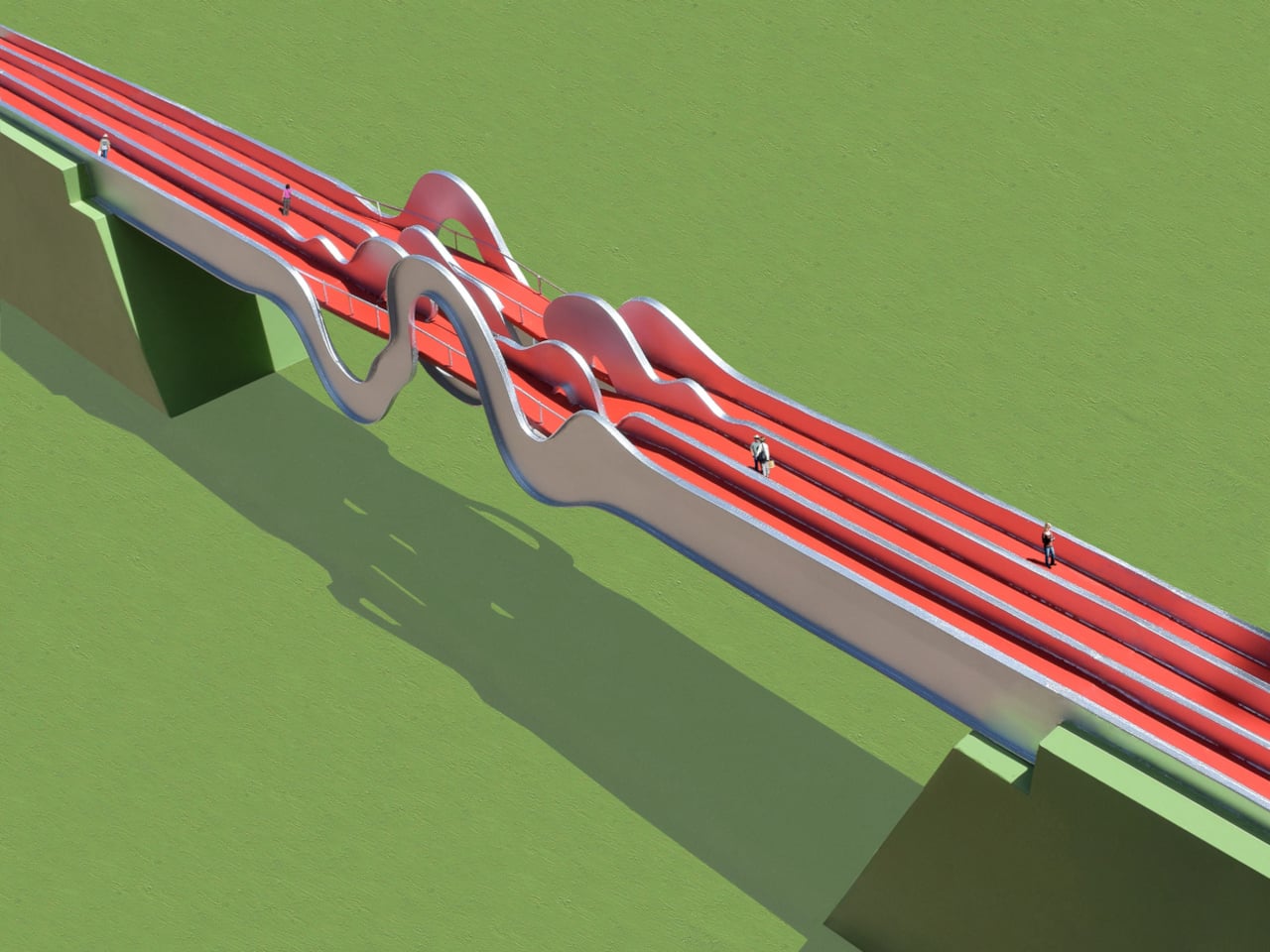
The basic layout uses four primary steel channels running the length of the bridge, each deformed into a different wave shape at mid-span, and three separate red paths weaving through them. The two outer paths curve up where the channels distort into waveforms, while the center path curves down. The result is a multi-level crossing where pedestrians can choose to crest over the waves or dip into them, experiencing the same structure in different ways.

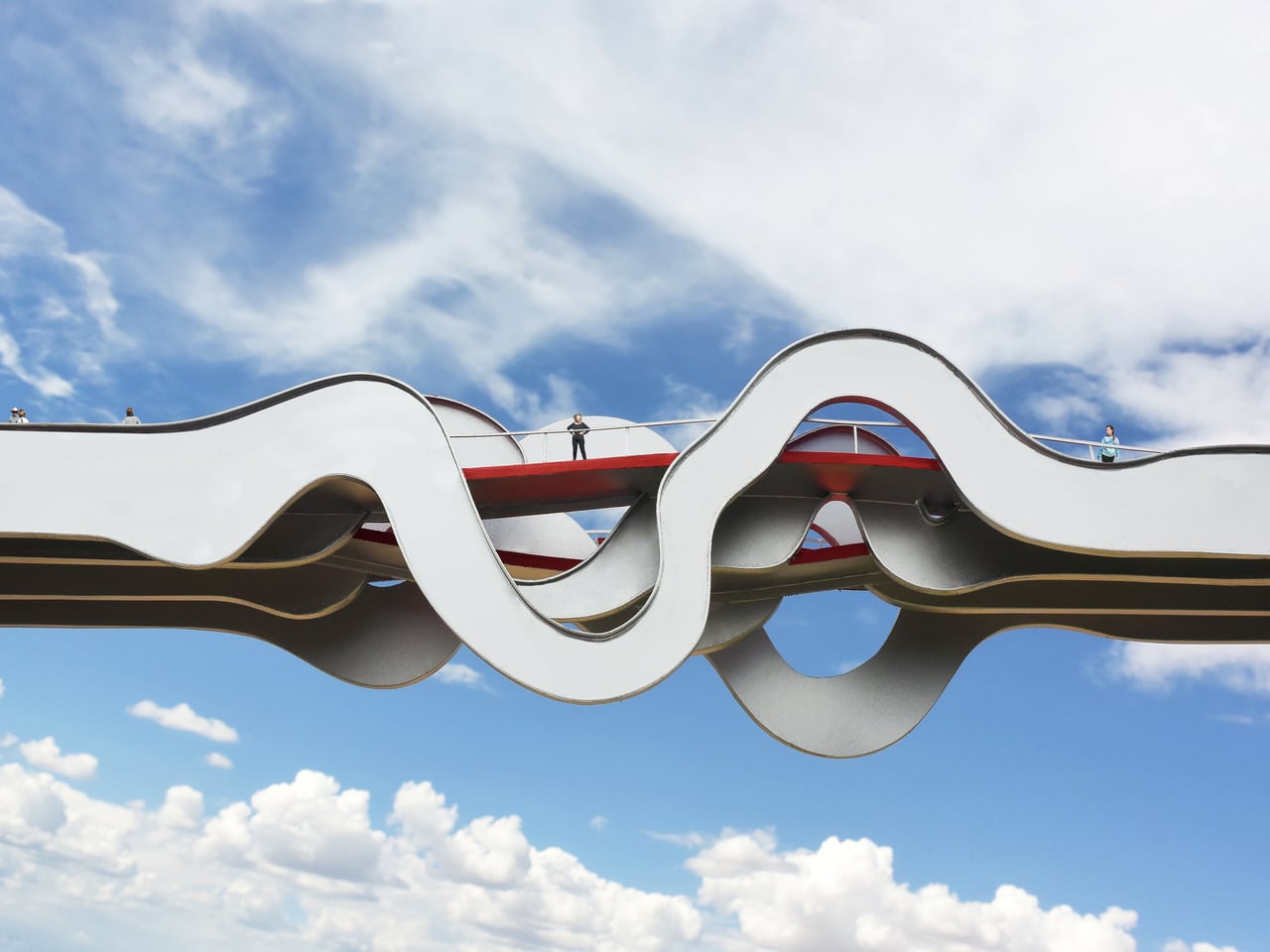
As you reach the middle, the outer paths rise into gentle hills that give you a higher vantage point over the highway, while the center path drops into a kind of canyon formed by the looping steel ribbons. Openings in the waves frame views of sky and landscape, and the red deck threads through peaks and troughs, making the act of crossing feel more like moving through a sculptural field than walking a straight line across a gap.

From the driver’s perspective, the underside of the bridge becomes the main event. The four channels loop up and down, casting complex shadows and creating a silhouette that looks like a waveform drawn in steel. As you pass underneath, the bridge acts as a gateway or landmark, not just a slab overhead. It is meant to function as a tourist attraction for the city as much as a safe way to cross a two-lane highway.

The Wave Formed Footbridge proposes that a pedestrian bridge can be a physical record of movement, a wave of steel shaped by the imagined footsteps of those who cross it. Instead of treating people as loads on a diagram, it treats them as the authors of the form. The highway crossing stops being a simple gap to span and starts being a chance to turn everyday movement into something sculptural, visible from both above and below.

The post This Footbridge Has 3 Paths That Rise and Fall Through Steel Waves first appeared on Yanko Design.