Retro iMac G3-style AirPods Max takes inspiration from Apple’s most colorful tech era

Sure, the AirPods Max come in colors – but there’s something so cold and un-emotional about anodized aluminum. It grabs your eye, but then immediately lets your eye wander once your fingers have run past its cool matte surface. Aluminum’s only purpose was to help build devices that were sleek and thermally advantageous. The problem, however, is that the AirPods Max aren’t ‘sleeker’ than your average headphone. Again sure, the MacBook Air looks so much thinner than the other average laptop – but aluminum in headphones achieves nothing. It adds weight, makes the head feel heavy, and doesn’t even look as eye-catching as some of its plastic-based counterparts.

Saffy Creatives recognized this and decided to give the AirPods Max a rather fitting makeover. After reinventing the Apple Watch as a G3-inspired retro-dream, they’re back with a redesign for the AirPods Max that looks oh-so-gorgeous it makes me want to try licking the headphones – obviously in a non-creepy way.

Designer: Saffy Creatives

What Saffy Creatives did is clever because it doesn’t change the AirPods Max silhouette – just its material treatment. Fair warning, the images ARE made using AI, but to be honest, AI is used more as a rendering tool here than it is as an imagination aid. The device looks exactly the same, except the parts made from metal are now replaced with dual-tone transparent/translucent plastic. The headphones here adopt Apple’s iconic Bondi Blue color scheme, with the outer cans giving a look into the headphones’ inner mechanics (just as Jobs intended with the iMac G3). A cloudy white element breaks the transparent shell, adding almost a halo of sorts around the can while also meaningfully separating the materials that would be probably impossible to injection-mold otherwise.

The old colorful Apple logo also finds itself on both the outer cans – something Apple wouldn’t be caught dead doing with their metal headphones. Is the detail almost too distracting? Some Apple purists would probably say it is – but nobody buys headphones because they look boring. Every audio-lover worth their salt wants headphones that make a noise, whether it’s through audio drivers, or through visuals.

The rest of the headphone remains fairly the same. The cups stay exactly the way they originally were, with the 3D mesh we’ve come to love. Similarly, the headband retains its mesh cushion too, however, the outer plastic frame also gets translucent/cloudy white plastic treatment to match the overall vibe. The result is a pair of headphones that are as gorgeous as any of Apple’s turn-of-the-millennium products – when Jobs and Jony Ive probably had more fun than they ever had making products.

Obviously such a pair of headphones will never exist (and I do wish Nothing had done a better job with their transparent design), but if there’s some maverick YouTuber looking to mod the AirPods Max, this weirdly nostalgic build is definitely worth a shot. After all, it’s nothing a 3D printer could churn out in a few hours. You’re not really changing the geometry either – just the material.

The post Retro iMac G3-style AirPods Max takes inspiration from Apple’s most colorful tech era first appeared on Yanko Design.


Lego’s first Pokémon sets are now available for pre-order

We learned last March that Lego and Pokémon would be joining forces and the first results of their partnership are here. Pre-orders for all three kits are open now, with an expected ship date of February 27. As one might have guessed from the lightning bolts on the previous promotional image, one of the debut pocket monsters getting the brick treatment is Pikachu, complete with a Poké Ball. The 2,050-piece kit can be built to show Pikachu either leaping out of the open Poké Ball into battle or at rest staring up at the builder, closed Poké Ball between his paws. The Pikachu kit costs $200.

There's also a 587-piece model of Eevee, which goes for $60. On the bigger side is a set featuring a trio of Pokémon: Venusaur, Charizard and Blastoise. This kit has 6,838 pieces and can show the group together in battle formation or separately in their own mini environments. It retails for $650.

Lego kit of Pokemon character Eevee
Lego

Before you leap to pre-order pages, however, here's a word of caution. In Lego form, our little friends look…kinda strange? I'm not the biggest Lego builder, but I am a rather accomplished architect in Minecraft, so I am well aware of the innate challenge in constructing a rounded shape from square blocks. Take Pikachu, for instance. Part of his appeal is his chubby little cheeks. There are bricks with more rounded sides in this collection that hint at his usual rotundness, but the proportions of his face just feel a little off to me. I had the same reaction to the other figures as well, although Eevee seems to have fared a little better than the others. They're all sort of cute, but not nearly so cute as they are in other formats. But like I said, Lego is not my personal block of choice, so perhaps I'm in the minority here! If you love these bricky pocket monsters, then roll on over to Lego's website and snap up these kits faster than a Mewtwo.

This article originally appeared on Engadget at https://www.engadget.com/entertainment/legos-first-pokemon-sets-are-now-available-for-pre-order-205527102.html?src=rss

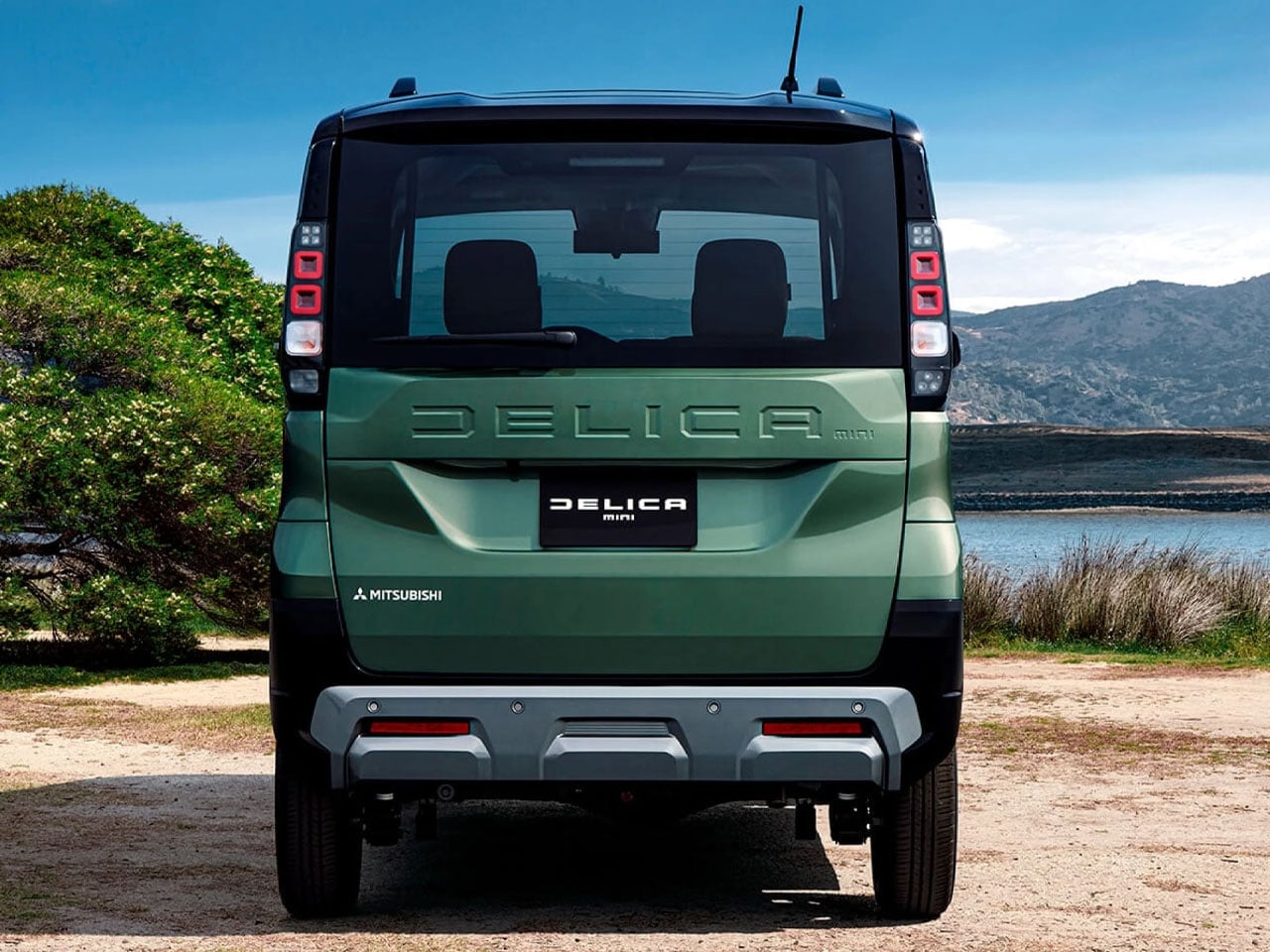
Mitsubishi shows Delica Mini Camper with roof-mounted pop-up tent and off-roading capabilities

The trend of camper vans is gradually clawing its way into the small car segment, and it makes sense for solo riders who give weightage to minimalism more than anything. Lutz Focke’s Lutz Minicamper and the Mini Pop Bee Active Gear by Mystic are the most recent iterations that prove it. The latest one, substantiating the fact, comes from Mitsubishi Motors, which just recently showcased the Delica Mini active camper at the Tokyo Auto Salon, one of the world’s largest custom car shows, that concluded in Chiba, Japan, on January 11.

The redesigned Delica Mini, which made its recent appearance, is one of the 11 vehicles displayed by the company. The custom version of the Delica Mini is a reimagination of the super compact kei car, which is rugged and ready for off-road adventures courtesy of some worthwhile tweaks on the inside.

Designer: Mitsubishi

The Delica Mini, since its launch in 2023, has been known for combining spacious interiors with powerful driving performance. Owing to this, the car has been awarded recognitions like the Design Car of the Year in Japan for 2023-2024. For its 2026 look, the Delica Mini maximizes indoor utility with a pop-up roof that features a roof-mounted tent for two, a suspension lift, and for four-wheel-drive system for off-roading. The space-constrained camper van also gets an ARB side awning to increase the livable space on the outside.

According to the information, the Delica Mini measures only 133.7 inches in length. The space seems cramped up until the roof above is popped open, and you have almost double the living space, but vertically. While the model retails all the popular features of the original Mini, including its endearing style and touch construction, it gets an uplift in the safety features, off-roading capabilities and interior design.

In addition to increasing the livable space with a pop-up roof, customization allows for making the camper off-roadable. The lifted suspension adds ground clearance, all-terrain tires keep stable, while the protective skid plates on the underbody ensure durability in rough terrains. With its all-drive powertrain and enhanced ground clearance, the Delica Mini is uplifted from a city camper to a true all-terrain camper for those who want to embrace the outdoors wholeheartedly.

Delica Mini is only a showcase concept at the time of writing. Its true world potential is yet to be seen and experienced. That said, Mitsubishi has not yet made anything official about when the new custom Mini will be made, or if it will ever be made. Even if it were to roll out in the near future, adventurers in Japan are likely to be the first to get their hands on it, before it drives into other markets.

The post Mitsubishi shows Delica Mini Camper with roof-mounted pop-up tent and off-roading capabilities first appeared on Yanko Design.

Anthropic launches Claude Cowork, a version of its coding AI for regular people

If you follow Anthropic, you're probably familiar with Claude Code. Since the fall of 2024, the company has been training its AI models to use and navigate computers like a human would, and the coding agent has been the most practical expression of that work, giving developers a way to automate rote programming tasks. Starting today, Anthropic is giving regular people a way to take advantage of those capabilities, with the release of a new preview feature called Claude Cowork.

The company is billing Cowork as "a simpler way for anyone — not just developers — to work with Claude." After you give the system access to a folder on your computer, it can read, edit or create new files in that folder on your behalf.

Anthropic gives a few different example use cases for Cowork. For instance, you could ask Claude to organize your downloads folder, telling it to rename the files contained within to something that's easier to parse at a glance. Another example: you could use Claude to turn screenshots of receipts and invoices into a spreadsheet for tracking expenses. Cowork can also navigate websites — provided you install Claude’s Chrome plugin — and make can use Anthropic's Connectors framework to access third-party apps like Canva.

"Cowork is designed to make using Claude for new work as simple as possible. You don’t need to keep manually providing context or converting Claude’s outputs into the right format," the company said. "Nor do you have to wait for Claude to finish before offering further ideas or feedback: you can queue up tasks and let Claude work through them in parallel."         

If the idea of granting Claude access to your computer sounds ill-advised, Anthropic says Claude "can’t read or edit anything you don’t give it explicit access to." However, the company does note the system can "take potentially destructive actions," such as deleting a file that is important to you or misinterpreting your instructions. For that reason, Anthropic suggests it's best to give "very clear" guidance to Claude.   

Anthropic isn’t the first to offer a computer agent. Microsoft, for example, has been pushing Copilot hard for nearly three years, despite seemingly limited adoption. For Anthropic, the challenge will be convincing people these tools are useful where others have failed. The fact Claude Code has been universally loved by programmers may make that task easier.

Anthropic briefly made Cowork preview only available to users of its pricey Claude Max subscription. That changed on Friday when the company expanded access to include customers of its $20 per month Pro plan. If you want to try Cowork for yourself, you'll need a Mac with the Claude macOS app installed.

Update 01/16/26 2:30PM ET: Updated to reflect Claude Cowork is now also available to Claude Pro customers.

This article originally appeared on Engadget at https://www.engadget.com/ai/anthropic-launches-claude-cowork-a-version-of-its-coding-ai-for-regular-people-193000849.html?src=rss

Disney+ and Hulu deal: Get the bundle for $10 for one month

The peak time for deals on streaming services — the holiday shopping season — has come and gone, but Disney is back with a fresh offer for the new year. New and eligible returning subscribers can get one month of the ad-supported Disney+ Hulu bundle for just $10. That's $3 off the usual monthly rate for the bundle, and more than 58 percent off if you consider the prices for each service individually (Disney+ at $12 per month and, separately, Hulu also at $12 per month).

We'd be remiss if we didn't mention that this isn't quite as good as the Black Friday deal we saw last year, which offered the same bundle for $5 per month for one year. However, if you missed that offer or just want to try out Disney+ and Hulu for a brief period of time, this is a good way to do so.

Disney+ and Hulu make one of the most balanced streaming pairs available, blending family-friendly favorites with acclaimed originals and network TV staples. Disney+ brings a vast library of animated classics, blockbuster franchises and exclusive content from Marvel, Pixar, Star Wars and National Geographic. It’s the place to stream nearly every Star Wars film and series, plus the full Marvel Cinematic Universe lineup and Disney’s most recent theatrical releases.

Hulu balances things out with a more adult-oriented lineup of current TV shows, next-day network episodes and a growing roster of award-winning originals. The platform hosts series like The Bear, The Handmaid’s Tale and Only Murders in the Building, alongside comedies, thrillers and documentaries that regularly feature in awards conversations. It’s also the home for next-day streaming of ABC and FX shows, making it especially useful if you’ve already cut the cable cord but still want to keep up with primetime TV.

The Duo Basic bundle ties these two services together under a single subscription, offering a simple way to expand your library without juggling multiple accounts. This tier includes ads on both platforms, but the trade-off is significant savings compared with paying for each service separately. For many households, that’s an acceptable compromise when it means access to such a wide range of content.

Follow @EngadgetDeals on X for the latest tech deals and buying advice.

This article originally appeared on Engadget at https://www.engadget.com/deals/disney-and-hulu-deal-get-the-bundle-for-10-for-one-month-192814789.html?src=rss

Mark Zuckerberg announces new ‘Meta Compute’ initiative for its data center and AI projects

On the heels of Mark Zuckerberg announcing that Meta's former board member, Dina Powell McCormick, would be formally joining the company as president and vice chairman, the CEO has shared new details about her purview at the company. The executive will play a key role overseeing Meta's sprawling infrastructure investments as part of a newly announced initiative called Meta Compute.

"Meta is planning to build tens of gigawatts this decade, and hundreds of gigawatts or more over time," Zuckerberg said in an update. "How we engineer, invest, and partner to build this infrastructure will become a strategic advantage."

Zuckerberg said that Meta's head of global engineering Santosh Janardhan will lead the "top-level initiative" and that recent hire and former Safe Superintelligence CEO Daniel Gross will "lead a new group responsible for long-term capacity strategy, supplier partnerships, industry analysis, planning, and business modeling." McCormick is expected to "work on partnering with governments and sovereigns to build, deploy, invest in, and finance Meta's infrastructure."

Meta has been investing heavily in infrastructure to fuel its AI "superintelligence" ambitions. The company also recently announced three agreements to buy massive amounts of nuclear power to help power its data centers. Zuckerberg has previously said he expects Meta to spend $600 billion on AI infrastructure and jobs by 2028.

This article originally appeared on Engadget at https://www.engadget.com/ai/mark-zuckerberg-announces-new-meta-compute-initiative-for-its-data-center-and-ai-projects-192100086.html?src=rss

Anker SOLIX E10 Brings Hybrid Whole-Home Backup to the Modern House

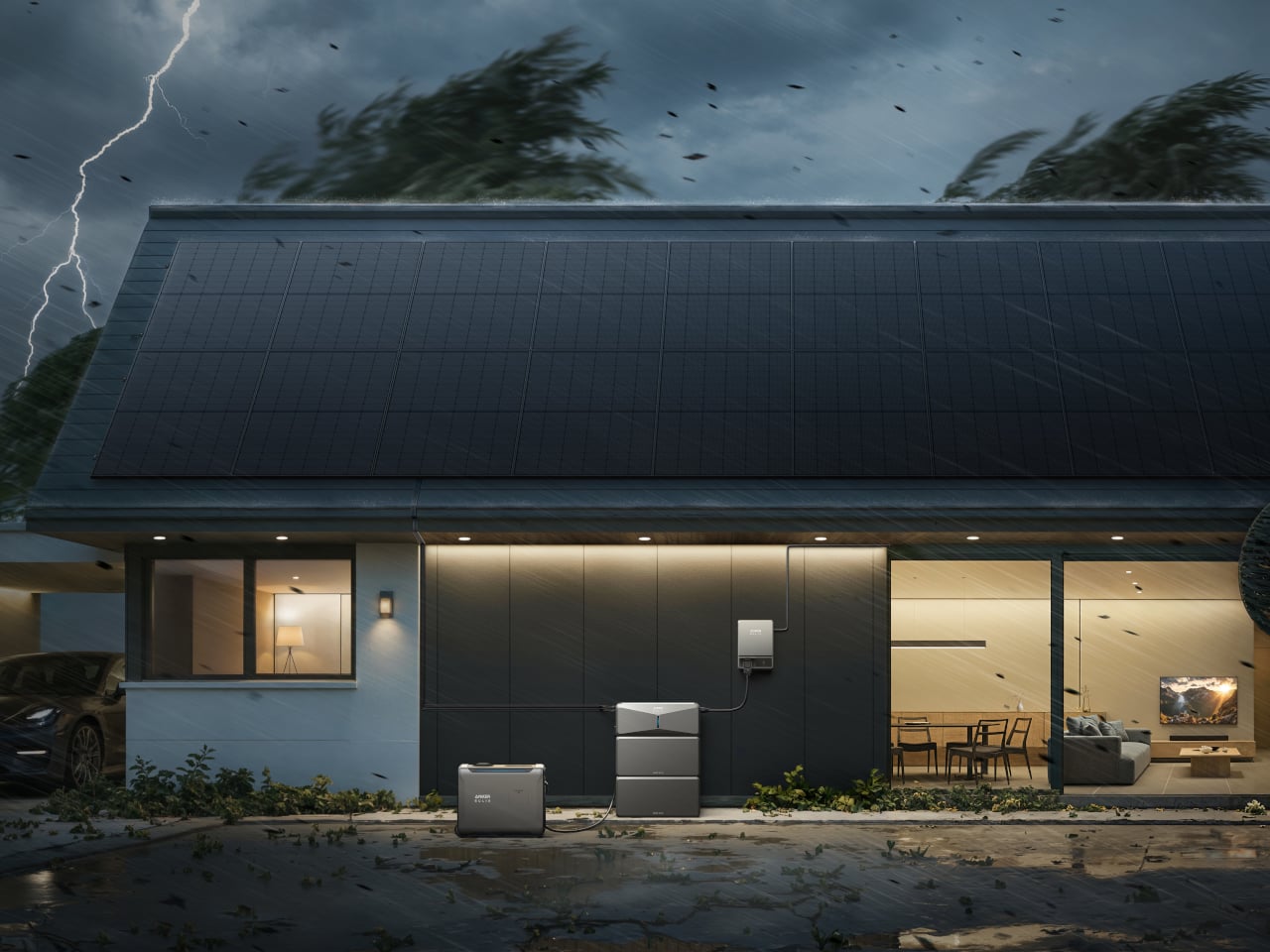
Modern homes depend on electricity for everything, from fridges and routers to medical devices and central A/C. Storms, rolling blackouts, and grid hiccups trigger a familiar scramble for flashlights and ice bags. Food spoils, devices die, and working from home becomes impossible. Most backup options either feel like camping gear with a couple of outlets or like a renovation project with permits and opaque pricing.

Anker SOLIX E10 is a smart hybrid whole-home backup system that blends batteries, green solar power, and a smart generator into one coordinated setup. It is designed to keep an entire house running, not just a few circuits, and is rated for whole-home backup with a 200-amp connection when paired with its Power Dock, matching a typical US main panel.

Designer: Anker

On a normal day, the SOLIX E10 quietly charges from solar and the grid, storing energy in modular 6 kWh battery packs that can scale to around 90 kWh with multiple stacks. When the power drops, the system steps in, deciding when to draw from batteries, when to add fuel through a DC link to its tri-fuel smart generator, and when to resume solar charging once the storm clears.

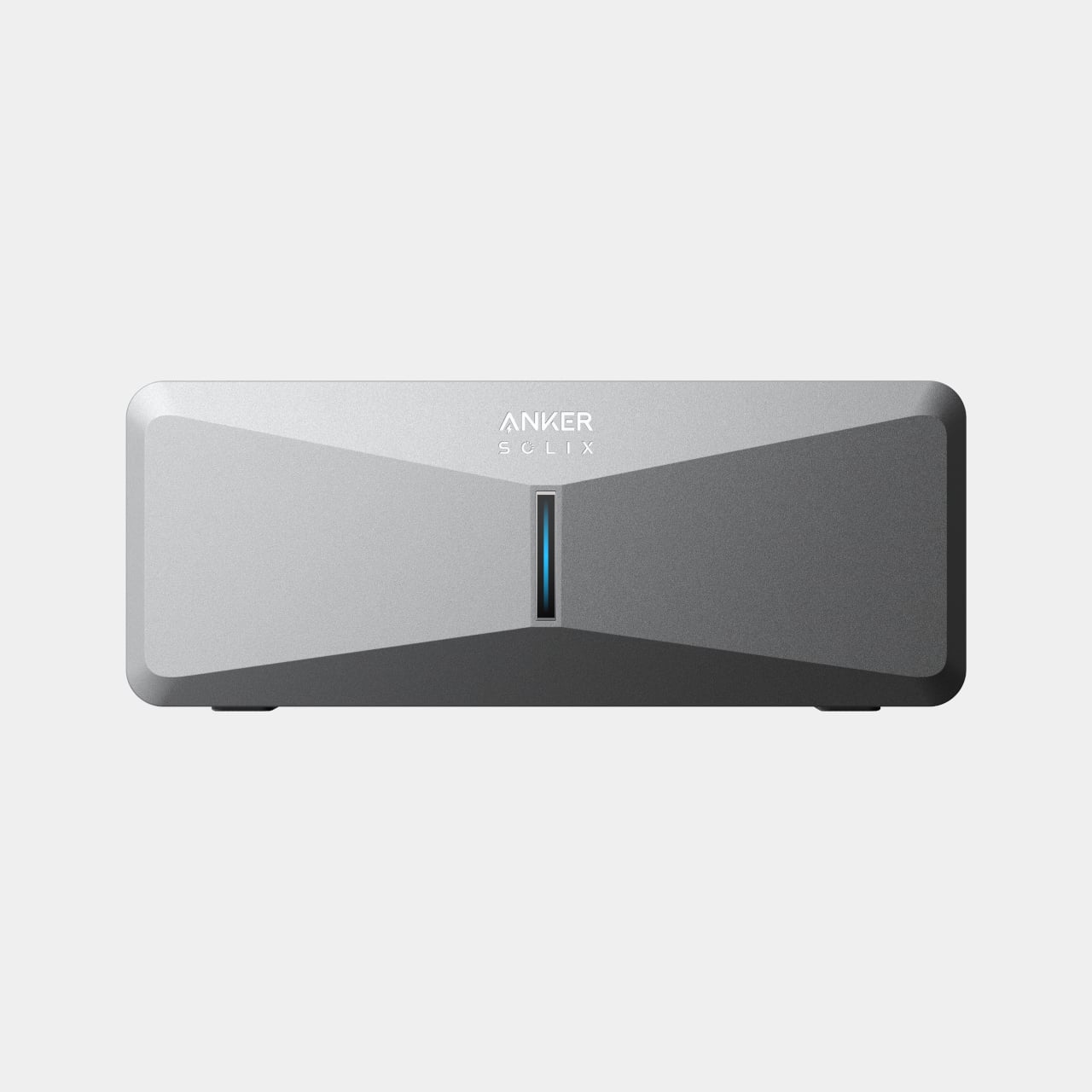
SOLIX E10 Power Module Inverter

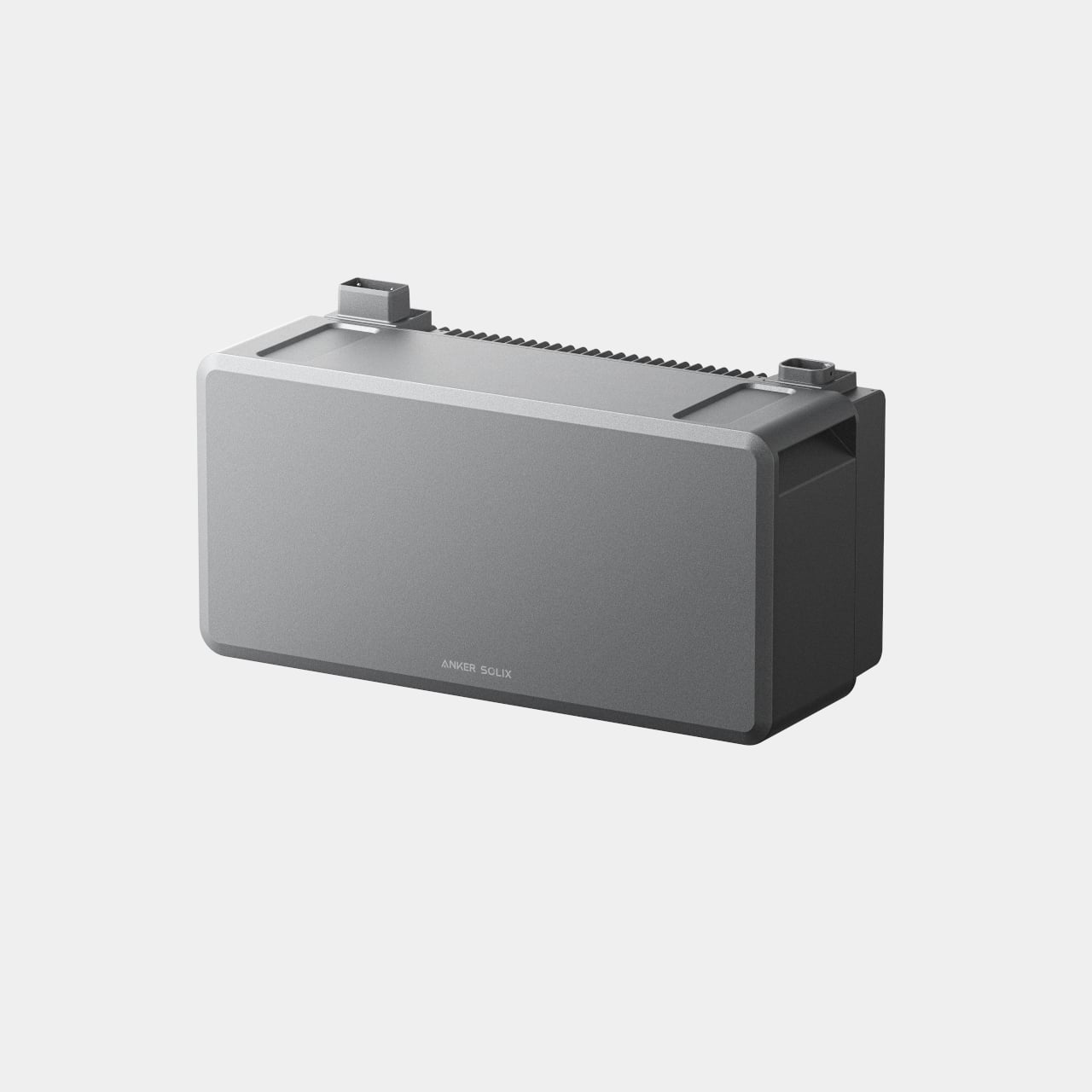
Anker SOLIX B6000 Battery Module

With the Power Dock or Smart Inlet Box, the SOLIX E10 can back up every circuit in a typical house, so you are not choosing between the fridge and the router. It is engineered to start and run a full-size 5-ton central A/C by handling the high inrush current that usually trips smaller systems, which matters when a summer outage hits during a heatwave.

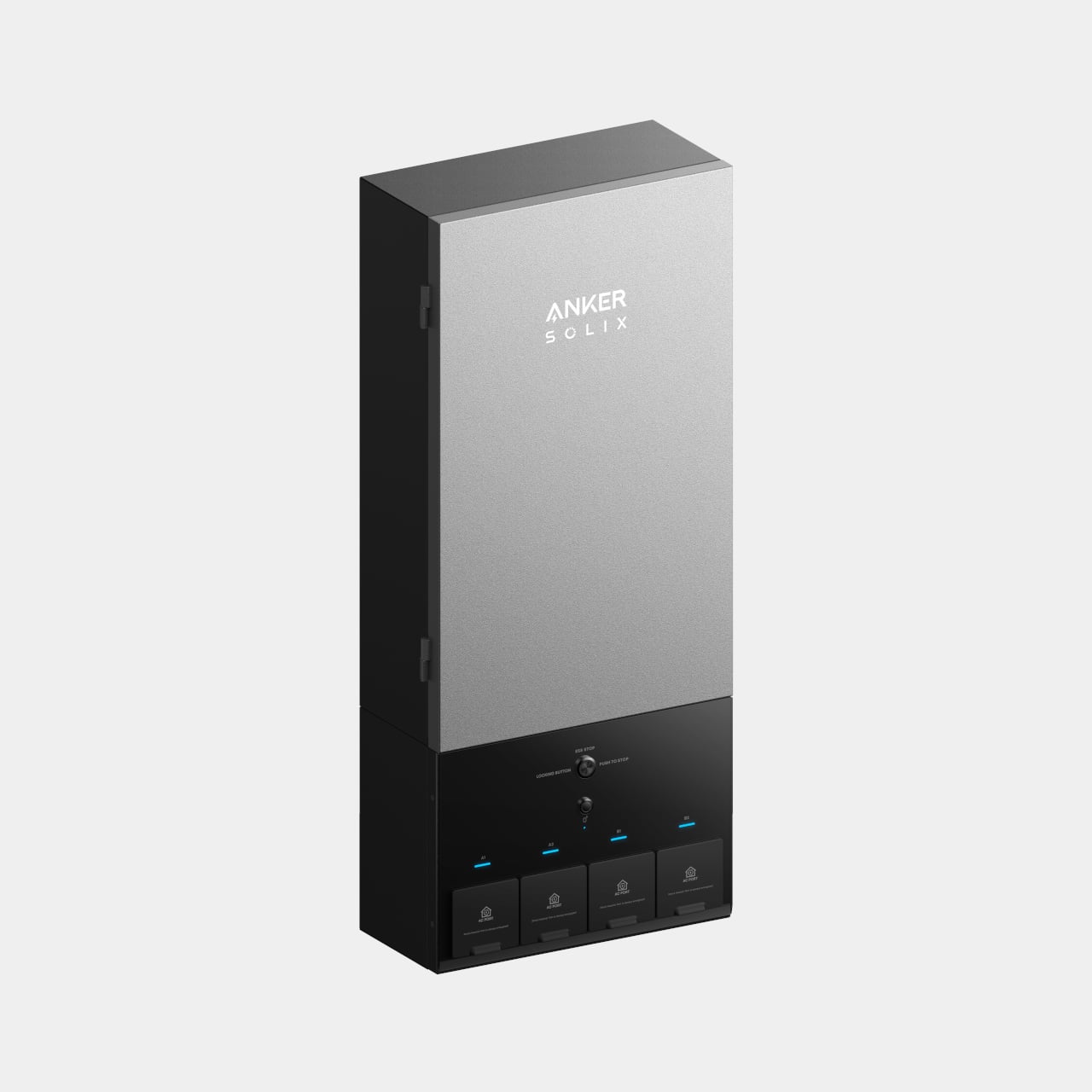
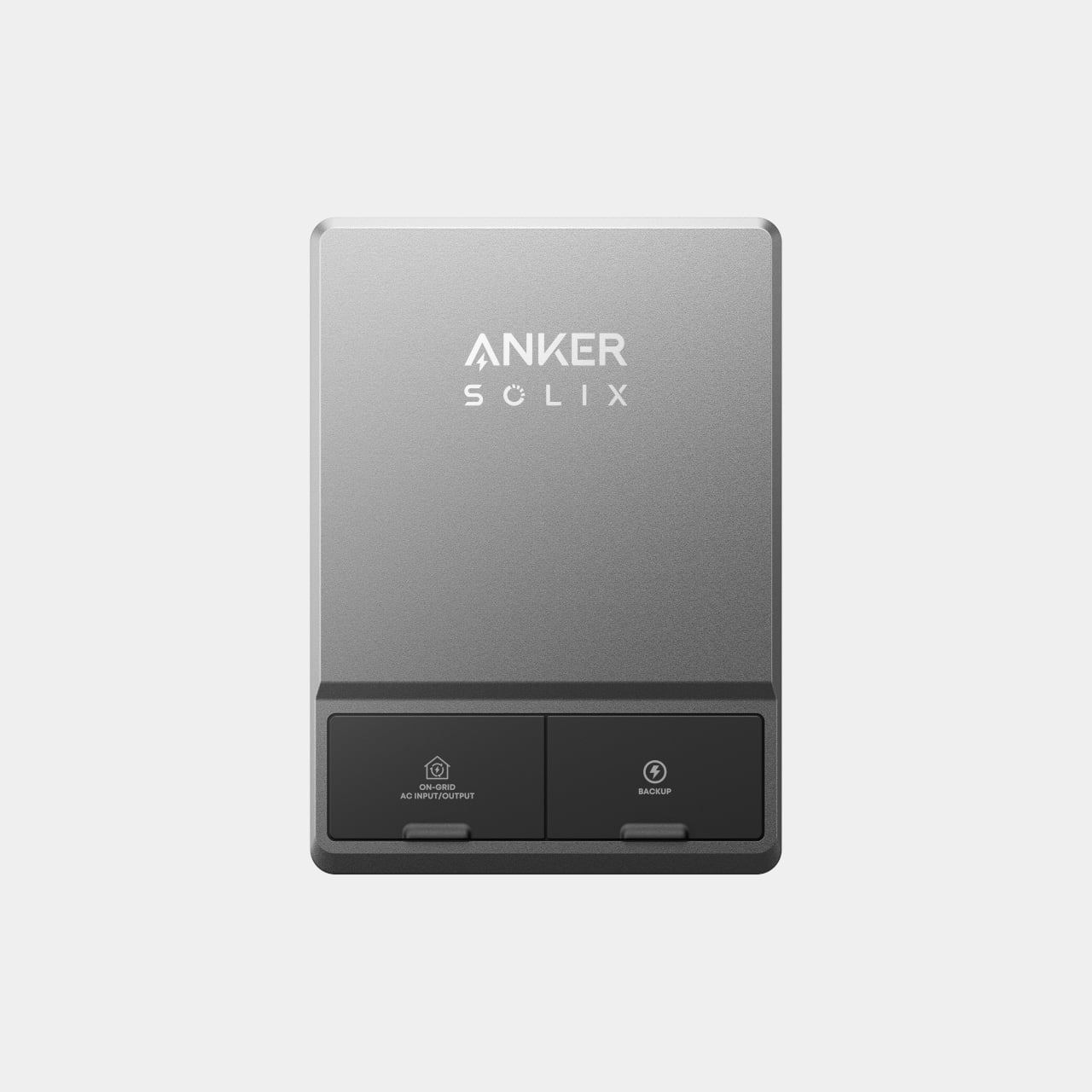
Anker SOLIX Power Dock

Anker SOLIX Smart Inlet

When the grid fails, the lights stay on without flickering, the Wi-Fi does not reboot, and the A/C keeps humming. The system switches over in under 20 milliseconds, fast enough that most electronics never even notice. The feeling is less about the exact speed and more about the house simply not going dark anymore, even when the neighborhood does and trees are still down.

The SOLIX E10 can watch the weather and charge itself ahead of a predicted storm through its Storm Guard feature, so you are not caught with half-full batteries when the first tree hits a line. The modular packs give enough headroom for multi-day outages, while the forecasting takes backup power from a reactive scramble to a quiet ritual where the system prepares itself before you think to check.

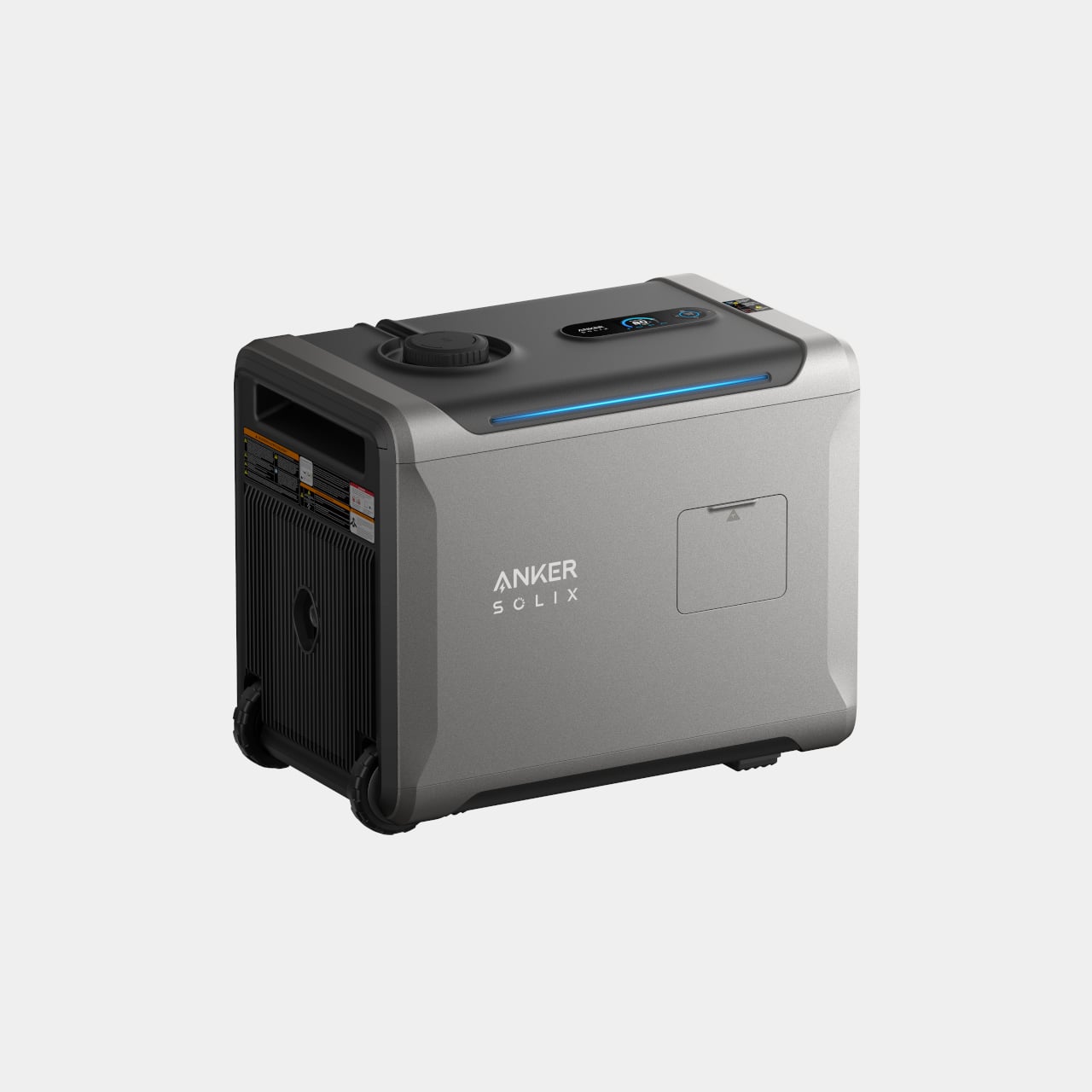
Anker SOLIX Smart Generator 5500

The optional smart generator stretches backup power through long outages without running nonstop. Instead of charging through AC conversion, it feeds the batteries directly over DC, which Anker claims is up to five times more fuel-efficient than a traditional setup. It runs when needed, rests at night, and feels more like part of a system than a last-resort accessory.

The SOLIX E10 is not only for rare blackouts. On normal days, it can store cheap off-peak energy or excess solar and run the house when rates spike, trimming bills. Each unit accepts up to about 9 kW of solar input, so a rooftop array keeps the batteries topped up, and the system prioritizes important circuits to keep essentials alive longer during outages.

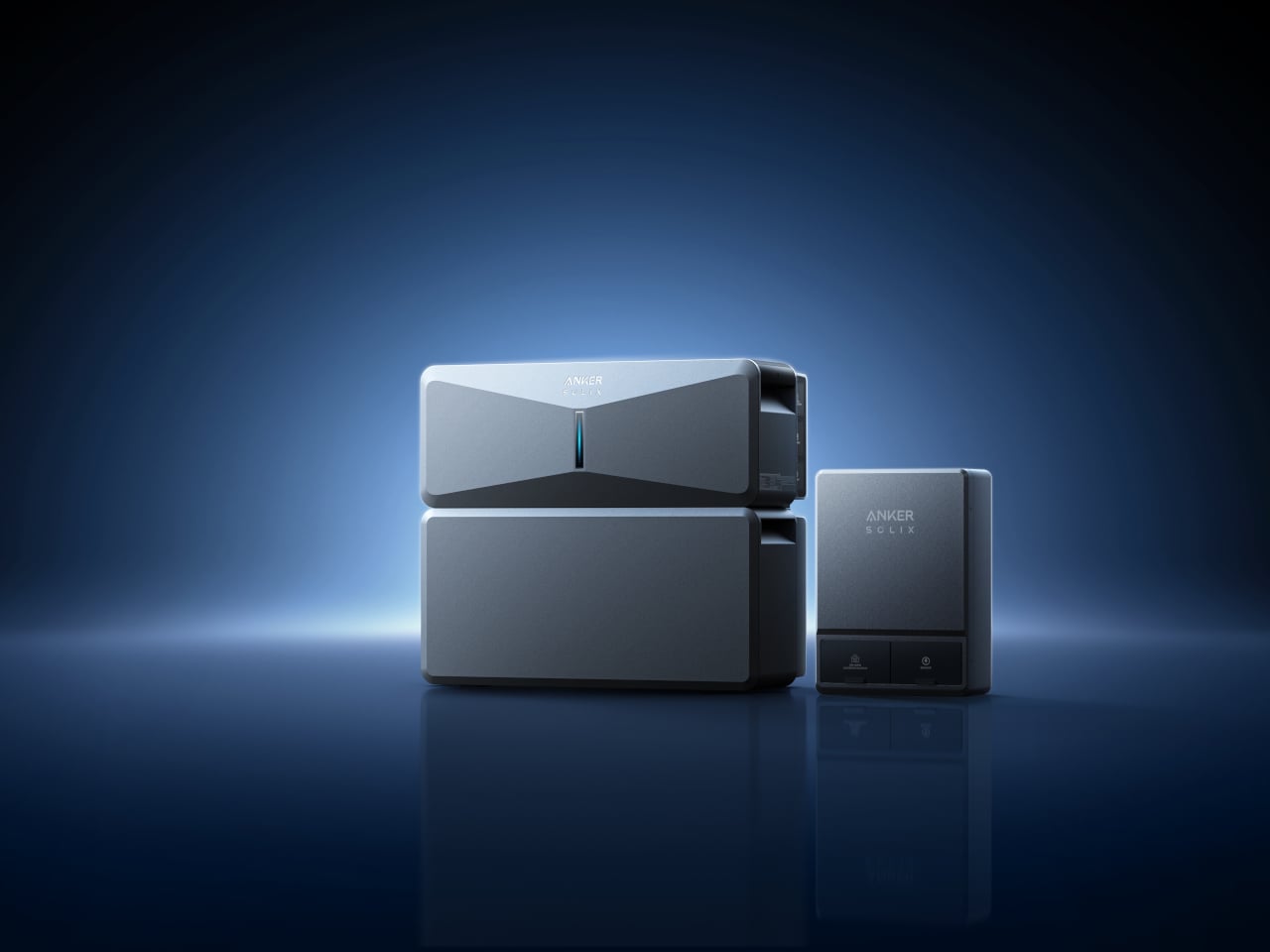
The hardware is a family of clean, stackable modules, with batteries that can be wall-mounted or floor-standing as the setup grows. The core units use an all-metal NEMA 4 enclosure and are certified to UL 9540 and UL 9540A, signaling they are built to live outdoors, handle bad weather, and meet the toughest residential safety standards.

Power anxiety is real, the feeling that one bad storm could wipe out food, work, and comfort for days. An outage where the house stays lit, the air stays cool, and the fridge keeps humming while the street outside goes dark is the payoff Anker SOLIX E10 is built around, making blackouts feel like minor blips instead of household emergencies.

The post Anker SOLIX E10 Brings Hybrid Whole-Home Backup to the Modern House first appeared on Yanko Design.

Paramount won’t quit, files suit against Warner Bros. Discovery over rejected bid

Paramount Skydance just does not want to take no for an answer. After having multiple bids to acquire Warner Bros. Discovery (WBD) rejected, including a recent hostile bid that the WBD board recommended that shareholders reject, Paramount is turning to the courts and mounting a proxy fight.

In a letter to shareholders on Monday, Paramount CEO David Ellison said the company has filed suit in Delaware Chancery Court seeking more disclosure about WBD’s pending Netflix deal and the process that led to its acceptance. Paramount argues WBD hasn’t provided “basic information” shareholders need to evaluate competing offers, including how WBD valued the planned cable-networks spinout Discovery Global (or Global Networks, depending on the filing). The Netflix acquisition would leave Discovery Global to become its own publicly traded company, while the Paramount offer included these assets.

Paramount is also escalating the corporate pressure campaign, with Ellison saying it intends to nominate a slate of directors for election at WBD’s 2026 annual meeting. The end goal would be installing a board that would “engage” on Paramount’s offer under the terms of WBD’s merger agreement with Netflix.

If WBD were to call a special meeting to approve the Netflix transaction before the annual meeting, Paramount says it will solicit proxy votes against the deal. It also plans to push a bylaw change requiring shareholders to approve any separation of Discovery Global. This change seems like Paramount stoking the flames (whether real or imagined) surrounding shareholders having their WBD shares bought out without the value of Discovery Global built-in under the Netflix merger.

Paramount remains convinced that its offer is "superior" to that of Netflix, while WBD maintains Paramount's bid offers "insufficient value" and that Paramount has failed to submit a true best proposal "despite clear direction from WBD on both the deficiencies and potential solutions." The lawsuit now aims to force WBD to spell out exactly how it arrived at recommending the Netflix deal over Paramount's bid.

WBD expressed concerns over whether a potential Paramount deal would even reach closing, citing the substantial debt the smaller studio would have to take on to pull off a leveraged buyout.

This article originally appeared on Engadget at https://www.engadget.com/entertainment/paramount-wont-quit-files-suit-against-warner-bros-discovery-over-rejected-bid-175317166.html?src=rss

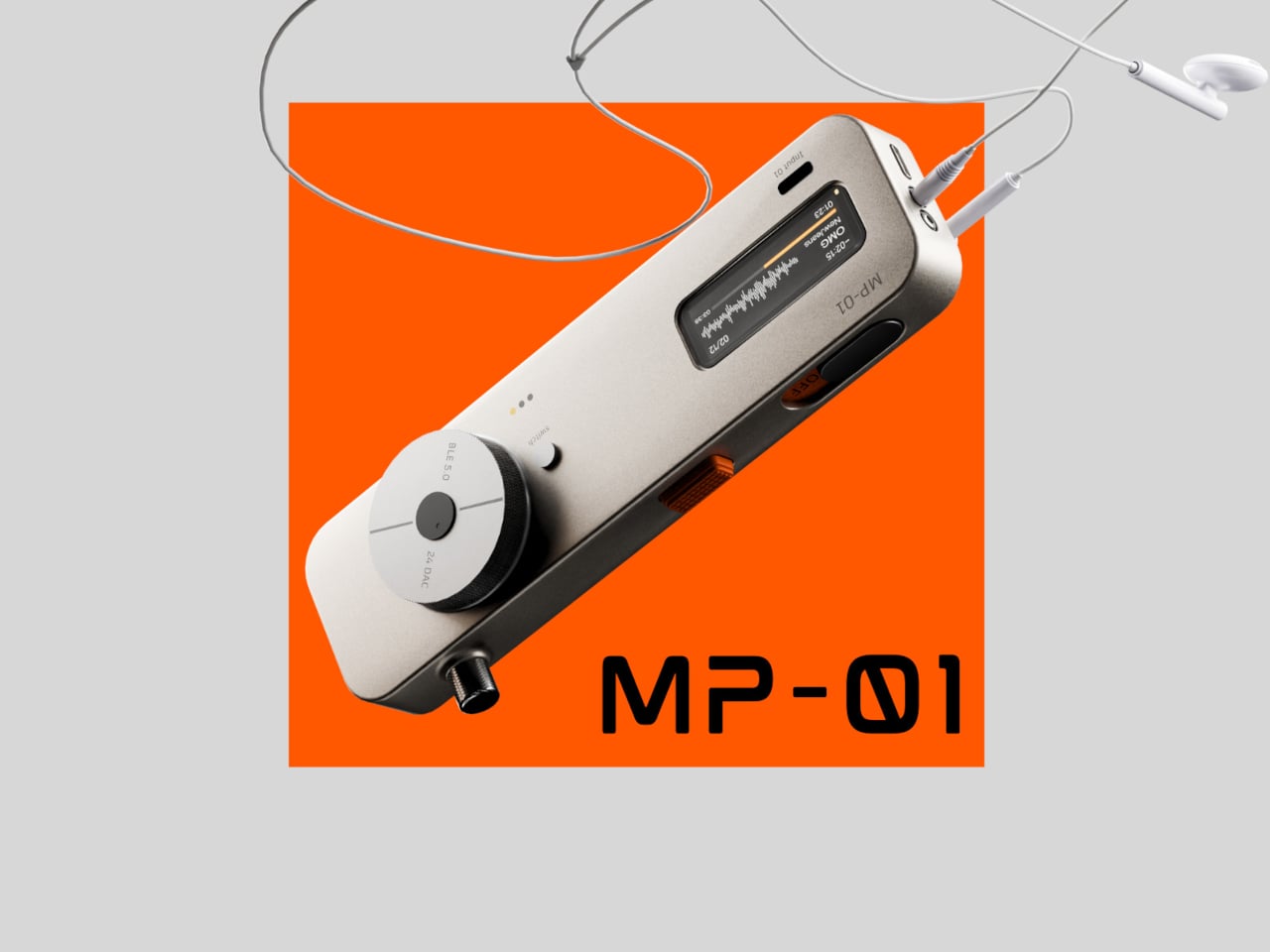
MP-1 Reimagines a Modern Walkman Through a Teenage Engineering Lens

Listening to music has mostly collapsed into phones and streaming apps, buried between notifications and multitasking. Some people still crave a single-purpose device that treats listening as the main event, not background noise. The MP-1 is an independent concept study that asks what a modern Walkman could look like if it borrowed Teenage Engineering’s design language, without being affiliated with the company or trying to become an official product at all.

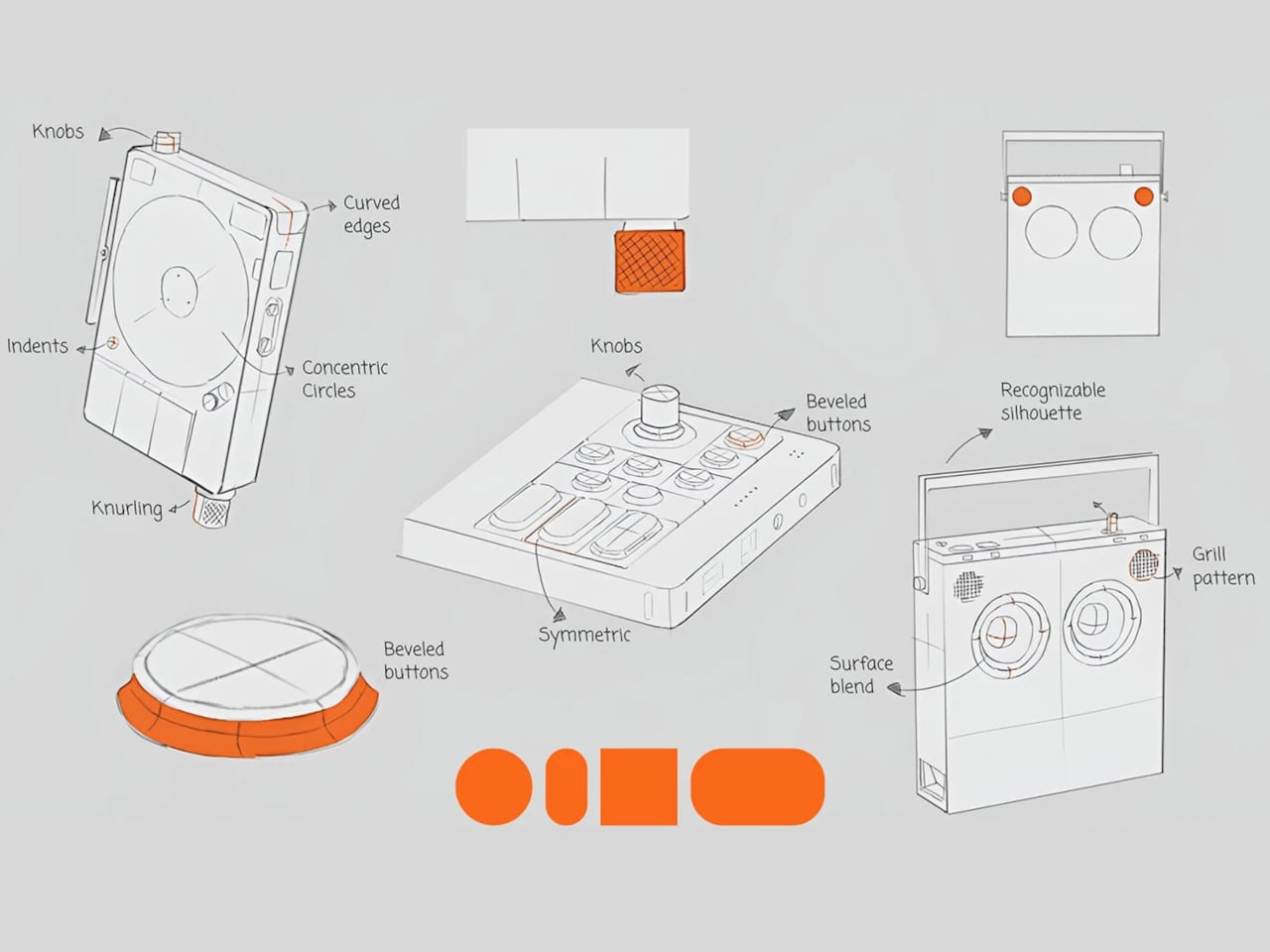
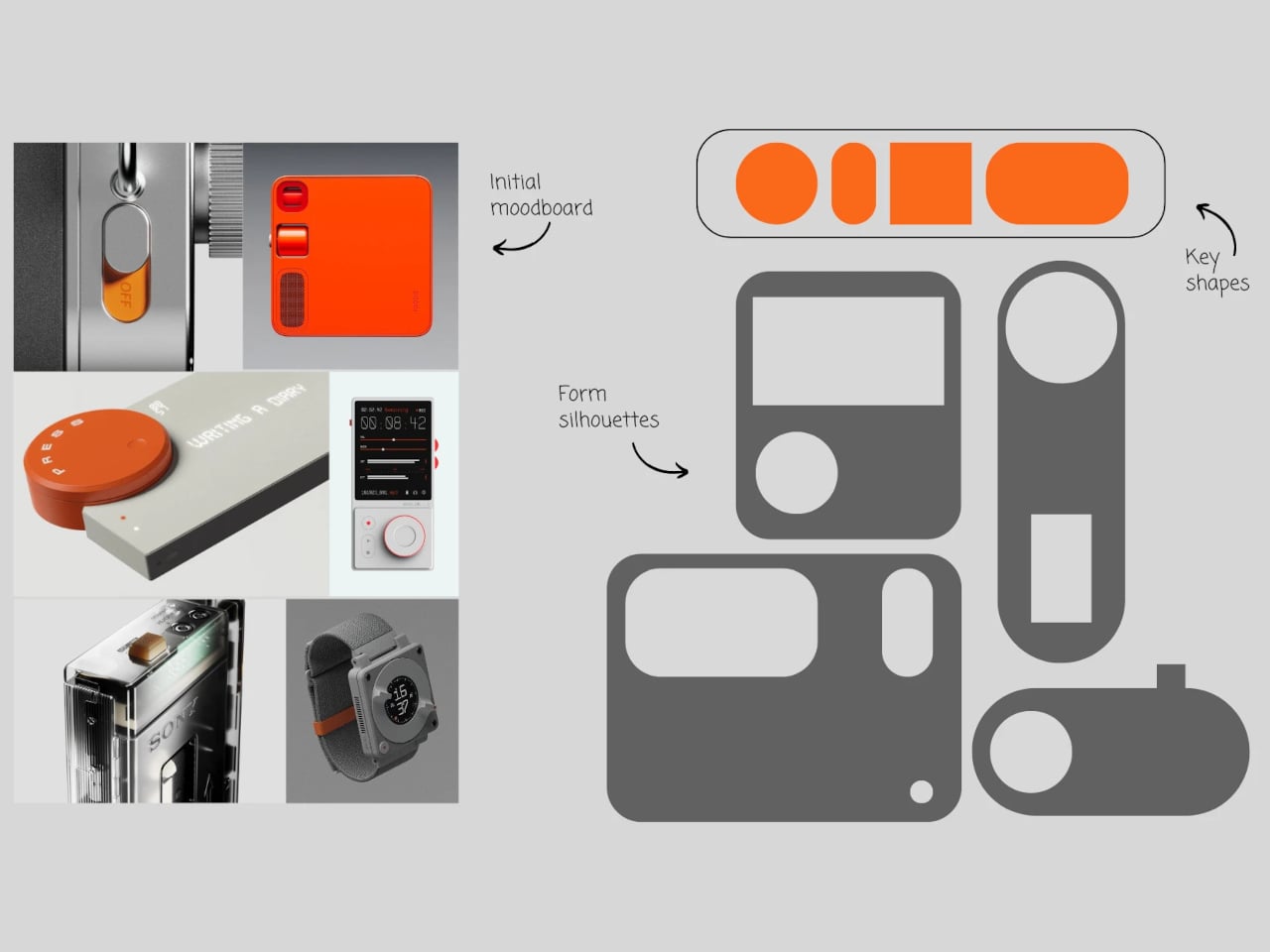
The project set out as a brand-led design study, not a fan mash-up or a wild render. The brief was to study Teenage Engineering’s approach to minimalism, playful restraint, tactile controls, and clear functional expression, then translate those principles into a believable handheld music player. The goal was manufacturable intent and intuitive interaction, not speculative tech or exaggerated shapes, treating it as a disciplined exercise in understanding how strong brand identities shape form.

Designer: Prithvi Manoj Bhaskaran

The study pulled four keywords from Teenage Engineering’s portfolio, playful, tactile, curious, purposeful complexity. Those traits show up in devices like the OP-1 and TP-7, where dense functionality is expressed through simple forms, color accents, and satisfying controls. A focused music player fits naturally into that philosophy, turning listening into an intentional, distraction-free ritual that foregrounds sound as a primary experience rather than something competing with notifications while you commute.

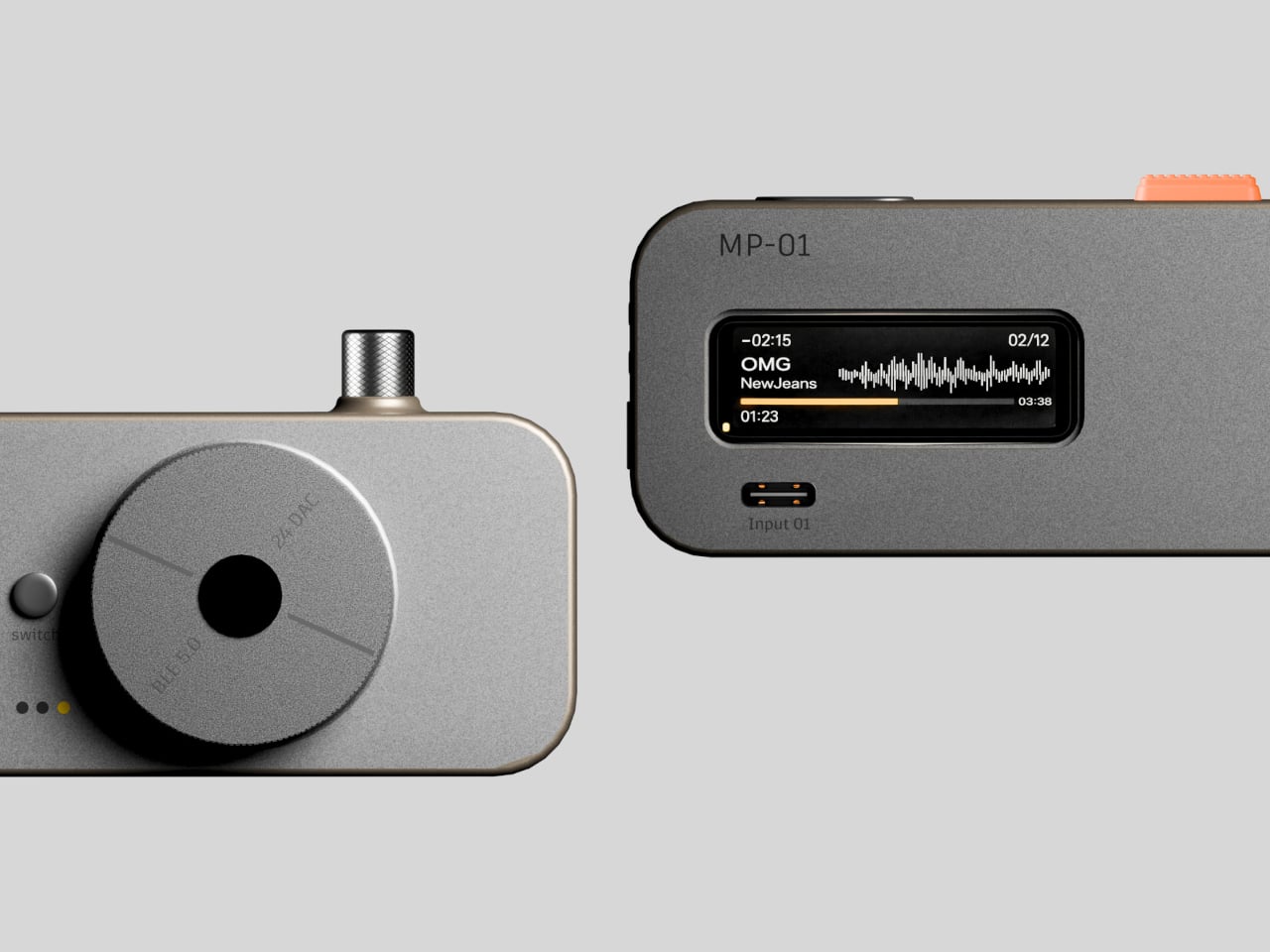
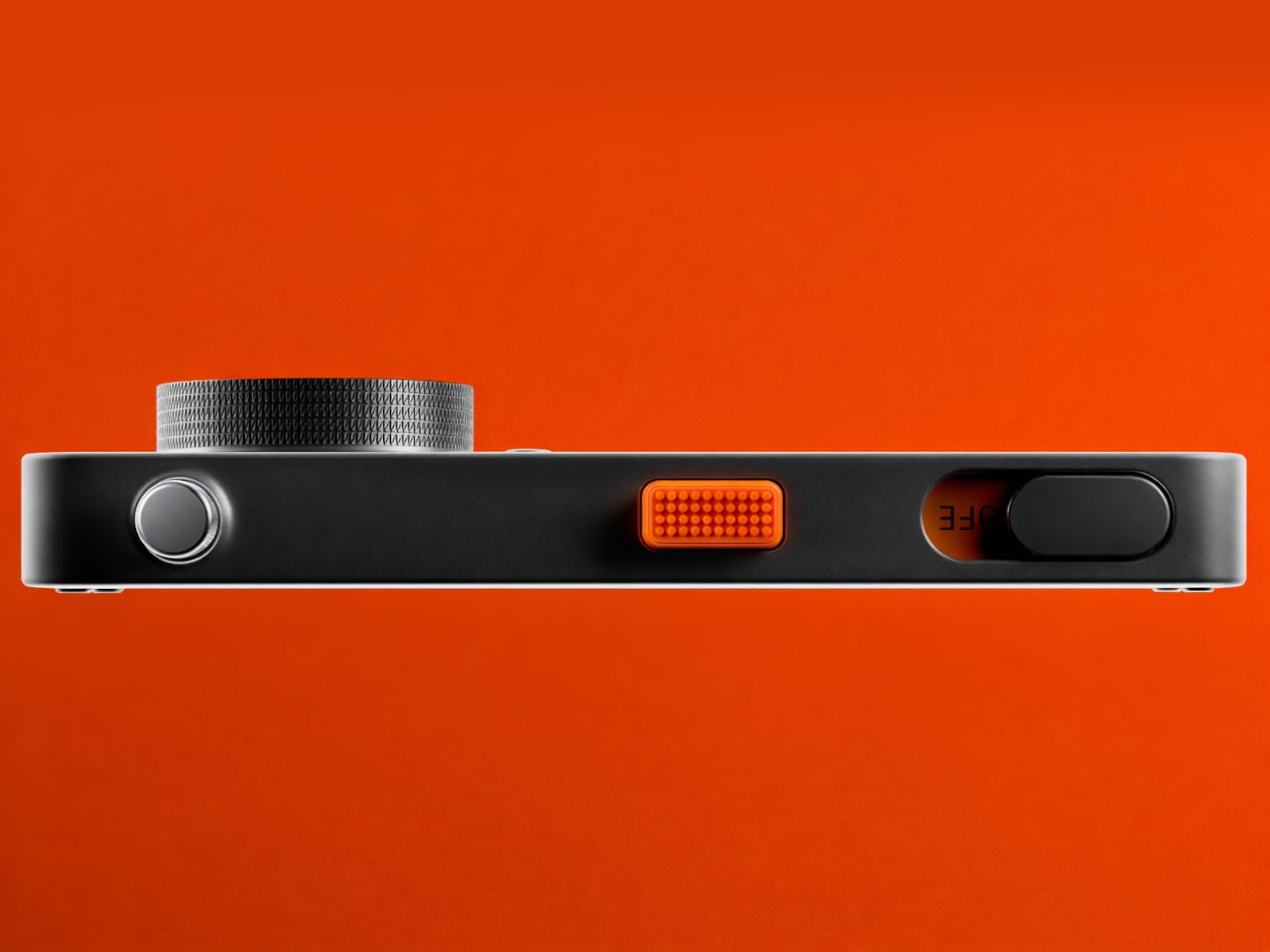
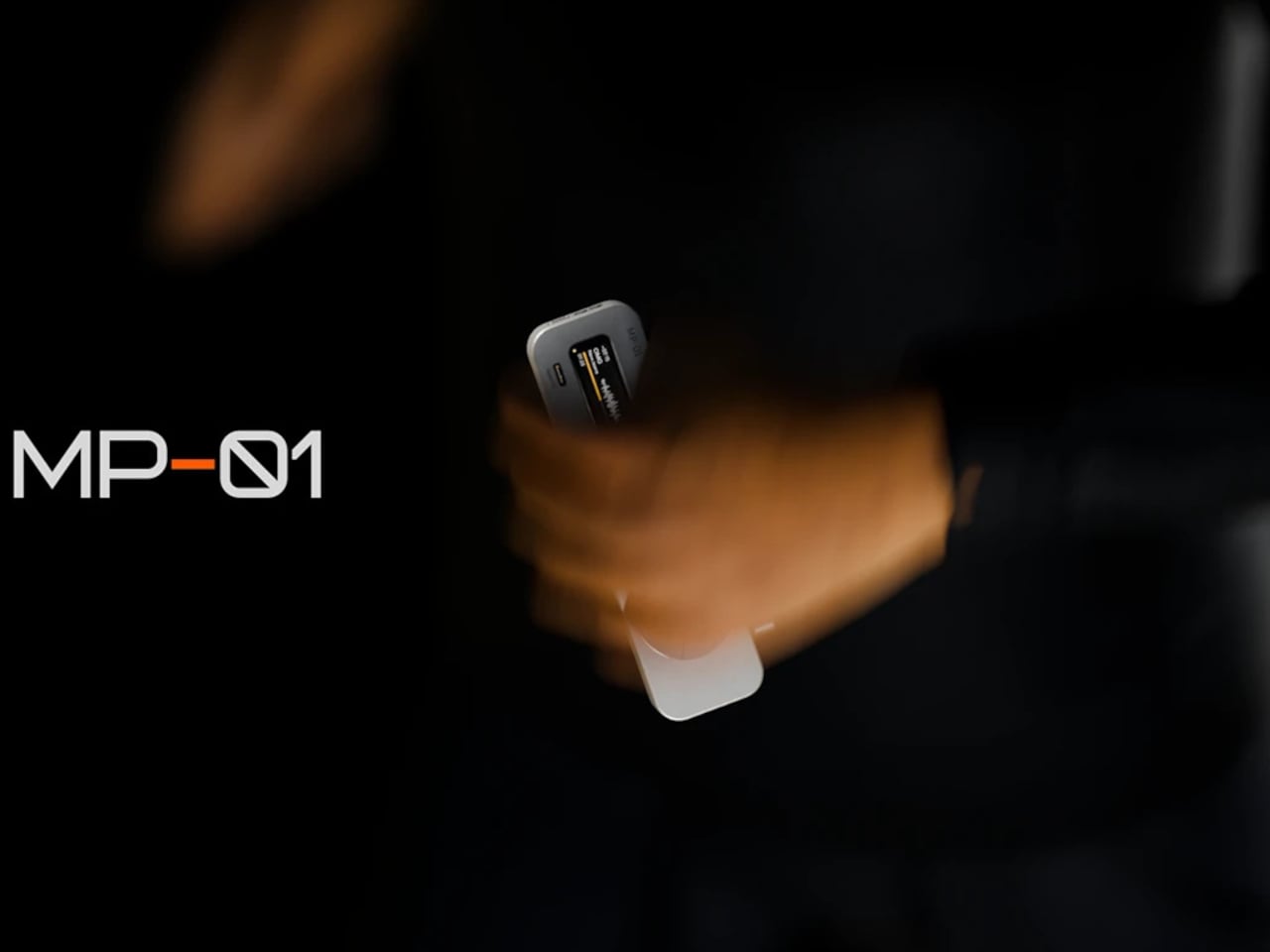
The MP-1’s basic layout is a slim rectangular body with softened corners, a large circular dial as the main control, and a narrow horizontal display that handles track info and waveform visualization. This mirrors Teenage Engineering’s habit of giving one control visual priority, then letting everything else recede, so your hand and eye always know where to go first, with the orange accent adding personality without overwhelming the minimalism.

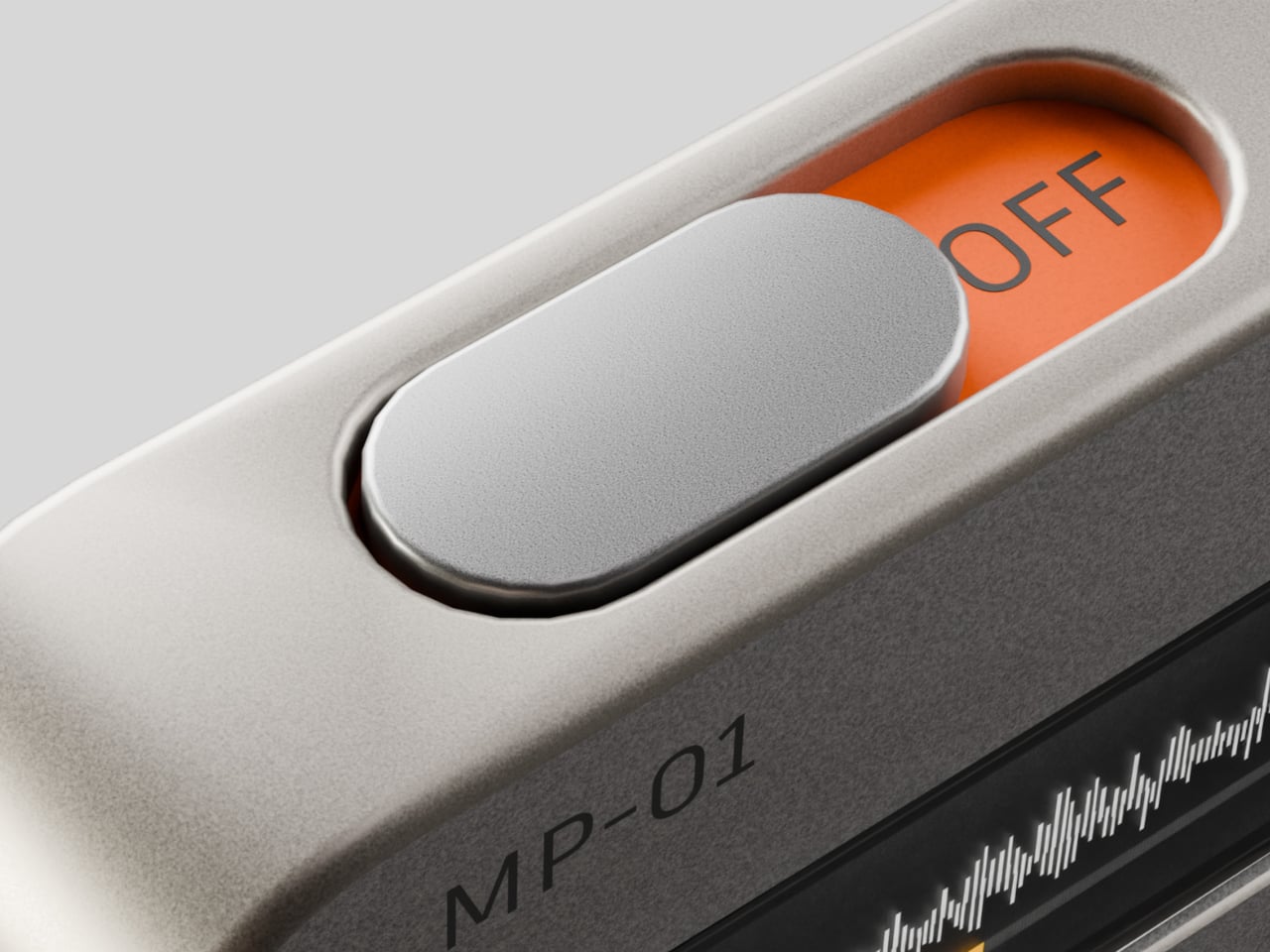
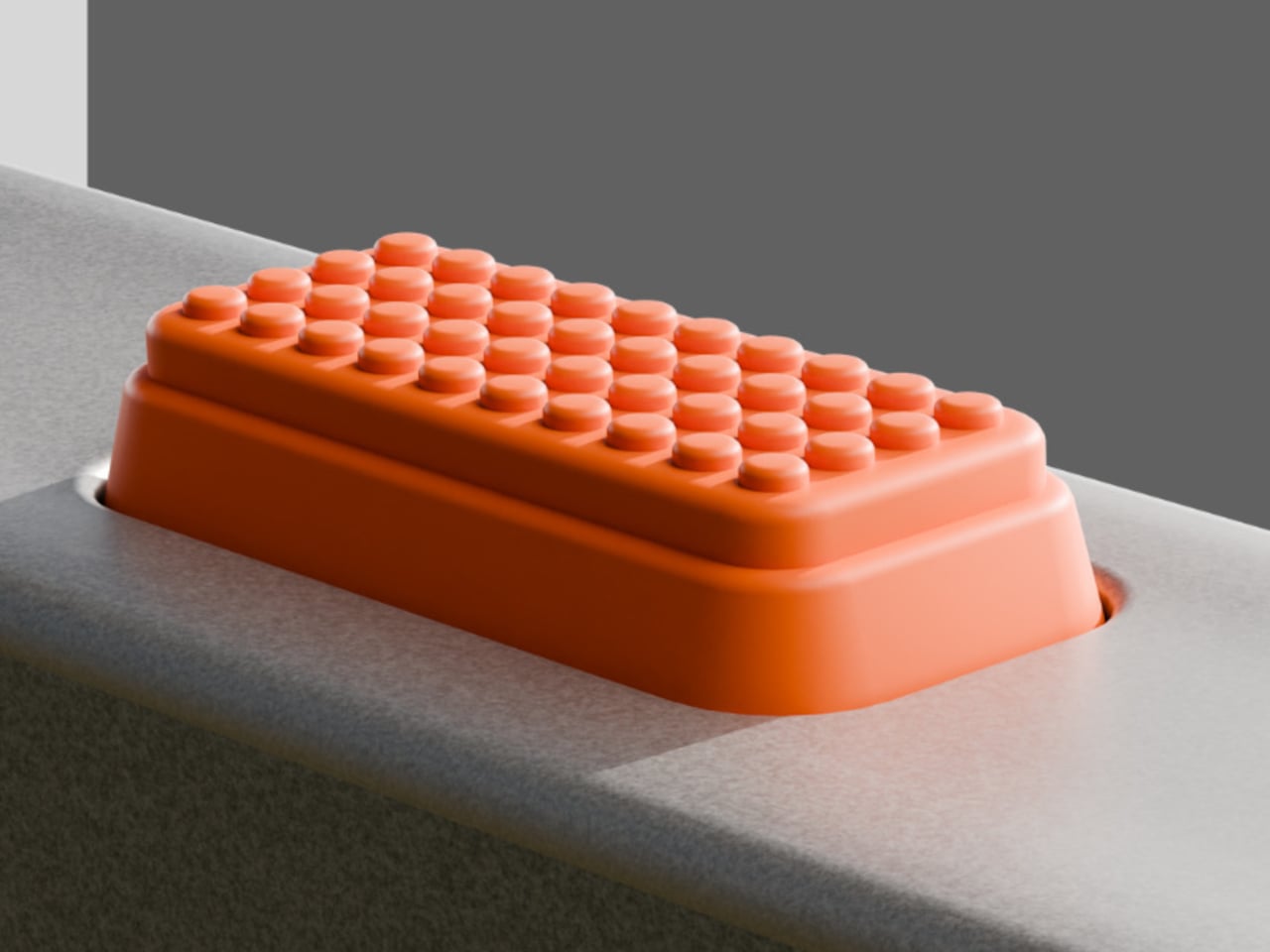
The tactile controls embody the playful side of the brief. An orange textured rocker invites your thumb, its grid of soft nubs making it feel like a toy in the best sense. A slider reveals “OFF” in orange when pulled back, hiding the label when pushed forward. These details use motion and color to communicate state without cluttering the surface with text, making every interaction feel more deliberate and satisfying.

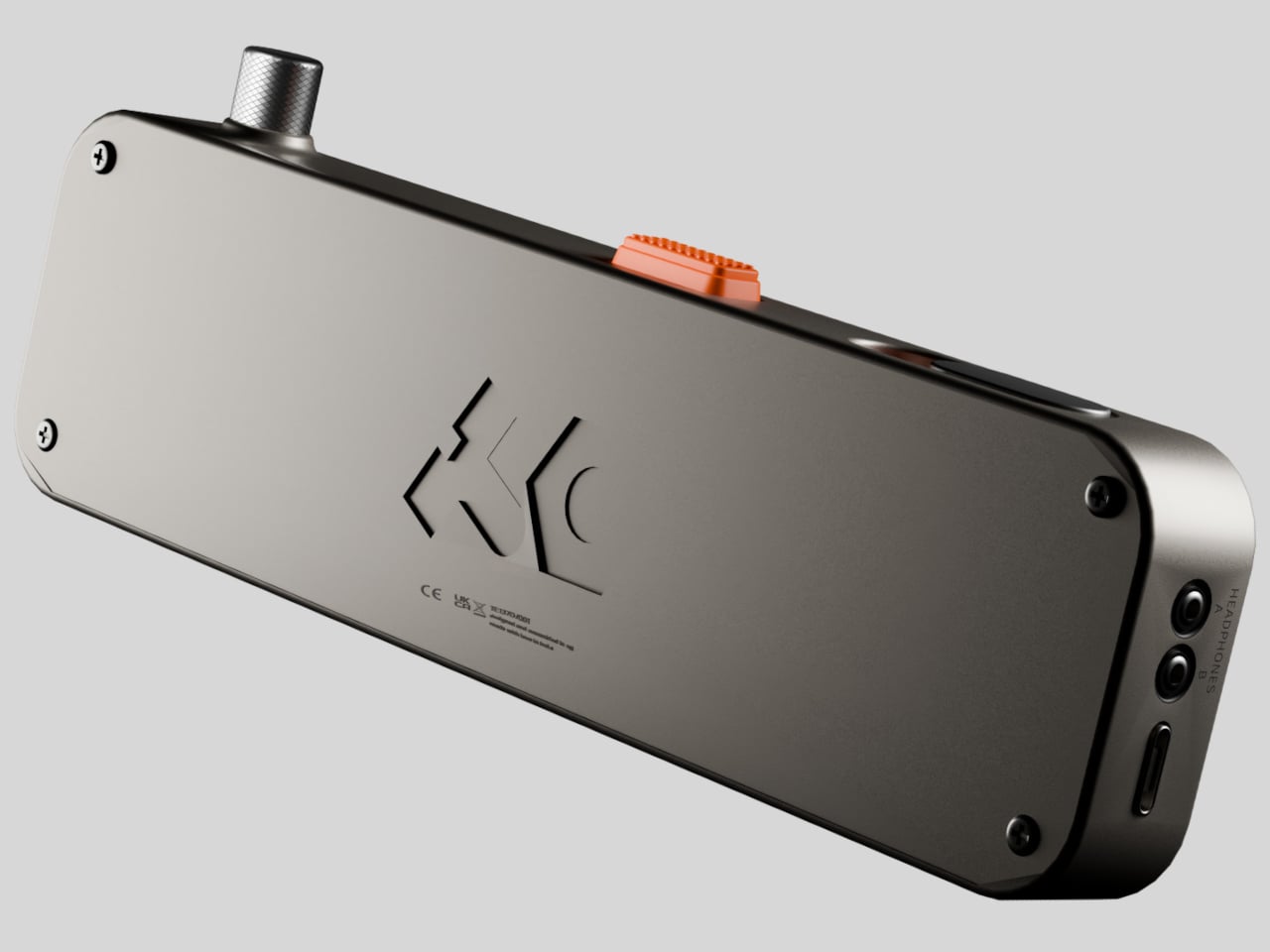
Practical touches include a USB-C port for charging and data, realistic thickness that suggests room for a battery and mechanical parts, and restrained use of materials. The backplate carries a subtle logo and regulatory text, the kind of thing you would expect on a real product, reinforcing that this is not just a styling exercise but a thought-out object that could plausibly be manufactured and carried in a pocket or bag.

The MP-1 shows the power of a strong design language, recognizing Teenage Engineering’s influence without logos or official ties. Most listening today happens on general-purpose slabs, which makes a small, tactile player appealing, even as a concept. For people who miss dedicated devices and the ritual of choosing to listen rather than letting a playlist run in the background, MP-1 feels like a quiet argument that sometimes less is exactly what you need.

The post MP-1 Reimagines a Modern Walkman Through a Teenage Engineering Lens first appeared on Yanko Design.
Samsung Galaxy S26 Ultra Leaks Reveal Stunning New Features

Samsung Galaxy S26 Ultra Leaks Reveal Stunning New Features

The Samsung Galaxy S26 Ultra is emerging as a pivotal release in Samsung’s flagship Ultra series, emphasizing thoughtful refinements that cater to user needs. Leaks suggest that Samsung is focusing on enhancing usability, design, and performance, addressing consumer feedback while maintaining the premium identity that defines the Galaxy Ultra lineup. This approach reflects a strategic […]

The post Samsung Galaxy S26 Ultra Leaks Reveal Stunning New Features appeared first on Geeky Gadgets.

Posted in Uncategorized