CES 2026: Garmin had the nerve to launch a food-tracking feature in Las Vegas

Garmin’s big announcement for CES 2026 wasn’t another fitness watch. Instead, it revealed it is adding food (and calorie) tracking to its Connect app. It combines AI image recognition with a rich food database, so you can monitor your calorie and nutrient intake without leaving the app — and even log some food through its watches.

The food tracking works similarly to existing apps like MyFitnessPal, Noom, LifeSum and many others. Still, Garmin hopes to make its companion app the best place for tracking nutrition without having to leave its app – and tying it into your other fitness goals.

This makes sense in a few ways. If you already use Garmin to track your exercise, the app can provide a more accurate estimate of your calorie expenditure. It’ll personalize it based on height, weight and gender, which you’ve likely already entered on your Garmin profile. It can even offer calorie and macronutrient recommendations tailored to your fitness goals.

However, it unveiled the news at CES 2026, a tech conference held in Las Vegas, which seemed like a troll. Las Vegas, where you’re never far from a three-foot margarita, a BLT Bloody Mary or fried chicken and waffles. In fact, Garmin selected one of my favorite restaurants, Yardbird, to showcase its new nutrition-tracking feature. Yardbird does incredible chicken and waffles. It’s possibly the worst possible place to start monitoring my calorie intake, regardless of the 15,000-odd steps I take each day here.

In addition to the food database, you can use the camera to log food. With AI-powered image recognition, the Connect app makes a generally good guess at what you’re eating. During the media briefing lunch, the app swiftly recognized grilled salmon, corn and several other vegetables. The quantities were not remotely accurate, however: Five kernels of corn do not equate to one cup. You can manually adjust the serving size, but unfortunately, it can’t make a more informed estimate at this point. A Garmin spokesperson noted that the company is looking into how to improve accuracy here. (It’s a common issue for any app or service attempting to use AI image detection to analyse meals.) It was, however, quick and easy. 

Garmin's nutrition tracking feature at CES 2026
Mat Smith for Engadget

You can also create customized meal entries (with the correct ingredient quantities), making it easier to track your regular breakfast habits or midday coffee order. Better still, you can monitor nutrition and calorie intake on compatible Garmin watches. You can even log your favorite (and recently logged foods from your wrist without needing to use your phone. Voice commands also work on compatible Garmin wearables.

The feature is now available to Garmin Connect+ subscribers, who pay $6.99 per month. This also includes Active Intelligence, which already offers AI-powered insights into your workouts. It can now factor in your nutrition.

Subscribers will also be able to get daily, weekly, monthly and even annual reports on calorie targets (and what you ended up consuming). But let’s start monitoring that once I’ve left Vegas, please.

This article originally appeared on Engadget at https://www.engadget.com/wearables/garmin-food-tracking-feature-connect-plus-ces-2026-043231948.html?src=rss
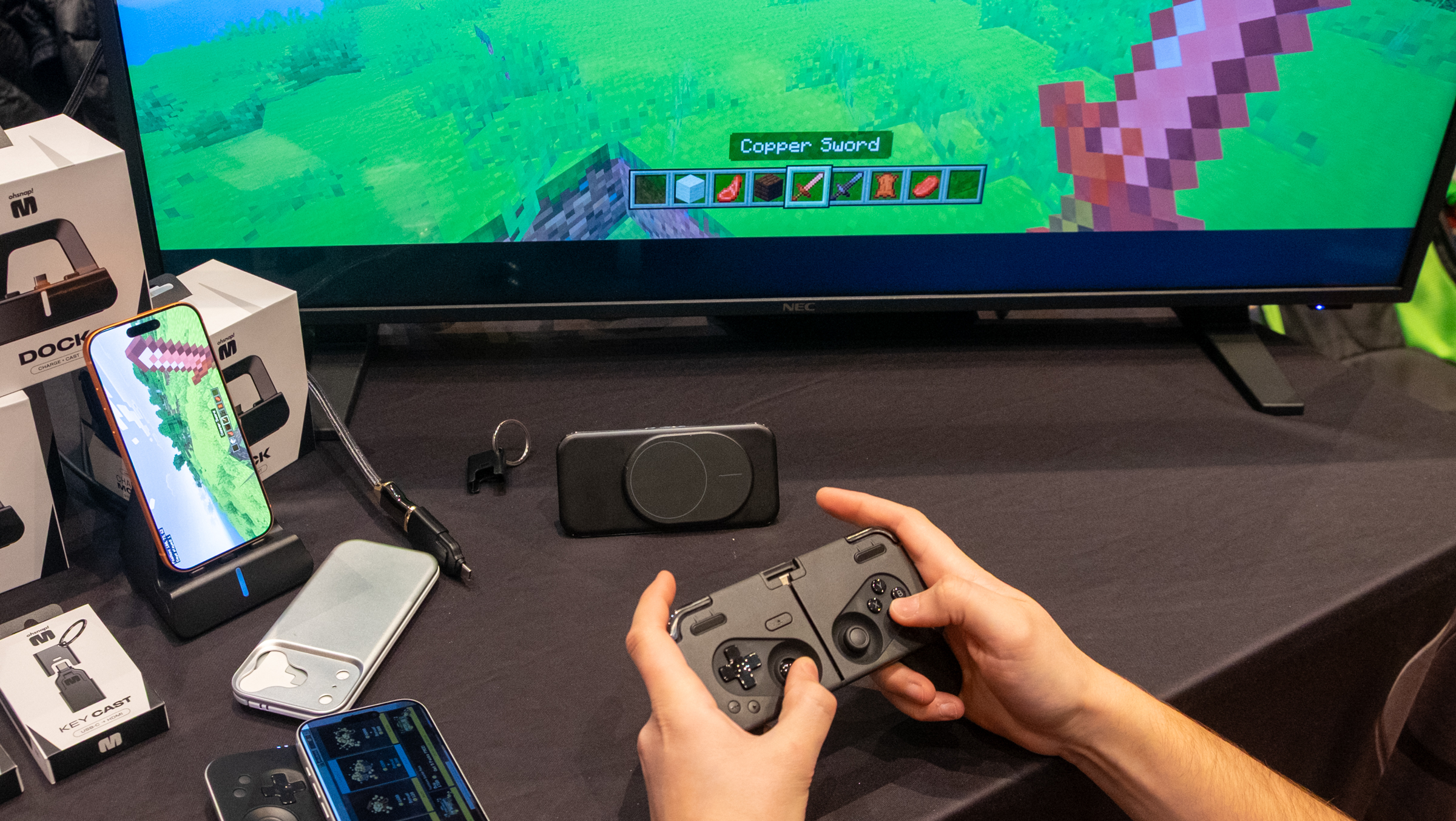

Another look at OhSnap’s MCON, a magnetic game controller for your phone

OhSnap won our hearts (and a best of CES award) last year with the MCON, its tiny Bluetooth game pad that magnetically connects to your phone. At the time, we tried a pre-production unit, but in the year since the MCON has been finalized and went on sale last month. I just got a chance to try the final version here at CES, and just a quick demo was enough to convince me that OhSnap has made some solid refinements over the last year.

Just as we saw last year, the MCON attaches magnetically to an iPhone or any compatible Android phone (the company also includes a magnetic ring in the box for Androids that don’t have Qi2 yet). It has the full array of controls, including four face buttons, a D-pad, two joysticks and index finger buttons and full bumpers. It’s just sleeker and feels more solid than last year’s prototype, and while mounting your makes it feel a bit top-heavy, it’s not awkward enough to cause real issues when playuing (at least that’s how I felt after my brief demo).

The controller also has grips that unfold to help balance things, and the plate that attaches your phone to the controller has a kickstand. So if you want to drop your phone down on a tray table on a plane and play just holding the controller, feel free. All in all, the MCON feels like a flexible and high-quality device that’s probably worth the $150 OhSnap asks for it.

The MCON dock connects your phone to your TV for full-screen gameplay.
Nathan Ingraham for Engadget

The company also has some new accessories to show off. There’s a $70 TV dock that powers your phone and outputs video from USB-C to HDMI. You could use this dock with any Bluetooth controller hooked up to your mobile phone, not just the MCON. There’s also a tiny $30 adapter you can put on your keychain that has a USB-C plug that goes into your phone; plug an HDMI cable into the other end and you can broadcast your games to a TV anywhere you go and play them with a controller.

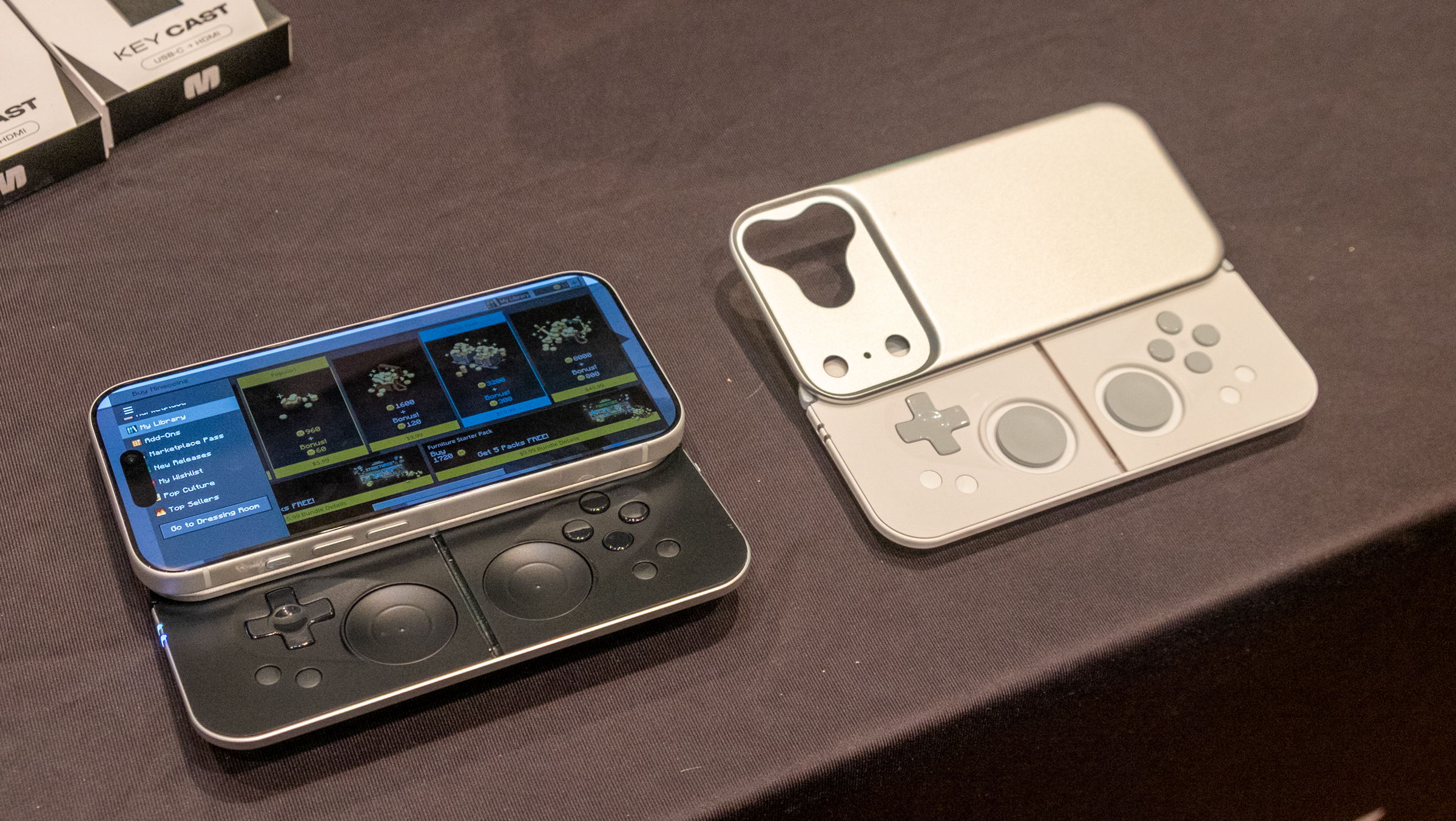
It’s a pretty clever and comprehensive set of products, and while there are tons of mobile game controllers, the OhSnap feels like one of the more portable and sleek options out there. OhSnap is working on something even slimmer, though. The company showed off two new prototype controllers, the MCON Lite and MCON Slim.

OhSnap is working on two new MCON controller that are more compact than the original.
Nathan Ingraham for Engadget

As the names suggest, they’re both more compact than the original model. The Lite uses concave joypads rather than full sticks, and the Slim makes things even smaller by using concave touch pads. Your’e not going to get quite the same quality experience with those as you would with the bigger version, but they are noticeably thinner; OhSnap says they’ll be cheaper, too. The MCON Lite is scheduled to arrive this summer, while the Slim should launch in the fall (around the same time as the iPhone 18).

This article originally appeared on Engadget at https://www.engadget.com/gaming/another-look-at-ohsnaps-mcon-a-magnetic-game-controller-for-your-phone-042424092.html?src=rss

Cozyla showed off a 4K, 55-inch digital family calendar at CES

New tech at CES often makes categorization hard. Is Cozyla’s latest device a digital family calendar, a TV or a smart home hub? After seeing it, I’d say the answer is, yes? Cozyla calls the Calendar + Max the “largest interactive hub in it’s category.” And indeed, it’s the size of a big flatscreen, but the main interface is just like any other Cozyla device, an Android-based family calendar and planner with shared schedules, notes, meal plans, and chores. It syncs with Google, Yahoo and Apple calendars as well as Outlook, and it will run apps from the Google Play store. (Yahoo owns Engadget, but has no say in our editorial coverage.)

But this super-sized version can also stream shows and movies with whichever apps you subscribe to. The photo integration, via the app, will take pics from your phone and stick them on the bigs screen. You can also create a slideshow and photo walls to look at when the calendar is off.

The smart home integration lets you view your security camera and video doorbell feeds on a much larger scale than your phone’s display can offer. The display has a camera of its own so you can make FaceTime and Zoom calls.

The Max comes on a built-in stand that you can roll around the house, along with a battery that should power the whole thing for around six hours. When I first heard about it, I found myself wondering where I would put Calendar+ Max in my house. The kitchen is an ideal centralized calendar location, but I don’t want to watch Miss Scarlet in there. Luckily, the wheels make that conundrum moot. This can go anywhere you want it to, and swings into portrailt orientation that looks great for chore mode, and landscape orientation for watching shows.

Possibly the best part is the lack of subscription required. Like with all Cozyla screens, there’s no ongoing cost to use all the features. The Calendar + Max has no release date or price available just yet, but if I ever decided to organize my family’s life beyond barely contained chaos, I can see myself considering it.

This article originally appeared on Engadget at https://www.engadget.com/home/smart-home/cozyla-showed-off-a-4k-55-inch-digital-family-calendar-at-ces-040352802.html?src=rss

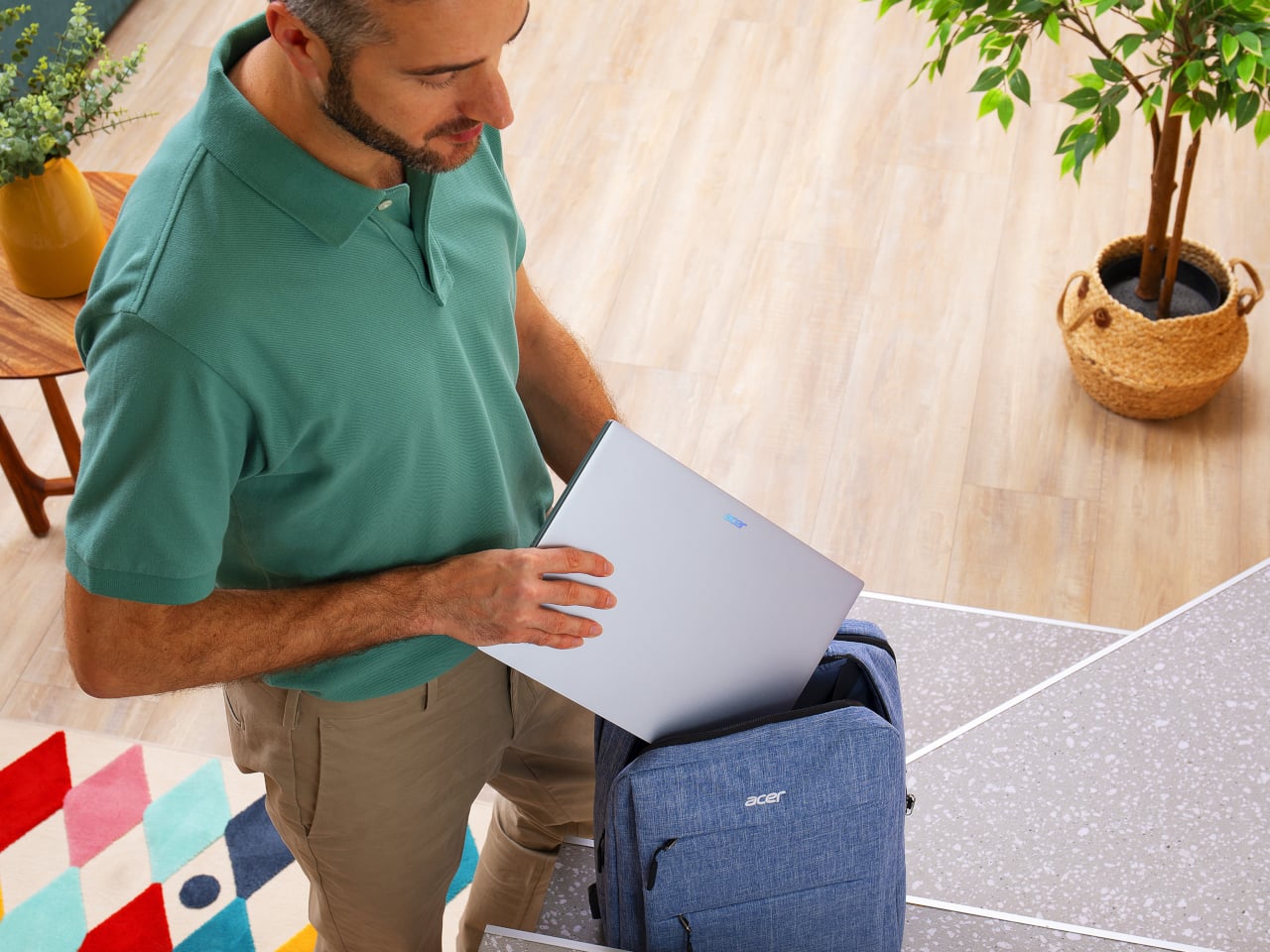
Acer AMD Ryzen Laptops Bring AI Across Three Very Different Days

AMD’s Ryzen AI 400-series chips are showing up in laptops people might actually carry every day. Acer is rolling them out across three very different lines, thin-and-light, mainstream, and gaming, and all of them are Copilot+ PCs with NPUs built for on-device AI. Built on the Zen 5 architecture, these processors aim to enhance productivity and creative work without constantly leaning on the cloud or draining the battery by lunchtime.

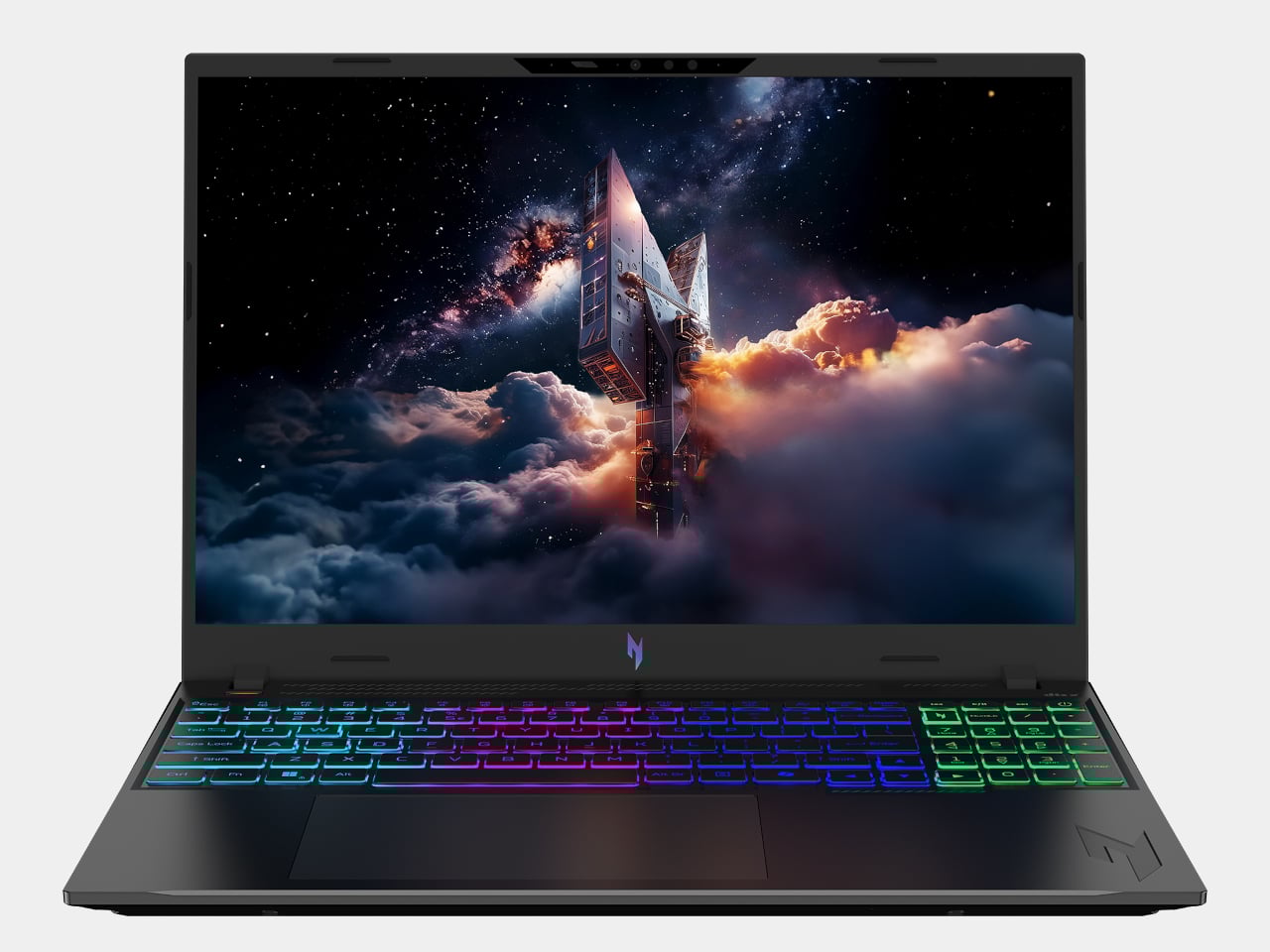
The lineup splits into three personalities. Swift Go 16 AI is built for people who live out of a backpack. Aspire 14 and 16 AI are for students and young professionals who need one machine to do everything. Last but not least, Nitro V 16 AI is for gamers who still have to write essays or edit videos when the match ends. The interesting part is how Acer uses the same AMD Ryzen AI 400-series foundation to make three very different days feel smoother.

Designer: Acer

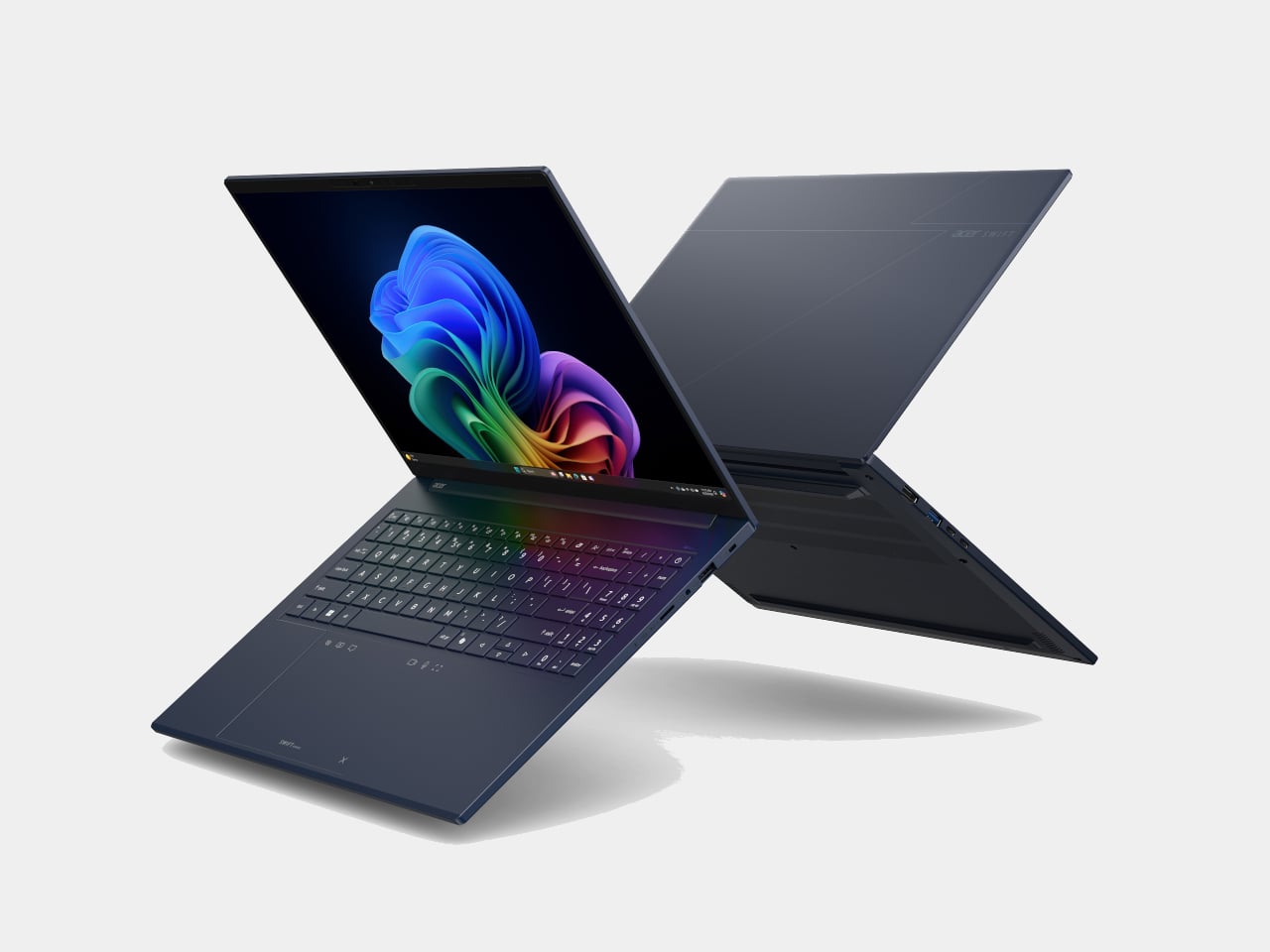
Acer Swift Go 16 AI

Swift Go 16 AI is the laptop that spends its time in cafés and lecture halls. It runs up to an AMD Ryzen AI 9 465 processor with Radeon 880M graphics, up to 32 GB of LPDDR5X memory, and up to 1 TB of PCIe Gen 4 SSD storage. That headroom handles a dozen tabs, a video call, and a Copilot window without the fans screaming, and it all lives in a laser-etched aluminum chassis that opens a full 180 degrees.

Display options range from 16-inch 16:10 WUXGA IPS to WUXGA+ OLED with 100 % DCI-P3 and up to 400 nits, so spreadsheets and color-sensitive work both look right. A 5 MP IR camera with HDR and Human Presence Detection makes video calls less painful, while DTS:X Ultra speakers and a multi-control touchpad handle audio and gestures. Wi-Fi 7, Bluetooth 5.4, dual USB-C, dual USB-A, HDMI 2.1, and MicroSD mean you stop hunting for dongles.

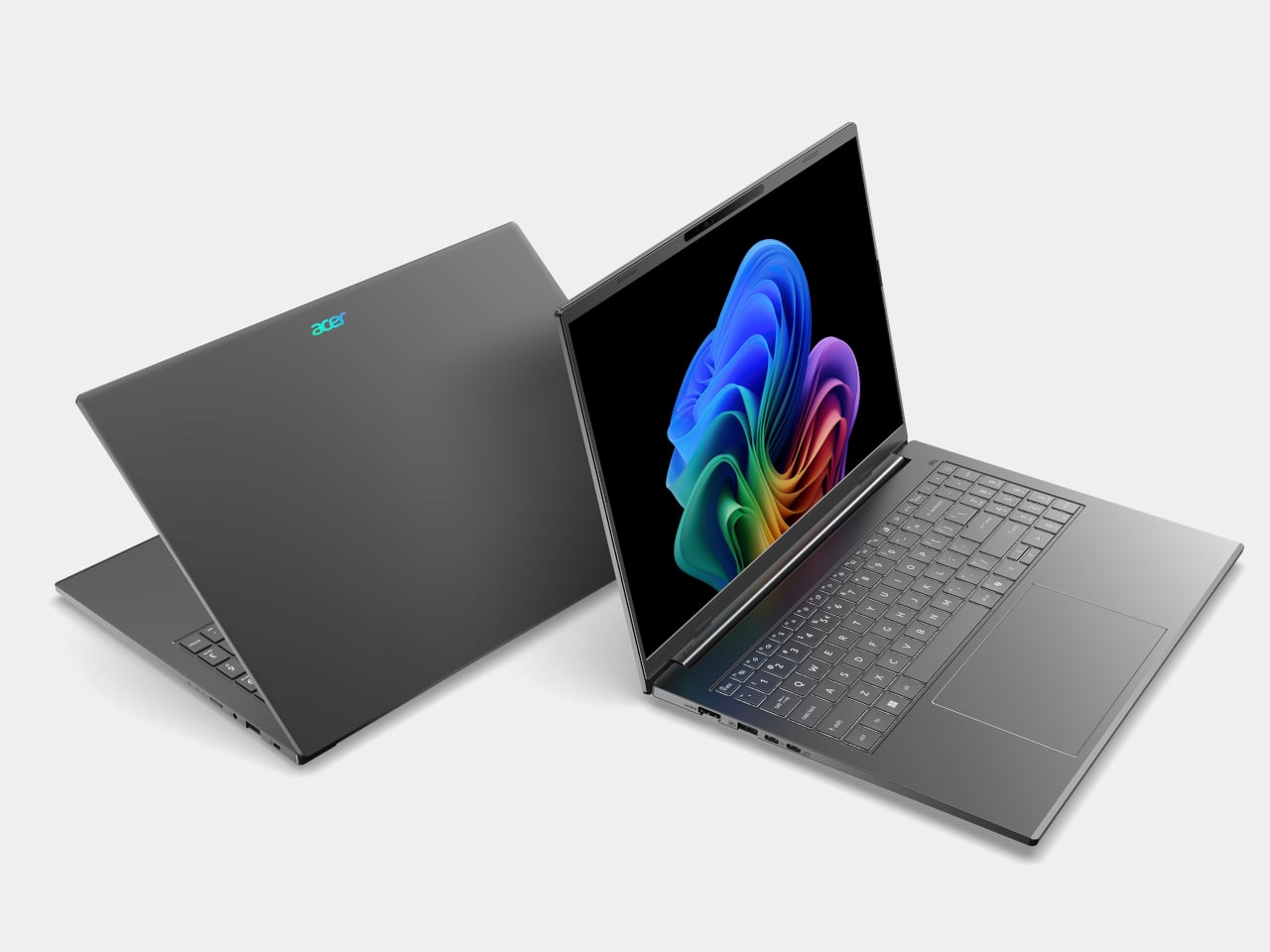
Acer Aspire 14 AI and Aspire 16 AI

Acer Aspire 14 AI

The Aspire 14 AI and Aspire 16 AI are the laptops that bounce between classes, offices, and kitchen tables. Both use WUXGA 1920 × 1200 16:10 displays with refresh rates up to 120 Hz, with touch, non-touch, and OLED options. The 16-inch model can be configured with up to an AMD Ryzen AI 9 465 and Radeon 880M graphics, while the 14-inch tops out at a Ryzen AI 7 445 and Radeon 840M, both with up to 32 GB of LPDDR5X and 1 TB of PCIe Gen 4 SSD storage.

Acer Aspire 16 AI

Full-flat 180-degree hinges and large touchpads make it easy to share a screen or navigate long documents. Both sizes include 1080p FHD IR webcams with privacy shutters, DTS Audio dual speakers, and triple-mic arrays, plus Wi-Fi 6E and Bluetooth 5.3. Two USB-C, two USB-A, HDMI 2.1, a MicroSD card reader, and an audio jack cover most scenarios without extra gear. Acer’s AI layer, Intelligent Space, AcerSense, PurifiedView, PurifiedVoice, and My Key, sits on top of Copilot+ to make translation, noise reduction, and quick shortcuts feel like part of the machine.

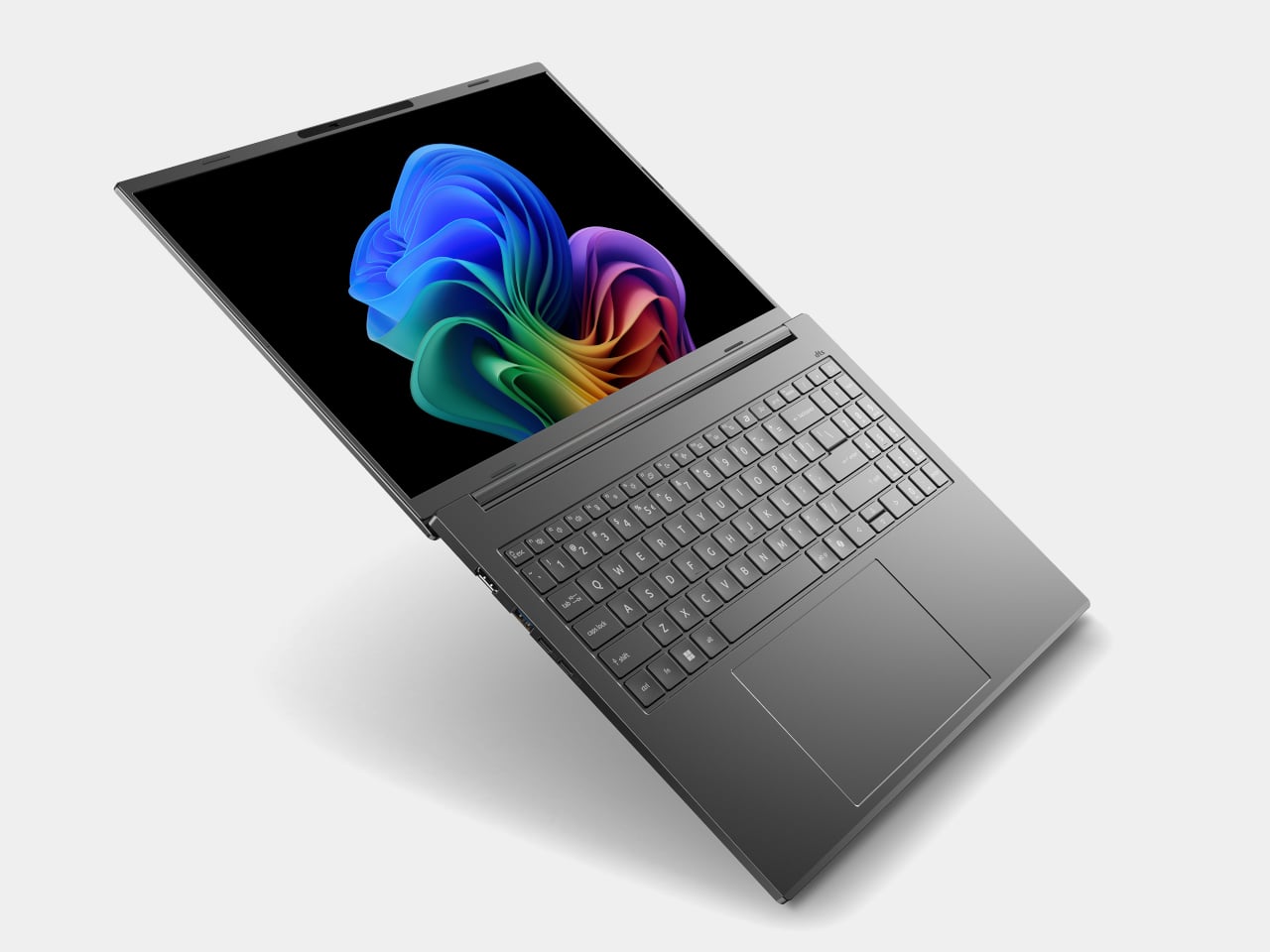
Acer Nitro V 16 AI

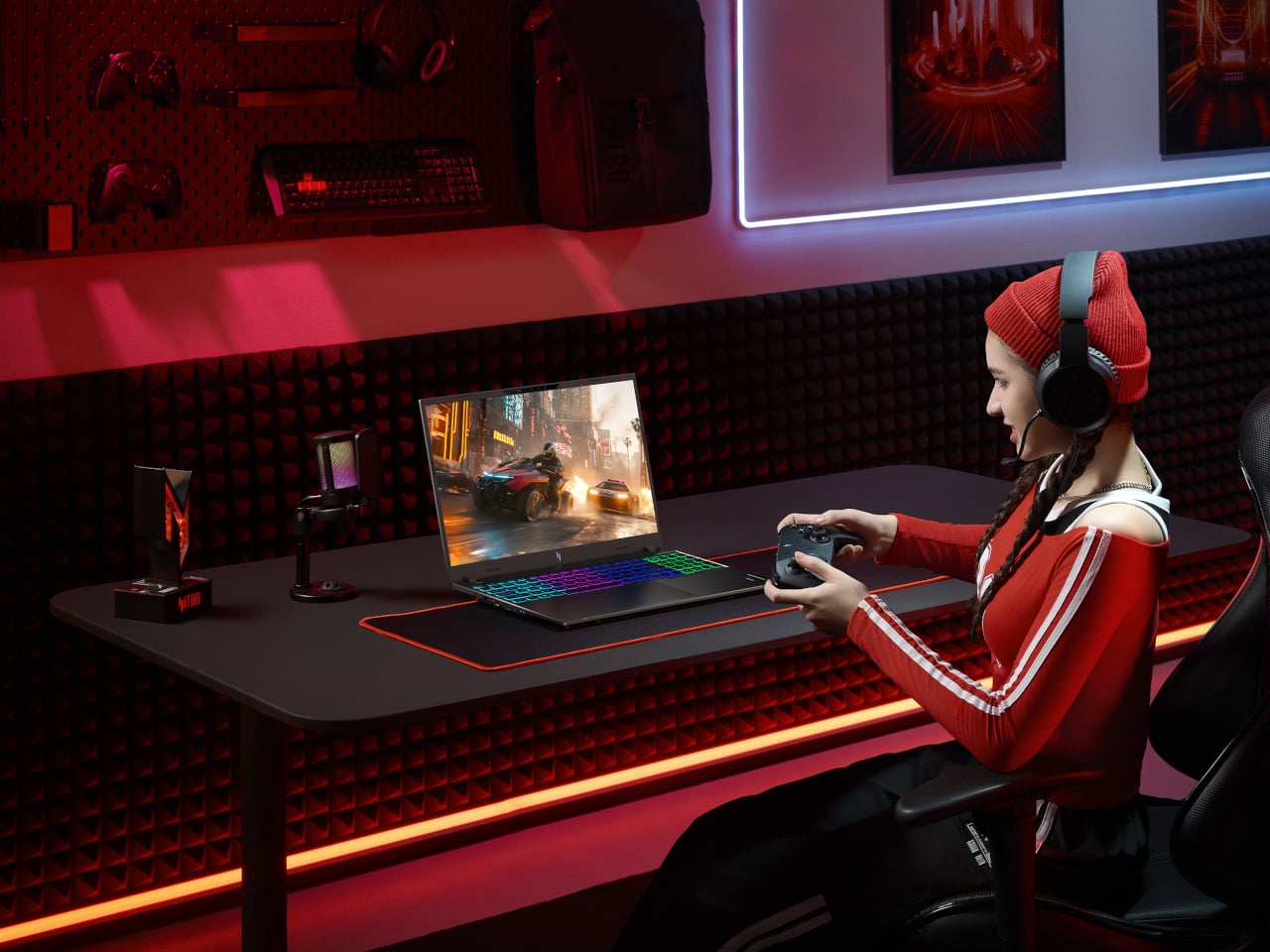
Nitro V 16 AI is the AMD-powered gaming laptop that still has to behave like a normal computer when the game is closed. It pairs up to an AMD Ryzen AI 9 465 processor with up to an NVIDIA GeForce RTX 5070 Laptop GPU, backed by up to 32 GB of DDR5 memory and up to 2 TB of PCIe M.2 NVMe SSD storage. That combination is built for high-refresh shooters and GPU-accelerated creative work, not just casual titles.

The 16-inch 16:10 WUXGA 1920 × 1200 panel runs at 180 Hz with 100 % sRGB and a MUX switch, so you can flip between power-saving hybrid mode and direct GPU mode when you care about every frame. Dual-fan, dual-intake, dual-exhaust cooling keeps the chassis under control, while DTS:X Ultra audio, a 4-zone RGB keyboard, and an FHD IR webcam with a shutter handle the rest of the experience. Wi-Fi 6E, Bluetooth 5.4, USB 4 Type-C, three USB-A ports, HDMI 2.1, RJ-45, and a Kensington lock round it out, and Acer’s Intelligent Space and NitroSense give you knobs to tune performance and AI-assisted features without digging through control panels.

Acer and AMD at CES 2026: Three Laptops, One AI Backbone

Swift Go 16 AI is the thin-and-light that leans on OLED and Wi-Fi 7 for people who work wherever they can find a table. Aspire 14 and 16 AI are the everyday machines that quietly stretch multi-day battery life and 16:10 high-refresh screens across school, work, and home. Nitro V 16 AI is the gaming rig that still has to write essays and render timelines. Underneath, they all share AMD’s Ryzen AI 400-series processors, Copilot+ PC status, and Acer’s own AI tools, which is the real CES 2026 story here, AI moving from a single button on the keyboard into the way the whole laptop is specced and shaped.

The post Acer AMD Ryzen Laptops Bring AI Across Three Very Different Days first appeared on Yanko Design.

Alienware teases new super-slim and entry-level gaming laptops at CES 2026

After relaunching its Area-51 brand with a new 16-inch laptop in 2025, Alienware is teasing two new laptops at CES 2026 in an attempt to reach an even larger audience. Dell's gaming brand plans to launch both entry-level and ultra-slim models later this year, and in the meantime, it's rolling out updates to its existing desktops and laptops to tide people over.

Alienware isn't sharing all the details of its new laptops at CES, but we do have the highlights. The company's new "ultra-slim gaming laptop" will be around 17mm or 0.67 inches thin, and come in either 14-inch or 16-inch variants. While the 16-inch version of the laptop will feature NVIDIA discrete graphics and "new highly efficient CPUs," it's not meant to be a gaming powerhouse like the Area-51. Instead, Alienware suggests the laptop will work for gaming and also "creative projects, productivity and everything in between."

The entry-level laptop is similarly not at Area-51-levels of power, but Alienware claims it'll deliver "strong gaming performance" at its "most accessible price point yet." That should ideally put the new laptop under the $1,199 starting price of the more streamlined Alienware 16 Aurora laptop.

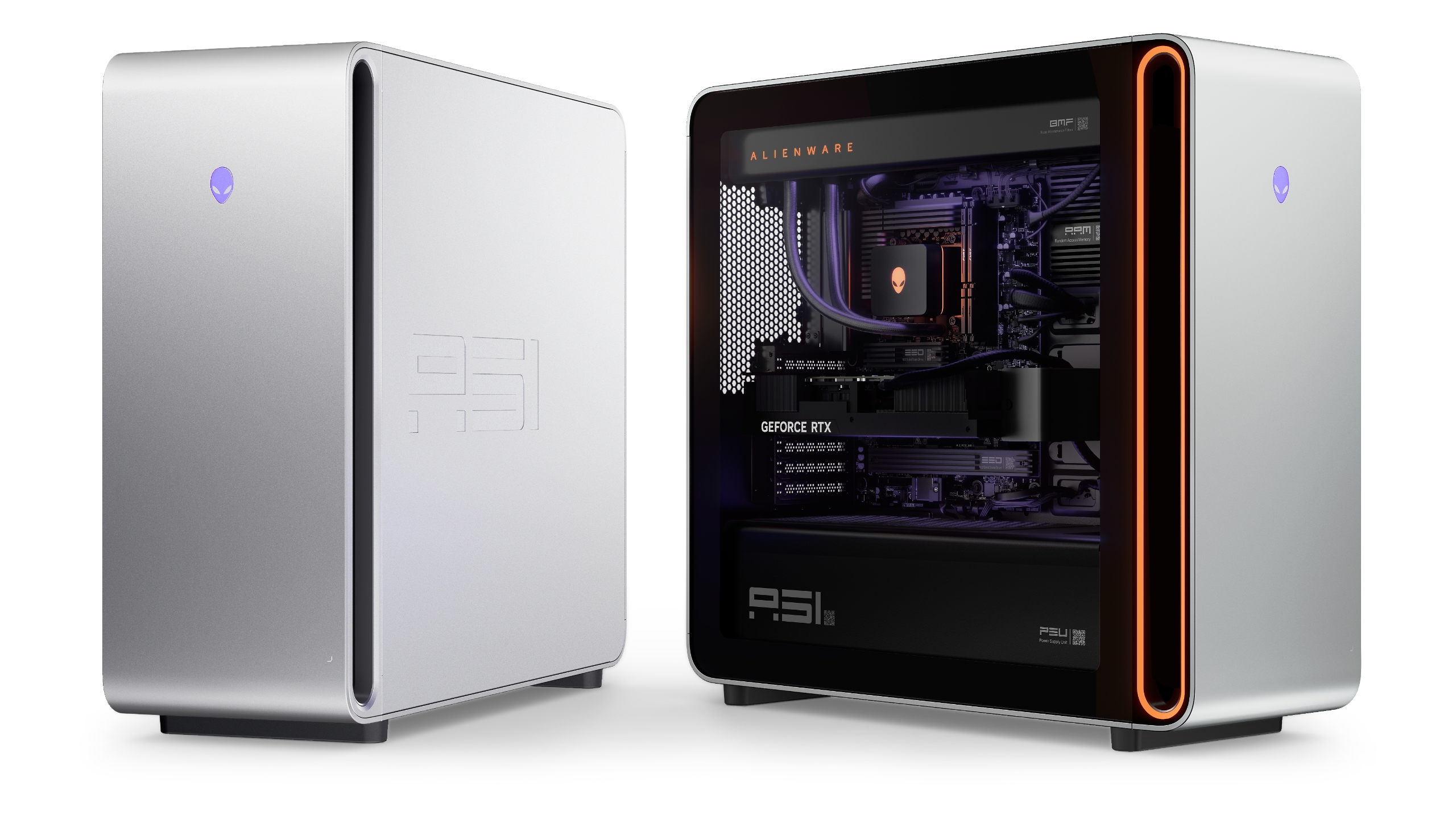
The updated version of the Alienware Area-51 Desktop with AMD chips.
The Alienware Area-51 Desktop will get updated with the latest AMD chips in February 2026.
Dell

On top of those two new models, Alienware is bringing new anti-glare OLED panels to a selection of its Alienware 16X Aurora and Alienware 16 Area-51 laptops, along with new Intel Core Ultra 200HX chips. The new display panels reach 620 nits of peak HDR brightness and have a 0.2ms response time for even smoother gameplay. The Alienware 18 Area-51 is also getting an upgrade to Intel Core Ultra 200HX chips, while the Alienware Area-51 Desktop will ship with AMD's new Ryzen 7 9850X3D chips.

There's currently no pricing available for Alienware's new laptops, or the updated versions of its older models. The updated Alienware 16X Aurora, Alienware 16 Area-51, and Alienware 18 Area-51 laptops will be available in Q1 2026. The update Alienware Area-51 Desktop is coming in February 2026.

This article originally appeared on Engadget at https://www.engadget.com/computing/laptops/alienware-teases-new-super-slim-and-entry-level-gaming-laptops-at-ces-2026-033000700.html?src=rss

AMD’s new Ryzen AI Max+ chips and Ryzen 7 9850X3D court desktop enthusiasts at CES 2026

While it's nice to see desktop support in AMD's new Ryzen AI 400 chips, demanding gamers and enthusiasts will likely be more intrigued by the company's next batch of Ryzen AI Max+ chips, as well as the new Ryzen 7 9850X3D with 3D V-Cache. The former will make its way into small desktops and a handful of workhorse laptops, while the latter is another option for gamers who want the speed bump of 3D V-cache without shelling out for the $700 9950X3D

Last year, AMD debuted its Ryzen AI Max chips as a way to create a single piece of silicon with powerful CPU cores, GPU cores, NPUs and integrated memory, similar to Apple's home-brewed chips. At the time, AMD VP Joe Macri also noted that the existence of Apple Silicon helped make the Ryzen AI Max chips possible.

"Many people in the PC industry said, well, if you want graphics, it's gotta be discrete graphics because otherwise people will think it's bad graphics," Macri said at last year's CES. "What Apple showed was consumers don't care what's inside the box. They actually care what the what the box looks like. They care about the screen, the keyboard, the mouse. They care about what it does."

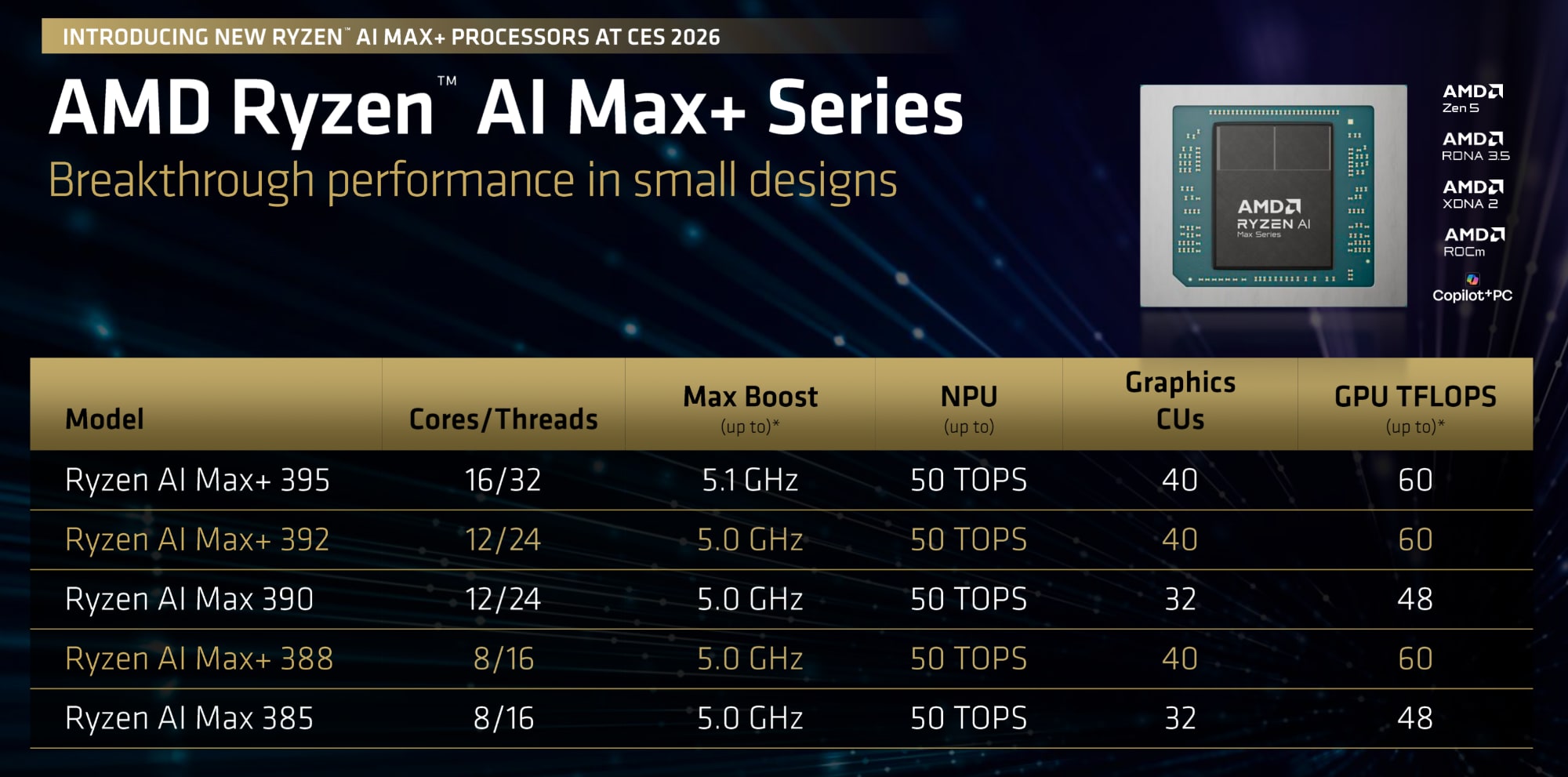
AMD Ryzen AI Max+ chip family
AMD

At CES this year, AMD is unveiled the 12-core Ryzen AI Max+ 392 and eight-core Ryzen AI Max+ 388. Both chips feature boost speeds up to 5GHz, 50 TOPS NPUs and GPUs capable of 60 TFLOPs. We've seen the earlier Ryzen AI Max chips in the Framework Desktop and the ROG Flow Z13, and we were generally impressed with its performance. For small systems, it was powerful enough that we really didn't miss having dedicated GPUs.

AMD Ryzen 7 9000X3D
AMD Ryzen 7 9000X3D
AMD

As for the Ryzen 7 9850X3D, it's an 8-core chip that can reach up to 5.6GHz boost speeds with 104MB of combined L2 and L3 cache. Like all of AMD's X3D chips, it uses 3D V-cache technology to vertically stack additional cache memory. In comparison, the standard 9850HX chip has 76MB of L2 and L3 cache.

AMD says the new Ryzen AI Max+ chips and the 9850X3D will ship in the first quarter. There's no pricing information on the latter, yet, but recent leaked listings suggest it may go for around $200. Rumors also point to a massive dual-cache (192MB!) 9950X3D2 chip coming soon.

This article originally appeared on Engadget at https://www.engadget.com/computing/amds-new-ryzen-ai-max-chips-and-ryzen-7-9850x3d-court-desktop-enthusiasts-at-ces-2026-033000587.html?src=rss

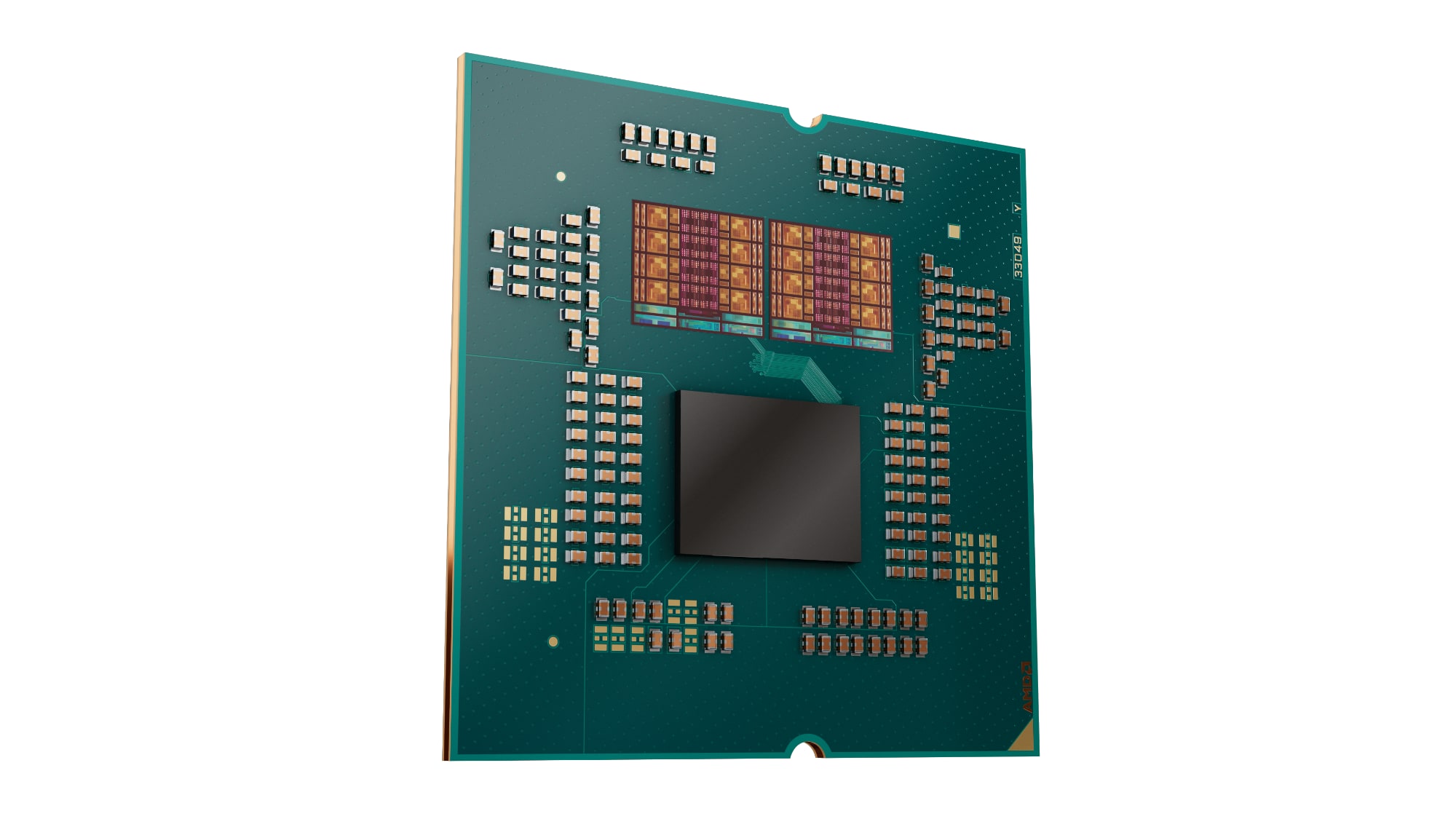
AMD’s Ryzen AI 400 chips are a big boost for laptops and desktops alike

The whole AI PC trend didn't exactly set the world on fire last year, but, like clockwork, AMD is still ready to deliver a new batch of AI chips at CES 2026. The Ryzen AI 400 processors will offer some slight speed upgrades over last year's chips, and notably, they also include AMD's first Copilot+ processors for desktops. Sure, the Copilot+ program didn't really go anywhere, but as I've argued, it at least served as a template for building capable AI PCs. Now we just need some genuinely useful AI features in Windows — Recall and Copilot's voice commands aren't really compelling enough on their own.

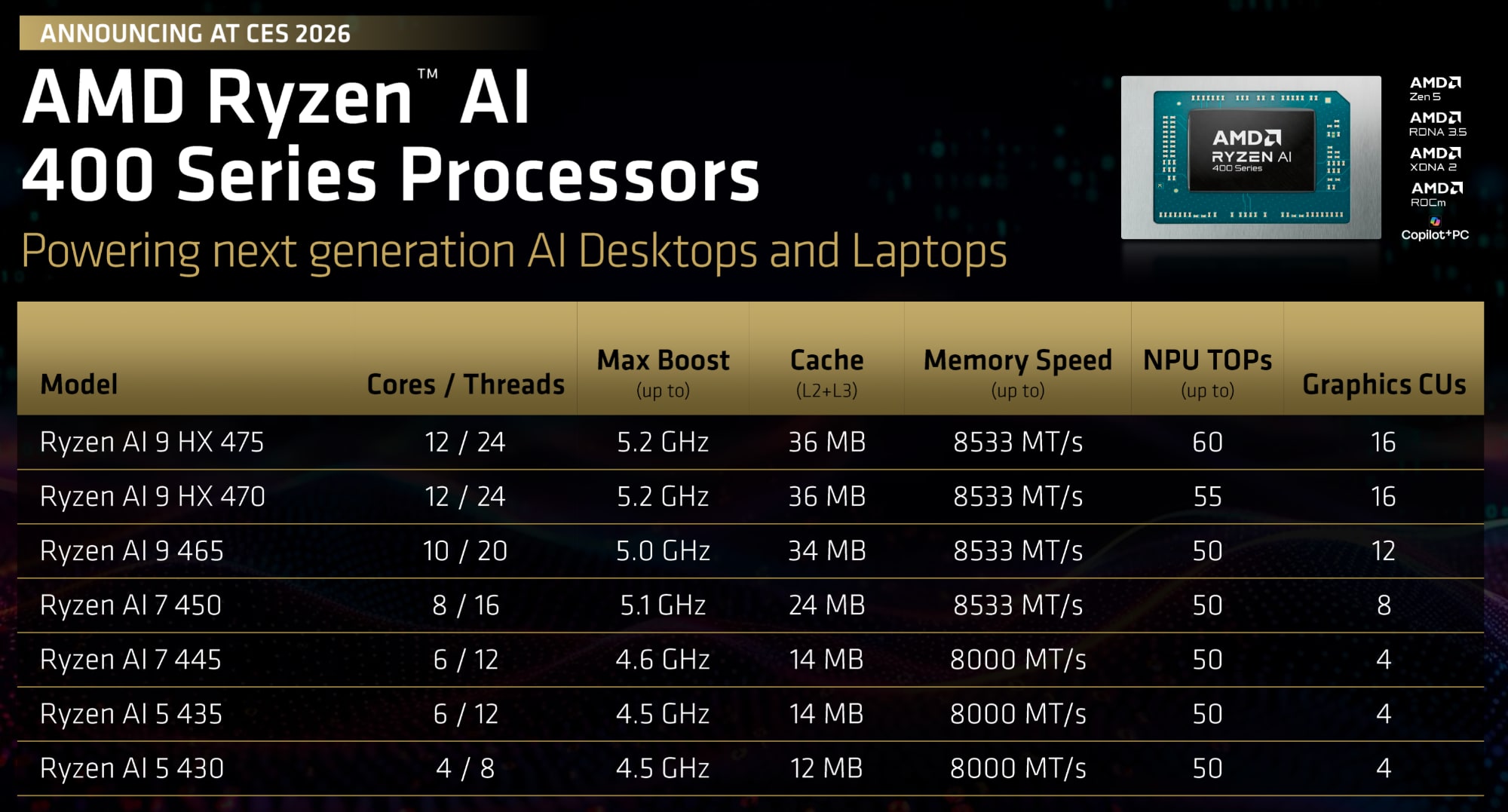
AMD's first AI desktop chips, the Ryzen 8000G series, arrived in 2024 with relatively underpowered neural processing units (NPUs) for AI tasks. The Ryzen AI 400 chips, on the other hand, feature 60 TOPS XDNA 2 NPUs (up from the 50 to 55 TOPS in Ryzen AI 300 hardware). That places them well above the 40 TOPS NPU minimum for Copilot+ systems. For most consumers, NPU speeds don't really mean much yet, but if you're running AI models on your system you can expect slightly faster inferencing from AMD's previous chips.

AMD Ryzen AI 400 chips
AMD

The top-end Ryzen AI 9 HX 475 offers up to 12 Zen 5 CPU cores, 5.2GHz max boost speeds and up to 8,533 MT/s memory speeds. The line scales down to the four-core Ryzen AI 5 430, but even that model supports speedy 8,000 MTS RAM and offers a 50 TOPS NPU.

AMD isn't giving us many specific details on the Ryzen AI 400 chips at CES, but broadly, it claims they'll offer up to 30 percent faster multi-tasking, 70 percent faster content creation and 10 percent faster gaming than its previous chips. The company also says you'll see 70 percent better "unplugged connectivity" on Cinebench nT, which is hopefully a sign that you'll see improved performance overall on battery.

This article originally appeared on Engadget at https://www.engadget.com/computing/amds-ryzen-ai-400-chips-are-a-big-boost-for-laptops-and-desktops-alike-033000635.html?src=rss

HP’s new EliteBoard made me believe in keyboard computers again

A keyboard computer has always been on my wishlist — that is, a computer where the entire machine was stuffed into a keyboard. Perhaps I caught a glimpse of the Commodore 64 at an impressionable age, but regardless, the idea has always been intriguing to me. At CES 2026, HP is bringing that concept back with the new EliteBoard G1a, which is dubbed a “Next Gen AI PC.”

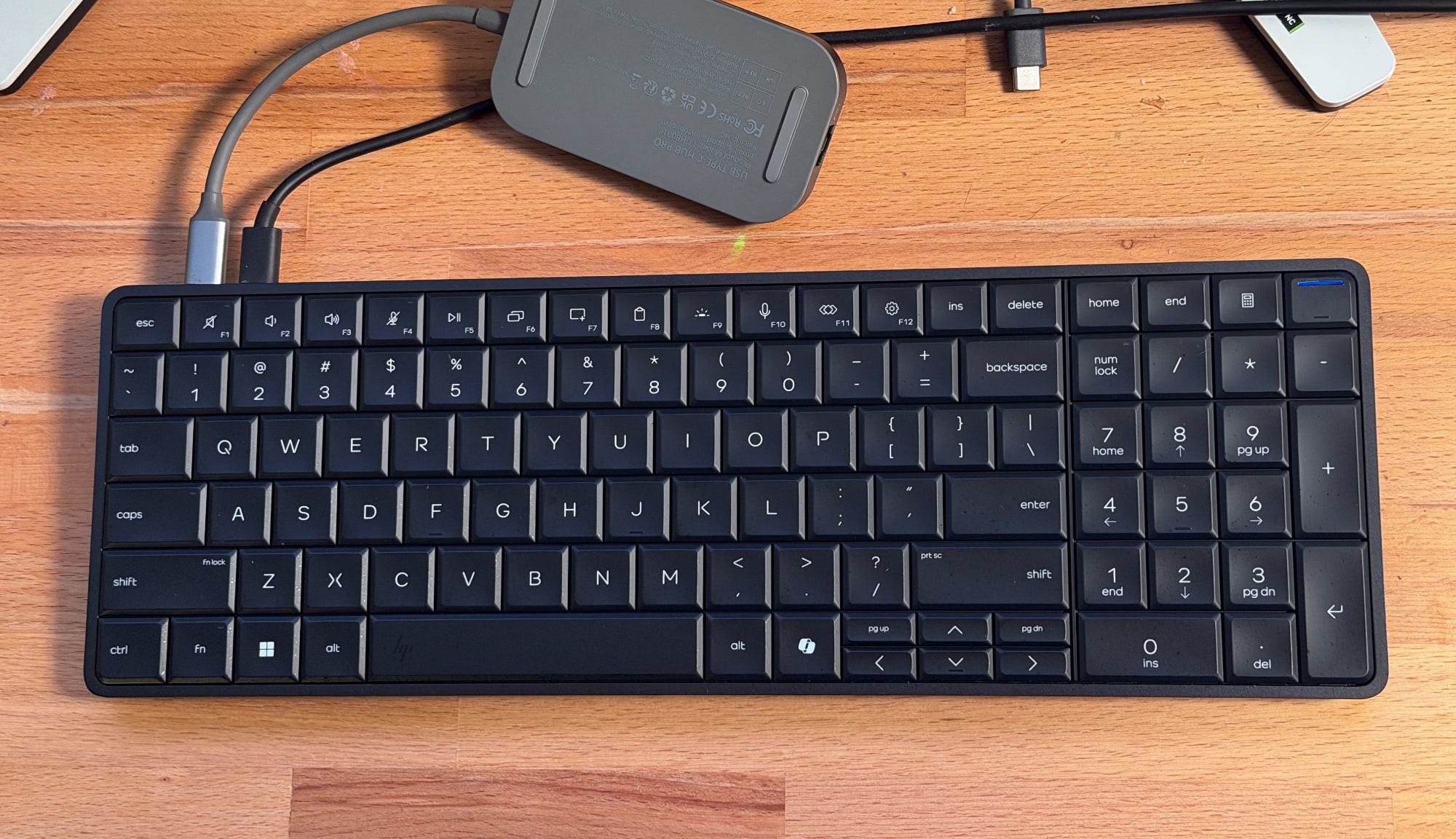
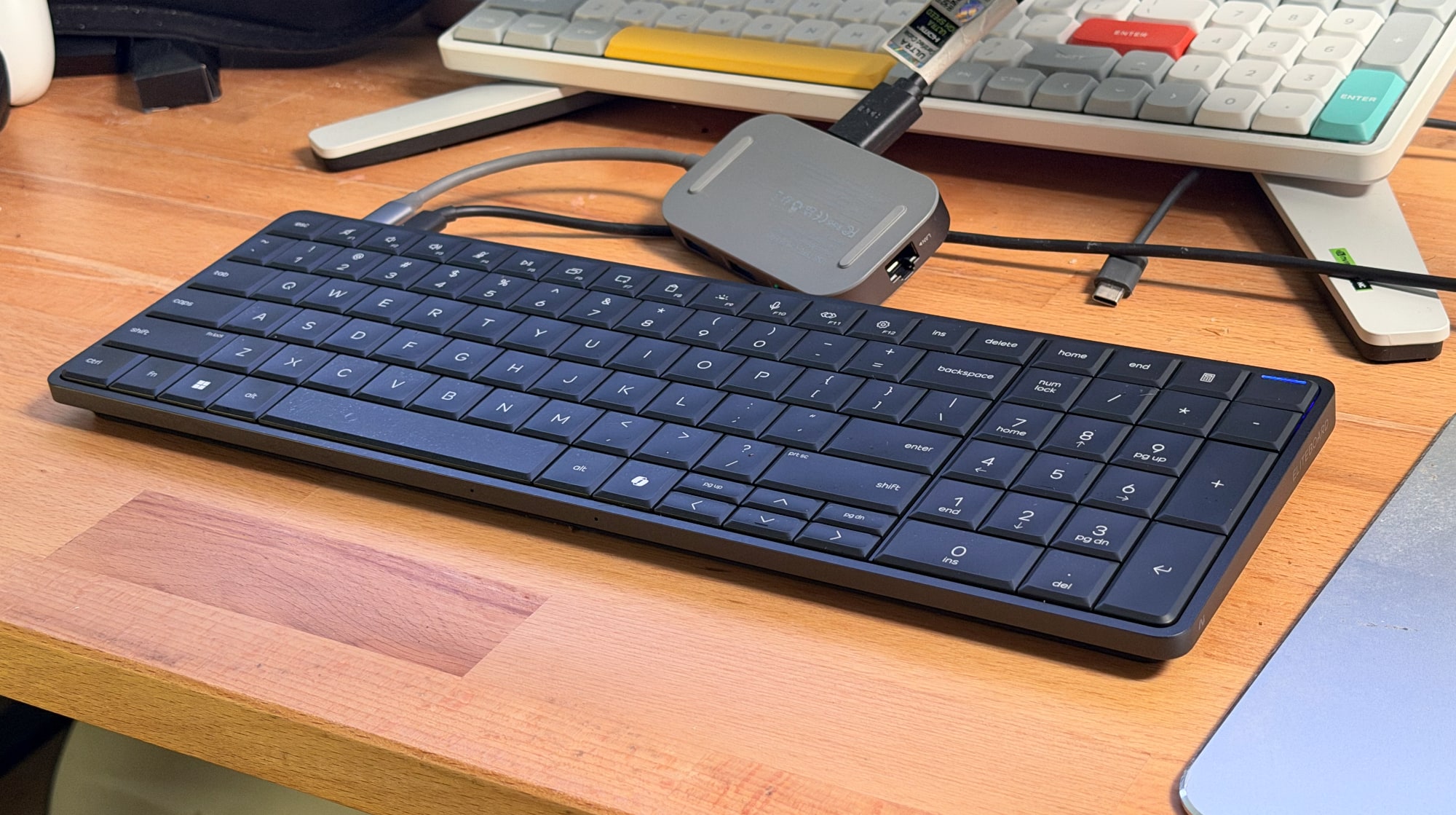
It's an IT administrator's dream: It looks a typical desktop keyboard, but it has the full power of a Copilot+ AI PC inside. You can equip it with Ryzen 5 or 7 CPUs and their embedded Radeon 800 GPUs, up to 64GB of RAM and as much as 2TB of NVMe SSD storage. All you need to do is add a monitor and a mouse, and you've got a full-fledged desktop setup.

HP EliteBoard keyboard PC.
Devindra Hardawar for Engadget

The more I think about it, the more sad I am that the arc of the computing industry trended towards standardized desktops and laptops. There was a brief spark of interest with the UMPC (ultra mobile PC) trend in the 2000's, which Engadget covered extensively as a young blog, as well as ASUS's Eee keyboard. But they couldn't survive the rise of the smartphone and tablet. It turns out putting an entire computer behind a screen was more compelling than stuffing them into a keyboard.

I was able to test out an early EliteBoard prototype, and while the experience wasn't perfect, it's still an intriguing computing option. I had trouble setting it up initially because it only had two USB-C ports on its rear, which meant I had to find a way to power it through one port and pass a video signal through the other. Thankfully, my Anker USB-C charging hub was able to juice it up, and I also had a USB-C hub with an HDMI port, which allowed me to connect to my monitor.

Sadly, the overall setup was a jumble of wires, and not the clean layout I expected from a keyboard PC. Once I was able to start up Windows though, I was less annoyed and more amazed that the keyboard contained an entire computer. I suppose I shouldn't be too surprised, as Intel's Compute Stick placed a functional PC in a much smaller case, but unlike the failed product, the EliteBoard actually felt usable. I was able to load up several browser windows with tabs, edit a few photos and even play a few light games, like Vampire Survivors. And yes, typing on it felt pretty great too.

HP EliteBoard keyboard PC.
Devindra Hardawar for Engadget

Since I was testing out prototype hardware, I agreed not to benchmark the EliteBoard. But from the performance I saw, it felt about the same an entry-level laptop. Basically, it's perfectly suited to its main task: Being a boring office computer. Back in my IT days, I certainly would have preferred deploying a few light keyboards instead of the tank-like Dell desktops we typically ordered.

While the EliteBoard is targeted at commercial users, HP is considering it an experiment to see how people respond to a keyboard PC. There's a chance we could see one that's eventually meant for mainstream consumers. I'm not sure if that's exactly, necessary, though. The whole concept of a desktop PC mainly appeals to tinkerers and IT folks. And for anyone who wants to get their hands on an EliteBoard soon, there's really nothing stopping you.

This article originally appeared on Engadget at https://www.engadget.com/computing/hps-new-eliteboard-made-me-believe-in-keyboard-computers-again-033000022.html?src=rss

NAOX’s wireless earbuds have a built-in EEG to monitor your brain health

French startup NAOX is at CES with a groundbreaking wearable EEG for clinics and research, but that’s not what we’re interested in today. Because it’s also here showing off a prototype of the consumer version, which incorporates its brain-scanning technology in wireless earbuds. As early as the end of this year, your earbuds could pull double-duty, pumping out tunes and keeping an eye on your brain’s health.

The product being released today is the NAOX Link NX01, an in-ear EEG designed to replace the wire-covered caps you’ve seen at a sleep clinic. It’s designed to be much more convenient for use in long-term studies, enabling people to keep an eye on their health while on the go. Don’t think you’ll be able to mess with one of these yourself as it is targeted toward clinical environments.

Of more interest is the NAOX Wave, which uses the same in-ear EEG technology from Link, but in a pair of wireless earbuds. As with the clinical model, Wave is designed to quietly keep an eye on your brain’s biomarkers as you go about your day. The company says it’ll be able to monitor your mental activity while working, relaxing and sleeping. In the companion app, you’ll get insights about your mental health, sleep analytics and cognitive performance, as well as details on your brain’s age. 

NAOX has said its version of the buds will launch towards the end of 2026, but it may not be the only name selling this tech. The company says it is interested in licensing its technology to audio companies, so we could see these EEGs popping up in earbuds from other, more established brands.

This article originally appeared on Engadget at https://www.engadget.com/wearables/naoxs-wireless-earbuds-have-a-built-in-eeg-to-monitor-your-brain-health-030000605.html?src=rss

Vivoo’s toilet computer keeps an eye on your hydration

Urinalysis company Vivoo has rocked up at CES 2026 with two new products designed to keep an eye on your health. The first is the Smart Toilet, which clips onto your bowl and uses optical sensors to monitor your hydration levels.

It’s an evolution of the smart toilet product it originally announced back in 2023, which used a reactive testing strip as part of its process. Here, that feature has been ditched in favor of just collecting a small sample in its pocket-shaped cup for non-contact testing before being released.

The optical sensors in question are designed to track your urine’s specific gravity to monitor how hydrated you are. (If urine is too dense, it’s a sign of dehydration, while if it’s too thin, it’s a sign of over-hydration or something more serious, like diabetes or renal failure.)

mage of the Vivoo Smart Toilet being splashed with water
Vivoo

You trigger a reading via the smartphone app, and when the test is complete the data will be pushed back to your device. The company says its battery will last for more than 1,000 measurements before you need to recharge it, too.

Vivoo doesn’t (Withings) name (Withings) names (Withings) but throws a sharp elbow toward its competitor. It boasts that its product will last for 1,000 tests on a single charge, “vastly exceeding the handful of monthly readings offered by chemical cartridge-based tests.” And that its battery pack, which sits on the outside of the toilet bowl, means you won’t need to uninstall the sensor to recharge and clean it on a regular basis. 

Image of Vivoo's FlowPad
Vivoo

At the same time, the company is announcing Hygenic FlowPad, a menstrual pad infused with microfluidics. These are capable of monitoring factors such as Follicle-Stimulating Hormone (FSI), a marker for fertiity, ovarian health and perimenopause. Once the wearer removes the pad, they are tasked with scanning it with their phone camera to Vivoo’s app, much like many of its other at-home tests. At present, there’s no word on when FlowPad will be available to buy, but the company hopes to charge $4-5 per pad. 

Vivoo’s Smart Toilet can be ordered today, with early birds getting the gear for $99 with no need for an additional subscription, due to ship March. A second batch on the same deal arrives in June, but latecomers will have to wait until September 2026 when it goes on general sale. At that point, the price will climb to $129, plus an additional $6 a month for the subscription.

This article originally appeared on Engadget at https://www.engadget.com/home/vivoos-toilet-computer-keeps-an-eye-on-your-hydration-030000209.html?src=rss