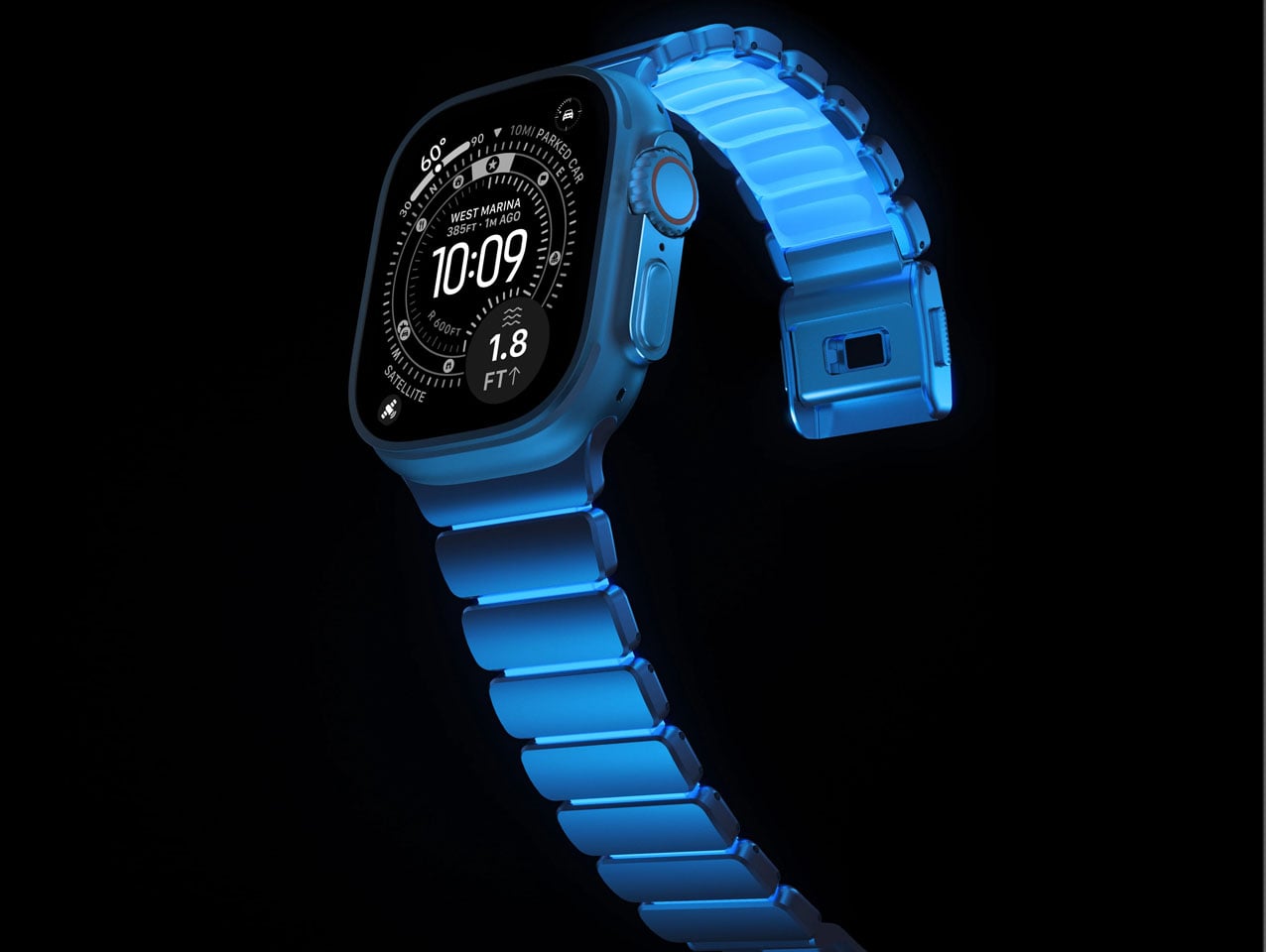
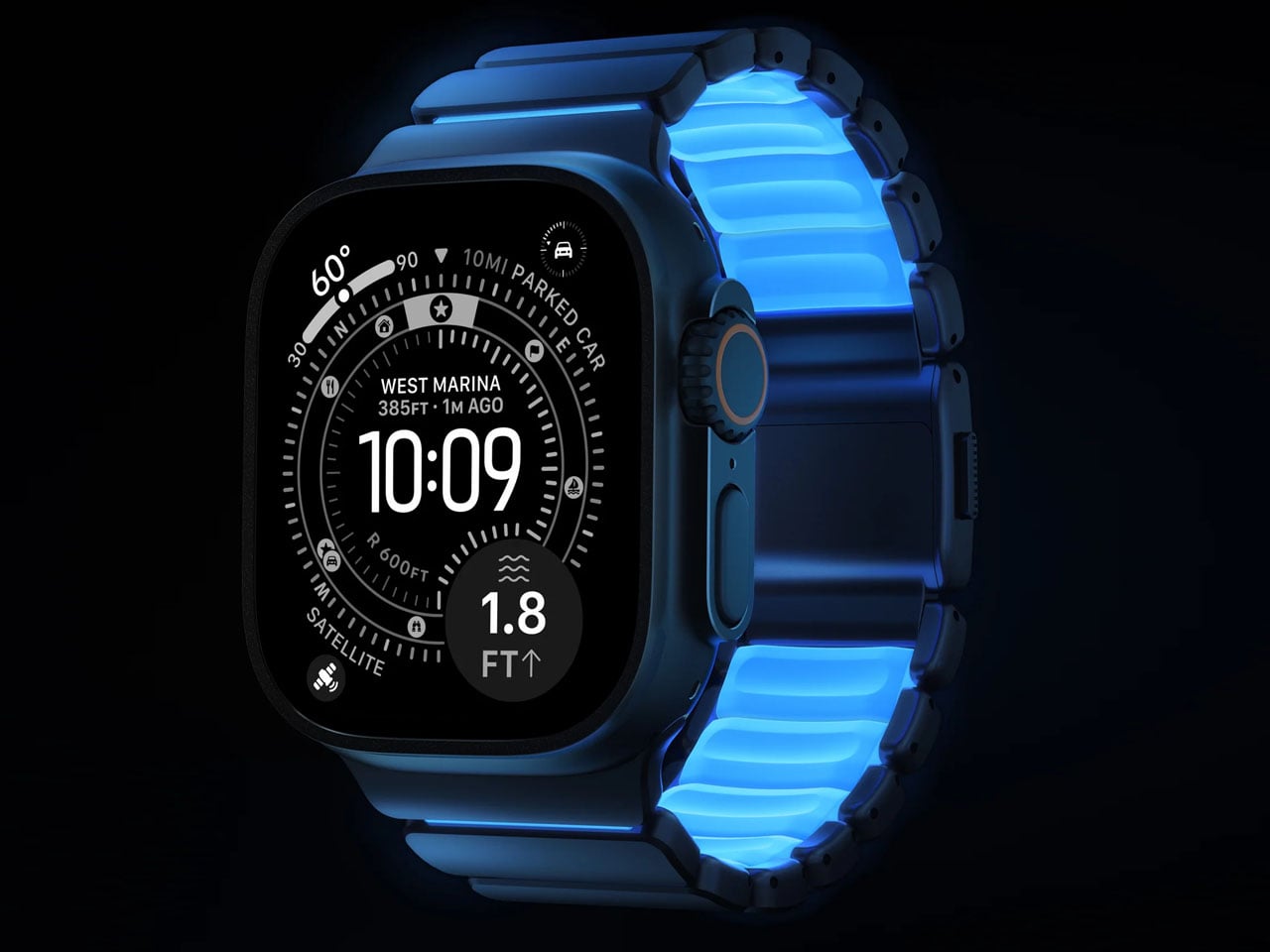
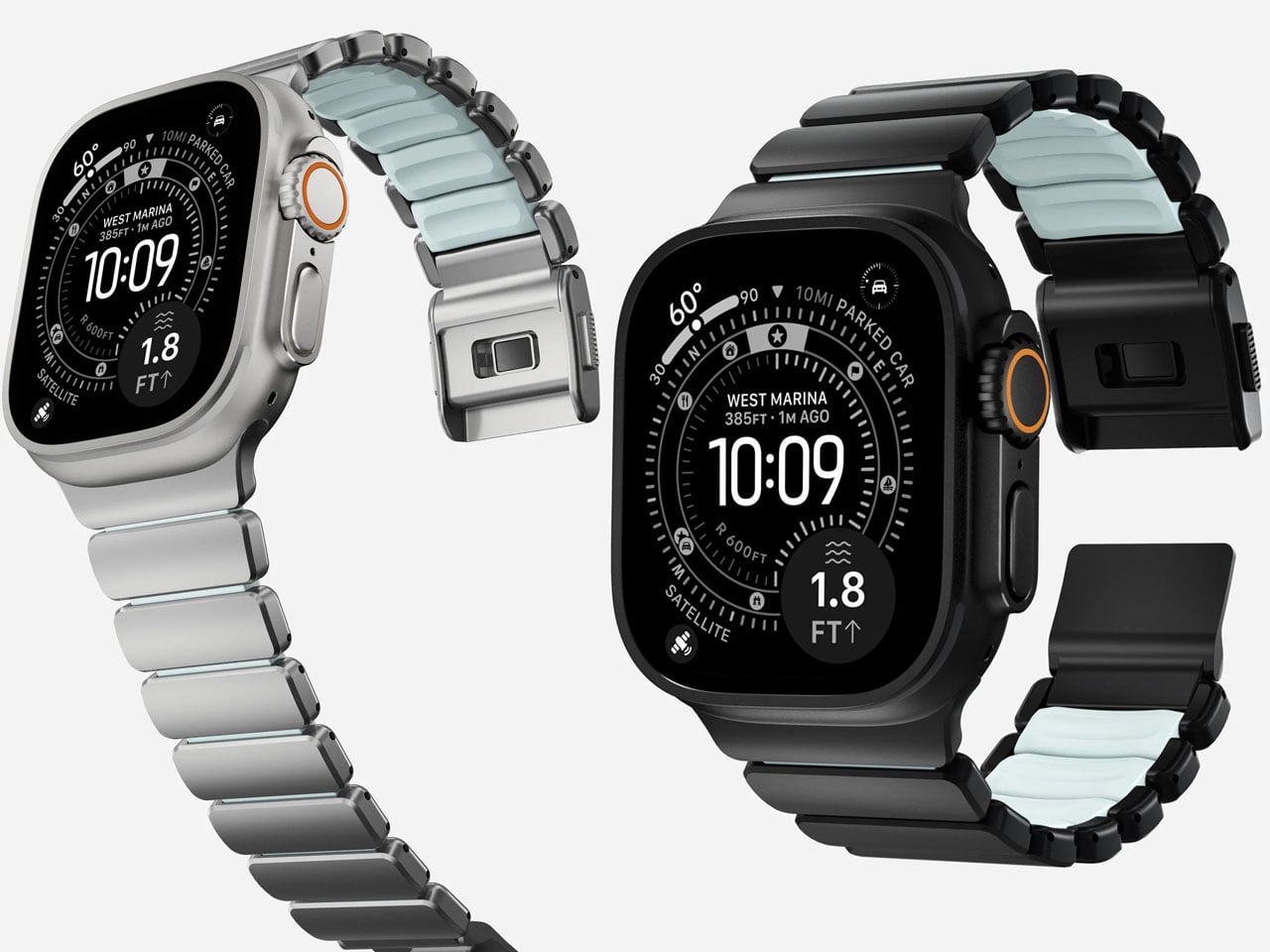
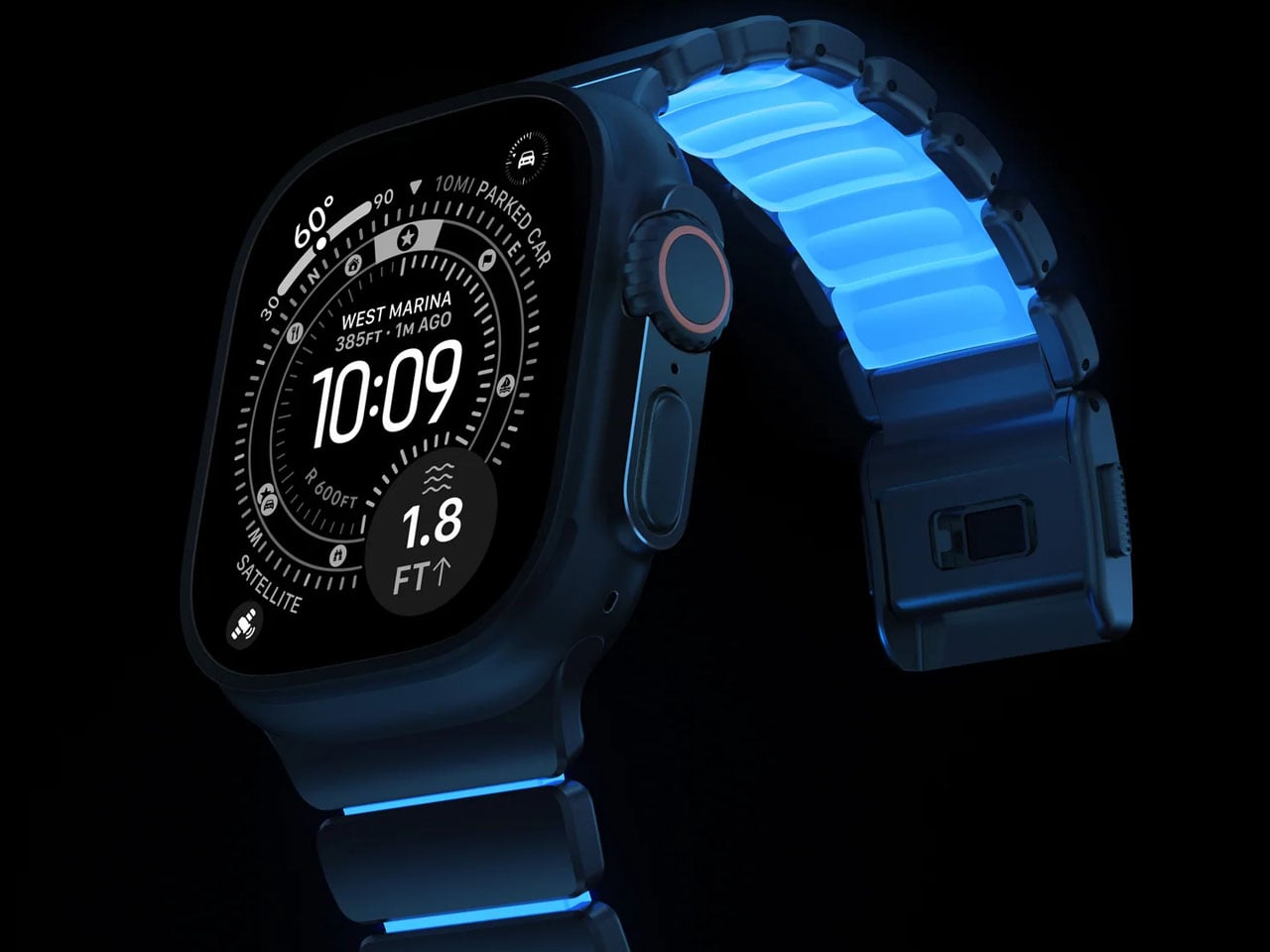
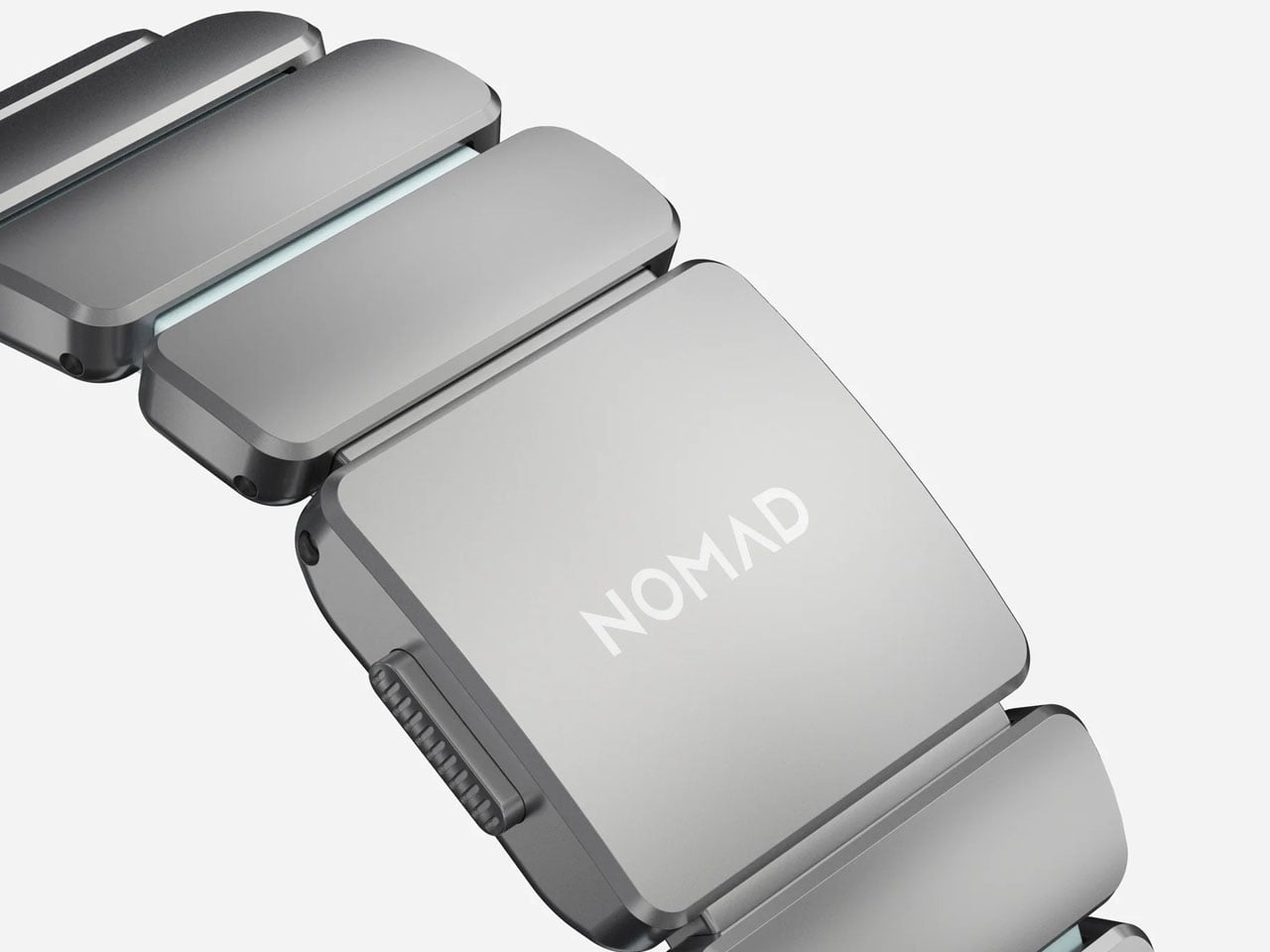
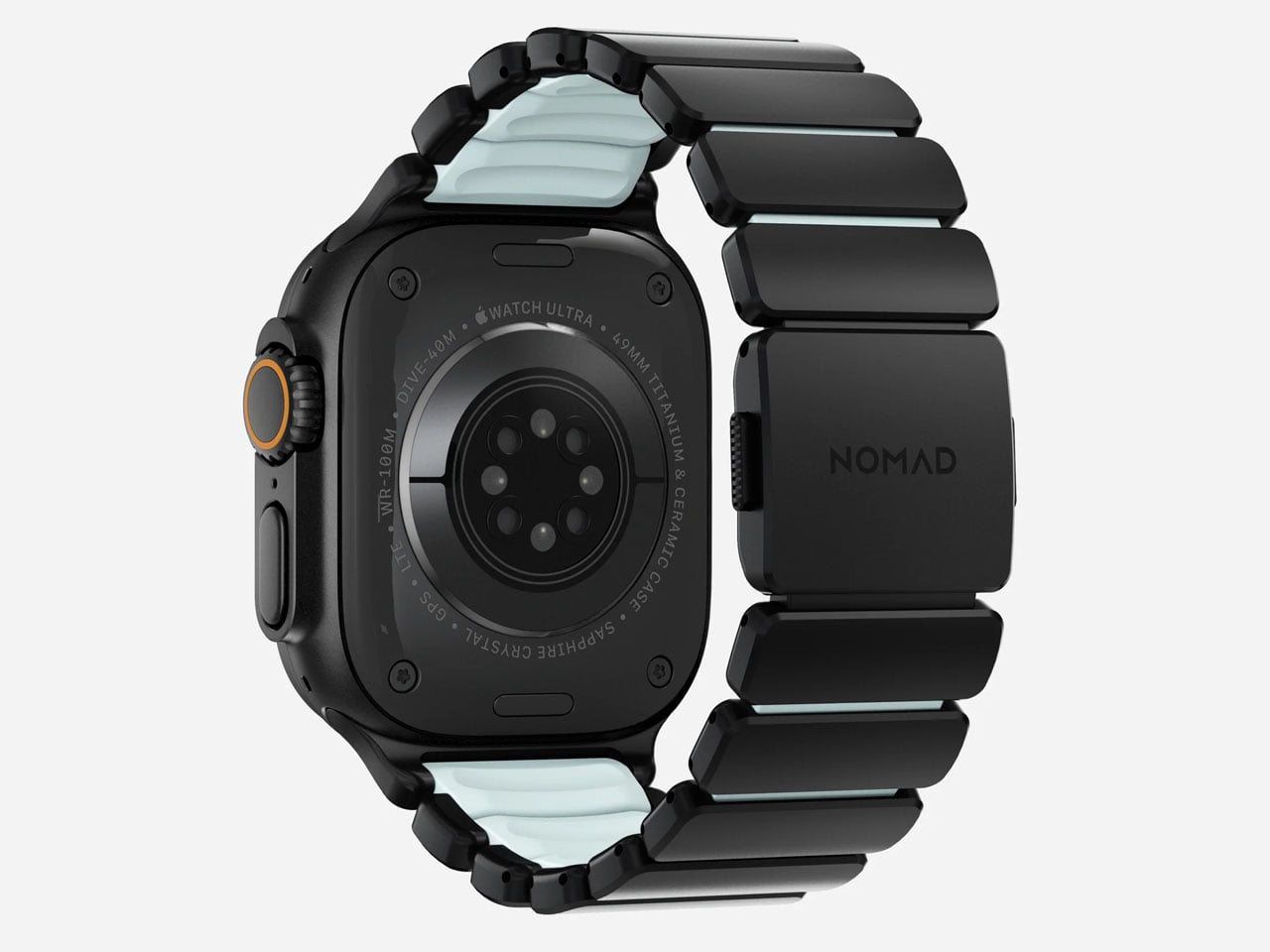
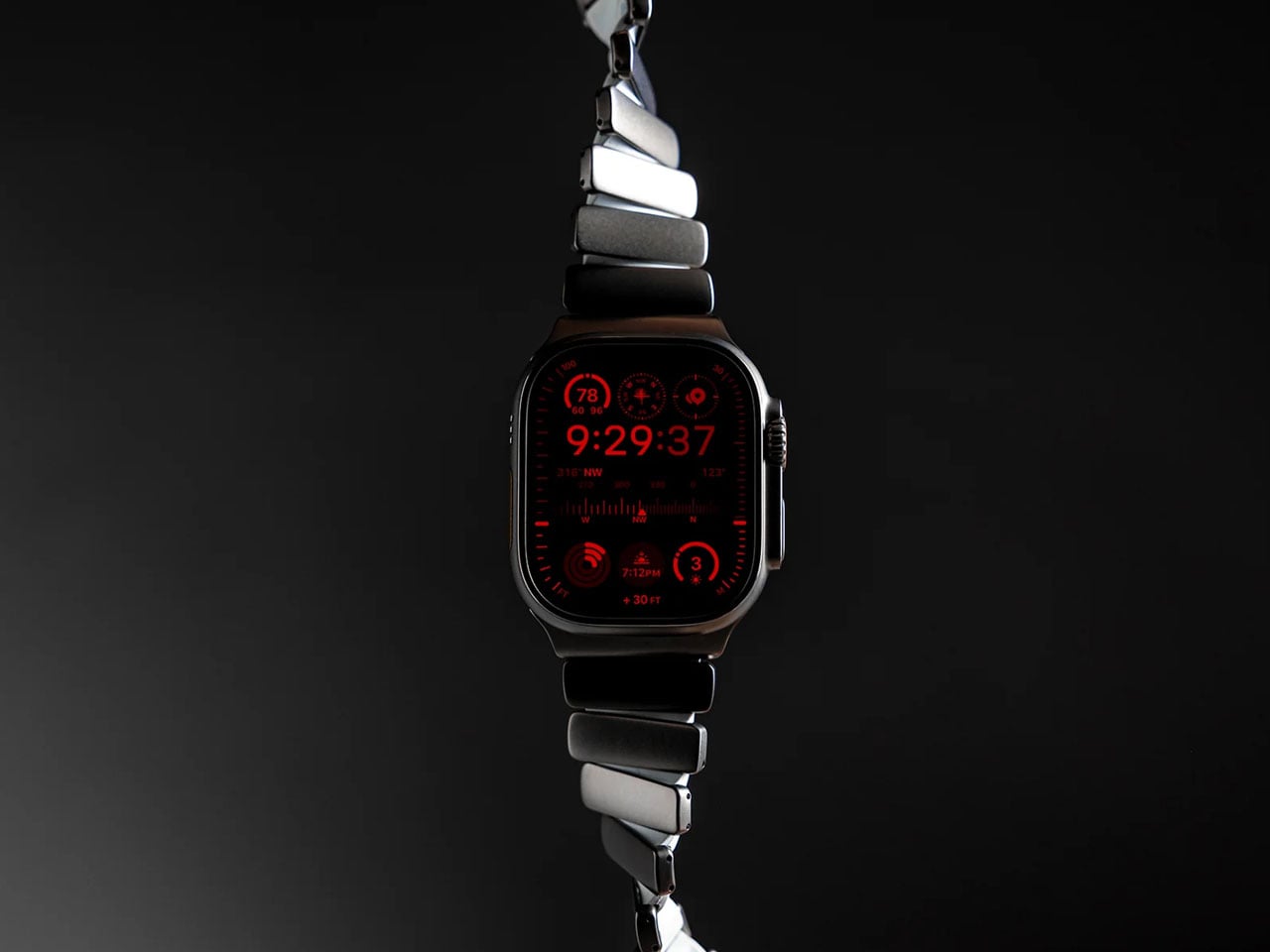
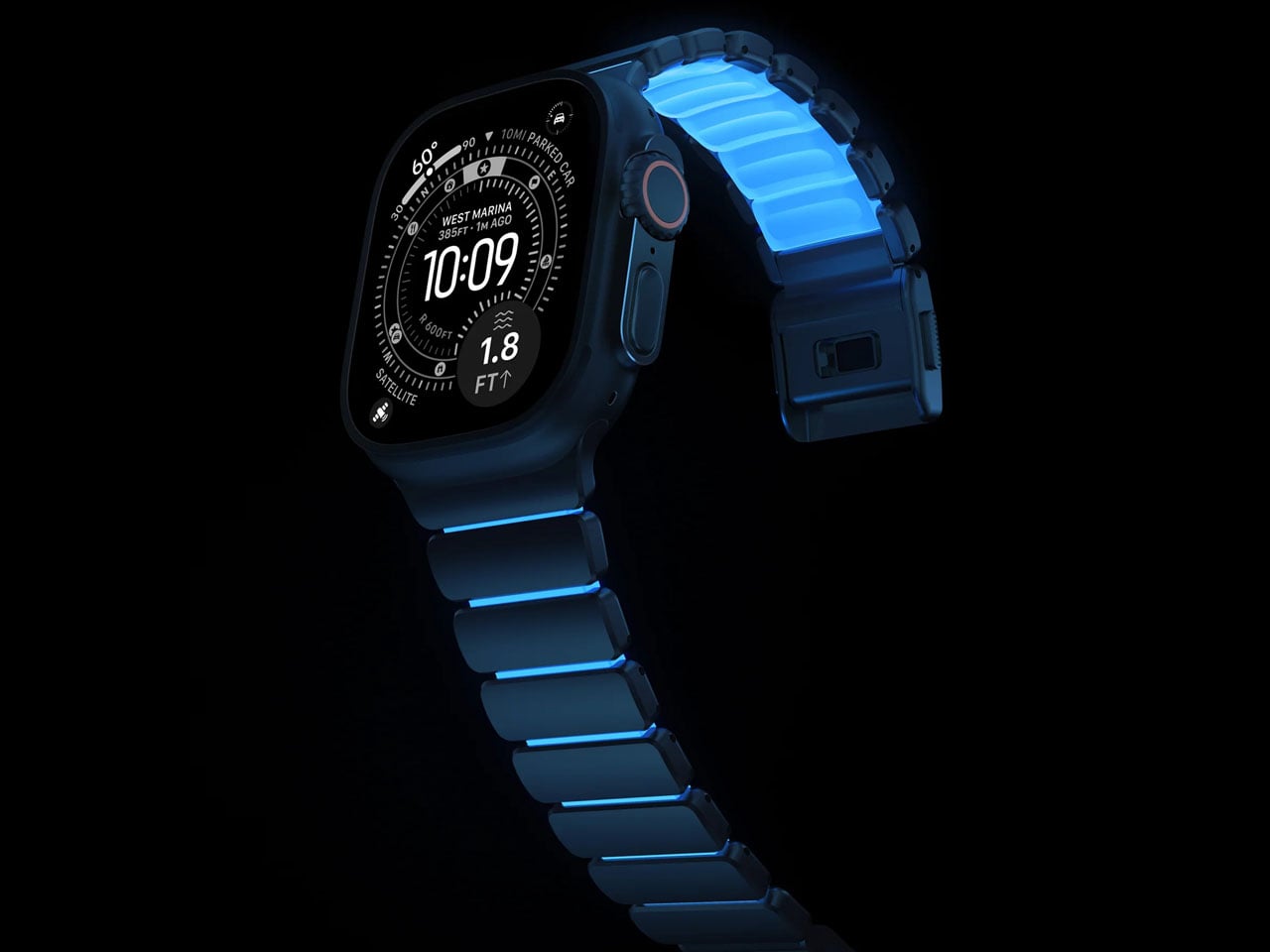
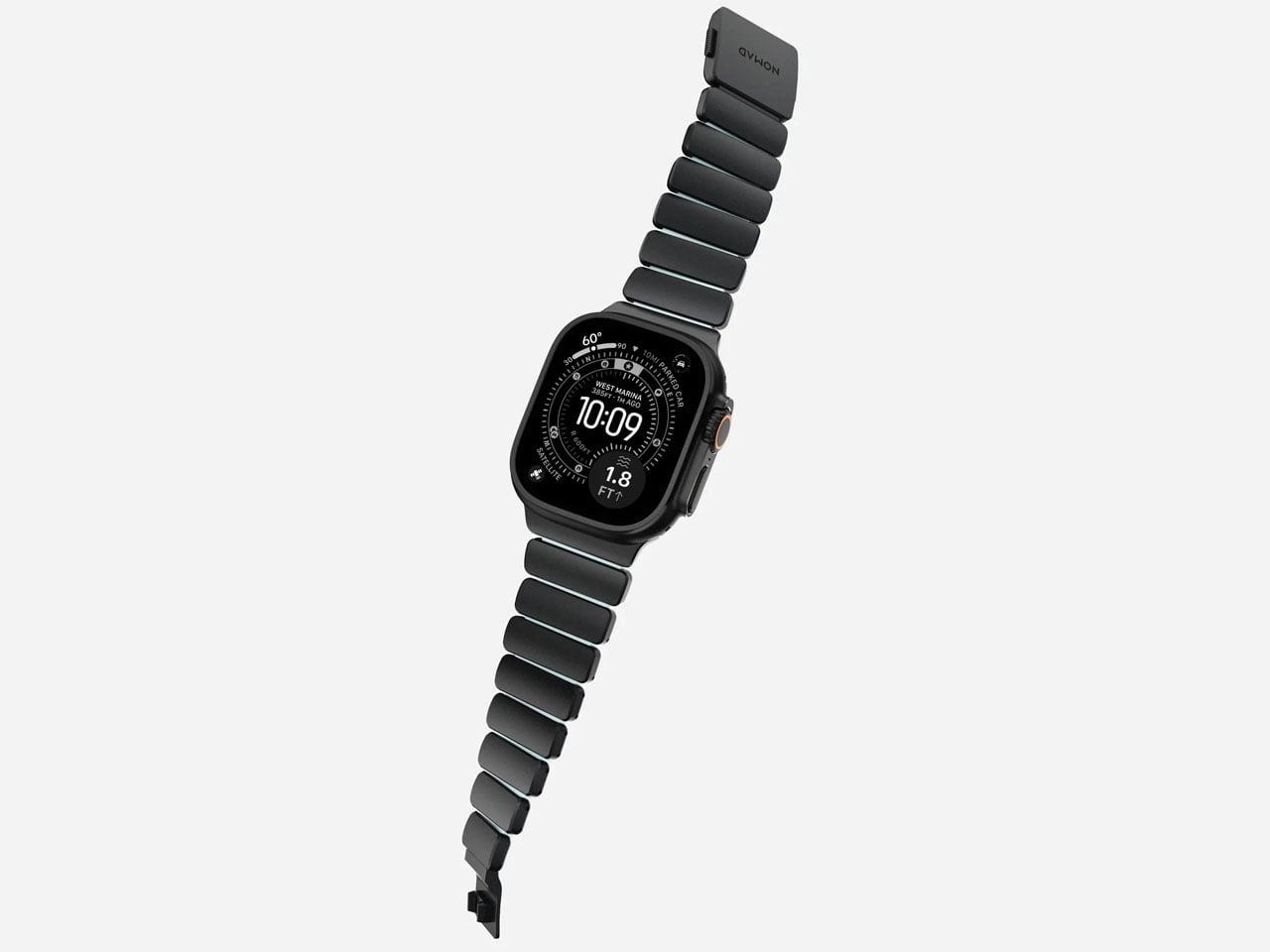
Getting a watch band for your Watch Ultra just got interesting with Nomad’s latest addition to the Stratos Band line-up. After the success with the custom fit band designed for the Ultra in titanium finish and the FKM links, which is more comfortable to wear and touch, this watch band is irresistible. Coming in a fluoroelastomer cast that glows in Tron-like hues, the band demonstrates how “performance and fun can happen at the same time.” Nomad calls it the Icy Blue Glow version, and it’s a limited-run creation that pairs rugged durability with understated style.
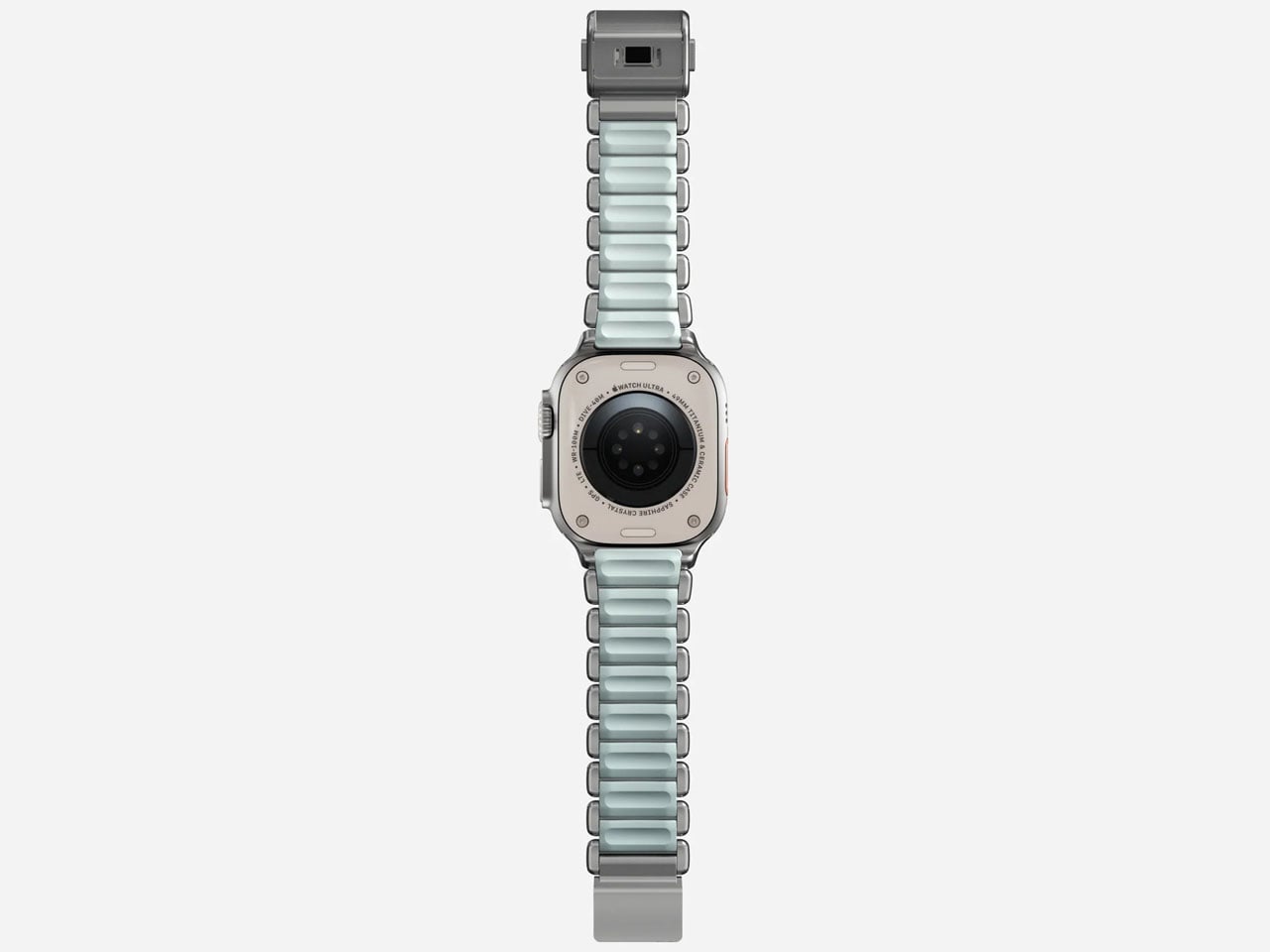
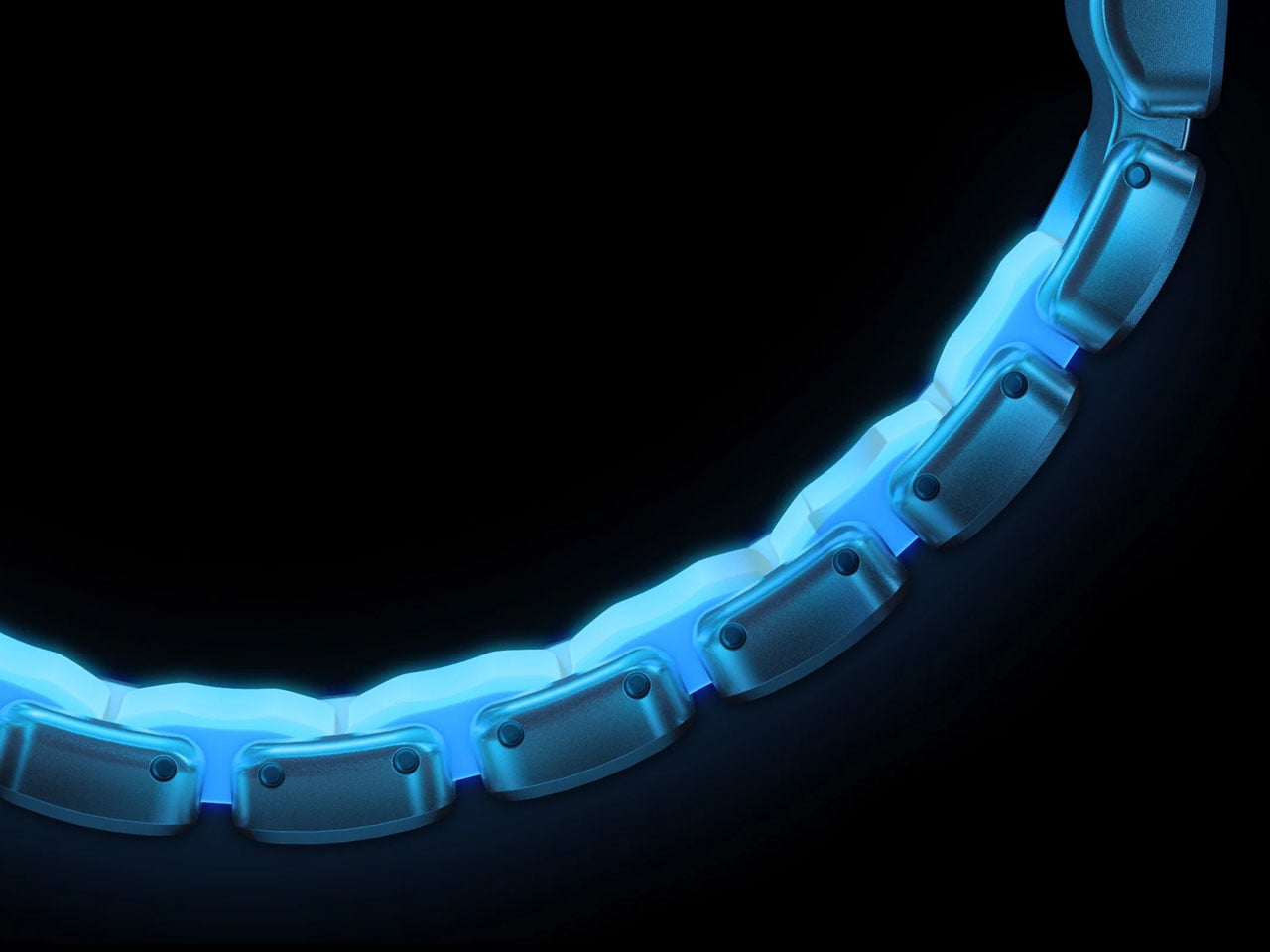
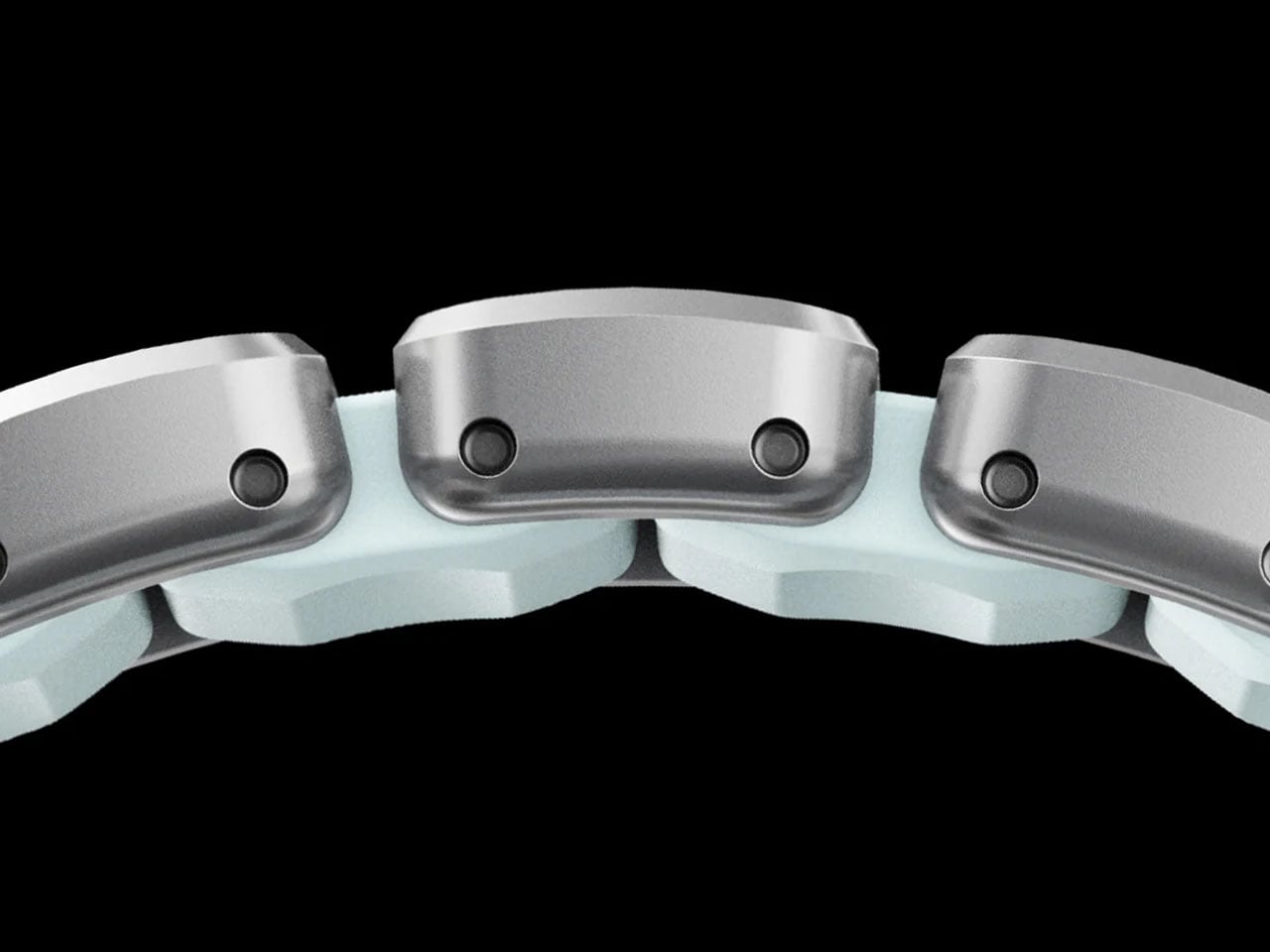
The new Stratos Band blends Grade 4 titanium hardware with compression-molded FKM fluoroelastomer for a hybrid design that balances strength and flexibility. The titanium outer links provide a refined look and robust build, while the FKM interior links contour around the wrist for comfort and movement that traditional metal bands rarely offer. This dual-material approach also introduces subtle ventilation spaces, which help with moisture evaporation and breathability during everyday wear or more intense activity.
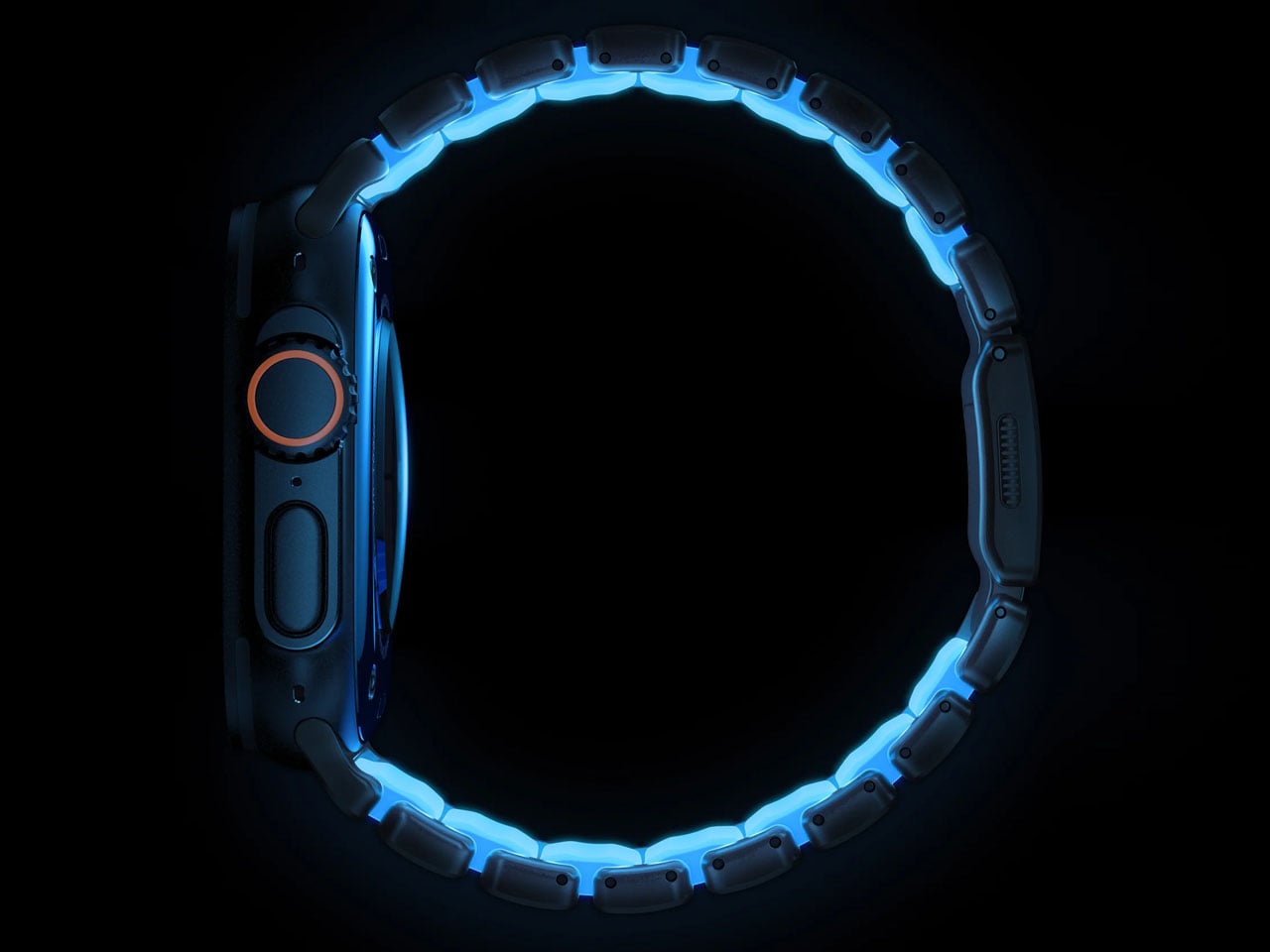
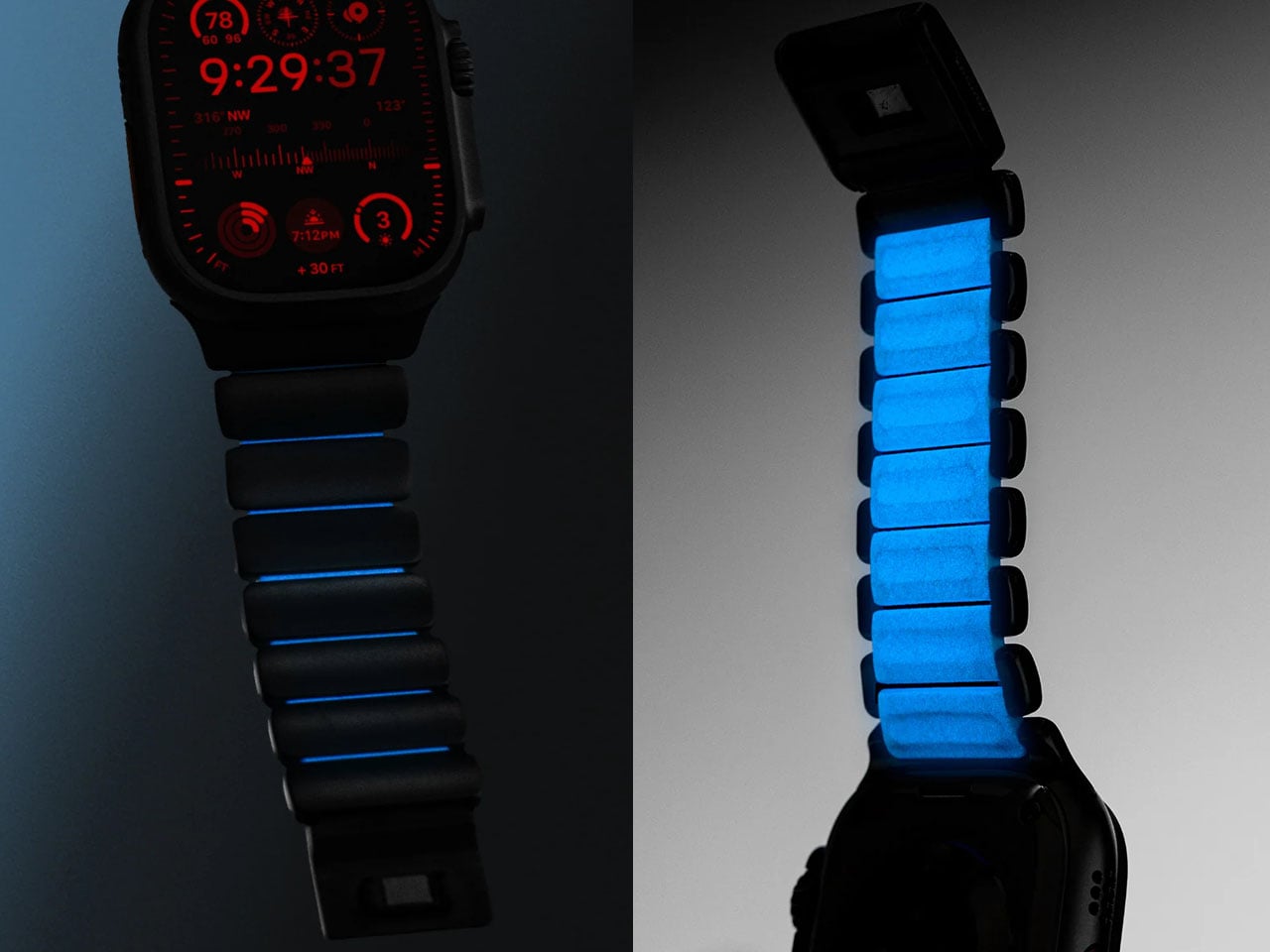
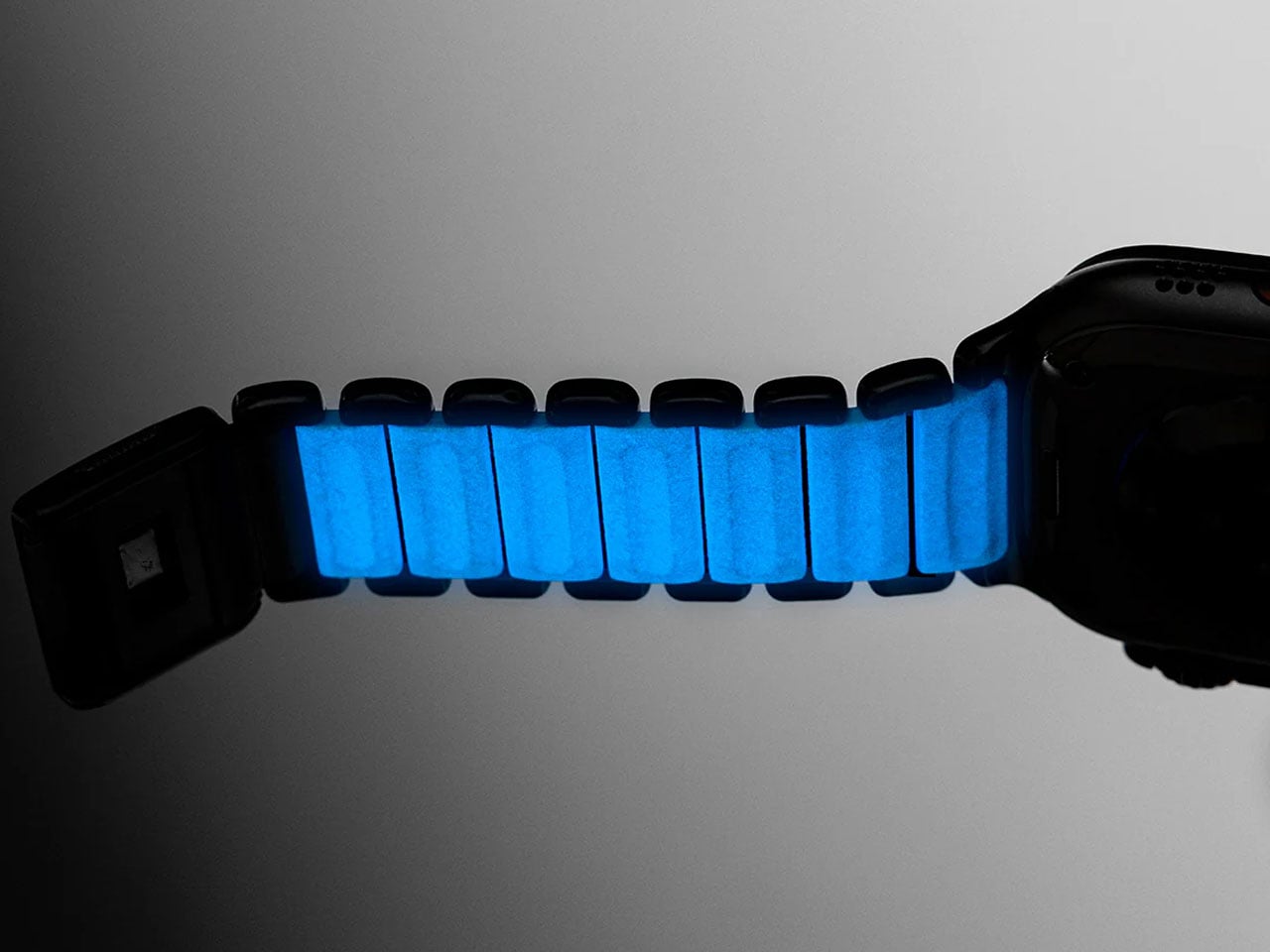
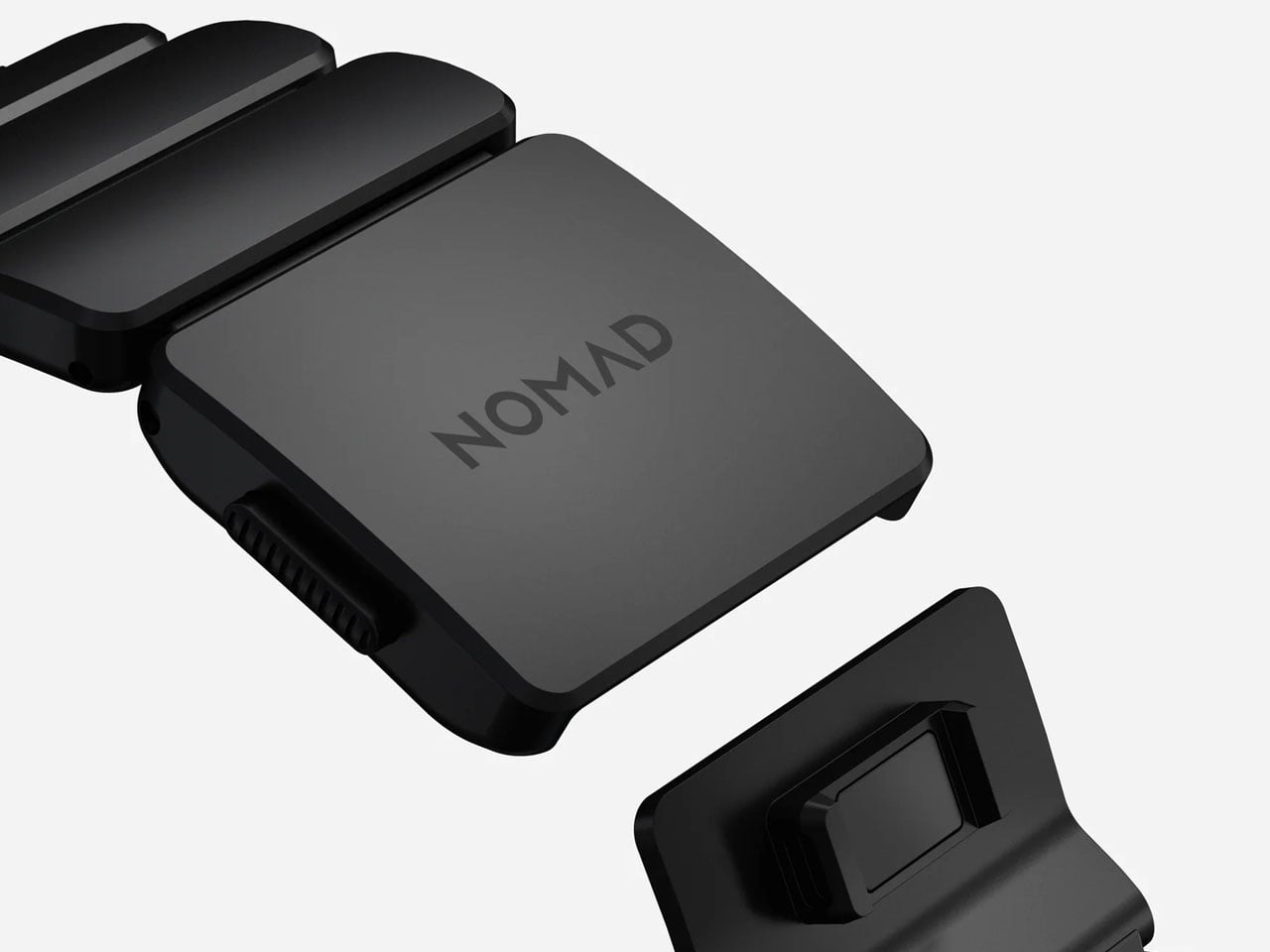
What sets the Icy Blue Glow edition apart is the photoluminescent material infused into the interior FKM links. This compound absorbs light throughout the day and emits a soft blue glow in low-light conditions. The glowing effect is more subdued in typical environments because the material sits beneath the titanium, but it still produces a cool, visual accent in the dark that distinguishes it from more conventional bands. Nomad equips this limited version with a custom magnetic clasp engineered for secure closure and corrosion resistance. The clasp remains fastened through daily movements yet opens easily when the sides of the buckle are squeezed. Users can also fine-tune the band’s fit using the included tool to remove or add links, making customization straightforward.
Though designed from the ground up for Apple Watch Ultra models 1 and higher, the Stratos Band is also compatible with earlier Apple Watch Series 1–11 and SE models, offering versatility across a wide range of devices. The band’s flexible design supports wrist sizes generally between 130 mm and 200 mm, and its construction balances a weight that feels substantial without being cumbersome. The titanium elements are finished with a scratch-resistant DLC coating, adding resilience for adventures and daily use alike.
The fluoroelastomer material itself is antimicrobial and can be cleaned easily with soap and water, supporting hygiene for wear during workouts or outdoor activities. The band’s water-resistant design further reinforces its adaptability to various lifestyles, though it’s recommended to allow the band to dry fully after exposure to moisture. Priced at $189, the Stratos Band Icy Blue Glow edition offers a premium alternative to standard Apple and third-party bands with a playful glow-in-the-dark element.
Marshall plans to add seamless multi-room audio to its Bluetooth speakers via a newly announced music streaming hub called Heddon. The $300 hub makes it possible to connect and synchronize multiple older Marshall speakers together, not unlike Sonos' audio devices.
Rather than use Wi-Fi to get multiple speakers playing the same audio, though, the Marshall Heddon uses Auracast. The hub connects to services like Spotify Connect or Tidal over Wi-Fi, or other devices through Google Cast and AirPlay, and then shares that audio over Auracast to the Marshall Acton III, Stanmore III and Wobrun III speakers. You can control playback over a connected Marshall app and the Heddon also has RCA ports to connect other speakers or a record player to the system.
Because the Heddon requires a Wi-Fi connection, Marshall says it could add features to the system over-time, but even in the short term, the hub should meaningfully extend the life of the company's speakers. Rather than switch to newer models with built-in Wi-Fi, you can just grab a Heddon. Sonos offers similar functionality through its Sonos Port and Sonos Amp accessories, and third-party hubs from companies like WiiM can add even more options. The Marshall Heddon is more streamlined in comparison, but if you're already invested in the company's speakers, or planning to build out your audio system with them, the hub could be a helpful tool to have.
The Marshall Heddon is available to purchase now for $300. Marshall says that customers purchasing an Acton III, Stanmore III or Woburn III can get a Heddon at half price, and the hub is included for free when you buy two or more eligible Marshall home speakers.
This article originally appeared on Engadget at https://www.engadget.com/audio/marshalls-new-heddon-hub-adds-multi-room-audio-to-speakers-with-auracast-210500811.html?src=rss
Apple has been spinning its wheels for many months over its approach to artificial intelligence, but a strategy finally appears to be emerging for the company. Bloomberg's Mark Gurman reported today that Apple's long-awaited Siri overhaul will allegedly involve transforming the voice assistant into an AI chatbot, internally called Campos.
Sources have reportedly told Gurman that Apple chatbot will completely replace the current Siri interface in favor of a more interactive model similar to those used by OpenAI's ChatGPT and Google's Gemini. He also cited sources who claimed that while Apple has been testing a standalone Campos app, the company doesn't plan to release it for customers. Instead, the new chatbot will emphasize deep software integrations when it rolls out, reportedly as part of the iOS 27, iPadOS 27 and macOS 27 wave late next year. However, there will reportedly be a new features for the current iteration Siri coming in the iOS 26.4. Those additions will include the much-delayed updates Apple first promised for the platform back in 2024.
Pivoting to a chatbot gives some additional context to Apple's recent move to collaborate with frequent rival Google; the companies announced earlier in January that Gemini models will be used to power the upcoming versions of Siri. Gemini has become ubiquitous in the Google ecosystem, and it makes sense for Apple to leverage outside help in this segment where it has already been trailing its competitors.
Although Apple may not have a standalone app for its Siri chatbot, the company does appear to be considering new places to host its AI resource. Additional reports today claimed that 2027 could also see the release of a wearable AI pin.
This article originally appeared on Engadget at https://www.engadget.com/ai/apple-is-reportedly-overhauling-siri-to-be-an-ai-chatbot-205303818.html?src=rss
Apple will reportedly try to succeed where Humane failed (miserably). On Wednesday, The Informationreported that the iPhone maker is working on an AI pin. The wearable is said to resemble a slightly thicker AirTag and include multiple cameras, a speaker, microphones, and wireless charging.
The report coincides with another from Bloomberg that claims that Apple will revamp Siri as a ChatGPT-style chatbot. When combined with the recent announcement that Google's Gemini will power Siri AI, it looks like the company is finally making a more defined play for a piece of the generative AI pie. On the other hand, the wearable pin is reportedly only in the very early stages and could still be canceled.
The pin is described as a thin, flat, circular disc with an aluminum and glass exterior. It includes two cameras (standard and wide-angle) for taking photos and videos of the user's surroundings. It also has three microphones. It includes a speaker and a physical button along one edge. It has a magnetic inductive charging interface, similar to the Apple Watch's charging mechanism.
Given the way Apple markets itself as a privacy-focused company, it will be interesting to see how the company pitches the public on what sounds like an incognito recording device. Although on that note, the App Store still hosts the Grok app, which egregiously violates privacy by generating nearly-nude deepfakes of real people — despite Apple's rules explicitly prohibiting such apps.
The Information says Apple could release its AI pin as early as 2027. The company sounds confident in the device's appeal, as it reportedly plans to produce around 20 million units at launch.
This article originally appeared on Engadget at https://www.engadget.com/wearables/apple-is-reportedly-developing-a-wearable-ai-pin-204705065.html?src=rss
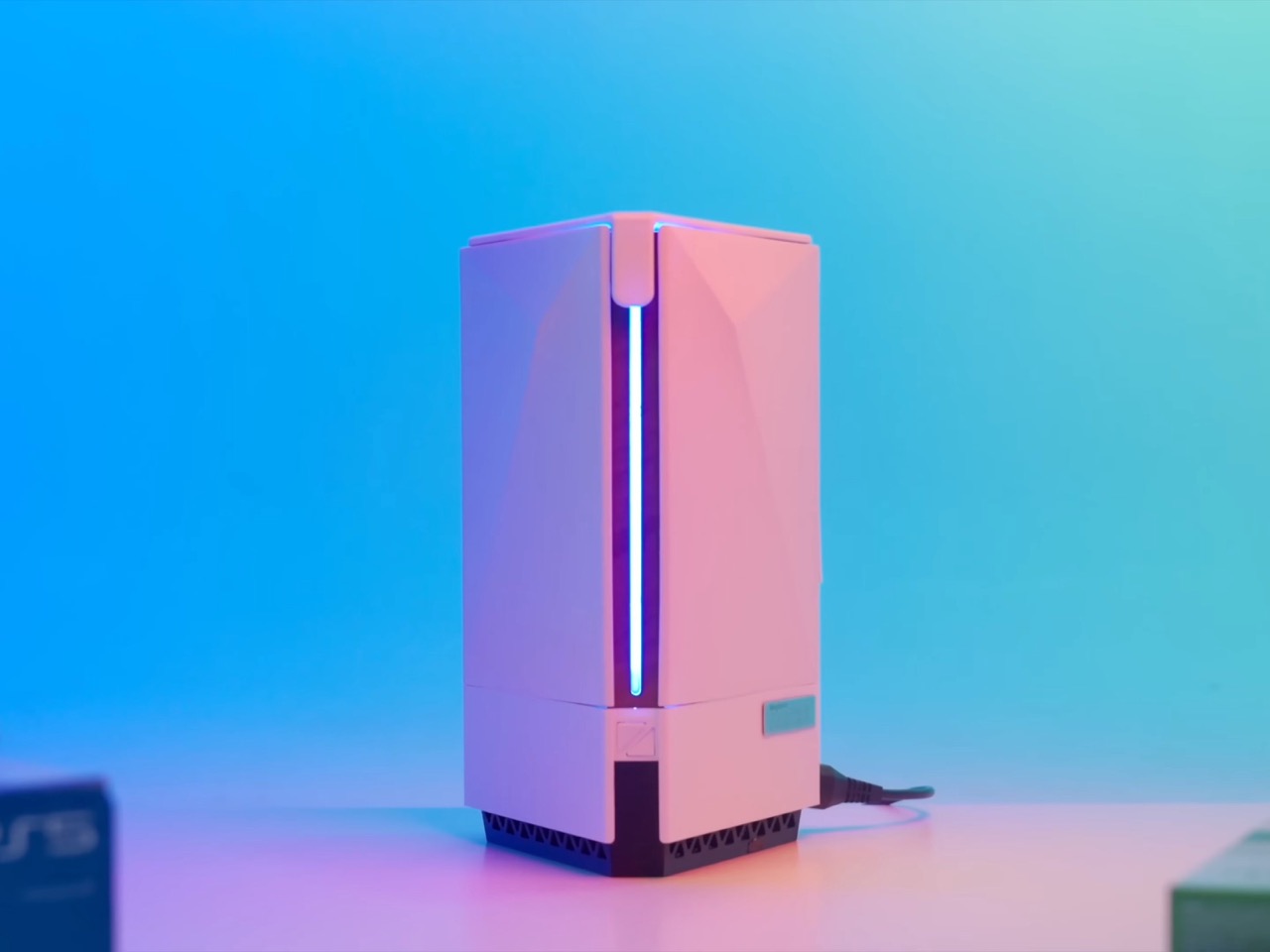
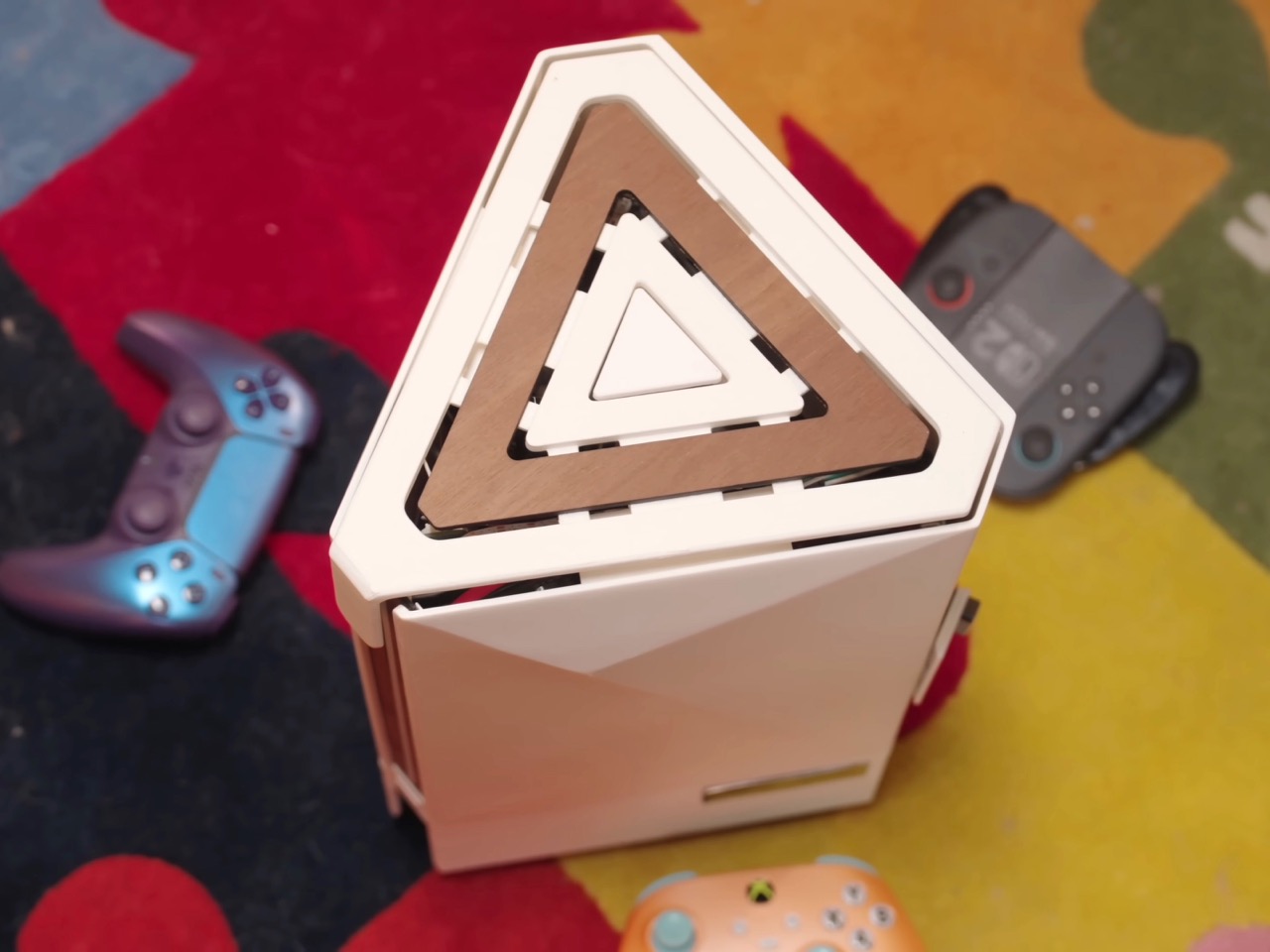
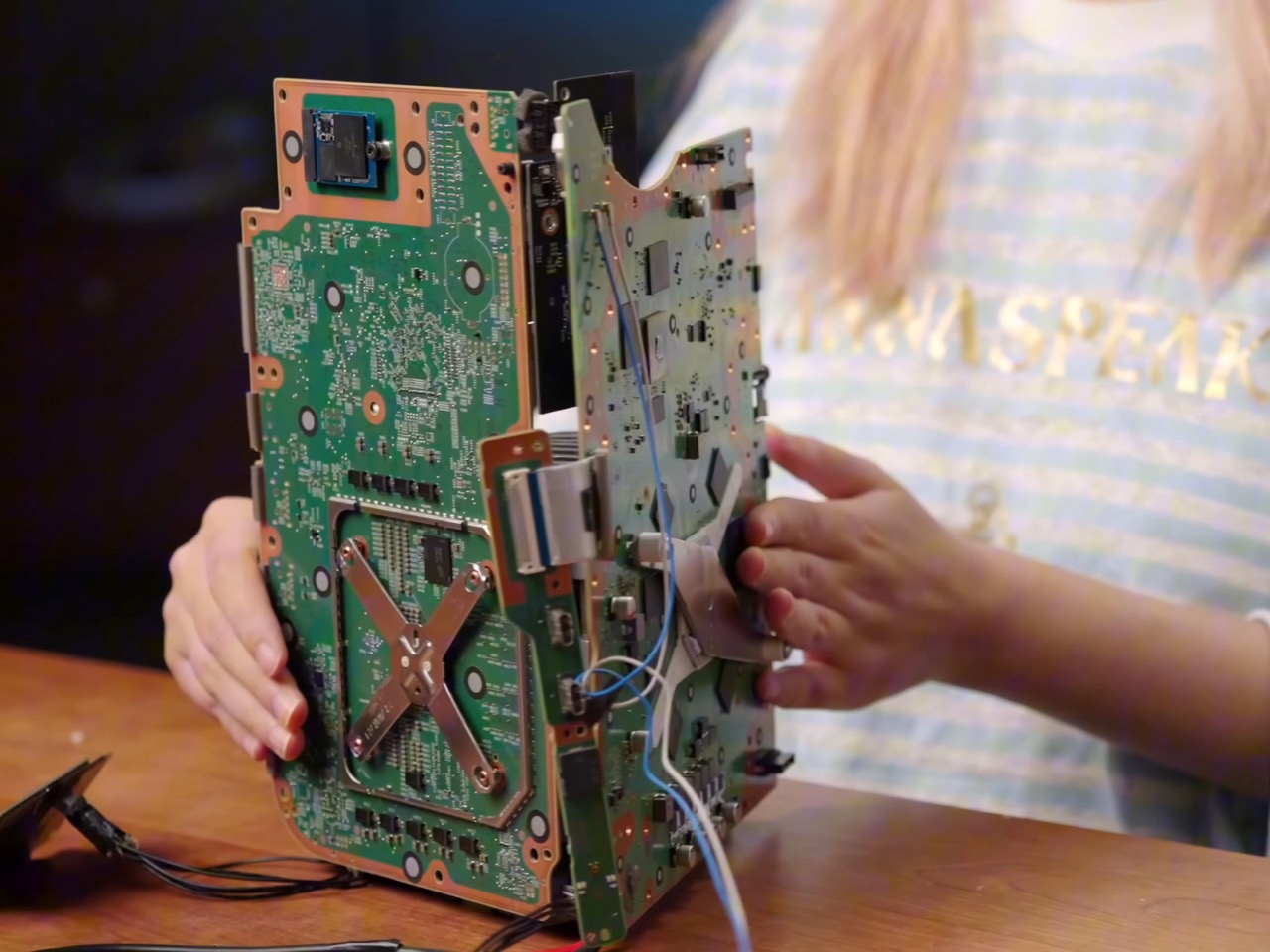
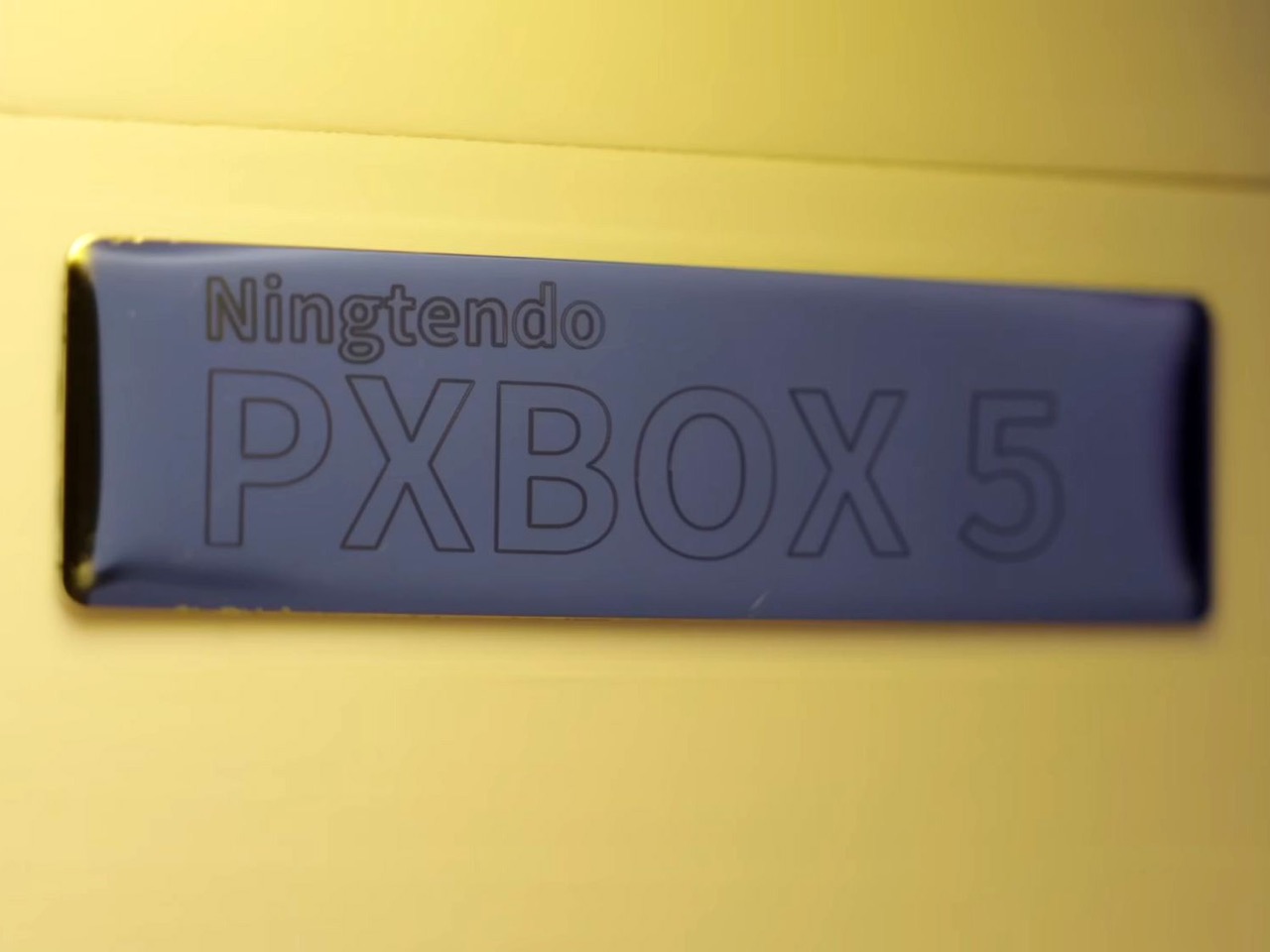
The console wars are dead. And what killed them wasn’t rising RAM prices, GPU scarcity, tariffs, or any sort of monopolistic practices. It was one modder who was tired of the multi-ecosystem approach. Chinese hardware enthusiast 小宁子 XNZ (or XNZ for short) looked at her collection of gaming consoles, realized she was constantly swapping cables and power supplies just to access different game libraries, and decided to do something about it. The result is the Ningtendo PXBOX 5, a custom-built system that combines PlayStation 5, Xbox Series X, and Nintendo Switch 2 hardware into a single triangular chassis that switches between all three platforms with a button press. One console to rule them all…
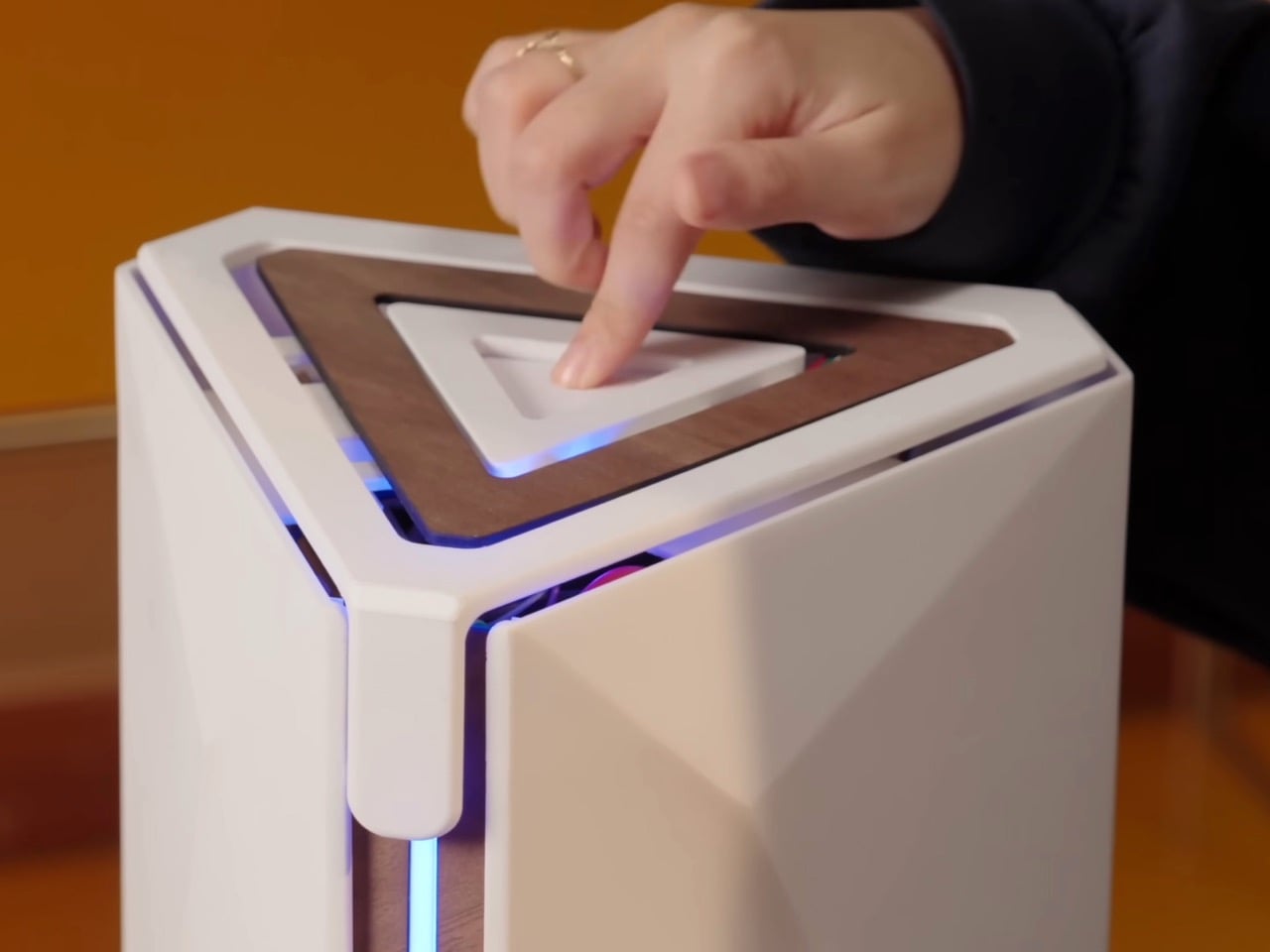
XNZ stripped each console down to its motherboard and mounted them on three sides of a custom aluminum cooling block, inspired by the old trash can Mac Pro design. A single 250-watt power supply feeds everything, while a Phanteks fan at the bottom pushes air through the shared heatsink. Press the button on top and an Arduino board handles the switching logic, cycling through the three systems in about three seconds. A front-mounted LED strip glows blue for PlayStation, green for Xbox, or red for Switch 2, so you always know what’s active. The catch is you need to close your game before switching to avoid overloading the power supply, but that’s a small price to pay for having Sony, Microsoft, and Nintendo living peacefully under one roof. Both the PS5 and Xbox are digital-only versions, so no disc drives made it into the final build.
Designer: 小宁子 XNZ
XNZ pulled inspiration from Apple’s 2013 trash can Mac Pro, which remains one of the most divisive desktop designs Apple ever shipped. That machine had a triangular prism cooling system sitting dead center, with each of its three sides pressed tight against a separate component board. A fan at the top pulled hot air straight up through the whole assembly in one clean thermal column. Apple bet wrong on dual-GPU workstation builds and killed the product line, but the core thermal design was actually brilliant. For this project, it turned out to be the perfect blueprint. Three consoles, three motherboards, three sides of a triangle. The geometry practically solved itself.
Building that triangular heatsink presented a different problem entirely. XNZ needed dense fins capable of dissipating heat from three different APUs, but CNC machining quotes came back at around $700. Metal 3D printing wasn’t much better, and both options involved waiting in manufacturing queues that would kill any chance of rapid iteration. So she went old school. Really old school. We’re talking 1,500 years old.
Lost-wax casting has been around since ancient China, traditionally used for intricate bronze artifacts like the Yunwen Bronze Vessel. The principle is simple: carve a detailed model in wax, coat it in clay, melt out the wax, and pour molten metal into the cavity left behind. XNZ modernized the process by replacing wax with PLA filament from her 3D printer. She designed the heatsink in CAD software, printed it with support structures and cooling channels built right in, then encased the whole thing in high-temperature gypsum. The gypsum can withstand 700 degrees Celsius while PLA starts melting at 100 degrees and burns completely by the time you hit 700. Stick it in an electric kiln, run it through four heating stages over 12 hours, and you’re left with a clean ceramic mold ready for aluminum.
The first casting attempt failed halfway through when the molten aluminum cooled too fast and solidified before filling the entire mold. The fins were also too dense, causing the thin gypsum walls between them to crack. XNZ adjusted the fin thickness, changed their orientation to shorten the flow path, and recalibrated both the mold temperature and the aluminum pour temperature. Second attempt came out perfect. The surface captured fine details from the 3D print, including the layer lines from the support structures on the bottom. After sawing off the pouring gate and polishing the contact surfaces, she had a functional aluminum heatsink that cost maybe 50 bucks in materials instead of several hundred in machining fees.
Copper plates bolt onto two sides of the aluminum block where the PS5 and Xbox motherboards make contact. The third side, reserved for the Switch 2, doesn’t get a copper plate because Nintendo’s handheld apparently doesn’t need active cooling when docked. Thermal paste replaces the PS5’s stock liquid metal since the copper and aluminum combo provides enough thermal mass. During testing, the whole system ran Elden Ring for 30 minutes without overheating warnings, topping out at 60 degrees Celsius measured across the heatsink surface. That’s impressive considering you’ve got three separate APUs sharing one cooling solution and one 12-centimeter fan doing all the work.
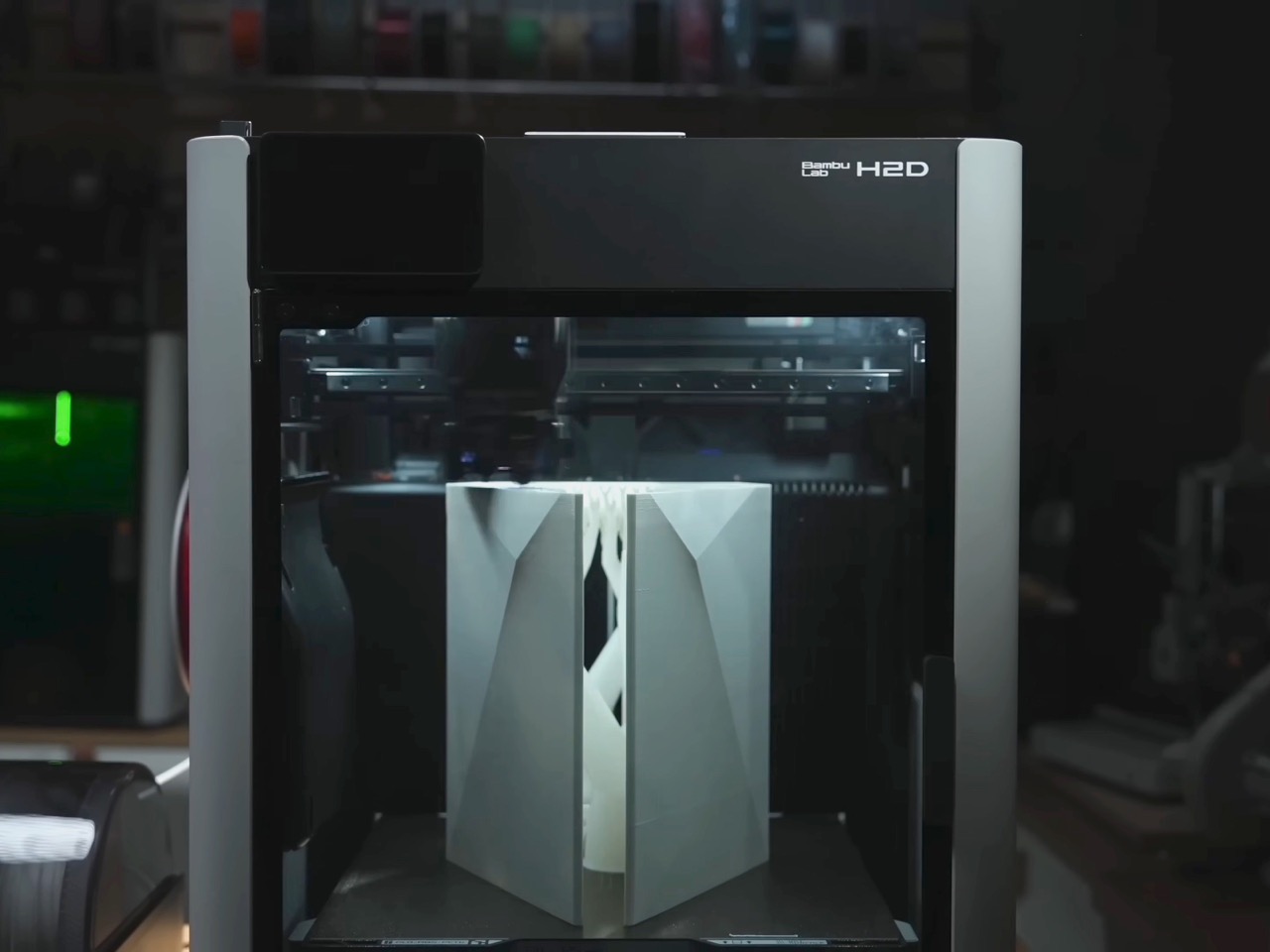
The Switch 2 integration required a custom dock since the handheld needed to remain removable. XNZ gutted Nintendo’s official dock, pulled out the USB-C daughterboard and relevant electronics, and stuffed everything into a 3D-printed housing that attaches to the cooler’s third face. She wanted a spring-loaded ejection mechanism like a toaster, but metal springs couldn’t provide enough force to overcome USB-C port friction. The solution came from Bambu Lab’s MakerWorld, where she found a parametric spring generator that lets you customize dimensions through simple value inputs. She printed the entire dock assembly using dual-extrude printing with PLA for the rigid case and PETG for the flexible spring components. The two materials bond during printing so the spring stays permanently embedded in the structure but remains fully functional right off the print bed.
Power management turned out simpler than expected. The PS5 pulls 225 watts under full gaming load but drops to 4 watts in standby. The Xbox Series X shows similar behavior. A gallium nitride 250-watt power supply handles both consoles running in parallel as long as you’re only actively gaming on one at a time. The Switch 2 gets its juice through a transformer and USB-C PD trigger that converts the main rail voltage. An Arduino board sits inside the case managing power distribution and HDMI switching, triggered by that single button on top. Press it once and the LED bar changes color while the Arduino routes both power and video output to the next console in the sequence. Takes three seconds to complete the switch, which is faster than most people can close their game and navigate back to the home screen anyway.
The whole thing weighs less than having three separate consoles on your shelf and uses one HDMI cable, one power cord, and zero mental energy deciding which box to turn on. Sure, you lose disc drive functionality since both the PlayStation and Xbox are digital editions. And yes, the 250-watt ceiling means no running multiple games simultaneously or the power supply trips. But XNZ built a working proof of concept that platform exclusivity is a solvable engineering problem, not some immutable law of physics. Sony, Microsoft, and Nintendo have spent decades convincing people their ecosystems need to stay separate. One person with a 3D printer, some molten aluminum, and a weekend said otherwise.
Microsoft has announced that the Xbox app is now available on all Arm-based Windows 11 PCs. The app's release follows an update Microsoft made to its Prism emulator in December 2025, which translates x86 and x64 apps to Arm, and now includes support for AVX and AVX2. Both extensions play a role in making games run efficiently on Windows.
Windows on Arm users will be able to use the Xbox app to purchase, download and stream PC games, and Microsoft says that "more than 85 percent of the Game Pass catalog" now runs on Arm PCs. Unlike Valve's SteamOS, Windows on Arm also supports anti-cheat software like Epic's Easy Anti Cheat, which means you can access a wider library of online multiplayer games in comparison to what you can get on the Steam Deck.
Microsoft has been working on getting Windows running on Arm for years at this point, and the company made a major push with its own Arm-based hardware and the launch of the Copilot+ PC program in 2024. Many Copilot+ PCs use Qualcomm's Snapdragon chips, the latest of which the company announced in September 2025. Up until this point Microsoft's handheld efforts have been focused on PCs running AMD chips, but expanded support for Arm and Qualcomm's own teases certainly makes it seem like an Arm-based Windows 11 handheld could be announced sooner rather than later.
This article originally appeared on Engadget at https://www.engadget.com/gaming/pc/microsoft-ports-the-xbox-app-to-arm-based-windows-pcs-191049475.html?src=rss
Threads has grown enough for Meta to fully integrate it into its advertising machine. On Wednesday, the company said that, with the platform now hosting 400 million monthly active users, ads are expanding globally to all users. The inevitable move follows a test in 30 countries early last year.
Ads on Threads are powered by Meta's AI-powered advertising system. They'll use the "same level of personalization" (i.e., tracking and profiling) as Facebook and Instagram. Image, video and carousel ad formats will all appear natively in Threads feeds.
Meta said the ad expansion will begin next week, but the full rollout will take months. "Ads on Threads expansion to all users will be gradual, with ad delivery initially remaining low as we reach global user availability in the coming months," the company wrote in a blog post.
This article originally appeared on Engadget at https://www.engadget.com/social-media/meta-is-expanding-threads-ads-to-all-users-globally-183900226.html?src=rss
Apple TV+ has become one of the best streaming services for sci-fi, with hits like Pluribus, Severance, Foundation and many more. There are so many shows that it's easy to forget the one that started it all. For All Mankind was the platform's very first attempt at sci-fi and it's finally coming back after two years for season five on March 27.
The next season will run for ten episodes on a weekly basis. It concludes on May 29, with new installments dropping each Friday.
What follows are some slight spoilers for the show, so read with caution. The streamer dropped a short teaser to announce the release date and it shows Alex Baldwin, grandson of the show's original star, careening around Mars on some sort of motorcycle.
For All Mankind started as an alt-history show that explored what would happen if Russia beat the USA to the moon in the 1960s. However, it has since become famous for time jumps. The next installment takes place in an alternate version of the 2010s and continues the story of competing space agencies after turning Mars into a viable colony.
Apple
Many of the original stars are still kicking around, but the characters are extremely old at this point. Check out this image of an aged Ed Baldwin, still played by Joel Kinnaman. Other returning cast members include Edi Gathegi, Coral Peña and Wrenn Schmidt. New cast members include Sean Kaufman, Mireille Enos, Costa Ronin, Ruby Cruz and Ines Asserson.
The show doesn't get a lot of buzz when compared to some of Apple TV's newer sci-fi properties, but it must still get eyeballs. The platform recently announced a spinoff that will be set in the Soviet Union. It's called Star City but we don't have much information beyond that.
This article originally appeared on Engadget at https://www.engadget.com/entertainment/tv-movies/for-all-mankind-returns-on-march-27-for-a-fifth-season-183212860.html?src=rss
Shared calendars scatter across phones, sticky notes live on the fridge, and whiteboards never quite get updated. Most attempts to centralize family logistics involve smart displays that look like tablets or small TVs bolted to the wall, clashing with the rest of the room. A shared calendar deserves to be visible, but not at the cost of turning your kitchen into a control room with glowing screens and exposed cables.
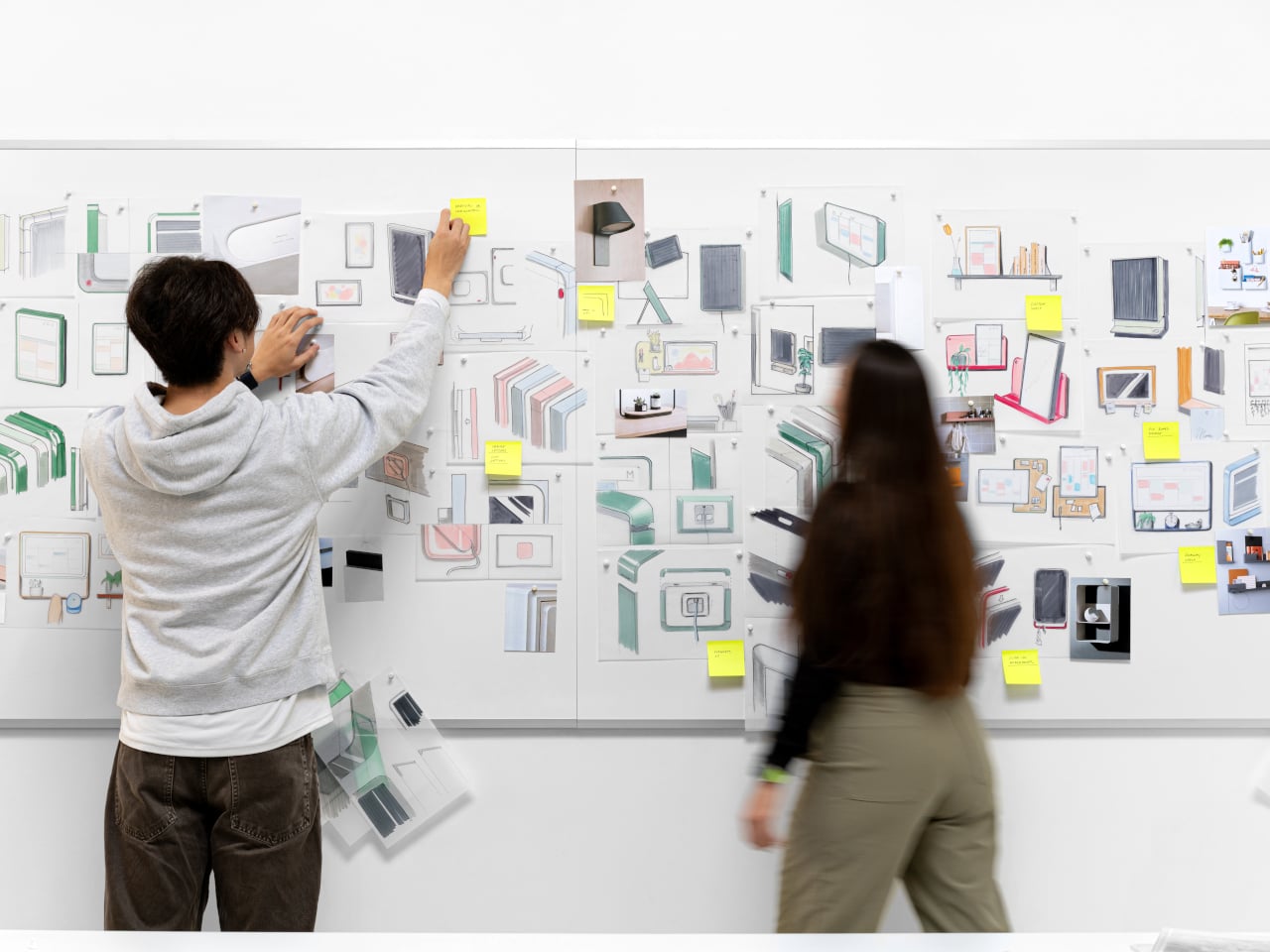
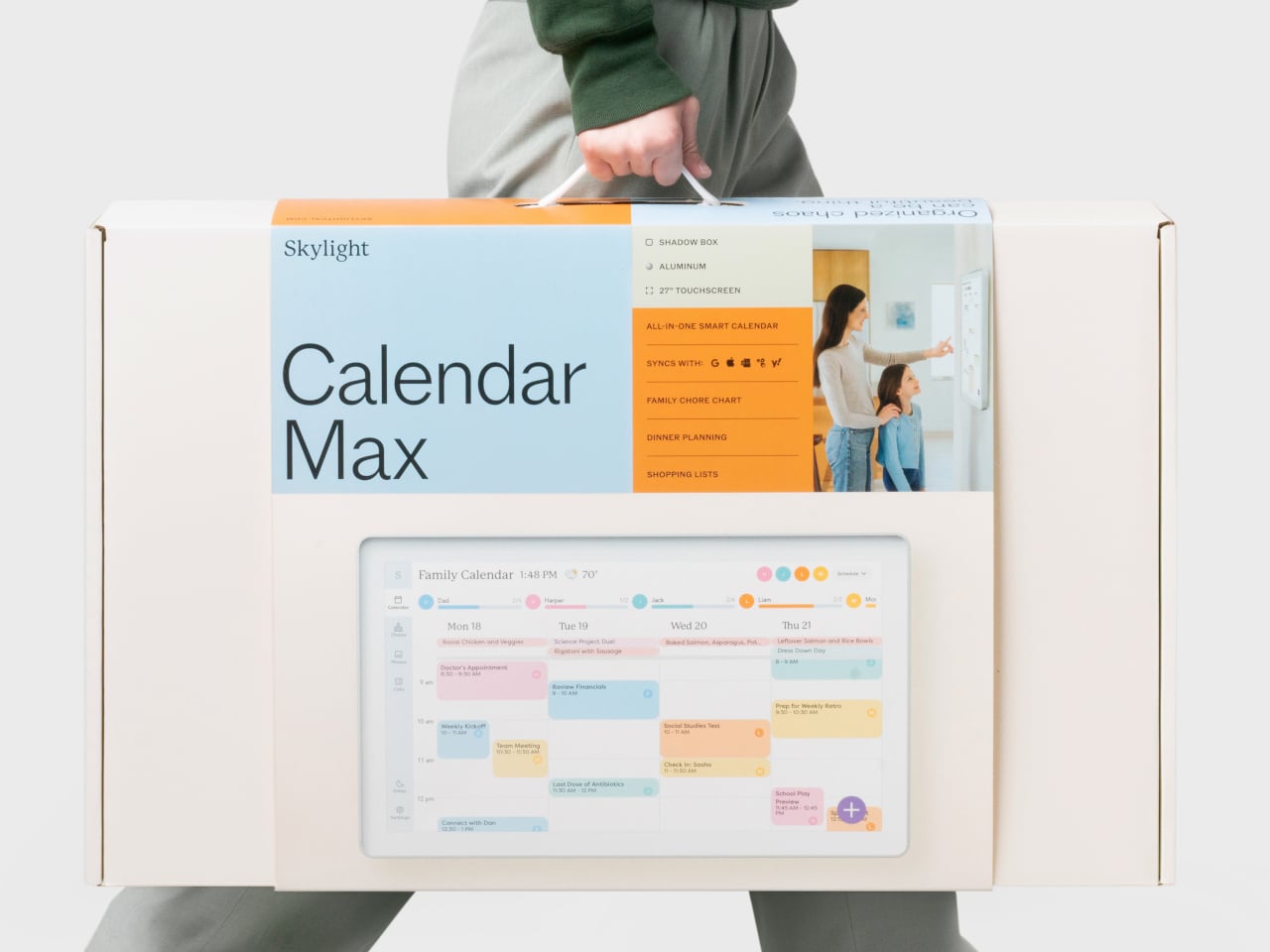
Skylight’s 27-inch Calendar Max is a digital calendar that starts from the wall, not the app. It is a large wall-mounted touchscreen designed to be a central family hub, but the industrial design leans toward a floating frame rather than a black rectangle. The goal is to feel like part of the decor while still being big and clear enough to see from across the room.
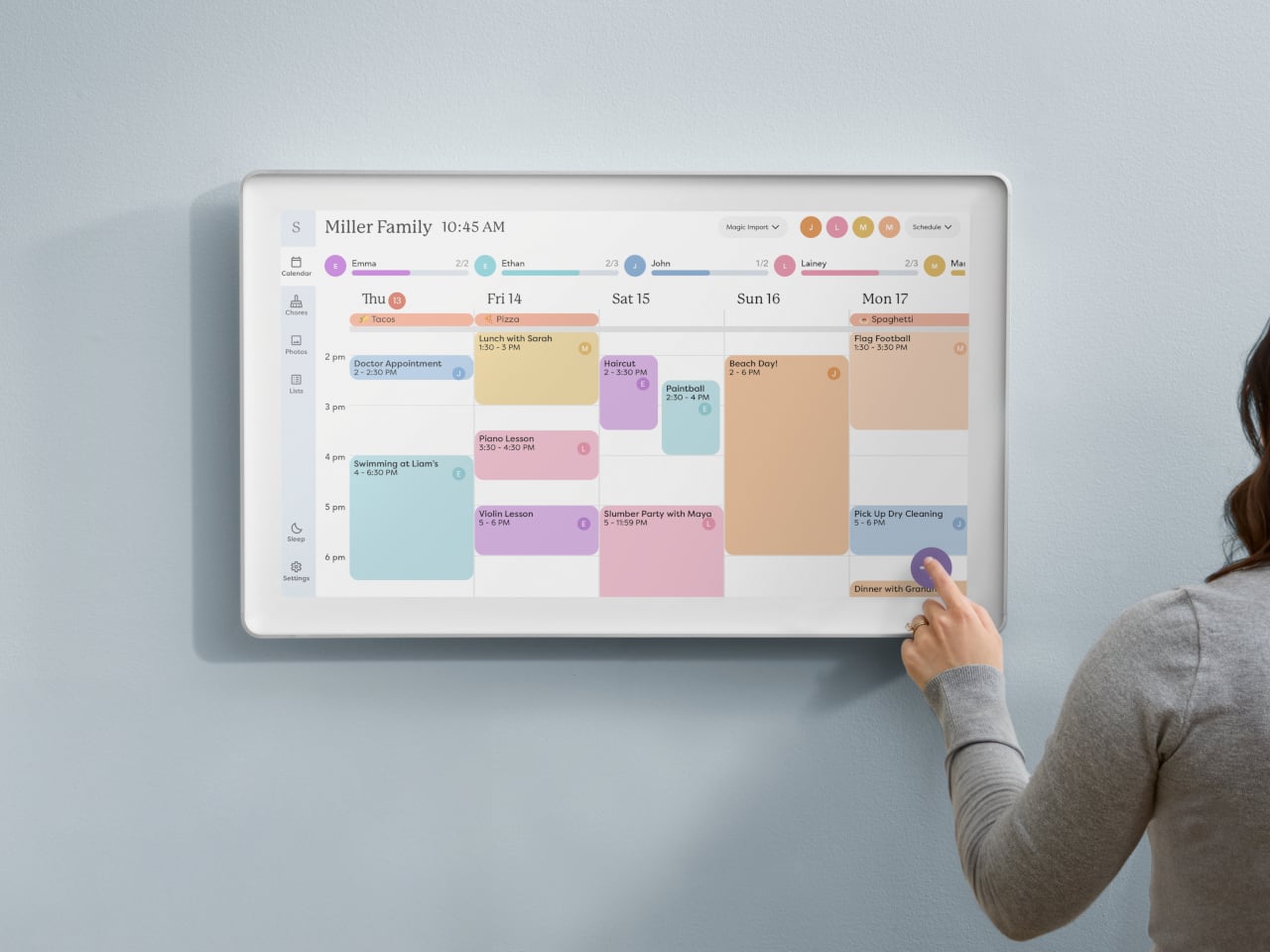
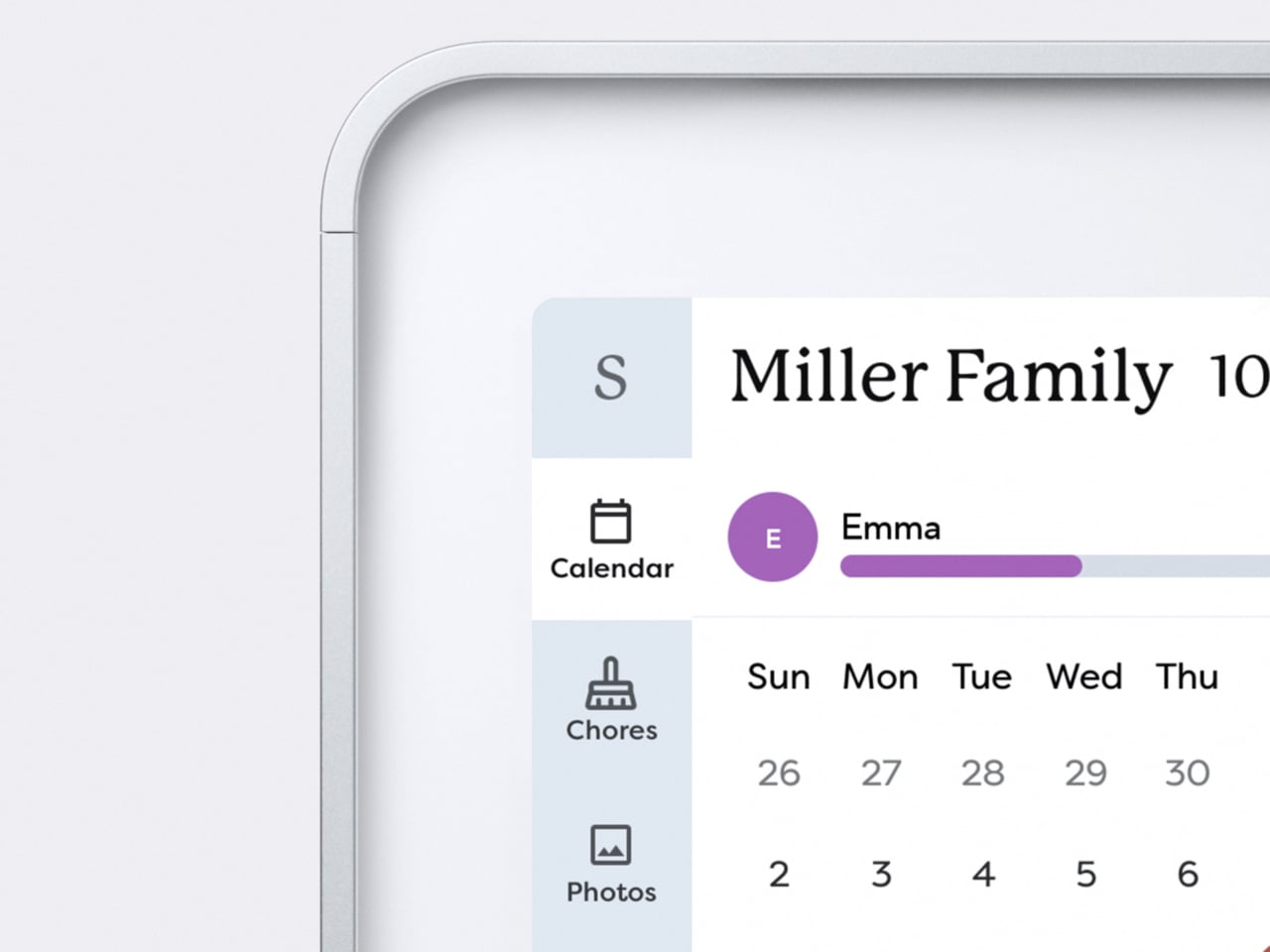
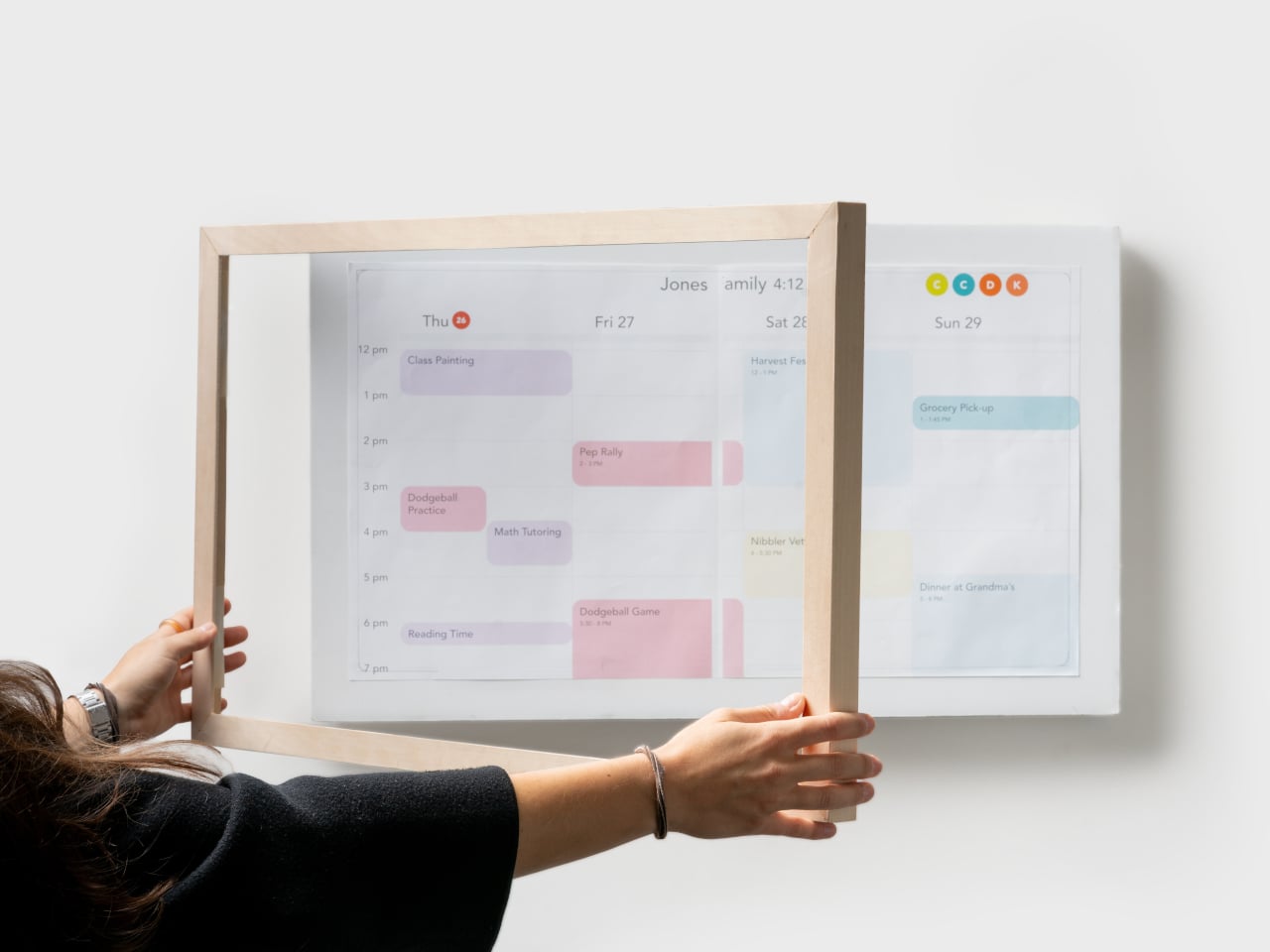
A typical morning means everyone glances at the calendar on the way to coffee. Color-coded events show who is doing what, lists and meal plans sit alongside the schedule, and everything syncs with the digital calendars people already use on their phones. Instead of hunting through apps or checking multiple sources, the day’s plan is just there, big enough that no one can pretend they missed soccer practice.
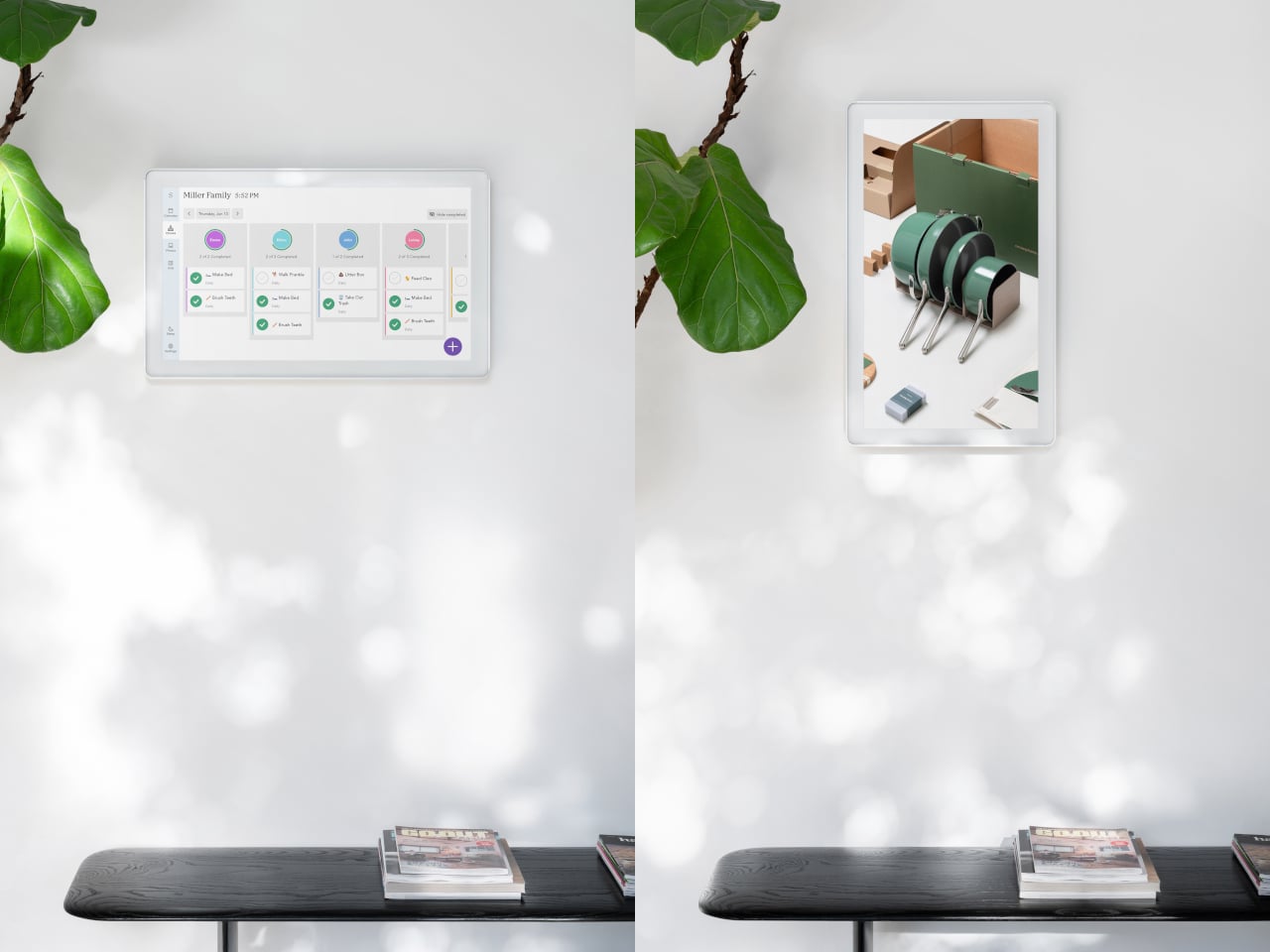
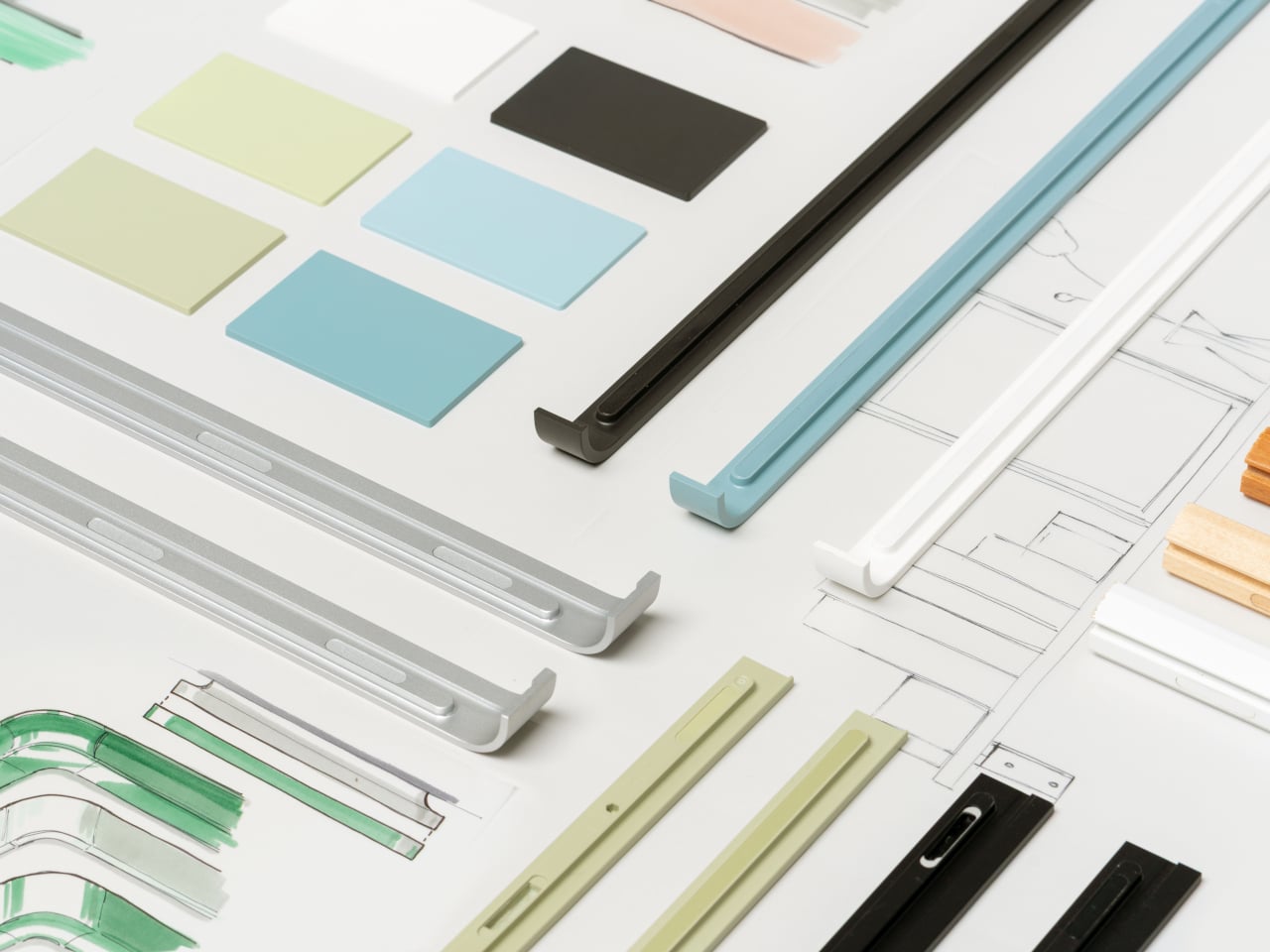
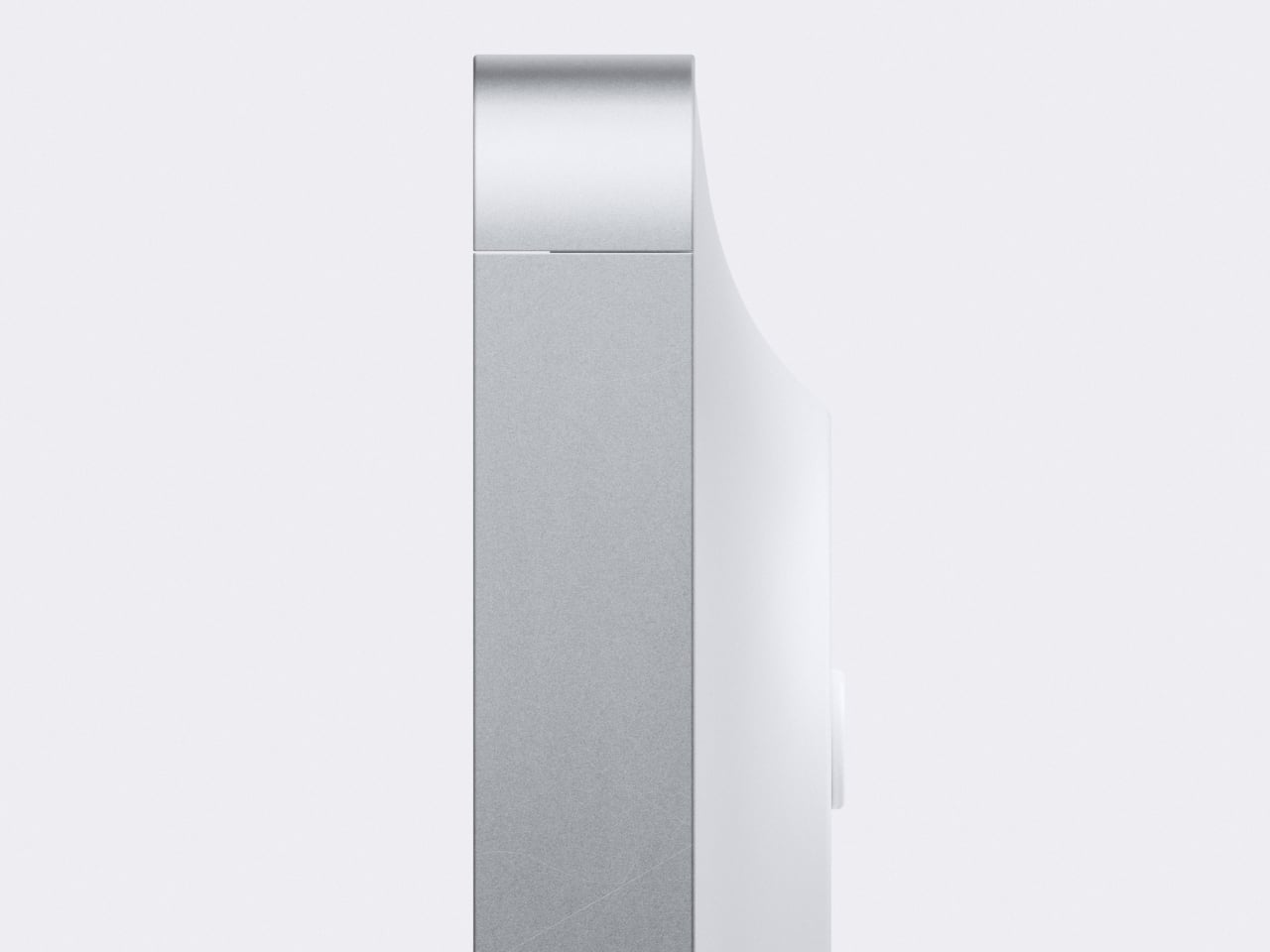
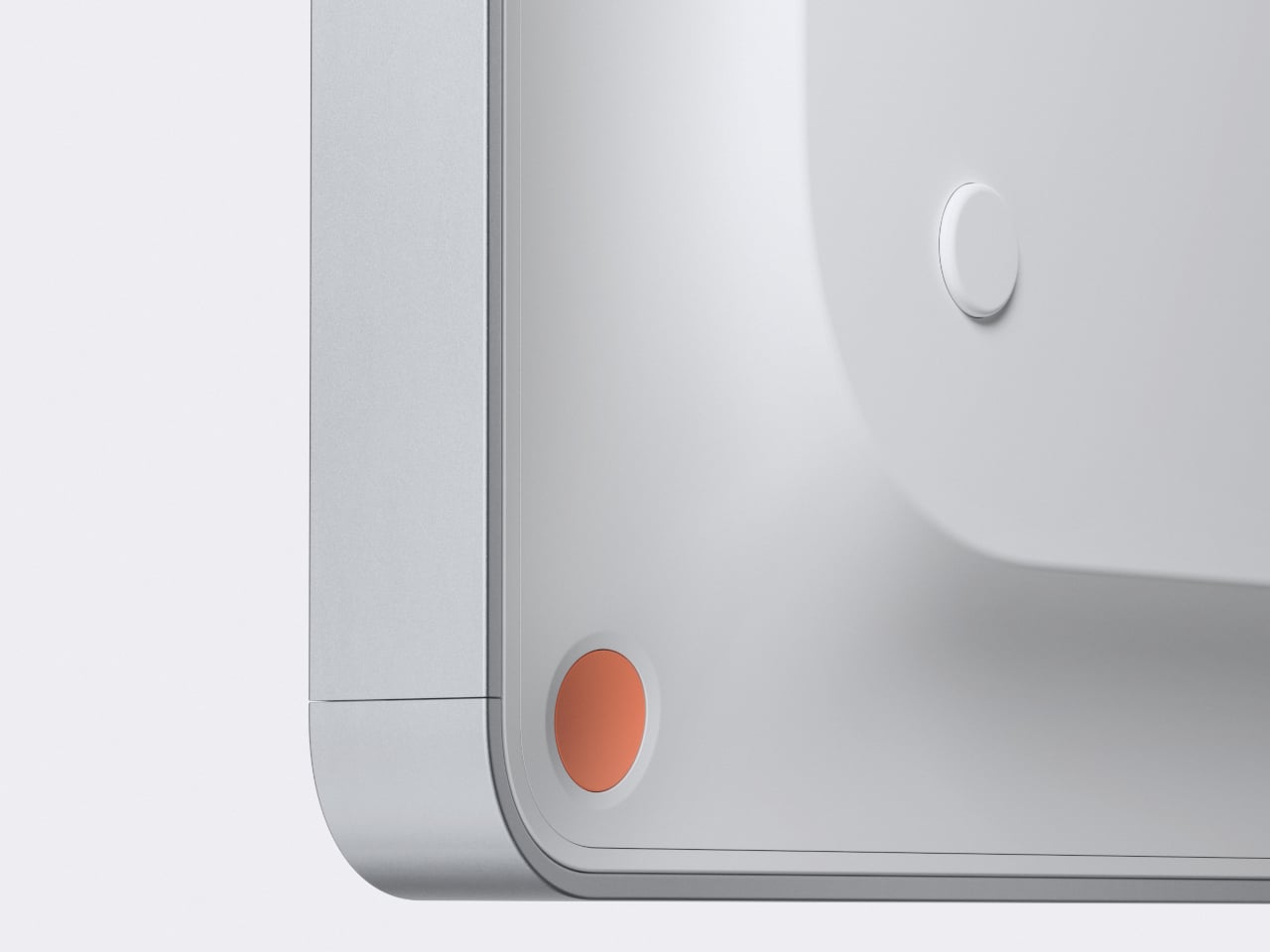
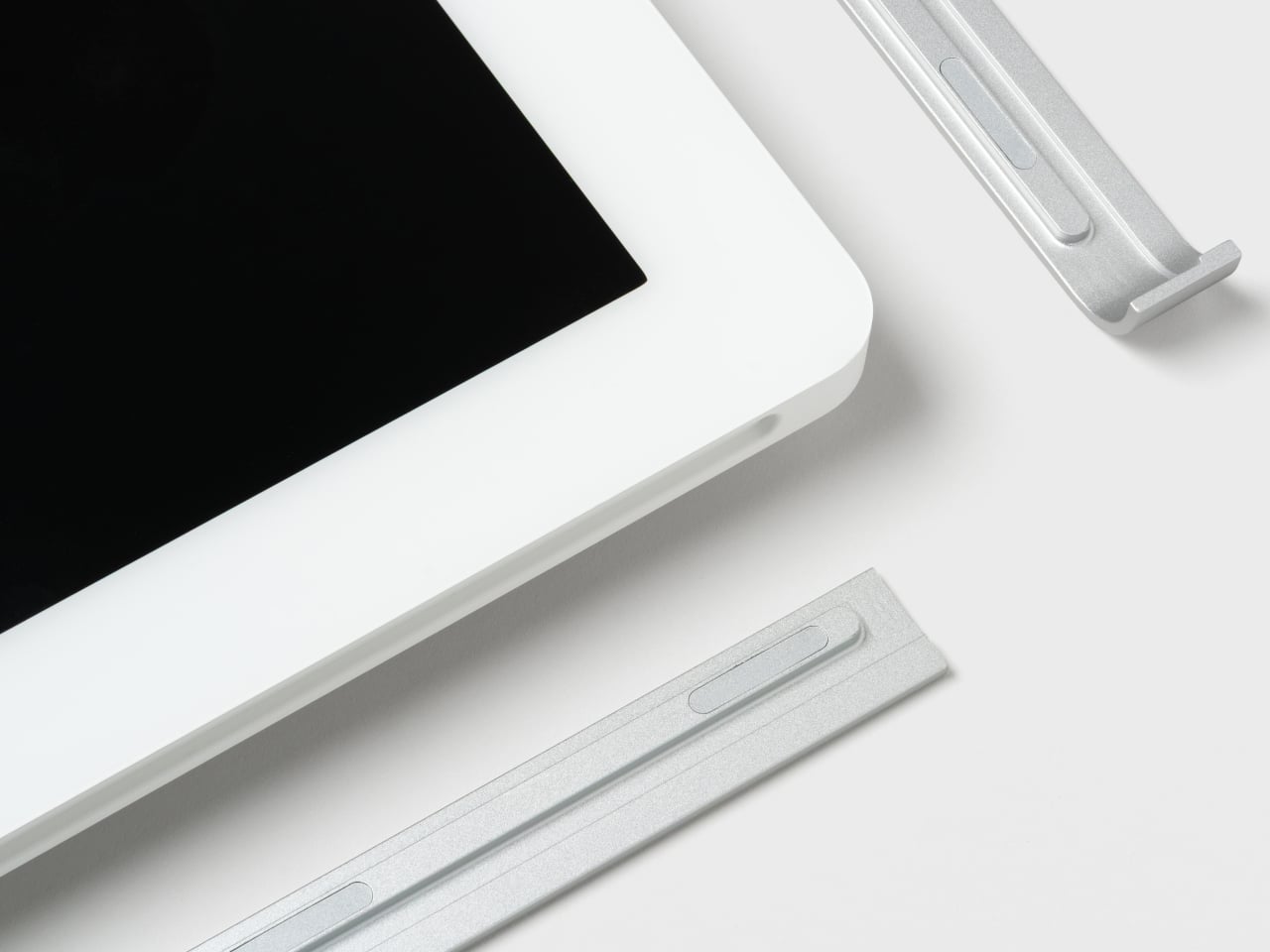
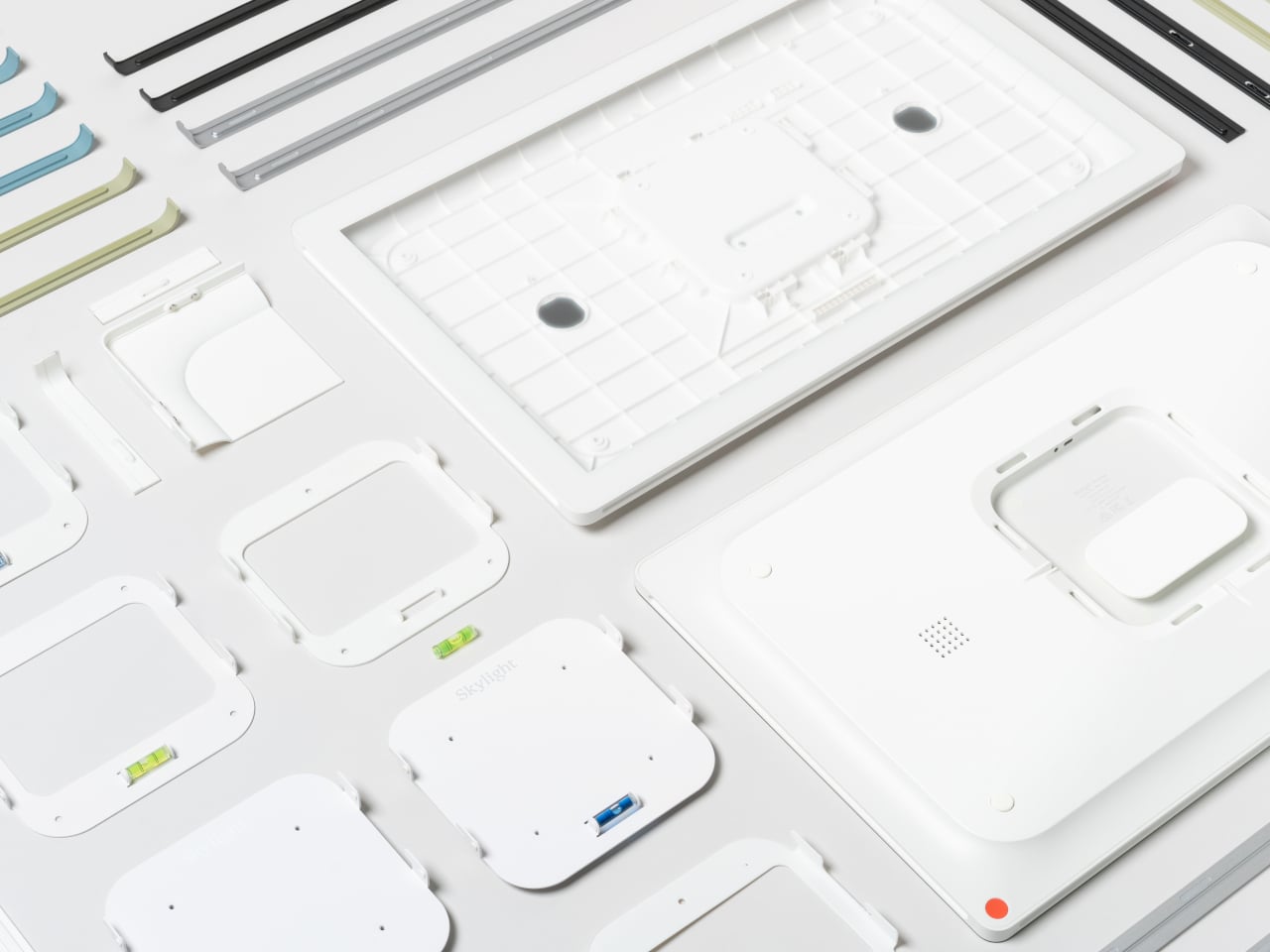
The display sits slightly off the wall, casting a soft shadow that changes with the light, so it reads more like a floating object than a mounted monitor. Magnetically attached frames in aluminum, wood, or plastic let you pick a look that matches your space and swap them later if the room changes, without replacing the hardware. It mostly just means the calendar feels deliberate instead of tacked on.
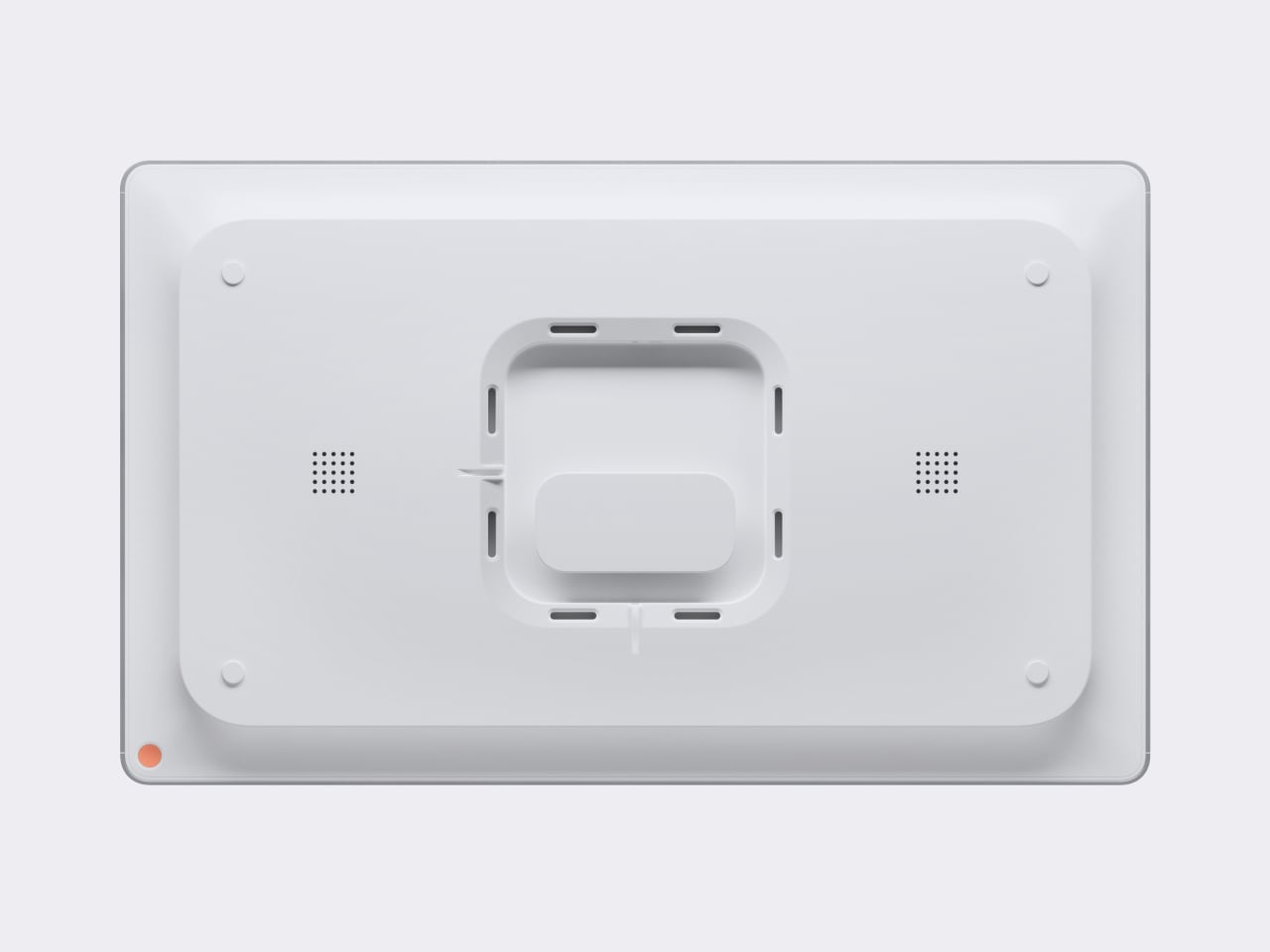
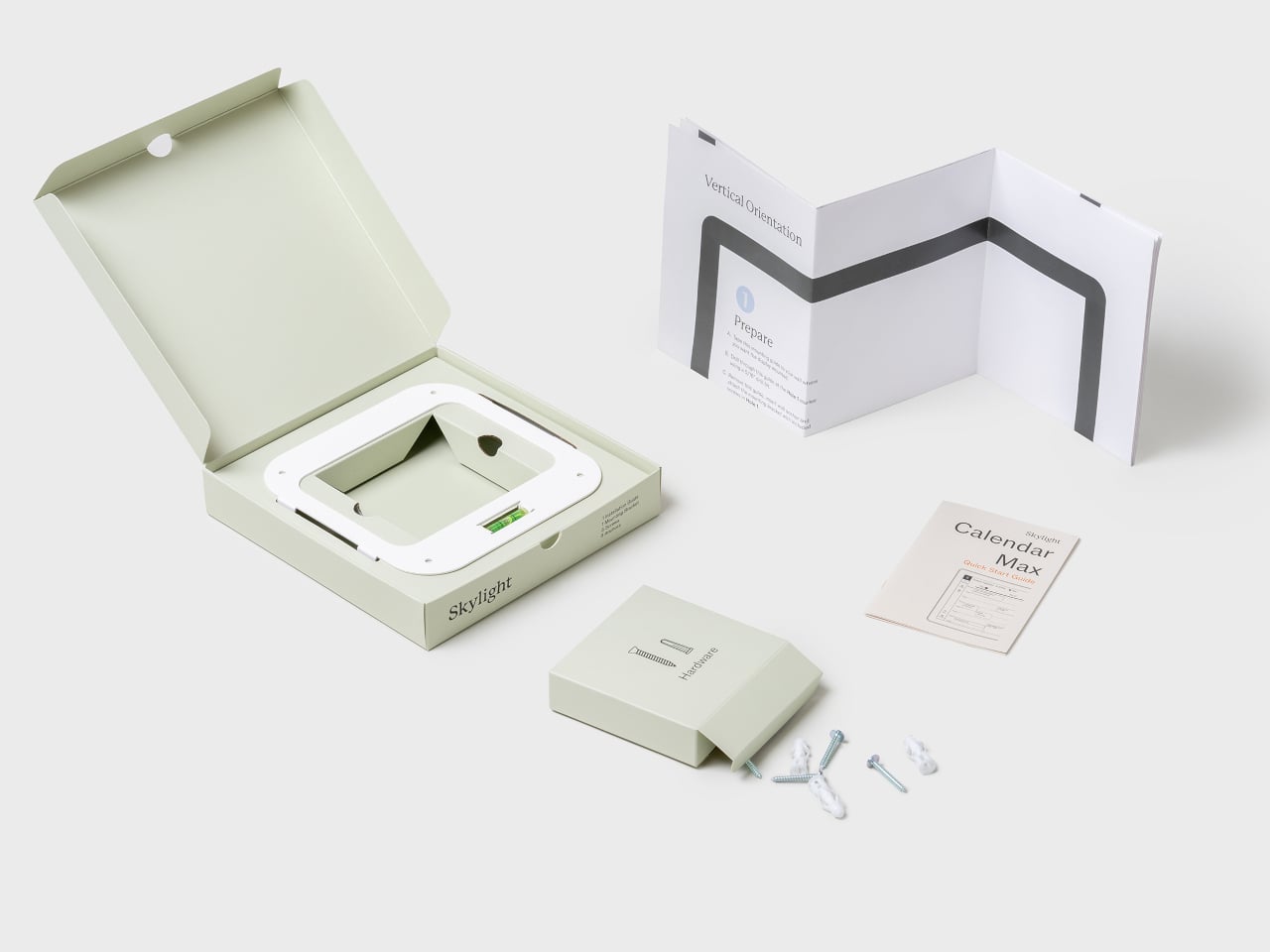
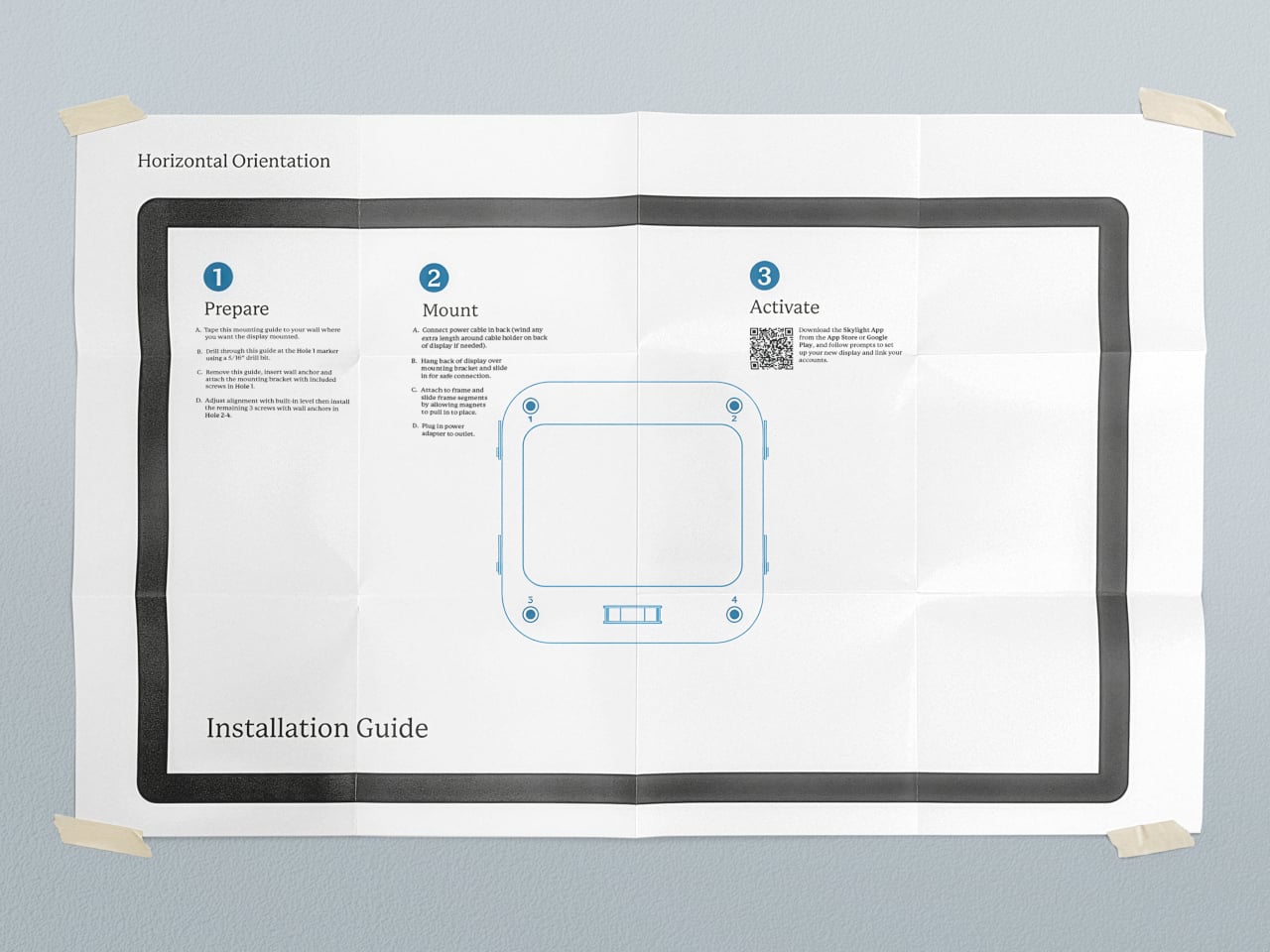
The mounting system uses a dedicated wall plate with cable routing, so once it is up, the calendar sits cleanly with minimal visible wiring. The packaging and installation guide are designed to make the process approachable, more like hanging a large frame than installing AV equipment. That matters when the person putting it up is more interested in family logistics than tech tinkering.
During busy hours, it behaves like a bright, legible planner. When things slow down, it can switch to a photo gallery, turning into a large digital frame that shows family pictures instead of to-dos. That shift helps it feel less like a dashboard that never sleeps and more like a living part of the wall that changes mood with the house.
Calendar Max treats shared schedules, lists, and memories as part of the architecture of daily life, not just data on screens. By paying attention to silhouette, depth, frames, and mounting, it turns a functional object into something you do not mind giving prime wall space. Smart calendars that actually look like they belong in a living room turn out to be surprisingly rare, which makes one that does feel like a meaningful shift.
Shared calendars scatter across phones, sticky notes live on the fridge, and whiteboards never quite get updated. Most attempts to centralize family logistics involve smart displays that look like tablets or small TVs bolted to the wall, clashing with the rest of the room. A shared calendar deserves to be visible, but not at the cost of turning your kitchen into a control room with glowing screens and exposed cables.
Skylight’s 27-inch Calendar Max is a digital calendar that starts from the wall, not the app. It is a large wall-mounted touchscreen designed to be a central family hub, but the industrial design leans toward a floating frame rather than a black rectangle. The goal is to feel like part of the decor while still being big and clear enough to see from across the room.
A typical morning means everyone glances at the calendar on the way to coffee. Color-coded events show who is doing what, lists and meal plans sit alongside the schedule, and everything syncs with the digital calendars people already use on their phones. Instead of hunting through apps or checking multiple sources, the day’s plan is just there, big enough that no one can pretend they missed soccer practice.
The display sits slightly off the wall, casting a soft shadow that changes with the light, so it reads more like a floating object than a mounted monitor. Magnetically attached frames in aluminum, wood, or plastic let you pick a look that matches your space and swap them later if the room changes, without replacing the hardware. It mostly just means the calendar feels deliberate instead of tacked on.
The mounting system uses a dedicated wall plate with cable routing, so once it is up, the calendar sits cleanly with minimal visible wiring. The packaging and installation guide are designed to make the process approachable, more like hanging a large frame than installing AV equipment. That matters when the person putting it up is more interested in family logistics than tech tinkering.
During busy hours, it behaves like a bright, legible planner. When things slow down, it can switch to a photo gallery, turning into a large digital frame that shows family pictures instead of to-dos. That shift helps it feel less like a dashboard that never sleeps and more like a living part of the wall that changes mood with the house.
Calendar Max treats shared schedules, lists, and memories as part of the architecture of daily life, not just data on screens. By paying attention to silhouette, depth, frames, and mounting, it turns a functional object into something you do not mind giving prime wall space. Smart calendars that actually look like they belong in a living room turn out to be surprisingly rare, which makes one that does feel like a meaningful shift.