The mother of one of Elon Musk’s children is suing xAI over nonconsensual deepfake images

Although X removed Grok’s ability to create nonconsensual digitally undressed images on the social platform, the standalone Grok app is another story. It reportedly continues to produce “nudified” deepfakes of real people. And now, Ashley St. Clair, a conservative political strategist and mother of one of Elon Musk’s 14 children, has sued xAI for nonconsensual sexualized images of her that Grok allegedly produced.

In the court filing, St. Clair accused xAI’s Grok chatbot of creating and disseminating deepfakes of her “as a child stripped down to a string bikini, and as an adult in sexually explicit poses, covered in semen, or wearing only bikini floss.” In some cases, the chatbot allegedly produced bikini-clad deepfakes of St. Clair based on a photo of her as a 14-year-old. “People took pictures of me as a child and undressed me. There’s one where they undressed me and bent me over, and in the background is my child’s backpack that he’s wearing right now,” she said.

“I am also seeing images where they add bruises to women, beat them up, tie them up, mutilated,” St. Clair told The Guardian. “These sickos used to have to go to the dark depths of the internet, and now it is on a mainstream social media app.”

St. Clair said that, after she reported the images to X, the social platform replied that the content didn’t violate any policies. In addition, she claims that X left the images posted for up to seven days after she reported them. St. Clair said xAI then retaliated against her by creating more digitally undressed deepfakes of her, therefore “making [St. Clair] the laughingstock of the social media platform.”

She accused the company of then revoking her X Premium subscription, verification checkmark and ability to monetize content on the platform. “xAI further banned [her] from repurchasing Premium,” St. Clair’s court filing states.

On Wednesday, X said it changed its policies so that Grok would no longer generate sexualized images of children or nonconsensual nudity “in those jurisdictions where it’s illegal.” However, the standalone Grok app reportedly continues to undress and sexualize photos when prompted to do so.

WASHINGTON, DC - JUNE 23: Google CEO Sundar Pichai (L) and Apple CEO Tim Cook (R) listen as U.S. President Joe Biden speaks during a roundtable with American and Indian business leaders in the East Room of the White House on June 23, 2023 in Washington, DC. Biden and Indian Prime Minister Narendra Modi held the meeting to meet with a range of leaders from the tech and business worlds and to discuss topics including innovation and AI. (Photo by Anna Moneymaker/Getty Images)
Neither Apple nor Google has removed the Grok app despite explicit policy violations.
Anna Moneymaker via Getty Images

Apple and Google have thus far done, well, absolutely nothing. Despite the multi-week outrage over the deepfakes — and an open letter from 28 advocacy groups — neither company has removed the X or Grok apps from their app stores. Both the App Store and Play Store have policies that explicitly prohibit apps that generate such content.

Neither Apple nor Google has responded to multiple requests for comment from Engadget. That includes a follow-up email sent on Friday, regarding the Grok app continuing to “nudify” photos of real women and other people.

While Apple and Google fail to act, many governments have done the opposite. On Monday, Malaysia and Indonesia banned Grok. The same day, UK regulator Ofcom opened a formal investigation into X. California opened one on Wednesday. The US Senate even passed the Defiance Act for a second time in the wake of the blowback.

“If you are a woman, you can’t post a picture, and you can’t speak, or you risk this abuse,” St. Clair told The Guardian. “It’s dangerous, and I believe this is by design. You are supposed to feed AI humanity and thoughts, and when you are doing things that particularly impact women, and they don’t want to participate in it because they are being targeted, it means the AI is inherently going to be biased.”

Speaking about Musk and his team, she added that “these people believe they are above the law, because they are. They don’t think they are going to get in trouble, they think they have no consequences.”

This article originally appeared on Engadget at https://www.engadget.com/ai/the-mother-of-one-of-elon-musks-children-is-suing-xai-over-nonconsensual-deepfake-images-191451979.html?src=rss


Lego’s latest educational kit seeks to teach AI as part of computer science, not to build a chatbot

Last week at CES, Lego introduced its new Smart Play system, with a tech-packed Smart Brick that can recognize and interact with sets and minifigures. It was unexpected and delightful to see Lego come up with a way to modernize its bricks without the need for apps, screens or AI. 

So I was a little surprised this week when the Lego Education group announced its latest initiative is the Computer Science and AI Learning Solution. After all, generative AI feels like the antithesis of Lego’s creative values. But Andrew Silwinski, Lego Education’s head of product experience, was quick to defend Lego’s approach, noting that being fluent in the tools behind AI is not about generating sloppy images or music and more about expanding what it means by teaching computer science.

“I think most people should probably know that we started working on this before ChatGPT [got big],” Silwinski told Engadget earlier this week. “Some of the ideas that underline AI are really powerful foundational ideas, regardless of the current frontier model that's out this week. Helping children understand probability and statistics, data quality, algorithmic bias, sensors, machine perception. These are really foundational core ideas that go back to the 1970s.” 

To that end, Lego Education designed courses for grades K-2, 3-5 and 6-8 that incorporate Lego bricks, additional hardware and lessons tailored to introducing the fundamentals of AI as an extension of existing computer science education. The kits are designed for four students to work together, with teacher oversight. Much of this all comes from learnings Lego found in a study it commissioned showing that teachers often find they don’t have the right resources to teach these subjects. The study showed that half of teachers globally say “current resources leave students bored” while nearly half say “computer science isn’t relatable and doesn’t connect to students’ interests or day to day.” Given kids’ familiarity with Lego and the multiple decades of experience Lego Education has in putting courses like this together, it seems like a logical step to push in this direction. 

In Lego’s materials about the new courses, AI is far from the only subject covered. Coding, looping code, triggering events and sequences, if/then conditionals and more are all on display through the combination of Lego-built models and other hardware to motorize it. It feels more like a computer science course that also introduces concepts of AI rather than something with an end goal of having kids build a chatbot.

In fact, Lego set up a number of “red lines” in terms of how it would introduce AI. “No data can ever go across the internet to us or any other third party,” Silwinski said. “And that's a really hard bar if you know anything about AI.” So instead of going to the cloud, everything had to be able to do local inference on, as Silwinski said, “the 10-year-old Chromebooks you’ll see in classrooms.” He added that “kids can train their own machine learning models, and all of that is happening locally in the classroom, and none of that data ever leaves the student's device.”

Lego also says that its lessons never anthropomorphize AI, one of the things that is so common in consumer-facing AI tools like ChatGPT, Gemini and many more. “One of the things we're seeing a lot of with generative AI tools is children have a tendency to see them as somehow human or almost magical. A lot of it's because of the conversational interface, it abstracts all the mechanics away from the child.” 

Lego also recognized that it had to build a course that’ll work regardless of a teacher’s fluency in such subjects. So a big part of developing the course was making sure that teachers had the tools they needed to be on top of whatever lessons they’re working on. “When we design and we test the products, we're not the ones testing in the classroom,” Silwinski said. “We give it to a teacher and we provide all of the lesson materials, all of the training, all of the notes, all the presentation materials, everything that they need to be able to teach the lesson.” Lego also took into account the fact that some schools might introduce its students to these things starting in Kindergarten, whereas others might skip to the grade 3-5 or 6-8 sets. To alleviate any bumps in the courses for students or teachers, Lego Education works with school districts and individual schools to make sure there’s an on-ramp for those starting from different places in their fluency.

While the idea of “teaching AI” seemed out of character for Lego initially, the approach it’s taking here actually reminds me a bit of Smart Play. With Smart Play, the technology is essentially invisible — kids can just open up a set, start building, and get all the benefits of the new system without having to hook up to an app or a screen. In the same vein, Silwinski said that a lot of the work you can do with the Computer Science and AI kit doesn’t need a screen, particularly the lessons designed for younger kids. And the sets themselves have a mode that acts similar to a mesh, where you connect numerous motors and sensors together to build “incredibly complex interactions and behaviors” without even needing a computer.

For educators interested in checking out this latest course, Lego has single kits up for pre-order starting at $339.95; they’ll start shipping in April. That’s the pricing for the K-2 sets, the 3-5 and 6-8 sets are $429.95 and $529.95, respectively. A single kit covers four students. Lego is also selling bundles with six kits, and school districts can also request a quote for bigger orders. 


This article originally appeared on Engadget at https://www.engadget.com/ai/legos-latest-educational-kit-seeks-to-teach-ai-as-part-of-computer-science-not-to-build-a-chatbot-184636741.html?src=rss
Stop Saying ‘Hey Siri’ in Public: This Finger Ring Concept Responds to Taps

Talking to phones and smart speakers in public still feels awkward. You either whisper to your wrist or say “Hey Siri” out loud on a crowded train, and everyone turns to look. Pulling out a phone just to check a notification breaks whatever you were doing, and making big hand gestures to control earbuds turns you into the person air-conducting an invisible orchestra on the sidewalk.

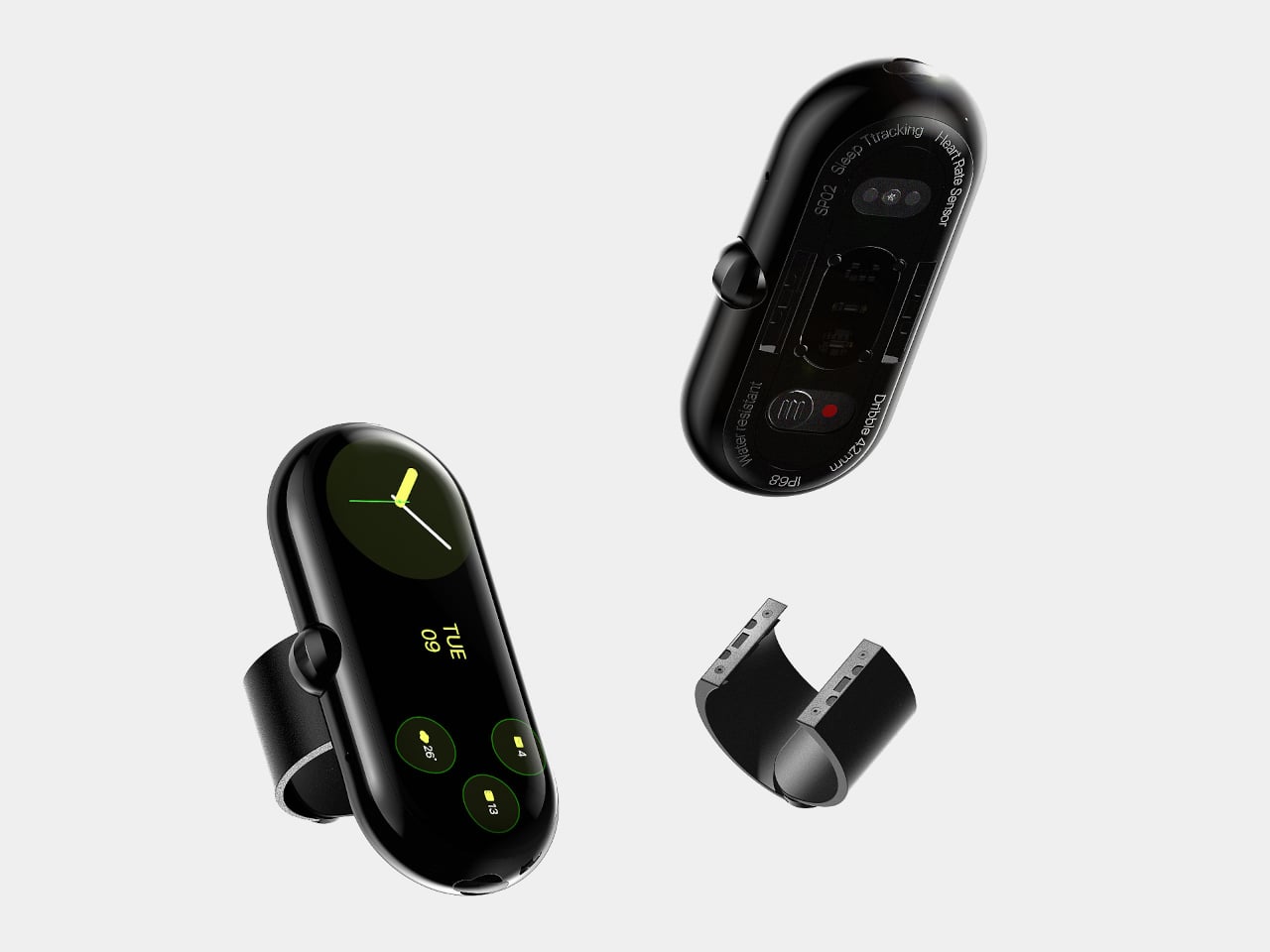
Dribble is a concept device that tries to move those interactions onto your index finger. Designed by Kangmin Park, it is a tiny pill-shaped module that clips onto a ring-like band, turning your finger into a discreet remote for messaging, AI, health, and payments. Instead of wake words or screens, it relies on small taps and glances, handling quick tasks without broadcasting that you are using tech.

Designer: Kangmin Park

The interaction model is straightforward. One tap triggers a core action, two taps go back, and a long press activates multi-step tasks or Dribble AI. A hidden under-display camera and motion tracking help the device understand context without sticking a visible lens on your hand. The idea is that you can reply to a message or jot a note with a tiny movement that barely anyone notices.

Picture hanging onto a subway pole while tapping your finger to send a “running late” reply, or cycling with your phone zipped away while a double-tap starts navigation. In a meeting, you could long-press to capture a thought without opening a laptop. These are short interactions that keep you from constantly pulling out your phone for every notification or small task that pops up.

The narrow display wraps over the top edge, showing just enough information, a line of text, a heart rate, or a small card from Dribble AI. The concept includes AI cards for notes, search, work assistance, health, and small payments, all designed to be read in a second or two. It feels closer to a whisper from your devices than a full conversation, which suits the tiny form factor.

Dribble is meant to be worn as a ring most of the time, but it can also hang from a necklace when you do not want anything on your hands. The pill shape and muted colours push it toward jewelry territory rather than gadget territory, which matters if you are going to wear it all day. It shows the designer is thinking about how it fits into outfits and habits, not just operating systems.

Dribble hints at a future where we talk less to our devices and tap them more quietly instead. It does not try to replace phones or watches. It just imagines a different layer of control that lives on your finger, somewhere between jewelry and interface. Whether or not this exact product ever ships, the idea of invisible input riding on tiny gestures feels worth paying attention to.

The post Stop Saying ‘Hey Siri’ in Public: This Finger Ring Concept Responds to Taps first appeared on Yanko Design.

Canada cuts tariffs on Chinese EVs as part of new deal

Canada has agreed to drastically reduce its tariffs on imported Chinese EVs from 100 percent to 6.1 percent as part of a

between the two countries. In return, China will be reducing tariffs on Canadian canola seeds from 84 percent to about 15 percent.

The move is a break from the United States, which maintains a 100 percent tariff on EVs from China, effectively banning them in the country. Mexico currently tariffs the vehicles at 50 percent after

last year.

Under the agreement, which Canadian Prime Minister Mark Carney

"preliminary," Canada will allow up to 49,000 Chinese EVs into the country, with that number rising to 70,000 after five years. Until now the three major North American trading partners had been aligned in trying to protect their domestic electric vehicle manufacturing. Chinese EV companies benefit from

, and as such can often be priced at a far better value than domestic alternatives.

“Our relationship has progressed in recent months with China. It is more predictable and you see results coming from that,” Carney

. A warmer relationship may be forming in response to the Trump administration's

, with China hoping that alienated nations may

with the Eastern power.

As to concerns that cheaper electric vehicles from China could hurt the Canadian auto market, the prime minister was unconcerned, saying "it’s still in low, single-digit proportion of the size of the Canadian auto sector," Carney added, “Canadians buy about 1.8 million autos a year.” China remains Canada’s second-largest trading partner after the United States.

This article originally appeared on Engadget at https://www.engadget.com/transportation/evs/canada-cuts-tariffs-on-chinese-evs-as-part-of-new-deal-174241990.html?src=rss

X is fully online after going down for most of the morning

X seems to be working again after struggling with an outage that took the service offline and made it slow to load for much of the morning. According to X’s developer platform page, there is an ongoing incident related to streaming endpoints that’s caused increased errors. The incident started at 7:39AM PT, according to the page.

That roughly coincides with a spike in reports at Down Detector. The issues seemed to be somewhat intermittent. At some points, X’s website loaded partially and only showed older posts. At other times, the app and website failed to load at all.

As of 9:30AM PT, X’s Explore and trending pages were loading, but the “following” tab wasn’t showing posts and instead suggested users “find some people and topic to follow” (as shown in the screenshot below).

Posts aren't loading.
X

As of 11:15AM PT, X’s developer site was still indicating ongoing issues, so there may still be some lingering problems even though the website seems to be functioning normally again. Reports on Down Detector have also dropped off considerably.

X didn’t immediately respond to a request for comment on the outage. As TechCrunch notes, this is the second time this week that X has experienced significant issues. The service also went down for many users around the world on Tuesday.

Bluesky changed its profile photo earlier in the week.
X

But while the latest issues were widespread, some posts are were still managing to go through. Rival Bluesky, which earlier in the week changed its profile picture on X to its butterfly logo in a bikini, took the opportunity to throw some shade.

At 1PM PT, X updated its status page to indicate the issue had been resolved after nearly six hours. It didn’t elaborate on the underlying cause.

Update, January 16, 2026, 2:09PM PT: Updated with the latest information from X’s status page.

This article originally appeared on Engadget at https://www.engadget.com/social-media/x-is-fully-online-after-going-down-for-most-of-the-morning-171843711.html?src=rss

The latest Legend of Zelda Lego set pays tribute to Ocarina of Time’s final battle

We already knew something Ocarina of Time-related was coming from Nintendo and Lego in 2026, and now we know exactly what that set will look like. Weighing in at a surprisingly modest 1,003 pieces, the typically word salad-y Lego The Legend of Zelda: Ocarina of Time - The Final Battle is the second Lego Zelda set, following the 2,500-piece Great Deku Tree set in 2024.

While the latter lets you choose between building either a Breath of the Wild or OoT-themed replica of the wise old guardian of the forest, the upcoming set is aimed squarely at fans of the series’ debut 3D outing. As you can probably guess from the name, it’s a brick-built tribute to Link and Princess Zelda’s climactic battle with Ganondorf in the seminal Nintendo 64 game, in what remains of the castle. Inside the rubble are three recovery hearts.

It’s hard to see how this works without a video, but Lego says you can release Link’s nemesis by pressing a button that raises him from the debris. As well as the minifigures for Zelda and Link — complete with his Master Sword and Hylian Shield — you also get a suitably transparent Navi to display. And then there’s the large poseable Ganon (the pig demon version of Ganondorf), which is probably the highlight of the whole set.

Interestingly, the new Ocarina of Time set is the first high-profile Lego announcement since unveiling its new Smart Brick at CES, but it looks like we’ll be playing with regular dumb Lego only here. You’ll just have to do the final Hyrule-saving "Hyah!" yourself, I guess.

Lego The Legend of Zelda : Ocarina of Time - The Final Battle is available to pre-order from today and will be available from March 1, priced at $130.

This article originally appeared on Engadget at https://www.engadget.com/gaming/nintendo/the-latest-legend-of-zelda-lego-set-pays-tribute-to-ocarina-of-times-final-battle-172212137.html?src=rss

Pareto Pot Uses the 80/20 Rule to Give Your Favorite Pens a Better Home

Most creative desks have a cup overflowing with pens, markers, and tools, even though you reach for the same few every day. There is the Muji gel pen for sketches, a couple of render markers you trust, and then about 15 other things you keep just in case. The Pareto Principle says 80 percent of your output comes from 20 percent of your stationery, which feels accurate once you notice how often you dig past everything else.

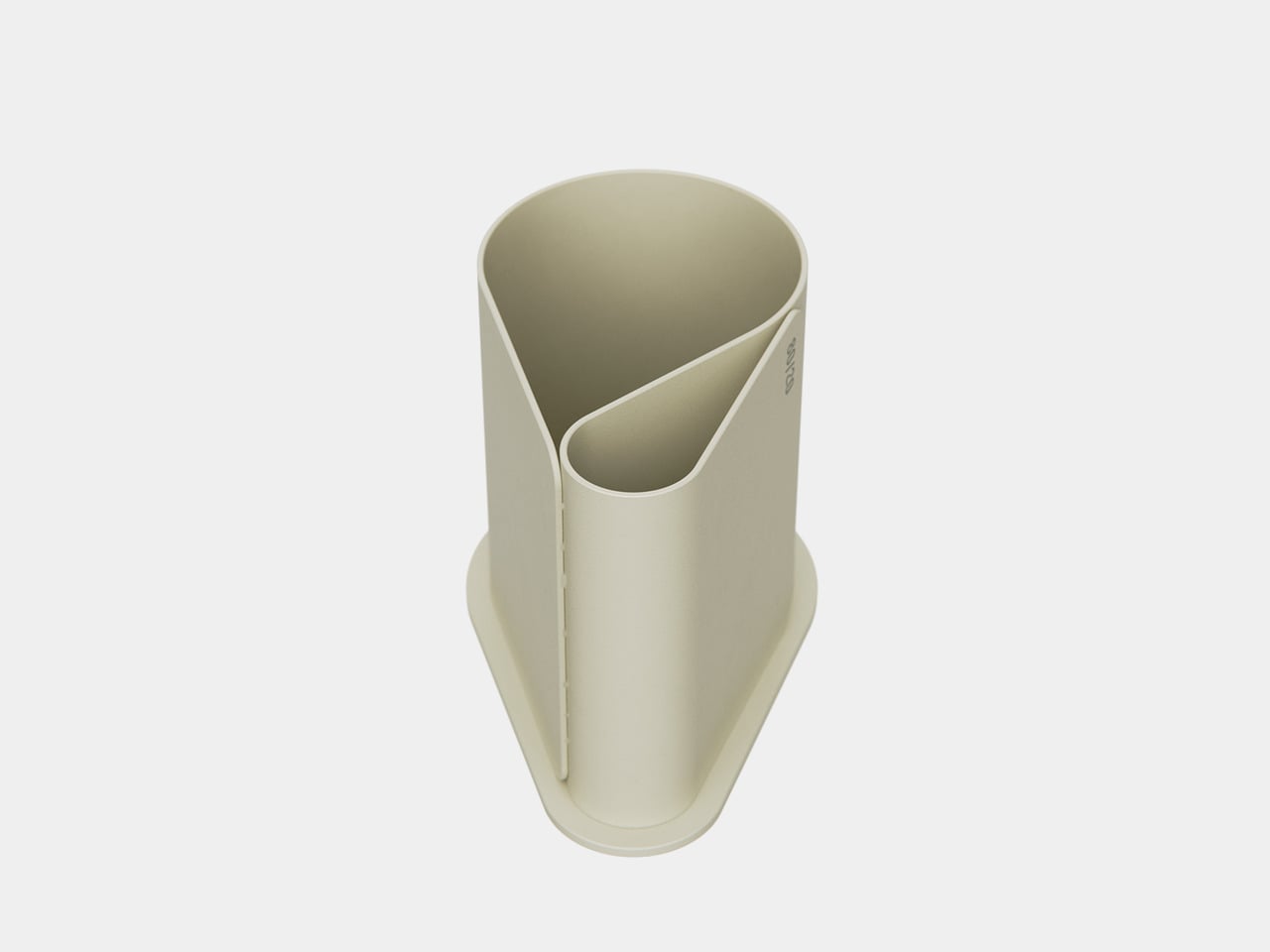
Pareto Pot is a stationery holder designed around that rule. Designer Liam de la Bedoyere noticed his own reliance on a handful of hero tools and built a pot that prioritizes those while still keeping essential counterparts within reach. It is a small desk object that treats hierarchy as a feature rather than pretending every pen deserves equal billing, using form and compartment size to make your most-used tools easier to grab.

Designer: Liam de la Bedoyere

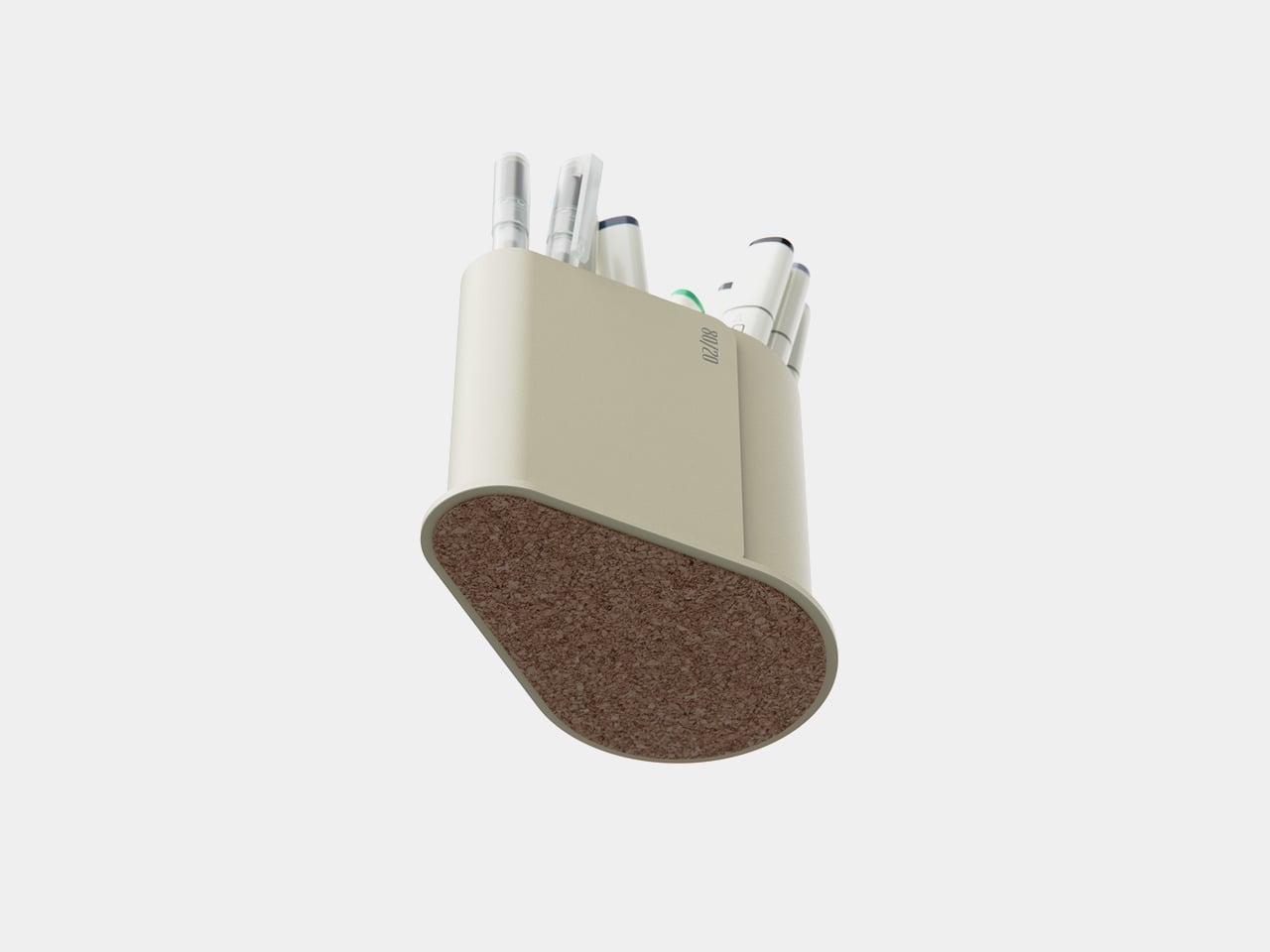
Sitting down to sketch or render, your main pen and key markers naturally drop into the larger front compartment, while backup colours, fineliners, or highlighters slide into the smaller rear section. Without thinking about it, you end up with a front row of tools you use constantly and a supporting cast that is still close but not fighting for attention every time you reach for something.

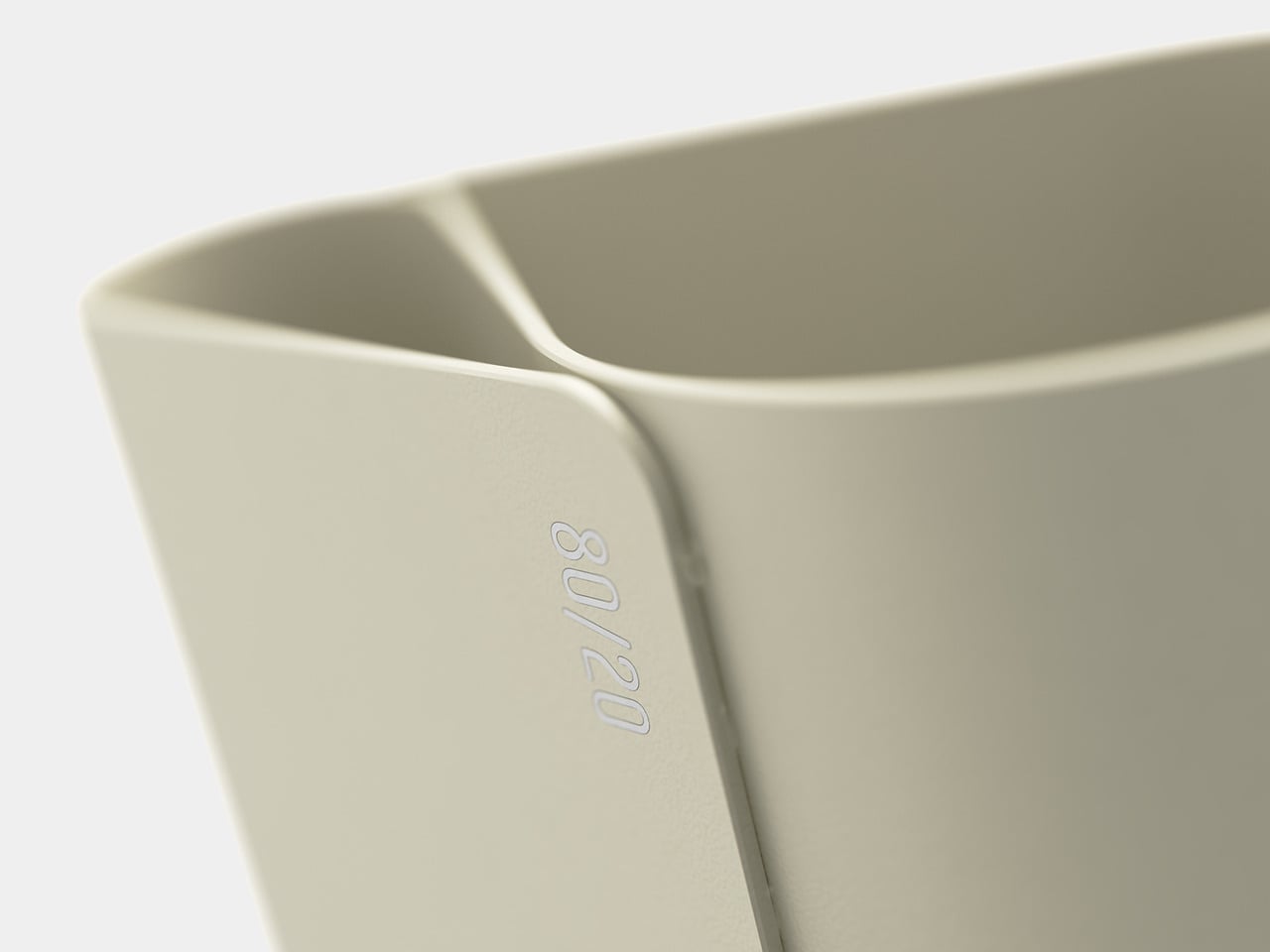
The object is made from bent and welded sheet metal, forming a nested, teardrop-like footprint that balances minimalism with clear function. The outer shell wraps around an inner wall to create two compartments in one continuous gesture, so it reads as a single form rather than a cluster of tubes. The result feels industrial and precise but not cold or overdesigned, more like a small sculpture that happens to organize your pens.

The base is wide enough to stay put when you grab a handful of markers, and a cork underside protects the desk and adds grip. The height keeps pens upright and visible without making them wobble or tip when you pull one out in a hurry. It is the kind of object you can slide around a crowded workspace without worrying about tipping or scratching the surface underneath.

A small “80/20” mark on the side acts as a quiet nod to the idea driving the form, not a loud logo. It is a reminder that the pot is not just another cylinder; it is a physical diagram of how most of us actually work, a big space for the few tools that matter most, and a smaller one for everything else.

Pareto Pot is less about storing as many pens as possible and more about making it easier to focus on the ones that pull most of the weight. It does not tell you which tools to love; it just gives them a better spot to live in. For anyone trying to tame a chaotic pen cup without giving up their favourite analog tools, that feels like a quietly smart upgrade.

The post Pareto Pot Uses the 80/20 Rule to Give Your Favorite Pens a Better Home first appeared on Yanko Design.

TikTok sued by former workers over alleged union-busting

You know things are messed up when a Big Tech company fights accusations of union-busting by insisting it was only AI layoffs. That's where things stand after a group of fired TikTok moderators in the UK filed a legal claim with an employment tribunal. The Guardian reported on Friday that around 400 TikTok content moderators who were unionizing were laid off before Christmas.

The workers were sacked a week before a vote was scheduled to establish a collective bargaining unit. The moderators said they wanted better protection against the personal toll of processing traumatic content at a high speed. They accused TikTok of unfair dismissal and violating UK trade union laws.

"Content moderators have the most dangerous job on the internet," John Chadfield, the national officer for tech workers at the Communication Workers Union (CWU), said in a statement to The Guardian. "They are exposed to the child sex abuse material, executions, war and drug use. Their job is to make sure this content doesn't reach TikTok's 30 million monthly users. It is high pressure and low paid. They wanted input into their workflows and more say over how they kept the platform safe. They said they were being asked to do too much with too few resources."

TikTok denied that the firings were union-busting, calling the accusations "baseless." Instead, the company claimed the layoffs were part of a restructuring plan amid its adoption of AI for content moderation. The company said 91 percent of transgressive content is now removed automatically.

The company first announced a restructuring exercise in August, just as hundreds of moderators in TikTok's London offices were organizing for union recognition. At the time, John Chadfield, CWU's National Officer for Tech, said the workers had long been "sounding the alarm over the real-world costs of cutting human moderation teams in favour of hastily developed, immature AI alternatives."

"That TikTok management have announced these cuts just as the company's workers are about to vote on having their union recognised stinks of union-busting and putting corporate greed over the safety of workers and the public,” Chadfield said.

This article originally appeared on Engadget at https://www.engadget.com/big-tech/tiktok-sued-by-former-workers-over-alleged-union-busting-170446921.html?src=rss

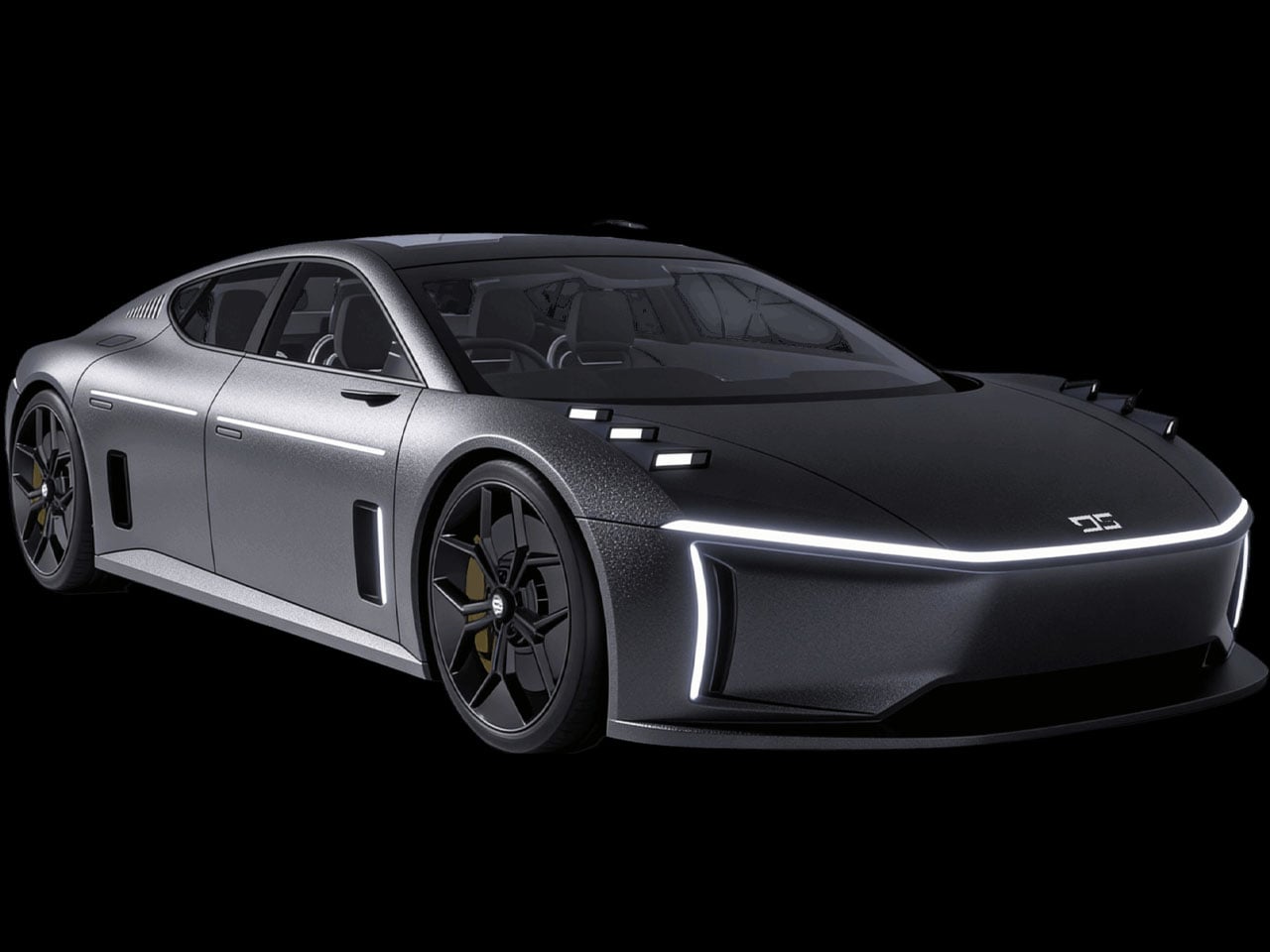
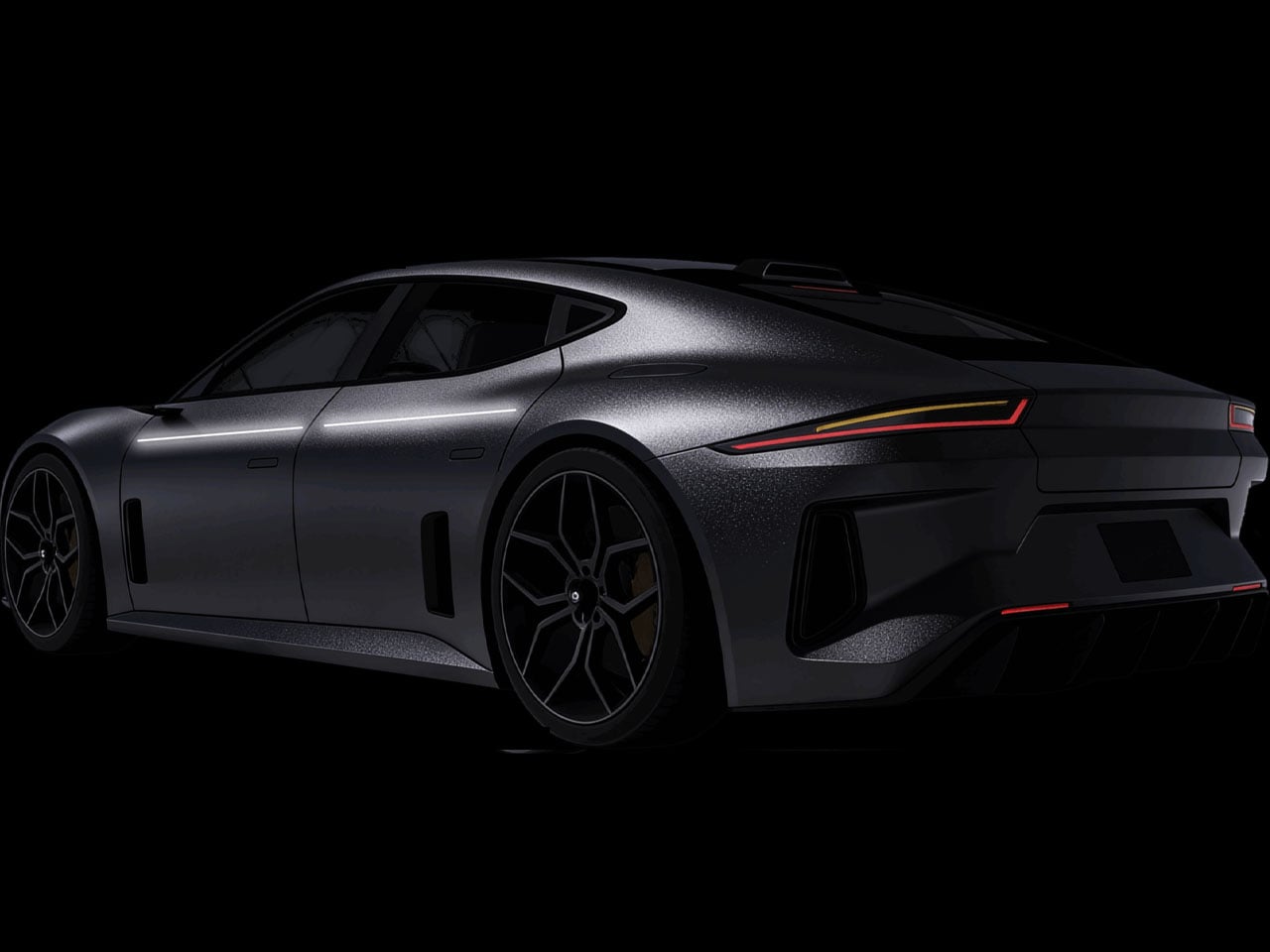
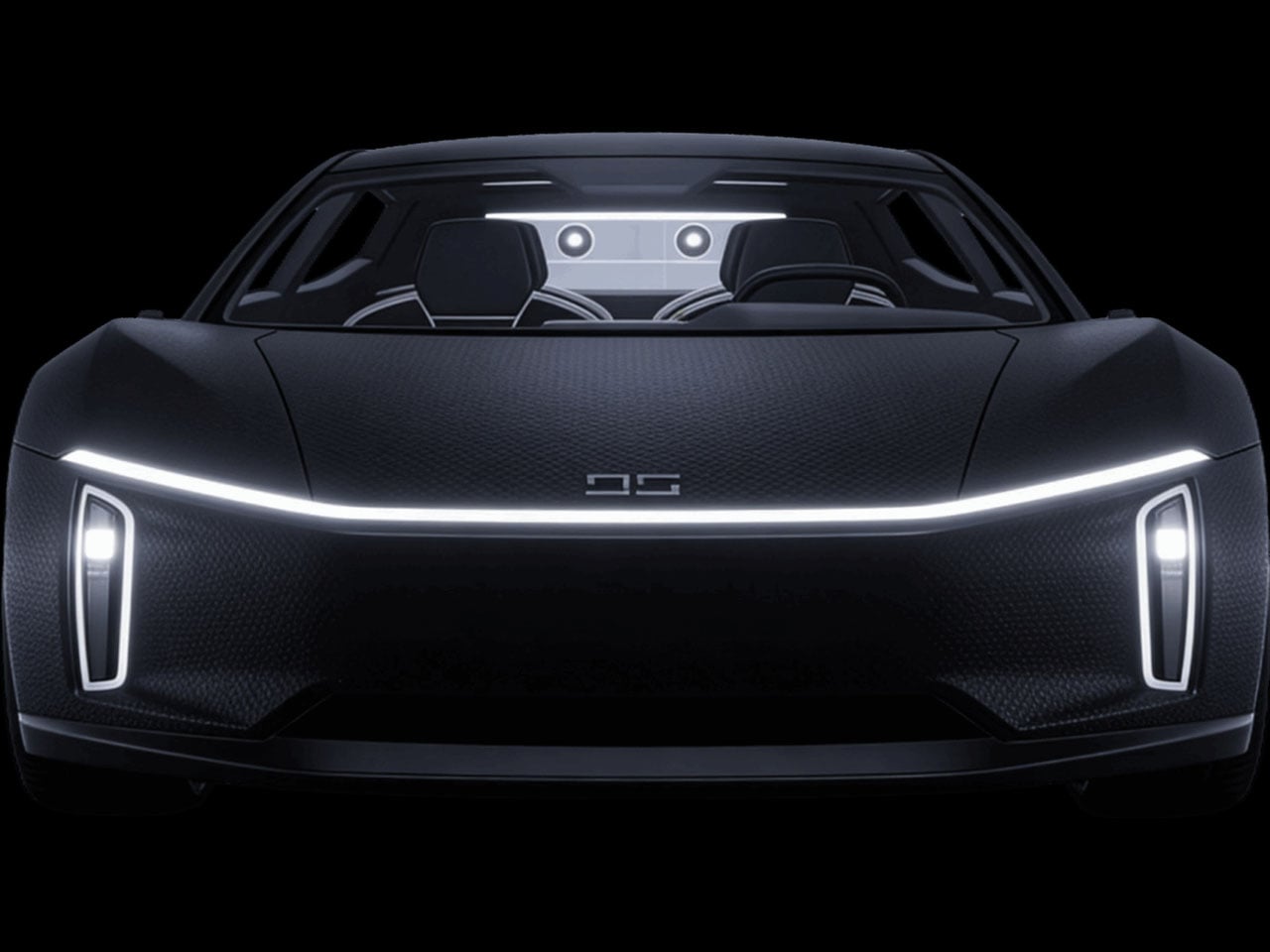
DarkSky One supercar lurks in the dark like a ninja with its sensible lighting

There’s something about nighttime that evokes different emotions. When driving on the expressway, the feeling is second to none. While supercars are designed to be appreciated in their full glory during the daytime, rarely has anyone thought about designing a fast four-wheeler that’s designed for the night, first and foremost.

This is DarkSky International’s take on a supercar that is designed with “darkness at the center of its vision.” Marking its debut at the Detroit Auto Show, the DarkSky One is the first-ever car that’s designed for “nighttime first.” This reminds me of While Bane’s words in The Dark Knight Rises, “You merely adopted the dark. I was born in it, molded by it.” Unlike other supercars that are focused on performance and looks, this one is inspired by the lack of light.

Designer: DarkSky International

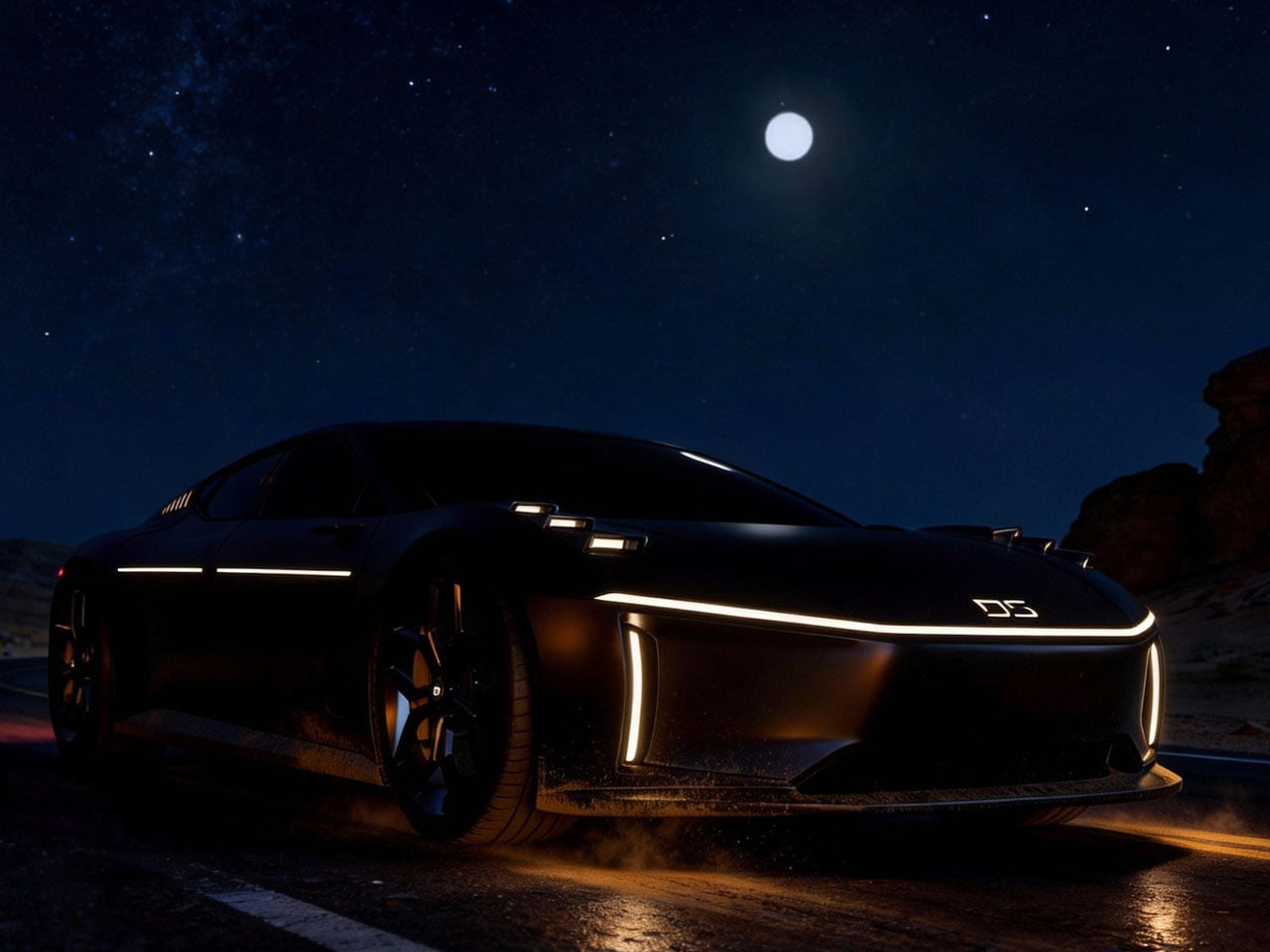
The focus with the matte black-skinned supercar is on the lighting and how it affects the ambient environment. Maker wants to minimize light pollution with such automobiles, rather than going the conventional way of having brighter headlights shining high beam at oncoming traffic. That too, without even mentioning the auxiliary options to light up cars, making them shine out among other vehicles. According to them, the artificial light ruins the night, and the darkness helps drivers see better. It is equipped with LiDAR units that analyze the environment to adjust the headlight beam and direction to have a ninja-like road presence.

The forward lighting direction is adjusted with the All Beam Adaptive Driving Lights that toggle the brightness levels depending on the road ahead and the relative distance to other motorists. That’s an important feature as it reduces glare for oncoming traffic. The buck doesn’t stop there as the car has side lighting on doors, hood, and the side panels so that the car’s presence doesn’t overpower the ambient natural lighting. Perhaps the perfect commute for people who love to enjoy the Moonlight and stargazing on the quaint roads. Fewer beaming lights means reduced stress for wildlife as well, which is another major factor. DarkSky says that the supercar has polarization and reflection physics which are present in every “window, door and body angle to reduce specular reflection, maximizing viewability at all angles.”

DarkSky International has not mentioned any performance specifications of the vehicles yet, signaling their deep focus on DarkSky One’s muted presence. While improving visibility and consequently road safety are the maker’s prime objectives, the resulting light pollution also goes down. This is important in a world where we are gazing at bright lights even in the darkest hours of the day. Hence, this design hints at a shift towards peace and calm. The matte black color has a micro-textured pattern so that stray lights and glare from other vehicles are suppressed. As they love to exclaim that the body lines are “shaped so the night can breathe.”

The post DarkSky One supercar lurks in the dark like a ninja with its sensible lighting first appeared on Yanko Design.

No More Peeking: The Samsung Galaxy S26 Ultra’s New Privacy Screen is a Game Changer

No More Peeking: The Samsung Galaxy S26 Ultra’s New Privacy Screen is a Game Changer

The Samsung Galaxy S26 Ultra represents a bold step forward in the evolution of flagship smartphones, blending advanced technology with practical enhancements. As the top-tier model in the S26 series—which also includes the S26 and S26 Plus—it introduces significant improvements across display, battery, and charging technologies. Adding to the excitement, rumors hint at the possibility […]

The post No More Peeking: The Samsung Galaxy S26 Ultra’s New Privacy Screen is a Game Changer appeared first on Geeky Gadgets.

Posted in Uncategorized