This PokéDex Wallet Holds 3 Pokémon Cards Along With Your Cash And Childhood Nostalgia

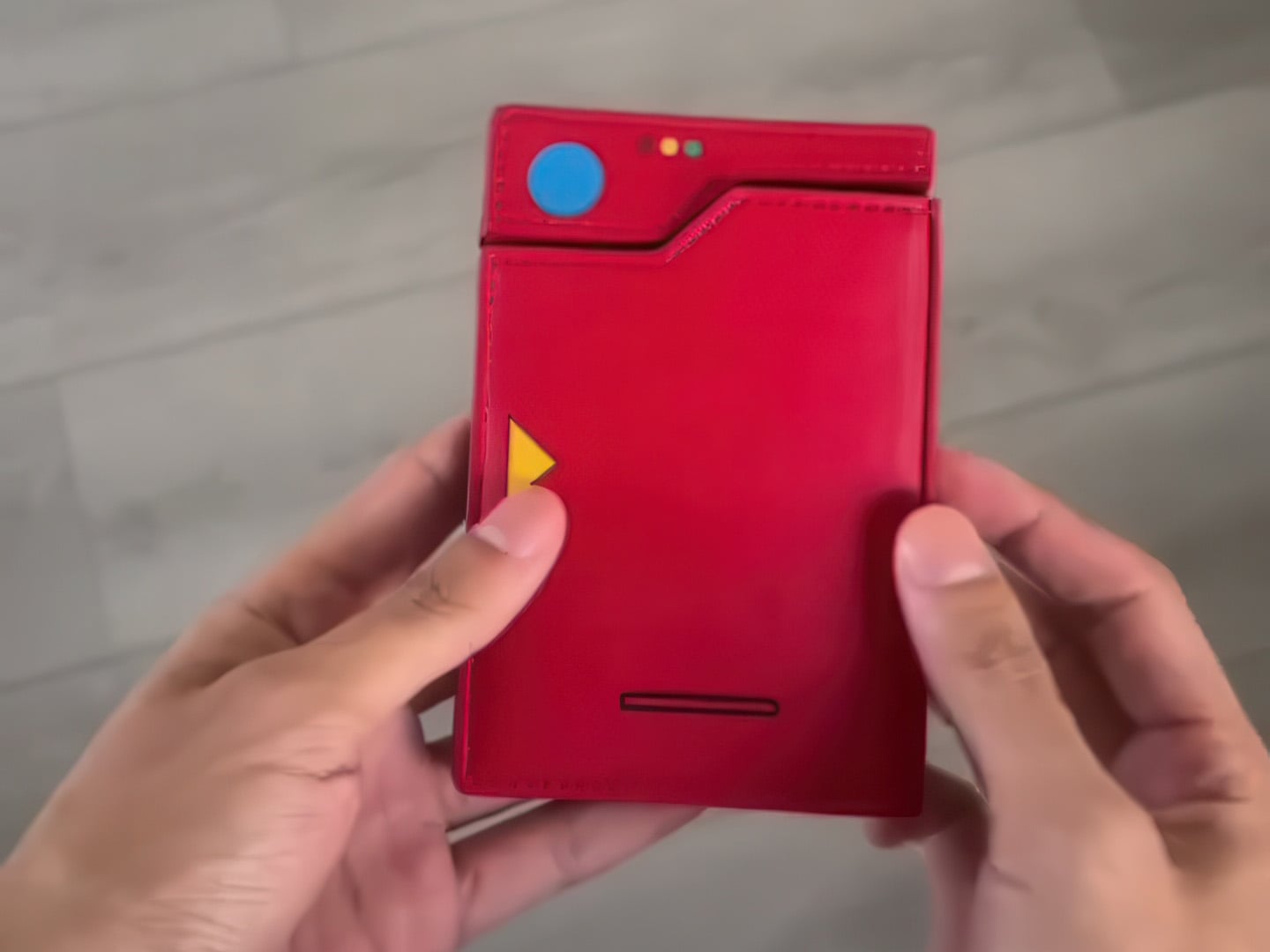
More like Gotta Cash ‘Em All, am I right?! Say hello to by far the nerdiest wallet I’ve ever had the pleasure to set my eyes on. Made for clearly Pokémon lovers, this wallet takes inspiration from one of the most crucial gadgets in the Pokémon universe – the PokéDex. Designed to look almost identical to the flip-based device used to identify the Pokémon you see around you, this wallet comes from the mind of Jalonisdead, with slots to hold (and display) your Pokémon cards along with your banknotes.

The wallet comes in a bifold format in that unmistakeable red finish, with a design to match the PokéDex perfectly. When shut, it looks like a red PokéDex waiting to be opened. Flip the lid open and you’re greeted with a card window on the left that you can use to store the card of your choice. The window lines up perfectly with the card’s graphic, making it look like you’ve ‘spotted’ that Pokémon. Meanwhile, faux graphics on the wallet look almost identical to the gadget from the game/series.

Designer: Jalonisdead

There’s space for multiple cards, although the one front-and-center is clearly for a Pokémon card. Two other slots on the right side can be used for payment and I’d cards too – this is a wallet after all. A slot on the top holds banknotes, although I wish there were place for coins too. The unusual shape lends itself perfectly to wallet use, and I’m surprised nobody at Nintendo thought of cashing in on this idea.

Each wallet costs in the ballpark of $56 USD, and ships in authentic Pokémon card-style packaging, along with 4 Pokémon cards in mint condition. Jalonisdead (the maker) isn’t a massive company, so each wallet is made-to-order and probably by hand too. This means the turnaround time for delivery is anywhere up to 2 months, but for a Pokémon aficionado, I’m sure it’s a small price to pay for perhaps what might be the coolest wallet I’ve seen in years!

The post This PokéDex Wallet Holds 3 Pokémon Cards Along With Your Cash And Childhood Nostalgia first appeared on Yanko Design.

Roblox’s age verification system is reportedly a trainwreck

Roblox's age-verification system was designed as a response to allegations it has a child predator problem. Less than a week in, how's it going? Well, Wired reported on Tuesday that, in some cases, it's classifying children as adults and adults as children. So, not so great!

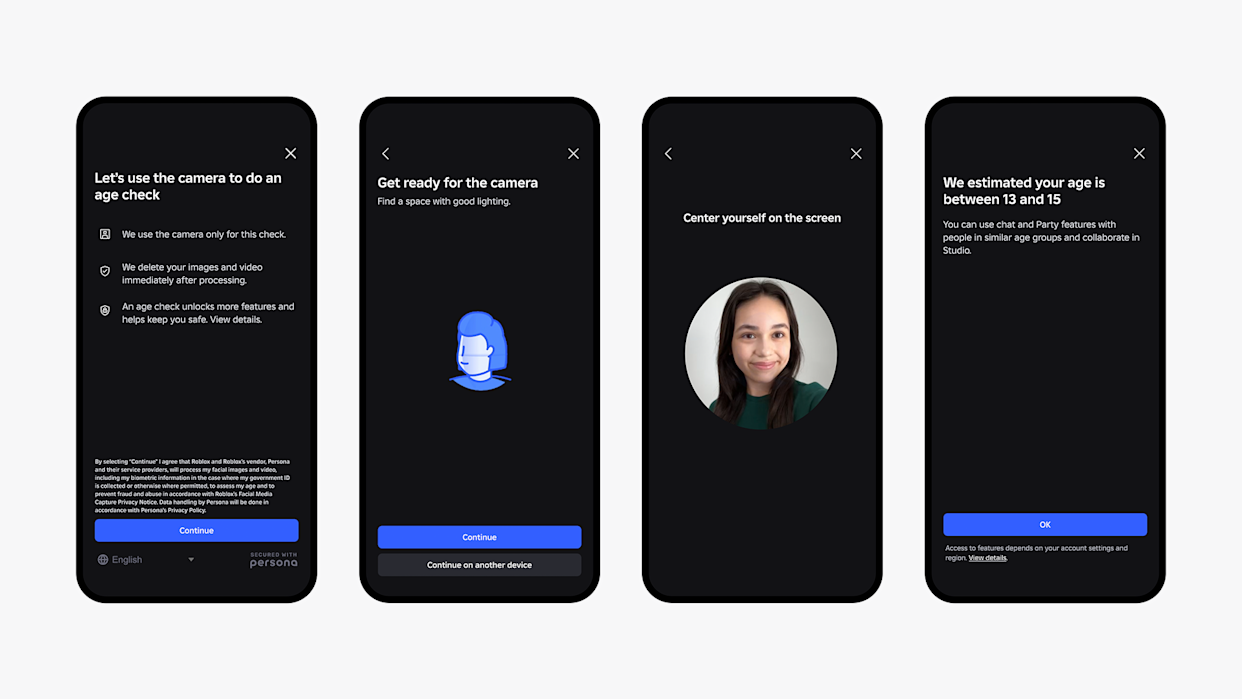
Last week, Roblox made age verification mandatory for anyone using the platform's chat feature. That process involves either submitting a facial age estimate via selfie or (optionally for anyone 13 or older) uploading a government ID check. After verifying, you can only chat with groups of players around your age.

The move came after reports grew of predators using the platform to groom young children. That, in turn, led to lawsuits from Louisiana, Texas and Kentucky. Meanwhile, Florida's attorney general has issued criminal subpoenas.

So, it might not be hyperbole to say Roblox's survival could depend on how it handles this problem. It isn't exactly off to a hot start. There are reports of a 23-year-old being misidentified as a 16- to 17-year-old. ("I don't want to be chatting with fucking children," they said.) Another report claimed an 18-year-old was placed in the 13 to 15 range.

But the problem is happening in reverse, too. Online videos show children spoofing the system into believing they were adults by using avatar images. One clever kid drew wrinkles and stubble on his face and was instantly deemed 21+. Another flashed a photo of Kurt Cobain and got an adult classification.

Four phone screens, showing the selfie age verification feature on Roblox
The feature isn't working as planned, to say the least.
Roblox

In addition, Roblox posted last week that some parents were providing age checks on behalf of their children, leading to their children being placed in the 21+ category. The company said it's "working on solutions to address" that particular problem and will share more soon.

Roblox shared the following statement from Matt Kaufman, the company’s Chief Safety Officer:

“To suggest that our age check technology isn't working is a fundamental misunderstanding of what it takes to shift safety at scale. With a global community of over 150 million daily active users, we are pleased with where we are in the roll out process. It’s a process that will take time, you can’t flip a switch while building something that hasn’t existed before. 

Tens of millions of users have already completed the process, proving that the vast majority of our community values a safer, more age-appropriate environment. Expecting the system to be flawless overnight is ignoring the scale of this undertaking. We’ve already shared updates with our creator community to make this a smoother transition. This technology is the foundation of a new gold standard that limits communication between adults and minors by default. 

We are building for the next decade of the internet, not the next news cycle. We will continue to innovate, continue to require age checks, and continue to lead the industry where others have been too hesitant to go.”

Developers with games on Roblox are upset. The platform's dev forum includes thousands of negative comments about the updates, with many of them wanting the entire update reversed. One shared a graph showing that the percentage using the chat feature dropped from around 90 percent to 36.5 percent.

Where does this leave Roblox? Well, with some developers describing games on the platform as feeling "lifeless" or like "a total ghost town," the company has its hands full. It will have to figure out how to balance its priorities of keeping predators out without breaking things for everyone else. The full report from Wired is worth a read.

Update, January 15, 2026, 9:52AM ET: This story has been updated to include a statement from Roblox.

This article originally appeared on Engadget at https://www.engadget.com/gaming/robloxs-age-verification-system-is-reportedly-a-trainwreck-220320016.html?src=rss

Instagram wants you to personalize your Reels algorithm for 2026

Last month, Instagram began rolling out a new set of controls that allowed users to personalize the topics recommended to them by the Reels algorithm. Now, Meta is making that feature available to all English users of the app globally, along with the ability to highlight their top topics for the coming year. 

The feature begins with a selection of topics Meta's AI thinks you're interested in based on your recent activity, and has controls to remove them or add new categories. There's also a separate field for identifying what you want to see less of, and a new "build your 2026 algorithm" that allows you to highlight three topics in particular. 

A screenshot of Instagram reels showing a ski jumper mid-air with a label that says "snowboarding."
Meta's algorithm tagged a skiing clip as "snowboarding."
Screenshot via Instagram

I don't yet have the 2026-specific control yet, but I was able to tweak some of my preferred topics and was surprised at how quickly the algorithm seemed to adjust. I added "snowboarding" as a topic and then later, when I clicked over to Reels, the first clip I saw was tagged "snowboarding." Unfortunately, the video wasn't actually about snowboarding — it featured a clip of a freestyle skiing event — so Meta's systems might still need a little work at classifying the actual content. But given how sensitive the Reels algorithm can be, it's nice to have a way of opting out of interests even if you briefly went down a  rabbit hole. 

The feature won't, however, let you ask to see fewer ads. I tried to add "ads" to my "what you want to see less of" list and received an error. "No results found. Try another topic or interest." I was able to successfully add "sponsored content" and "AI" to my "see less" list, though I'm pretty sure the latter will affect videos about AI rather than those made with the help of it.

This article originally appeared on Engadget at https://www.engadget.com/social-media/instagram-wants-you-to-personalize-your-reels-algorithm-for-2026-215252736.html?src=rss

Meet The IRIS eTrike, The SWAT Kats Style Commuter Pod That Doesn’t Need A Driver’s License

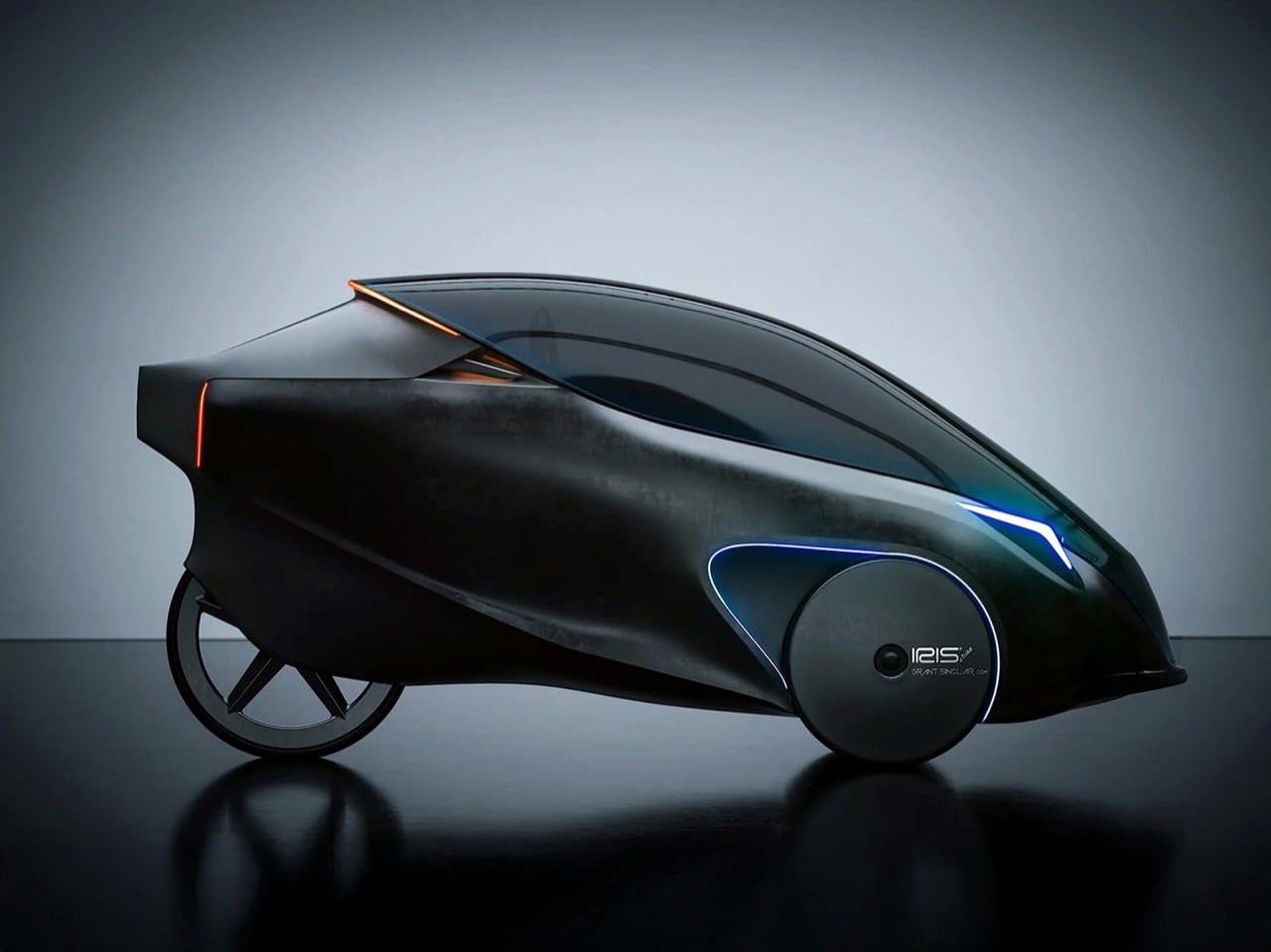
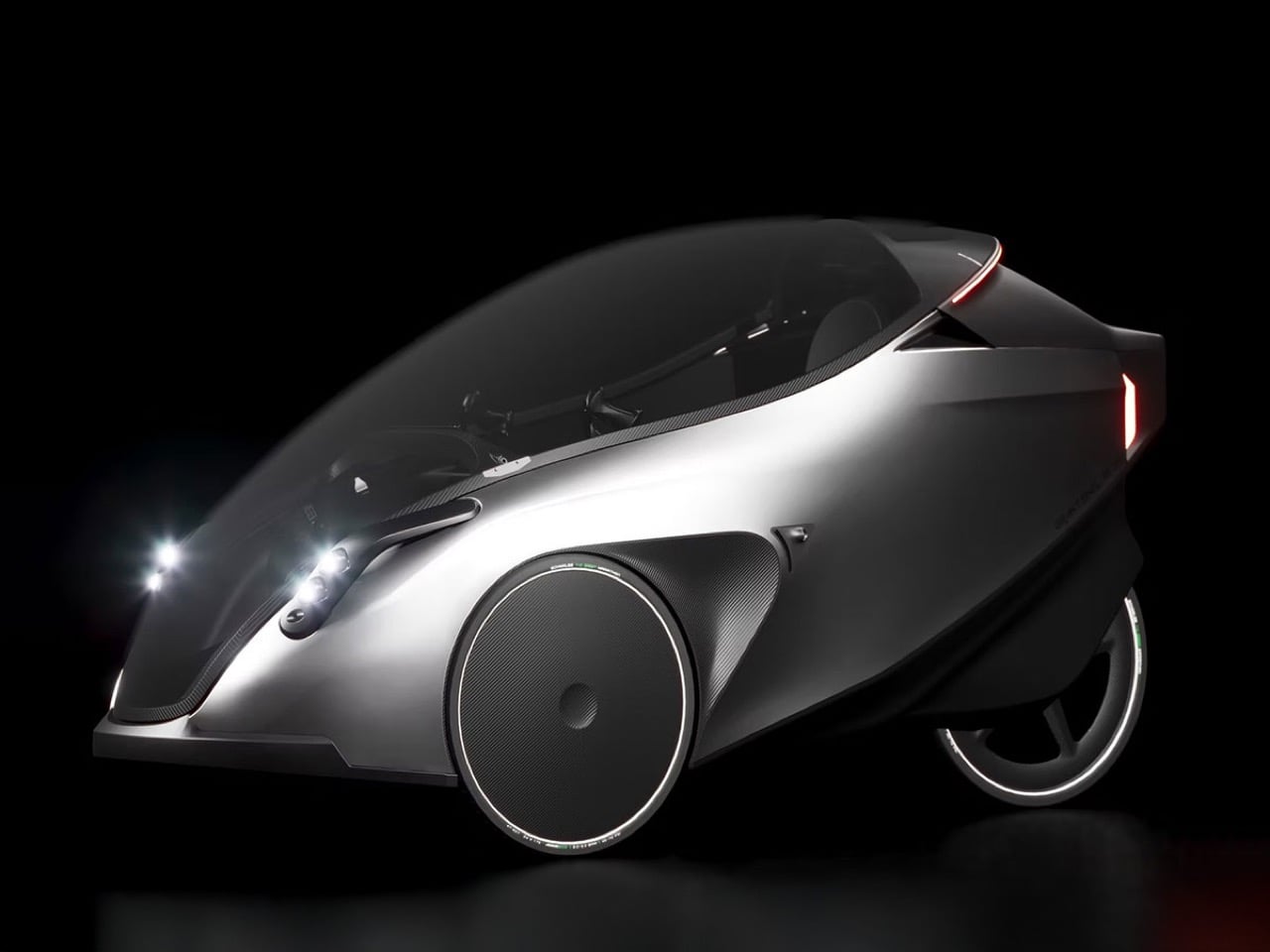
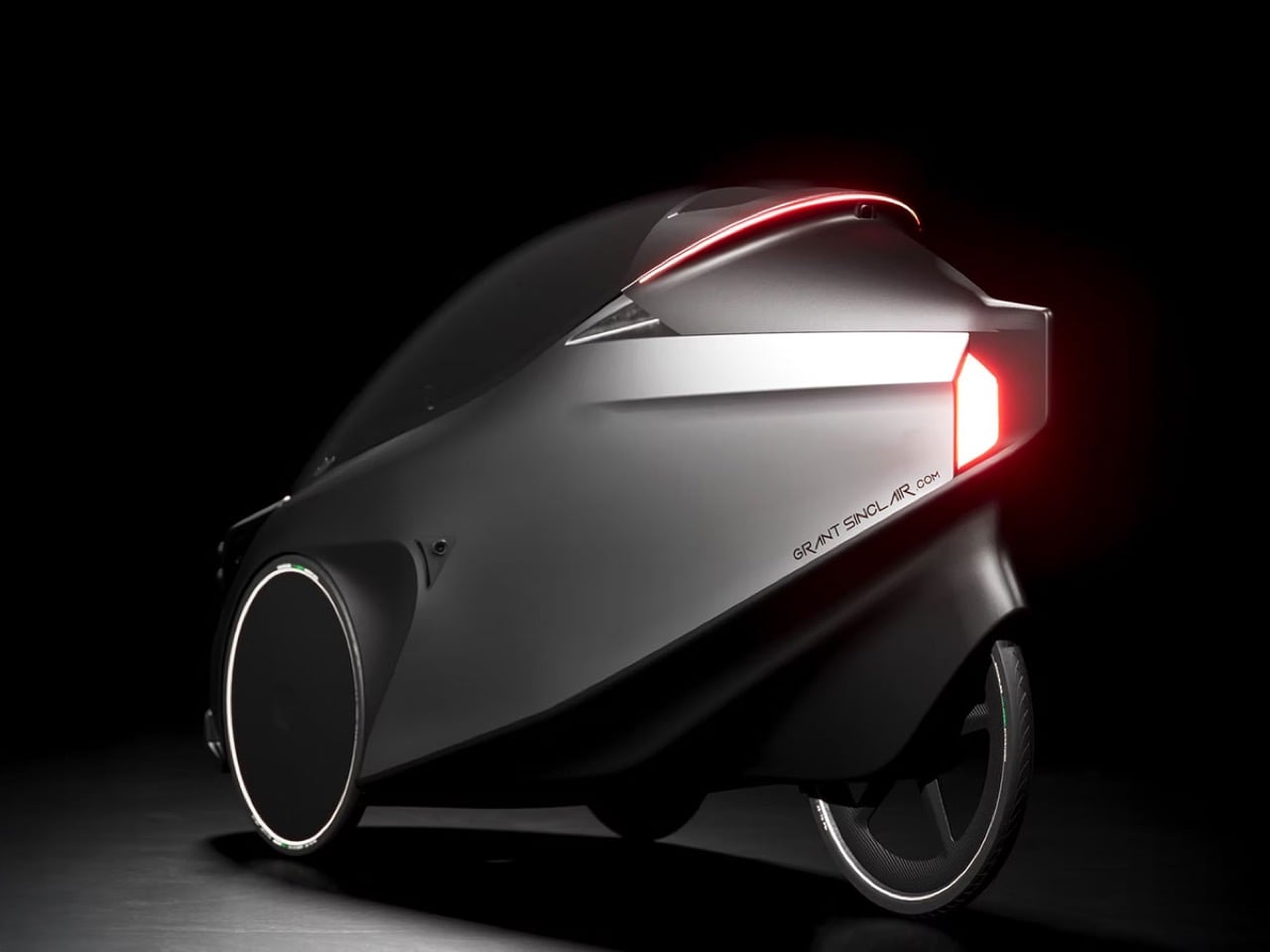
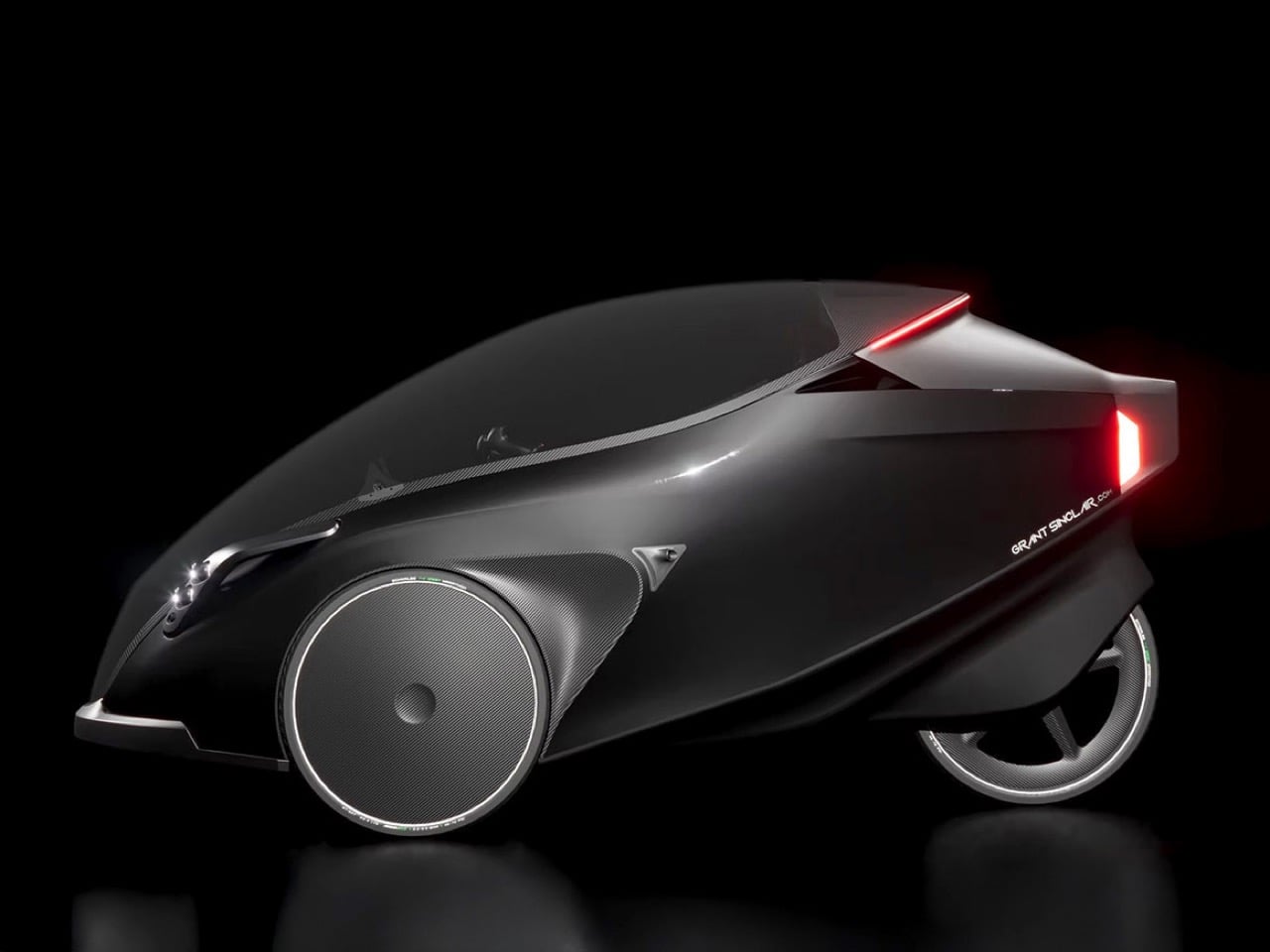
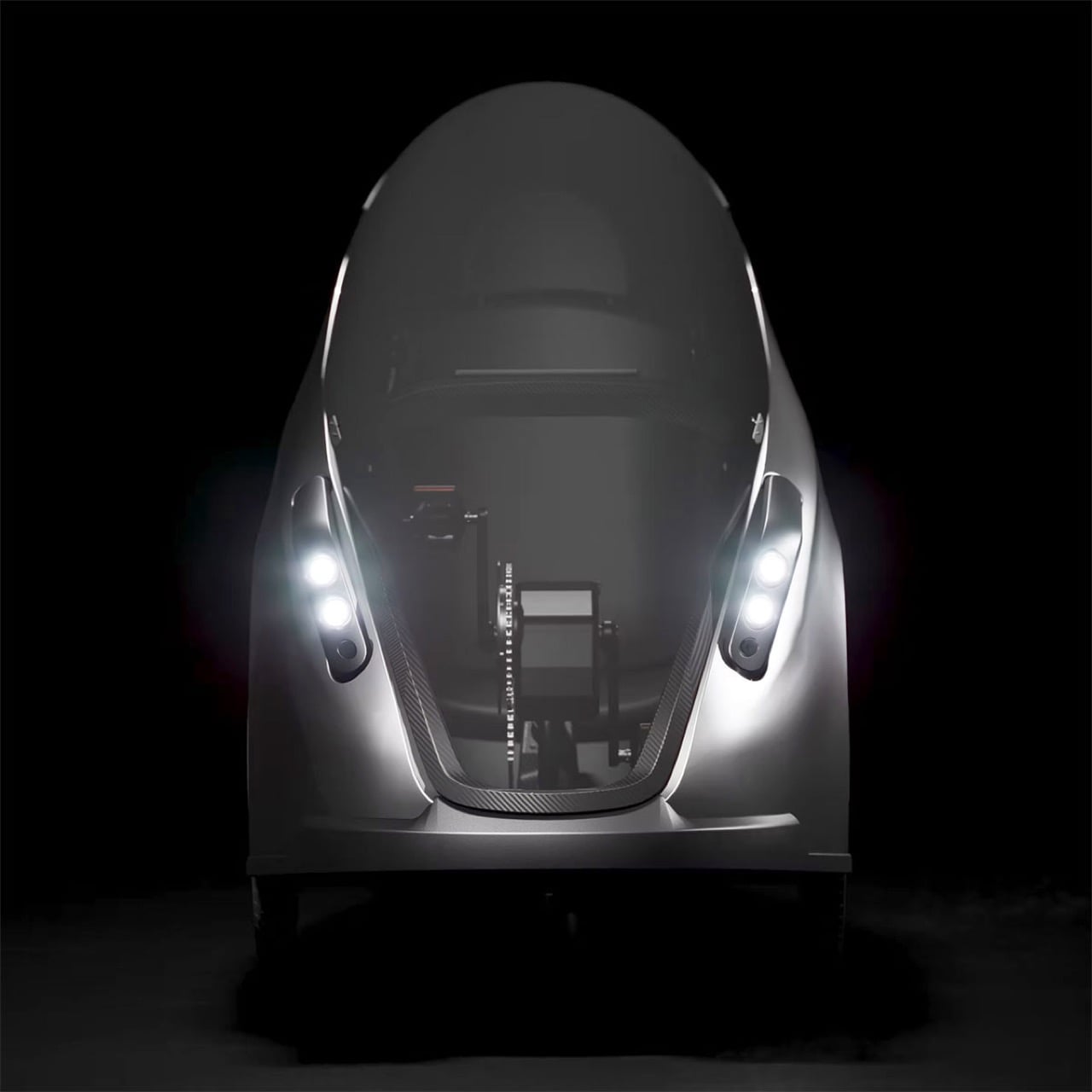
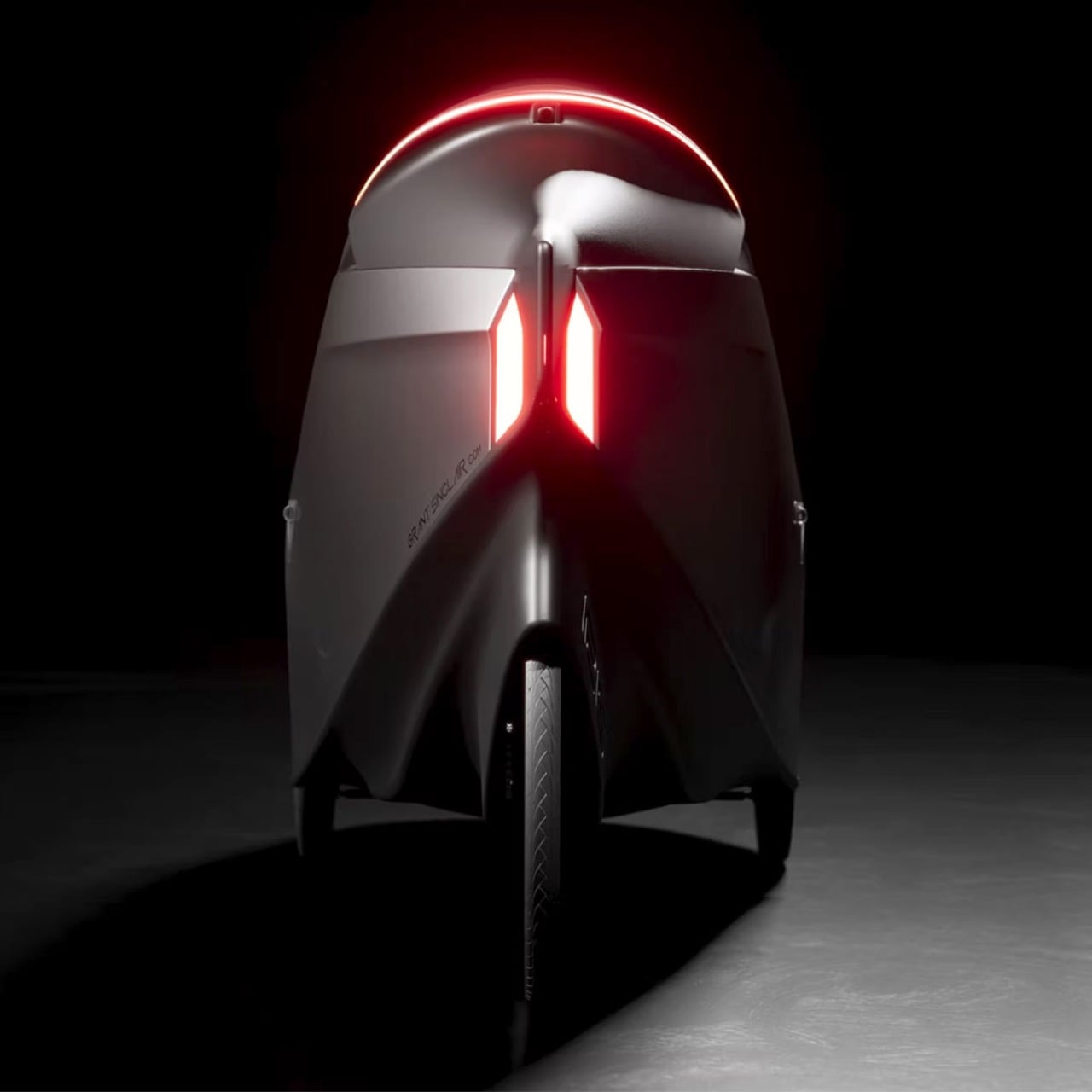
Remember the Cyclotron from SWAT Kats, that enclosed motorcycle where the rider sat inside a protective cockpit instead of perched on top like a regular bike? The IRIS eTrike looks like someone pulled that 1990s animation concept into reality, then made it street legal and available for around £10,000. Grant Sinclair’s creation wraps you in carbon fiber and acrylic while filtering the air you breathe, protecting you from weather and impacts, and delivering acceleration that made an astronaut audibly impressed on national television. The whole thing reads like a childhood sketch that somehow survived into adulthood and picked up a spec sheet along the way.

This is not a modified e-bike with a fairing bolted on. The structure uses a carbon fiber monocoque shell with integrated impact absorbing elements, the same construction philosophy you see in race cars and high end velomobiles. A 48V battery feeds motors ranging from 250W to 1000W depending on which regulations you want to play with. The result hits around 30 mph, travels roughly 30 to 50 miles per charge depending on source and configuration, and still qualifies as an electrically assisted pedal cycle that teenagers can legally ride without insurance or licensing in the UK. Sinclair calls it an answer to urban congestion and climate pressure. It lands visually like science fiction that escaped the screen and wandered into the bike lane.

Designer: Grant Sinclair

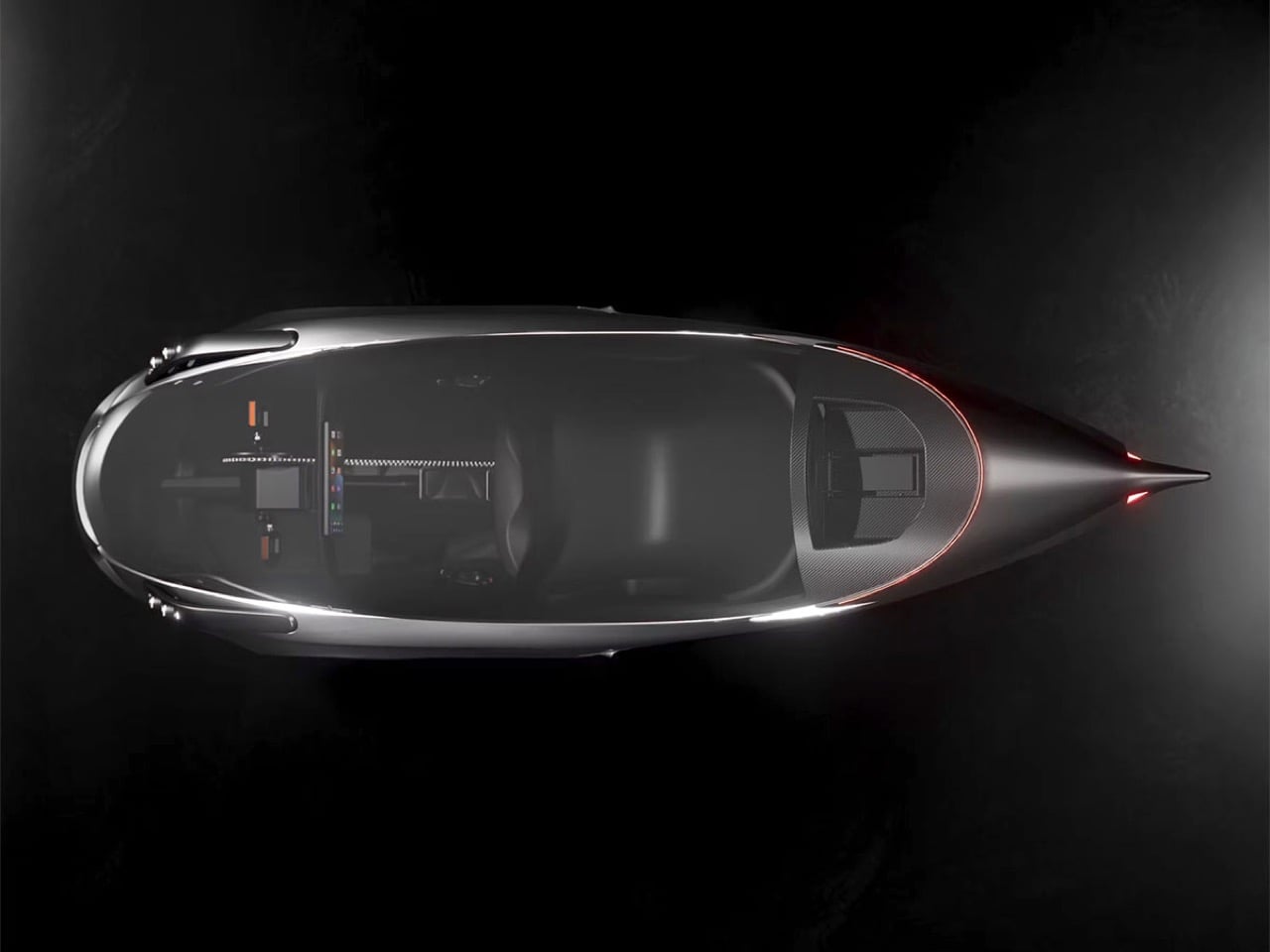
Here is where it gets interesting from a design perspective. Most e-bikes still cling to the visual language of the bicycle frame, even when the electronics and performance have drifted far from that origin. IRIS throws that out and starts from a capsule, then works backward to fit a drivetrain and pedals inside. The rider sits enclosed under an aviation acrylic canopy, with the company describing the experience as like riding inside a large crash helmet. That analogy works, because the shell is not aesthetic garnish. It is structure, safety device, weather shield, and aerodynamic surface all at once.

The numbers back up the design intent. Two 24 inch carbon BMX wheels up front, one 26 inch carbon MTB wheel at the rear, all on puncture resistant Tannus tires, give it a footprint that is still narrow enough for cycle lanes but visually substantial enough that you do not feel like a speed bump in traffic. Mechanical disc brakes handle stopping, which is conservative but probably easier to maintain for people used to bikes rather than motorcycles. Claimed weight is around 50 kg including the battery, which puts it in velomobile territory rather than microcar territory. That matters, because you are still pedaling. The motor is assist, not a throttle only scooter masquerading as a bicycle.

The IRIS’ closed cockpit won’t have you feeling the wind in your hair, but it does pack its own HVAC. There is a patent pending system that channels cooled air directly onto the 130 Nm motor to keep efficiency up on climbs. At the same time, the cabin air runs through HEPA filtration that targets smoke, germs, and general city gunk. This solves two classic velomobile complaints in one go, heat build up and stale cabin air. If you are going to seal someone into a plastic and carbon tube in London traffic, you had better be thinking about airflow. IRIS clearly did, and that is where you see the difference between a novelty vehicle and something that might survive daily use.

Of course, the £10,000 price tag is going to trigger instant comparisons to cars, cargo bikes, and very nice traditional e-bikes. From a pure transport economics viewpoint, a used EV or a solid cargo bike setup will look saner for most people. From a design and category perspective, though, IRIS is playing a different game. It targets the solo commuter who wants car like enclosure, bike like access to infrastructure, and sci fi visual drama. That is a niche, but it is a real niche, especially in cities that are tightening car access and expanding protected lanes.

All that performance capability creates an interesting regulatory puzzle, one that Sinclair has solved quite cleverly. The IRIS is officially classified as an Electrically Assisted Pedal Cycle, or EAPC. This means that, in the UK at least, it can be ridden on roads and in cycle lanes by anyone aged 14 and over. There is no requirement for a driver’s license, road tax, or insurance, which removes enormous barriers to entry. By designing the vehicle to fit within this specific classification, Sinclair has created a high-performance commuter that enjoys all the legal freedoms of a simple bicycle, a brilliant piece of strategic engineering.

I keep coming back to the cultural lineage here. The Sinclair C5 is the ghost in the room, a low slung, underpowered, ahead of its time experiment that became a punchline. IRIS feels like a direct rebuttal. Higher seating, serious power, serious materials, a body that looks more like a velodrome helmet than a plastic bathtub. The same family name, but with four decades of battery tech, composite manufacturing, and urban policy shifts in its corner. You can see the quiet argument in the design: the idea was not wrong, the context was.

Does that mean IRIS becomes common on city streets? Probably not. It is too specific, too opinionated, too expensive to flood the market. What it does very effectively is stretch the Overton window of what an e-bike can look like and how much protection and tech you can wrap around human power before it stops feeling like cycling. If you grew up watching animated bikes that turned into fighter jets, IRIS feels like the first time someone took that sensibility seriously and then called the result an electrically assisted pedal cycle, with a straight face and a spec sheet to match.

The post Meet The IRIS eTrike, The SWAT Kats Style Commuter Pod That Doesn’t Need A Driver’s License first appeared on Yanko Design.

Senate passes Defiance Act for a second time to address Grok deepfakes

The Senate has passed the Disrupt Explicit Forged Images and Non-Consensual Edits (DEFIANCE ) Act with unanimous consent, according to the bill’s co-sponsor Senator Dick Durbin (D-IL). The bill lets the subjects of nonconsensual, sexually explicit deepfakes take civil action against the people who create and host them.

Deepfakes are a known issue online, but without the proper protections, easy access to AI-powered image and video generation tools has made it possible for anyone to create compromising content using another person's likeness. This has become a particular problem on X, where the integration of Grok, the AI assistant created by X's parent company xAI, makes it possible for anyone to turn the content of another person's post into an image-generating prompt. Over the last month, that's allowed users to create sexually explicit images of children, just by replying to a post with @grok and a request. 

In response, Ofcom, the UK's media regulator, has already opened an investigation into X for potentially violating the Online Safety Act. The chatbot has also been outright blocked in Malaysia and Indonesia. The DEFIANCE Act won't prevent Grok or other AI tools from generating nonconsensual deepfakes, but it would make creating or hosting that content potentially very expensive for anyone on the receiving end of a lawsuit.

The Senate passed an earlier version of the DEFIANCE Act in 2024, but it stalled in the House. Given the urgency of Grok's deepfake problem, the hope is this new version of the bill won't see the same resistance. Congress passed an earlier piece of deepfake regulation last year, the Take It Down Act, with bipartisan support. That bill was focused on the companies who host nonconsensual, sexually explicit content, rather than the people exploited by it.

This article originally appeared on Engadget at https://www.engadget.com/ai/senate-passes-defiance-act-for-a-second-time-to-address-grok-deepfakes-212151712.html?src=rss

Meta has closed three VR studios as part of its metaverse cuts

Several of Meta's VR studios have been affected by the company's metaverse-focused layoffs. The company has shuttered three of its VR studios, including Armature, Sanzaru and Twisted Pixel. VR fitness app Supernatural will no longer be updated with fresh content.

Employees at Twisted Pixel, which released Marvel's Deadpool VR in November, and Sanzaru, known for Asgard's Wrath, posted on social media about the closures. Bloomberg reported that Armature, which brought Resident Evil 4 to Quest back in 2021 has also closed and that the popular VR fitness app Supernatural will no longer get updates.

“Due to recent organizational changes to our Studio, Supernatural will no longer receive new content or feature updates starting today,” the company wrote in an update on Facebook. The app “will remain active” for existing users.

A spokesperson for Meta confirmed the closures. "We said last month that we were shifting some of our investment from Metaverse toward Wearables," the spokesperson said in a statement to Engadget. "This is part of that effort, and we plan to reinvest the savings to support the growth of wearables this year."

The cuts raise questions about Meta's commitment to supporting a VR ecosystem it has invested heavily in. The company hasn't announced any new VR headsets since the Quest 3S in 2024, and last month it "paused" planned Horizon OS headsets from Asus and Lenovo. Now, it's also pulling back on in-house game development too. 

Meta is claiming, internally at least, that it remains committed to supporting the industry. “These changes do not mean we are moving away from video games,” Oculus Studios director Tamara Sciamanna wrote in a memo reported by Bloomberg. "With this change we are shifting our investment to focus on our third-party developers and partners to ensure long-term sustainability.”

Have a tip for Karissa? You can reach her by email, on X, Bluesky, Threads, or send a message to @karissabe.51 to chat confidentially on Signal.

Update, January 13, 2026, 2:13PM PT: This post was updated to additional information about Supernatural.

This article originally appeared on Engadget at https://www.engadget.com/ar-vr/meta-has-closed-three-vr-studios-as-part-of-its-metaverse-cuts-202720670.html?src=rss

LEGO’s first-ever Pokémon sets transform Pikachu, Eevee, and Kanto legends into collectible icons

Pokémon franchise is turning 30 next month, and LEGO Group wants to celebrate the occasion with LEGO Pokémon sets. Following leaks and speculations, the official reveal has been made, with two sets of the three already up for pre-order. The three main sets will be shipped next month, coinciding with the 30th anniversary of the franchise on February 27. These will revolve around the star mascots Pikachu and Eevee, while the final evolutions of the original starter Pokémon Charizard, Blastoise, and Venusaur will add excitement for younger fans.

Pikachu and Eevee will make up for the two sets, having their standalone releases in the lineup. The biggest of them all will be the third, Starter Evolution set that’ll let you pose the three Kanto starters’ based on the theme choosen. It can be anything from the ush junglescape for Venusaur, a crashing wave for Blastoise, and a lava-dripping spire for Charizard to fly over.

Designer: LEGO Group

Eevee Set

The first set in this iconic collection centers on Eevee, the evolution-ready fan favorite. As the most accessible option, this 587-piece build is priced at $59.99 and stands just over 7.5 inches tall once assembled. Its design embraces Eevee’s signature charm with a brick-built face that gives the figure an expressive, almost lifelike presence.

Articulation in the head, ears, limbs, and tail allows subtle posing, while hidden nods to Eevee’s many evolutionary forms add a playful layer of detail for longtime Pokémon Trainers. The compact size and approachable price point make this an appealing choice for both seasoned LEGO builders and newcomers intrigued by the mash-up of brick construction and Pokémon nostalgia.

Pikachu and Poké Ball Set

Stepping up in scale and ambition, the Pikachu and Poké Ball set takes center stage with a 2,050-piece count and a $199.99 retail price. This model revisits one of the franchise’s most iconic moments: Pikachu bursting from its Poké Ball, ready for action. The brick-built Pikachu captures that dynamic energy with fully posable ears and limbs, enabling display configurations ranging from a relaxed stance to an aggressive battle pose.

Its display stand features a stylized lightning motif that evokes the Electric-type’s signature power, and LEGO designers have subtly incorporated Pikachu’s Pokédex number, “25,” into the base, a detail that resonates with franchise history. Whether perched atop the Poké Ball or displayed mid-leap, this iteration of Pokémon’s mascot offers a dramatic and nostalgic showcase piece.

Venusaur, Charizard and Blastoise Diorama

At the top of the inaugural range is the Venusaur, Charizard and Blastoise diorama, a monumental build that celebrates the original Kanto starter Pokémon in their final evolutionary forms. With 6,838 pieces and a $649.99 price tag, this set is designed squarely for adult collectors and hardcore fans. Each Pokémon figure stands individually with its own articulation, allowing builders to pose Venusaur’s vines, Charizard’s wings, and Blastoise’s water cannons in varied stances.

The figures are proportioned to stand roughly 7 to 9 inches tall, and they sit upon a richly detailed multi-biome base that reflects their elemental identities. These include a leafy jungle for Venusaur, volcanic embers for Charizard, and aquatic textures for Blastoise. Scattered throughout the build are Easter eggs and environmental cues that reward close inspection, making this set a centerpiece worthy of display in any fan’s collection.

To sweeten the launch, LEGO is also offering limited extras tied to these sets. Buyers of the starter trio set during the first week of release can receive a Kanto Region Badge Collection as a gift with purchase, while LEGO Insiders will have access to a mini Pokémon Center build through reward redemption.

The post LEGO’s first-ever Pokémon sets transform Pikachu, Eevee, and Kanto legends into collectible icons first appeared on Yanko Design.

Proposed legislation opens the door to robotaxi services in New York

Waymo, Alphabet's self-driving car company, tested its autonomous vehicles in New York City in 2025, and as part of proposed legislation from New York Governor Kathy Hochul, the company could soon offer its services across the state, Wired reports.

Governor Hochul's proposed legislation was formally announced during a State of the State address covering policy proposals for the upcoming year. The new law, if passed, would loosen the state's restrictions on self-driving car companies by forming a pilot program that would allow for "the limited deployment of commercial for-hire autonomous passenger vehicles outside New York City." Applicants to the pilot program would need to demonstrate that they have "local support for [autonomous vehicle] deployment" and prove their "adherence to the highest possible safety standards" to be considered.

As a company with presumably good odds of being approved, Waymo supports the legislation. "Governor Hochul’s proposal to legalize fully autonomous vehicles is a transformative moment for New York's transportation system," Waymo's Head of Global Public Policy Justin Kintz said in a statement. "With the Governor’s leadership, New York has the opportunity to pair its investments in slower speeds, better traffic enforcement, and first-in-the-nation congestion management strategies with Waymo’s demonstrably safe technology, creating a future where living in New York is safer, easier, and more accessible."

Waymo already has commercial robotaxi services in select cities in California, Texas and Georgia, offered on its own or in partnership with Uber. The company announced plans to expand in Texas and Florida late last year, and is already committed to offering service in Las Vegas, San Diego and Detroit in 2026. Wired reports Waymo spent over $370,000 lobbying regulators in New York about telecommunications and transportation issues in 2025, and based on today's announcement, it appears those efforts are paying off.

This article originally appeared on Engadget at https://www.engadget.com/transportation/proposed-legislation-opens-the-door-to-robotaxi-services-in-new-york-193804671.html?src=rss

Taiwan issues arrest warrant for Pete Lau, CEO of OnePlus

Taiwanese officials have issued an arrest warrant for OnePlus CEO Pete Lau on allegations of illegally employing workers in Taiwan. Two Taiwanese citizens who worked for Lau have also been indicted. The China-based smartphone company has been accused of illegally recruiting more than 70 engineers from Taiwan. 

Members of the Shilin District Prosecutors Office claim that OnePlus reportedly set up a shell company in Hong Kong with a distinct name, then launched a branch in Taiwan in 2015 without government approval. The branch reportedly worked on research and development for OnePlus mobile phones. Taiwanese officials claim these actions by OnePlus violated the Cross-Strait Act, which is designed as a guide for relations between Taiwan and mainland China. One of the act’s provisions requires Chinese companies to obtain permission from the Taiwanese government to hire workers from Taiwan.

This article originally appeared on Engadget at https://www.engadget.com/mobile/smartphones/taiwan-issues-arrest-warrant-for-pete-lau-ceo-of-oneplus-185400997.html?src=rss

Honor Magic8 Lite: The Lightweight Phone That Lasts Three Days

PROS:


  • Excellent multi-day battery life with a huge 7500 mAh cell

  • Lightweight feel for its size

  • Strong durability story with IP69K, IP68, IP66 ratings

CONS:


  • Snapdragon 6 Gen 4 performance is only mid-tier

  • Unimpressive camera performance

RATINGS:

AESTHETICS
ERGONOMICS
PERFORMANCE
SUSTAINABILITY / REPAIRABILITY
VALUE FOR MONEY

EDITOR'S QUOTE:

Honor’s Magic8 Lite trades raw speed for stamina and toughness, and in doing so becomes one of the few phones you can trust to stay light in your pocket and alive for days at a time

There are phones that chase benchmarks and spec sheets. Then there are phones that quietly decide to solve a very boring and very real problem, which is running out of battery at the worst possible time. The Honor Magic8 Lite belongs firmly in that second group, and that is exactly what makes it interesting.

From the moment you pick it up, the Magic8 Lite feels almost contradictory. It carries a huge 7500 mAh battery, yet it settles into your hand with the easy lightness of a much smaller phone. That contrast sets the tone for the whole experience and gives the phone a very specific kind of charm.

Designer: Honor

This is a device that wants to disappear into your day rather than dominate it. It is not trying to shout about performance or AI tricks, and it does not weigh you down in your pocket or your bag. Instead, it leans into battery endurance, a bright OLED display, and a surprisingly tough body that is happy to live without a case if you are brave enough to try.

This is not a flagship, and it does not pretend to be one. If you are chasing the fastest processor or the most experimental camera system, you will not find that here. What you do get is a phone that feels designed for regular people who want something light, long-lasting, and resilient, a phone that survives a few accidents and still looks good on the table at the end of the day.

Aesthetics
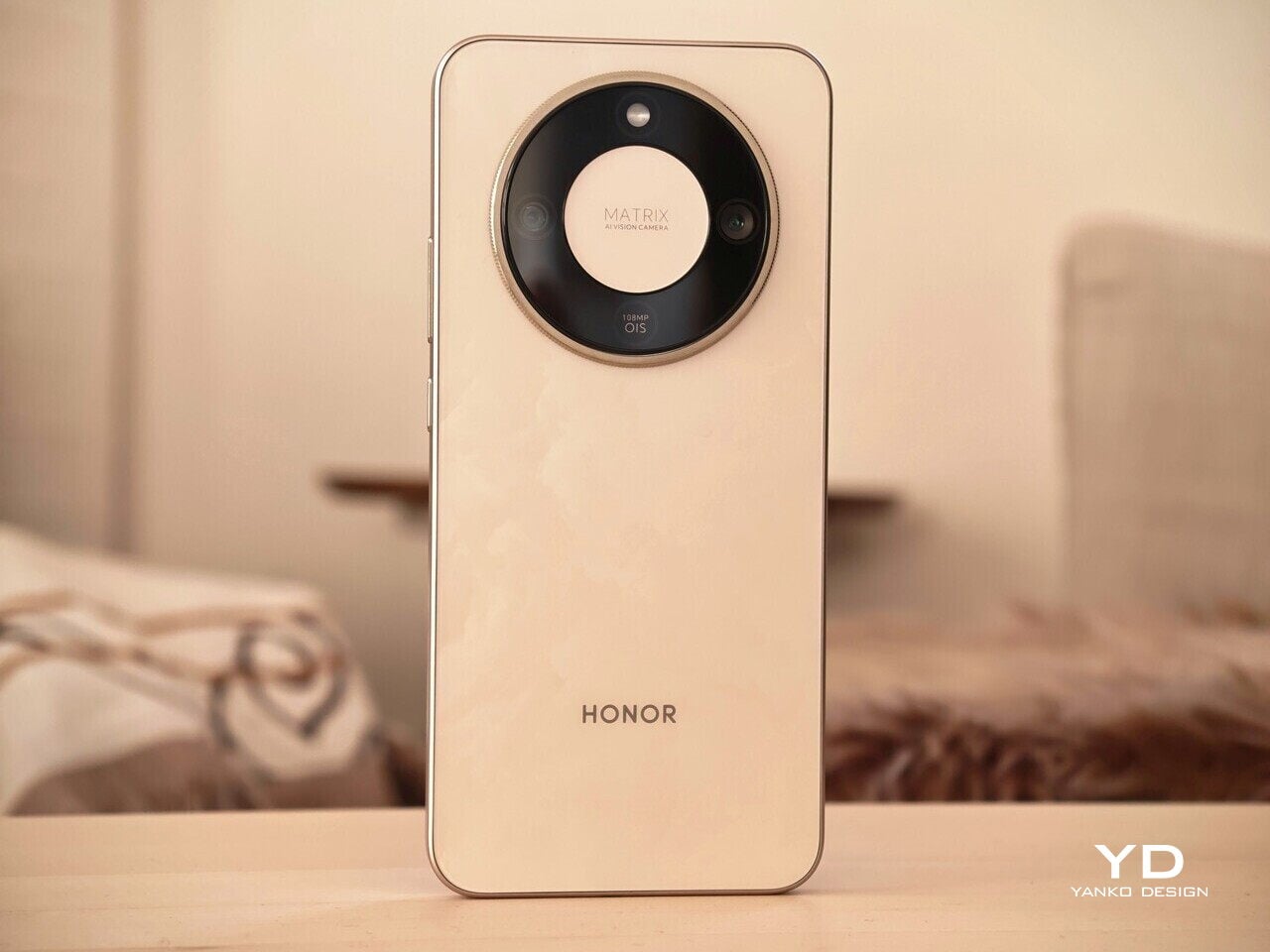
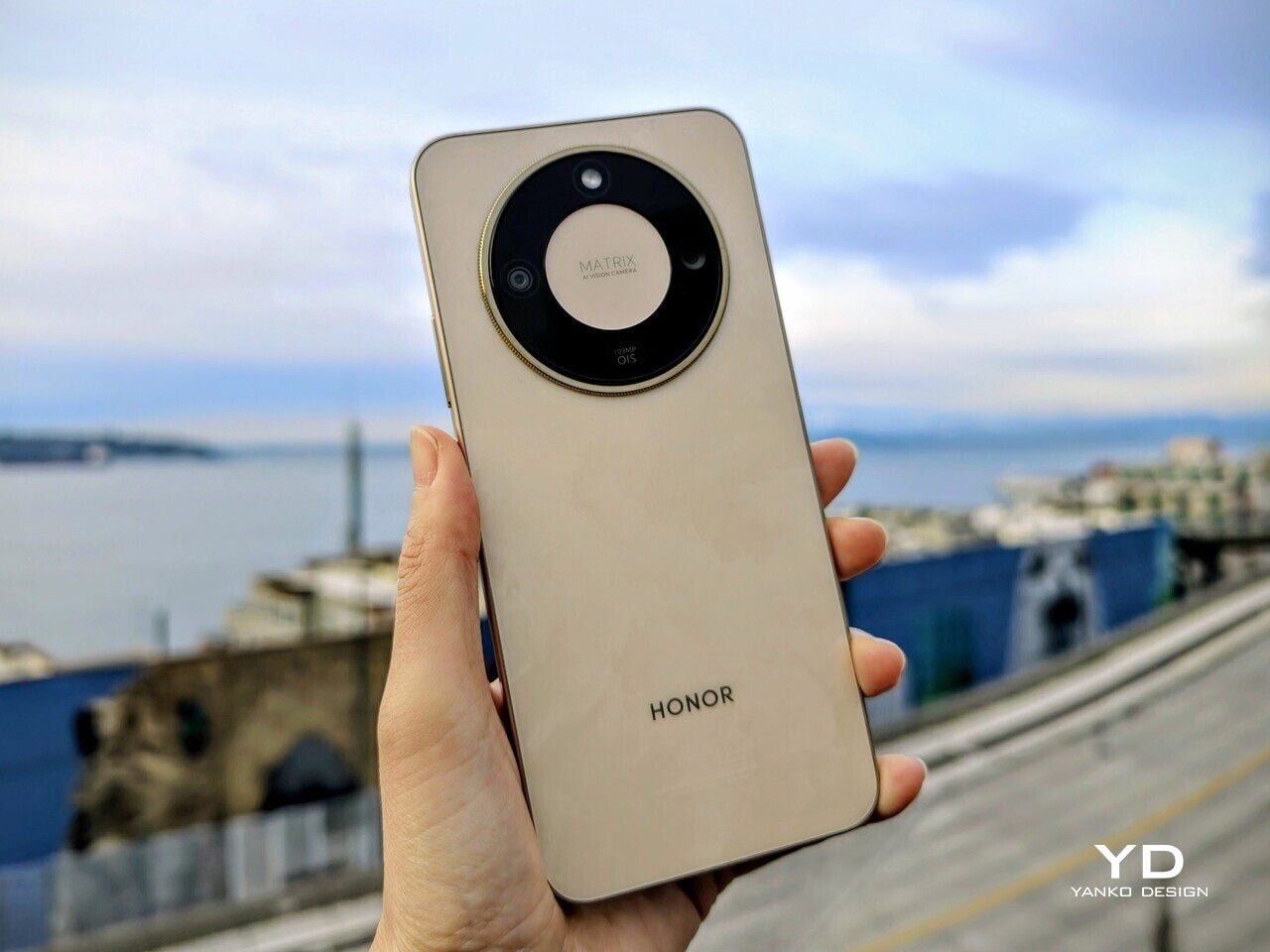
The Honor Magic8 Lite is a reminder that “Lite” does not have to look cheap. Honor uses a plastic frame and plastic rear panel, which helps keep weight in check despite the oversized battery and keeps the phone feeling approachable in the hand. The camera island design has been updated. You get a large circular module that sits high on the rear panel, almost like a watch face sitting on the spine of a book, which continues the design language from its predecessor.

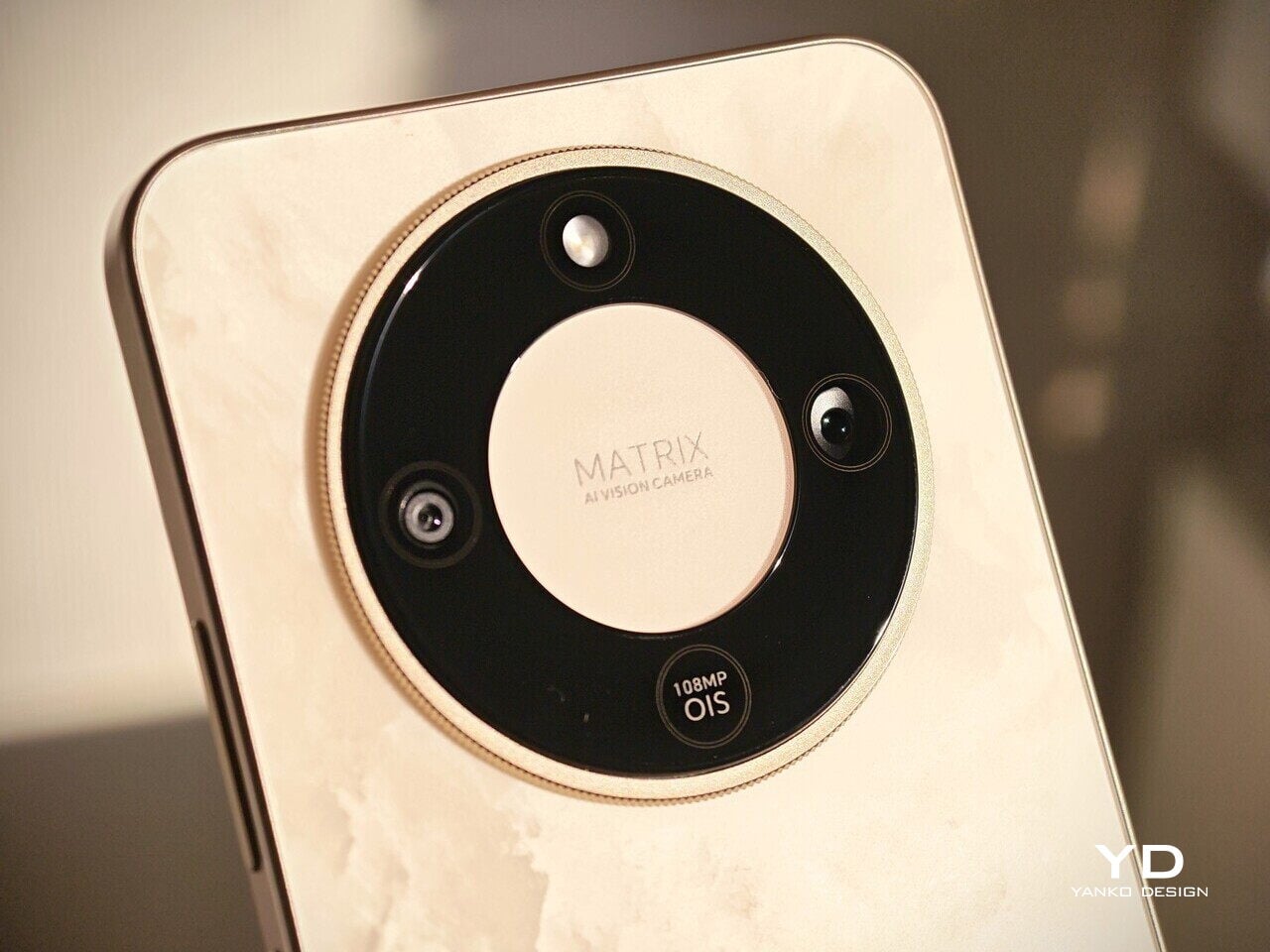
Instead of a single black disc, Honor has adopted a ring-based layout for the Magic8 Lite camera island. The black outer circle houses two cameras and the LED flash, while the inner circle carries the “Matrix AI Vision Camera” text as a graphic centerpiece. The circle is bold enough that your eye goes straight to it, which instantly gives the phone a recognizable appearance from almost any angle. It feels more like a deliberate design motif than a simple camera bump, and that makes the back visually memorable.

The Honor Magic8 Lite is available in Forest Green, Midnight Black, Reddish Brown, and Sunrise Gold in some markets, each one giving the camera ring a slightly different personality. The Reddish Brown version features a vegan leather finish that adds warmth and tactility, while the others use a matte surface that keeps fingerprints under control. The Sunrise Gold option adds a subtle, waterpaint-like pattern that shimmers as you tilt it, giving the phone a more premium character than the materials list would suggest.
Ergonomics

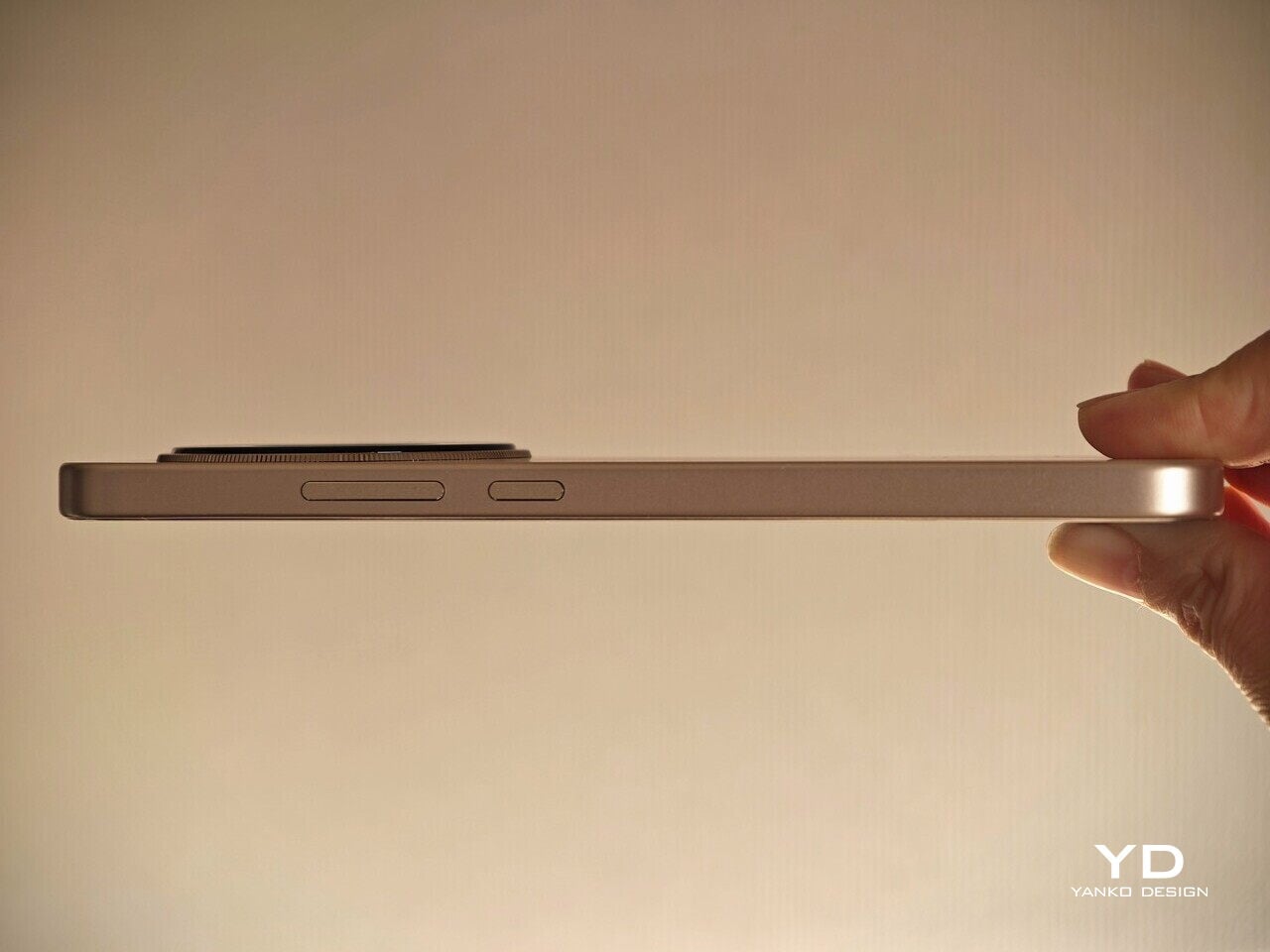
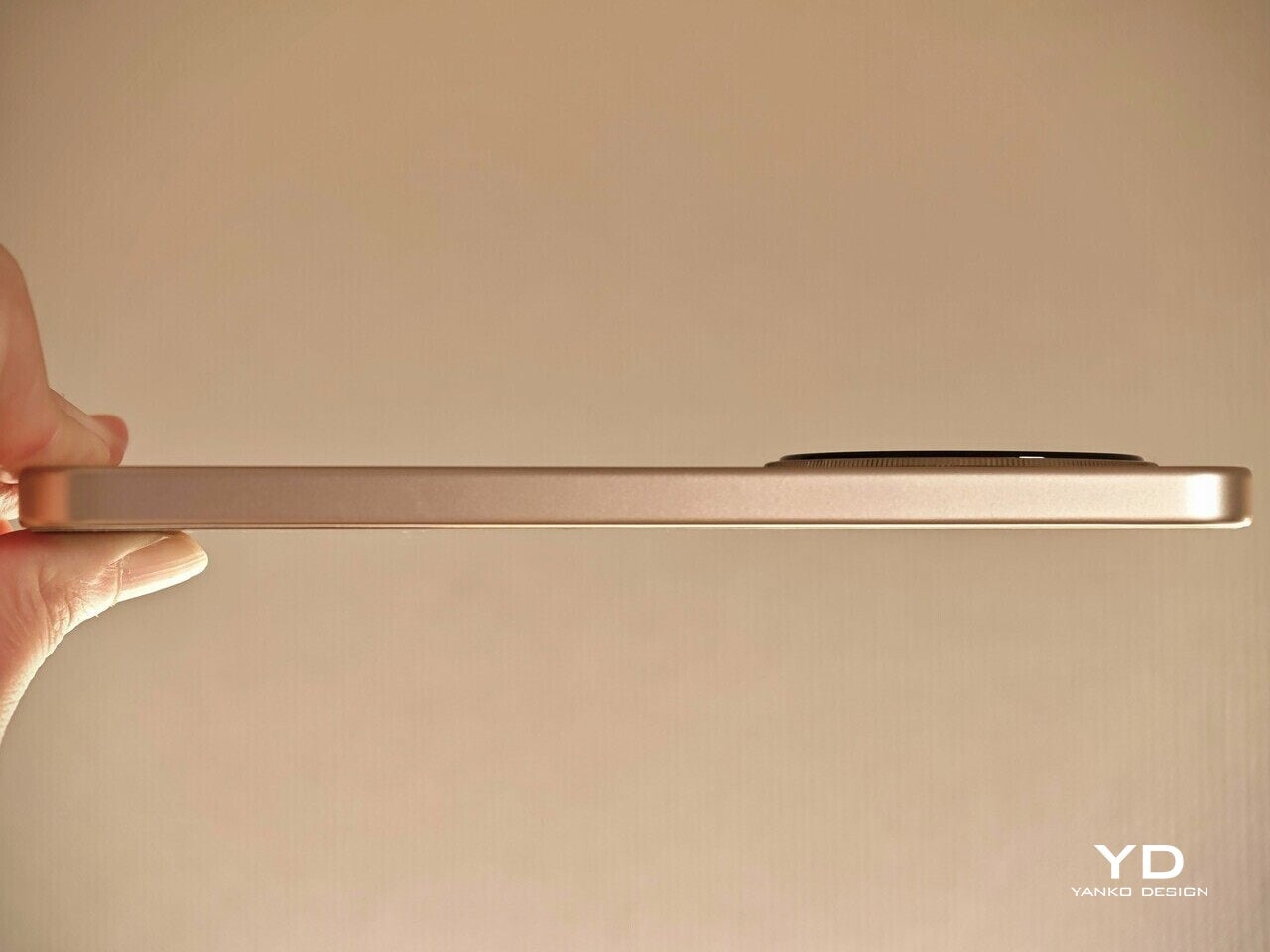
On paper, a 6.79-inch phone with a 7500 mAh battery sounds like a brick waiting to happen. In the hand, the Magic8 Lite is more balanced than you might expect. At 189 grams and roughly 7.8 millimeters thick, it is not featherlight, yet it avoids the dense, top-heavy feel that big battery phones often suffer from.

The matte back panel and brushed metal-like frame both do a good job of resisting fingerprints and smudges. You can use the phone without a case, and it still looks clean at the end of the day, which fits the whole low-maintenance character of the device. The surfaces feel practical rather than precious, so you are less worried about babying it in everyday use.
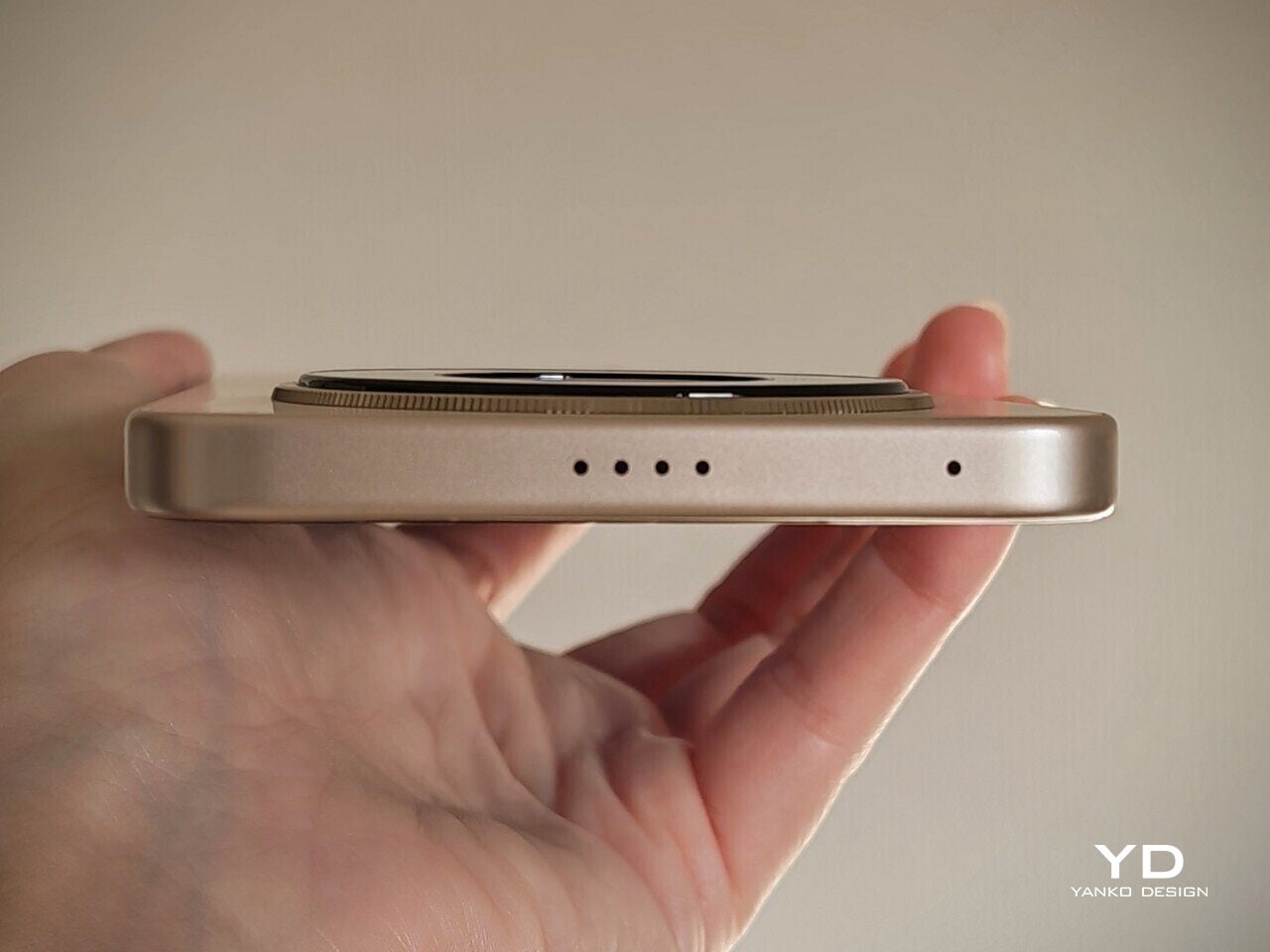
The flat sides help with grip, while the curved edges at the back soften the transition into your palm. Since the phone leans toward the wider side, you will still want two hands for extended typing or navigation, especially if you have smaller hands. The weight distribution feels centered, so the phone does not constantly try to tip forward when you reach for the top of the screen.

There is one ergonomic misstep. The fingerprint scanner on the side is positioned very close to the bottom edge, which makes the movement from holding position to unlocking feel less natural. Your thumb has to dip down in a way that breaks the otherwise smooth hand position, and it takes a little getting used to if you are coming from a phone with a higher side sensor.

Performance

Inside, the Magic8 Lite runs on Qualcomm’s Snapdragon 6 Gen 4 with 8 GB of RAM and either 256 or 512 GB of storage. This combination sits firmly in the capable but not aggressive category. For messaging, social media, web browsing, and casual apps, the phone feels smooth enough, especially with the 120 Hz refresh rate helping animations and scrolling feel more fluid. You do start to feel the limits in heavier multitasking and demanding games.

Running MagicOS 9 on top of Android 15, the Magic8 Lite offers Google Gemini out of the box along with a suite of AI features, including AI photo editing tools and AI Translate. These extras sit quietly in the background until you need them, which suits the phone’s everyday focus.
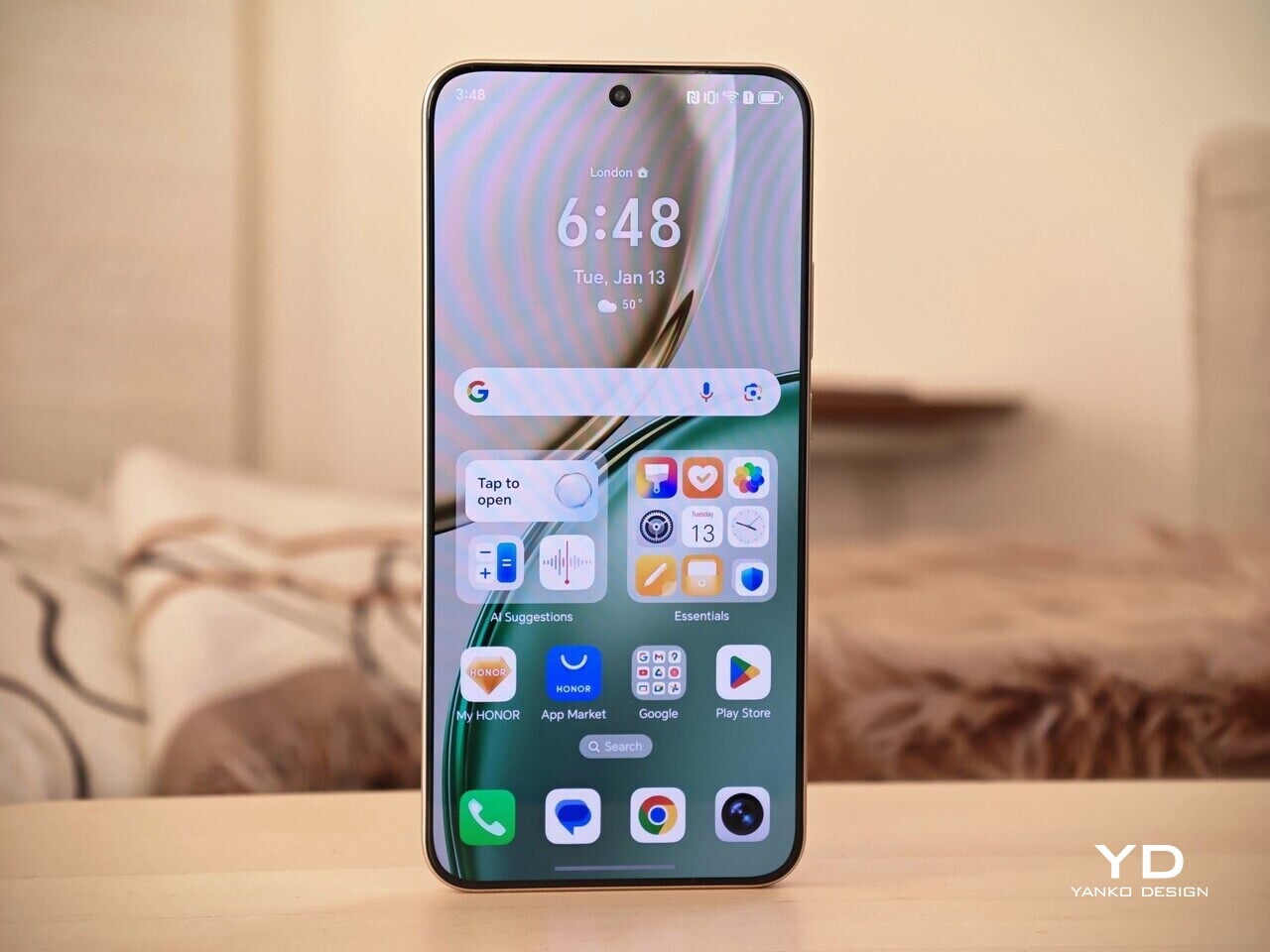
The display is one of the Magic8 Lite’s strongest visual arguments. You get a 6.79-inch OLED panel with a resolution of 2640 x 1200 and a 120 Hz refresh rate. Honor quotes a theoretical peak around 6000 nits, and while you will not hit that number in regular use, outdoor visibility is excellent. The 3480 Hz PWM dimming also aims to make the display more comfortable for sensitive eyes during longer sessions.


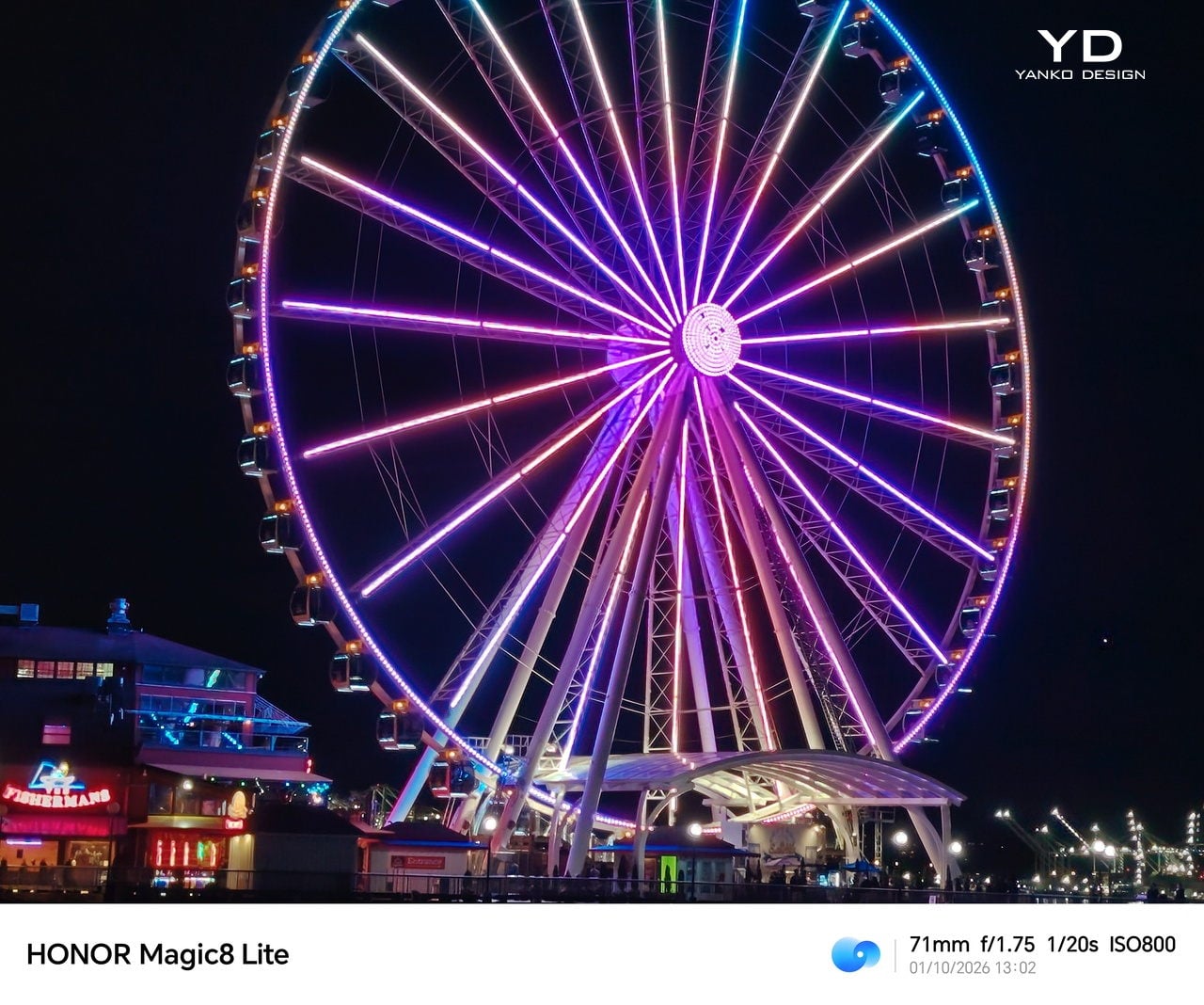
Honor gives the Magic8 Lite a 108 MP main camera with a 1/1.67 inch sensor, optical image stabilization, and phase detect autofocus, paired with an ultrawide camera and a 16 MP selfie shooter. The main camera does a relatively good job in most everyday scenarios, delivering detailed images in good light. You can zoom up to 10x, but image quality drops off quickly, and the camera struggles to freeze motion, even in daytime, so it is best treated as a 1x to 2x camera for reliable results. The main camera can record video up to 4K at 30 FPS, and the results are good for the price range.
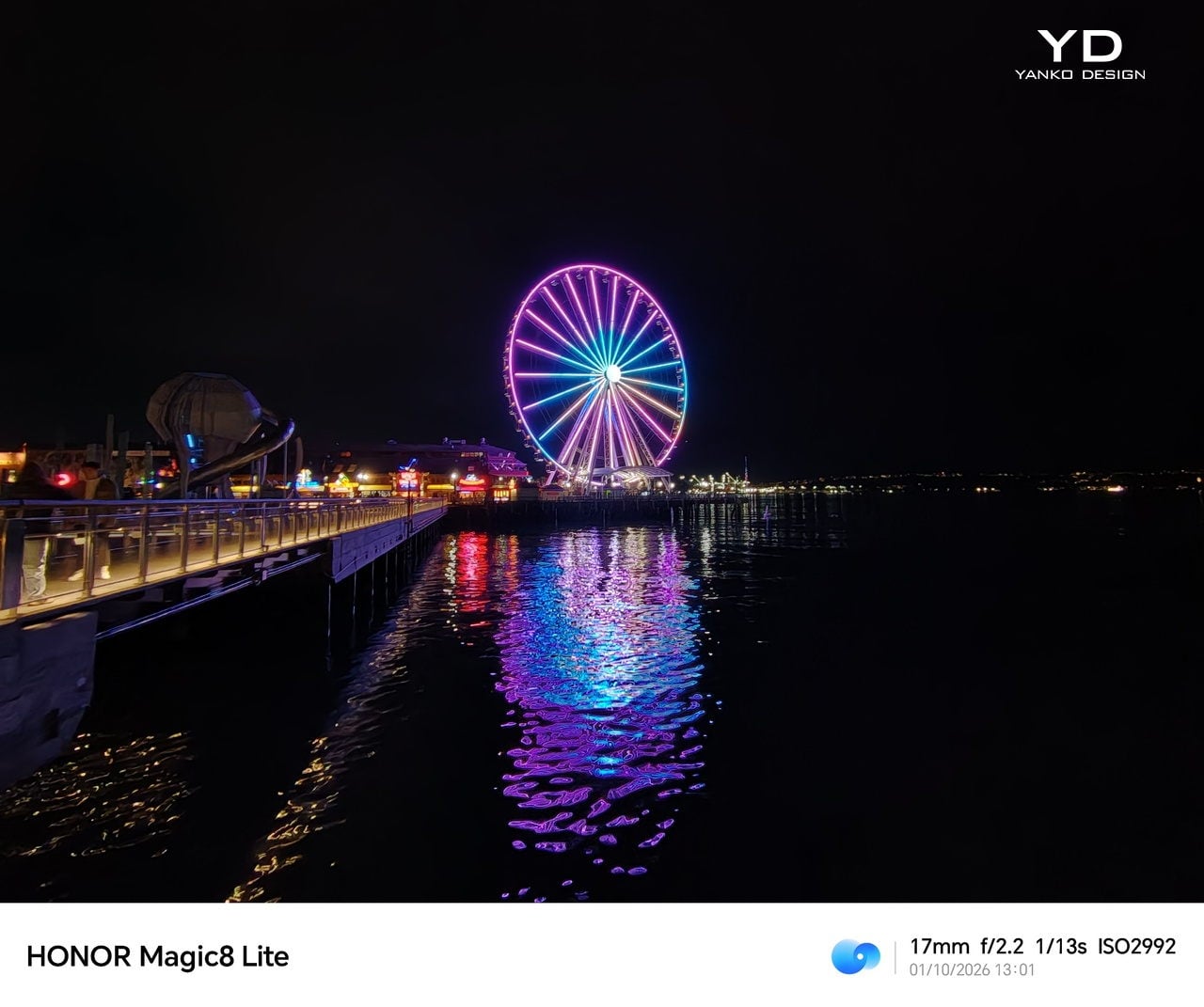
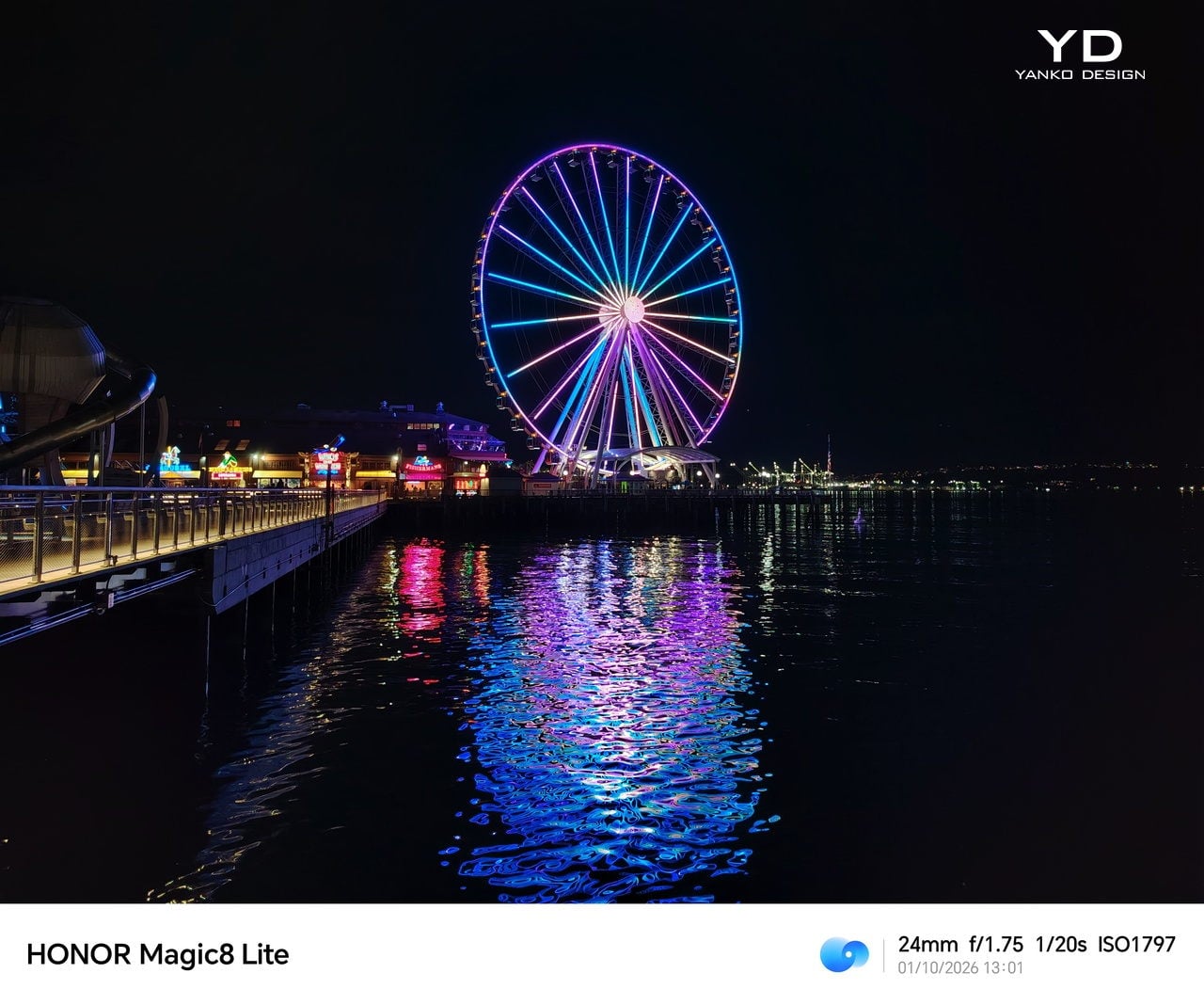
The ultra-wide camera performs as expected for this class. It is useful for landscapes and group shots, but detail and dynamic range are a step down from the main sensor, so you use it when you need the extra width rather than for pure image quality. The front-facing camera does a decent job, giving natural-looking skin tones and texture. For video recording, both ultra-wide and front cameras are capped at 1080p at 30FPS.


Battery life is the headline act, and the Magic8 Lite fully leans into it. The 7500 mAh silicon carbon battery is significantly larger than the 5000 mAh units that have become standard in many phones. Combined with the efficient Snapdragon 6 Gen 4, this translates into genuinely impressive endurance that reshapes how often you think about charging.


Portrait Mode

In mixed everyday use, you are looking at three full days with comfort, and four days or more if you are a lighter user. Long sessions of streaming, navigation, or social scrolling barely make a dent compared to what you might be used to. This phone simply does not provoke range anxiety, which makes it a very easy recommendation for anyone who hates watching the battery percentage.
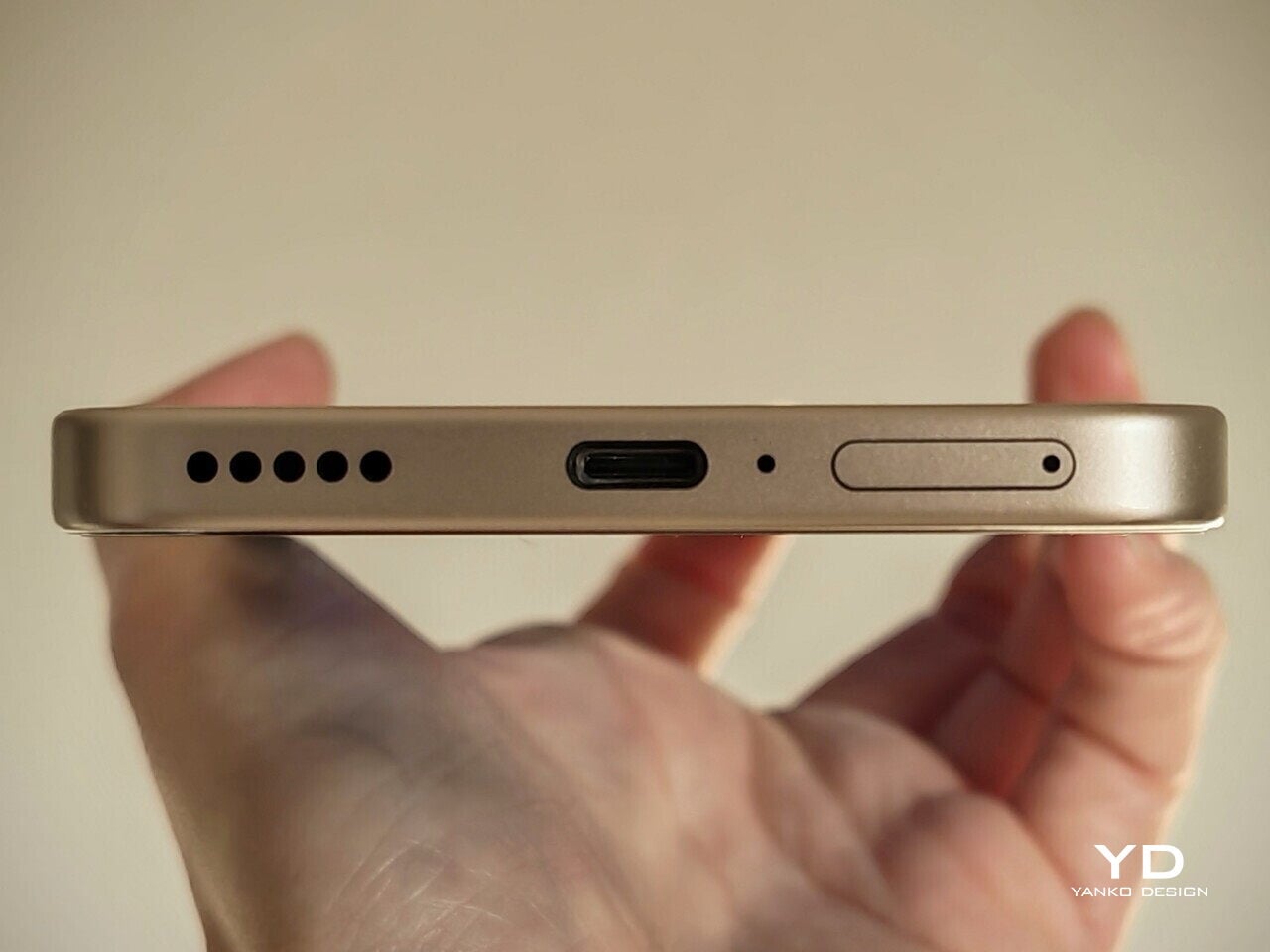
Charging is handled by 66W wired fast charging, provided you use Honor’s SuperCharge standard. Some regions include the charger in the box, and others do not, so you may need to factor that into the overall cost. Once plugged in, the phone refuels quickly enough that even a short top-up before you leave the house can add several hours of real use, which fits perfectly with the “charge less, worry less” personality of the Magic8 Lite.

Sustainability

The Magic8 Lite approaches sustainability from a practical angle. The device carries IP69K, IP68, and IP66 certifications, which are unusually comprehensive for this class. That combination means full dust protection, resistance to high-pressure water jets, and safety during water immersion. In daily use, it translates into a phone that can handle heavy rain, spills, and rough handling while still functioning as normal.

Honor claims the Magic8 Lite boosts resilience with its industry-first Ultra Bounce Anti-Drop Technology. This system pairs ultra-tough tempered glass with a reinforced internal structure to better absorb everyday impacts. The idea is simple: keep the phone alive longer by surviving the kind of accidents that usually send devices to repair shops or landfills.
Value

The Honor Magic8 Lite is priced at £399.99, which works out to roughly $510 at current exchange rates. At that level, it sits in the crowded upper mid-range, where you can find phones with faster processors or more ambitious camera systems. What most of those rivals cannot match is the combination of huge battery, lightweight feel, and serious durability that the Magic8 Lite offers as a package.

If your priorities lean toward performance or advanced photography, you may find better raw specs for similar money. You are paying here for peace of mind, long gaps between charges, and a design that does not feel fragile in everyday use. For regular users who value stamina and resilience over benchmark scores, the overall value proposition is quietly compelling.
Verdict

The Honor Magic8 Lite is not the phone for spec chasers, and that is exactly its appeal. It is built for people who care more about getting through a long weekend on one charge than hitting the highest frame rates in the latest game. If you can live with “good enough” performance and the main cameras that are solid but not flagship level, you get a phone that feels light in the hand, tough in daily use, and genuinely low maintenance to own.

Where the Magic8 Lite really wins is in how all those choices line up around a single idea. The oversized battery, the bright and efficient OLED, the comprehensive water and drop protection, and the fingerprint-resistant finishes all work together to reduce friction in everyday life. It is the phone you grab when you are not sure where the next outlet is, or when you know it might get caught in the rain, and you do it without a second thought.

The post Honor Magic8 Lite: The Lightweight Phone That Lasts Three Days first appeared on Yanko Design.