“Stop Treating Designers as Tools”: Ayush Singh on Ownership, Burnout and Speaking Up in Indian Brands

Yanko Design’s weekly podcast, Design Mindset, continues to bring raw, unfiltered conversations about what it really means to work in design today. Episode 18, Powered by KeyShot, tackles a topic many Indian designers experience but rarely discuss openly: the uncomfortable gap between what brands promise about design investment and what actually happens behind closed doors. Each week, the podcast peels back the layers of design practice, exploring not just the creative work but the professional realities that shape it.

This week’s guest, Ayush Singh Patel, brings a perspective shaped by years at the intersection of ambition and reality. Currently Associate Director of Industrial Design at Noise, where he leads audio and accessories categories, Ayush previously spent time at boAt Lifestyle, leading five sub-brands and contributing to the design of everything from wireless headphones to smartwatches to grooming products. His experience spans the full product lifecycle, from concept to launch, but more importantly, he’s navigated the complex dynamics of being an in-house designer in India’s explosive consumer tech ecosystem. What unfolds in this conversation is a candid examination of derivative design, creative ownership, and what it takes to push for genuine innovation when the system is built for speed and cost efficiency.

Download your Free Trial of KeyShot Here
From “Glorified Localization” to Building Design Credibility

The conversation opens with a striking admission from Ayush: “I joined brands that proudly call themselves design driven, expecting to lead innovation. Instead, I found myself in meetings where the brief was literally make it look like this western brand, but make it cheaper. That’s not design leadership, that’s glorified localization. The real question isn’t whether Indian brands invest in design. It’s whether they invest in their own design vision or just outsource the thinking and ask internal teams to clean up the execution.”

Ayush’s own hiring story reveals how this dynamic begins. He wasn’t selected for his industrial design expertise or technical knowledge. “All they liked was the kind of portfolio work that I put out on Instagram and Behance, and they liked those pretty images. So there was no technicality in my interviews. They just wanted that sort of outcome for their products.” It took nearly a year and a half to convince stakeholders of what he could actually contribute beyond aesthetics. His first real opportunity came through rendering. In 2018-2019, e-commerce was entirely image-based, and conceptual renders performed exceptionally well. “Anything that was sold online on platforms like Amazon or Flipkart was truly image-based, right? Everything was about how glorified of a concept you can showcase.” The results were immediate: sales increased because customers were convinced to buy what they perceived in those images, not the reality of the products. This success created the opening for deeper design involvement.
The Strategic Path from CMF to Original R&D

Once sales growth validated design’s commercial impact, Ayush introduced CMF (Color, Material, Finish) as the next frontier. “I came and said there’s a thing called CMF design. So you can start with something as small as color. You don’t have to pay a lot of money, you can talk to the Chinese manufacturers, you can add those colors. And then obviously, it will change the game completely, because now people will have more options to buy from.” The Indian market’s aesthetic inexperience became an advantage. Consumers were looking for cheap technology that looked different, and without established reference points for good or bad aesthetics, bold CMF choices stood out on crowded e-commerce platforms.

The impact was substantial. “Through colors, we crossed over that thing where design can be weighed down, not in terms of aesthetics, but colors. And that’s what made the company grow from almost 90 crore revenue to 200-300 crore revenue.” The next step involved tweaking aesthetics of Chinese-sourced products with small mold modifications. “The reception from the customers was bonkers. It did not lead to as much sales because obviously it drove the costs a little high. But the way people understood that there’s something beyond buying a product from China and launching it, they saw in and out development, right? Someone cared about every bit of visuals that went out. There were specific colorways, people were somehow glorifying luxuriousness.” This gradual proof of concept finally convinced leadership to commit resources. From 2022 onwards, the company began developing its own products, marking a shift from localization to original design.

“Think Inside the Box”: Design Process for Fast-Paced Markets

Ayush’s philosophy directly contradicts traditional design education. “I’ll say something controversial here. Since design school, you’re somehow pushed to think outside the box, which is obviously a place where you can actually drive some sort of innovation. But if you work in a company that’s going for mass production, catering to large audiences at a fast pace, these consumers are not normal consumers. They’re not faithful to you. There are so many brands in the same market, so you have to innovate as fast as possible. And obviously, if you understand the market, innovation comes with time.” The solution challenges design orthodoxy: “The shortest way for you to reach innovation is change the outer aesthetics. If you think outside the box, you incur a lot of R&D costs. That will go through numerous approvals, numerous discussions back and forth from your manufacturing units. And that’s basically a lead time of one and a half to two years. In that time, there’ll be five to ten competitors who will come and go.”

The practical framework becomes clear: “We realized it’s a place where we need to set up our process in which we think inside the box, because an earphone or a speaker will look like an earphone or speaker. That’s the example I give to any person I ever hired. If you’re trying to design a car, it will look like a car. You cannot make it look like a plane.” The design process itself had to be restructured to bypass sketching and go straight to 3D. “There’s no point for us to sit down and make a sketch and me going to a founder who has nothing to do with the design process, who doesn’t care about why it takes you so much time. He only cares about: have you made something for me that I can produce.” Perhaps most revealing is Ayush’s assessment of what the job actually entails: “Design is the easy job. Design is literally five percent of what I actually do. Ninety-five percent is, irrespective of whether it’s a design by me or my team, I have to go and meet so many people from different teams who don’t care about what it took you to make this design. And just go there and be open-ended to receiving any kind of feedback and just sell that design. Being a great designer doesn’t mean you can design something, it’s how well you can sell it to other people.”
The Copy-Paste Reality and Cultivating Real Creativity

The copy-paste culture creates fundamental challenges for original work. “When there’s no good design, there’s no bad design, then there’s only the design that is known. So what you see is what you can weigh. Any person who’s beyond design will never be able to appreciate that as something new. And for a company that’s super price-critical, for a company that wants to innovate every six months, they’ll only want a bet that’s tried and tested.” When given explicit instructions to copy, Ayush developed a strategy of creative resistance: “I’ll be put in a position by a certain CXO or member I’m reporting to, basically laid out saying copy this. And I would come up being smart enough, trying to make a window, and I’d say okay, I’ll copy this, but I’ll give you my understanding of what it should look like. And then I would be basically thrashed, and they would say no, I told you to copy this. So I would end up going as close as it is to the inspiration, but I was still trying to stay away from it. The winning situation for me is how well can I sell that this looks like that, but it’s not the same, but this will work for you.”

The impact on designers working in these environments is profound. “We’re basically finishing up all the resources left for aesthetics, because there’s no innovation to back it up, right? So there will be a time where I’ll end up using all the innovations in terms of CMF at that given price tag. And the next people who take my position will not have anything left to innovate on. The people who I hire as interns or full-timers will come and explore the same thing that we did three years back. You’re following the same pathway that I did ten years back or five years back. So you’re bound to make the same mistakes to reach there.” His advice to his team reflects the only path he’s found to sustained growth: “The only way you can cultivate creativity is by doing something beyond what you’re getting paid for. I would just ask these people working with me to spend more time outside. The real work for a designer begins after the nine to five. Once you go back home, the kind of people you interact with, the kind of platforms you sit on, maybe Yanko Design, maybe Behance, any platforms that can somehow make you ask a question. People used to ask me, how are you able to execute things so fast? I optimized my working by making so many mistakes in my personal projects that I can go to my office next morning and do the same thing in half an hour.”

Speaking Up: From Skill to Creator

For Ayush, the path to changing the industry starts with designers finding their voice. “I think for designers to speak up. In a room, I’ve been the biggest introvert my entire life. But I realized if I don’t speak up, no one will care about design. And it’s on the place of basically shouting design, not just talking about it. Being in a place where you can speak up, and just taking that narrative, just start with being the face of design in the company. Maybe you’re in a junior role or a senior role, start sharing opinions. Even the people working within my team at the moment are very shy in terms of sharing opinions to a founder or to a person from a different team. They’ll slide in my DMs and say, this is what I feel. And I say you should be open about it. If you don’t share it, they will never respect your opinions.”

The fundamental shift needed is in how designers are perceived. “At the moment, designers are seen as skills rather than creators. That’s the one narrative that I’m completely against and I try to push off. People should start seeing you as creators, because if they believe you’re a skill, then they’ll always try to guide you to do a certain thing, maybe copying designs or just following exactly what they’re asking you to do. In that process, you’ll burn out faster than anything because you’re trying to follow someone else’s vision of something. You’re just becoming a tool in between. Better than being a tool, you become a creator when you start speaking out and defending everything you’ve learned.” When challenged to prove an in-house team could outperform an expensive European consultancy, Ayush’s answer centers on empathy and collaboration: “An in-house team can always win through a solution which I call just talking to people. Any person who’s somehow involved in the process, if you truly talk to them and empathize and learn their side of work in the process, then you can create a solution that’s not only good-looking but also satisfying their needs.” His mentoring philosophy distills to a single essential quality: “The cheat sheet is, how much do you love it? That’s the biggest cheat sheet. If you’re not in love with it in India, you will not sustain. And a love beyond boundaries, a love that cannot be sacrificed, a love that you never turn away from.”
The conversation reveals an uncomfortable truth about design investment in India’s fast-growing consumer tech sector. The issue isn’t whether companies use the word “design” in their marketing or mission statements. The question is whether they empower internal teams to think or simply execute, whether they’re building design capabilities or just design departments. Ayush’s journey from rendering specialist to R&D leader demonstrates that change is possible, but it requires designers to be strategists, salespeople, and advocates as much as creatives. It demands proving commercial value repeatedly, speaking up even when it’s uncomfortable, and cultivating skills outside of work hours that will never appear in any job description.

For designers navigating similar environments, Ayush’s experience offers both validation and a roadmap. The constraints are real, the frustrations legitimate, but within those limitations, there’s still room to push boundaries, build trust, and gradually shift the conversation from “make it cheaper” to “make it ours.” You can connect with Ayush on LinkedIn or book a mentoring session with him on ADPList, where he’s been recognized as one of the top ten mentors multiple times.

Design Mindset premieres every week, bringing honest conversations about what it really takes to build a design career in today’s industry. Episode 18 is Powered by KeyShot, the 3D rendering and visualization software helping in-house design teams compete with the visual quality of global agencies.

Download your Free Trial of KeyShot Here

The post “Stop Treating Designers as Tools”: Ayush Singh on Ownership, Burnout and Speaking Up in Indian Brands first appeared on Yanko Design.


The great RAMaggedon of 2026 might have just claimed the Steam Deck

Less than a week after Valve admitted that the current shortage (and growing prices) of RAM were affecting its hardware plans, the Steam Deck is completely sold out. The Steam Deck has gone in and out of stock in the past, but as Kotaku notes, the timing does raise the question whether Valve's RAM issues could also be impacting its Linux handheld.

The 256GB Steam Deck LCD, and both the 512GB and 1TB models of the Steam Deck OLED, are completely sold out on Steam. Valve announced that it was discontinuing the LCD versions of its handheld and selling through its remaining inventory in December 2025, so the fact that the 256GB Steam Deck model is currently sold out isn't surprising. That both OLED versions are also unavailable at the same time, though, is a bit more unusual.

Engadget has contacted Valve for more information about the availability of the Steam Deck. We'll update this article if we hear back.

When Valve announced the Steam Machine, Steam Controller and Steam Frame, the company notably left pricing and availability off the table, presumably because tariffs and access to RAM were leaving those details in flux. The company's announcement last week that the memory and storage shortage had pushed back its plans and would likely impact prices more or less confirmed that. At no point did Valve mention that the Steam Deck would be similarly affected, but maybe it should have.

The rising cost of RAM has already forced other PC makers to adjust the pricing of their computers. Framework announced in January that it was raising the price of its Framework Desktop by as much as $460. Some analysts assume that the memory shortage driven by the AI industry could lead to higher prices and even an economic downturn in the wider PC industry. Ideally, the Steam Deck being out of stock is a temporary issue rather than a sign that Valve is doing something drastic. If things continue as they are, however, changes to the Steam Deck likely won't be off the table.

This article originally appeared on Engadget at https://www.engadget.com/gaming/pc/the-great-ramaggedon-of-2026-might-have-just-claimed-the-steam-deck-211958306.html?src=rss

World’s First 5-Ton 10-Seater eVTOL Takes Flight In China

The air taxi revolution has so far been imagined in miniature. Companies across Europe and the United States have poured billions into developing sleek, four to six seat electric aircraft designed to hop across congested cities. These nimble vehicles promise a new era of urban mobility, whisking passengers over traffic jams on short, efficient flights. The prevailing industry wisdom has been to start small, prove the technology, and then gradually scale up. This cautious, incremental approach has defined the first chapter of the eVTOL story, creating a landscape of compact, lightweight designs.

Then, Fengfei Aviation Technology decided to skip a few chapters. With the successful transition flight of its V5000 Sky Dragon, the company has introduced a heavyweight contender into a field of lightweights. This five ton aircraft is less of an air taxi and more of a sky bus, built to carry ten passengers or significant cargo loads. By achieving stable flight in a machine of this scale, Fengfei has fundamentally challenged the industry’s step by step consensus. The V5000 suggests that the future of electric aviation might arrive sooner, and in a much larger package, than anyone was expecting.

Designer: Fengfei Aviation Technology

The design is dominated by stacked booms and a multitude of rotors, an architecture that prioritizes aerodynamics and redundancy over conventional aesthetics. This form-follows-function approach gives the airframe an honest, engineered quality. It avoids any attempt at flying car nostalgia, presenting itself as a purpose-built system for vertical lift and efficient forward flight. The fuselage is a smooth, automotive-like pod, but the wings tell the real story. Multiple rotor booms create layers that resemble a giant quadcopter stretched over a commuter plane frame. It looks precisely like what it is: a new class of aerial vehicle that doesn’t pretend to be anything else.

As a five ton class eVTOL, its ability to carry ten people or an equivalent cargo payload places it far beyond typical prototypes currently flying. The pure electric version has a stated range of 250 kilometers, sufficient for many inter-city routes. A hybrid variant extends that operational radius to 1,500 kilometers, enabling regional logistics and transport missions that were previously theoretical for electric aircraft. This leap in capacity and range fundamentally alters the economic models and potential use cases for operators. Suddenly routes that required traditional turboprop aircraft or simply didn’t exist become viable with vertical takeoff capability.

The V5000 executed a complete transition at the Kunshan test base, shifting from vertical takeoff to fixed-wing cruise and back to a vertical landing. For a five ton airframe, this proves the maturity of its flight control software, which must manage up to 20 lift motors and forward propulsion systems simultaneously. The stability required to navigate this transition phase cleanly is a core challenge in eVTOL development. Smaller prototypes have demonstrated wobbly, uncertain transitions. Achieving it at this scale, with this much mass and complexity, represents a substantial systems integration accomplishment. Any control hiccup in that flight regime becomes dramatically more consequential as weight increases.

The distributed electric propulsion, with its numerous motors spread across compound wings, means a single motor failure is a manageable event, not a catastrophic one. This design philosophy trades the mechanical complexity of traditional aircraft for the electronic complexity of advanced power management and flight control algorithms. The V5000 operates less like a conventional airframe and more like a distributed computer with wings, a direction indicative of modern EV platform design. Instead of gearboxes and mechanical shaft redundancy, you get software managing power distribution across independent electric motors in real time. The approach mirrors how automotive platforms evolved, leaning into electronics rather than adding mechanical safeguards.

Western competitors have largely treated the three ton plus category as a future goal, to be addressed after smaller air taxis gain regulatory approval and market acceptance. Joby, Lilium, and Archer are all focused on lighter machines designed for short urban hops. Nobody in that group has attempted a five ton airframe yet. Fengfei’s flight effectively bypasses that incremental roadmap, establishing a credible presence in the heavyweight class right now. It forces a strategic reconsideration for other players, proving that the technology for larger, more practical eVTOLs is viable today. The psychological shift matters as much as the technical one, reframing expectations about how quickly the sector can move toward serious payloads.

More transition flights will follow, along with envelope expansion testing and the inevitable slog through certification, particularly for its multi-motor and hybrid systems. The key development will be observing its initial commercial applications. Cargo operators, who can tolerate tighter operational constraints and don’t need passenger certifications, may adopt the platform first. Regional passenger services would follow, potentially redefining connectivity between cities and offering a direct alternative to ground-based infrastructure. The V5000 has shifted the eVTOL narrative from urban mobility experiments to the creation of genuine regional air networks, the kind that can move meaningful numbers of people and goods across distances that matter.

The post World’s First 5-Ton 10-Seater eVTOL Takes Flight In China first appeared on Yanko Design.

How to cancel Mullvad VPN

This is going to be one of the shortest articles in my series on how to cancel your subscriptions to the best VPNs. Unlike most providers, Mullvad VPN does not automatically renew an expired subscription unless you tell it to. Thanks to its unique pricing approach, cancelling Mullvad is the default option.

When you sign up for Mullvad, you pay for as many months upfront as you want at the constant rate of 5 Euro per month (varying with exchange rates). Each month, Mullvad takes 5 Euro out of your account until there's nothing left. If you're no longer satisfied with Mullvad, all you have to do is stop putting money in.

The Mullvad account dashboard.
Sam Chapman for Engadget

If you happen to have originally signed up for Mullvad earlier than the middle of 2022, you may have an auto-renewal account grandfathered in. Mid-2022 is when Mullvad stopped auto-renewing subscriptions and got rid of PayPal integration altogether, but people who had signed up before then had the option to leave auto-renewal on.

If you're in this group, cancelling is simple. Just sign into your account page, click on the word Subscriptions, then click Unsubscribe.

There's one more exception to the usual method of cancelling Mullvad. If you got your subscription through an app store instead of Mullvad's website or app, the app store is the one processing your money. You'll need to cancel through them instead.

On an iPhone or iPad, open the Settings app, whose icon shows gray gears. Tap your name at the top of the screen to reach your Apple ID page, then tab Subscriptions. Scroll down until you find your Mullvad subscription, tap it, then hit Cancel Subscription.

On an Android phone, open the Google Play Store, whose icon is a triangle in the Google colors. At the top-right, tap the circle with the first letter of your username in it. Hit Payments & Subscriptions, scroll down to find Mullvad, then tap it and hit Cancel Subscription.

You can go the extra mile and delete your account if you're sure you'll never want to use Mullvad again. Send an email to support@mullvadvpn.net, provide your account number and request that the account be terminated. You'll get a reply confirming deletion.

Mullvad offers refunds on any purchase within 14 days. To start a refund request, send an email to support@mullvadvpn.net, including your Mullvad account number and your payment token. If you aren't sure what your payment token is, find the charge for Mullvad on your bank statement and look for something in the format VPN*(10-digit number).

Payments made in cash can't be refunded, apparently because that's considered a form of money laundering in Sweden. If you got Mullvad through a voucher, request your refund through the store the voucher came from.

Mullvad is one of the best VPNs, especially in terms of privacy. However, I've found it to be a bit slow at times, with a somewhat limited server network. Luckily, Proton VPN is almost as private as Mullvad — the only thing it's missing is the ability to sign up without an email. It's also got a larger server network and better overall download speeds.

Windscribe is another privacy-optimized VPN with a better record than Mullvad in my unblocking tests. Surfshark is the fastest VPN of them all, while ExpressVPN is ideal for beginners. If you liked Mullvad's cheap pricing, CyberGhost is a highly affordable alternative.

This article originally appeared on Engadget at https://www.engadget.com/cybersecurity/vpn/how-to-cancel-mullvad-vpn-200000516.html?src=rss

Anthropic beefs up Claude’s free tier as OpenAI prepares to stuff ads into ChatGPT’s

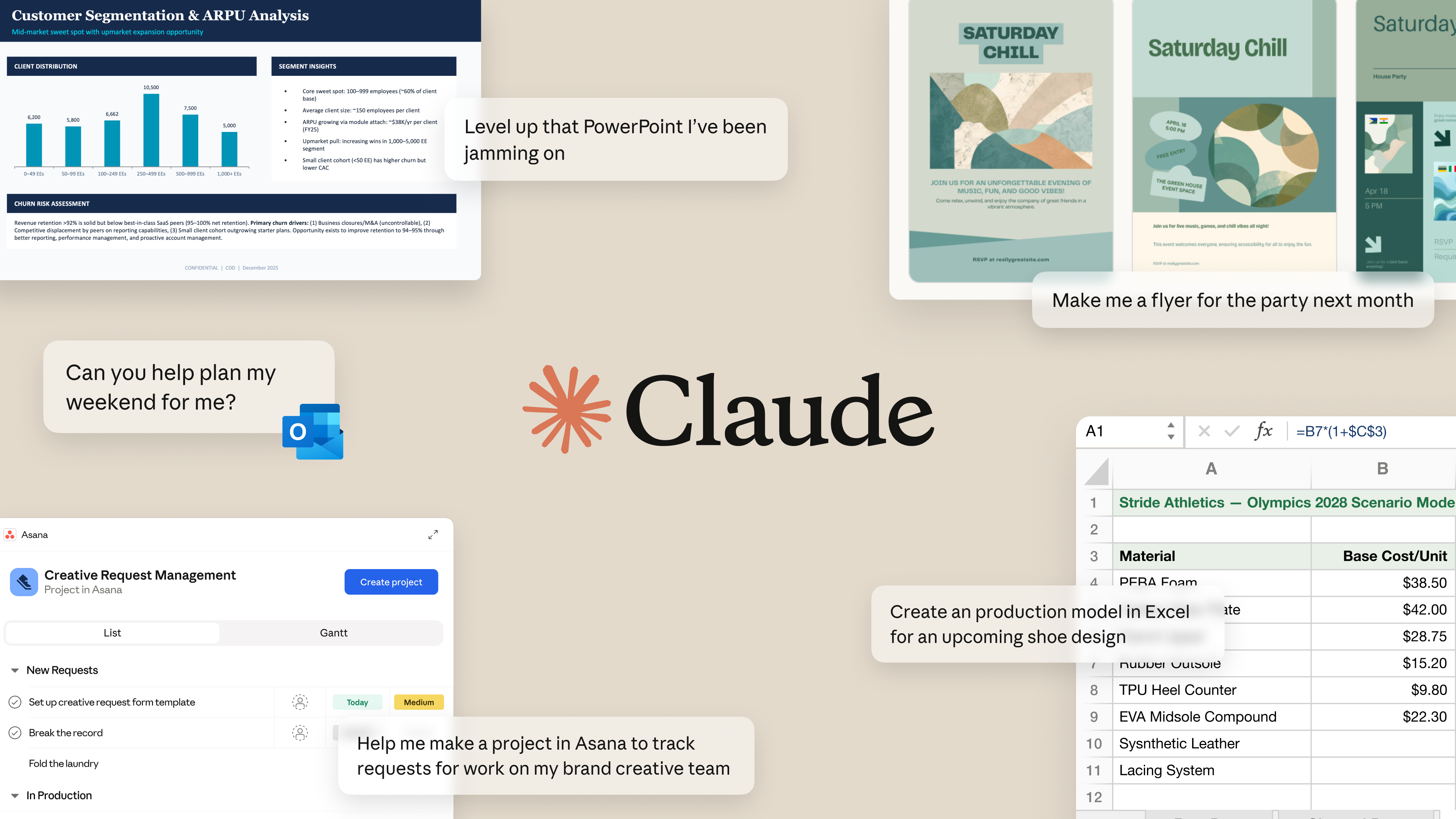
Anthropic is upgrading Claude's free tier, apparently to capitalize on OpenAI's planned integration of ads into ChatGPT. On Wednesday, Anthropic said free Claude users can now create files, connect to external services, use skills and more.

Anthropic added the ability for paid users to create files in September. Starting today, free users of the chatbot can also create and edit Excel spreadsheets, PowerPoint presentations, Word docs and PDFs. Claude's file creation abilities are powered by Sonnet 4.5.

Visual showing various upgrades to the free tier of Claude
Free users can now create and edit Excel spreadsheets, PowerPoint presentations, Word docs, and PDFs.
Anthropic

Meanwhile, Connectors allow free users to link Claude to third-party services. There's a long list of available ones, including Canva, Slack, Notion, Zapier and PayPal.

Skills, on the other hand, let you teach Claude to "complete specific tasks in repeatable ways." In short, the chatbot loads folders of instructions, scripts and other resources when performing relevant tasks. Other upgrades to the free tier include longer conversations, interactive responses and improved voice and image search.

Claude's free-tier upgrades appear to be a direct response to ChatGPT's planned introduction of ads for its free users. Anthropic's announcement today ended with the tag line, "No ads in sight." This follows the company's promise last week that Claude will remain ad-free. Anthropic even poked fun at OpenAI's cash-seeking move in a Super Bowl ad (below), which also took a swipe at GPT-4o's penchant for kissing ass.

This article originally appeared on Engadget at https://www.engadget.com/ai/anthropic-beefs-up-claudes-free-tier-as-openai-prepares-to-stuff-ads-into-chatgpts-194100939.html?src=rss

Apple just released iOS 26.3 alongside updates for the Mac, iPad and Apple Watch

Apple has released the software update 26.3 for its various platforms. This includes the iPhone, iPad, Mac and Apple Watch. In other words, don't be surprised when your iPhone notifies you of a pending update.

Unfortunately, there isn't all that much to talk about here. Consider this a minor update that focuses primarily on bug fixes, which is important but not exactly fun. It is worth noting that the new iOS and iPadOS has an especially long list of fixes. There are 37 security issues addressed by the update, according to a report by 9to5Mac

iOS 26.3 and iPadOS 26.3 do include a new tool for transitioning from an Apple device to an Android device, which is handy. It transfers photos, notes, messages, apps and other data to an Android phone but doesn't do anything with health data, protected notes or photos. There's also a new option to forward notifications from an iPhone or iPad to another device, but only for users in the EU

The update to macOS Tahoe 26.3 is just bug fixes and security enhancements. The same goes for watchOS 26.3.

Why the small fries update? Rumors have been swirling that Apple is saving the big guns for the next release. Insiders have suggested that software update 26.4 will include the long-awaited Siri refresh and new emoji functionality.

This article originally appeared on Engadget at https://www.engadget.com/mobile/smartphones/apple-just-released-ios-263-alongside-updates-for-the-mac-ipad-and-apple-watch-193532483.html?src=rss

Amazon’s same-day prescription deliveries are coming to even more cities

Amazon has announced that it will bring its same-day prescription delivery service to 4,500 new cities and towns by the end of 2026. The company originally launched Amazon Pharmacy in 2020 with a two-day delivery option, and has continued to increase the availability and delivery speed of the service in the years that followed, including expanding access to nearly half of all US residents in 2024.

The company's announcement doesn't break down all the new cities same-day deliveries will be available in, but does note that the delivery option is coming to Idaho and Massachusetts for the first time. In the past, access to same-day deliveries has been determined by where Amazon has fulfillment centers that it can open pharmacies in. Amazon Pharmacy also offers next-day delivery and in some cities, the ability to pick up prescriptions from Amazon's OneMedical offices.

Amazon reportedly applied for Amazon Pharmacy trademarks in the UK, Canada and Australia in 2020, but has yet to expand its prescription delivery service to those regions. In 2023, Amazon launched RxPass, a separate $5 per month subscription that lets Amazon Prime customers order from a collection over 50 common medications for a flat fee. Amazon began letting Medicare recipients access the subscription in 2024.

This article originally appeared on Engadget at https://www.engadget.com/big-tech/amazons-same-day-prescription-deliveries-are-coming-to-even-more-cities-192221224.html?src=rss

The Helldivers movie will star Jason Momoa and hits theaters on November 10, 2027

Jason Momoa will be playing the lead in the forthcoming film adaptation of the Helldivers gaming franchise, according to a report by Variety. The games don't have a story-driven protagonist, so Momoa is likely to play a currently unnamed soldier.

We also have a release date for the Helldivers film. It comes out on November 10, 2027. That's a while from now, but at least it gives fans something to look forward to. The movie is being directed by Justin Lin, who is best known for helming several entries in the Fast & Furious franchise. However, he also directed Star Trek Beyond, proving he can do sci-fi.

Gary Dauberman is penning the script. He wrote both It and It Chapter Two, in addition to the horror film Annabelle and its follow-ups. Dauberman is mostly a horror guy, so we'll have to see how he handles high-octane science fiction.

For the uninitiated, Helldivers is a co-op shooter franchise that's heavily inspired by the movie Starship Troopers. The games are set in a hyper-patriotic dystopia called Super Earth. Helldivers 2 dropped back in 2024, though was recently released for Xbox.

Sony hasn't announced any other actors who will be joining Momoa. We'll keep you updated when more casting news drops.

This article originally appeared on Engadget at https://www.engadget.com/entertainment/tv-movies/the-helldivers-movie-will-star-jason-momoa-and-hits-theaters-on-november-10-2027-183445038.html?src=rss

When Zoo Design Tells the Story of Life Itself

Forget everything you think you know about zoo buildings. Bangkok-based VMA Design Studio just won first prize for a zoological pavilion that reads less like a typical animal enclosure and more like an architectural journey through Earth’s creation story.

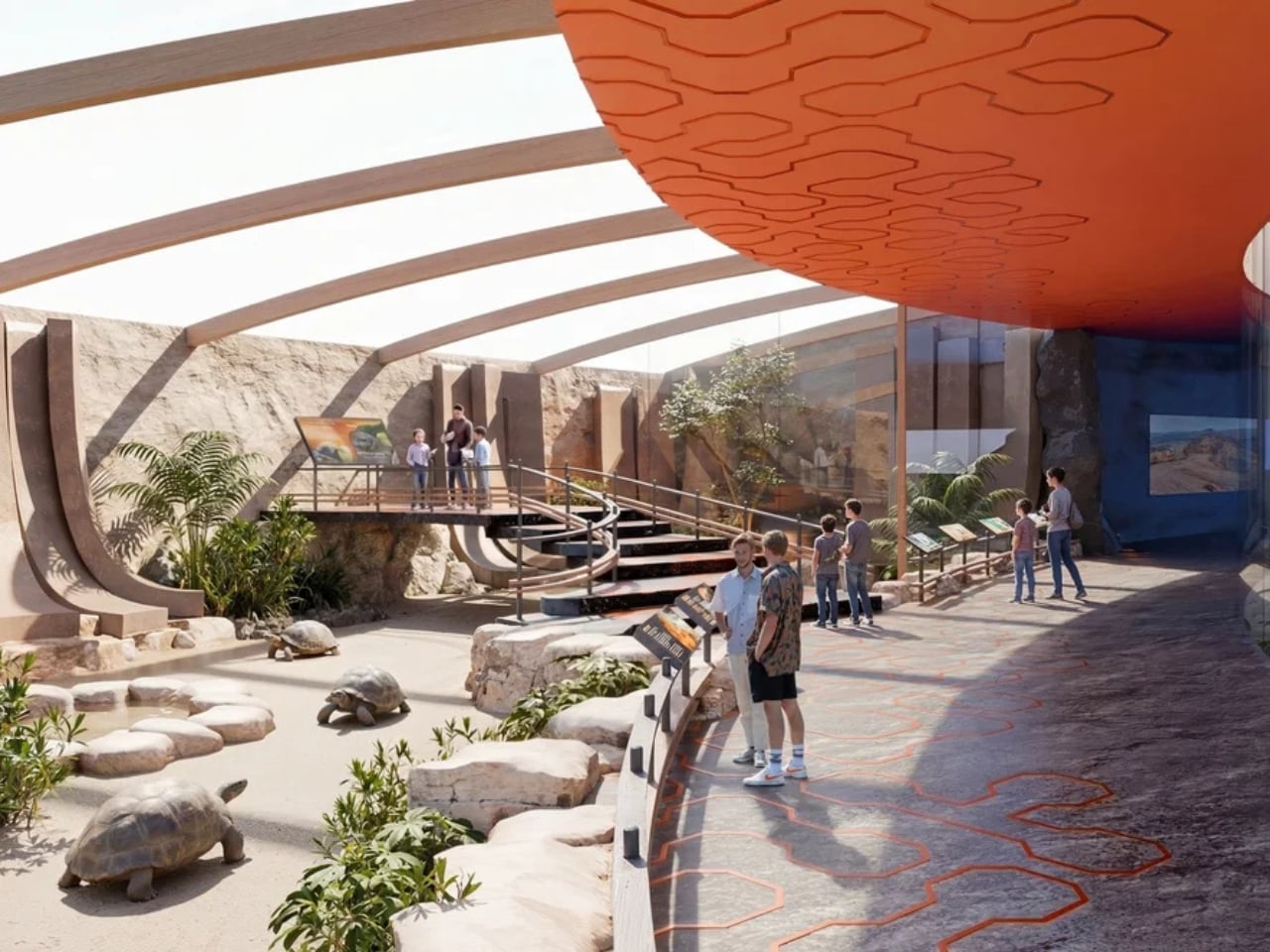
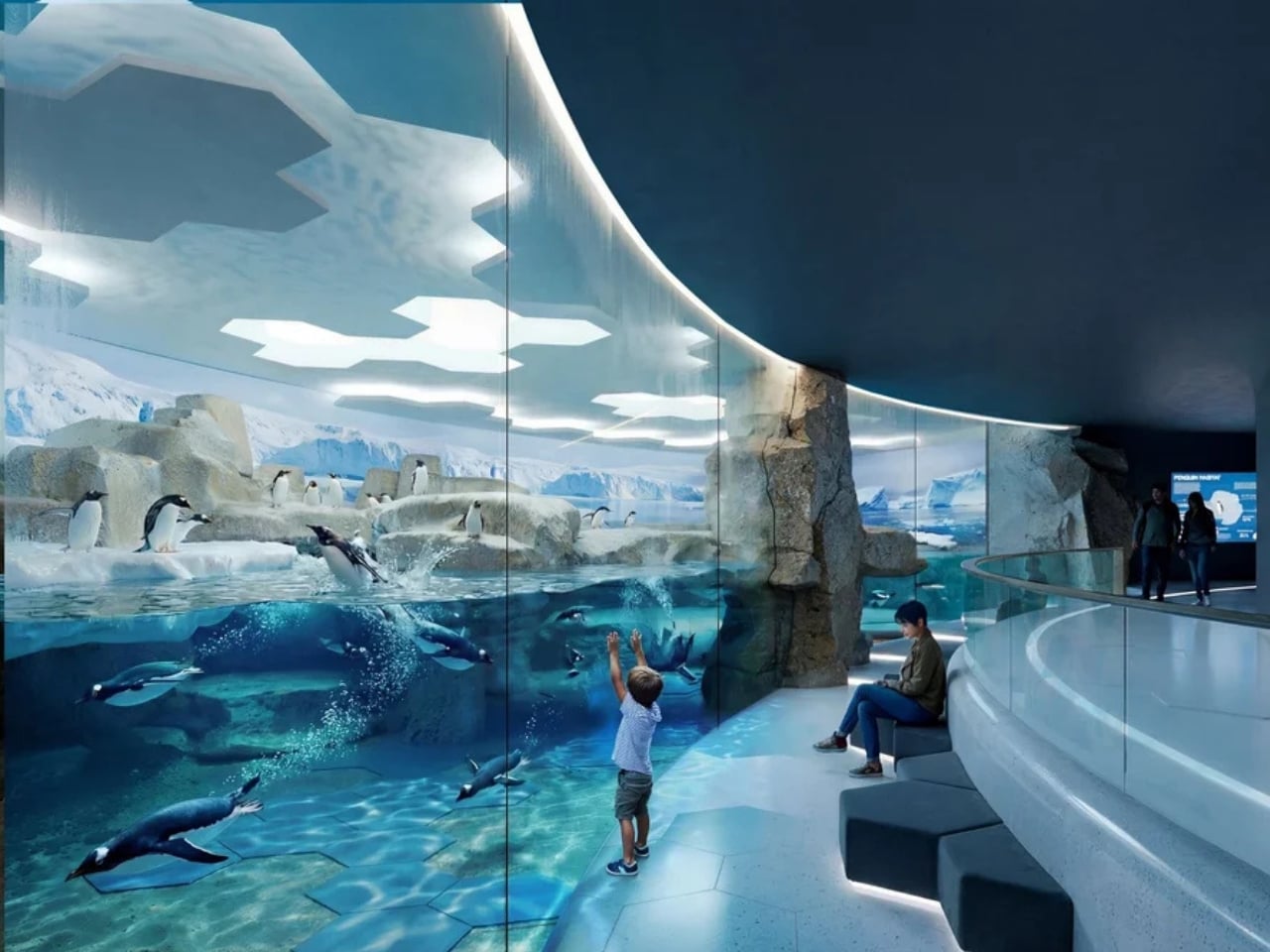
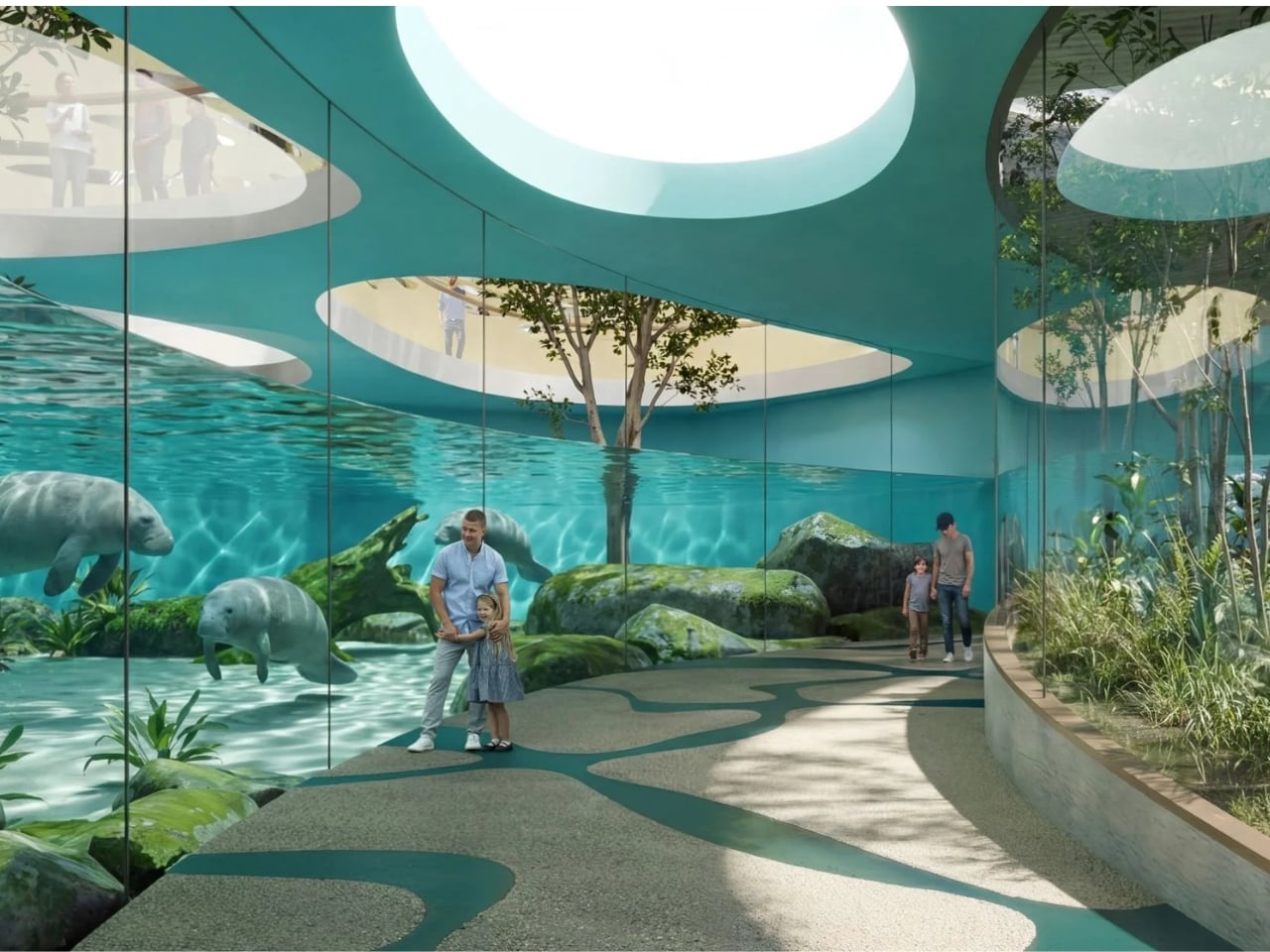
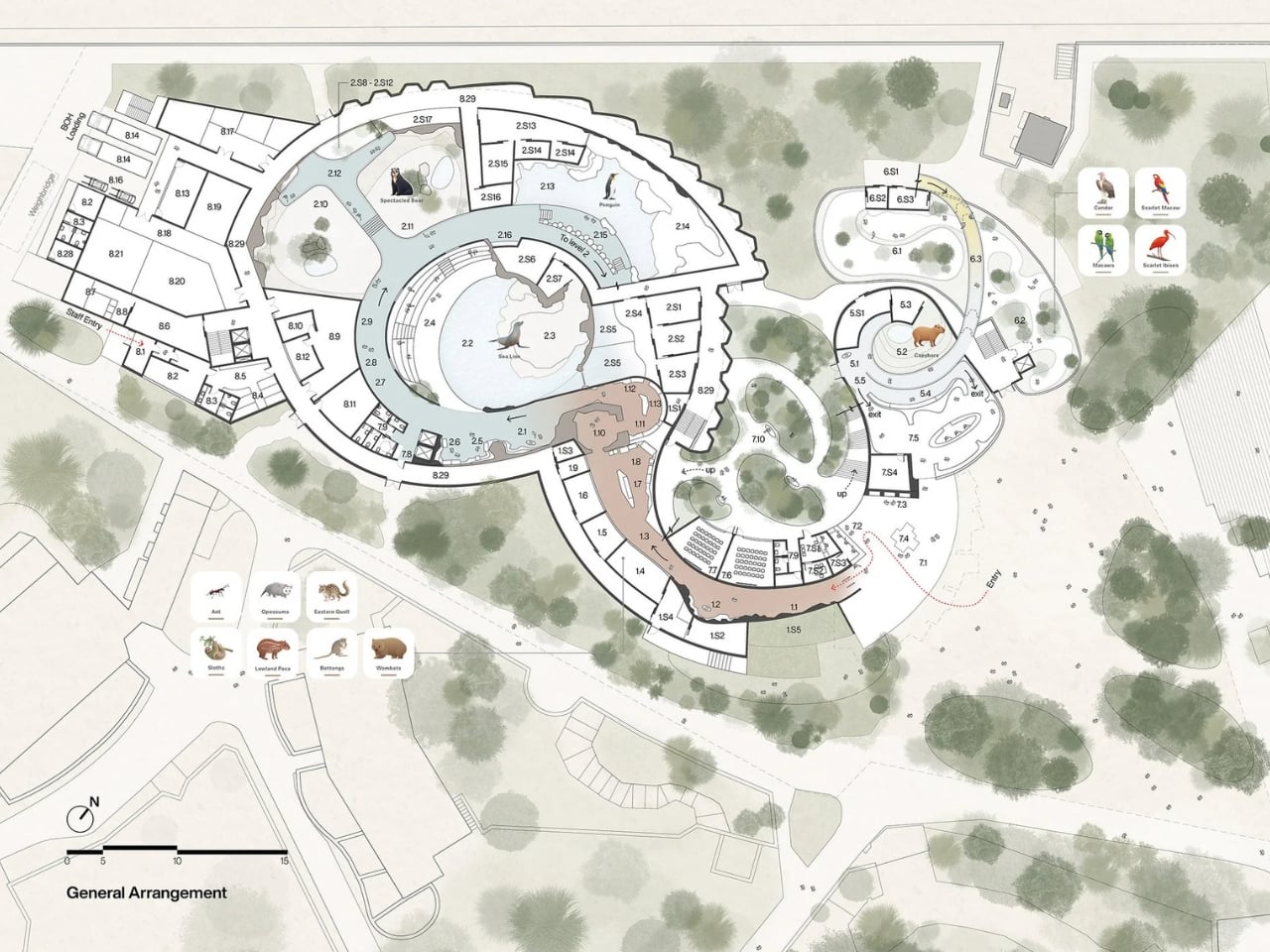
The House of Elements, set to become the crown jewel of Orientarium Zoo in Łódź, Poland, takes the classical elements (earth, ice, water, fire, and air) and transforms them into a 6,000-square-meter narrative experience. Rather than designing a building where you walk from exhibit to exhibit, VMA created a continuous downward-then-upward journey that mirrors the evolution of life itself.

Designer: VMA Design Studio for Orientarium Zoo

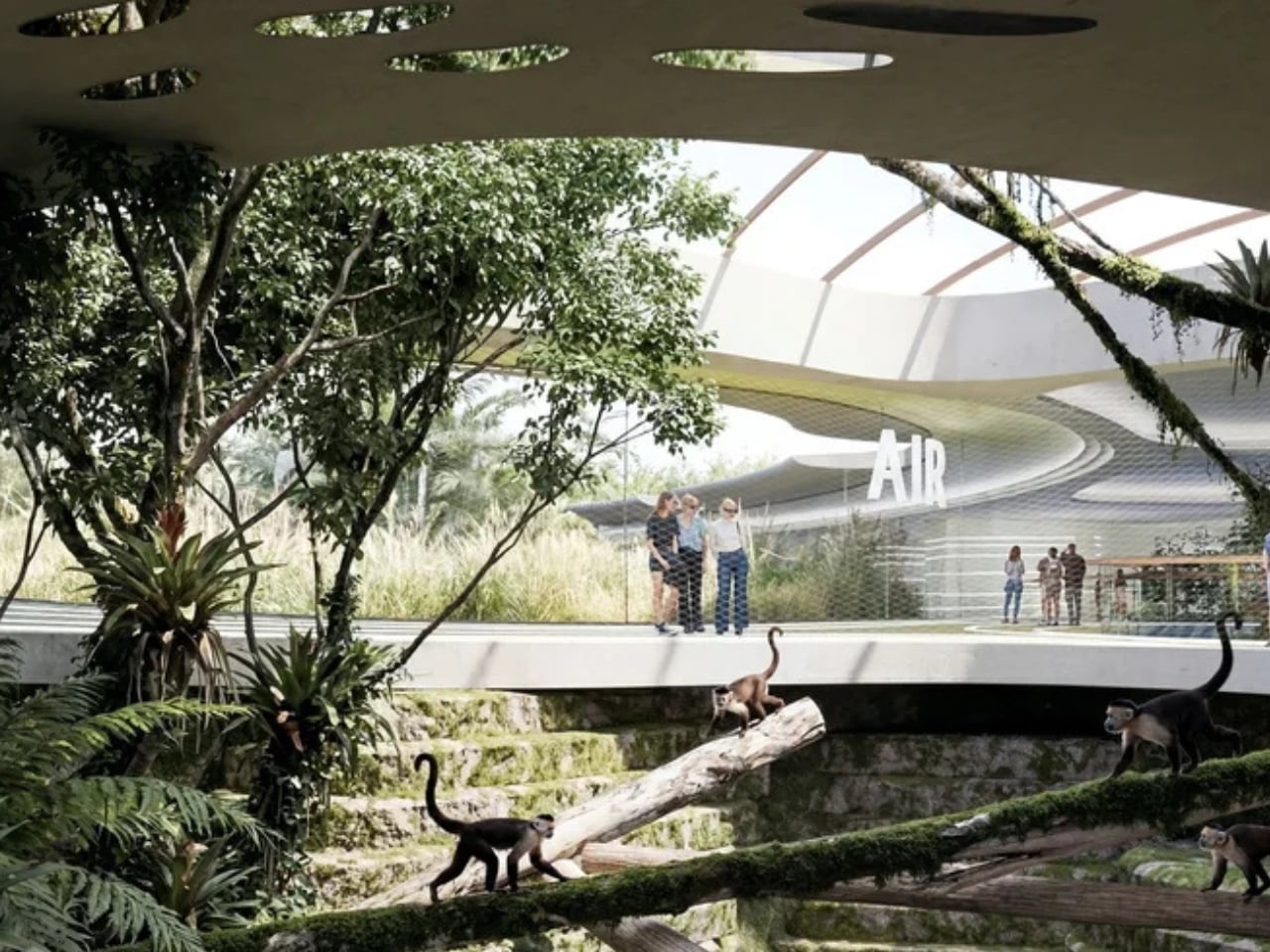
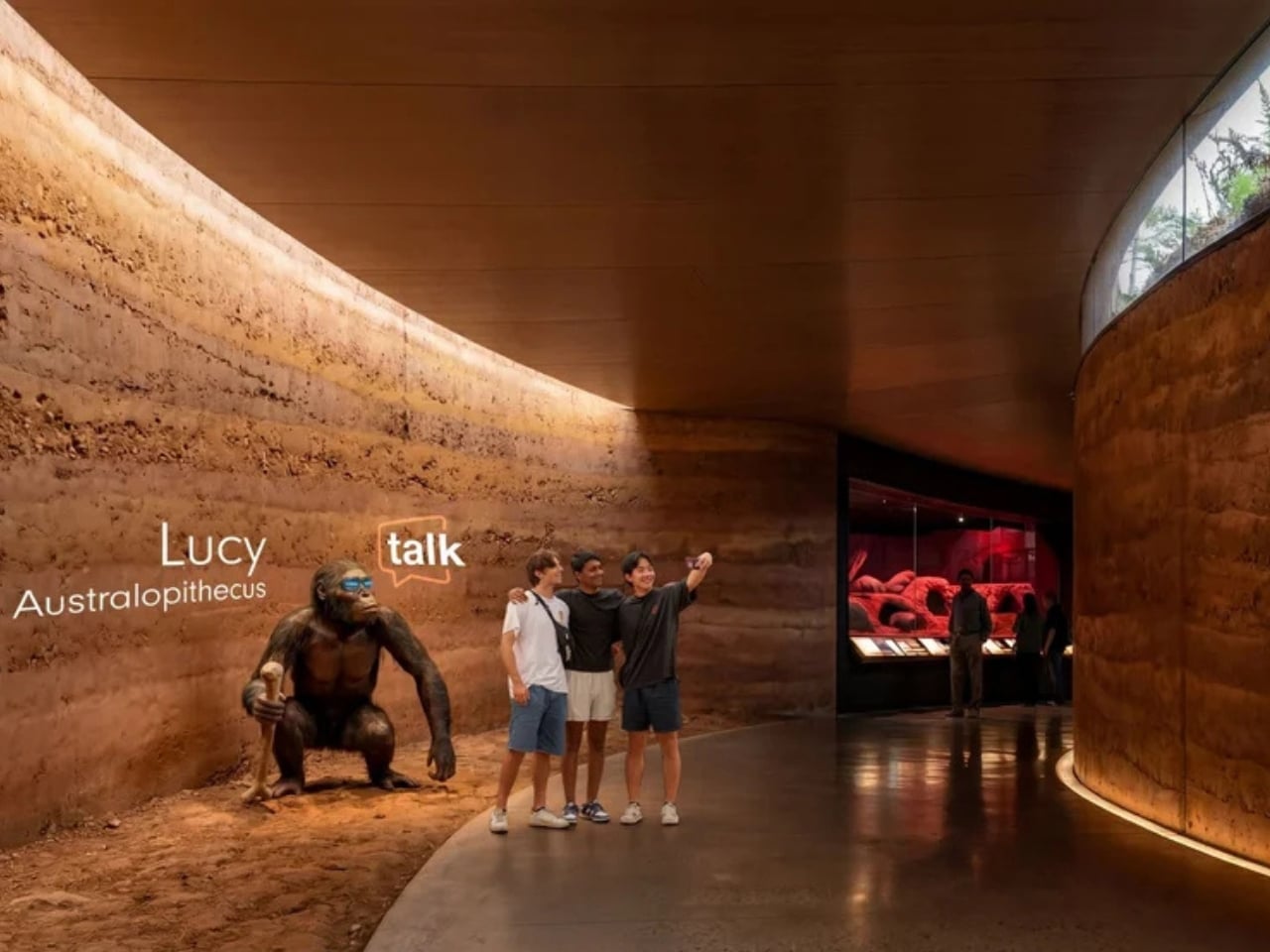
Picture this: you enter the pavilion and immediately begin descending underground into Earth. From there, the path rises through zones dedicated to Ice, Water and Fire, and finally Air. Each section tells the story of how these elements have shaped life on our planet, with the animals serving as living characters in that epic tale.

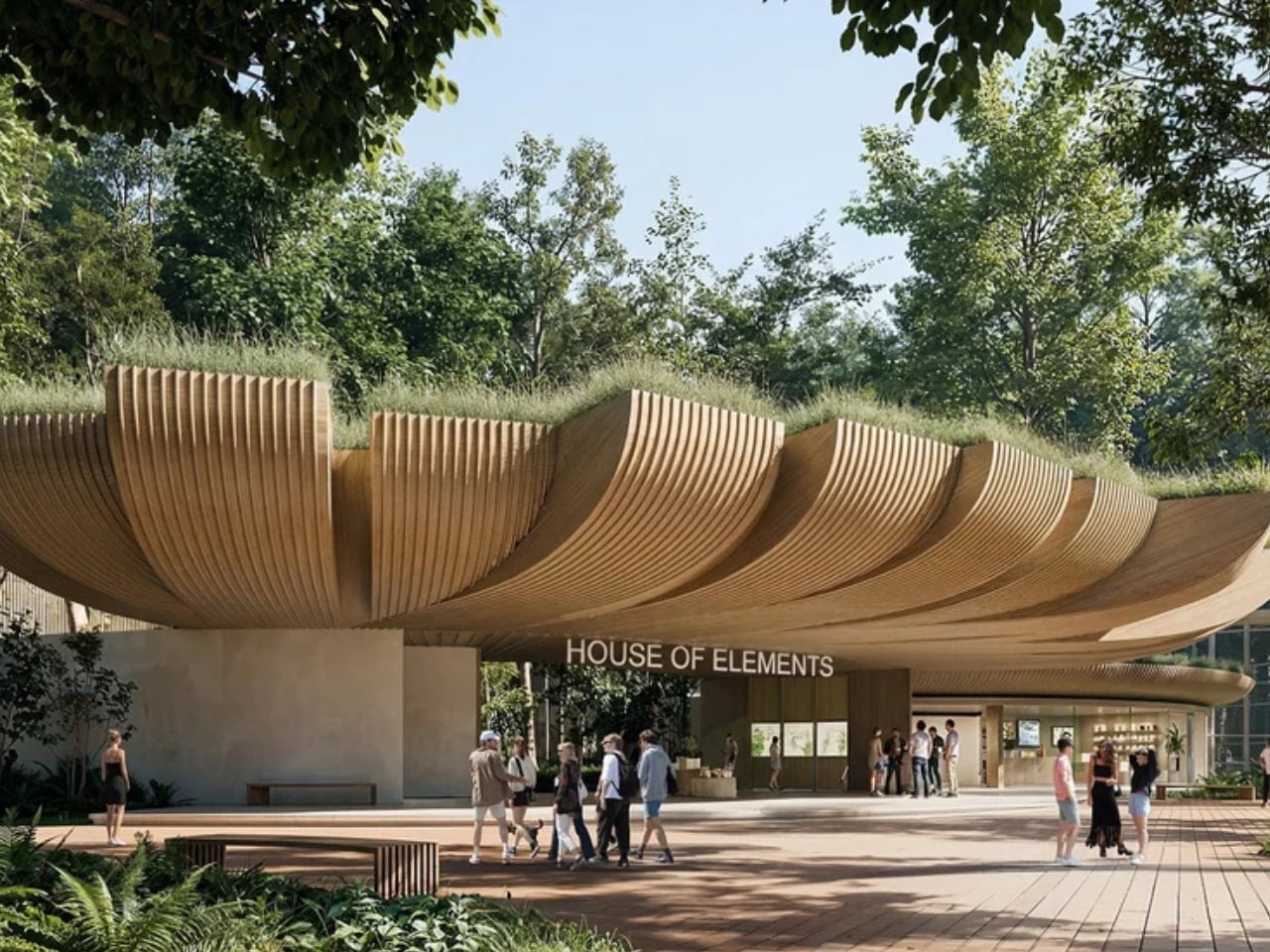
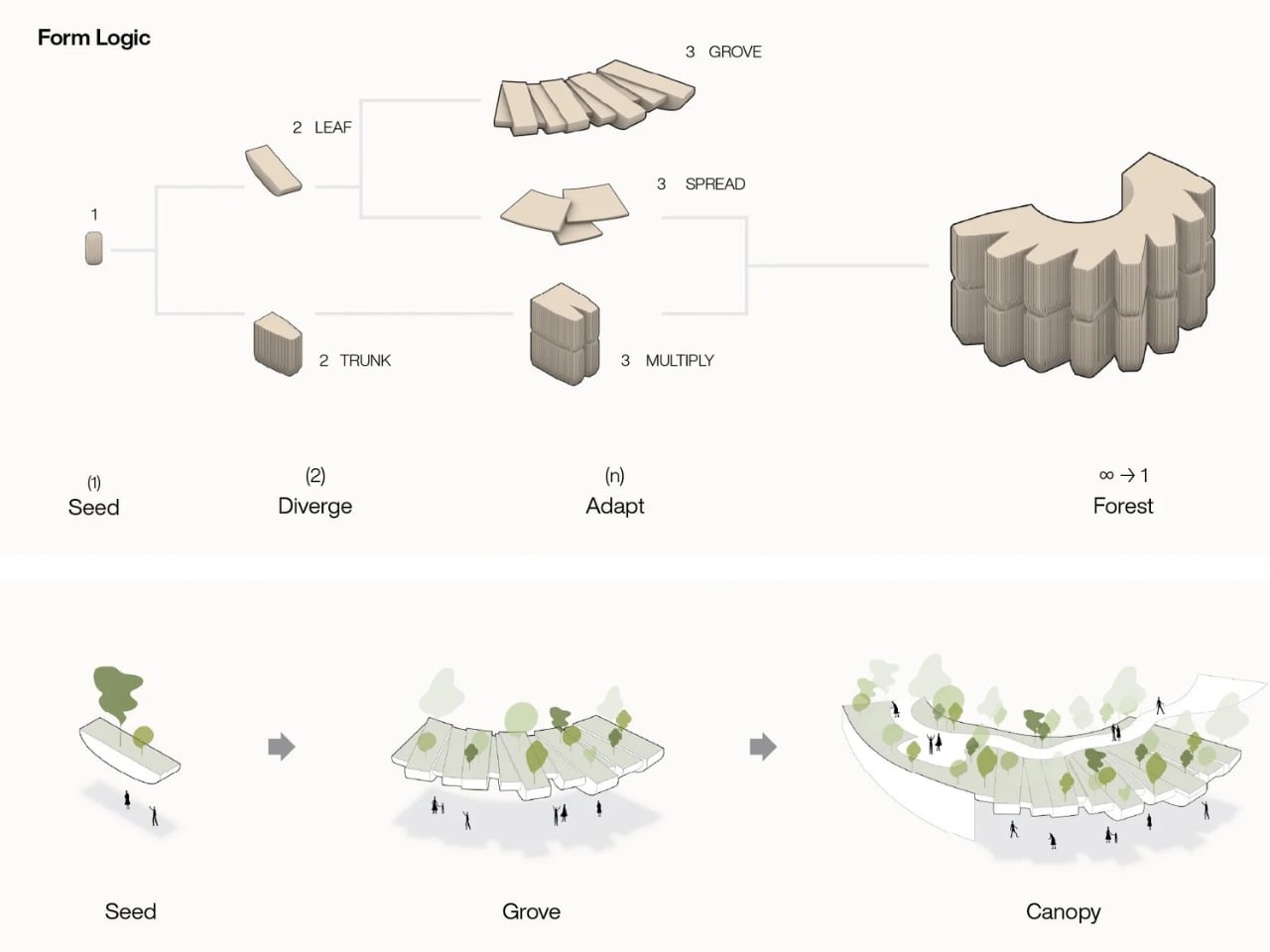
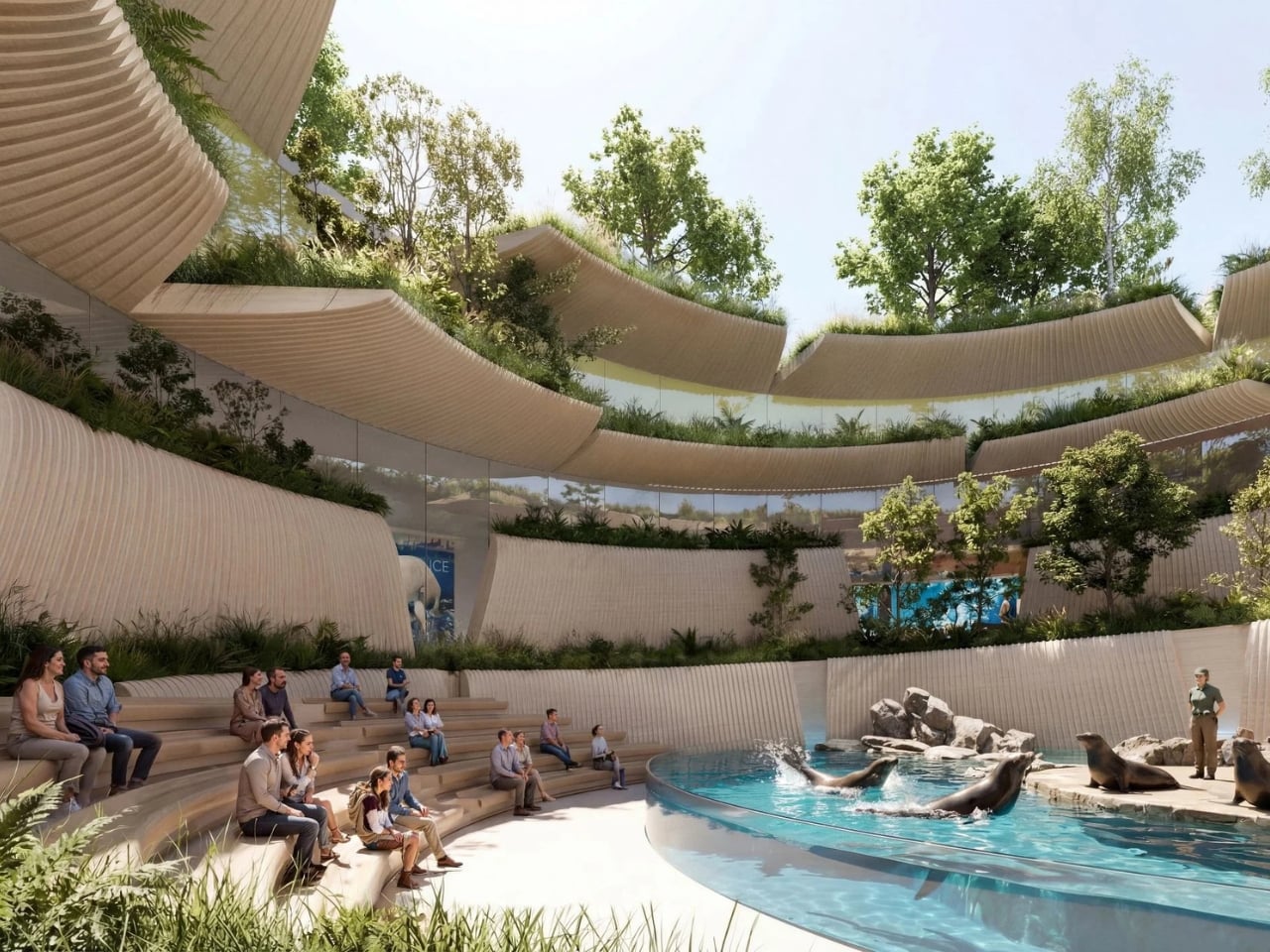
What makes this design fascinating is how VMA used a single architectural seed profile that diverges and adapts throughout the building. Think of it like watching one musical theme morph and transform across a symphony. The result? A unified facade that looks like a forest of timber-clad profiles rising like tall planters, each capped with green roofs. This modular approach means the building can respond individually to different needs (enclosure, shading, circulation, landscape integration) while still feeling like one cohesive whole.

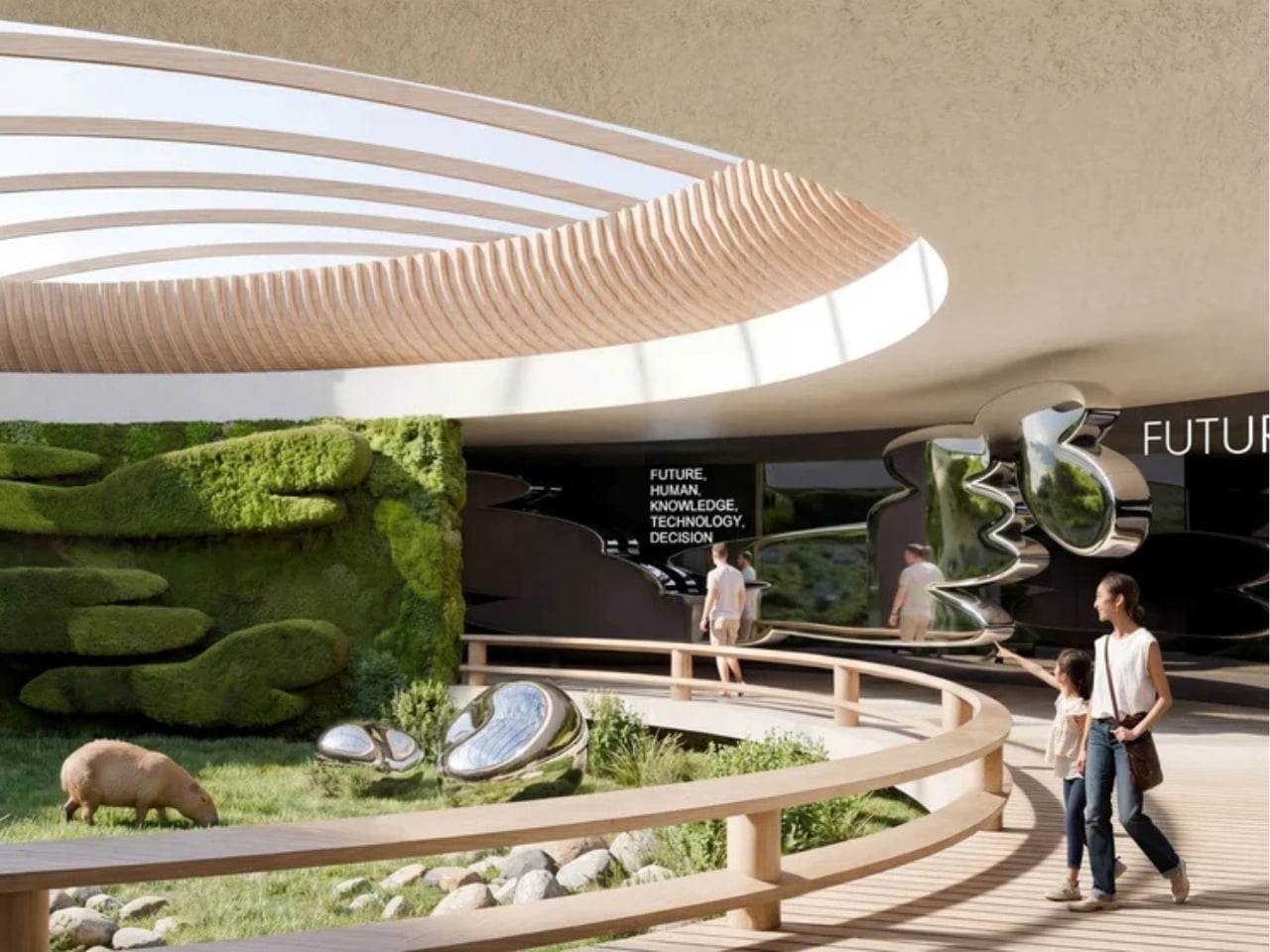
The animal habitats themselves are impressively diverse. Giant tortoises live among volcanic terrain with elevated walkways tracing along their space. Capybaras hang out near living moss walls and chrome sculptures. There’s even a sea lion courtyard and a central garden connected by a spiral path. Each zone captures the essence of its element without resorting to theme park theatrics.

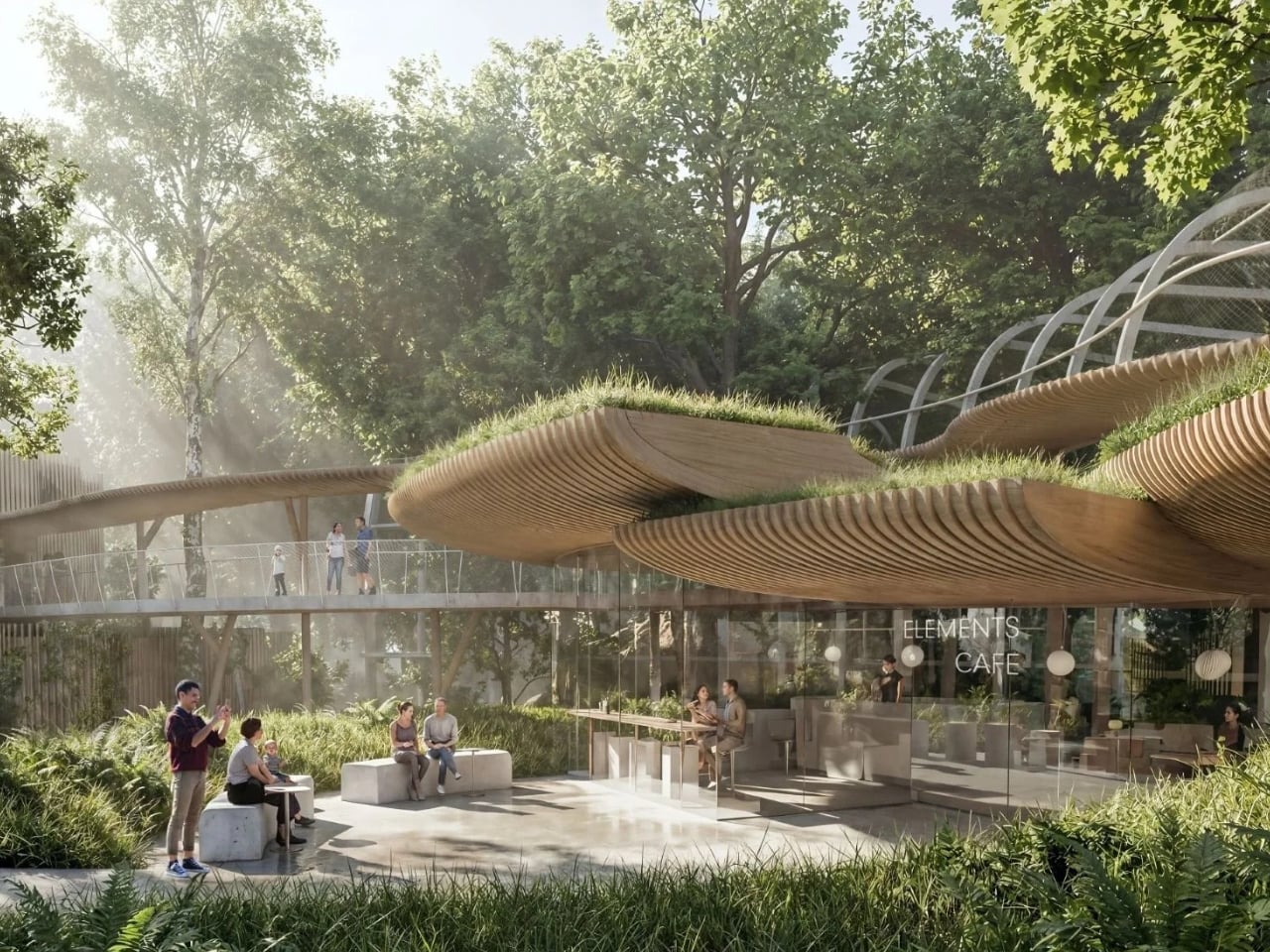
VMA didn’t just think about the building in isolation either. The project establishes a new public open space that connects the zoo’s main entrance, the existing Orientarium complex (a Southeast Asian wildlife facility completed in 2022), and this new pavilion. The design includes a series of planted roof decks and ramps serving a cafe and aviary, creating multiple layers of experience both inside and outside the main structure.

There’s something particularly clever about how the building treats humans as the fifth element. Visitors aren’t just passive observers walking through glass corridors. The architecture positions people as part of the evolutionary narrative, making the experience feel less like watching nature behind barriers and more like understanding our place within it.

The competition itself attracted international attention, with architects given until December to submit proposals that included visualizations of the building integrated into the zoo’s landscape plus three floor plans showing different levels. That VMA, a Bangkok-based studio, won a competition in Poland speaks to how universal their design language became. The elements, after all, are the same everywhere.

Looking at the renderings, what strikes you most is the facade. Those timber profiles create rhythm and texture while the green roofs blur the line between building and landscape. It’s biophilic design done right, not as decoration but as fundamental architectural strategy. The structure looks like it grew from the ground rather than being imposed on it.

This project represents a bigger shift in zoo design philosophy. The best contemporary zoos recognize they’re not just about displaying animals but about telling stories of conservation, evolution, and interconnection. Architecture becomes the narrative framework that makes those stories visceral rather than abstract. VMA understood this assignment perfectly.

The House of Elements follows the completion of the Orientarium Southeast Asian wildlife complex and represents the second major development at Łódź Zoo. Together, these projects are transforming what was once a standard municipal zoo into something far more ambitious: a place where architecture, animals, and ideas converge to create experiences that stick with you long after you leave.

When the pavilion eventually opens, visitors will walk through earth and ice and fire and emerge changed, having experienced not just animal habitats but the fundamental forces that make life on this planet possible. That’s the kind of design ambition we need more of.

The post When Zoo Design Tells the Story of Life Itself first appeared on Yanko Design.
Meta turned Threads algorithm complaints into an official feature

Threads users have been complaining about its recommendation algorithm pretty much since the beginning of the platform. At some point, this turned into a meme, with users writing posts jokingly addressed to the algorithm in which they requested to see more posts about the topics they're actually interested in.

Now, Meta is turning those "Dear algorithm" posts into an official feature that it says will allow Threads users to tune their recommendations in real time. With the change, users can write a post that begins with "dear algo" to adjust their preferences. For example, you could write "dear algo, show me more posts about cute cats." You can also ask to see fewer posts about topics you don't want to see, like "dear algo, stop showing me posts about sick pets."

You can track your requests to the algorithm in the app's settings in order to revisit them or remove them. You can also retweet other users' "dear algo" posts to have those topics reflected in your feed. Importantly, "dear algo" requests are temporary and only last for three days at a time, which Meta says is meant to keep the algorithm feel fresher and more flexible.  

The rollout of the feature follows a limited test late last year. Now, "dear algo" posts will work for Threads users in the US, UK, Australia and New Zealand with more countries coming "soon."

This article originally appeared on Engadget at https://www.engadget.com/social-media/meta-turned-threads-algorithm-complaints-into-an-official-feature-180000236.html?src=rss