Adidas Made a Marathon Shoe That Weighs Less Than an Apple

Pick up an apple from your kitchen counter. Now imagine a pair of running shoes weighing less than that single piece of fruit. That’s the Adidas Adizero Adios Pro Evo 3, and it’s not a concept shoe or a lab curiosity. It just debuted at the 2026 London Marathon, worn by Sabastian Sawe and Yomif Kejelcha, who became the first athletes in history to break the sub-two-hour marathon barrier.

The Evo 3 weighs in at just 97 grams in a UK size 8.5, making it the first sub-100-gram racing shoe Adidas has ever produced. For context, the shoe’s box weighs more than the shoe inside it. That’s the kind of engineering achievement that sounds like a flex until you understand how much it actually matters at race pace.

Designer: adidas

The secret is a new construction called ENERGYRIM, a carbon-integrated design that completely rethinks how a supershoe is built. Rather than simply layering carbon plates into foam, Adidas redesigned the relationship between the two, allowing them to work in concert rather than independently. The result is a shoe that’s 30% lighter than its predecessor, with 11% greater forefoot energy return and a 1.6% improvement in running economy. To put those numbers in context: at the marathon level, a 1.6% improvement in running economy isn’t marginal. It’s the kind of number that separates a podium from a personal best.

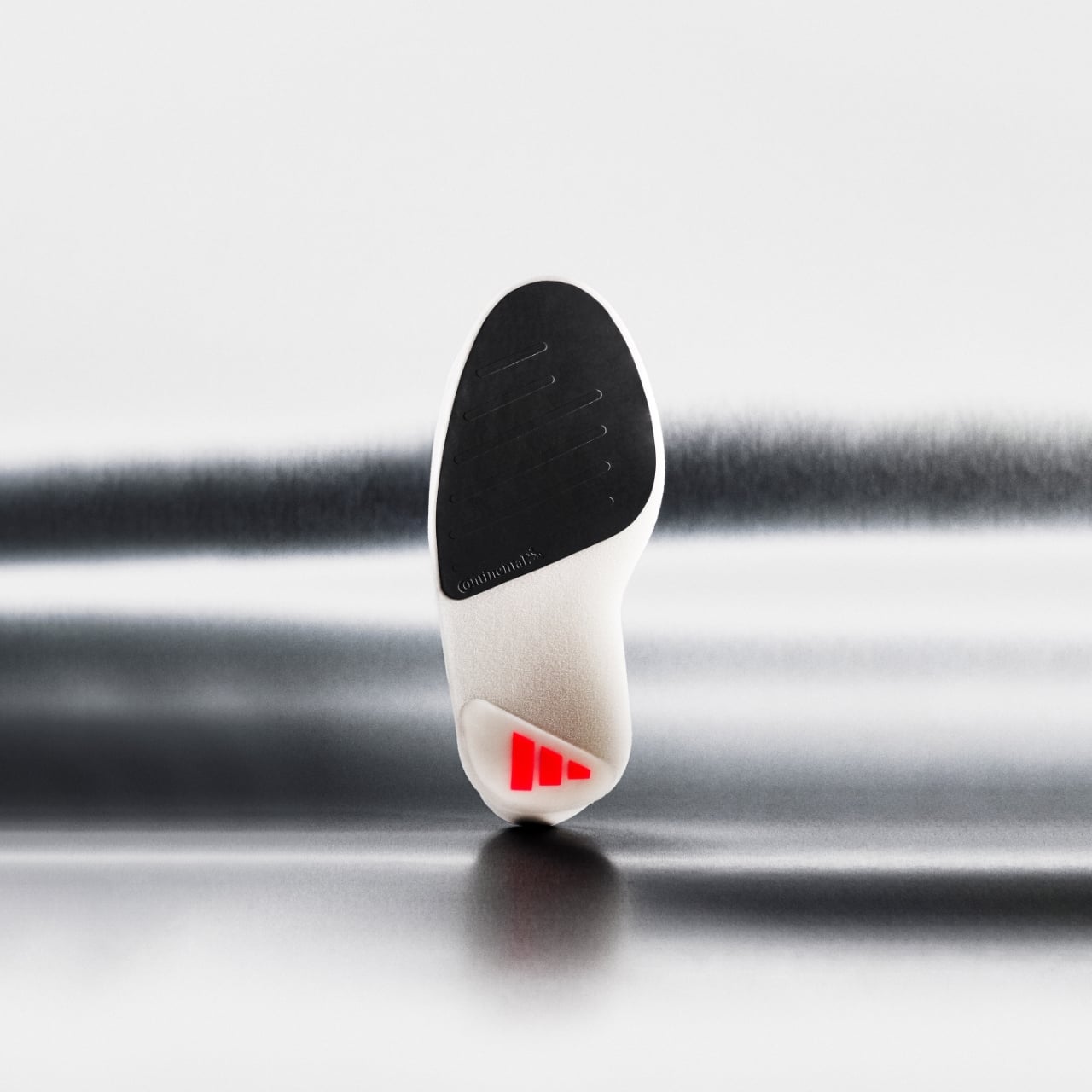
The foam itself is the other major story here. Adidas developed a new generation of Lightstrike Pro Evo compound that is 50% lighter than the version used in the Evo 2. That’s not a small iteration. It’s a material science leap that took three years and over a dozen tested prototypes, refined in labs in Herzogenaurach and tested at altitude training camps in Kenya and Ethiopia. Elsewhere on the shoe, the outsole ditches the liquid rubber coating from the previous model in favor of strategically placed Continental rubber, a welcome upgrade for anyone who isn’t a professional sprinter running on perfectly dry asphalt. It’s a small change that makes the shoe meaningfully more accessible without compromising the weight equation in any significant way.

From a design standpoint, the Evo 3 is striking in the way extreme performance gear tends to be: lean, almost aggressive, with a silhouette that looks sculpted rather than constructed. The toebox is narrow, almost spike-like, which is clearly a functional decision rather than an aesthetic one. The fit prioritizes containment over comfort, and that feels like the right philosophy for a race day shoe that is not designed for casual wear. You wear shoes like this to run the fastest race of your life. The trade-offs are understood, and most serious runners will make them without hesitation.

The price is USD 500, with an initial limited release on April 27, 2026, and a wider launch expected in fall 2026. That price tag will raise eyebrows. But it helps to remember that the Adizero Evo franchise has already seen athletes break three world records and win over 30 major road races since 2023, including six World Marathon Major wins and an Olympic record time. The shoe’s pedigree isn’t marketing copy. It’s a documented track record.
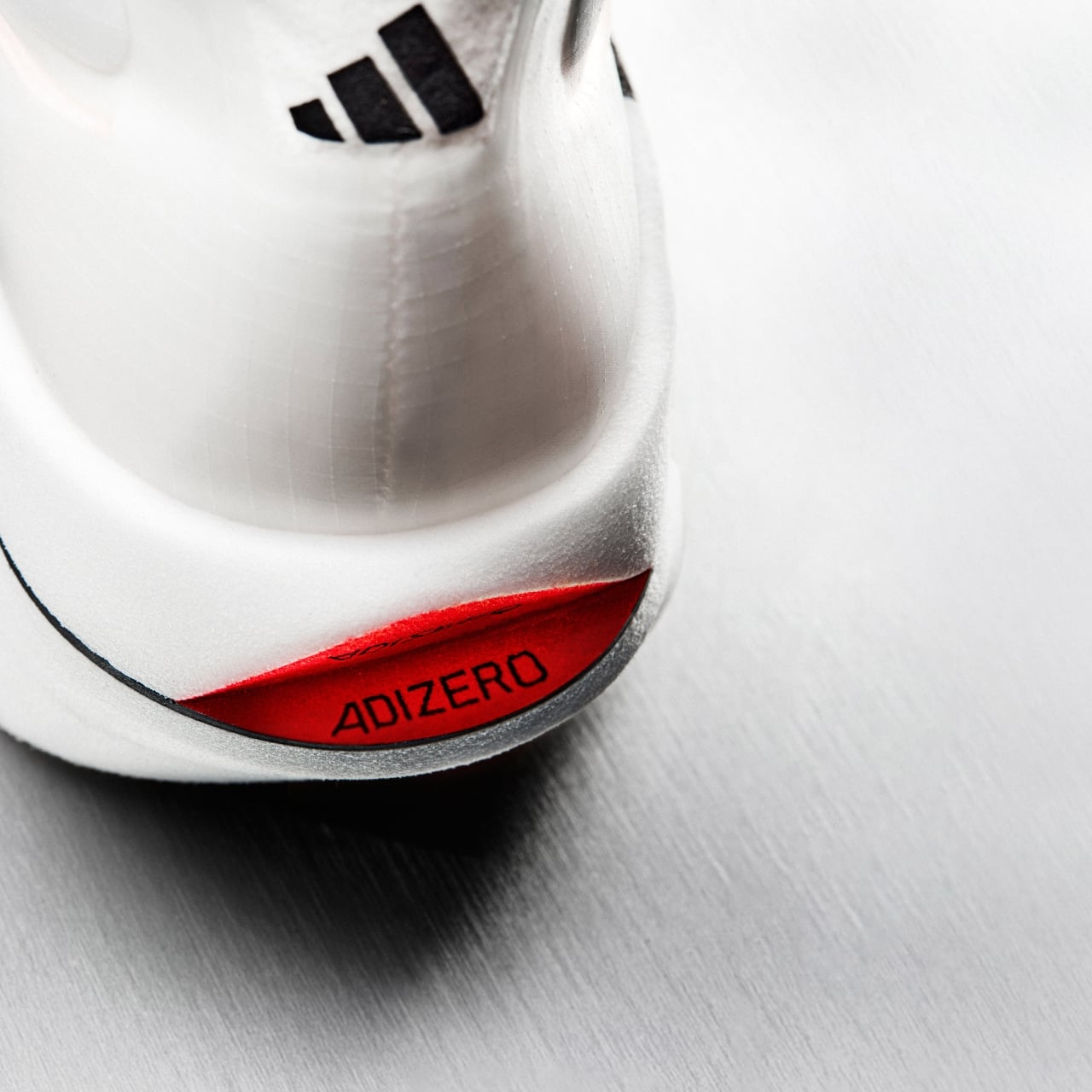
What makes the Evo 3 genuinely interesting beyond the running community is what it represents as a design object. It sits at the intersection of sports science, materials engineering, and product design in a way that very few consumer products ever manage. The obsession with weight reduction, the carbon geometry experiments, the altitude testing: these are the ingredients of something closer to aerospace thinking than traditional footwear development. When the research process looks more like aircraft engineering than sneaker design, the result tends to look and perform like nothing that came before it.
Whether you run marathons or not, there’s a certain pleasure in watching a brand push against what seemed like a physical limit and actually break through. Adidas didn’t just shave a few grams off an existing shoe. They asked what a marathon shoe could look like if weight were treated as a fundamental design constraint rather than just another spec to optimize. The answer is 97 grams. And somehow, impossibly, it still performs better than everything that came before it.

The post Adidas Made a Marathon Shoe That Weighs Less Than an Apple first appeared on Yanko Design.

Google Translate uses AI to help you practice pronunciation

Google is celebrating Translate’s 20th birthday by launching pronunciation practice, which the company says is one of the most requested features for the product. The feature is only rolling out on Android at the moment for English, Spanish and Hindi in the US and India. If it’s available for you, you’ll see a button at the bottom of the app that says “Practice,” which gives you the option to either “pronounce” what you’ve translated or to “listen” to how it’s actually pronounced by native speakers.

If you choose the “pronounce” option, Translate will listen to you speak and then use artificial intelligence to analyze how you said the words to provide instance feedback. It will then show you a phonetic spelling of how specific words should be pronounced. In the example Google provided, for instance, the speaker pronounced the Spanish word for juice as “jugo” with the English “j” sound instead of with the Spanish “j” sound. So, Translate spells it out as “HU-go” in its pronunciation suggestion.

Google said around third of users on mobile use Translate to practice speaking and listening in order to be able to hold real-world conversations, making this new feature a very useful addition. The company also revealed other stats about the app. Apparently, it now supports over 250 languages, including some endangered and indigenous ones, and has over 1 billion monthly user who have been translating over 1 trillion words every month.

This article originally appeared on Engadget at https://www.engadget.com/ai/google-translate-uses-ai-to-help-you-practice-pronunciation-160000542.html?src=rss

Google and the Pentagon sign classified deal to give the Department of Defense unfettered access to its AI models

Google has signed a deal that allows the US Department of Defense to use its AI models for "any lawful government purpose." This is according to a report by The Information, which also notes that the full details of the contract are classified.

An anonymous source within the company has suggested that the two entities have agreed that the search giant's AI tech shouldn't be used for domestic mass surveillance or autonomous weapons "without appropriate human oversight and control." However, the contract also reportedly doesn't give Google "any right to control or veto" anything the government decides to do. In other words, the famously trustworthy US government will just have to be taken at its word. 

“We believe that providing API access to our commercial models, including on Google infrastructure, with industry-standard practices and terms, represents a responsible approach to supporting national security,” a Google spokesperson told Reuters. The spokesperson also echoed that the company holds the opinion that AI shouldn't be used for mass surveillance or autonomous weaponry without appropriate human oversight. Some might argue that the technology shouldn't be used for that stuff at all, oversight or not.

To that end, nearly 600 Google employees just penned an open letter to CEO Sundar Pichai to urge the company against making this kind of deal with the Pentagon. This stems from concerns that the tech would be used in "inhumane or extremely harmful ways." 

"Human lives are already being lost and civil liberties put at risk at home and abroad from misuses of the technology we are playing a key role in building," the letter states. "As people working on AI, we know that these systems can centralize power and that they do make mistakes."

Google will join OpenAI and Elon Musk's xAI in this endeavor, as they both have made classified AI deals with the US government. Anthropic had a deal in place, but refused the government's demands to remove weapon and surveillance-related safeguards. 

That refusal annoyed President Trump and the Pentagon so much that Anthropic was entirely blacklisted from federal use. This doesn't exactly sound like the actions of a government that is dedicated to "appropriate human oversight and control" of dangerous AI military tech. Engadget has reached out to Google to ask for more specifics and will update this post when we hear back. 

This article originally appeared on Engadget at https://www.engadget.com/ai/google-and-the-pentagon-sign-classified-deal-to-give-the-department-of-defense-unfettered-access-to-its-ai-models-155211834.html?src=rss

0-60 in 2.4 Seconds: How the New Porsche Cayenne Coupé Electric Beats Most Supercars

0-60 in 2.4 Seconds: How the New Porsche Cayenne Coupé Electric Beats Most Supercars

  The Porsche Cayenne Coupé Electric is poised to transform the electric SUV segment, seamlessly blending the iconic design heritage of the Porsche 911 with innovative technology and performance. Scheduled for its global unveiling at Auto China 2026 in Beijing, this luxury electric vehicle (EV) represents a harmonious fusion of sporty aesthetics, advanced engineering and […]

The post 0-60 in 2.4 Seconds: How the New Porsche Cayenne Coupé Electric Beats Most Supercars appeared first on Geeky Gadgets.

Posted in Uncategorized

The FTC says Americans lost at least $2.1 billion to social media scams in 2025

Americans lost at least $2.1 billion in 2025 to scams that originated on social media, according to the Federal Trade Commission. That figure marks an eightfold increase since 2020.

The FTC said Americans reported losing $1.1 billion last year to investment scams that started on social media. These often began with a post or ad offering a program that claimed to help people learn how to invest. More than 40 percent of Americans who lost money through a social media scam last year blamed shopping-related ads, many of which took them to "unfamiliar websites," the FTC said. The agency also highlighted the problem of romance scams that start on social media. 

Most of these scams started on Facebook, with WhatsApp and Instagram in "a distant second and third," the FTC noted. A lawsuit filed against Meta, which owns all three platforms, last week claimed that it misled users about scam ads. In 2025, it was reported that Meta was making billions of dollars from ads promoting scams and illegal products.

Of course, other types of internet scams are snaring regular folks. The FBI said earlier this month that Americans reported losing nearly $21 billion to internet-related crimes in 2025, more than half of which was to cryptocurrency scams. Artificial intelligence scams cost Americans around $893 million last year, the FBI said. And that's just what people have reported losing — many victims won't file complaints to the FBI or FTC.

The FTC offers some advice on how to protect yourself from social media scams, such as limiting the reach of your posts so scammers have less specific information to work with and to avoid letting "someone you have met only on social media direct your investment decisions." The agency also suggests searching for a company's name along with "scam" or "complaint" before buying anything.

As always, tread cautiously, do your own research and if something sounds too good to be true, it probably is. Be careful out there, folks.

This article originally appeared on Engadget at https://www.engadget.com/social-media/the-ftc-says-americans-lost-at-least-21-billion-to-social-media-scams-in-2025-152846798.html?src=rss

Steam Controller Returns with a Modern Redesign and Deeper Ecosystem Integration

Steam surprised gamers with the announcement of three new products back in November 2025. Those were the Steam Machine gaming console, the Steam Frame wireless VR headset, and the brand new Steam Controller, marking the first-ever update in a decade. While the first two don’t yet have a clear release window, the Steam controller is almost here.

Priced at $99, the controller is scheduled to launch on May 4, putting it within immediate reach for gamers invested in the platform. However, details around pre-orders remain unclear, leaving some uncertainty about how quickly users will be able to secure one, subject to the RAM availability crisis. Regardless, the update represents a significant step forward from the original Steam Controller, which debuted in 2015 with a bold but divisive design that relied heavily on dual trackpads instead of traditional analog sticks.

Designer: Steam

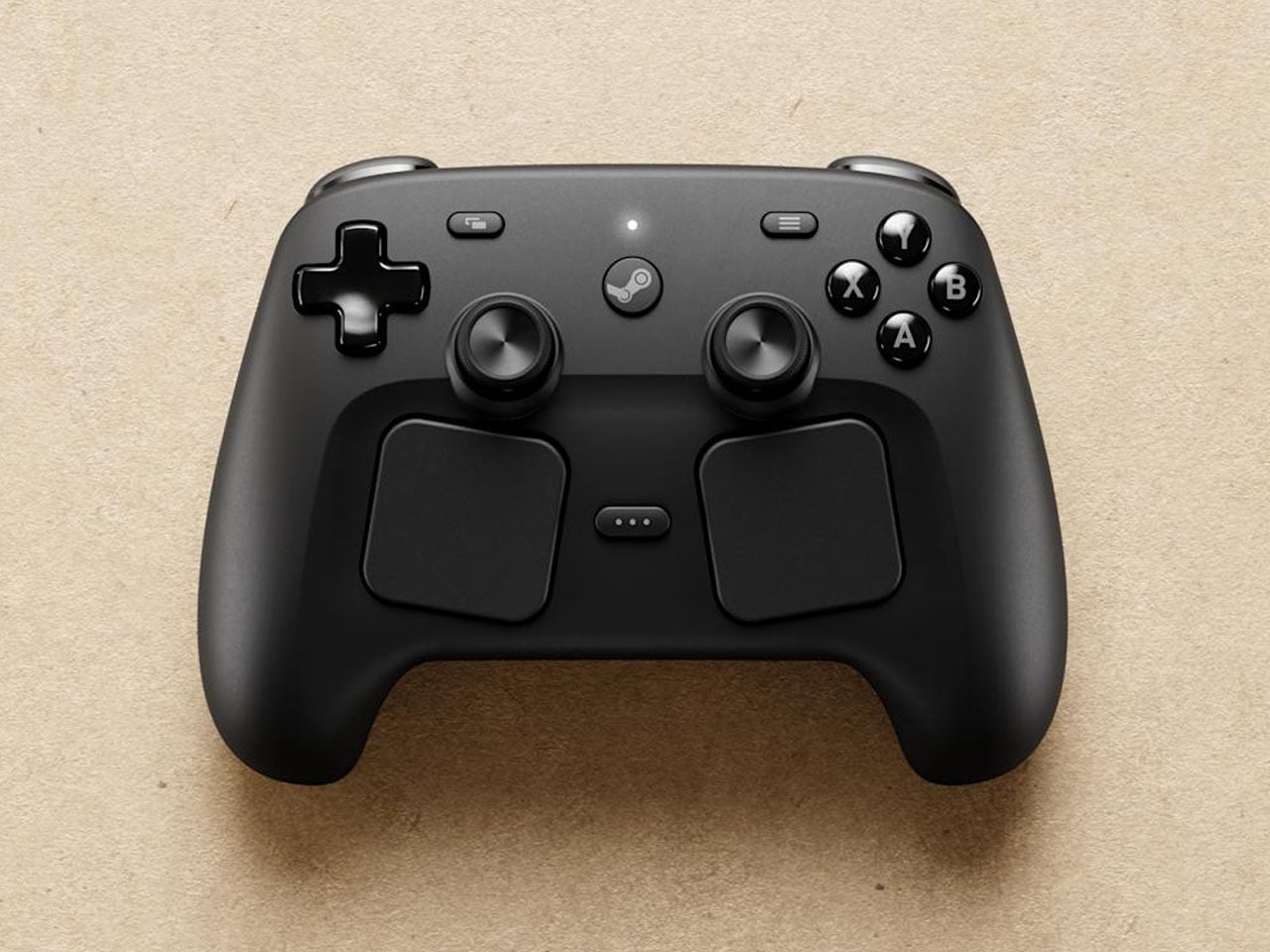
This new iteration reflects a more balanced approach as Valve appears to have taken feedback from years of community use and criticism, integrating more familiar elements while retaining some of its experimental DNA. The repositioned trackpads remain part of the experience but are no longer the dominant input method. Instead, the inclusion of a standard D-pad and a second thumbstick brings the controller closer to conventional gamepads, making it more intuitive for a wider audience. The overall layout bears a strong resemblance to the Steam Deck, suggesting tighter integration with Valve’s existing ecosystem and improved compatibility with modern game design.

That shift in design is not just cosmetic; it addresses one of the biggest barriers of the original controller: accessibility. Earlier, the reliance on trackpads required a learning curve that many players found difficult to overcome. By contrast, this updated model blends precision controls with familiarity, making it more suitable for a broader range of genres, including fast-paced AAA titles that demand responsiveness and accuracy.

Image Credit: The Verge

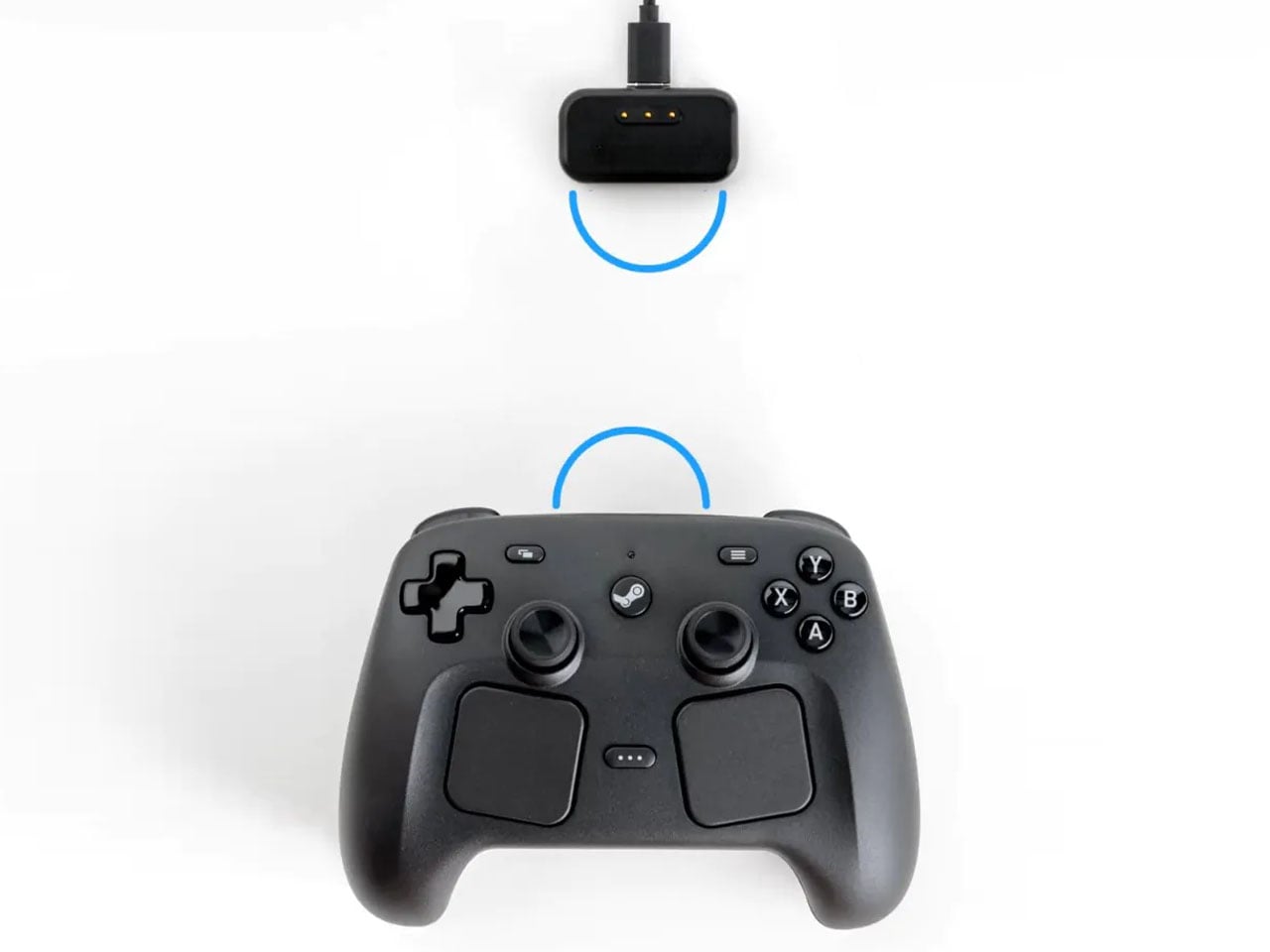
Connectivity has also been modernized. The controller supports both wired and wireless play, offering flexibility depending on user preference. A USB-C port ensures faster and more reliable wired connections, while built-in Bluetooth expands compatibility across devices. A notable addition is the magnetic charging puck, which simplifies the wireless charging process and reduces the friction typically associated with battery management. These upgrades align the controller with current hardware standards, ensuring it feels contemporary rather than experimental.

However, there is a limitation that may affect its appeal beyond dedicated users. The controller is designed primarily for the Steam ecosystem, meaning its full functionality is likely restricted to Valve-supported platforms. While this ensures deep integration and optimized performance within Steam, it could limit adoption among gamers who prefer a more universal controller that works seamlessly across consoles and third-party platforms. Despite this, the new Steam Controller represents a thoughtful evolution rather than a radical reinvention.

The post Steam Controller Returns with a Modern Redesign and Deeper Ecosystem Integration first appeared on Yanko Design.

Ted Lasso’s fourth season starts August 5

It turns out you can go back again, especially if you win a pile of awards, mint a crop of stars and turn a potentially obscure sitcom into Apple’s biggest hit. The iPhone maker has today announced Ted Lasso season four will debut August 5, with new episodes arriving every Wednesday through October 7. This time out, Ted and Beard have returned to Richmond to take over coaching its women’s team as it languishes in the second division.

Ted Lasso wrapped up its initial three-season arc back in 2023, wrapping up its storylines in a fairly definitive manner. Despite this, Apple wanted to maintain one of its earliest breakout hits and so quickly started making moves to get an additional run under way. Jason Sudekis, Brendan Hunt, Hannah Waddingham, Juno Temple, Brett Goldstein and Jeremy Swift are all returning for the run. But, given the focus on the women’s team, there’s a whole new crop of cast members, including Sex Education’s Tanya Reynolds and Andor’s Faye Marsay.

There are changes behind the scenes too, especially given showrunner Bill Lawrence’s split focus on his current hot streak of shows. Consequently, Jack Burditt, who created Last Man Standing, is taking the role of executive producer —- try not to worry, however, he also worked on Frasier, 30 Rock and Unbreakable Kimmy Schmidt. You should check out the teaser trailer below and wonder why Tracy Ullman, who is all over the footage, doesn’t even get so much as a namecheck in Apple TV’s press release.

This article originally appeared on Engadget at https://www.engadget.com/entertainment/streaming/ted-lassos-fourth-season-starts-august-5-150337209.html?src=rss

Trump administration is paying more companies to abandon offshore wind projects

The Trump Administration has signed deals with two major energy companies to abandon their respective offshore wind farms, with both firms agreeing to invest in oil and gas projects instead.

The separate agreements were detailed in a press release from the Interior Department, which named Bluepoint Wind and Golden State Wind as the companies that have voluntarily agreed to end their current leases for a combined $885 million. Both firms have also said they don’t intend to pursue any new offshore wind projects in the US going forward.

Bluepoint Wind is an early-stages wind farm located off the coast of New Jersey and New York, while Golden State Wind, which is similarly in its infancy, is off California’s central coast. The government will provide dollar-for-dollar reimbursements of what each lease cost when they were agreed under the Biden administration, which Interior Secretary Doug Burgum said were "only viable when propped up by massive taxpayer subsidies."

Global Infrastructure Partners (GIP), which co-owns Bluepoint Wind with Ocean Winds, will invest up to $765 million into a liquefied natural gas (LNG) facility in the US. Ocean Winds is also one half of the 50/50 partnership that owns Golden State Wind, which will recover approximately $120 million in lease fees after investing in further oil and gas projects along the Gulf Coast.

The deals are similar in structure to the one the Trump administration agreed last month with French energy giant TotalEnergies, reaffirming the government’s seemingly unwavering commitment to outright rejecting clean energy in favor of doubling down on fossil fuels. Meanwhile, the accuracy of President Trump’s claims about climate change and the cost of renewable energy continues to be challenged.

This article originally appeared on Engadget at https://www.engadget.com/science/trump-administration-is-paying-more-companies-to-abandon-offshore-wind-projects-150216769.html?src=rss

iPhone Ultra Fold Leaks: The 7.8-Inch Display That Fits in Your Pocket

iPhone Ultra Fold Leaks: The 7.8-Inch Display That Fits in Your Pocket iPhone Ultra Fold

Apple is preparing to make a significant entry into the foldable smartphone market with the highly anticipated iPhone Fold. This device combines state-of-the-art hardware, innovative engineering and software tailored to its unique design, promising a fresh and versatile user experience. However, its premium price tag and niche appeal may restrict its audience. Here’s an in-depth […]

The post iPhone Ultra Fold Leaks: The 7.8-Inch Display That Fits in Your Pocket appeared first on Geeky Gadgets.

Posted in Uncategorized

Traeger debuts the Irontop, a more affordable gas-powered griddle

Traeger’s first non-pellet grills debuted in 2023. Jumping into the griddle craze, the company introduced the Flatrock series in a three-burner model — later adding the smaller, two-burner option. Now Traeger is back with two new griddles, the two- and four-burner Irontop, which actually offer more cooking area than their predecessors. Plus, these new griddles are more affordable, too.

Traeger promises the Irontop models will offer fast preheating, precise temperature control, edge-to-edge heating and a durable construction. The cooking area has a food-safe, rust-resistant coating the company says only requires “simple seasoning and care.” Traeger says the consistent heating across the cooktop is the same level of performance as the more expensive Flatrock series of griddles. The Irontop griddles also have integrated wind guards to insure reliable heating in windy conditions.

The Irontop griddles sit atop carts with four casters. Each model also has two side shelves and a larger shelf underneath for storage. The side shelves can accommodate some of Traeger’s Pop-And-Lock accessories, like the storage bin and roll rack. Those shelves also have three hooks on each side, where you can hang spatulas and other griddle tools.

The two- and four-burner Irontop griddles starting May 15 from various retailers for $500 and $600 respectively. Traeger also recently added two sizes of the new Westwood smart pellet grill to its list of more affordable options, starting at $700.

Update, April 18, 2026, 11:30AM ET: This post has been updated with more detailed availability info from Traeger.

This article originally appeared on Engadget at https://www.engadget.com/home/kitchen-tech/traeger-debuts-the-irontop-a-more-affordable-gas-powered-griddle-150000759.html?src=rss