The fashion industry has a water problem that most people never see. Dyeing fabric is one of the most chemically intensive steps in garment production, and the wastewater that comes out of that process carries synthetic dyes, heavy metals, and other pollutants that routinely end up in rivers and soil. By the time a sequined dress reaches a store, the environmental cost of making it sparkle is already long gone and mostly forgotten.
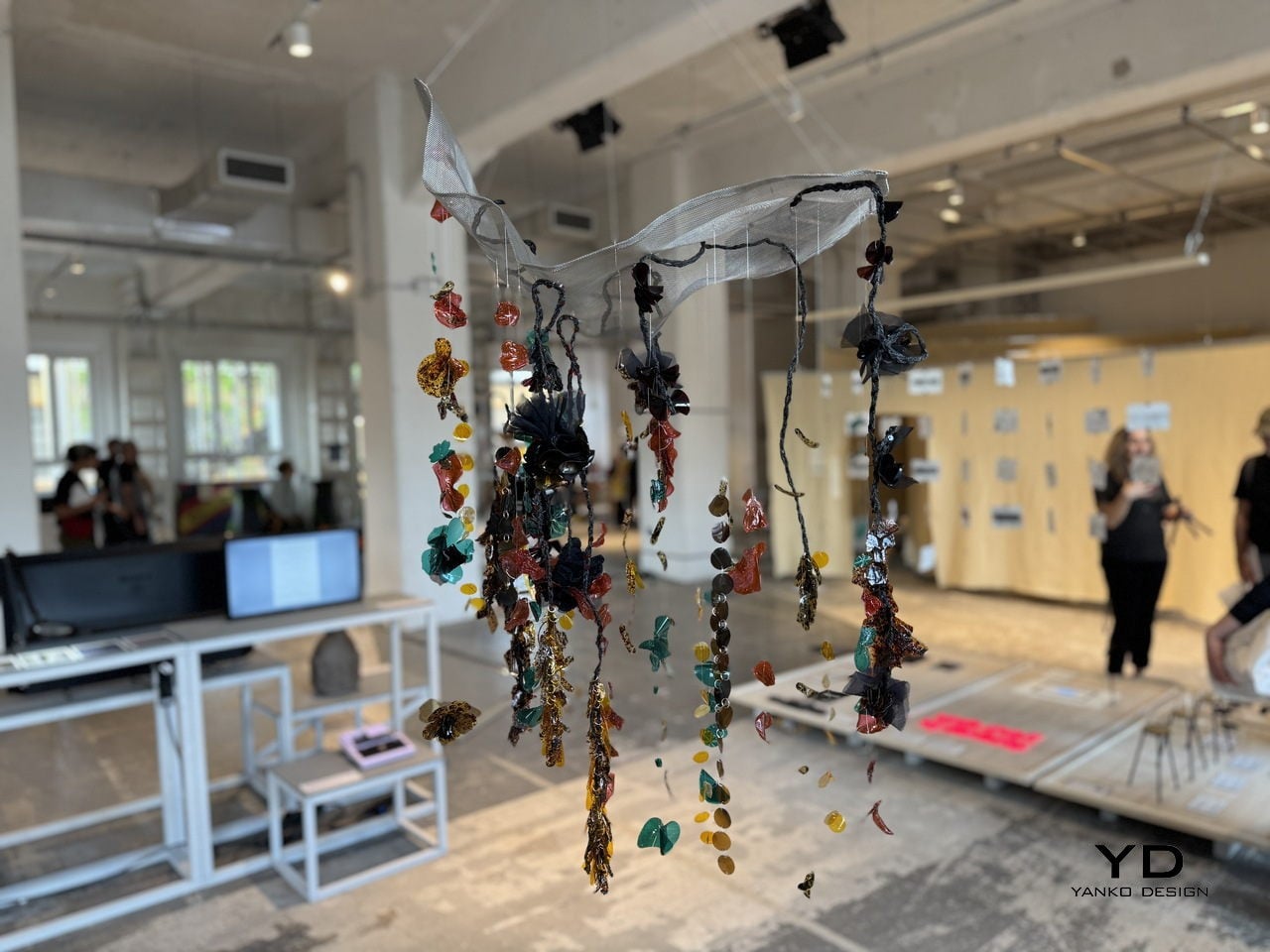
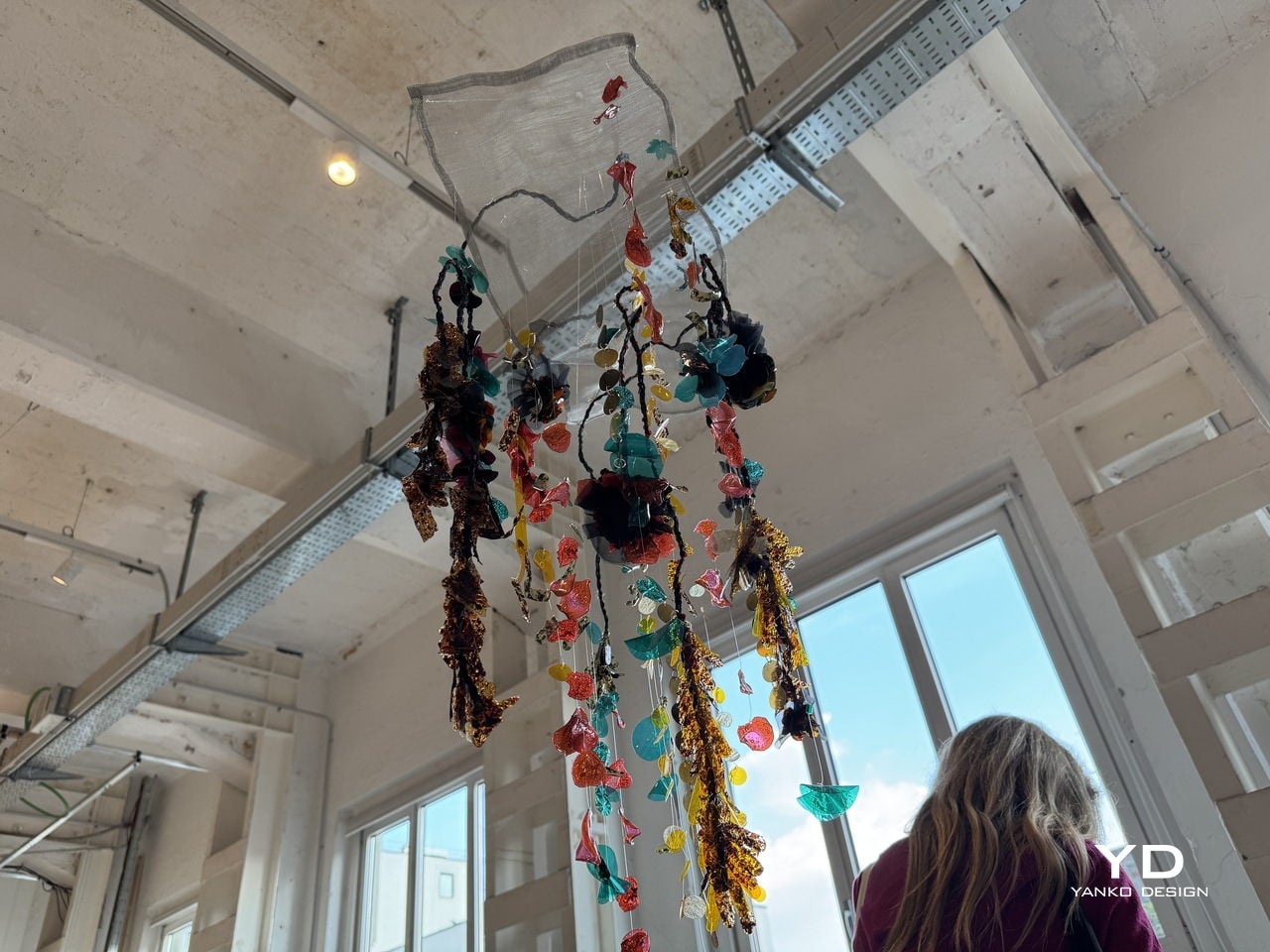
CQ Studio, a London-based regenerative textiles lab, tackled that problem head-on with a material experiment that turns the very wastewater from textile dyeing into the sequins themselves. The result, called Detox Bio-Embellishments, was on show at BASE Milan during Milan Design Week 2026 as part of the studio’s debut exhibition, Transient Gradients.
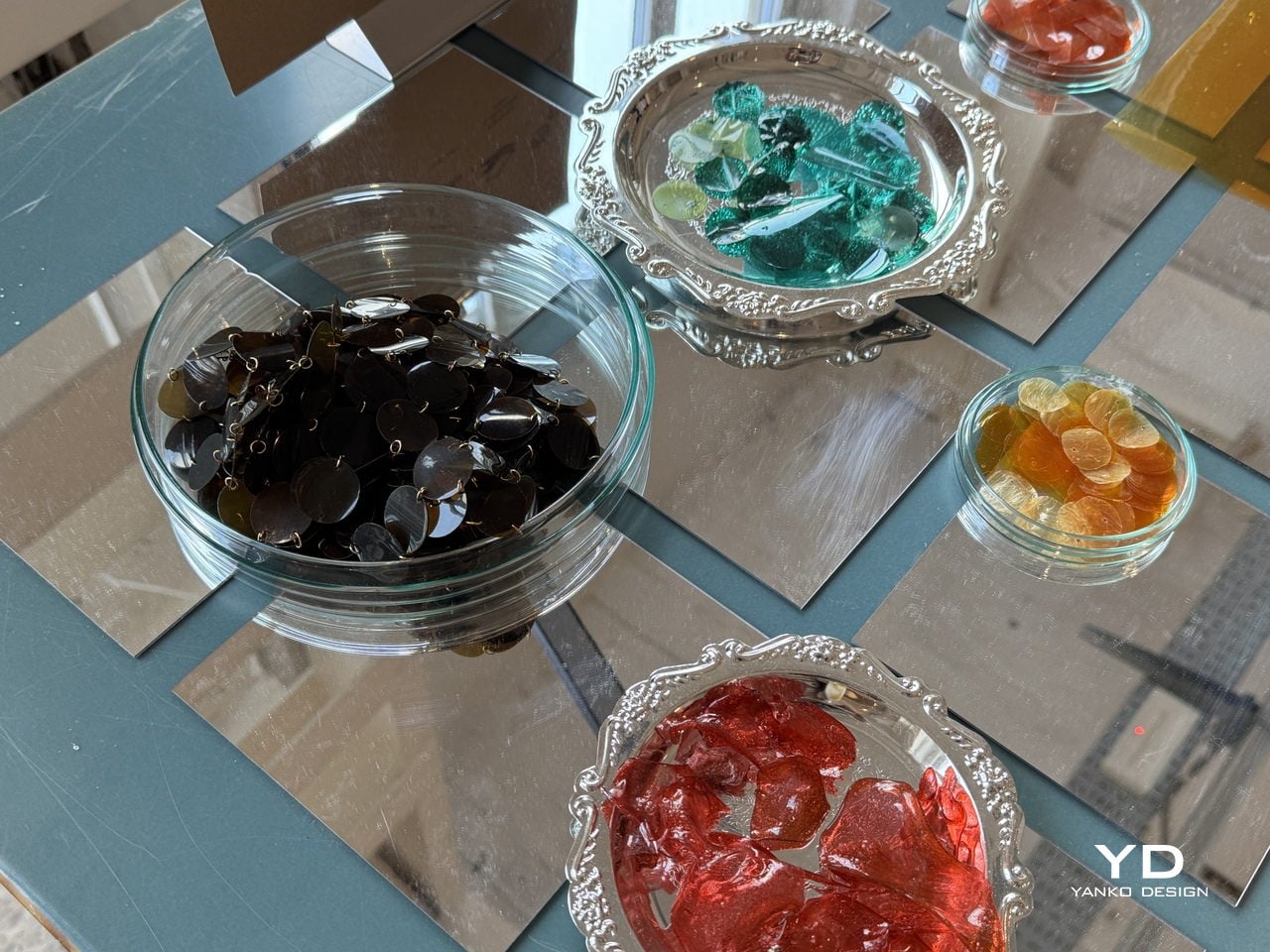
The process starts by running textile-dye wastewater through a detox capture system that uses food waste to pull out the contaminants. Once the water is cleaned and separated, the leftover sludge doesn’t get thrown away. Instead, it’s processed into thin, flexible sheets that look and feel like plastic, but are bio-based, biodegradable, and recyclable. Sequins are then die-cut from those sheets, and whatever scraps remain from the cutting are folded back into the process.
What makes the material particularly clever is how far it extends the concept of nothing wasted. It handles both synthetic-dye and natural-dye wastewater, keeping the synthetic version from ever reaching waterways, while the natural-dye version becomes safe enough to compost into soil. The sheets can also be made using food waste and natural pigments, giving designers a way to produce embellishments in a wide range of colors without any virgin plastic.
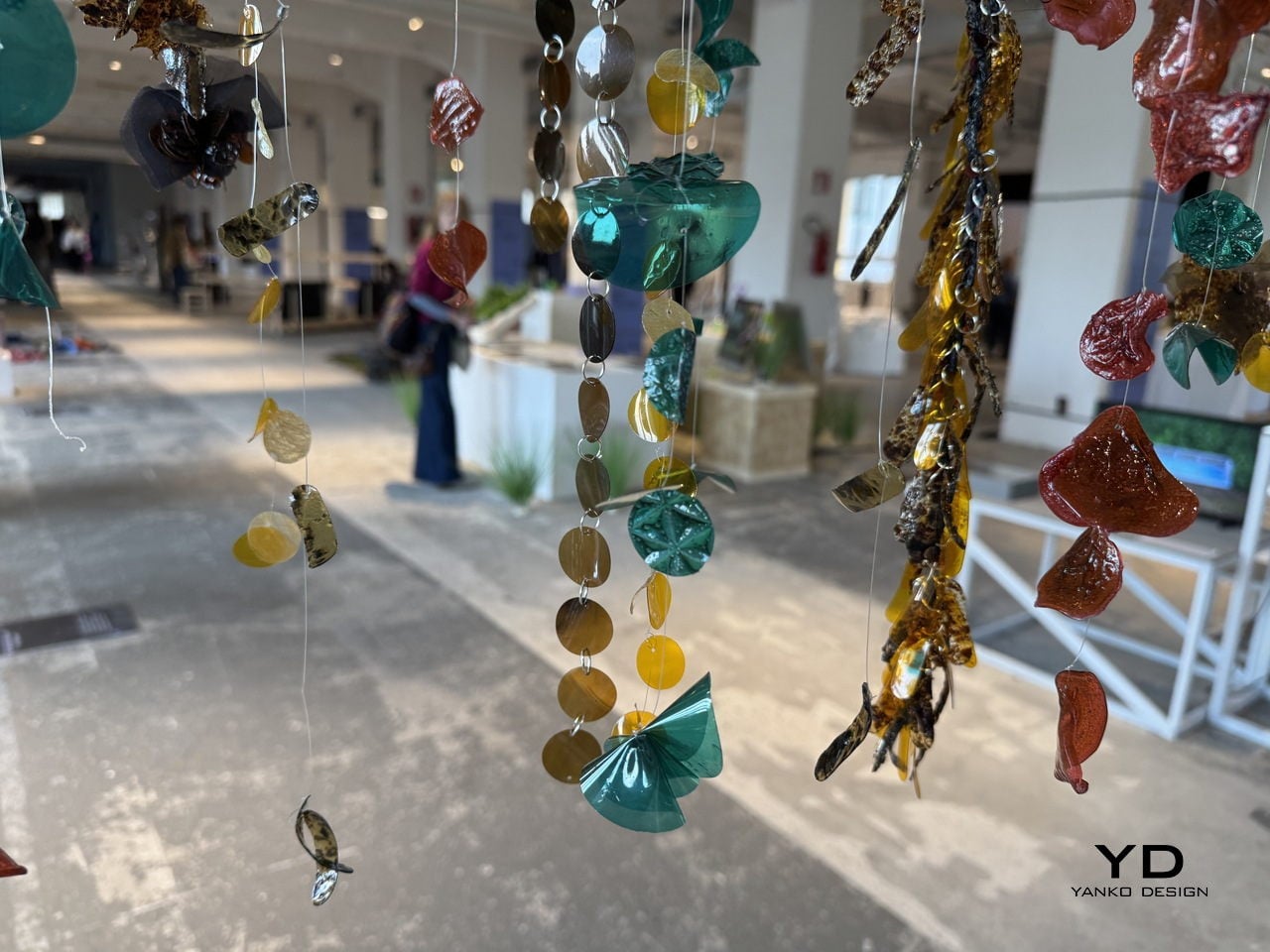
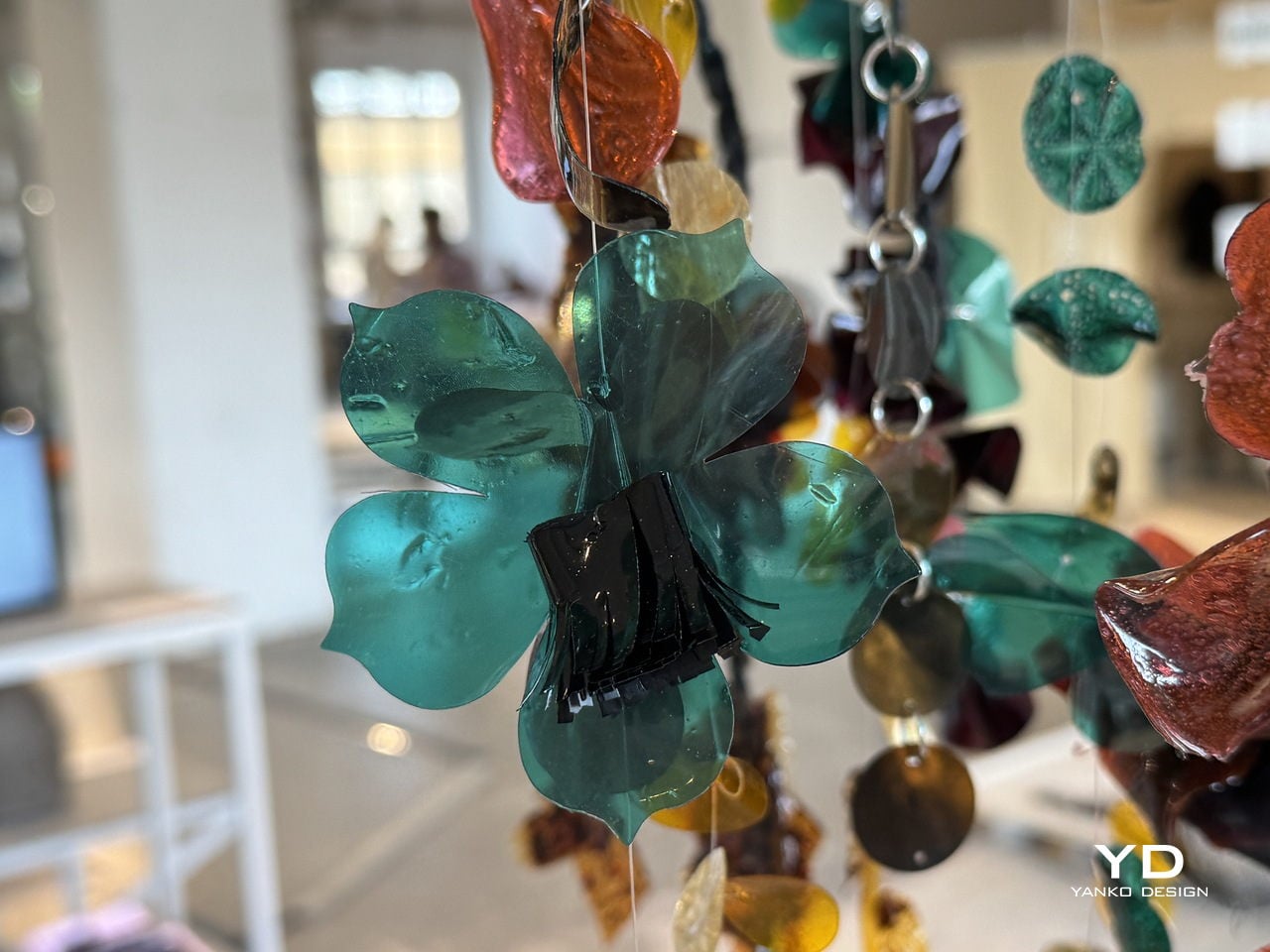
The visual result doesn’t look like a sustainability project at all. The sequins and embellishment pieces come out in deep blacks, jewel-like teals, warm ambers, rich reds, and tortoiseshell-patterned fragments that carry a high-shine finish. Strung onto braided cords and translucent threads for the Milan installation, they hung in dense cascading curtains that looked more like haute couture jewelry than anything born from industrial sludge.
For the fashion industry, where sequins are almost universally made from petroleum-based PET plastic and are notoriously difficult to recycle, having a material that can match the visual appeal of conventional embellishments while being fully bio-based is a genuinely significant step. A garment made with Detox Sequins wouldn’t just sparkle; it would also carry a story worth telling, one that runs from a dyeing vat through a detox system and out the other side as something a designer can actually use.
The Gemini Mac app has officially launched, offering macOS users new ways to enhance their workflows. As Paul Lipsky explains, the app introduces features like the AI-powered content creation suite and the Canvas workspace, designed for brainstorming and collaboration. However, its compatibility is limited to macOS Sequoia 15.0 or later, excluding Intel-based Macs. This reflects […]
The Gemini Mac app has officially launched, offering macOS users new ways to enhance their workflows. As Paul Lipsky explains, the app introduces features like the AI-powered content creation suite and the Canvas workspace, designed for brainstorming and collaboration. However, its compatibility is limited to macOS Sequoia 15.0 or later, excluding Intel-based Macs. This reflects […]
If your iPhone’s battery is depleting faster than expected after updating to iOS 26, you’re not alone. Many users have reported similar issues, but the good news is that there are effective ways to address this. By making a few adjustments to your settings and adopting smarter usage habits, you can significantly reduce power consumption, […]
If your iPhone’s battery is depleting faster than expected after updating to iOS 26, you’re not alone. Many users have reported similar issues, but the good news is that there are effective ways to address this. By making a few adjustments to your settings and adopting smarter usage habits, you can significantly reduce power consumption, […]
Self-evolving AI agents are reshaping how artificial intelligence systems learn and adapt, allowing them to autonomously refine their skills and performance over time. AI Jason explores the mechanisms behind these agents, highlighting key methodologies like in-context learning and architectural refinement. For example, in-context learning allows agents to dynamically respond to real-time feedback, reducing the need […]
With countries banning social media for kids left and right, Meta is trying different things to convince parents that its platforms are safe for teens. In its latest effort, the company will start showing parents the topics their teens have discussed with Meta AI over the previous seven days.
"Parents will be able to see the topics their teen has been asking Meta AI about in [Facebook, Messenger or Instagram] over the past week," Meta explained in a blog post. "Topics can range from School, Entertainment, and Lifestyle to Travel, Writing, and Health and Wellbeing, among others."
For parents overseeing Meta's teen accounts, the feature will appear in a new Insights tab within supervision, both in-app and on web. Parents can tap on a topic to see the different categories within each: for instance, sub-categories within Lifestyle include fashion, food and holidays, while fitness, physical health and mental health are part of the Health and Wellbeing topic.
Meta
Meta also worked with the Cyberbullying Research Center to develop what it calls "conversation starters," or open-ended conversations about their experience with AI. It provides detail about what the questions are designed to address, and can be found on the Family Center website or through a link in the new Insights tab.
Finally, Meta revealed more detail about its AI Wellbeing Expert Council, who will provide "ongoing input on our AI experience for teens." It will be made up of three existing advisory groups as well as new members with special expertise in responsible and ethical AI, who are affiliated with the National Council of Suicide Prevention and multiple universities. It's worth noting that Meta has a separate oversight board that deals with subjects ranging from AI to moderation.
Offboarding moderation chores to busy parents appears to be par for the course for Meta these days. The company has recently cut back on the use of third-party vendors that help with content moderation, shifting responsibility instead to advanced AI systems, according to recent reports.
The dangers of AI for teens have been one of multiple reasons countries like Spain have banned social media platforms for kids. One of the most recent and tragic cases was in Canada, where a teen was provided specific details by OpenAI's ChatGPT about how to carry out a school shooting. Another such case is under investigation in Florida, and AI's have been implicated in multiple teen suicides as well.
In the US, the National Suicide Prevention Lifeline is 1-800-273-8255 or you can simply dial 988. Crisis Text Line can be reached by texting HOME to 741741 (US), 686868 (Canada), or 85258 (UK). Wikipedia maintains a list of crisis lines for people outside of those countries.
This article originally appeared on Engadget at https://www.engadget.com/ai/meta-will-show-parents-the-topics-of-their-teens-ai-conversations-123119624.html?src=rss
Apple is currently grappling with significant production delays for some of its most anticipated devices, including the Mac Mini, Mac Studio, and OLED MacBook Pro. The primary cause of these setbacks is a global shortage of RAM, a critical component in modern computing. This shortage is largely driven by the surging demand for memory in […]
Big, fancy executive sedans are a dying breed, especially when it comes to EVs. With the Tesla Model S and Mercedes' EQ line on their way out, pickings are slim. Aside from the upcoming S-Class, there's the Lucid Air, Cadillac Celestiq and maybe the Porsche Taycan, depending on how far you're willing to stretch the definition. But as the market leader in luxury sedans, BMW isn't giving up yet. With the arrival of the new 7-series, the company has made a car — with a complete range of gas, hybrid and fully electric options — that truly embraces modern gadgetry.
Overview
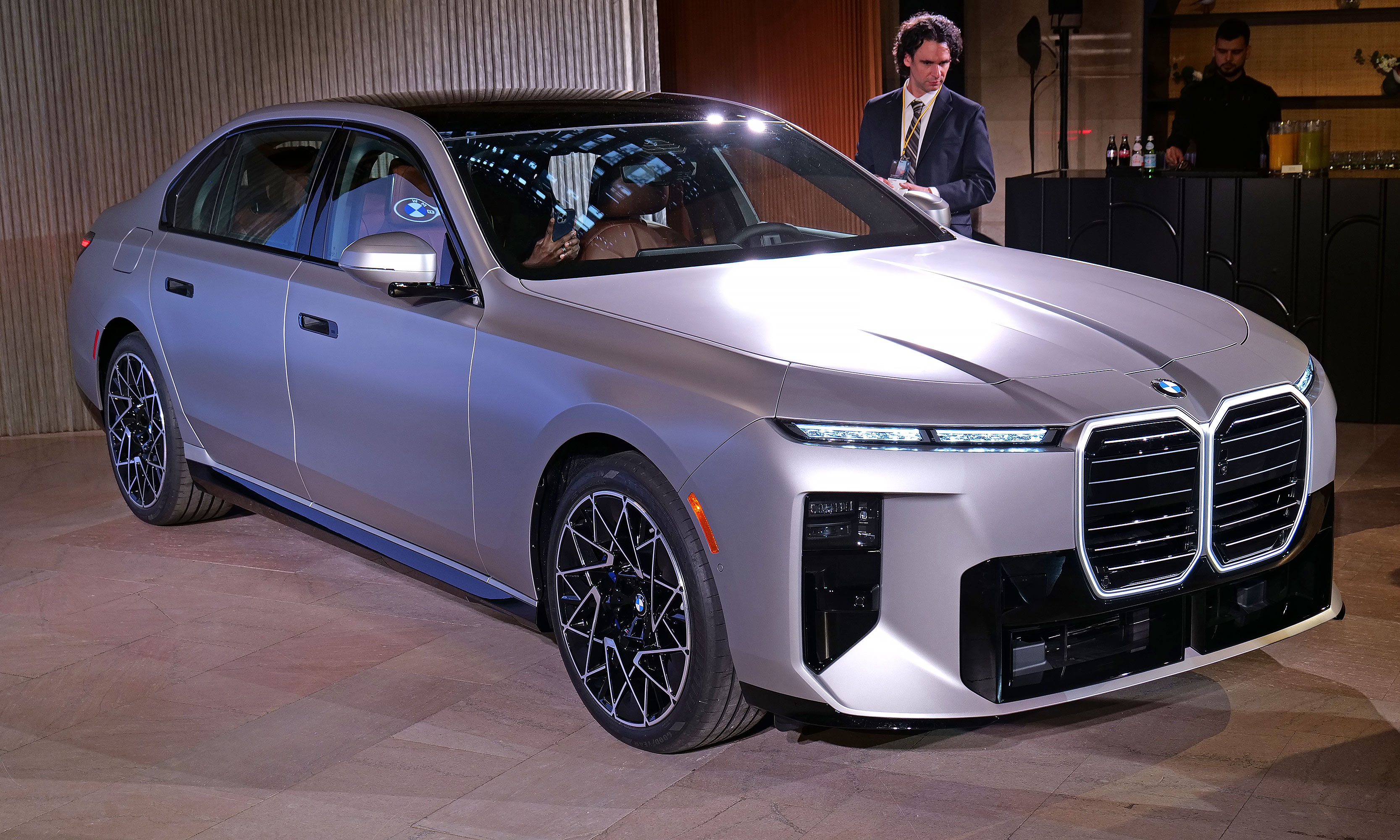
Because we're EV enthusiasts here at Engadget, we're primarily going to talk about the new i7, which is the battery-powered version of the new 7 series. Unfortunately, due to building regulations at Grand Central Station in NYC where BMW's reveal was held, the company was only allowed to showcase a gas-powered car, so this story features photos of the 740. However, company representatives told me that there are mostly only minor cosmetic differences between the ICE and EV models (powertrains aside), so feel free to compare my shots with the official press images to see if you can spot any changes.
Between things like its grille and recessed door handles, the new 7-series looks more like an EV than a gas car.
Sam Rutherford for Engadget
As for the i7 itself, it will be available in three main trims: the i750 xDrive, the i760 xDrive and the i7 M70 xDrive, the latter of which is the fastest and most powerful of the bunch. Pricing starts at $105,750 for the i750 and $126,250 for the i760, both of which will be available at launch sometime later this year. The i7 M70 will come later, most likely in 2027, with pricing still TBD.
Every model will come standard with a dual-motor AWD drivetrain with the base i750 offering 455 horsepower or 544hp on the i760, before going all the way up to a whopping 680hp on the i7 M70. Compared to the outgoing models, the new 2027 i7 also features a significantly larger power pack (112.4kWh, up from 105.7kWh) composed of BMW's new sixth-gen battery cells. This helps support faster charging speeds of 250kW (up from 195kW) along with a native NACS port and a 400-volt architecture, which is good enough to take the car from 10 to 80 percent in around 28 minutes. The upgraded batteries should also translate into longer range, with BMW claiming the i760 will deliver more than 350 miles on a single charge, based on internal metrics using EPA testing procedures.
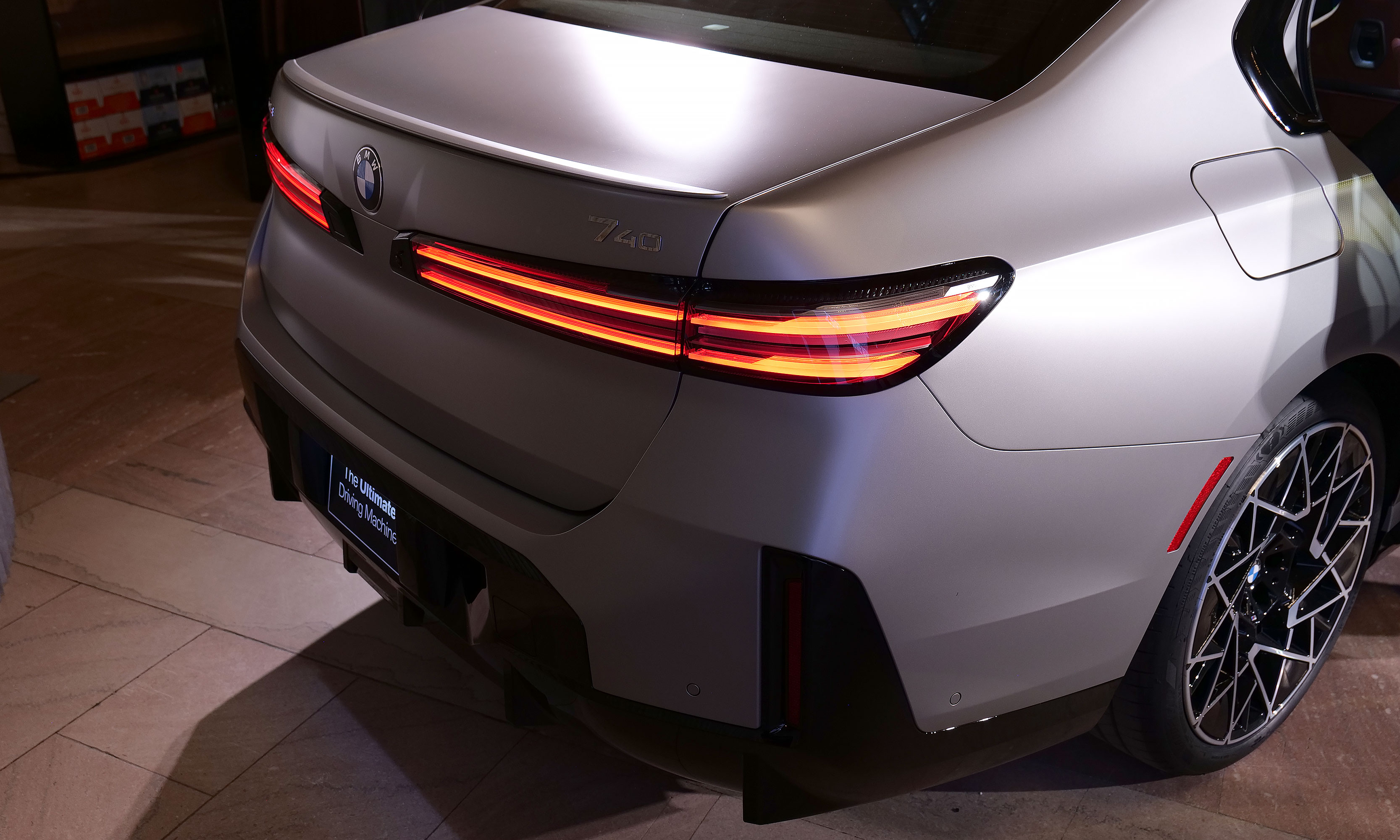
On the new 2027 models, BMW extended the 7-series' taillights to give its rear a more distinctive appearance.
Sam Rutherford for Engadget
Finally, as we're still waiting for the iX3 to make its official debut in the US market, the new 7-series is also BMW's first car for the States to feature the company's Neue Klasse design language, which features a massively upgraded collection of tech on the inside. More on that when we get to the interior.
Exterior
One of the most interesting things about the new 7-series is that it was designed to have essentially the same exterior regardless of which powertrain each individual model has. BMW claims this not only makes it easier for customers to choose if they want a gas, hybrid or electric car, it also presents a more unified look across the family. That said, there are a number of features like the grille and recessed door handles that make BMW's latest luxury sedan look more like an electric car than a traditional ICE vehicle. I even noticed that on the gas-powered 740 BMW had on display, its tail pipes were pointed down and hidden away behind the car's rear bumper, which plays into the various models' shared identity. That said, on M Sport models and the M Performance variant due out next year, things like tailpipes will be much more prominent to help assuage the kind of enthusiasts who aren't ready for the transition to electrification.
Up front, BMW ditched the stacked headlights found on the previous model in favor of a new razor-thin design that features 24 crystal LEDs that create a neat gem-like appearance. Meanwhile, the company's signature kidney-shaped grille has been given a thoroughly futuristic update, complete with built-in lighting (including programmable Welcome and Goodbye patterns) and active aero. Around back, the 7-series' taillights have been extended to nearly the entire width of the vehicle, creating a more distinctive look.
Interior
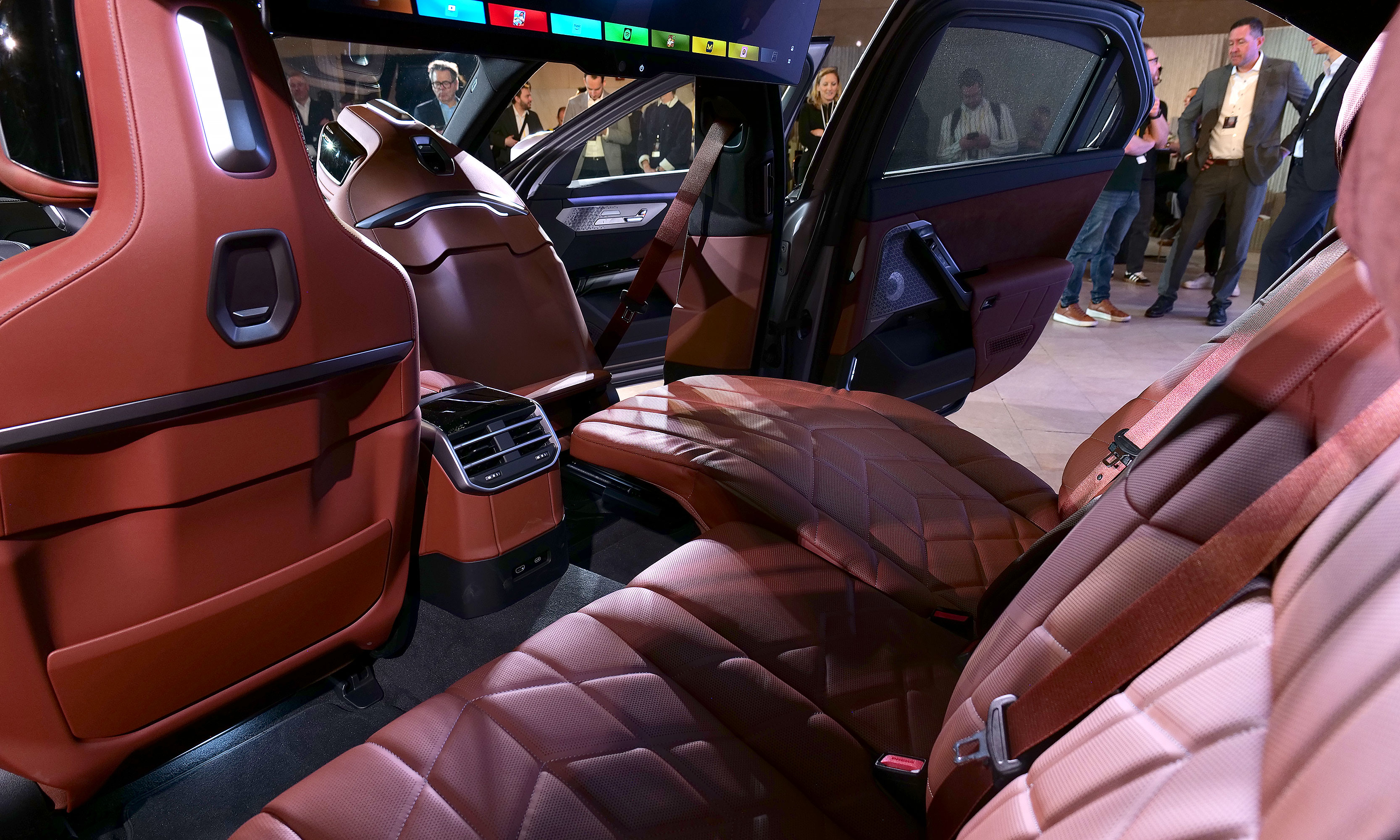
For tech enthusiasts, the inside of the new 7-series is a real marvel of engineering and gadgetry, headlined by BMW's Neue Klasse design language. Depending on how you're counting, there are between five and seven different displays. In the center, there's the 17.9-inch main screen (which supports both Android Auto and CarPlay), plus the company's Panoramic Vision (which is actually a projector) that adds another thin display across the entire bottom of the windshield. Panoramic Vision also provides a more traditional 3D HUD for things like turn-by-turn navigation while driving.
For the driver, BMW also updated the i7's steering wheel with what the company is calling "shy tech." This means controls are only illuminated when a specific feature is available, while also providing haptic feedback for additional tactile response. And although I didn't get to drive the car myself, BMW reps told me that the car's assisted driving tech has been updated so that it's more accommodating to small, manual adjustments. On other cars, this might disable hands-free driving entirely or force you to wrestle with a robo-controlled steering wheel.
For the first time on any of its vehicles, BMW is including a 14.6-inch Passenger Screen that can be used to stream movies, music and more, completely independent of what's on the main display. Then there are two small panels mounted on the doors for rear seat passengers to control things like climate settings and more. And with a Bowers and Wilkins sound system comprising 36 speakers and 4,000 watts of output, audio certainly hasn't been neglected.
However, the real showpiece of the entire vehicle is arguably the optional 31-inch 8K Theater Screen, which BMW claims is the largest display in any production car today. It's mounted on a motorized frame that lowers itself down from the ceiling and it's simply massive. Gadget nerds will appreciate that it comes with an onboard webcam, so you can use it for video calls. And when you're not working, you can even pair accessories like Bluetooth controllers with the screen to play games. There are even woofers mounted below the rear seat to provide what BMW says is a 4D sound experience.
My favorite part of this ensemble is the full-size HDMI jack that’s located next to the USB-C port on the back of the center console. This will allow you to hook up pretty much anything you want and enjoy it on that huge 31-inch display. And similar to previous 7-series models, the i7 still features BMW's executive seating mode, which pushes the front passenger seat up an extra 20cm while reclining the rear, providing a truly luxurious way to enjoy a car ride (there's even a little built-in footrest). Another small thing that potential buyers will surely appreciate is that BMW is also providing four years of data and access to its Digital Premium service as standard on every vehicle.
Initial thoughts
The lap of luxury.
Sam Rutherford for Engadget
With all of these changes, BMW is calling this the new 7-series, but it's actually closer to a mid-cycle refresh following a total overhaul back in 2023. For people who can never get enough screen space, the i7 and its gas-powered siblings are practically overflowing with displays. Plus, I really love BMW's attention to detail that allows users to pair peripherals like game controllers to the onboard displays or plug in external devices via HDMI. As someone who likes the more futuristic, streamlined exterior you see on a lot of EVs, I think BMW has done a great job of striking a middle ground that works for both gas and electric powertrains.
Even the i7’s base specs have gotten some big bumps, both in terms of range and charging speeds, though at some point, BMW will need to upgrade its 400-volt architecture to something beefier. In a lot of ways, i7's starting price of $105,750 is its biggest hurdle, because for tech lovers, it feels like BMW has covered all the bases and then some. On the bright side, if you can afford one, you can probably also afford to hire a driver every now and then so you can take advantage of the 7-series' executive seating mode.
This article originally appeared on Engadget at https://www.engadget.com/transportation/evs/2027-bmw-i7-first-look-a-fantastically-techy-car-for-the-1-percent-123000364.html?src=rss
Good outdoor speakers are everywhere. Ones worth actually leaving on the counter are a different category entirely. These seven designs blur the line between audio gear and decorative object, earning a permanent spot on a shelf or desk not just because of what they play, but because of how they look doing it. Each one carries a design identity strong enough to spark a conversation before you ever hit play.
From a pocket-sized cassette hiding Bluetooth inside to a mecha-inspired lantern balanced on a tripod, these are the designs that earn their shelf real estate on looks alone. The sound is never secondary, but the form is what keeps them out of the drawer permanently. These are speakers that live in your space the same way a good lamp or a well-chosen object does—placed once and never put away.
1. Side A Cassette Speaker
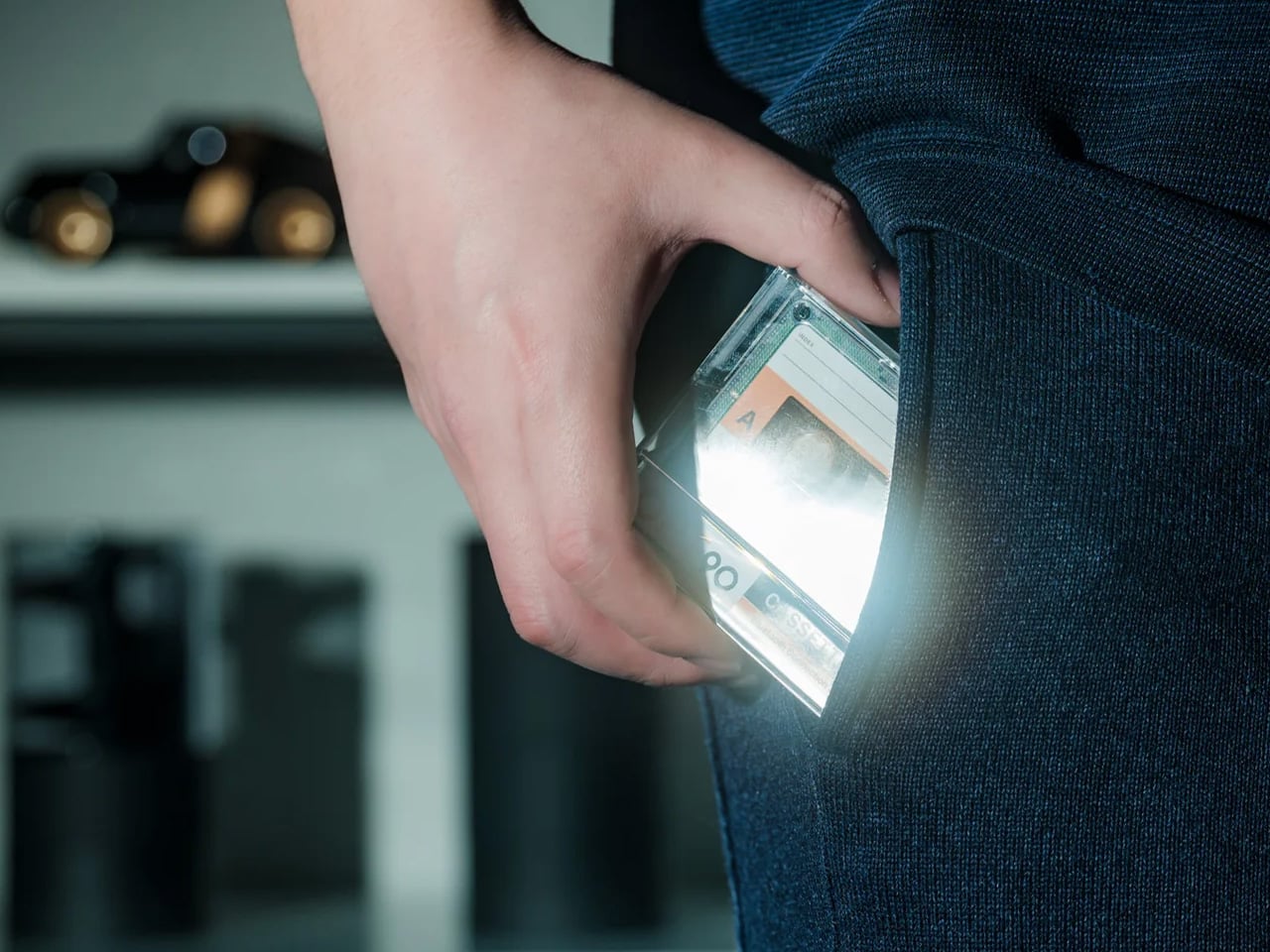
There’s something genuinely satisfying about a speaker that makes people stop and pick it up before they realize what it is. The Side A Cassette Speaker nails that trick with a faithful mixtape silhouette, a transparent shell, and a hand-labeled “Side A” that lands like a gut punch of nostalgia. It ships in a clear case that doubles as a stand, so it lives comfortably on your desk or shelf without looking incidental. At under $50, it’s the kind of impulse buy that actually earns its counter space and keeps it.
Bluetooth 5.3 keeps your phone paired cleanly, and the microSD slot means you can load a full playlist and leave your phone in your pocket entirely. The sound is warmer than you’d expect from something this compact, tuned to echo the soft, rounded tones of actual tape playback rather than the sharp, clinical output most small speakers produce. Six hours of battery handles a full workday, and a two-hour recharge turnaround keeps the momentum going. It’s a speaker you’ll leave on your desk long after you’ve stopped reaching for anything else.
Nostalgic cassette design doubles as a shelf display piece
Bluetooth 5.3 and microSD support for flexible, wire-free listening
What We Dislike
Six-hour battery limits longer or overnight listening sessions
microSD playback is MP3-only, restricting audio format options
2. Porsche Design PD S20
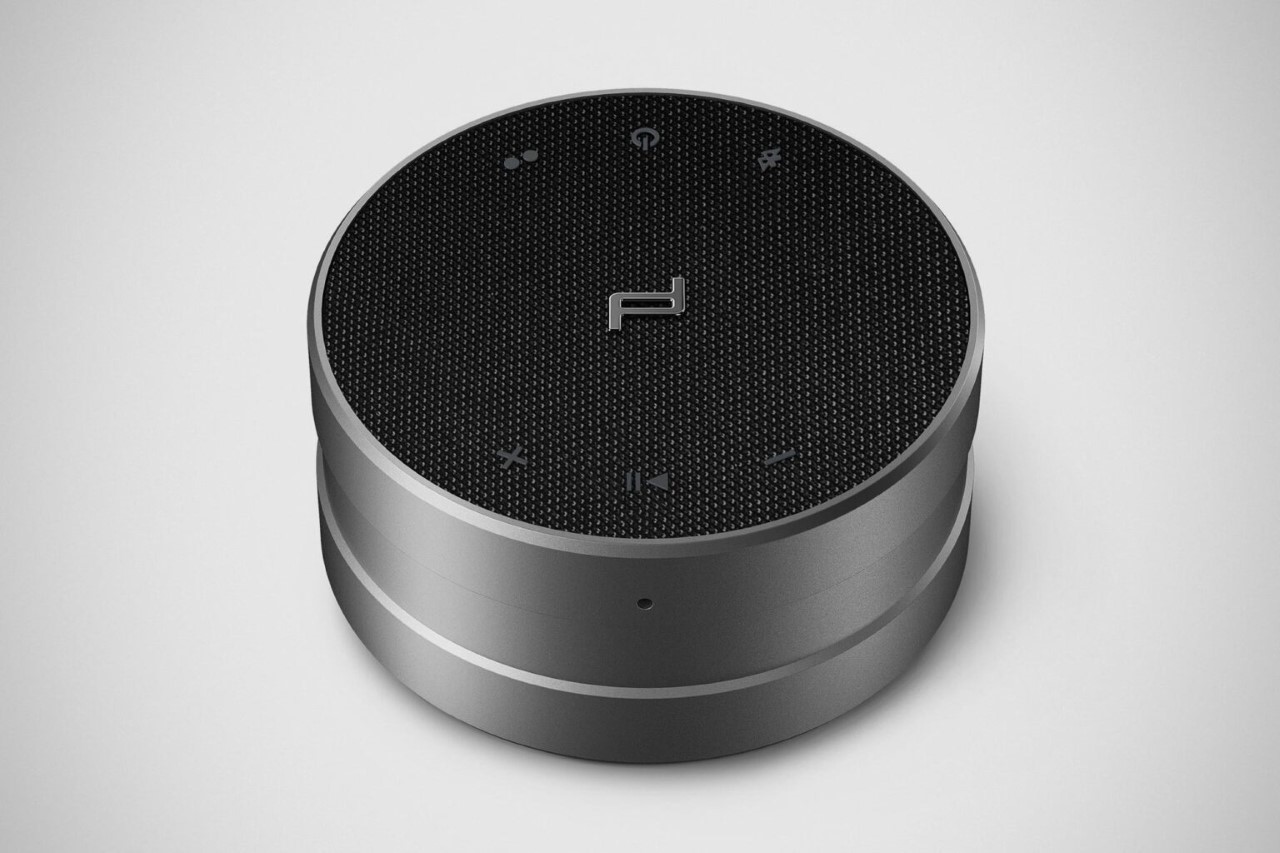
Porsche Design doesn’t rush into new product categories, so when they finally launched their first outdoor speaker, people paid close attention. The PD S20 is a cylindrical unit machined from anodized aluminum and wrapped in gray acoustic fabric, a pairing that looks as refined as it performs. The minimalist silhouette translates just as naturally indoors as it does sitting outside on a trailhead or patio table. It carries the same visual restraint as Porsche’s automotive design work, and that kind of earned confidence transfers directly into your living space.
The IP67 rating means rain, dust, and the occasional splash are non-issues, making it easy to bring the PD S20 wherever your day actually goes. A 1.75-inch woofer flanked by two passive radiators pushes surprisingly full bass for its size, and the 10-hour battery handles a complete day without range anxiety. Haptic buttons built into the fabric grill keep the surface visually clean, and voice assistant integration means you can manage your playlist, handle calls, and send messages without ever picking the speaker up off the counter.
What We Like
IP67 waterproof and dustproof rating for dependable outdoor use
Anodized aluminum build with a polished, minimalist finish
What We Dislike
The $245 price point sits at the higher end of portable Bluetooth speakers
A single woofer may not satisfy listeners who want serious bass outdoors
3. RetroWave 7-in-1 Radio
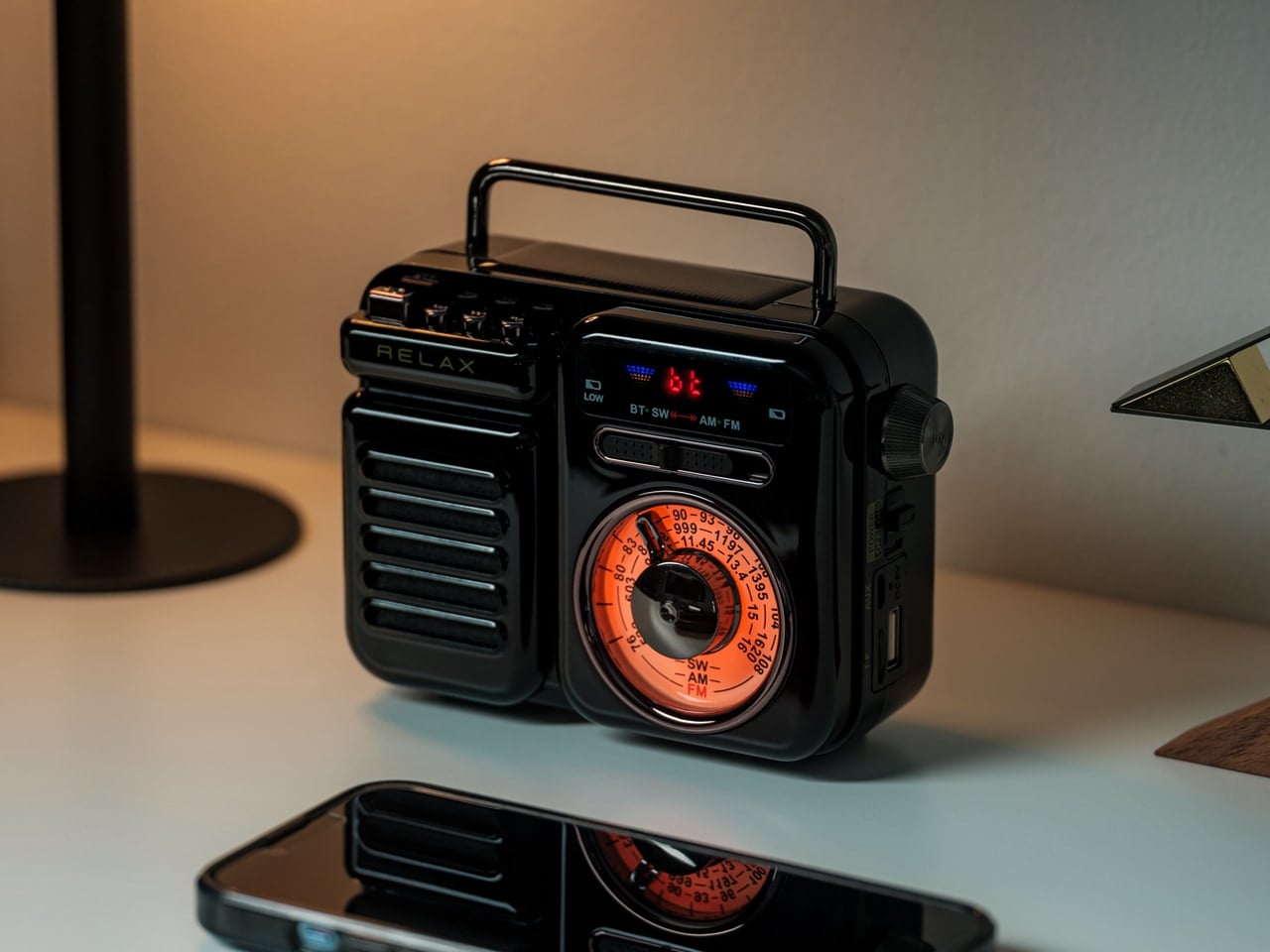
The RetroWave 7-in-1 Radio looks like something pulled from a Japanese vintage shop: warm tones, a tactile tuning dial, and analog character worked into every detail of its form. It handles AM, FM, and shortwave radio, streams over Bluetooth, and plays MP3s directly from USB or microSD. At home, it settles naturally onto a kitchen counter or bookshelf, its retro design holding its own in spaces where most technology looks visually out of place. It’s the rare piece of gear that earns its shelf real estate on looks alone before you ever power it on.
Where it builds real loyalty is in the layers you discover underneath the aesthetic. A built-in flashlight, SOS alarm, hand-crank charging, solar panel, and power bank function make this a genuinely serious emergency companion. When the power goes out or the road gets unpredictable, this is the device you’ll be relieved to have within reach. It does double duty as a daily listening companion and an emergency preparedness tool, meaning you’re not sacrificing any counter space on something that only becomes relevant when things go wrong.
Seven practical functions packed into one compact, shelf-worthy design
Solar and hand-crank charging for genuine off-grid reliability
What We Dislike
Audio quality is tuned for versatility rather than high-fidelity listening
FM, AM, and shortwave reception depend heavily on location and antenna placement
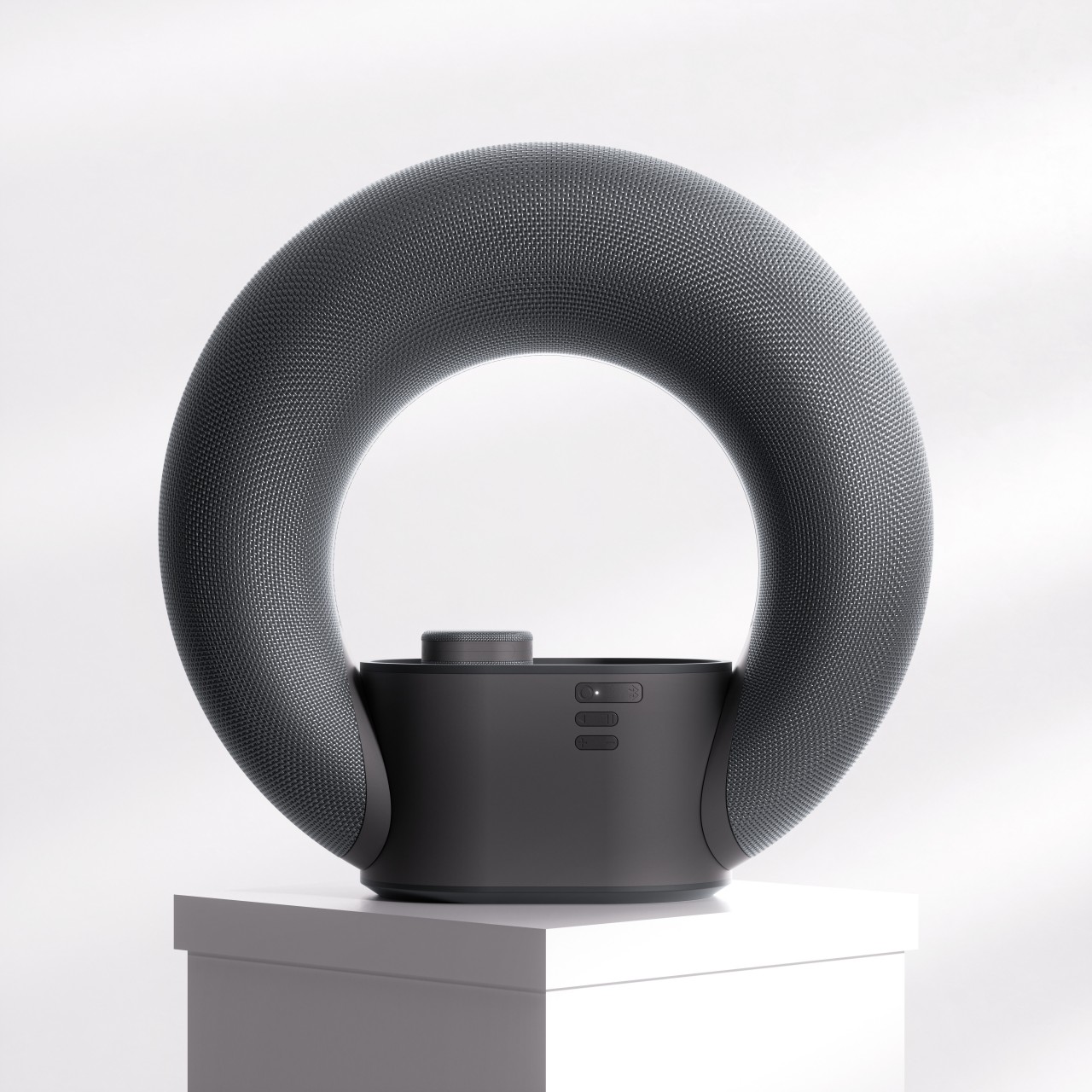
4. AUREOLA Wireless Speaker
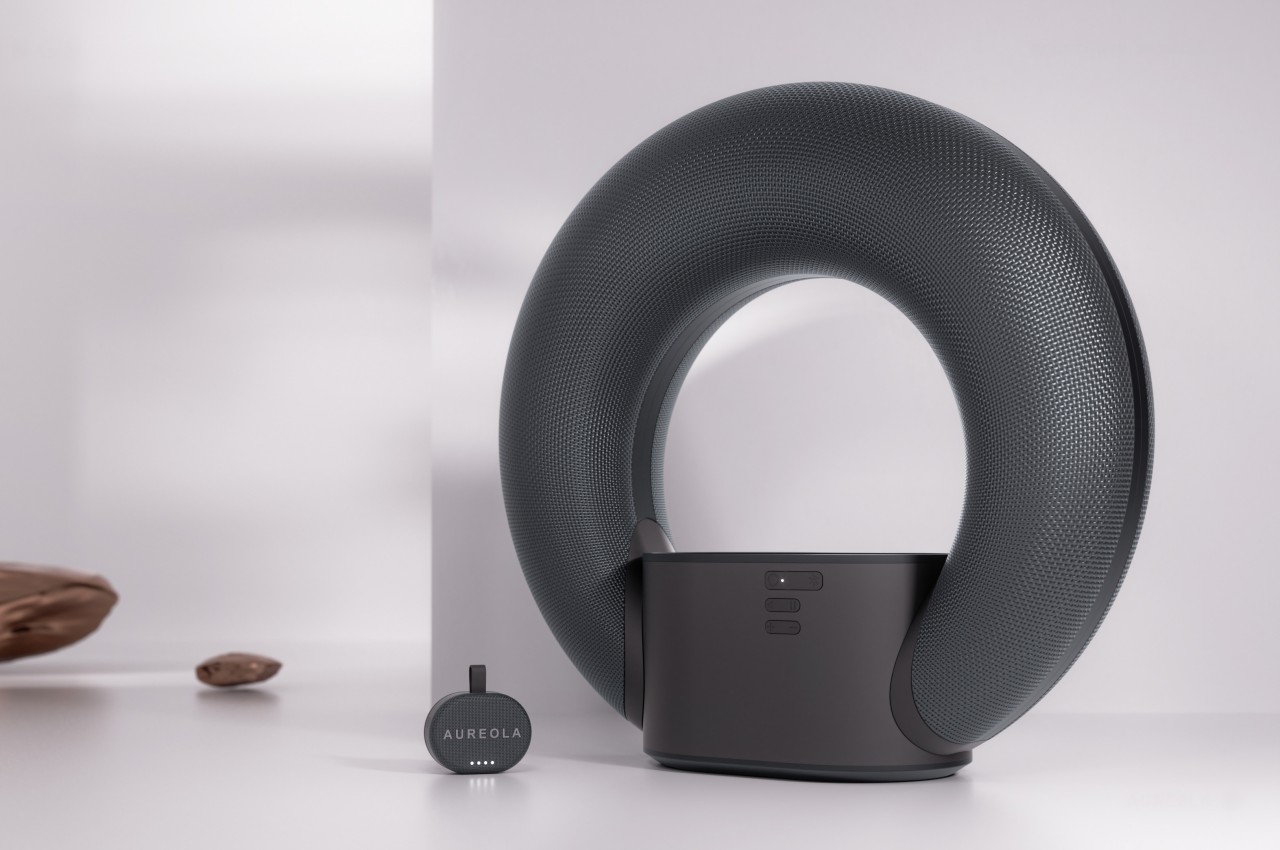
The AUREOLA concept solves one of the more persistent tensions in portable audio: the speaker you take outside rarely looks good enough to bring back in and actually display. Its two-part system separates a compact outdoor portable unit from a large indoor base featuring an omnidirectional ring rising from a wireless charging platform. The ring reads more like a sculpture than audio hardware, and in the right color, it anchors a room visually the same way a considered lamp or art object does. It commands attention without announcing itself.
The outdoor unit is compact enough to slip into a pocket, and the indoor base charges both the speaker and other devices wirelessly, earning its counter space in more ways than one. For you, the benefit is a speaker system that never asks you to choose between portability and design presence. Take the portable unit hiking or to a park, then dock it back into the ring at home and let the room fill with omnidirectional sound from something that actually looks like it belongs there permanently, not just between adventures.
What We Like
Two-part system designed for both indoor and outdoor listening environments
Indoor base doubles as a wireless charging pad for multiple devices
What We Dislike
Concept design, meaning availability, and final specifications remain unconfirmed
The compact portable unit’s size may limit raw audio output in open outdoor spaces
5. Battery-Free Amplifying iSpeaker
In a world of rechargeable everything, the Battery-Free Amplifying iSpeaker makes its case through pure, uncompromised simplicity. Set your phone into the slot, and the Duralumin body, the same aluminum alloy used in aircraft construction, does the rest. No charging, no pairing, no apps, no setup. The golden ratio proportions give it a visual elegance that reads across interior styles, from minimal Scandinavian kitchens to warmer, more layered desktops. It looks intentional on a surface in a way that most speakers, trailing cables and charging bricks, never quite manage.
The amplification works by channeling your phone’s audio output through the metal body, adding warmth and volume without drawing a single watt of power. For you, this means a speaker that is always ready, never needs a charge, and costs nothing to run day to day. It works naturally as background listening during work or morning routines and doubles as a clean display stand for your phone. The optional Bloom and Jet modular accessories let you shape the direction of sound if you want more control over how audio fills the room around you.
No battery or electricity required, always ready with zero setup
Aircraft-grade Duralumin construction shaped to precise golden ratio proportions
What We Dislike
Sound amplification is entirely dependent on the phone’s own built-in speaker quality
Sound-directing modular accessories are sold separately at additional cost
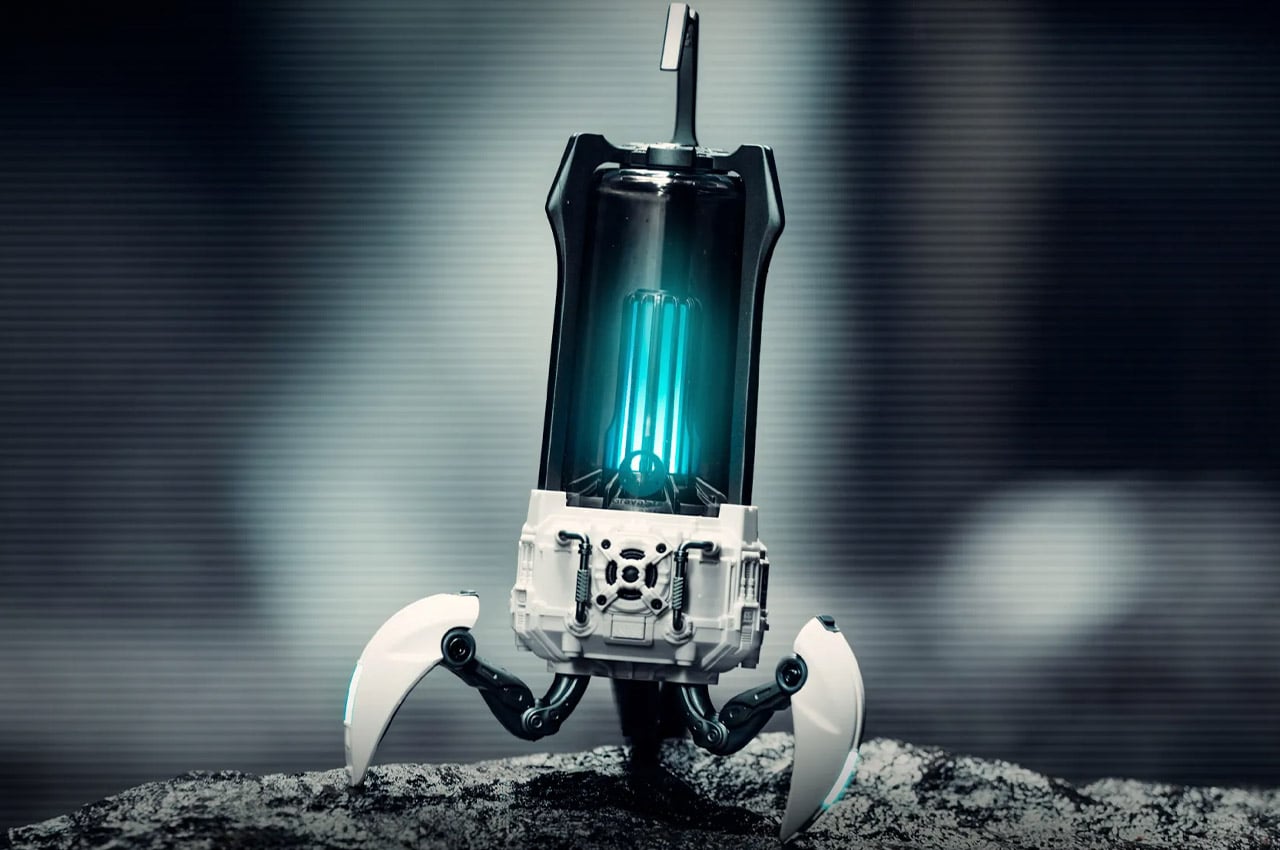
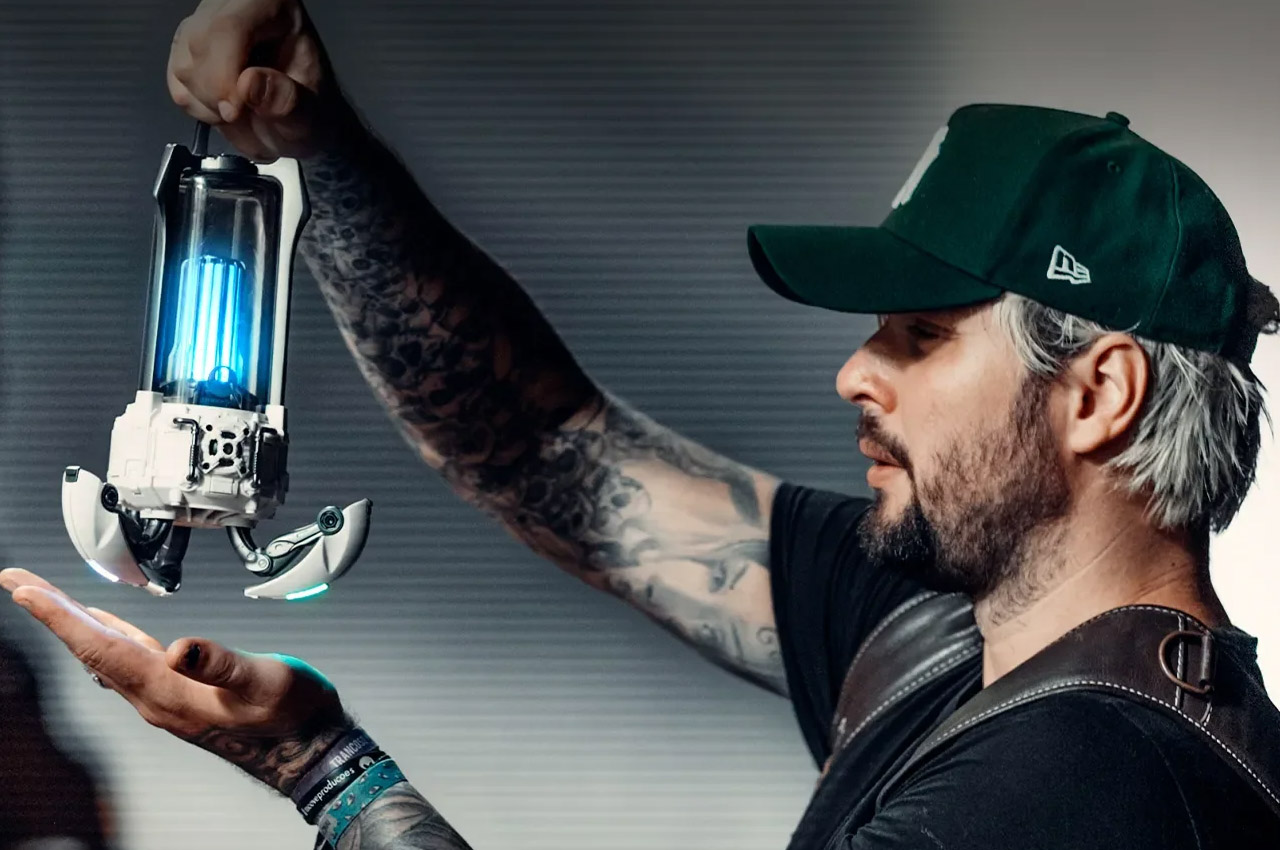
6. GravaStar Supernova
The GravaStar Supernova looks like it was designed for a film set and simply decided to stay. Its three-legged zinc alloy frame, built on the same iconic tripod base from GravaStar’s earlier mecha-inspired lineup, holds a transparent center tube that doubles as a fully functioning lantern. For outdoor enthusiasts who want their gear to carry a genuine aesthetic point of view, it delivers on both fronts: 25 watts of power paired with a half-inch high-frequency tweeter, and three lighting modes, including a flickering campfire effect that sets a mood no standard speaker comes close to replicating.
The light-synced music mode makes it an effortless centerpiece at outdoor gatherings, pulsing in rhythm with whatever is playing and turning any campsite or balcony into a proper event. For you, it means a speaker who handles the atmosphere as well as the audio. Bring it to a rooftop or a garden party, and it becomes the visual focal point without any extra effort. The solid zinc alloy construction handles outdoor conditions without softening the distinctive look that makes it worth owning and displaying in the first place.
What We Like
25 watts with a dedicated tweeter delivers genuinely powerful outdoor sound
Light-synced and campfire modes add atmosphere well beyond standard speakers
What We Dislike
The tripod form factor is bulkier than slim portable speaker alternatives
The bold mecha aesthetic is a niche design that won’t suit every space
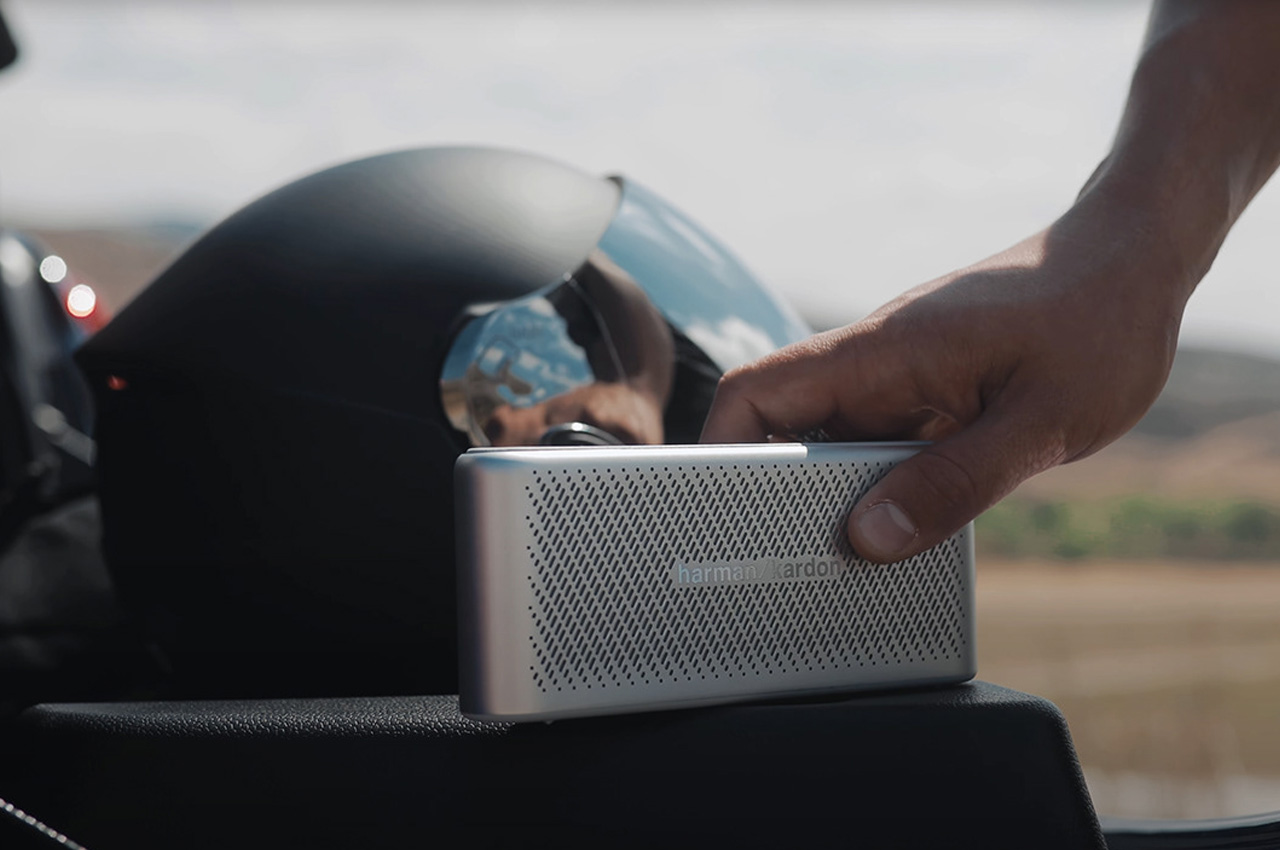
7. Harmon Kardon Traveller Concept
The Traveller pulls its design DNA directly from the Harman Kardon portfolio, borrowing the visual language of ultra-slim point-and-shoot cameras to produce a speaker that reads as considered travel gear rather than an audio add-on. Touch controls and LED indicators sit cleanly on the top surface, keeping the profile uncluttered from every angle. It’s slim enough to disappear into a carry-on without adding meaningful bulk, and polished enough to leave on a hotel nightstand or bathroom counter and have it look like it was placed there with full intention.
Ten hours of battery is the practical floor for a travel speaker, and the Traveller clears that bar while adding a reverse charge feature that turns it into a power bank when your primary device runs low. For you, that translates to one fewer cable to pack and one fewer charging situation to manage at an airport gate. The premium finish and Harman Kardon design language give it a visual authority that most travel speakers simply don’t carry, making it as much a deliberate aesthetic choice as a practical one that travels with you everywhere.
What We Like
Reverse charge functionality doubles as a power bank for connected devices
Slim, camera-inspired profile built for travel without compromising on design quality
What We Dislike
Concept design with no confirmed release date or finalized retail pricing
Slim form factor may limit bass depth compared to bulkier travel speaker alternatives
Design Is the Reason They Stay
The best audio gear has always been about more than just sound. These seven speakers prove that a well-considered object can genuinely change how a room feels, not just how it sounds. Whether it’s the warm analog nostalgia of a cassette speaker or the sculptural weight of a zinc alloy tripod, each design earns its place in your space twice over—once through the ears, and once through the eyes.
Counter space is real estate you protect, which means everything on it needs to justify its presence in more than one way. These designs do exactly that. They play music, yes, but they also hold a room together, tell a story about who you are, and make your desk or shelf feel deliberately curated rather than accidentally filled. That’s the difference between a speaker you use and one you keep.