iOS 26 Guide: How to Safely Clear iPhone System Data (2026)

iOS 26 Guide: How to Safely Clear iPhone System Data (2026) iPhone Storage settings showing iOS 26 System Data taking up a large portion of device space.

Efficiently managing storage on your iPhone has become increasingly essential with the advanced capabilities of iOS 26. One often overlooked aspect of storage management is system data, which can occupy a significant portion of your device’s memory. In some cases, this data may even exceed the size of the operating system itself. By using the […]

The post iOS 26 Guide: How to Safely Clear iPhone System Data (2026) appeared first on Geeky Gadgets.

Posted in Uncategorized

New Claude Feature Automates Your Tasks While You Sleep

New Claude Feature Automates Your Tasks While You Sleep Claude desktop app interface showing the new Routines feature for scheduling cloud-based tasks.

Artificial intelligence is increasingly allowing productivity even when you’re not actively at your desk. In a recent feature by The AI Advantage, the spotlight is on new AI-driven desktop applications like the Gemini app for Mac and the updated Claude desktop app. Gemini, integrated with Notebook LM, offers a straightforward and free entry point for […]

The post New Claude Feature Automates Your Tasks While You Sleep appeared first on Geeky Gadgets.

Posted in Uncategorized

Why the iPad Mini 8 Might Be the ‘iPad Mini Pro’ We’ve Been Waiting For

Why the iPad Mini 8 Might Be the ‘iPad Mini Pro’ We’ve Been Waiting For iPad Mini OLED

The iPad Mini 8 is poised to redefine Apple’s compact tablet lineup, offering a blend of portability and pro-level features. Leaks and rumors suggest that this device will introduce notable advancements in display technology, processing power, durability, and design. These upgrades aim to bring the iPad Mini closer to the functionality and aesthetics of the […]

The post Why the iPad Mini 8 Might Be the ‘iPad Mini Pro’ We’ve Been Waiting For appeared first on Geeky Gadgets.

Posted in Uncategorized

Two Makers Just Built the Pocket Linux PC Big Tech Refused To Make

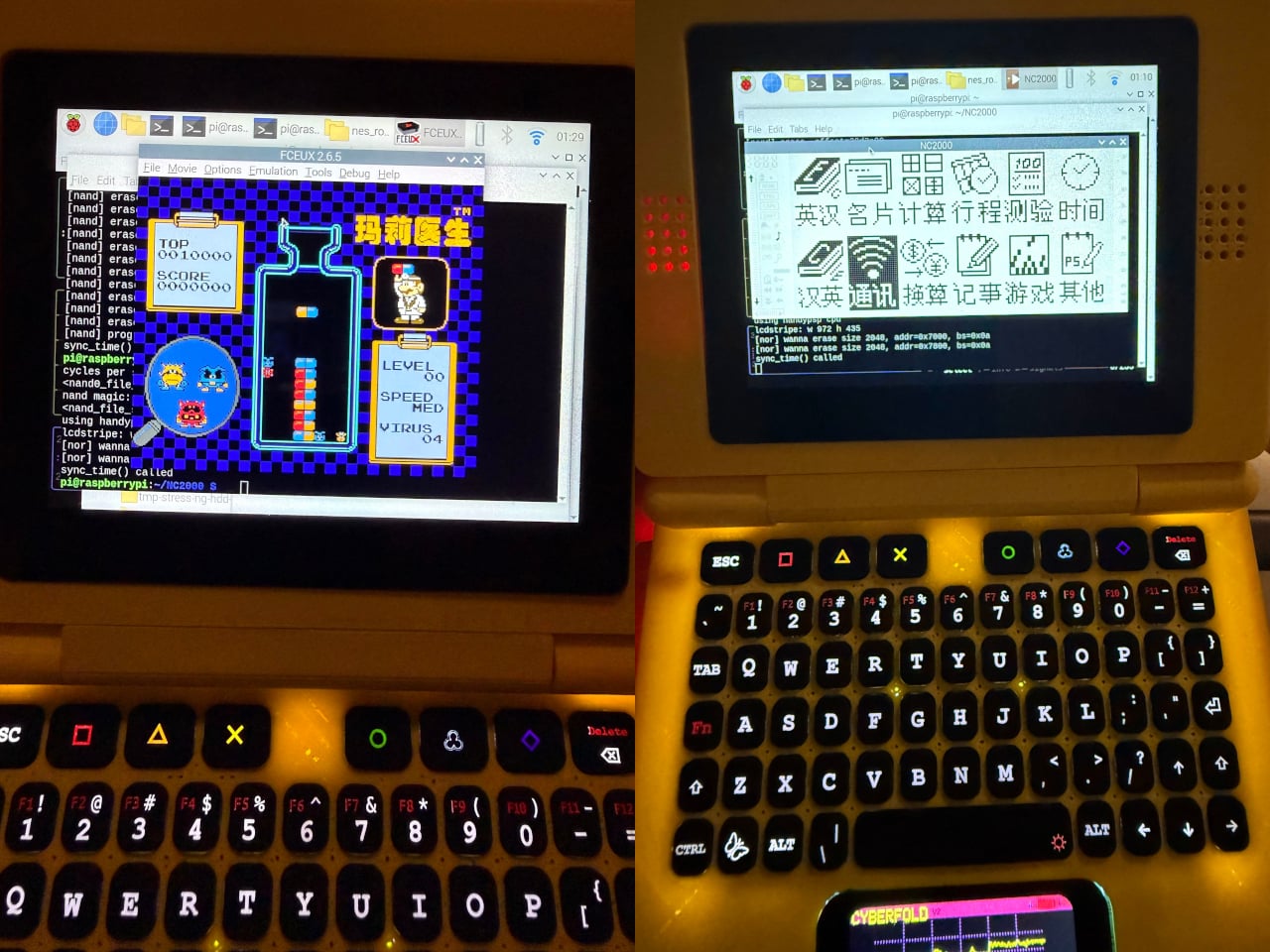
The commercial laptop market has gotten good at making portable computers slim and powerful, but it hasn’t quite figured out what to do with people who want something truly pocketable. A growing number of DIY enthusiasts have taken matters into their own hands, building compact personal computers known as cyberdecks from scratch, and the results have been growing increasingly polished and impressive.

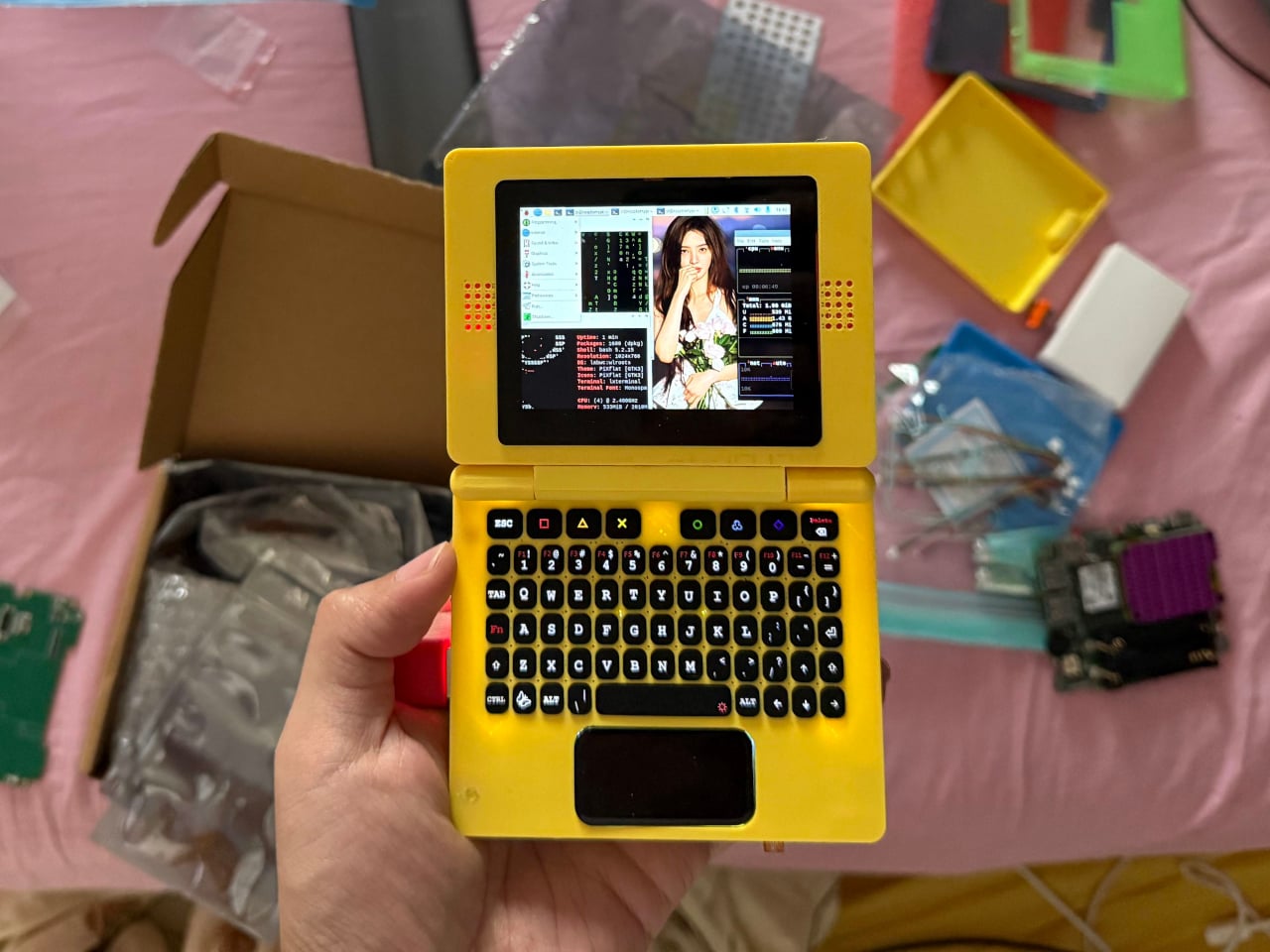
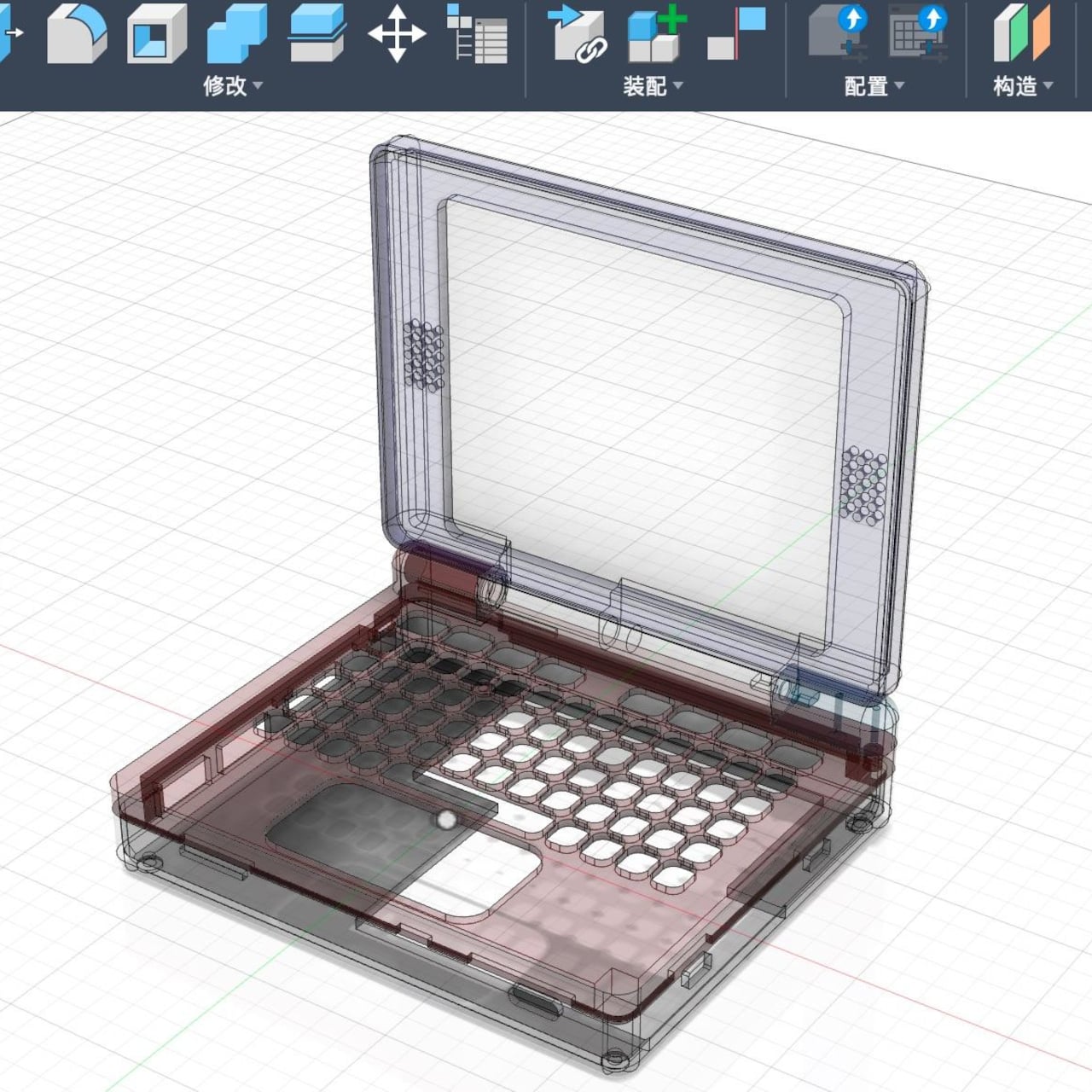
The CyberFold is a recent and remarkably polished example of just that. Made by a pseudonymous duo going by Eggfly and MeiYao, it’s a foldable clamshell cyberdeck that bears a striking resemblance to an oversized Nintendo Game Boy Advance SP. But flip it open, and what you’ll find inside is a surprisingly capable Linux computer, complete with a touchscreen, a full QWERTY keyboard, stereo speakers, and a proper port selection.

Designers: Eggfly, MeiYao

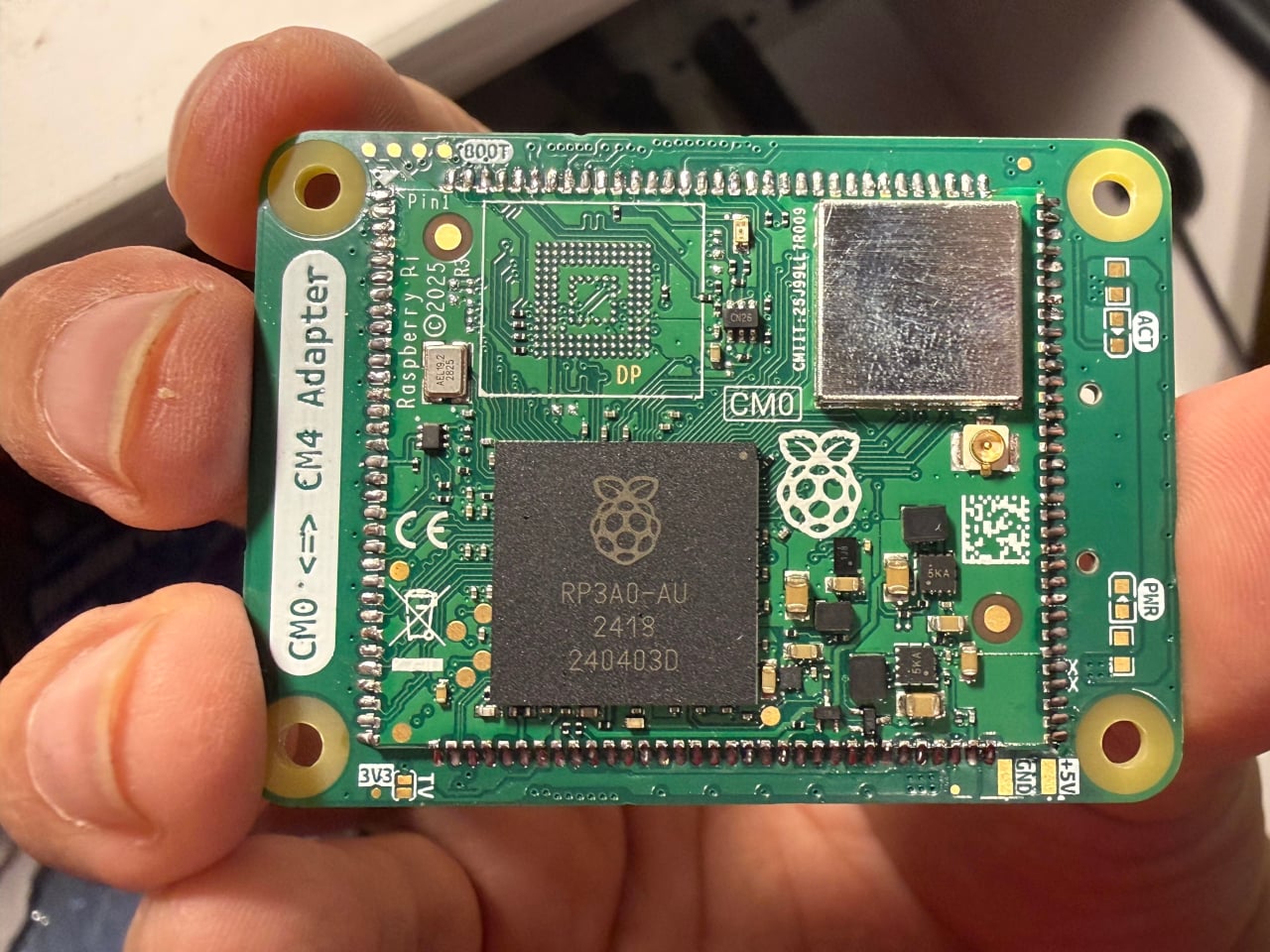
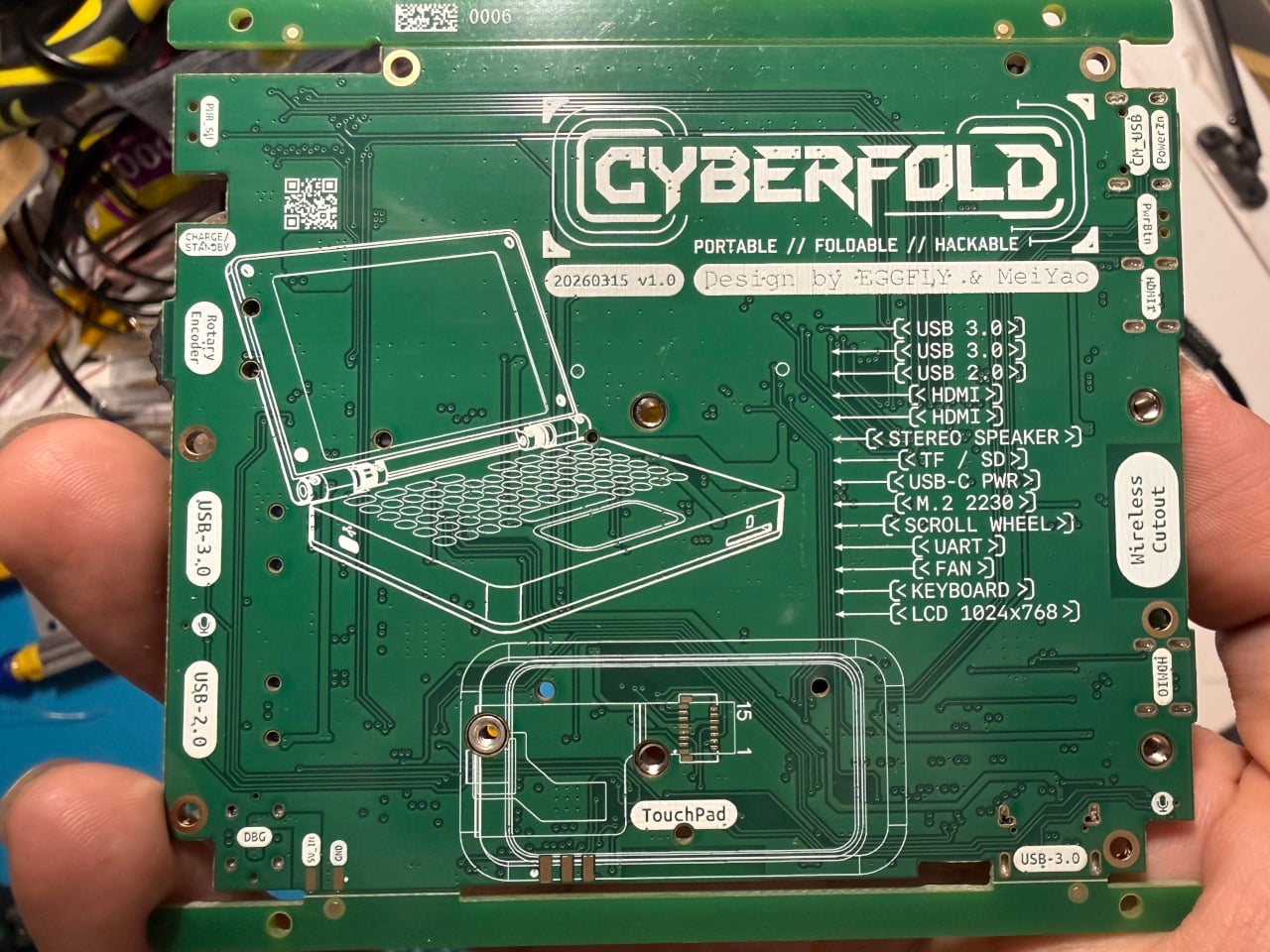
The computing heart of the CyberFold is a custom motherboard that accepts the Raspberry Pi Compute Module family, specifically the Compute Module 4, Compute Module 5, or the affordable Compute Module Zero. These are the embedded variants of the popular Raspberry Pi 4 and Raspberry Pi 5, shrunk to a compact form factor without sacrificing real processing power, making them a natural fit for a pocketable machine.

Open the CyberFold mid-commute or at a workbench, and you’re greeted by a 1024×768 capacitive multi-touch display, responsive enough for everyday computing and comfortable for touch-based navigation. Below it is a compact QWERTY silicone keyboard based on Solder Party’s open-source KeebDeck design, which Eggfly built from the original design files. It’s the kind of input that calls to mind old-school palmtop computers, but with a full operating system running underneath.

One of the more clever details on the CyberFold is the touchpad, which pulls double duty as a secondary display. Running on an Espressif ESP32-S3 microcontroller, it shows live battery percentage and power consumption data, independent of the main computer. It’s the kind of thoughtful feature you’d normally see on a commercial device that went through multiple rounds of product refinement, not something you’d expect from a maker’s personal project.

Connectivity isn’t something the CyberFold cuts corners on. Full-size USB 3.0 and USB 2.0 ports handle peripherals easily, while two HDMI outputs let you extend to a larger screen when needed. A microSD card slot, a debugging port, and stereo speakers flanking the display round things out, and a rotary encoder scroll wheel adds a satisfying tactile element to everyday navigation.

Power comes from a pair of batteries in an integrated holder with a built-in charging circuit, so you can top it off without cracking the device open. The clamshell form factor keeps the screen and keyboard protected when closed, making the whole thing practical enough to slip into any bag. Eggfly hasn’t released the design files publicly yet, but the maker community has already taken a keen interest.

There’s something appealing about the CyberFold that goes beyond its spec sheet. It represents a very specific kind of ambition: the desire to own a computer that fits in your jacket pocket, runs whatever software you choose, and was assembled by hand. Commercial products can maybe deliver two of those three things at best, and that gap is exactly what keeps the cyberdeck community building.

The post Two Makers Just Built the Pocket Linux PC Big Tech Refused To Make first appeared on Yanko Design.

The Insta360 Luna Ultra Feature That Could Outsmart the DJI Pocket 4

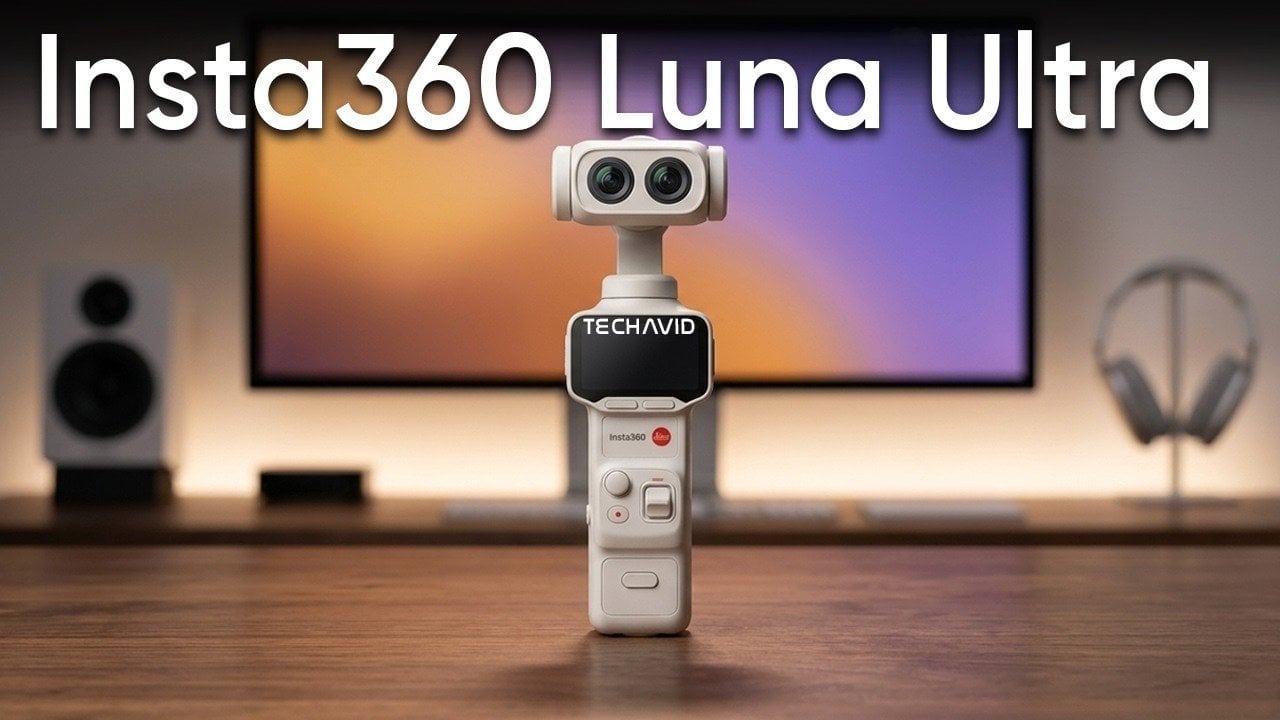
The Insta360 Luna Ultra Feature That Could Outsmart the DJI Pocket 4 Insta360 Luna Ultra camera module detached from the main handle grip

DJI’s dominance in the pocket camera market may face a new challenge as Insta360 prepares to launch its Luna Ultra. According to TechAvid, the Luna Ultra introduces a modular design that allows users to detach the camera from its handle, offering unprecedented flexibility for capturing unique angles and tight spaces. This feature, combined with a […]

The post The Insta360 Luna Ultra Feature That Could Outsmart the DJI Pocket 4 appeared first on Geeky Gadgets.

Posted in Uncategorized

iPhone Ultra Specs: Every Major Upgrade Leaked So Far

iPhone Ultra Specs: Every Major Upgrade Leaked So Far Rendered concept of iPhone Ultra foldable showing 5.3-inch outer screen and September 2026 timing note.

Apple is set to unveil its first foldable iPhone, the highly anticipated iPhone Ultra, in September 2026. This device represents a significant evolution in smartphone technology, combining innovative design, advanced performance, and innovative features. With its premium price point and state-of-the-art capabilities, the iPhone Ultra is poised to reshape the foldable smartphone market and establish […]

The post iPhone Ultra Specs: Every Major Upgrade Leaked So Far appeared first on Geeky Gadgets.

Posted in Uncategorized

Blue Origin landed its recycled New Glenn booster but failed to put payload in orbit

Blue Origin has successfully reused its first-stage New Glenn booster for the first time after it landed in a cloud of smoke and fire on a recovery ship. It marks the second flight and reuse of Never Tell me the Odds, after the booster was recovered from New Glenn's previous launch in November last year. However, the rocket company's first commercial mission was marred by a failure to place the communications satellite payload into orbit. 

The launch went smoothly to start with, with the first-stage GS1 booster separating from New Glenn after three minutes and landing smoothly 10 minutes after launch following two braking burns, as shown in a post on X from Blue Origin's owner, Jeff Bezos. 

However, several hours later the Blue Origin team and satellite manufacturer, AST SpaceMobile, announced that the payload had failed to reach orbit. "We have confirmed payload separation," Blue Origin announced on X. "AST SpaceMobile has confirmed the satellite has powered on. The payload was placed into an off-nominal orbit. We are currently assessing and will update when we have more detailed information." 

Later on in a press release, AST SpaceMobile revealed that "the satellite separated from the launch vehicle and powered on, [but] the altitude [was] too low to sustain operations with its on-board thruster technology and will de-orbited. The cost of the satellite is expected to be recovered under the company’s insurance policy."

The upper stage was supposed to position the satellite into a 285 mile orbit after completing two burns. It would have then unfolded a 2,400 square-foot antenna and linked with six other satellites in a test for AST's high-speed direct-to-cell network. However, early telemetry data showed that the satellite only reached 95 miles, well below a sustainable orbit. It's not yet clear how the failure occurred. 

Despite that, Blue Origin can take some solace in its successful first-stage reuse, particularly since it happened on just the third New Glenn mission (NG-3). It took SpaceX, by comparison, 32 flights before its first successful reflight of a previously flown orbital-class booster. 

Blue Origin will definitely want to solve the upper stage issue soon. Its next flight is the first New Glenn launch of Amazon Leo (formerly Project Kuiper) broadband satellites. It plans to put 48 of those into orbit to significantly expand the Starlink rival's constellation, which currently sits at 241 satellites. 

This article originally appeared on Engadget at https://www.engadget.com/science/space/blue-origin-landed-its-recycled-new-glenn-booster-but-failed-to-put-payload-in-orbit-055846419.html?src=rss

The Best Neck Air Conditioner for Hot Flashes Is Also the Best Mother’s Day Gift Right Now

A few years ago, I bought my mom a simple powerful handheld fan that she now swears by (it’s small enough to be a permanent fixture in her purse). She discovered it also works as a perfect cool-air hair dryer for her, a small, unexpected bonus that turned a simple gadget into an indispensable tool. Finding a truly great Mother’s Day gift is a unique challenge, but it’s exactly these kinds of gifts that make a lasting impression, the ones that solve a small daily annoyance and bring a little bit of comfort into her life. It is about gifting an experience, the experience of personal comfort, which is something that can be appreciated whether she is gardening, running errands, or just relaxing.

This is where a device like the TORRAS COOLiFY takes that concept of personal comfort to an entirely new level. It is a piece of technology built to provide that relief, anytime and anywhere. The concept moves beyond just moving air and into active cooling, using technology to help manage everything from a hot day to an unexpected hot flash. The COOLiFY lineup offers two great choices; the Cyber Fold delivers the strongest cooling performance for immediate and powerful relief, while the 2S Pro is built for lightness, comfort, and longer battery life, making it an easy and practical part of her daily routine.

The Cyber Fold: Maximum Cooling Power

The TORRAS COOLiFY Cyber Fold is for the mom who wants the most powerful cooling she can get – think 100°F weather, sweltering summers, unbearable days and nights. Its main claim to fame is having the largest cooling coverage of any device of its kind, and it backs that up with some impressive tech. Instead of just blowing air, it uses three cooling plates that get genuinely cold to the touch, wrapping the entire neck, face, and back in a refreshing wave of coolness. This is the kind of device you reach for when you need immediate, serious relief from the heat. The design is also surprisingly clever; a smart hinge system allows it to fold down to half its size for easy storage and adjust to fit her neck perfectly, while a neat color-changing surface turns blue when it is cool so you can see it working.

Beyond its raw power, the Cyber Fold is also smart. It has automatic sensors that detect the surrounding temperature and adjust the cooling levels on their own, so she does not have to constantly fiddle with the settings. This makes it a truly set-it-and-forget-it experience. The battery is large and charges quickly, getting to 80% in about an hour, even while it is still running. For moms who experience intense hot flashes or simply want the absolute best cooling technology for their time outdoors, the Cyber Fold is the top-tier choice that delivers on its promise of immersive, powerful relief.

Click Here to Buy Now: $215.99 $299.99 (28% off, use coupon code “RW7VNB6K”). Hurry, deal ends in 48-hours! Website Link Here.

The 2S Pro: All-Day Comfort and Endurance

Where the Cyber Fold focuses on power, the COOLiFY 2S Pro is all about all-day comfort and endurance. It uses a similar cooling plate technology to deliver that same instant relief, but it is engineered to be lighter and more comfortable for long periods of wear. It is the kind of device she can put on in the morning and almost forget it is there. The battery life is the real standout feature here, offering up to 28 hours of use in fan mode, which is more than enough for a full day of errands, gardening, or relaxing on the patio. When it does need a charge, it powers up fully in just a couple of hours.

The design of the 2S Pro is focused on a comfortable and secure fit. Its patented hinge not only adapts to various neck shapes without pinching, but also allows her to rotate it to adjust the airflow direction, putting the breeze exactly where she wants it. Combined with soft memory foam cushions, it rests gently on her neck without feeling bulky, making the wearing experience even more comfortable. It also has smart controls through a mobile app and a memory function that saves her favorite settings, making it incredibly easy to use. The display is hidden, giving it a clean, modern look. For the mom who values practicality and wants a reliable companion to keep her cool throughout her entire day, the 2S Pro is the perfect fit. It delivers that essential cooling comfort in a lightweight, easy-to-wear package that is built to last.

Click Here to Buy Now: $179.99 $219.99 (18% off, use coupon code “RW7VNB6K”). Hurry, deal ends in 48-hours! Website Link Here.

Both devices are built on the thoughtful idea of giving moms more control over their personal comfort. They are designed to help relieve the discomfort from temperature fluctuations or hot flashes that can interrupt an otherwise perfect day. Giving a gift like this is about helping her enjoy being outside again, without having to give up the moments she loves because of the heat. Choosing between the two simply comes down to her lifestyle; whether she would appreciate the maximum cooling power of the Cyber Fold or the lightweight, all-day endurance of the 2S Pro.

The post The Best Neck Air Conditioner for Hot Flashes Is Also the Best Mother’s Day Gift Right Now first appeared on Yanko Design.


This Sharp-Cornered Lithuanian Home Only Exists Because Planning Rules Wrecked the Original Design

Most architects fold when the rules change. The Trim House by Polish firm KWK Promes, completed in 2025 in a forested suburb of Vilnius, Lithuania, is exactly that kind of project. It began in 2016, when KWK Promes, led by Robert Konieczny, won a closed competition to design a luxury single-family home on a wooded plot in suburban Vilnius. The site carried its own quiet history, once dotted with interwar wooden cottages that had long since disappeared, leaving behind open ground and a loose scatter of trees. What followed was a straightforward brief and an optimistic timeline. Then, mid-design, local planning regulations changed everything.

The allowable building footprint was slashed in half. The driveway was also repositioned, now cutting directly through the garden. The client’s instinct was to abandon the site altogether. KWK Promes had a different idea. Rather than retreat, the firm persuaded the client to stay, reduce the total area by 40%, and let the new constraints rewrite the geometry entirely. The result was a triangular floor plan, precise, deliberate, and oddly inevitable once you see it.

Designer: KWK Promes

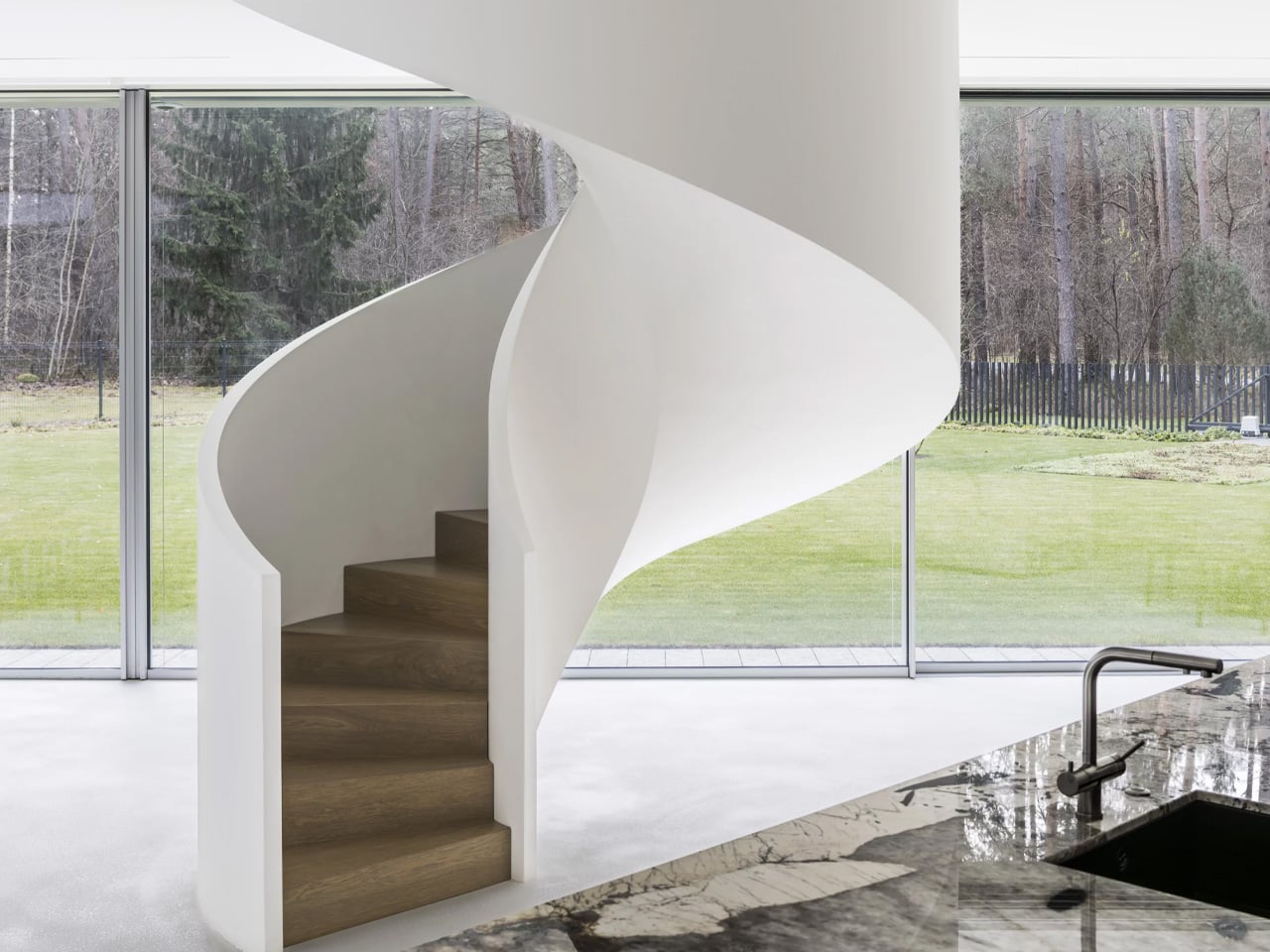
The name does exactly what it says. The house was trimmed. And in being trimmed, it became something far more interesting than the original design might have been. Spanning 299 square meters, the Trim House is a composition of concrete and glass, its sharpest corner cutting through the landscape like an ocean liner carving through ice. The most dramatic elevation reads almost like a flatiron building scaled down to domestic life, angular, taut, and satisfying in a way that’s hard to place. The surrounding pine trees press close, softening what could have felt severe.

Inside, the two-level plan is organized around a central patio that pulls daylight deep into the heart of the structure. The ground floor holds the living spaces and opens seamlessly into the garden, while the raised first floor contains the private bedrooms, each with access to a terrace that sits above the ground-floor volume. The section plays the two zones off each other, the social, grounded, garden-facing level below, and the quieter, more elevated, view-oriented rooms above. Privacy and nature, held in careful balance.

What makes the Trim House worth paying attention to isn’t just its sculptural confidence. It’s the story behind the form. Constraints aren’t obstacles but essential drivers of innovation, as KWK Promes put it. The Trim House makes that argument with concrete and glass, and it’s hard to argue back.

The post This Sharp-Cornered Lithuanian Home Only Exists Because Planning Rules Wrecked the Original Design first appeared on Yanko Design.

The 40-Year-Old Lamp That Still Looks Like the Future

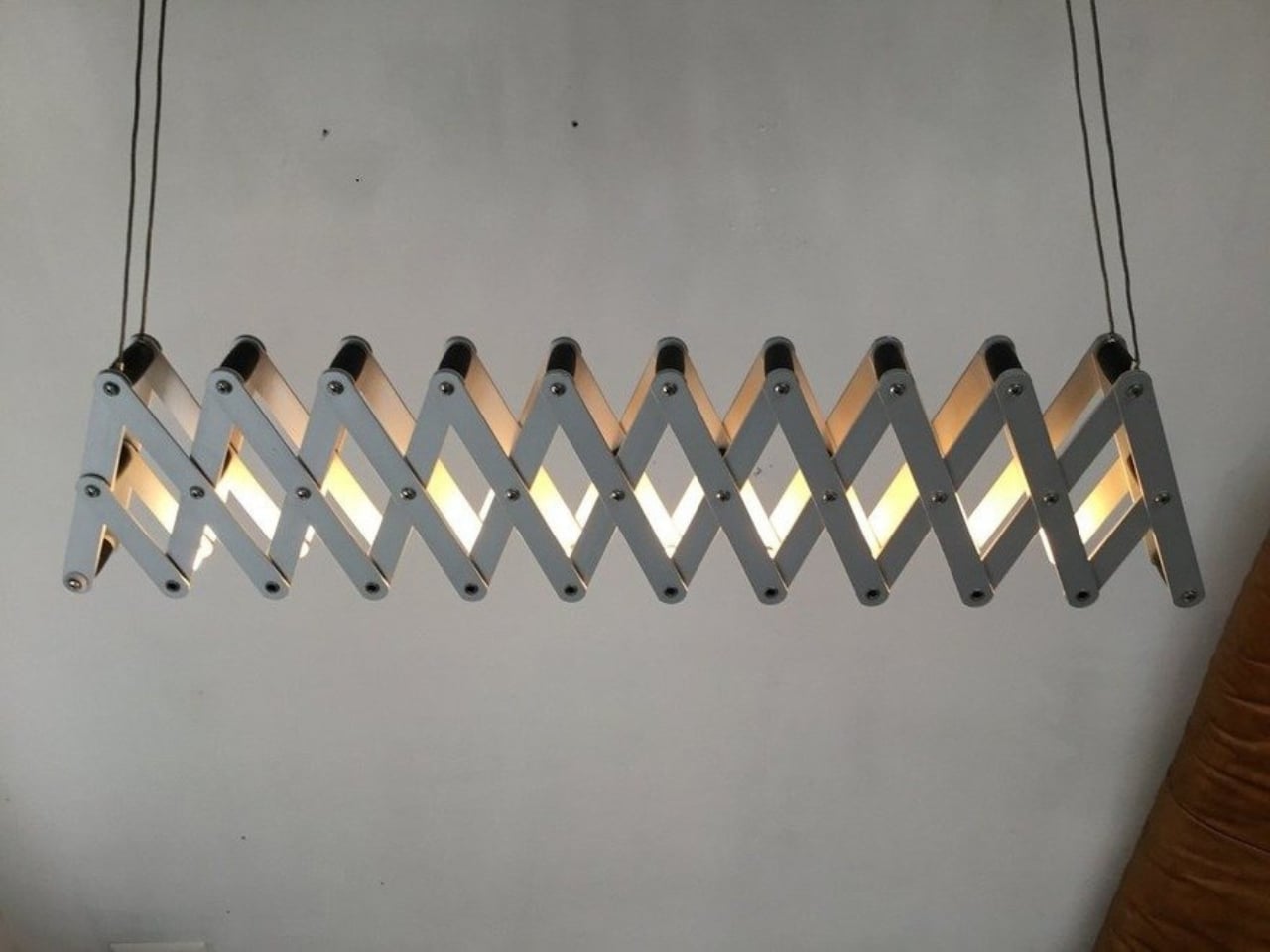
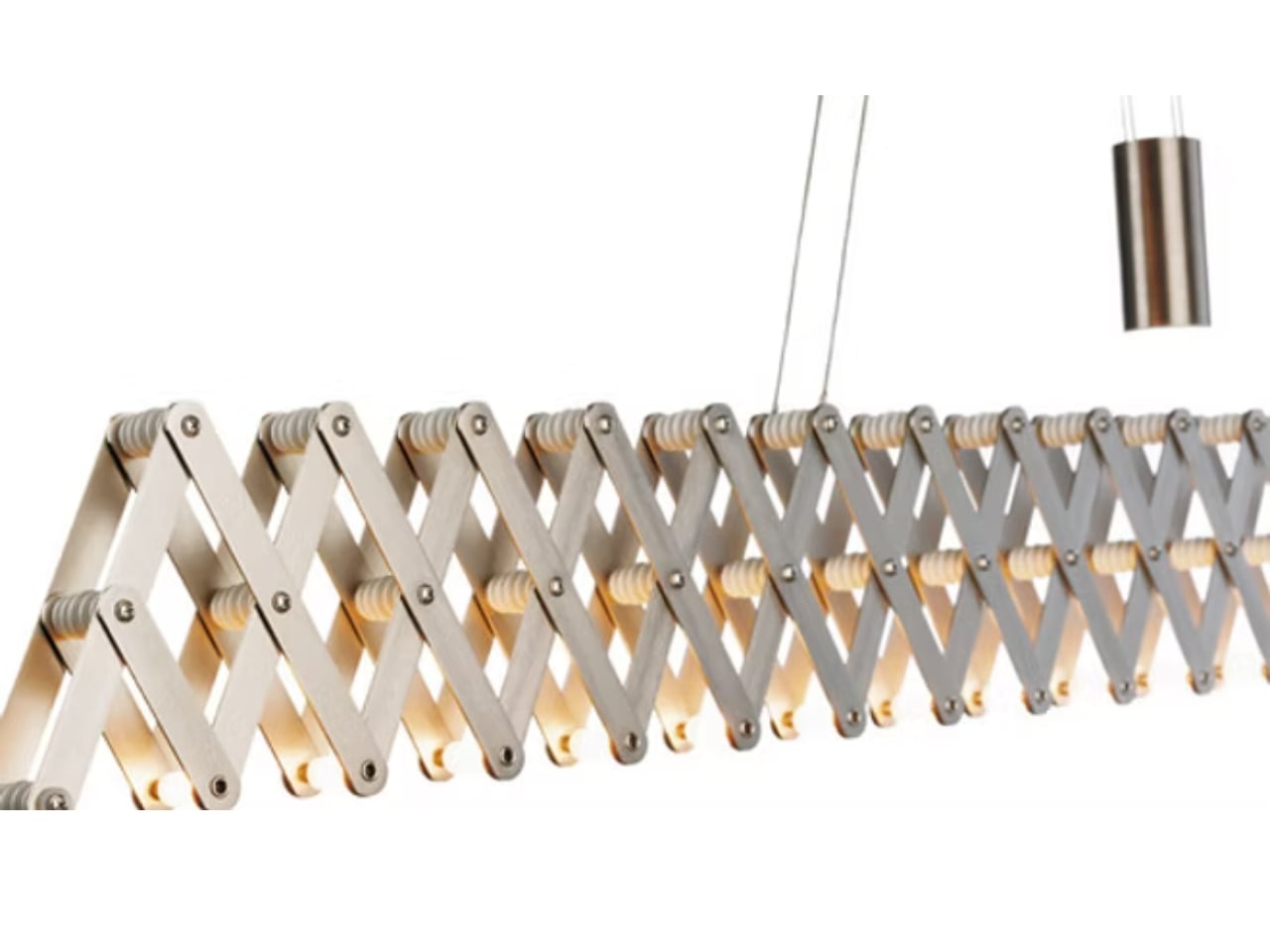
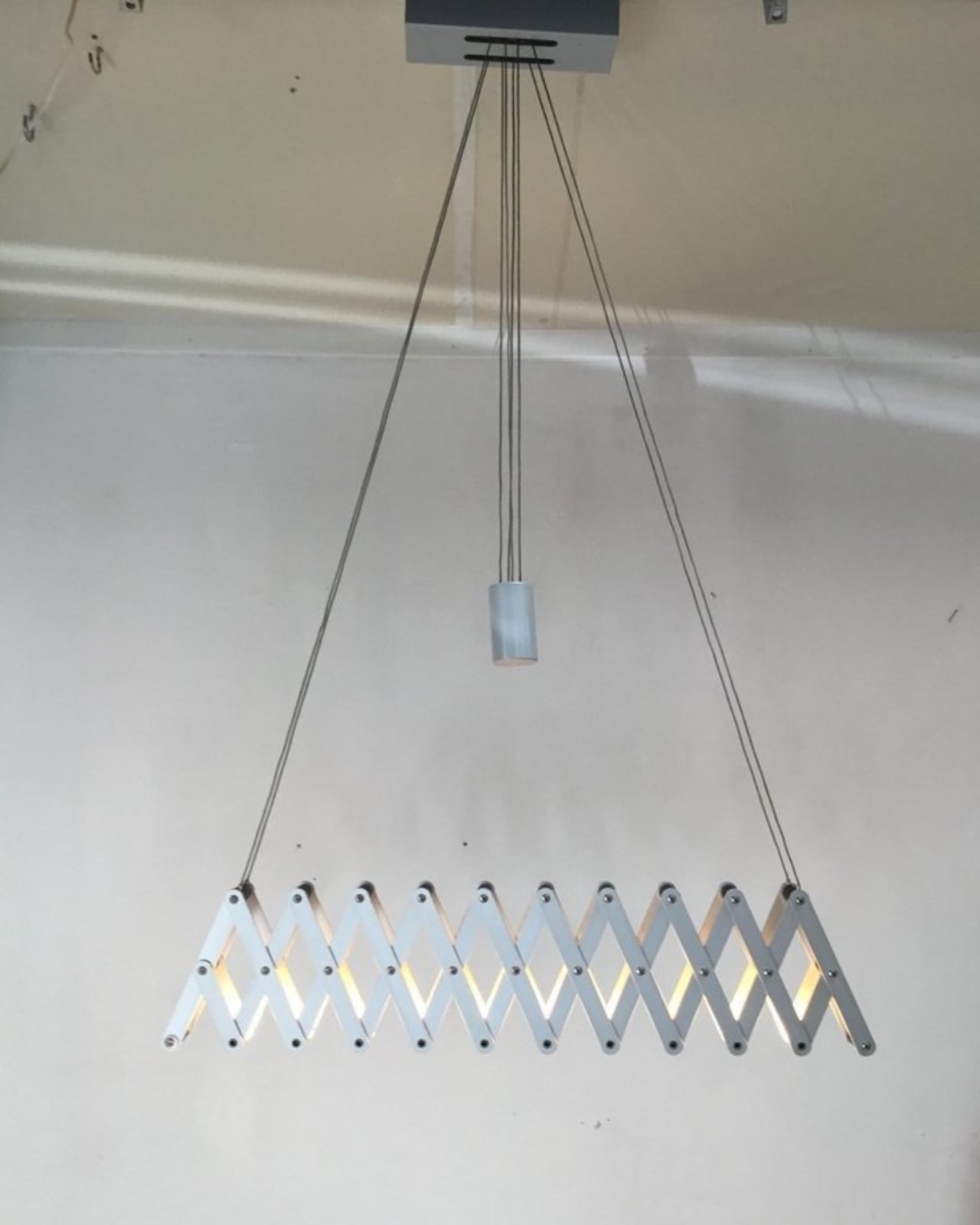
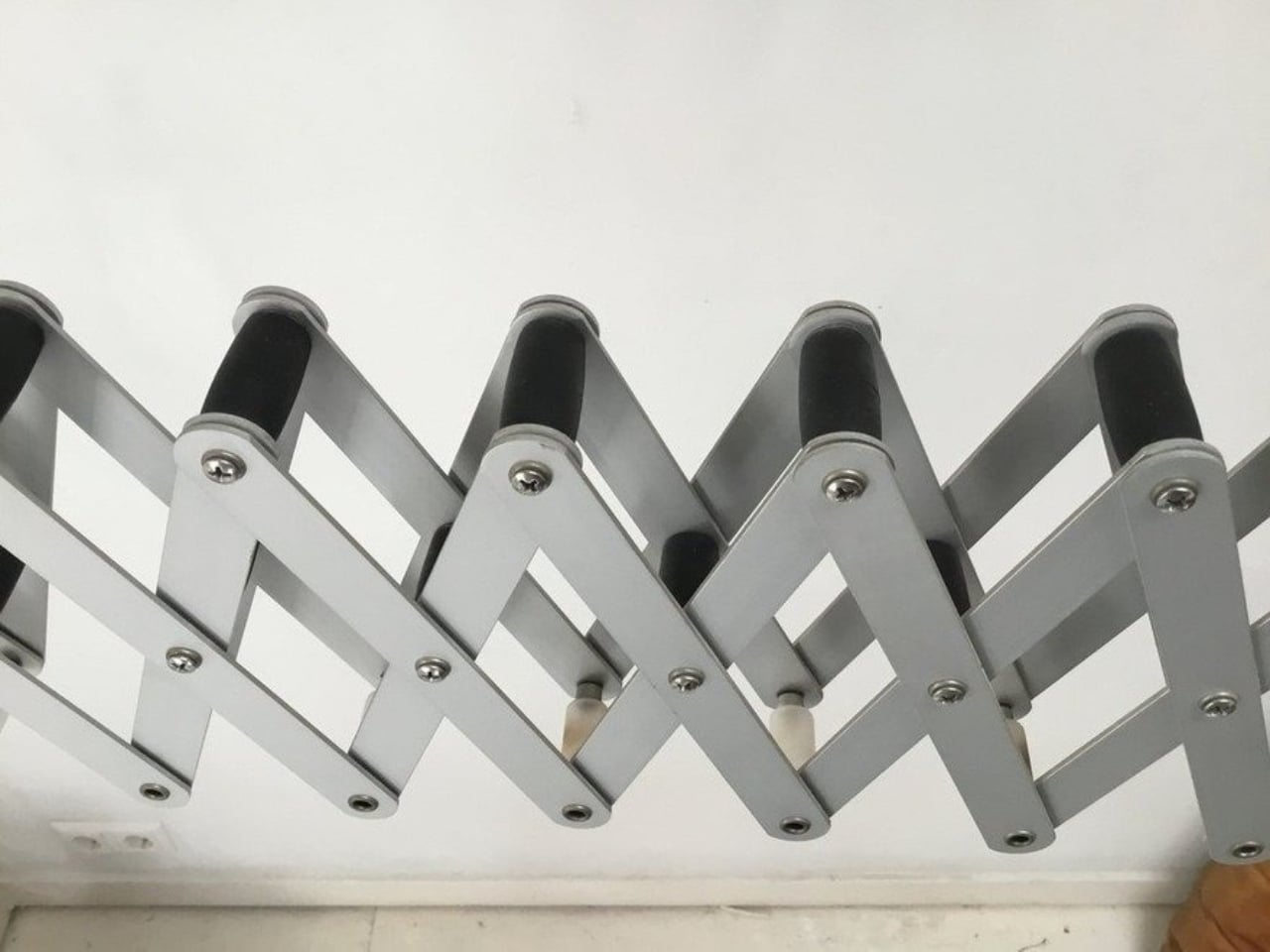
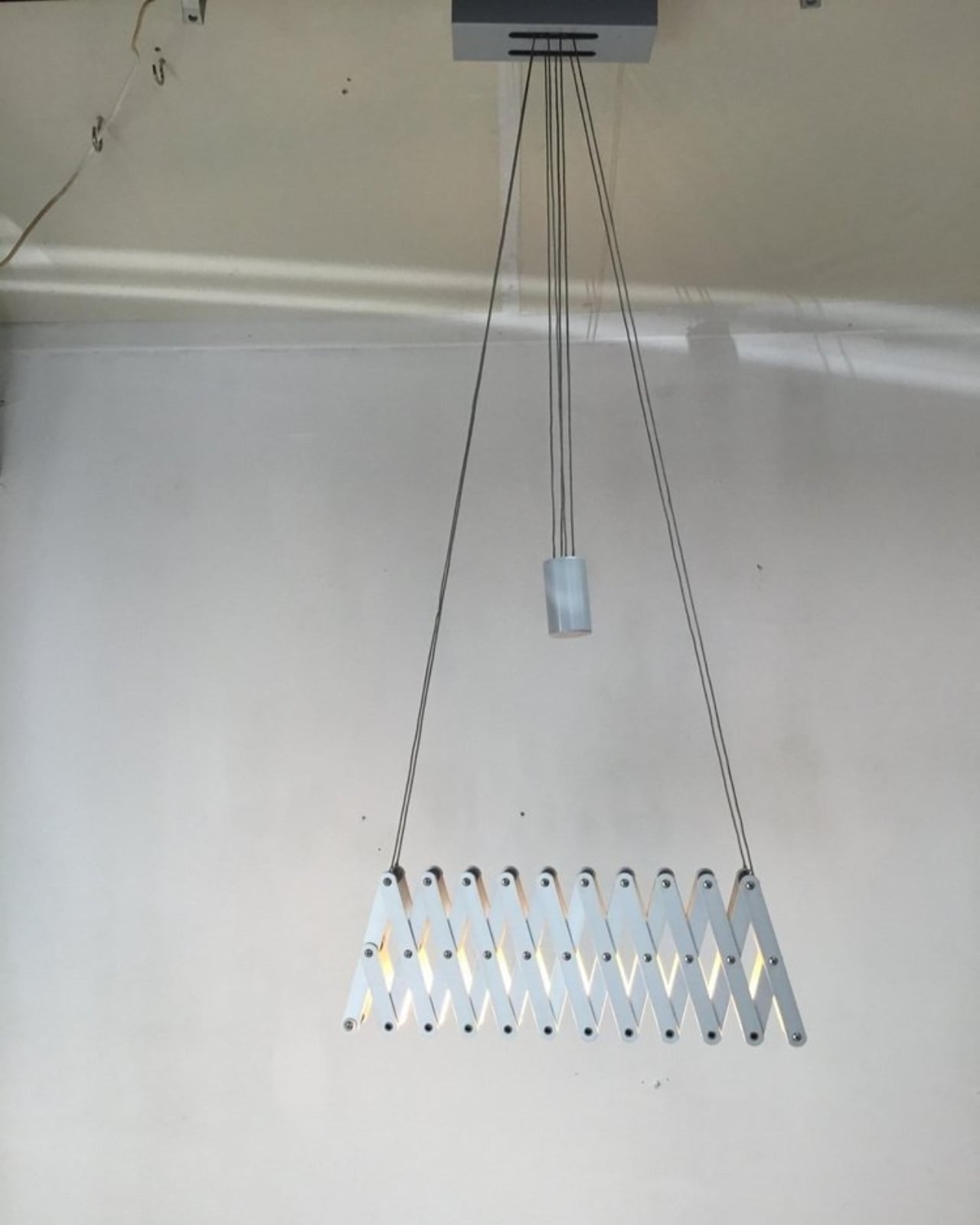
Some design ideas are so quietly right that they take decades to find their full audience. Oliver Michl’s Architect’s Lamp from the 1980s is exactly that kind of piece. It is a ceiling-mounted light that borrows its entire visual logic from equal space dividers, the spring-loaded drafting tools that architects and engineers use to plot perfectly even intervals across a surface. The concept sounds almost too clever when you say it out loud. And yet, the moment you see it, it just makes sense.

Michl designed the lamp during a very specific cultural pivot. The 1970s had been all about flowing, organic plastic forms. Soft curves, warm earth tones, a kind of material optimism that felt almost comforting. Then the 1980s arrived and jolted design in the opposite direction. Hard lines, industrial materials, a theatrical confidence in structure that felt almost confrontational compared to what came before. Michl, a German lighting designer who would later found Lucelab in Berlin, built the Architect’s Lamp squarely in that spirit. Steel and aluminum, full articulation, no softness anywhere.

Designer: Oliver Michl (Lucelab)

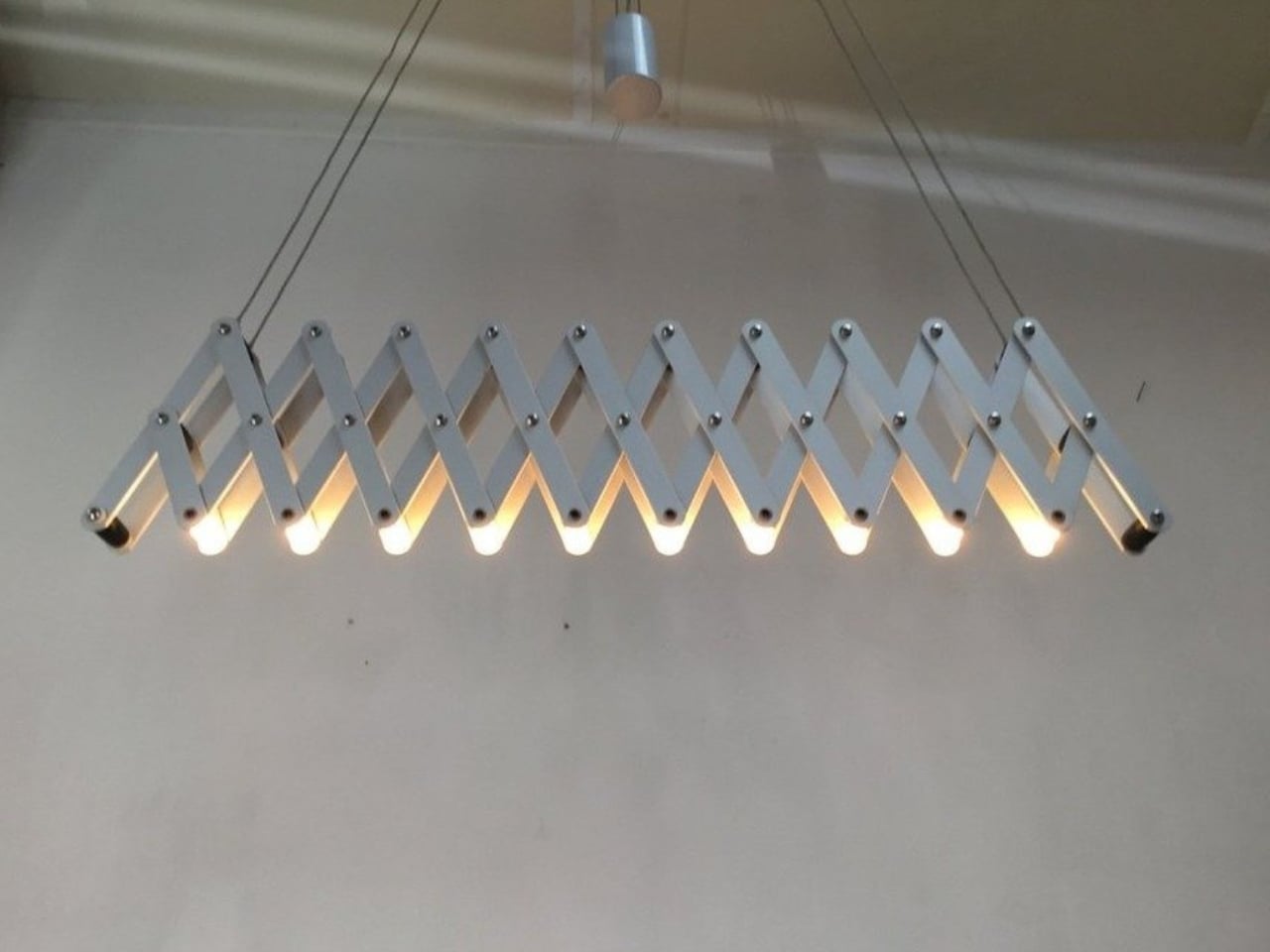
What makes the lamp genuinely interesting, beyond its visual bravado, is how it actually functions. The scissor-like expanding structure allows the piece to adjust both in height, ranging from about 41 to 79 inches, and in width, from 41 to 60 inches. Because it hangs from the ceiling rather than sitting on a desk or floor, the light it casts is ambient rather than task-focused. This was never a reading lamp. It was always a statement, and a rather bold one. Michl made the deliberate choice to take a mechanism that belongs at a drafting table and scale it up for overhead use. That kind of lateral thinking, the willingness to transplant a tool from one context and drop it into a completely different one, is harder than it looks. Most attempts at it feel gimmicky. This one feels inevitable.

There is a particular intelligence in designing a lamp that operates like this. Most lighting from that era leaned one way or the other, either purely functional or purely decorative, rarely both at the same time. The Architect’s Lamp refuses that binary entirely. It performs, and it reads as kinetic sculpture. The expanding grid of its structure, when viewed from below, creates a repeating geometric pattern that visibly shifts with every adjustment. You are not moving a lamp. You are editing a composition, and that distinction matters more than it might sound.

Michl has always worked at that intersection of function and spectacle. His FleXXXibile luminaire, also produced under Lucelab, became a cult object among designers for similar reasons. It features a concertina lattice that can be precision-aimed at a specific point, and it has never really left the design conversation. The Architect’s Lamp arrives at the same sensibility from a different angle. Both pieces suggest a designer who finds moving parts not just practical but genuinely compelling. The mechanism, in Michl’s work, is always part of the message.

The lamp currently lives at Blackman Cruz, the Los Angeles gallery that specializes in exactly this kind of historically significant object. It is listed at $5,500, which is real money, but it is also an original piece from Germany, circa 1980, in steel and aluminum. It has survived four decades intact, which tells you something. The pieces that do not hold up tend to disappear. The ones that keep getting rediscovered tend to deserve it.

The reason this lamp keeps resurfacing in design conversations right now is not nostalgia. It is recognition. The industrial-meets-sculptural vocabulary that dominates so many contemporary interiors, the hard edges, the mechanical articulation, the idea that a light fixture can function as architecture, all of it circles back to what Michl was already doing forty years ago. He was early, and the design world was not paying close enough attention. The Architect’s Lamp is a reminder that some of the most interesting ideas do not announce themselves loudly. They just wait.

The post The 40-Year-Old Lamp That Still Looks Like the Future first appeared on Yanko Design.