What the 2026 Surface Pro 13 Actually Looks Like Out of the Box

What the 2026 Surface Pro 13 Actually Looks Like Out of the Box Close up of the Surface Pro 13 OLED display and magnetic keyboard

The 2026 Surface Pro 13 (12th Edition) represents Microsoft’s latest innovation in its high-end 2-in-1 tablet lineup. This device introduces a host of upgrades, including a new OLED display option, enhanced performance, and a refined design. With prices ranging from $1,499.99 to $3,549.99, the Surface Pro 13 is aimed squarely at professionals and power users […]

The post What the 2026 Surface Pro 13 Actually Looks Like Out of the Box appeared first on Geeky Gadgets.

Posted in Uncategorized

Don’t Let Bad-Tasting Tap Water Ruin Your Dinner Party – Save Up to $700 This Prime Day With Waterdrop Filter

Hosting a watch party usually means thinking through every sensory detail in the house. The menu has to hit the right balance of easy and memorable, the drinks need to stay cold, the room temperature has to feel right once the crowd settles in, and even the air gets attention, whether that means opening windows early or giving the couch and curtains a quick pass with Febreze before people arrive. A lot of effort goes into creating a space that feels clean, welcoming, and put together without looking like it took effort at all.

Water can undo that illusion fast. Guests might forgive a late pizza delivery or a bowl of chips running empty, but a glass of bad-tasting water has a different effect. It lingers. It cuts through the mood and makes people notice the one part of the hosting experience that feels neglected. That is why home water filtration belongs in the same conversation as food, comfort, and atmosphere, especially around Prime Day when Waterdrop’s offering a practical upgrade that slides neatly into the rest of your summer hosting plans.

Waterdrop X16 Alkaline Mineral Reverse Osmosis System: The Flagship Pick for Big Game-Day Households
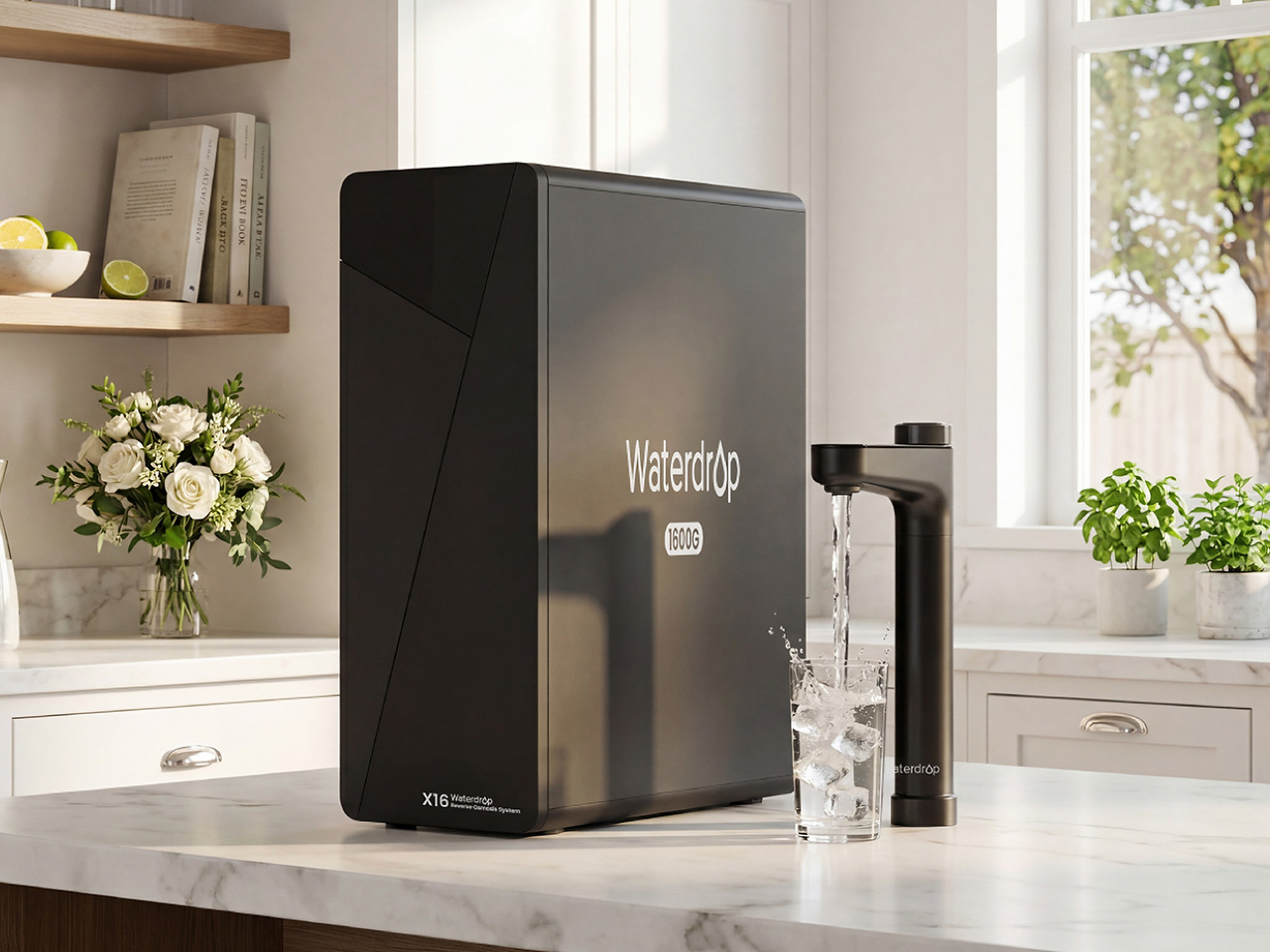
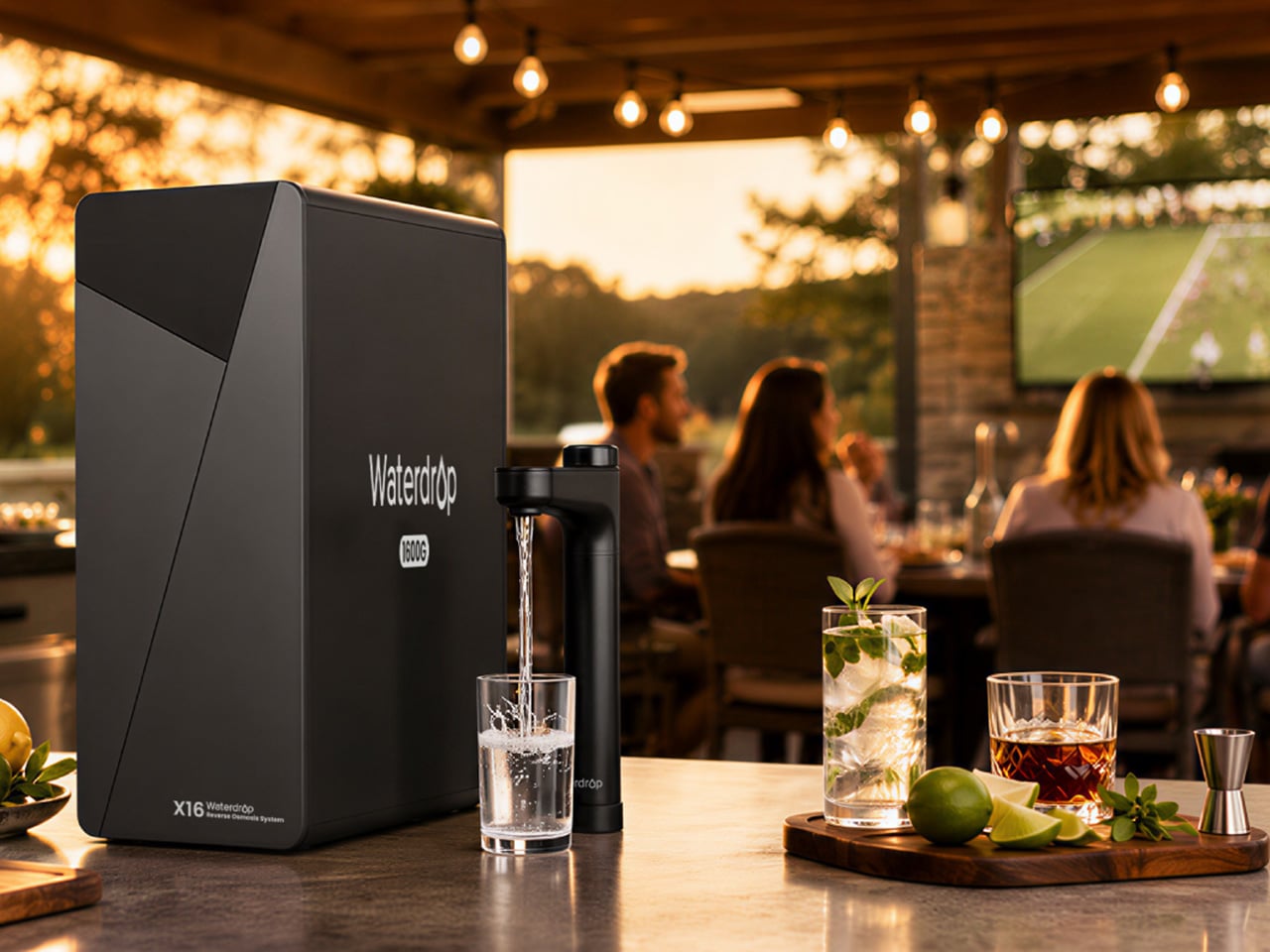
For the household that treats hosting as a serious craft, the Waterdrop X16 is the flagship upgrade that anchors the entire kitchen. This is a system designed for large families and frequent entertainers, people who need a high-volume, high-performance solution that never becomes a bottleneck, even when the house is full. Its tankless design is the first thing that stands out, saving a significant amount of under-sink cabinet space compared to older RO systems. Aesthetically, it is clean and minimal, with a smart faucet that feels like a proper piece of modern kitchen hardware, displaying water quality and filter life at a glance.

The performance backs up the premium design. The X16 pushes out water at a rate of 1600 gallons per day, a spec that translates to filling a cup in about three seconds, so there is no waiting around when multiple people need a drink. Its 11-stage filtration system removes the usual contaminants while adding back alkaline minerals like Ca and Mg, balancing pH to 7.5± , which improves the taste for everyday drinking, coffee, and cooking. The 3:1 pure-to-drain ratio is also remarkably efficient, making it a responsible long-term investment for a home that wants the best water possible without the waste. It is a true kitchen centerpiece for game-day essentials.

Click Here to Buy Now: $1234.05 $1999 ($764.95% off, use coupon code “YANKOPD26”). Hurry, Prime Day deal ends soon!

Waterdrop G3P800 Reverse Osmosis System: The Family Kitchen Upgrade That Balances Speed and Trust
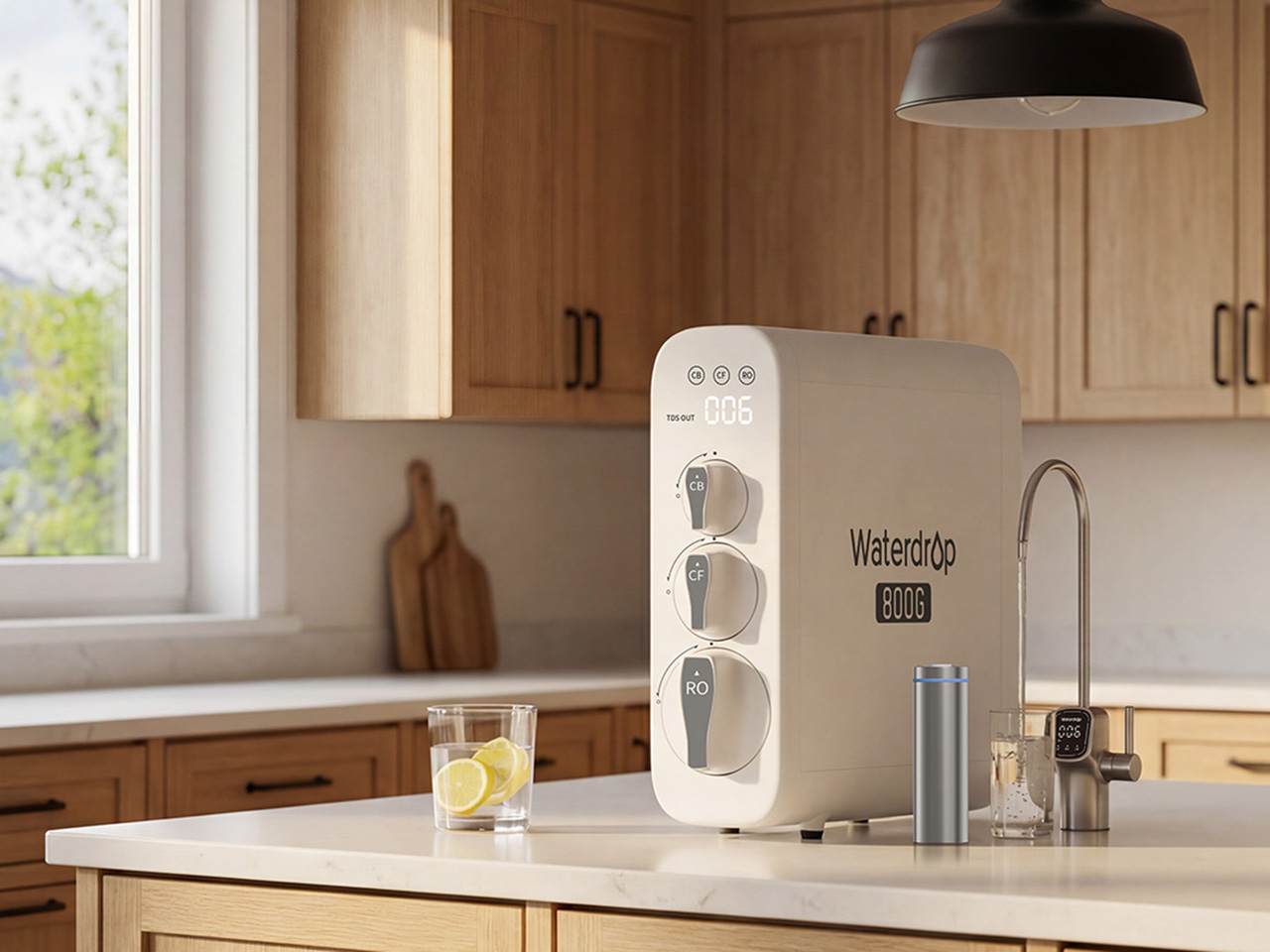
If the X16 represents the top tier of home filtration, the Waterdrop G3P800 is the trusted, family-ready workhorse that brings many of the same benefits to a broader audience. It has become a best-seller on Amazon for a reason, it hits the sweet spot between powerful reverse osmosis filtration and practical everyday convenience for a family of four or five. Like its bigger sibling, the G3P800 uses a tankless design that keeps the under-sink area tidy and accessible, a thoughtful touch for anyone who has dealt with bulky, tank-based systems in the past.

With an 800 GPD flow rate, the system is more than capable of handling daily routines and smaller gatherings without any frustrating lag at the faucet. It provides a steady stream of clean water for cooking, filling water bottles before school, or serving guests during a weekend get-together. For safety-conscious households, the G3P800 is certified against NSF/ANSI standards 42, 53, 58, and 372, offering documented proof of its ability to reduce a wide range of contaminants including chlorine, lead, and TDS. The smart faucet adds a layer of confidence, displaying real-time water quality so you always know the system is working as it should.

Click Here to Buy Now: $664.05 $999 ($334.95 off, use coupon code “YANKOPD26”). Hurry, Prime Day deal ends soon!

Waterdrop M6H Instant Hot Countertop Reverse Osmosis System: The Flexible Choice for Renters and Small Spaces
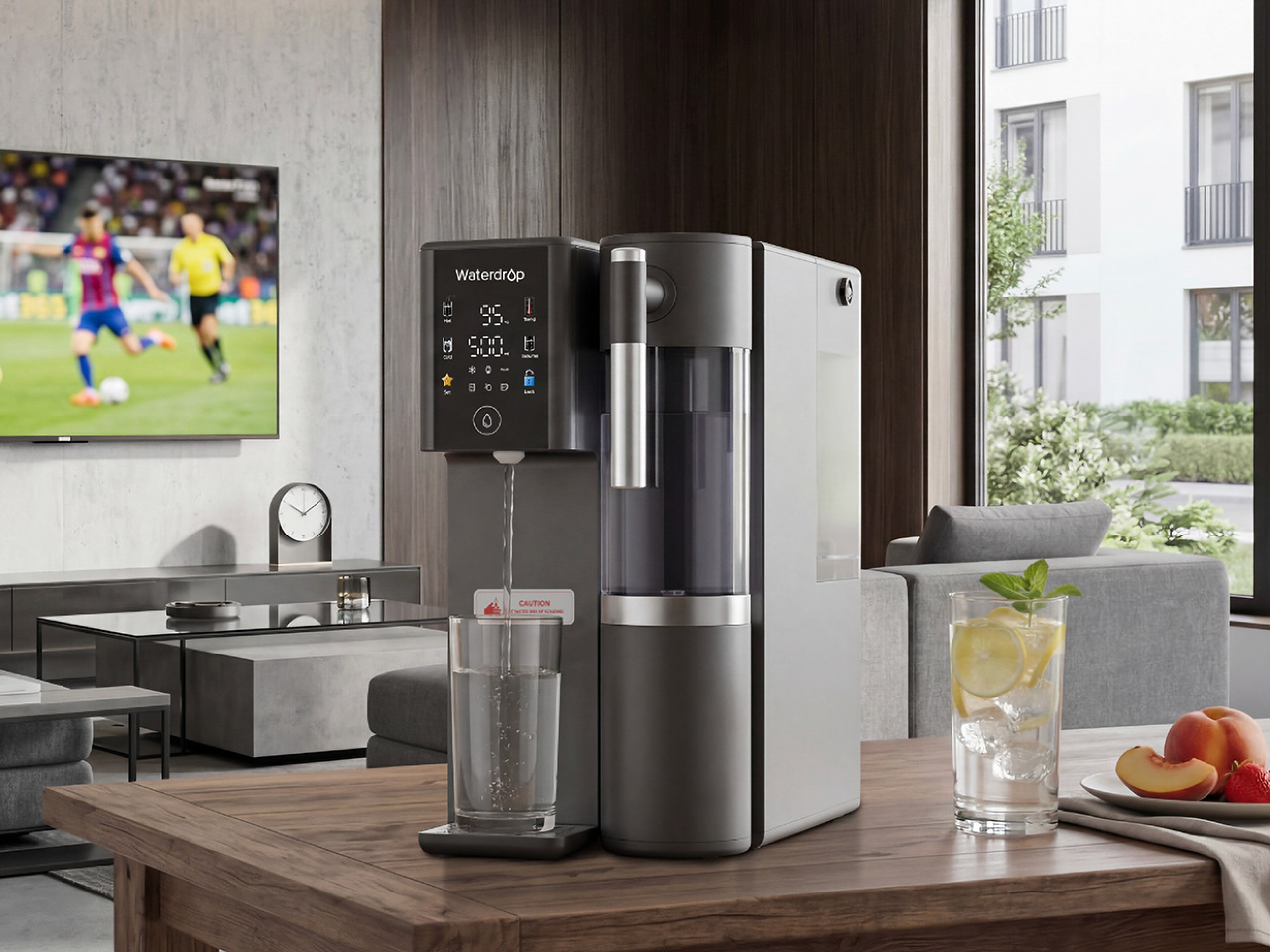
For a huge number of people, including renters, apartment residents, and office workers, a permanent under-sink installation is simply not an option. The Waterdrop M6H is engineered for exactly this scenario. This countertop RO water filter delivers high-quality purified water without requiring any plumbing or drilling, you just plug it in and fill the tank. It is a self-contained unit that brings the power of reverse osmosis to kitchens, dorm rooms, home offices, and even RVs, making it one of the most versatile home hydration essentials available.

The M6H distinguishes itself further with its instant hot water capabilities. It offers multiple temperature settings, perfect for making baby formula, brewing tea at the right temperature, or getting a quick start on oatmeal or coffee during busy mornings. This feature also makes it a fantastic beverage station for gatherings, allowing guests to make their own drinks without hovering around the stove. The system includes a detachable glass pitcher that can move from the countertop to the dining table or into the fridge, blending the convenience of a portable server with the power of a stationary RO system.

Click Here to Buy Now: $284.05 $429 ($144.95 off, use coupon code “YANKOPD26”). Hurry, Prime Day deal ends soon!

Waterdrop 10UA Under Sink Water Filter: The Easy Entry Point for Better Everyday Water
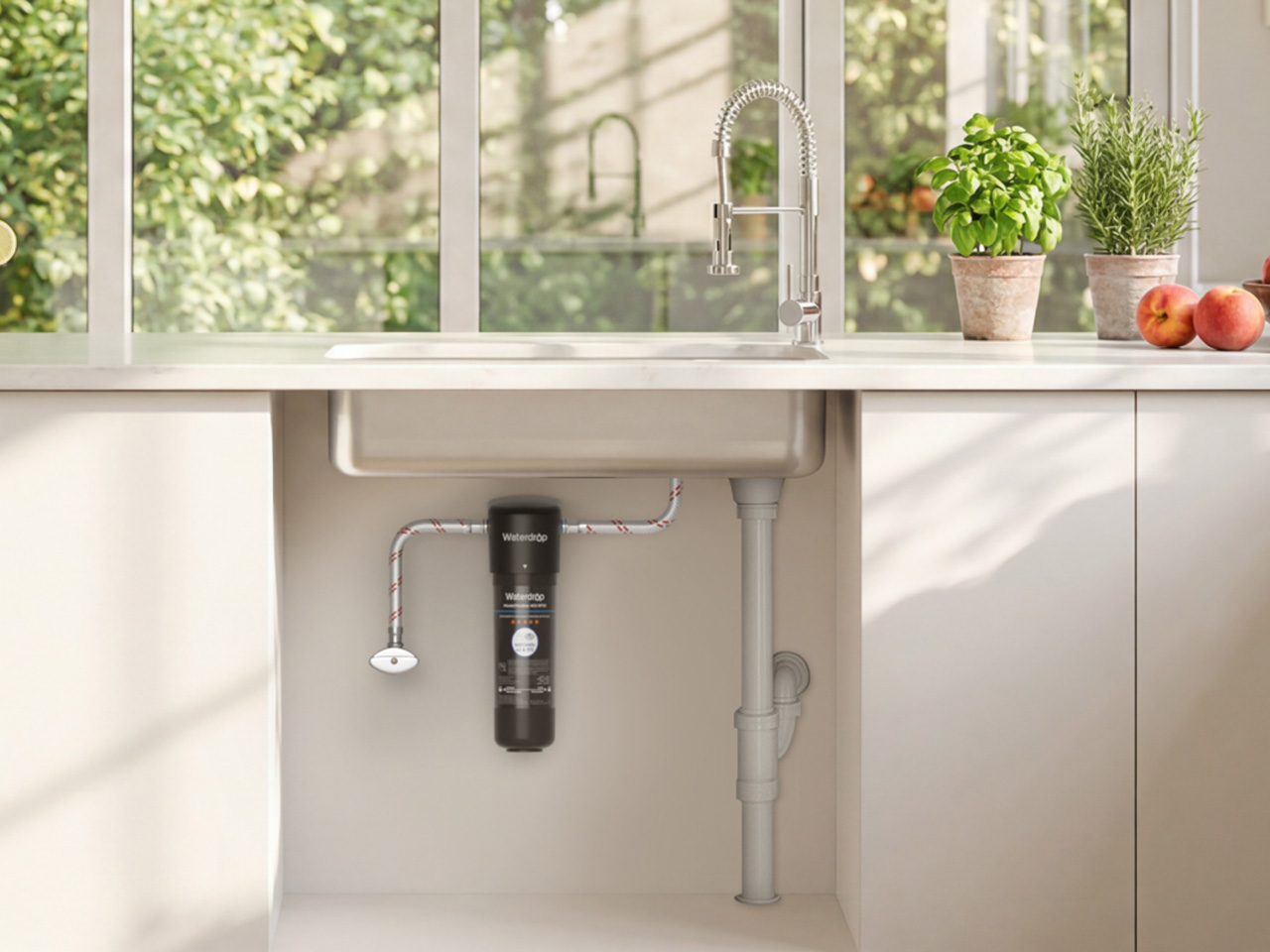
Sometimes the goal is a simple, effective upgrade, a straightforward improvement over tap water without the complexity or cost of a full reverse osmosis system. The Waterdrop 10UA is that practical first step. It is an under-sink filter designed for budget-conscious households and first-time filter users who want an affordable, low-effort way to get cleaner, better-tasting water for drinking and cooking. The installation is quick and easy, making it a great weekend project that delivers immediate benefits.

While it is a simpler system than the RO models, the 10UA still provides robust filtration that significantly reduces chlorine, taste, odor, sediment, and other common impurities. Its long filter life makes it a low-maintenance choice for busy families who want to set it and forget it. For daily use, it provides a reliable supply of filtered water directly from the existing kitchen faucet, making it useful for everything from filling a pot for pasta to washing vegetables. It is an accessible entry point to better summer hydration for anyone who wants to improve their tap water quality without a major investment.

Click Here to Buy Now: $36.09 $45.99 ($9.90 off, use coupon code “YANKOPD26”). Hurry, Prime Day deal ends soon!

Waterdrop Glass Water Filter Pitcher: The Fridge-Ready Option for Casual Hosting and Daily Use
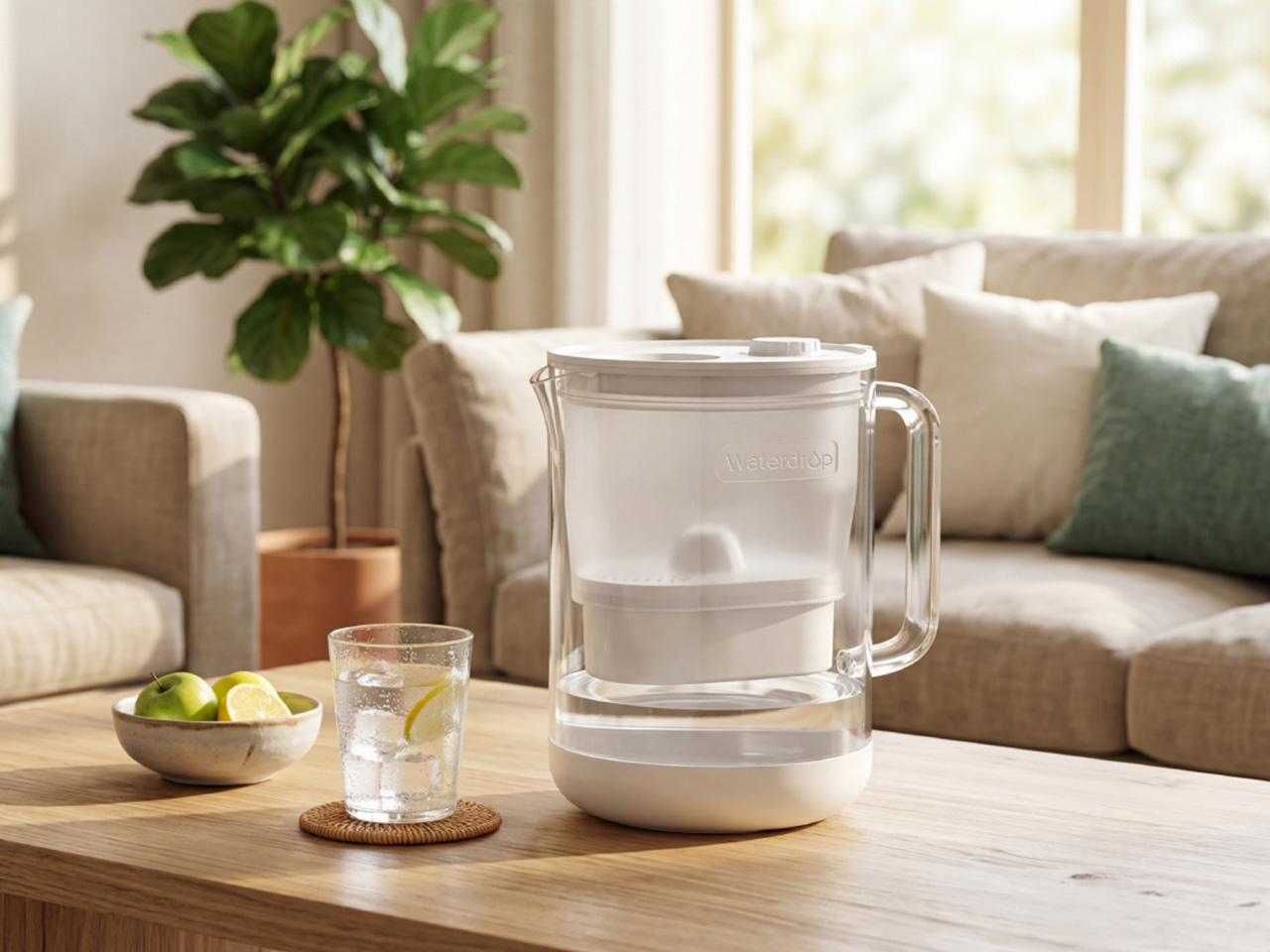
Finally, there is the solution that fits every space and any occasion, the Waterdrop Glass Water Filter Pitcher. This is the most flexible option in the lineup, designed for families, apartment users, and anyone who wants a simple, portable way to get filtered water. It is perfect for shared moments, easily moving from the kitchen counter to the dining table for a family meal or out to the patio for a backyard gathering. The pitcher’s high-quality glass construction offers a more elevated look for hosting compared to typical plastic pitchers.

The design is both stylish and sustainable, helping to reduce reliance on single-use bottled water. Its 5-stage filtration system works quickly to serve cleaner, better-tasting water with less waiting, which is a noticeable improvement during busy moments. The exceptionally fast flow-rate fills an 8oz cup in under 60 seconds, 10x faster than standard pitchers. That means healthier water in seconds instead of minutes.

Click Here to Buy Now: $42.74 $49.99 ($7.25 off, use coupon code “YANKOPD26”). Hurry, Prime Day deal ends soon!

The post Don’t Let Bad-Tasting Tap Water Ruin Your Dinner Party – Save Up to $700 This Prime Day With Waterdrop Filter first appeared on Yanko Design.

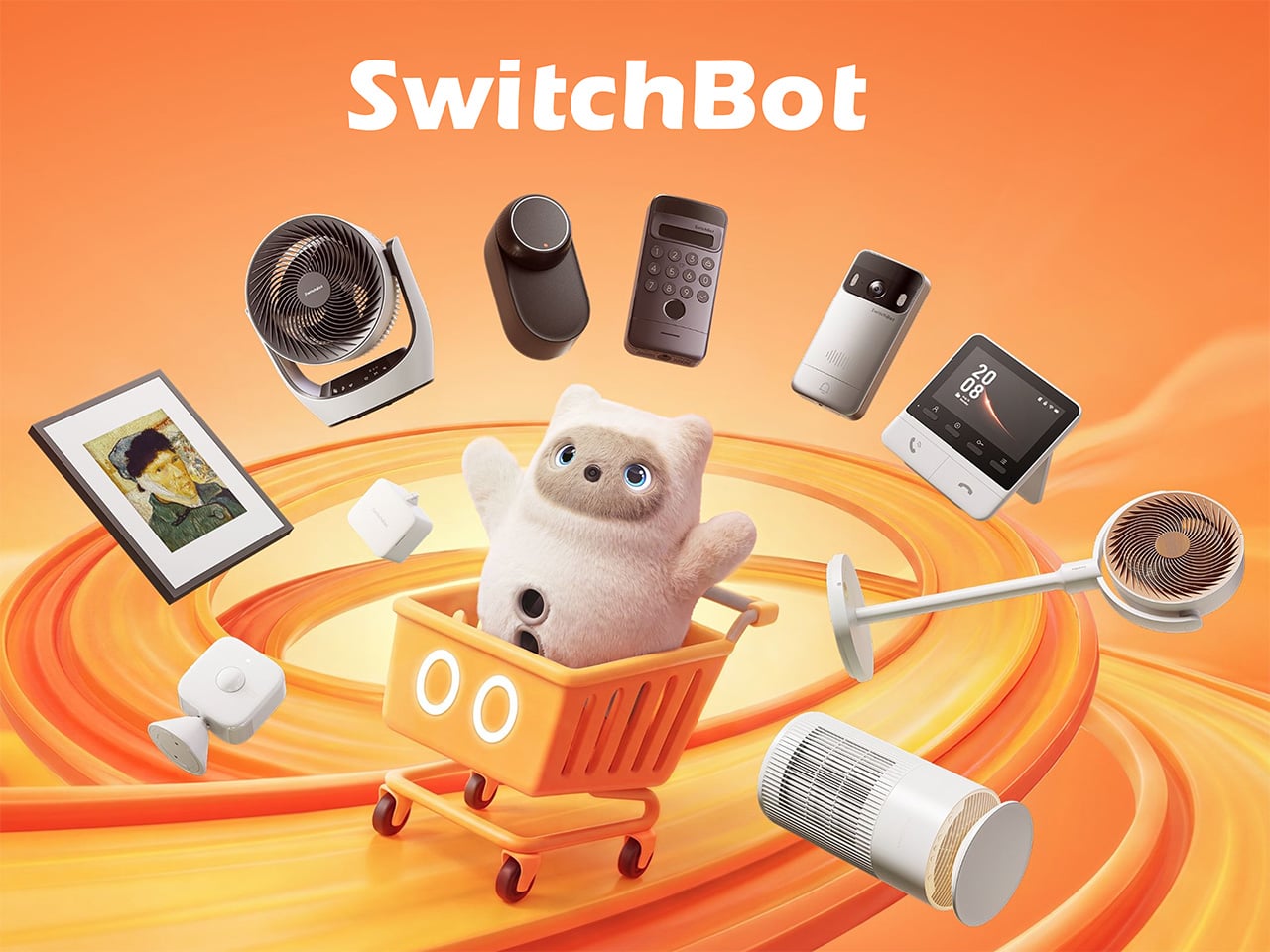
SwitchBot Prime Day 2026: Smart Upgrades, No Installation, Up to 50% Off

Smart home products have come a long way from the days when “home automation” meant complicated setups only tech enthusiasts could manage. The best ones now work with what people already have rather than asking them to start over from scratch. That shift has made the category far more approachable, and Prime Day sales like this one are worth paying closer attention to.

SwitchBot’s Prime Day 2026 sale runs from June 23 to June 26, offering discounts as high as 50% on a range of devices that handle security, window control, home decor, and daily comfort. None of them requires tearing down walls or rewiring anything, which is part of the appeal. The lineup this year has something for practically every room in the house.

Designer: SwitchBot

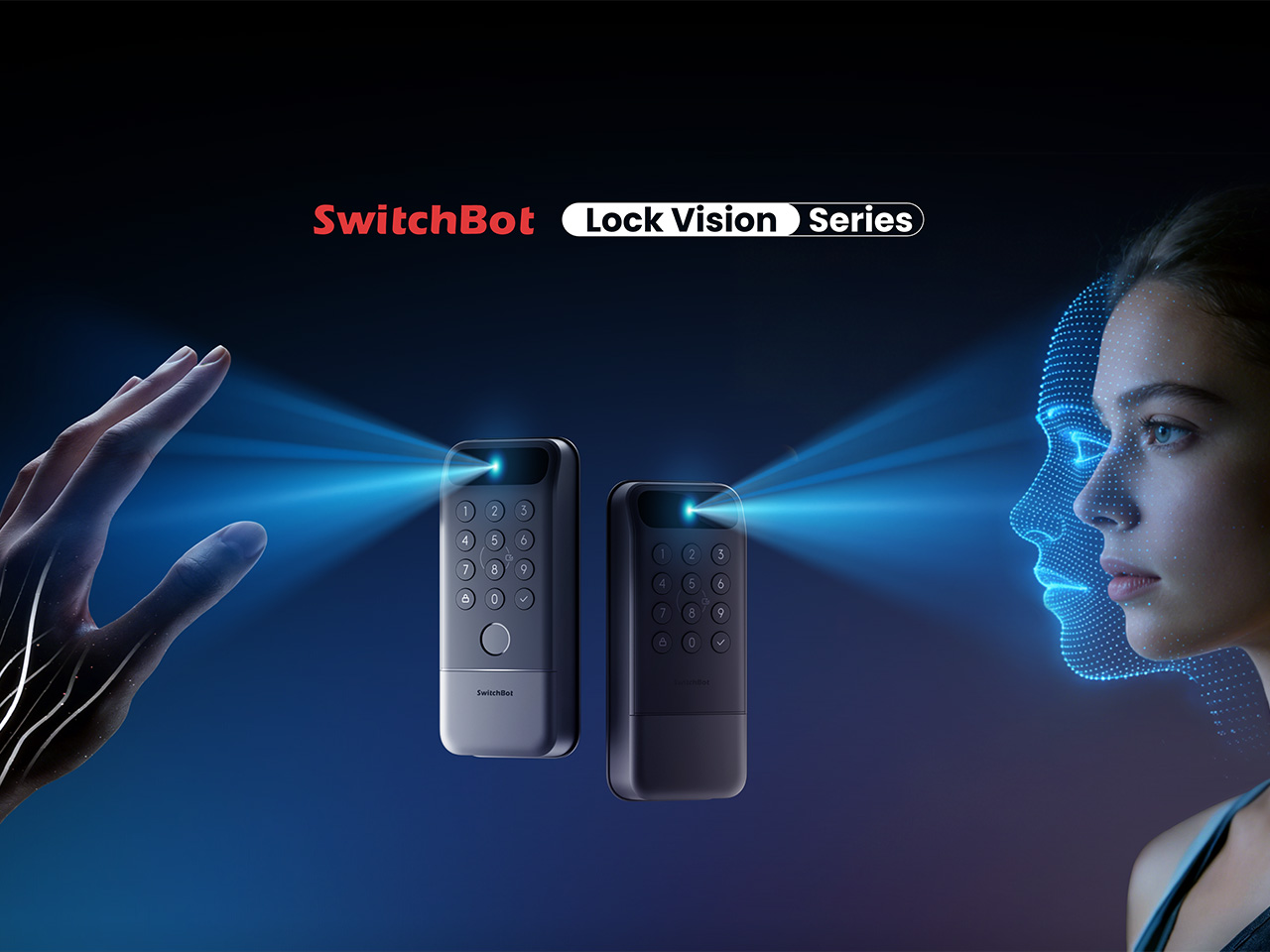
SwitchBot Lock Vision Series

Getting home with your hands full and somehow managing to unlock the door without dropping anything is one of those small daily struggles nobody really talks about. The SwitchBot Lock Vision takes care of that with 3D structured-light facial recognition, letting you walk right in without touching anything. It’s also built to tell the difference between a real face and a photo or video.

If your household has multiple people who need different ways to get in, the Lock Vision Pro adds fingerprint and palm vein recognition on top of the facial option, which makes it a bit more flexible for families. During Prime Day, the Lock Vision is down to $109.99, which is 35% off, while the Pro model drops to $169.99 at 26% off.

Click Here to Buy Now: $109.99 $169.99 (35% off). Hurry, Prime Day Deal ends soon! Website Link Here.

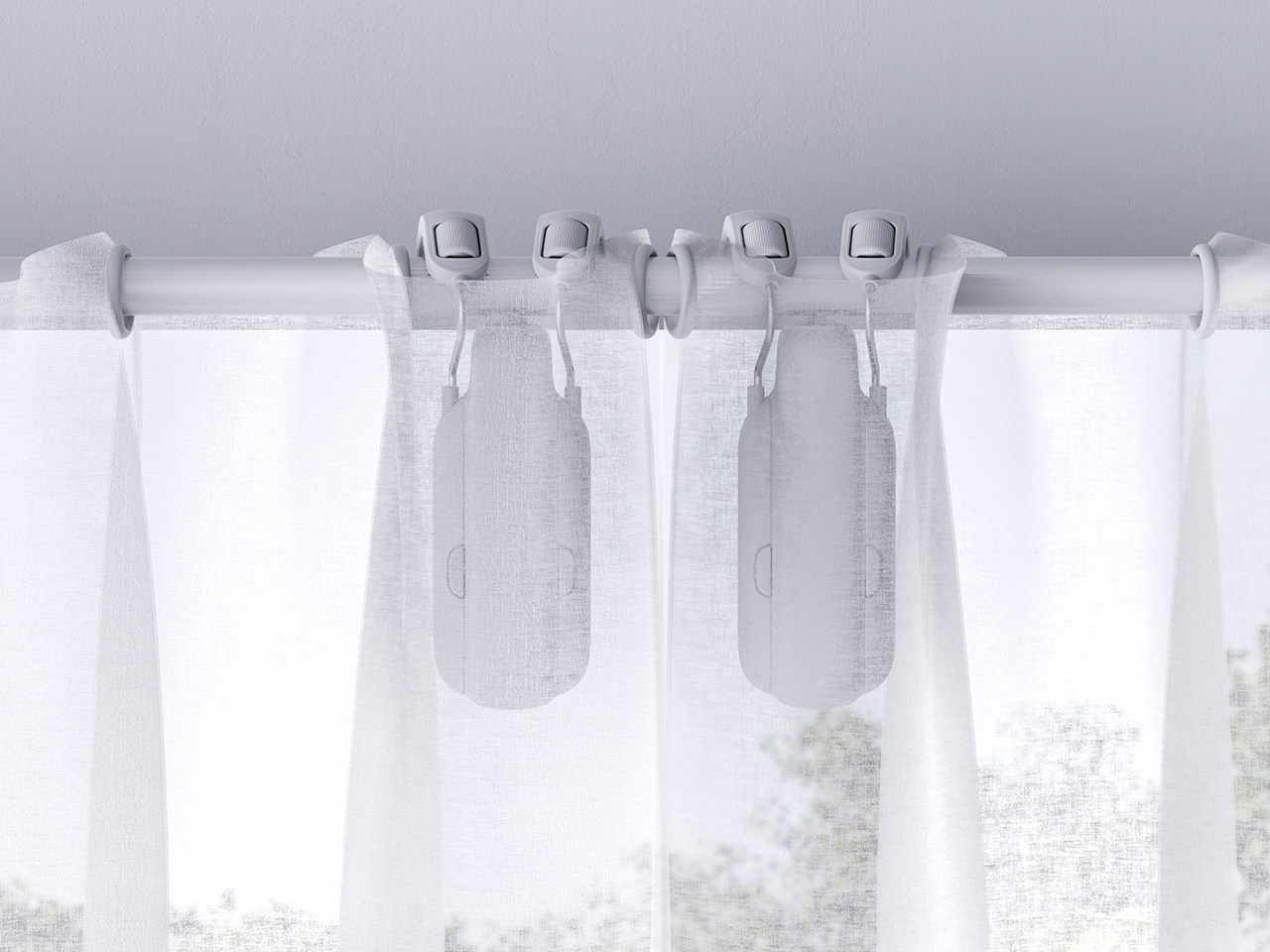
SwitchBot Curtain 3 Rod 2pcs + Remote

There’s something genuinely nice about curtains that open on their own in the morning, letting light in without you having to get out of bed. The SwitchBot Curtain 3 makes that possible by attaching directly to compatible curtain rods, so nothing needs to be replaced. You can control it through the SwitchBot app, a voice assistant, a set schedule, or the remote it comes with.

This bundle comes with two units, enough to cover a full window or even two separate ones, depending on your setup. The motor also runs as low as 25dB in QuietDrift mode, so it won’t wake anyone up if you’ve set it to open at sunrise. At 28% off during Prime Day, it’s priced at $129.99, which makes the automation a lot easier to justify.

Click Here to Buy Now: $129.99 $179.99 (28% off). Hurry, Prime Day Deal ends soon! Website Link Here.

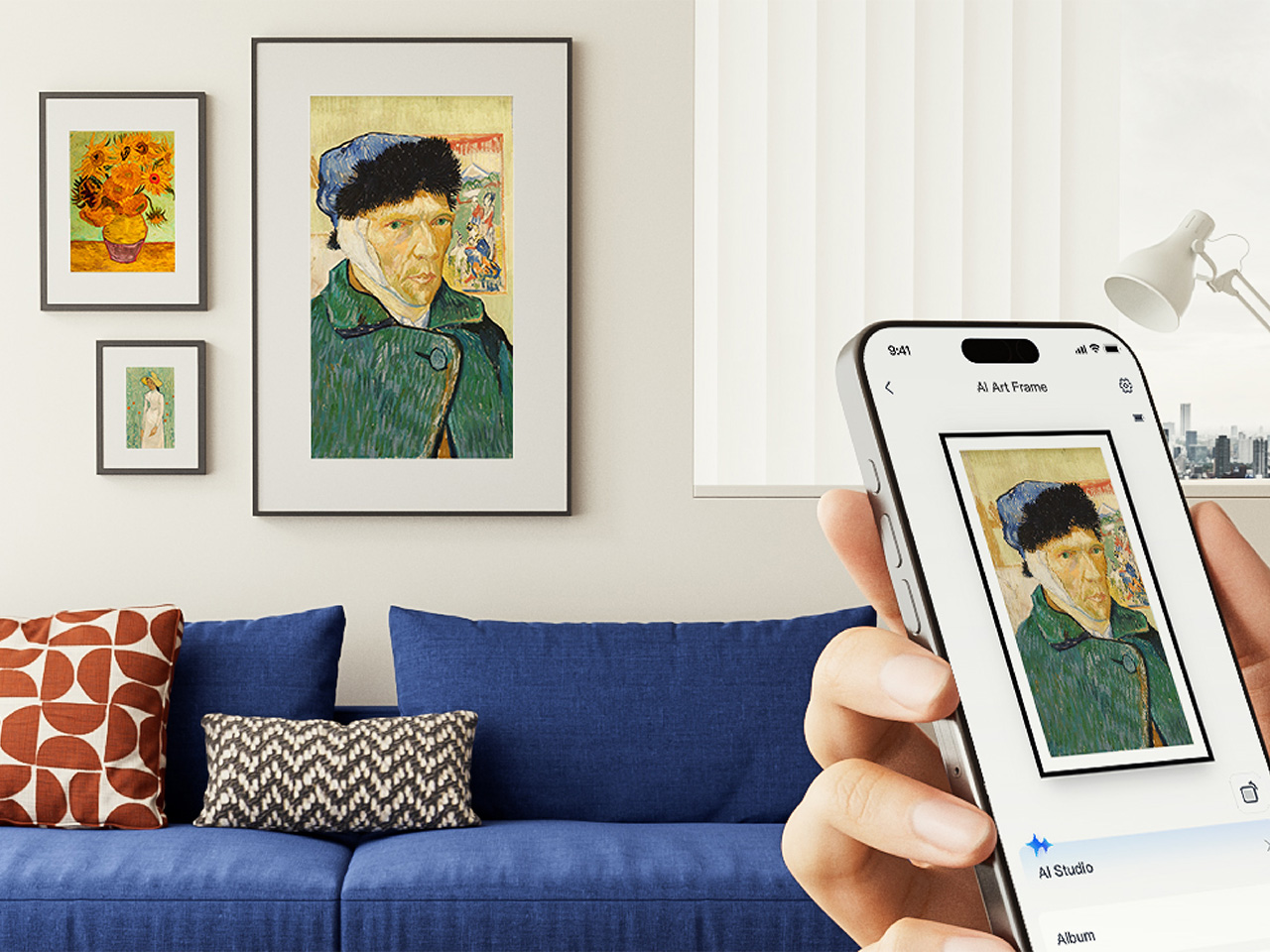
SwitchBot AI Art Frame

Digital frames have been around for a while, but most of them glow a bit too brightly for a living room. The SwitchBot AI Art Frame takes a different approach with an E Ink display that gives artwork a paper-like quality rather than a screen-like one. It comes in 7.3-inch and 13.3-inch sizes, and can show photos, personal artwork, or AI-generated visuals.

What makes it genuinely usable is that it isn’t tethered to a wall outlet, thanks to a built-in battery. It can sit on a desk, lean against a shelf, or hang on a wall, wherever it fits into your space best. The 7.3-inch model is $109.99 at 27% off during Prime Day, and the 13.3-inch goes for $265.99 at 24% off.

Click Here to Buy Now: $109.99 $149.99 (27% off). Hurry, Prime Day Deal ends soon! Website Link Here.

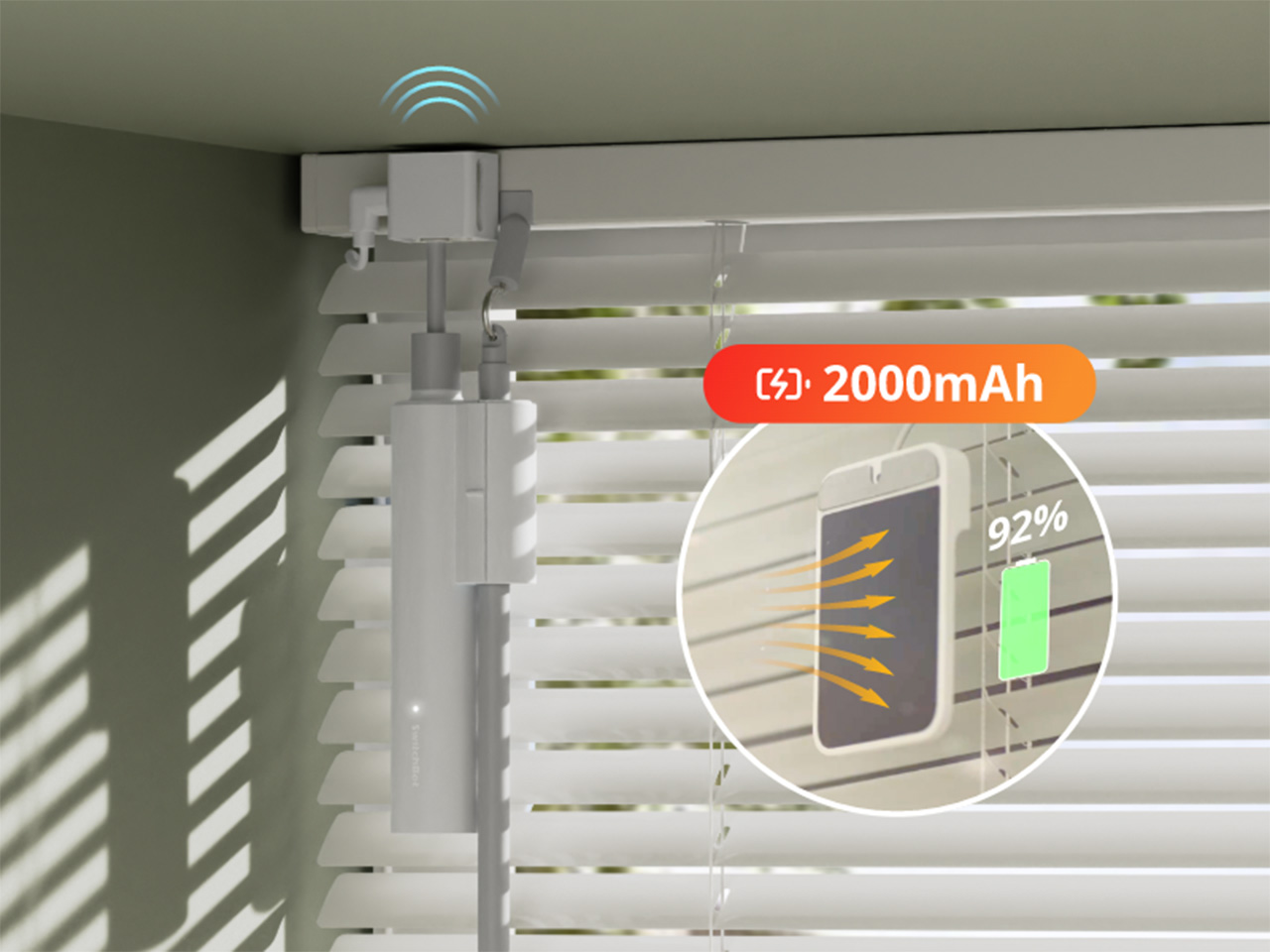
SwitchBot Blind Tilt 3pcs + Hub Mini

If you work from home, you’ve probably gotten up too many times just to adjust your blinds whenever the sun shifts. The SwitchBot Blind Tilt attaches to your existing blinds and lets you adjust the slat angle precisely without replacing anything. Three units are included in this bundle, so you can cover an entire room instead of just one window.

The included Hub Mini connects everything to the wider SwitchBot ecosystem, so you can control the blinds from anywhere, set them up with voice commands, or let a schedule take over. Instead of manually adjusting slats every morning or evening, you can just let it happen on its own. The bundle is $139.99 during Prime Day, which is 26% off its regular price.

Click Here to Buy Now: $139.99 $189.99 (26% off). Hurry, Prime Day Deal ends soon! Website Link Here.

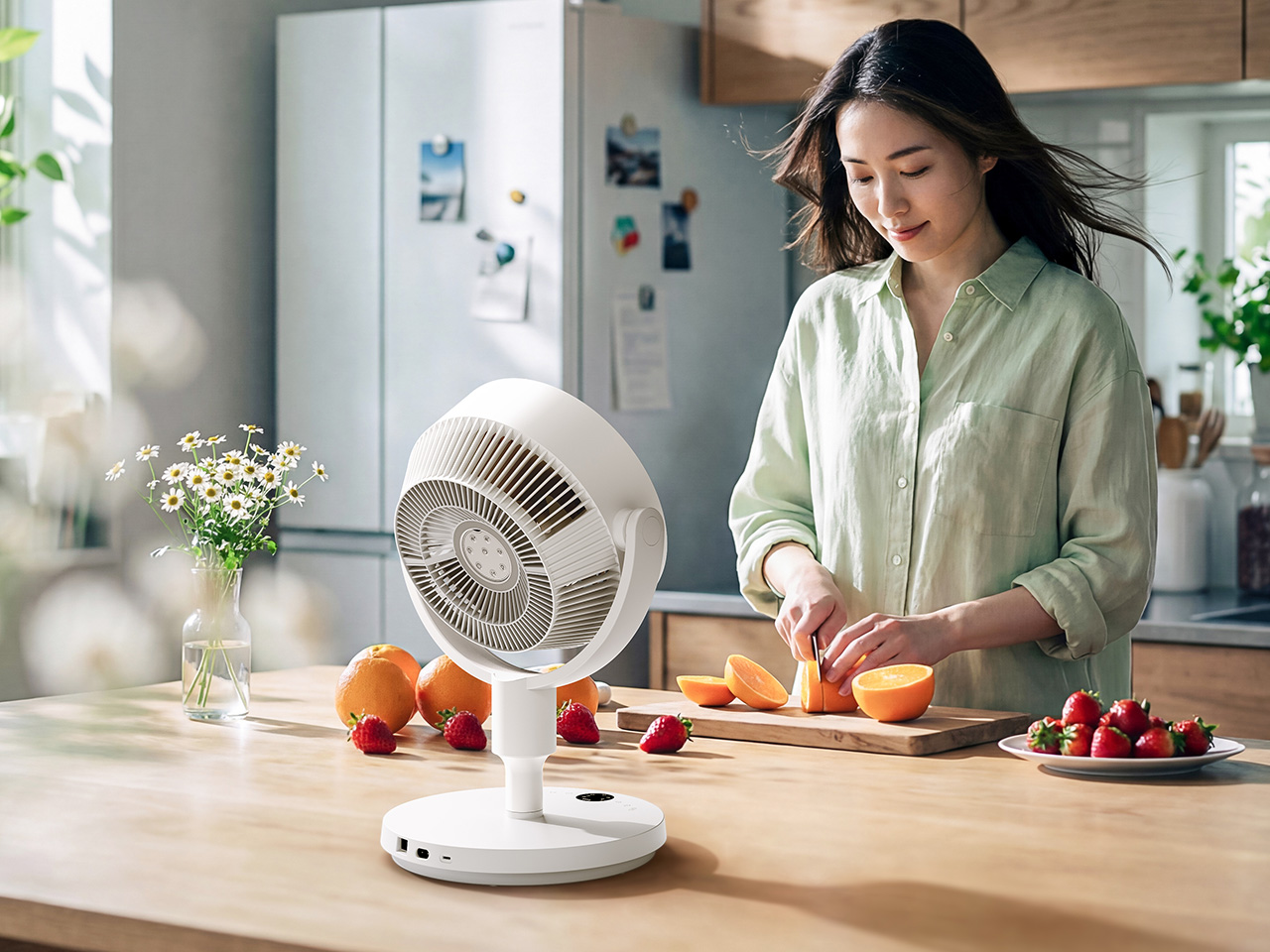
SwitchBot Standing Circulator Fan

A fan that just runs until someone turns it off isn’t exactly the pinnacle of smart living. The SwitchBot Standing Circulator Fan can be scheduled, adjusted remotely, and paired with other SwitchBot devices so it responds to what’s actually happening in your home. Given that Prime Day falls right in the middle of summer, it’s also one of the more timely picks.

Its adjustable height makes it easy to move between rooms without any hassle, and the quiet operation means it won’t be a distraction during calls or when you’re trying to sleep. At $89.99, it’s the most affordable item in this Prime Day lineup, and at 31% off, it’s a reasonable deal for a fan that fits neatly into a connected home setup.

Click Here to Buy Now: $89.99 $129.99 (31% off). Hurry, Prime Day Deal ends soon! Website Link Here.

The post SwitchBot Prime Day 2026: Smart Upgrades, No Installation, Up to 50% Off first appeared on Yanko Design.

This 38-Square-Metre Cabin in East Sussex Is Wrapped in Charred Timber and Built Entirely Around Yoga

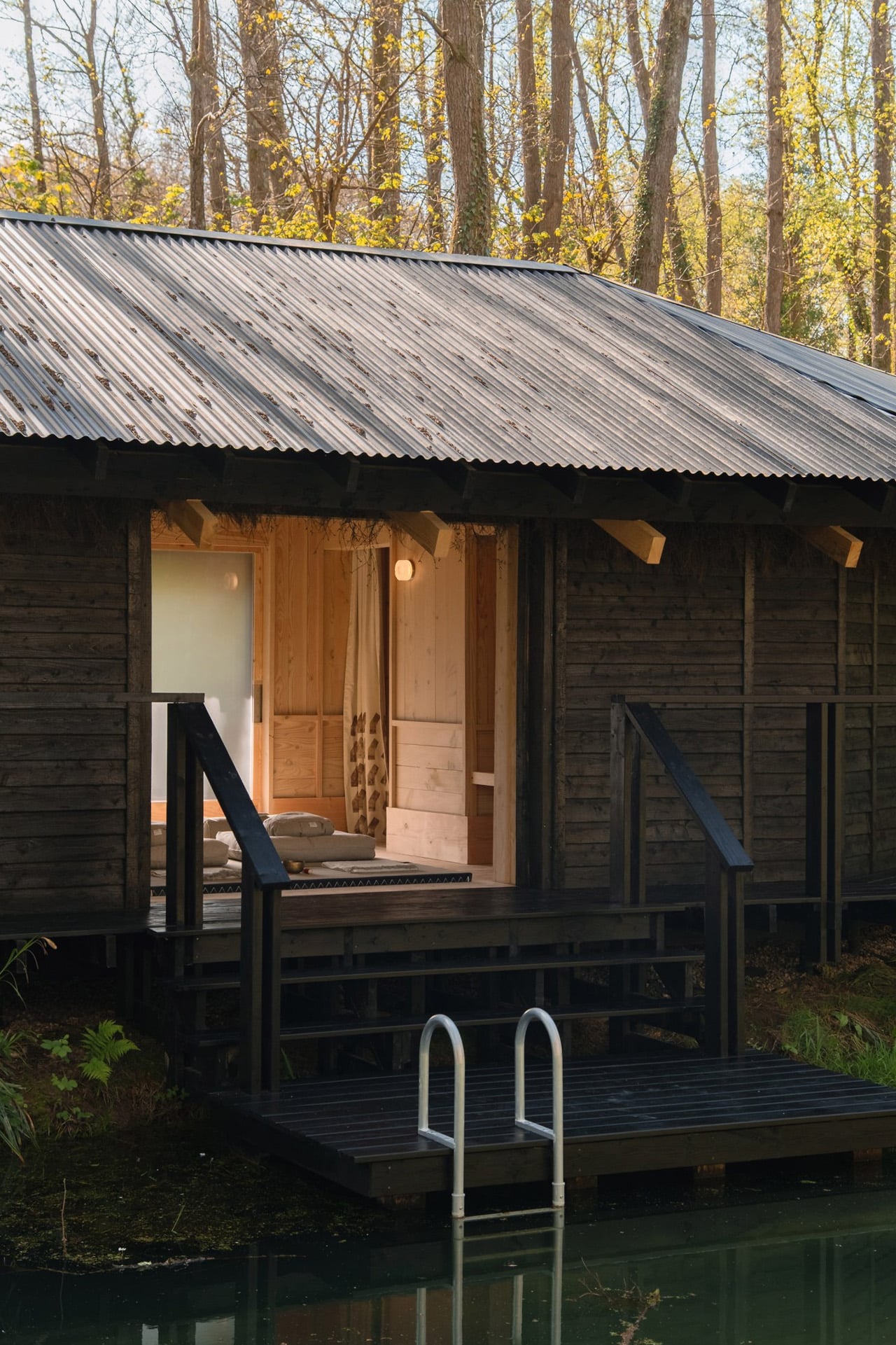
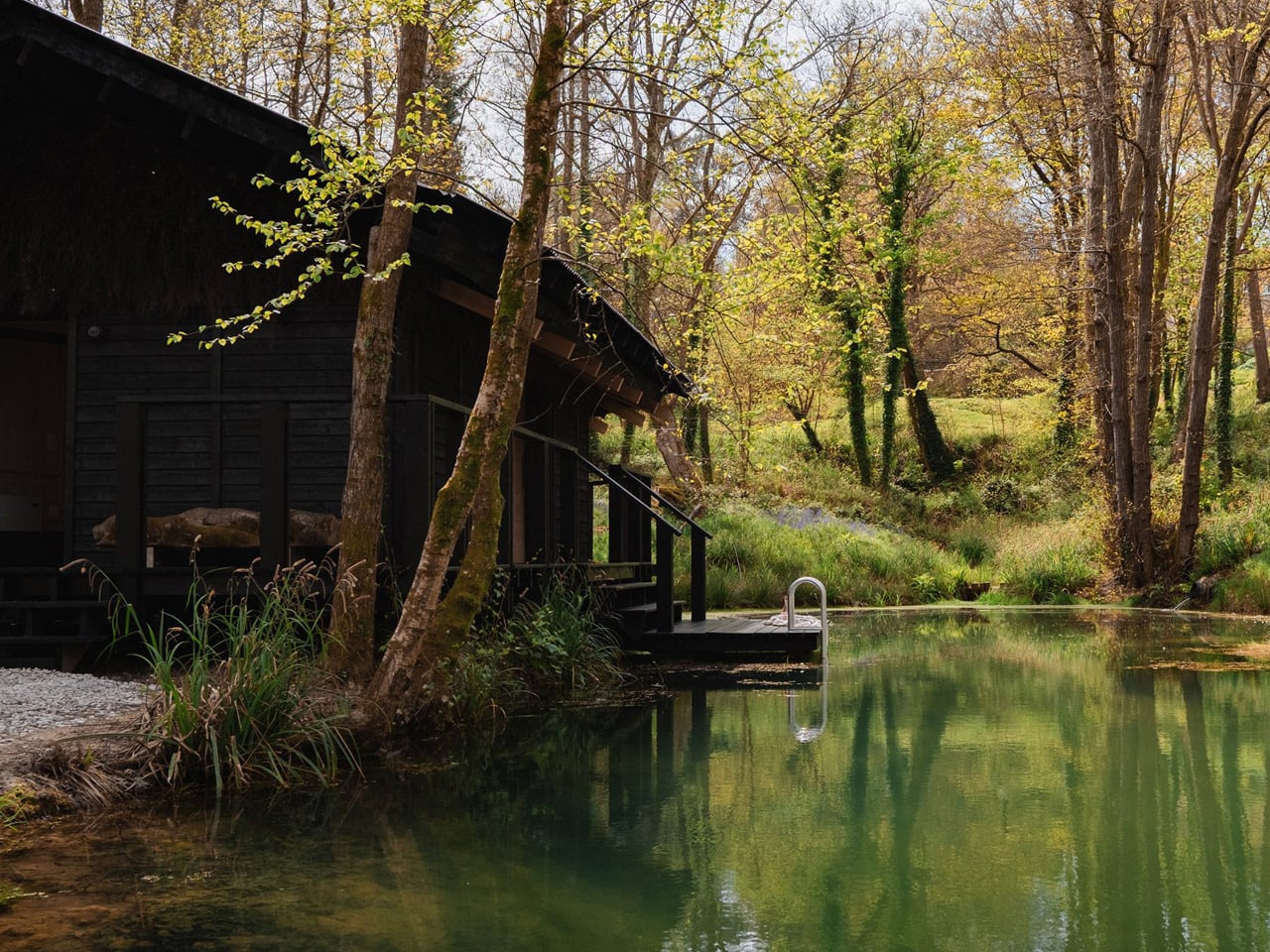
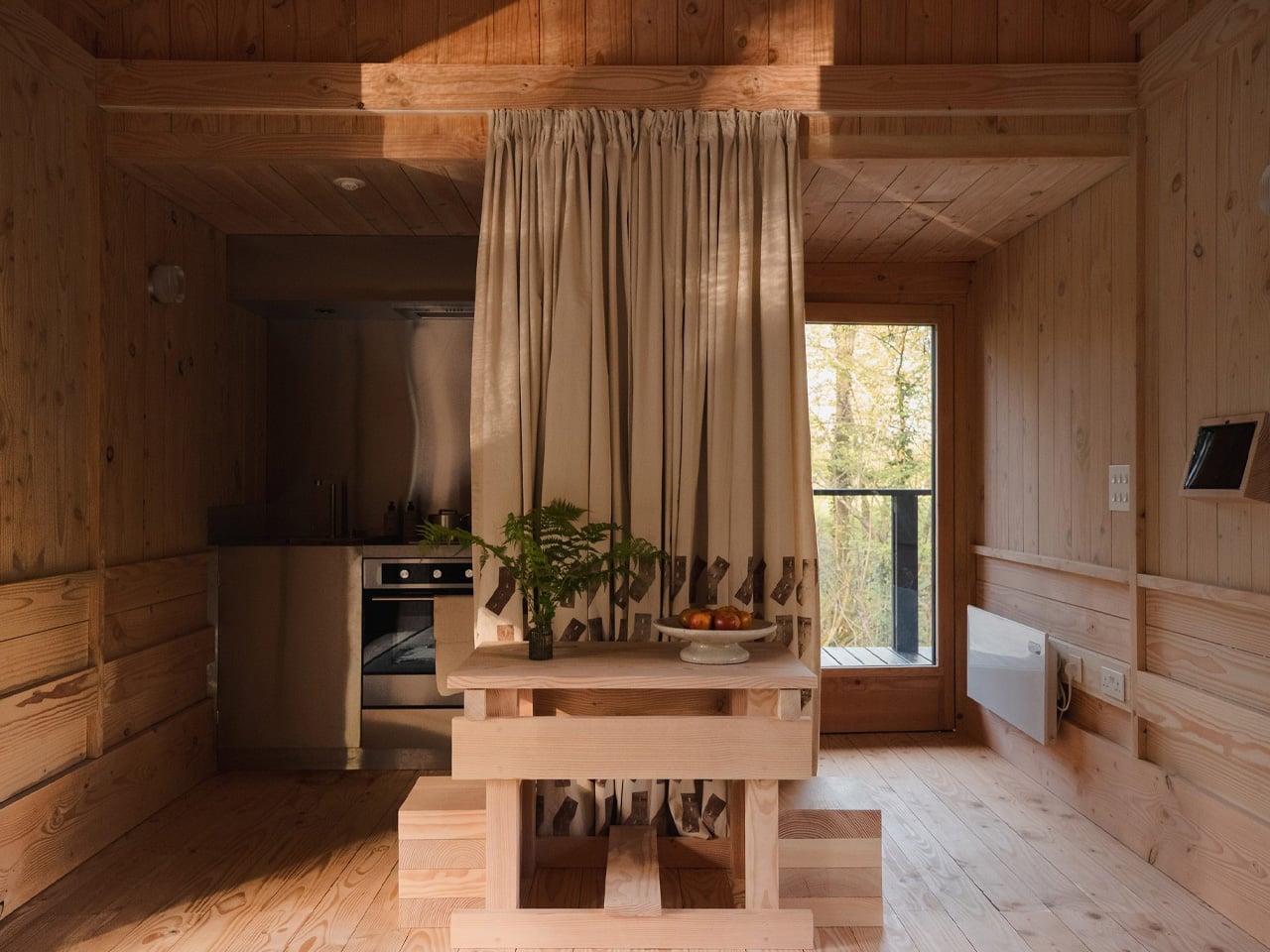
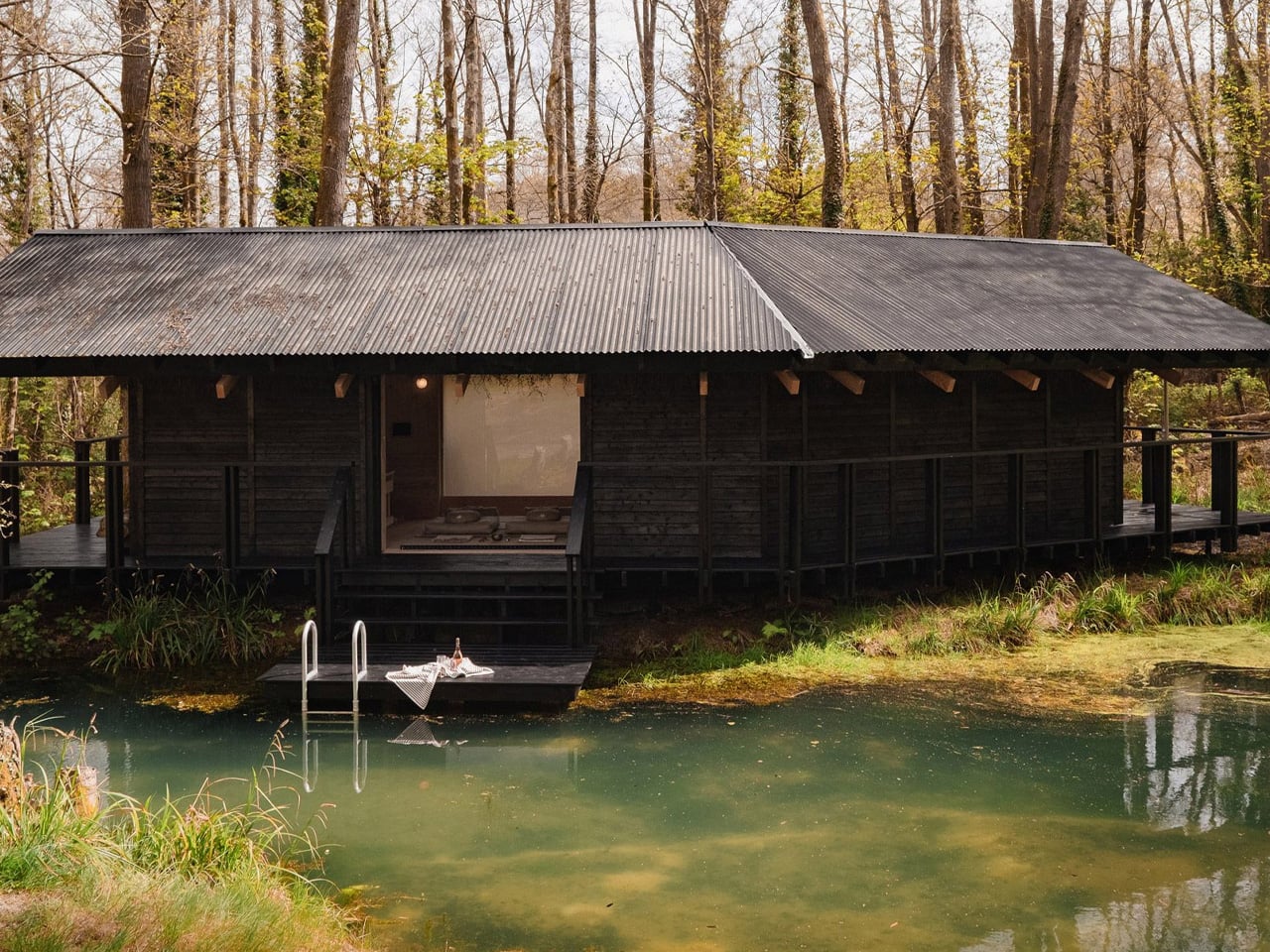
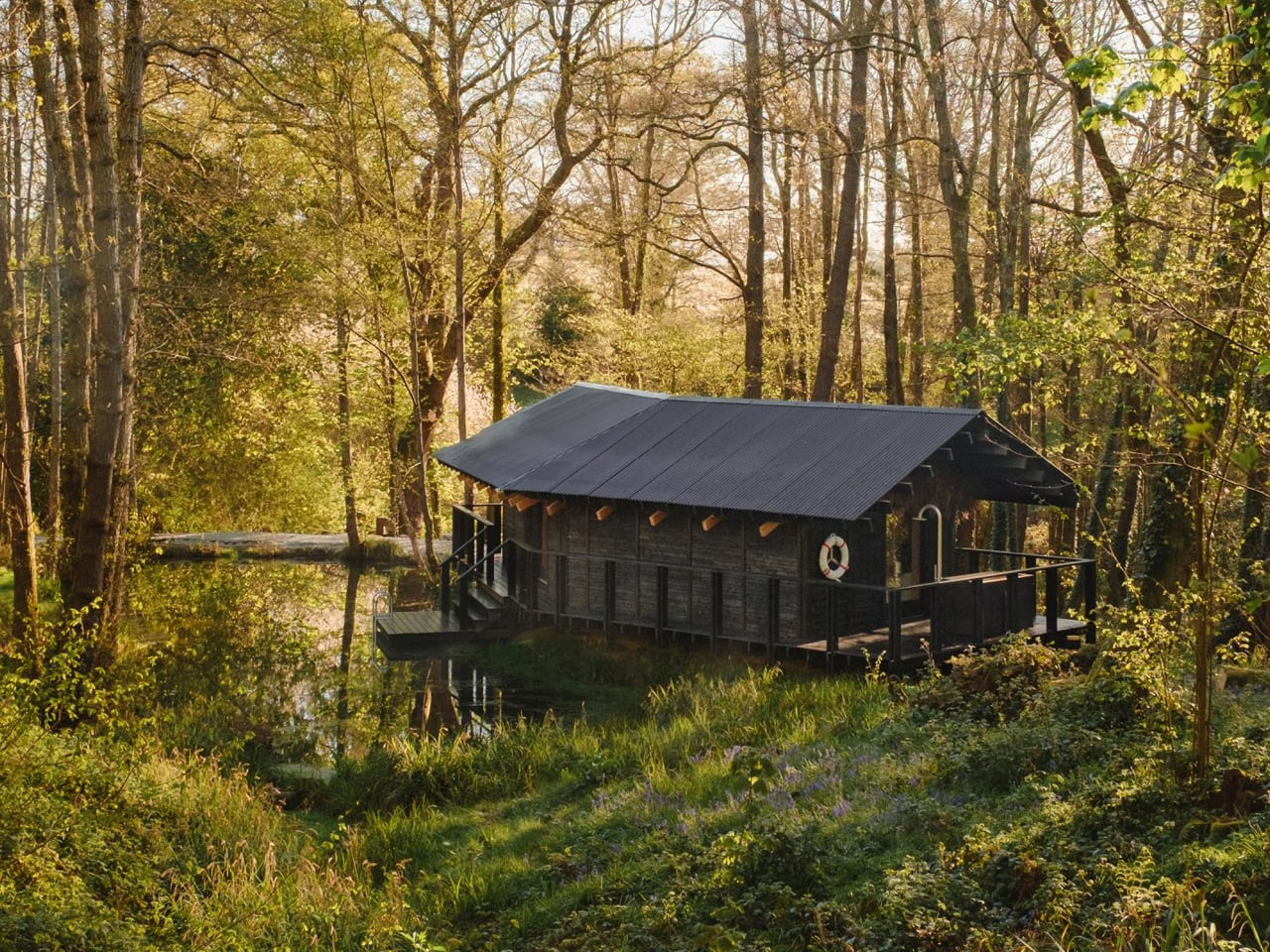
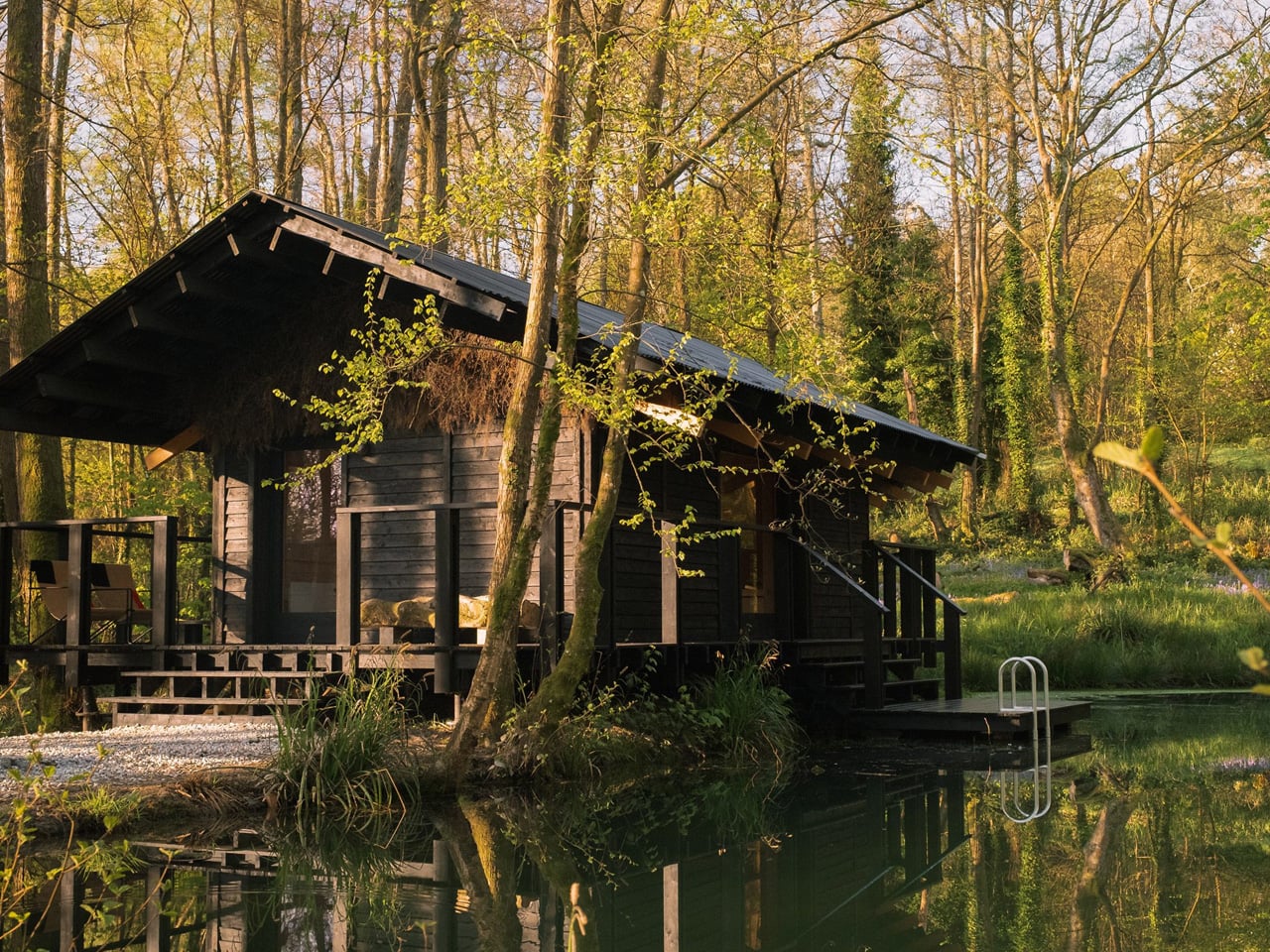
Some buildings are designed to be seen. Yogi’s Cabin, the latest project from UK studio Built Works, is designed to be felt. Nestled within the woodland of Great Park Farm in East Sussex, the 38-square-metre retreat sits alongside a natural swimming pond, designed not to impress, but to disappear into its surroundings.

The cabin was created for Architects Holiday, a hospitality company founded by the Built Works team that builds retreats around singular, restorative practices. Where their earlier project — the Drying Shed Sauna, also at Great Park Farm — was centred on heat and ritual, Yogi’s Cabin is organised around movement, stillness, and the slow passage of light through a woodland. The programme is simple: a dedicated yoga studio at the heart of a barn-like form, wrapped in materials that feel as rooted to the land as the alder trees around it.

Designer: Built Works

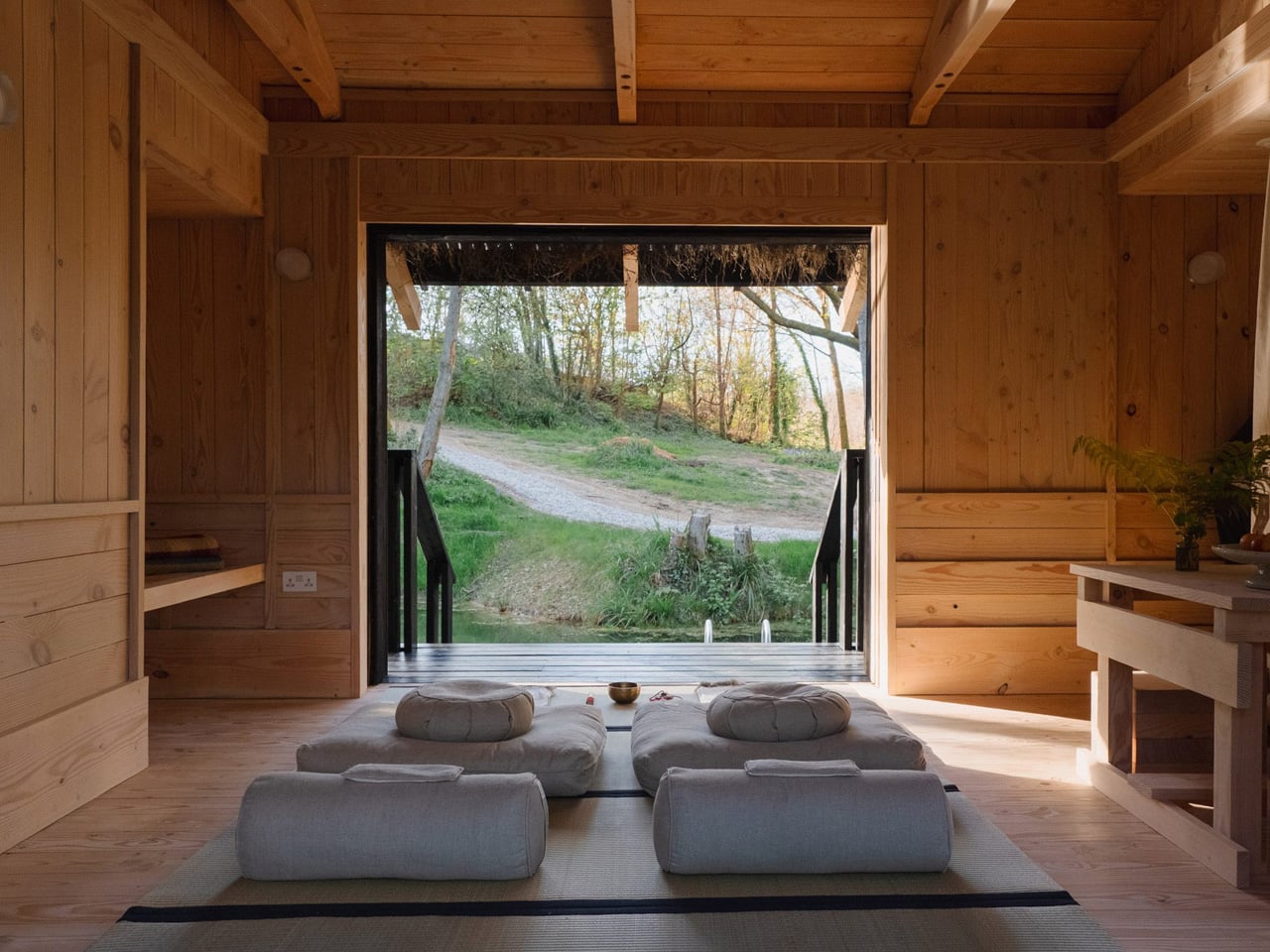
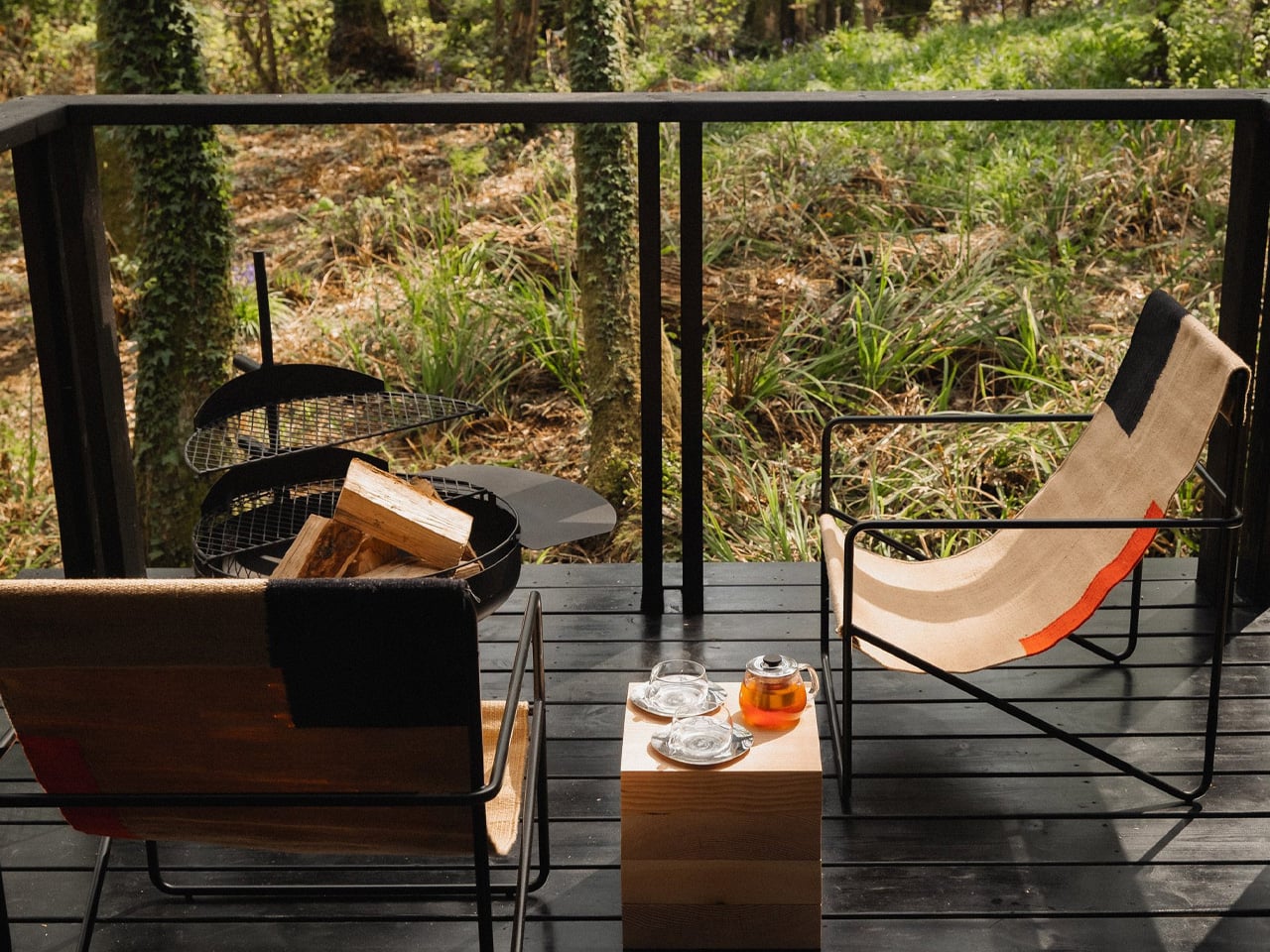
The plan runs on a clear east-west axis, with large sliding openings that frame views through the trees and across the adjacent swimming pool. The intention is for light to shape the interior throughout the day — morning light from the east drawing practitioners inward for practice, the warm evening light from the west spilling across the deck as the day winds down. It’s architecture that works with time rather than against it.

Externally, the studio drew from two distinct references: Japanese domestic architecture and local agricultural vernacular. Deep eaves and a continuous perimeter deck form a sheltered threshold between inside and out — a direct nod to the traditional Japanese engawa — while the building’s barn-like massing keeps it grounded in its rural English context. The cladding is estate-grown larch, charred on site using traditional yakisugi techniques, a process that improves durability and weather resistance while allowing the cabin to recede visually into the dark woodland behind it.

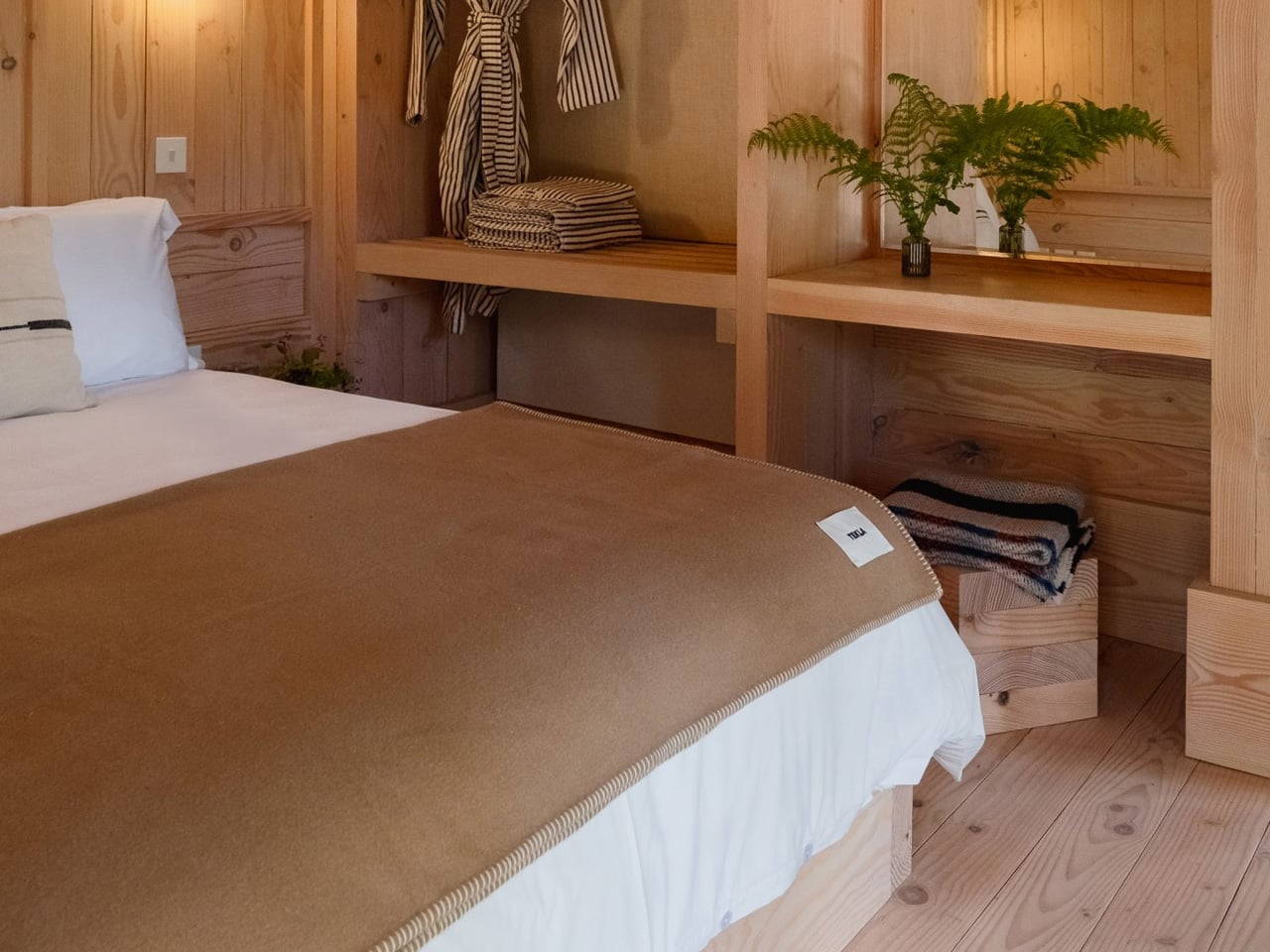
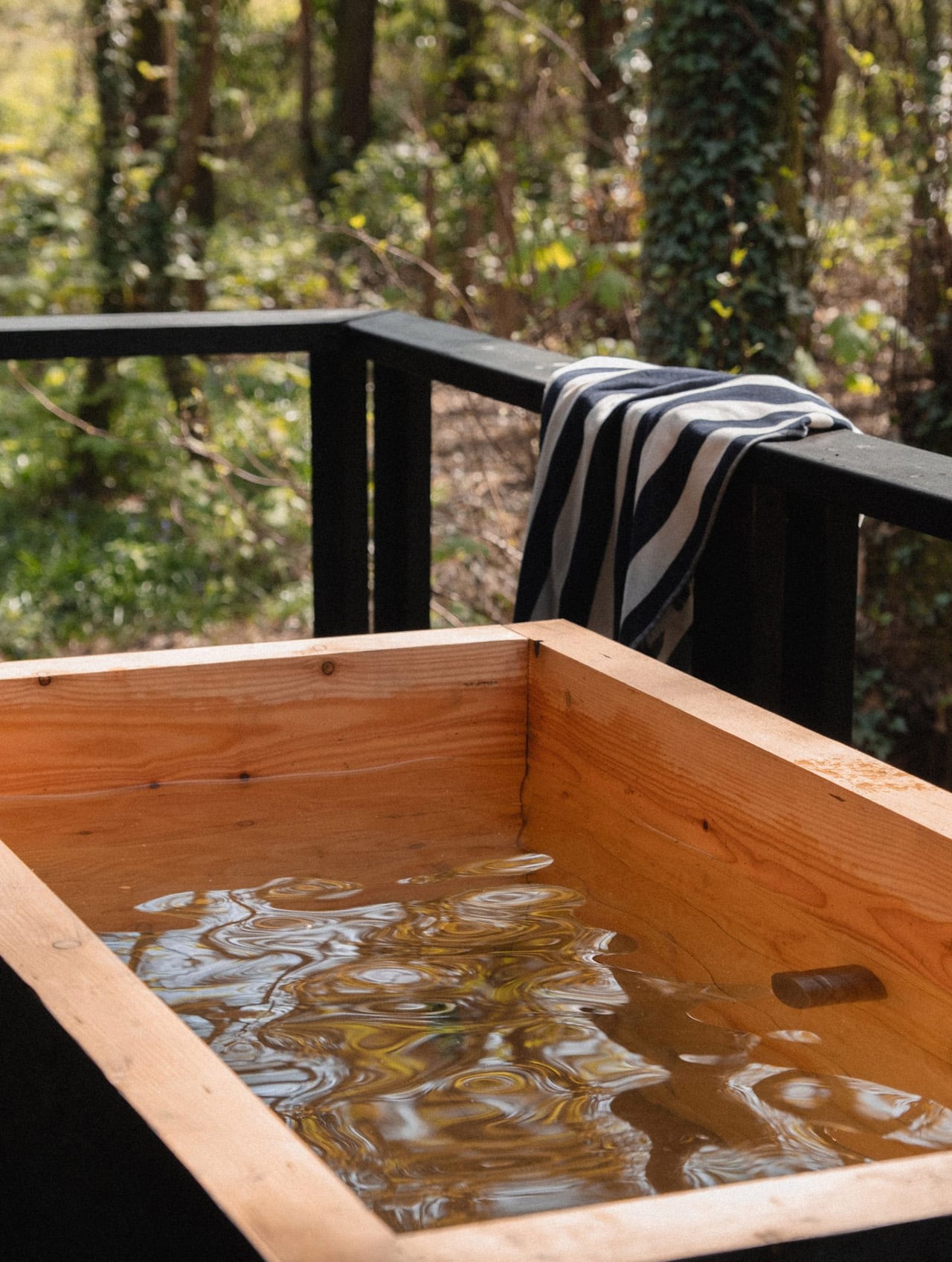
Inside, the architecture is deliberately restrained. Sliding screens, timber surfaces, and a limited material palette create a calm, adaptable space where accommodation is secondary to use. A king-size bedroom, luxury shower room, outside bath, and fully equipped kitchen complete the programme — functional, yes, but never the point.

Completed in Spring 2026, Yogi’s Cabin is a rare thing: a building that resists the urge to do too much. It holds space. It frames trees. It lets light do the talking. In a landscape of wellness architecture that often overclaims, Built Works has made something genuinely restorative — not through addition, but through careful restraint.

The post This 38-Square-Metre Cabin in East Sussex Is Wrapped in Charred Timber and Built Entirely Around Yoga first appeared on Yanko Design.
This Plywood Stool Has Cords That Hold Your Books, Magazines, and Stationery

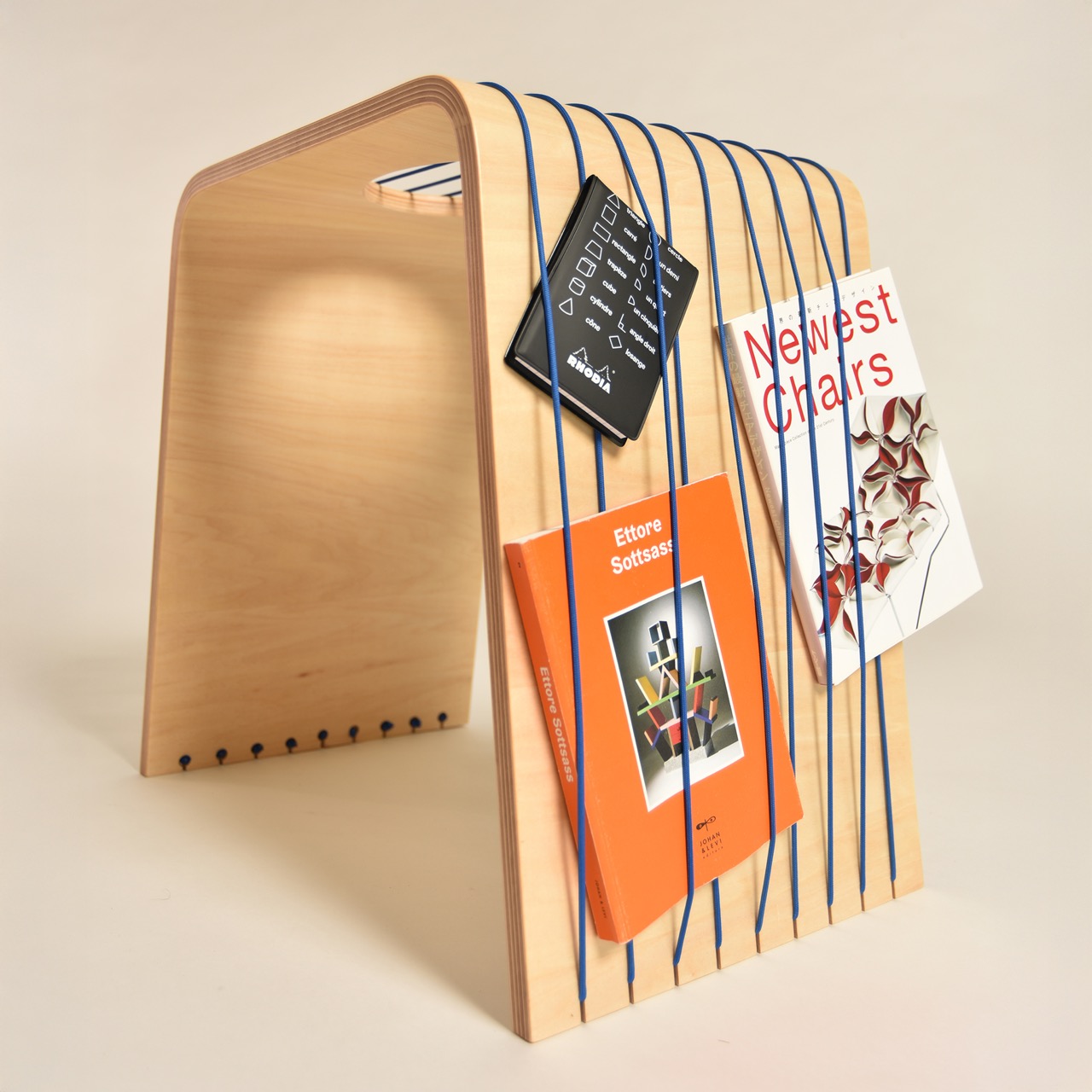
Every stool I’ve ever owned has ended up doing three jobs it was never designed for. Phone stand. Laundry rack. Temporary table for the cup of tea I told myself I’d finish before it went cold. Furniture absorbs the chaos of daily life whether designers plan for it or not, so the smarter move is to plan for it. Yamashiro did exactly that, and she did it in Okinawa, designing from a culture that has always understood objects as participants in daily life rather than background props.

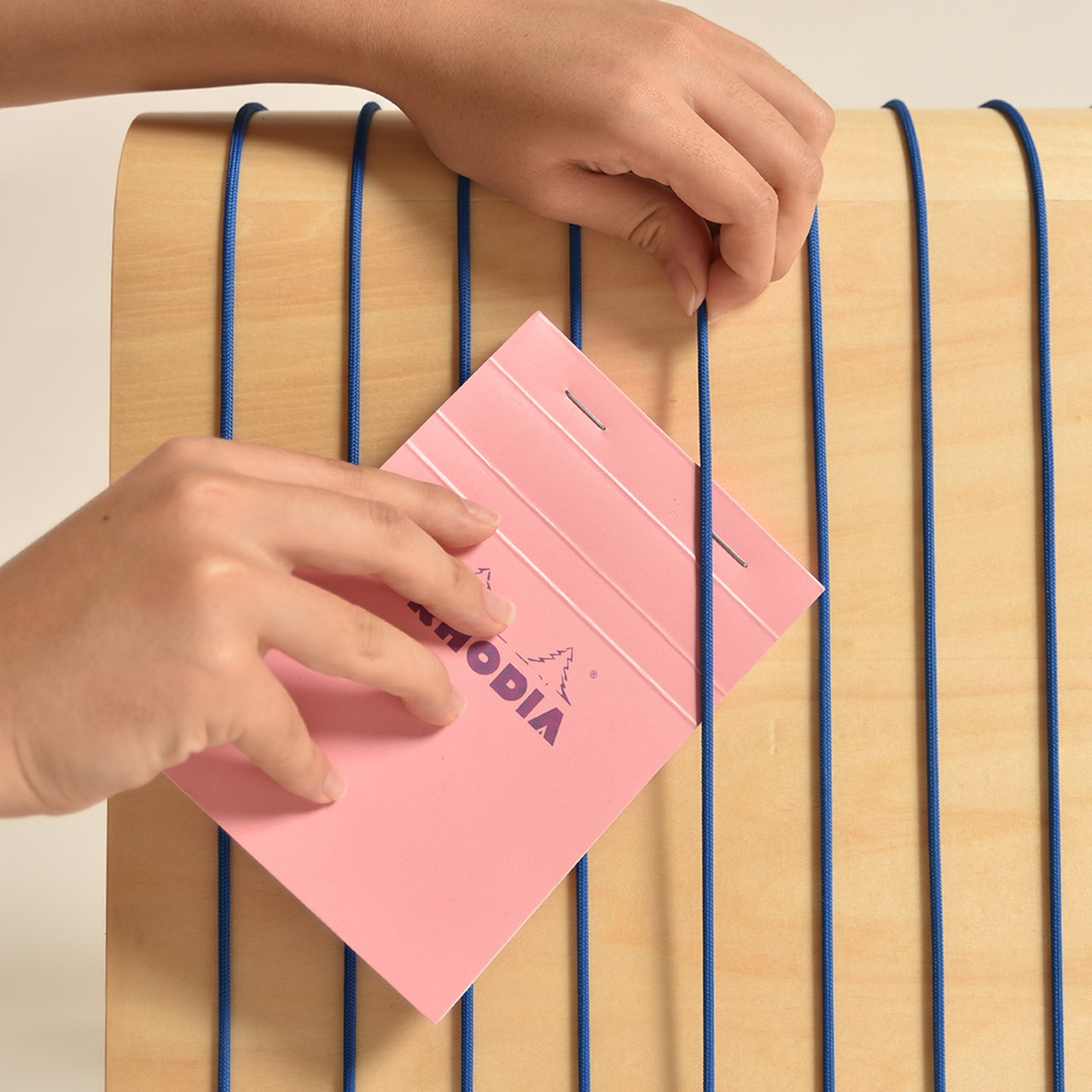
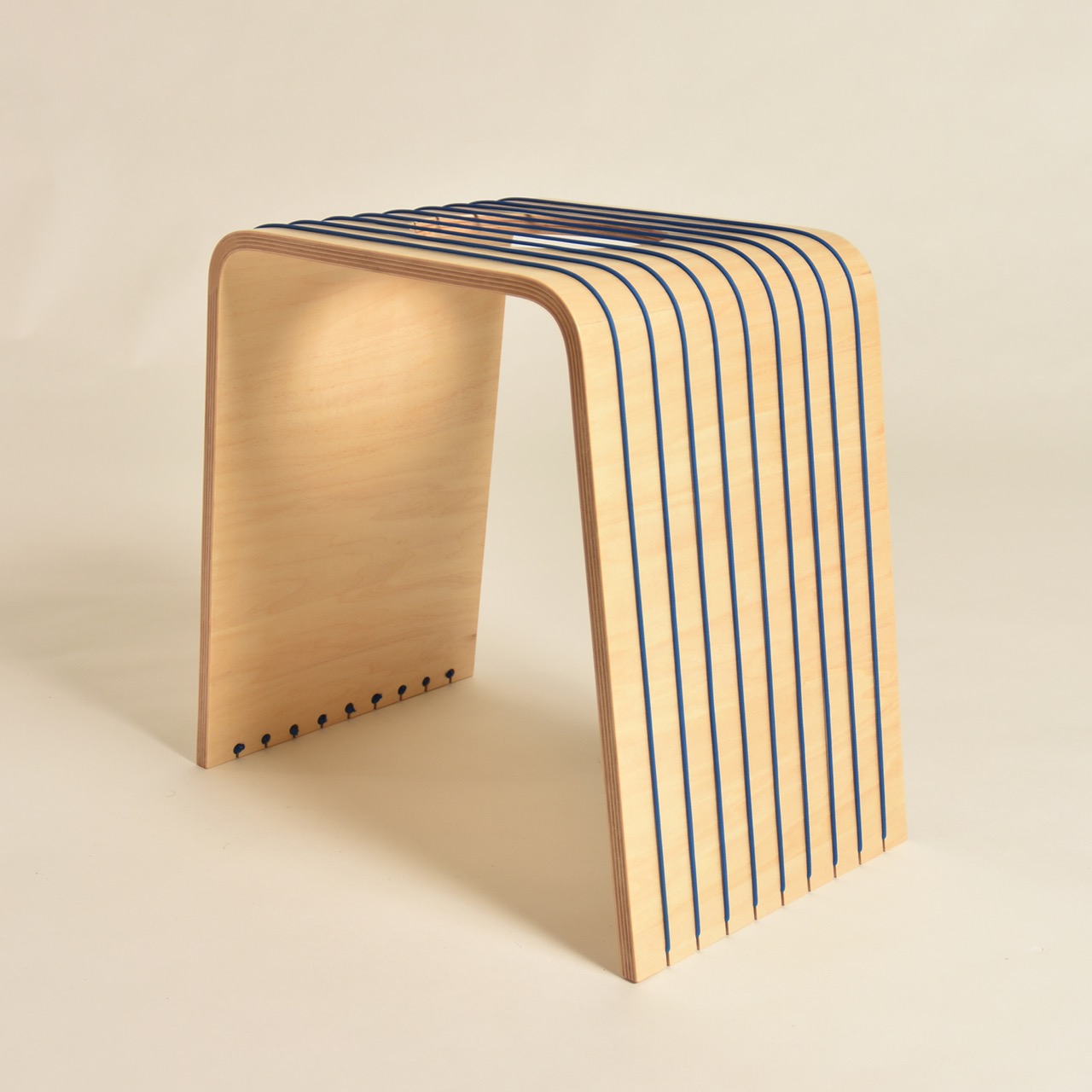
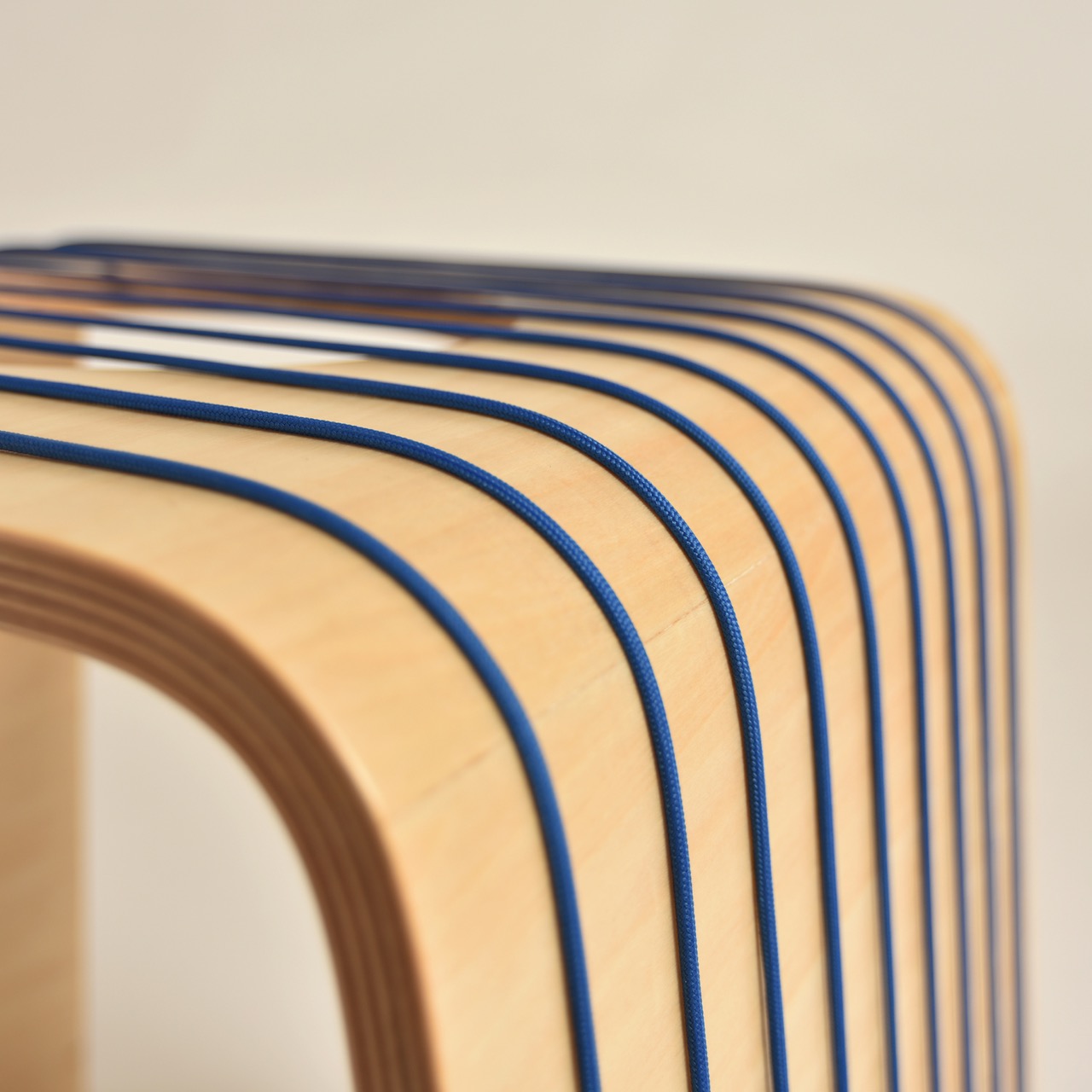
The Strings Stool won an A’ Design Award in the Furniture Design category, and looking at it, you understand why immediately. Blue cords run in parallel grooves down the face of a molded plywood form, taut like the strings of a sanshin, Okinawa’s traditional three-stringed instrument. Slip a book between them. Slip a notebook. The stool holds them without complaint, the same way it holds you.

Designer: Yuna Yamashiro

The sanshin has been part of everyday Okinawan life for so long that it stopped being a cultural artifact and became furniture in its own right, something you pick up, put down, lean against a wall, live around. Yamashiro’s design carries that same quality of unassuming presence. The Strings Stool doesn’t announce itself as a design object. It sits in a room and waits to be useful, which is a harder thing to design than it sounds. The A’ Design Award jury clearly recognized that the stool operates on two registers simultaneously, as a cultural translation and as a genuinely functional piece of furniture, and rewarded it accordingly.

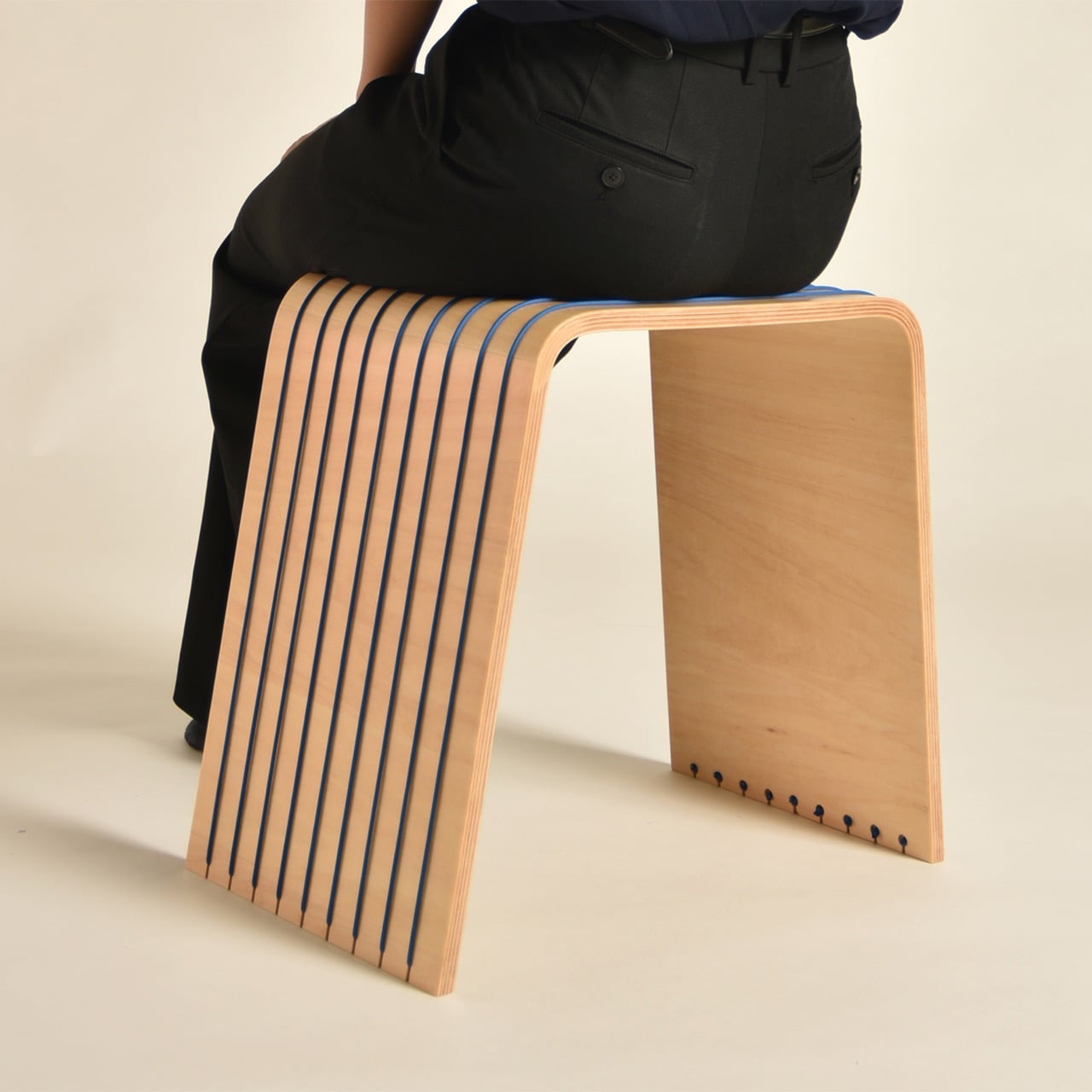
Yamashiro built a mold and applied pressure to bend multi-layered plywood into a continuous arc, a single curved form that flows from one leg face up and over the seat and back down the other side. Getting wood to adhere cleanly to a mold under pressure without losing its shape is genuinely difficult work, and the finished piece shows no evidence of that struggle. The layers visible at the edges give the form its graphic quality, a subtle striation that rhymes with the cord spacing running down the face. At 500mm wide, 300mm deep, and 450mm tall, it occupies a room without dominating it. The legs splay outward in a trapezoid stance, which does two things at once: it makes the seat more comfortable to straddle, and it lets the stools nest and stack cleanly, a practical consideration that most furniture designers treat as an afterthought but Yamashiro baked in from the start.

Most keen-eyed enthusiasts will remember a similar organizer format in Cocoon’s GRID-IT, elastic cords stretched across a rigid panel holding gear in place through tension alone. Yamashiro scales that mechanic up to furniture size, anchors the cords at the base with visible knotted eyelets, and makes them user-replaceable, so you can swap colors to match a room or replace worn cords without retiring the whole piece. That replaceability is the kind of decision that separates designers who think about ownership from designers who think about photography.

The one honest caveat is that those same cords, running across the seat surface, will make themselves known after a few minutes without a cushion. Yamashiro designed a central opening into the seat to improve comfort, and it helps, but anyone planning to use this as their primary work perch rather than an occasional seat should factor a thin cushion into the equation. That’s a small asterisk on an otherwise cohesive and quietly impressive debut.

The post This Plywood Stool Has Cords That Hold Your Books, Magazines, and Stationery first appeared on Yanko Design.
Nothing Is Making the “Mini” Phone That Apple Abandoned in 2021, and It Costs Less Than $320

Apple killed the iPhone Mini in 2021 and never apologized for it. The 13 Mini was the last of its kind, a genuinely pocketable smartphone with flagship intent, and when it quietly disappeared from the lineup, it took an entire product philosophy with it. Samsung followed by quietly retiring anything under 6.2 inches. Asus eventually walked away from the Zenfone altogether. The message from every corner of the industry was identical: small phones are a niche, niches don’t scale, and scale is the only thing that matters.

Five years later, a five-year-old British startup is doing what Apple, Samsung, Google, and every other major player refused to do. The Nothing’s Phone 4b (rumored for a July 7th launch) is allegedly 6.3 inches of transparent-backed, single-camera, software-supported compact smartphone, arriving in a market that had completely stopped believing one was coming.

Designer: Nothing

Image Credits: Techstream

I feel genuine frustration watching this industry gaslight itself. The compact phone didn’t die because people stopped wanting it. It died because building one well is genuinely hard, battery physics are brutal at small volumes, thermals get complicated, and every millimeter you shave off the chassis is a millimeter you’re fighting for. Apple tried, found the margin math uncomfortable, and left. Everyone else looked at Apple’s decision and treated it as consumer research. I think about this the same way I think about the restaurant that stops serving a dish because it’s difficult to prep, then tells you nobody was ordering it anyway.

The Phone 4b aims to sidestep this trap with a camera philosophy that evokes the abbreviation KISS – Keep It Simple, Stupid. Rather than padding the spec sheet with the obligatory 2MP depth sensor and the equally useless 8MP ultrawide that most phones in this price range treat as a box-ticking exercise, Nothing will put a single Sony LYT-710 sensor with optical image stabilization behind that transparent back panel. One camera. A real one. In a world where phone makers routinely ship three cameras to advertise three cameras, with only one of them actually worth using, that restraint reads almost like a provocation. The 50MP sensor landing here is the same family of Sony silicon that shows up in phones costing significantly more, and OIS at this price point is the kind of decision that makes photographers quietly nod.

Image Credits: Techstream

The 6.3-inch 1.5K AMOLED panel running at 120Hz sits inside a form factor that, five years after the Mini’s death, still feels quietly radical. Pair that with LPDDR5X RAM, a rumored 5,000mAh battery with 50W charging, and Nothing’s 4-plus-6 software support commitment, four years of OS updates and six years of security patches, and the 4b starts looking less like a budget phone and more like a considered one. Those are flagship-tier update terms. OnePlus took years to get there. Samsung only started matching that recently. Nothing is offering it on its most affordable device yet.

I keep coming back to what the original iPhone Mini crowd actually wanted. They weren’t asking for a compromised phone in a small box. They were asking for the full experience in a form factor that fit their life, their pocket, their one-handed commute. The 4b, launching July 7 at somewhere below Rs. 30,000 (roughly $316), is the closest answer the market has produced since Cupertino walked away from the question entirely. Nothing built the phone Apple left behind, and somehow, five years later, it arrived right on time.

The post Nothing Is Making the “Mini” Phone That Apple Abandoned in 2021, and It Costs Less Than $320 first appeared on Yanko Design.
Airbus converts its successful H145 helicopter into a fully autonomous twin-engine aircraft

Along with the increase in demand for personal mobility aircrafts, there is a snowballing demand for autonomous flying crafts in military, surveillance, and transportation. Taking cues from the shifting focus in the aviation industry, Airbus has unveiled an unmanned variant of its rather popular H145 helicopter.

Renovated to fly completely without a pilot, the new U145 twin-engine helicopter will be transporting large and heavy payloads in and out of rural, inaccessible areas amid other tasks. It is based completely on the existing platform of the recognized H145 and is expected to make its first test flight (with a safety pilot onboard) later in 2026. The completely autonomous flights are expected to begin as early as 20230.

Designer: Airbus

As mentioned above, the idea of this helicopter with a human-less cockpit is based on Airbus’s H145 helicopter. “There are more than 1,800 H145 family helicopters in service for military, parapublic and civil missions, logging a total of more than 8.5 million flight hours,” Airbus notes. For the U145, Airbus has replaced the cockpit of its popular aircraft with a clamshell door, freeing up the human-occupied space for cargo. In addition to the integrated nose door to create additional space, the aircraft includes a foldable loading table and a dedicated cargo floor.

The autonomous aircraft will achieve full autonomy through the use of sensors and artificial intelligence. The sensors will rely on data to AI, allowing the U145 helicopter to fly autonomously on any kind of mission: commercial, military, or who knows even rescue someday. A full-scale mock-up of the new model was shown of at the recently concluded ILA Berlin airshow 2026.

Airbus is not new to converting a traditional crewed helicopter into an unmanned aircraft. The aviation expert first did this with the VSR700 based on the Cabri G2. Now, the Airbus H145 helicopter-based new autonomous aircraft is the second similar iteration. Interestingly, it remains pretty close to the basic structure of the original helicopter. It retains the same Safran Arriel 2E engines and fancies same performance as the H145, though it is now made fully unmanned and is digitally controlled, instead of being piloted by humans piloting it.

The autonomous flyer can still carry up to 3.8-tonne cargo transport, operates extremely quietly, and is environmentally friendly. It can be, Airbus states, used for armed scouting, surveillance, firefighting, and even as a drone mothership. Since there is still time before the aircraft can take off on its own, Airbus will, in the interim, work closely with specialist partners to improve U145’s autonomous capabilities before it can successfully launch.

The post Airbus converts its successful H145 helicopter into a fully autonomous twin-engine aircraft first appeared on Yanko Design.