
California is banning public officials from making memecoins
The state has enacted several new rules around cryptocurrencies.

Fall is when the appeal of an open flame reasserts itself. The air turns crisp, and everyone wants that fireplace glow back in their evenings. The trouble is that most homes, especially rentals and apartments, were never built to give it to them. Adding a real fireplace means a gas line, a flue, a permit, and a contractor’s schedule that eats up far more than the one free weekend anybody actually has for it.
That gap between wanting fire and being able to install it is exactly what the Harmony Flame Lamp solves. It is a brass tabletop fireplace that runs on bioethanol, sits on any flat surface you own, and produces a genuine flame with no ventilation, no gas hookup, and nothing built into a wall. You light it the way you’d light a candle, except what comes back is heat and light with real presence.

What sets it apart from most decorative objects claiming craftsmanship is who actually makes it. The Harmony Flame is built by hand by artisans who normally work on brass instruments, the kind of metalworkers who shape tubas and French horns for a living. That background is not a marketing footnote. Instrument-grade brass has to hold precise acoustic properties and structural integrity, and those same qualities happen to make it excellent at containing and reflecting a flame. The polished surface catches the fire and throws it back in shifting patterns of light and shadow, which is a much harder effect to fake than most LED “flame” gadgets ever manage.


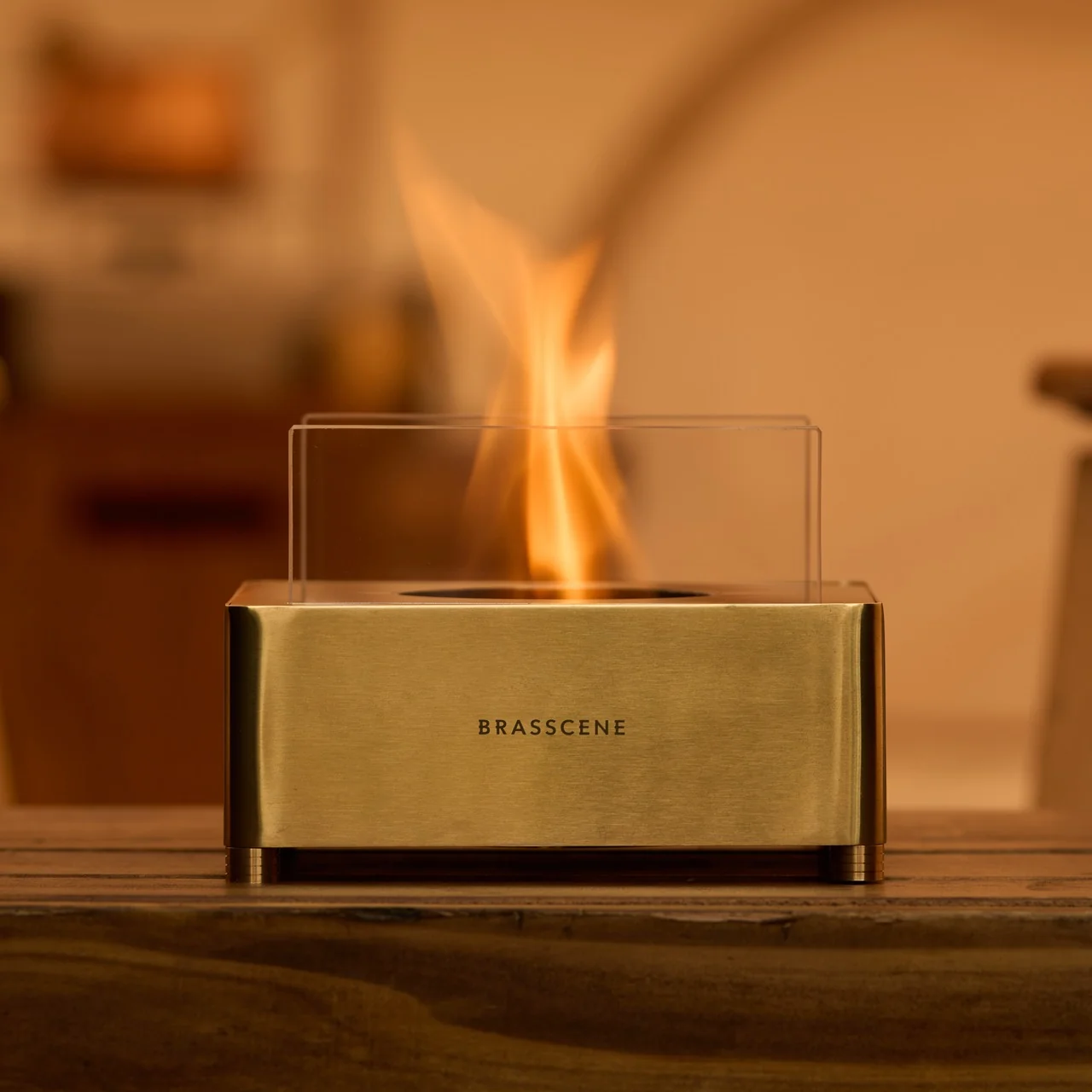
Practically, the lamp behaves the way fall entertaining actually works. It moves from the dining table to the patio to a reading corner without any setup beyond a refill of fuel. Bioethanol burns clean, without smoke or odor, so there’s no lingering campfire smell on your jacket the next morning and no soot to wipe off afterward. The brass itself develops a patina with use, which means the lamp you buy in October will look different, and honestly better, by the time next fall rolls around.

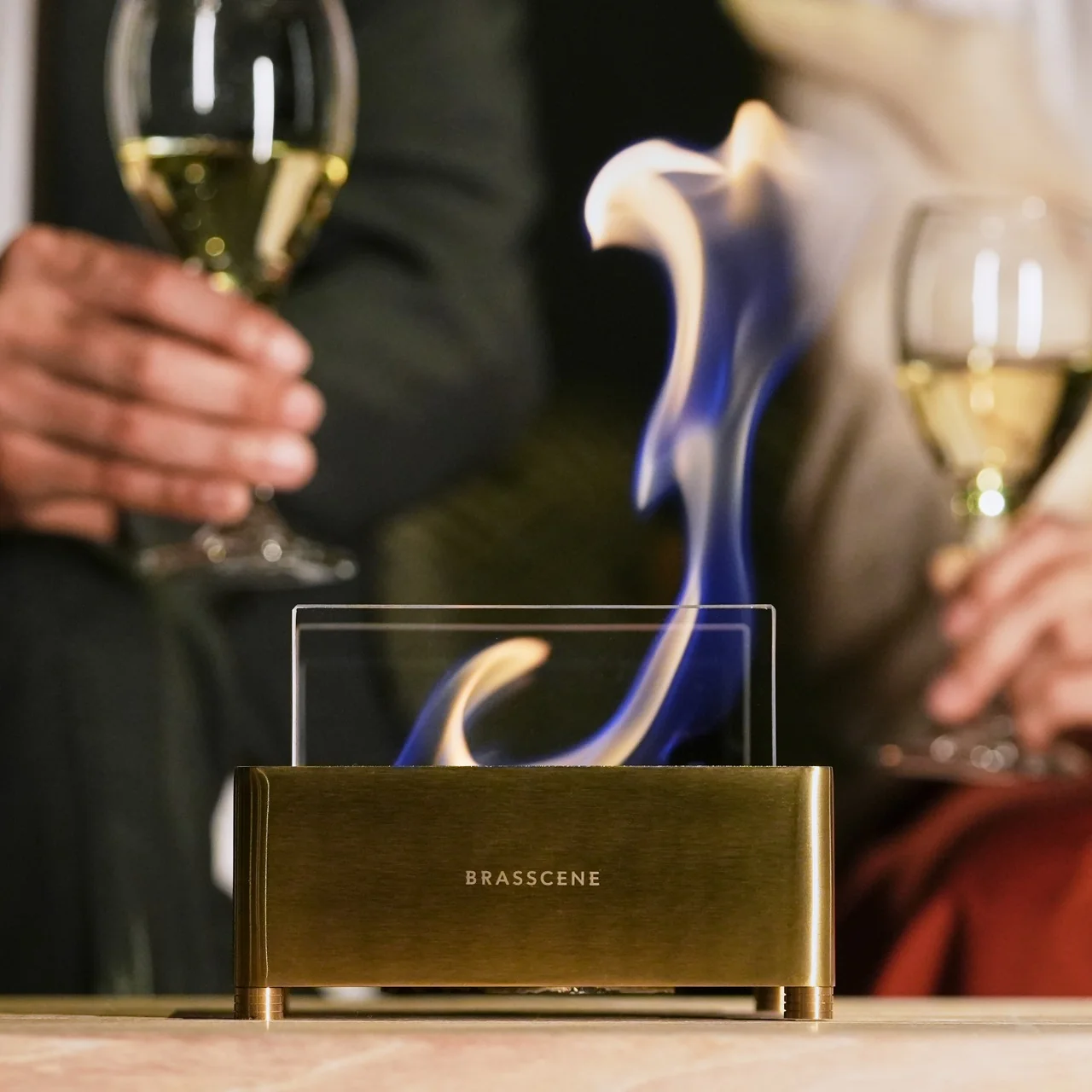
It’s worth putting this next to the fire pit most Americans already know, which is Solo Stove. Solo Stove built an entire category around smokeless backyard fires, and it deserves credit for that. But it’s a wood or pellet-burning outdoor unit, sized for a patio and not meant to come inside. The Harmony Flame is working a different scale entirely. It’s small enough for a dinner table, quiet enough for a bedroom, and refined enough that it reads as a design object first and a heat source second. One is built for a backyard gathering. The other is built for the room you’re actually sitting in on a Tuesday night in November.

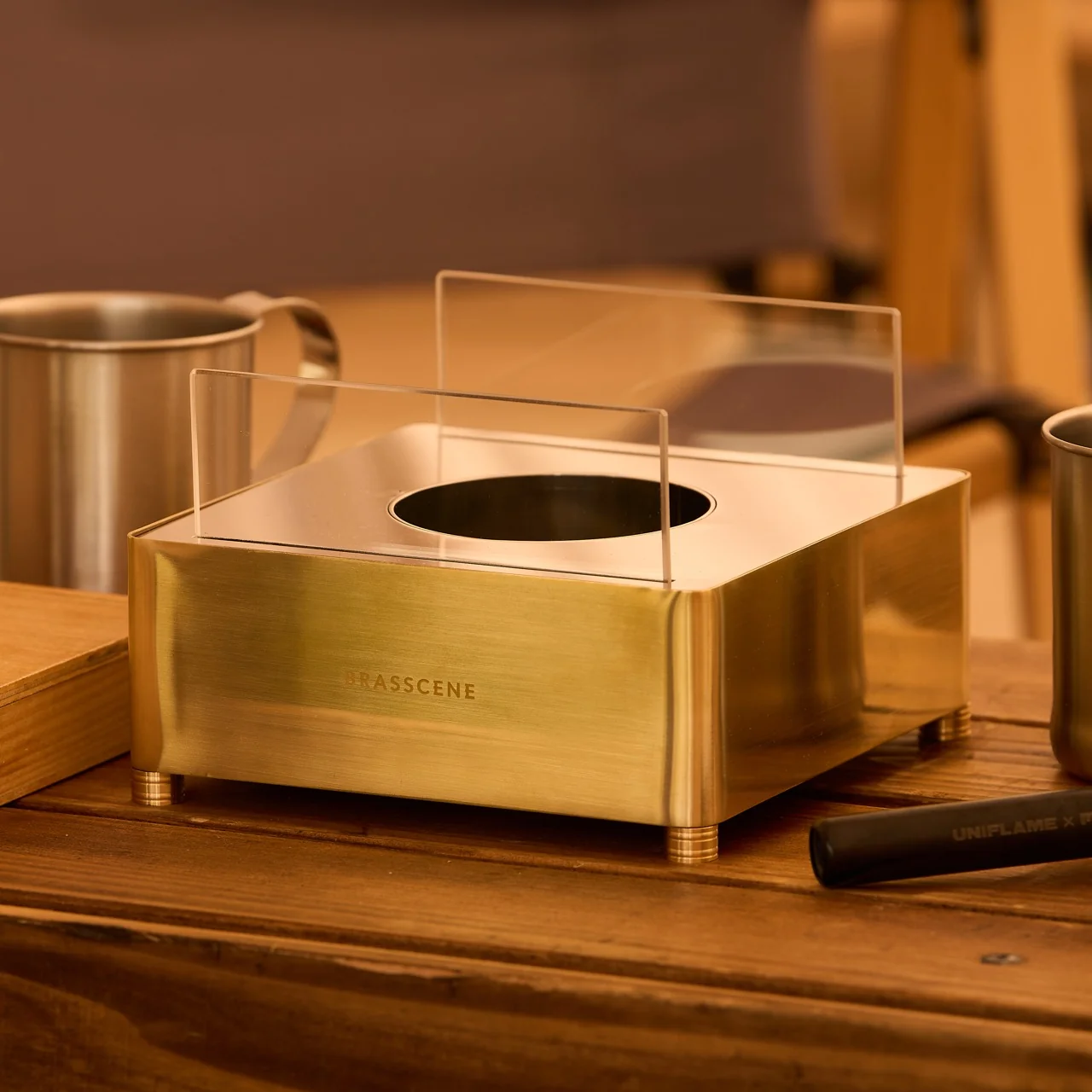
At $240, it isn’t an impulse buy, and I don’t think it’s trying to be one. You’re paying for hand-finished brass and a fuel system that skips every complication a real fireplace usually demands, and that combination is genuinely rare at this price. Compare it to a high-end bioethanol fireplace from a home goods brand and you’ll often pay two or three times as much for something with none of the instrument-making pedigree behind it.
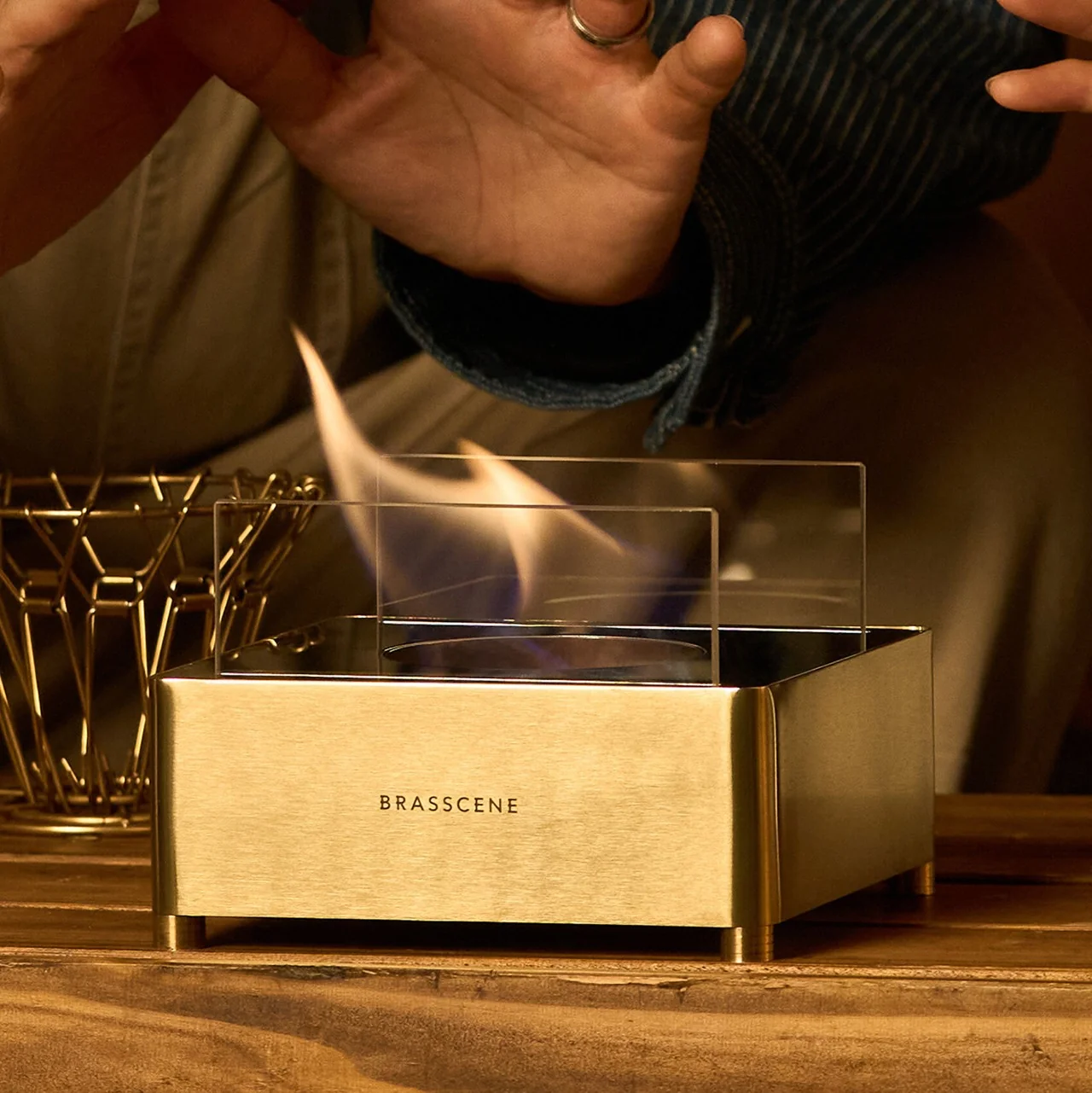
The part that sold me is how ordinary the ritual feels once you own it. You strike a match, the brass catches the light, and the room changes temperature and mood at the same time. The Harmony Flame Fireplace is the kind of object that quietly becomes the centerpiece of a dinner party without anyone having to point it out. Fall has a way of making people want warmth and atmosphere they can control themselves, and this lamp answers that without asking for a renovation in return. If you’ve spent the last few autumns wishing your apartment had a fireplace, this is about as close as you’ll get without knocking down a wall.
The post This Tabletop Fireplace Does What Solo Stove Doesn’t: Burn Indoors first appeared on Yanko Design.

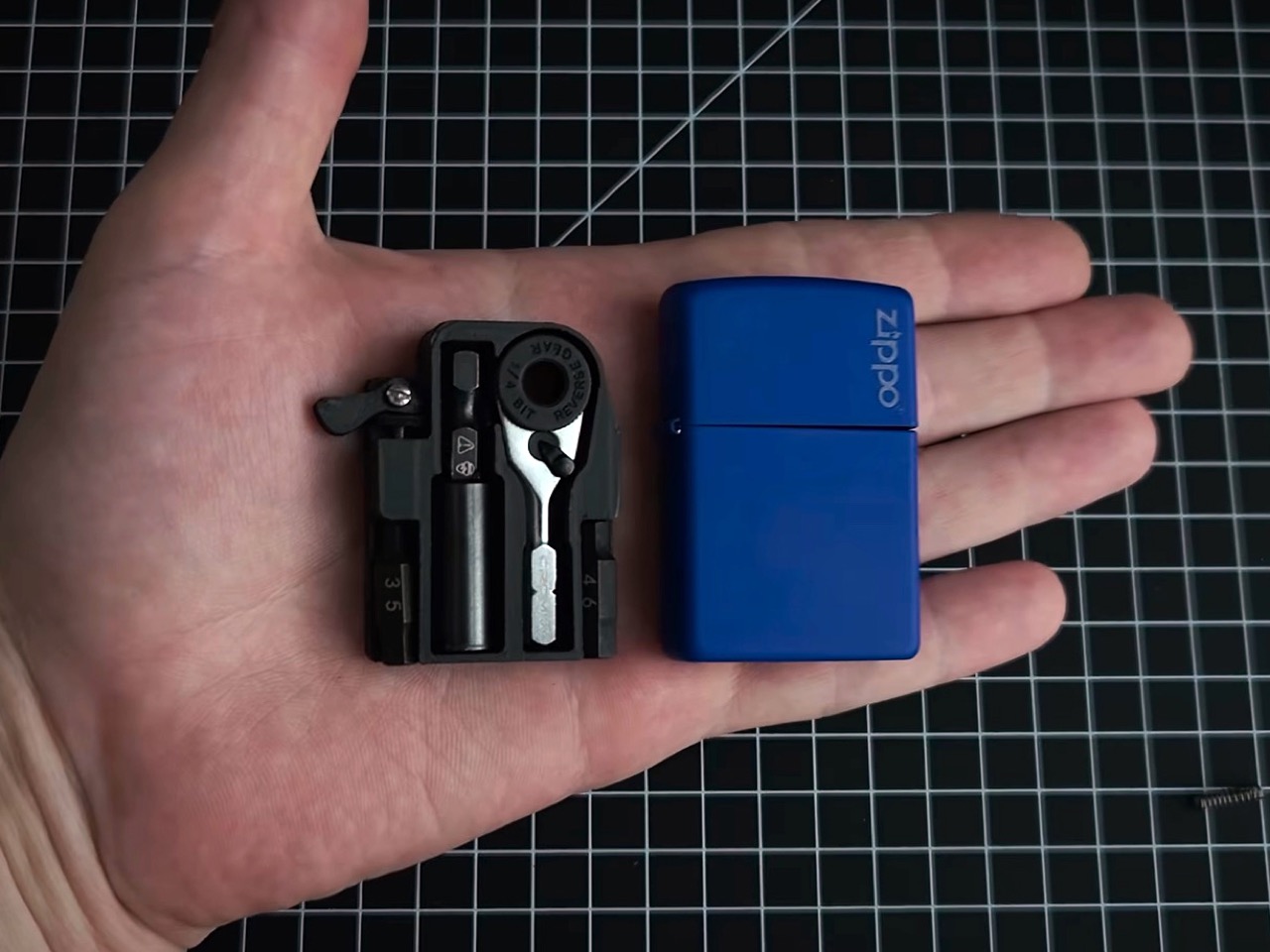
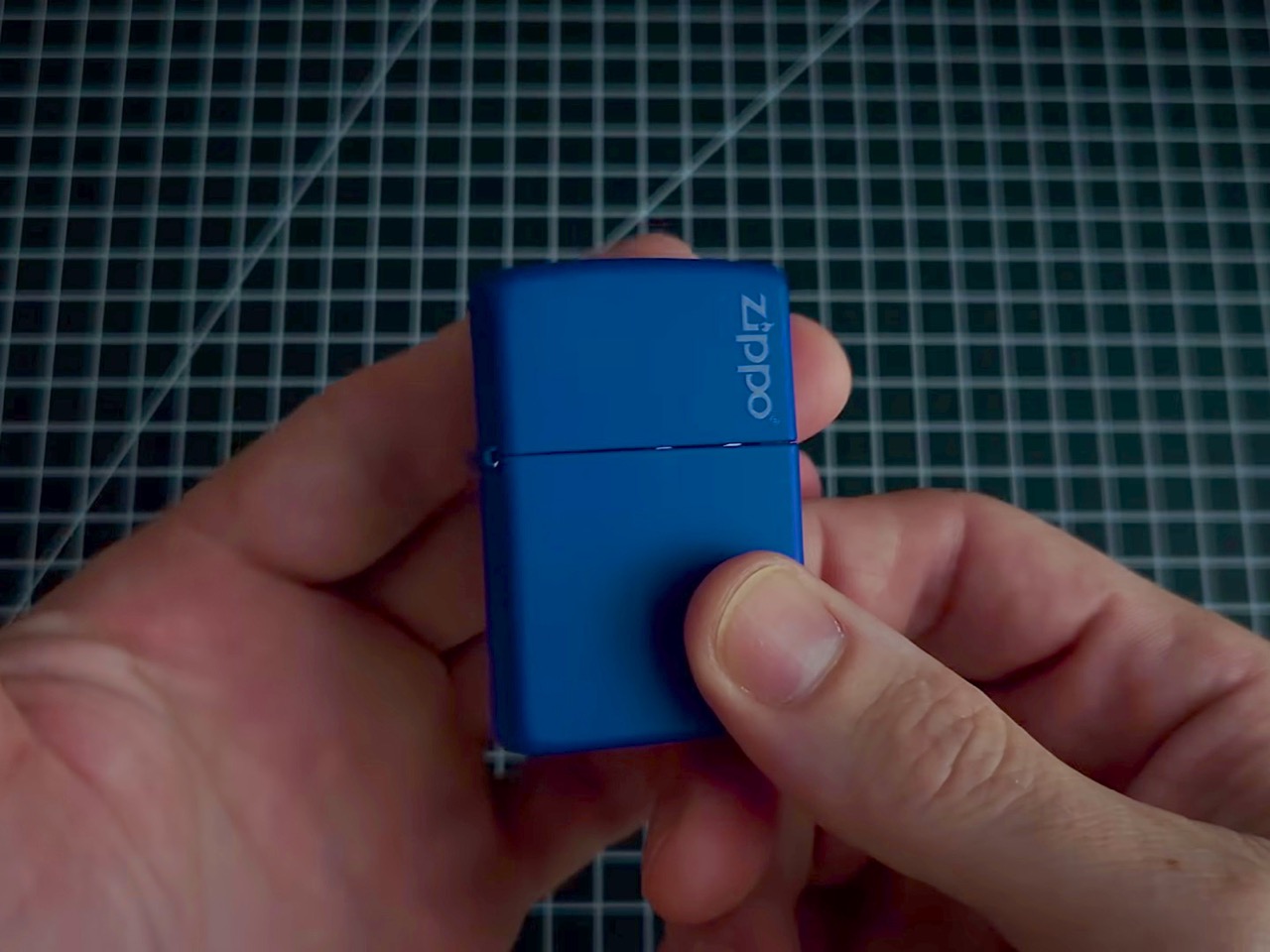
The Zippo lighter has been in pockets since 1932, surviving wars, road trips, and at least a few questionable life decisions. The iconic snap of that hinged lid is the kind of sound permanently lodged in pop culture. But here’s the thing about that stamped steel shell: pull the guts out and what you’re left with is a surprisingly well-engineered little box. It’s the right size, the right heft, and it already has a hinge that clicks with satisfying authority. Someone on the internet finally noticed, and decided to give it a better job.
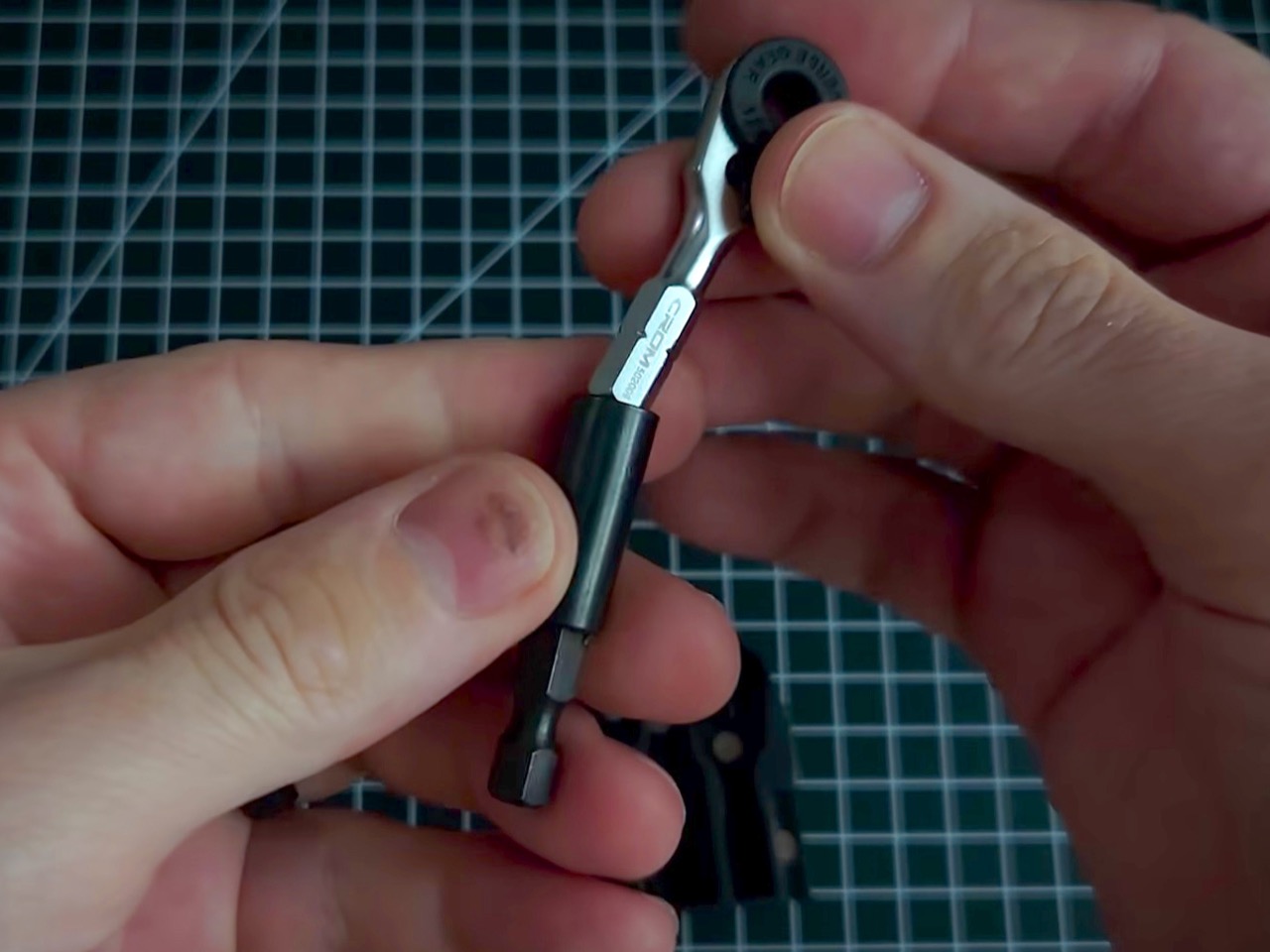
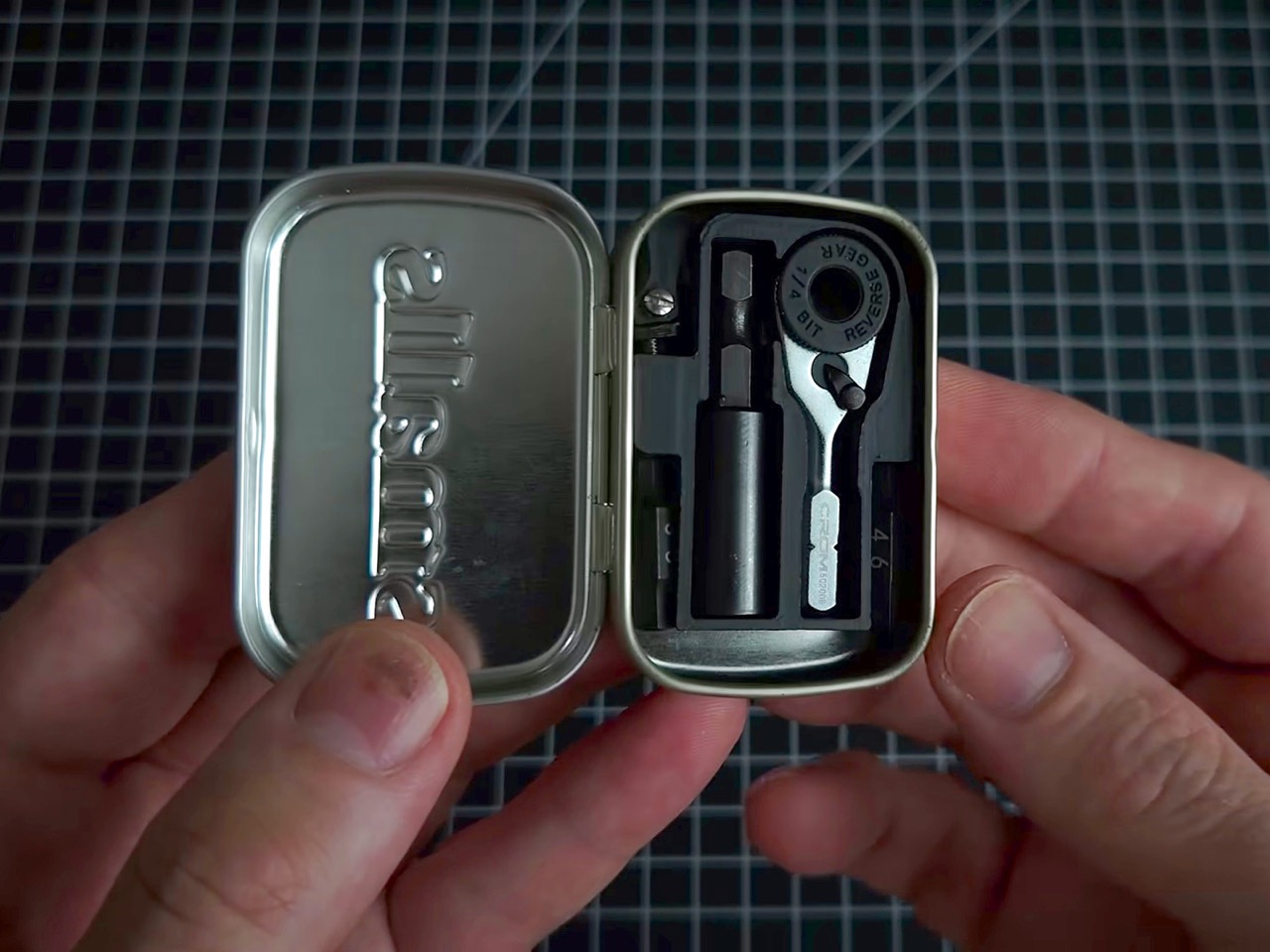
That job is housing a chrome micro ratchet, one of the smallest 1/4-inch bit drivers in the EDC world, nested inside a custom 3D-printed platform. Two Steinwhale precision bits and a Klein utility knife extension fill out the rest of the space, held in place with eyeglass screws. A spring salvaged from a disposable Bic lighter gives the ratchet its push-out action, popping it through a small hole in the back of the case. Embedded magnets make the whole kit stick to any metal surface, which is a genuinely thoughtful touch. It’s scrappy, it’s clever, and the photos of it sitting open in a palm are almost unfairly satisfying.
Designer: Tiny Tool Shop
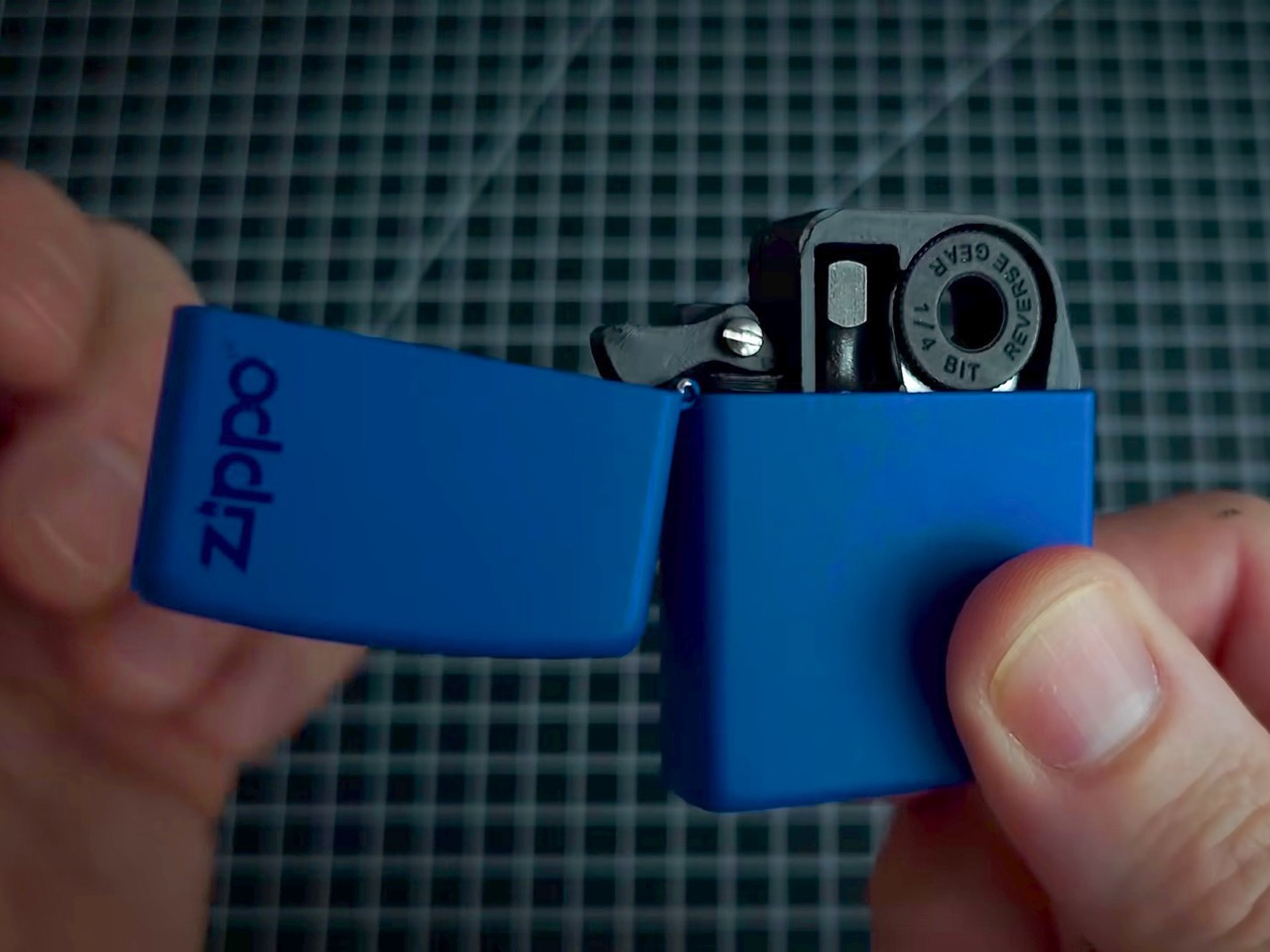
The 3D-printed platform is a custom insert that drops straight into the Zippo shell, locked down with eyeglass screws, the kind normally reserved for fixing a bent hinge on your reading glasses. Those same tiny screws appear in two spots across the build, which tells you something about how the maker approaches sourcing. Each component gets its own dedicated slot, keeping the ratchet, bits, and extension snug and rattle-free inside the case. The lid snaps shut over the top, and the result feels tighter than it has any right to be for a DIY project. It’s the kind of thing that makes you instinctively look for a price tag.
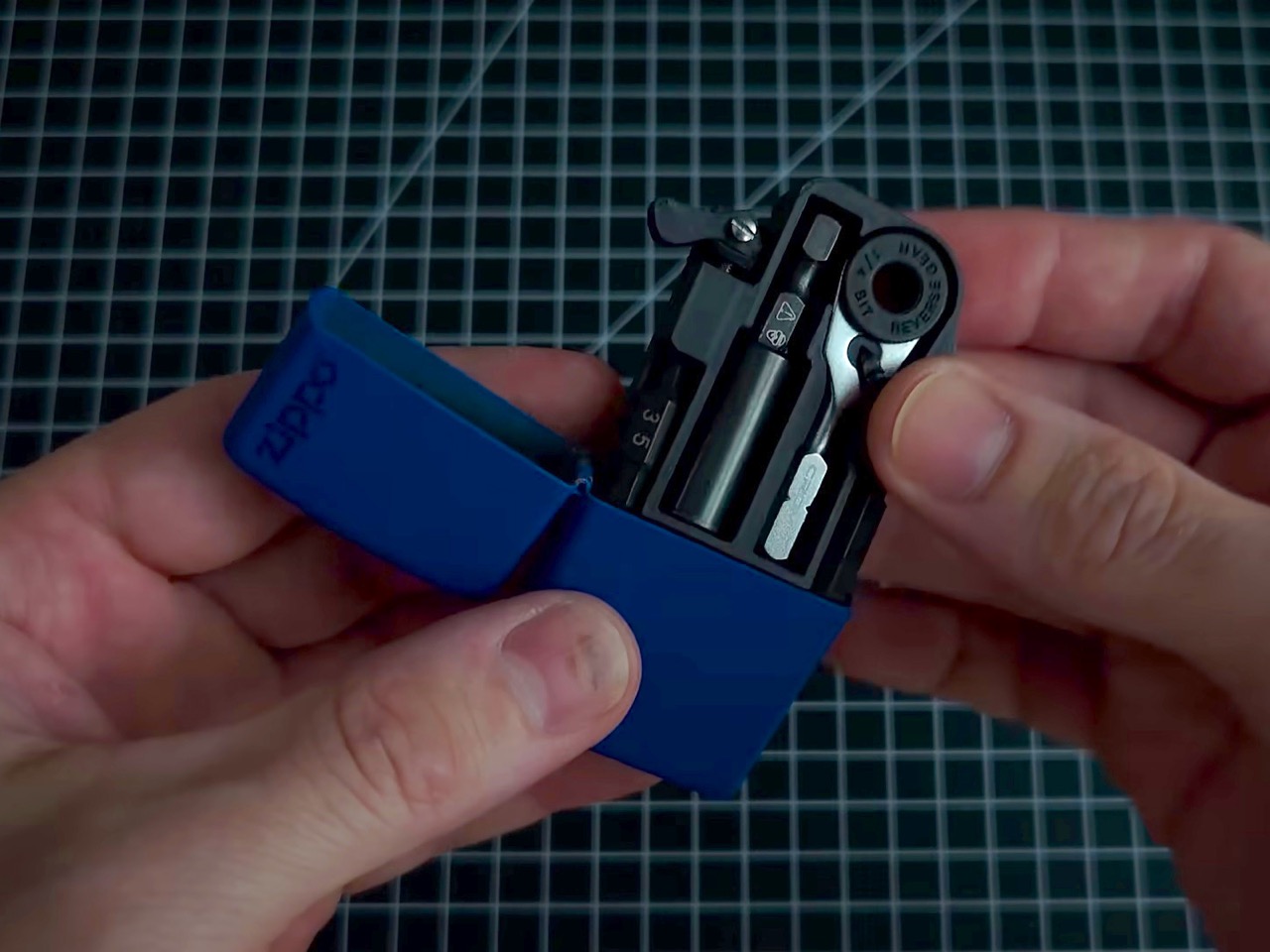
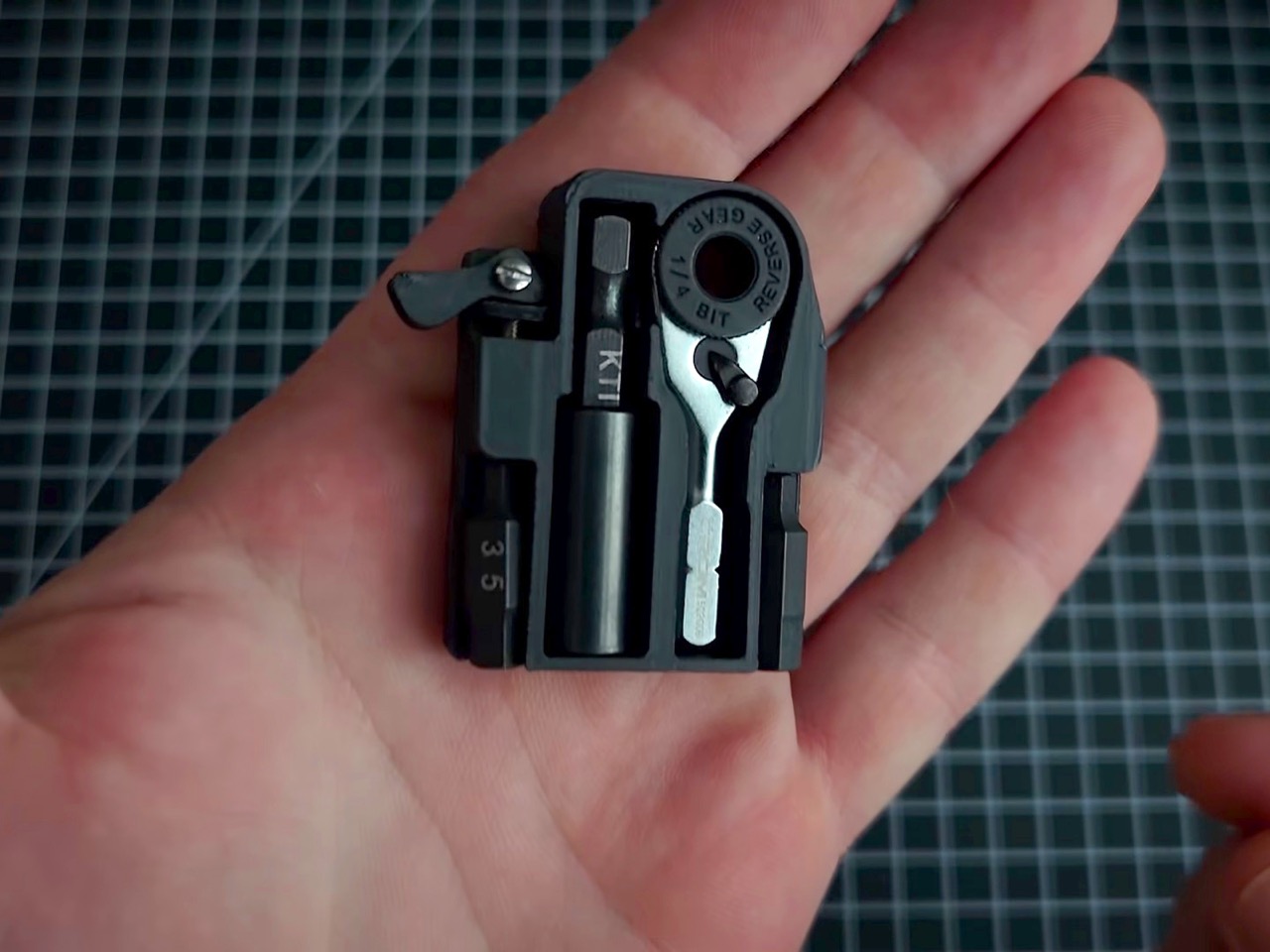
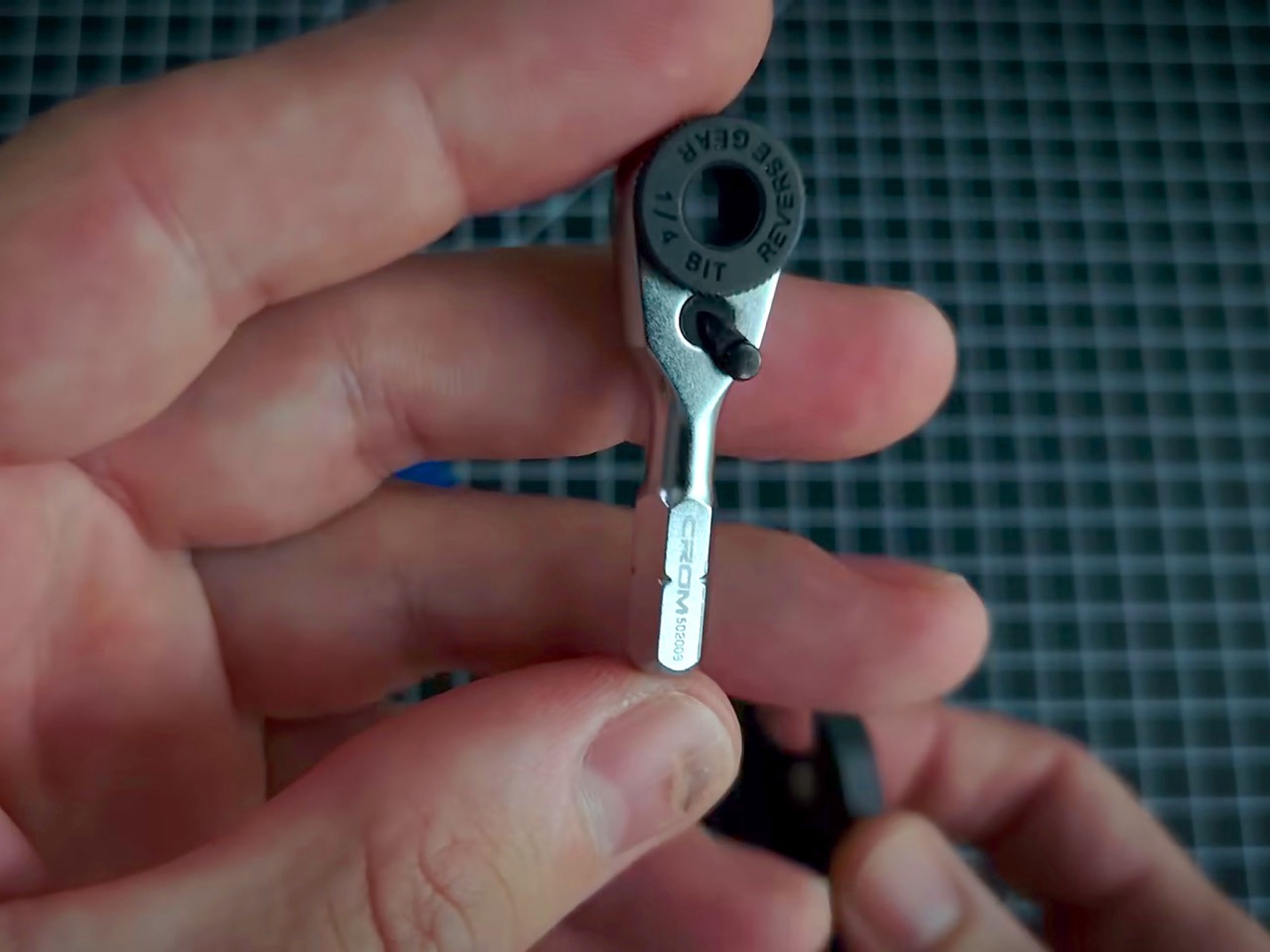
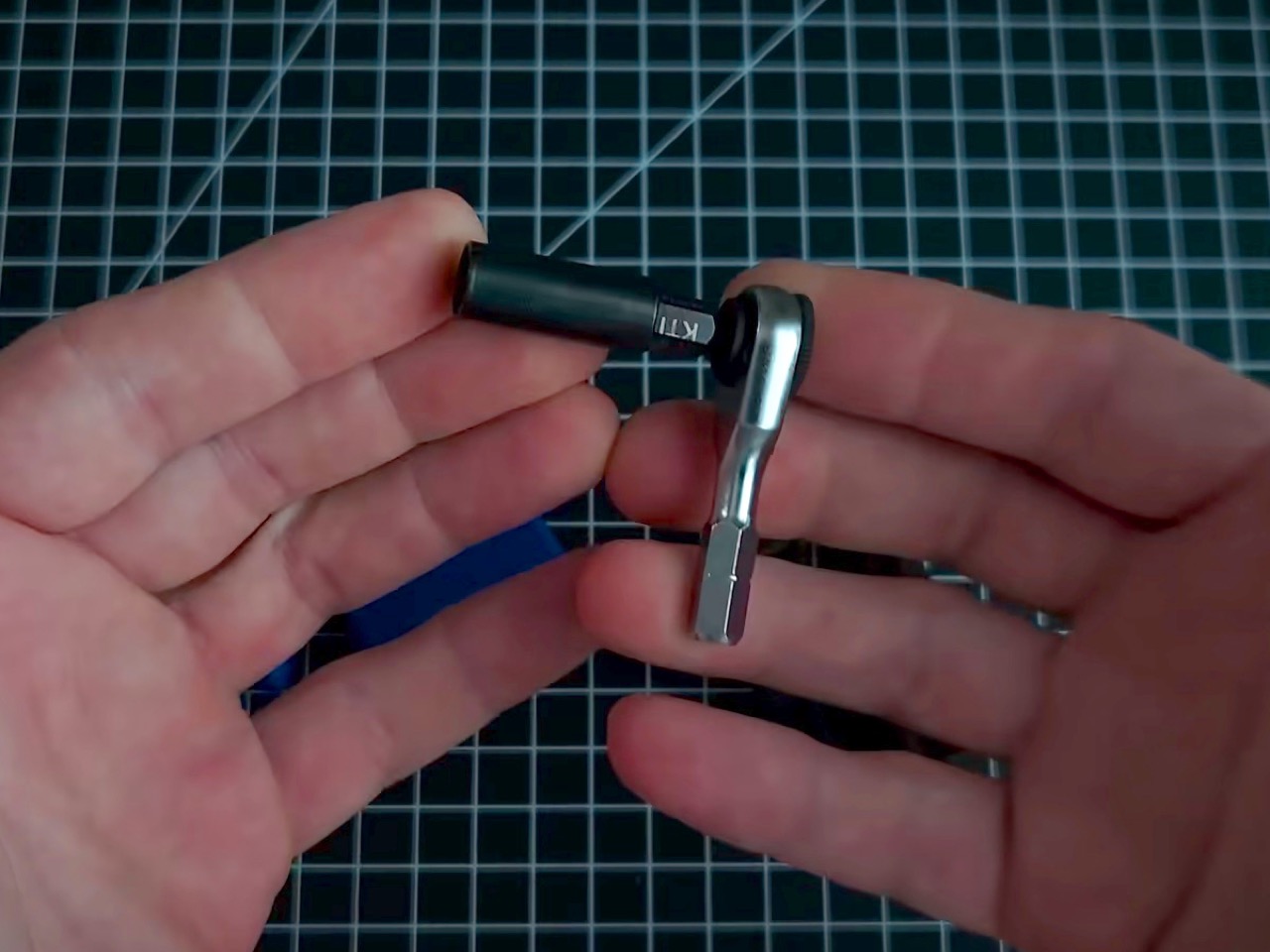
The chrome micro ratchet itself ranks among the smallest 1/4-inch drivers you can actually buy, and its scale is genuinely surprising next to almost anything else in a standard tool drawer. It accepts regular hex bits, so it plays well across the broader EDC and hardware ecosystem without needing proprietary accessories. A Bic lighter spring, salvaged presumably from a spent one on the maker’s desk, sits behind the ratchet and pushes it through a small hole in the Zippo’s back panel with just enough resistance to feel intentional. A Klein utility knife extension threads onto the ratchet for added reach in tight spaces, and when it’s not needed, the ratchet stores directly in the Klein knife’s handle instead. Both configurations tuck away cleanly, and the cross-compatibility means the kit pairs naturally with a knife you might already be carrying.
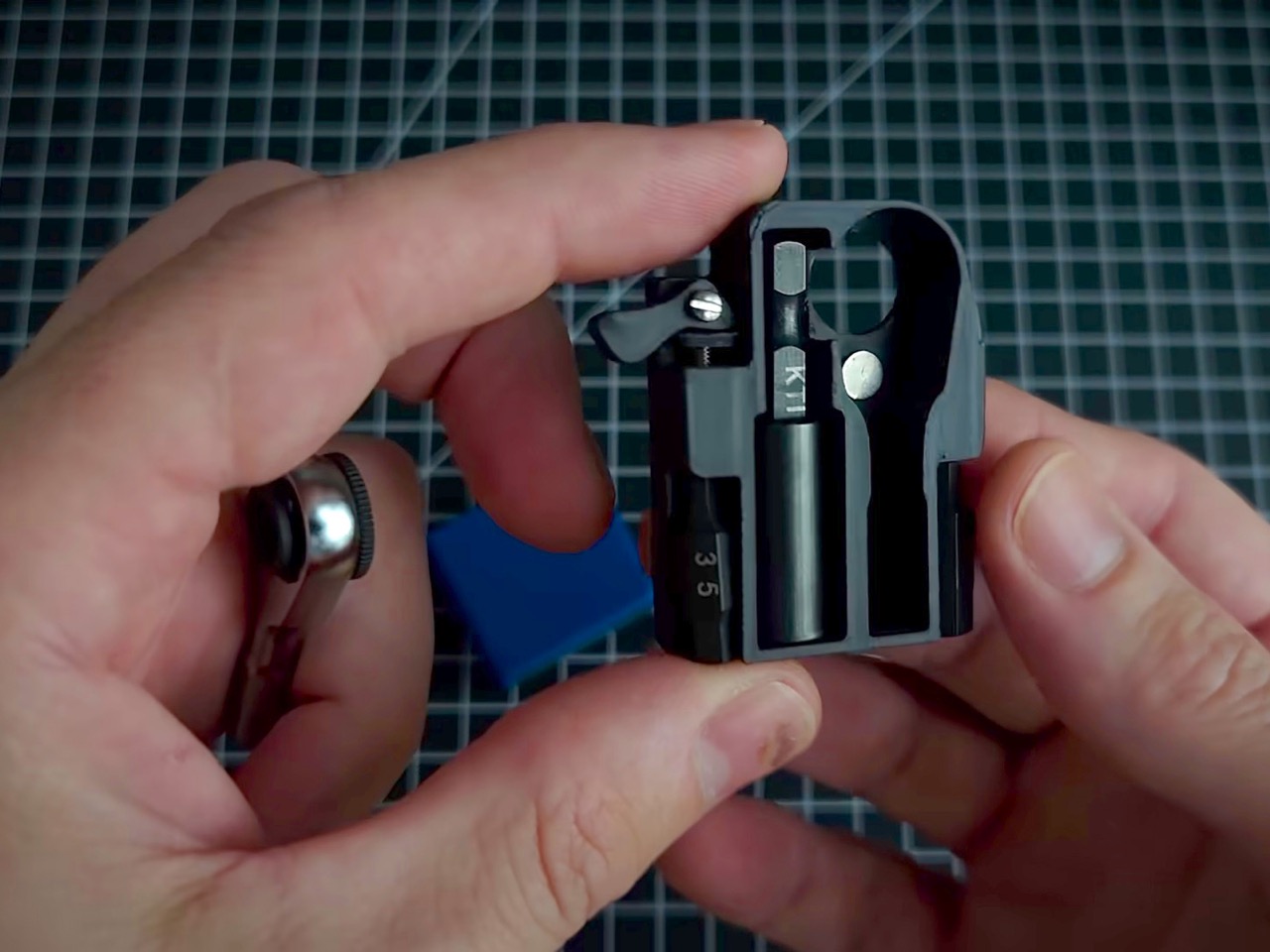
Steinwhale’s micro bits, built from S2 steel and sized specifically for micro ratchets, fill the two bit slots in the platform. The embedded magnets running through the build let the whole kit park on any nearby metal surface, a quality-of-life detail you’d genuinely appreciate halfway through assembling flatpack furniture with both hands occupied. The kit also fits inside a mini Altoids tin if that’s your preferred housing, though the magnets matter a lot more there since there’s no rear hole to push the ratchet out from. In practice, the Zippo remains the better vessel, slimmer, pocketable, and already equipped with a hinge that feels like it belongs. The Altoids option is a nice backup but the Zippo is clearly the intended home.
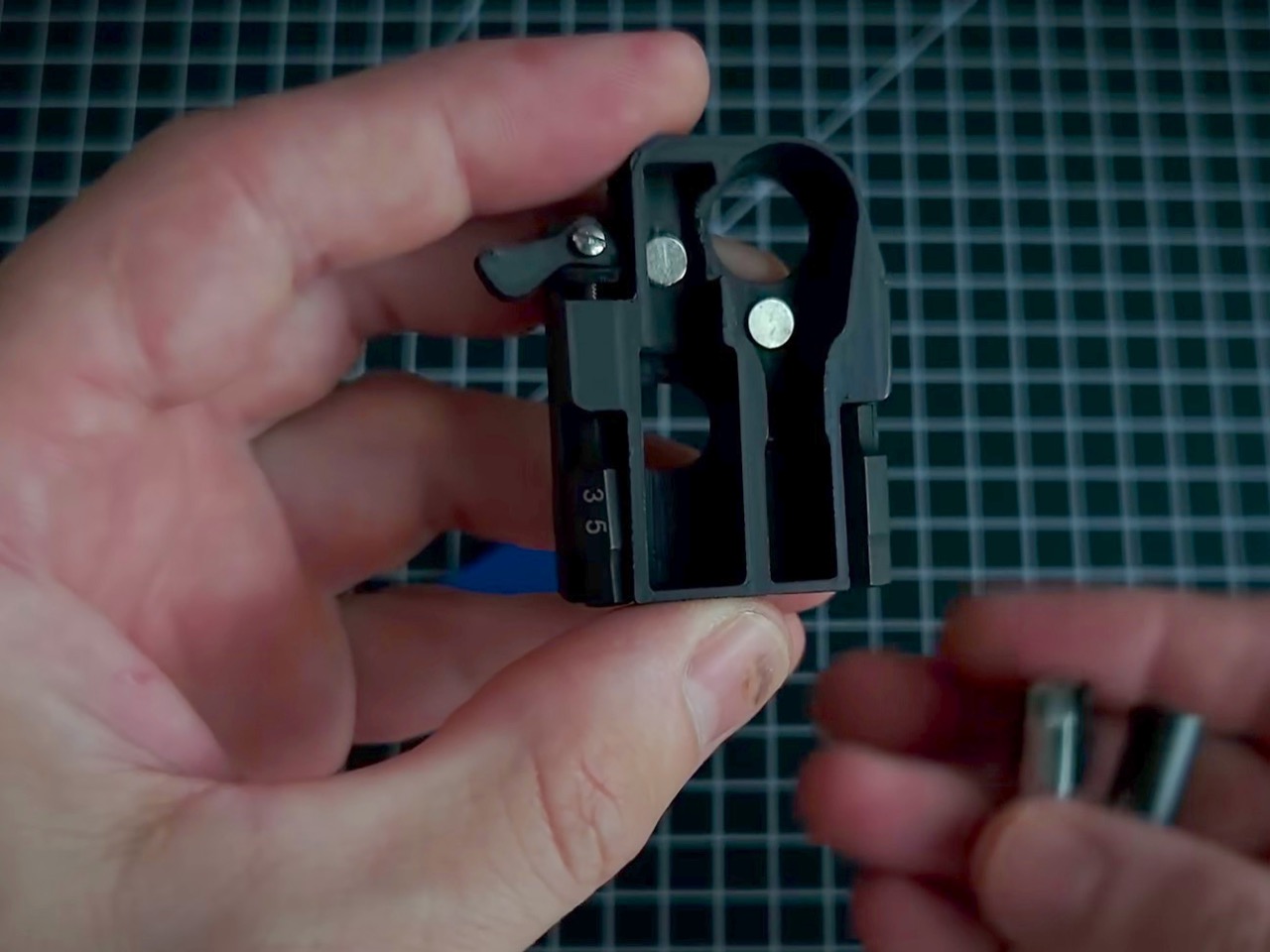
The whole build likely comes together for under $30 in parts, assuming you have a 3D printer and a spent Zippo shell on hand. The micro ratchet alone runs around $20, which makes this cheaper than most entry-level multitools with considerably less utility for light daily tasks. A Leatherman Skeletool brings pliers, a blade, and a bit driver for around $65 but also weighs 5 ounces and demands real pocket real estate. This kit trades tool variety for pure pocketability, and if your carry already includes a knife, that trade starts looking very reasonable. The one upgrade worth adding is some tactile labeling on the platform slots, so repacking everything in low light doesn’t become a small-scale puzzle.
The post This Zippo case now hides a full DIY micro-toolkit inside first appeared on Yanko Design.

Have you noticed tilting always makes things ‘ergonomic’? A laptop stand tilts the keyboard towards you – ergonomic. A vertical mouse tilts your hands into a more natural position – ergonomic. A split keyboard often breaks and tilts the layout in two different directions for your hands – very ergonomic. It’s almost stupidly simple that the human body isn’t designed around perfect right angles. We’re filled with curves, joints, and limitations to how we move – so a simple tilt can often make life a lot easier. The Apple Watch apparently just got the memo.
Designed around a very clever 30° tilt, this Tilted Watch Band puts the Apple Watch at a slight slant, so it’s facing you even when your wrist isn’t. Normal protocol is to lift your wrist up perfectly horizontal, so the screen faces you in the right orientation. Tilt the band and you don’t have to make your wrist horizontal anymore – just hold it at a comfortable angle and the Watch screen faces you a lot more naturally, letting you read the time without flexing your hand or your neck too much… perfect for joggers or bikers who don’t have the luxury to orient their hands while mid-activity.
Designer: MXU

As ergonomically obsessed as Apple is, I’m surprised nobody from Cupertino thought of building a band like this. Does it mess with the symmetry? Absolutely. Could Apple still elegantly work around it? I have no doubt they could. They did such a brilliant job with the iPhone Duo’s folding animation, a tilted screen feels like child’s play.

The band comes in a variety of colors, although the best thing you could do is buy a bunch of them and mix and match pairs to create a dual-tone design. The silicone construction makes the band perfect for any kinds of sports, or for people with hypoallergenic requirements. One caveat, however, is that this watch’s tilt makes it so that it only works on the left hand. The clockwise tilt means if you wore the watch on the right hand, the tilt would work against you, requiring you to crane your neck even further than you originally would. Also, the crown would press into your forearm a lot more, which isn’t particularly fun considering you’d have to deal with constantly awakening Siri every few minutes.

The solution, however, is elegantly simple, and works better for smartwatches than it does for watches. You see, reading an analog watch at any tilt or angle is fairly easy – reading a notification on a screen while it’s tilted can be a chore. That specific detail makes the Tilted Watch Band pretty useful, as it reduces the strain on your wrist and neck while you glance down at your wearable.
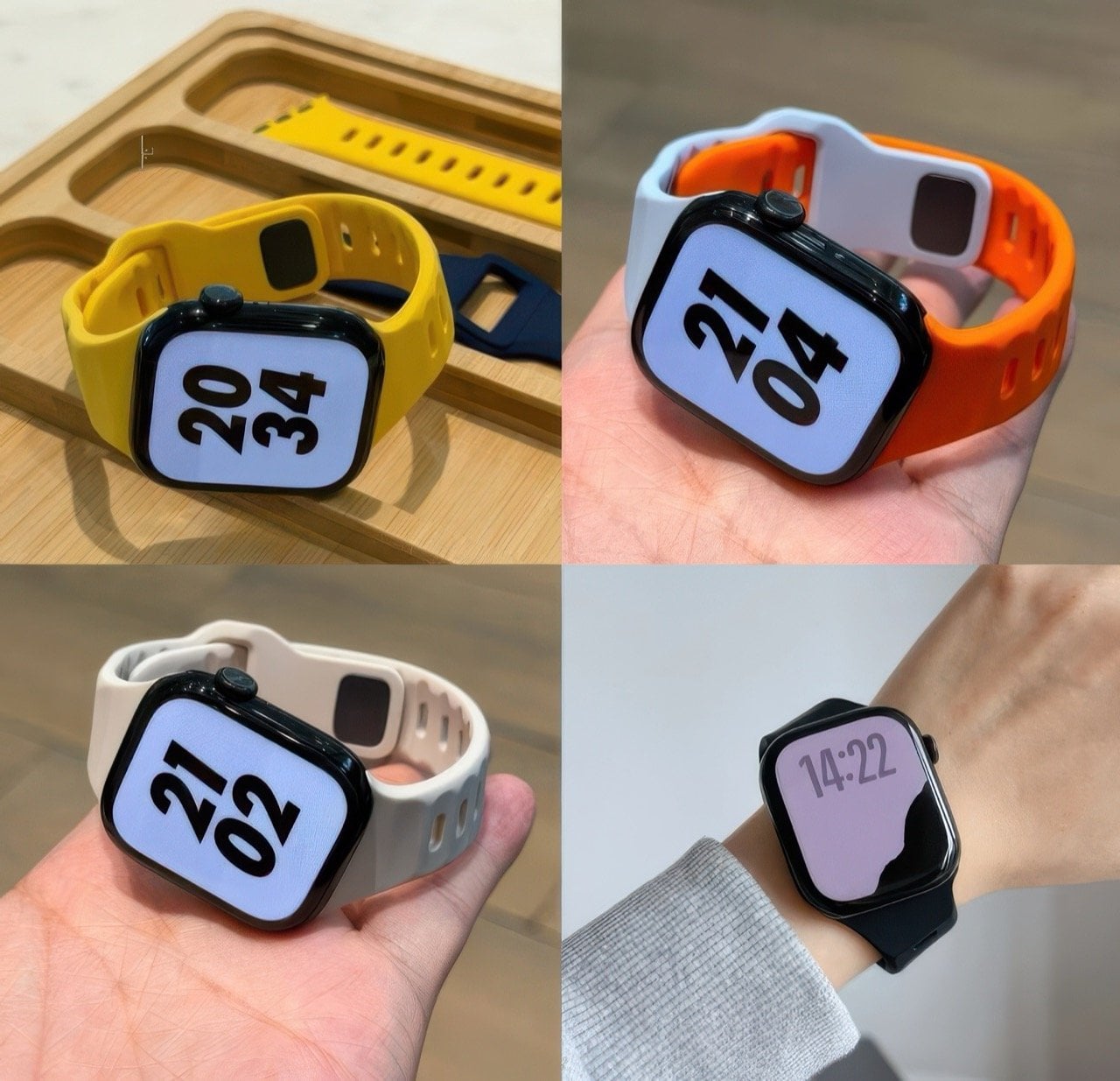
The Tilted Watch Band is available online through retailers like Amazon, and works with all Watch series and sizes, even with the Ultra. So you can buy and keep the band even through all your watch upgrades over the years!
The post Genius ‘Tilted’ Apple Watch Band Makes The Entire Experience 10x More Ergonomic first appeared on Yanko Design.


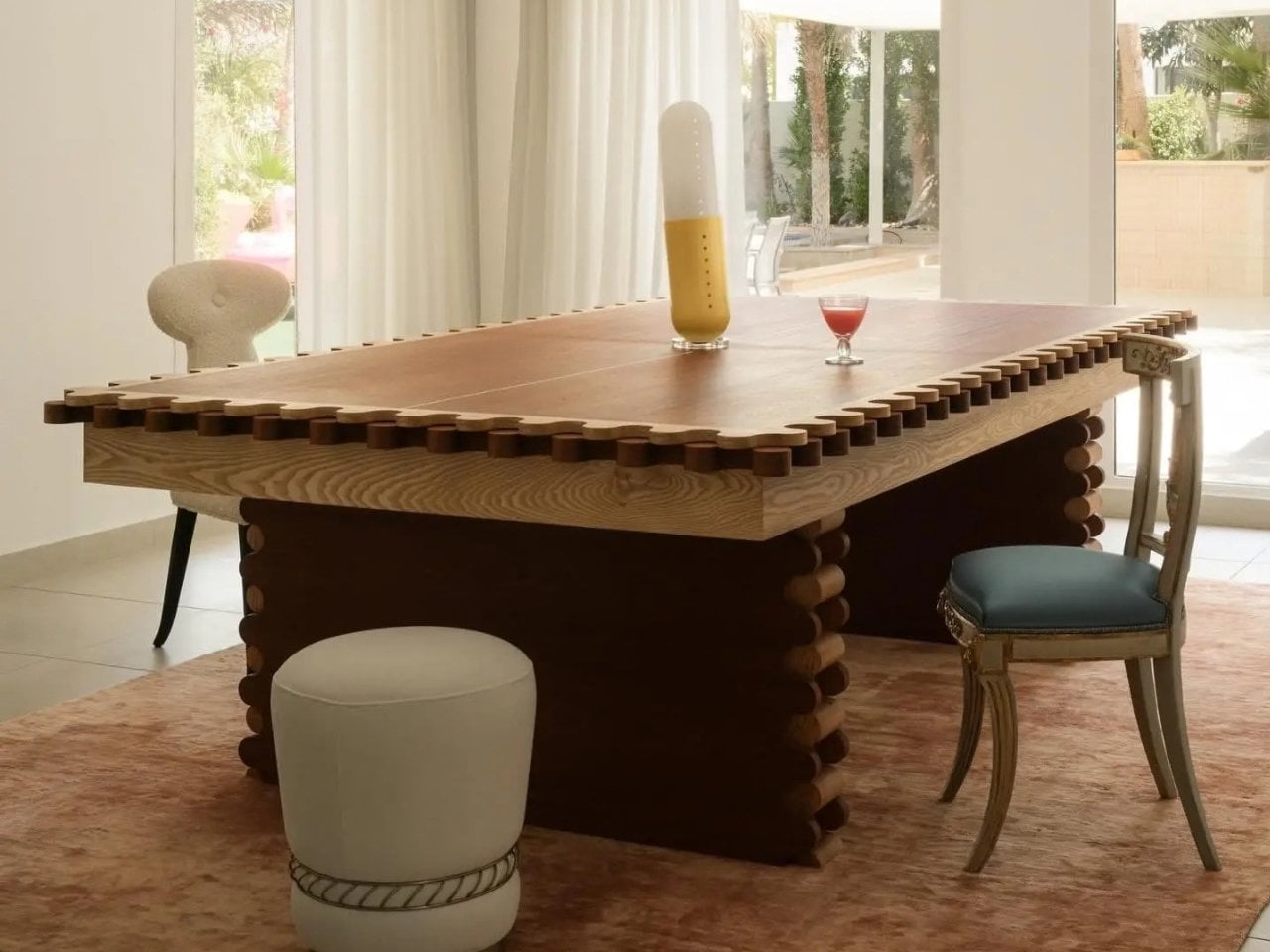
Most people who want a pool table and a dining table end up choosing neither. The math never works. A regulation pool table eats up roughly the same square footage as a small bedroom, a ping pong table needs its own dedicated stretch of floor to swing a paddle without hitting a wall, and a proper dining table has to look good enough to survive being seen by dinner guests. Pick two out of three and you’re already stretching a normal house. Pick all three and you need a room nobody actually has.
Sanne’s Department of Play looked at that math and decided it was wrong. The 3-in-1 Table is exactly what it sounds like: lift the top and a dining table becomes a full pool table, swap the surface again and it’s ping pong, complete with a cane-and-leather net that looks like it belongs in a much more expensive living room than most game tables ever see. It collapses three furniture purchases and three separate footprints into one object, which solves the actual problem that has quietly kept most people out of the game-room conversation entirely: there was never enough house for the fun stuff.
Designer: Sanne’s Department of Play (photos by Vitali Grishkov)
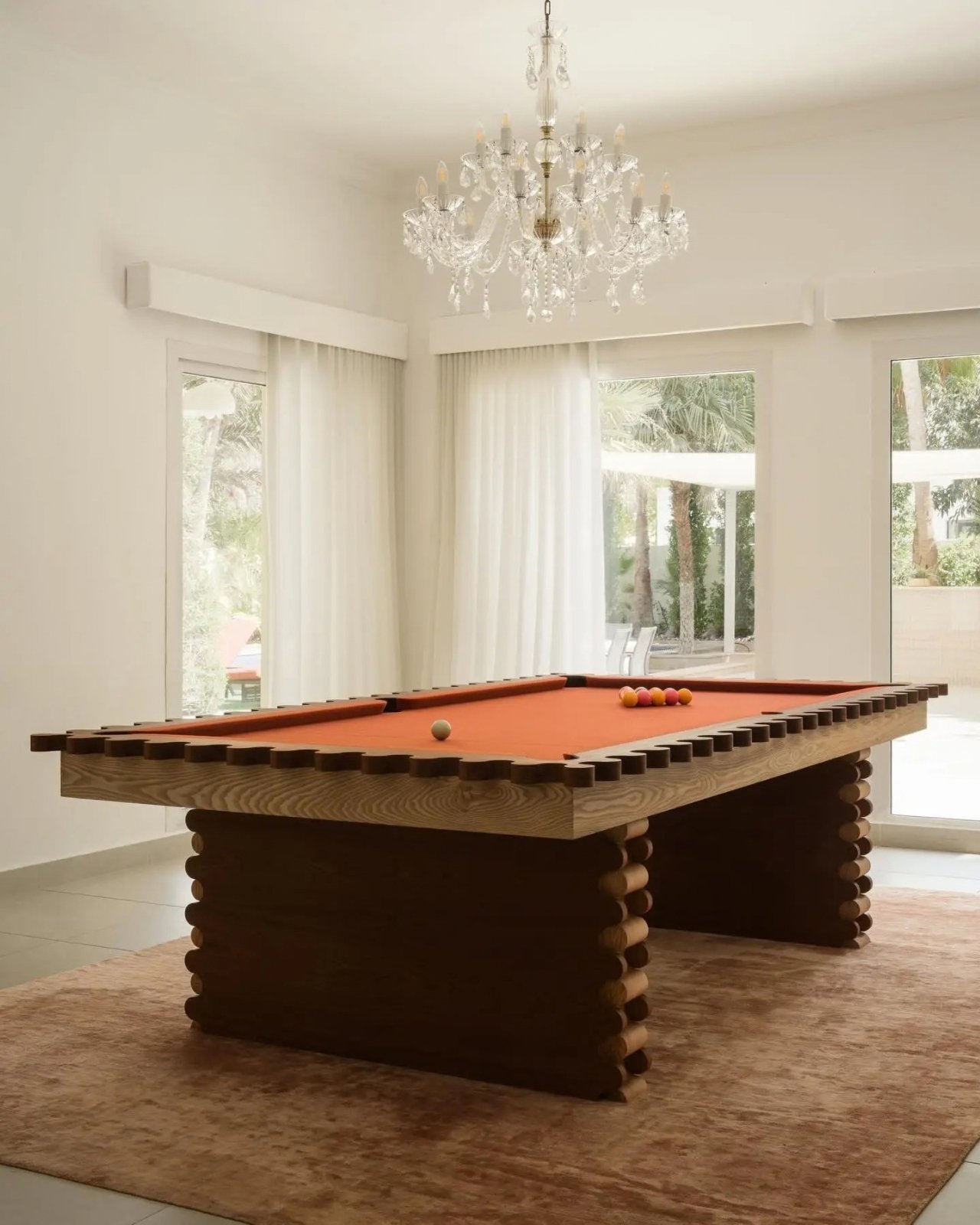
What gets me about this piece is that it doesn’t look like a compromise. Anyone who has shopped for a combo game table before knows the usual result, a pool table with a plywood lid bolted on top so it can technically also be a dining surface, priced around $800 and looking every bit like sports equipment wearing a costume. Sanne’s version starts somewhere else entirely. The scalloped edge running around the perimeter and down the legs, that repeating rounded bump pattern, looks like it was drawn first as a piece of sculpture and only later revealed to double as the ball guard for ping pong. Function followed form here instead of the other way around, and you can feel that order in every photo of it just sitting quietly as a dining table under a chandelier, giving away nothing about its second life.
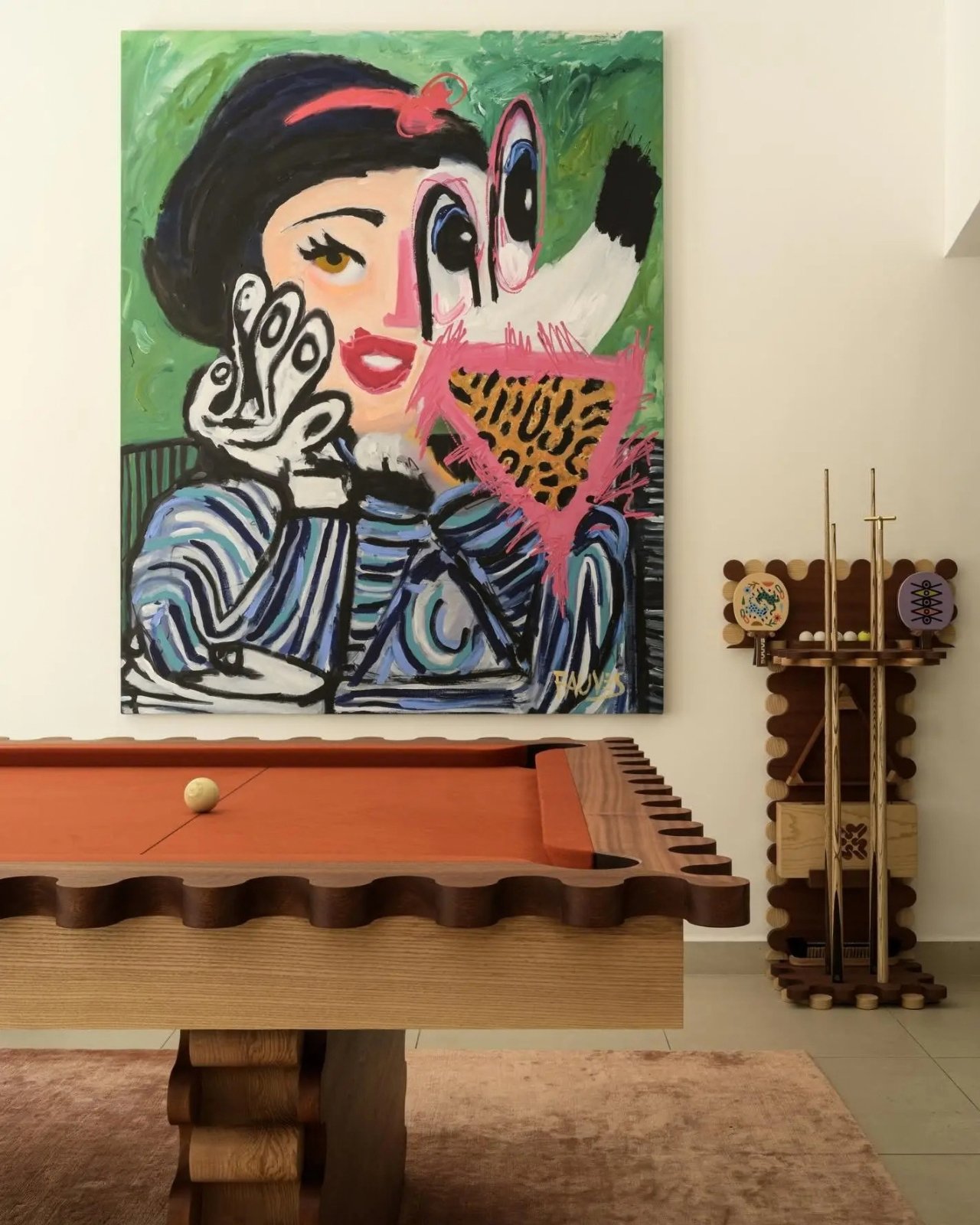
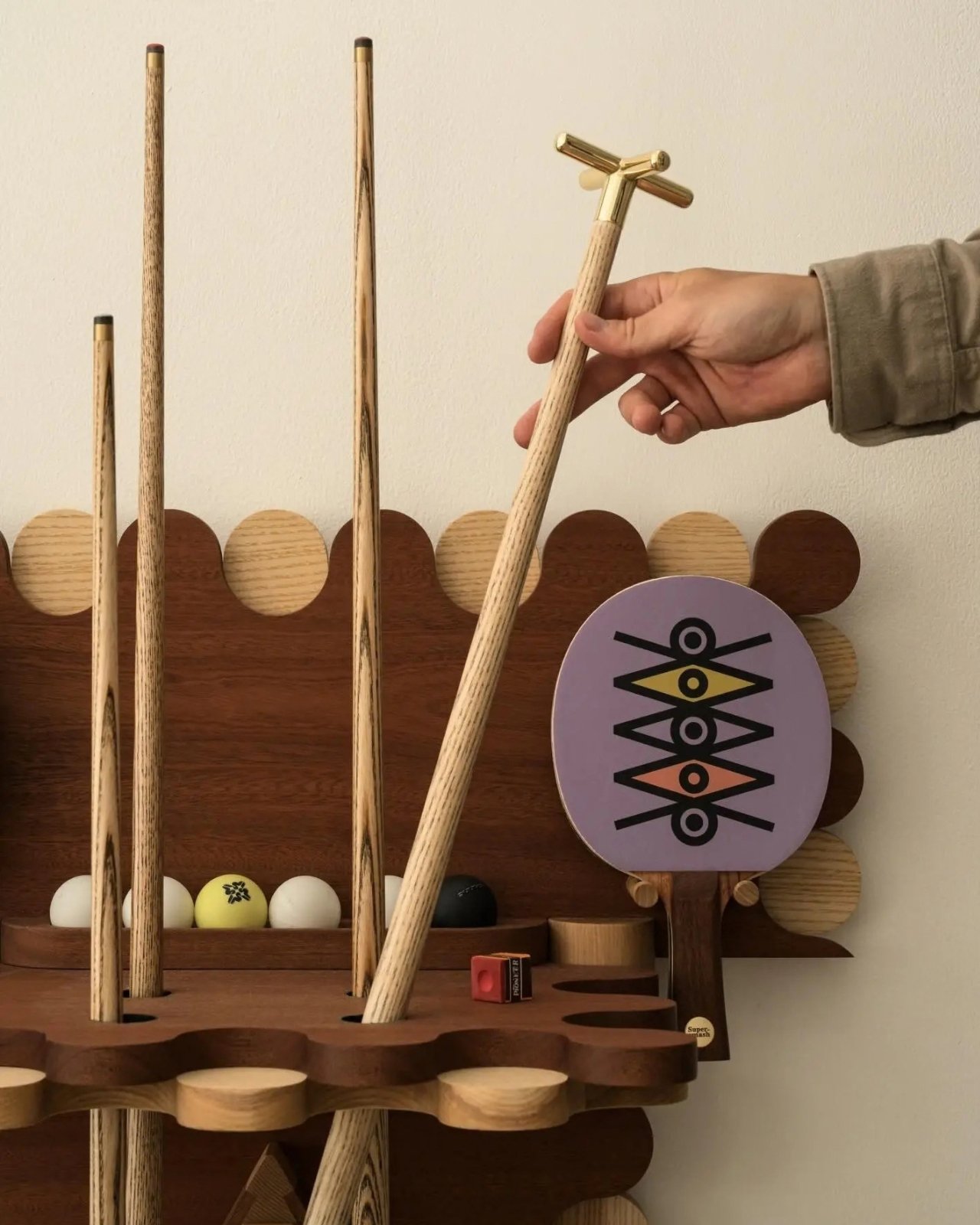
The material choices back that up. The base is a deep walnut tone against lighter ash detailing, which reads more mid-century furniture than rec room. When it becomes a pool table, the felt is a rust orange rather than the standard casino green, which sounds like a small thing until you realize it’s the difference between a table that argues with your décor and one that sits right at home. Even the accessories got the same treatment. The cue rack is its own scalloped tower that matches the table instead of leaning against a wall wrapped in a canvas cover, the ping pong paddles are hand-painted with little leopards and floral motifs, and the ball tray is dovetailed like a keepsake box. Nobody asked for the ball tray to look nice. They built it that way anyway.
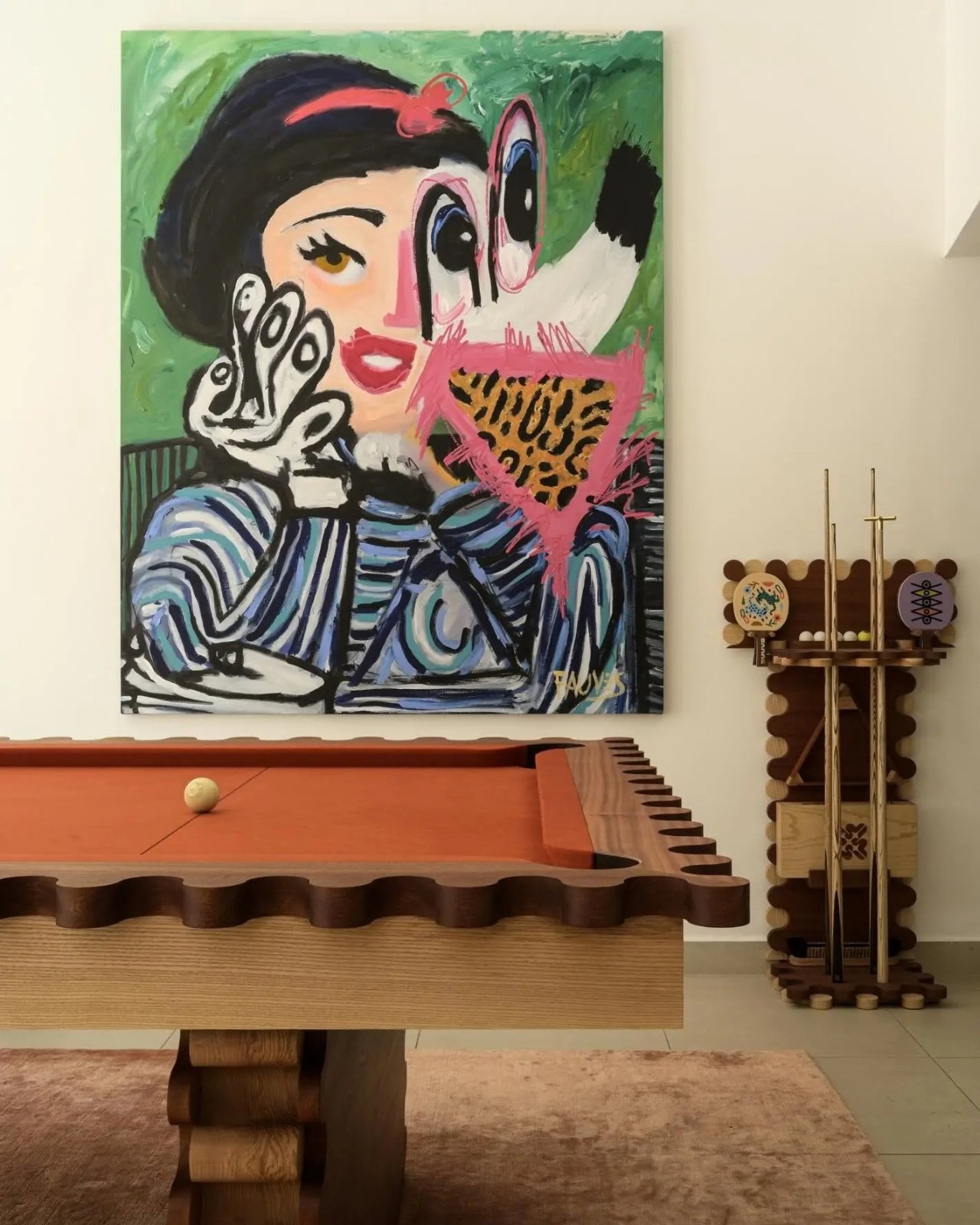
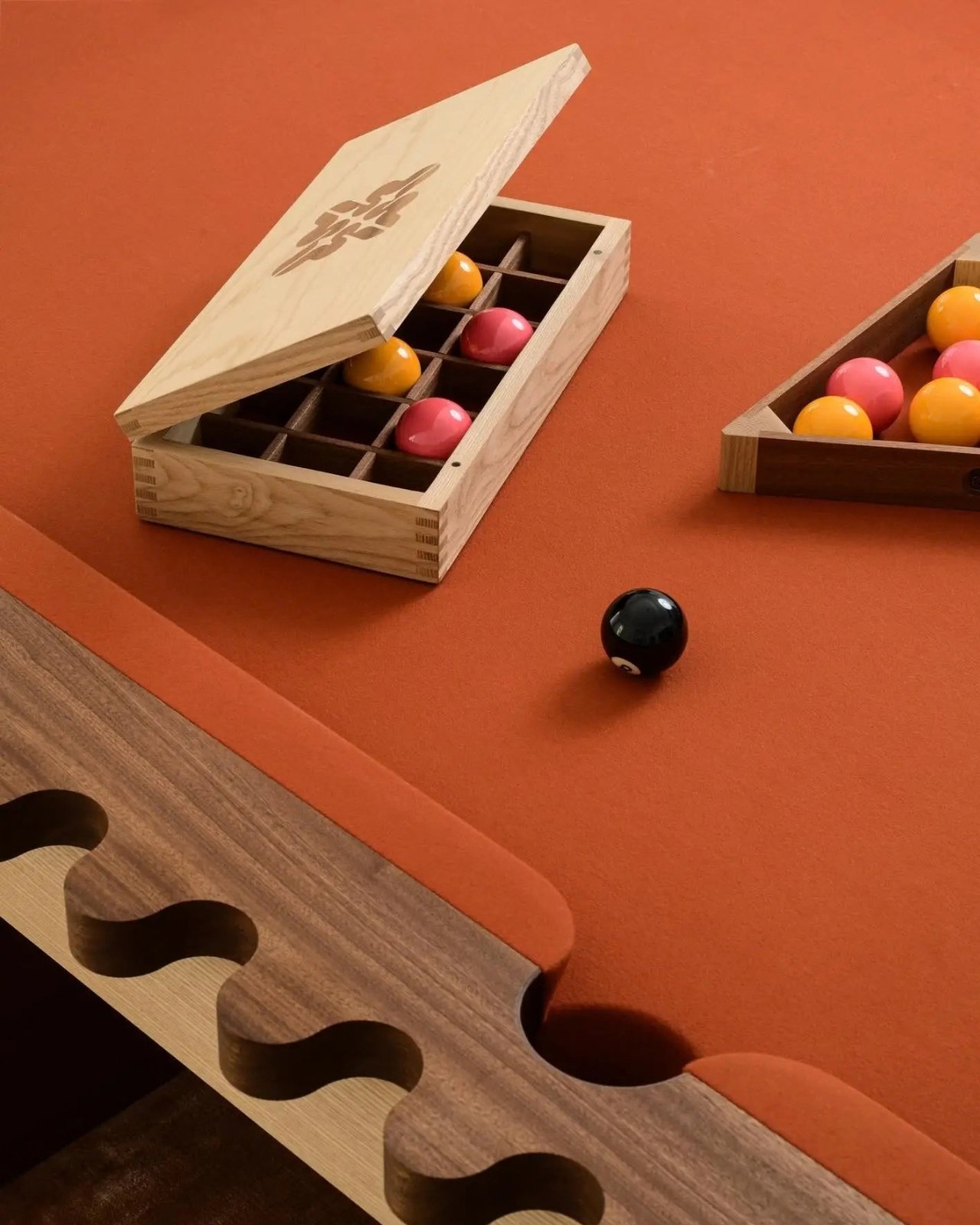
That attention to the parts nobody was going to scrutinize is what actually sells the bigger idea. Pricing puts the crafted-to-order version around $12,500, with a limited floorstock release closer to $7,500, so this sits firmly in collectible design furniture territory rather than impulse purchase territory. That framing matters more than it first appears. It’s less “we made a fun table” and more “we made a serious piece of furniture that happens to also be extremely fun,” and that distinction is the whole reason it works in a home that already has real art on the walls instead of only in a basement.
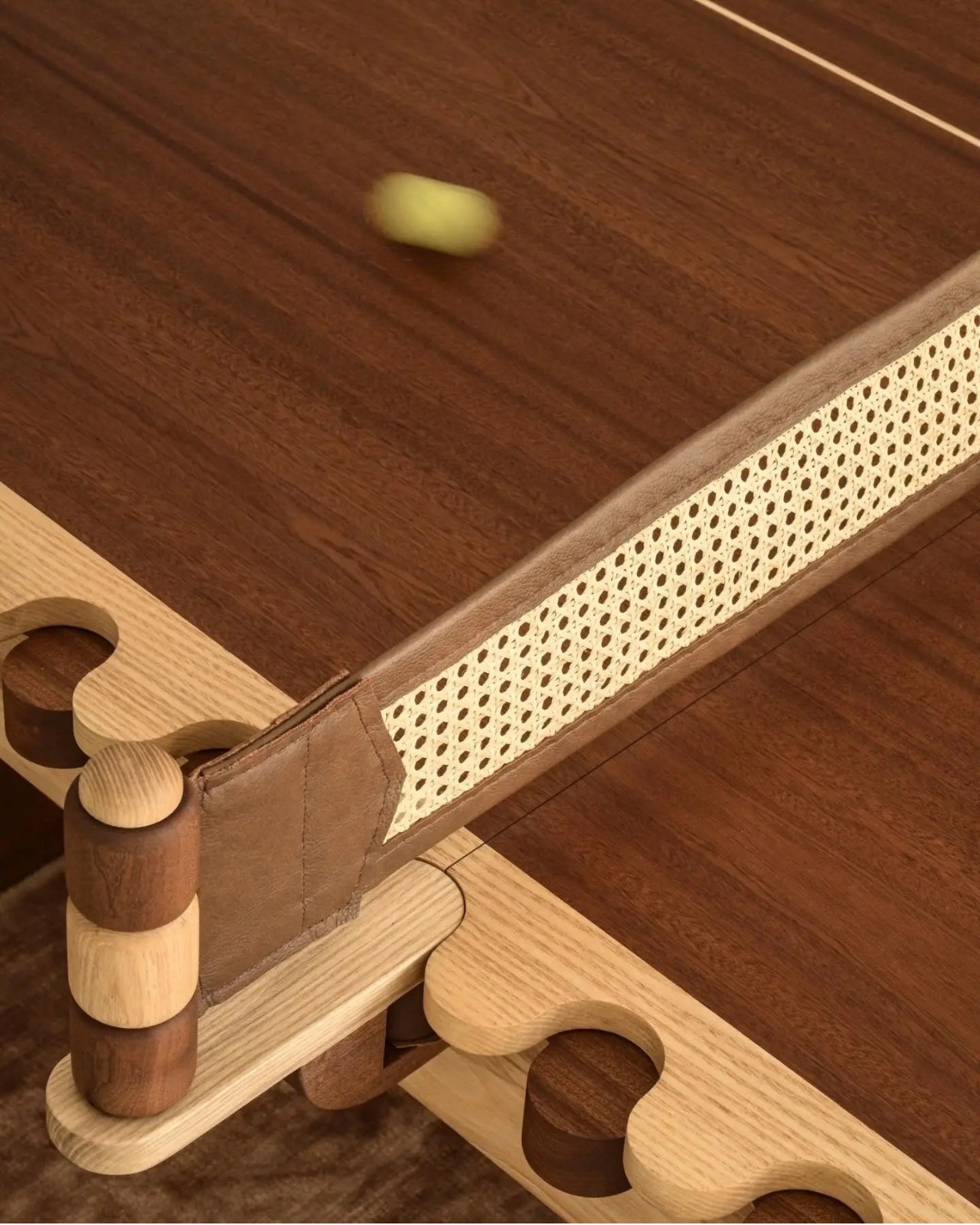
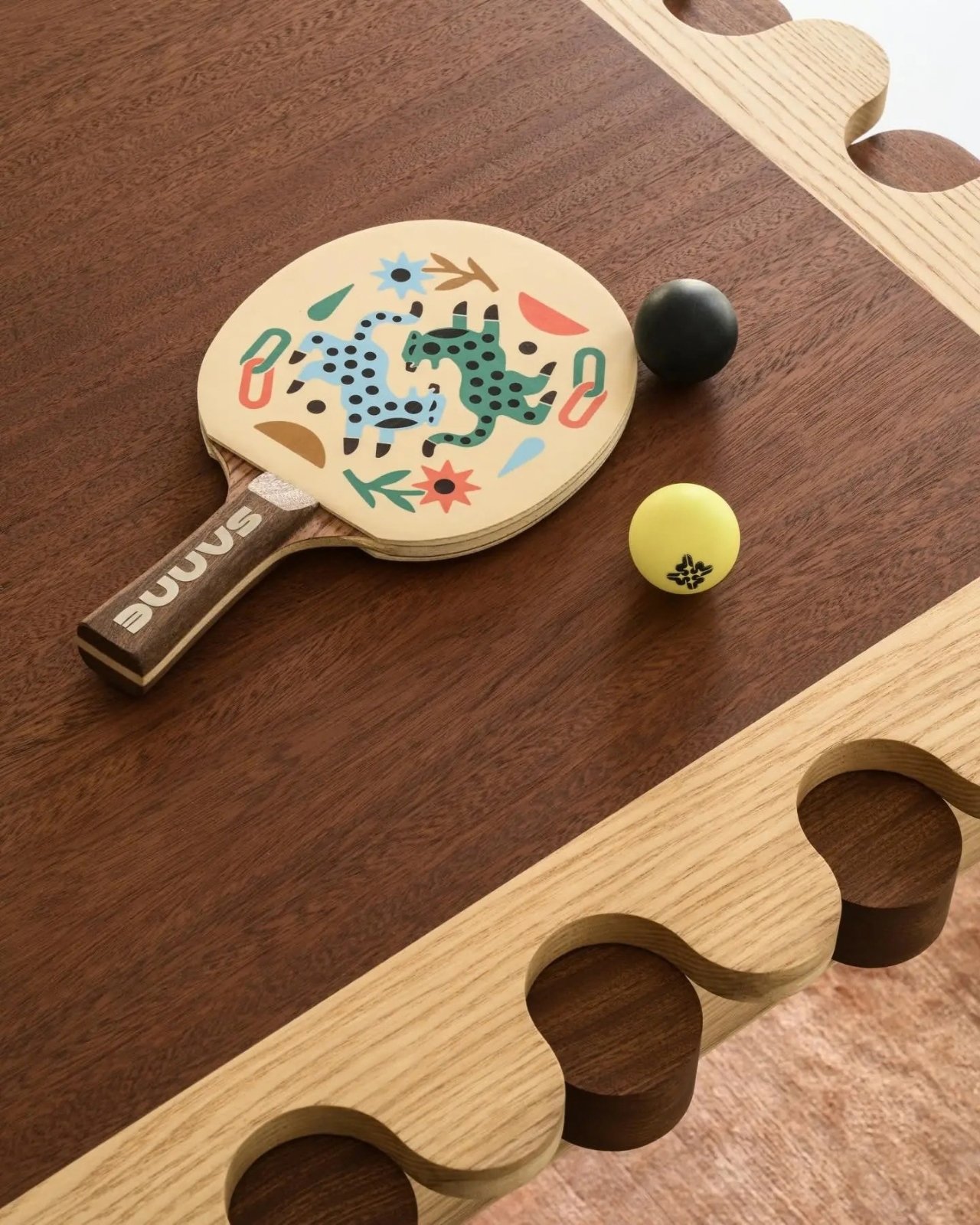
There’s a bigger shift happening around furniture like this, one where the game room stops being a separate destination and starts becoming part of the main living space instead of something hidden behind a closed door. A pool table tucked in a basement gets used four times a year. A pool table that is also the table where everyone already eats dinner gets used constantly, almost by accident, because nobody has to decide to go play. They just have to clear the plates.

The post One Table, 3 Games, Nobody Needs a Game Room first appeared on Yanko Design.