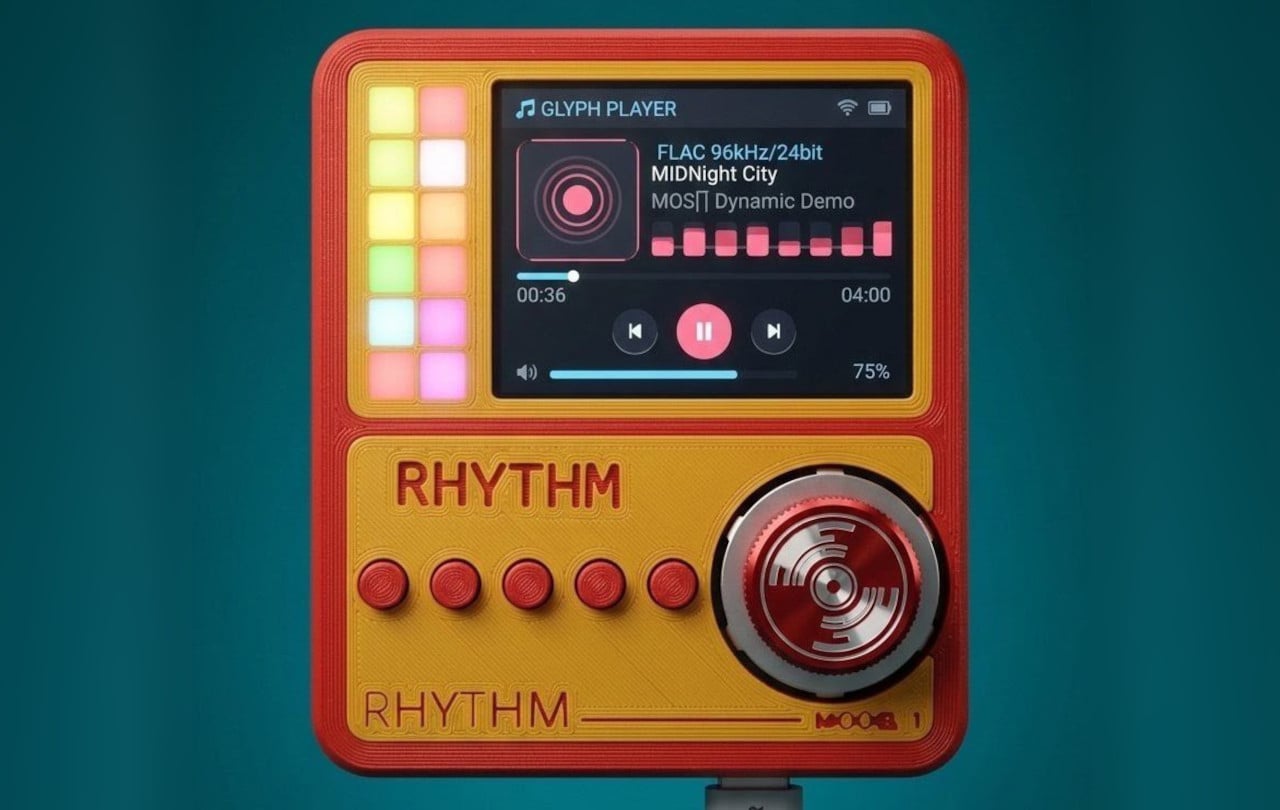
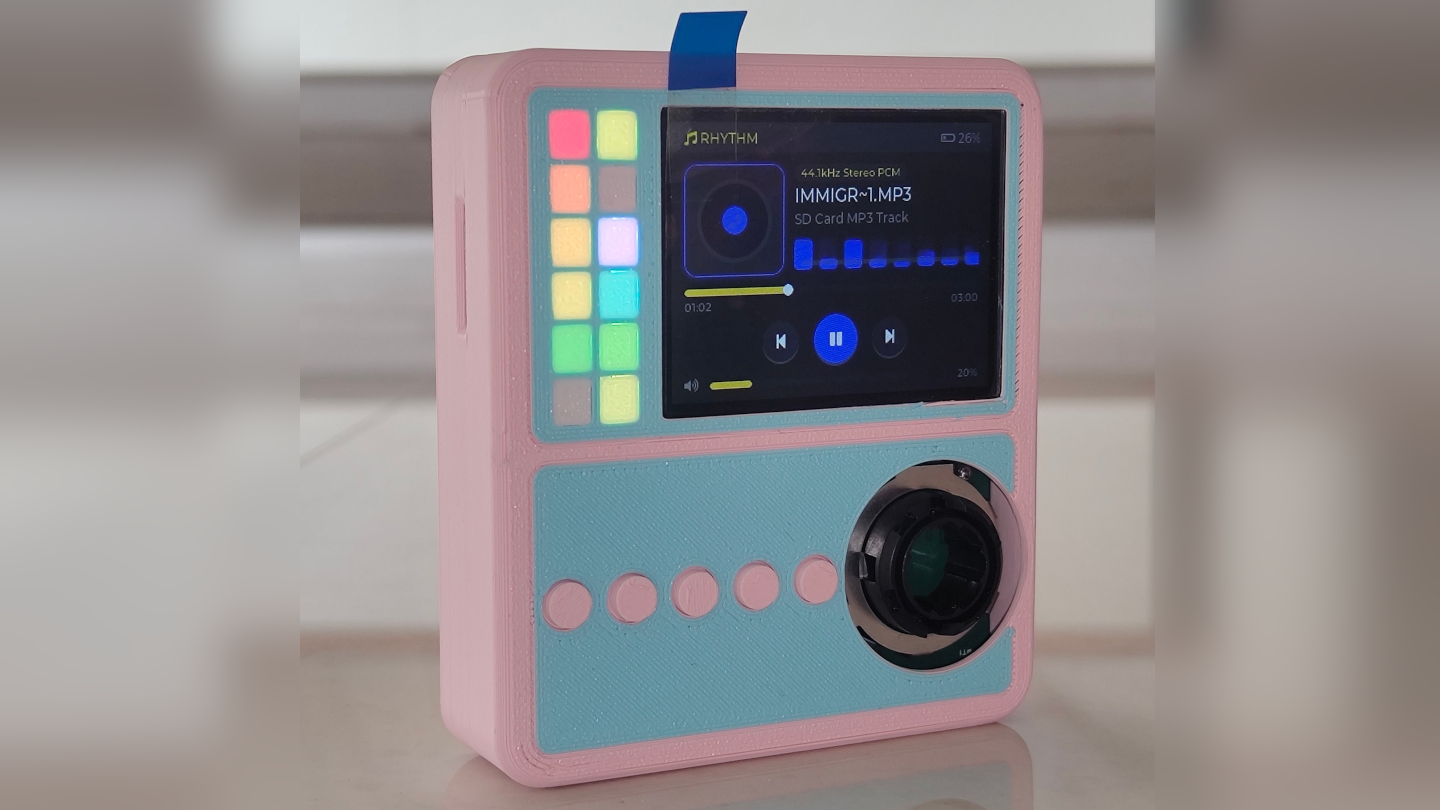
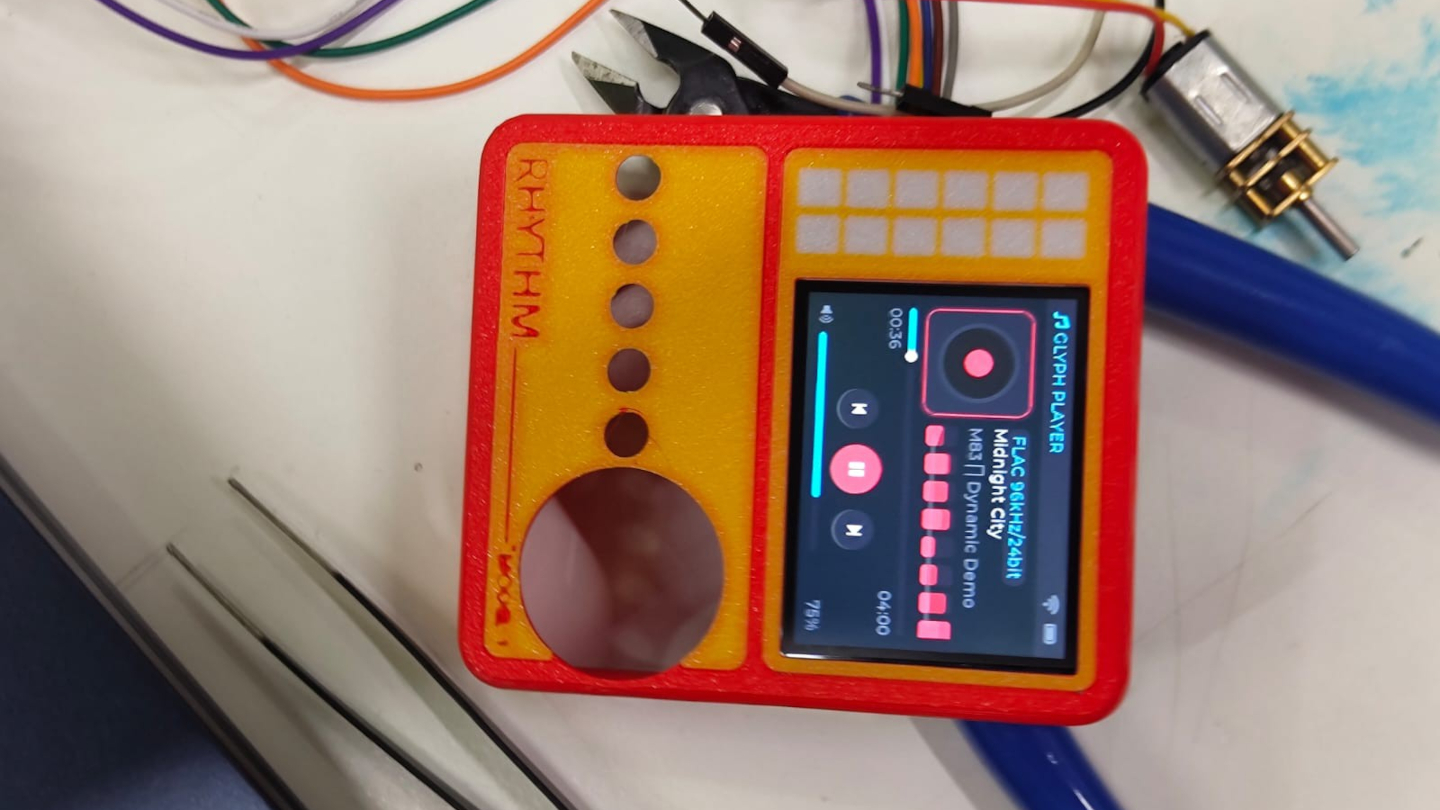
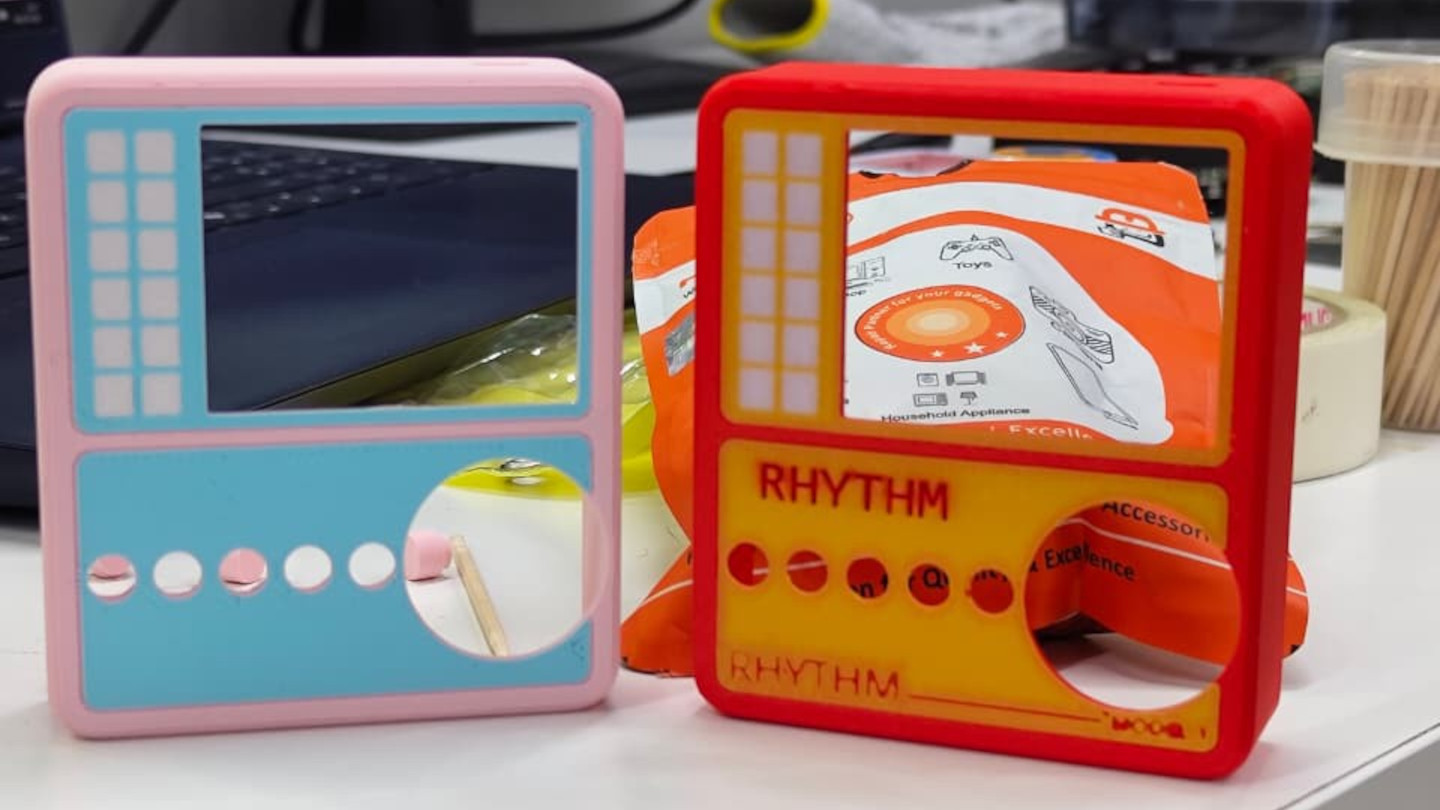
Smartphones turned music into just another notification competing for attention, a song interrupted by a text, an album broken up by a calendar alert. RHYTHM exists to undo that arrangement entirely, building a dedicated listening device from real audio components instead of borrowing a phone’s guts and bolting on a headphone jack. It’s a from-scratch digital audio player designed around one job: playing music properly, without a screen demanding anything else from you.
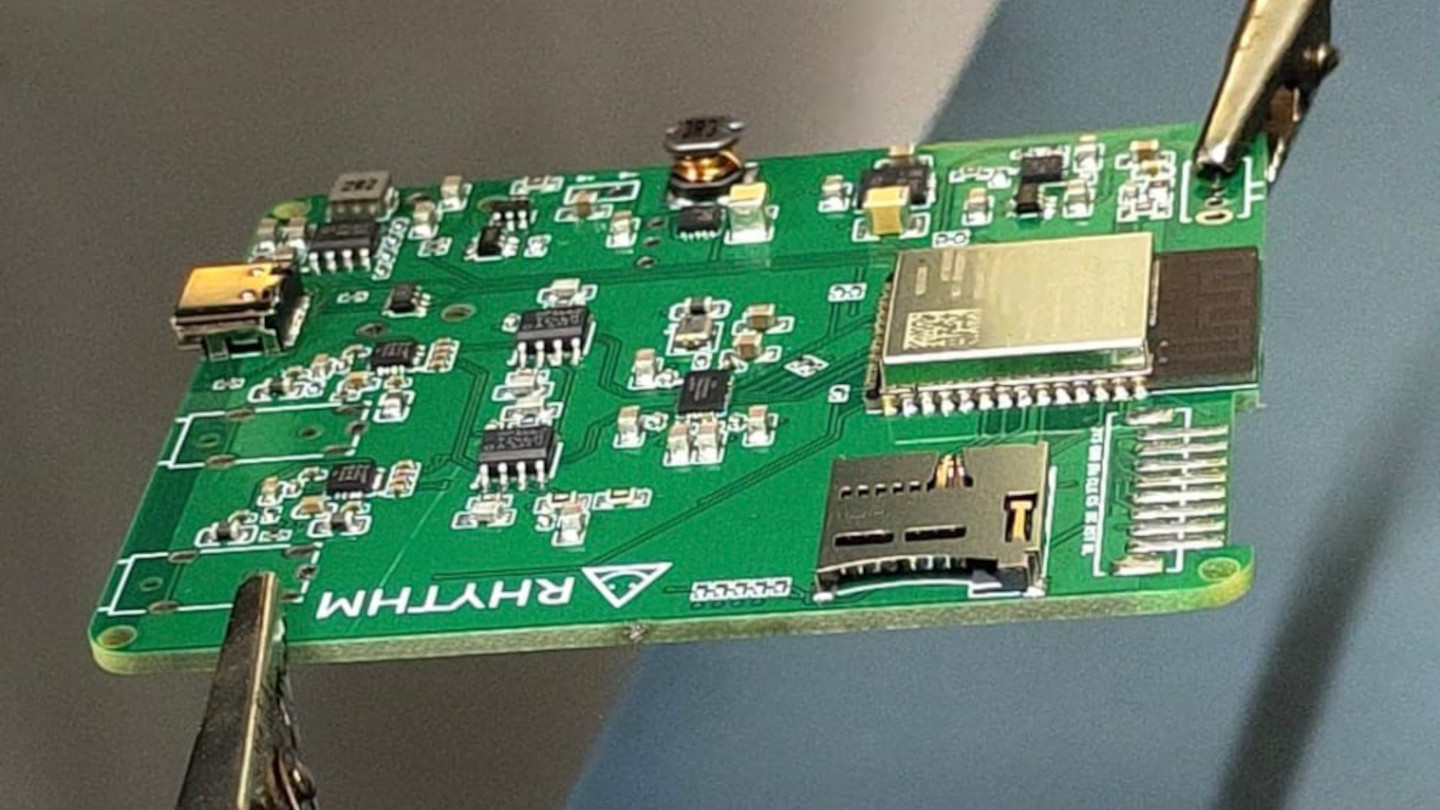
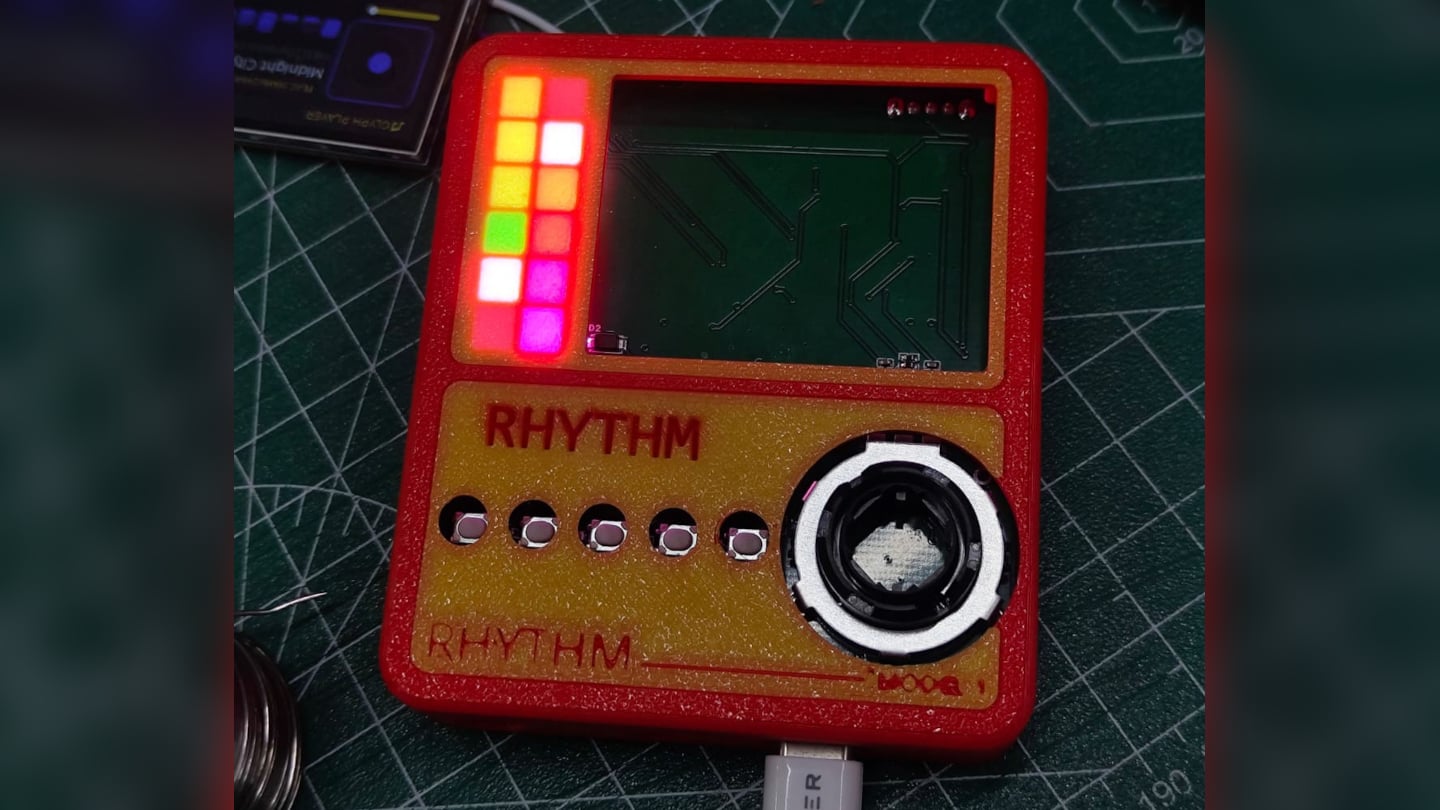
That commitment starts with what’s actually driving the sound. Rather than leaning on an all-in-one audio codec chip the way most budget players do, RHYTHM routes music through a genuine ESS SABRE DAC, the same category of chip found in dedicated hi-fi gear, paired with a discrete amplifier stage rather than a shortcut solution. An ESP32-S3 handles the file parsing and processing, but the actual sound reproduction runs through hardware built specifically for that job alone.
The headphone output makes the clearest case for why any of this matters. Instead of splitting one internal signal across a single jack, RHYTHM runs two completely independent, actively buffered 3.5mm outputs, each driven by its own dedicated amplifier chip. Two people can plug in two entirely different pairs of headphones, and each gets a full, uncompromised signal, no shared circuit quietly degrading whichever connection came second.
Keeping that signal clean required rethinking the power supply as much as the audio path. RHYTHM physically separates its digital logic and high-frequency switching lines from the analog circuitry that actually shapes the sound, regulating each side through its own dedicated, ultra-low-noise power regulator. It’s an unglamorous decision that never shows up in a spec sheet screenshot, but it’s exactly the kind of choice that determines whether quiet passages in a recording stay quiet.
Physical control gets the same attention. A precision mechanical rotary encoder handles navigation alongside a set of tactile buttons, giving the whole interface a hands-on quality that a touchscreen simply can’t replicate. Paired with a compact 2-inch color display, the device reads less like a shrunken phone and more like a purpose-built instrument, something meant to be operated by feel in a pocket or a bag without needing to look at it.
A microSD slot rounds out the practical side, storing lossless files locally rather than depending on a streaming connection or app ecosystem. That local-first approach extends the project’s entire philosophy: RHYTHM isn’t trying to replace a phone’s convenience. Instead, it’s opting out of that convenience on purpose, trading constant connectivity for a listening experience built around a single, uninterrupted task.
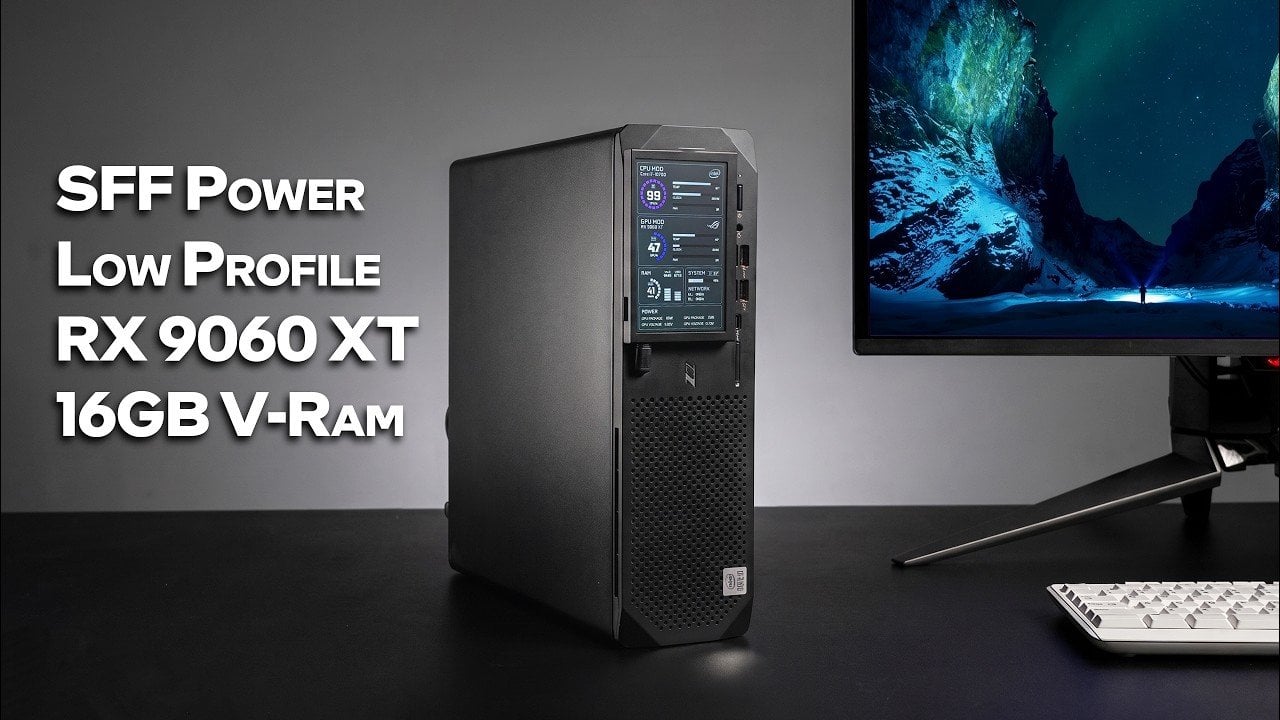
Companies often dispose of older hardware in bulk, but these systems can still serve as the foundation for practical projects. ETA Prime demonstrates how a used HP Z2 G5 workstation, commonly sold for around $150, can be converted into a 1440p gaming PC. By adding a low-profile Radeon RX 960 XT GPU, upgrading the power […]
The Google Pixel 11 Pro is a feature-rich smartphone designed to adapt to your unique preferences. With a wide range of customization options, it allows you to enhance usability, personalize aesthetics, and optimize functionality. Whether you’re a tech-savvy enthusiast or a casual user, these 20 tips will help you unlock the full potential of your […]
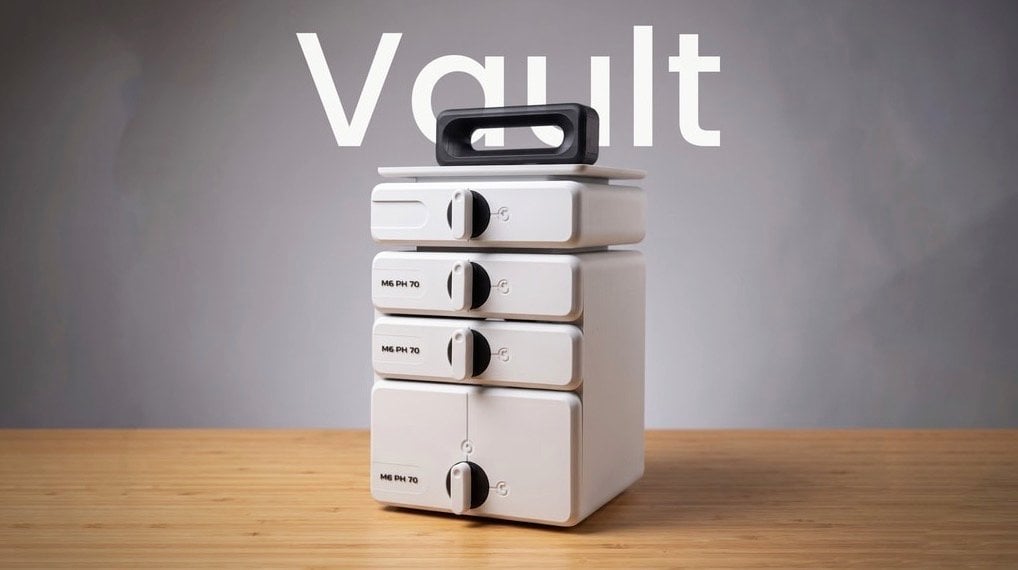
The Vault storage system, set to launch on Kickstarter, offers a modular, 3D-printable approach to workshop organization. According to USSA: Woodworking+3D Printing, the system is built on a standardized 42×42 mm grid, making it compatible with Gridfinity setups. With 60 unique size configurations and an XL model designed for heavier items, it provides flexibility for […]
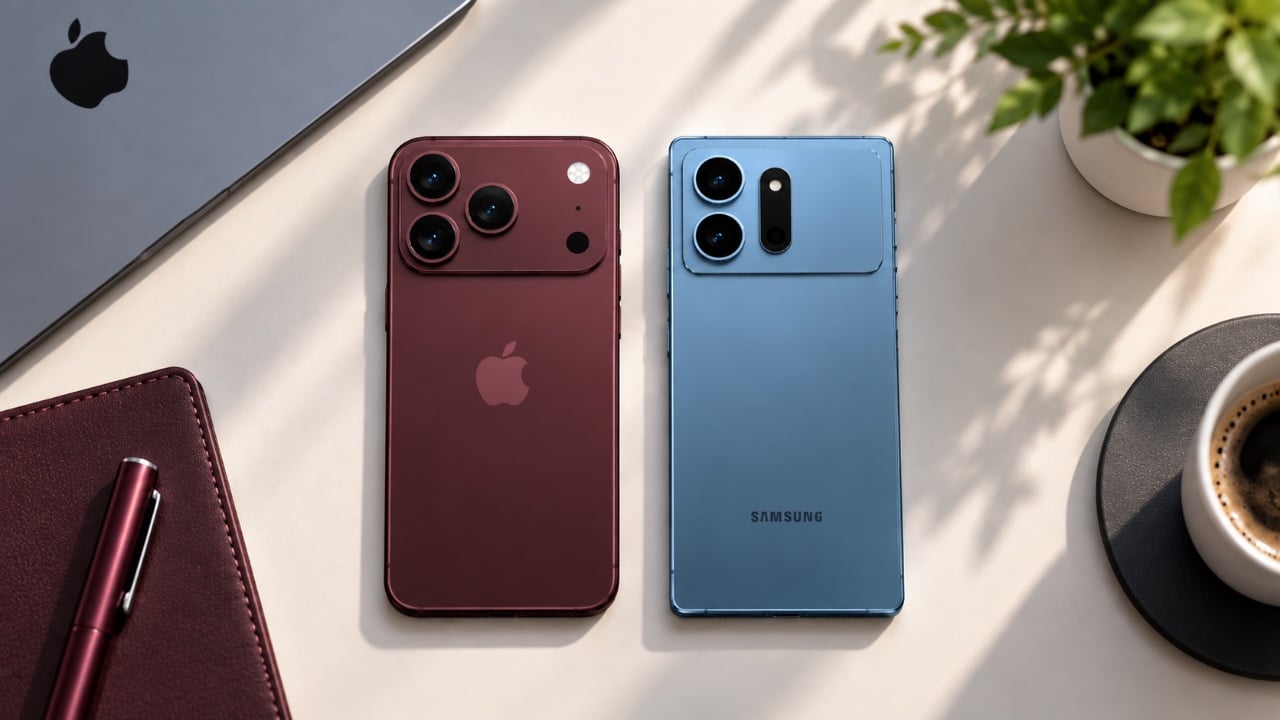
With Apple officially unveiling the iPhone 18 Pro Max, the benchmark for premier smartphone hardware has been reset. Powered by the 2nm A20 Pro chip, a mechanical variable aperture camera system, and an overhauled aluminum unibody architecture, Apple’s latest giant makes a commanding statement. Meanwhile, Samsung is preparing its retort for early next year with […]
AI has become an essential part of tackling real-world tasks, but choosing the right system can make all the difference. In his latest analysis, Paul Lipsky evaluates ChatGPT 6 and Fable 5.1, focusing on their performance across diverse applications like website design, app development and business analysis. For instance, in website creation, GPT-6 delivers clean, […]
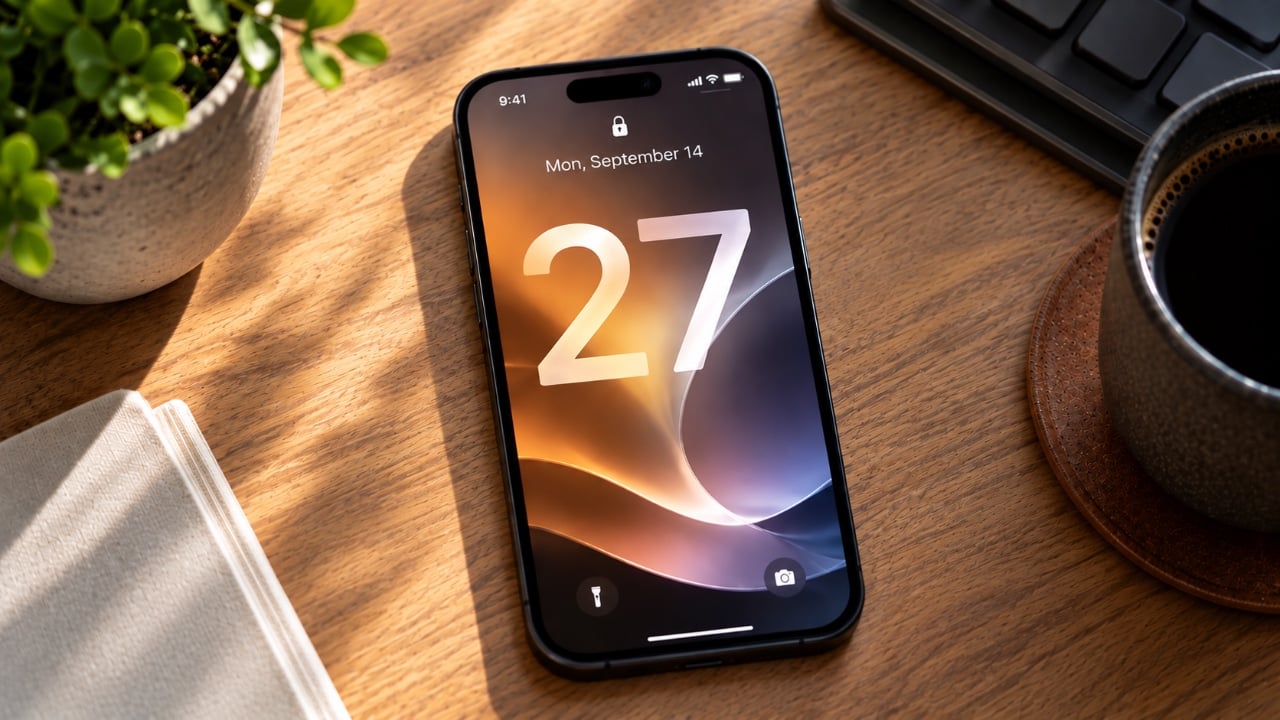
Apple’s iOS 27 RC, the release candidate for its latest operating system, introduces a suite of features designed to enhance how you interact with your iPhone. With improvements spanning customization, health tracking, fitness integration, and usability, this update is compatible with iPhone 11 and newer models. Whether you’re a tech enthusiast or a casual user, […]
There’s something wonderfully strange about walking up to a framed picture on your wall and telling it what to paint next. Say “paint my dog as a Japanese ink painting,” and the frame generates and displays a new piece. No file transfers, no app navigation, no creative software required. Jitrainno’s Smart Canvas runs on this premise: a voice and text-prompted AI art frame built around an E-Ink Spectra 6 color display, the matte, paper-like panel technology that draws zero power in static mode and reads under ambient light the way a canvas does. It comes in three solid-wood sizes, 7.5, 13.3, and 31.5 inches (named the Echo-7, Echo-13, and Echo-31 respectively), all with built-in batteries and Wi-Fi.
Jitrainno is a Hong Kong-based multidisciplinary team with in-house expertise spanning hardware R&D, E-Ink engineering, AI integration, firmware, and cloud services. They developed a proprietary color rendering layer on top of the Spectra 6 panel, tuned specifically for skin tone accuracy, landscape depth, and smooth gradient transitions. That kind of layered engineering, building custom display algorithms rather than shipping a panel with factory defaults, is what separates a team that genuinely understands display science from one that simply sourced a good component. The project moved from inception and industrial design in June 2025 to a production validation run by May 2026, a fast but not reckless pace for hardware at this scale. Global fulfillment is estimated for November 2026.
E-Ink Spectra 6 is the most capable color e-paper panel currently available to consumer product makers, using six primary pigments: black, white, red, yellow, blue, and green. It achieves up to 200 pixels per inch and draws zero power in static display mode, meaning the canvas can stay on your wall for days between charges. The paper-like surface reflects ambient light rather than projecting it, eliminating the glowing-rectangle problem that has defined every LCD-based digital art frame since the Kodak EasyShare era. Jitrainno’s self-developed rendering and color optimization layer is designed to preserve the subtle details that make an image feel closer to paper art. Based on early reviews, it reads more like a framed print than a screen, which is the bar the whole product needs to clear.
Speaking a prompt aloud and watching a new image materialize on the wall is a genuinely new behavioral ritual, and I think it’s the feature that will hook most people. Users can create images from text or voice prompts, explore different visual styles, and generate variations of their ideas, with AI used as a creative tool within the artwork creation experience. The product page demos a prompt like “a cute green dinosaur in a sunny prehistoric scene, soft watercolor and colored-pencil storybook style,” which apparently renders accurately enough to land on a kid’s wall. The AI side routes through third-party commercial image generation services via official APIs, supporting text-to-image and image-based creative generation within the experience. They also confirm they do not use user content to train their own foundation models, a meaningful distinction in a market where that commitment is far from universal.
AI generation is only one of several ways to populate the canvas. The app supports content from AI-generated art, a free art gallery called Daily Drops, the phone camera, the user’s photo library, and personal collections. Daily Drops streams a rotating selection of curated artwork that users can filter by mood or scene type and push directly to the display. The phone camera connection opens the obvious use case of photographing a physical painting, a landscape, or a face and sending it to the frame instantly. That breadth of sourcing makes the Smart Canvas a capable display platform in its own right, with AI generation sitting as a feature rather than a crutch.
Gallery proportions, tactile materials, and Auto-Rotation are deliberate choices to help the Jitrainno Echo series belong in the room like framed art. From the product photography, the proportions are gallery-standard, the profile slim enough to recede into a wall, and the matte panel surface does the visual work of making it belong. A built-in sensor detects whether the frame is in portrait or landscape and automatically switches the artwork’s aspect ratio, with no manual setting required. Connectivity runs in two modes: full cloud-connected (remote upload, AI creation, gallery sync, multi-user sharing) or completely offline (no account, no internet, direct phone-to-frame transfer). The offline option is a genuine design stance in a category where “smart” has almost universally meant always routing through someone else’s server.
The Jitrainno Echo-7 at 7.5 inches (1024×600, 170x236mm) is the tabletop model. The Jitrainno Echo-13 at 13.3 inches (1200×1600, 316.3×416.3mm) works both on a desktop stand and wall-mounted, making it the most flexible of the three. The Jitrainno Echo-31 at 31.5 inches (2560×1440, 603x903mm) is wall-only, the model that reads as a proper statement artwork rather than a gadget trying to pass itself off as one. All three run on E-Ink Spectra 6 full-color panels in solid wood frames, with built-in batteries and USB-C charging. The Jitrainno Echo-13 retails at $469 and the Jitrainno Echo-31 at $1,499, both covered by a one-year manufacturer’s warranty, with global fulfillment estimated to begin November 2026.
I’ve walked out of gallery openings feeling like an intruder more times than I’d like to admit. The velvet rope isn’t always literal, but it might as well be. Original art has always come wrapped in a kind of hush money: pay enough, know the right people, or stay on the outside looking in. That gatekeeping is exactly what IKEA is going after with KONSTRUNDA, a new 22-piece collection that hands real, sculptural, gallery-worthy objects to anyone with an IKEA membership card and a normal paycheck.
The math tells the story better than I can. Emanuele Stamuli’s black-and-white ceramic vase starts around $19. Andu Masebo’s welded-frame glass side table tops out near $149. For context, a single studio ceramic piece from an independent artist can run you three or four times that before shipping. KONSTRUNDA isn’t imitation art or mass-produced décor pretending to have a point of view. It’s actual work from seven working artists and designers, priced like it was made for people instead of collectors.
Designers: Akanksha Deo, Andu Masebo, Emanuele Stamuli, Ingrid Leander, Igor Holtermann, Lisa Hilland, and Lisa Reiser for IKEA
What pulls me in is how differently each contributor answered the same open assignment. Lisa Reiser went mouth-blown glass, and her glossy black vessel does something genuinely strange: the surface seems to shift color depending on where you’re standing, like it’s reacting to the room rather than just sitting in it. The scale is domestic but the presence isn’t, which is a harder balance to land than it looks.
Lisa Hilland took pine, the most IKEA material there is, and carved it into a stool with a profile too intricate for something this affordable to have any business looking like. She also built an orange ceramic form around a deep arch, where the empty space matters as much as the clay around it. Negative space as a design decision at this price point is a confident move, and it pays off. The piece reads completely differently from across a room than it does up close, which is exactly what good ceramic work is supposed to do.
Akanksha Deo’s contribution hit me the hardest because it doesn’t try to look important. Her stacked wooden figures pull from traditional toys she grew up with in India, with a small mirrored cube tucked into the center of one. She calls the pieces “a family of imperfect characters,” and that phrase does a lot of work. The figures have a looseness to them, a slight awkwardness that makes them feel handmade even when they’re not. Art doesn’t have to loom over a room. Sometimes it just needs to keep you company.
Andu Masebo leaned the opposite direction. His glass tabletop sits inside a chunky welded chrome frame that refuses to apologize for its own bulk. The piece borrows furniture logic and pushes it into sculptural territory, sitting somewhere between a functional object and a statement. Stamuli’s ceramics operate in similar space, black-and-white graphic forms that feel more like drawings translated into clay than traditional pottery. Both designers are clearly interested in the line between art and utility, and the collection is better for having that tension in it.
Ingrid Leander and Igor Holtermann looked past the studio entirely and grabbed their references straight off the street: caution tape, zebra crossings, the visual noise of a city block, repurposed into cushions and oversized floor pillows. Leander’s textiles in particular are surprisingly sophisticated up close, the kind of graphic work that would look at home in a boutique hotel lobby but lands just as well draped over an apartment couch.
A painting behind glass, roped off and climate-controlled, asks nothing of you. A ceramic bowl on your own shelf, one you can actually pick up, gets folded into your daily life whether you meant it to or not. That shift from observation to ownership is what KONSTRUNDA is really selling, and seven designers managed to make it feel earned rather than convenient.
I’ll probably end up with the Deo mirrored figure on my own shelf before the year is out. Not because it’s a masterpiece. Because it’s mine, and for once, that didn’t cost me a mortgage payment.