The Red Magic 12 Pro is reshaping expectations in the gaming smartphone market. With its powerful hardware, advanced cooling systems and sleek design, this device is engineered for gamers and multitaskers who demand top-tier performance. From the Snapdragon 8 Elite Extreme Gen 6 processor to its gamer-focused features, the Red Magic 12 Pro offers a […]
Amazon’s new Ring Drone Cam is a compact indoor security device that combines autonomous flight with smart home integration. Priced at $249.99 and weighing just 165 grams, it uses an AI Pilot system to map homes, define patrol routes, and stream live 2K video to users’ phones. While its battery life is limited to 5-8 […]
Samsung has unveiled a significant update to its Secure Wi-Fi feature, aimed at strengthening data encryption and safeguarding users when connected to public Wi-Fi networks. This update is a direct response to the growing cybersecurity challenges posed by evolving technologies, including threats powered by artificial intelligence. Available for free through the Samsung Galaxy Store, this […]
Optimizing your iPhone setup has never been more accessible, thanks to the advanced features of iOS 27. This guide explores how to customize your lock screen, home screen, and Control Center to achieve the perfect balance of functionality and aesthetics. By using built-in tools and third-party apps, you can transform your device into a highly […]
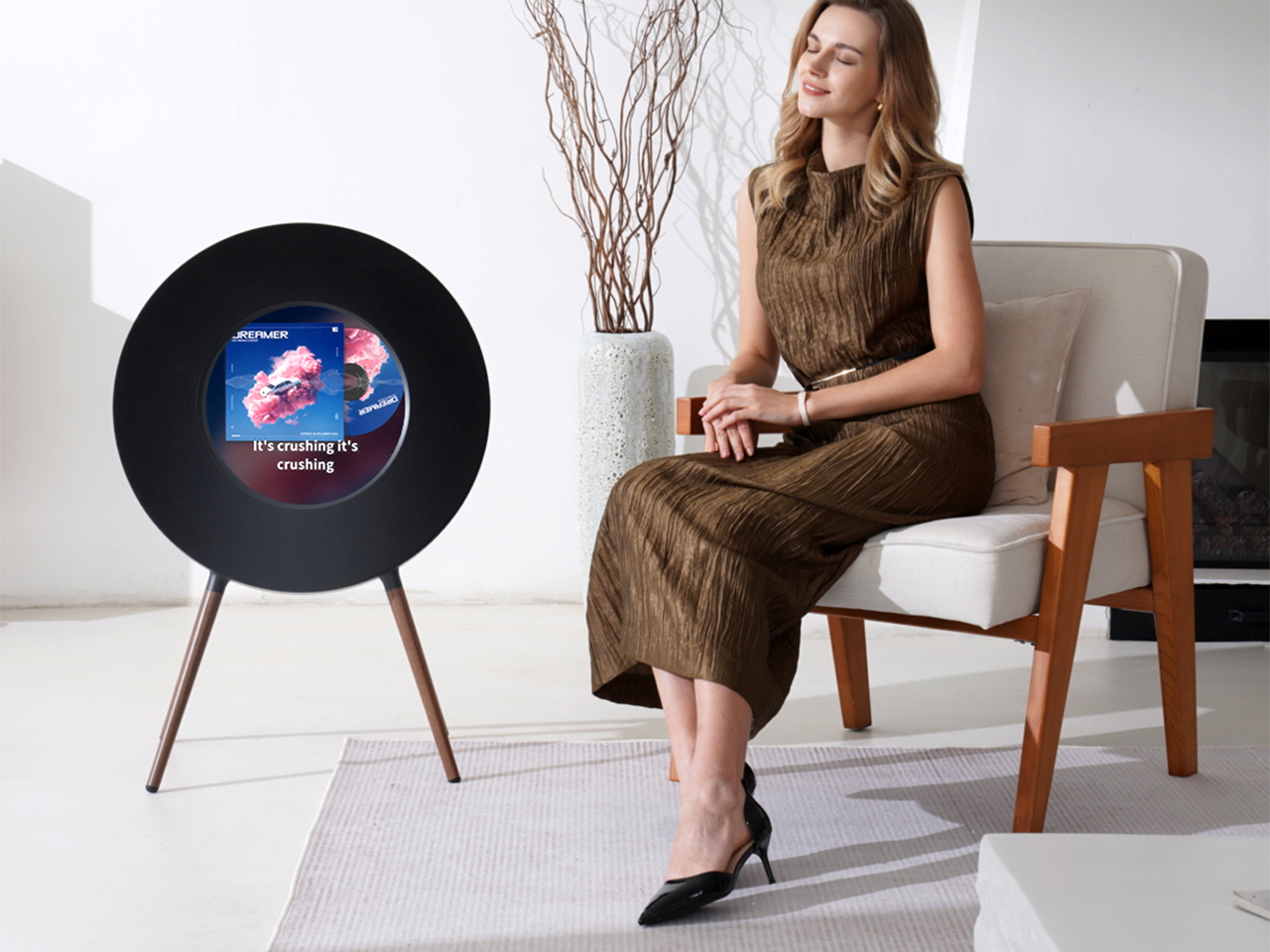
Choosing a Christmas gift for a music lover gets more interesting when you think about the songs that mean something to them. The MorningBlues Record R1 speaker gives those favorites a place in the home, pairing a record-inspired body with album artwork and animated lyrics. It’s a gift that invites a shared listen, starting with the track you both remember for completely different reasons.
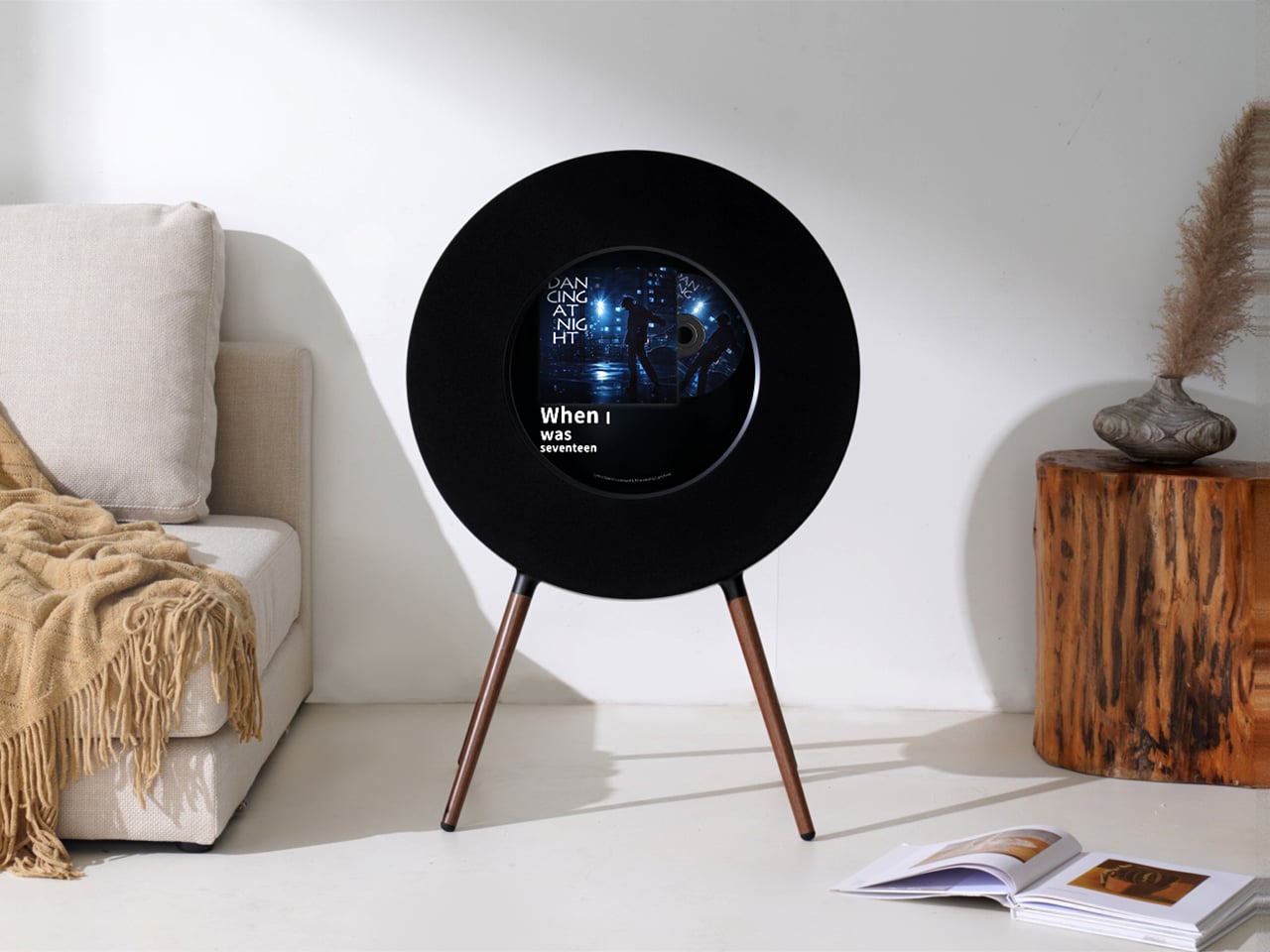
The circular body recalls a vinyl record, with the screen sitting where you’d expect the label. Solid walnut legs and acoustic fabric give it a furniture-like character, a thoughtful detail when you’re choosing something for a person who’s particular about their surroundings. There’s no spinning platter here, of course, but someone who grew up admiring record sleeves might appreciate the reference before the music even starts.
Holiday gatherings offer another reason to give the screen some attention. The R1’s nine dynamic lyric scenes put the words where people sharing the room can follow along, adding something to an after-dinner playlist beyond background music. An old favorite could turn into an impromptu sing-along, or finally settle an argument about a misheard line. Of course, some relatives might insist their version is still better.
The approximately 12.8-inch circular display also brings album artwork into that shared space. For a parent who remembers buying a particular record, its cover could be the beginning of a story you’ve never heard. For a partner, it might recall the album that accompanied your first road trip. The screen gives those visual associations room to register, rather than leaving them tucked away on a phone.
MorningBlues Record R1
There’s dedicated audio hardware behind those moments, too. The R1 combines a 6.5-inch subwoofer with separate midrange drivers and tweeters in a five-driver, 2.1-channel system, developed in partnership with audio expert Jamo. That arrangement keeps the listening setup within one enclosure, without separate speaker cabinets to position around the room. That consolidated format has an obvious appeal for someone who prefers fewer objects around their favorite chair.
The first playlist could be part of the present, too, especially if it includes songs you’ve shared over the years. Bluetooth handles playback, while the MorningBlues app supports setup and the lyric experience. Once everything’s ready, you could spend Christmas afternoon working through those tracks together. There’s something pleasantly personal about explaining why you picked a song, even if the recipient immediately questions your taste.
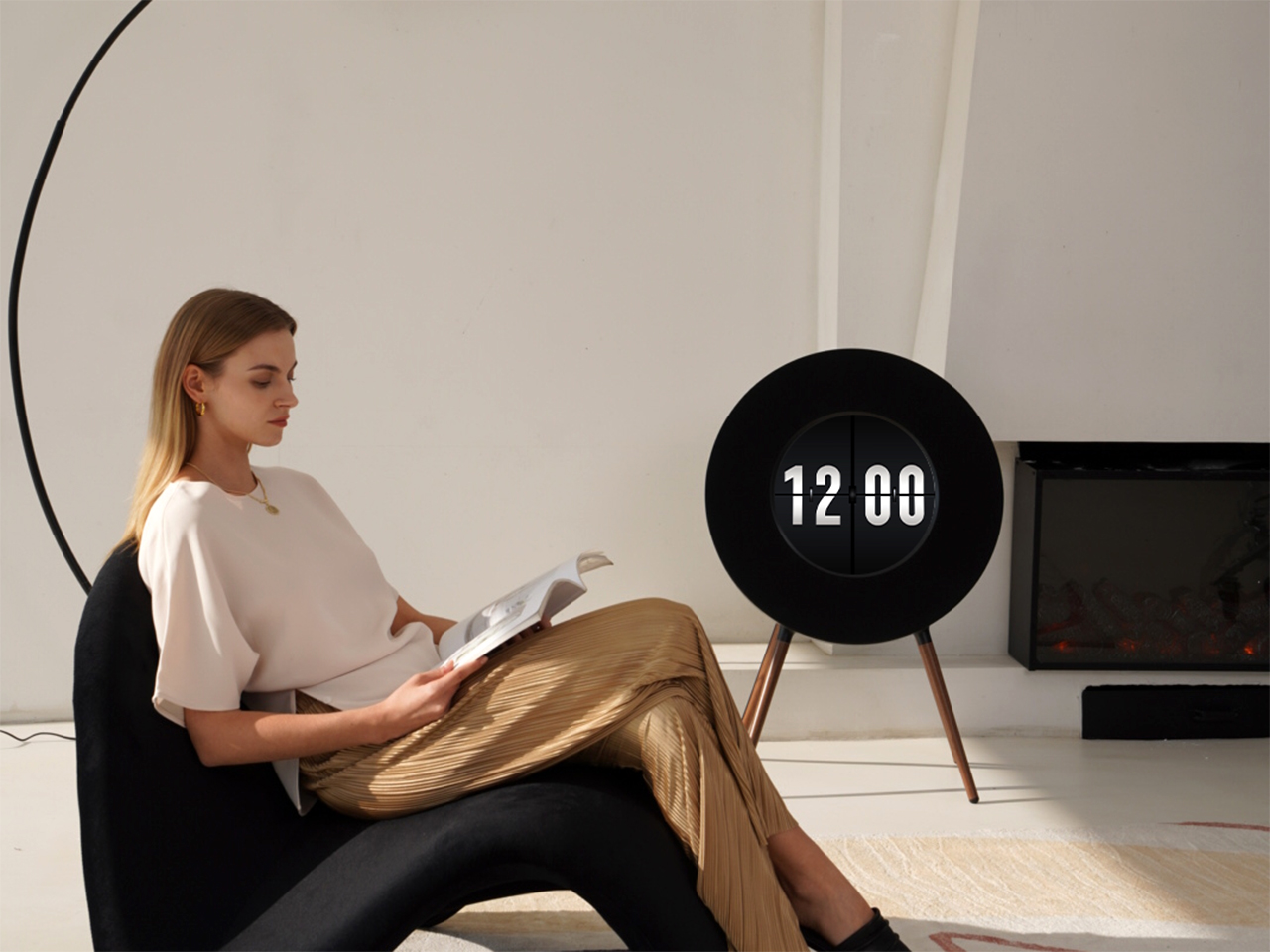
After the guests leave, the R1 can accompany a quieter part of the holiday. A favorite album beside the reading chair offers a different evening from another round of television, while clock mode gives the display a purpose between listening sessions. Someone who treasures those slower hours at home will surely appreciate how the gift becomes part of a routine that continues well beyond the Christmas break.
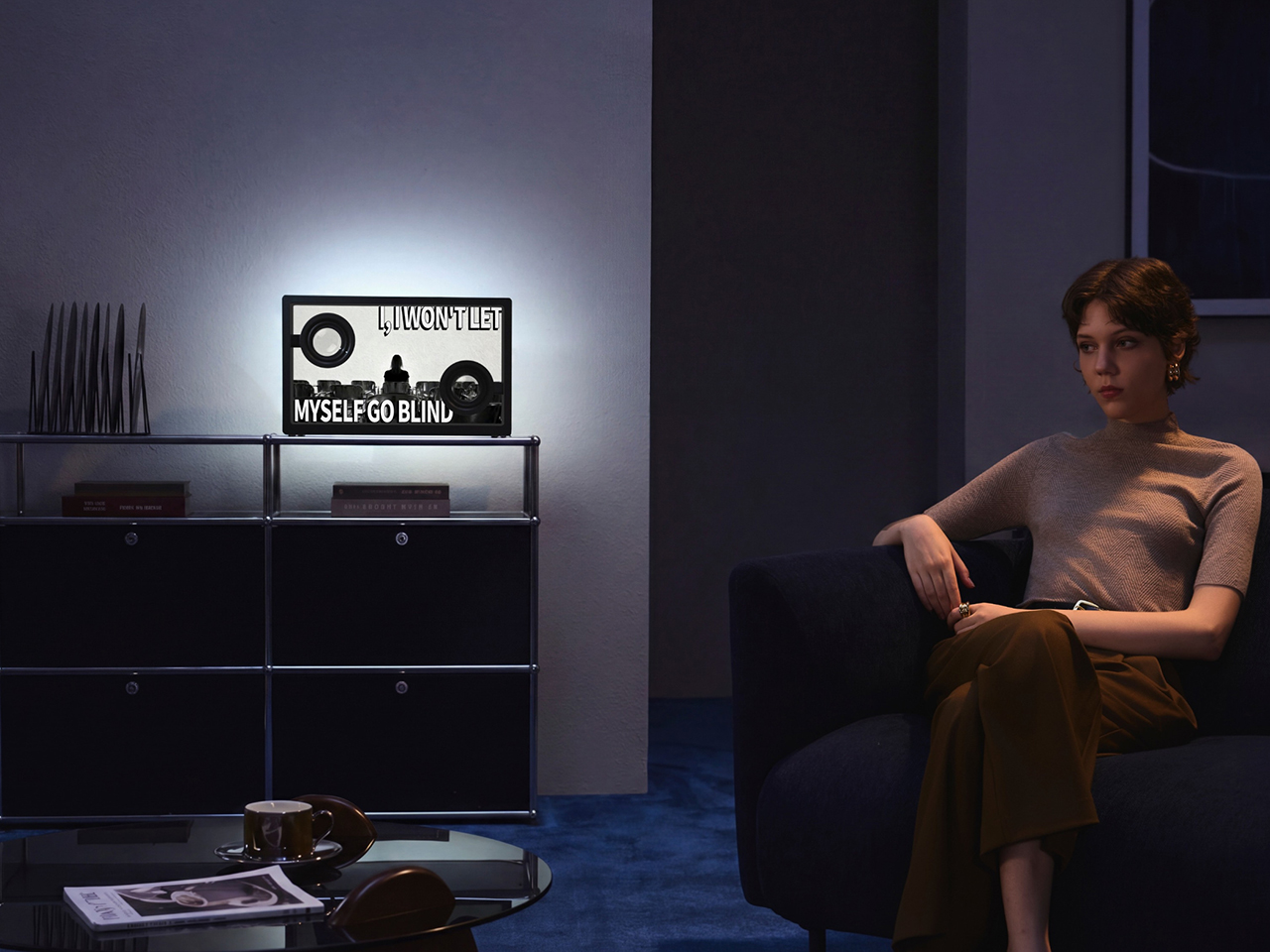
Lyric SonicGlass A1
For the music lover who prefers a more unexpected design, the Lyric SonicGlass A1 ($739 $999 – $260 off, use coupon code “holiday26”) offers another option. Its transparent design and 21.5-inch display let dynamic lyrics appear to float, turning favorite songs into a visual performance. It could be a thoughtful choice for the friend who enjoys sharing musical discoveries, giving their next holiday gathering something to watch as well as hear.
With the MorningBlues Record R1, the gift can begin with a song rather than a demonstration of everything the speaker can do. You might choose the album a parent used to play on Sunday mornings, then let them take over the playlist. By the time someone asks to hear another track, the wrapping paper could still be on the floor and the afternoon’s plans happily forgotten.
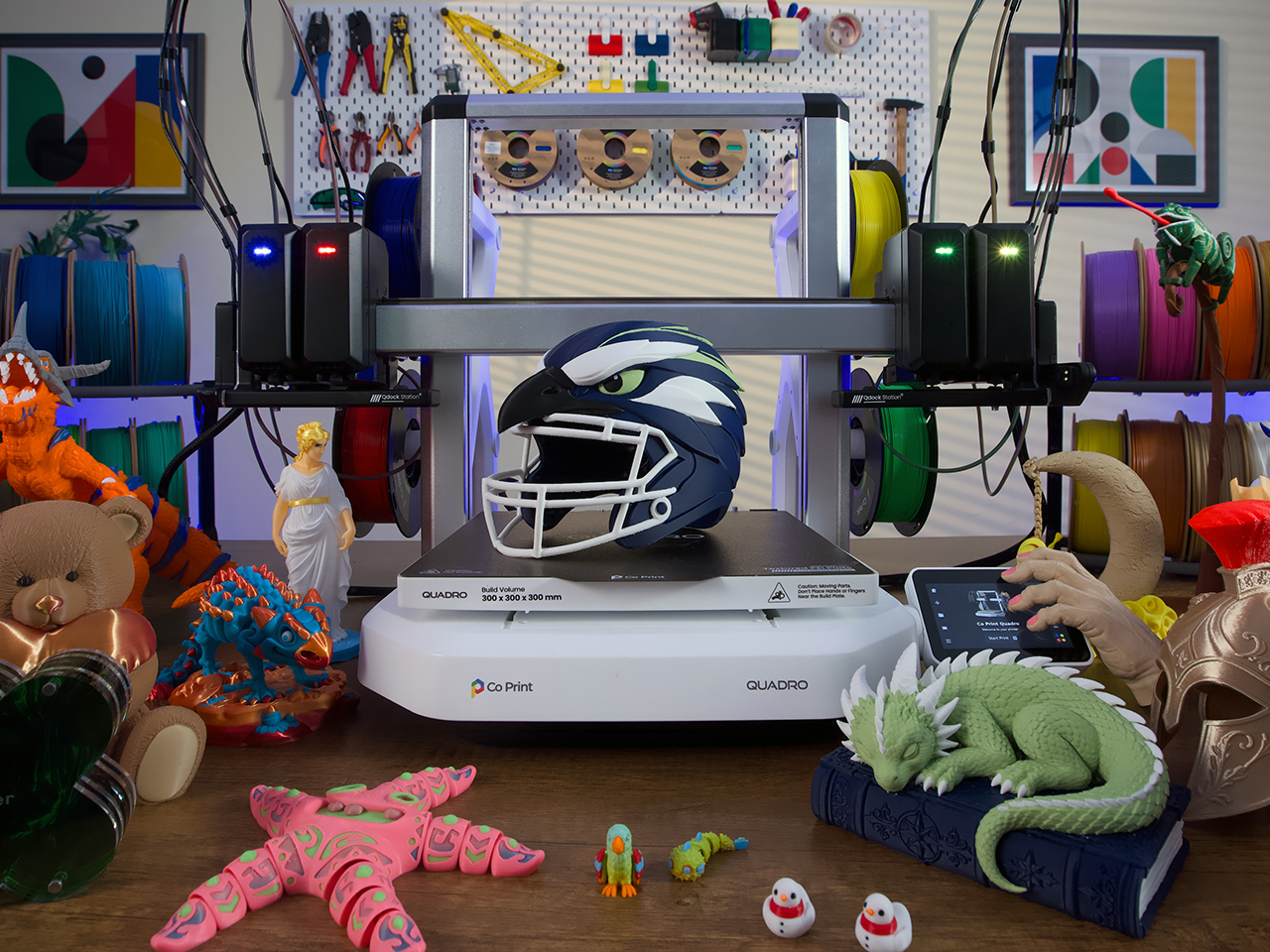
Every craft that works in color figured this out long ago. A painter doesn’t rinse one brush between every color; there’s a brush for each one on the palette. Weavers load a separate shuttle for every thread. Pastry chefs fill a piping bag for every shade of frosting. Nobody scrubs one tool clean between colors, because the right one is already waiting. 3D printing took a while to catch up. Most multicolor printers still run every color through one nozzle, and newer four-in-one heads squeeze four colors through a single tip, so every material has to behave the same way. Co Print’s Quadro follows the craftsman’s rule instead: one tool per color. Four independent toolheads, each with its own filament, nozzle and temperature, share a single rail and take turns printing. It’s the oldest trick in the studio, finally built into a 3D printer.
If you’ve printed in multicolor on a single-nozzle machine, you already know about the poop. Every color change forces the printer to flush out the old filament, leaving a pile of rainbow waste that can outweigh the model itself. Toolchangers like the Snapmaker U1 avoid that flushing by picking up and parking whole heads, taking about five seconds per swap. The Quadro skips the pickup entirely, sliding the next head in as the last one leaves, in about one second. Add up to four materials in one print, a 300mm (11.8-inch) cube build volume and early pricing of $649, and this bed-slinger is aiming pretty high.
Four Toolheads, One Rail, and a One-Second Handoff
A $649 multi-material 3D printer with 1-second color changes, up to 90% less filament waste and a 300mm build cube, now live on Kickstarter.
Co Print calls the system IQEX, short for Independent Quad Extruder, and it extends the familiar dual-head IDEX layout to four. Each head gets its own stepper motor and belt, with four belts stacked one above another along the gantry. All four ride a shared 12mm linear rail, which means they physically can’t pass each other. Instead, idle heads tuck into docking stations at either end, clearing the bed for whichever head is working. That’s how every head reaches the full 300 × 300mm print area.
During a color change, the active head drives toward its dock while the incoming head moves into position. Co Print’s real-time footage shows a Tool 1 to Tool 2 handoff taking 1.00 seconds, with switches to Tool 3 and Tool 4 taking 1.40 and 1.57 seconds. That compares with roughly 60 seconds for a filament change on a single-nozzle printer, and Co Print says Quadro cuts filament waste by up to 90%. Nothing gets unclipped, grabbed, or reloaded during the handoff, avoiding the grippers and couplings used by toolchangers.
QDock Parking and the Waste Comparison
The parking spots are called QDock Stations, and each one holds up to three heads. As a head docks, its filament retracts slightly and its nozzle tip gets sealed to limit oozing and keep stray blobs off the print. Parked heads also cool to around 140°C to further reduce leakage. About 30 seconds before a head is needed, the printer starts heating it back to its target temperature. The aim is to have it ready to extrude when it leaves the dock.
Since each filament stays in its own nozzle, there’s no need to flush one color out before loading another. The Quadro does print a small prime tower, though, to establish nozzle pressure when a parked head starts extruding again. Zero Waste Mode moves that step into the model’s infill, eliminating the tower on compatible prints. In Co Print’s own four-color chameleon test, the Quadro finished in 9 hours 34 minutes with 34.16g of waste. The single-nozzle printer in the comparison needed just over a day and produced 180.7g of waste, while the toolchanger took 10 hours 5 minutes and produced 44.65g. That’s more than 14 hours faster than the single-nozzle machine, with about 80% less waste. In a larger scale test, the same four-color model left 1,079g of waste on a single-nozzle printer and just 135g on the Quadro.
A Bed-Slinger With a Mostly Metal Frame
Co Print chose a bed-slinger layout, where the build plate moves along the Y-axis, for its relative simplicity and ease of maintenance compared with CoreXY. The frame uses thick-section aluminum rather than thin bent sheet metal, and the load-bearing joints are metal-to-metal. Co Print says roughly 70% of the structure is metal. Even the bed carriage is a single piece of aluminum, designed to stay flat and parallel during high-speed printing.
Two synchronized motors drive the Y-axis through separate belt systems, spreading force evenly across the bed to reduce twisting under hard acceleration. Motion runs on 12mm industrial linear rails, and automatic tensioners are intended to keep the X and Y belts balanced over time, so you should spend less time reaching for a wrench. The Z towers are braced by the filament station structures to help reduce the layer irregularities known as Z wobble. Co Print rates the platform for 600 mm/s travel speeds and 10,000 mm/s² acceleration.
Calibration and Controls Built for Four Nozzles
Four nozzles only produce clean color boundaries if they agree on exactly where they are, down to fractions of a millimeter. The Quadro’s 360° Toolhead Calibration probes each nozzle from multiple directions against a shared reference at the back-right of the bed, then compensates for X, Y, and Z offsets in software. The rest of the calibration routine covers input shaping, bed mesh leveling, and Auto Flow Rate Calibration, which uses a load cell in each toolhead to set pressure advance automatically before every print. All of it sits under one button called Full Self-Check. Co Print says the routine takes minutes. Tap it and go find a snack.
Each head carries a QLight LED that glows in the color of its loaded filament and lights up when that head is active, so you can read the printer’s status from across the room. A wide-angle 1080p camera sits in the right QDock, watching both the bed and the parked heads. Everything runs on QuadrOS, a Klipper-based, open-source platform controlled through a 4.3-inch touchscreen. Co Slicer handles multicolor models and assigns filaments to each head. The open-source foundation leaves room for customization, while the touchscreen and automated setup are meant to keep beginners out of configuration files.
Four Materials in One Print, and What It Costs
Co Print lists PLA, PETG, TPU 95A, PVA, and carbon-fiber-reinforced filaments among the supported materials, with up to four materials available in one print. Each head has its own temperature setting up to 300°C (572°F). Mixed nozzle sizes in one print, such as 0.2mm for detail next to 0.6mm for bulk, are in testing and will arrive as a free update. Direct-drive extruders handle flexible TPU, opening up possibilities such as rigid parts with soft grips. PVA provides dissolvable supports, while PETG can serve as a removable support interface for PLA. An optional enclosure with built-in air filtration adds ABS and ASA, and an attachable filament dryer keeps moisture-sensitive TPU and PVA ready to print. Four independent heads can do more than change colors. Co Print is developing copy and mirror modes, where two heads print the same part, or a part and its mirror image, at the same time, along with CMYK full-color printing that blends cyan, magenta, yellow and black into new shades. Both will come to every Quadro as free updates.
Quadro is now live on Kickstarter, from $649 for Super Early Bird backers against an $899 MSRP (they’re also on display at Formnext 2026 in Berlin from November 17-20th at Hall 12.1 Booth G89). Backers also get launch gifts including Meshy Pro AI 3D modeling, and Kickstarter-only Duo and Farm Pack bundles bring the price to about $625 and under $600 per printer. Shipping starts in Q1 2027, worldwide. Every Quadro includes four complete toolheads, a 300mm cube build volume, and a mostly metal frame. For Co Print, which has been adding color to other people’s 3D printers since 2019, with add-ons for more than 100 printer models and two delivered Kickstarter campaigns, the Quadro is the first machine built entirely around its own idea. That jar of filament poop should fill up a lot more slowly.
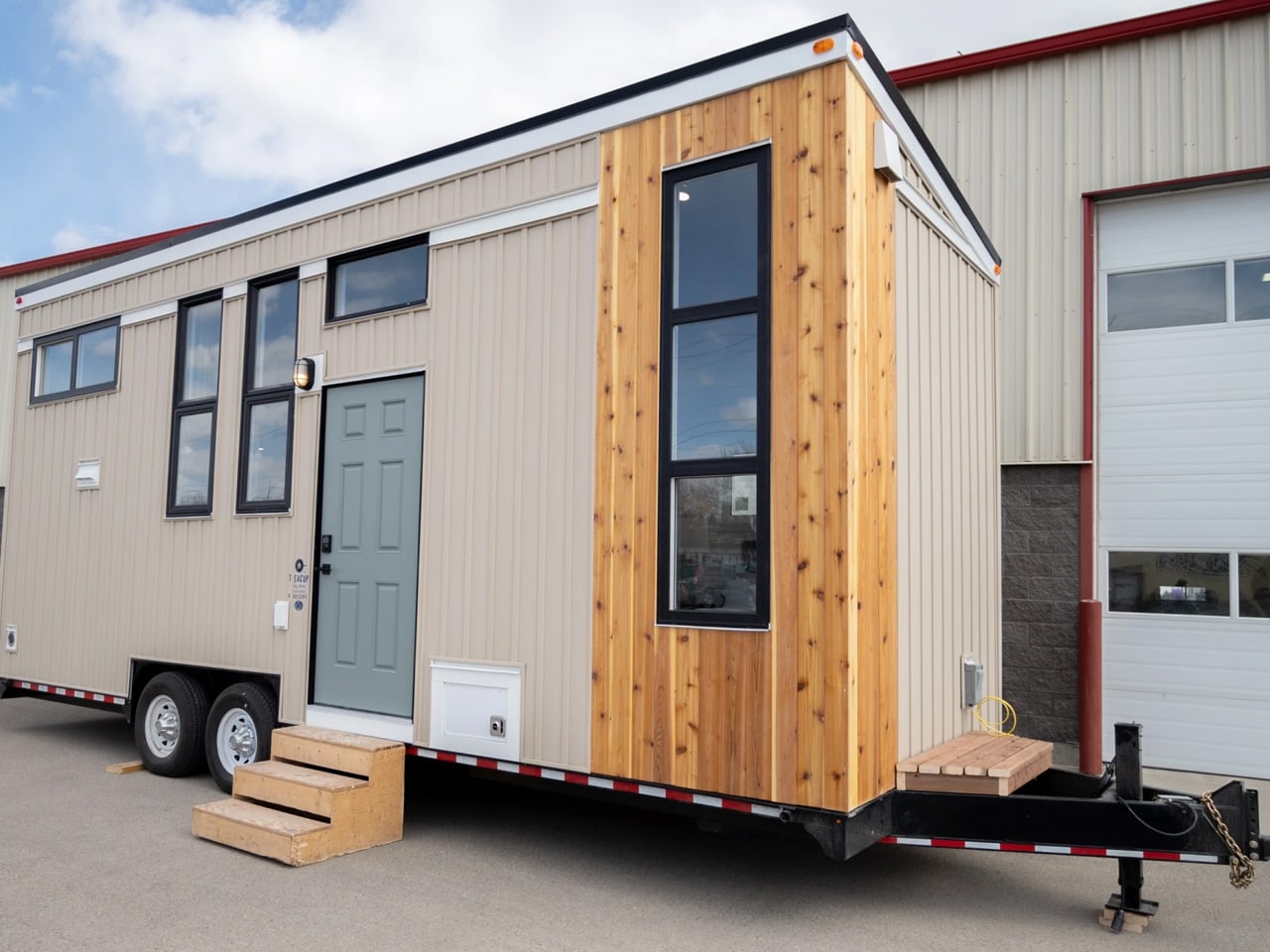
A pocket door separates the bedroom from the living room in Summer’s Night Dream, giving this 26-foot tiny house a degree of privacy that an open sleeping platform can’t offer. Built by Canadian manufacturer Teacup Tiny Homes, the customizable RV model measures 8.5 feet wide and provides a stated 297 square feet of living space, with a main-floor bedroom and an additional sleeping loft.
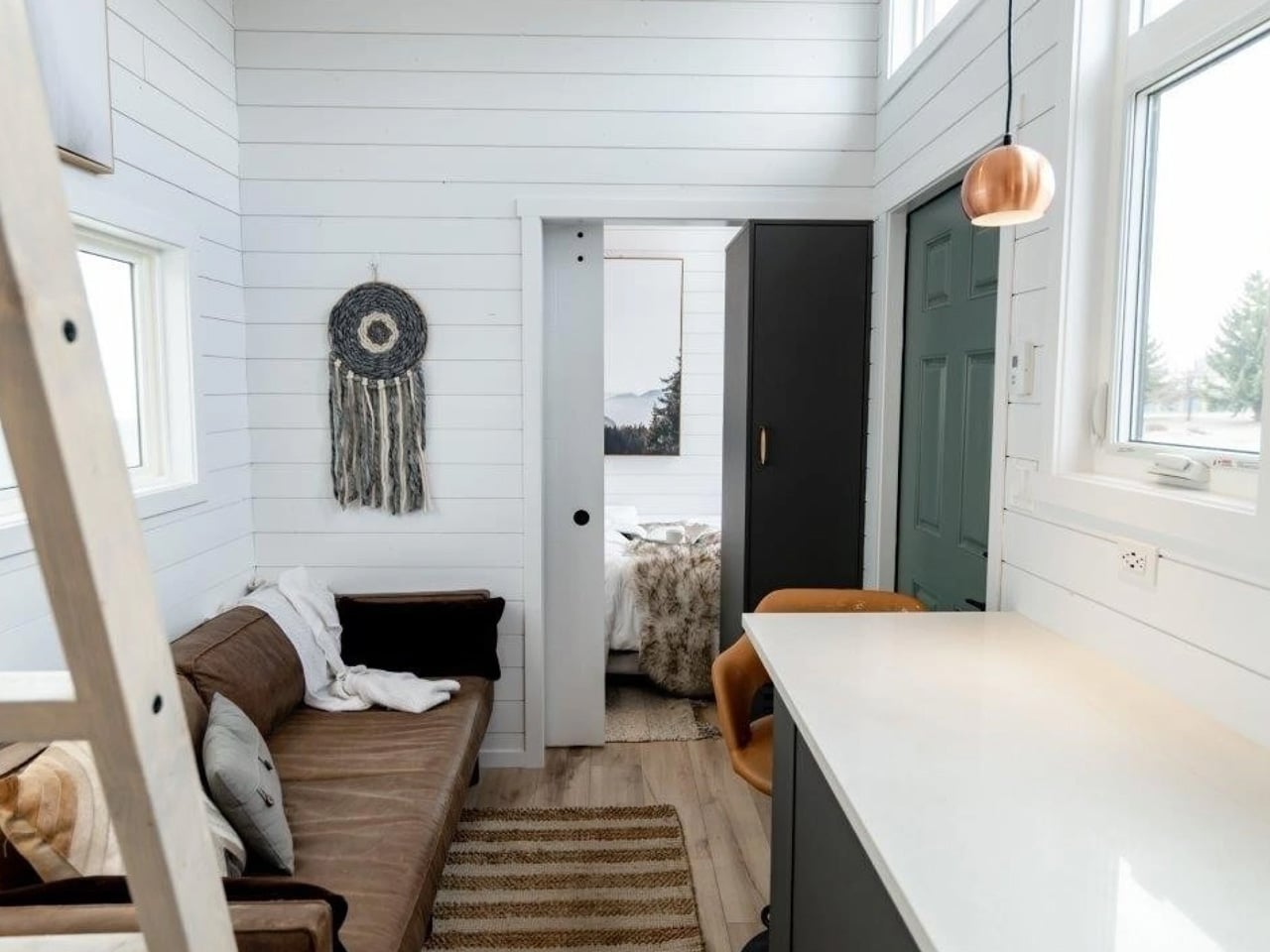
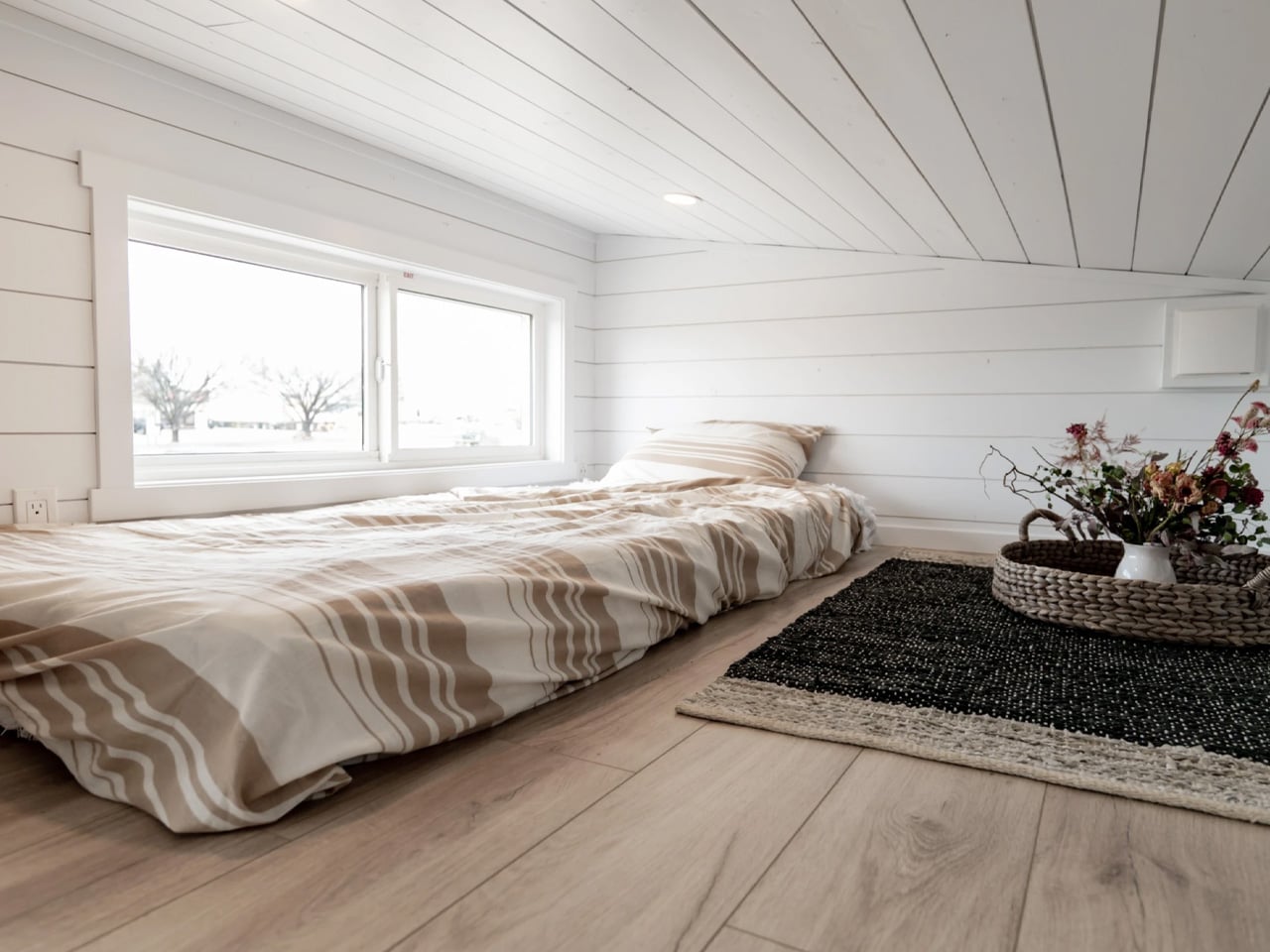
That downstairs bedroom is the plan’s strongest decision. Teacup lists an 11-foot vaulted ceiling, allowing the room to retain vertical space rather than placing another bed directly overhead. In the photographed build, a wide window sits above the headboard, while a small bedside surface fits alongside the mattress. Keeping the primary bed downstairs removes the ladder from at least one occupant’s nightly routine.
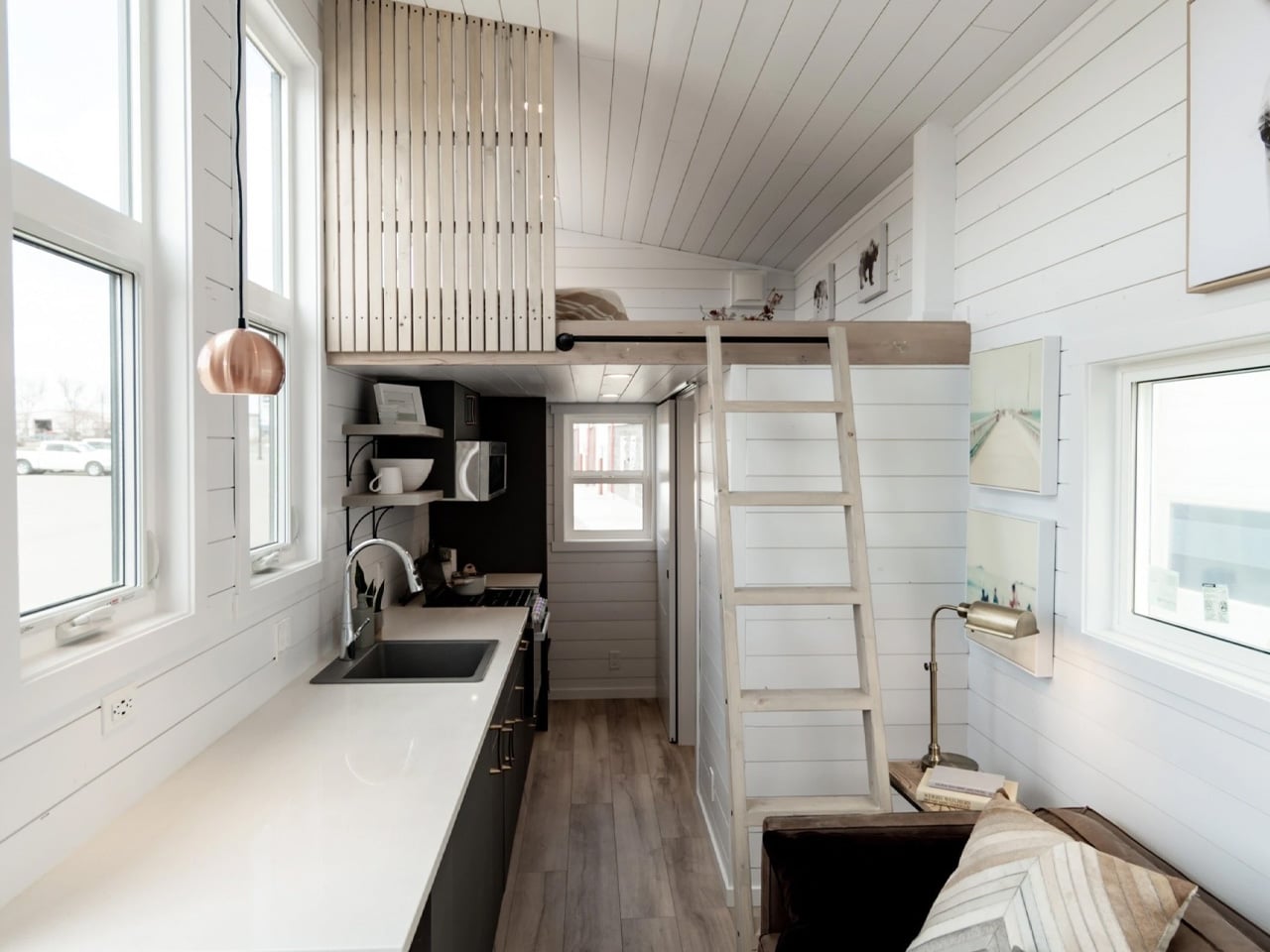
The loft occupies the opposite end, reached by a ladder beside the sofa. A vertical timber screen partially shields the sleeping area without closing it off from the room below. Its low ceiling makes the upstairs space better suited to lying down than lingering upright. Teacup rates the home for four sleepers, though the two sleeping areas offer distinctly different experiences.
Between the bedrooms, the kitchen and living area share a narrow, open space. The photographed interior pairs white horizontal wall paneling with dark cabinetry, pale flooring, and a copper-colored pendant. A long counter runs opposite the sofa, extending into a small eating spot near the entrance. This arrangement preserves a recognizable living room, although the dining provision is modest for a home advertised to sleep four.
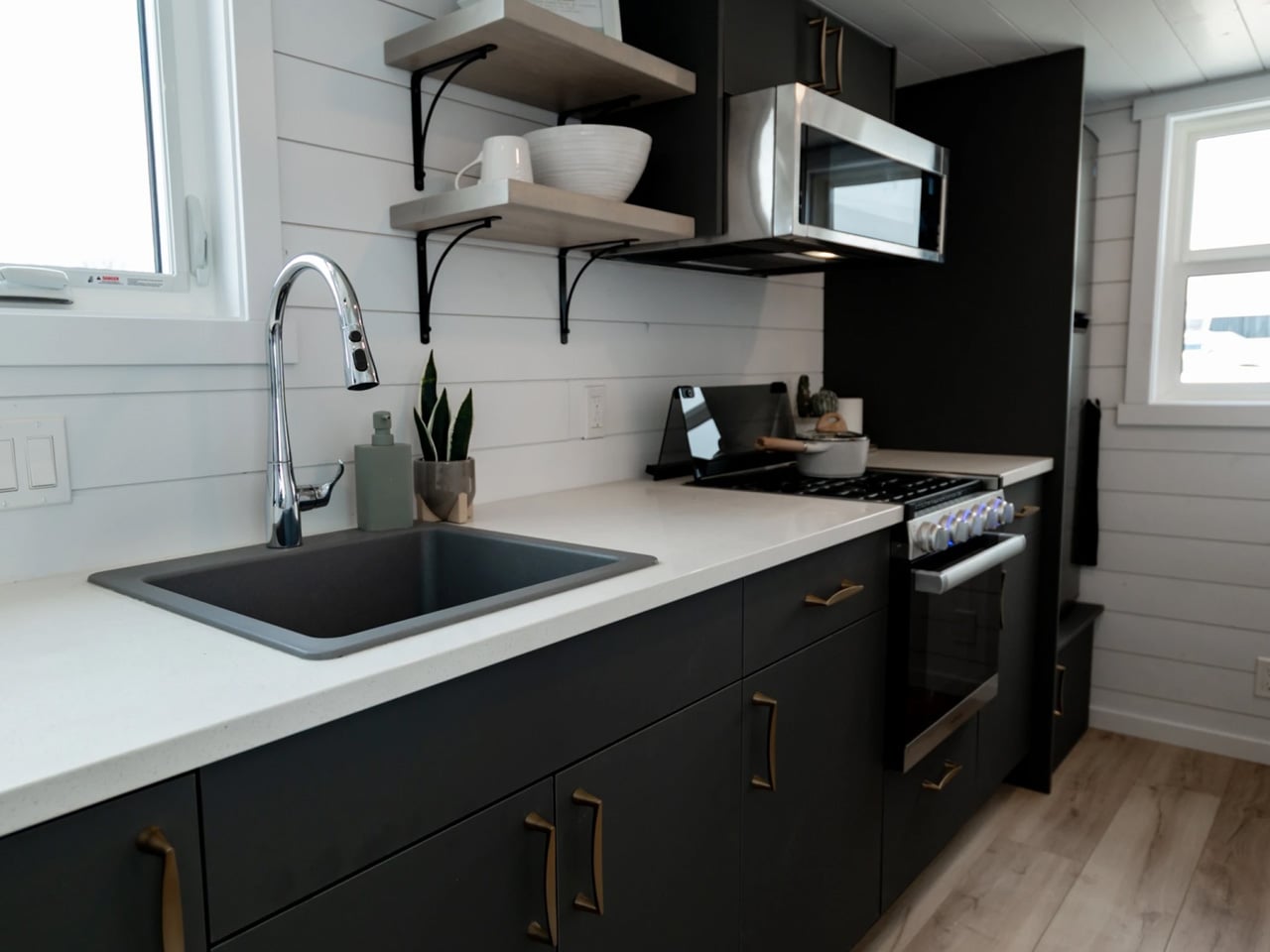
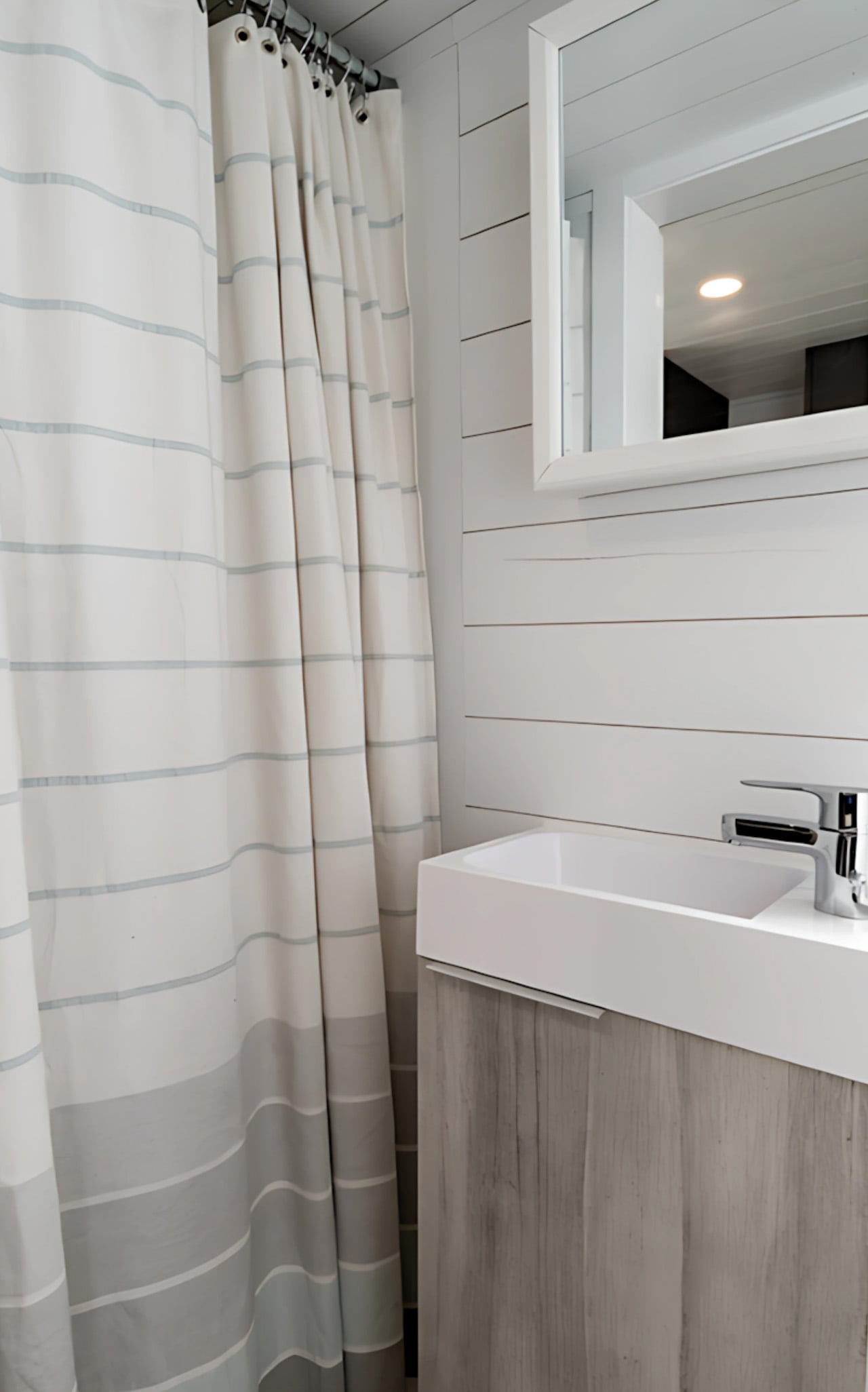
The featured build includes an oven, cooktop, microwave, and refrigerator, with open shelves supplementing the cabinets. The bathroom groups a shower, toilet, and compact vanity into the remaining enclosed space. Buyers should distinguish those photographed fittings from the base specification: Teacup says every home shown has been customized, and its standard RV appliance package includes a smaller refrigerator and two-burner cooktop.
The manufacturer’s 2026 price list puts Summer’s Night Dream at US $94,700 for the base build, US $108,800 for the Designer tier, and US $122,800 for Luxury. Taxes and delivery are extra. Those figures make customization a substantial part of the purchasing decision, especially when the polished interior in the photographs is what first catches a buyer’s attention.
There’s also a site to prepare. Teacup’s RV homes require connections for power, water, and sewage, and its setup guidance calls for protected water lines and insulated skirting in cold climates. The trailer therefore offers relocation potential without making the house independent of its surroundings. For a buyer drawn to the downstairs bedroom, the next design question is outside the front door: where the home will sit, and what that site needs to function properly.
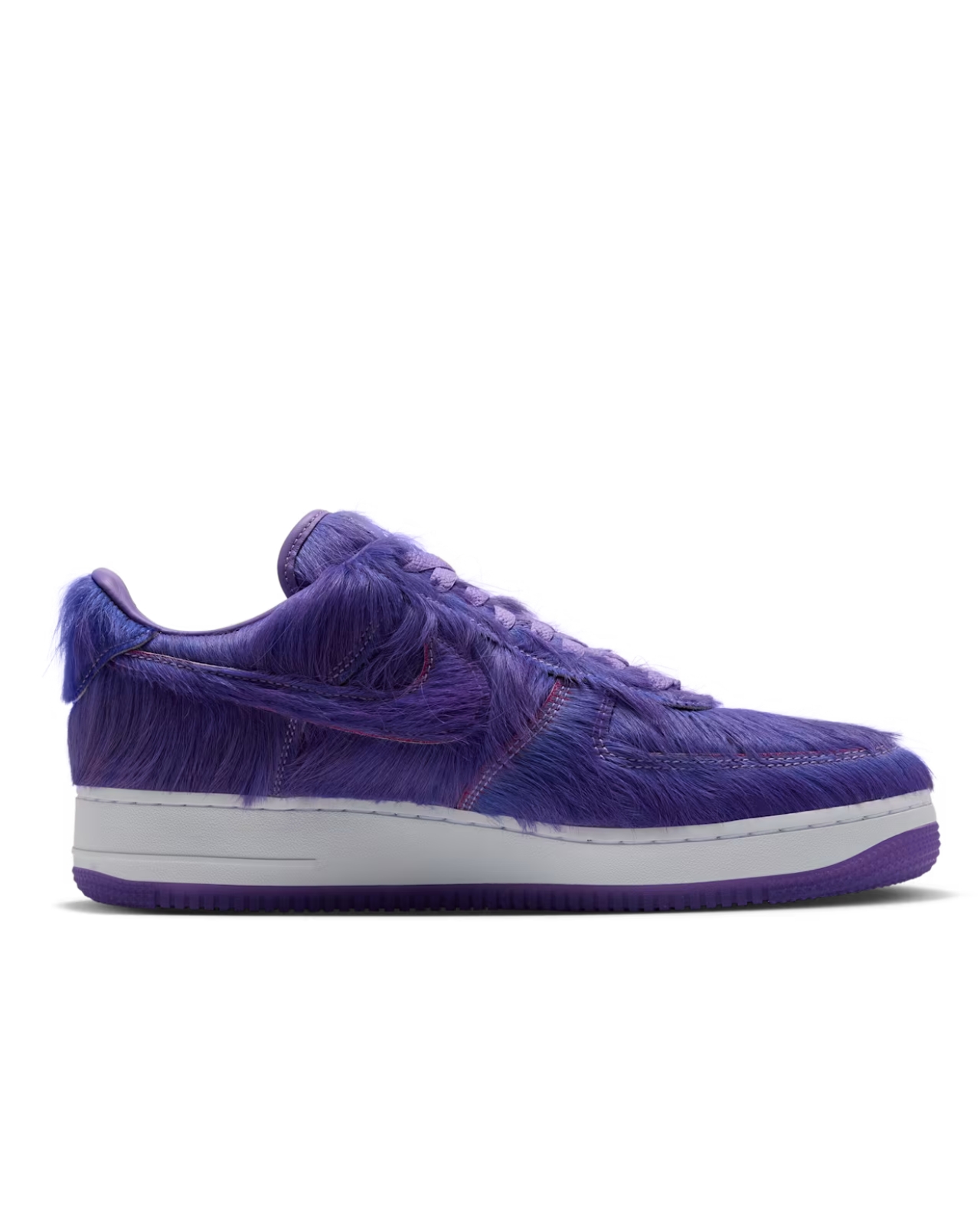
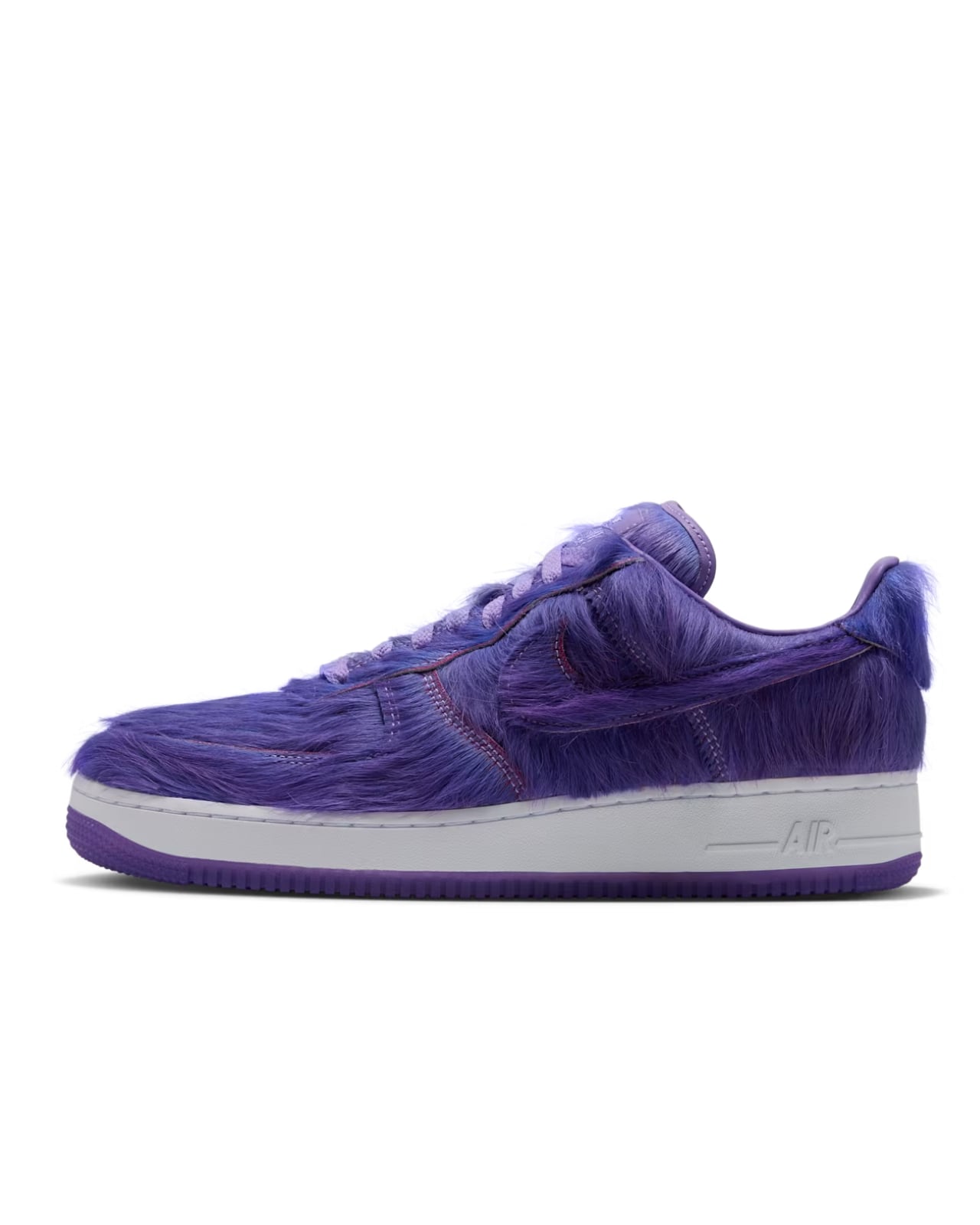
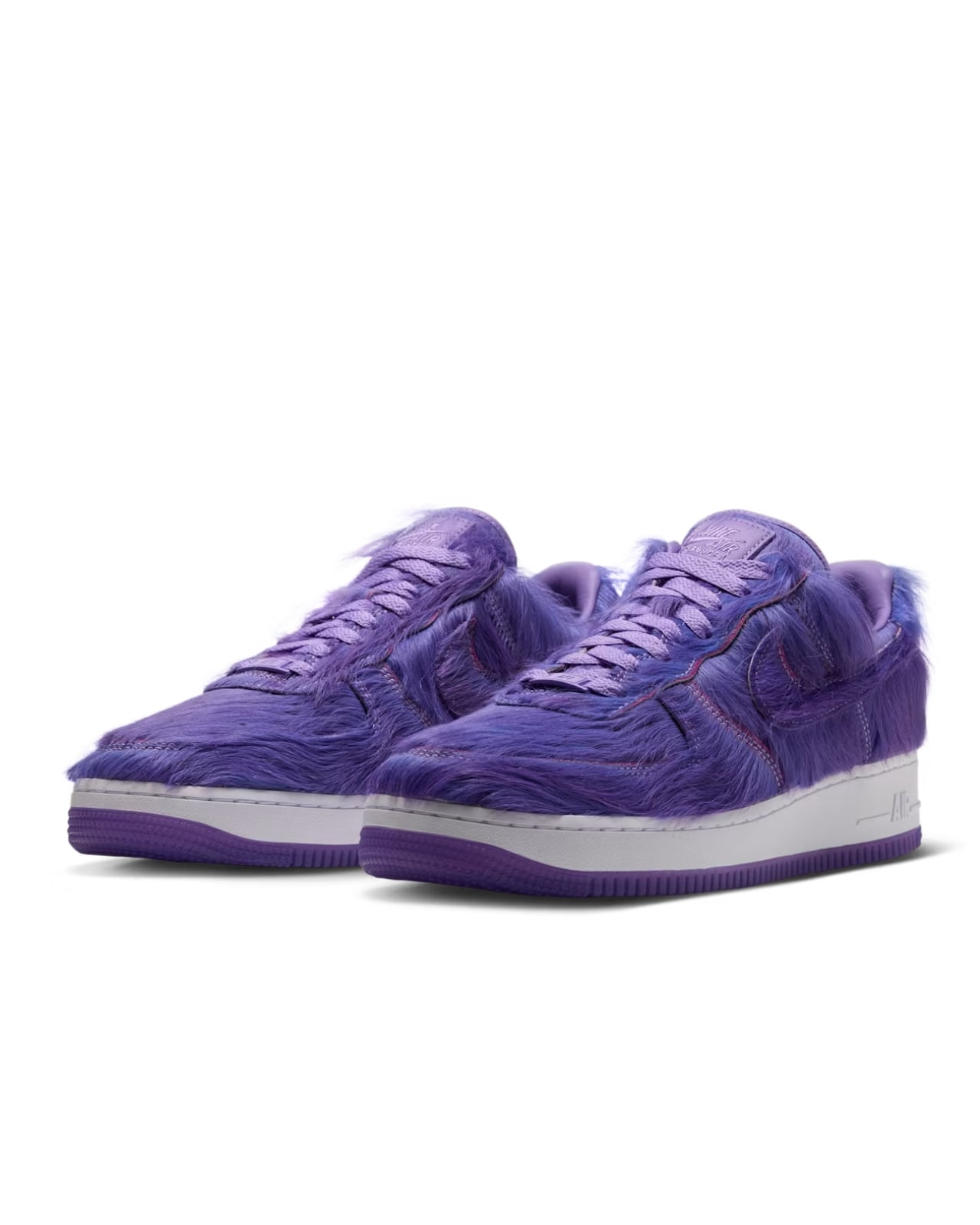
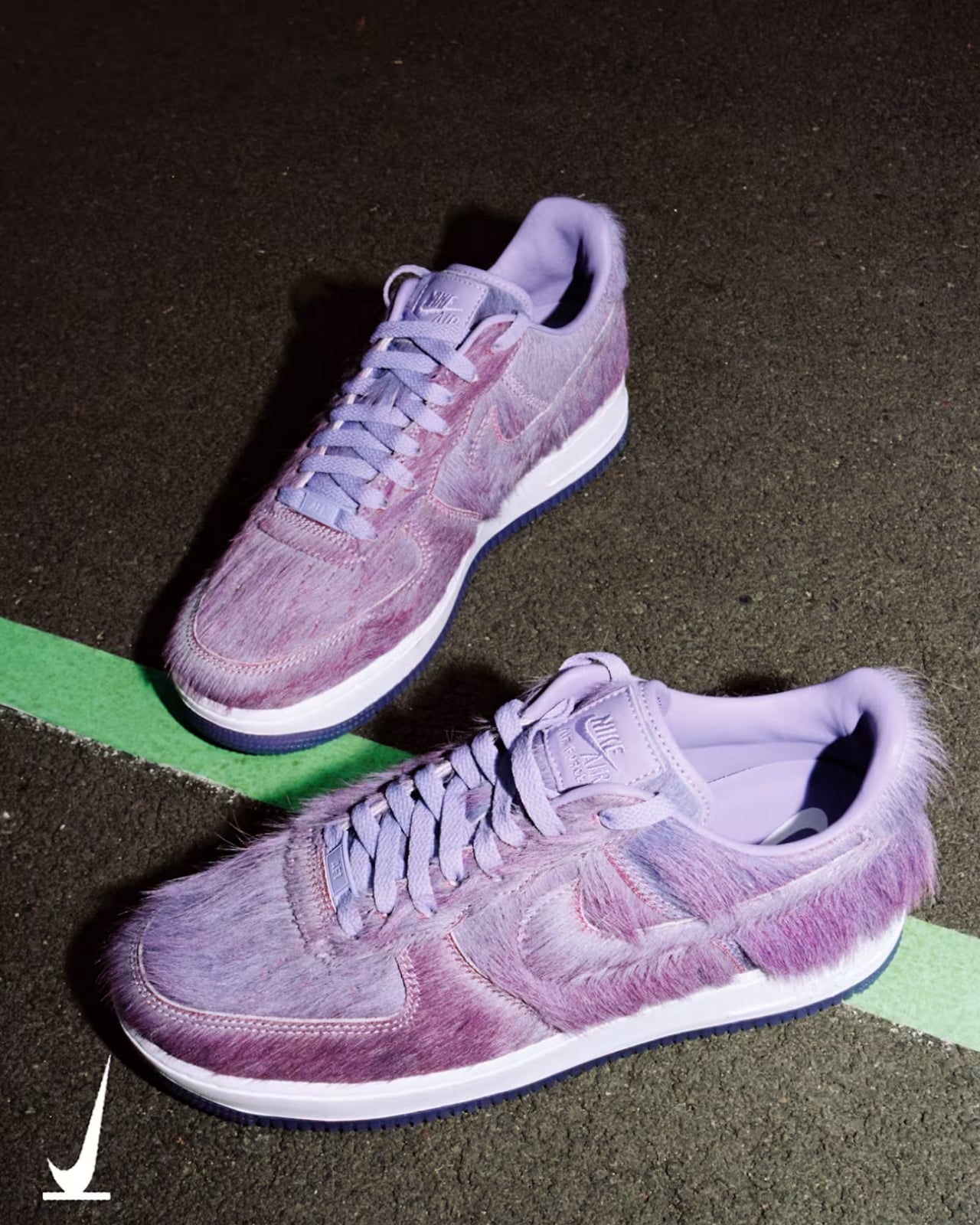
If you’ve ever owned a pair of Nike’s iconic Air Force 1 sneakers, you’re probably used to their crisp panel boundaries, whether yours were leather or one of the versions in canvas, suede, or Flyknit. One look, though, that might catch you by surprise is the furry-looking Atomic Violet variant, which looks more like a certain furry, purple mascot from a fast-food chain.
There’s no McDonald’s collaboration mentioned in Nike’s launch listing, of course, but it’s hard not to think about Grimace. So if you’ve ever wanted a partnership between Nike and McDonald’s (or specifically Grimace), this might work as an unofficial stand-in. If purple is your favorite color and you don’t mind wearing something furry on your feet, this could be something you’d want as a holiday gift for yourself.
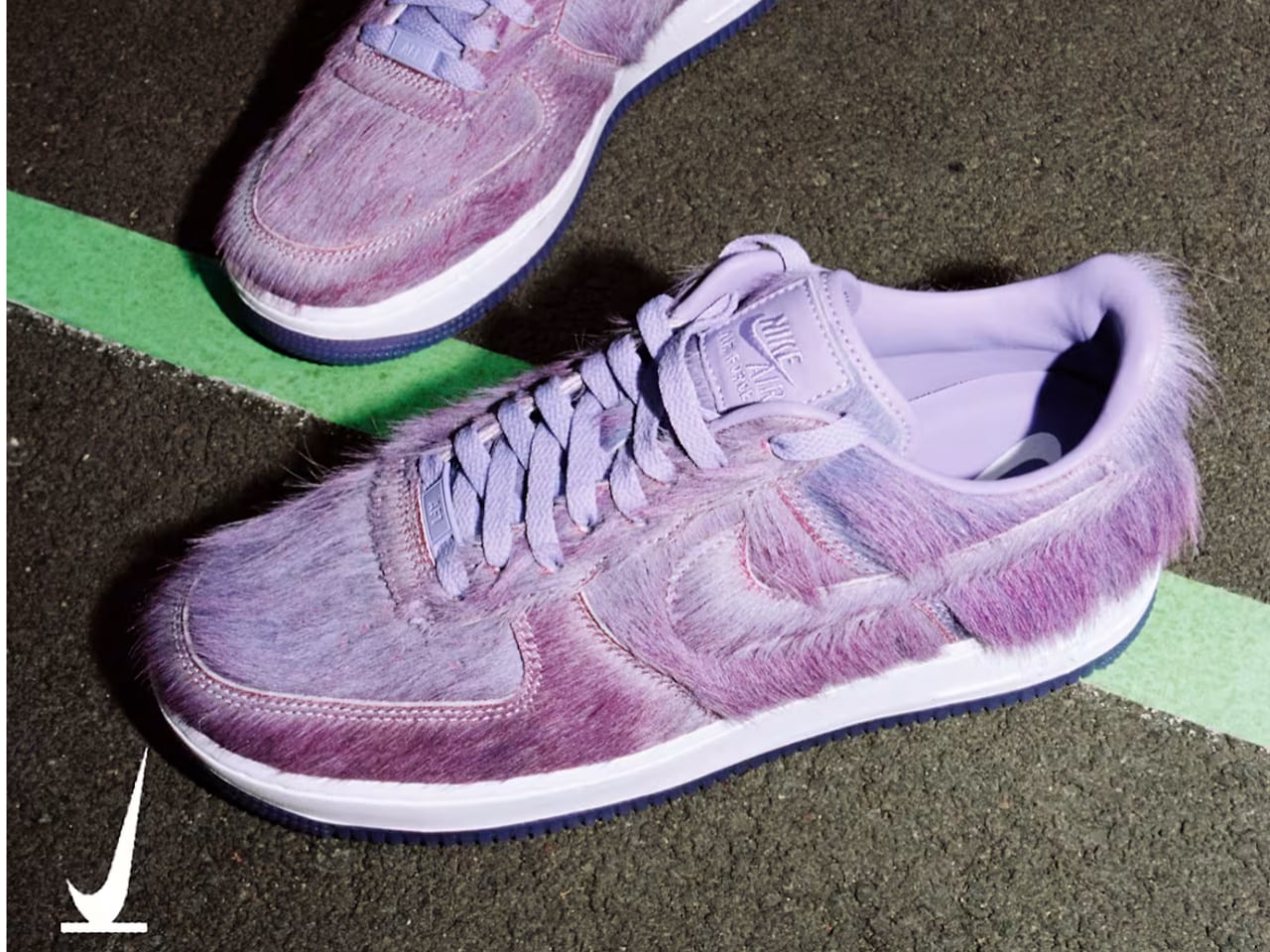
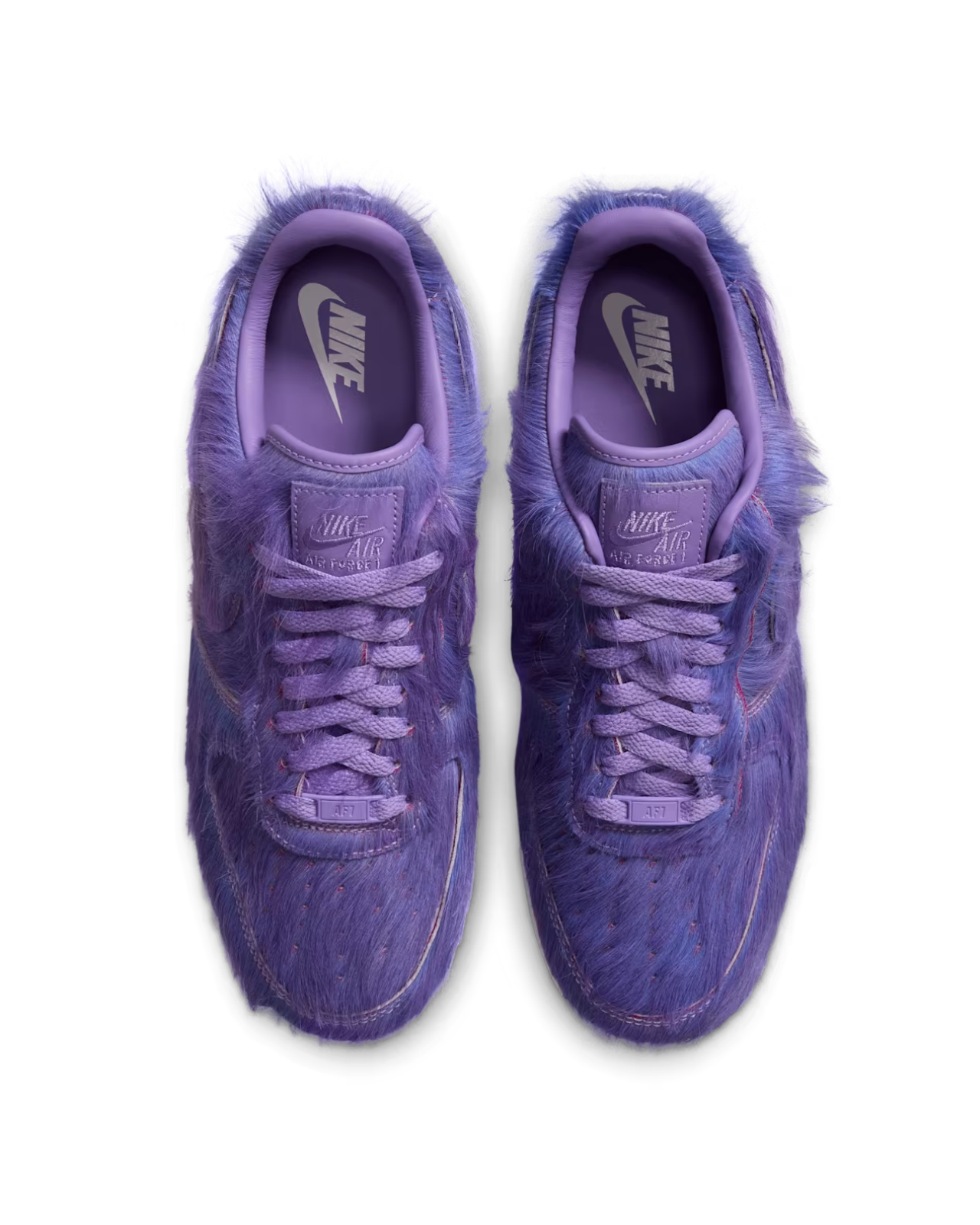
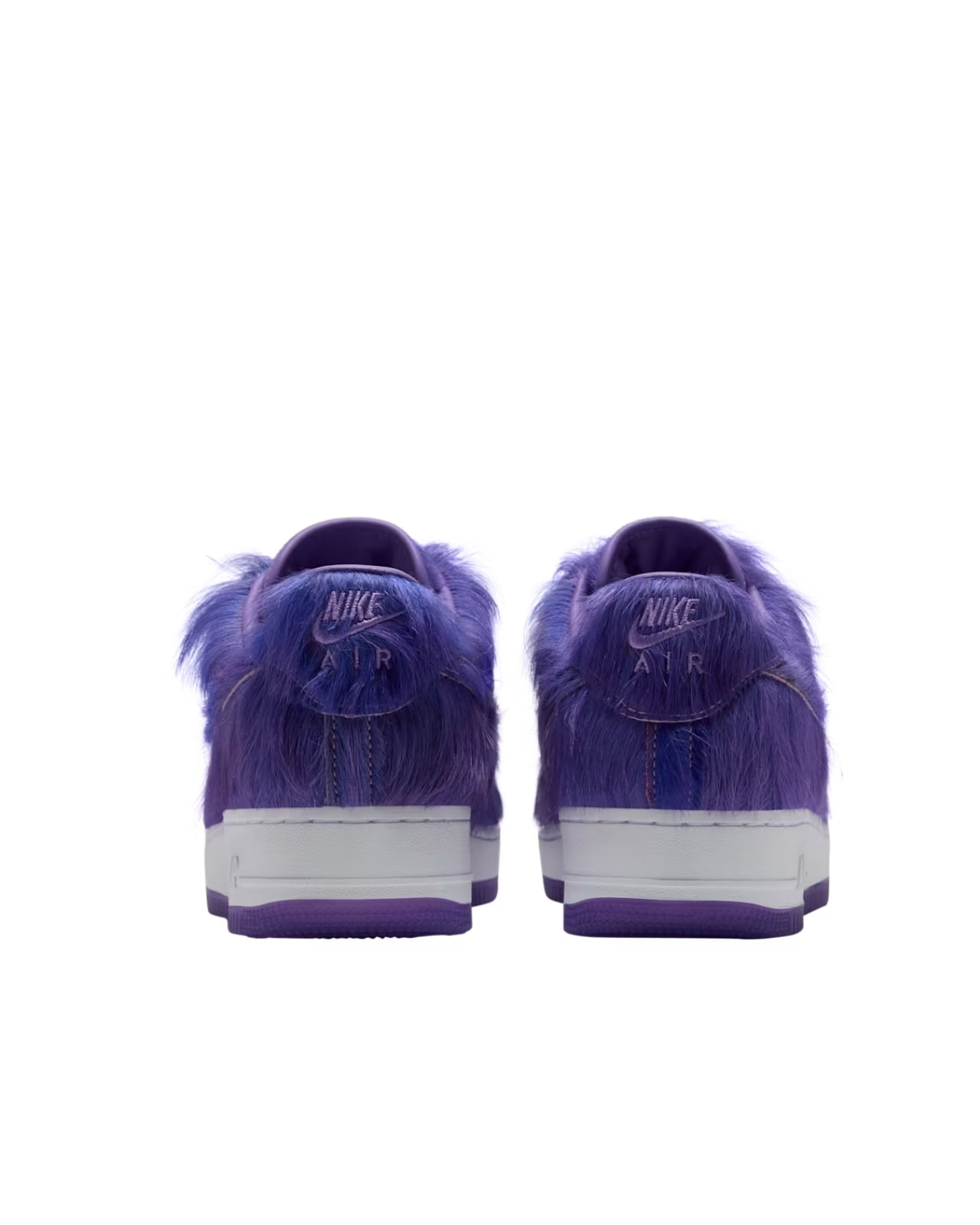
Instead of the usual smooth, stitched surfaces, the upper of the Atomic Violet Air Force 1 has a softer, shaggier appearance. Just by changing the surface treatment, you get a different-looking sneaker while still retaining its fundamental form. In fact, the iconic Nike Swoosh blends into the furry material, but you’ll still recognize the shoe because of its familiar silhouette.
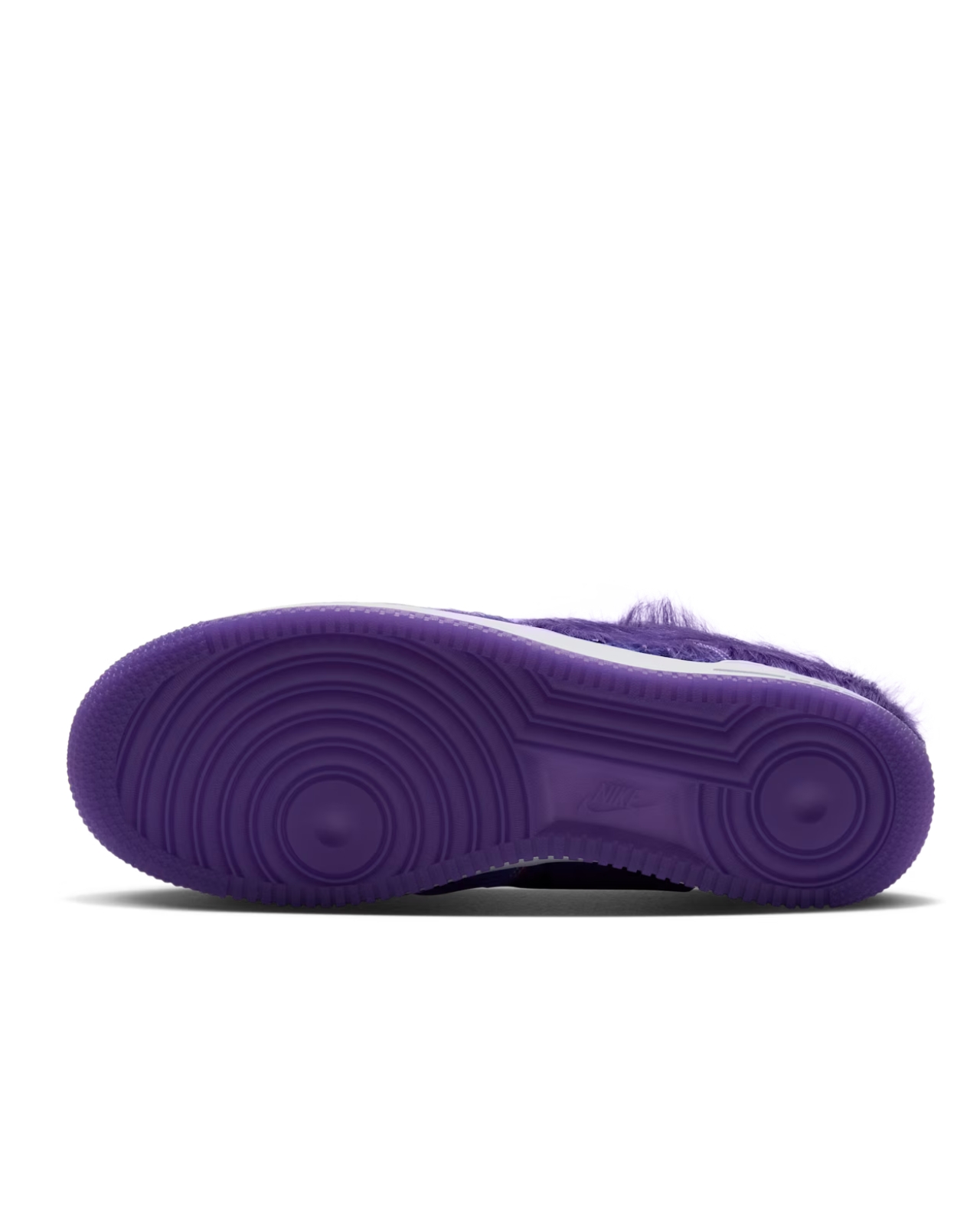
The white midsole is an important part of keeping that shape readable. It creates a clean break between the purple upper and the purple outsole, giving your eyes somewhere to land amid all that fuzz. Without it, the shoe might look more like one big purple blob. Here, you can still clearly see where the shaggy upper ends and the sole begins.
Nike hasn’t abandoned the smaller details, either. The purple laces keep the upper mostly tonal, while contrasting stitching traces the panels. The tongue still carries Nike Air branding, and there’s an AF1 lace tag near the bottom of the laces. Around the back, embroidered Nike Air lettering appears on the furry heel tab. Those familiar touches help keep the design recognizable up close.
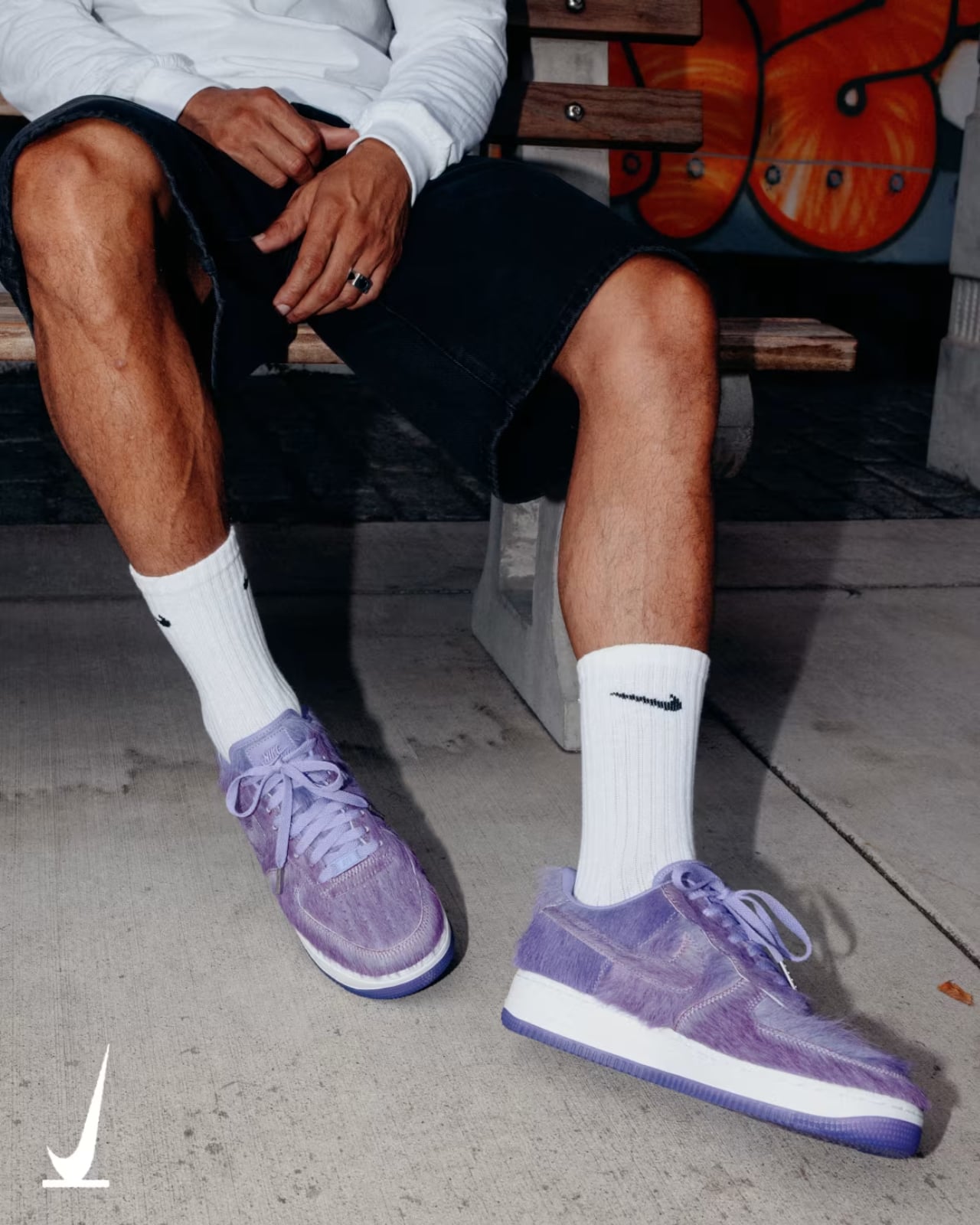
For anyone who finds an all-white pair a little too predictable, that’s probably the main appeal. You could wear these with jeans and a plain T-shirt and let the sneakers supply most of the personality. You don’t necessarily need a purple outfit to go with them, although nobody’s stopping you. They’re an option for someone who wants a playful change without moving away from a familiar low-top shape.
One detail worth being careful about is the material description. Nike’s launch page describes the upper as furry but doesn’t specify its exact composition. That means it’s better not to assume what animal or synthetic material is involved, or to mistake “furry” for a confirmed material specification. Likewise, the plush appearance doesn’t tell us whether these feel warmer, softer, or more comfortable than another Air Force 1.
That texture also raises a practical question about upkeep. If you’re considering a pair, check for Nike’s material-specific cleaning guidance rather than assuming your usual sneaker-cleaning routine will work. How the fibers handle dirt, repeated wear, or being flattened in storage is something product photos can’t establish. If easy maintenance matters more to you than an unusual finish, that’s worth weighing before buying.
Nike’s US SNKRS page lists the Air Force 1 “Atomic Violet and White,” style IR1940-500, at $140, with availability scheduled for November 20, 2026. So this is an upcoming retail release, rather than something you can order from that launch page right now. If you’re eyeing it as a holiday gift, that date is the one to keep in mind.
The decision will probably come down to how much purple fuzz you want in your everyday wardrobe. There’s no need to dress these up as a performance breakthrough; the attraction is right there on the surface. For the right person, a familiar sneaker that looks faintly like Grimace might be reason enough to make room for another shoebox.