Apple’s iPhone 17e Leak: Game-Changing Features Revealed!

Apple’s iPhone 17e Leak: Game-Changing Features Revealed!

Apple’s internal code leak has unexpectedly unveiled early details about the iPhone 17e, offering insights into its design, features, and market positioning. This mid-tier model appears to refine the E series by addressing the shortcomings of its predecessor, the iPhone 16e, while maintaining a balance between affordability and functionality. The iPhone 17e represents Apple’s effort […]

The post Apple’s iPhone 17e Leak: Game-Changing Features Revealed! appeared first on Geeky Gadgets.

Posted in Uncategorized

Skip Subscriptions, Set up Fast Local AI for Coding, Study, and Brainstorming

Skip Subscriptions, Set up Fast Local AI for Coding, Study, and Brainstorming

What if you could harness the power of innovative artificial intelligence without relying on the cloud? Imagine running advanced AI models directly on your laptop or smartphone, with no internet connection required and complete control over your data. Below, David Ondrej breaks down how local AI models are transforming the way we interact with technology, […]

The post Skip Subscriptions, Set up Fast Local AI for Coding, Study, and Brainstorming appeared first on Geeky Gadgets.

Posted in Uncategorized

Master Your Wrist: The Ultimate Apple Watch Starter Guide

Master Your Wrist: The Ultimate Apple Watch Starter Guide

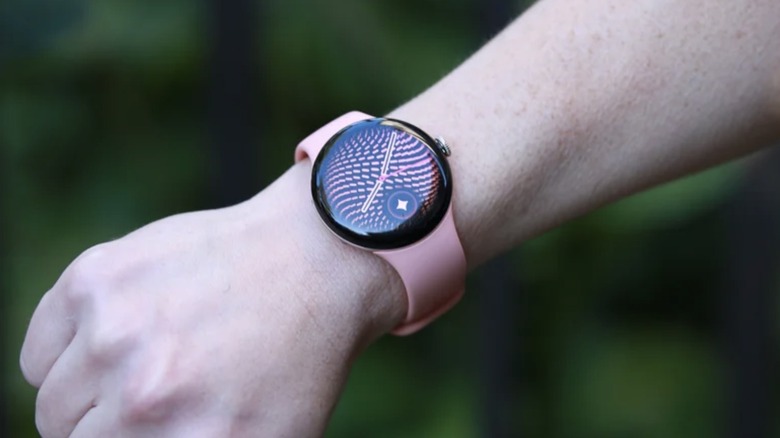
The Apple Watch is more than just a timepiece—it’s a versatile device designed to enhance your health, productivity, and connectivity. Whether you’re a first-time user or upgrading to the latest model, this guide will provide you with the knowledge to set up, navigate, and maximize its features. By understanding its capabilities, you can seamlessly integrate […]

The post Master Your Wrist: The Ultimate Apple Watch Starter Guide appeared first on Geeky Gadgets.

Posted in Uncategorized

This teardrop trailer with fiberglass body tows efficiently behind an electric bike

For me, the ultimate luxury of biking is the combination of self-fitness and environmental friendliness. If there were another dimension to add, it would be the wonder of knowing where to sleep or relax after a tiring day riding up to the favorite spot in the wilderness. This is where the all-new bike camper, from Nirvana Van based in France, pedals in, towing behind a capable e-bike.

The makers argue, it can tow behind a regular bike without much effort on a level path, but that’s not what you want the trailer for. You want the towing residence to go where your electric bike, grit, and adventure take you, and that’s what the bike camper promises to do without a hiccup.

Designer: Nirvana Van

Bike campers like this one have been around for a while. Towable teardrop trailer from ModyPlast is a good example. Such compact teardrop trailers present the eco-conscious camping enthusiasts with an undeniable reason to ride, explore, and live at the place of their choosing. It is, in comparison, a cheaper and more environmentally-friendly way to spend a weekend in a picturesque location, something the regular trailers fail to do. They are luxurious and designed for more than a couple. But if you’re adventuring on a bike, surely you are doing so to go solo, and for that, the compact bike camper is a good choice.

If you remember the SpaceCamperBike, it was an electric bike you can ride, work, sleep, and camp in. The Nirvana Van’s idea of the teardrop trailer is pretty traditional: a trailer to tow behind. The company can customize the trailer hitch to suit a varied choice of electric bikes, making it compatible with whatever brand you own. The bike camper’s efficiency and durability have been put to the test by Raphaël Dakiche of Nirvana Van with over 1200 km journey across France: living out of the trailer riding behind the electric bike.

So, whether you are planning a long-distance adventure or just a short weekend trip, the camper is ready to go where you want it to. The easy-to-tow and set-up trailer, which is proposed to be a reliable and comfortable shelter at every stop, is made available in two variants: 67kg Classic and 57kg Premium. The former is made using a cellular polypropylene shell and a steel chassis, while the latter is a fiberglass shell on an aluminum chassis. These come with optional 250Wh or 850Wh batteries, and the choice of either 105W or 190W roof-mounted solar panels.

Irrespective of the model, the teardrop trailer is provided in a size measuring 6.8 feet long and 3.1 feet wide. The bike camper is made comfortable for year-round camping with 20mm extruded polystyrene (XPS) foam insulation and safety on the road is managed by the lockable door and leg stabilizers. The circular window makes for ventilation inside, where you get a bed and ample storage. The Classic starts at €3,500 ($4,100) and the Premium costs €3,900 ($4,300).

The post This teardrop trailer with fiberglass body tows efficiently behind an electric bike first appeared on Yanko Design.
A Vertical Farm Skyscraper Reimagines Chicago’s Skyline as a Living Food Ecosystem

Imagine standing in Chicago, looking up at a skyline that does not just symbolize power and progress, but nourishment. A skyline where fresh lettuce grows a few floors above your head, rainwater is harvested from the clouds, and the architecture itself works quietly to heal long standing urban inequities. This project dares to ask a radical question. What if skyscrapers did not just house people, but fed them?

At the heart of this proposal lies a deeply human problem. Food deserts. Across Chicago, many low income neighborhoods struggle to access affordable, nutritious food. Grocery stores are scarce, fresh produce is often out of reach, and fast food becomes the default not by choice, but by circumstance. These conditions have fueled health disparities and reinforced socio economic divides for decades. Rather than treating this as a policy issue alone, the project reframes it as an architectural opportunity.

Designers: Yuhan Zhang and Dreama Simeng Lin

Programmatically, the tower integrates vertical farming directly into its core, transforming food production into an essential urban utility. Instead of transporting produce from distant rural farms, food is grown locally within the city, within the building, and within reach. The skyscraper becomes a self sustaining ecosystem, drastically reducing carbon footprints while restoring food access to the communities that need it most.

Formally, the building draws inspiration from one of Chicago’s most defining natural elements. Water. The tower’s fluid, organic silhouette mirrors the geometry of a water droplet, symbolizing renewal, continuity, and resilience. This form is not just poetic. It extends Chicago’s green belt upward, turning the skyline into a vertical landscape. Nature is no longer pushed to the city’s edges. It rises with it.

Life inside the tower unfolds as a fully integrated vertical community. Residential units sit alongside commercial spaces, allowing people to live, work, and socialize without leaving the structure. Hotels offer short term stays and panoramic views, contributing to both cultural exchange and economic vitality. Schools are embedded throughout the tower, weaving education into daily life rather than isolating it at ground level. Sky terraces appear at multiple heights, acting as social lungs. Green, open spaces where residents gather, relax, and reconnect with nature. These terraces sustain every function of the tower, fostering interaction, wellness, and a sense of shared ownership.

Sustainability is not an add on here. It is the backbone. Vertical farms housed within the core supply fresh produce. Cloud harvesting and rainwater collection systems are seamlessly integrated into the façade, ensuring efficient water reuse. Wind turbines embedded along the exoskeleton generate renewable energy, while a breathable atrium and natural ventilation system enhanced by a diagrid structural framework maximize airflow and daylight. The result is a building that does not merely coexist with nature, but actively collaborates with it.

Structurally, the tower is composed of four conjoined vertical volumes, laterally supported by two layers of bracing that increase depth and resilience. A diagrid exoskeleton spans 25 story modules, weaving fluid structural lines that integrate mega bracing with lateral stability. This strategy allows for a generous inner void, flooding the tower with light and air while reinforcing its architectural clarity.

The project also represents an ambitious research endeavor. Integrating agriculture into a mile high skyscraper demanded innovative thinking around energy efficiency, water cycles, and food systems. Balancing extreme structural demands with green technologies like cloud harvesting and passive ventilation pushed engineering boundaries. Most importantly, research into food deserts grounded the project in real social needs, ensuring that sustainability here is not symbolic, but equitable.

Positioned as a future icon for the next fifty years, this tower reimagines what urban architecture can be. It suggests a future where buildings do not just shelter cities. They sustain them. Where the skyline does not just inspire awe. It feeds the body, the community, and the planet.

The post A Vertical Farm Skyscraper Reimagines Chicago’s Skyline as a Living Food Ecosystem first appeared on Yanko Design.

2025 Christmas Day NFL games: How to watch today, full streaming schedule and more

Christmas Day famously belongs to football. This Dec. 25, there are three NFL games to watch: the Dallas Cowboys vs. Washington Commanders, the Detroit Lions vs. the Minnesota Vikings and the Denver Broncos vs. Kansas City Chiefs. Here's what you need to know about Thursday's football slate, and the rest of the Week 17 schedule. 

Date: Thursday, Dec. 25, 2025

Start times: 1 PM ET, 4:30 PM ET, 8:15 PM ET

TV channels: N/A

Streaming: Netflix, Prime Video 

  • Cowboys vs. Commanders: 1 p.m. (Netflix)

  • Lions vs. Vikings: 4:30 p.m. (Netflix)

  • Broncos vs. Chiefs: 8:15 p.m. (Prime Video)

All times Eastern.

  • Cowboys vs. Commanders: 1 p.m. (Netflix)

  • Lions vs. Vikings: 4:30 p.m. (Netflix)

  • Broncos vs. Chiefs: 8:15 p.m. (Prime Video)

  • Steelers vs. Browns: 1:00 p.m. (CBS)

  • Patriots vs. Jets: 1:00 p.m.(FOX)

  • Seahawks vs. Panthers: 1:00 p.m. (CBS)

  • Cardinals vs. Bengals: 1:00 p.m. (FOX)

  • Jaguars vs. Colts: 1:00 p.m. (FOX)

  • Buccaneers vs. Dolphins: 1:00 p.m. (FOX)

  • Saints vs. Titans: 1:00 p.m. (CBS)

  • Eagles vs. Bills: 4:25 p.m. (FOX)

  • Giants vs. Raiders: 4:05 p.m. (CBS)

  • Bears vs. 49ers: 8:20 p.m. (NBC)

  • Rams vs. Falcons: 8:15 p.m. (ESPN)

This article originally appeared on Engadget at https://www.engadget.com/entertainment/streaming/2025-christmas-day-nfl-games-how-to-watch-today-full-streaming-schedule-and-more-233022063.html?src=rss

This 3D-Printed Clock Uses Orbital Rings to Tell Time

You know that moment when you see something so clever you wonder why it hasn’t been done before? That’s exactly what happened when I came across Denis Turitsyn’s Radius Clock. This isn’t just another minimalist timepiece fighting for wall space in your Pinterest feed. It’s a genuinely fresh take on something we look at dozens of times a day without really seeing anymore.

The concept is simple but brilliant. Turitsyn looked up at the solar system and thought, what if a clock worked like that? Planets orbit at different speeds and distances from the sun, each following their own path. The Radius Clock captures that same energy, turning timekeeping into something that feels alive and kinetic rather than just functional.

Designer: Denis Turitsyn

Here’s where it gets interesting from a design perspective. Instead of the traditional center-mounted mechanism we’ve all grown up with, the hour and minute hands on this clock are driven by external rings hidden behind the case. Picture it like invisible tracks guiding each hand at its own pace. The second hand, meanwhile, runs on a completely separate motor that’s mounted right at the base of the hour hand. It’s this layered independence that gives the clock its orbital quality.

What really caught my attention is how Turitsyn balanced artistic vision with practical engineering. The dial is 3D printed using FDM technology on a standard desktop printer. That’s the kind you could theoretically have in your home or studio, not some industrial-grade machine. This accessibility makes the design feel less like an untouchable art piece and more like something that could actually exist in the real world of production and commerce.

The hands themselves are made from a lightweight metal alloy, which might sound like a small detail but it’s actually crucial to the whole operation. Lighter hands mean less mechanical stress on the system, which translates to smoother movement and longer lifespan. It’s the kind of thoughtful problem-solving that separates concept designs from functional products. Behind that sculptural white body, two synchronized motors work in tandem to drive the hour and minute hands. This paired configuration isn’t just redundancy for the sake of it. It keeps the system balanced and prevents uneven load on those hidden rings, which means the clock can maintain precise timekeeping over months and years rather than gradually falling out of sync.

The second hand solution is particularly clever. Its miniature motor comes with an integrated battery and sits directly at the base of the hour hand. This setup lets the seconds tick away independently without adding strain to the main mechanism. It’s a bit like having a parasite motor hitching a ride, but in the best possible way.

Visually, the Radius Clock has this organic, almost fluid quality. The concentric rings create depth and movement even when you’re looking at a still image. That bright orange second hand provides the perfect pop of color against the white body and black hands, making it feel contemporary without trying too hard to be trendy. You could see this fitting into a modern apartment just as easily as a creative studio or tech startup office.

What strikes me most about this design is how it makes you reconsider something as fundamental as reading time. We’re so conditioned to the standard clock face that we don’t question it anymore. Turitsyn’s orbital approach doesn’t make the clock harder to read, it just makes the experience more engaging. Time becomes something you observe rather than something you just glance at. The modularity shown in the photos, with multiple clocks arranged together on a wall, opens up even more possibilities. Imagine using these to display different time zones, or creating a sculptural installation that turns practical timekeeping into a genuine design statement.

Denis Turitsyn’s Radius Clock proves that even the most familiar objects still have room for innovation. By borrowing from the cosmos and combining it with accessible manufacturing technology, he’s created something that feels both futuristic and strangely timeless. It’s the kind of design that makes you pause and appreciate the everyday objects we usually take for granted.

The post This 3D-Printed Clock Uses Orbital Rings to Tell Time first appeared on Yanko Design.

LEGO And Creality Come Together in This Incredibly Detailed Ender-Inspired 3D Printer Model

LEGO and 3D printing occupy similar creative territory, both letting you turn ideas into physical objects through systematic processes. Yet despite this natural kinship, there’s never been an official LEGO model of the specific machine that’s currently democratizing small-scale manufacturing. This fan submission fixes that gap with a recognizably Ender-inspired design that captures both the utilitarian aesthetic and basic kinematic structure of Creality’s popular printer lineup.

The build doesn’t actually function like some ambitious LEGO projects (there’s a working LEGO Turing machine out there made from 2,900 bricks), but that’s not really the point. Someone unfamiliar with 3D printing could assemble this and understand how Cartesian motion systems work, how the hotend assembly relates to the build plate, and why those vertical lead screws matter for Z-axis stability. For people who already own an Ender or similar machine, it’s more about the novelty and nostalgia of seeing familiar hardware translated into a tabletop collectible to admire and cherish.

Designer: Guris14

Paying homage to the Ender 3 is fitting, since it was literally the first 3D printer for so many people, quite like an entire generation having a Nokia first phone. Creality sold hundreds of thousands of these things, maybe millions at this point, and the design became the default mental image of what a 3D printer looks like for an entire generation of makers. That boxy aluminum frame, the single Z-axis lead screw on earlier models (this LEGO version appears to reference the dual-screw V2), the bowden extruder setup with that blue PTFE tube snaking from the frame-mounted motor to the hotend. That characteristic black and silver color scheme with blue accent components has become as visually shorthand for “budget 3D printer” as the beige tower was for 90s PCs. Designer Guris14 scaled the model down from the Ender 3 V2’s actual 220x220x250mm build volume to something desk-friendly, but kept the proportions honest enough that you immediately recognize what you’re looking at.

What’s impressive is how the mechanical systems translate into LEGO’s vocabulary without completely abandoning accuracy. The Z-axis uses what appears to be LEGO’s ribbed hose pieces to represent lead screws, with the gantry able to move up and down the vertical supports. The X-axis gantry rides on a black beam that mimics the 2040 aluminum extrusion found on real Enders, while the hotend assembly hangs from a carriage with that signature blue bowden tube curling back toward the extruder. The build plate sits on a Y-axis assembly with its own lead screw mechanism, and there’s even a LEGO logo on the build-plate, like perfectly placed branding!

Flip the model and you’ll find representations of the motherboard and power supply tucked beneath the build plate, exactly where Creality positions them on the actual hardware. There’s that angled LCD screen mount on the front right corner, positioned just like the stock Ender setup. Even the spool holder perched on the top frame gets included, which is the kind of completeness that separates a thoughtful recreation from a surface-level approximation. You could hand this to someone who’s never seen a 3D printer and they’d walk away with a surprisingly accurate mental model of how these machines are structured.

The project currently sits on the LEGO Ideas website, where fans share their own creations and vote for their favorites. Lucky builds that hit the 10,000 vote mark move to the review stage where LEGO actually considers it for production. That’s always been the tricky part with Ideas submissions. You need a concept that’s simultaneously niche enough to excite enthusiasts but broad enough that LEGO thinks they can sell tens of thousands of units through their retail channels. A 3D printer model lives in an interesting space there. The maker community overlap is real and passionate, but you’re also asking LEGO to produce a set celebrating a technology that competes with their own manufacturing process in certain contexts.

Still, LEGO has greenlit plenty of sets that celebrate tools and technology. The Typewriter, the Polaroid camera, the various Technic construction vehicles, all of these acknowledge that people enjoy building detailed models of machines they find interesting or useful. A 3D printer fits that pattern perfectly, especially as these devices become more common in homes and schools. The educational angle writes itself: here’s a hands-on way to understand additive manufacturing without dealing with bed leveling or filament moisture. Whether that’s enough to get LEGO’s product team on board is another question entirely, but stranger things have made it through the Ideas gauntlet. The NASA Apollo Saturn V started as a fan submission. So did the ship in a bottle.

The post LEGO And Creality Come Together in This Incredibly Detailed Ender-Inspired 3D Printer Model first appeared on Yanko Design.

This Weird $12 Clip-On Gamepad Turns Your Smartphone Into a Game Boy Color

Playtiles looks like something that shouldn’t work. A thin piece of plastic with buttons, no electronics inside, sticking to your smartphone screen like a temporary tattoo. Yet this $12 accessory has managed to capture what expensive gaming phones and elaborate clip-on controllers often miss: the pure, uncomplicated joy of pressing actual buttons while playing retro-style games. The device ships with access to a curated library of indie titles that feel lifted straight from the Game Boy Color era.

The design strips away everything modern mobile gaming has become. No account setup, no firmware updates, no charging cables. You place it on your screen where the virtual controls appear, press the buttons, and play. Thousands of micro suction cups hold it in place during gameplay, and when you’re done, it slides back into your wallet next to your credit cards. After months of anticipation since July’s pre-order launch, units are now reaching backers who wanted to rediscover what handheld gaming felt like before touchscreens took over.

Designer: Playtile

The buttons work through capacitive conduction, using your own body’s electrical properties to register a press on the screen beneath. It’s a completely powerless system, which in a world of constant charging is a breath of fresh air. The entire polycarbonate unit weighs just 0.2 ounces and measures 2.68 by 1.57 inches, making it smaller than a credit card. This isn’t trying to compete with a Backbone or Razer Kishi; those are full-fledged peripherals that turn your phone into a console hybrid. Playtiles is a fundamentally different idea, an accessory so unobtrusive it feels more like a guitar pick than a piece of hardware.

Of course, the hardware is only half the story. The back of every Playtiles has a QR code that launches a browser-based OS, completely sidestepping the app stores. This is an incredibly shrewd move, giving the creators a direct channel to their audience without platform fees or gatekeepers. Early adopters who bought the Season 1 bundle get a new, bite-sized retro game delivered every week for twelve weeks, all built in GB Studio. This transforms a simple controller into a curated content platform. It solves the biggest problem with mobile gaming, which is finding good games amidst a sea of ad-riddled clones. You get a handpicked library that you know is designed perfectly for the D-pad and two-button layout.

You are obviously not going to be playing Genshin Impact on this thing. The two-button constraint is a feature, a deliberate design choice that forces a return to the focused game mechanics of the 8-bit and 16-bit eras. It works on any phone with a screen wider than 68mm, so long as the game lets you reposition the on-screen controls to align with the controller. That’s the key requirement. For $12, it’s an impulse buy that feels like a low-risk experiment in nostalgia. In a market where dedicated handhelds from companies like Anbernic command prices north of $100, the Playtiles carves out its own space by being almost disposable in price yet surprisingly robust in its concept.

The post This Weird $12 Clip-On Gamepad Turns Your Smartphone Into a Game Boy Color first appeared on Yanko Design.