Meet the Ferrari F80: LaFerrari’s Successor Unleashes Unrivaled Power

Ferrari F80

The unveiling of the Ferrari F80 marks a significant milestone in the world of supercars. As the successor to the groundbreaking LaFerrari, the F80 embodies Ferrari’s relentless pursuit of automotive excellence. This limited-edition masterpiece combines innovative hybrid technology with the raw power of a traditional internal combustion engine, resulting in a vehicle that pushes the […]

The post Meet the Ferrari F80: LaFerrari’s Successor Unleashes Unrivaled Power appeared first on Geeky Gadgets.

OpenAI Whisper Turbo: Advanced Speech Transcription Technology Arrives

OpenAI Whisper turbo speech transcription technology

This month Open AI has released its new advanced speech transcription model in the form of Whisper Turbo. And evening you to transform spoken words into written text in the blink of an eye. Whether you’re a content creator trying to keep up with the relentless pace of digital media or a researcher sifting through […]

The post OpenAI Whisper Turbo: Advanced Speech Transcription Technology Arrives appeared first on Geeky Gadgets.

iOS 18.1 Beta 7: The End is Near (for Beta Testers)

iOS 18.1 Beta 7

Apple continues to refine its mobile operating system with the release of iOS 18.1 Beta 7, setting the stage for the highly anticipated public launch on October 28th. This update brings a host of new features and improvements that aim to elevate the user experience across Apple’s ecosystem, from the introduction of the iPad Mini 7th Generation to […]

The post iOS 18.1 Beta 7: The End is Near (for Beta Testers) appeared first on Geeky Gadgets.

Why the Leonardo 1519 Watch Runs Backwards: A Col&MacArthur Tribute to da Vinci

Inspired by the genius of Leonardo da Vinci, who could draw/write with both hands and also write in reverse, the folks at Col&MacArthur designed the Leonardo 1519 – a watch that, just like da Vinci’s writing, runs in reverse. An incredibly intriguing watch that pays tribute to the greatest genius of the Rennaissance, the Leonardo 1519 quite literally runs anti-clockwise, with the hands running ‘backward’ and the numbers on the watch oriented in reverse. The watch sports a few other key details that celebrate the Italian artist and creator’s life, from his artworks like the Vitruvian Man and the Battle of Anghiari, as well as concepts like the Fibonacci sequence, which da Vinci’s believed to have used heavily in his art and architecture.

Have you ever thought of why clocks move ‘clockwise’? The reason’s pretty simple if you work backward to the ancestor of the modern clock – the sundial. Invented in the northern hemisphere, sundials relied on the shadow of the sun to tell time, and as a result, the sun cast its shadow in a way that caused the dial to move ‘clockwise’. So naturally, when clocks were first engineered, they were made to mimic the movement of the shadow on the sundial. If sundials were first made in the southern hemisphere, clocks would rotate the absolute opposite of how they do today. With the Leonardo 1519, the watchmakers at Col&MacArthur are simply exploring this unique ‘reverse’ timekeeping trend while celebrating the most notable genius of the 15th century.

Designer: Col&MacArthur

Click Here to Buy Now: $325 $540 (40% off). Hurry, 10/15 left!

The name “Leonardo 1519” holds particular significance—it marks the year of da Vinci’s death. In choosing this date, the collection honors not just the man, but his enduring influence on art, science, and innovation. The year 1519 represents a turning point when the world lost a visionary, but his ideas continued to shape generations of thinkers and creators. This watch isn’t just about looking back; it’s about carrying da Vinci’s spirit of discovery into the future, making his genius relevant to today’s world.

At first glance, the reverse movement catches you off guard. It’s a direct nod to da Vinci’s mirror writing, a technique he often used in his notebooks. This unusual feature may seem like a simple design choice, but it transforms the experience of checking the time into a reflection on da Vinci’s constant challenge of conventions. The watch comes with a choice between mechanical and automatic movements – codenamed Codex and Mecanicca. You can get a variant of the watch that tells the time clockwise – just in case you’d like a time-telling tribute to da Vinci that isn’t difficult to read. However, if you want an absolute conversation starter, the Codex Reversed feels like living in the mirror dimension. The Codex Reversed model runs on a quartz Ronda movement that ticks in reverse. Reading the time definitely is a bit of  learning curve, but the watch makes up for it with clear numerals on the dial, and in just a few days it comes naturally to you. Moreover, it’s a perfect visual metaphor for people who believe in doing things differently!

For those who prefer their time to move in a more traditional direction, the Codex Classic offers the same impeccable craftsmanship with a clockwise movement. Both Codex models are encased in stainless steel, topped with sapphire glass, and backed by a two-year warranty. The collection’s flagship model, the Meccanica Classic, elevates the experience with an automatic Japanese Miyota movement, visible through an exhibition case back. Limited to 1,519 pieces, this model commemorates the year of da Vinci’s passing and makes it a rare collector’s item. Its embossed “elevato” dial design, which plays with light and shadow, adds a layer of visual complexity, reminiscent of da Vinci’s own studies on light and form.

Every detail in the Leonardo 1519 collection is steeped in symbolism. The Vitruvian Man, da Vinci’s famous drawing exploring the harmony of human proportions, is intricately etched into the watch’s dial, a reminder of the perfect balance between art and science that da Vinci so masterfully embodied. The dial also has a close-up of the soldier from da Vinci’s sketch of the Battle of Anghiari, along with his self-portrait, all masterfully blended into a collage that celebrates the man. Other features include birds depicted in flight, a tribute to da Vinci’s groundbreaking studies on aerodynamics and his Codex on Flight. The Fibonacci sequence, symbolizing nature’s mathematical harmony, is also subtly embedded, reflecting da Vinci’s fascination with the intersection of mathematics and the natural world. While the Codex models don’t come with an exhibition back, they do have an artistic depiction of the da Vinci sculpture by Marino Marini.

Col&MacArthur’s watches are museums in their own right. Previous timepieces from the brand have featured parts of the Berlin Wall, fragments of Moon dust and Mars dust, and even honored legends like Napoleon and historical events like Dunkirk. The Leonardo 1519 is just the next chapter in this series, celebrating historic times through something as befitting as time itself!

Click Here to Buy Now: $325 $540 (40% off). Hurry, 10/15 left!

The post Why the Leonardo 1519 Watch Runs Backwards: A Col&MacArthur Tribute to da Vinci first appeared on Yanko Design.

X updates its privacy policy to allow third parties to train AI models with its data

X is updating its privacy policy with new language that allows it to provide users’ data to third-party “collaborators” in order to train AI models. The new policy, which takes effect November 15, 2024, would seem to open the door to Reddit-like arrangements in which outside companies can pay to license data from X.

The updated policy shared by X includes a new section titled “third-party collaborators.”

Depending on your settings, or if you decide to share your data, we may share or disclose your information with third parties. If you do not opt out, in some instances the recipients of the information may use it for their own independent purposes in addition to those stated in X’s Privacy Policy, including, for example, to train their artificial intelligence models, whether generative or otherwise.

While the policy mentions the ability to opt out, it’s not clear how users would actually do so. As TechCrunch notes, the policy points to users’ settings menu, but there’ doesn’t appear to be an control for opting out of data sharing. The policy doesn’t go into effect until next month, though, so there’s still a chance that could change. X didn’t respond to a request for comment.

If X were to begin licensing its data to other companies, it could open up a significant new revenue stream for the social media company, which has seen waning interest from major advertisers.

In addition to the privacy policy, X is also updating its terms of service with stricter penalties for entities that are caught “scraping” large numbers of tweets. In a section titled “liquidated damages” the company states anyone viewing or accessing more than a million posts a day will be subject to a penalty of $15,000.

Protecting our users’ data and our system resources is important to us. You further agree that, to the extent permitted by applicable law, if you violate the Terms, or you induce or facilitate others to do so, in addition to all other legal remedies available to us, you will be jointly and severally liable to us for liquidated damages as follows for requesting, viewing, or accessing more than 1,000,000 posts (including reply posts, video posts, image posts, and any other posts) in any 24-hour period - $15,000 USD per 1,000,000 posts.

X owner Elon Musk has previously railed against “scraping.” Last year, the company temporarily blocked people from viewing tweets while logged out, in a move Musk attributed to fending off scrapers. He also moved X’s API behind a paywall, which has drastically hindered researchers’ ability to study what’s happening on the platform. He’s also used allegations of “scraping” to justify lawsuits against organizations that have attempted to study hate speech and other issues on the platform.

This article originally appeared on Engadget at https://www.engadget.com/social-media/x-updates-its-privacy-policy-to-allow-third-parties-to-train-ai-models-with-its-data-234207599.html?src=rss

This Little Geodesic Dome Is The World’s First Pentakis Dodecahedron (60-Sided) Tiny Home

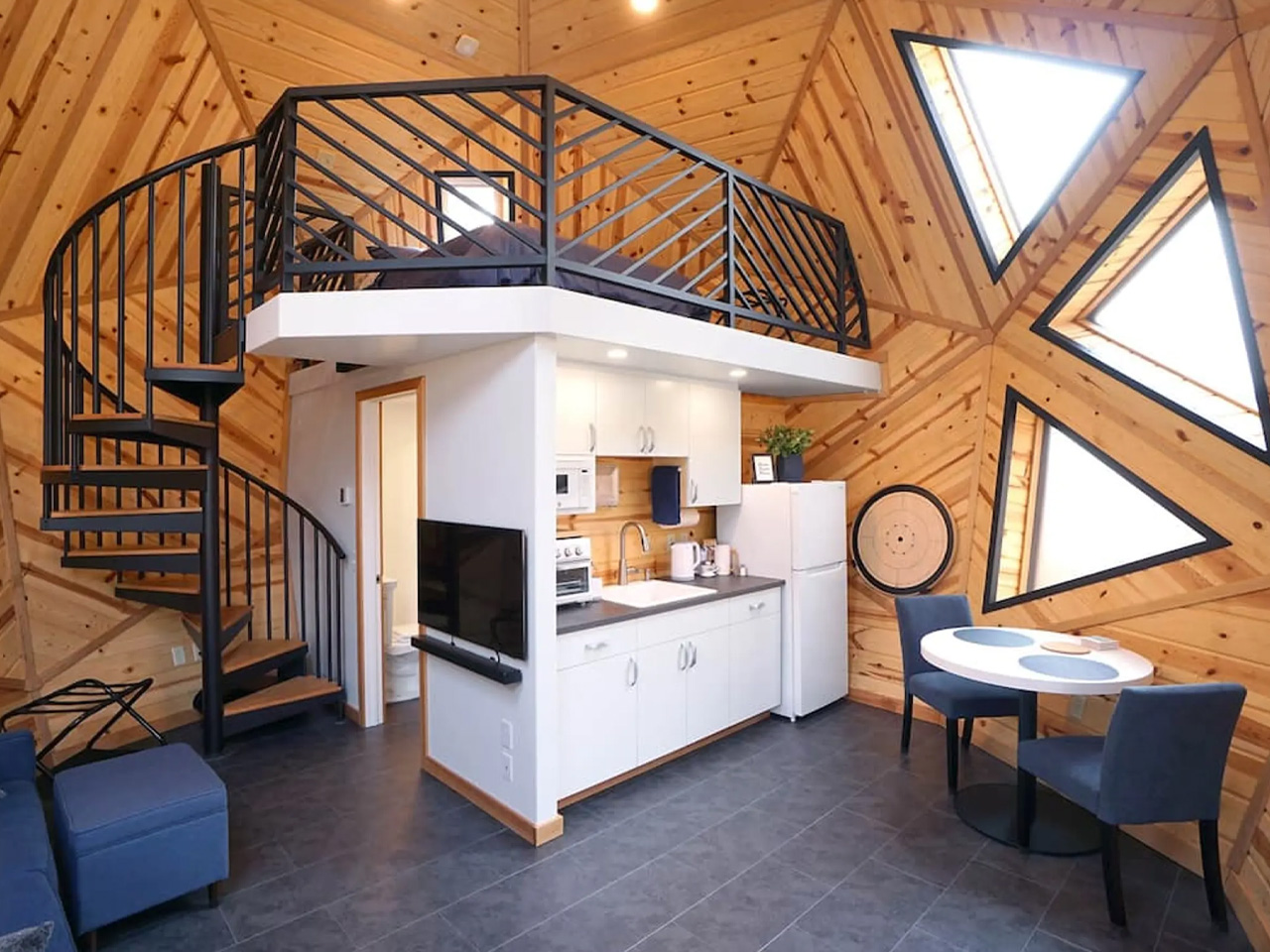
Called the Mini Dome, this is the world’s first pentakis dodecahedron (60-sided) tiny home. It is a geodesic dome home that has been created to maximize the limited space, serving as a unique vacation rental. The pint-sized little house will be available for sale in bare hub kit form too. Geodesic domes were initially popularized by the architect Buckminster Fuller, and they comprise interconnected triangles. The domes are often preferred by hobbyists for greenhouses and eco-homes. This little dome was designed by Dodeca Domes’ Joshua Tulberg, and it includes a welded steel hub and wooden struts. It is supported by an elevated pier and beam foundation and also features great insulation.

Designer: Joshua Tulberg of Dodeca Domes

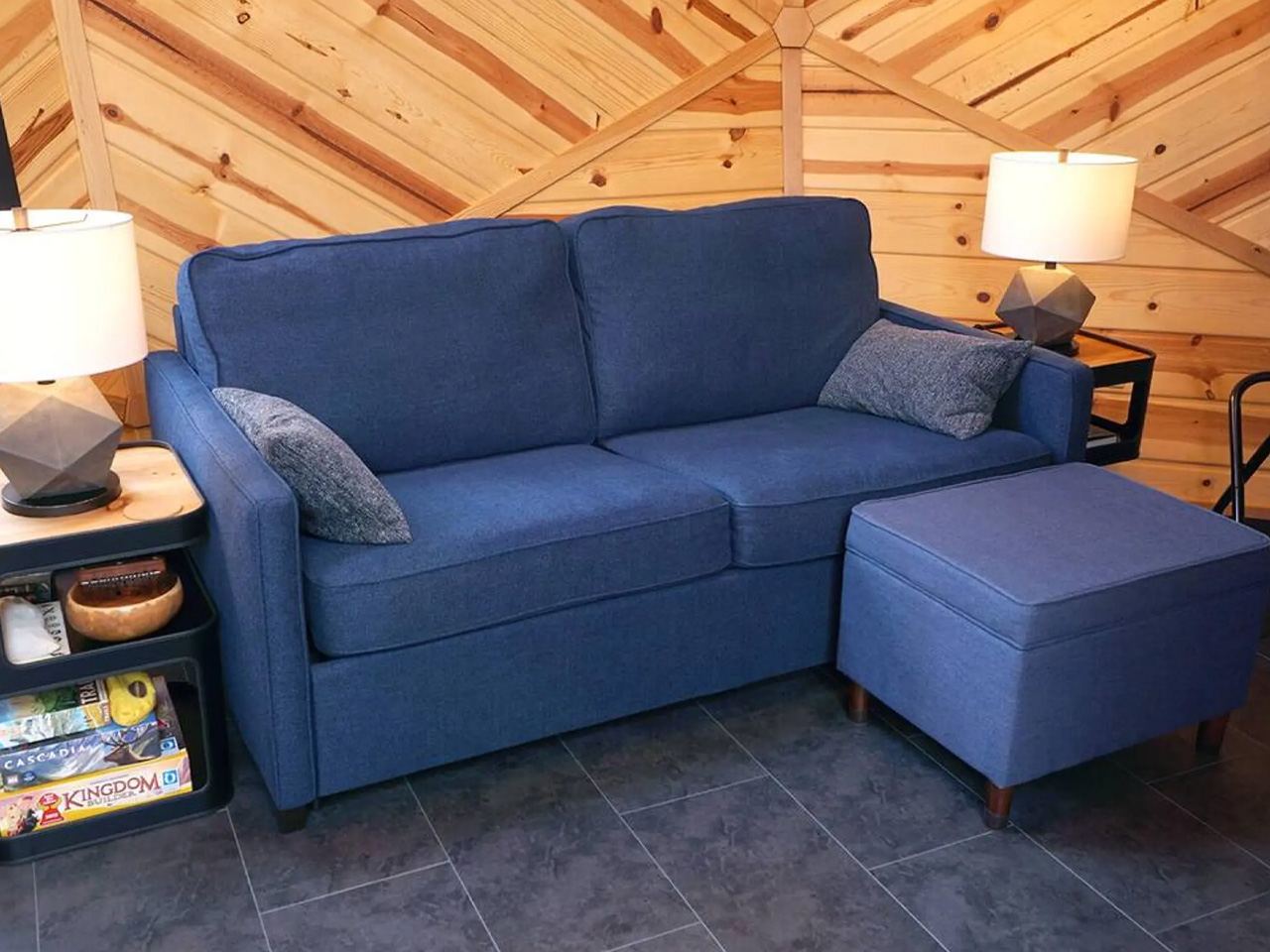
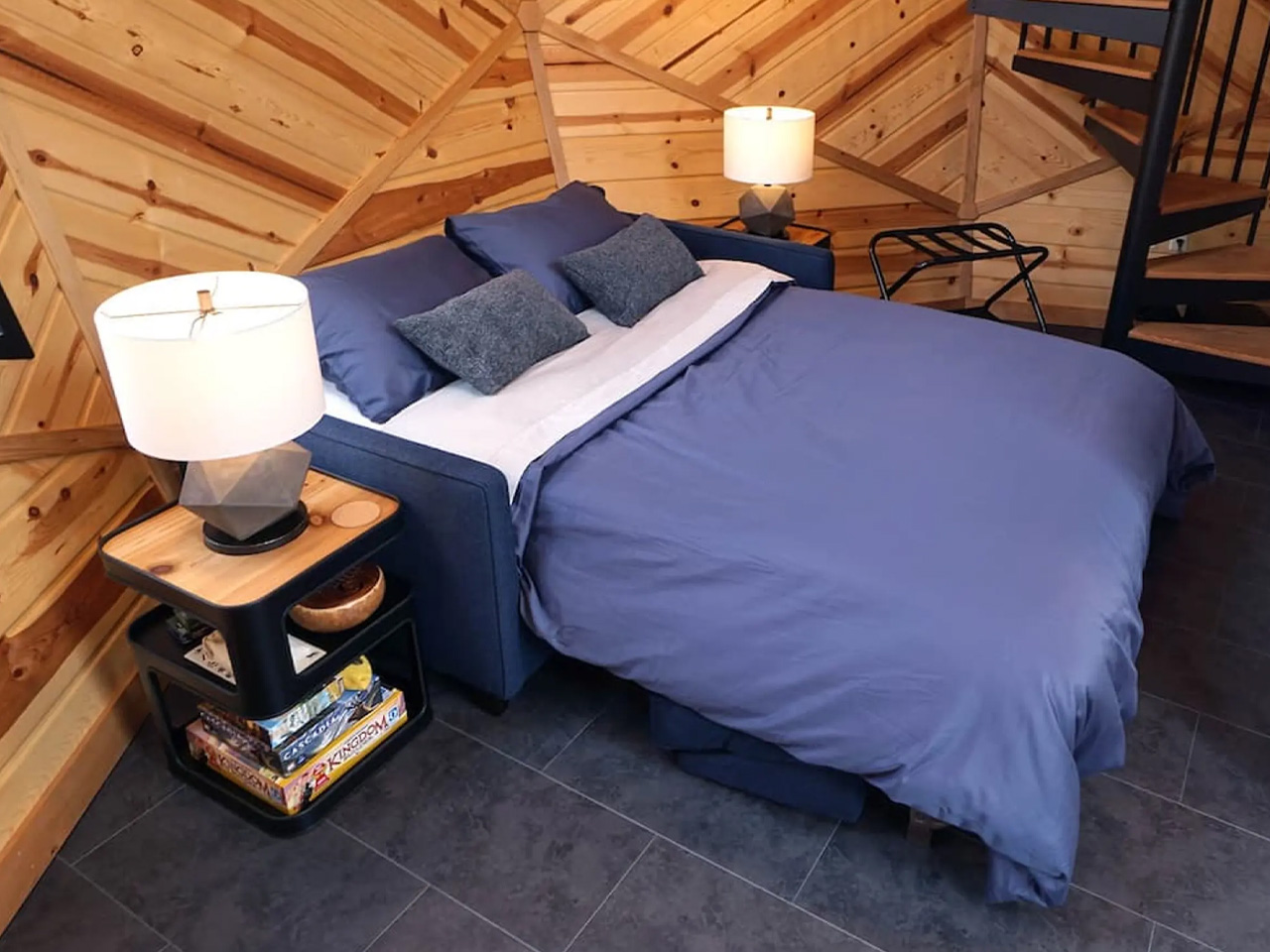
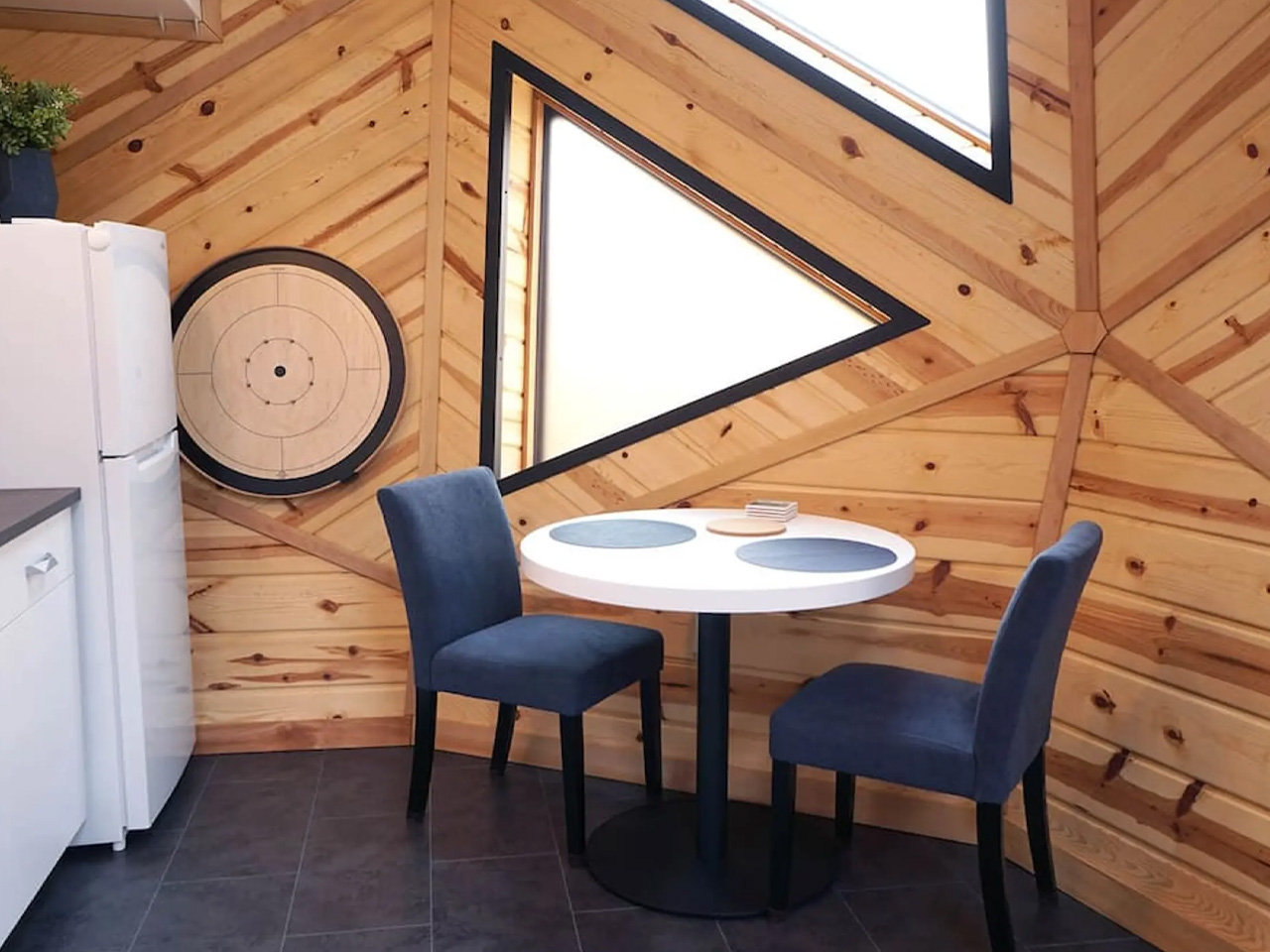
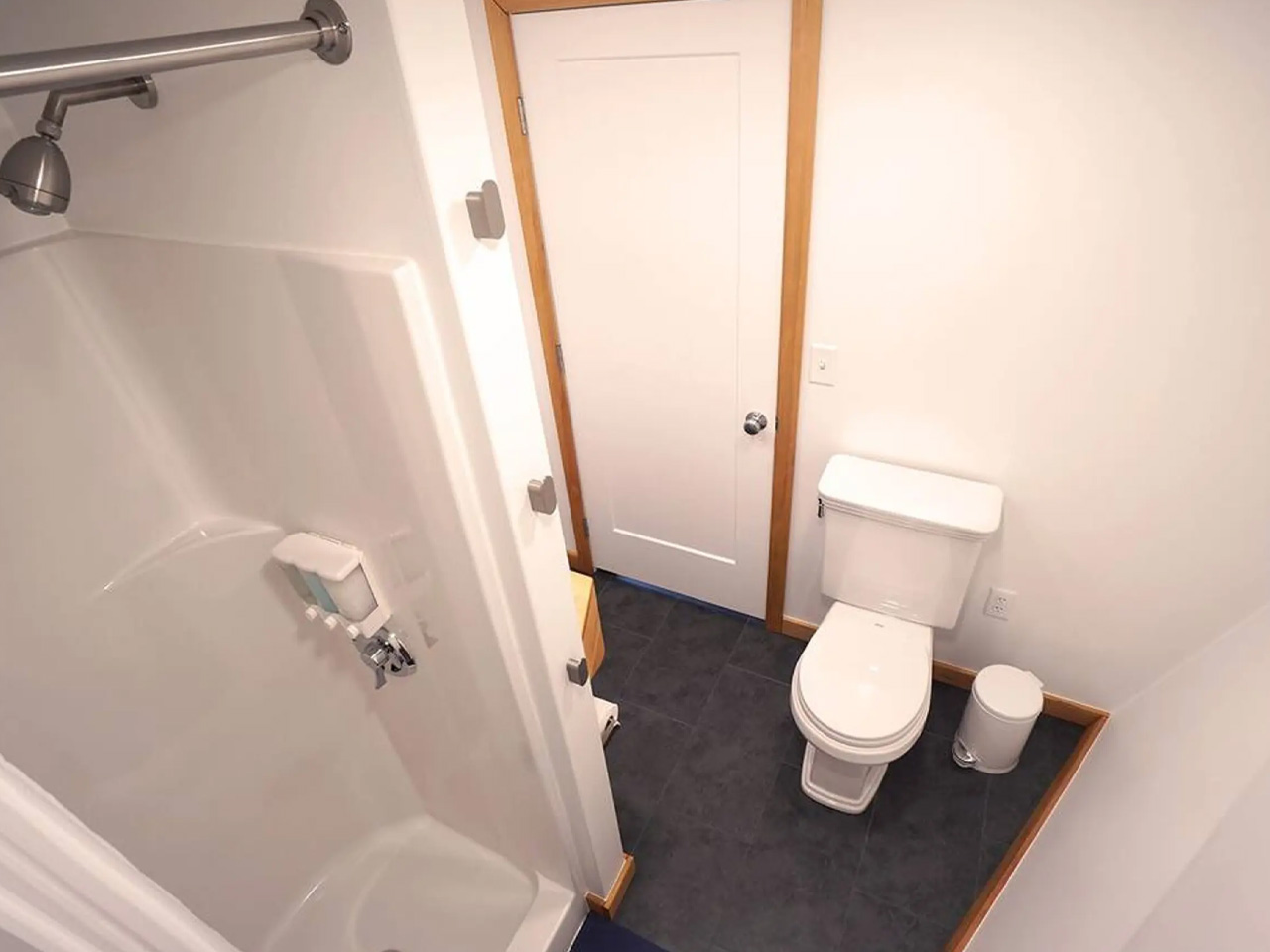
The interior of the dome occupies around 308 sq ft, and it spans over two floors. It has a pretty open layout, with a front door leading to the main living area. The living area is equipped with triangular windows, and the interior of the home is pretty attractive with a unique shape. The layout is cleverly designed to accommodate the curving walls, and it contains a sofa bed and a dining table for two people. A central section functions as the kitchen, bathroom, and bedroom. It also includes a TV. The kitchen is amped with a fridge/freezer, sink, coffee maker, microwave, toaster, and some cabinetry. While the bathroom includes a shower and a toilet.

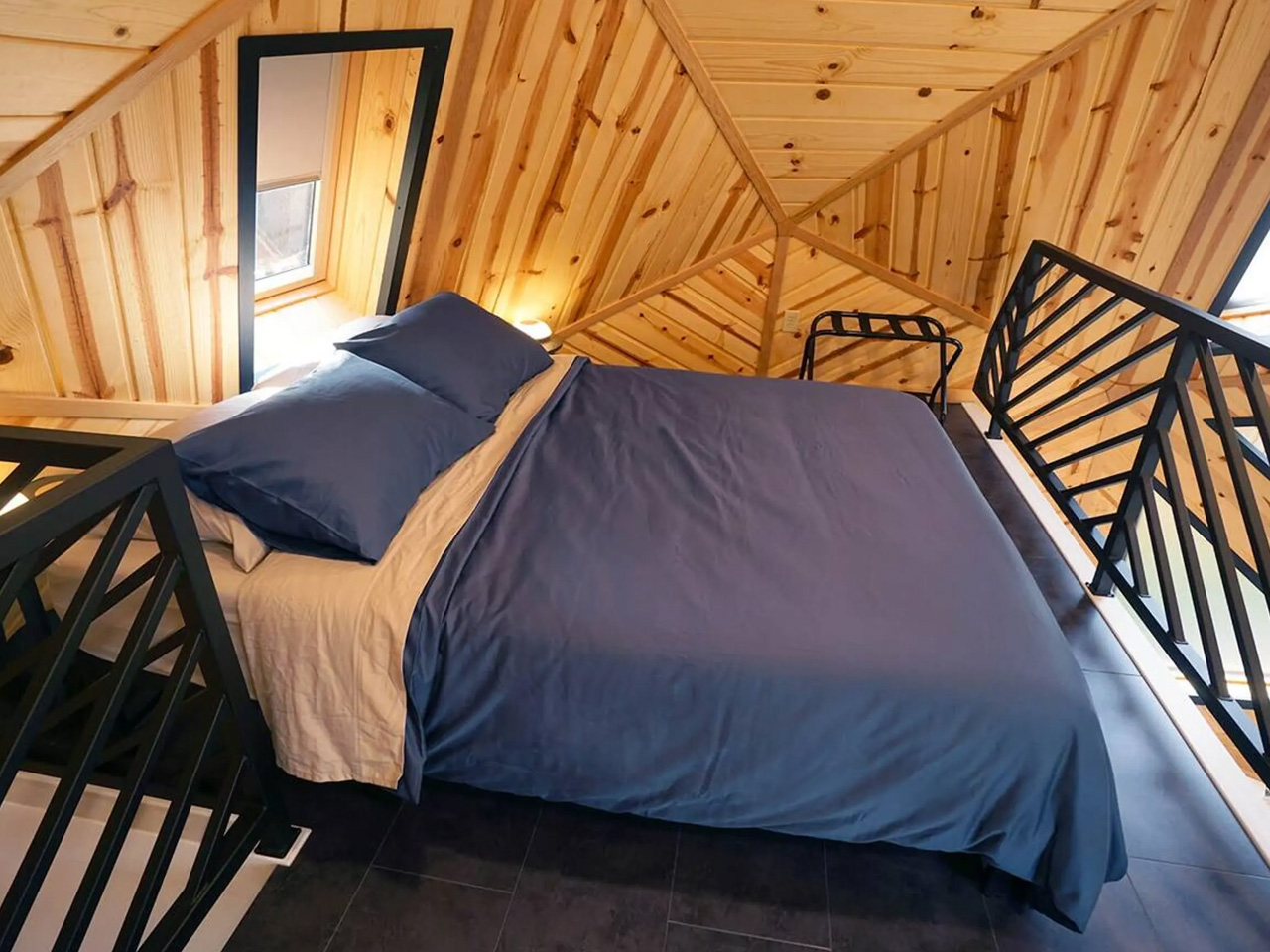
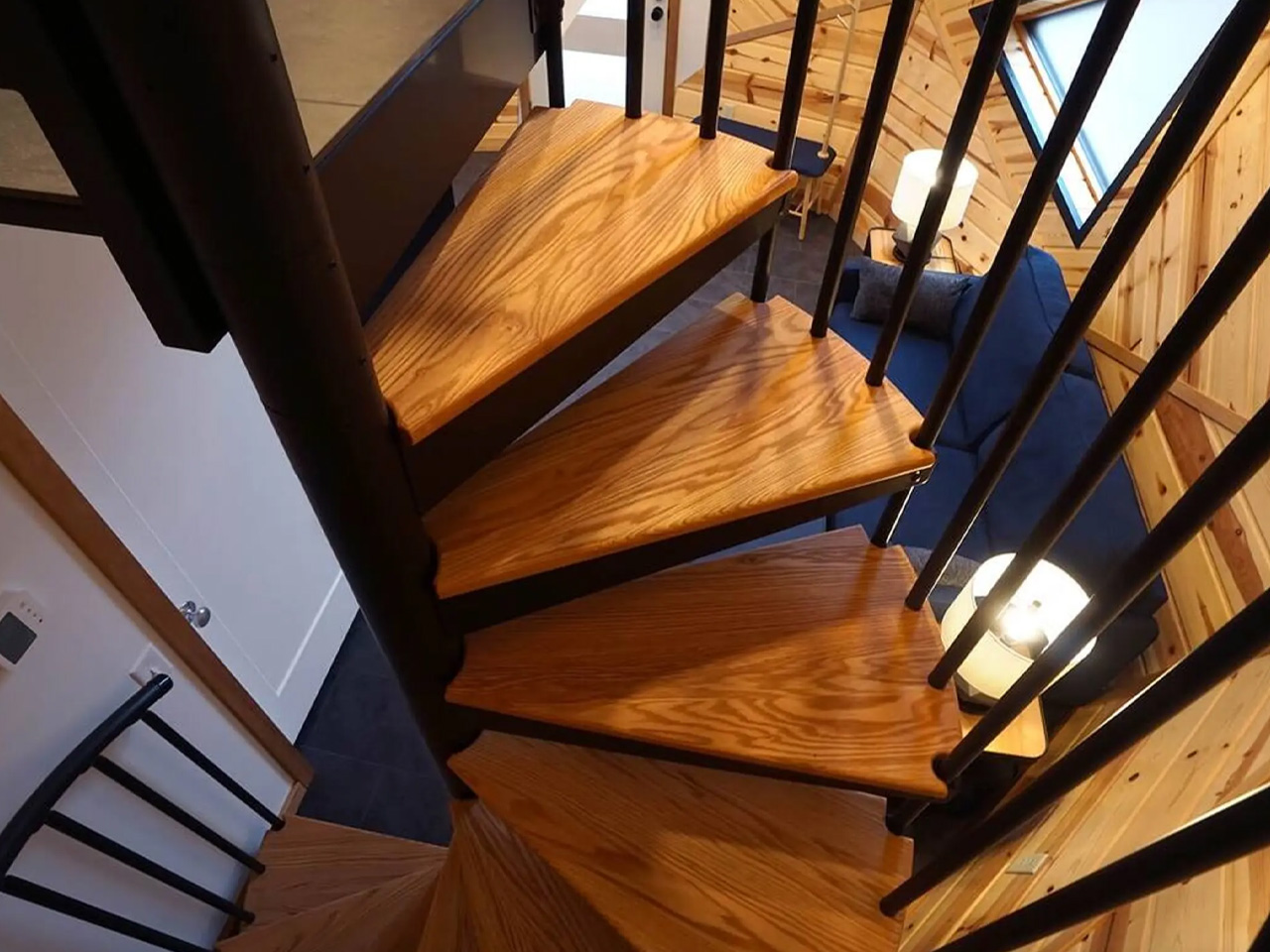
The bedroom can be accessed via a space-saving spiral staircase, and it is essentially a simple mezzanine with a queen-sized bed. There is plenty of space to stand upright as well. The Mini Dome is up for rent on Airbnb, and Tulberg is planning to sell the bare hub kit for US$15,000 in 2025.

The post This Little Geodesic Dome Is The World’s First Pentakis Dodecahedron (60-Sided) Tiny Home first appeared on Yanko Design.

Sam Altman’s Worldcoin startup is dropping the coin and doubling down on Orbs

Sam Altman’s Worldcoin is going to need some new business cards printed up because it’s dropping the “coin” in its name. The OpenAI CEO’s startup is shifting from cryptocurrency to focus more on its identification technology and it just unveiled a new version of its signature gadget.

Bloomberg reported that the new company called (wait for it) World will focus its eye scanning tech on confirming identities, something that could come in handy in a world of deep fake videos popping up all over the internet.

Co-founder and CEO Alex Blania introduced the World’s newest device called Orb, a biometric eye scanner used to confirm human identities through an identity service called Deep Face.

The latest model of the Orb, which uses NVIDIA’s Jetson chipset, will roll out to customers as the need arises. Chief Device Officer Rich Heley said at the San Francisco event that access to the Orb will be on demand and delivered the same way that people order pizza. A company statement says, “These advancements make it possible to offer new ways of providing World ID’s proof of human verification in more places around the world.”

According to the company’s website, almost 7 million people have been scanned by World Orbs to date. Everyone in attendance at the San Francisco launch event received a free Orb for their human identifying needs.

This article originally appeared on Engadget at https://www.engadget.com/big-tech/sam-altmans-worldcoin-startup-is-dropping-the-coin-and-doubling-down-on-orbs-232105287.html?src=rss

Governors Point is the Ultimate Eco-Luxury Escape You’ll Wish You Lived In

Governors Point, an exclusive residential enclave, sits on a pristine 125-acre peninsula in Washington’s Salish Sea. Envisioned by acclaimed architect Omer Arbel, this unique community offers an exquisite mix of luxury living and deep respect for the environment. The development features 16 custom waterfront homes that blend seamlessly into the surrounding landscape. Each home is crafted to celebrate the raw beauty of the area, ensuring it complements rather than overpowers the natural setting.

Designer: Omer Arbel

Image credit: Governors Point

Governors Point’s history adds depth to its current form. Originally, the site was slated for over 300 homes and multiple marinas, but a transformative partnership between design entrepreneur Randy Bishop and the Whatcom Land Trust shifted its destiny. Their focus was on conservation, turning Governors Point into a haven for both residents and nature.

Exterior Design: Blending With Nature

The exterior of each home at Governors Point reflects Omer Arbel’s innovative approach to merging architecture with nature. The homes are placed strategically along the peninsula, with some landward facades partially buried to reduce their visual presence and make them part of the landscape.

Image credit: Governors Point

On the west-facing side, a “cloudlike” exterior skin made from cedar burl offcuts adds a striking visual feature. These cedar pieces, described as “boulder-shaped modules,” are mounted on metal standoffs and gently sway, creating a kinetic effect. Over time, moss and lichens will grow on these surfaces, adding a living, evolving element to the design.

Roofs are designed to allow the forest to grow over them, making the homes seem like natural extensions of the landscape. This design choice also offers energy efficiency, as the forest provides natural insulation.

Paths leading to the homes are discreet, guiding residents through nature in a way that contrasts the enclosed feeling of the homes—often opening up dramatically to views over the cliffs. These paths are set between retaining walls, enhancing the contrast between entering underground spaces and emerging to cliff-edge views. Landscaping is restricted to just 3,000 square feet per 1.5-acre lot, ensuring that most of the natural flora is preserved. This careful planning maintains the native beauty of Governors Point, keeping ecological integrity at the forefront.

Image credit: Governors Point

The design also respects the existing kayak route along the shoreline, ensuring that the natural recreational pathways remain unobstructed and inviting for kayakers.

Interior Design: Seamless Flow Indoors and Out

The interior of each Governors Point home reflects Arbel’s commitment to creating harmony between luxury and nature. The homes are capped at 2,900 square feet, maintaining a modest size that fits within the environment.

Expansive floor-to-ceiling windows bring in sweeping views of the Salish Sea and San Juan Islands, flooding rooms with natural light. These windows create a seamless connection between the indoor and outdoor spaces, making the landscape a natural part of the home’s interior.
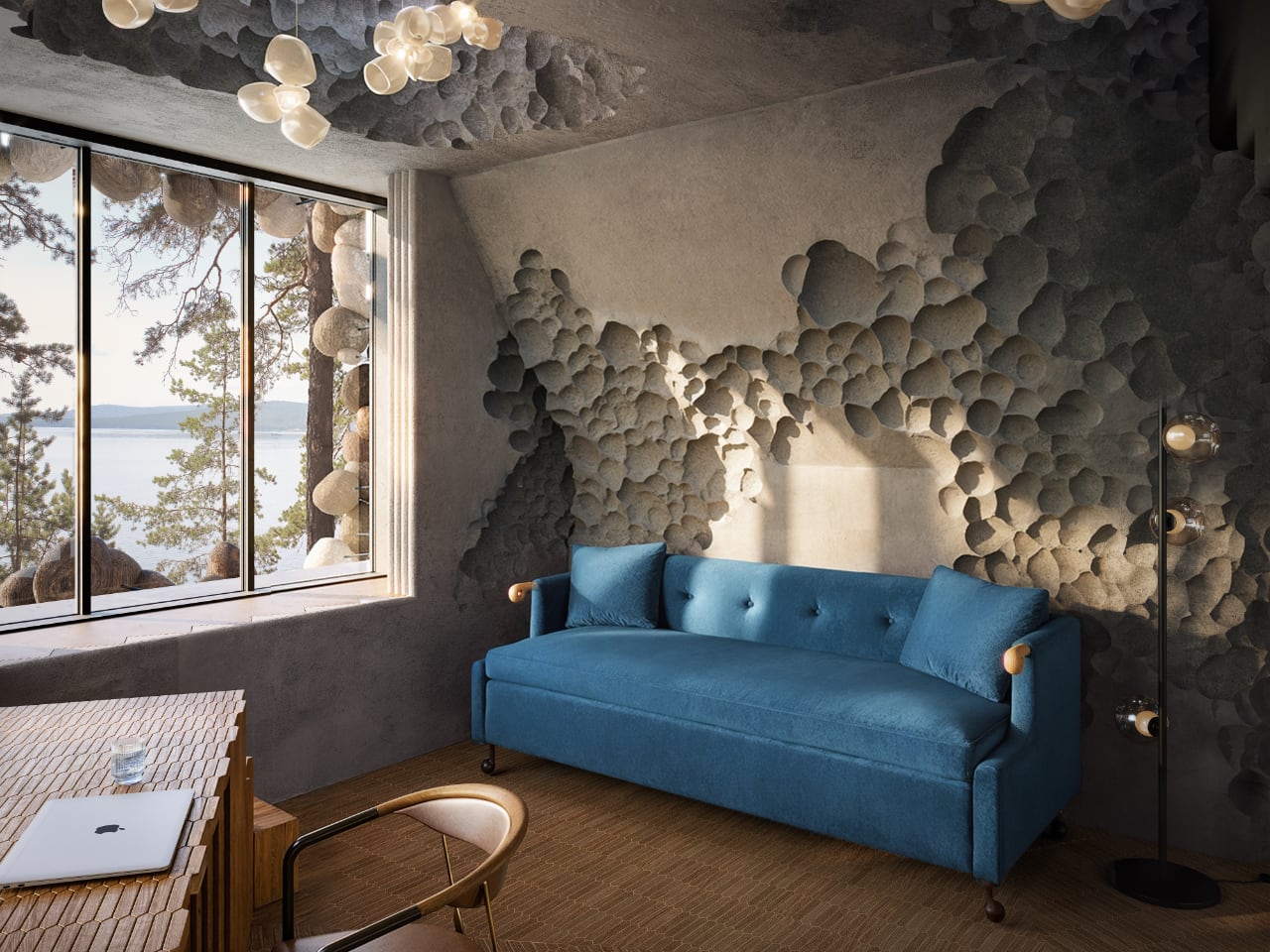
The living room design beautifully showcases this philosophy, featuring woven leather chairs and a low-profile marble coffee table. The living area opens directly to the outdoors, framed by boulder-like modules connecting the home to the natural world. The use of earthy tones and tactile fabrics throughout the living room maintains a sense of warmth and cohesion, while built-in shelves add functionality without overwhelming the space.

The materials used throughout the homes, like locally sourced wood and stone, add warmth and texture, while low-VOC paints and reclaimed wood floors keep the building process eco-friendly.

Fixtures from Arbel’s design firm, Bocci, are featured throughout, including custom glass pendants that bring a unique glow to the rooms. The collaboration between Omer Arbel and Bocci goes back nearly two decades, allowing Bocci’s luxurious finishes to integrate seamlessly into Arbel’s architectural projects. Skylights and open floor plans ensure that natural light fills every corner, enhancing the spaciousness while connecting each room to the outdoors.
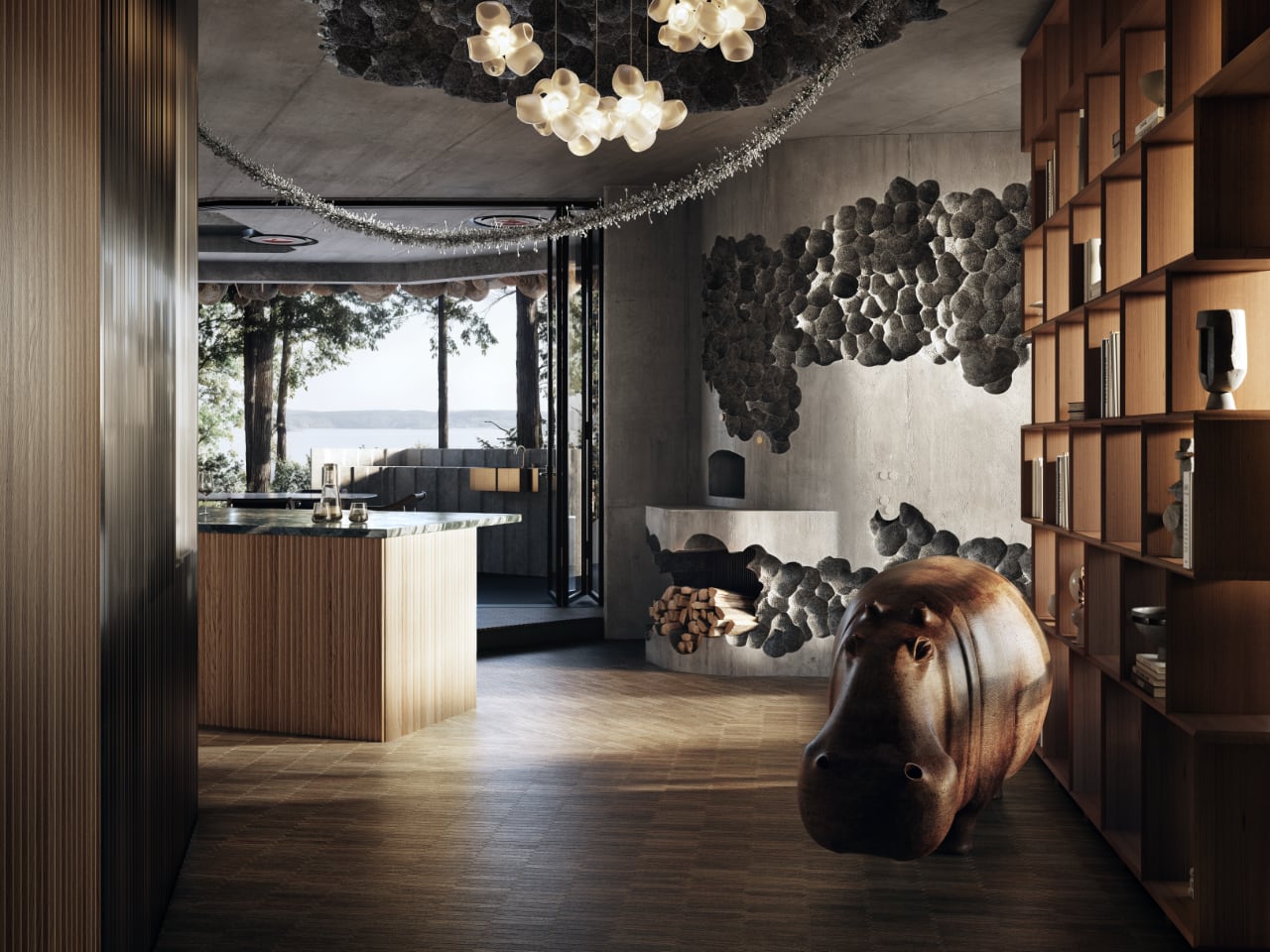
Image credit: Governors Point

In the kitchen, an elegant concrete finish defines the space, with natural textures continuing to enhance the connection between indoor and outdoor environments. This description is based on conceptual design elements rather than a confirmed source from the images or documents provided. Large windows frame views of the sea, while the design focuses on subtle built-in features, such as hidden storage and a minimalist aesthetic, ensuring the kitchen is functional and stylish.

The Parametric Approach: Architecture With Variation

Omer Arbel takes a parametric design approach at Governors Point—meaning the homes are crafted within a set of guidelines that allow for natural variations. Each home follows core principles but adapts to the specific conditions of its location.

Image credit: Governors Point

For example, cedar burl offcuts on the west-facing facades are arranged within set parameters but come together in unique compositions. This gives every home its personality while maintaining a consistent architectural language across the community.

Arbel’s process involves setting constraints and letting materials and site-specific factors guide the final design. This approach allows the architecture to adapt to the environment, making each home a reflection of its surroundings.

It turns construction into a creative, evolving process that celebrates unpredictability and uniqueness. Arbel also extends this parametric philosophy to interior fixtures, using materials like copper and glass to adapt to the living spaces’ flow.
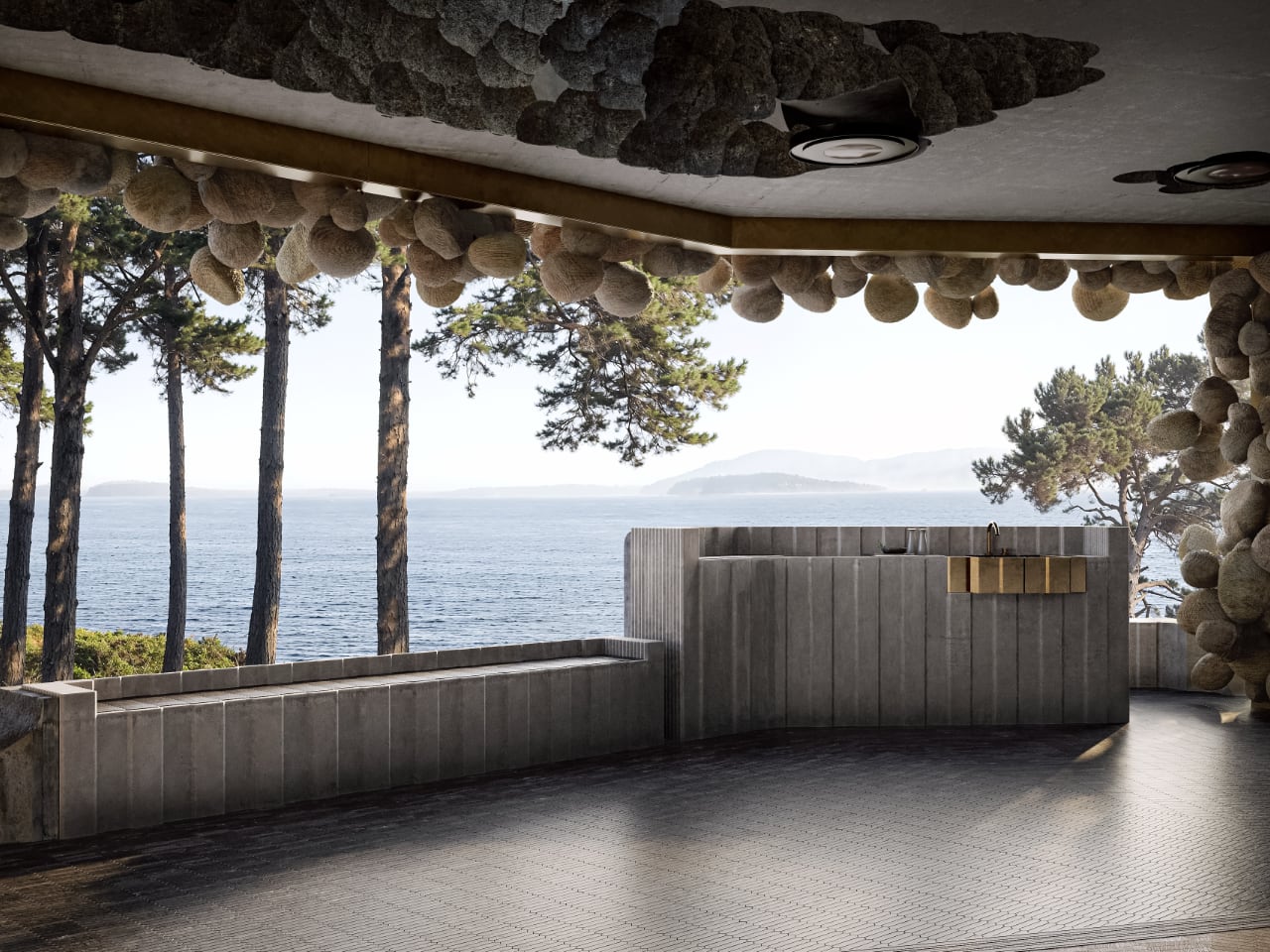
Image credit: Governors Point

The master bedroom continues the organic design language with a feature wall that mimics the boulder-shaped modules seen outside. The furniture, including the bed and integrated shelving, balances the ruggedness of natural materials and refined craftsmanship. Custom Bocci lighting adds a sculptural quality, casting soft light that enhances the serene atmosphere.
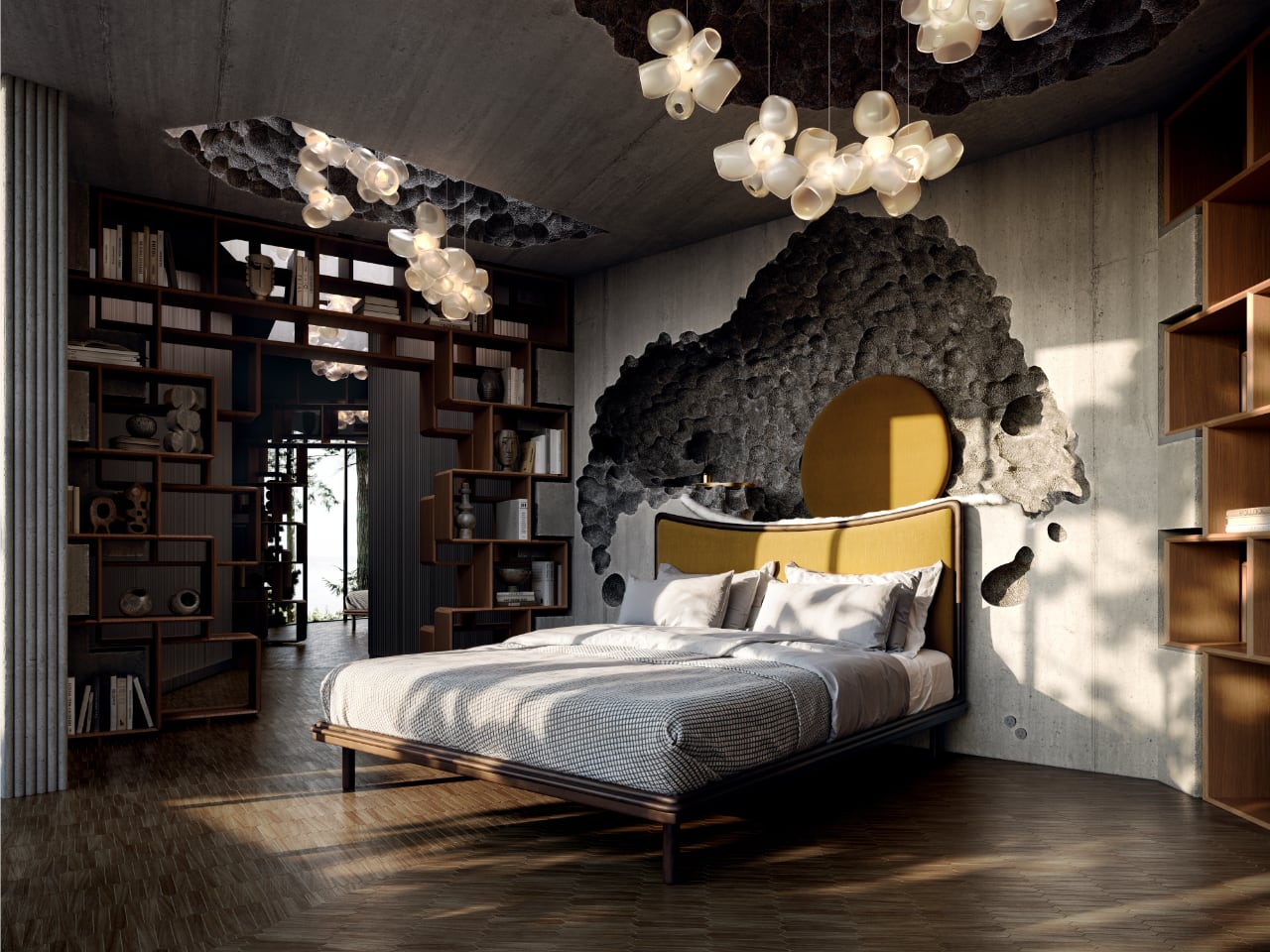
Image credit: Governors Point

A Commitment to Sustainability

Governors Point is a model of sustainable architecture, with 98 of the 125 acres set aside as a nature reserve managed by the Whatcom Land Trust. This area features a 2.5-mile public access loop trail, allowing residents and visitors to explore the peninsula’s stunning natural beauty, including access to beaches and viewpoints on both sides.

Image credit: Governors Point

Keeping most of the land as a nature reserve helps protect local ecosystems, balancing development and conservation.

Each residence is capped at 2,900 square feet, with an additional 1,100 square feet allowed for garages or outbuildings. By limiting the size of the homes and restricting manicured landscaping, the development ensures that the natural surroundings remain untouched as much as possible.

Using sustainable materials, such as repurposed cedar burl offcuts for exterior cladding, reduces waste and promotes regional resource efficiency. Governors Point also bans using pesticides and harmful chemicals, protecting the local flora and fauna.
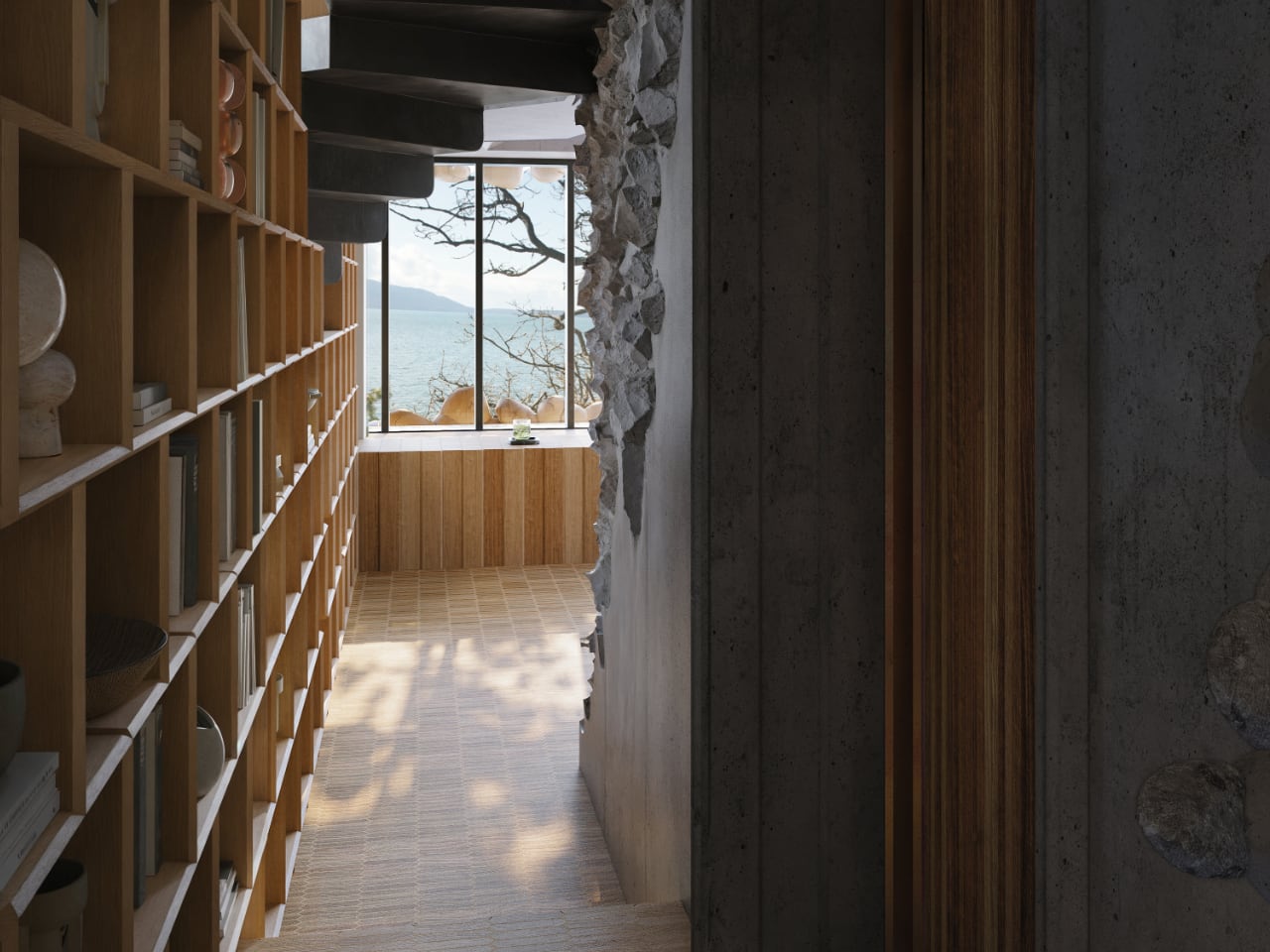
Image credit: Governors Point

Energy efficiency is key in architectural planning, with large windows designed to optimize passive solar heating while offering stunning views. The project maintains a low-density footprint by limiting the development to only 16 homes on the 27 developed acres, reducing habitat disruption and preserving wildlife corridors.

The design blends the homes into the landscape with natural features like buried facades and forest-covered roofs, setting a new standard for eco-conscious luxury.

The post Governors Point is the Ultimate Eco-Luxury Escape You’ll Wish You Lived In first appeared on Yanko Design.

YouTube is testing a new version of its Premium Lite subscription

YouTube is testing a revamp of its Premium Lite subscription tier. User screenshots made the rounds on social media this week, and today a Google rep later confirmed to multiple other outlets that the plan is being tested in Australia, Germany and Thailand. This new version would have "limited ads," which the fine print describes as most videos being ad-free, "but you may see video ads on music content and Shorts, and non-interruptive ads when you search and browse."

The original Premium Lite subscription began testing in Europe in 2021, but it only lasted a few years, with the video platform eliminating the option in October 2023. The plan's only benefit was removing all ads; it didn't offer the offline or background viewing options of the regular Premium offering.

We were able to confirm that the pricing model in Australia is $9 a month for Premium Lite, compared with $17 a month for full Premium access. That's in line with the costs from the original Lite, which were about half the rate of a regular plan. With the current costs of a YouTube subscription — $14 a month for an individual or $23 a month for the family option — having a mid-tier choice could certainly be appealing.

This article originally appeared on Engadget at https://www.engadget.com/entertainment/youtube/youtube-is-testing-a-new-version-of-its-premium-lite-subscription-220050877.html?src=rss

A new trailer for the Dune: Prophecy series just dropped

A new trailer dropped on the opening day of the New York Comic Con for the new six-episode spinoff series Dune: Prophecy, a prequel to the recent films directed by Denis Villeneuve.

The new series will premiere November 17 at 9PM on HBO. Each episode will be available to stream on Max on Sundays following its TV broadcast.

The Dune prequel is based on the novel Sisterhood of Dune by Kevin J. Anderson and Brian Herbert, the son of Dune creator and science fiction writer Frank Herbert. The new HBO series takes place 10,000 years before the rise of Paul Atreides when the Bene Gesserit begins its ascension to power.

It tells the story of two Harkonnen sisters Valya and Tula, played by Emily Watson and Olivia Williams, who create the sisterhood that will inevitably become the Bene Gesserit, the social, spiritual and political order of powerful women seeking to control and shape the universe. Other members of the cast include Travis Fimmel, Jodhi May and Mark Strong.

This article originally appeared on Engadget at https://www.engadget.com/entertainment/tv-movies/a-new-trailer-for-the-dune-prophecy-series-just-dropped-212154554.html?src=rss