Unity mounts a comeback with launch of Unity 6 game engine

Unity has released the latest version of its engine for developing games and interactive experiences. Unity 6 has new workflows for creating online multiplayer games and more tools for projects intended for mobile platforms, including mobile web support for Android and iOS browsers. The engine promises improved performance, particularly in graphics rendering, and adds several features for creating more realistic environments via global lighting and other VFX. And it wouldn't be a tech announcement without some AI component; the company has also released the latest version of its Sentis neural network inference library for using AI models within the Unity engine.

The company took a real hit to its public perception when it attempted to revise its pricing structure last September. The proposed payment model would charge devs a fee whenever a player downloaded their creation. The move led to outcry among game developers, particularly the indie scene. After a leadership shakeup and a massive workforce reduction, the company walked back most of the changes it had announced. This September, the controversial fee was dropped entirely.

This article originally appeared on Engadget at https://www.engadget.com/gaming/unity-mounts-a-comeback-with-launch-of-unity-6-game-engine-205332034.html?src=rss

Turning 350 Razor Blades into a Super-Sharp Damascus Steel Knife

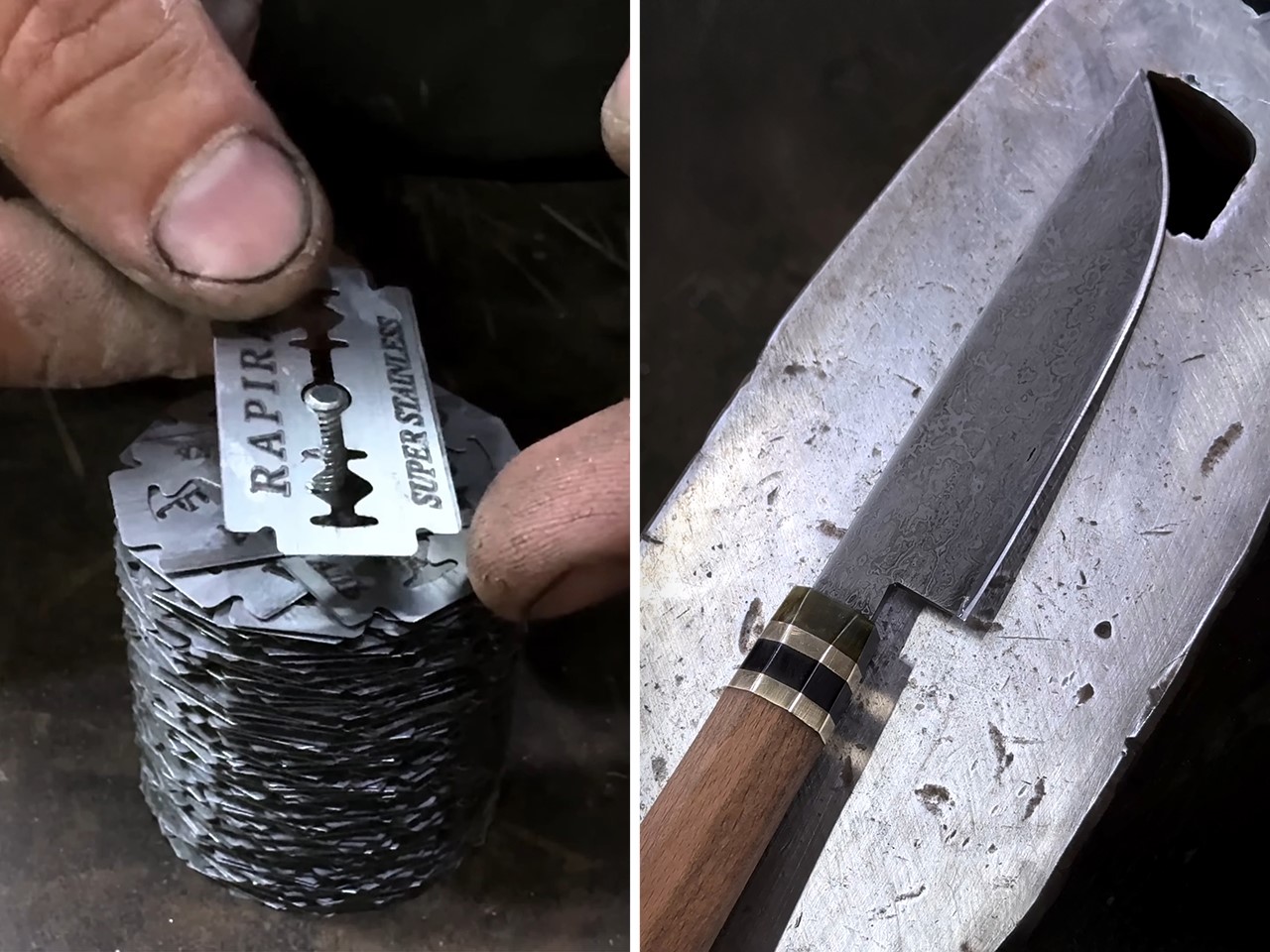
But why make a massive blade out of something that can ALREADY cut things – you ask? It probably sounds like using a lot of small LEGO bricks to make one large LEGO brick, right? Well, the thing with razor blades is that they’re made to serve a finite purpose. They’ll last a few days, maybe a few weeks, and then they need to be discarded. Razor blades are ridiculously sharp, but they’re also ridiculously flimsy and you can break one with your own hands… so YouTuber Knives Project decided to just use a bunch of them to make something more everlasting, more worthy of being cherished, while being just as sharp.

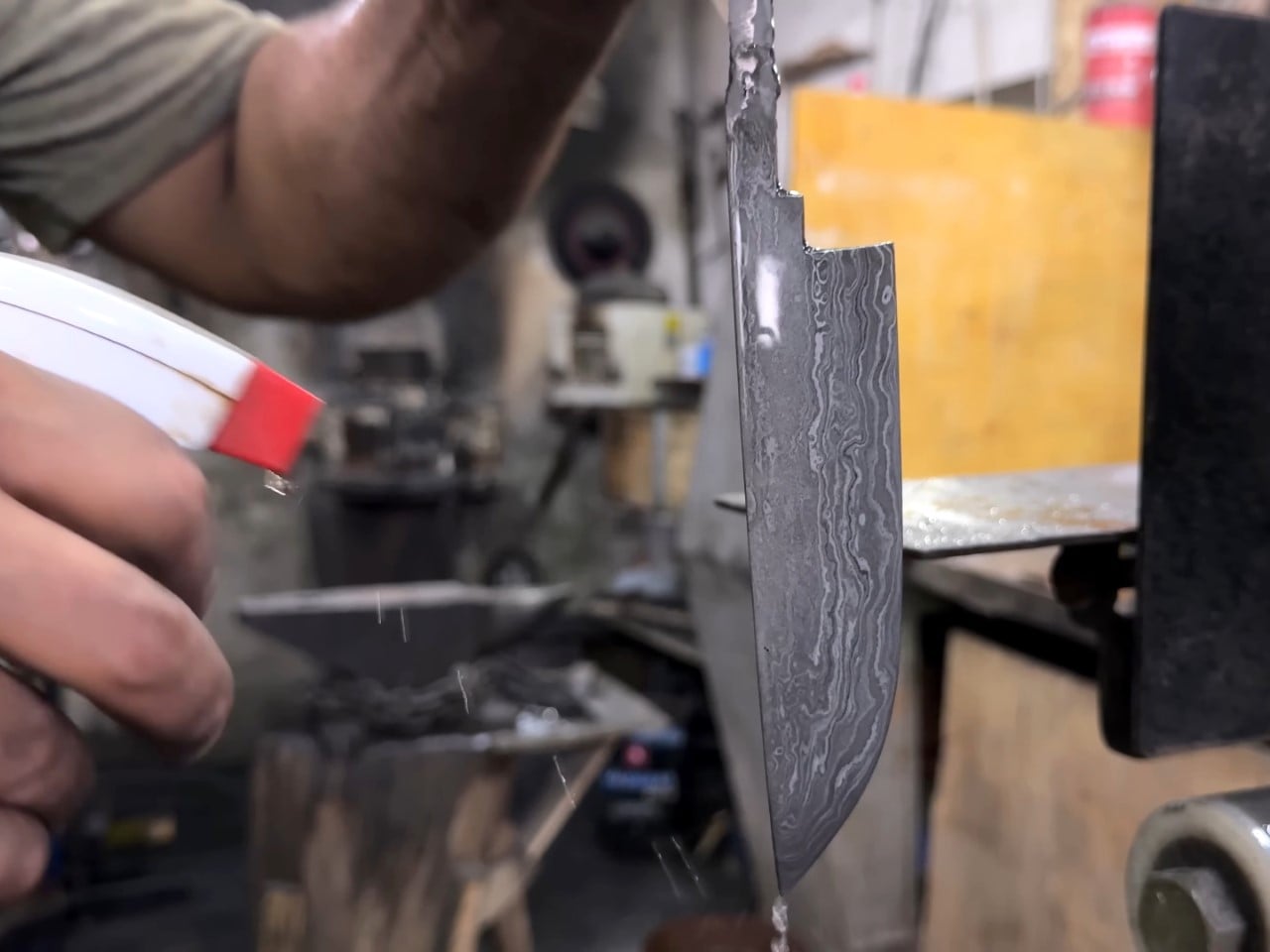
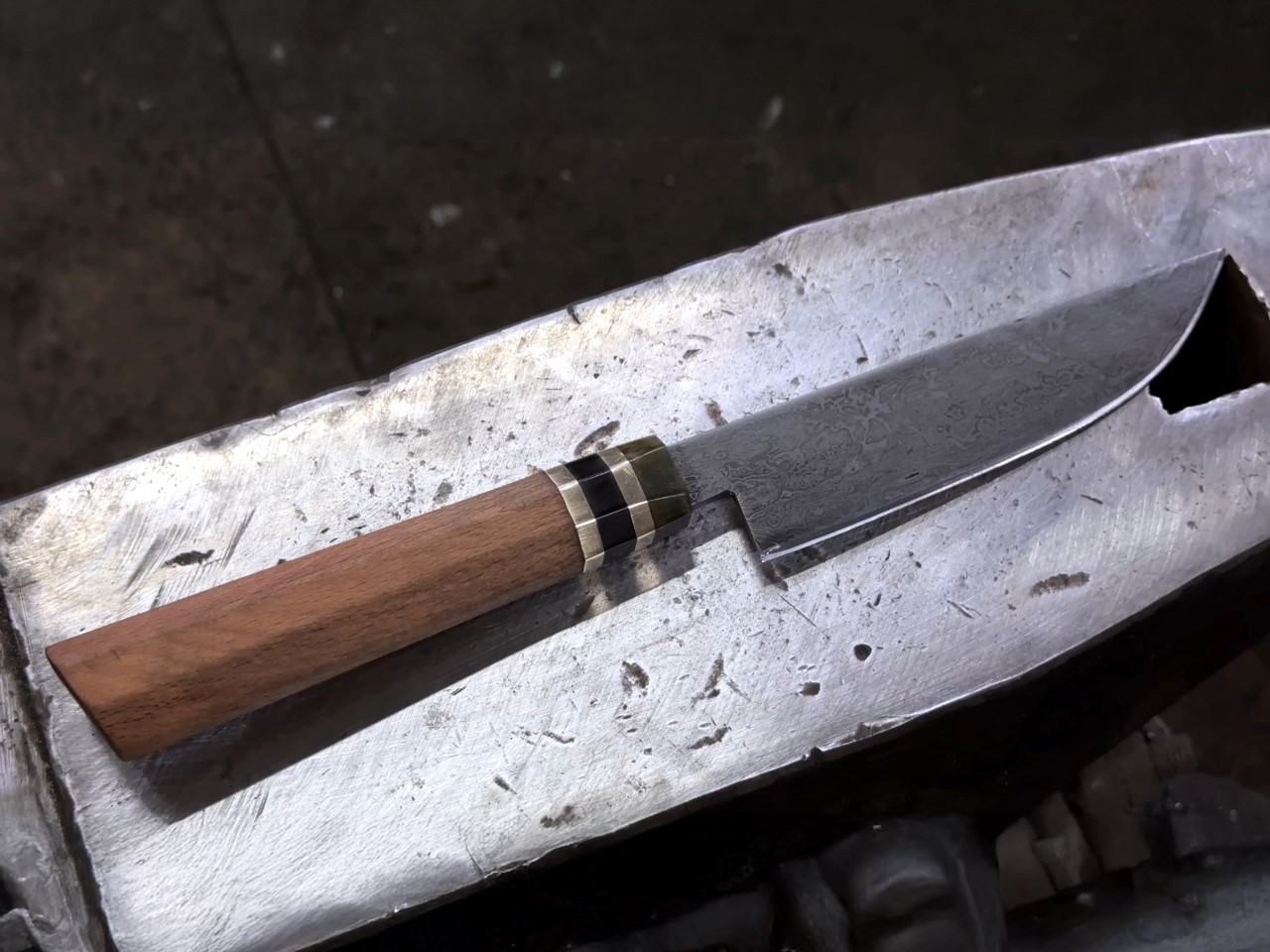
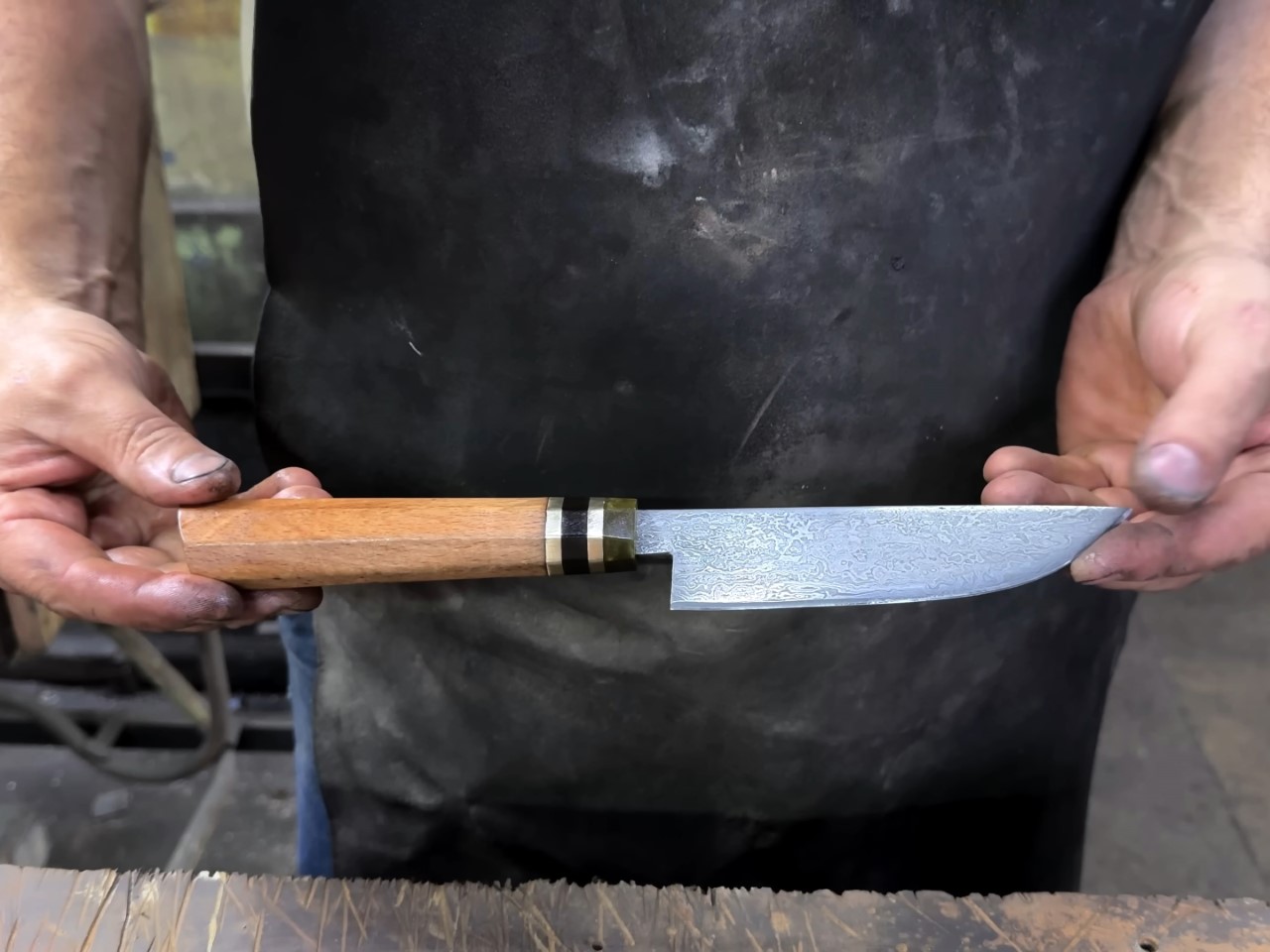
It took 350 blades being forged together into a metal ingot to make this final knife. The result is truly heirloom-worthy. The knife sports a gorgeous marbled blade created thanks to the combination of the steel used in the razors as well as the steel powder added into the ingot to fill in the air gaps. The knife finally gets a nice wooden handle with a bit of metal at the beginning of the hilt.

Designer: Knives Project

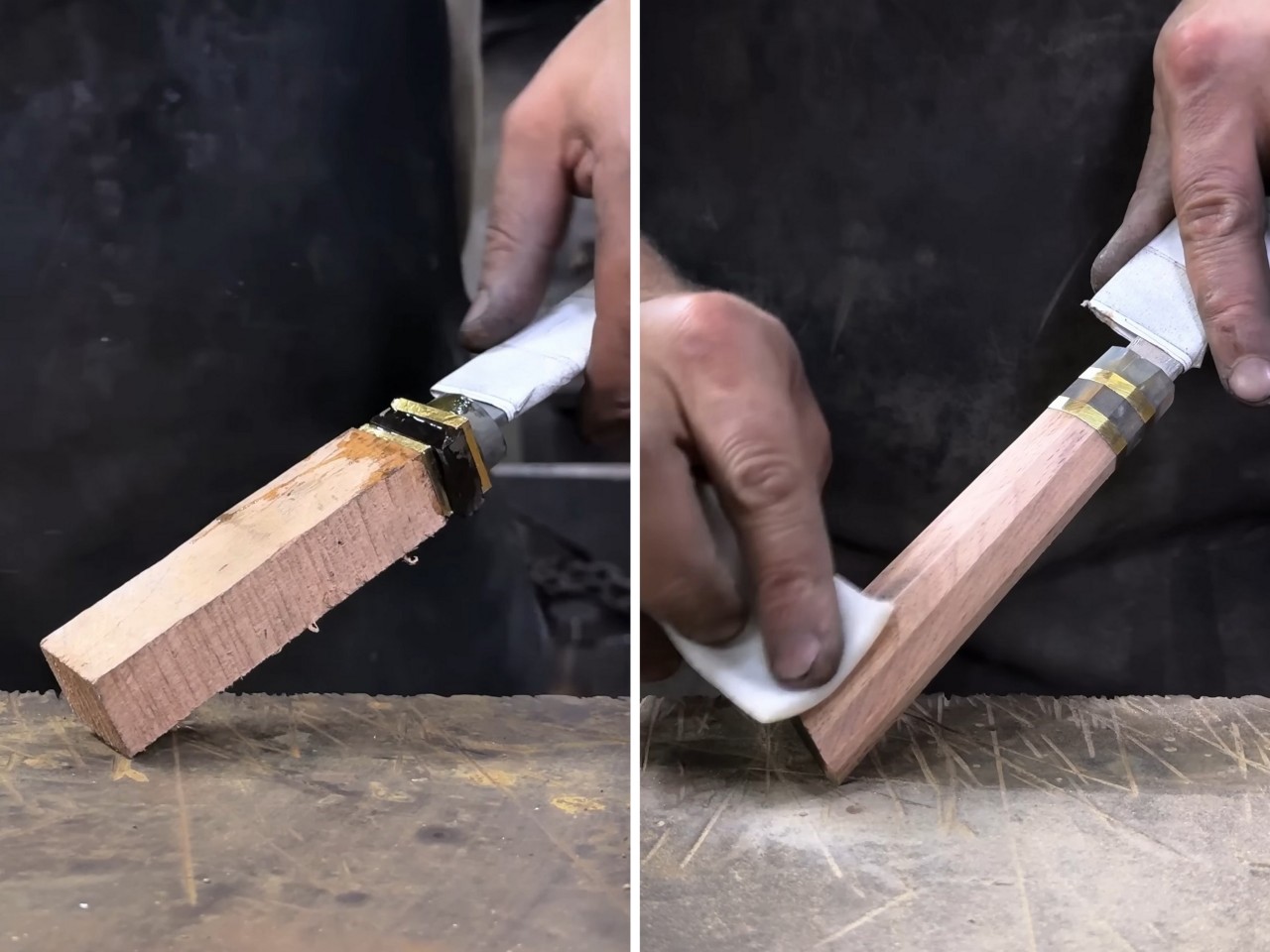
The 15-and-a-half-minute video guides you through Knives Project’s process, from forging the steel ingot to shaping it, etching it, honing it, and then building the handle for the knife. The result looks rather artisanal, with a kitchen knife-style design sporting a drop-point edge and a wonderful marbled body reminiscent of Damascus Steel. The knife also comes with a wooden handle with an octagonal cross-section that’s easy to grip and maneuver.

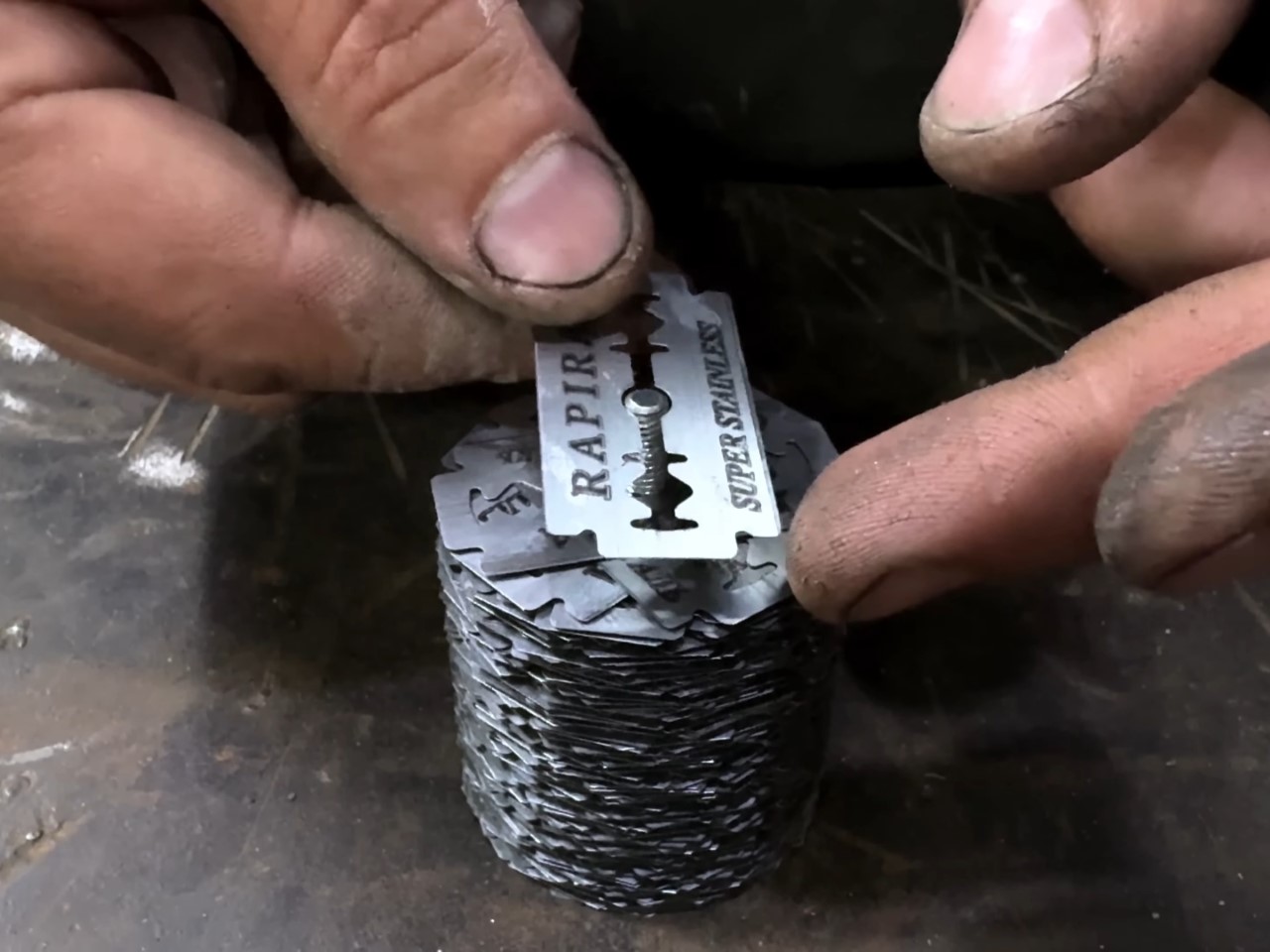
Razor blades are primarily made from martensitic steel – a steel alloy known for its high strength and wear resistance, with the more expensive ones being made from carbon steel. Given that the knife uses 350 of these razors, it’s possible Knives Project sprung for regular blades, adding them one by one into a bolt to create a cylindrical form. The cylinder was then dropped into a hollow metal block and all the air gaps were filled with steel filings, resulting in a solid block that had no air gaps.

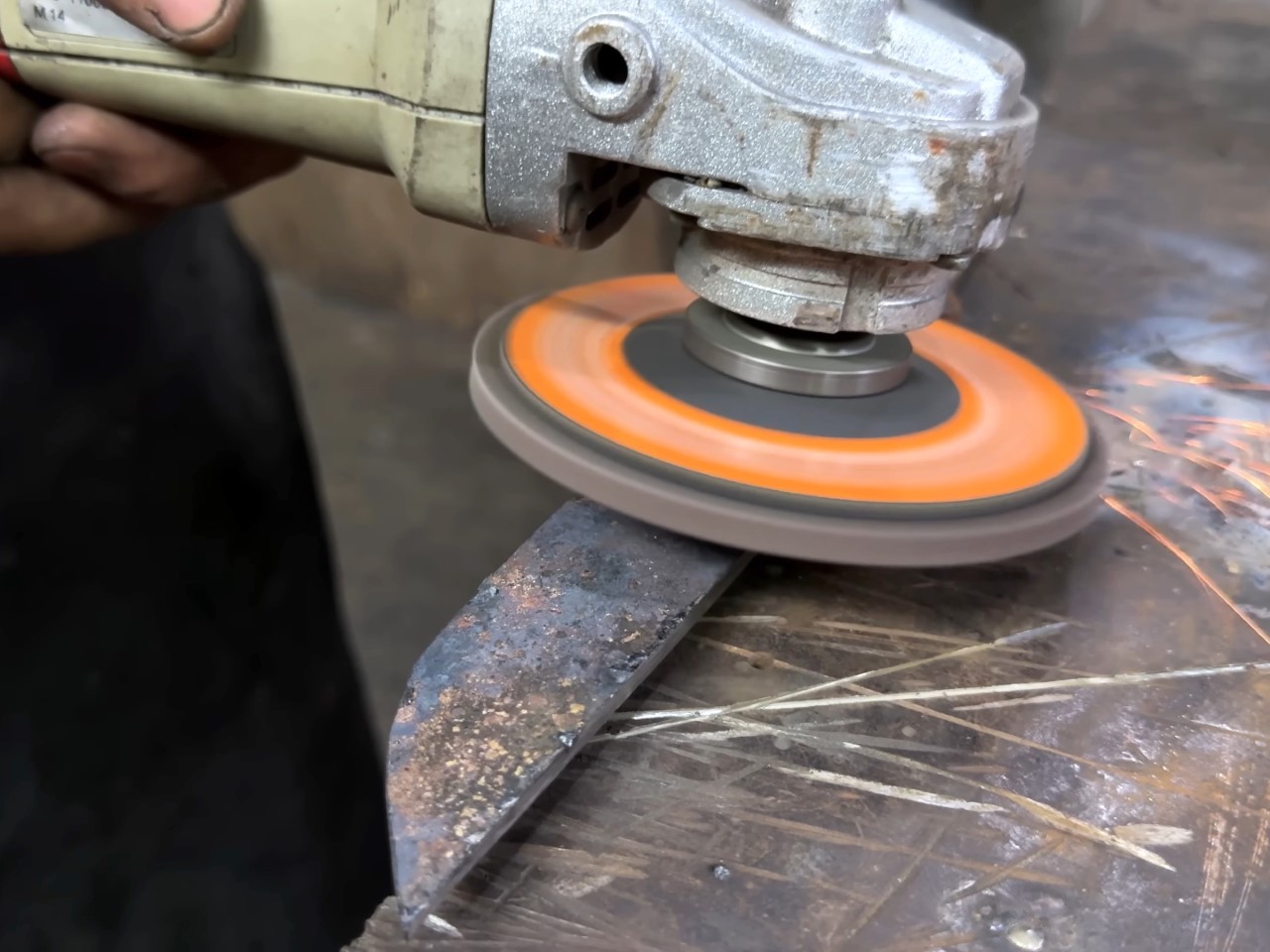
Once the metal block goes into the furnace, the steel inside begins melting, forming a rough cluster that Knives Project extracts by opening the outer box using an angle grinder. The reason is that this outer box is made of iron, while its internal components are the steel you need to form into an ingot.

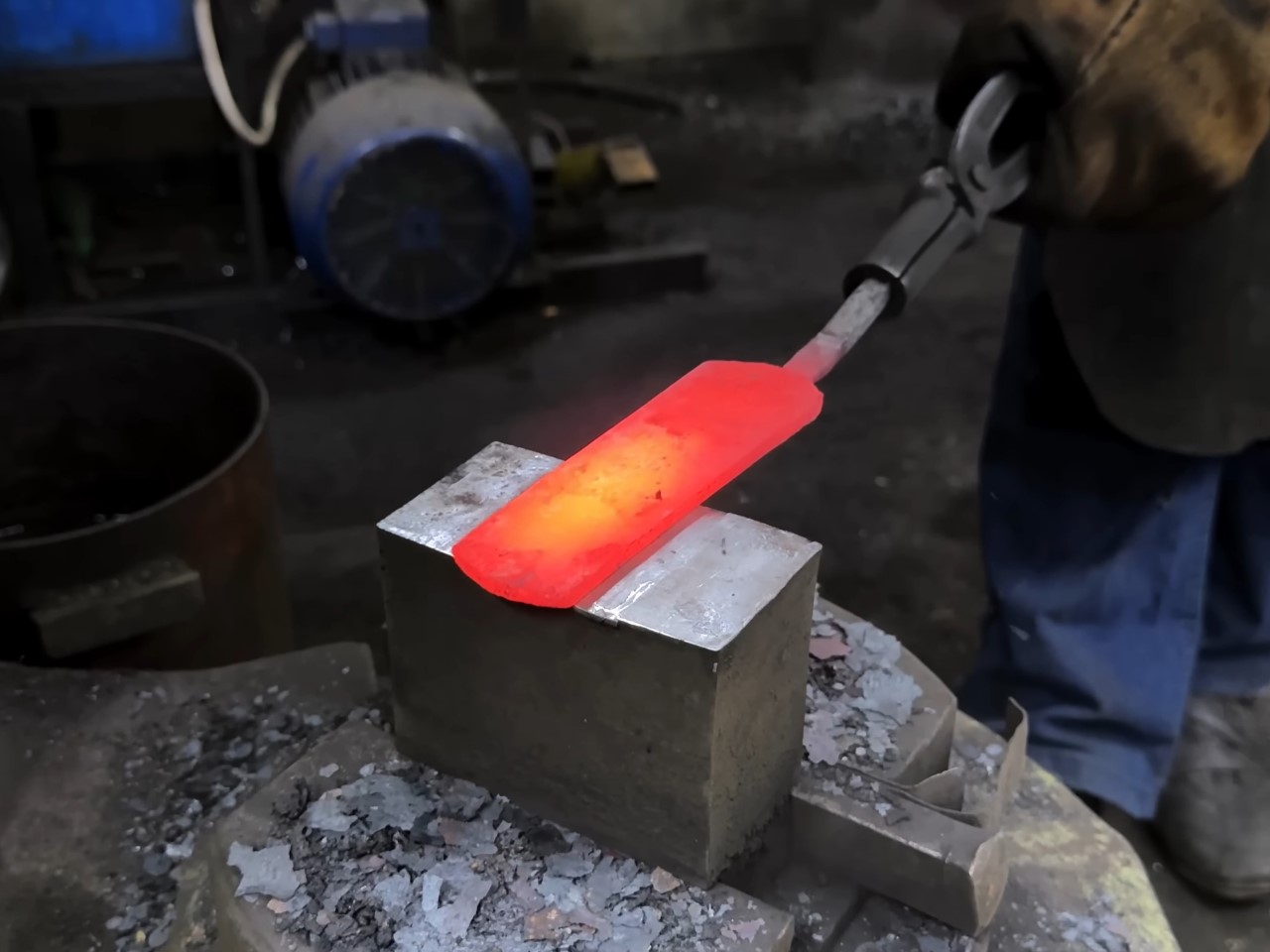
The process involved constantly heating, hammering, and forming the resulting metal ingot into a flat strip that could then be cut into the knife’s shape. Once cut, the surface was made smooth before being dipped into an acid bath to reveal the marbled pattern caused by the different kinds of steel used in the knife.

Once the blade was completely ready, Knives Project added a handle to it, using primarily wood combined with metal and a black block of presumably polymer to create a fair amount of contrast. The handle was given an octagonal cross-section and a fairly simple silhouette. Arguably a knife this pretty could be given a prettier, more ergonomic handle, but then again, that may steal from the star of the show, its blade – forged from 350 razors. Now if only Knives Project could cut that blade up into 350 pieces and turn them back into razors!

The post Turning 350 Razor Blades into a Super-Sharp Damascus Steel Knife first appeared on Yanko Design.

Amazon is rebooting its live-action adaptation of the God of War reboot

Amazon is reshuffling the deck with its God of War series. After the success of Fallout, it wants its next Prime Video gaming adaptation to live up to those lofty expectations — and it’s apparently willing to start fresh to do so. Deadline first reported on Thursday that the series showrunner and two executive producers have left the project as the streamer recalibrates “to move in a different creative direction.”

Showrunner and executive producer Rafe Judkins (Wheel of Time) and executive producers Mark Fergus and Hawk Otsby (Children of Men and Iron Man) are no longer involved with the project. Amazon and Sony reportedly praised their screenplays, which suggests the shakeup is more about wanting a fresh take than quality concerns. According to Variety, Amazon plans to hire a new showrunner and put together a new writers’ room to take another stab at a live-action Kratos.

Kratos and Atreus in a still from God of War. Atreus sits in a boat while Kratos looks grimdark.
Sony / Santa Monica Studio

The series is an adaptation of the 2018 franchise reboot that shifted the action from Greek to Norse mythology. Amazon’s description should sound familiar to anyone who played the game:

“When his beloved wife dies, Kratos sets off on a dangerous journey with his estranged son to spread her ashes from the highest peak — his wife’s final wish.[The quest] will test the bonds between father and son, and force Kratos to battle new gods and monsters for the fate of the world.”

Amazon Studios is co-producing the series alongside Sony Pictures Television. According to Deadline, Santa Monica Studio creative director Cory Barlog is staying on as an executive producer. Also reportedly remaining are PlayStation Productions’ Asad Qizilbash and Carter Swan, as well as Santa Monica Studio’s Yumi Yang and Vertigo’s Roy Lee.

This article originally appeared on Engadget at https://www.engadget.com/entertainment/streaming/amazon-is-rebooting-its-live-action-adaptation-of-the-god-of-war-reboot-203305237.html?src=rss

ESPN faces $146K fine for using emergency alert tones in NBA ads

The Federal Communications Commission (FCC) could go all the way with a proposed fine against ESPN.

The proposal calls for a penalty of $146,976 against ESPN for violating the Emergency Alert System (EAS) rules when the network aired ads to promote the 2023-2024 NBA season. The FCC said the tones were used “in the absence of an actual emergency.”

The offending ads contained the unauthorized EAS tune and were aired six times from October 20 to 24, 2023. Several complaints were filed on October 20 about the TV spots. The cable network admitted in response to a letter of inquiry that it used the EAS attention signals in the ads.

ESPN will have an opportunity to respond to the proposed fine. The Commission will examine all the evidence and legal arguments surrounding the alleged illegal tone use before making a final decision on the matter.

This is the third time the network misused an emergency tone on air. The FCC issued a $1.12 million fine as part of a forfeiture order in 2015 when ESPN used EAS tones a total of 13 times across three of its cable networks. ESPN violated EAS tone usage rules a second time during an airing of one of its 30 for 30 documentaries Roll Tide/War Eagle, leading to a $20,000 fine in 2021.

This article originally appeared on Engadget at https://www.engadget.com/big-tech/espn-faces-146k-fine-for-using-emergency-alert-tones-in-nba-ads-200054993.html?src=rss

Remedy’s new game is FBC: Firebreak, a co-op shooter in the Control universe

After a long and winding road, Remedy Entertainment has unveiled its multiplayer follow-up to Control. FBC: Firebreak is for teams of three, and the trios will face down waves of enemies with an intriguing arsenal of weapons. For instance, the trailer shows a gatling gun of gloopy poison and a gun with a launching piston attached to the front for aerial attacks.

Since FBC: Firebreak is set in the same world as Control (and Alan Wake II), there will be more for players to explore about this surreal place. The trailer showed off gunfights in the Federal Bureau of Control and the Oldest House, familiar settings to those who have played Control and its DLC. But with the different approach to gameplay, FBC: Firebreak isn't intended to be a direct sequel to the psychological hit game. "I guess you could say that it’s a spin-off, but in the most positive sense of the word," Game Director Mike Kayatta said. "It’s not designed to be some kind of lesser, bite-sized Control. FBC: Firebreak is its own, fully formed thing."

A co-op project from the studio was first teased all the way back in 2021. Firebreak has clearly gone through some refinements from the original concept Remedy announced with 505 Games. At the time, it was also working on a free-to-play co-op shooter with the conglomerate Tencent, but the codenamed Project Vanguard was scrapped in 2023. The duo attempted to reenvision the game as a premium title, but that also fell by the wayside.

FBC: Firebreak is currently scheduled for release in 2025 on the Xbox Series X|S, PC and PlayStation 5. Remedy announced that the game will be on Game Pass Ultimate and PC Game Pass at launch, as well as on the PlayStation Plus Game Catalog for Extra and Premium members. 

Update, October 17, 3:55 pm ET: Article has been updated with full launch platform and service information. 

This article originally appeared on Engadget at https://www.engadget.com/gaming/remedys-new-game-is-fbc-firebreak-a-co-op-shooter-in-the-control-universe-180702570.html?src=rss

Subnautica 2 hits early access in 2025 with four-player co-op

The sequel to the hugely successful Subnautica is creeping ever closer into the light, and we got our first proper look at it during Xbox's partner showcase event on Thursday. The Subnautica 2 reveal trailer opens by cutting between a zonked-out diver in the depths with a low-oxygen warning flashing on their helmet and a colorful Finding Nemo-esque coral biome. In the latter space, the diver tries to swim away from a large crab-like creature that emerges, but is sucked into the inky blackness. A fellow human in a submersible shows up and greets them, only for a monstrously huge being to appear.

The presence of the second person is to highlight that Subnautica 2 will feature four-player co-op, something players of the open-water survival series have long requested. "Introducing the optional co-operative experience alongside a whole new planet felt like the best opportunity to make that switch, and we’re certain that it will test your ingenuity and ability to adapt as you explore the world together," Donya Abramo, a community manager at developer and publisher Unknown Worlds wrote on the Xbox Wire. "But for those who prefer the eerily beautiful solitude of solo play, Subnautica 2 will still provide that familiar experience, and prove equally as challenging."

Expect a lot more details about the game to be revealed in the coming months, including info on new and improved tools, vehicles and base building. Of course, there are a whole gaggle of creatures — big and small — in store too. 

Subnautica 2 will hit early access next year. It'll initially be available on Steam, the Epic Games Store and, via Game Pass, Xbox game preview on PC and Xbox Series X/S.

This article originally appeared on Engadget at https://www.engadget.com/gaming/subnautica-2-hits-early-access-in-2025-with-four-player-co-op-194227017.html?src=rss

The FBI arrested an Alabama man for allegedly helping hack the SEC’s X account

A 25-year-old Alabama man has been arrested by the FBI for his alleged role in the takeover of the Securities and Exchange Commission's X account earlier this year. The hack resulted in a rogue tweet that falsely claimed bitcoin ETFs had been approved by the regulator, which temporarily juiced bitcoin prices.

Now, the FBI has identified Eric Council Jr. as one of the people allegedly behind the exploit. Council was charged with conspiracy to commit aggravated identity theft and access device fraud, according to the Justice Department. While the SEC had previously confirmed that its X account was compromised via a SIM swap attack, the indictment offers new details about how it was allegedly carried out.

According to the indictment, Council worked with co-conspirators who he coordinated with over SMS and encrypted messaging apps. These unnamed individuals allegedly sent him the personal information of someone, identified only as “C.L,” who had access to the SEC X account. Council then printed a fake ID using the information and used it to buy a new SIM in their name, as well as a new iPhone, according to the DoJ. He then coordinated with the other individuals so they could access the SEC’s X account, change its settings and send the rogue tweet, the indictment says. 

The tweet from @SECGov, which came one day ahead of the SEC’s actual approval of 11 spot bitcoin ETFS, caused bitcoin prices to temporarily spike by more than $1,000. It also raised questions about why the high profile account wasn’t secured with multi-factor authentication at the time of the attack. “Today’s arrest demonstrates our commitment to holding bad actors accountable for undermining the integrity of the financial markets,” SEC Inspector General Jeffrey said in a statement.

The indictment further notes that Council allegedly performed some seemingly incriminating searches on his personal computer. Among his searchers were: "SECGOV hack," "telegram sim swap," "how can I know for sure if I am being investigated by the FBI," "What are the signs that you are under investigation by law enforcement or the FBI even if you have not been contacted by them," "what are some signs that the FBl is after you,” “Verizon store list," "federal identity theft statute," and "how long does it take to delete telegram account," the indictment says.

This article originally appeared on Engadget at https://www.engadget.com/cybersecurity/the-fbi-arrested-an-alabama-man-for-allegedly-helping-hack-the-secs-x-account-193508179.html?src=rss

FCC now requires georouting for wireless calls to 988, the National Suicide Prevention Hotline

The Federal Communications Commission has passed rules that will require all wireless calls to the 988 Lifeline to be georouted. Geographic routing ensures that attempts to reach the National Suicide Prevention Hotline for intervention services will be sent to the location where the call is placed rather than to the location of the caller's area code and exchange.

Once the rules take effect, national providers will have 30 days to implement georouting for these calls. Smaller, non-national providers have a timeline of 24 months to comply. The agency also issued a proposal that the same georouting policy be applied to texts sent to 988.

The FCC has taken several steps to expand the reach of the 988 Lifeline over the past few years. After voting to make the three-digit number the shortcut for reaching the National Suicide Prevention Hotline in 2020, the agency expanded the service to include text support in 2021. T-Mobile was one of the first telecoms to activate 988 for customers to access mental health services.

If you are struggling and need someone to listen, please, call 988. The full number is 1-800-273-8255 (1-800-273-TALK), or you can reach the Lifeline by webchat.

This article originally appeared on Engadget at https://www.engadget.com/mobile/fcc-now-requires-georouting-for-wireless-calls-to-988-the-national-suicide-prevention-hotline-192030468.html?src=rss

Prada Designs Spacesuit for the First Woman Astronaut On The Moon. Here’s what is different…

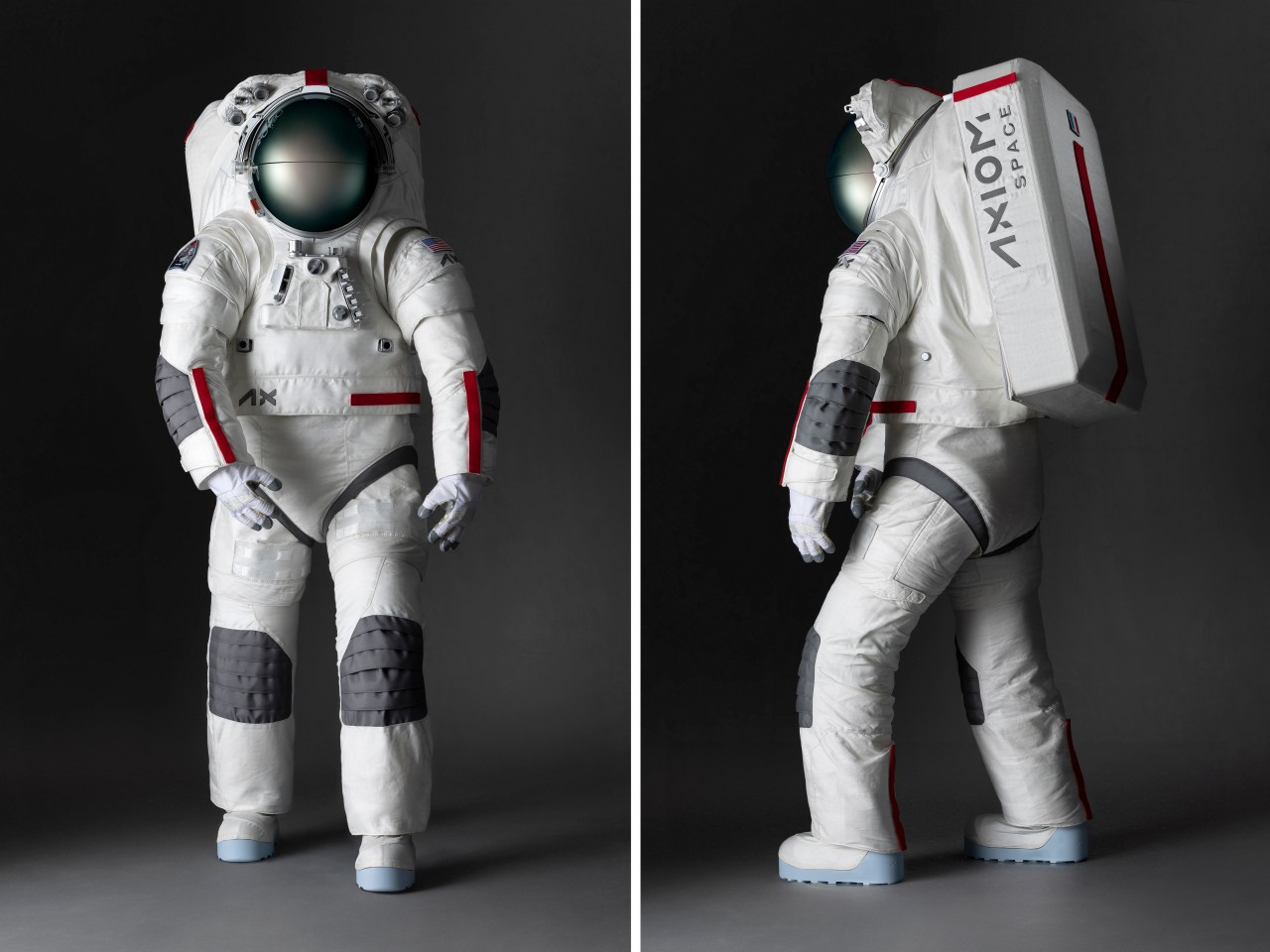
When you think of spacesuits, luxury fashion probably doesn’t come to mind—but Axiom Space and Prada are changing that. Together, they’ve unveiled the Axiom Extravehicular Mobility Unit (AxEMU), a next-generation spacesuit designed for NASA’s Artemis III mission, which will return astronauts to the Moon. This suit represents a groundbreaking shift in both form and function, blending the technical precision required for space exploration with the high-performance materials and design innovations Prada is known for. And it’s more than just a style statement: the AxEMU has been carefully crafted to support the historic lunar landing of astronaut Christina Koch, who will be the first woman to walk on the Moon.

Designers: Axiom Space and Prada
An Unlikely Collab between NASA and Prada

At first glance, the AxEMU may not look like the bulky spacesuits we’ve come to expect. In fact, that’s the point. Designed with a scalable and adaptable architecture, this suit breaks free from the rigid, one-size-fits-all approach of traditional space gear. The AxEMU is built to accommodate a wide range of body types, allowing astronauts from various anthropometric percentiles—meaning different heights, weights, and builds—to feel comfortable and functional in the suit. Whether you’re on the smaller side or fall into the larger percentile, the AxEMU adjusts to ensure maximum mobility, a critical factor for a mission as demanding as Artemis III.

Prada’s expertise in material science plays a key role here. The luxury fashion house worked closely with Axiom engineers to develop an outer layer that not only looks sleek but also performs under extreme conditions. Crafted from a reflective white material, this layer helps regulate temperature by reflecting the sun’s heat while simultaneously protecting the astronaut from lunar dust and radiation. While traditional spacesuits focus on pure functionality, the AxEMU integrates aesthetics with performance, combining Prada’s advanced sewing techniques with Axiom’s life support technology to create something truly revolutionary in both appearance and utility.


High-Tech Meets High-Street Fashion

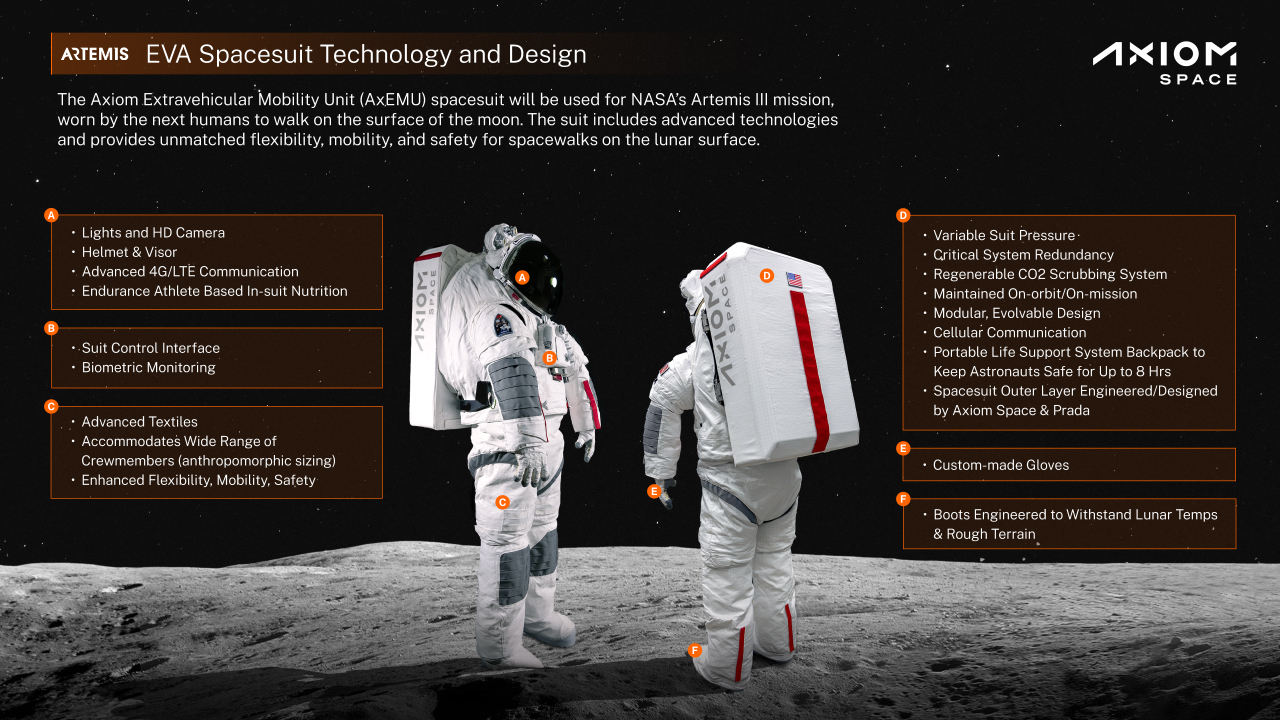
What truly sets the AxEMU apart from its predecessors is its balance between high-end design and cutting-edge technology. The suit boasts enhanced safety systems, including a regenerable carbon dioxide scrubbing system that ensures astronauts can breathe safely during spacewalks lasting up to eight hours. It also features advanced cooling technology, which is crucial for maintaining comfort in the extremes of the lunar environment. Astronauts will be better equipped to perform complex tasks thanks to upgraded dexterity in the gloves—something previous spacesuits struggled with, often limiting the fine motor control astronauts need to manipulate tools or conduct experiments.

The helmet also offers significant upgrades, with an advanced visor that improves visibility in the harsh lighting conditions of the Moon’s surface. The design of the AxEMU is about more than just protection; it’s about enabling astronauts to push the boundaries of what’s possible in space exploration. Thanks to Prada’s involvement, the suit’s exterior may feel more like high-performance sportswear than traditional space armor. But make no mistake—this is gear built to survive the extreme cold and searing heat of the Moon’s surface, with every detail engineered to keep astronauts safe and functional in one of the most hostile environments known to man.
What Makes The AxEMU So Different?

Compared to existing spacesuits, the AxEMU is a leap forward in versatility and user experience. Most current spacesuits, like NASA’s EMU (Extravehicular Mobility Unit), were designed decades ago, with little adaptation for the variety of missions astronauts now face. The AxEMU, by contrast, is built with a flexible architecture that can evolve for different missions, from the lunar surface to low-Earth orbit. This flexibility allows Axiom Space to customize the suit for a wide range of environments and tasks, whereas older suits were often mission-specific, with limited adaptability.

Safety is another area where the AxEMU shines. Conventional spacesuits are built with basic redundancy, but the AxEMU integrates a more robust set of redundant systems, ensuring multiple fail-safes in life support and mobility functions. This suit also goes beyond standard temperature control, using Prada’s material expertise to provide better heat management, allowing astronauts to remain comfortable during long spacewalks, even in the harsh lunar environment. Furthermore, the AxEMU has been tested with advanced simulations, including underwater testing to mimic the reduced gravity on the Moon, setting a new standard for preparation and reliability.


Designed for Christina Koch: A Spacesuit for the First Woman on the Moon

Christina Koch will make history as the first woman to walk on the Moon, and the AxEMU has been designed with that momentous occasion in mind. While traditional spacesuits were largely designed for male astronauts, the AxEMU has been engineered with inclusivity at its core. One of the key differences lies in its customizability: unlike older suits that often required uncomfortable modifications for female astronauts, the AxEMU offers a better fit right from the start, making adjustments seamless and comfortable for a wide range of body types. This is particularly important for Koch, as a properly fitted suit means enhanced mobility and reduced fatigue during long spacewalks.

Additionally, the suit’s gloves, helmet, and overall design have been tailored for precision, allowing Koch to work more efficiently on the lunar surface. The improved dexterity of the gloves will enable her to conduct more intricate scientific tasks, such as collecting samples and performing experiments, without the restrictions of older spacesuit designs. For Koch, the first woman to explore the Moon, having a suit that adapts to her needs, rather than her adapting to the suit, marks a symbolic and practical step forward in space exploration, ensuring that future missions can be more inclusive.

The AxEMU represents the future of spacesuits—one where technology, design, and inclusivity come together to push the boundaries of human potential. With Christina Koch set to wear this groundbreaking suit during her historic moonwalk, the AxEMU is leading the way into a new era of space exploration, where astronauts of diverse backgrounds, genders, and physiques will have the tools they need to reach new frontiers.

The post Prada Designs Spacesuit for the First Woman Astronaut On The Moon. Here’s what is different… first appeared on Yanko Design.
The FCC will soon require all hearing aids and phones to work together

On Thursday, the FCC approved new regulations requiring all phone makers to make their handsets compatible with hearing aids. With the number of Americans 65 and older expected to balloon by nearly 50 percent by 2050, the rules will ensure those with hearing loss don’t have to worry about which phones will work with their hearing aids.

“Under the new rules, after a transition period, Americans with hearing loss will no longer be limited in their choice of technologies, features, and prices available in the mobile handset marketplace,” the FCC wrote in a press release.

On the flip side, the FCC also passed a requirement for hearing aid makers that effectively bans proprietary Bluetooth coupling standards in the assistive devices. So, phones must be compatible with hearing aids — and vice versa. The rule even applies to the recently approved over-the-counter hearing aids, which now include AirPods Pro 2.

Other changes include requiring all new mobile handsets sold in the US to let users raise the volume without introducing distortion. In addition, the FCC now mandates that cell phones’ point-of-sale labels clarify hearing aid compatibility and whether the handsets meet Bluetooth or telecoil coupling requirements.

The FCC worked with a consortium of cell carriers, phone makers and researchers to draft and adopt the rules. “Establishing a 100% hearing aid compatibility requirement for all mobile handsets was made possible by the collaborative efforts of members of the Hearing Aid Compatibility Task Force — an independent organization of wireless service providers, handset manufacturers, research institutions and advocates for those with hearing loss,” the Commission wrote. “Members of the Task Force worked together over a period of years to reach a consensus on how the Commission could achieve its objective of requiring 100% of all mobile handsets to be hearing aid compatible.”

This article originally appeared on Engadget at https://www.engadget.com/mobile/smartphones/the-fcc-will-soon-require-all-hearing-aids-and-phones-to-work-together-190003074.html?src=rss