iOS 27 Beta 6 Arrives: What Apple Fixed Ahead of the Public Launch

iOS 27 Beta 6 Arrives: What Apple Fixed Ahead of the Public Launch iOS 27 Beta 6

Apple has officially released iOS 27 Beta 6, an update that, while smaller in size compared to earlier beta versions, delivers meaningful improvements aimed at enhancing system performance and addressing persistent bugs. This release reflects Apple’s focus on refining the user experience and preparing for the final version of iOS 27. Below is a detailed […]

The post iOS 27 Beta 6 Arrives: What Apple Fixed Ahead of the Public Launch appeared first on Geeky Gadgets.

Posted in Uncategorized

Every Expected Wallet and Apple Pay Feature in iOS 27

Every Expected Wallet and Apple Pay Feature in iOS 27 The new Apple Wallet interface in iOS 27 displaying digital IDs and hotel keys.

Apple’s iOS 27 introduces a comprehensive suite of updates to Apple Wallet and Apple Pay, redefining how you manage payments, travel, and events. These updates focus on expanding global accessibility, refining user interfaces, and introducing innovative tools to make your digital wallet more functional, secure, and personalized. With these advancements, Apple continues to enhance the […]

The post Every Expected Wallet and Apple Pay Feature in iOS 27 appeared first on Geeky Gadgets.

Posted in Uncategorized

Retention by Design: How Rokt Built a Company Culture Worth Returning To

Retention by Design: How Rokt Built a Company Culture Worth Returning To Rokt

Rokt, the New York-based e-commerce technology company, has spent more than a decade working on a problem that quietly defeats most firms as they grow: holding on to the culture that made the company worth joining in the first place. Its approach rests on three qualities employees name again and again: ownership, global collaboration, and […]

The post Retention by Design: How Rokt Built a Company Culture Worth Returning To appeared first on Geeky Gadgets.

Posted in Uncategorized

Merach UltraRow R60N review: Built for harder home rowing

PROS:


  • Makes short, everyday rowing sessions easy to fit into the day

  • Smooth, adjustable resistance for harder bursts or longer rows

  • Comfortable fit, solid build, and an adjustable phone/tablet holder

  • Rowing-generated power helps extend the console's AA battery life

CONS:


  • Pairing with the app replaces the console metrics with a BT indicator

  • The console still uses four AA batteries

RATINGS:

AESTHETICS
ERGONOMICS
PERFORMANCE
SUSTAINABILITY / REPAIRABILITY
VALUE FOR MONEY

EDITOR'S QUOTE:

The UltraRow R60N rowing machine makes it easy to move more, more often.

At 52, I don’t want every bit of movement to require workout clothes, a drive to the gym, or a scheduled block of time. During two weeks with the Merach UltraRow R60N, I used it every day in two-, 10-, and 15-minute bursts, often when my watch or smart ring told me to get up and move. That became the point of the machine: it was there when I had a few minutes, not waiting for me to commit to a formal workout.
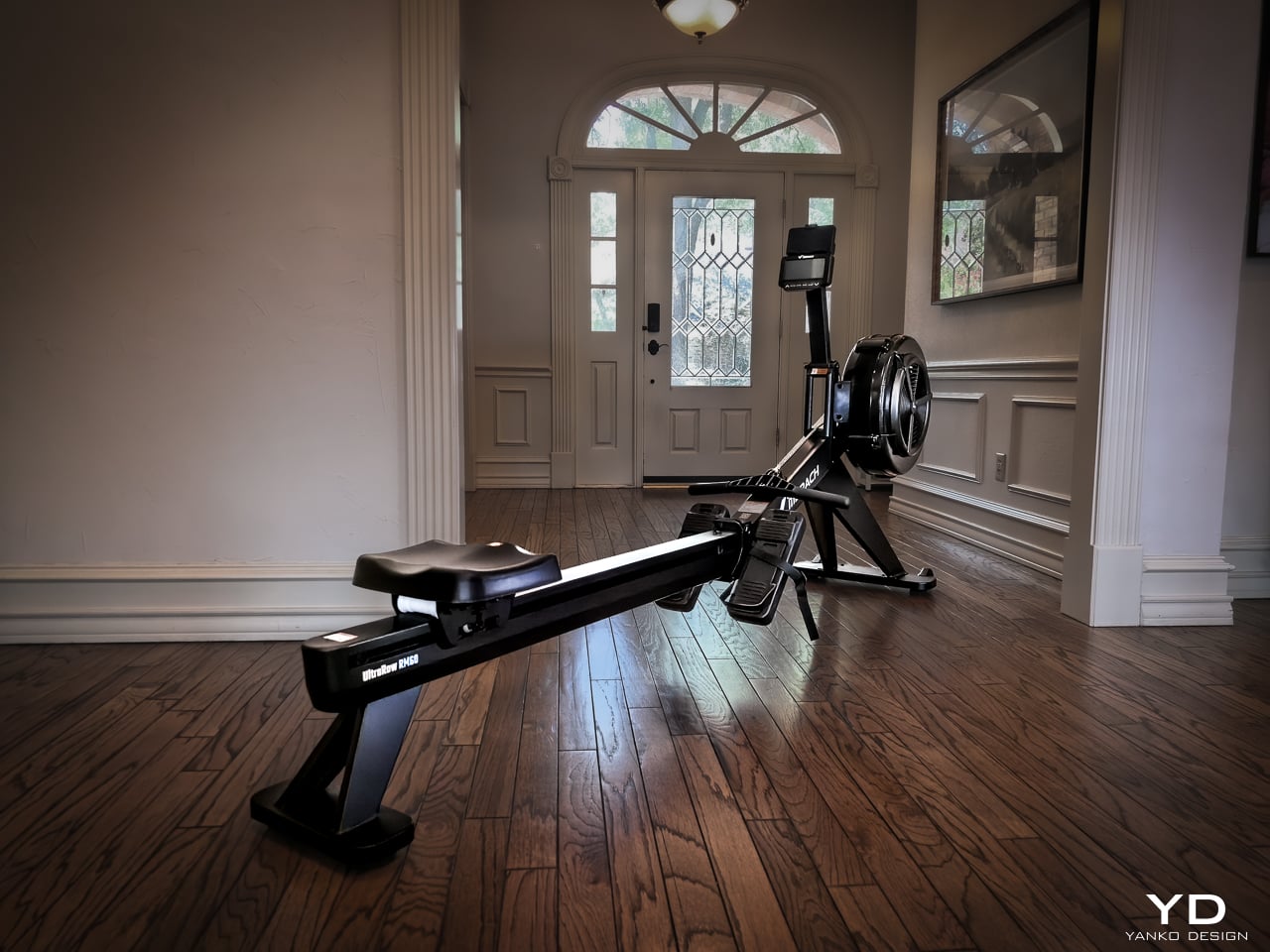
The R60N is a large home rowing machine, measuring 93.9 inches long and weighing 86.6 pounds. It combines air resistance at levels 1 through 7 with added magnetic resistance at levels 8 through 10. At $799.99 when this review was prepared, it asks for real floor space, but it delivers a comfortable, full-body cardio option that I could use without a lot of setup or impact.

Click Here to Buy Now: $699.99 $1099.99 ($400 off). Hurry, deal ends in 48-hours!

Aesthetics and Ergonomics

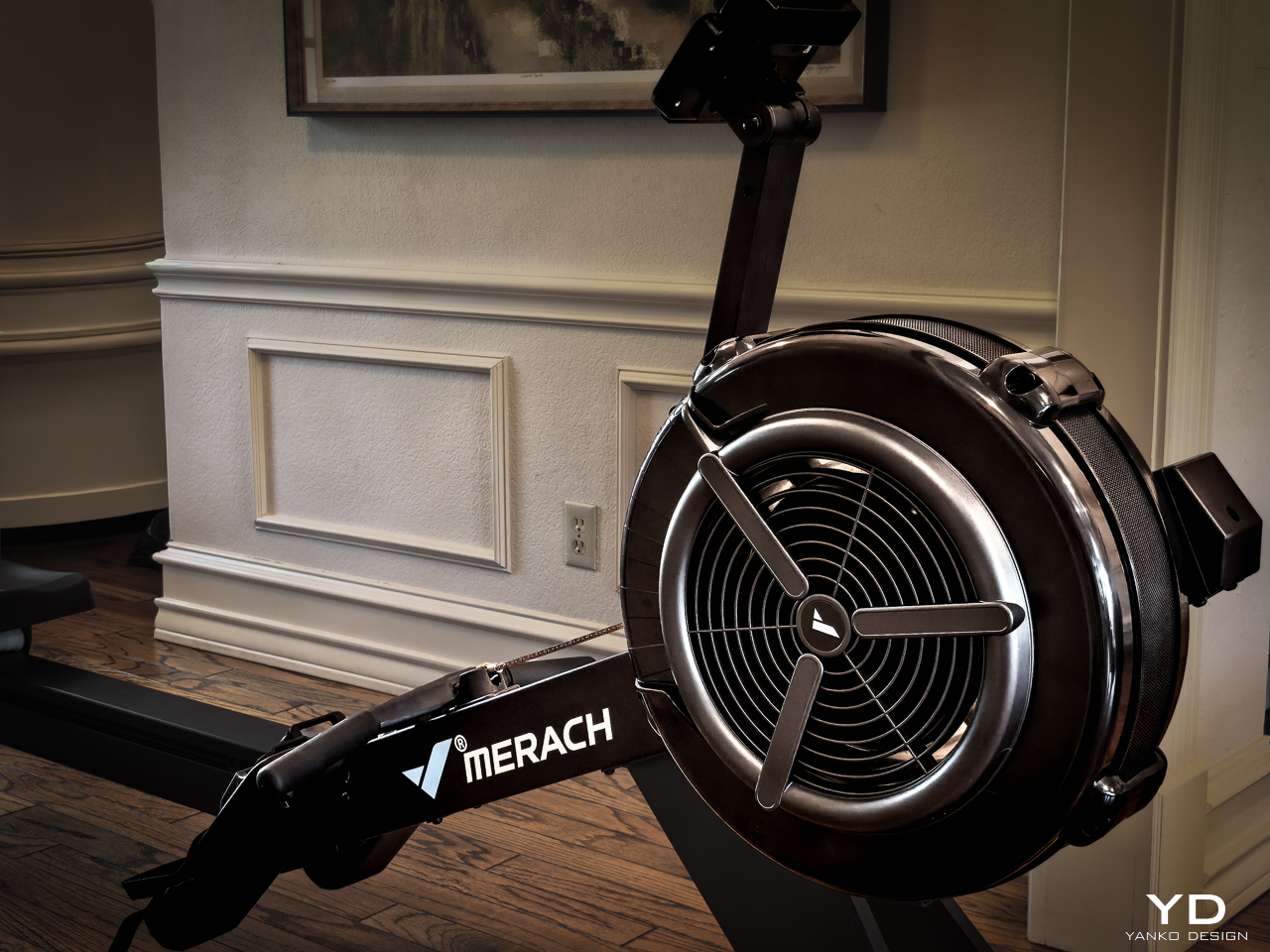
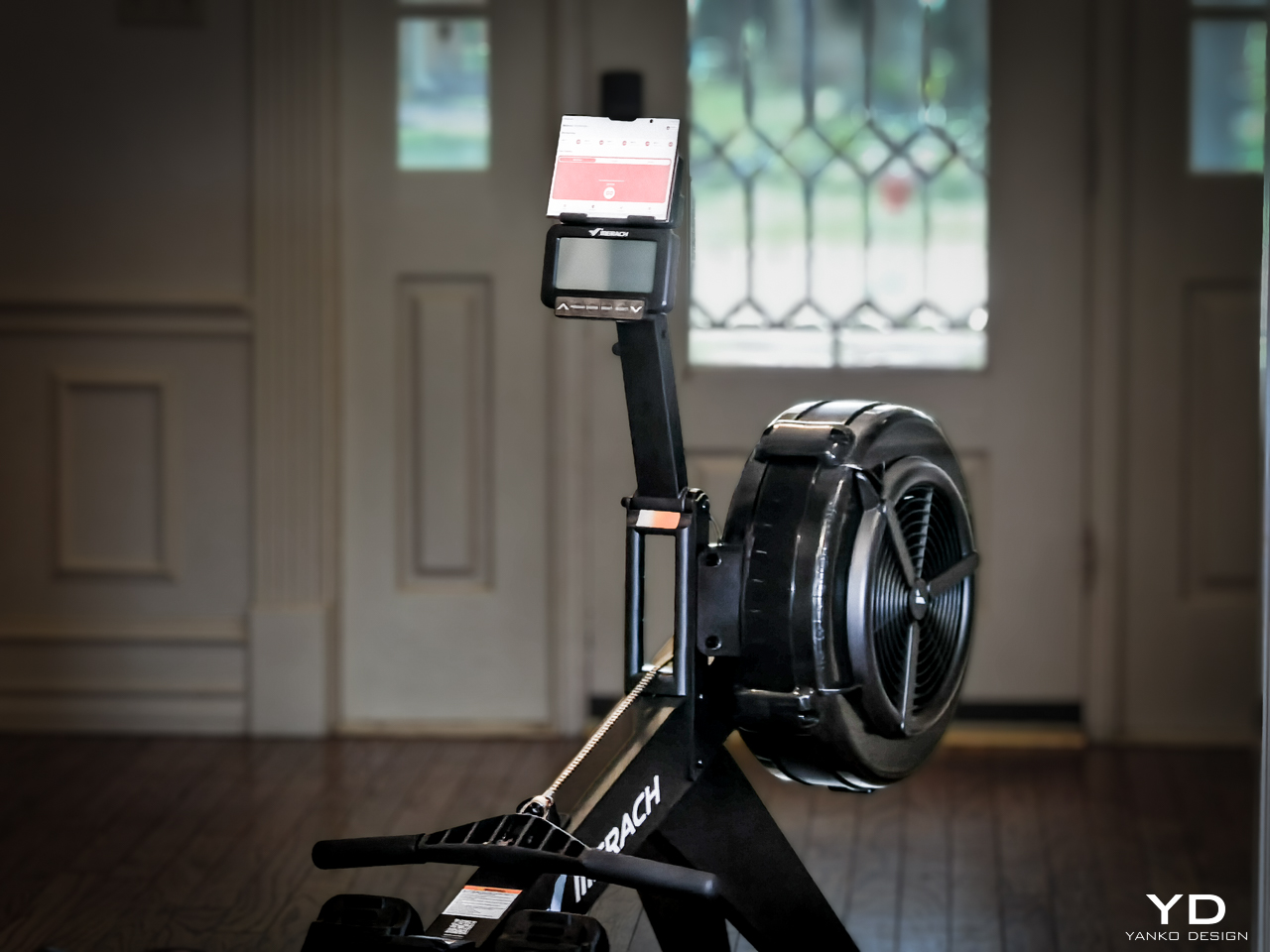
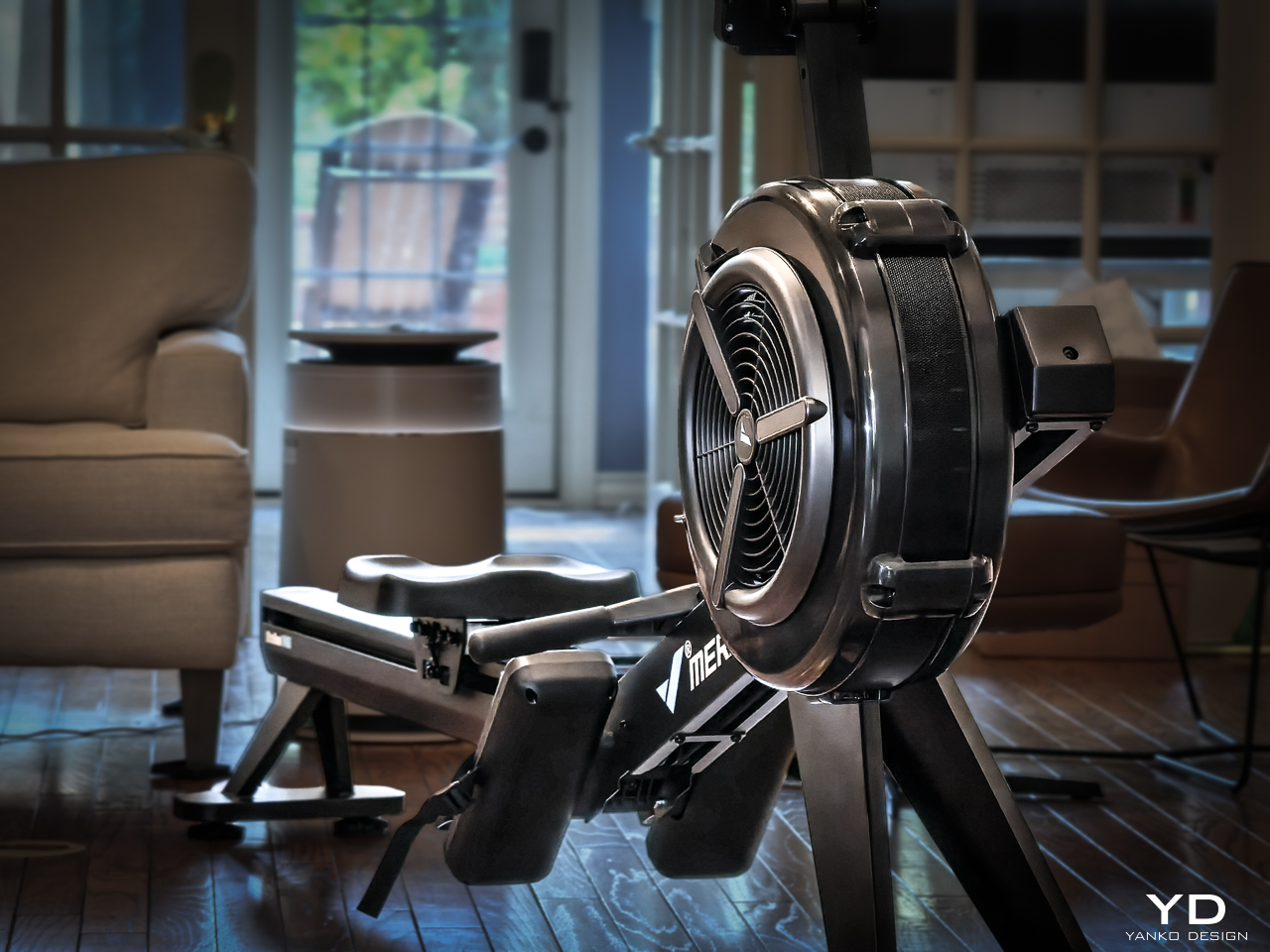
The UltraRow R60N looks like equipment rather than furniture. The smoked-black flywheel grille, matte surfaces, long single rail, exposed handle, and adjustable footrests all emphasize the mechanical path of a rowing stroke. It’s a purposeful, utilitarian design that doesn’t try to disappear into a living room.
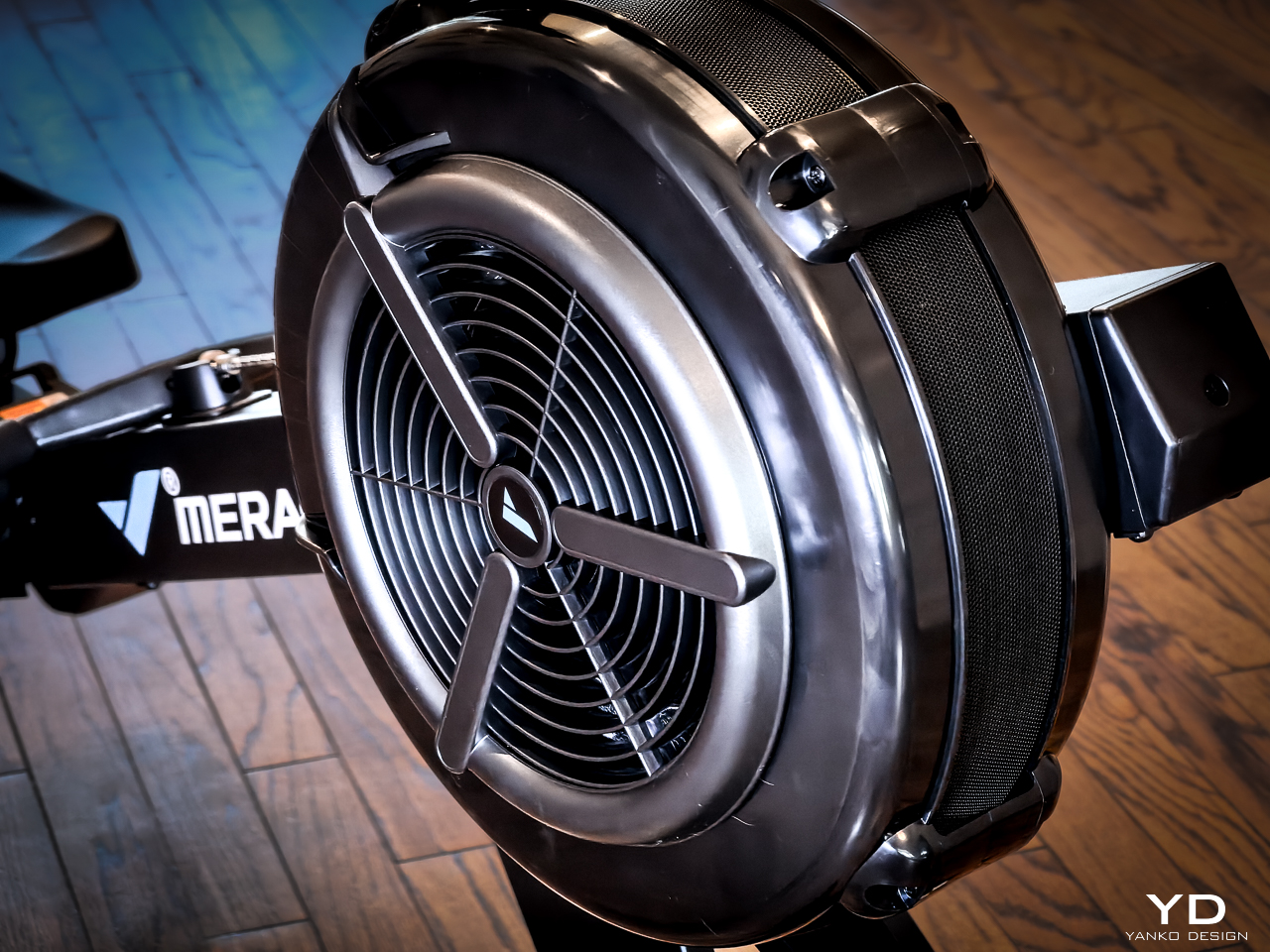
Nothing about the R60N feels flimsy. The materials feel good in hand, the assembly feels solid, and the dark color gives it a restrained, masculine look that fits the straightforward mechanical design.
It doesn’t disappear physically, either. The assembled rower measures 2,385 x 500 x 876 mm, or approximately 93.9 x 19.7 x 34.5 inches. Its long, narrow stance demands a dedicated lane for the rowing motion, even though the machine itself isn’t especially wide. In person, it feels like a serious space commitment when it’s expanded and ready to row. At 39.3 kg, or about 86.6 pounds, moving the complete rower requires more than a casual lift or quick relocation.
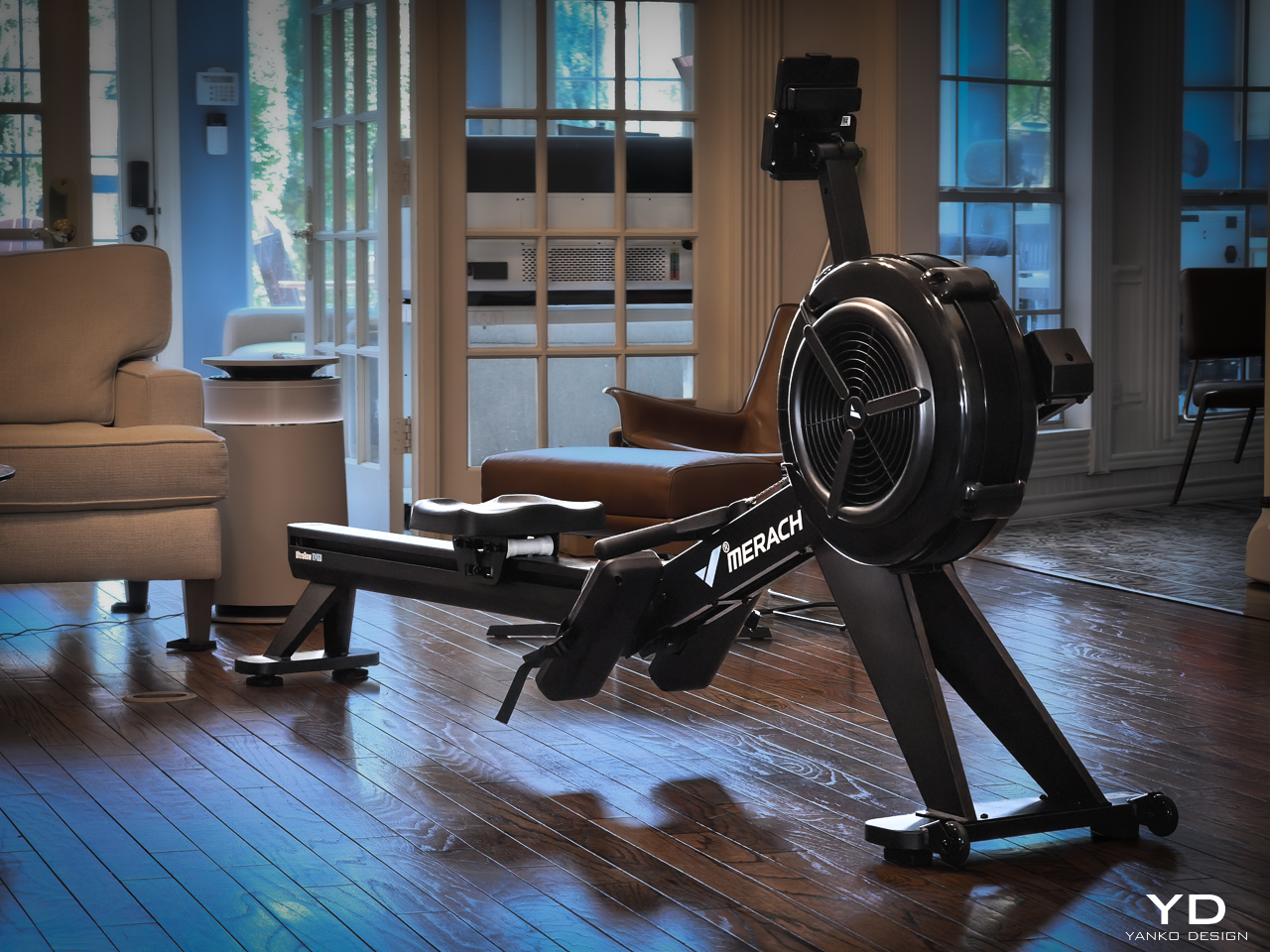
Merach describes the R60N as foldable in some materials, but its storage system works differently from a conventional upright fold. The rower separates where the long rear rail and seat section meet the front assembly that houses the flywheel, resistance control, and display. There are no screws to remove. Instead, the two sections meet through a tension-held, tool-free connection that comes apart the same way in reverse.
Setup was relatively straightforward, and I was able to install it alone. The unexpected part was bringing those sections together for the first time, because it changes the R60N from two manageable components into one long, substantial machine. Once it’s connected, though, moving it around the room is easier than its overall 86.6-pound weight suggests. Lifting from the rear brings the front transport wheels into play, making it manageable for one person to reposition or fine-tune its location.

Merach lists the stored arrangement at 910 x 700 x 1,335 mm, or approximately 35.8 x 27.6 x 52.6 inches. That makes the machine much shorter in storage, but wider and taller than its assembled footprint. It still needs a committed storage location. The wheels make it easy enough to reposition the assembled rower within one room, but moving it between rooms means detaching the two sections and carrying them separately.
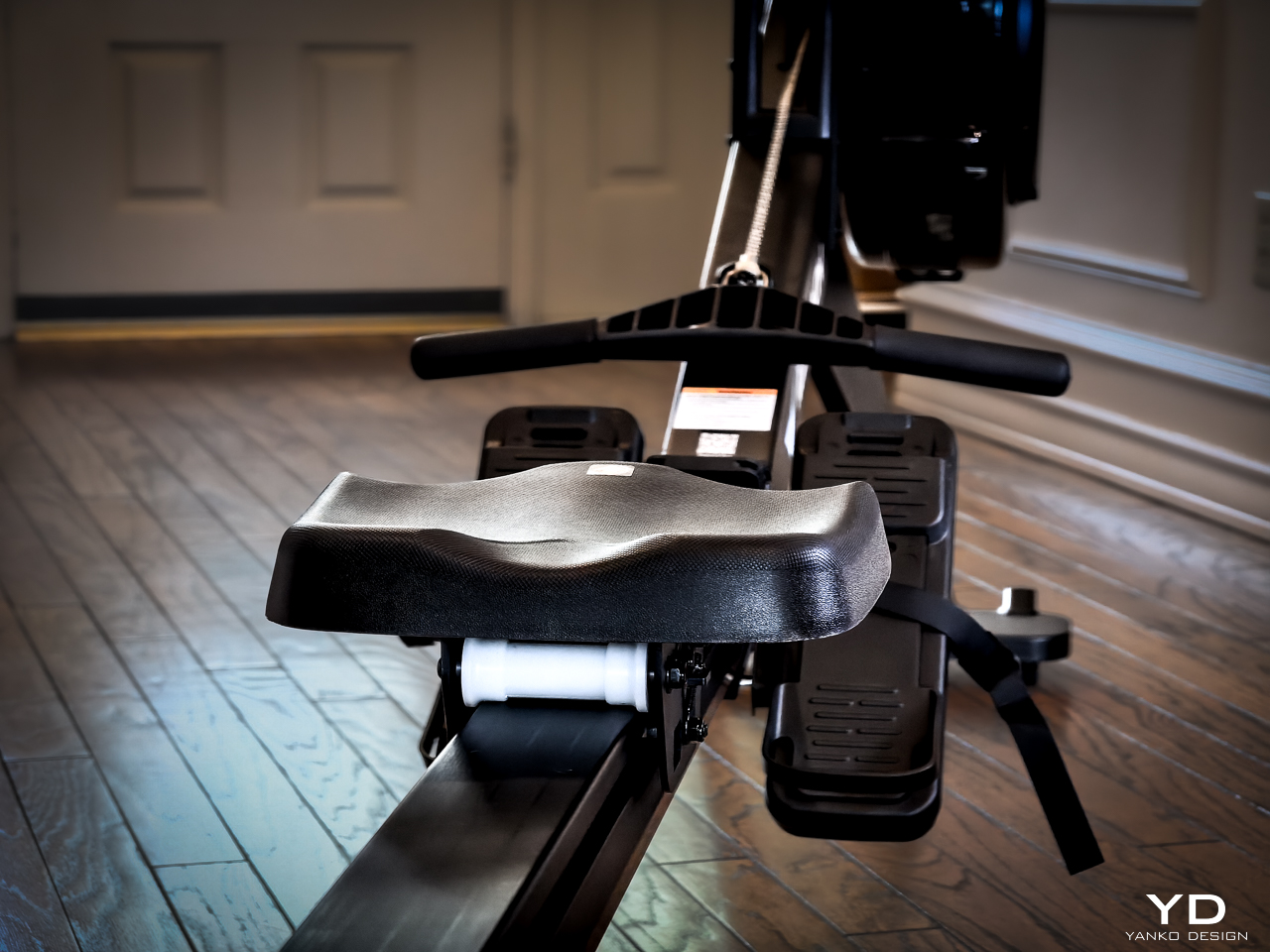
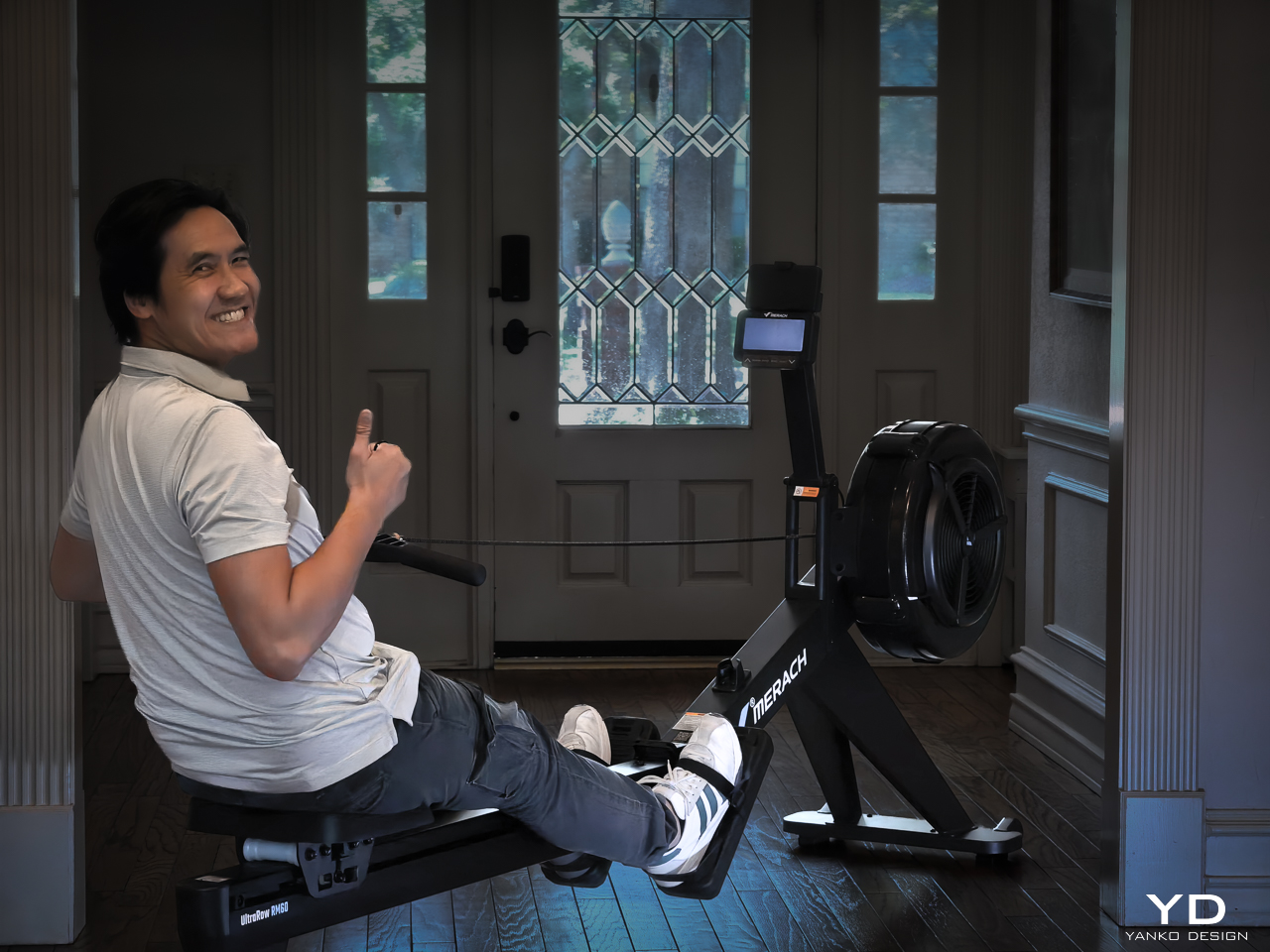
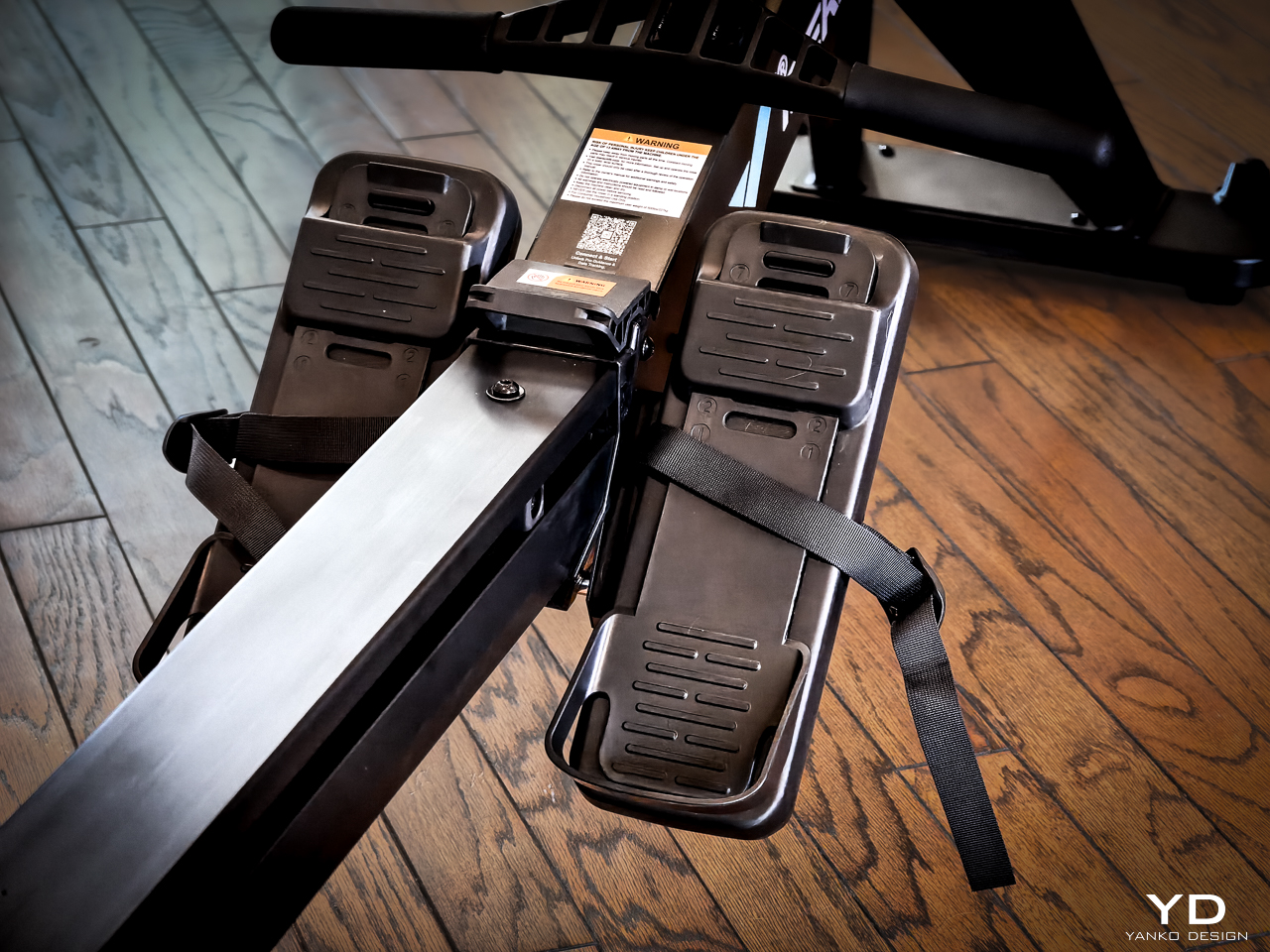
A 410 mm, or 16.1-inch, seat gives the R60N a notably elevated entry point. In use, its broad, shaped surface felt ergonomic and comfortable rather than restrictive. I didn’t experience pain or discomfort during my sessions. Once the foot straps were secured, the setup felt stable and straightforward enough to stop thinking about.
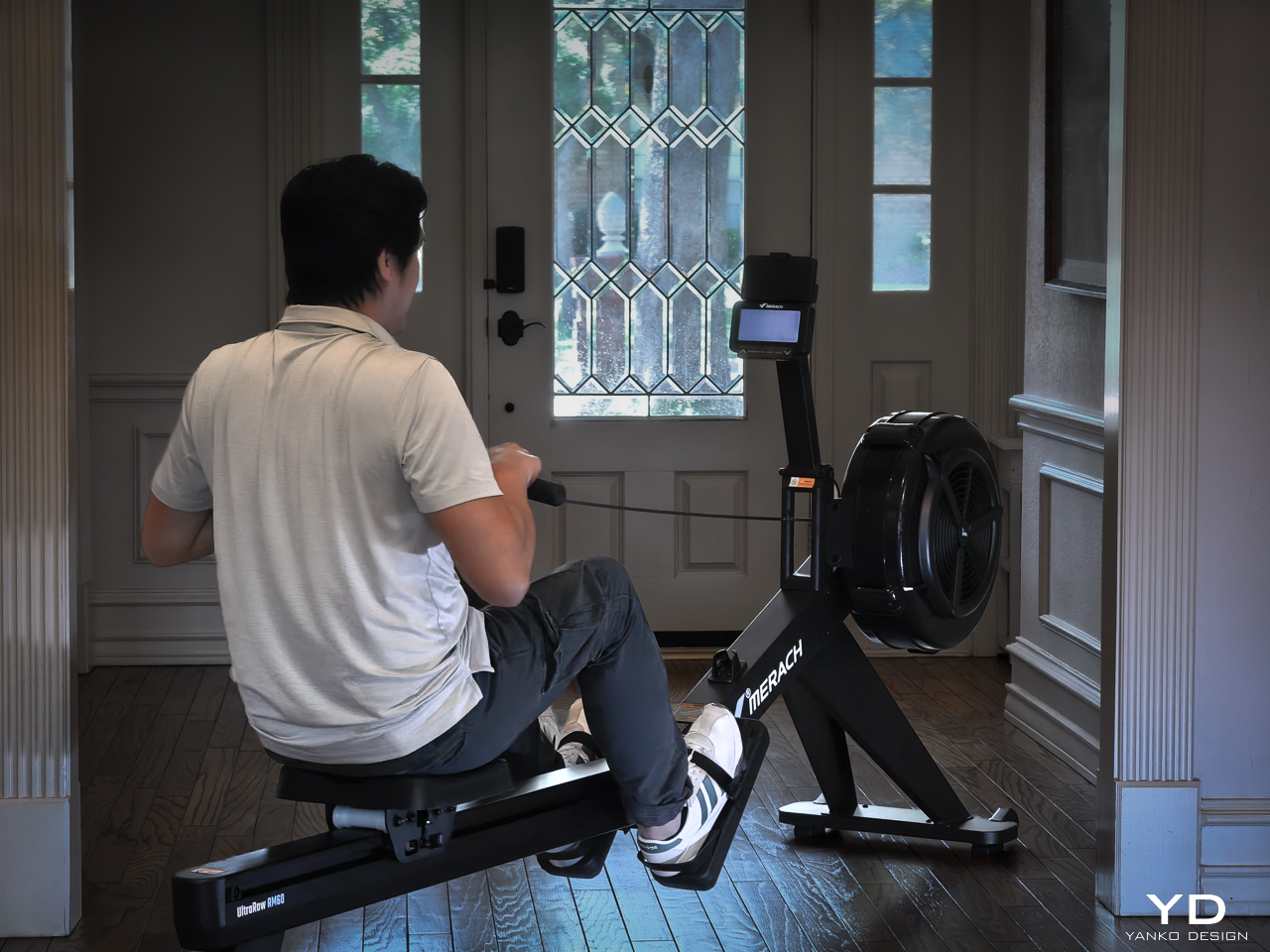
At 6’2″, I had plenty of room to row comfortably. The long rail is listed at 1,250 mm with a 1,200 mm inseam allowance, while the footrests offer seven adjustment positions. Merach publishes a user-height range of 3’11” to 6’10” and a 500-pound maximum weight capacity, so the company intends the R60N to accommodate a wide range of body types. A 510 mm handle and widely spaced pedals round out that accommodating layout.
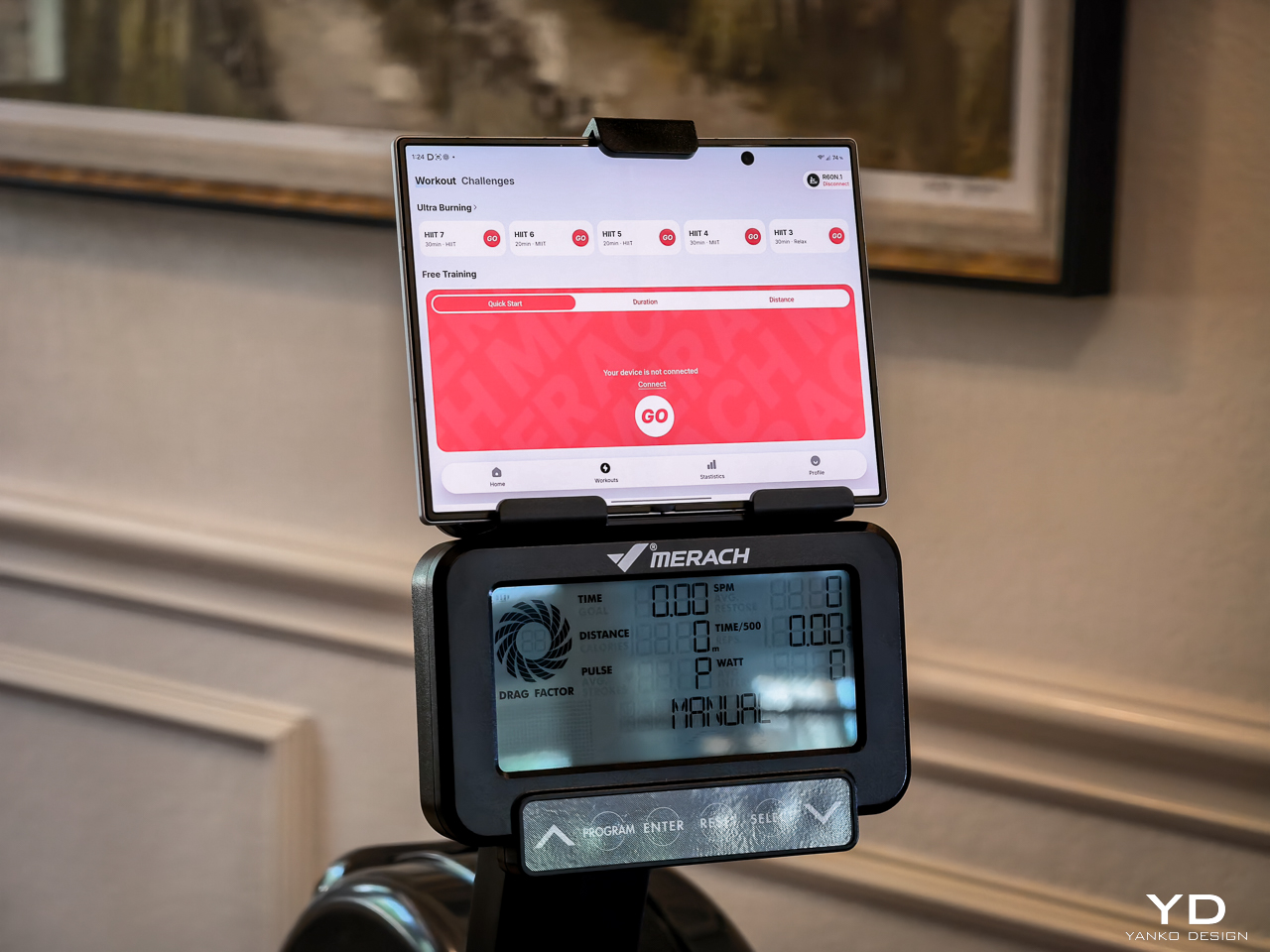
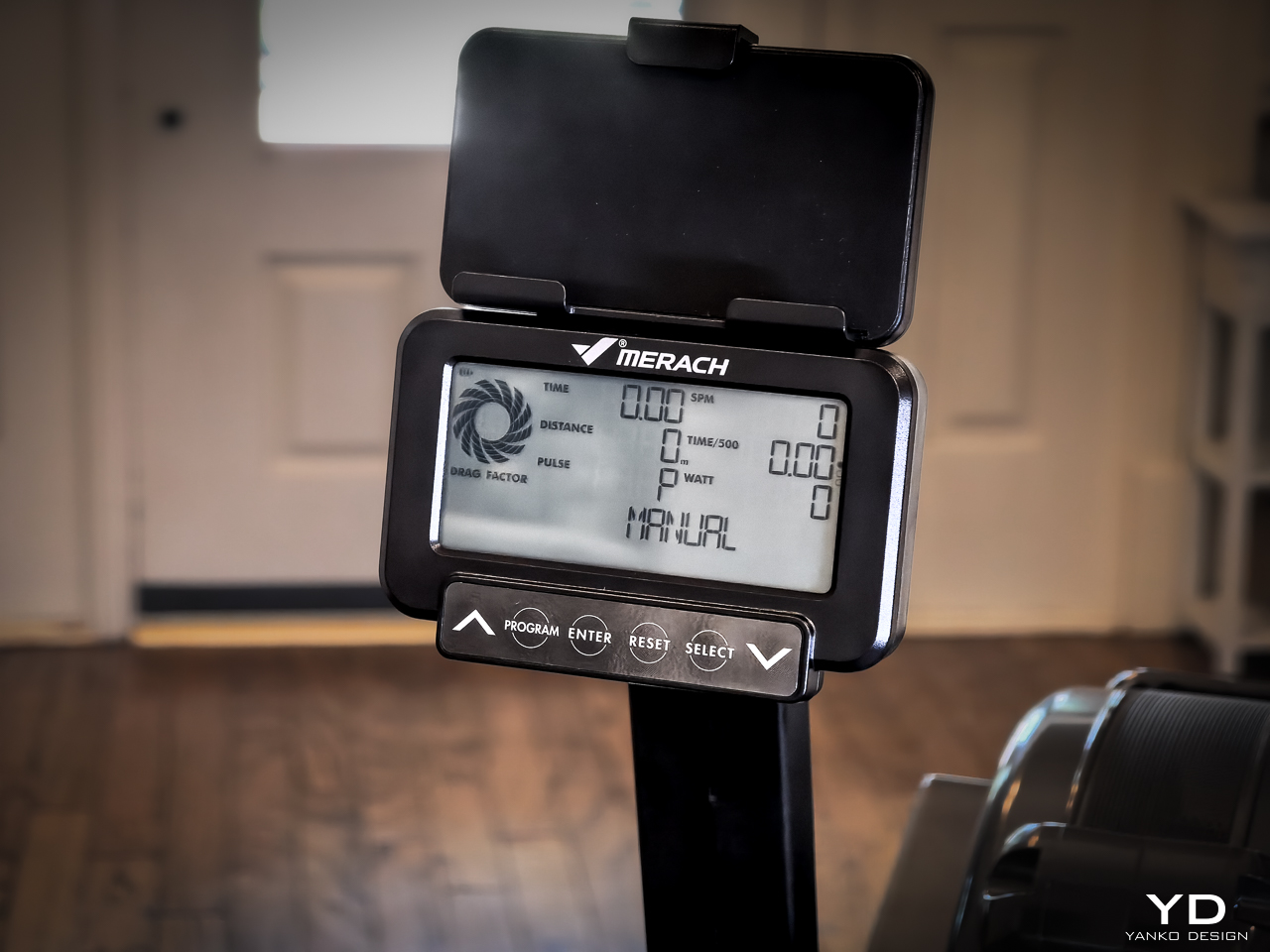
The 5.3-inch adjustable LCD is small by connected-fitness standards, but that’s part of the R60N’s character. It treats the display as an instrument panel rather than an entertainment screen, with fields for time, distance, calories, strokes, pulse, stroke rate, 500-meter pace, watts, and averages. Merach also calls the display backlit and anti-glare.
Performance

The R60N is built around the transition from air resistance to a combination of air and magnetic resistance. Merach documents levels 1 through 7 as air-only settings and levels 8 through 10 as air-plus-magnetic settings. You change those levels with a large manual resistance control, which Merach describes as a lever adjustment. A 32-blade fan and 3.5 kg flywheel provide the moving mass behind that system.
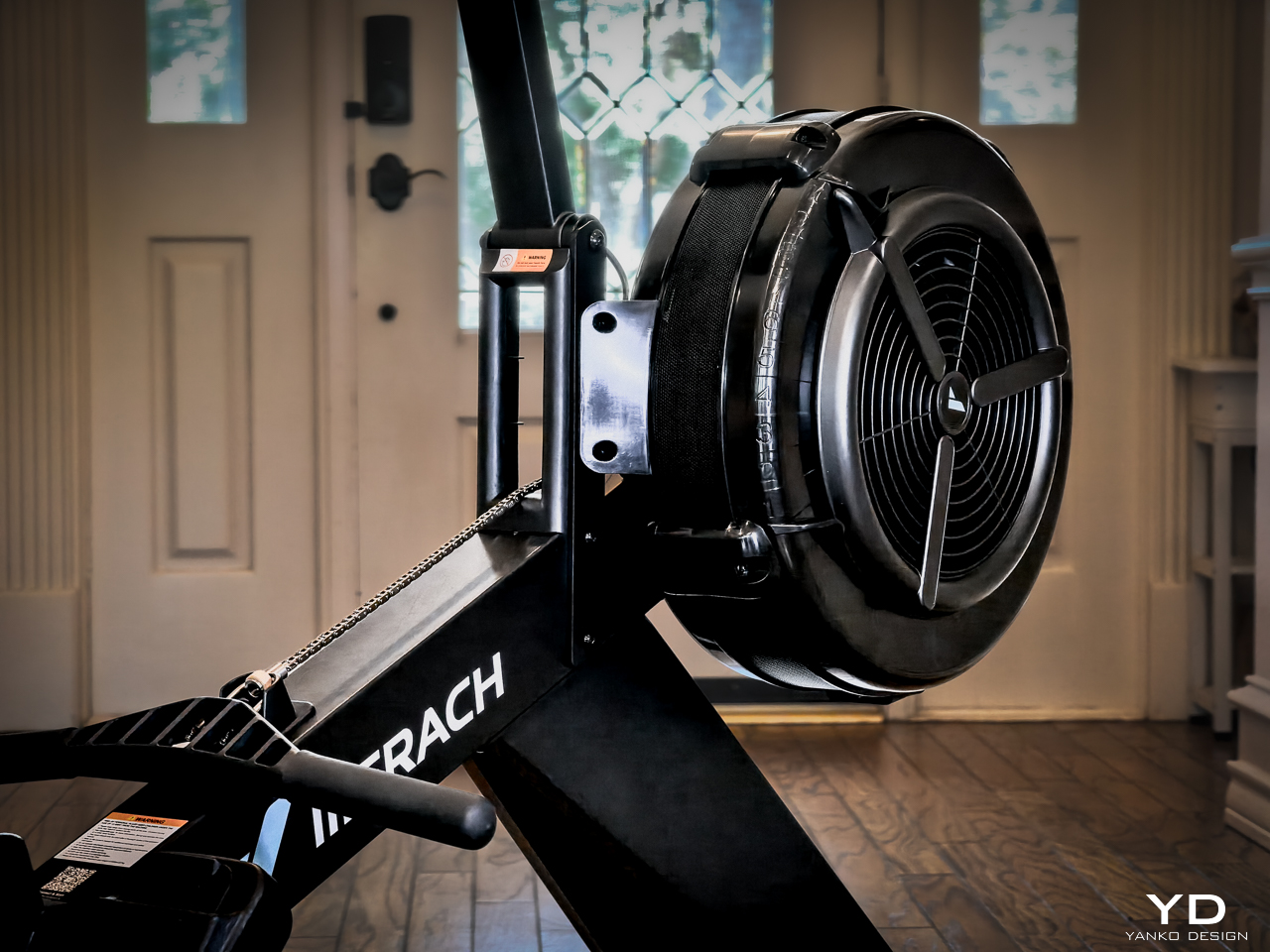
In use, the resistance adjustment felt good and intuitive. I could move from an easier setting into heavier tension to find the right effort, then use that range differently depending on the session. For short, timed bursts, I turned the resistance up. For longer rows, I eased it back so I wouldn’t tire out too quickly.

At levels 8 through 10, the R60N adds magnetic resistance rather than relying only on a faster pull. Merach’s 900N peak-resistance figure is tied to 25 strokes per minute, so it is a manufacturer rating, not an independently measured result. In my use, the shift into heavier resistance felt smooth and useful for short, harder intervals.
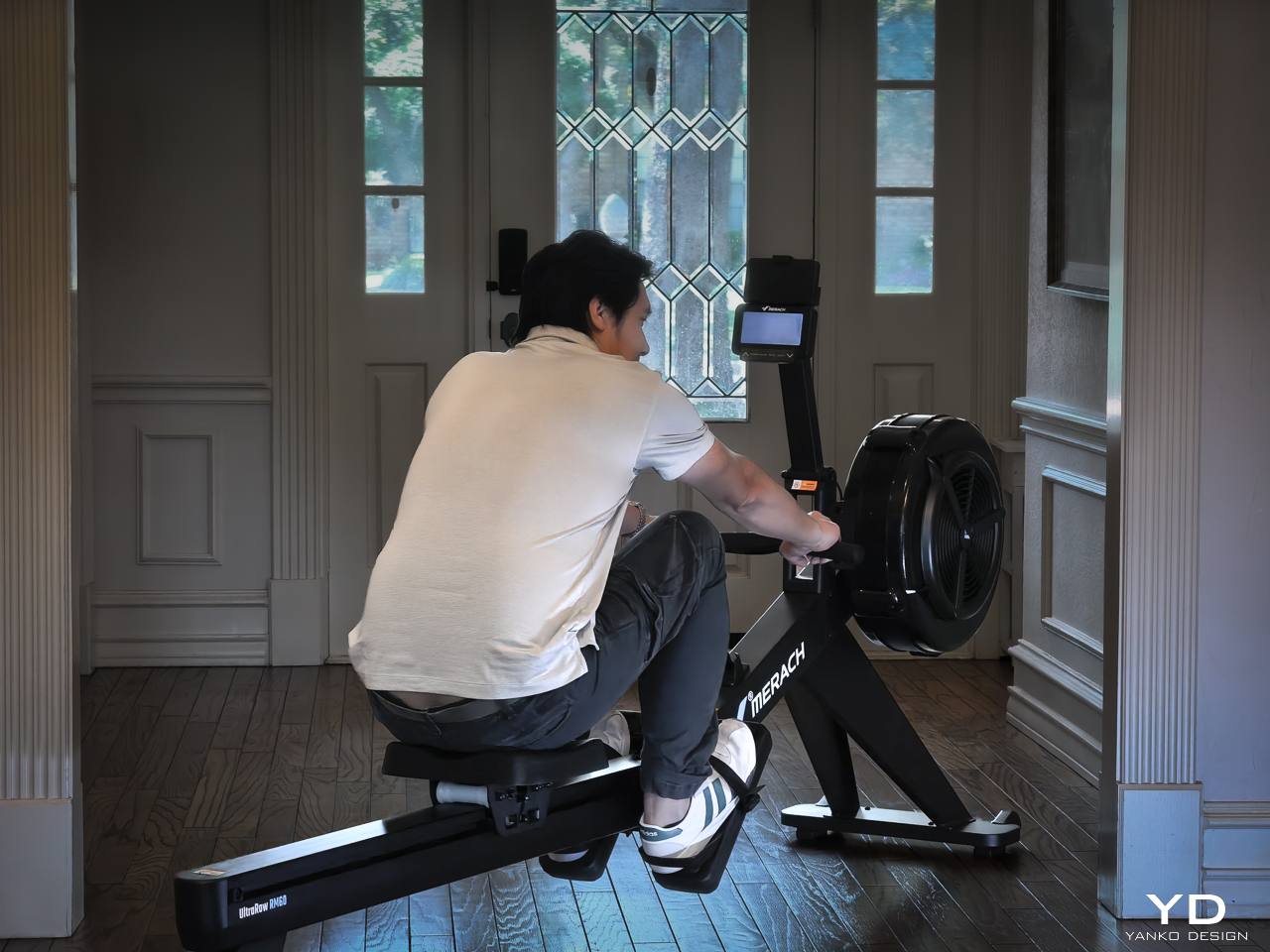
Over two weeks, I used the R60N every day, but not through a conventional workout routine. I lost count of the sessions because they ranged from two minutes to 10 or 15 minutes whenever my watch or smart ring prompted me to get up and move. I could step away from my desk, get on the rower in whatever I was already wearing, and row while listening to a show, watching TV, or talking with someone in the room.
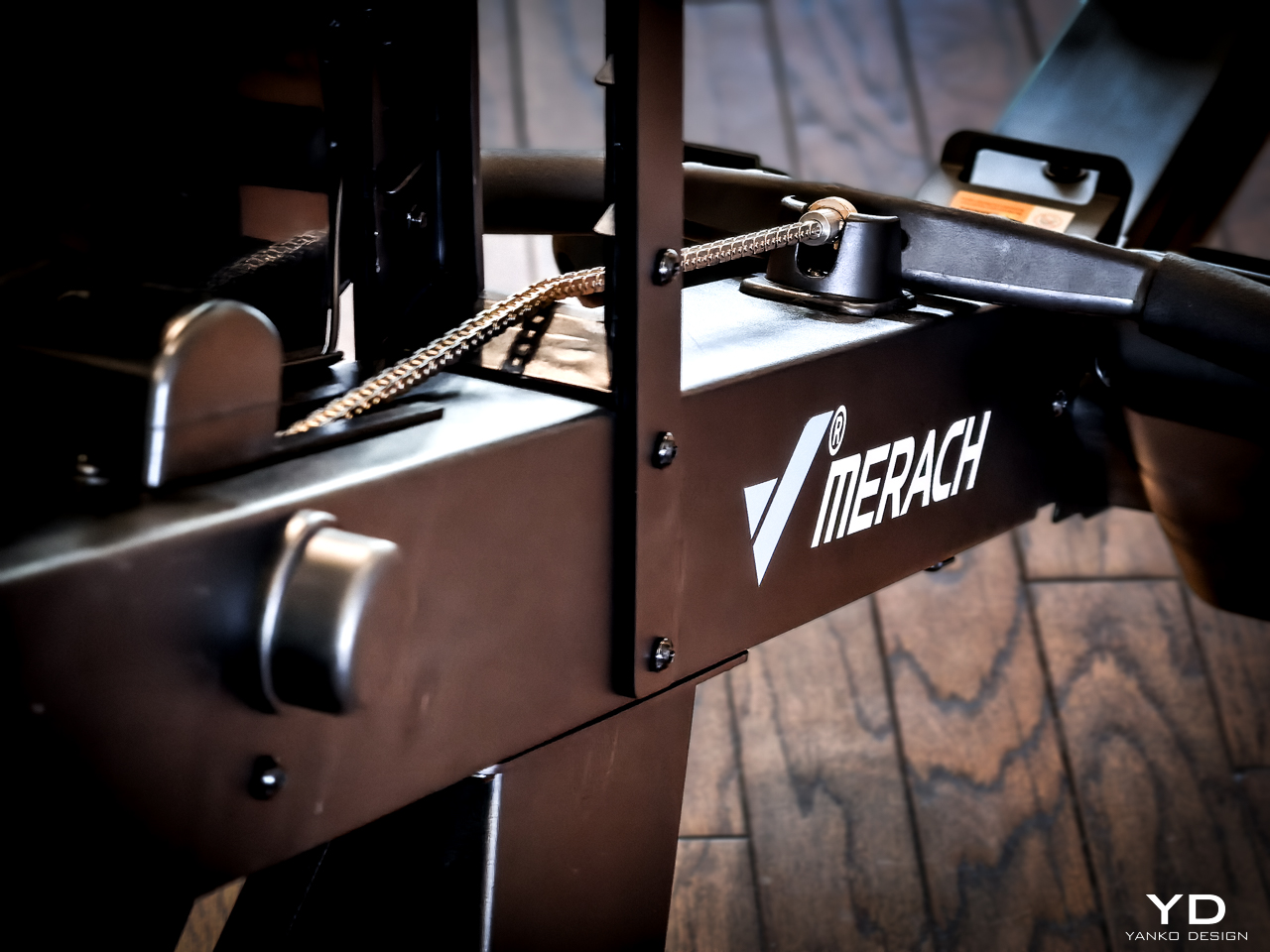
That convenience became the most persuasive part of the experience. I didn’t have to block out an hour, change clothes, or make a formal commitment to exercise. The R60N was simply there, ready for however long I had or until I was tired. It isn’t silent, but the airflow created while rowing is noticeable in a pleasant way, and the overall noise never felt intrusive. For me, it removes much of the friction that turns a workout into something easy to postpone.

The console is meant to complement that training style. The display itself is good in initial use, and it lists workout metrics including pace, watts, strokes, and heart-rate data. Merach’s current product page doesn’t list built-in programs, but it does list Bluetooth connectivity for the MERACH app.
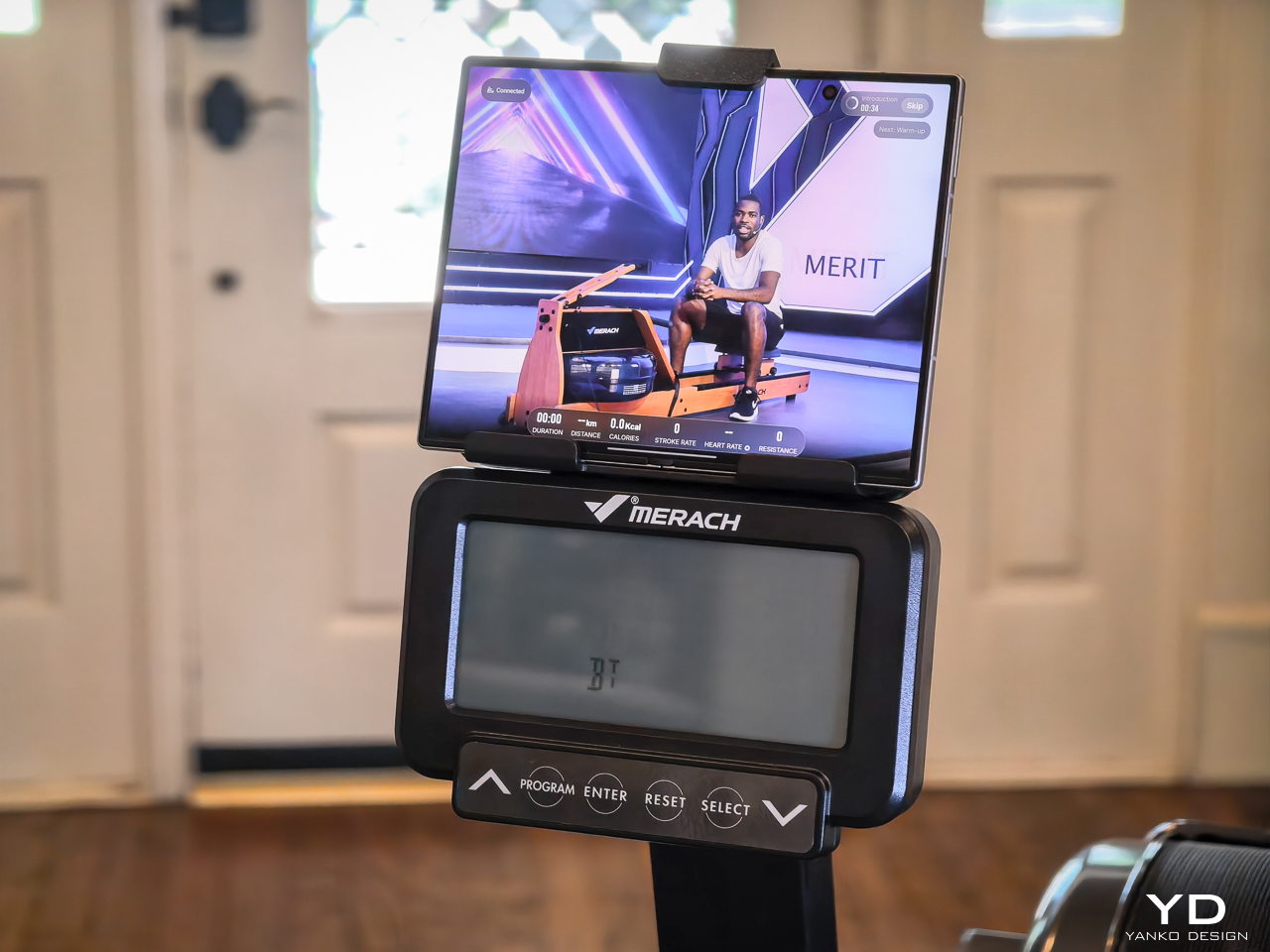
Pairing the rower to the app worked fine in my use. The tradeoff is that, once connected, the onboard display shows only a BT indicator. In other words, the app becomes the active workout display, so you can’t follow the app and read the console’s usual metrics at the same time. That behavior makes sense, but it’s worth knowing before choosing where to place your phone or tablet.

Above the display, an adjustable holder accepts a phone or small tablet. It tilts up and down, so it can keep a workout app, a show, or other content within view while you row. That small detail supports the R60N’s best practical trait: it’s easy to use for a few minutes whenever there’s time, rather than only during a planned workout.

Connected features are a bonus

The R60N doesn’t need an app to work. Its own display handles the essential workout information, and its resistance remains a manual-lever adjustment. That’s the right hierarchy: the machine is the product, while the MERACH app can add structure or variety if it suits the way you train.

What the free MERACH app adds

The MERACH app is free to download. Its no-subscription starting point includes Free Training, timed training, and distance-based goals, along with a dashboard for duration, distance, calories, and workout history. MERACH also lists challenges such as GlobalGo, which uses completed activity to unlock regional badges.

That is enough to make a phone or tablet more useful than a passive screen beside the rower. It gives the R60N owner a place to save sessions, set a simple target, revisit progress, or choose a basic guided workout without turning a straightforward row into a recurring bill.
What a paid service adds

MERACH’s U.S. App Store listing currently shows subscriptions at $7.99 per month or $79.99 per year. The company says that advanced trainer-led on-demand classes may require a paid membership, but it doesn’t publish a clear online feature-by-feature paywall. The practical benefit of paying is likely to be more guided content and a deeper training library, not a change to how the R60N itself creates resistance.

For someone who likes to get on, row hard, and get off, the free MERACH tools and the onboard display may be all they need. A paid MERACH membership matters more for a buyer who wants a steady supply of guided sessions and community-style motivation.

Sustainability and repairability

One understated benefit is that the R60N doesn’t need to live beside an outlet. For day-to-day use, that makes placement simpler and avoids another powered device drawing from the wall. The R60N is otherwise non-motorized, with the workout itself driving the resistance system.

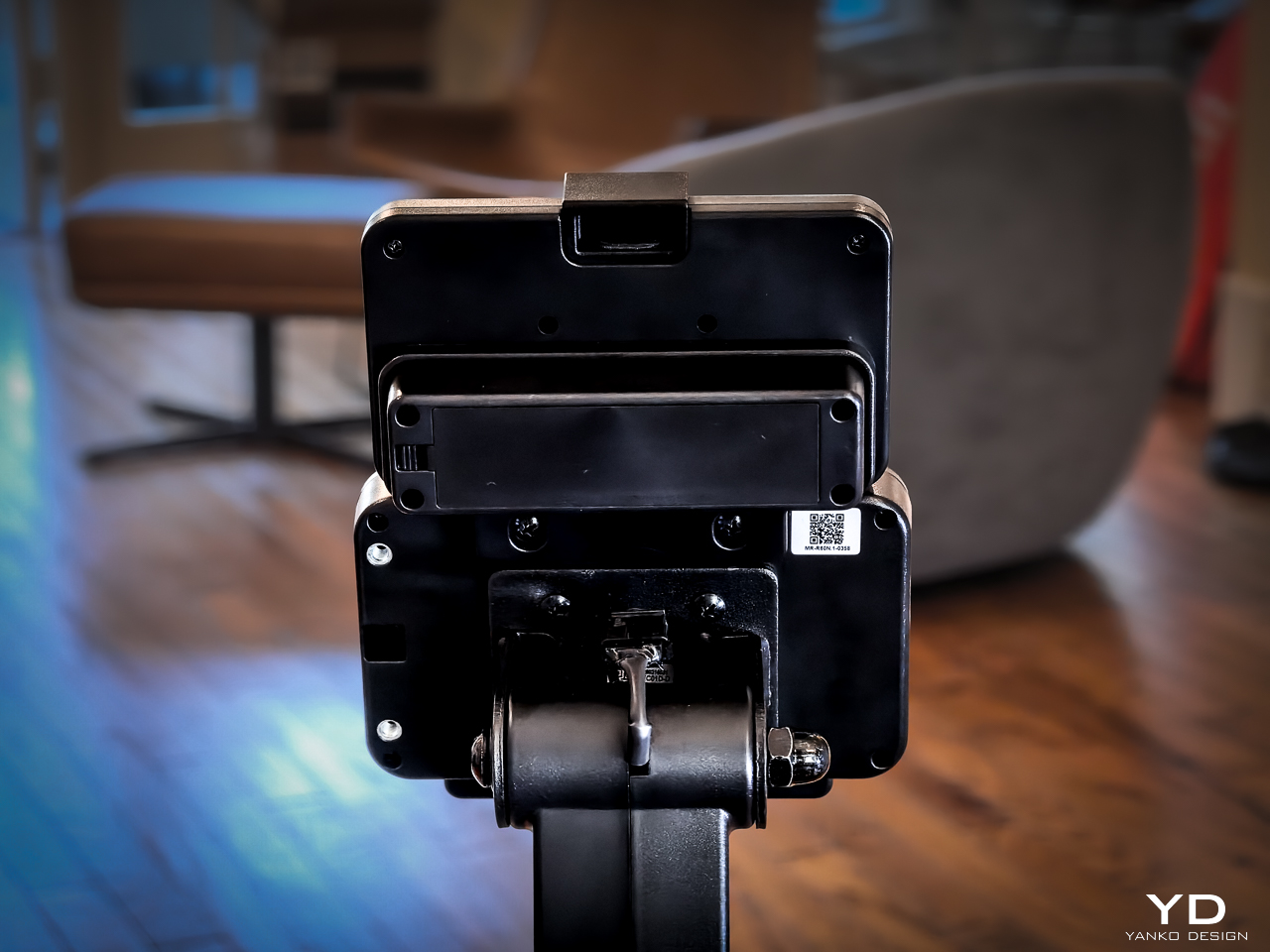
That benefit comes with a small qualification: Merach lists four AA batteries for the display. The company also says rowing motion helps power the console, while its FAQ says batteries remain necessary for the display. In practice, this is a lower-power, outlet-free setup, not a completely battery-free one.

Long-term ownership will come down to ordinary mechanical details. The R60N uses a nickel-plated steel pull rope, a single aluminum rail, PU seat rollers, adjustable footrests, and a manual resistance lever. These are the parts that matter most over repeated sessions, storage cycles, and routine cleaning.

Warranty language deserves equally close attention. Merach’s product page promotes a two-year warranty, while its U.S. warranty page describes one year of standard coverage plus an additional year after registration. Buyers should register the product and confirm the current warranty terms, maintenance guidance, and replacement-part availability before purchasing.

Value

At $799.99 when this review was prepared, the R60N is priced like a serious piece of home fitness equipment. The money goes toward the air-plus-magnetic resistance system, heavy single-rail chassis, elevated seat, long rail, detachable two-piece storage, and backlit performance console. What matters is how those pieces affect daily use, and that is where the R60N earns its place.
The R60N makes the strongest case for someone with enough dedicated space who wants a machine they can use in short, repeatable bursts at home or in an office. At 52, I valued being able to get up, move, and raise my heart rate without the impact or preparation I associate with running. The rowing motion engaged my legs, calves, ankles, core, and arms, making it feel like a full-body cardio option rather than a machine that limits movement to one area.

I wouldn’t buy it solely as a muscle-building tool. Its real value is that it makes regular movement unusually accessible: you can get on for a few minutes or 10 minutes without changing clothes, driving to a gym, or paying for a membership. People without a dedicated storage location, or anyone who needs to move the rower between rooms often, should look for something with a smaller footprint.

Verdict

The Merach UltraRow R60N is at its best when it has a permanent place in your home or office. Its resistance range, comfortable fit, compact display, and adjustable device holder made it easy for me to move more often without treating every session like a workout.

The caveat is space. The R60N is long when assembled, and its two-piece storage design is practical for a dedicated room but not for carrying from room to room. If you can give it a home and want convenient, whole-body cardio on your own schedule, it earns its $799.99 price.

Click Here to Buy Now: $699.99 $1099.99 ($400 off). Hurry, deal ends in 48-hours!

The post Merach UltraRow R60N review: Built for harder home rowing first appeared on Yanko Design.


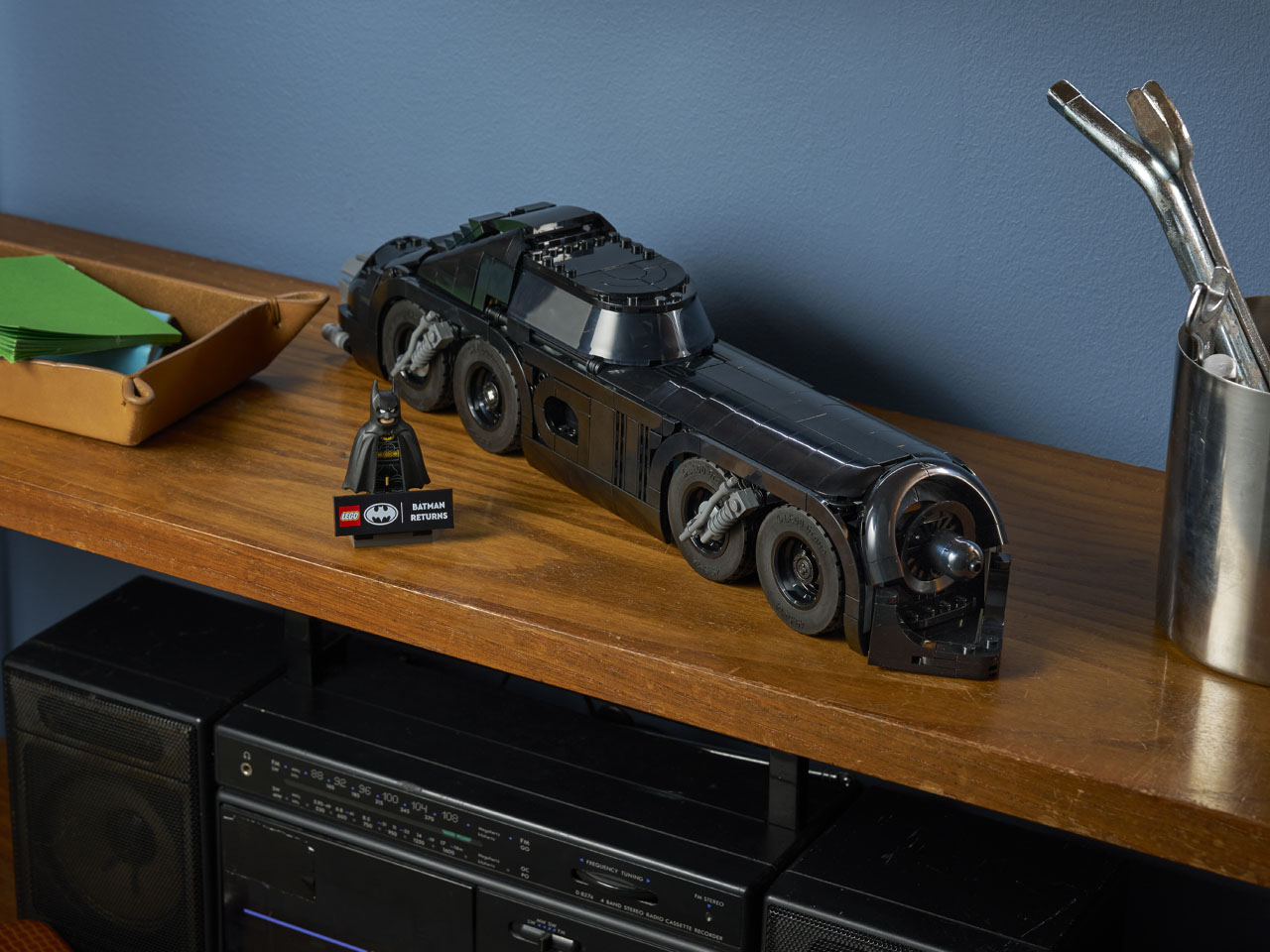
LEGO Batman Returns Batmobile is a striking new build with exclusive minifigure

Batman LEGO sets are particularly popular among pop culture enthusiasts, whether they love the comic books or the movies. Throw in a Batmobile and it’s Christmas. While there have been many recreations of the Cape Crusader’s vehicle in brick form, Tim Burton’s 1992 sequel Batman Returns never saw its Batmobile turned into a set until now.

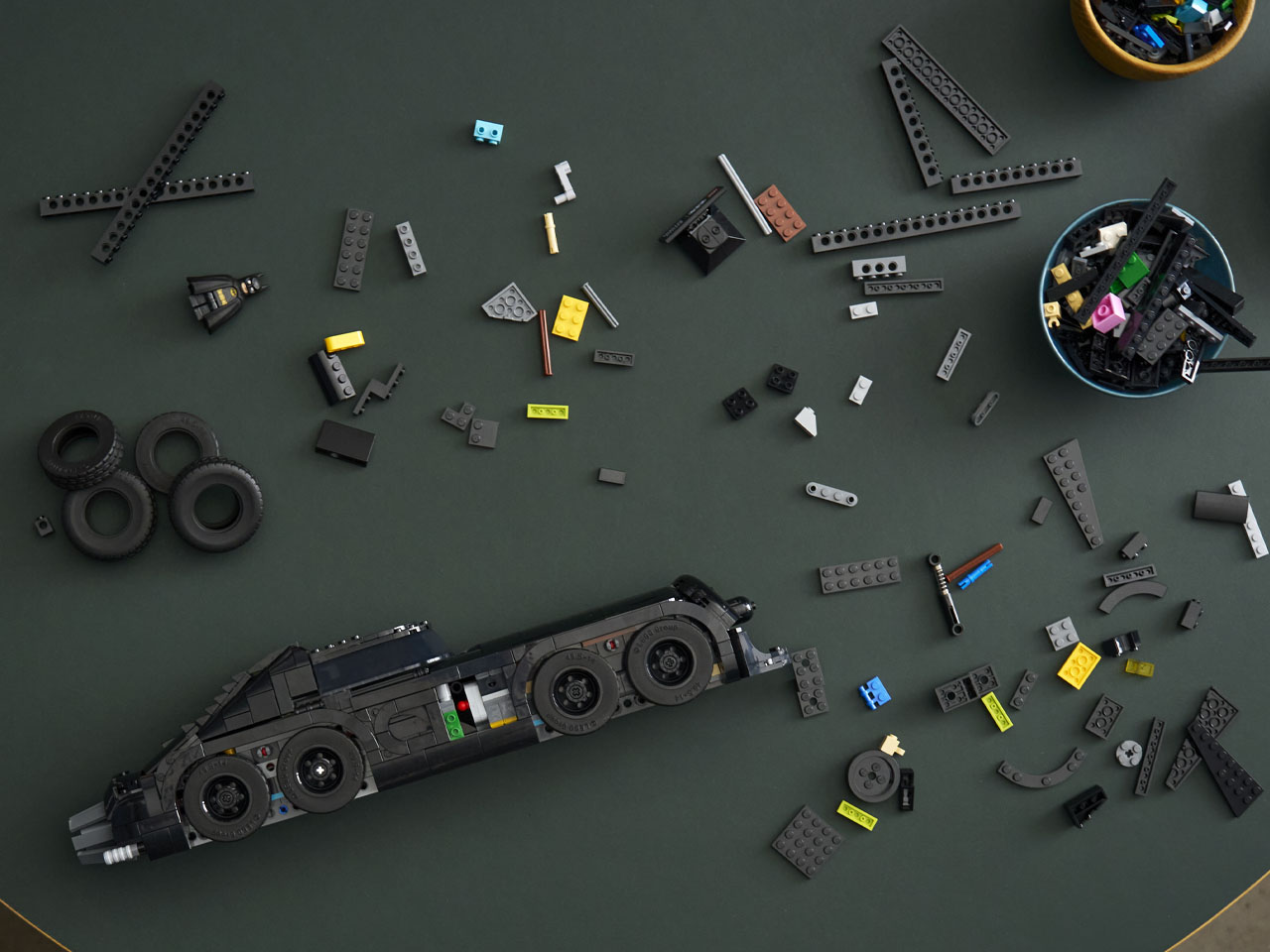
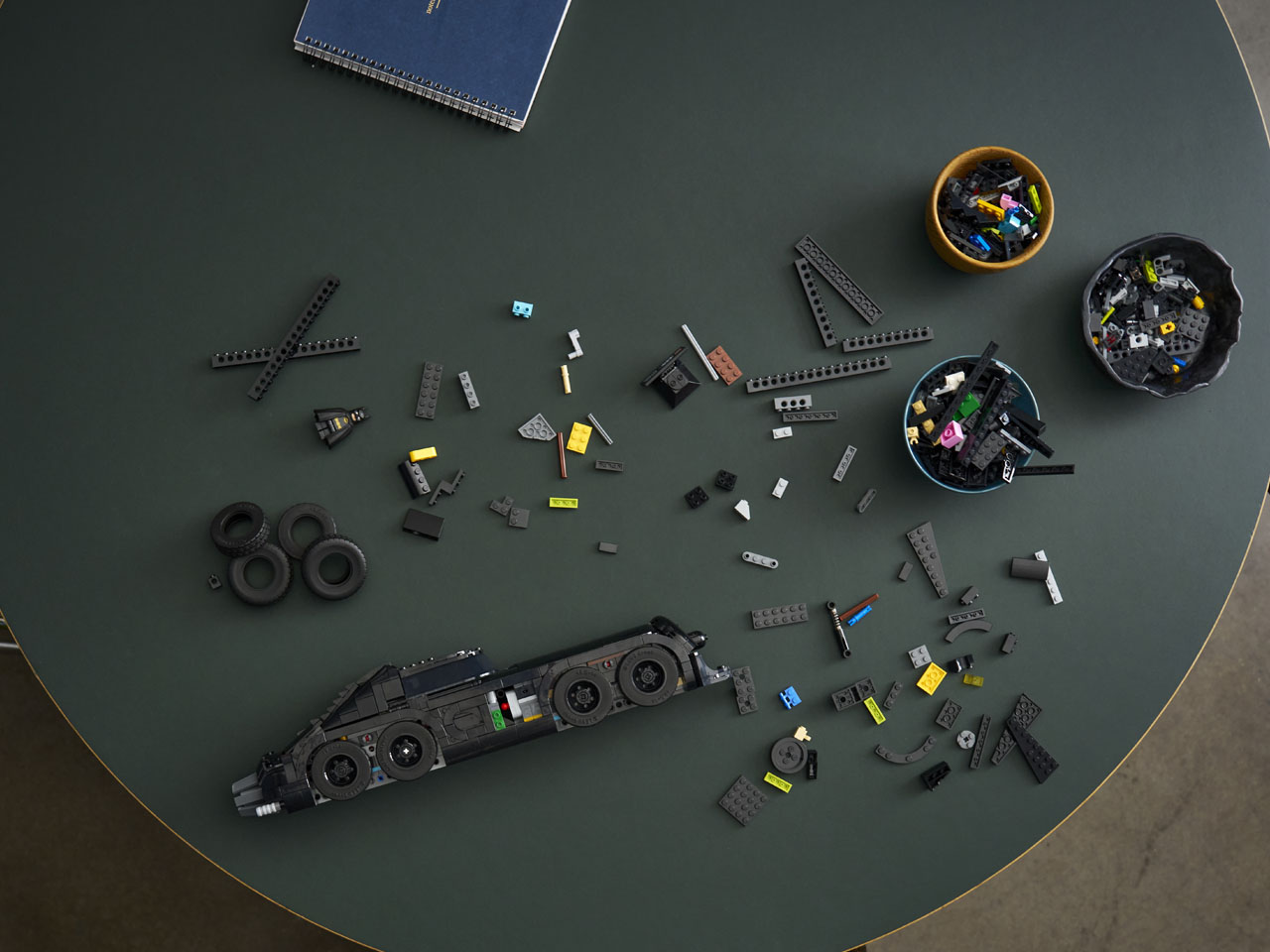
LEGO has given a brick makeover to 1966 TV show’s vehicle in a 1,822-piece scaled-down replica and the more recent LEGO Technic Batmobile from Robert Pattinson’s The Batman. There is even a fan-created LEGO Batmobile with hyper-realistic details. Adding to this fleet, the new 2,269-piece LEGO DC Batman set recreates the Batmobile from Batman Returns for the first time in LEGO brick form, set to release in September.

Designer: LEGO

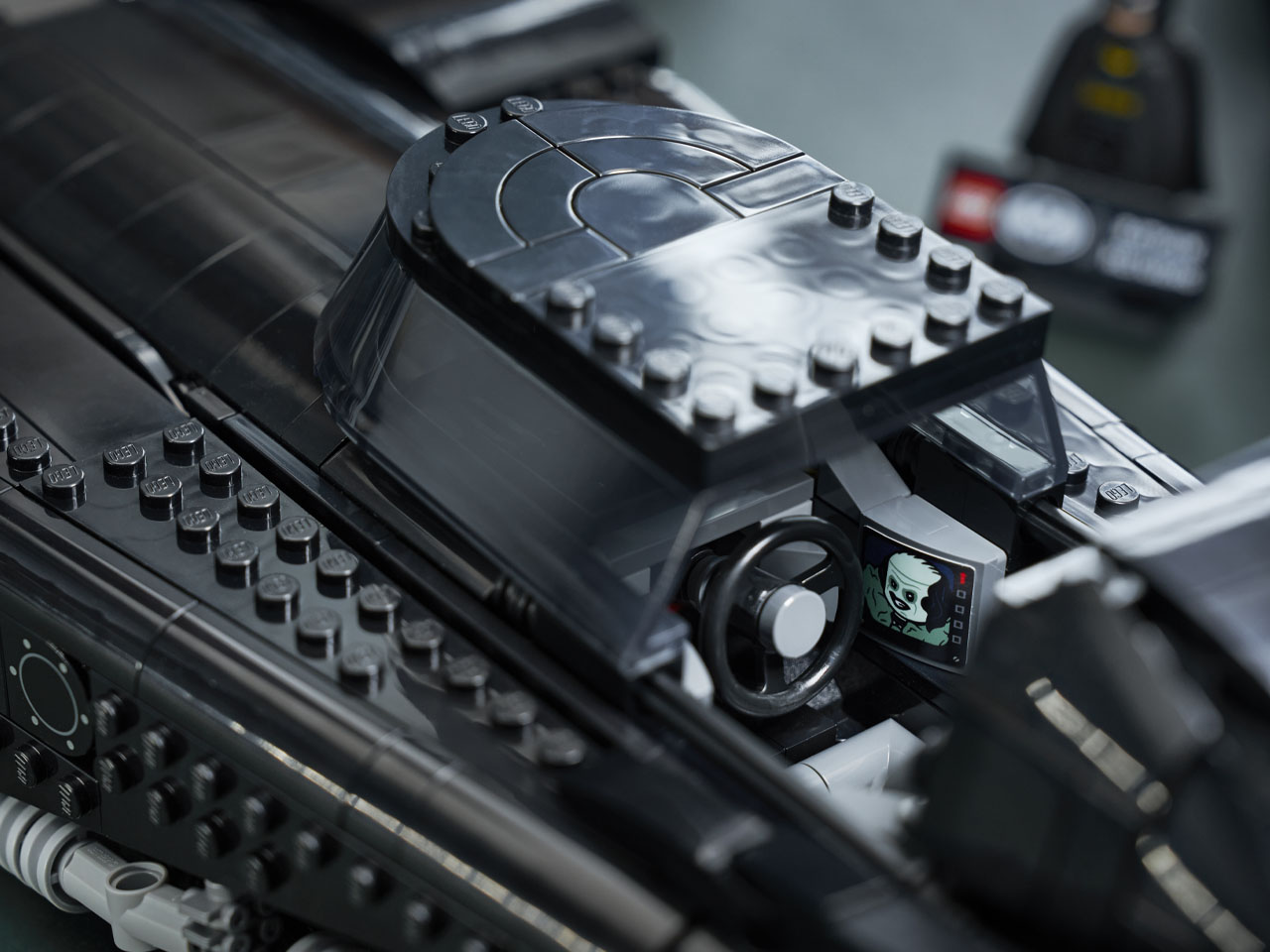
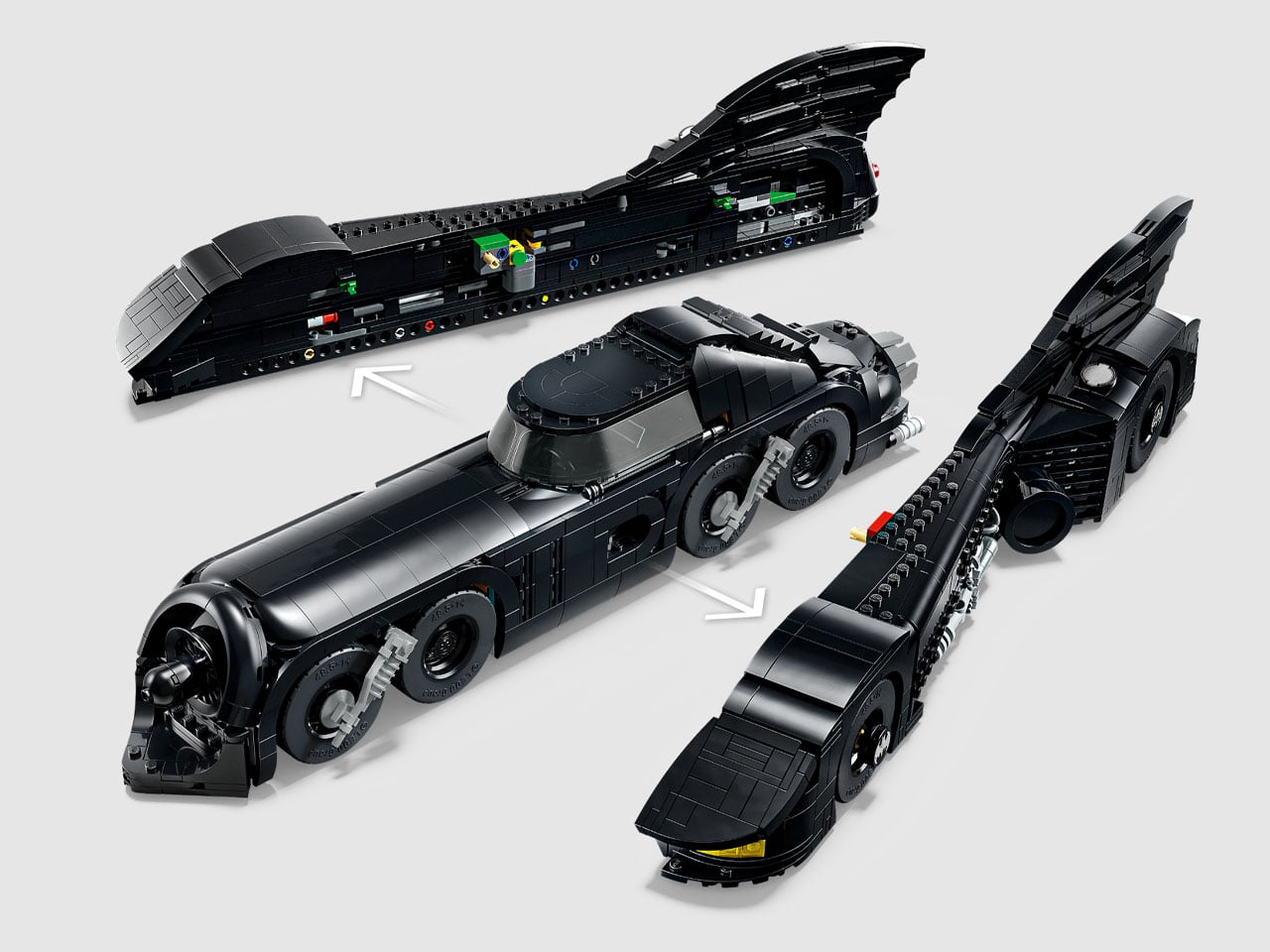
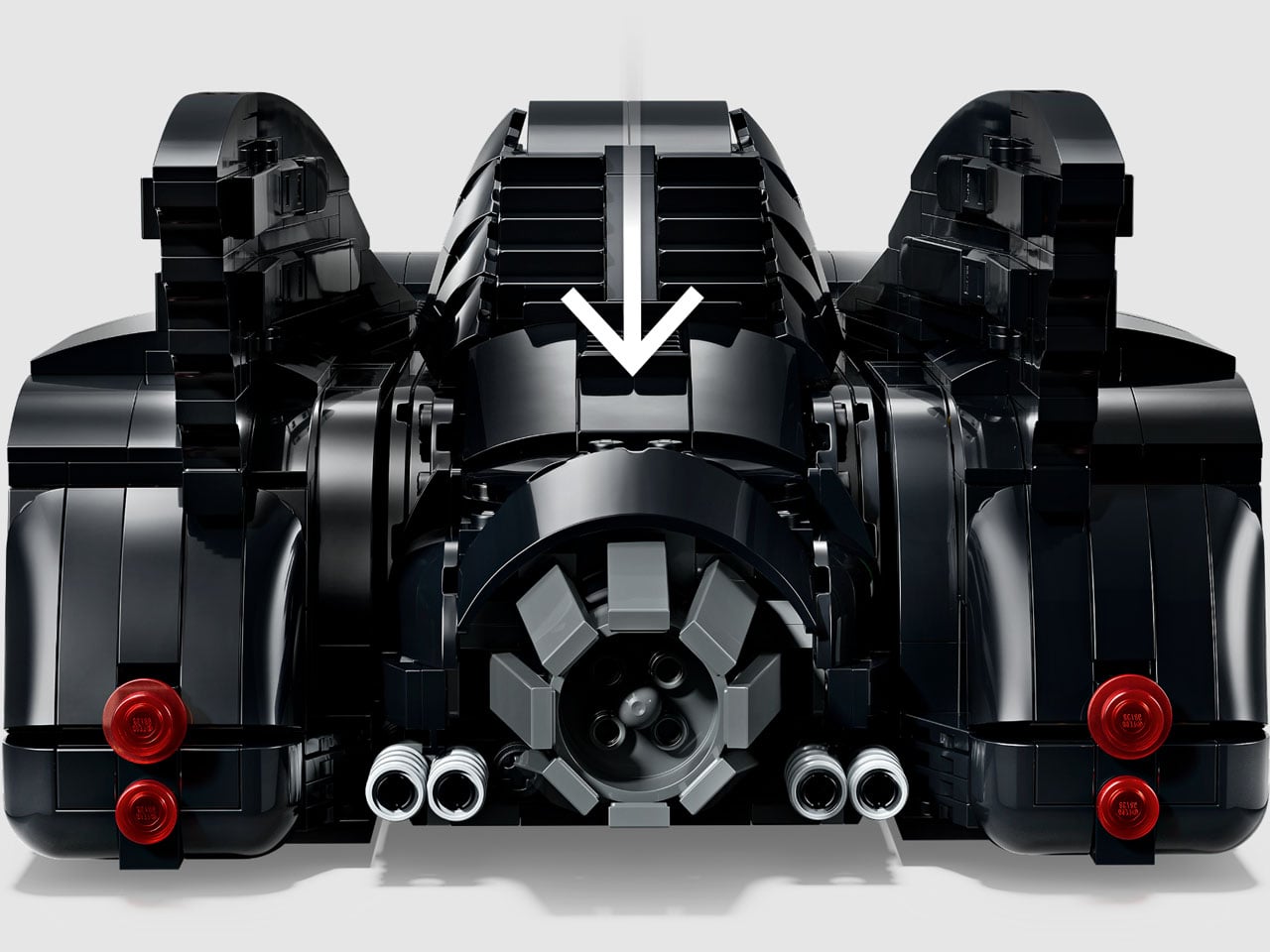
Inspired by Michael Keaton’s legendary 1992 film Batman Returns, the new LEGO brick set channels the sleek profile, meticulous details, and innovative transformation function and hidden references from the film. The model celebrates one of cinema’s most recognizable superhero rides. Once put together, the brick set takes an elongated form, similar to the one in the movie, with jet turbine rear engine, an opening canopy, and a detailed cockpit. Each intricate detail is inspired by memorable moments from the movie; it even includes The Penguin’s tracking device. When you are done building, you can rid Gotham City of crime all on your own.

You can slide open the canopy to peek inside. The intricate replica has a detailed cockpit, complete with a steering wheel and control panels to help the morally gray vigilante in a night of crime-fighting. While every detail is appreciated, what catches the attention most is the transformation feature. For the first time in a LEGO Batmobile, you can press a button to release the vehicle’s side panels to reveal an even sleeker Batmissile escape vehicle hidden within. This particular feature calls back to the on-screen sequence when The Penguin takes over the control of the Batmobile with Batman inside and sets out to destruction. To escape capture, Batman rips out wires from within and releases the side panels to slip through a narrow alleyway.

There is an innovative lift-arm mechanism recreating the dramatic transformation from the movie, letting you display the model as either the Batmobile or the Batmissile. This should also help you escape the plotting of villains as you fight crime in Gotham City. If you want to leave this task up to the Caped Crusader, LEGO has included a new Batman Minifigure with a newly molded cape and displayed on a dedicated stand with the Batman Returns logo. The striking Batmobile, probably the best LEGO build ever, measures over 4 inches high, 17 inches long, and 6.5 inches wide.

The LEGO DC Batman: Batman Returns Batmobile (76355) will be available on the LEGO Store, starting September 1 for LEGO Insiders and September 4 for everyone else. If you want to get this iconic set for yourself or for a DC fan, it will cost $300.

The post LEGO Batman Returns Batmobile is a striking new build with exclusive minifigure first appeared on Yanko Design.
Japan Just Solved the Bulky Dish Rack Problem for $75

Even though I live alone and rarely have anyone over, one problem I still face almost every day is washing and drying dishes and other kitchen things. I also have limited space on my kitchen counter, so the dish rack I have now isn’t that convenient. It isn’t often that I have a lot of dishes to wash anyway, so the space it takes up can be annoying at times. Having a kitchen accessory that I can unfold when needed and then tuck away when not in use would be ideal.

That’s basically what the Slim Fold Dish Rack is all about. Using Japanese minimalism and innovation, this stainless steel kitchen accessory uses a patent-pending spring mechanism that lets you collapse and fold it away when you don’t need it. It also seems to be an effortless process, making it perfect for low-energy housework.

Click Here to Buy Now: $75.00

When unfolded, this rack offers a 14-inch drying surface that can fit full-size dinner plates, bowls (both deep and shallow ones), mugs, cups, glasses, and even lids and flat trays. But once you’ve finished drying everything, you can fold it down to just 1.2 inches, and it takes under a second. One motion and you’re done.

It is made from premium 304 stainless steel, so it is safe for your food, resistant to rust, and built to last. It can handle water, humidity, and outdoor conditions without degrading easily. Plus, it has a simple but sleek, minimalist look that fits most modern kitchens.

And it doesn’t only work in kitchens. You can also bring it with you when camping or doing other outdoor activities. It solves the classic “wet dish towel on the ground” problem that every camper knows too well, and the rack can be rinsed easily in a stream. There’s also an optional carrying case so you can pack it conveniently in your camping gear or travel bag.

What really makes the Slim Fold Dish Rack stand out beyond its clever mechanics is just how thoughtfully the whole thing is designed. Most collapsible or space-saving kitchen tools end up sacrificing either style or function. They look like a cheap plastic afterthought, or they only do half the job. This one manages to be both genuinely beautiful and completely practical. The stainless steel wire construction has an almost sculptural quality to it, especially when it’s fully open and fanned out on your counter. It’s the kind of kitchen tool you wouldn’t mind leaving out even when you don’t have to.

For those of us who are a little particular about how our kitchens look (and I know I’m not alone in this), it really matters that everyday items don’t make the whole space feel cluttered or chaotic. The Slim Fold Dish Rack solves that problem without any compromise. When it’s out, it looks intentional. When it’s folded and tucked away in a drawer or cabinet, it’s practically invisible.

It’s also worth mentioning that this is made in Japan, which says a lot about the level of craftsmanship that went into it. The spring mechanism alone went through enough refinement to earn a patent, and that precision is something you can actually feel when you use it. It doesn’t feel like a gimmick. It feels like something that was genuinely thought through.

Pricewise, the Slim Fold Dish Rack is available at $75 without a carrying case, or $90 with one. Given that it’s made from premium Japanese-engineered stainless steel with a patented folding mechanism, that feels like a fair and reasonable investment, especially for something you’re likely to reach for every single day. Just keep in mind that stock is limited, so if it’s something you’ve been looking for, don’t wait too long.

Whether you’re a small-space dweller who’s tired of a bulky dish rack dominating your counter, a camper looking to upgrade your outdoor kitchen game, or simply someone who appreciates beautifully considered everyday objects, the Slim Fold Dish Rack is one of those rare finds that genuinely lives up to everything it promises.

The post Japan Just Solved the Bulky Dish Rack Problem for $75 first appeared on Yanko Design.
Four Tiny Wooden Cabins Trade Wi-Fi for Wilderness

Some buildings announce themselves loudly, and then there are buildings that arrive quietly, as if they’ve always been there. Studzienno 27, a cluster of four wooden cabins tucked beside Poland’s Stołowe Mountains National Park, belongs to the second kind. Designed by architect Kuba Woźniczka of Kameleonlab studio, the project is a rare exercise in restraint — one that chooses silence over spectacle and comes out ahead for it.

The brief started with the land. The site is generous in size, but Agnieszka, the project’s initiator and host, drew a hard line from the beginning: construction would only occupy the areas already cleared of trees and heather. No forest displaced, no heathland touched. That ecological commitment didn’t just shape the footprint of the buildings — it shaped everything about them. Woźniczka proposed CLT, or cross-laminated timber, a material that was still largely unknown in Poland when the concept took shape in 2019. It was a forward-thinking call, and it allowed the wooden forms to read as something more refined than the “modern barn” aesthetic Agnieszka was deliberately steering away from.

Designer: Kuba Woźniczka

Each cabin sits at a slight angle to its neighbor. The rotation isn’t arbitrary — it optimizes natural light, protects the privacy of each guest, and opens sightlines directly toward the trees. Mono-pitched roofs give the volumes a clean, directional silhouette against the skyline. The facades are clad in black wooden boards, with detailing picked out in yellow, burgundy, and deep green — shades pulled straight from the surrounding landscape across seasons.

Inside, each 85-square-meter cabin spans two levels. The ground floor holds a living room with a fireplace and an open kitchen. Upstairs are two bedrooms and a bathroom with a freestanding bathtub — positioned, deliberately, so that soaking in it means looking out at the treetops. The interiors were handled by Madde Studio, whose team made a point of sourcing a significant share of furniture and accessories from second-hand markets and online auctions. Vintage classics sit alongside natural materials — wood, plywood, ceramic, metal, and microcement — to create spaces that feel lived-in on arrival rather than staged.

Despite sharing an identical layout, each of the four cabins carries its own personality. The decision to source furniture without pre-rendered visuals meant Madde Studio’s designers were making calls in real time, trusting instinct over mood boards. That looseness shows in the best possible way. Studzienno 27 offers what is increasingly difficult to find: a place with no mobile signal, no noise, and no pressure to perform rest. The architecture makes that offer quietly, and the landscape makes good on it.

The post Four Tiny Wooden Cabins Trade Wi-Fi for Wilderness first appeared on Yanko Design.

Google’s Pixel 12 Could Get Cheaper as Production Leaves China for India and Vietnam

A phone’s country of assembly used to be a footnote on the back of the box. It now shapes the spec sheet, the retail price, and which storage tier survives the year. Google confirmed the Pixel 11 at $899, up a hundred dollars from the Pixel 10, with the Pro, Pro XL, and Fold each taking the same hundred-dollar step across the board. Component costs got the blame, and the blame is largely earned. Six days after launch, Nikkei Asia reported the other half of the story.

Google has told suppliers it intends to have every Pixel smartphone, watch, and wireless earbud produced outside China starting next year, with production shifting to Vietnam and India. The move follows a Pixel 11 production run in Vietnam that gave Google the confidence to commit to the full transition. The company is targeting Pixel shipments up 8 to 10 percent this year from roughly 12 million units in 2025, using the hardware as the delivery vehicle for Gemini. Manufacturing geography has become a design constraint, not a footnote.


Designer: Google

The mechanism behind the price increase is a supply war Google didn’t start and can’t fully escape. AI accelerators run on high bandwidth memory, and that memory is manufactured on the same production lines as the DRAM that goes into a phone. Mobile LPDDR5X pricing climbed 78 to 83 percent quarter over quarter this spring, according to TrendForce, and memory now accounts for 30 to 40 percent of a phone’s bill of materials, up from 10 to 15 percent in prior years. Gartner projects a 130 percent combined surge in DRAM and SSD pricing by the end of 2026, enough on its own to explain most consumer electronics price movement this year.

Google’s response to that pressure shows up as a storage decision rather than a straightforward price hike. The 128GB tier has been eliminated across the entire Pixel 11 lineup, so every model now starts at 256GB, which absorbs the increase into a spec upgrade rather than a naked price jump. It’s a smarter move than what several budget Android brands have done this year, quietly cutting RAM or downgrading displays to protect a price point. Google chose to hold the line on the experience and let the entry price move instead, which is the correct call for a flagship, even if it doesn’t change what the phone actually costs you at checkout.

Leaving China is a materially easier decision for Google than it is for Apple or Samsung, and that’s what makes the 2027 timeline credible rather than aspirational. Google sells almost no Pixel devices inside China and carries a small domestic user base there, which removes the demand-side complications that would slow down a company like Apple. Vietnam already has a mature phone manufacturing ecosystem built by Samsung, and Google is stepping into infrastructure rather than building it from zero. India, meanwhile, overtook China as the top source of US-bound smartphone shipments in 2025, a shift with obvious tariff logic behind it.

None of that repositioning fixes the underlying cost problem, though, and it’s worth being direct about that. Standing up the Vietnamese line for the Pixel 11 required new testing equipment, new tooling, and a validated production process built from scratch, none of which is free. PhoneArena’s assessment that stable pricing is the realistic outcome, rather than an outright reduction, tracks with how manufacturing transitions actually play out. Relocating a factory reduces exposure to trade policy. It does not negotiate down a DRAM contract.

The report itself carries real gaps that are worth naming rather than smoothing over. Nikkei gave no month within 2027, no sequencing across the phone, watch, and earbud lines, no cost figure, and no named contract manufacturer in either country, and Google has neither confirmed nor denied the plan. The timeline has also moved before, a January report had most of this exit happening during 2026, and Pixel production has been drifting toward Vietnam since 2019. Seven years into an exit, the finish line keeps resetting.

The real tension in this story is structural, not incidental. Google raised Pixel prices in part because AI infrastructure consumed the memory supply chain, in order to sell a phone whose entire pitch rests on AI. Whether a new factory address in Vietnam or India can hold the line at $899 is what the Pixel 12 will actually answer.

The post Google’s Pixel 12 Could Get Cheaper as Production Leaves China for India and Vietnam first appeared on Yanko Design.