10 Best Eco-Friendly Designs To Master A Conscious + Clean Lifestyle In 2024

Our unhealthy practices and way of living are truly harmful to the environment and have been slowly leading to its deterioration. And the world has been changing (for the worse) because of this. Hence, it is extremely important to live sustainably and consciously and to take care of the environment in 2024! Integrating sustainability into our day-to-day lives has become crucial. And we can do this in various ways. Designers and creators are coming up with sustainable alternatives for almost everything. Every product that is necessary and utilized by us in our everyday routine has an eco-friendly alternative to it. Replacing our usual mass-produced designs with these greener options will make a huge difference to the environment and Mother Earth. From a Saturn-inspired sustainable lamp to a bicycle seat made from cork– we’ve curated a whole collection of sustainable product designs to help you go green.

1. Briiv Pro

Dubbed the Briiv Pro, this eco-friendly purifier uses nature and technology to cleanse the indoor air in your home. The new Briiv Pro is more powerful than ever and is a ‘mini forest’ that purifies a 16 sq.m. room in about 21 minutes. This is supposed to be 6900% more effective than house plants!

Why is it noteworthy?

The fact that the Briiv Pro is 6900% more effective than house plants is truly amazing for a purifier of this size. Besides being super functional, it also looks gorgeous, unlike the ugly appliances that get passed off as air purifiers these days.

What we like

  • Utilizes a layered trifecta of moss, coconut fiber, and a silk nanofiber matrix with activated carbon
  • Works a whisper-soft noise level
  • Equipped with an AI-based sensor

What we dislike

2. Kreis Cup

Meet the Kreis Cup – a sustainable and durable coffee cup designed to enhance and improve your coffee-drinking experience. The Kreis Cup is available in a cup and travel-mug style!

Why is it noteworthy?

The Kreis Cup is heat resistant and designed to keep your coffee hot longer. It is ultimately biodegradable, and a better alternative than the plastic-based to-go mugs, and breakable ceramic mugs.

What we like

  • Made from spent coffee grounds
  • You can smell the faint unmistakable scent of coffee from it!

What we dislike

  • There is currently no scope for personalization, which can be inconvenient for users

3. FR-1 Bike Saddle

Dubbed the FR-1 Bike Saddle, this innovative bike saddle is made from reconstituted cork and grade 5 titanium. The designers did away with the usual three plastic layers of the bike saddle and replaced it with a single piece of cork.

Why is it noteworthy?

This cork has all the properties of those plastic layers – structural rigidity, weather resistance, and foam comfort. They will also introduce various variants with different grades of cork.

What we like

  • Has the structural perks of plastic, but the sustainability benefits of FR-1 Bike Saddle

What we dislike

  • You need 2 weeks for the cork to soften and break down

4. PLANETCARE 2.0

The PLANETCARE 2.0 is a microfiber filter attachment for your washing machine. 35% of the ocean’s microplastic problem comes from the washing machine since it is mostly a blend of synthetic fibers that mix with the water, and end up in the ocean.

Why is it noteworthy?

The PLANETCARE 2.0 is a handy and practical filter that can be snapped onto the side of your washing machine. It filters all the water the machine drains out after a cycle! It is the water equivalent of you sorting out your trash.

What we like

  • Can be niftily attached to your washing machine
  • It catches all the microplastics from the machine’s drain water

What we dislike

  • You may need to change/adjust the position of the filter to ensure adequate water pressure

5. Dissolving Bottle Shampoo

The Dissolving Bottle shampoo bars are not just practical solutions, but also symbols of commitment to a future that is sustainable and plastic-free. As users lather up and wet the Dissolving Bottle, it slowly diminishes in size until it finally disappears!

Why is it noteworthy?

The Dissolving Bottle is an innovative and unique solution that completely eradicates the need for traditional toiletry containers, providing us with a convenient and eco-friendly solution for daily hygiene routines.

What we like

  • Has the familiar shape of a typical shampoo container, making the transition an easy one

What we dislike

  • Requires careful handling, as exposure to water could result in premature dissolution

6. Packioli

A Turkish designer was able to come up with soap packaging called Packioli that is both hygienic and non-plastic and therefore more eco-friendly. One thing missing from most similar products is convenience and she was able to add it to this as well.

Why is it noteworthy?

She used artichoke leaves and combined them with peapod bioplastics to create packaging that commercial soap brands can use if they want to be more eco-conscious in creating their products.

What we like

  • It not only solves getting rid of plastic for soaps but also helps get rid of artichoke waste, which is around 80% of the actual vegetable

What we dislike

  • The look of the packaging is not similar to what we’re used to, with the labels and other colorful decorations, so may not be preferred by everyone

7. Memory Capsule

Named the Memory Capsule, this unique concept for a design challenge with Samsung looks like a regular USB flash drive on the surface but is in fact made from eco-friendly materials from old electronic devices.

Why is it noteworthy?

The packaging of this USB flash drive is made using recycled pulp, while the entire body of the flash drive is made using metals and plastics recycled from actual smartphones. The cap of the thumb drive is made using recycled polycarbonate which comes from discarded fishing nets.

What we like

  • Let’s you get rid of your old devices in an upcyclable way, while also retaining precious memories from your old device

What we dislike

  • We’re unsure if the data will be saved in the kiosk

8. Earth Rated Products

Canadian dog brand Earth Rated has collaborated with design agency Layer to embark on a journey of rebranding, they’ve created a simple and clean rebranding that focuses on recycling and natural products and have introduced an interesting range of sustainable dog toys.

Why is it noteworthy?

The dog toys feature joyful geometric forms and textured surfaces that invite interaction, building an intuitive user experience for both pets and owners. The toys are made using recycled and recyclable materials, compostable and post-consumer recycled plastics, and natural rubber.

What we like

  • Eco-friendly and fun products for your doggo, providing an intuitive experience for you as well

What we dislike

9. Oakwood MagSafe Collection

The Oakwood MagSafe collection utilizes the Apple MagSafe chargers to provide actual charging function and good-looking aesthetics as well. What they offer, instead, are solid and multi-functional bases that not only keep your iPhone or Apple Watch in place but also add some life to your desk.

Why is it noteworthy?

With a mix of wood and matte aluminum materials, these stands and mounts look handsome on any motif you might have going for your desk, providing eye-catching ornaments without being distracting.

What we like

  • The MagSafe charger they hold can be removed and used as normal
  • Prevents more e-waste in the long run

What we dislike

  • None of the accessories come with an Apple MagSafe charger

10. Saturno Lamp

This unique spherical lamp is heavily inspired by the planet Saturn and its beautiful rings. It borrows ideas from the planet’s morphology to build something fun, unique, and sustainable.

Why is it noteworthy?

The SATURNO lamp is actually made of three disc-shaped parts that connect without the use of any glue or screws. There are cutouts instead that allow the parts to be inserted into each other at perpendicular angles. Two are made from walnut wood, while the third is made from resin, which could be any sustainable kind.

What we like

  • The LEDs can be controlled to showcase different colors and intensities
  • A versatile lighting fixture that gives a glimpse of the heavens right inside your home

What we dislike

  • The lamp won’t stand with its horizontal light mimicking the light scattered by Saturn’s rings unless it is provided with some support

The post 10 Best Eco-Friendly Designs To Master A Conscious + Clean Lifestyle In 2024 first appeared on Yanko Design.

Bio-Cement: A Potential Material That May Replace Regular Cement

Industrial designer Mary Lempres has unveiled a groundbreaking bio-cement structure named Reef Rocket, inspired by the intricate and resilient nature of oyster reefs. Designed to combat coastal flooding, filter seawater, and foster biodiversity, Reef Rocket utilizes biomimicry principles to mimic the functionalities of naturally occurring oyster reefs.

Designers: Mary LempresAhmed Miftah

The structure comprises two bio-cement modules with ridged surfaces that can be stacked to form a distinctive rocket-like shape when assembled underwater. Lempres collaborated with bio-geotechnical specialist Ahmed Miftah to develop a unique method for growing plant-derived cement, drawing parallels to the irrigation systems used for plant cultivation.

Biomimicry, the practice of seeking solutions to human design challenges in nature, guided Lempres in creating ridged modules that emulate coastal oyster reefs. These reefs naturally filter algae from seawater, attract aquatic organisms, dissipate wave energy, mitigate storm surges, and manage eroding coastlines.

The bio-cement modules are formed by pouring a non-toxic solution containing a crude extract from globally grown plants over crushed aggregate. The aggregate, sourced in New York City, consists of crushed glass and oyster shells recovered from local restaurants and New York Harbour.

Lempres explained that the substrate, saturated for three to nine days, becomes natural concrete as the extracted biocatalyst causes minerals to form “mineral bridges” between the glass and shell waste. The resulting product is water-resistant, durable, and comparable to standard concrete but with the added benefit of being environmentally friendly and sustainable.

What sets Reef Rocket apart is its ability to grow in any environment without the need for heat or burning fossil fuels. Lempres emphasized its affordability and scalability as a sustainable alternative to traditional cement. The bio-concrete shares chemical similarities with the material oysters use to grow their reefs, but the key difference lies in the speed of growth, with Reef Rocket taking only several days compared to millennia for natural oyster reefs.

Lempres and her team experimented with “hundreds” of prototypes before settling on prefabricated molds for the modules. These molds allow the bio-cement to be packed and set without the need for heat or chemicals, offering an accessible and efficient assembly process.

Reef Rocket’s deliberate design prioritizes small size, lightweight construction, and ease of assembly, aiming to make the innovative solution accessible to a broad audience. Lempres envisions a future where durable materials can be grown like crops, regenerating waste and mitigating environmental pollution. The project stands as a testament to the potential of biomimicry and sustainable design in addressing the challenges posed by climate change and coastal resilience. Reef Rocket represents a significant step towards harmonizing human infrastructure with the resilient and regenerative capacities of the natural world.

The post Bio-Cement: A Potential Material That May Replace Regular Cement first appeared on Yanko Design.

ASUS at CES 2024 reveals 14-inch dual-screen laptop, sustainable solutions

Laptops are an integral part of modern-day computing, practically replacing laptops because of their increasing capabilities and versatility. For years, it almost seemed as if innovation in this space has mostly plateaued, simply getting more of the same things, such as more processing power, more heat, more weight, and more costs. That’s no longer the case, thankfully, as major PC brands start taking risks and pushing the boundaries of what laptops are capable of, like the world’s first 14-inch dual-screen laptop that ASUS is showing off at CES 2024. In its search for incredible, however, ASUS has also learned of the weight of its responsibility to help heal the planet and keep it alive far longer, and it is showing exactly how much it has progressed in its commitment to improving not only the quality of its products but also their sustainability.

Designer: ASUS

ASUS ZenBook DUO (2024)

There will come a time when the foldable craze in the smartphone industry will also grip PCs, but that time hasn’t come yet. Instead, there is a precursor to this fad, one that is both more usable but also admittedly a bit more novel. Taking a cue from the canceled Microsoft Surface Neo, ASUS revealed the first commercial dual-screen laptop back in 2019 and is now showing off the refinement it has accomplished that makes the new ZenBook DUO (2024) more than just a novelty.

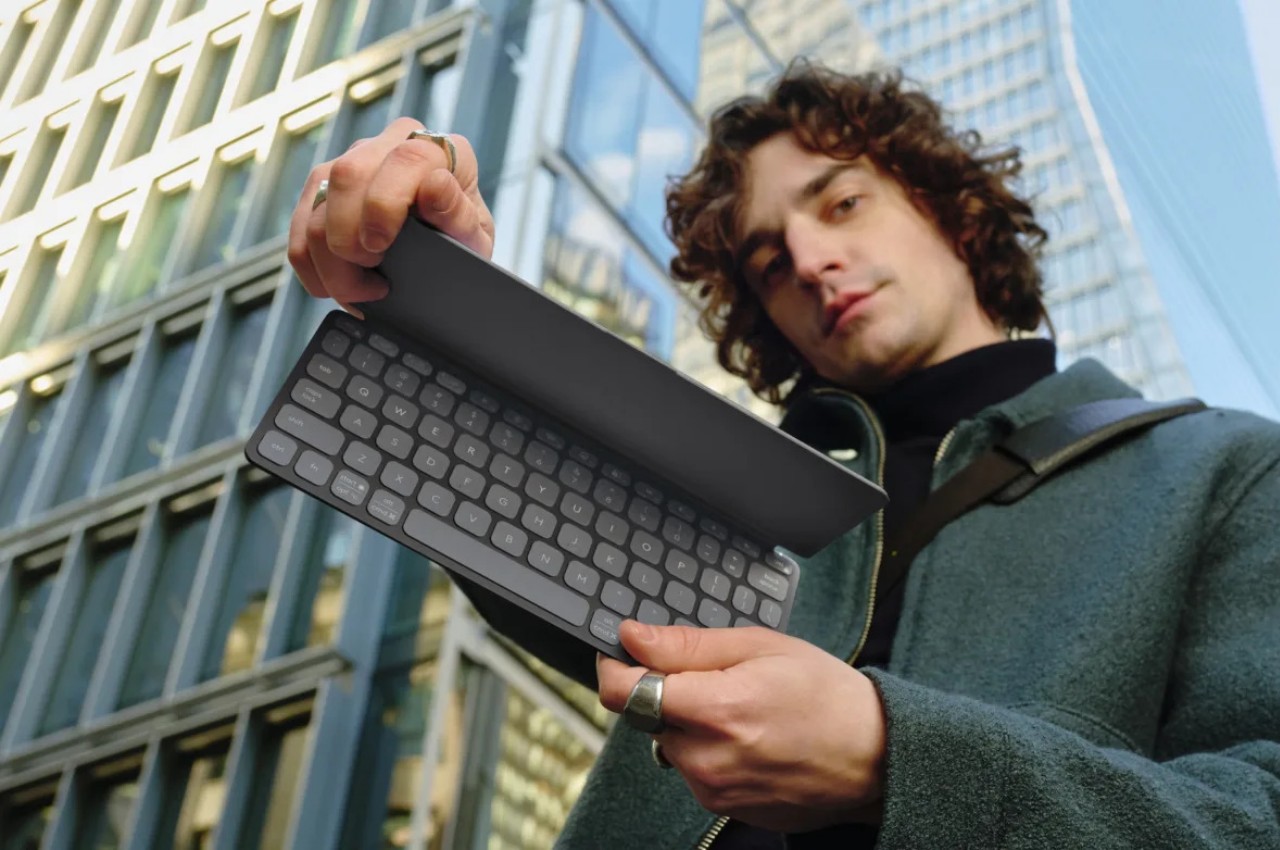
The ZenBook DUO’s spiel is simple enough. Why settle for a single screen when you can have two wherever you go? And you don’t have to carry around a portable monitor along with your laptop just to accomplish that, because that second screen is your laptop. With a detachable full-sized Bluetooth keyboard that can instantly snap into place, you can have a traditional laptop experience when you want to and a portable two-monitor setup when you need to. This year’s model takes that design up a notch with the largest screens in this niche category, two 14-inch 3K 120Hz OLED screens, to be exact. When unfolded, you’re practically getting a 19.8-inch monitor, albeit one that has a rather wide split down the middle.

Of course, the ZenBook DUO (2024) also steps up the game with upgraded specs, starting with an all-new Intel Core Ultra 9 series processor and up to 32GB of LPDDR5x RAM. That means that the dual-screen laptop is well-equipped to handle AI-related tasks, like optimization, content creation, and more. Both of the screens support high-precision stylus input, making it a superb tool for digital design and collaboration. Thanks to its flexible and versatile design, the ZenBook DUO can offer value to any user, whether they’re a knowledge worker, a programmer, a creator, or anything in between. The ASUS ZenBook DUO (2024) UX8406 goes live in Q1 2024, with availability details to be announced closer to the launch date.

Computing for all

Of course, ASUS has more than a handful of new computers to show off at CES 2024, and, unsurprisingly, quite a number of them are carrying the AI flag. The business-minded ASUS ExpertBook B5, for example, has three AI engines courtesy of an Intel Core Ultra 7 processor. With NVIDIA GeForce RTX 2050 laptop graphics, it can handle plenty of workloads, including creating graphics or maybe even a bit of gaming on the side. A magnesium-aluminum alloy chassis gives it a professional aesthetic, while the US MIL-STD certification guarantees its survival against accidents.

The ASUS ExpertBook CX54 Chromebook Plus brings that same business sense to Google’s fleet of Chrome OS notebooks. Equipped with Intel Core Ultra processors and enterprise-level management tools, this eco-conscious Chromebook is an ideal candidate for workplace deployment, whether it’ll be used in the office or out in the field.

The ASUS Vivobook S laptops, on the other hand, offer thin and lightweight options for more budget-conscious consumers. Bearing a choice of Intel Core Ultra or AMD Ryzen processors, these ultra-portable computers are more than capable of supporting AI-enabled applications and services, as proven by the dedicated Windows Copilot key that is trending on this season’s laptops. Designed with collaboration and entertainment in mind, the Vivobook S14 and S16 laptops can lay flat at 180 degrees, have an IR camera with a physical shutter button, and immersive Dolby Atmos audio firing off Harman Kardon-certified speakers for an unbeatable user experience.

In addition to its Republic of Gamers brand, ASUS is also growing its own TUF line of gaming laptops. Putting durability and military-grade toughness as a top priority, these powerful machines make no apologies for their rugged looks. Thankfully, those rugged looks have their own charm, and ASUS didn’t go overboard with RGB styling other than on the keyboard. The latest Intel Core Ultra and AMD Ryzen 9 processors not only give it the silicon muscles every gamer needs but also enable AI-assisted capabilities for better performance, whether for play or for work.

Sustainability for a Greener Tomorrow

With this many laptops every year, it’s only natural for a giant like ASUS to ask itself how much its products and their production are affecting the environment. The answer, of course, isn’t that encouraging, but thankfully ASUS is committed to changing that for the better. It has been pushing forward multiple initiatives across its businesses to reduce its negative impact or at least offset them by doing good work to heal the environment.

Focusing on the products themselves, ASUS is ensuring that many of its laptops meet the MIL-STD 810H durability standard so they don’t end up in landfills sooner than they should. It has also been increasing the use of post-consumer recycled (PCR) plastics and other recycled materials in these devices. The ASUS ZenBook DUO (2024), for example, is made from 90% post-industrial-recycled (PIR) magnesium-aluminum alloy. Similarly, the ASUS Expertbook CX54 Chromebook Plus uses 30% PIR eco-friendly material and is crafted using renewable energy. And, of course, it has been using recycled materials in its packaging to further reduce the impact of even the smallest accessory.

Whether it’s in the products themselves, the way they are produced, or its day-to-day operations, ASUS is loudly displaying its unwavering commitment to sustainable practices as it continues to search for the incredible. After all, innovation (and profits) will definitely take a backseat when humanity struggles to survive in a damaged world.

The post ASUS at CES 2024 reveals 14-inch dual-screen laptop, sustainable solutions first appeared on Yanko Design.

Chipolo announces “Perfectly Imperfect” trackers at CES 2024 that are as visually unique as you are

Automation almost always means the death of imperfection. The reason we have robots manufacturing products is because not only is it faster, robots are much more precise than humans, resulting in the kind of consistency we’ve come to expect from the Industrial Age. In a world hyper-focused on sheer perfection, Chipolo is embracing the flawed with its latest release at CES 2024, the limited edition “Perfectly Imperfect” Chipolo CARD Spot, exclusively compatible with the Apple Find My network.

Designer: Chipolo

The brand has launched 10,000 of these unique item trackers, each with its own minor cosmetic imperfection, a bold move that’s more than just a marketing strategy — it’s a statement. Chipolo is challenging the pervasive societal norms dictating that perfection is paramount, suggesting instead that these so-called “defects” are often barely noticeable to others and might be unduly magnified in our own eyes.

Primož Zelenšek, Co-founder, and CEO of Chipolo, expressed his excitement about the launch, stating, “Through the ‘Perfectly Imperfect’ series, we aim to ease lives not just physically through functionality but also mentally, by promoting peace of mind.” This initiative isn’t just about producing unique trackers; it’s about inspiring a change in how people view themselves and their imperfections.

What sets these Chipolo CARD Spot trackers apart is not just their philosophy but also their design. Each tracker features a distinctive blemish on one side and the campaign’s motto, “Perfectly Imperfect,” engraved on the other in a marker-like font developed in collaboration with a female-owned type design studio in Slovenia. This choice in typography reflects the brand’s core values of friendliness and openness and supports the campaign’s message that our imperfections contribute to our uniqueness.

To ensure that this ‘imperfection’ isn’t just a gimmick but is more of a well-rounded message on sustainability, Chipolo has chosen to use plastic with minor imperfections that would typically be discarded, thereby reducing waste and avoiding the creation of additional pollution. This choice underlines Chipolo’s commitment to the environment, ensuring that each tracker is fully functional, with only its exterior bearing the marks of its sustainable journey. It also isn’t the first time Chipolo’s relied on recycled plastic, as the company debuted a series of trackers made from repurposed ocean plastic back in 2020.

Keeping in line with the campaign’s overall message, the company has partnered with The Global Mental Health Peer Network, Hilfsgemeinschaft der Blinden und Sehschwachen Österreichs, and VDC Zasavje, promising to donate $1 for every “Perfectly Imperfect” Chipolo sold. This partnership aims to support the missions of these non-profits, focusing on mental health, support for the blind and visually impaired, and social welfare, respectively.

As these limited edition trackers make their way into pockets and purses worldwide, they carry with them a message of acceptance, sustainability, and community support. Sometimes, it’s about discovering a sense of acceptance and peace within ourselves — and that’s something worth searching for.

The post Chipolo announces “Perfectly Imperfect” trackers at CES 2024 that are as visually unique as you are first appeared on Yanko Design.

Acer Aspire and Swift laptops at CES 2024 double down on AI and sustainability

Technology has become ingrained in almost every aspect of our lives, especially the AI revolution that’s gripping all industries, including consumer electronics. While these technologies definitely allow us to enjoy modern comforts and conveniences, they also empower us to do more and create more by giving us the tools to shape this technology-centric world of ours. Documents, videos, images, 3D models, games, and virtual experiences don’t just pop out of thin air and someone has got to do the hard work of creating these digital artifacts. At CES 2024, Acer is revealing its latest fleet of laptops that showcase the latest tech innovations while also pushing for a more conscientious approach to creating the tools that we’ll be using to build a better tomorrow.

Designer: Acer

Acer Swift Go – AI in a Sleek Design

As the name implies, the Acer Swift line has always valued portability through thin and light bodies that allow people to take their work or entertainment wherever they go. Thanks to advancements in this space, that slim design no longer means having limited power. The new Acer Swift Go 14 and 16 are the embodiment of this duality, powered by the latest powerful Intel Core Ultra processors while still being certified with the Intel Evo mark that guarantees its lightweight and compact design.

Everything about the Acer Swift Go screams premium power in a svelte style. The thin, light, and sleek aluminum chassis gives the laptop an elegant flair while offering plenty of flexibility for productivity, like how it can open up to 180 degrees for maximum collaboration. The OceanGlass touchpad feels just as smooth as it looks, and the Acer Swift Go 14 even offers the option to add multi-control lighting so you can directly control media playback by tapping the highlighted icons.

Unsurprisingly, AI plays a critical role in this latest generation of Acer’s lightweight laptop family, particularly via the Acer PurifiedView AI-boosted conferencing features such as Background Blur, Automatic Framing, and Eye Contact. There’s also Acer PurifiedVoice 2.0 that utilizes AI to reduce background noise and ensure crisp and clear voices in every meeting. And to really drive home the AI message, these two are one of the first to have a dedicated Windows Copilot key that enables AI-powered optimizations.

Acer is also announcing the Swift X 14, a similarly AI-empowered laptop that’s designed with the needs of students, designers, and creators in mind. The latest NVIDIA GeForce RTX 40 laptop graphics and a Calman-verified 2.8K OLED screen work together to deliver the power and fidelity that these users need in crafting the content that will fill digital worlds today and tomorrow.

Availability

  • Acer Swift Go 16 – March in North America, starting at $799.99
  • Acer Swift Go 14 – March in North America, starting at $749.99
  • Acer Swift X 14 – February in North America, starting at $1,399.99

Acer Aspire Vero 16 – Technology with a Heart

While the proliferation of laptops does mean that more people can have access to these powerful tools, it also means that the use of plastics, production of material waste, and e-waste output are also on the rise. Fortunately, the world’s biggest PC makers have taken note and are making huge strides in rectifying the situation. Acer’s Vero line of laptops has been carrying the sustainability torch since 2021, and the new Aspire Vero 16 brings its most powerful carbon-neutral AI PC yet.

The eco-chic design isn’t just for show and boasts a chassis made with 60% PCR (Post-Consumer Recyled) materials that significantly reduce its carbon dioxide emissions during production. The smoothened surface is finished with a distinctive Cobblestone gray that uses no volatile organic compounds (VOCs), paint, or additives. Inside, the Acer Aspire Vero 16 uses an OceanGlass trackpad made from recycled ocean-bound plastic, while the entire product is shipped in 100% recycled packaging. The laptop’s stylish body and tactile finish shatter misconceptions of what recycled materials or products would look like, offering a sustainable computer that looks great and works great as well.

The Aspire Vero 16’s power comes from the latest Intel Intel Core Ultra 7 processor whose performance is, of course, optimized with Windows Copilot. The laptop is also equipped with AI-enhanced productivity features, particularly those revolving around improving the video conferencing experience. It delivers enough power to meet user’s everyday computing needs while also helping to protect the planet that we live in.

Those looking for more budget-friendly options can look to the Acer Aspire Go 15 and Aspire Go 14. With an Intel Core i3 N-series processor and an AMD Ryzen 7000 option for the Aspire Go 14, these large laptops offer the basics while keeping the price point down to make it accessible to more people. Despite those factors, these two are still equipped with Windows Copilot and a variety of AI-powered features, allowing users to enjoy greater usability and assistance with a single click of a button.

Availability

  • Acer Aspire Vero 16 – April in North America, starting at $749.99
  • Acer Aspire Go 15 – February in North America, starting at $249.99
  • Acer Aspire Go 14 – March in North America, starting at $249.99 (Intel) and $379.99 (AMD)

The post Acer Aspire and Swift laptops at CES 2024 double down on AI and sustainability first appeared on Yanko Design.

Solar-powered streetlights spin and move to chase the sun

We see plenty of solar-powered products today, ranging from simple lamps to complicated electronics. But despite the sustainability benefits these offer, there’s no escaping the fact that they do need to soak up the rays to actually work. That’s not much of a problem if the devices have large batteries that can be used when the sun is out, but not so much for smaller objects that have to be smarter in how they get some sunlight. The sun, unfortunately, never stays still, and other atmospheric conditions could make an area less exposed from time to time. To help alleviate that problem, this design concept for solar-powered street lamps takes inspiration from Mother Nature in order to seek out the sun where it shines the brightest.

Designer: VANTOT

When people talk about street lights, most will probably imagine lamps on top of posts. These lighting fixtures are designed to be stationary in order to be reliable landmarks as well as to make them more convenient to reach and maintain. That restriction, however, might pose a problem for solar-powered street lamps because they will always be at the mercy of the sun’s location. When clouds cast shadows or buildings rise to block the sun, these lamps might lose their one and only source of power.

The Sunseeker is an experimental solution to that problem that uproots street lights and sets them on a chain rather than on a post. This frees the hanging lights from staying in one spot and lets them move freely along the chain. It might be a strange capability, but it makes sense when you consider that the light sensors on each lamp actually detect where sunlight shines strongest and then move or turn the lamp’s solar panel to face that direction.

It’s definitely an odd feature, but one that can actually be seen in nature. The sunflower, for example, is famous for how it always faces the sun, a trait that is even more important for solar-powered devices. In this manner, the Sunseeker lights can move where the sun is, ensuring that it will always be at peak performance when the day star finally sets.

In addition to implementing a critical function, this sun-seeking behavior puts a playful spin on the lamps, pun intended. Crowds can be amazed and entertained as the circular panels slowly move and spin to match the direction of the sun. But even when they’re staying still, the lamps exude a character that is almost otherworldly, especially with how they look like a fleet of tiny UFOs lining up in the night sky.

The post Solar-powered streetlights spin and move to chase the sun first appeared on Yanko Design.
Cardboard water bottle concept shows a more sustainable way to stay hydrated

We’re often advised to drink lots of water every day, but that isn’t always feasible unless we have a bottle of water with us all the time. It’s for this reason that water bottles have become quite popular these days, but many of these containers are large, heavy, and sometimes unsustainable. The latter is especially true for PET bottles, the most overused kind of water container there is. Its small, lightweight size makes it easy to carry around and its plastic material might make it seem like a good idea to reuse the bottle over and over again. Whatever the context, plastic is a harmful material in the long run, so this reusable and sustainable water bottle looks elsewhere for inspiration, one that’s easily overlooked and taken for granted because we simply throw away milk and juice boxes the moment they’ve been emptied.

Designer: Rishikesh Sonawane

It might have different names in different countries, but “TetraPak” is a common sight in groceries and refrigerators, holding liquids like milk, juice, and sometimes even soup. These cardboard containers are indeed designed to be thrown away, but there’s no reason one can’t design a variant that can hang around for quite a while before you have to part ways, primarily by recycling its parts. It lets you keep yourself healthy by drinking lots of water while also keeping the planet healthy by reducing the number of PET bottles out in the wild.

reU is the design concept that puts those ideas together, utilizing a layer of cardboard, aluminum, and polyethylene to provide form and structure to the water bottle shaped like an overgrown flask. These three materials were specifically chosen after much consideration because of their long-term benefits and ease of production, despite there being more sustainable alternatives available. Cardboard is better than paper mache when it comes to integrity and finish, aluminum is cheap and easily stretched into extremely thin sheets, and polyethylene, which is used in only 5% of the total design, is easy to produce.

The design, however, goes beyond just using sustainable materials. The shape of the “bottle”, for example, was chosen for space efficiency and easier grip. The dotted bottle cap made from bioplastic offers not just texture for turning the cap but also a visual contrast to the vertical lines running down the side of the bottle. The rubber tab keeps the cap in place and functions as a strap to hold or hang the bottle, but it can also be retracted to keep the cap from swinging around while you’re drinking or pouring out its contents.

Despite being a reusable bottle, reU isn’t meant to last forever. In fact, it’s designed to wear out to the point that you’ll have to properly dispose of it by recycling each distinct component separately and properly. This ensures that the water you drink will always be clean and safe, something that PET bottles can guarantee after repeated use. And given how cheap it is to produce and how easy it is to recycle, there’s little harm in replacing the reU with another reU, over and over again.

The post Cardboard water bottle concept shows a more sustainable way to stay hydrated first appeared on Yanko Design.

Combining Nature And Technology For Sustainable Plant Care

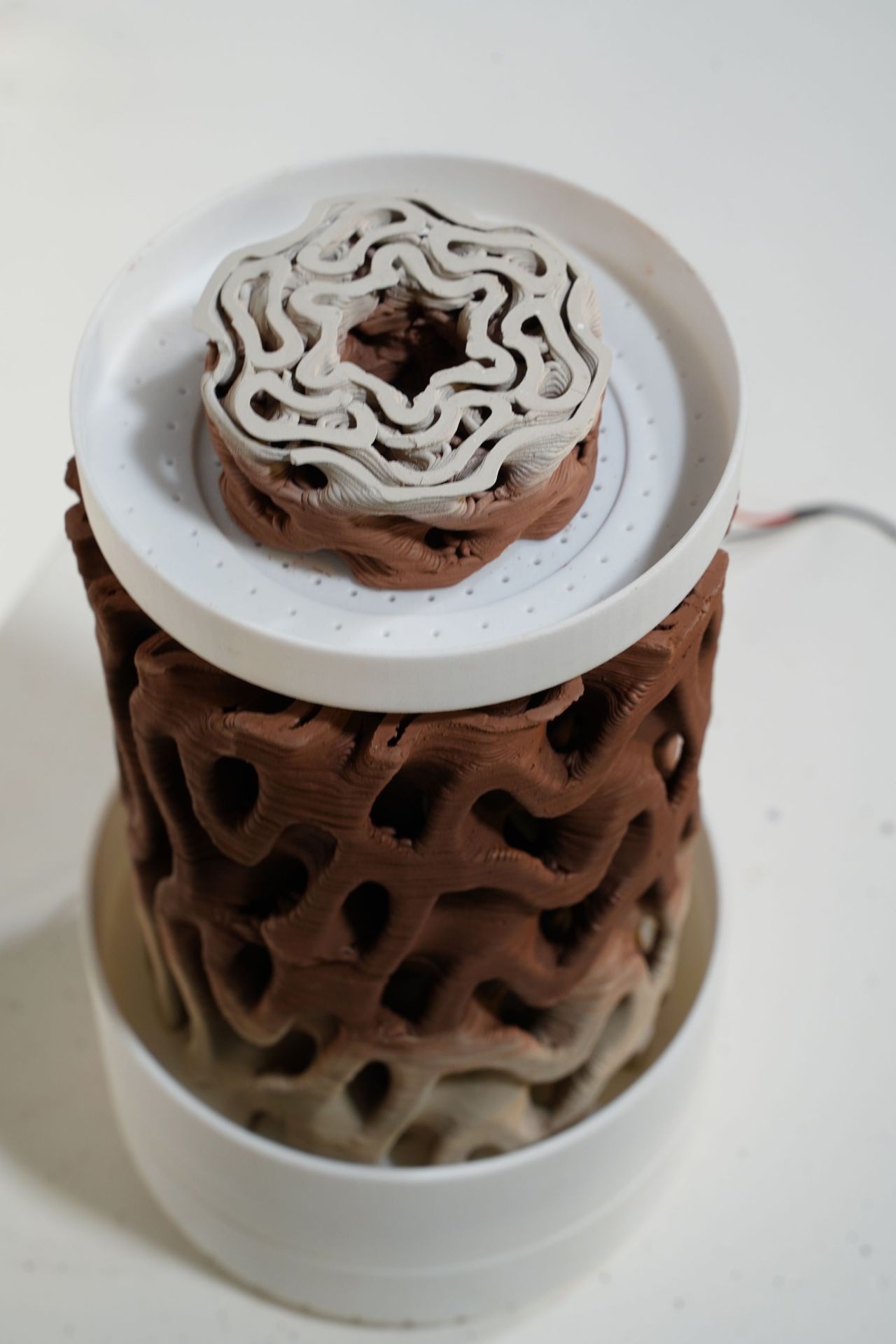
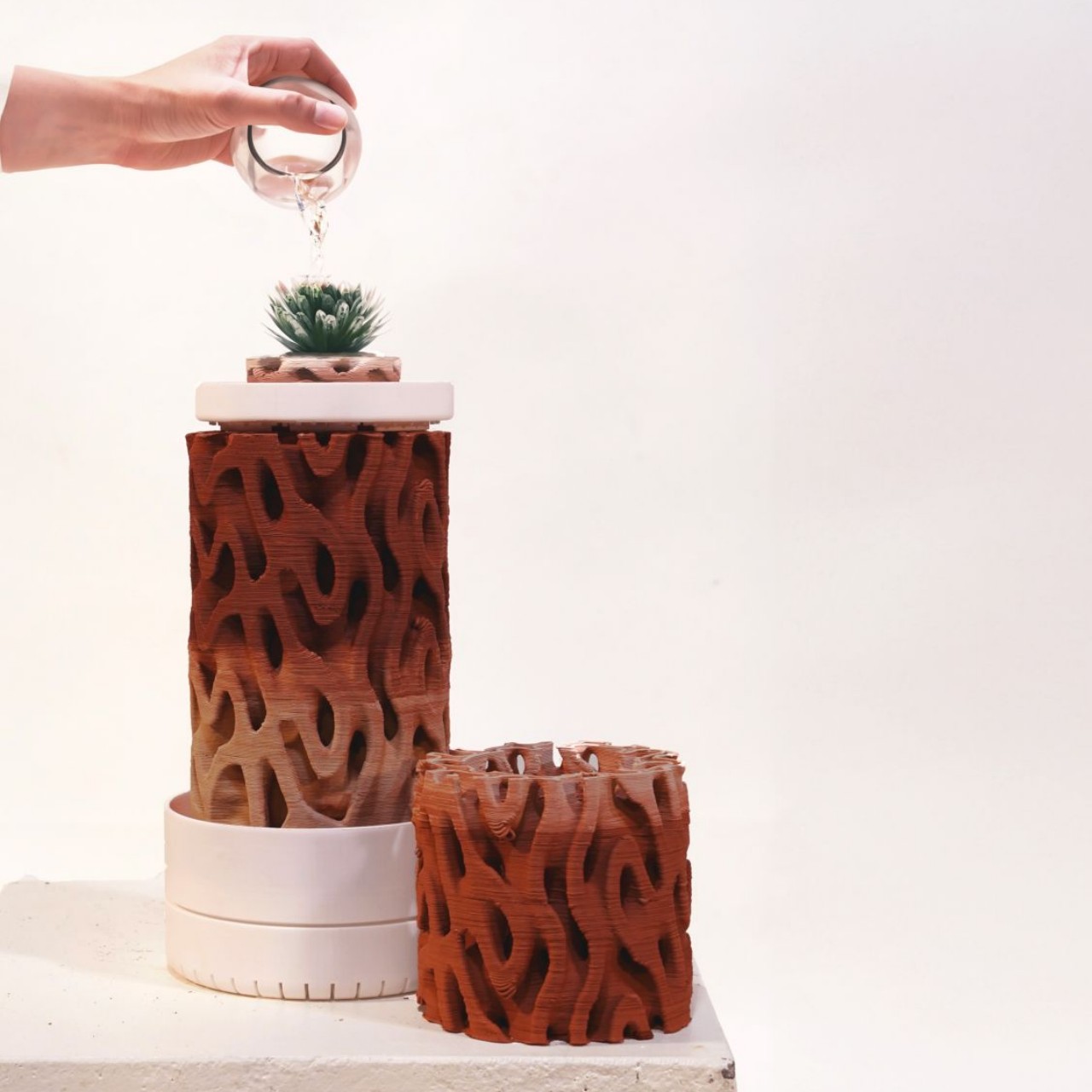
In the realm of biomimicry, the Fog Smart Hydroponic Planter stands out as a futuristic marvel inspired by the incredible abilities of the fog-basking beetle. It is a masterpiece that seamlessly blends the brilliance of biomimicry, advanced materials, and smart technology. Inspired by the fog-basking beetle native to the Namibian deserts, this hydroponic planter is not merely a vessel for plants but a pioneering solution that promises a greener, more sustainable future.

Designer: Rishikesh Sonawane

Biomimicry is a practice that learns from and mimics the strategies found in nature to solve human design challenges. The fog-basking beetle, a tiny inhabitant of the Namibian deserts, can thrive in arid conditions by extracting moisture from the surrounding fog. Its microstructural adaptations, enhancing surface area by up to 60%, allow it to condense and redirect moisture, providing a source of sustenance in environments where water sources are scarce. This ingenious adaptation has become the inspiration behind the Fog Smart Hydroponic Planter.

This planter represents a harmonious convergence of biomimicry and modern design principles. Unlike traditional planters, it transcends mere functionality, aspiring to become a statement piece that marries aesthetics with technological innovation. The modular design, a hallmark of this project, not only facilitates ease of use but also underscores the commitment to adaptability and sustainable plant care.

The use of advanced materials fortifies the structural integrity of the Fog Smart Hydroponic Planter. The air intake module is meticulously crafted from Plexiglas, a polymer renowned for its resistance to sunlight (also used in aquariums and airplane windows), preventing yellowing over time. The main body incorporates Lightweight Expanded Clay Aggregate (LECA), a versatile clay composite with superior water retention properties, strength, and porosity. The aluminum 6063 base complements this ensemble, providing a stable foundation resistant to corrosion.

To achieve simplicity and practicality, the planter is ingeniously disassembled into four primary components. The drip tray, perforated ring, metal ring, and polymer cap collectively ensure easy maintenance and cleaning. The LECA planter’s internal structure, designed to mimic the fog-basking beetle’s shell, employs hydrophilic and hydrophobic elements strategically, optimizing moisture retention and distribution.

The planter introduces a groundbreaking approach to airflow dynamics by incorporating the Coanda Effect. As humid air courses through the planter, moisture is absorbed, contributing to increased turbine efficiency. This design concept draws inspiration from well-established technologies, such as Dyson fans and jet turbines, showcasing a commitment to energy efficiency.

Elevating plant care to new heights, the planter integrates intelligent features denoted as Smart+. A temperature and humidity sensor, intricately linked with the electronic components, dynamically adjusts the turbine speed, allowing users precise control over the plant’s microenvironment. The accompanying app, a technological companion, provides real-time data on humidity and temperature levels, offering insightful recommendations for optimal watering cycles based on the geographic location of the planter.

User interaction with the Fog Smart Hydroponic Planter is facilitated through an intuitive and user-friendly app interface. The app acts as a conduit between the user and the planter’s internal environment, allowing the monitoring of moisture concentrations, receiving water cycle recommendations, and tracking humidity and temperature levels throughout the day. This digital integration transforms the planter from a mere vessel into a sophisticated and futuristic table accessory.

The Fog Smart Hydroponic Planter is not merely a horticultural innovation; it is a testament to the symbiosis of nature and technology in the pursuit of sustainable living. As we navigate the complexities of modern existence, this planter stands as a beacon of hope, offering a glimpse into a future where our interaction with nature is characterized by thoughtful design, cutting-edge technology, and a commitment to environmental harmony. With each leaf it nurtures, it heralds a greener, more sustainable tomorrow, where biomimicry and technological ingenuity converge to create a better world—one plant at a time.

The post Combining Nature And Technology For Sustainable Plant Care first appeared on Yanko Design.
Modular electric minivan is inspired by puzzles for a more sustainable design

Although electric cars are becoming more common, we’ve barely scratched the surface of what they’re capable of. Removing the need for traditional fuel and relying on batteries opens up new possibilities, and not just in terms of power sources. It can offer a bit more flexibility when it comes to the form and function of the vehicle, like cars with completely digital interfaces or screens all around. There might even be room for a modular design, as this concept for a tiny Japanese electric van tries to show, allowing the manufacturer or even the owner to switch out certain parts both outside and inside to match their needs, just like pieces of a puzzle.

Designer: HW Electro

To be fair, a modular car might be a bit far down the road considering the industry is hyper-focused on standardizing electric vehicles and making self-driving features more acceptable to the masses. That’s not to say that the design is a distant possibility only, especially when the features are made to be more practical rather than fantastical. Switching out panels is probably more feasible than switching out whole car parts or components, which is the kind of modularity that the Puzzle concept embodies.

At first glance, the boxy shape of the Puzzle will already look strange to those not used to so-called “Kei cars,” but this kind of van design is popular in Japan for striking a balance between large interior capacity and small compact size. It’s a design that screams practical efficiency, and making it modular is taking it to the next level. But unlike what you might be imagining, the Puzzle’s pieces, pardon the pun, are limited to swapping out certain panels at the sides, corners, and even inside. It’s a bit of a generic system that opens up quite a number of possibilities but, more importantly, it also doesn’t tie them down to a specific design or part. It also makes replacing damaged panels easier and more economical, something that you can only dream of with regular cars.

The Puzzle van also has secrets to reveal inside its extremely spacious cabin. The interior door panel has slots that make it possible to add and remove different modules, such as containers, cup holders, and the like. Even the dashboard has this kind of design, yielding a clean yet flexible space for expanding the van’s capabilities, especially in the infotainment aspect. The cargo space, which is practically a cube, is also more space-efficient for storing boxes and all sorts of large objects, making the EV a potential delivery vehicle.

Thanks to the boxy form of this Kei car, it’s possible to put a solar panel on the roof to really maximize its battery mileage. Modular and sustainable, the Puzzle minivan concept offers an extremely simple yet effective solution to the future of electric vehicles, one that espouses the Japanese spirit of minimalism and practicality where form clearly follows function.

The post Modular electric minivan is inspired by puzzles for a more sustainable design first appeared on Yanko Design.

A Furniture Subscription Model That Leads To A Path Toward Convenience And Sustainability

In a world where the environmental impact of consumer choices is becoming increasingly critical, innovative solutions are emerging to address the challenges of over-consumption and waste. One such solution is the Koru WFH Furniture Subscription, a pioneering concept in the realm of home-office furniture that not only meets the needs of modern remote work but also champions the principles of a circular economy.
Designer: Studio Elk

As of 2020, the Environmental Protection Agency reported a staggering increase in the amount of furniture and furnishings being discarded, reaching a whopping 12 million tons. This alarming statistic underscores the urgent need for sustainable alternatives in the furniture industry. Koru is a visionary response to the environmental challenges posed by the disposal of office furniture.

The onset of the COVID-19 pandemic catalyzed a monumental shift in work culture, giving rise to the widespread adoption of remote work. In this context, Studio Elk seized the opportunity to introduce a circular economy concept for home-office furniture through its subscription service. By leasing modular furniture to businesses instead of selling it outright, the studio has developed a sustainable approach to furnishing home offices.

Koru furniture isn’t just functional; it’s a harmonious blend of professional utility and aesthetic sensitivity to the home environment. Employees subscribing to the services gain the flexibility to configure their home office setups according to their unique needs, spatial constraints, and personal style. This design characteristic ensures that the furniture seamlessly integrates into the home while meeting the demands of a professional workspace.

https://www.behance.net/gallery/184030027/Koru-WFH-Furniture-Subscription/modules/1042109815This subscription model empowers businesses to choose from a variety of flexible monthly plans that can adapt to the evolving size and requirements of their teams. The service encompasses installation, repair, upgrades, and efficient collection when the furniture is no longer needed. This holistic approach eliminates the time and cost burdens typically associated with managing, moving, and storing furniture assets.

The durability of the Koru furniture is a key factor in its sustainability. Crafted from hard-wearing materials and finishes, the furniture is designed for longevity. Moreover, its easy disassembly and reassembly enable a closed-loop system, promoting reuse and enhancing repairability.

Koru’s innovative subscription concept facilitates a continuous revenue stream throughout the entire lifespan of its products. Operating on a Product-as-a-Service model, the company aligns profitability with product longevity. The longer the furniture remains in use, the more sustainable and profitable the model becomes.

Koru’s subscription concept and circular supply chain model provide a blueprint for furniture brands seeking to diversify and future-proof their business. By integrating environmental responsibility with business goals, Koru offers a pathway for brands to thrive while minimizing their environmental footprint. In essence, the Koru WFH Furniture Subscription is not just a service; it’s a sustainable business model that envisions a greener and more responsible future for the furniture industry.

The post A Furniture Subscription Model That Leads To A Path Toward Convenience And Sustainability first appeared on Yanko Design.