Apple Music’s year-end Replay is here to expose your listening habits

Apple Music’s full year-end Replay experience has arrived. Although elements of the personalized recap are available year-round (including a continually updating playlist), the company spruces up its web interface this time of year for a sleeker presentation as you reflect on your 2023 listening habits. Apple Music also announced its Artist of the Year (Taylor Swift, who you may have heard of) and subscribers’ top choices in various categories.

If you listened to Apple Music this year, you can head to the service’s Replay 2023 website and log into your account to view a rundown of the music you enjoyed during the last 12 months. It lists your most-streamed artists, songs, albums, genres, playlists and stations.

It also includes a highlight video summarizing your habits, which you can share with friends and family or on social channels. If you reach any milestones, like listening to 25,000 minutes of music, it will reveal exactly when you hit them. Apple says Replay 2023 will also tell you if you rank among an artist’s top listeners.

Photo of Taylor Swift looking into the distance in front of a bluish-gray sky. The text
Apple

Taylor Swift had a busy year, and her Apple Music streams unsurprisingly reflect that. The platform’s Artist of the Year had 65 songs reach its Global Daily Top 100, more than any other artist. The pop icon was also the most streamed artist on the platform in 2023, setting a record for the most listeners in a single year. Meanwhile, Morgan Wallen’s “Last Night” took the top spot in Apple Music’s Top Songs of 2023: Global list. It was the first country song to top that chart since “Old Town Road” four years ago. “Last Night” enjoyed the most days at number one on the service’s Global Daily Top 100 chart.

World music has grown in popularity on the platform. Nigerian breakout artist Rema had the most Shazam’d song of the year with the Afrobeats tune “Calm Down.” Meanwhile, “Idol” by J-Pop duo Yoasobi was the most popular karaoke song using Apple Music’s Sing feature, and it also hit number seven on the year-end top songs chart, joined by fellow J-Pop track “Subtitle” by Official Hige Dandism. Música Mexicana also did well, with four tracks on the top 20 global songs list. These include “Ella Baila Sola” by Peso Pluma and Eslabon Armado, “un x100to” by Grupo Frontera and Bad Bunny, “PRC” by Peso Pluma and Natanael Cano and “Bebe Dame” from Fuerza Regida and Grupo Frontera.

Year-end rewinds have become a popular feature for streaming services, as people enjoy the self-expression and comedy that can come from sharing their tastes on social media. If recent years are any indication, you can expect Spotify and YouTube to reveal theirs within the coming days.

This article originally appeared on Engadget at https://www.engadget.com/apple-musics-year-end-rewind-is-here-to-expose-your-listening-habits-204548370.html?src=rss

World’s First Programmable Music Box can play anything from Christmas Carols to the Latest Pop Hits

Nostalgia Upgraded – The Muro Box brings a fond childhood music instrument into the future with App Support and MIDI Connectivity

The second you hear a music box, your mind is taken to a fairytale land. Music box sounds have been used in cinemas to transition to dream sequences, showing exactly how rooted the sound of a music box is in childhood nostalgia. In the past, most of these mechanical musical instruments were found inside toys like snowglobes, jack-in-the-boxes, or other wind-up toys. You can still find music boxes today, although most of them just play fixed tunes like your odd nursery rhyme or Happy Birthday (some novelty stores even sell music boxes that play the Harry Potter or the Game of Thrones theme)… but the folks behind the Muro Box are doing something absolutely unusual. The Muro Box is the first customizable music box that can play pretty much any tune you want it to play, thanks to app connectivity and a MIDI interface. You can use Muro Box’s app to either compose your own tracks or browse through a library of pre-composed tracks… or better still, hook it to a MIDI synth and play music directly from your keyboard onto the Muro Box. The result is a charmingly nostalgic rendition of pretty much any song. Whether it’s a Christmas Carol or a Slipknot song, it’s sure to sound positively delightful and just incredibly dreamy!

Designer: Muro Box Global

Click Here to Buy Now: $299 (Ships Before Christmas) Hurry! Only 7 Days Left!

The way most music boxes worked was simple. Each box would come with a rotating cylinder that had studs on it, and a metal comb placed strategically near said cylinder. When the cylinder would rotate, the studs would ‘pluck’ against the comb, creating notes. Based on the cylinder’s pattern, you could play elements of any song. The problem with the music boxes of the past, however, was that A. You couldn’t change the song and B. The drum’s limited circumference meant you could only play a small portion of the song over and over again, which would become a little annoyingly repetitive after the first few times. The Muro Box solves both those problems thanks to a patented dynamic cylinder that can change while it rotates. This game-changing innovation allows the Muro Box to not just play different songs, but also play ENTIRE songs.

While the Muro Box is built to be a treat for one’s ears, its beauty starts with that gorgeously nostalgic design, echoing the steampunk aesthetic of the good old days. The mechanical parts of the box are surrounded by gorgeous brass detailing, sitting on top of a single-piece maple or acacia wood platform. Zinc-alloy components help create a warm, pleasant sound, while the acacia platform comes with an acoustic chamber that amplifies the music box’s sound. A glass enclosure seals the Muro Box’s internal components, preventing dust, dirt, or fidgety children from toying with the box’s delicate assemblies. Quite like the Muro Box’s sound transports you to a simpler time, its design is a hallmark of the simpler years before electronics, circuit boards, and internet connectivity.
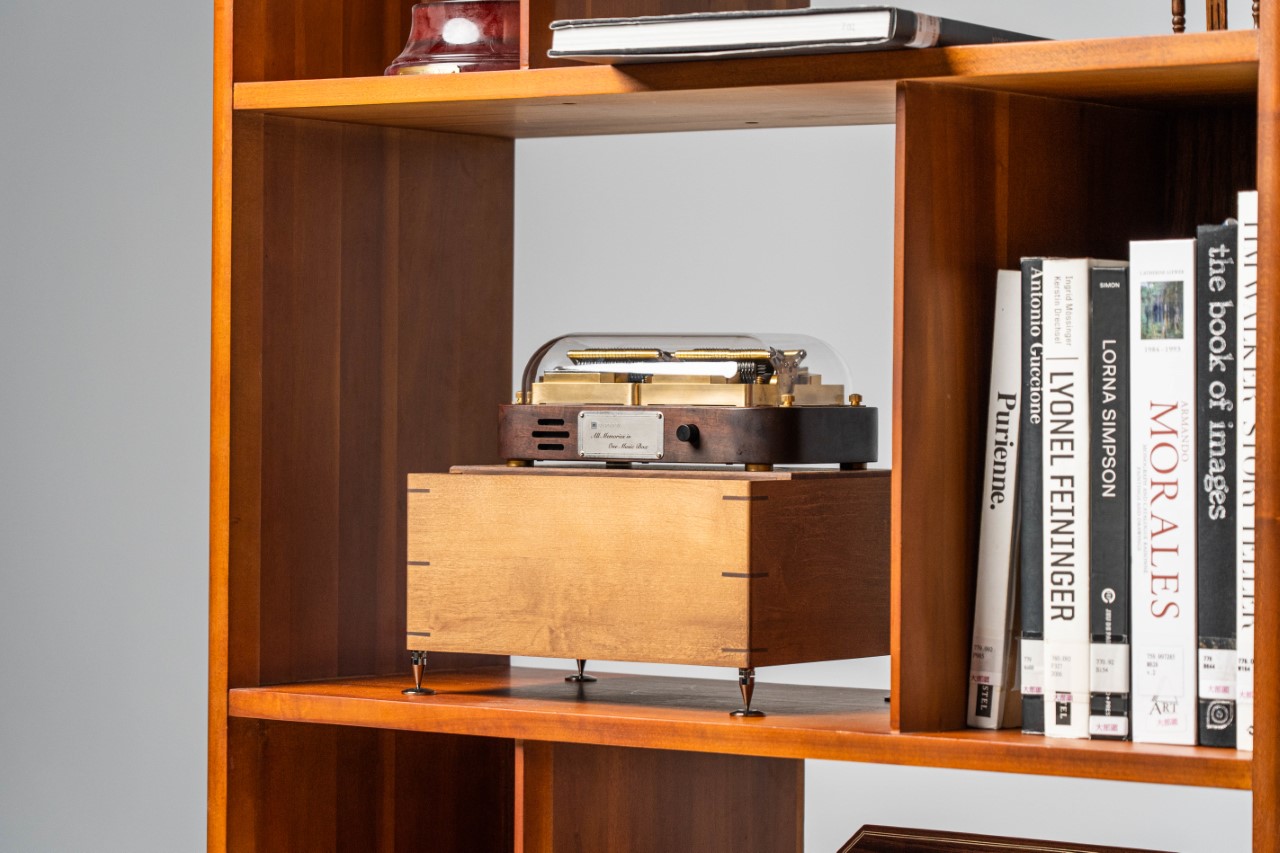
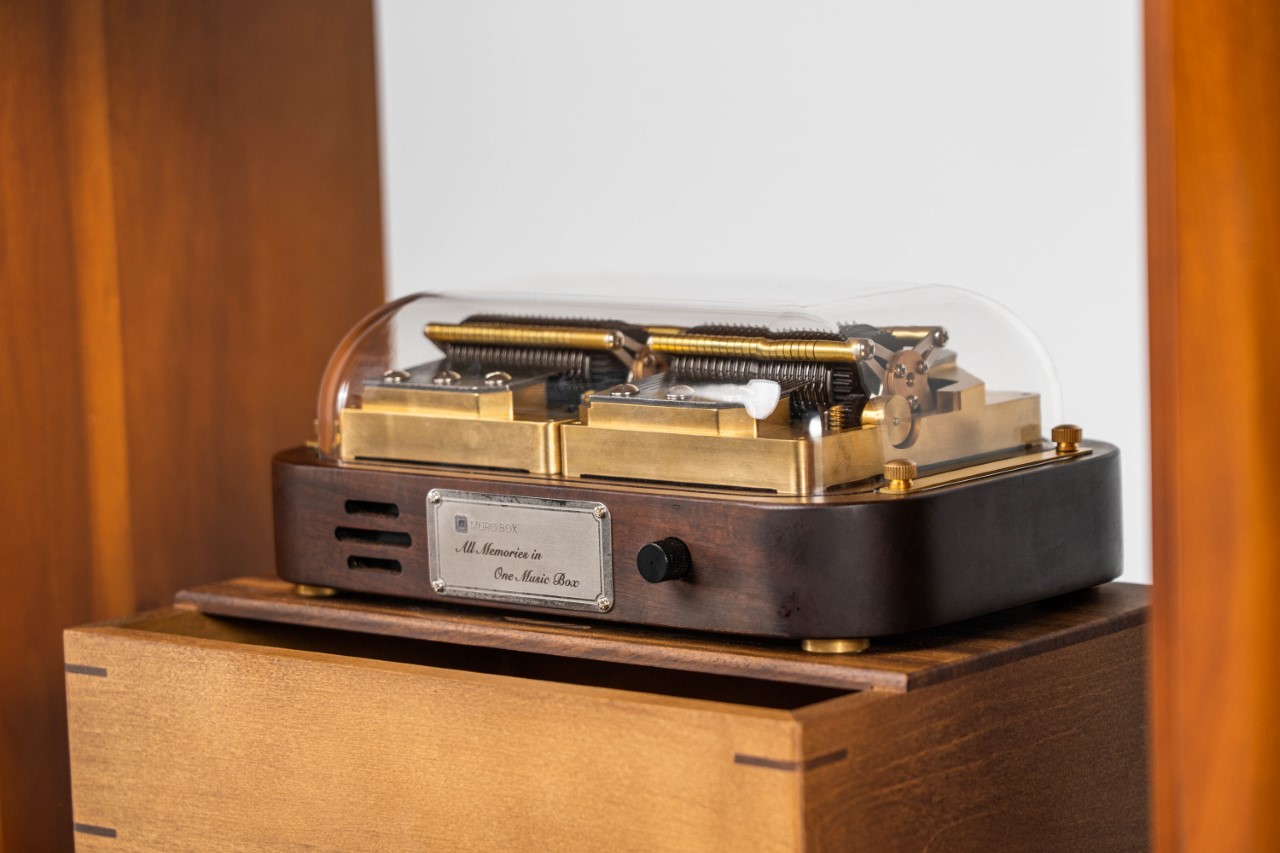
That being said, the box itself has some seriously impressive tech underneath its hood. It’s designed to be entirely programmable, which means you can choose what to play, thanks to a variable cylinder design that can pluck on the resonating comb in a variety of ways. The box connects to an app that allows you to either choose from a library of songs, or design your own melodies using a MIDI-style interface (think Guitar Hero, but with more notes). A single-button interface lets you twist to toggle between songs in the app’s playlist (left for previous, right for next), and pressing the button toggles the play/pause feature. If you’re looking to push the Muro Box to its absolute limit, a MIDI port on the back lets you connect your Muro Box to a synth or a laptop running a DAW, so you can play more complex melodies directly off music production software.


Most users will be more than content with running the Muro Box off its app. The vast library contains user-submitted tunes from all around the world, featuring classics, latest hits, and even local/regional tunes. Pick a tune and the box begins emitting a gentle whirr that’s punctuated by the melodious clinks of the cylinder’s studs hitting the resonating comb. The Muro Box’s different variants come with single, double, and quadruple-comb arrangements, allowing you to play simple tunes or even incredibly layered musical compositions.
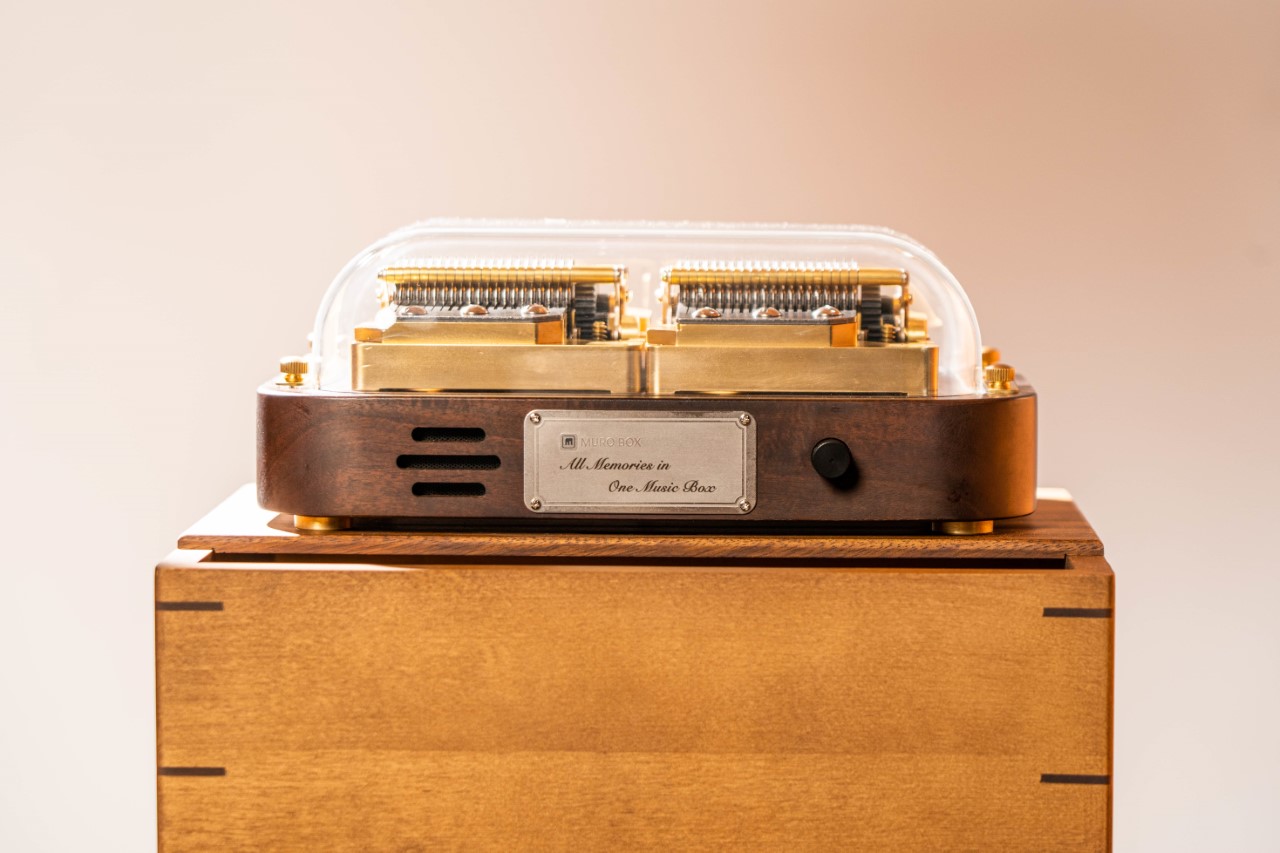
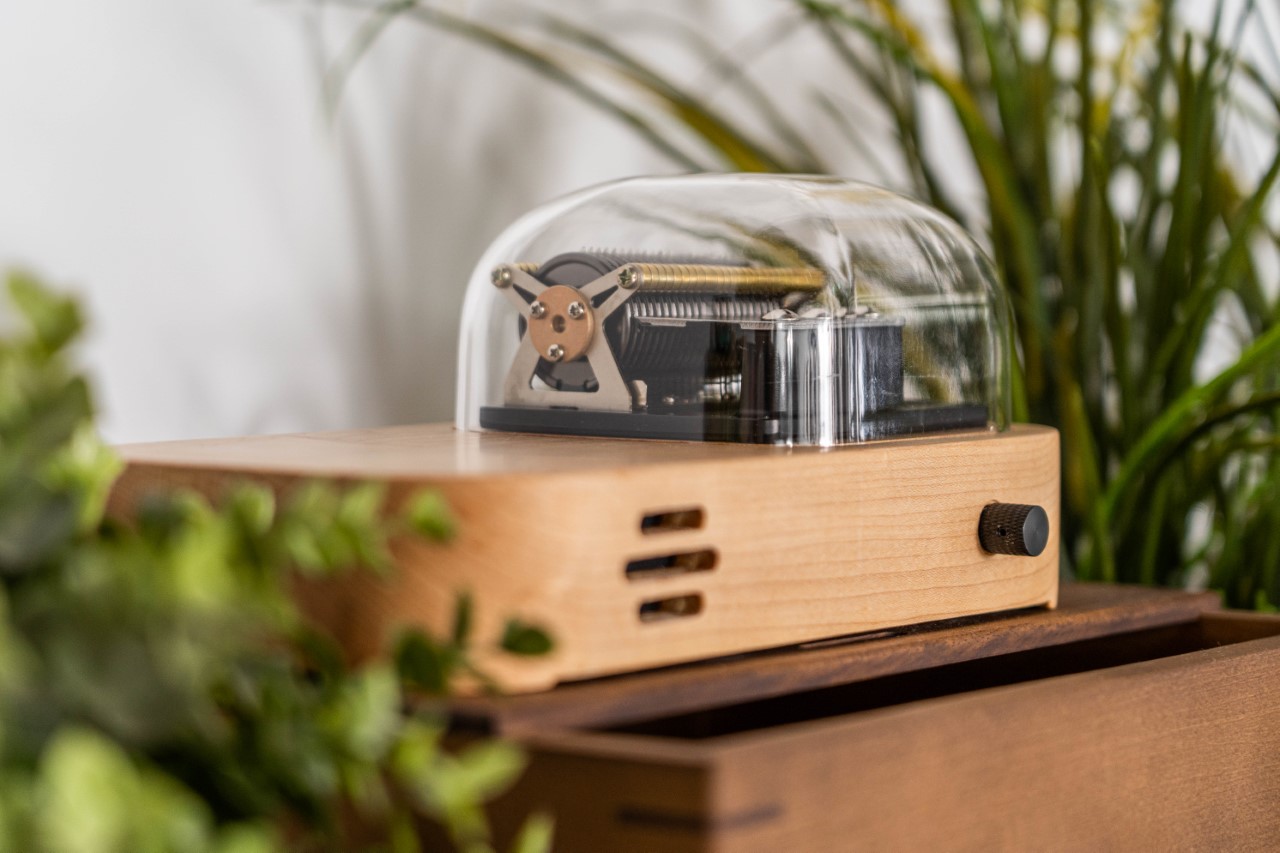
The Muro Box comes in three variants, ranging from simple to complex. The catalog starts with the N20 Lite, a redesign of the company’s first N20 music box from back in 2020. The N20 Lite comes outfitted with one 20-note music comb, limiting the number of notes you have to play with. Designed to be smaller than its siblings, it also ditches the MIDI feature for app-only control, and comes with a battery-powered design that lets you carry your music box with you, unlike the larger models that are wired.

The next step in the Muro Box journey is the N40 Standard, with two 20-note combs, giving it a total of 40 notes. This allows the N40 to cover more notes and more octaves, allowing you to play more complicated songs with a lower baseline and upper melody. The final music box in the series is the N40 Sublime, a more complex version of its standard sibling with four 20-note combs instead of two. However, instead of offering 80 different notes, it sticks to 40 notes, but has duplicates for each note. This makes each individual note sound richer as it’s played twice, creating more resonance. The phenomenon is called Sublime Harmonizing, and the best way to understand the difference is to think of a solo singer versus a choir.


Both the N40 variants come with a DIN 5 and USB-C MIDI input, and there’s even a 6.5mm (1/4 inch) audio output with a transducer pickup system. The N40 Standard comes with a Maple box, but you can upgrade to the high-quality Acacia for an extra $90. The N40 Sublime, on the other hand, is outfitted with the acacia-wood box and even has a laser-engraved metal plaque that you can customize with a message of your own.

The Muro Box starts at a commendable $299 for the N20 Lite, going up to $996 for the N40 Standard or a hefty $1,826 for the N40 Sublime. It’s difficult to put a price on nostalgia but the Muro Box definitely doesn’t make things cheap! The music boxes are all made in Taiwan, and ship globally as early as December 2023.


Click Here to Buy Now: $299 (Ships Before Christmas) Hurry! Only 7 Days Left!

The post World’s First Programmable Music Box can play anything from Christmas Carols to the Latest Pop Hits first appeared on Yanko Design.

Porsche Design Unveils the PD S20, its First Outdoor Wireless Speaker

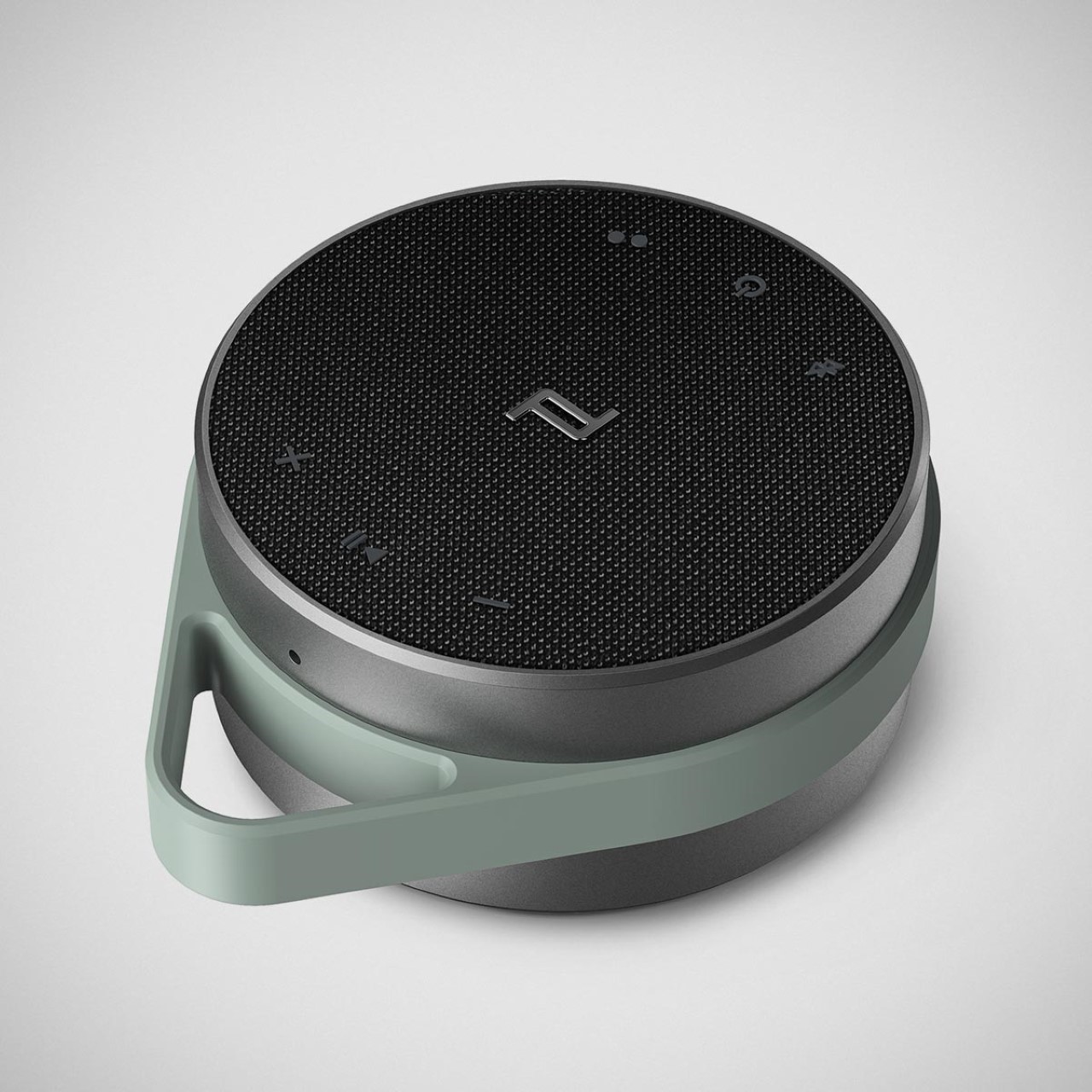
Porsche Design, renowned for its sleek, high-performance products, has recently unveiled the PDS20, marking its first foray into the realm of outdoor speakers. This move comes after years of producing other acclaimed audio products, underscoring Porsche Design’s commitment to expanding its portfolio and catering to a wider range of audiophile needs.

Designer: Porsche Design

Porsche Design has always been about blending top-notch design with serious tech and adding a sprinkle of automotive joy; their audio line is no exception. Take the 911 Speaker 2.0 60Y 911 for instance,  a limited-edition speaker modeled on the Porsche 911’s iconic tailpipe, proving Porsche Design knows a thing or two about exclusive, high-end audio gear. And if you’re in the mood to splurge, there’s the 911 Soundbar 2.0 Pro. This baby will set you back a cool $12,000.00, but it quite literally transforms an original exhaust pipe from a Porsche 992 GT3 into a staggering 300W sound system… But here’s where things get interesting with the PDS20. This isn’t just another high-end gadget in Porsche Design’s arsenal. Priced at a respectable $245.00, it’s their first outdoor speaker, and it’s a game-changer. Unlike its predecessors, the PDS20 is built for the great outdoors, with a tough, weather-resistant design and a sound that’s just as impressive in the open air as it is indoors. It’s like Porsche Design decided to take everything they knew about premium sound, throw in a dash of adventure, and voila – the PDS20 was born.

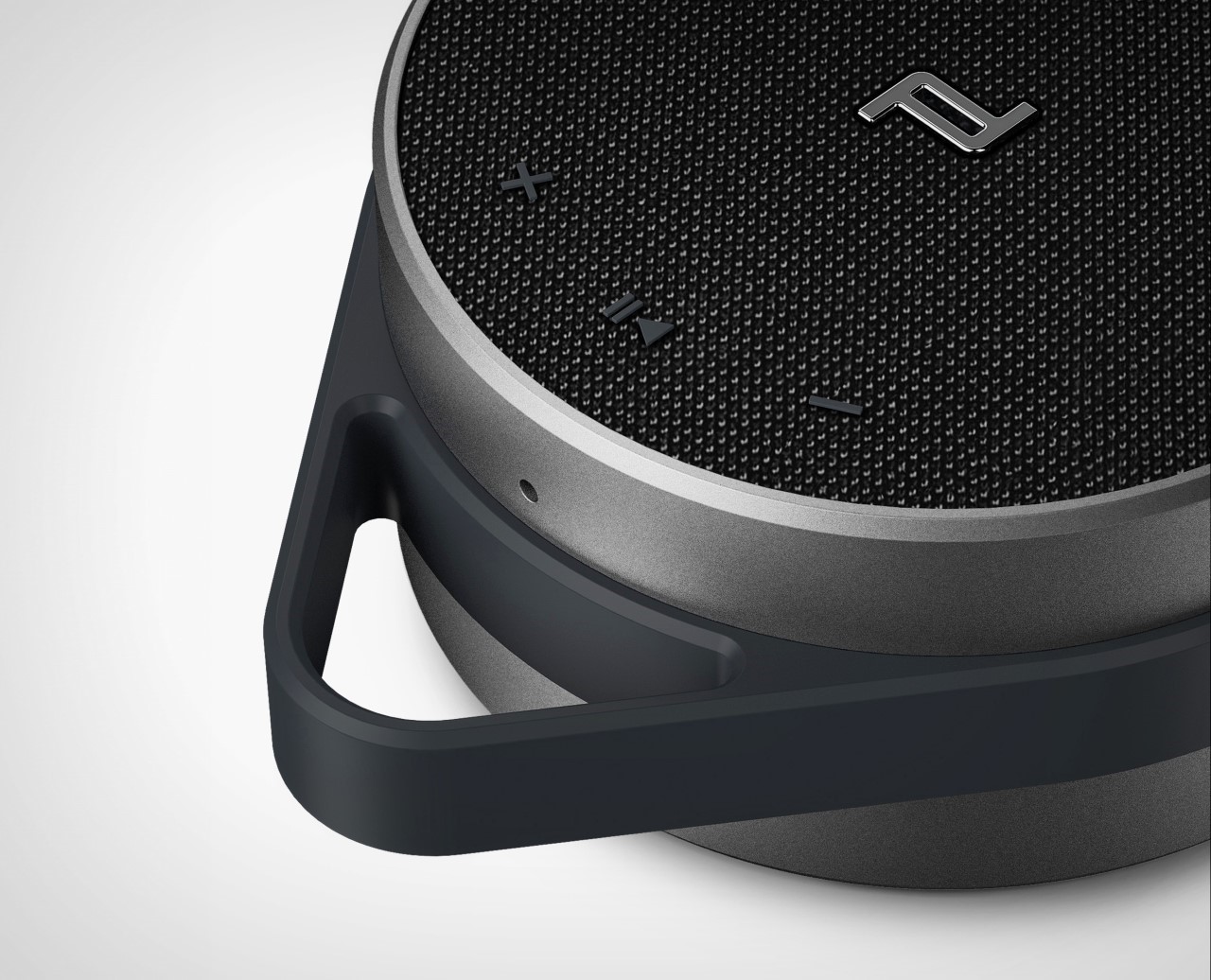
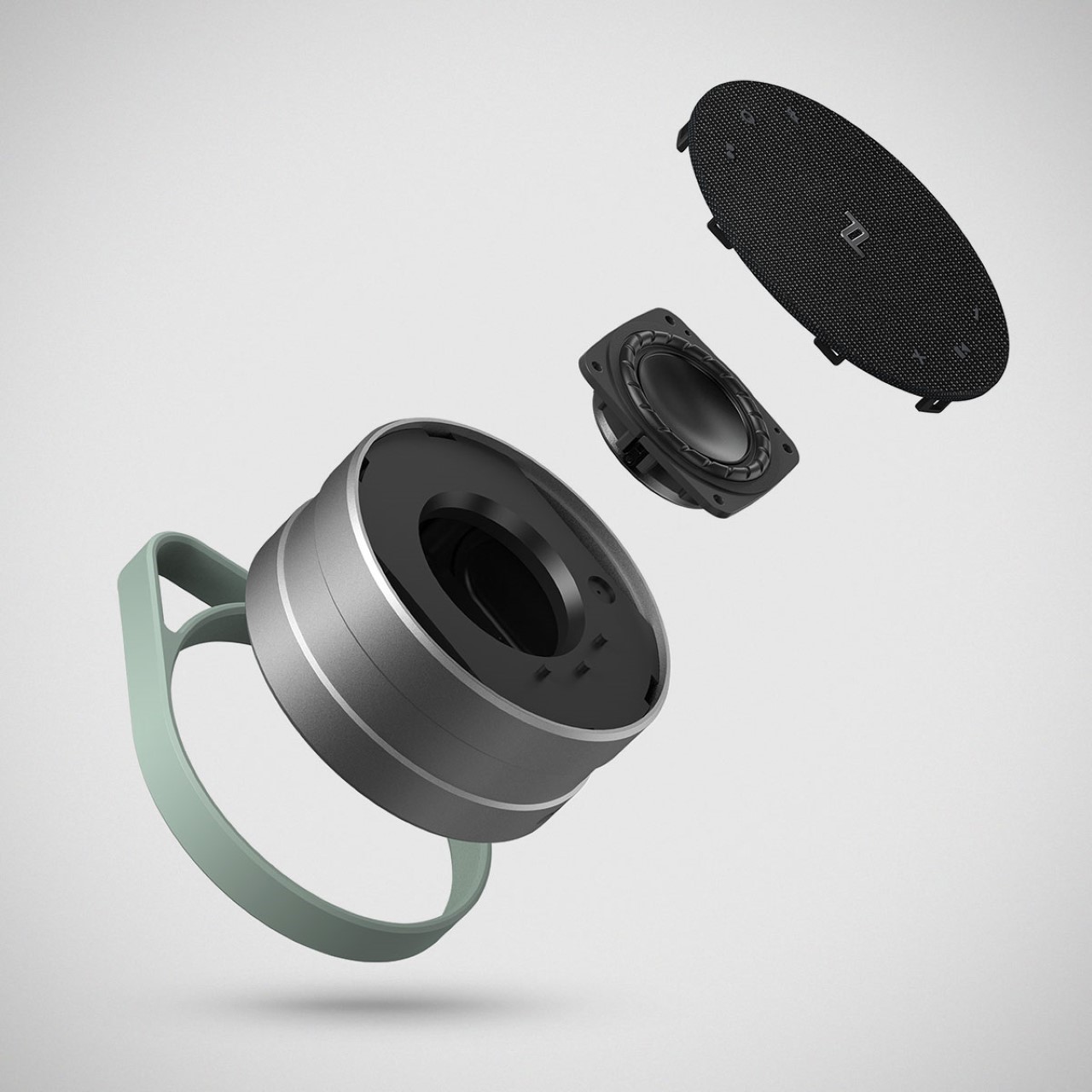
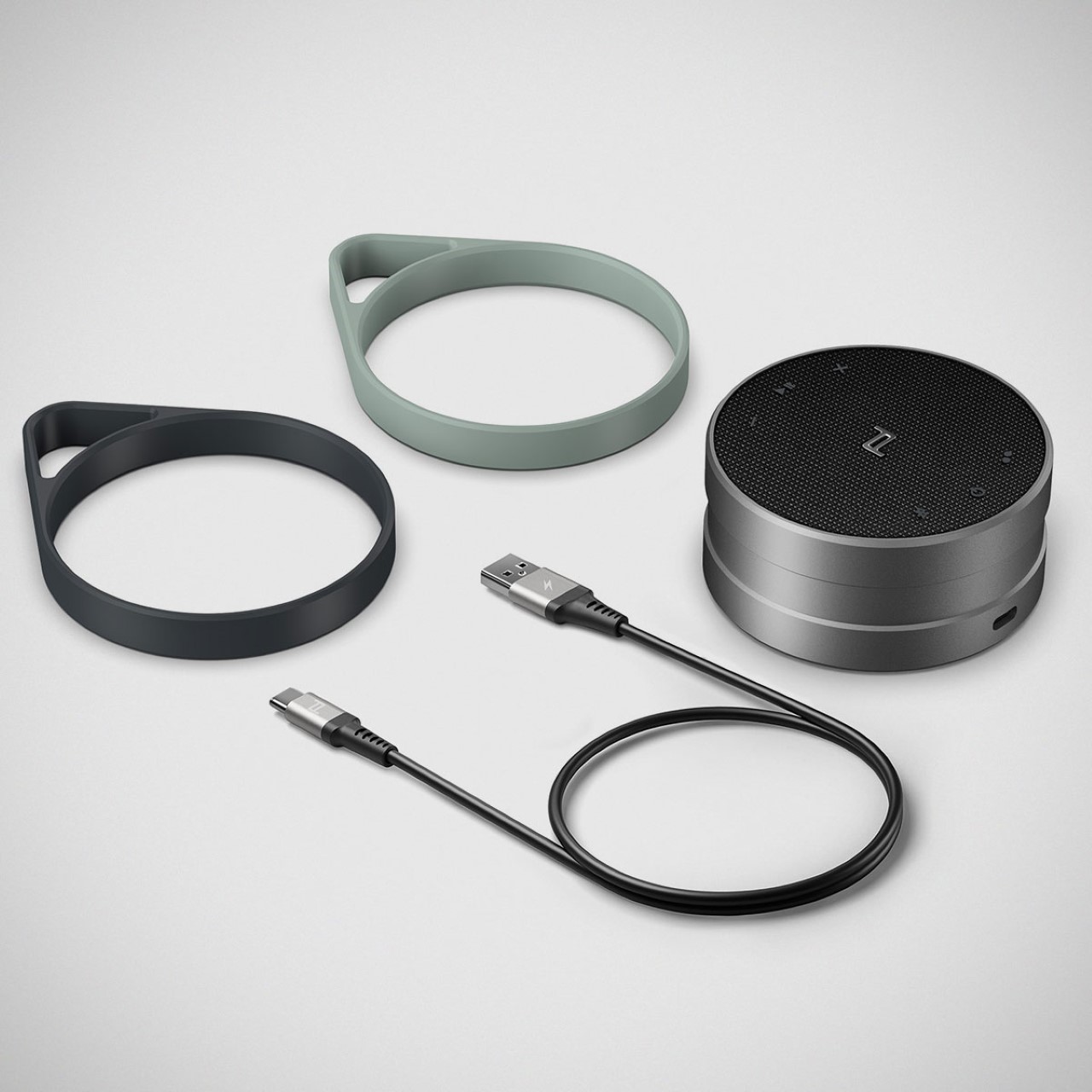
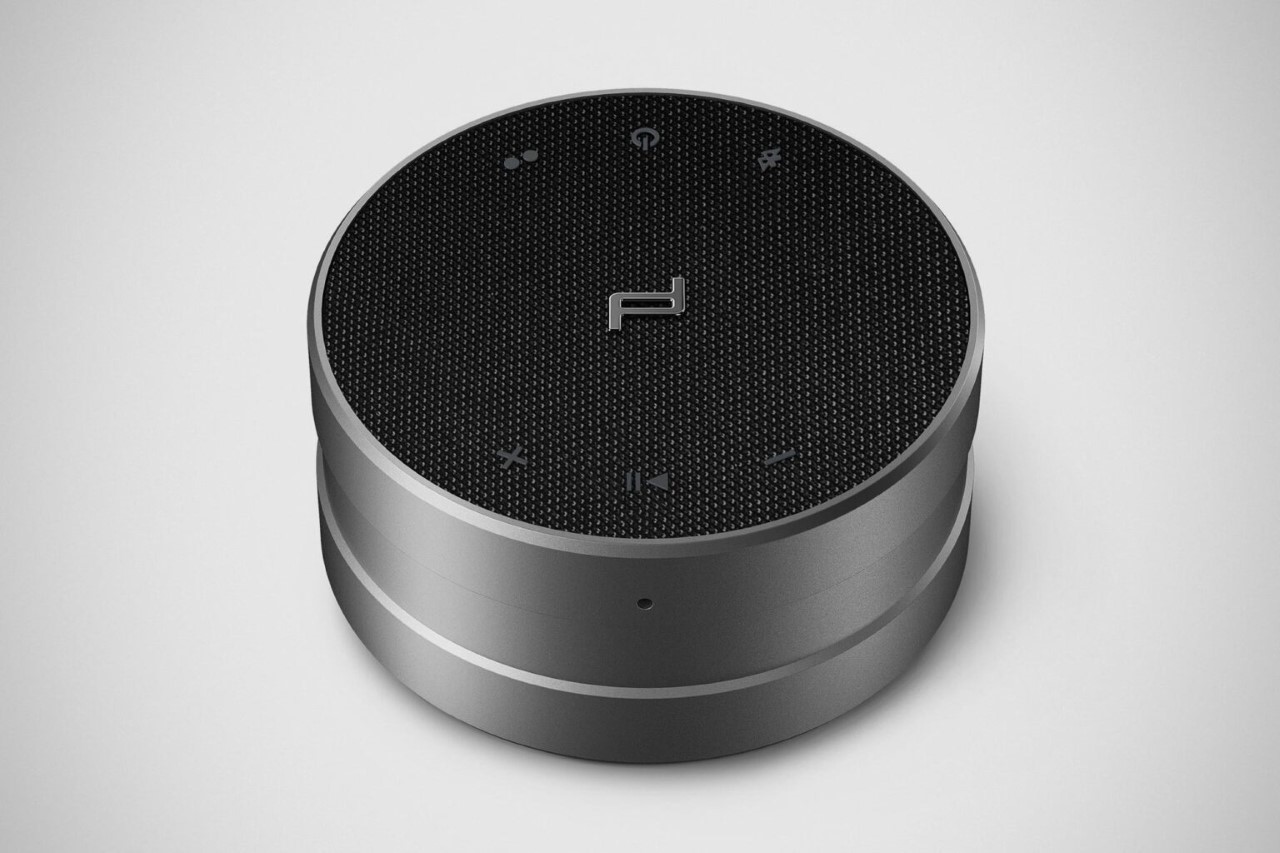
The PDS20 comes crafted from anodized aluminum and gray acoustic fabric, presenting a minimalist and durable design. This cylindrical speaker is equipped with two passive radiators and a 1.75″ woofer, ensuring exceptional sound quality, particularly in the bass department. Its IP67 rating guarantees resilience against dust and water, making it an ideal companion for outdoor activities such as hiking or for enhancing open spaces with premium sound. The PDS20 also boasts a 10-hour battery life and quick USB-C charging, ensuring all-day uninterrupted listening. An integrated microphone facilitates easy interaction with voice assistants for playlist control, call management, and messaging, all controllable via the haptic buttons built into the PD S20’s fabric grill. For an immersive stereo experience, it can easily pair with a second speaker via Bluetooth, perfect for larger gatherings or home entertainment enhancement.

The PD S20’s blend of design styles allows it to easily transition between being a haute home speaker or an outdoor-friendly audio device. That anodized aluminum enclosure is undeniably classy, although it gets a slight hint of rugged when you slide that silicone ring in (which comes in 2 color options that you can alternate between). With its sleek design, robust build, and superior sound quality, this speaker is ready to take on any adventure, be it a backyard barbecue or a hike in the hills. It’s a refreshing addition to the otherwise relatively unattainable Porsche Design lineup (10 grand for a soundbar?!), combining their trademark elegance with outdoor-friendly functionality so you can carry your love for Porsche with you wherever you go. And the best part? You can snag one of these for $245.00. Starting from November 15, 2023, it’s up for grabs at Porsche Design stores, their website, and selected retailers.

The post Porsche Design Unveils the PD S20, its First Outdoor Wireless Speaker first appeared on Yanko Design.

Master & Dynamic MW09 TWS earbuds take the heavyweights with renewed design, sublime audio and improved ANC

If you are looking for the cream of wireless earbuds then the best bets are Bowers & Wilkins PI7 S2, Master & Dynamic MW08 and Technics EAH-AZ80. You can’t go wrong with either of these, but the PI7 S2 and EAH-AZ80 inch just a bit ahead of the ones by Master & Dynamic.

That however could change with the newly launched Master & Dynamic MW08 wireless earbuds. Just like every other brand’s earbuds, these have incremental upgrades that make them better than their predecessor. They’ve got better overall design, comfort, audio quality and ANC to lure audiophiles who are on the lookout for that ultimate package.

Designer: Master & Dynamic

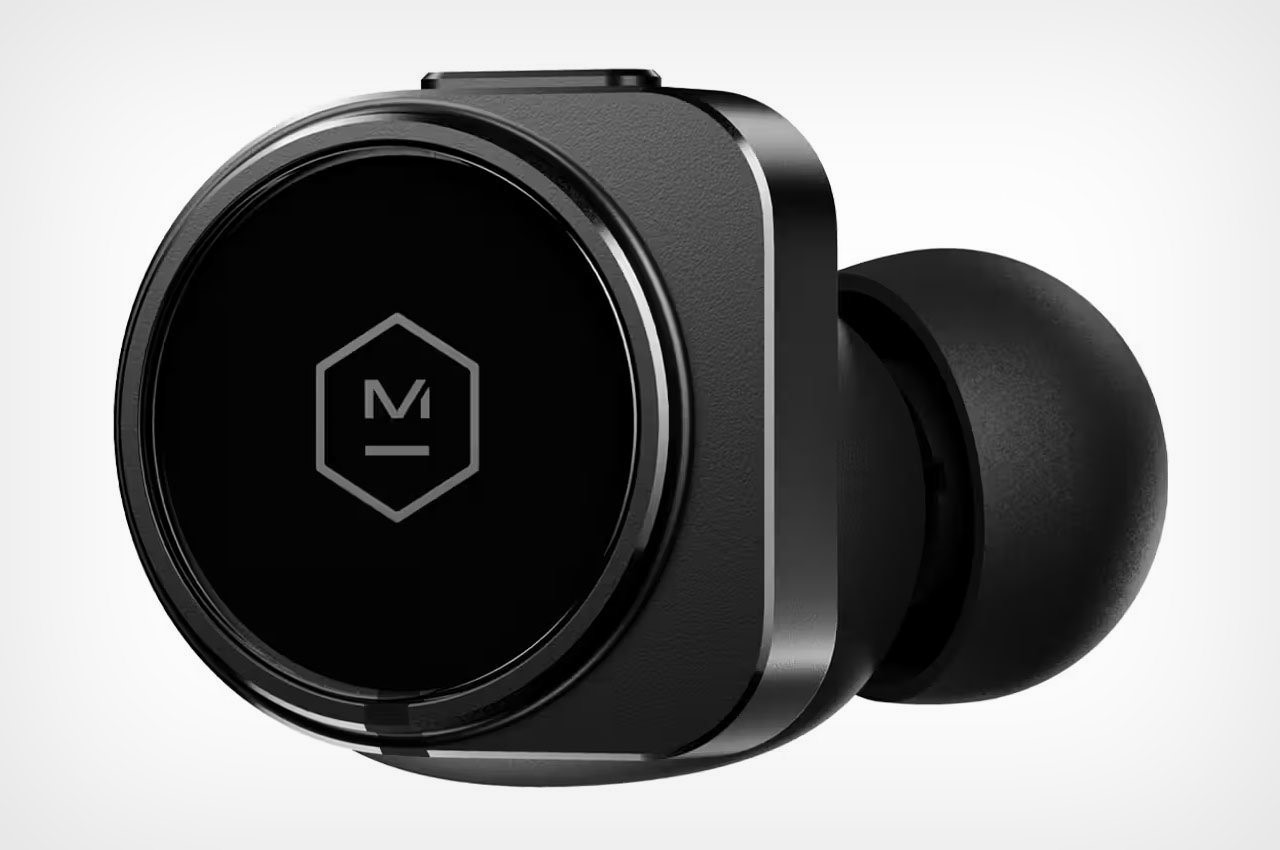
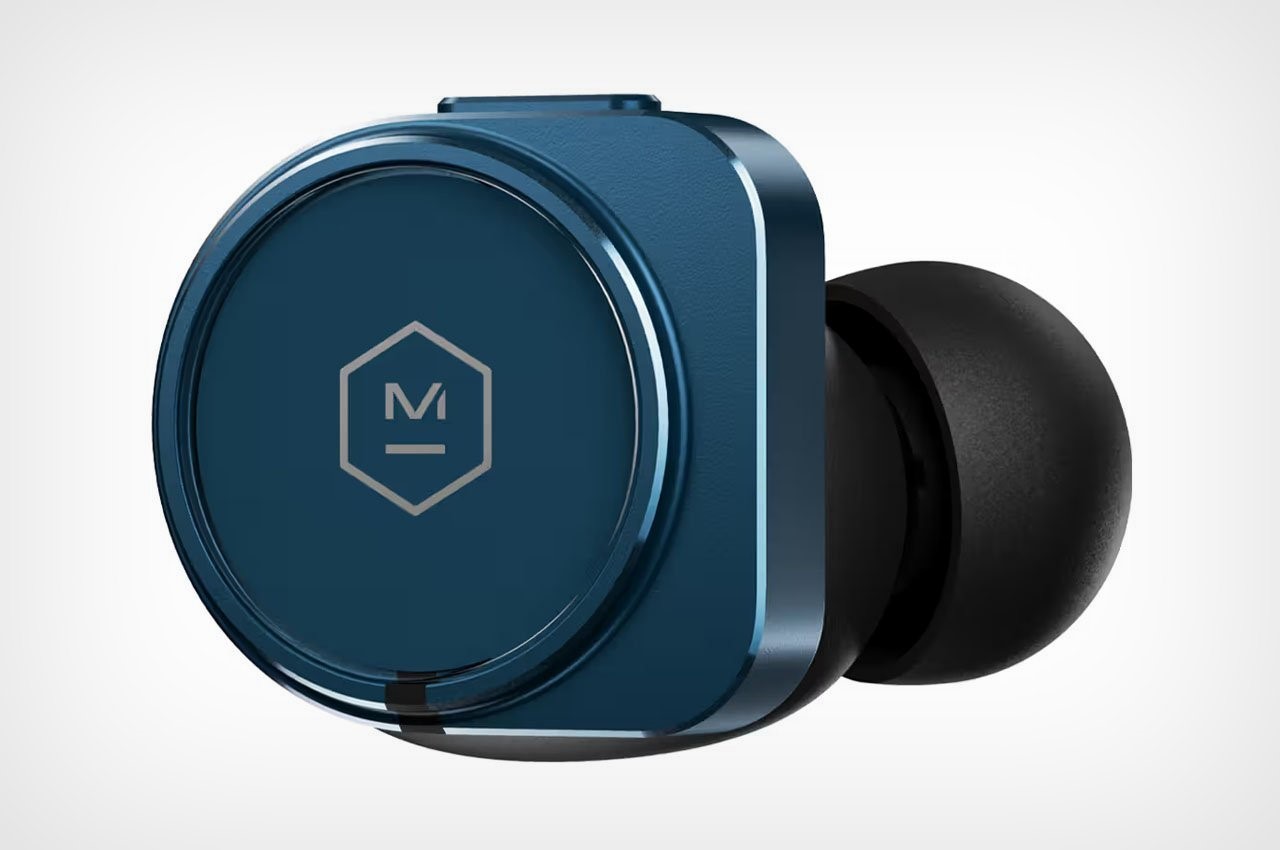
The New York-based luxury audio brand released the MW08 series in 2021 and this new launch was imminent. The new ones have the design DNA of the predecessor but with a more ergonomic shape and reduced weight. This should make them a great fit for a wider range of ears. The acoustic enclosure has been upgraded and the 11mm beryllium drivers promise the “most expansive sound profile ever” for that sublime audio signature offered by the brand.

Talking of the ANC, the TWS earbuds get updated microphones and sensors aided by the noise-canceling algorithm to block out unwanted ambient noises. The call quality also gets a bump up with the AI-powered high-definition speech software for natural-sounding voice. Multipoint connectivity brings seamless connection to two devices simultaneously which has now become a standard with flagship options. The accompanying app fin tunes things to adjust the equalization levels, ANC settings and the transparency mode to hear important things while listening to music.

The buds come with a choice of foam and silicone eartips which should work for every type of audio lover. Battery life of 12 hours with ANC turned on and 16 hours with it turned off is impressive. Top that off with 32 hours of backup in the charging case and this will be a major selling point for these premium earbuds. The design is also something you‘ll absolutely love or hate. The use of anodized aluminum shells covered in sapphire glass gives off that peculiar industrial look but in a very refined form.

Master & Dynamic MW09 ANC True Wireless earbuds can be preordered from November 14, 2023 in very attractive options – black with black aluminum case, white and silver with silver aluminum case, gold with gold aluminum case, green with Kevlar case, blue with Kevlar case, and gunmetal with Kevlar case. The price tag of $349 matches the industry heavyweights and is head-on in competition with the acclaimed options I mentioned at the start of this piece.

The post Master & Dynamic MW09 TWS earbuds take the heavyweights with renewed design, sublime audio and improved ANC first appeared on Yanko Design.

YouTuber built a Bluetooth Speaker small enough to fit inside a Walnut

I don’t know what it must have cost, but I’m assuming peanuts.

Reporting to you today from the weird part of the internet, we’ve got crazy YouTuber Penguin DIY who decided to take a walnut shell and cram an entire Bluetooth speaker inside it… USB-C port and status LEDs included. The speaker’s audio quality isn’t anything to write home about, but the video above that shows the entire construction process will not (I mean walnut) disappoint.

Designer: Penguin DIY

The speaker itself a miniature little device the size of a… well, walnut. Made from the walnut’s shell, it packs all the necessary components inside, including a mini battery, amp, driver, Bluetooth module, USB-C port, and even buttons and LEDs to control playback or increase/decrease the volume.

The process involved emptying out the contents of the walnut before taking a Dremel to the inside of the walnut shell to make as much space as possible for the components. The components include a 5V power bank module that was stripped for parts because it was too big to fit into the shell. The module (or whatever was left of it) was then connected to the rest of the speaker’s parts, including a 300mAh battery pack and a USB-C port for charging the speaker.

Other components included the actual ‘meat’ of the speaker, including a 2W audio driver, a mini-amp, and a Bluetooth module to allow for wireless connectivity. All the components were rather intricately pieced together and soldered with what I can only describe as incredible dexterity for something that small, and then glued to the shell with silicon glue. This flexible glue would allow the driver’s vibrations to occur without any danger of dislodging parts inside the walnut shell.

Finally, holes were drilled into the top of the walnut to make way for the speaker grill, control buttons, status LEDs, and even a nifty on-off switch. In the interest of repairability, Penguin DIY assembled the two halves of the shell together with screws instead of glues, enabling him to open up and repair or upgrade the speaker whenever he wanted. Let’s face it, if a YouTuber can turn a walnut into a Bluetooth speaker and still make it repairable, Apple can make the AirPods repairable too.

The results are impressive but not for the reasons you’d think. The speaker works flawlessly, with it being detected on a smartphone, getting connected, and even letting you play/pause music just like any regular wireless speaker. Understandably, the sound isn’t particularly great because of driver, amp, and size limitations… but if I had to rate the speaker on a scale of 1-to-10 for sheer ingenuity and for its proof-of-concept, it gets full marks. In fact, forget pumpkin carving skills, Penguin DIY’s walnut carving skills are absolutely on point!

The post YouTuber built a Bluetooth Speaker small enough to fit inside a Walnut first appeared on Yanko Design.

A Music Instrument for the Hearing Impaired: This Synth uses Tactile and Color Cues Instead of Sound

“Play by ear” as they commonly say, doesn’t really apply to people with hearing impairments. The most common example of a hearing-impaired musical genius remains Beethoven, who composed entire orchestral pieces by relying on what he remembered from a time when he could hear. By the time he reached the peak of his career, Beethoven was completely deaf, but his memory served him well when it came to playing music… not everyone today has that luxury, but the Vibra helps the hearing impaired play music by connecting the audio to other senses like touch and sight.

Designers: Ahn Taegwang, Go Yeongseok, Hwang Jimin, Lee Wonjae

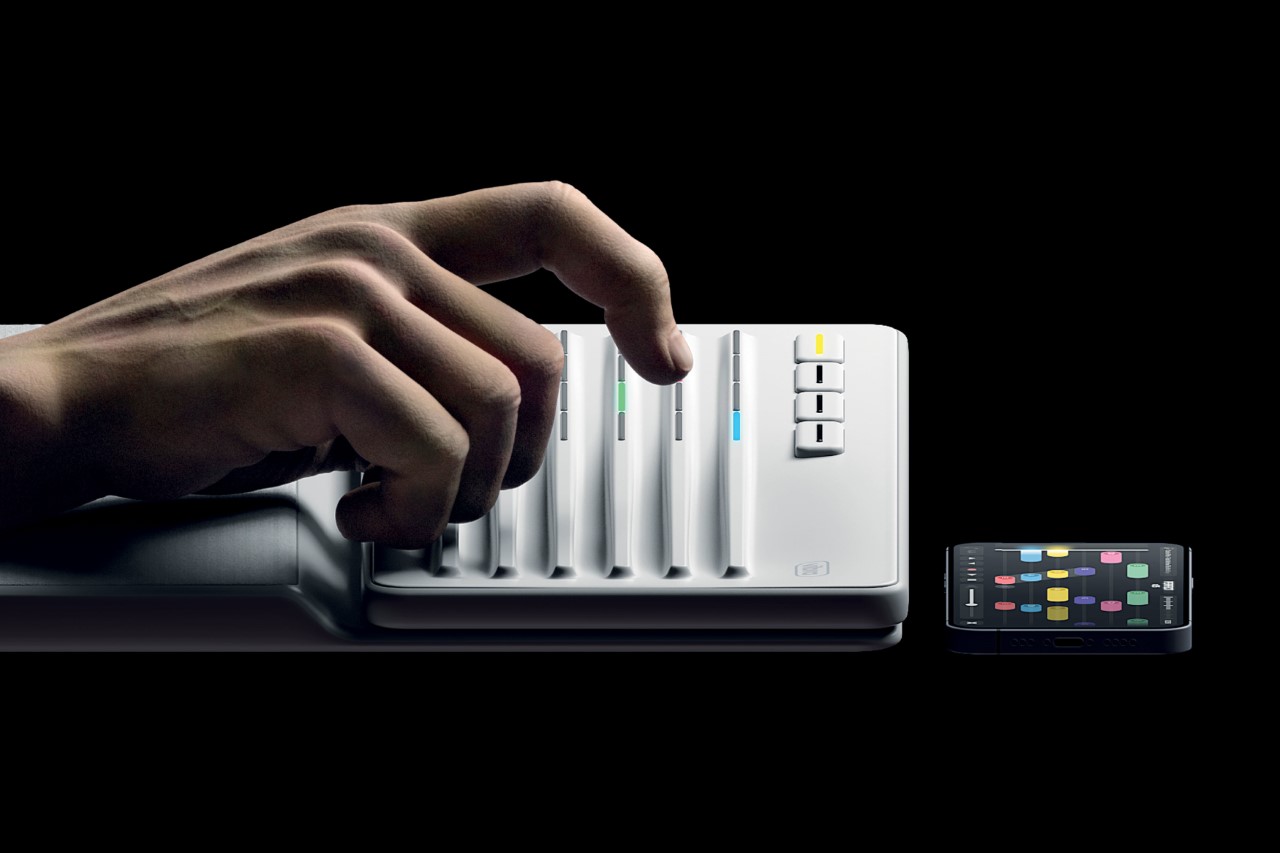
A winner of the Red Dot Design Concept Award, Vibra is a new instrument and service that can meet the musical needs of people with hearing impairments. Unlike traditional instruments that rely entirely on auditory feedback, Vibra relies on a combination of vibrations or haptic feedback, and visual cues like color and composition. The musical instrument comes with a modular design that serves the needs of multiple instruments, from key-based to percussive, string, and even electronic. It eventually pairs with an app that allows players to visualize their music. With a fair amount of visual training and consistent practice, hearing-impaired people can use the Vibra to play existing tunes and even compose new music entirely on their own.

The companion app fills in the sensorial gaps left by the auditory impairment. It provides a visual interface that helps conceptualize sound in a graphic sense, allowing people to understand notes, chords, harmonies, and other complex theories through vision instead of sound. The app enables practice, helps users find which instrument they’re more comfortable playing, and also allows them to learn and practice how to play popular tunes!

The Vibra is a Winner of the Red Dot Award: Design Concept for the year 2023.

The post A Music Instrument for the Hearing Impaired: This Synth uses Tactile and Color Cues Instead of Sound first appeared on Yanko Design.
Astell&Kern’s Award-Winning SR35 Portable Hi-Fi Audio Player Delivers Sublime Sound on a Budget

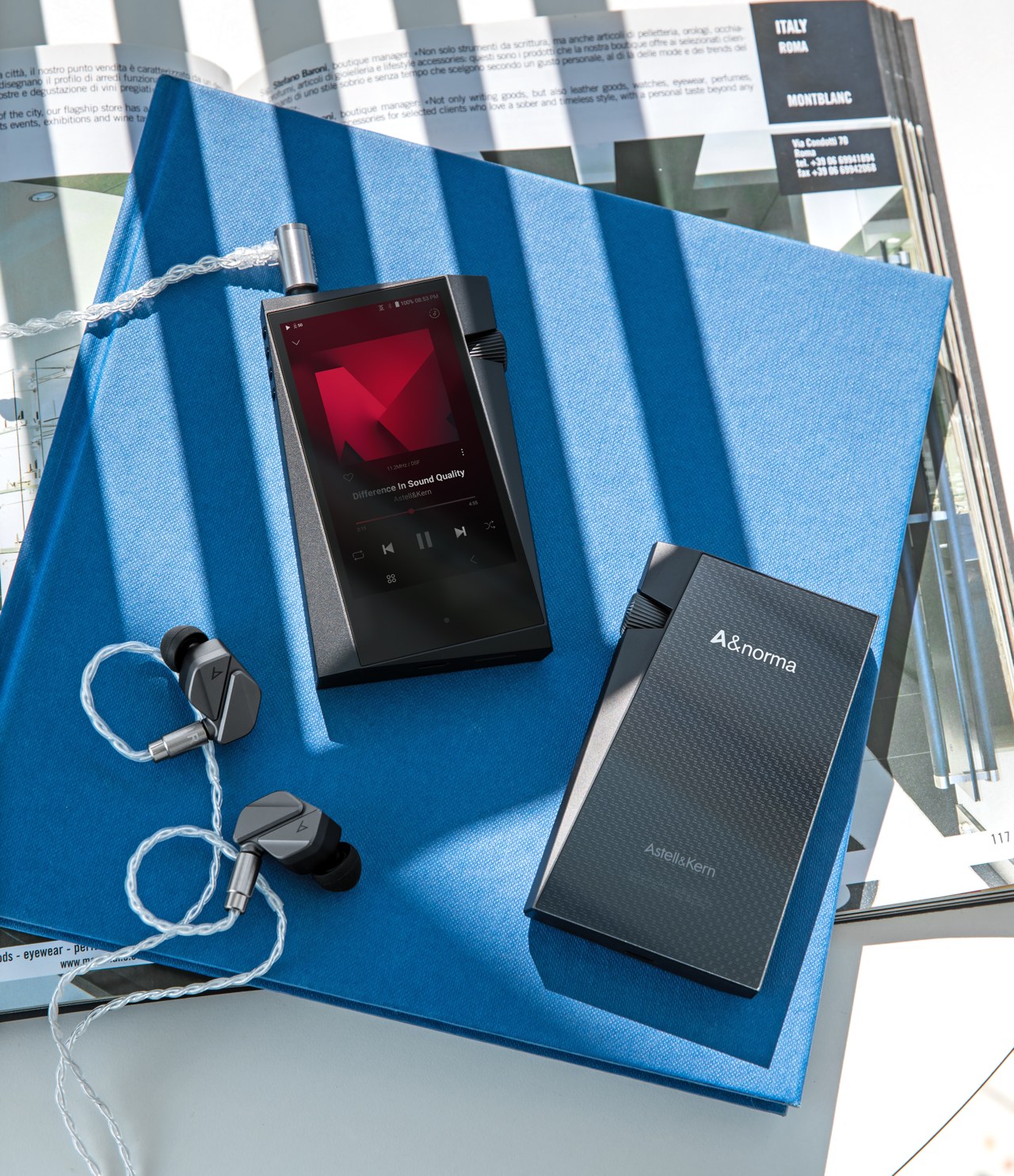
The iPod may have died at the turn of the 2010s, but for audiophiles, Astell&Kern’s handheld Hi-fi Digital Audio Players (DAPs) couldn’t have come at a more perfect time. Since 2012, the company’s developed some of the most premium-sounding audio gear consumers could ask for, with the SR35 being a culmination of the company’s decade-long innovation in the audio category. Now in its fourth avatar (following last year’s SR25 MKII) the SR35 boasts even better specs, with 20 hours of continuous playback, Quad DAC, and two-step Gain control – all powered by Astell&Kern’s New Generation Amp technology, featured for the first time in their portable A&norma product range.

Designers: So Yean Kim, Ji Sun Kim, Jong Min Jeong, Dong O Hwang, Seon Mi Ko & Jong Seung Kim

Click Here to Learn More

The A&norma SR35 lives up to Astell&Kern’s lofty legacy. It delivers sound that rivals full-size players, ensuring you get the most out of your music on the go. At the heart of the SR35 is the Cirrus Logic CS43198 Quad DAC Chip, ensuring impeccable sound reproduction. What sets it apart is the inclusion of Astell&Kern’s TERATON ALPHA technology, which enhances dynamics, spatial perception, resolution, and separation, delivering true-to-life Hi-Fi audio that does your lossless music collection true justice.

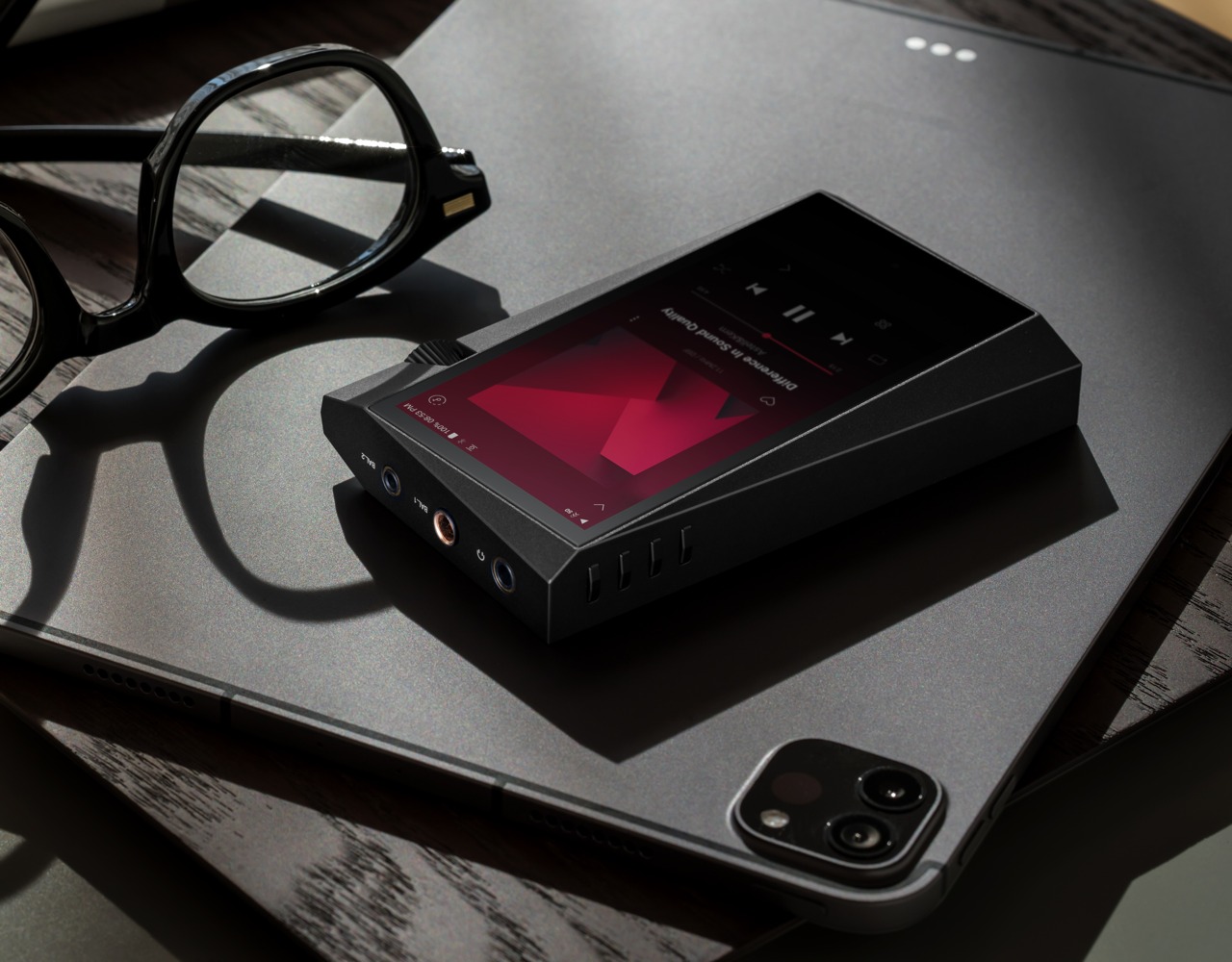
The experience is powered by Astell&Kern’s latest amp technology. Pulling from its top-end A&ultima line, the SR35 is the first in the A&norma series to get this high-end amplifier tech, which effectively improves noise reduction at high power output. To ensure consistent operation with various impedance output sources, the output end of the SR35 is enhanced with increased current handling capability, thereby optimizing performance across multiple devices. The SR35 comes with two-step gain-matching (“Normal Gain” and “High Gain”) for different headphones and IEMs, and houses three jacks on top for wired connections including one unbalanced 3.5mm out, and balanced 2.5mm and 4.4mm outputs respectively.

Although the audiophile community expresses much disdain for wireless experiences, the A&norma SR35 does a compelling job of handling wireless audio well too. The SR35 embraces the future of music playback with Bluetooth v5.0, supporting LDAC and Qualcomm® aptX™ HD codecs. Additionally, its dual-band (2.4/5GHz) WiFi ensures uninterrupted streaming and Roon Ready compatibility, allowing you to enjoy HiFi music through various services. The BT Sink function connects the SR35 to external devices via Bluetooth, offering a cableless, wireless solution for music file management, and Roon Ready compatibility elevates your audio experience by delivering the best sound quality through network systems.

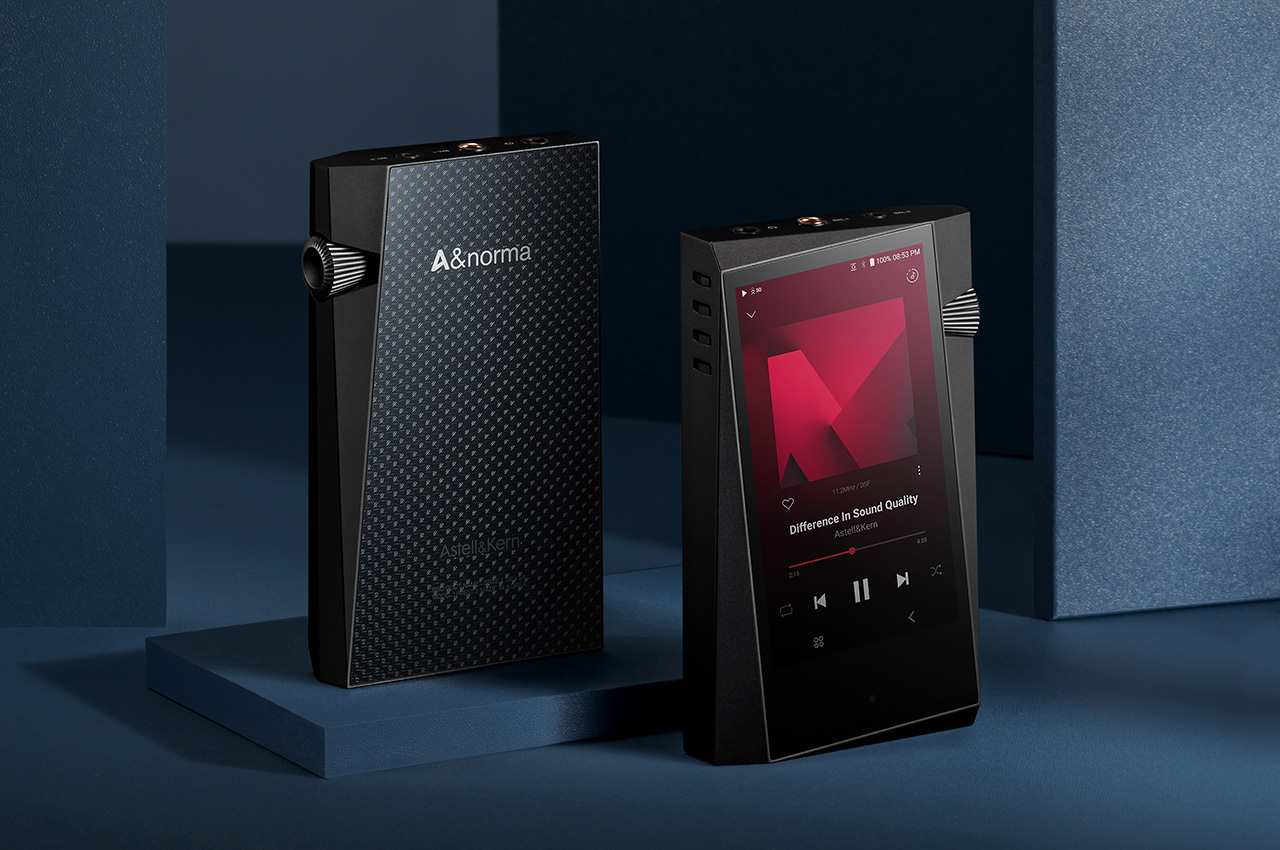
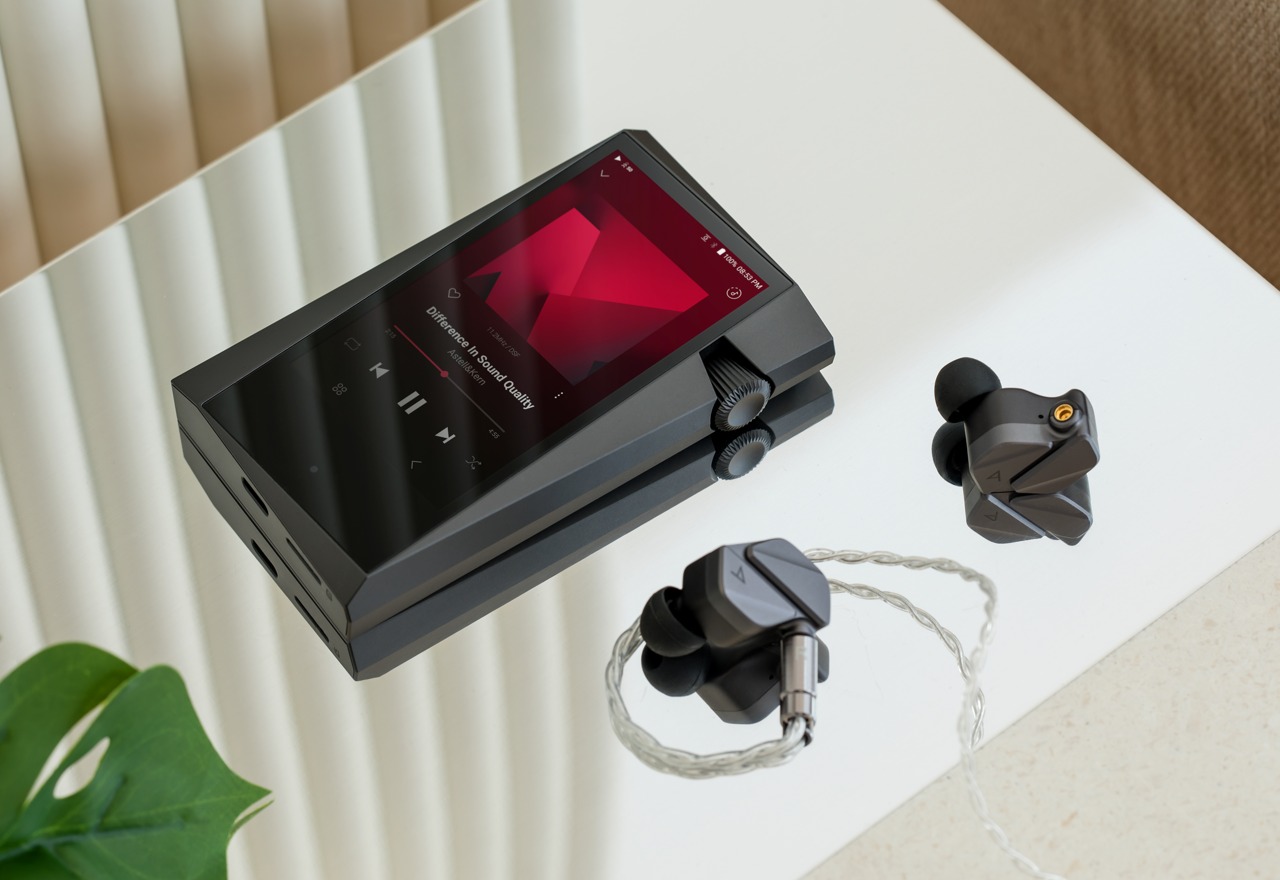
The A&norma SR35’s design is instantly memorable with its iconic slanted 3.6-inch HD display that’s carried forward from its SR15 in 2018. With perhaps the strangest bezels on the planet, the hi-fi audio player boasts a tilted UI that cleverly avoids accidental touches from your thumb or fingers while holding the device. The tactile experience gets carried forward to that large textured volume crown on the side, which becomes a defining element of sorts for the SR35’s design. The other defining element is its compact, chiseled form factor that Astell&Kern describe as ‘warrior-inspired’. The bezel on the left is shaped like a broad sword with a pointed tip, while the large volume knob almost doubles as a shield-like element. The angled surfaces also lend a rugged appeal to the hi-fi audio player, eliciting a comparison with Tesla’s armored Cybertruck. All this combined has earned the SR35 multiple accolades including the iF Design Award 2023.

But it’s not all about outer aesthetics; the user interface has received a thoughtful overhaul too. The SR35 boasts a redesigned Crimson-themed UI/UX for an immersive music experience while simultaneously offering intuitive navigation through music categories with simple gestures as well as a powerful search feature and integrated album art for a visually engaging experience. The dark black and red theme not only reduces eye fatigue but also prolongs the SR35’s industry-leading battery life. Built with a 3,150mAh battery on the inside, the SR35 provides an impressive 20 hours of continuous playback that comfortably gets you through long-haul flights, long workdays, vacations, or even lazy weekends when listening to great music can become somewhat of a ritual.

The A&norma SR35 weighs a mere 184 grams, despite its all-metal body that gives it a premium in-hand experience. It sports a USB-C port at the base that lets you charge your audio player or connect it to a Windows or macOS device for transferring files. For enthusiasts, the SR35 starts at $800, undercutting Astell&Kern’s A&ultima series (while still delivering all the power-features) as well as the competition.

Click Here to Learn More

The post Astell&Kern’s Award-Winning SR35 Portable Hi-Fi Audio Player Delivers Sublime Sound on a Budget first appeared on Yanko Design.

Listen to the ‘final’ Beatles song, ‘Now and Then,’ made with help from AI

The Beatles are back, sort of. The fab four just released a new song, the group’s first since 1995. “Now and Then” is being advertised as the final Beatles track, which makes sense given that two of the members have passed and the other two are well over 80 years old.

The song was built using a demo track from John Lennon dating back to the 1970s and a guitar track from George Harrison from 1995. The surviving Beatles, Paul McCartney and Ringo Starr, finished off the tune with the help of modern machine learning technology.

The software, which was first used by director Peter Jackson when making the Get Back documentary for Apple, was able to split Lennon’s vocal from the piano without any bleed, giving the remaining Beatles free rein to add whatever they wanted. You can watch a documentary on the making of the song right here.

As for the song itself, it’s a relatively slow Lennon ballad, with his vocals being a highlight. McCartney lays down one of his effortless bass lines and Starr hits the drums. The guitar solo is in the style of Harrison, but not actually played by him, though he handles some of the rhythm guitar in the background. There’s also a full orchestral arrangement because, well, it’s the Beatles. This likely won’t go down as one of the group’s most beloved tracks, but that Lennon vocal is both haunting and beautiful.

“Now and Then” was supposed to come out back in 1995 as part of The Beatles Anthology, along with “Free as a Bird” and “Real Love”, two other tracks culled from 1970s Lennon demos. Back in the 1990s, however, the technology just wasn’t there to separate Lennon’s vocal from the piano without some serious degradation to the original take.

The Beatles may say this is their last song ever, but we’ll report back in 2053 and see if that ends up being true. See you then. In the meantime, check out the track.

This article originally appeared on Engadget at https://www.engadget.com/listen-to-the-final-beatles-track-made-with-machine-learning-and-archival-recordings-153253946.html?src=rss