The Lenovo Tab Plus offers an immersive experience with eight JBL speakers, a stunning 2K display, and long battery life for music lovers.
The post Lenovo Tab Plus: A Music Lover’s Dream Tablet first appeared on Trendy Gadget.
The Lenovo Tab Plus offers an immersive experience with eight JBL speakers, a stunning 2K display, and long battery life for music lovers.
The post Lenovo Tab Plus: A Music Lover’s Dream Tablet first appeared on Trendy Gadget.
The Lenovo Tab Plus offers an immersive experience with eight JBL speakers, a stunning 2K display, and long battery life for music lovers.
The post Lenovo Tab Plus: A Music Lover’s Dream Tablet first appeared on Trendy Gadget.
Spotify has a new plan for US subscribers that keeps you on the old $11 monthly pricing — as long as you don’t mind ditching audiobooks. The new Basic tier includes the music and podcast content you get from Premium but without 15 hours of audiobook access, a recently added feature we suspect many subscribers don’t care about anyway. Spotify said earlier this month it would hike Premium prices to $12 per month, beginning in July.
The Basic plan echoes one it rolled out in the UK last month. That one costs £11 per month compared to £12 for Premium with audiobook content.
Some have suspected Spotify’s audiobook push has nefarious motives. Earlier this month, the National Music Publishers’ Association asked the Federal Trade Commission to investigate the move, going as far as calling the company’s audiobook integration “a scheme to increase profits by deceiving consumers and cheating the music royalty system.” The NMPA complaint claims Spotify will pay about $150 million less in music royalties over the next year because of its audiobook fusion. Spotify told Engadget it did nothing wrong and rejected the accusations.
Spotify has been penny-pinching in other areas. It was reported last year that the company planned to overhaul its royalty model. One alleged part of that plan was to demonetize tracks earning less than five cents per month, pushing out some indie artists without established audiences.
Spotify also laid off around 9,000 employees late last year, citing “the gap between our financial goal state and our current operational costs.”
You can switch to the audiobook-free tier (which is now live) by navigating to your account page, then “Manage your plan” and “Change plan” and picking Basic. If you’re a new subscriber, you can choose the Basic option when signing up.
Update, June 21, 2024, 2:36 PM ET: This story has been updated to note that the ability to sign up for the Basic plan is now live.
This article originally appeared on Engadget at https://www.engadget.com/spotifys-basic-plan-returns-to-11-a-month-by-cutting-audiobooks-163804267.html?src=rssAs we do each Friday, we've gathered up the best deals on tech we could find. In the audio department, we spotted sale prices on some of our recommended earbuds from Anker and Beats. Discounts on Apple gear include all-time low prices on the 15-inch 2024 MacBook Air laptop, the new Apple Pencil Pro stylus and the (Product) RED Apple Watch. For your home, you can snag a deal on our favorite mesh Wi-Fi system and charging docks from both Anker and Belkin. And if all this talk of shopping has you thinking about your finances, you may want to check out the half-price subscription to Quicken Simplifi, our current top pick for a budgeting app. Here are all the best tech deals from this week that you can still get today.
Follow @EngadgetDeals on Twitter and subscribe to the Engadget Deals newsletter for the latest tech deals and buying advice.
This article originally appeared on Engadget at https://www.engadget.com/the-new-apple-pencil-pro-gets-its-first-discount-plus-the-rest-of-the-weeks-best-tech-deals-161923518.html?src=rssWe've known for a while that Amazon is planning to soup up Alexa with generative AI features. While the company says it has been integrating that into various aspects of the voice assistant, it's also working on a more advanced version of Alexa that it plans to charge users to access. Amazon has reportedly dubbed the higher tier "Remarkable Alexa" (let's hope it doesn't stick with that name for the public rollout).
According to Reuters, Amazon is still determining pricing and a release date for Remarkable Alexa, but it has mooted a fee of between roughly $5 and $10 per month for consumers to use it. Amazon is also said to have been urging its workers to have Remarkable Alexa ready by August — perhaps so it's able to discuss the details as its usual fall Alexa and devices event.
This will mark the first major revamp of Alexa since Amazon debuted the voice assistant alongside Echo speakers a decade ago. The company is now in a position where it's trying to catch up with the likes of ChatGPT and Google Gemini. Amazon CEO Andy Jassy, who pledged that the company was working on a “more intelligent and capable Alexa" in an April letter to shareholders, has reportedly taken a personal interest in the overhaul. Jassy noted last August that every Amazon division had generative AI projects in the pipeline.
"We have already integrated generative AI into different components of Alexa, and are working hard on implementation at scale — in the over half a billion ambient, Alexa-enabled devices already in homes around the world — to enable even more proactive, personal, and trusted assistance for our customers," said an Amazon spokeswoman told Reuters. However, the company has yet to deploy the more natural-sounding and conversational version of Alexa it showed off last September.
Remarkable Alexa is said to be capable of complex prompts, such as being able to compose and send an email, and order dinner all from a single command. Deeper personalization is another aspect, while Amazon reportedly expects that consumers will use it for shopping advice, as with its Rufus assistant.
Upgraded home automation capability is said to be a priority too. According to the report, Remarkable Alexa may be able to gain a deeper understanding of user preferences, so it might learn to turn on the TV to a specific show. It may also learn to turn on the coffee machine when your alarm clock goes off (though it's already very easy to set this up through existing smart home systems).
Alexa has long been an unprofitable endeavor for Amazon — late last year, it laid off several hundred people who were working on the voice assistant. It's not a huge surprise that the company would try to generate more revenue from Remarkable Alexa (which, it's claimed, won't be offered as a Prime benefit). Users might need to buy new devices with more powerful tech inside so that Remarkable Alexa can run on them properly.
In any case, $10 (or even $5) per month for an upgraded voice assistant seems like a hard sell, especially when the current free version of Alexa can already handle a wide array of tasks.
This article originally appeared on Engadget at https://www.engadget.com/amazon-reportedly-thinks-people-will-pay-up-to-10-per-month-for-next-gen-alexa-152205672.html?src=rssYou can easily determine the historical setting of a TV show or piece of fiction by the technologies used in it. The presence of beepers, for example, puts the timeline in the 90s, though some modern hospitals still use this limited and straightforward communication gadget because of their simplicity. Of course, today’s messaging culture leaves very little room for a pager and some younger people might not even know what it is. To keep that nostalgic design alive and give it a more contemporary function, this concept design wraps a power bank in a beeper aesthetic while also giving it one fun feature reminiscent of its original purpose.
Designer: PTPC


The beeper or pager was a small black box that would show a message as a single line of scrolling text. The very first cell phones capable of SMS inherited this trait until they got screens capable of displaying multiple lines at once. It might seem archaic by today’s standards, but it also enforced a certain simplicity and terseness to the messages sent. You only sent important messages and got straight to the point without dropping vowels or letters.
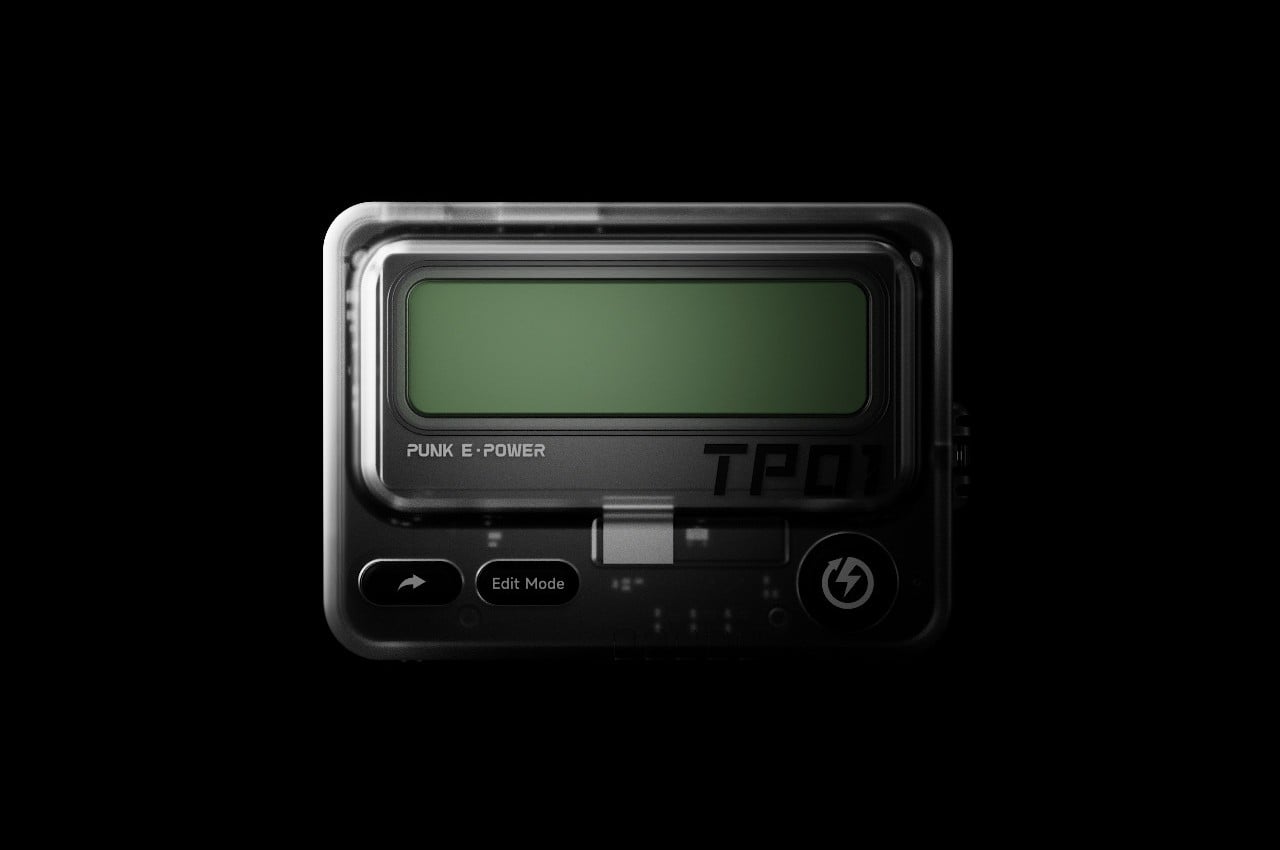



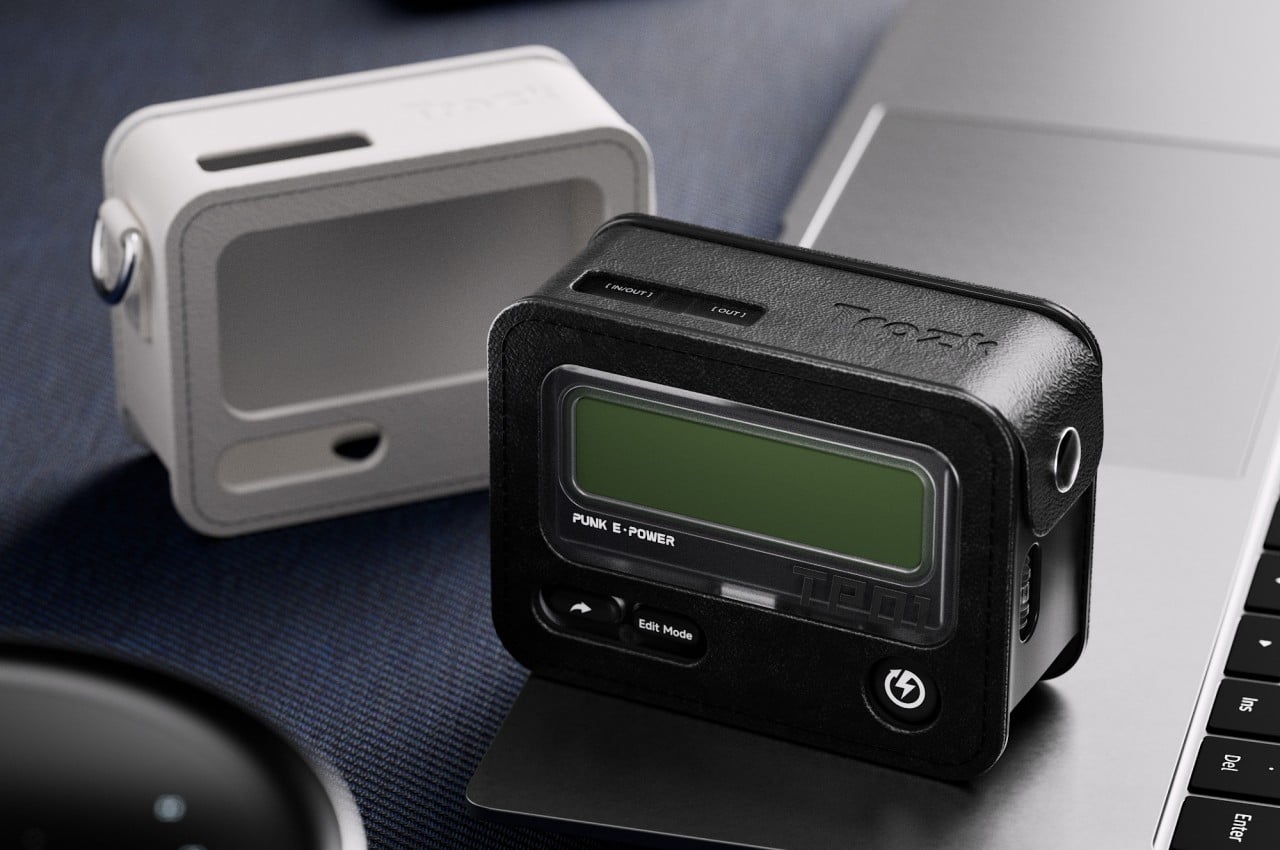
This portable battery concept embraces the retro aesthetic of a beeper but also puts a few modern twists, like using a translucent shell or adopting colors other than black and gray. It still inherits the simplistic interface of a pager, however, with very few buttons and ports. Despite the minimalism, the concept boasts of a 10,000 mAh battery that’s more than enough power to juice up phones or even tablets.




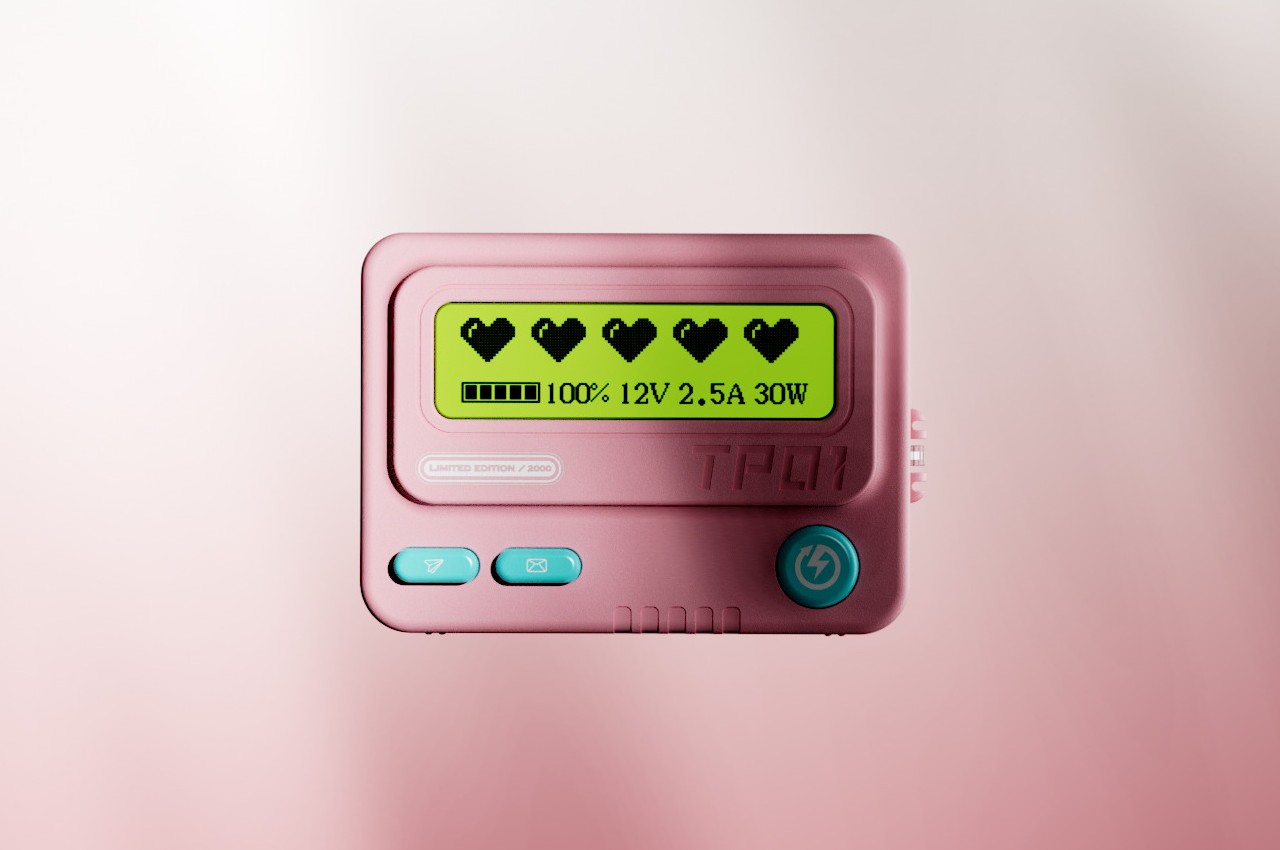
The beeper power bank does have a two-line monochrome display with a font similar to that of those old-school gadgets. While it does show battery information as you might expect, it does also have a secondary function. It can show messages sent from phones via Bluetooth, mimicking the duty of the original device. You still have a limited viewing space, but you can at least now use emojis and special characters more easily, allowing you to express your message more effectively with fewer letters.


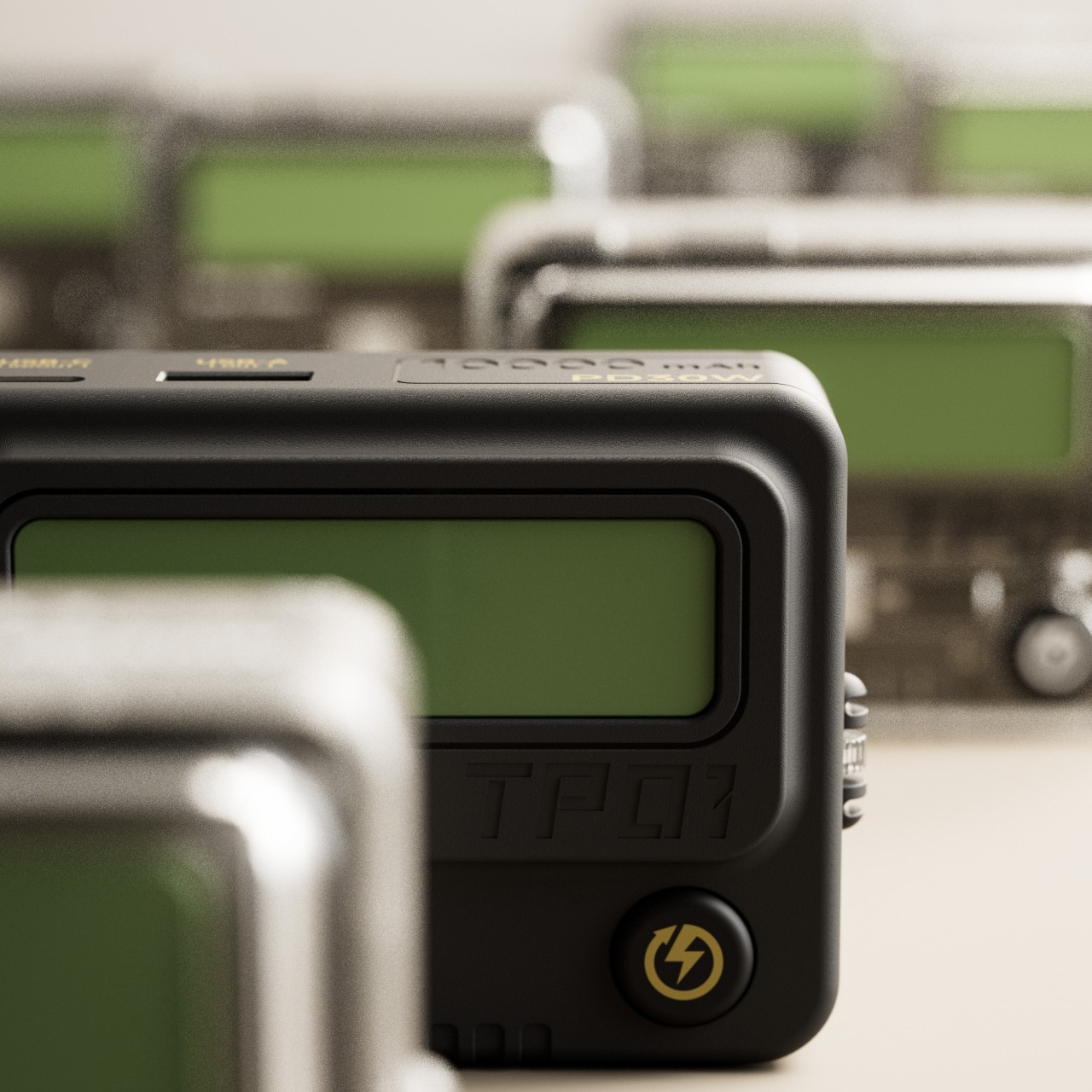
That messaging feature is, of course, just a whimsical add-on that isn’t critical to the product’s charging function. It is, however, also a fun addition, one that would make such a design more memorable and appealing, especially to a younger generation who might not even know what a beeper is.




The post Beeper-inspired power bank concept mixes vintage design with modern tech first appeared on Yanko Design.

Alfa Romeo has unveiled a new version of their Junior EV, the Alfa Romeo Junior VELOCE and the car comes with 280 horsepower. The Alfa Romeo Junior VELOCE is poised to make a significant impact on the electric vehicle market with its impressive (207 kW) motor. As the latest addition to Alfa Romeo’s lineup, the […]
The post Alfa Romeo Junior VELOCE has 280 HP appeared first on Geeky Gadgets.
One of my favorite PC trends has been the explosion of gaming handhelds. Even after big names like ASUS and Lenovo entered the market last year with the ROG Ally and Legion Go, more manufacturers continue to join the fray. But with the Claw A1M, MSI is taking the road less traveled by opting for an Intel chip instead of something from AMD. And that has made all the difference, even if many of those changes are not for the better.
While MSI may have zagged with the Claw’s processor, its design is incredibly familiar. That’s because aside from being black instead of white, it almost looks like a carbon copy of the ROG Ally. That said, a few subtle changes have a bit of an impact. The Claw’s grips are more pronounced, so it’s more comfortable to hold, while its rear paddles are smaller and located a bit further down so there’s less of a chance you press them by accident.
MSI also opted for Hall effect joysticks, so they are a touch more precise and should wear better over time. However, the springs inside are rather light, so they don’t feel quite as tight as I typically prefer. Unfortunately, while its triggers are nice, the Claw’s bumpers are a bit too spongy.
Meanwhile, nearly the entire rear panel on the Claw is vented to provide ample room for cooling. And along the top there’s a built-in microSD card reader, 3.5mm audio jack, a volume rocker and a single USB-C port with support for Thunderbolt 4. That last one is a very nice inclusion as it's fast enough to hook up peripherals like an external GPU dock. I just wish there were two of them so I had a spare slot for accessories.
Of course, in the middle there’s a 7-inch 1080p IPS LCD display. It’s relatively colorful and with a tested brightness of around 450 nits, it’s easy to view even in sunnier rooms (though direct sunlight is still an issue). However, aside from a 120Hz refresh rate, there’s not much else going on. There’s no variable refresh rate to help reduce tearing in more modern games and it can’t match the size or more saturated hues of the Legion Go’s 8.8-inch OLED panel. And while this isn’t really a design consideration, with the Claw priced at $750, I wish MSI shipped it with an included case like Lenovo does with the Legion.
Here’s where things get a bit tricky, because at least on paper, the Claw is pretty well-equipped. Our review unit features an Intel Core Ultra 7 155H CPU with Arc graphics, 16GB of RAM and 1TB of storage. There is also a less expensive model with an Intel Core Ultra 5 135H chip and a 512GB SSD. Unfortunately, the Claw’s real-world performance lags behind MSI’s claims and rival handhelds. Back at CES 2024, MSI touted that the Claw would be 20 to 25 percent faster than AMD-based alternatives. But no matter what I do or how much time I spend tweaking settings, I simply can’t produce numbers anywhere in that ballpark.
In Shadow of the Tomb Raider at 1280 x 720, high graphics and in Balanced Mode (30 watts), the Claw hit 52 fps, which is slightly behind the 54 fps I got from the ROG Ally at just 15 watts. To make matters a bit worse, those numbers didn’t improve much when I switched to the Claw’s 35-watt Extreme Performance setting, which only bumped the framerate up to 59 fps compared to 60 fps for the Ally when set to 25 watts. So despite running at a higher TDP (total device power), the Claw is just barely keeping up.
It’s a similar story in other titles too. In Cyberpunk 2077 at 720p on medium graphics, the Claw hit 50 fps in Balanced mode, which is the same as the Ally. Finally, in Returnal at 720p on medium, it was essentially a tie again with the Claw hitting 32 fps versus 33 fps for the Ally. Overall, the Claw’s performance isn’t bad, but it’s not as prodigious as MSI promised.
The underlying issue seems to be the Claw’s optimization and graphics drivers. I’ve been using the Claw for about a month, and in that time it’s gotten a ton of updates including two or three BIOS flashes and a seemingly endless number of new graphics drivers. There was even one in late May that boosted performance by as much as 30 percent in some titles. So just imagine how rough performance was at launch earlier this spring.
In some respects, this level of support is reassuring because it shows Intel’s commitment to improving the graphics on its latest chips. That said, the Claw has been on the market since as early as April depending on the market, so it clearly wasn’t ready at launch and its performance continues to be a work in progress.
With a 53Wh cell, there was hope the Claw could provide significantly longer runtimes than the Ally and its smaller 40Wh power pack. But because of the Claw’s higher TDP, the difference in real-world longevity isn’t quite as pronounced. When I played Diablo IV on medium graphics, the Claw lasted an hour and 43 minutes, which is 12 minutes better than the Ally’s time of 1:31, but more than 20 minutes less than the Steam Deck’s mark of 2:07.
One of the biggest issues with Windows-based handhelds is that while they are great for gaming, doing anything else without an external mouse or keyboard can be a chore. Windows 11 generally works as you’d expect, but the MSI Center app feels much less polished. Similar to ASUS’ Armoury Crate, MSI Center is meant to be a one-stop shop for launching games, tweaking settings and downloading updates. And while it works, it just feels clunky. The app often stutters when you open it and I ran into a couple of instances when patches stalled while trying to update software.
Ultimately, timing may be the Claw’s biggest enemy. If it had come out last year when the ROG Ally and Legion Go hit the market, the Claw may have been a more interesting rival. But ASUS is about to release a successor to the Ally – the Ally X – next month with a completely redesigned chassis, 24GB of RAM and a huge 80Wh battery. That leaves the Claw in a really tight spot. And our top-spec review unit costs $750, which is $100 to $200 more than an equivalent ROG Ally (albeit with half the storage) and has basically the same performance and an almost identical design.
Meanwhile, thanks to recent price cuts, the Claw is also more expensive than the Legion Go, but doesn’t have the OLED screen, kickstand and detachable controllers found in Lenovo’s handheld. This doesn’t even factor in Intel’s drivers, which clearly weren’t ready at launch and even now after multiple updates, don’t offer a significant advantage in performance. But the Claw’s biggest opponent may be MSI itself, because while we’re still waiting on an official release date, the company has already announced a successor in the Claw 8 AI+. The Claw isn’t a bad handheld gaming PC; it just arrived too late and without the tuning it needed.
This article originally appeared on Engadget at https://www.engadget.com/msi-claw-a1m-review-a-touch-late-and-bit-too-pricey-143009327.html?src=rss
Disco balls were a staple of the clubbing scene from the 70s until 90s or until discos were not popular anymore. If you ask kids these days, they probably cannot tell you what an actual mirror ball looks like, unless they’re into all of these “nostalgic” things. Since we’re in a different era, the disco ball is also probably due for a comeback or even a rebirth.
Designer: Studio Élémentaires

For a design studio that has “Light + Movement” as its motto, you can expect a different kind of disco ball. Studio Élémentaires designed Flasher which looks like a modernist take on the disco ball, taking inspiration from the stage spotlights we see in concerts and plays. The movement of the light source adds to the kinetic and hypnotic beauty of this light fixture meant to light up stages and spaces.

Basically you get a large panel-like 25-light grid with 25 perforated discs. These discs move around in continuous motion but in different directions and timing. The lights flash continuously, appearing and disappearing “in vivid chiaroscuro contrast”. The panel itself has a monochromatic look and the high shine aluminum plates give it a shining appearance. There are also pulleys, belt paths, and bearings involved in the structure.

What the renders fail to show is the actual effect of this kinetic lighting on the space that it’s lighting. But I can just imagine that it is not for those that are affected with flashing strobe lights or even those that have vertigo.

The post Modern take on disco balls brings kinetic panel with 25 lights first appeared on Yanko Design.

This article is designed to explain 4K Ultra HD which is used by the latest Smart TVs and monitors. In today’s rapidly advancing technological world, the quest for clearer, sharper, and more lifelike visual experiences is unceasing, making 4K resolution a landmark achievement in this journey. Widely recognized as Ultra HD, 4K resolution has significantly […]
The post 4K Resolution Demystified: A Beginner’s Guide to Ultra HD appeared first on Geeky Gadgets.