Bungie extends Marathon’s open play week amid Deluxe Edition confusion
There's a lot of confusion among Marathon players at the moment.
The youngest person at BEYOND Expo 2026’s AI Hack Day was nine years old. That little fact, shared by co-founder Dr Lu Gang, actually says more about the state of AI than any big product launch. It means the tools are getting simple enough that you don’t need a PhD to build something interesting; you just need a good idea. The rest of the expo in Macao seemed to prove his point. You had 30,000 people and almost 800 companies all focused on a single question: what happens when AI stops being just software and gets built into actual, physical things?
It turns out the answer is a mix of things we expected and some we definitely did not. BEYOND Expo 2026 ended up giving us a pretty clear map of where this is all heading, with seven key ideas showing up over and over again. We saw everything from humanoid robots that are finally ready for production to underwater drones that can get around without GPS. Some of this was easy to see coming, but other parts showed that the tech has crossed a real line. These are the ideas that give us a solid picture of an AI that now has weight, form, and real-world impact.

The most obvious trend on the floor was the sheer number of robots walking around. This wasn’t just one or two companies showing off a flashy prototype. The BEYOND Best of Innovation awards list was packed with names like AI² Robotics, DEEPRobotics, LimX Dynamics, and Pudu Robotics. Seeing that many different companies all get recognized for building functional, legged robots at the same event is a major signal. The hardware is clearly getting to a point where it’s reliable enough to be taken seriously.
What’s interesting is that the conversation is shifting from engineering to application. Companies were talking about humanoids for specific jobs in industry, retail, and even in the home. This tells you the focus is moving past the basic challenge of just making them walk without falling over. The new problem to solve is what they should actually do all day. BEYOND Expo made it feel like we’re at the very beginning of a real manufacturing race, not just a science fair.
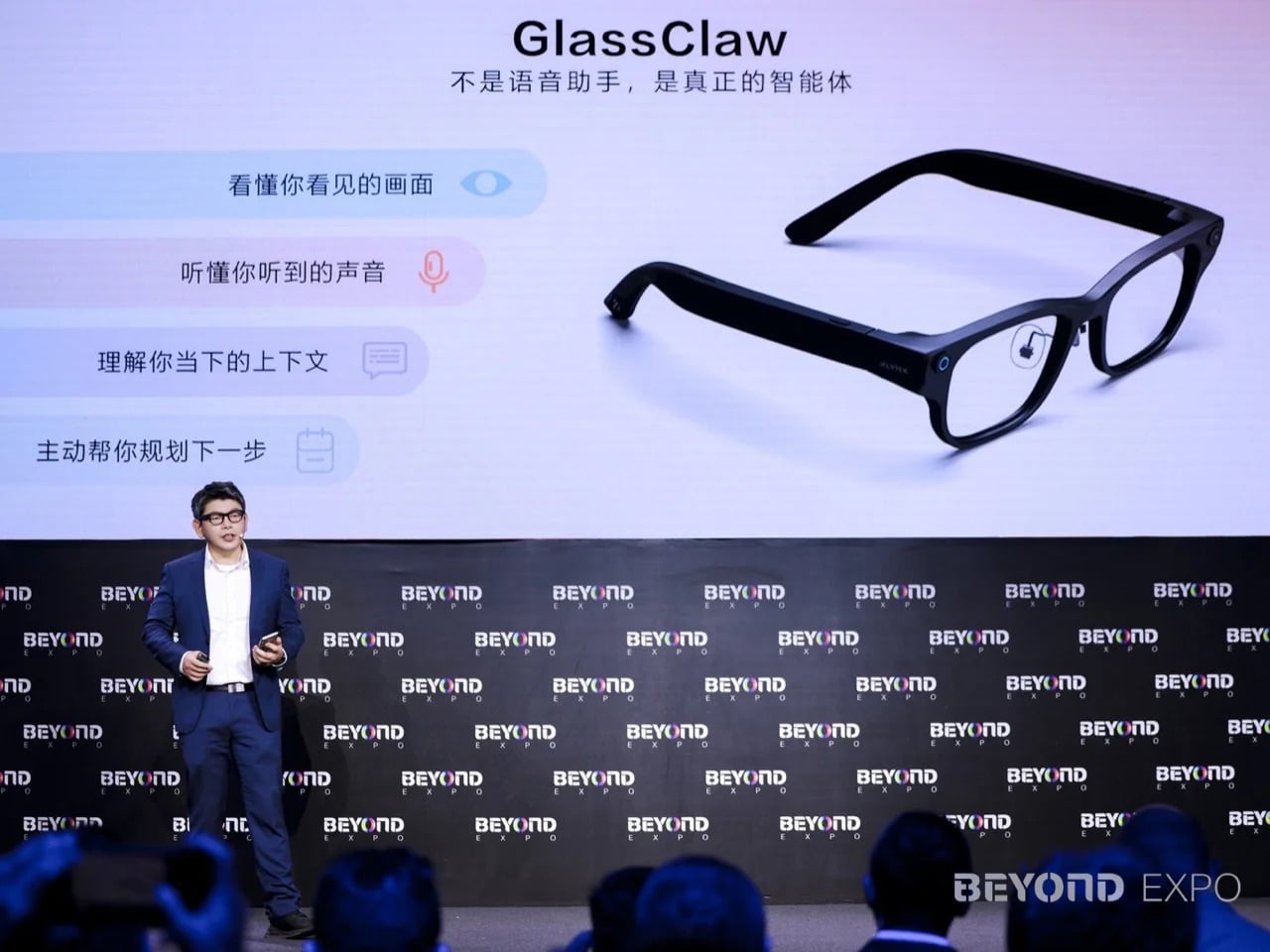
Smart glasses have been the “next big thing” for about a decade, but this year felt different. We saw new AI-powered glasses from iFlyTek and METLEN, and companies like Even Realities, Mobvoi, and XREAL all picked up innovation awards for their own takes on wearable displays. The key here is convergence. While each product has its own features, they’re all starting to look and feel like something a normal person might actually wear. They are lighter, the displays are better, and the battery life is getting there.
This isn’t another Google Glass moment where the tech was impressive but the product was awkward and socially weird. The new wave of smart glasses is being designed with more specific uses in mind, from on-the-fly translation to providing subtle notifications or acting as a personal design agent. The on-device AI is powerful enough to handle these tasks without being constantly tethered to a phone, which is the breakthrough that might finally make them stick.

For years, eVTOLs, or electric vertical take-off and landing aircraft, have been staples of futuristic concept videos. At BEYOND Expo, they started to look like real products. Aerofugia showed up with what it called its first production aircraft and, just as importantly, a production eVTOL battery. Wefly also got an innovation award, adding to the sense that this category is moving out of the lab and onto the launchpad.
The word “production” is what matters here. It signals a shift from speculative design to engineering with a supply chain. AI is the invisible engine driving this progress, handling the incredibly complex calculations needed for flight stability, power management, and autonomous navigation. This is the part of the “digital to physical” story where AI isn’t just a feature; it’s the core technology that makes a whole new category of hardware possible.
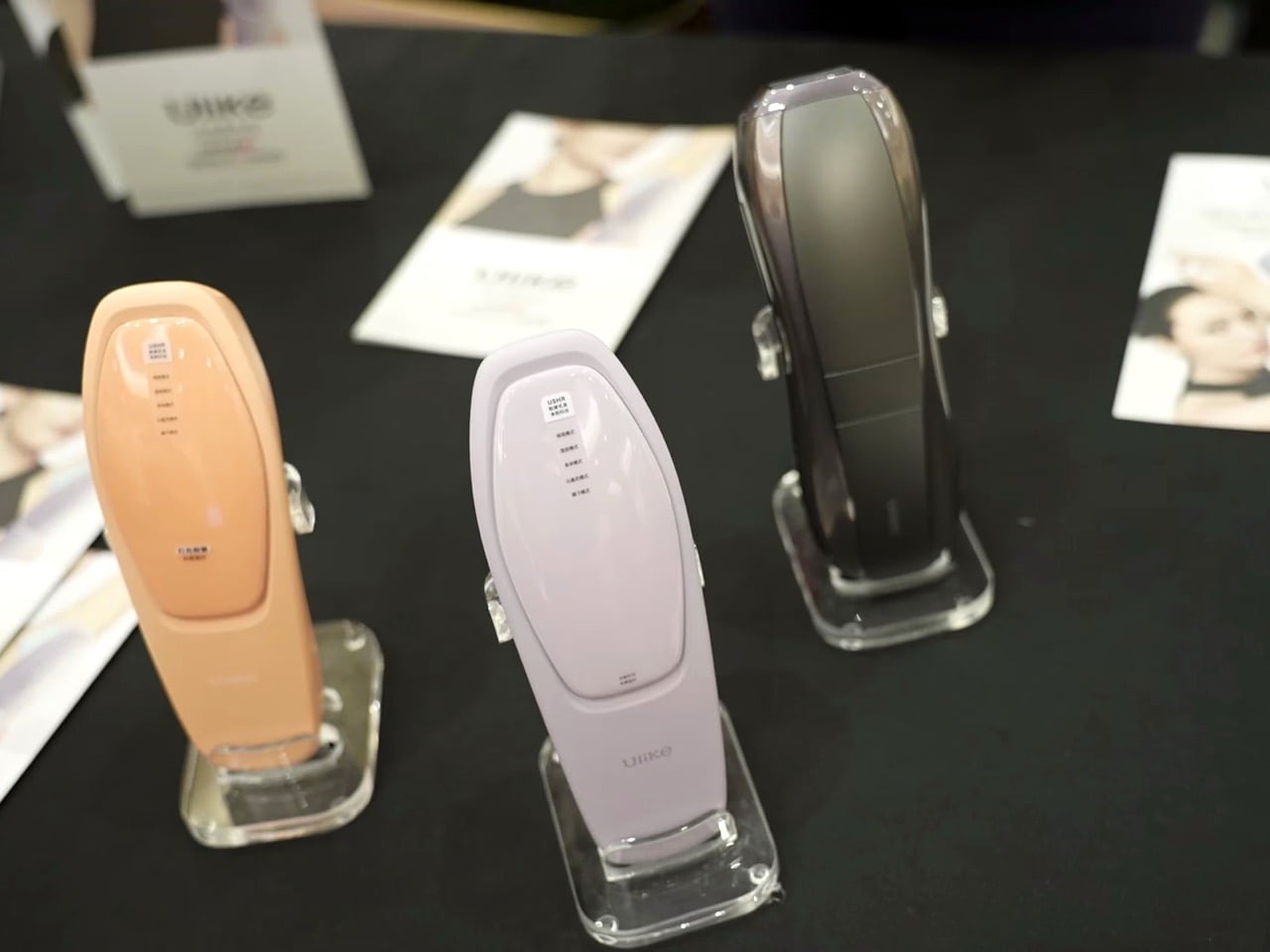
While robots and flying cars grabbed a lot of attention, some of the most interesting AI was designed to be much closer to home, and even part of the body. The expo featured things like Zdeer’s bone conduction hearing aid and Ulike’s optical beauty devices. In the startup competition, one of the finalists was an “emotion-sensitive hugging bear,” and others included smart jewelry and wearables designed to be stylish.
This points to a quieter, more intimate side of the AI hardware boom. These aren’t just gadgets; they’re devices that interact with our bodies and our health. A hearing aid that uses AI can learn and adapt to a person’s specific hearing profile in different environments. A wearable that senses emotion is a step toward technology that responds to our mental state. It’s a reminder that the most impactful physical AI might be the kind that disappears completely into our daily lives.
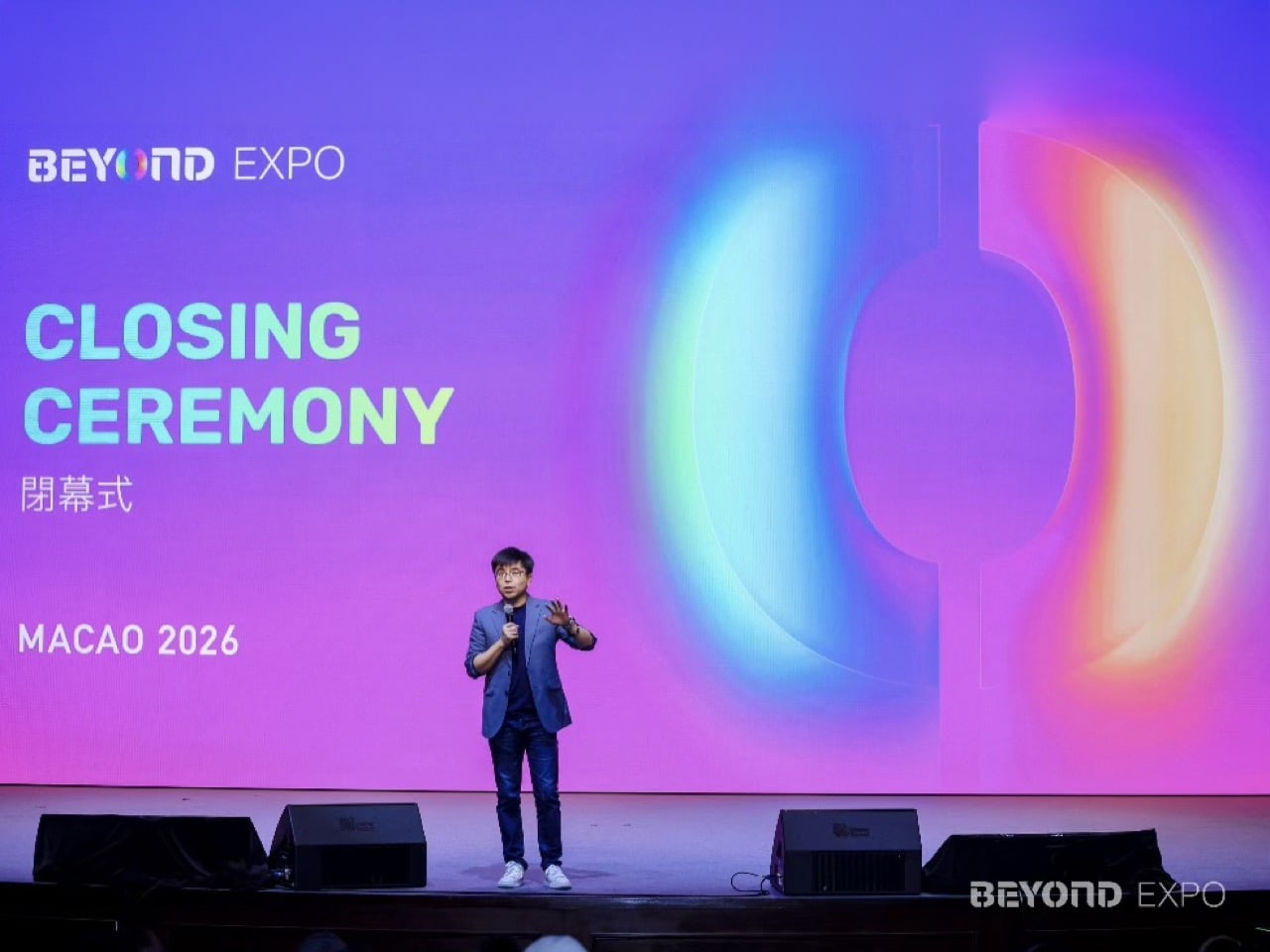
One of the most forward-thinking ideas came from Dr Lu Gang himself. He said that this year, the expo deliberately focused on “one-person companies” and individual programmers. He believes these tiny operations have the potential to become unicorns because AI tools have become such a powerful force multiplier. When the youngest hacker at your event is nine, it proves that the barrier to entry for building something real has dropped through the floor.
This is a structural shift in how tech companies might get built. The old model of needing a big team and millions in venture capital just to get a product off the ground is being challenged. With powerful AI handling coding, design, and operational tasks, a single motivated person can now build and launch something that would have taken a whole department just a few years ago. It suggests a future where the startup landscape is much more dynamic and accessible.
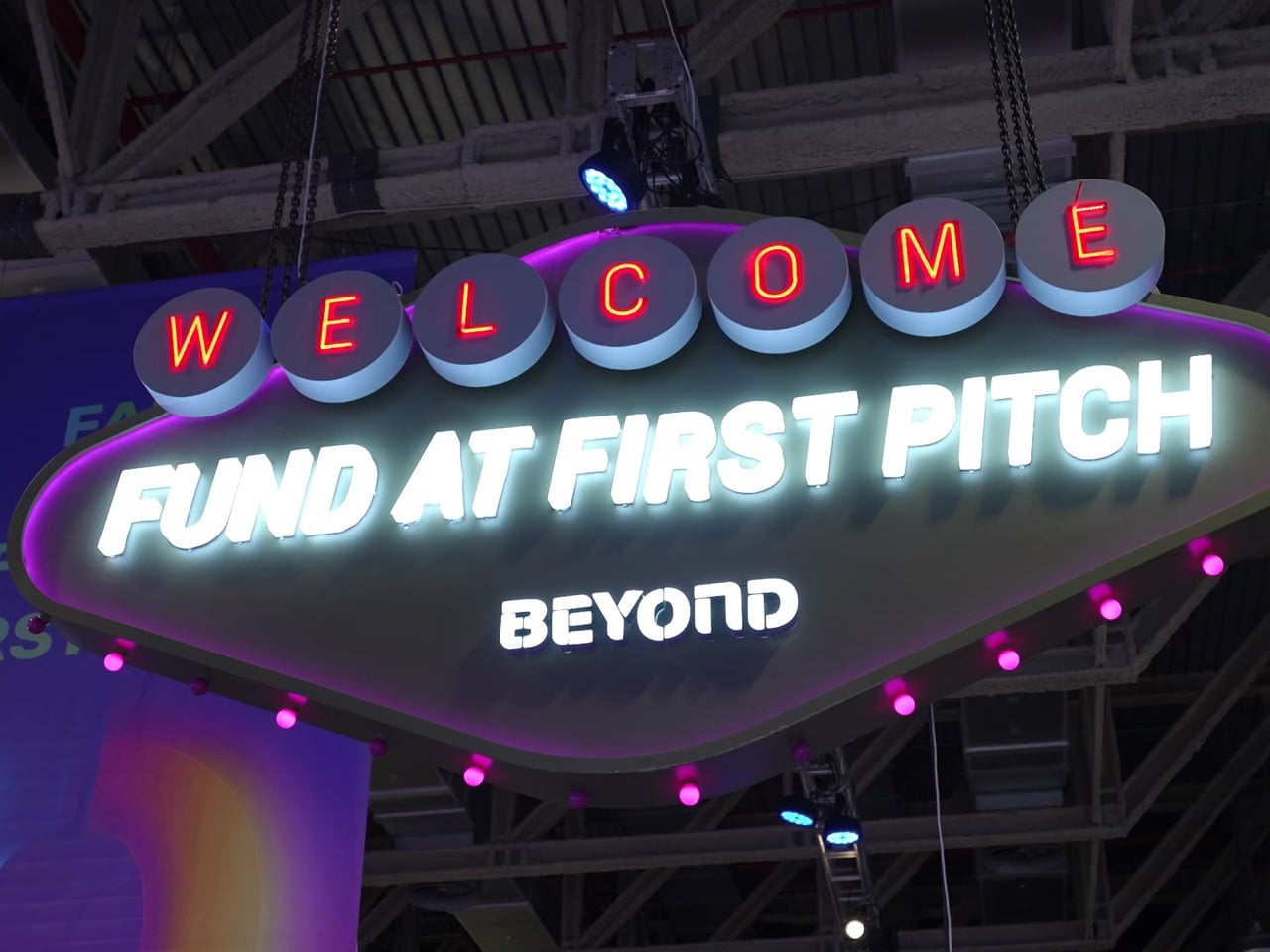
With 800 companies all showing off impressive technology, just having a good product wasn’t enough. Kun Gao, the founder of Crunchyroll, made this point at the closing ceremony. He advised founders that they have to learn how to tell a compelling story to win over investors and partners. This wasn’t just abstract advice; it was happening live at the “Fund at First Pitch” competition, where over 300 startups were trying to get noticed.
This is a crucial idea for anyone in design or product development. In a crowded market, the clarity of your vision is just as important as the quality of your code or the cleverness of your engineering. Being able to explain who your product is for, what problem it solves, and why it matters is a design skill. It’s what separates a cool piece of tech from a real business, and BEYOND Expo put that challenge front and center.

Probably the most unexpected idea at the expo was seeing AI get good at swimming. Zero Zero Robotics, known for its flying drones, launched the HOVERAir AQUA, an underwater drone. Another company, OrcaTech, also won an innovation award for its marine technology. This might seem like a niche category, but the technical challenge is enormous and says a lot about how capable AI has become.
Underwater is one of the hardest environments for autonomous tech to operate in. GPS doesn’t work, visibility is often terrible, and communication is extremely limited. For a drone to navigate, identify objects, and perform tasks on its own down there, its onboard AI has to be incredibly sophisticated. It proves that physical AI is not just conquering our cities and skies; it’s expanding into the most remote and difficult parts of our world.
The post 7 Biggest AI Ideas That Came Out of BEYOND Expo 2026 first appeared on Yanko Design.
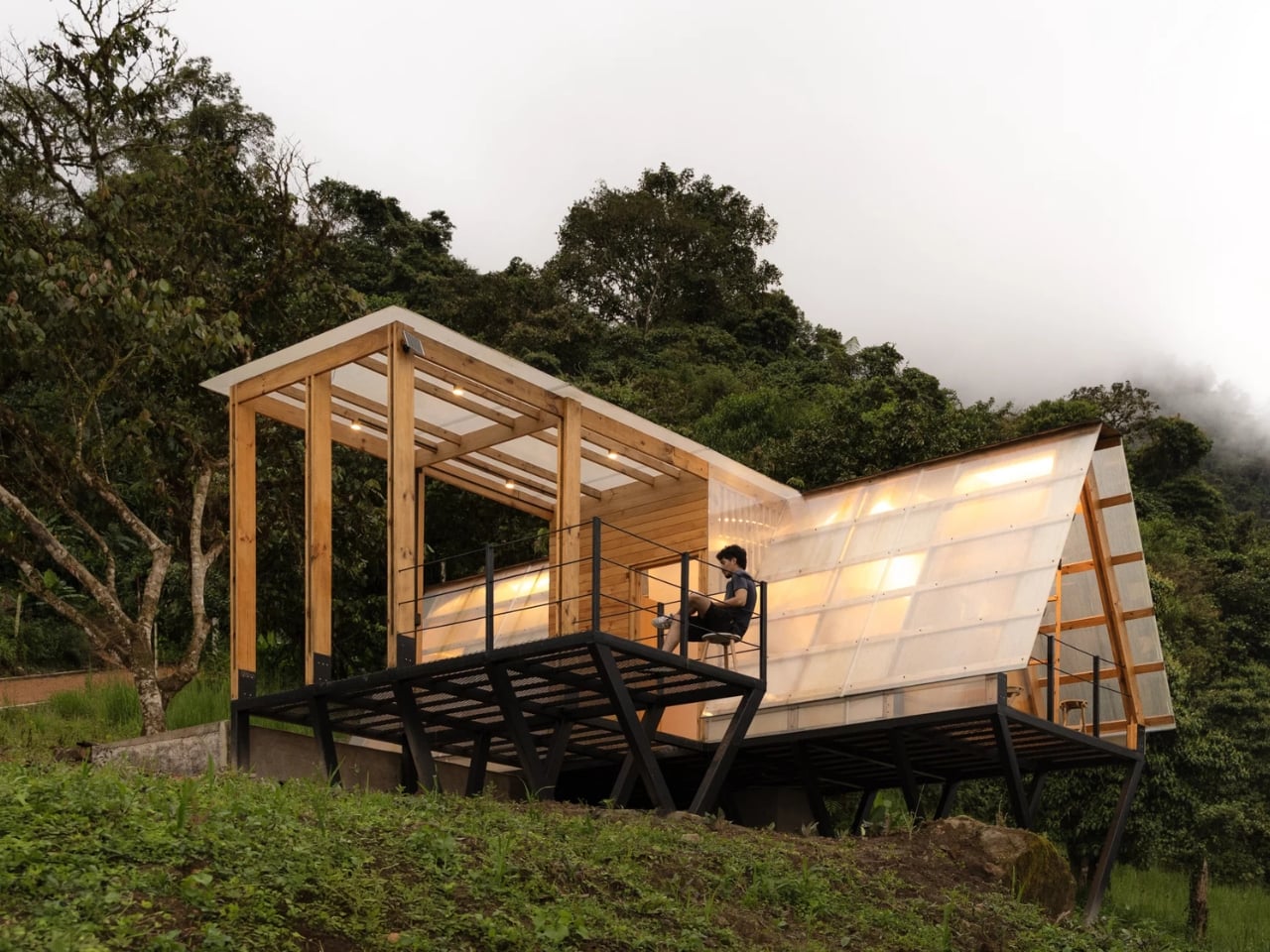
Somewhere between a manifesto and a shelter, Casa 6-3 landed on the slopes above Mindo, Ecuador, and quietly started asking all the right questions about how we build, where we live, and what we’re actually willing to give up.
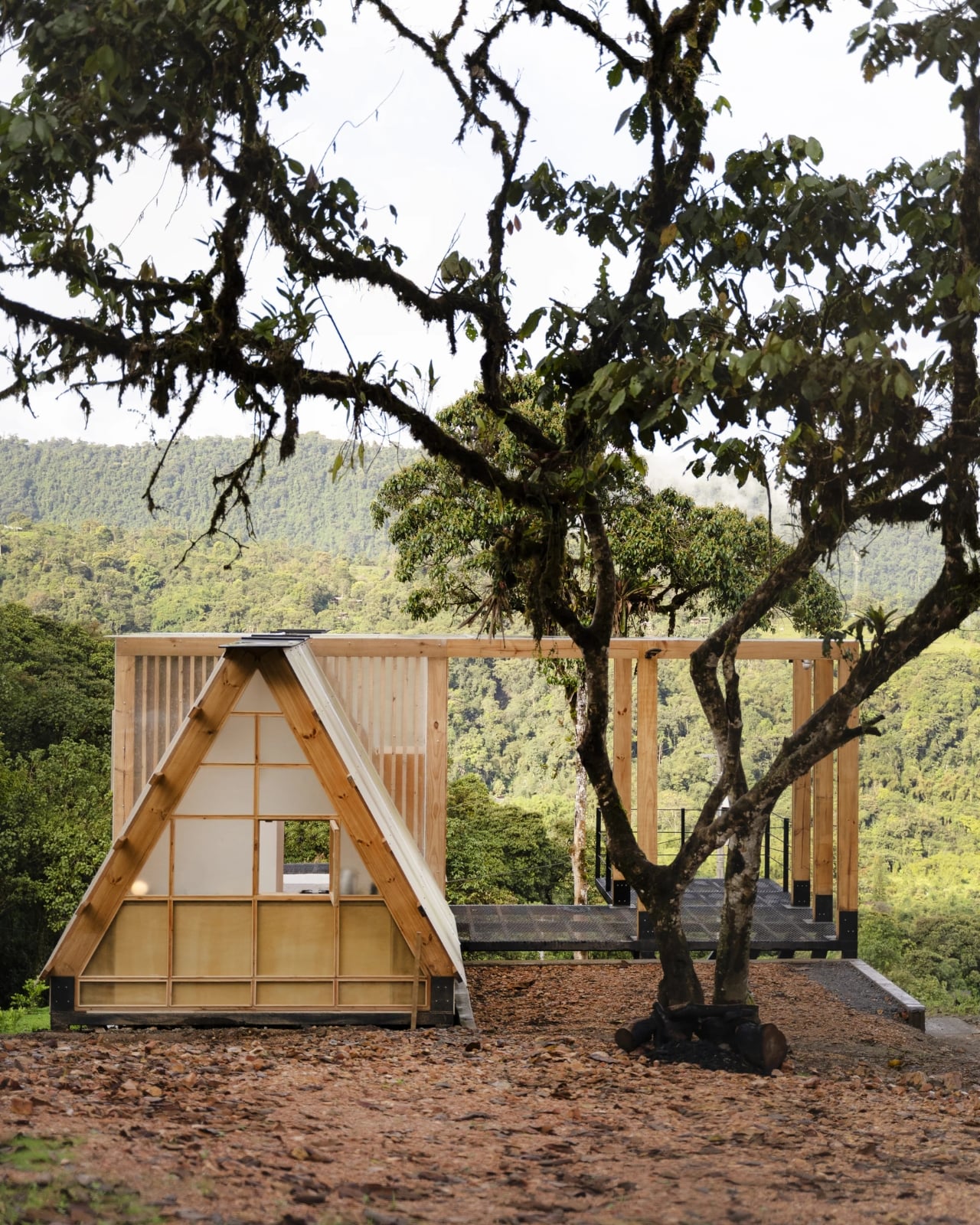
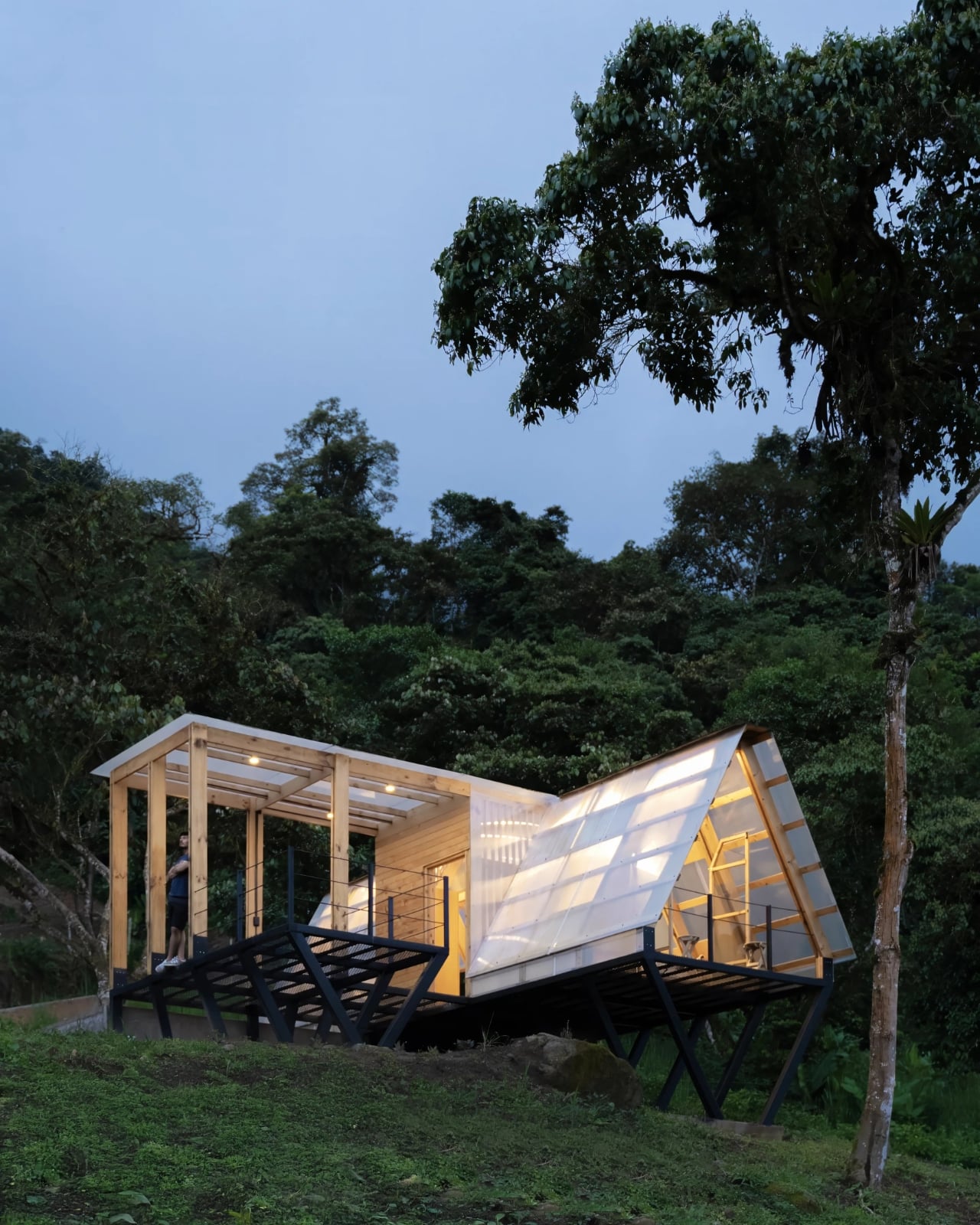
Built by Baquio Arquitectura, the cabin sits elevated on a triangular timber support system above the slopes of Ecuador’s Chocó cloud forest, one of the most biodiverse ecosystems on the planet. At just 7.2 meters long, it sleeps up to six people. That ratio alone is worth sitting with for a second.
Designer: Baquio Arquitectura
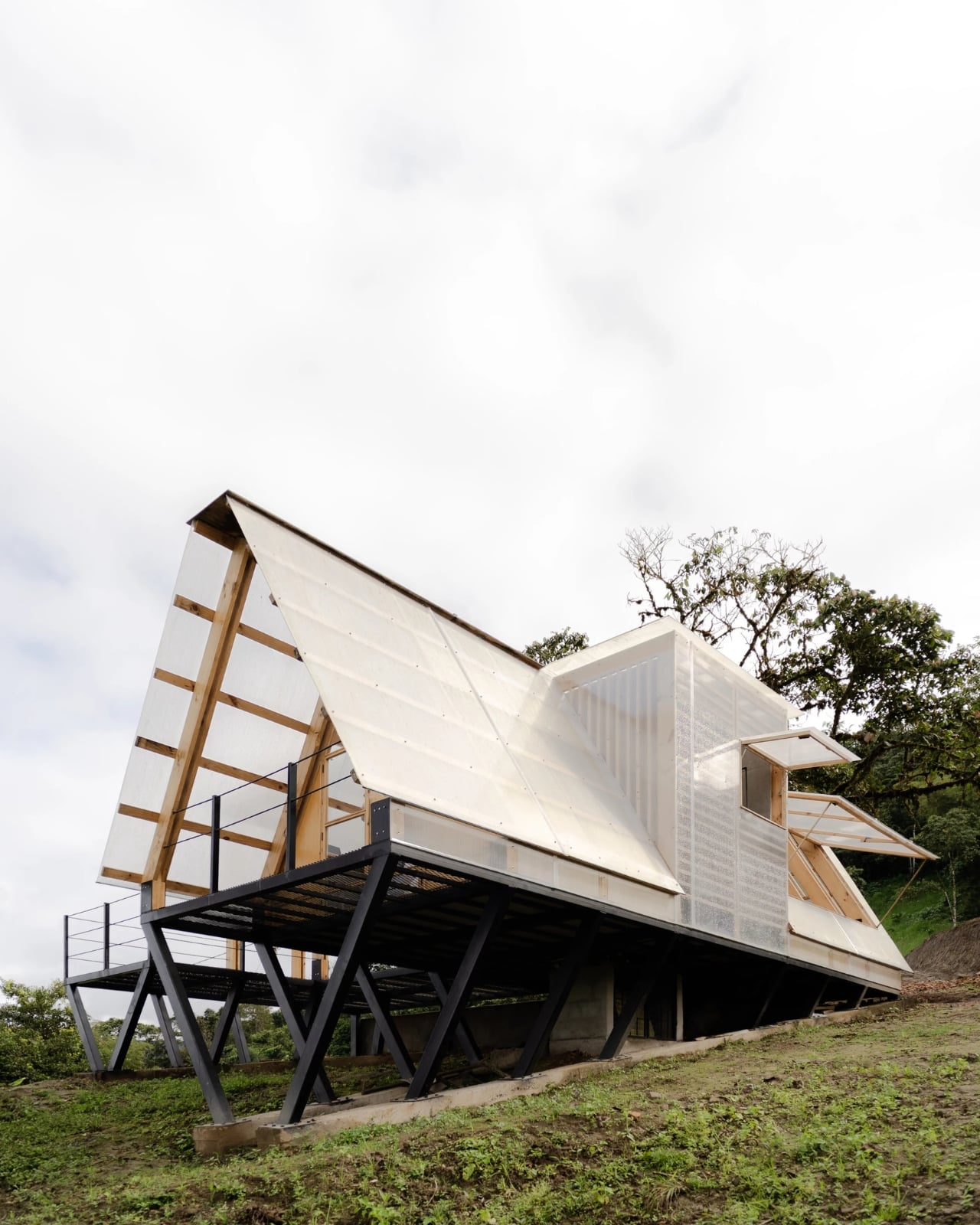
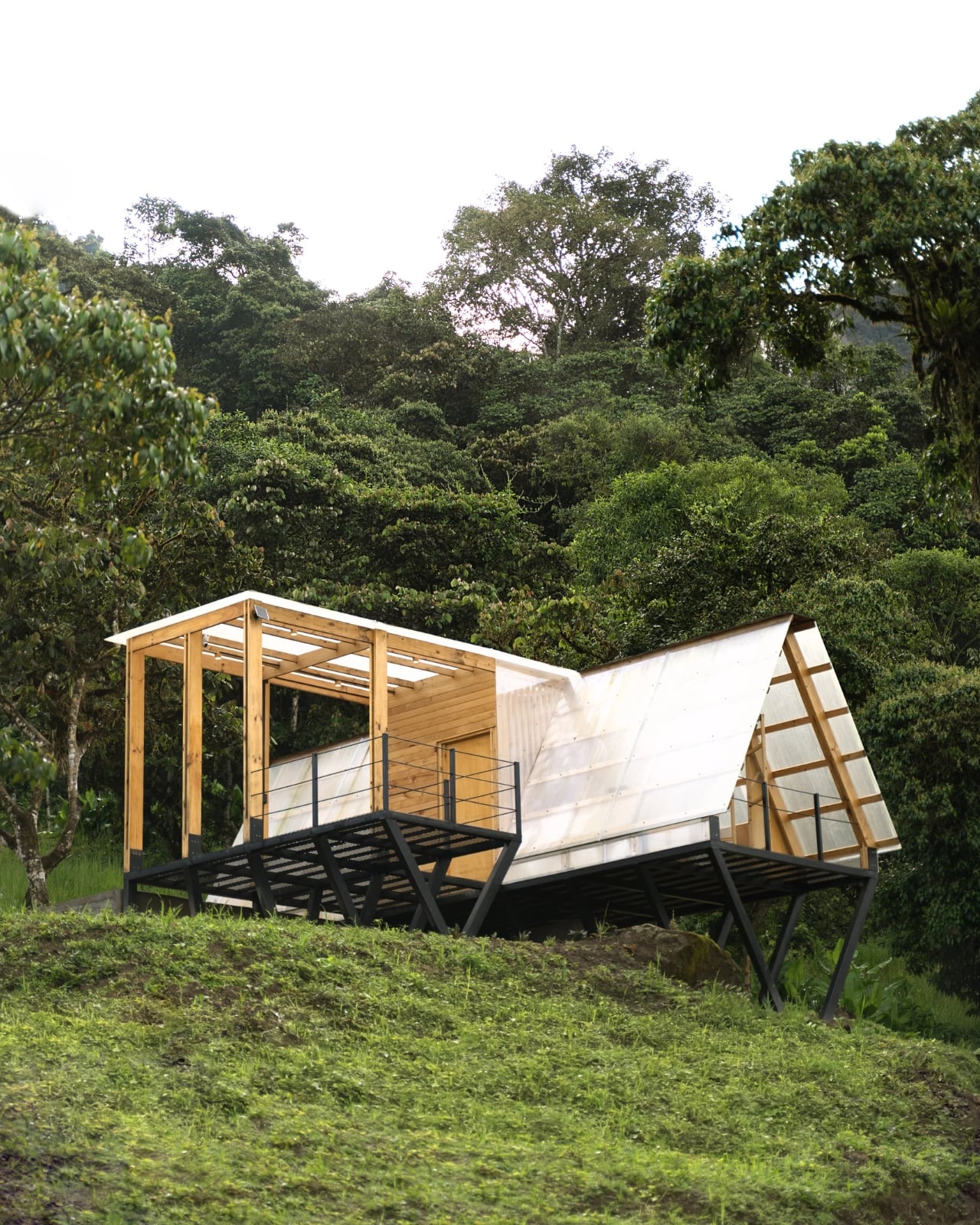
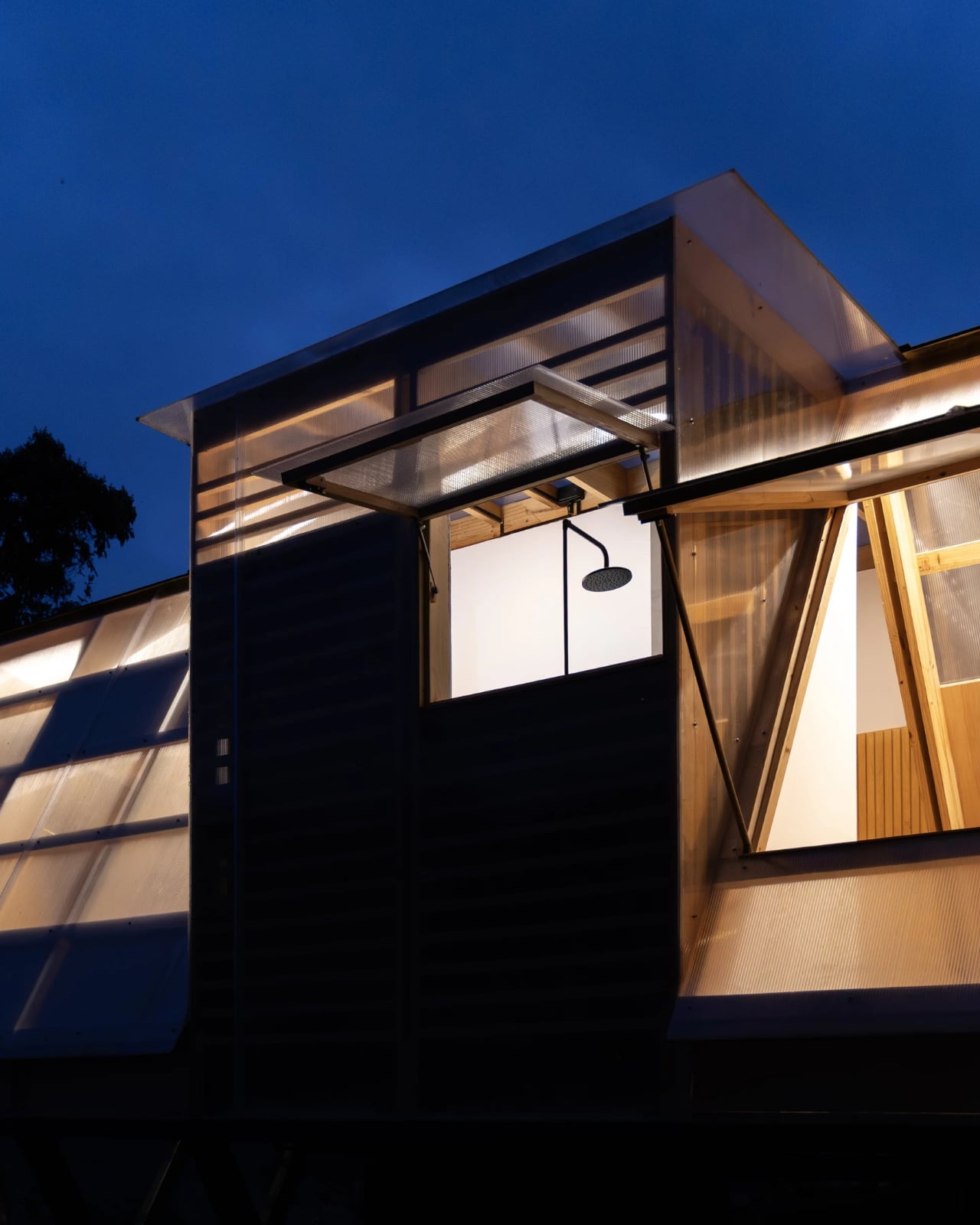
The structure is clad almost entirely in polycarbonate, that semi-transparent industrial material more commonly associated with greenhouse roofing than weekend retreats. Here, it does double duty: keeping the budget lean while transforming the cabin into something closer to a glowing lantern at dusk. Rain patterns, leaf shadows, and the shifting greens of the surrounding vegetation filter through the walls throughout the day, turning the interior into a kind of living light installation that you don’t have to curate because nature does it for you.
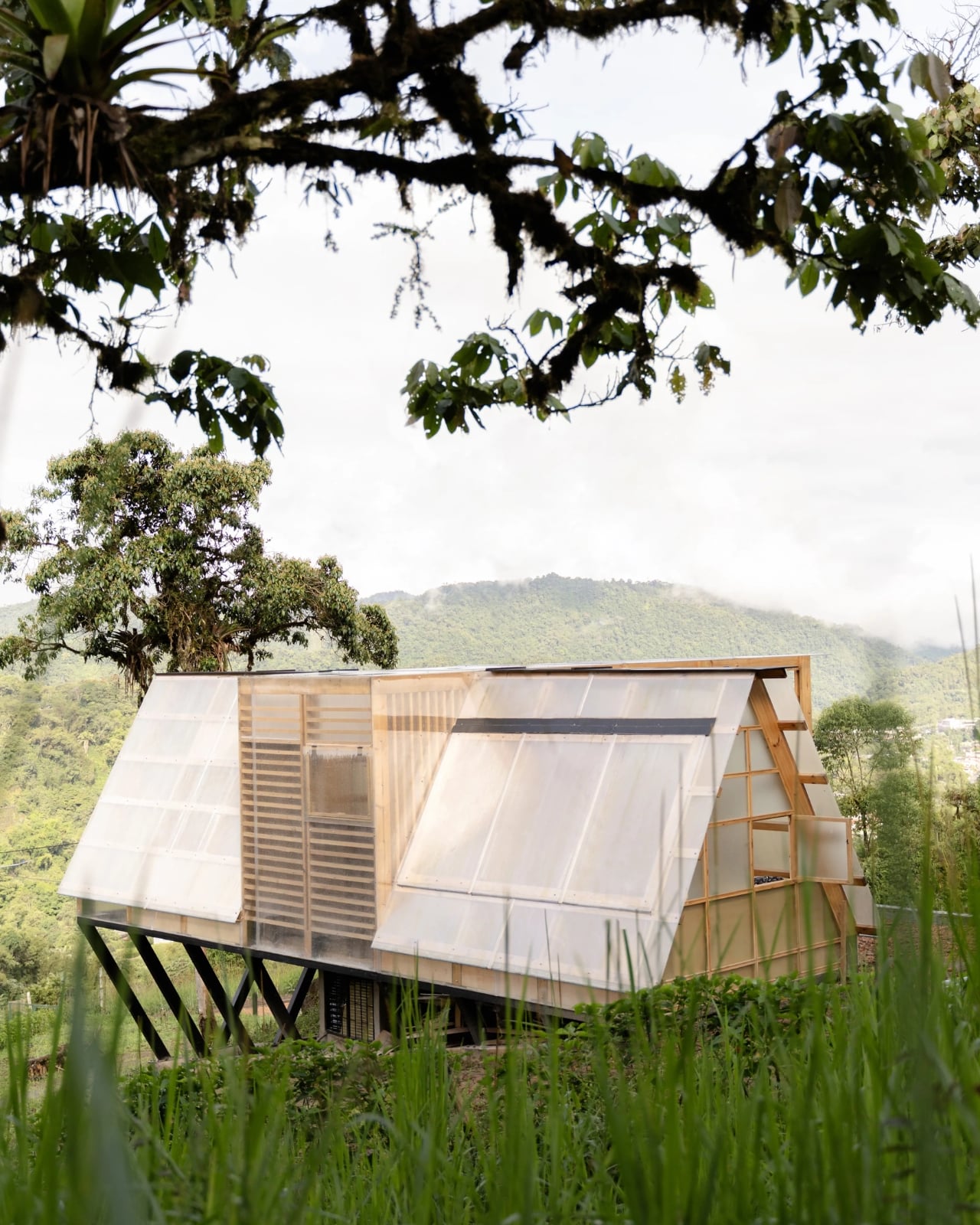
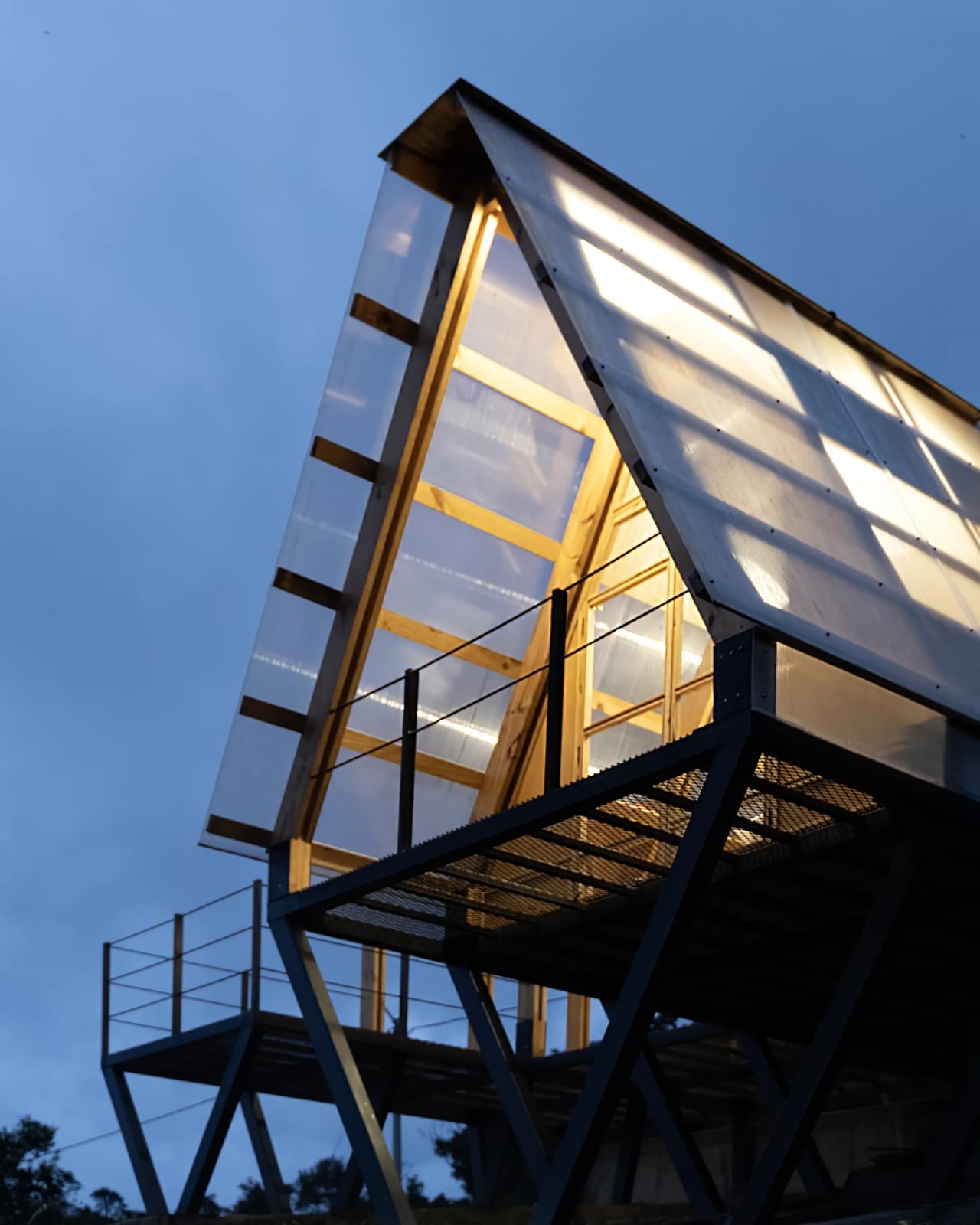
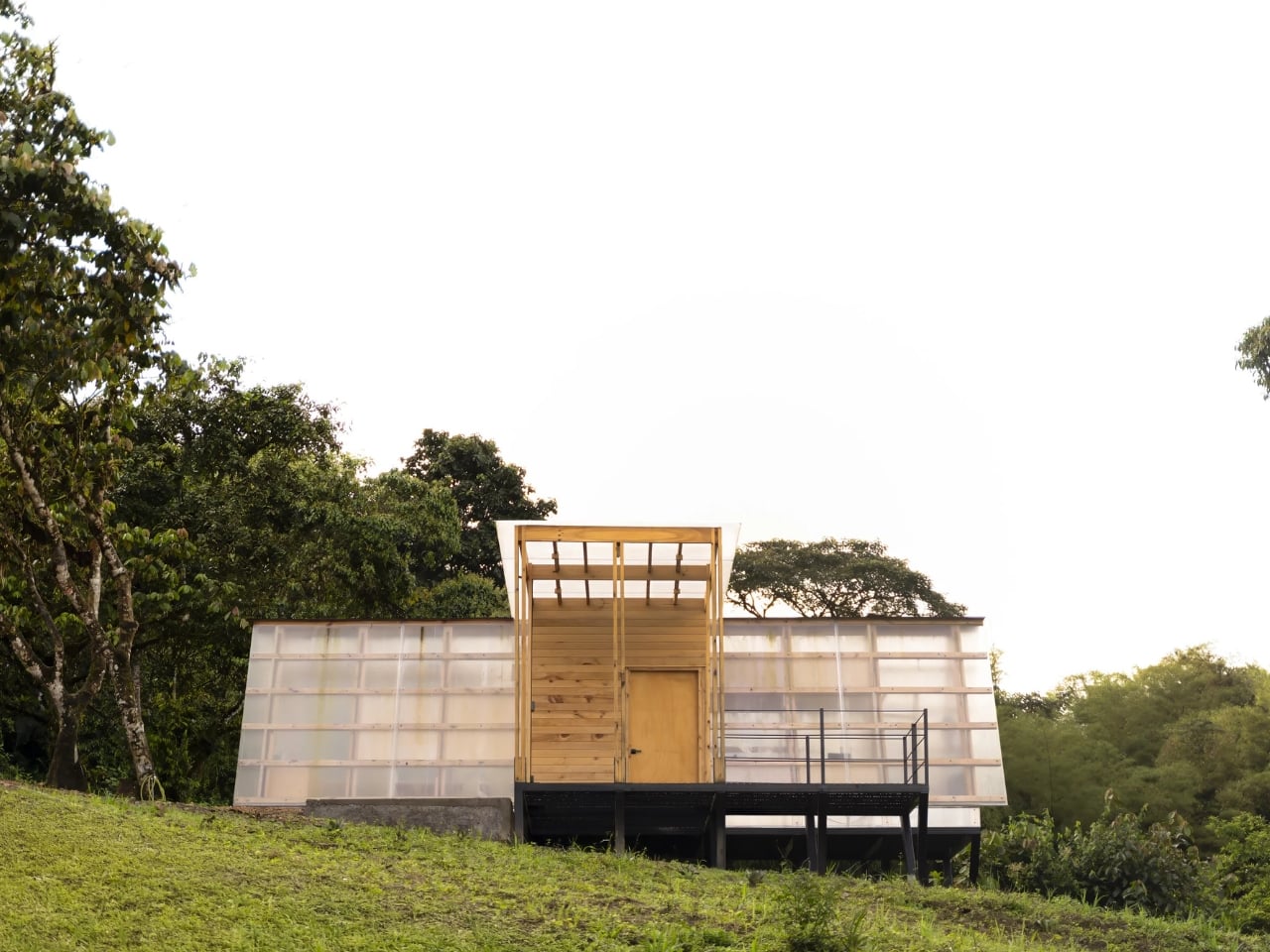
Raising the cabin off the ground was both a practical and philosophical decision. The timber stilts let the site breathe underneath, preserving the original topography without excavation or disruption. It’s a small gesture, but it matters enormously in a region where the ecosystem is as fragile as it is spectacular. The architects didn’t treat the forest as a backdrop. They treated it as a collaborator.
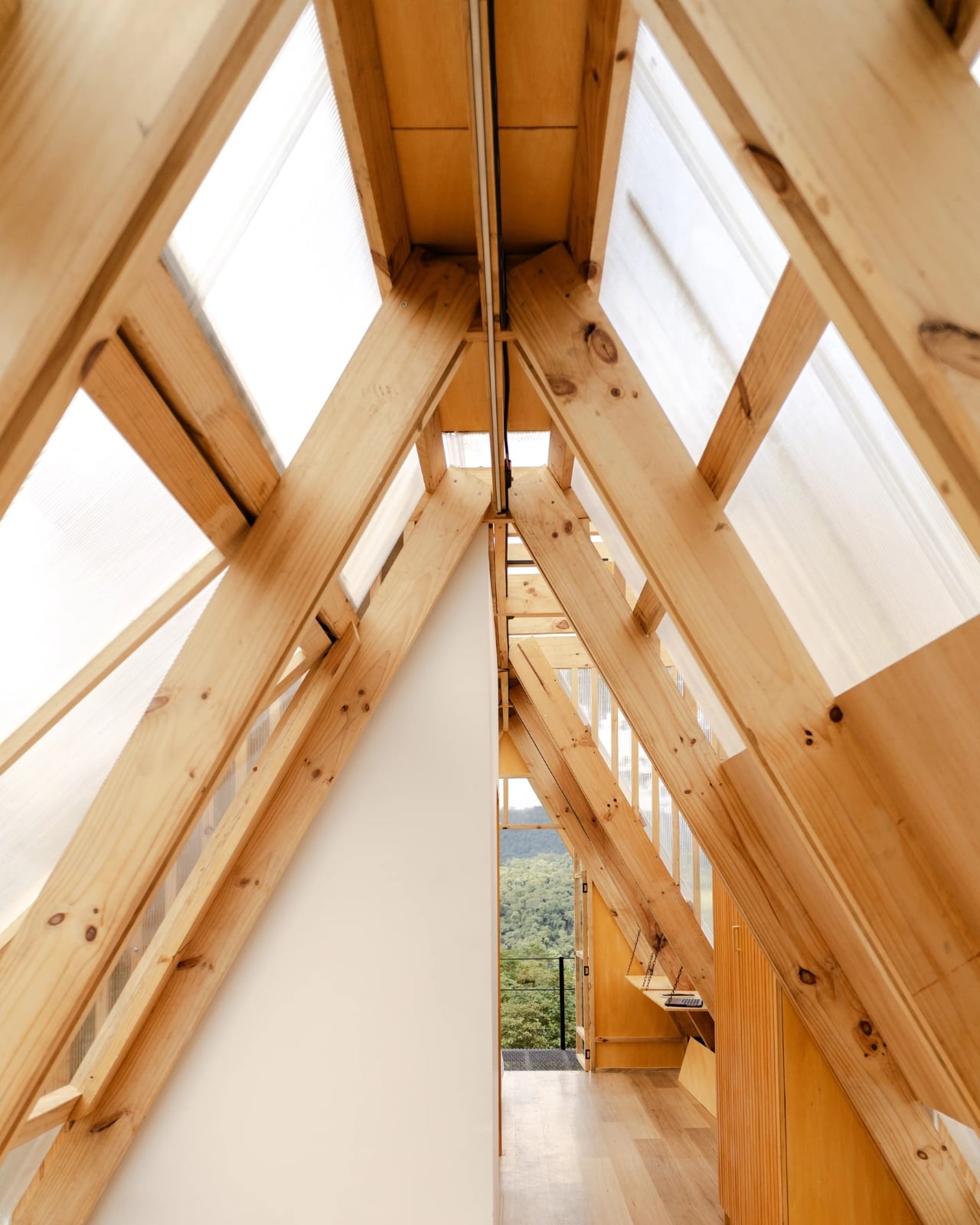
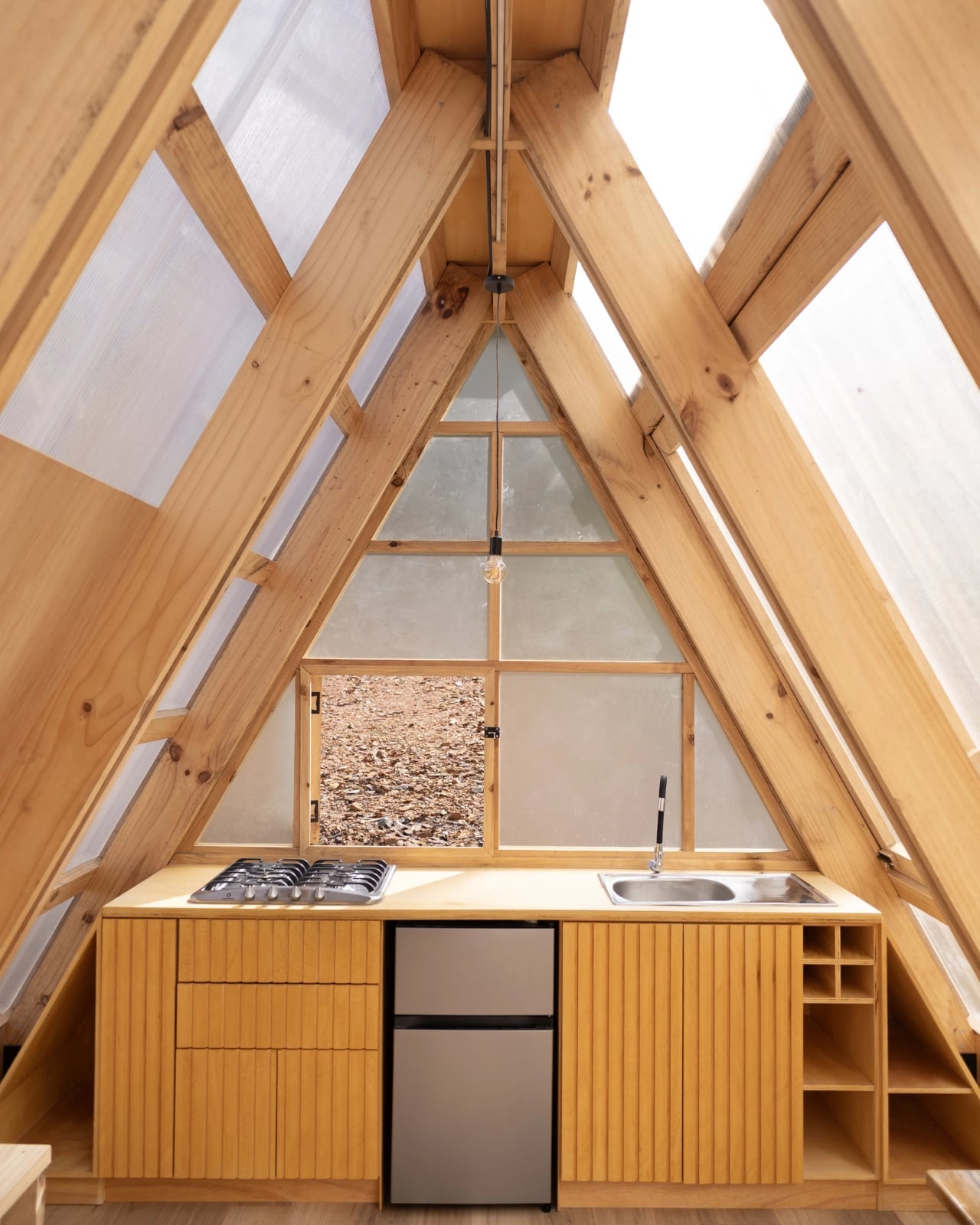
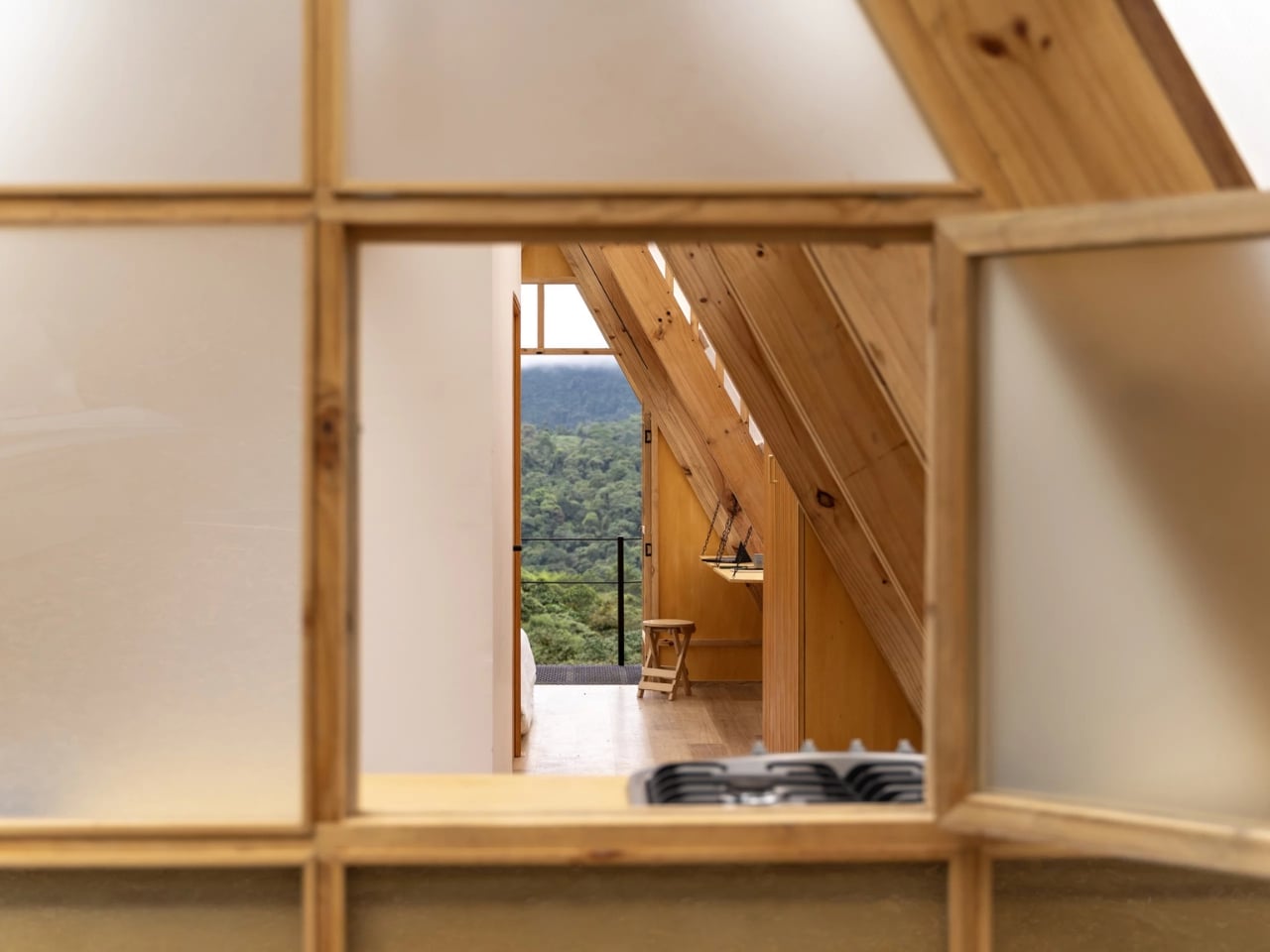
Polycarbonate as a material gets a bad reputation in architectural circles, often dismissed as temporary or industrial. Casa 6-3 challenges that bias directly. The cladding was chosen for its economy and ease of assembly at a remote location, but the effect it produces is genuinely atmospheric. It allows a visual and acoustic connection to the landscape rather than sealing occupants off from it. You hear the rain. You see the mist move. You feel the forest without being exposed to it, which is honestly a more sophisticated relationship with nature than most luxury eco-lodges manage with all their cantilevered decks and infinity pools.
A folding staircase, a compact timber kitchen, and a floor plan that fits six people into less than 24 feet of length are all decisions that required real discipline. It’s easy to build big. It takes considerably more skill, and perhaps more honesty, to strip a design down to its actual essentials and still make it feel livable. Casa 6-3 lands on the right side of that line.
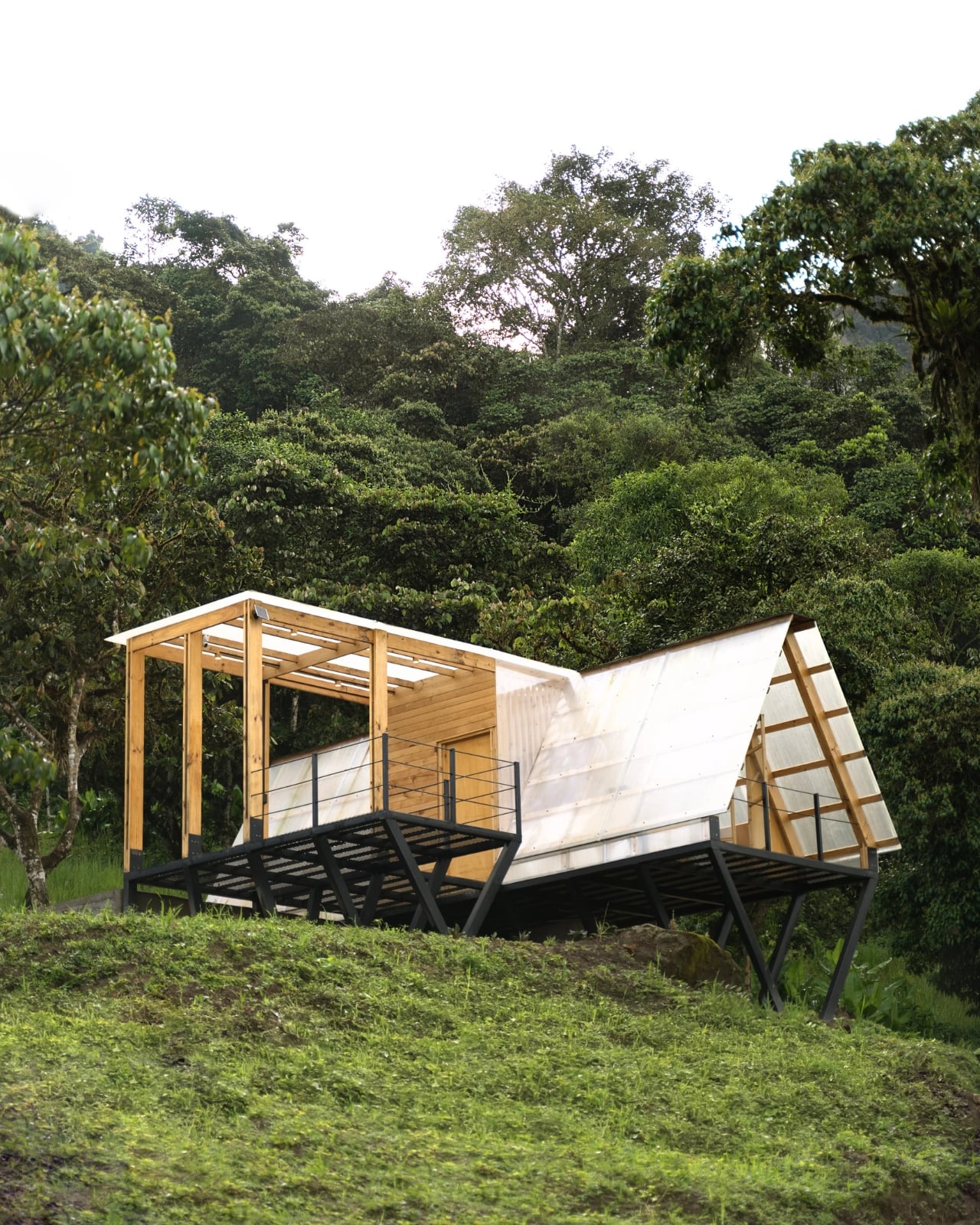
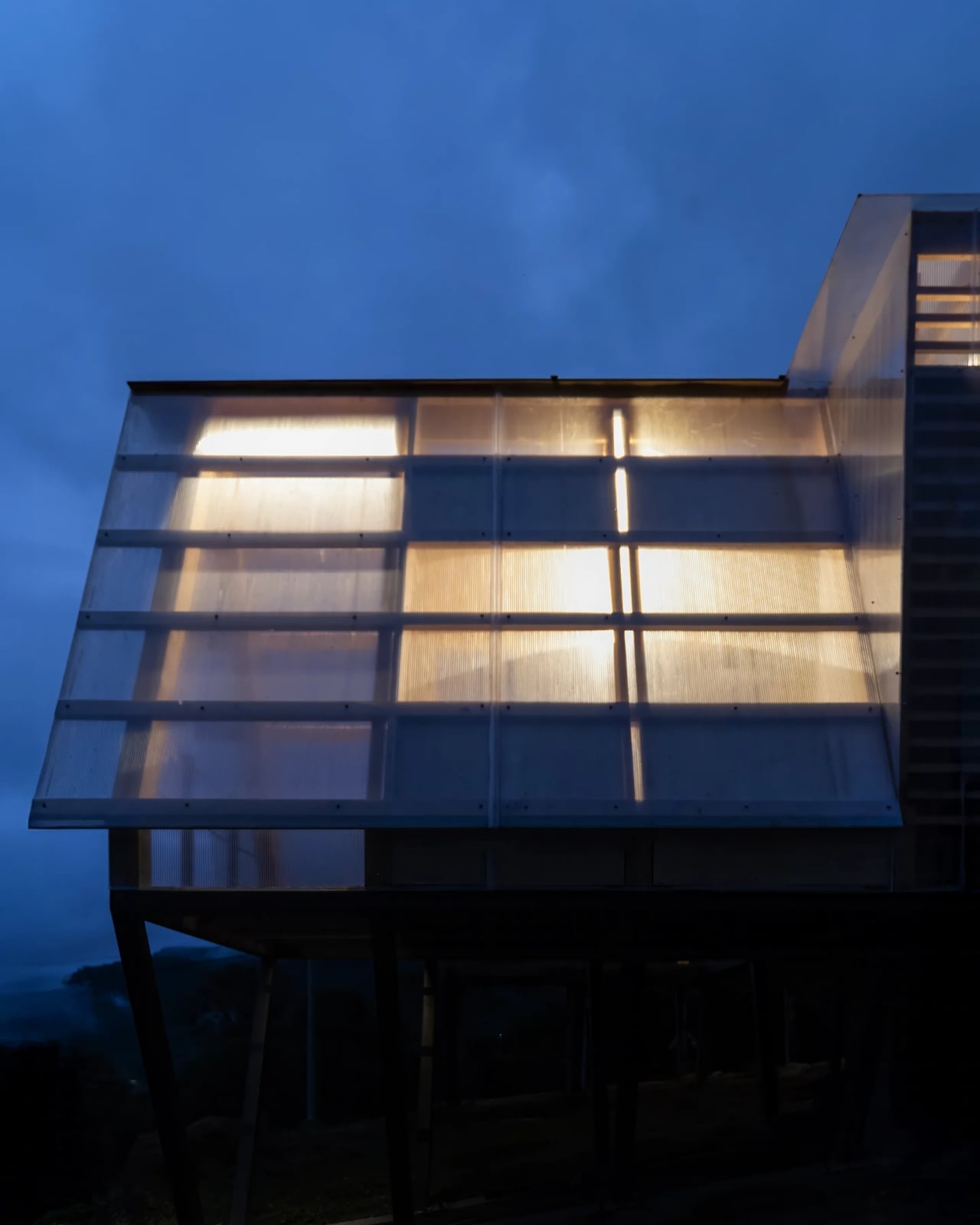
Beyond its immediate appeal, the project was designed with change in mind. Right now, it functions as a temporary hospitality retreat, but the timber framework was built to last and to eventually support a more permanent transformation. The polycarbonate skin can be swapped out over time while the structure itself remains. It’s a building that expects to evolve, which is a design philosophy I wish more projects would adopt instead of treating “forever” as the only acceptable timeline.
The broader conversation in architecture right now is about how to build without taking so much. Low-impact construction, adaptive materials, lightweight systems, biophilic design. Casa 6-3 stands as a minimalist prototype for low-impact mountain living without making a speech about it. It doesn’t announce its sustainability credentials. It just hovers quietly above the forest floor, doing exactly what it was designed to do.
Mindo, for what it’s worth, is considered one of the best birdwatching destinations in the world, tucked into Ecuador’s western Andes with a biodiversity that borders on absurd. Placing a structure there that actively tries to minimize its footprint reads less like a design trend and more like a genuine act of respect for the land.
At 7.2 meters long and lifted off the ground on timber stilts, Casa 6-3 is the kind of project that makes you want to rethink your square footage assumptions, your material prejudices, and maybe your entire floor plan. Not every building needs to make a statement. Some just need to know when to get out of the way.
The post A 7-Meter Cabin in Ecuador’s Cloud Forest Just Rethought Small Living first appeared on Yanko Design.
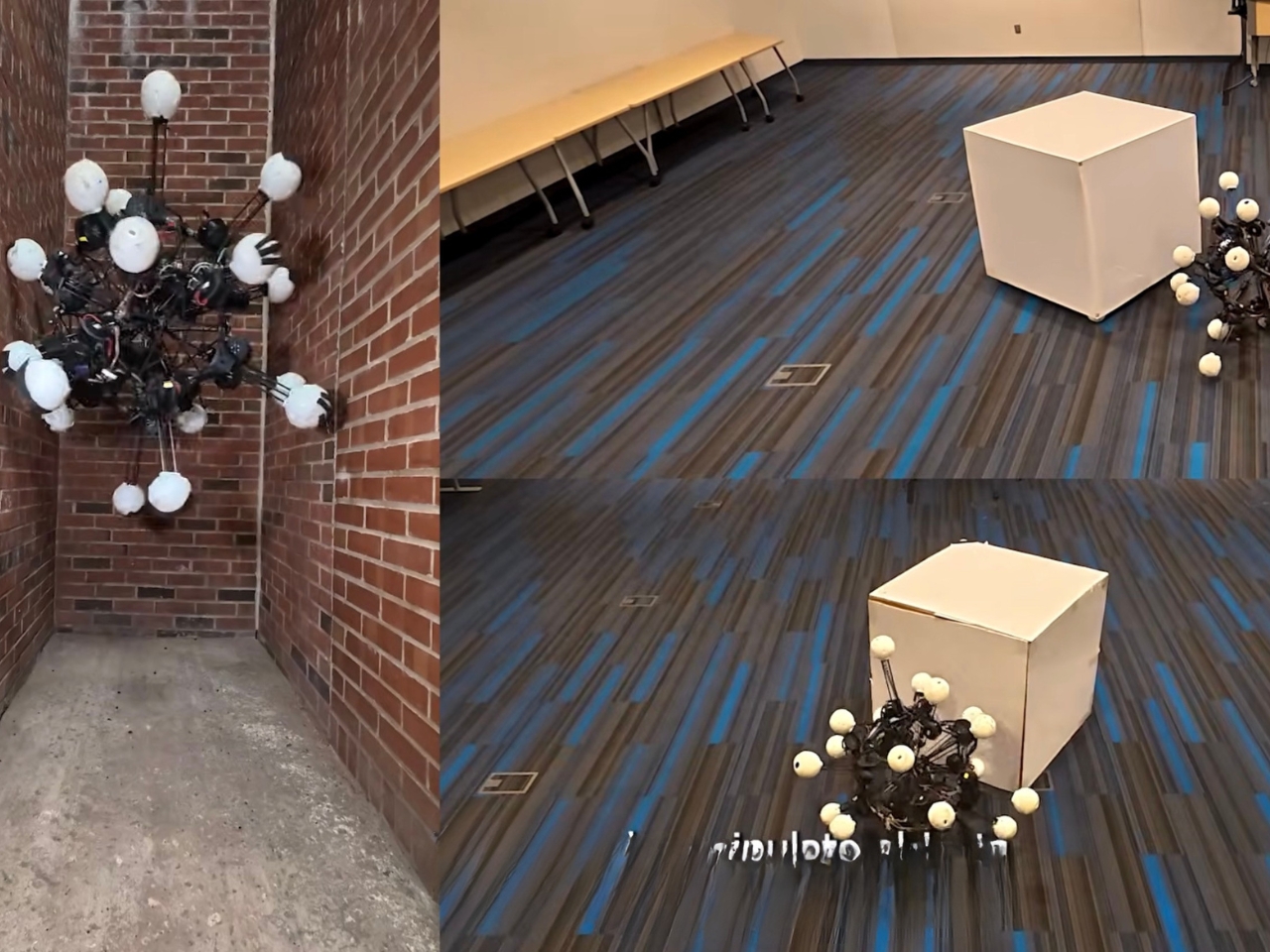
The moment you see Argus rolling across a college lawn, you feel a kind of awe that’s equal parts scientific admiration and mild existential discomfort. It doesn’t look like a robot. It doesn’t look like anything you’ve seen before, actually. It looks like a sea urchin crossed with a fever dream, or if you’ve spent any time on the internet in the last few years, it looks exactly like what happens when someone renders a biblically accurate angel and sends it out to navigate uneven terrain.
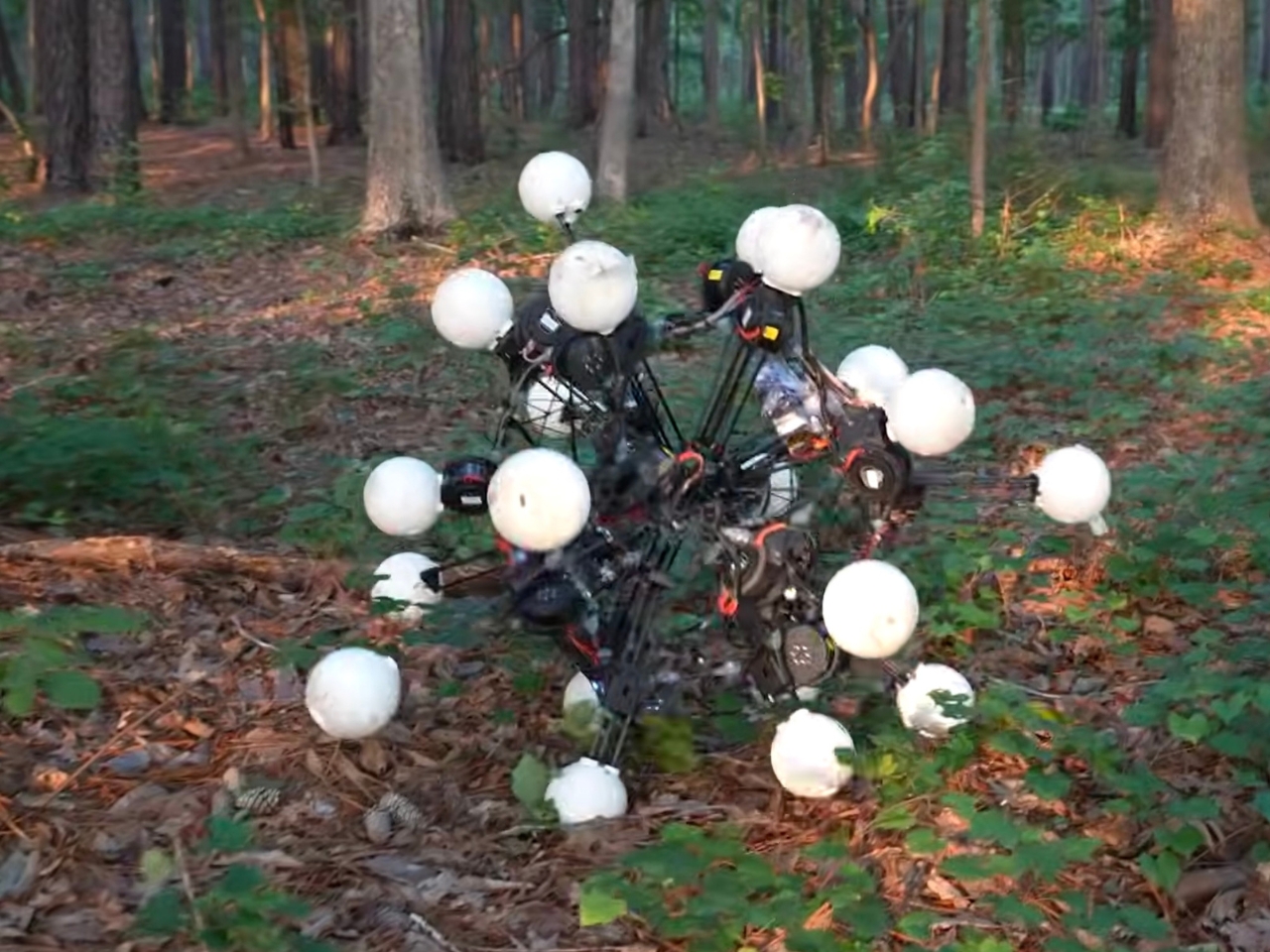
That’s not an exaggeration. The internet made the comparison almost immediately after Duke University’s General Robotics Lab unveiled Argus, and the parallel holds up. In the Book of Ezekiel, the ophanim, a type of divine being, are described as wheels covered in eyes, seeing in all directions simultaneously. Argus, named after the Greek mythological giant with a hundred eyes, does essentially the same thing, minus the divine mandate. It has 20 legs, each one telescoping and tipped with a camera, arranged at the vertices of a regular dodecahedron. No blind spots. No preferred orientation. No front or back.
Designer: Duke University General Robotics Lab
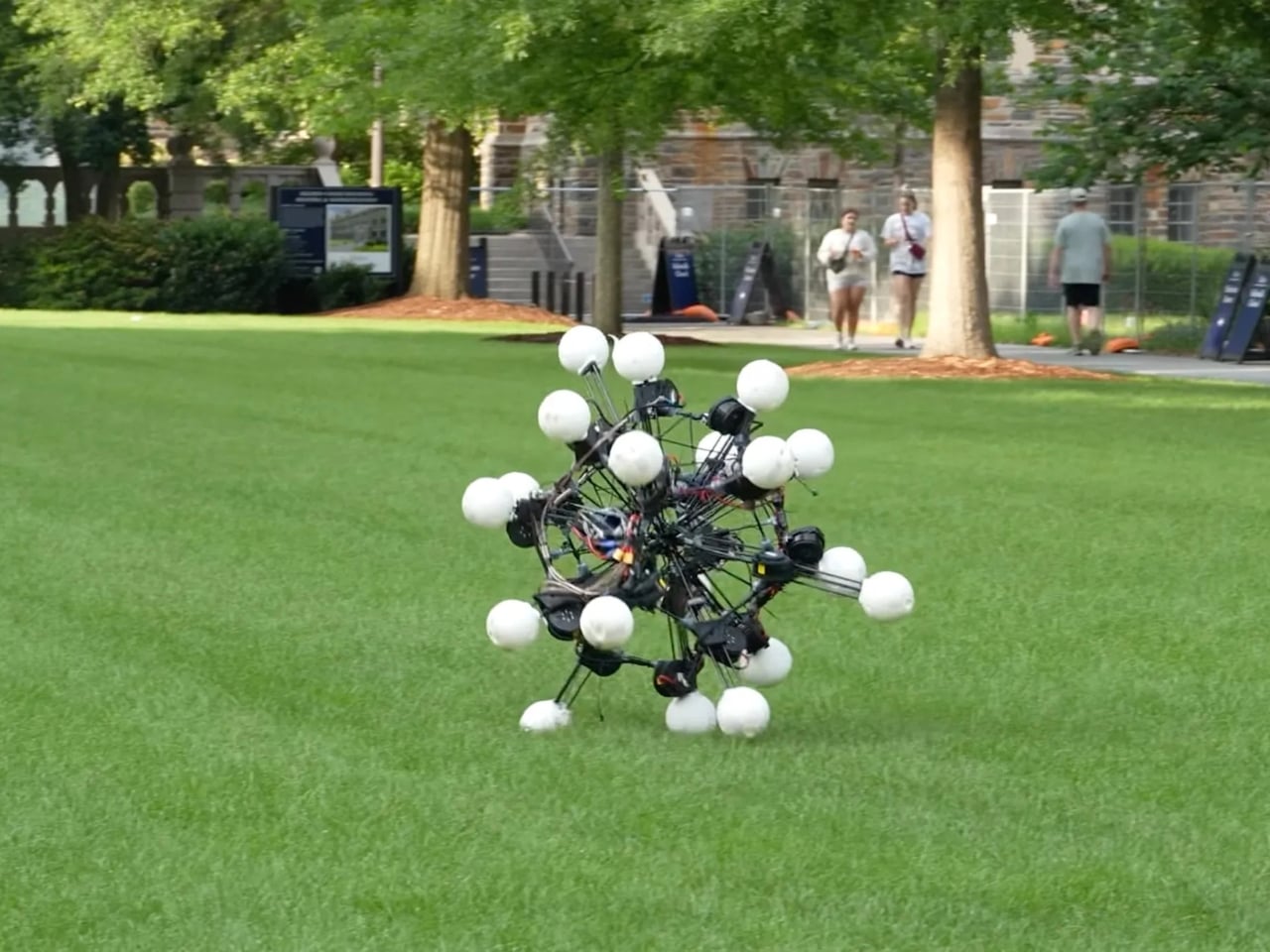
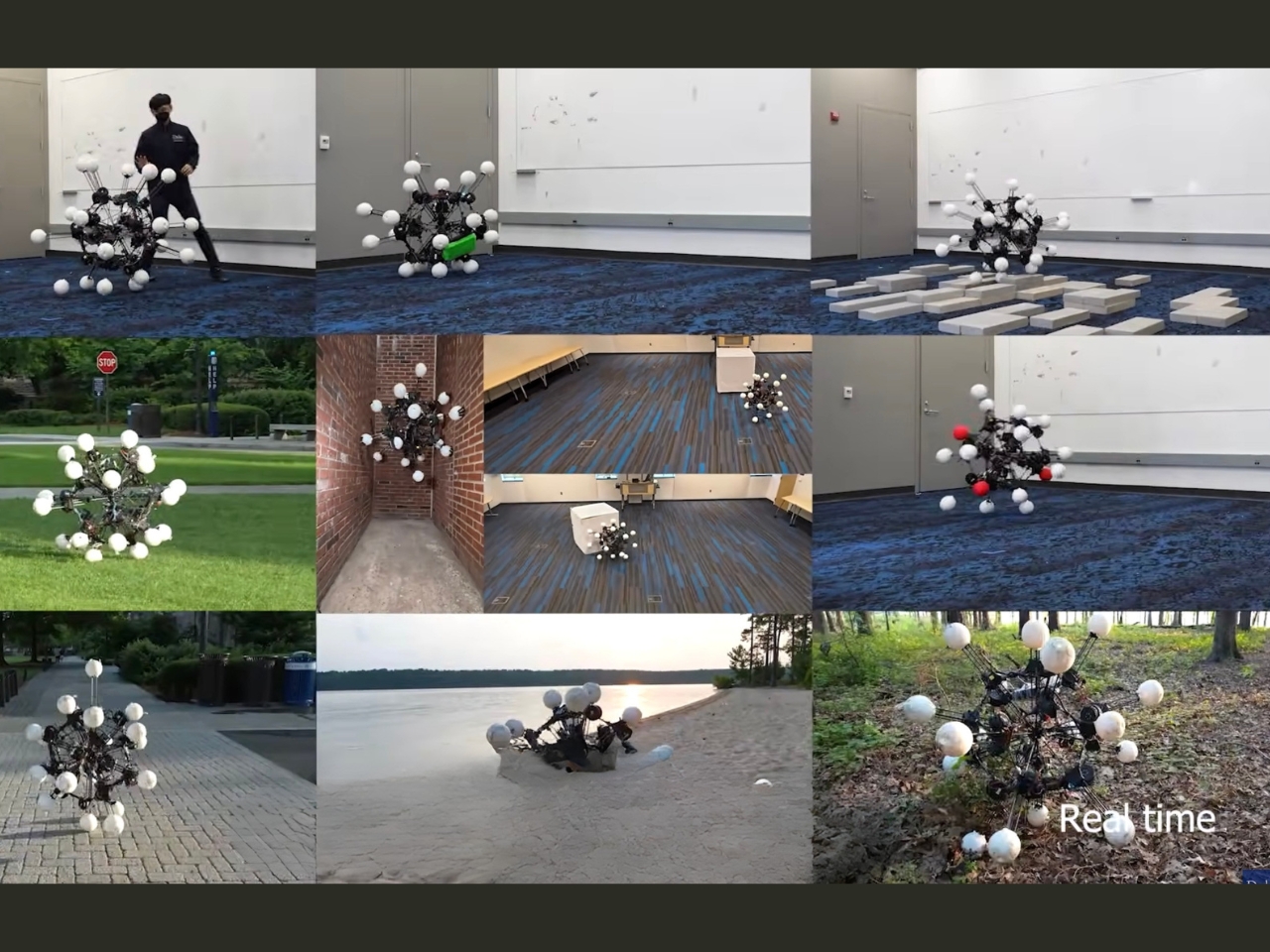
That last part is what keeps pulling me in, design-wise. We’ve spent decades building robots that mirror the logic of our own bodies: two legs, bilateral symmetry, a definitive forward direction. It made intuitive sense. We move front-to-back, so we assumed machines should too. Argus rejects that assumption entirely. The team at Duke built it around a principle they’re calling dynamic symmetry, which refers to how uniformly a robot can accelerate in any direction. Most robots are strongest and most efficient when moving the way they were designed to move. Argus has no such preference. It moves sideways, backward, forward, and diagonally with the same ease, which sounds like a minor technical distinction until you watch it roll through rough terrain, navigate around trees, and absorb collisions without losing its course. That’s when you realize how significant the gap is.
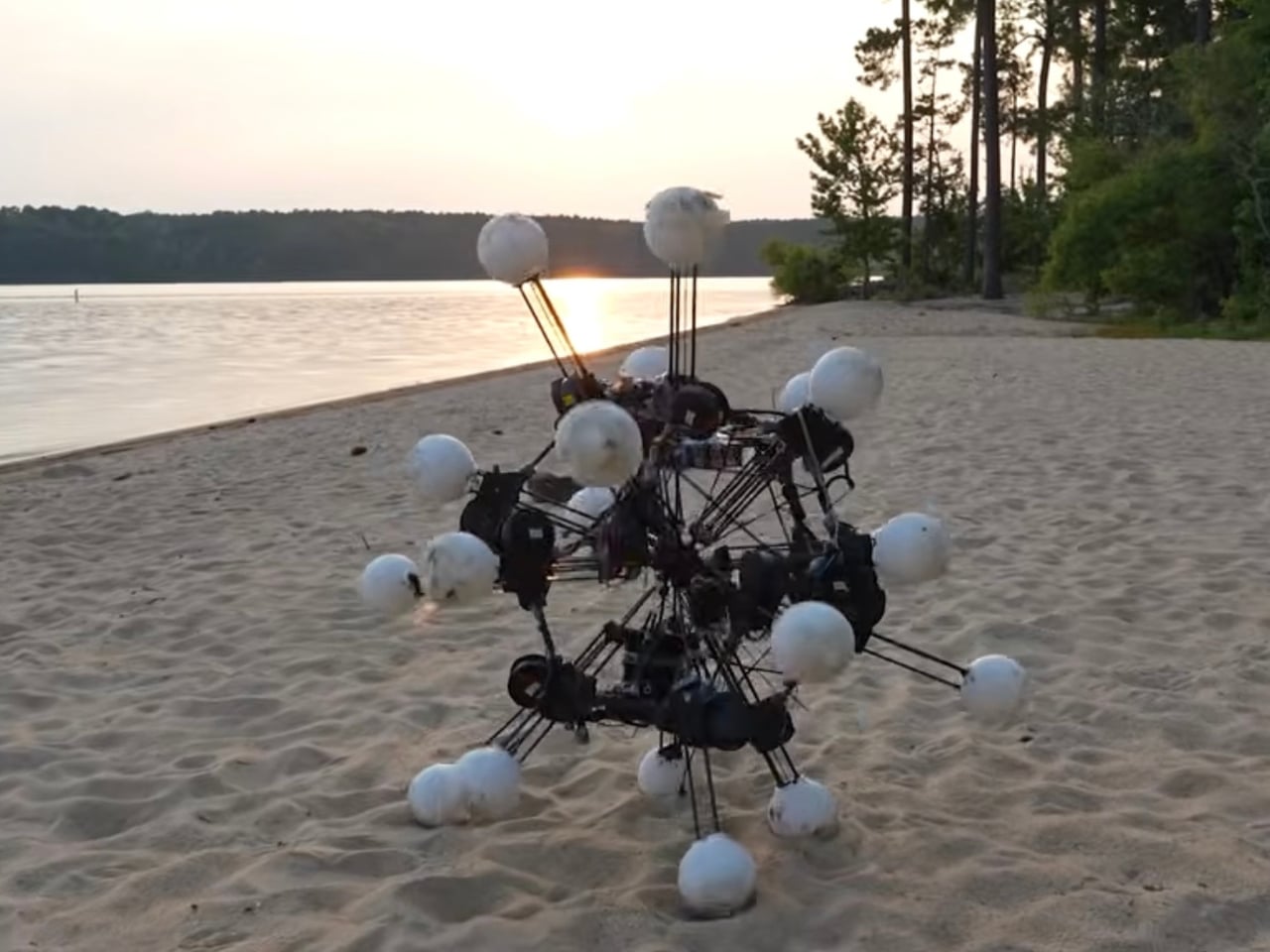
The design precedent here matters more than it might seem. Robotics has long borrowed from nature by mimicking the shapes that evolution produced: bipedal forms for humanoids, quadruped frames for terrain bots, insect geometries for swarm machines. But Argus is borrowing something different from nature. It’s borrowing from the radial logic of starfish and sea urchins, creatures that don’t have a front because every direction is equally valid. The Duke researchers describe Argus as an “existence proof,” a demonstration that a robot built for dynamic symmetry isn’t just theoretically interesting but practically deployable. Postdoctoral researcher Boxi Xia put it directly: “It produces a robot you can deploy in the wild, on uneven ground and in clutter, even in low-gravity settings.”
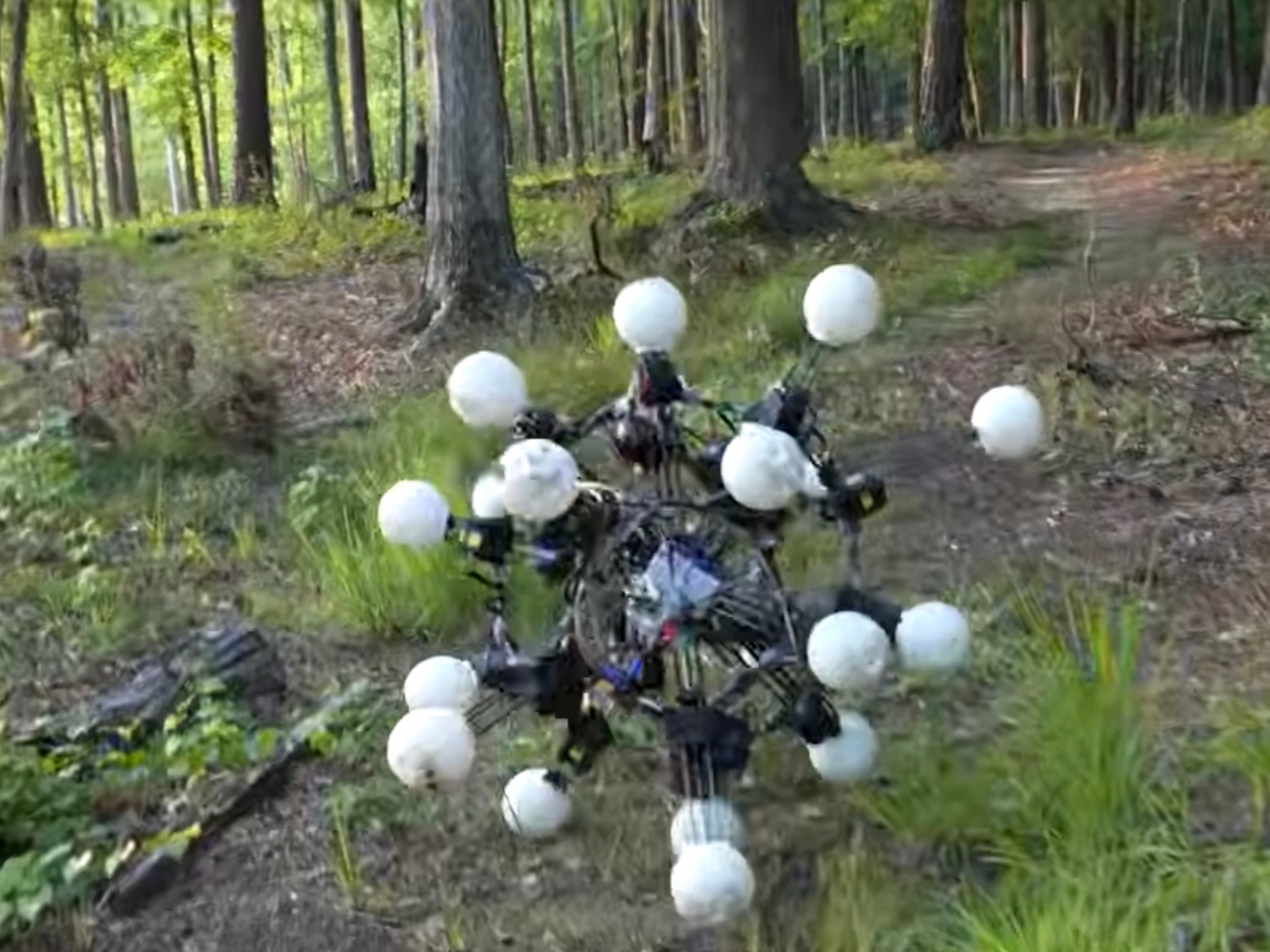
Low-gravity settings. That detail is doing a lot of quiet work in this conversation. The practical applications being discussed range from disaster response and search-and-rescue operations to planetary exploration, environments where the rules of conventional locomotion break down fast and all-directional agility becomes the difference between success and failure. A humanoid robot in a collapsed building still has to worry about which way it’s facing. Argus doesn’t.
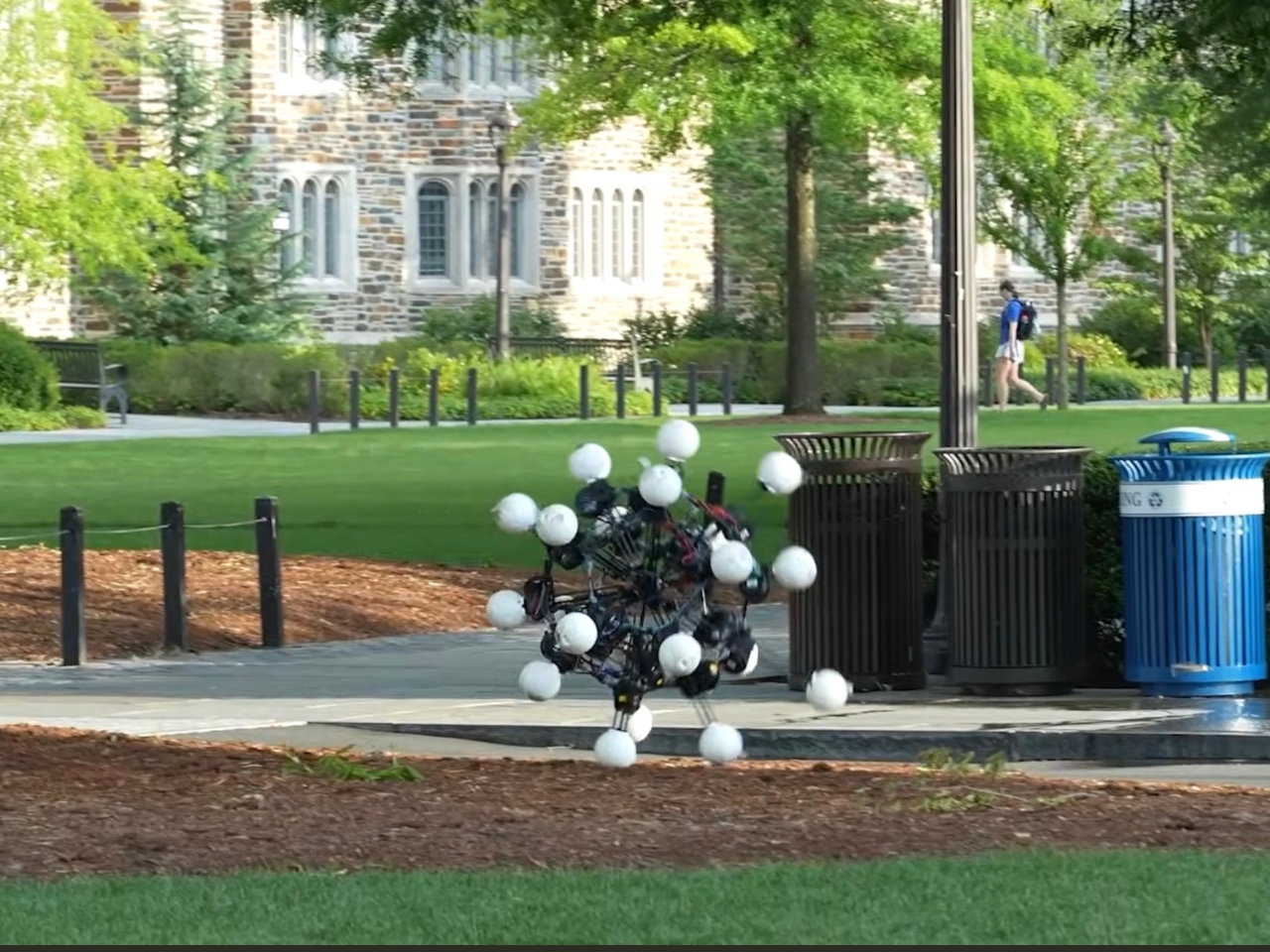
I’ll admit the design is deeply strange to look at. It is not sleek. It is not elegant in any conventional sense. It doesn’t have the clean industrial confidence of Boston Dynamics’ machines or the deliberate anthropomorphism of recent humanoid models. It looks a little chaotic, frankly, like it was assembled by someone working from a very different set of aesthetic values, someone less interested in how the thing looks than in what the thing can do. And maybe that’s the point. Beauty in engineering doesn’t always wear the shape we expect. Sometimes it rolls across a lawn on 20 legs, sees absolutely everything, and changes the conversation entirely.
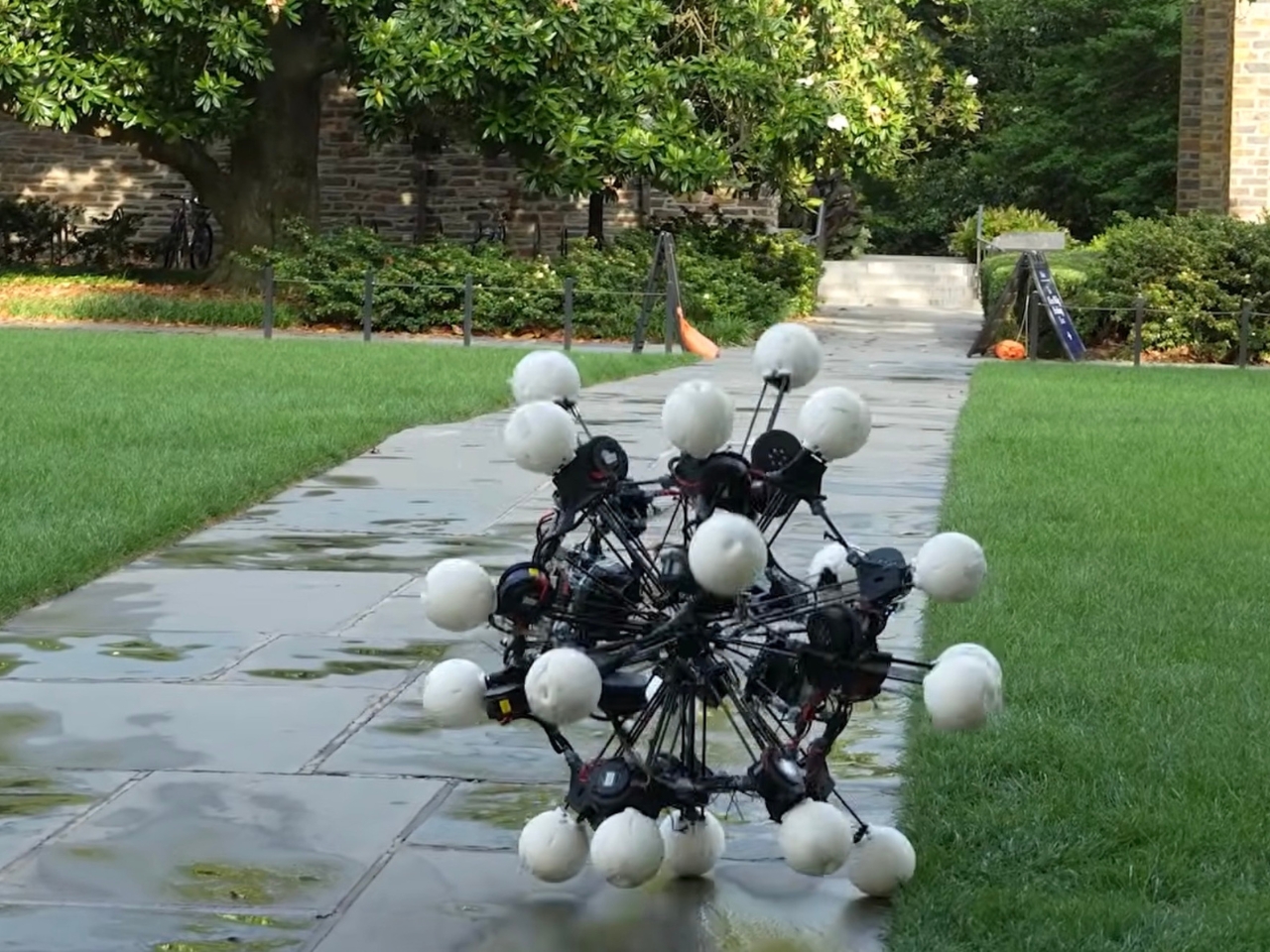
Argus is the kind of design that reminds you why robotics is still worth watching. Not because of what it looks like, but because of what it means for how we think about movement, perception, and the assumptions we’ve been quietly building into machines all along.
The post Argus Just Showed Up With 20 Eyes, 20 Legs, and No Rules first appeared on Yanko Design.

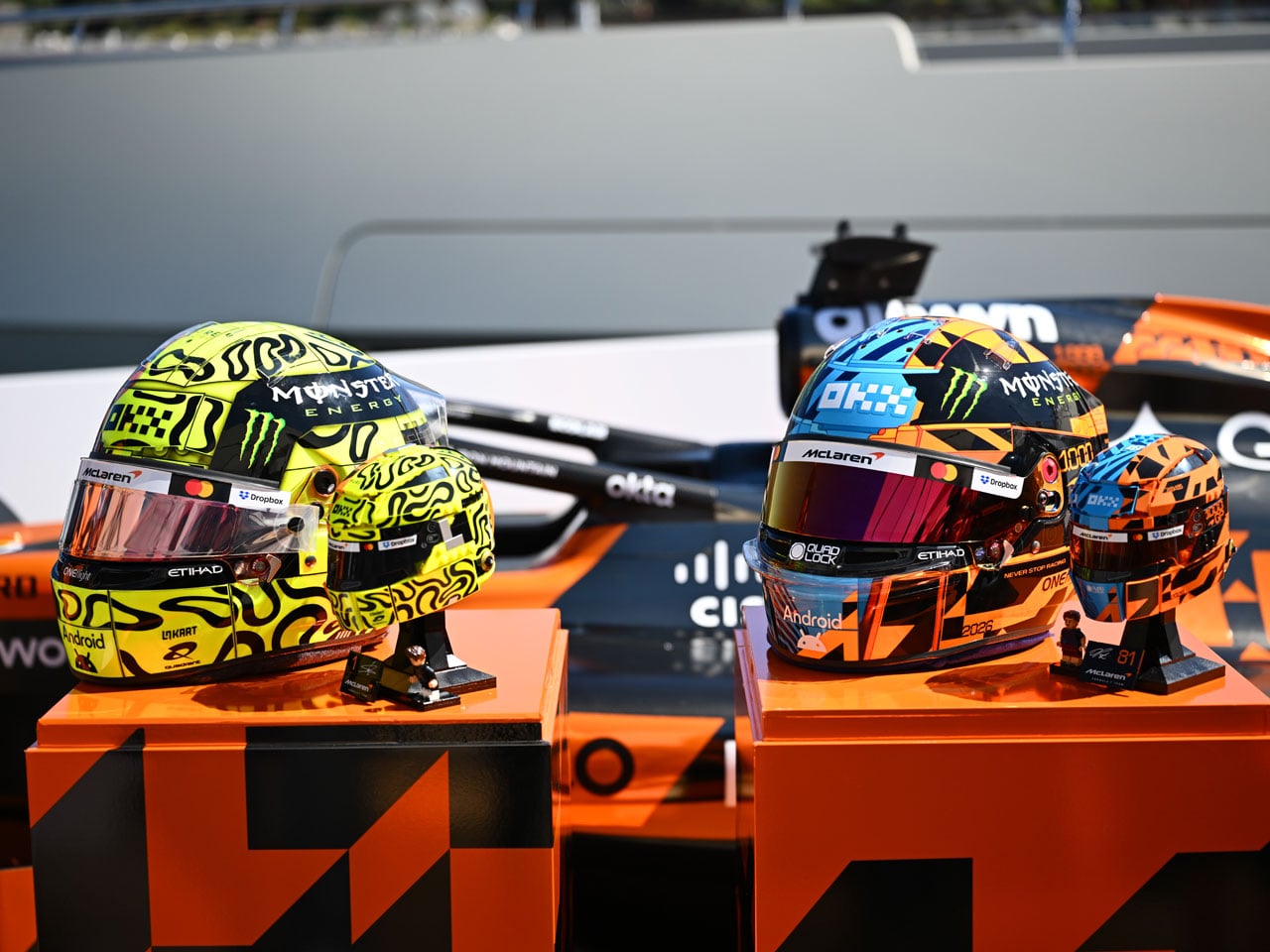
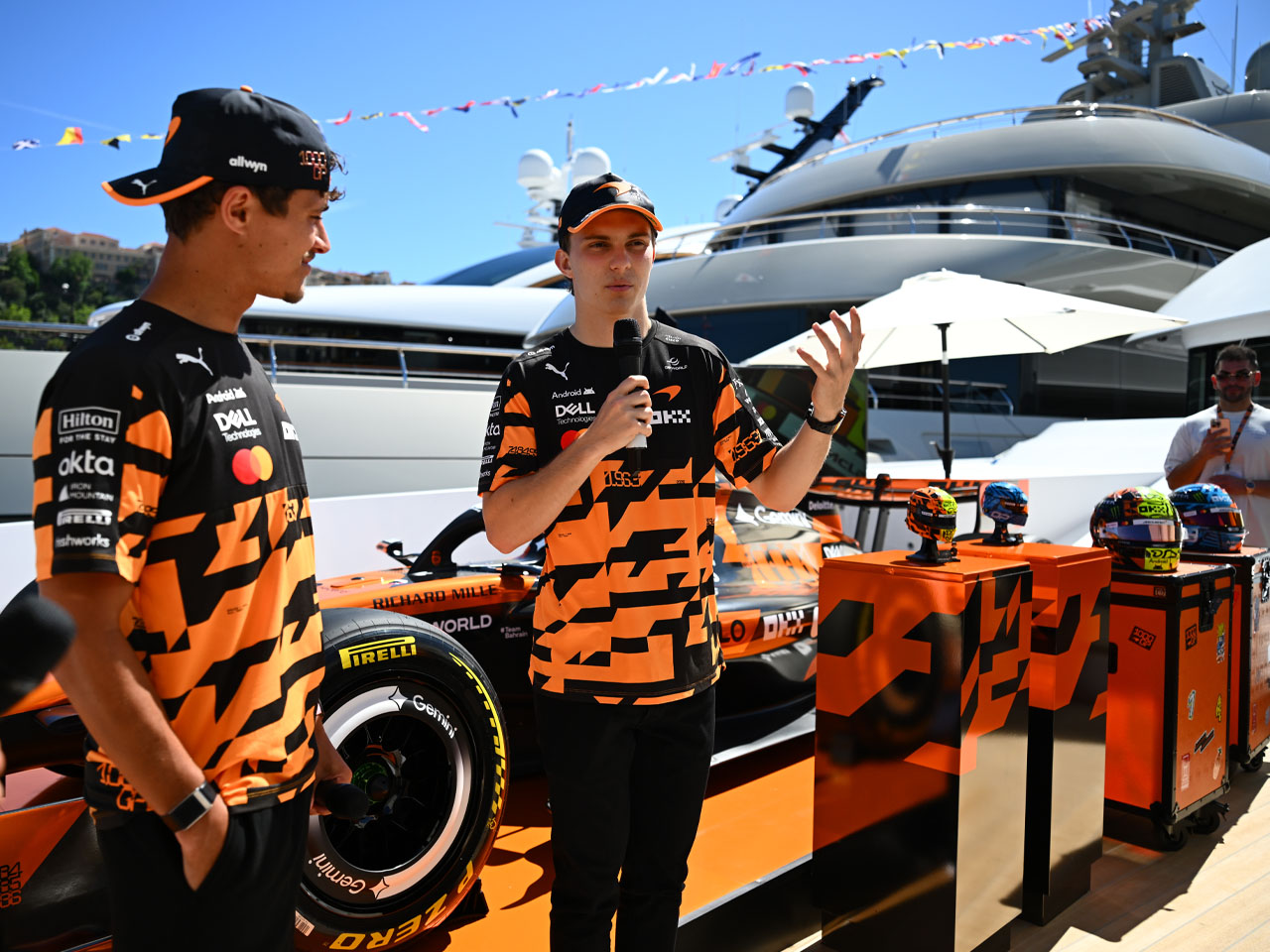
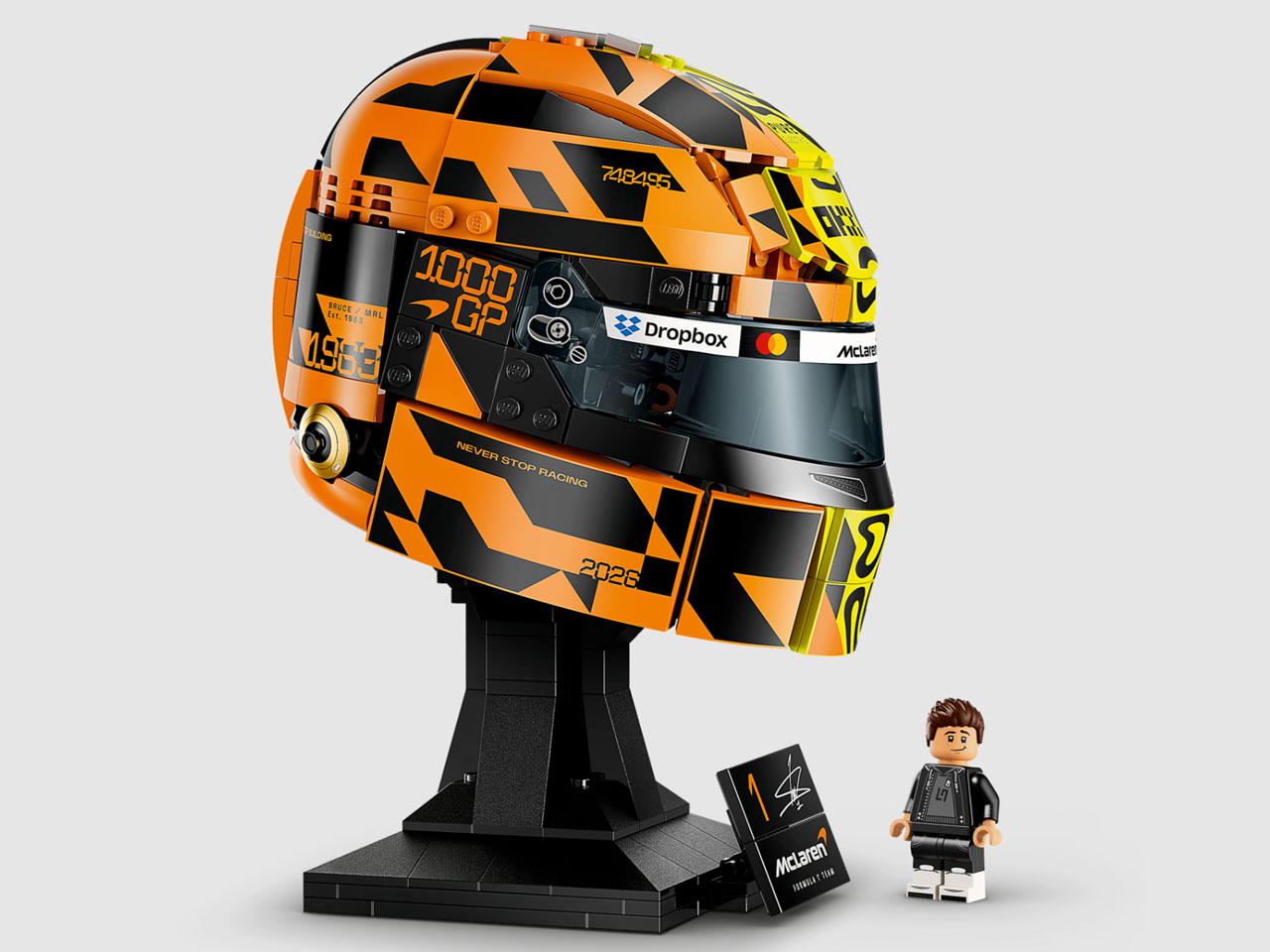
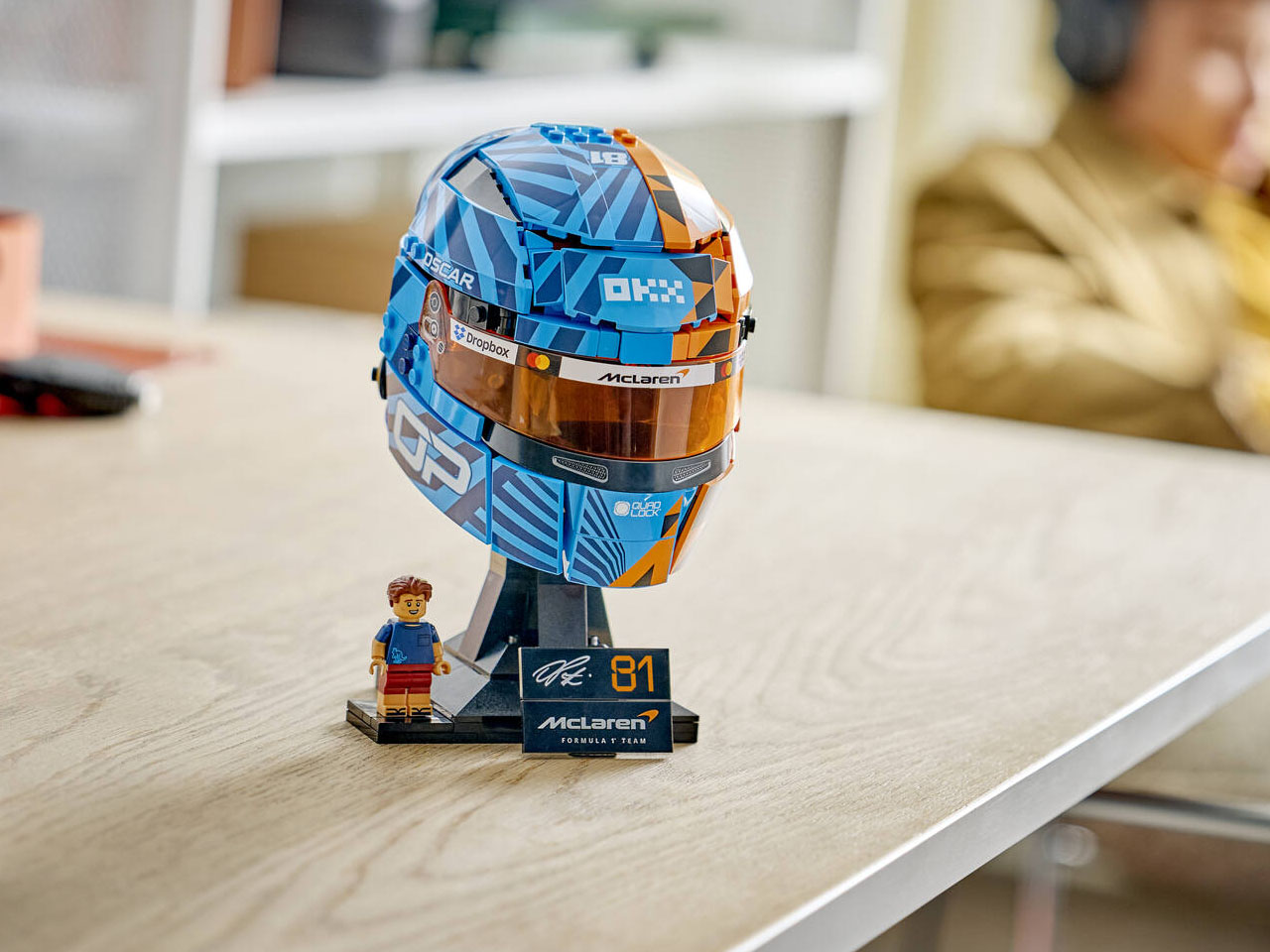
McLaren is coming to the Monaco GP weekend, celebrating their 1,000th race start, and wants to do it in a special way, both on and off the track. The most iconic race in the Formula 1 calendar will see Lando Norris and Oscar Piastri sport the LEGO helmets for the length of the racing weekend at the Circuit de Monaco, which is exciting for F1 fans like me.
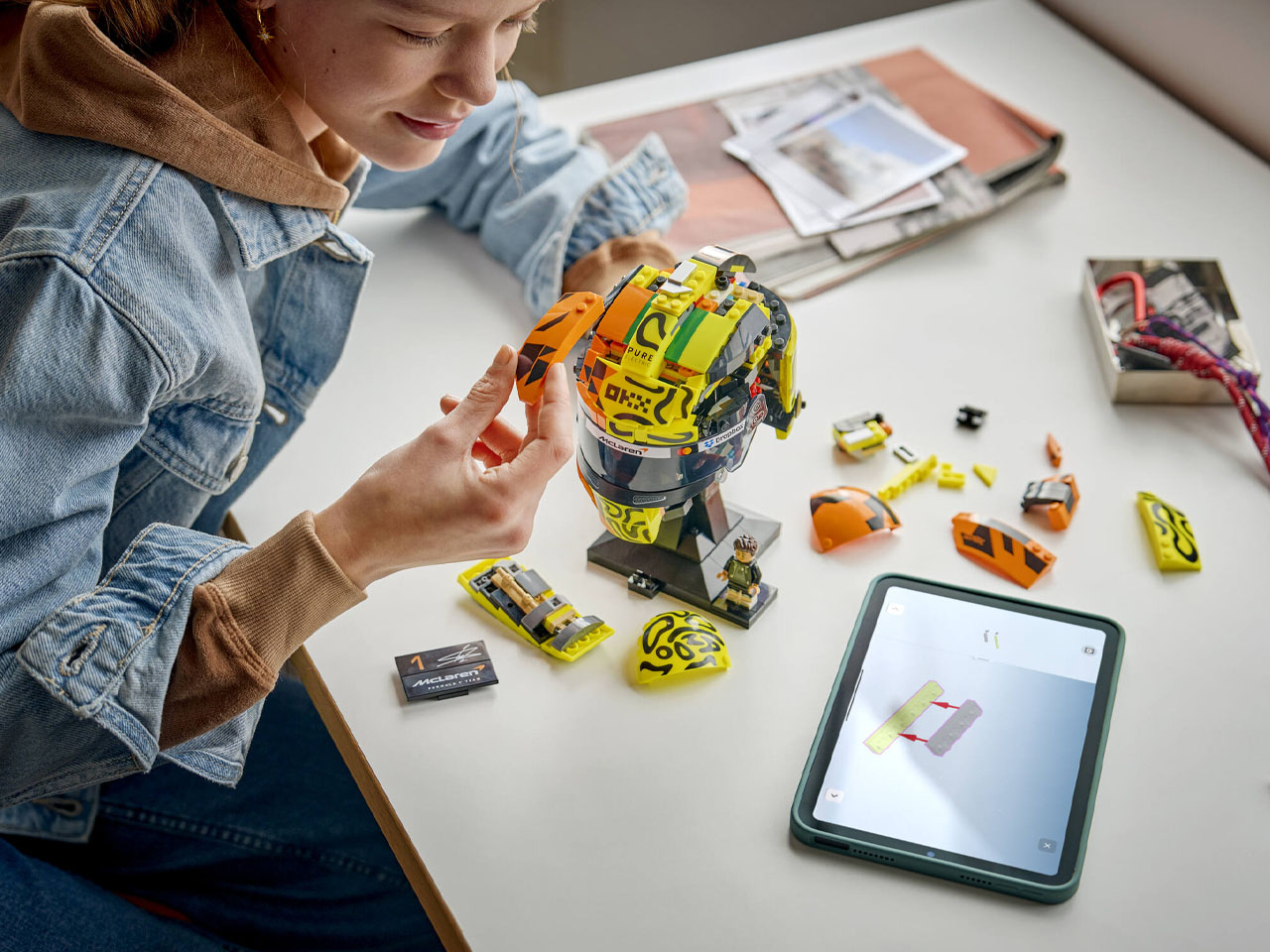
That celebration is going to reciprocate for McLaren and LEGO fanatics as they can own either of the two drivers’ brick version of the LEGO Edition helmet, of course, in a smaller scale. To top it off, the protective gear will come with the complementary minifigures of the chosen driver’s helmet. This is not the first time the two brands have collaborated, as we’ve already been petrified by the Life-sized LEGO McLaren P1 being driven around the Silverstone track, and the complementing scaled-down LEGO version for die-hard fans.
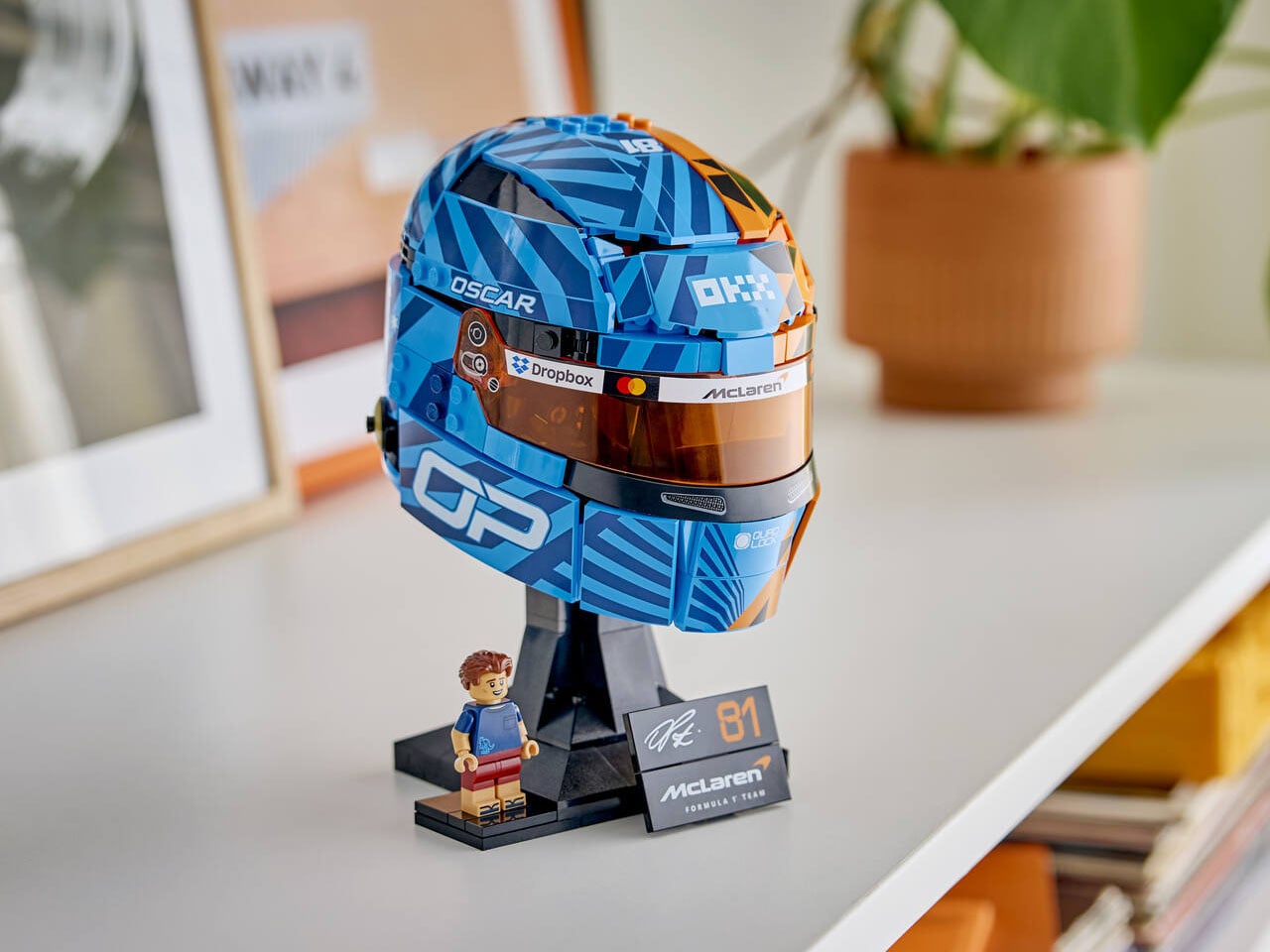
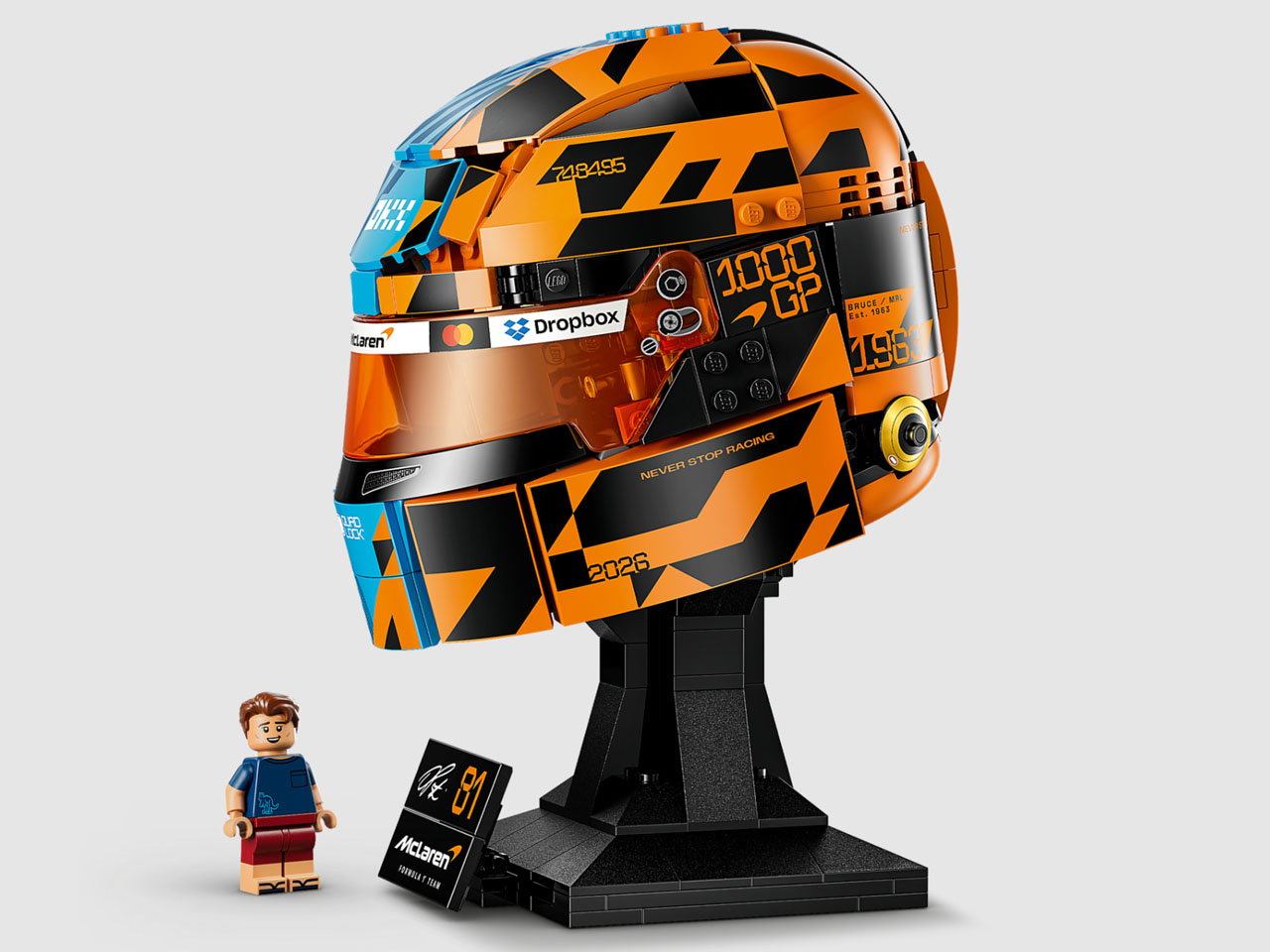
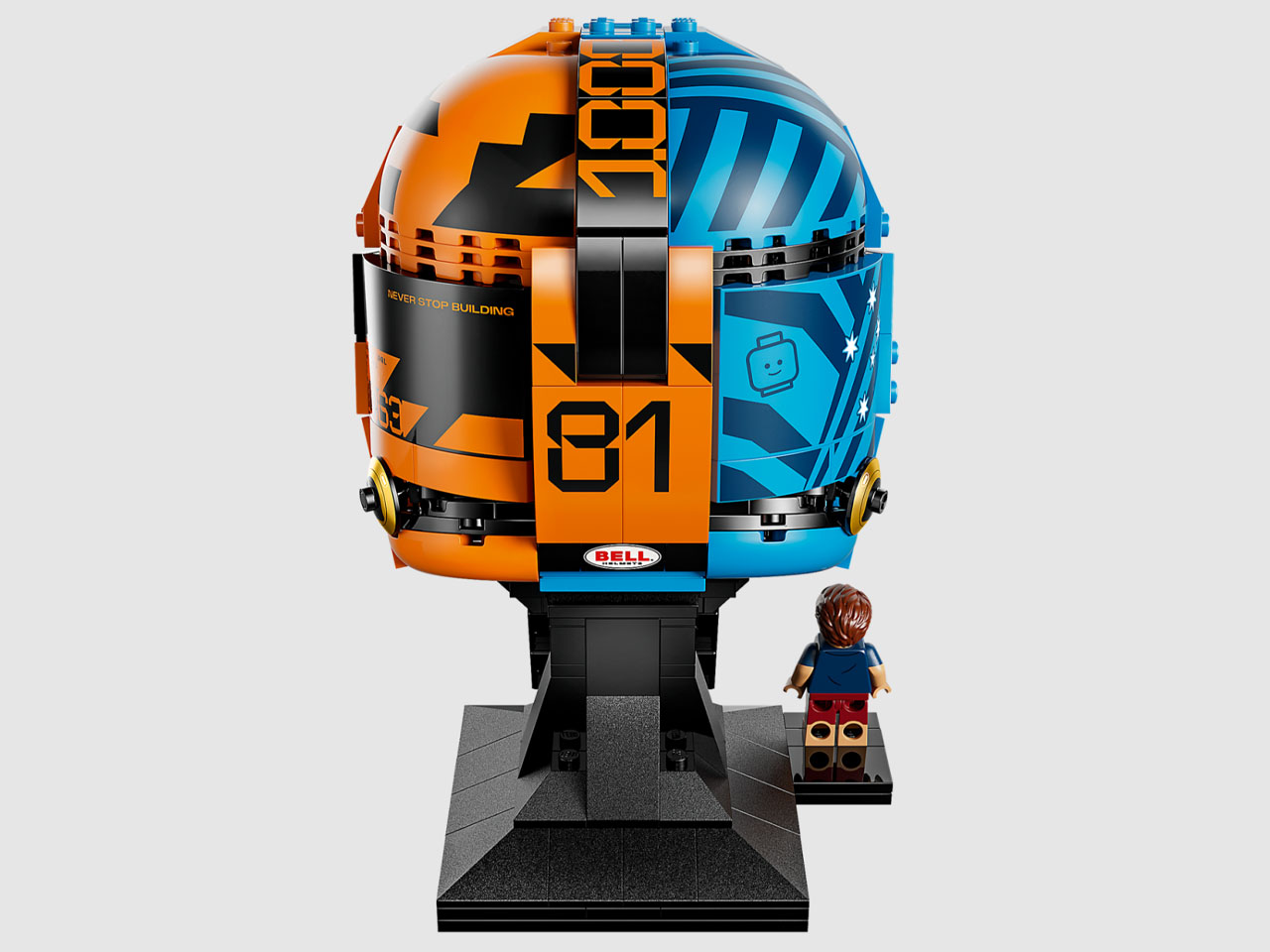
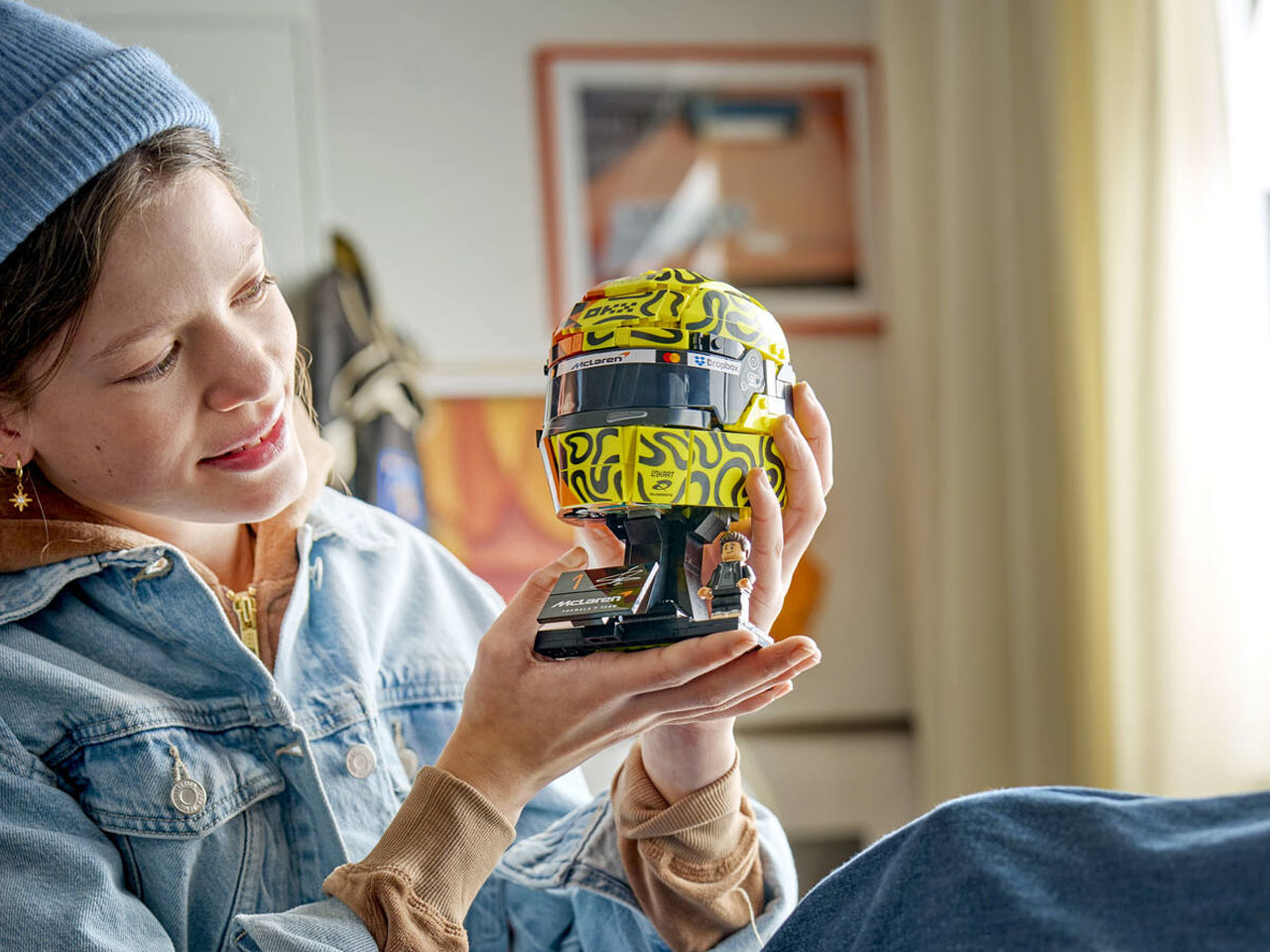
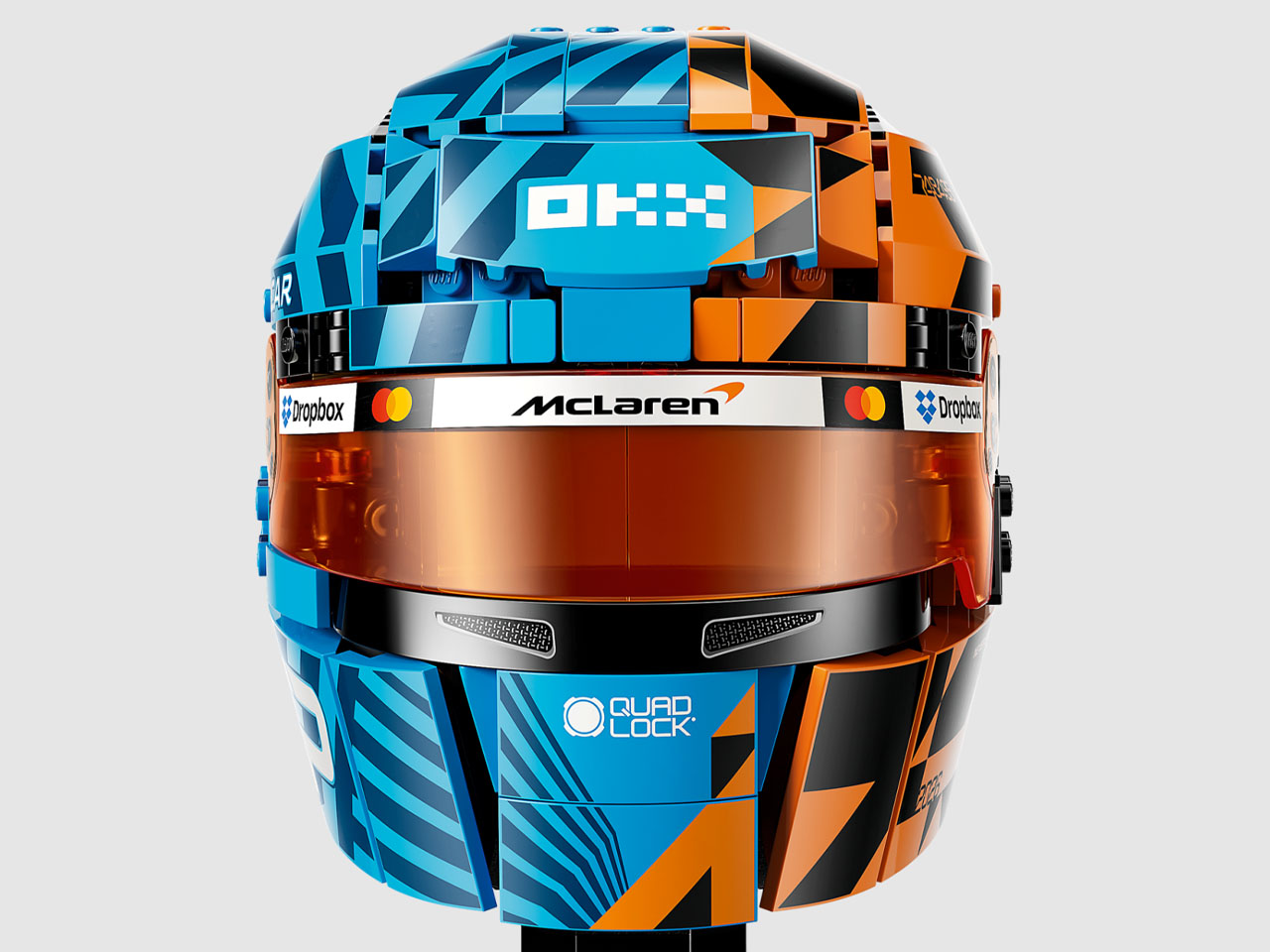
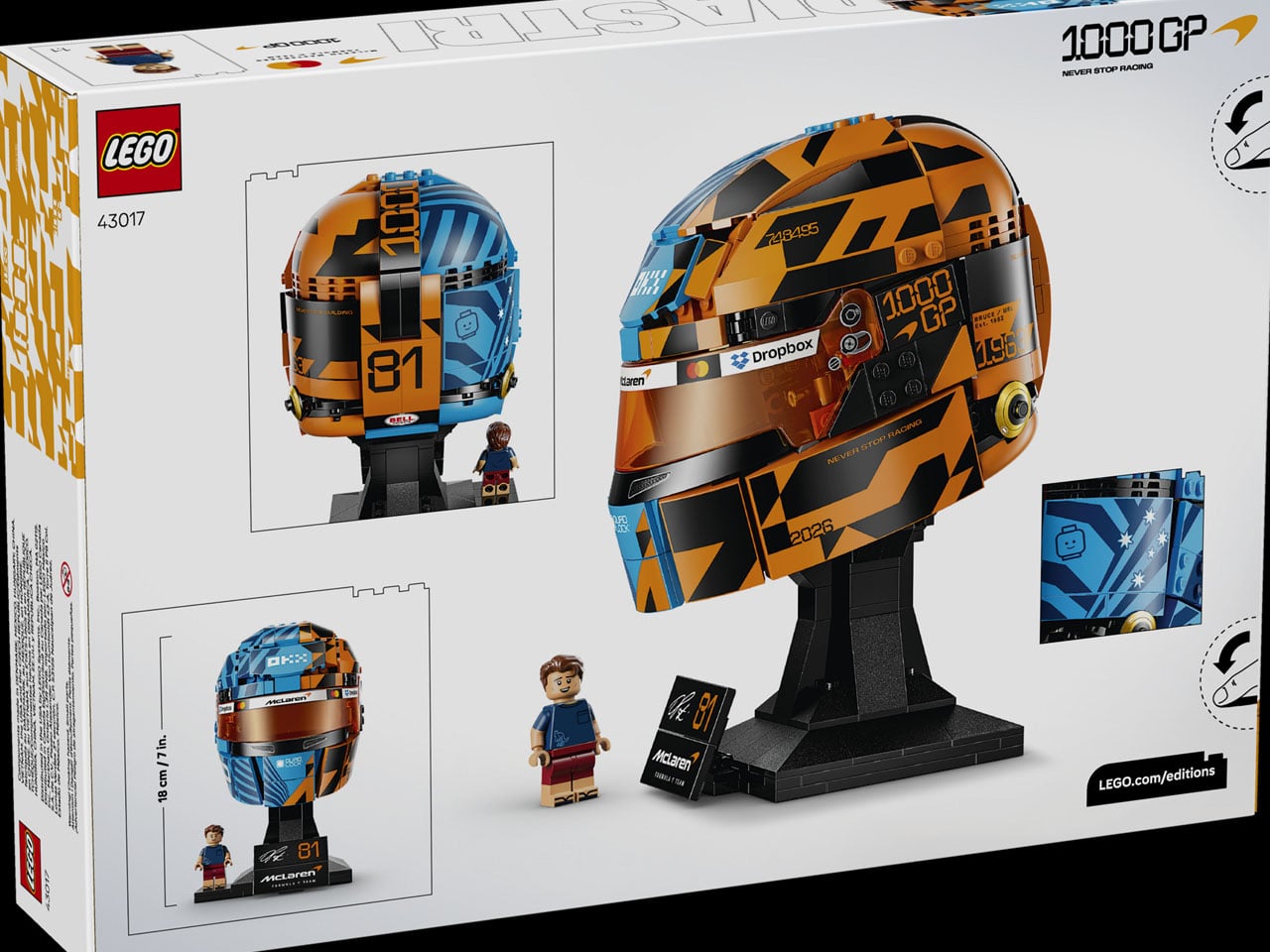
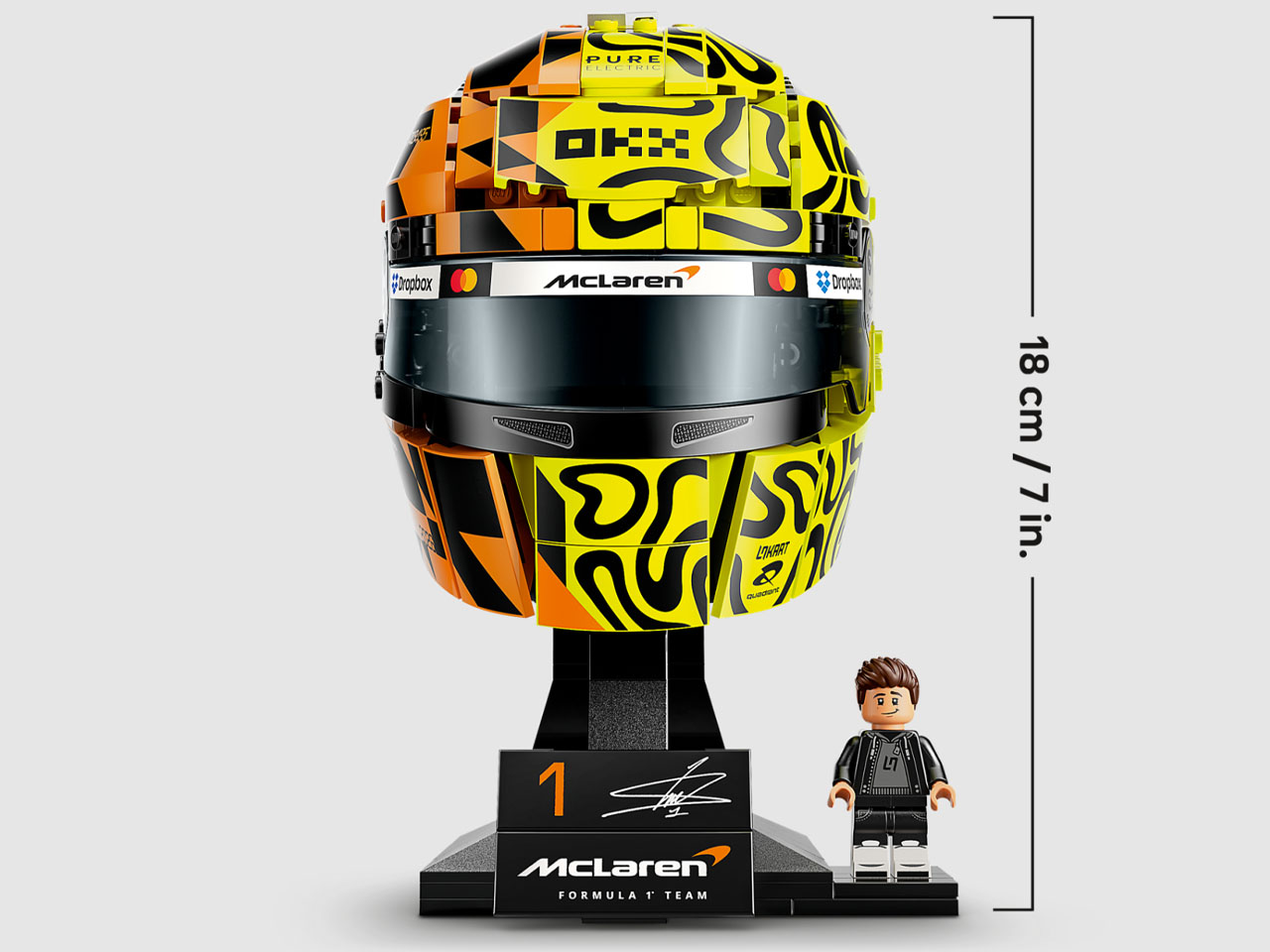
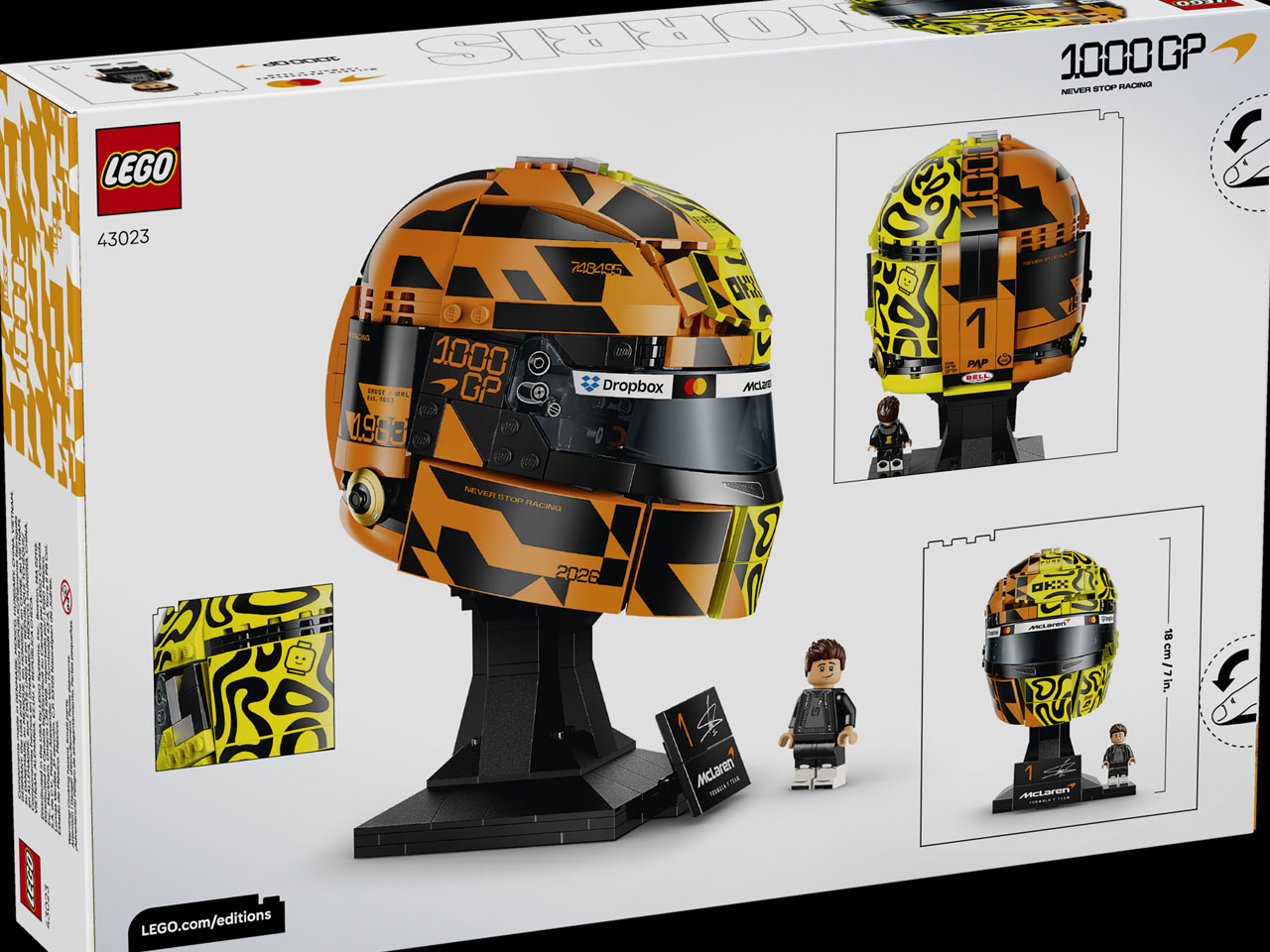
The collectible LEGO sets immortalize both the papaya team drivers in brick form, mirroring the details of the special edition helmets that’ll be worn at this weekend’s practice session, qualifying stint, and the final race at the winding street circuit by the duo of young drivers. Both of the LEGO helmets measure seven inches high, five inches deep, and 4.5 inches wide. Those dimensions remind me of the Ferrari drivers Lewis Hamilton and Charles Leclerc LEGO helmets that had a similar buildable format and shape.
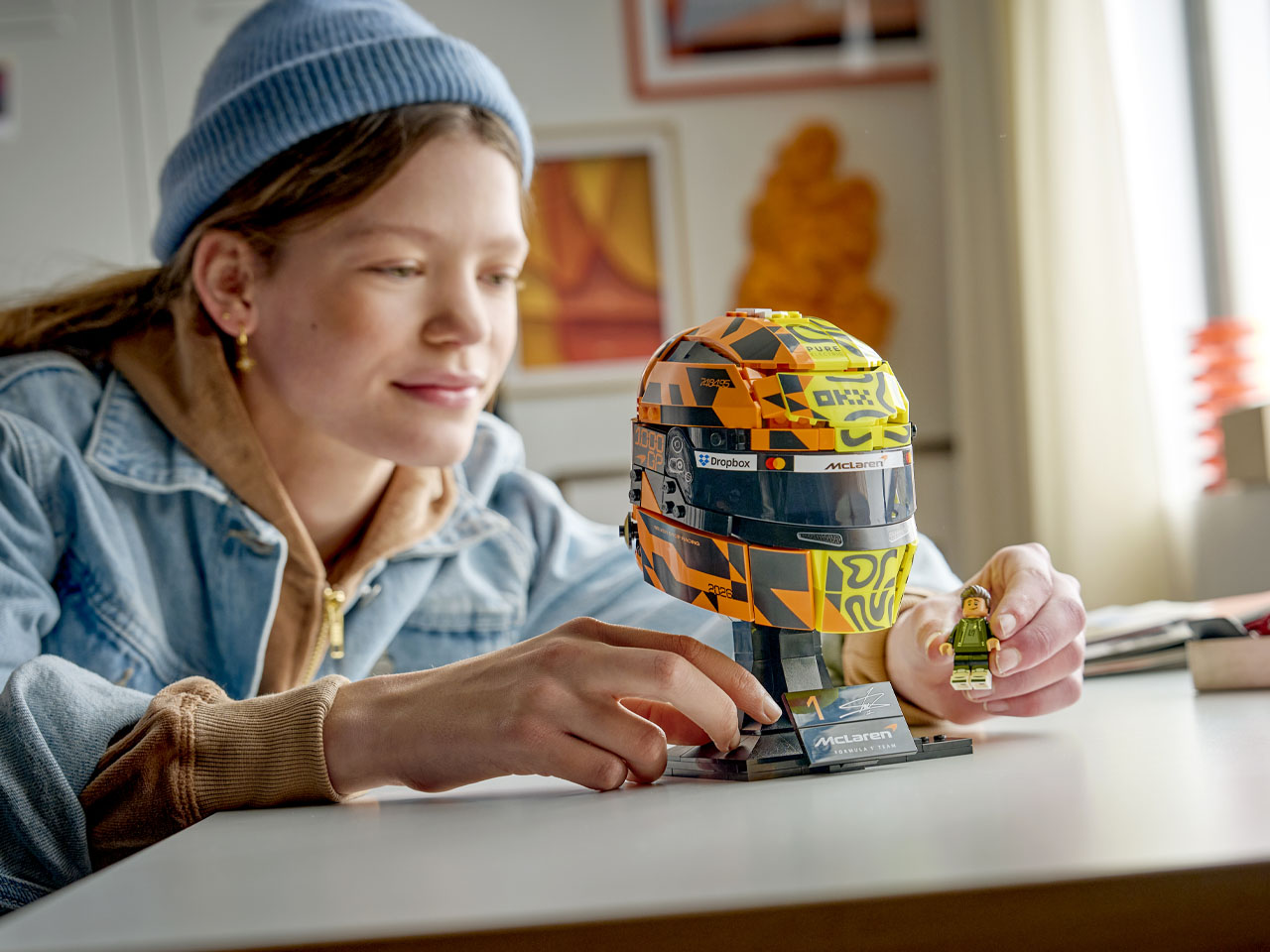
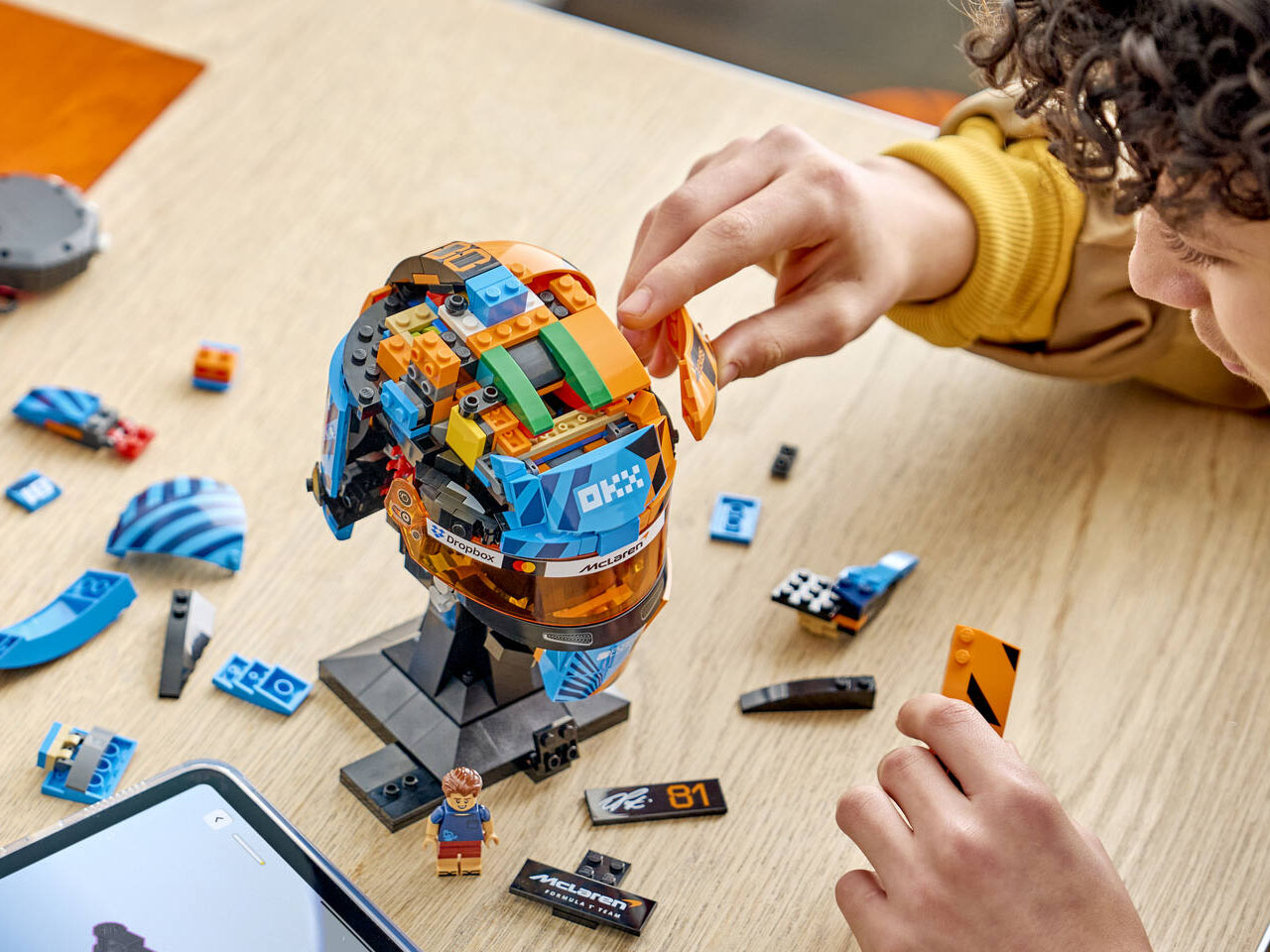
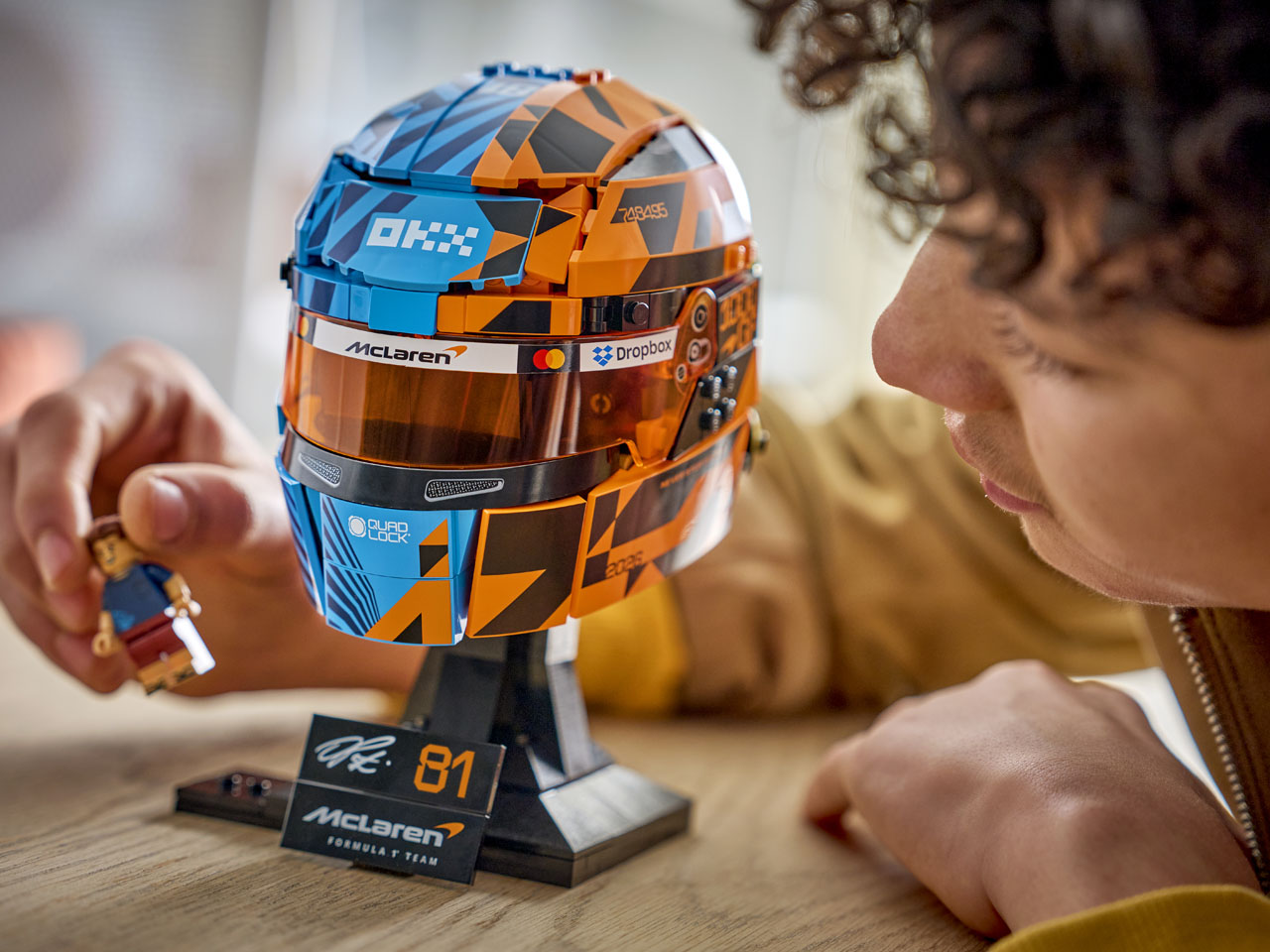
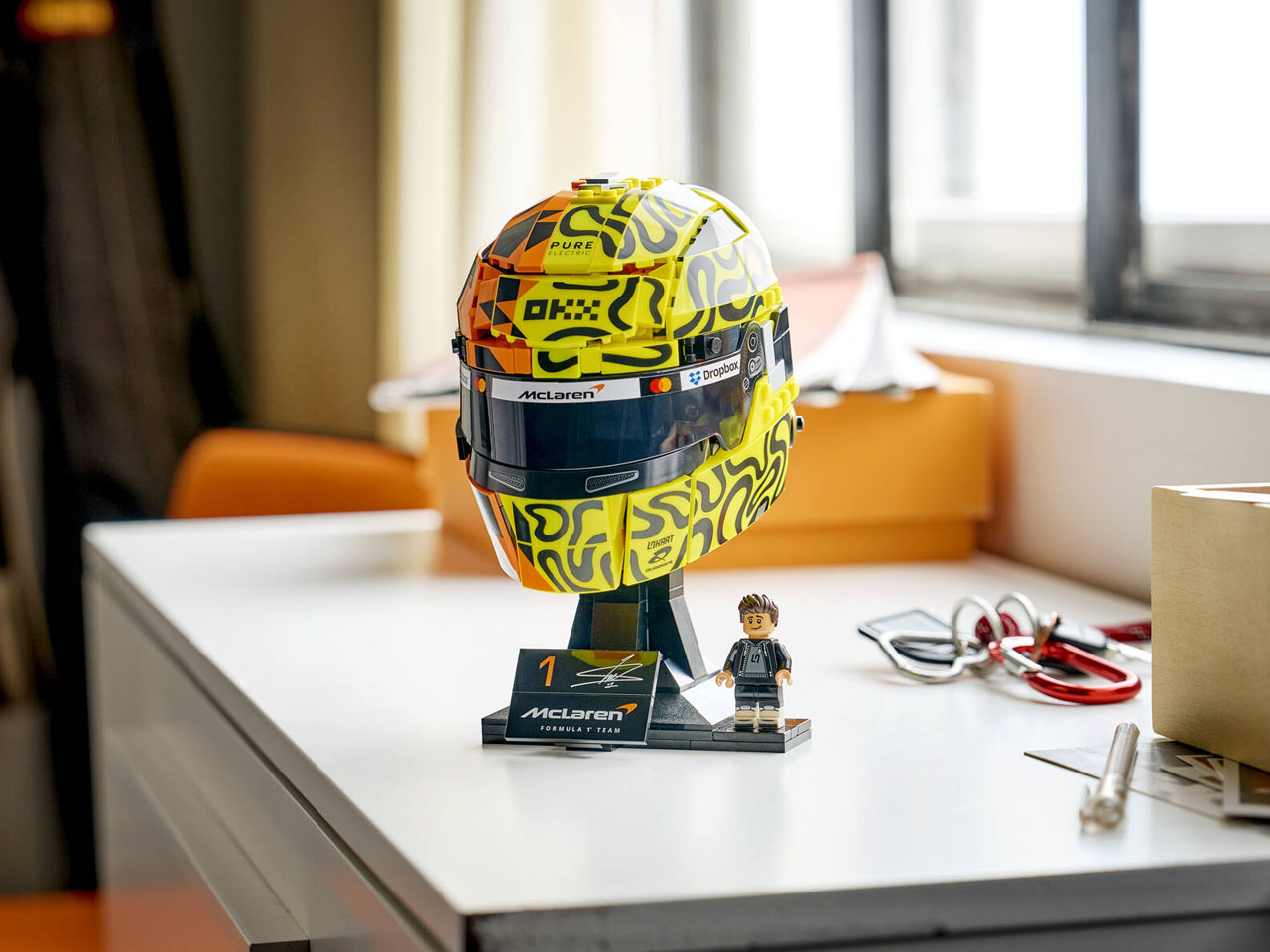
Both these LEGO sets are priced at $90 each and consist of 793 pieces. You, as a fan, can sport them on the standalone black display pedestal with the printed signature plaque. However, they are distinct in their look and feel, as both the McLaren drivers sport different aesthetics. That said, the special edition livery will be sported at the Barcelona-Catalunya Grand Prix, as well.

According to the LEGO Group’s Chief Product & Marketing Officer, Julia Goldin, “Our LEGO design team worked closely with the drivers and McLaren Racing to develop these special 1000th race LEGO helmet products.” He added by saying that “fans will be able to build the sets at home, creating a cool memento of racing history for display.”
For Oscar Piastri, the brand’s signature papaya is mixed with the Aussie F1 driver’s favorite blue. The helmet has intricate details such as his driving number “81” and the printed patterns that look absolutely stunning. The accompanying Oscar minifigure is handprinted in the hand-picked casual outfit by the talented F1 driver.
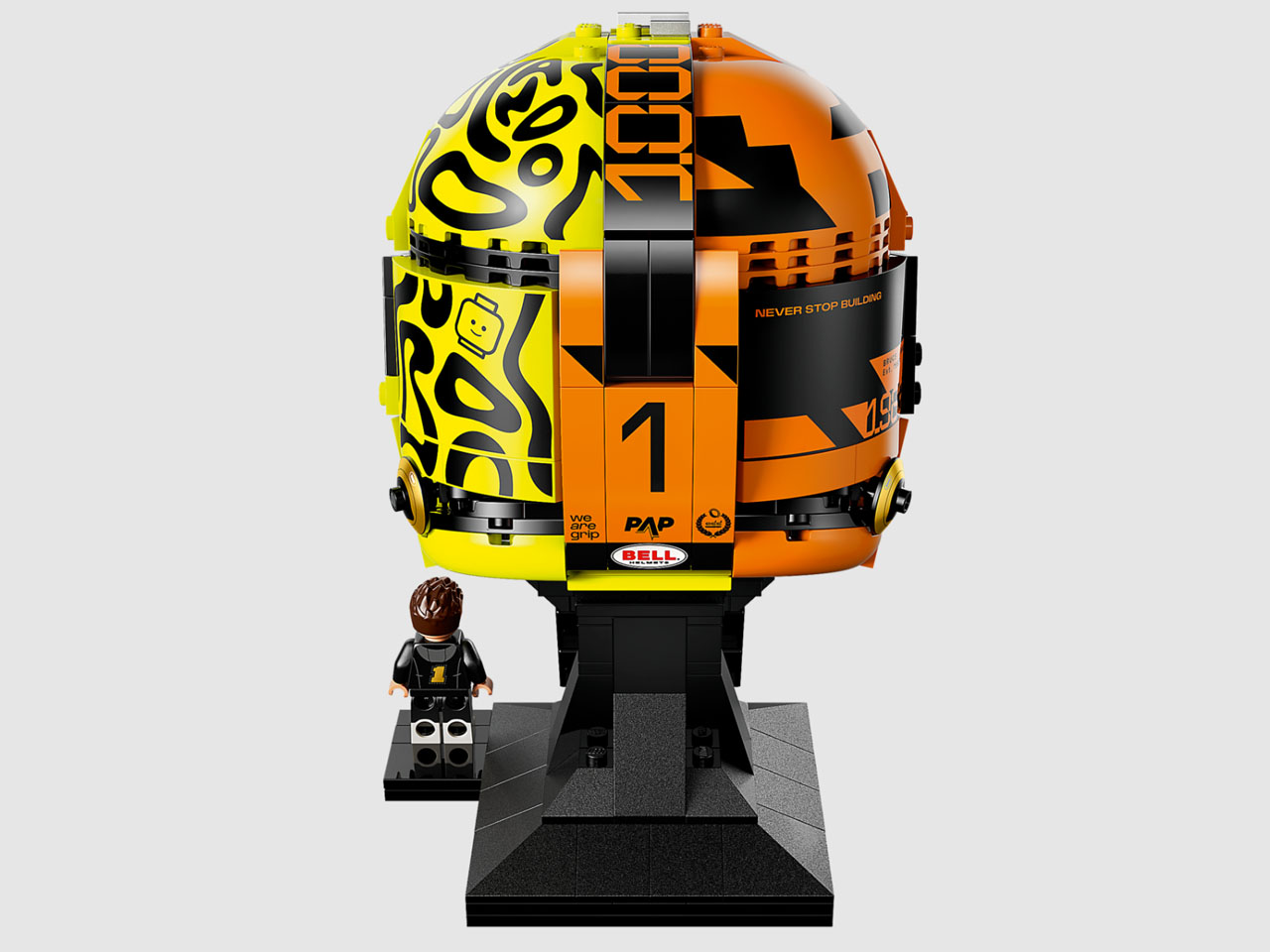
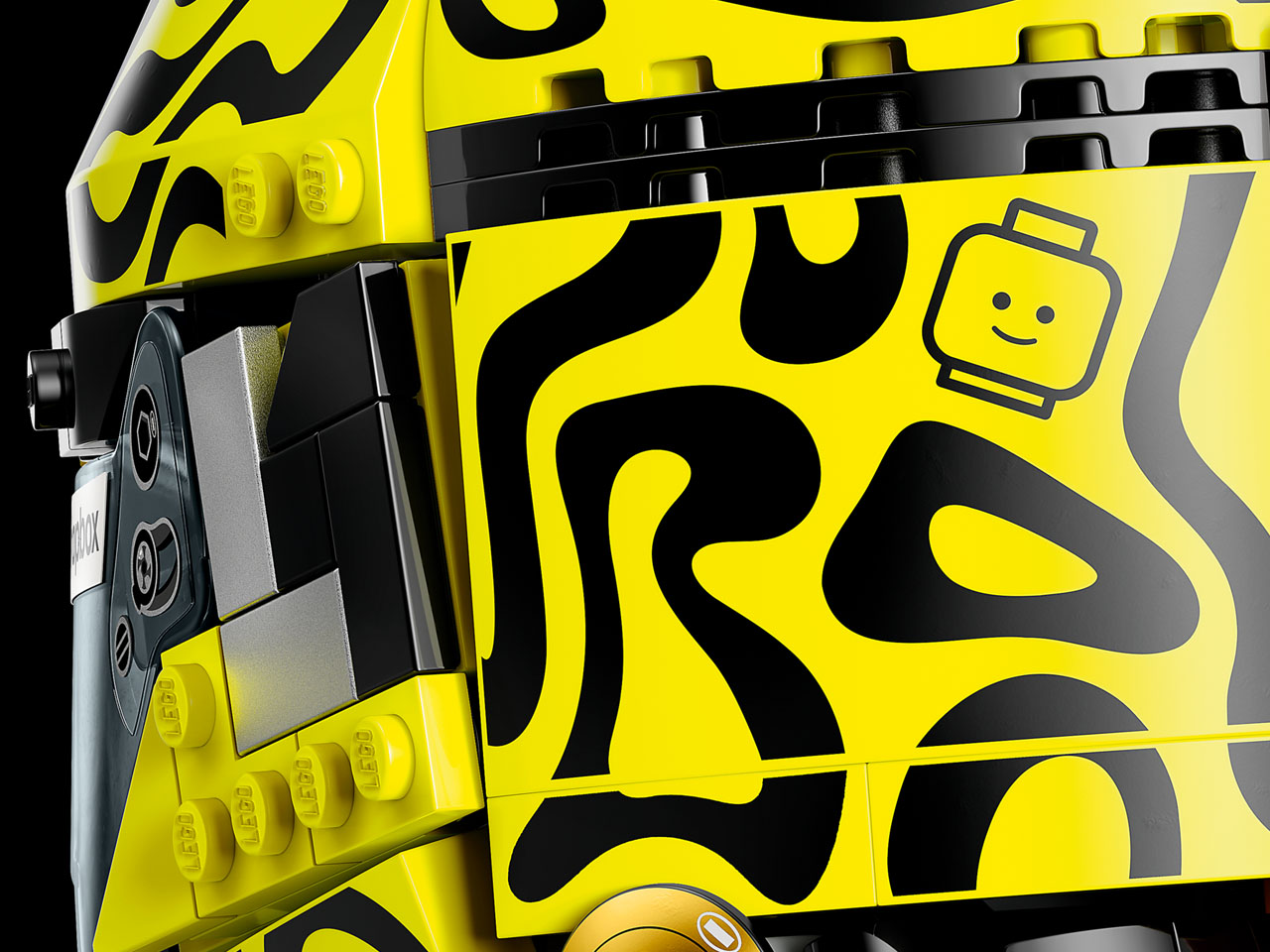
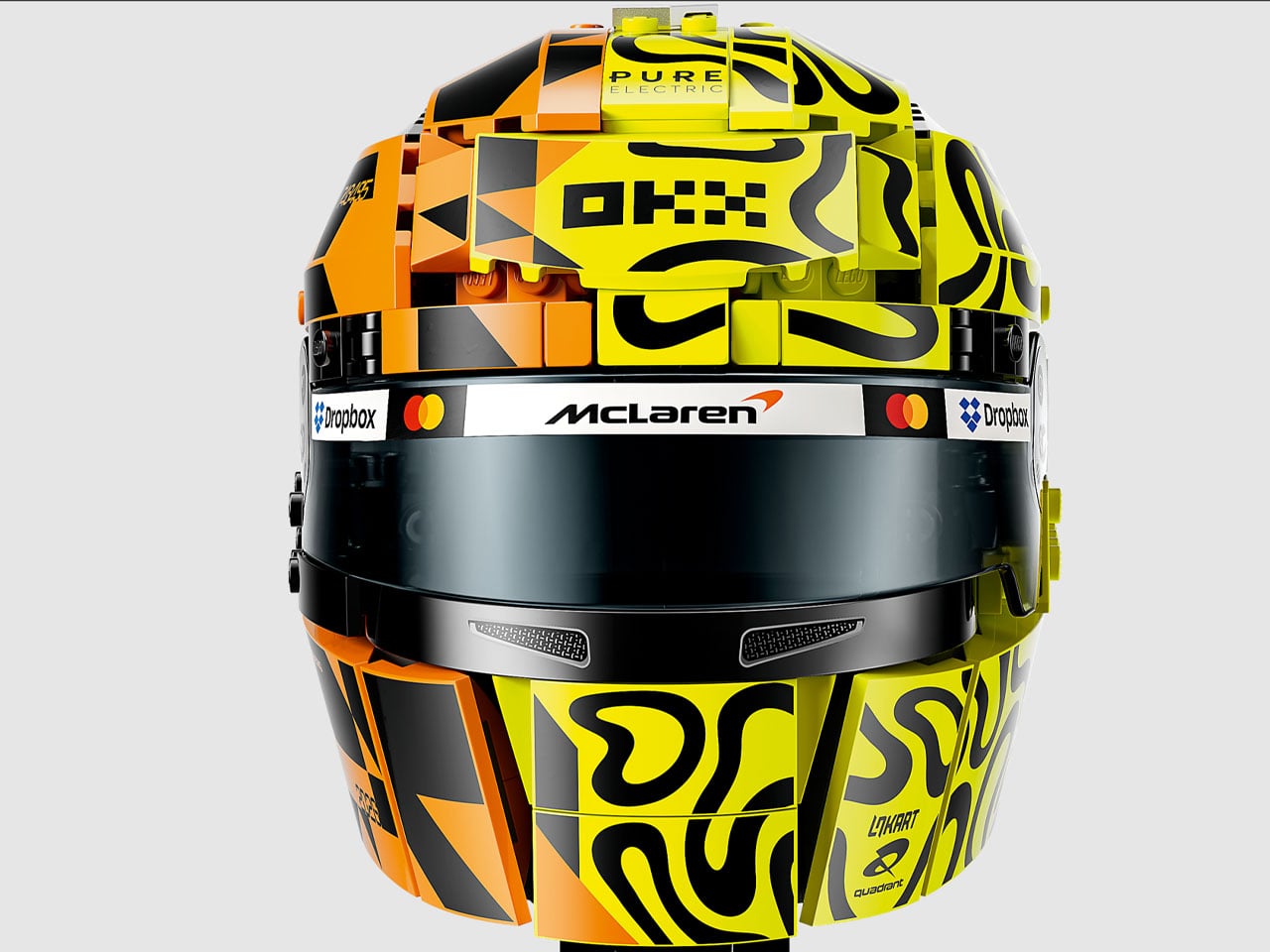
Last year’s world champion now has the number one driver number, and that is etched proudly on this peppy helmet design. It carries Lando’s iconic fluorescent blob design and the unique design elements of the 1000th Grand Prix livery on the real one. The design is co-created with the prodigy himself, and it looks absolutely stunning. Lando’s minifigure sports the handpicked look as well.
The post McLaren F1 Team celebrates 1,000th race start, as Oscar and Lando sport LEGO helmets at the iconic Monaco GP first appeared on Yanko Design.

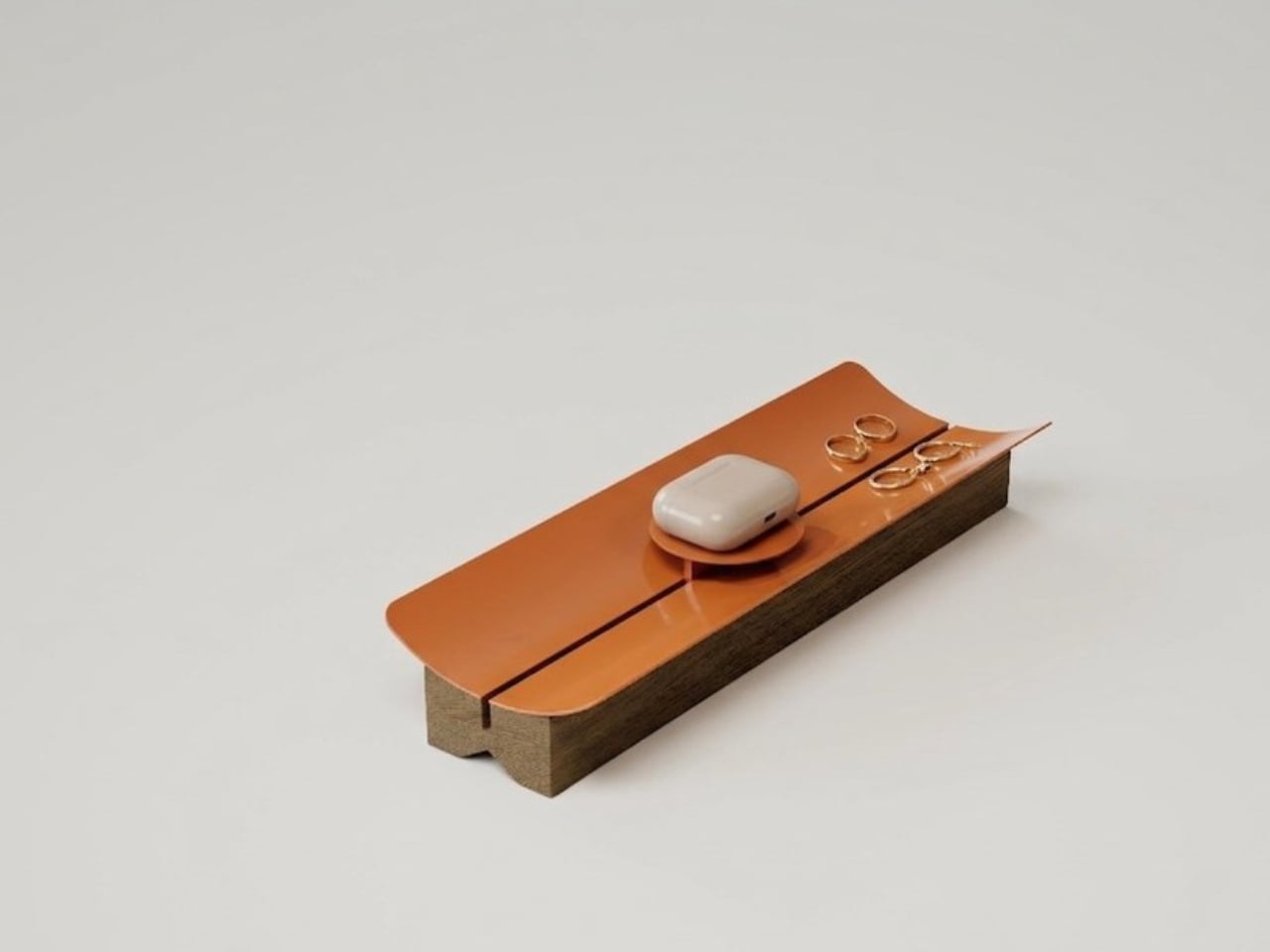
Most desk organizers are purely functional objects. You buy one because you’re tired of your keys ending up under a notebook, or because your earbuds have gone missing again for the third time this week. Utility is the promise, and usually, that’s where the conversation ends. TEJA, designed by Gustavo Rodríguez and Estefanía Agudelo of Estudio Gris in Medellín, Colombia, makes a case that it doesn’t have to.
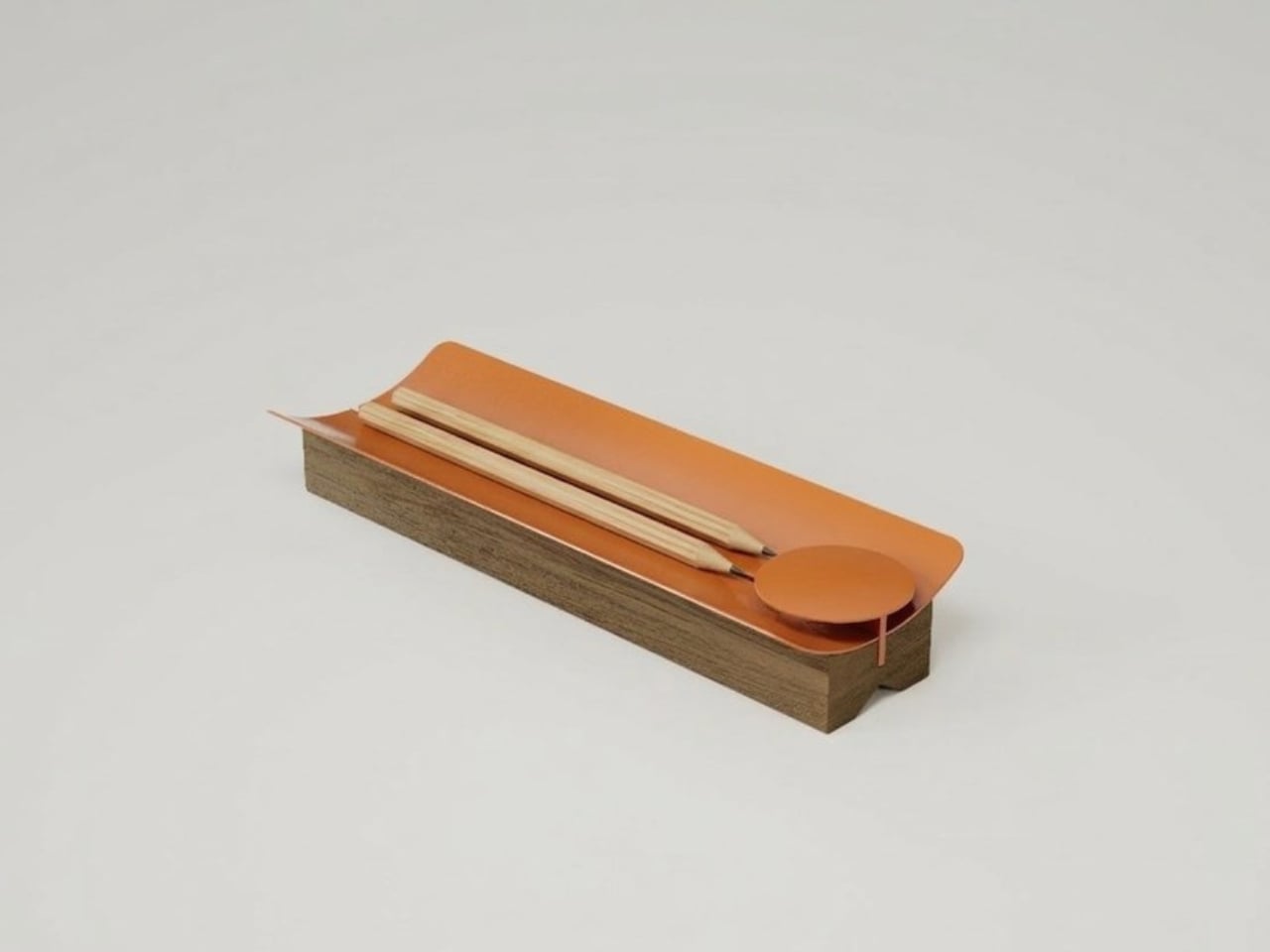
The name is the Spanish word for a roof tile, and the reference is direct. Traditional clay tiles have shaped the rooflines of Colombian towns for centuries, their curved profiles doing exactly one thing extremely well: shedding water while creating shade. Rodríguez and Agudelo looked at that form and asked a genuinely good design question: what if you kept only what matters? The answer is TEJA. A lacquered steel surface that curves upward at both ends, resting on a solid natural wood base. The curve does the same job here that it does on a rooftop, just on a smaller, quieter scale. It keeps things from rolling away and, in doing so, gathers them.
Designers: Gustavo Rodríguez & Estefanía Agudelo (Estudio Gris)
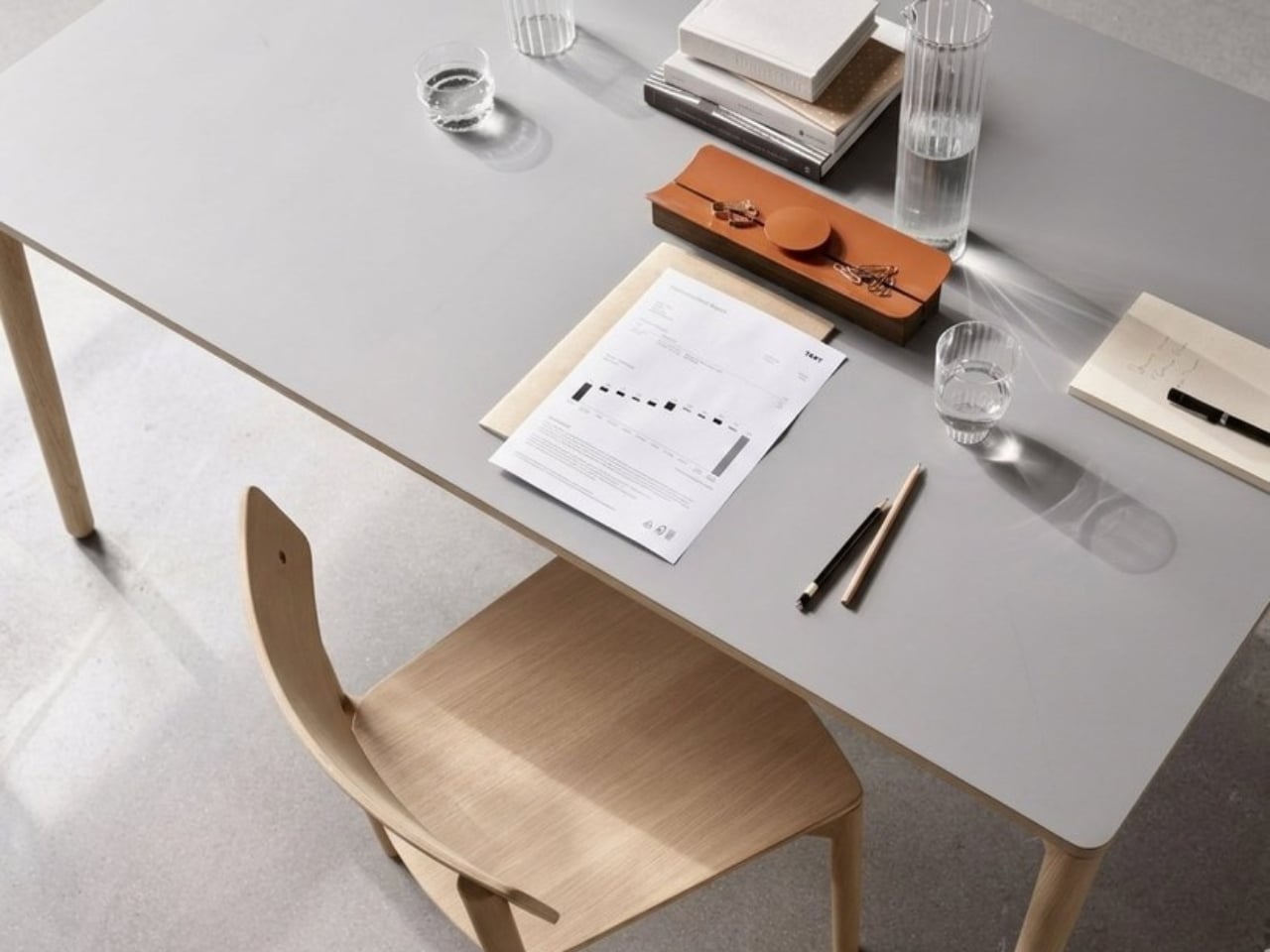
At the center, a small circular platform rises from the surface. It’s a tiny detail that turns out to do a lot. Rings land there instead of disappearing into a drawer. An earbud case. A coin you keep forgetting to put somewhere intentional. The platform gives these small, easily lost things a designated home, and that specificity is exactly the kind of thoughtfulness that separates well-designed objects from well-marketed ones.
The piece works equally well on a desk or a dresser, which matters more than it sounds. A lot of objects are styled for one context and feel awkward in another. TEJA slides between the two without trying, because its logic is architectural rather than functional in the narrow sense. It organizes by shape, not by category.
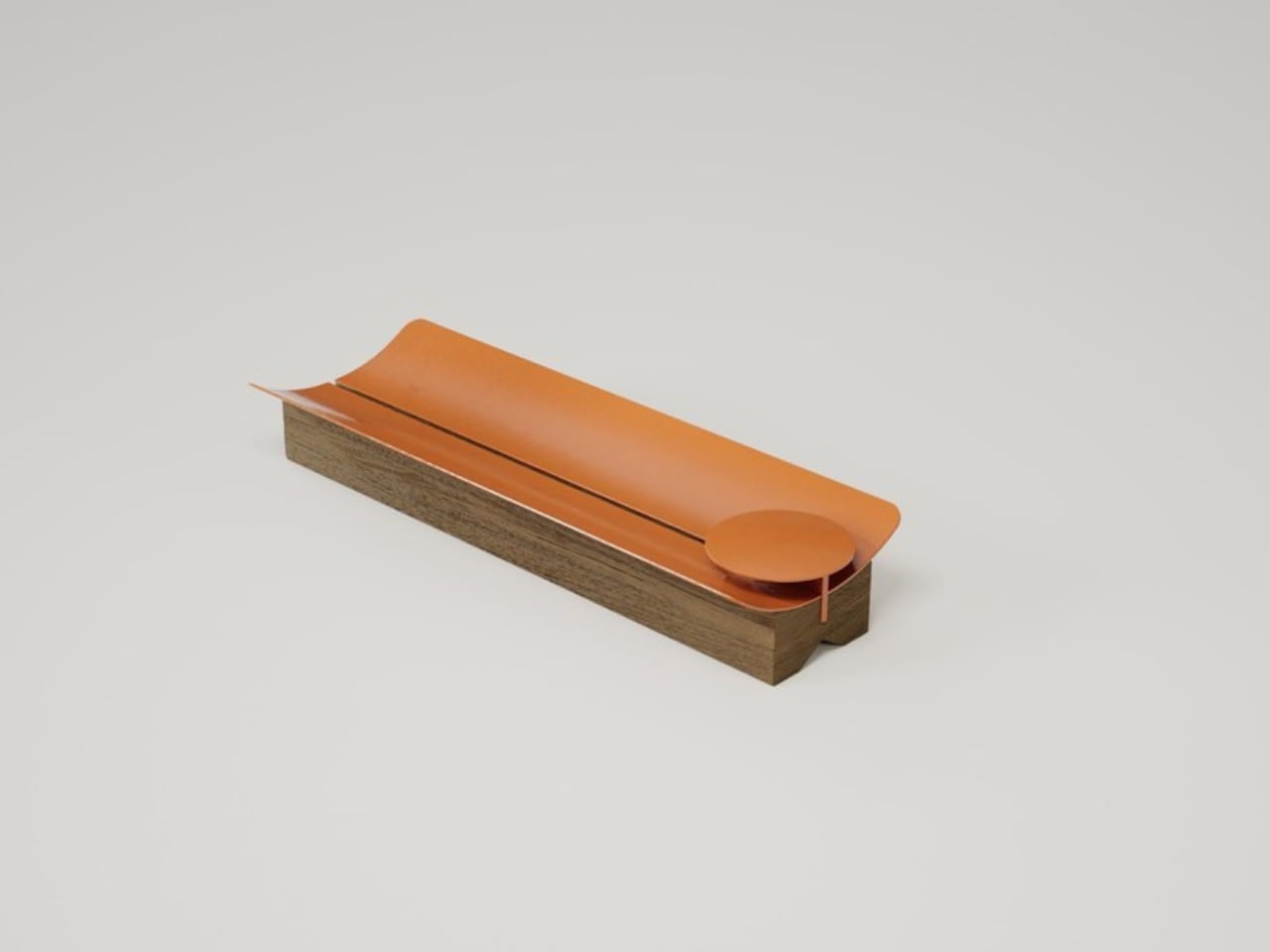
The moment that might surprise you most is what happens when you place three of them together. Side by side, they read as a roofscape, a miniature version of the reference they were born from. The designers didn’t plan that effect. It emerged from the object’s own internal rules. That’s the mark of a design that was thought through past the obvious. Most things only reveal their full intention under a single set of conditions. TEJA shows you something new when the context shifts.
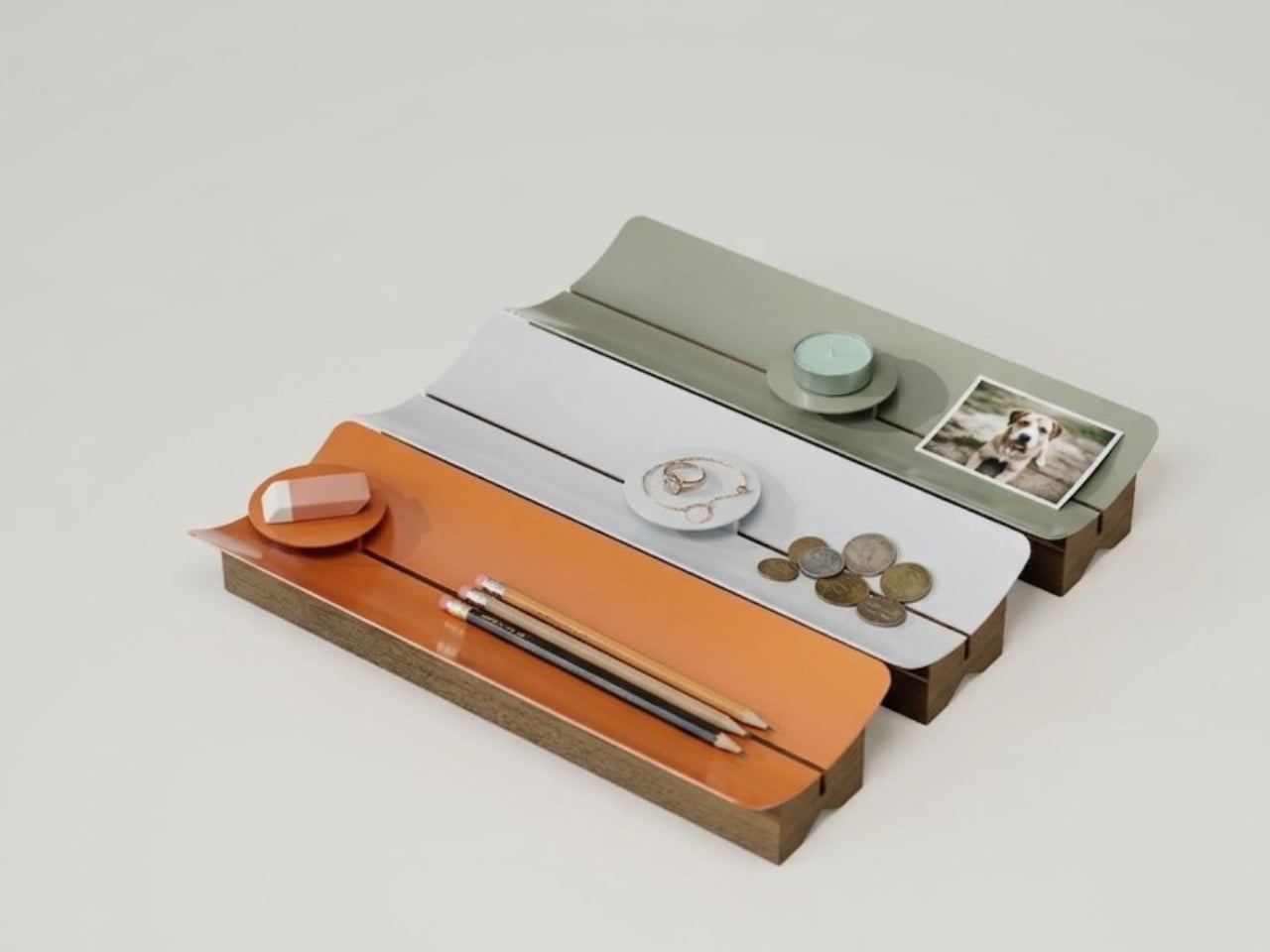
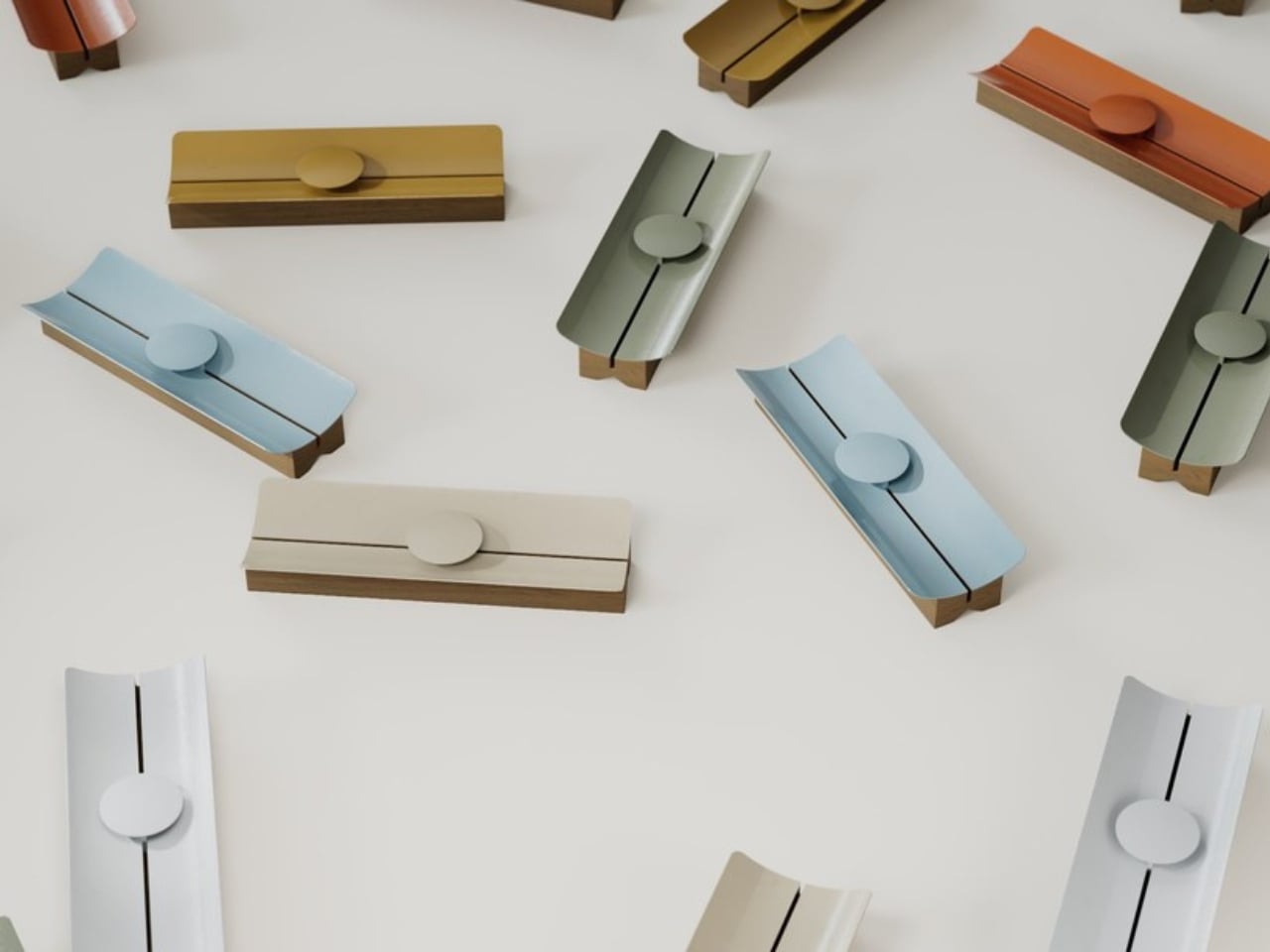
It comes in six colors: terracotta, white, calm green, blue, mustard, and beige. The first three are kept in stock; the last three are made to order. All of them are handmade in Medellín. I have a soft spot for the terracotta, partly because it’s the most honest color for an object inspired by clay tiles, and partly because that warm, muted orange reads beautifully against both light and dark surfaces without fighting for attention. The calm green and mustard are equally considered. None of the six feel trendy in the way that becomes awkward in two years.
Estudio Gris won the DesignWanted Award in Italy in 2026 with CLU, their umbrella stand, which suggests that TEJA isn’t a one-time gesture. The studio seems to have a consistent interest in translating familiar forms into objects that hold meaning without being decorative about it. That’s a harder balance to strike than it looks.
The wider question TEJA raises, at least for me, is why we keep settling for objects that only work and never mean anything. We spend a fair amount of time at our desks and dressers. The things that live on those surfaces become part of how the space feels day to day. A desk organizer that carries a genuine reference to Colombian vernacular architecture, made by hand in the city where its designers live and work, is a different kind of object than a generic tray from a home goods store. You don’t have to think about that every time you drop your keys into it. But it’s there if you do.
The post The Colombian Roof Tile That Became a Desk Organizer first appeared on Yanko Design.

The Samsung Galaxy S27 series has officially arrived, marking a pivotal moment in the evolution of flagship smartphones. With a focus on innovation, the series introduces significant advancements in design, hardware, and software. Notably, Samsung has expanded its lineup with the addition of a new “Pro” model, offering a compact yet powerful alternative to the […]
The post The Samsung Galaxy S27 Ultra is Finally Real: Here is What We Know appeared first on Geeky Gadgets.