5 Japanese Pens & Notebooks So Beautifully Made You’ll Never Want to Type Again

There is a specific quality to well-made Japanese stationery that is difficult to name and easy to recognize. It is not about price or brand recognition. It is the sense that the object was designed by someone who used a pen every single day and got quietly frustrated with everything that did not work right about existing options. That frustration, refined into object form, is what separates Japanese stationery from what fills the rest of the market.

The five pieces here cover different parts of a writing practice: what you write in, what you write with, how your tools sit on your desk, and the one object that turns the act of putting a pen down into something worth watching. None are flashy. None announce themselves with features. What they share is a commitment to getting one specific thing exactly right, which is the design logic Japan has always understood better than anyone else producing stationery today.

1. Inseparable Notebook Pen
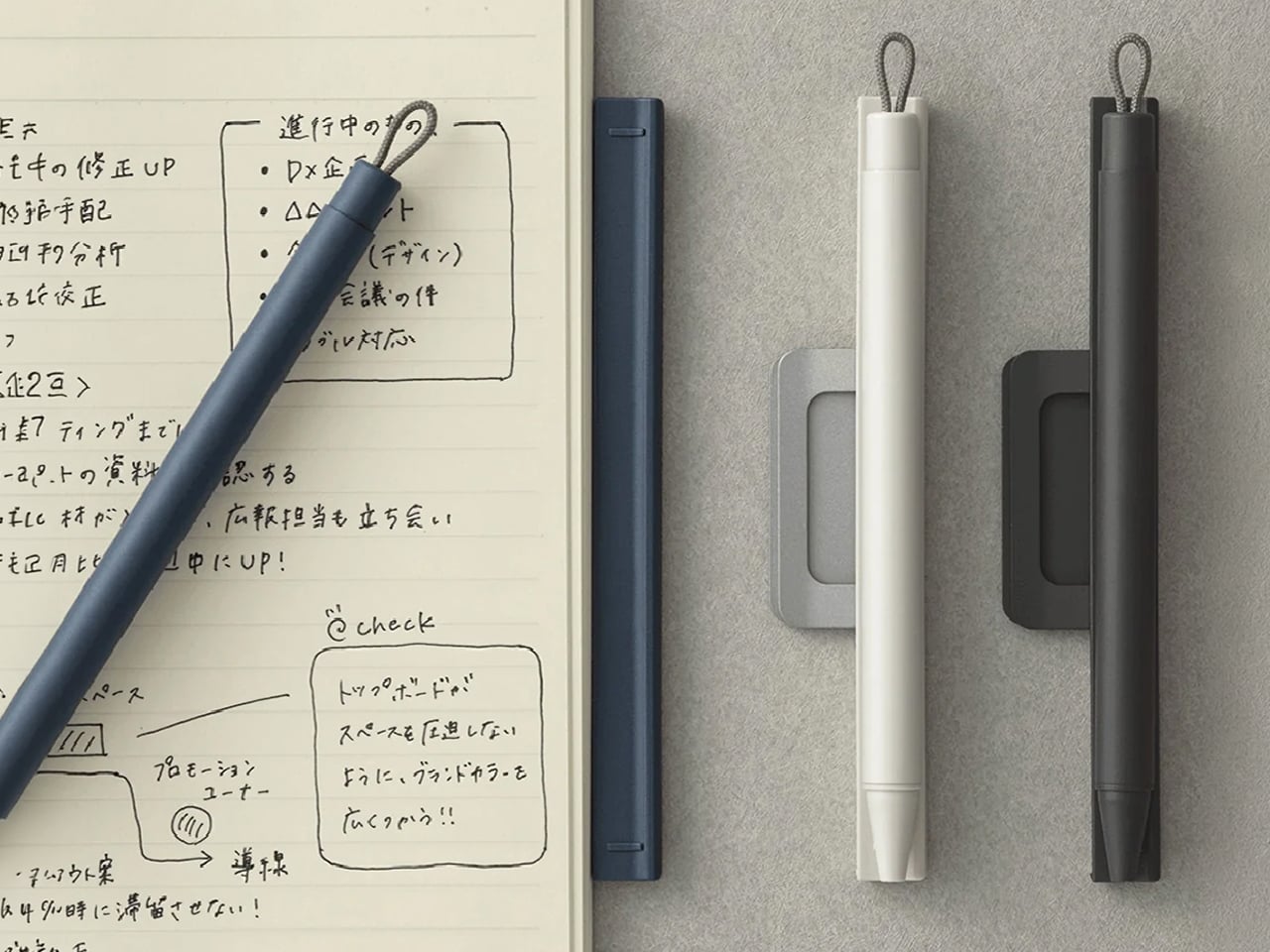
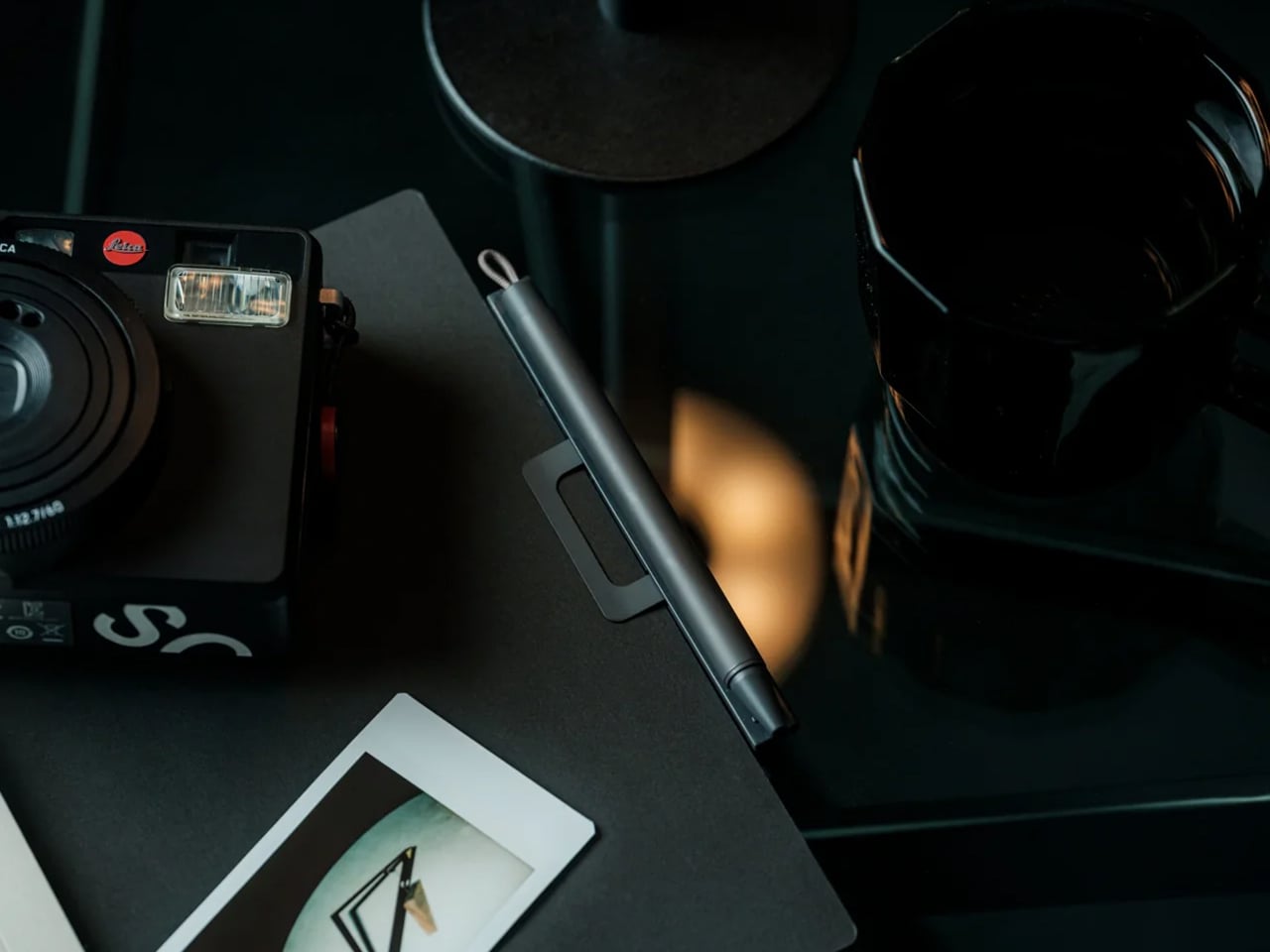
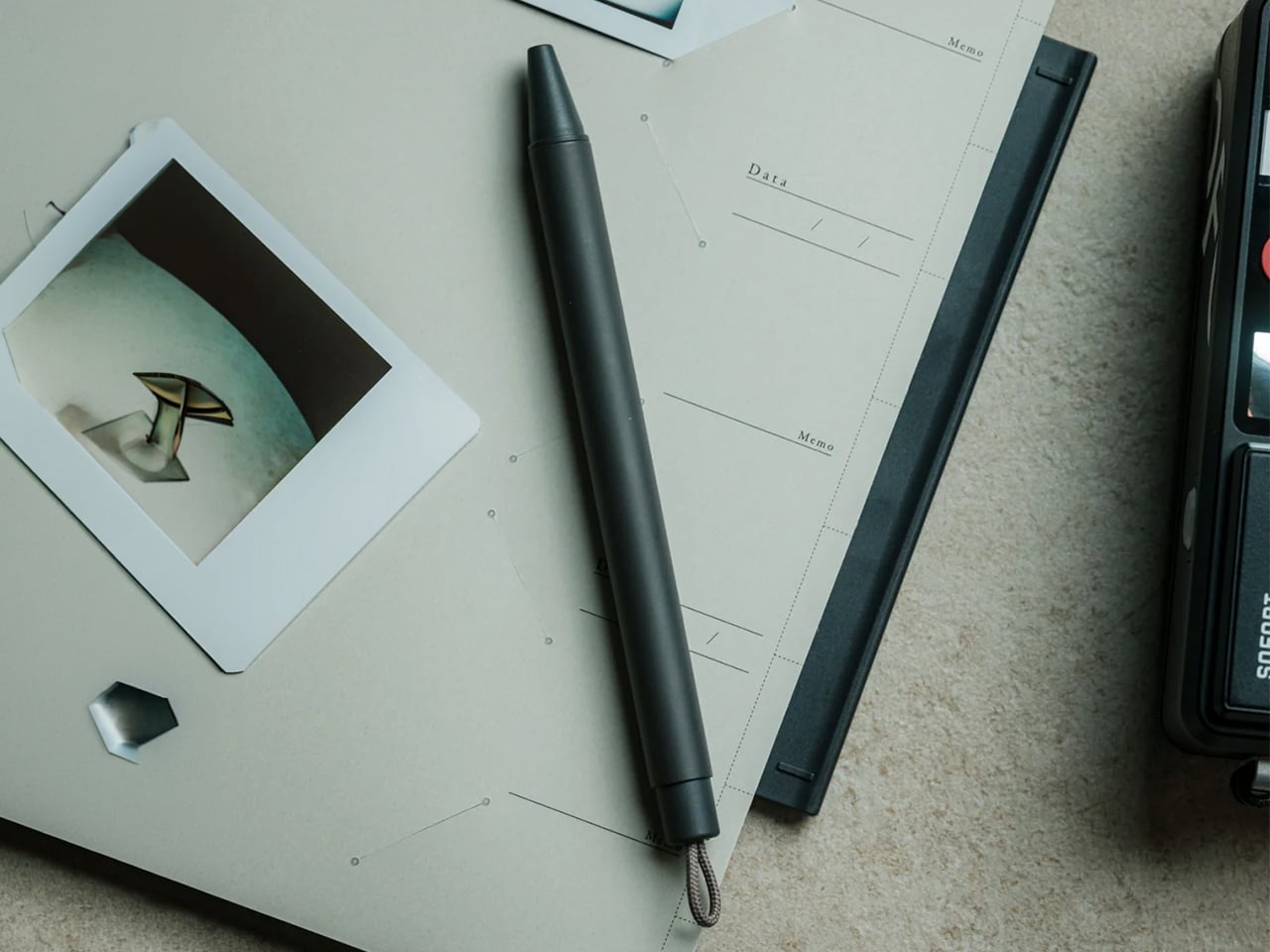
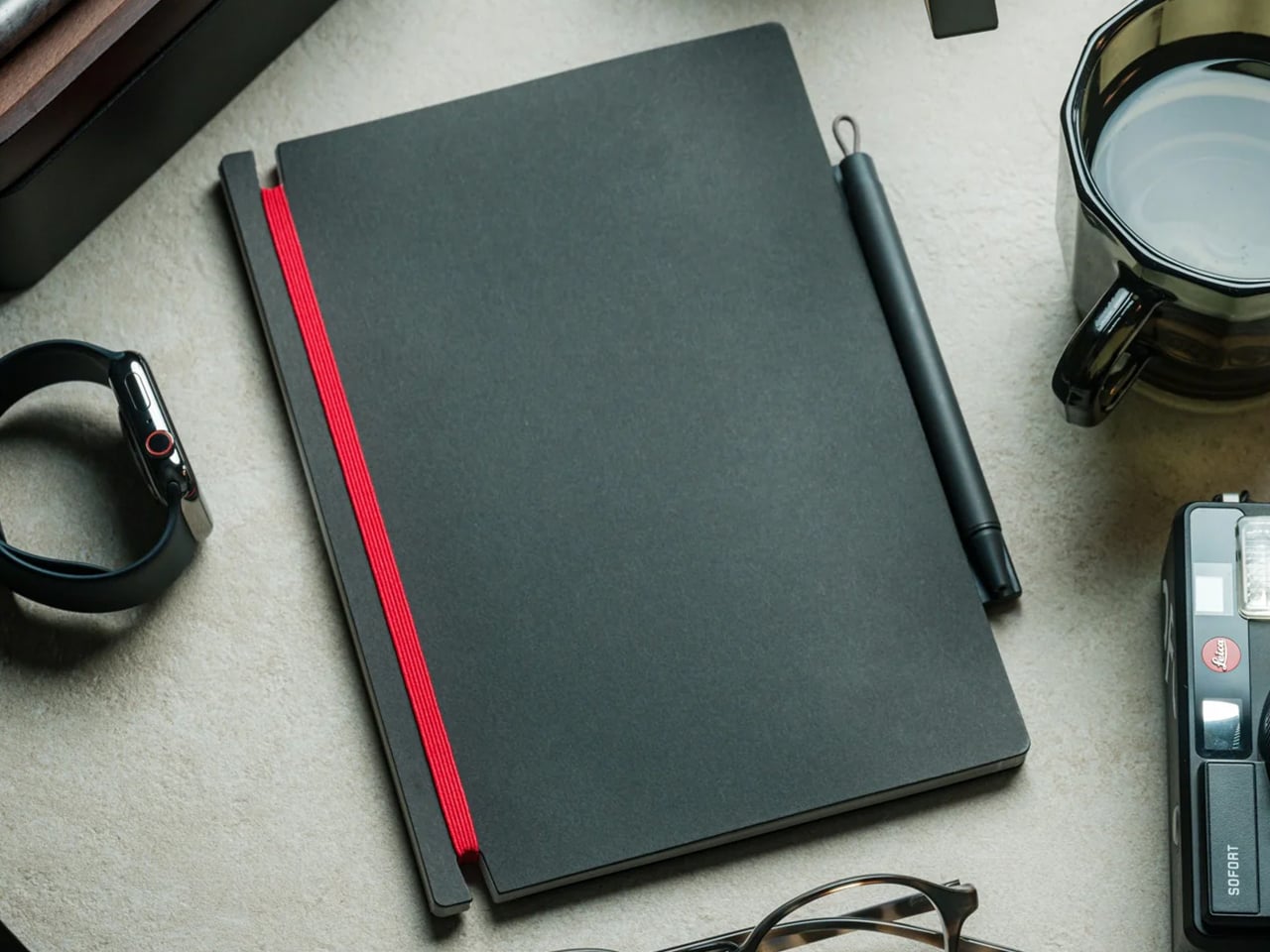
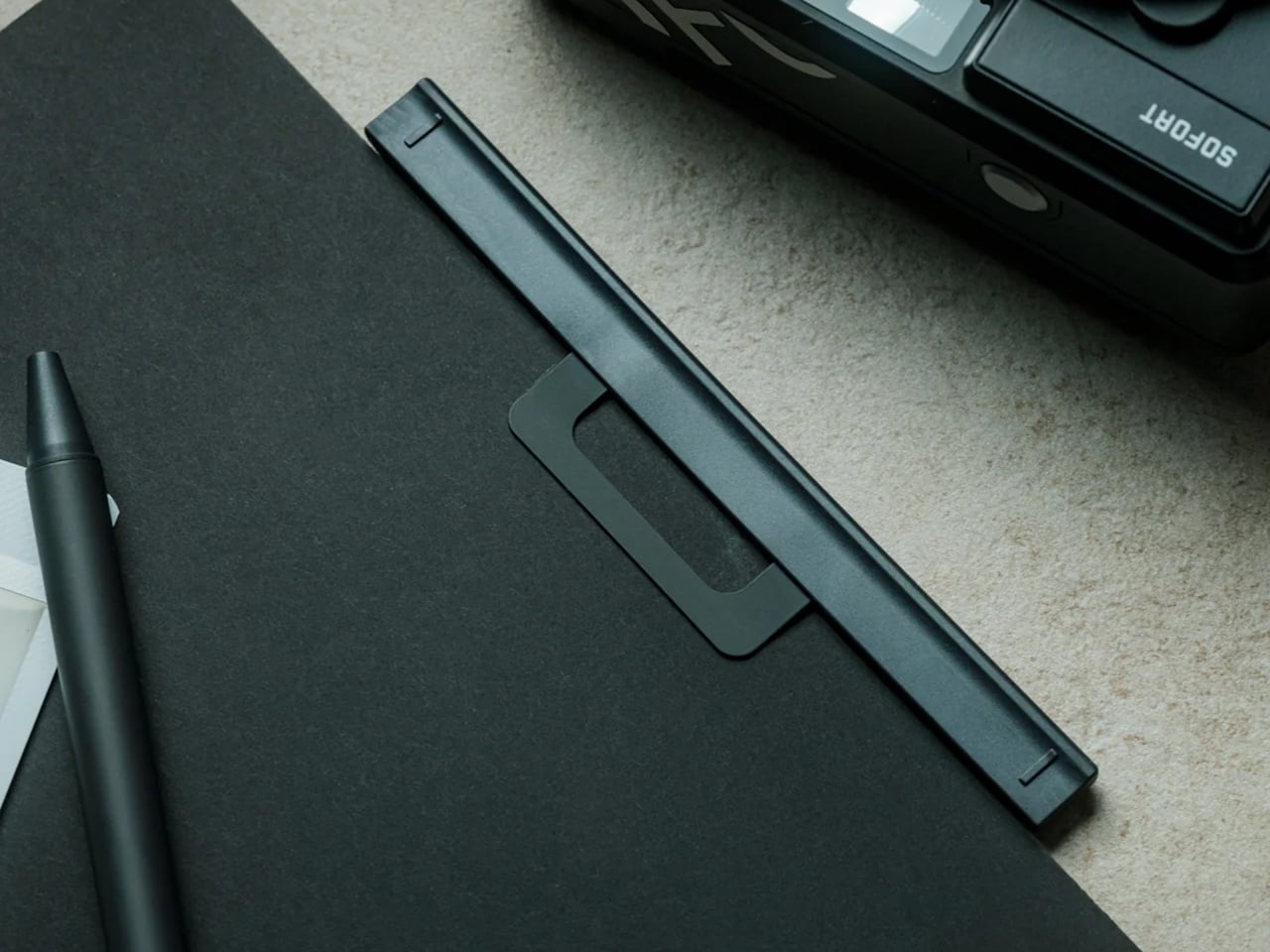
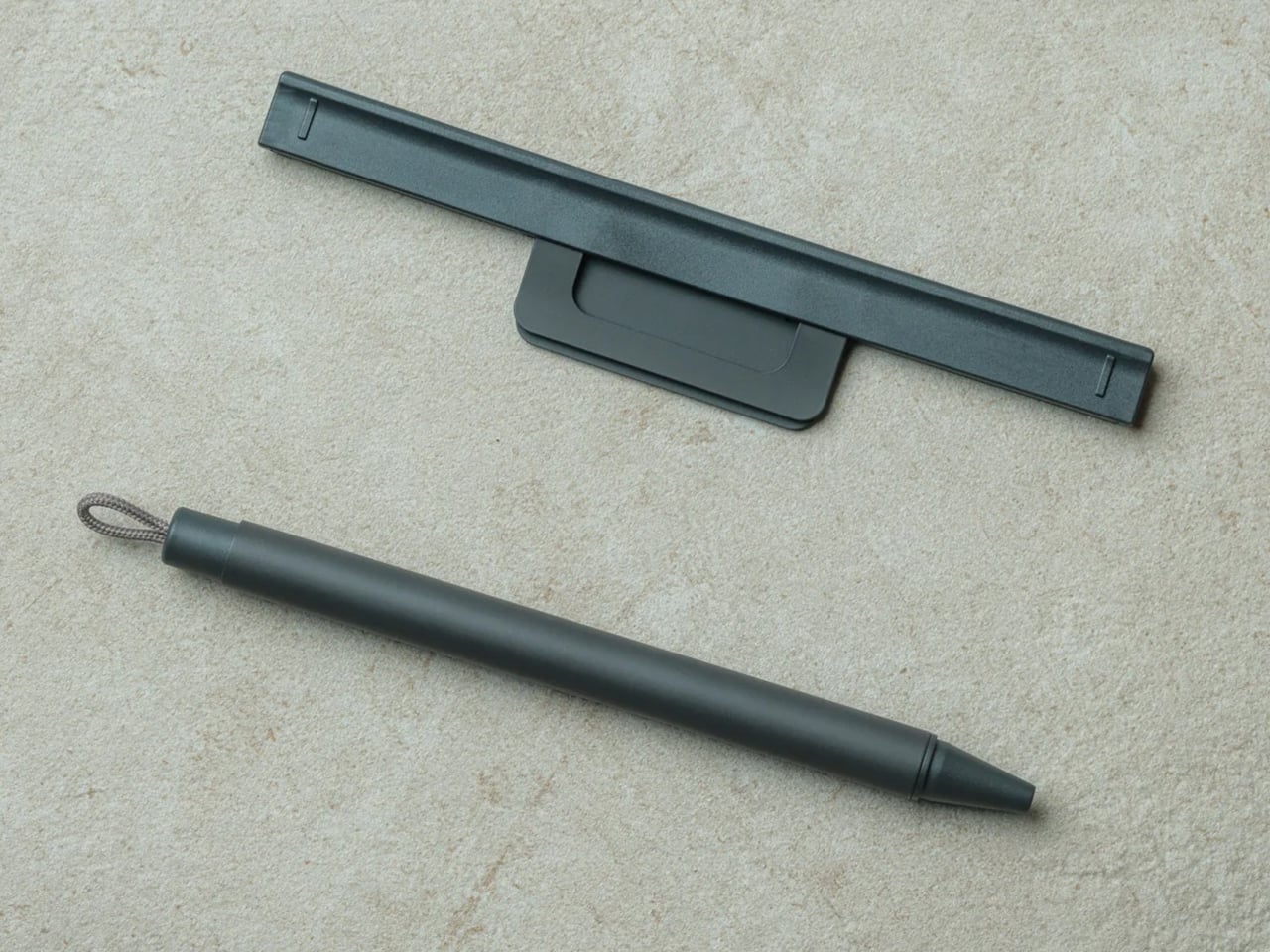
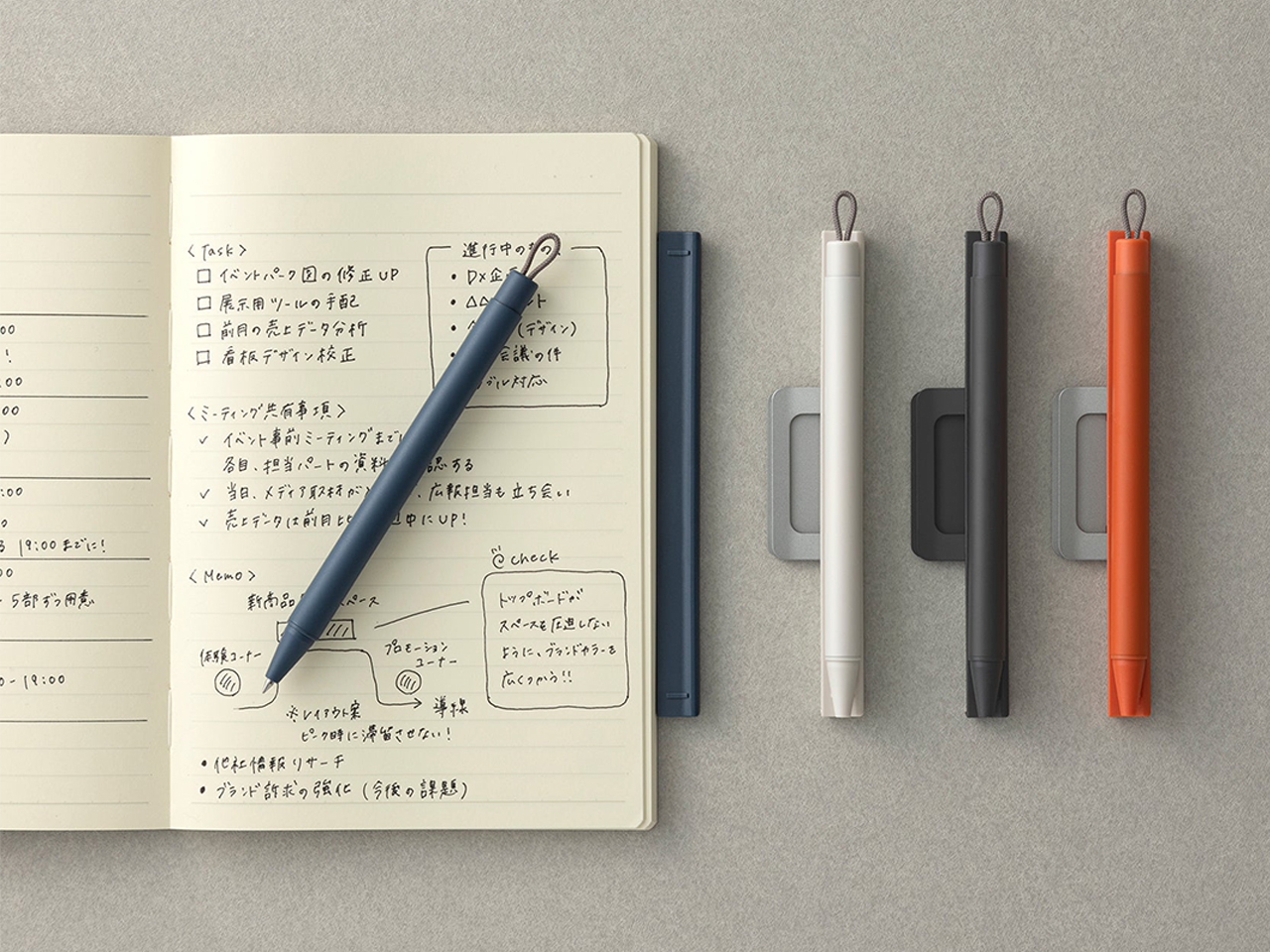
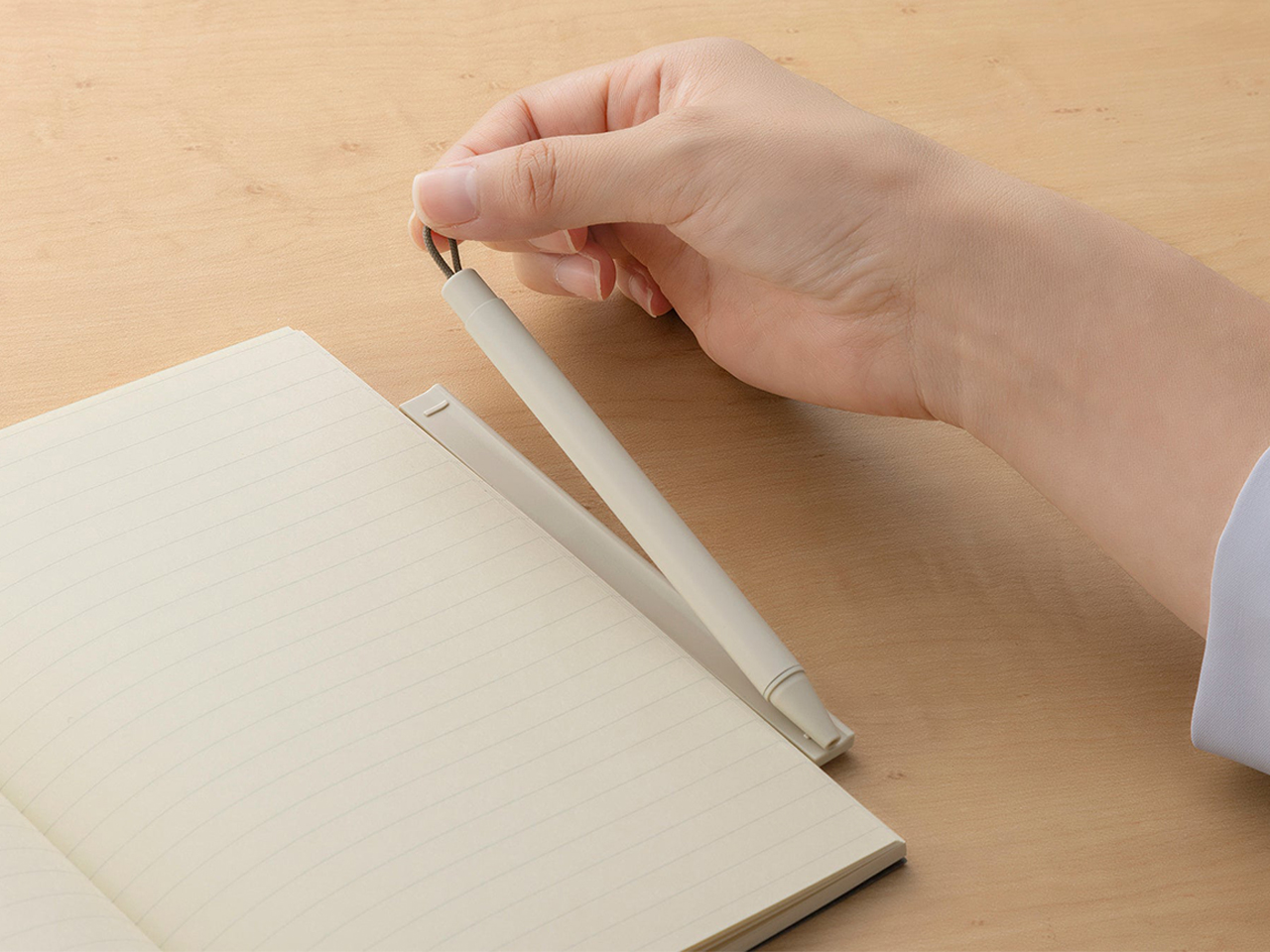
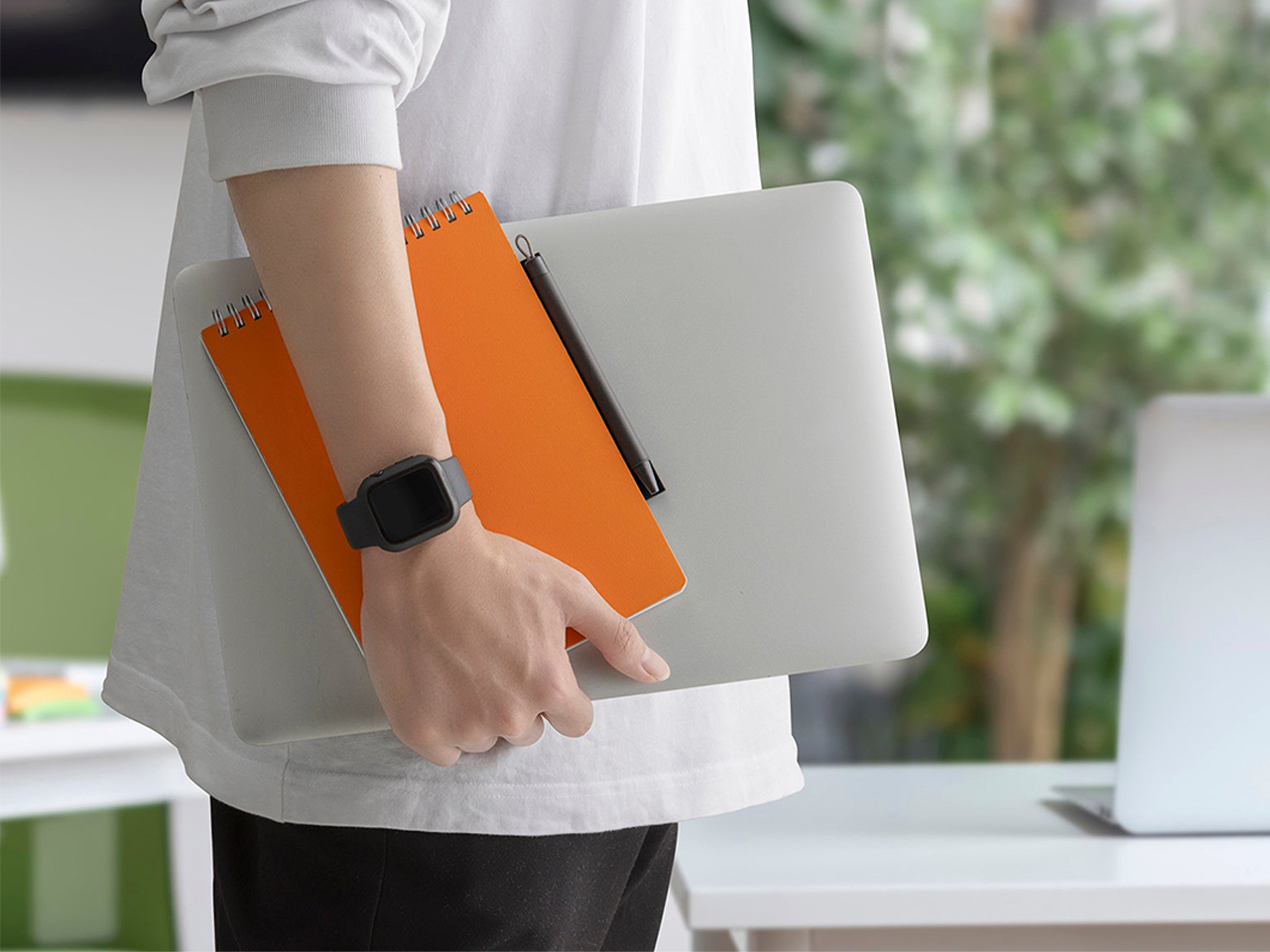
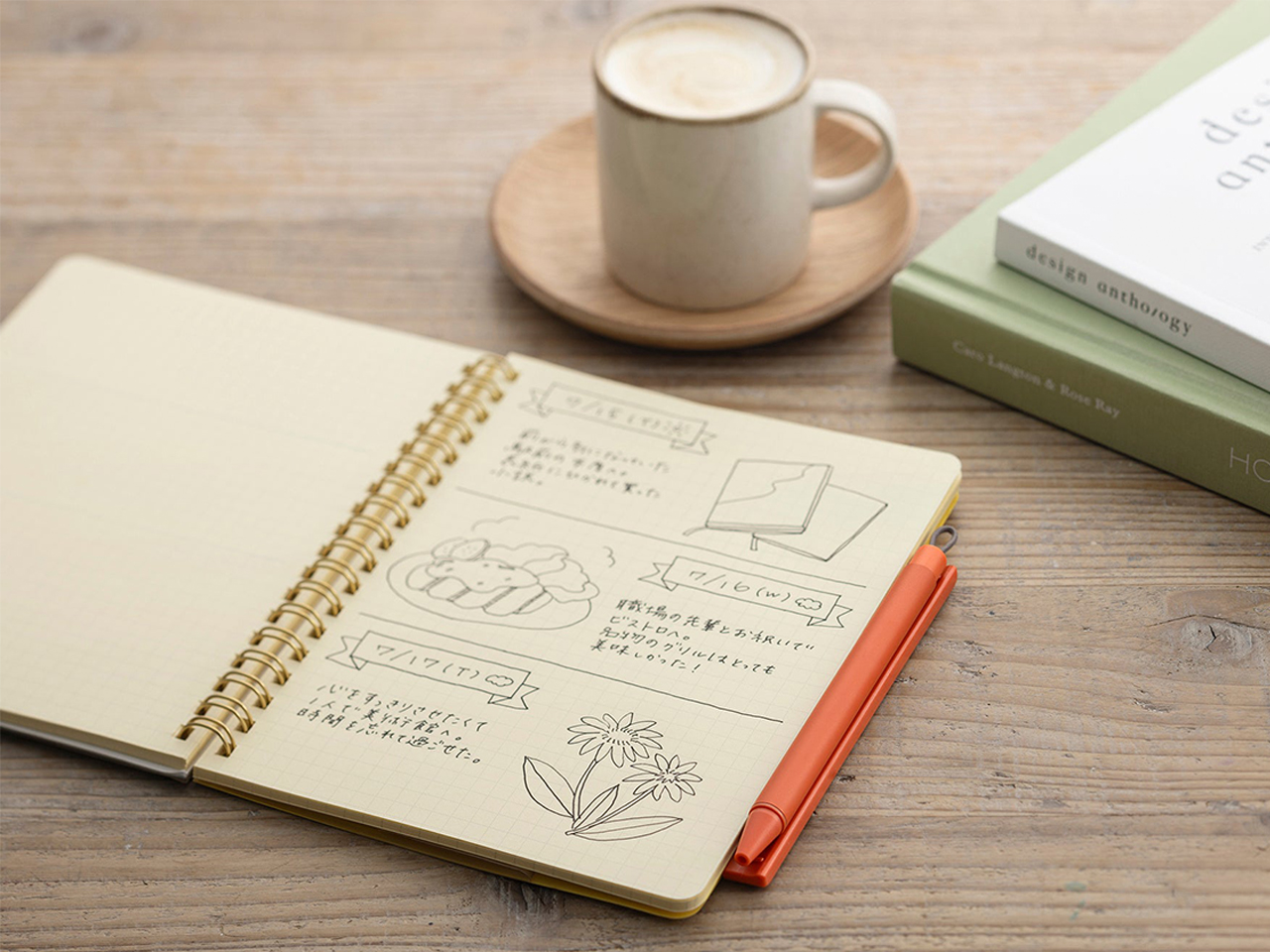
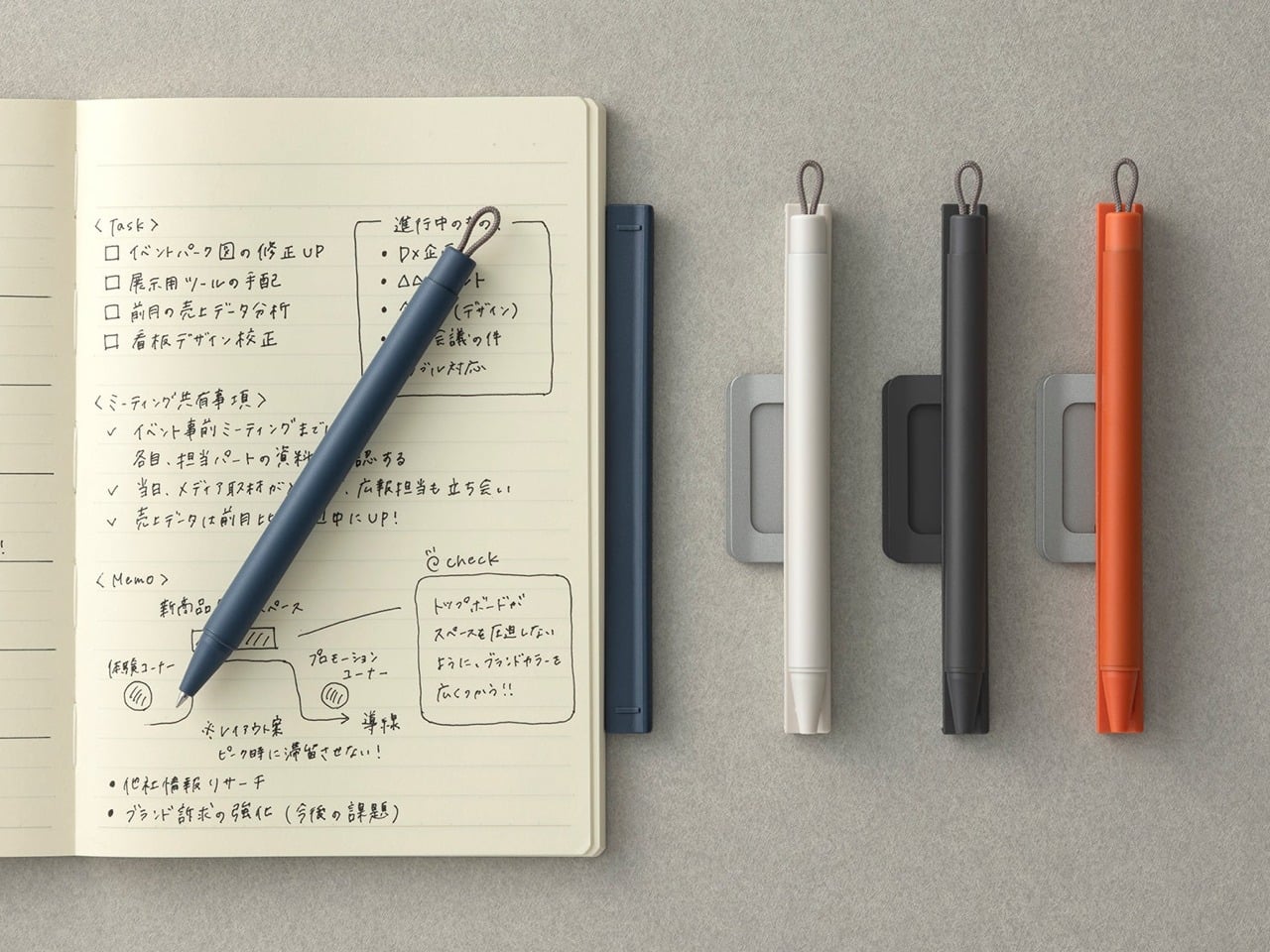
The Inseparable Notebook Pen begins with a problem every notebook user has encountered and simply accepted: the pen is never where the notebook is. These two are designed as a single unit. A magnetic clip system holds the pen flush against the cover with a precise, silent click, leaving no visual noise on the notebook’s exterior. When you reach for your notebook, the pen arrives with it, and the act of writing becomes one motion instead of two.

Beyond the mechanism, the design restraint throughout is the thing worth paying attention to. The pen body sits at a diameter that feels balanced in the hand without being engineered for drama. The attachment is strong enough to remain secure across a full day of carrying while remaining easy to retrieve mid-thought. For anyone who writes by hand regularly, this pairing restructures the small rhythms of the day without ever announcing itself. Tools that work this quietly are, by a significant margin, the ones worth keeping.

Click Here to Buy Now: $19.95

What we like

  • The magnetic attachment sits completely flush with the cover, adding nothing visible to the notebook’s exterior
  • One-motion retrieval removes the small interruption between thinking and writing

What we dislike

  • The pen works best paired with specific notebook covers, so testing compatibility with a preferred journal before committing is worthwhile
  • Cartridge replacement requires sourcing a compatible format rather than any standard refill

2. Stalogy Editor’s Series 365 Days Notebook A6
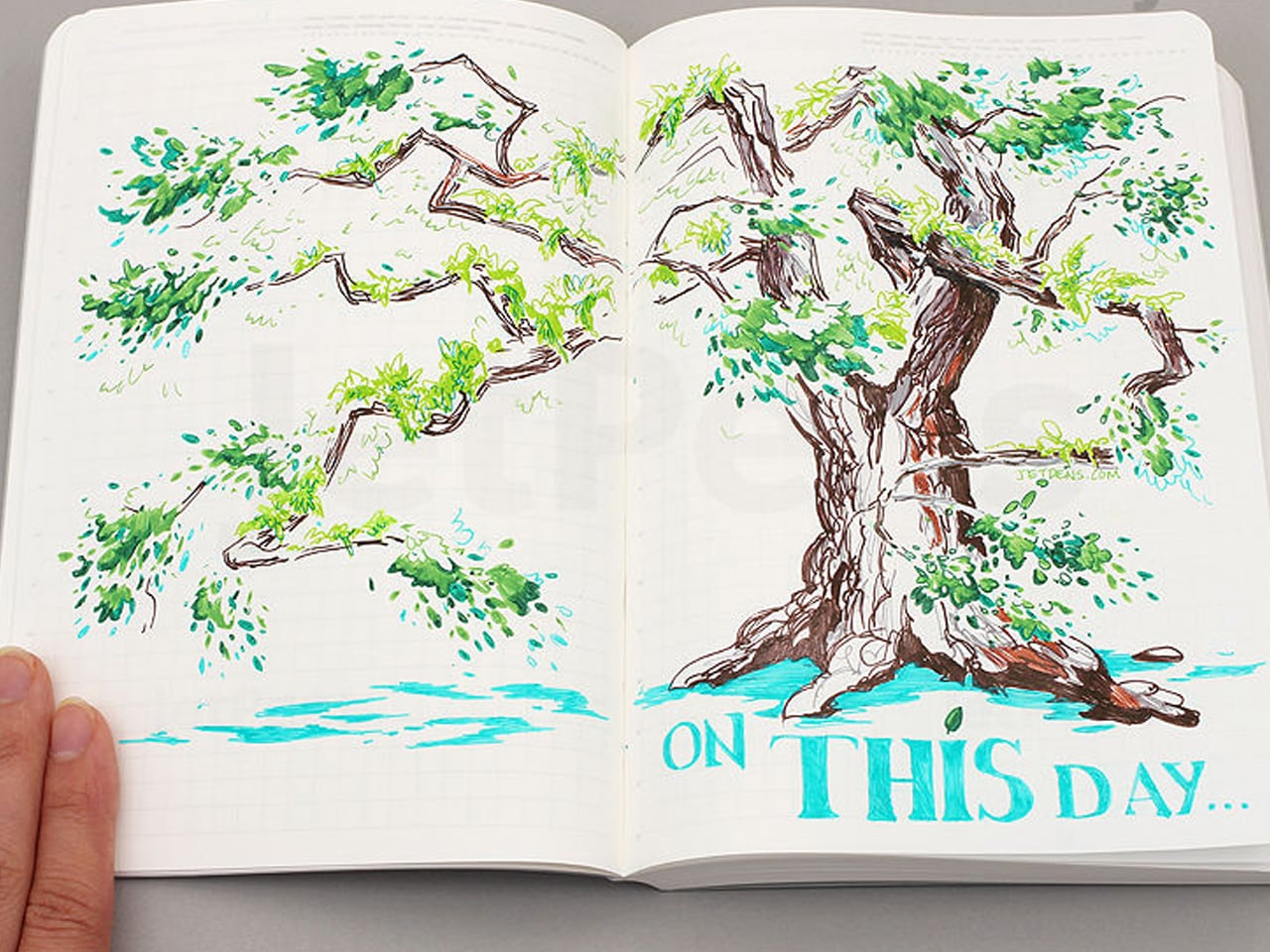
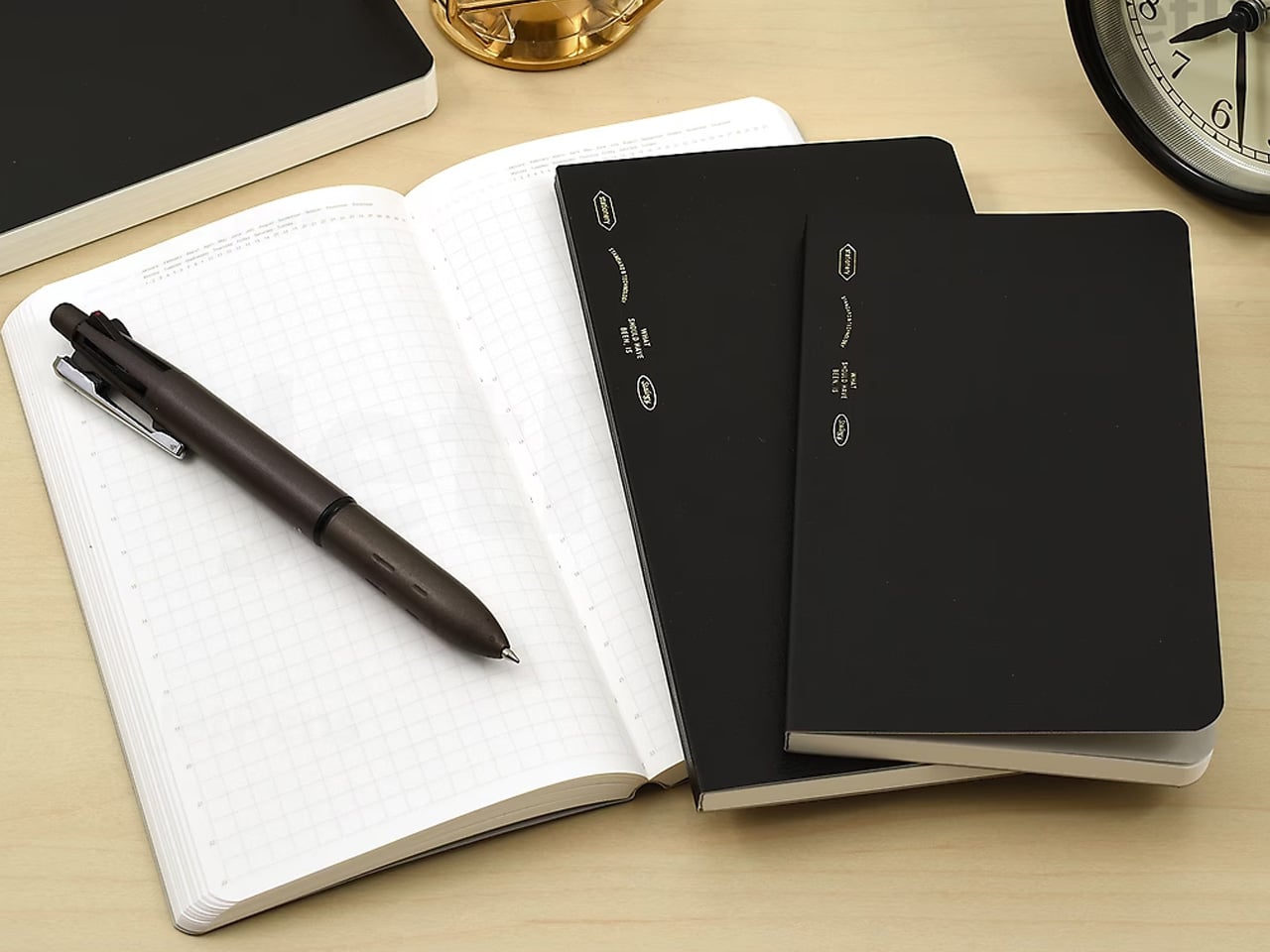
The Stalogy 365 Days Notebook carries no branding on its exterior. Just a clean cover and a precisely placed spine. Inside, 368 pages of cream-toned dot grid paper sit light enough that the notebook does not feel precious, yet substantial enough to last a full year of daily use. At A6, it fits a coat pocket without folding or flexing. That combination, nothing decorative on the outside and nothing wasted inside, is the brief Japanese stationery executes better than anyone.

The dot grid is subtle enough to disappear under handwriting but present enough to keep lines honest across a full page of notes. Minimal page markings give the notebook equal footing for structured planning, freeform writing, and quick sketches without any of those uses feeling like a compromise. For anyone carrying a notebook every day, the Stalogy provides the space and steps aside, which turns out to be the more useful and respectful approach any planner could take.

What we like

  • The bare cover carries no visual identity, making it entirely the user’s object rather than a brand’s
  • 368 pages at A6 gives a full year of writing without adding meaningful bulk to a carry

What we dislike

  • Date and time markings are printed small, making them difficult to read in low light or at a glance
  • Heavier fountain pen inks will ghost through the thin paper, limiting compatibility for dedicated nib users

3. Sailor 1911 Casual L Stable Fountain Pen
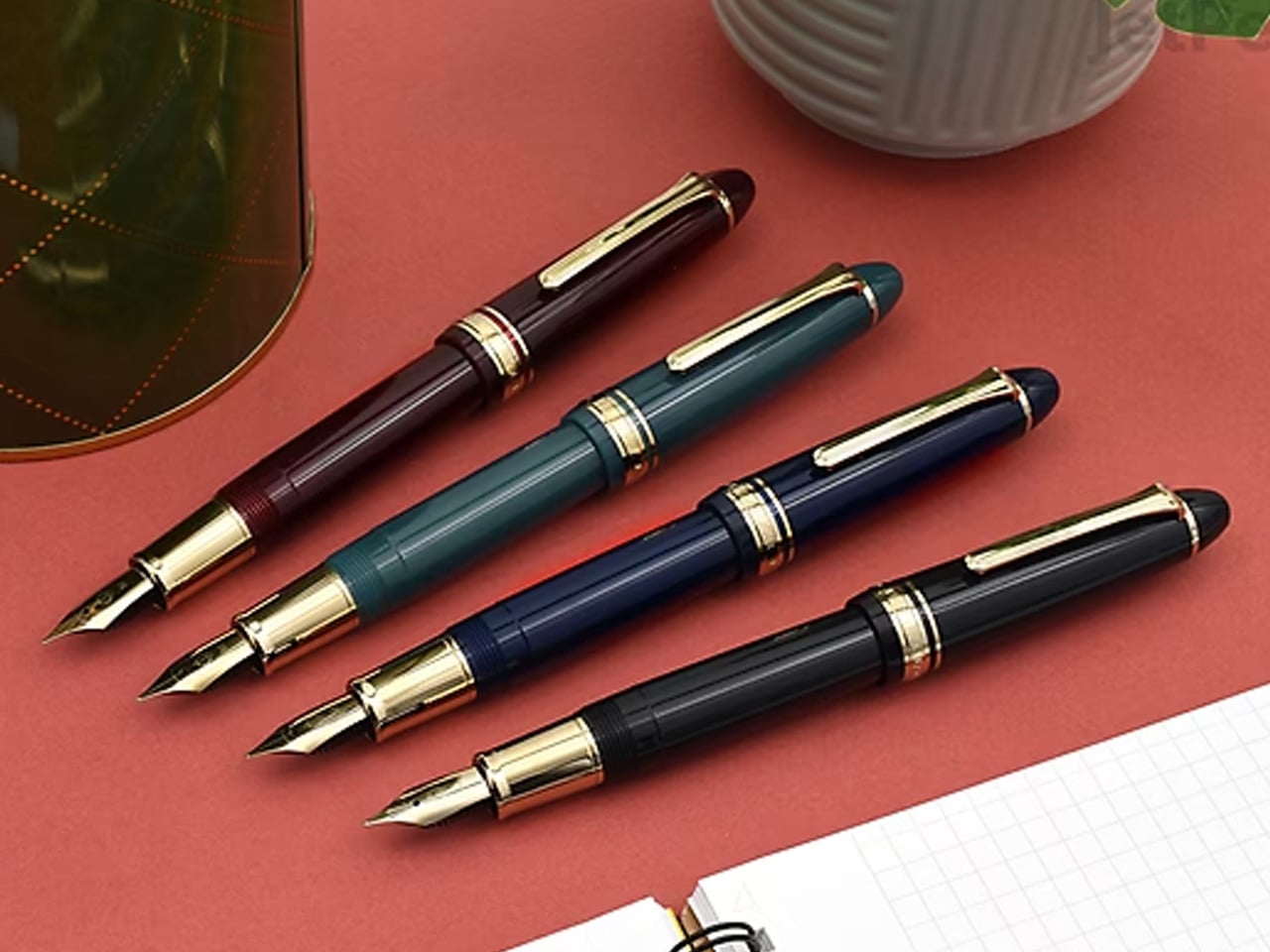
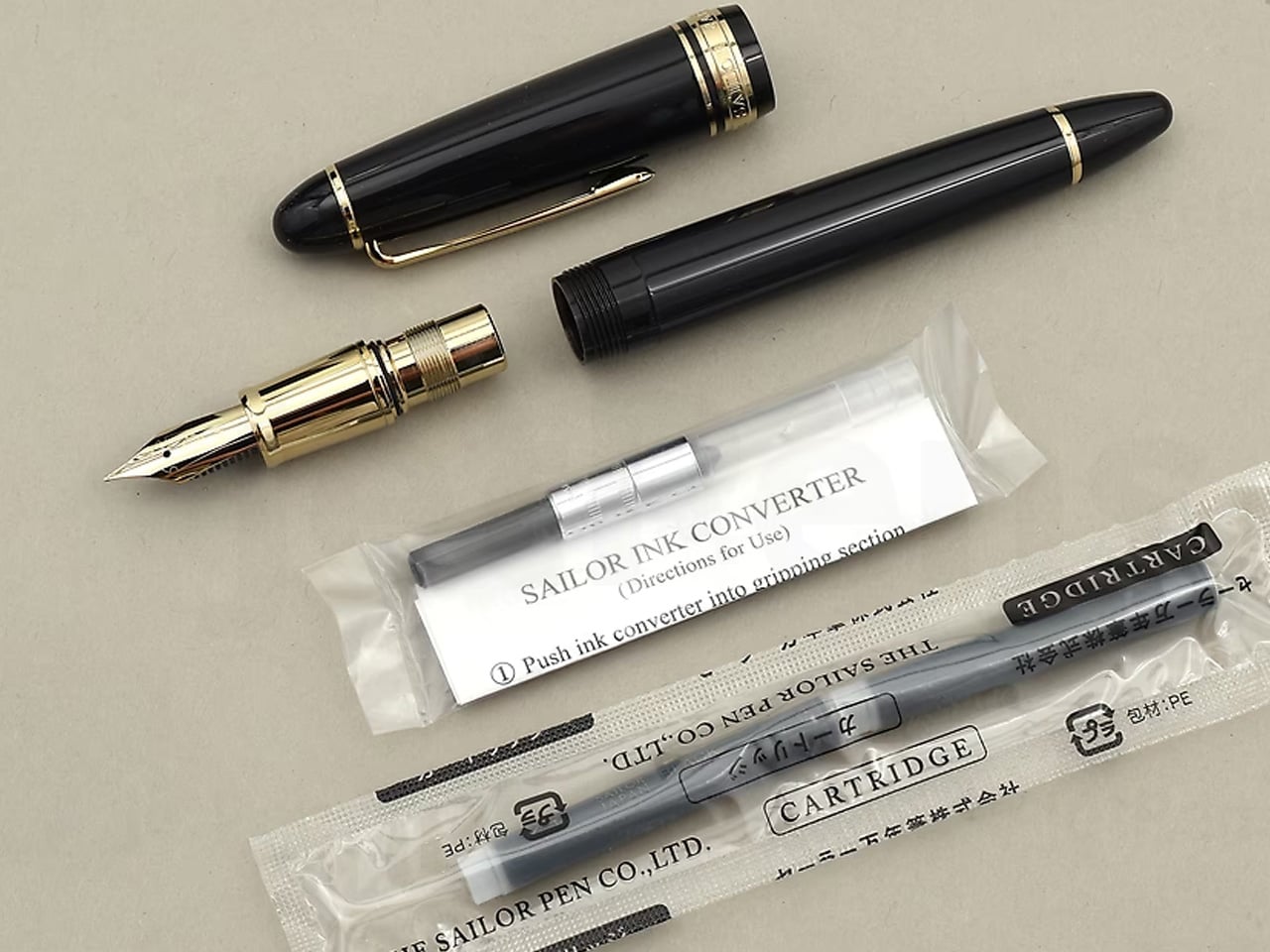
Sailor has been producing fountain pens in Japan since 1911, and the 1911 Casual L Stable, winner of the 2026 Japan Stationery Awards Fountain Pen category, represents what 115 years of that practice produces when the brief is balance over spectacle. The metal grip section sits low on the body, shifting the center of gravity toward the nib end. The result is a pen that writes with less deliberate effort, where the hand guides rather than grips across a page.

The 14k gold nib is the argument. Gold nibs flex slightly under the pressure of each stroke, returning to their original position in a way that steel nibs do not, and that quality is what writing enthusiasts describe as the nib feeling alive. For anyone who writes regularly by hand, a quality fountain pen changes the experience in a way that is difficult to reverse. The 1911 Casual L Stable is the specific pen that makes returning to anything else feel like a visible step backward.

What we like

  • The metal grip section lowers the center of gravity toward the nib, making sustained writing sessions measurably less tiring
  • The 14k gold nib’s flex produces a writing experience that steel nibs at any price point cannot replicate

What we dislike

  • Fountain pen ownership requires maintenance, including regular cleaning and occasional nib adjustment, which first-time users should factor into the decision
  • The pen performs best with Sailor inks for optimal flow, which means an additional purchase for those starting out

4. Levitating Pen 3.0
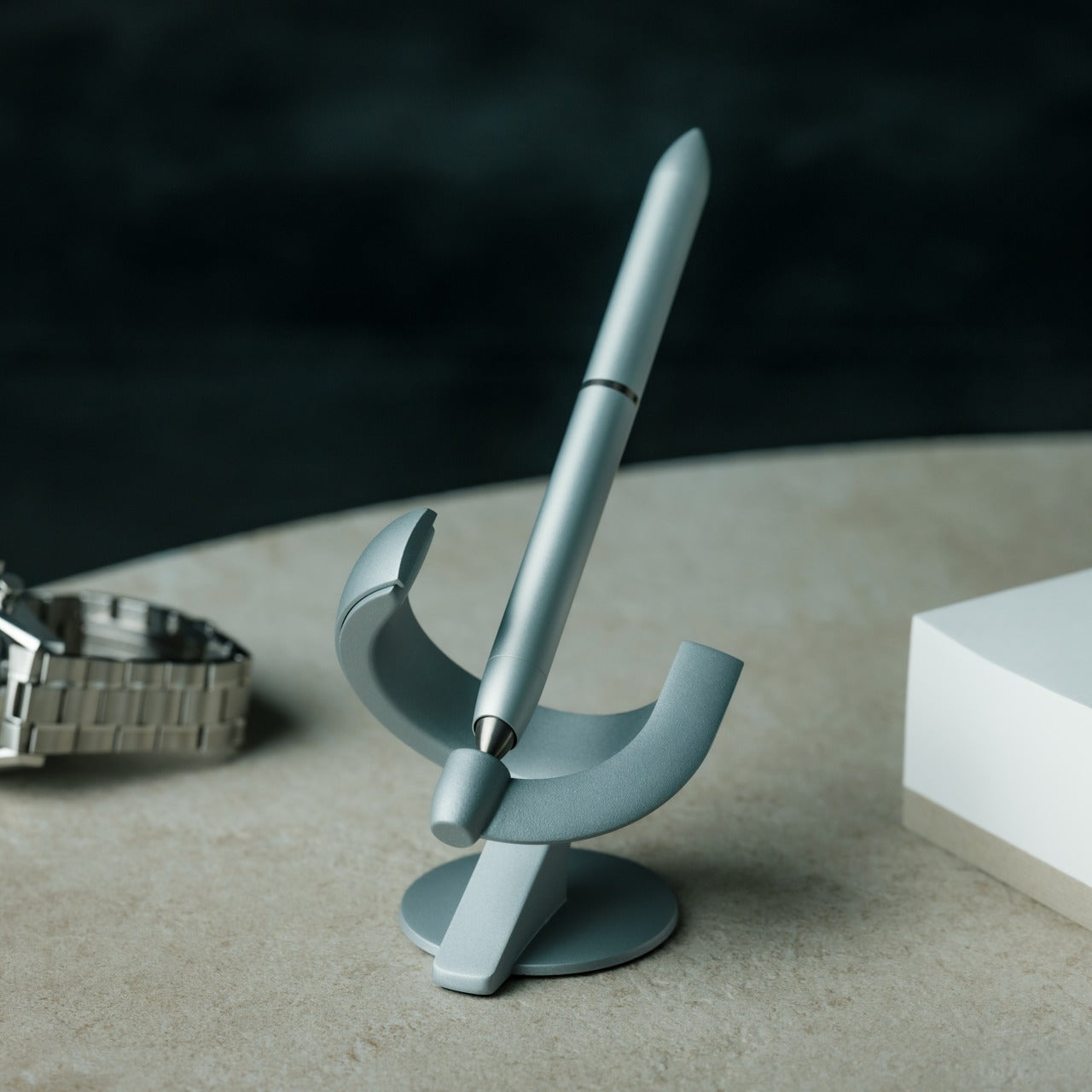
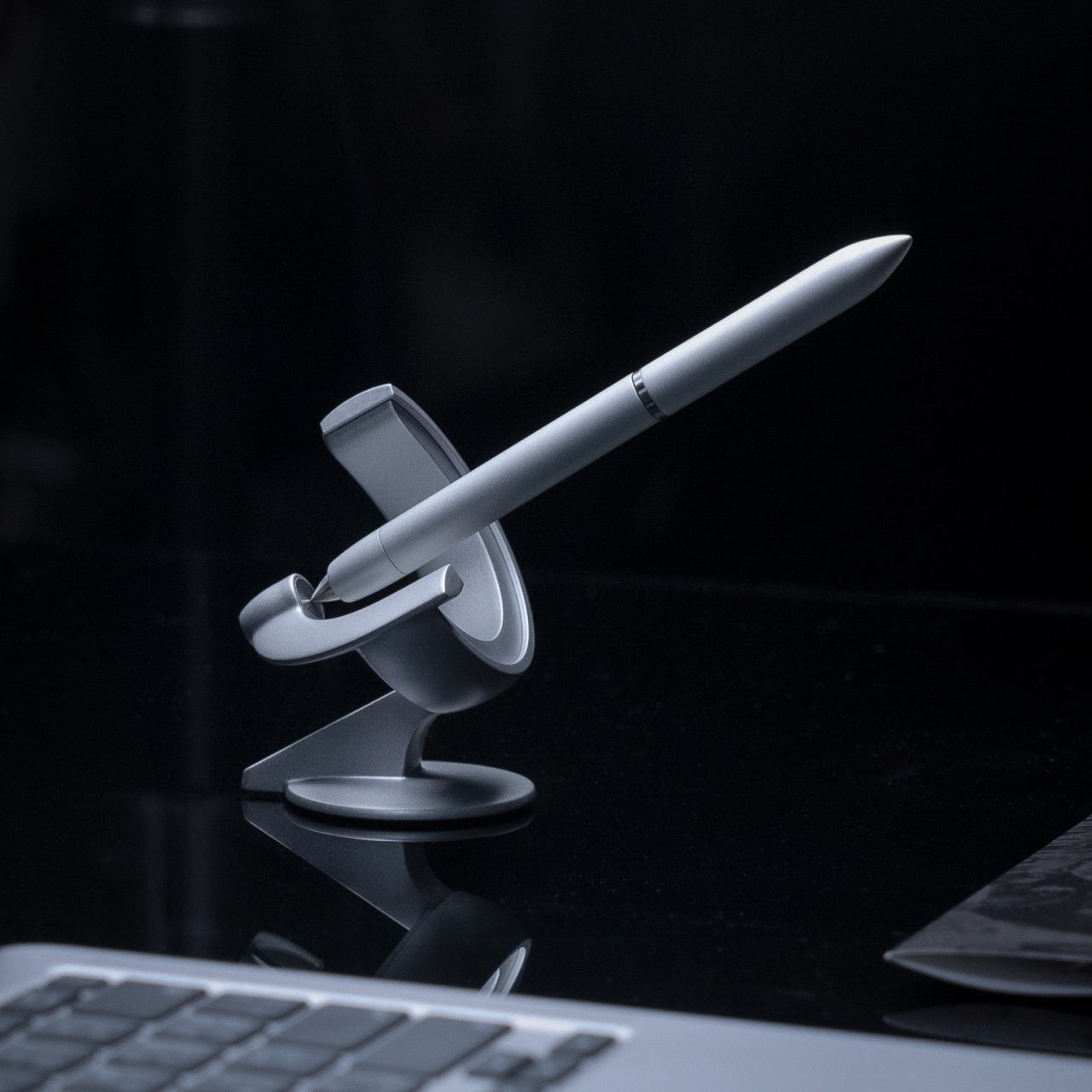
Most pens are designed to disappear into the background of your workday. The Levitating Pen 3.0 operates from an entirely different premise. Built from aerospace-grade aluminum, titanium, and brass, it hovers one inch above its base at a 60-degree angle, bobbing gently and spinning for up to 30 seconds when twisted. That behavior changes the ritual of writing before you have even picked it up. Reaching for a pen that genuinely rewards the act of reaching for it is something else entirely.

It still writes. A rollerball with a Schmidt cartridge, a fountain pen with a fine 0.5mm nib, or a 2-in-1 that lets you swap between both. The floating posture gets your attention. The ink earns it over time. The original design took its angle from Earth’s axial tilt at 23.5 degrees, a philosophical decision into a physical object. The 3.0 revises that to 60 degrees with a taller pedestal, giving the levitation the visual room it was always building toward.

Click Here to Buy Now: $129.00

What we like

  • The magnetic levitation base holds the pen visibly above the desk, making it a display object worth having when it is not being used
  • Available as a rollerball, fountain pen, or 2-in-1, so the writing experience can match personal preference without changing the design

What we dislike

  • At $129, the value sits in the full object and its desk presence rather than the writing instrument alone
  • The levitating base requires a charged surface to function, adding a power dependency that standard pen stands do not have

5. Midori MD Notebook A5
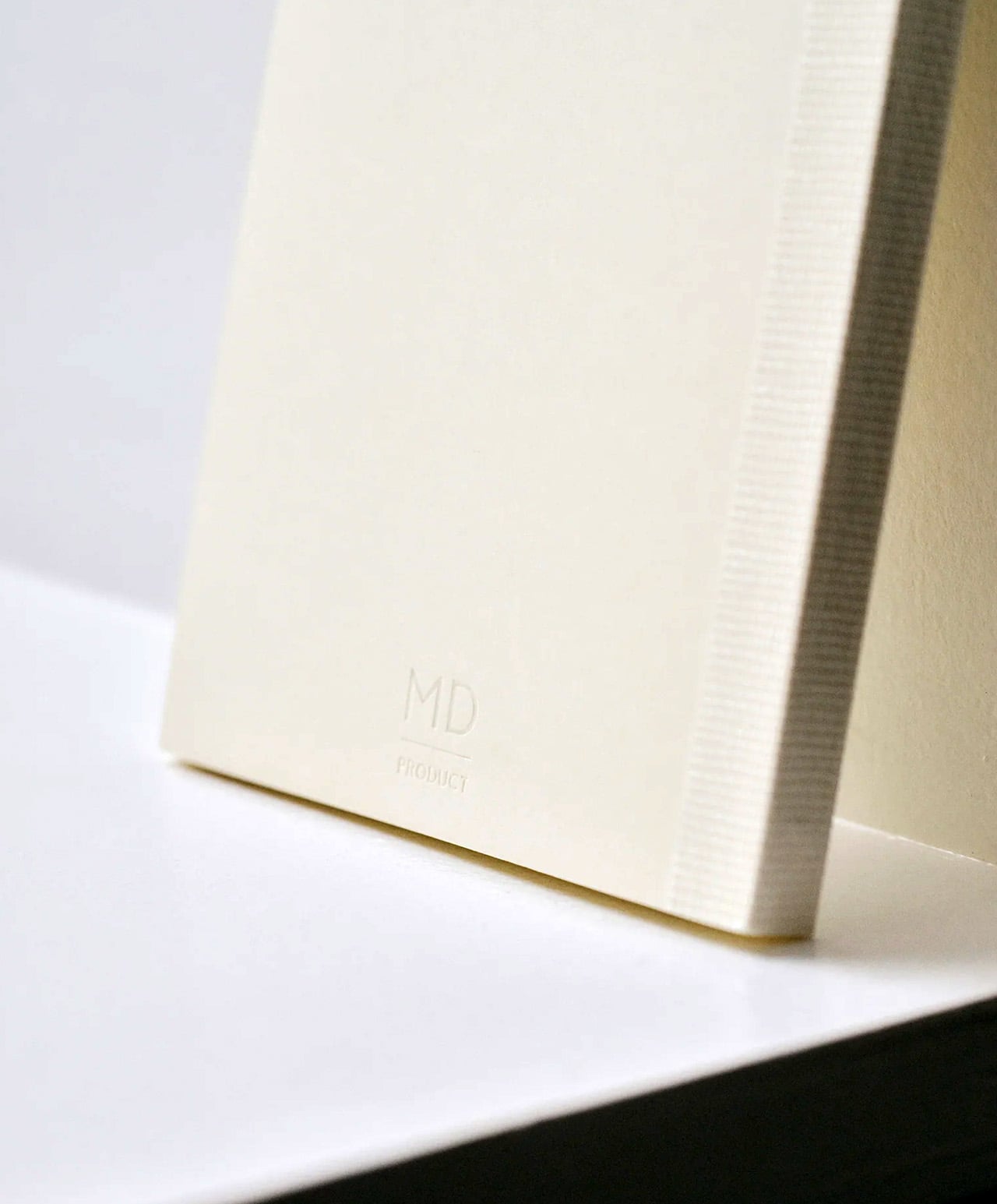
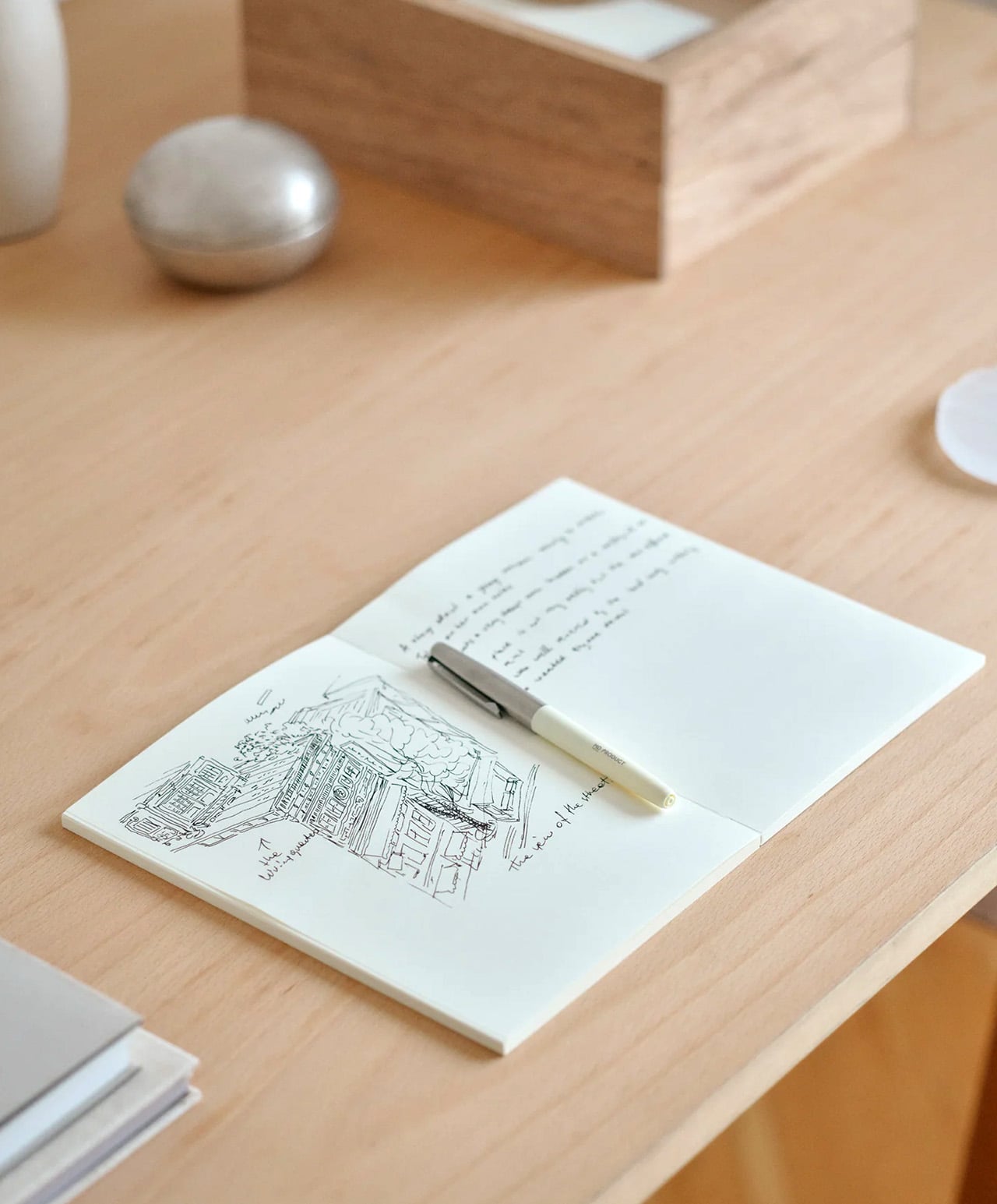
Midori developed MD Paper for one specific purpose: to write on it. The result handles fountain pen ink without feathering into surrounding fibers. Gel pens do not bleed through to the reverse side. Fine-liners hold their edge rather than spreading at the tip. That consistency across pen types removes the constraint of choosing your tools around your paper, which is a trade-off most notebook users have been making without realizing it was ever a trade-off to begin with.

Thread binding holds the quires together and allows the notebook to open completely flat from the first page to the last, with no resistance pulling the spread closed mid-writing. The same paper runs across the cover, endpapers, and text block, a material consistency most notebooks do not consider worth pursuing. A glassine wrapper protects the exterior.

What we like

  • MD Paper’s compatibility across fountain pens, gel pens, and fine-liners removes the need to choose tools around paper constraints
  • Thread binding allows 180-degree flat opening from the first to the last page, eliminating the resistance glue-bound notebooks create mid-spread

What we dislike

  • The cream-toned paper suits most writing but does not work for illustrators who need a bright white surface for accurate color reference
  • The glassine cover wrapper shows handling wear with heavy daily use and offers less protection than synthetic or hardcover alternatives

Once You Write With the Right Tools, Going Back Isn’t Really an Option

Japanese stationery earns its reputation not through marketing but through the accumulated weight of small decisions made correctly. Paper that accepts ink without complaint. A pen that arrives with your notebook without asking. A tool that makes picking it up feel like choosing something. None of these are dramatic accomplishments. Together they remove the friction between a thought and its written form, which turns out to be the only friction worth engineering against.

The best reason to write by hand is that the right objects make it feel worth doing. These five make that case without effort. A desk set up with tools this considered starts to function differently, not because the objects are precious, but because they remove the small interruptions that accumulate across a working day. Once you are used to that standard, returning to tools that merely function becomes a visible and permanent downgrade.

The post 5 Japanese Pens & Notebooks So Beautifully Made You’ll Never Want to Type Again first appeared on Yanko Design.

Starbucks x Traveler’s Company Made a Collab Worth Flying to Tokyo For

As a stationery fiend, I always look forward to the second half of the year because most brands announce their lineups for the next year. I also look forward to the collaborations they create with other related (and sometimes completely unrelated) companies, the kind that make me want to support either brand, depending on how I’ll be able to get my hands on the often limited-edition products.

Some collaborations exist purely for hype. They look good in a press release, generate the right amount of social media noise, and then quietly disappear from shelves and memory. The new Starbucks Reserve Roastery Tokyo x Traveler’s Company collection is not that. It’s the kind of collab that makes sense on paper, and even more sense when you actually hold the pieces in your hands.

Designer: Starbucks x Traveler’s Company

For those not already deep in the cult of Traveler’s Company, let me make the introduction. Founded in Tokyo, Traveler’s Company makes handcrafted leather notebooks and stationery that have earned a devoted following among journalers, designers, travelers, and the kind of people who still believe that writing by hand is an act worth protecting. Their flagship Traveler’s Notebook has become iconic in its own quiet way, a slim leather cover held together by an elastic band, designed to age beautifully and accumulate memories over time. It’s the opposite of disposable. Their annual theme for 2026 is fittingly called “Spirit,” inspired by the excitement of when a journey begins and the pleasure of setting off somewhere completely new.

Then there’s the Starbucks Reserve Roastery Tokyo. Tucked into the leafy streets of Nakameguro, it isn’t your average Starbucks. It’s a flagship experience space housed in a building by renowned architect Kengo Kuma, where the coffee is treated more like a craft than a morning routine. Both brands are, at their core, about the experience of being fully present in a moment. So the partnership makes complete sense.

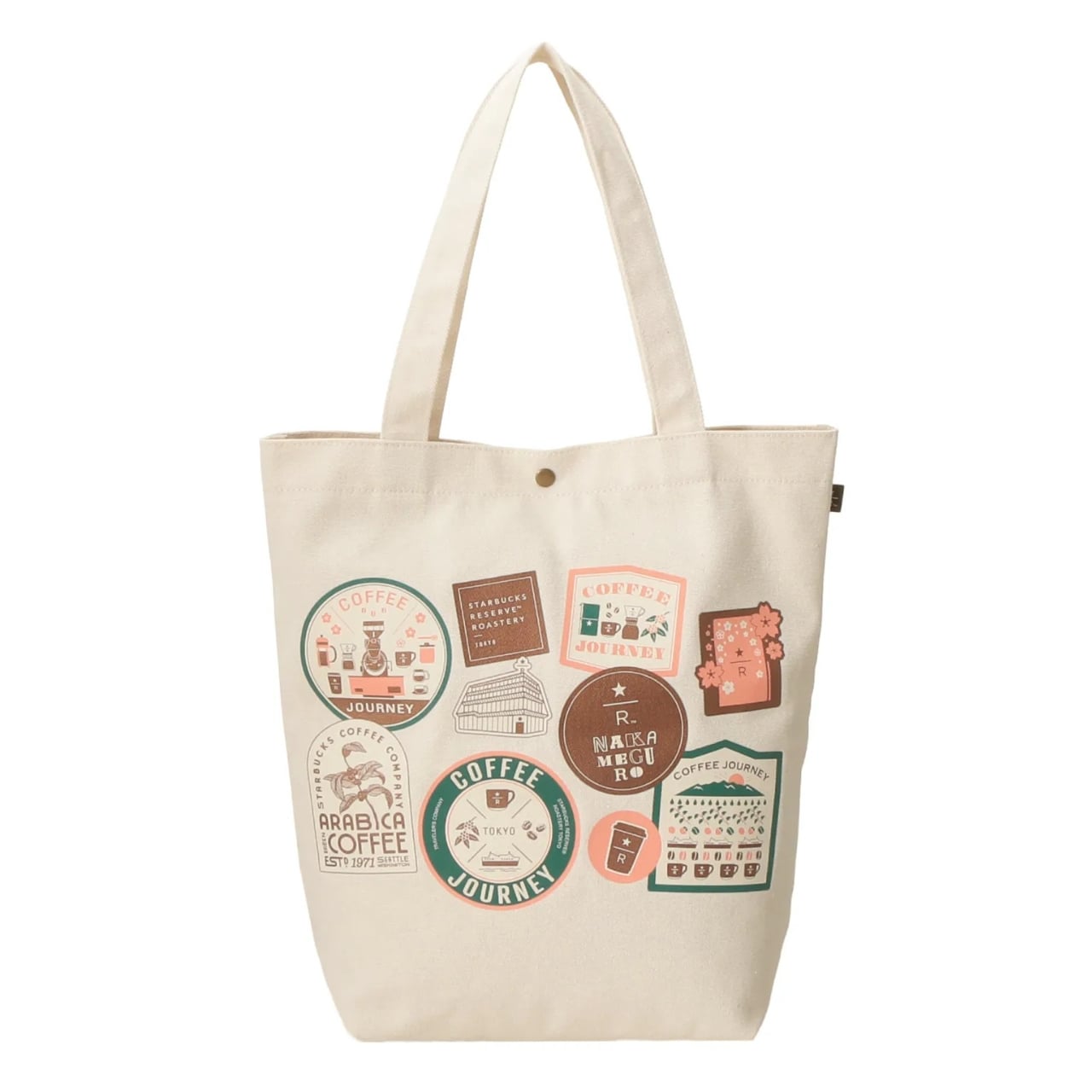
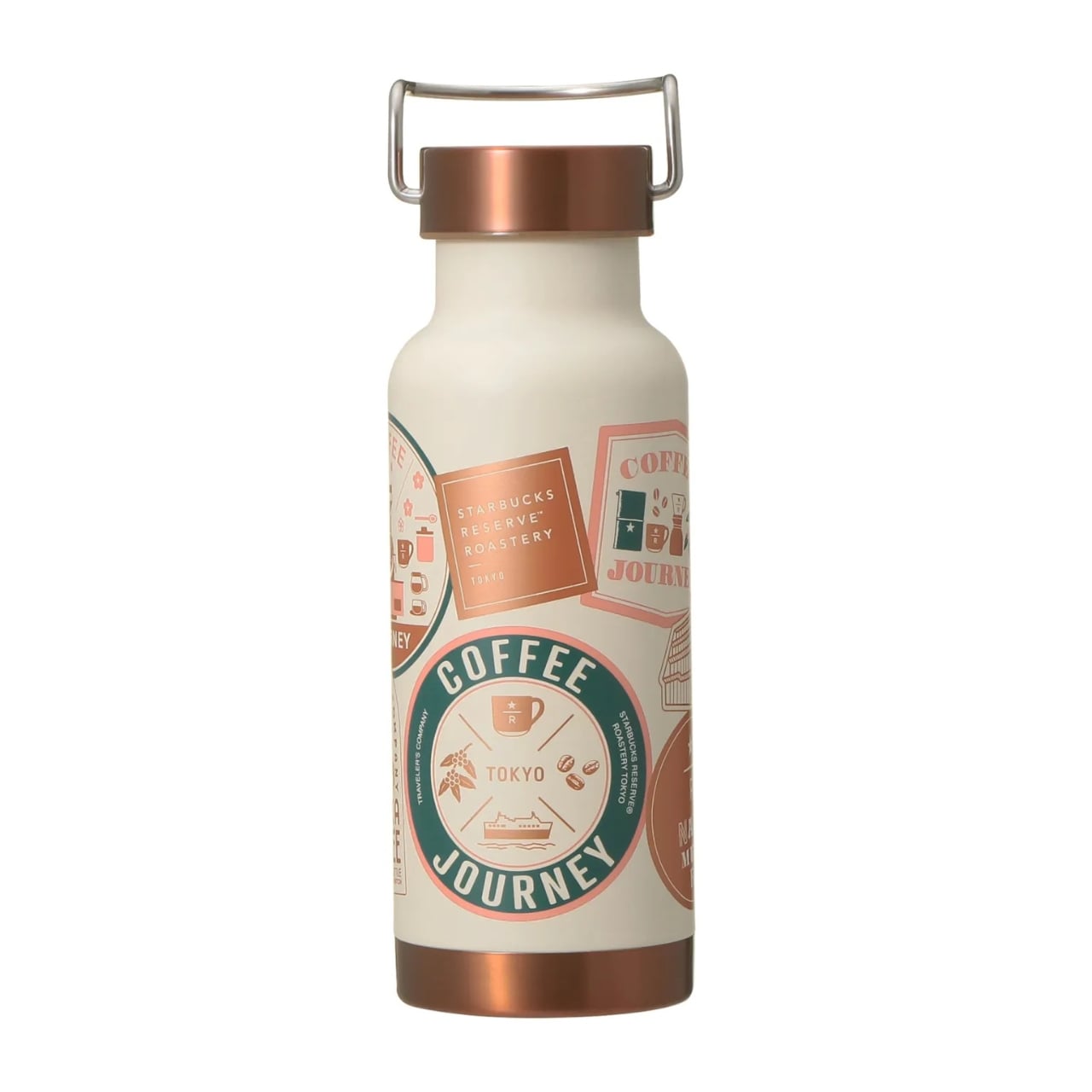
The 2026 collection arrives with a handful of pieces that feel considered rather than rushed. The canvas tote bag is the showstopper. Designed to mimic the look of a well-traveled suitcase covered in destination stickers, with Roastery Tokyo and Nakameguro as the featured stops, it carries the whole spirit of the collab on its exterior. Inside, there’s a pocket sized specifically to hold a Traveler’s Notebook, plus room for a tumbler or bottle and the rest of your everyday essentials. At 5,000 yen, it’s the kind of bag you’d actually reach for daily without feeling like a walking advertisement. It just looks like you’ve been somewhere interesting.

The cotton drawstring bag at 1,800 yen is smaller in scale but just as thoughtful. Designed to hold a bag of coffee beans, it sounds specific until you realize how often people buy coffee as a souvenir and then have absolutely nothing appropriate to carry it home in. It also doubles as an inner bag organizer, which is the kind of practical thinking that elevates a piece from cute to genuinely useful.

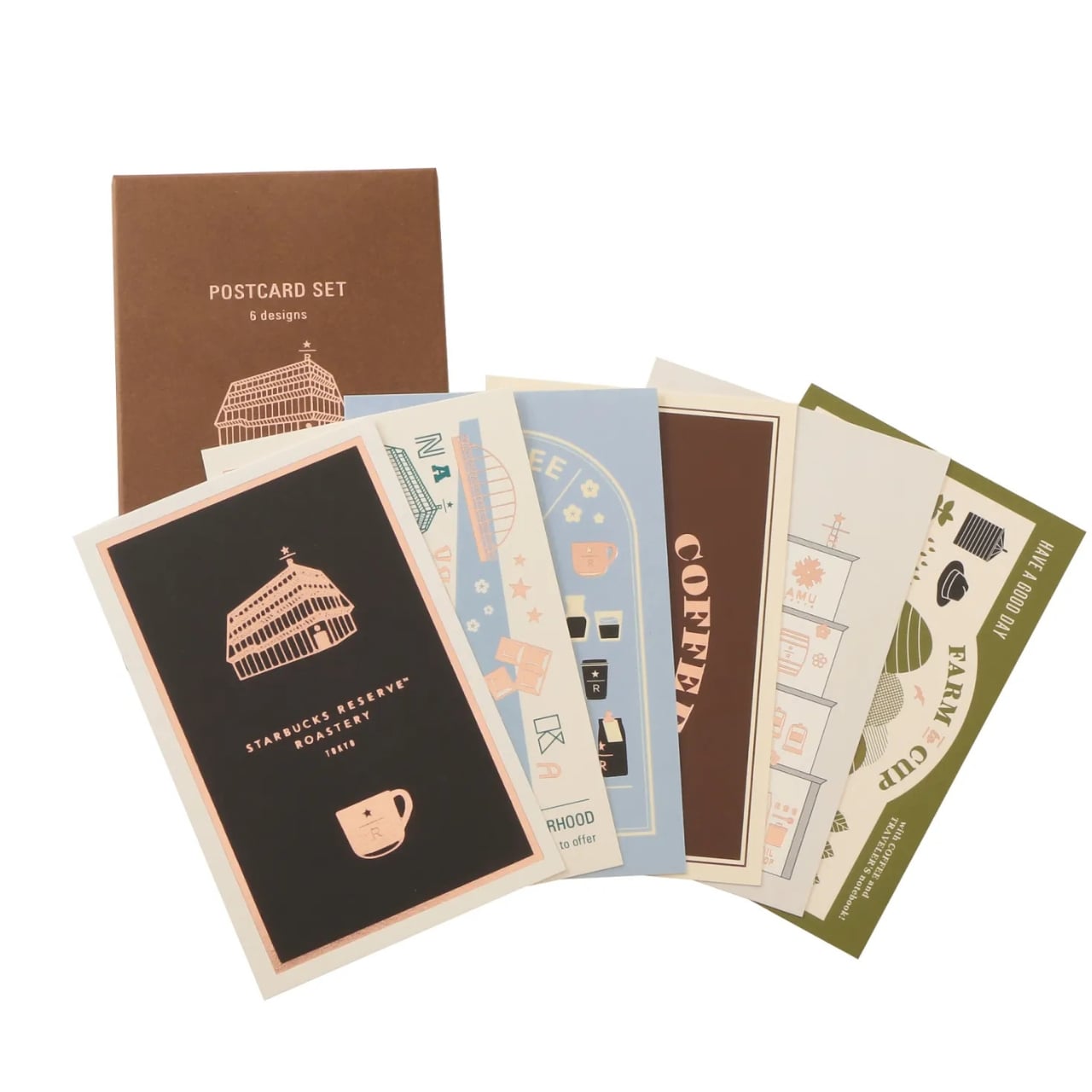
The postcard set is a quiet standout. Six cards featuring original Traveler’s Company illustrations of Roastery Tokyo icons, each printed on a different textured paper. In a moment when even birthday greetings arrive as voice memos, sending something handwritten on paper that was clearly chosen with care feels like a small, intentional act. The collection also includes a notebook set complete with a matching pen, pen loop, and zipper case, the kind of cohesive little kit that looks like it belongs in the bag of someone who has their life meaningfully together.

What makes this collaboration feel different from the average branded merchandise drop is that both parties seem to genuinely understand what the other is about. Traveler’s Company didn’t just place a Starbucks logo on a notebook. The design language is rooted in travel, in coffee as ritual, in the beauty of slow and deliberate moments. Every piece in the collection tells the same story without having to say it outright.

The collection is exclusive to the Starbucks Reserve Roastery Tokyo in Nakameguro, which makes it inherently precious for anyone outside of Japan. The fact that resellers have already picked it up on platforms like Etsy says everything about the demand. For those who can make the trip, the Nakameguro store is worth visiting on its own. That you can leave with a limited-edition collab bag full of coffee and a new notebook is simply a bonus. Some things are made to be used, loved, and carried forward. This collection is exactly that kind of thing.

The post Starbucks x Traveler’s Company Made a Collab Worth Flying to Tokyo For first appeared on Yanko Design.

Huion Note E Review: The Notebook That Never Runs Out of Pages

PROS:


  • Streamlined and focused note-taking experience

  • Looks and feels like using a digital A5 notebook

  • Battery-free stylus with 8,192 levels of pressure and tilt support

  • Sharp display with anti-glare nano-etching, DC dimming, and soft light

CONS:


  • No microSD storage expansion

  • Cover attachment feels prone to breaking

  • Custom software has room for improvement

RATINGS:

AESTHETICS
ERGONOMICS
PERFORMANCE
SUSTAINABILITY / REPAIRABILITY
VALUE FOR MONEY

EDITOR'S QUOTE:

The Huion Note E delivers an enjoyable writing experience on a notebook that never runs out of pages.
award-icon

Huion has made a name for itself with digital drawing tools that empower creatives, both professional and hobbyist alike, regardless of their budgets. It has lately dabbled in the realm of standalone Android tablets, bringing its technologies that would allow designers and artists to let their creativity roam free, figuratively and literally. It even put out some “Smart Notebooks,” catering to the note-taking crowd more than artists.

Against this backdrop, the Huion Note E arrives with an ambitious goal: to be the electronic notebook to replace your handful of paper notebooks. It’s designed to even look the part! But this has been attempted before by many companies, including more expensive fruit-labeled slates, so how does the Note E fare in this regard? Is it able to deliver that paper-like writing experience, or is that just another bullet point in a smorgasbord of disjointed features? We take out our thinking caps, jot down our musings, and take it for a spin to find out.

Designer: Huion

Aesthetics

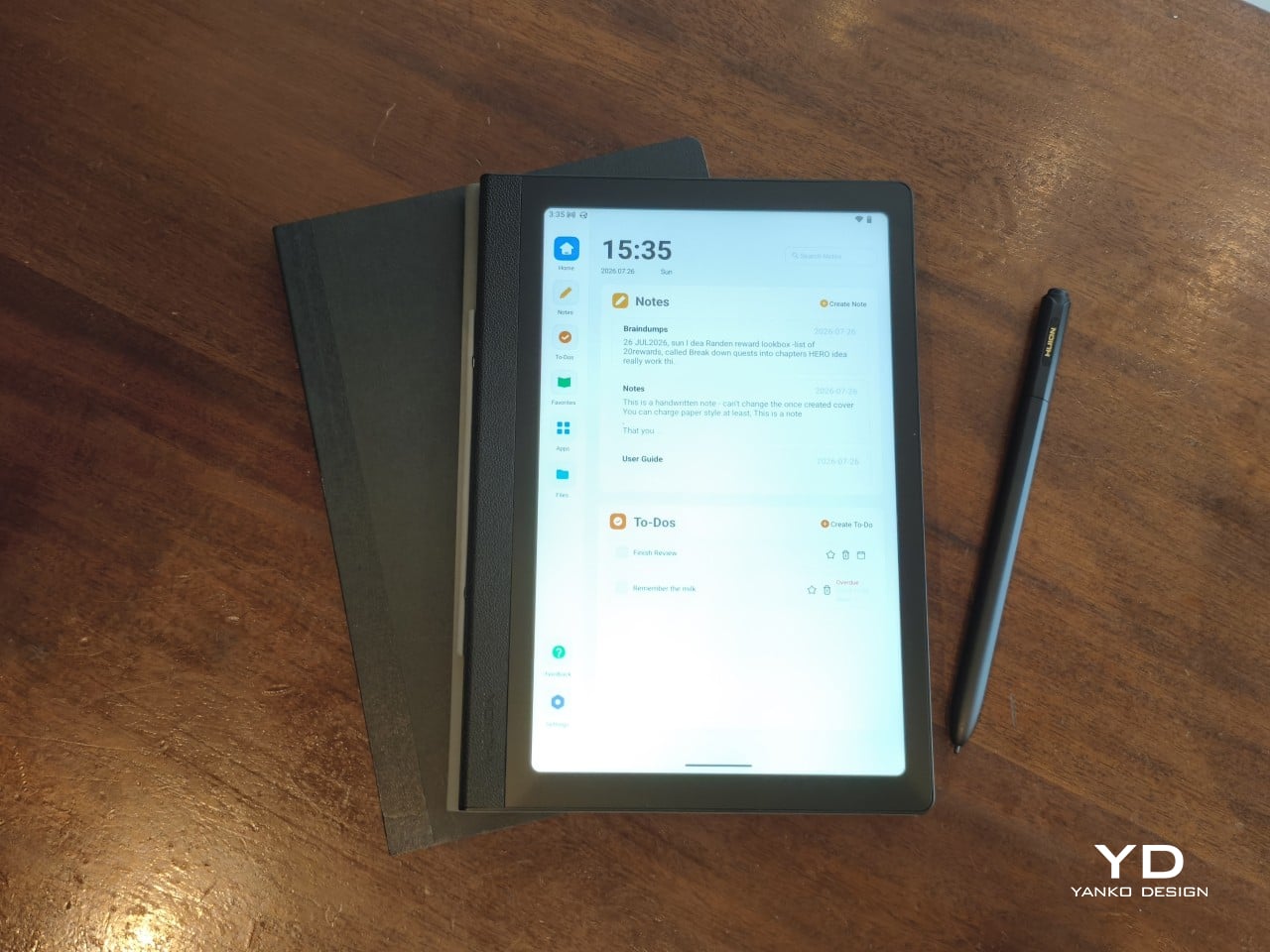
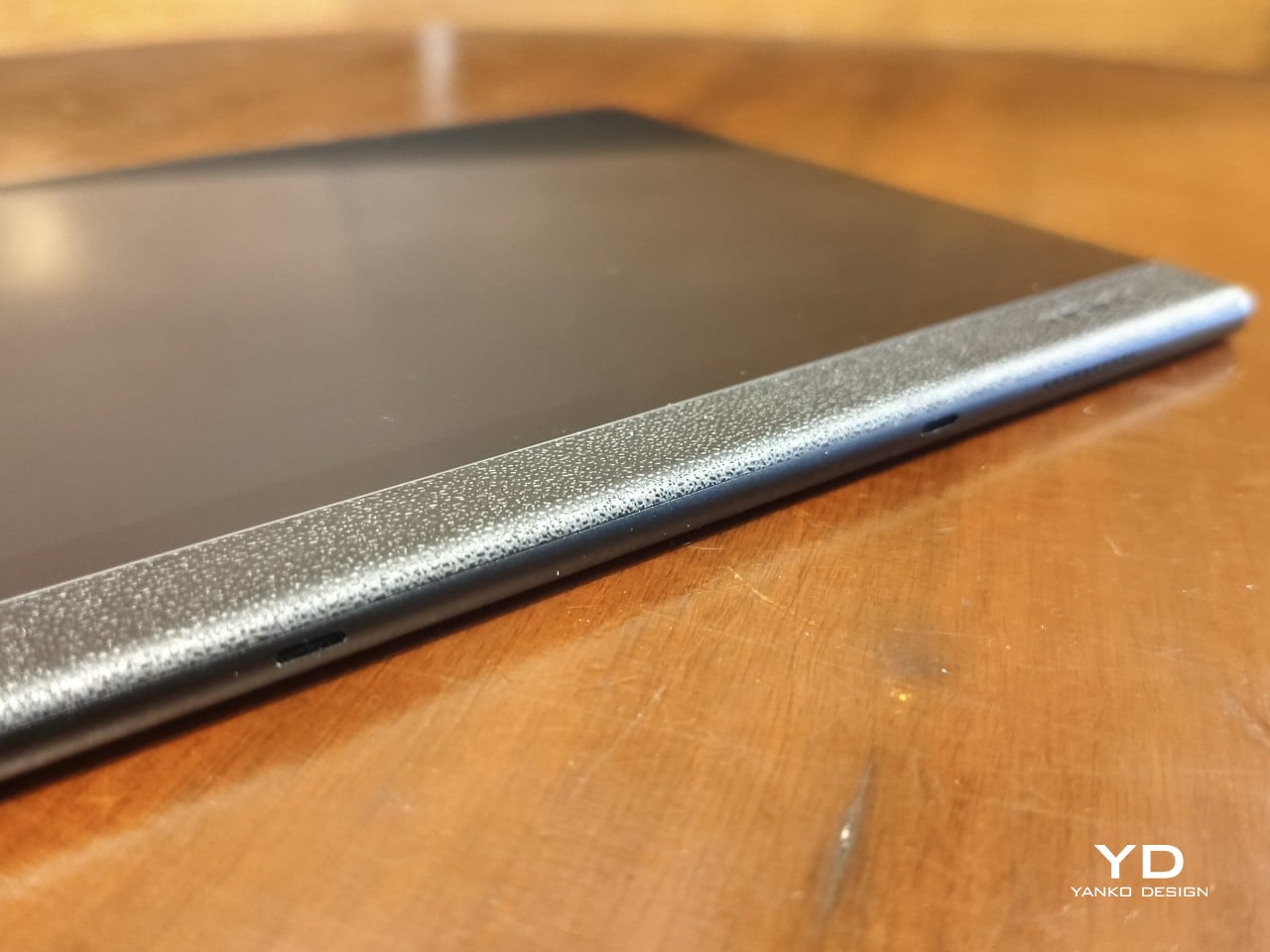
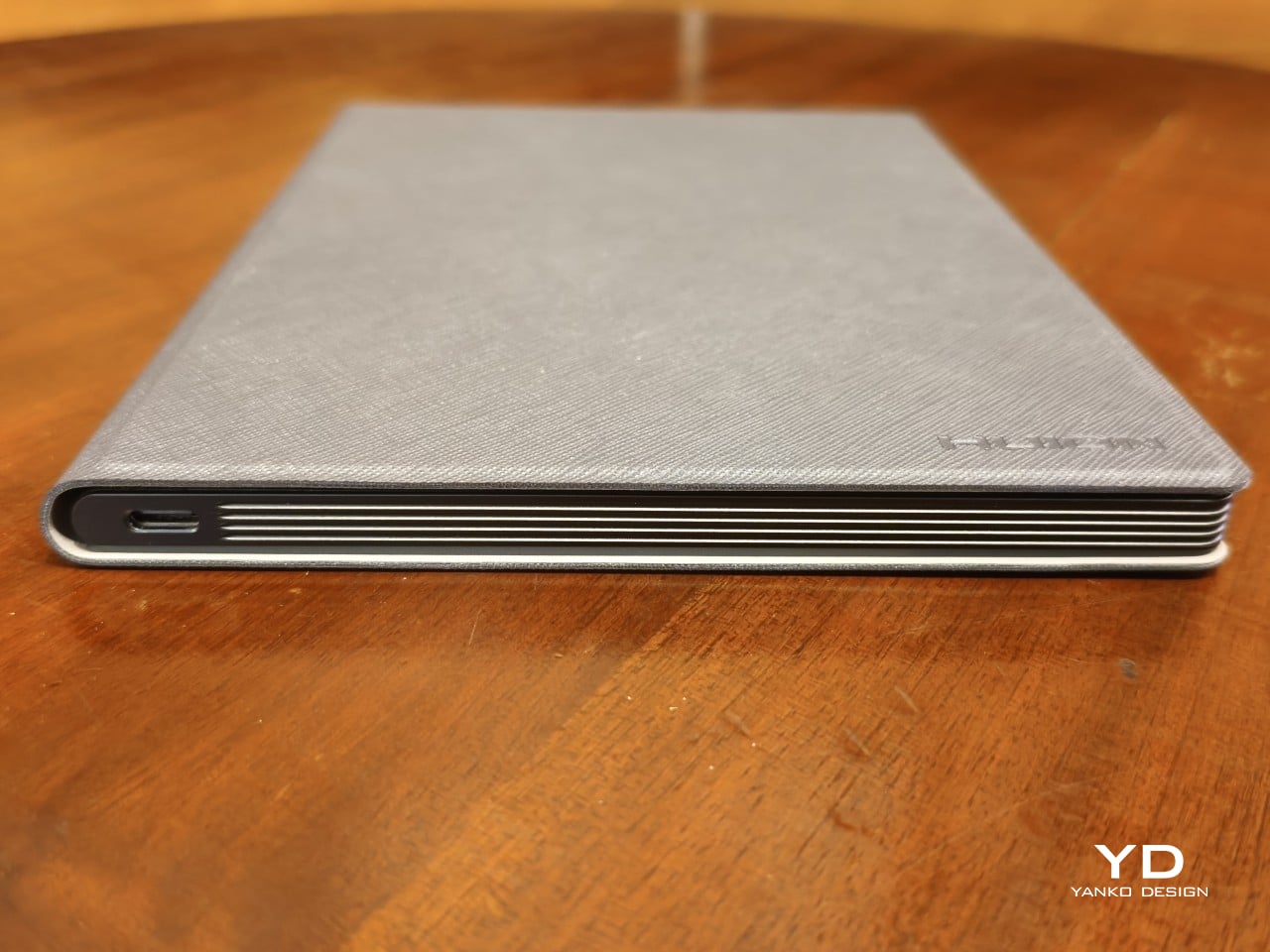
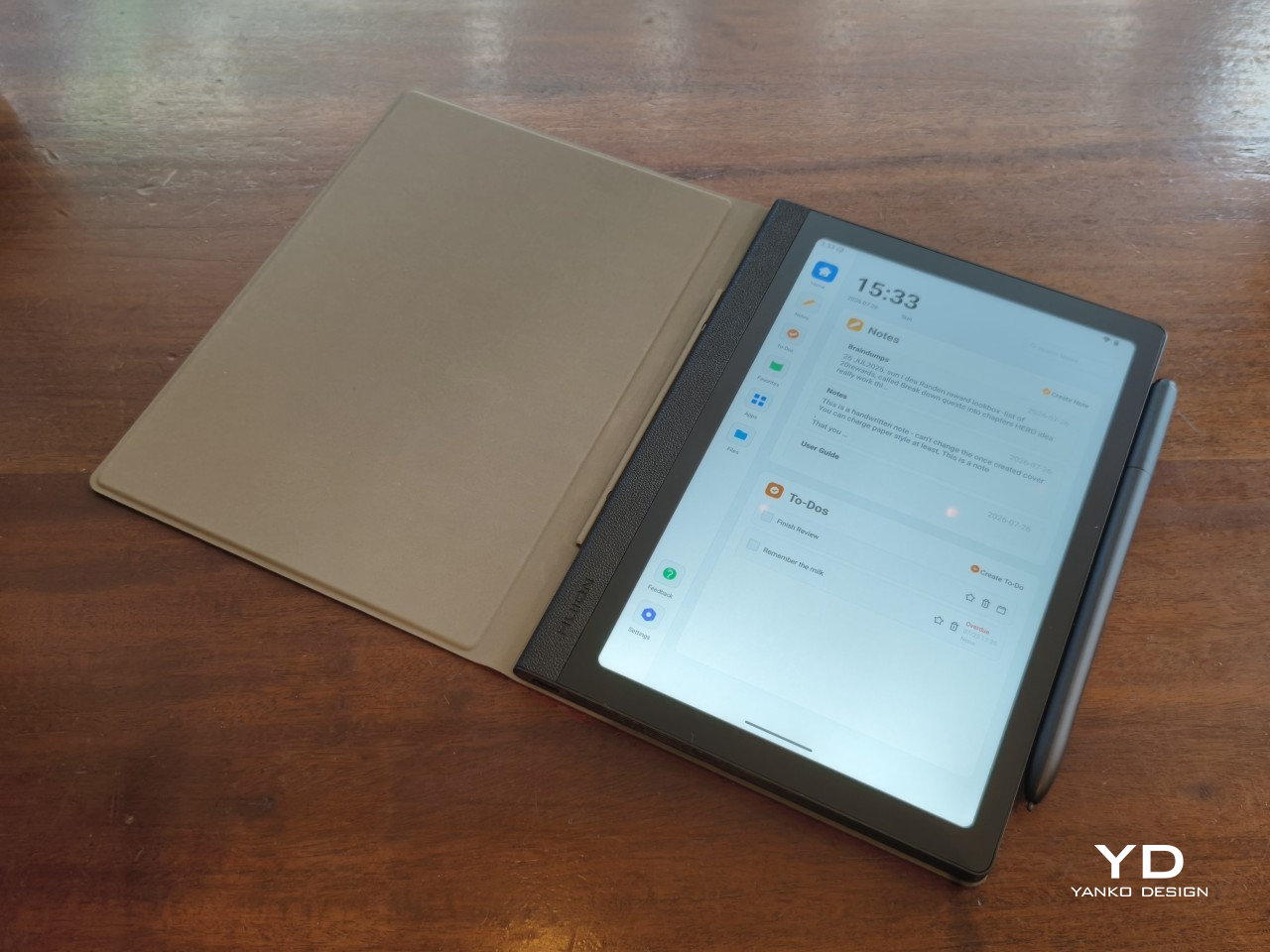
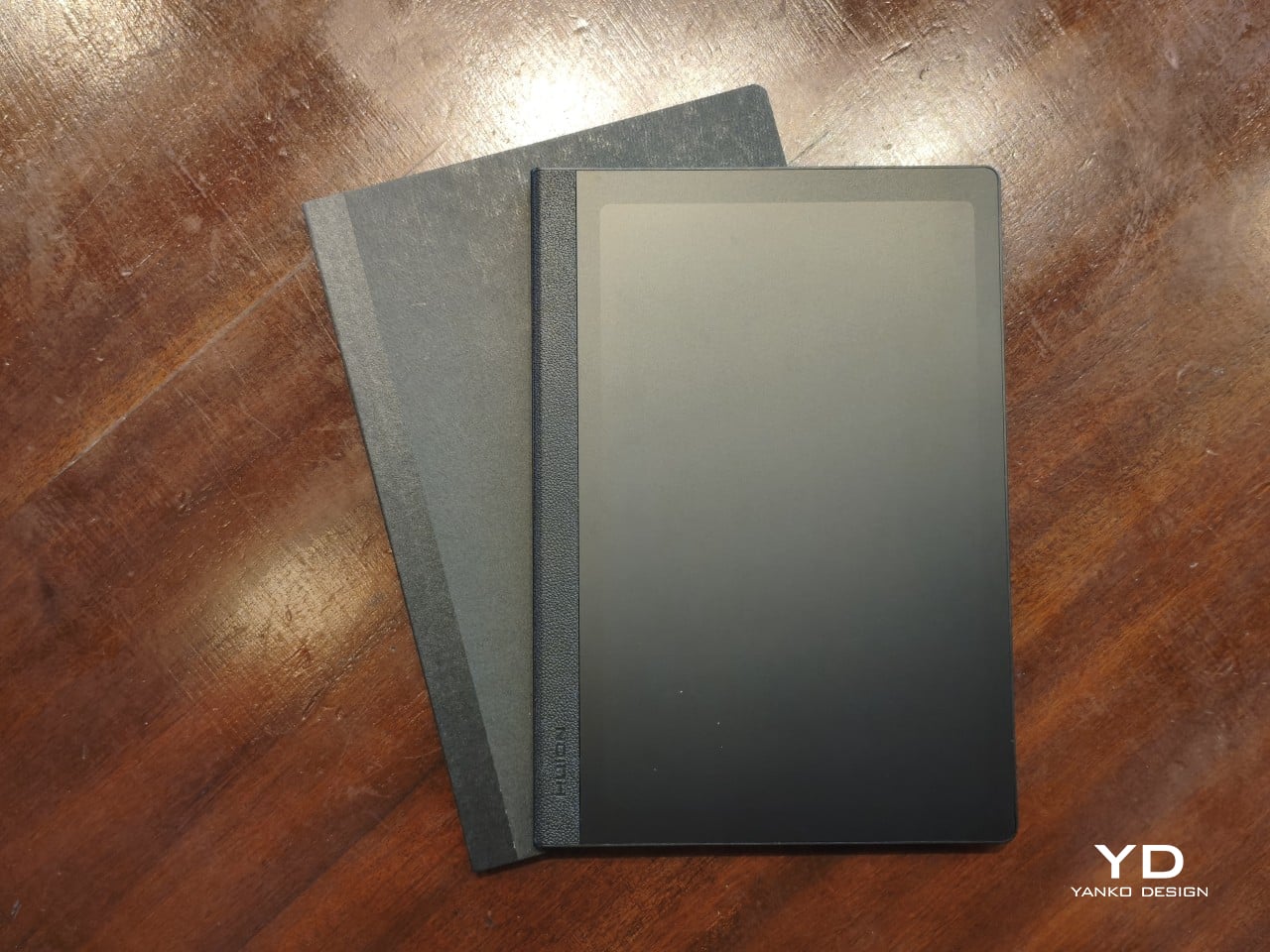
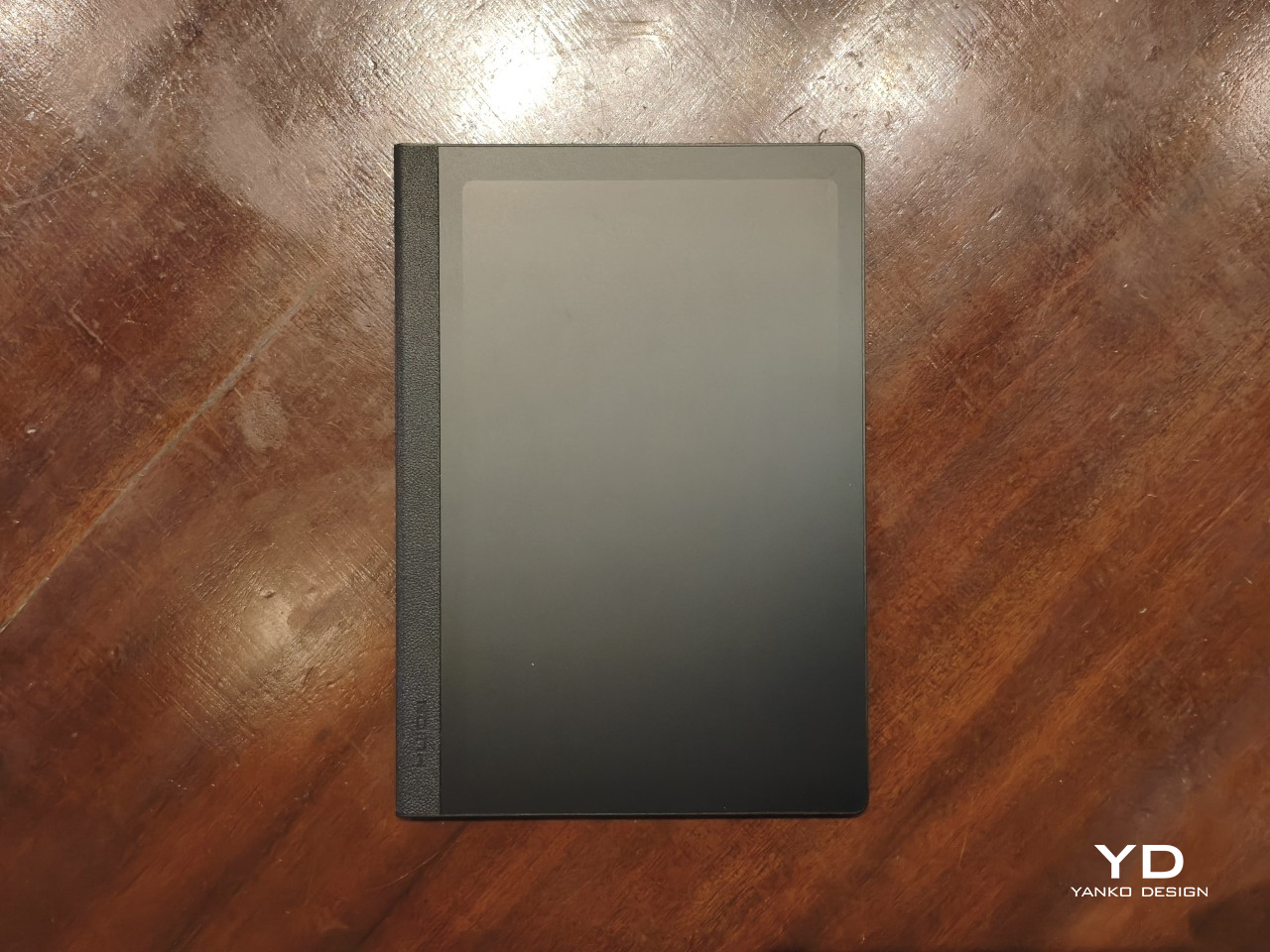
Huion dubs the Note E as an Electronic notebook, and the first impression you get definitely supports that characterization. Out of the box, it already sets itself apart from typical Android tablets and even from e-readers that have thick bezels and a wider left edge. That left edge uses a rough textured material that mimics the appearance and experience of spines on some paper notebooks.

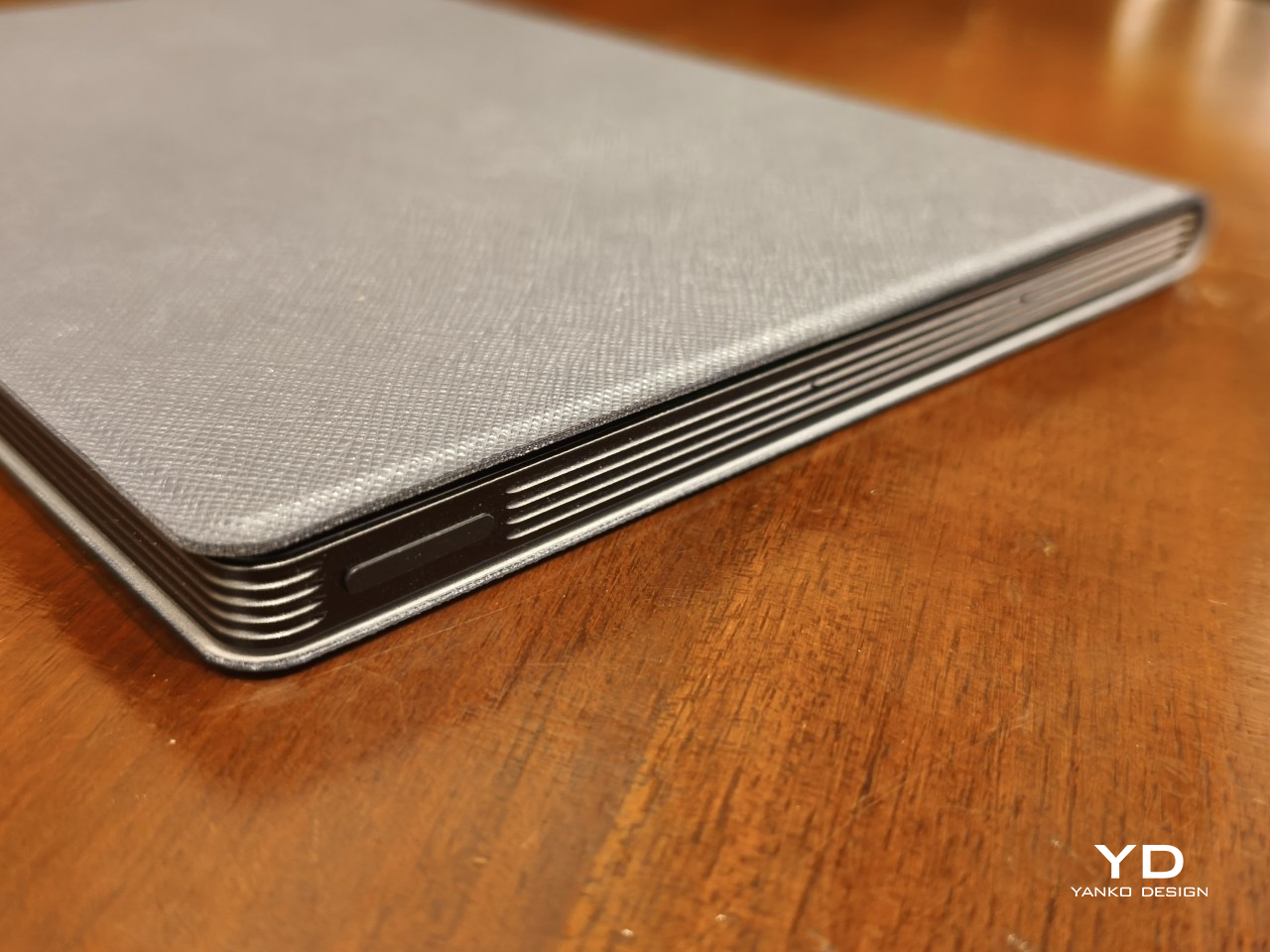
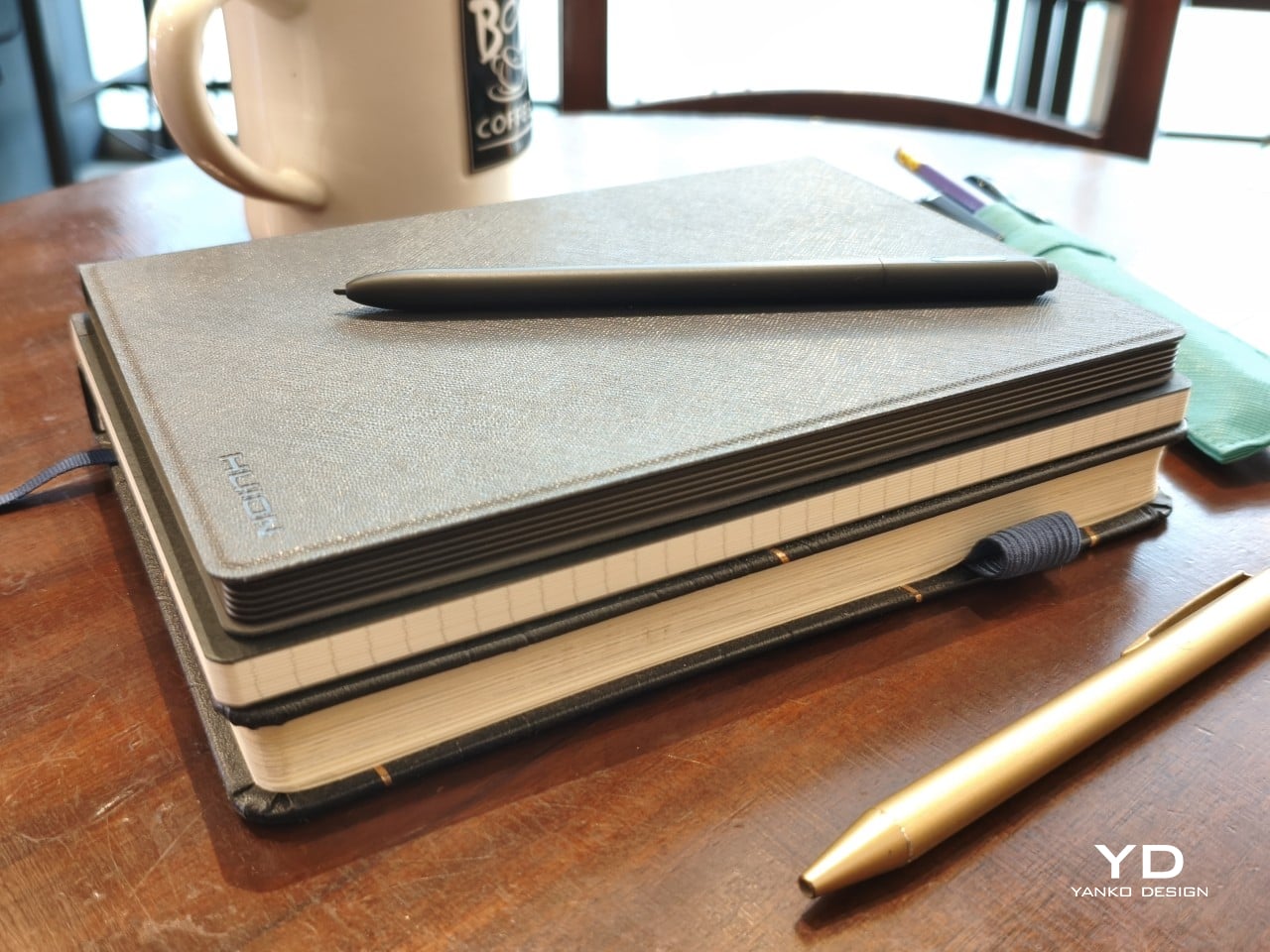
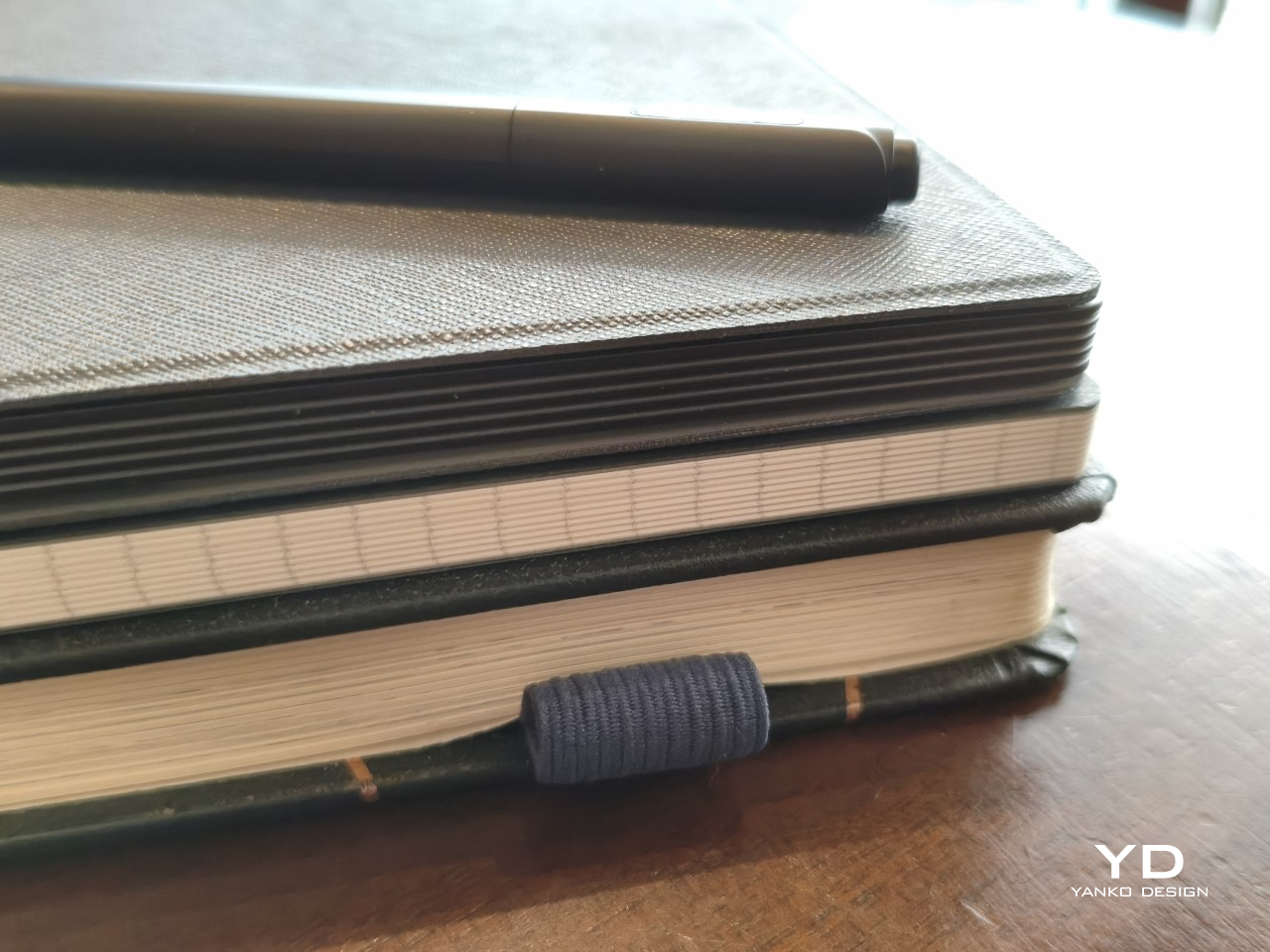
In fact, the Huion Note E tries quite hard to push that notebook metaphor, almost to the extreme. Instead of your typical smooth edges, the tablet’s sides have an unusual ridged structure that looks like pages of a notebook. That is, if your notebook used black paper. All in all, the Huion Note E presents itself well as an electronic A5 notebook, which helps endear itself to those planning to make the switch from paper to digital.

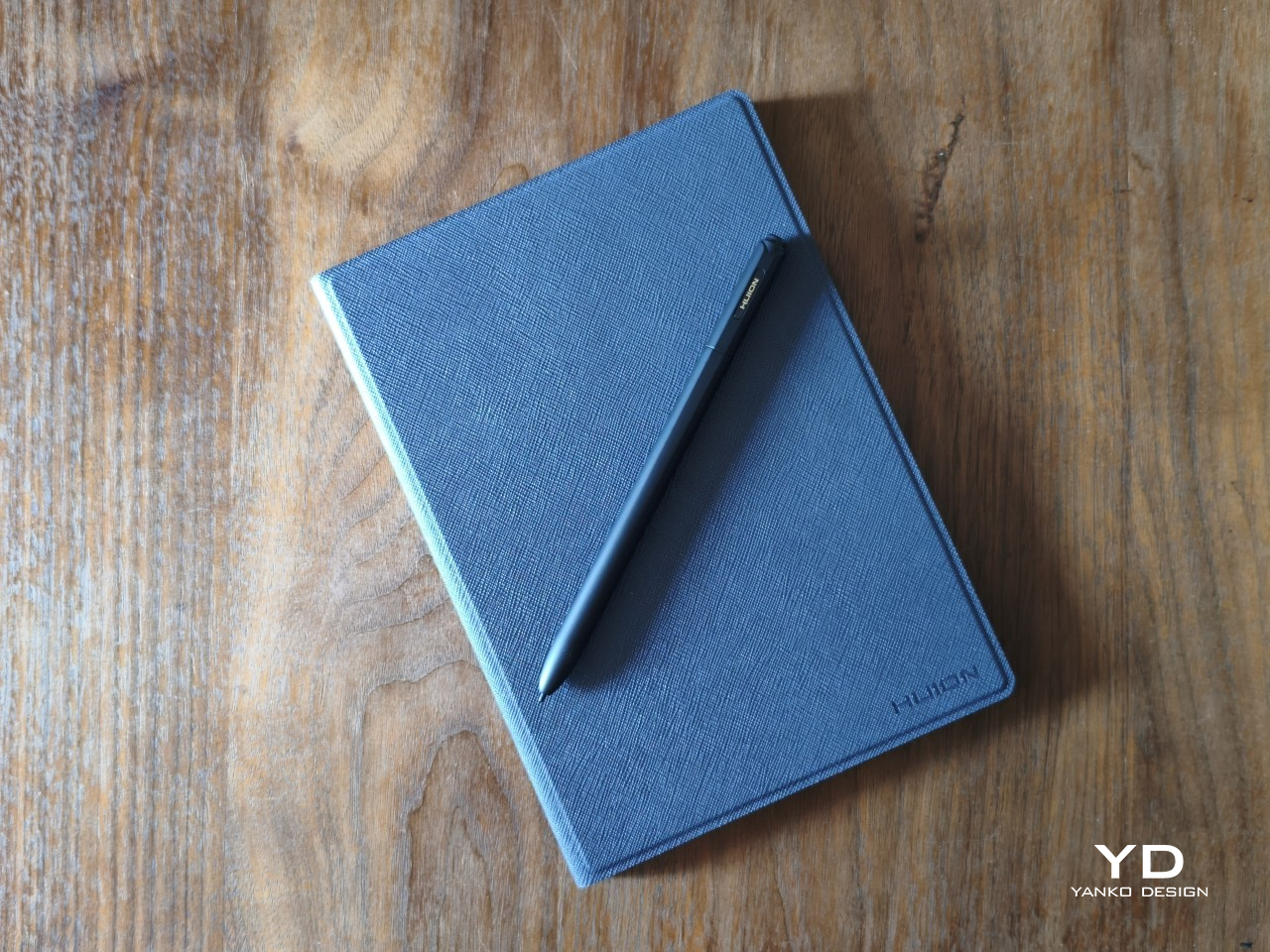
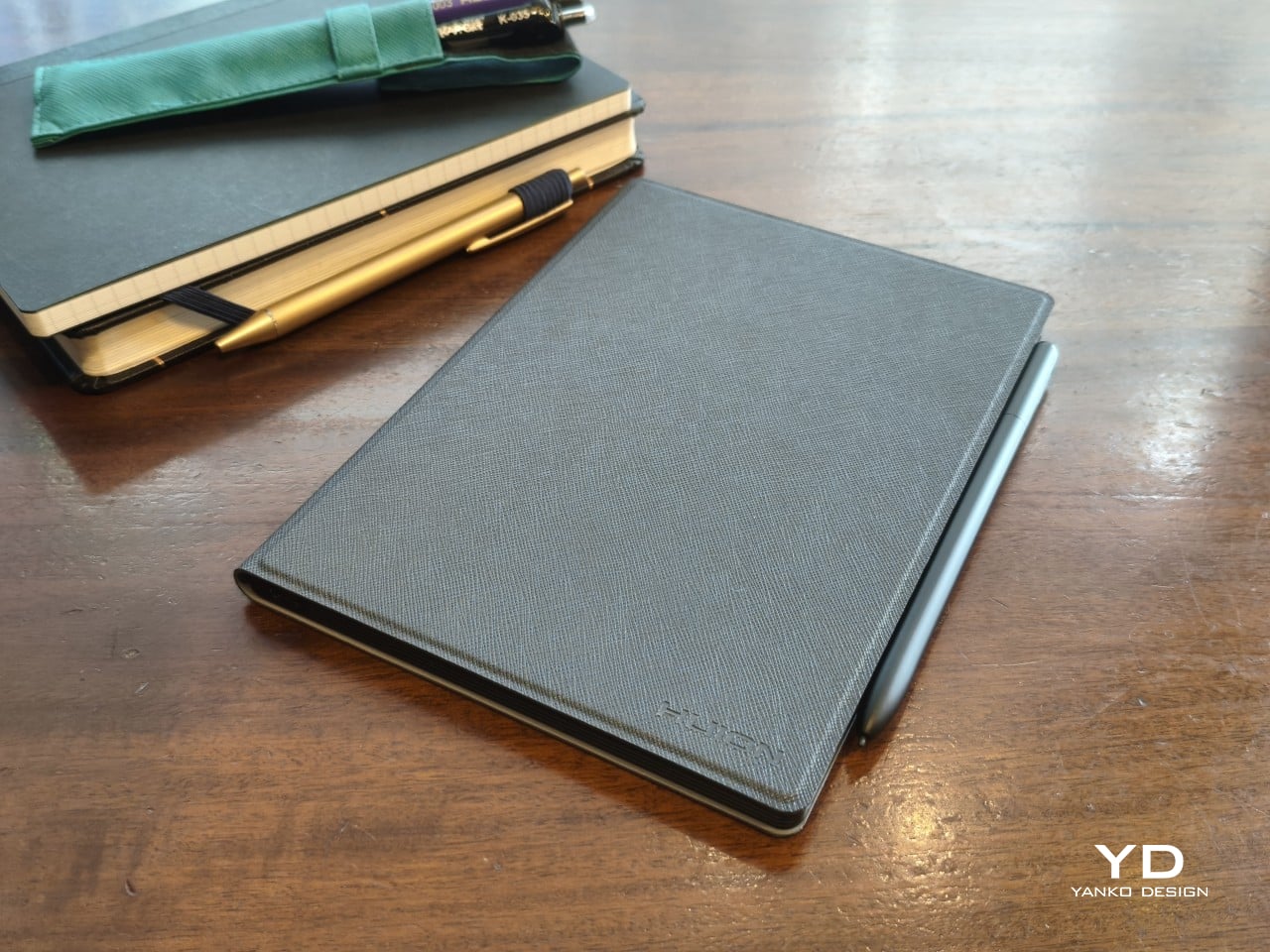
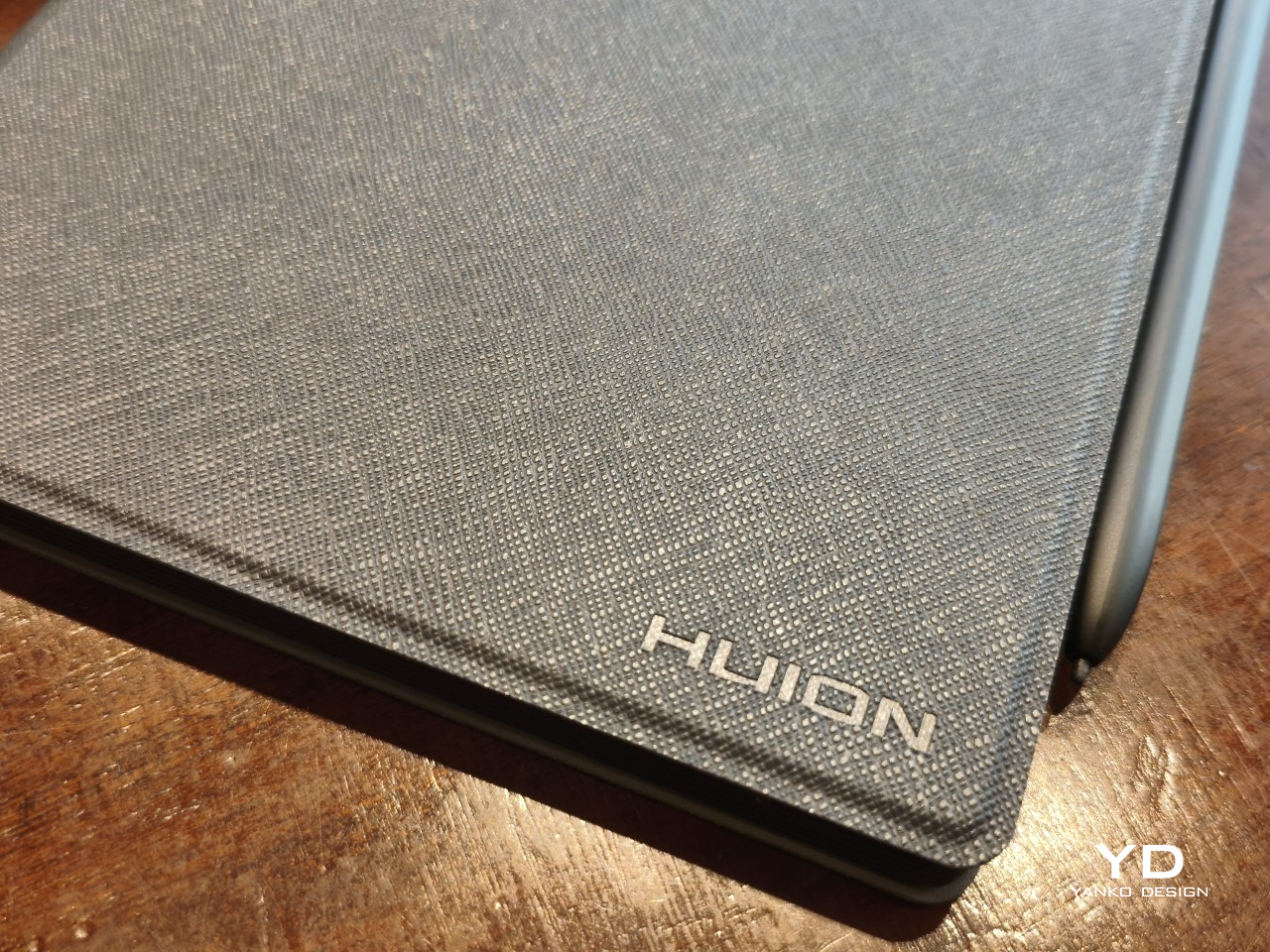
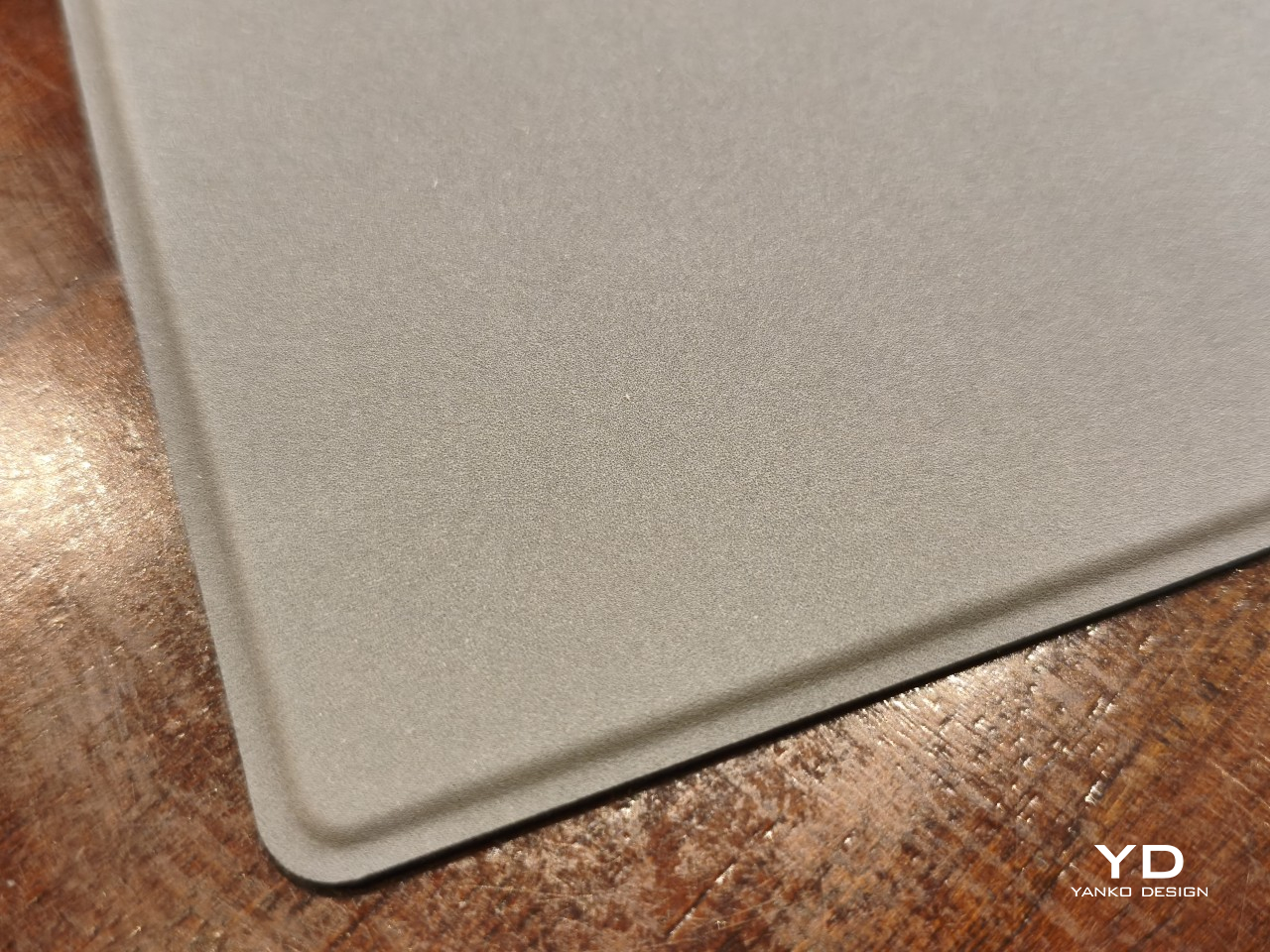
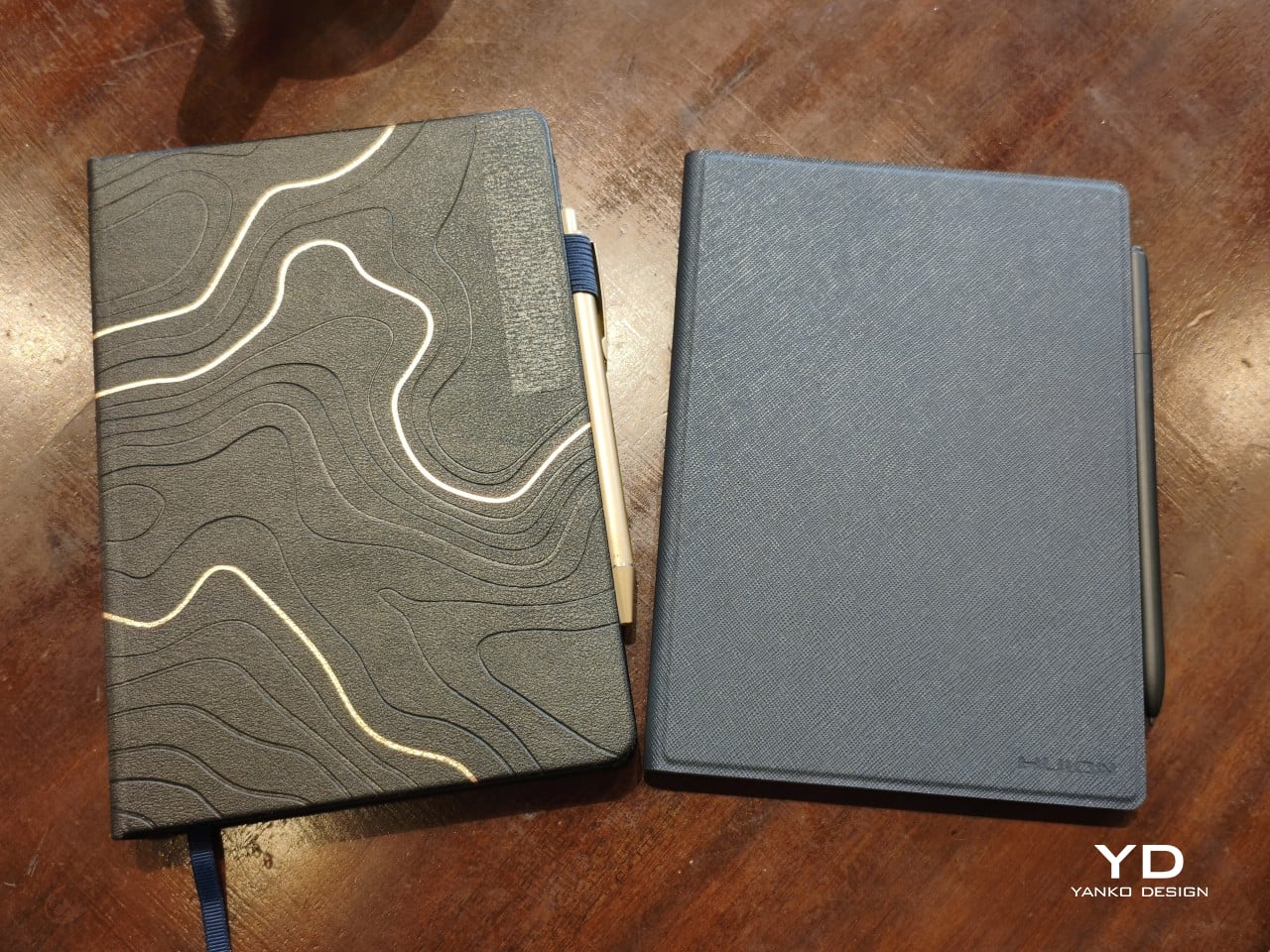
The included cover adds a pinch of luxury to that presentation, with a PU leather material on the outside and a soft, felt-like texture on the inside. It’s reminiscent of premium journals and their leather-like covers, reinforcing the image of the Huion Note E as an electronic notebook. It’s nothing grand or spectacular, but small touches like these help give the product a distinct personality as a carefully designed object rather than just another tablet in the market.

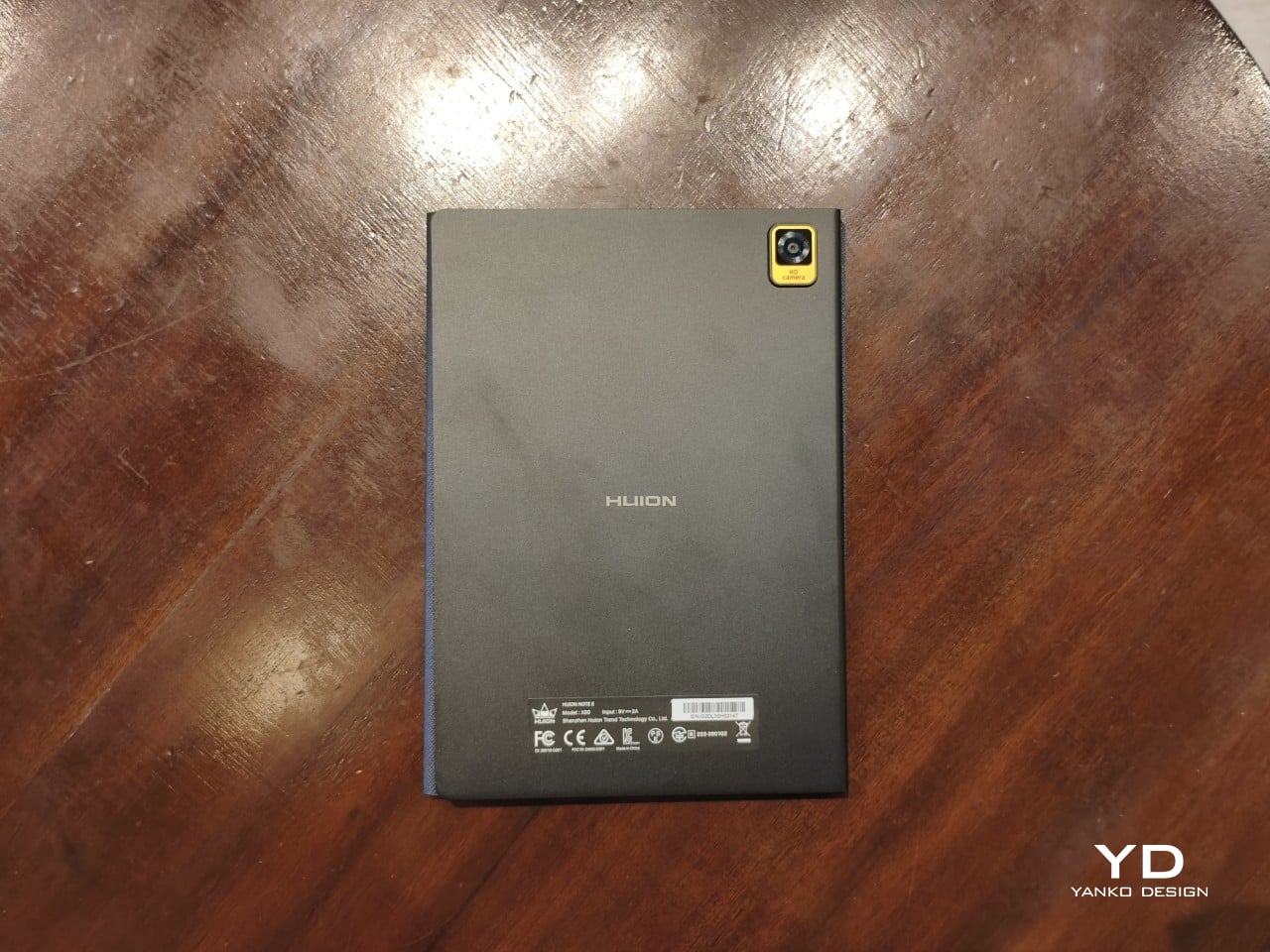
The Huion Note E embraces a very minimalist design, at least aside from those aforementioned details. Without any physical volume controls, only the power button, USB-C port, and holes for the mics, speaker, and cover break the flow of the ridges around the device. The LCD screen with anti-glare nano-etching is laminated and lies completely flat, just like a page of a notebook. The back is also pretty bare, save for the Huion branding in the middle and the camera bump in a rather unconventional corner. The back has a somewhat matte texture that is, unfortunately, quite a smudge and fingerprint magnet.

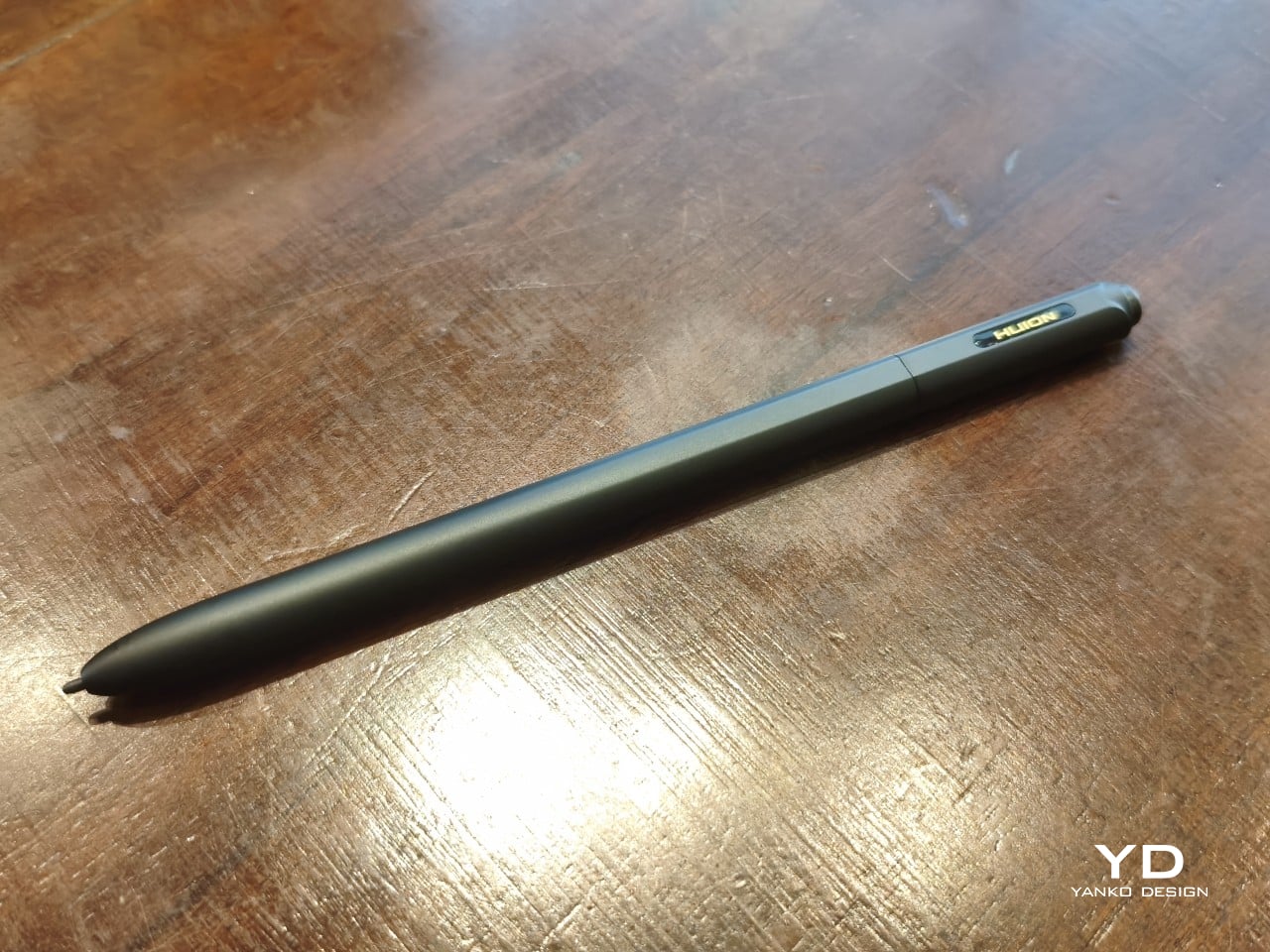
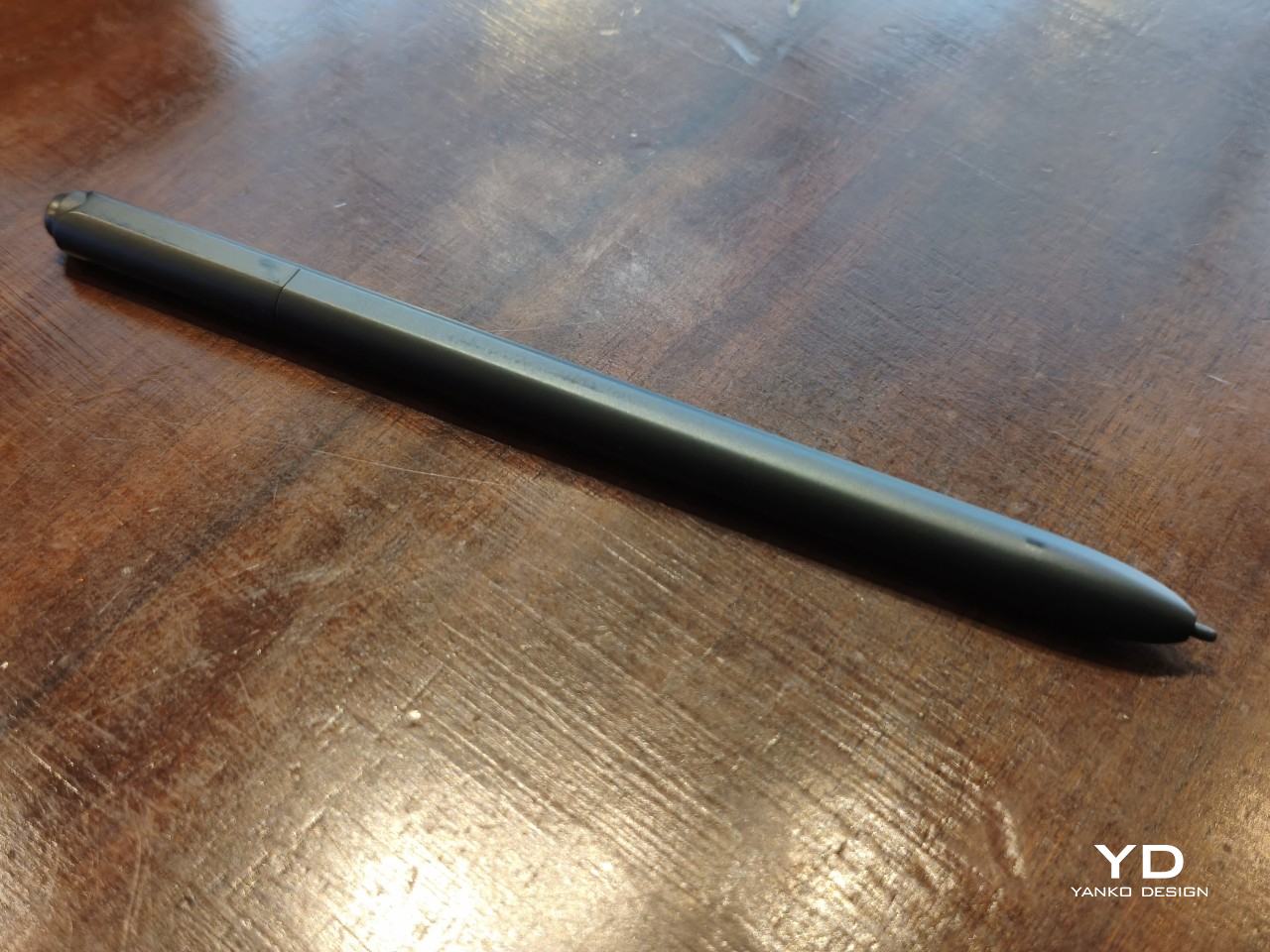
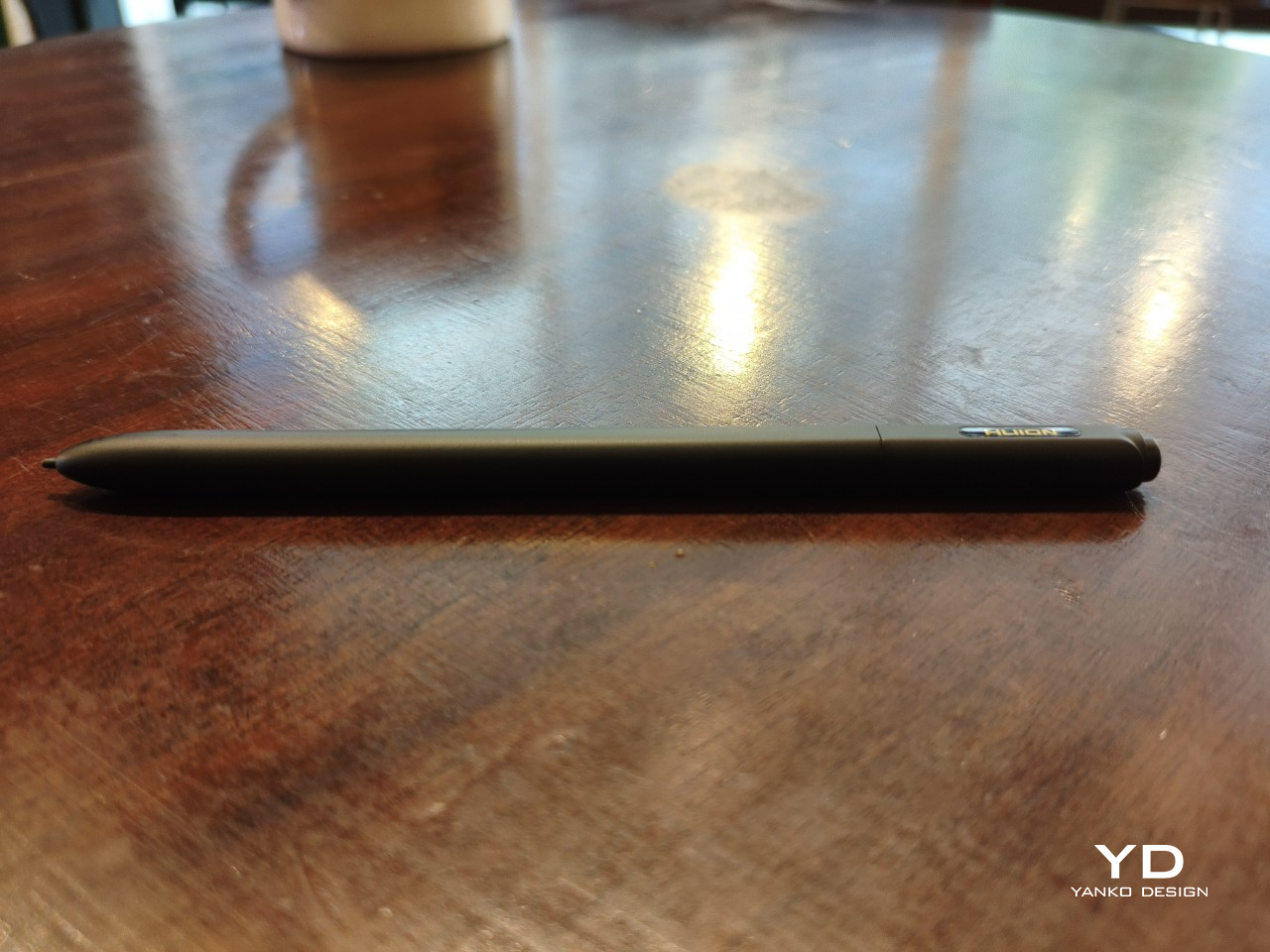
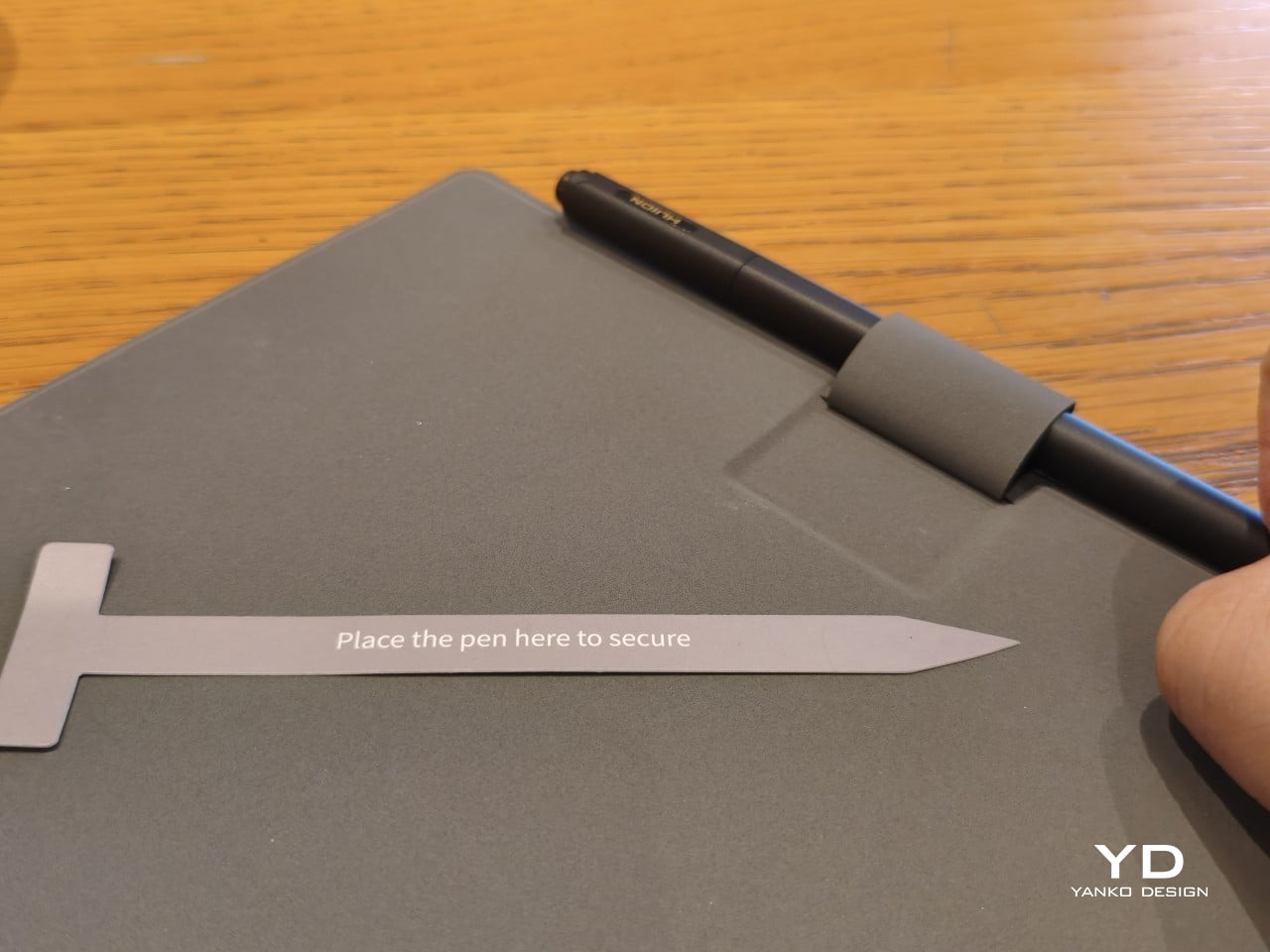
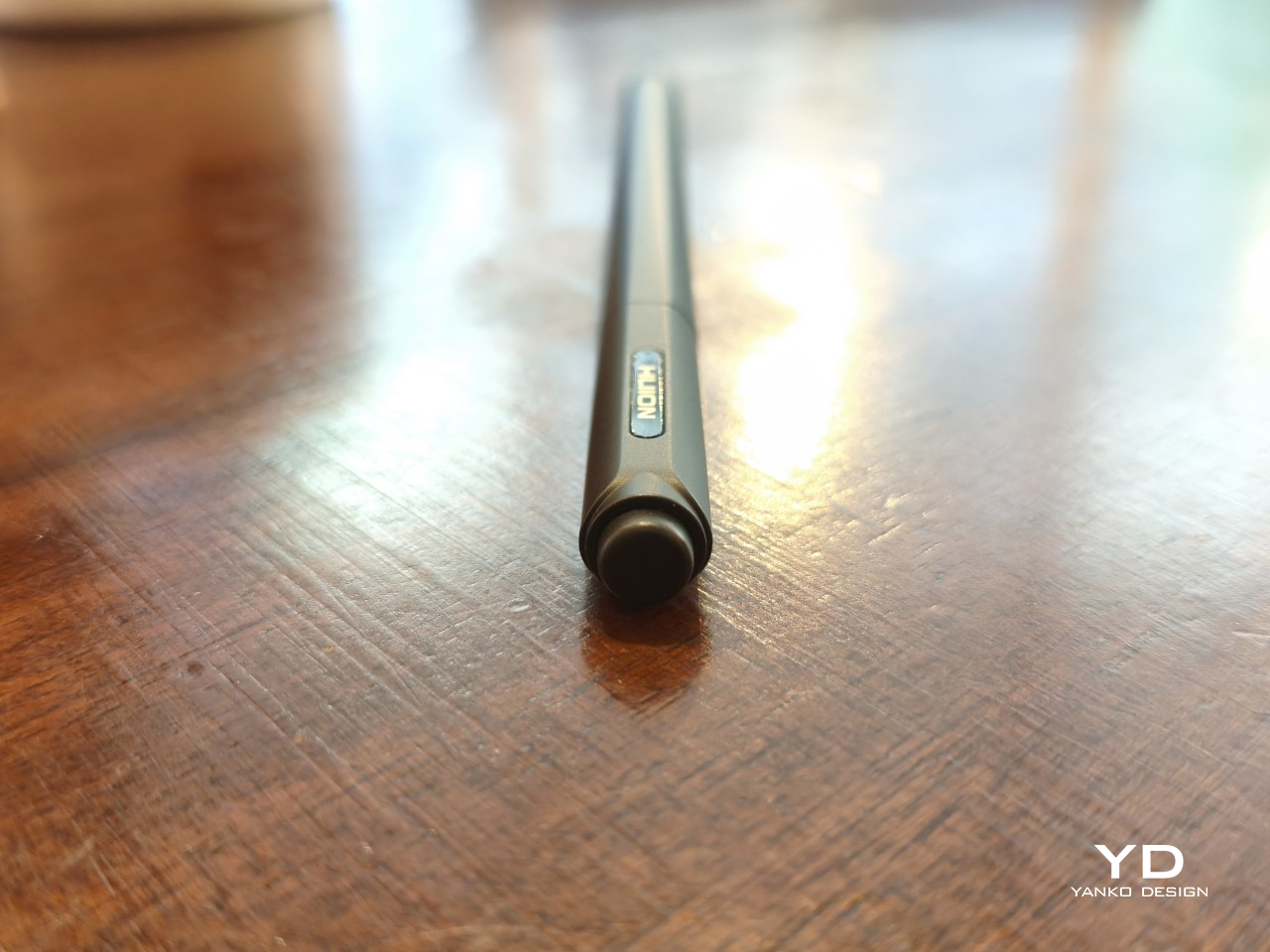
The included stylus, a Huion PW510 with PenTech 3.0, follows that same minimalist aesthetic. It has no side buttons, for better or for worse, and aside from the pen nib, the only interaction point is the springy eraser on the other end. The 9mm-diameter barrel has two flat sides that keep it from rolling off a table. Amusingly, the pen seems to roll on its “back” more often than not, ensuring that the Huion name on the barrel is always visible.

Ergonomics

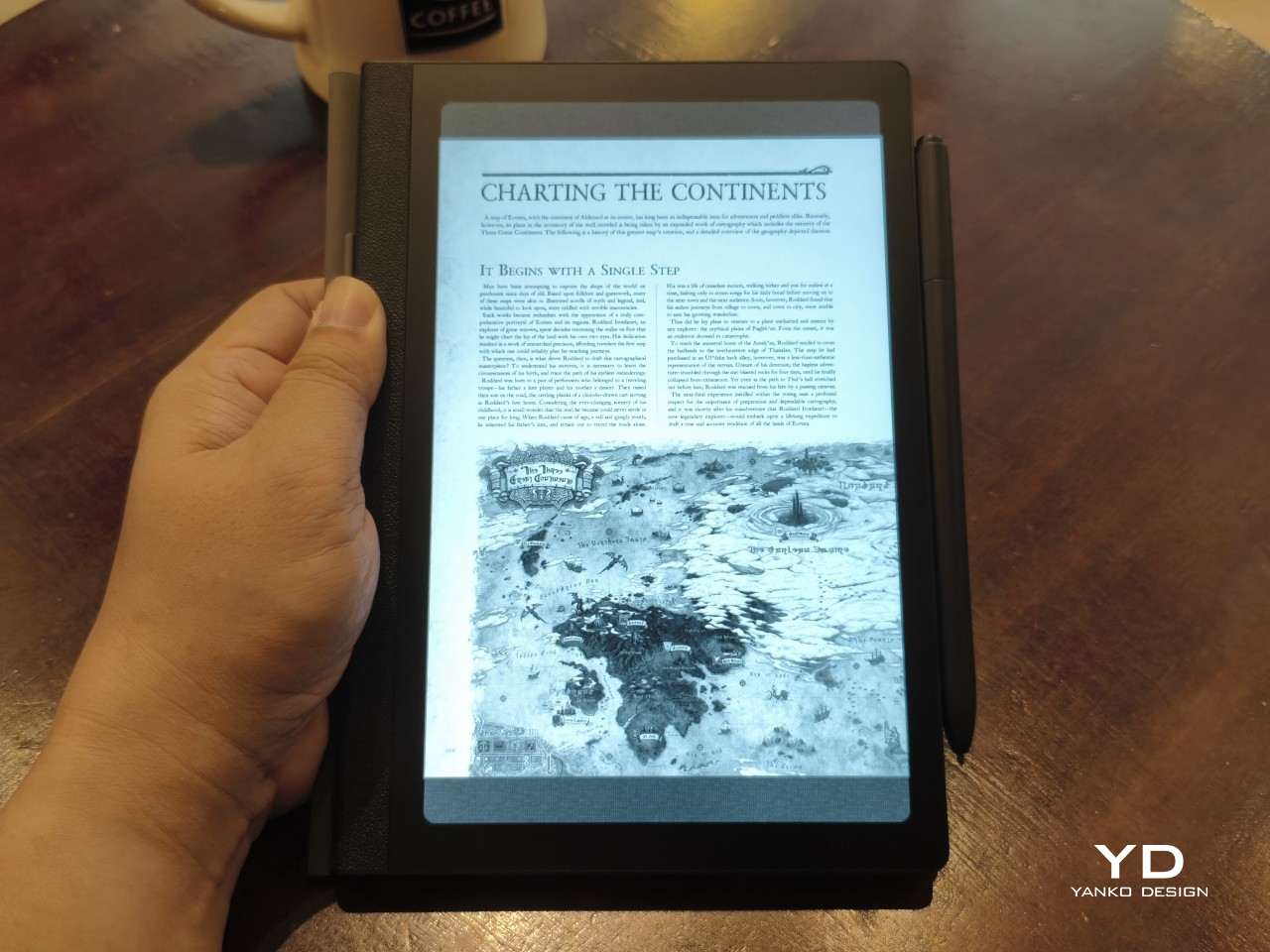
The comparison with a paper notebook doesn’t stop at the appearance. The Huion Note E is almost exactly the size and thickness of an 80-page A5 notebook. At around 348g, it almost weighs as much as one, though the cover adds around 100g more to that ensemble. It’s still light and slim enough to carry everywhere you’d normally take notebooks with you, with the advantage that you only need one Note E versus a stack of A5 notebooks.

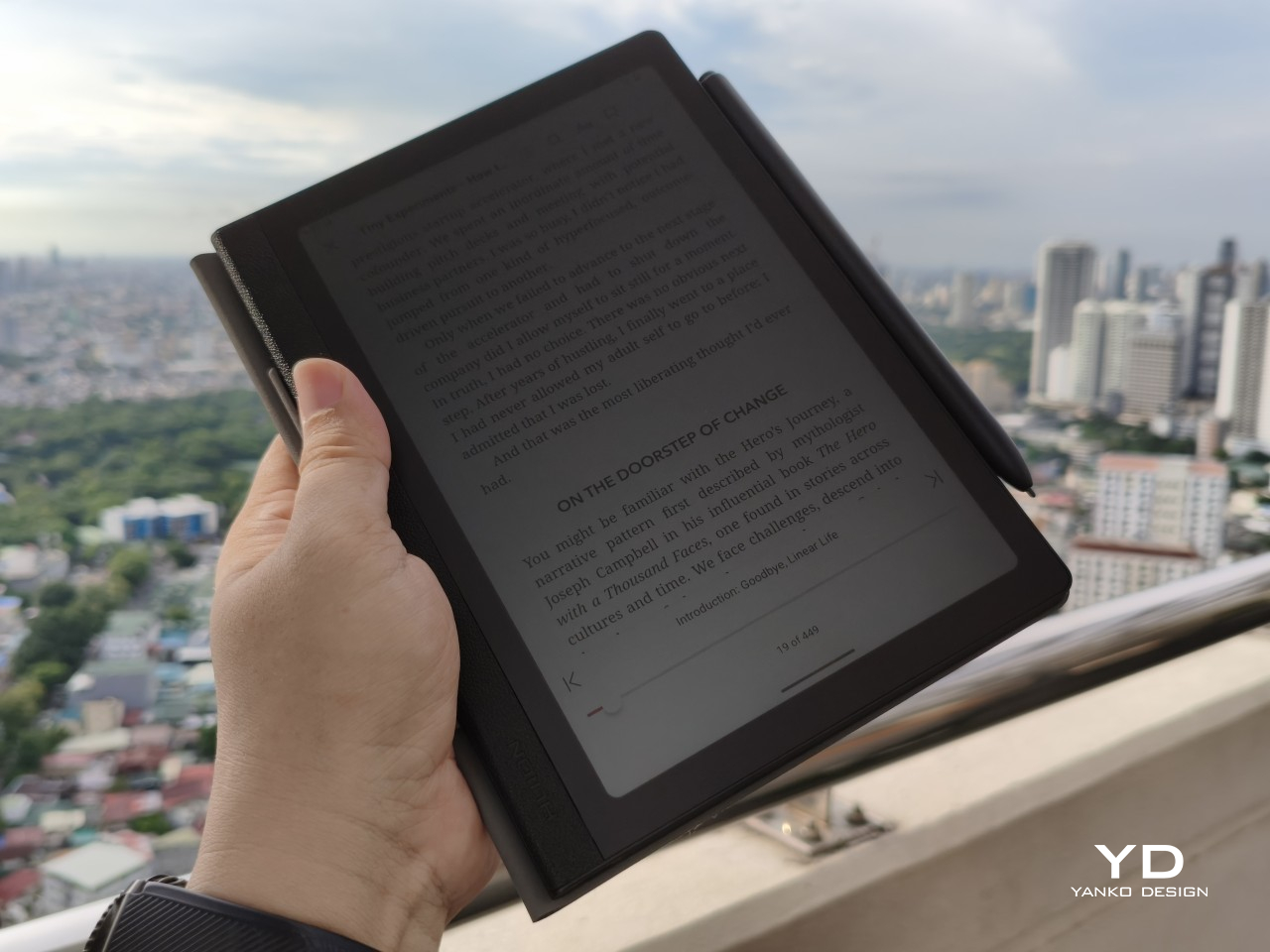
That also means it’s convenient to hold the Huion Note E up in one hand, though your exact comfort will depend on your hand size and grip. Those with larger hands or longer fingers might be able to more comfortably grip both edges to hold the tablet like a notepad, while some might prefer gripping the textured left edge instead. That said, the device has enough heft that it can start to feel a bit tiring after a long period of time.

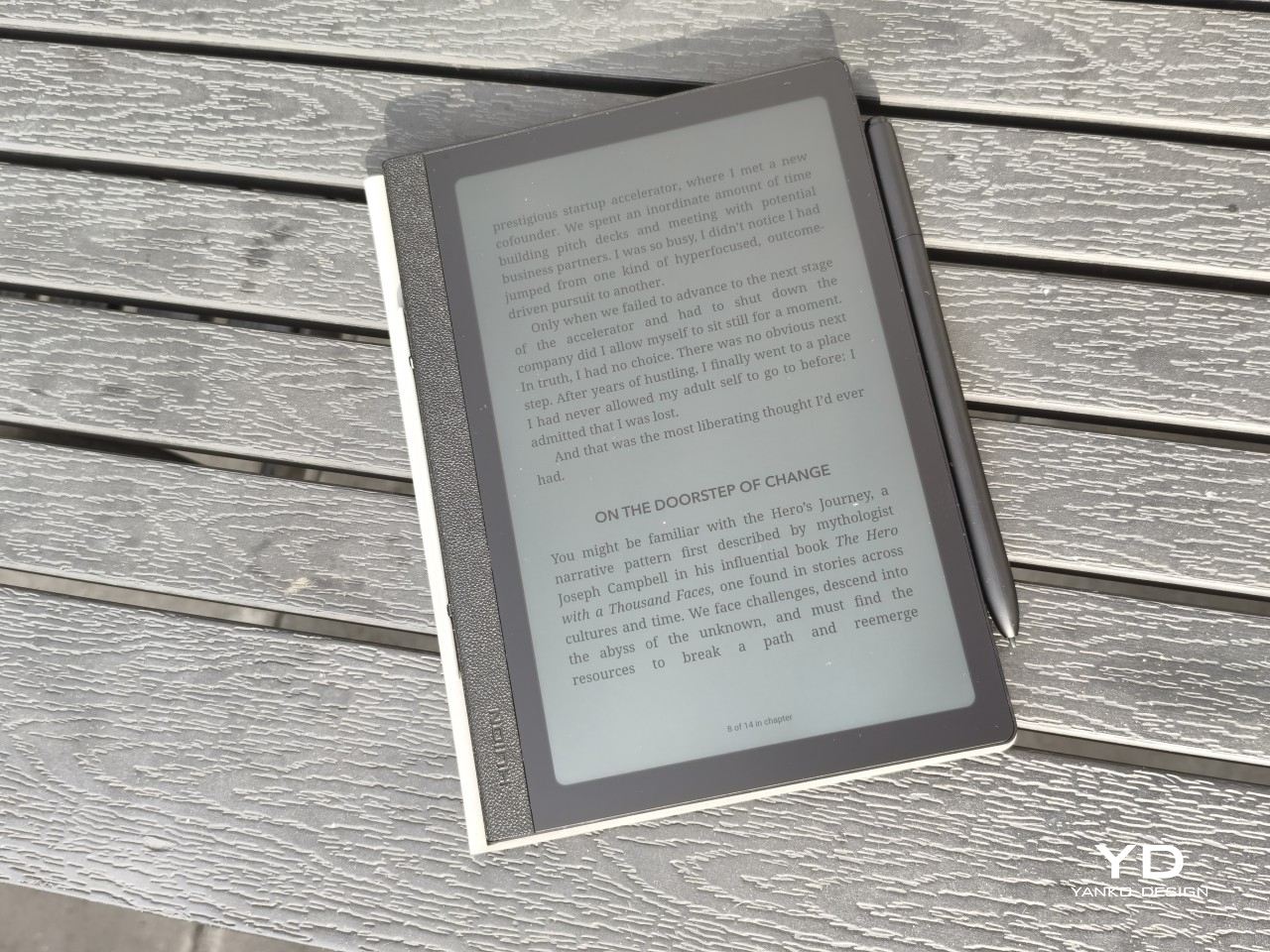
The Huion PW510 pen’s 9mm diameter also makes it a joy to hold and use. It has enough girth to feel comfortable without being too chunky. The body is also well-balanced, so nothing weighs down your hand to get in the way of writing. The lack of a side button aligns with the goal to mimic a pen and paper experience, though at the expense of some useful functionality. The pen magnetically attaches to the side of the Note E, making it easy and convenient to stow away the pen when not in use. There’s also a pen loop on the included cover, though designed in a rather unusual way.

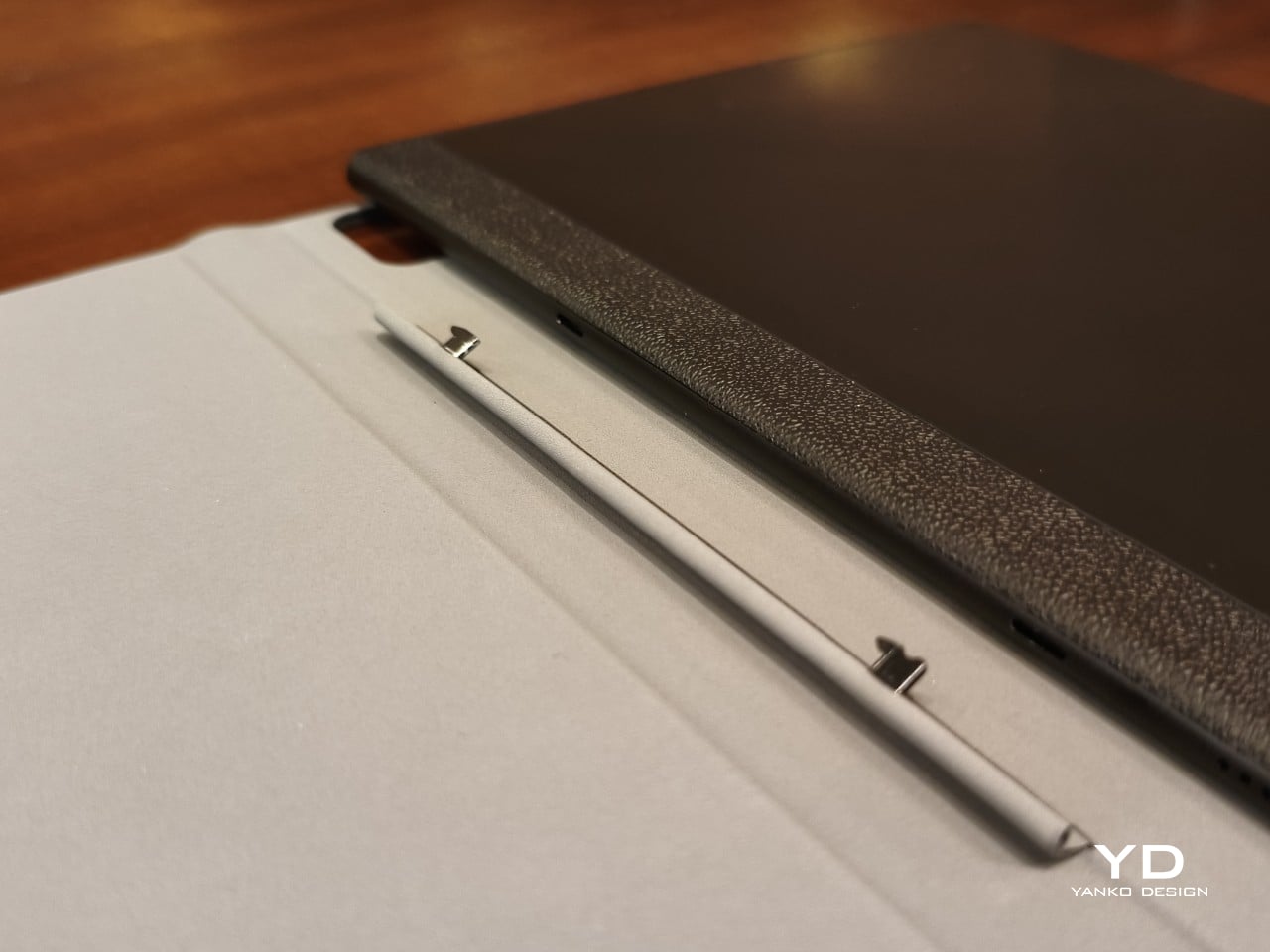
That magnetic cover itself is a bit of an odd duck, sadly. While it’s understandable that Huion avoided using extra-strong magnets that would have affected the EMR pen’s performance, the mechanism they chose feels both unintuitive and flimsy. There are two small prongs inside the spine of the cover, and you have to slide the tablet up or down, depending on whether you’re removing or attaching it, respectively. Given the size of the prongs, it feels like an accident waiting to happen.

One rather curious note is the placement of the power button, which also functions as a fingerprint scanner, on the upper right edge. I usually open books or notebooks from that corner, so when I flip the cover open, my finger naturally brushes against the power button and automatically unlocks the tablet so I don’t have to do that step consciously. Whether that design was intended or not, it was still a nice touch, no pun intended.

Performance

Huion already has quite a number of Android-powered tablets in the market, including a 10-inch one with an E Ink screen. The Note E, however, has a distinct purpose that calls for a rather different combination of hardware and software features. It’s meant to be a highly portable digital notebook first and foremost, so everything else falls under this lens, both the good and the bad.

Specs and Battery

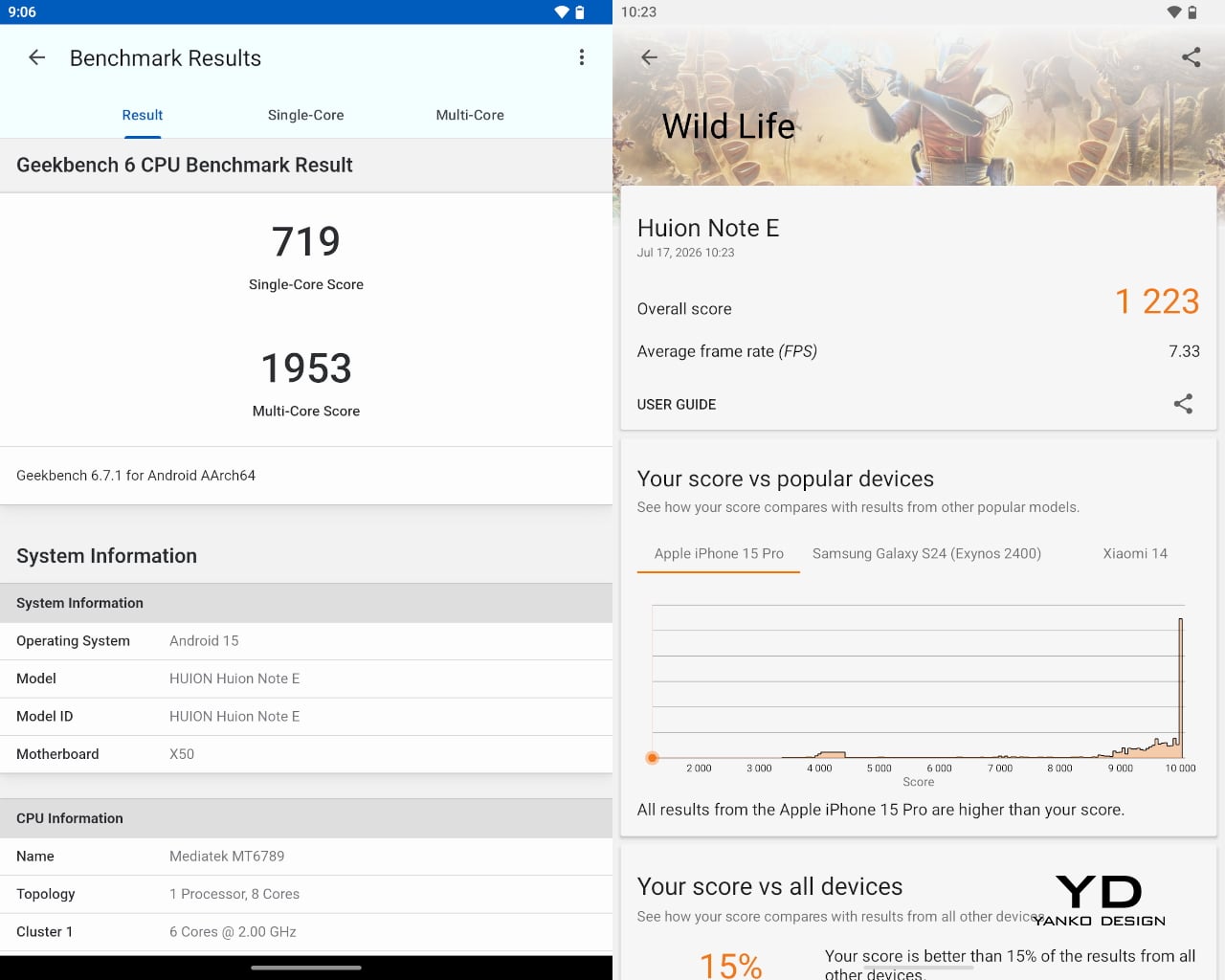
The Huion Note E is unambiguously what would be considered a mid-range tablet, especially with its MediaTek Helio G99 processor. While that may have been billed as a gaming chip for budget smartphones back in 2022, it doesn’t hold a candle to today’s mid-tier silicon, at least in theory. In practice, however, it actually performs quite well, especially with 6GB of RAM that gives apps sufficient space to operate. It’s no racehorse, for sure, but that isn’t even the point of this device in the first place.

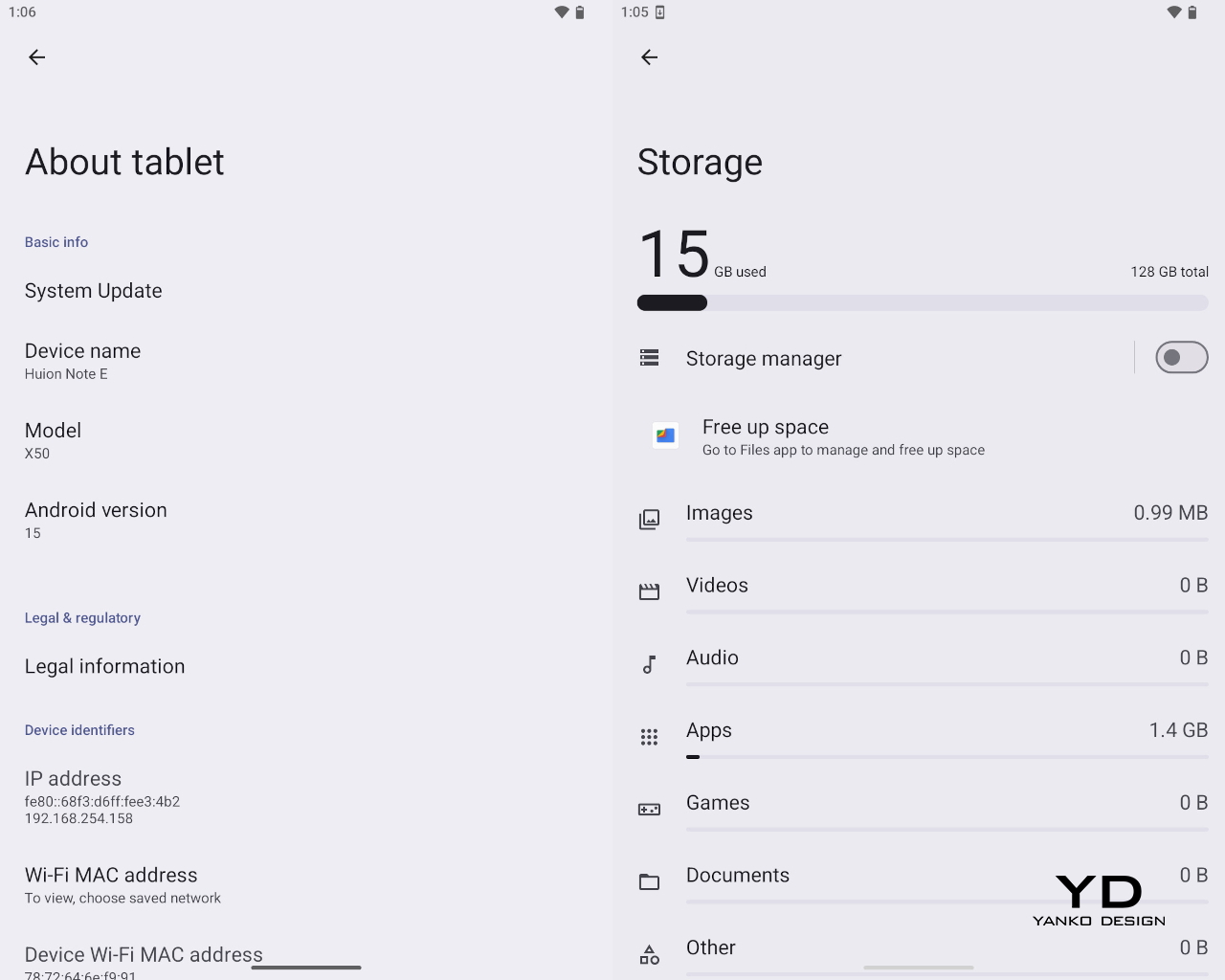
The tablet comes with 128GB of RAM, which is modest by 2026 standards, especially without any option to expand it with a microSD card. It will be enough to hold notes, pieces of art, and ebooks aplenty, but you’ll definitely feel cramped for anything else. You will definitely feel the intentional limitations Huion put in place, preferring to focus on the core use cases for the device: note-taking with a bit of drawing and reading on the side.

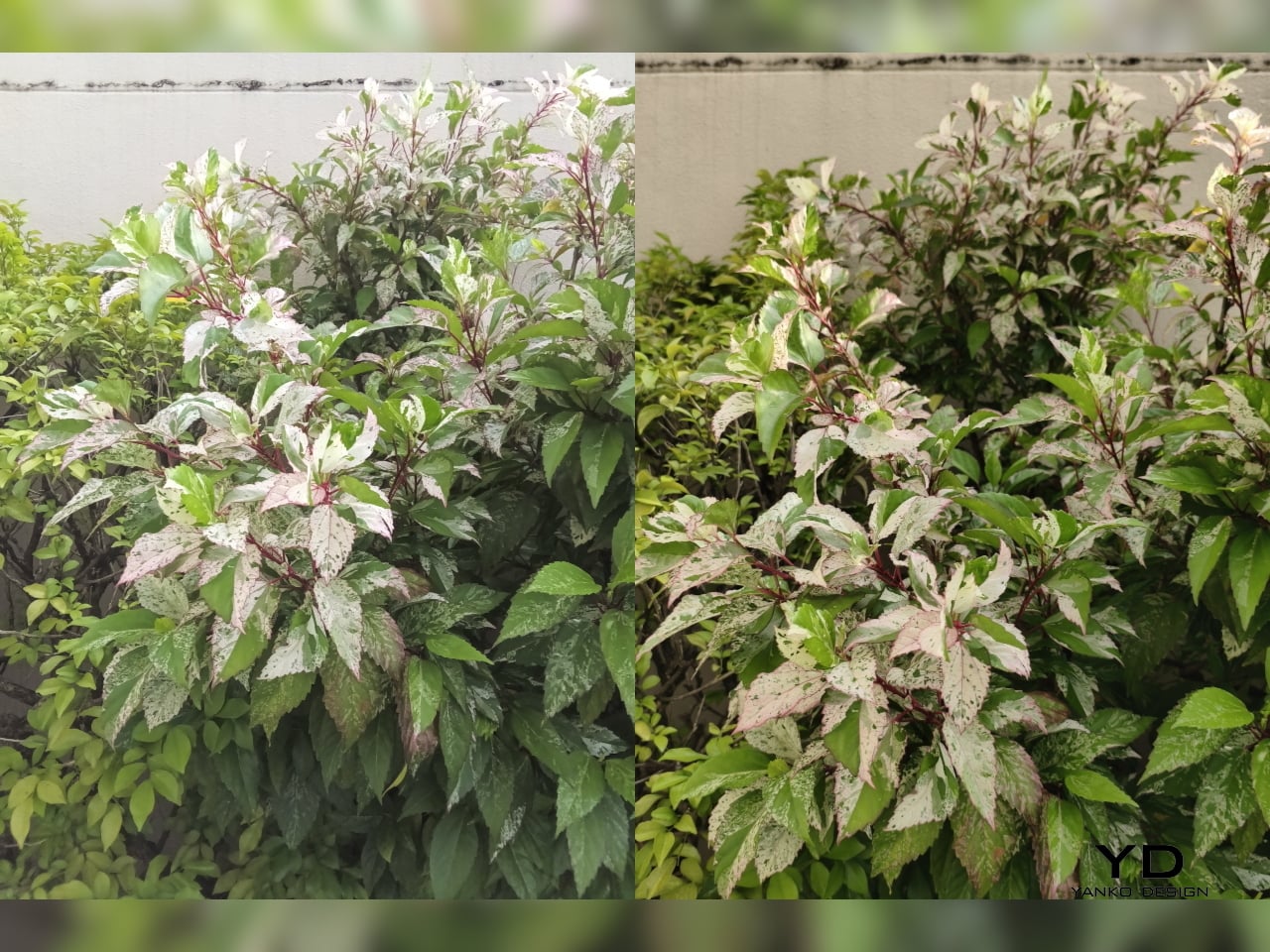
Huion Note E (Left) | POCO X8 Pro (Right)

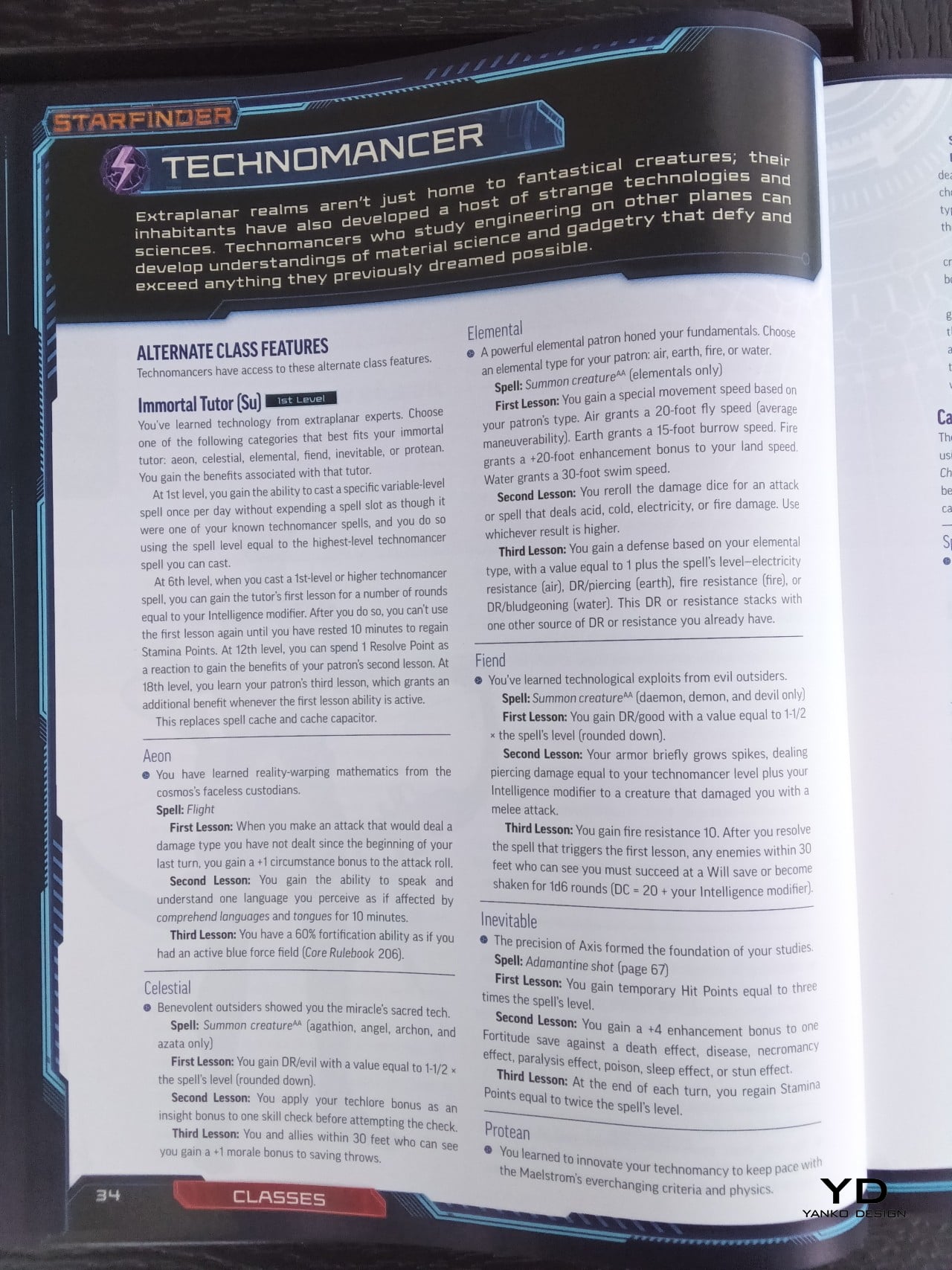
That’s also why the Huion Note E’s camera story is almost non-existent. There’s an 8MP shooter on the back that’s primarily for scanning documents, notes, and books. You can take passable photos, definitely, but the quality is so basic you’d be better off reaching for your smartphone. Yes, you can probably snap up a reference for your drawing, but don’t expect accurate colors, let alone fine details. Unsurprisingly, there is no front-facing camera, even for video calls.

A 4,500mAh battery sounds a little too modest for a tablet, but it does surprisingly well. On standby, with 2 or 3 benchmarks run, it lasted almost three days from full to 5%. On a full day of regular use, you won’t even need to reach for a power bank until the next day. The 18W “fast” charging speed is definitely a bummer, requiring 2.5 hours to top up.

Display and Pen

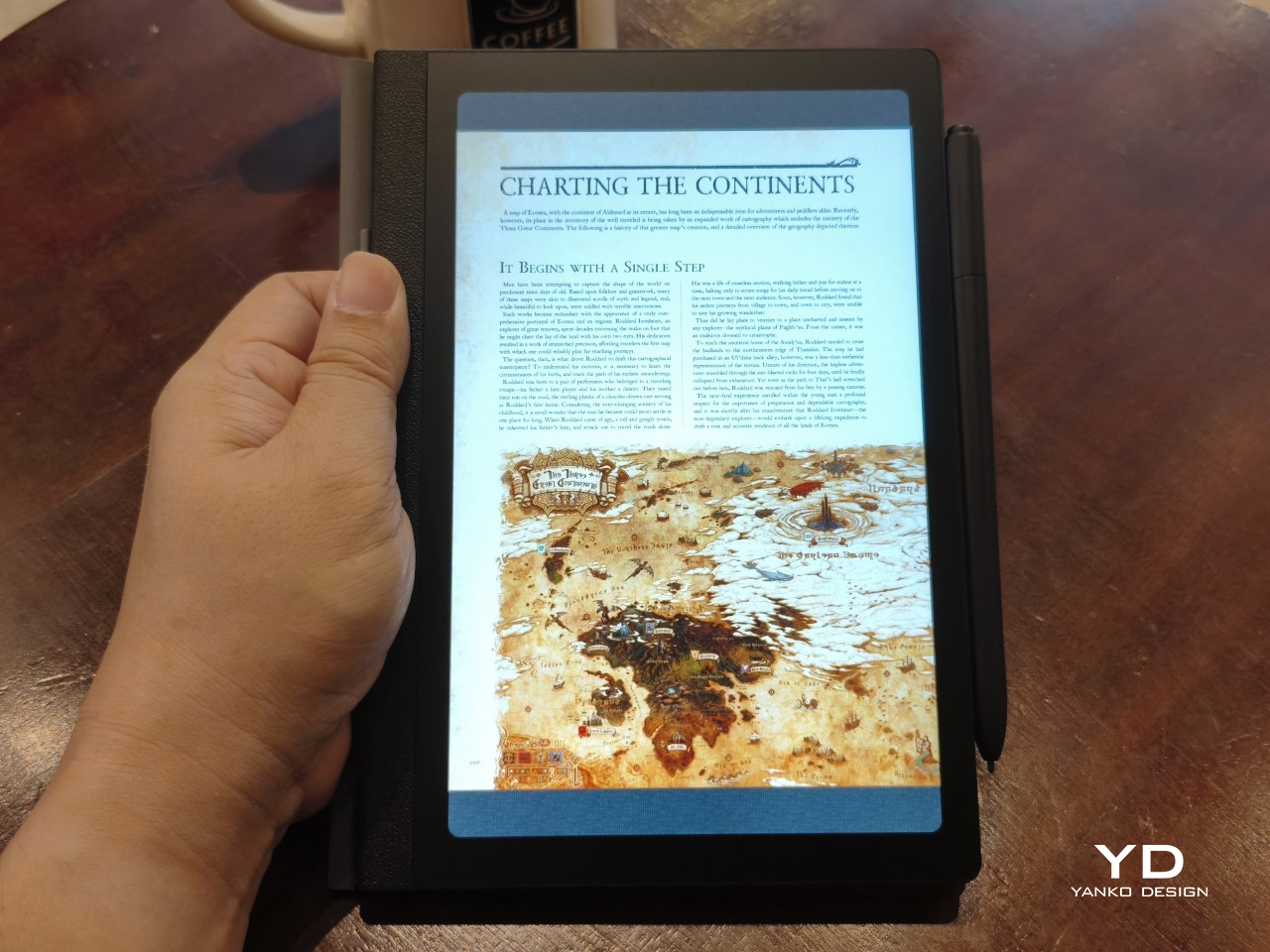
Where the Huion Note E excels is, of course, the screen and stylus experience, which isn’t surprising given the brand’s core technologies and target market. The 8.4-inch laminated LCD screen comes with an anti-glare nano-etched surface that is advertised to provide a traditional pen-on-paper experience. In practice, it feels more like writing on a sheet of smooth, high-quality paper, like the ones you’d find in Japanese-made notebooks and planners. It doesn’t exactly have that “scratchiness” of regular paper, but there’s enough resistance that it doesn’t feel like plastic sliding on glass.

With a 1920×1200 resolution, the 60Hz screen boasts a pixel density of 270 PPI, close to what ereaders offer. Huion doesn’t advertise it as something similar to E Ink, nor does it even talk about a paper-like reading experience. It’s still an LCD screen, though with some features aimed at helping reduce eye strain. For example, it opts for DC dimming over the more popular PWM to reduce flickering that hurts the eyes over long periods of use.

All of these come together to deliver a screen that is sharp, clear, and colorful, allowing for a variety of uses that go beyond just scribbling or reading. Under bright light, even under the sun, the screen is still readable, especially at max brightness. The anti-glare finish does affect viewing angles, but very few people would read or write at an extreme angle anyway.

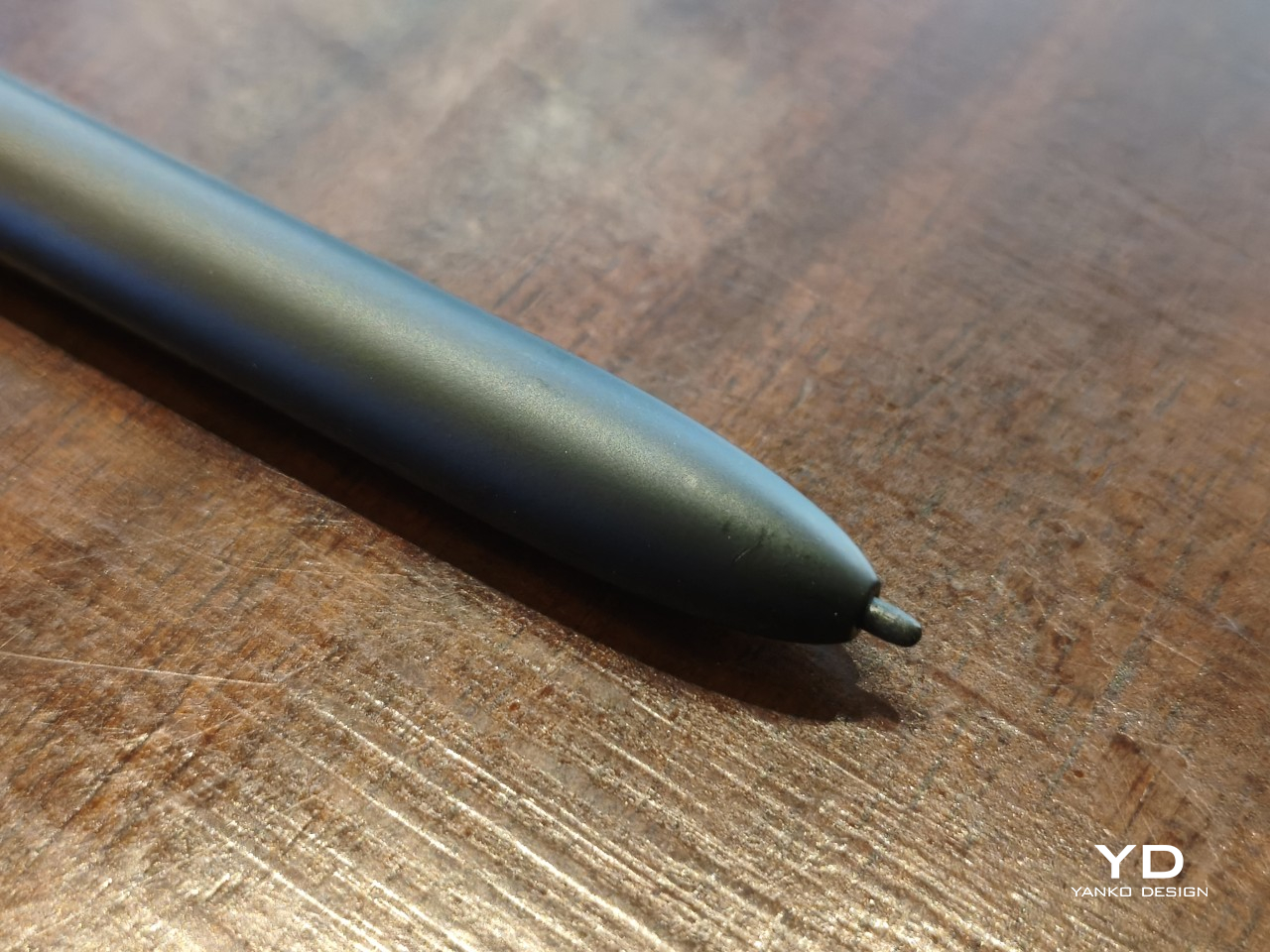
The Huion PW510 stylus that comes in the box utilizes the brand’s PenTech 3.0 technology, promising 8,192 levels of pressure as well as tilt sensitivity. It definitely works as advertised with no latency in any app, reproducing that joyful feeling of seeing “ink” flow smoothly from the tip of the pen as it glides across paper. Sadly, the design of the 1.6mm felt nib makes it harder to take full advantage of tilt, but it’s definitely there.

Software

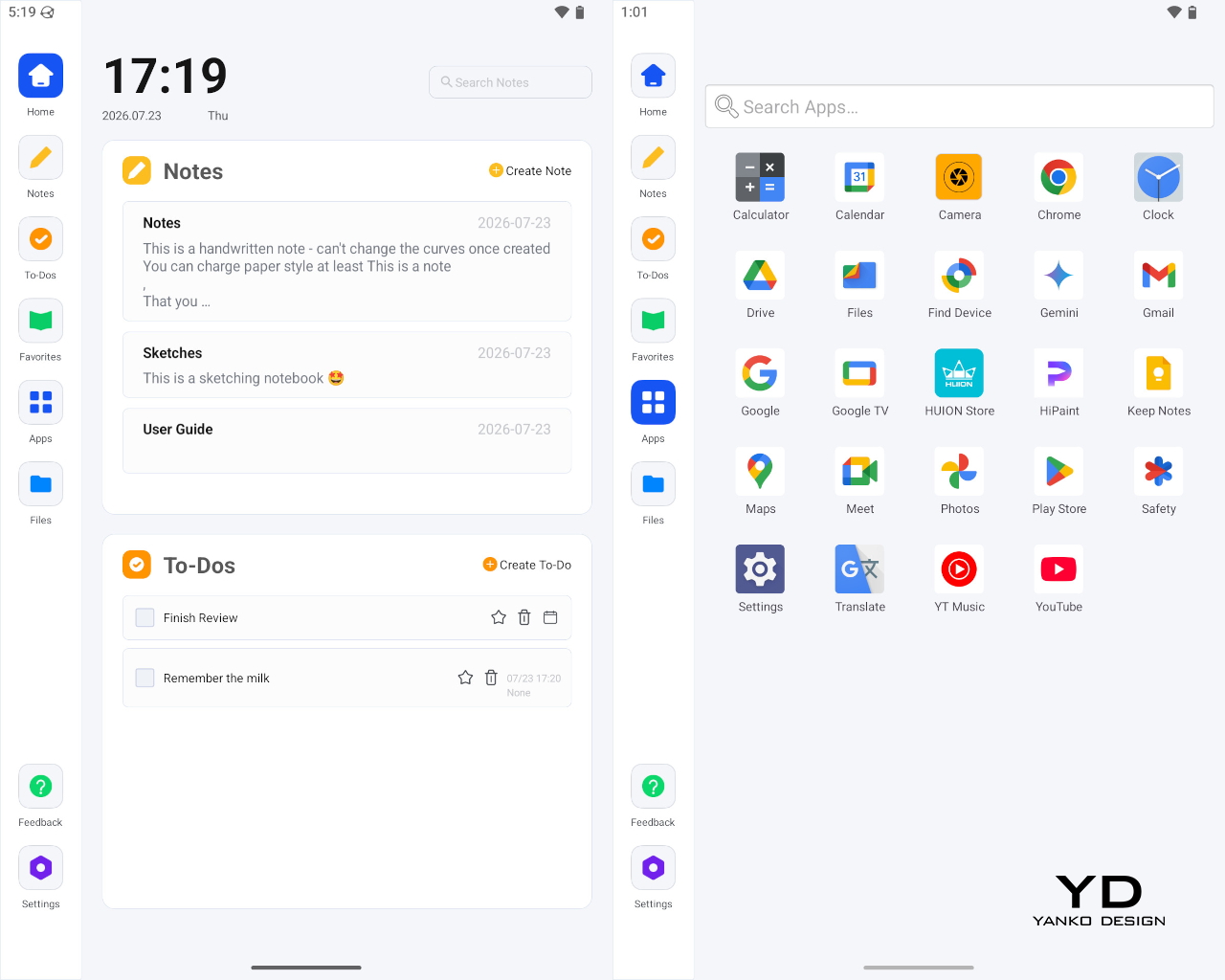
That the Huion Note E is specifically designed for note-taking is perhaps best seen in the mixed bag that is the software experience. It runs on a customized Android experience that more closely resembles an e-reader than a typical Android tablet. Most of the features and settings are still there, just hidden and sometimes even locked down.

There is thankfully not much bloatware installed, save for some “basic” Google apps. Ironically, while the device does support Google Play, you have to take some extra, but thankfully easy, steps to register the device. It’s an unfortunate situation, but not a complete deal-breaker. Once you get past that, almost any app on the Play Store is available to install.

Huion’s built-in software, however, leaves some things to be desired. The launcher, which has “tabs” on the left, is designed to be minimal and distraction-free. It’s also the only way you can get to the Huion Notes and To-do apps, as they are baked into the launcher, following the practice of some Android ereaders. Unfortunately, it’s so minimalist that there’s no option to rearrange apps in the Favorites tab (but you can do that in the All Apps tab), nor is there a dark mode that will avoid blinding your eyes in a dark room.

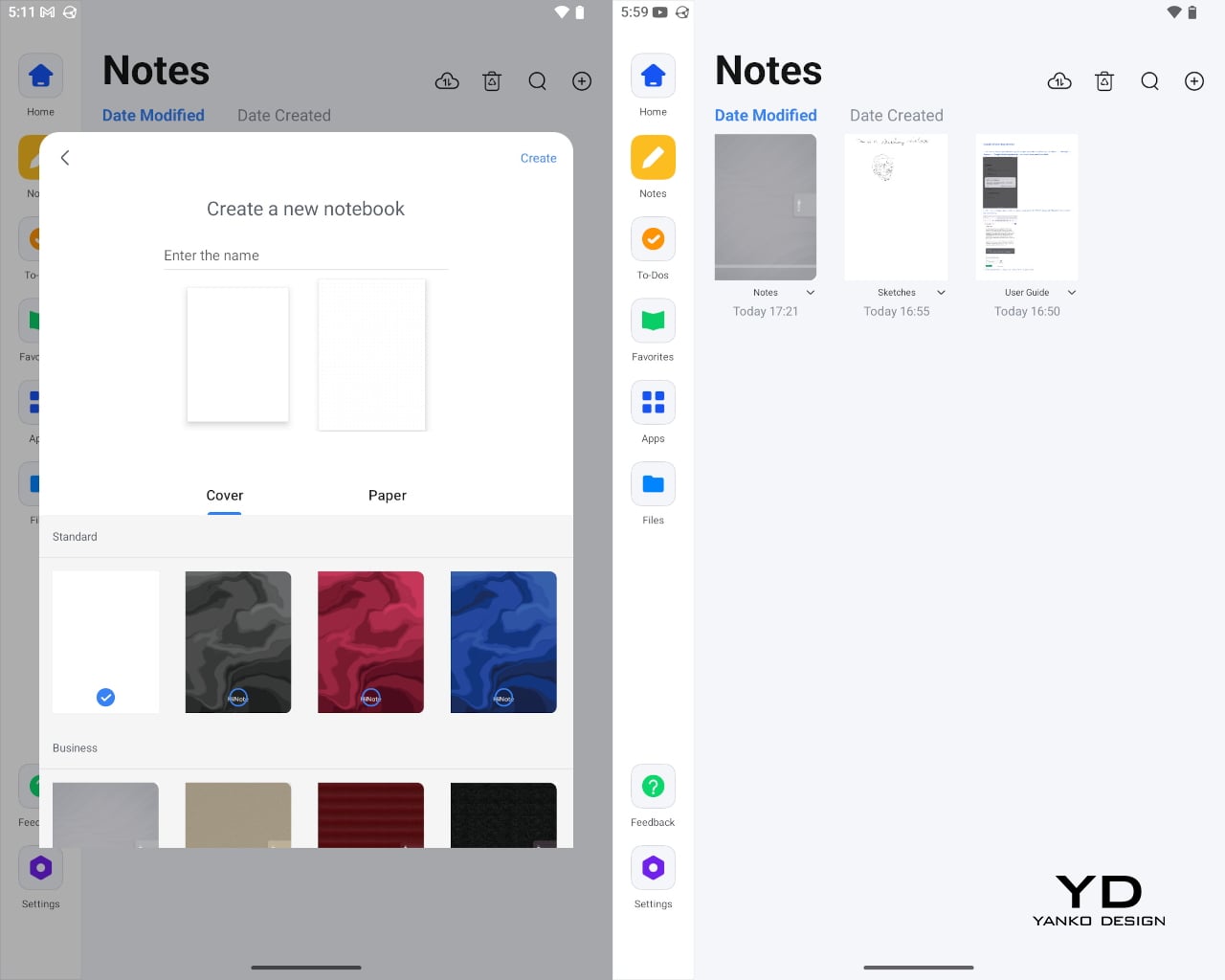
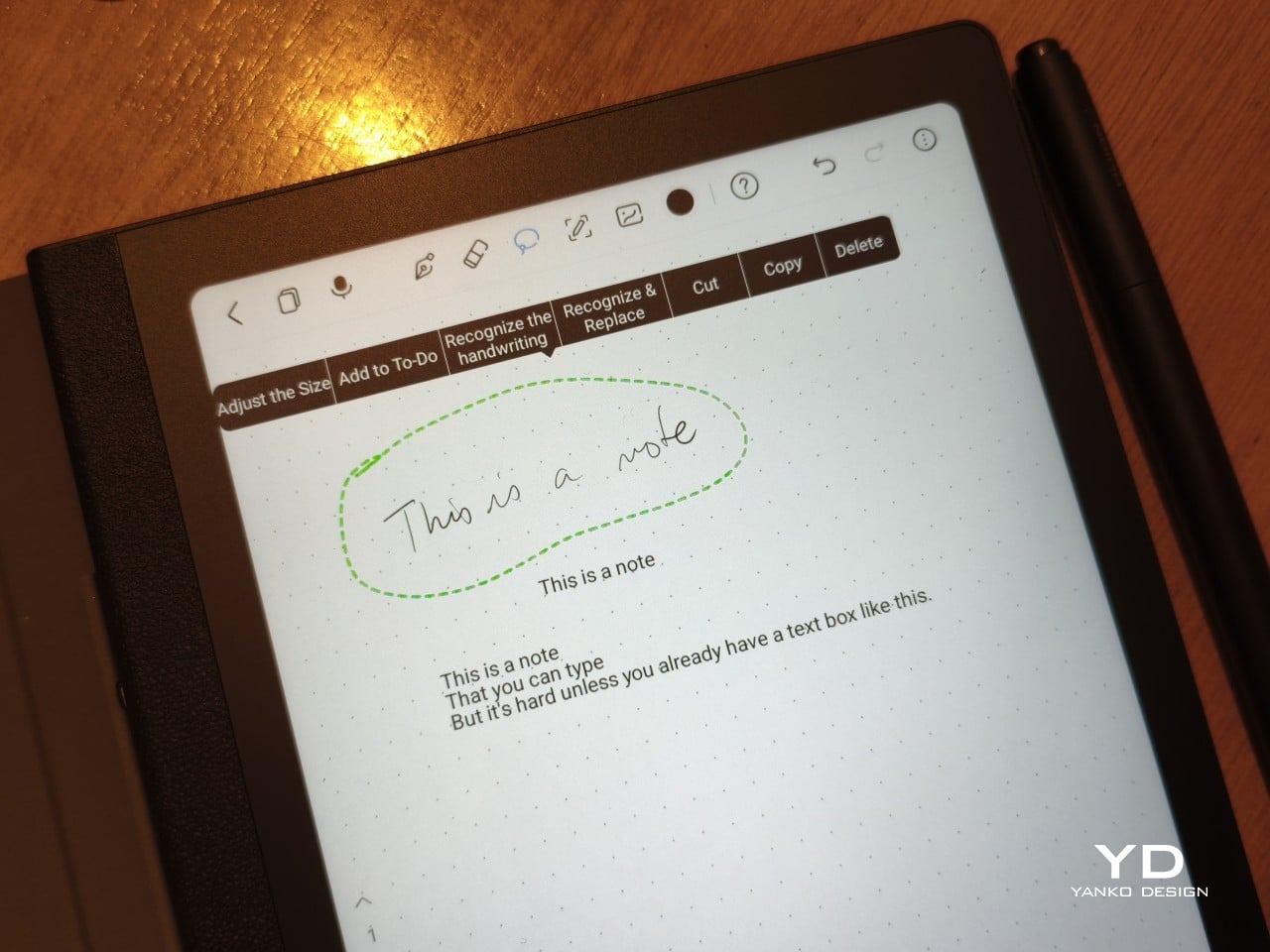
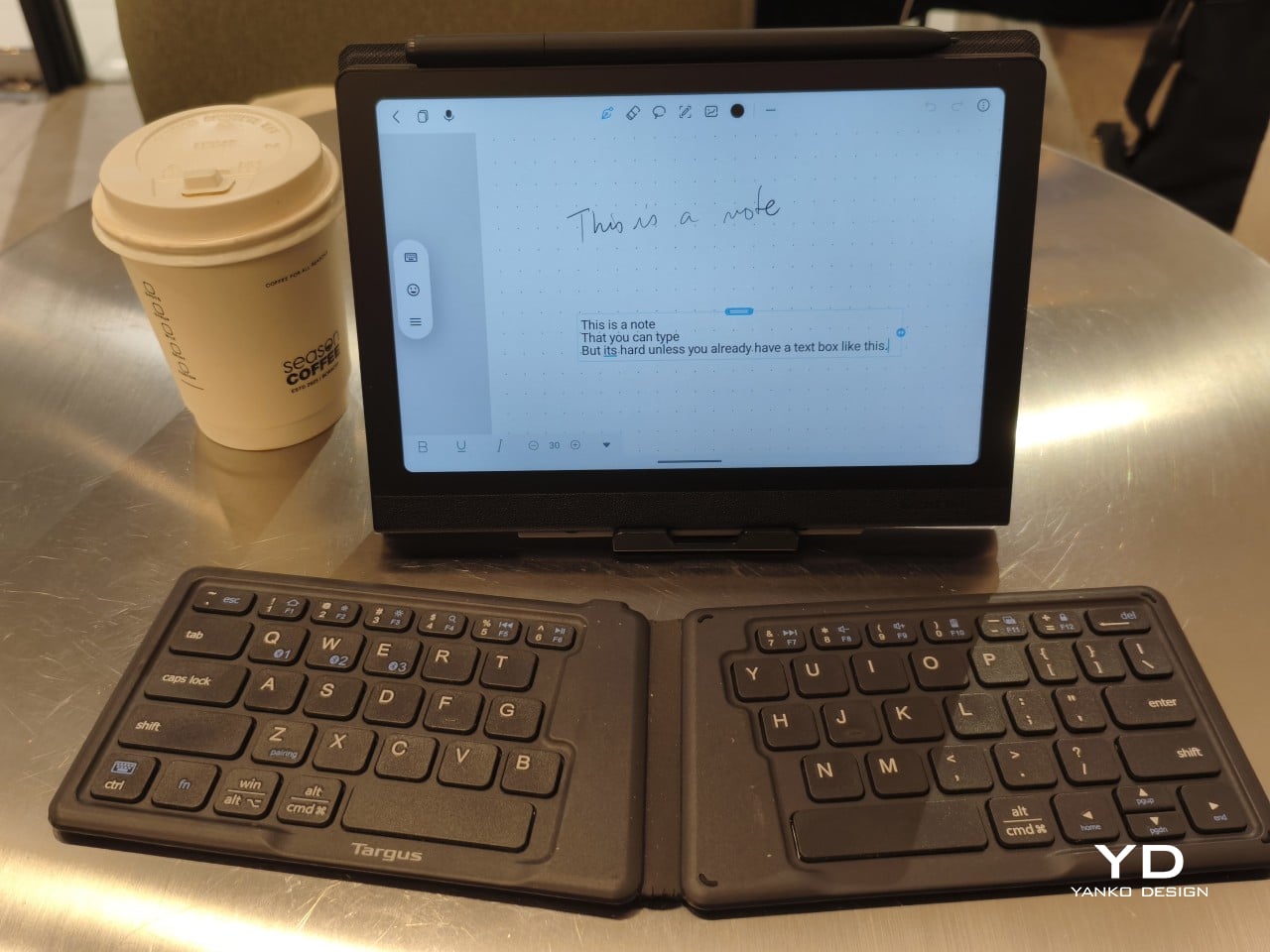
The Huion Notes app is also capable but basic, designed more for quick notes rather than elaborate journals and planners. You have four “pens,” only one of which takes advantage of pressure sensitivity. There’s no way to directly type in text, forcing you to write by hand and then convert to text, but once text is already there, you can edit normally with a keyboard. One key feature is the ability to record audio while writing, for example while taking notes in a lecture, and you can later play the recording back and watch your handwriting appear in sync.

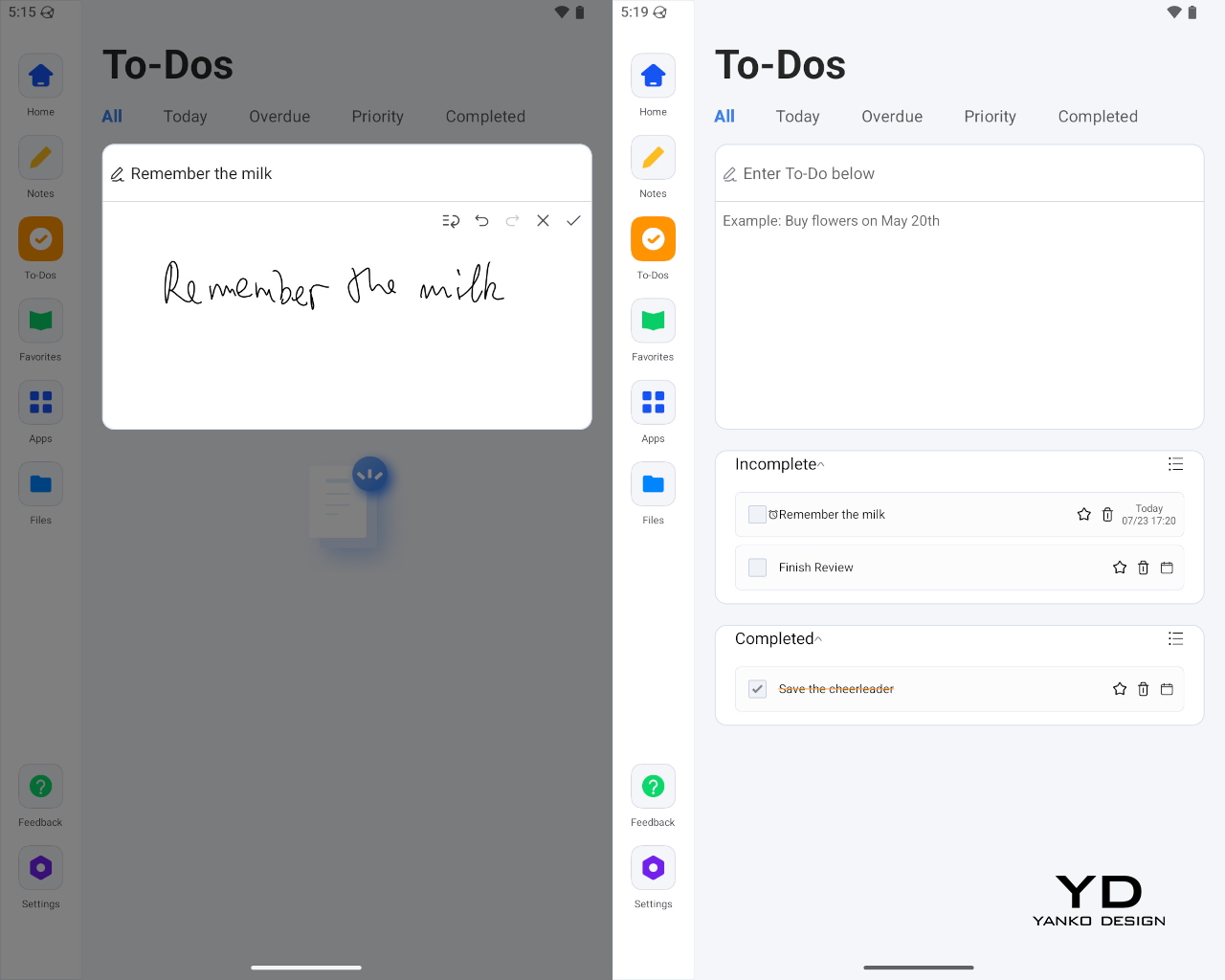
The built-in To-Dos app is even more basic, simply letting you scribble a task, which it converts to text, enter sub-tasks, and assign due dates and times. You can type in text at all, so you’ll really have to do everything with the stylus, which is the entire point in the first place. You don’t type in your paper notebook, after all.

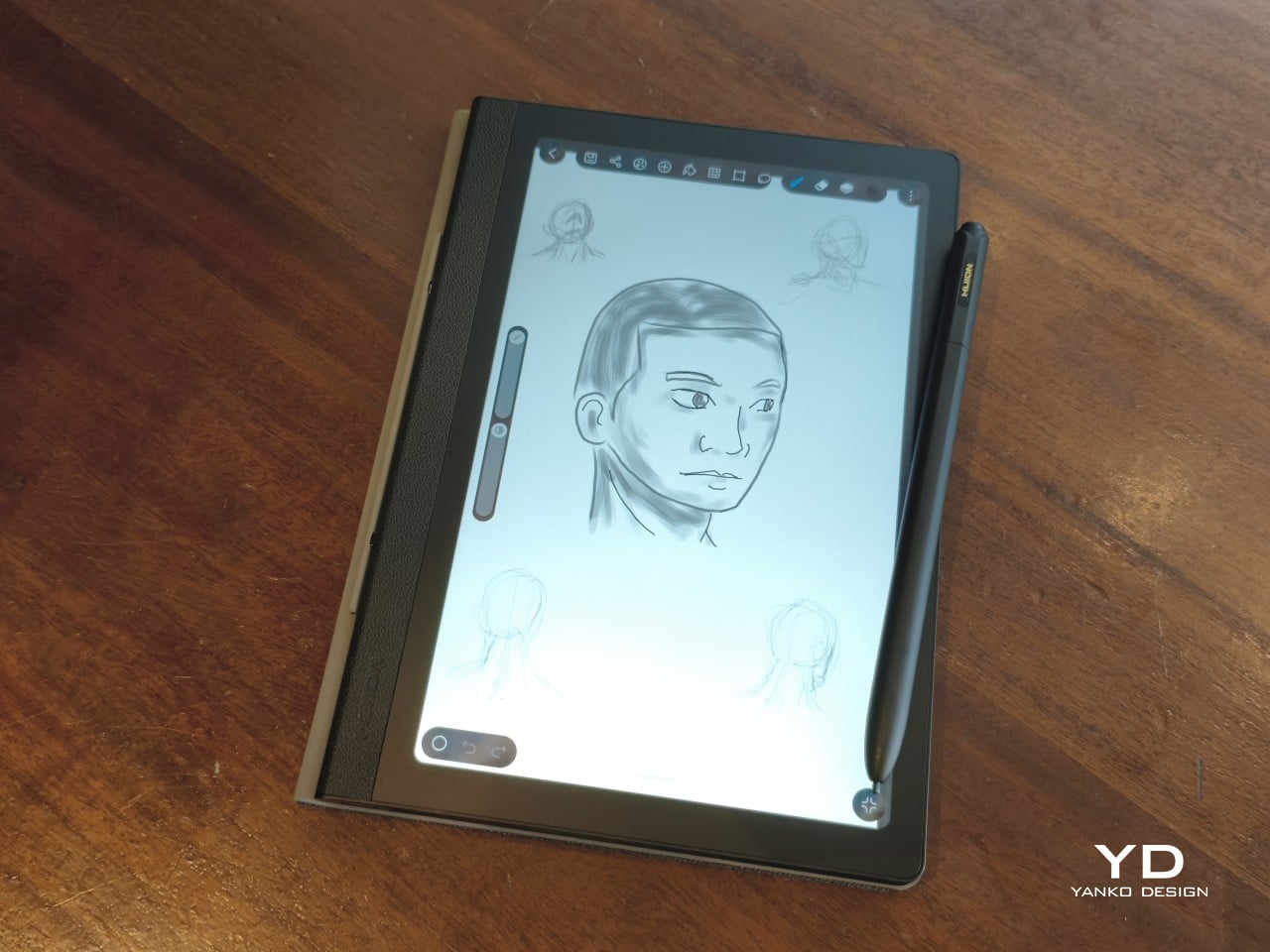
HiPaint, which some consider to be the Android Procreate, is also pre-installed, but you can install any drawing app of your choice. With Huion’s display and pen tech, turning the Note E into a portable digital sketchbook is like second nature. Of course, you can also read books, comics, and, if you really want, scroll through social media, though the reading experience might be subpar compared to a color E Ink device.

Sustainability

The Huion Note E doesn’t exactly score well in this criterion. The device is mostly plastic, with no mention of recycled parts. The packaging is compact and minimal, but there’s still quite a bit of plastic there as well. The device itself is only rated for IP40, which practically means no protection even against accidental splashes. It does run Android 15, which was last year’s release, but there is no clear upgrade path moving forward.

The Note E’s sustainability advantage is in what it saves in the long run, even if indirectly. It is trying to create a culture of swapping out paper notebooks for electronic ones, at least for the more disposable use cases. The battery-free stylus is not only, well, battery-free but also saves up on energy you would have used to charge the pen. Small wins, definitely, and hopefully Huion would move toward stronger sustainable practices and materials soon.

Value

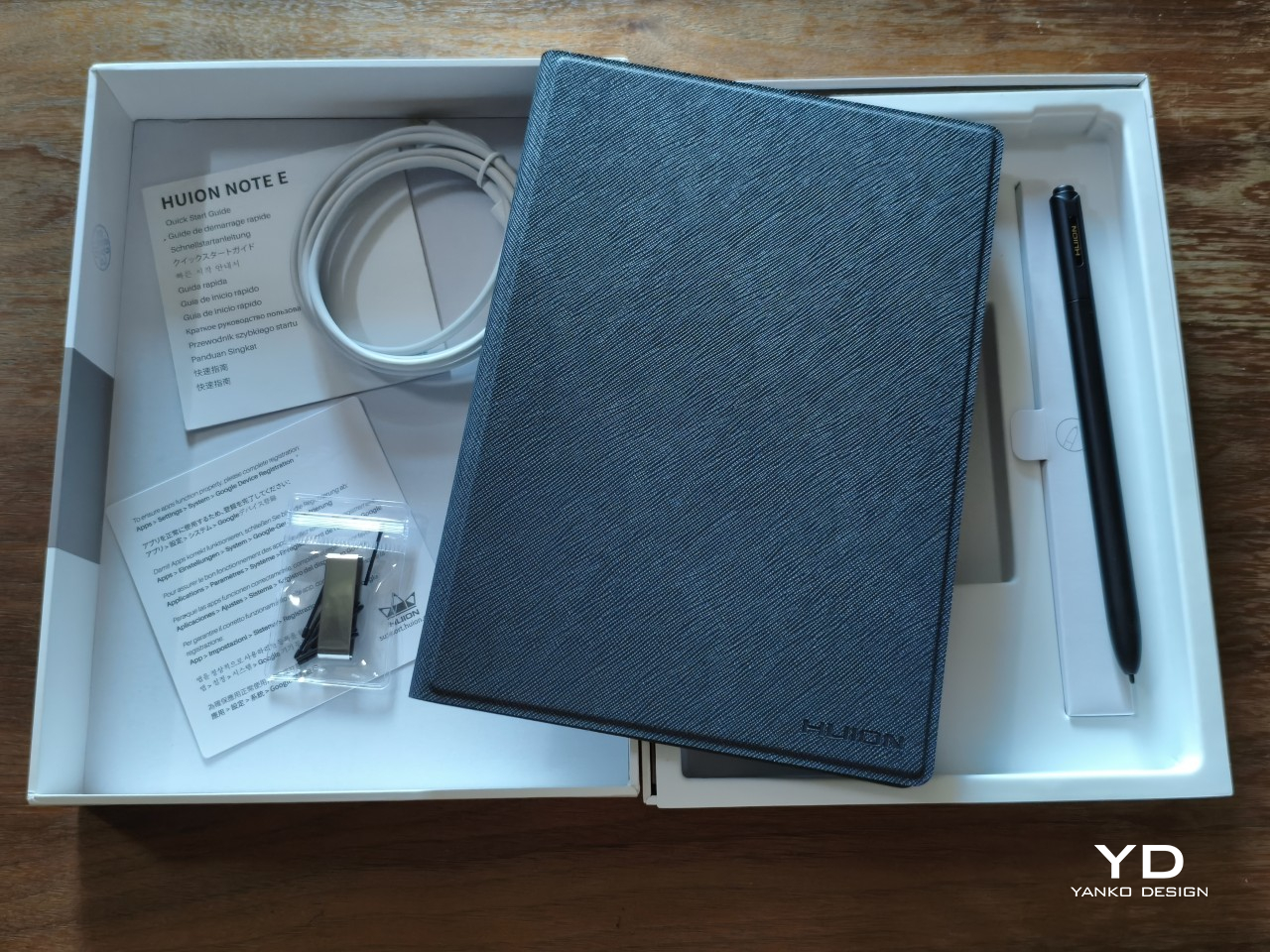
At $369, the Huion Note E is hardly what you’d consider a budget tablet. It does include an excellent stylus and a somewhat ambiguous cover, but if you’re looking for hardware chops, you’d best look elsewhere. A mono speaker and a single 8MP camera are not what you’d consider modern features. It is definitely not the only Android tablet with a stylus, either.

What Huion brings to the table isn’t just another Android device, but one that is clearly designed, both in hardware and software, for a specific, focused purpose. That it looks like an A5 notebook isn’t an accident, and, incomplete as it may be, the streamlined software experience is quite intentional. The Note E aims to be your one electronic notebook to replace your other paper notebooks, and it definitely gets the job done, with plenty of room for growth.

Verdict

There is no shortage of Android tablets that support pen input, from the large and expensive “Pro” slates to E Ink readers. At first glance, the Huion Note E looks like yet another entry in that market, but just turn it to the side, and you will immediately see that it’s a different beast entirely. It’s an electronic notebook first and foremost. Everything else is just side effects.

What really sets the Huion Note E apart is the carefully selected mix of features and limitations that make it look less like a mass-market device and more like a considered object. It looks like the object it’s meant to replace, and the limitations it has in place streamline rather than restrict the experience. Sure, there are a few quirks, most of which can be fixed with software updates, but, in the end, the Huion Note E still manages to deliver its promise: an enjoyable writing experience on a notebook that never runs out of pages.

The post Huion Note E Review: The Notebook That Never Runs Out of Pages first appeared on Yanko Design.
Field Notes Just Made Notebooks That Look Good Enough to Eat

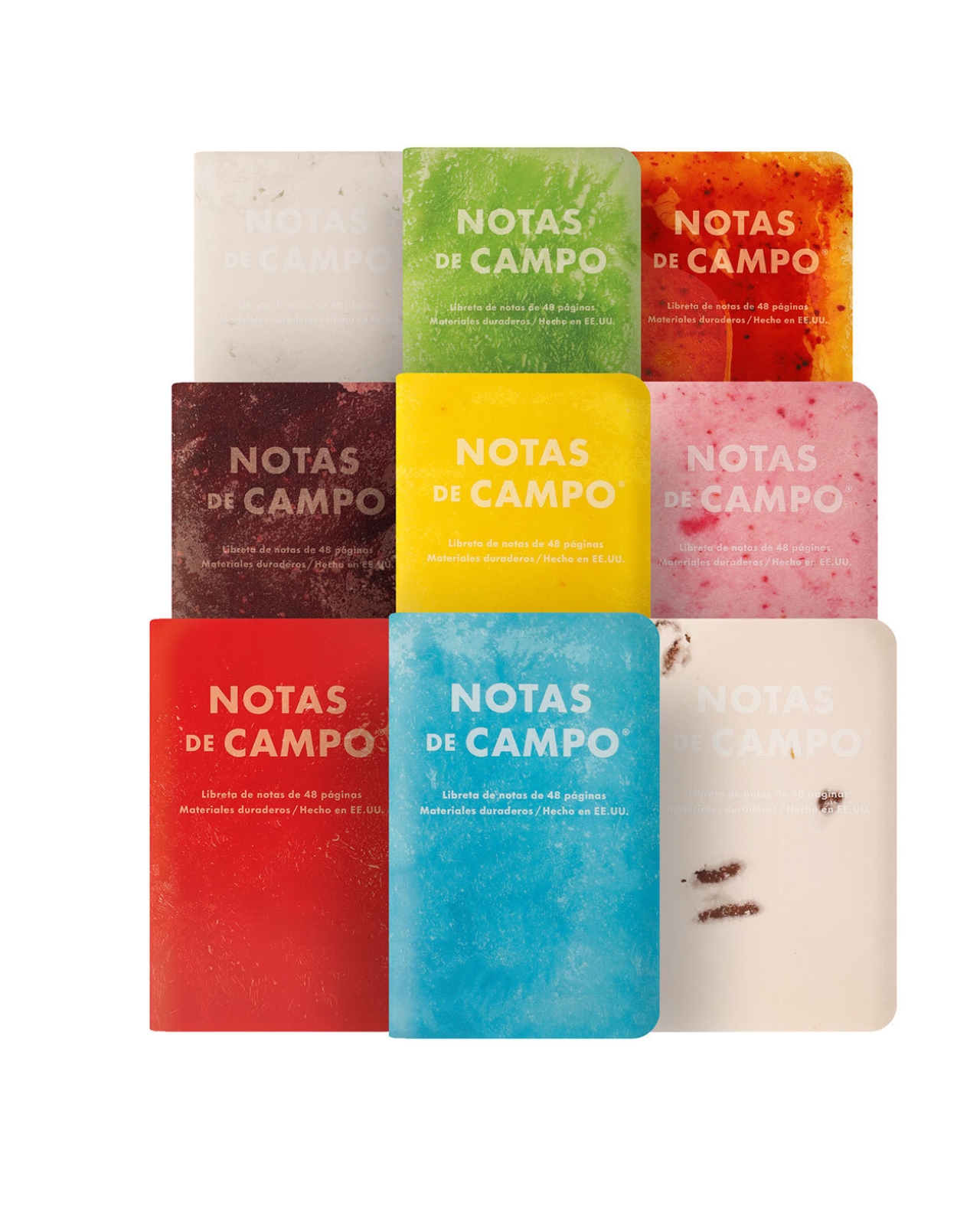
One thing that I’ve always shared when I do my journaling workshops is that this hobby is something that involves a lot of our senses: sight, sound, touch, sometimes even smell (if you have materials that have fragrance). The only one missing, really, is taste, since you probably don’t eat any of your journaling materials. This latest collection from stationery brand Field Notes is probably the closest we’ll get to tasting our notebooks, as they seem to be pretty and cool enough to eat.

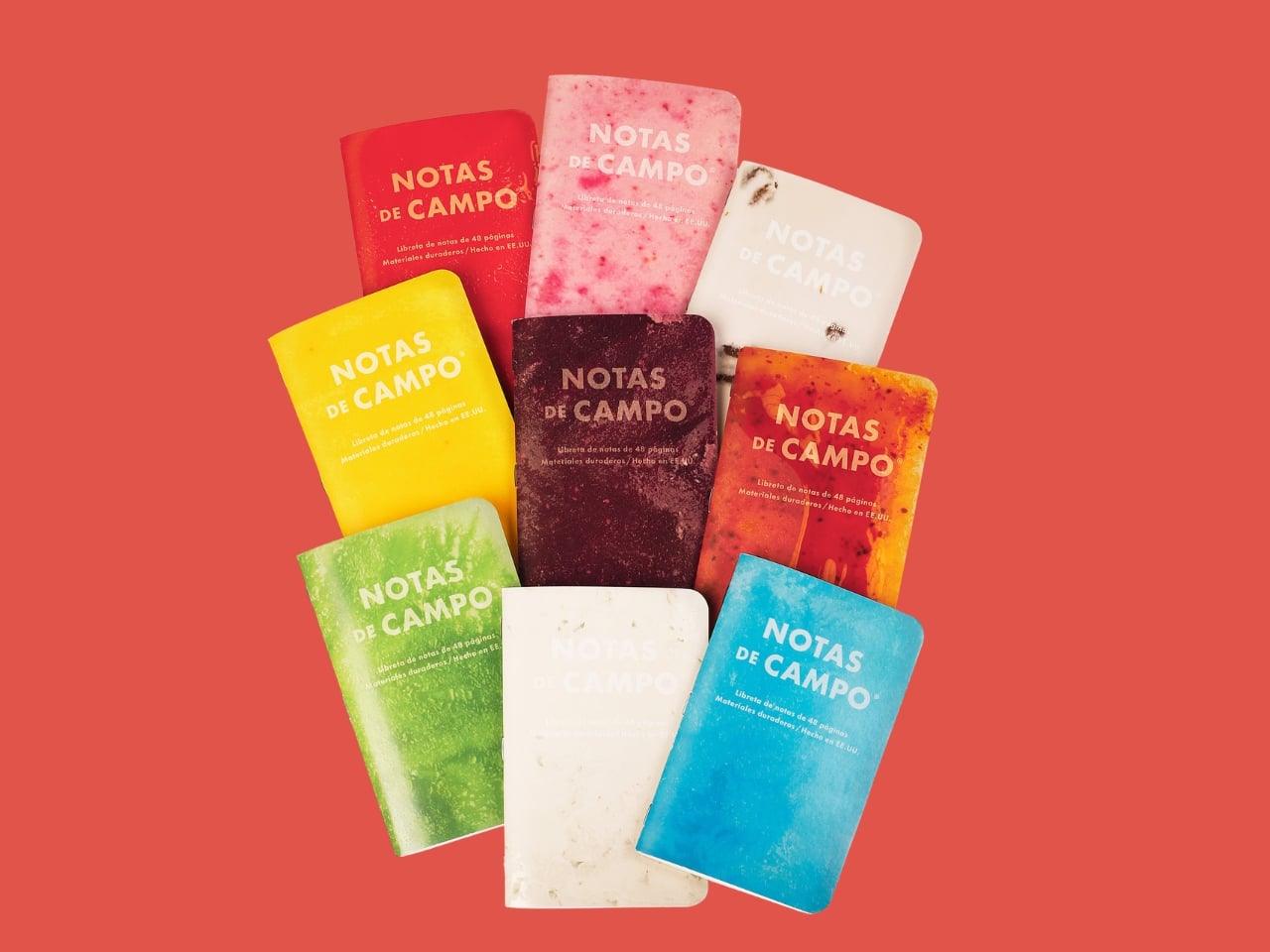
Their 71st Quarterly Limited Edition for Summer 2026 is actually inspired by the iconic frozen fruit treats from Mexico called paletas. Each of the notebooks in the collection is designed to not just look but also feel like one of those popsicle flavors, in one of their most visually playful releases to date. Too bad they’re not actually edible, although you probably can slurp on a frozen treat while you’re using one of these pretty notebooks.

Designer: Field Notes

More than just a cool aesthetic, the brand really looked into the history of the paletas, telling the story of how this beloved frozen treat came to be. These frozen treats are actually made from real fruit and fresh ingredients, created by brothers Ignacio and Luis Alcázar and their cousin Agustín Andrade. They’ve become not just a tasty tradition but a cultural landmark, from their small town of Tocumbo, Michoacán, to Mexico City, and eventually reaching the U.S.

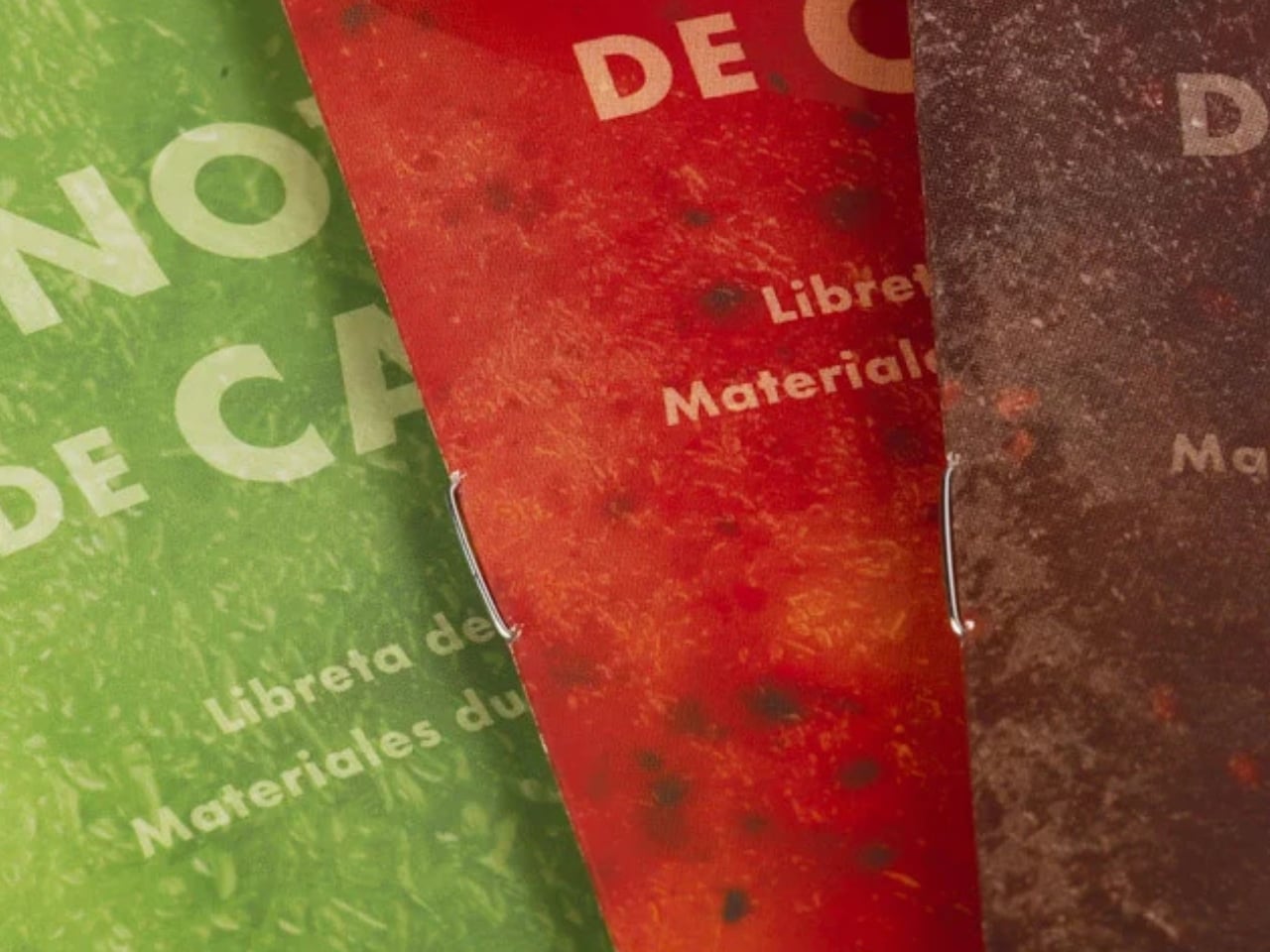
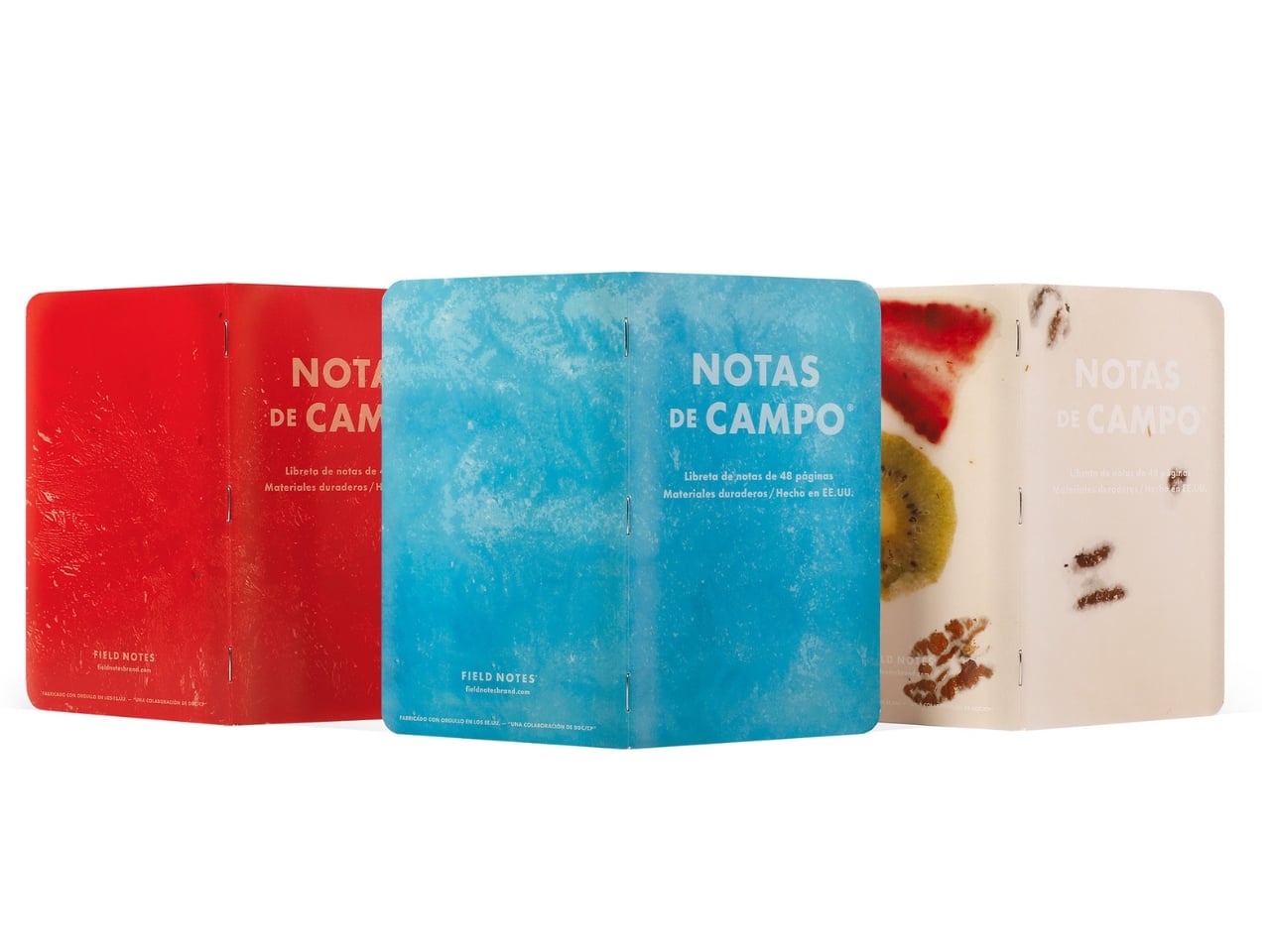
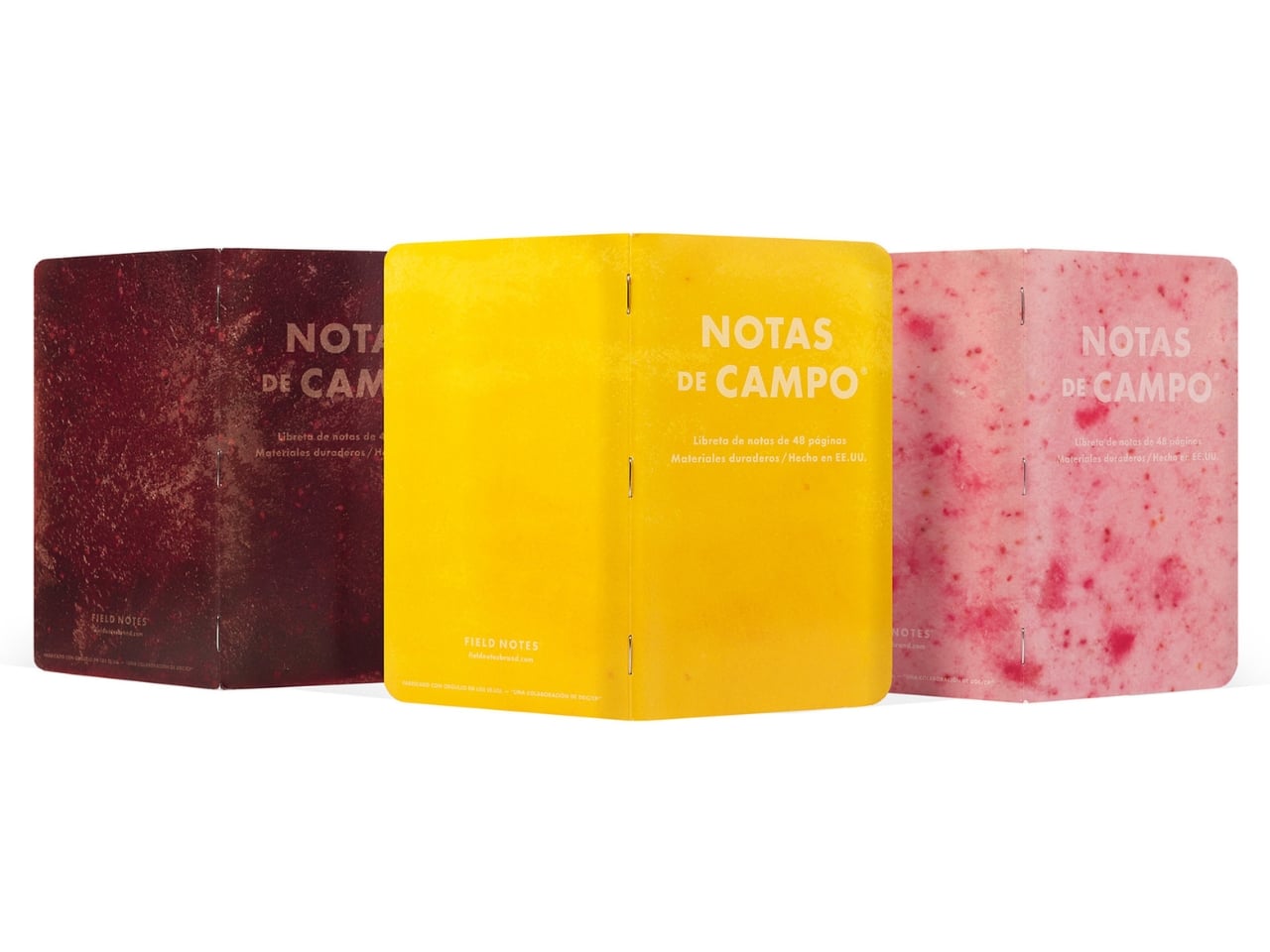
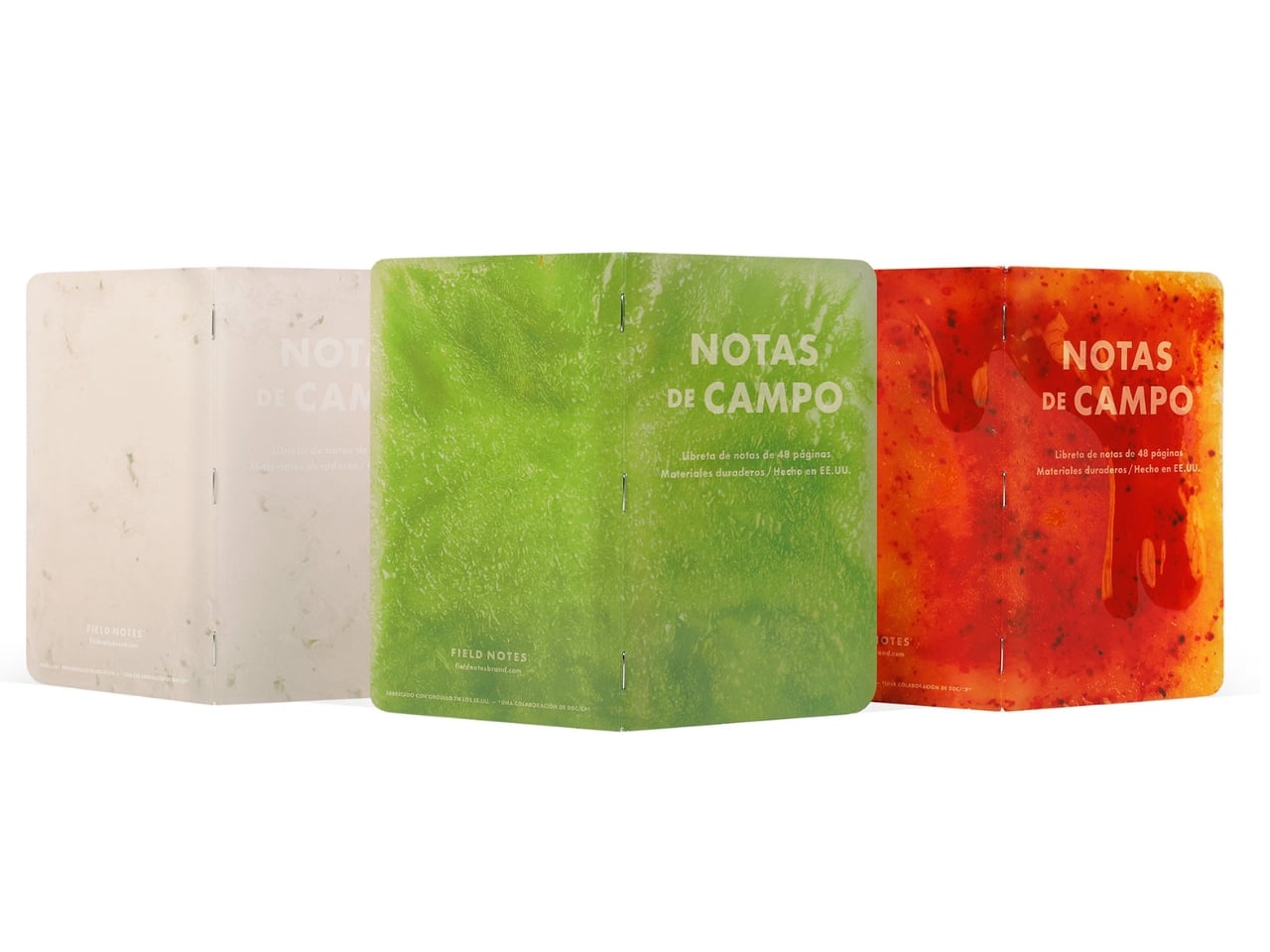
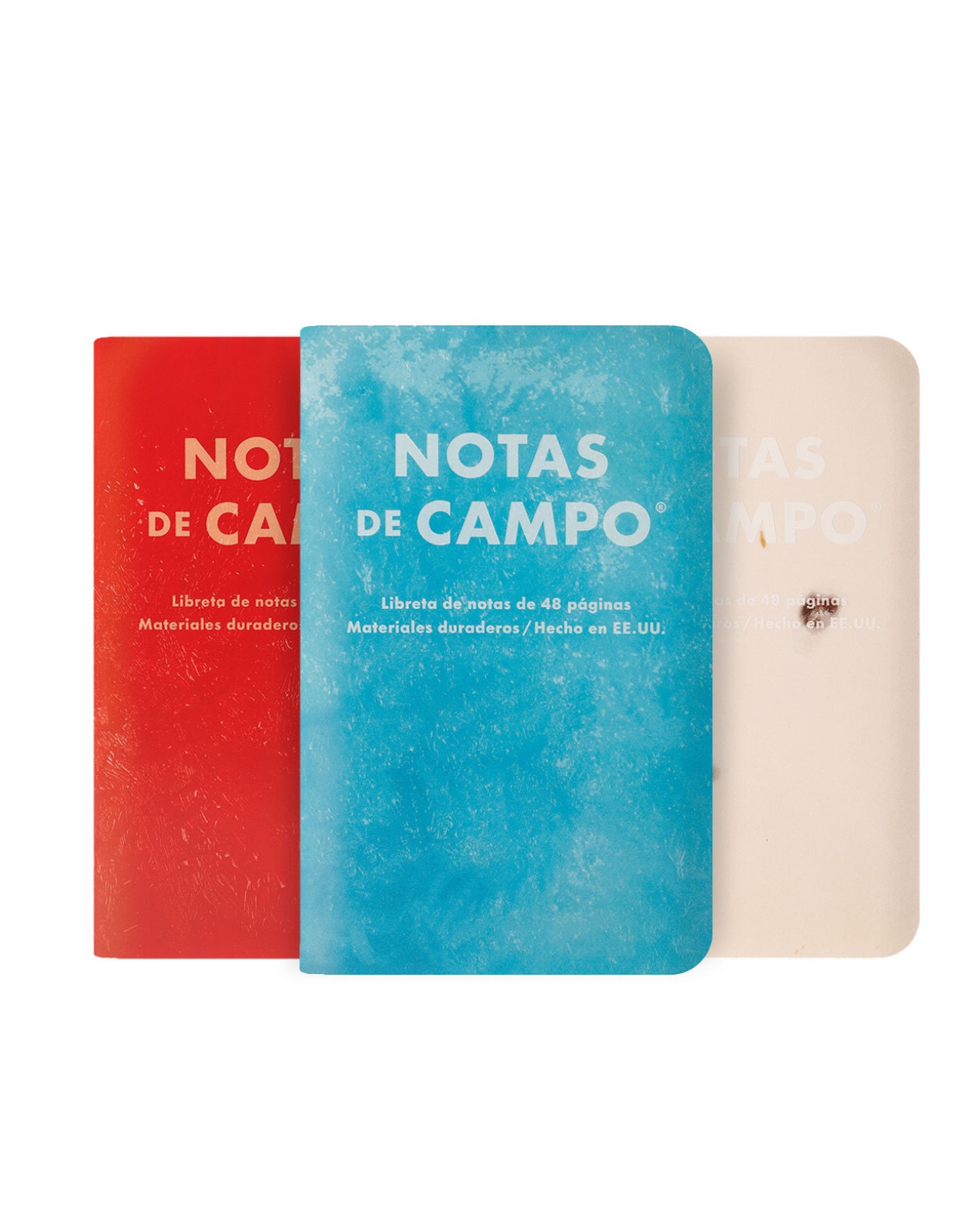
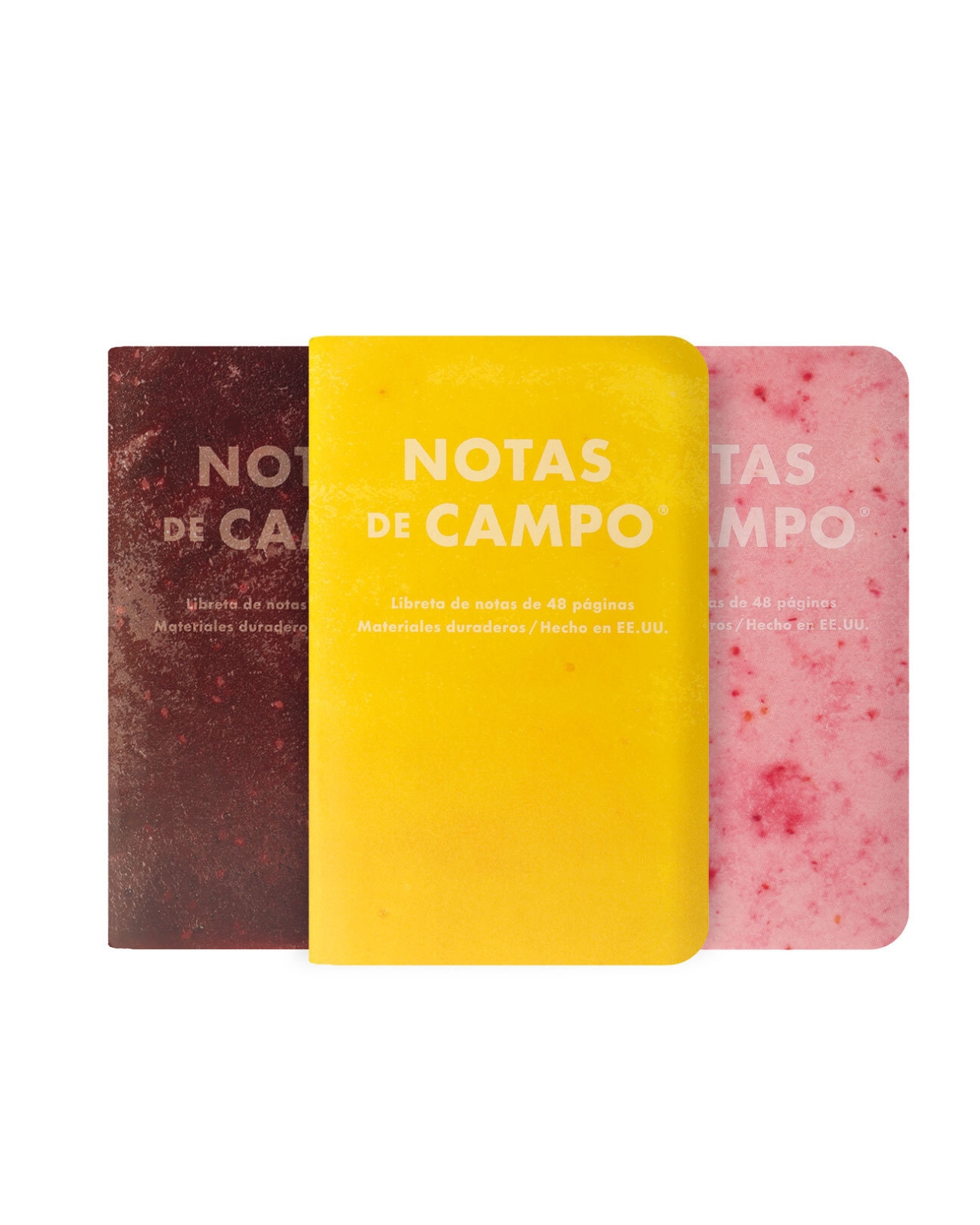
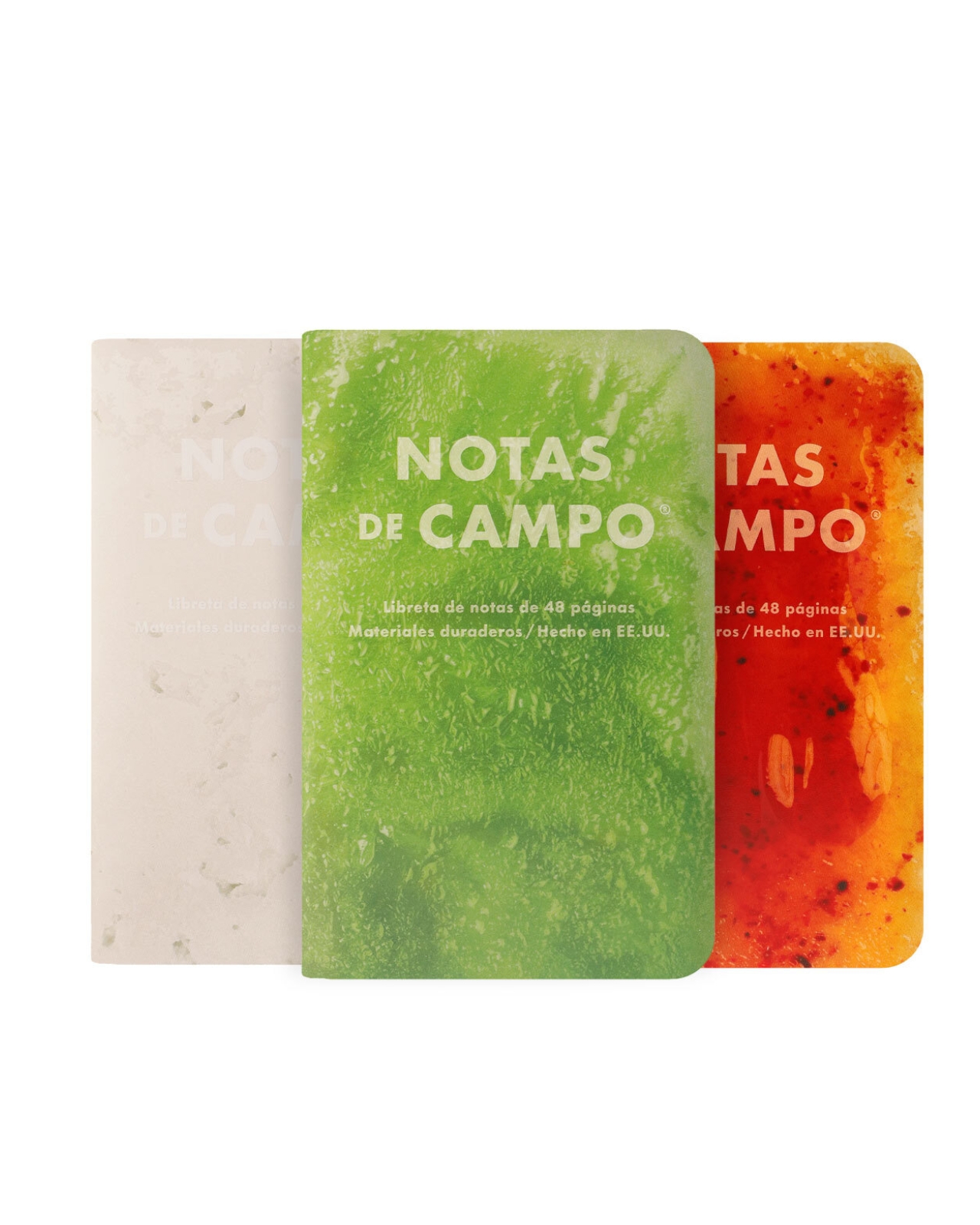
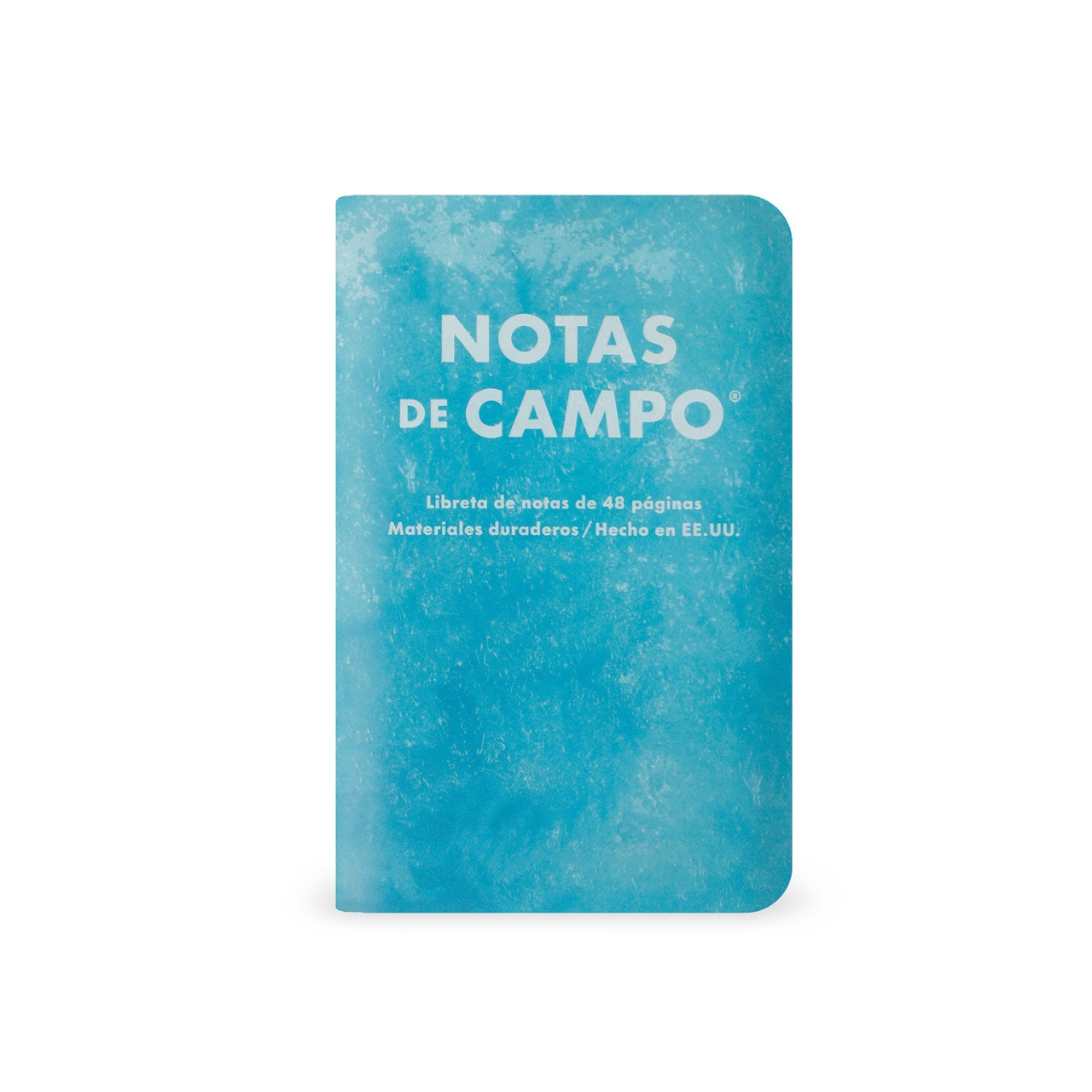
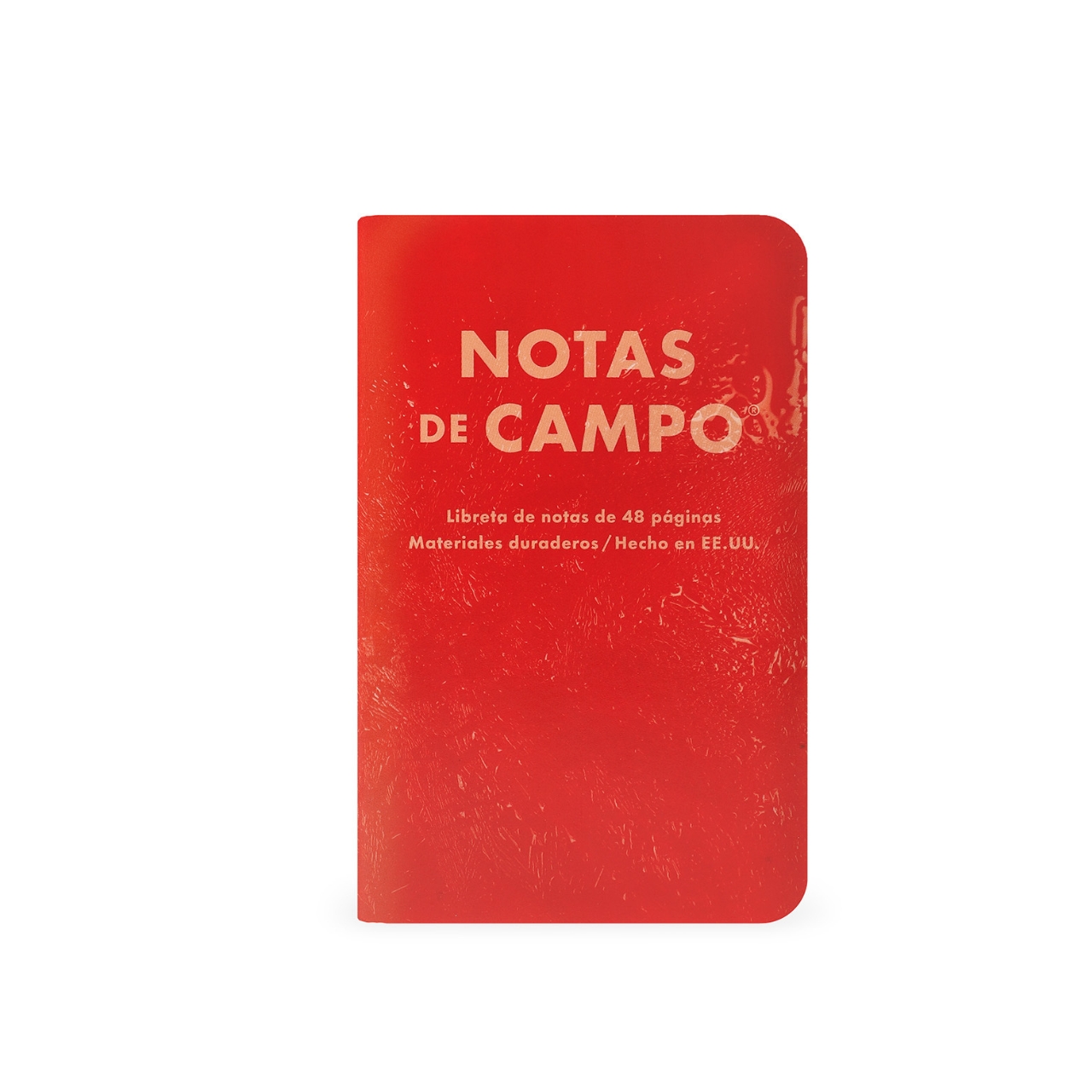
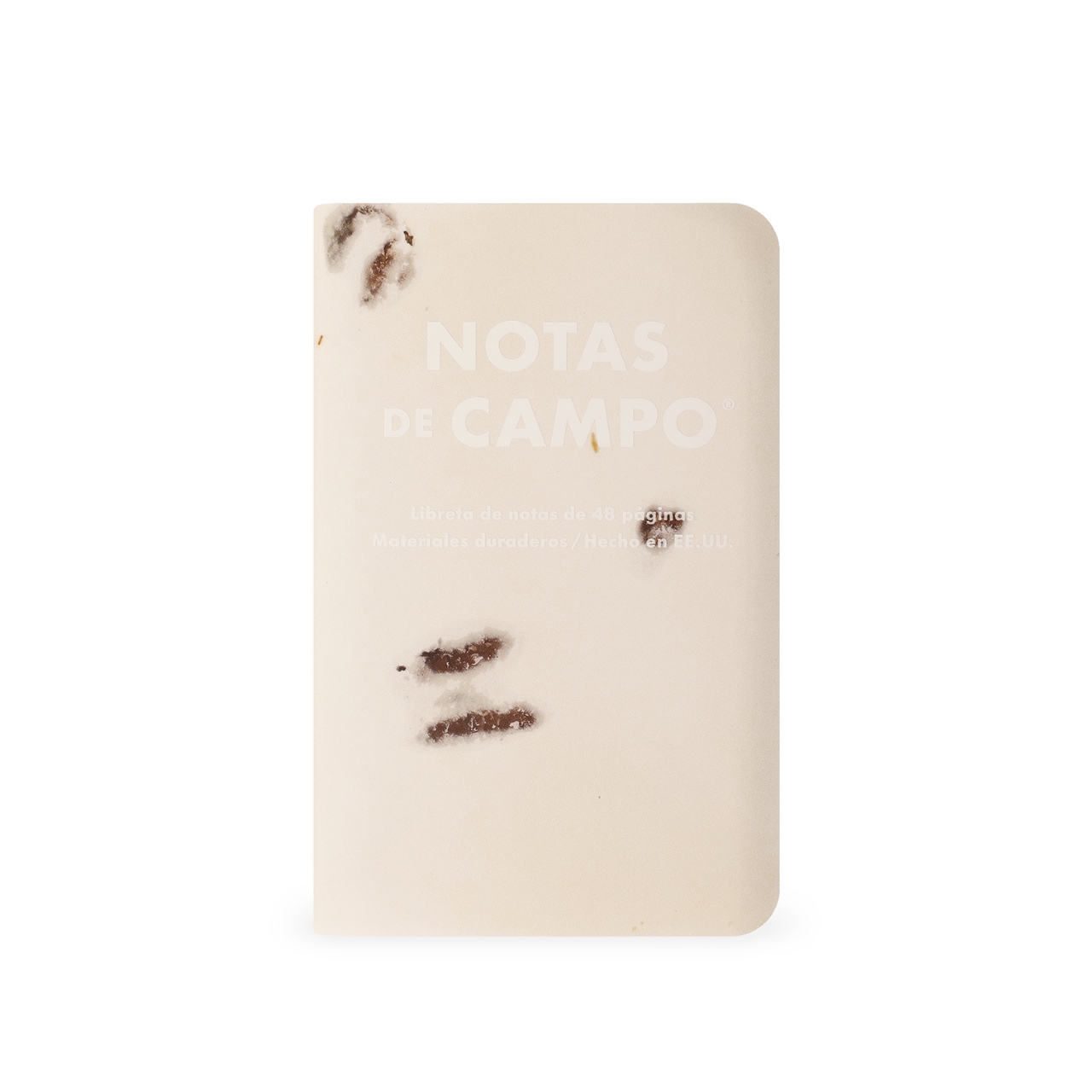
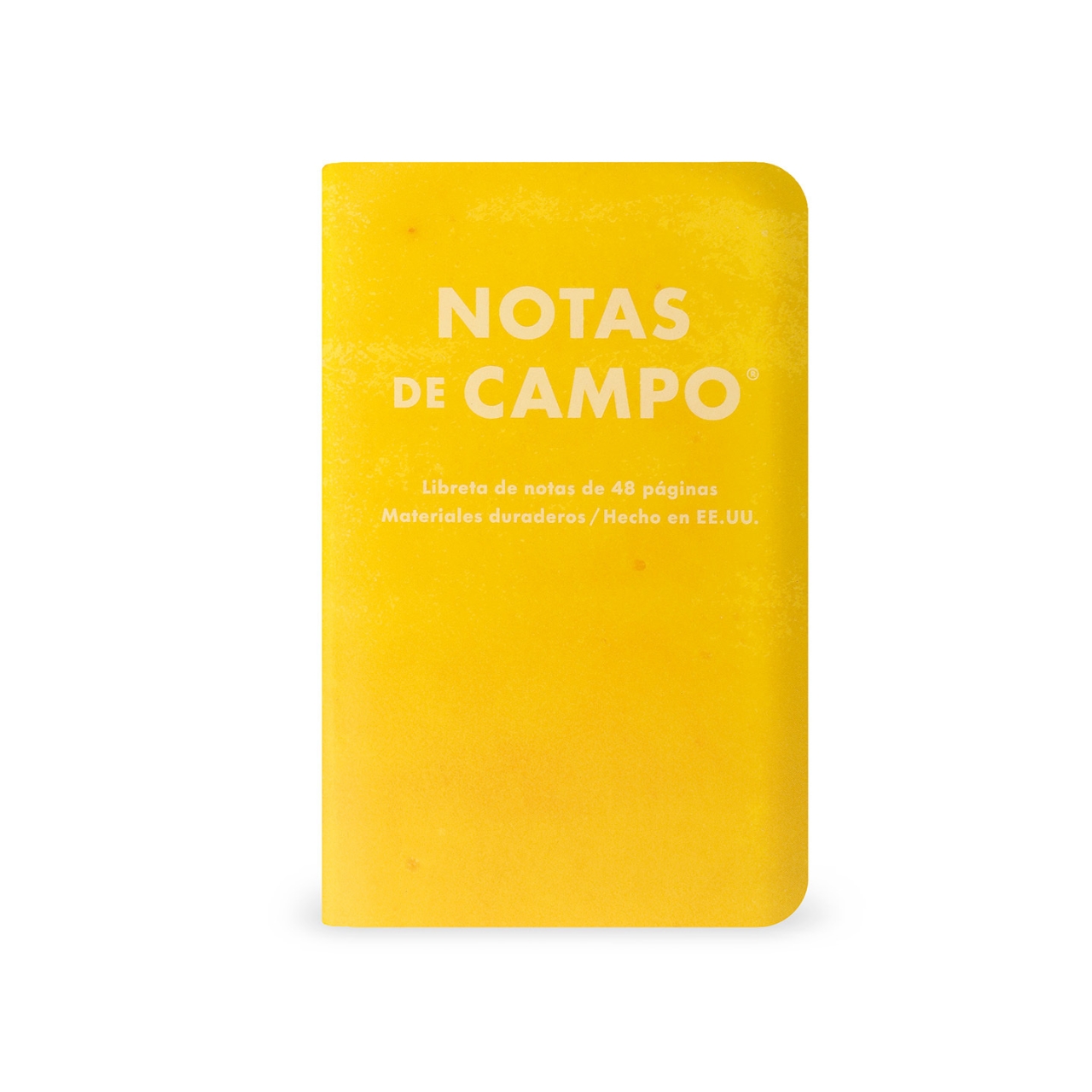
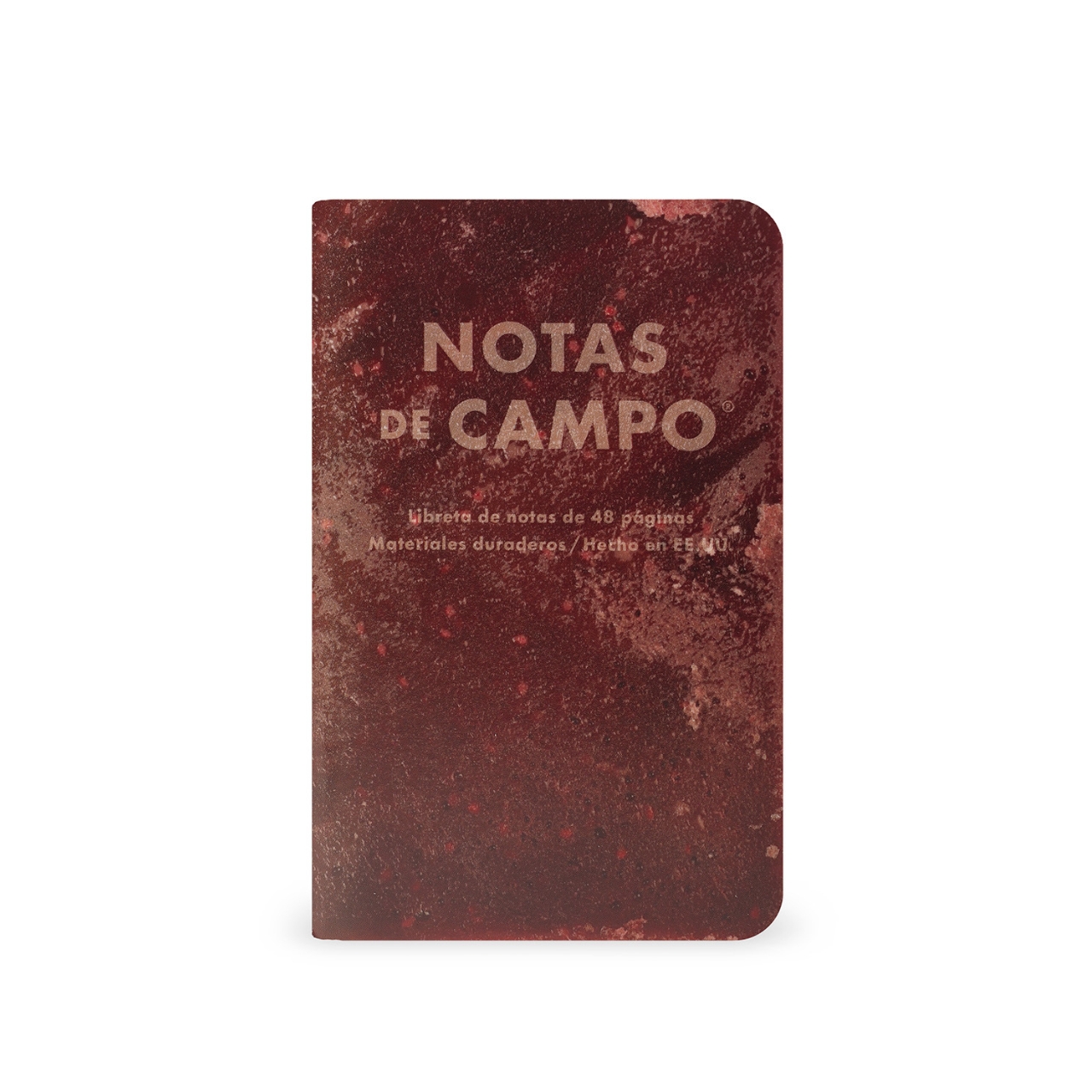
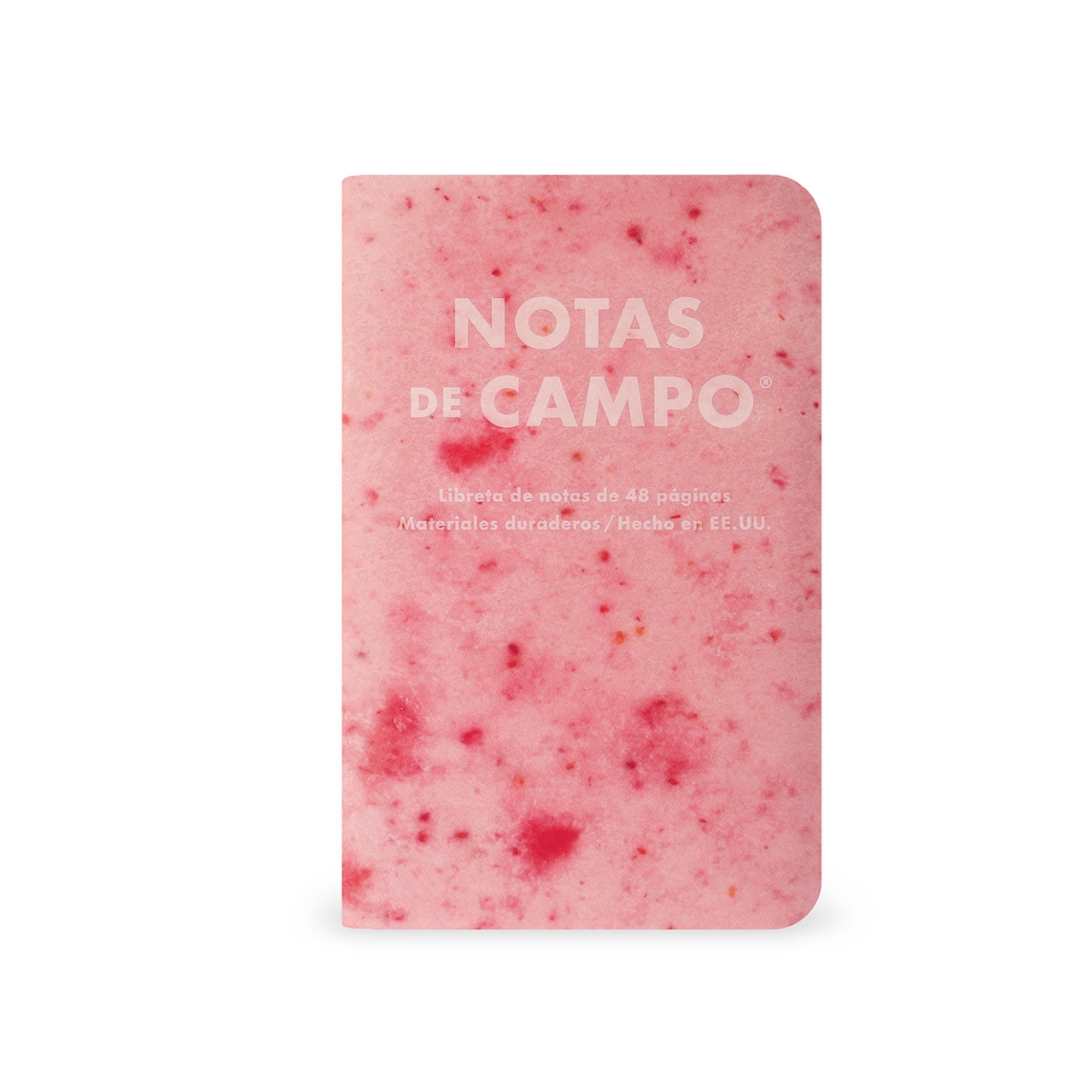
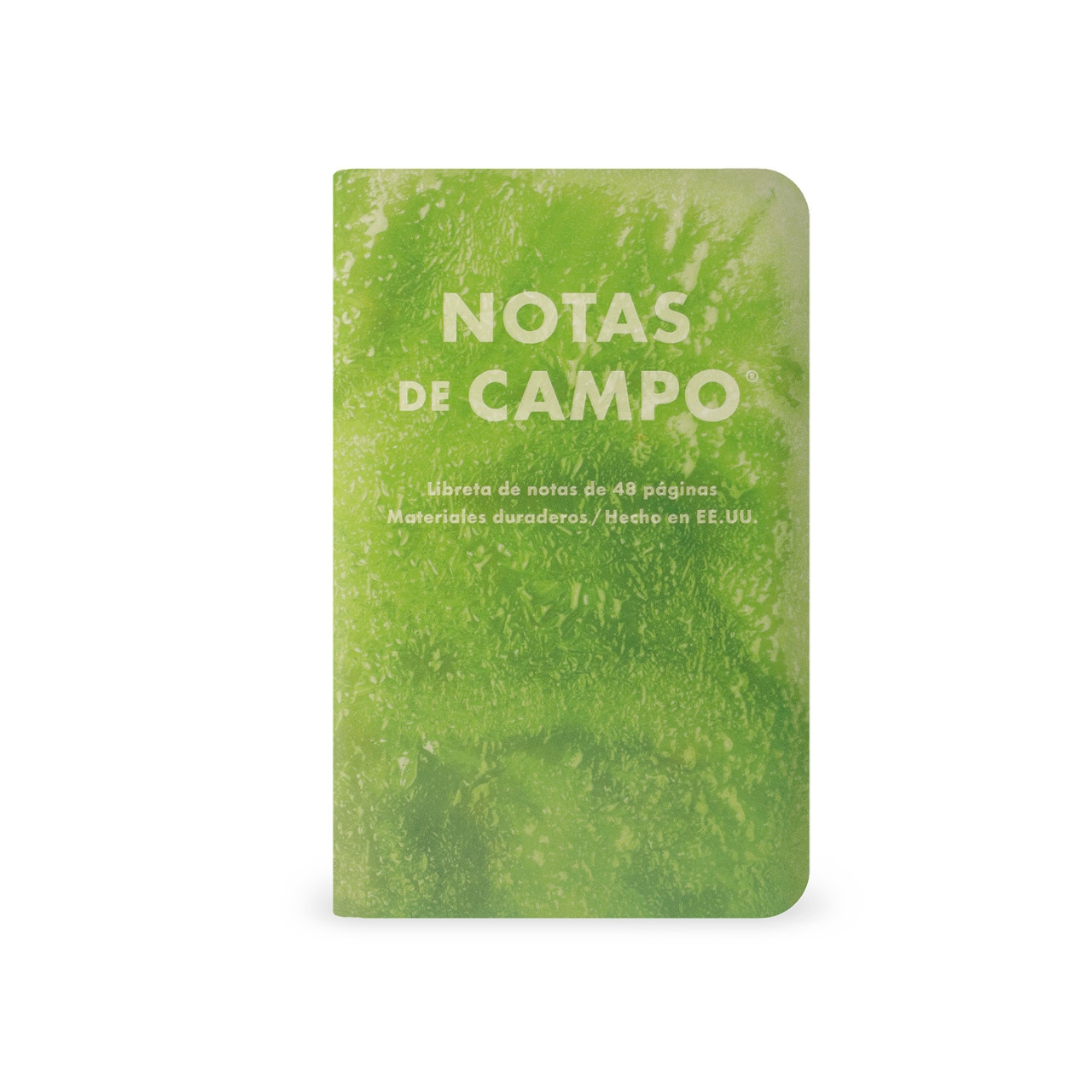
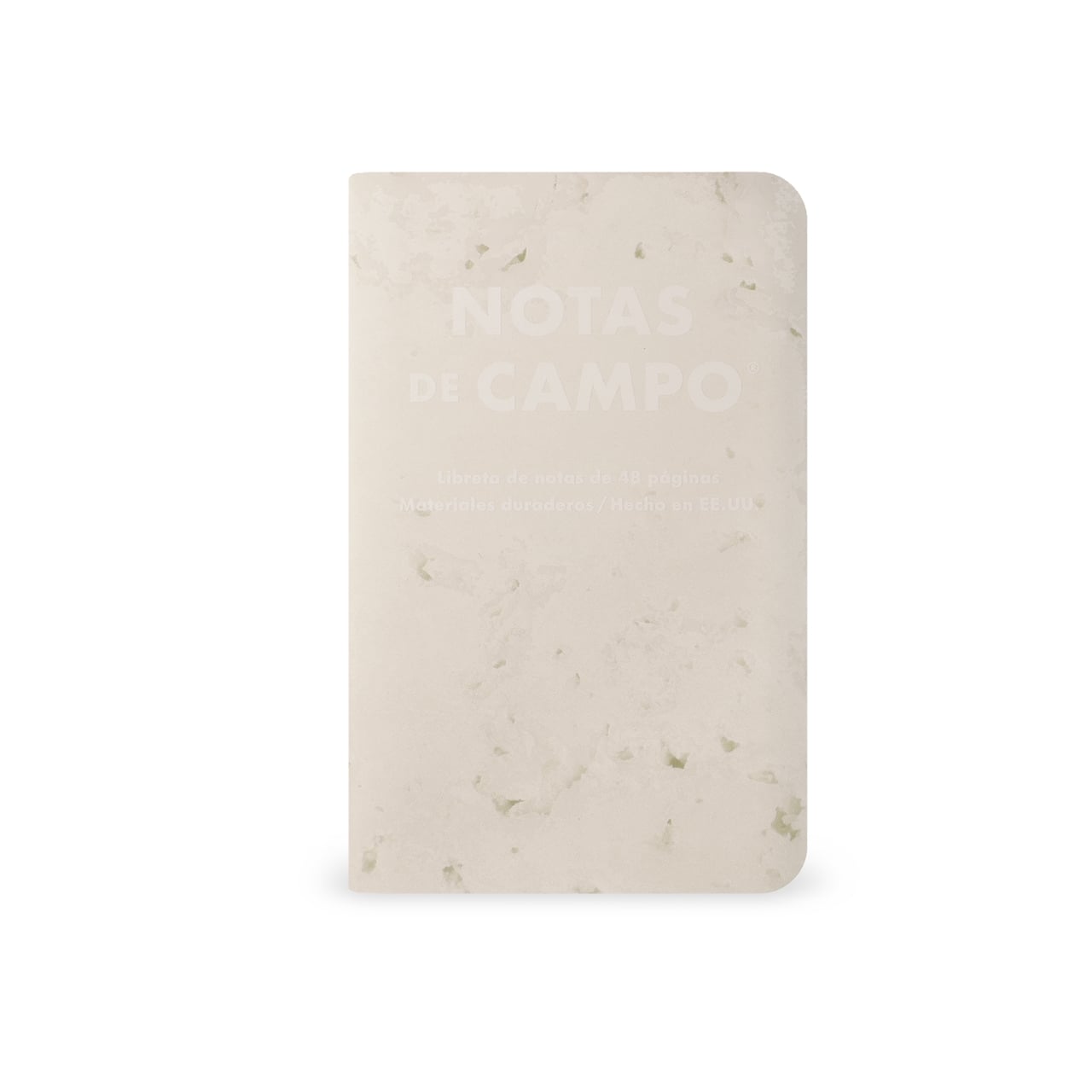
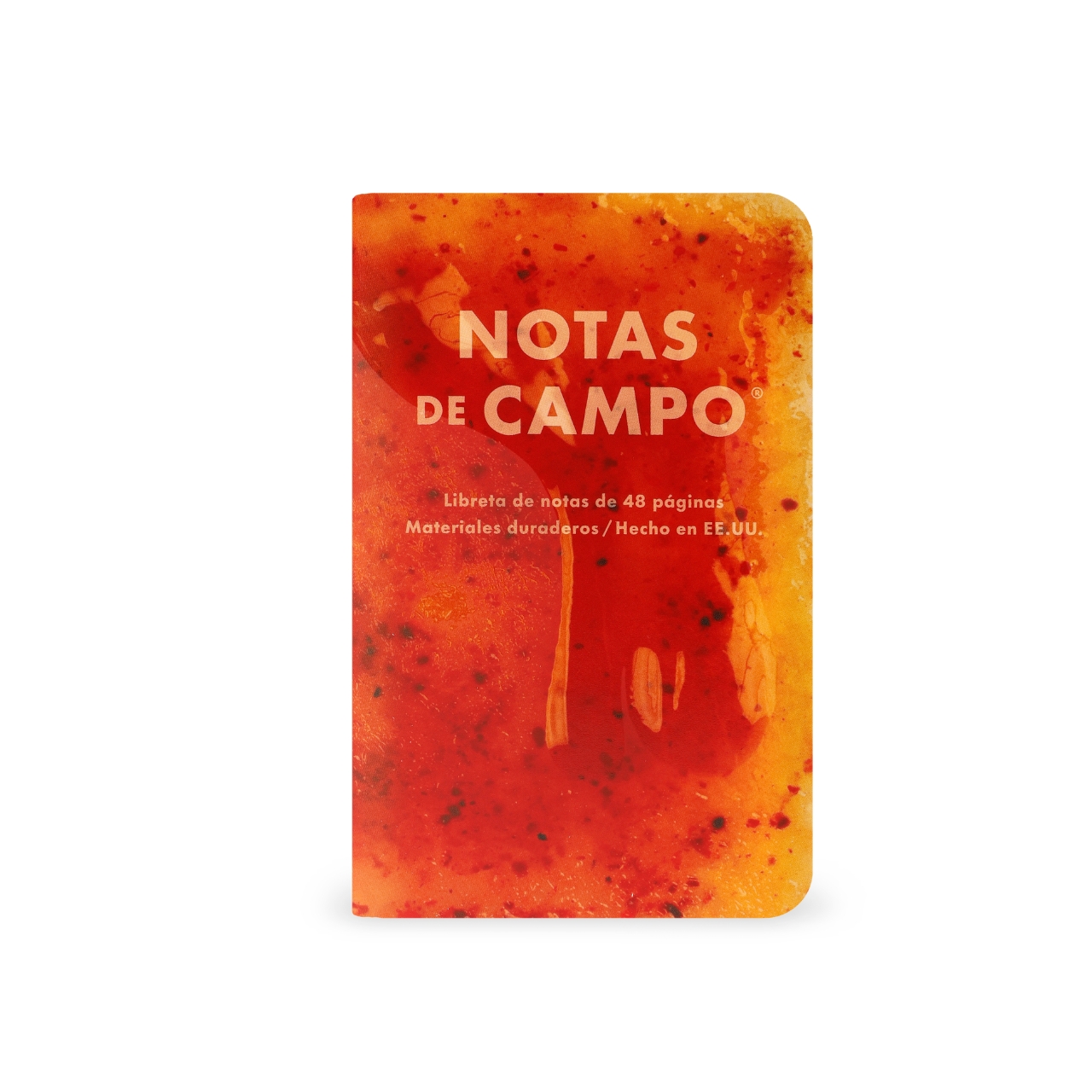
Each of the Field Notes notebooks (or, rather, Notas de Campo) has a combination of shiny gloss and frosty matte varnish, which gives them a texture that feels like you’re actually holding a paleta. There are nine “flavors,” each representing a specific paleta with its own color and personality, sold in three packs of three. Pack A has Chicle (Blue), Sandía (Red), and Queso Crema (White); Pack B has Piña (Yellow), Jamaica (Garnet), and Fresas con Crema (Pink); and Pack C has Limón (Green), Coco (White), and Mango con Chamoy (Red/Orange).

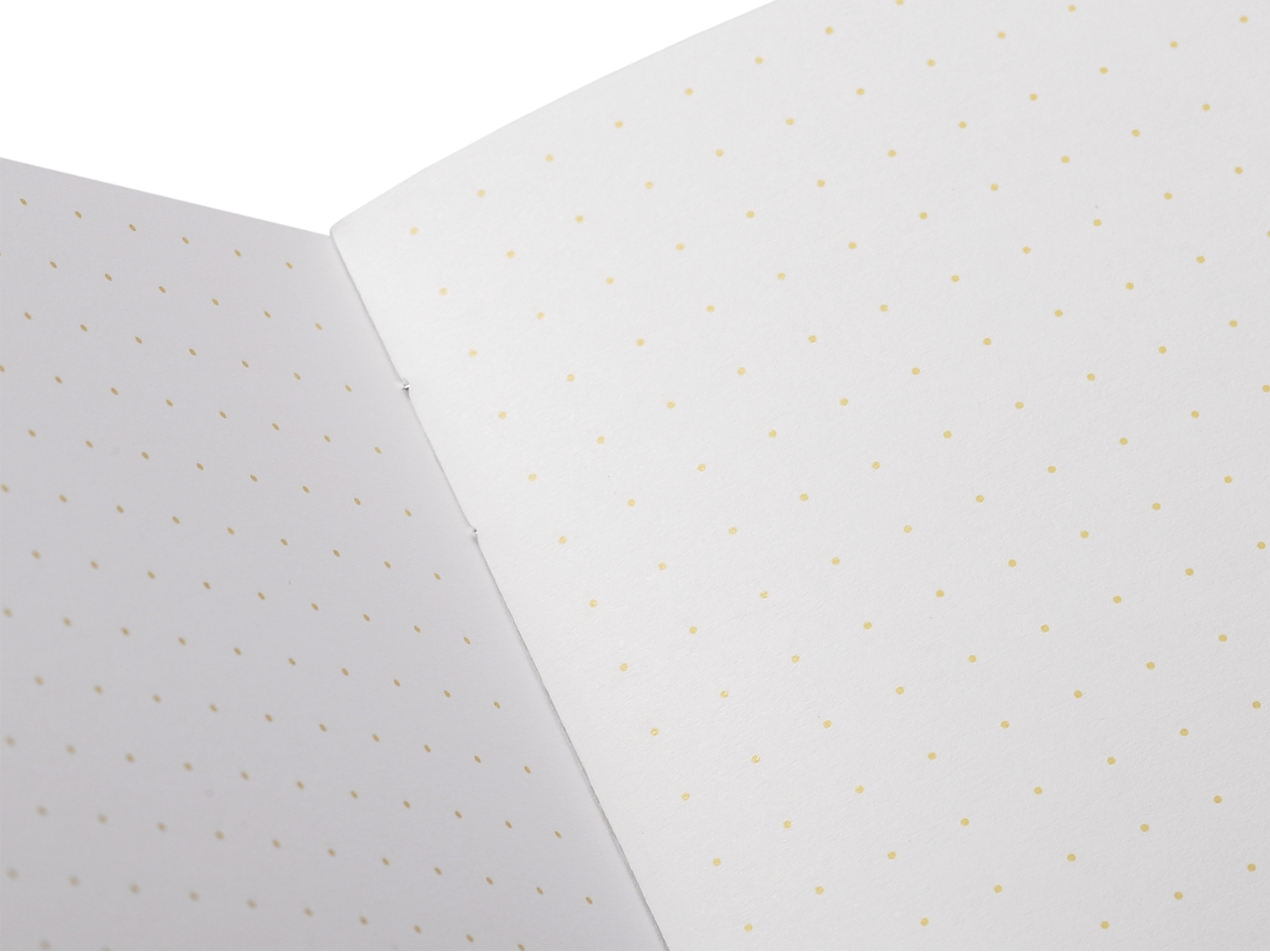
Inside, you get 48 pages of cream-colored dot-grid paper that you can use for note-taking, sketching, journaling, planning, or whatever it is you use notebooks for these days. Printing for this collection uses soy-based inks, which is perfect for sustainability-minded stationery lovers. There is a backing card illustration created by artist Atlan Arceo-Witzl, adding an artisan, handcrafted quality to the collection.

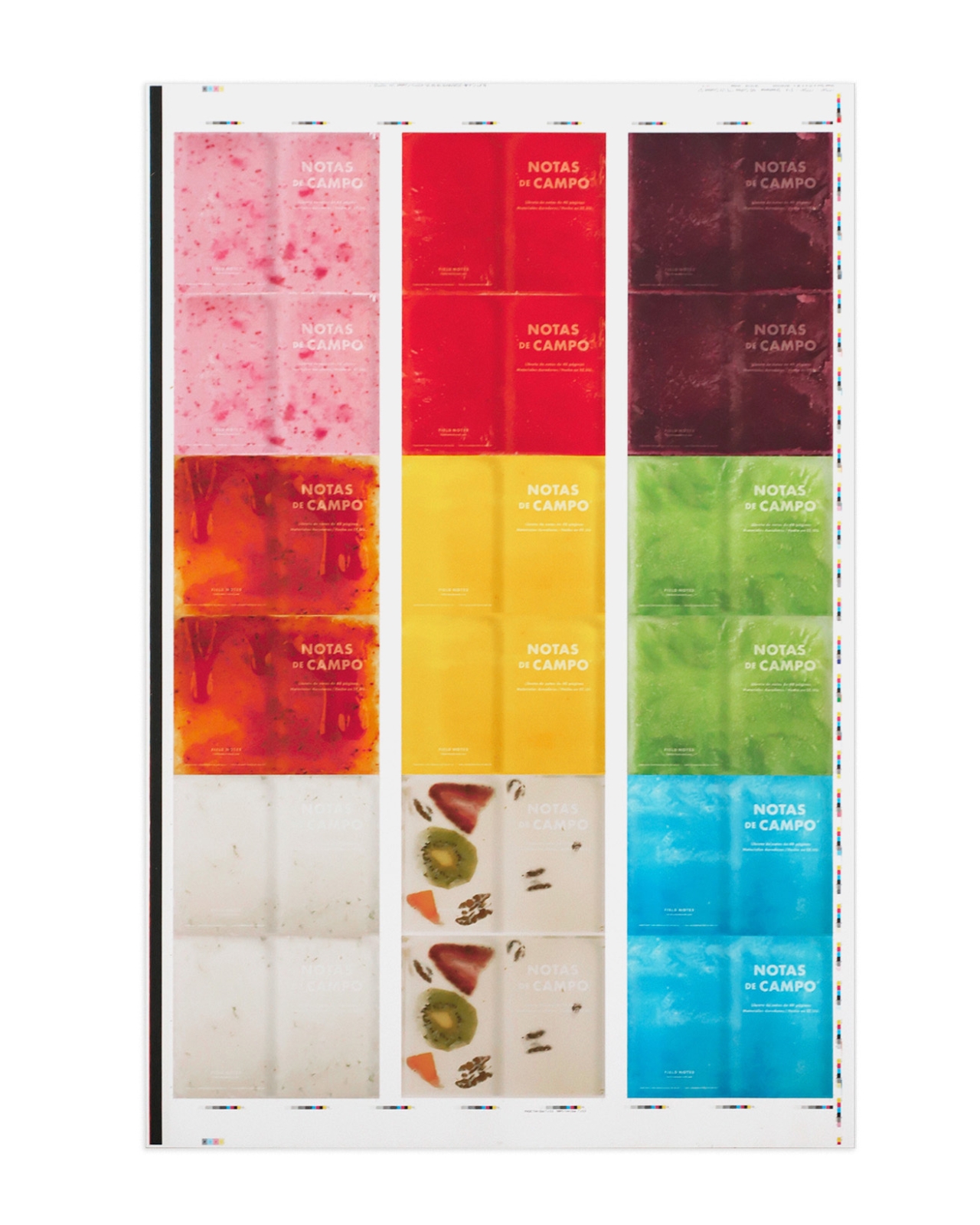
Each pack is priced at $14.95, making it easy to pick up just one flavor trio or go all in and collect all three. For subscribers, Field Notes sweetens the deal even further: you’ll receive the full set of all nine flavors, free U.S. shipping, 10% off on the site, and the special 2026 subscriber box beautifully designed by artist Jennifer Farrell of Starshaped Press. And if you want to display your paleta love on the wall, there are only 100 of the limited-edition Paletas Press Sheets available, showing all nine flavors together in one vibrant, poster-worthy print.

Whether you’re a longtime Field Notes collector, a journaling enthusiast, or simply someone who appreciates beautiful and thoughtfully designed objects, the Paletas edition is genuinely hard to resist. There’s something really special about a notebook that not only gives you a wonderful writing experience but also makes you smile just by looking at it, or, in this case, almost makes you want to take a bite.

And circling back to what I always say in my workshops: journaling is a deeply sensory experience. The Paletas collection somehow manages to hit almost all of them: the vivid, fruit-inspired colors that delight your eyes, the gloss-and-matte texture that begs to be touched, and the crisp sound of the pages as you turn them. The only sense still left out is taste, but that’s what an actual paleta in your other hand is for. Go grab yourself a pack and maybe a mango con chamoy while you’re at it.

The post Field Notes Just Made Notebooks That Look Good Enough to Eat first appeared on Yanko Design.
This $20 Pen Is The Reason I Quit My Notes App

There was a time when writing something down felt simple. You had a notebook, a pen, and a thought worth keeping. But somewhere along the way, that tiny ritual got interrupted. The notebook is in your bag, the pen is on your desk, and the idea, the one that felt sharp and urgent a second ago, is already slipping away.

It’s a small frustration, but a familiar one. The kind you barely notice until it happens again. A quick note you meant to save. A phrase that arrived at the right moment. A reminder, an observation, a sketch of an idea that felt important for all of five seconds before real life moved in and erased it. We talk a lot about creativity as if it lives in grand gestures, but most of it begins in quieter moments, and those moments will stay within reach when you have the Inseparable Notebook Pen with you.

That’s what makes this Inseparable Notebook Pen so compelling. It doesn’t promise to make you more creative. It just makes it much harder to lose the moment creativity shows up. Designed to attach seamlessly to your notebook, it turns one of the most common little frustrations in daily life into something smoother, quieter, and far more intentional.

The Pen That Changed How I Capture Ideas

At first, I thought the Inseparable Notebook Pen was just a well-designed pen with a smart magnetic clip. Sleek, compact, and clearly made to look good next to a notebook. But after a few days of carrying it around, I realized it had changed something more important than aesthetics.

  • I stopped patting down my pockets looking for a pen.
  • I stopped opening my notebook only to realize I had nothing to write with.
  • And I stopped trusting my memory to hold onto thoughts that deserved better.

Because the pen stays with the notebook, the whole act of writing feels uninterrupted. You open the cover, detach it in one quiet motion, and start writing. No searching. No delay. No break in thought. It turns out that the best writing tool isn’t always the one with the most prestige. It’s the one that’s there the exact second you need it.

Precision Craftsmanship for a Seamless Experience

  • Magnetic clip attachment: Keeps the pen securely connected to your notebook, always within reach.
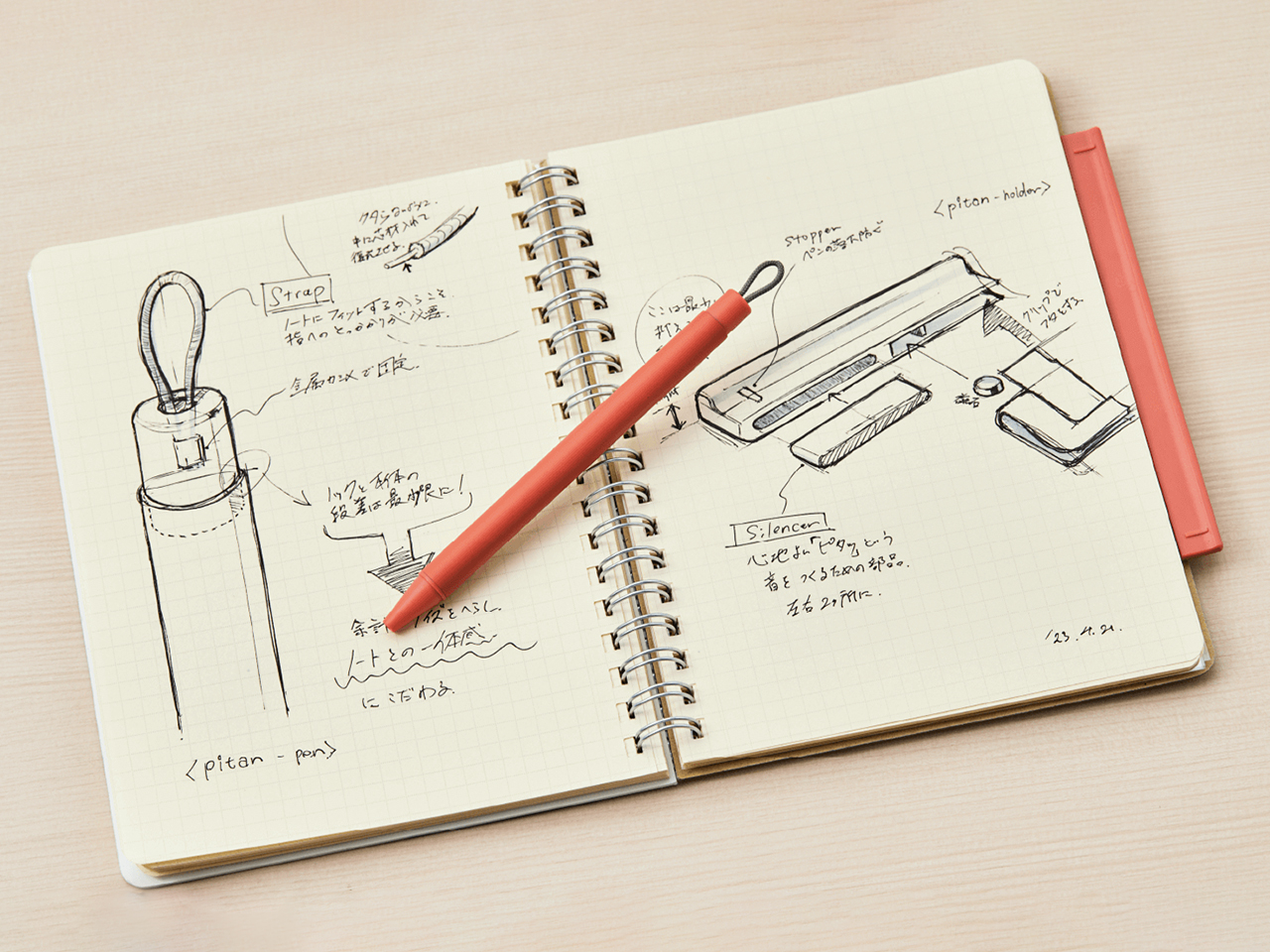
  • Built-in silencer: Makes attaching and detaching feel quiet, refined, and unexpectedly satisfying.
  • Smooth gel ink flow: Delivers clear, precise writing whether you’re jotting a note or building an idea.
  • Minimalist form: Clean, understated design that feels like a natural extension of the notebook.
  • Comfortable grip: Easy to hold for quick thoughts or longer writing sessions.
  • Compact everyday carry: Small enough to disappear into your routine until the moment it matters.

This isn’t about adding another accessory to your bag. It’s about removing one small friction point that interrupts the entire process.

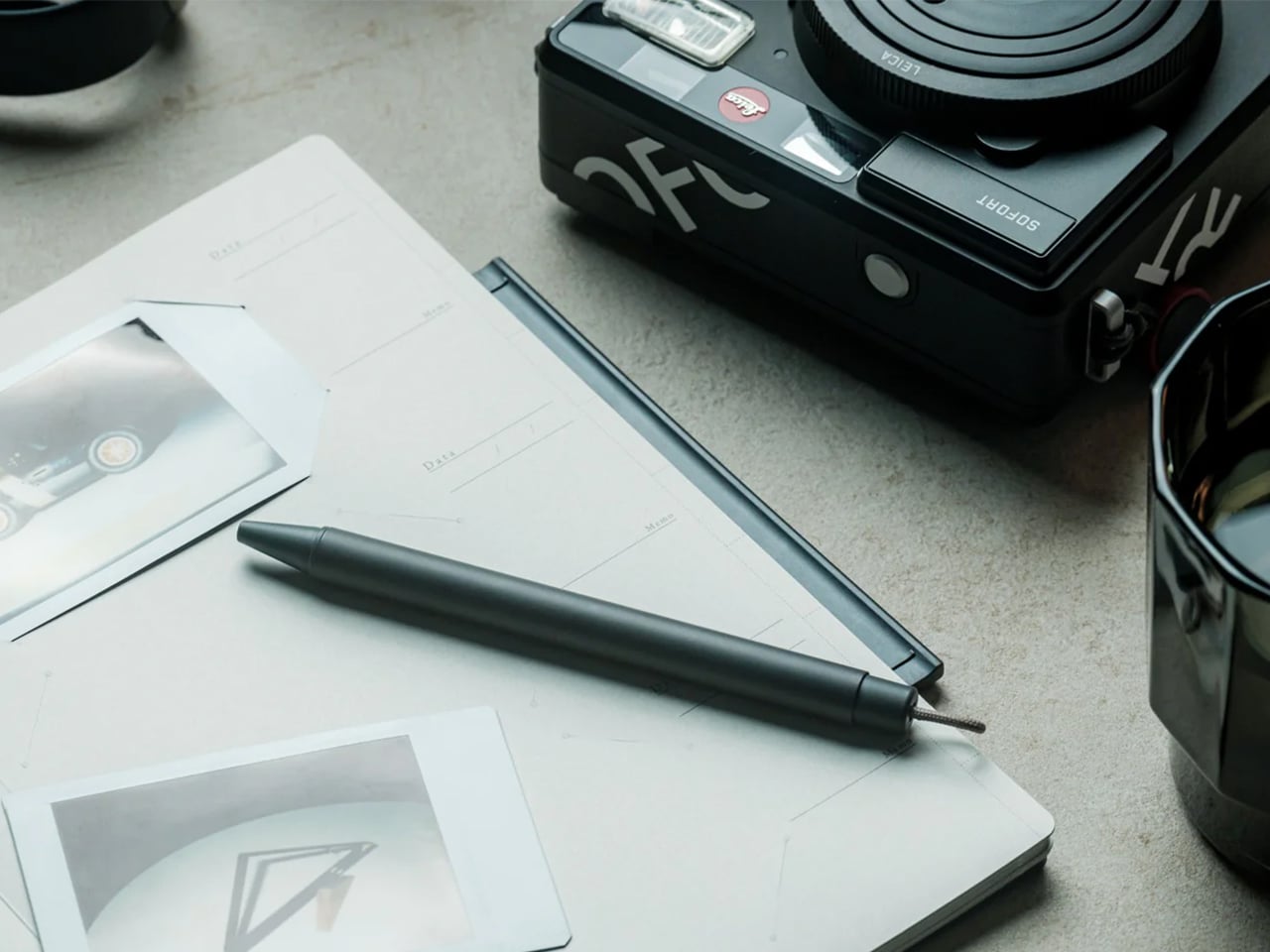
Desk scene with a black pen laid over light documents, a small Polaroid-style photo, and a calculator on a beige surface.

Why Readiness Still Matters

We live in a world where ideas often arrive faster than our tools can keep up. A note app can help, but it rarely feels as immediate or grounded as putting pen to paper. And a notebook without a pen nearby is really just a good intention waiting to be interrupted.

The Inseparable Notebook Pen fixes that in the simplest possible way. It makes the notebook feel complete.

That matters more than it sounds. Because when the tool is ready, you’re more likely to capture the thought, sketch the idea, write the reminder, or hold onto the memory before it disappears into the noise of the day.

Design That Reflects Restraint

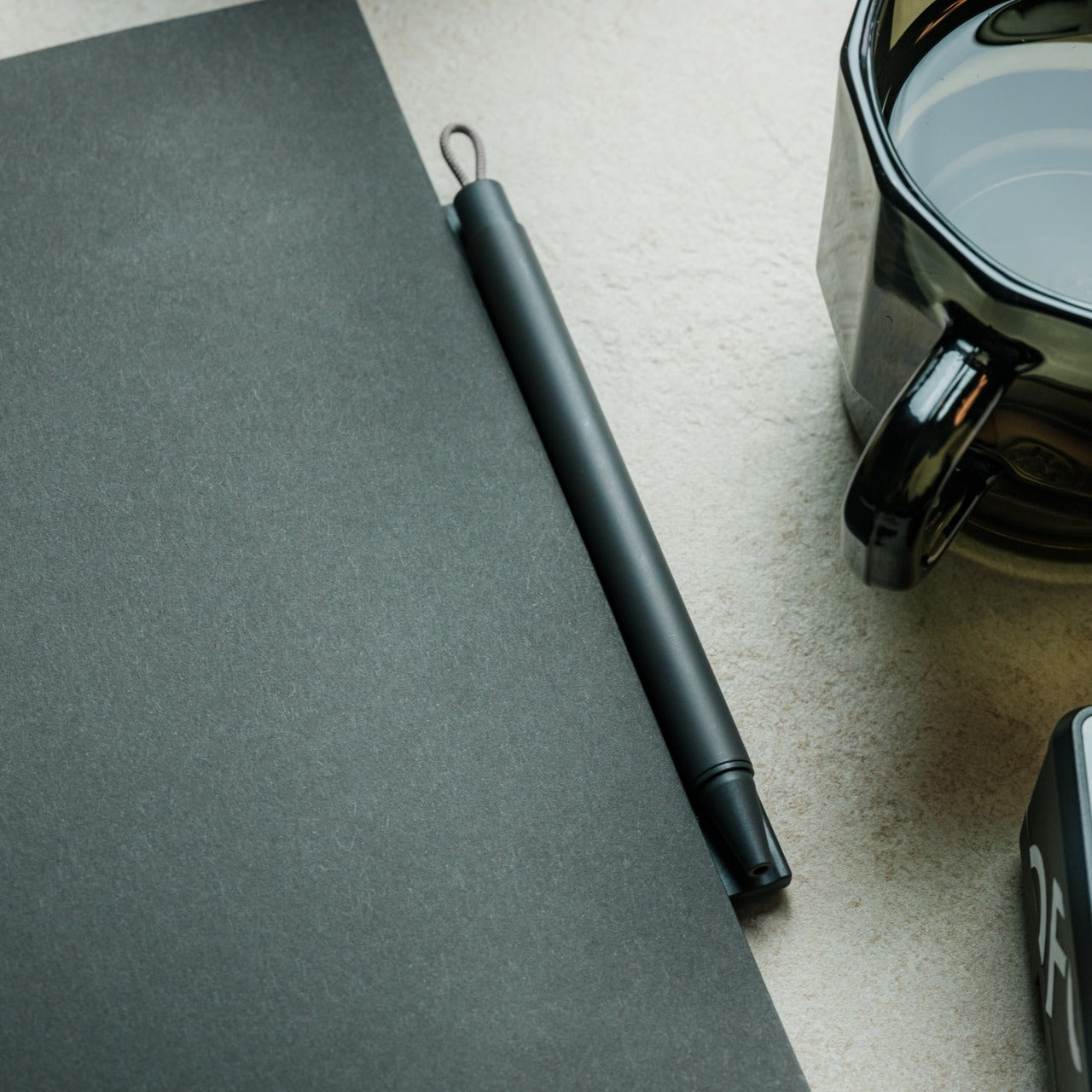
There’s a quiet confidence to the Inseparable Notebook Pen that makes sense the longer you use it. Nothing about it feels overworked. The silhouette is clean. The clip is integrated rather than decorative. Even the silenced magnetic attachment adds a small layer of calm to an interaction most products would never think to refine.

It doesn’t ask to be admired on its own. It becomes meaningful because of how naturally it belongs with the notebook. That’s the power of thoughtful design. It doesn’t just look good. It makes the whole routine feel better.

Close-up of a black notebook with a rectangular clip on its cover, a black pen nearby, and part of a camera in the corner.

Who It’s For

  • Notebook Loyalists

For people who still trust paper more than a blinking cursor.

  • Creative Thinkers

A pen that stays ready for ideas before they disappear.

  • Minimalists

One clean, integrated tool that removes clutter instead of adding to it.

Black stylus pen with a looped cord on a beige textured surface, shown beside a slim black stand or holder.

Where Thought Becomes Capture

You don’t realize how many good ideas are lost to small delays until one object removes them. Most of us don’t need a better imagination. We need fewer interruptions between the thought and the page. That’s what the Inseparable Notebook Pen understands so well. It doesn’t turn writing into a performance or a productivity system. It just makes the act of capturing something feel available again.

And maybe that’s why it works. Because the best everyday tools don’t demand attention. They quietly earn their place by being ready, by feeling right, and by making a routine just a little more whole than it was before. The Inseparable Notebook Pen won’t write the next great idea for you. But it will make sure you’re ready when it arrives.

At the end of the day, it’s still a pen. But sometimes, the right one changes the entire ritual around writing things down. The Inseparable Notebook Pen is available now for $19.95.

The post This $20 Pen Is The Reason I Quit My Notes App first appeared on Yanko Design.
Moleskine Just Turned Issey Miyake’s Iconic Pleats Into Paper

Even though I’ve spent most of my life in the digital space, I’m still a firm believer that the analog world is just as relevant and that the two can work together. I’ve built a career in digital marketing and content creation but I’m also a paper and stationery person who prefers to journal and take notes on actual pen and paper. So when new, interesting paper products come out, I always get giddy and see how it can fit into my productivity and lifestyle.

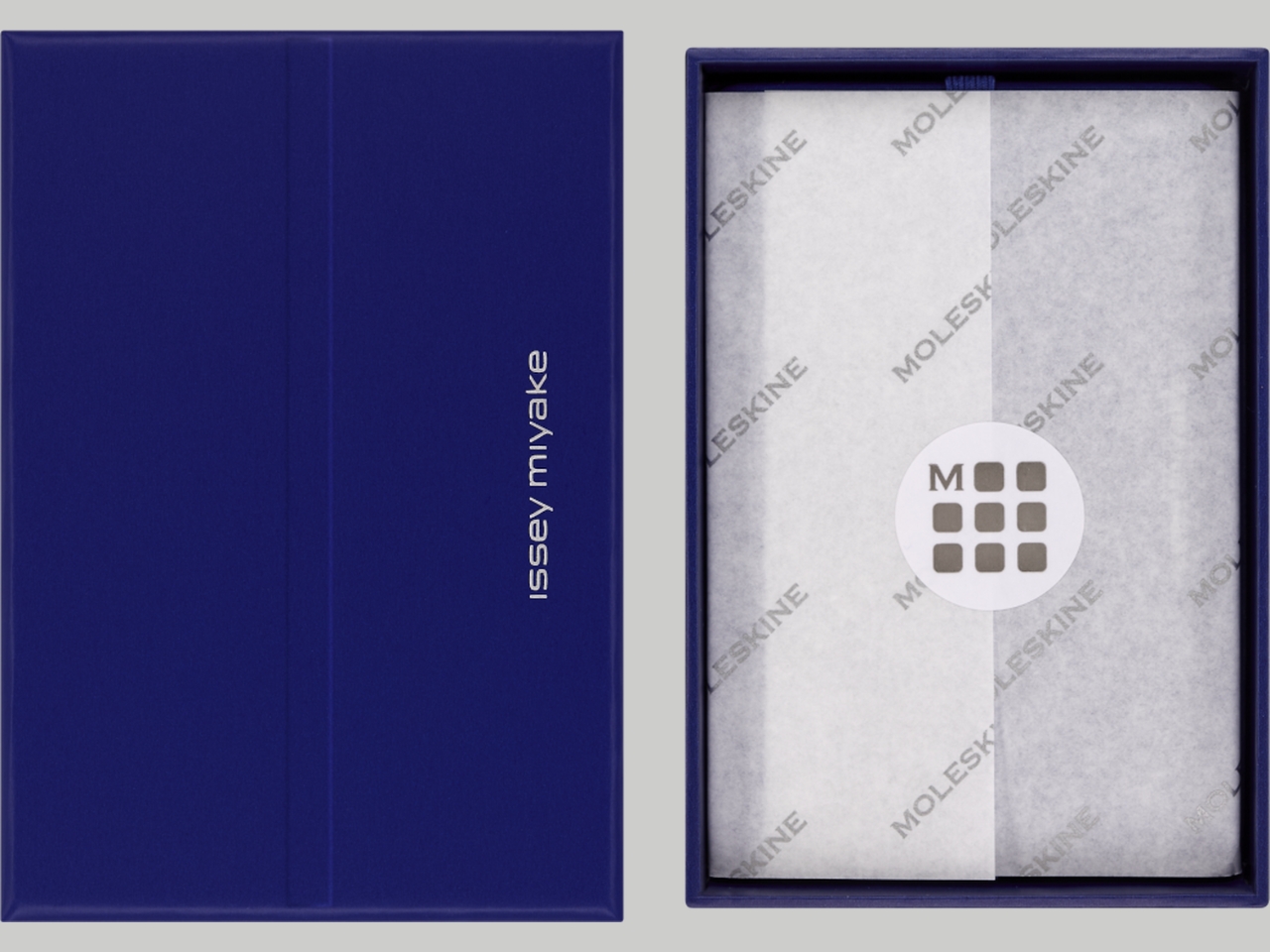
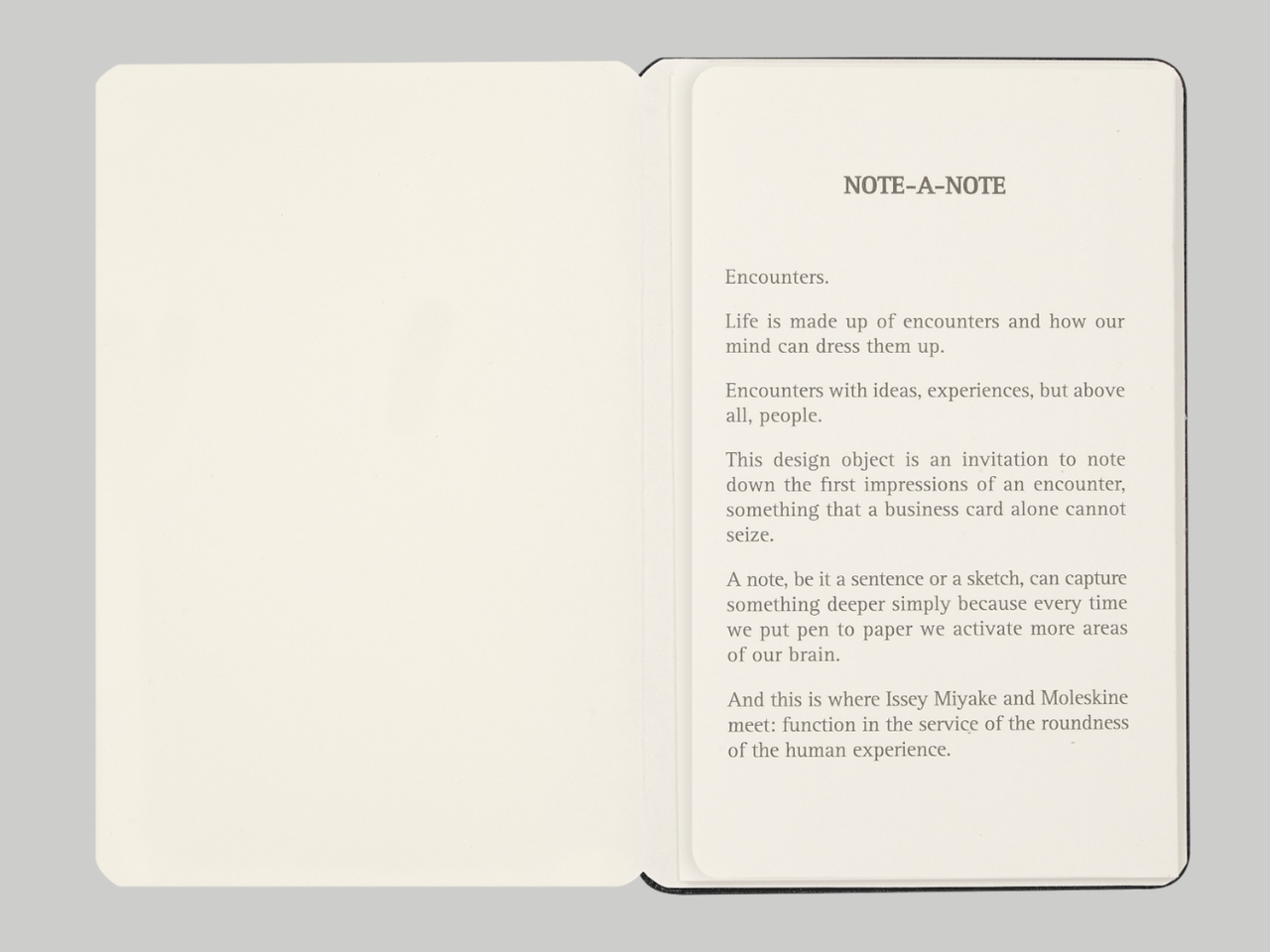
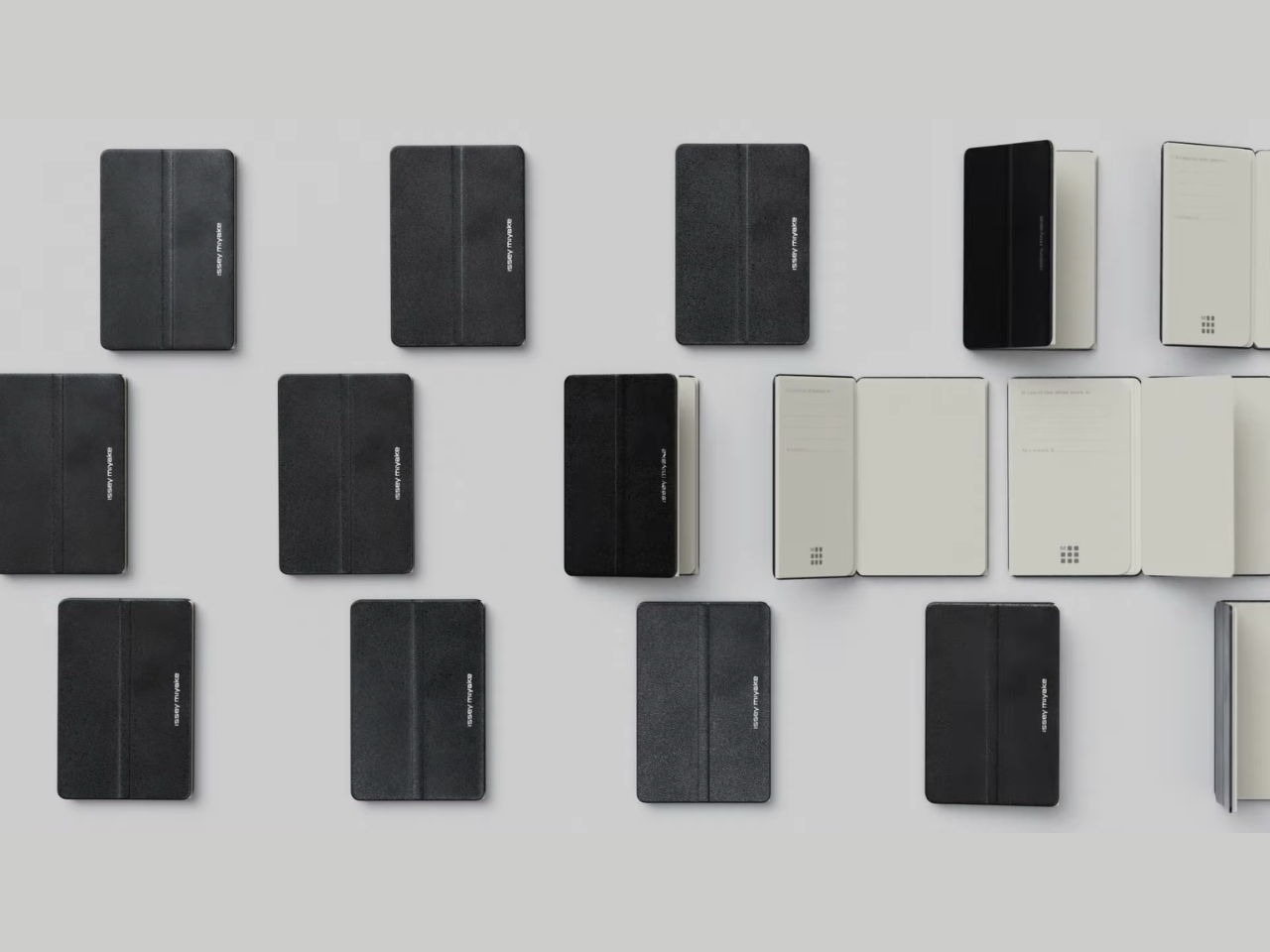
Moleskine has teamed up with Issey Miyake, specifically Miyake Design Studio to come up with NOTE-A-NOTE, a piece that marries the utility of a notebook with the sophistication of a card case. Since people still do carry around business cards, we need a way to keep them organized while at the same time add to our productivity flow.

Designer: Moleskine x Issey Miyake

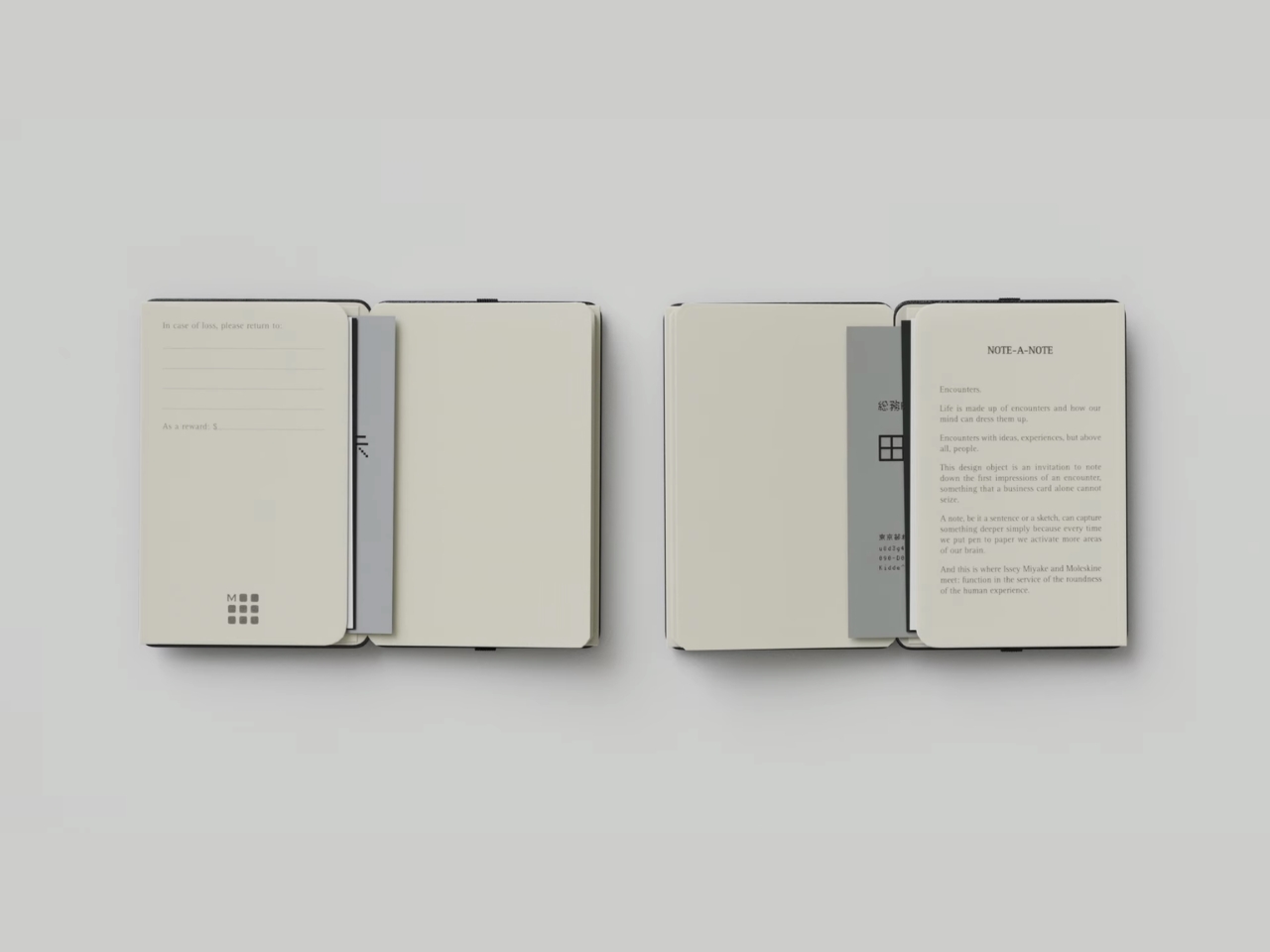
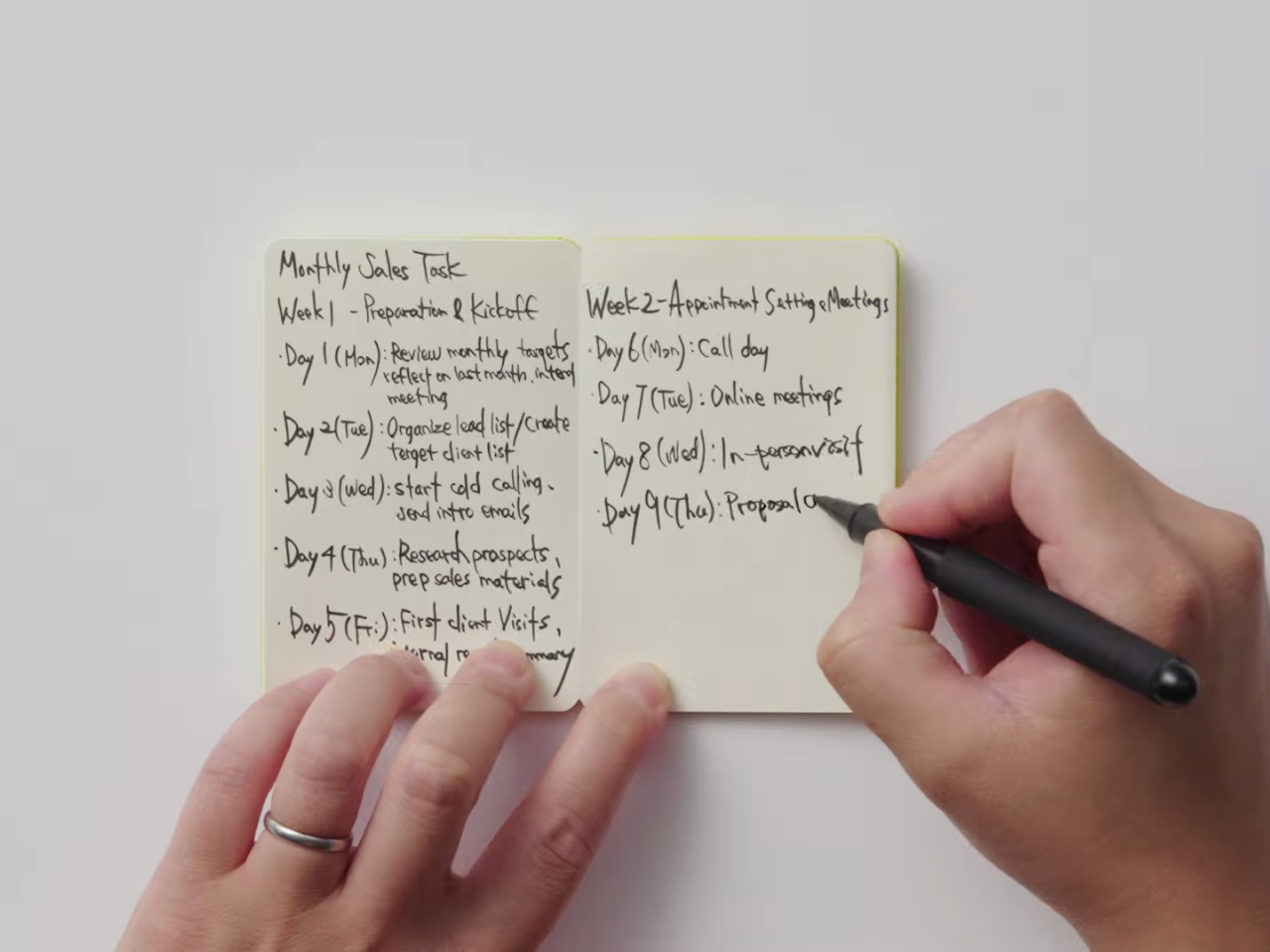
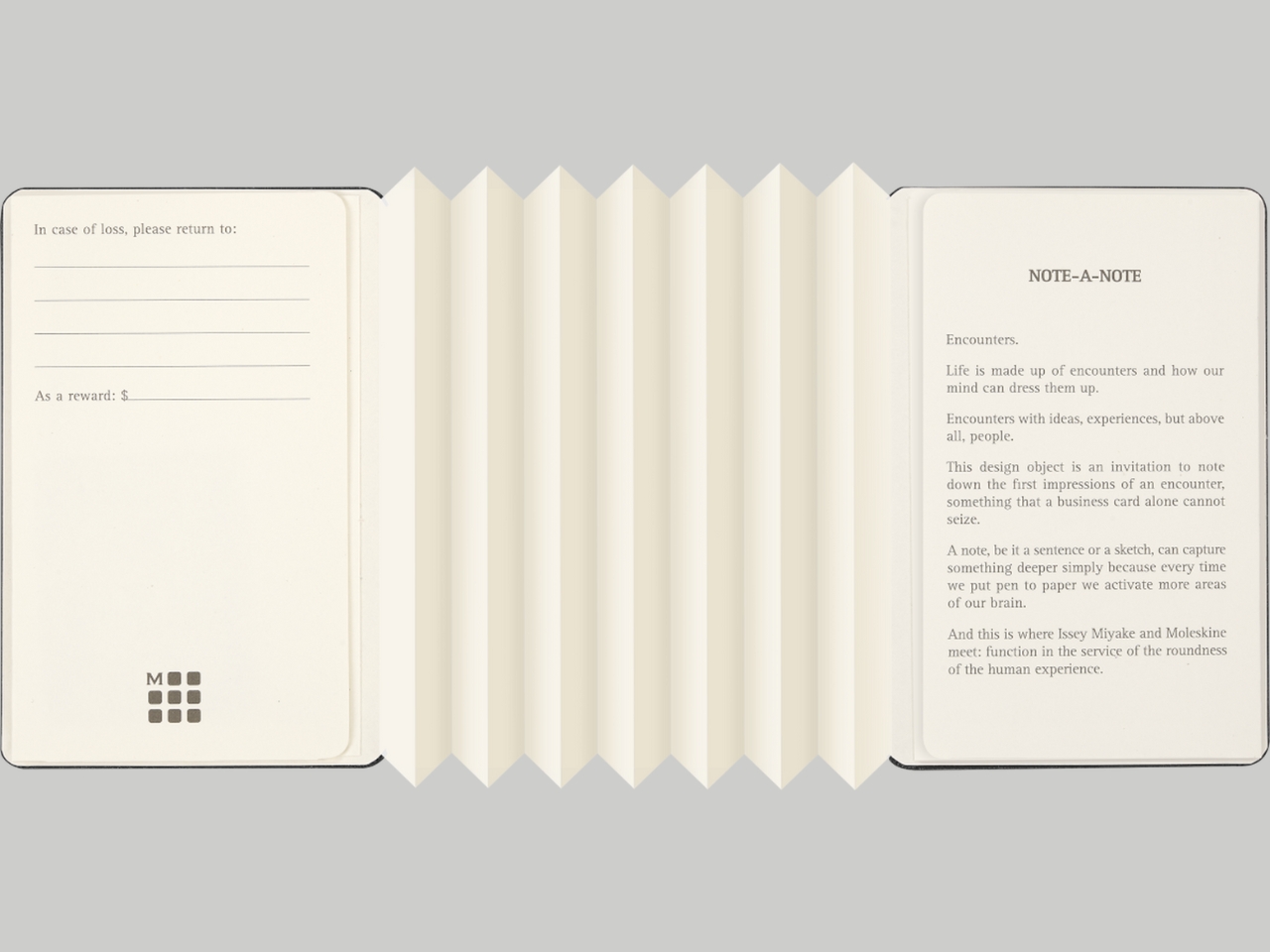
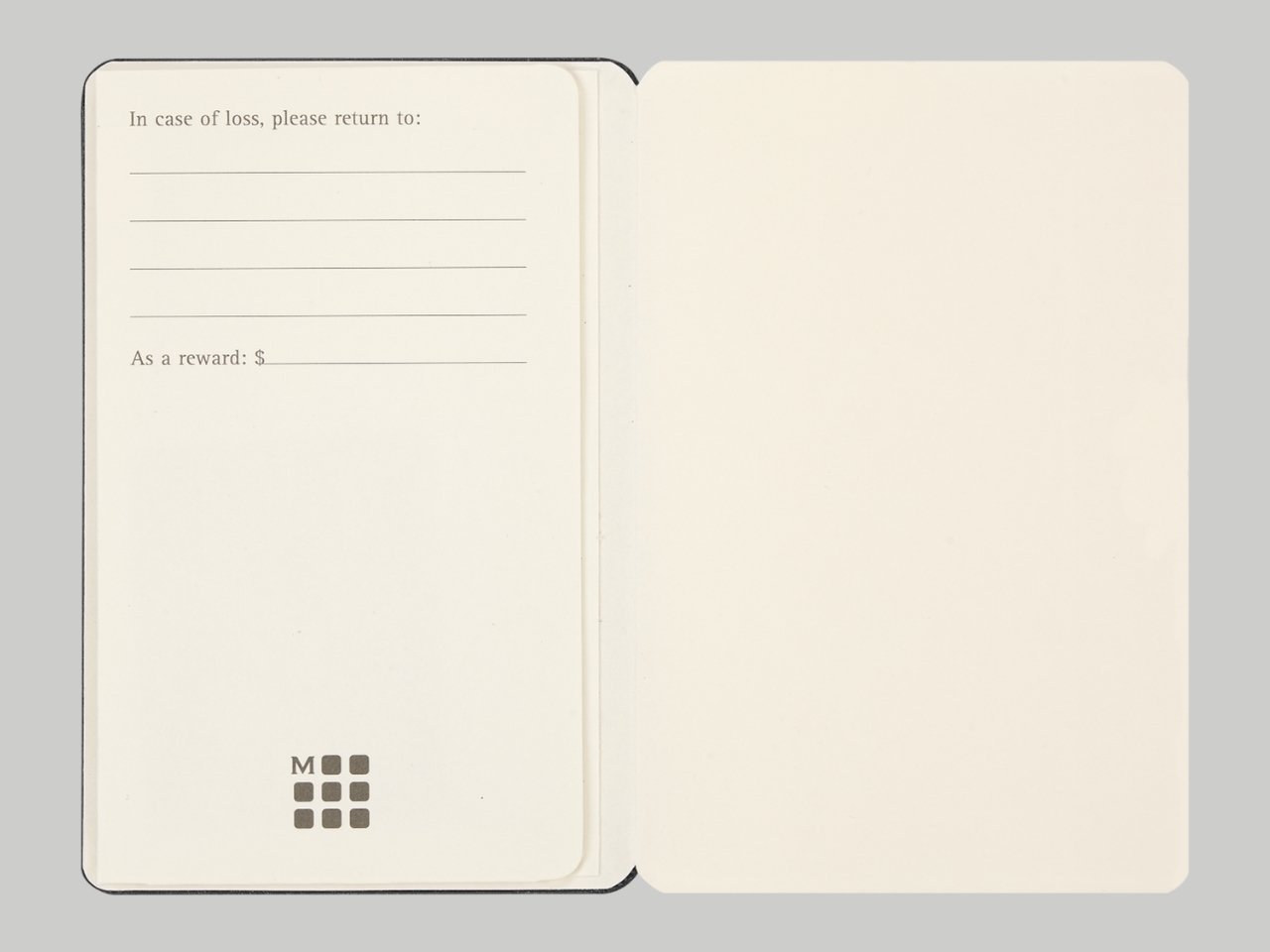
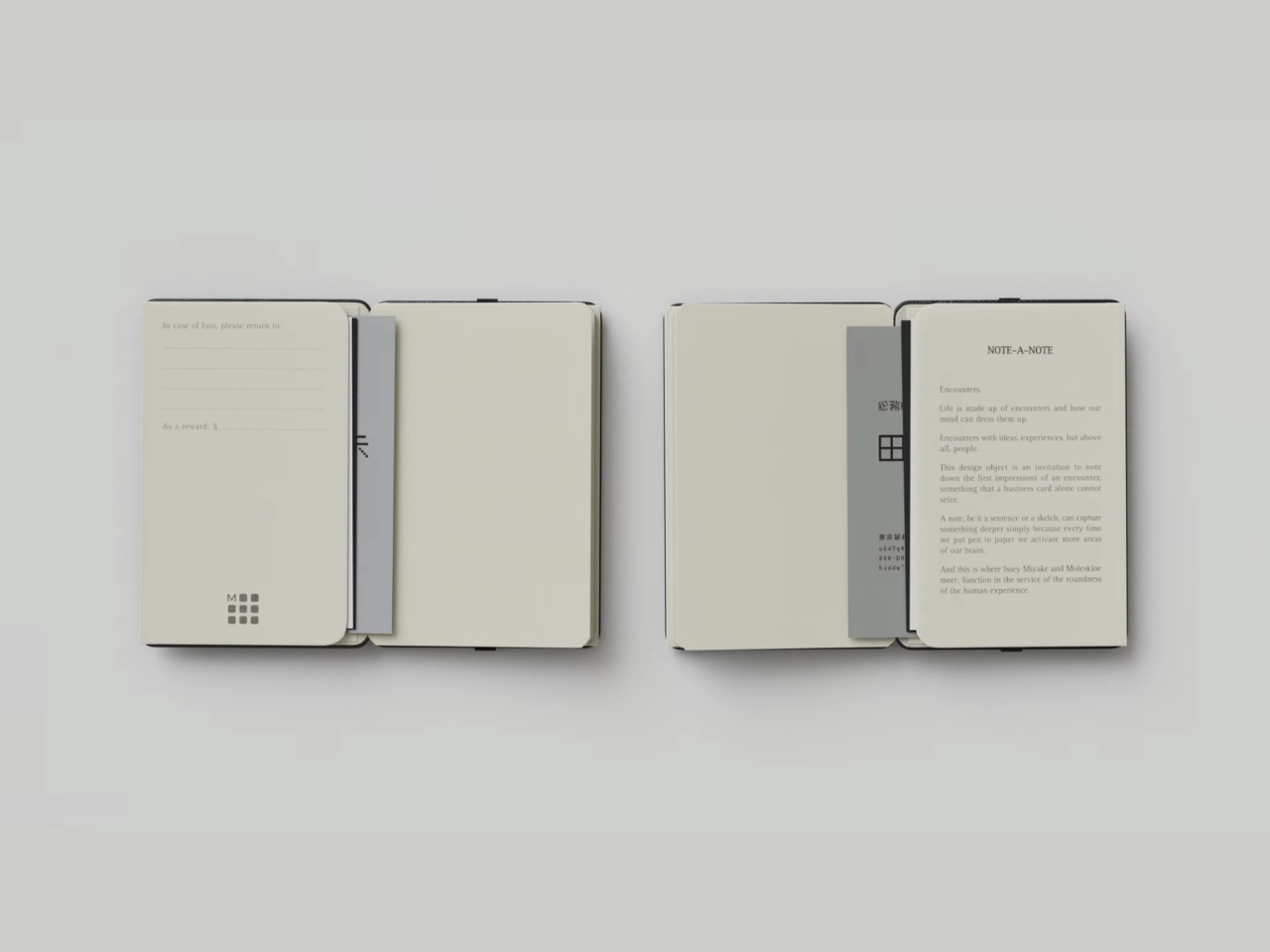
With this hybrid piece, you don’t know if it’s a business card holder that has a notebook or if it’s a notebook that has a business card holder. This pocket-sized item has a hard cover with rounded corners and inside you get two expandable pockets that can house up to 24 business cards. Or if you want to use it as a wallet, you can put your cards and bills inside as well. It is able to open flat to 180 degrees. It also comes with a color-matched box that can also be used as a storage case as it can be attached to the holder with an elastic band.

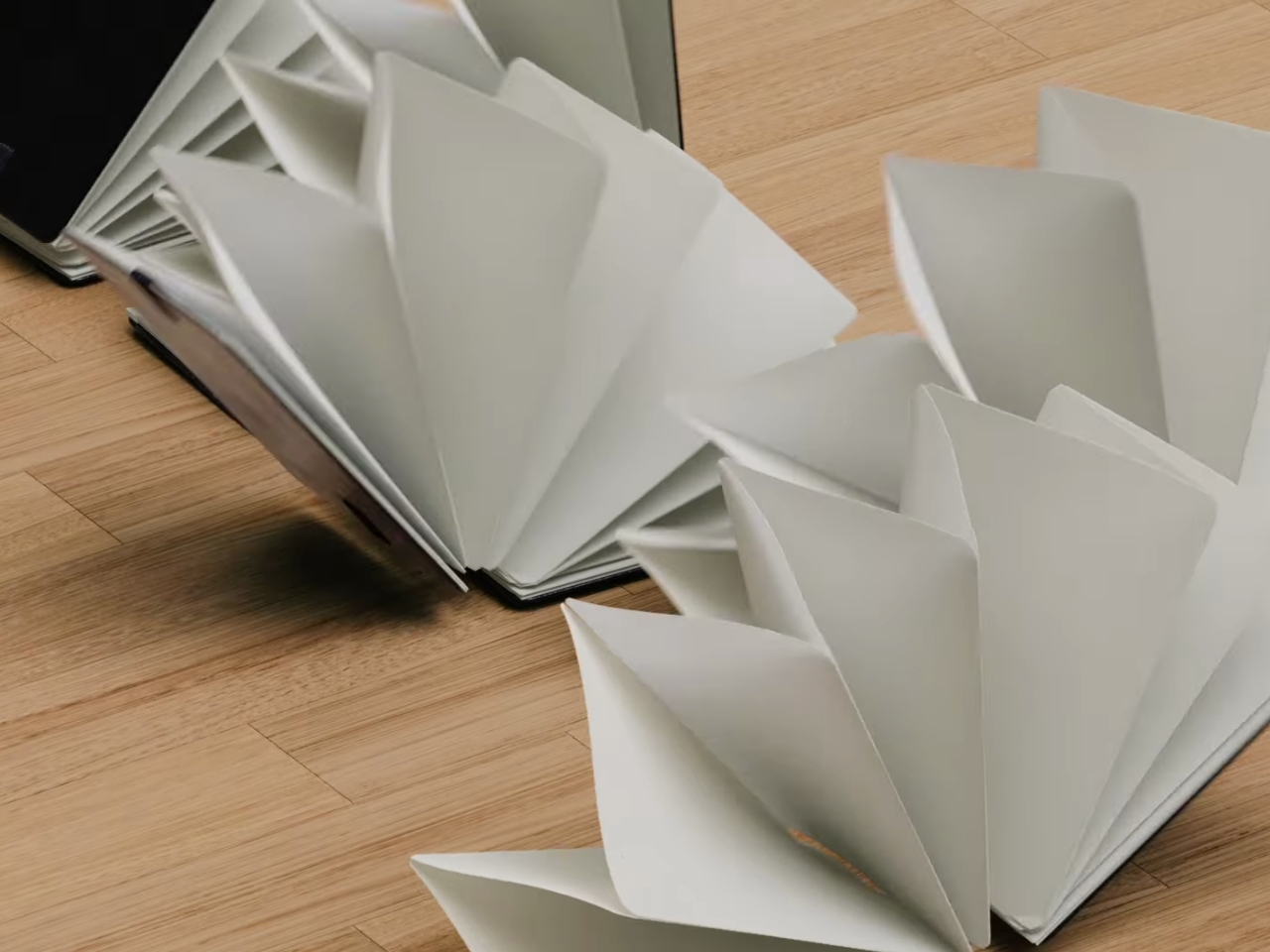
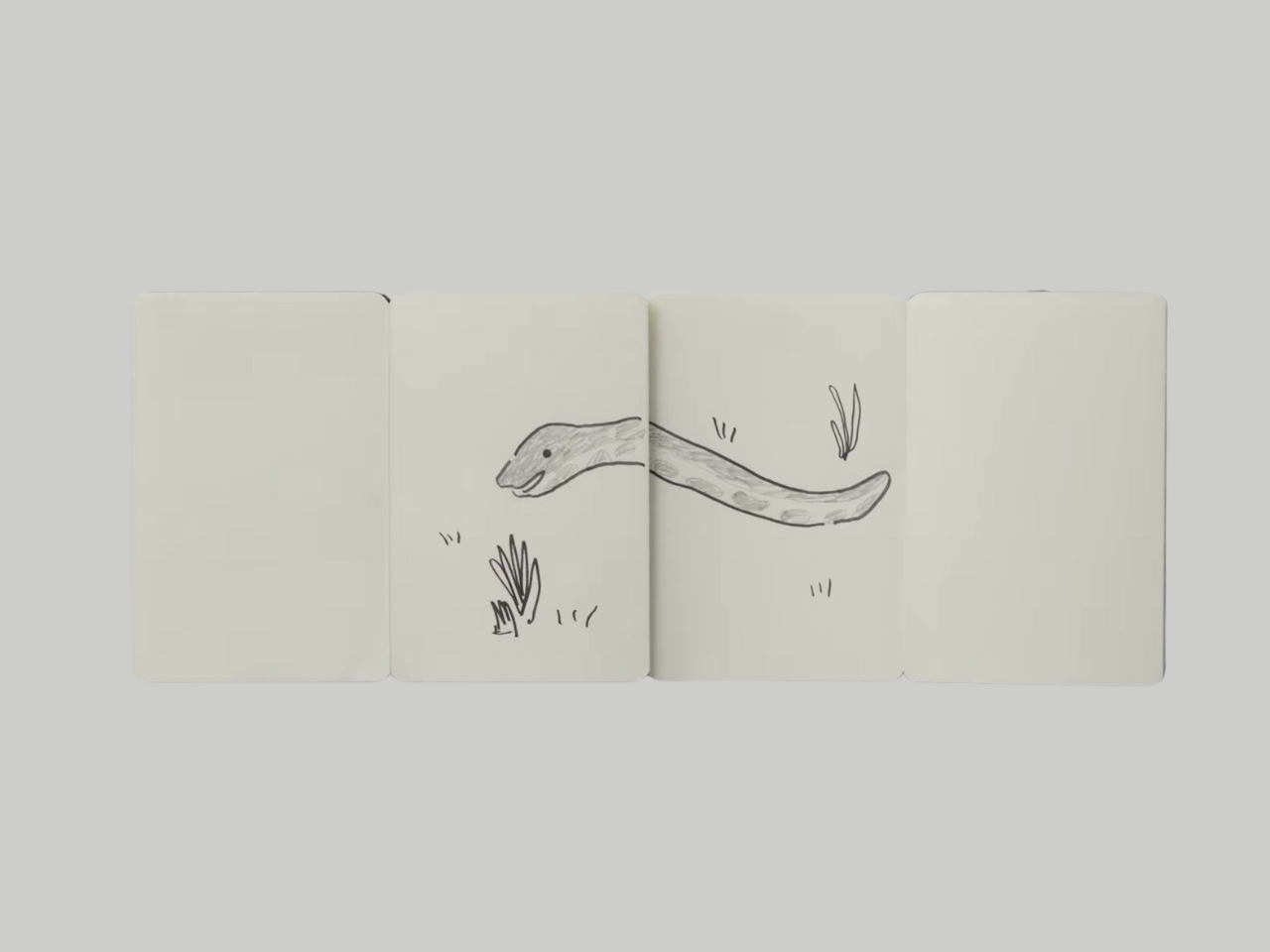
Normally, notebooks are made up of many pages but NOTE-A-NOTE actually uses just one long, folded single piece of paper. It’s basically a folded insert in the business card holder that has 14 accordion-style pages. It actually echoes the signature pleating technique that Issey Miyake is known for, bringing their iconic textile innovation to paper form. The acid-free paper is ivory-colored and uses FSC™-certified paper from managed forests. The signature Moleskine elastic band elegantly secures the case with a striking gesture across its central embossed line, making it instantly recognizable as a collaboration between these two design powerhouses.

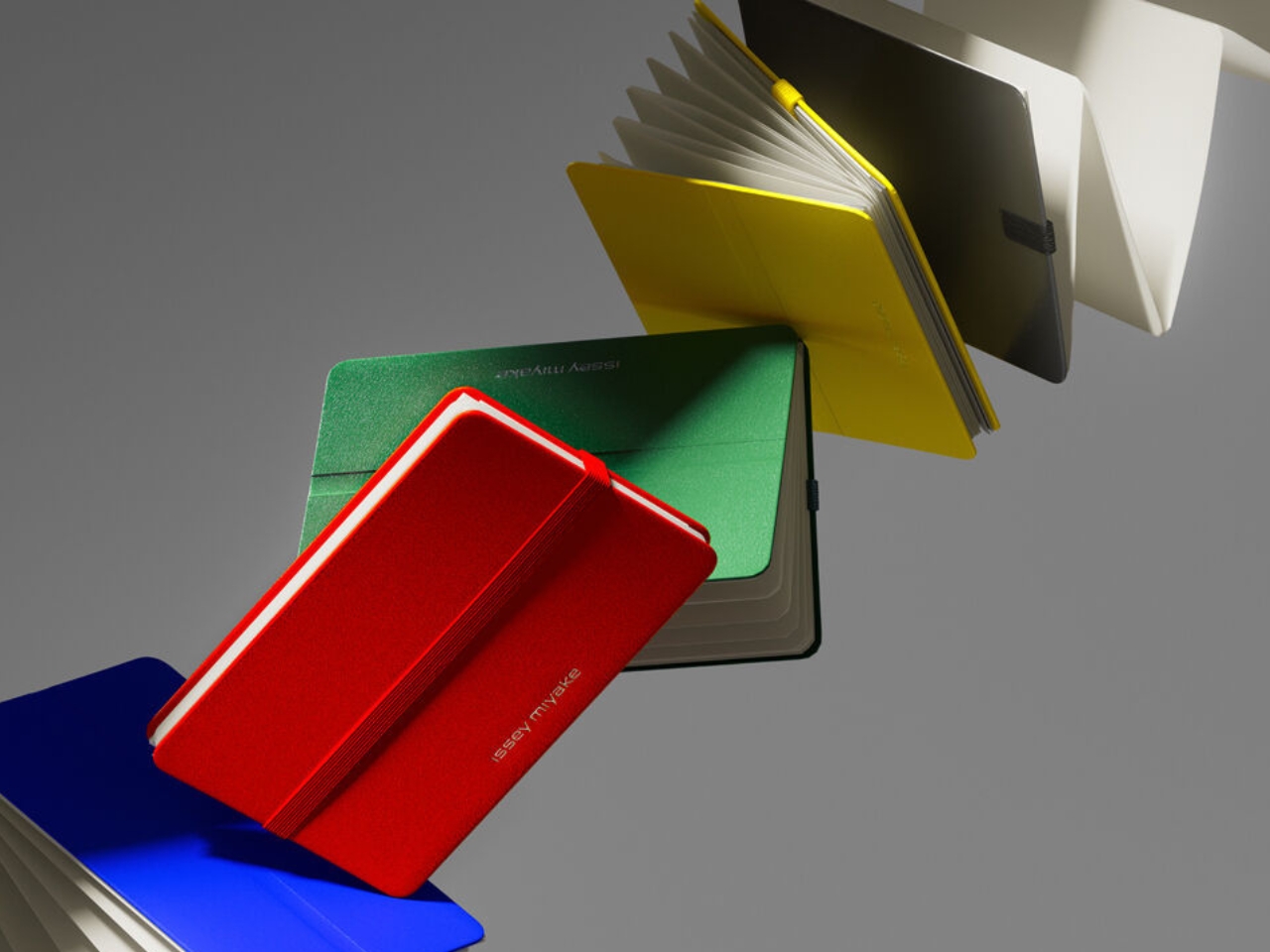
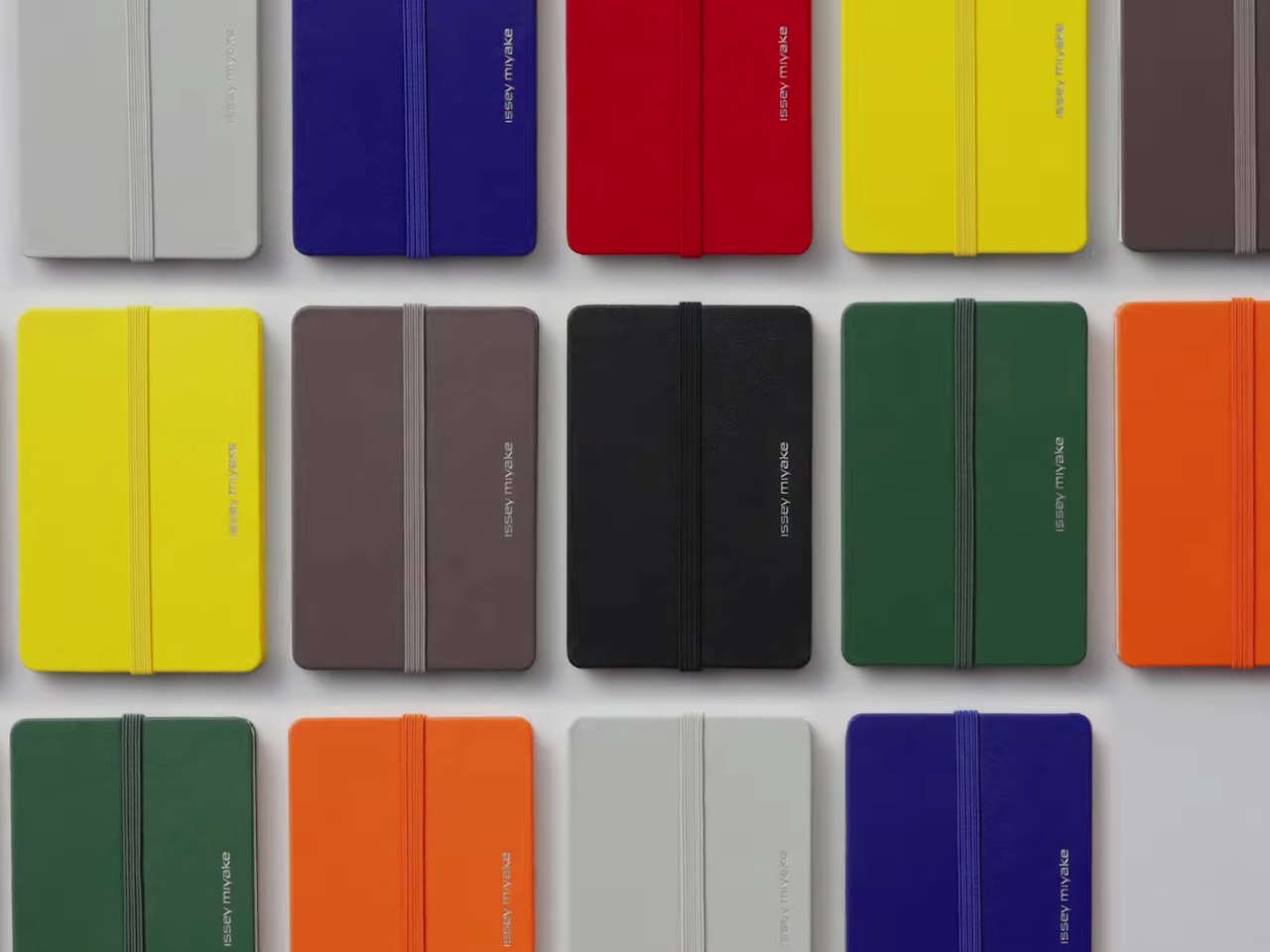
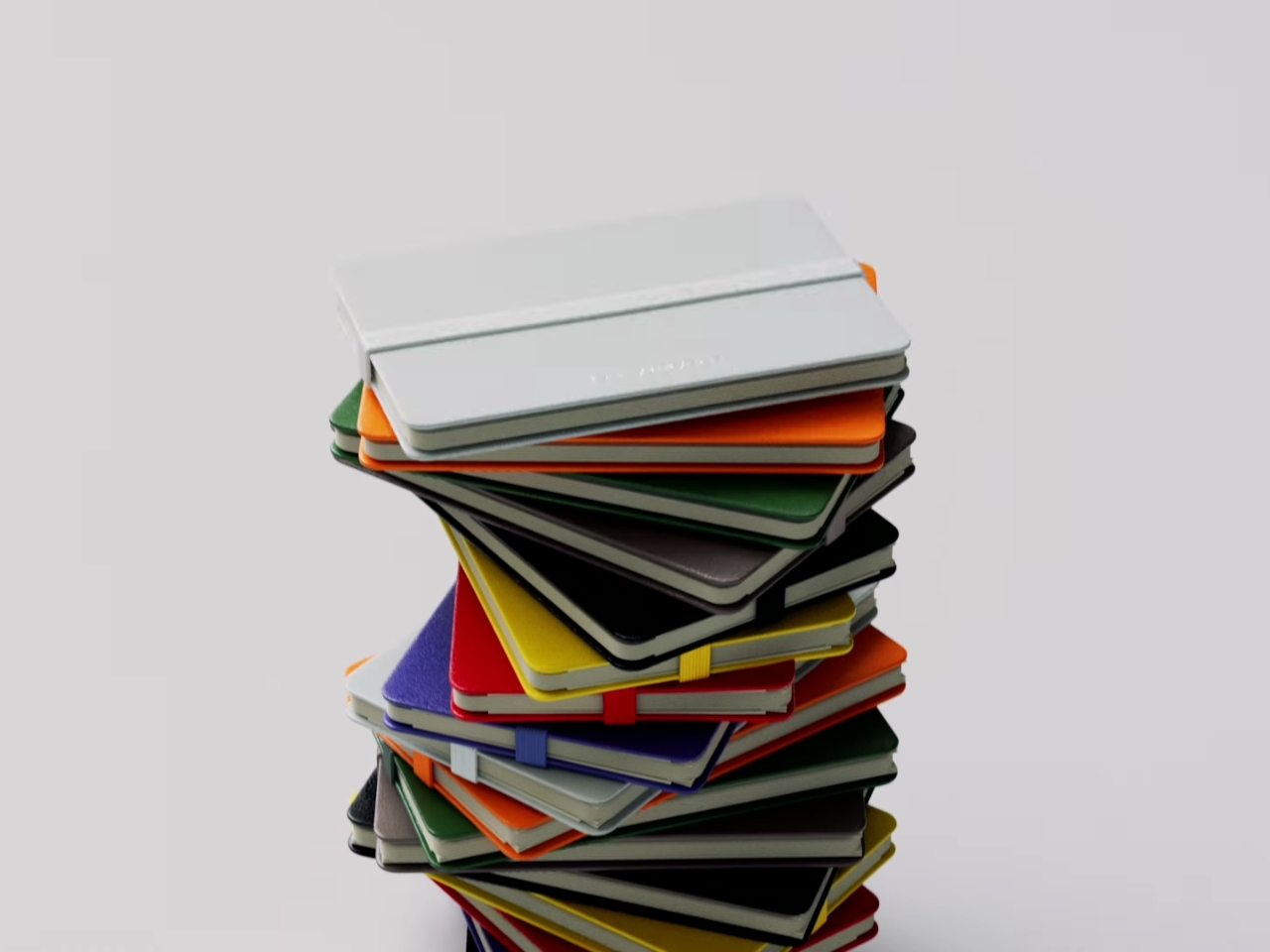
It comes in eight different colors that can match your aesthetic: Black, Scarlet Red, Myrtle Green, Grey, Blue, Earth Brown, Orange, and Dandelion Yellow. The goal of having this card holder and notebook in one is to have something handy to write down ideas, thoughts, and important details while keeping the exchange of business cards close to you as well. The clean and thoughtful structure actually takes inspiration from traditional Japanese emakimono scrolls.

I can see this being perfect for creative professionals who attend networking events, conferences, or client meetings. It’s compact enough to slip into a clutch or small bag, yet substantial enough to make an impression when you pull it out. The variety of colors means you can choose one that reflects your personal brand or collect multiple for different occasions. For stationery collectors like myself, this is definitely a piece worth adding to your collection—it’s not just functional, it’s a conversation starter that showcases your appreciation for thoughtful design.

The XS size makes it incredibly portable, fitting comfortably in your hand or pocket. Imagine being at a networking event and jotting down a quick note about a conversation right after exchanging business cards with someone. That immediate capture of thoughts and context is invaluable in our fast-paced professional lives.

The NOTE-A-NOTE collection is available now on the Moleskine website for $46 USD, with shipping in 4-8 working days. Released in October 2025, this limited edition collection represents a meeting of minds between two brands that understand the power of tactile experiences in our increasingly digital world.

This collaboration beautifully merges two iconic brands: Moleskine’s legendary notebook craftsmanship with Issey Miyake’s revolutionary approach to pleating and folding, creating a functional accessory perfect for professionals who value both aesthetics and utility.

The post Moleskine Just Turned Issey Miyake’s Iconic Pleats Into Paper first appeared on Yanko Design.
Transform Business Cards into Cherished Memories with This Minimalist Log Book

Business cards and shop cards are often regarded as boring, impersonal representations of people and places, but that’s partly because we often forget to associate the person with the name on the card. It’s easy enough to forget the first encounter with a stranger who hands you their business card, not unless you actually turn that card into an unforgettable memory. Rather than keep those cards in some container that you forget inside a drawer, why not slip them into this minimalist and profound log book that lets you write down your own thoughts and memories about people, encounters, and events, turning them into small stories that let you cherish these memories and remember them better for days to come.

Designer: Replug

Click Here to Buy Now: $19

Some people and events definitely leave a lasting impression, but our frail human minds can easily forget them as well. Photos and even business cards offer tangible triggers to jog our memories, but they can still end up feeling distant and impersonal, more like watching a film from the eyes of an outsider rather than from your own perspective. What better way to ensure you’ll remember the poignant details of that memory than by writing it down? And that’s exactly the kind of space that this Memories Log Book provides, allowing you to make every business card, shop card, or photo a truly personal and memorable encounter.

Using the log book is genius in its simplicity. You simply insert the two corners of a card into the slits and it will stay in place without the need for messy adhesives or cumbersome pockets. It can fit business cards, shop cards, and even small Instax photos, anything you might collect from brief but memorable encounters. Beside each card is an empty space, a blank canvas where you can write your own reflections on the person or event, helping your future self remember what made the card worth keeping. You can even draw on it, if you’re so inclined, creating a stronger association with those people you’ve only just met.

This A5-sized business card file log book can hold up to 120 cards, but you can add, remove, and rearrange pages just as easily as you add cards. An elastic band serves as the binding, running across the height of the book and through cutouts on the top and bottom edges. This innovative system makes it trivial to organize those cards the way you like that you might actually find yourself losing time just personalizing the pages.

The Log Book’s minimalist design extends to its choice of material. High-quality paper is simple yet holds deep meaning, both for our minds and especially our hands. The tactile warmth of each page creates a bond between the person and the cards on that page, and its elegant yet unassuming appearance is a perfect fit for any setting, whether it’s at home, in the office, or even in a meeting. It’s definitely a great gift idea not just for workers but for anyone who loves collecting memories in a more meaningful and personal way.

Click Here to Buy Now: $19

The post Transform Business Cards into Cherished Memories with This Minimalist Log Book first appeared on Yanko Design.
This Japanese Kintsugi Art Notebook Is Your Journaling Partner to Help You Realize Ikigai

Paper notebooks are in again, though some would argue they never really went out of fashion. Even with the inherent limitations of the medium, there is just an unbridled joy in putting pen or pencil to paper that has not yet been sufficiently replicated by the most advanced technologies and designs. In a way, notebooks have also become a reflection of the owner’s own self, while also acting as a gateway to their own inner world, their thoughts, their dreams, and maybe even their own self-image. Some people like their notebooks and their covers plain, while others opt for designs that display their interests and loyalties. Still, others treat their notebook covers like a blank canvas ready to tell their life story through stickers and art. This rather distinctive Japanese-inspired notebook tries to tell a different story, one that aims to inspire the owner to not only rise from the ashes but also embrace their own imperfections.

Designer: Sutta Design

Click Here to Buy Now: $29

Ceramic pots have great value not just because of their intricate, often hand-made designs but also because of their fragility. A single drop or hard bump is enough to break a beautiful vase, and most people simply throw these away, even if there’s just a crack. The Japanese, however, aren’t ones to dispose of what can still be repaired, and so the famed kintsugi, the traditional art of repairing pottery, was born. In a nutshell, this art uses golden lacquer to patch up and cover cracks, resulting in a piece of pottery that is even more beautiful because of its obvious flaws.

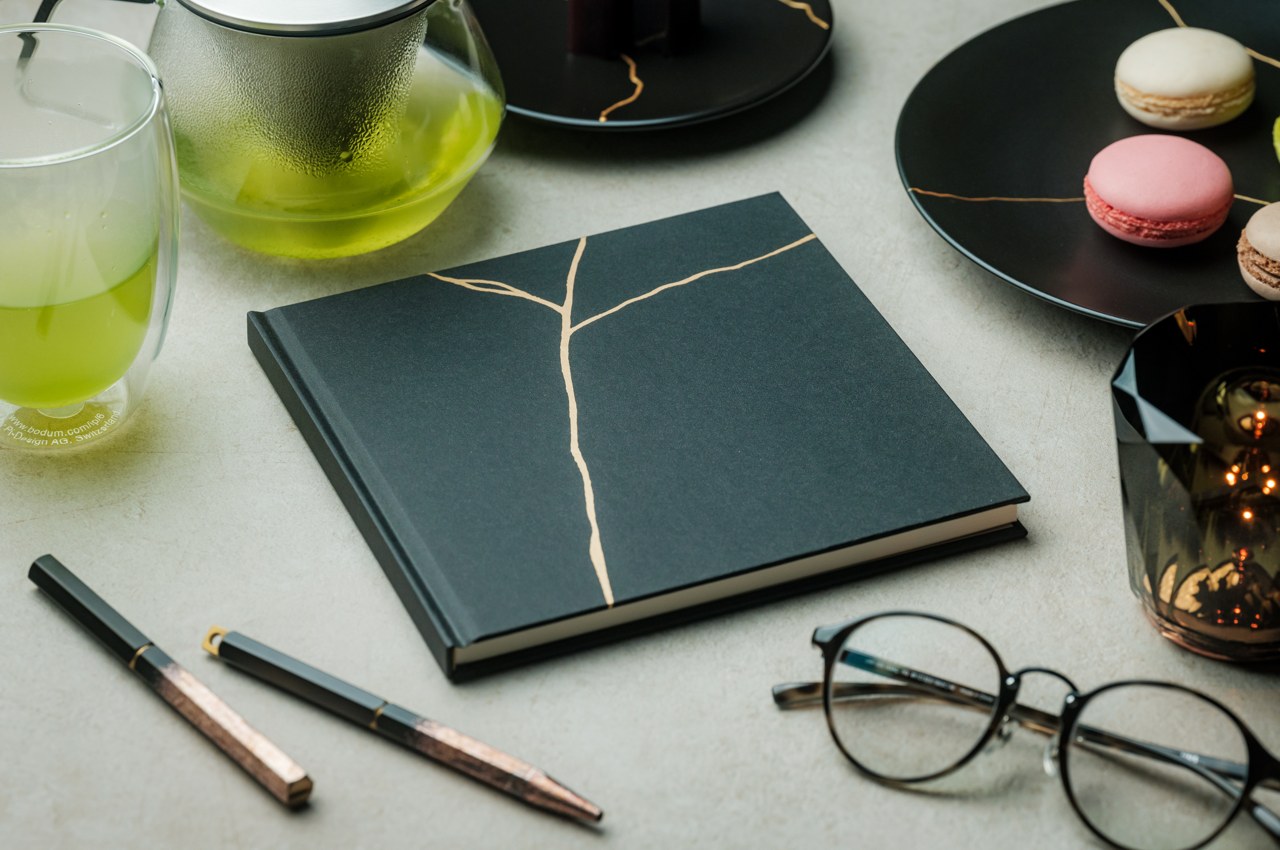
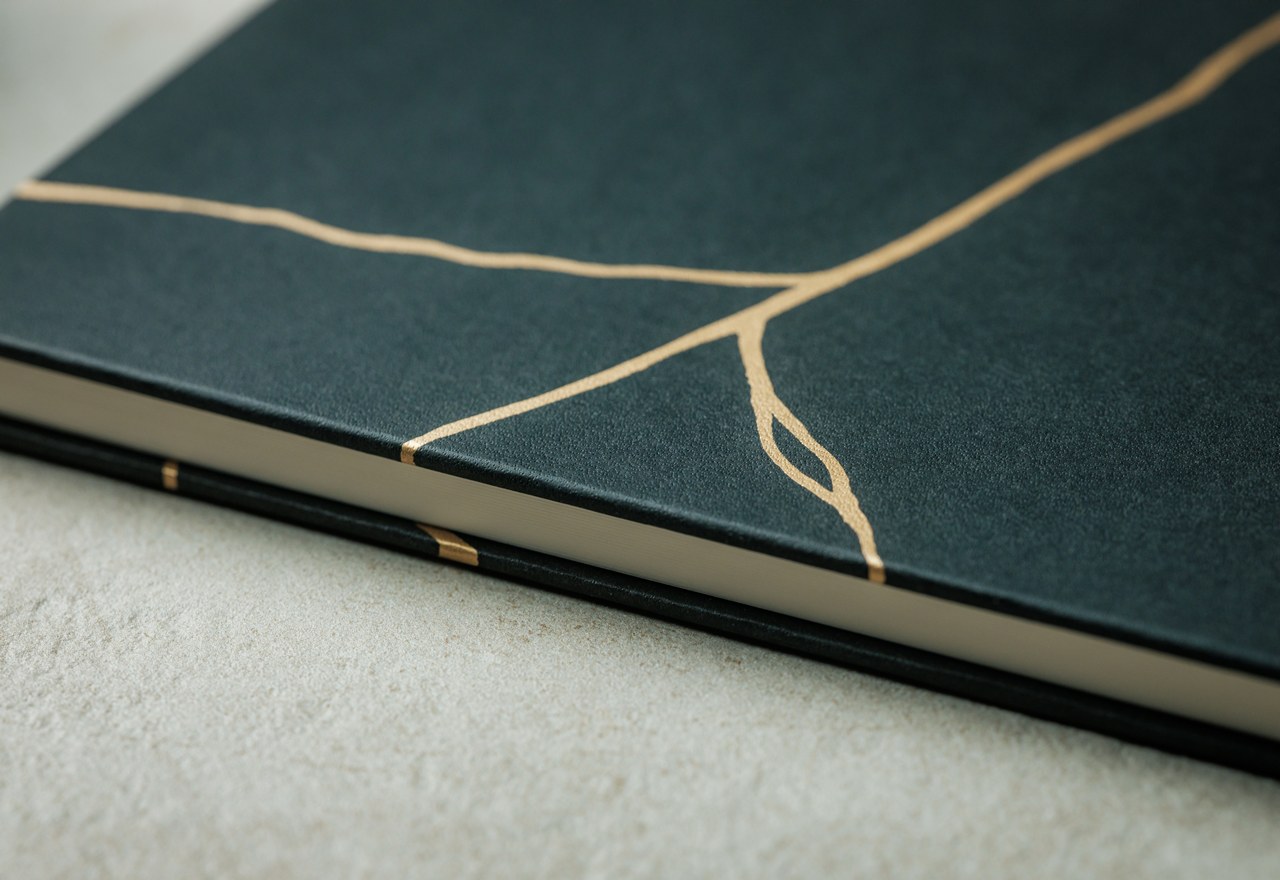
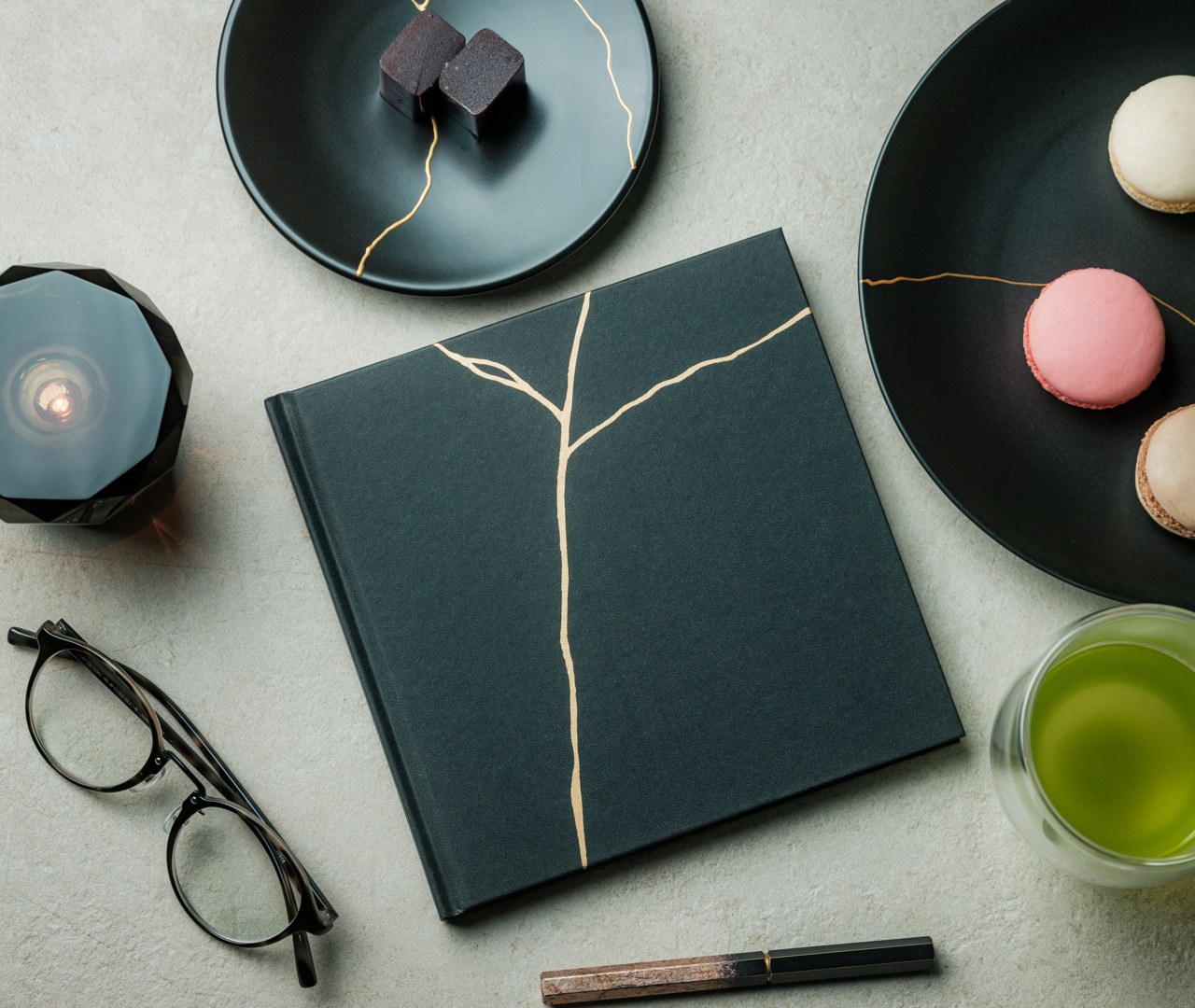
Over time, kintsugi became a symbol of embracing imperfections and self-healing, and those are the sentiments that this golden healing notebook attempts to convey. Using an equally traditional screen-printing method, wriggling lines of gold are painted on the notebook’s plain black cover, mimicking the cracks covered up by lacquer in a kintsugi masterpiece. And as with cracks, there is no uniformity or pattern to the branching lines, giving it a sense of randomness that you would find in nature itself. It’s a striking visual, with the gold contrasting with the black, that evokes both awe and wonder, subtly leading the mind to deeper thoughts.

The notebook’s theme of recovery and revival goes deeper than the cover. The paper used inside is bagasse which is made from the residue produced during sugarcane extraction. Instead of creating new paper from virgin pulp, it reuses what has been discarded, trying to make whole what was broken. In its own small way, it helps heal the planet’s cracking health, patching it up in small beautiful pieces rather than in one grandiose but ineffective sweep.

The kintsugi notebook embodies not only a traditional Japanese practice but the very highlights of Japanese culture itself. It is the perfect example of Japanese minimalist design, the frugality and efficiency of its people, as well as the profound thinking they can evoke from just a few simple symbols and materials. Whether you’re writing down your most secret thoughts, planning out your day ahead, or simply scribbling ideas and dreams, the notebook’s beautiful recycled paper invites you to let your pen roam free on the page, while the seemingly cracked cover exhorts you to embrace even the flaws that could, someday, lead to a beautiful design.

Click Here to Buy Now: $29

The post This Japanese Kintsugi Art Notebook Is Your Journaling Partner to Help You Realize Ikigai first appeared on Yanko Design.
This Ultimate Magnetic Pen attaches to the side of any notebook like the Apple Pencil on an iPad

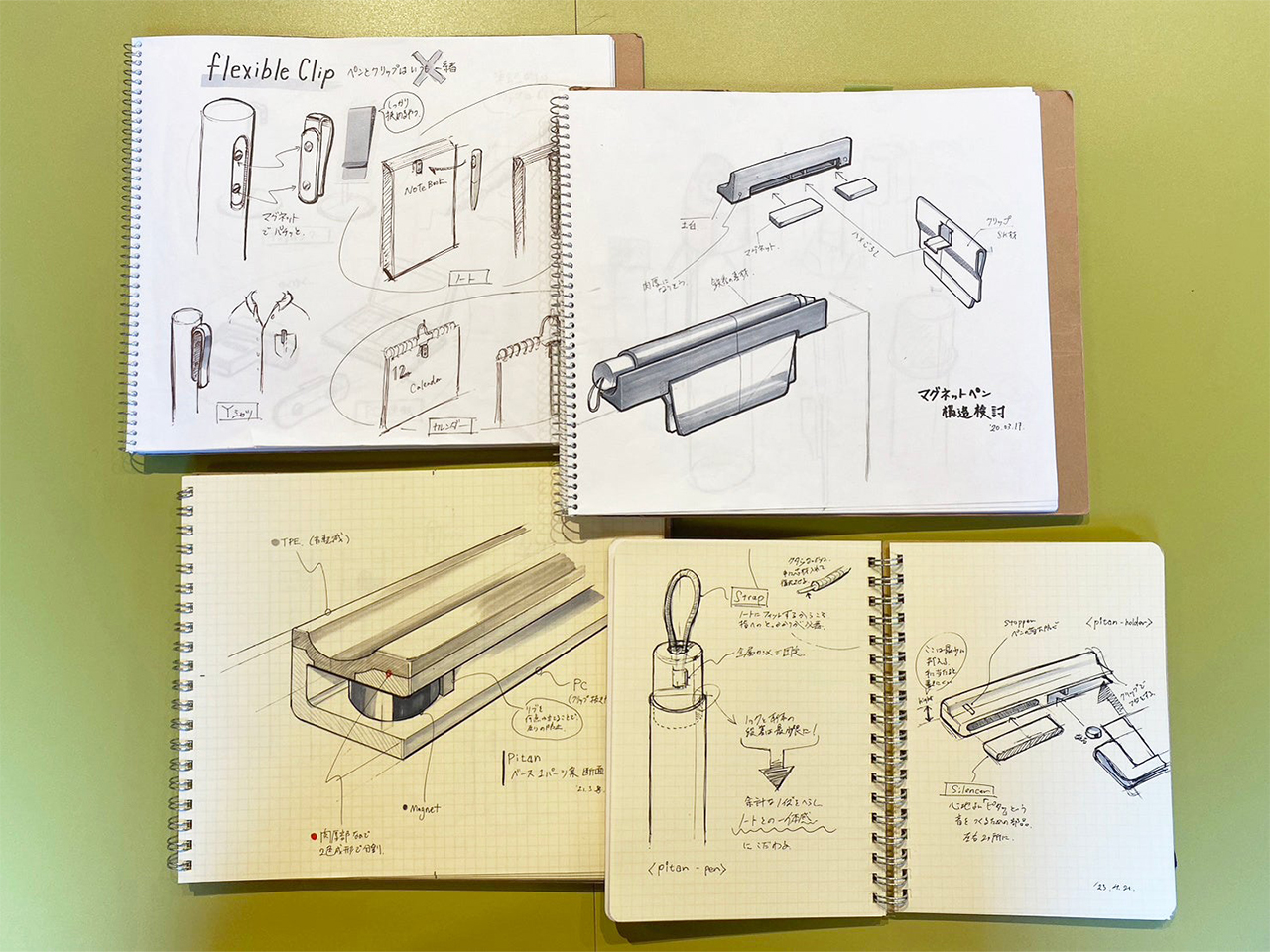
If you love the idea of your Apple Pencil magnetically attaching to the side of your iPad, this ‘Inseparable Notebook Pen’ brings a similar concept to your analog diary or notepad. With a clever clip-on base and a magnetic pen, this piece of stationery ensures you’re never left searching for a pen. The magnetic interaction ensures the pen’s always attached to the side of your notebook, available at a moment’s notice whenever you need to sketch a concept, make a doodle, jot down an idea, or take notes during a meeting.

Designer: Yusuke Nagao

Click Here to Buy Now: $17

Inspired by Simplicity, Crafted for Perfection

Always Ready, Wherever Inspiration Strikes

The Inseparable Notebook Pen, as its name suggests, pairs your pen with your notebook to ensure they’re always together like the happy couple they are. The pen comes with a three-part design, featuring a plastic protector, a metal clip, and the ballpoint pen itself. The device works practically on any notebook, whether soft or hard-bound, giving you a convenient way to store your pen when not in use. However, just like the Apple Pencil sits diligently on the side of y23-our iPad, this pen waits patiently on the side of your notebook, diary, or pad too, waiting to be grabbed and used.

Effortless Writing, Anywhere You Go

To pair your book and pen, first start by placing the plastic protector on the edge of your book’s back cover. This ensures that the metal clip doesn’t accidentally damage your book (it would be a shame if your Moleskine had marks on them, no?) Once the plastic protector’s in place, fix the minimalist metal clip onto the back cover, ensuring it’s gripping your book cover securely. You can now ‘dock’ your pen onto the notebook of your choice. Once the notebook’s over, simply shift the protector and clip onto another notebook and you’re ready to go all over again!

A Daily Companion That Enhances Your Life

The Inseparable Notebook Pen is an adorably minimal piece of stationery that does something so simple, you’ll wonder why nobody’s ever thought of this before. We’re so used to placing pens in pockets or in stationery kits, it’s strange how nobody thought of putting it in the one place it NEEDS to be… your notebook! The pen sits flush against the side of your book, with a magnet that’s just strong enough to ensure that accidental bumps don’t dislodge the pen while in transit. A fabric pull-tag on top allows you to un-dock the pen when you need to write, and the clip’s satisfying magnetic action lets you snap the pen back when you’re done writing… or even if you just feel like fidgeting for a bit!

Click Here to Buy Now: $17

The post This Ultimate Magnetic Pen attaches to the side of any notebook like the Apple Pencil on an iPad first appeared on Yanko Design.
GPT-powered ballpoint pen can digitize, summarize, translate, and compute your notes in real-time

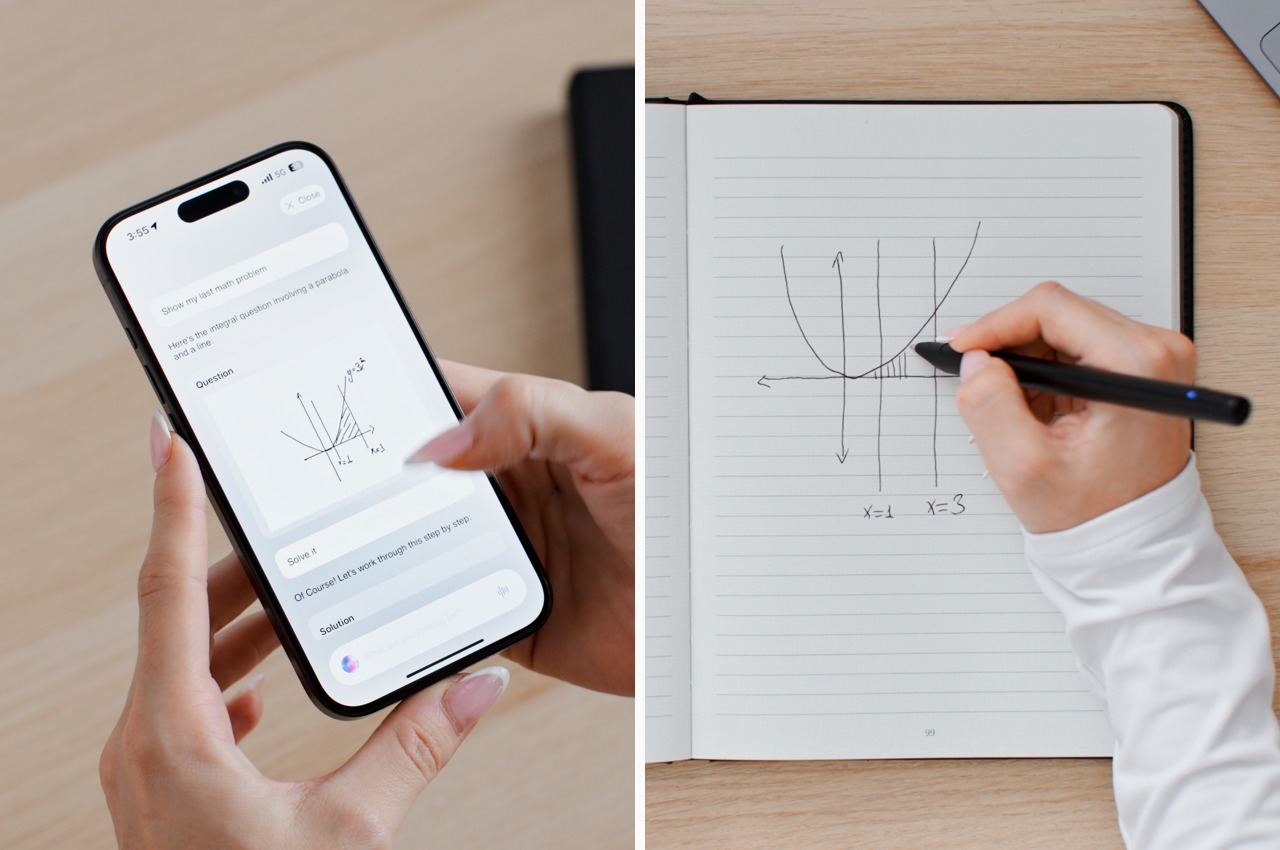
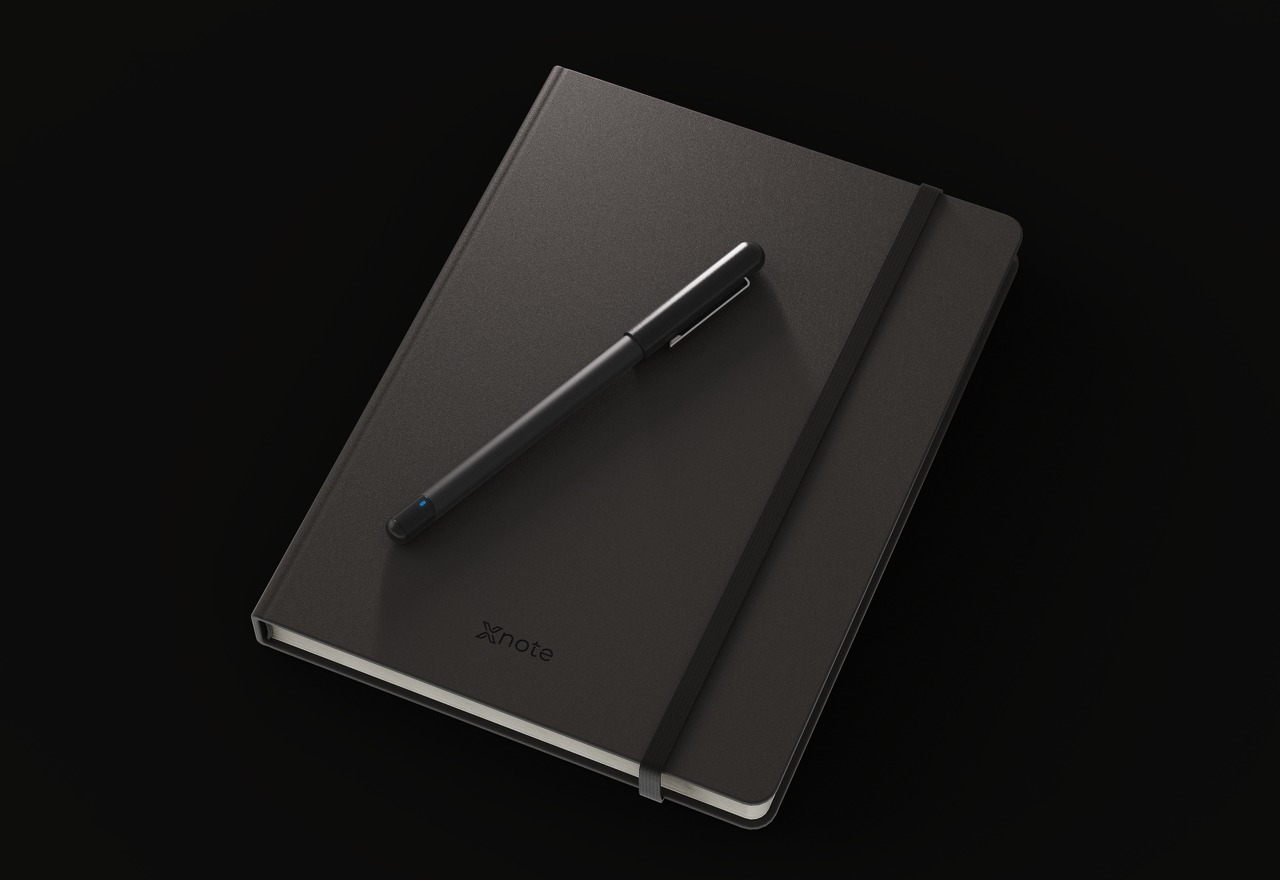
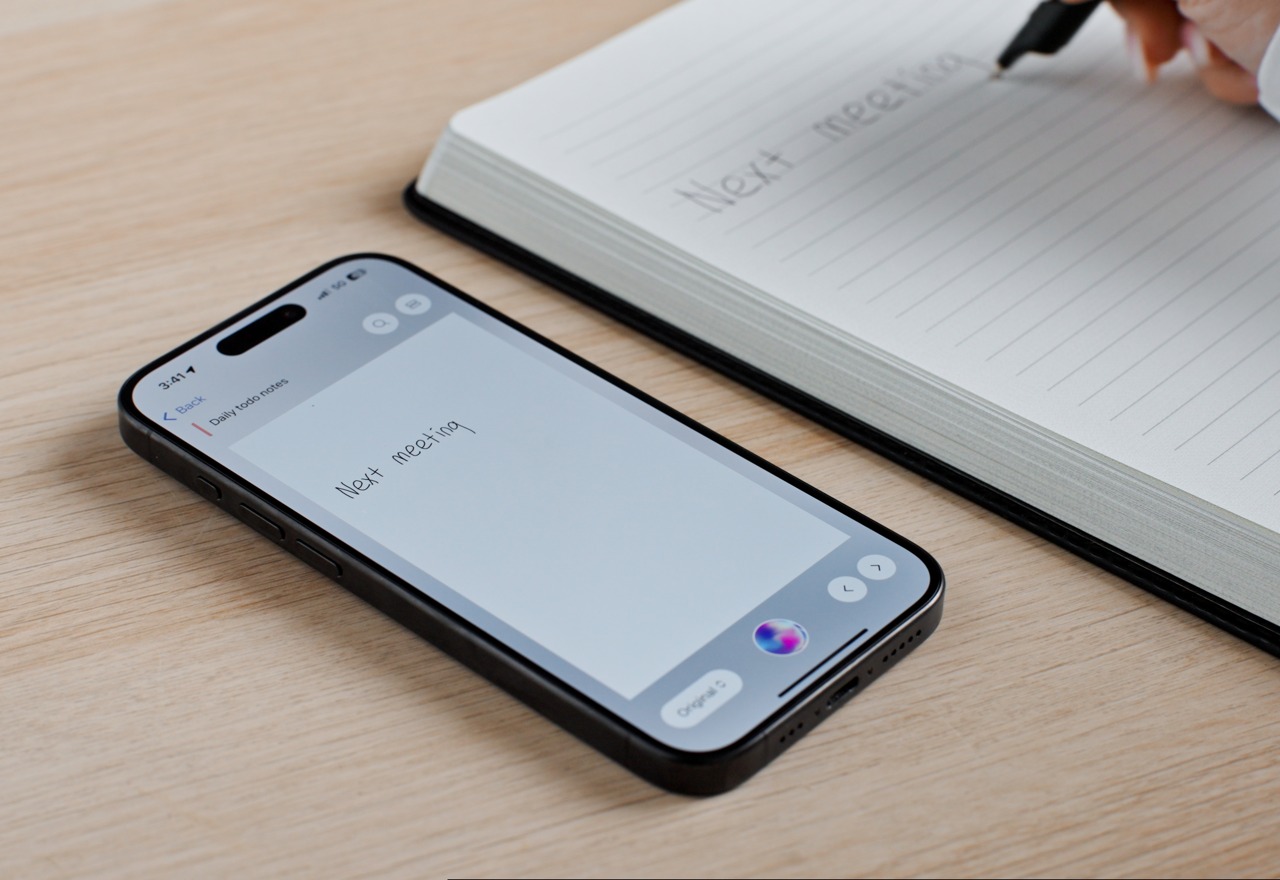
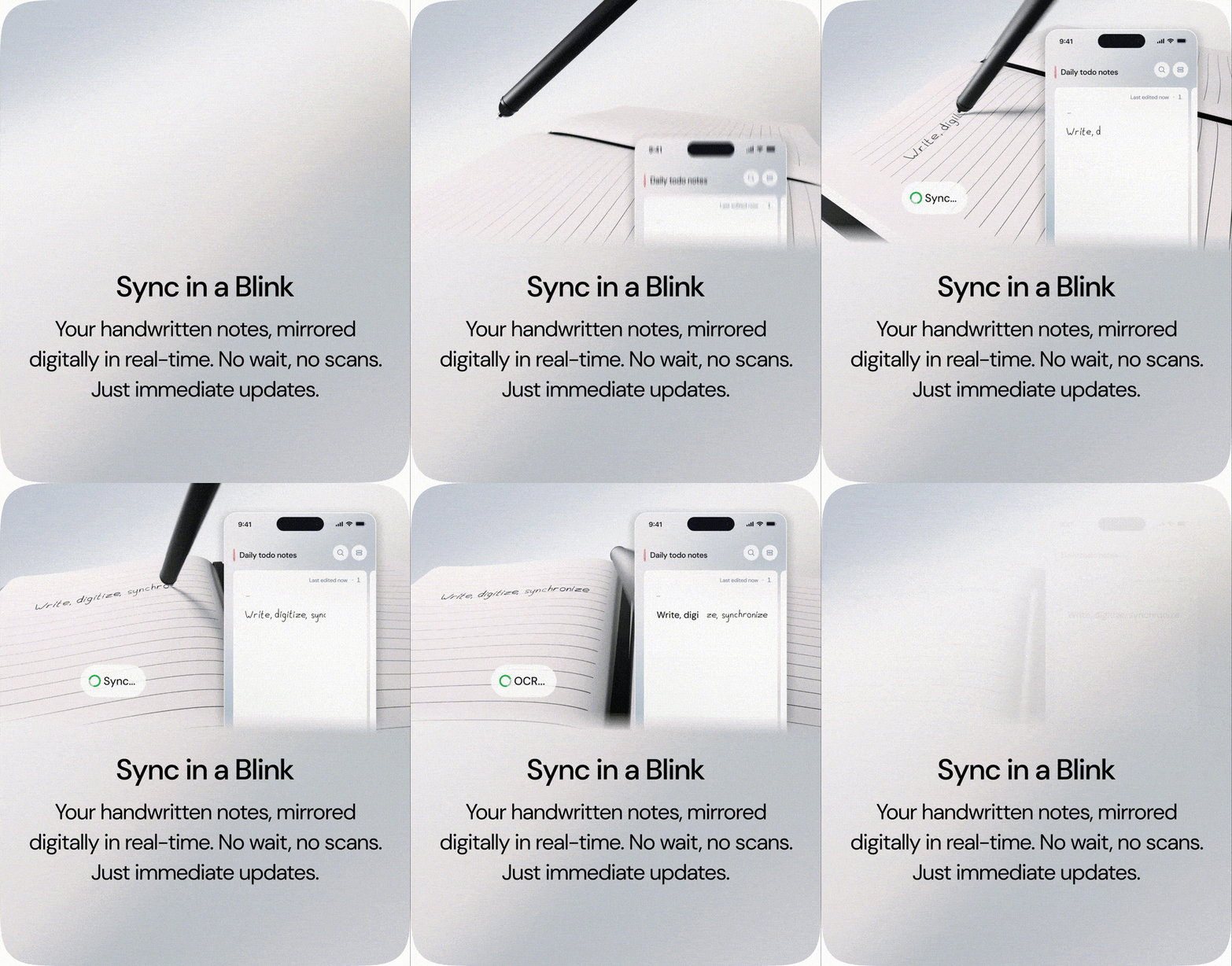
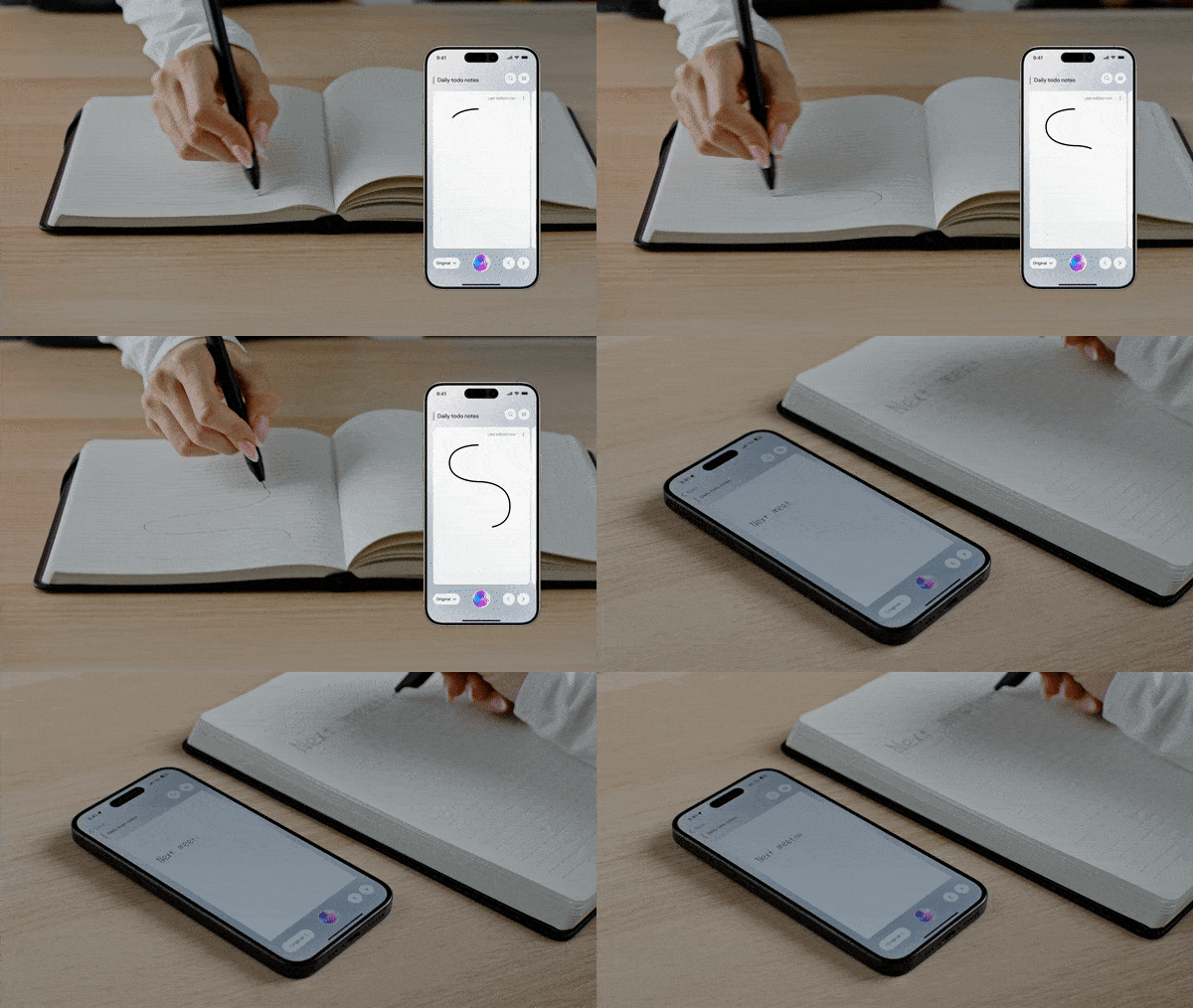
Imagine a pen that solves your mathematical equations as you note them down, or converts all your handwritten meeting notes into a comprehensive list of bullet points, or even enriches your essays with tags and other relevant information for easier searching and even for a better output. Sure, ChatGPT can do all of that, but it’s limited to the fact that it exists in your phone. The XNote puts the powers of AI inside your ballpoint pen, allowing you to instantly digitize drawings, doodles, and notes, and even have the AI interpret, expand, and solve them for you. Notes get synced in real-time, and through the power of GPT, can also be summarized, bulleted, or even translated instantly. Never did I think that AI would revolutionize the world of stationery, but here we are!

Designer: XNote

Click Here to Buy Now: $179 $249 ($70 off). Hurry, exclusive secret perk for YD readers only! Raised over $275,000.

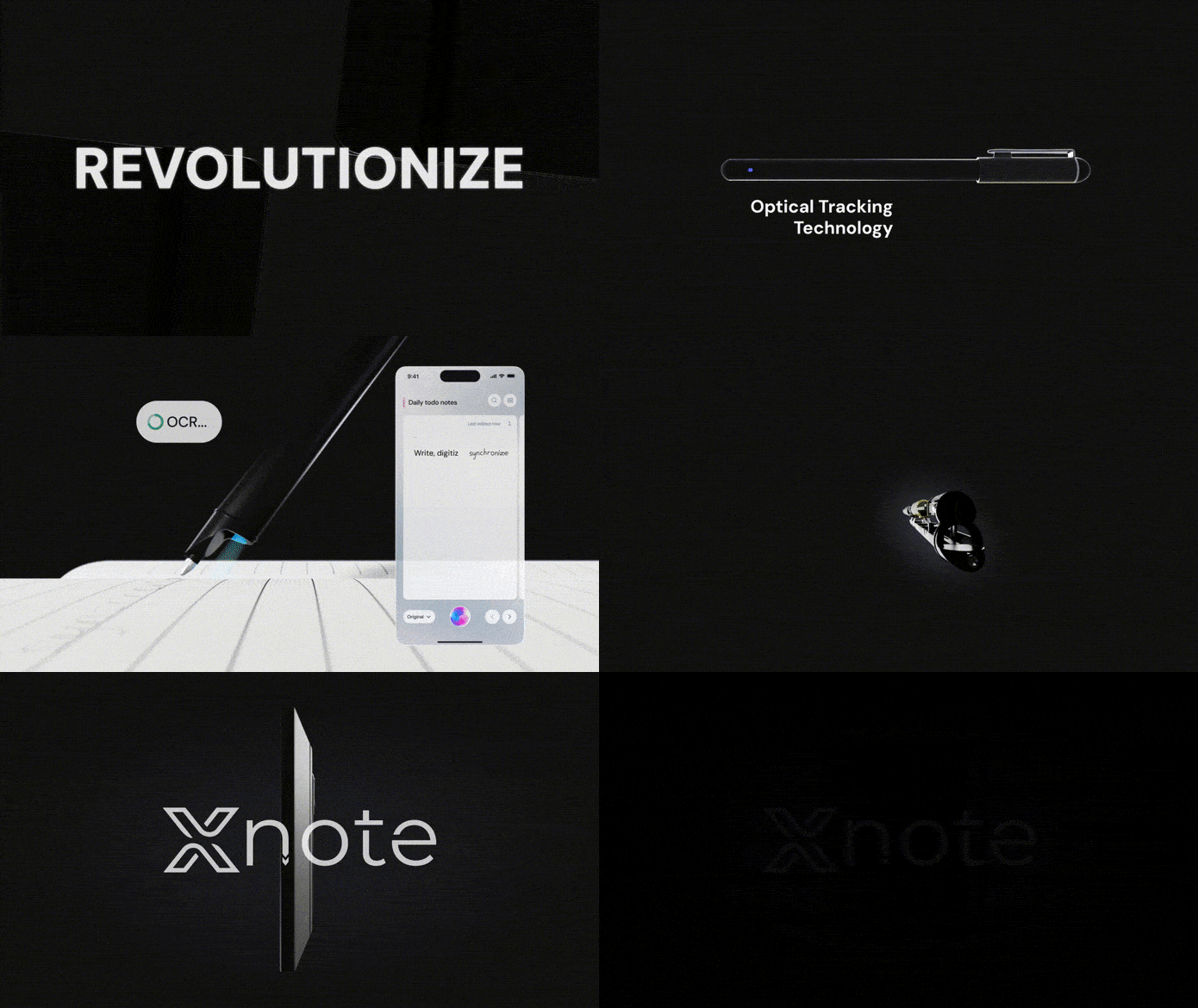
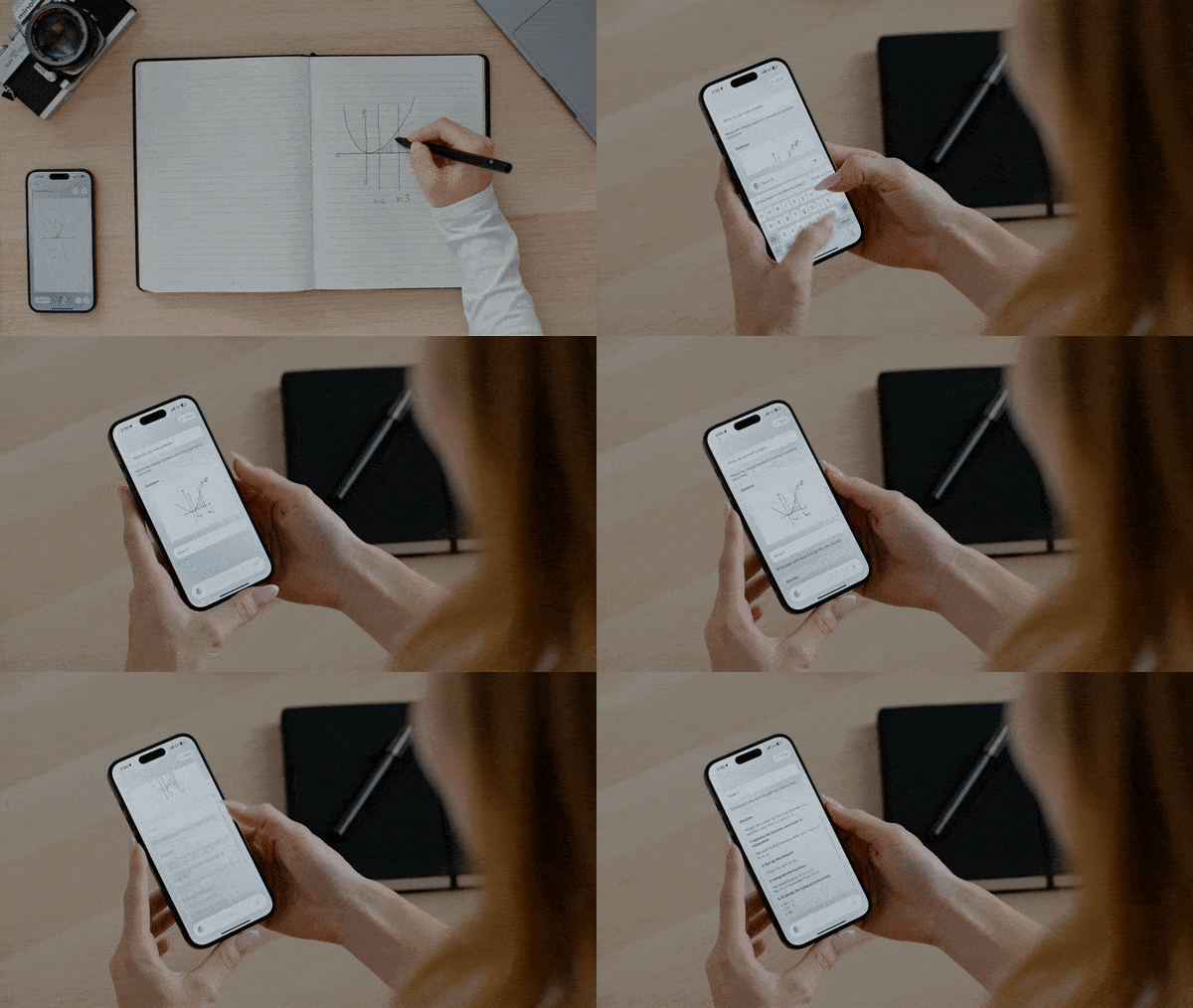
The XNote looks like an ordinary classy notebook and pen combo – the kind you’d carry to work and into meeting rooms… but let not its deceptive exterior fool you, because within that pen lies some of the most impressive tech ever invented since the gel pen that could write in space. The XNote pen comes with a built-in computer that instantly digitizes your notes, sketches, doodles, and technical drawings… but it doesn’t stop just there. It leverages the power of ChatGPT to interpret what you write, allowing you to simply have GPT summarize meeting notes, turn a set of instructions into a task list, solve equations in real-time, translate notes into different languages, and even expand on paragraphs you may have written with even more information. Your notes then exist in two forms – the one written on paper, and the other, in the XNote app, where you can save notes, search through them, and use them digitally however you see fit.
The borderline wizardry lies in the XNote pen’s engineering, and the way it communicates with the app to tap into its AI powers. The pen boasts a 300mAh battery that grants it an impressive standby duration of 60 days, along with 7-8 hours of actual usage. Transmitting data to XNote’s app via BLE, the pen also offers a noteworthy 100MB of storage capacity. While these specs may initially seem modest, it’s equivalent to a thousand A4 pages teeming with text and illustrations. The notebook pairs with the pen wonderfully too, with its Moleskine-like exterior and its luxurious appeal that just makes the XNote feel incredibly premium.

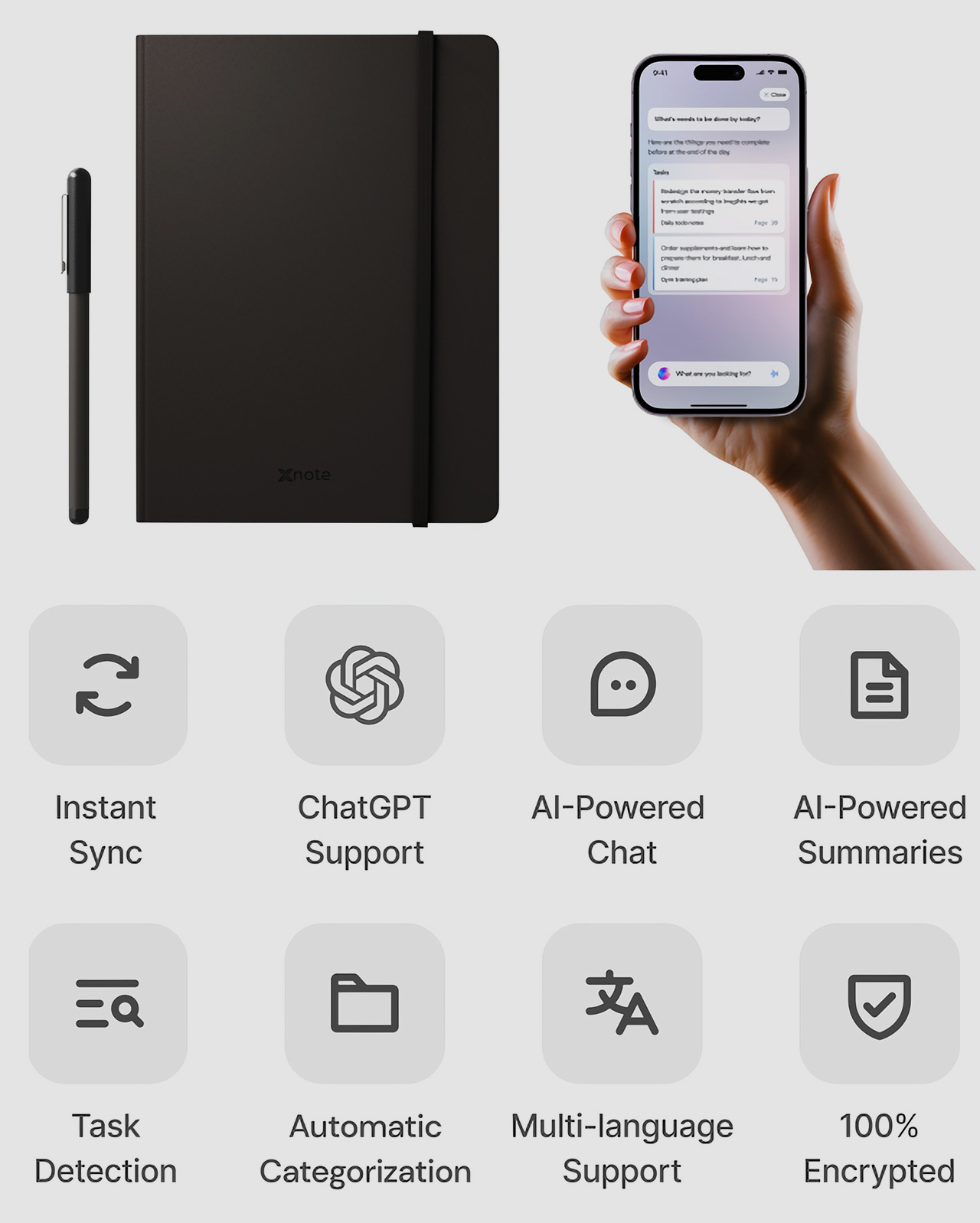
All your written matter – be it notes, scribbles, drawings, or even complex graphs – get digitized and synced with the XNote app, which leverages the full spectrum of ChatGPT’s capabilities. Operating on OpenAI’s API, it intelligently interprets text and drawings, deducing insights from them, comprehending inherent instructions, and conveniently categorizing them for effortless future retrieval. Write a paragraph, and the app can summarize it, or translate it into 53 different languages (as of January 2024). It gives you the ability to ‘chat’ with your notes, unleashing the kind of power that seemed absolutely impossible just 2 years ago. During a meeting, it transforms your notes into task lists, action plans, or ready-to-send Minutes-of-Meeting emails within seconds. You can even pose questions to your notebook, convert quick scribbles into reminders, or tackle complex equations and graphs with ChatGPT’s assistance. A simple paragraph could become a dissertation, a note could become a well-executed email, a quick list of ingredients could convert into a perfect recipe, or even the opposite – your recipe could get converted into a shopping list that you could then use to pick up the right groceries. The possibilities are quite literally endless, and the XNote’s ability to create meaningful tags for all your written matter means you can effectively search through your notes too.

The beauty of the XNote lies in the fact that it takes cutting-edge advanced technology, but packages it in a way that pretty much anyone can use. You don’t need to ‘learn’ how to use the XNote pen, simply because there’s nothing really to learn. The entire experience is automatic and intuitive, and the app helps you work with your data in a myriad of ways, saving time and effort without having you ‘adjust’ to a new technology or method of working.

There is, however, the concern of privacy… which XNote takes incredibly seriously. XNote relies on ChatGPT’s secure API, which is end-to-end encrypted to protect user data. Moreover, your data doesn’t ever get used to train OpenAI’s GPT models, so you can rest assured knowing that your information only belongs to you and nobody else. Your handwritten notes obviously exist in the notebook, but the digitized version of your notes exist on the cloud, and can be stored offline on your device so you don’t need an internet connection to access them. The app even supports adding voice memos to your text, a pretty useful feature that lets you add context to all your notes. Most of the app’s essential OCR and transcription features are free, like unlimited cloud storage, seamless syncing, and offline accessibility. However, the ChatGPT-powered features require a subscription to the XNote AI+ Membership plan, priced at $59 for an annual subscription.

The notebook and pen combo, typically priced at $199, is available for a special Yanko Design exclusive price of $179. This offer includes an 18-month warranty for the pen’s hardware, a charging cord, 5 complimentary ink refills, a 1-month trial of the AI+ subscription, and worldwide shipping options.

Click Here to Buy Now: $179 $249 ($70 off). Hurry, exclusive secret perk for YD readers only! Raised over $275,000.

The post GPT-powered ballpoint pen can digitize, summarize, translate, and compute your notes in real-time first appeared on Yanko Design.