
Ferrari Luce unveiled: Here’s the first car from Jony Ive’s design house
Our first look at a complete version of Ferrari's upcoming luxury EV that was designed by LoveFrom.

Steve Jobs built Apple on the idea that hardware and software had to be designed as one thing, inseparable and mutually reinforcing. Tim Cook, who took over in 2011 with the company at roughly $350 billion in value, honored that philosophy while adding an operational layer Jobs never had the patience for: supply chains so resilient they made Apple virtually recession-proof, a services ecosystem generating over $100 billion a year, and a trillion-dollar valuation that eventually became three. Cook’s Apple was not the scrappy insurgent of the Jobs era. It was a machine, and WWDC 2026, opening June 8 at Apple Park, is the last keynote he delivers as CEO before stepping aside for John Ternus on September 1st.
Ternus running hardware engineering means he is the person responsible for Apple Silicon, the M-series chip architecture that gave Apple the on-device processing headroom to even attempt building a serious AI assistant. The timing of the leadership transition is its own kind of design decision: Cook presents the software at WWDC, and Ternus inherits it just in time to strap it to the iPhone 18, the rumored iPhone Fold, and whatever Mac hardware lands in the fall. iOS 27’s rebuilt Siri, a standalone app with Dynamic Island integration and a Google Gemini foundation licensed for a reported billion dollars a year, is the software story Cook leaves behind for Ternus to ship.

The Siri situation has been Apple’s most visible embarrassment in the AI era, and Cook knows it. While Google rebuilt Assistant into Gemini and OpenAI shipped ChatGPT to a billion users, Siri kept responding to complex queries with “I found some results on the web.” iOS 27 is the architectural correction. The rebuilt assistant ships as a dedicated app with conversation history, image and document input, and a chatbot-style interface that makes it feel, for the first time, like something a designer actually thought about. Activation drops a pill-shaped glow into the Dynamic Island with a “Search or Ask” prompt, and a swipe down from the top of the screen triggers it system-wide, effectively replacing Spotlight with something that can actually reason. The Gemini model underneath, accessed through Apple’s Private Cloud Compute infrastructure so user data never touches Google’s servers, is reportedly a custom 1.2 trillion parameter build licensed for around a billion dollars annually.
What makes iOS 27 structurally interesting, beyond the Siri cosmetics, is the Extensions framework. Apple is opening the platform to Claude, Gemini, and other third-party agents as swappable AI backends, accessible through a dedicated App Store section. A long-press on the Siri search bar lets you switch models entirely. That is a significant philosophical departure for a company that has spent fifteen years treating openness as a security vulnerability rather than a feature. Whether developers actually build compelling Extensions or whether the system becomes another neglected API graveyard is the real question, but the architecture at least acknowledges that Apple cannot win the AI race alone.

The rest of the OS lineup fills in around the Siri centerpiece. Wallet gets a “Create a Pass” feature that digitizes physical tickets and membership cards from a QR scan. Visual Intelligence gains the ability to read food nutrition labels and feed data directly into the Health app. Safari will auto-name tab groups. The keyboard gets a smarter autocorrect that suggests full rewrites rather than single-word swaps. macOS 27, meanwhile, is quietly laying software groundwork for touch-enabled Mac hardware that Ternus will presumably announce when he is ready. Apple treating macOS 27 as a Snow Leopard-style consolidation release, stable and foundational rather than showy, is exactly the kind of move that makes sense when you know a new CEO with a hardware background is about to take over.
Cook’s WWDC26 artwork says more than the tagline “Coming Bright Up” lets on. The Swift logo rendered in iridescent chrome and bloom light, the same visual language as iOS 26’s Liquid Glass design system taken to a more extreme register, telegraphs a platform doubling down on its own aesthetic identity even as it opens its AI layer to outside competition. It is a confident piece of visual communication from a company that built three trillion dollars of market value on the conviction that how things look and how things work are the same question. Ternus gets to answer what comes next.
The post WWDC 2026: iOS 27, macOS 27 and the New Siri App — What to Expect June 8 first appeared on Yanko Design.

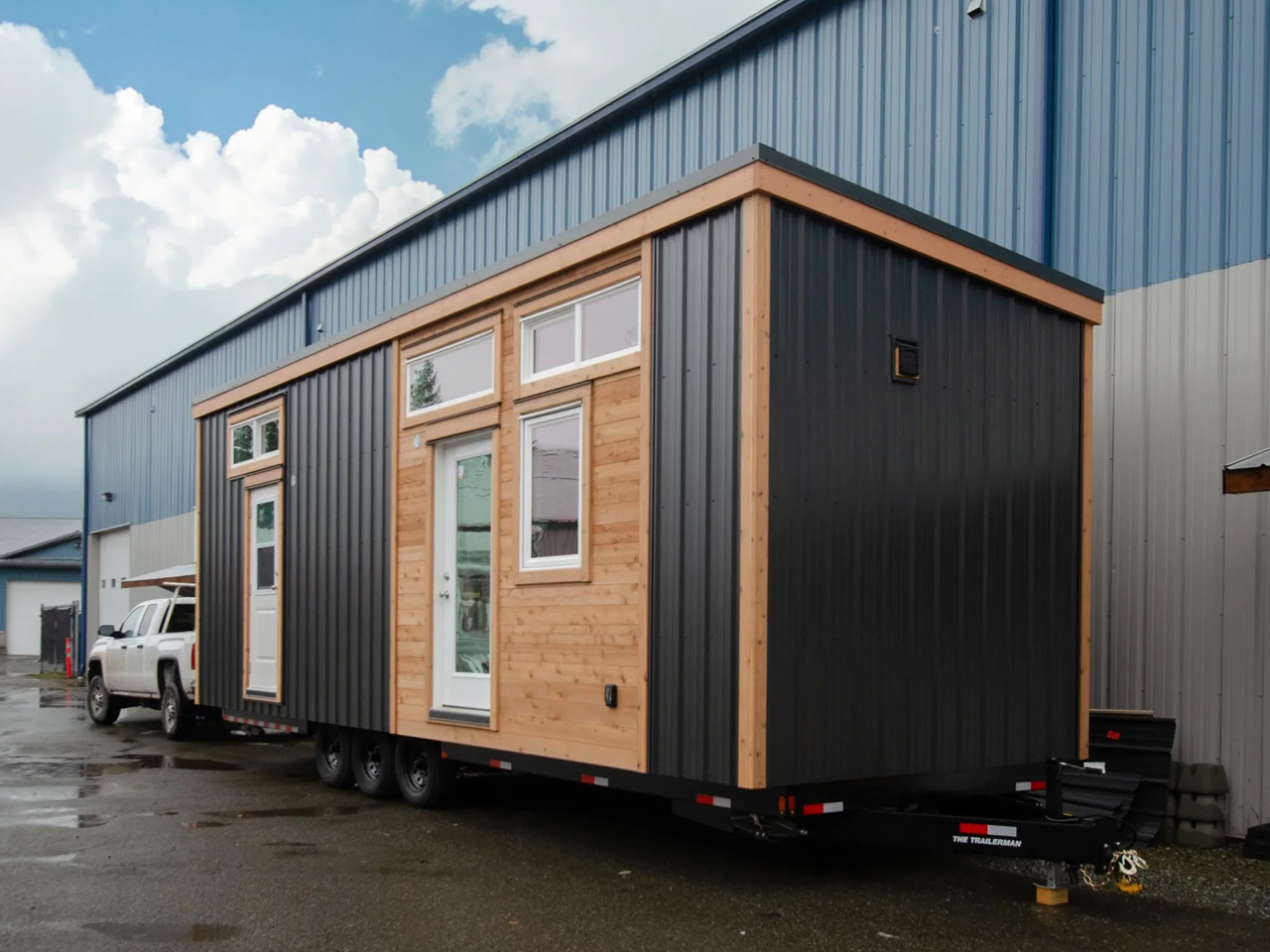
The loft bedroom is tiny home design’s most accepted cliché. Most designs in this space stack a sleeping loft above the living area and call it efficient. The Rose, a custom build by Vancouver Island-based Rewild Homes, takes a different position entirely, one that’s turning heads for all the right reasons.
Named after the client’s beloved donkey, the Rose measures 30 feet long by 10’6″ wide, making it extra wide by tiny home standards. That additional footprint isn’t just a spec sheet flex. It’s what makes the entire layout feel less like a compromise and more like a considered place to actually live. The interior opens up in a way that standard narrow builds simply can’t achieve, bright, breathable, and genuinely functional across a single floor.
Designer: Rewild Homes
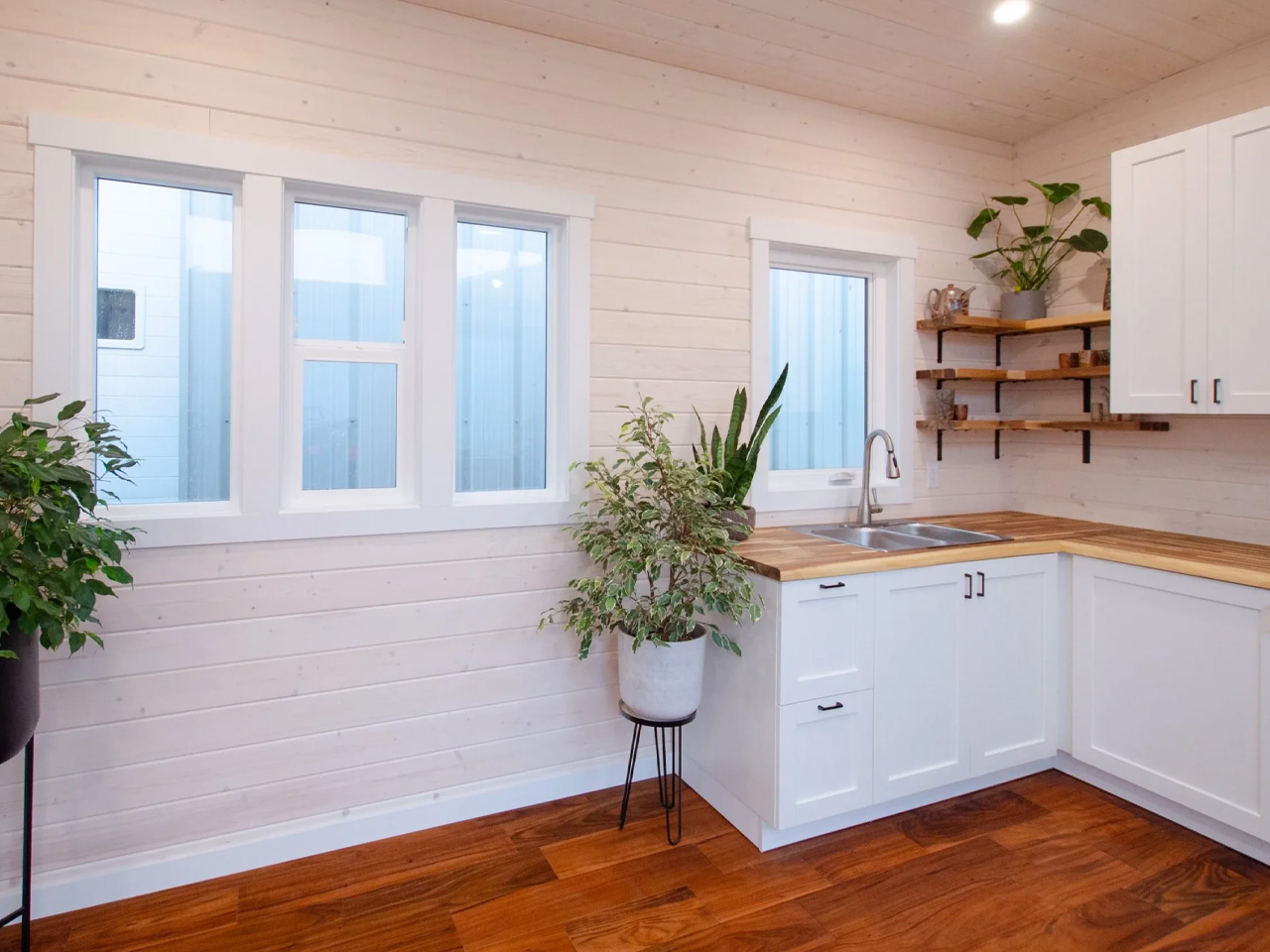
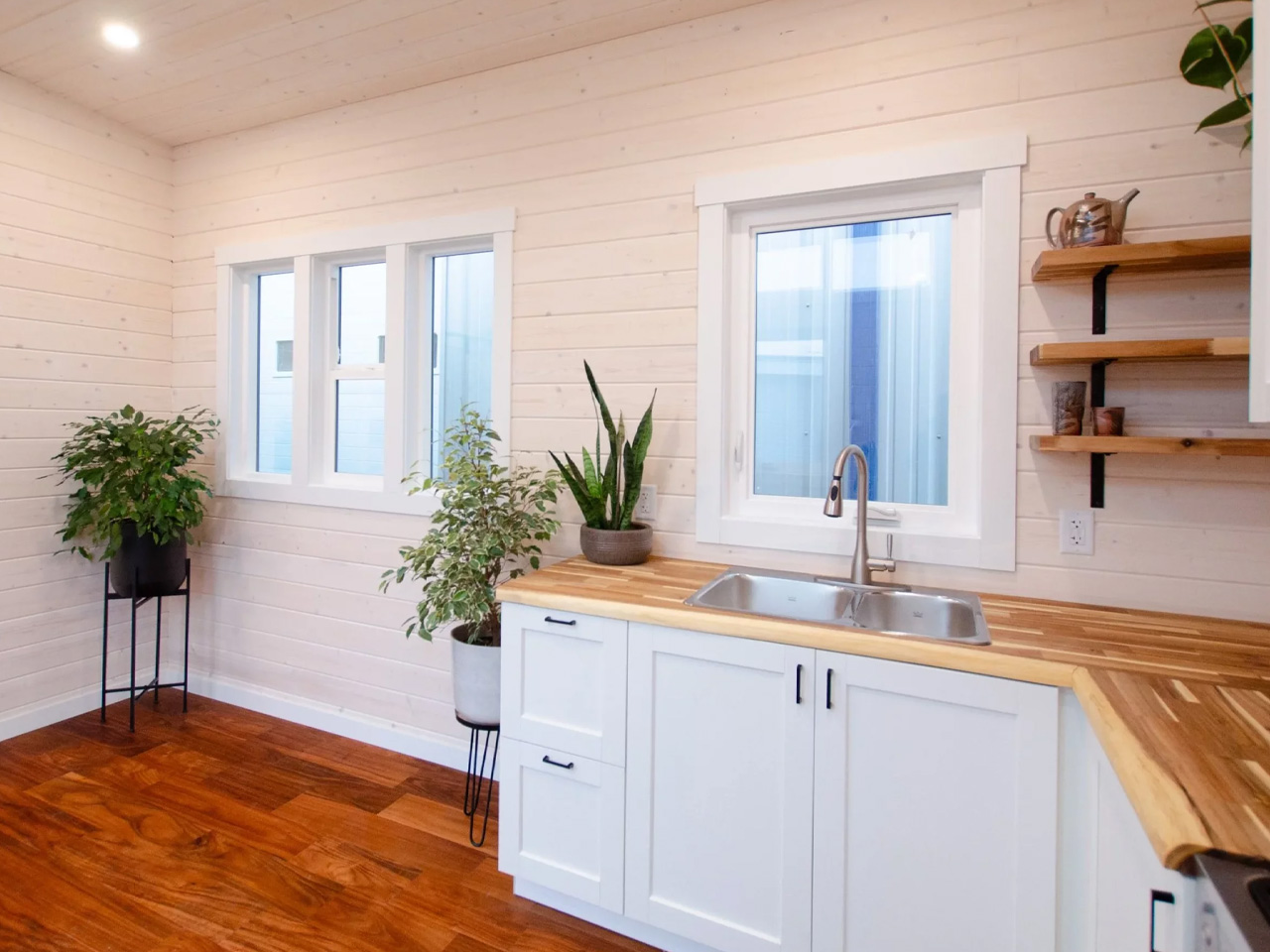
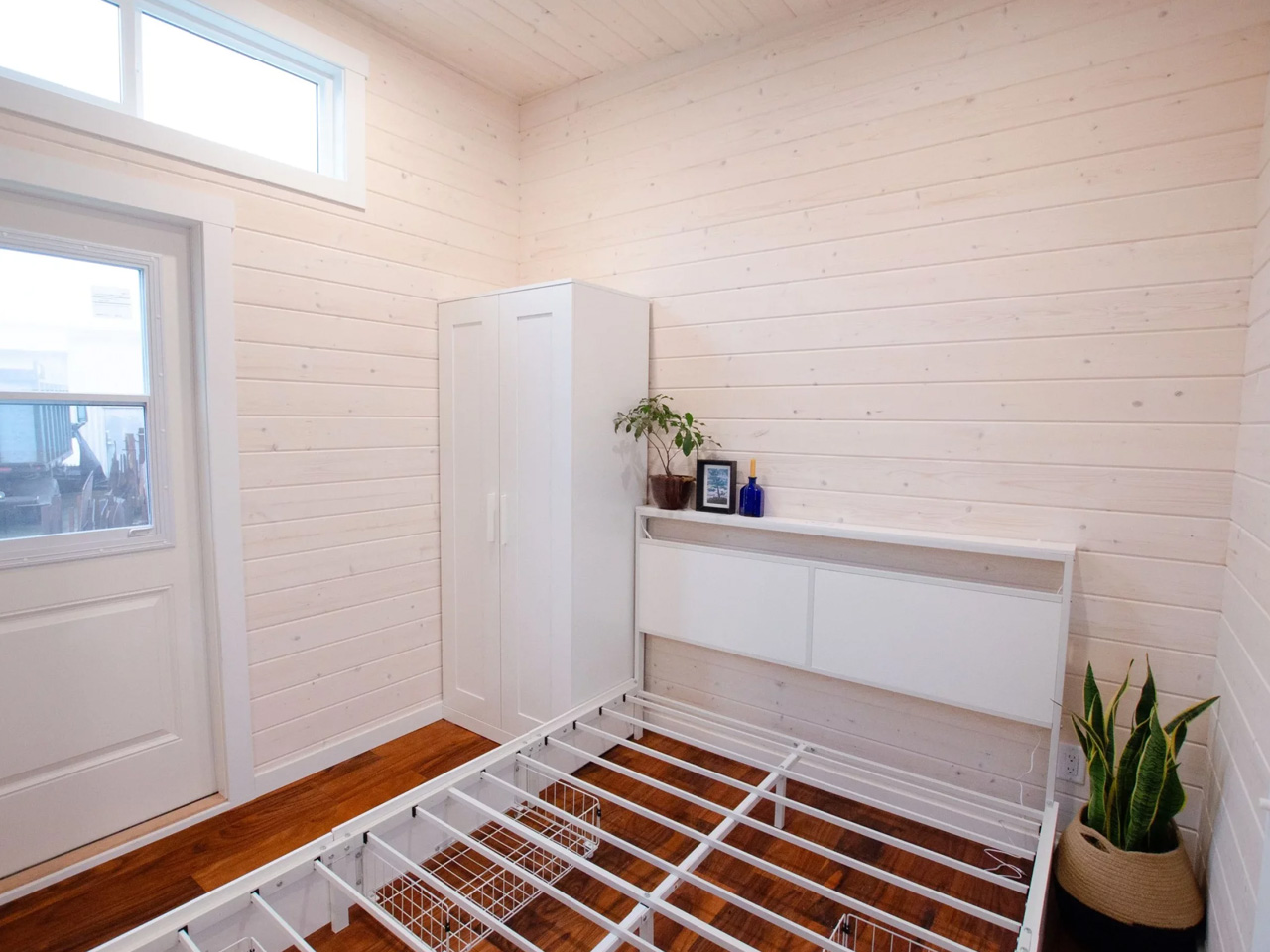
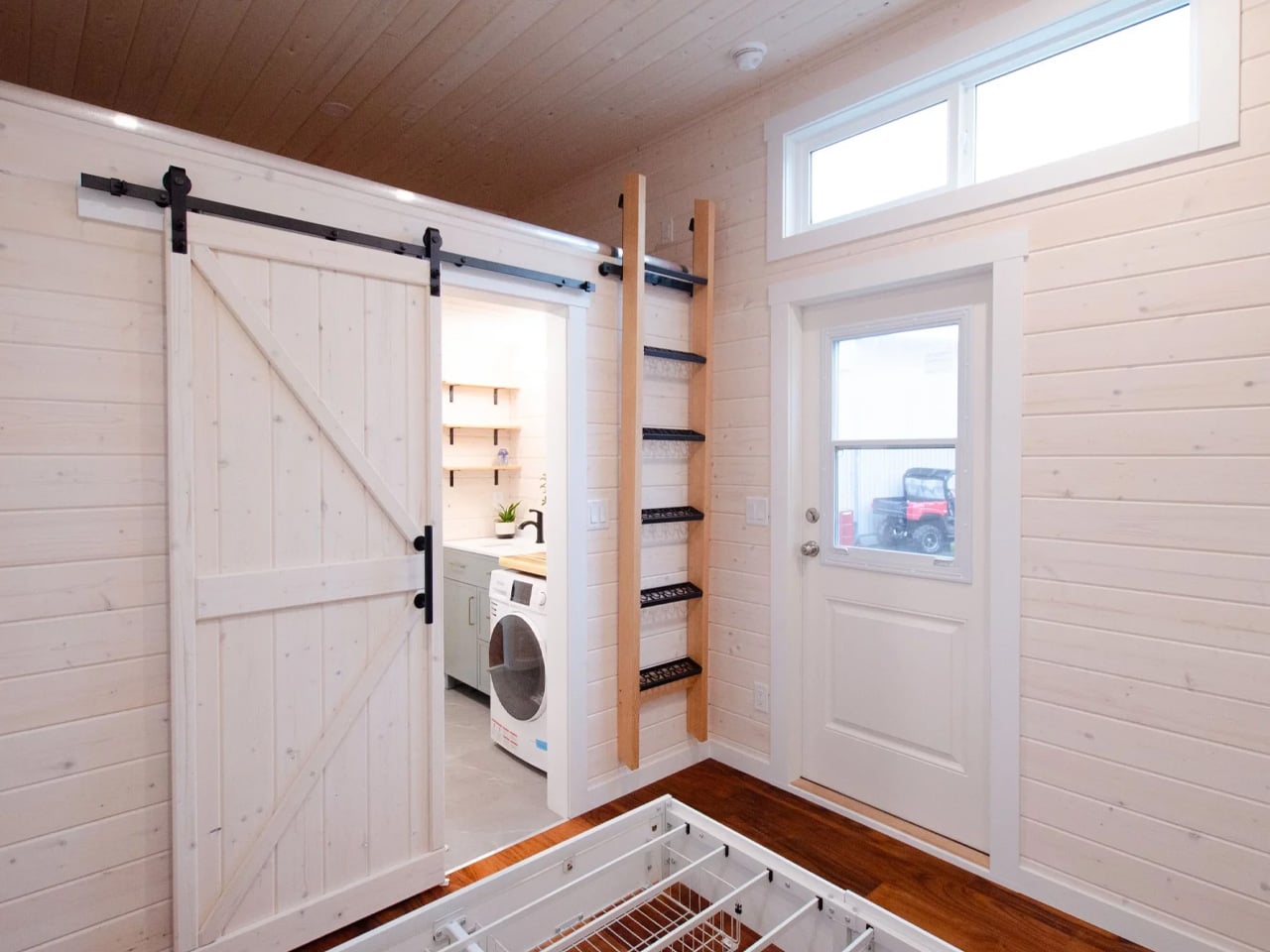
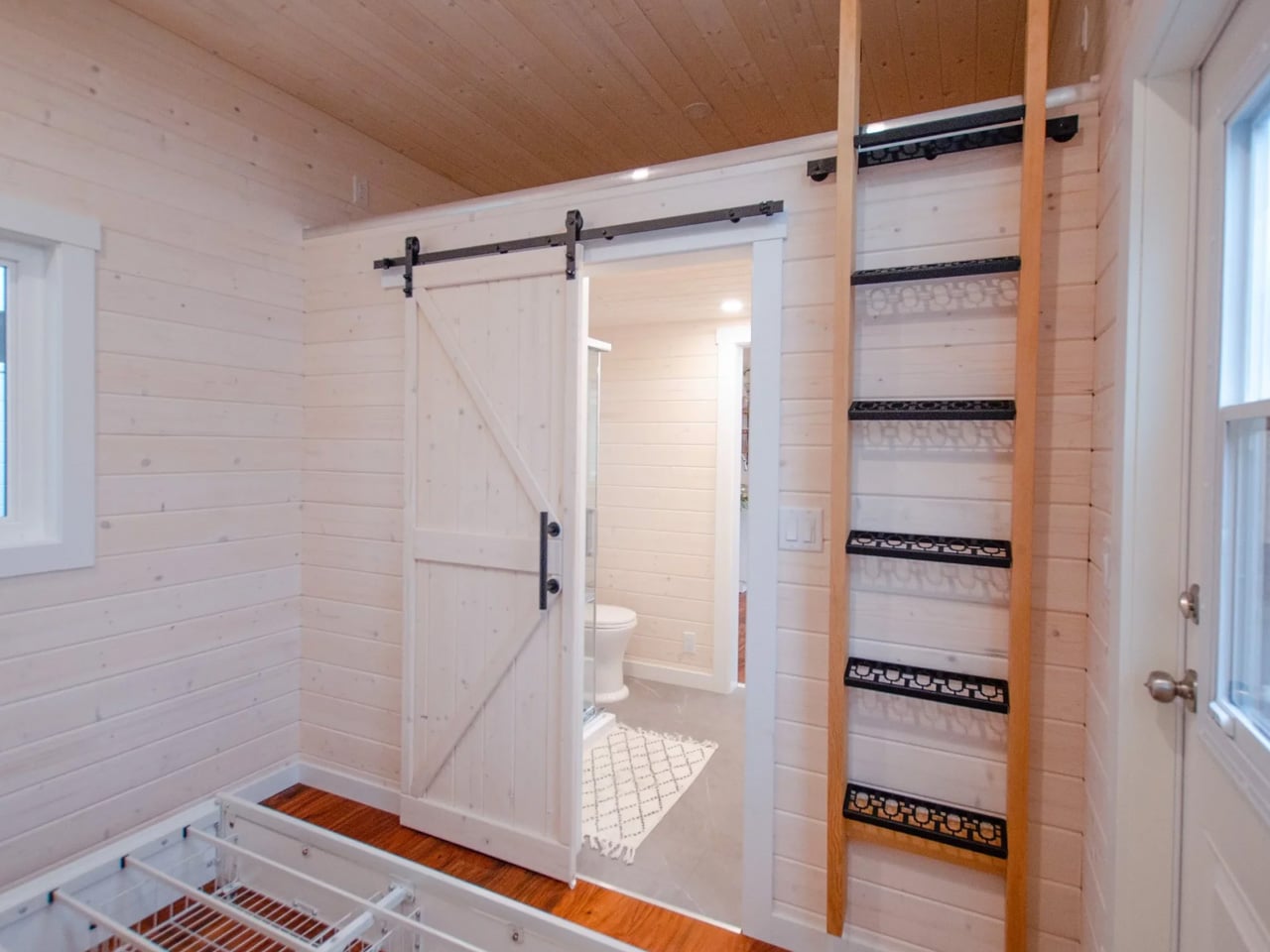
The standout move here is the ground-floor bedroom. Rather than tucking a sleeping area into a loft accessed by ladder, Rewild Homes kept everything at eye level, sliding behind a private door with its own separate exterior entrance. Beneath the bed, storage is built in. Closet space is tucked neatly alongside. It’s the kind of thinking that makes a small home feel resolved rather than resigned. The small loft above the bathroom, meanwhile, has been repurposed entirely as a storage zone, a practical pivot that frees the rest of the home from clutter. High ceilings throughout give taller inhabitants room to breathe, a detail that rarely gets enough credit in this category.
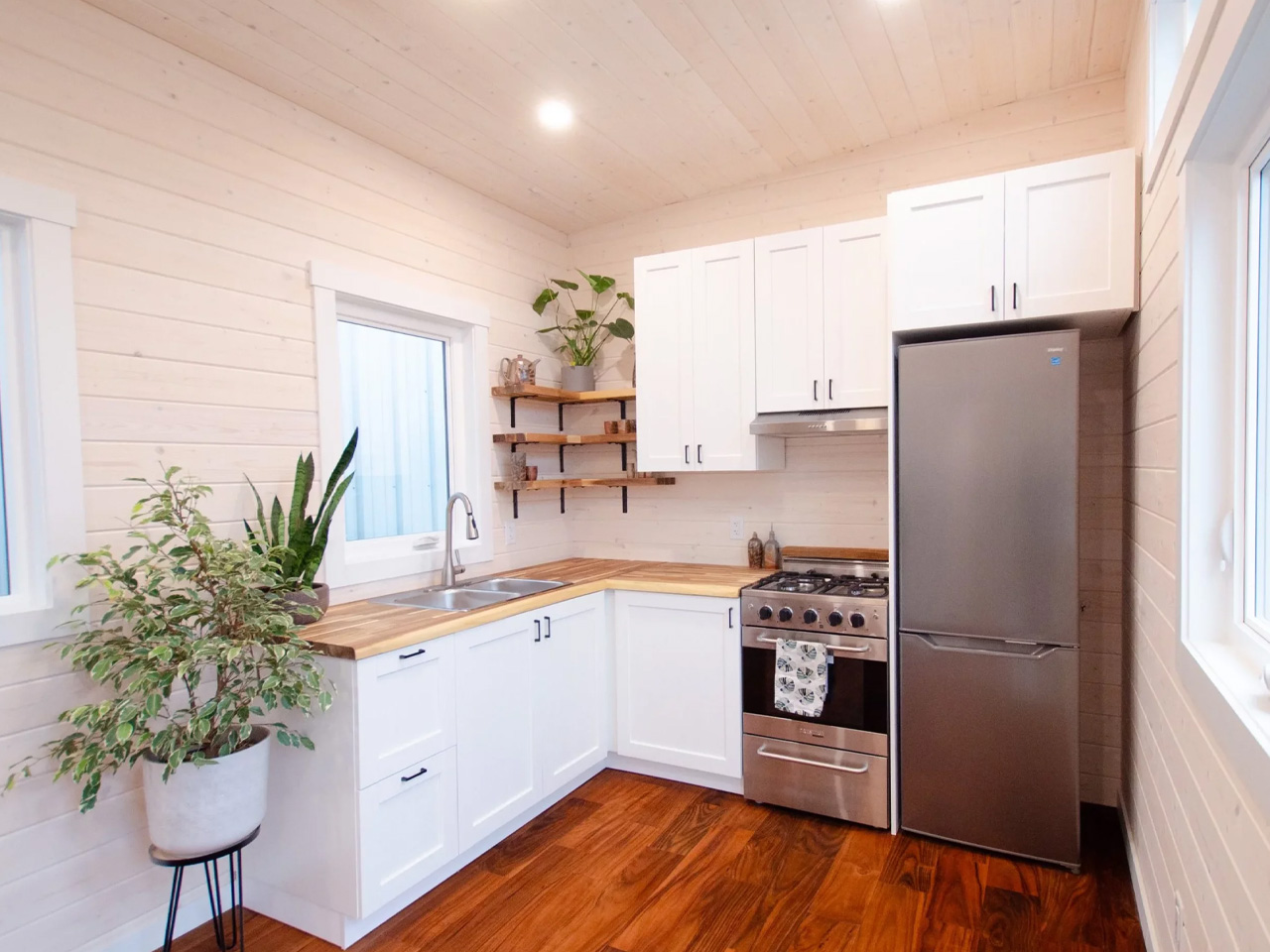
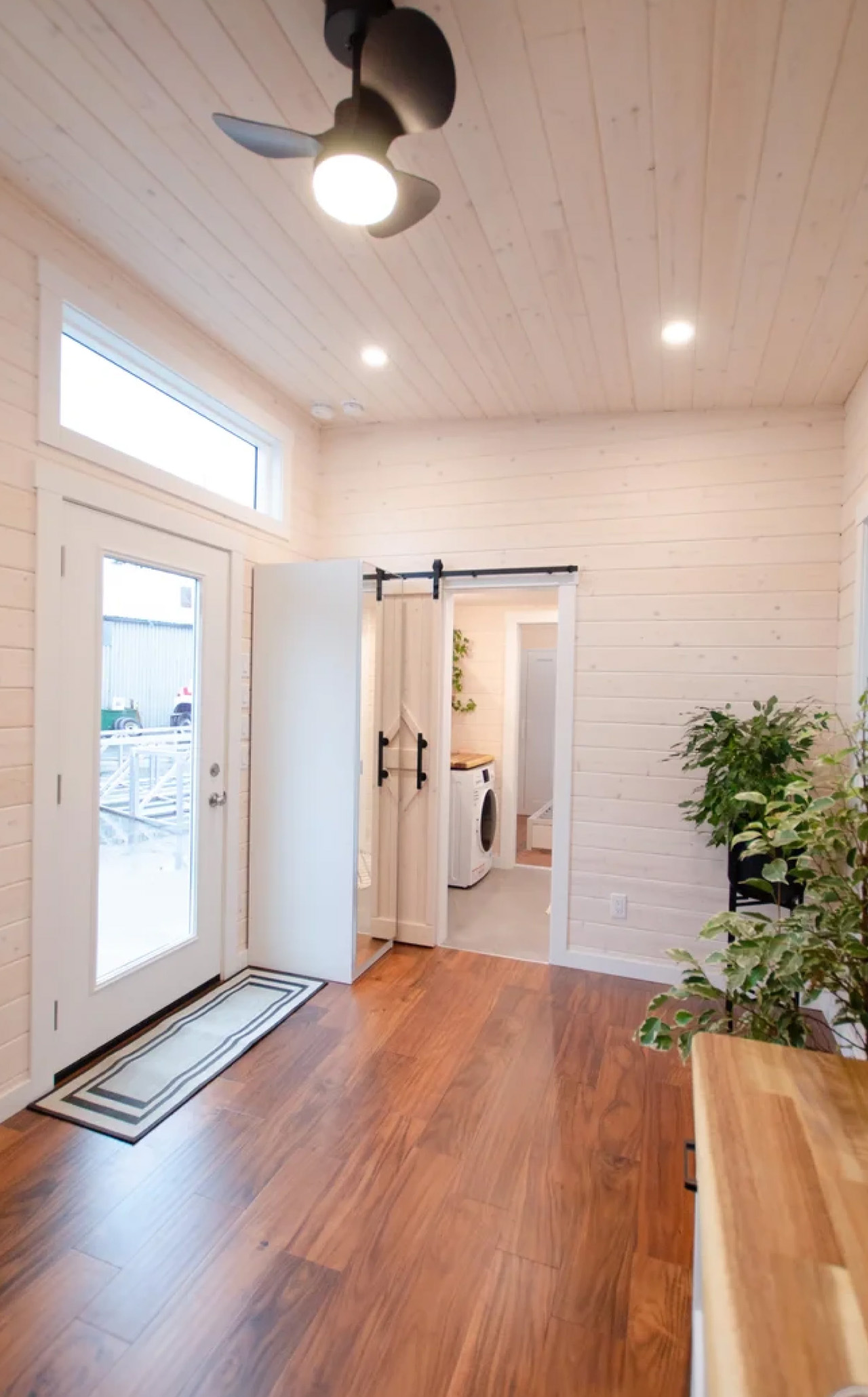
The kitchen and open living room flow naturally into each other, with the bathroom and bedroom each accessed via sliding doors that keep traffic patterns clean without sacrificing privacy. Utility requirements are simplified through propane-powered water heating and cooking, allowing the home to run on a 50-amp electrical connection, lean by design, not by accident.
Outside, the Rose wears its West Coast origins confidently. A combination of metal and cedar siding gives the exterior a durable, low-maintenance finish that still has warmth and character. A metal roof rounds out the build, built to handle whatever the Pacific climate throws at it.
Rewild Homes operates out of Cobble Hill, British Columbia, building fully custom tiny homes with a focus on high-quality local materials. The Rose is a strong example of what that philosophy looks like in practice, a home that doesn’t ask you to sacrifice comfort for square footage, but rather rethinks what square footage can do.
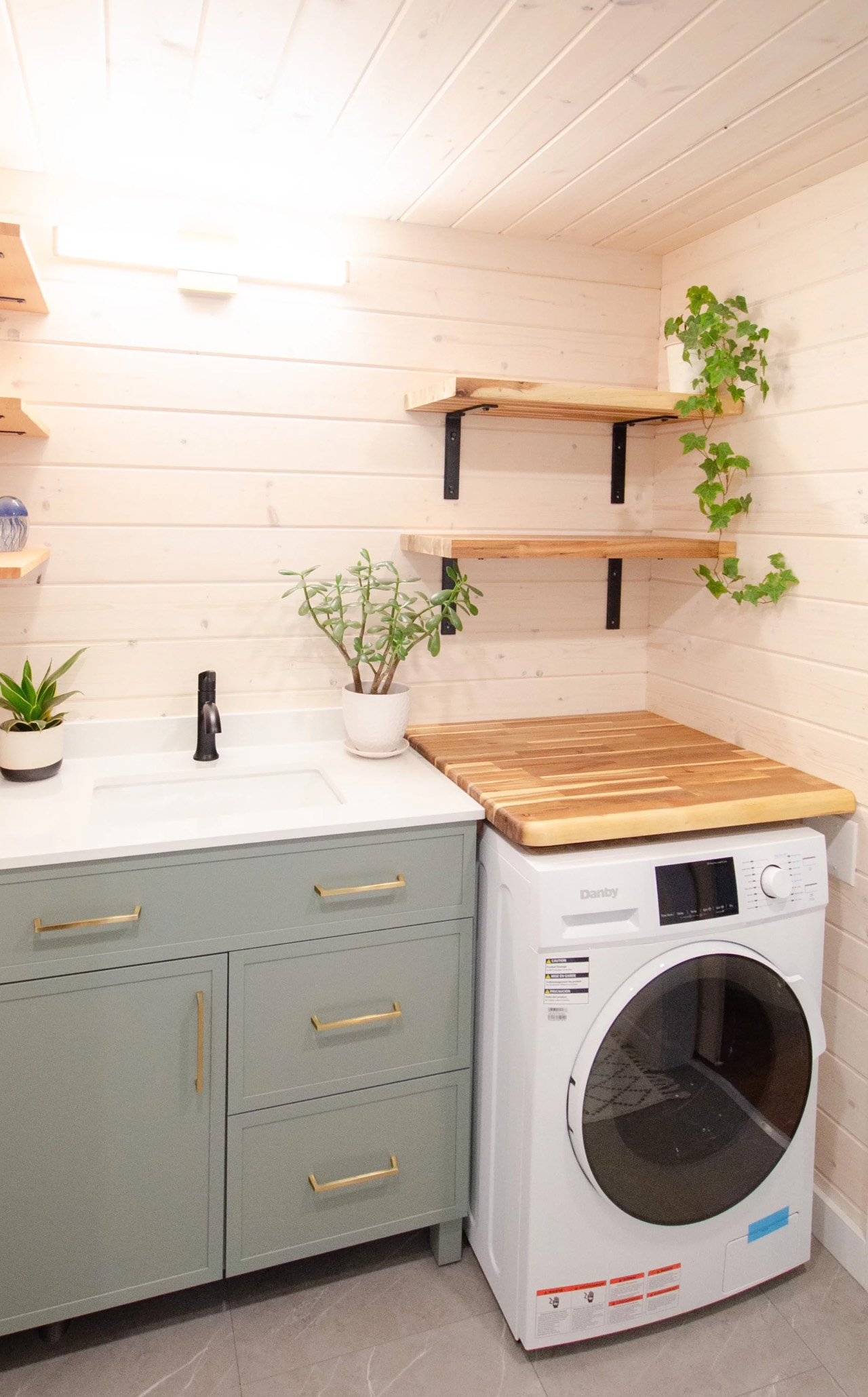
The post This Extra Wide Tiny Home Ditches the Loft and It’s Better for It first appeared on Yanko Design.

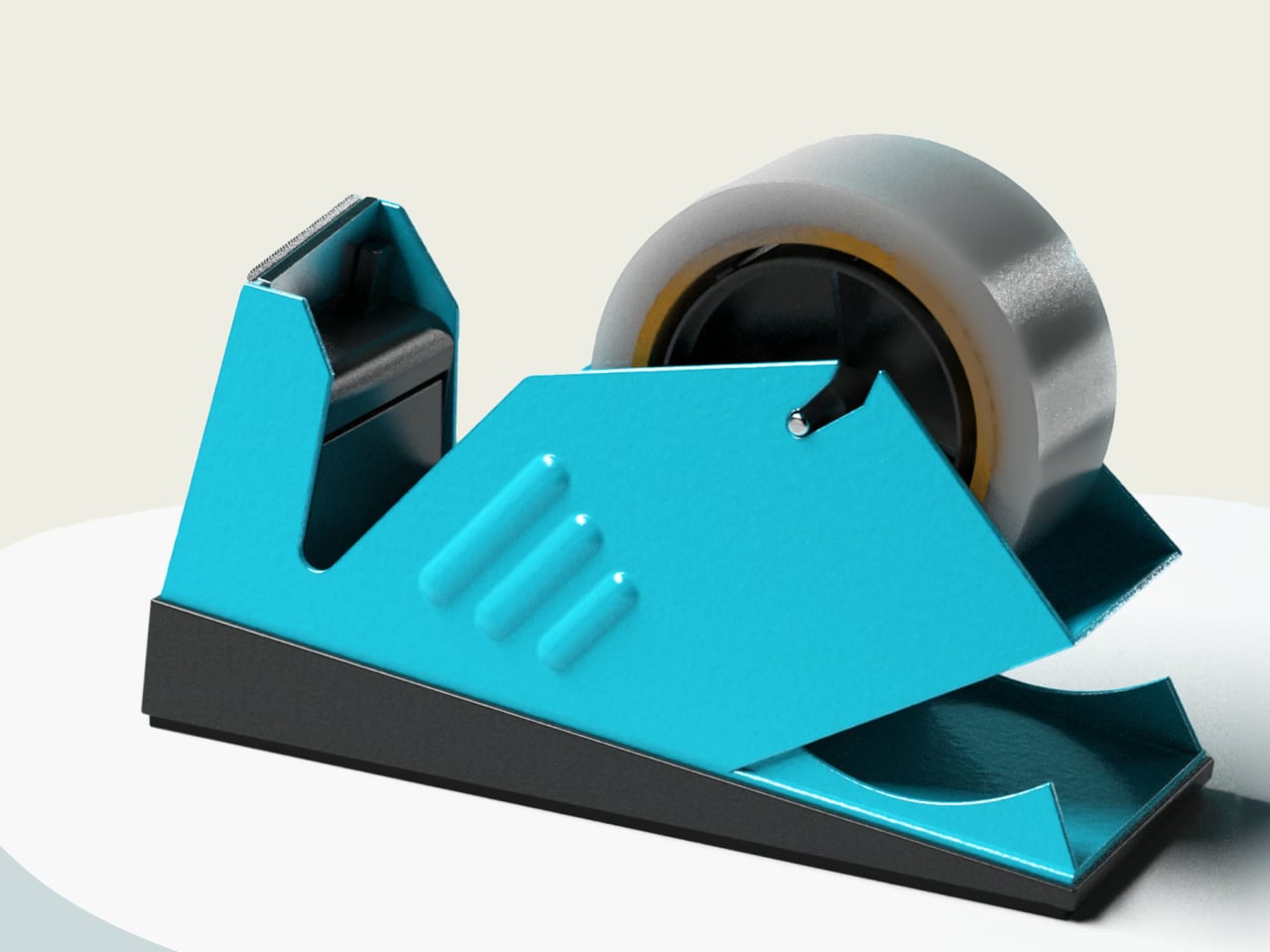
The tape dispenser has been sitting on desks for decades without anyone seriously reconsidering it. It slips when you pull, it tips unless you hold it down, and it leaves tape edges ragged enough that finding the end again becomes a small recurring ritual. For something used constantly in homes, classrooms, and offices worldwide, it carries a surprisingly stubborn set of unresolved frustrations.
One designer decided to document those frustrations rather than assume them. He observed 49 people all performing the same simple task and cataloged five recurring problems with standard dispensers. The result is Fin, a concept built around solving each one through deliberate engineering. There’s nothing here for decoration. Every choice traces back to something that was genuinely broken and worth fixing properly.
Designer: Abhishek Sharma
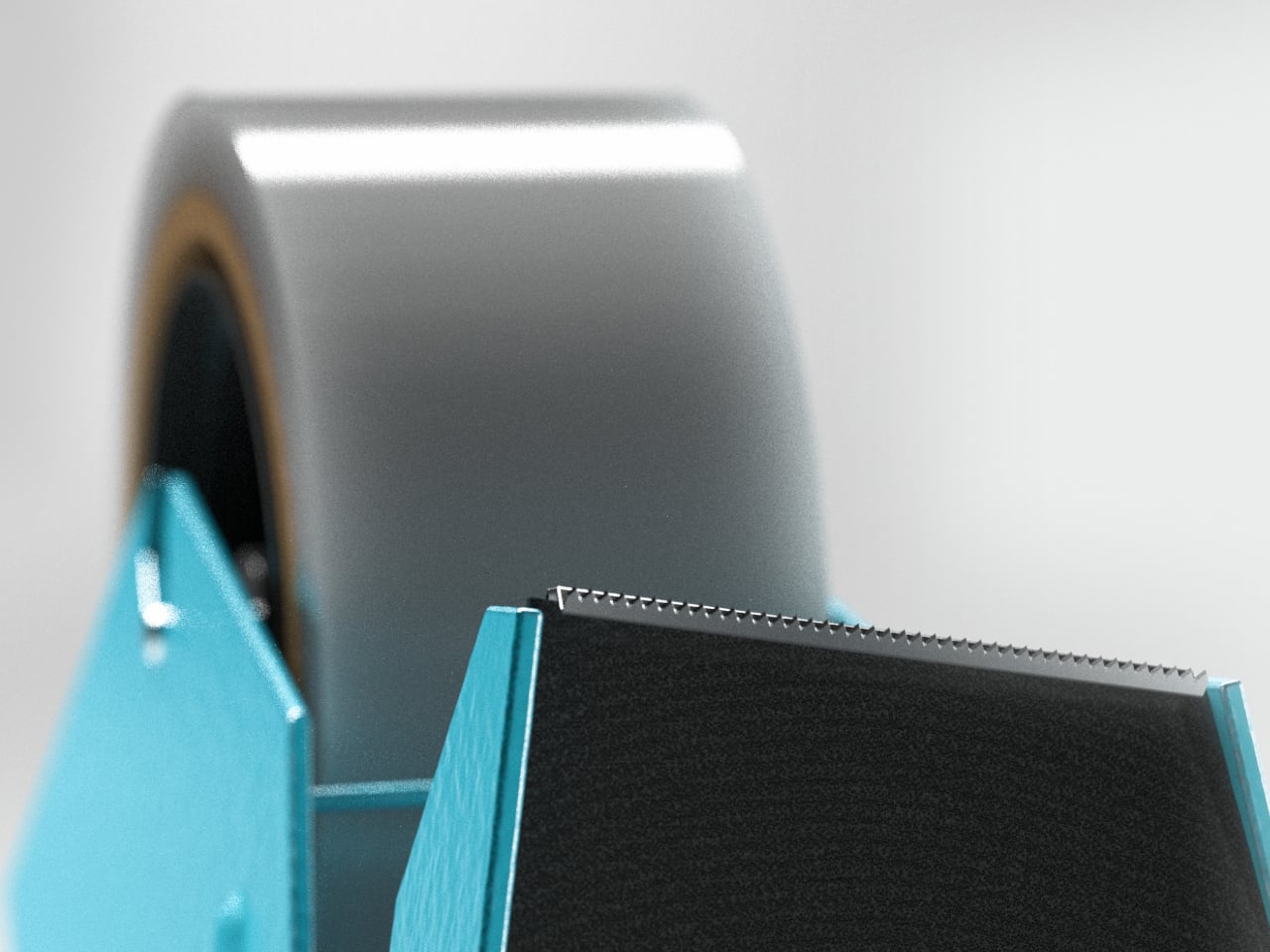
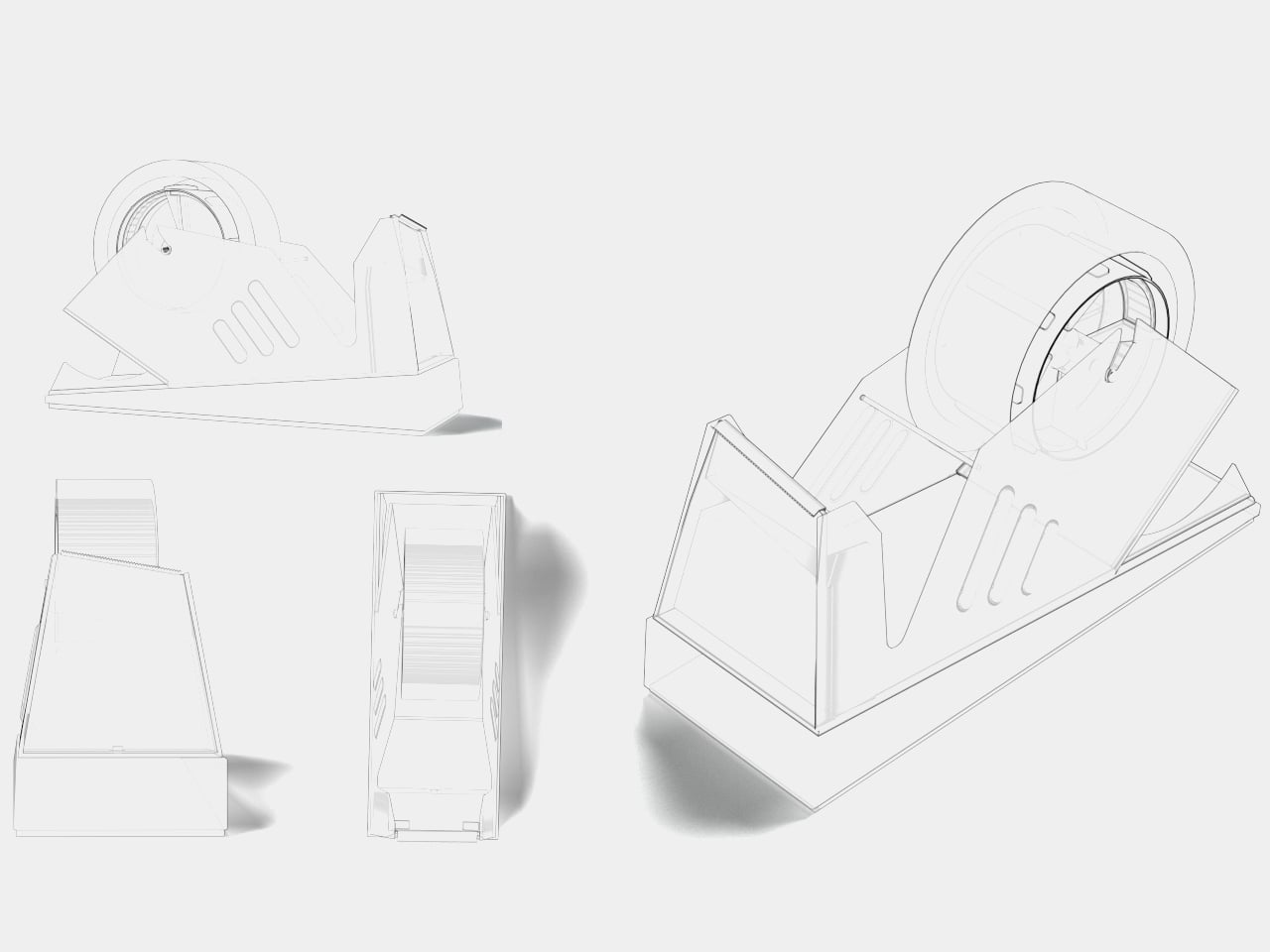
The most immediate change is at the cutting blade. Rather than lying flat, Fin’s blade tilts at 10 degrees. That angle concentrates pressure to a single point, so even when tape is pulled straight down, the cut starts cleanly, and the break travels through without resistance. The ragged edge that forces you to stop and peel back the tape before using it simply stops happening.
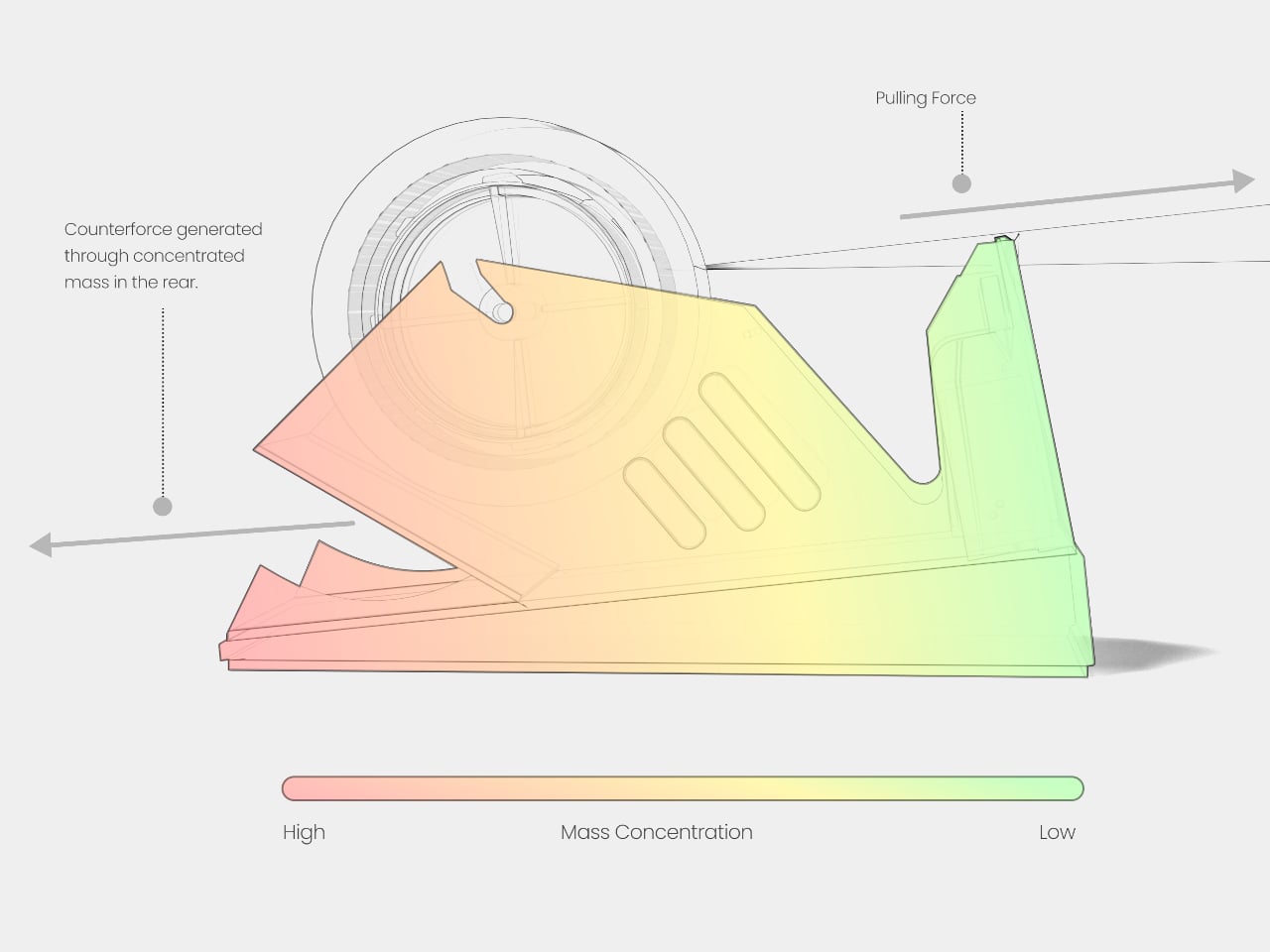
Slipping is addressed without adding bulk. Fin concentrates ballast at the rear through uneven weight distribution, creating a pivot point that resists horizontal movement when you pull tape. The front stays light, so repositioning is still easy when needed. Stability is selective, which turns out to be a more elegant answer than just making the whole dispenser heavier and harder to move.
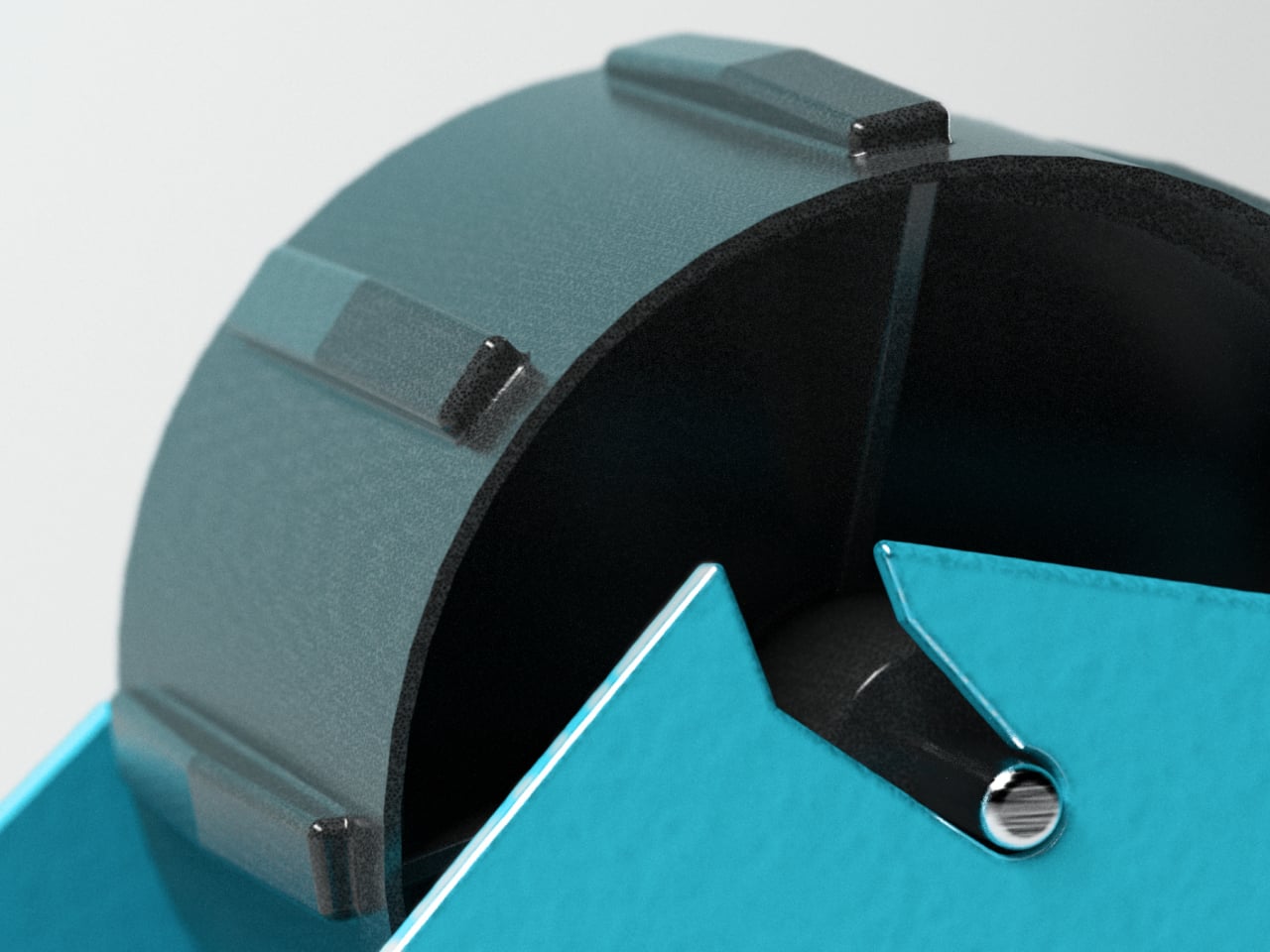
Two more irritants disappear just as quietly. Angled supports inside the tape cradle automatically stabilize narrow rolls so they don’t wobble regardless of tape width. A retention bar holds the tape edge after every cut, so the next time you reach for it, the end is right where you left it. That small predictability adds up across a day of repeated use.
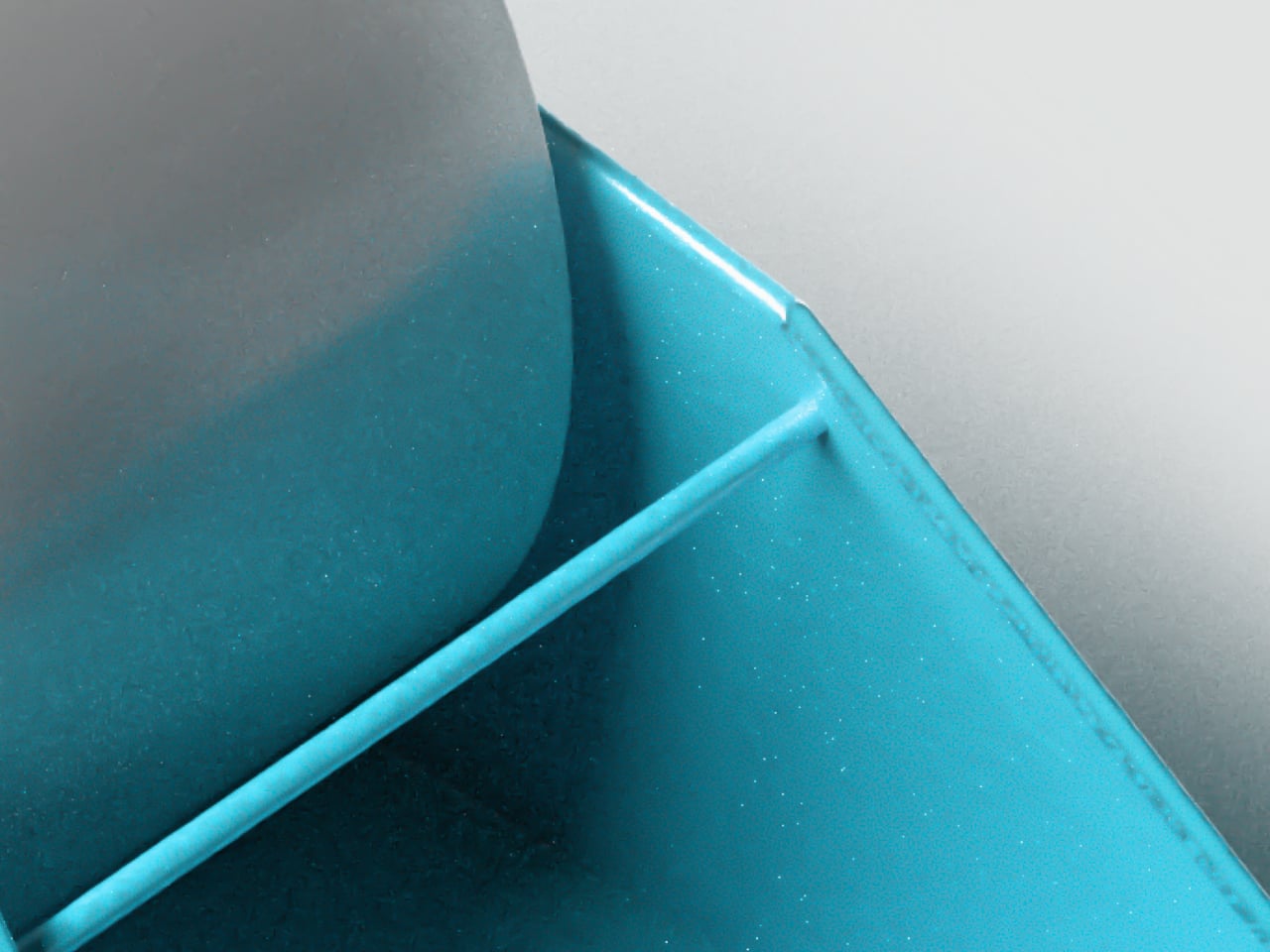
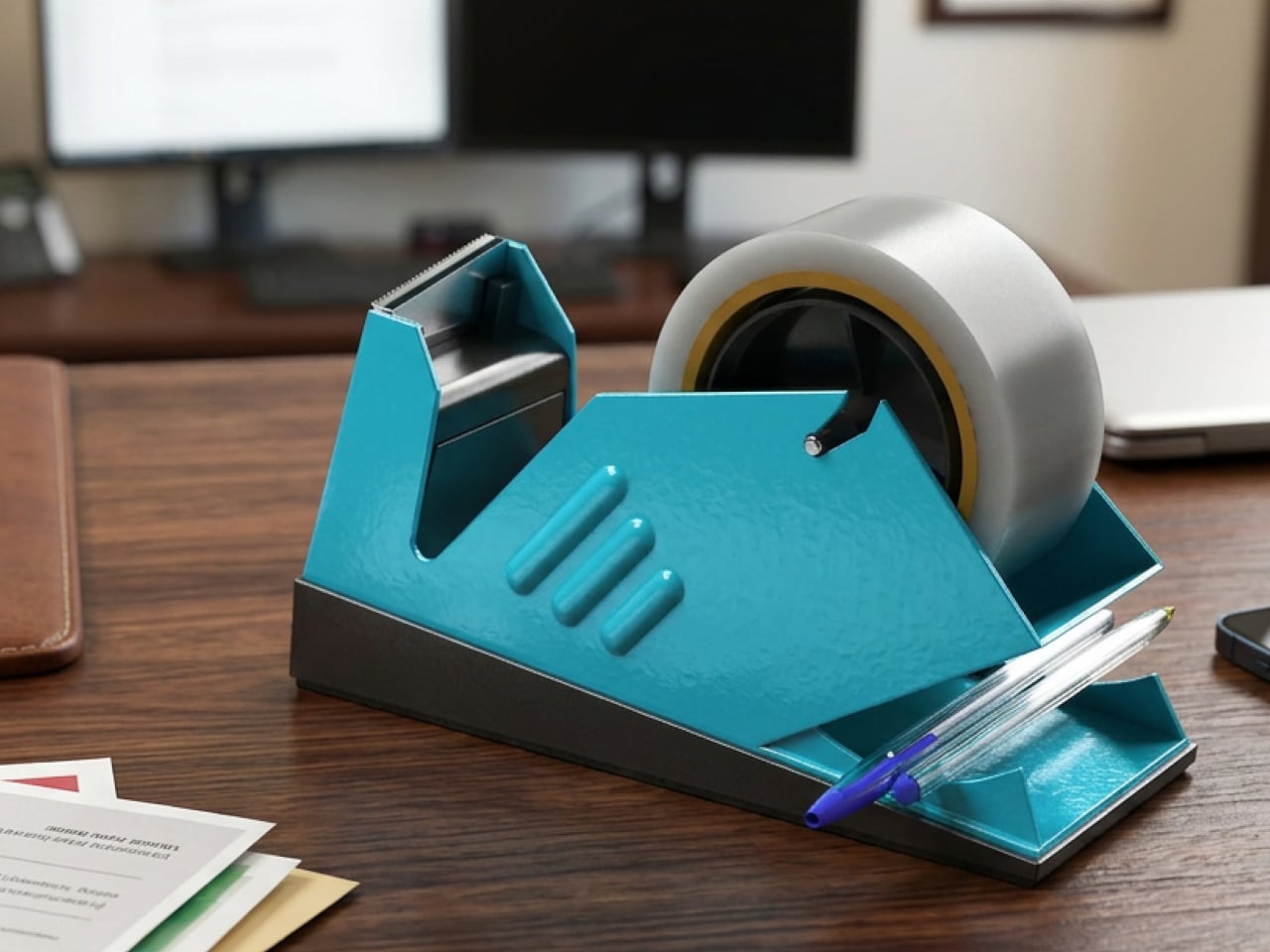
The research also revealed that tape is rarely used alone. Scissors come out, pens get grabbed, and clips end up nearby. Sharma designed a storage compartment into the base, turning the dispenser into a compact workspace hub rather than a standalone tool. Replacement blades sit inside the cutting mechanism itself, where they’ll be found when inevitably needed rather than lost somewhere in a desk drawer.
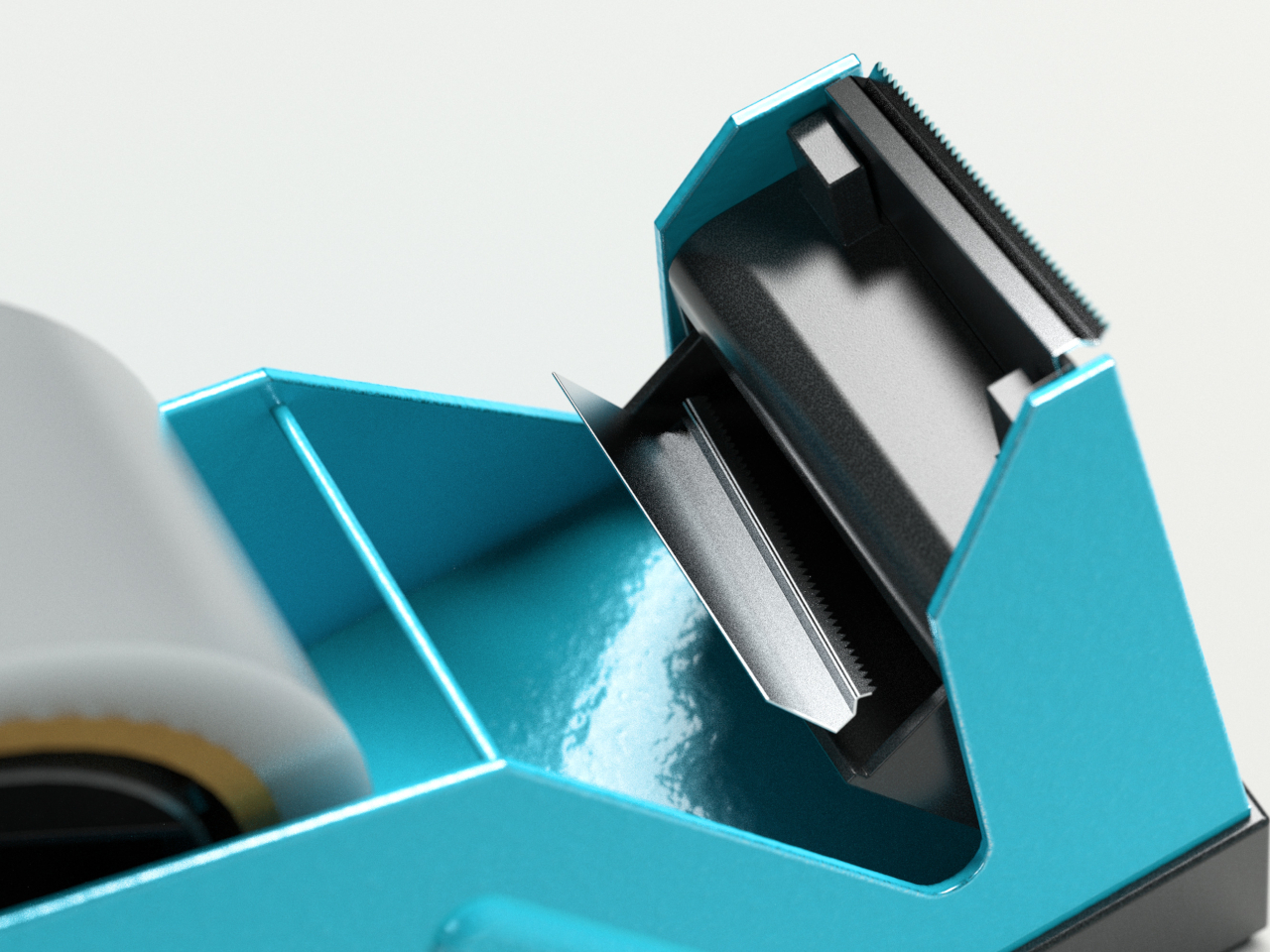
The tapered form that gives Fin its name isn’t incidental. Narrowing toward the front reduces grip surfaces and gently nudges users toward one-handed operation, discouraging the two-handed approach that keeps standard dispensers tipping. The shape wasn’t decided until every functional requirement had already settled it. What you’re left with is an object that looks like a design statement but is really just engineering made visible.
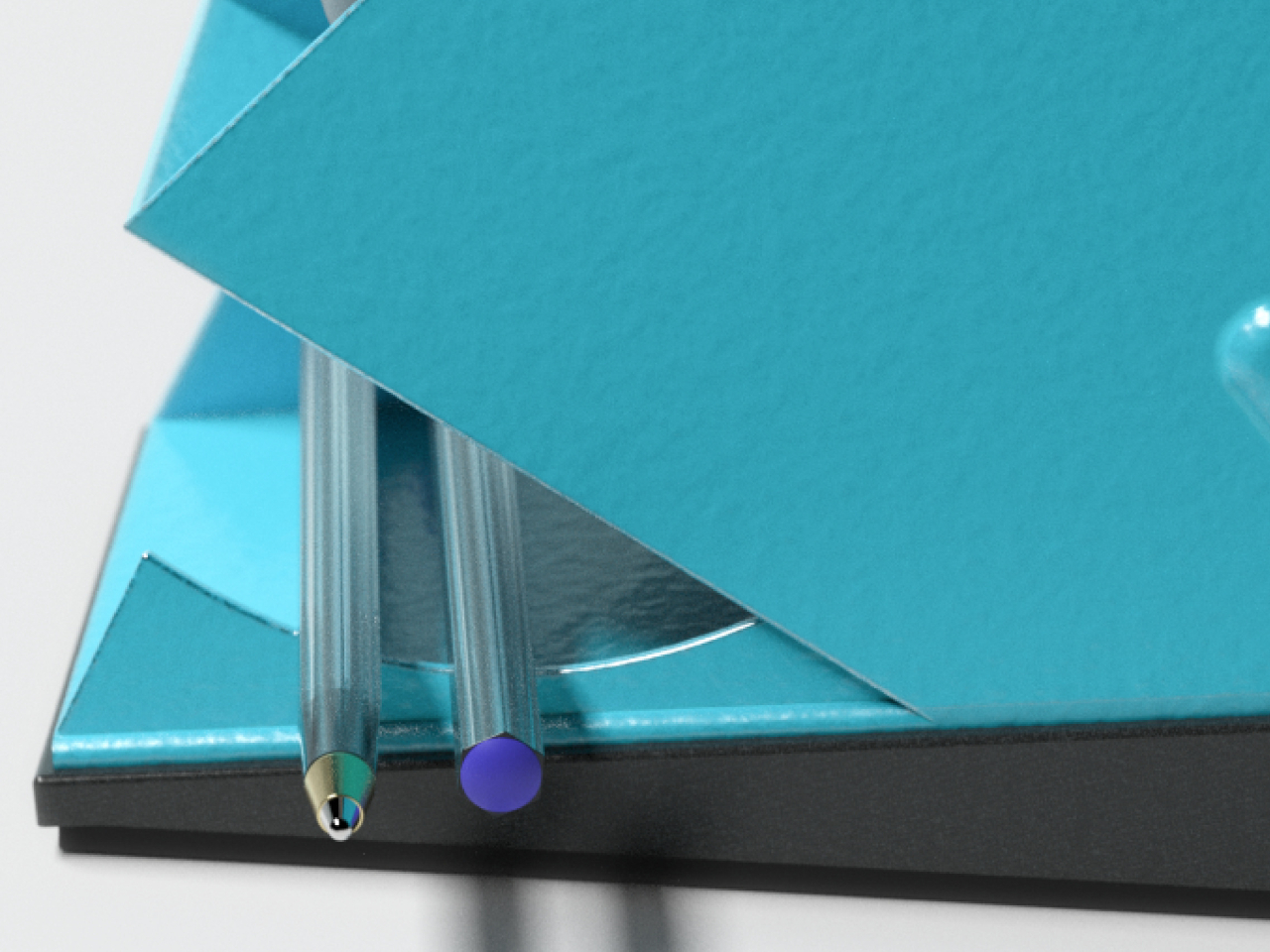
Fin is still a concept, not a product you can put on your desk yet. As a design exercise, it makes a solid argument for what happens when someone watches a problem carefully before trying to solve it. Tape dispensers have gone largely unexamined for a very long time, and this concept makes it genuinely difficult to use the one on your desk the same way.
The post Fin Fixes Five Tape Dispenser Problems You’ve Accepted as Normal first appeared on Yanko Design.

I am a fan of off-grid trailers that move light and open up in all directions when camped. The new overland micro trailer from Addax is one such camping solution that thrives on the build quality and the success of the original Addax overland trailer designed for Jeep in 2022. The new guy is called the 2026 Basecamp V3 and is, as you’d expect from Addax, a robust and dependable trailer that rolls out with the option to install camping hardware when and where you need it.
Designed for adaptability in adventures with your Jeep, this co-branded trailer, by virtue of its construction, boasts military-grade toughness and typical off-roading ability. Jeep is synonymous with adventure. The owners of a Wrangler are those who live to push boundaries, and the Basecamp is one of the toughest, purpose-built outdoor trailers – designed to complement that lifestyle.
Designer: Addax


If you have been religiously following the coverage here on Yanko Design, you would have, from the frequency of our related coverage, figured out that heavy-duty expedition trailers are creating a market buzz. But the Addax Basecamp begs to differ from the crowd. Weighing 1800 pounds, the trailer features specialized suspension, tires, and chassis, specifically tailored for off-road travel and gear-hauling capacity. Thanks to its payload capacity of 1,450 lbs.


Jeep and Addax struck a partnership to share branding in the latter’s Gladiator trailer series. This collaboration also included Mopar for service and customer support. There’s still uncertainty if Basecamp is licensed under the partnership, but the branding definitely screams the obvious. Alongside the banding, 2026 Basecamp V3 features rugged construction, the company is famous for, including the steel-on-steel body, 3/16-inch steel chassis, and deep-lugged 29-inch tires.


The trailer with a 6 x 6-foot form factor has a 26-inch x 40-inch front removable deck for additional space. Talking of space, when docked, the camp with its pre-installed OVS 270-degree batwing awning and pull-outs can instantly create a livable basecamp at grounds beyond the campsites as well. The 22L water tank, a functional 7-foot pull-out kitchen with a sink and 53-liter sliding fridge, and four power outlets add to convenience.


The power support is managed by an onboard 100 amp-hour slimline battery. It can draw renewable power from an optional 220W solar panel and also comes with a 1500W inverter for backup. Addax, does not offer a sleeping area inside of the trailer, so an additional Centori Outdoors aluminum hard-shell rooftop tent comes preinstalled for sleeping arrangements. The incredibly feature-packed Basecamp is an embodiment of its name, which is further supported by both internal and external MOLLE panel shelves. The attachment points here also allow you to carry a range of accessories/gear you would want on the Jeep trip into the wilderness. Basecamp V3 in its barebones starts at $19,000.


The post Addax Basecamp V3 features pull-out kitchen and rooftop tent, turns Jeep into off-grid adventure rig first appeared on Yanko Design.


Apple’s much-anticipated entry into the foldable smartphone market, the iPhone Fold Ultra, has encountered a significant obstacle. The device, which aims to blend innovative technology with Apple’s renowned design philosophy, is facing critical issues with its hinge durability. These challenges not only threaten to delay its release but also cast doubt on Apple’s ability to […]
The post The Hinge Nightmare: Why Apple’s iPhone Ultra Fold Could Face Major Delays appeared first on Geeky Gadgets.