A Meta agentic AI sparked a security incident by acting without permission

The Information reported that an AI agent within Meta took unauthorized action that led to an employee creating a security breach at the social company last week. According to the publication, an employee used an in-house agentic AI to analyze a query from a second employee on an internal forum. The AI agent posted a response to the second employee with advice even though the first person did not direct it to do so. 

The second employee took the agent's recommended action, sparking a domino effect that led to some engineers having access to Meta systems that they shouldn't have permission to see. A representative from the company confirmed the incident to The Information and said that "no user data was mishandled." Meta's internal report indicated that there were unspecified additional issues that led to the breach. A source said that there was no evidence that anyone took advantage of the sudden access or that the data was made public during the two hours when the security breach was active. However, that may be the result of dumb luck more than anything else. 

Many tech leaders and companies have touted the benefits of artificial intelligence, this is just the latest incident where human employees have lost control over an AI agent. Amazon Web Services experienced a 13-hour outage earlier this year that also (apparently coincidentally) involved its Kiro agentic AI coding tool. Moltbook, the social network for AI agents recently acquired by Meta, had a security flaw that exposed user information thanks to an oversight in the vibe-coded platform.

This article originally appeared on Engadget at https://www.engadget.com/ai/a-meta-agentic-ai-sparked-a-security-incident-by-acting-without-permission-224013384.html?src=rss

Low, Linear, and Deeply Considered: The Osolo Long Seating Unit

Most furniture asks you to adapt to it. You locate the armrests, figure out where your back is supposed to land, and quietly accept that the cushions are more decorative than functional. The Osolo Long Seating Unit by Turkish designer Gökçe Nafak doesn’t work that way. It hands you the structure and invites you to decide the rest. That’s not vagueness. It’s a very deliberate design stance, and once you see it, it’s hard to unsee.

The Osolo Long Seating Unit is part of a broader series that Nafak has been developing, all of which share one defining characteristic: a single-piece folded metal body that functions as both the structural frame and the visual foundation of the entire piece. That single decision is doing enormous work here. The folded metal isn’t just holding the cushions up. It defines the silhouette, creates an open cavity underneath for books, magazines, or small objects, and gives the piece a kind of architectural confidence that most upholstered furniture simply doesn’t have. When you look at it from the side, the curve of metal bending upward from the floor reads more like a building detail than a furniture leg. That’s not a coincidence.

Designer: Gökçe Nafak

The low-to-the-ground profile is where the cultural reference kicks in. The Osolo series draws from the tradition of the sedir, a built-in seating form that was central to the traditional Turkish home. The sedir was placed along the walls of a room, built directly into the architecture, and upholstered with cushions and bolsters. It was low, linear, and multifunctional long before multifunctional furniture became a trend. What’s worth noting is that the sedir was largely displaced during the 19th century as Western furniture styles, including sofas, armchairs, and dining sets, moved into Ottoman homes and reshaped the way interiors were organized and experienced. Nafak seems to be making a quiet argument that something worth having was lost in that exchange. I happen to agree.

The modular structure of the Osolo unit reinforces that idea of flexibility and communal use that the sedir originally embodied. Independent backrest elements can be positioned wherever they’re needed. Modular cushions tile the platform in varying configurations. You can run a single unit in a compact space or connect multiple modules into one continuous seating arrangement that stretches the full length of a wall. The piece adapts to its context rather than demanding that the room adapt to it, which is exactly what good furniture should do and rarely does.

My honest opinion is that the real achievement here is visual restraint. The renderings show a deep blue finish, a sharp choice because it amplifies how clean and resolved the geometry actually is. The folded metal edges are smooth without being fussy. The modular backrests carry just enough surface texture to break up what could have easily tipped into something flat and institutional. The scattered cushions in orange, tan, and silvery blue add warmth without softening the structural clarity underneath them. There’s a stack of books and a coffee mug sitting on the platform, and they look completely at home there. That might be the most honest thing a product render can show you.

What I keep coming back to is how the Osolo Long Seating Unit manages to feel both familiar and entirely new at the same time. Culturally, it connects to a seating tradition that is centuries old. Formally, it looks like something from a studio that hasn’t made peace with anything conventional yet. That combination is genuinely rare. Most furniture that reaches back into cultural history for inspiration ends up producing a romanticized version of the past. The Osolo doesn’t do that. The folded metal body grounds it firmly in contemporary manufacturing and contemporary aesthetics. The inspiration is present, but it isn’t wearing a costume.

Whether the Osolo Long Seating Unit makes it from concept to production is something worth keeping an eye on. Right now it reads as a very confident, very resolved piece of design thinking. Gökçe Nafak is building a coherent design language with this series, and the long seating unit makes a strong case that language has something real to say.

The post Low, Linear, and Deeply Considered: The Osolo Long Seating Unit first appeared on Yanko Design.

A new iPhone hacking tool puts some iOS 18 users at risk

Google and cybersecurity companies Lookout and iVerify have detailed a new hacking technique that potentially puts a significant portion of iPhone users in danger, just by visiting the wrong web page. The hack is called "DarkSword" and it currently targets iOS 18 releases between iOS 18.4 and iOS 18.6.2.

For its part, an Apple spokesperson told Engadget that the company had patched the underlying vulnerabilities in iOS versions 15 through 26 last year; the company also issued an emergency update for devices running iOS 15 and 16 that are unable to run newer versions of iOS. The company does note that users running iOS 13 or iOS 14 would need to update to at least iOS 15 to be protected; those operating systems were released in 2019 and 2020, respectively.

In response to this threat, Apple has also published details on what users can do to make sure they’re fully protected, which are essentially the same as what the company shared with Engadget. Even if you’re not running iOS 26, updates are and have been available to protect users from this particular threat. Apple also notes that the URLs detected and published in Google’s security blog are blocked by its Safe Browsing features in Safari.

DarkSword is a "fileless" hack that leverages a collection of exploits to access sensitive data when an iPhone visits an infected website. Rather than install spyware that hangs around on a user's phone after messages and other private information are stolen, fileless hacks like DarkSword take control of "the legitimate processes in an iPhone's operating system to steal data," according to Wired. Even more troubling, DarkSword deletes any evidence it was running on an iPhone after it finishes stealing your information.

The hack starts as soon as an iOS device encounters an "malicious iframe embedded in a web page," after which it works its way through your iPhone, gathering sensitive information like passwords before deleting itself. DarkSword can abscond with things like messages and iCloud content, but it's also specifically designed to access crypto currency wallets, Lookout says, which could indicate who was using DarkSword before it became widely available.

DarkSword has reportedly been used in Ukraine, Saudi Arabia, Malaysia, Turkey and Russia, and its origins could be tied to a different hacking toolkit called Coruna that TechCrunch reports may have been created for the US government by a company called Trenchant. Regardless of where DarkSword came from, the tool didn't become widely available until its Russian users left DarkSword's source code on a website for anyone to access, "complete with explanatory comments in English that describe each component and include the 'DarkSword' name for the tool," Wired writes.

Apple patched the exploits that DarkSword and Coruna used in recent updates to iOS 26, the yearly software release from 2025 that followed iOS 18. DarkSword currently targets iOS 18 releases between iOS 18.4 and iOS 18.6.2, and according to Apple's latest iOS usage stats for developers, around 24 percent of iOS devices are still on some version of iOS 18.

However, Apple simultaneously released iOS 26 and iOS 18.7 on September 15, 2025. So even if people didn’t want to upgrade to iOS 26, Apple has released patches to mitigate the vulnerability. Apple’s stats indicate that about 24 percent of iPhone users are still on iOS 18, the actual number of potentially vulnerable phones is lower. Still, it’s a good reminder to stay on top of software updates if only for the security features if nothing else.

Update, March 19, 2026, 11:19AM ET: This story has been updated with details from Apple about what versions of iOS had been proactively patched to mitigate this vulnerability.

Update, March 19, 2026, 10:10AM ET: This story has been updated to note that while this vulnerability targets iOS 18, Apple released iOS 18 updates over the last six months that are secure against this attack.

This article originally appeared on Engadget at https://www.engadget.com/cybersecurity/a-new-iphone-hacking-tool-puts-some-ios-18-users-at-risk-203745666.html?src=rss

This $130 Mario Kart Racing Wheel for the Switch 2 Has Seven Sensitivity Levels for Throwing Banana Peels

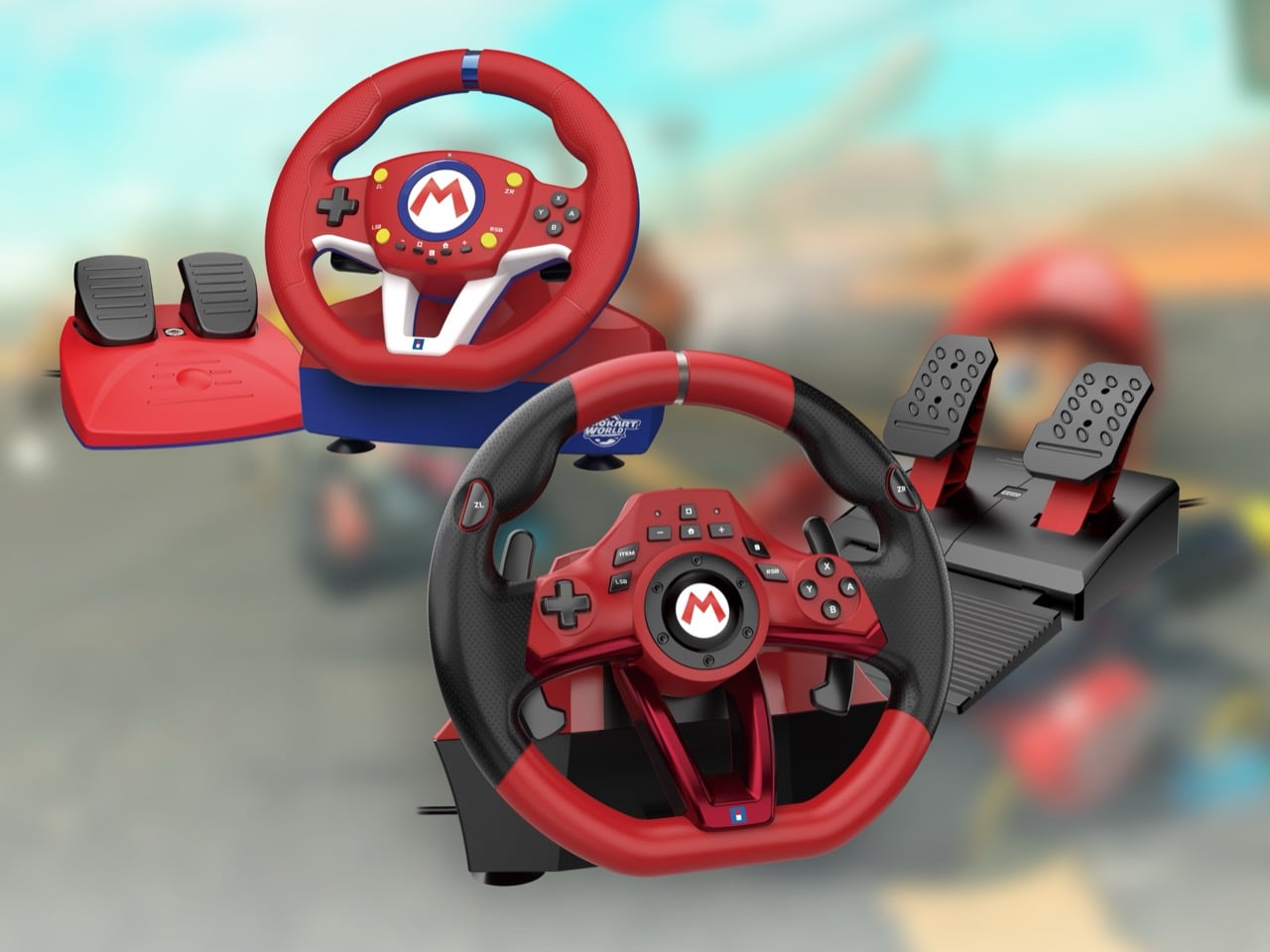
Nobody sits down to play Mario Kart and thinks “what this experience needs is a force feedback wheel, a pedal set, and a clamp-mounted desk rig.” And yet here we are, with Hori releasing two officially licensed racing wheels for the Switch 2, timed to launch alongside Mario Kart World on March 23. The Deluxe has an 11-inch wheel, a full pedal set, seven sensitivity levels, an adjustable dead zone, and a Quick Handling Mode that toggles steering output between 270 and 180 degrees. That last feature exists so you can more precisely navigate a rainbow-colored highway while a cartoon turtle throws a shell at you.

To be fair, the wheels look genuinely good. The Deluxe goes for a dark, almost aggressive red-and-black motorsport aesthetic, while the Mini leans fully into Mario’s red-blue-white color scheme with the Mario Kart World logo stamped on the base. Both add a C button for Switch 2’s GameChat, connect via a 9.8-foot USB-A cable, and work with the original Switch and OLED too. The Deluxe is $129.99, the Mini is $79.99, and both are available for pre-order now.

Designer: Hori

Click Here to Buy Now
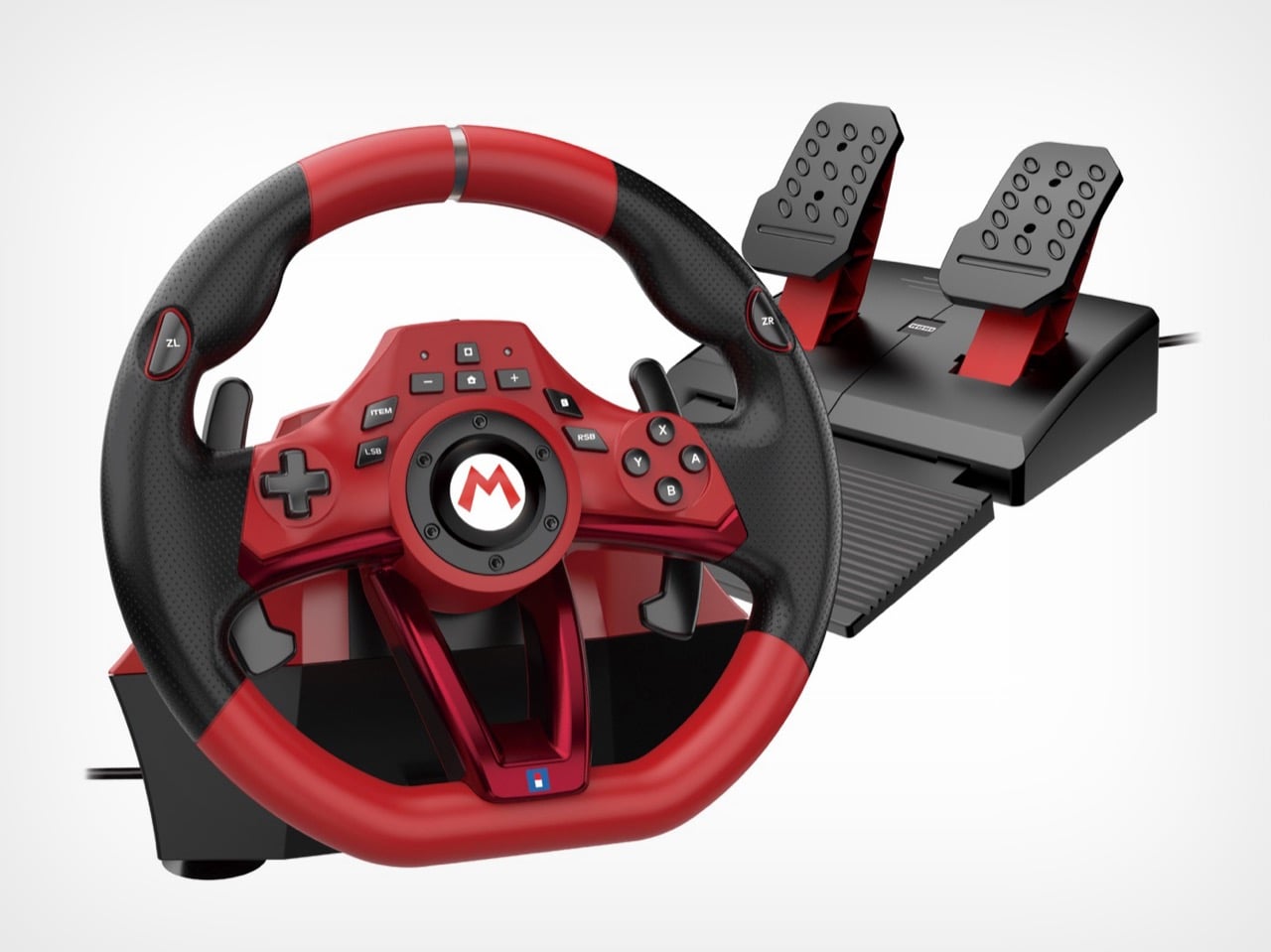
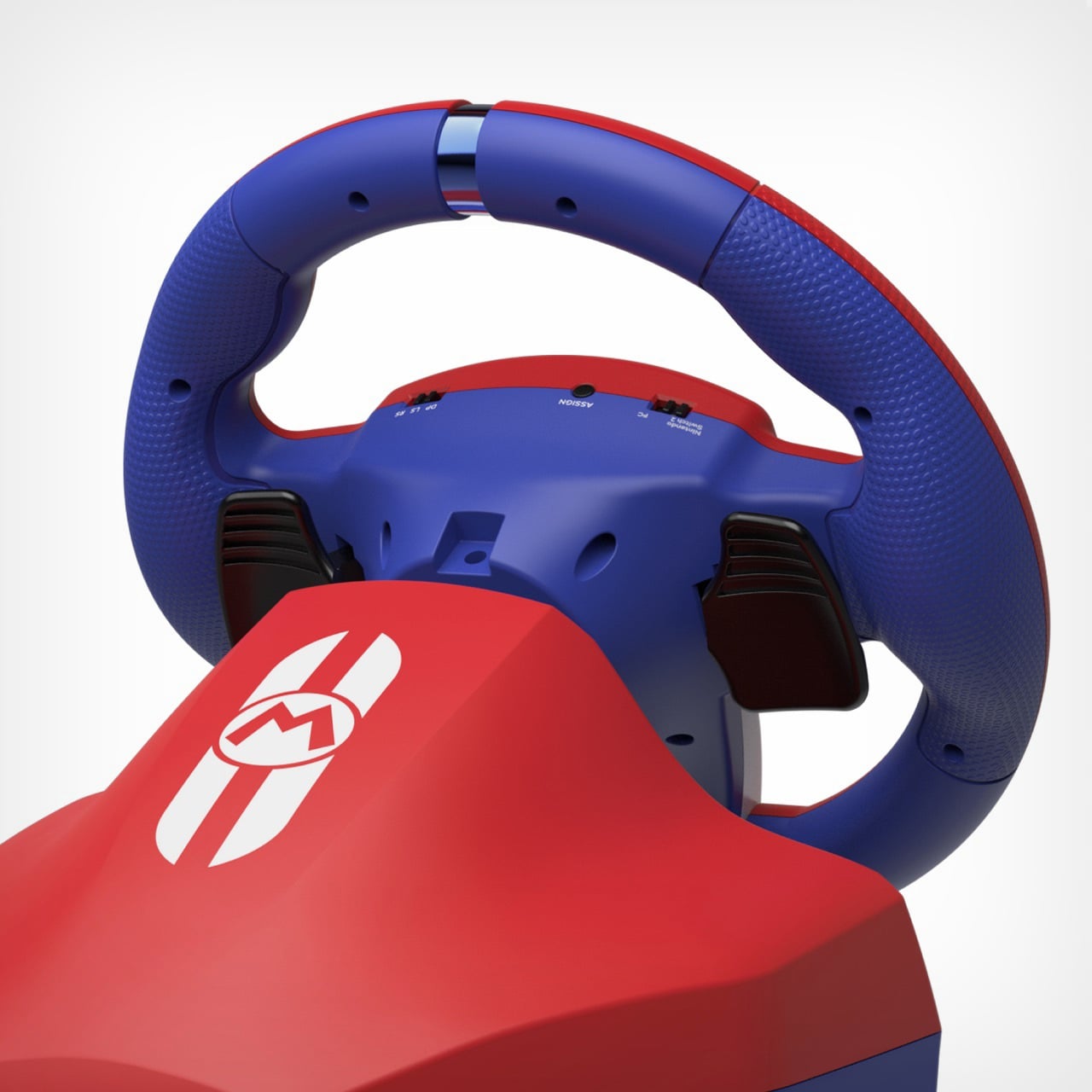
The two wheels are closer in spec than the price gap suggests. Both have textured rubber grips, ZL and ZR buttons, racing paddles, programmable buttons, and the same ZL hold function that lets you drag items behind your kart in Mario Kart 8 Deluxe. That hold function is disabled in Mario Kart World, which handles item use differently, so if World is the primary reason you’re buying one of these, that particular feature is decorative. The Mini’s 8.6-inch wheel is smaller but not dramatically so, and for a game where precision steering matters about as much as knowing when to deploy a star, the size difference probably won’t register mid-race. Both also carry the Nintendo/PC toggle on the back, which is new to the Switch 2 versions and means you can run either wheel through a PC racing title if the Mario Kart novelty wears off.

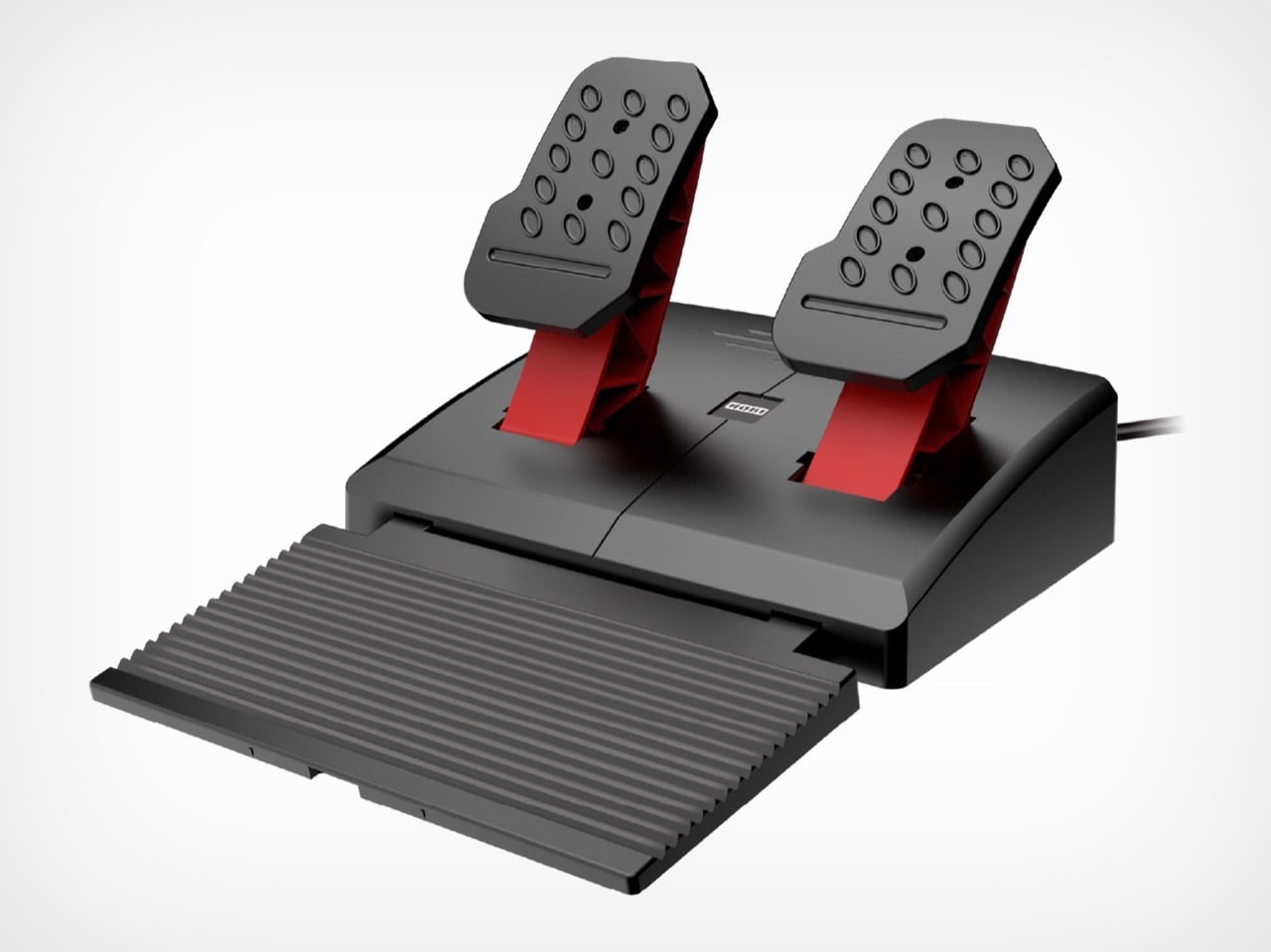
The Mini, with its Fischer-Price aesthetic, attaches via suction cups only, which works fine on a smooth desk but becomes a liability if you’re the type to slam the wheel hard into a corner. The Deluxe, on the other hand, adds a physical clamp mount, a meaningful upgrade for anyone who takes their banana peel delivery system seriously. The dead zone adjustment and the 180/270 degree toggle are also Deluxe-only, and those matter more than they sound: dialing in the dead zone tightens center response considerably, and 180-degree mode makes the wheel feel snappier in arcadey conditions where full-rotation sim behavior would actively work against you.

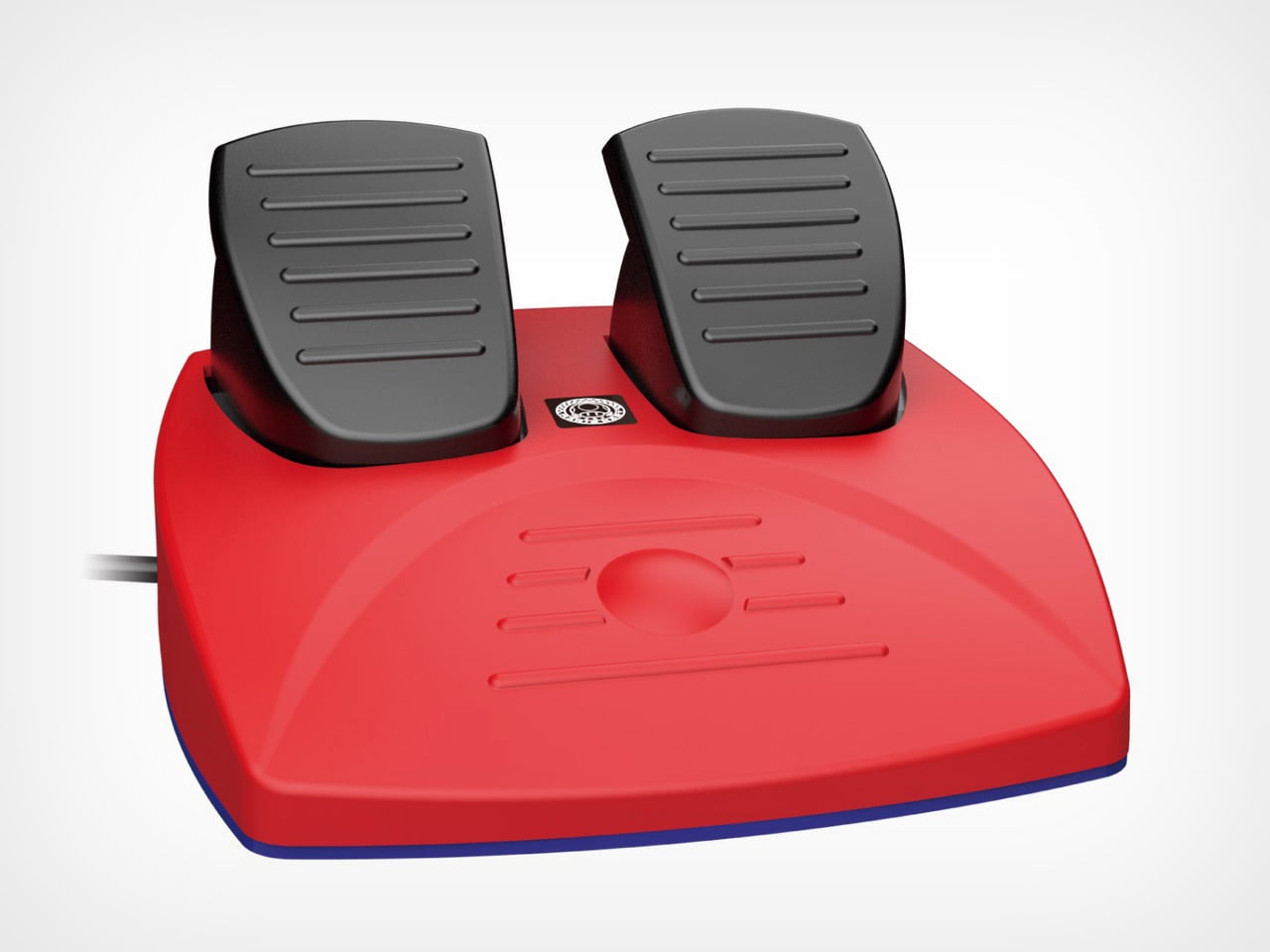
The Deluxe reads like a peripheral that wants to be taken seriously, with perforated black leather-look grip material, metallic red spokes, and a fairly restrained button cluster around the center M logo. The Mini abandons that restraint completely: solid red rim, blue and white spokes, yellow accent buttons, Mario Kart World branding on the base. They’re aimed at different buyers within the same audience, and the visual split is deliberate enough that you wouldn’t mistake one for the other in a product lineup.

Both wheels connect over USB-A, which is worth flagging because the Switch 2 uses USB-C natively. You will need an adapter or a hub, and Hori ships neither in the box. The 9.8-foot cable is generous in length, but the connector mismatch is a friction point on a product designed specifically for a new console, and it’s the kind of thing that should have been sorted at the design stage rather than left to the buyer.

Hori has been the default answer for Switch racing wheels since the original console launched, and these Switch 2 versions do not reinvent that position. The older Switch wheels already work on the Switch 2, so this is really a product for new Switch 2 buyers rather than existing Hori customers looking to upgrade. For that audience, $79.99 for the Mini is a reasonable ask, $129.99 for the Deluxe is justified by the clamp mount and calibration options alone, and both are about as good as a wired USB wheel built around Mario Kart is ever going to get. Whether you need one is a separate question, but if you’re going to sit down with a dedicated racing rig to hurl banana peels at a go-kart driven by a plumber, at least Hori has given you two good ways to do it.

Click Here to Buy Now

The post This $130 Mario Kart Racing Wheel for the Switch 2 Has Seven Sensitivity Levels for Throwing Banana Peels first appeared on Yanko Design.


Senator Blackburn introduces the first draft of a federal AI bill

The White House has been promising a set of national rules to guide artificial intelligence since late last year, and today Sen. Marsha Blackburn (R-Tenn.) fired the first volley. The senator shared a discussion draft for codifying the executive order signed by President Donald Trump in December calling for an AI bill. Her stated goal is a policy that "protects children, creators, conservatives and communities from harm."

Blackburn has called for tougher policies for AI safety, and one of the core messages in this discussion draft is that it "places a duty of care on AI developers in the design, development and operation of AI platforms to prevent and mitigate foreseeable harm to users." It also draws a line on the many copyright infringement questions raised by creative industries: "an AI model's unauthorized reproduction, copying, or processing of copyrighted works for the purpose of training, fine-tuning, developing, or creating AI does not constitute fair use under the Copyright Act." 

Some of the other notable provisions are:

  • Requires covered online platforms, including social media platforms, to implement tools and safeguards to protect users under the age of 17 against online harms.

  • Protects the voice and visual likenesses of individuals and creators from the proliferation of digital replicas without their consent.

  • Sets new federal transparency guidelines for marking, authenticating and detecting AI-generated content.

  • Requires certain companies and federal agencies to issue reports on AI-related job effects, including layoffs and job displacement to the U.S. Department of Labor (DOL) on a quarterly basis.

It includes ending Section 230, marking the latest attempt to retire a law that has been questioned as a possible loophole for AI companies to escape liability when their tools cause harm. While AI critics might see positive signs here, remember that this is just the initial version of the framework. Lawmakers will likely spend a lot of time negotiating over the eventual result, which may be notably de-fanged from its current state. It could wind up with a lot more requirements echoing this Republican complaint: "Combats the consistent pattern of bias against conservative figures demonstrated by AI systems by requiring third-party audits to prevent discrimination based on political affiliation." Despite the claims of suppression and censorship, we’ve consistently seen this conservative argument to be false — or at the very least misleading.

This article originally appeared on Engadget at https://www.engadget.com/ai/senator-blackburn-introduces-the-first-draft-of-a-federal-ai-bill-202509852.html?src=rss

Amazon will reportedly cut its USPS shipments by at least two-thirds

A recent change in how the US Postal Service handles shipping partners appears to have forced Amazon to make alternative plans. The company reportedly plans to cut the number of packages it ships through USPS by at least two-thirds later this year. It says the decision came after USPS ended negotiations “at the eleventh hour” in favor of a new bidding process.

On Tuesday, the Wall Street Journal reported that Amazon plans to reduce the shipments it hands off to USPS. Last year, the company accounted for nearly 15 percent of the Postal Service’s package deliveries. Cutting that by nearly two-thirds diminishes one of the USPS’s most reliable sources of revenue. In fiscal 2025, the agency reported a net loss of $9 billion.

Amazon’s current contract with USPS ends on September 30. In a public response to the WSJ story, the company said it notified USPS in October 2025 that it would need to complete a new deal by December. “You can't add capacity for hundreds of millions of packages overnight — it requires major capital investment, long-term infrastructure planning, hiring, and logistics coordination,” Amazon wrote.

According to Amazon, USPS then pulled the plug on negotiations at the last second. “We negotiated with [USPS] in good faith for more than a year to reach a deal that would bring them billions in revenue and believed we were heading toward an agreement,” Amazon wrote in a statement. “Our goal was to increase our volumes with USPS, not reduce them — until USPS abruptly walked away at the eleventh hour in December.”

FILE - Postmaster General David Steiner speaks at an event marking the 250th anniversary of postal service's founding, July 23, 2025, in Washington. (AP Photo/Cliff Owen, File)
Postmaster General David Steiner (AP Photo/Cliff Owen, File)
ASSOCIATED PRESS

That’s when Postmaster General David Steiner implemented a new bidding process for last-mile deliveries, replacing a long-established one where USPS negotiated with shipping partners individually. He described the move as “a fair bidding process that enables the marketplace to find the best mix of local shipping attributes for the best volume-driven pricing.” Steiner was appointed to the post in May 2025, following the departure of former head Louis DeJoy.

Amazon said it submitted a bid in February using the new system but hasn’t heard back. “This creates significant uncertainty for our long-term network planning,” the company said. “Despite this, we participated in good faith and submitted a bid in February 2026. We've received no response.”

USPS plans to announce the bidding results in Q2 2026. Contracts are expected to be finalized by Q3. Despite apparently moving forward with the contingency plan, Amazon said it’s still “ready to continue this partnership.”

As for Postmaster Steiner, he spent Tuesday asking Congress to loosen USPS regulations and let him raise prices. Warning that the agency will “run out of cash” in about a year, he told a House subcommittee that he wants to raise the agency’s current $15 billion debt cap. He also asked for the ability to increase postage prices and reform its retiree pension obligations.

This article originally appeared on Engadget at https://www.engadget.com/big-tech/amazon-will-reportedly-cut-its-usps-shipments-by-at-least-two-thirds-200915702.html?src=rss

This classic 1979 LEGO computer brick hides a fully functional Mac mini workstation inside

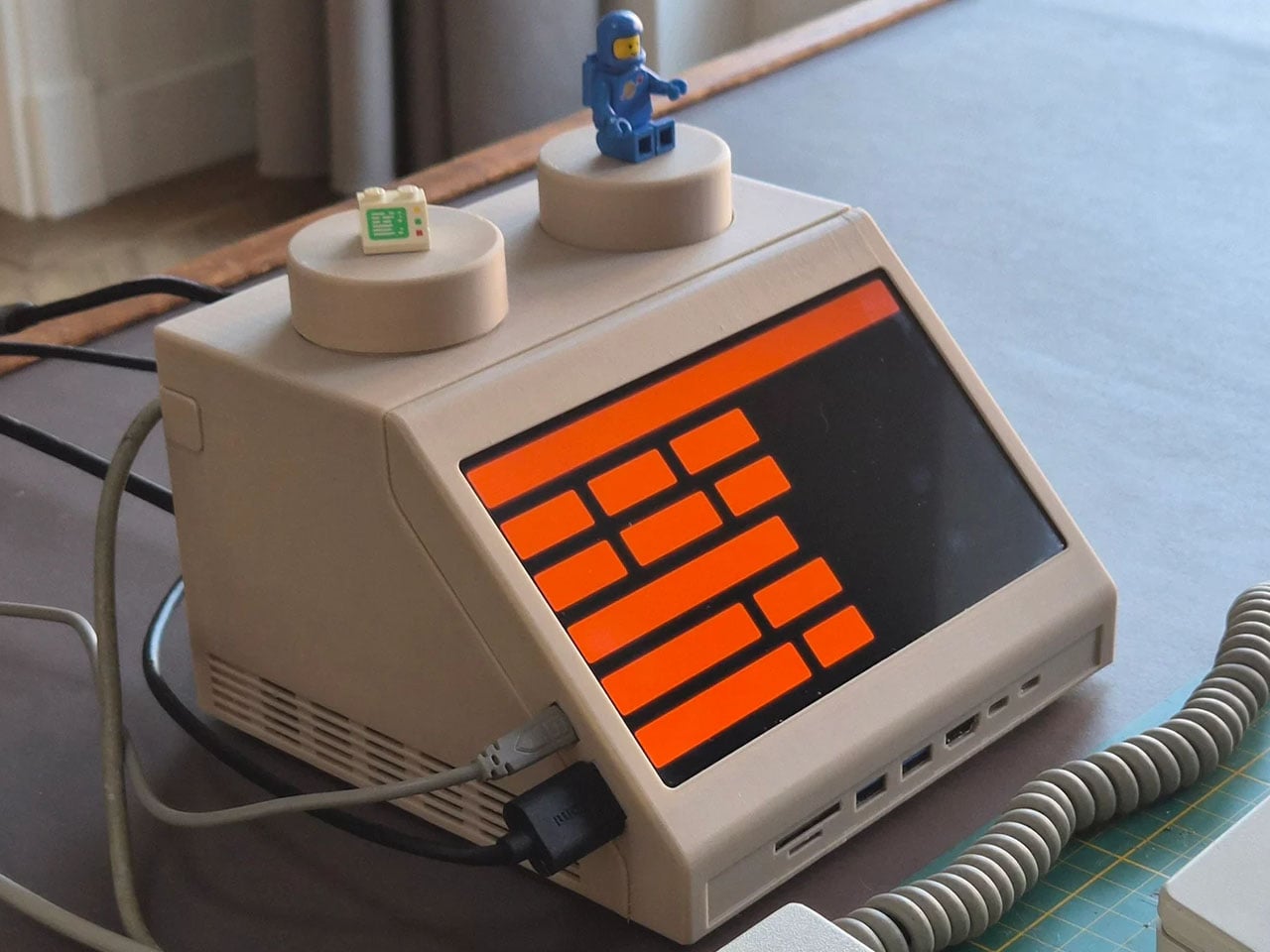
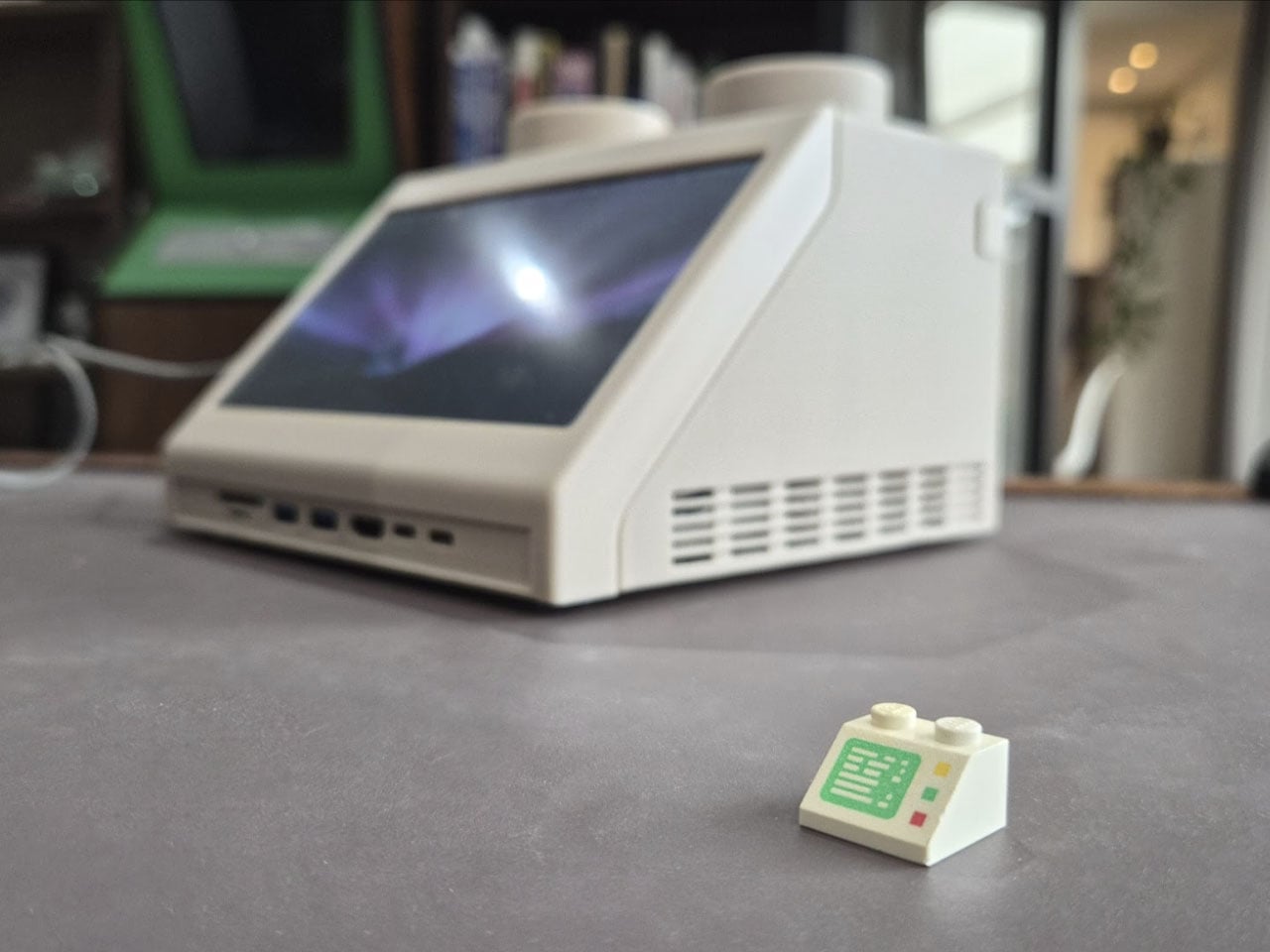
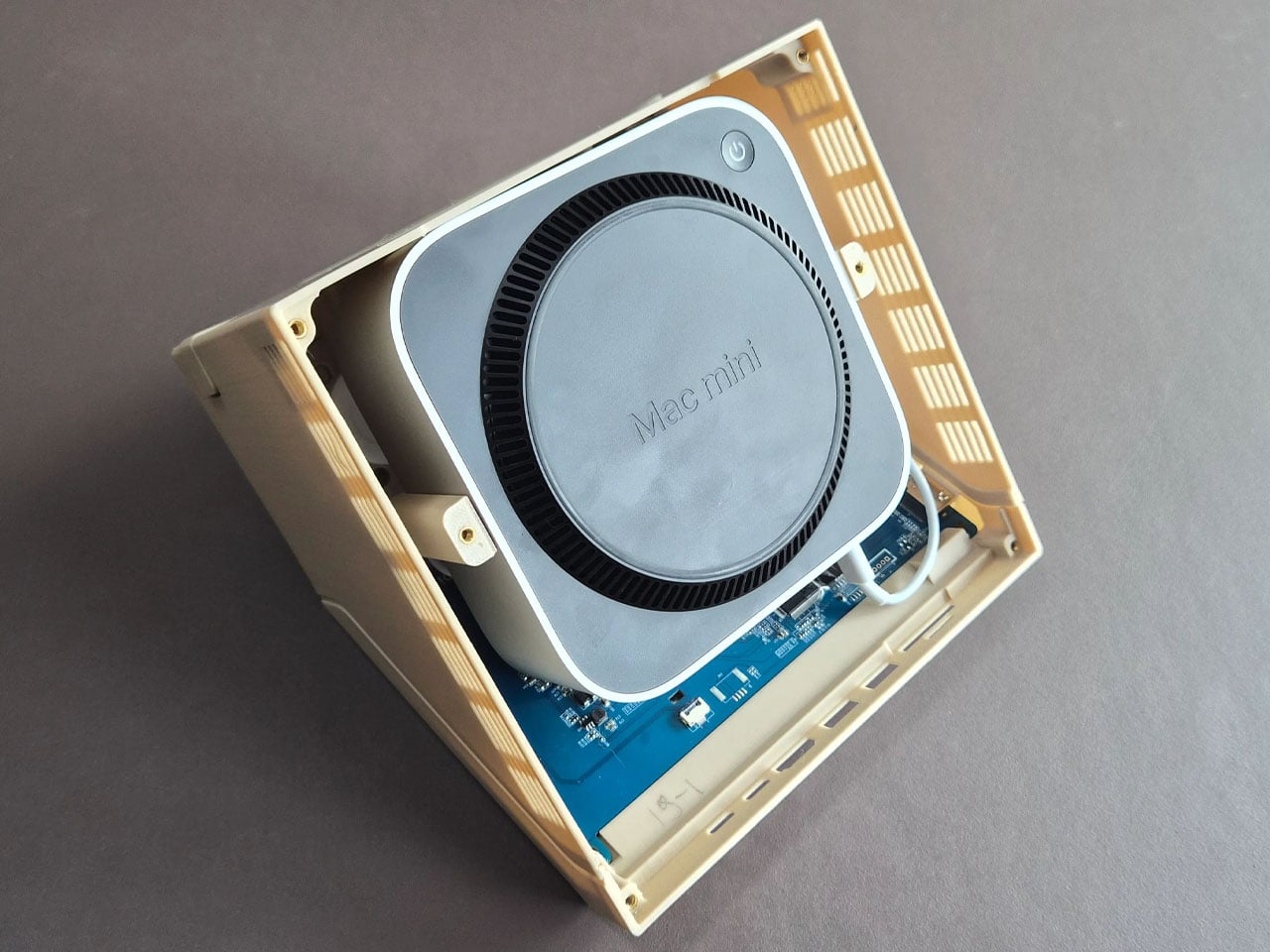
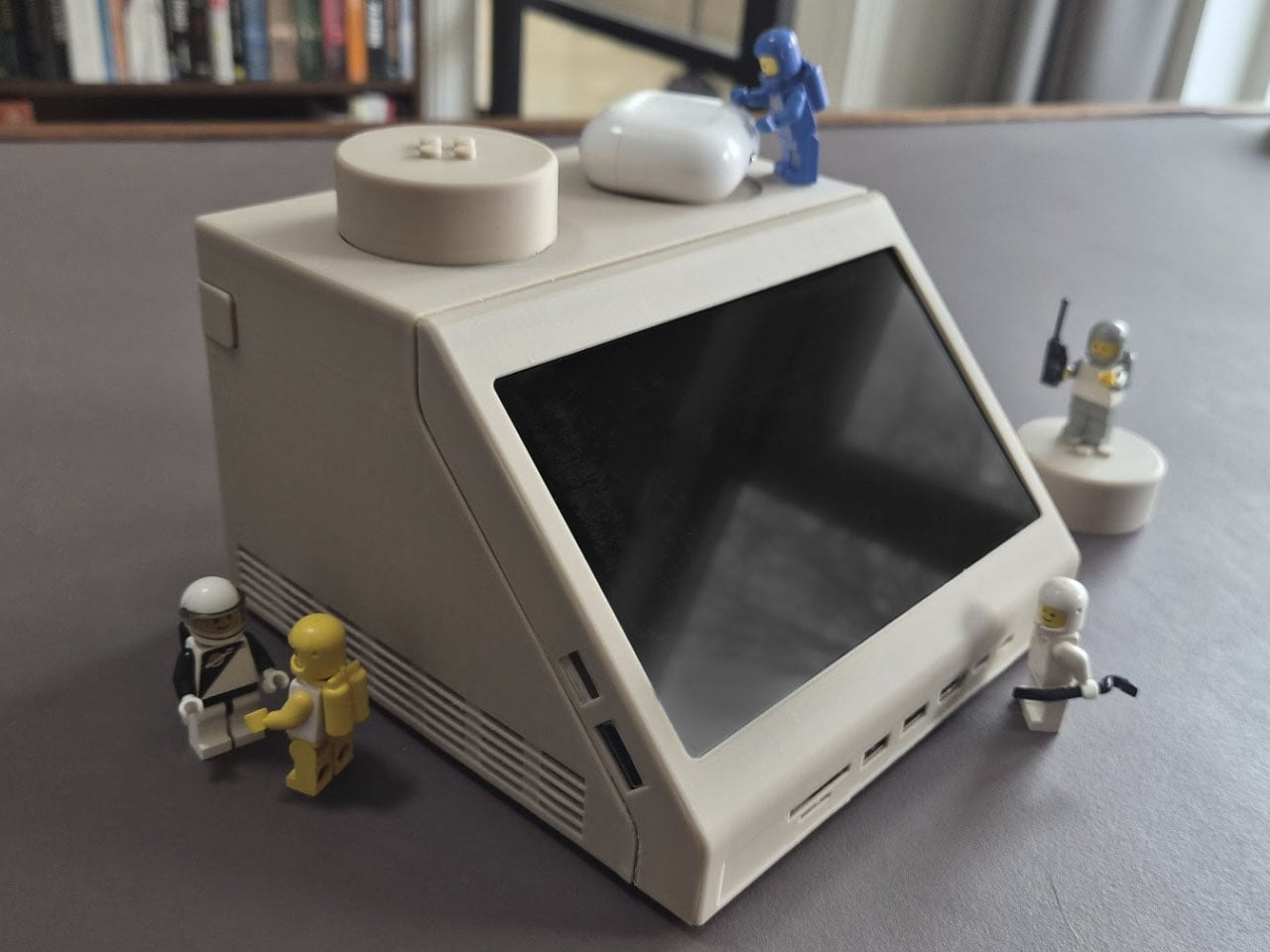
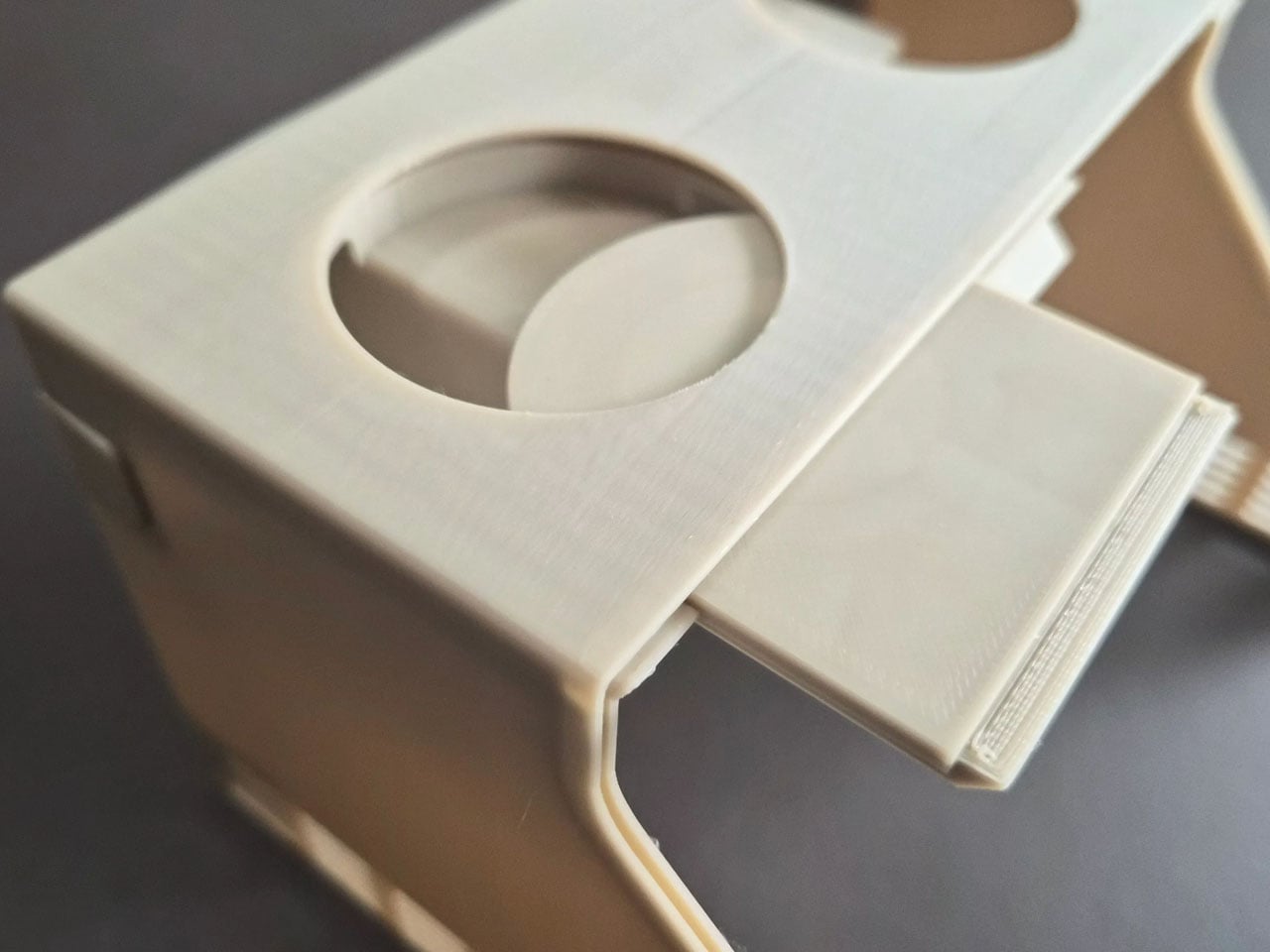
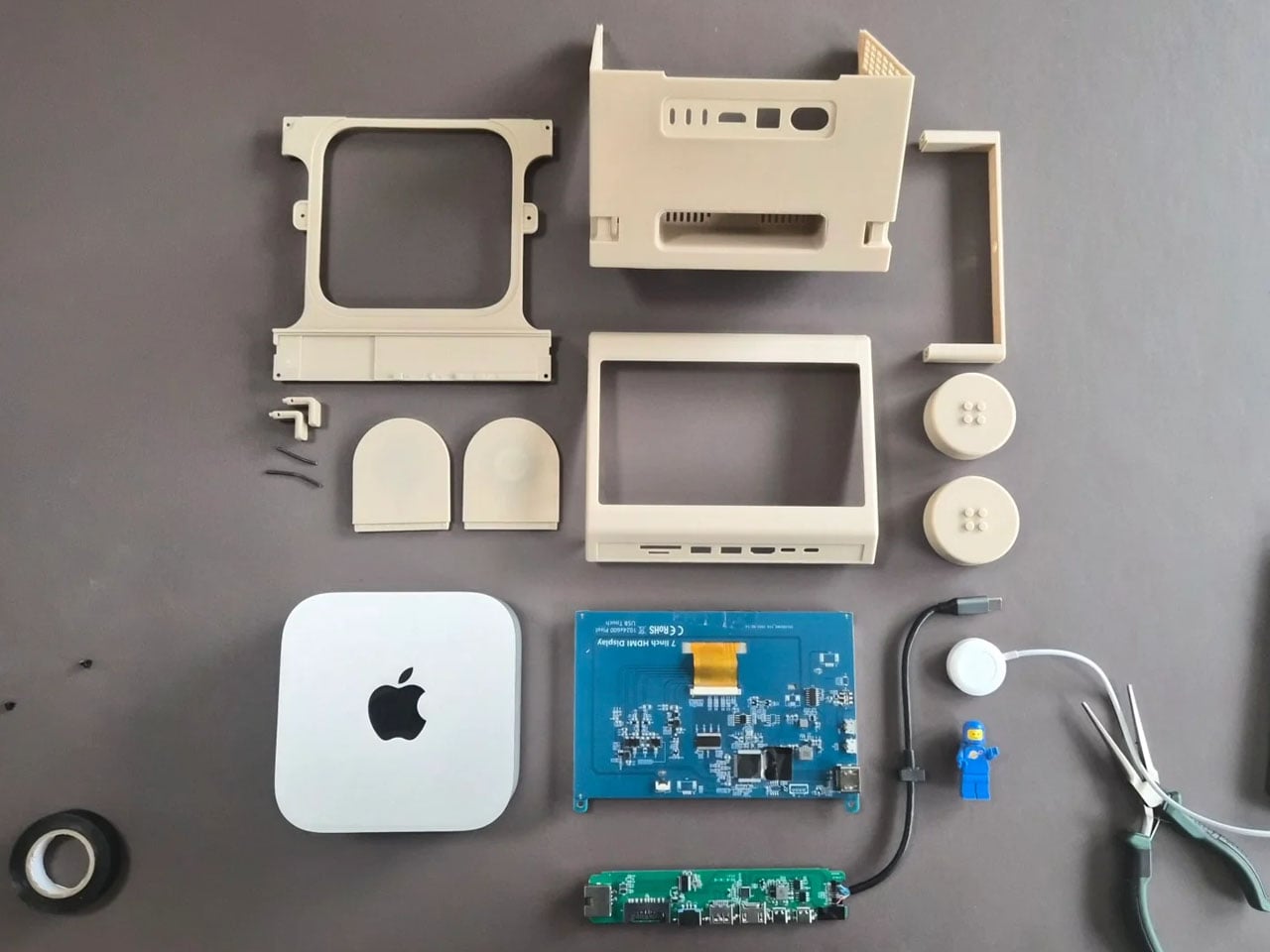
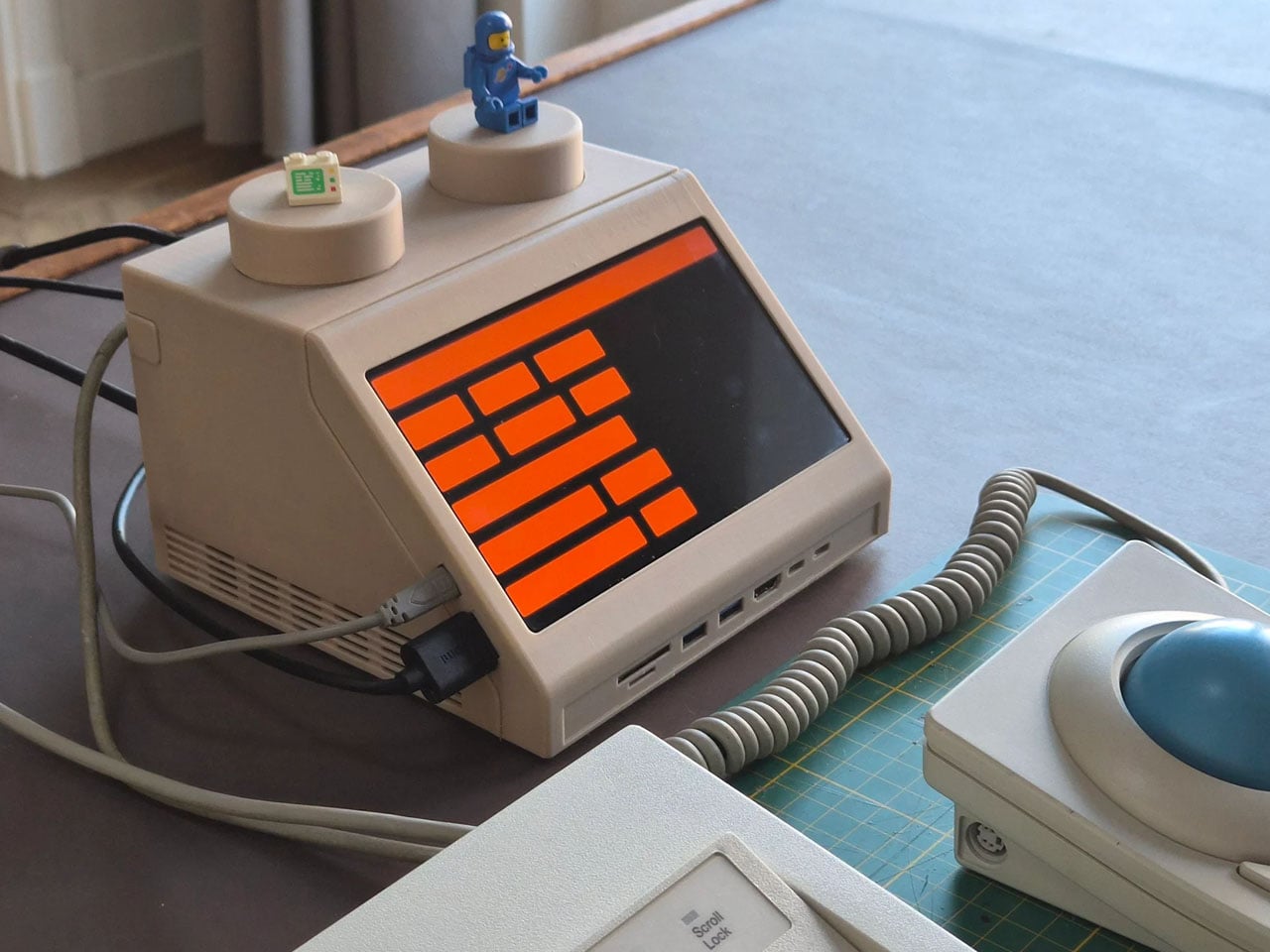
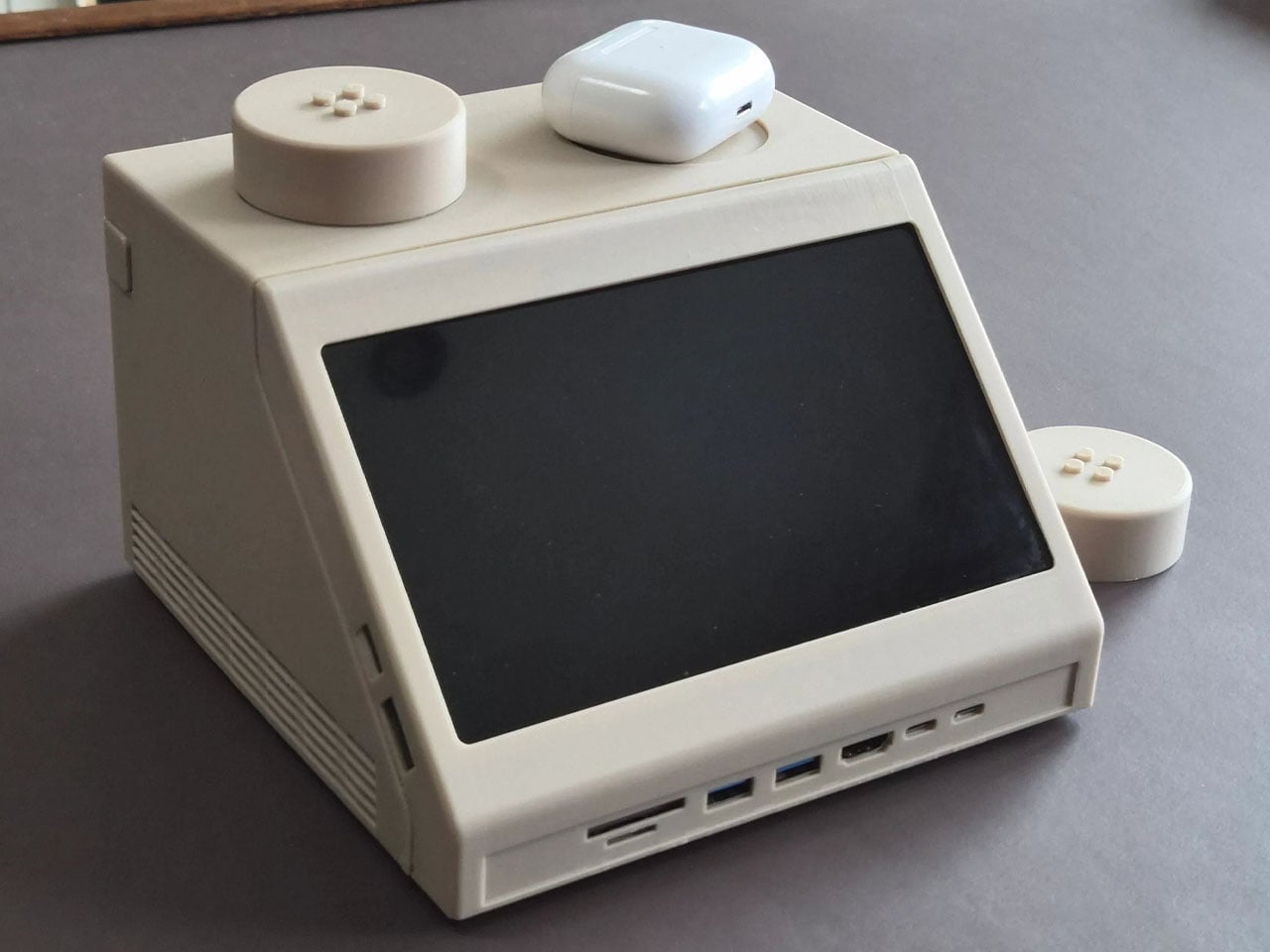
Retro designs often carry a sense of nostalgia, but occasionally they evolve into something more functional and imaginative. The M2x2 workstation by Watt IV is a good example with the inventive reinterpretation of a classic LEGO element transformed into a fully working desktop computer. Created by Dutch designer Paul Staal, the device takes inspiration from the iconic sloped LEGO computer brick introduced in 1979 and scales it up into a practical workstation powered by a modern Mac mini.

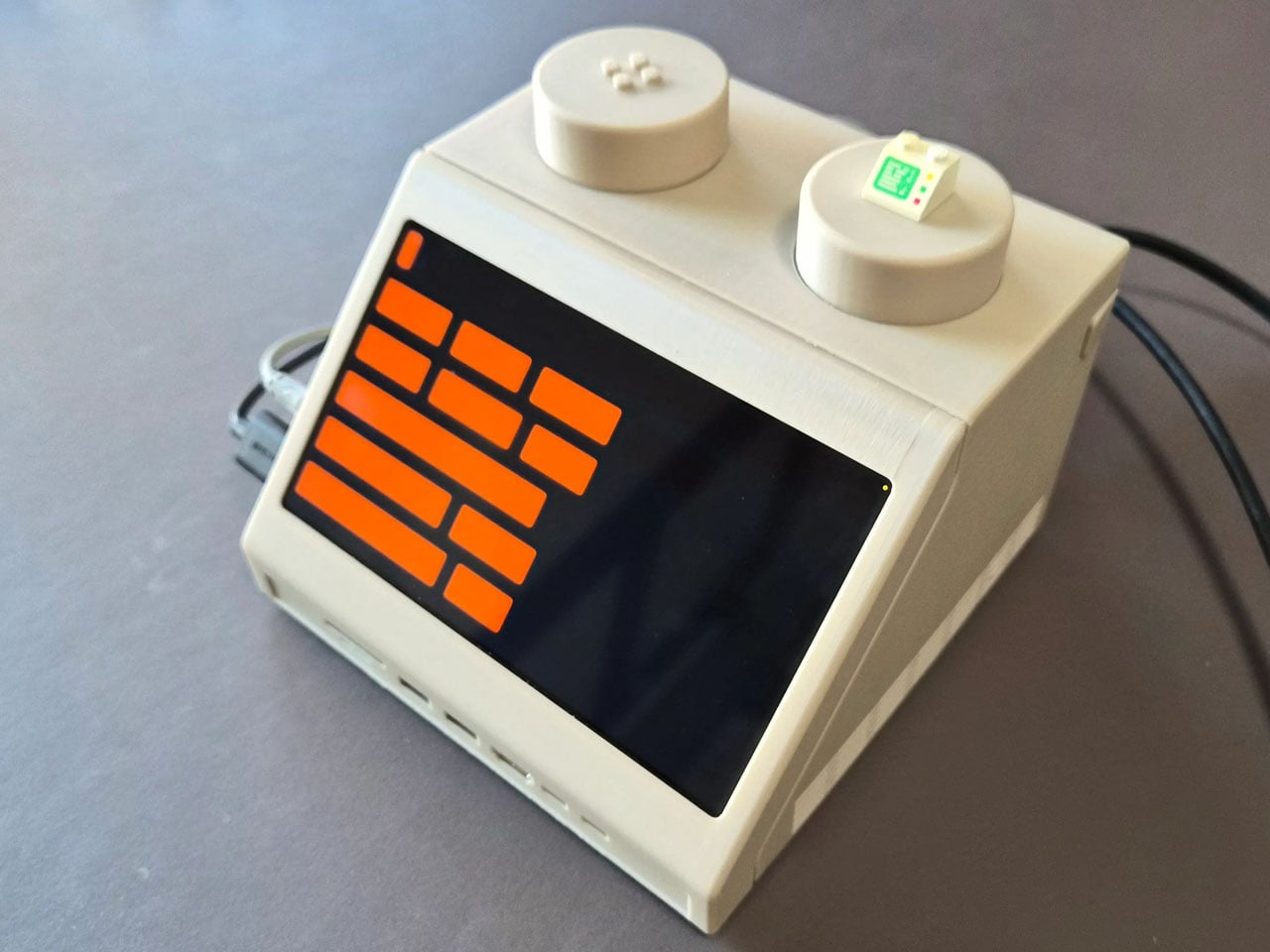
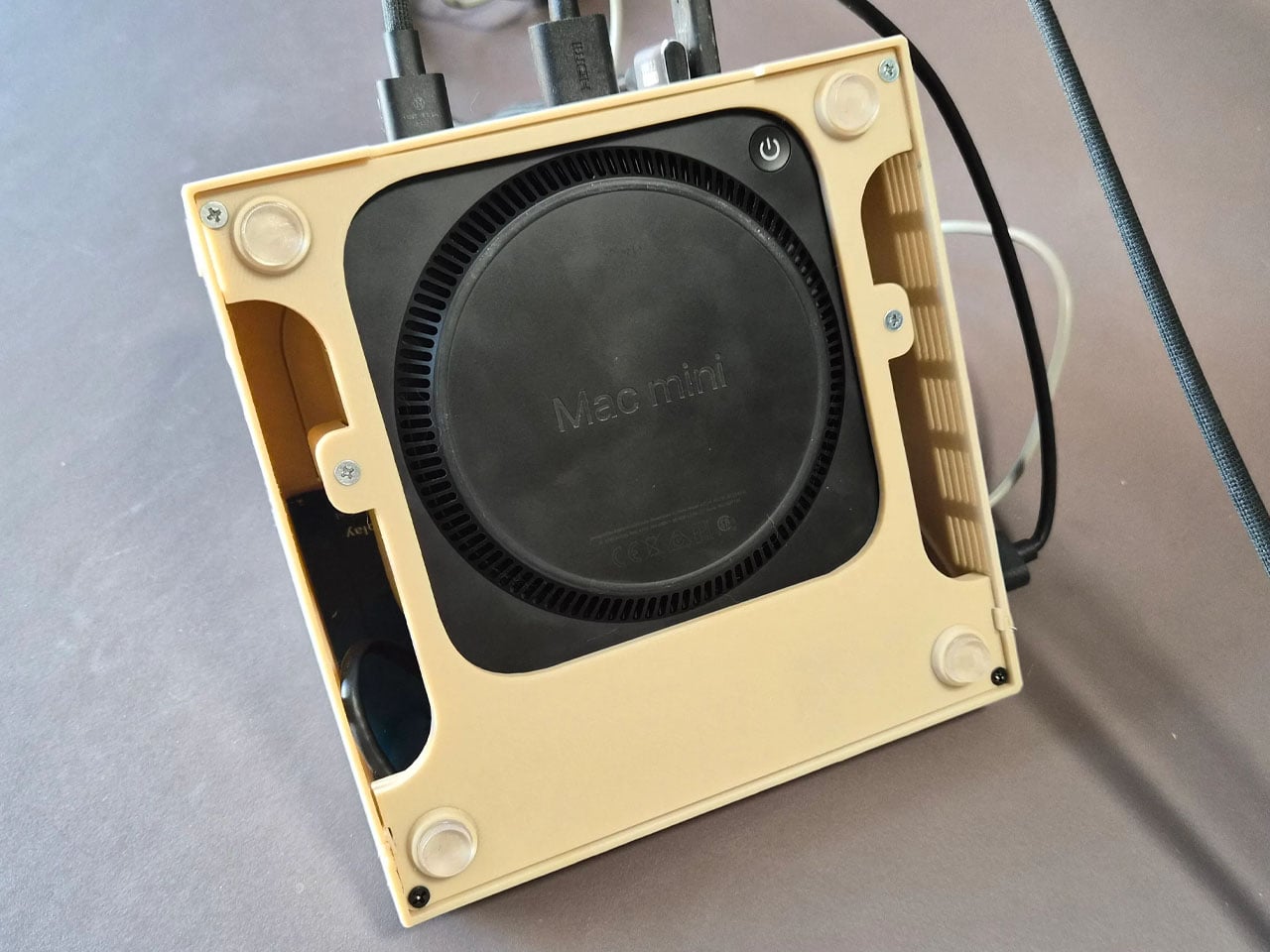
The DIY centers around the familiar wedge-shaped Slope 45 2×2 LEGO piece, a part historically used in LEGO space-themed sets as a representation of computer terminals inside spacecraft cockpits. Staal enlarged this element to roughly ten times its original size, turning it into a functional housing that blends retro toy aesthetics with contemporary computing power. Inside the oversized brick sits an Apple Mac mini equipped with Apple’s M4 chip, transforming the playful concept into a capable desktop system.

Designer: Paul Staal

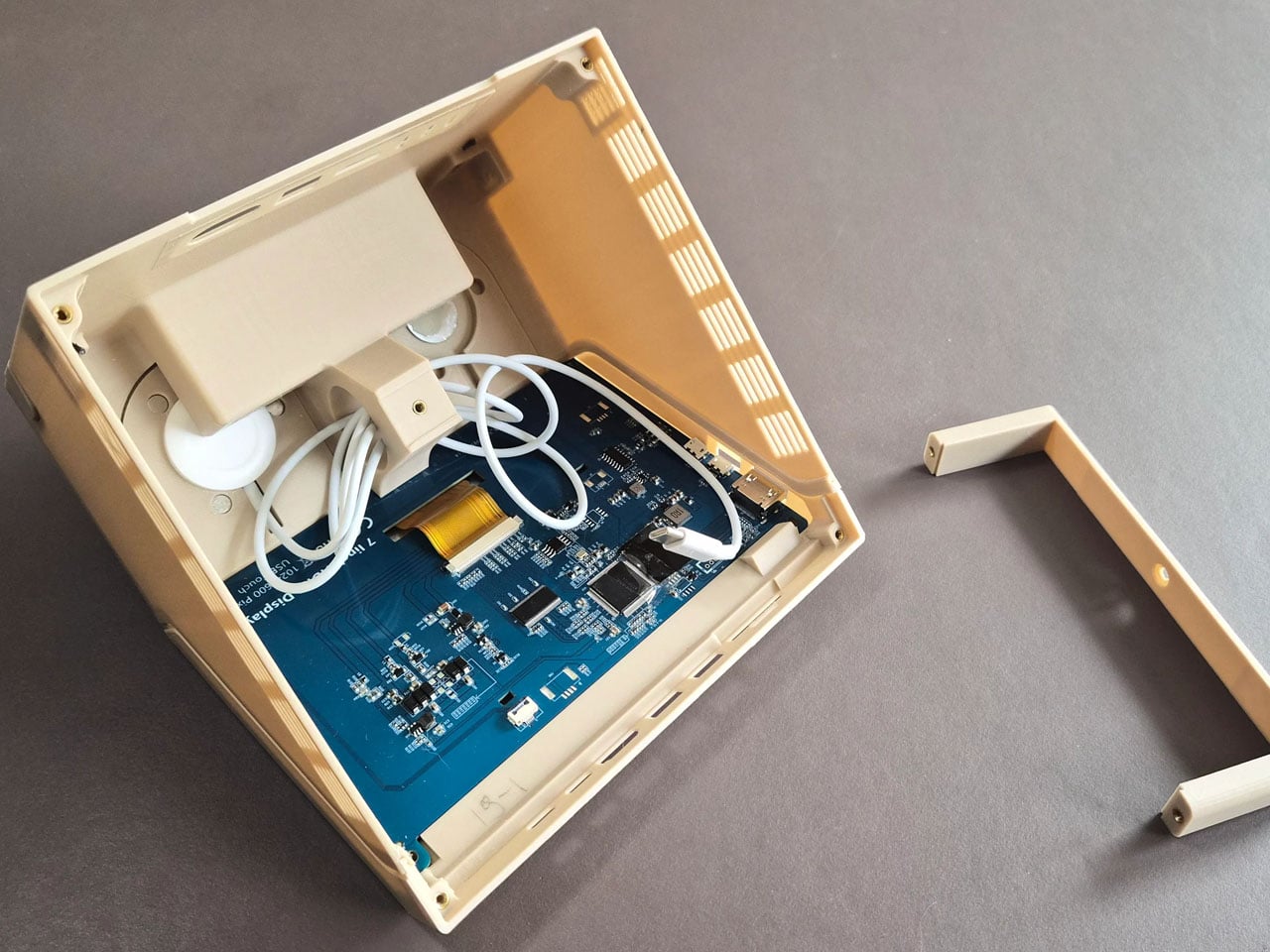
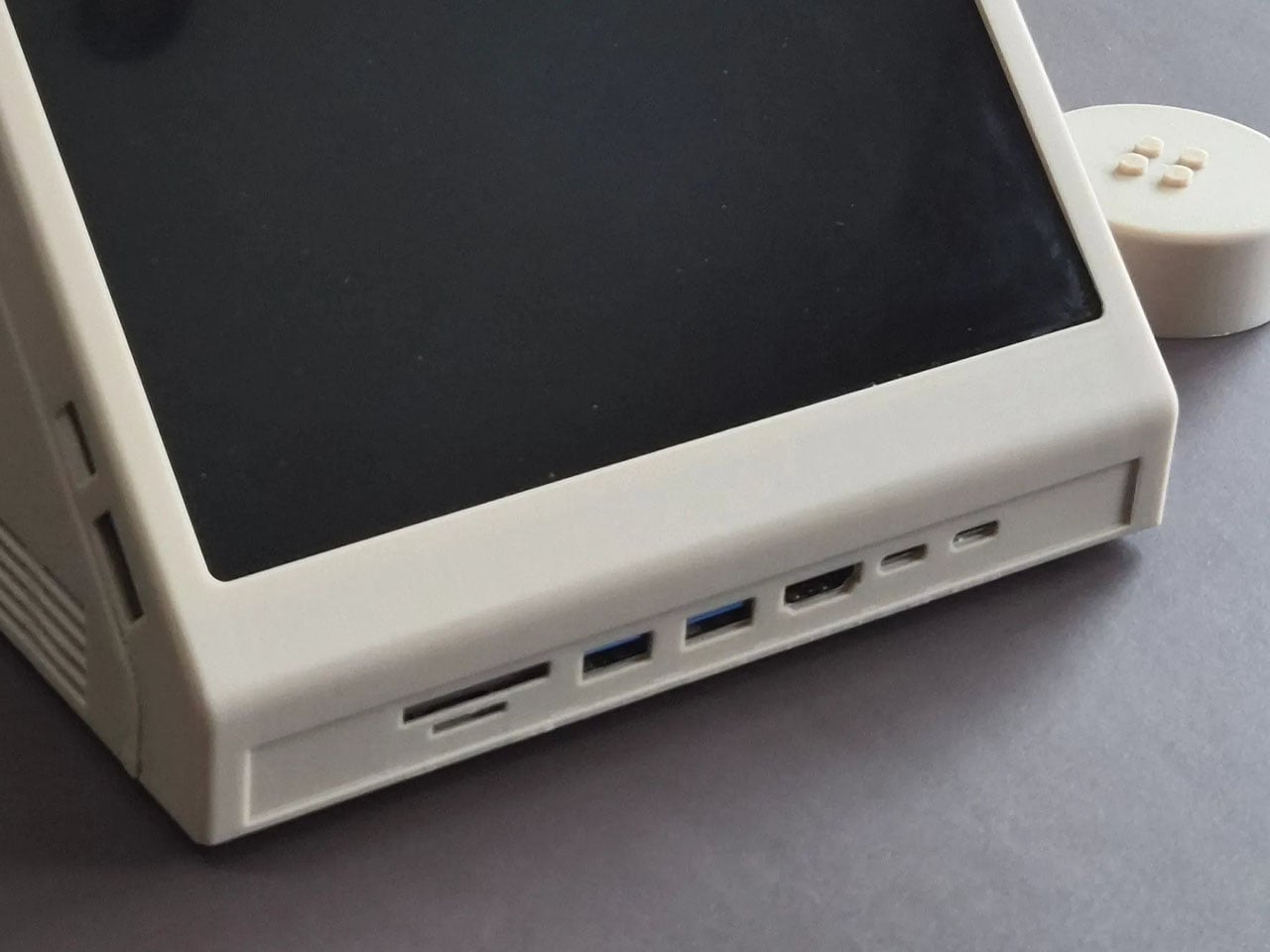
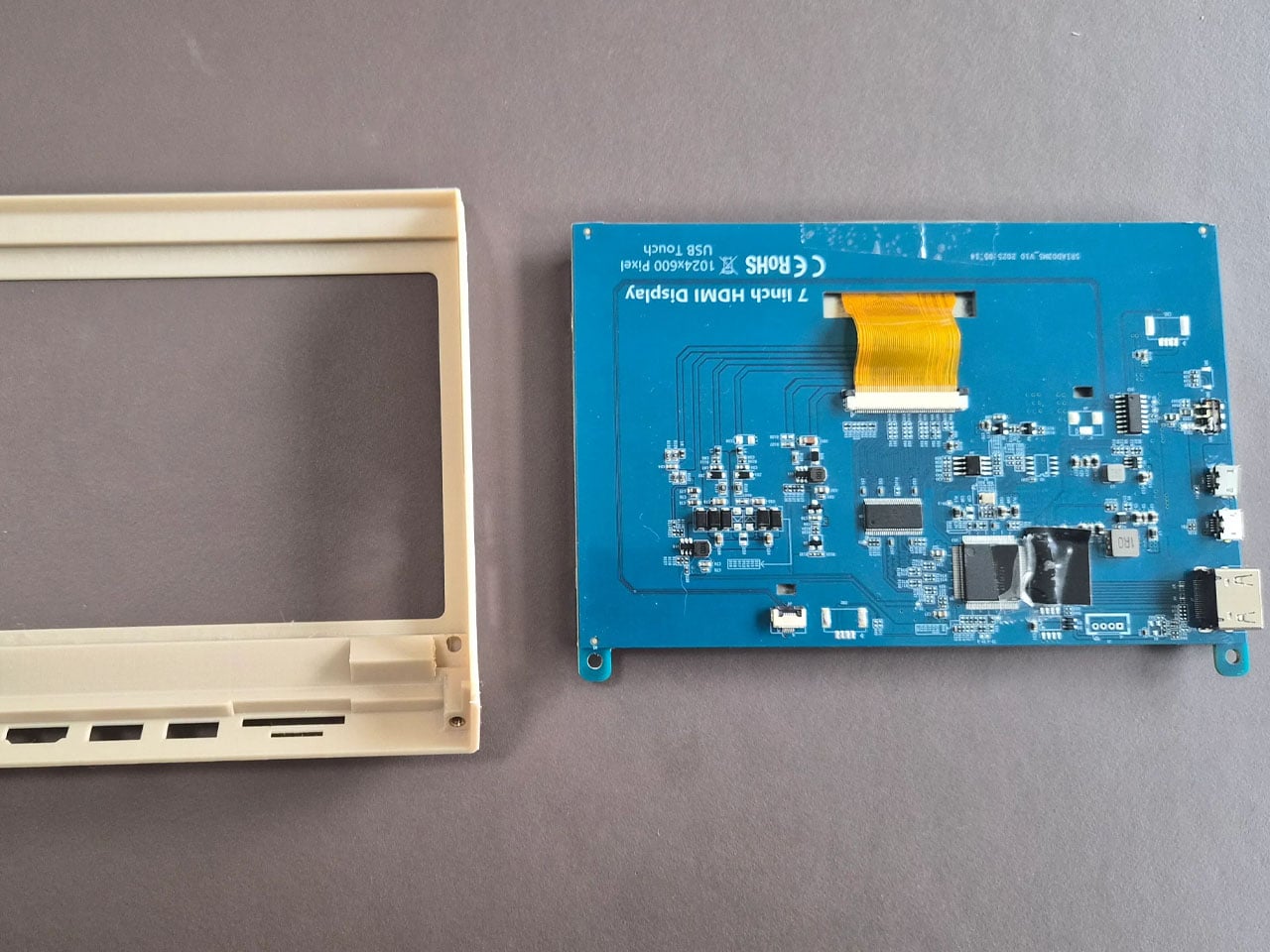
Rather than serving as a simple decorative shell, the M2x2 integrates several practical features that enhance its usability as a workstation. A slanted 7-inch IPS touchscreen is embedded in the front face of the structure, echoing the display graphic printed on the original LEGO piece while providing real functionality. The compact screen acts as a secondary interface, often used for quick system information or dashboards. Staal, for instance, uses it primarily to monitor and control his smart home through a Home Assistant interface while working on a larger external display.

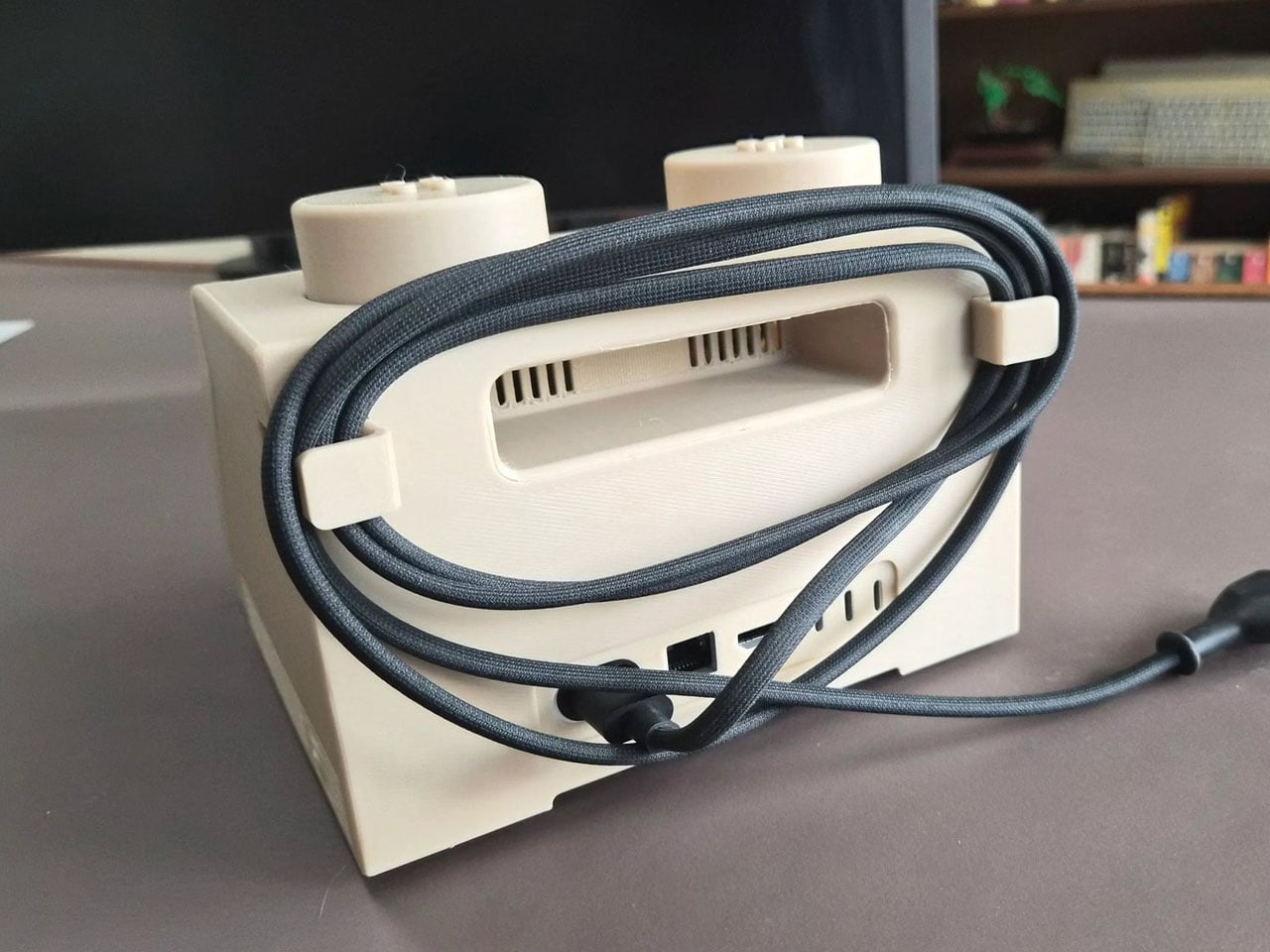
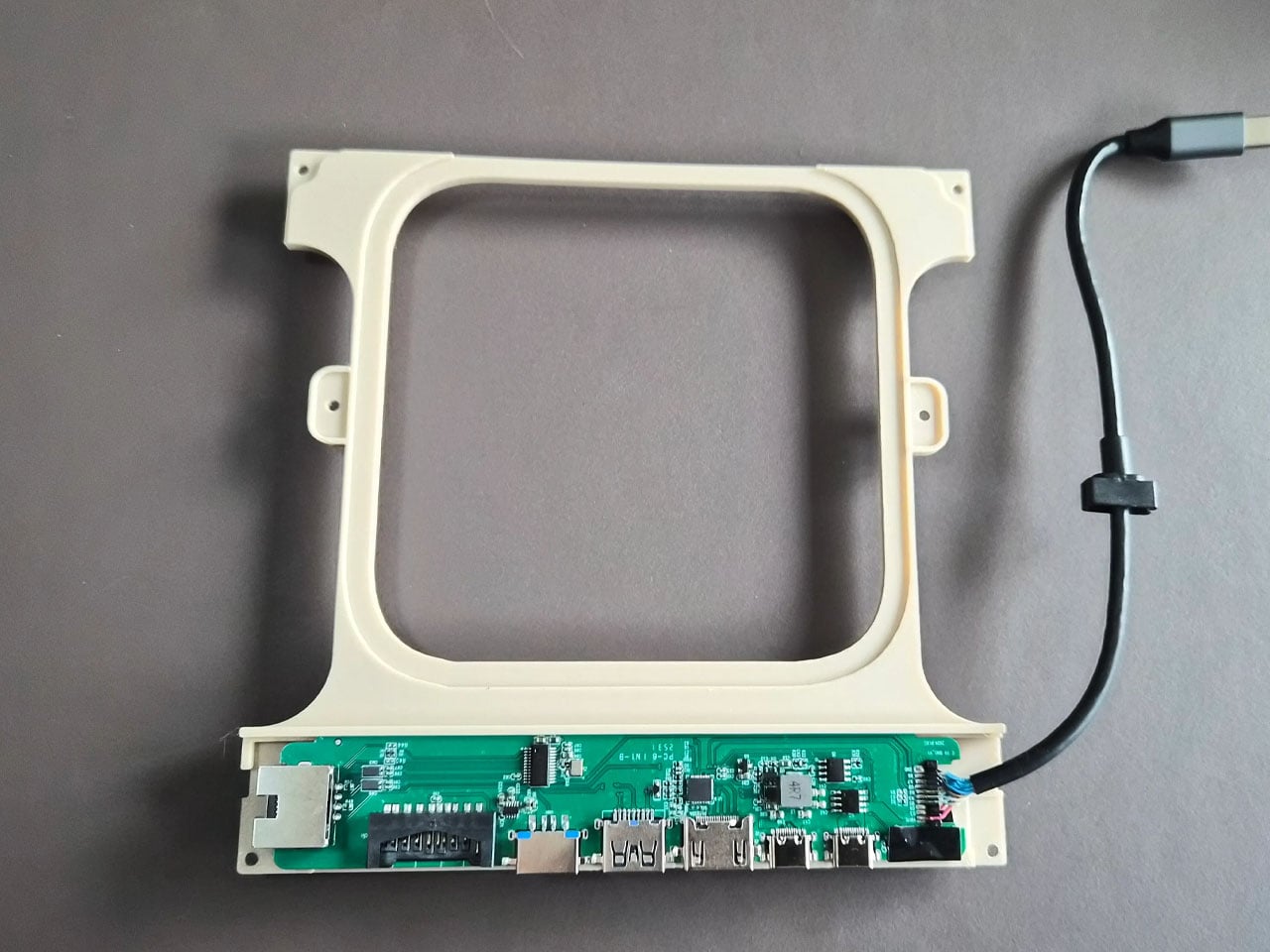
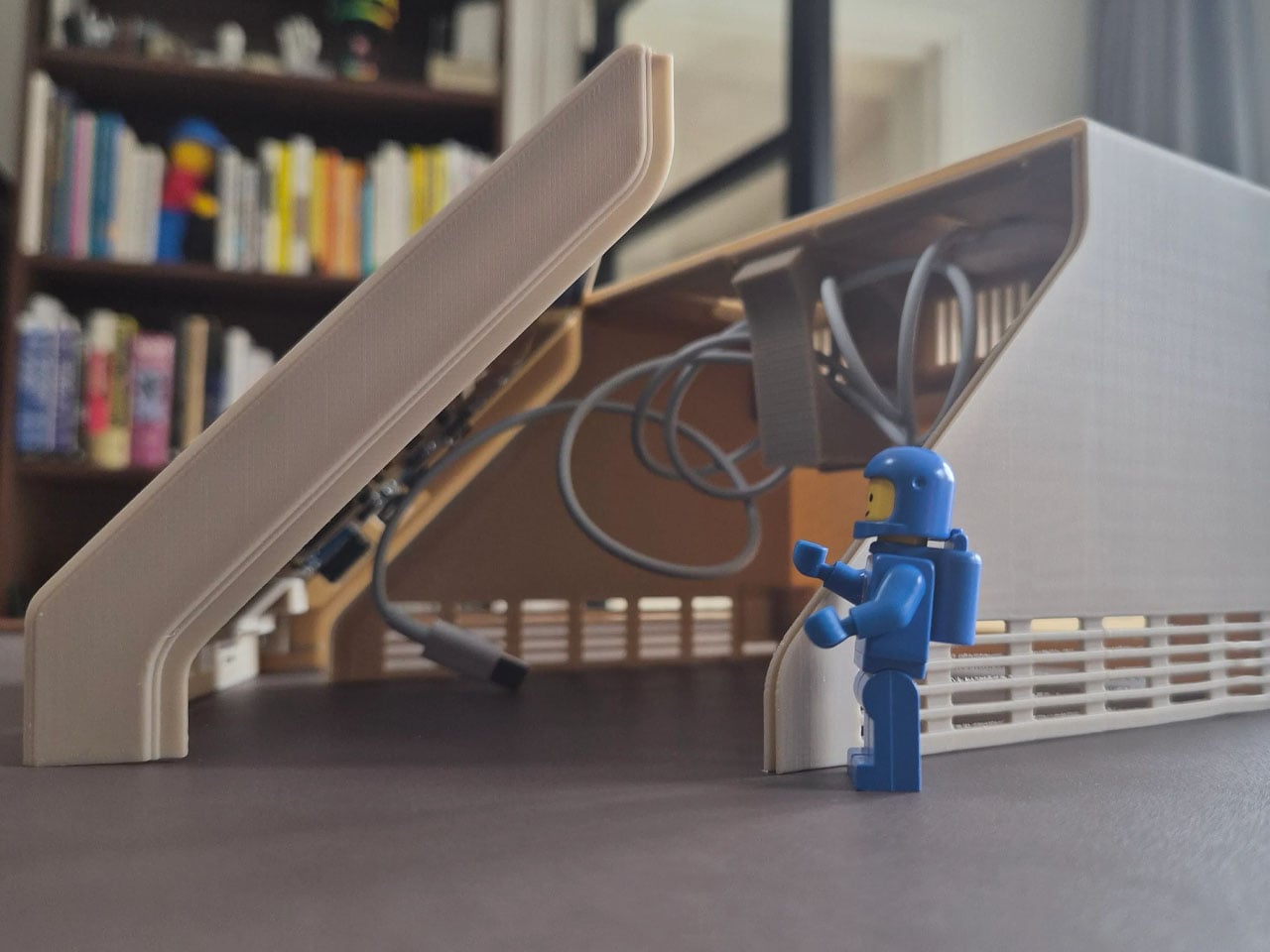
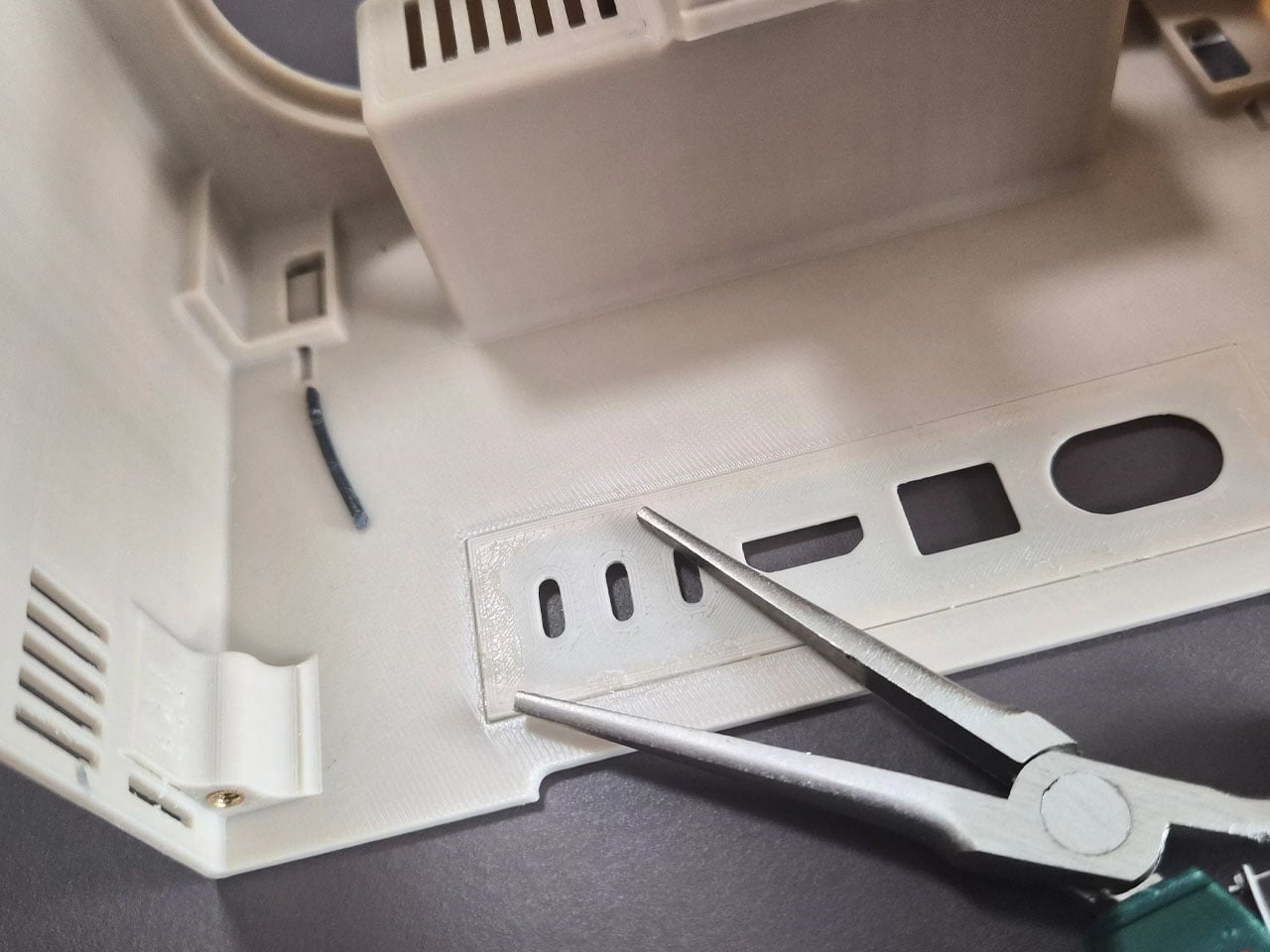
The case includes front-facing ports enabled through a USB-C hub, along with an SD card reader for easy access to external storage and accessories. This arrangement ensures the device remains practical for everyday use despite its playful form factor. The system also retains portability elements inspired by early Apple computers, including a built-in handle at the back that makes the unit easy to move around a desk or workspace. While the M2x2 works as a self-contained computer, it is typically paired with a larger external monitor for full productivity. In everyday use, the Mac mini handles the heavy computing tasks while the built-in display functions as a control panel or status screen.

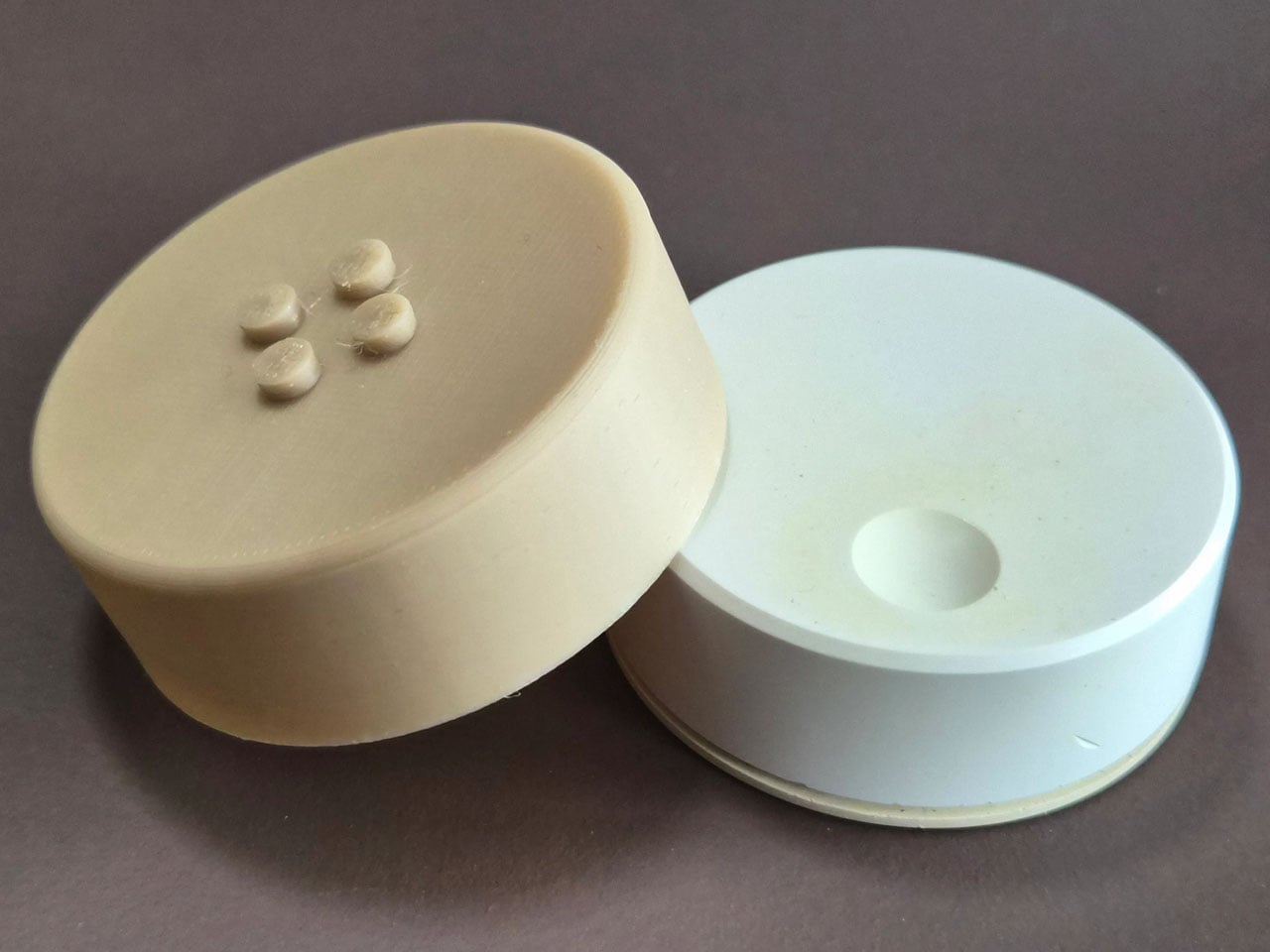
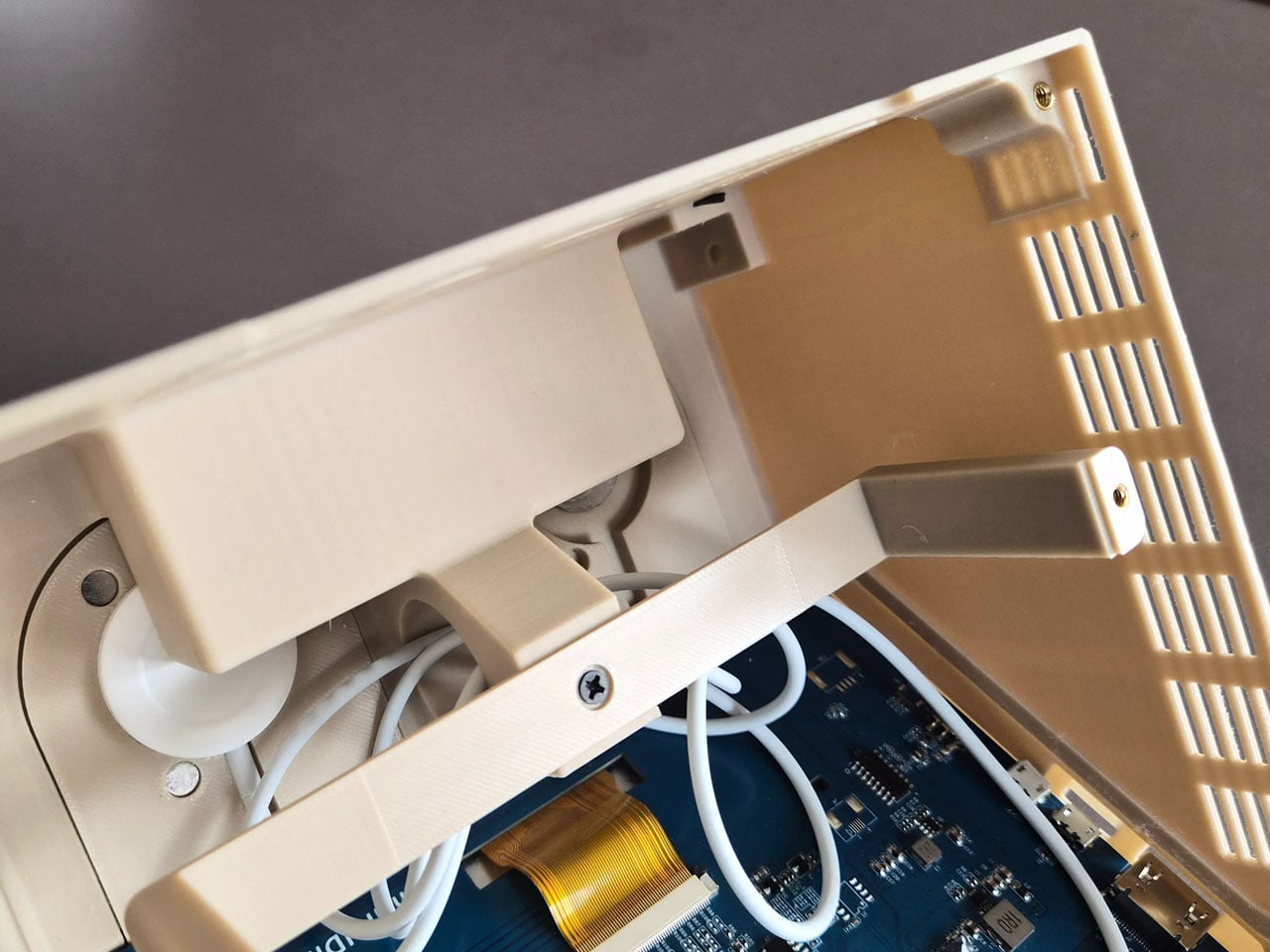
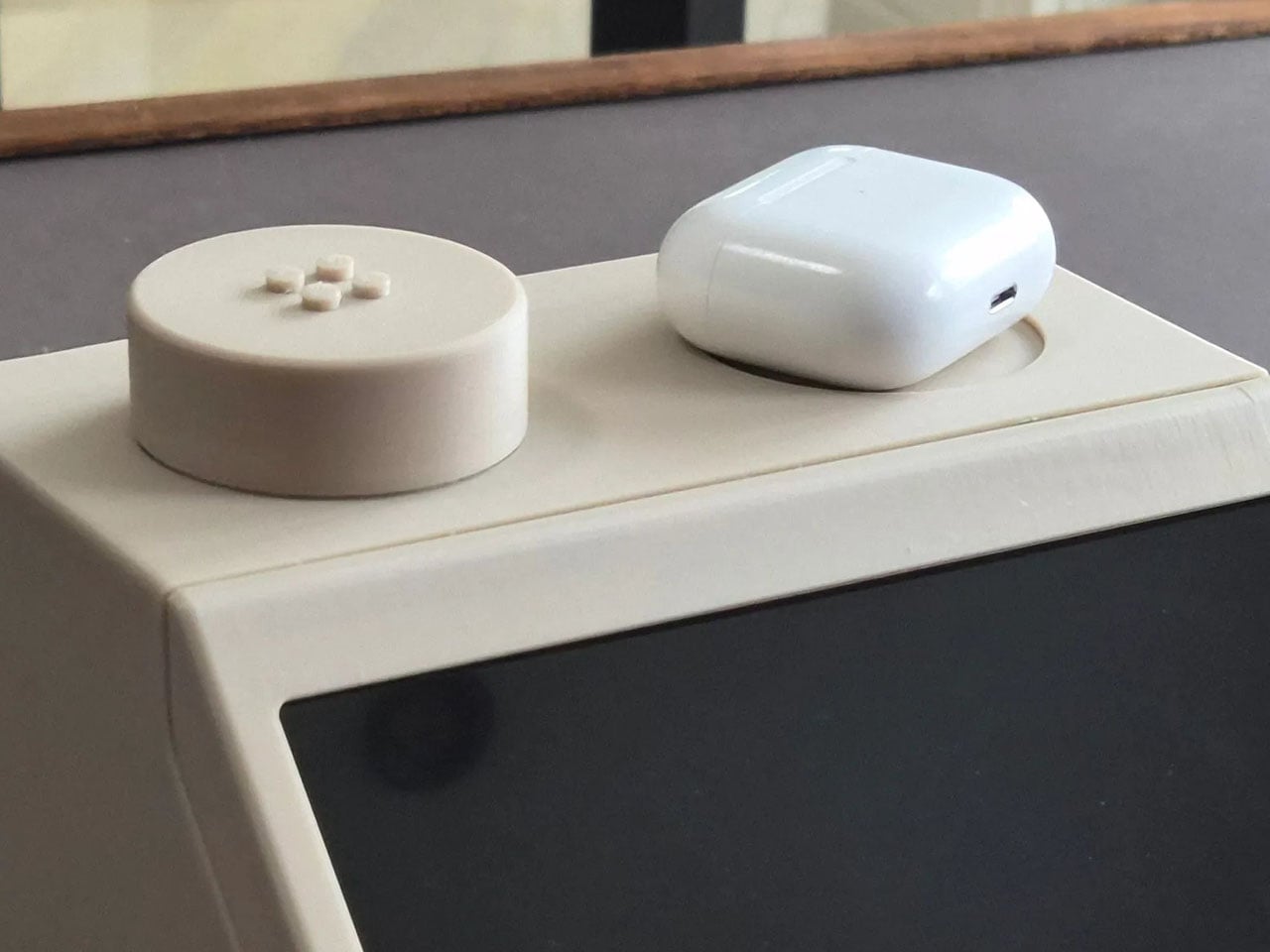
Perhaps the most creative detail lies in the oversized LEGO studs on top of the case. Instead of being purely decorative, these studs are designed to perform useful functions. One of them operates as a rotary control that can adjust volume or media playback, while the other conceals a wireless charging bay capable of powering devices such as AirPods or an Apple Watch. The studs themselves remain compatible with standard LEGO elements, allowing users to attach minifigures or bricks for a playful finishing touch.

The M2x2 is largely built from 3D-printed components, making it accessible to enthusiasts who want to build their own version. Staal modeled the structure in CAD software and designed it as a modular system consisting of multiple printable parts. Aside from the Mac mini itself, the required materials are relatively simple, including PLA filament, a small touchscreen display, screws, and a USB-C hub. Assembly instructions and downloadable files are available, allowing makers to replicate or modify the design to suit their needs.

The post This classic 1979 LEGO computer brick hides a fully functional Mac mini workstation inside first appeared on Yanko Design.
Hubble catches rare view of a comet crumbling

NASA and ESA have released new images from the Hubble Space Telescope of a comet breaking up as it exits the solar system, captured as part of study recently published in the journal Icarus. The images are notable not only because they offer a more detailed view of the inside of a comet, which could offer new information about the early days of the universe, but also because they were taken by accident.

Photographing K1, or "Comet C/2025 K1" as it's officially known, wasn't the original intention of the study. "This comet [was] observed because our original comet was not viewable due to some new technical constraints after we won our proposal," John Noonan, a research professor in the Department of Physics at Auburn University in Alabama said. "We had to find a new target — and right when we observed it, it happened to break apart, which is the slimmest of slim chances."

The comet broke up over a period of days into "at least four pieces," each with a "fuzzy envelope of gas and dust" around them, with Hubble specifically capturing the disassembly from November 8 through November 10, 2025. K1 was interesting before it started to crumble because at "around 8 kilometers across" (about 5 miles), it's larger than the average comet, and having footage of it shattering will likely offer new insights into the physics of comets in general. Additionally, the lack of carbon in the gases released by the comet as it broke is apparently "chemically very strange," which suggests the composition of K1 could bear scientific fruit, too.

Hubble has tracked comets of different sizes and compositions for years. Studying them remains a focus because comets are frequently made of ice and rock from the primordial period when solar systems were first forming. The ESA hopes to dramatically expand our understanding of that period with its "Comet Interceptor" mission, which is supposed to launch in 2028 or 2029, and aims to use photos captured from multiple angles to create a 3D model of a comet.

This article originally appeared on Engadget at https://www.engadget.com/science/space/hubble-catches-rare-view-of-a-comet-crumbling-185817544.html?src=rss

Perplexity’s Comet AI browser is now available for iPhones

Perplexity's Comet AI browser is now available as a standalone app for iPhone users. The tool initially debuted last summer on PCs, but cost $200 a month. The new app is free, as is the recently-released Android version.

Comet is an AI-powered browser, which has become a hot product category throughout the past year or so. This is basically a web browser combined with a chatbot that can perform some tasks on a user's behalf. Like related tools, people can ask it to summarize a webpage or conduct additional research for more context about a subject.

Perplexity says that Comet "acts as a personal assistant and thinking partner" to "turn curiosity into momentum." Those are certainly words. The company boasts that folks can use the tool to shop and make schedules. I advise some caution for both of these tasks, given that AI browsers are notorious marks that easily fall for various online scams.

One cool thing here is that the app takes full advantage of Apple's Liquid Glass technology. It certainly looks easy on the eyes and that address bar really pops. The iOS version does suffer from some limitations inherent to Apple's walled-garden approach, according to a preview by MacStories. Users cannot install third-party extensions here, though it can be made the default browser.

Finally, there's a privacy concern worth considering. Perplexity has been open about the fact that it uses browsers in part to collect customer data for ad targeting. There's a reason why something that used to cost $200 is now available for free.

The Comet browser is now available for iPhones, Android devices, Windows PCs and Macs. There isn't a native iPad app yet, but the standard Perplexity app is available for Apple's tablets so maybe the browser will follow suit.

This article originally appeared on Engadget at https://www.engadget.com/apps/perplexitys-comet-ai-browser-is-now-available-for-iphones-183947569.html?src=rss

UK reverses course on AI copyright position after backlash

Chalk up a win for creative artists against AI companies. On Wednesday, the UK government abandoned its previous position on copyrighted works. It’s currently working on a data bill that, if unaltered, would have allowed AI companies like Google and OpenAI to train models on copyrighted materials without consent. Artists and other copyright holders would only have been offered a mere opt-out clause.

After significant backlash, the UK backed off from that position. "We have listened," Technology Secretary Liz Kendall said on Wednesday. However, the government’s new stance is, well, not a stance at all. It currently "no longer has a preferred option" about how to handle the issue.

Still, backpedaling from its previous position is viewed as a win for artists. UK Music CEO Tom Kiehl described the decision as "a major victory," while promising to work with the government on the next steps.

WEST HOLLYWOOD, CALIFORNIA - MARCH 15: (Exclusive Coverage) (L-R) Elton John and Dua Lipa attend Elton John AIDS Foundation's 34th Annual Academy Awards Viewing Party on March 15, 2026 in West Hollywood, California. (Photo by Kevin Mazur/Getty Images for Elton John AIDS Foundation)
Elton John and Dua Lipa spoke out against the government's previous stance. (Photo by Kevin Mazur/Getty Images for Elton John AIDS Foundation)
Kevin Mazur via Getty Images

Last year, some of Britain's highest-profile artists objected to the government's position. Sir Elton John and Dua Lipa were among those speaking out. Even Sir Paul McCartney weighed in, warning that the AI industry could "rip off" artists and lead to a "loss of creativity."

"You get young guys, girls, coming up, and they write a beautiful song, and they don't own it, and they don't have anything to do with it," McCartney told the BBC in 2025. "And anyone who wants can just rip it off. The truth is, the money's going somewhere… somebody's getting paid."

The government will now weigh its options, taking "the time needed" to balance the wishes of artists and the tech industry. "We will not introduce reforms to copyright law until we are confident that they will meet our objectives for the economy and UK citizens," it wrote in a report. "This means protecting the UK's position as a creative powerhouse, while unlocking the extraordinary potential of AI to grow the economy and improve lives."

"Any reform must ensure that right holders can be fairly rewarded for the economic value their work creates, and that they are protected against unlawful and unfair use of their work. It must also ensure that AI developers can access high-quality content."

This article originally appeared on Engadget at https://www.engadget.com/ai/uk-reverses-course-on-ai-copyright-position-after-backlash-175630732.html?src=rss