Sonos introduces Amp Multi for complicated residential installs

Sonos has unveiled its first new product of 2026, the Amp Multi. This amplifier is a niche option for the owners of very large or complicated spaces, and it's being billed as professional grade option for residential audio installations. The Amp Multi has eight 125W outputs and four configurable zones, and each channel can support up to three Sonos Architectural speakers. In other words, that's a lot more audio than the average home needs. Even the Sonos Amp would probably be overkill for those of you living the apartment life.

The Amp Multi will be available "in the coming months," according to the company's press release, and there's no pricing information yet for the product listing on its website. But given the high-end customers this is targeting, expect the Amp Multi to cost a fair bit more than the $800 Sonos Amp.

Sonos has mostly been keeping its proverbial head down on the product side as it continues to address fallout from a bungled app redesign in 2024 that soured customers and put the company in dire straits. First there were layoffs, then the CEO left. Sonos' temporary chief exec, Tom Conrad, got the position permanently last summer. Once the business' position does stabilize at last, we will hopefully be hearing more positive updates from Sonos in the future.

This article originally appeared on Engadget at https://www.engadget.com/audio/sonos-introduces-amp-multi-for-complicated-residential-installs-191000421.html?src=rss

The French government is ditching Zoom and Microsoft Teams for a home-grown alternative

The French government is saying au revoir to Microsoft Teams and Zoom as it embraces a home-grown alternative. By next year, civil servants across all departments will have switched to French videoconference platform Visio, as EuroNews reports.

As with Teams and Zoom, Visio has an AI-powered transcription tool. Visio runs on a French company's cloud infrastructure as well. The platform has around 40,000 users and it's been in testing for the last year. The government expects the switch to help reduce costs by as much as €1 million ($1.2 million) each year for every 100,000 users.

The decision to ditch Microsoft Teams and Zoom is part of a broader effort to rely less on foreign software services — particularly US ones. Under the Suite Numérique project, France also plans to jettison the likes of Gmail and Slack for government use. 

"The aim is to end the use of non-European solutions and guarantee the security and confidentiality of public electronic communications by relying on a powerful and sovereign tool," David Amiel, minister for the civil service and state reform, said. "This strategy highlights France's commitment to digital sovereignty amid rising geopolitical tensions and fears of foreign surveillance or service disruptions."

This article originally appeared on Engadget at https://www.engadget.com/apps/the-french-government-is-ditching-zoom-and-microsoft-teams-for-a-home-grown-alternative-184747010.html?src=rss

TikTok settles to avoid major social media addiction lawsuit

TikTok has reached a settlement in a closely-watched lawsuit over social media addiction, narrowly avoiding a trial that's scheduled to begin jury selection Tuesday. Terms of the deal, which was reported by The New York Times, weren't disclosed. 

TikTok's settlement comes about one week after Snap reached a settlement in the same case. The trial is expected to move forward in Los Angeles with Meta and YouTube as the only defendants. Mark Lanier, a lawyer for the plaintiff, said in a statement to NYT that they were "pleased" with the settlement and that it was "a good resolution." TikTok didn't immediately respond to a request for comment. 

The trial stems from a 2023 lawsuit brought by a California woman known in court documents as "K.G.M." She sued Meta, Snap, TikTok and YouTube and alleged that their platforms were addictive and had harmed her as a child. The judge in the case previously ordered the companies' executives, including Mark Zuckerberg and Adam Mosseri, to testify. YouTube's top exec, Neal Mohan, is also likely to testify, according to The New York Times. 

The lawsuit is the first among several high-profile cases against social media companies to go to trial this year. Meta is expected to head to court in New Mexico in early February in a case brought by the state's attorney general, who has alleged that Facebook and Instagram have facilitated harm to children. TikTok and Snap are collectively facing more than a dozen other trials in California courts this year.

This article originally appeared on Engadget at https://www.engadget.com/social-media/tiktok-settles-to-avoid-major-social-media-addiction-lawsuit-183943927.html?src=rss

Dark Vader Tiny Home Crosses to the Dark Side of Small Living with Bold Black Design

When Poland’s Tiny Smart House unveiled the Dark Vader, they created something truly exceptional in the world of compact living. This mobile dwelling isn’t your typical tiny home with cutesy charm and rustic wood siding. Instead, it channels the intimidating presence of one of cinema’s most notorious villains, transforming that dark energy into a sophisticated living space that commands attention wherever it travels. The inspiration is obvious from the name alone, yet the design team showed restraint by avoiding kitsch Star Wars memorabilia, focusing instead on capturing the essence of power and sleekness associated with the iconic character.

The exterior is where this tiny home truly makes its statement. Wrapped entirely in black sheet metal, the Dark Vader creates an imposing silhouette that stands in stark contrast to the cheerful pastels and natural wood tones dominating most tiny house communities. This bold material choice isn’t just about aesthetics; the metal cladding provides durability and weather resistance while maintaining that distinctive edge. Mounted on a double-axle trailer foundation, the structure spans six meters, which translates to roughly twenty feet of living space. While this dimension might seem modest, especially when compared to the forty-foot behemoths common across North America, it represents the sweet spot for European tiny house design, balancing mobility with livability.

Designer: Tiny Smart House

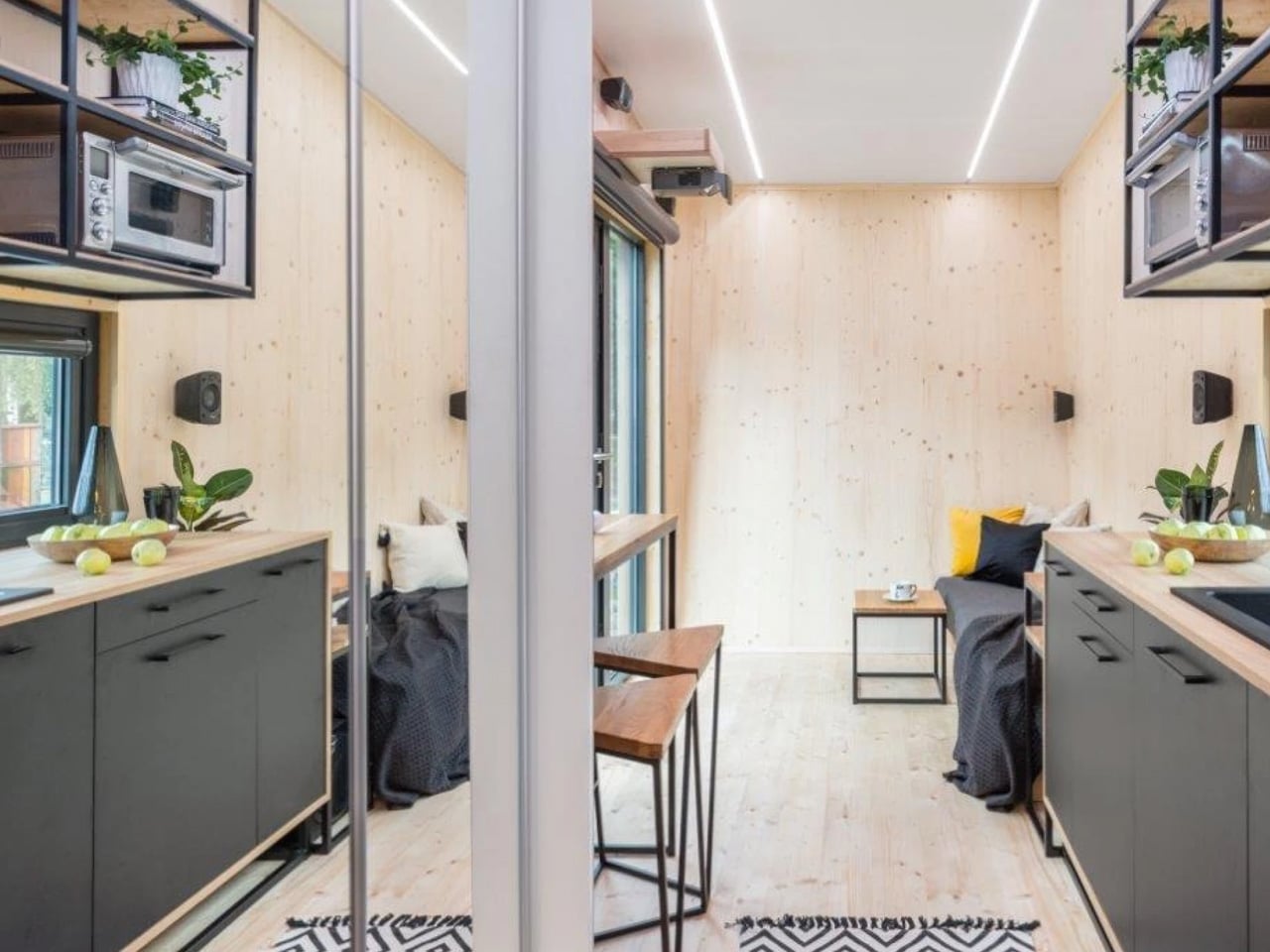
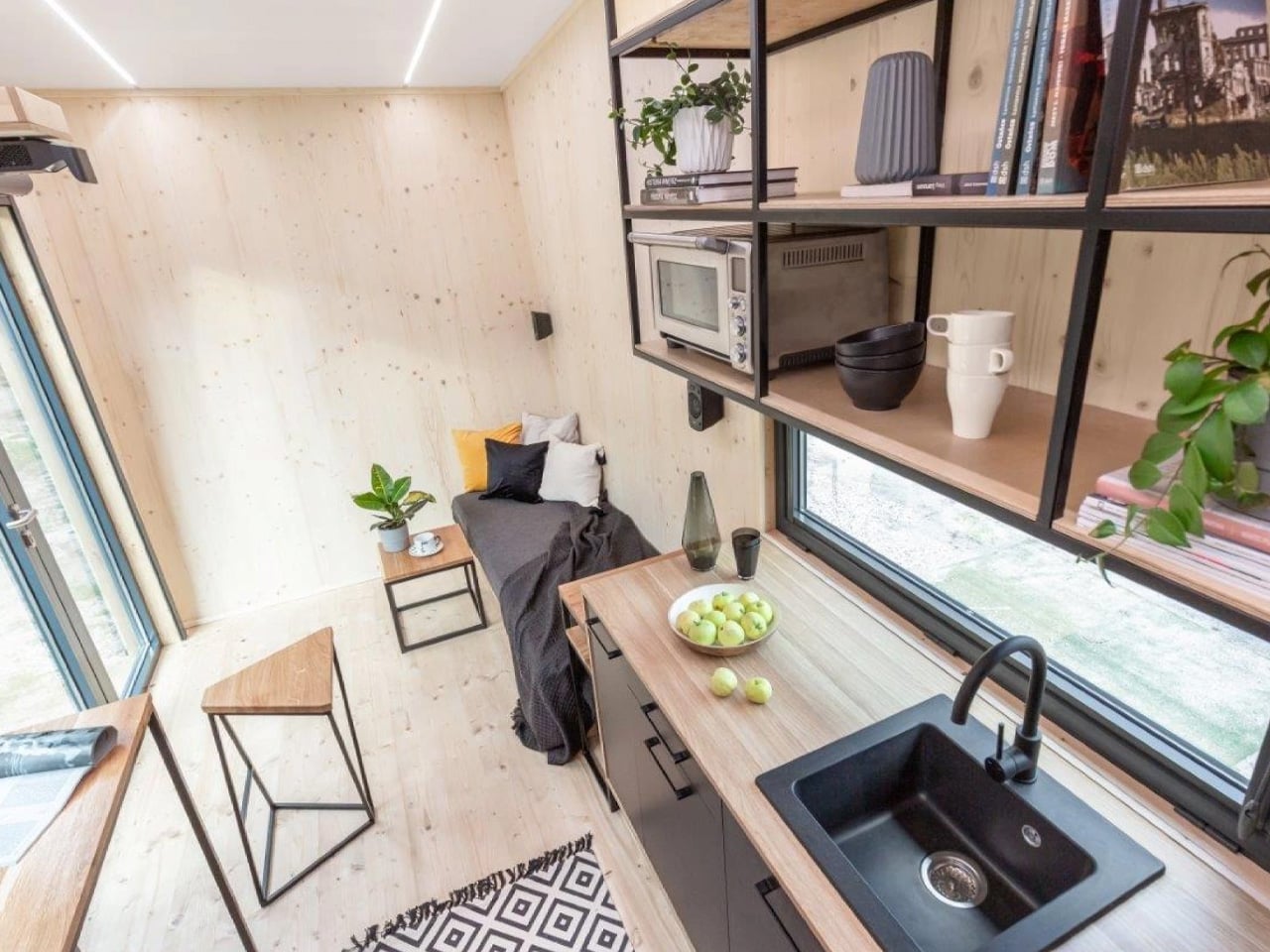
Step inside, and you’ll discover an unexpected contrast to the menacing exterior. The interior spaces showcase beautiful spruce wood throughout, creating warmth and organic texture that immediately softens the industrial vibe. Large windows punctuate the walls, flooding the compact floor plan with natural light and preventing any sense of claustrophobia. This juxtaposition between dark and light, industrial and natural, demonstrates sophisticated design thinking that elevates the Dark Vader beyond novelty status into genuine architectural achievement.

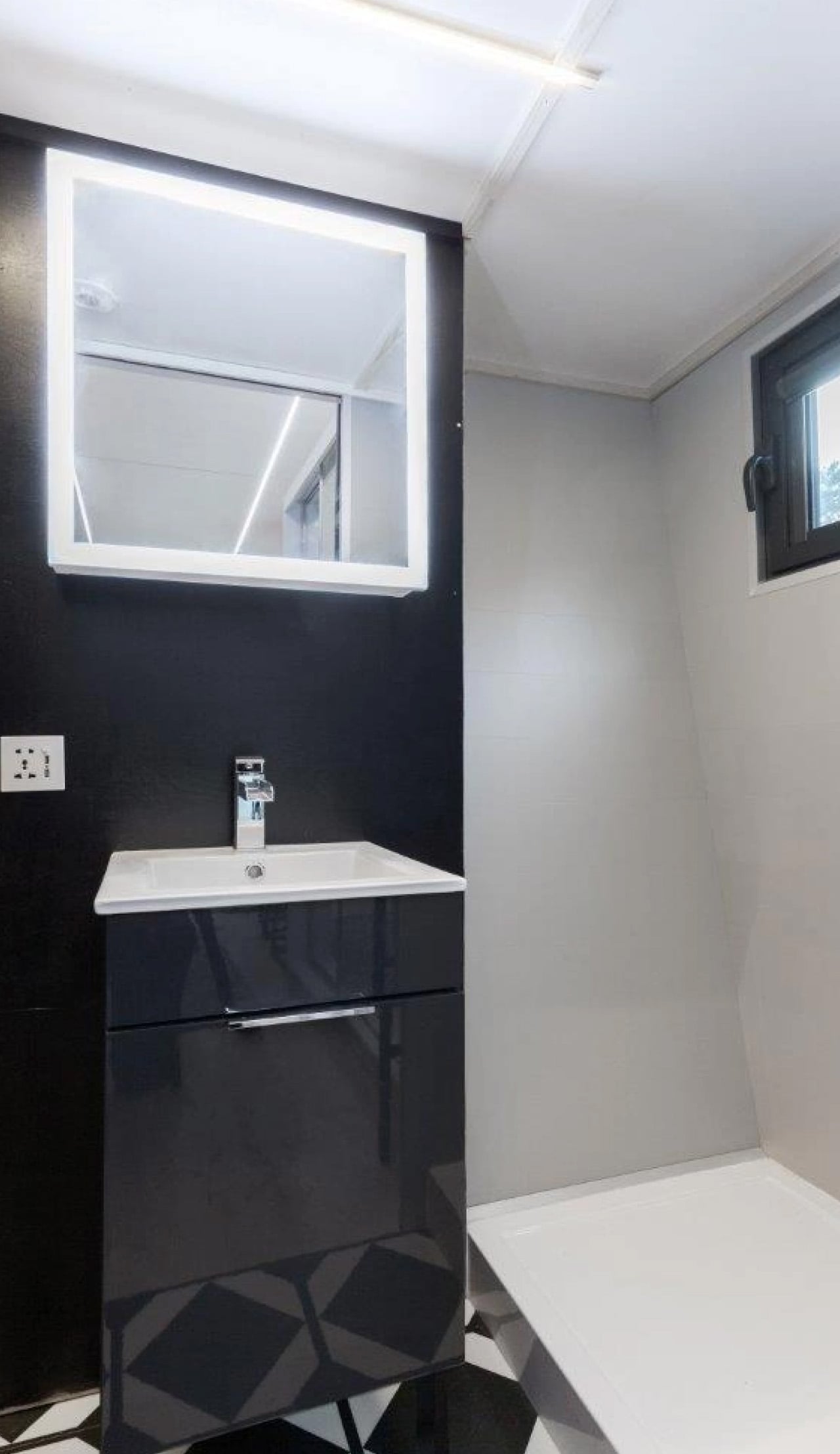
The main level houses the primary living spaces with impressive efficiency. A comfortable sofa anchors the living room alongside a petite coffee table, creating an intimate gathering spot perfect for unwinding after work or hosting friends for evening conversations. The kitchen area integrates seamlessly into the open layout, while the bathroom surprises with full-sized amenities including a proper walk-in shower, contemporary vanity sink, and standard flushing toilet. These features matter tremendously in tiny living, where many occupants struggle with composting toilets and cramped shower stalls.
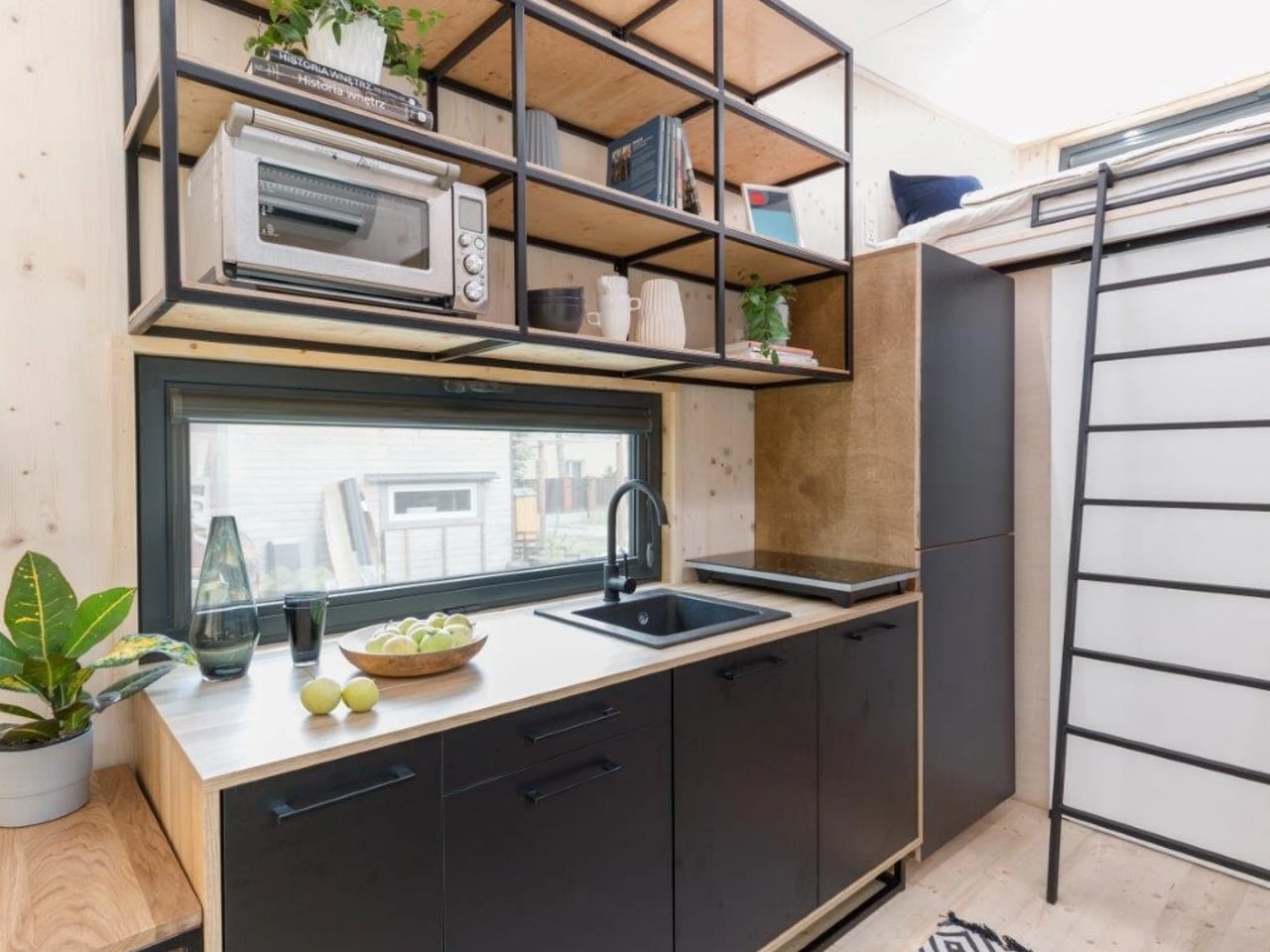
Above the main living area, a sleeping loft provides private quarters accessed through an ingeniously designed staircase. Rather than using a space-wasting ladder or simple steps, the builders incorporated extensive storage directly into each riser, creating cubbies and compartments that swallow clothing, books, linens, and countless other items that would otherwise clutter the limited square footage. The bedroom ceiling sits low, as physics demands in these compact structures, but the trade-off grants valuable storage throughout the home’s vertical circulation path.

This particular Dark Vader found its permanent home in Denmark after successful completion, though its influence ripples through the tiny house community worldwide. The design philosophy behind this project celebrates authenticity and creative expression, proving that alternative housing can embrace personality and fun without sacrificing functionality. Whether serving as a bachelor pad, artist’s retreat, or minimalist primary residence, the Dark Vader demonstrates how tiny living can align with bold personal style while meeting all practical needs of modern life.

The post Dark Vader Tiny Home Crosses to the Dark Side of Small Living with Bold Black Design first appeared on Yanko Design.

Amazon Go and Fresh stores are closing as Amazon focuses on grocery delivery and Whole Foods

Amazon is rethinking its grocery business, and as part of that, it will shut down all of its remaining Amazon Go and Amazon Fresh physical stores. The company will convert some locations into Whole Foods Market stores. 

"While we've seen encouraging signals in our Amazon-branded physical grocery stores, we haven't yet created a truly distinctive customer experience with the right economic model needed for large-scale expansion," the company wrote in a blog post. Amazon added that it would help workers at Go and Fresh stores to find positions elsewhere within the company.

For now, Amazon is focusing its grocery efforts on Fresh deliveries, Amazon Now (a 30-minutes-or-less delivery option it recently introduced to compete with DoorDash and Instacart) and Whole Foods. It plans to open more than 100 new Whole Foods Market stores over the next few years. 

Amazon also says it will introduce new types of physical locations in the coming years. One concept it's considering is a "supercenter" that would offer a broad selection of goods from Amazon, including household items, groceries and "general merchandise." I dunno, that just sounds like a supermarket to me.

Meanwhile, the checkout-less Just Walk Out tech that the company implemented in Go and Fresh stores is still in use at third-party locations, including hospital cafeterias and sports arenas. Amazon has also deployed it in break rooms in dozens of its warehouses to help "employees maximize break time by grabbing meals without checkout delays." It’s definitely not to keep closer tabs on workers, I’m sure.

This article originally appeared on Engadget at https://www.engadget.com/general/amazon-go-and-fresh-stores-are-closing-as-amazon-focuses-on-grocery-delivery-and-whole-foods-180448412.html?src=rss

Google AI Plus is now available in the US for $8 a month

Google AI Plus, the company’s most affordable AI subscription plan, is now rolling out in the US. It will cost you $8 a month for its features, though you can get it for $4 a month for the first two months for a limited time only. AI Plus gives you access to 200GB of storage, as well as access to the Gemini 3 Pro model, Deep Research and Nano Banana Pro inside the Gemini app. Nano Banana Pro generates images that look so realistic, they’re nearly indistinguishable from ordinary photos snapped on phones. Google even had to limit its usage due to high demand.

A subscription to AI Plus also expands your access to Google’s AI filmmaking tool Flow, its image-to-video creator tool Whisk and its research assistant tool NotebookLM. In addition to the US, the plan is now making its way to 34 more countries, making it available in all regions where Google is selling its AI services. In the US, the new option costs less than half of a $20 AI Pro subscription, which comes with 2TB of storage and access to more tools like code assist. Google’s most expensive AI plan, the AI Ultra, costs a whopping $250 a month and comes with 30TB of storage, along with all the AI tools the company can offer. Take note that if you’re paying for a Google One Premium 2TB subscription, you’ll also get all of AI Plus’ features over the next few days.

This article originally appeared on Engadget at https://www.engadget.com/ai/google-ai-plus-is-now-available-in-the-us-for-8-a-month-180000175.html?src=rss

OpenAI releases Prism, a Claude Code-like app for scientific research

OpenAI is releasing a new app called Prism today, and it hopes it does for science what coding agents like Claude Code and its own Codex platform have done for programming. 

Prism builds on Crixet, a cloud-based LaTeX platform the company is announcing it acquired today. For the uninitiated, LaTeX is a typesetting system for formatting scientific documents and journals. Nearly the entire scientific community relies on LaTeX, but it can make some tasks, such as drawing diagrams through TikZ commands, time-consuming to do. Beyond that, LaTeX is just one of the software tools a scientist might turn to when preparing to publish their research.   

That's where Prism comes into the picture. Like Crixet before it, the app offers robust LaTeX editing and a built-in AI assistant. Where previously it was Crixet's own Chirp agent, now it's GPT-5.2 Thinking. OpenAI's model can help with more than just formatting journals — in a press demo, an OpenAI employee used it to find and incorporate scientific literature that was relevant to the paper they were working on, with GPT-5.2 automating the process of writing the bibliography. 

"None of this absolves the scientist of the responsibility to verify that their references are correct, but it can certainly speed up the process," said Kevin Weil, vice president of science for OpenAI, when asked during the demo the possibility of ChatGPT generating fake citations. 

"We're conscious that, as AI becomes more capable, there are concerns around volume, quality and trust in the scientific community," he later added. "Our view is that the right response is not to keep AI at arm's length or let it operate invisibly in the background; it's to integrate it directly into scientific workflows in ways that preserve accountability and keep researchers in control." 

Later in the same demo, the OpenAI employee used Prism to generate a lesson plan for a graduate course on general relativity, as well as a set of problems for students to solve. OpenAI envisions these features helping scientists and professors spend less time on the more tedious tasks in their professions. 

Prism is available to anyone with a personal ChatGPT account. It includes support for unlimited projects and collaborators. OpenAI plans to bring the software to organizations on ChatGPT Business, Team, Enterprise and Education plans soon. Crixet won’t be offered separately.

This article originally appeared on Engadget at https://www.engadget.com/ai/openai-releases-prism-a-claude-code-like-app-for-scientific-research-180000454.html?src=rss

WhatsApp introduces an advanced security mode to protect against hackers

Meta's WhatsApp just introduced something called Strict Account Settings, a tool "that further protects your account from highly sophisticated cyber attacks." This is a one-click button in the settings that automatically initiates a series of defenses.

So what does it do? It blocks media and attachments from unknown senders, disables link previews and silences calls from unknown senders. This results in a more restrictive experience, but hopefully a safer one.

The company says this isn't necessarily for regular users, as conversations are already protected by end-to-end encryption. Instead, this is being pitched as a tool for "journalists or public-facing figures" that "may need extreme safeguards against rare and highly sophisticated cyberattacks."

Strict Account Settings will be rolling out globally in the coming weeks. Users will find the tool in the Privacy settings.

WhatsApp is just the latest tech platform to offer enhanced security tools for high-risk users. Apple introduced Lockdown Mode back in 2022 and Android introduced its Advanced Protection Mode last year.

This article originally appeared on Engadget at https://www.engadget.com/cybersecurity/whatsapp-introduces-an-advanced-security-mode-to-protect-against-hackers-174144598.html?src=rss

Yahoo is adding generative AI to its search engine

Yahoo has announced a new AI-powered "answer engine", dubbed Yahoo Scout. The new tool is available now in beta and is powered by Anthropic's Claude.

The company says Scout "synthesizes" info from the web, as well as Yahoo's own data and content when constructing responses to user's natural-language search queries. Yahoo says the interface will include interactive digital media, structured lists and tables and visible source links aimed at making answers easier to verify. (Disclosure: Yahoo is the parent company of Engadget.)

Alongside Scout, Yahoo is announcing an "intelligence platform" across its varied products. This will include features like AI summaries in Yahoo Mail, “key takeaways” in Yahoo News and game breakdowns in Yahoo Sports. Scout will also integrate into Yahoo Shopping to offer insights and shoppable links, and Yahoo Finance, where it can populate company financials, analyst ratings and explain stock moves as they occur. Yahoo says the answer engine behind Scout will become more personalized and focus on "deeper experiences" as time goes on.

Google offered a glimpse of generative AI in search back in 2023, and the company's AI Mode for search was made widely available in the US last year. The company has been similarly at work integrating its AI model across its product portfolio, including Gmail and shopping.

This article originally appeared on Engadget at https://www.engadget.com/ai/yahoo-is-adding-generative-ai-to-its-search-engine-172706249.html?src=rss

This $129 Bag Lets You Play Music Without Opening It

There’s something fascinating about watching a tech company obsess over the mundane. While most electronics brands treat bags as afterthoughts (slap a logo on generic nylon, call it a day), Teenage Engineering went ahead and designed a shoulder bag that’s as thoughtful as their cult-favorite synthesizers. The Field OB-4 shoulder bag isn’t trying to be your everything bag, and that specificity is precisely what makes it interesting.

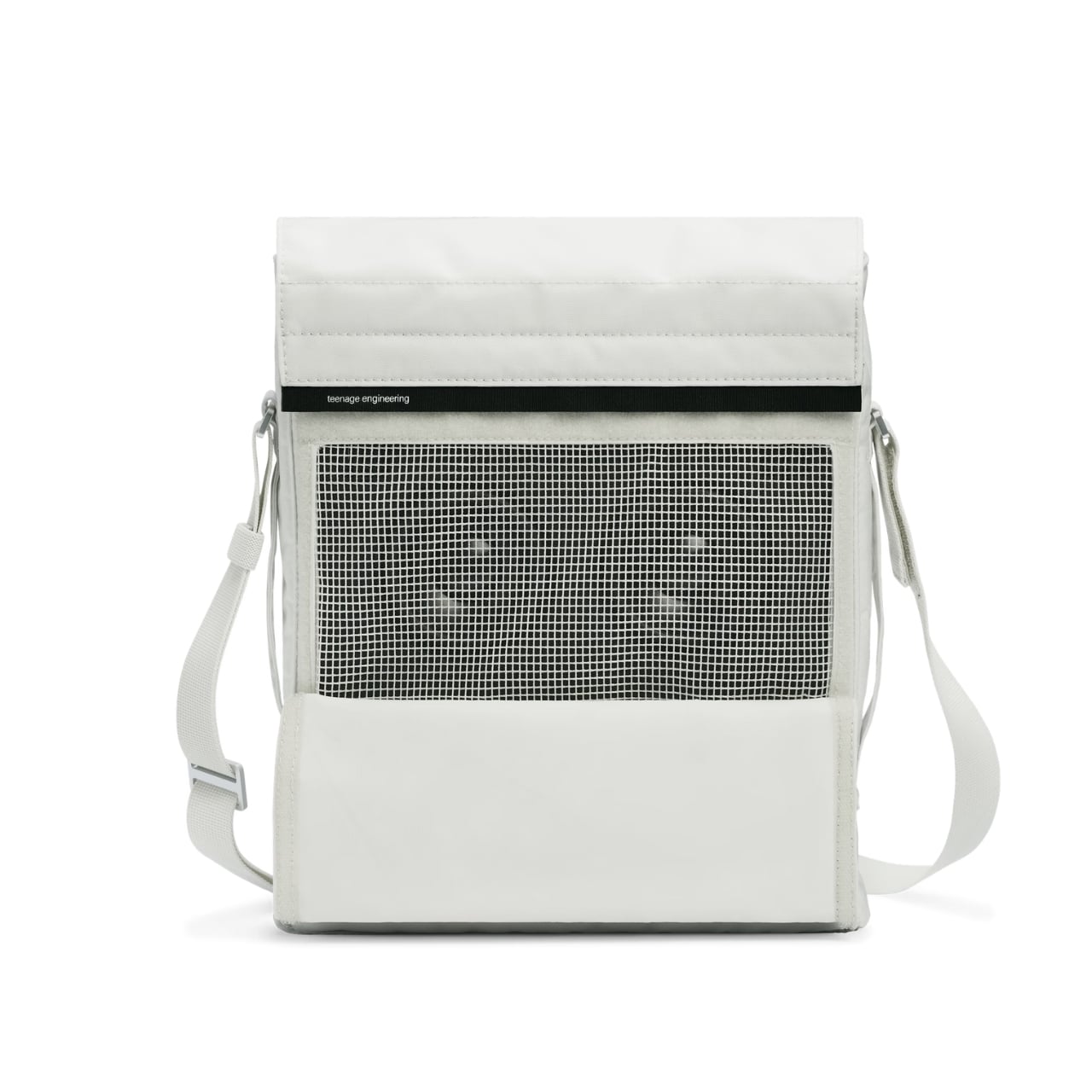
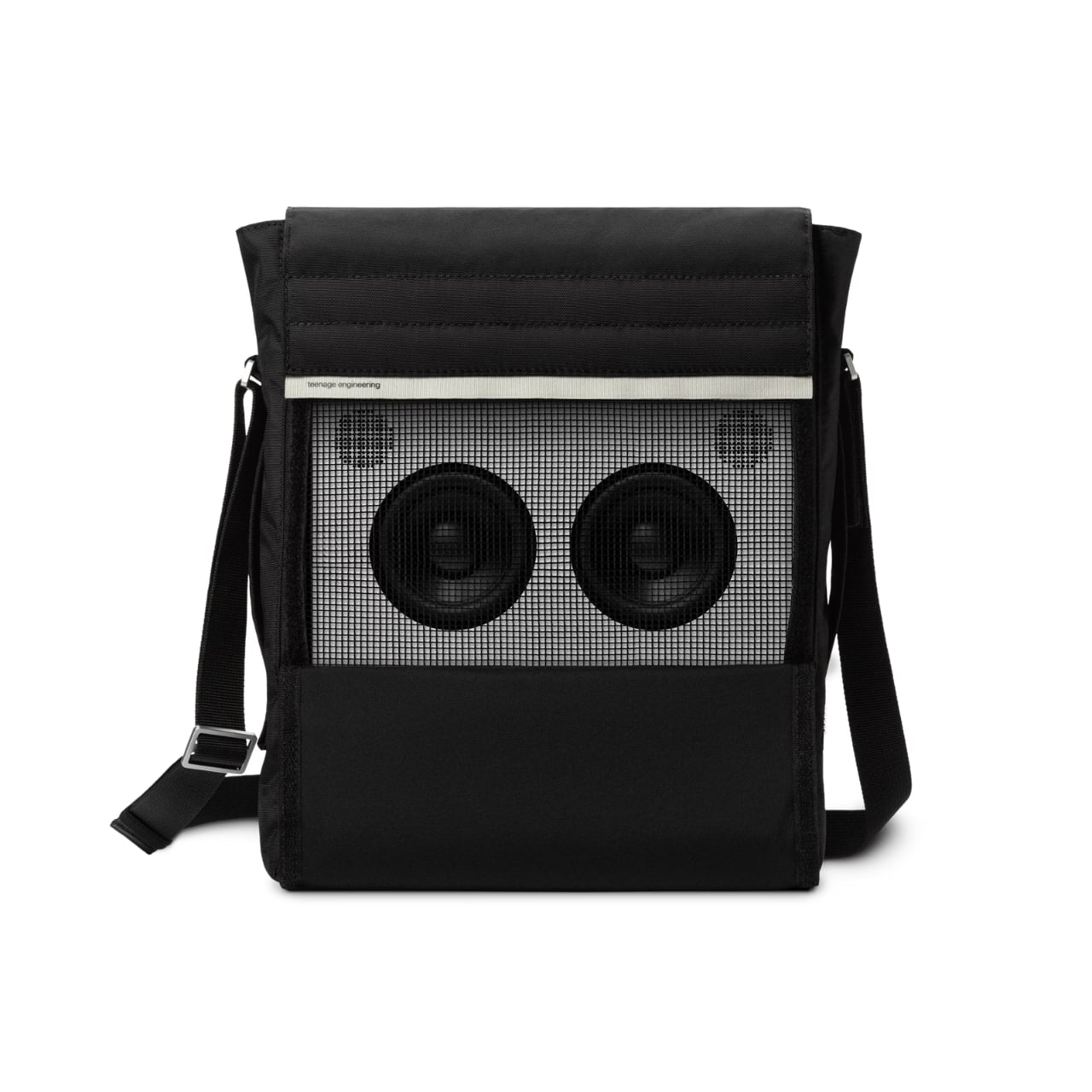
Built primarily to carry the OB-4 Magic Radio, this $129 shoulder bag features a mesh front panel that lets you play music while your device stays tucked inside. Think about that for a second. Most bags are designed to protect and conceal. This one wants you to use what’s inside without ever taking it out. It’s the kind of detail that separates product design from problem-solving.

Designer: Teenage Engineering

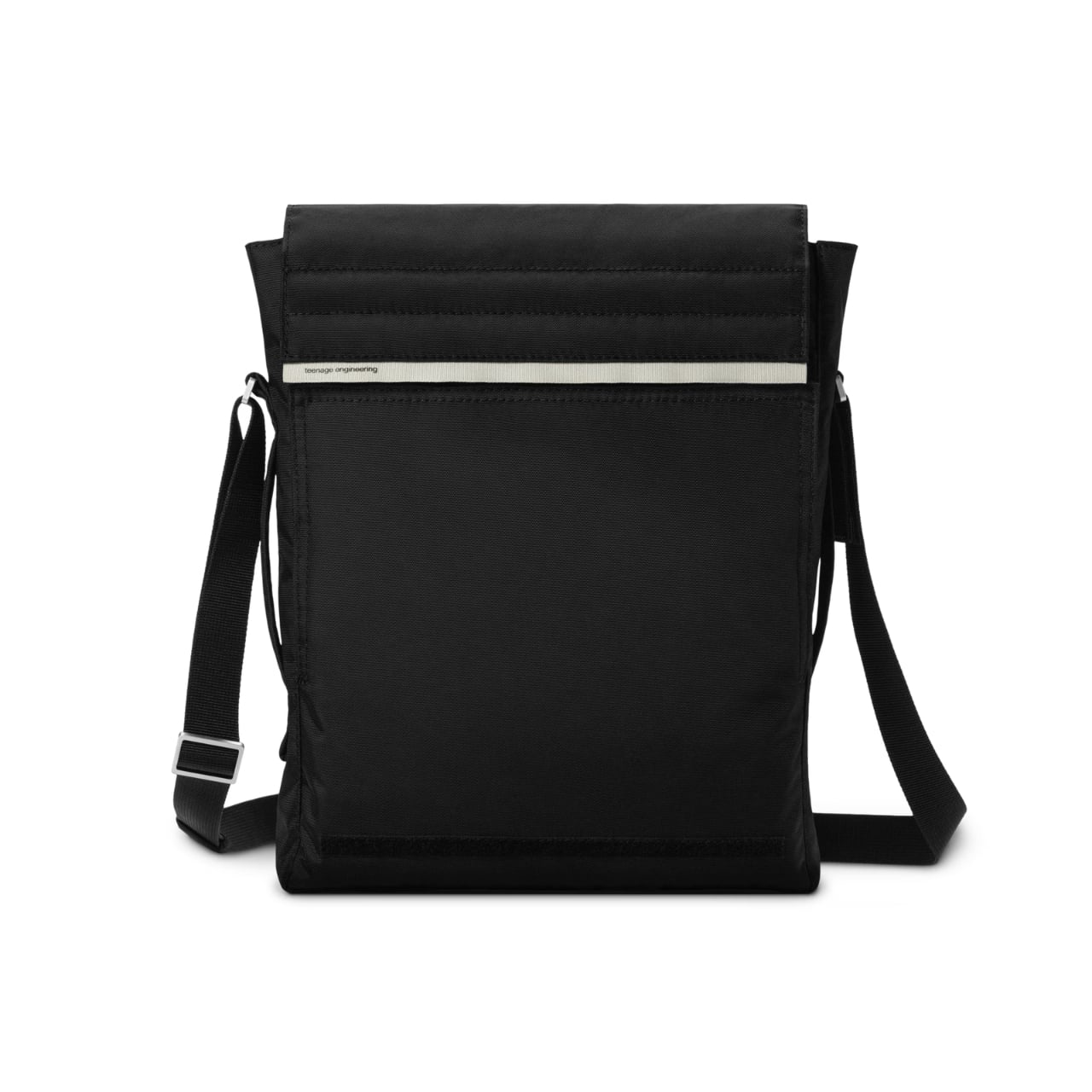
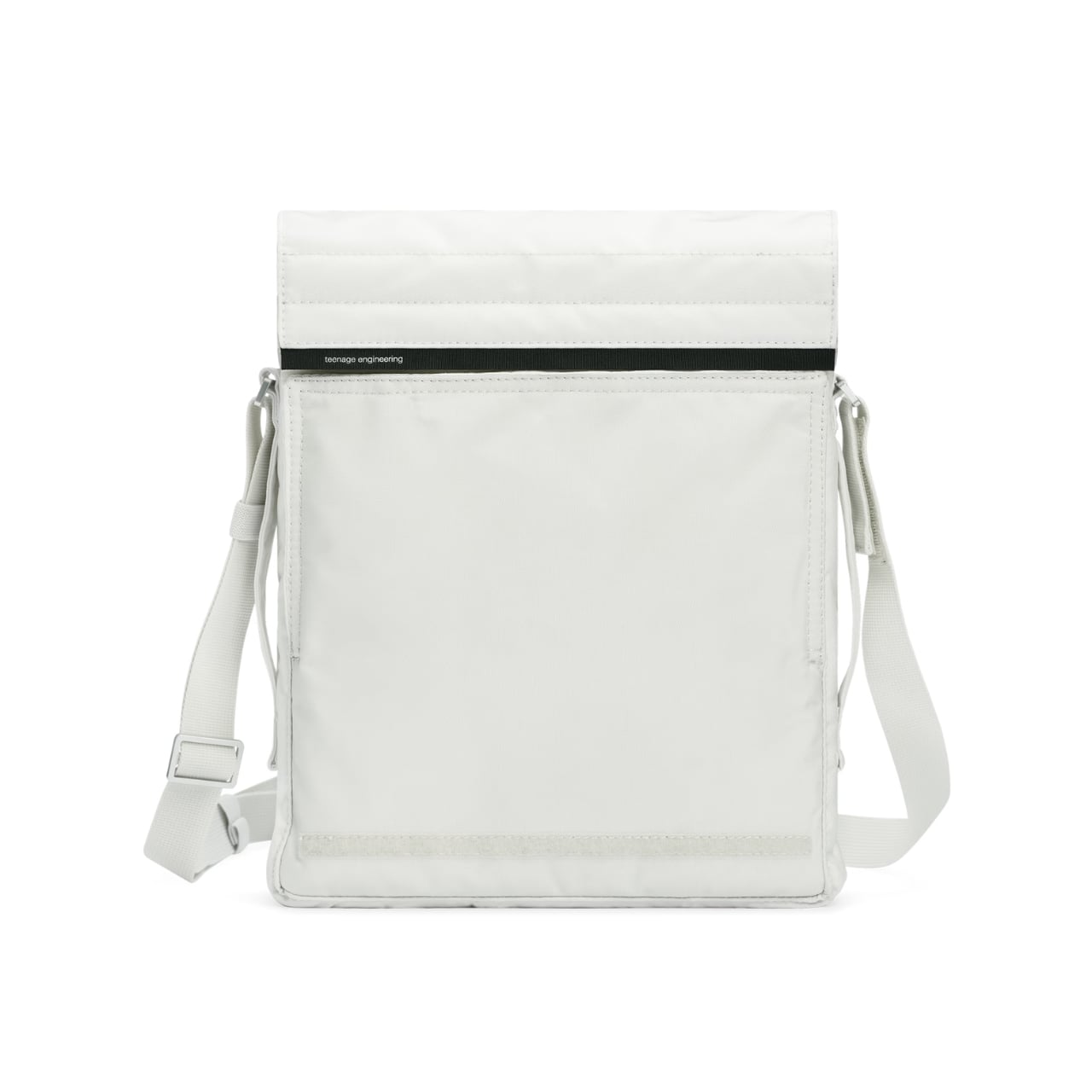
The construction tells you everything about Teenage Engineering’s priorities. The shell uses tear and abrasion-resistant nylon 66 with a fire retardant treatment and PU backing for water repellency (1500 mm rating on the black version, 3000 mm on the white). These aren’t vanity specs. They’re the materials you’d find on technical outdoor gear, applied to something that’ll probably spend more time on subway cars than mountain trails. It’s overbuilt in the best possible way.

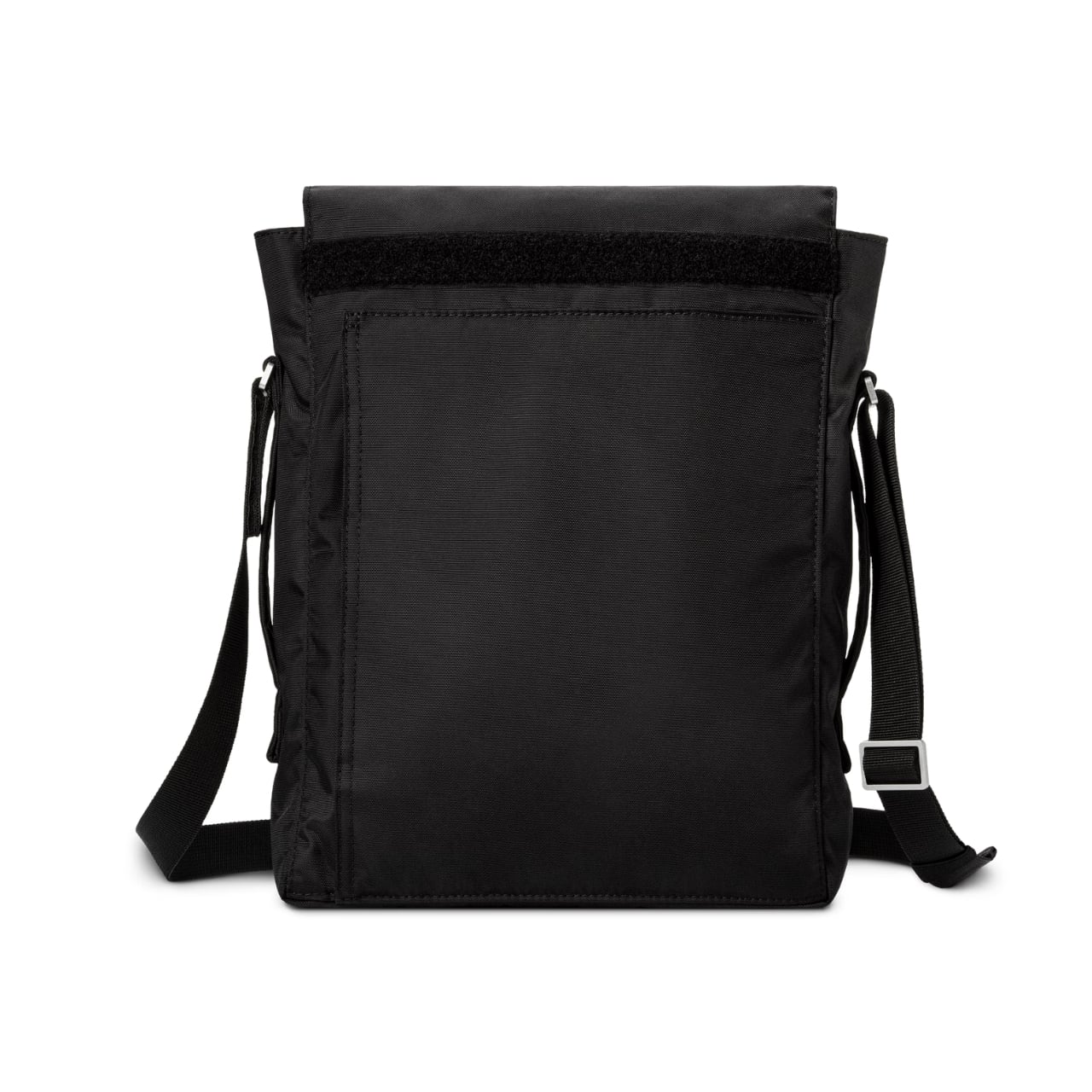
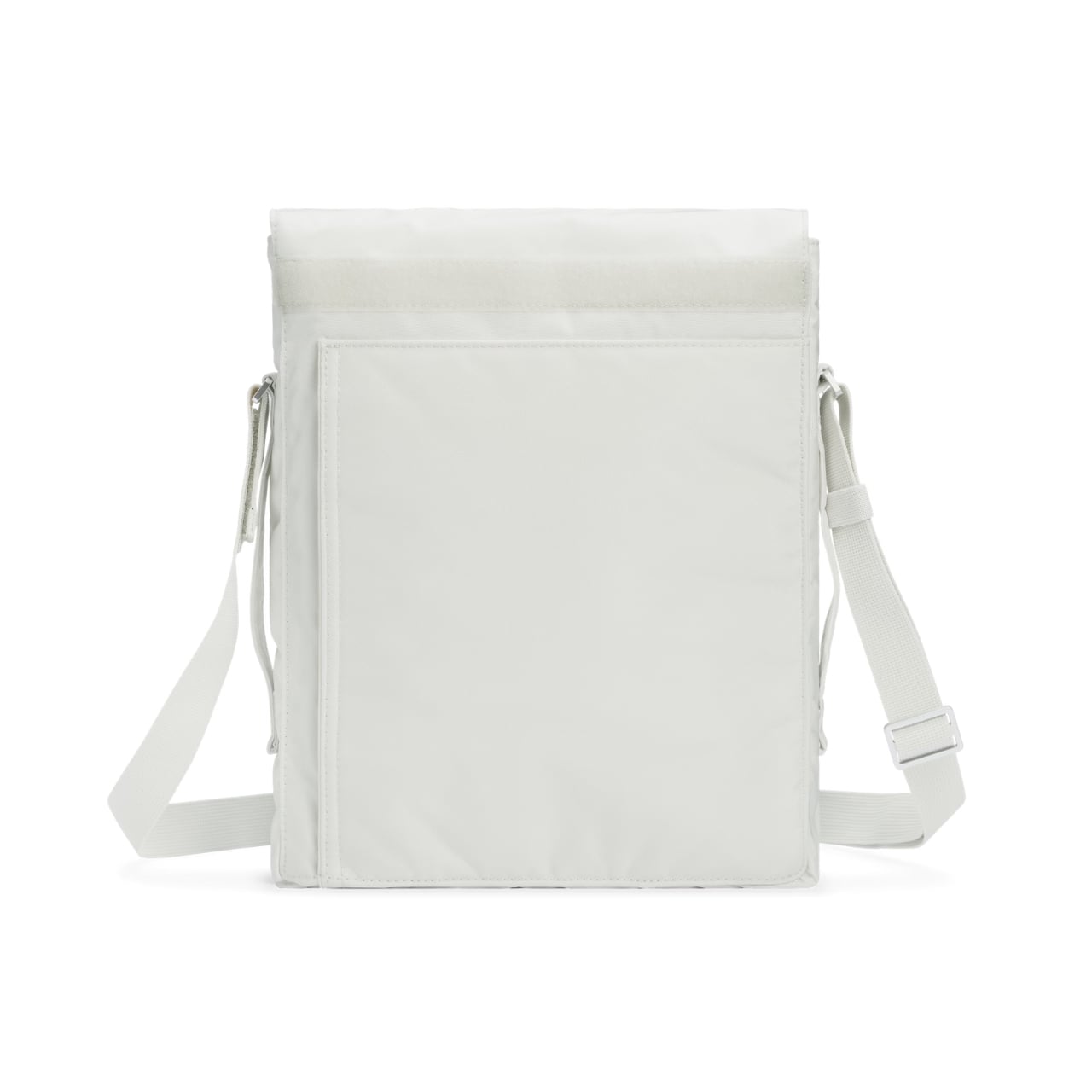
The bag features a roll-down covered opening that gives you variable capacity depending on what you’re carrying. There’s an internal pocket for your everyday small items (keys, wallet, that tangle of earbuds you swear you’ll organize someday). The back pocket uses hook-and-loop closure and is specifically sized for cables and the Ortho remote. Again, that specificity. Teenage Engineering could have made generic pockets, but they measured their own accessories and built compartments around them. You can wear it crossbody style or grab the side handle for hand-carry mode. The adjustability matters because context shifts throughout your day. Crossbody when you’re navigating crowds, hand-carry when you’re sitting at a cafe. The bag adapts rather than forcing you to commit to one carrying style.

What’s compelling here is how Teenage Engineering approaches accessories. This isn’t merchandising. It’s extension of philosophy. The same company that makes the OP-1 synthesizer (a device that prioritizes tactile joy and visual clarity) isn’t going to phone in a bag design. They’re known for products that look like nothing else on the market, that Dieter Rams-meets-Nintendo aesthetic that either clicks with you immediately or leaves you cold. The Field OB-4 shoulder bag comes in black or white, maintaining that minimal color palette Teenage Engineering loves. Custom-made aluminum hardware and YKK EXCELLA zippers keep everything smooth and reliable. These are components you’d find on high-end luggage, the kind of details most people won’t notice until they’ve used cheaper alternatives.

Is this bag essential? Absolutely not. You could carry an OB-4 in any number of generic shoulder bags. But you’d lose the mesh front functionality. You’d lose the precise pocket sizing. You’d lose that feeling of using a complete system where everything has been considered. Teenage Engineering has always existed in this interesting space where consumer electronics meet design objects. Their products cost more than alternatives because they’re selling coherence, not just capability. The Field OB-4 shoulder bag extends that logic into accessories. It’s designed for people who already bought into the ecosystem, who appreciate when someone sweats the details nobody asked them to perfect.

At $129, it’s positioned as a premium accessory, not an impulse add-on. That pricing filters for the audience who gets it, who understands why you’d spend serious money on a bag for a portable speaker. It’s the same crowd that bought the OB-4 in the first place, people who could’ve gotten a Bluetooth speaker for fifty bucks but wanted something with personality instead. Whether you need this bag depends entirely on whether you value design specificity over universal functionality. For the right person, this is exactly what they’ve been looking for. For everyone else, it’s an interesting case study in how far product design can go when companies refuse to take shortcuts.

The post This $129 Bag Lets You Play Music Without Opening It first appeared on Yanko Design.