This $699 FIFA World Cup Phone Is a Limited-Edition Collector’s Dream

The FIFA World Cup 2026 edition is just a few months away, so we can expect that these first few months of the year, we’ll get a lot of product tie-ups and merchandise. After all, the world’s most-watched sports event will be held in the US, Canada, and Mexico. If you plan to watch any of the matches in person or you’ll just be sitting pretty from the comfort of your own home while streaming, Motorola’s newest smartphone may be the device that you need to enjoy the game more.

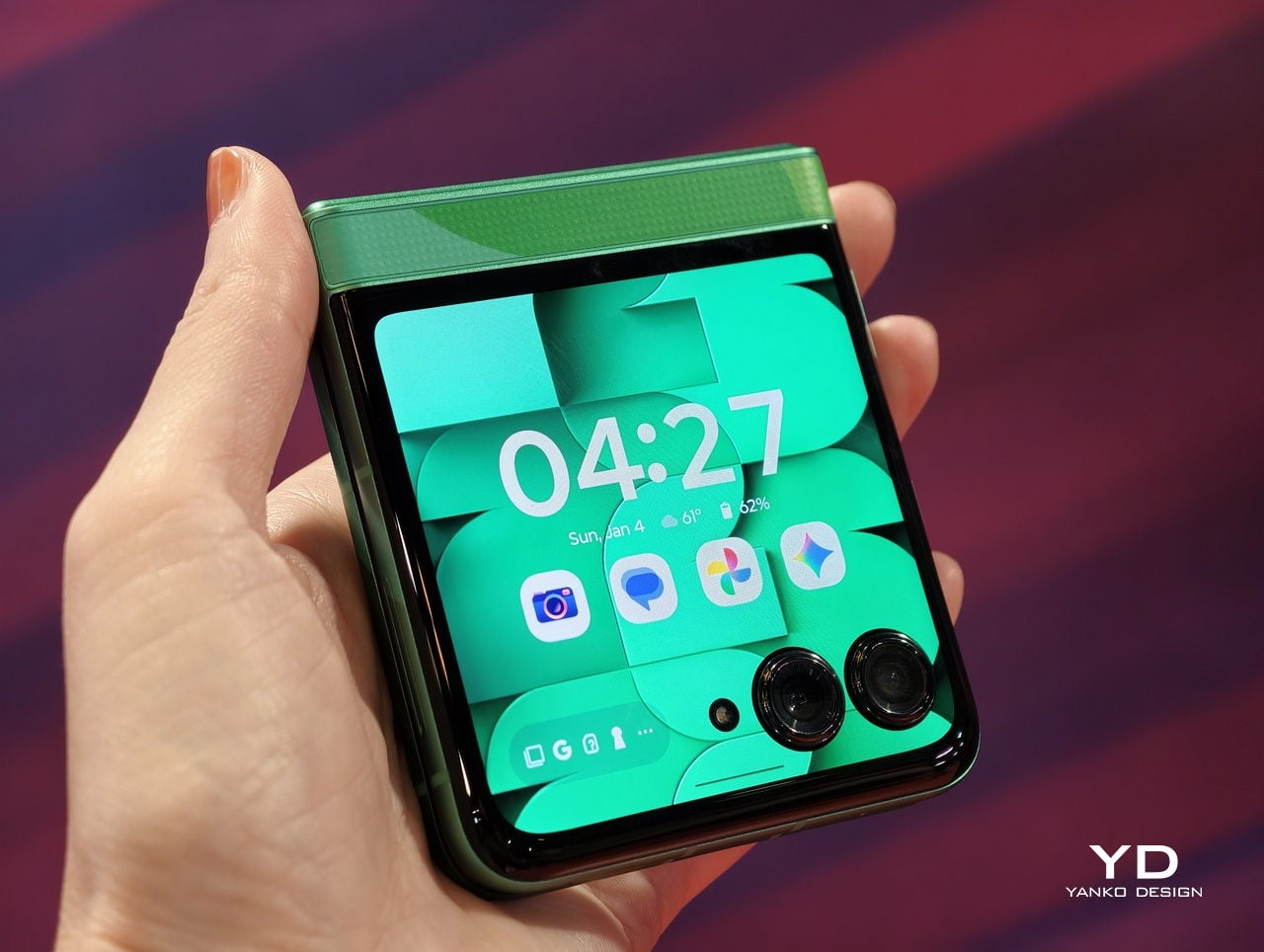
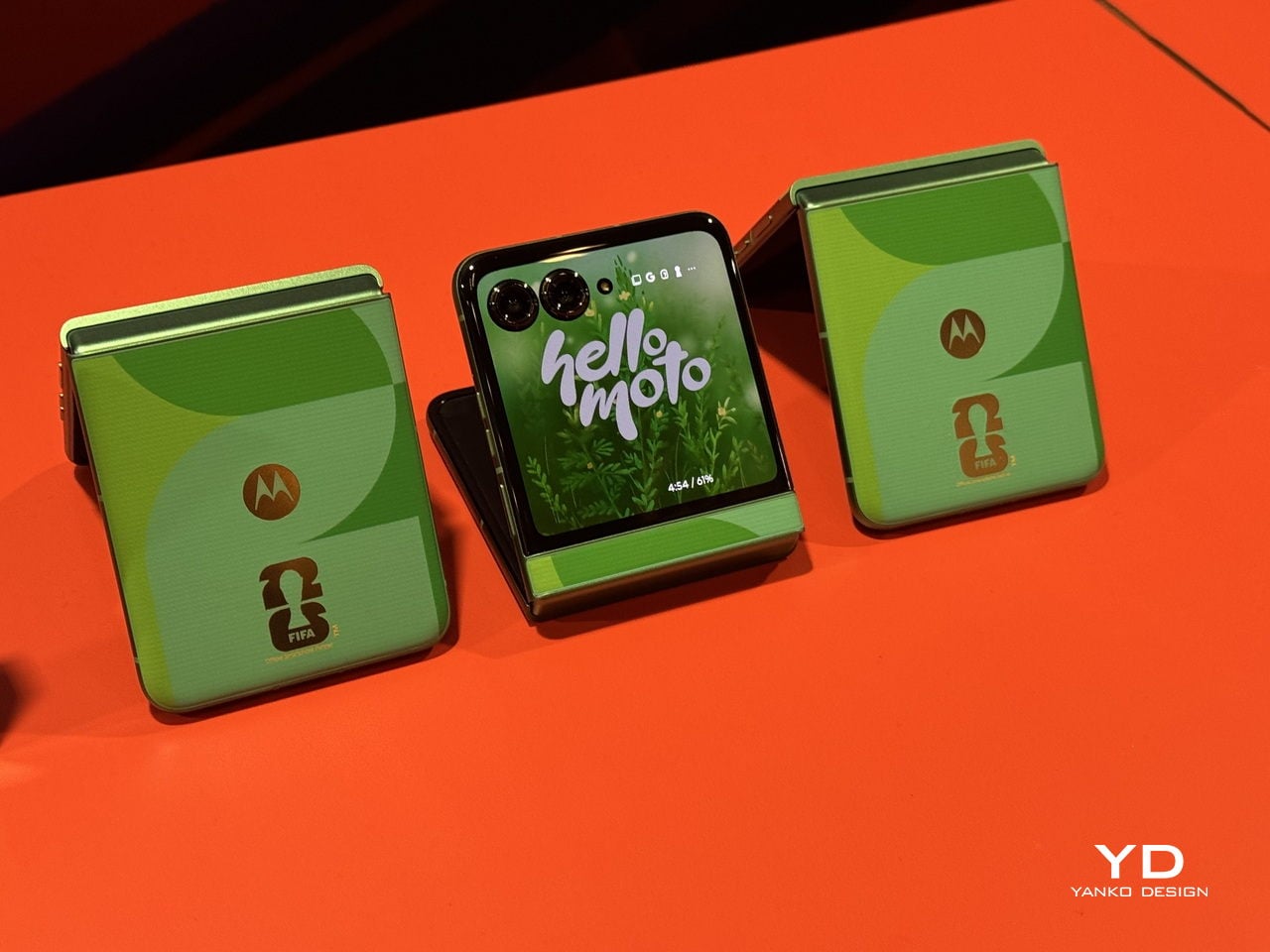
The Motorola razr FIFA World Cup 26™ Edition is a limited-edition collectible device that celebrates the first-ever 48-team FIFA World Cup. It is a mobile phone that’s designed for soccer fans who are excited about the upcoming tournament and for anyone who loves things where technology meets sports culture.

Designer: Motorola
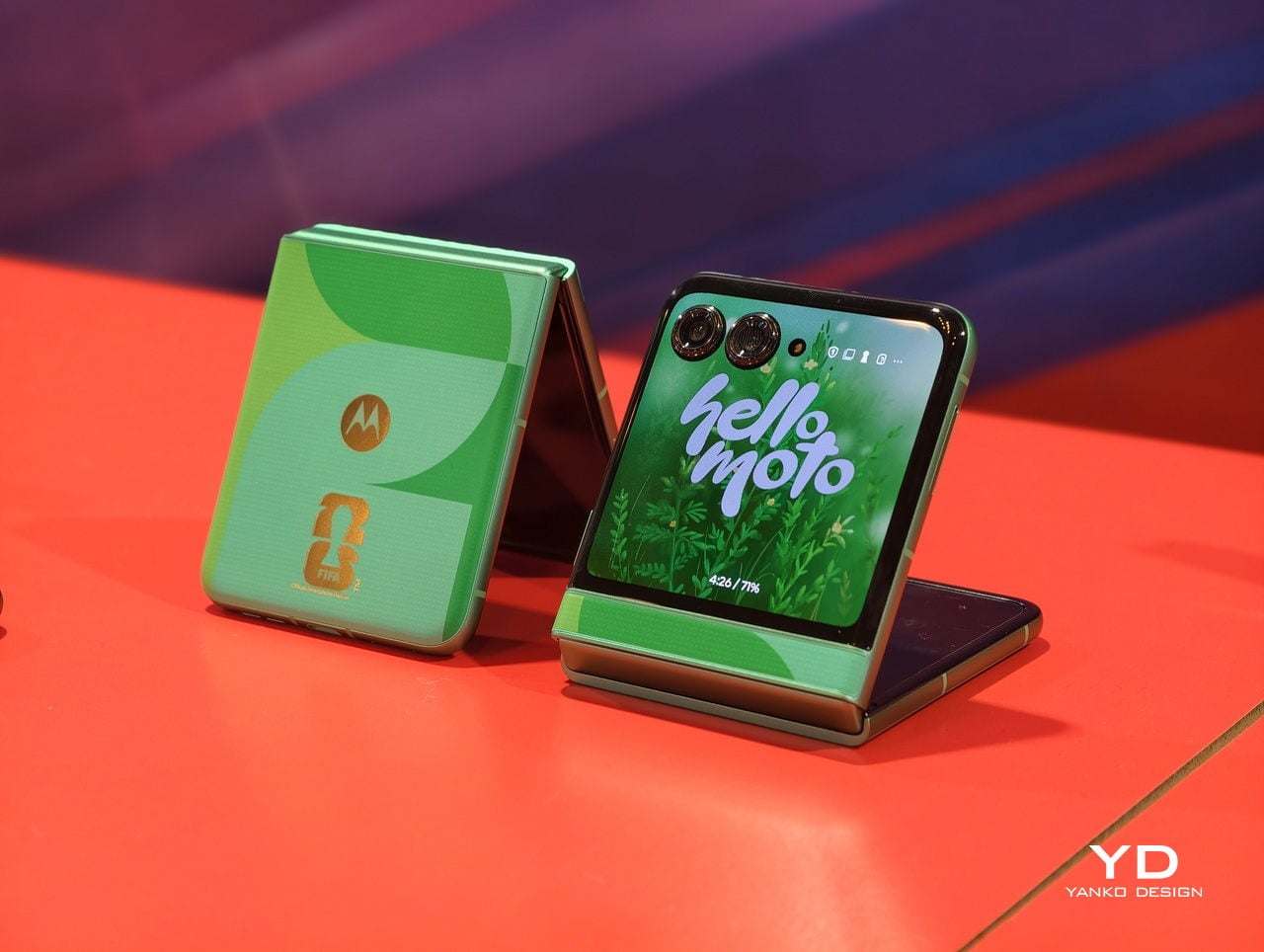
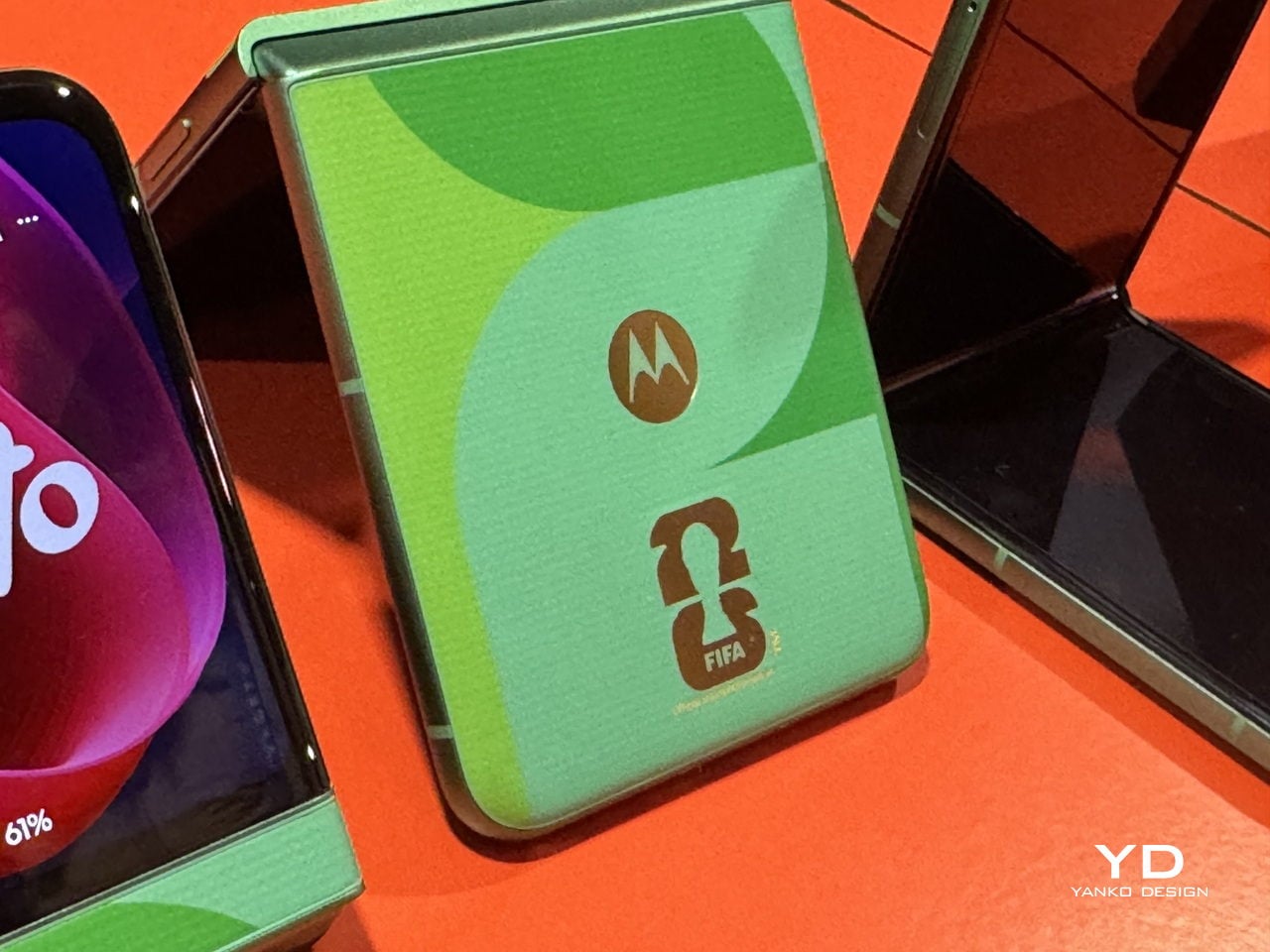
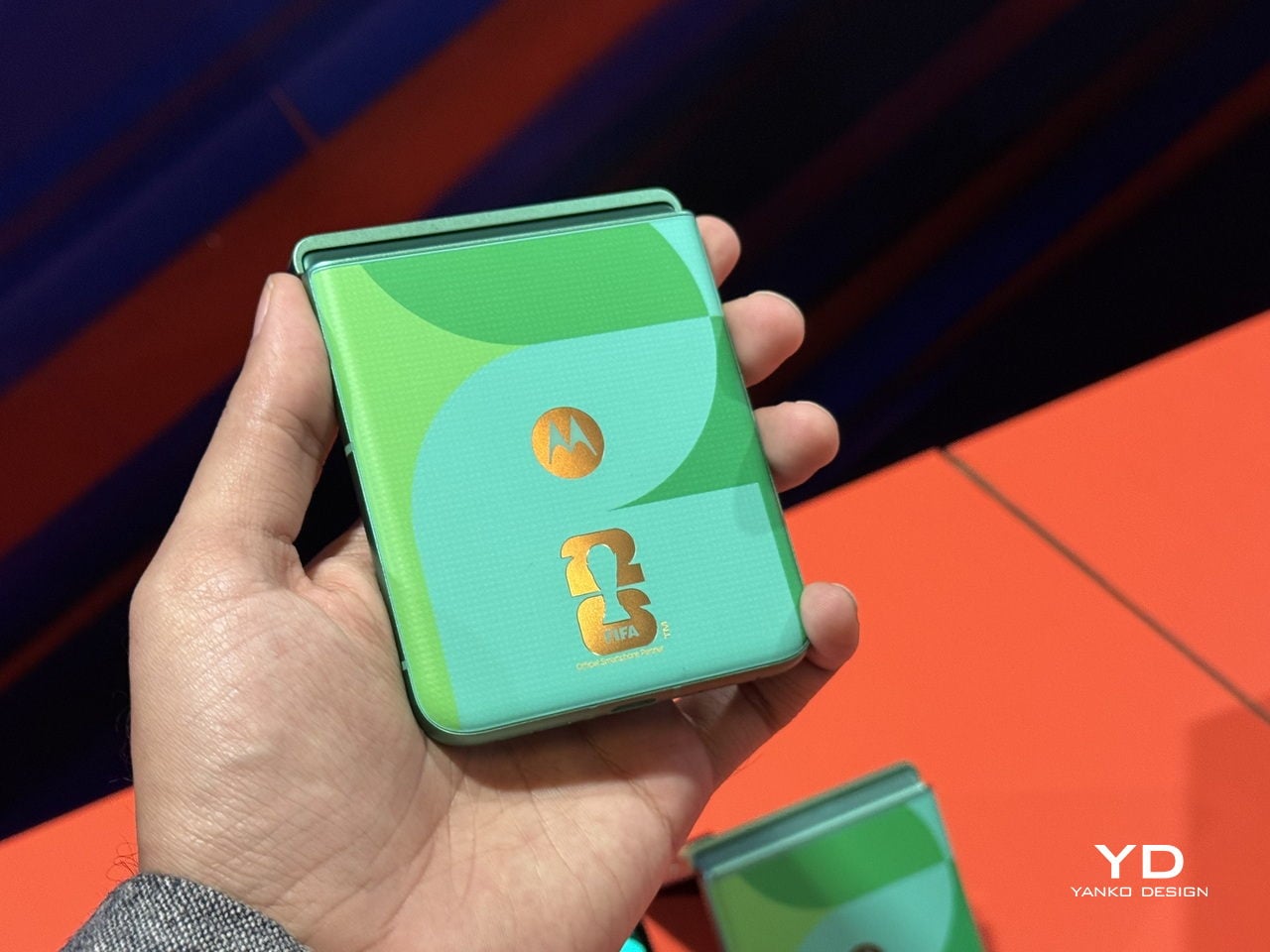
This special razr edition boasts a stunning vibrant green shade reminiscent of a football pitch where all the action takes place. It has a soft-touch vegan leather back cover with multicolor geometric patterns, showing off fluid motion representing energy and inclusivity. Since this is a foldable phone, the pattern is designed to flow seamlessly across the device, giving you a unified, continuous look whether it’s folded or open.
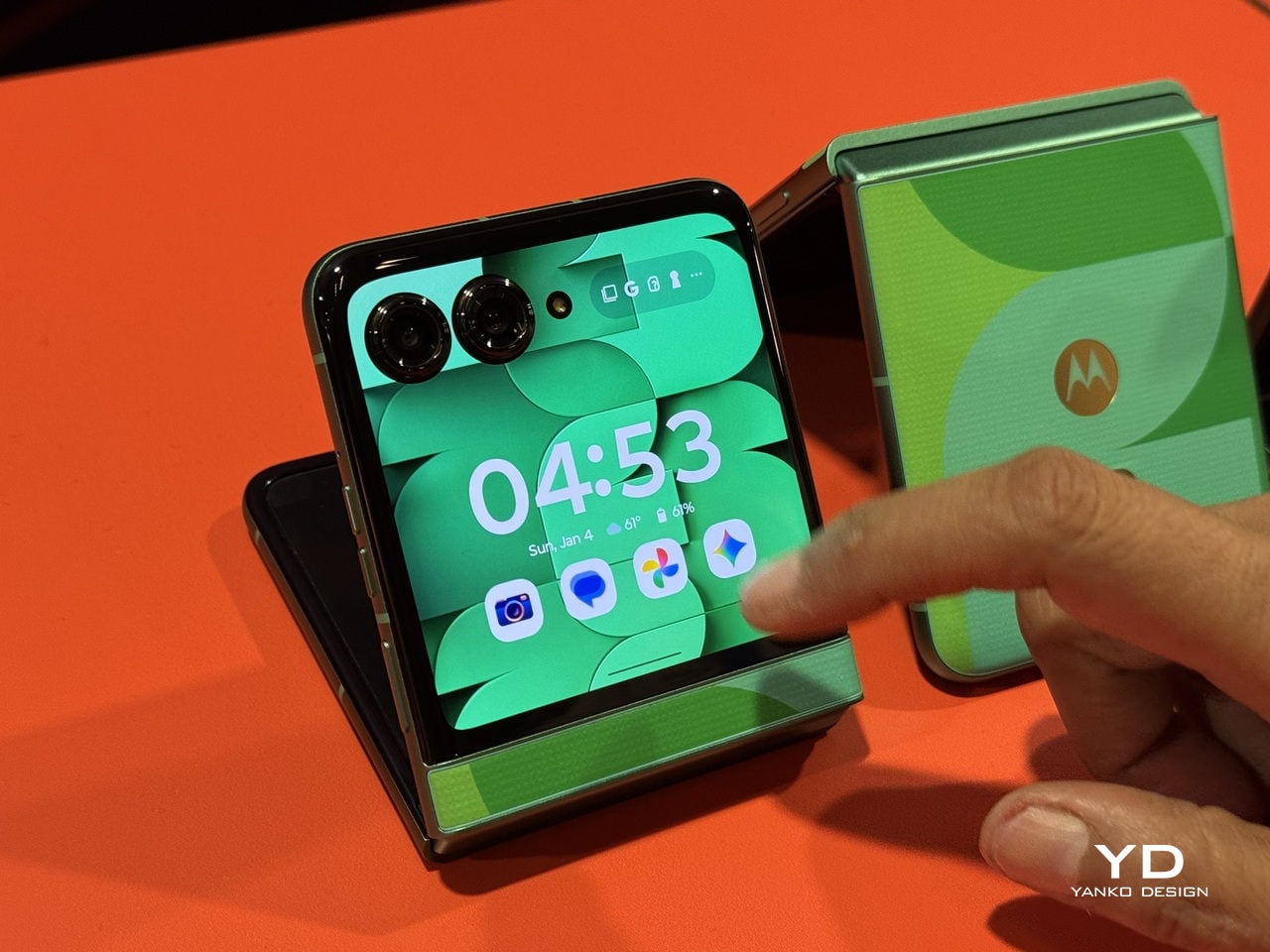
The main display is a 6.9″ Foldable AMOLED screen with HDR10+, FHD+ resolution, adaptive refresh rate up to 120Hz, and stunning 3000 nits peak brightness. This should be perfect for when you’re watching the football matches on your smartphone. The external display has a 3.6″ pOLED with adaptive refresh rate up to 90Hz and 1700 nits peak brightness. You can stay connected with the latest scores and notifications even without having to open your phone.

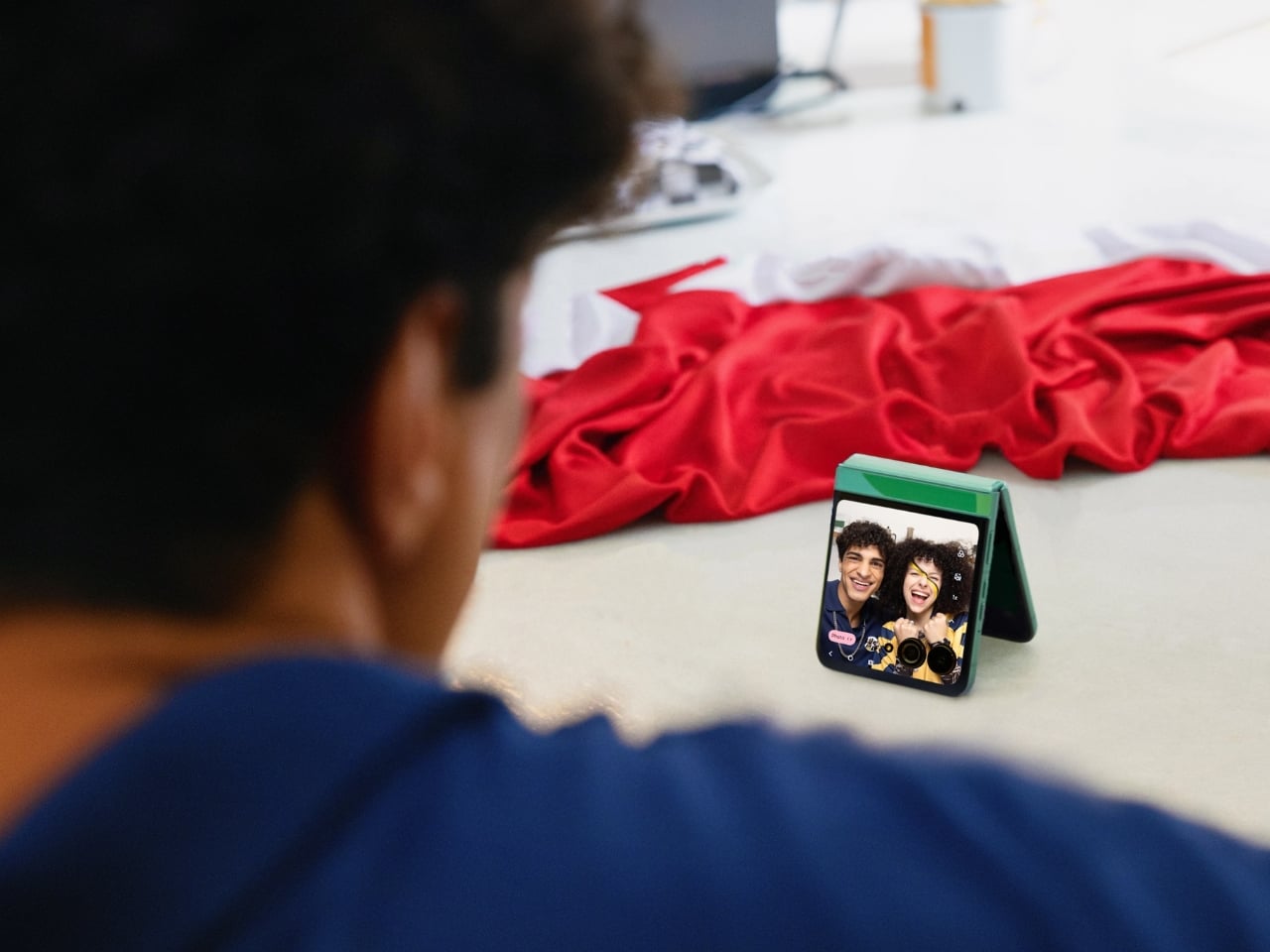
If you’ll be watching the matches live, Motorola wants to make sure your camera system is perfect for those match-day memories. It has a 50MP main camera with a 13MP Ultrawide + Macro Vision Camera with a 120° field of view and a 32MP front camera for those reaction shots. It also has some creative features like Auto Night Vision, 4K UHD video at 30fps, Adaptive Stabilization, and Horizon Lock to get smoother videos. The main camera even includes OIS (Optical Image Stabilization) and Pantone™ Validated Color, ensuring your photos look professional and true to life.
Under the hood, the razr FIFA World Cup 26™ Edition runs on Android™ 15 with a MediaTek Dimensity 7400X chipset and comes with 8GB of RAM and 256GB of storage in the US and Canada. The 4500mAh battery will keep you powered throughout the day, from kickoff to the final whistle, and when you do need to charge, the 30W TurboPower™ charging gets you back in action quickly. There’s also 15W wireless charging for added convenience.

What really makes this device stand out is its durability. It features a titanium-reinforced hinge and IP48 dust and water protection, meaning it can handle submersion in up to 1.5 meters of fresh water for up to 30 minutes. Whether you’re celebrating a goal with friends or caught in unexpected rain while heading to a viewing party, this phone is built to last. The audio experience shouldn’t be overlooked either. With dual stereo speakers tuned by Dolby Atmos® and three microphones, you’ll get immersive sound whether you’re watching matches, making video calls with fellow fans, or recording your own commentary.

Of course, since this is a special edition smartphone, you get FIFA World Cup features that only this phone has. You have exclusive wallpapers to celebrate the tournament, an official tournament theme ringtone, and a FIFA Watermark feature that you can add to your photos and videos before sharing them on your socials.

The Motorola razr FIFA World Cup 26™ Edition will be available starting February 12, 2026, with an MSRP of $699.99 in the United States and $999.99 CAD in Canada. In the US, Verizon will serve as the exclusive carrier partner during the introductory month, and unlocked models will be available on motorola.com, with Amazon.com availability coming later.


For collectors and football enthusiasts alike, this limited-edition device represents more than just a smartphone. It’s a piece of World Cup history you can carry with you. With its eye-catching design, powerful features, and exclusive FIFA content, the razr FIFA World Cup 26™ Edition is the perfect companion for experiencing the tournament’s excitement, whether you’re in the stadium or streaming from home. If you want to showcase your passion for the beautiful game while staying connected in style, this collectible device deserves a spot in your hands and your collection.

The post This $699 FIFA World Cup Phone Is a Limited-Edition Collector’s Dream first appeared on Yanko Design.
Motorola just announced a foldable phone to rival Samsung and Google at CES

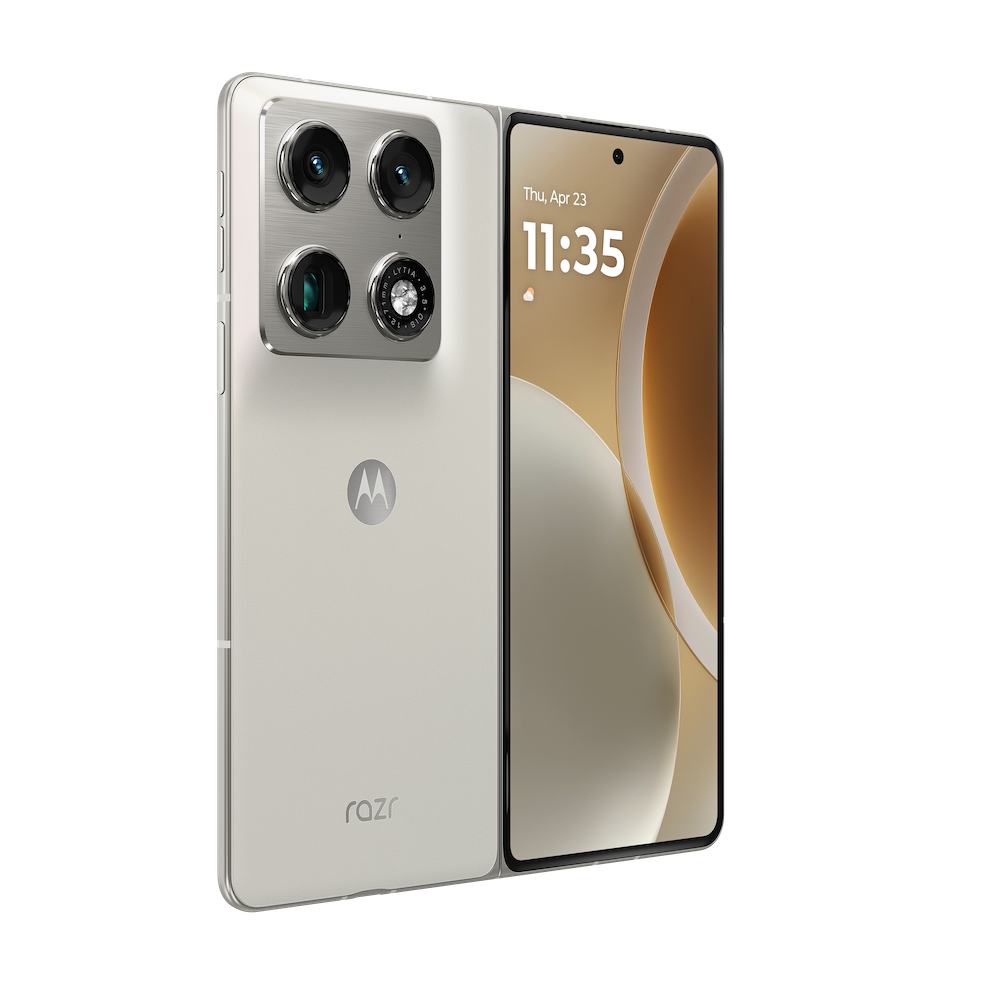
Samsung and Google have new competition in the foldable space. At CES 2026, Motorola unveiled its first side-foldable smartphone: the Razr Fold. The handheld sports an impressive 6.6-inch external screen and an 8.1-inch flexible main display. Motorola hasn’t provided dimensions yet, so we don’t know how thick it is yet or how it compares to other foldables in that respect.

We do know, however, that it'll include support for the Moto Pen Ultra stylus. This is actually a fairly big deal, as Samsung dropped the feature for the Z Fold 7. Modern foldables basically double as tablets, so a stylus is always appreciated.

A phone.
A phone.
Motorola

There's a robust camera system here, with a 50MP Sony sensor, a 50MP ultra-wide/macro, a 50MP telephoto, a 32MP external selfie lens and a 20MP internal camera. It also offers the ability to record in Dolby Vision.

The Razr Fold will be available in blue and white. We don't have any information regarding internal specs, pricing or availability. Motorola says that "more specifications will be shared in the coming months."

It's worth noting that while this is the company's first side-folding camera, Motorola has always made top-folding phones. After all, that's what a flip phone is. The company continues to refine this basic idea with its standard Razr line of midrange top-folding smartphones.

This article originally appeared on Engadget at https://www.engadget.com/mobile/smartphones/motorola-just-announced-a-foldable-phone-to-rival-samsung-and-google-at-ces-010015323.html?src=rss

Lenovo’s ‘Horizontal Rollable’ Legion Pro Laptop Expands From 16 to 23.8 Inches: Hands-on at CES 2026

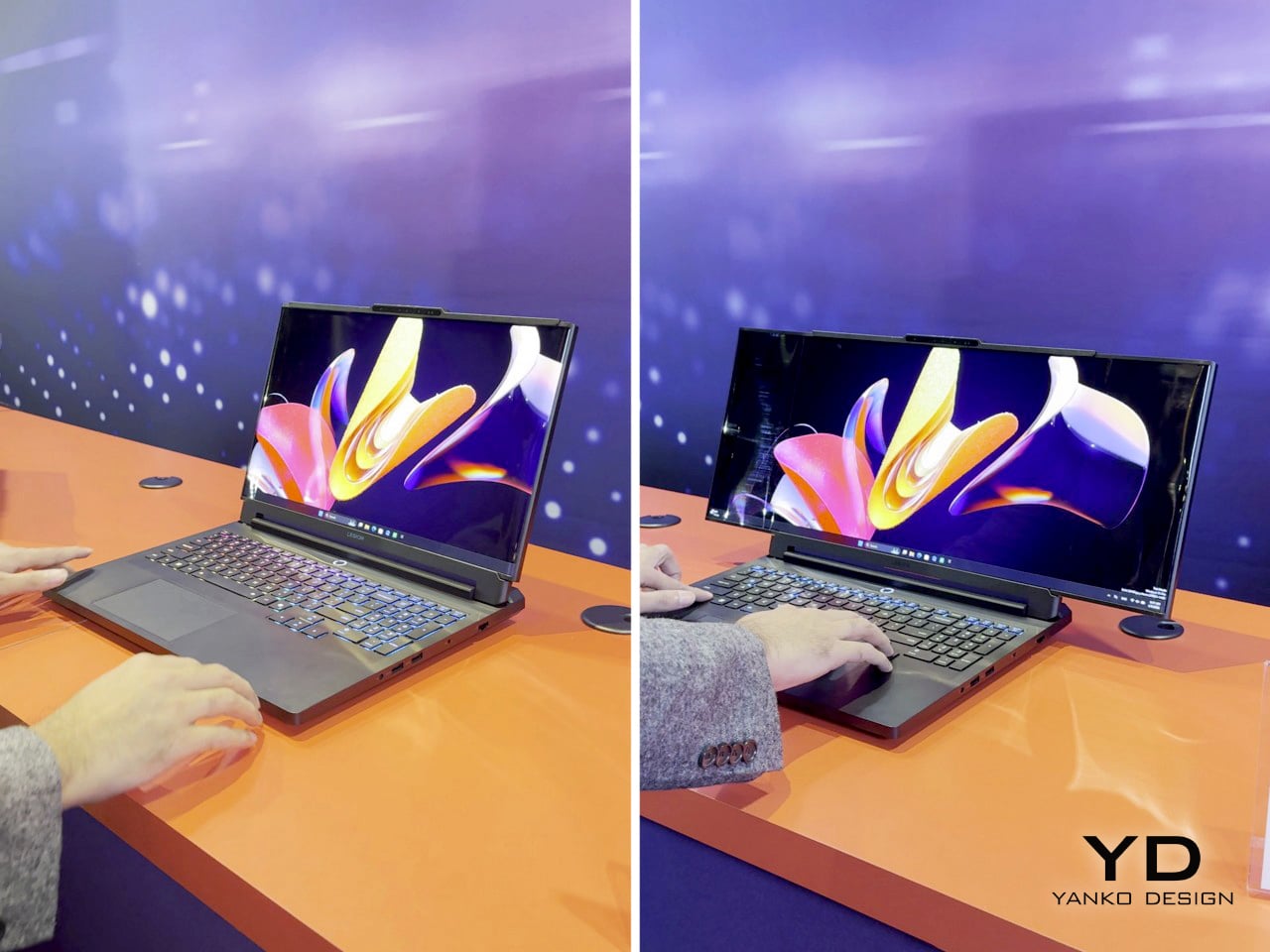
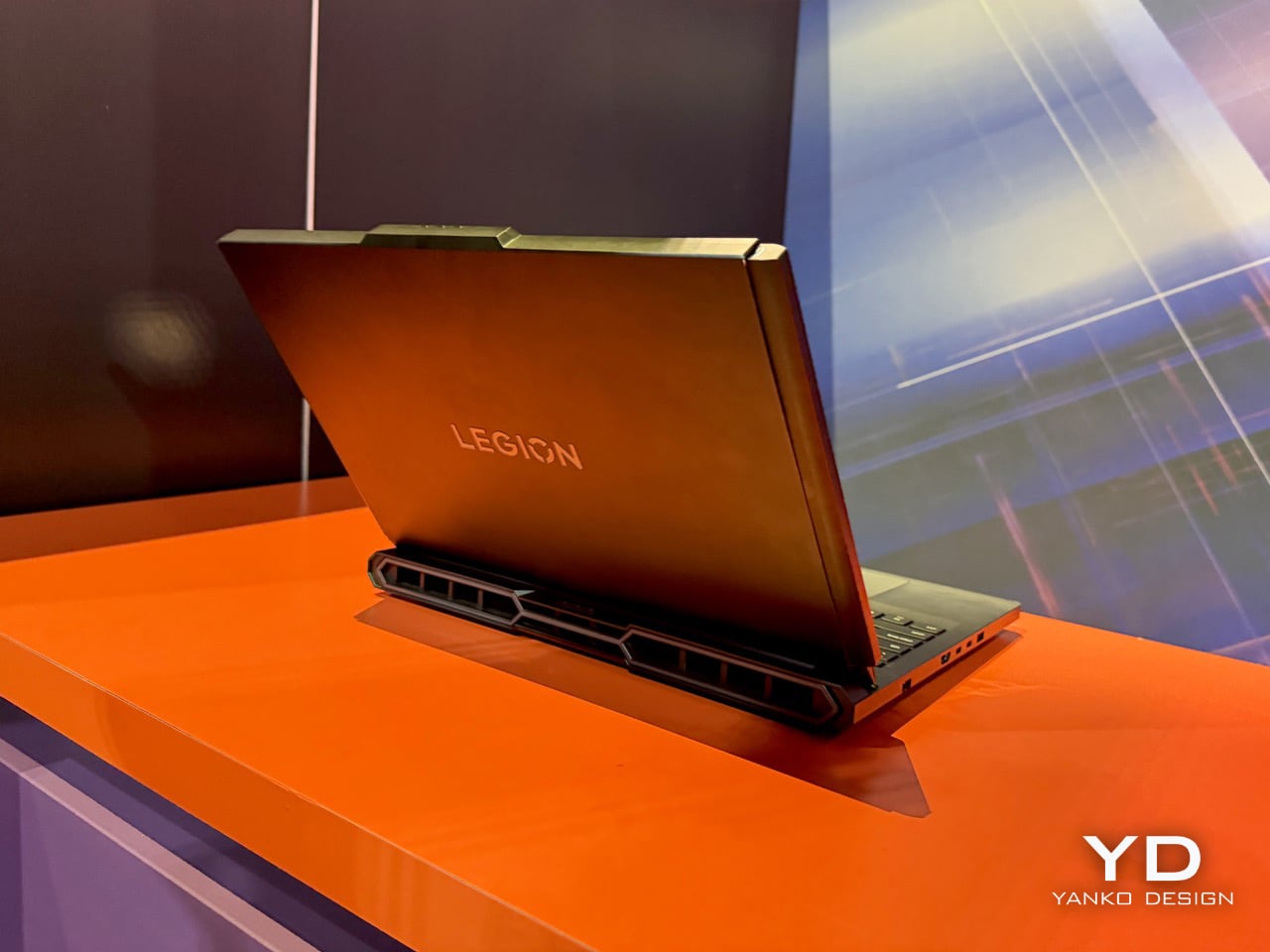
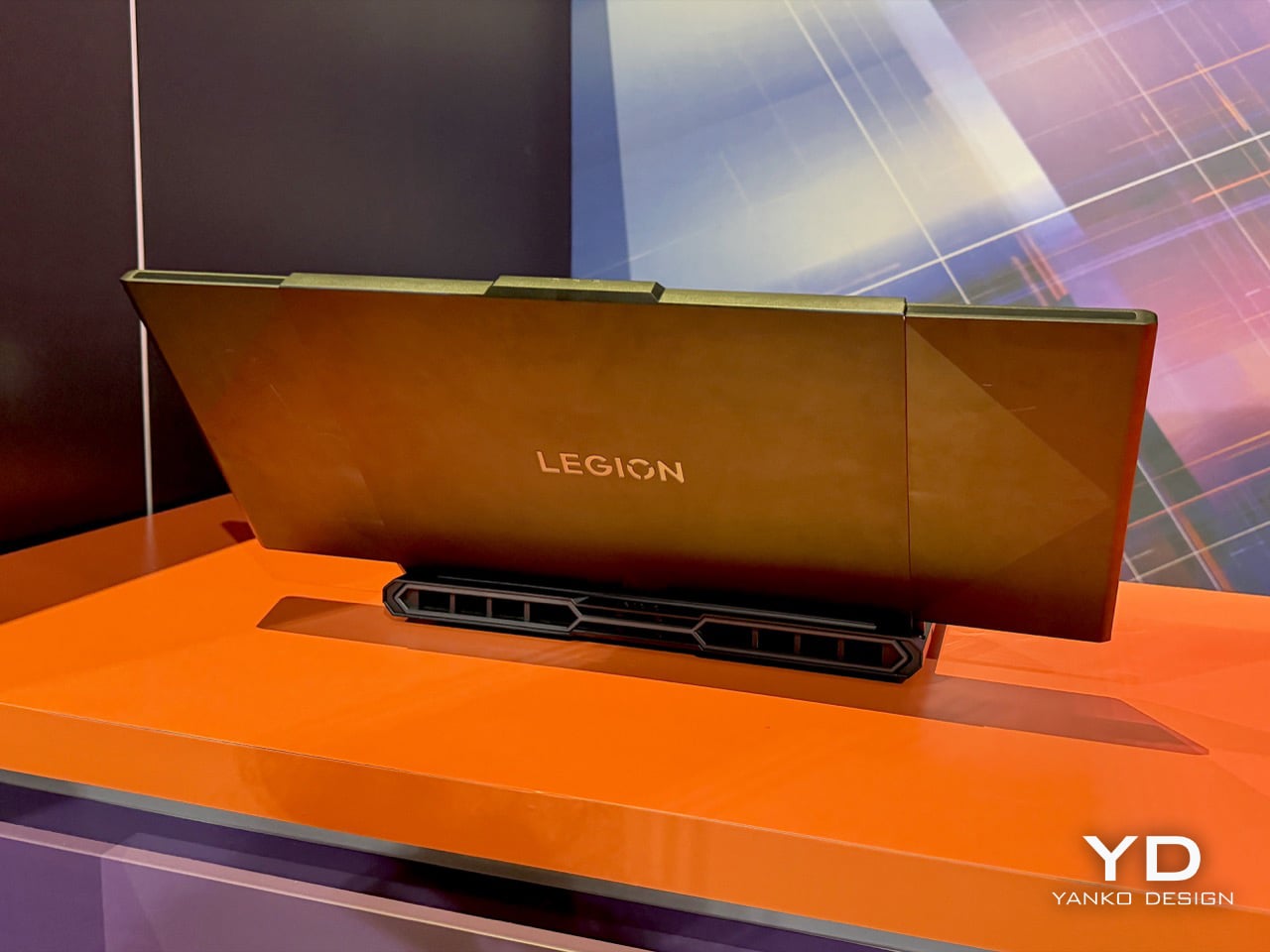
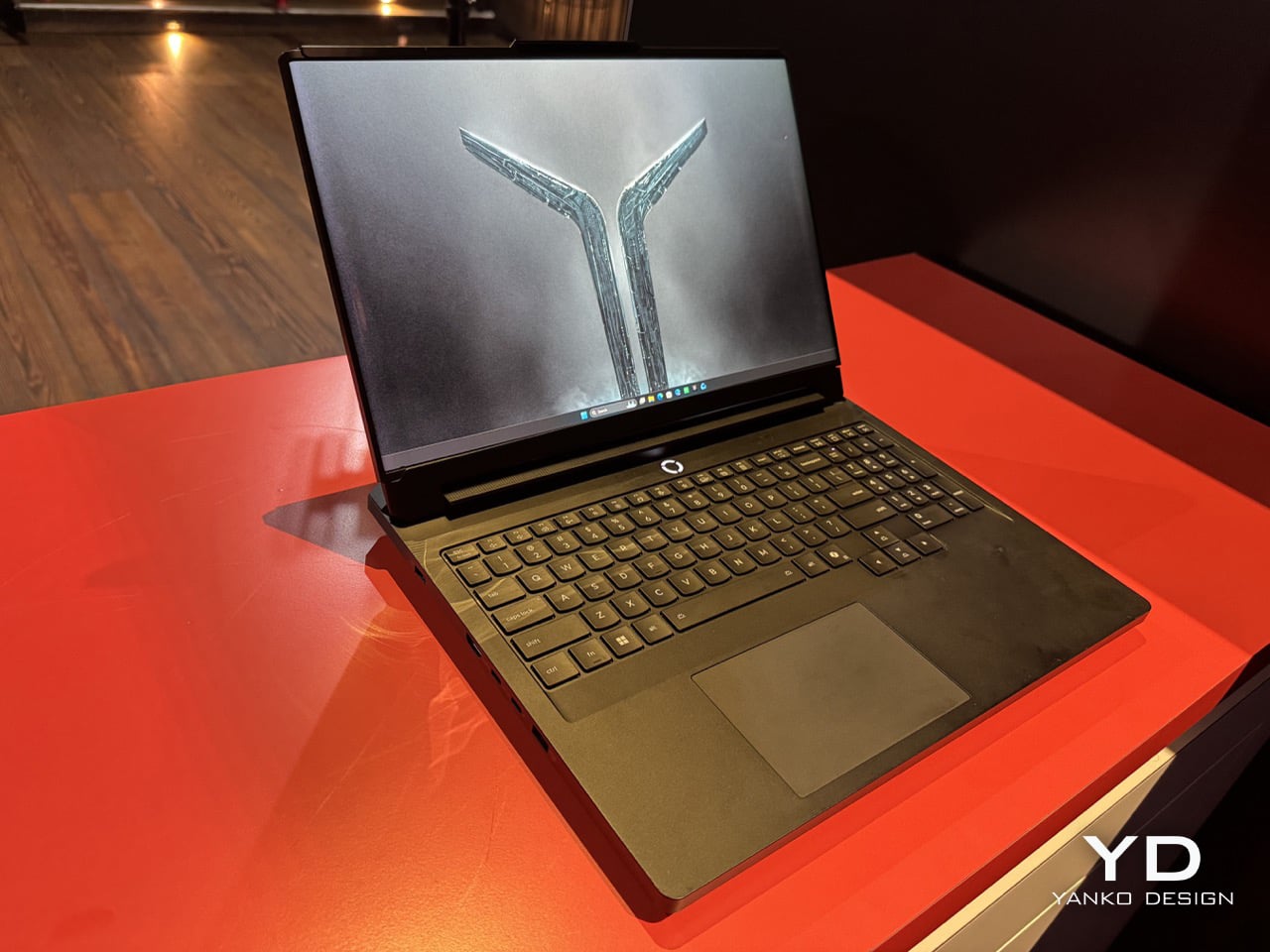
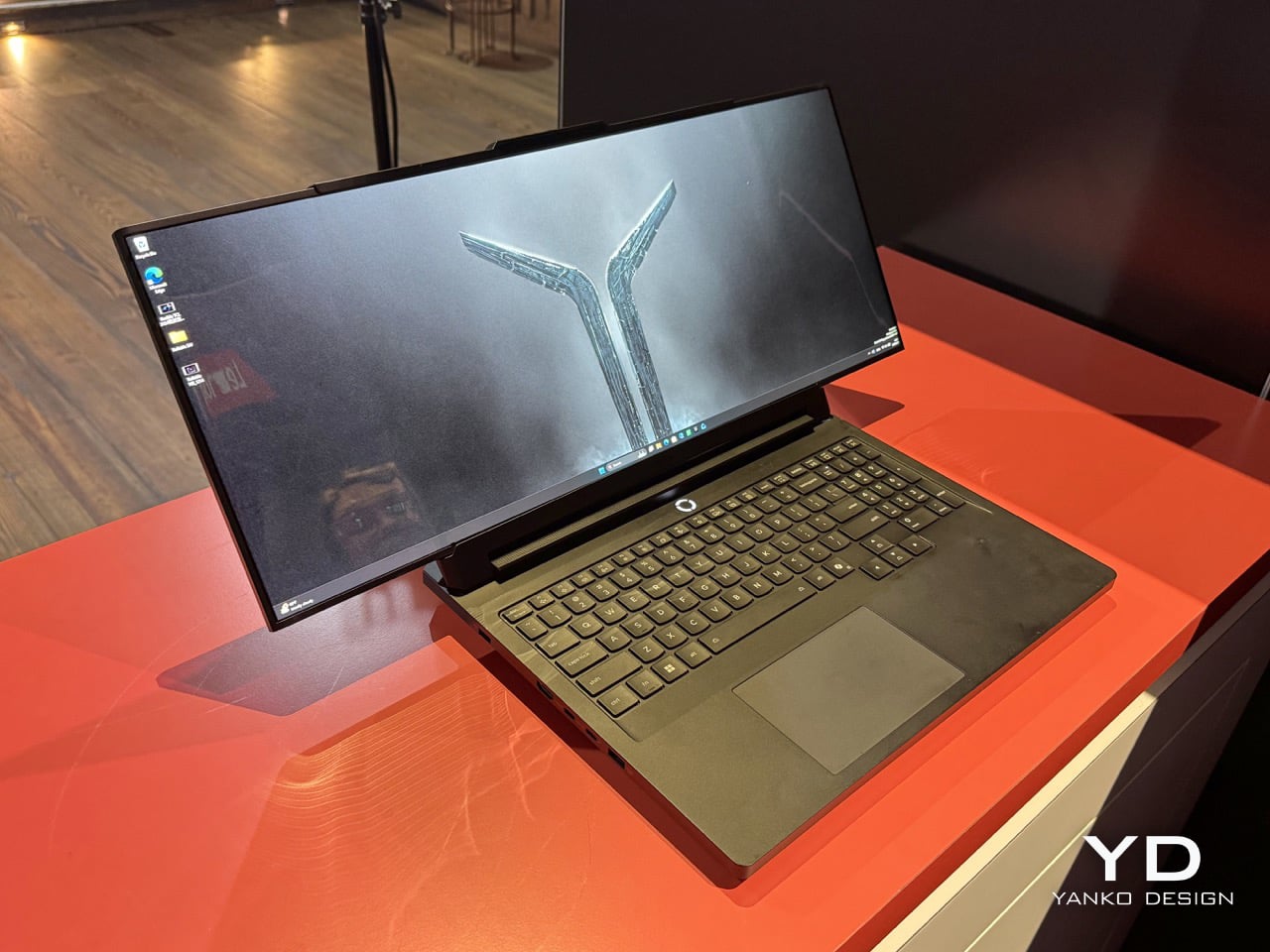
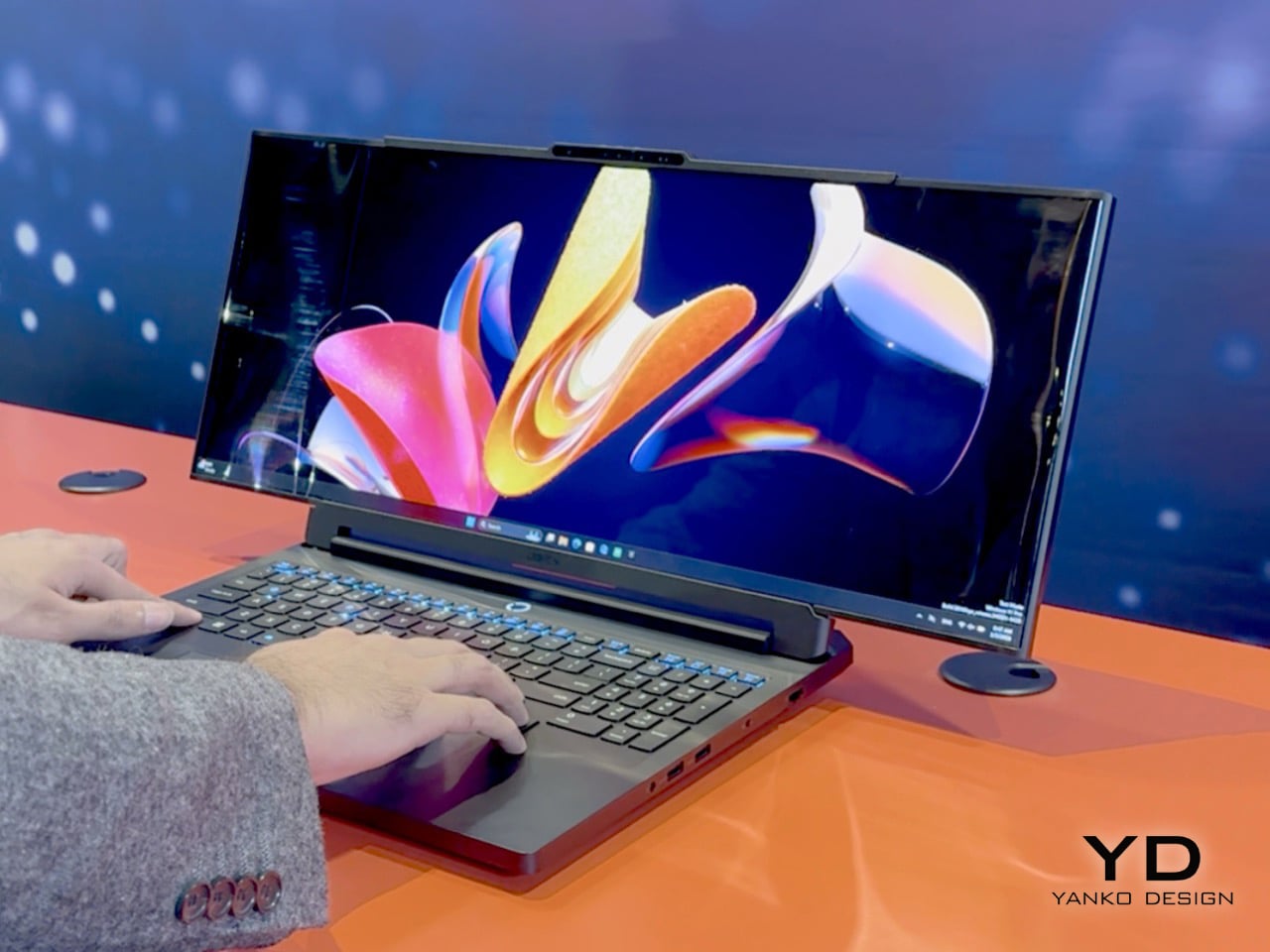
Lenovo’s Legion Pro Rollable concept solves a problem that’s annoyed traveling gamers and esports pros for years: you either carry a full-size monitor with you or accept that your laptop screen is too small for serious practice. The concept starts as a standard 16-inch gaming laptop, then physically expands horizontally to 21.5 inches and finally 23.8 inches when you need the extra width. A rollable PureSight OLED panel stretches from both ends using dual motors and a tension system designed to keep the screen taut and protected through repeated cycles, turning one device into three different training setups without packing an external display.

Professional esports athletes compete on 24-inch monitors at tournaments, which makes training on a 16-inch laptop screen feel like practicing free throws on a hoop that’s two feet lower than regulation. Lenovo built the concept around that reality, calling the 16-inch mode Focus Mode for precision drills, the 21.5-inch state Tactical Mode for peripheral awareness training, and the full 23.8-inch extension Arena Mode to replicate actual competition conditions. The hardware underneath is Legion Pro 7i spec with Intel Core Ultra CPUs and an RTX 5090 laptop GPU, so performance isn’t the compromise here. The rollable display is the entire point, and if it works reliably it eliminates the extra monitor from the travel checklist.

Designer: Lenovo

Seeing it in action on the CES floor was something else. The mechanism is surprisingly smooth, unfurling with a quiet hum that sounds more refined than experimental. Lenovo calls it a dual-motor, tension-based design, which is a sterile way of describing how it keeps the flexible OLED panel perfectly flat and taut, even at full 23.8-inch extension. They’ve apparently lined the rolling path with low-friction materials to prevent the screen from scratching itself over time. The whole thing feels solid, not like a fragile prototype you’re afraid to touch. My only complaint is that Lenovo keeps calling this a ‘concept’ even though they should easily mass-produce this thing.

The panel itself is a PureSight OLED, so the colors and contrast are exactly what you’d expect from a high-end gaming display. The real story is the aspect ratio. When it expands, it doesn’t just get bigger; it transforms into an ultra-widescreen that changes how you see the game. This is what makes it a genuine training tool rather than just a gimmick. For FPS or MOBA players, that extra horizontal space in Tactical and Arena modes is crucial for peripheral vision. It’s a purpose-built machine, not a productivity laptop with a gaming sticker. The 23.8-inch final size is a direct nod to the 24-inch class monitors that dominate the pro circuit, making this the most authentic portable training rig I’ve ever seen.

Of course, you can’t buy one. Lenovo was very clear this is a proof of concept, a way of showing off what their engineers are cooking up. It’s a statement piece for the CES showcase, a flex of R&D muscle. It’s a bit funny, really. We’re living in a world where we got a fully functional, mechanically expanding laptop screen before we got Grand Theft Auto VI. In a way that’s a great thing, because I’d honestly love to play an open-world RPG on a portable 24″ laptop. A new GTA game demands leaps and bounds in hardware too, no?

So, will we all be carrying rollable laptops in a few years? Lenovo already began selling a commercial version of its vertical rolling ThinkBook, so even though they keep calling this Legion rollable a concept, chances are it’ll see the light of day soon enough. Most tech people around me seem to agree that this format of a horizontal rollable works so much better than the vertical one. The only gripe people have is that this tech is exclusive to Lenovo’s Legion gaming line, when graphic designers, video editors and productivity gurus would benefit so much more from a rolling screen like this!

The post Lenovo’s ‘Horizontal Rollable’ Legion Pro Laptop Expands From 16 to 23.8 Inches: Hands-on at CES 2026 first appeared on Yanko Design.
Lenovo’s 14th-gen ThinkPad X1 Carbon comes with a new Space Frame design

Lenovo has unveiled a bunch of new laptops and concepts at CES 2026, including its latest ThinkPad X1 models. The ThinkPad X1 Carbon Gen 14 Aura Edition and ThinkPad X1 2-in-1 Gen 11 Aura Edition come with a new design the company has dubbed “Space Frame.”

Lenovo calls Space Frame an “engineering breakthrough” and describes it as a design that restructures the interior of a laptop, so that components are placed on both sides of the motherboard. This structure improves the computer’s cooling and, hence, enables higher sustained performance. It comes with replaceable USB ports, battery, keyboard speakers and fans for easier repairs, and it also gives Lenovo enough room to equip laptops with a larger haptic touchpad.

In addition to having the Space Frame design, both ThinkPad X1 Carbon and X1 2-in-1 Aura Editions are Microsoft Copilot+ PCs powered by the new Intel Core Ultra X7 Series 3 processors, which also debuted at CES. The processors ship with 12Xe graphic cores and integrated NPUs for AI acceleration. Both models also introduce a new 10MP camera with a 110-degree-wide field of view that features advanced distortion correction. As for the ThinkPad X1 2-in-1, it ships with a new magnetically docked pen that was designed to be ergonomic.

The company has announced the ThinkPad X9 15p Aura Edition at the event, as well. It’s a follow-up to last year’s X9 with an all-aluminum chassis, making it an alternative to Apple’s MacBooks. This model comes with a 15.3-inch 2.8K OLED display and ThinkPad’s largest haptic touchpad, and it’s powered by the new Intel Core Ultra X9 Series 3 processors.

This article originally appeared on Engadget at https://www.engadget.com/computing/laptops/lenovos-14th-gen-thinkpad-x1-carbon-comes-with-a-new-space-frame-design-010000262.html?src=rss

Lenovo reveals a SteamOS variant of the Legion Go 2 at CES

If you saw Lenovo's Legion Go 2 launch last year and thought, "I'll wait for the SteamOS version," well, you'll have to wait a little longer. But at least now it's official. At CES 2026, the company revealed the Legion Go 2, Powered by SteamOS. The Valve-friendly variant of the gaming handheld arrives in June, starting at a pricey $1,199.

There aren't any surprises here. It's the same Lenovo Legion Go 2 hardware, with SteamOS replacing the sometimes-awkward Windows. In many ways, you could view the SteamOS Legion Go 2 as a more powerful and versatile (and expensive!) Steam Deck. One notable exception is the optimizations game developers often make for Valve's handheld. (Ditto for "Steam Deck Verified" badges on store listings to learn quickly how playable games are.)

So, all the specs from the Windows version carry over. That includes a spacious 8.8-inch OLED display at 1,920 x 1,200 and with a 144Hz VRR. You still have two tiers to choose from: Ryzen Z2 / 16GB / 1TB or Ryzen Z2 Extreme / 32GB / 2TB. The device has a microSD slot, kickstand, detachable controllers and a 74Wh battery. At 2.2 lbs, it's a bulky affair, so you'll want to look elsewhere if a light, compact handheld is your priority.

Lenovo says the Legion Go 2, Powered by SteamOS is expected in June. It will start at $1,199 for the entry-level variant. (Lenovo hasn't yet announced pricing for the Z2 Extreme tier.) You can revisit Sam Rutherford's review of the Windows version for much more on the hardware.

This article originally appeared on Engadget at https://www.engadget.com/gaming/pc/lenovo-reveals-a-steamos-variant-of-the-legion-go-2-at-ces-010000852.html?src=rss

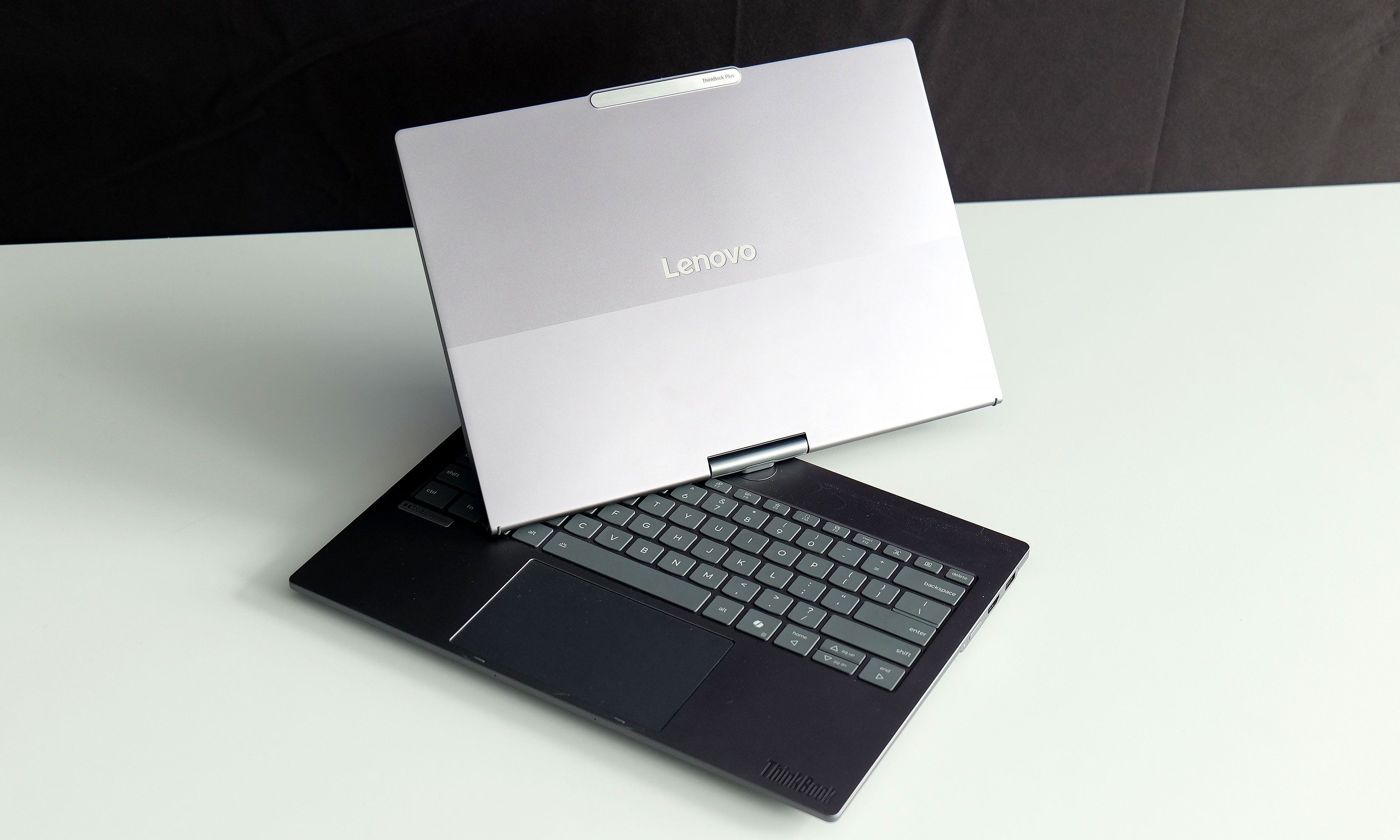
CES 2026: The Lenovo ThinkBook Plus Gen 7 Auto Twist won’t let you out of it sight

A couple years ago Lenovo showed off a concept laptop stand that used cameras and AI to follow you around. But now at CES 2026, the company has taken that idea and turned it into a full-fledged system that it’s actually going to sell. 

Dubbed the ThinkBook Plus Gen 7 Auto Twist, instead of a laptop stand, Lenovo created a standalone notebook with the same functionality, plus a little more. The impressive thing is that despite having a built-in motor that lets its display follow you around, the laptop’s design doesn't look all that outlandish. And after playing around with it a bit, I discovered a handful of other tricks it can do. 

Instead of using your fingers to open the lid like a luddite, all you have to do is knock a couple times and then the laptop’s display will pop up by itself. From there, you’re greeted with a surprisingly good-looking 14-inch 2.8K OLED display and a traditional keyboard that won’t upset longtime ThinkBook or ThinkPad aficionados. You also get solid specs including support for Intel’s new Core Ultra Series 3 processors, up to 32GB of RAM, 2TB of storage and a decently large 75Whr battery. The laptop also sports a strong selection of ports including two USB-C with Thunderbolt 4, two USB-A 3.2 Gen 2, a full-size HDMI jack and Wi-Fi 7. And all of this comes in a chassis that weighs 3.1 pounds, which is very reasonable for a 14-inch machine. 

As for its auto-twisting abilities, the main use case is during presentation and video calls, where the laptop can use its motor, 10-MP webcam and AI to track your face as you move around so you stay neatly in frame. Compared to the concept I saw before, the laptop pivots and rotates its display more smoothly (though it’s still a bit jerky) and if you want, you can even make it dance to music. Alternatively, the laptop can analyze your posture to position its screen in the optimal position to prevent slouching or automatically transform between laptop, tablet and presentation modes. While this is a really minor inclusion, my favorite thing about the Auto Twist is that when you turn the system off, the laptop will automatically close its own lid, as if it was tucking itself into bed. 

The other goal of this laptop is that Lenovo is touting it as a vertical AI solution for small businesses. Naturally this means that the system supports Microsoft’s Copilot+ features, though we also saw a demo of Lenovo’s own AI companion. Not only can you talk to it, ask it questions or use it to translate other languages like a regular digital assistant, the company created a friendly face that reacts to your queries and comments. 

The one odd inclusion, which probably won’t make it to retail units, was an AI feature designed to help you understand hidden meanings or subtext in other languages. However, in my experience (as seen in the video above), this turned into a weird excuse to get negged by AI or at the very least make yourself more paranoid about what your friends or coworkers are saying about you. 

My favorite thing about the Auto Twist is that if you shut it down, it will automatically close its own lid.
Sam Rutherford for Engadget

In the end, I’m still not sure I need a laptop with a display and a camera that can follow me around during video calls. But if you have happy feet during work meetings or like to express yourself through movement, the ThinkBook Plus Gen 7 Auto Twist might be the business notebook you need. Plus, considering it features relatively novel tech, its starting price of $1,649 is surprisingly approachable. You’ll just have to wait until it goes on sale sometime in June.

This article originally appeared on Engadget at https://www.engadget.com/computing/laptops/ces-2026-the-lenovo-thinkbook-plus-gen-7-auto-twist-wont-let-you-out-of-it-sight-010000913.html?src=rss

Lenovo goes sci-fi with its wild XD Rollable Concept at CES 2026

Lenovo has experimented more with laptops featuring rollable displays than pretty much any other PC maker and at CES 2026 it’s keeping that trend going with the XD Rollable Concept.

Equipped with a 180-degree Gorilla Glass Victus 2 cover, the XD Rollable concept features a very futuristic design. However, underneath, it has the same basic engineering as last year’s ThinkBook Plus Gen 6. That means with the touch of a button, its 13.3-inch flexible OLED display can expand to 16 inches, which gives you around 50 percent extra screen space in just a few seconds. The main difference with Lenovo’s latest concept is that instead of hiding the unused section of its rollable display underneath its keyboard, the XD’s panel wraps up and over its lid to create a “world-facing” display around back. This allows people sitting on the other side of the laptop to see content, with the laptop capable of mirroring elements from its main display or using that space as a small secondary monitor. 

Now I will admit that after seeing the XD Rollable in person, its design does feel a bit gimmicky. Even though Lenovo’s space-themed animation that appears when the laptop’s display extends is pretty slick, I’m not sure how helpful that world-facing display really is. In normal use, you can’t even see it because it’s on the other side of the lid and while I suppose you could utilize that area for meetings or presentations, I think most people would be much better off simply connecting the notebook to a dedicated secondary monitor or projector. 

That said, I do like that contrary to the ThinkBook Plus Gen 6, by exposing the unused part of the XD Rollable’s display when it’s not extended, you get a little bit of extra value out of it. At the very least, it beats stashing the rest of the panel underneath the keyboard where it won’t be seen at all. On top of that, I like the look of having no bezel along the top of the display and you can even use touch controls on the edge of the display to control widgets or expand its flexible screen. Interestingly, the coolest part about the XD Rollable might not even be its screen, but the motors and rails that Lenovo uses to extend its display, which are easily seen beneath its glass design.

Meanwhile, the rest of the XD Rollable is very down to earth with it featuring a comfy keyboard and a decent-sized touchpad. The main downsides are that its glass lid makes the concept a bit heavier than a more traditional 13-inch notebook and you only get two USB-C ports. But considering that Lenovo isn’t planning to put this thing into production, that lack of connectivity or info regarding its specs shouldn’t come as a big surprise.


This article originally appeared on Engadget at https://www.engadget.com/computing/laptops/lenovo-goes-sci-fi-with-its-wild-xd-rollable-concept-at-ces-2026-010000817.html?src=rss

Motorola expands its Moto Things lineup with a new Bluetooth tracker, stylus and smartwatch

After kicking off its Moto Things accessory line with wireless earbuds, a Bluetooth tracker and a cheap smartwatch in 2024, Motorola is doubling down. At CES 2026, the company is announcing a sequel to its tracker, the Moto Tag 2, a stylus for its new folding phone, the Moto Pen Ultra and a more premium smartwatch called the Moto Watch.

The Moto Watch has a 47mm round face with a stainless steel crown and an aluminum frame. The smartwatch comes with a PANTONE "Volcanic Ash" silicone band, but is designed to support third-party 22mm bands, too, which greatly expands its customization options. Motorola says the watch can get up to 13 days of battery life normally or seven days with its always-on display enabled, and also features a built-in speaker and microphone for hands-free controls and audio notifications. The Moto Watch is meant to be fairly durable, as well, with Gorilla Glass 3 front glass and IP68 water and dust resistance.

The actual fitness features of the watch are powered by Motorola's new partner Polar, a company with its own line of fitness trackers and smartwatches. The Moto Watch lets users log their calorie consumption throughout the day, track their workouts and activity levels (with a daily Activity Goal and Activity Score) and monitor their sleep. The watch also has built-in dual-frequency GPS for tracking runs, bike rides and hikes.

A hand holding a Moto Pen Ultra writing on a Razr Fold.
Motorola

While Samsung dropped S Pen stylus support on its latest version of the Galaxy Z Fold 7 (one of many ways the company got the foldable so thin), Motorola is embracing styluses on its new Razr Fold. The Moto Pen Ultra comes with a charging case and supports things like palm rejection and tilt sensitivity for more accurate strokes. The Moto Pen Ultra can also be used with Google's Circle to Search and new AI-powered software features like "Sketch to Image," which converts hand-drawn sketches into detailed images.

A bike seat with a Moto Tag 2 attached to it.
Motorola

The Moto Tag 2 builds on the original Moto Tag with a longer battery life and better durability. The Moto Tag 2 is IP68-rated and now gets over 500 days of battery life in comparison to the original Tag's year-long battery. As before, the Bluetooth tracker connects to Google's Find Hub network and Motorola says the tracker's ultra-wideband (UWB) antenna and support for Bluetooth Channel Sounding can help users determine the exact distance they are from their tracked object. You can also press the button on the Moto Tag 2 to ring your phone if it's missing, or customize the Tag to act as a camera shutter button.

Motorola hasn't shared pricing details for any of its new Moto Things accessories, though it has provided a release date for at least one. The Moto Watch will be available on January 22 from the company's website. The Moto Tag 2 and Moto Pen Ultra, meanwhile, will both be available in North America "in the coming months."

This article originally appeared on Engadget at https://www.engadget.com/mobile/smartphones/motorola-expands-its-moto-things-lineup-with-a-new-bluetooth-tracker-stylus-and-smartwatch-010000669.html?src=rss

Lenovo and Motorola are releasing their own on-device AI assistant

If the world didn't already have one too many digital assistants, Lenovo is adding another one to the pile. On Tuesday evening, the company announced Qira, a cross-device AI for both its own computers and Motorola smartphones. Set to arrive later this quarter, it will live at the system level of Lenovo devices. Users won't need to open or switch to the assistant. Instead, "it's always present," says Lenovo.   

Of course, you can ignore Qira, and it will stay quiet if you don't need the software to do anything for you. Occasionally, Lenovo says Qira will surface proactive suggestions, and for frequent users, the company promises a machine learning system that will develop a "living model" of your world, "understanding context, continuity and personal patterns of over time." In practice, that means Qira can write emails for you, transcribe and translate meetings and provide summaries of things you might have missed. You know, all the usual stuff every company is offering with their on-device assistants.  

From a privacy standpoint, Lenovo says Qira employs a hybrid architecture that "prioritizes" on-device processing, and won't collect customer data without the user's permission. "Every aspect of the Lenovo Qira experience is designed to be secure, ethical, and accountable." I asked Lenovo how Qira would interact with Copilot and Gemini on the company's PCs and Motorola smartphones, and if the new assistant would add to the processing load on those devices, but the company has yet to respond to my email. I'll update this article when I hear back. 

On paper, creating a dedicated AI assistant for the company's devices is something I'm sure Lenovo executives agreed was a good idea, but when many people aren't even using Copilot, it feels like a misread of what Lenovo users want. In April, reporting from Newcomer suggested Copilot had flatlined at around 20 million weekly users in 2024. By contrast, over that same period, ChatGPT had grown to 400 million weekly users, and as of late 2025, there are 800 million people using OpenAI's chatbot every week. 

This article originally appeared on Engadget at https://www.engadget.com/ai/lenovo-and-motorola-are-releasing-their-own-on-device-ai-assistant-010000696.html?src=rss

CES 2026: The Lenovo Legion Pro Rollable concept goes big wide at the touch of a button

Lenovo might have the most concept devices of any company at CES 2026, but the wildest and most interesting one is almost certainly the Legion Pro Rollable which features a 16-inch flexible display that can expand to not one but two different sizes. 

To make the Legion Pro Rollable, Lenovo started out with a standard Legion Pro 7i and kept the bottom half including all of its ports and support for an RTX 5090 GPU. But then the company went a bit crazy: Instead of replacing the notebook’s original 16-inch OLED screen with a rollable variant that extends upwards like the Thinkbook Plus Gen 6 from 2025, Lenovo opted for one that expands outwards to either 21.5 inches or 23.8 inches This means instead of being restricted to a standard 16:10 aspect ratio, you also have the choice of 21:9 or an ultra-wide 24:9 with just the touch of a button. Or more like two buttons because to widen or shrink its display, you need to press FN plus one of its arrow keys.

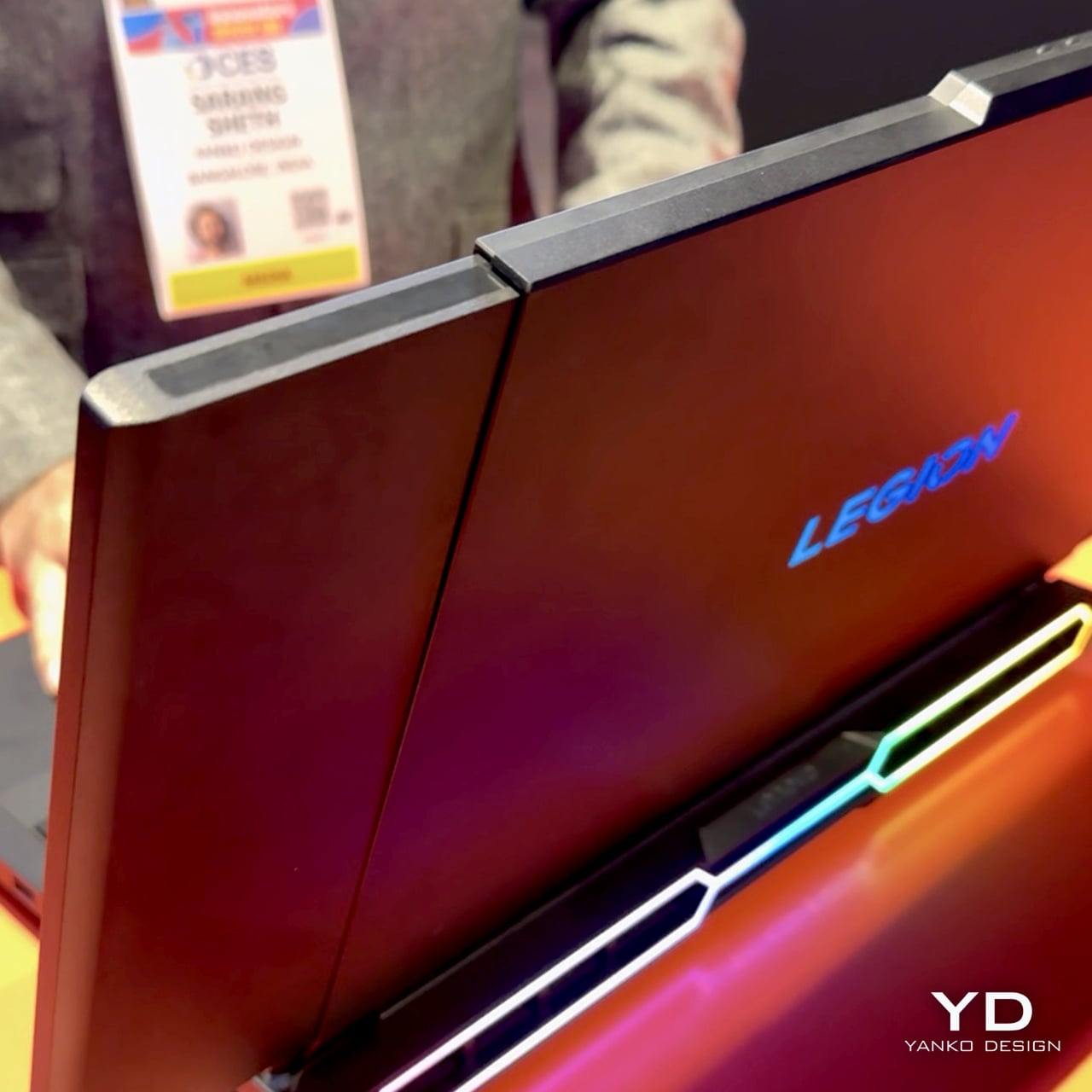
Admittedly that feels a bit clunky considering some of Lenovo’s other laptops with expandable displays have a dedicated button. But this is a concept device after all, which was immediately obvious when I got a chance to see this up close. The bottom of the laptop feels solid, as you’d probably expect because not much has changed there. However, the top of the laptop didn’t feel super sturdy, probably due to the display’s hinge not being able to fully support a heavier lid and the notebook’s bulkier rollable display. 

I also noticed that there were some faint lines left by the internal motors that allow the rollable display to do its thing and a bit of waviness from the panel due to it not being super taut. That said, from the side, I was impressed that even for a prototype, Lenovo did a halfway decent job of eliminating any huge panel gaps or empty spaces where the lid expands. The biggest bummer is that even though Lenovo had a handful of demo units on on site, there weren’t any games installed so I wasn’t able see the Legion Pro Rollable’s tech function in full glory. 

But if we’re being honest, none of that really matters on a gadget that’s meant to be a showcase and testbed for next-gen tech. The idea of a gaming laptop with a screen that can go from normal to ultra-wide at the touch of a button (or buttons) is super cool, especially if you play titles like flight sims, racing games or big open-world adventures that can take advantage of an extra wide screen. And out of all of the concepts I’ve seen at CES 2026, this one is at the top of the list of stuff that I hope eventually gets turned into a proper retail product. 


This article originally appeared on Engadget at https://www.engadget.com/computing/laptops/ces-2026-the-lenovo-legion-pro-rollable-concept-goes-big-wide-at-the-touch-of-a-button-010000333.html?src=rss