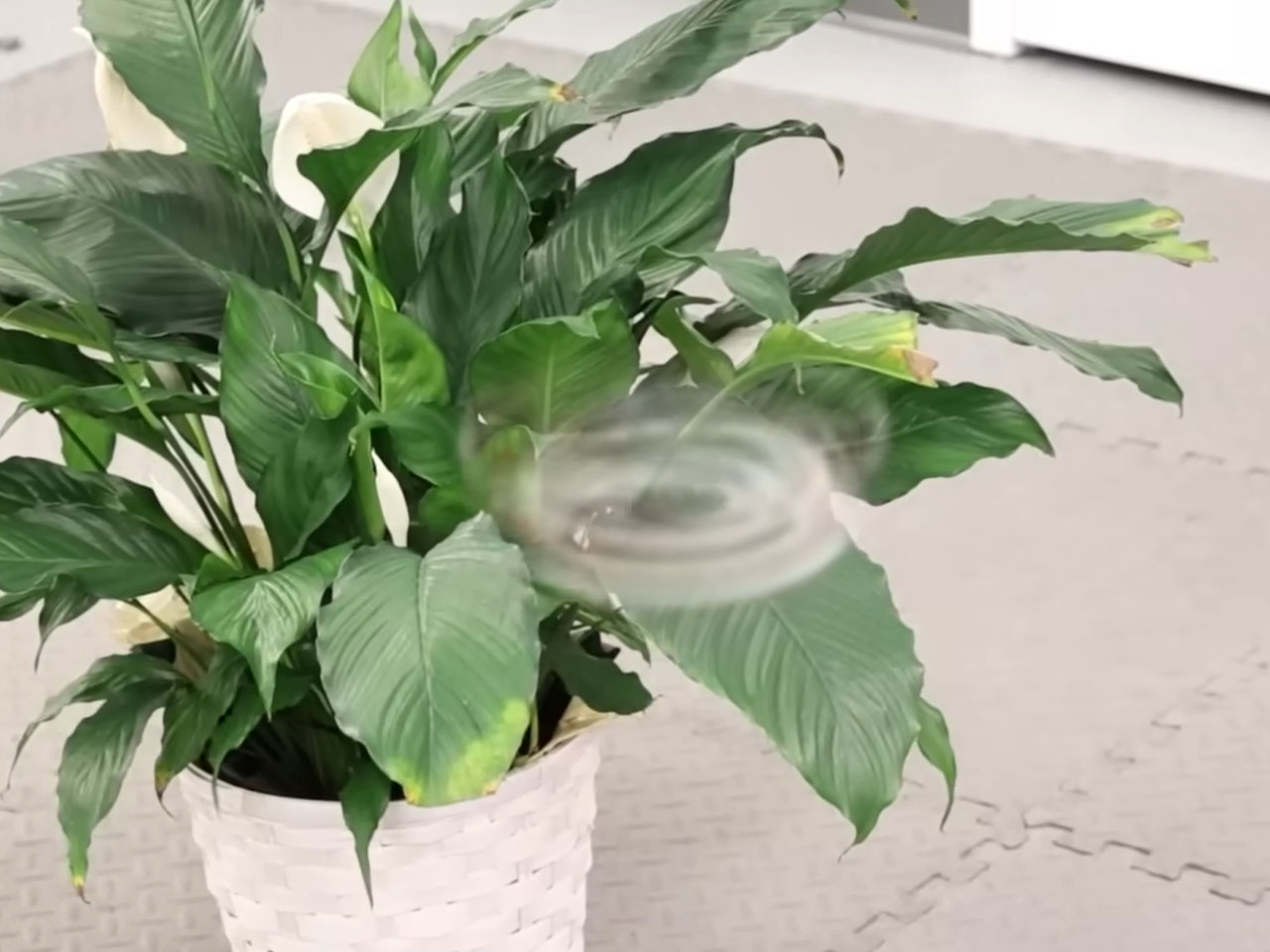
These Stickers Turn Crumbling City Walls Into Tiny Living Ecosystems

Cities are built almost exclusively for people. Every surface, every wall, every façade is designed, maintained, and repaired with human use in mind. But cities aren’t just inhabited by humans, and the idea that urban decay, those crumbling plaster patches and cracked brick faces, is purely a problem to be fixed ignores the potential it quietly holds for other species.

That’s the provocation at the heart of Green Anarchy, a project by Yasemin Keyif of Bahçeşehir University in Istanbul, presented as part of the UNFOLD 2026 exhibition at BASE Milano during Milan Design Week. Rather than treating a cracked or crumbling façade as something to be patched over, Keyif asks what happens when designers choose to work with decay instead of against it.

Designer: Yasemin Keyif (Bahçeşehir University)

The answer takes the form of a small, biodegradable sticker pressed directly onto damaged building surfaces. Each unit is made from a blend of paper pulp, coco peat, perlite, and seeds in its main body, with an adhesive system of gum arabic, methyl cellulose, and glycerin that lets it bond to roughened or degraded masonry without any synthetic materials.

The process is surprisingly simple: the stickers are soaked, mixed, shaped, and applied by hand directly onto the wall. Over time, the seeds embedded in the substrate germinate and take root in the existing cracks and recesses, gradually turning neglected building surfaces into small, self-sustaining ecosystems. The name for this sequence, decay, attach, grow, also doubles as the project’s driving logic.

Keyif developed the concept with Karaköy, a dense historic neighborhood in Istanbul, as the pilot context. The project maps four escalating stages of urban decay, from minor surface cracks to severe structural collapse, and identifies each stage as a viable entry point for the stickers. The greater the damage, the more surface area becomes available for attachment and growth, turning the most deteriorated walls into the most fertile ground.

The deeper idea is a repositioning of architecture itself. Buildings, in this framework, aren’t just infrastructure for human activity but potential interfaces between human and non-human life. Cities already host birds, insects, mosses, and small animals that quietly inhabit the spaces we overlook, and Green Anarchy asks whether design can actively make room for that, rather than continually squeezing it out.

Presented as part of UNFOLD 2026, Domus Academy’s annual international design showcase held under the theme “Engage Friction: Designing Through Conflict,” Green Anarchy fits the brief almost too well. It doesn’t try to resolve the tension between the built city and the natural world so much as give them a way to grow into each other, slowly, without asking anyone’s permission.

The post These Stickers Turn Crumbling City Walls Into Tiny Living Ecosystems first appeared on Yanko Design.

What is a Silicon-Carbon Battery? The Samsung Galaxy S27 Ultra’s Secret Weapon Explained

What is a Silicon-Carbon Battery? The Samsung Galaxy S27 Ultra’s Secret Weapon Explained Diagram shows battery stacking layers and separator changes used to improve lifespan in a future Galaxy S27 Ultra.

The Samsung Galaxy S27 Ultra is poised to introduce a fantastic innovation in the form of a silicon-carbon battery, potentially reshaping the landscape of smartphone energy storage. This innovative technology promises to deliver higher energy capacity, extended lifespan, and enhanced thermal stability, addressing the limitations of traditional lithium-ion batteries. If successfully implemented, it could elevate […]

The post What is a Silicon-Carbon Battery? The Samsung Galaxy S27 Ultra’s Secret Weapon Explained appeared first on Geeky Gadgets.

Posted in Uncategorized

These Sequins Are Made From Industrial Dye Sludge and Still Sparkle

The fashion industry has a water problem that most people never see. Dyeing fabric is one of the most chemically intensive steps in garment production, and the wastewater that comes out of that process carries synthetic dyes, heavy metals, and other pollutants that routinely end up in rivers and soil. By the time a sequined dress reaches a store, the environmental cost of making it sparkle is already long gone and mostly forgotten.

CQ Studio, a London-based regenerative textiles lab, tackled that problem head-on with a material experiment that turns the very wastewater from textile dyeing into the sequins themselves. The result, called Detox Bio-Embellishments, was on show at BASE Milan during Milan Design Week 2026 as part of the studio’s debut exhibition, Transient Gradients.

Designer: Cassie Quinn (CQ Studio)

The process starts by running textile-dye wastewater through a detox capture system that uses food waste to pull out the contaminants. Once the water is cleaned and separated, the leftover sludge doesn’t get thrown away. Instead, it’s processed into thin, flexible sheets that look and feel like plastic, but are bio-based, biodegradable, and recyclable. Sequins are then die-cut from those sheets, and whatever scraps remain from the cutting are folded back into the process.

What makes the material particularly clever is how far it extends the concept of nothing wasted. It handles both synthetic-dye and natural-dye wastewater, keeping the synthetic version from ever reaching waterways, while the natural-dye version becomes safe enough to compost into soil. The sheets can also be made using food waste and natural pigments, giving designers a way to produce embellishments in a wide range of colors without any virgin plastic.

The visual result doesn’t look like a sustainability project at all. The sequins and embellishment pieces come out in deep blacks, jewel-like teals, warm ambers, rich reds, and tortoiseshell-patterned fragments that carry a high-shine finish. Strung onto braided cords and translucent threads for the Milan installation, they hung in dense cascading curtains that looked more like haute couture jewelry than anything born from industrial sludge.

For the fashion industry, where sequins are almost universally made from petroleum-based PET plastic and are notoriously difficult to recycle, having a material that can match the visual appeal of conventional embellishments while being fully bio-based is a genuinely significant step. A garment made with Detox Sequins wouldn’t just sparkle; it would also carry a story worth telling, one that runs from a dyeing vat through a detox system and out the other side as something a designer can actually use.

The post These Sequins Are Made From Industrial Dye Sludge and Still Sparkle first appeared on Yanko Design.

How the New Gemini Mac App Can Streamline Your Creative Workflow

How the New Gemini Mac App Can Streamline Your Creative Workflow The new Gemini app interface running on a MacBook Pro with macOS Sequoia

The Gemini Mac app has officially launched, offering macOS users new ways to enhance their workflows. As Paul Lipsky explains, the app introduces features like the AI-powered content creation suite and the Canvas workspace, designed for brainstorming and collaboration. However, its compatibility is limited to macOS Sequoia 15.0 or later, excluding Intel-based Macs. This reflects […]

The post How the New Gemini Mac App Can Streamline Your Creative Workflow appeared first on Geeky Gadgets.

Posted in Uncategorized

How the New Gemini Mac App Can Streamline Your Creative Workflow

How the New Gemini Mac App Can Streamline Your Creative Workflow The new Gemini app interface running on a MacBook Pro with macOS Sequoia

The Gemini Mac app has officially launched, offering macOS users new ways to enhance their workflows. As Paul Lipsky explains, the app introduces features like the AI-powered content creation suite and the Canvas workspace, designed for brainstorming and collaboration. However, its compatibility is limited to macOS Sequoia 15.0 or later, excluding Intel-based Macs. This reflects […]

The post How the New Gemini Mac App Can Streamline Your Creative Workflow appeared first on Geeky Gadgets.

Posted in Uncategorized

Simple iOS 26 Tweaks to Stop iPhone Battery Drain Today

Simple iOS 26 Tweaks to Stop iPhone Battery Drain Today Charging screen showing Optimized Battery Charging with a 90% limit set for better long-term battery health.

If your iPhone’s battery is depleting faster than expected after updating to iOS 26, you’re not alone. Many users have reported similar issues, but the good news is that there are effective ways to address this. By making a few adjustments to your settings and adopting smarter usage habits, you can significantly reduce power consumption, […]

The post Simple iOS 26 Tweaks to Stop iPhone Battery Drain Today appeared first on Geeky Gadgets.

Posted in Uncategorized

Simple iOS 26 Tweaks to Stop iPhone Battery Drain Today

Simple iOS 26 Tweaks to Stop iPhone Battery Drain Today Charging screen showing Optimized Battery Charging with a 90% limit set for better long-term battery health.

If your iPhone’s battery is depleting faster than expected after updating to iOS 26, you’re not alone. Many users have reported similar issues, but the good news is that there are effective ways to address this. By making a few adjustments to your settings and adopting smarter usage habits, you can significantly reduce power consumption, […]

The post Simple iOS 26 Tweaks to Stop iPhone Battery Drain Today appeared first on Geeky Gadgets.

Posted in Uncategorized

How Self-Evolving AI Agents Are Learning to Rewrite Their Own Rules

How Self-Evolving AI Agents Are Learning to Rewrite Their Own Rules Graphic showing a self-evolving AI agent learning from in-context feedback and adapting its harness.

Self-evolving AI agents are reshaping how artificial intelligence systems learn and adapt, allowing them to autonomously refine their skills and performance over time. AI Jason explores the mechanisms behind these agents, highlighting key methodologies like in-context learning and architectural refinement. For example, in-context learning allows agents to dynamically respond to real-time feedback, reducing the need […]

The post How Self-Evolving AI Agents Are Learning to Rewrite Their Own Rules appeared first on Geeky Gadgets.

Posted in Uncategorized

Meta will show parents the topics of their teens’ AI conversations

With countries banning social media for kids left and right, Meta is trying different things to convince parents that its platforms are safe for teens. In its latest effort, the company will start showing parents the topics their teens have discussed with Meta AI over the previous seven days. 

"Parents will be able to see the topics their teen has been asking Meta AI about in [Facebook, Messenger or Instagram] over the past week," Meta explained in a blog post. "Topics can range from School, Entertainment, and Lifestyle to Travel, Writing, and Health and Wellbeing, among others."

For parents overseeing Meta's teen accounts, the feature will appear in a new Insights tab within supervision, both in-app and on web. Parents can tap on a topic to see the different categories within each: for instance, sub-categories within Lifestyle include fashion, food and holidays, while fitness, physical health and mental health are part of the Health and Wellbeing topic. 

Meta will allow parents to look at the conversation topics kids use when talking to an AI
Meta

Meta also worked with the Cyberbullying Research Center to develop what it calls "conversation starters," or open-ended conversations about their experience with AI. It provides detail about what the questions are designed to address, and can be found on the Family Center website or through a link in the new Insights tab. 

Finally, Meta revealed more detail about its AI Wellbeing Expert Council, who will provide "ongoing input on our AI experience for teens." It will be made up of three existing advisory groups as well as new members with special expertise in responsible and ethical AI, who are affiliated with the National Council of Suicide Prevention and multiple universities. It's worth noting that Meta has a separate oversight board that deals with subjects ranging from AI to moderation. 

Offboarding moderation chores to busy parents appears to be par for the course for Meta these days. The company has recently cut back on the use of third-party vendors that help with content moderation, shifting responsibility instead to advanced AI systems, according to recent reports

The dangers of AI for teens have been one of multiple reasons countries like Spain have banned social media platforms for kids. One of the most recent and tragic cases was in Canada, where a teen was provided specific details by OpenAI's ChatGPT about how to carry out a school shooting. Another such case is under investigation in Florida, and AI's have been implicated in multiple teen suicides as well. 

In the US, the National Suicide Prevention Lifeline is 1-800-273-8255 or you can simply dial 988. Crisis Text Line can be reached by texting HOME to 741741 (US), 686868 (Canada), or 85258 (UK). Wikipedia maintains a list of crisis lines for people outside of those countries.

This article originally appeared on Engadget at https://www.engadget.com/ai/meta-will-show-parents-the-topics-of-their-teens-ai-conversations-123119624.html?src=rss