Le Creuset is launching Pokémon-themed cookware in Japan and I’m extremely jealous

Gotta Cook ’Em All!

An unlikely collaboration between two brands that have millennials obsessed, Le Creuset and the Pokémon company have joined forces to drop a limited-edition cookware collection featuring the iconic pocket monsters we know and love. From dutch ovens and saucepans to even kettles, plates, and cups, the Le Creuset x Pokémon collection artistically hat-tips Nintendo’s classic alternate-universe game, with Poke-ball-shaped plates, and Pikachu-themed pots. Don’t worry, no Pokémon was harmed in the making of this collection! The only thing being harmed are probably users around the globe that will probably never get to own any of this cookware given its limited-edition release only in Japan.

Designer: Le Creuset

The star of the show is likely to be the sunshine-yellow Cocotte cooking pot, featuring the instantly recognizable lightning bolt tail of Pikachu. Meanwhile, the black Marmite pot features a subtler nod to the franchise, with outlines of the original starter Pokémon – Bulbasaur, Charmander, and Squirtle – etched onto the lid alongside Pikachu and Snorlax.

Le Creuset isn’t stopping at pots. The collection also boasts a range of tableware, featuring colorful stacking mugs, plates, and rice bowls decorated with silhouettes of popular Pokémon characters like Pikachu, Snorlax, and the original starters. The playful touch continues with plates designed to resemble Poké Balls and Master Balls, the iconic tools used by Pokémon trainers to capture and store their companions.

The collection’s appeal extends far beyond its charming design. Le Creuset emphasizes the line’s potential to bring families together in the kitchen, with children likely to be drawn to the familiar characters. However, judging by the buzz on the Le Creuset subreddit, adults are just as eager to get their hands on these unique pieces.

With a limited release planned for select regions and a two-drop rollout across July and November, the Le Creuset x Pokémon collection is poised to become a collector’s item. It’s a clever collaboration that injects a dose of nostalgia and playful design into the kitchen, proving that even the most well-established brands can find innovative ways to engage with their audience.

The post Le Creuset is launching Pokémon-themed cookware in Japan and I’m extremely jealous first appeared on Yanko Design.
Le Creuset is launching Pokémon-themed cookware in Japan and I’m extremely jealous

Gotta Cook ’Em All!

An unlikely collaboration between two brands that have millennials obsessed, Le Creuset and the Pokémon company have joined forces to drop a limited-edition cookware collection featuring the iconic pocket monsters we know and love. From dutch ovens and saucepans to even kettles, plates, and cups, the Le Creuset x Pokémon collection artistically hat-tips Nintendo’s classic alternate-universe game, with Poke-ball-shaped plates, and Pikachu-themed pots. Don’t worry, no Pokémon was harmed in the making of this collection! The only thing being harmed are probably users around the globe that will probably never get to own any of this cookware given its limited-edition release only in Japan.

Designer: Le Creuset

The star of the show is likely to be the sunshine-yellow Cocotte cooking pot, featuring the instantly recognizable lightning bolt tail of Pikachu. Meanwhile, the black Marmite pot features a subtler nod to the franchise, with outlines of the original starter Pokémon – Bulbasaur, Charmander, and Squirtle – etched onto the lid alongside Pikachu and Snorlax.

Le Creuset isn’t stopping at pots. The collection also boasts a range of tableware, featuring colorful stacking mugs, plates, and rice bowls decorated with silhouettes of popular Pokémon characters like Pikachu, Snorlax, and the original starters. The playful touch continues with plates designed to resemble Poké Balls and Master Balls, the iconic tools used by Pokémon trainers to capture and store their companions.

The collection’s appeal extends far beyond its charming design. Le Creuset emphasizes the line’s potential to bring families together in the kitchen, with children likely to be drawn to the familiar characters. However, judging by the buzz on the Le Creuset subreddit, adults are just as eager to get their hands on these unique pieces.

With a limited release planned for select regions and a two-drop rollout across July and November, the Le Creuset x Pokémon collection is poised to become a collector’s item. It’s a clever collaboration that injects a dose of nostalgia and playful design into the kitchen, proving that even the most well-established brands can find innovative ways to engage with their audience.

The post Le Creuset is launching Pokémon-themed cookware in Japan and I’m extremely jealous first appeared on Yanko Design.
Mitsubishi Kaminari Concept: A Powerful Vision for the Future of Electric SUVs

Forget everything you thought you knew about SUVs. The Mitsubishi Kaminari concept is a breath of fresh air, a bold vision for electric vehicles that can conquer any path. The name “Kaminari” translates to “thunder” in Japanese, perfectly capturing the essence of this powerful and rugged concept. The design draws inspiration from classic Mitsubishi vehicles like the 1937 PX33, Japan’s first all-road car. This connection to the past ensures that the Kaminari feels like a true evolution of Mitsubishi’s DNA.

Designer: Stefan Syarov

Syarov dubs the Kaminari as a PUV or Performance Utility Vehicle. From the very outset, Syarov’s goal was to design a car that pushes off-road performance limits while honoring Mitsubishi’s proud history. The Mitsubishi Kaminari draws inspiration from the brand’s rich off-road racing heritage. Classic vehicles like the 1937 Mitsubishi PX33, Japan’s first all-road car, informed the design. This homage to legendary Mitsubishi models ensures the Kaminari respects the brand’s legacy while offering a thoroughly modern take on the off-road adventure vehicle.

The Kaminari’s silhouette boasts a bold presence with a dramatically sloped A-pillar flowing into a sleek, coupe-inspired roofline. A distinctive rear wing integrated seamlessly into the roof adds a touch of dynamism without sacrificing passenger headroom. This design journey, from initial sketches to final form, involved meticulous refinement. Collaboration with the Mitsubishi team during Syarov’s internship led to key improvements, including retaining the functional headroom spoiler, reinforcing the dynamic underbody protection, and incorporating unique design cues that echo Mitsubishi’s off-road heritage.

The spirit of collaboration is evident throughout the Kaminari’s development. The designer actively incorporated feedback from Mitsubishi enthusiasts worldwide. This two-way dialogue resulted in a concept that reflects not just the brand’s vision but also the desires of its loyal fanbase. Although the Kaminari isn’t an official Mitsubishi concept, it highlights what the brand has stood for all these years, while also envisioning what the brand could have been in an alternate reality where cars were designed not just for roads, but to dominate any surface they drove on.

Via Automotive Design Planet

The post Mitsubishi Kaminari Concept: A Powerful Vision for the Future of Electric SUVs first appeared on Yanko Design.
Mitsubishi Kaminari Concept: A Powerful Vision for the Future of Electric SUVs

Forget everything you thought you knew about SUVs. The Mitsubishi Kaminari concept is a breath of fresh air, a bold vision for electric vehicles that can conquer any path. The name “Kaminari” translates to “thunder” in Japanese, perfectly capturing the essence of this powerful and rugged concept. The design draws inspiration from classic Mitsubishi vehicles like the 1937 PX33, Japan’s first all-road car. This connection to the past ensures that the Kaminari feels like a true evolution of Mitsubishi’s DNA.

Designer: Stefan Syarov

Syarov dubs the Kaminari as a PUV or Performance Utility Vehicle. From the very outset, Syarov’s goal was to design a car that pushes off-road performance limits while honoring Mitsubishi’s proud history. The Mitsubishi Kaminari draws inspiration from the brand’s rich off-road racing heritage. Classic vehicles like the 1937 Mitsubishi PX33, Japan’s first all-road car, informed the design. This homage to legendary Mitsubishi models ensures the Kaminari respects the brand’s legacy while offering a thoroughly modern take on the off-road adventure vehicle.

The Kaminari’s silhouette boasts a bold presence with a dramatically sloped A-pillar flowing into a sleek, coupe-inspired roofline. A distinctive rear wing integrated seamlessly into the roof adds a touch of dynamism without sacrificing passenger headroom. This design journey, from initial sketches to final form, involved meticulous refinement. Collaboration with the Mitsubishi team during Syarov’s internship led to key improvements, including retaining the functional headroom spoiler, reinforcing the dynamic underbody protection, and incorporating unique design cues that echo Mitsubishi’s off-road heritage.

The spirit of collaboration is evident throughout the Kaminari’s development. The designer actively incorporated feedback from Mitsubishi enthusiasts worldwide. This two-way dialogue resulted in a concept that reflects not just the brand’s vision but also the desires of its loyal fanbase. Although the Kaminari isn’t an official Mitsubishi concept, it highlights what the brand has stood for all these years, while also envisioning what the brand could have been in an alternate reality where cars were designed not just for roads, but to dominate any surface they drove on.

Via Automotive Design Planet

The post Mitsubishi Kaminari Concept: A Powerful Vision for the Future of Electric SUVs first appeared on Yanko Design.
ADAM elements Ultra-Slim MagSafe Power Bank for iPhone – 5000mAh & Dual-Device Charging

Sort of like a Gatorade but for your phone, the GRAVITY C5 MagSafe Power Bank from ADAM elements gives your smartphone a burst of energy just when it’s down. Equipped with a 5000mAh battery on the inside, the GRAVITYC5 snaps to the back of your phone, wirelessly charging it to keep you going. It’s sort of like giving your phone an extra battery, without cables or charging bricks. Moreover, this ultra-slim power bank boasts a mere 8.7mm in thickness, making it easy to slip into a pocket, bag, or purse without adding bulk.

Designer: ADAM elements

Click Here to Buy Now: $58.65 $69 (15% off with coupon code “15OFFGC5AE”). Hurry, deal ends in 48-hours!

The MagSafe-compatible GRAVITY C5 boasts dual charging functionality, offering both 15W wireless charging and 20W USB-C wired fast charging. This allows you to power up two devices simultaneously, perfect for keeping your phone and wireless earbuds juiced on the go. The 5000mAh lithium battery packs enough punch to keep your devices running through a busy day, making it a reliable companion for travelers, commuters, or anyone who needs to stay connected.

Designed to be slimmer than your smartphone, the GRAVITY C5 snaps right to the back of your device, charging it even through MagSafe-compatible cases. Its slick profile makes it a dream to carry around, whether it’s in your backpack, in your pocket, or even attached to your phone. Rounded edges means the GRAVITY C5 slips right into your pocket without getting caught on the lining, something other bulkier sharper power banks tend to do as you put your phone into your pocket with the power bank attached.

The GRAVITY C5 sports a slick machined aluminum outer cover that allows it to match up to the metallic finish on the back of Pro iPhones. It does, however, also sport a range of anodized color options that give you a variety to choose from, so you’re not stuck with a plain black, white, or silver variant. The power bank comes in five colors – Pink, Blue, Purple, Red, and Gray – allowing you to choose a shade that matches your style. On the inside, it’s equipped with over-current protection (OCP), over-voltage protection (OVP), and Foreign Objects Detection (FOD). These features safeguard your devices against potential damage during charging, offering peace of mind.

The ADAM elements GRAVITY C5 is priced at $69, but YD readers can grab it for a discounted price of $58.65. For a complete charging experience, each package includes a storage pouch and a 200mm USB-C charging cable. Additionally, a one-year warranty provides assurance and reliable customer service.

Click Here to Buy Now: $58.65 $69 (15% off with coupon code “15OFFGC5AE”). Hurry, deal ends in 48-hours!

The post ADAM elements Ultra-Slim MagSafe Power Bank for iPhone – 5000mAh & Dual-Device Charging first appeared on Yanko Design.

What Apple’s WWDC got right… and what Google’s I/O got wrong

Exactly ten years ago, Google co-founder Sergey Brin jumped out of an airplane and parachuted down into a live event to present Google I/O. Cut to 2024, and Google arguably had one of the most yawn-inducing I/O events ever… but Apple, on the other hand, hat-tipped Brin by having senior VP of Software Engineering Craig Federighi jump out of a plane and parachute down into the Apple headquarters, kicking off the Worldwide Developer’s Conference (WWDC) event. If you were fortunate enough to sit through both Google’s I/O event for developers, and yesterday’s WWDC, chances are you probably thought the same thing as me – How did Google become so boring and Apple so interesting?

Google’s Sergey Brin skydiving into the I/O event wearing the radical new Google Glass in 2014

The Tale of Two Keynotes

Practically a month apart, Google and Apple both had their developer conferences, introducing new software features, integrations, and developer tools for the Android and Apple OS communities respectively. The objective was the same, yet presented rather differently. Ten years ago, Google’s I/O was an adrenaline-filled event that saw a massive community rally around to witness exciting stuff. Apple’s WWDC, on the other hand, was a developer-focused keynote that didn’t really see much involvement from the Apple consumer base. Google popularized the Glass, and unveiled Material Design for the first time, Apple, on the other hand, revealed OSX Yosemite and iOS 8. Just go back and watch the keynotes and you’ll notice how vibrant one felt versus the other. Both pretty much announced the same things – developer tools, new software versions, feature upgrades within first-party apps, and a LOT of AI… but Google’s I/O got 1.8 million views on YouTube over 3 weeks, and Apple’s WWDC sits at 8.6 million views in just one day. (As of writing this piece)

How Apple held the attention

Broadly, having seen both events, I couldn’t help but describe them differently. Google’s keynote seemed like a corporate presentation. Apple’s keynote felt like an exciting showcase. The language was different, the visuals were different, but most importantly, the scenes were different too. Google’s entire I/O was held in person, while Apple did have an in-person event, but the keynote was televised, showing different environments, dynamic angles, and great cinematography. Both events were virtually the same length, with Google’s keynote being 1 hour and 52 minutes long, while Apple’s was 1 hour and 43 minutes. Honestly, after the 80-minute mark, anyone’s mind will begin drifting off, but Apple did a much better job retaining my focus than Google. How? Well, it boiled down to three things – A. a consumer-first approach, B. simplified language, and C. a constant change of scenery.

Notice Apple’s language throughout the presentation, and you’ll see how the entire WWDC rhetoric was user-functionality first, developer-feature second. Whether it was VisionOS, MacOS, iOS, WatchOS, iPadOS, or even TV and Music, Apple’s team highlighted new features that benefit all Apple users first, then mentioned the availability of SDKs and APIs to help developers implement those features in their apps too. One could argue that a Worldwide Developer Conference should inherently be developer-first, but hey, developers are going to watch the keynote regardless. The fact that 8.6 million people (mostly Apple users) watched the WWDC keynote on YouTube shows that Apple wanted to make sure users know about new features first, then developers get their briefing. The fact that a majority of viewers were users also boils down to Apple’s language. There was hardly any technical jargon used in the Keynote. No mention of how many teraflops are used by Apple’s GPUs while making genmojis, what version number Sequoia is going to be, or what Apple Intelligence’s context window is, or whether it’s multimodal. Simple language benefits everyone, whether it’s a teenager excited about new iMessage features, a filmmaker gearing to make spatial content using iPhones or Canon cameras, or a developer looking forward to building Apple Intelligence into their apps. Even Apple Intelligence’s user-first privacy features were explained in ways everyone could understand. Finally, Apple’s production quality helped visually divide the keynote into parts so the brain didn’t feel exhausted. All the different OS segments were hosted by different people in different locations. Craig Federighi and Tim Cook made multiple appearances, but shifted locations throughout, bringing a change of scenery. This helped the mind feel refreshed between segments… something that Google’s in-person keynote couldn’t benefit from.

Where Google dropped the ball

A keynote that’s nearly 2 hours long can be exhausting, not just for the people presenting but also for the people watching. Having the entire keynote on one stage with people presenting in person can feel exactly like an office presentation. Your mind gets exhausted faster, seeing the same things and the same faces. Google didn’t announce any hardware (like they’ve done in past years) to break the monotony either. Instead, they uttered the word AI more than 120 times, while being pretty self-aware about it. The lack of a change of scenery was just one of the factors that made Google’s event gather significantly fewer eyeballs.

Unlike Apple’s presentation, which had a very systematic flow of covering each OS from the more premium VisionOS down to the WatchOS, Google’s presentation felt like an unplanned amalgamation of announcements. The event was broadly about three things – Google’s advancements in AI, new features for users, and new tools for developers – but look at the event’s flow and it feels confusing. I/O started with an introduction where Pichai spoke about multimodality and context windows, then progressed to Deep Mind, then to Search (a user feature), then Workspace (an enterprise feature), then Gemini (a user feature again), then Android (which arguably was supposed to be the most important part of the event), and then to developer tools. An Android enthusiast wouldn’t be concerned with DeepMind or Google Workplace. They might find Search interesting, given how core it is to the Google experience, but then they’d have to wait through 2 more segments before the event even GOT to Android. Search and Gemini are highly intertwined, but they weren’t connected in the keynote – instead, there was an entire 13-minute segment on Workplace in between.

If all that wasn’t fatiguing enough, Google’s I/O tended to lean into technical jargon describing tokens, context windows, and how the multimodal AI could segment data like speech and videos, grabbing frames, finding context, eliminating junk data, and providing value. There was also a conscious attempt at showing how all this translated into real-world usage, and how users could benefit from this technology too, but not without flexing terms that developers and industrial-folk would understand.

Although it’s natural to read through this article and conclude that one company did ‘a better job’ than another company, that isn’t really the case. Both Apple and Google showcased the best they had to offer on a digital/software level. However, the approach to these keynotes has changed a lot over the last 10 years. While Google’s I/O in 2014 had a lot of joie de vivre, their 2024 I/O did lack a certain glamor. Conversely, Apple’s WWDC had everyone at the edge of their seat, enjoying the entire ride. Maybe you got tired towards the end (I definitely did mid-way through the Apple Intelligence showcase), but ultimately Apple managed to deliver a knockout performance… and that’s not me saying so – just look at the YouTube numbers.

The post What Apple’s WWDC got right… and what Google’s I/O got wrong first appeared on Yanko Design.
IKEA VAPPEBY Bluetooth Speaker gets a 3rd Gen Redesign with a Clean Minimalist Makeover

If you remember the Vappeby speaker from not too long ago, it had this gorgeous boxy avatar with a volume speaker emanating from within the speaker’s fabric cover. The Vappeby of the past blended in the same way smart speakers did, using fabric to integrate into home decor, but not anymore. IKEA’s new VAPPEBY 8×8 has a bold design, with pronounced audio drivers standing out against a plain, boxy housing. The volume knob still stays there, but the new Vappeby gets a rigid, removable handle too, and also now supports the addition of a battery pack so you can unshackle your speaker and take it with you to parties, the poolside, or the backyard.

Designer: IKEA

The most striking feature of the Vappeby 8×8″ is its size. It’s the biggest Vappeby yet, measuring a substantial yet portable 8 inches by 8 inches (without the handle). Despite its size, the speaker retains the clean, minimalist design synonymous with IKEA furniture. However, unlike previous versions, this speaker evokes a certain industrial chic aesthetic, reminiscent of the Swedish design collective Teenage Engineering.

At 39 watts of peak power output, the Vappeby 8×8″ promises impressive audio for its size. A tweeter and a large subwoofer are housed within the minimalist casing, although the exact driver sizes are yet to be revealed by IKEA. A single knob controls volume and playback, while a 3.5mm jack allows for connecting wired audio sources.

For those who crave a truly immersive experience, two Vappeby 8×8″ speakers can be paired to create stereo sound. This functionality makes the speaker ideal for small gatherings or creating a wider soundscape in a personal space.

Powering the speaker is a choice between plugging it directly into a wall outlet or using an ENEBY battery pack (sold separately). The lack of a built-in battery might be a drawback for some, but it also keeps the price down. IKEA also offers a US$10 front panel for those who prefer a more finished look.

The Vappeby 8×8″ comes in black and white colorways and is priced at US$69.99. The speaker plugs into any wall outlet, but IKEA’s $28 Eneby battery pack fits into the base, giving you wireless audio capabilities. If you liked the original fabric-clad aesthetic, the company also sells a $10 cover that you can install on the front, in true IKEA fashion.

The post IKEA VAPPEBY Bluetooth Speaker gets a 3rd Gen Redesign with a Clean Minimalist Makeover first appeared on Yanko Design.
Apple was right about the iPad Calculator App… After 14 years, the iPad Calculator is Game-Changing

After over a decade, the iPad finally got a calculator app. Let’s just get one thing straight – Apple just made the calculator glamorous.

Steve Jobs debuted the iPad back in January 2010, that’s a whopping 14 and a half years ago… and mysteriously enough, the iPad never shipped with an Apple-branded calculator app. Whenever pressed on the issue, Apple spokespeople always had the same answer – they didn’t want to release a calculator app just for the sake of it. They wanted to get it right by designing the best-ever calculator app for the iPad. Up until yesterday, all that felt like deflection, that Apple didn’t quite care about calculators on the iPad (after all, it was an entertainment and visual productivity device). Today, however, Apple is vindicating itself after over a decade of judgment. The new iPad Calculator app debuted at WWDC and it’s INCREDIBLE.

The new Calculator app for the iPad comes with a familiar interface, but uses the iPad’s larger screen to its advantage, delivering more oomph thanks to larger real estate. It has a history feature and built-in unit conversions, but if you have an Apple Pencil lying around, the Calculator experience gets MUCH more interesting.

Pair the Calculator with the Pencil and you get what Apple calls Math Notes, a more interactive, personal experience that takes your hand-written notes and graphs and turns them into computable datasets. Write an equation and the calculator understands your handwriting and solves the equation for you. Draw geometry, label the parts, and add a ‘=’ sign and the app intuitively understands what you want to calculate, giving you the answer. It’s like the self-answering Horcrux book from Harry Potter and the Chamber Of Secrets but on steroids. The app understands what you’re drawing/writing and how you’re doing so too. It mimics your handwriting to deliver answers (so when you write 2+2=, it adds ‘4’ to the end in a similar writing style). You can change parts of your calculations and the answers update in real-time. You can turn equations into graphs, change variables, and watch the graph change in real-time too.

This brilliant reinterpretation of the calculator comes thanks to Apple’s integration of the calculator’s features in its Notes app. It’s nothing like anything we’ve seen before. In fact, we’ve seen ChatGPT and Google Bard (or Gemini) fail in this exact area, with their inability to understand graphs or photos of equations, resulting in hilariously wrong answers. The iPad calculator app sidesteps all that by giving you the ability to intuitively take notes and compute calculations using the Pencil. You don’t need to upload an image from a text book, just draw stuff out instead. Now whether the Math Notes will be able to do all this correctly is something entirely different. It could end up making the same mistakes as GPT and Google, or create unique errors that will only be made evident once the Calculator and Math Notes features roll out with iOS 18 this fall. For one, I can definitely say that math teachers are NOT going to be happy about all of this!

The post Apple was right about the iPad Calculator App… After 14 years, the iPad Calculator is Game-Changing first appeared on Yanko Design.
This LEGO Apple Store turns the company’s retail space into an adorably detailed brick diorama

Complete with a massive white Apple logo on the front, glass facades, minimal interiors, a Genius Bar, and even tiny Apple products arranged across the display counters, this LEGO version of the Apple Store captures the minimal grandeur of the Cupertino tech company’s retail spaces. The brand may be well known for their cutting-edge products, but are masters of crafting awe-striking experience centers too. Built by seasoned brick expert ‘legotruman’ in collaboration with 2A2A, the LEGO Apple Store is a 1539-brick marvel that does true justice to its original. It comes with white interiors, glass facades, landscaping, eye-catching details, and enough easter eggs and products to keep a fan-boy entertained (from the iconic iMac G3 of the Steve Jobs era, to even the Vision Pro, which completes its 1st anniversary today!)

Designers: legotruman & 2A2A

The LEGO Apple Store is a two-storey marvel featuring all of the company’s greatest product launches under one single roof. “Both the Apple brand and LEGO celebrates beauty and creativity, the principles and image of the two brands are a great match,” designer legotruman rightfully says. The final model isn’t based on any specific retail outlet, but rather is an amalgamation of multiple outlets’ core design philosophies. The result is something that seems familiar, with floor-to-ceiling glass panels that let you see inside the store, a white Apple logo on the front that lets people know it’s an Apple Store, and minimal interiors that let the products, posters, and display units stand out and grab eyeballs.

The design features a removable top as well as a removable front facade, letting you access the minifigures and pieces inside to arrange them how you see fit. The LEGO Apple Store comes with Geniuses in blue shirts as well as customers, creating a vibrant atmosphere inside the outlet. Multiple counters have all of Apple’s products from iMacs and MacBooks to iPhones. Look to the wall and you’ll see boxes of Apple products waiting to be sold, and AirPods Max headphones arranged decoratively to attract people.

Every part of the store’s design has something to show. The front offers a glimpse into the store, while the top features a massive black Apple Logo. On the left, a staircase guides minifigures to the upper level (where the Genius Bar is usually located), while the right has ficus trees as seen in many Apple stores. Flip over to the back and you’ve got a hidden hatch where legotruman put a few other Apple products on display, capturing the company’s history over the past twenty-five years. You’ve got an iMac G3, and iPod Classic, AirPods, an Apple Watch, and a Vision Pro, all designed out of LEGO bricks and arranged on a horizontal platform at the back of the LEGO build.

The inside of the store feels unmistakably Apple-like. Every detail brings back memories of actual stores, from the long tables with products on them, to the colorful posters and wall-art that are a signature element of Apple’s retail spaces. You’ll see all sorts of easter eggs around the build, keeping you entertained and constantly engrossed. Like every LEGO build, you do have the ability to customize the space too, moving stuff around and even adding new elements to the store.

legotruman and 2A2A’s MOC (My Own Creation) maxes out at an impressive 1539 bricks, making it a relatively complex build. The entire kit, when complete, measures 16.1-inches wide, 10.1 inches deep, and 6 inches tall. legotruman mentions that you can add this build to your LEGO city, bringing an iconic landmark to your brick-based neighborhood.

The LEGO Apple Store is currently a submission on the LEGO Ideas forum, an open space for creators to submit their own brick-builds. The community then votes for their favorite creations, following which the LEGO internal team reviews the submission before turning it into a buyable box-set. This particular fan-made creation currently stands at an impressive 4,730 votes, and if you want to vote for it too, just head down to the LEGO Ideas website and cast your vote!

The post This LEGO Apple Store turns the company’s retail space into an adorably detailed brick diorama first appeared on Yanko Design.
World’s Smallest 20W Charger fits around your Keychain for Effortless Charging Anywhere

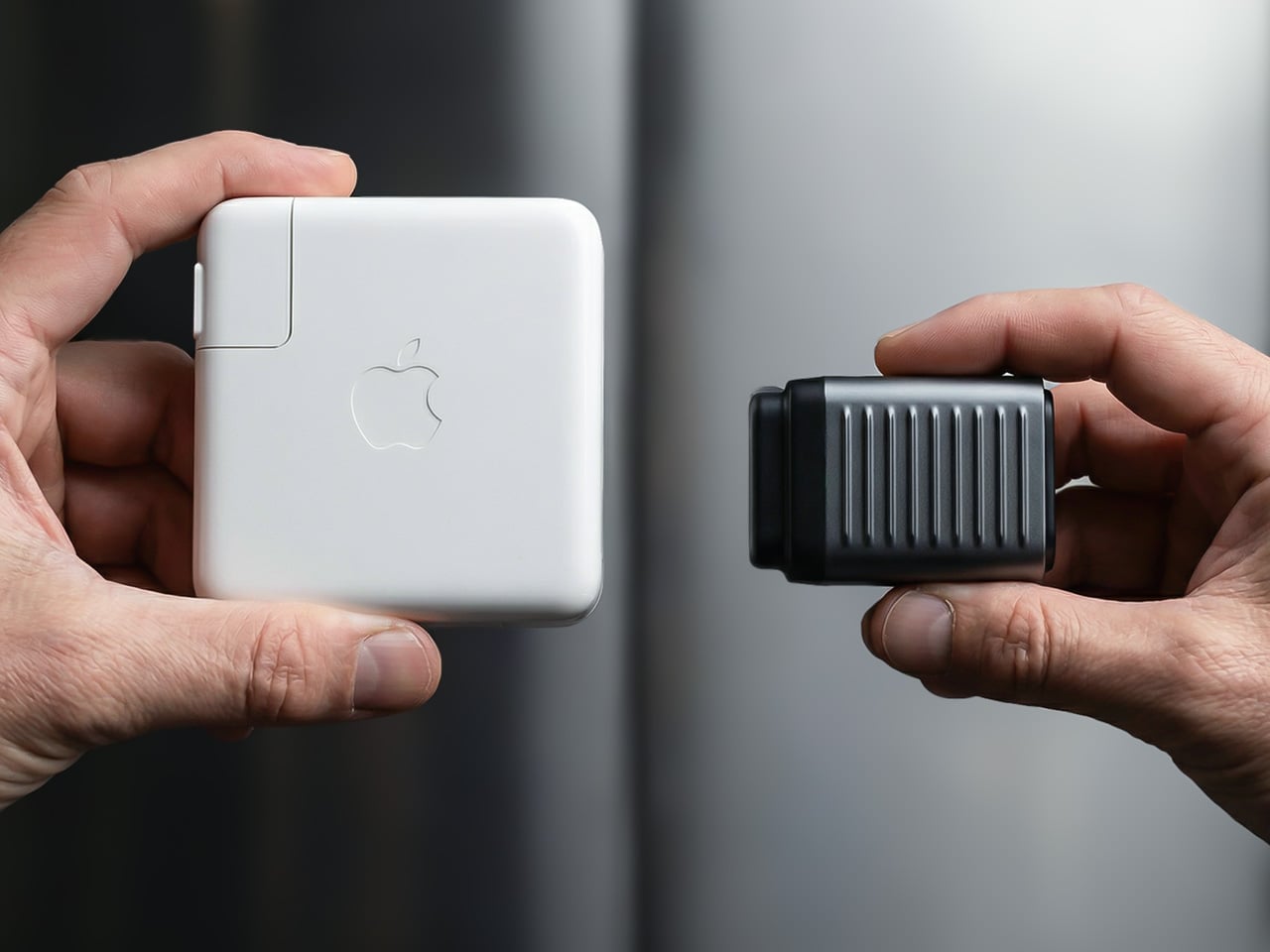
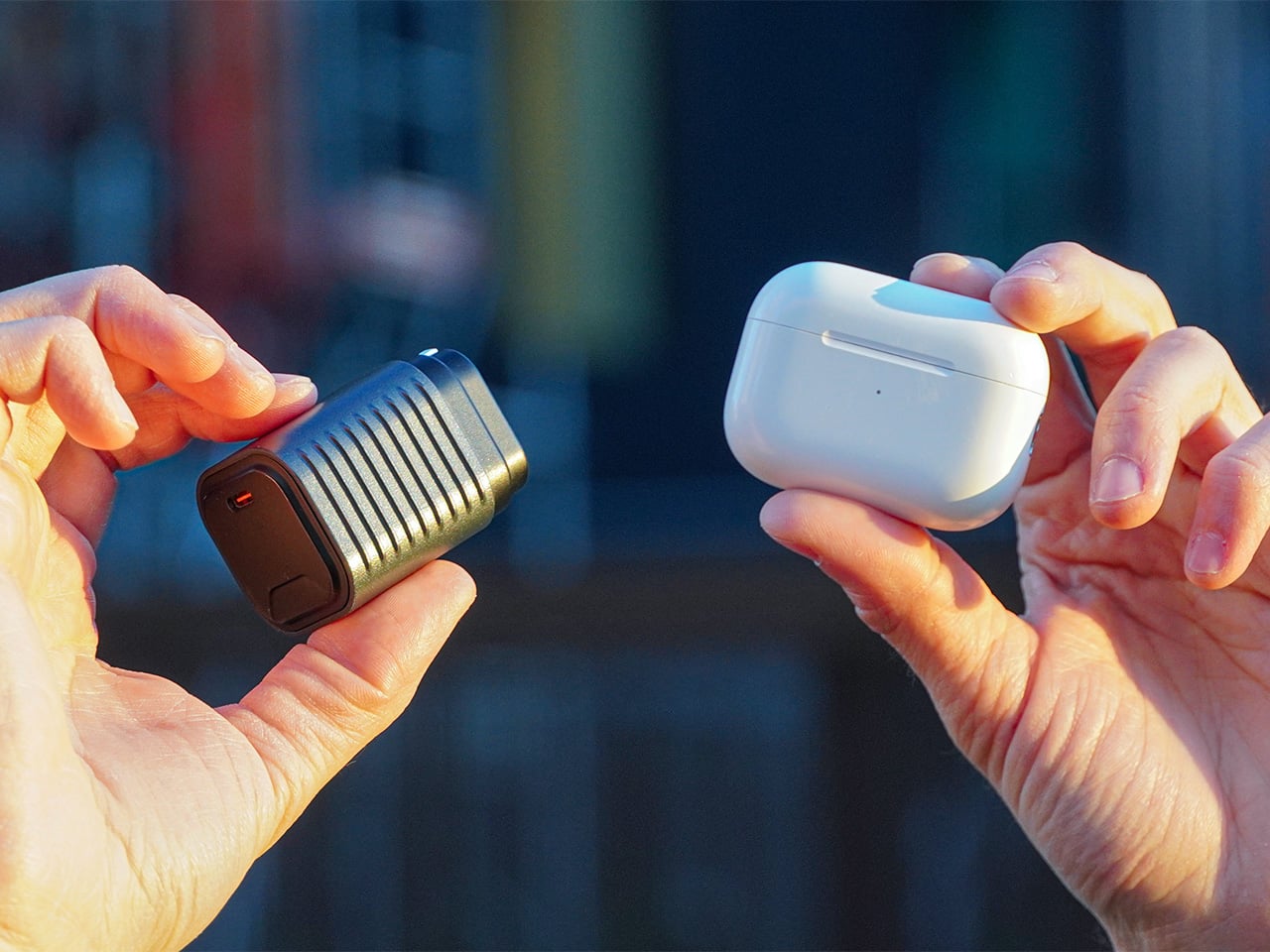
No, it isn’t a car fob. It might look like one, but the MELLO is a fast-charger and honestly, it had me fooled too. Built with a uniquely compact design thanks to the Gallium Nitride semiconductor on the inside, the MELLO holds the title of the sleekest, smallest charging adapter we’ve ever seen. It opens into a plug that works in 180+ countries and fast-charges all your devices at speeds of up to 20W. Oh, don’t worry, it has its own USB-C cable too, integrated into its design to look like a classy leatherette lanyard.
Designer: Mello Power

Click Here to Buy Now: $59 $119 (50% off). Hurry, only 21/1340 left! Raised over $393,000.

Never did I expect to see chargers become EDC (everyday carry) but here we are. Our lives are filled with tonnes of tech devices, and they all need power. However, carrying a pair of AirPods seems easy, but carrying a charger around wherever you go can be quite the hassle. They’re cumbersome, have cables that get tangled, and the adapters of fast chargers aren’t particularly pocket-friendly. Designers focus so much on making main products like phones and TWS earbuds portable/pocketable, that they sometimes forget that the accessories might need to be portable or pocketable too. The MELLO, to that end, is a start to a tech movement that should hopefully pick up. It’s the most portable charger you’ll ever carry, with a design that fits in your pocket, clasps to your belt loop or handbag, and blends right into your aesthetic as a stylish accessory rather than a tech charger.

Type-C port

20W GaN Charging

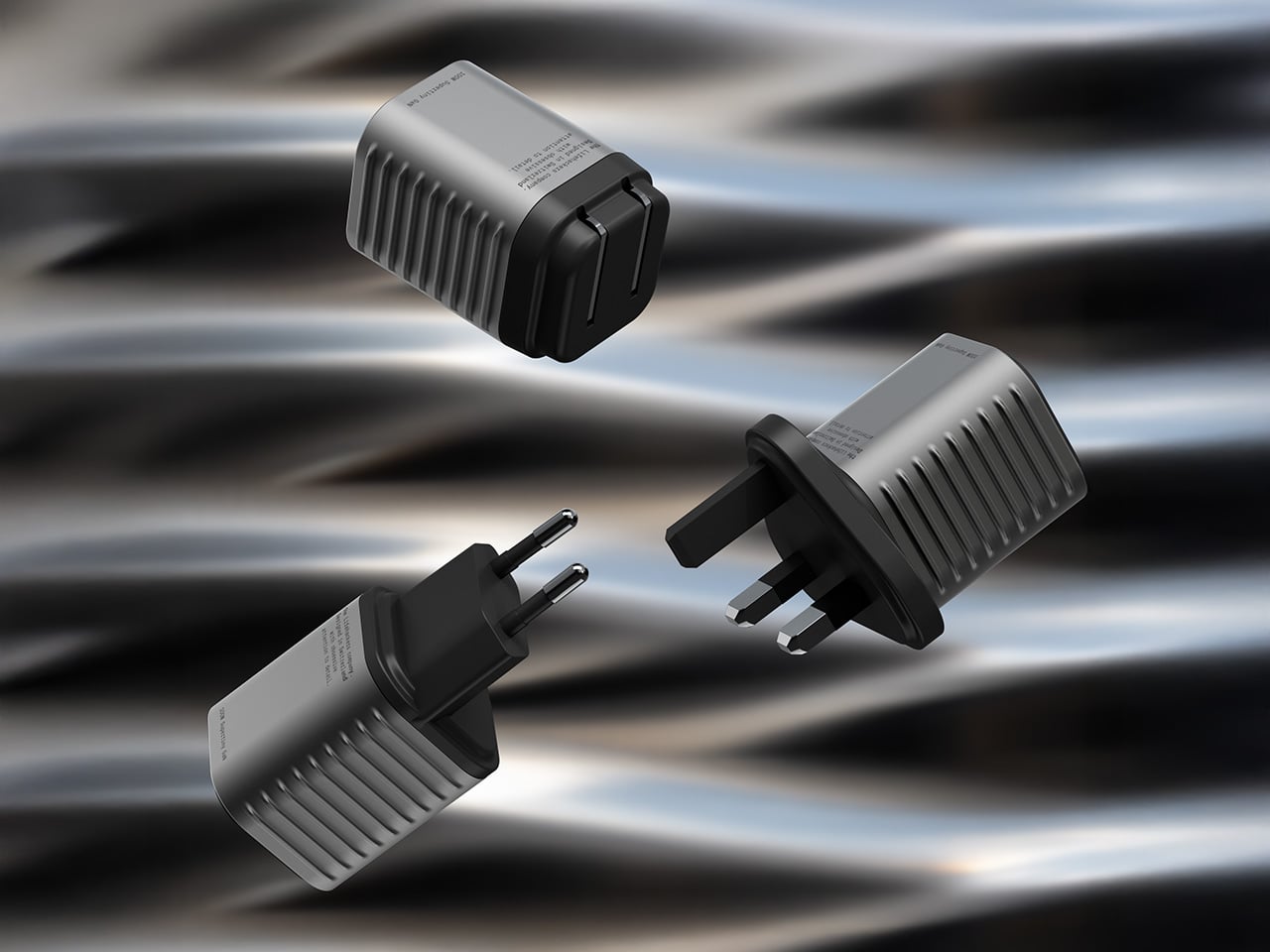
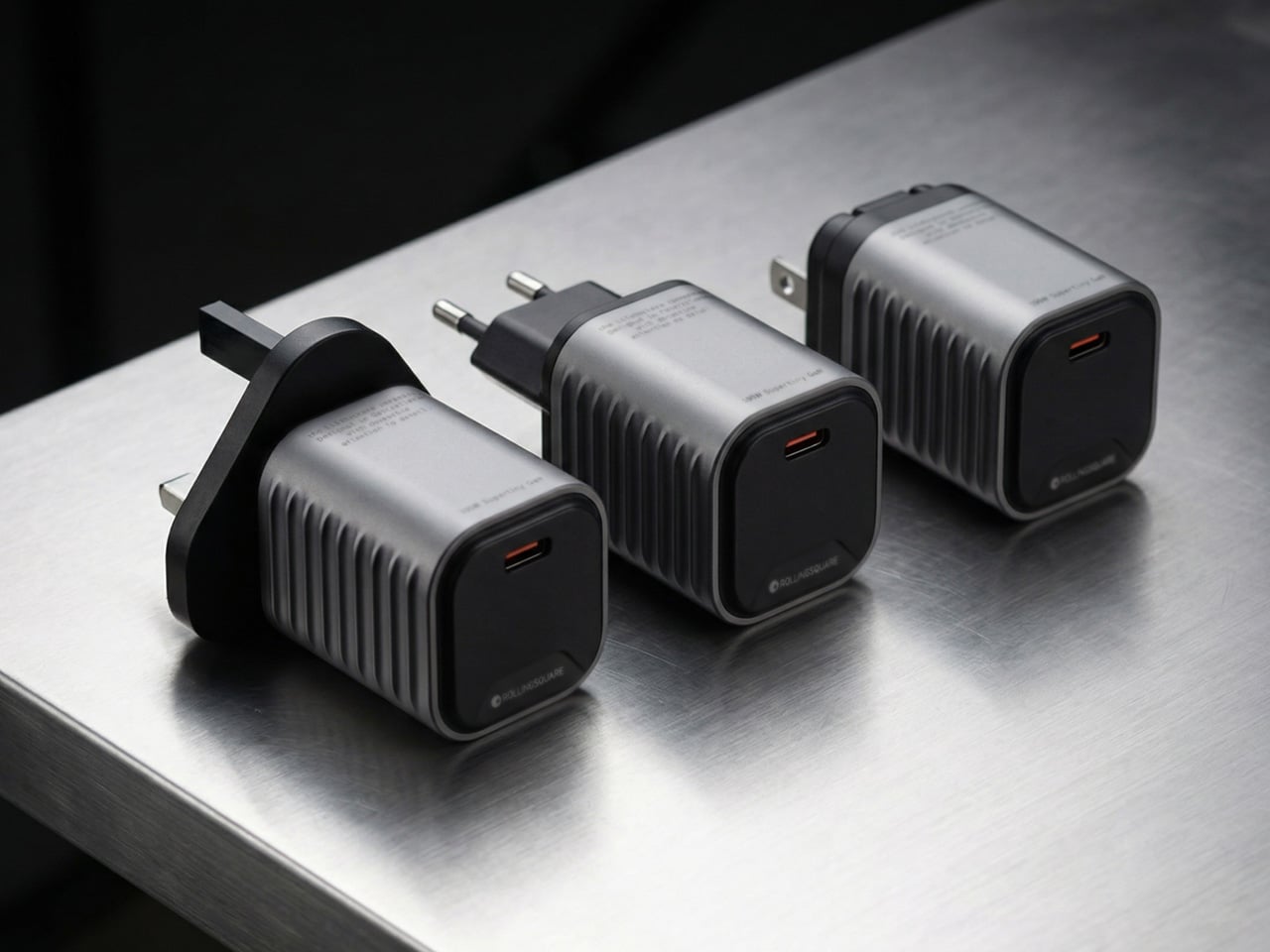
At first glance, the MELLO looks like the fob of a luxury car, with a chrome rim, a leather-textured fascia, a leatherette lanyard, and a carabiner clip. Flip it over, however, and you’ve got a fold-out plug that comes in a variety of styles, suiting the socket designs of 180+ countries. On the base of the chrome rim is a USB-C port, and the MELLO comes with a leather lanyard that opens out into a USB-C to USB-C cable, allowing you to quickly go from stylish accessory to charging apparatus in under a minute. Plug the charger and use it to juice any of your USB-C compatible devices (phones, earbuds, power banks, Bluetooth speakers, etc.), and when you’re done, fold the charging pins in and tuck the MELLO away either in your pocket or attach it back to your belt loop or bag strap using the carabiner clip and you’re done. The charger effectively becomes a fashion statement again, allowing you to go about your day.

What makes the MELLO so impressive is its internals. Most fast-chargers today (or at least the ones you get with your phones) use silicon-carbide semiconductors, which are ideal for transmitting energy, but end up making your charging adapters massive and even cause them to heat up. The tech industry has, for the past few years, begun shifting instead to GaN or Gallium Nitride, a material that’s much more power-efficient than its predecessor. The MELLO comes equipped with GaN on the inside, which allows it to be so tiny, while still being able to output a whopping 20W.

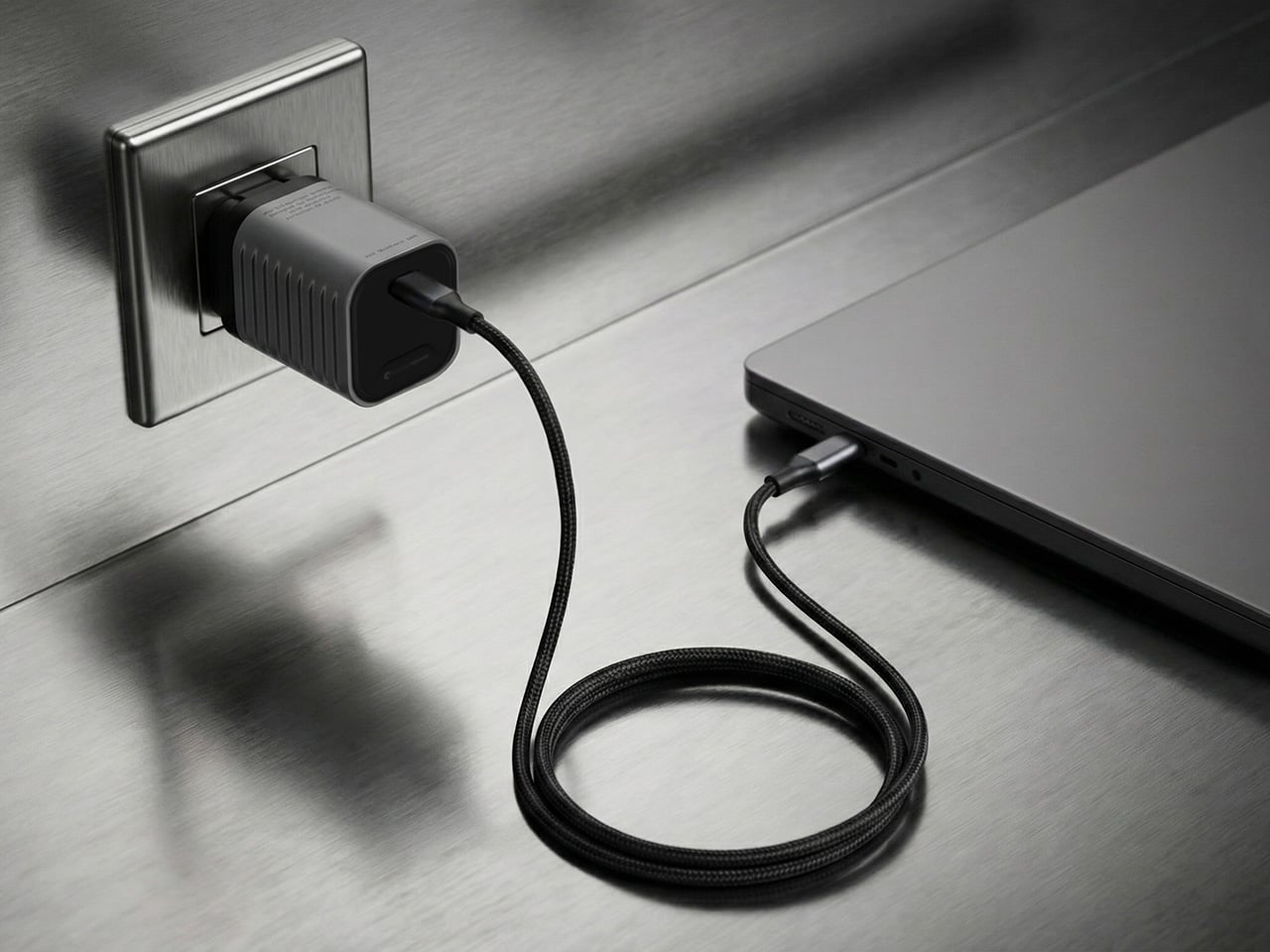
That 20W is honestly perfect for most regular devices. It should easily fast-charge any phone or TWS earbud, having you go from 0% to a healthy battery in well under an hour. The charging cable/lanyard included with the MELLO supports fast charging too, giving you the benefit of plugging in anywhere to ensure your gadgets remain juiced through the day.

The MELLO is impressive for how tiny it is. It fits comfortably in your palm, weighing a mere 28 grams or under an ounce. You can choose between 5 color variants (you’ll get a color-matching USB-C charging cable too), as well as from 4 different plug designs based on what works in your country.

Click Here to Buy Now: $59 $119 (50% off). Hurry, only 21/1340 left! Raised over $393,000.

The post World’s Smallest 20W Charger fits around your Keychain for Effortless Charging Anywhere first appeared on Yanko Design.