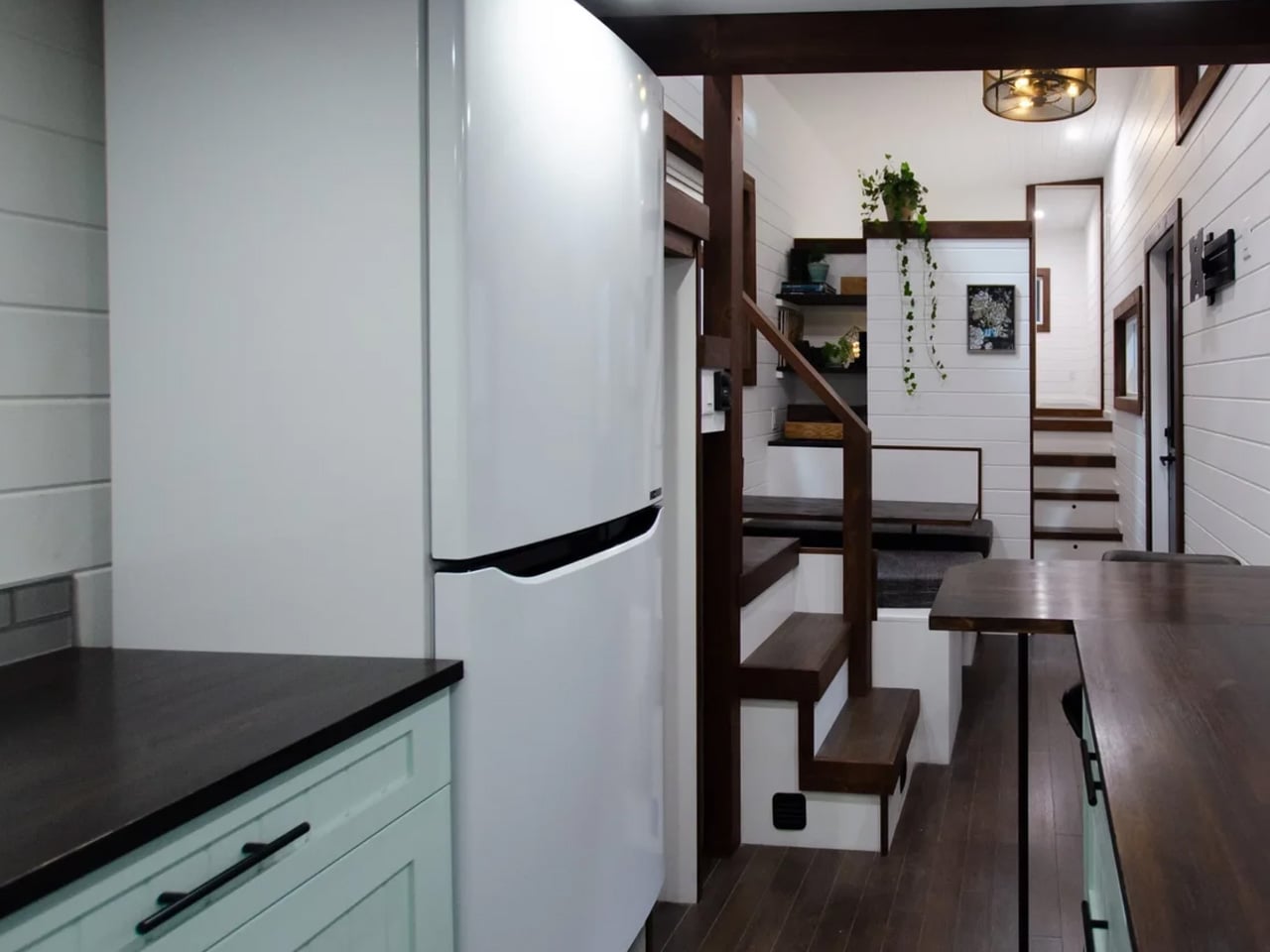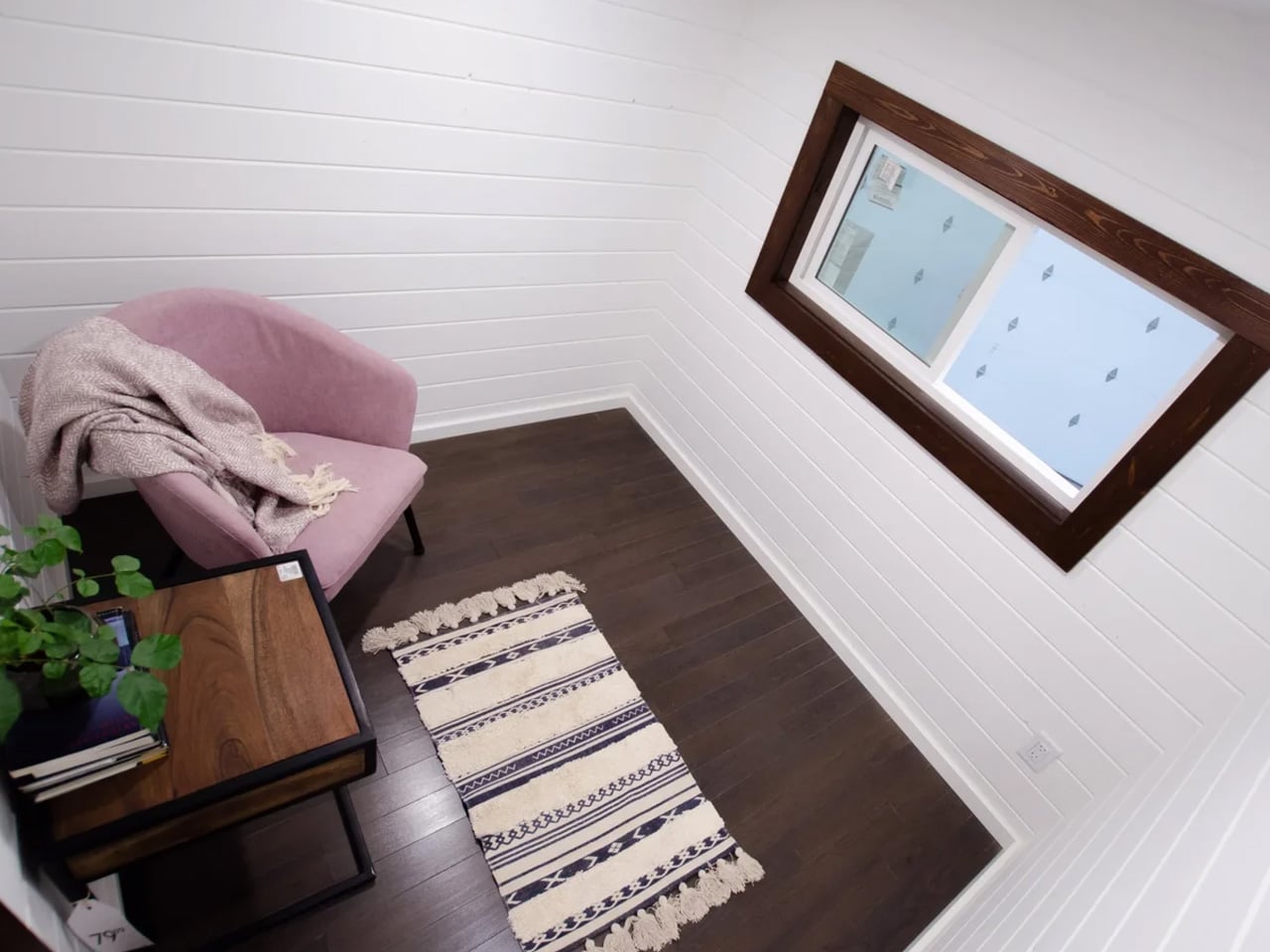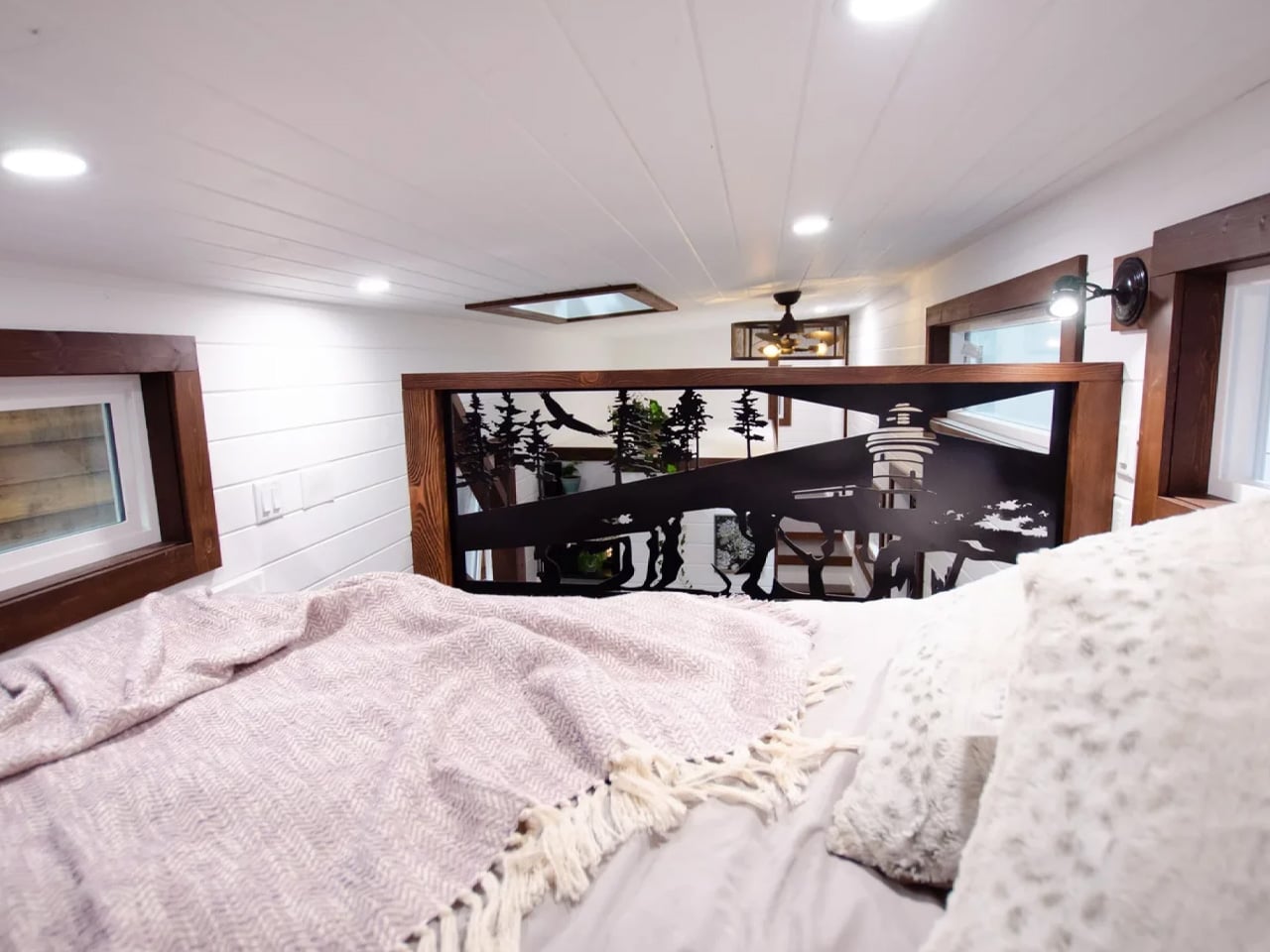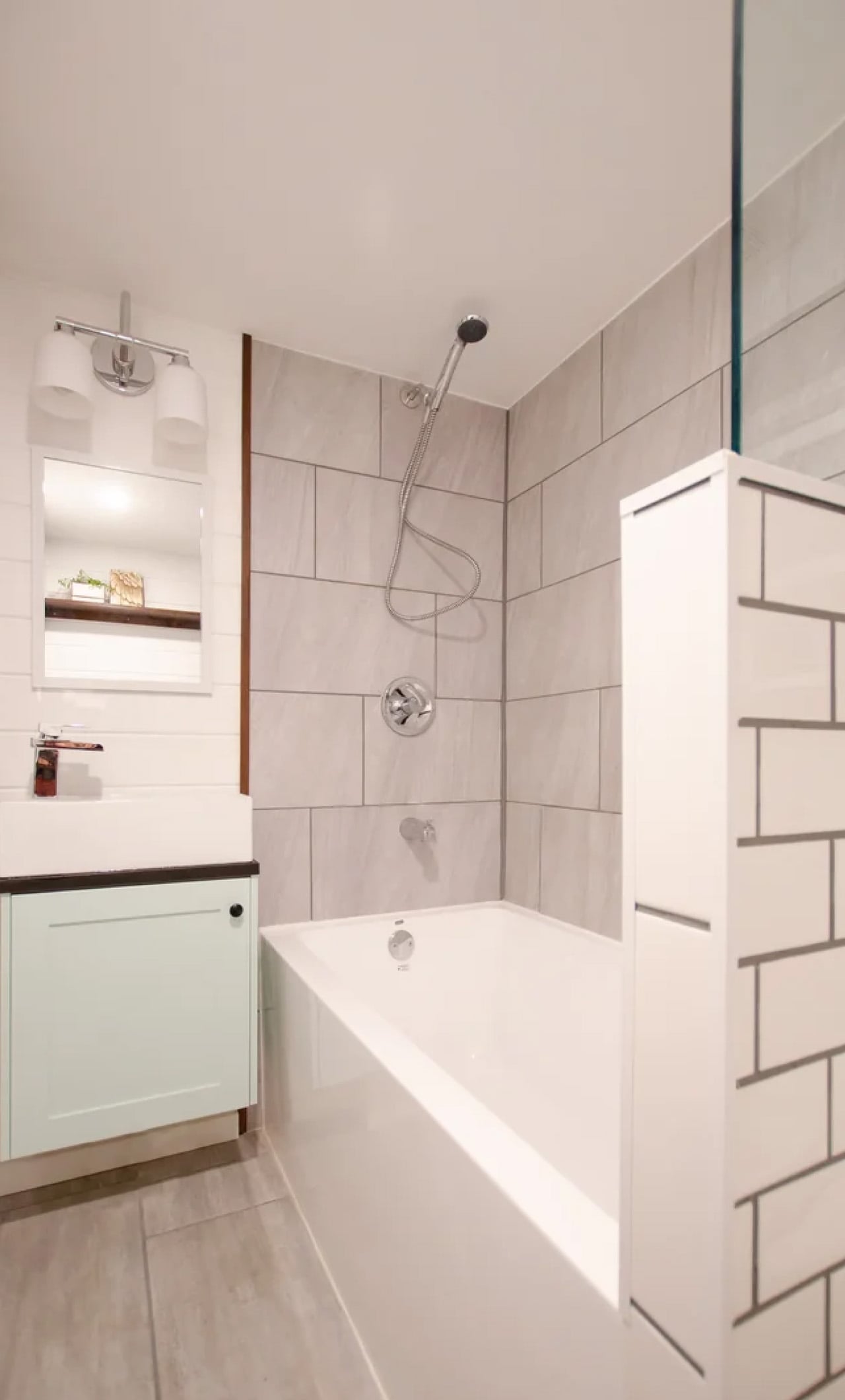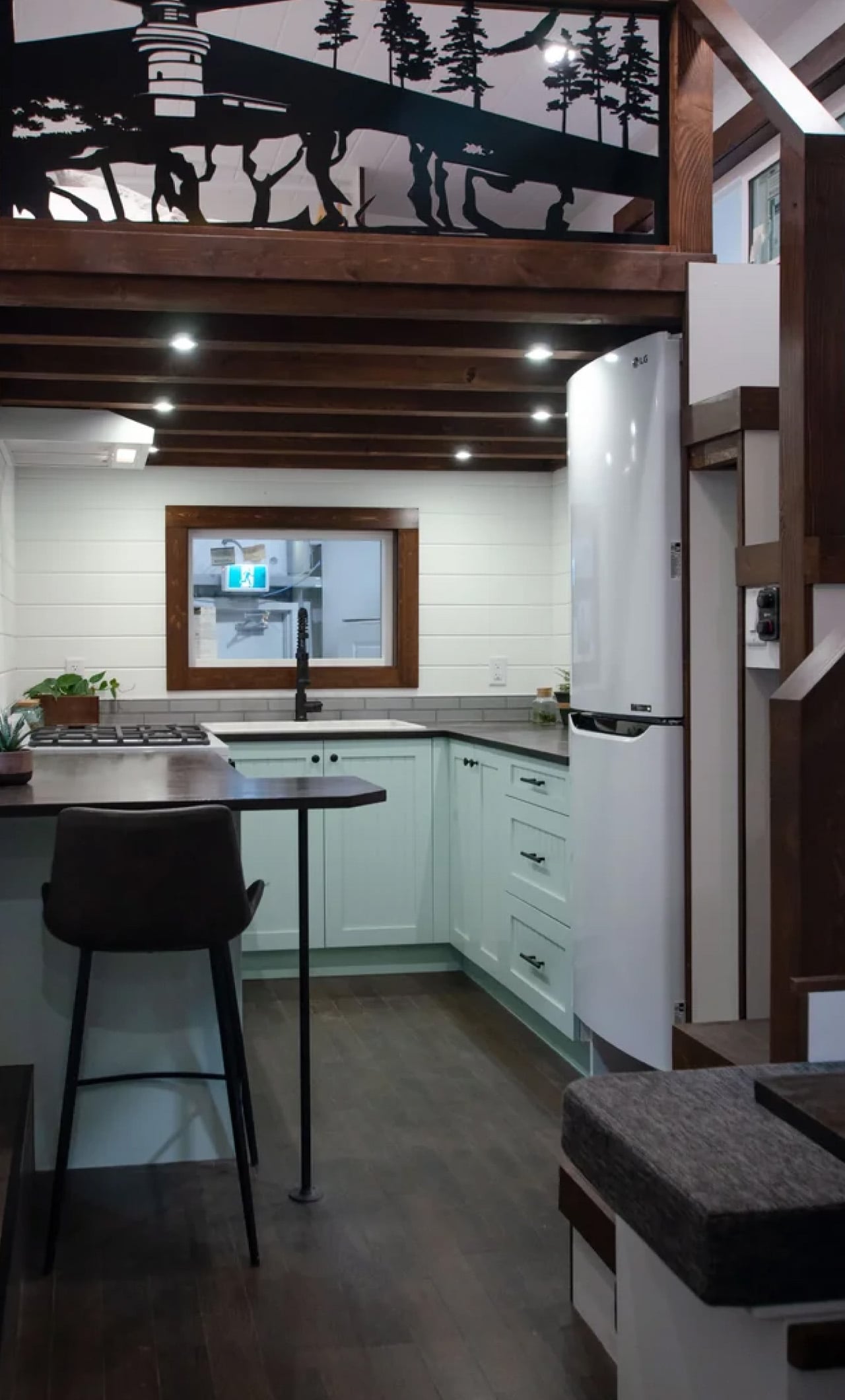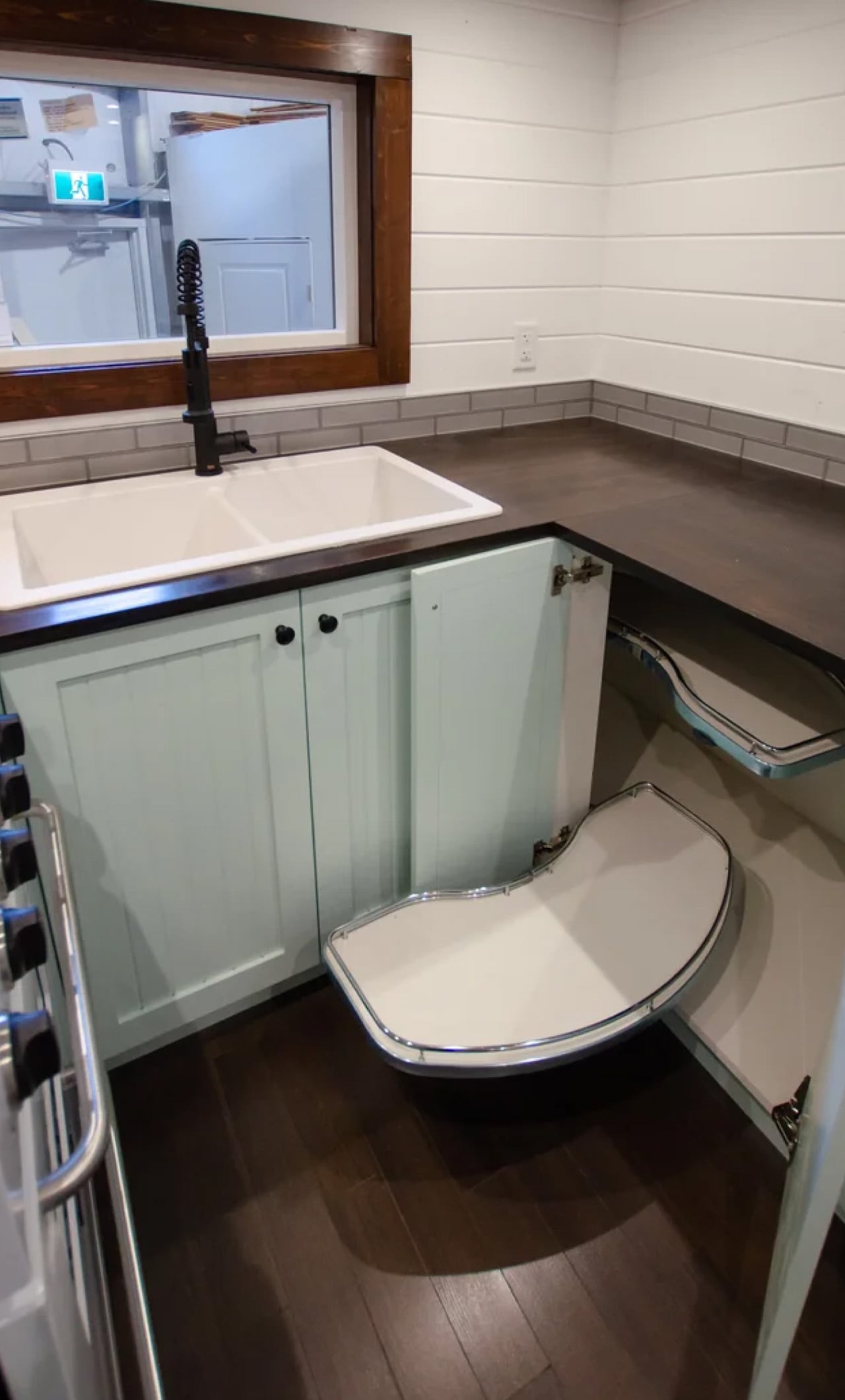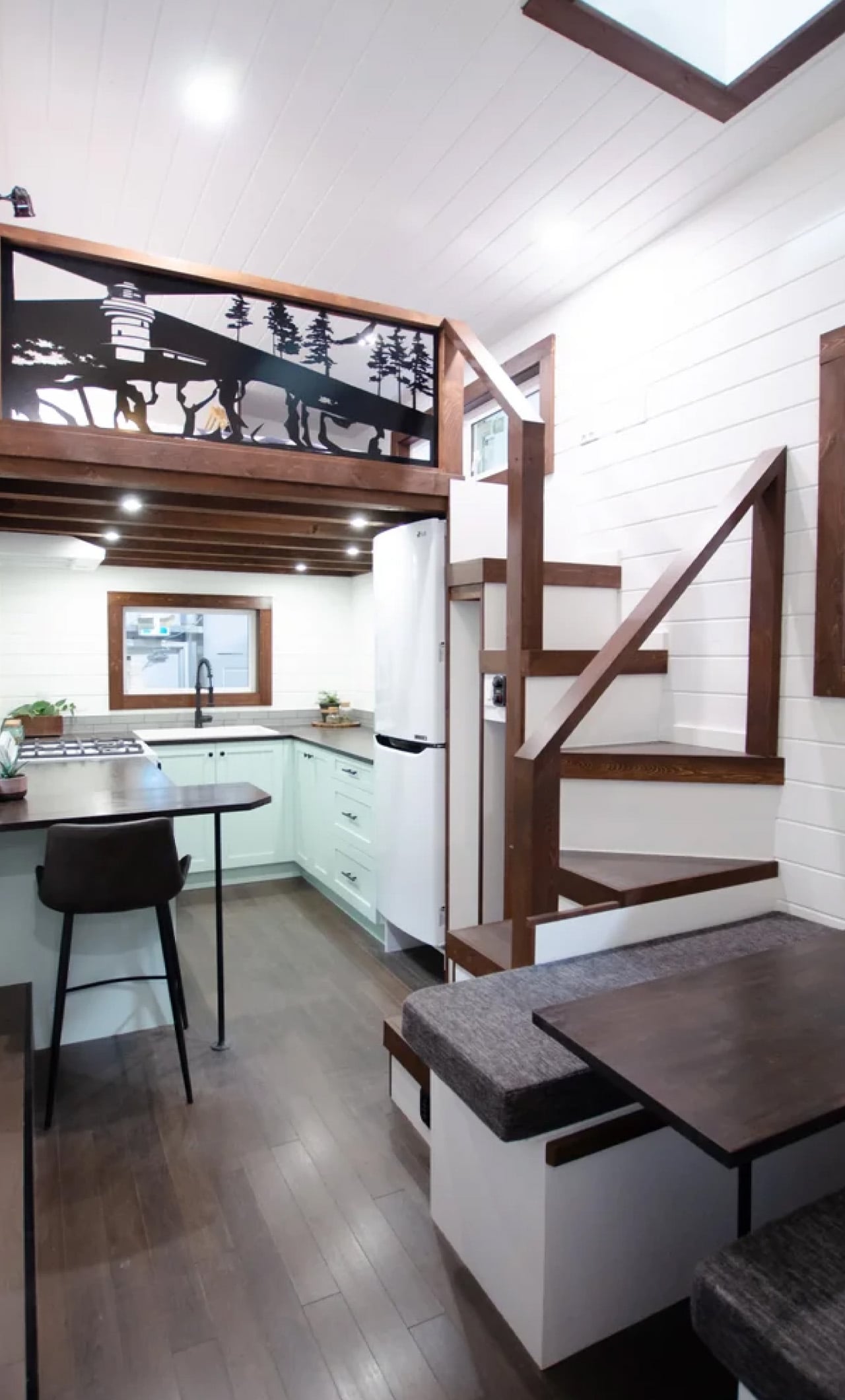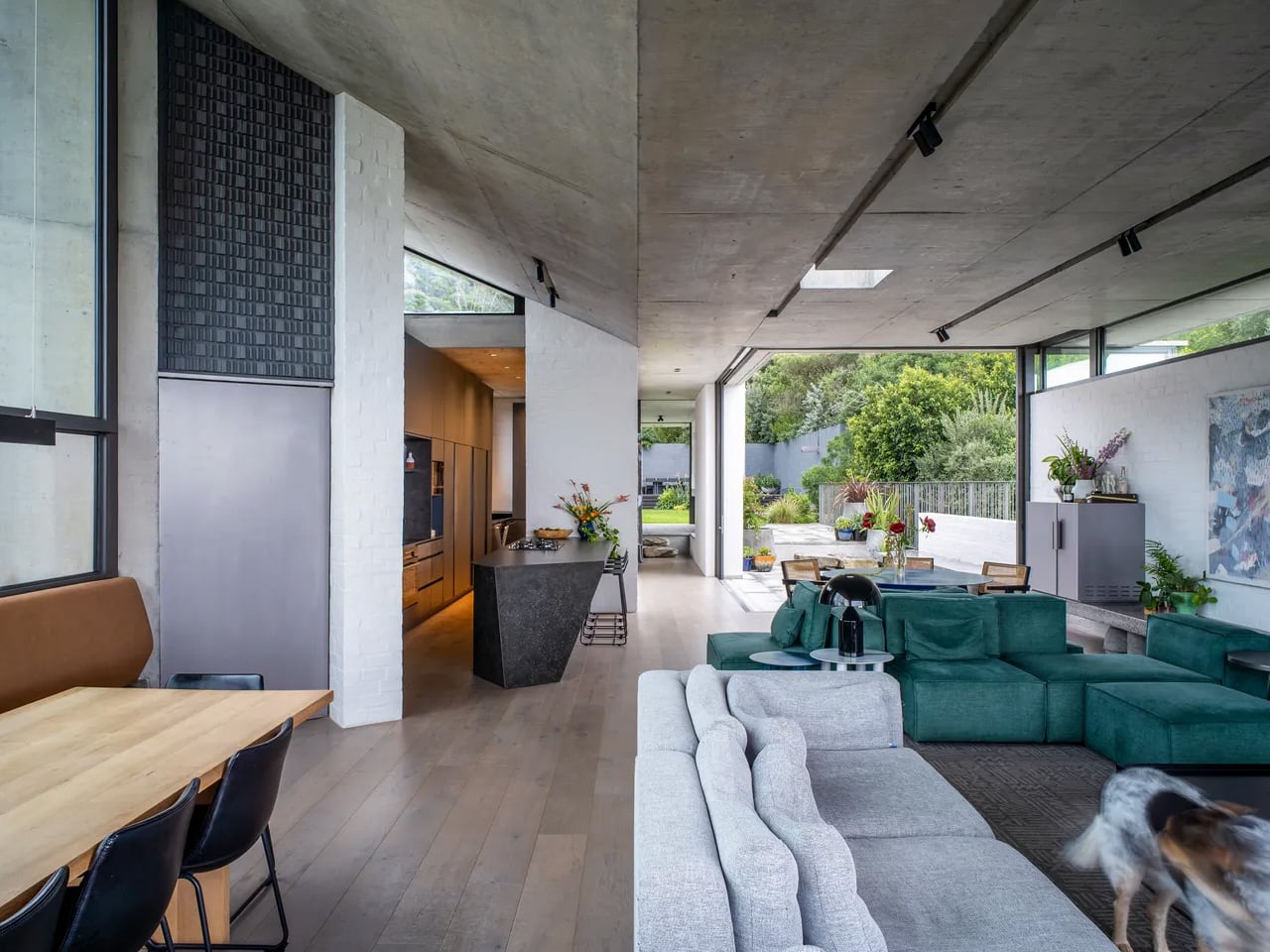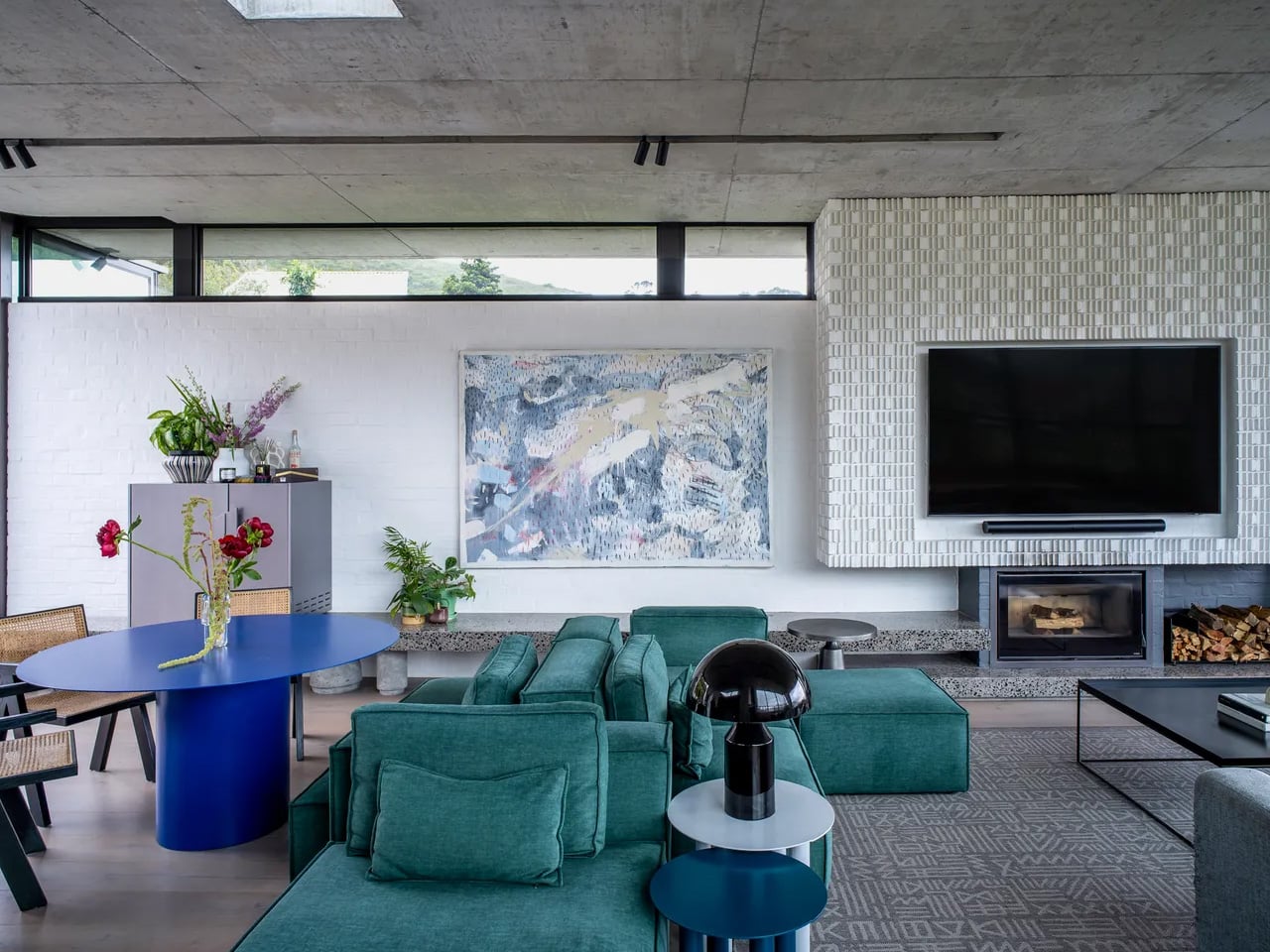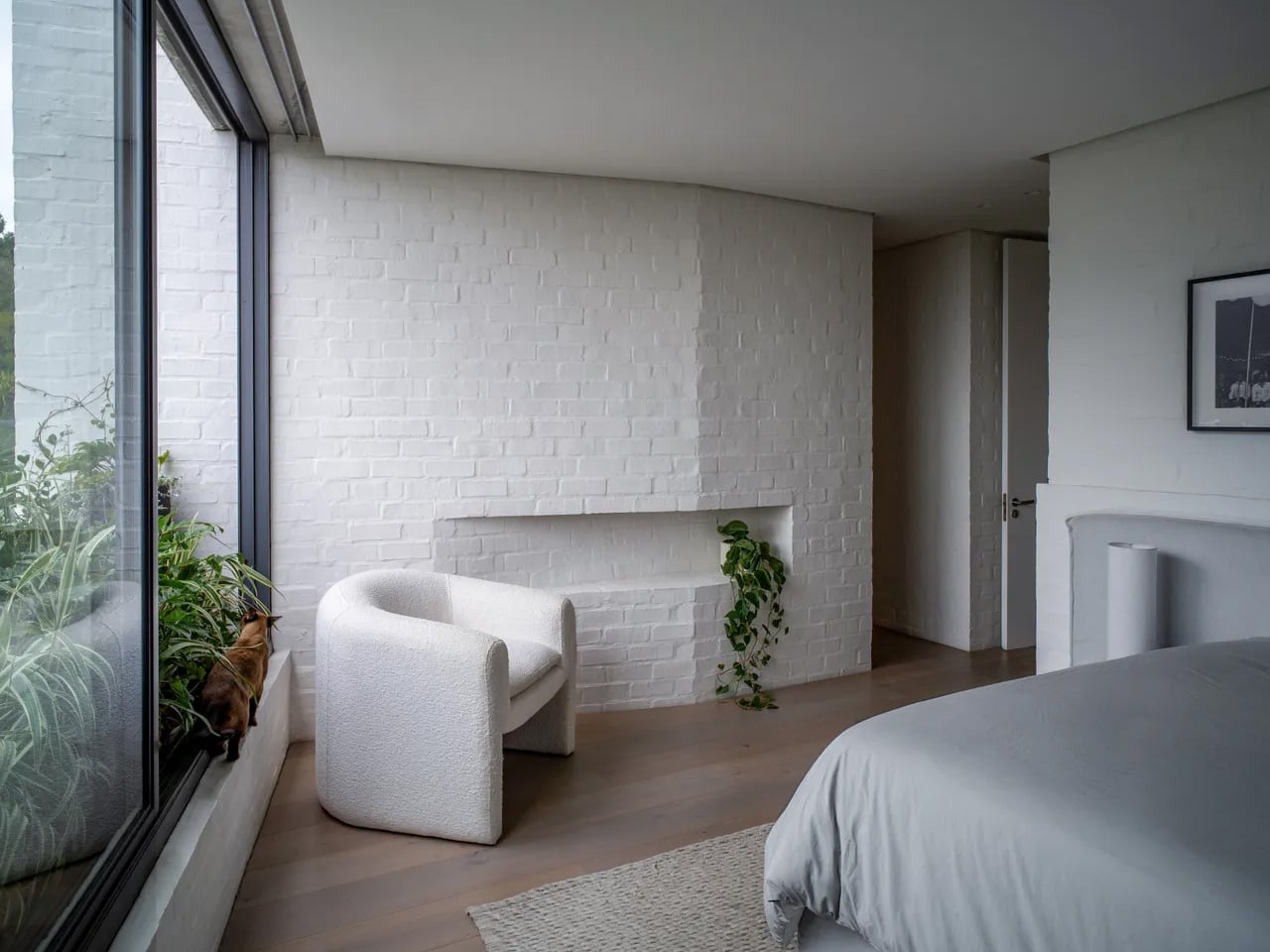
After seven years of exploring New Zealand’s open roads in an RV, a couple of travel enthusiasts decided it was time to plant roots. Their solution wasn’t a traditional house or even a typical tiny home. Working with South Base Homes and award-winning architect Chris Pyemont, they created the Bespoke Base, a 12-meter tiny house that challenges everything we think we know about compact living.
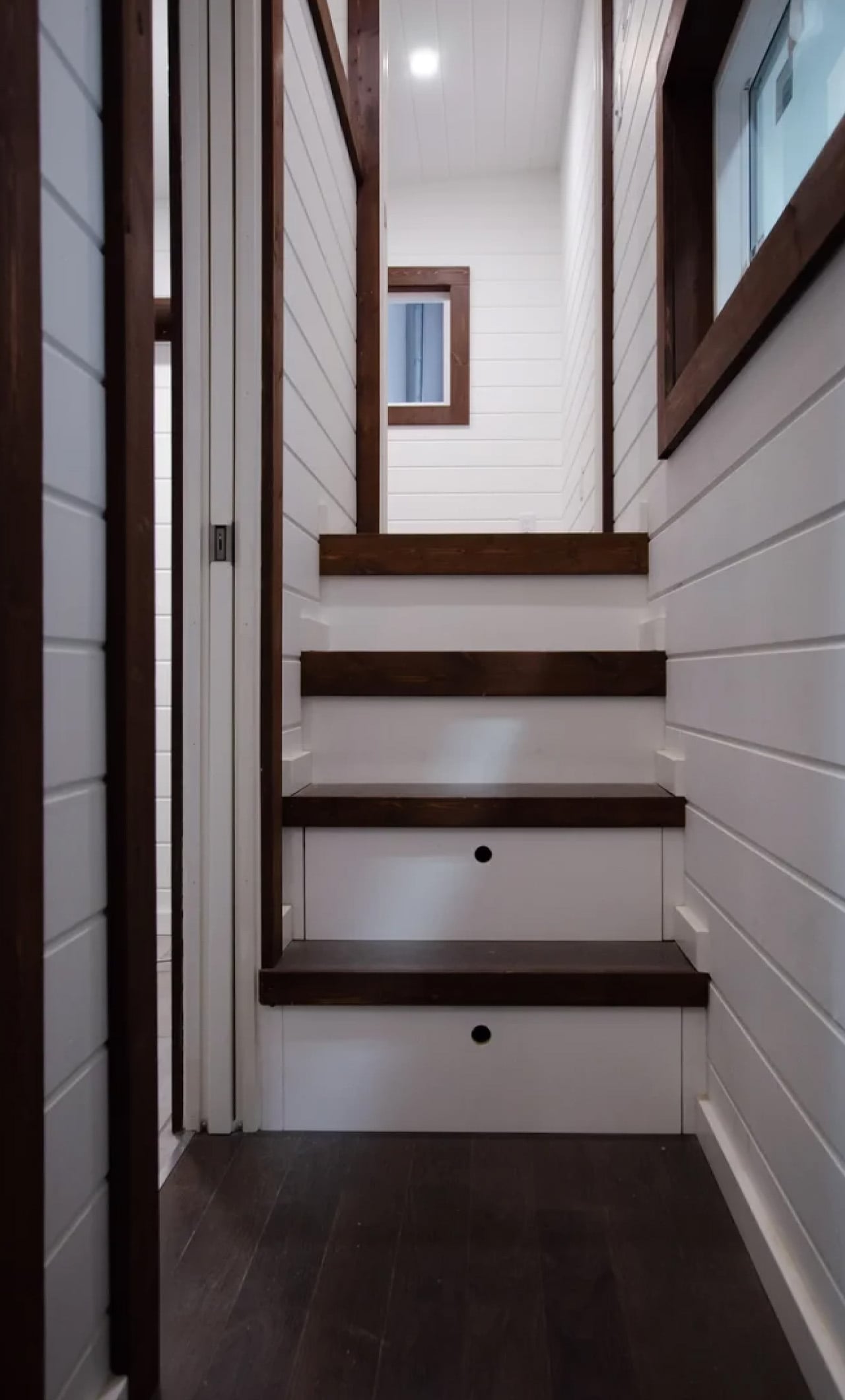
The Bespoke Base stretches 39 feet in length, placing it among the more generous tiny homes on the market. Where many tiny houses force occupants to navigate cramped quarters and vertical ladders, this design takes a different approach. The entire layout unfolds on a single level, creating an experience that feels less like downsizing and more like curating the perfect apartment. Wrapped in warm redwood cladding, the exterior hints at the thoughtful design within.
The single-story configuration means no climbing to a loft bedroom, no stooping under low ceilings, and no compromising on the fundamental comforts that make a house feel like home. For clients who spent years navigating the constraints of RV living, this accessibility was paramount. The spacious interior reads more like a compact apartment than a mobile dwelling, with room to breathe and space to truly settle in.
South Base Homes has built its reputation on creating bespoke tiny homes where luxury fittings come standard. Based in Tasman, New Zealand, the company earned recognition as the 2023 Tiny House Awards winner for Best Commercial Build. Their collaboration with Chris Pyemont brings architectural credibility to a sector often dominated by DIY builds and cookie-cutter designs. Pyemont’s expertise in coastal and high-wind zone construction ensures these homes can withstand New Zealand’s challenging weather conditions.
The Bespoke Base represents what happens when clients refuse to accept the usual tiny house trade-offs. Instead of squeezing life into a predetermined footprint, the design expands to accommodate how people actually want to live. This approach to tiny living isn’t cheap. South Base Homes’ models start at NZD 200,000, reflecting the premium materials and architectural design that go into each build. The price point positions these homes as permanent residences rather than temporary experiments in minimalism.
The Bespoke Base proves that tiny home living doesn’t require sacrificing comfort or style. For those ready to downsize without feeling diminished, it offers a compelling blueprint: thoughtful design, quality construction, and enough space to live generously within a modest footprint. The result is a home that honors both the tiny house movement’s ideals and its owners’ need for genuine, lasting comfort.
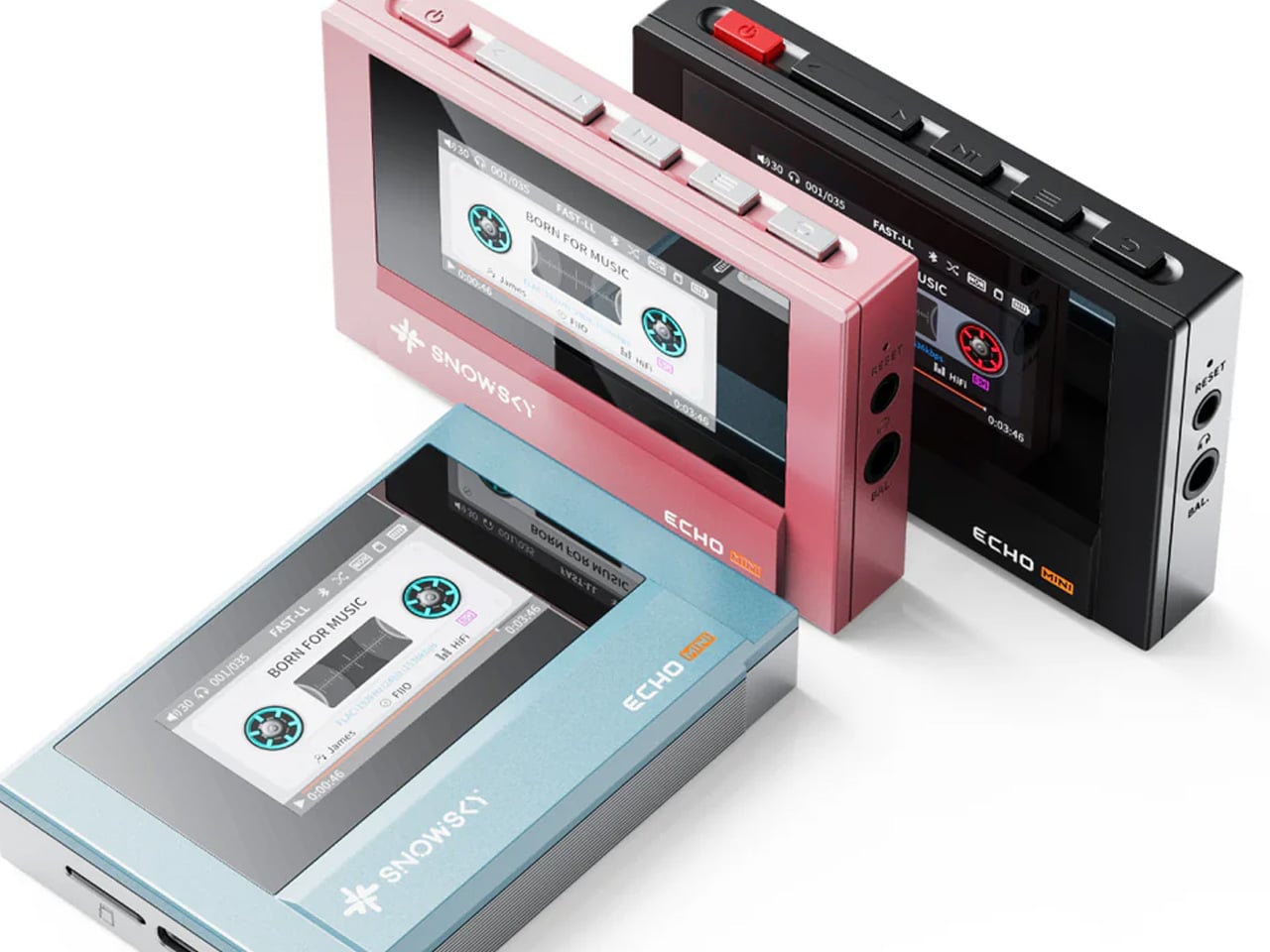
Remember when technology felt magical instead of invisible? When gadgets had personality, and your favorite album came with artwork you could actually hold? The ’90s gave us tactile experiences that today’s sleek minimalism often forgets. Now, designers are bringing back the spirit of that era with products that blend nostalgic forms with modern capabilities. These aren’t dusty relics pulled from storage bins. They’re reimagined essentials that capture what made the ’90s special while delivering the performance we expect in 2026.
Millennials grew up straddling two worlds: an analog childhood and a digital adulthood. These seven products speak directly to that experience, offering familiar shapes and rituals wrapped in contemporary functionality. From music players that look like mixtapes to flame lamps crafted with instrument-making techniques, each piece proves that nostalgia and innovation make better partners than we realized. Whether you’re rebuilding your retro haven or just want technology that sparks joy instead of anxiety, these designs deliver that perfect balance.
1. Samsung AI OLED Cassette and Turntable
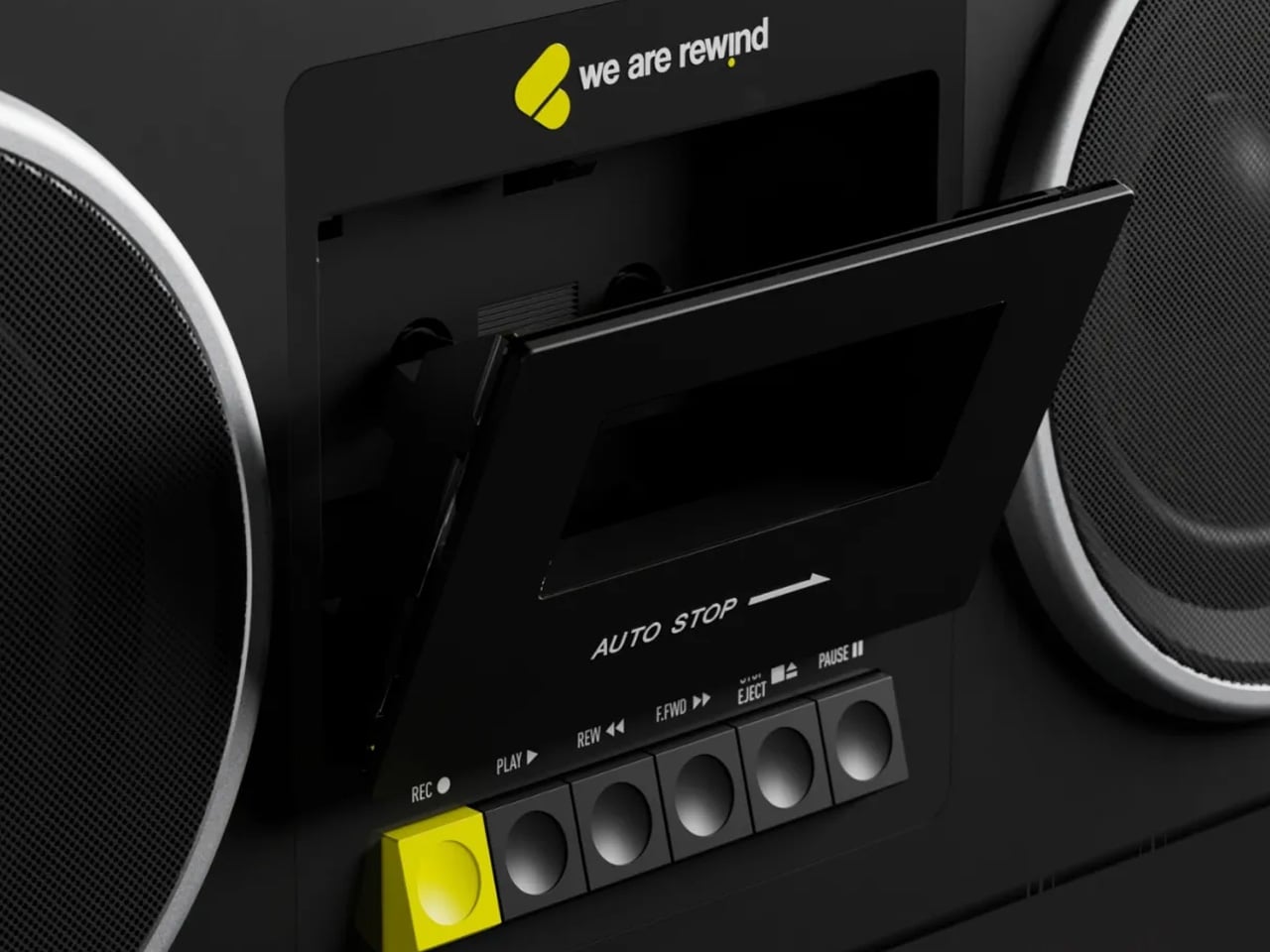
Samsung Display dropped two conversation starters at CES 2026 that blur the line between tech demo and actual product you’d want in your living room. The AI OLED Cassette takes the classic tape deck silhouette and transforms it into a smart speaker with two tiny 1.5-inch circular OLED displays sitting exactly where those spinning reels used to hypnotize you. The left screen handles playback controls while the right displays a digital waveform that dances with your music. Both screens respond to touch, so you can skip tracks or adjust settings without fumbling for your phone.
The Turntable goes bigger with a 13.4-inch circular OLED touchscreen that mimics an actual vinyl record player. This isn’t just about displaying album art. The screen becomes an ambient art piece, showing visuals that match your playlist’s mood. Picture hosting friends while your turntable displays swirling colors that sync with jazz or geometric patterns that pulse with electronic beats. The AI integration suggests new music based on what you play, learning your taste over time. These aren’t production models yet, but they showcase where display technology could take us when designers stop making everything a black rectangle.
What We Like
The cassette’s standalone functionality means you can discover and control music without an external device.
The touch-sensitive displays offer direct interaction that feels intuitive despite the retro packaging.
AI-powered recommendations built into the device eliminate the need for phone connectivity.
The turntable’s 13.4-inch display transforms any room into a visual experience.
Ambient visuals that match your music create an atmosphere impossible with traditional speakers.
These remain concept devices without confirmed production plans.
Pricing would likely put them in premium territory beyond typical smart speakers.
The cassette’s small 1.5-inch display might prove difficult for detailed control.
Relying on AI recommendations could frustrate users who prefer manual curation.
The turntable’s large circular display demands significant surface space.
Without physical media playback, purists might question calling it a turntable.
2. Harmony Flame Fireplace
Real fire indoors sounds risky until you see how this brass lamp handles it. Craftsmen who typically make musical instruments apply those same meticulous techniques to create a safe fireplace that fits on your dining table or patio. The brass box burns bioethanol, an eco-friendly fuel that produces actual flames without smoke, odor, or the mess of traditional fireplaces. Light reflects off the polished brass surface, creating shifting patterns as the flames dance. This turns functional lighting into moving art that changes throughout the evening.
The connection to musical instrument craftsmanship shows in the details. Each lamp gets hand-finished, ensuring the brass develops its signature warm glow. Bioethanol burns clean enough for indoor use while providing the psychological comfort of genuine fire. No installation means you can move it wherever the mood takes you. The flame’s unpredictable movement offers something screens can’t replicate: organic beauty that never repeats itself. This addresses a specific ’90s memory: when gathering around fire pits or candles created natural gathering spots before everyone retreated to separate screens.
Handcrafted by musical instrument makers ensures premium build quality.
Bioethanol fuel burns clean without smoke or unpleasant odors.
Safe for indoor use brings real fire into spaces traditional fireplaces can’t reach.
No installation required means portable ambiance anywhere you want it.
The brass surface creates mesmerizing light reflections as flames move.
Eco-friendly fuel choice aligns with modern environmental consciousness.
What We Dislike
Bioethanol fuel requires ongoing purchases, unlike electric alternatives.
Open flames still demand attention and caution around children or pets.
The brass construction places it in a higher price bracket.
Fuel consumption costs add up with regular use.
Limited heat output makes it more about ambiance than warmth.
Brass requires occasional polishing to maintain its signature shine.
3. RetroWave 7-in-1 Radio
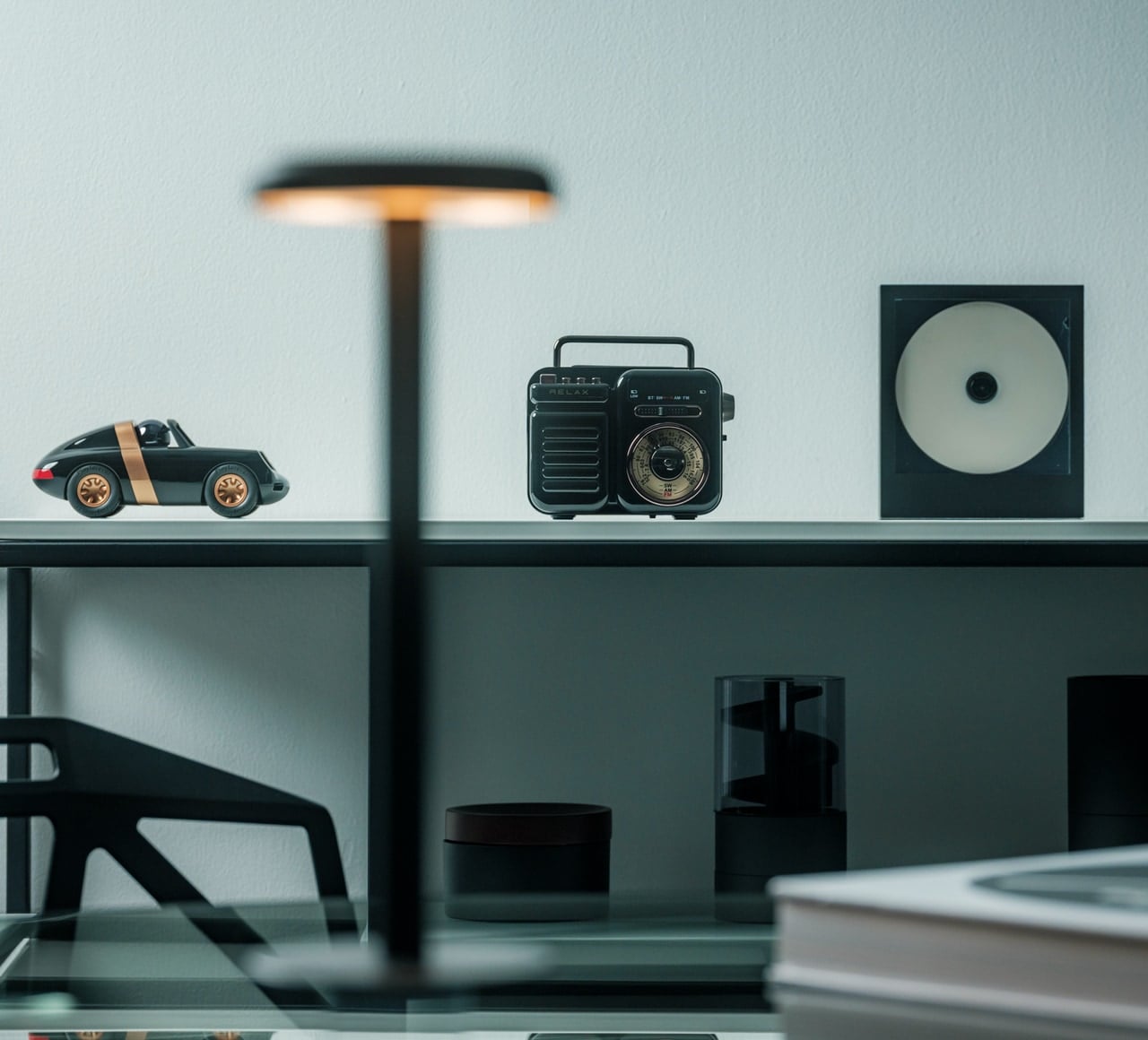
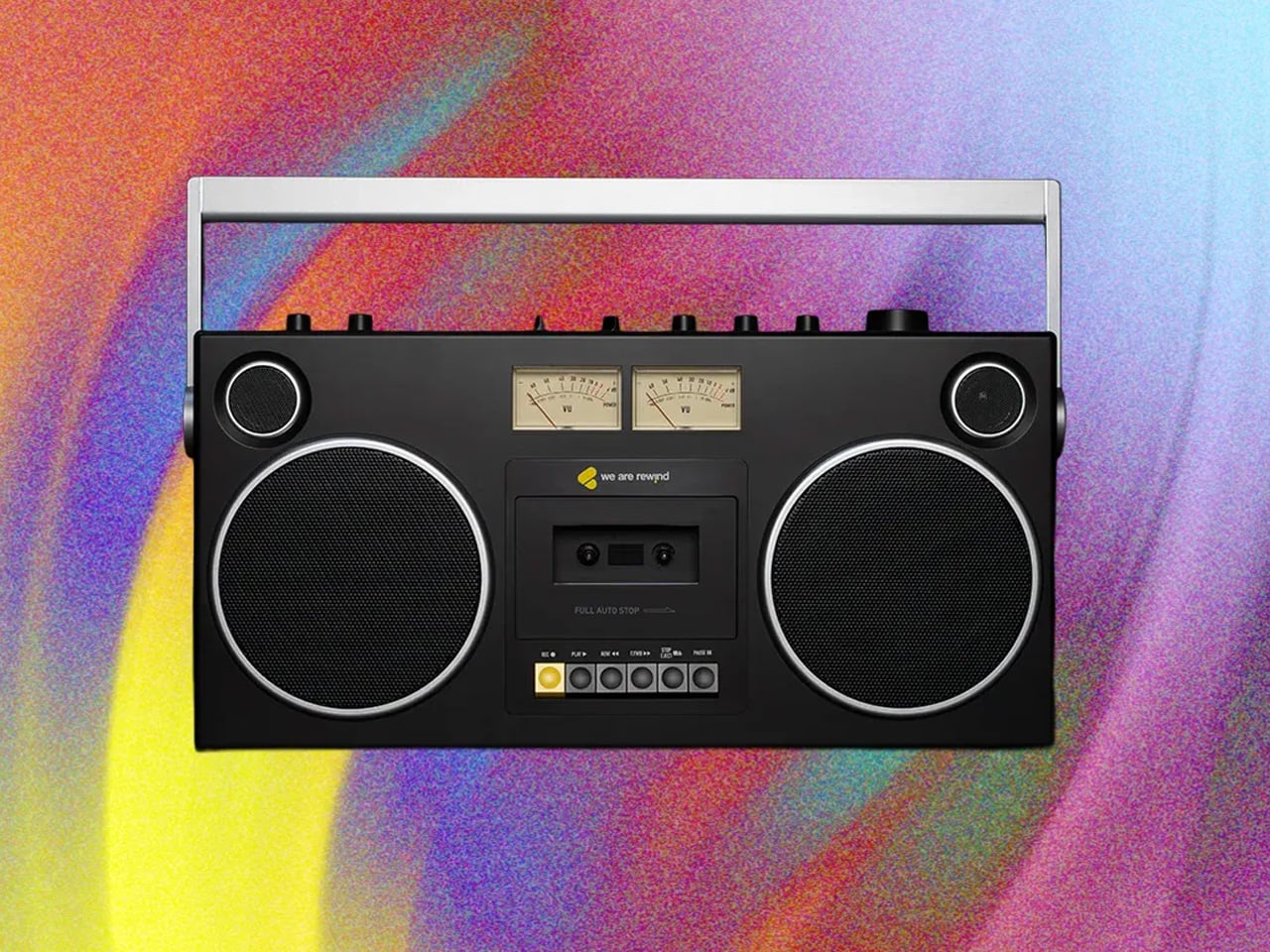
This radio looks like something you’d find in a ’90s camping supply catalog, but its capabilities extend far beyond FM stations. Seven functions pack into one device: Bluetooth speaker, MP3 player, AM/FM/shortwave radio, flashlight, clock, power bank, and SOS alarm. That combination addresses both daily listening and emergency preparedness, making it relevant whether you’re hosting a backyard party or riding out a power outage. The retro aesthetics make it attractive enough to keep visible instead of buried in an emergency kit.
Bluetooth connectivity lets you stream modern playlists while the USB and microSD slots enable offline playback. The shortwave radio capability feels especially ’90s, when scanning international stations offered a window into distant cultures. Hand-crank and solar charging mean it works when the grid doesn’t. The built-in flashlight and SOS alarm complete the emergency features. This versatility reflects the ’90s ethos of multipurpose tools before planned obsolescence became standard. One device replacing seven separate gadgets creates less clutter while ensuring you’re covered for various scenarios.
Seven functions in one device reduce clutter and redundancy.
Hand-crank and solar charging provide power independence.
Shortwave radio access connects you to international broadcasts without the internet.
Bluetooth and MP3 playback bridge nostalgic form with modern features.
Emergency SOS alarm and flashlight add genuine safety value.
The nostalgic design makes it attractive for daily display.
What We Dislike
Multiple functions mean compromises compared to specialized devices.
Hand-crank charging requires significant effort for limited power.
Solar charging depends on the weather and sunlight exposure.
The retro aesthetic might feel too utilitarian for some home styles.
Shortwave reception quality varies dramatically by location.
Seven functions create a learning curve for optimal use.
4. Perpetual Orrery Kinetic Art
This mechanical solar system model channels the elegance of 18th-century European craftsmanship into a desktop sculpture that never stops moving. Inspired by grand orreries that once graced aristocratic libraries, this version uses intricate mechanisms similar to sophisticated wristwatches to recreate planetary orbits. Planets circle the sun at their relative speeds while the moon goes through visible phases. Even the Tempel-Tuttle comet makes its elliptical journey, appearing periodically like its celestial counterpart.
The kinetic aspect transforms this from static decoration into living art. Watching planets trace their paths provides the same meditative quality as observing aquarium fish, but with educational value built in. The mechanical movement connects to ’90s educational toys that made learning tangible rather than screen-based. Every gear and orbit gets carefully calibrated, turning astronomy into something you can observe daily at arm’s reach. The brass and metal construction gives it substantial weight and permanence, qualities often missing from modern tech gadgets designed for planned replacement.
The premium craftsmanship commands a significant investment.
Delicate mechanisms require careful handling and placement.
Dust accumulation on moving parts needs occasional attention.
The large footprint demands dedicated display space.
Mechanical complexity means difficult repairs if something breaks.
Some might find it too ornate for minimalist aesthetics.
5. Side A Cassette Speaker
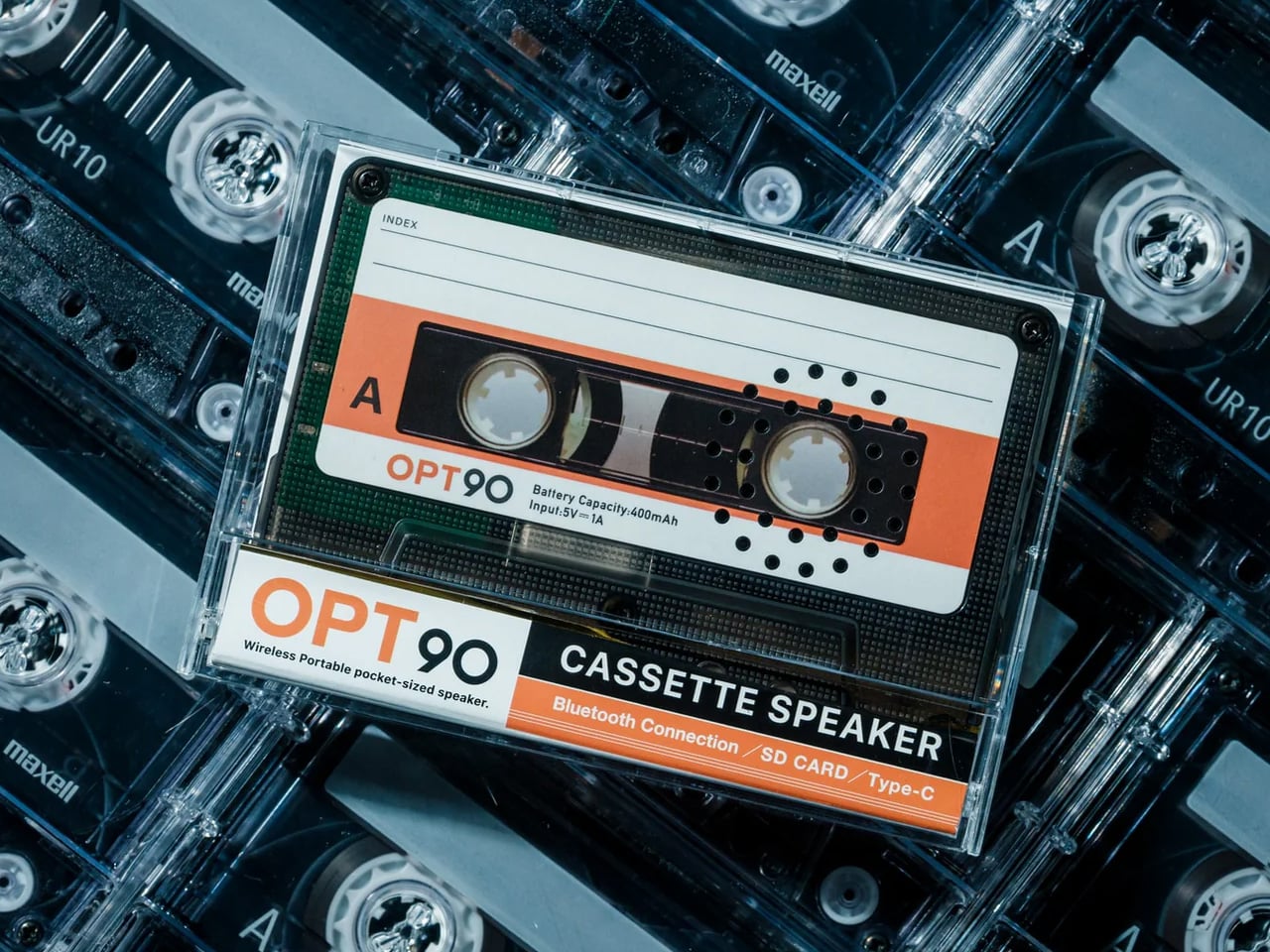
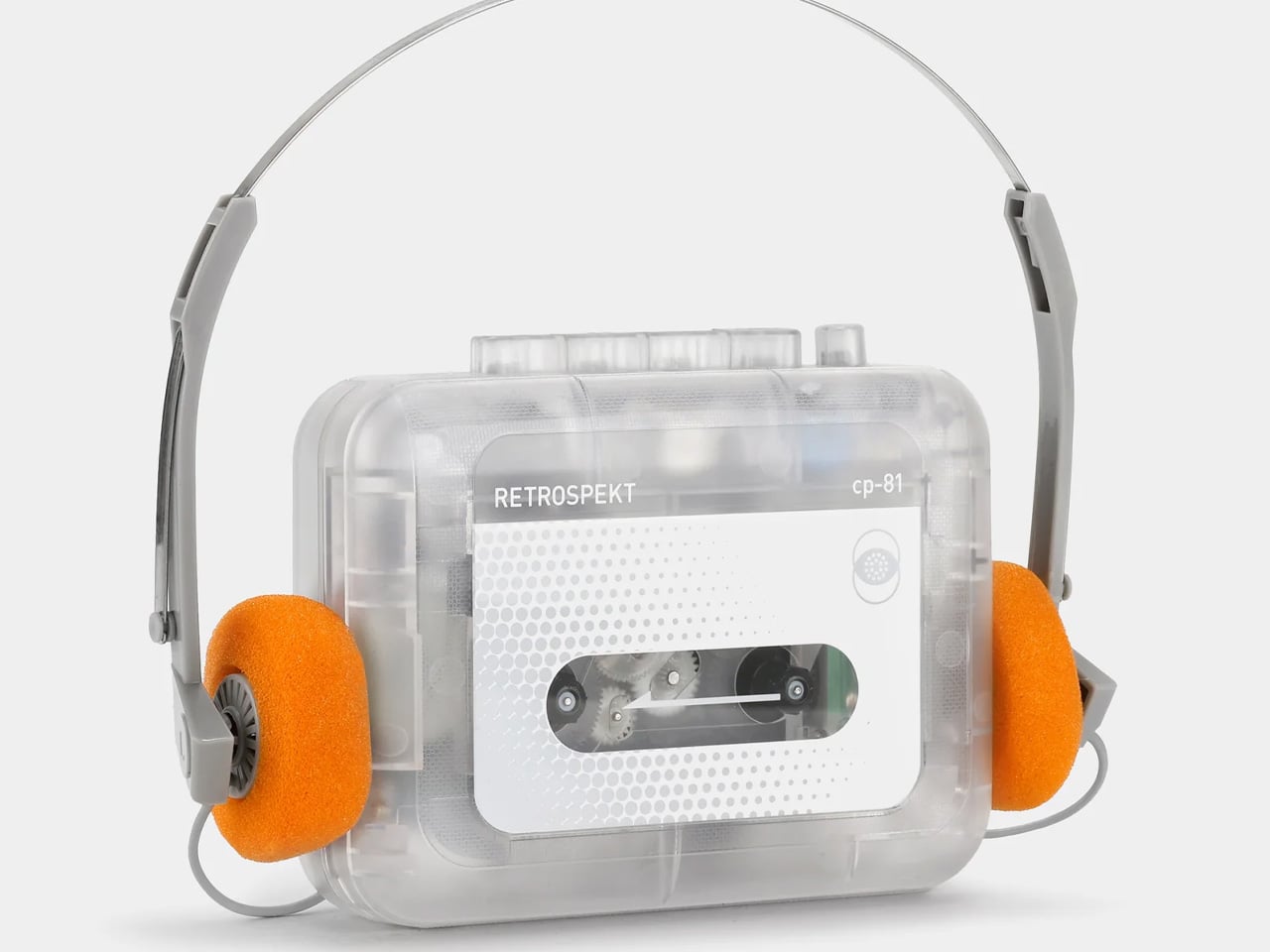
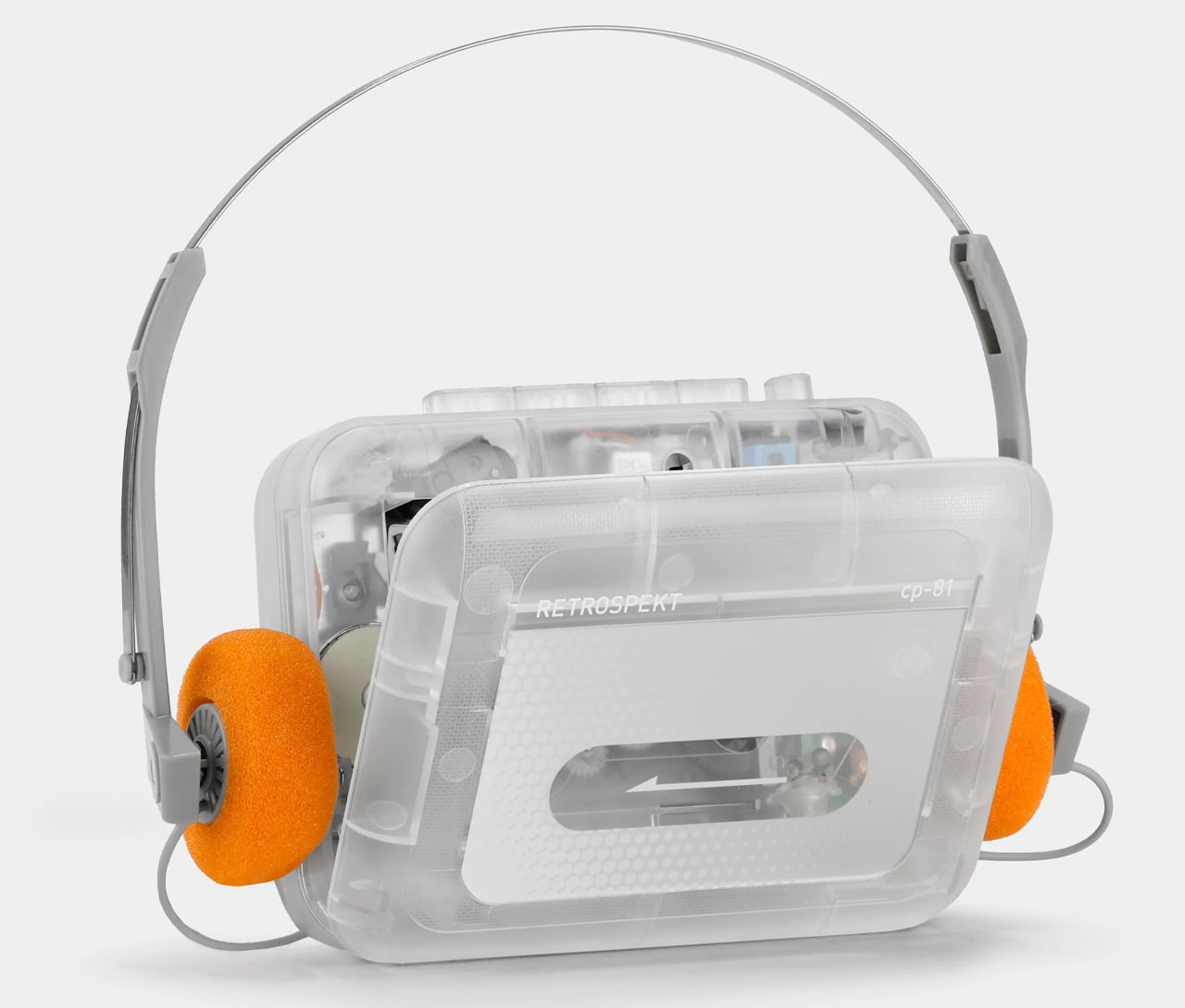
This Bluetooth speaker disguises itself as a transparent mixtape, complete with Side A labeling and visible “reels” inside the clear shell. The cassette shape isn’t just cosmetic nostalgia. It comes with a clear case that doubles as a display stand, letting you prop it up like you once displayed your most treasured mix. Bluetooth 5.3 handles wireless connectivity while a microSD slot allows offline playback of MP3 files. The sound tuning deliberately evokes the warm, slightly compressed character of actual tape playback rather than clinical digital precision.
At under fifty dollars, this hits the sweet spot between genuine functionality and affordable nostalgia. The transparent shell reveals internal components, mimicking see-through electronics that defined ’90s youth culture. You can actually read the Side A label, adding to the mixtape illusion. The compact size fits easily in bags or pockets, making it practical for travel or outdoor use. This succeeds because it doesn’t try to be an audiophile device. It embraces the cassette’s original purpose: sharing music you love in a format that carries emotional weight beyond pure fidelity.
The transparent shell and Side A label nail the mixtape aesthetic.
Bluetooth 5.3 provides reliable wireless connectivity.
microSD playback works offline without phone dependency.
Warm sound tuning captures cassette character instead of sterile precision.
The clear case converts into a functional display stand.
Under fifty dollars makes it an impulse purchase or an easy gift.
What We Dislike
The small size limits bass response and overall volume.
Tuned warmth might frustrate those wanting a flat frequency response.
The microSD slot only accepts MP3 format, not lossless files.
Battery life likely won’t match larger speakers.
The novelty factor might wear off after initial excitement.
Compact dimensions mean less impressive sound than larger alternatives.
6. Portable CD Cover Player
This device solves a problem streaming services created: what do you look at while listening to music? It plays audio CDs while displaying the album artwork in a dedicated pocket, reuniting the visual and auditory experience that made physical media special. The built-in speaker and rechargeable battery mean it goes anywhere, but the minimalist design also makes it worthy of permanent display. You can even mount it on the wall, turning it into a rotating art gallery that changes with your listening mood.
The combination of portability and display functionality sets this apart from typical CD players. Album artwork wasn’t just decoration in the ’90s. It provided context, told stories, and often became iconic imagery tied to the music itself. This player acknowledges that streaming thumbnails can’t replace holding a jewel case while listening to a new album for the first time. The built-in speaker eliminates setup complexity. Just insert a CD, position the artwork, and press play. That simplicity reflects the ’90s plug-and-play mentality before every device demanded app downloads and account creation.
Dedicated artwork display reunites visual and audio elements of albums.
Built-in speaker provides true portability without additional equipment.
A rechargeable battery eliminates cord clutter for placement flexibility.
Wall mounting capability transforms it into a rotating art display.
Minimalist design works as decoration even when not playing.
Playing physical CDs forces intentional listening instead of endless skipping.
What We Dislike
CD collections take up storage space; streaming eliminates.
Built-in speaker quality likely can’t match dedicated audio systems.
The format limits you to CDs you actually own or purchase.
Wall mounting requires an additional bracket sold separately.
Physical media scratches and degrades over time.
Younger users might not own any CDs to play.
7. Invisible Shoehorn
This stainless steel shoehorn with transparent stand brings utilitarian elegance to something usually hidden in closets. The long handle eliminates back strain when putting on shoes, a small relief that compounds over the years of daily use. The polished steel surface glides smoothly without snagging socks or stockings. When placed in its clear acrylic stand, the shoehorn becomes sculptural, looking nothing like its typical function. It hides in plain sight as an attractive decoration rather than an obvious utility.
The transparent stand concept reflects ’90s fascination with revealing function through form. See-through electronics, skeleton watches, and visible mechanics all shared this philosophy: showing how things work makes them more interesting. A shoehorn seems mundane until you consider how many people strain their backs daily because they don’t have one handy. The long stainless steel construction ensures durability measured in decades rather than years. This represents the opposite of disposable culture: buying something once and using it daily for life.
The long handle protects lower backs from repeated strain.
Polished stainless steel prevents sock snags and tears.
The transparent stand creates a sculptural display from mundane objects.
Durable construction ensures decades of reliable use.
Unique aesthetic makes it acceptable for visible placement.
The smooth surface glides effortlessly for easy shoe wearing.
What We Dislike
The minimalist aesthetic might be too subtle for those wanting obvious function.
Stainless steel shows fingerprints and requires occasional cleaning.
The transparent stand adds bulk compared to wall-mounted options.
Higher price point than basic plastic alternatives.
The long design requires dedicated storage or display space.
Some might find the “invisible” concept pretentious for a shoehorn.
Bringing It All Together
These seven products share a common thread beyond ’90s aesthetics: they make technology feel approachable again. Each one prioritizes tactile interaction and visible personality over disappearing into seamless ecosystems. You can actually touch controls, see mechanisms working, and display these devices proudly instead of hiding them. That philosophy defined ’90s product design before everything became black glass rectangles designed to vanish into backgrounds.
Millennials bridge generations that experienced distinct technology eras. These products honor that position by combining familiar forms with modern capabilities. Whether you’re streaming through a cassette speaker or watching planets orbit on your desk, you’re participating in design that values presence over absence. The ’90s taught us that objects could spark joy and conversation. These seven products prove that the lesson still resonates in 2026, offering alternatives to invisible technology that serves function while sacrificing soul.
Swedish builder Vagabond Haven has unveiled Julia, a thoughtfully designed tiny home that proves downsizing doesn’t mean compromising on comfort or style. At 26 feet long and nearly 10 feet wide, this compact dwelling packs an impressive 290 square feet of living space into a layout that feels both spacious and intimate. Categorized as extra large in Vagabond Haven’s lineup, Julia represents the company’s latest innovation in creating homes that embrace the “slow life” philosophy while meeting the practical demands of modern living.
Julia’s design centers around a large open kitchen and dining area, anchored by generous glazing that floods the interior with natural light. The thoughtfully planned kitchen comes fully equipped with a sink, small fridge, oven, and induction cooktop, providing everything needed for preparing meals in a compact footprint. The dining space features a large table that can accommodate family and friends, complemented by integrated storage seating that maximizes every inch of available space. This open layout creates a welcoming atmosphere that makes the home feel larger than its modest square footage suggests.
What sets Julia apart is its clever multifunctional design that adapts to different lifestyle needs throughout the day. The home includes a dedicated mini-office space that easily transforms into a relaxation nook with a hammock, perfect for those seeking a quick escape from daily routines. This flexibility makes the space ideal for remote workers who need a professional environment that can shift into leisure mode. The sleeping arrangements showcase equally practical thinking about modern family needs, with a spacious ground-floor bedroom that benefits from generous windows continuing the light-filled aesthetic throughout the home. Above, a sleeping loft provides a cozy retreat for guests or family members, offering enough room for a comfortable night’s sleep with optional skylights for stargazing.
Perhaps Julia’s most unique feature is its net-mezzanine, an innovative design element that adds an unexpected playful dimension to the space. The interior showcases elegant plywood walls that blend rustic charm with contemporary style, a finish that adds warmth to every corner, and has become so popular it’s now available across all Vagabond Haven models. Buyers can also choose spruce for the walls, paired with laminate flooring to complete the Scandinavian aesthetic that gives the home its distinctive character. These material choices create an environment that exudes rustic chalet vibes while maintaining a clean, modern sensibility.
Built for year-round living in harsh Scandinavian conditions, Julia features robust construction designed to last generations. The home sits on a steel frame for durability, with exterior cladding options of ThermoWood or spruce siding that provide both weather resistance and timeless visual appeal. The construction includes a lightweight aluminum roof, mineral wool insulation throughout the walls, well-insulated two-pane windows, and an entrance door with tempered glass. Vagabond Haven has equipped Julia with modern sustainable features, including ceiling-mounted LED lights with dimmers, solar system capability, an energy-saving water heater, freshwater tank and pump, rainwater harvesting system, and comprehensive ventilation throughout with a recuperator for energy efficiency.
The result is a tiny home that successfully bridges the gap between solitude and community, offering a serene retreat that welcomes family and friends while maintaining the intimate character that makes tiny living so appealing. Julia demonstrates that thoughtful design can create a peaceful sanctuary where work, relaxation, and social connection coexist harmoniously in a compact footprint, making it an ideal choice for those seeking to embrace a simpler, more intentional way of living.
January arrives with its familiar promise of renewal, and your work-from-home setup deserves the same attention as your fitness goals or morning routines. The desk where you spend eight hours daily becomes more than furniture—it transforms into the command center of your productivity, creativity, and professional presence. After months of accumulated cable chaos, scattered pens, and makeshift arrangements, the new year offers the perfect excuse to reimagine your workspace with intention.
The right desk accessories don’t just organize; they elevate your entire work experience through thoughtful design and purposeful engineering. These five pieces represent the intersection of form and function, where premium materials meet clever problem-solving. From levitating pens that spark creative breaks to monitor stands that finally solve the Mac mini placement puzzle, each accessory addresses a specific pain point while adding visual sophistication to your desk landscape.
1. Alogic Aspekt Omni Fold Stand
Apple’s Mac mini has always been a spatial enigma—too beautiful to hide away, yet too awkward to display properly. The little computing powerhouse typically ends up pushed to the side with cables sprawling in every direction, never quite integrating into your desk aesthetic. Alogic spotted this design gap and responded with the Aspekt Omni Fold Stand, a monitor stand that elegantly solves the Mac mini placement problem by building its home directly into the base.
The engineering here feels revelatory in its simplicity. Rather than creating another shelf or separate mount, Alogic carved a precision groove into their premium monitor stand specifically calibrated for the M4 Mac mini. This transforms your setup into a modular iMac where computer and display unite visually while remaining independently upgradeable. The stand eliminates cable clutter by centralizing your hub, while the aluminum construction matches Apple’s design language perfectly. Starting your year with this level of spatial organization creates a foundation for everything else on your desk.
What We Like
Transforms the Mac mini and monitor into a cohesive all-in-one aesthetic.
Precision-engineered groove prevents the computer from sliding or shifting.
Centralizes cables and ports for a cleaner desk appearance.
Premium aluminum construction matches Apple product quality.
What We Dislike
Specifically designed for the Mac mini limits universal appeal.
Premium materials result in a higher price point than basic stands.
2. FoldLine Pen Roll
Digital tools dominate our workflows, yet the ritual of putting pen to paper remains irreplaceable for sketching ideas, signing documents, or journaling thoughts. The FoldLine Pen Roll recognizes this enduring need and transforms pen storage from utilitarian afterthought into an intentional design object. Crafted from a single piece of Italian leather, this isn’t merely a case—it’s a portable writing station that unfolds into a defined work surface wherever you land.
The origami-inspired geometry creates natural compartments without stitching or partitions. Your pens nestle into folded leather channels that prevent rattling and scratching; even metal-bodied instruments remain separated and protected. Opening the roll becomes a small ceremony that signals transition into focused work mode, whether you’re at a café table or hotel desk. The leather develops character through use, aging beautifully while maintaining structure. Resetting your desk for January means honoring analog tools with the same design consideration you’d give your laptop or monitor.
Single-piece Italian leather construction ensures durability and elegance.
Unfolds into a stable tray that defines a workspace on any surface.
Natural folding system protects pens without scratches or noise.
Compact form travels easily in bags without adding bulk.
What We Dislike
Leather requires occasional conditioning to maintain suppleness.
Limited capacity suits curated pen collections rather than large inventories.
3. ClearMind Kendama
Desk accessories typically focus on productivity optimization, but sustained focus requires deliberate breaks that refresh your mind without derailing concentration. The ClearMind Kendama from Tokyo Kendama introduces a physical skill toy to your workspace, offering three-minute mental resets between video calls or during creative blocks. This traditional Japanese toy—a wooden handle connected to a ball—challenges hand-eye coordination while providing satisfying tactile feedback that screens simply cannot deliver.
Tokyo Kendama recalibrated the classic design specifically for modern desk use. Larger cups make landing tricks more achievable, building confidence rather than frustration during brief breaks. The bearing system minimizes string twists, maintaining smooth operation throughout the day. The balanced weight distribution creates precise movements that feel meditative rather than chaotic. Keeping the ClearMind Kendama within reach establishes a healthier relationship with breaks, replacing endless phone scrolling with intentional physical engagement that genuinely refreshes your attention span for the next task.
Physical skill development provides genuine mental breaks from screens.
Larger cups and recalibrated balance increase success rates for beginners.
The bearing system prevents string tangles during extended use.
Compact desktop footprint requires minimal space when not in use.
What We Dislike
The initial learning curve may frustrate users seeking immediate gratification.
Wooden construction shows wear marks from repeated trick attempts.
4. OrigamiSwift Folding Mouse
Laptop trackpads serve their purpose, but precision work demands a proper mouse—a truth that becomes problematic when your workspace shifts between home office, coffee shops, and coworking spaces. The OrigamiSwift Folding Mouse solves this portability paradox by delivering full-size comfort and control in a device that collapses completely flat. Inspired by origami’s transformation principles, this Bluetooth mouse adapts to your location rather than forcing workspace compromises.
The folding mechanism activates in under half a second with a simple flip, springing the mouse to life immediately. At just 40 grams, it disappears into your bag or pocket until needed, yet the ergonomic shape feels substantial and natural during extended work sessions. The design acknowledges that January resolutions often include workspace flexibility—maybe you’re committing to working from different environments or finally embracing that digital nomad dream. OrigamiSwift ensures your tools match your ambitions, providing desktop precision regardless of where you unfold your laptop.
Folds completely flat for effortless transport in any bag.
Full-size ergonomic comfort prevents hand fatigue during long sessions.
Instant 0.5-second activation from folded to functional state.
Ultra-lightweight 40-gram construction adds negligible travel weight.
What We Dislike
The folding mechanism represents a potential long-term durability concern.
Bluetooth connectivity requires occasional battery recharging.
5. Levitating Pen
Every desk needs a conversation piece that transcends pure utility, an object that sparks curiosity and provides momentary wonder during grinding workdays. The Levitating Pen achieves this through magnetic engineering that suspends the pen vertically in mid-air without batteries or electronics. The precision-machined pedestal creates a magnetic field perfectly calibrated to balance the pen, transforming a writing instrument into a kinetic sculpture that commands attention on any desk surface.
Manufactured using CNC machining with tolerances under 0.1mm—the same facility producing Apple products—this pen demonstrates obsessive attention to detail. The Swiss-made ballpoint cartridge ensures writing performance matches the engineering spectacle. Beyond aesthetics, the levitating mechanism serves a practical purpose: taking brief mental breaks by spinning the pen, watching its hypnotic wobble for thirty seconds before returning refreshed to your task. Starting January with this level of design consideration signals your commitment to a workspace that inspires rather than merely functions.
Swiss ballpoint cartridge delivers a smooth, professional writing experience.
Spinning motion provides meditative micro-breaks during intensive work.
What We Dislike
The pedestal requires permanent desk space that cannot be repurposed.
Premium manufacturing process results in significant investment cost.
Resetting Your Workspace Intentionally
The desk accessories you choose reveal your priorities and shape your daily experience more than most people realize. These five pieces represent different facets of the modern work-from-home reality: spatial organization, analog appreciation, mental refreshment, location flexibility, and design inspiration. Each addresses specific pain points while elevating your workspace beyond pure function into something that genuinely sparks joy during those long January afternoons.
Resetting your desk for the new year isn’t about buying everything at once—it’s about identifying which aspect of your current setup drains energy rather than creating it. Maybe you’re drowning in cable chaos around your Mac mini, or perhaps you’re scrolling through your phone during breaks when your mind needs actual engagement. Start with the accessory that solves your most persistent frustration, then build from there as your workspace evolves throughout the year.
Australia’s Build Tiny has crafted a charming escape that proves small living doesn’t have to sacrifice character. The Tallarook Hilltop Tiny House 1 sits perched on a stunning hilltop in rural Victoria, offering sweeping views over Broadford and Kilmore while embracing the raw, unpretentious aesthetic of agricultural architecture. Built on a double-axle trailer, the home’s corrugated metal siding and matching roof create an almost utilitarian appearance that feels right at home against the backdrop of Mount Piper and the Tallarook State Forest. This design choice reflects a refreshing departure from the sleek, apartment-style tiny homes that dominate today’s market. Instead, Build Tiny has returned to the movement’s roots, celebrating the cabin-like simplicity that first inspired people to downsize.
The 157-square-foot interior maximizes every inch through thoughtful spatial planning. A lofted queen-sized bed accessed by ladder keeps the sleeping area separate from the main living space, while the ground floor houses a compact kitchenette equipped with essential cooking equipment and bathroom facilities. The layout prioritizes function over frills, creating a cozy retreat that feels intimate rather than cramped.
What truly sets this tiny house apart is its commitment to off-grid independence. Roof-mounted solar panels connect to battery storage, ensuring power flows consistently even when clouds roll in. This self-sufficiency aligns perfectly with the property’s rural location, where guests can disconnect from urban pressures and reconnect with the slower rhythms of farm life.
The setting itself deserves equal billing. Located just an hour’s drive from Melbourne, the property sits on 600 acres of working farmland at Seven Hills, Tallarook. The hilltop position provides unobstructed sightlines across the Goulburn Valley, making sunrise and sunset viewing an effortless daily ritual. Guests can explore nearby attractions like the Tallarook State Forest, Trawool Reservoir, and Mount Hickey, or venture to local spots such as Kilmore Piazza House and Rose Garden Cafe.
Build Tiny’s approach demonstrates that authentic tiny house living can be both practical and poetic. The corrugated metal exterior will age gracefully, developing a weathered patina that deepens its connection to the landscape. The compact footprint treads lightly on the land while the solar setup eliminates reliance on external power sources.
For travelers seeking respite from overstimulating modern life, the Tallarook Hilltop Tiny House offers something increasingly rare: genuine simplicity. There’s no pretense here, no Instagram-ready styling masking impractical design. Just honest materials, efficient use of space, and views that stretch toward the horizon. It’s tiny house living as it was meant to be.
Book clubs thrive on intention, and 2026 is calling for a refresh. The ritual of reading together deserves more than cramped corners and harsh overhead lighting. Creating a dedicated reading nook transforms your literary habits from scattered moments into meaningful experiences. These five essentials blend form with function, turning any space into an inviting sanctuary where pages turn naturally, and conversations flow.
The best reading nooks aren’t about excess. They’re about selecting pieces that enhance comfort while celebrating the act of reading itself. From ambient lighting that sets the perfect mood to clever tools that keep your place without damaging precious spines, each element serves a purpose. These designs honor the tactile joy of physical books while adding visual interest that makes your reading corner a destination worth visiting daily.
1. Bookish Bookmark
Every dedicated reader knows the frustration of trying to keep a book open while juggling a cup of tea or taking notes. The Bookish Bookmark solves this age-old problem with elegant simplicity. This transparent acrylic paperweight curves naturally to hold pages open without forcing the spine into unnatural positions, respecting the integrity of your favorite volumes while keeping them accessible.
The genius lies in its transparency. Unlike traditional paperweights that obstruct text, this bookmark disappears visually while doing its job. You can read straight through it without interruption, making it perfect for those moments when you need both hands free to sketch ideas or reach for snacks during intense book club discussions. The book-shaped design adds a meta touch that book lovers will appreciate.
The curved design respects the natural form of books, preventing spine damage that can devalue collectible editions.
The transparent material means no more awkward repositioning to read past an opaque weight.
It eliminates the need for makeshift solutions like coffee mugs or phones that can leave marks or cause spills.
The dedicated design shows thoughtfulness toward the reading experience itself.
What We Dislike
Acrylic resin can scratch over time with rough handling, potentially affecting its clarity.
The transparency that makes it functional also makes it easy to misplace on cluttered surfaces.
It works best with standard-sized books, leaving oversized art books or tiny pocket editions without ideal support.
The minimalist design lacks personalization options for readers who enjoy expressive accessories.
2. Anywhere Use Lamp
Lighting makes or breaks a reading environment. The Anywhere Use Lamp brings warmth and flexibility to your reading nook with its mushroom-inspired portability. Six high color rendering LEDs cast a soft glow that’s bright enough for comfortable reading without the harshness of overhead lights. The modular design means you can reposition it instantly, following natural light throughout the day or moving between rooms.
Battery power changes everything for the reading nook design. Four AA batteries free you from outlet proximity, letting you claim any corner as your literary retreat. The tactile satisfaction of pressing anywhere on the lamp’s cap to cycle through four brightness levels adds a sensory element to your reading ritual. Choose between black, white, or the new Industrial edition with its deliberately imperfect metal base that celebrates authentic character.
The portable design using AA batteries liberates your reading nook from electrical constraints.
Warm LED lighting reduces eye strain during extended reading sessions while creating an inviting ambiance.
The haptic feedback from adjusting brightness adds satisfying physicality to the experience.
Modular construction allows easy disassembly for transport to outdoor book club meetings or weekend retreats.
What We Dislike
Battery replacement creates ongoing costs and environmental considerations compared to rechargeable options.
The compact size limits coverage area for larger reading spaces or group gatherings.
AA batteries add weight that slightly contradicts the portable promise.
The minimalist aesthetic, while elegant, offers limited decorative personality for eclectic spaces.
3. Pop-Up Book Vase
Reading nooks benefit immensely from living elements. The Pop-Up Book Vase brings nature into your literary space with whimsical charm. This clever design opens like a storybook to reveal three-dimensional vase cutouts that hold fresh flowers. Three different vase designs within one book format mean you can refresh your display without purchasing new pieces, simply by turning pages to reveal new arrangements.
Natural pulp construction with water-resistant coating protects against spills while maintaining an organic aesthetic. The vase can be positioned normally or flipped upside down for dramatically different perspectives, encouraging the kind of creative thinking that enriches book discussions. Flowers add color, fragrance, and vitality to reading spaces, creating sensory layers that make settling in with a book feel truly special.
Three distinct vase designs provide variety without clutter, perfect for small spaces.
The pop-up mechanism delights visitors and adds conversation-starting visual interest.
Natural materials align with sustainable living values while complementing book aesthetics.
Fresh flowers improve air quality and mood, both beneficial for focused reading and lively discussions.
What We Dislike
The water-resistant coating requires careful maintenance to prevent degradation over time.
Structural integrity depends on proper setup, making it less intuitive than traditional vases.
Page-turning mechanisms can weaken with frequent repositioning, limiting design changes.
The creative format takes up more surface area than conventional cylindrical vases.
4. Fire Capsule Oil Lamp
Ambient lighting elevates reading from routine to ritual. The Fire Capsule Oil Lamp provides up to 16 hours of continuous illumination from its 80ml capacity, creating a serene atmosphere that invites longer reading sessions. The precision-engineered lid keeps the glass chimney dust-free, maintaining crystal clarity that showcases the living flame. This isn’t just functional lighting—it’s a centerpiece that transforms your reading nook into a sanctuary.
The included aroma plate expands functionality beyond illumination. Add essential oils to infuse your space with scents that enhance focus or relaxation during reading sessions. Paraffin oil burns clean and odorless, creating a safe ambiance for both novice and experienced users. The cylindrical form stacks beautifully for storage, while the protective drawstring pouch makes it portable for outdoor book club gatherings, where you can use insect-repelling oils.
The generous 16-hour burn time supports marathon reading sessions and extended book club meetings.
Clean-burning paraffin oil eliminates the smoke and odor concerns that candles present near books.
The aroma plate feature creates multi-sensory reading experiences that deepen immersion.
Stackable design solves storage challenges while the included pouch enables outdoor literary adventures.
What We Dislike
Open flame requires vigilant supervision, especially in homes with children or pets.
Paraffin oil represents an ongoing expense and requires dedicated storage space.
The glass chimney, while beautiful, introduces fragility that demands careful handling.
Flame lighting lacks the instant convenience of electric options for quick reading sessions.
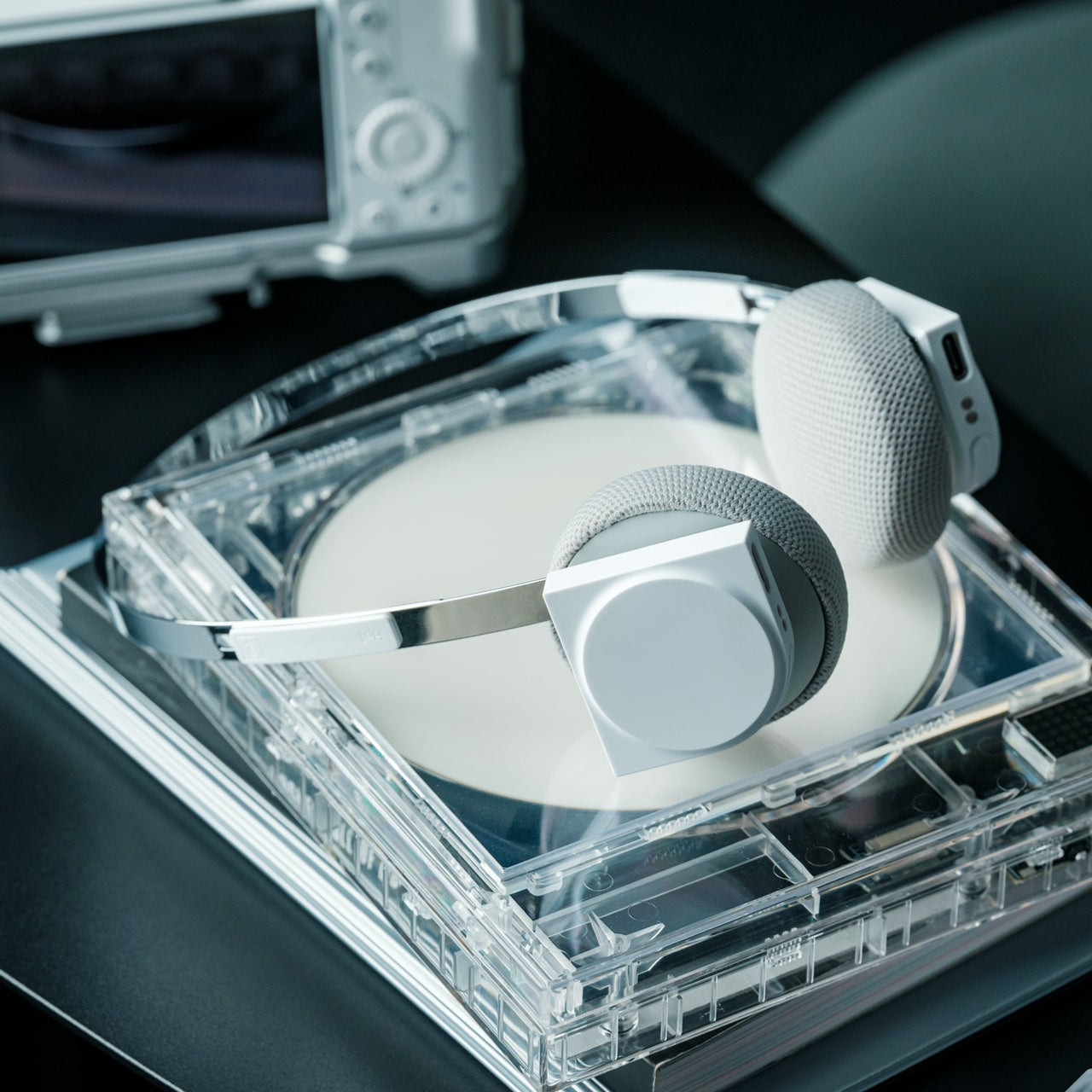
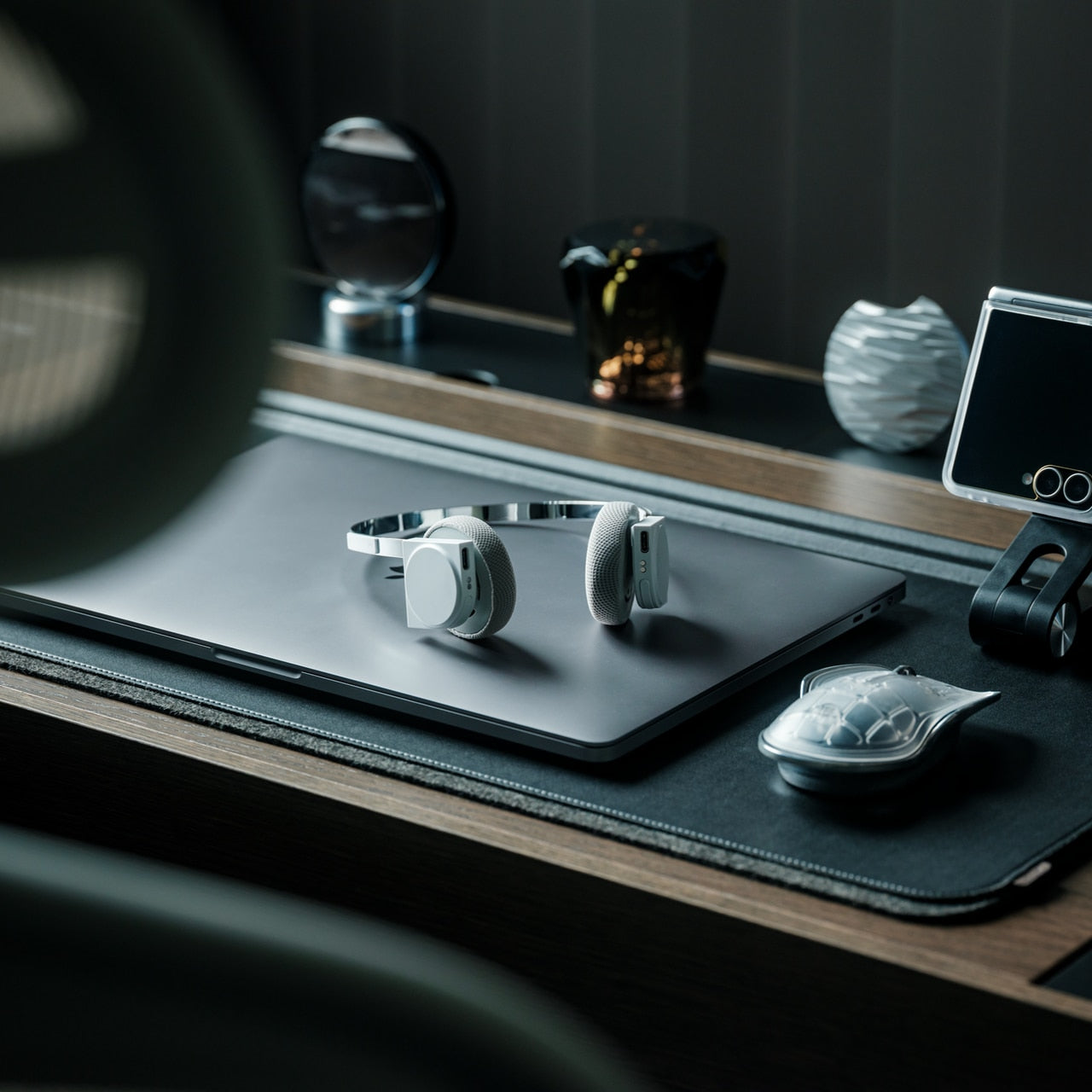
5. StillFrame Headphones
Modern reading encompasses multiple formats. The StillFrame Headphones honor audiobook listeners and those who prefer ambient soundscapes while reading physical books. At just 103 grams, they vanish physically while delivering substantial audio through 40mm drivers that create an expansive soundstage. The design splits the difference between in-ears and over-ears, offering comfort for the 24-hour battery life that powers all-day listening.
The retro-inspired geometry references the CD era when albums demanded dedicated attention, making these headphones philosophically aligned with focused reading. Active noise cancelling creates isolation for deep concentration, while transparency mode maintains environmental awareness for shared spaces. This adaptability serves book club members who alternate between private reading and group discussions, supporting both modes with a simple tap.
The 24-hour battery life eliminates charging anxiety during long reading days or travel.
Featherlight construction at 103 grams prevents the fatigue associated with heavier headphones.
Dual-mode functionality adapts to changing environments without requiring different devices.
The wide soundstage enhances audiobook narration and creates immersive atmospheres for background music during reading.
What We Dislike
The premium design comes with corresponding pricing that may stretch book club budgets.
On-ear style can cause discomfort during extremely extended wear despite light lightweight.
The aesthetic, while striking, demands commitment to a specific design language.
Bluetooth connectivity introduces another device to charge and maintain in your reading ecosystem.
Building Your 2026 Reading Ritual
These five essentials work together to create reading environments that honor literature. The combination addresses lighting from multiple angles, supports the care of physical books, introduces natural elements, and acknowledges evolving consumption formats. Investing in a dedicated reading space signals a commitment to your book club goals, transforming intentions into daily practices that last throughout the year.
Quality tools enhance experiences worth repeating. When your reading nook becomes genuinely inviting rather than merely functional, returning to it feels effortless. These designs demonstrate that thoughtful curation matters, that small details compound into significant improvements. Your 2026 book club goals deserve this foundation, where every element serves both purpose and pleasure in equal measure.
The humble shipping container continues to prove its versatility in architecture, and Backcountry Containers’ latest project showcases just how much function can be packed into 20 feet of steel. The Teeny Tiny Haus, nestled in Stonewall, Texas, reimagines vacation living by squeezing a complete home for two into a single standard shipping container. This cleverly designed retreat demonstrates that thoughtful planning can transform industrial materials into comfortable living spaces.
Measuring just 20 feet in length and 8 feet in width, the structure occupies roughly the same footprint as smaller European tiny houses. The compact dimensions forced Backcountry Containers to get creative with every square inch of available space. The result is an optimized 130 square feet that includes a bedroom, kitchen, and full bathroom, proving that essential amenities don’t require sprawling square footage.
The design required significant modifications to the original container structure. Large windows flood the interior with natural light, breaking up what could otherwise feel like a claustrophobic metal box, while a covered porch area extends the living space outdoors. This indoor-outdoor connection becomes essential when working within such tight quarters, giving guests psychological breathing room beyond the container’s metal walls and creating a sense of openness that defies the home’s modest dimensions.
Backcountry Containers has built its reputation on transforming industrial shipping containers into durable, low-maintenance living spaces. The family-run business started with single-unit container homes and has expanded to multi-container custom builds as customer demand grew. Their portfolio now includes everything from container pools and saunas to multi-bedroom residences. The company gained national attention when they appeared on HGTV’s Tiny House, Big Living, building their Kennedy Model. That 40-foot container home featured a bedroom, bathroom, open-concept kitchen and living space, plus a rooftop deck spanning the entire 40-foot length.
The Teeny Tiny Haus sits at Last Stand TX, where guests can book short-term stays through Airbnb. This rental model allows curious homeowners to experience container living firsthand before committing to a purchase. Backcountry Containers offers this same opportunity at several locations, including a 40-foot container home with mountain views and a three-bedroom unit in Shell Lake, Wisconsin. Standard models can be completed and delivered in 6 to 16 weeks.
Container homes appeal to buyers seeking affordable, secure housing that can withstand harsh weather. The structural integrity of shipping containers provides a solid foundation, while their modular nature allows for relatively quick construction. The Teeny Tiny Haus represents the company’s original vision: simple yet robust shipping container getaways that prove small spaces can deliver big experiences. For travelers seeking something beyond standard accommodations, this tiny Texas retreat offers a glimpse into container living’s potential.
Japanese design philosophy has long celebrated the marriage of form and function, transforming everyday objects into tools that spark joy while serving practical purposes. This ethos shines brightest in stationery design, where minimalism meets innovation to create products that streamline workflows and declutter both physical and mental spaces. The items on this list represent a modern evolution of this tradition, offering solutions that fit seamlessly into contemporary life.
Organization isn’t just about having the right storage solutions; it’s about surrounding yourself with tools that inspire consistent use and thoughtful habits. These seven Japanese-inspired stationery essentials combine intelligent engineering with aesthetic restraint, ensuring that staying organized feels less like a chore and more like a natural extension of your creative process. Each piece has been selected for its ability to eliminate friction from daily tasks while adding visual harmony to your workspace.
1. OrigamiSwift Folding Mouse
Staying organized in a mobile work environment means carrying the right tools without the bulk. The OrigamiSwift reimagines the traditional computer mouse through the lens of Japanese paper-folding artistry, creating a device that collapses to pocket size yet delivers full desktop functionality. This ingenious design features a triangular skeletal structure that folds completely flat when not in use, allowing digital nomads and hybrid workers to maintain their preferred setup regardless of location.
The transformation happens in less than half a second with a simple flick of the wrist, instantly morphing from a slim card into a responsive input device. Weighing just 40 grams, this featherweight mouse disappears into bags and pockets until the moment productivity calls. The aluminum construction ensures durability despite the mechanical complexity, while the ergonomic contours cradle your hand during marathon editing sessions or detailed design work. For anyone juggling multiple workspaces throughout their day, this folding marvel eliminates the compromise between portability and performance.
Deploys in under 0.5 seconds for instant workflow activation.
Origami-inspired triangular structure provides surprising rigidity and stability when deployed.
Ultra-lightweight 40-gram design makes it virtually unnoticeable in bags.
Fits in pockets and tight spaces without compromising on full-sized mouse functionality.
What We Dislike
Ultra-slim profile requires an adjustment period for users accustomed to bulkier mice.
Mechanical hinges need occasional maintenance to preserve smooth folding action.
2. Everlasting All-Metal Pencil
Few things disrupt creative flow like a broken pencil lead or the constant need to sharpen. The Everlasting All-Metal Pencil eliminates these frustrations through material innovation rather than mechanical complexity. Crafted from a specialized alloy core encased in aluminum, this writing instrument leaves graphite-like marks on paper without wearing down at the accelerated rate of traditional pencils. The result is a tool that writes for years rather than weeks, producing consistent lines that erase cleanly with standard erasers.
The tactile experience mirrors conventional pencils closely enough that your hand won’t notice the switch, yet the absence of sharpening fundamentally changes how you interact with the tool. You can sketch freely without monitoring lead length or calculating whether you have enough left for a particular project. The weight distribution feels substantial without being cumbersome, lending a sense of permanence that disposable writing tools simply cannot match. This pencil becomes a reliable companion rather than a consumable supply, encouraging deeper attachment and more intentional use.
Never needs sharpening, creating a completely uninterrupted workflow.
Alloy construction lasts for decades, eliminating constant supply replenishment.
Marks erase cleanly with standard erasers just like traditional pencils.
Reduces waste and mental load of managing consumable supplies.
What We Dislike
Fixed line weight offers less variation than traditional graphite pencils with different grades.
Higher initial cost compared to conventional pencils.
3. MagBoard Clipboard
Traditional notebooks impose structure that sometimes stifles rather than supports organization. The MagBoard Clipboard embraces flexibility through its magnetic lever mechanism, securing up to 30 loose sheets while allowing instant reordering, removal, or addition. This hardcover design functions equally well on a desk or held against your torso while standing, transforming any environment into a viable workspace. The rigid backing provides writing stability without the permanence of bound pages.
The magnetic closure system offers satisfying tactile feedback while maintaining security during transport. Water-resistant materials ensure your notes survive coffee spills and sudden weather changes, protecting work that might otherwise be lost to environmental hazards. The ability to shuffle pages means your organizational system can evolve with your projects, accommodating non-linear thinking patterns that don’t fit neatly into numbered sequences. You might start a meeting with prepared sheets, add new observations throughout, then reorganize everything based on priority before leaving. This adaptive format respects how actual work happens rather than imposing artificial constraints.
Instant page reorganization without tearing or rewriting saves significant time.
Hardcover design allows comfortable note-taking while standing or moving.
Water-resistant materials protect notes from spills and weather damage.
The magnetic lever mechanism secures up to 30 sheets during transport.
What We Dislike
30-sheet capacity may feel limiting for extensive multi-page projects.
Magnetic mechanism adds noticeable weight during extended holding periods.
4. Inseparable Notebook Pen
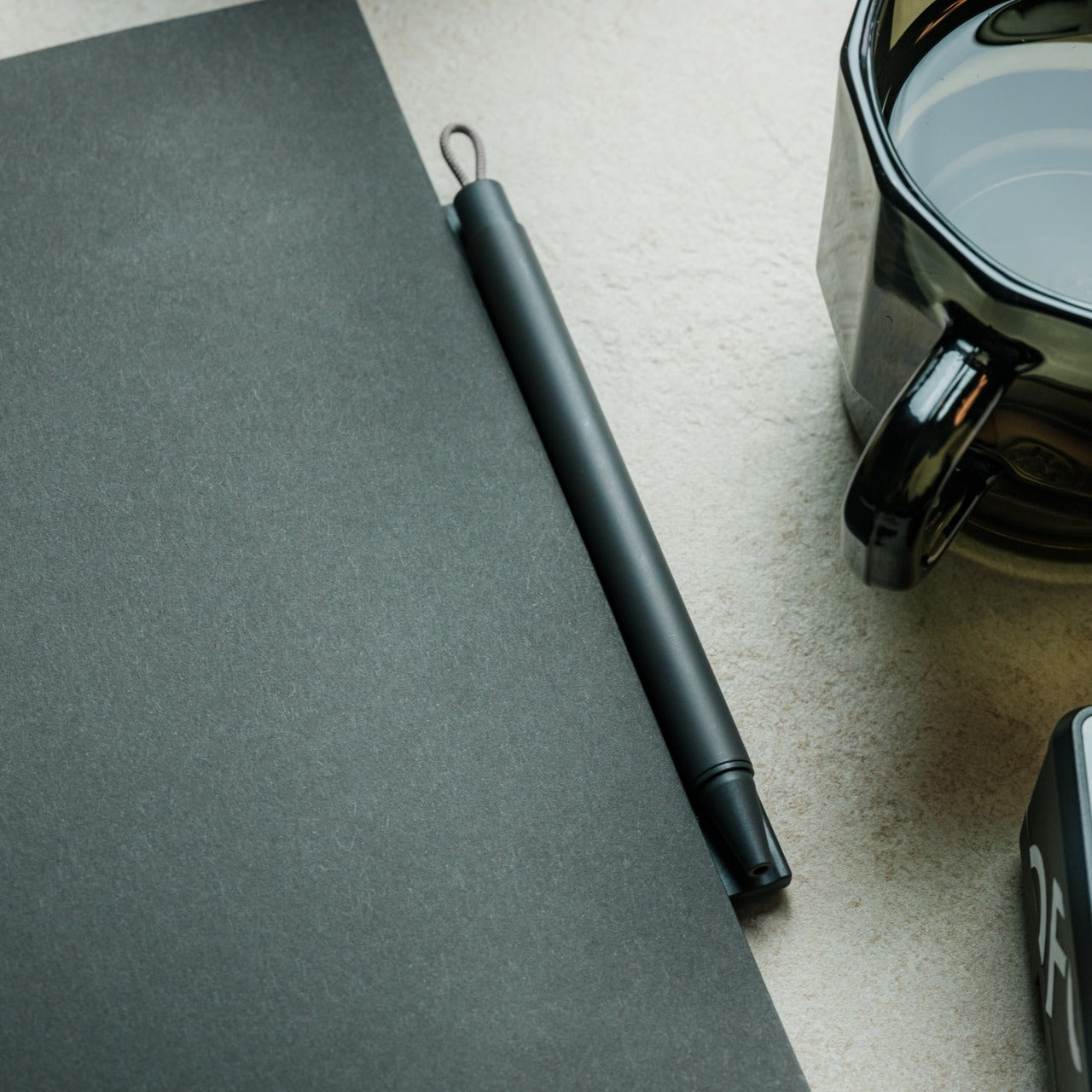
Misplaced pens represent one of the organization’s most persistent frustrations. The Inseparable Notebook Pen solves this through integration rather than attachment, creating a writing instrument designed specifically to remain with your notebook. The minimalist profile slides easily alongside pages without creating bulk, while the smooth ink flow ensures thoughts transfer to paper without skipping or pressure adjustments. This isn’t just a pen that happens to fit your notebook; the entire form factor was conceived around coexistence.
The grip diameter and length strike a balance between portability and comfort, allowing extended writing sessions without cramping. The understated aesthetic avoids competing for attention, letting your content remain the focus rather than the tool itself. By designing the pen and notebook as a unified system, this approach eliminates the common scenario of finding a notebook but lacking something to write with. The relationship between tool and substrate becomes seamless, reducing decision fatigue and creating muscle memory around a consistent setup. When reaching for your notebook, it always means having a reliable pen immediately available, and capturing fleeting ideas becomes automatic rather than conditional.
Integrated design creates consistent habits around a single unified system.
Slim profile maintains notebook portability without adding noticeable bulk.
Smooth ink flow ensures reliable writing without skipping or pressure issues.
Eliminates the common frustration of finding notebooks without pens.
What We Dislike
Specialized design may not fit other notebooks in your collection.
Requires replacing the specific design rather than using generic pen replacements.
5. Scissors with Magnetic Base
Office scissors typically live in drawers or cups, creating search friction when you need them urgently. These Scissors with Magnetic Base stand perpetually upright on your desk, always visible and immediately accessible. The weighted aluminum base uses magnetic attraction to hold the Japanese stainless steel blades in an elegant vertical position, transforming a utilitarian tool into a sculptural desk element. The Teflon coating on the blades ensures smooth cutting through various materials while preventing adhesive buildup from tape or labels.
The substantial weight of the all-metal construction provides satisfying heft during use, allowing the scissors’ sharpness to do the work rather than requiring excessive hand pressure. One finger ring incorporates a hidden box cutter blade, adding functionality without compromising the clean aesthetic. The upright storage position protects blade edges from the dulling contact that occurs when scissors roll around in drawers. By giving these scissors a permanent home that celebrates rather than hides them, you’re more likely to use the right tool for cutting tasks instead of making do with whatever’s closest. The magnetic base also prevents the gradual migration that causes tools to disappear into desk clutter.
Always-vertical positioning eliminates search time and tool misplacement.
Japanese stainless steel with Teflon coating maintains sharp cutting performance.
One finger ring doubles as a box cutter for added functionality.
Magnetic base transforms a utilitarian tool into a sculptural desk element.
What We Dislike
A dedicated base makes scissors less practical for mobile use or multiple workstations.
A prominent vertical display requires a dedicated desk surface area.
6. Paperweight and Pen Holder
Desktop organization often suffers from single-purpose items that crowd surfaces without earning their real estate. The HMM Paperweight serves dual functions through its donut shape, holding papers securely while offering a stable pen rest when writing tools aren’t in use. The milled aluminum construction features twelve beveled faces that create visual interest through their geometric precision, catching light differently throughout the day. Weighing 101 grams across a 50mm diameter, the compact form factor delivers substantial anchoring power without dominating your workspace.
The central cavity accommodates standard pen diameters, creating a natural resting place that keeps writing instruments from rolling away or getting buried under papers. The tactile quality of the machined surfaces invites idle handling during thinking moments, providing subtle sensory engagement that can aid focus. This piece exemplifies multi-functionality done thoughtfully, where each purpose enhances rather than compromises the other. The paperweight function works best with reference documents you need visible but secure, while the pen holder keeps your preferred writing tool elevated and ready. Together, these capabilities reduce desktop chaos by giving key items defined homes that look intentional rather than cluttered.
Dual functionality maximizes usefulness while minimizing desk footprint.
Twelve beveled aluminum faces create a premium aesthetic appeal.
Compact 50mm diameter delivers substantial anchoring without dominating the workspace.
Tactile machined surfaces provide satisfying sensory engagement.
What We Dislike
The central hole only accommodates vertically positioned pens.
The 101-gram weight may struggle with larger document stacks.
7. Serenity Pen Stand
Most pen stands distract from the writing instrument they’re meant to showcase. The Serenity Pen Stand takes the opposite approach, reducing itself to near invisibility through radical simplicity. This minimalist cylinder features a cavity for pen tips and tilts slightly off-vertical for easier retrieval, creating an elegant pedestal that directs attention upward. The combination of aluminum body and copper base creates a subtle two-tone contrast while lowering the center of gravity for surprising stability despite the petite footprint.
The modest dimensions mean this stand occupies minimal desk space, fitting comfortably even on crowded surfaces. The weight distribution prevents tipping even with heavier pens, while the angled presentation makes grabbing your writing tool feel natural rather than requiring careful extraction. This design philosophy celebrates the pen as the protagonist, with the stand serving as supporting architecture rather than a competing feature. The copper bottom develops a natural patina over time, creating an evolving aesthetic that reflects your workspace’s history. For anyone who appreciates their writing instruments as prized tools rather than disposable supplies, this stand offers a reverent display option that respects both the pen and your desktop harmony.
Near-invisible design keeps visual focus on the pen itself.
Copper bottom provides excellent stability despite a tiny footprint.
Slight tilt makes pen retrieval feel natural and effortless.
Develops natural patina over time for evolving aesthetic character.
What We Dislike
Single-pen capacity requires multiple stands for instrument rotation.
A minimalist cavity may not accommodate unusual tip shapes or oversized barrels.
Organizing with Intention
The items featured here share a common thread beyond their Japanese design heritage. Each piece respects your attention by solving specific organizational challenges without introducing new complexity. Rather than adding systems that require maintenance and memory, these tools simply work better than their conventional alternatives. The result is an organization that happens naturally through superior design rather than forced discipline.
When your workspace contains tools that are genuinely pleasant to use and look at, maintaining order becomes effortless. These seven essentials prove that staying organized doesn’t require sacrifice or compromise. By choosing items that combine beauty, durability, and thoughtful functionality, you create an environment where productivity and tranquility coexist. The Japanese design philosophy embedded in each piece offers a masterclass in maximizing efficiency, transforming everyday objects into trusted companions.
The new year brings fresh opportunities to reimagine how we work, create, and organize our daily routines. As we step into 2026, the tools we choose to accompany us matter more than ever. The right instruments don’t just help us complete tasks—they transform how we think, collaborate, and bring ideas to life. From portable writing companions to innovative digital hybrids, these productivity tools represent a shift toward smarter, more thoughtful design.
What makes a tool truly productive isn’t complexity or feature overload. The best instruments fade into the background, becoming natural extensions of our creative process. They’re the ones we reach for instinctively, the ones that remove friction rather than add it. These seven designs embrace that philosophy, offering elegant solutions that respect your time, space, and workflow while helping you achieve more with less effort.
1. Inseparable Notebook Pen
The frustration of reaching for a pen only to find it missing is universal. This magnetic pen eliminates that daily annoyance by becoming one with your notebook. The design features a sleek magnetic clip that securely attaches to your journal, ensuring your writing instrument is always exactly where you need it. The built-in silencer creates a satisfying, quiet click when attaching or removing the pen, adding a touch of refinement to every interaction.
Beyond its clever attachment system, this pen excels at its primary function. The gel ink delivers smooth, consistent lines whether you’re sketching rapid concepts or writing detailed notes. Its minimalist form fits comfortably in your hand during extended writing sessions, while the compact profile maintains your notebook’s portability. The pen becomes invisible until needed, then performs flawlessly, embodying the principle that great design serves without drawing attention to itself.
The magnetic attachment system keeps your pen and notebook inseparably paired, ending the search for missing writing tools.
The built-in silencer creates a refined, quiet experience when attaching or detaching the pen from your notebook.
Smooth gel ink flows consistently for precise writing across all note-taking styles and purposes.
The minimalist design complements any notebook aesthetic while providing a comfortable grip during extended use.
What We Dislike
Limited to notebooks with compatible attachment points or covers that accommodate the magnetic clip.
The specific gel ink refills may require sourcing from particular suppliers rather than universal options.
2. OrigamiSwift Folding Mouse
Traditional portable mice force you to choose between compact size and comfortable ergonomics. OrigamiSwift refuses that compromise. Inspired by Japanese paper-folding techniques, this Bluetooth mouse transforms from pocket-sized flat form to a full-function tool in half a second. The origami-inspired triangular structure provides surprising stability and durability, proving that portability doesn’t require fragility. At just 40 grams, it disappears into bags and pockets until needed.
The engineering behind the folding mechanism feels almost magical. One fluid motion unfolds the mouse into an ergonomic shape that fits naturally in your palm, ready for hours of comfortable use. Silent click buttons respect shared workspaces, while the smooth tracking works across various surfaces. The USB-C rechargeable battery eliminates disposable battery waste and delivers up to three months of use per charge, making this mouse as sustainable as it is portable.
The instant transformation from flat to functional in under half a second makes setup effortless anywhere.
Weighing only 40 grams with an ultra-slim profile, it’s the ultimate travel companion for mobile professionals.
USB-C rechargeable battery provides three months of use per charge, eliminating disposable battery waste.
Soft-click buttons and smooth tracking enable quiet, precise work without disturbing those around you.
What We Dislike
The folding mechanism may require occasional cleaning to maintain the smooth transformation over extended use.
The compact size, when unfolded, while ergonomic, may feel smaller than full-sized desktop mice for users with larger hands.
3. Personal Whiteboard
Digital tools dominate modern workflows, yet the immediate tactile feedback of writing by hand remains unmatched for ideation. This portable whiteboard bridges both worlds beautifully. The single-page design offers a clean slate for brainstorming, quick diagrams, or temporary notes. When you’ve captured that breakthrough idea, snap a photo to digitize and share it instantly. The multi-functional cover serves triple duty as eraser, built-in stand, and storage pocket.
The innovative Mag Force system demonstrates thoughtful design at its finest. This mechanism functions as both a comfortable cover handle and a secure pen holder, keeping everything together during transport. Compatibility with any standard whiteboard marker means you’re never locked into proprietary supplies. The swift wipe-clean process prepares the surface for your next thought in seconds, creating a flow that makes note-taking feel natural rather than procedural.
The multi-functional cover acts as an eraser, a stand, and a pocket, consolidating several tools into one elegant package.
The Mag Force system cleverly serves as both a carry handle and secure pen holder for all-in-one portability.
Compatible with any regular whiteboard marker, eliminating dependence on specific brand supplies.
Instant erasability and photo-to-cloud workflow combine tactile ideation with digital organization seamlessly.
What We Dislike
Single-page format means you can’t flip back to reference previous notes without reviewing digital photos.
Whiteboard markers can dry out if left uncapped, requiring mindful storage habits.
4. Functional LEGO Rubik’s Cube
Desk toys often serve as simple fidget objects, but this 2,216-piece creation transcends that category entirely. This fully functional Rubik’s Cube, built entirely from LEGO brick,s represents engineering precision that borders on obsessive. Every twist and turn operates with the smoothness of commercial cubes, despite being constructed from elements never intended for such tolerances. The color-accurate design maintains the classic 3×3 configuration, creating a solving experience identical to traditional cubes.
The achievement here extends beyond mere functionality. Building this cube yourself transforms it from a desk decoration into a meaningful accomplishment, a conversation piece with genuine substance behind it. The tactile satisfaction of solving a puzzle you constructed brick by brick creates a connection between maker and object that mass-produced items can’t replicate. It’s a productivity tool disguised as play—the mental breaks spent twisting and solving actually refresh focus and problem-solving abilities for the work that matters.
The 2,216-piece build creates a meaningful project that rewards patience and attention to detail.
Serves dual purpose as an engaging desk toy and a legitimate stress-relief tool during mental breaks.
The color-accurate design maintains classic Rubik’s Cube aesthetics while showcasing LEGO’s versatility.
What We Dislike
The substantial piece count and complex build require significant time investment before you can use it.
LEGO construction makes the cube more fragile than solid plastic commercial alternatives if dropped.
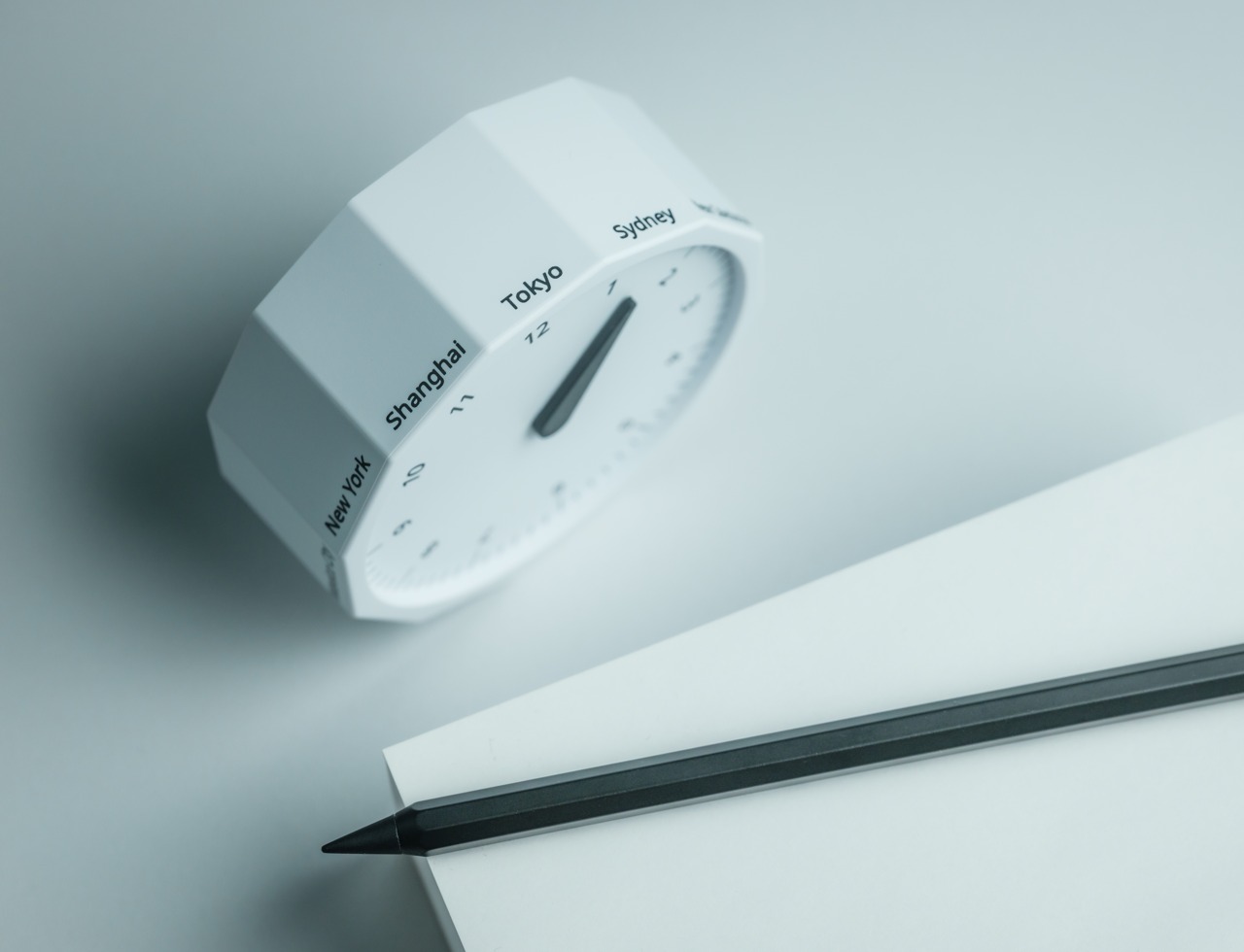
5. Rolling World Clock
Managing global connections shouldn’t require complex apps or mental gymnastics. This twelve-sided world clock reduces time zone tracking to pure physicality. Each face represents a major city—London, Tokyo, New York, Shanghai, Sydney, and seven others—creating a tactile globe of time. Simply roll the clock to your desired city and watch the single hand indicate the current hour there. The minimalist design strips away digital complexity in favor of immediate, intuitive understanding.
The rolling interaction introduces an element of play to what’s typically a mundane task. There’s satisfaction in the physical act of turning the clock, feeling its weight and geometry in hand before setting it down to display the time you need. This transforms checking time zones from a forgettable tap on a screen into a moment of mindful awareness. The black or white finish options ensure it complements any workspace aesthetic while serving as both a functional timekeeper and a sculptural desk accent.
The twelve-sided design elegantly represents major world cities, making global time tracking beautifully intuitive.
Rolling the physical clock introduces satisfying tactile interaction to an otherwise digital task.
The minimalist single-hand display eliminates visual clutter while maintaining instant readability.
Serves double duty as a functional timekeeper and striking desk sculpture in black or white finishes.
What We Dislike
Limited to twelve pre-selected cities, which may not include all locations relevant to your specific connections.
Reading the exact minute requires estimation rather than precision, making it better for general awareness than scheduling.
6. MagBoard Clipboard
Traditional notebooks impose structure through bound pages and fixed layouts. MagBoard takes the opposite approach. This minimalist clipboard uses a magnetic lever mechanism to secure up to 30 loose sheets, giving you complete freedom to arrange, remove, or add pages as your project evolves. The hardcover design transforms any surface into a stable writing platform, enabling you to capture ideas while standing, walking, or working in unconventional spaces.
The water-resistant, easy-clean surface means this tool adapts to various environments without worry. Sketch at a construction site, take meeting notes in a coffee shop, or diagram concepts during outdoor collaboration sessions. The flexibility extends beyond physical durability—the loose sheet system means you can mix paper types, share individual pages instantly, or reorganize your notes to match your thinking process rather than forcing your thoughts into predetermined structures.
The magnet and lever clip system securely holds up to 30 sheets while enabling instant page rearrangement and removal.
Hardcover construction creates a stable writing surface for note-taking in any position or location.
Water-resistant and easy-clean materials protect your work in diverse environments and weather conditions.
The loose sheet approach offers complete flexibility in paper choice, layout, and organization methods.
What We Dislike
Loose sheets lack the permanent binding of traditional notebooks, requiring care to prevent page loss.
The hardcover adds weight compared to standard notepads, making it less ideal for ultra-minimalist carry setups.
7. Rocketbook Reusable Sticky Notes
Sticky notes are workplace staples, yet their disposable nature creates constant waste. Rocketbook reimagines this productivity classic with genuinely reusable notes that feel like paper rather than plastic alternatives. Using special material compatible with Pilot FriXion erasable pens, these notes wipe clean with water and cloth. The paper-like texture and flexibility match traditional sticky notes, avoiding the rigid whiteboard feel of other reusable options.
The adhesive strip demonstrates the same reusability philosophy. Rather than losing stickiness after one use, simply rinse the adhesive area to restore full grip. This means your temporary reminders and quick notes become permanent tools rather than trash-bound consumables. The environmental impact reduction compounds over time—what would have been hundreds of discarded notes becomes a small set of reusable squares that serve just as effectively while generating zero waste.
What We Like
Genuinely reusable design eliminates sticky note waste while maintaining the paper-like feel and flexibility of traditional versions.
The water and cloth cleaning process is quick and simple, preparing notes for immediate reuse.
The reusable adhesive strip rinses clean to restore full stickiness across countless applications.
Compatible with Pilot FriXion pens, which are widely available and offer smooth writing experiences.
What We Dislike
Dependent on specific FriXion pen compatibility, it limits ink color and style options compared to traditional notes.
The water-cleaning requirement means you need access to moisture for erasure rather than instant disposal.
Making 2026 Your Most Productive Year
Productivity isn’t about cramming more tasks into each day. These seven tools share a common philosophy: remove friction, respect the user, and enhance the creative process without dominating it. They’re instruments that adapt to your workflow rather than forcing you into theirs. Each design solves real problems with elegance and thoughtfulness, proving that the best tools are those you stop noticing because they simply work.
As you build your workspace for 2026, consider which frictions slow your daily progress. Perhaps it’s the missing pen, the awkward mouse, or the wasteful sticky notes. The right tool doesn’t just fix a problem—it transforms that moment of your workflow into something smooth, satisfying, and ultimately forgettable. That’s when productivity stops feeling like effort and starts feeling like flow.
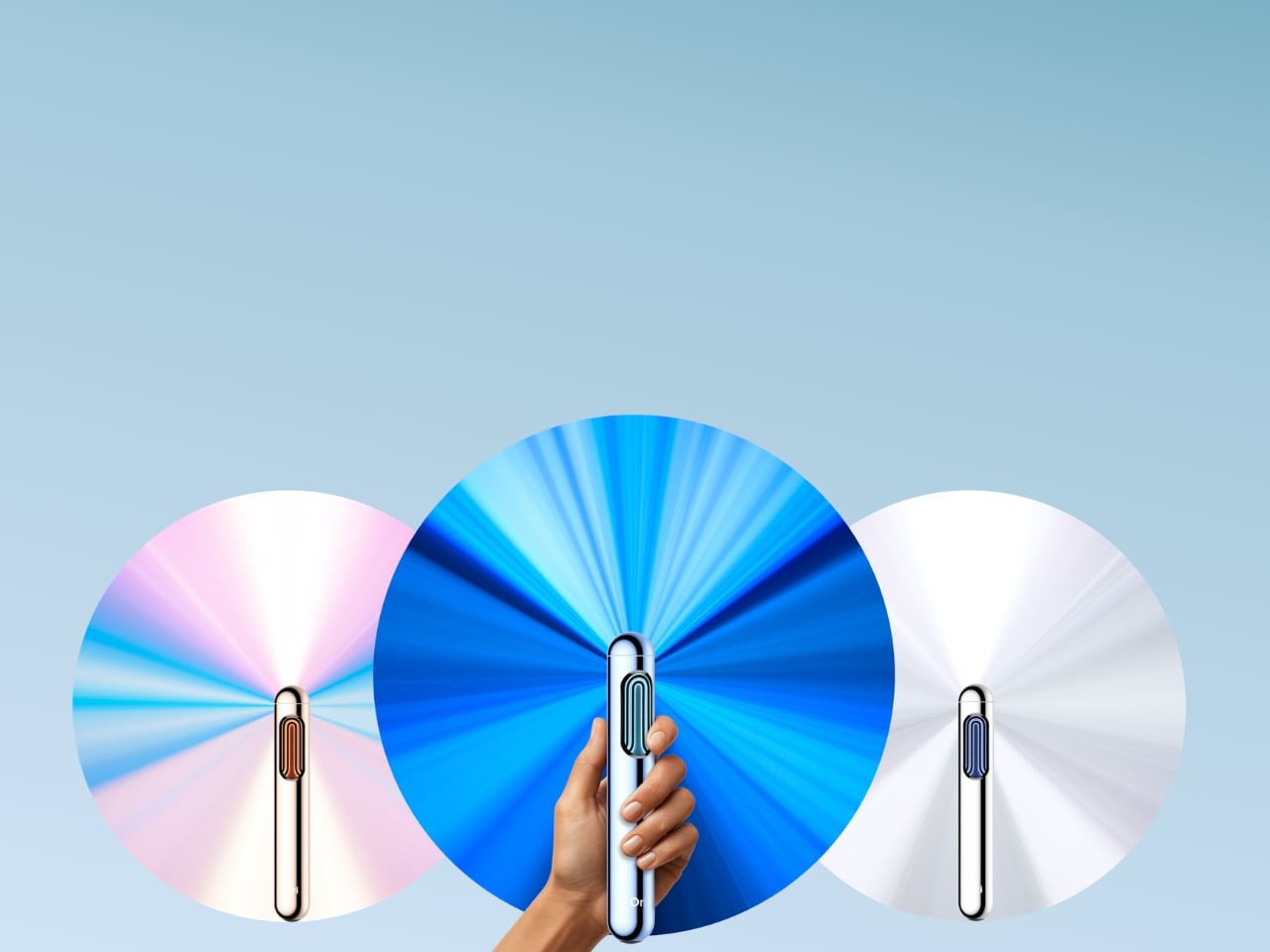
Hair dryers have come a long way from the bulky, one-speed models our parents used. The Dreame Pilot Smart AI Hair Dryer represents a leap forward in personalized hair care, combining artificial intelligence with professional-grade performance to deliver a drying experience that’s both fast and gentle. This isn’t just another styling tool with a digital screen. The Pilot uses advanced sensors, machine learning, and intelligent connectivity to create a truly adaptive hair care system that responds to your unique needs.
At the heart of the Pilot is a 150,000 RPM ultra-high-speed motor that generates airflow speeds reaching up to 70 m/s. This isn’t just about raw power. Built-in sensors continuously monitor hair temperature and distance in real time, intelligently adjusting heat output to maintain stable airflow at the scalp. The result is remarkably fast-drying, without compromising hair or scalp health. No more choosing between speed and safety. The 600-million negative ion generator works continuously alongside this system to reduce frizz and enhance shine, giving hair a salon-quality finish while the intelligent heat regulation protects against damage.
The AI integration sets this dryer apart from conventional models. A simple press of the AI button activates Personalized AI Mode, which learns and adapts to the needs of up to three different users. VIP I mode caters to children or those with sensitive scalps, offering gentle, safe drying. VIP II focuses on efficient daily drying while maintaining hair health for typical routines. VIP III delivers ultra-fast drying for people who need to get out the door quickly without sacrificing results. Each profile remembers individual preferences, creating a customized experience every time you pick up the dryer.
Connectivity extends the Pilot’s capabilities beyond the device itself. Through Wi-Fi and the companion app, users gain access to personalized tutorials, real-time device updates, and maintenance reminders. The app also provides AI-powered hair analytics designed to optimize hair health over time, turning your hair dryer into a smart tool that understands your unique needs. This connected ecosystem means your dryer gets smarter with use, learning patterns, and suggesting adjustments for better results.
The intelligent nozzle recognition system brings another layer of convenience. Each styling nozzle comes with preset parameters that the dryer automatically detects when attached. The system recalls individual user preferences for each nozzle, eliminating the need to manually adjust settings every time you switch attachments. Whether you’re diffusing curls or creating sleek styles, the Pilot remembers what works best for you. The dynamic smart display provides clear, real-time information about settings and modes, making it easy to see exactly what’s happening at a glance.
Despite its advanced technology, the Pilot maintains practical usability. Auto idle detection helps conserve energy when the dryer isn’t actively in use. At 420g without the wire, it’s lightweight enough for comfortable extended use. The 2.8m wire length provides plenty of freedom to move while styling. The Dreame Pilot Smart AI Hair Dryer reimagines what a hair dryer can be. It’s not just a styling tool but an intelligent system that learns, adapts, and evolves with your hair care routine. For anyone seeking professional results with personalized care, the Pilot delivers technology that truly makes a difference.